
Glasgow was not always the city it is today. For much of the 19th century, it was a place of grinding poverty, overcrowded housing, and industrial smoke. Known affectionately as the “Dear Green Place,” the city transformed rapidly during the Industrial Revolution, and not always for the better. Coal mining, iron founding, chemical manufacturing, and shipbuilding all took root here, drawing thousands of workers into the city in search of steady wages.
The city center paid a heavy price for this growth. Streets and neighborhoods that had once housed Glasgow’s wealthiest residents became hubs of industry and trade. The elegant tenements and townhouses that lined the old thoroughfares fell into disrepair. Landlords crammed as many families as possible into rooms that were never designed for such numbers. Sanitation was poor, ventilation was worse, and disease spread easily through the cramped closes and narrow alleyways.
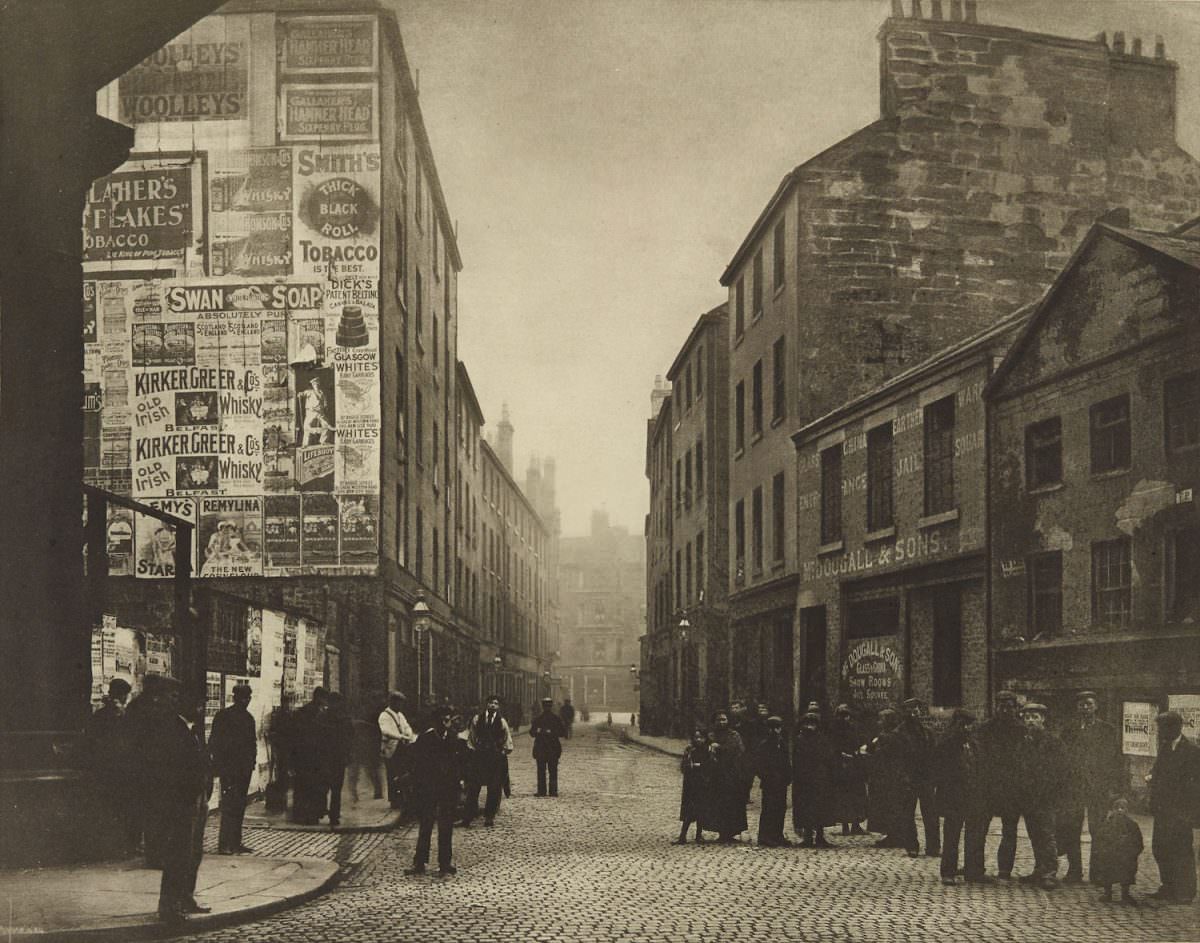
The Bridgegate area was one of the oldest and most densely populated parts of the city. By the 1860s, it had become a tangle of deteriorating buildings and narrow passageways, home to some of Glasgow’s poorest residents. Streets like this one tell the story of a city struggling under the weight of its own rapid expansion.
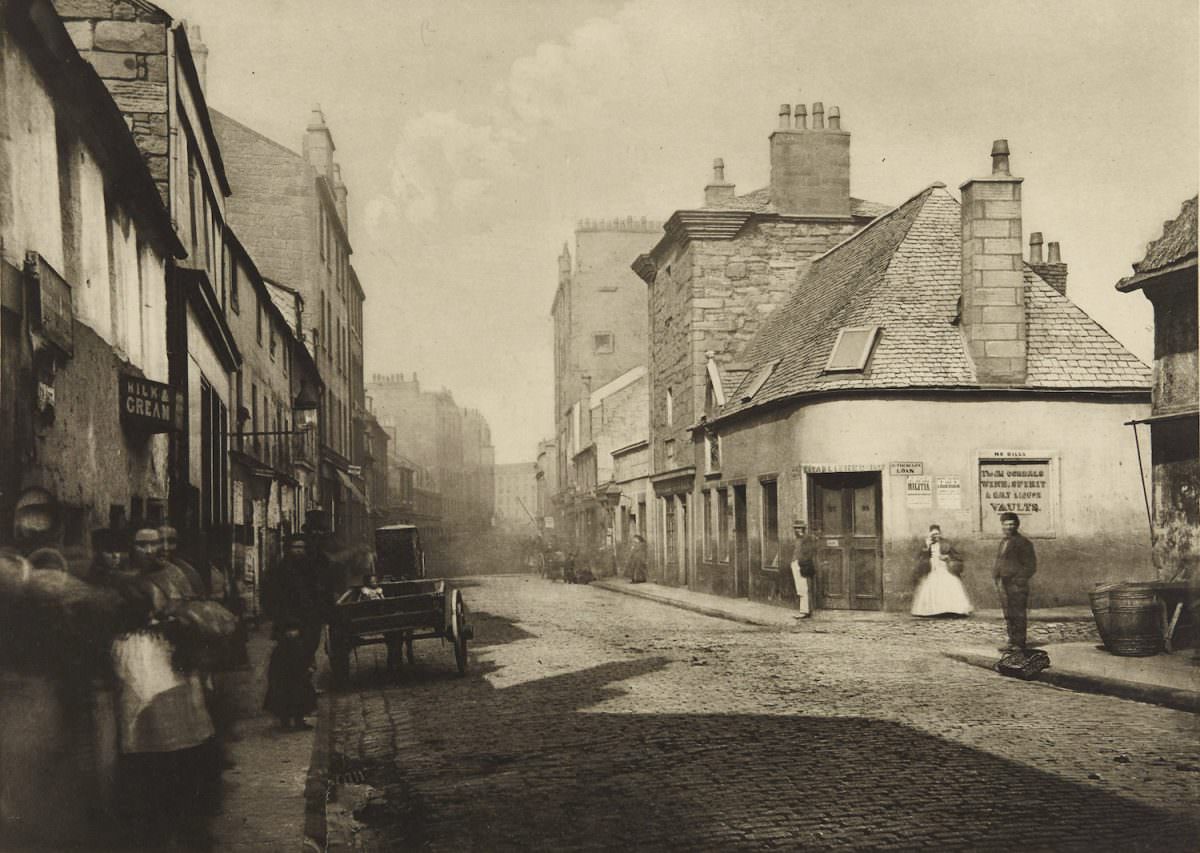
The Gorbals district, just south of the River Clyde, developed its reputation as one of Glasgow’s most notorious slum areas during this period. Waves of Irish and Highland migrants settled here, drawn by factory work. Main Street served as the spine of this community — busy, loud, and crowded at almost every hour of the day.
It was into this world that photographer Thomas Annan stepped in the late 1860s. Glasgow’s city authorities commissioned Annan to create a photographic record of the old closes and streets before demolition crews moved in as part of a major urban improvement program. His assignment was straightforward: document what was there before it was gone. The result was a body of work that became one of the earliest and most important examples of social documentary photography in Britain.
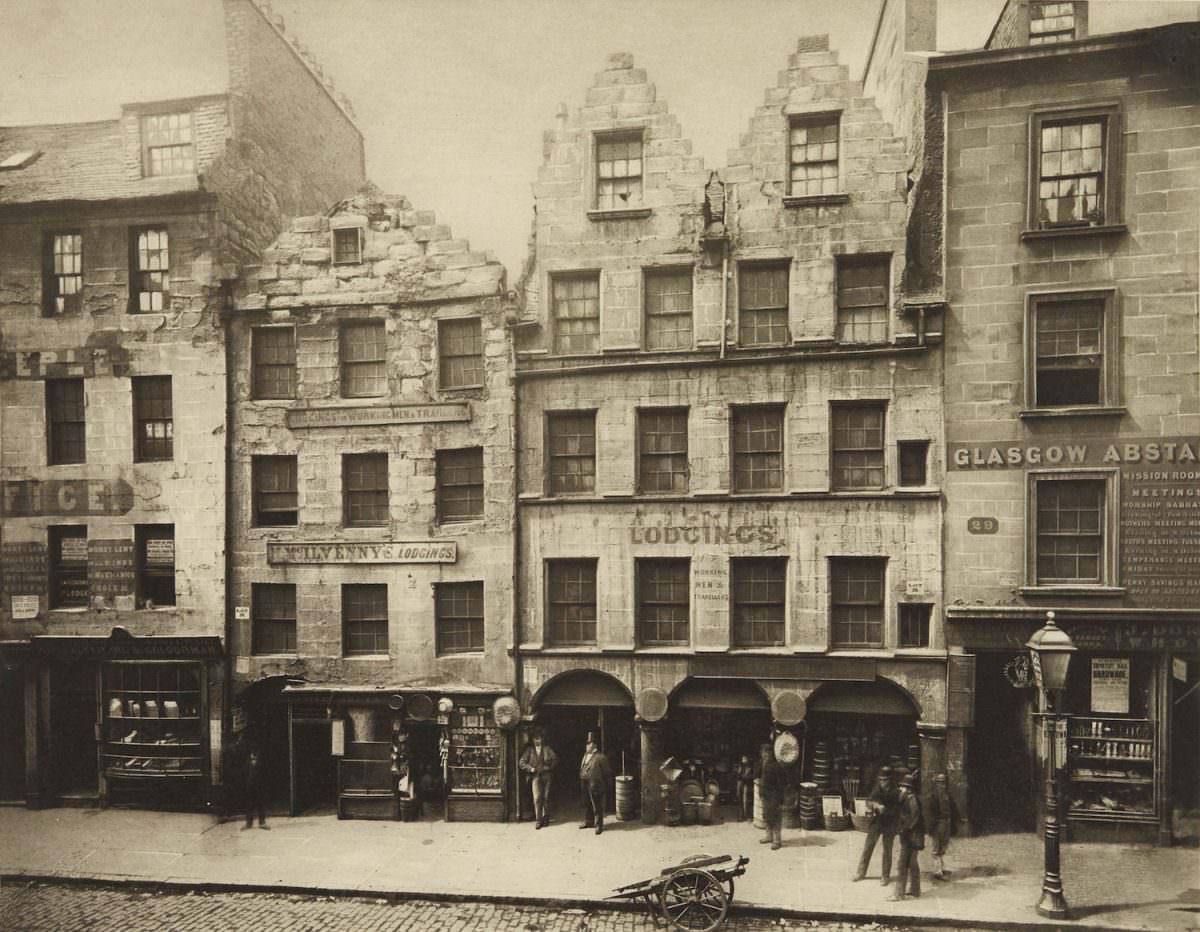
High Street was one of Glasgow’s oldest roads, running through the heart of the medieval city. By Annan’s time, the buildings lining it had aged badly. What had once been respectable addresses were now subdivided into cramped lodgings. Multiple families shared single rooms, and entire tenement blocks shared a single water source or none at all.
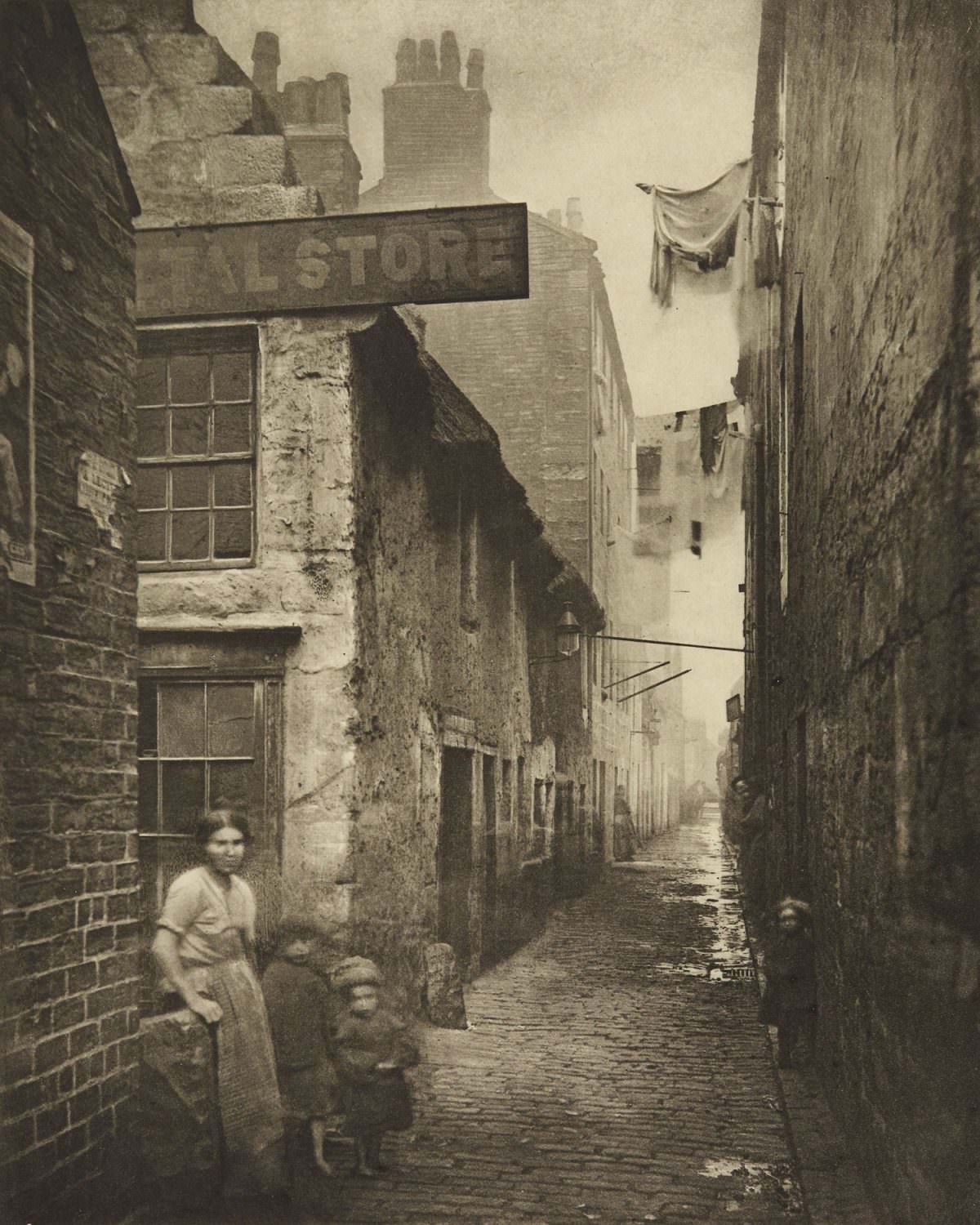
A vennel was a narrow lane or alleyway, and Glasgow had many of them threading between its older buildings. These tight passages were characteristic of the medieval street layout that had never been updated to handle a modern industrial population. They were dark, damp, and difficult to keep clean — conditions that made them breeding grounds for cholera and typhus.
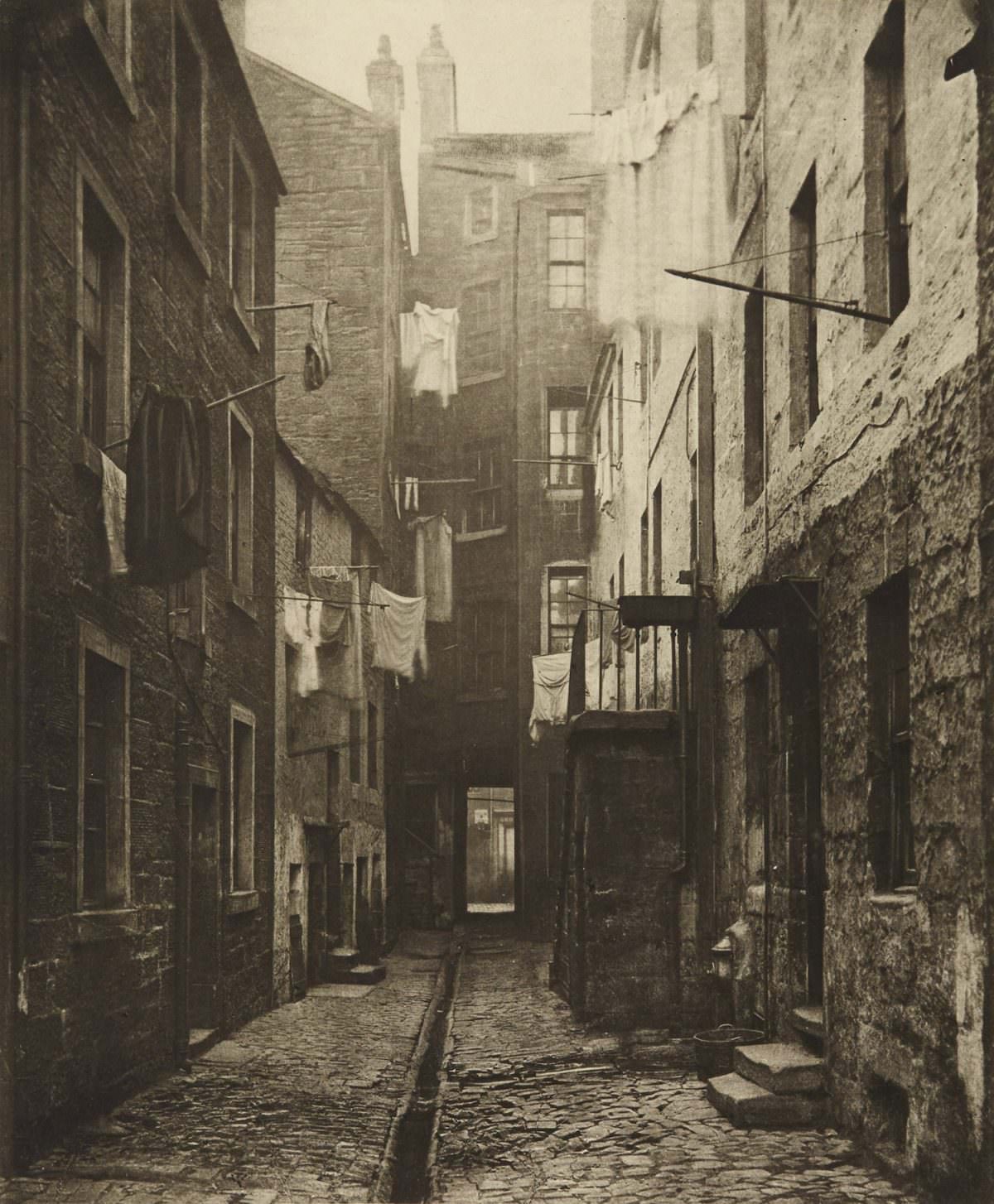
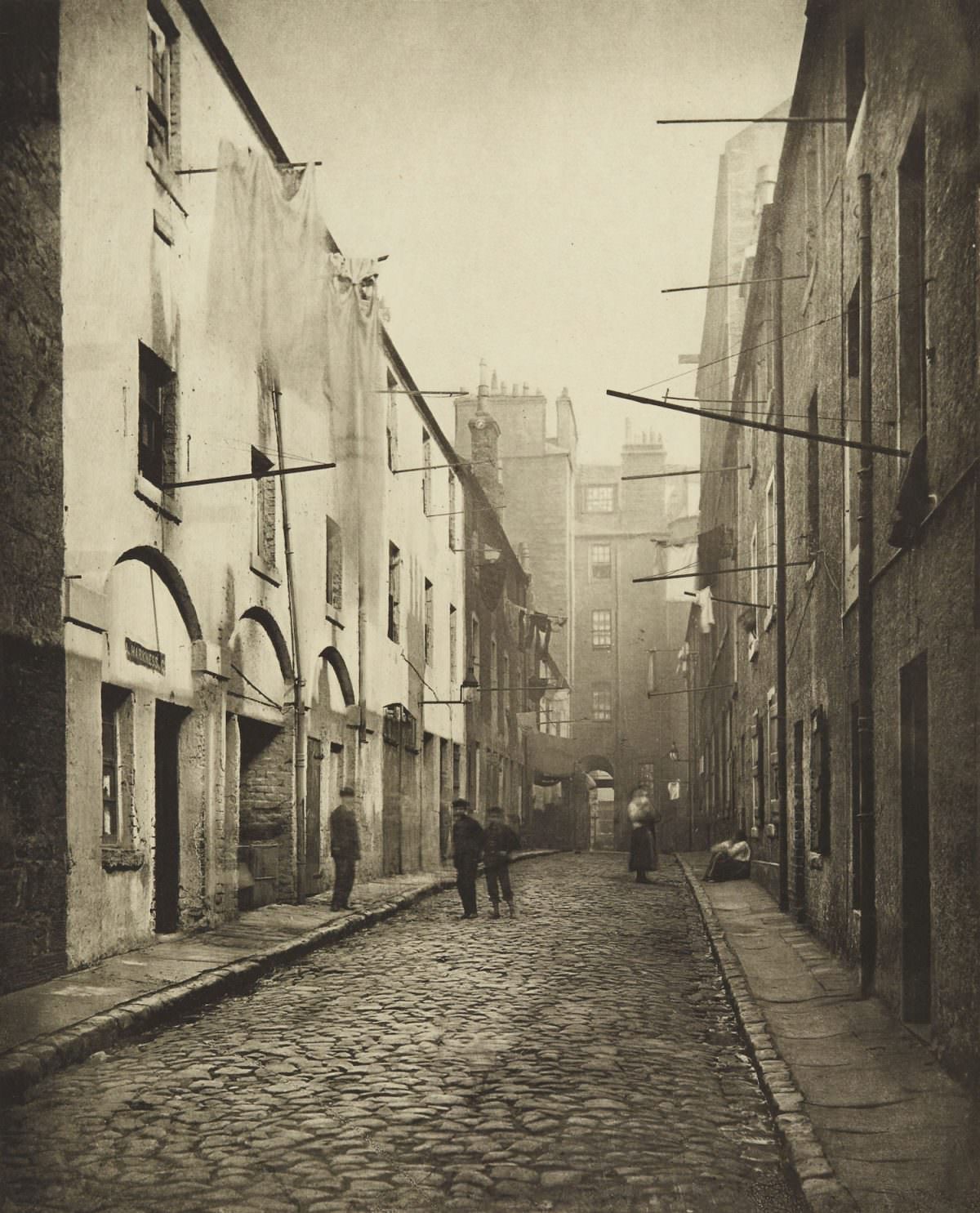
Annan published his photographs in a volume titled “The Old Closes and Streets of Glasgow.” The “closes” in the title referred to the covered or semi-covered entryways that led from the main street into the interior courtyards of tenement buildings. These were shared spaces used by every resident of the building — for fetching water, washing clothes, and disposing of waste. Annan’s camera captured them with unflinching clarity.
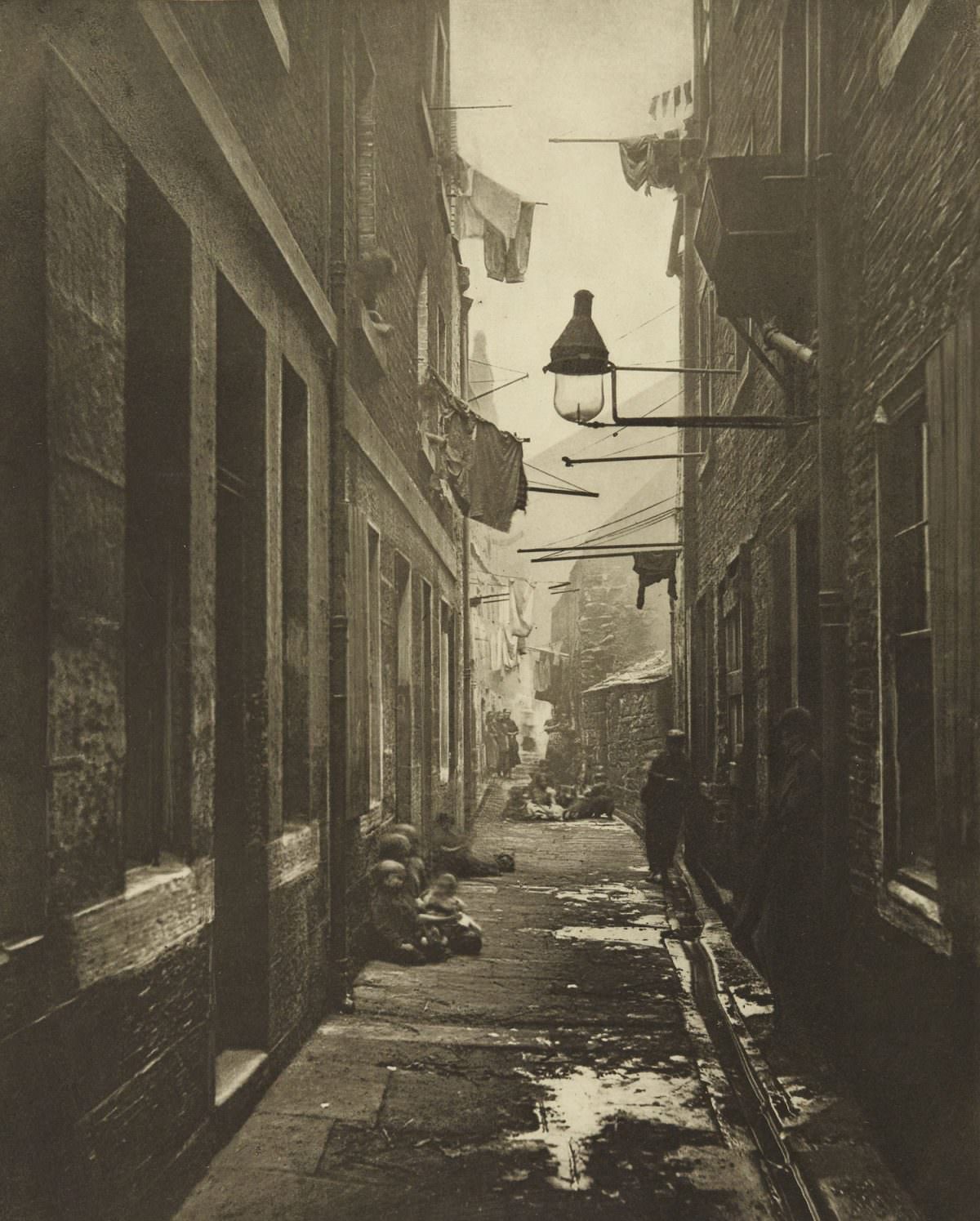
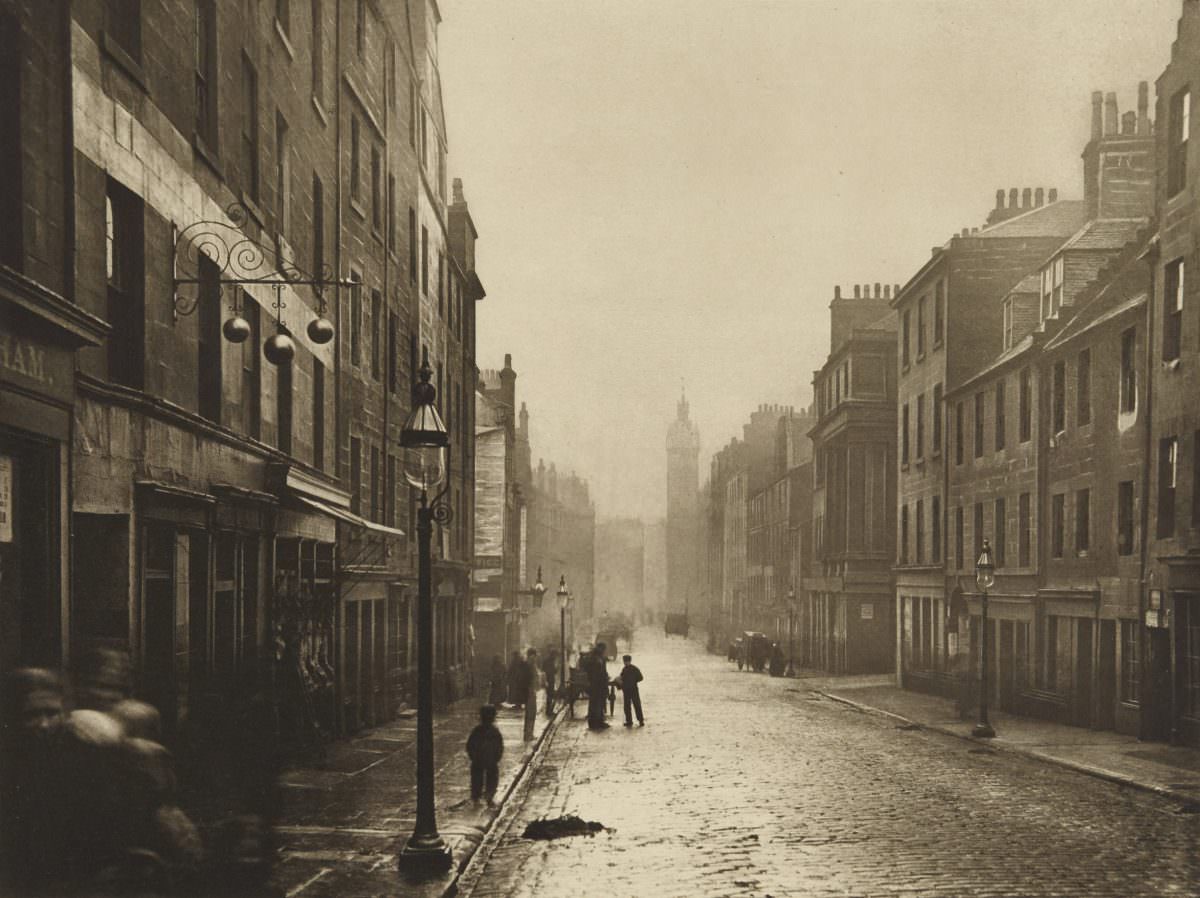
The College Open referred to the area near Glasgow’s old university, which had stood on High Street since the 15th century. By the mid-19th century, the university had already begun its move to the West End, leaving behind buildings that were quickly absorbed into the surrounding slum district. The contrast between the area’s scholarly past and its overcrowded present was stark.
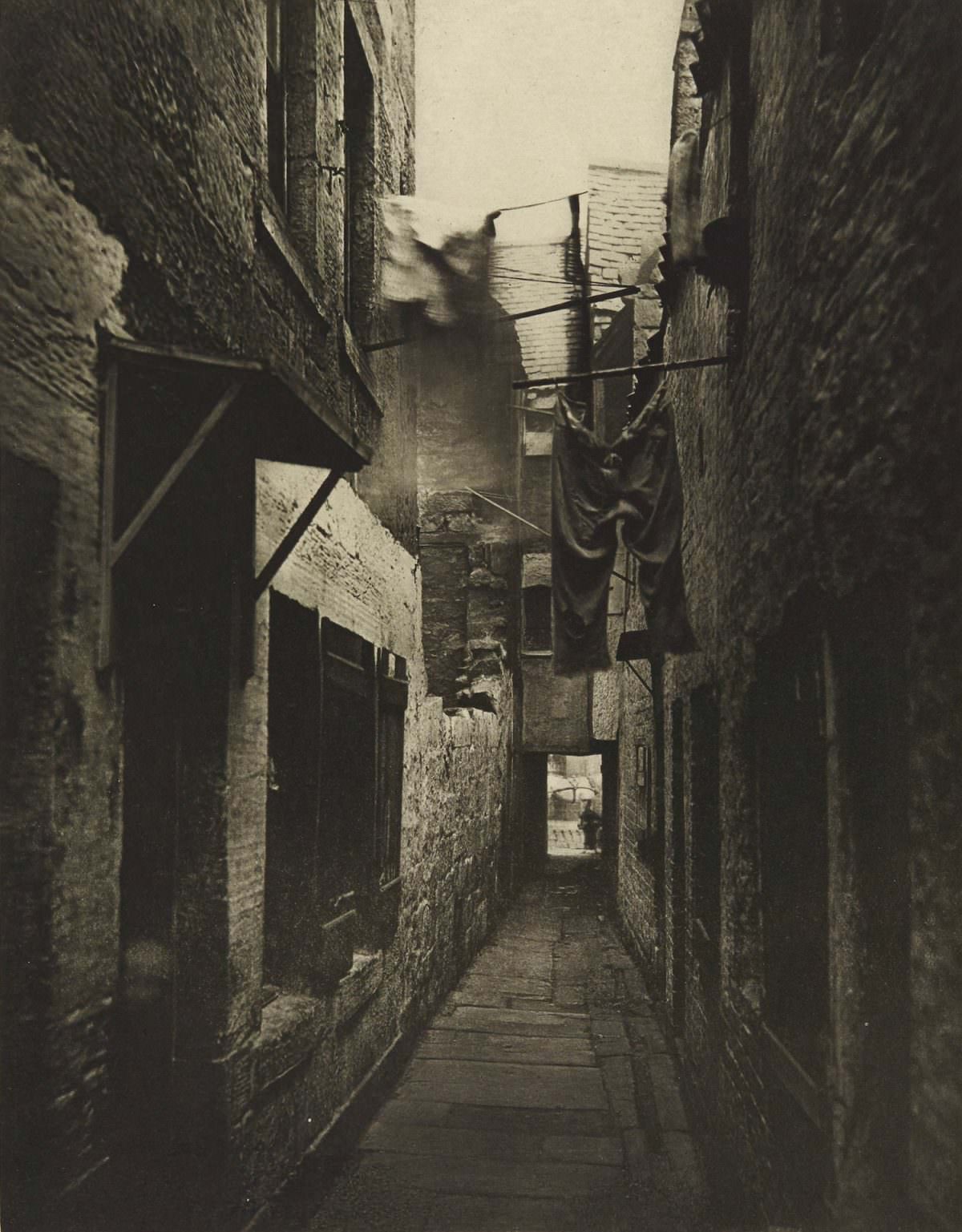
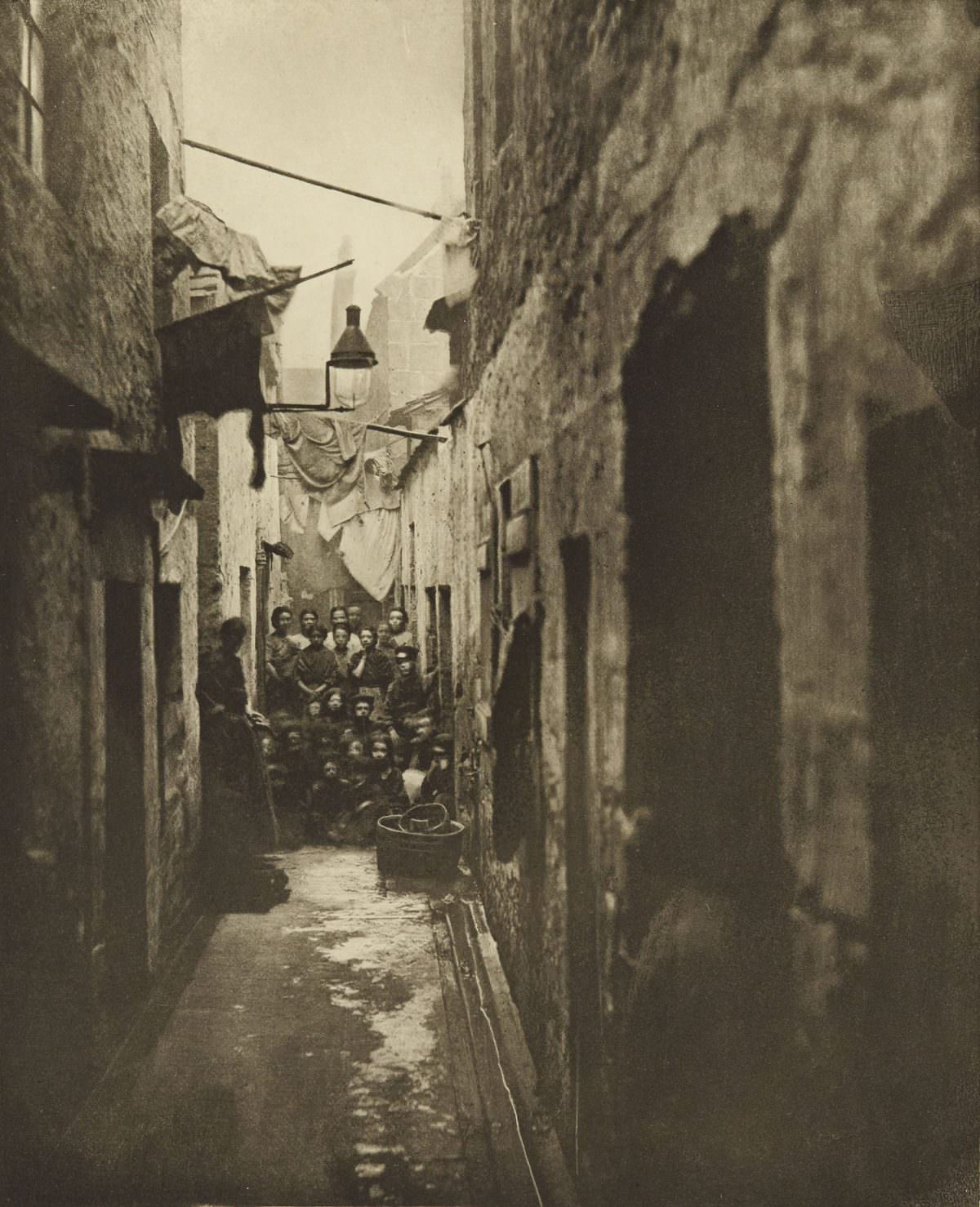
Many of the closes Annan photographed along High Street look nearly identical at first glance — stone walls darkened by soot, flagged floors worn smooth, and the occasional figure standing still enough to register on the long exposure of Annan’s plate camera. But each address had its own community of residents, its own internal economy of shared labor and mutual hardship.
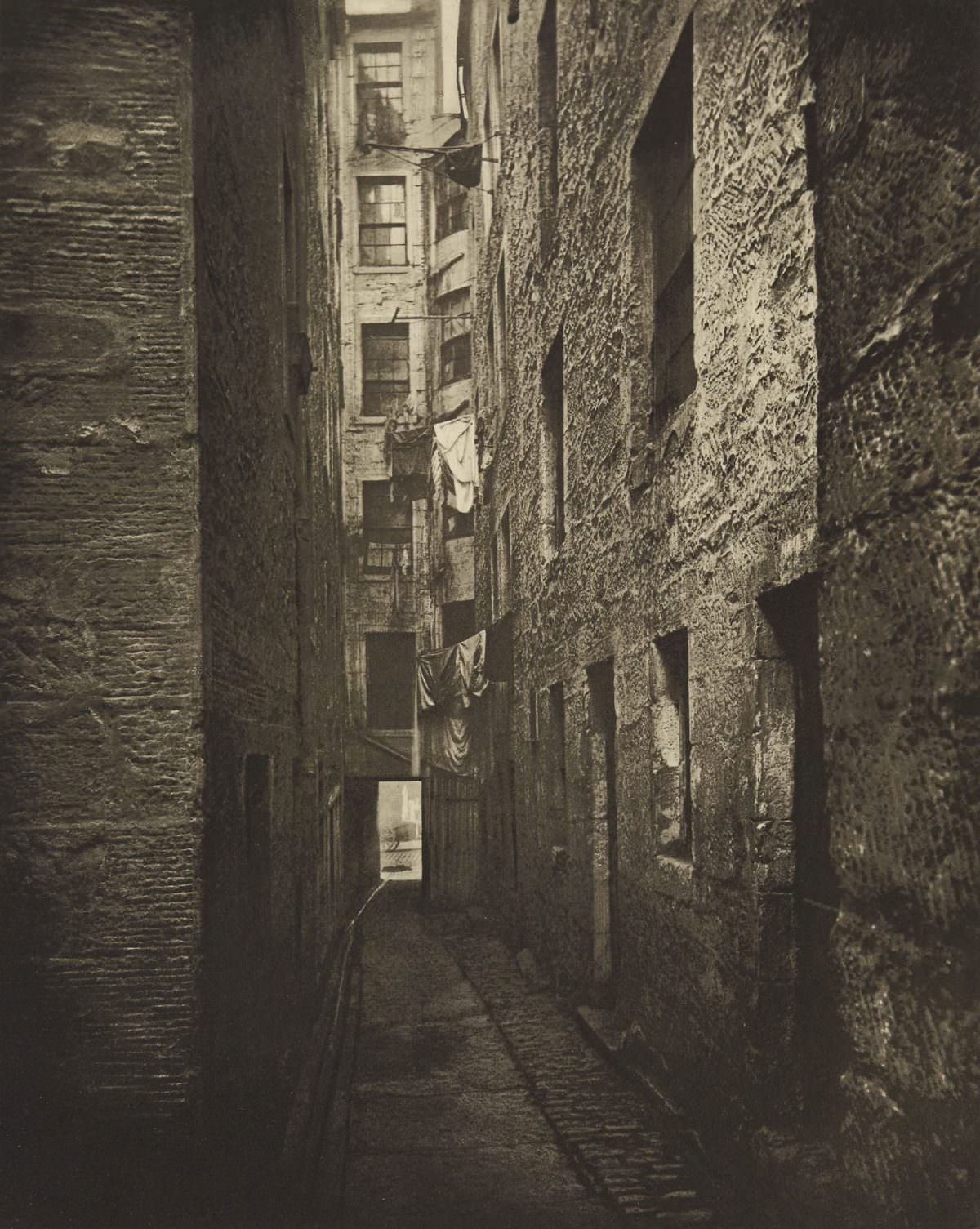
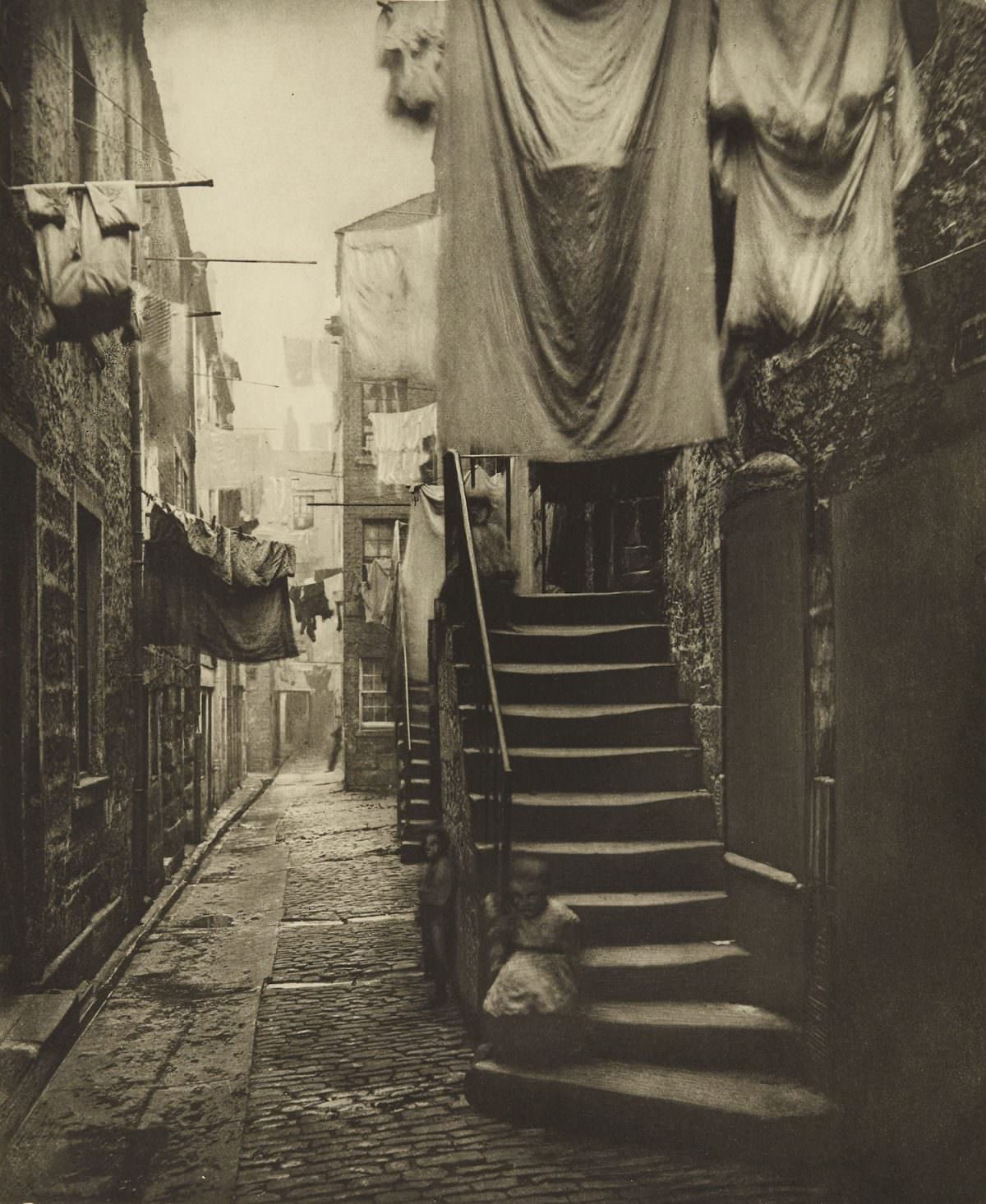
Population density in these blocks was extraordinary. Surveys from the period recorded dozens of people living in buildings with just a handful of rooms. Children were especially visible in the old city’s records — mortality rates among infants in Glasgow’s slums were among the highest in Britain. Diseases that swept through these closes in the 1830s and 1840s killed thousands and pushed the city government toward the improvement schemes that eventually commissioned Annan’s work.
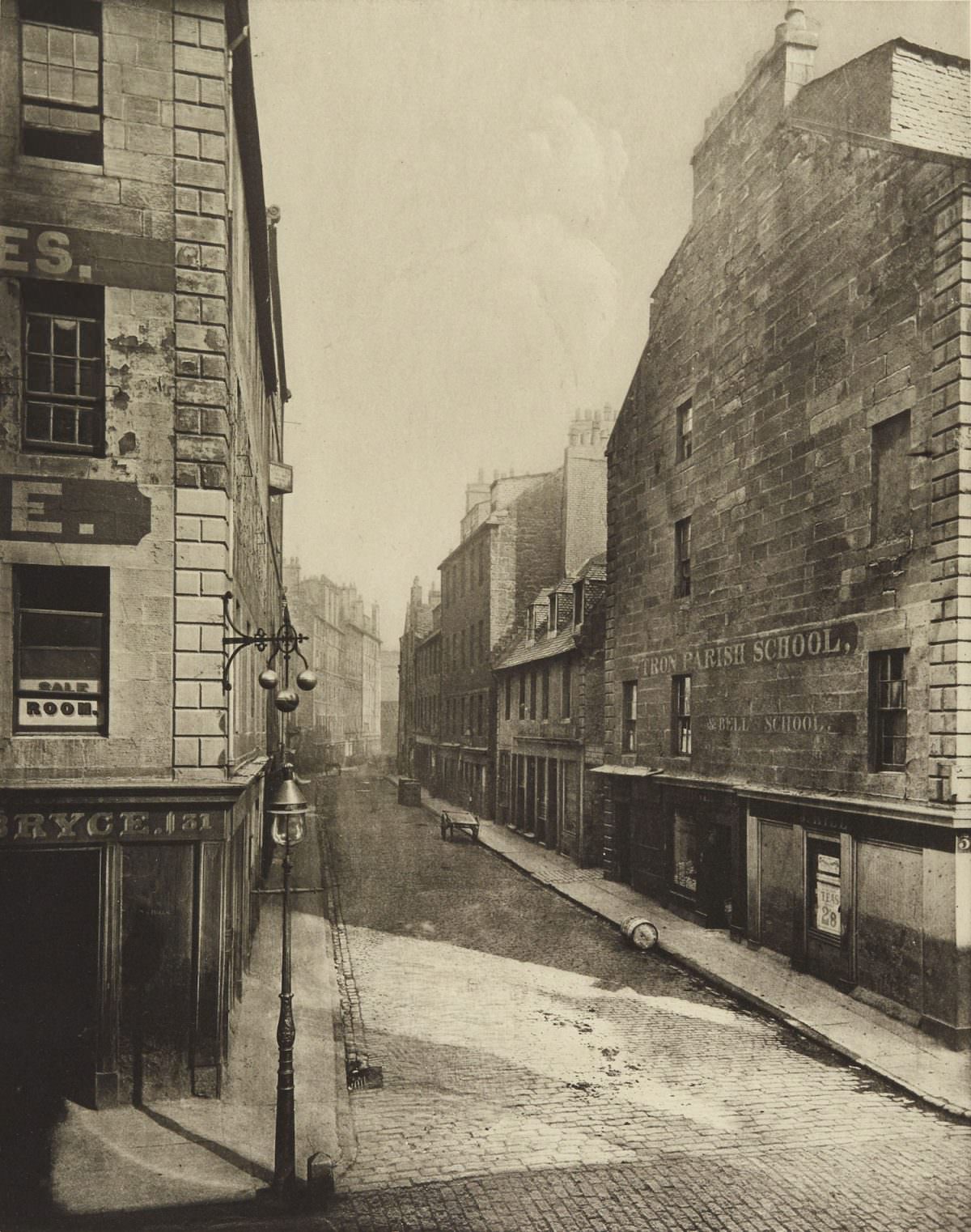
Saltmarket, running south from Glasgow Cross toward the River Clyde, was another of the city’s oldest and most densely inhabited streets. Like High Street, it had once held respectable merchant properties that gradually declined as wealthier residents relocated to newer neighborhoods on the city’s expanding edges.
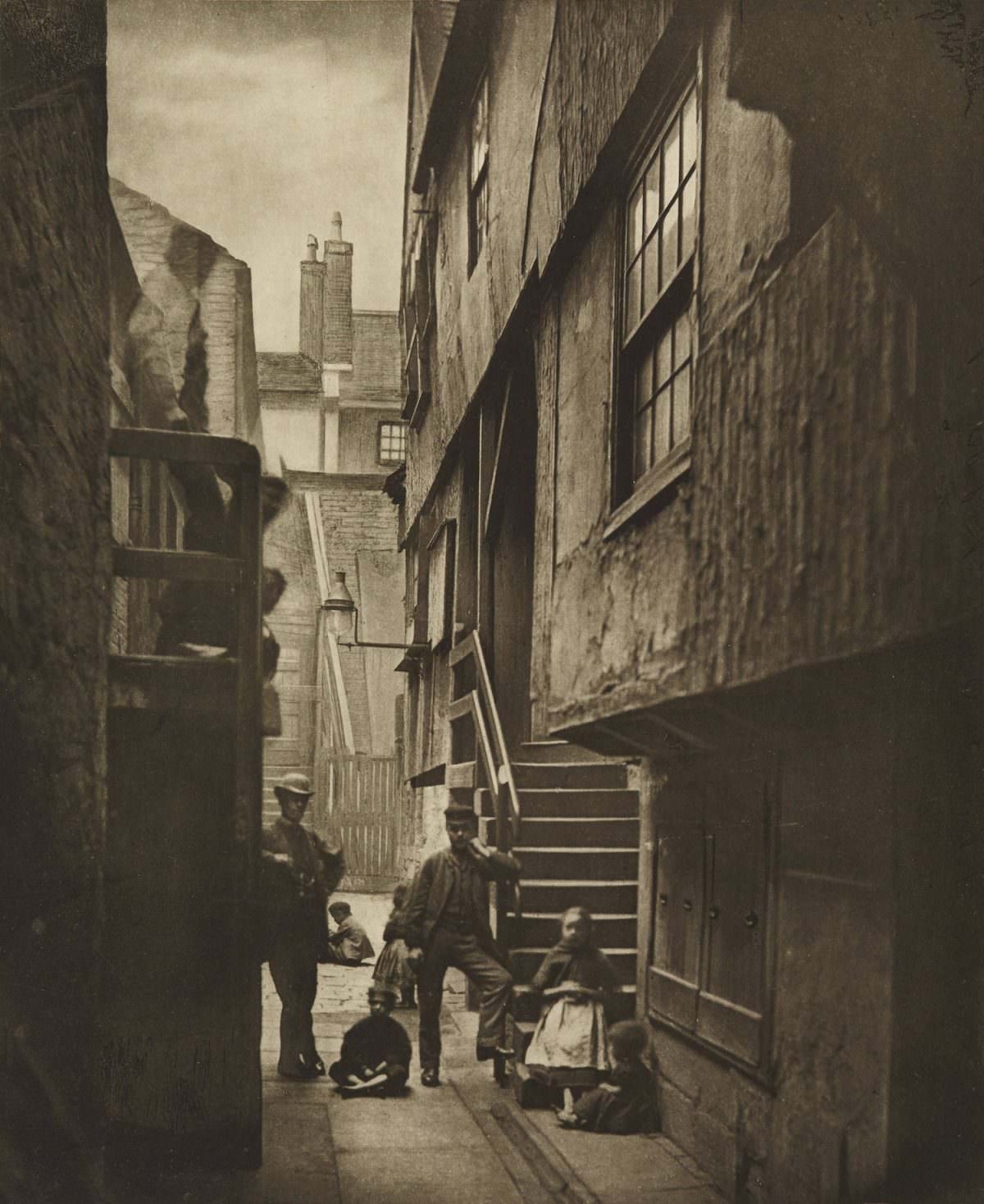
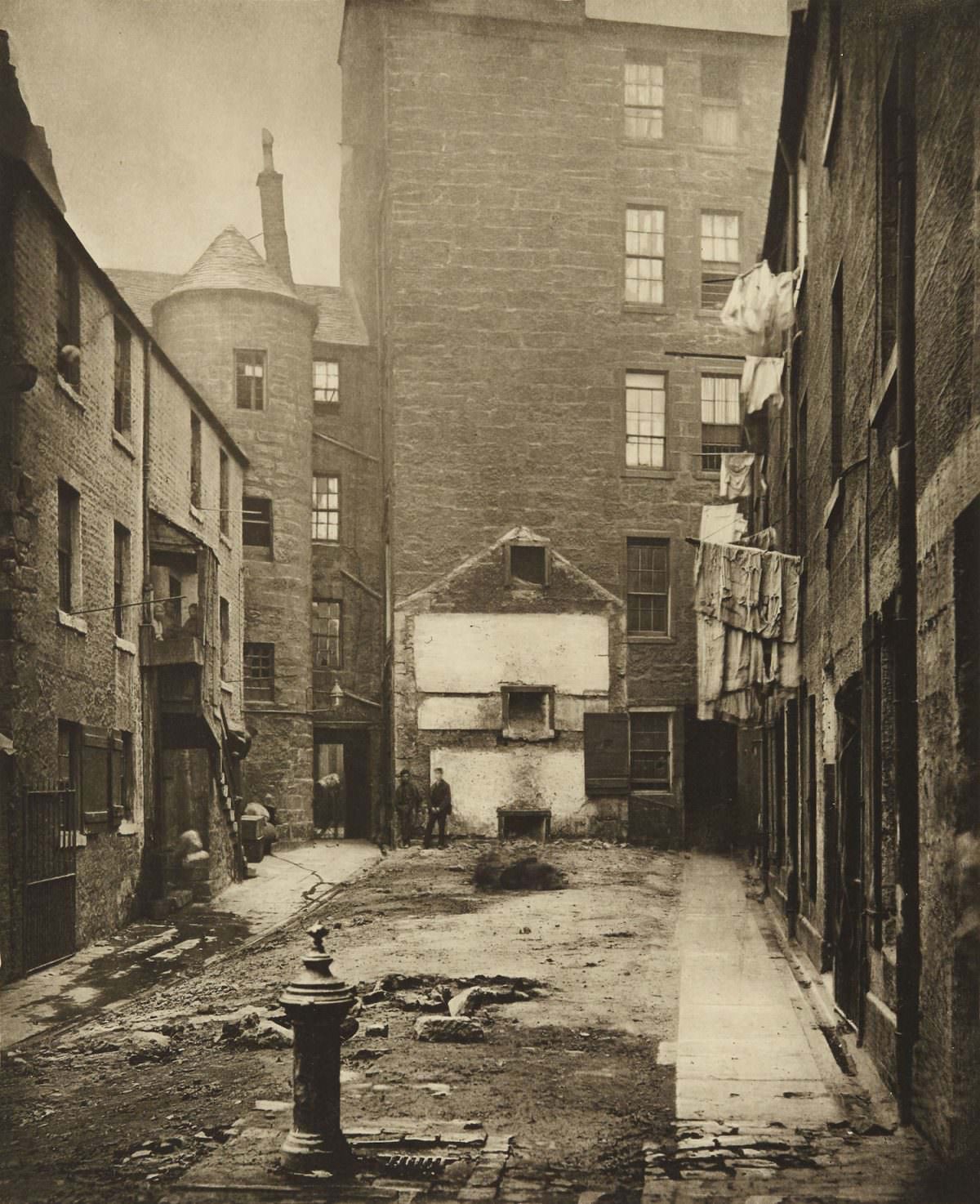
The Laigh Kirk Close took its name from the Low Church that once stood nearby. Religious institutions had been a fixture of these old streets for centuries, but by the 1860s, the physical fabric around them had deteriorated sharply. The close itself was typical of the area — narrow, enclosed, and worn by generations of use.
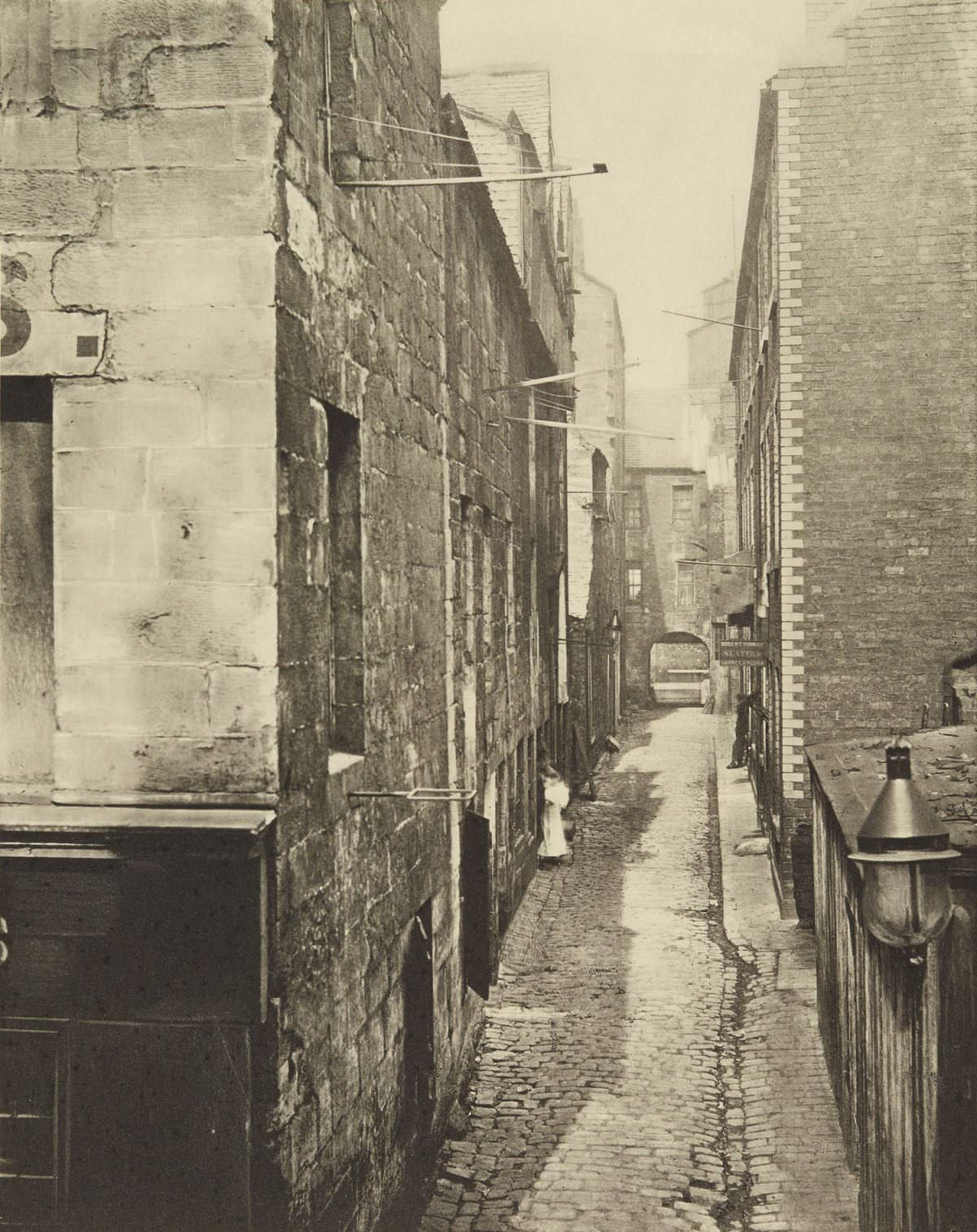
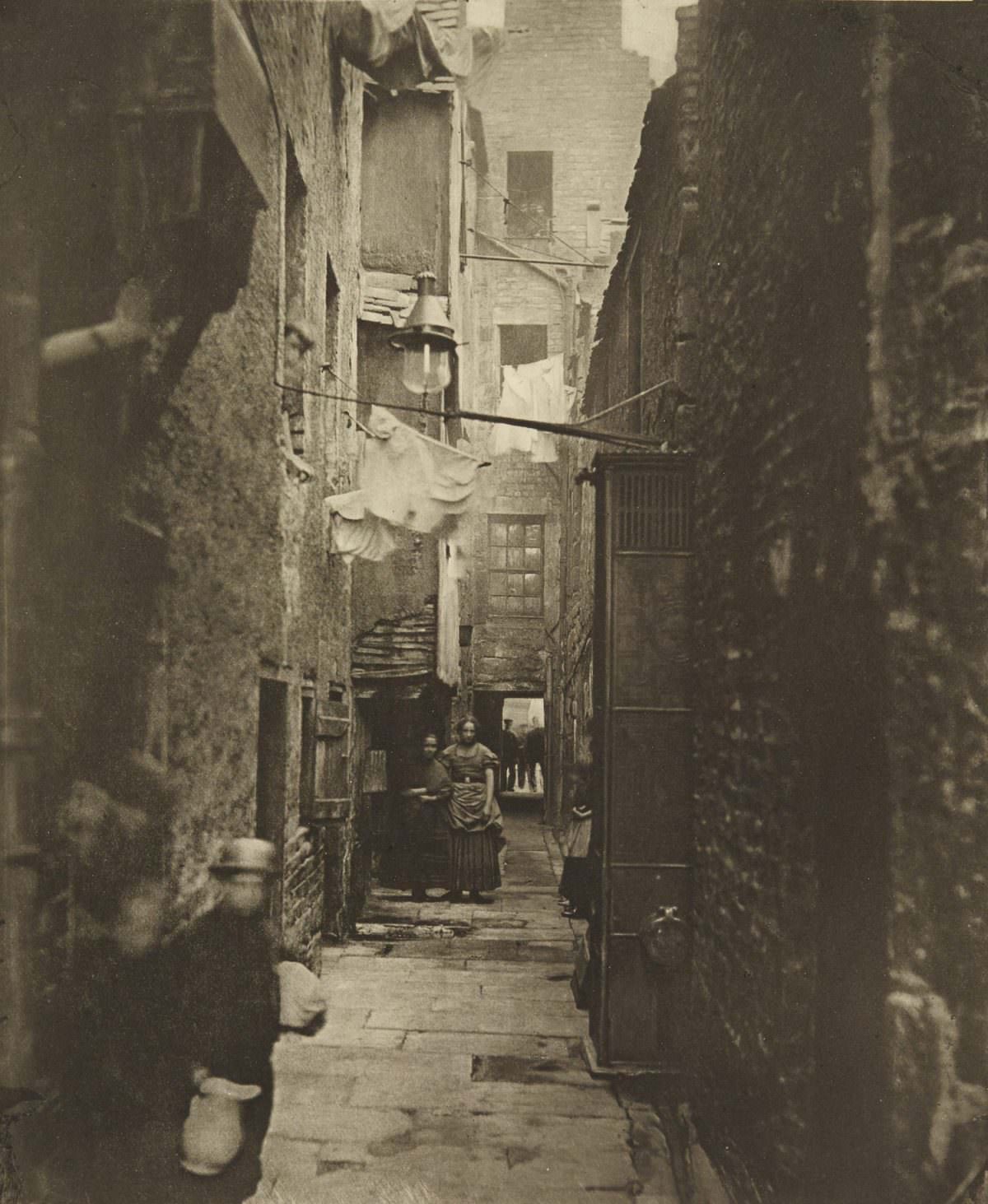
Gallowgate extended east from Glasgow Cross and was one of the city’s principal medieval routes. Like the other streets Annan documented, it had become heavily populated with working-class families by the time of his visits. The close at number 29 was one of dozens he recorded along this route, each one a small world of shared walls and shared lives.
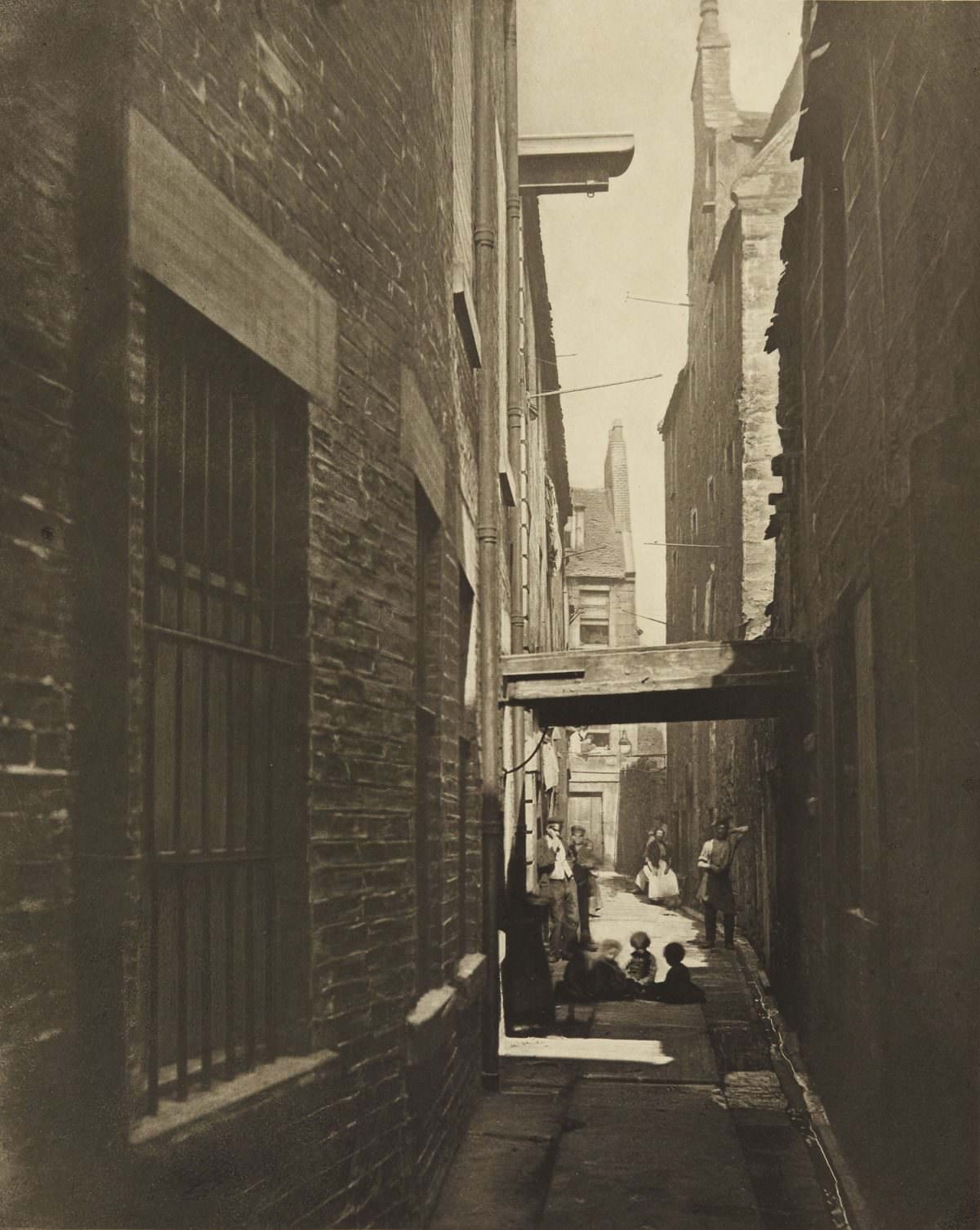
Thomas Annan’s photographs were taken between 1868 and 1871, covering the years just before and during the demolition of many of these streets. His work captured the physical reality of Glasgow’s old slum districts with a precision that written records alone could not match. The faces in the closes, the textures of the stone, and the geometry of the narrow passages all survive in his plates — a direct visual record of how a significant portion of Glasgow’s population actually lived during one of the city’s most difficult chapters.





Amazing to think of those people in the photos, the lives they led?
I lived in a tenement in the 70s and didnt think it was that bad
That’s because these are from a hundred years earlier.
The sad thing is, with just about all pictured atleast 54, how many are no longer with us.
Other than fashion and internal decorations, this would be 20 years earlier easily. It was just the end game for these particular tenements, which over 30 years or so echoed across Glagow.
These images were taken in the EIGHTEEN 60s. 1860s.
I grew up in Partick in the 70s when it was near enough like this.
Great times tbh.
I arrived in Glasgow in the 90s, and I was appalled by what I saw. I had never seen poverty and neglect like it. So different today, but I have a sinking feeling the city is going backwards and decline is picking up pace. I’m retiring next year and my Scottish partner are leaving to live in Valencia. Mostly Brexit, which has made the UK a very unwelcoming place to be (just my own perception, not advocating for any politics etc, and we will ALWAYS love Glasgow and Glaswegians unconditionally)
I left glasgow in the 90s it was grim mostly though I had a lot of fun . I returned last year to a vastly improved environment but I feel most British cities are full of neglect outside of London and now Manchester with the investment from the Qatari’s which brings new problems . Glasgow still has soul at least but the rents are shooting up as all bail out of England in the hope of a EU return ….
Always interesting to look back at images of Glasgow in years gone. That being said, there isn’t a single image I would describe as harrowing, most of them gave me a sense of optimism, youthful wonder and family/community spirit.
Tonight on ‘Tartan Briefs’…