
New Bedford, Massachusetts sits on the southern coast of Bristol County, and for much of the 19th century, it was the whaling capital of the world. By 1900, that era was fading fast. The whale oil trade had collapsed, and the city was rapidly reinventing itself around manufacturing and textiles. Mills replaced ships as the dominant employer, and neighborhoods stretched outward to house a growing working-class population. Triple-decker homes rose block by block to shelter the waves of immigrants arriving from Portugal, Poland, Italy, Greece, and beyond. The photographs collected here capture New Bedford during this pivotal transition — its streets, its people, its tragedies, and its daily rhythms.
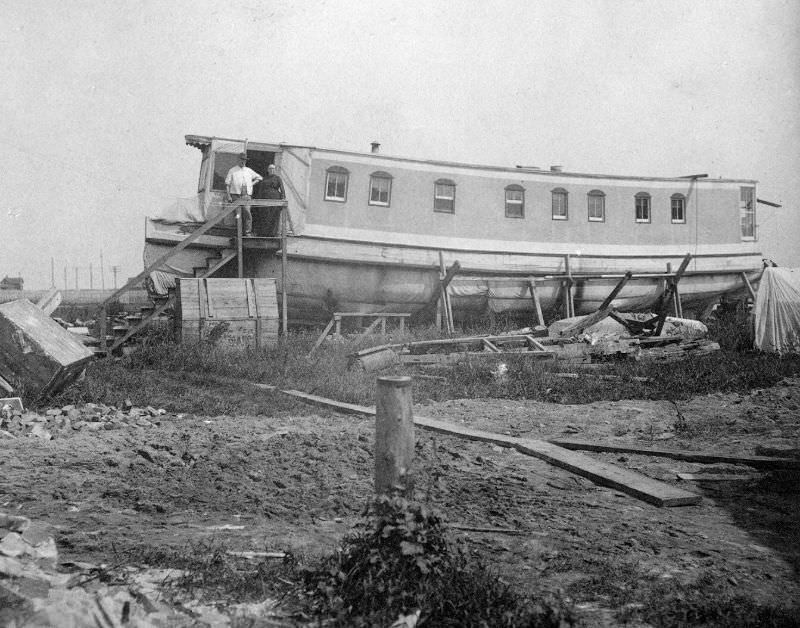
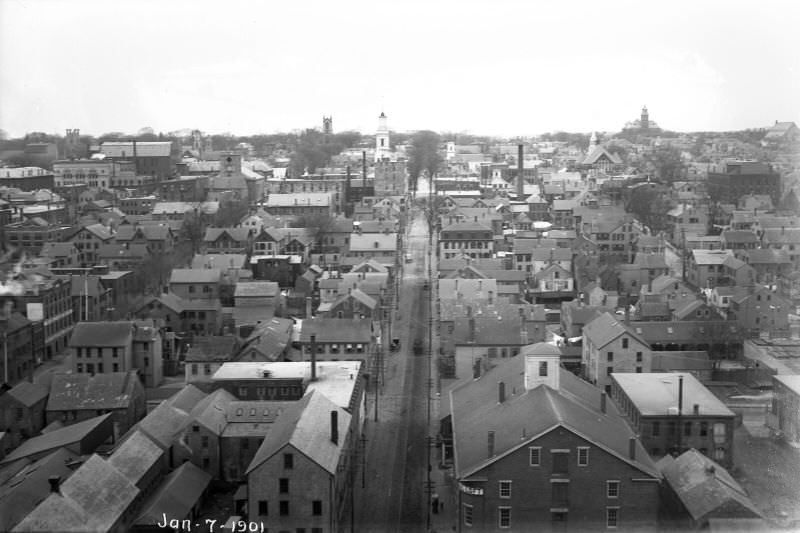
New Bedford’s waterfront life produced some unusual domestic arrangements. With ship hulls cheap and plentiful as the whaling industry wound down, at least one couple converted a vessel’s hull into a livable home — a structure known as an ark. It’s a striking reminder of how closely the city’s residents lived alongside the sea trade, even as that trade was disappearing beneath them. By 1901, Elm Street was a well-traveled commercial corridor. The view looking west shows a city in motion — storefronts, pedestrians, and the early signs of urban density that would define New Bedford’s downtown for decades.
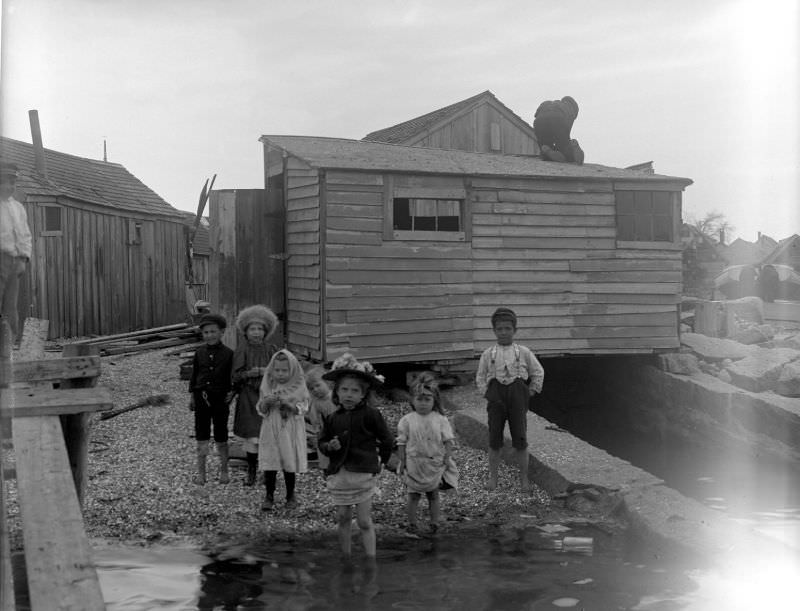
Portuguese immigrants had been arriving in New Bedford since the height of the whaling era, recruited as skilled sailors from the Azores and Cape Verde. By 1905, their presence was deeply rooted — institutions, social clubs, and working spaces like the Portuguese Navy Yard reflected a community that had built permanent stakes in the city.
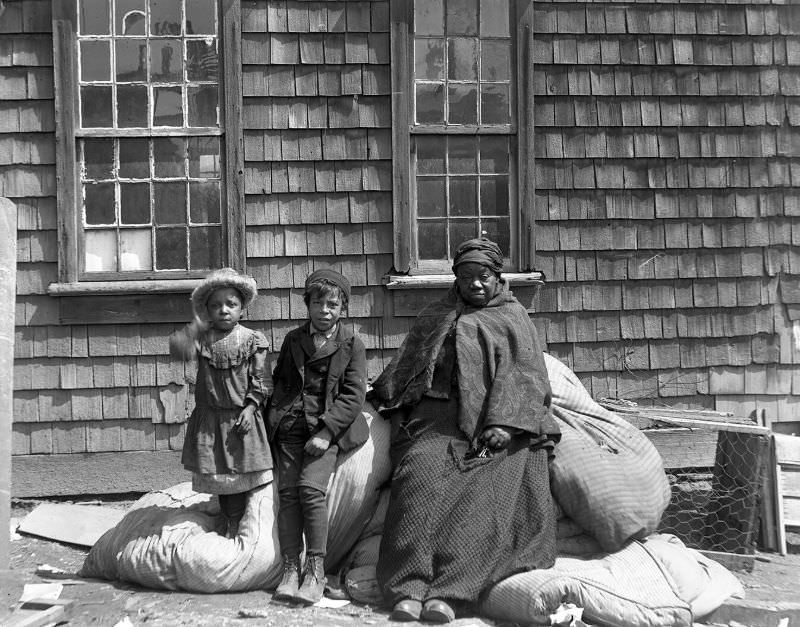
Not all stories from early 20th-century New Bedford were of industry and community building. In 1905, Mrs. Mann was forcibly removed from her home in a documented eviction. The image captures a moment of economic hardship that was common in a city where working-class families lived close to the financial edge. Around the same time, one of the more troubling public health stories in the region was unfolding just offshore.
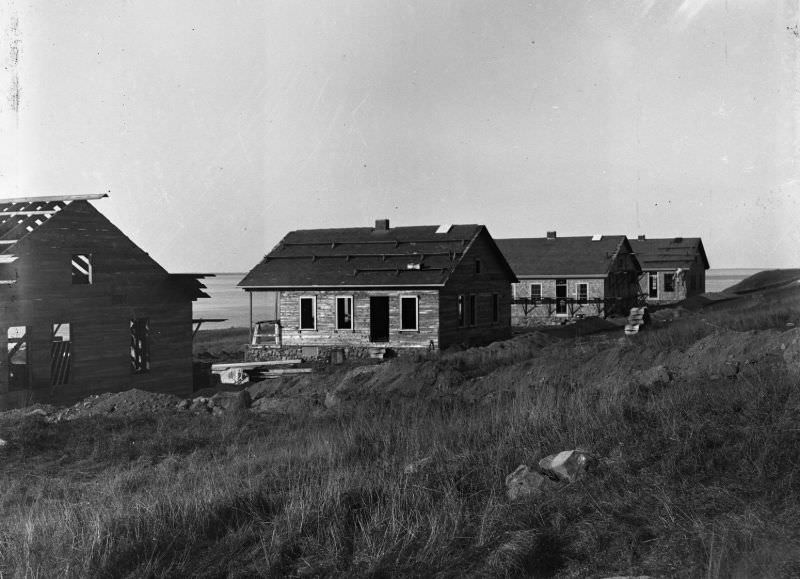
Penikese Island, located in Buzzards Bay about fourteen miles from New Bedford, was used as a leprosy quarantine station beginning in 1905. Patients diagnosed with leprosy — a disease that was poorly understood and deeply feared at the time — were isolated there by the Massachusetts State Board of Health. The cottages on Penikese housed men and women who were removed from their communities and confined to the island, often for the rest of their lives.
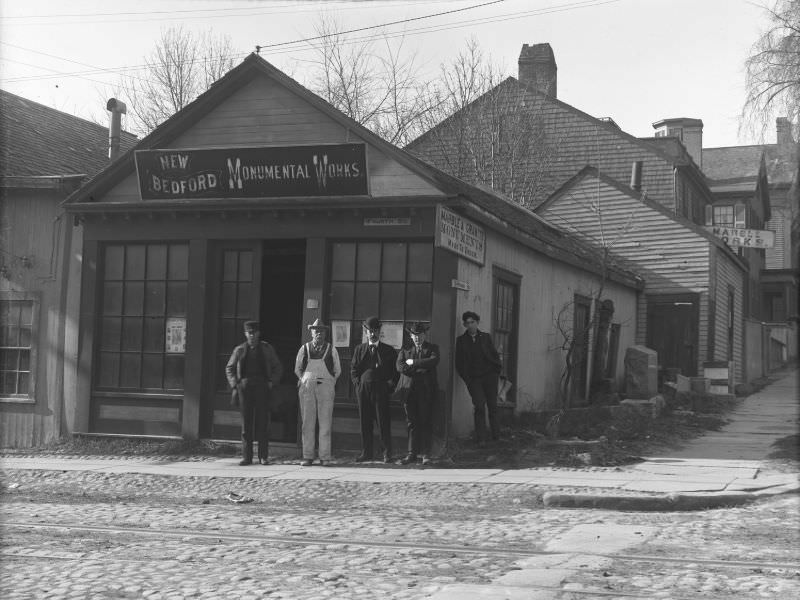
Back on the mainland, Purchase Street was one of New Bedford’s busiest commercial strips. Tom Thompson’s marble shop — operating under the name New Bedford Monumental Works — stood at the corner of Spring and Fourth Streets. Marble works like Thompson’s produced headstones, monuments, and decorative stonework for a city that was simultaneously building and mourning.
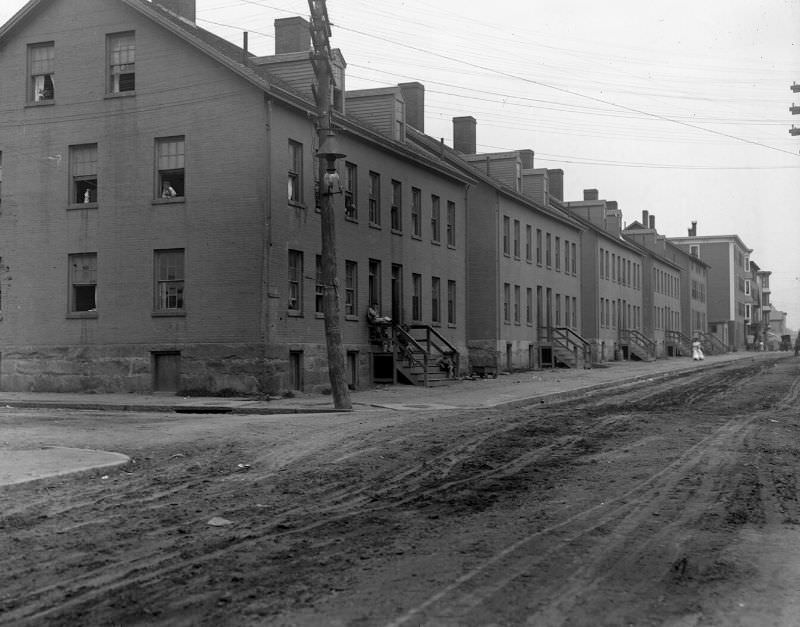
By 1906, Front Street near Logan Street had become a recognizable Polish settlement. Polish immigrants, many of them Catholic and employed in the textile mills, clustered in specific blocks and built tight-knit neighborhood networks. Their presence added another thread to the already complex ethnic fabric of New Bedford.
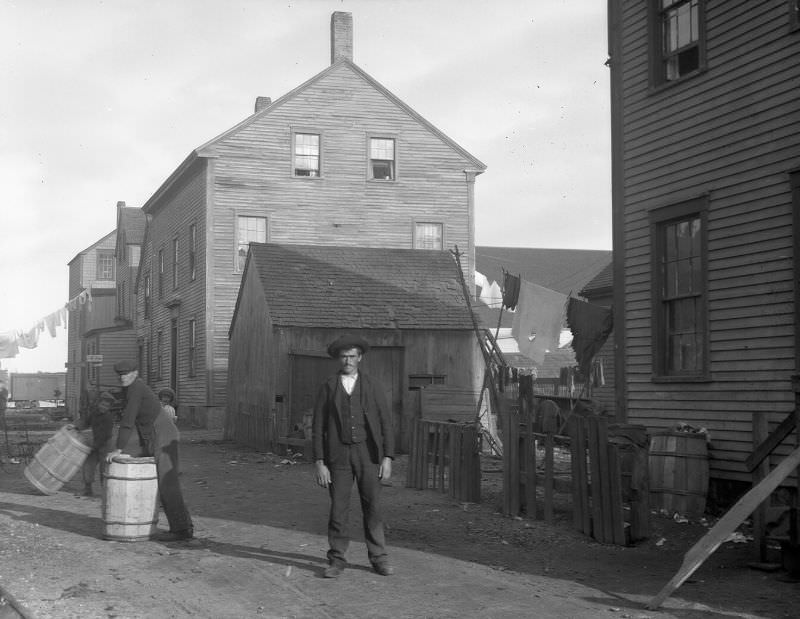
Turner’s Court, viewed from Acushnet Avenue looking east in 1907, represents the kind of dense, close-quartered housing that defined working-class New Bedford. These narrow residential courts — tucked behind main streets — were home to families who worked in the mills and along the waterfront. The alleyways and shared yards of Turner’s Court were typical of how the city housed its labor force.
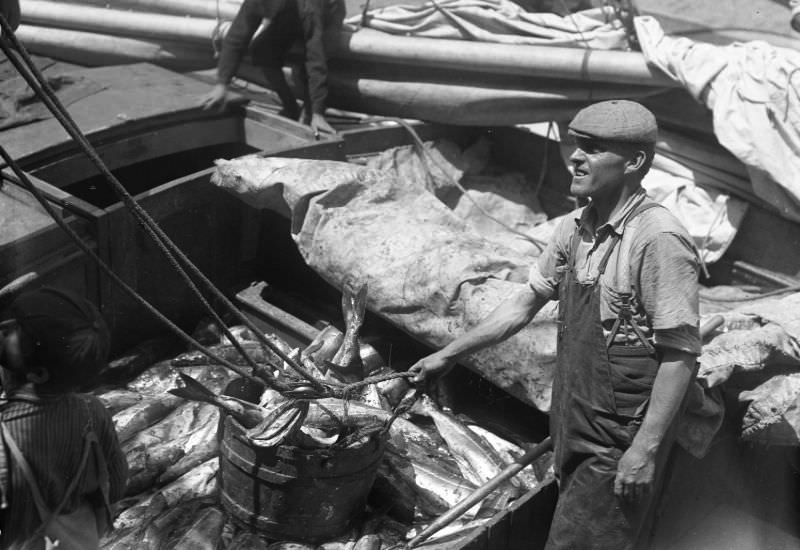
Even as whaling declined, New Bedford didn’t abandon the sea entirely. By 1907, the city had repositioned itself as a commercial fishing port. Scallops, cod, and other species were hauled in by vessels that worked the same waters once patrolled by whale ships. The fishing industry gave the waterfront new life and kept thousands of men employed on the docks and at sea.
Italian immigrants were carving out space in New Bedford’s North End by 1907. Newspaper coverage of the time labeled the area “The Newest Little Italy,” reflecting both the concentration of Italian families there and the public curiosity about their customs. Many of these men worked as grade crossing workers on the railroad lines — physically demanding jobs that were often assigned to the most recent arrivals.
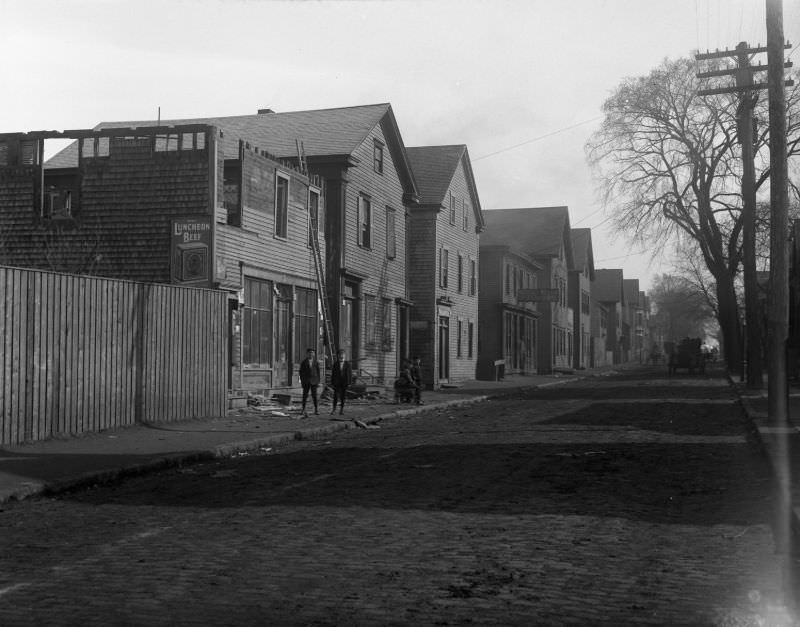
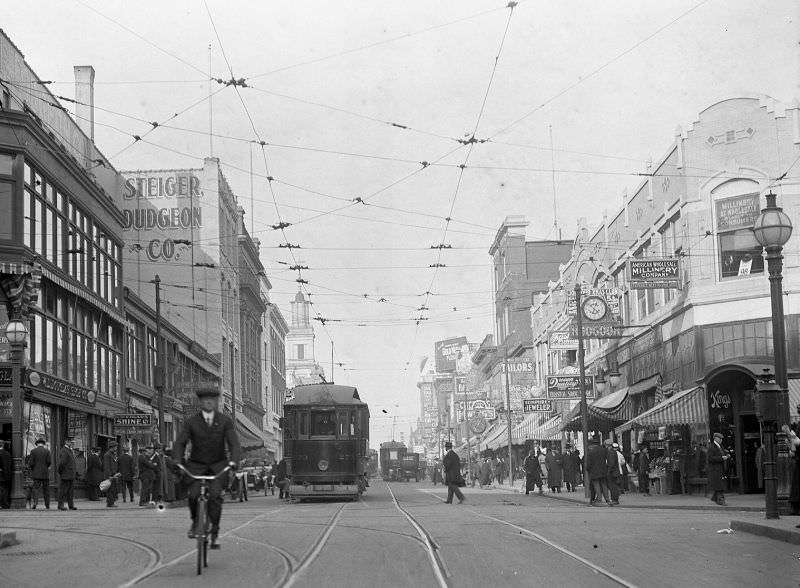
Acushnet Avenue was the main commercial artery running through the city’s working-class north end. Looking south from Campbell Street in 1907, the avenue was lined with small shops, saloons, and service businesses catering to the immigrant neighborhoods on either side. A few blocks away, Market Street offered an even more vivid snapshot of New Bedford’s diversity.
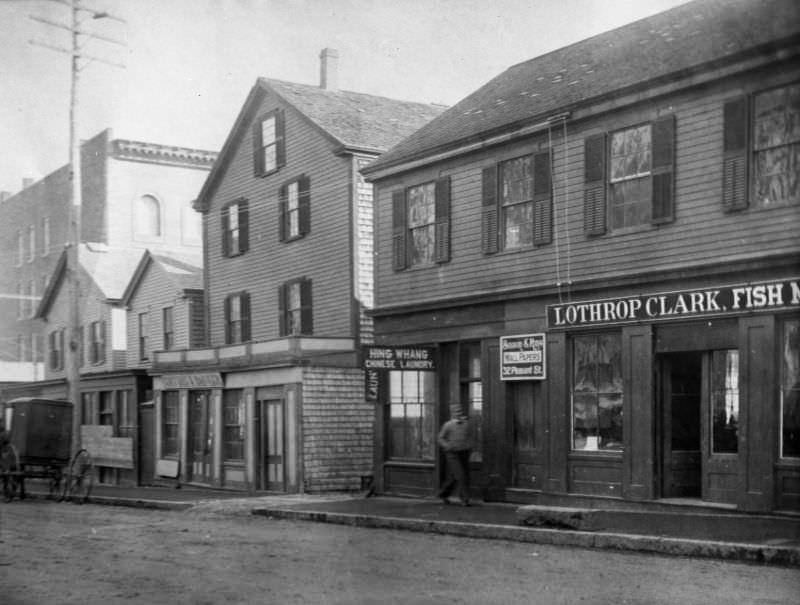
The south side of Market Street near 6th Street in 1907 held a remarkable mix of businesses in close proximity. Clark’s Fish Market shared the block with Hing Whang Chinese Laundry — a detail that captures just how varied New Bedford’s commercial life had become. Chinese immigrants, though a smaller community than the Portuguese or Polish arrivals, had established businesses and residences in the city by the early 1900s.
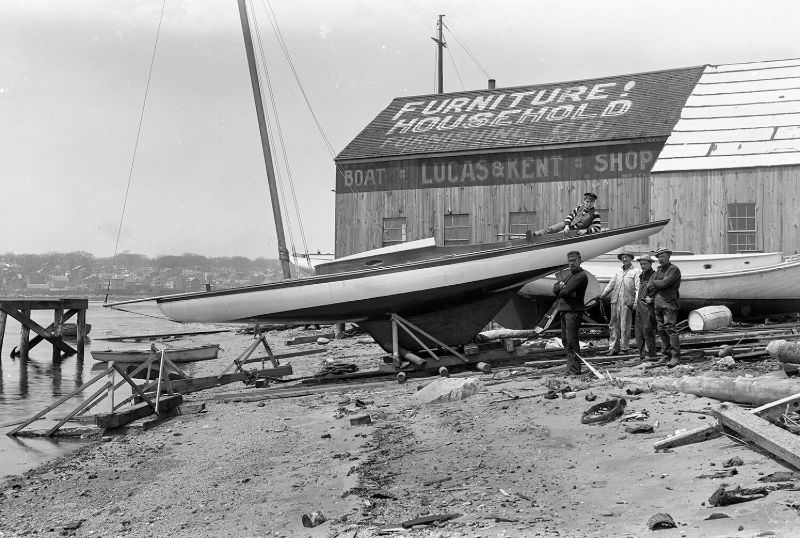
The Lucas & Kent Boat Shop was one of several small marine craft businesses still operating along the New Bedford waterfront in 1907. The men posed around a sailboat out front represent the craftsmen who kept the city’s boat-building tradition alive long after the great whale ships stopped sailing. It was skilled, specialized work, and these shops passed down knowledge that stretched back generations.
Willis Point, photographed in 1907, shows young boys posing for the camera with a railroad line stretching behind them. Children in working-class New Bedford spent much of their time outdoors — near the water, near the rails, in spaces that were as much industrial as they were recreational. For many of these boys, the mills and docks were not far in their future.
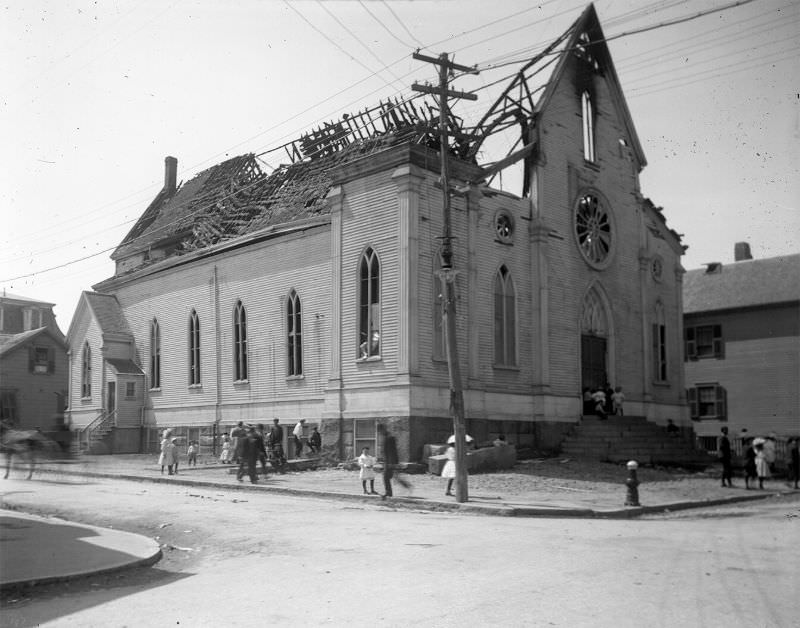
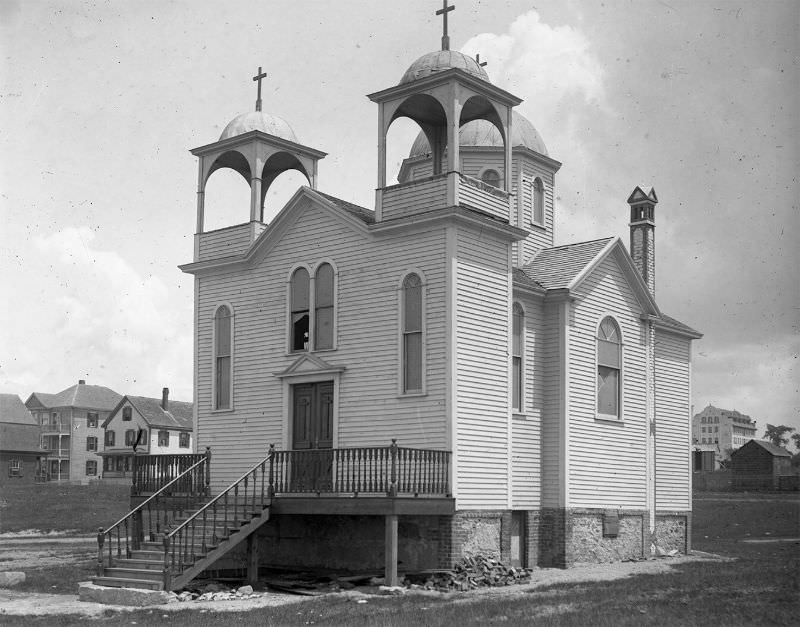
In 1908, fire destroyed St. John the Baptist Church. Church buildings were central to immigrant community life in New Bedford — they served as cultural anchors, gathering places, and schools for newly arrived families. The loss of St. John the Baptist was a serious blow to the congregation it served.
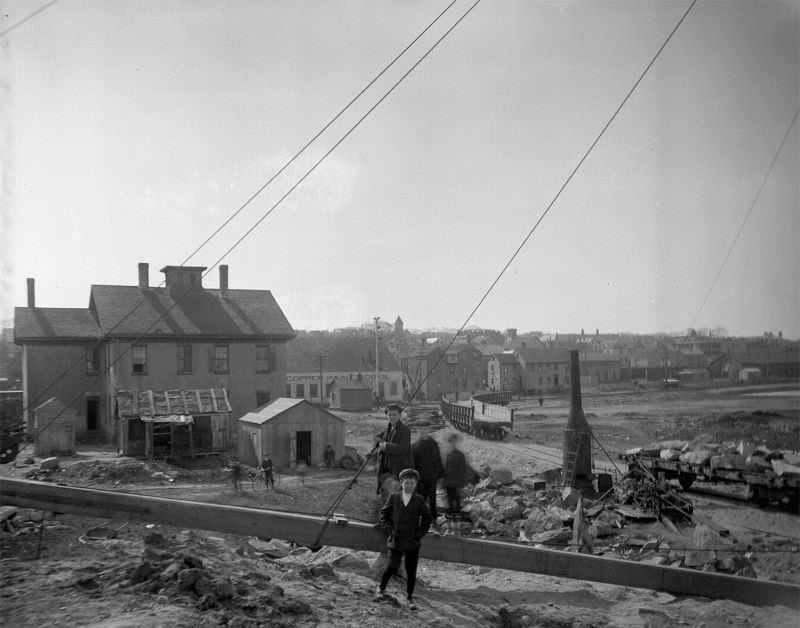
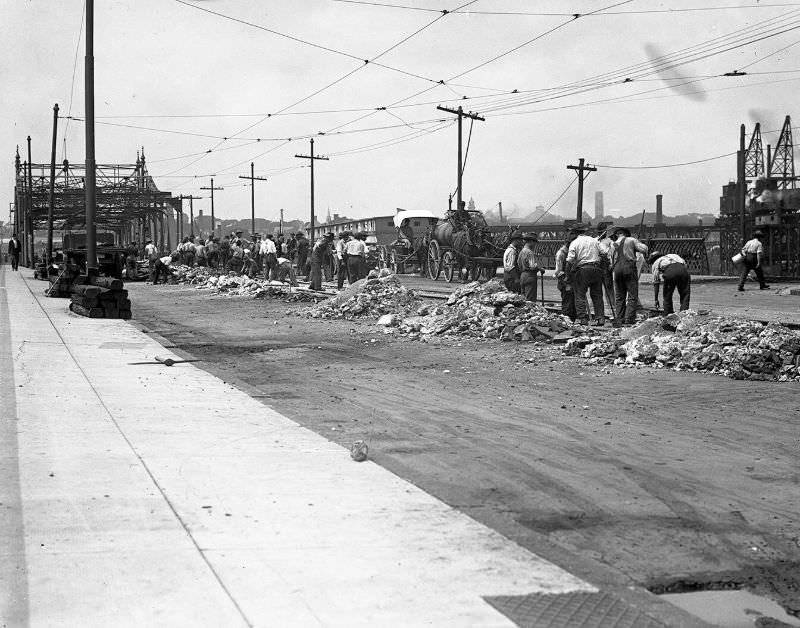
The New Bedford–Fairhaven Bridge connected the city to its neighboring town across the Acushnet River. In 1912, the bridge underwent significant repairs, with workmen photographed amid torn-up sections of the span. Infrastructure work like this was constant in a growing industrial city — roads, bridges, and rail lines required continuous maintenance to keep commerce moving.
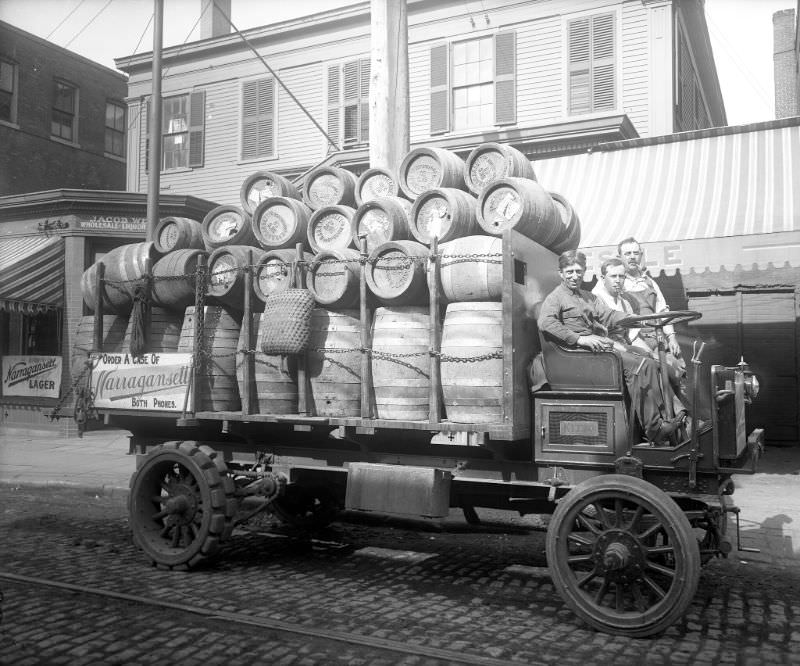
Roger Fay’s beer truck, photographed in 1912, is a straightforward piece of everyday commercial life — a delivery vehicle making rounds through the city’s neighborhoods and taverns. New Bedford had a strong drinking culture tied to its working-class identity, and local brewers and distributors like Fay were fixtures of the urban economy.
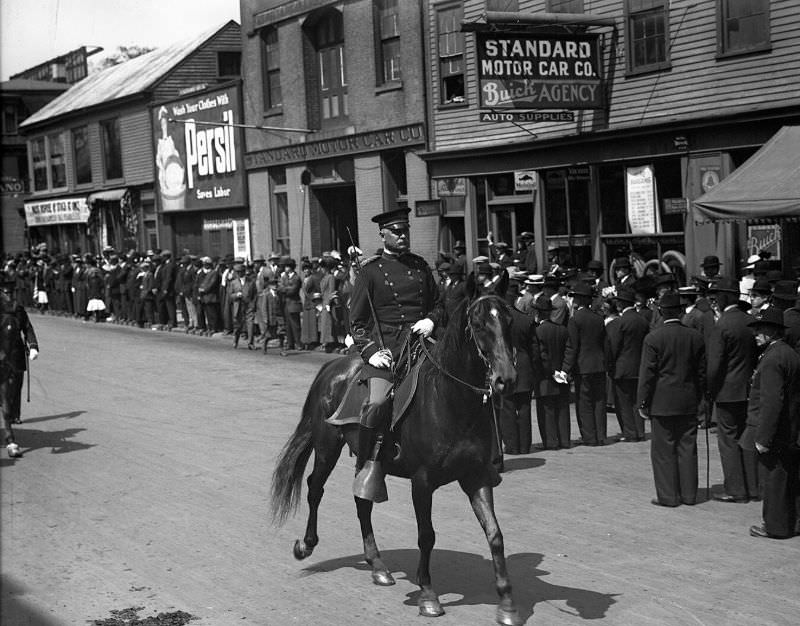
Memorial Day at Fort Rodman in 1913 brought out Captain J.F. Howell and a formal military observance at the harbor fortification. Fort Rodman, located at Clark’s Point where the Acushnet River meets Buzzards Bay, was an active military installation and a site of civic ceremony. Memorial Day gatherings there honored Civil War dead at a time when veterans of that conflict were still alive.
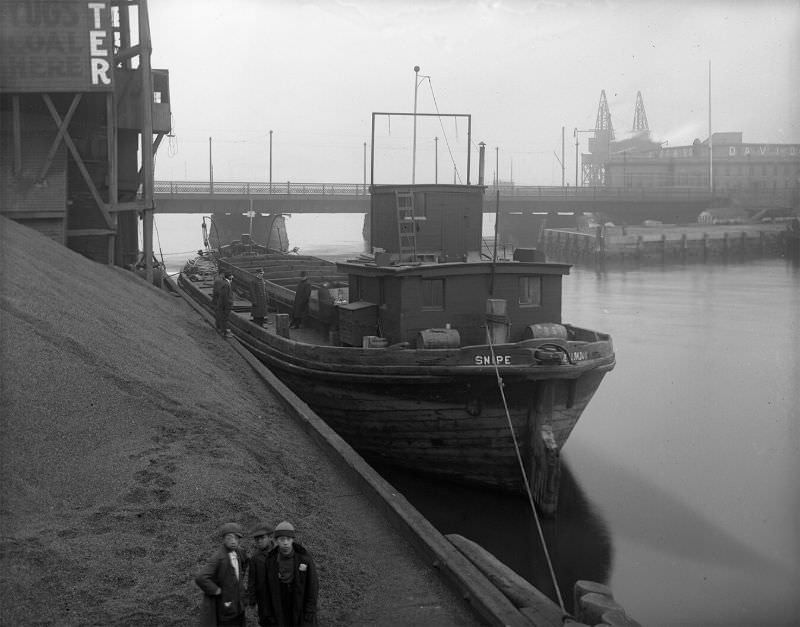
In 1914, a newspaper headline read “Barge Captain Murders and Mutilates,” attached to a photograph of the barge Snipe with three young boys standing in the foreground. The image documents one of the darker crime stories connected to New Bedford’s waterfront — a violent act that drew wide public attention at the time.
New Bedford’s Greek community observed Christmas according to the Julian Calendar — on January 7th rather than December 25th. In 1914, the local press noted the tradition with a headline referencing the Julian Calendar’s adoption in AD 321. The Greek Orthodox church on Oxford Street was the center of this observance, a visible marker of how the city’s newest immigrants maintained their religious and cultural traditions.
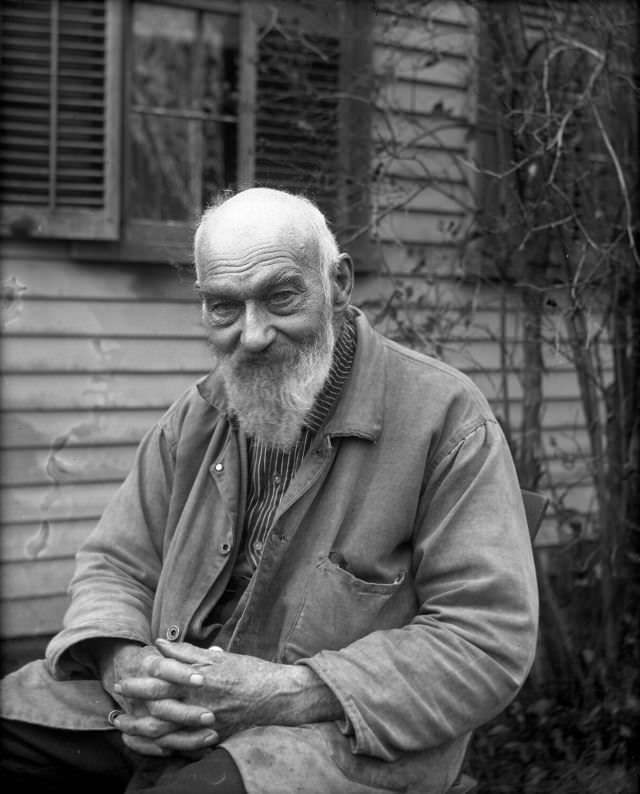
Alden H. Manter was photographed in 1914 as an old whaleman — one of the last surviving figures from New Bedford’s golden age of whaling. By that point, the industry that had made New Bedford the wealthiest city per capita in the United States was essentially gone. Men like Manter were living relics of a trade that had already passed into history.
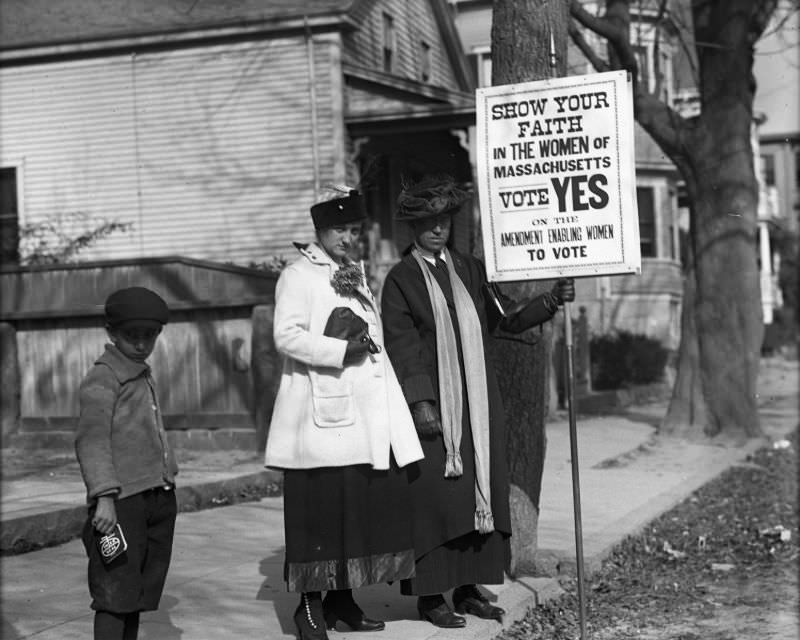
Rebecca Margolis and Alice Pierce were photographed in 1915 as suffragettes — women actively campaigning for the right to vote. New Bedford had an organized women’s suffrage movement, and portraits like this one served as public statements of identity and political purpose. The 19th Amendment granting women the vote was still five years away.
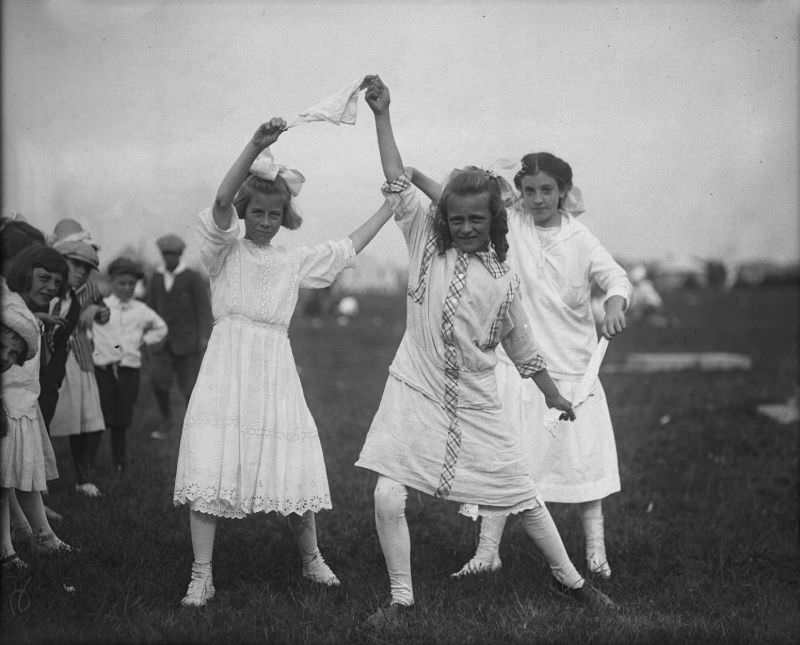
Buttonwood Park, opened in 1902, gave New Bedford’s working-class residents a formal green space for recreation. By 1915, it was hosting playground outings for children from the surrounding neighborhoods. Three girls photographed there with a handkerchief represent the lighter side of city life — play, fresh air, and a brief escape from the crowded triple-decker streets nearby.
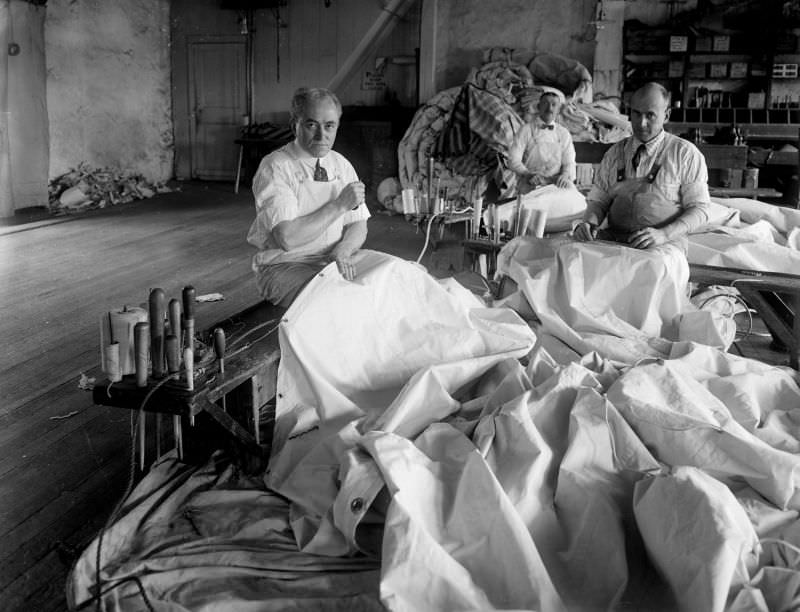
Briggs & Beckman’s Sail Loft was still operating in 1915, employing sail makers who stitched canvas for fishing vessels and pleasure boats. The three men photographed at work represent a craft that had sustained New Bedford’s maritime trades for generations. By this point, the sail loft was serving a fraction of the demand it once had, but the work continued with the same precision it always had.
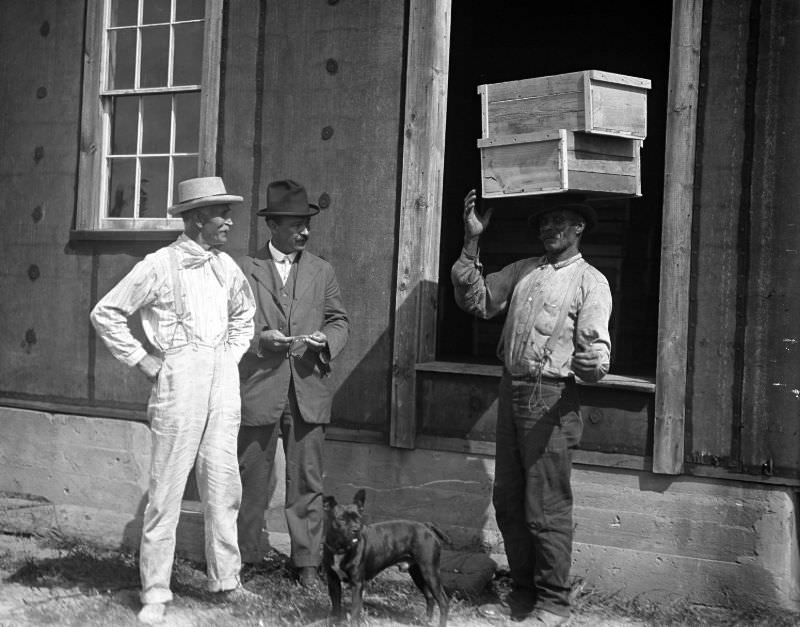
In 1916, a man was photographed balancing a stack of cranberry boxes on his head while two others looked on. The Cape Cod and southeastern Massachusetts region was a major cranberry-producing area, and New Bedford served as a distribution hub for the harvest. The image captures the physical labor involved in moving agricultural goods through the city’s markets and docks.
In 1918, the 42nd anniversary of what locals called Chapman’s Monkey Fire was commemorated in print and photograph. The original fire, which broke out in 1876, became one of New Bedford’s most retold disaster stories — the name referring to a monkey said to have started the blaze. Whether the animal was truly responsible was never fully established, but the story stuck firmly in the city’s collective memory.
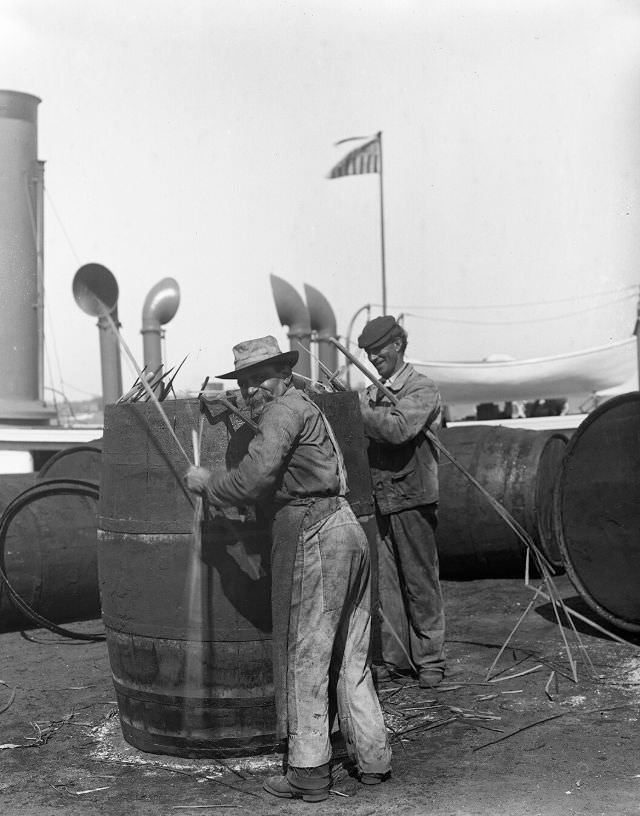
Also in 1918, coopers were still at work in New Bedford producing and repairing the wooden barrels that had stored whale oil during the industry’s peak years. The process of “flagging” a cask — sealing it with a strip of material to prevent leaks — required skilled hands and specialized tools. These men were among the last practitioners of a craft that the whaling trade had once demanded by the thousands.
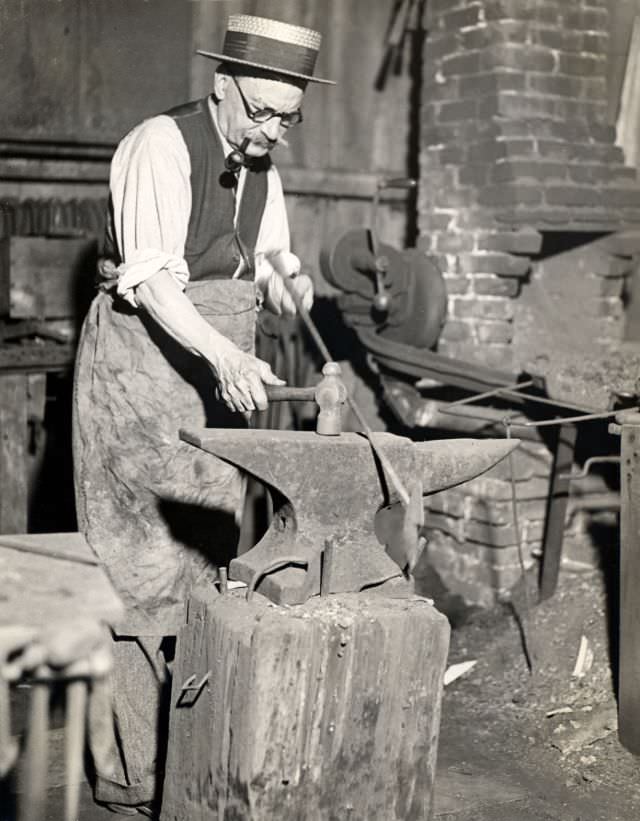
Edward R. Cole, photographed at his forge in Fairhaven in the 1910s, was identified as the last of the shipsmiths who made whalecraft — the specialized iron tools and hardware used aboard whaling ships. Harpoons, lances, cutting spades, and ship fittings all came from smiths like Cole. With him working at the old forge, a direct line back to the height of the whaling industry was still intact, if barely.
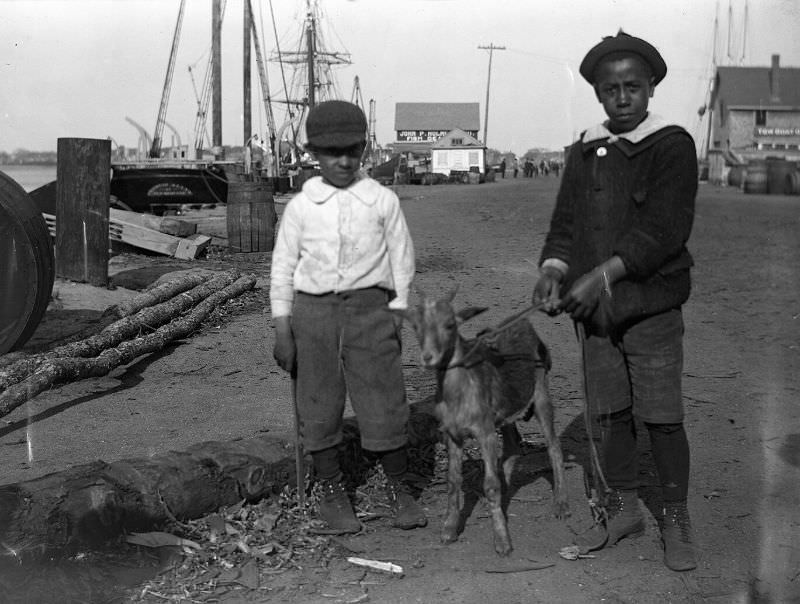
Two young boys posed near the New Bedford waterfront in the 1910s with a goat beside them. The image is informal and unscripted — a brief moment of childhood near the docks of a city that was still figuring out what it was becoming. Behind them, the waterfront that had once launched the world’s greatest whale fleet was quieter now, repurposed, but still very much the soul of New Bedford.





I realy like those vintage photo’s. It’s like looking in to a timemachine
All photographs in this post are from the collection of the New Bedford Whaling Museum and should be credited as such.
Wow these are cool
That half of Acushnet Ave is gone now. Rt. 18 bulldozed right through it along with quite a few others like Water St.
Quite a boatload of history!
I see what you did there.
New Bedford-Fairhaven Bridge being repaired. Work men with bridge torn up, 1912
A tradition like no other.