
Karen Carpenter had one of the most recognizable voices in American music. As one half of the sibling duo The Carpenters, she rose to fame in the early 1970s with a warm, clear contralto voice that set her apart from nearly every other singer of her era. Songs like “Close to You,” “We’ve Only Just Begun,” and “Rainy Days and Mondays” became defining records of the decade. Yet behind the polished recordings and sold-out performances, Carpenter was quietly fighting a battle that would end her life long before her time.
On February 4, 1983, Karen Carpenter died of heart failure brought on by anorexia nervosa. She was 32 years old. Her death sent shockwaves through the music world and forced a broader public conversation about a disorder that, at the time, most people barely understood. The circumstances surrounding her final weeks — including a photo session that produced what would become her last known public image — tell a stark story of how severely the disorder had ravaged her body.
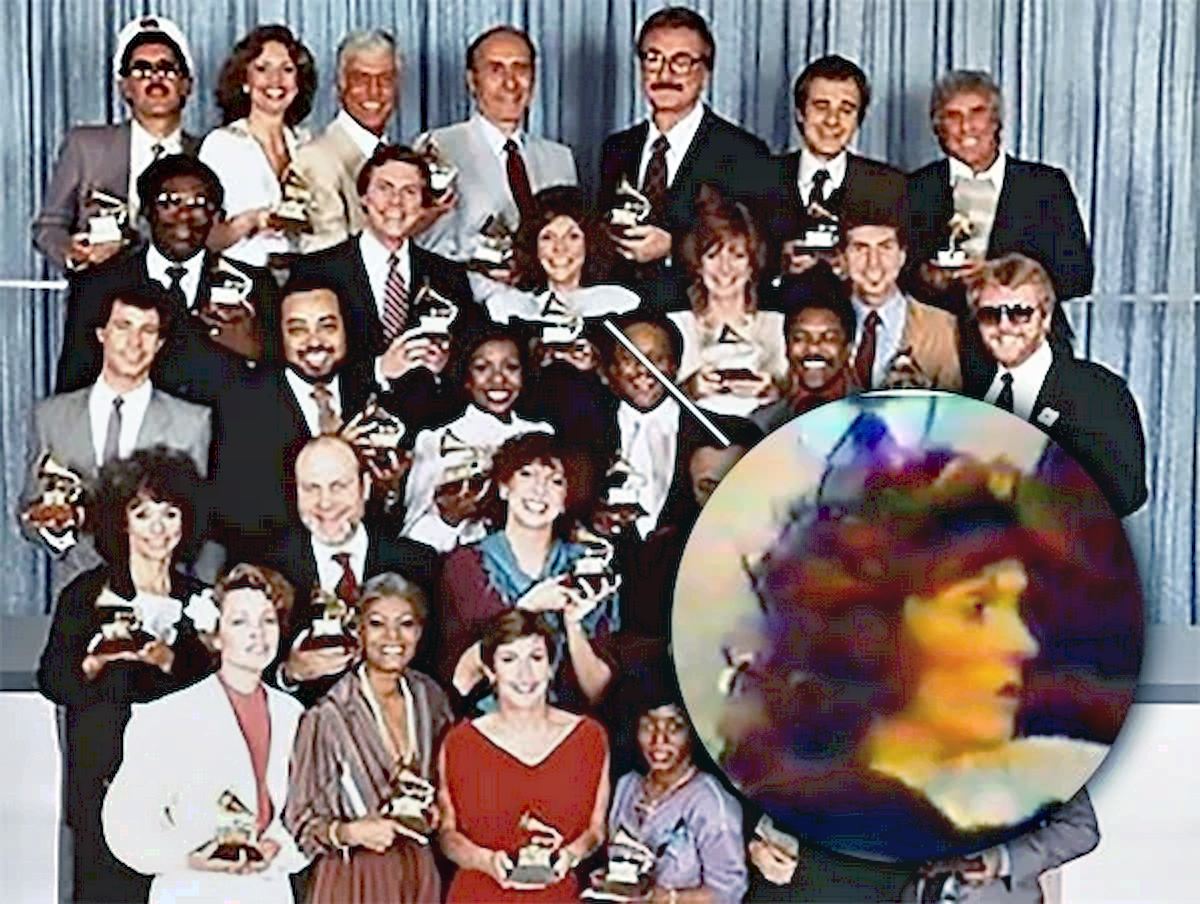
On January 11, 1983 — just 24 days before her death — Carpenter attended a promotional photo shoot for the 25th Annual Grammy Awards. The photographs taken that day show a woman who is visibly thin and physically fragile. Her face is gaunt, her frame strikingly small beneath her clothing. To those who had followed her career, the images were alarming. They stand today as the last professionally taken photos of her life.
Carpenter’s struggle with anorexia nervosa had been going on for years before that photo was taken. She first began severely restricting her food intake in the early 1970s, reportedly after a reviewer described her as “chubby” in print. That comment, combined with the intense pressures of being a public performer, triggered a pattern of disordered eating that would define much of her adult life. At various points, her weight dropped to dangerously low levels. She became highly dependent on laxatives and thyroid medication, both of which she used in excess and without medical supervision, causing serious internal damage over time.
Those close to her watched the decline with growing alarm. Her brother and musical partner Richard Carpenter, along with other family members and friends, repeatedly urged her to get help. By the late 1970s and into the early 1980s, her condition had become difficult to hide. Concert appearances sometimes had to be canceled or postponed. Her weight loss was visible to audiences and journalists alike, and speculation about her health appeared frequently in entertainment coverage of the time.
In 1982, Carpenter took a significant step and sought treatment in New York City under Dr. Steven Levenkron, a psychotherapist who specialized in eating disorders. She spent several months in treatment, and by the time she returned to California in late 1982, she had regained some weight. Her family and doctors expressed cautious optimism. The Grammy photo shoot in January 1983 was part of a planned return to public life. It was meant to signal a comeback. Instead, it captured the last images the world would see of her alive.
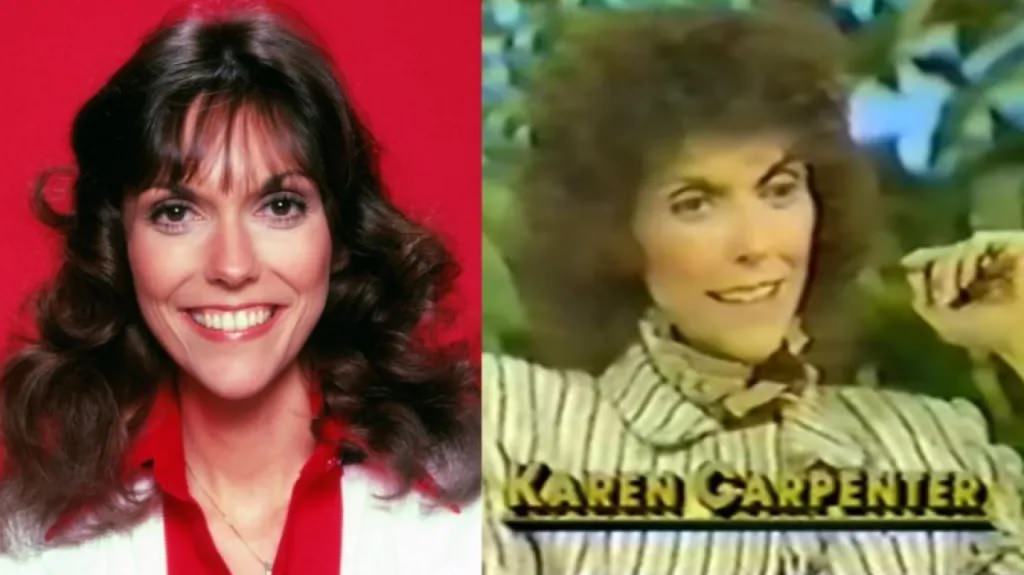
On the morning of February 4, 1983, Carpenter collapsed at her parents’ home in Downey, California. Paramedics were called, but she could not be revived. The official cause of death listed by the medical examiner was “emetine cardiotoxicity due to or as a consequence of anorexia nervosa.” In plain terms, years of ipecac syrup abuse — a substance used to induce vomiting — had caused irreversible damage to her heart muscle. The damage had been accumulating for years. Even the weight she had regained during treatment had come too late to reverse what the disorder had already done to her cardiovascular system.
The medical details of her death were significant. In 1983, anorexia nervosa was not widely discussed in mainstream culture. Many people still viewed it as a lifestyle choice rather than a serious, potentially fatal psychiatric condition. Carpenter’s death forced that understanding to change. Physicians, mental health professionals, and journalists all pointed to her case as proof that anorexia was not a vanity issue but a life-threatening illness with measurable, physical consequences. Her death became a turning point in how the disorder was discussed in both medical circles and the general public.
Anorexia nervosa has the highest mortality rate of any psychiatric disorder. It kills through multiple mechanisms — cardiac failure, organ shutdown, and complications from malnutrition. The heart, which depends on electrolytes and adequate nutrition to function, is particularly vulnerable. In Carpenter’s case, years of purging behaviors had depleted her body’s potassium levels and introduced a toxic substance directly harmful to cardiac tissue. Her heart simply gave out.
In 1985, Richard Carpenter established the Karen Carpenter Foundation to promote awareness of eating disorders and fund research into their causes and treatments. The foundation provided resources for people struggling with these conditions at a time when public understanding of them was still limited. Its creation reflected both a personal response to grief and a recognition that Karen’s death carried a broader warning that needed to be heard.
The Grammy photo from January 11, 1983 remains one of the most widely circulated images of Karen Carpenter. It is not remembered as a glamorous promotional image. It is remembered as a document of what anorexia nervosa looks like in its late stages — and as a portrait of a woman who, by all accounts, was trying to find her way back to health just weeks before her body finally gave out. She was 32 years old, with a voice that millions of people loved, and a disease that gave her no more time.



She does not look 32 in that last picture.
I remember this. I read that her manager (or some other authority figure) told her she needed to lose weight because she looked plump. Back in those days, there was a lot of pressure to be extremely thin, and many people regularly took diet pills. Thankfully, our society has changed (a bit) – and although I’m sickened by all the Ozempic commercials – there is much more acceptance of “normal” bodies now, thankfully.
It’s crazy how much it was in people’s heads back then, I work with seniors in nursing homes and very often the women don’t finish everything on their plate and only take a few bites of desert because they’re still trying to watch their figure. Even though their body literally needs those nutrients and everything is the correct portions
Yeah, everyone, myself included were taking some sort of diet pills back in the day. Being that thin isn’t normal.
It was a journalist early in the Carpenter’s career. He called her “plump” in an article.
Supposedly her mother treated her poorly too.
Yeah her mother apparently was a POS
Twiggy was the beauty standard.
Twiggy was before that time
That doesn’t meant she couldn’t still be a beauty standard.
The press actually referred to her as “chubby” many times in the 70’s. Then factor in that she’d gone her entire life with no control over anything but her weight. Her mother strongly favored her brother, Richard, and Karen’s whole life and career revolved around him. She was raised to feel like her entire existence was made to glorify her brother and his music. Her family was genuinely astonished when they realized she was the most popular Carpenter, they thought it should’ve been Richard. And then they made sure she could never leave him and launch her own solo career, because he wasn’t going to make it without her. So she focused her energy on controlling the one thing she could: her weight. Her story was so sad.
She brought so much joy and happiness to the world (and continues to do so) but tragically was never able to achieve that for herself.
In a cruel twist of fate, her death became the fodder of tasteless jokes.
She deserved better.
Her death became the fodder of tasteless jokes;
No it didn’t. I’ve never heard a single derogatory word against Karen Carpenter. She was beloved.
eye roll You are one person and your statement is a false equivalency. Just because YOU have not heard does not mean their statement is untrue. In fact Bette Midler famously made multiple jokes about Ms. Carpenter. I loathe when people act as if their singular world view is the only acceptable reality.
She was so talented and amazing. Her family and the people around her sucked. Karen deserved so much better.
She was amazing with her artistry. Her songs just pulled you into a different world. Superstar, We’ve Only Just Begun, Yesterday Once More…whatever she sang it just pulled you in. I listen to her all the time. Such a great loss.