Hey There! Before You Go. 😧
Get the best vintage content straight into your inbox!

Don't worry, we don't spam

Houston in the 1930s: What Houston Looked like During the Great Depression

When the stock market crashed in October 1929, it sent shockwaves across the United States. But Houston, Texas, was not an ordinary American city. By 1930, its population had reached 292,352, and the city was still pushing forward. Construction cranes dotted the skyline. Ships moved through the ship channel. Cotton bales stacked up at the compresses. Houston was bruised by the Depression, but it never stopped moving.

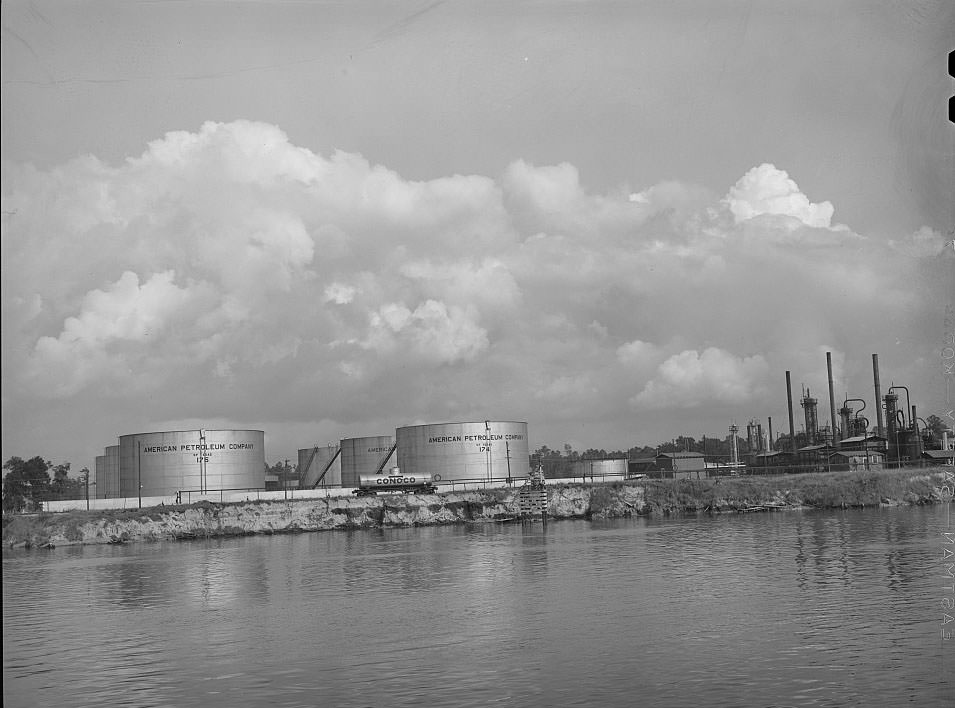
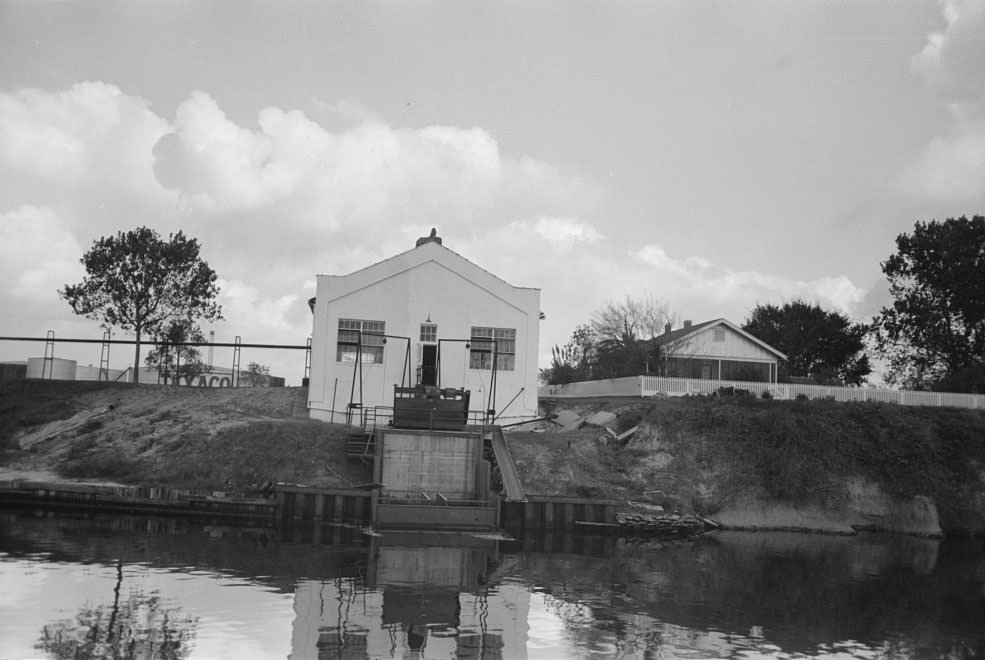
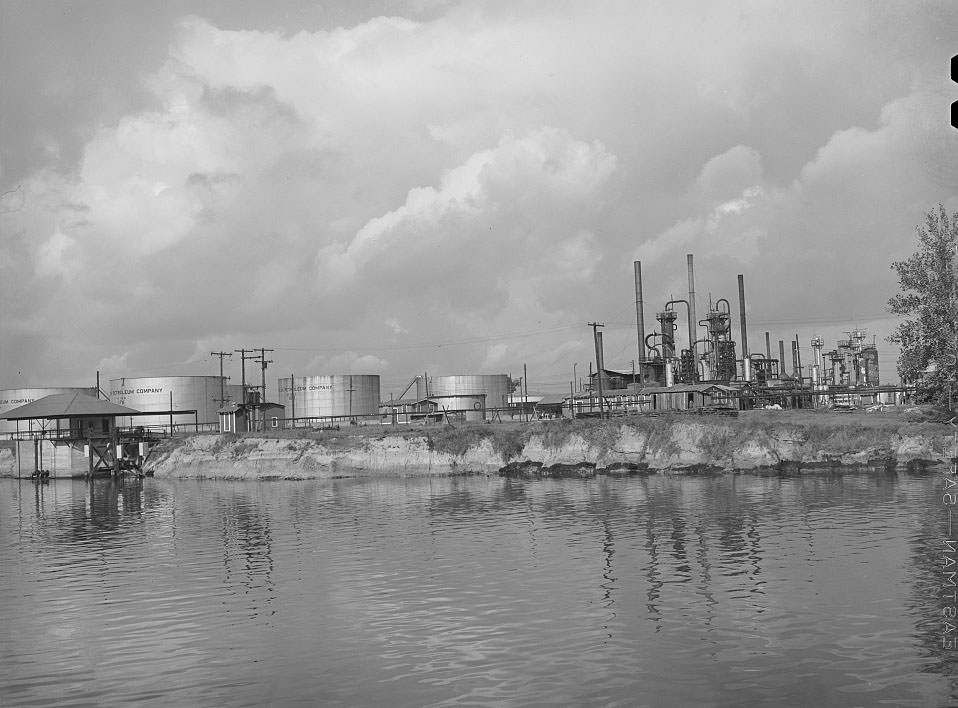
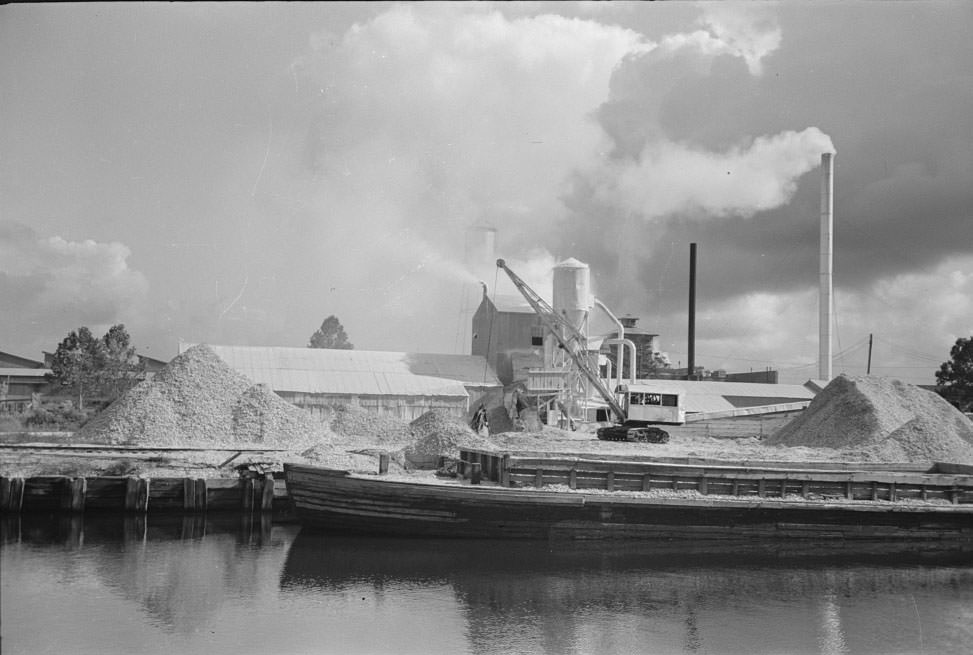
Industrial plant on the banks of the Port of Houston, Houston, 1930s

The Port of Houston was one of the city’s greatest economic engines during the 1930s. The Turning Basin had been deepened and expanded in the years leading up to the Depression, and dredging continued east of Harrisburg throughout the decade. New docks were built to handle the growing volume of goods moving in and out of the city. Oil refineries, cement plants, and industrial facilities lined the banks of the ship channel, turning the waterway into a corridor of commerce even as other parts of the country ground to a halt.

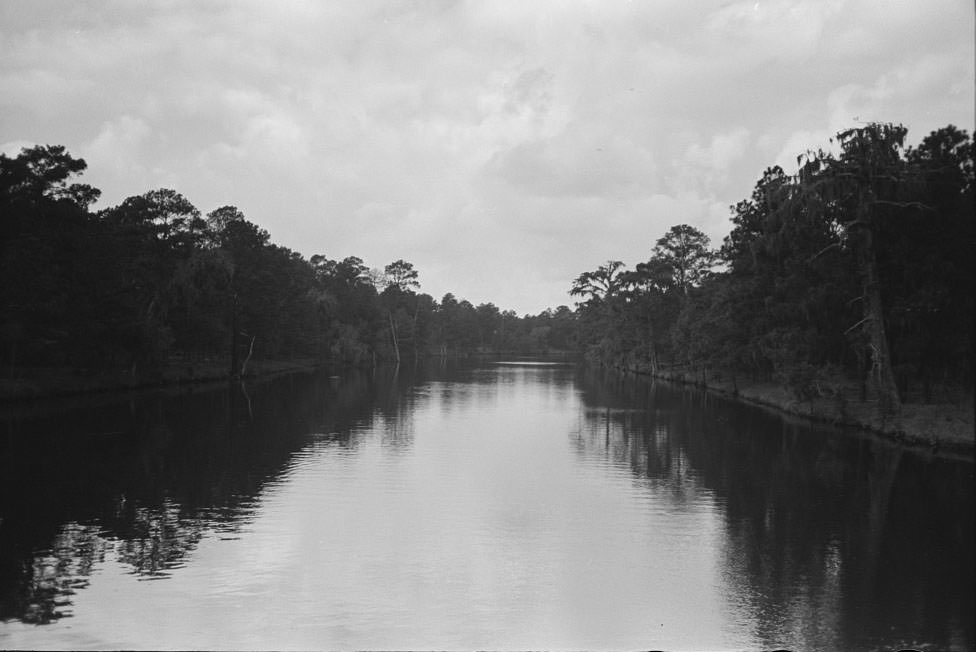
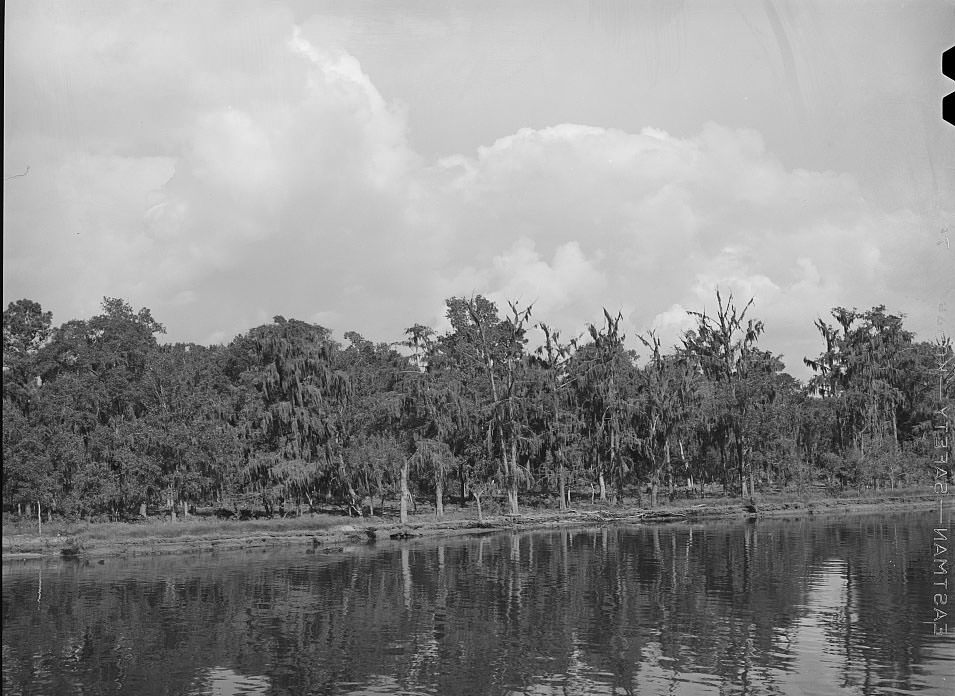
Trees and moss along the bayou, Port of Houston, Houston, 1930s
Trees and moss along the bayou, Port of Houston, Houston, , 1930s

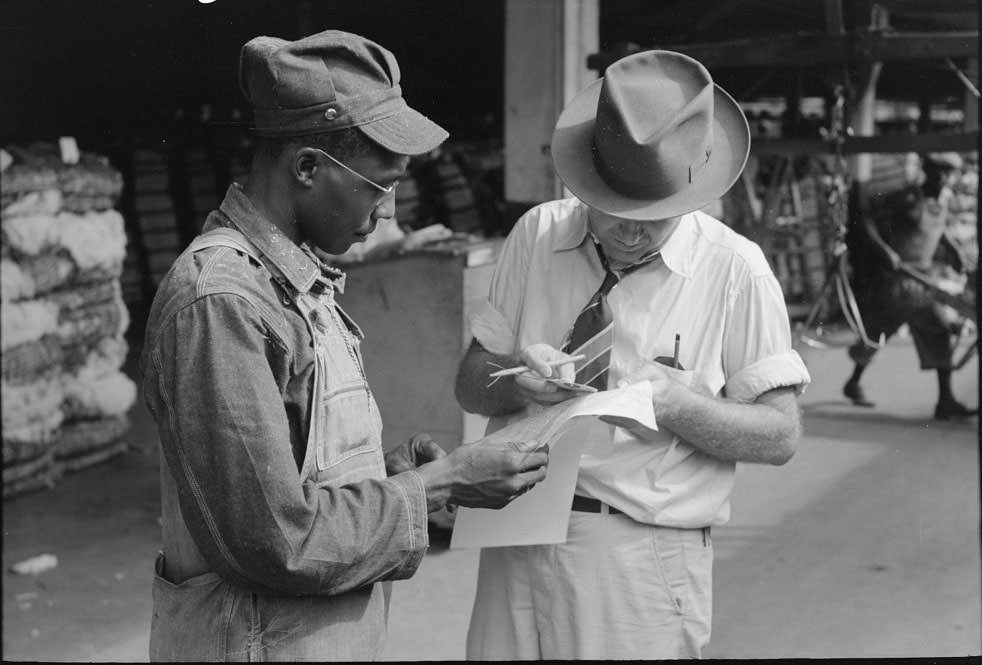
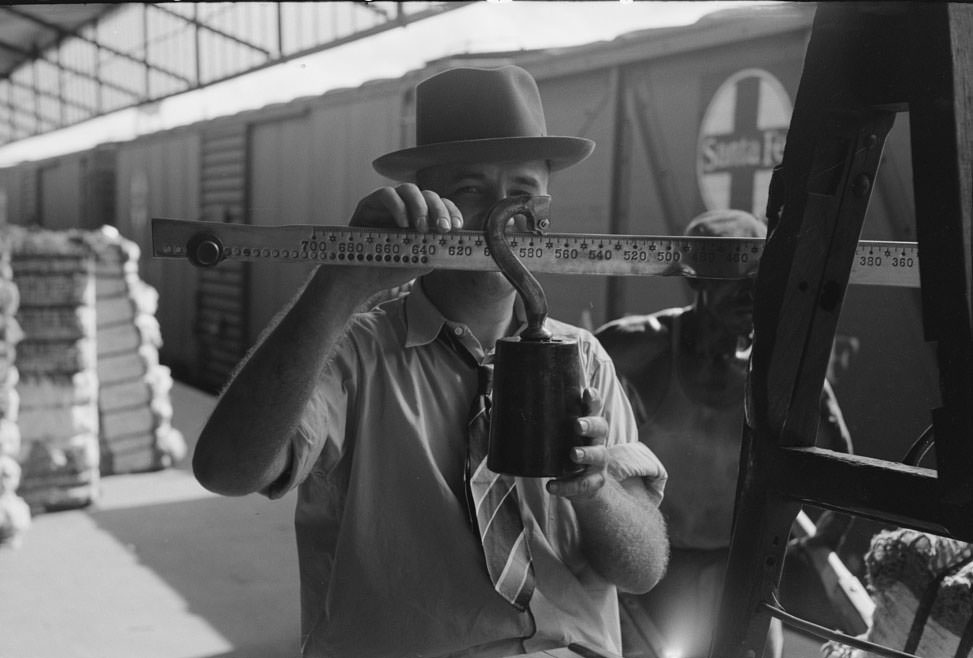
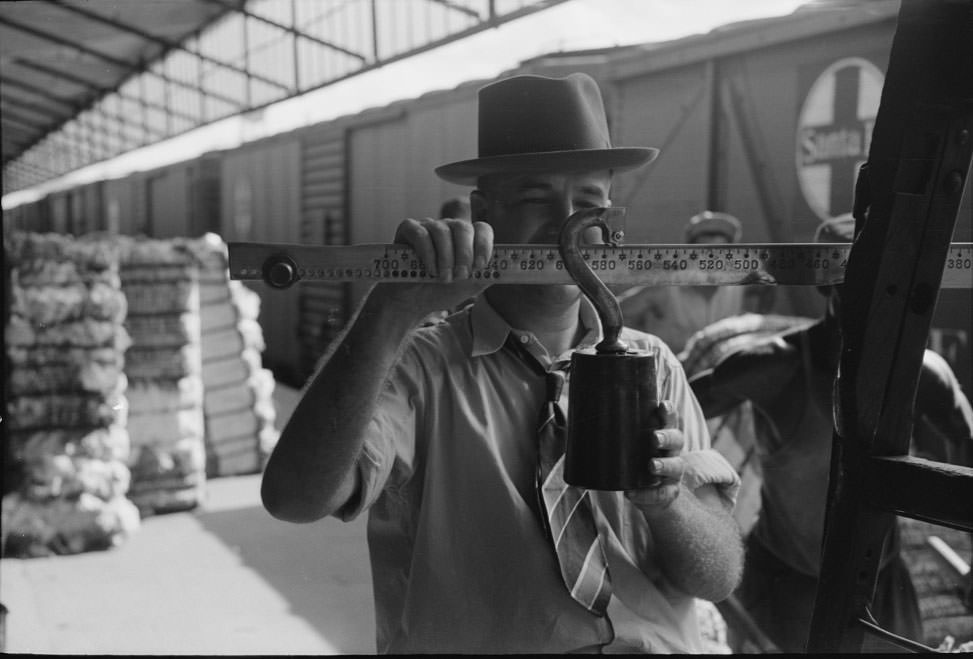
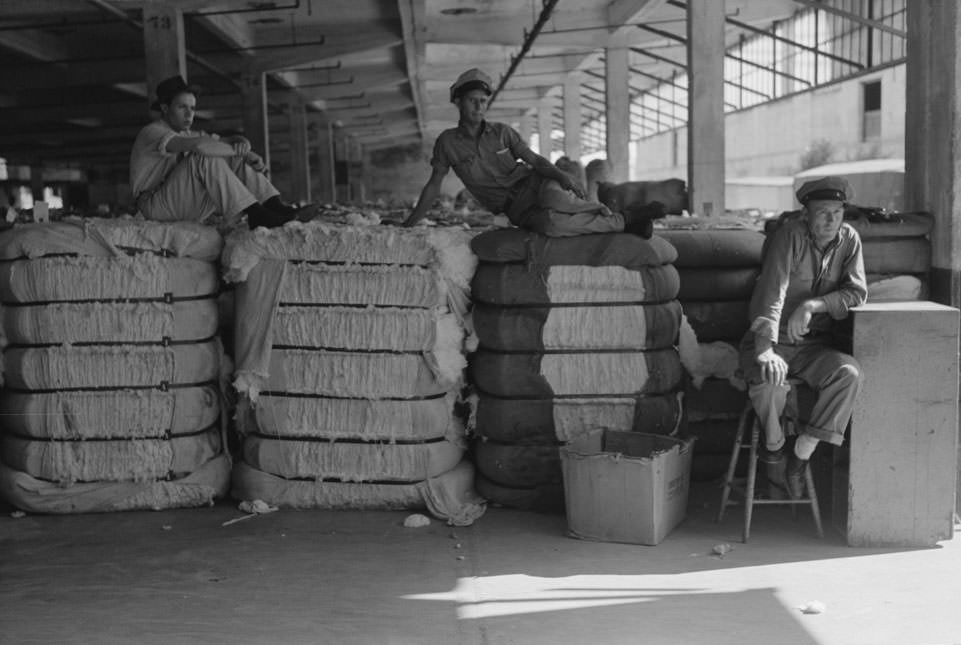
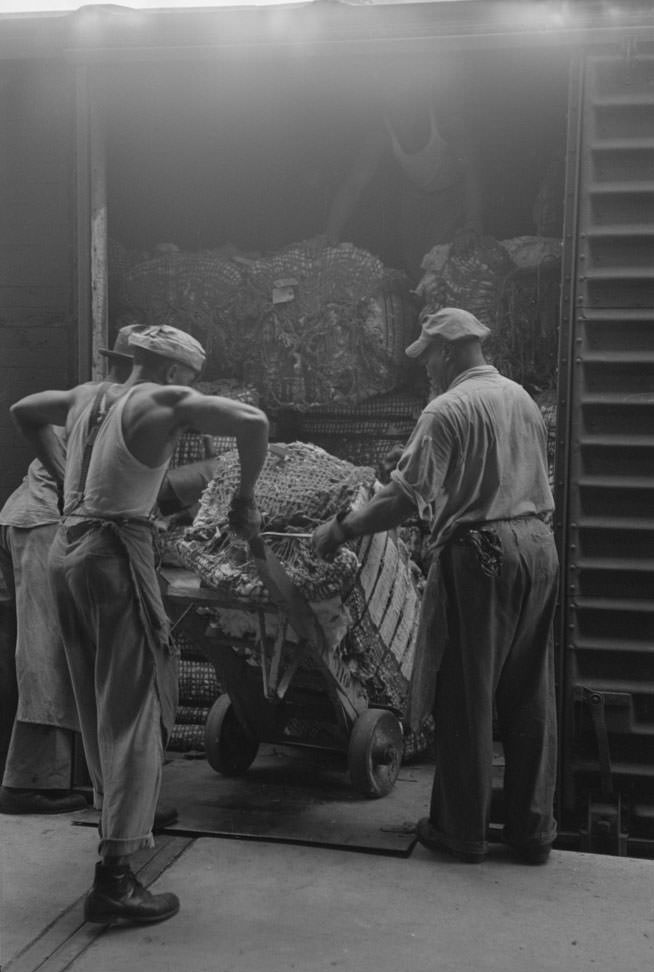
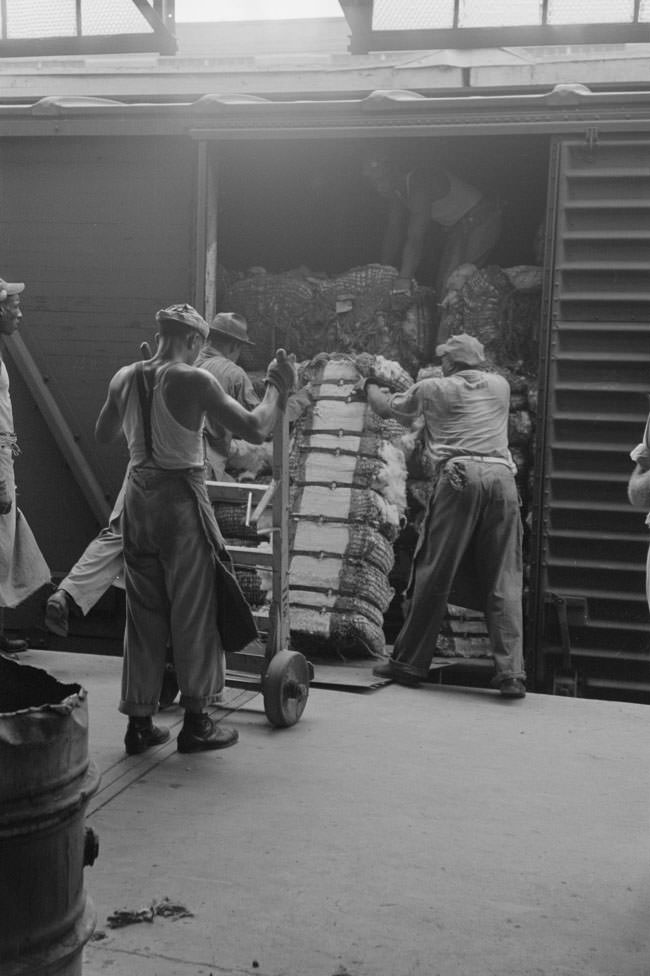
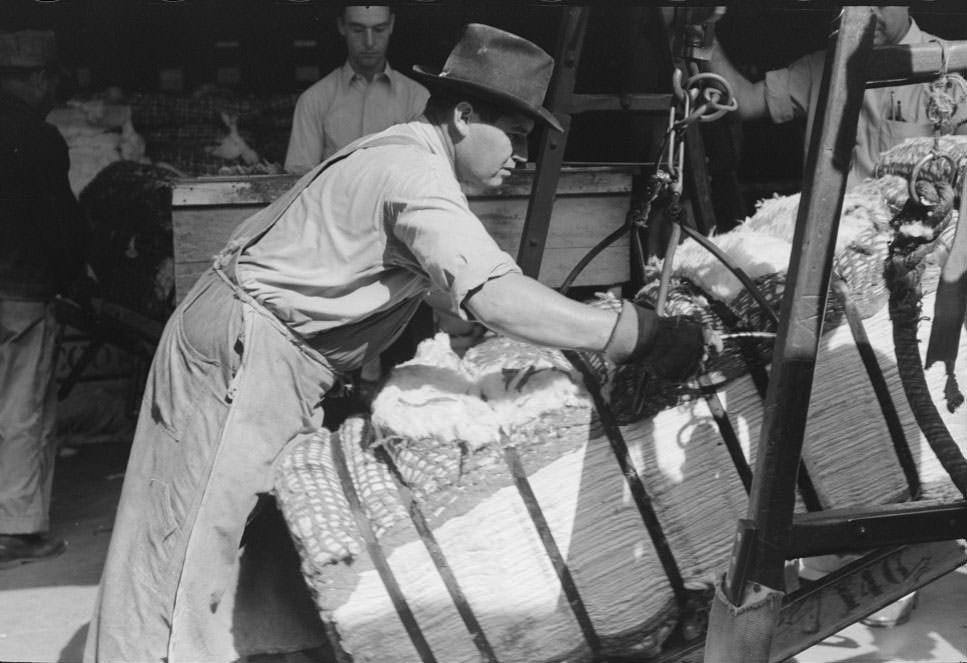
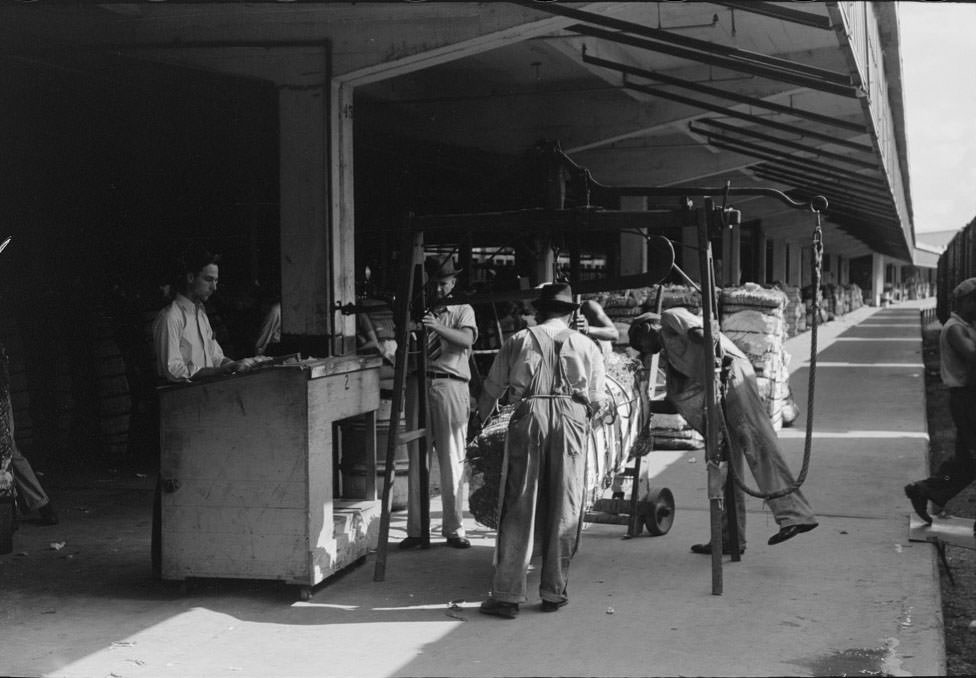
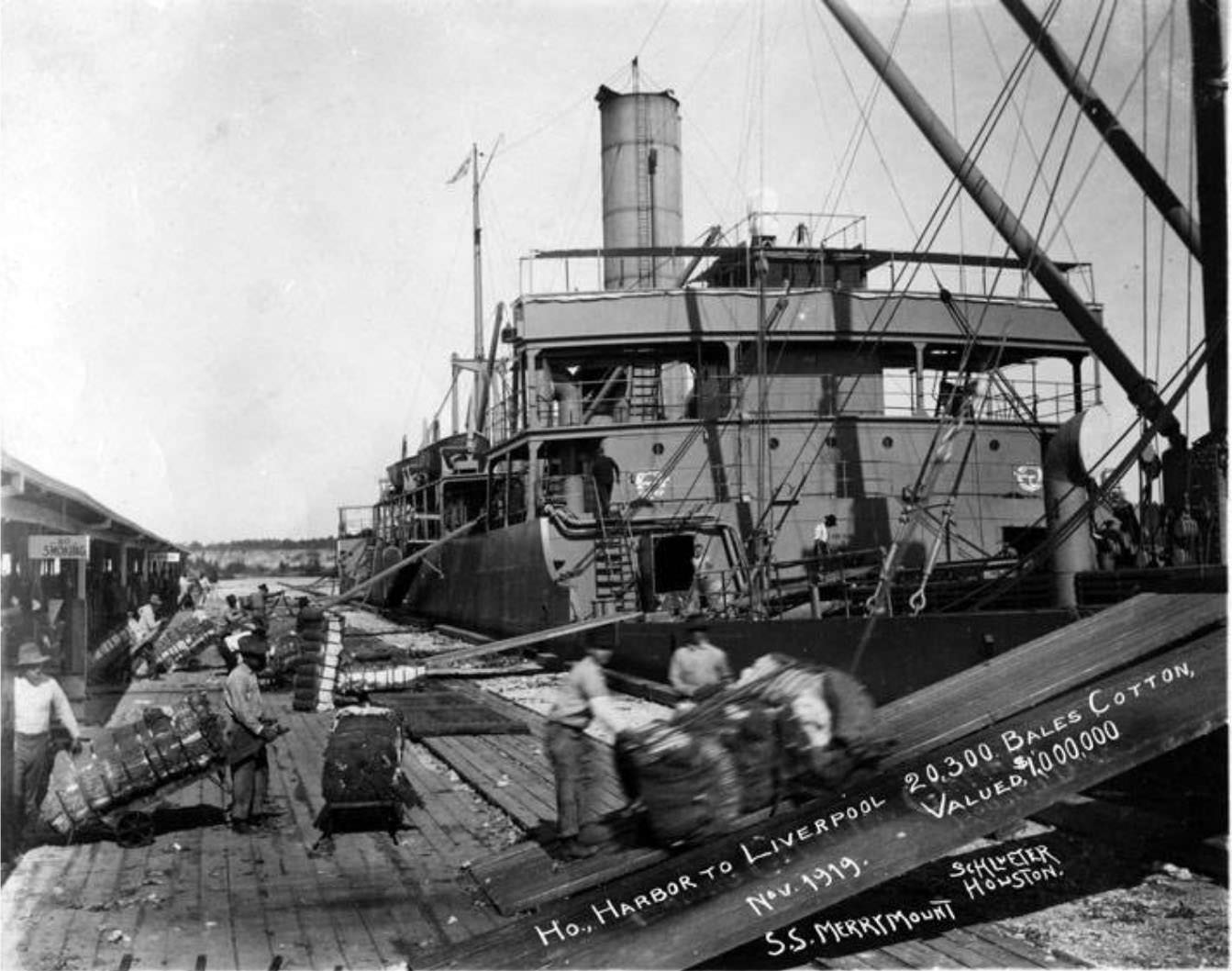
Cotton was king at the Port of Houston in the 1930s. The city’s cotton compresses were busy operations where raw bales arrived by freight car, were weighed, sampled, and then loaded onto ships bound for markets around the world. Workers used grappling hooks to lift bales so they could be weighed while suspended in the air. Checkers recorded the weights at the unloading platforms. Men slashed open bales with blades to pull samples for grading. It was hard, physical work, and it kept thousands of Houstonians employed when jobs elsewhere were scarce.

Weighing cotton at unloading platform. Cotton compress, Houston, , 1930s
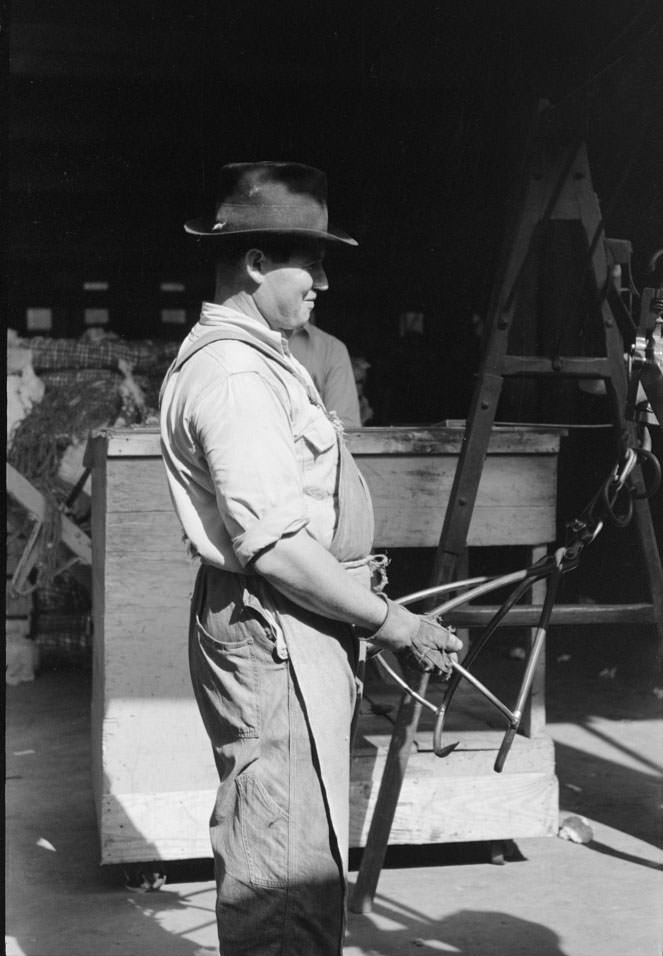
Putting grappling hooks on bale of cotton.
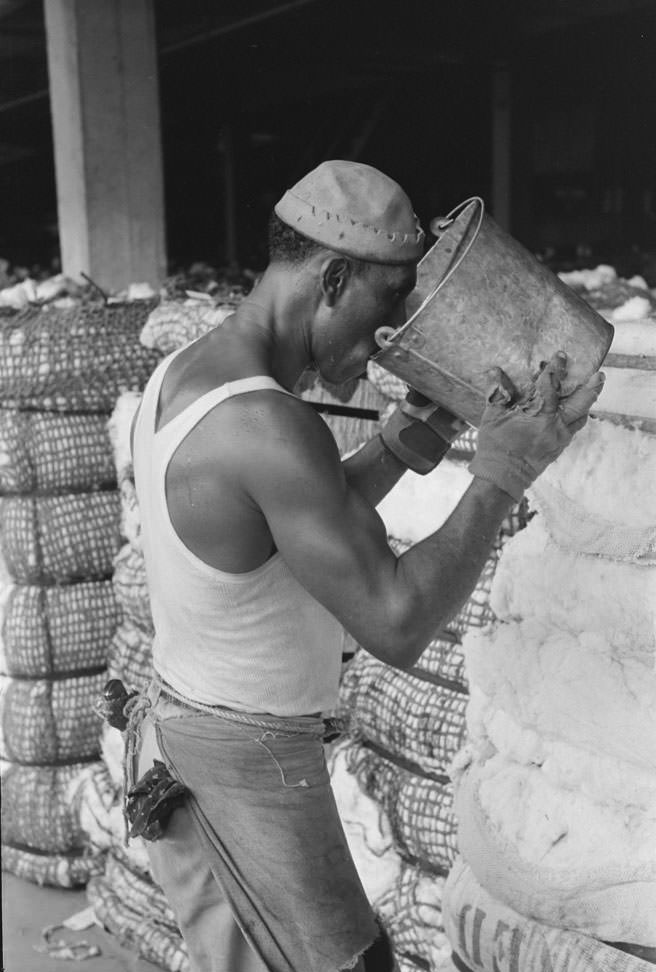
A worker at cotton compress taking a drink of water from bucket, Houston, 1930s.
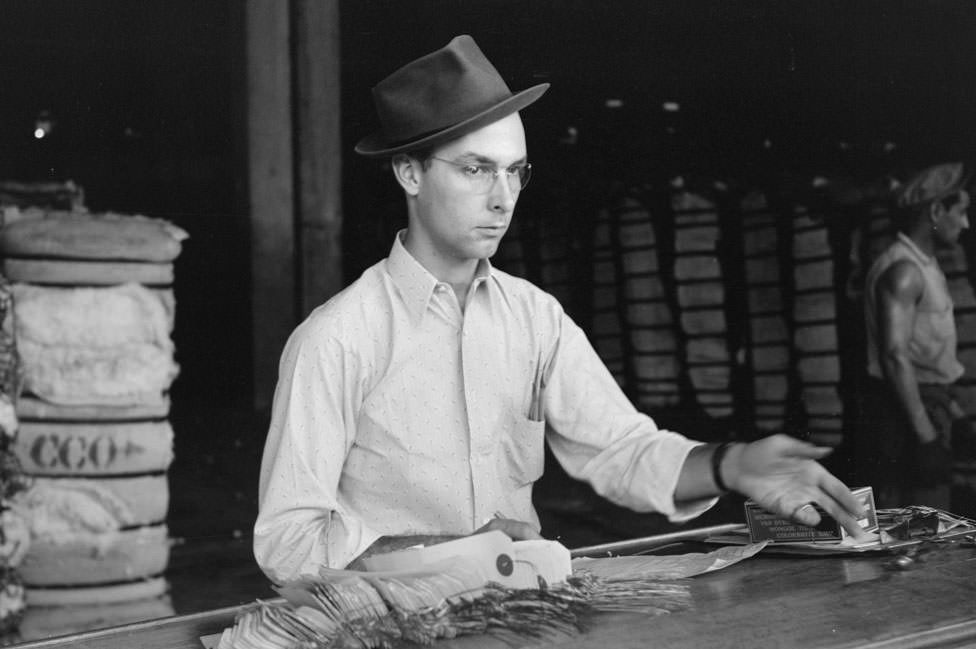
Weighing checker at unloading platform. Cotton compress, Houston, 1930s
Putting grappling hooks on bale of cotton.
A man slashes bale of cotton to take sample as it passes him on a hand truck, 1930s.
Weighing cotton at unloading platform. Cotton compress, Houston, 1930s
Trucker and weighing checker at unloading platform. Cotton compress, Houston, Texas

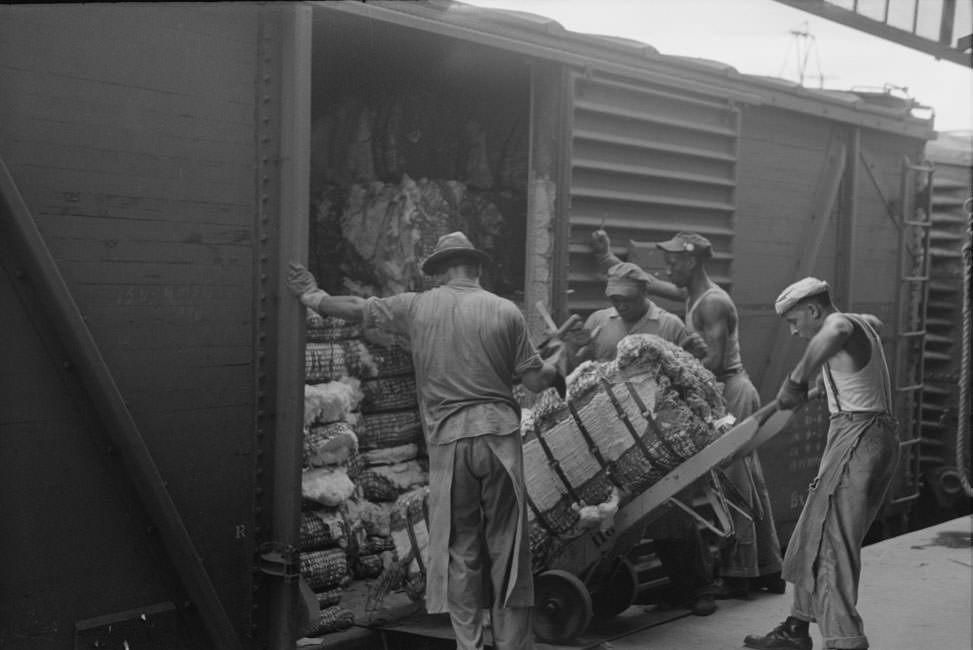
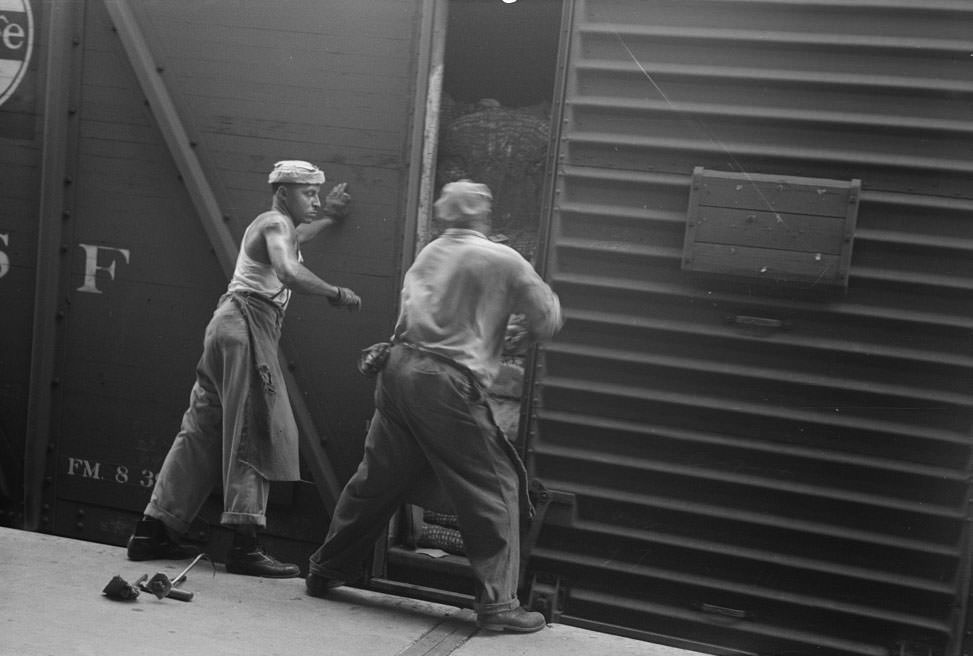
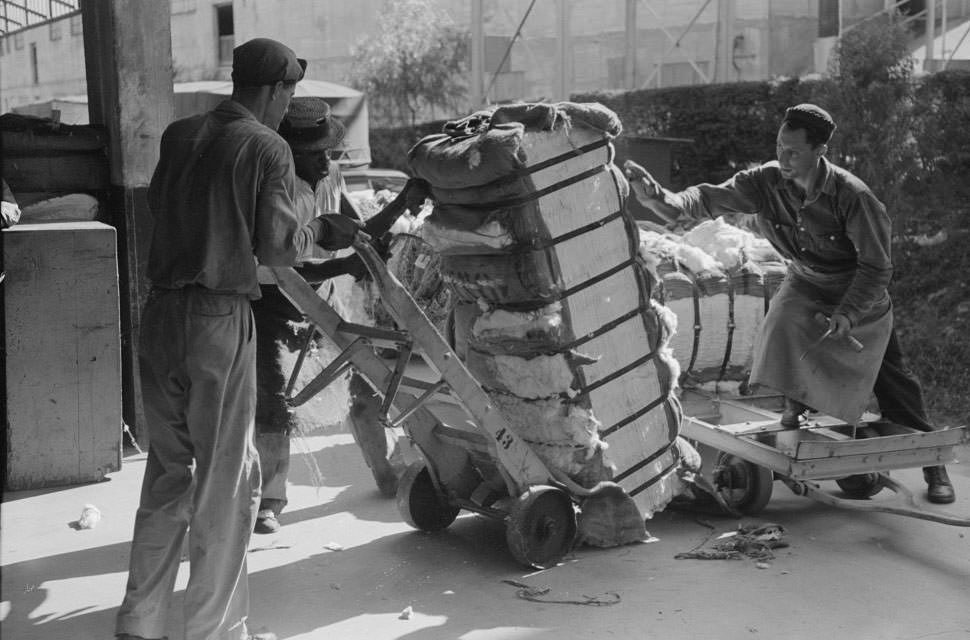
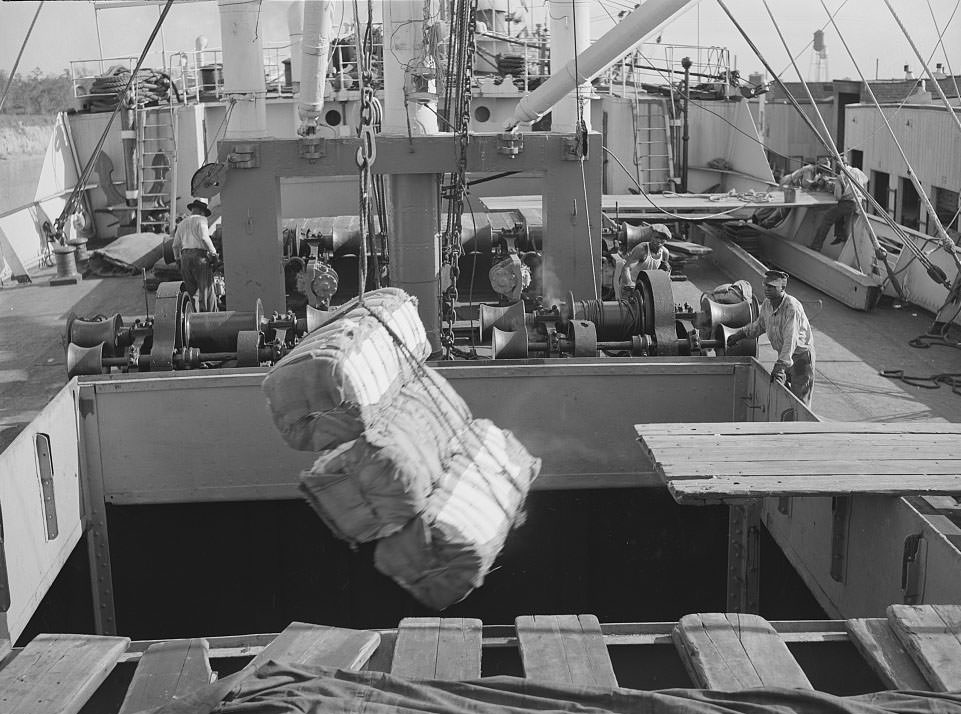
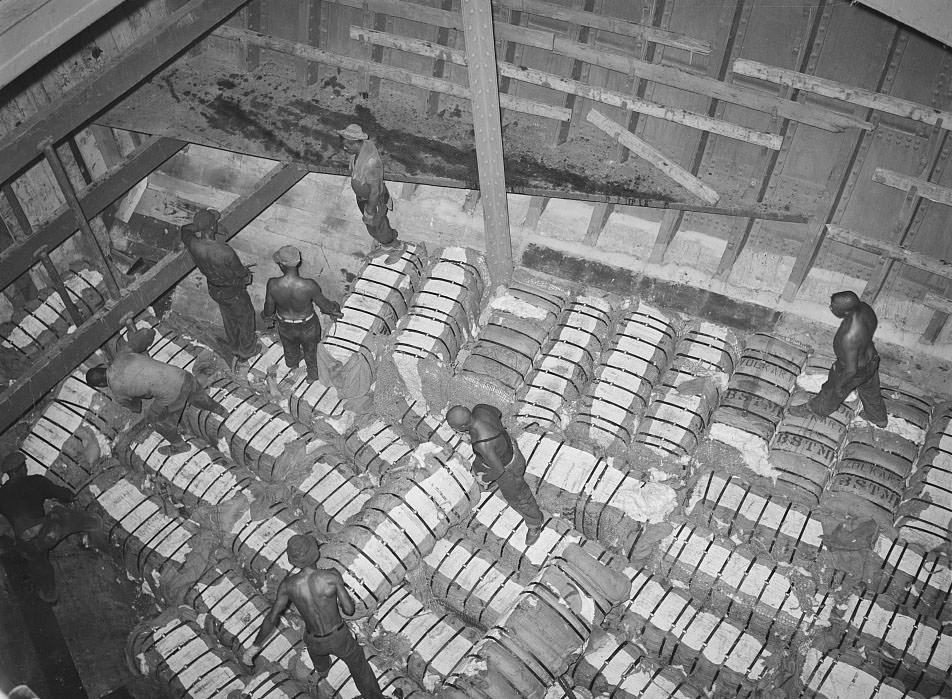
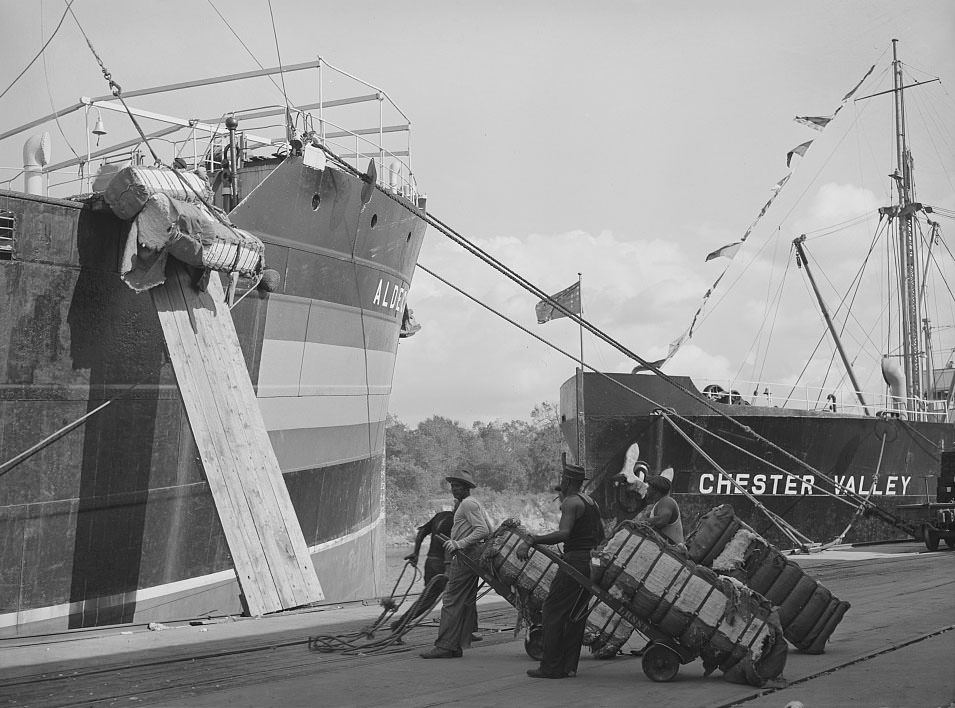
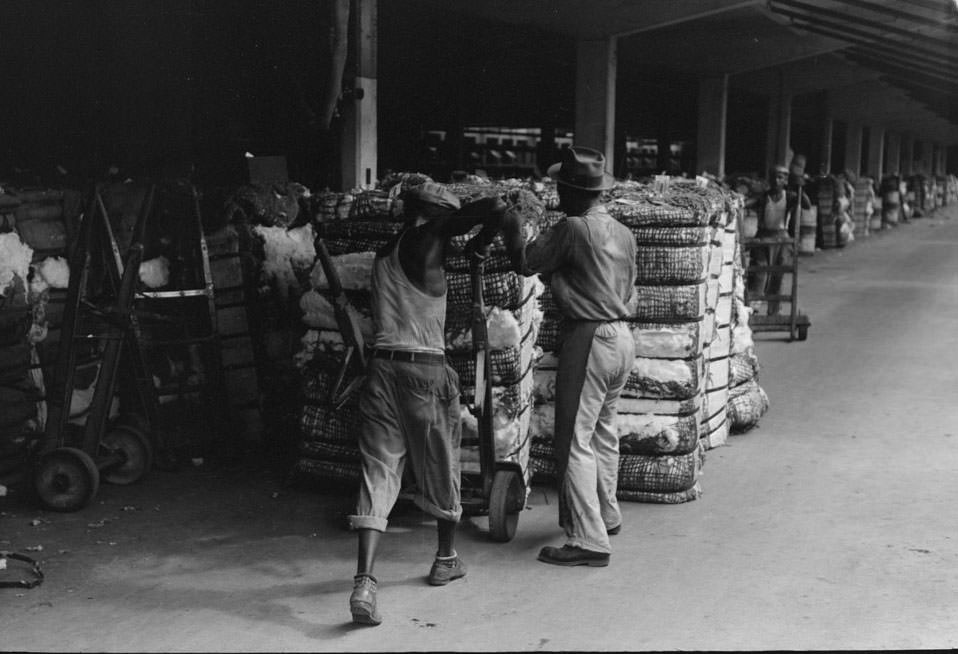
Once weighed and logged, the cotton bales were unloaded from freight cars, moved across the platform on hand trucks, and eventually loaded into the holds of freighters for export. Stevedores worked the docks, stacking bales deep into the ships. The whole process, from rail car to ship’s hold, was labor-intensive from start to finish.

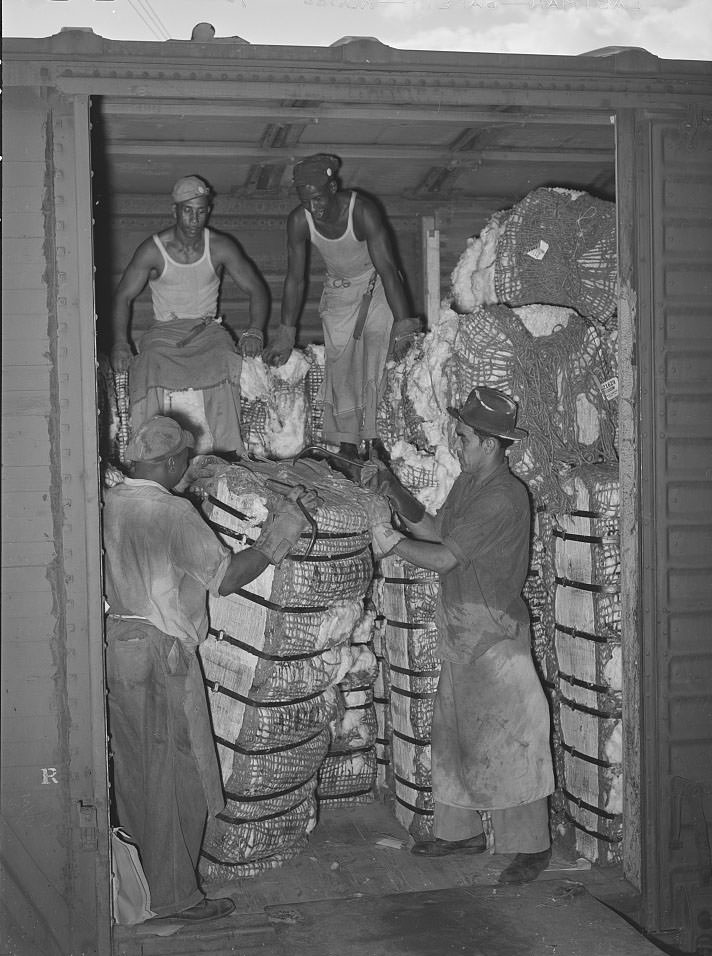
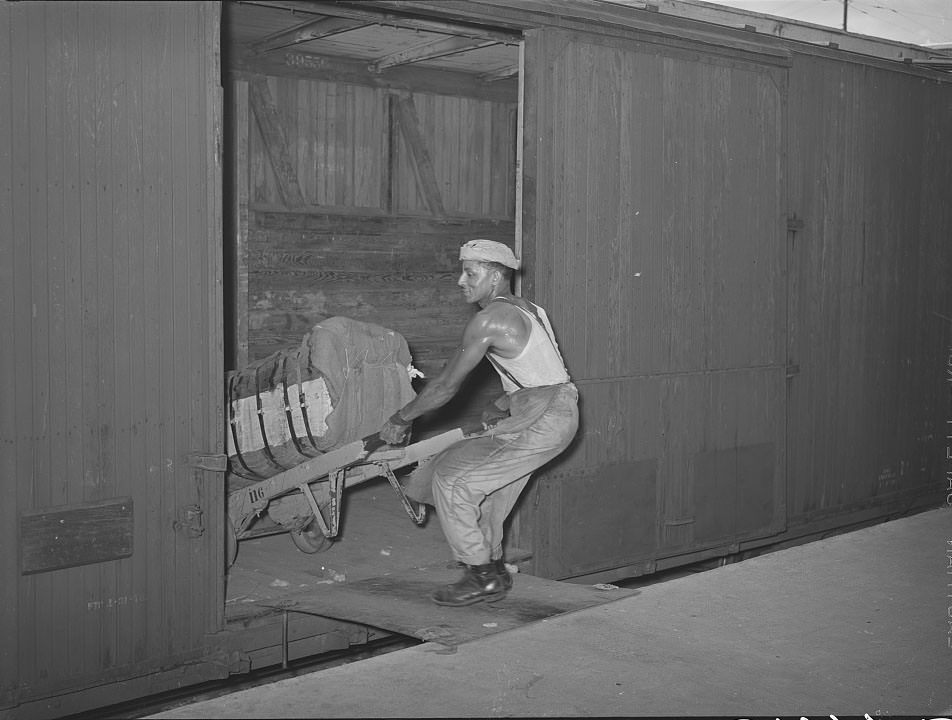
Unloading bale of cotton from freight car. Cotton compress, Houston, Texas
Industrial plant on the banks of the Port of Houston, Houston, 1930s
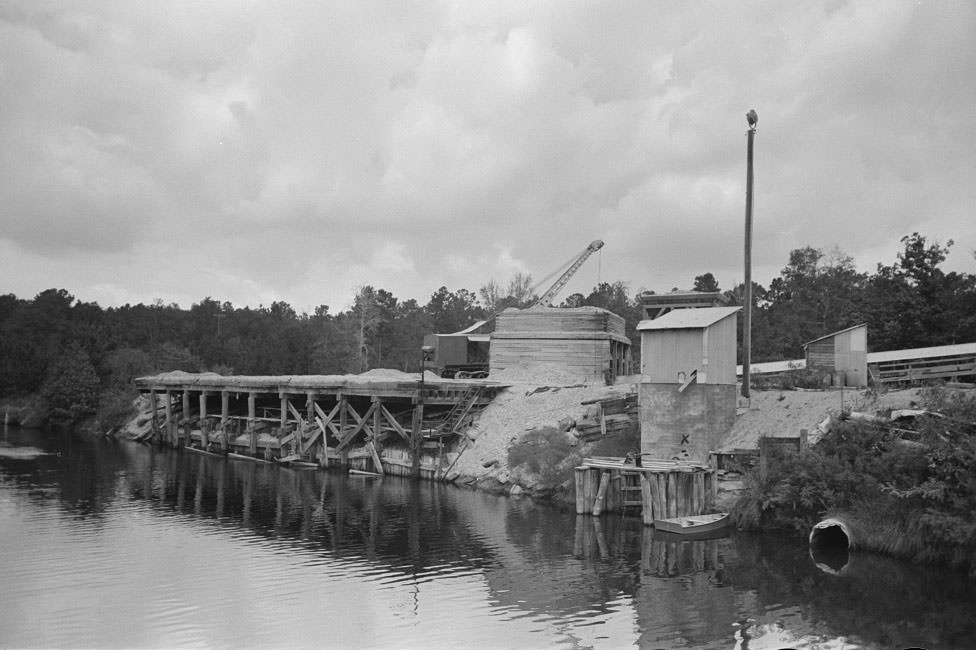
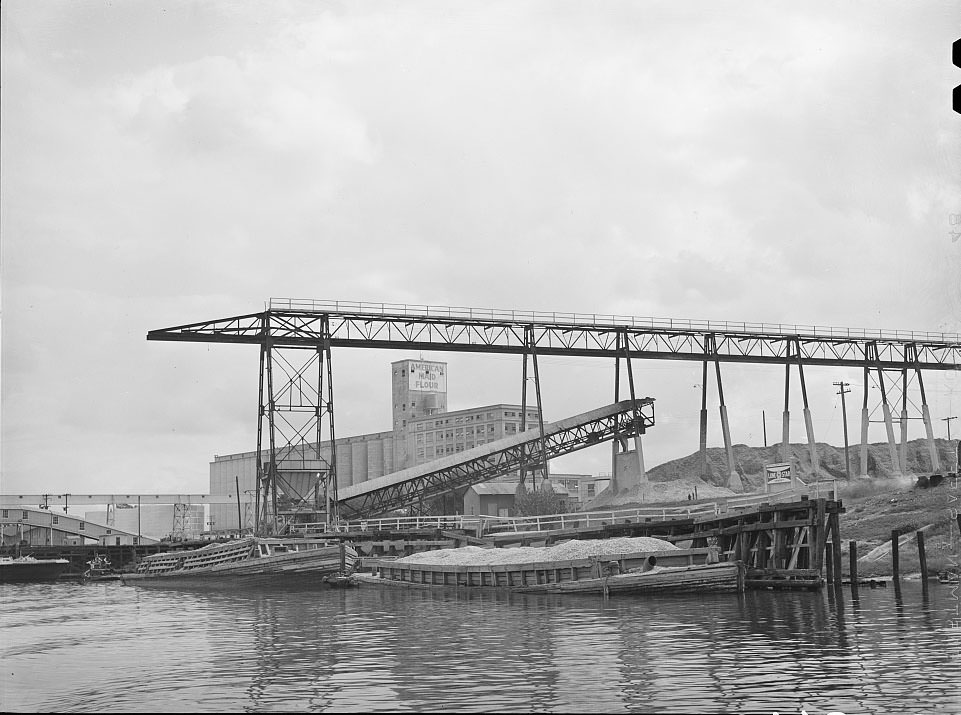
Along the banks of the Port of Houston are several crushing plants for oyster shell, 1930s
Along the banks of the Port of Houston are several crushing plants for oyster shell. Oyster shell products are used for cement, roads and fertilizer. Houston, Texas]
Unloading bale of cotton from freight car at cotton compress, Houston, 1930s
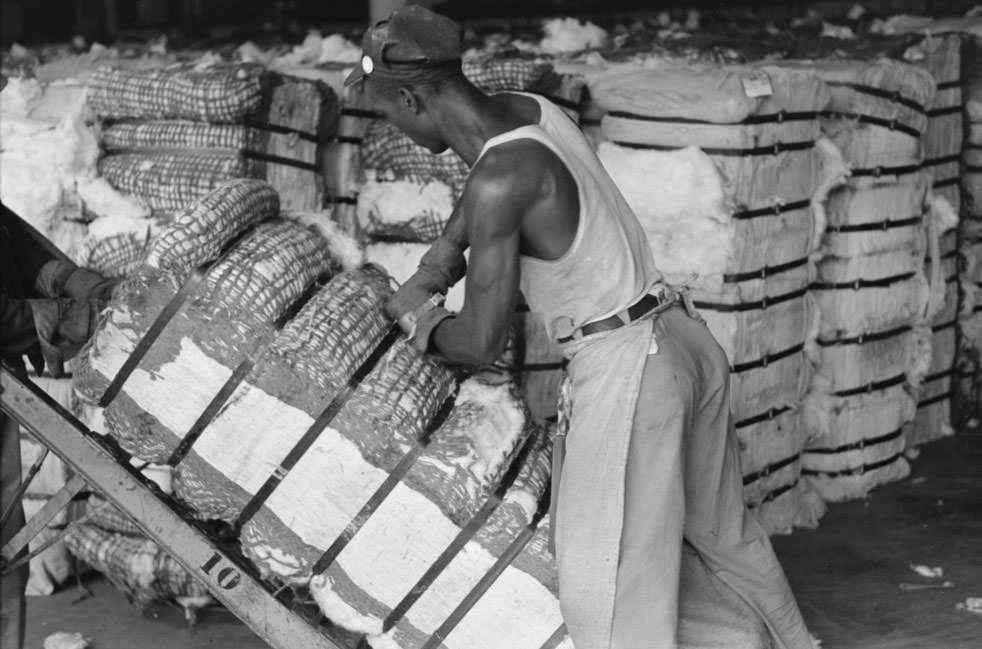
Loading bale of cotton onto hand truck at platform. Cotton compress, Houston, Texas
Loading bale of cotton onto hand truck at platform. Cotton compress, 1930s
Unloading bale of cotton from freight car at cotton compress, 1930s
Loading cotton into hold of ship. Port of Houston, Texas
Storing bales of cotton into hold for freighter for export. Port of Houston, Texas
Stevedores loading cotton on to the freighter. Port of Houston, Texas

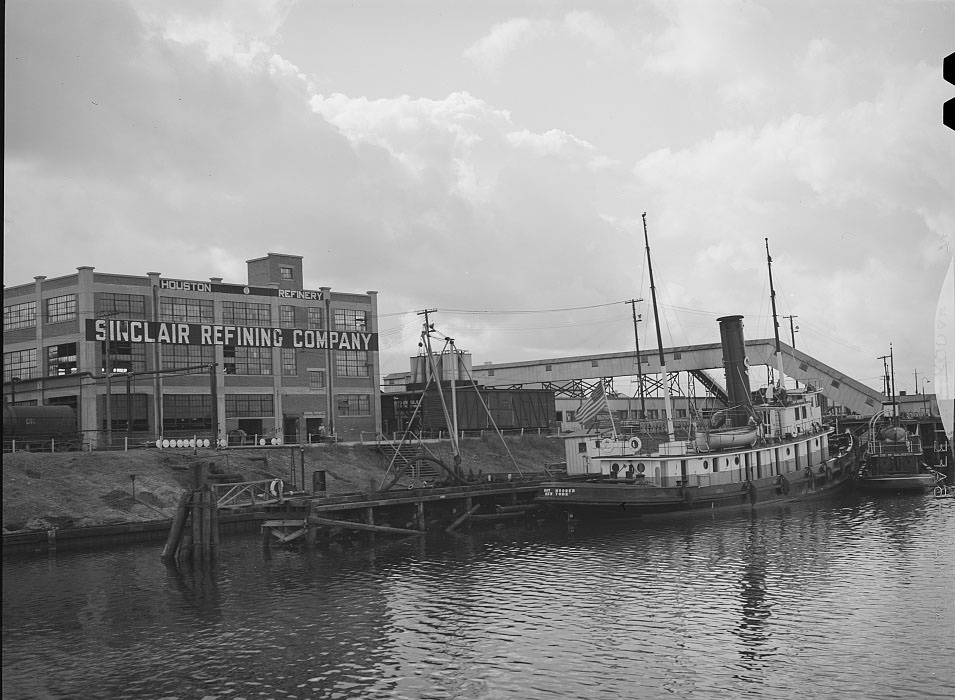
Beyond cotton, the Port of Houston handled a wide range of raw materials. Oyster shell was dredged from Gulf waters and brought to crushing plants along the ship channel, where it was processed into materials used for cement, roads, and fertilizer. Oil refineries operated along the channel as well, and tugs moved constantly through the water, guiding tankers and freighters in and out of dock.

Moss-covered trees along the ship channel. Port of Houston, Texas
Oil refinery on the bank of the ship channel. Port of Houston, Texas
Tug at refinery dock. Port of Houston, Texas
Negro unloading bale of cotton from railroad car. Compress, Houston, Texas
Unloading freight car load of cotton. Compress, Houston, Texas
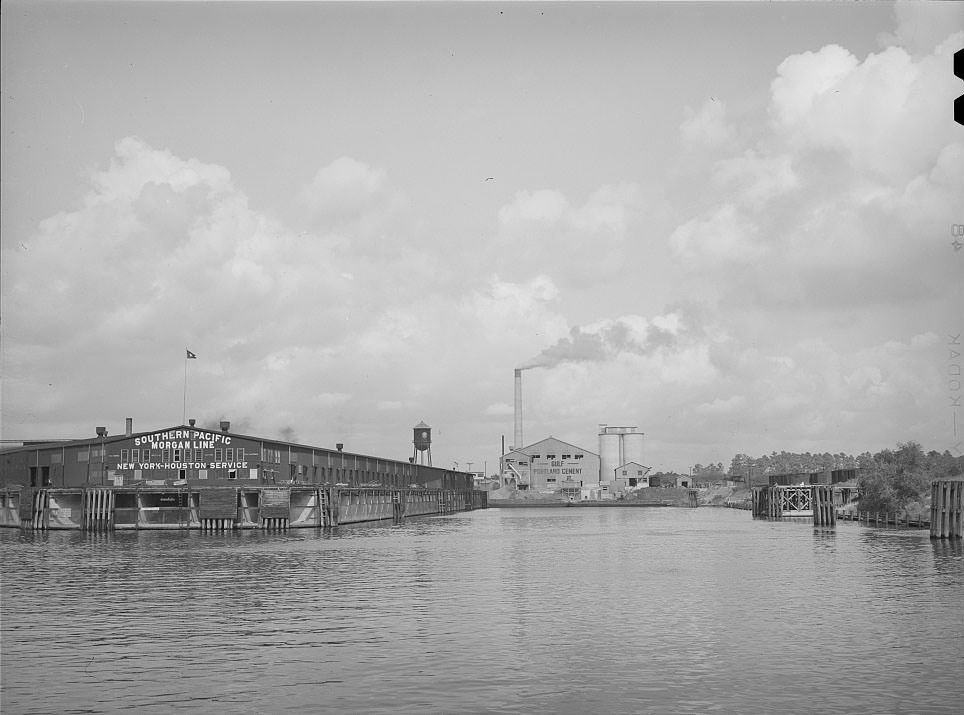
Oyster shell barges at unloading dock of cement plant. Port of Houston, Texas
Pier and cement plant. Port of Houston, Texas

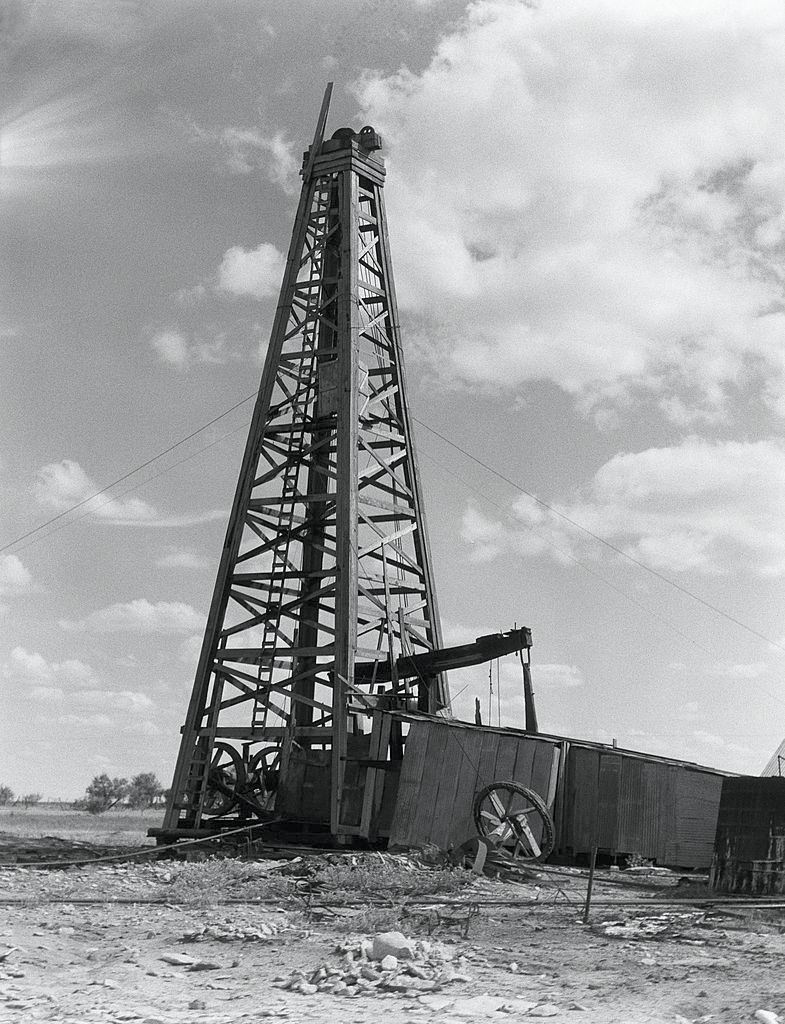
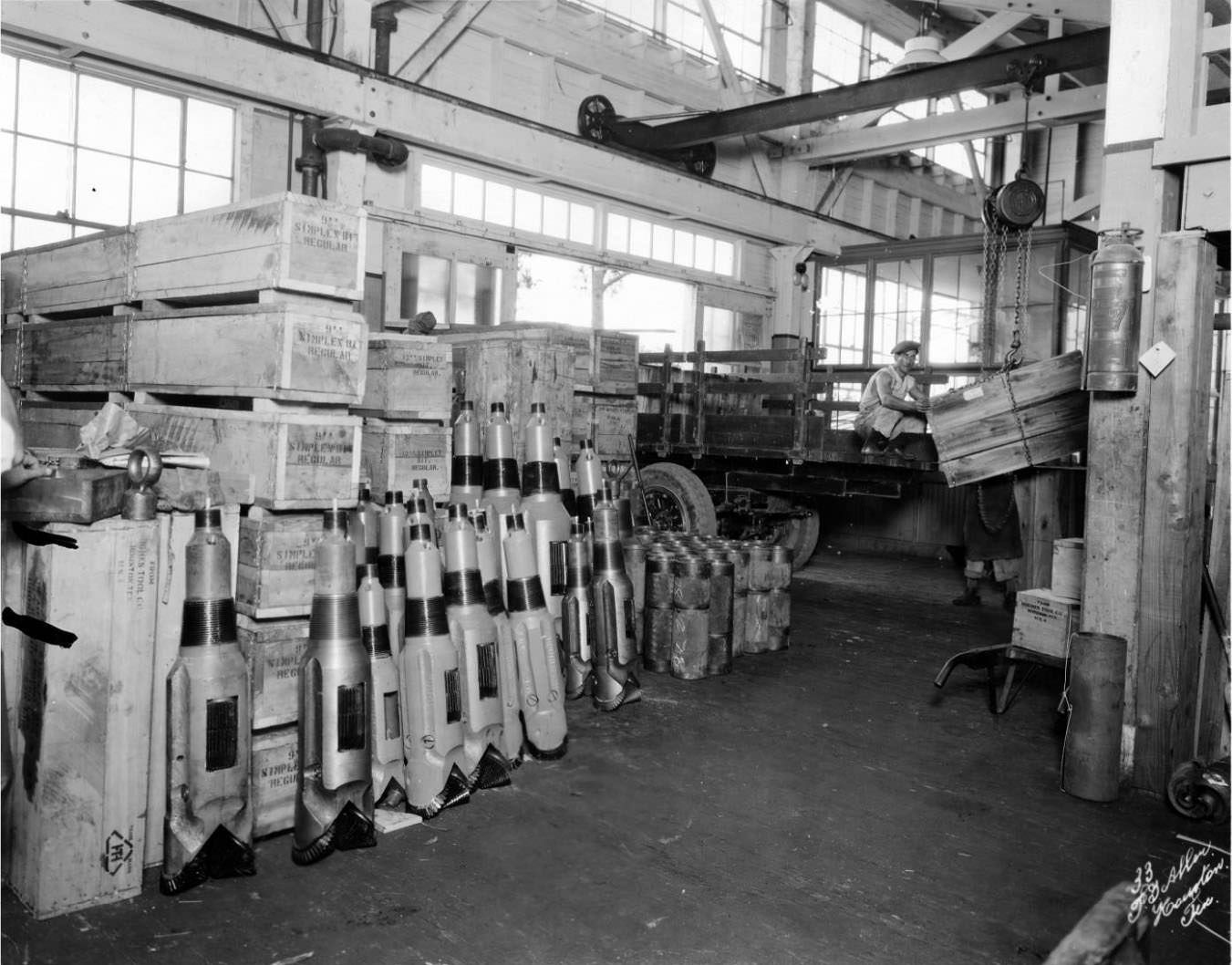
Oil had already transformed Houston’s economy by the time the Depression hit. Wells dotted the landscape around the city, and companies like Hughes Tool Company kept operations running through the decade. The Hughes Tool plant manufactured drill bits and other equipment essential to the oil industry. Its products were loaded onto trucks and shipped to oil fields across Texas and beyond. The company’s founder, Howard Hughes Sr., had made his fortune in Houston, and his son Howard Hughes Jr., the aviator and filmmaker, grew up in the city.

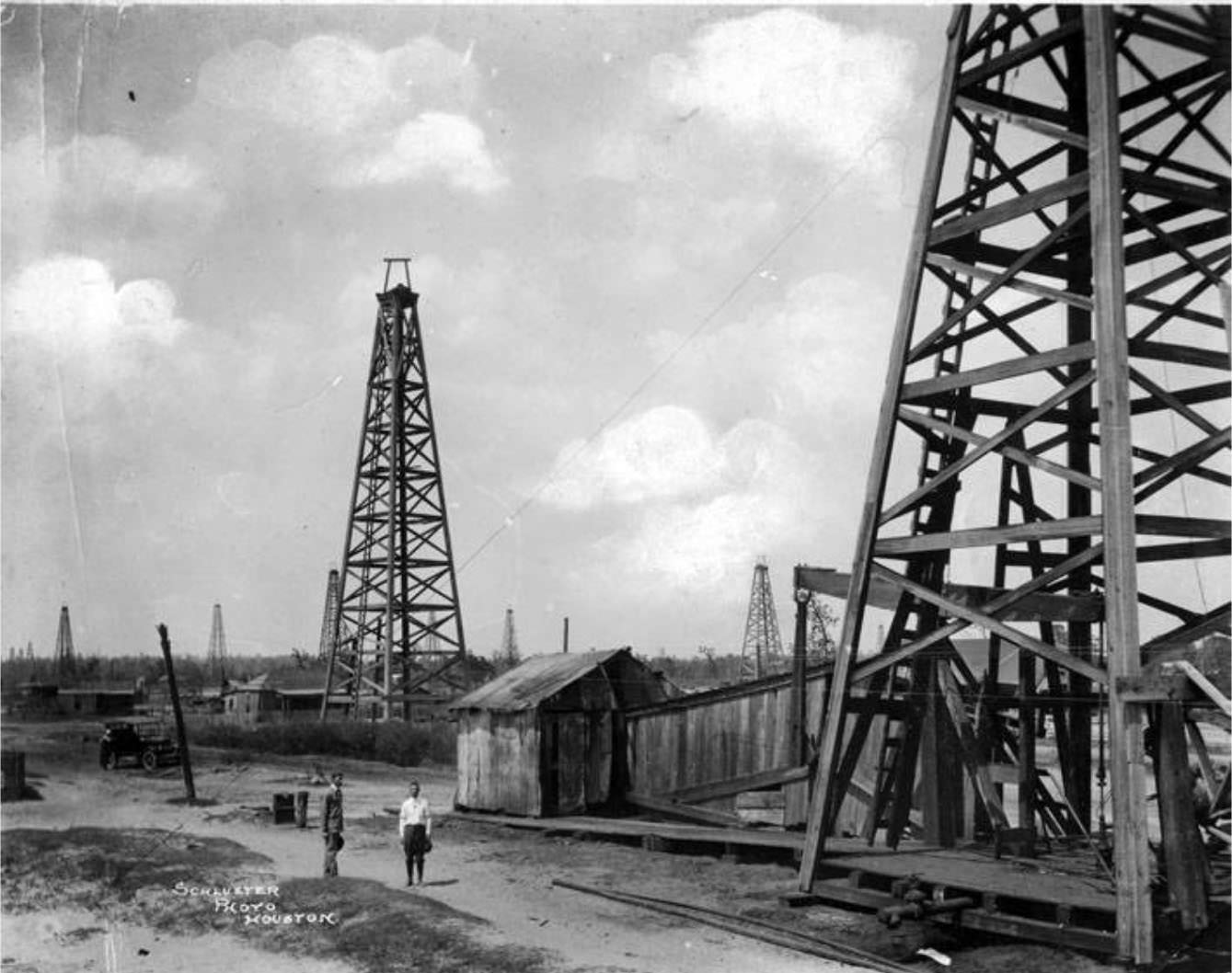
Oil well with wooden derrick, near Houston, Texas.
The Duke of York at the turbine factory of British Thomson-Houston in Rugby.
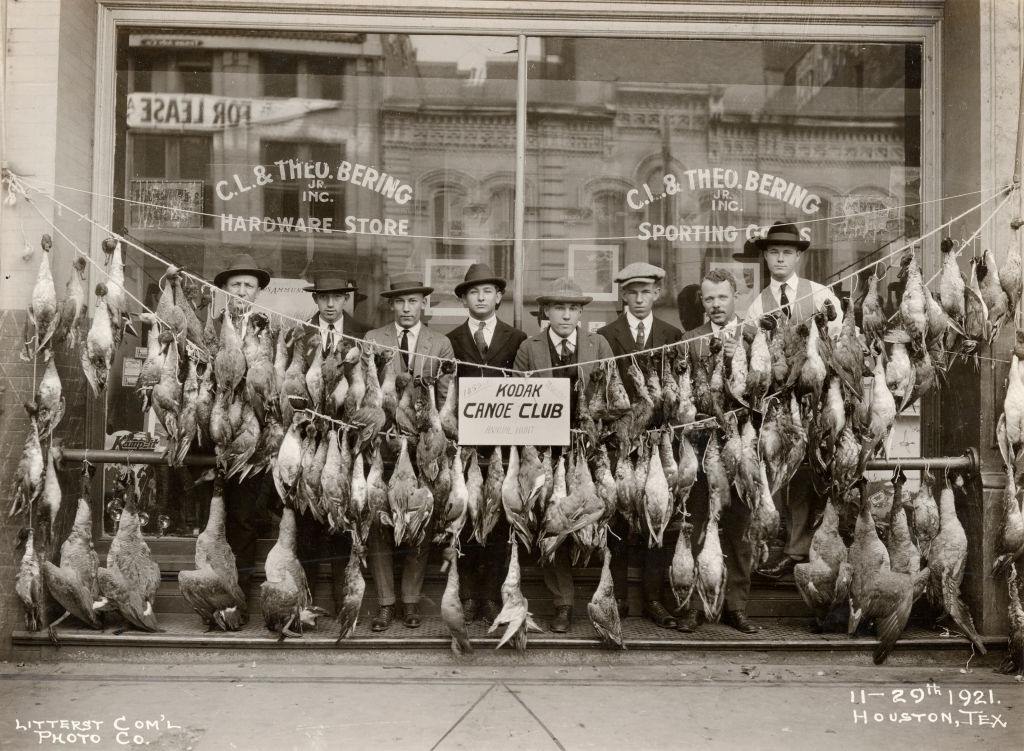
Result of a duck shoot near Houston, Texas, United States of America, 1931.
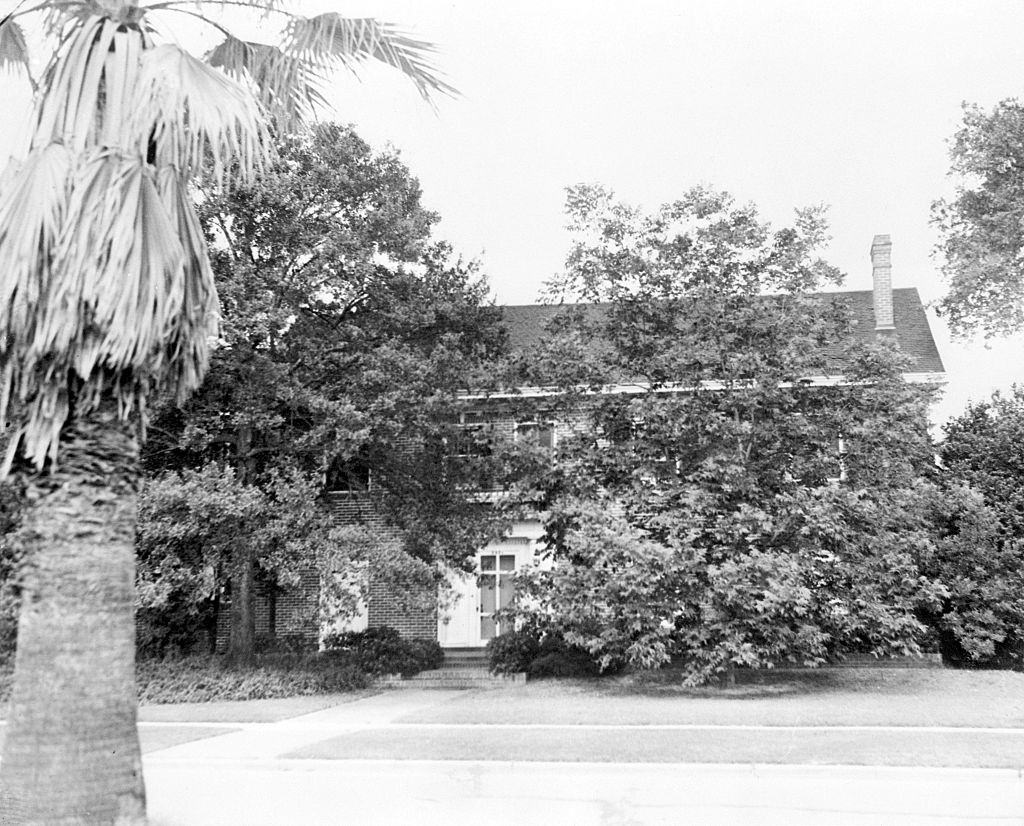
The boyhood home of Howard Hughes, record-smashing globe circler, at 3921 Yoakum Boulevard, Houston.

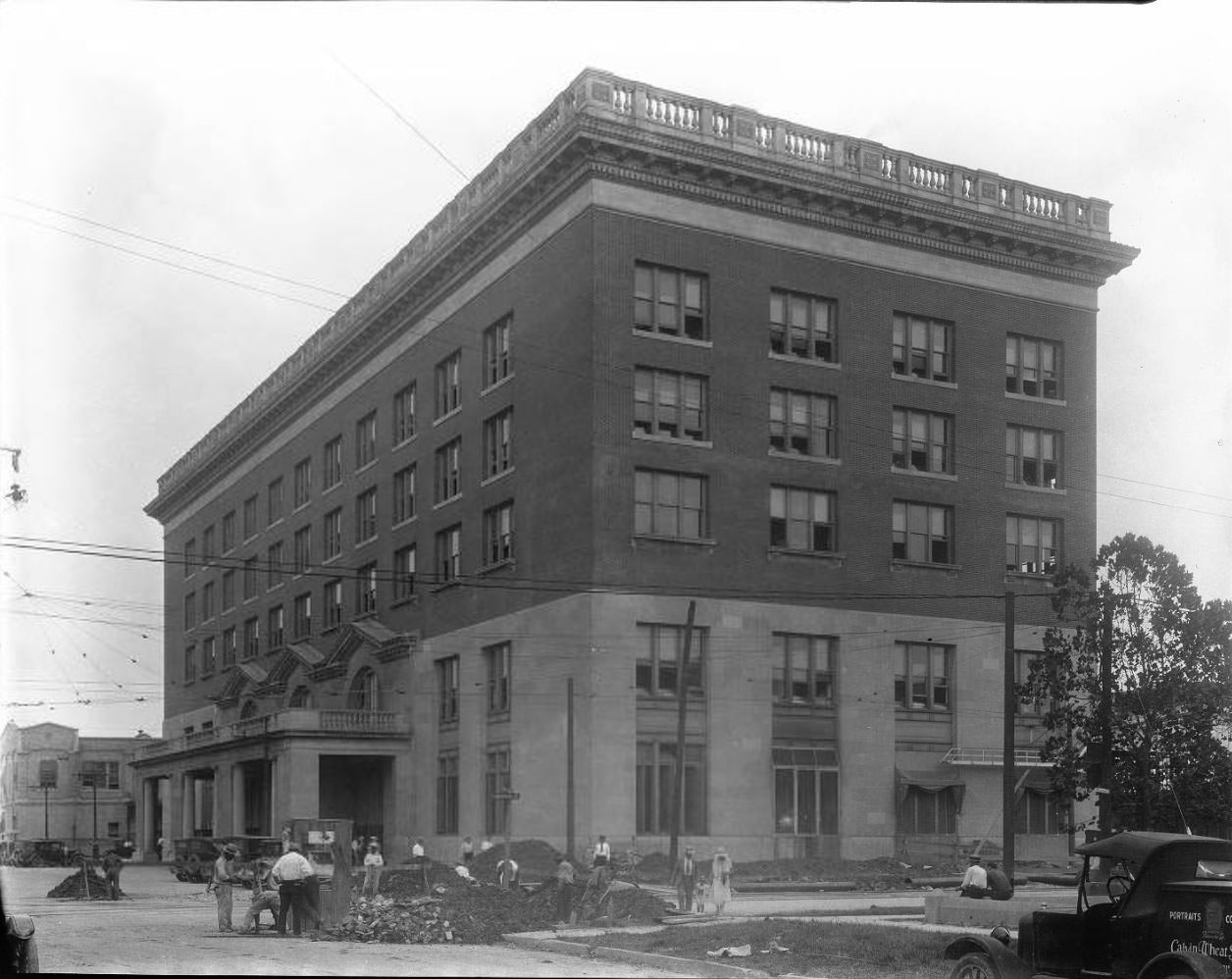
Downtown Houston told two different stories at once during the 1930s. On one hand, new buildings were going up. In 1930 alone, a dozen skyscrapers were completed, including the Sterling Building. The Hotel Brazos was demolished in 1931 to make way for further modernization, along with a house that had stood on the corner of Louisiana and Prairie since 1841. On the other hand, four major downtown buildings were auctioned off during the Depression years, reflecting just how badly some property owners were struggling. Private construction all but stopped during the worst of the downturn in 1932 and early 1933.

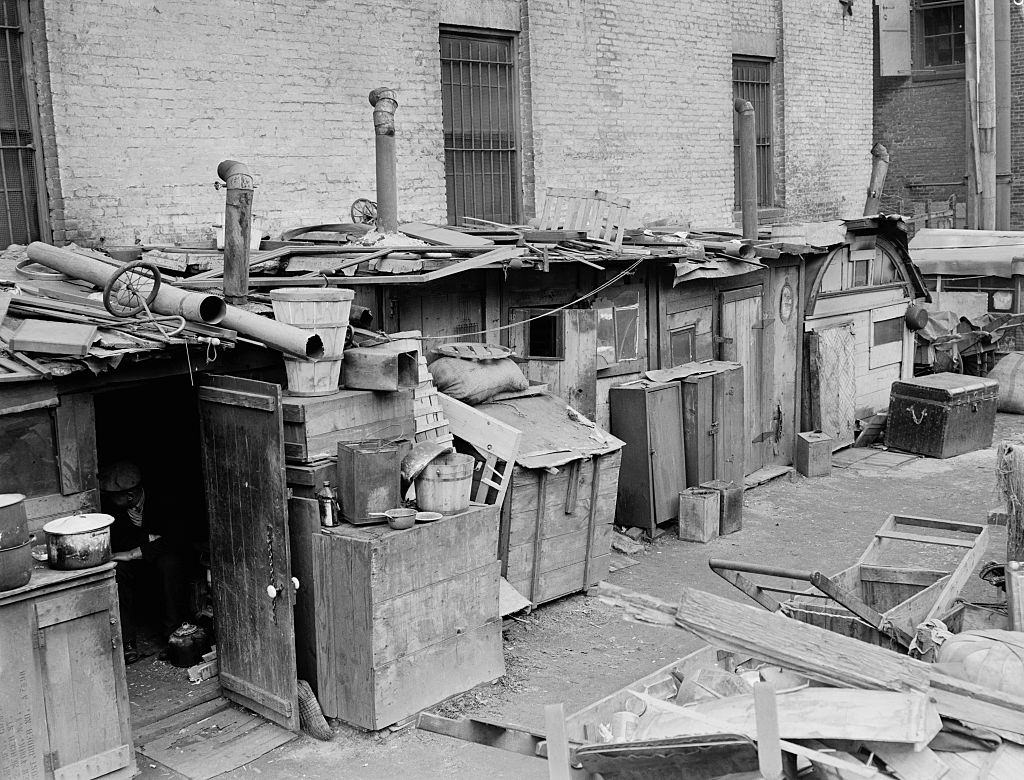
Shantytown Along Houston Street
J.C. Parks Building, 1931.
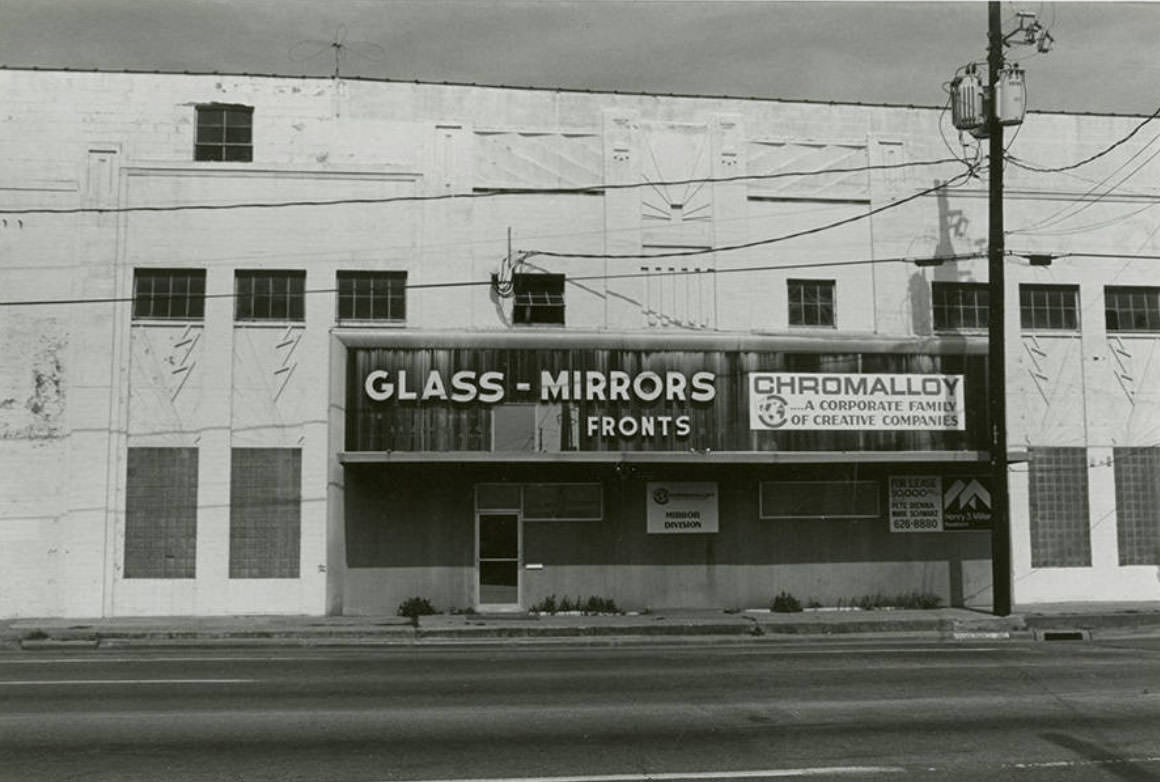
Front exterior of Chromalloy Glass-Mirror building, 1930s
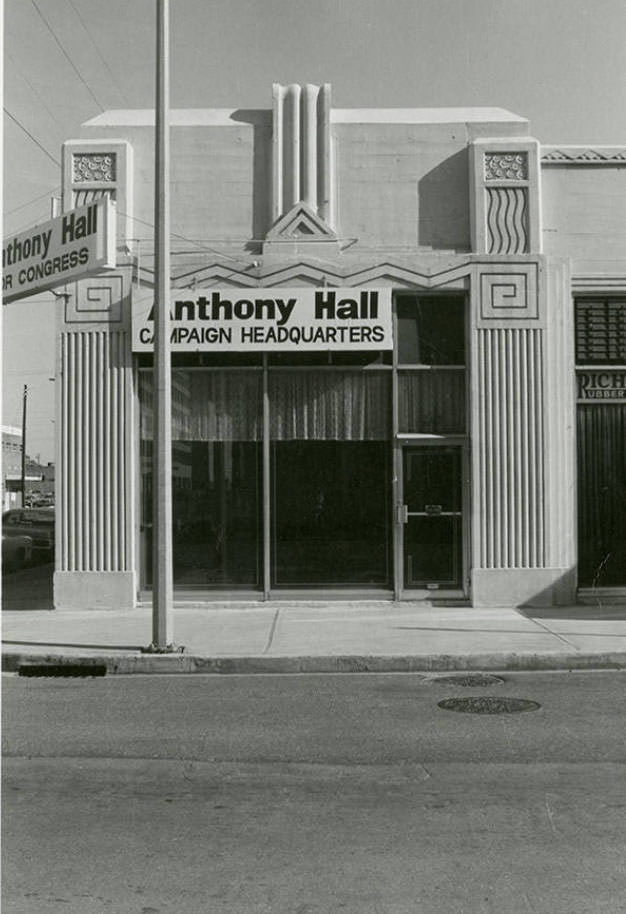
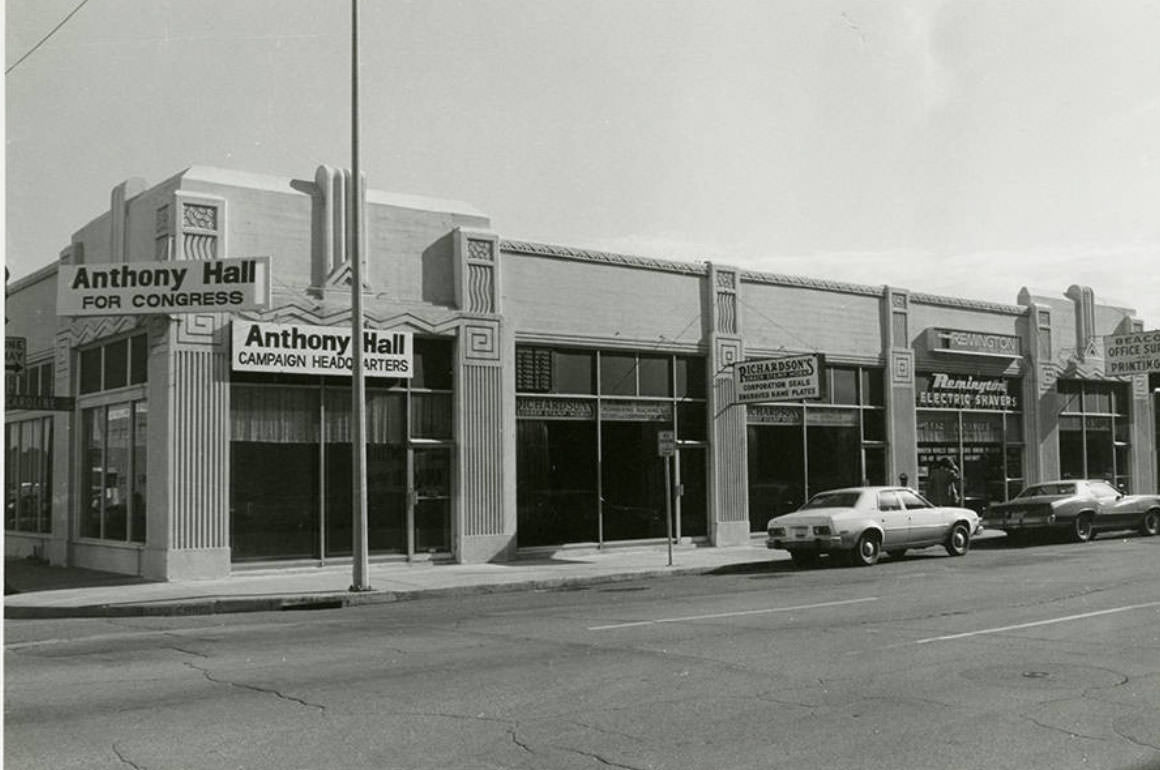
Corner of the Shopping Strip on 1201-1209 Caroline St. Campaign headquarters of Anthony Hall, running for Congress.
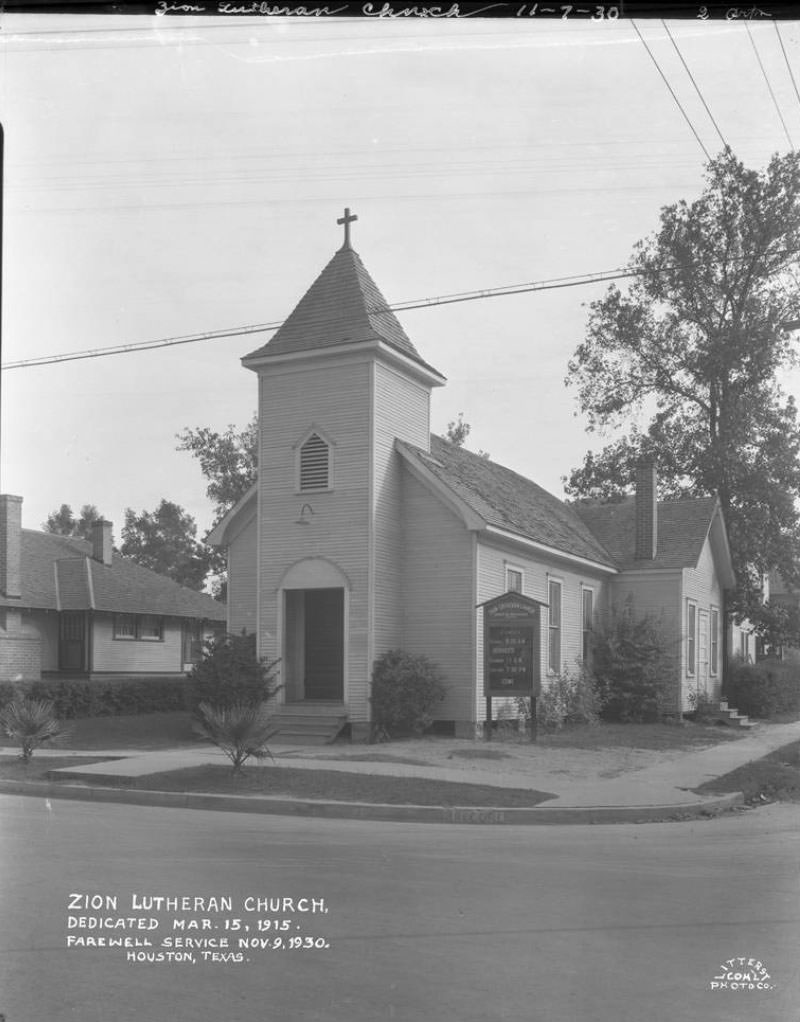
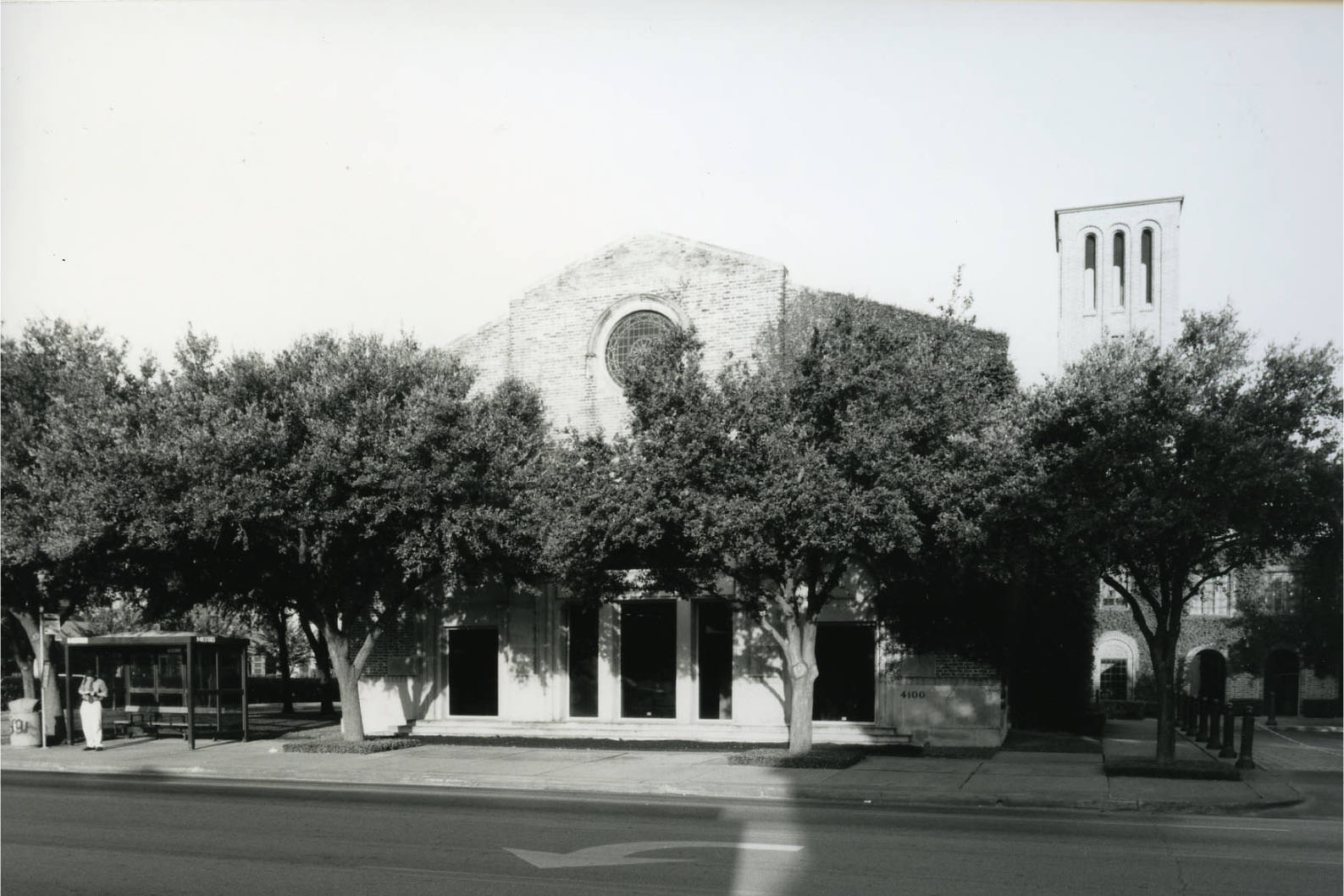
Zion Lutheran Church, 1930s.

Houston’s banking sector faced serious pressure as the Depression deepened. In 1931, Jesse H. Jones, one of Houston’s most powerful businessmen, brought local bankers together and persuaded them to pool their resources to prop up weaker institutions. It was a coordinated effort that helped the city avoid a total banking collapse that devastated other cities. Jones had enormous influence in both Houston and Washington, and his connections to federal programs would prove useful throughout the decade.

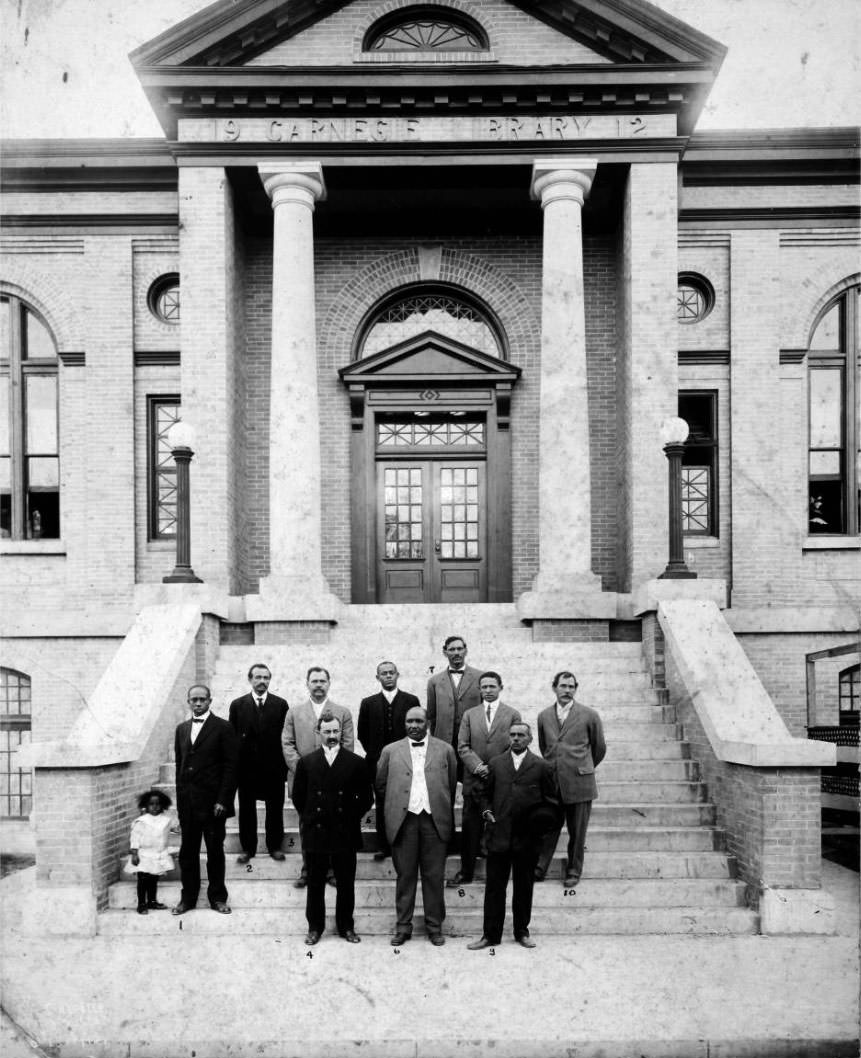
Dedication of Colored Carnegie Library, 1930s.
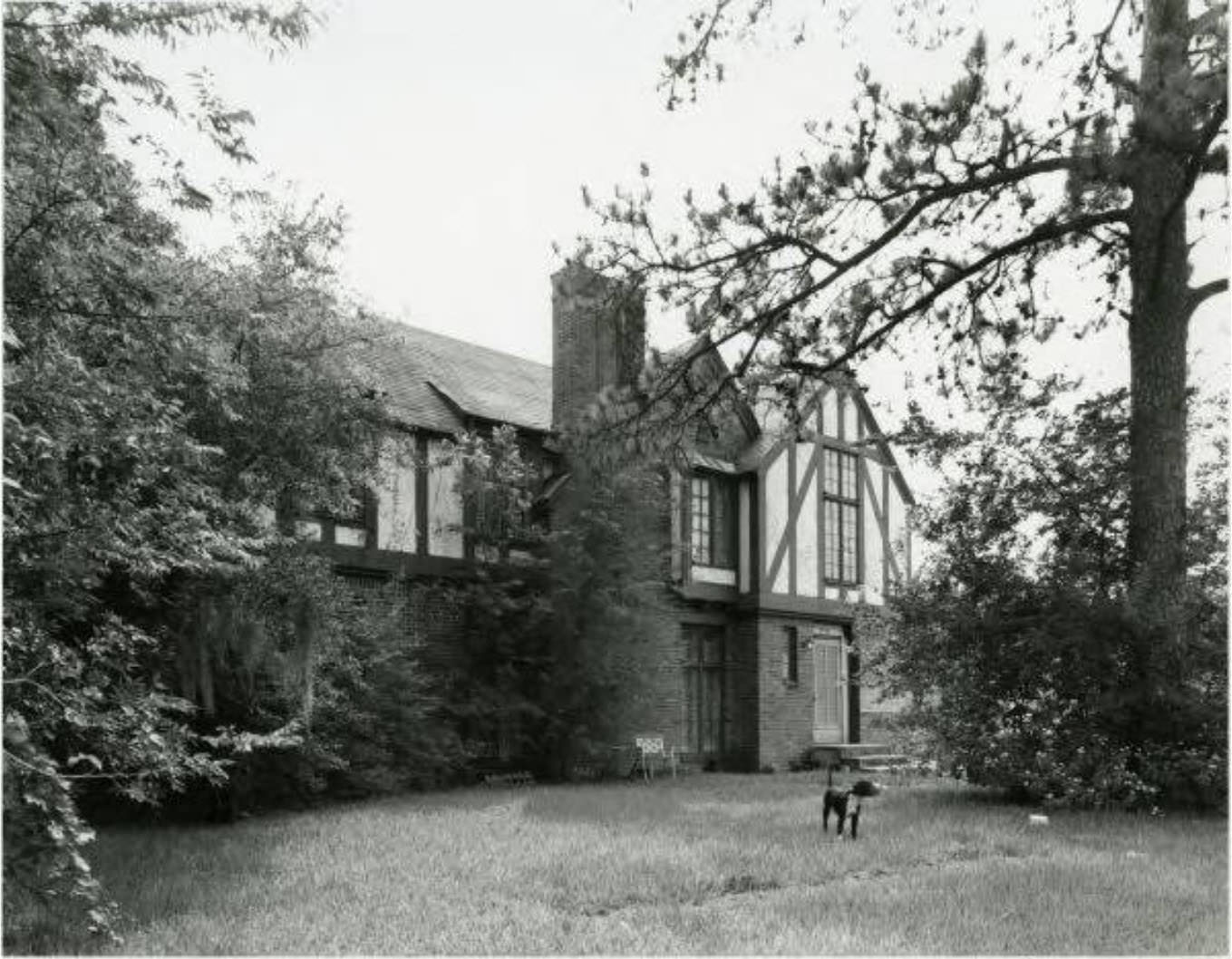
House of Katherine B. And Harry L. Mott, 1930s.
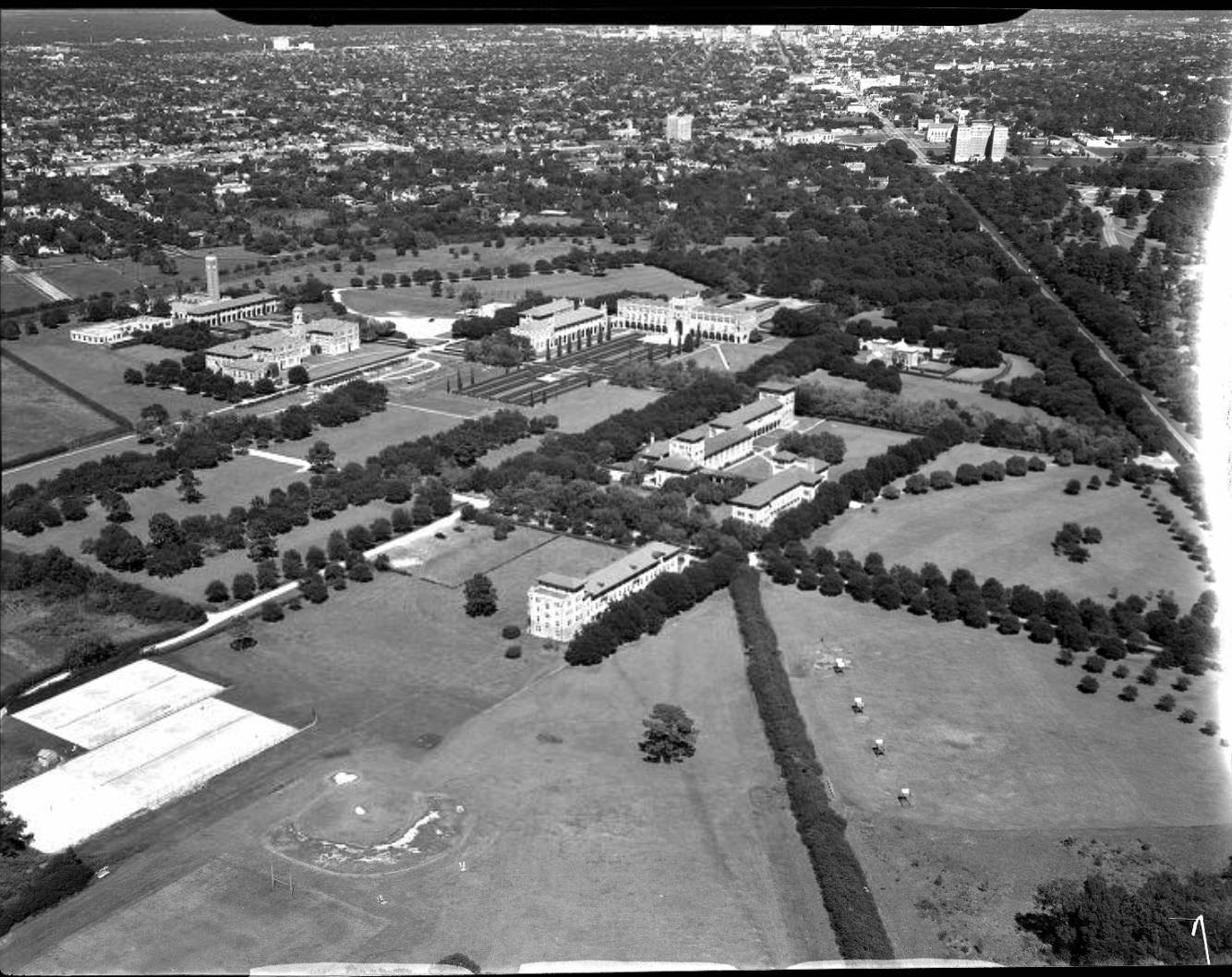
Aerial of Rice University campus, Houston, 1930s.
Two men standing on dirt road near an oil well, 1930s.

Federal money kept construction alive in the mid-1930s. A new Houston City Hall was built with funding from the Reconstruction Finance Corporation. Lamar High School was constructed with support from the Works Progress Administration, a New Deal program that put unemployed Americans back to work on public projects. These were not small undertakings — they were major civic buildings that reshaped the face of the city during its leanest years.

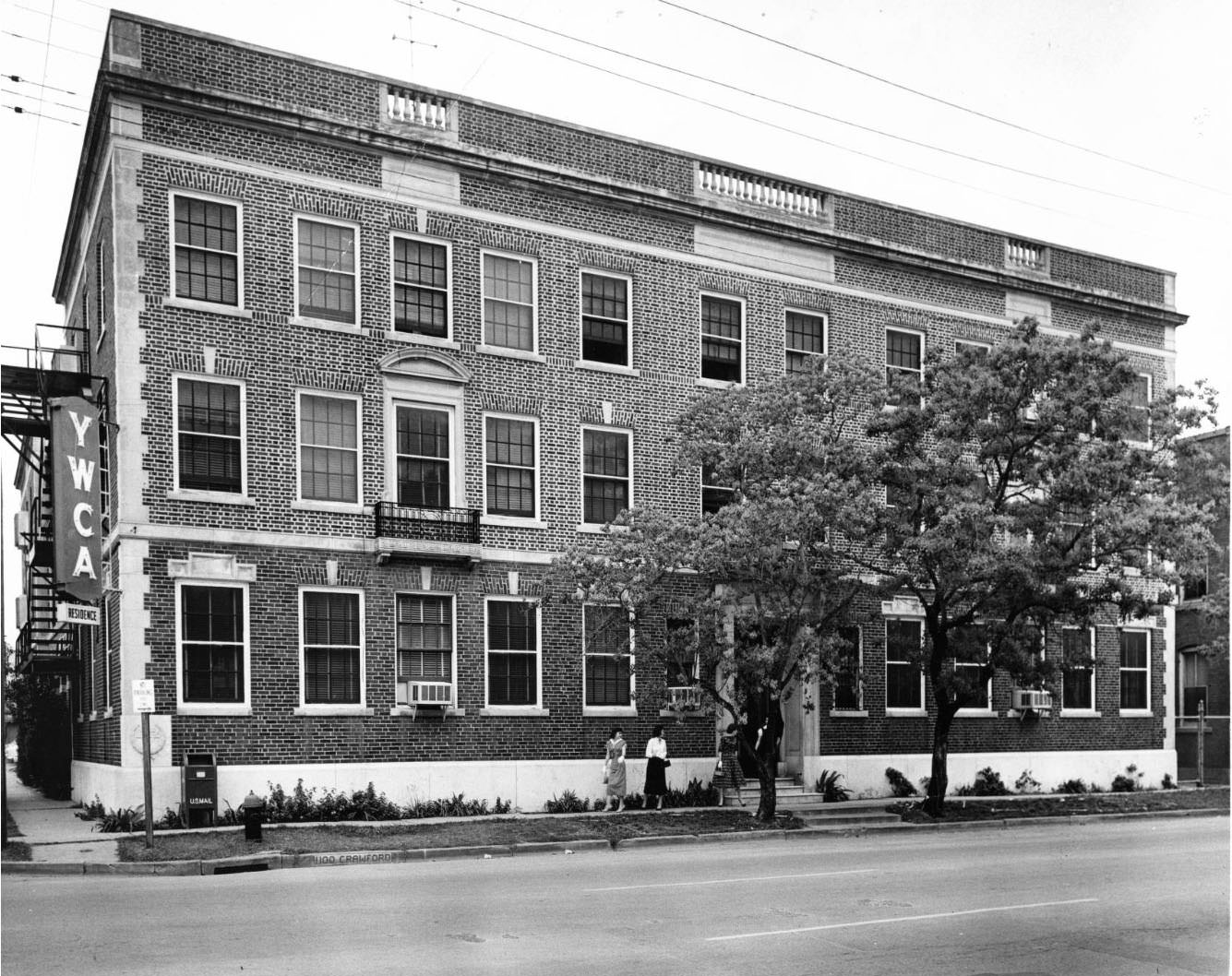
YWCA building, 1930s.
Downtown Bellaire, 1930s.
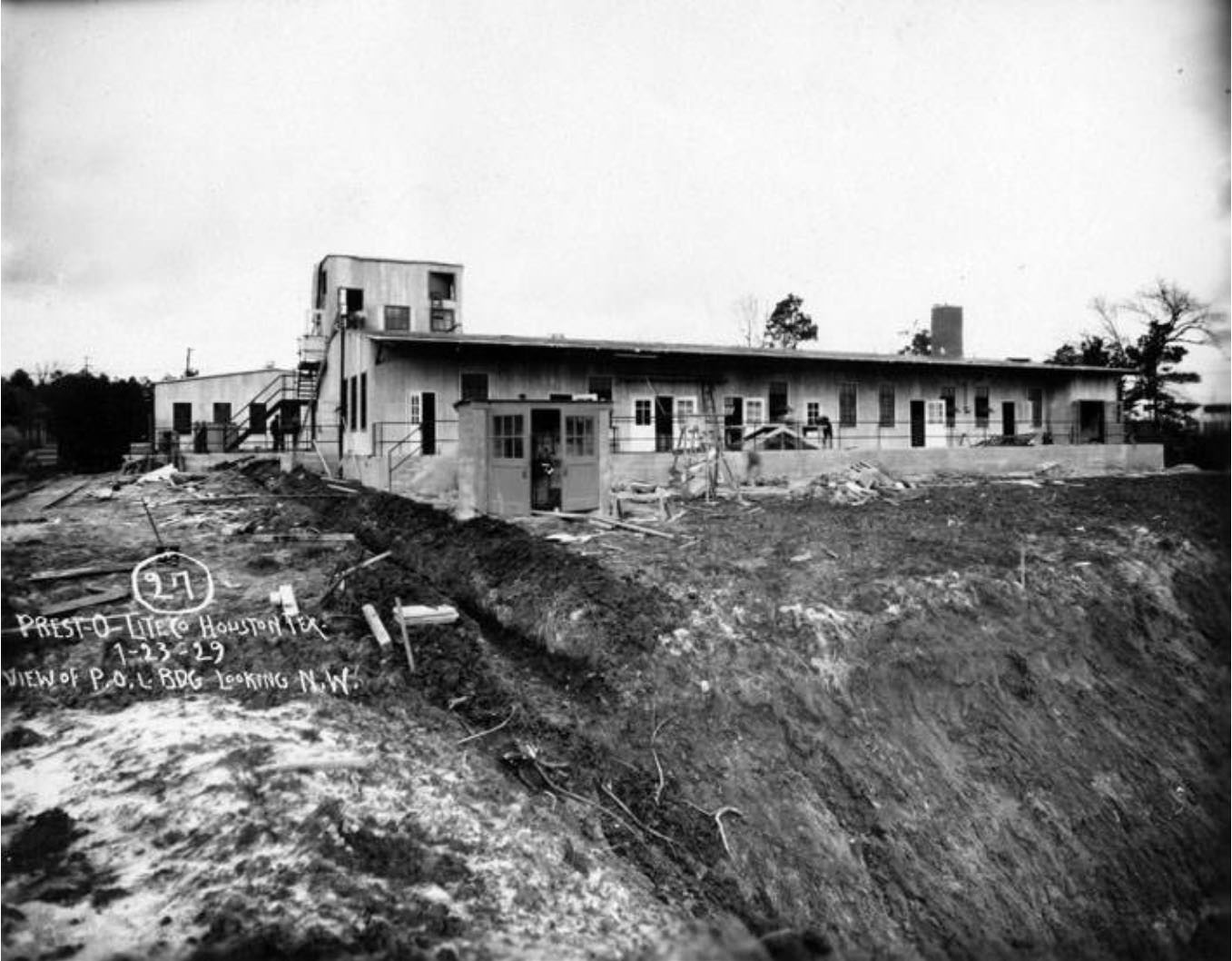
View of Prest-O-Lite Company. building, looking northwest, 1930s.
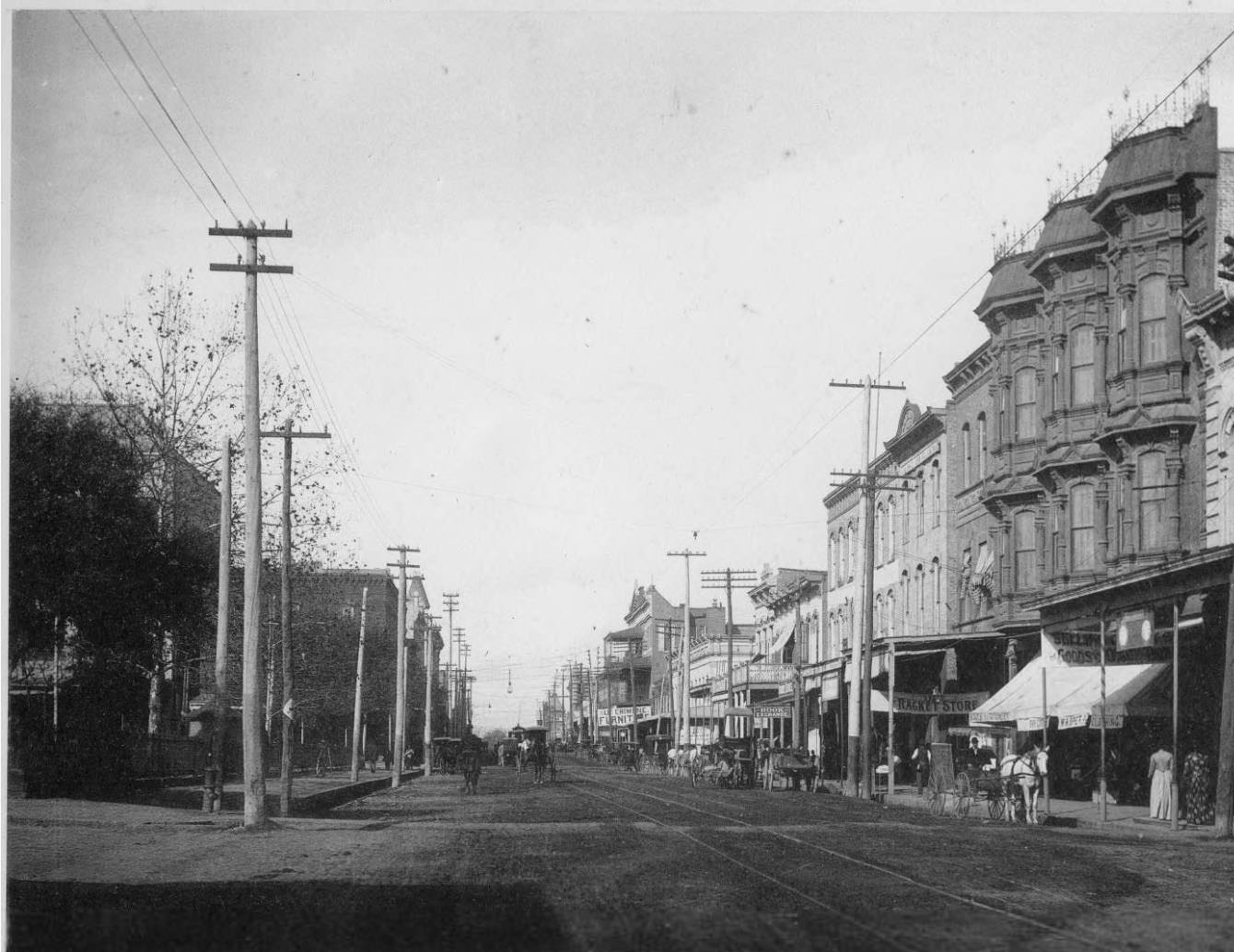
Congress Avenue, Houston, 1930s
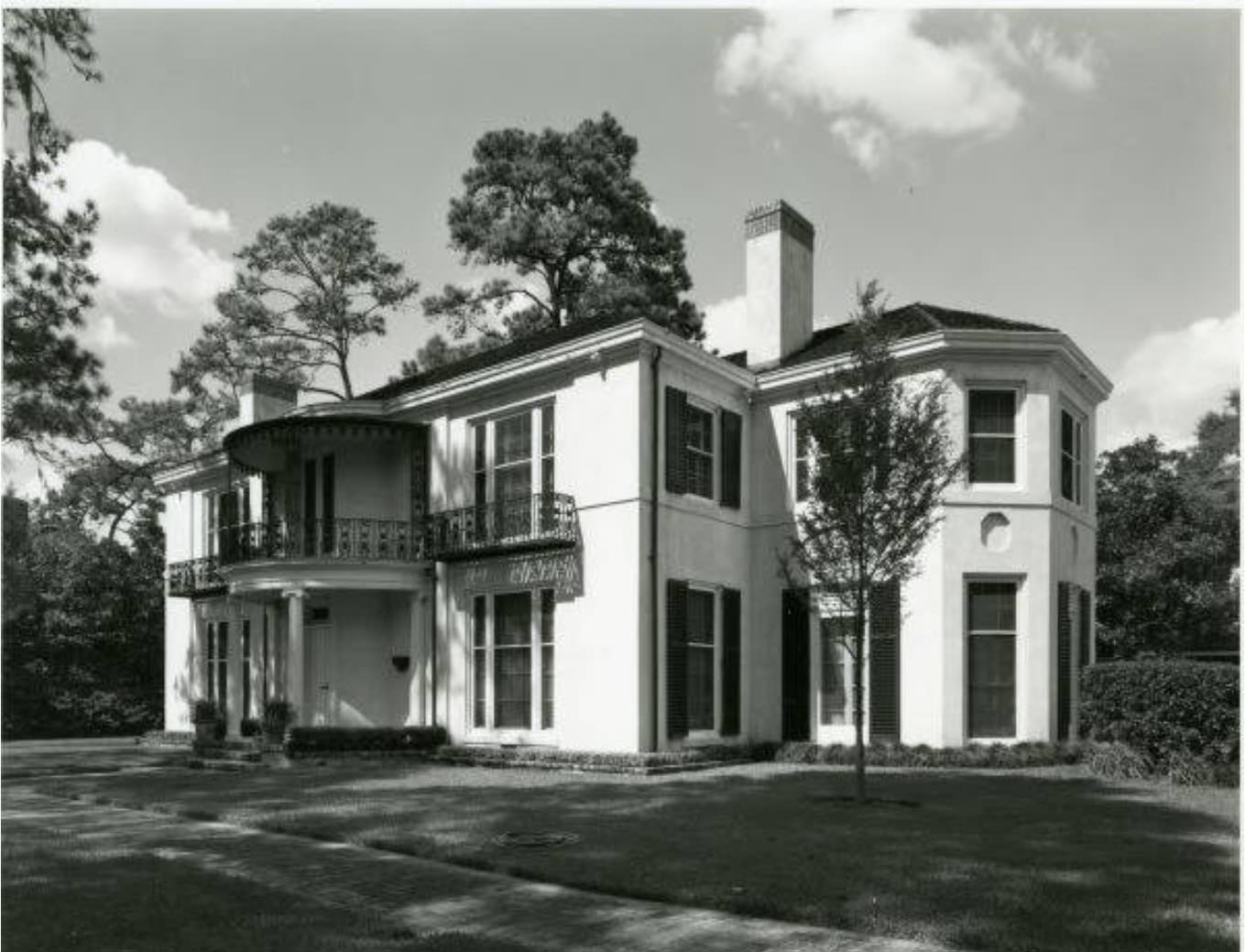
Mr. and Mrs. Dillon Anderson house, 1930s.
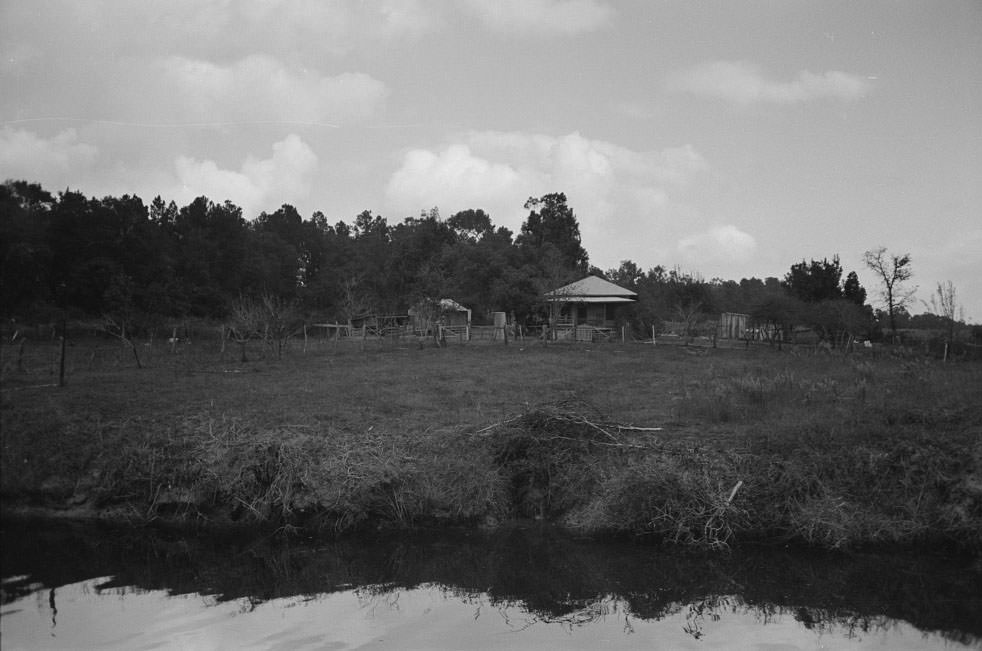
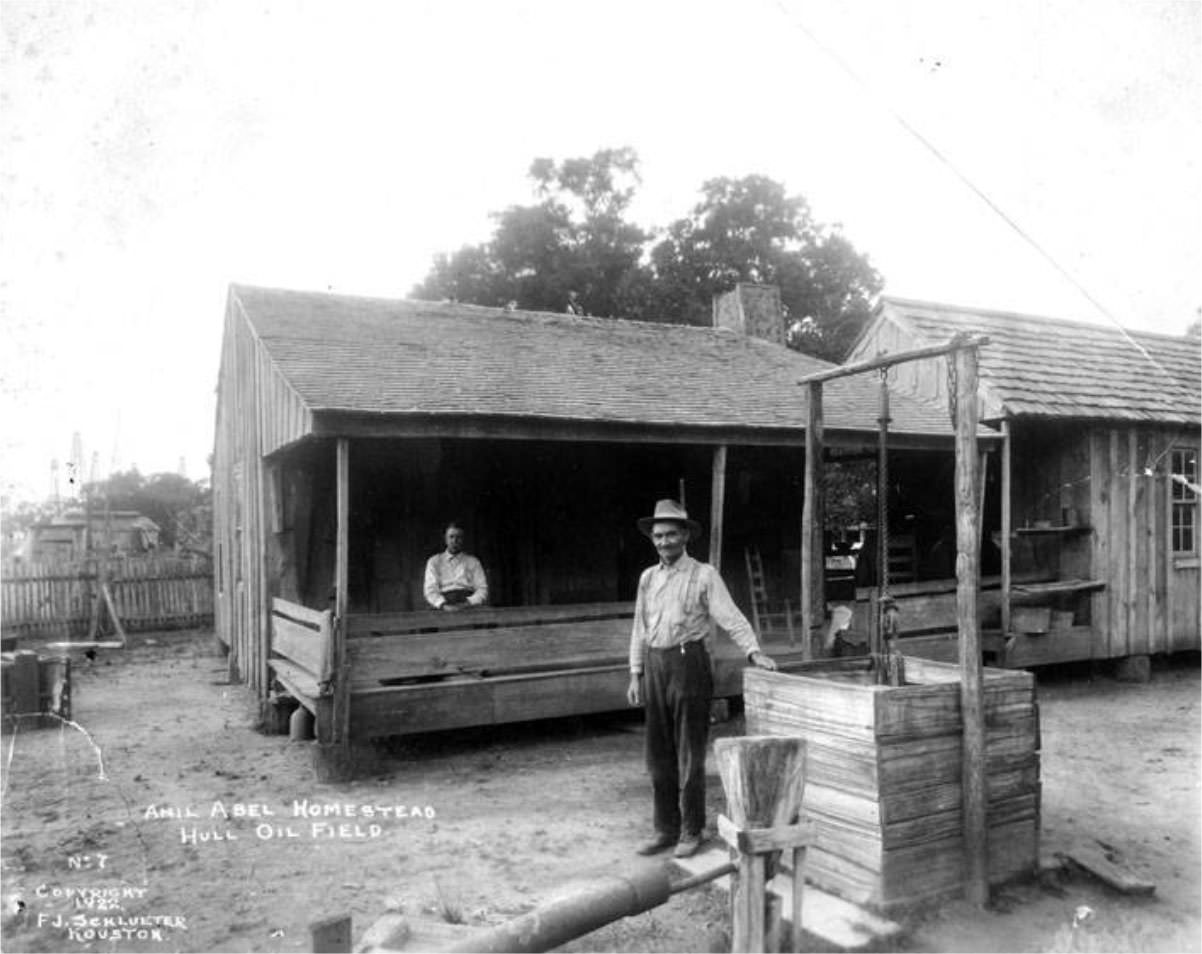
Two men at Amil Abel Homestead, Hull Oil Field, 1930s.

Roads were paved across Houston during the 1930s, expanding the city’s reach into surrounding areas. Several roads were paved during this period, making it easier to move goods, vehicles, and people across a city that was physically spreading out even as its economy contracted. The suburbs of Bellaire began to take shape, and new streets cut through what had been open land just years before.

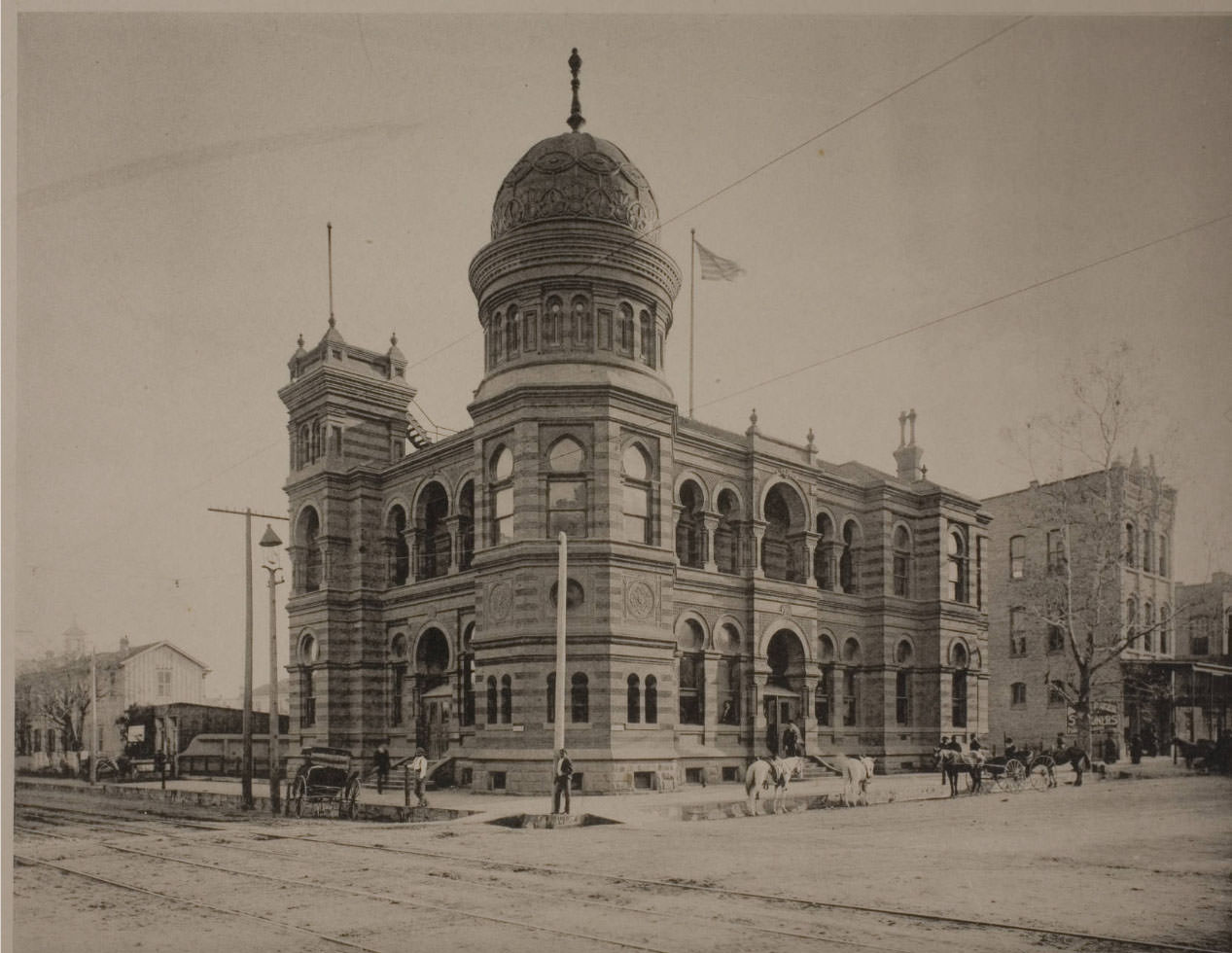
United States Post Office building
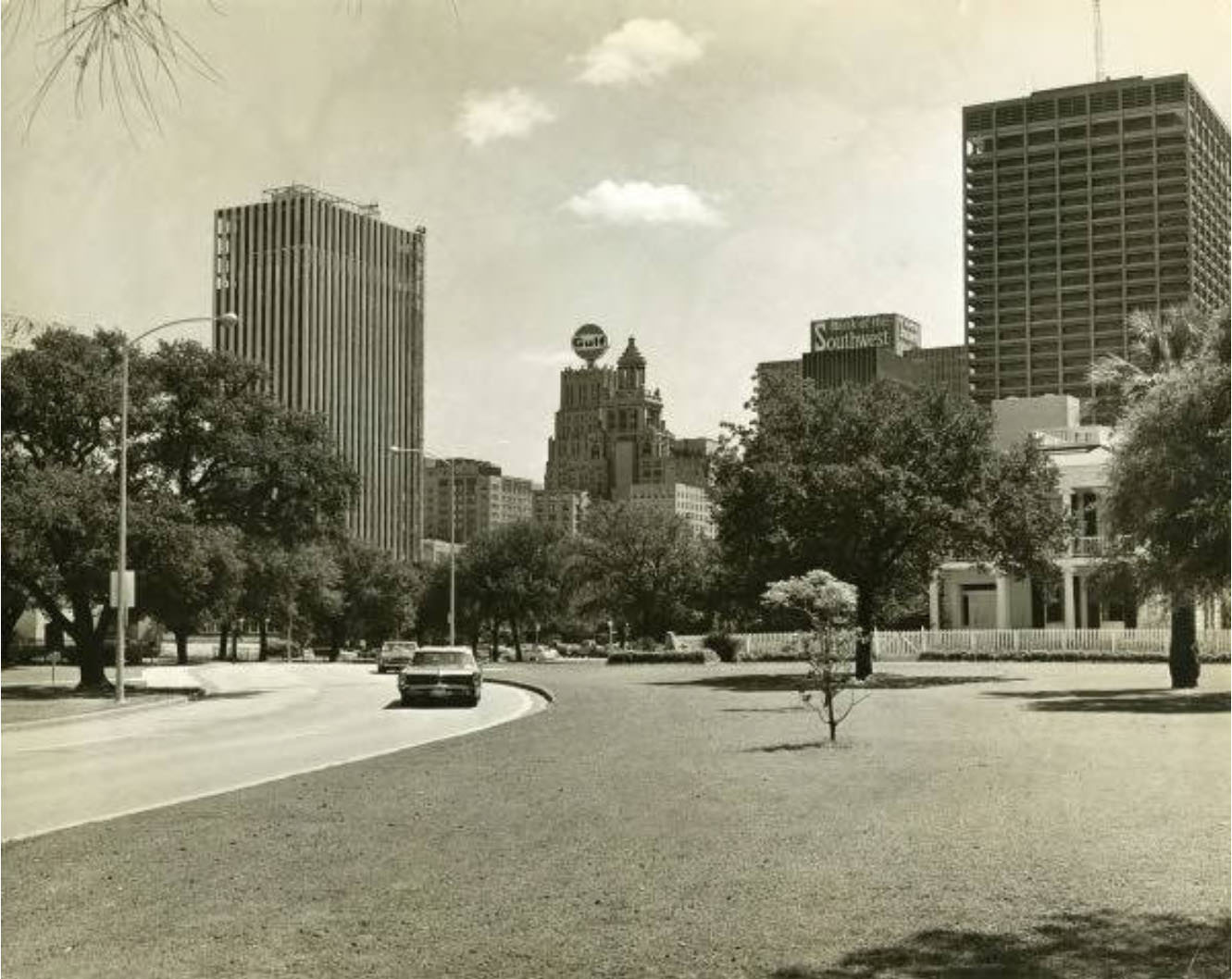
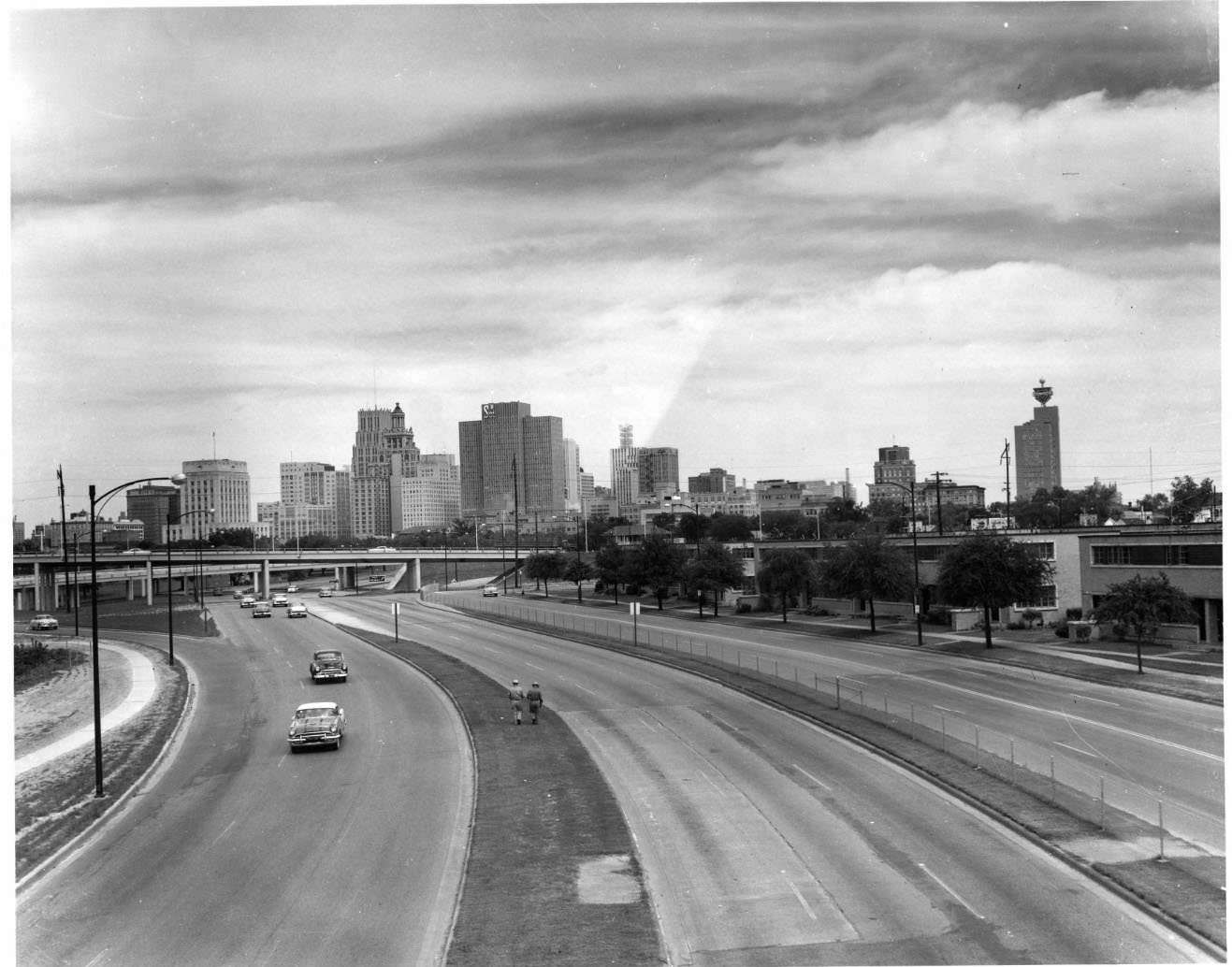
Memorial Drive, Houston skyline in the background.
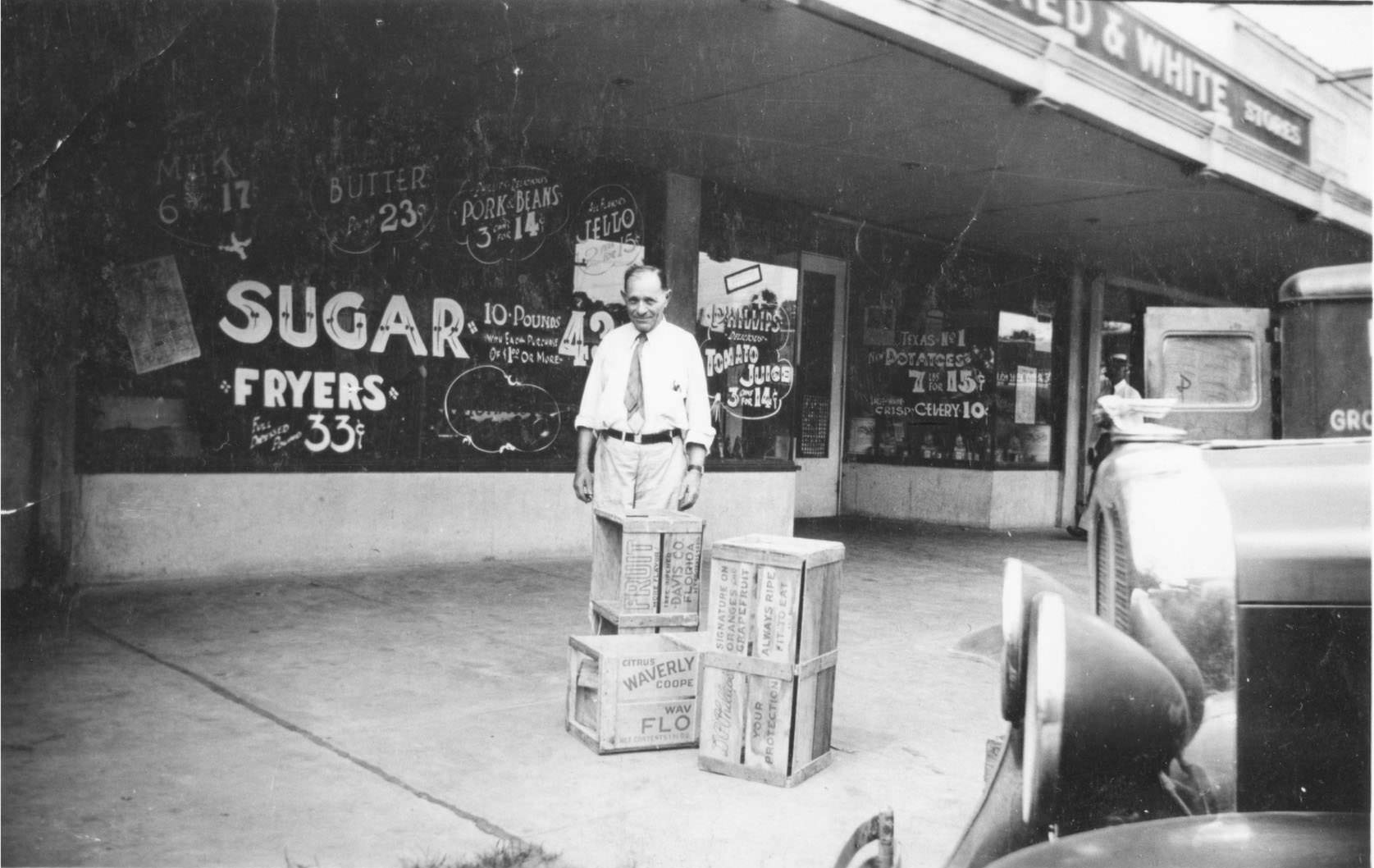
Man in front of a store with wooden crates and car in foreground.
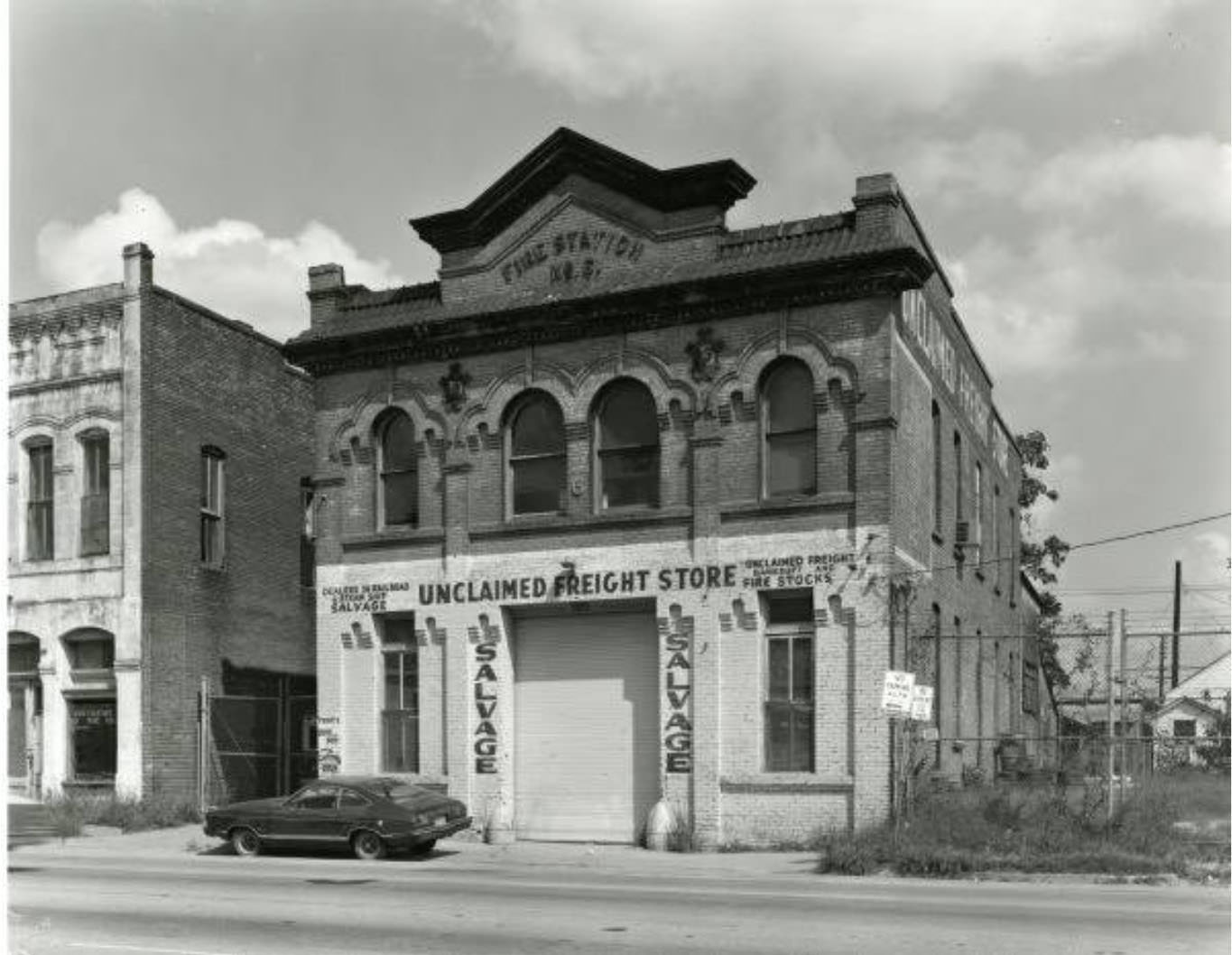
Houston Fire Station No. 6
S. S. Merrymount at Houston Harbor
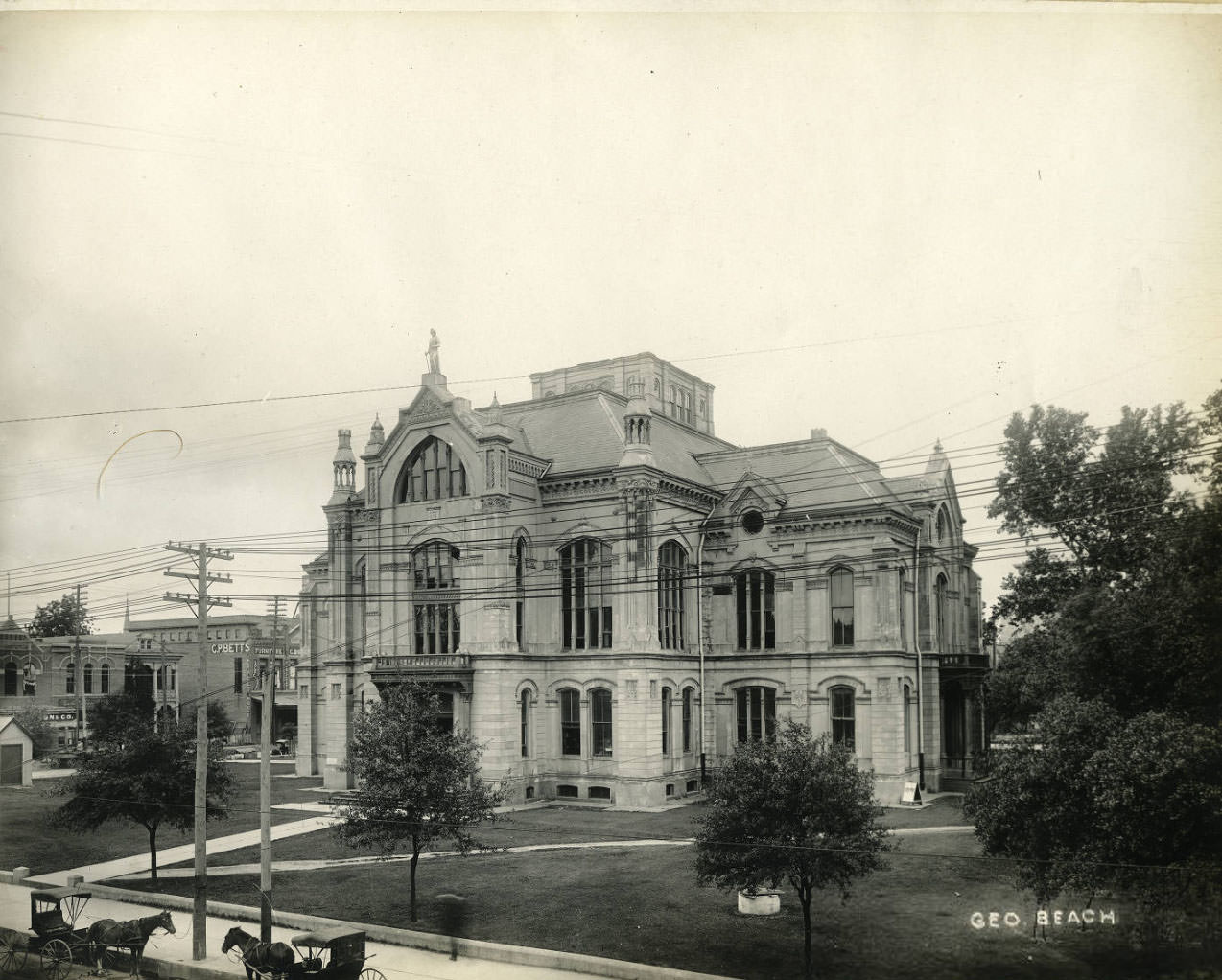
New rebuilt  Harris County Courthouse.
New rebuilt Harris County Courthouse.

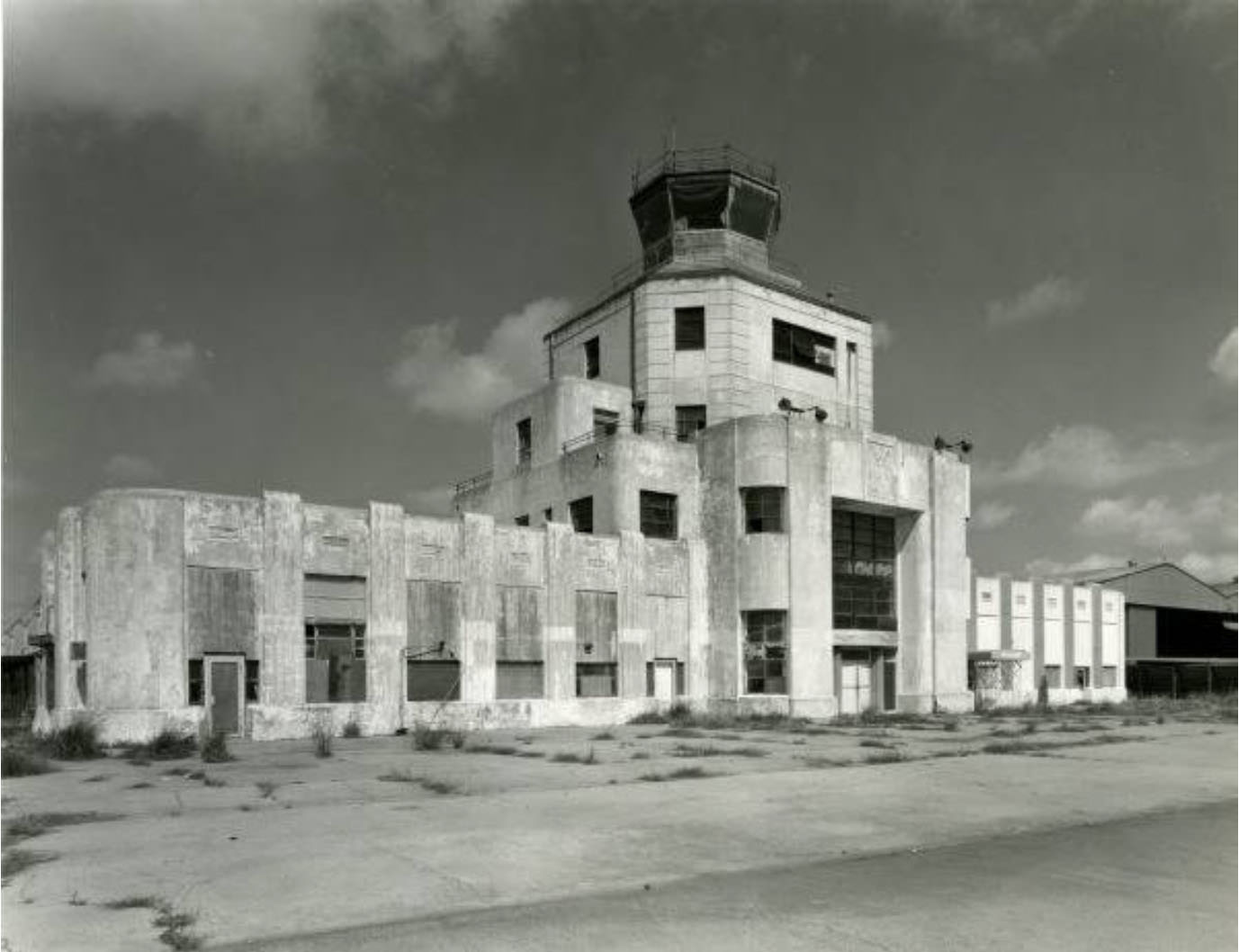
Houston’s air travel industry was growing rapidly through the 1930s. New routes connecting Houston and Atlanta launched early in the decade, and Houston International Airport expanded its commercial and passenger facilities throughout the period. By 1941, Braniff, Eastern, and Southern airlines all operated regular flights out of Houston, making the city a regional hub for air travel. The airport had come a long way from the small municipal field it had been just a decade earlier.

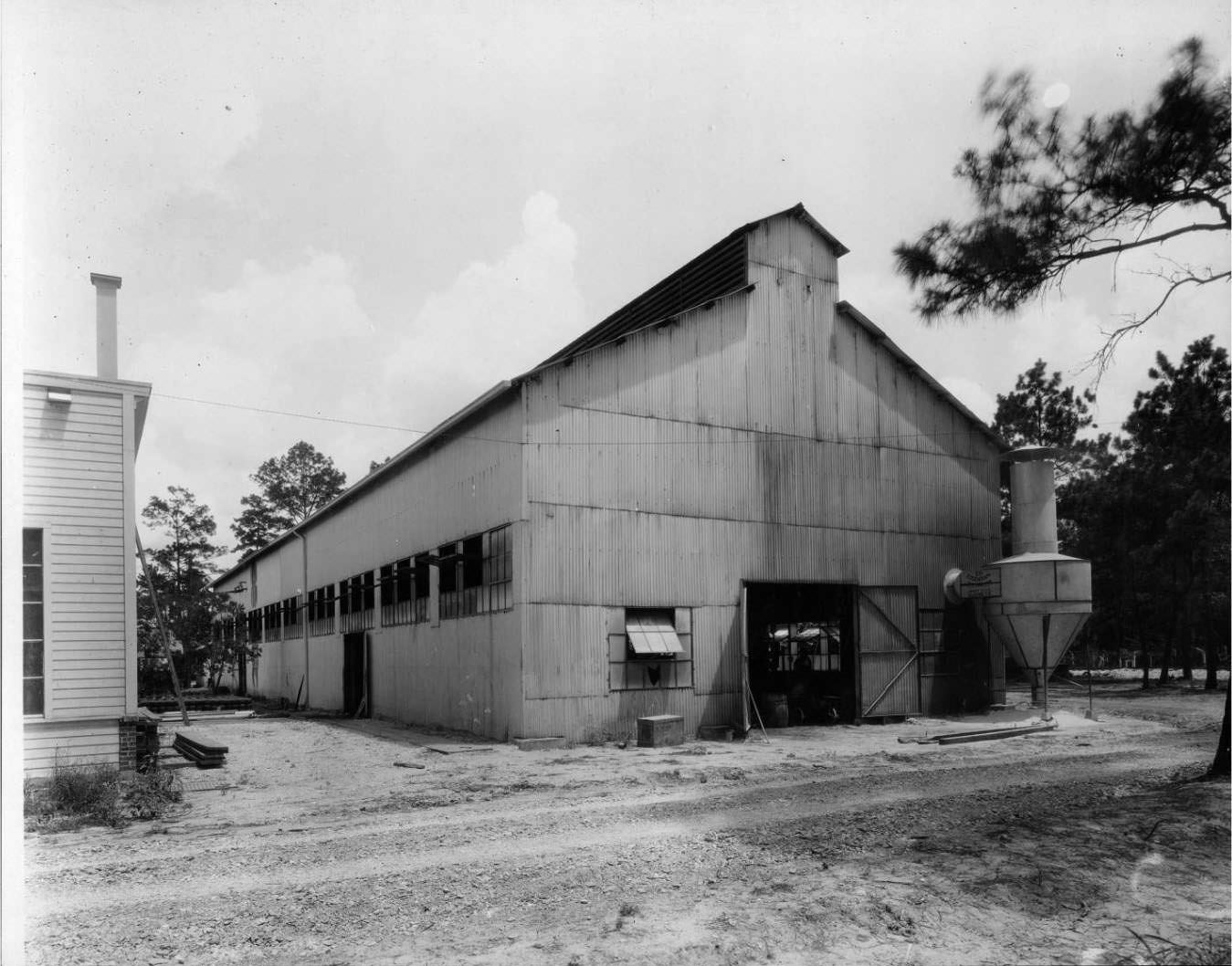
Heat-Treating Building of the Hughes Tool Company, rear view
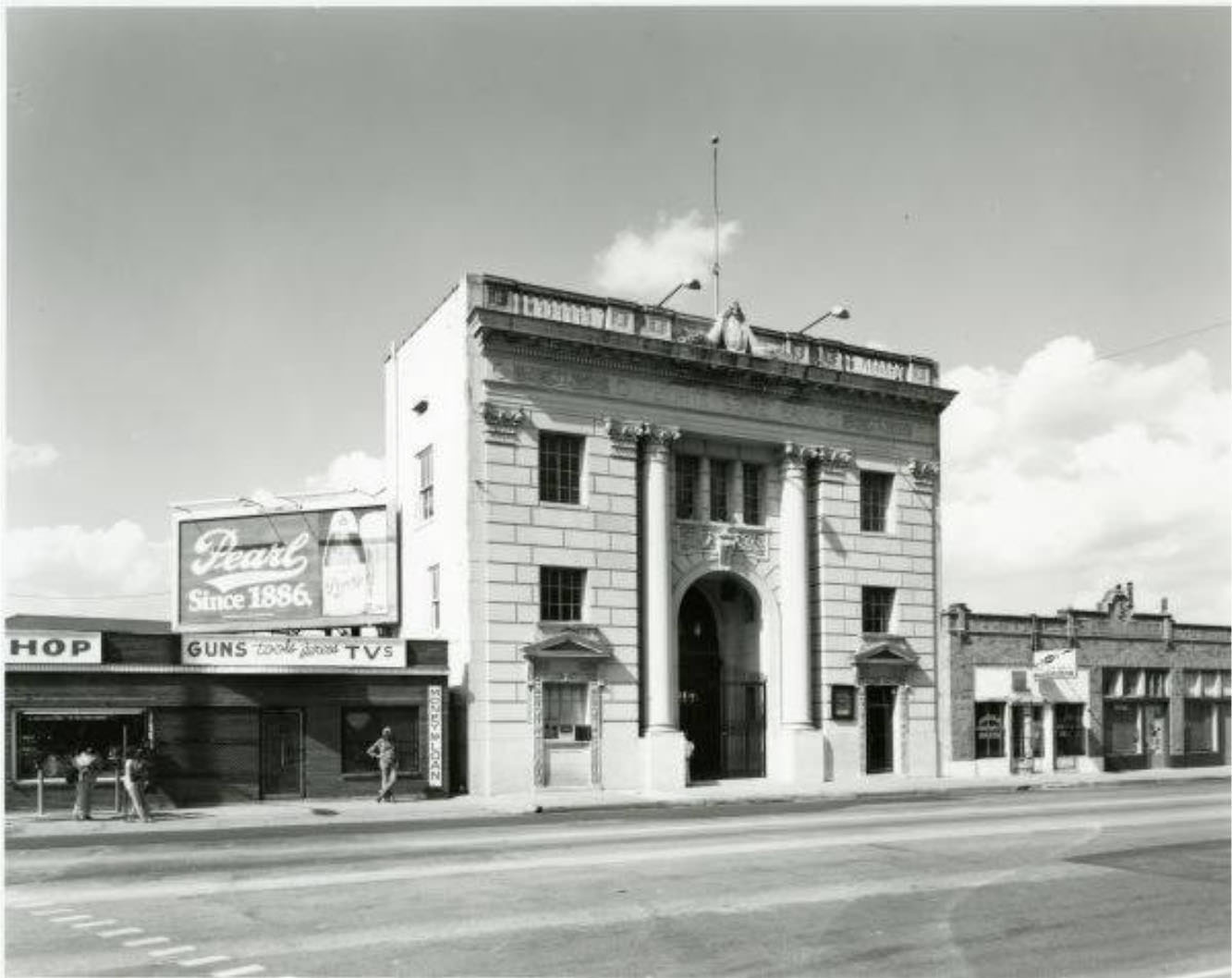
Citizens State Bank
Citizens State Bank
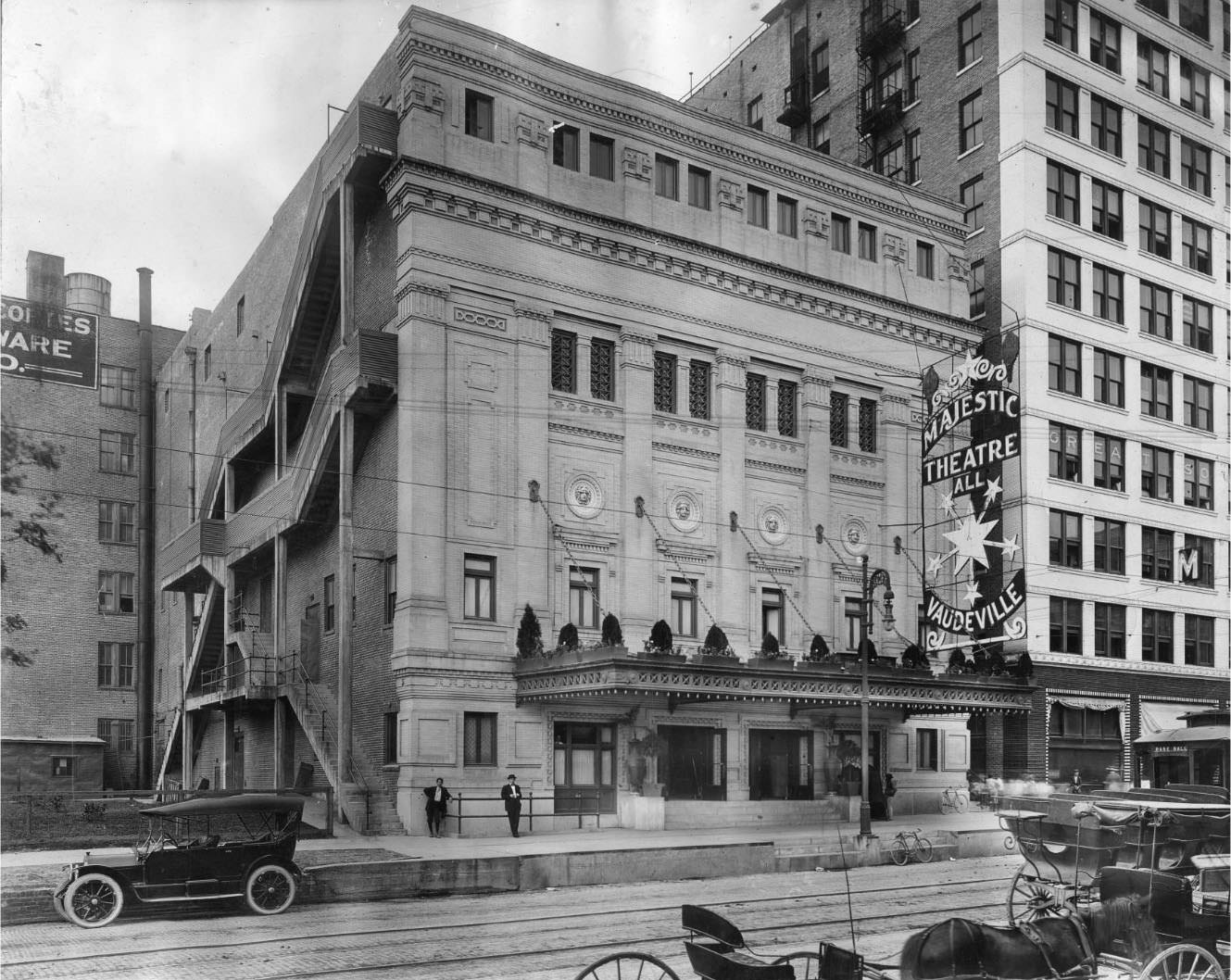
Majestic Theatre.
Majestic Theatre.
Hughes Tool Company products being loaded onto a truck.
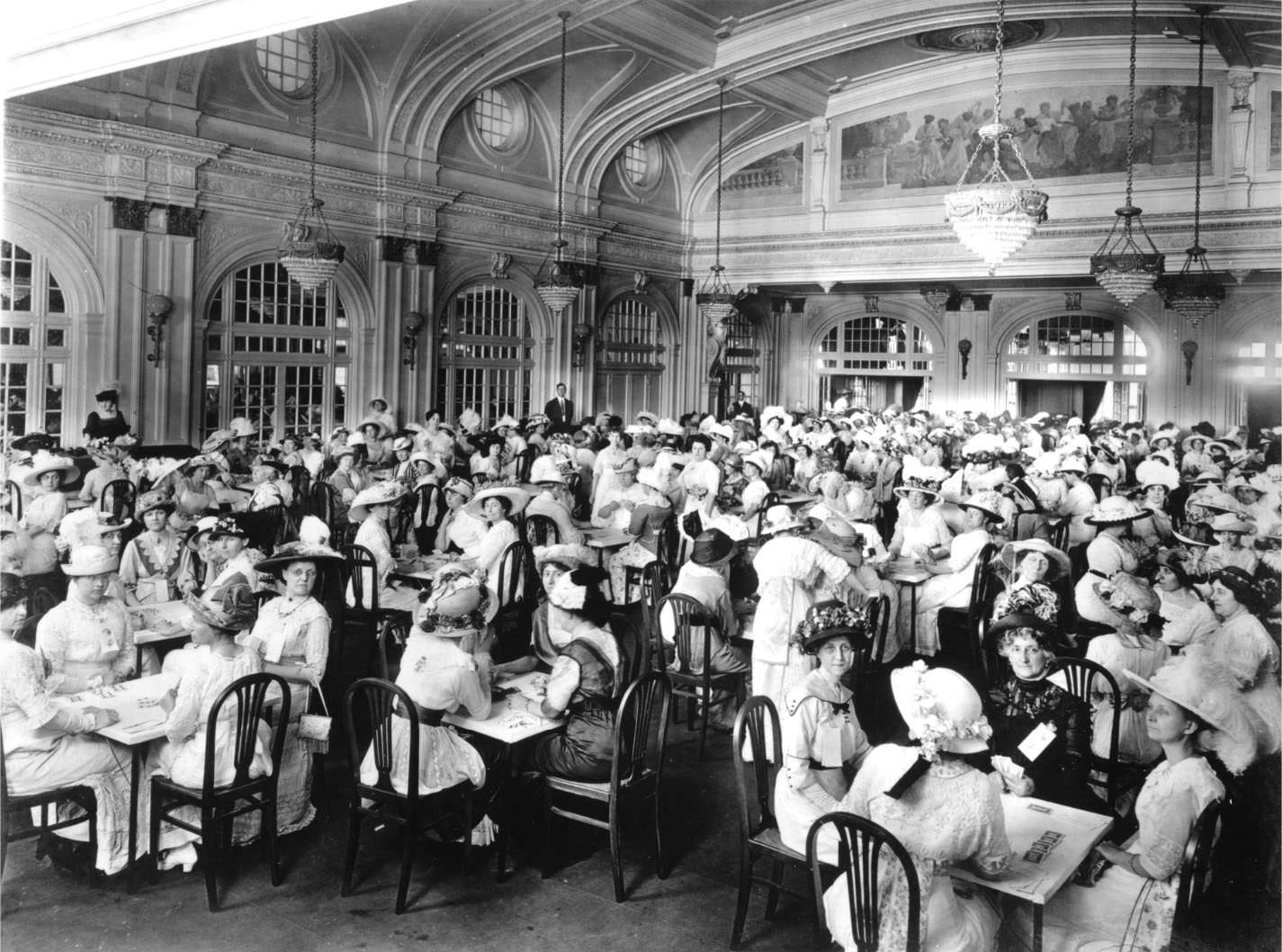
Large ladies' bridge party in the ballroom of the Rice Hotel, Houston, 1930s.
Large ladies’ bridge party in the ballroom of the Rice Hotel, Houston, 1930s.
View of Allen Parkway
Freed-Montrose Neighborhood Library
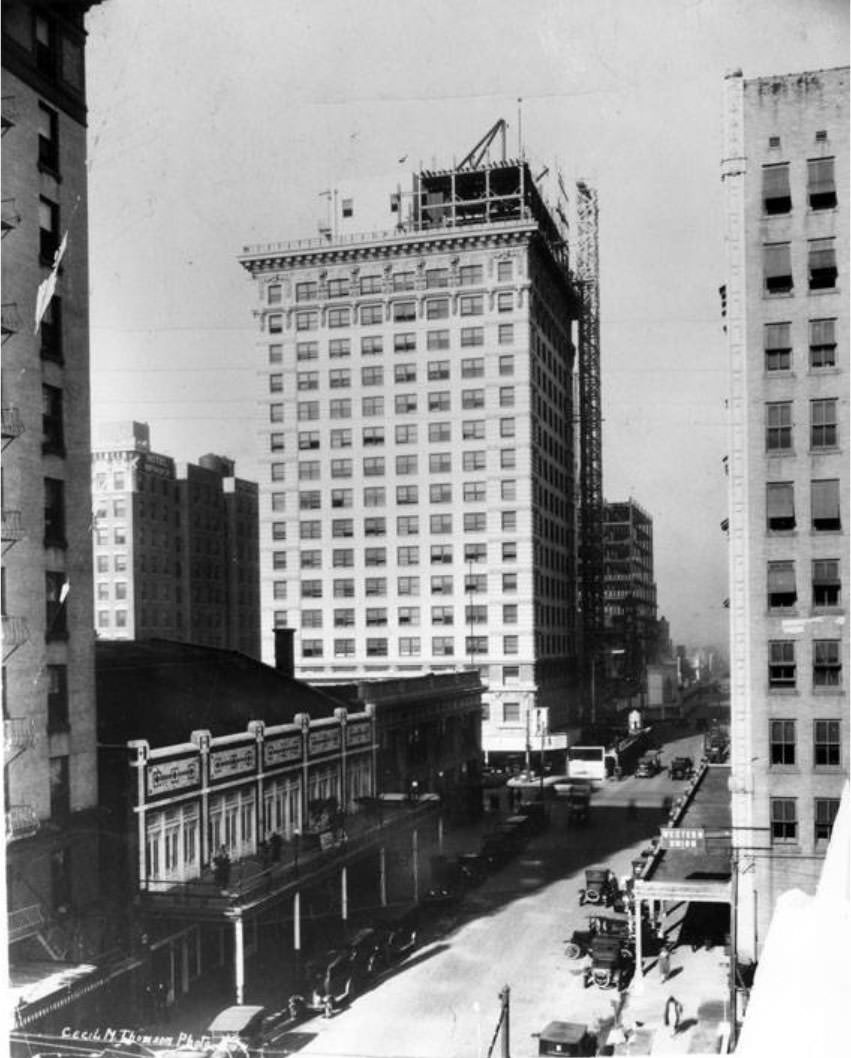
Building under construction in Houston central business district
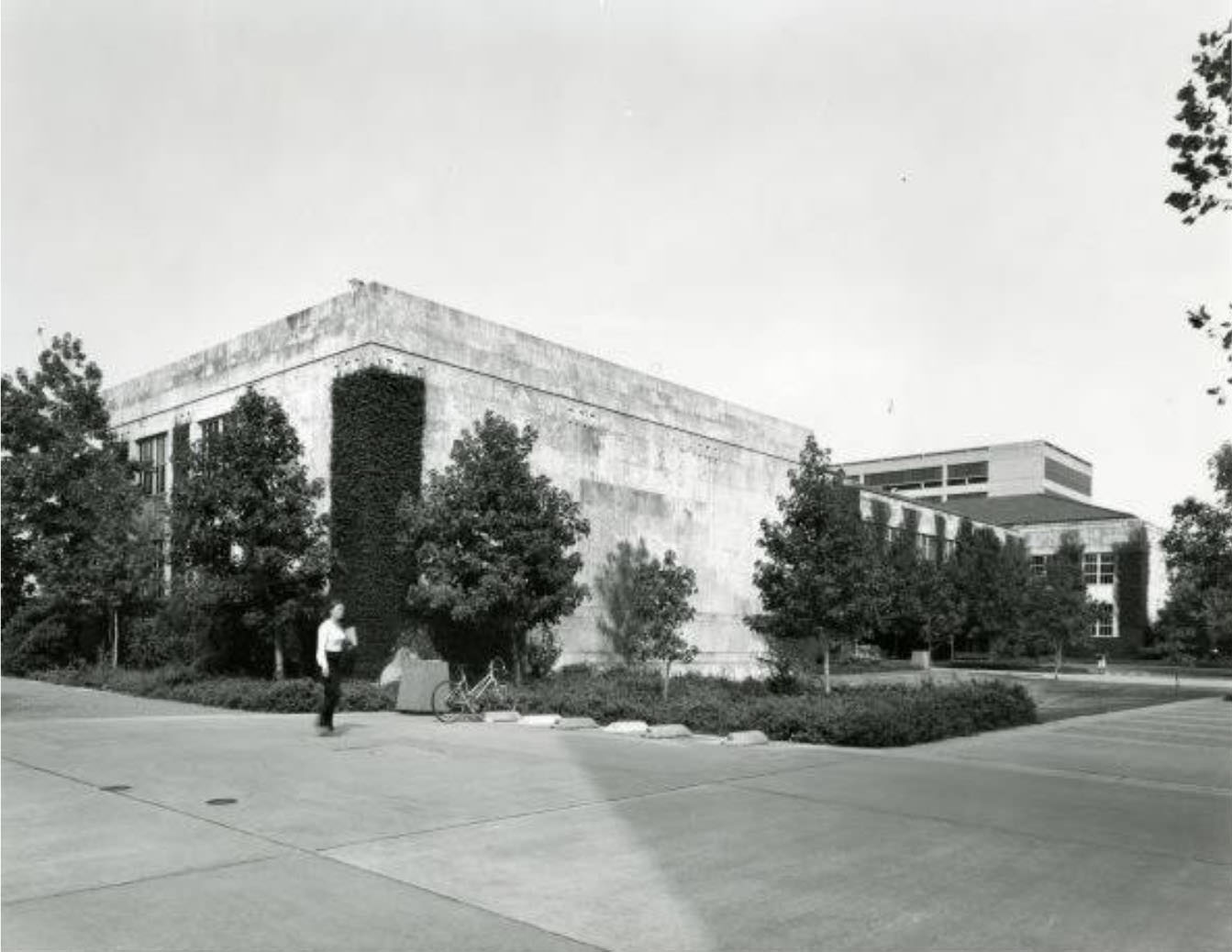
University of Houston Science Building

In December 1935, a series of floods struck Houston, killing six people and causing more than one million dollars in property damage. The city’s bayous, which drained the low-lying land, were overwhelmed. It was a reminder that Houston’s geography made it highly vulnerable to heavy rain, and that the infrastructure improvements of the decade had not yet caught up with the city’s needs. The following year, in 1936, both Texas and Houston marked their centennials — 100 years since Texas declared independence from Mexico. The celebrations took place against the backdrop of a city still climbing out of hard times, but looking firmly ahead.

Union Station, Houston, 1930s
Houston Municipal Airport, 1930s.
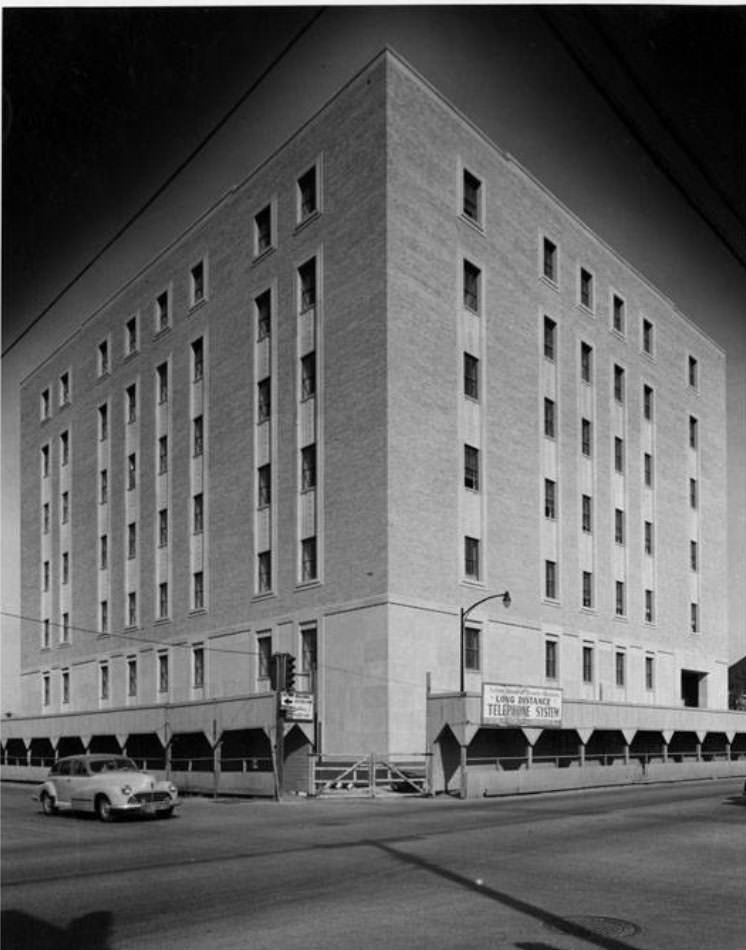
Southwestern Bell Telephone Building, Houston, 1930s.
Humble Oil Filling Station No. 4, 1930s.
Enjoyed this post? Get new ones in your inbox.

Leave a Comment

Your email address will not be published. Required fields are marked *

10 Comments

Share this Post 🥺

Please take a moment to share this content. Your support is greatly appreciated! 🙌🙏

Share this Post 🥺

Please take a moment to share this content. Your support is greatly appreciated! 🙌🙏
Scroll to Top
 
Hey Friend, Before You Go.. Please like & follow for more interesting content