
Detroit in the late 19th century was a city in the middle of a dramatic transformation. What had once been a modest merchant town on the Detroit River was rapidly becoming one of the most important industrial cities in the United States. Its population swelled, its skyline climbed, and its streets buzzed with commerce, new technology, and ambition. The photographs below capture that world — its buildings, its people, and its public spaces — before the 20th century reshaped everything again.
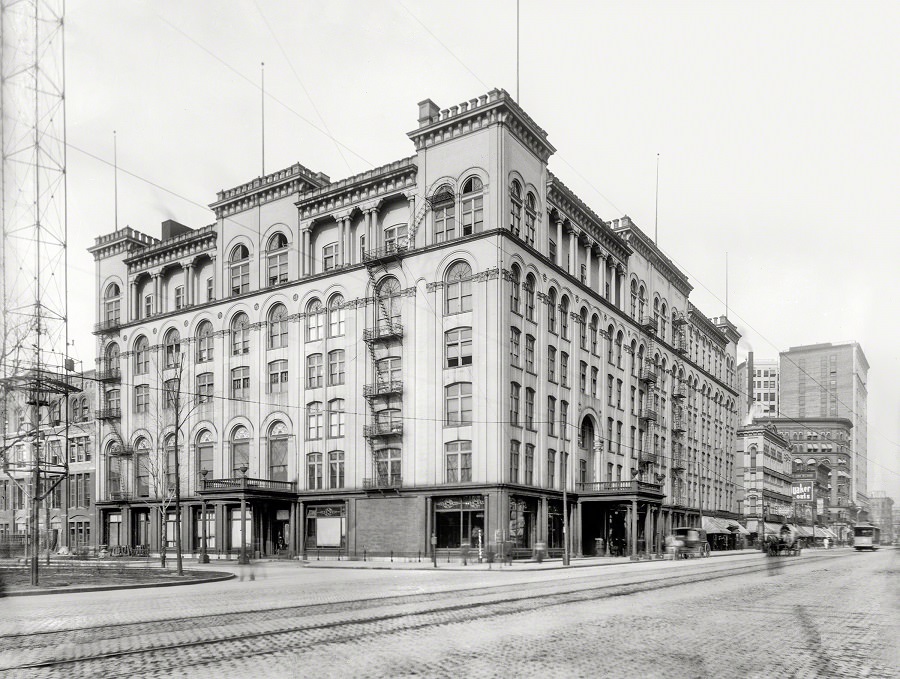
One of Detroit’s most visible symbols of modernity in the 1890s was its municipal lighting system. The city erected towering carbon arc lamps known as ‘moonlight towers,’ standing 165 feet tall and powerful enough to illuminate several city blocks each. Washington Boulevard was among the streets transformed by this technology, and the Hotel Cadillac stood as one of its most prominent landmarks.
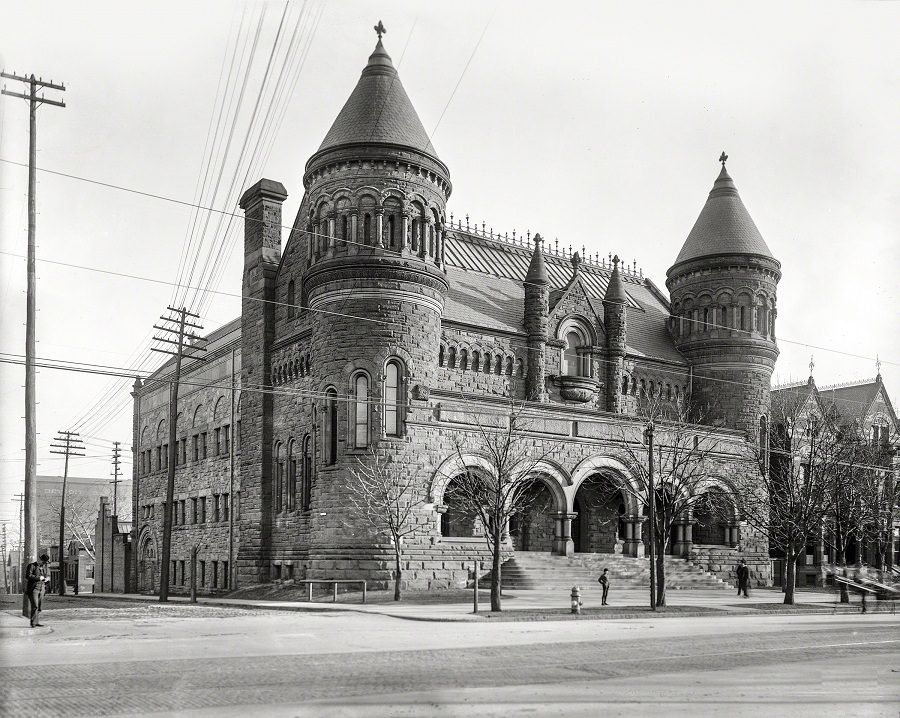
Culture had a strong foothold in late-19th century Detroit as well. The Detroit Museum of Art stood as a proud institution, drawing visitors from across the city. It would survive well into the 20th century before being demolished in February 1957 to make way for the Hastings Expressway — a loss that marked the end of an era for that stretch of the city.
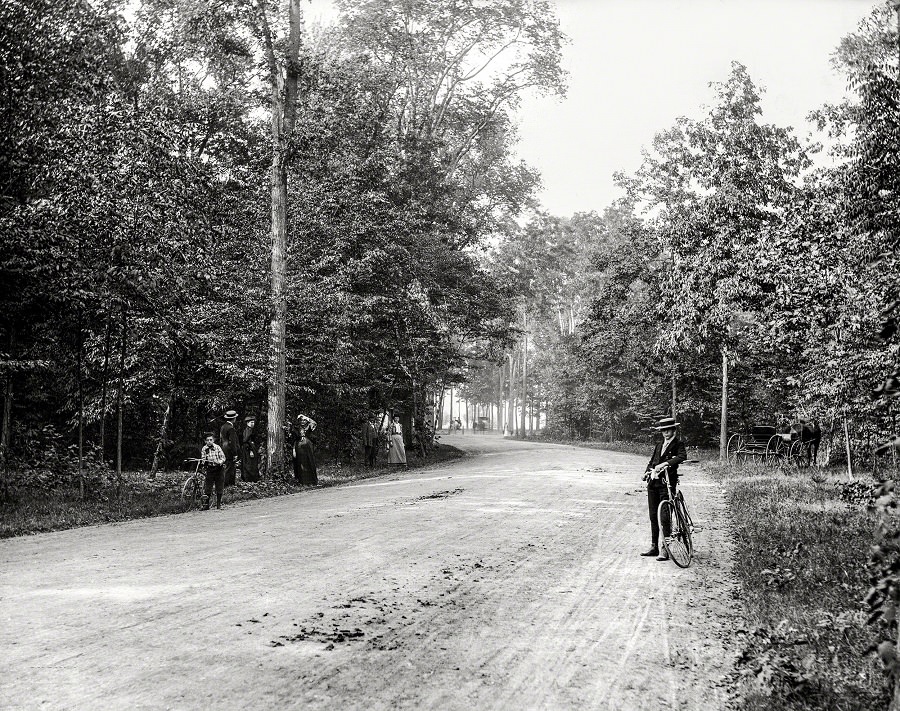
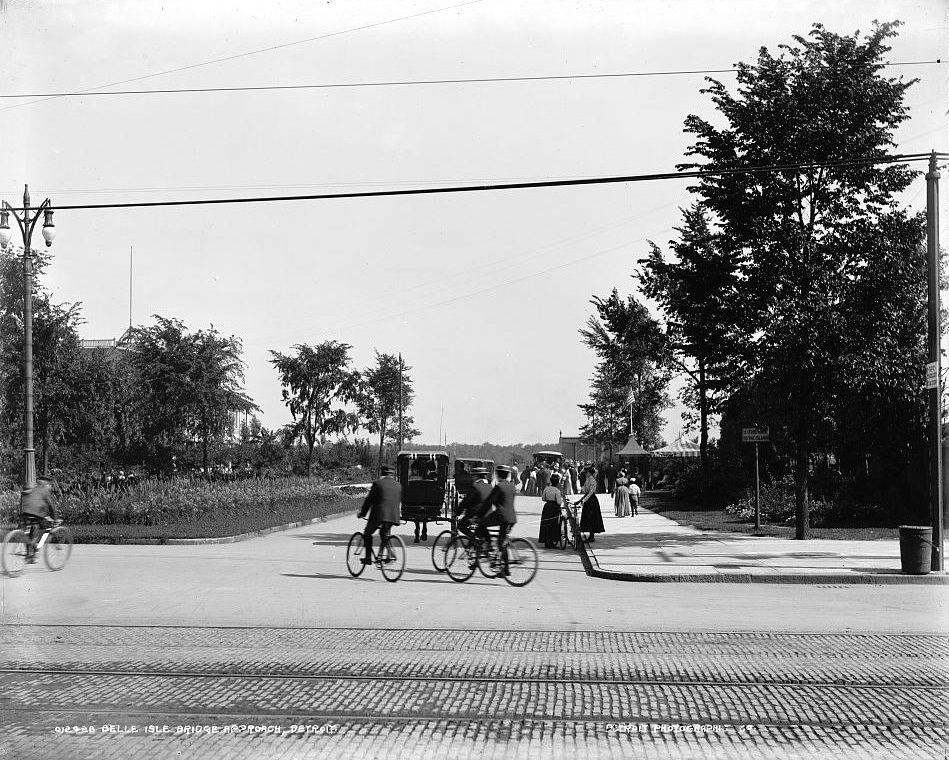
Not all of Detroit’s appeal was industrial. Belle Isle, a 982-acre island park in the Detroit River, offered residents a quiet escape from the city’s noise and smoke. Its winding forest drives were popular with cyclists, strollers, and families looking for green space within easy reach of the urban core.
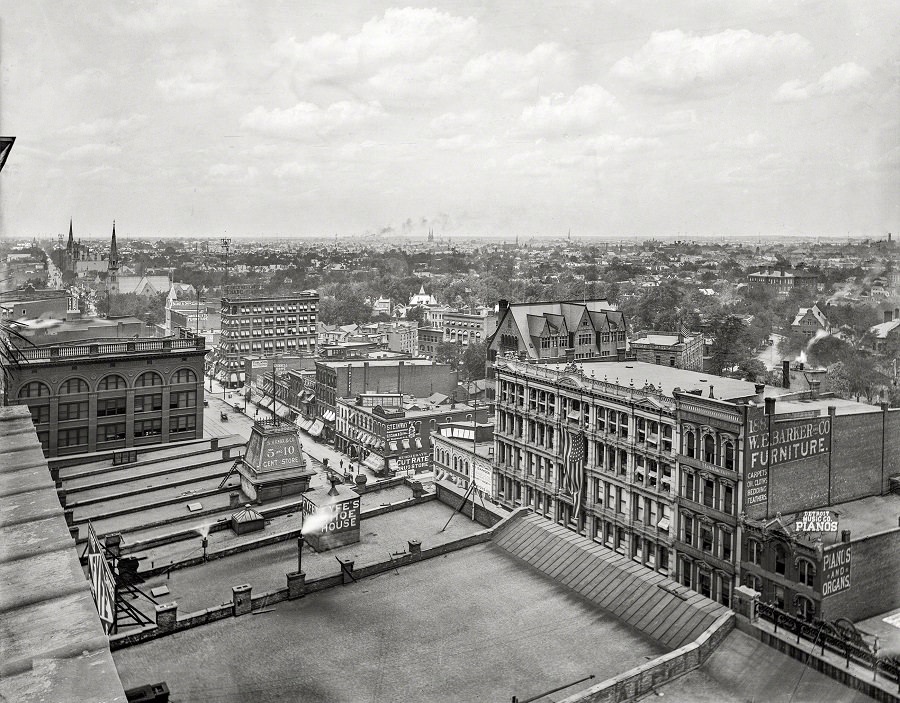
From elevated vantage points in the city, the scale of Detroit’s moonlight tower network becomes clear. A view northeast from the Chamber of Commerce building reveals at least a dozen of these giant electric fixtures stretching across the rooftops, a striking demonstration of how seriously Detroit invested in public infrastructure during this period.
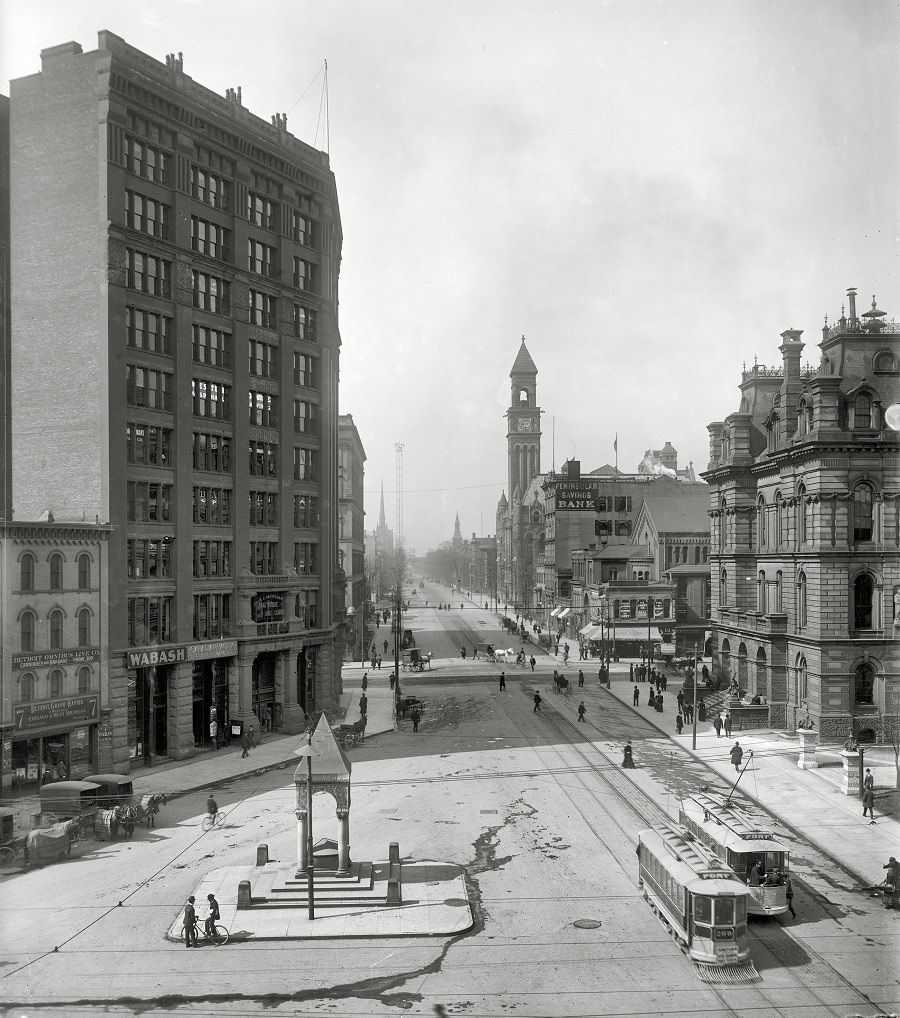
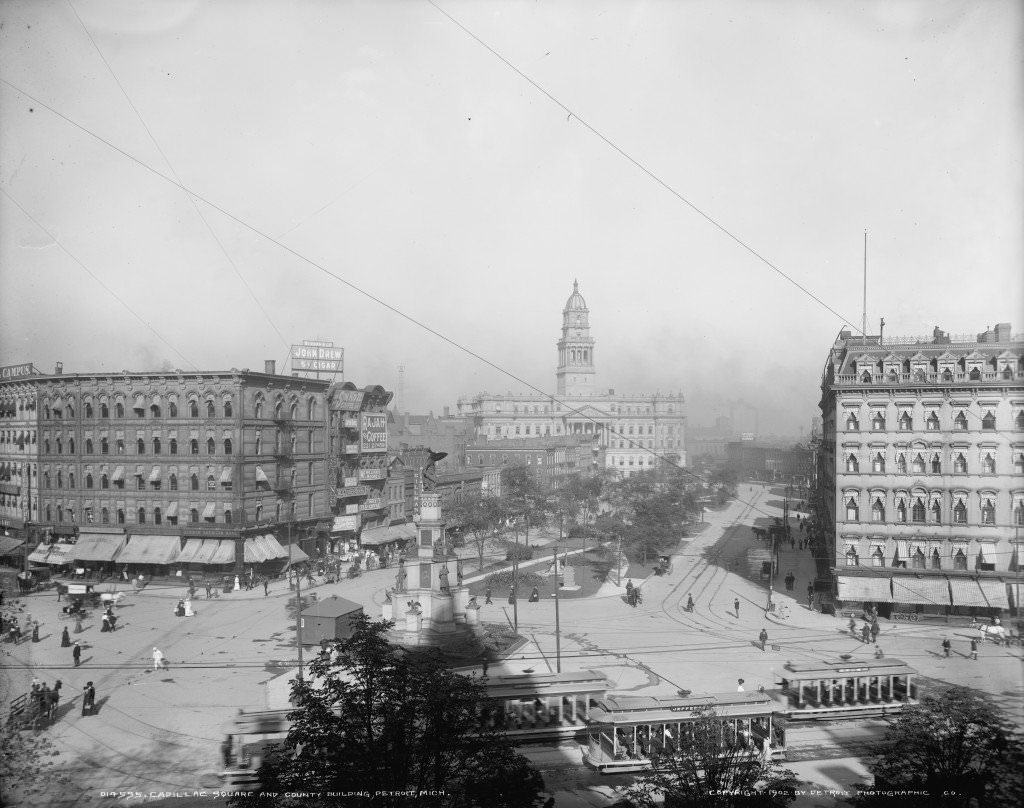
Campus Martius was the civic heart of Detroit. This central public square served as a gathering point for residents and a showcase for the city’s public works. In 1887, a public drinking fountain was installed there using funds left by the estate of John Judson Bagley — the first such fountain in Detroit’s history. It stood as a small but meaningful gesture toward civic life in a city focused on industrial growth.
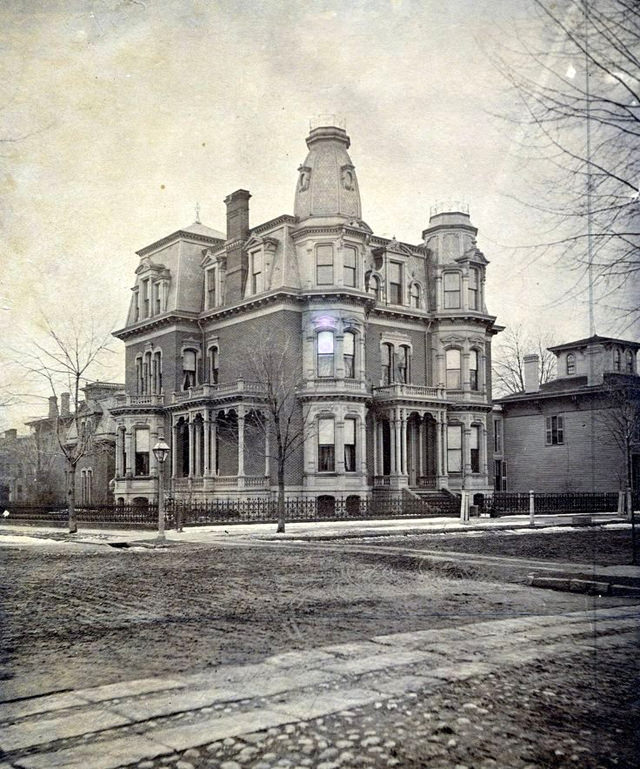
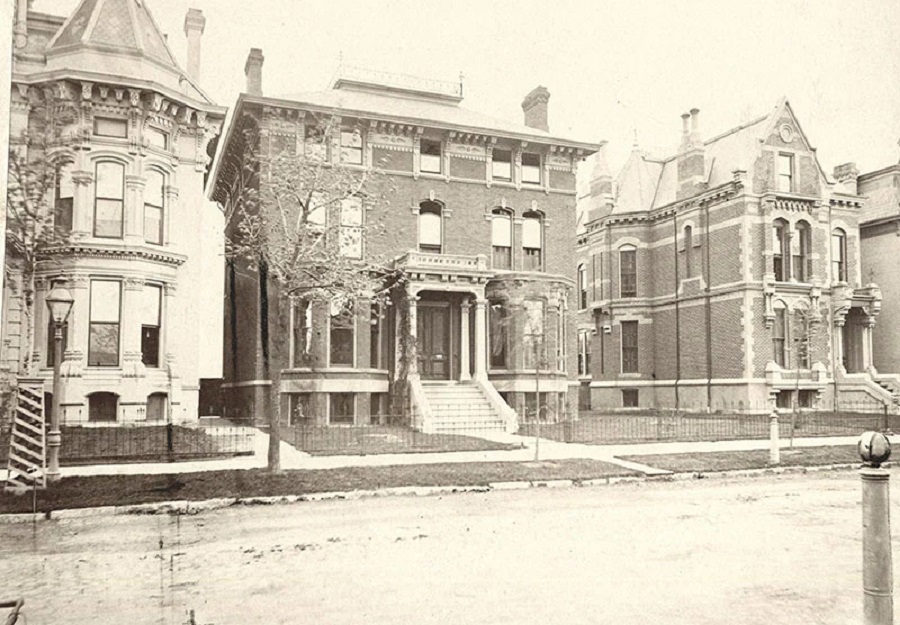
The rise of manufacturing created a new class of wealthy Detroiters. Industrialists, business owners, and professionals built elaborate homes in fashionable neighborhoods, reflecting their status and the prosperity the city’s economy generated. The home of William A. Butler on West Lafayette Avenue is a fine example of the residential architecture that defined Detroit’s affluent class in the 1880s.
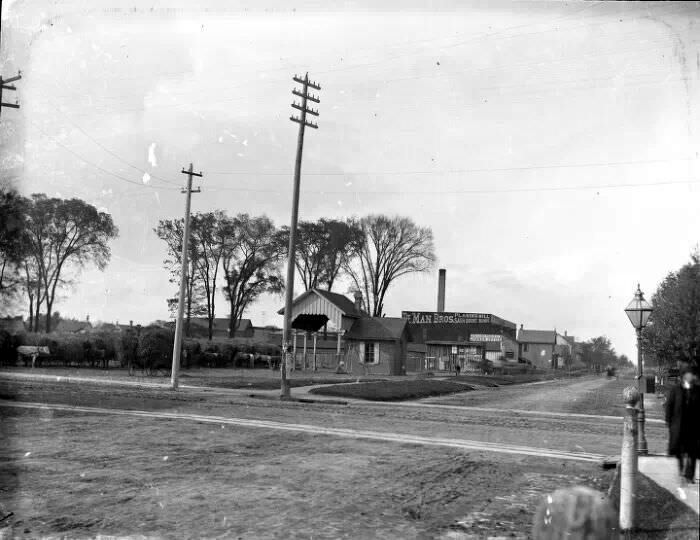
Street corners throughout Detroit told the story of a growing city. The intersection of Michigan and Trumbull in 1894 sat at the edge of a neighborhood that mixed residential and commercial activity, typical of Detroit’s rapidly expanding street grid during this decade.
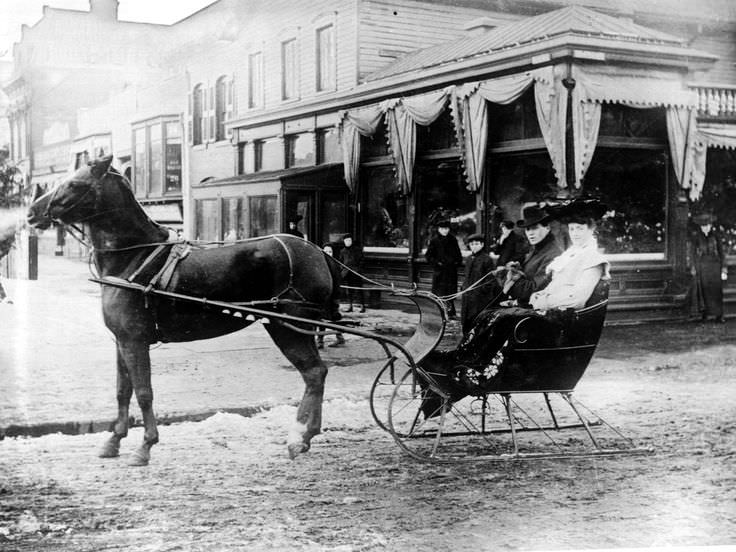
Cycling became one of the most popular pastimes in American cities during the 1890s, and Detroit was no exception. The approach to the Belle Isle Bridge was a favored route for cyclists heading to the island park, and these photographs from around 1890 document just how widespread the hobby had become across all walks of city life.
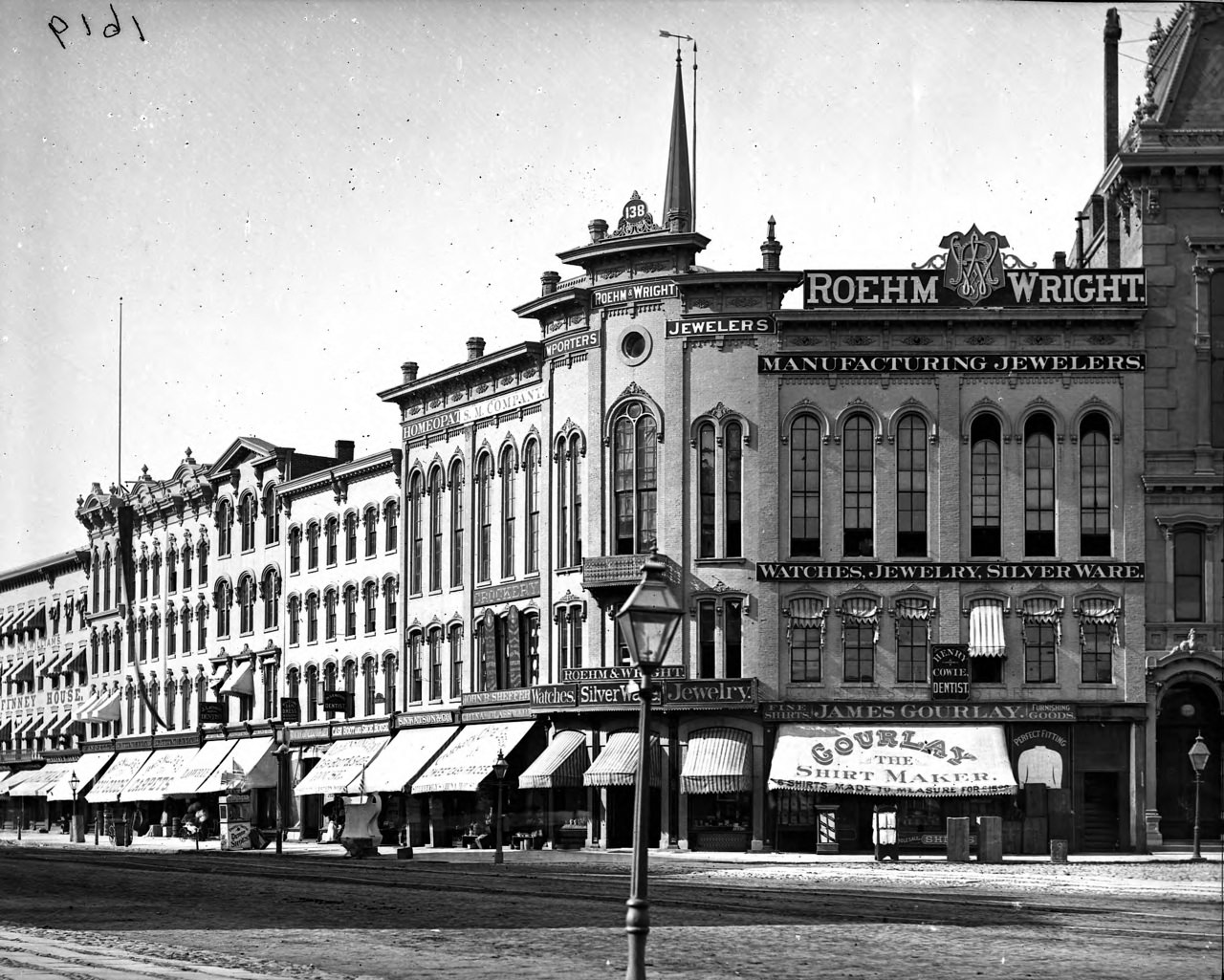
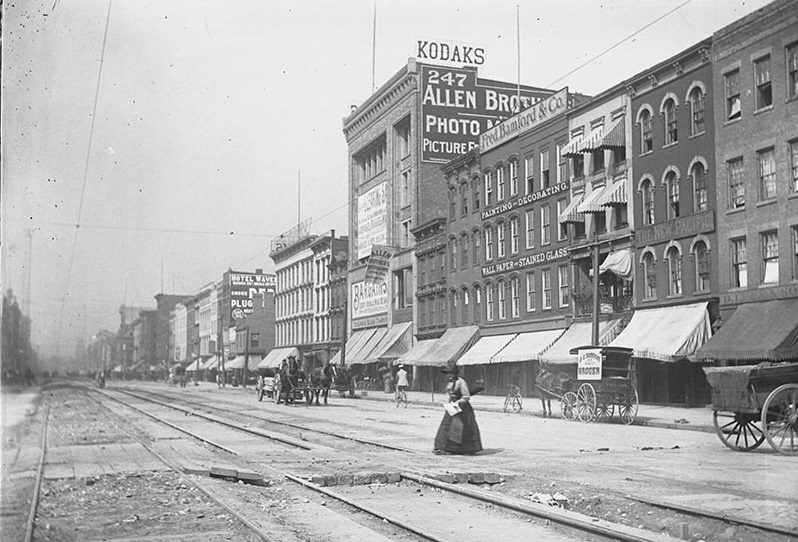
Woodward Avenue was Detroit’s main commercial corridor, and by the mid-1880s it was already a dense stretch of storefronts, streetcars, and foot traffic. Campus Martius anchored its southern end, and together the two formed the commercial spine of the city throughout the late 19th century.
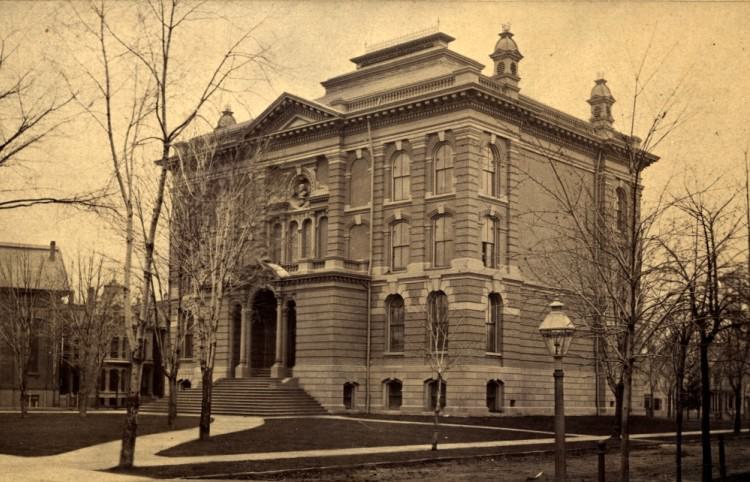
Public libraries were a priority for growing American cities in this era, and Detroit was no different. The old Detroit Public Library, photographed around 1881, served as the city’s primary repository for books and records at a time when public education and civic literacy were seen as essential to a thriving urban population.
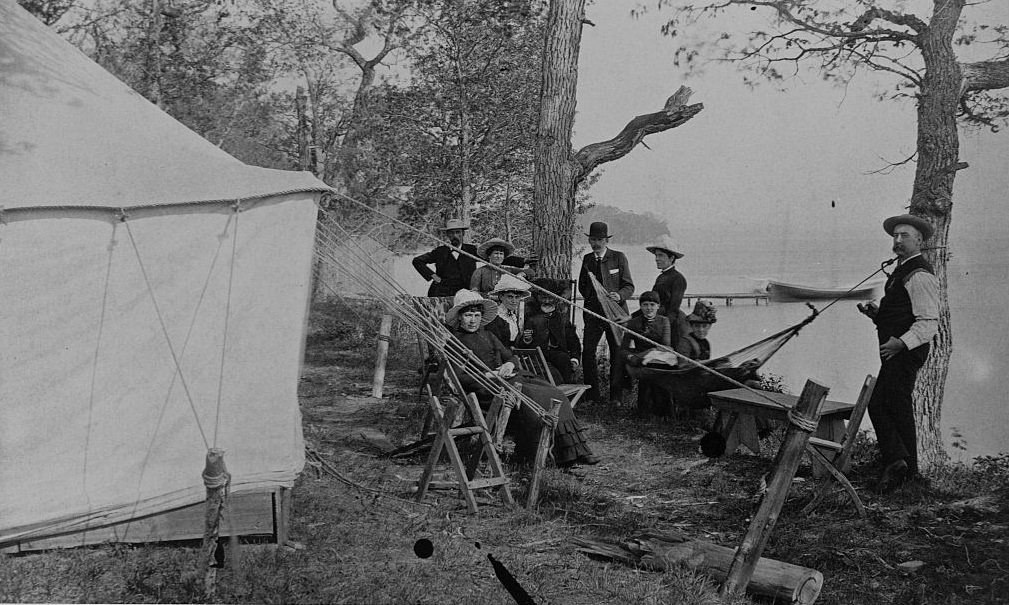
Outside the city itself, the shores of Detroit Lakes provided a retreat for those seeking relaxation away from the industrial bustle. The Townsend Camp, photographed in 1886, reflects the leisure culture that developed among Detroit residents who could afford time away from work.
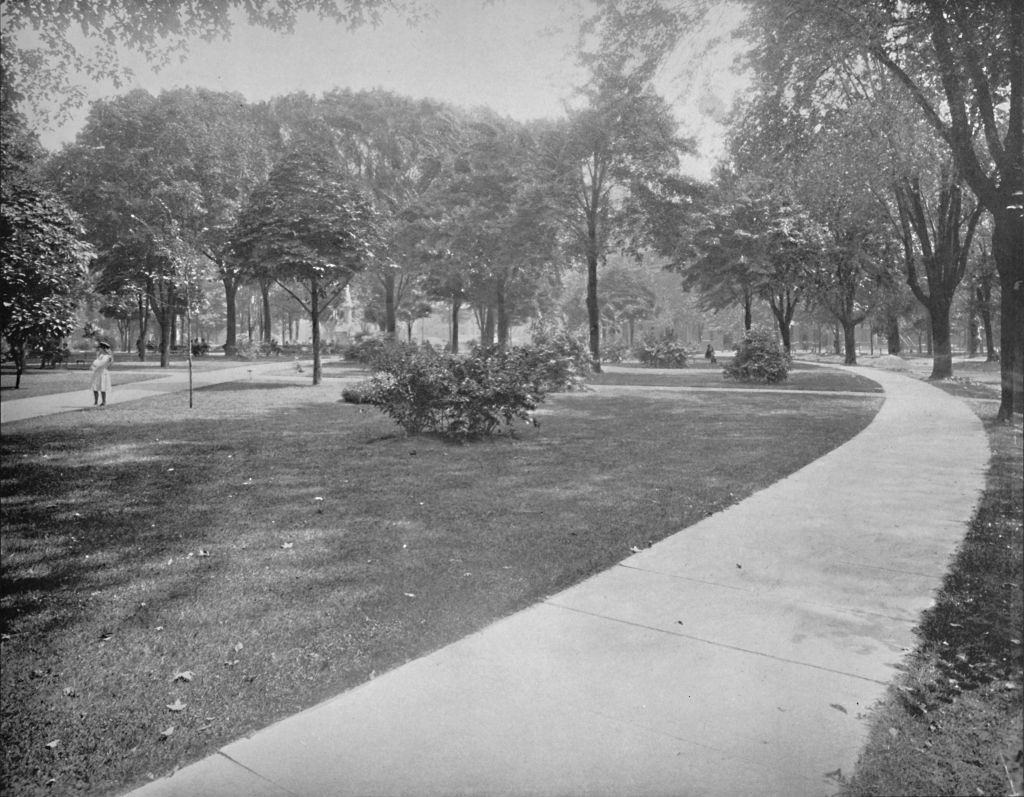
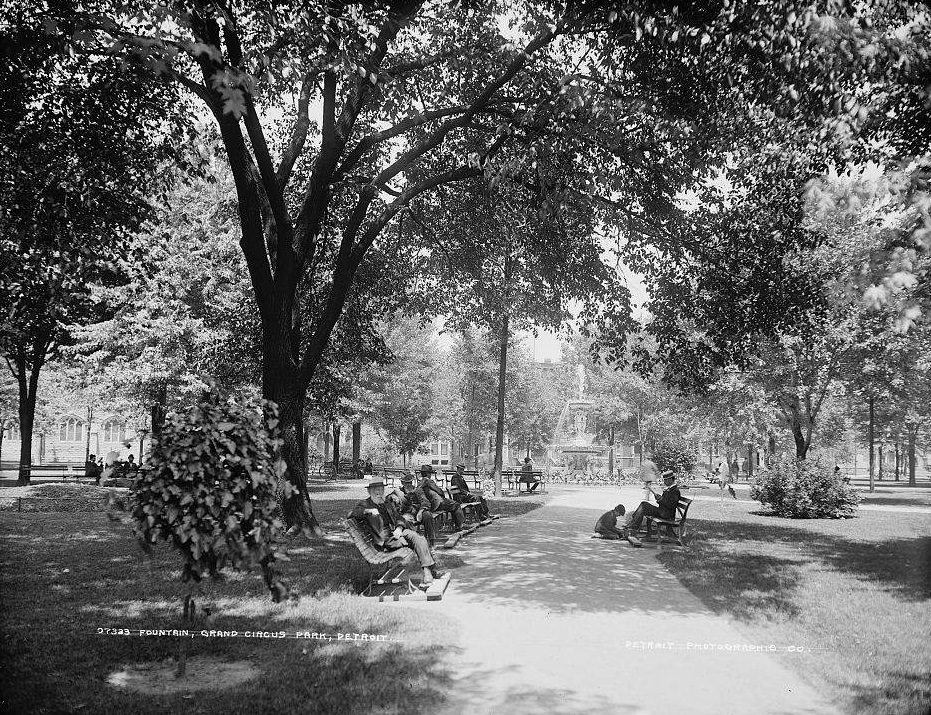
Grand Circus Park was one of Detroit’s most carefully designed public spaces. Established in 1850 as part of the city’s rebuilding plan following the devastating fire of 1805, the park featured antique statues and decorative fountains that lent the area an air of refinement. By the 1890s, it had become a well-established centerpiece of downtown life.
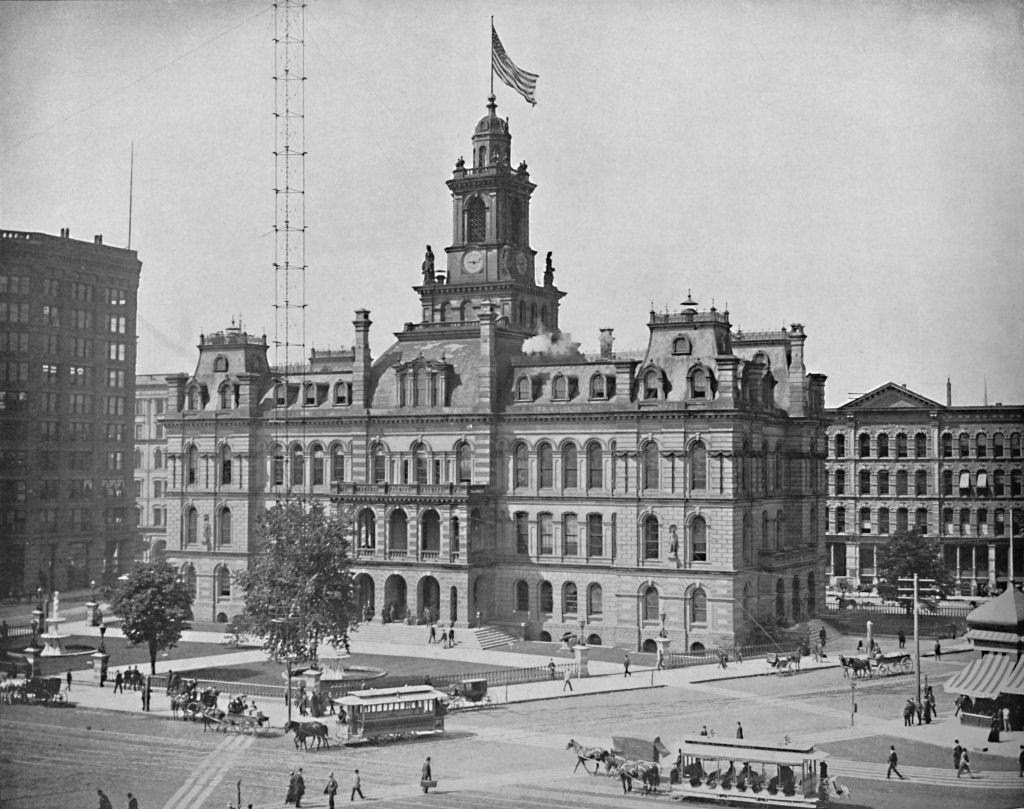
Detroit’s City Hall stood as the seat of municipal government through this entire period of growth. The 1897 photograph captures a building that had already overseen decades of the city’s expansion and would continue to serve that function well into the next century.
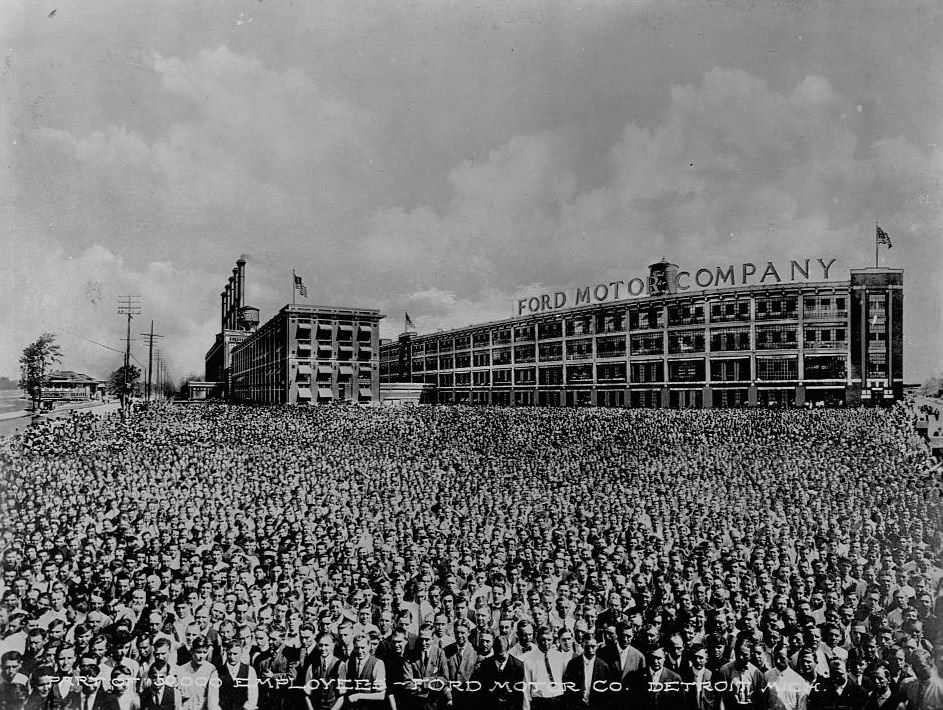
By 1899, the Ford Motor Company had not yet been formally incorporated — that came in 1903 — but the industrial workforce that would power Detroit’s automobile age was already taking shape. A photograph from 1899 shows several thousand employees gathered in front of the Ford Motor Company Building, offering a rare glimpse at the sheer scale of industrial labor in the city at the close of the century.
Jefferson Avenue East was one of Detroit’s major thoroughfares, running along the riverfront and connecting the city’s eastern neighborhoods to the downtown core. In the 1890s, it was lined with a mix of commercial buildings, residences, and institutions that reflected the diversity of the city’s economic life.
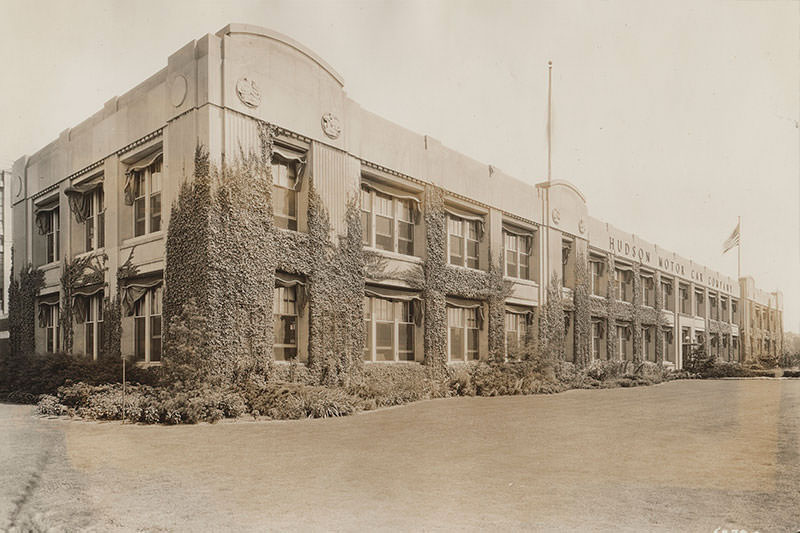
Detroit’s automobile industry would define the 20th century, but its roots stretched back into the 1890s. The Hudson Motors Administration Building, photographed in that decade, points to the early organizational infrastructure being put in place for what would become one of the world’s most powerful manufacturing sectors.
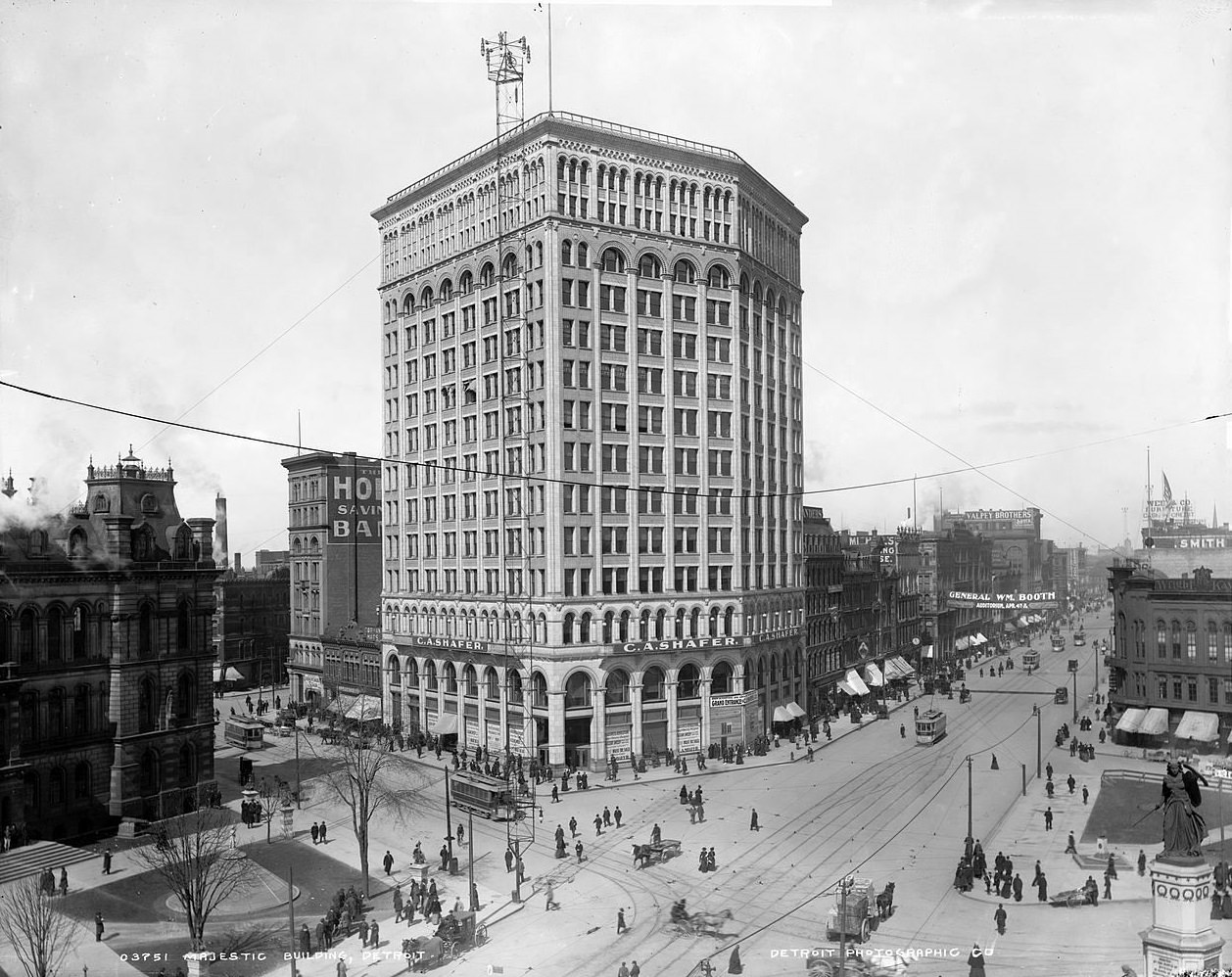
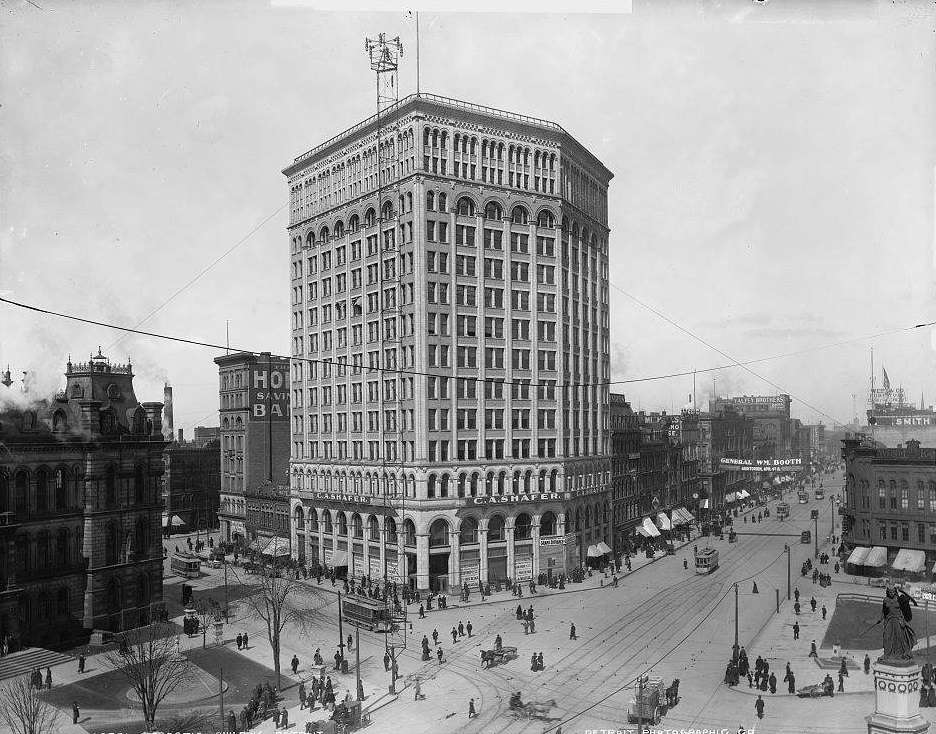
Woodward Avenue in the 1890s was also the site of Detroit’s second skyscraper. Built in 1896 at 137 Woodward Avenue for the Mabley and Company department store chain, the 14-story tower stood 223 feet tall. It followed only the Hammond Building in the city’s brief but growing history of high-rise construction, marking Detroit’s arrival as a city that could compete architecturally with the nation’s largest urban centers.
The fountain at Grand Circus Park, captured in 1895, remained one of the most recognizable features of the park. Surrounded by the park’s classical statues and ornamental grounds, it stood as a reminder that Detroit’s civic planners had always intended the city to be more than just a factory floor.
Cadillac Square, located near the county building, was another focal point of Detroit’s public life. Named after the city’s French founder Antoine de la Mothe Cadillac, the square had long served as a marketplace and gathering space, and by the late 19th century it was surrounded by the commercial and governmental buildings that defined the city’s center.
Brush Park, photographed in 1881, was one of Detroit’s most prestigious residential neighborhoods in the latter half of the 19th century. Located just north of downtown, it was home to the city’s business elite, who constructed grand Victorian mansions along its streets. The neighborhood stood as a direct product of the wealth being generated by Detroit’s booming industrial economy.





Several titles show up twice each with different images.
One is for Detroit Lakes, MN.
I doubt the Hudson Motor Company looked as presented back in the 1890s.
What is the Hastings Expressway?
Between I-94 and I-375, the Hastings-Oakland Expressway was a provisional name for I-375 and I-75. Considering its relevance to Black Bottom, perhaps the graded I-375 replacement should be named Hastings Blvd.
This old pics are great
So neat – thank you!
The original Cadillac Hotel. Bonus: a moonlight tower in the Washington Blvd median.
Lovely! Thanks for sharing.