Between the late 1800s and the 1930s, ocean liners were the only way to cross the Atlantic. Millions of emigrants from Europe made the voyage to the United States and beyond, packed into steerage decks far below the waterline. But for first-class passengers, the crossing was something else entirely — a floating resort complete with fine dining rooms, grand staircases, and, perhaps most surprisingly, fully equipped gymnasiums. Staying physically active at sea was not a luxury afterthought. It was a selling point, and the shipping companies knew it.
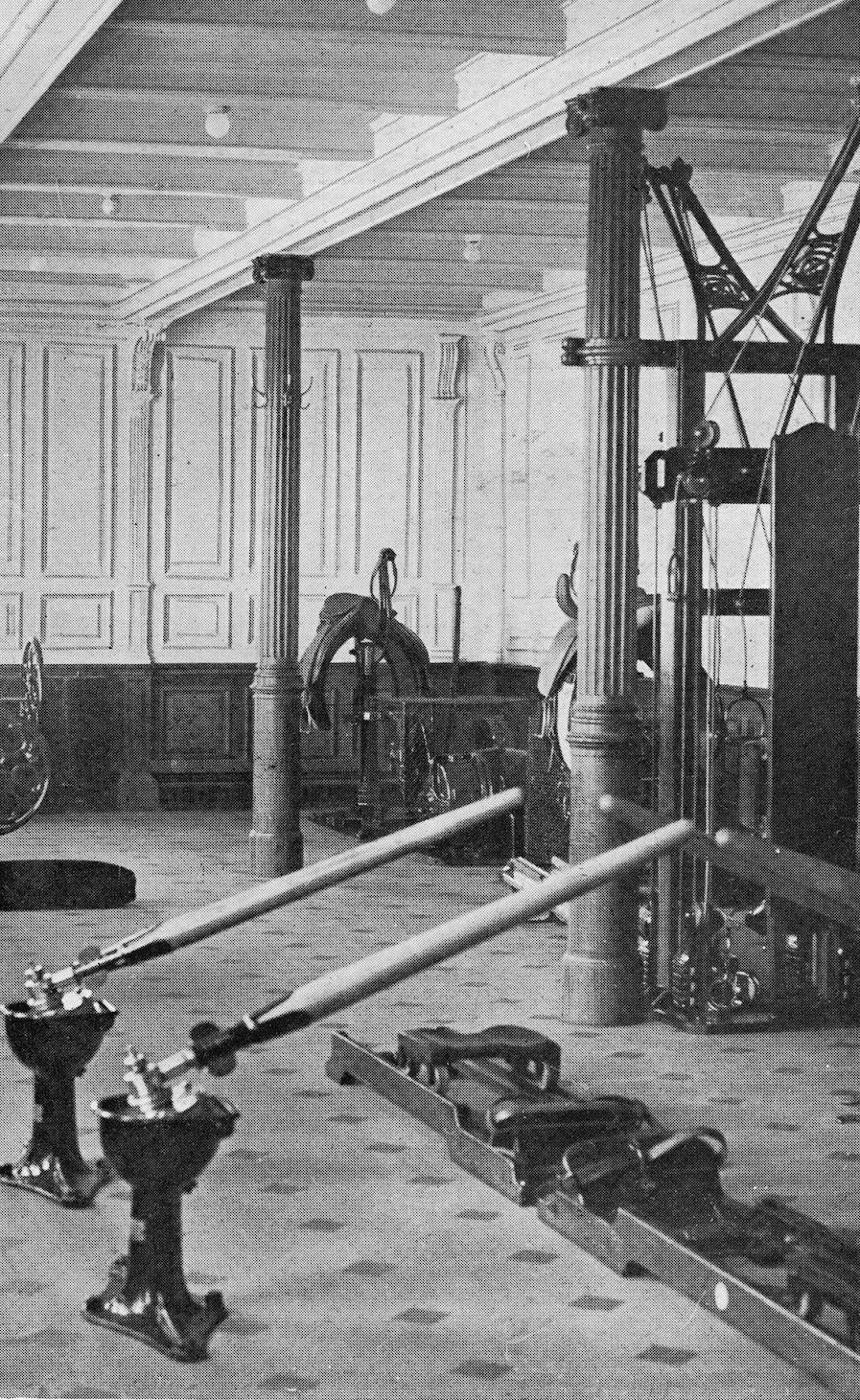
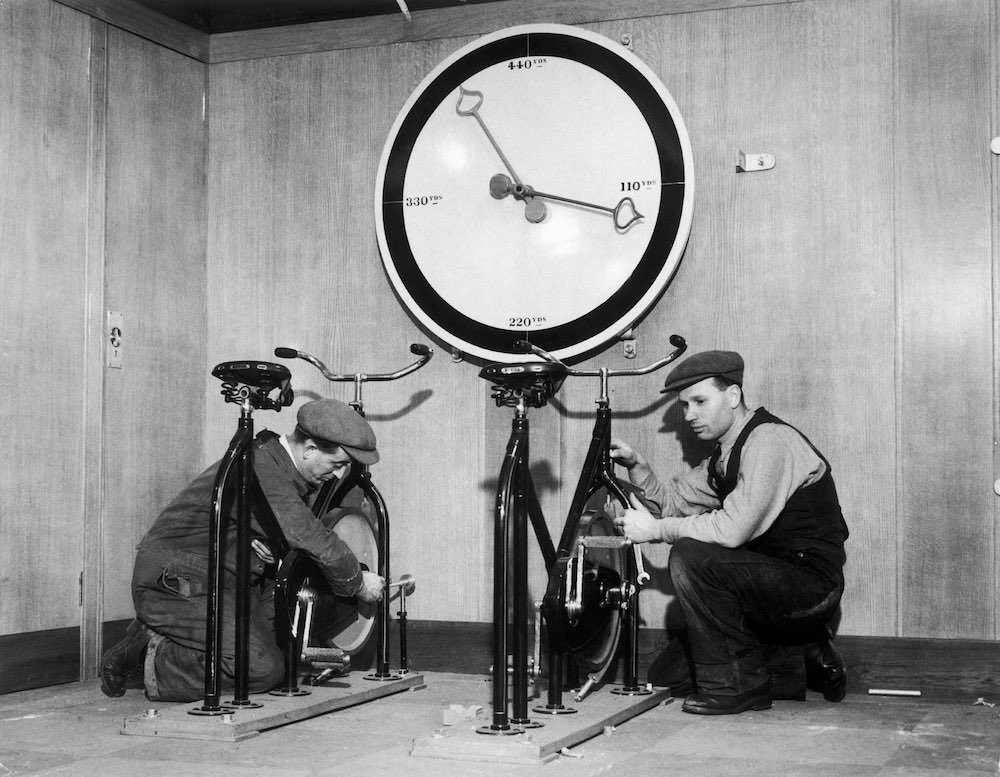
No ship made the first-class gymnasium more famous than the RMS Titanic. White Star Line spared no expense fitting out the gym aboard their flagship vessel. The room itself was bright and well-appointed, with white-painted oak paneling and tile floors. Equipment included rowing machines, parallel bars, free weights, punchbags, static bicycles, and two of the era’s more unusual offerings: electric camels and an electric horse — mechanical contraptions designed to simulate the motion of riding an animal. The bicycles were fitted with large dials that displayed speed and distance, turning a simple workout into a kind of competition.
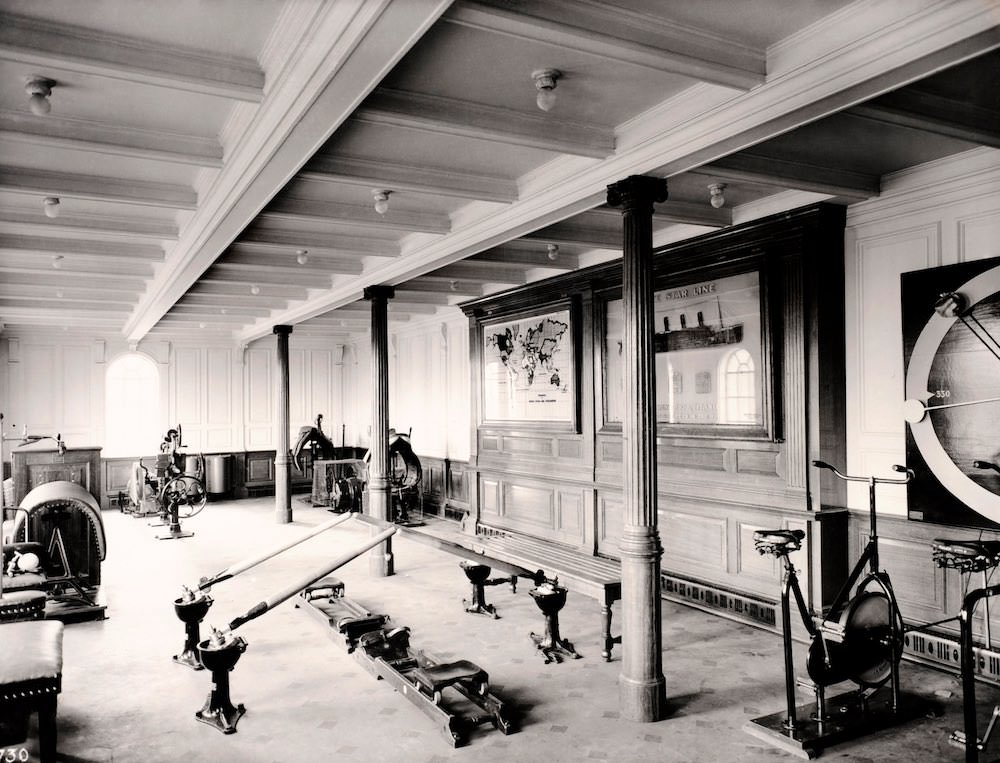
The Titanic’s gym had a dedicated staff member: T.W. McCawley, listed officially as the ship’s Physical Educator. His job was to walk passengers through the equipment and keep the gym running smoothly. On the night of April 14, 1912, when the ship struck an iceberg, McCawley stayed at his post in the gymnasium and went down with the ship. He was 37 years old.
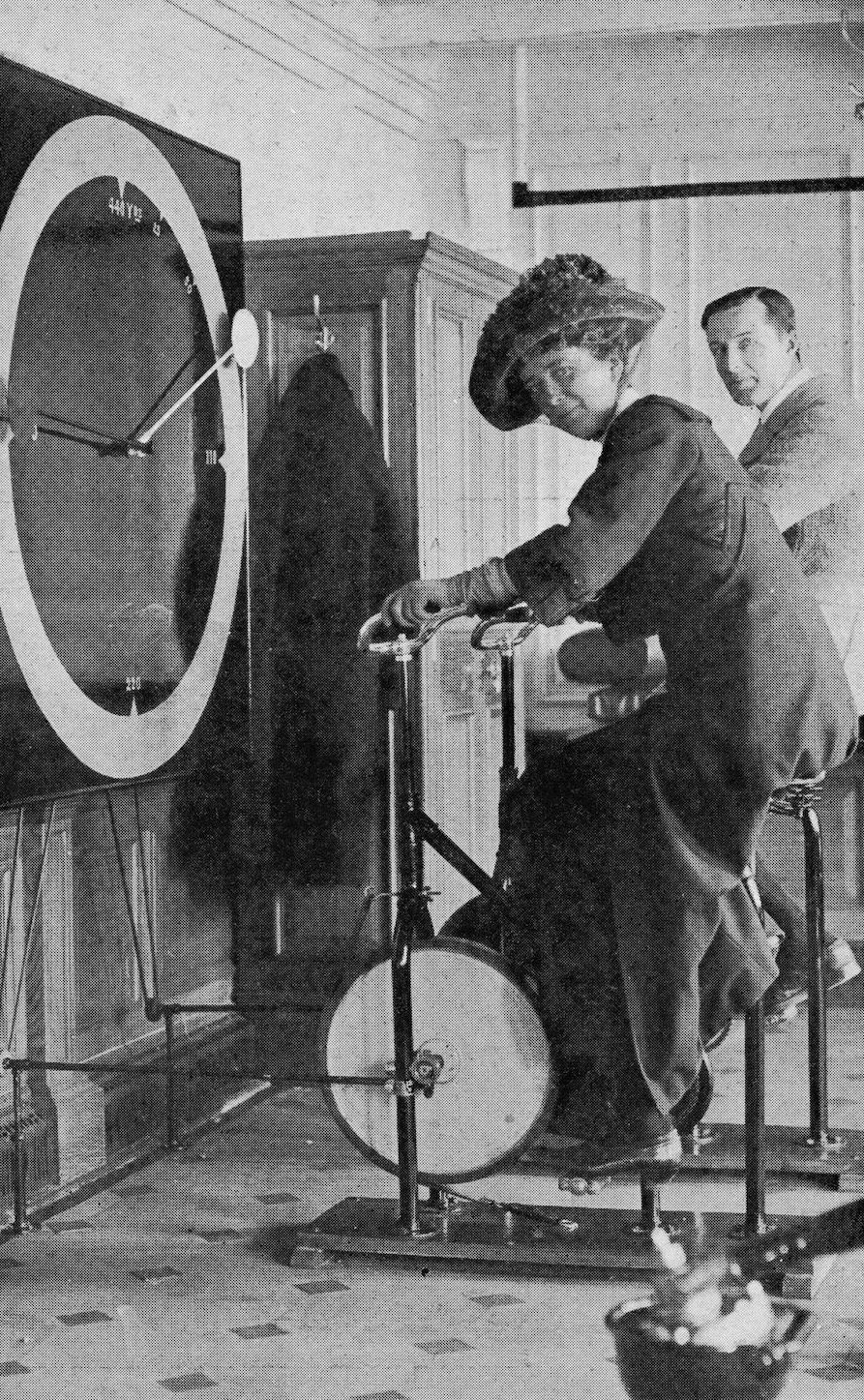
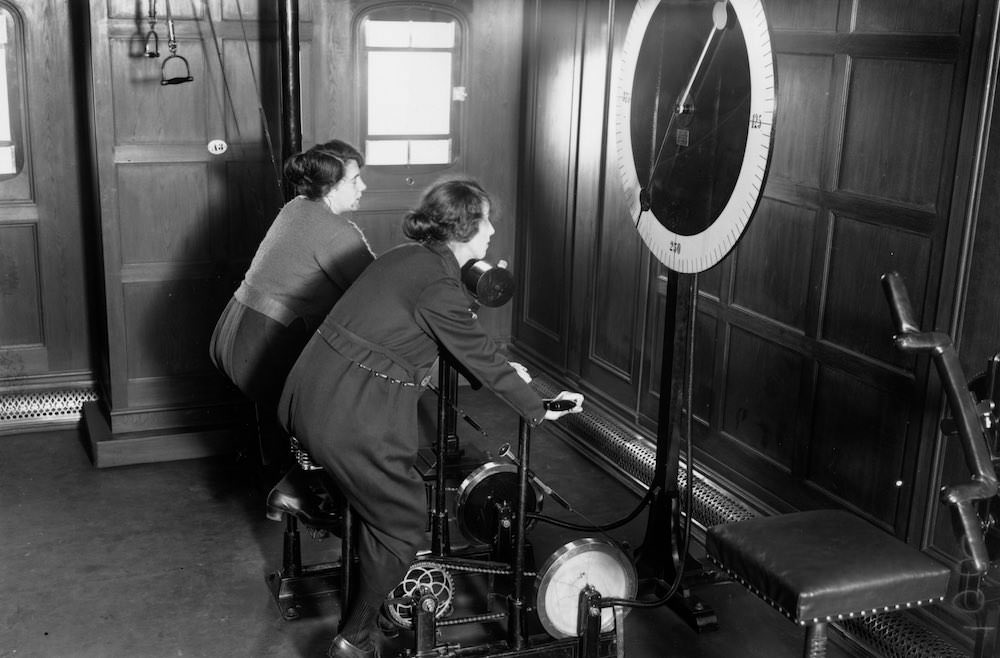
The cycle racing machines were among the most popular pieces of equipment on the Titanic. Passengers — often still dressed in their day clothes — would sit side by side and pedal against each other while the dials tracked their progress. It was exercise, but it was also entertainment. The mechanical saddle offered a different kind of workout, mimicking the rhythm of horseback riding without ever leaving the ship.
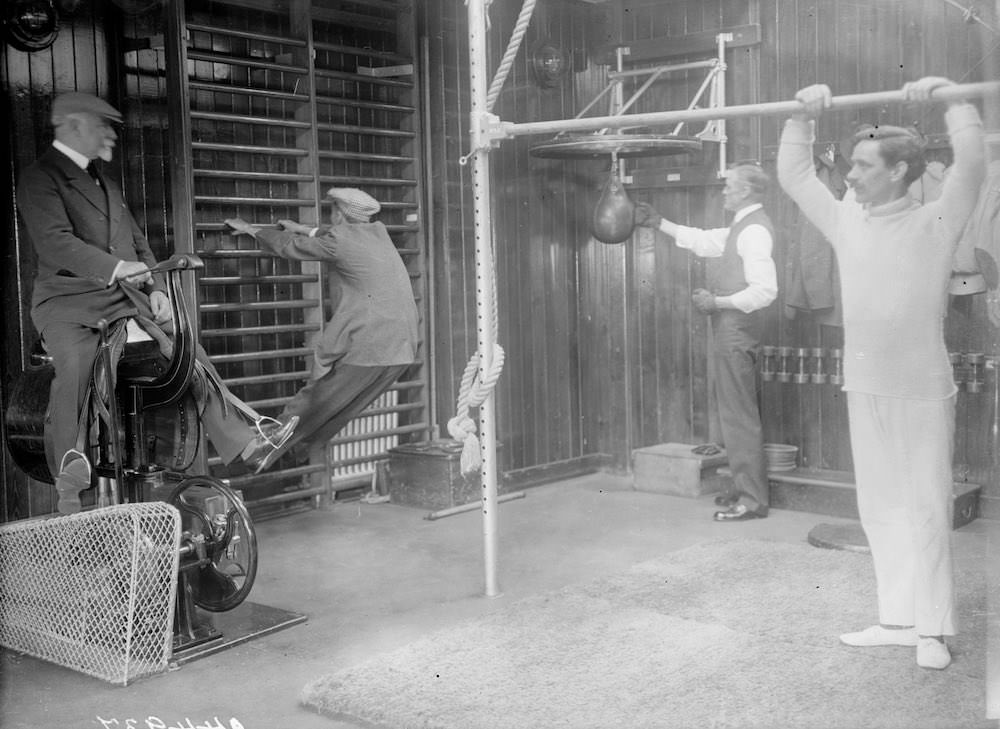
The Titanic was not the only liner to invest in onboard fitness. The Cunard Line’s RMS Franconia, launched in 1910, offered its own well-equipped gymnasium. Photos from 1911 show Edwardian passengers in full day attire — suits, high collars, and skirts — pedaling exercise bikes as casually as if they were seated at a tea table. The formality of dress made the workout scenes look almost comical by modern standards, but this was simply how people dressed, even for physical activity.
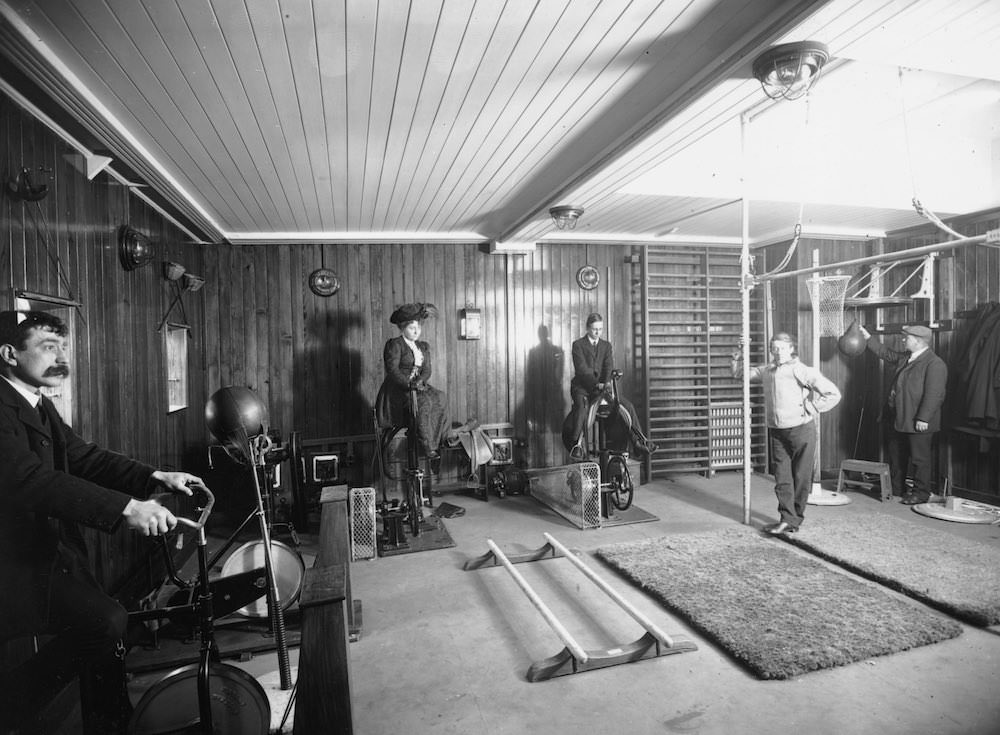
The Franconia’s gym also featured a punchbag and early cycling machines, offering passengers more variety than a simple walk around the deck. The ship was destroyed by a German U-boat in 1916 during World War One, cutting short what had been a well-regarded vessel on the transatlantic run.
After World War One ended, White Star Line took ownership of several German ships as war reparations. One of these was the Homeric, a large liner that White Star put into transatlantic service in 1922. The ship retained a gymnasium, and photographs from that year show female passengers using cycle machines — a sign that gyms aboard liners were no longer considered exclusively male spaces.
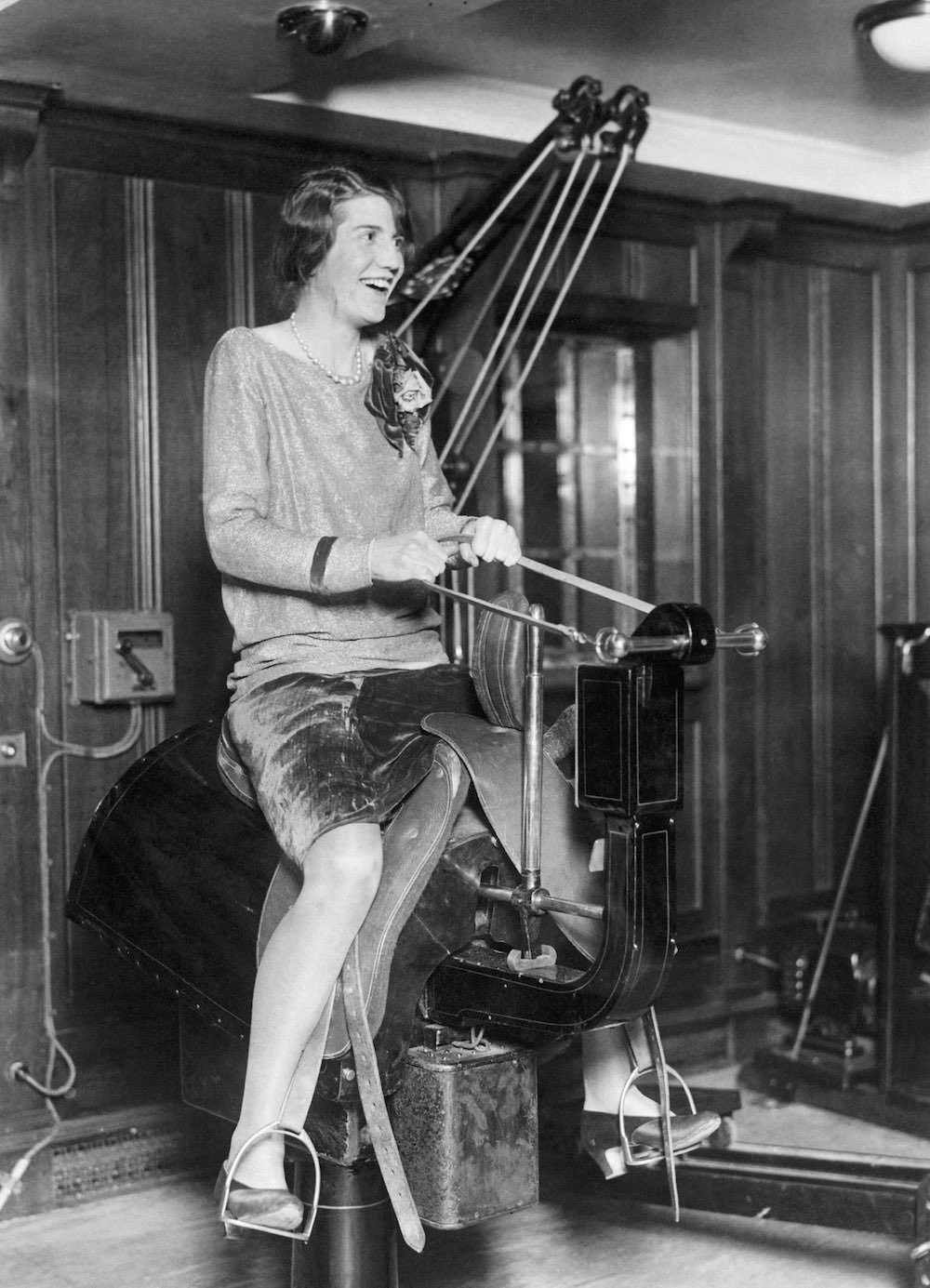
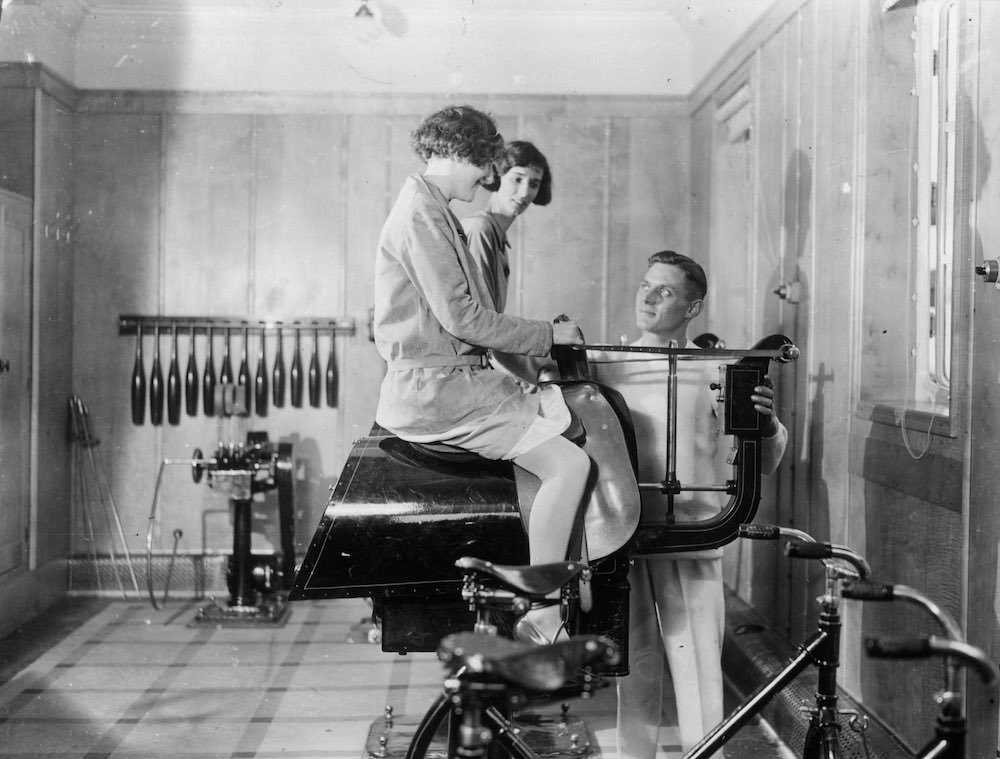
By the mid-1920s, the electric horse had become a fixture across many liner gyms. The SS Bermuda offered one to its passengers, and photographs show a young woman seated on the machine, dressed smartly, mid-ride. These mechanical horses were designed to engage the core and leg muscles while simulating the natural sway of an animal — an appealing option for passengers who associated riding with leisure and health.
Into the 1930s, liner gymnasiums became larger and more professionally designed. The Victoria Motorship, launched by the Lloyd Triestino line, featured a gym that was modern by the standards of the time — clean lines, organized equipment, and enough floor space for multiple passengers to work out simultaneously.
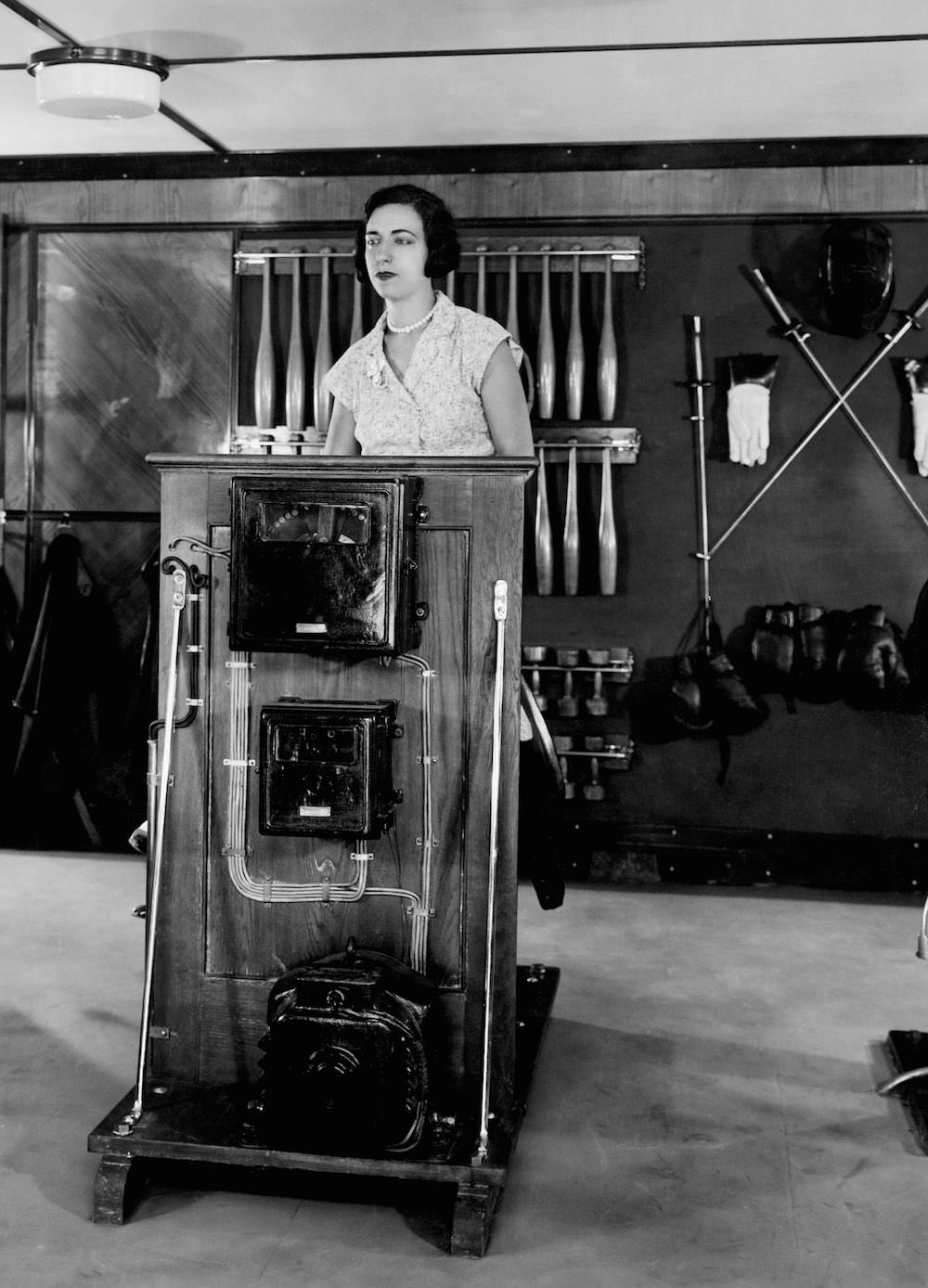
Italian liners of the early 1930s were particularly proud of their fitness facilities. The Neptunia, an Italian transatlantic liner, featured a gymnasium that was photographed extensively as part of the ship’s promotional materials. These images were used to attract wealthy travelers who expected a certain standard of comfort and amenity.
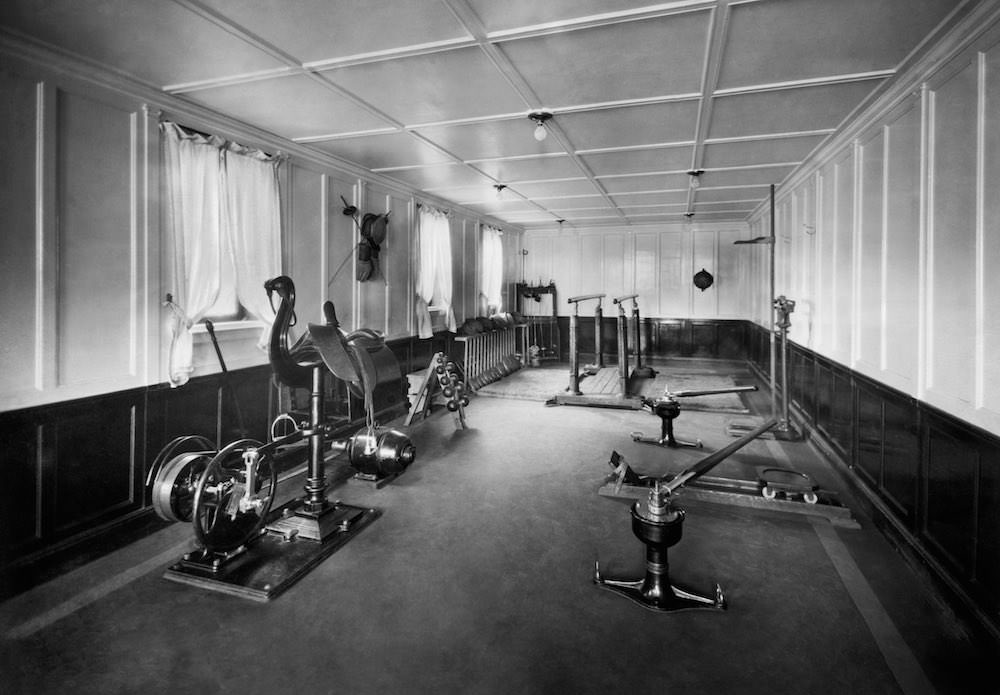
German shipping lines also kept pace. The SS Bremen, launched by Norddeutscher Lloyd in 1929, was one of the fastest ocean liners of its era and a holder of the Blue Riband — the informal award given to the ship with the fastest Atlantic crossing. Its gymnasium reflected the same ambition, offering passengers modern apparatus and plenty of room to use it.
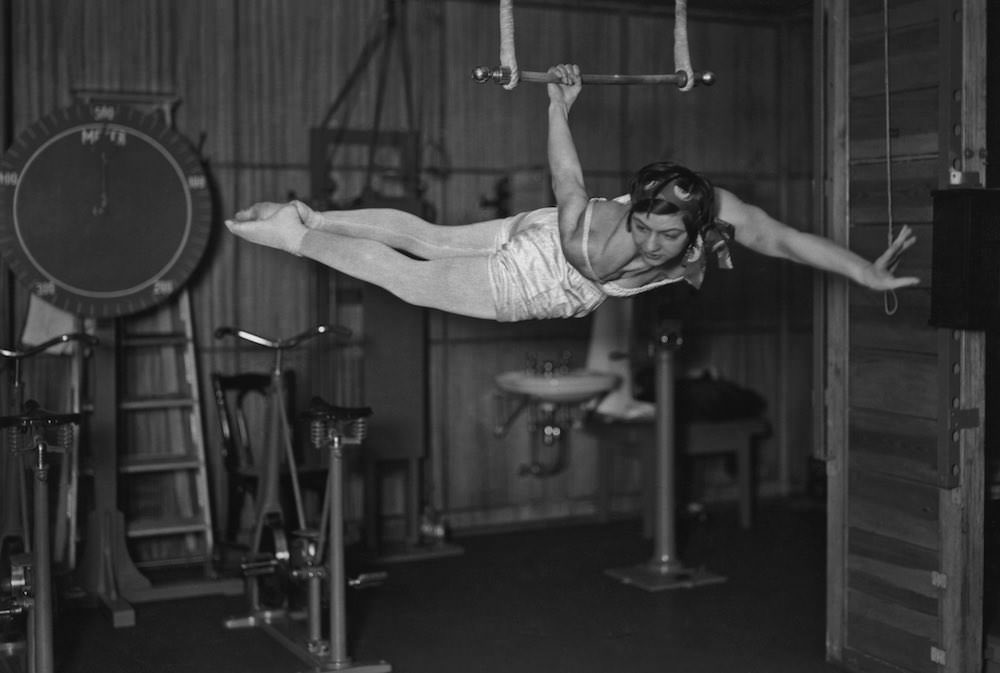
The Victoria Transatlantic gave passengers multiple ways to use the gym space, with photographs from 1930 showing both the room’s layout and its passengers in action. These ships treated the gym as part of the complete first-class experience — not a separate, functional space, but an integrated part of life on board.
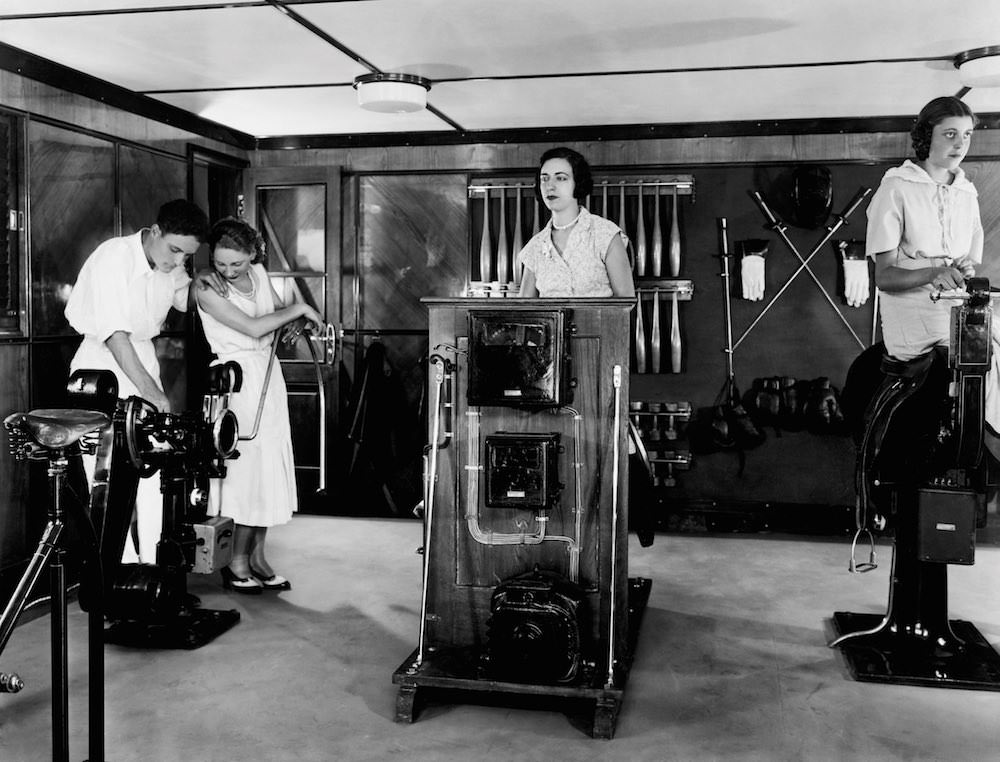
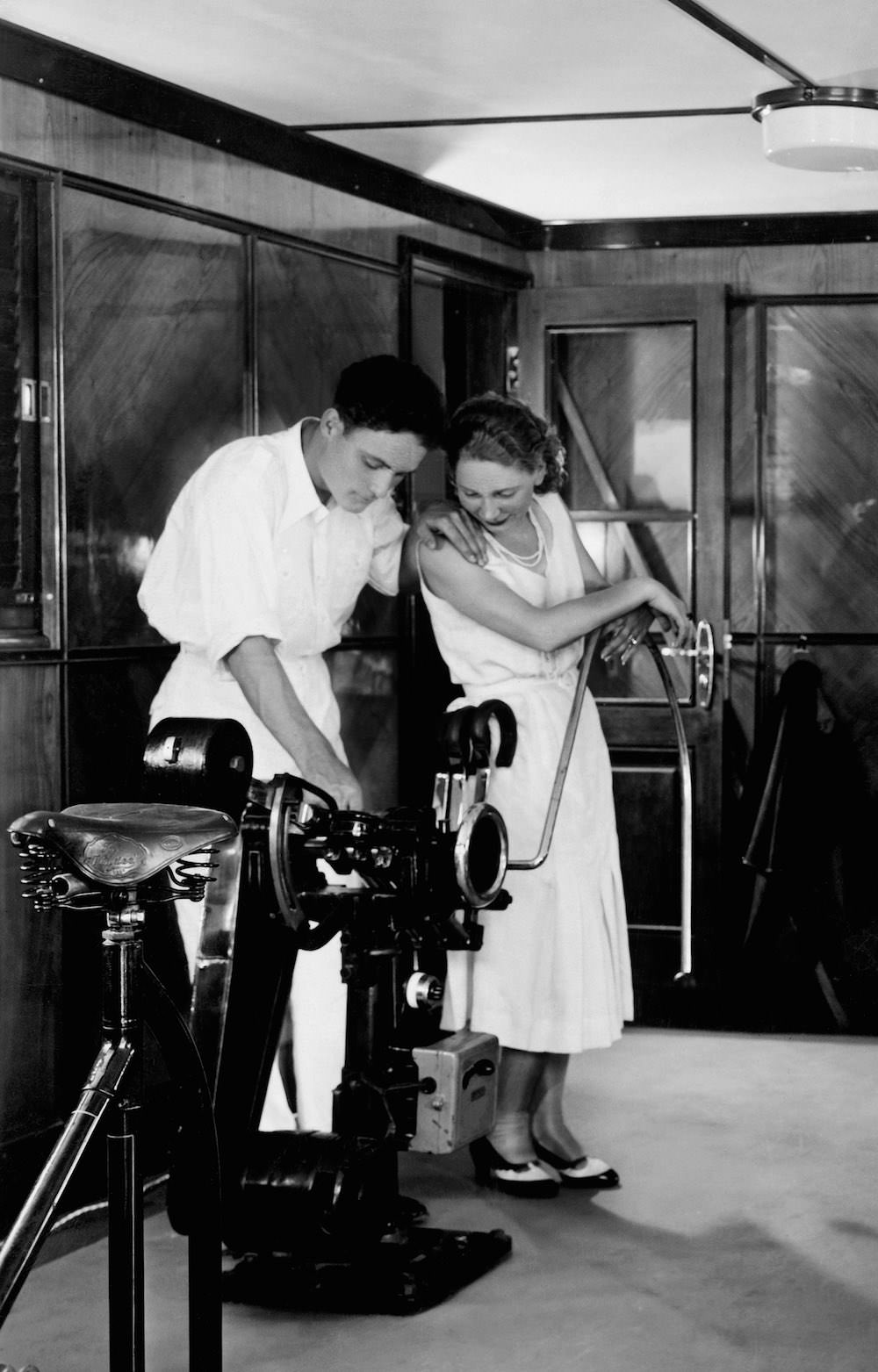
The Vulcania, another Italian liner operated by Cosulich Line, featured a first-class gymnasium that was photographed in 1930 as part of the ship’s interior documentation. Like many of its contemporaries, the Vulcania catered to wealthy travelers crossing between Europe and the Americas, and its gym was part of what made the crossing attractive to that market.
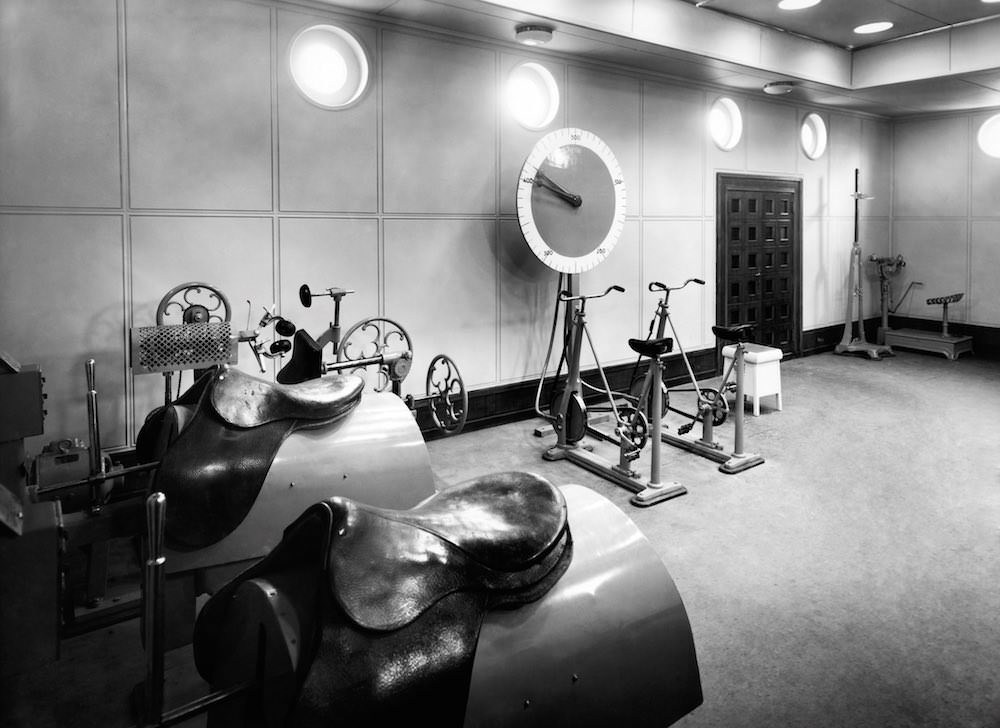
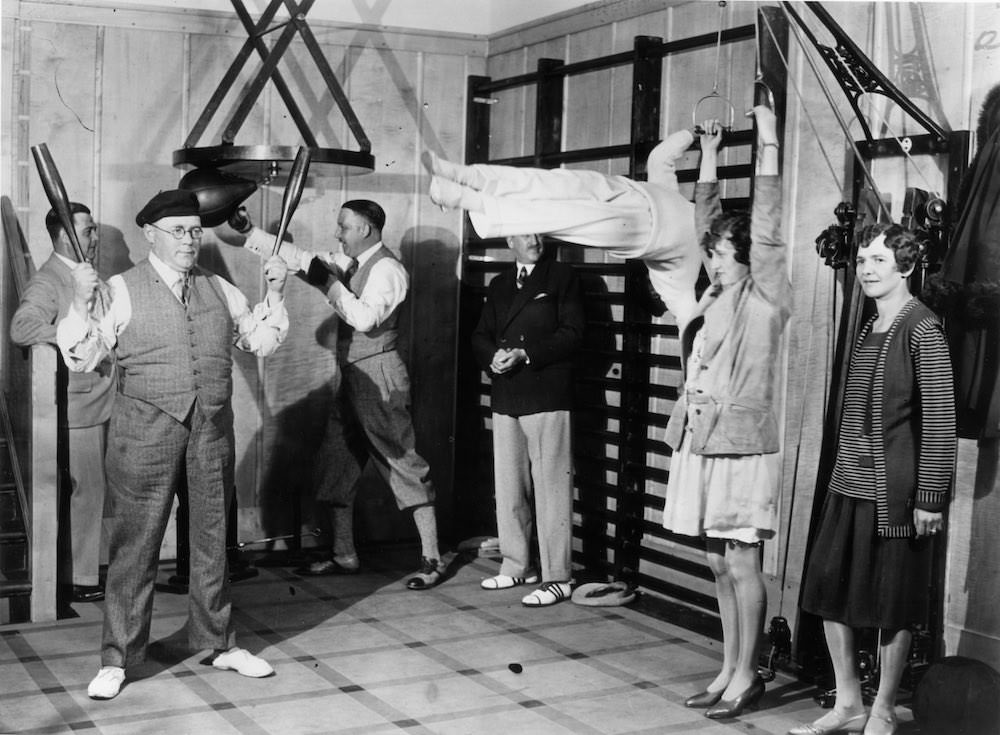
Canadian Pacific’s Duchess of Bedford, which entered service in 1928, was a popular ship on the Liverpool-to-Canada route. Its gymnasium was used regularly by passengers during the crossing, and photographs from December 1931 show groups of travelers exercising together — a social activity as much as a physical one.
In 1932, workers were photographed setting up exercise bikes in the gymnasium of the Queen Mary — still under construction at the time. The bikes came fitted with the same large meters seen on earlier ships, displaying the distance covered during a ride. The Queen Mary would go on to become one of the most celebrated ocean liners in history, and her gymnasium was built to match her reputation.
The riding machine on the Duchess of Bedford offered passengers a different kind of exercise — one that kept the experience closer to land-based leisure activities. First-class travelers on these ships were not simply trying to stay fit; they were maintaining the routines and habits of their lives on shore, translated into the context of a transatlantic crossing.
Across all these ships — from the Titanic in 1912 to the Queen Mary in the 1930s — the gymnasium served a consistent purpose. It gave first-class passengers a structured way to spend their days at sea, surrounded by equipment that mirrored what they used at home. The machines changed gradually over the decades: more refined, better built, more varied. But the idea behind them stayed the same. Whether it was an electric camel on the Titanic or a row of gleaming exercise bikes on the Queen Mary, staying active was part of what it meant to travel in style.