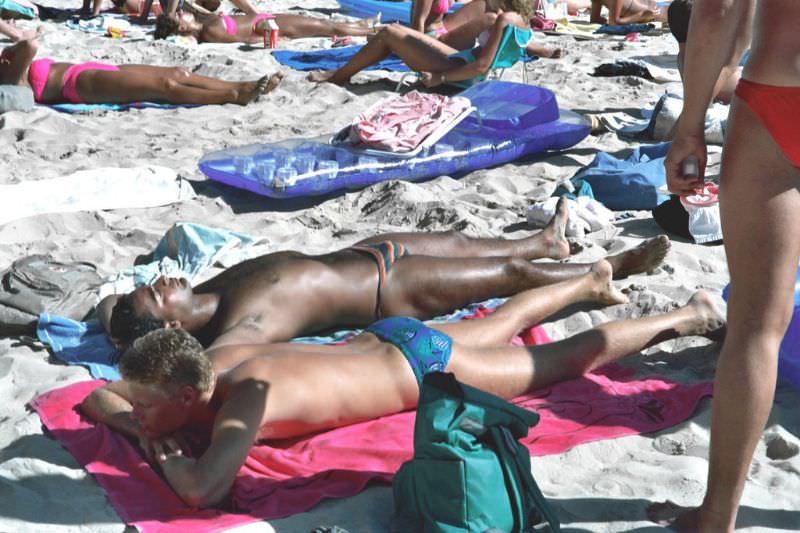
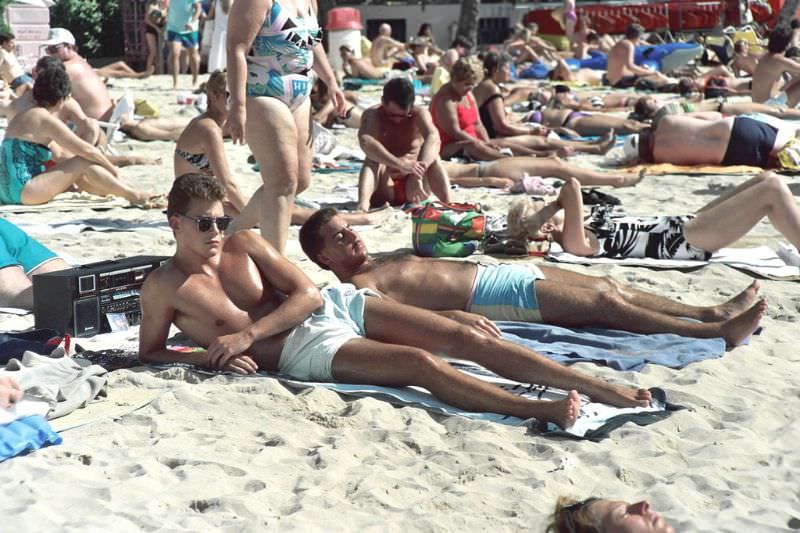
Waikiki is a beachfront neighborhood in Honolulu, sitting on the south shore of O’ahu, Hawaii. It is one of the most recognized stretches of coastline in the world. The area draws visitors not just for one beach, but for an entire district of shorelines — including Queen’s Beach, Kuhio Beach, Gray’s Beach, Fort DeRussy Beach, and Kahanamoku Beach.
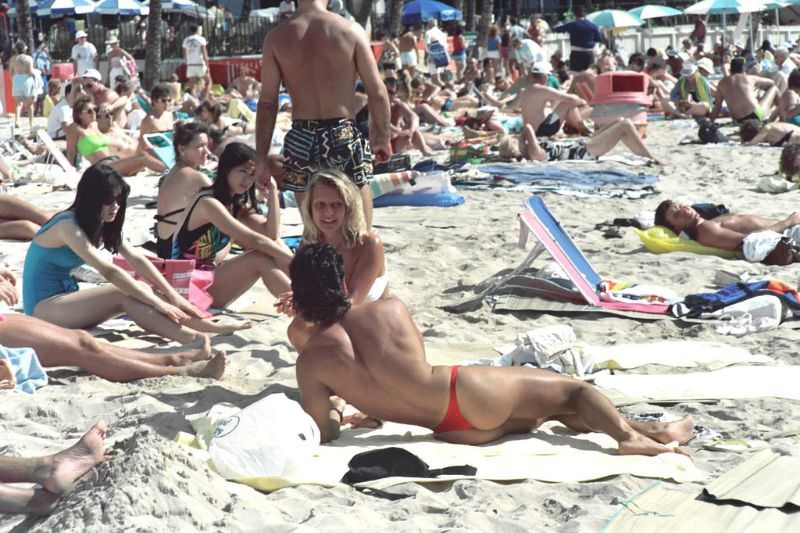
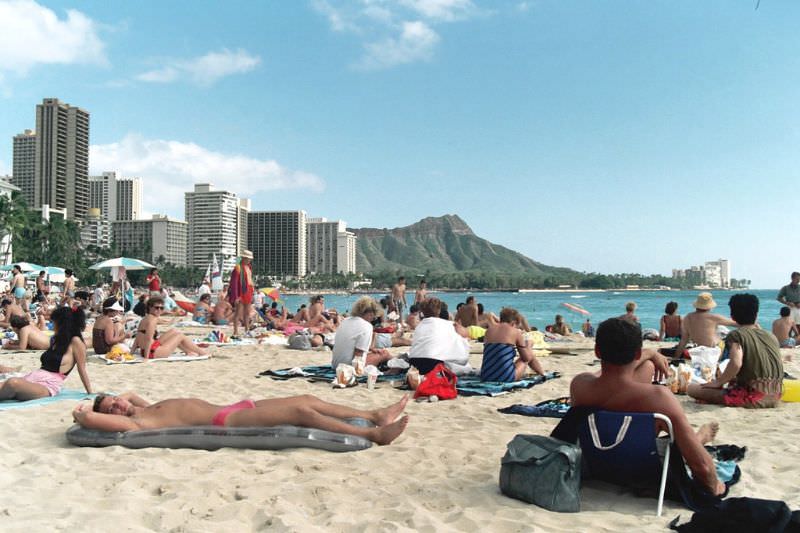
The crown jewel of the district is Waikiki Beach itself — a nearly two-mile stretch of sand running along the southern coast of O’ahu. That unbroken line of sand made it famous. Tourists, surfers, and locals shared the same shoreline for decades, and by the late 1980s, Waikiki was one of the busiest beach destinations in the entire Pacific.
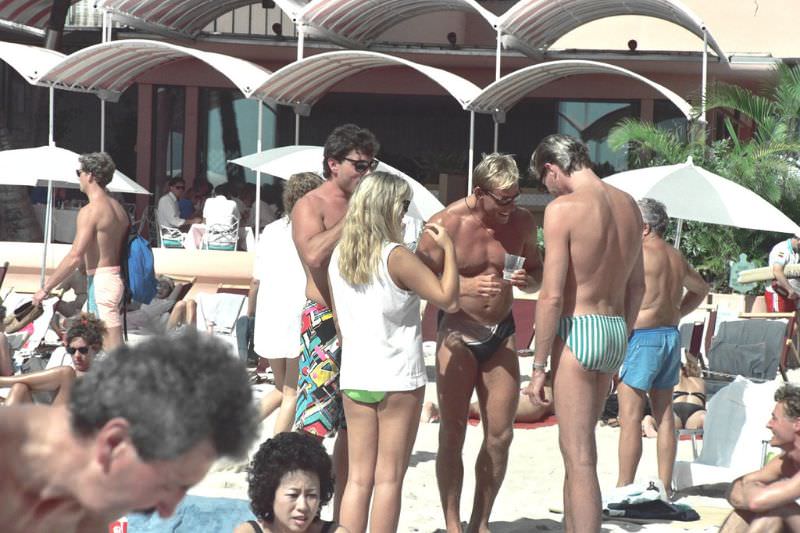
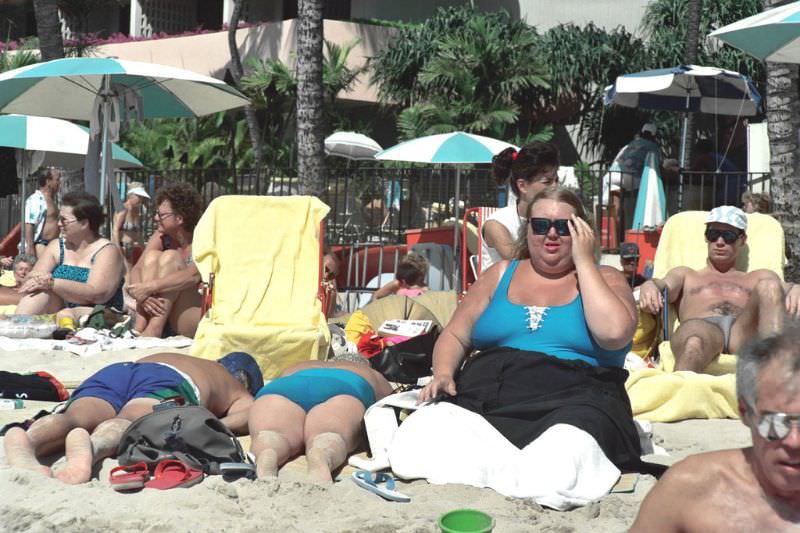
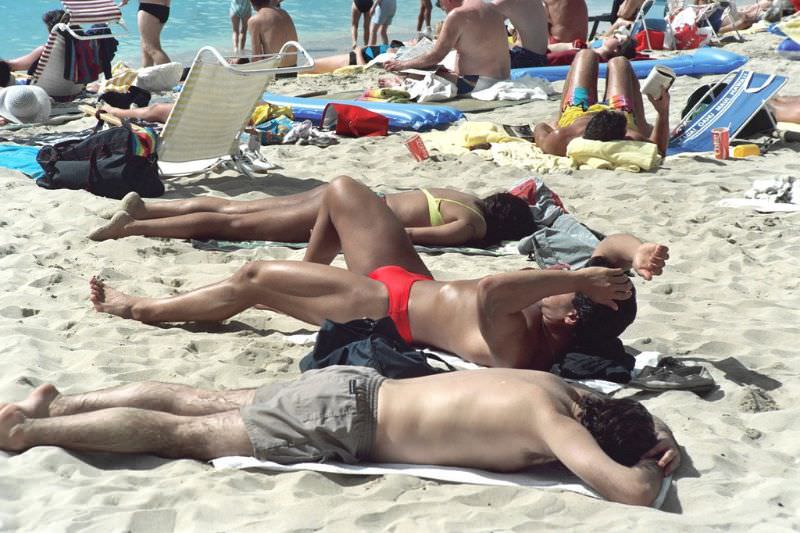
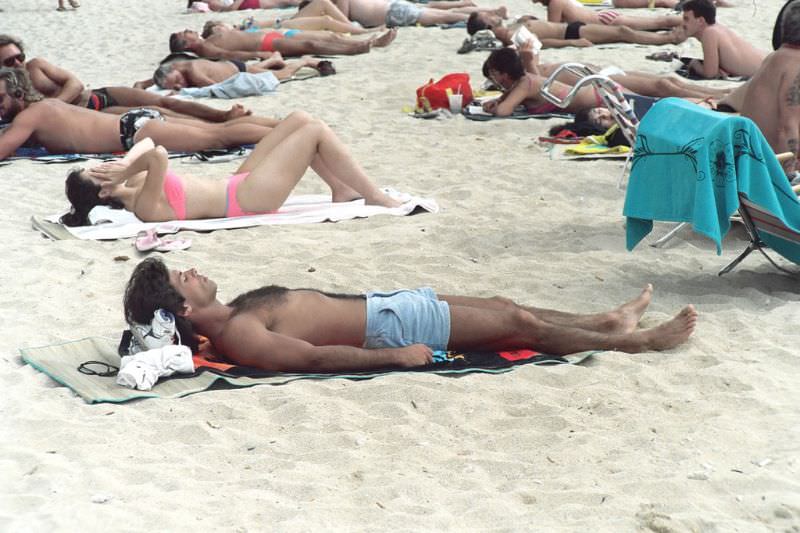
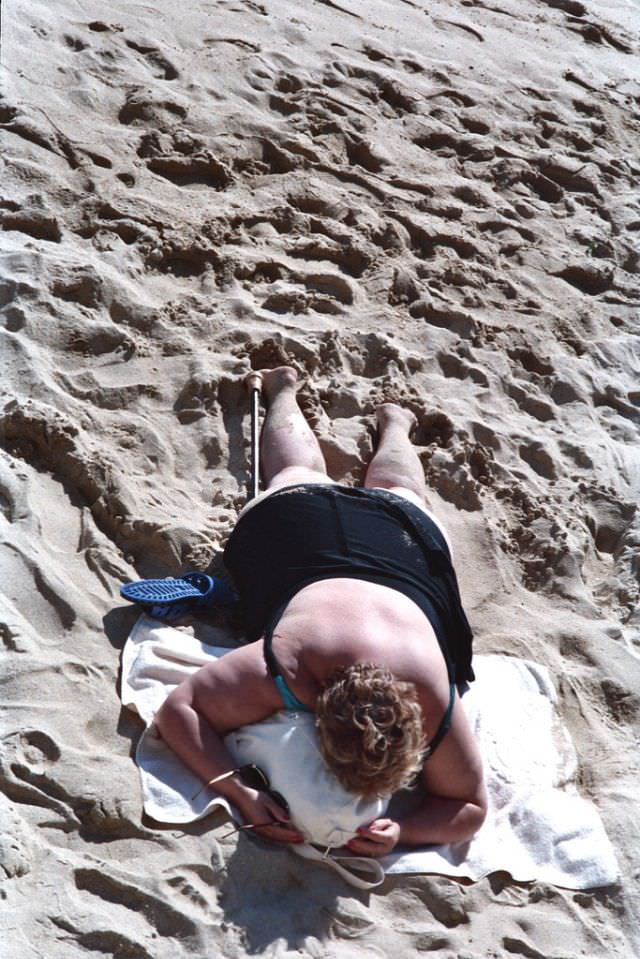
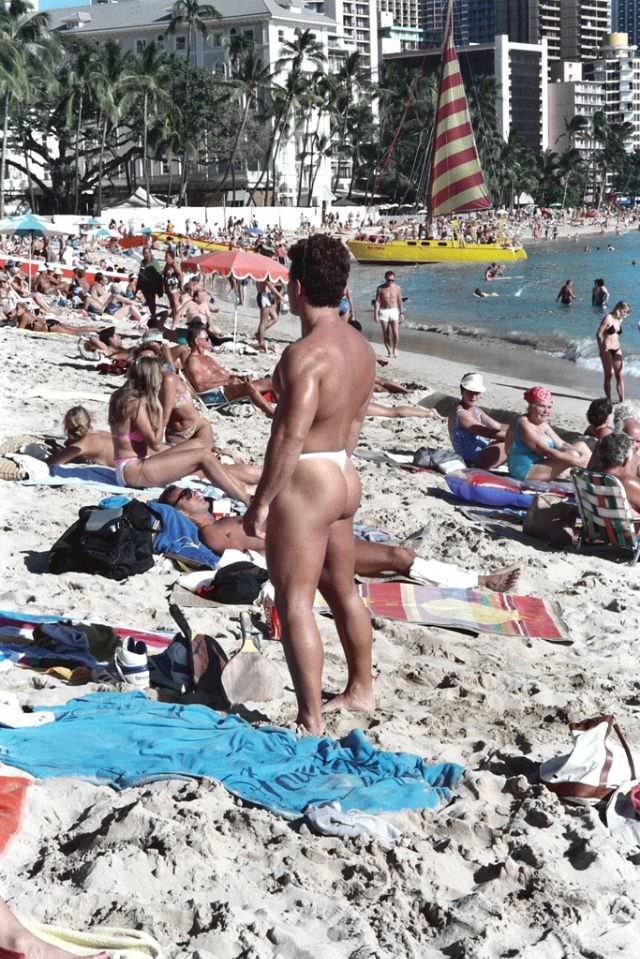
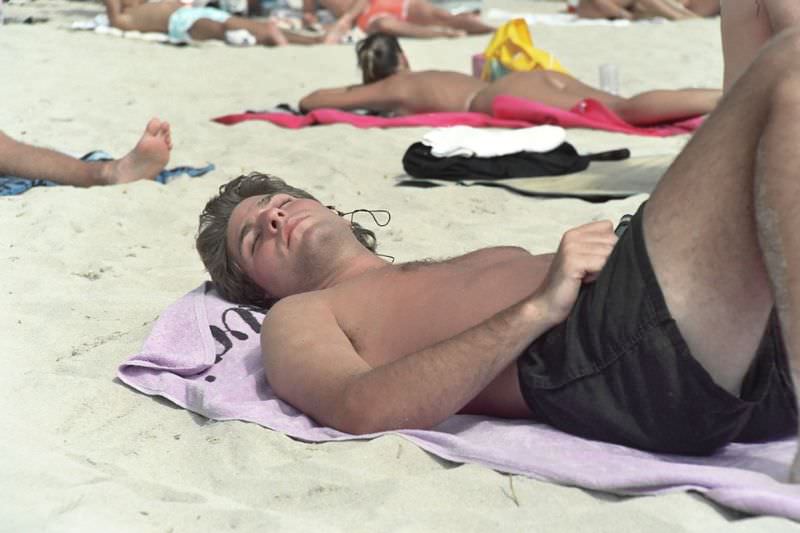
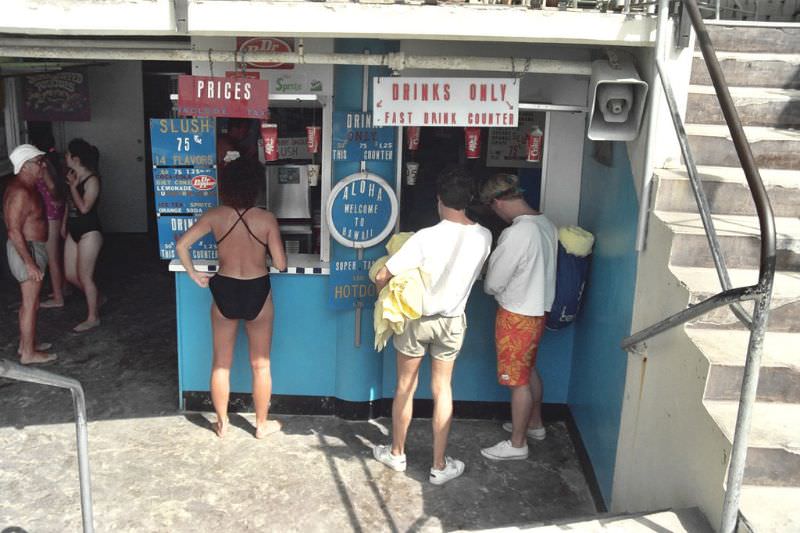
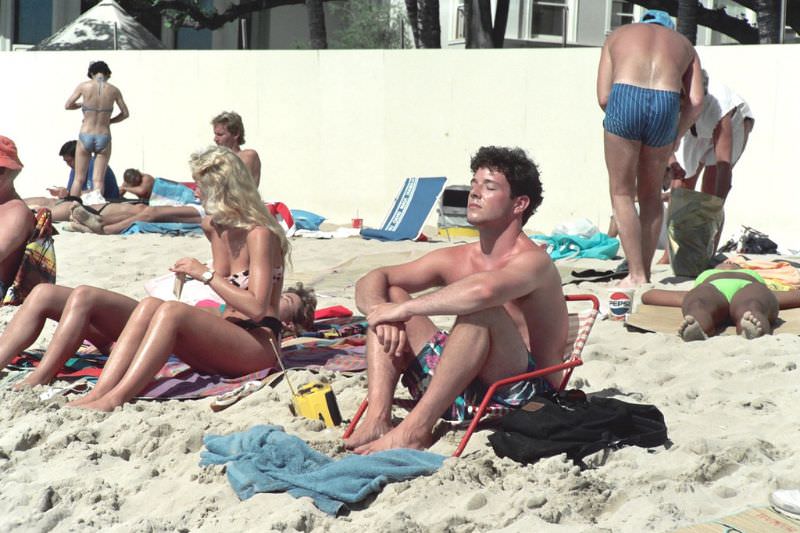
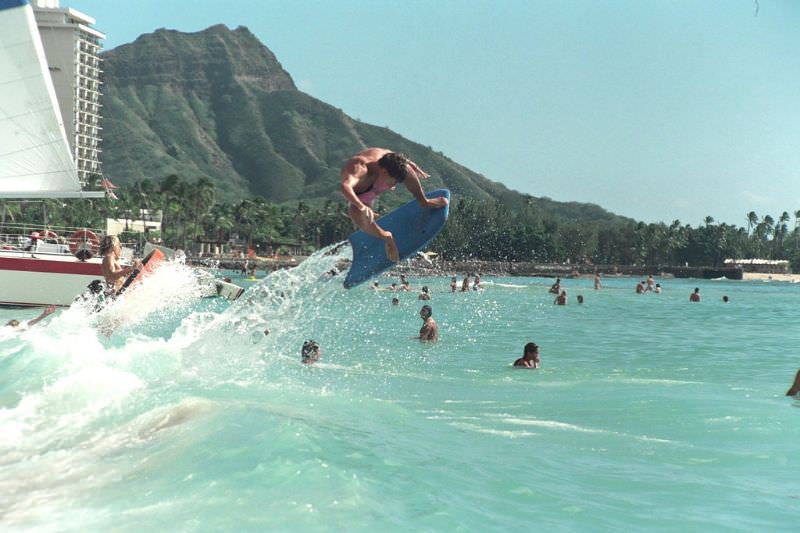
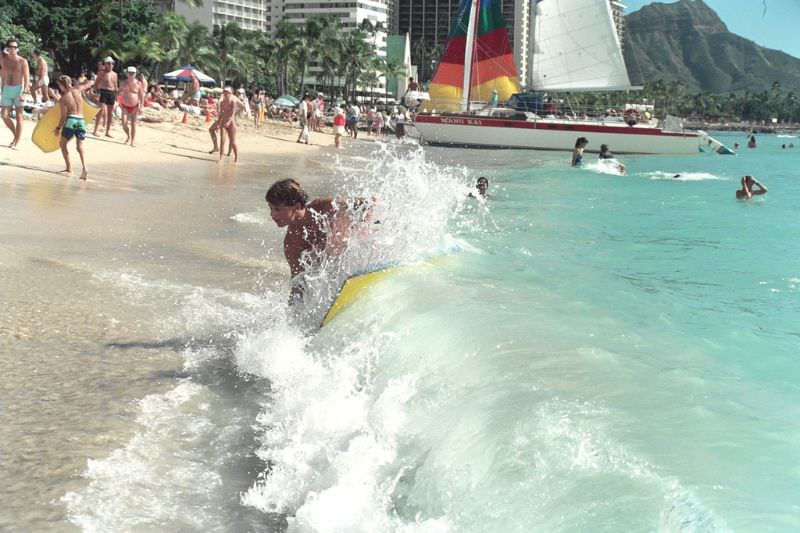
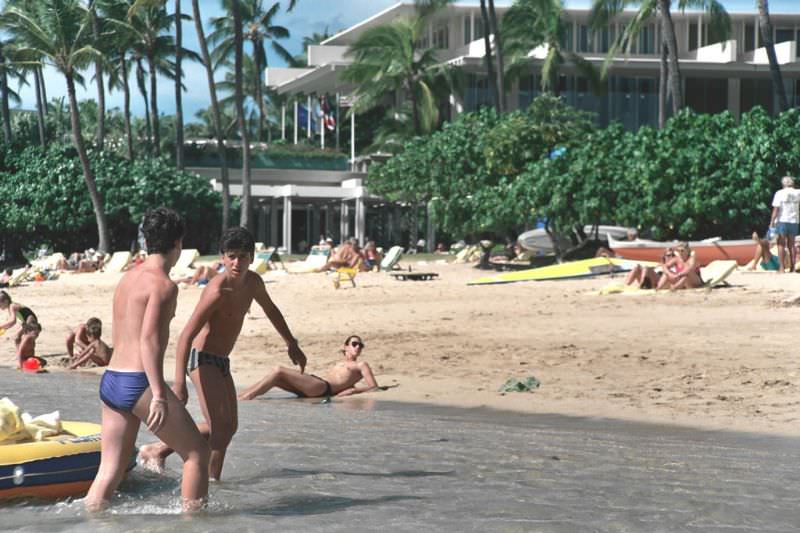
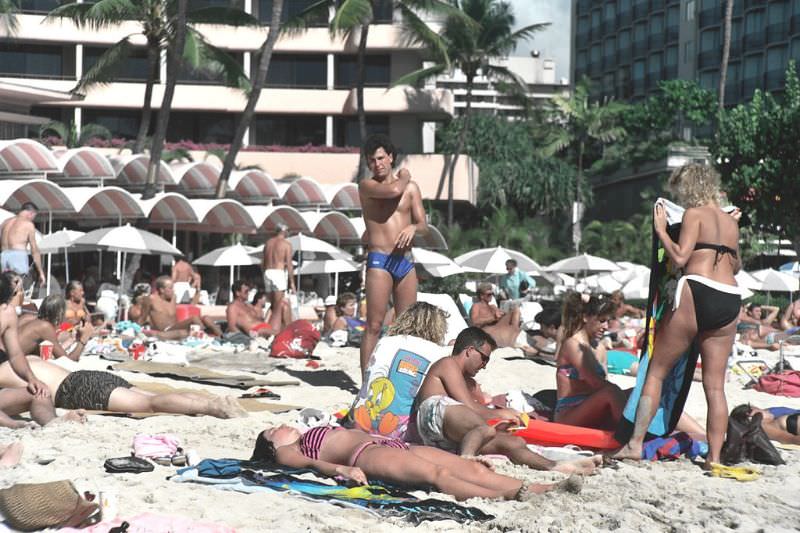
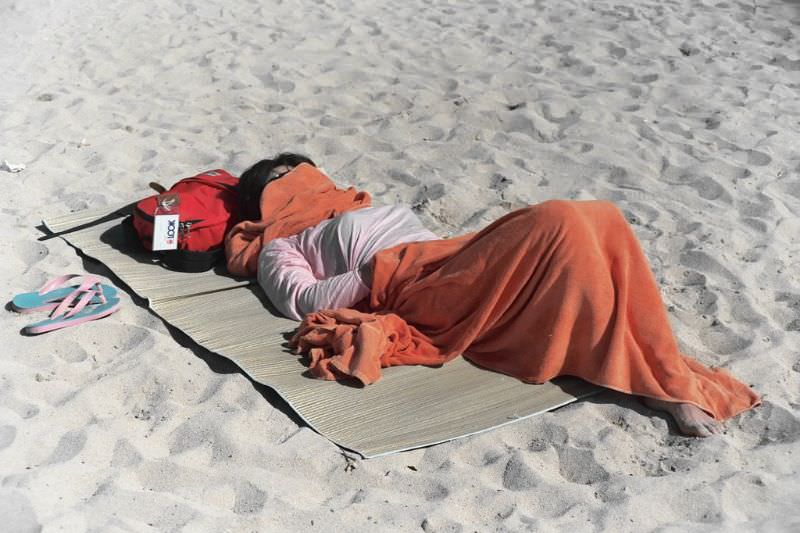
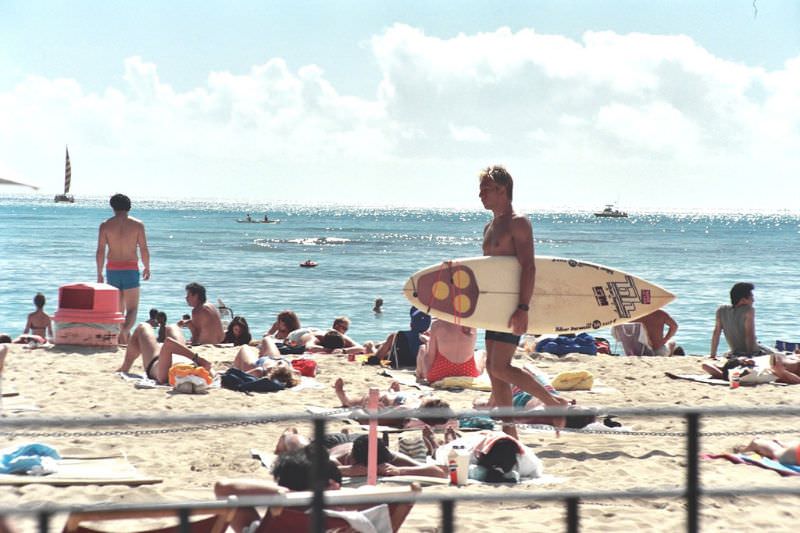
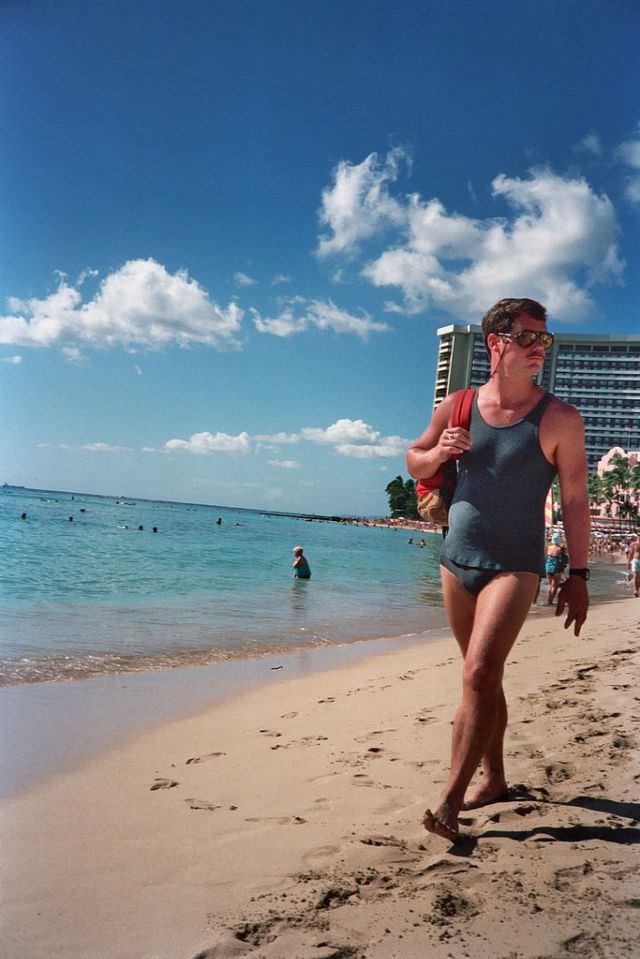
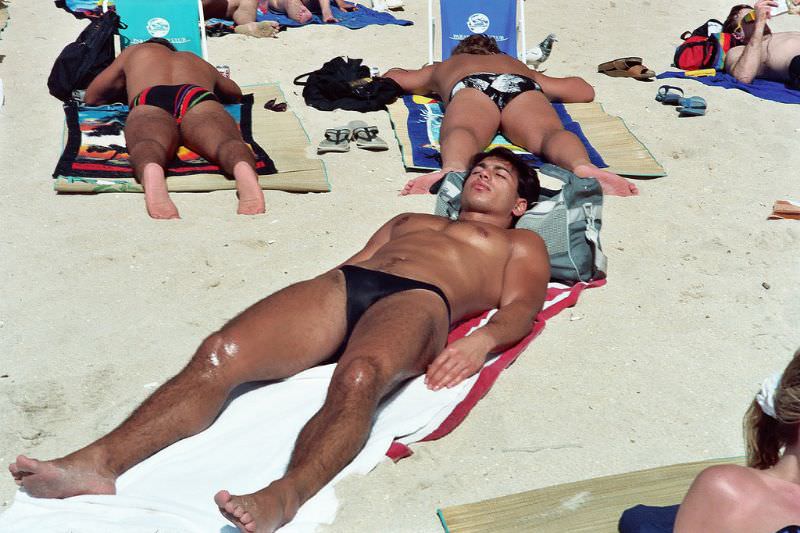
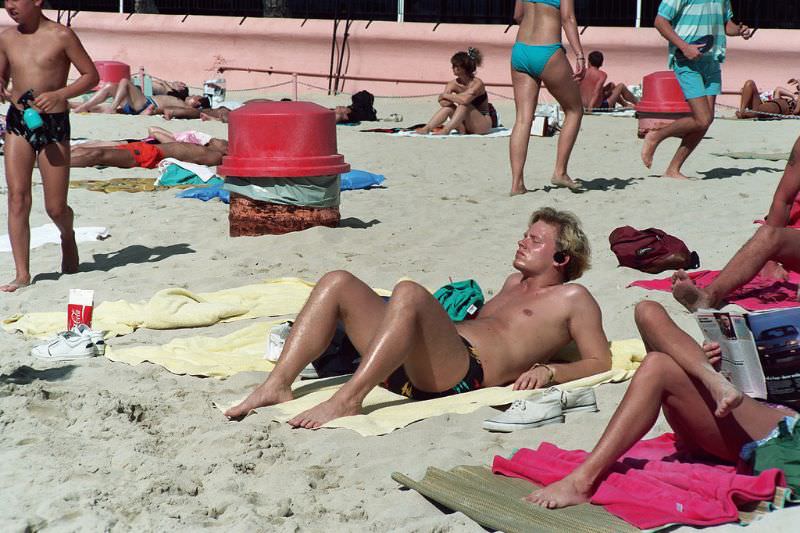
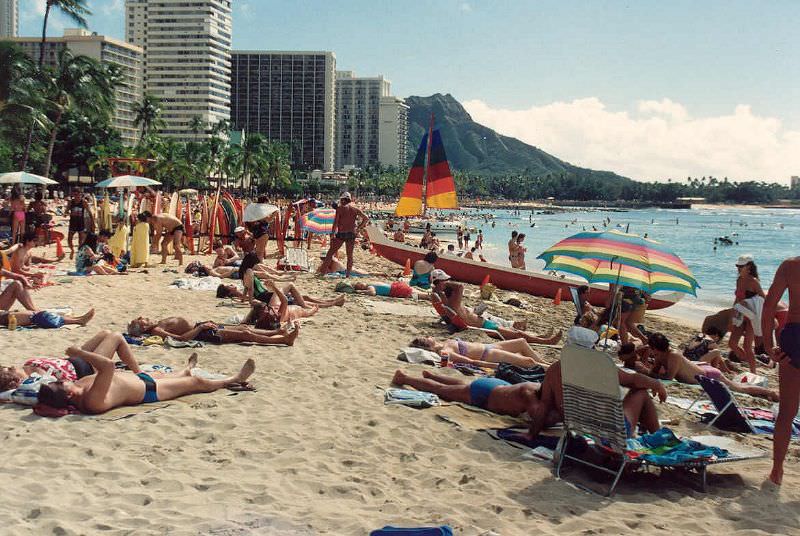
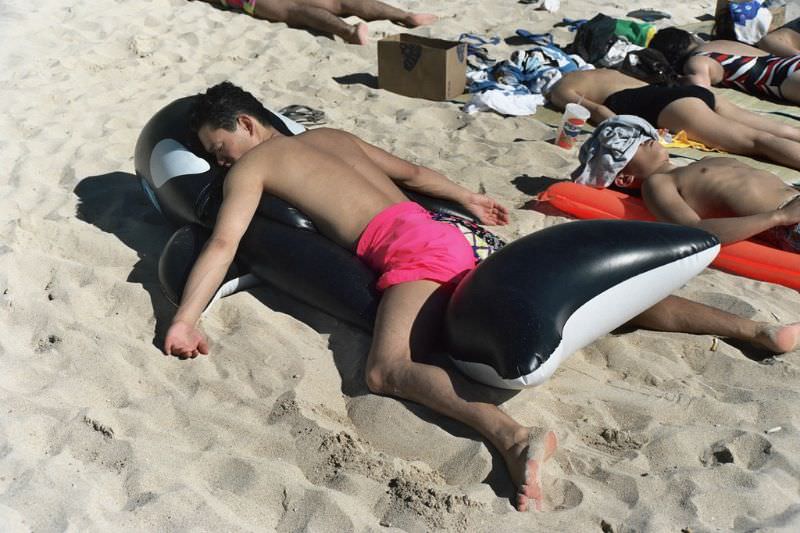
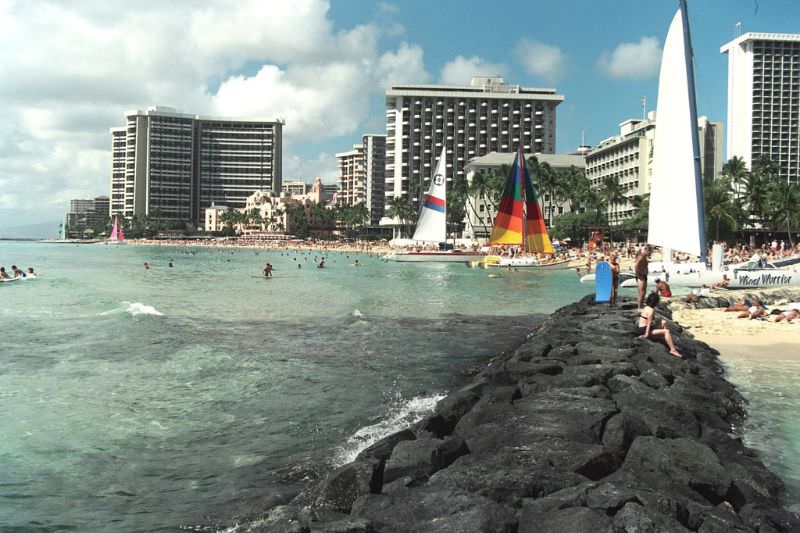
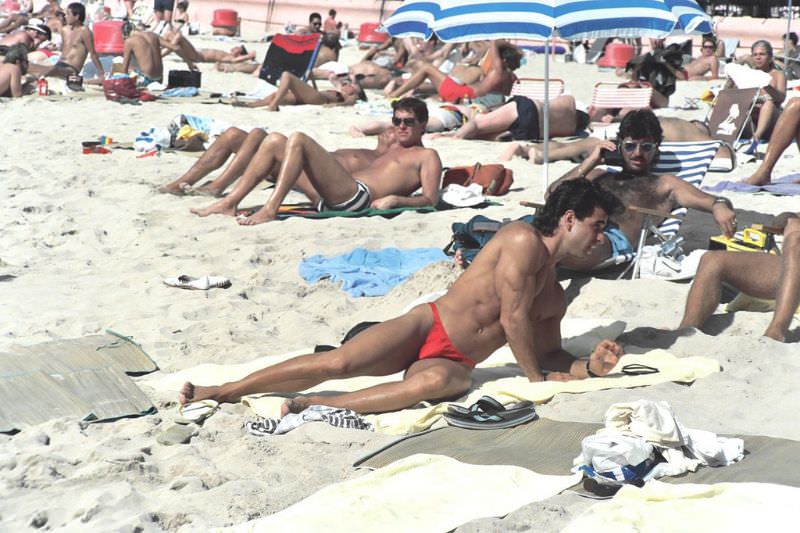
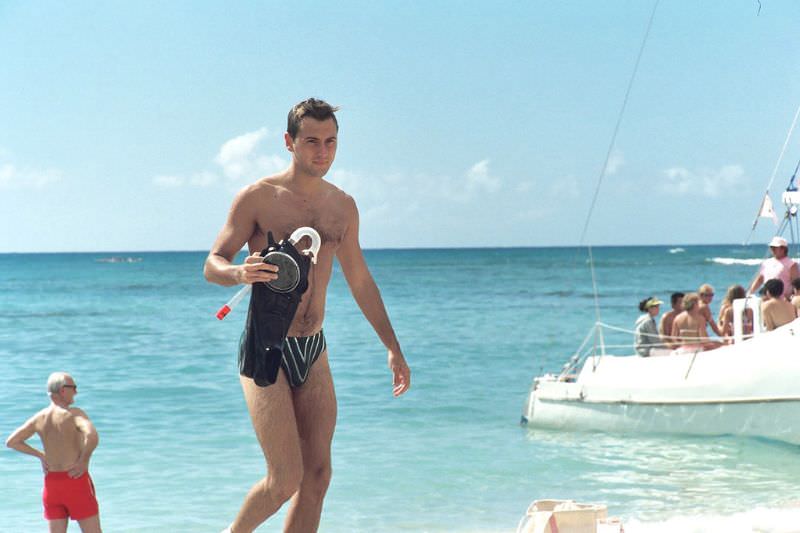
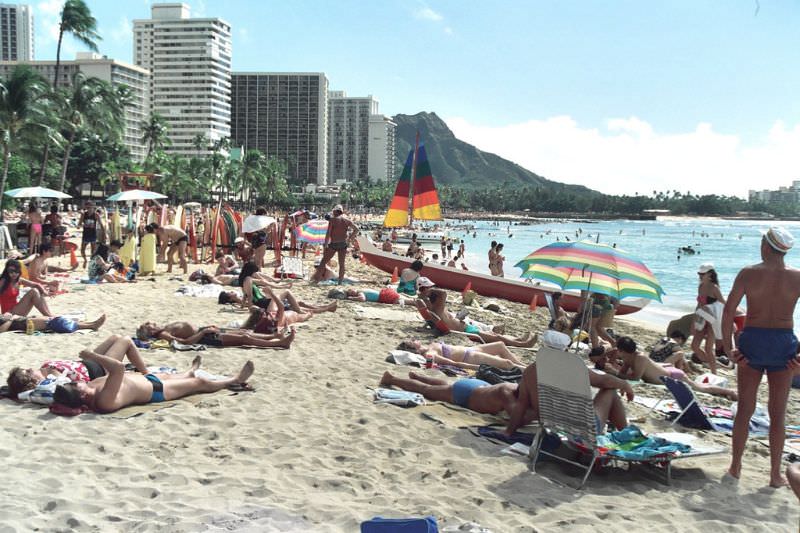
These photos from the late 1980s capture Waikiki at a specific moment in time. The skyline behind the beach was already filling with hotels and high-rises, but the sand and surf still dominated the scene. Visitors packed the shore under the Hawaiian sun, surrounded by clear blue water and the distant outline of Diamond Head crater.
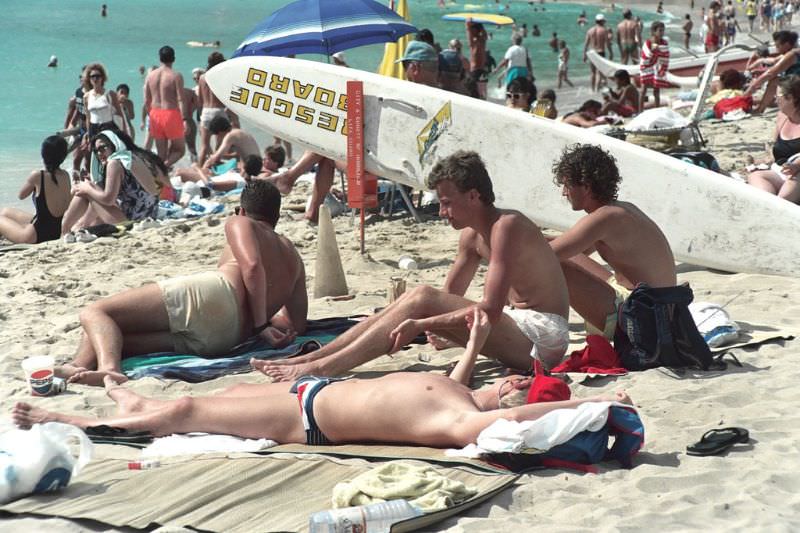
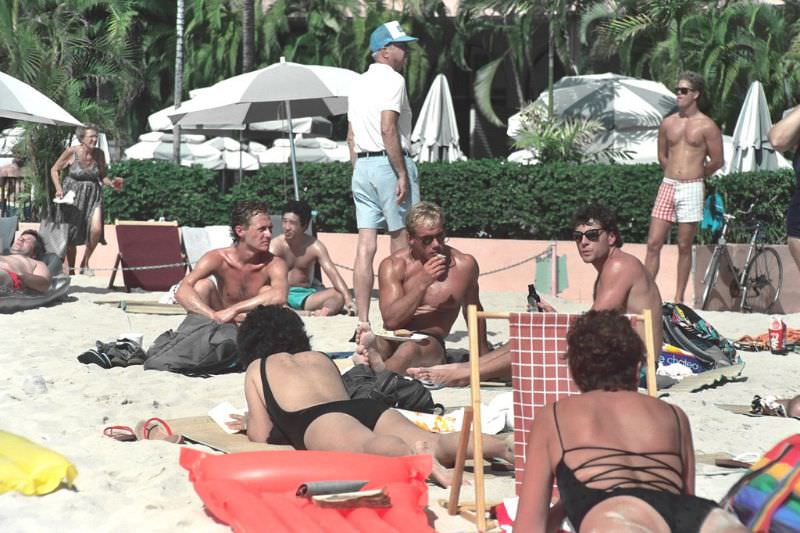
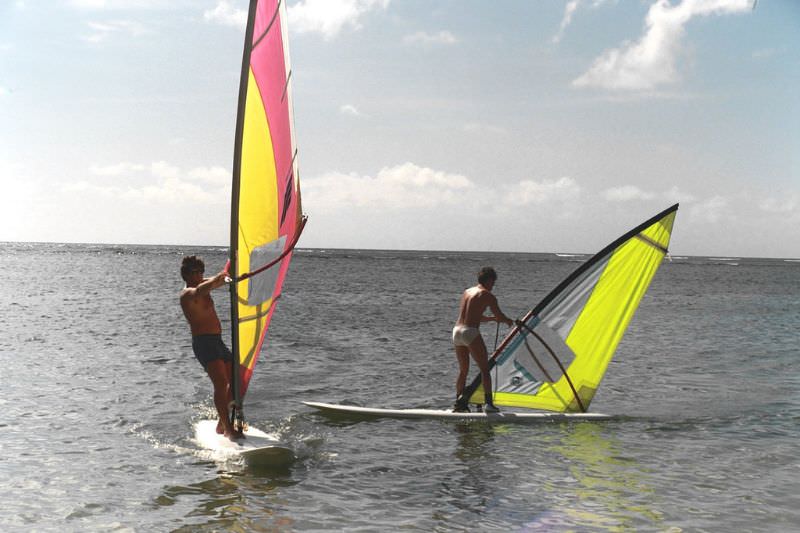
The beach culture at Waikiki in that era was vibrant. Outrigger canoes slid across the waves. Surf lessons took place in the shallow break just offshore. Beachboys — a long-standing Hawaiian tradition of beach guides and instructors — were still a fixture along the sand, teaching visitors to ride waves on longboards.
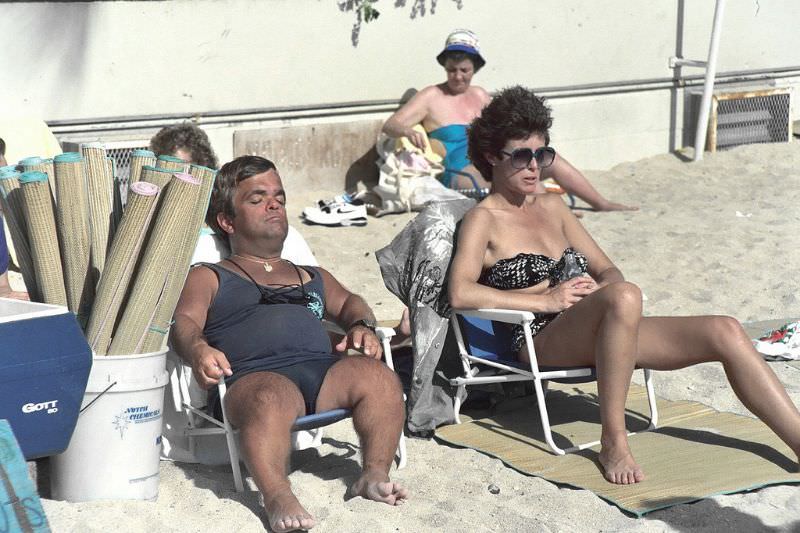
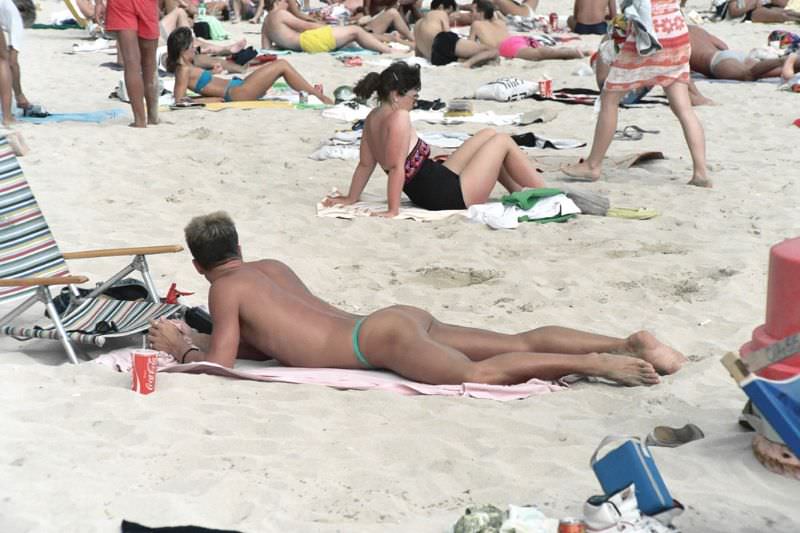

Tourism in Hawaii reached record numbers through the 1980s. Japan’s growing economy sent a large wave of Japanese tourists to the islands, and Waikiki became a top destination for them. Hotels along Kalakaua Avenue — the main road bordering the beach — catered to international guests from across the globe.
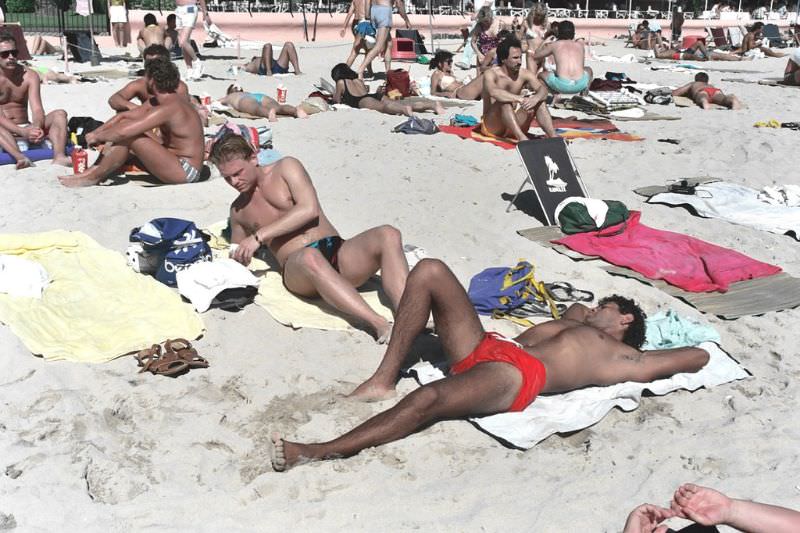

Even as the tourist industry boomed, the beach itself was already showing signs of strain. Man-made seawalls and structures built to protect hotels and roads were interfering with the natural movement of sand. This disruption accelerated erosion along parts of the shoreline.
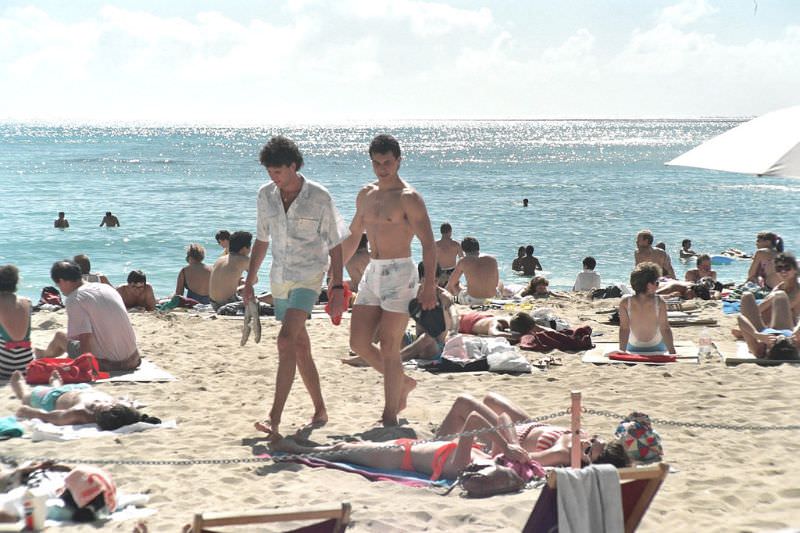
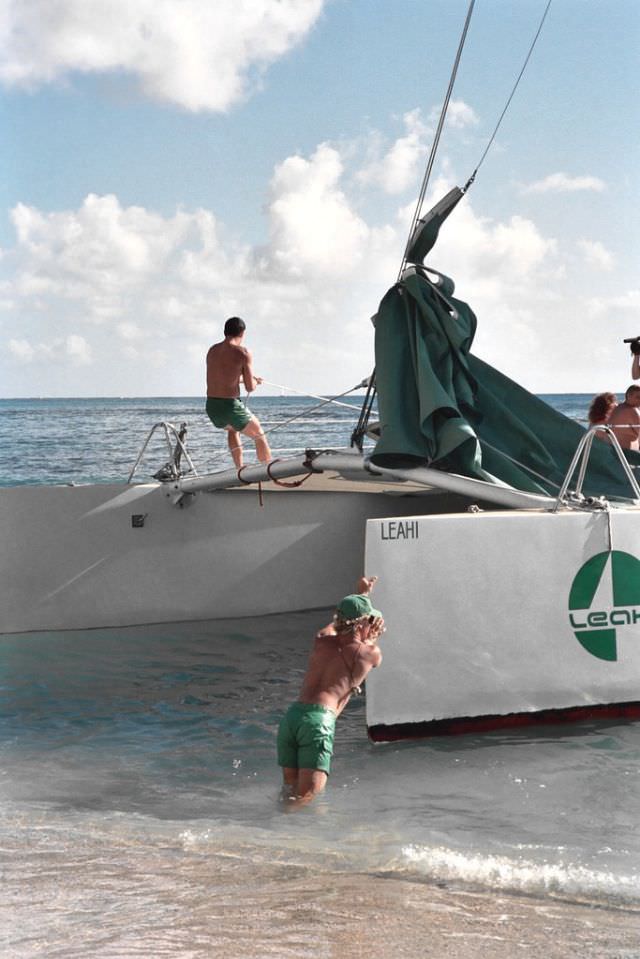
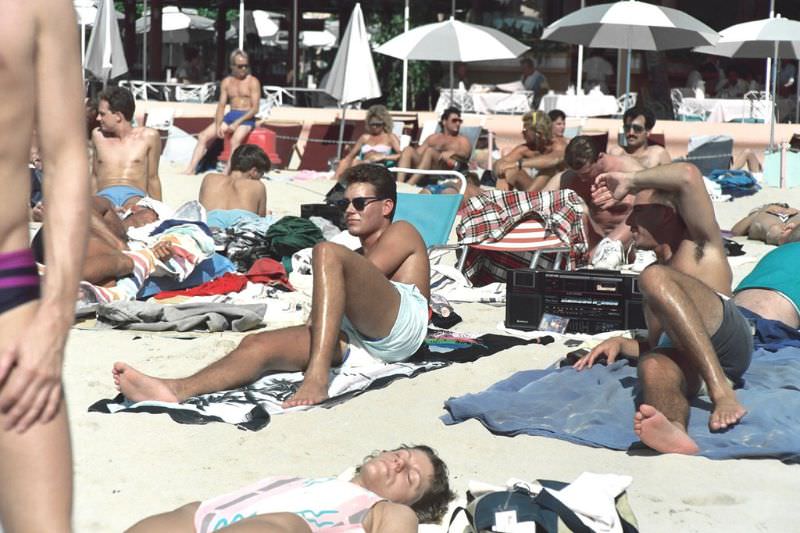
Today, large sections of Waikiki Beach are partially engineered. Sand is brought in from other locations to replenish what the ocean takes away. Rising sea levels have added further pressure, narrowing the beach in some spots and flooding areas during high tide events. The shoreline visitors see now is actively managed to stay intact.

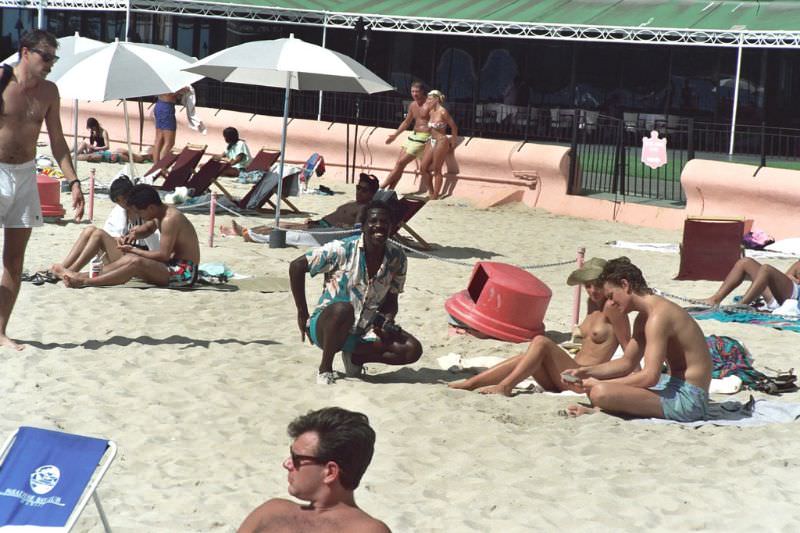
That makes these late-1980s photographs especially valuable. They document the beach before many of those interventions became routine. The sand, the surf, the crowds, and the backdrop of a growing Honolulu skyline all come together in a snapshot of Waikiki as it looked during one of Hawaii’s most prosperous decades.