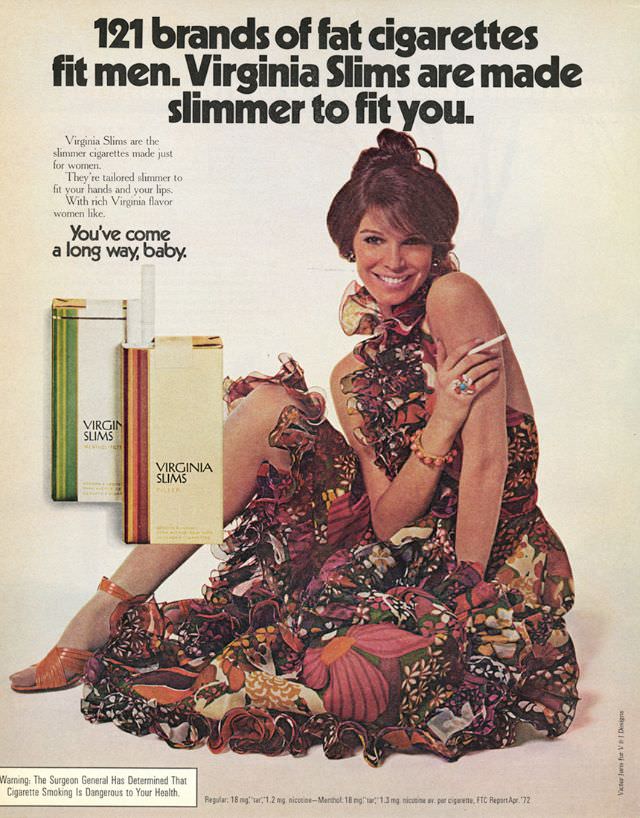
Few advertising slogans have stuck in the American memory quite like “You’ve Come a Long Way, Baby.” It was bold, catchy, and timed perfectly to ride the wave of a changing culture. The phrase belonged to Virginia Slims, a cigarette brand launched by Philip Morris in 1968 and built entirely around women.
Virginia Slims were designed to be physically different from other cigarettes on the market. Each one measured 100mm in length and just 23mm in circumference — longer and thinner than standard cigarettes from competing brands. The slim shape was not accidental. It was a deliberate visual tie to femininity and elegance, giving the product an identity no other cigarette had.
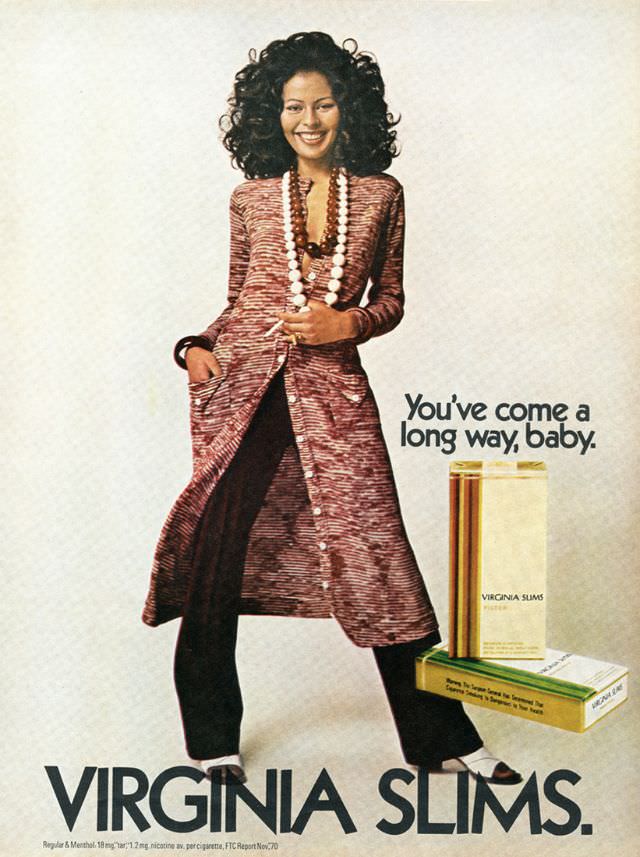
Philip Morris partnered with the Leo Burnett Agency, one of the most respected advertising firms in the country, to build the campaign. Together, they crafted a message that connected cigarette smoking to female freedom and independence. Every single ad in the campaign featured a woman — confident, stylish, and in control — smoking a Virginia Slims cigarette.
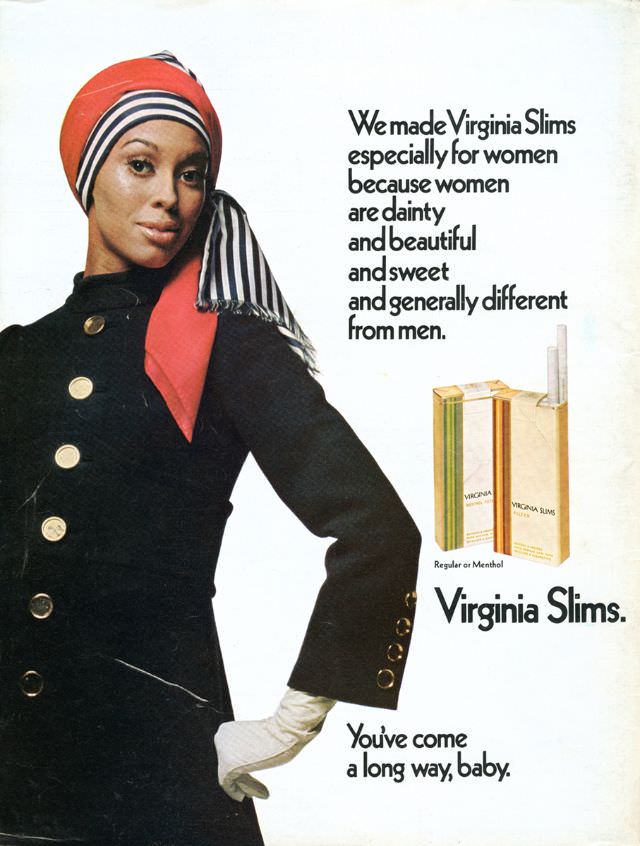
The timing was calculated. The feminist movement in America was gaining real momentum throughout the late 1960s. Women were pushing for equal rights in the workplace, in politics, and in daily life. Philip Morris saw an opening and moved into it. The ads framed smoking not as a habit but as a symbol of liberation — something a modern, free-thinking woman did on her own terms.
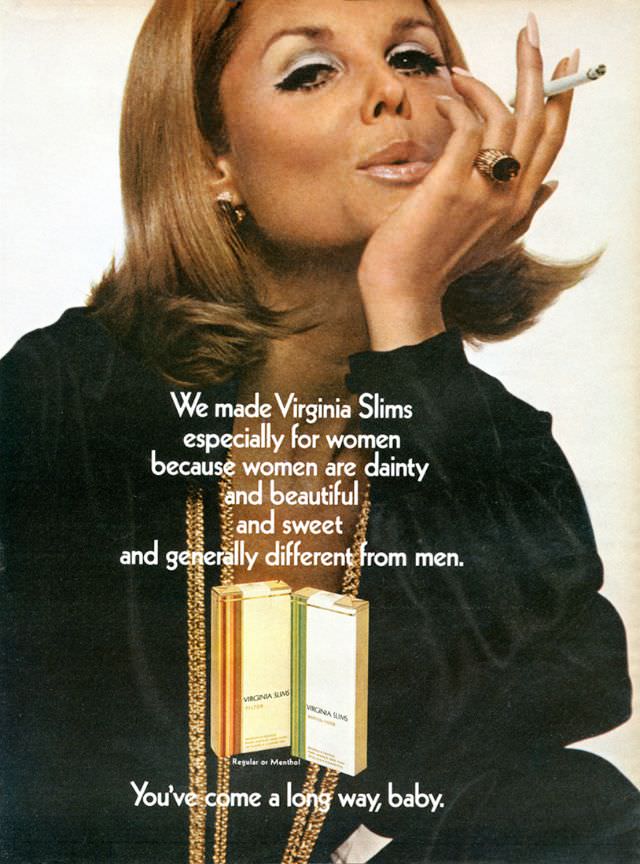
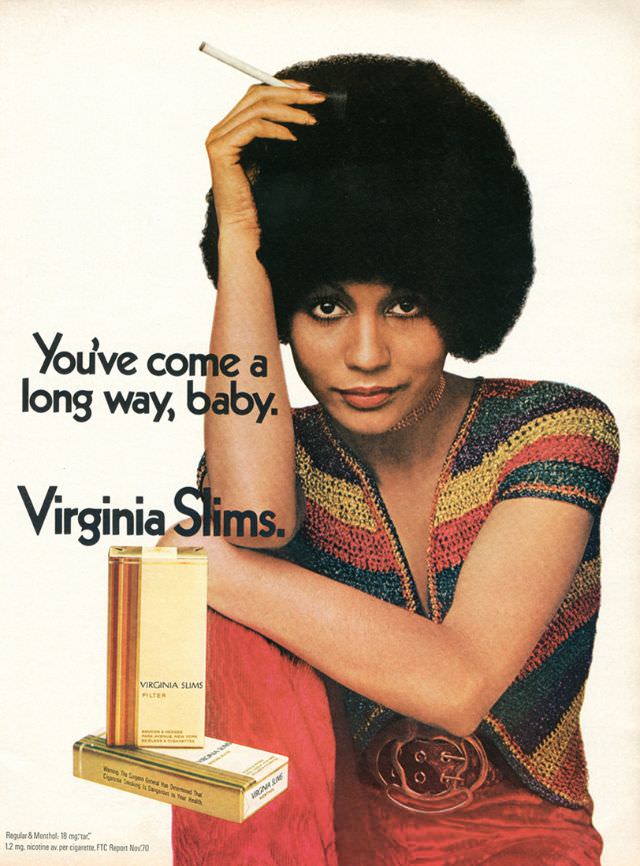
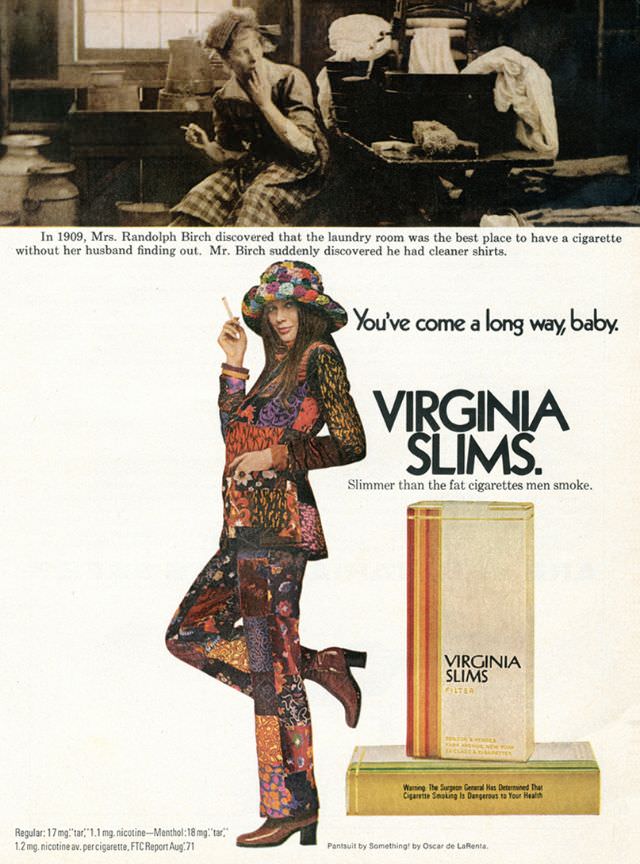
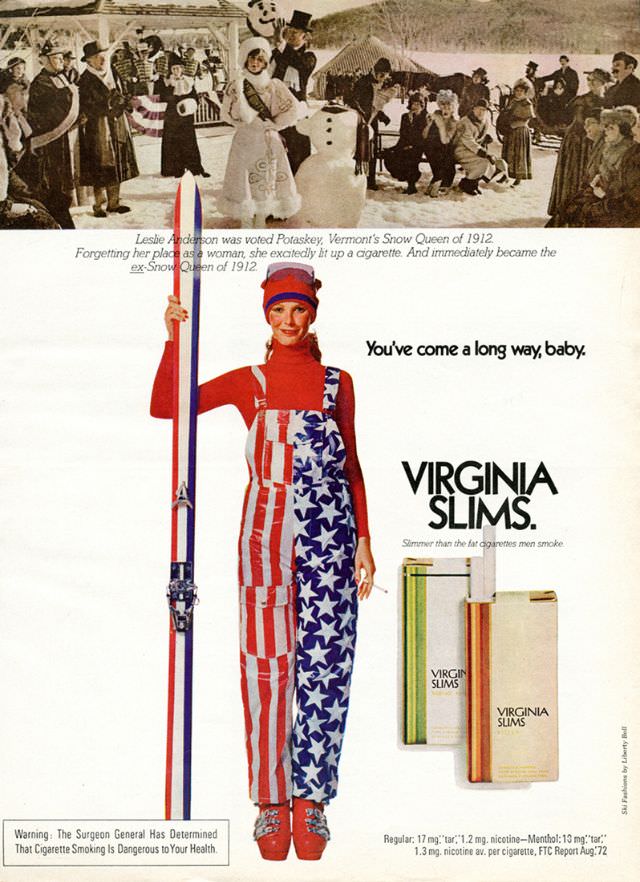
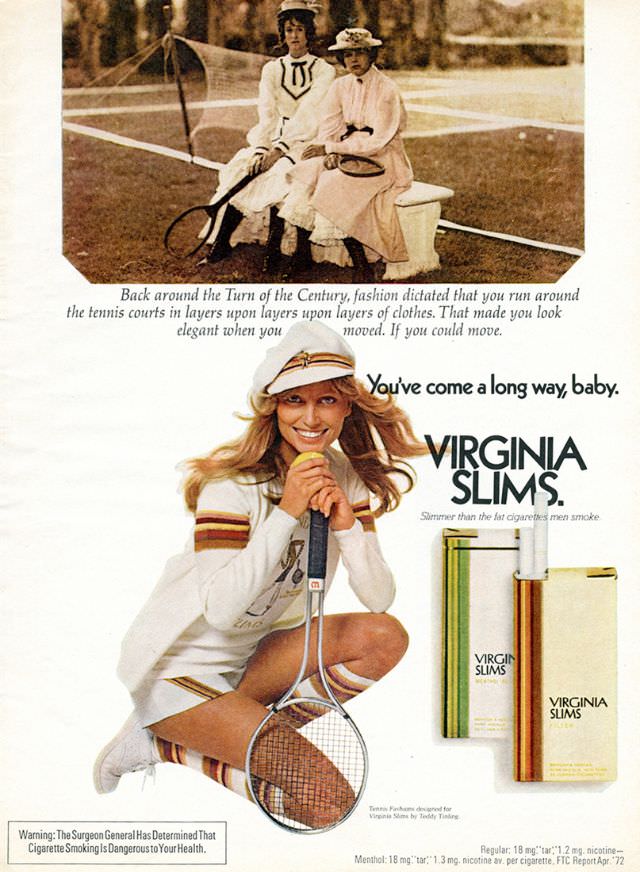
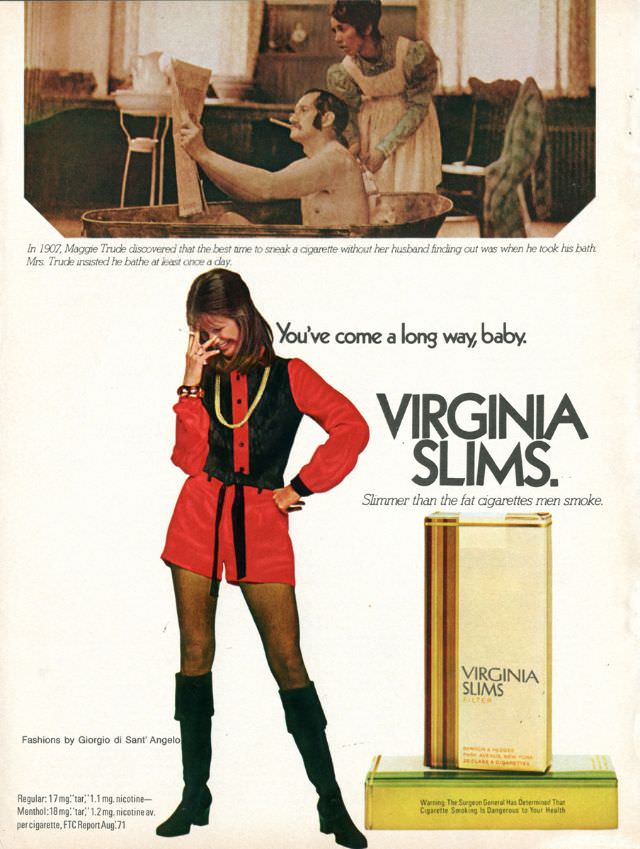
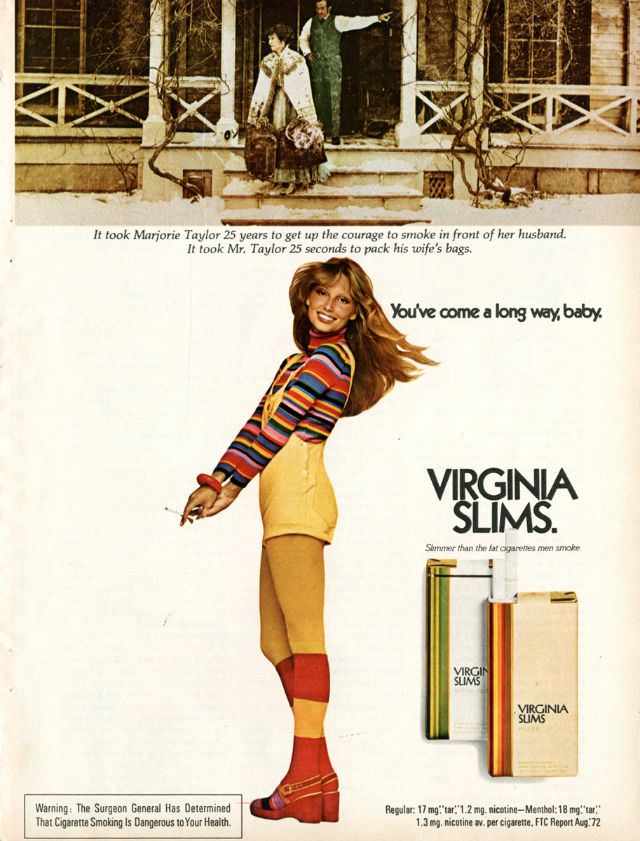
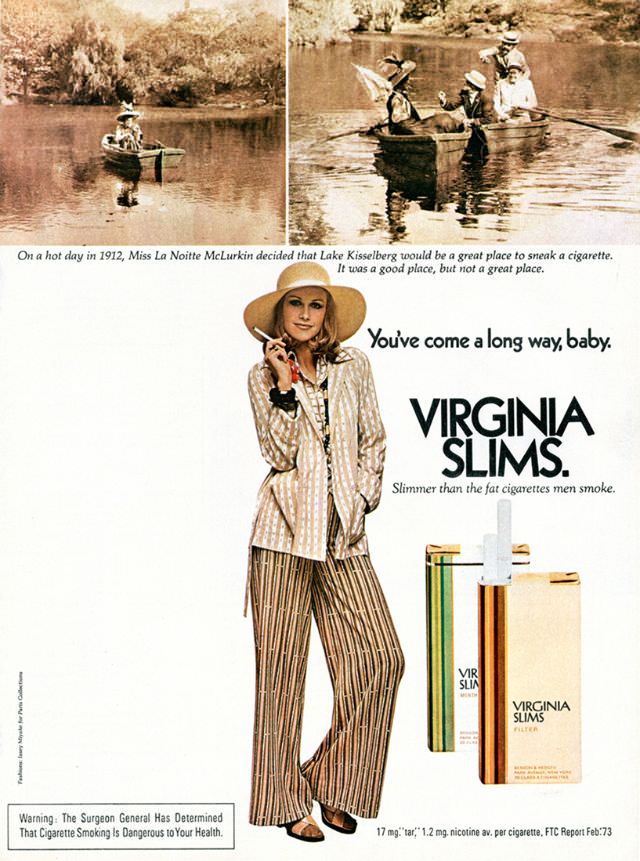
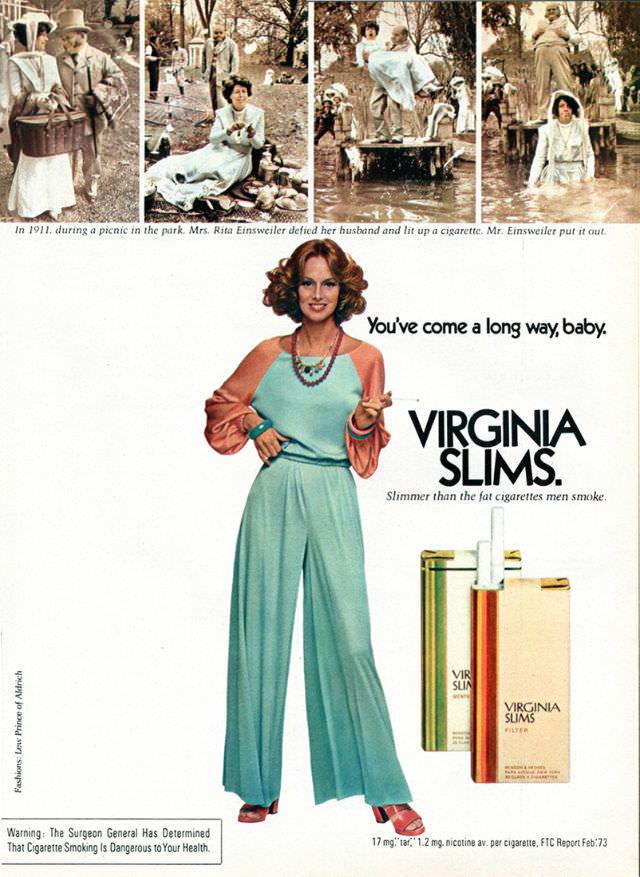
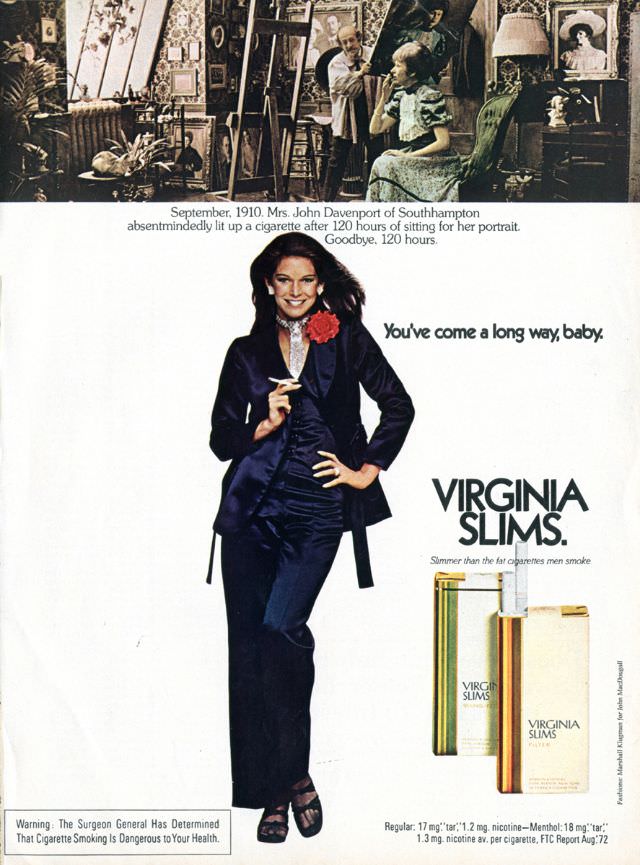
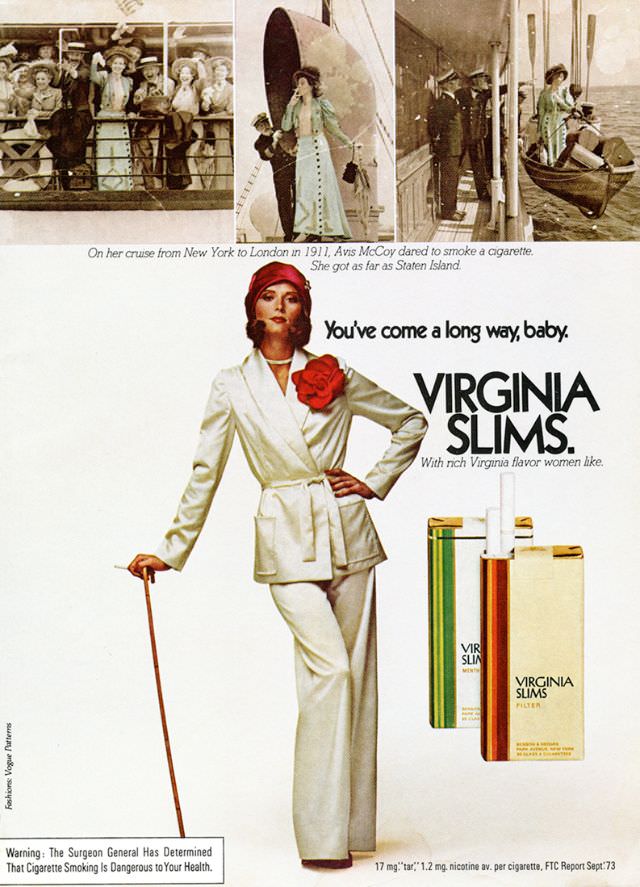
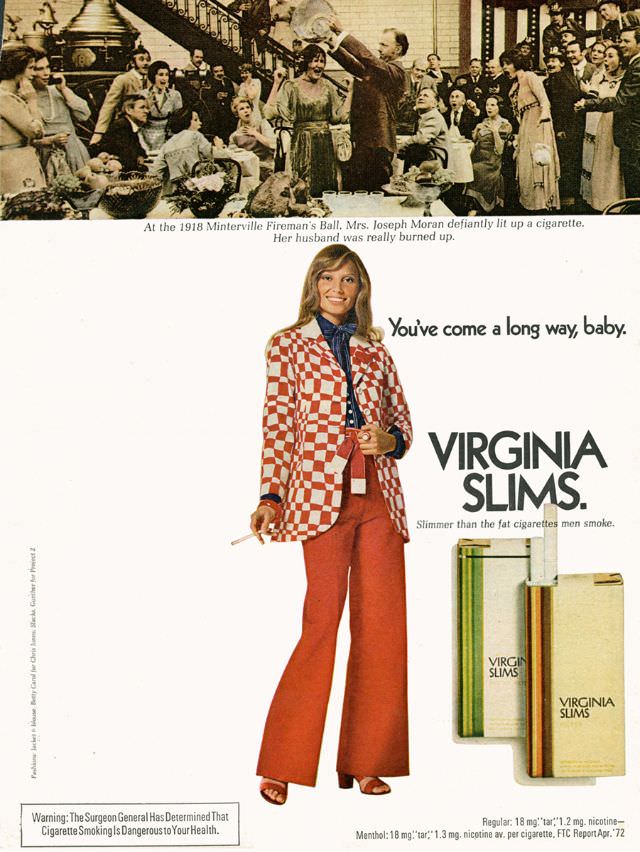
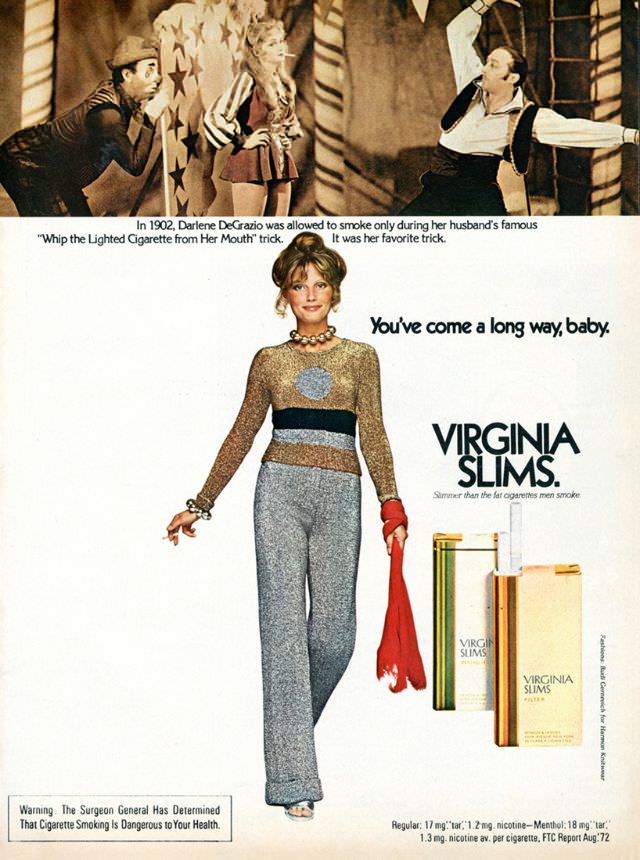
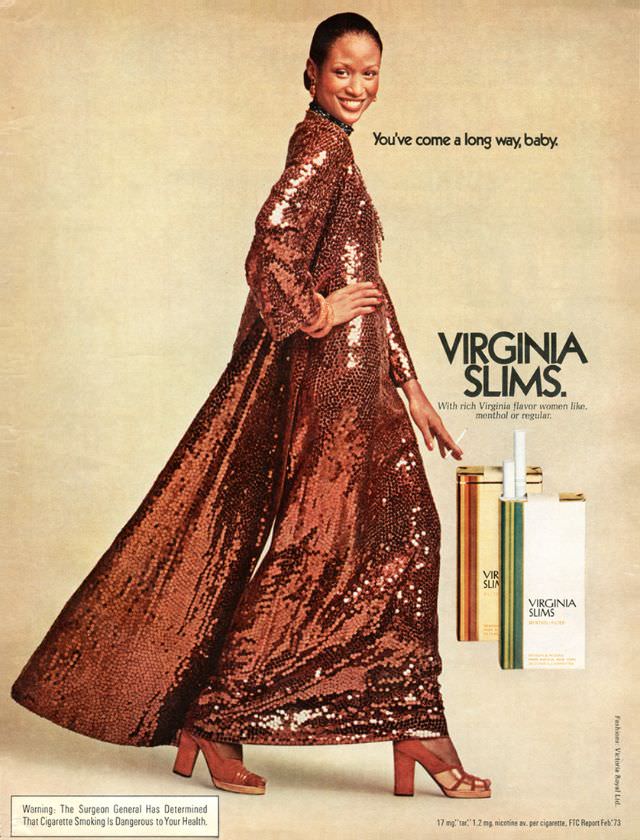
The print ads often used a split format. One side showed a black-and-white historical image of women in earlier eras being restricted, overlooked, or controlled. The other side showed a full-color modern woman, cigarette in hand, living freely. The contrast made the message clear: women had fought for their place in society, and Virginia Slims was part of that story.
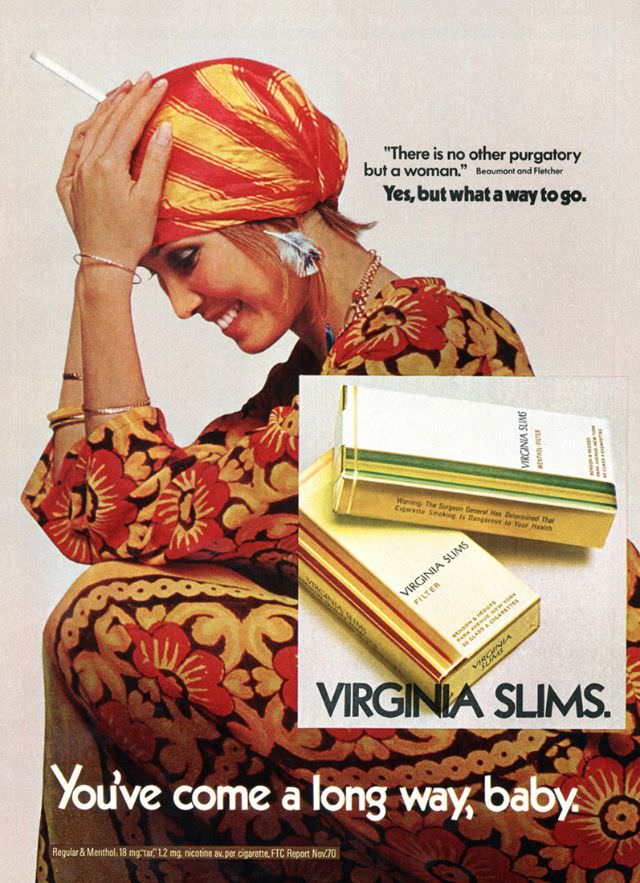
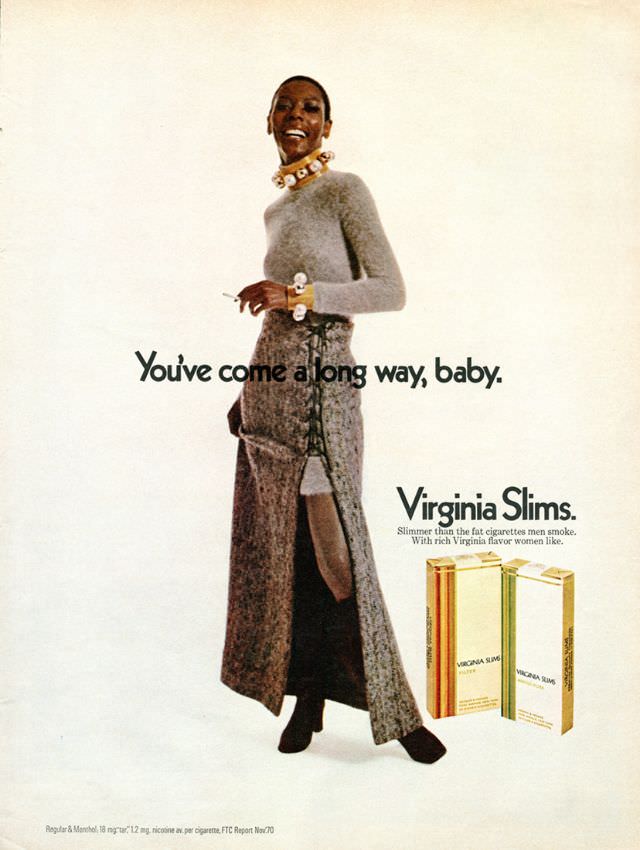
Television commercials carried the same tone. Upbeat music, fashionable women, and the now-iconic slogan delivered a consistent message across every medium. The campaign ran in major magazines like Cosmopolitan and Good Housekeeping, reaching millions of female readers every month.
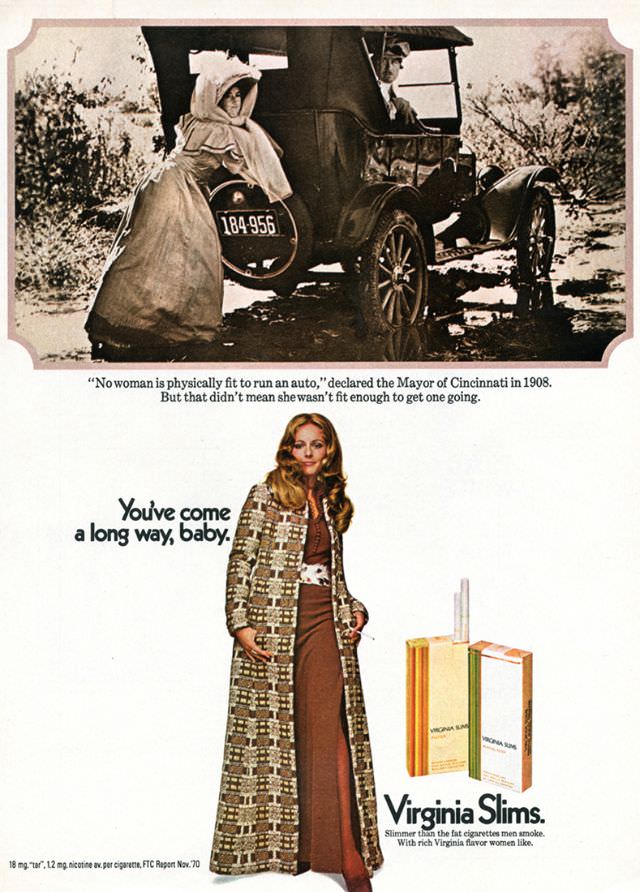
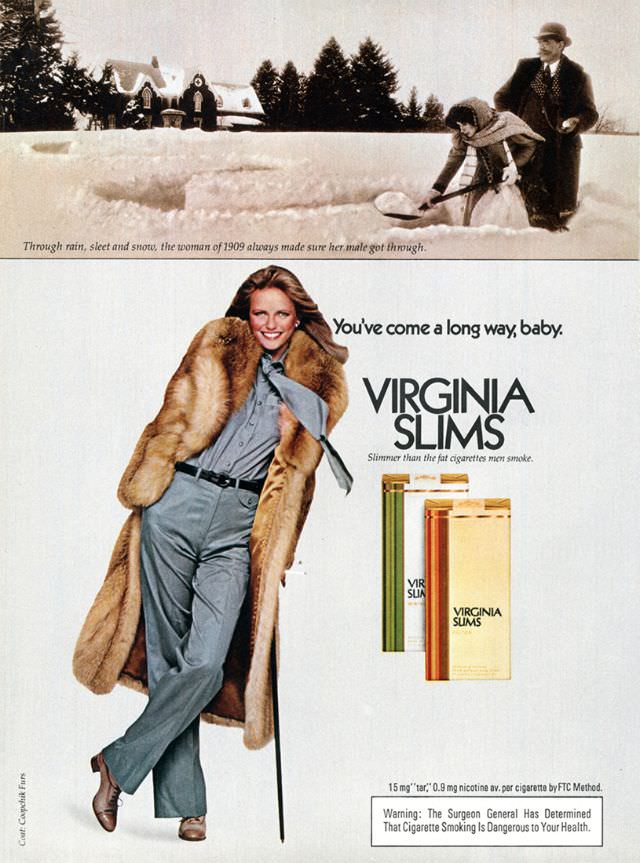
By the early 1970s, Virginia Slims had become one of the most recognized cigarette brands in the United States. Philip Morris extended the brand’s reach by sponsoring the Virginia Slims tennis circuit, which became a major professional women’s tennis tour. The sponsorship deepened the brand’s association with active, successful women.
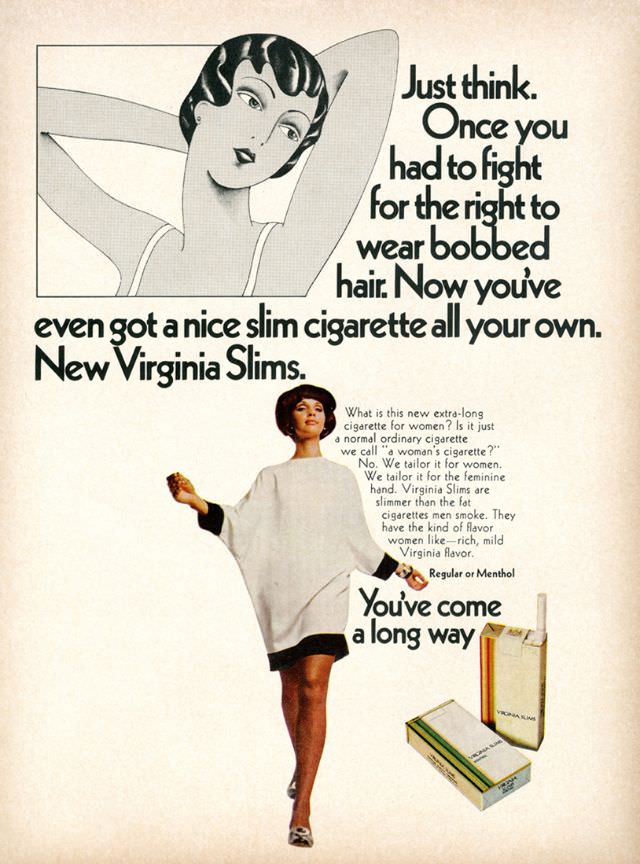
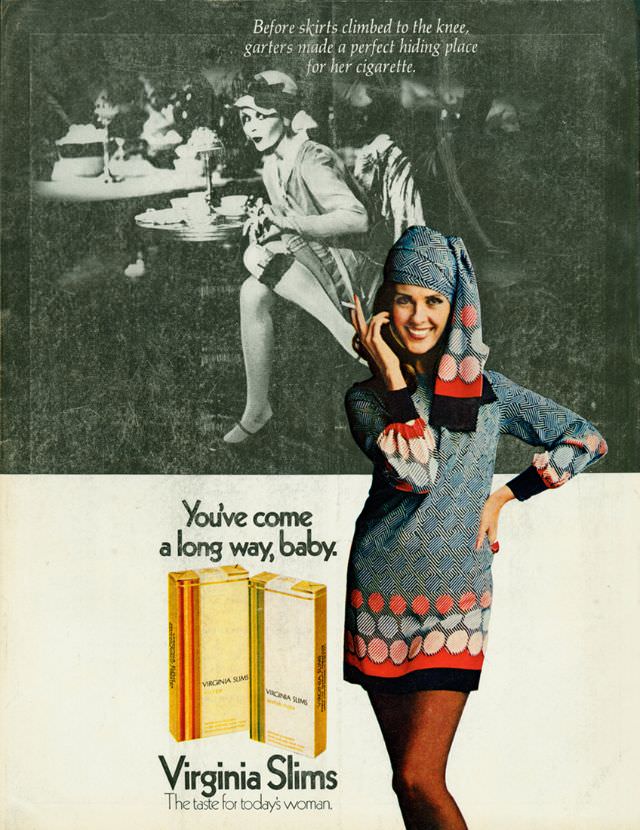
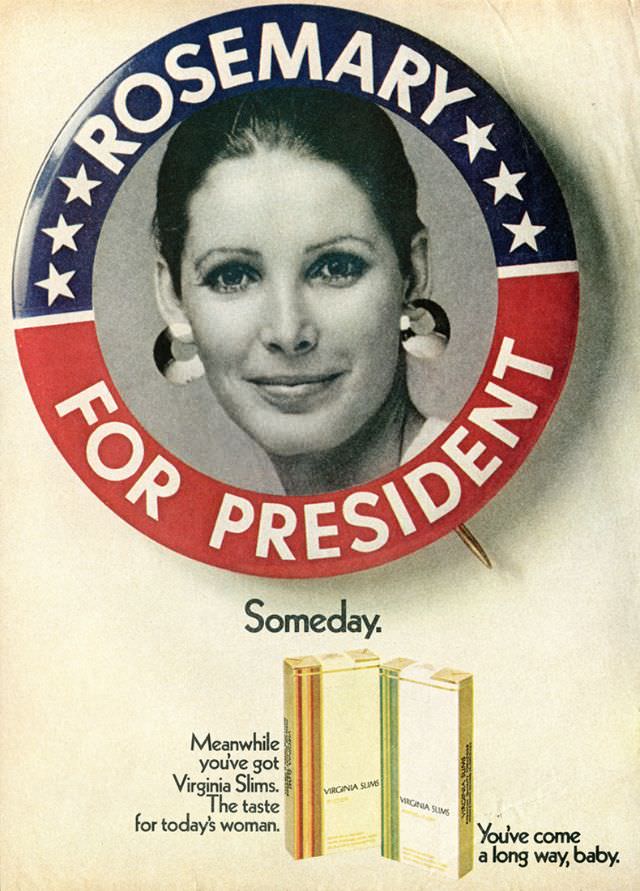
Critics at the time pointed out the contradiction at the heart of the campaign. Using feminist language to sell a product tied to health risks drew sharp responses from women’s rights groups and public health advocates alike. The ads were seen by many as exploiting a social movement for commercial gain rather than genuinely supporting women’s equality.
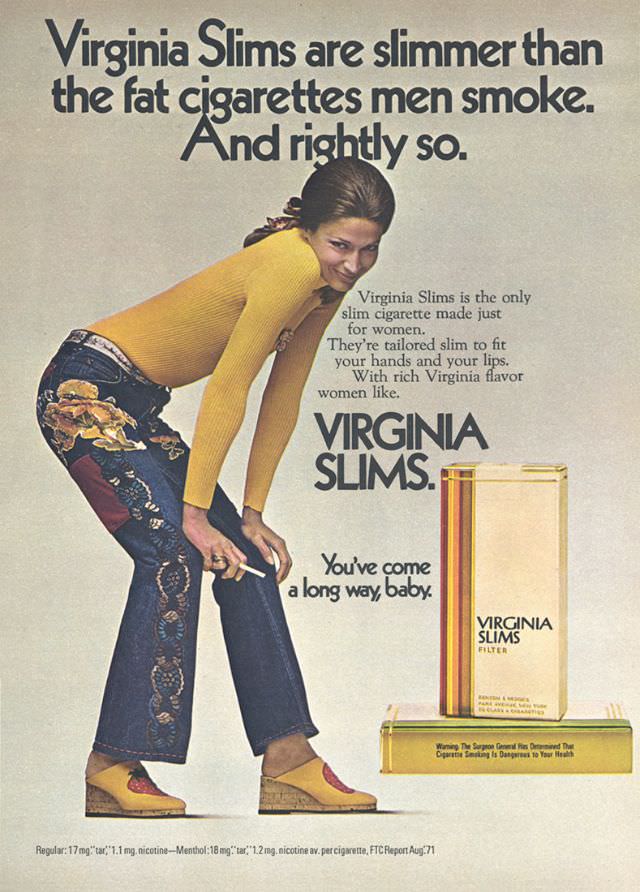
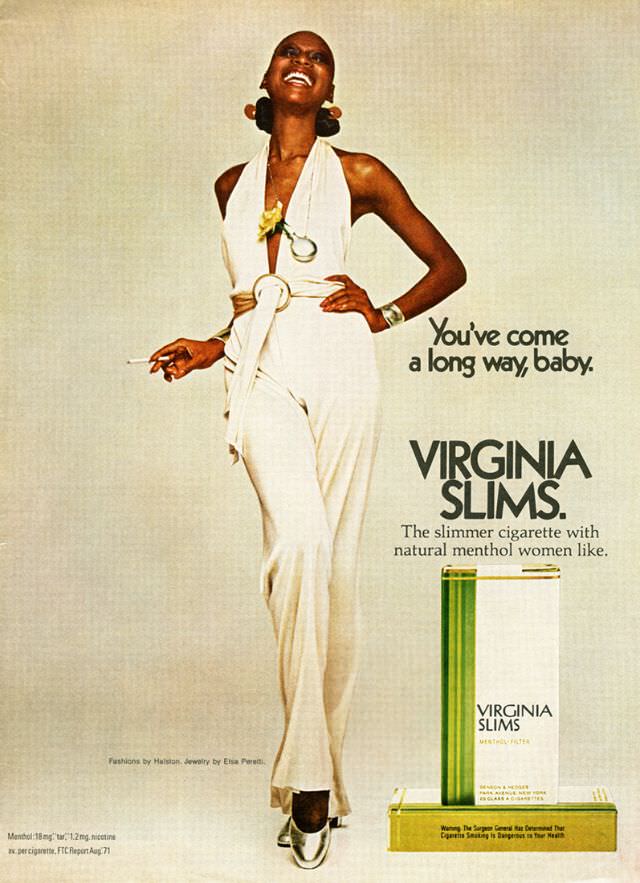
Still, the campaign worked on a commercial level. Sales figures for Virginia Slims climbed steadily through the early 1970s. The brand had tapped into something real — a desire among women to be seen, addressed, and marketed to as individuals with their own tastes and choices, not as an afterthought to male-focused advertising.
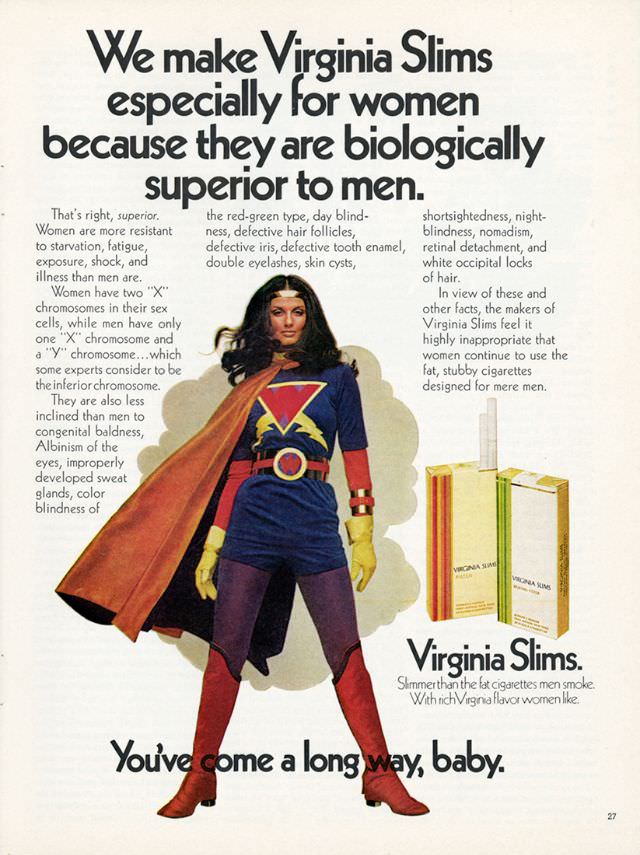
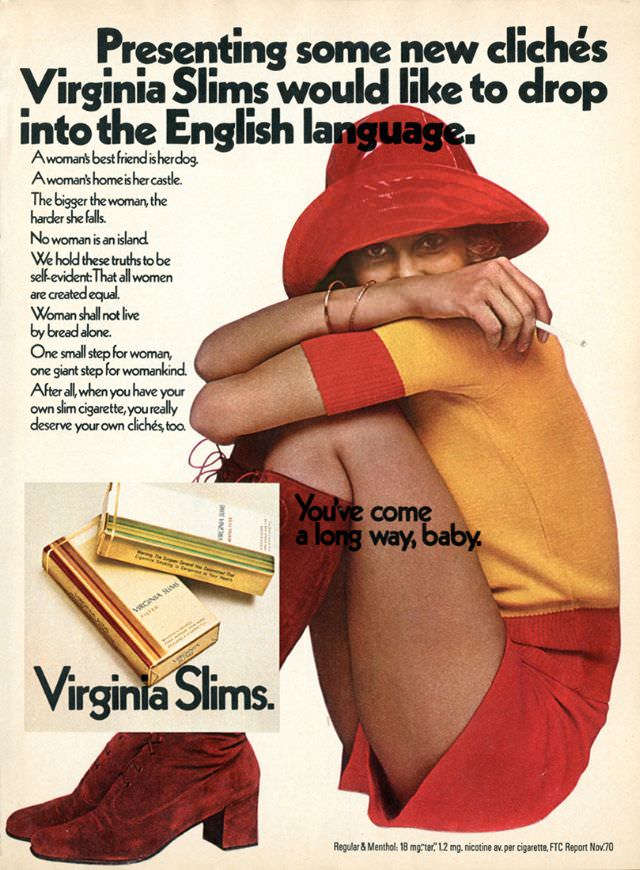
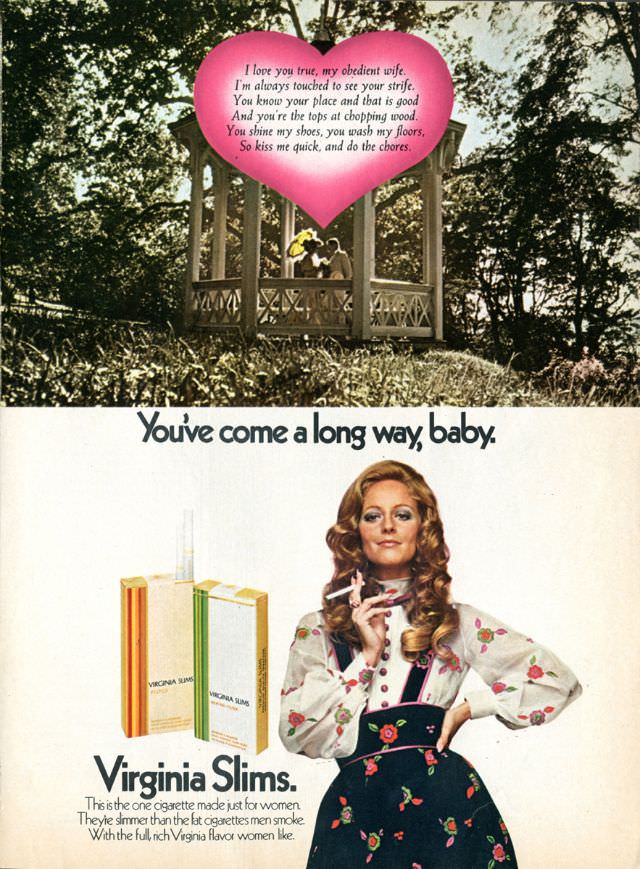
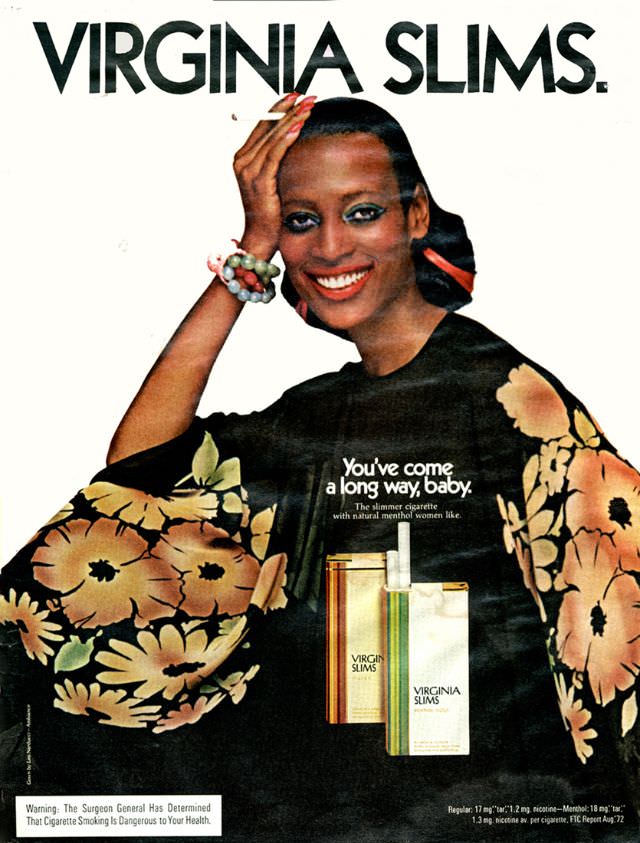
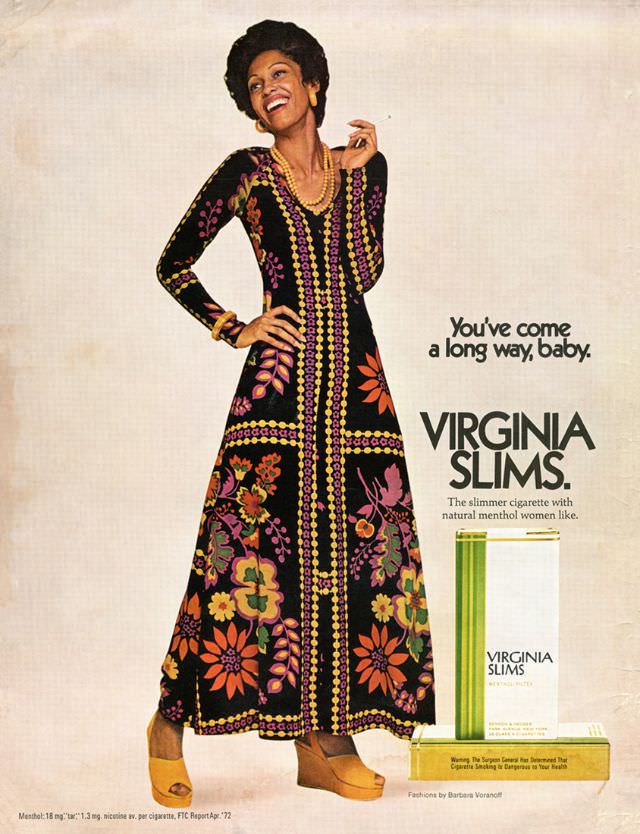
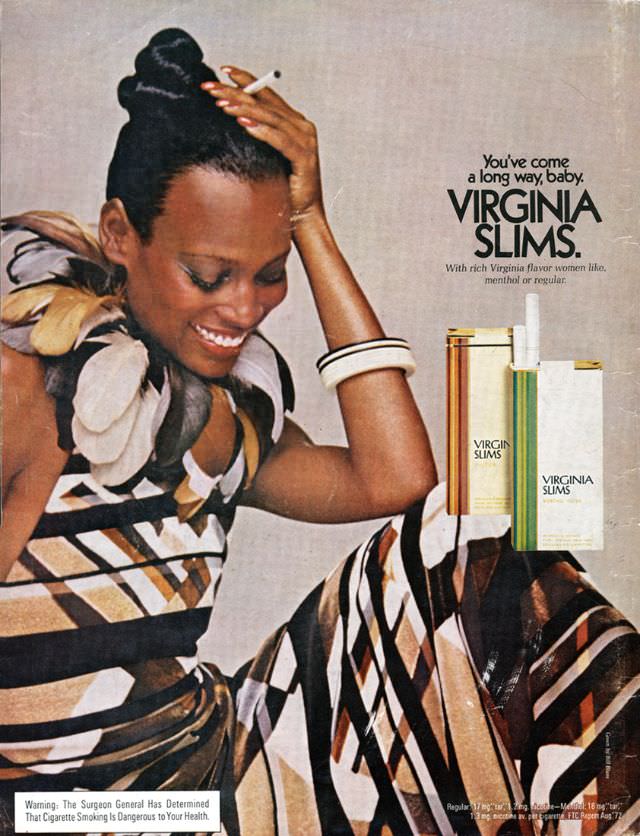
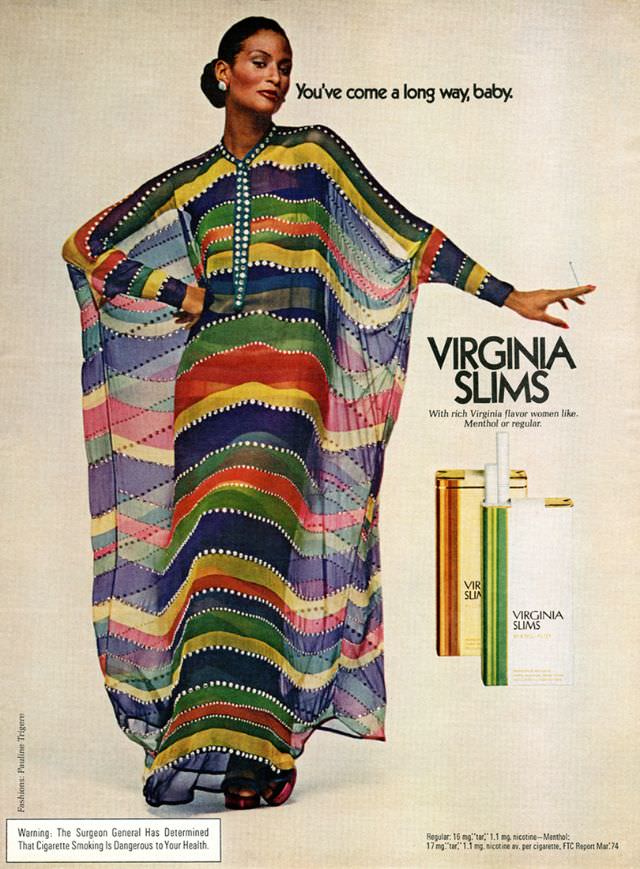
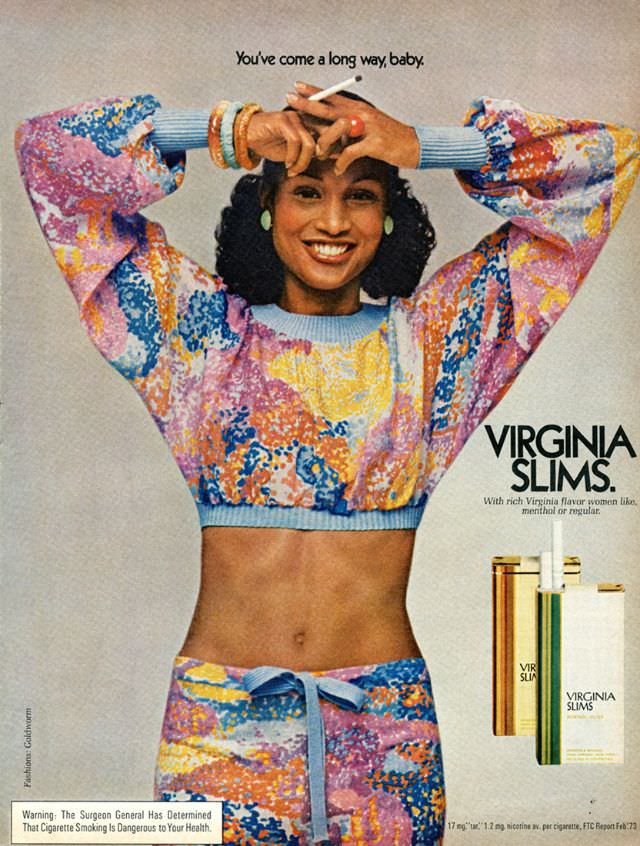
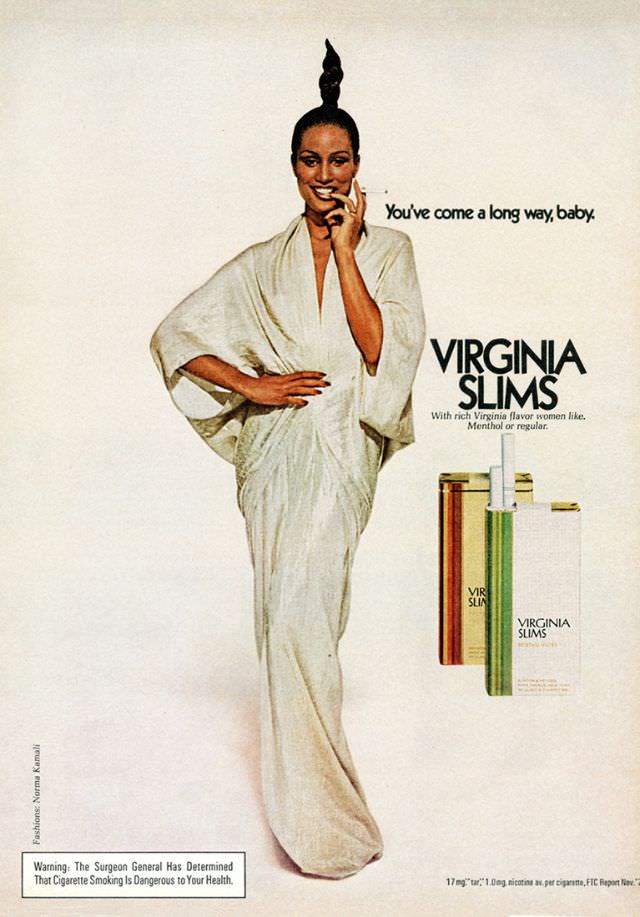
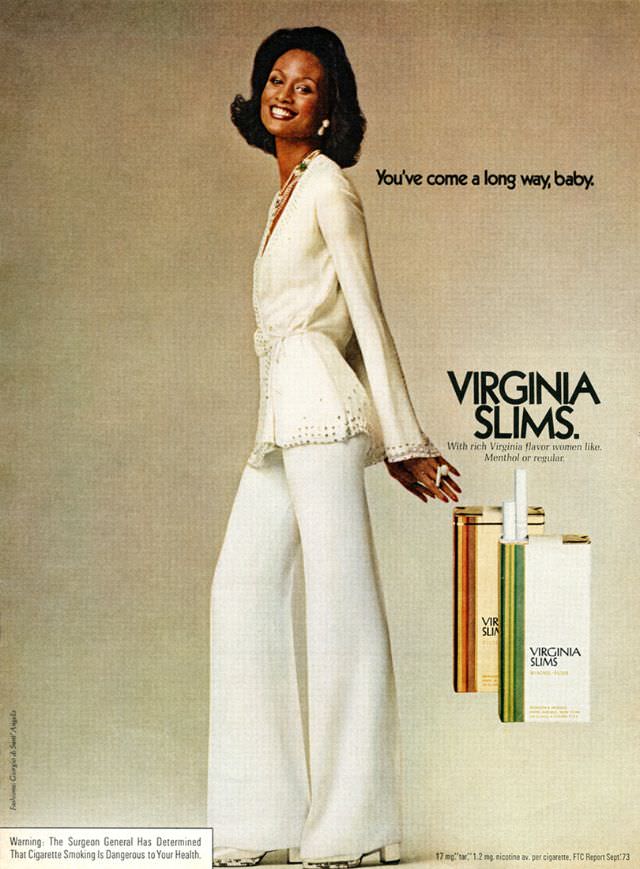
The visual style of the ads was firmly rooted in early 1970s fashion. Bold patterns, wide lapels, bright colors, and statement accessories filled every frame. The women in the ads looked like they belonged on the pages of a fashion magazine, not just a tobacco advertisement. Style and smoking were presented as inseparable.
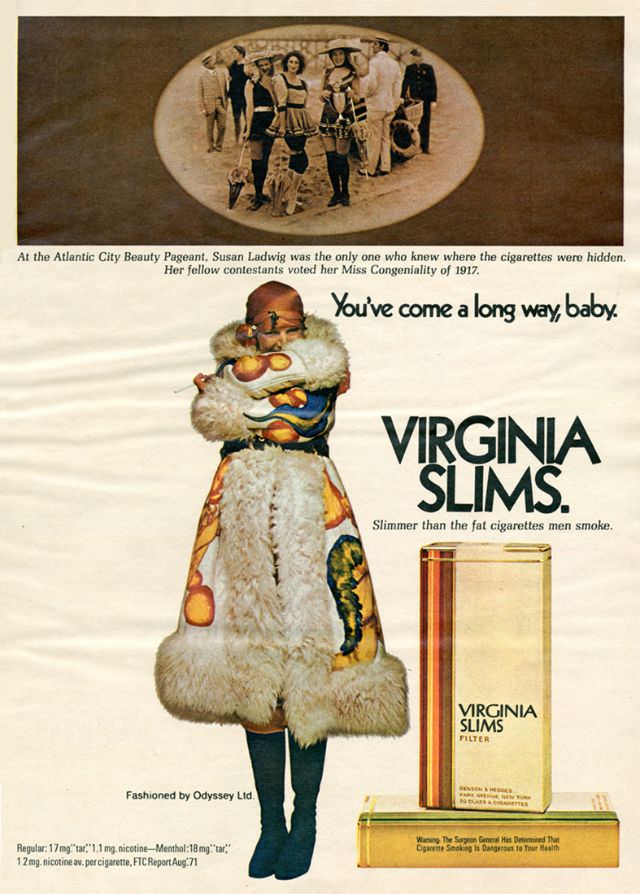
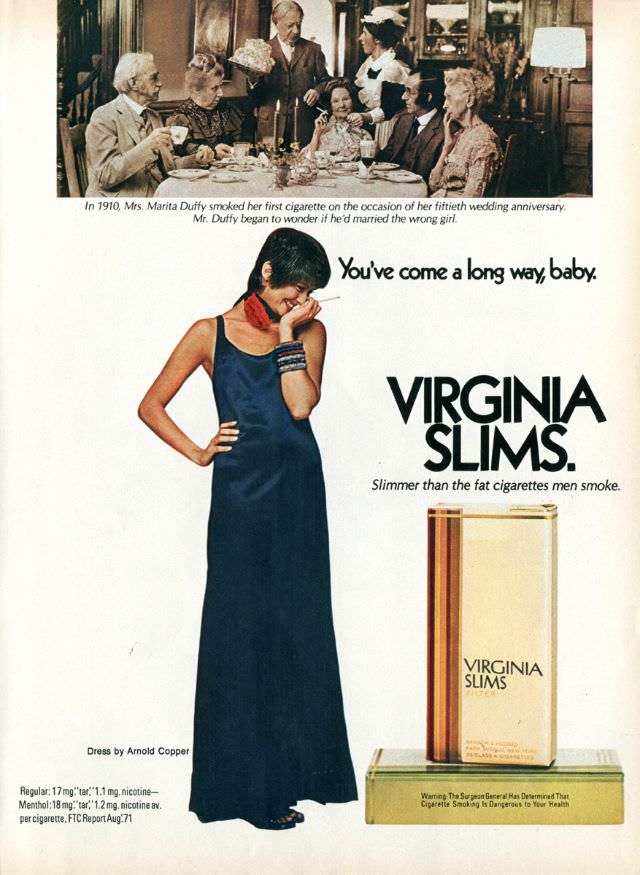
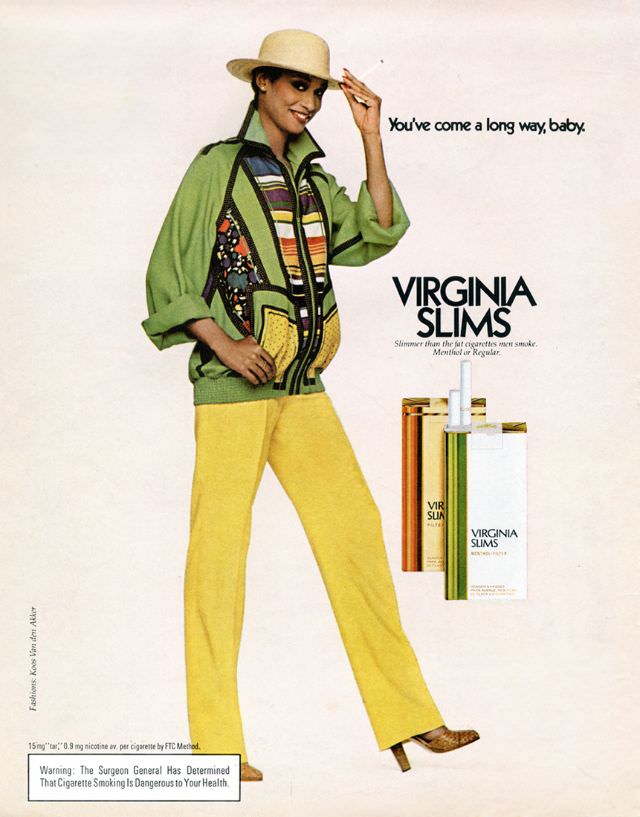
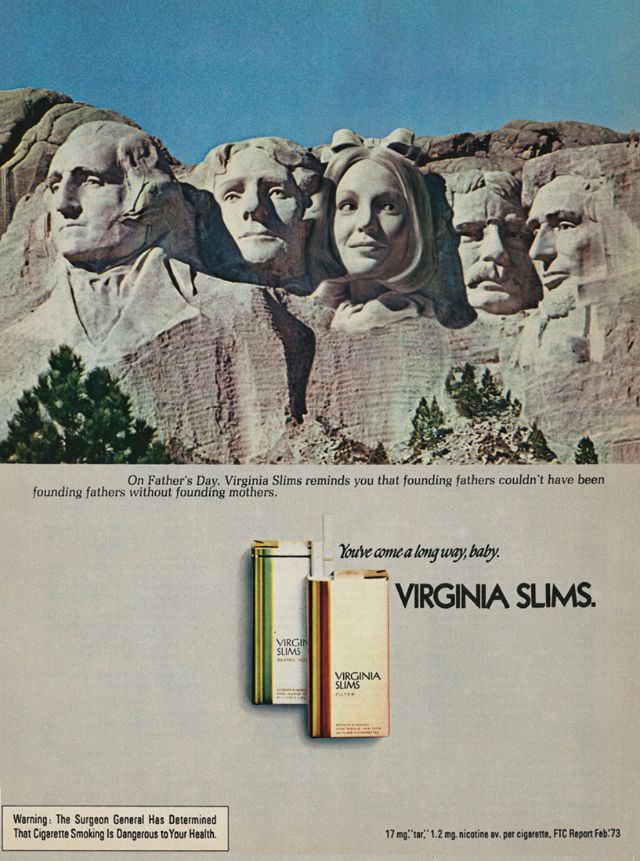
Below is a collection of original Virginia Slims print ads from the early 1970s. They offer a direct look at how the brand presented itself during one of the most commercially aggressive periods in cigarette advertising history.