Hey There! Before You Go. 😧
Get the best vintage content straight into your inbox!

Don't worry, we don't spam

Horrible Vintage Crime Scenes Brought To Life In Stunningly Dreadful Color

Before mobile phones and instant uploads, crime scene photography was a disciplined, deliberate craft. Detectives and press photographers documented murder scenes, gangland hits, and unexplained deaths with large-format cameras and careful framing. The resulting images were used as evidence, published in newspapers, and filed away in police archives. Many sat unseen for decades. Now colorized, they force the past into sharp, uncomfortable focus.

New York City was the backdrop for many of the most striking images. The early 20th century city was crowded, violent, and home to organized crime networks that settled disputes with bullets. Mob warfare, street robberies gone wrong, and domestic killings all produced scenes that police photographers recorded without hesitation.
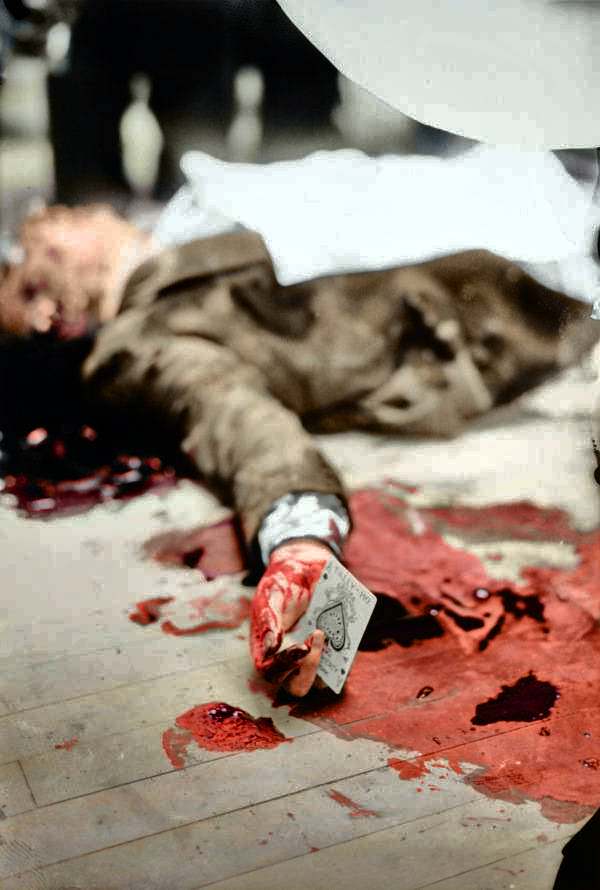
Mafia kingpin Joe Masseria holds the ace of spades, "the death card," in his hand following his murder on the orders of infamous gangster Charles "Lucky" Luciano in a Coney Island restaurant, 1931.
Mafia kingpin Joe Masseria holds the ace of spades, “the death card,” in his hand following his murder on the orders of infamous gangster Charles “Lucky” Luciano in a Coney Island restaurant, 1931.

Joe Masseria’s murder in 1931 marked a turning point in American organized crime. Lucky Luciano arranged the hit to eliminate an old-guard boss and consolidate power. Masseria was found slumped at a restaurant table, the ace of spades placed in his hand — a deliberate message. The image became one of the most iconic mob crime scene photographs ever taken.
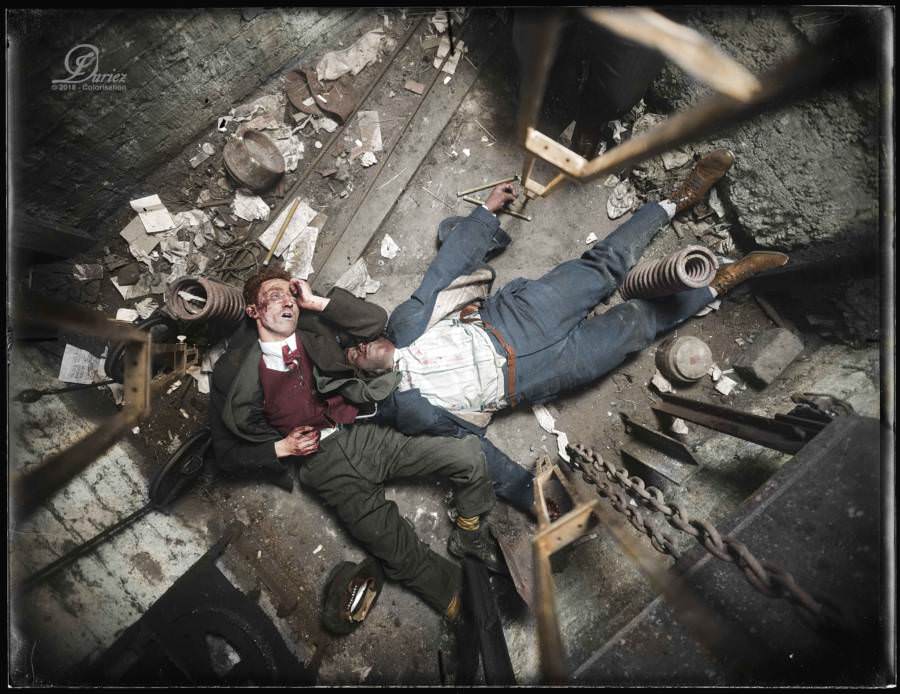
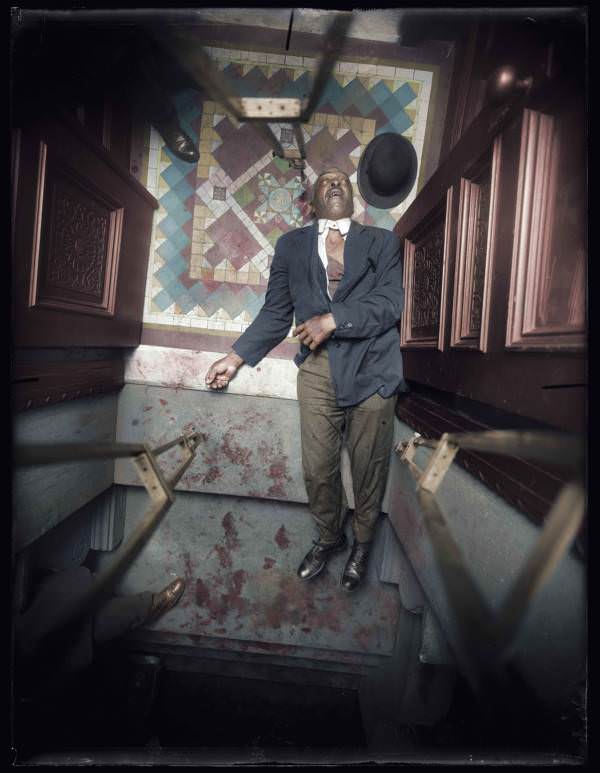
The bodies of two would-be thieves named Robert Green and Jacob Jagendorf after a failed robbery attempt that ended when they accidentally fell down the building's elevator shaft. New York, 1915.
The bodies of two would-be thieves named Robert Green and Jacob Jagendorf after a failed robbery attempt that ended when they accidentally fell down the building’s elevator shaft. New York, 1915.

Not every death in this collection was the result of organized crime. In 1915, two men attempting a robbery in a New York building fell to their deaths in an elevator shaft. Their bodies were photographed where they landed. The image is a stark reminder that the violence of the era wasn’t limited to professional criminals.
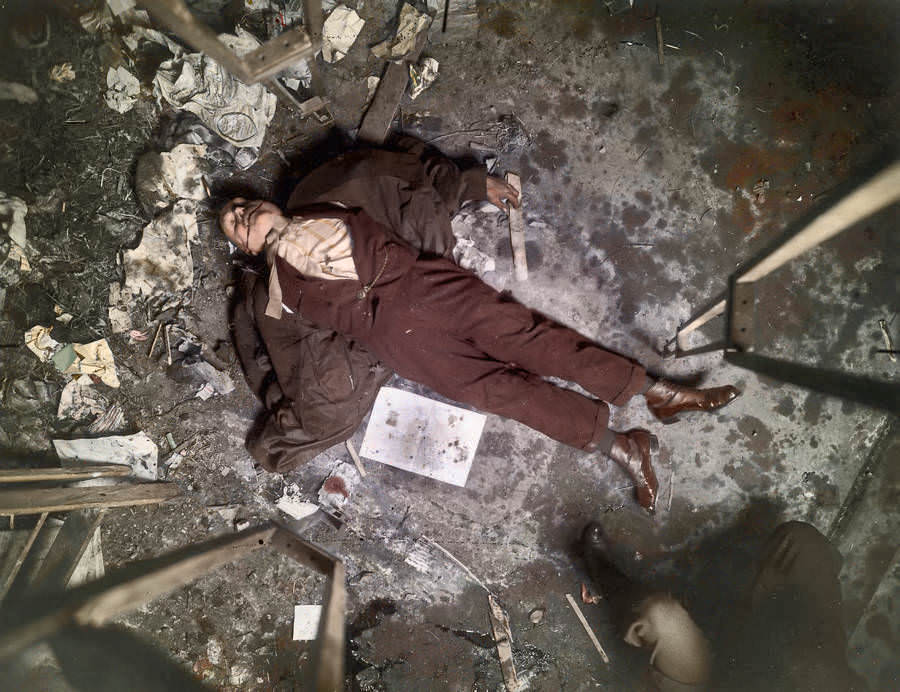
Unspecified New York murder scene, 1916.
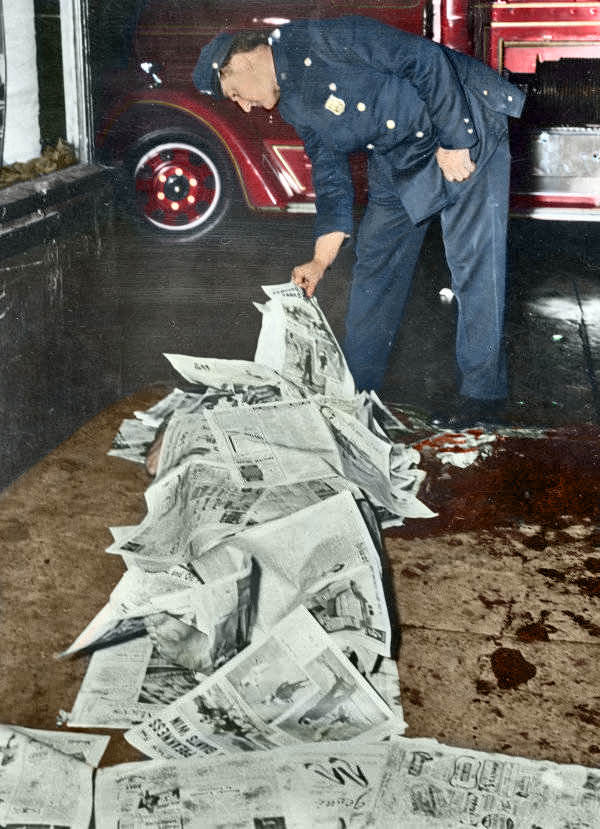
A New York police officer takes a peek at a dead body covered with newspapers, 1943.

Some photographs carry no names or clear narratives — just a body, a location, and a date. A 1943 New York image shows a police officer lifting a newspaper covering a corpse on the street. The casualness of the gesture reflects how common sudden death had become in the city’s public spaces during those decades.
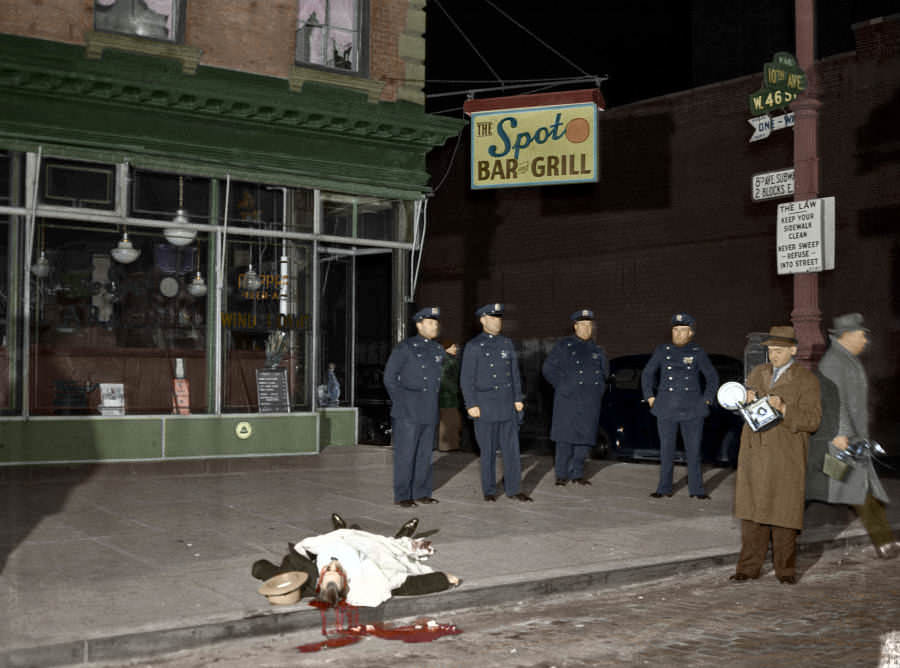
Murdered gangster David Beadle, also known as "David the Beetle," in front of The Spot Bar and Grill in Manhattan, 1939.
Murdered gangster David Beadle, also known as “David the Beetle,” in front of The Spot Bar and Grill in Manhattan, 1939.

Gangsters were shot in restaurants, on sidewalks, and in their own homes. David Beadle, known as “David the Beetle,” was gunned down outside The Spot Bar and Grill in Manhattan in 1939. His body lay on the pavement in front of the establishment, photographed from multiple angles by both police and press photographers.
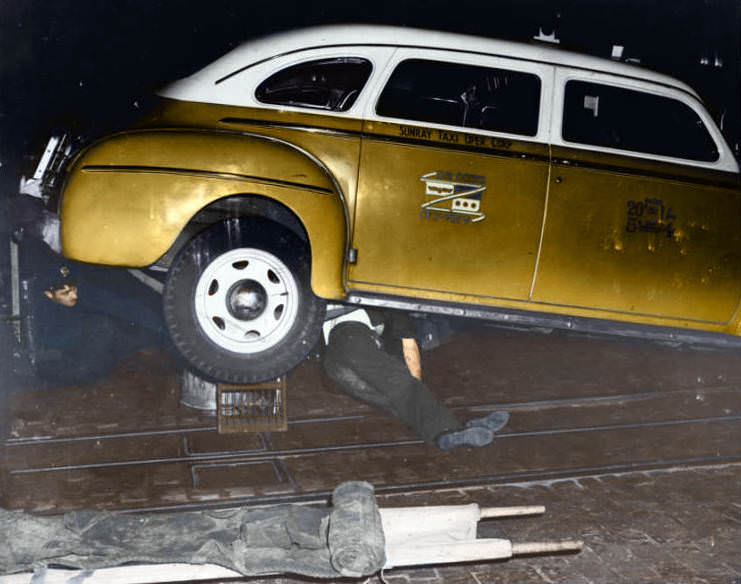
A police officer crouches under the rear end of a taxi jacked up on a crate and garbage can as the dead body of a man who was hit by the cab lies underneath, 1943.
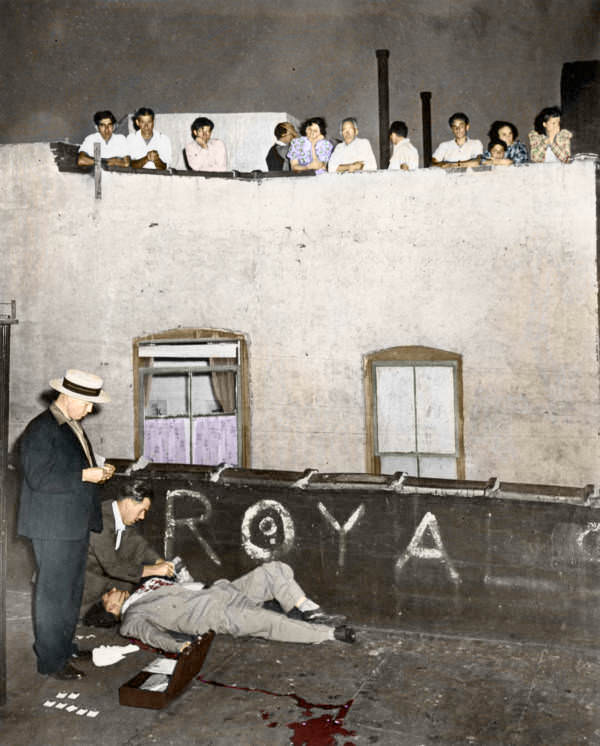
Forensic detectives take the fingerprints of murdered store owner Joseph Gallichio, as he lies on the roof beside his cage of racing pigeons. New York, 1941.

The murder of Joseph Gallichio in 1941 produced one of the more unusual crime scene images of the era. Forensic detectives took his fingerprints while his body lay on a rooftop beside his cage of racing pigeons. The mundane detail of the birds against the grim work of the investigators gives the photograph an almost surreal quality.
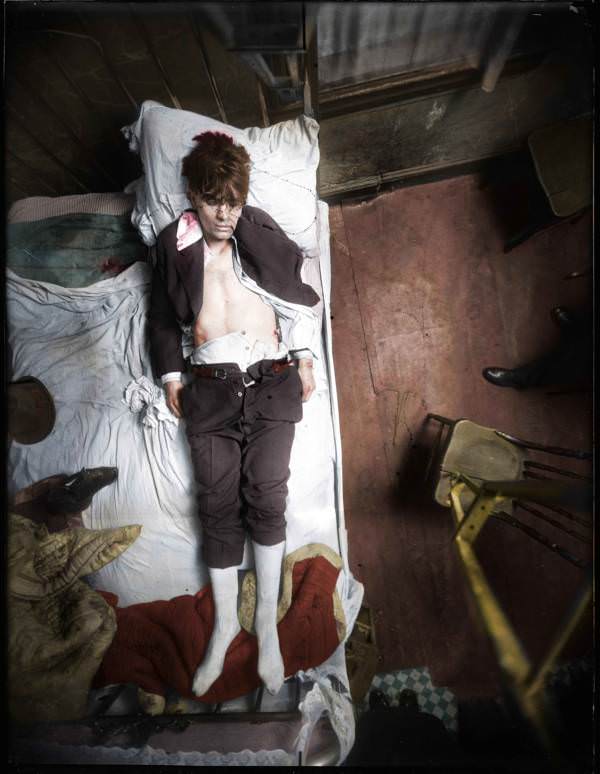
The body of a man named Antonio Pemear, who was found murdered in his bed in Brooklyn, 1915.
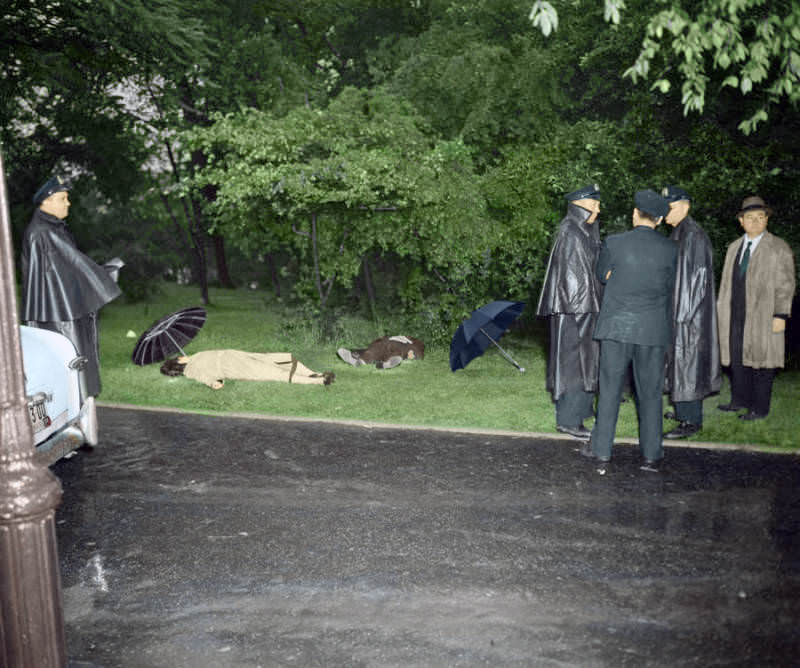
Scene of a murder-suicide in New York's Central Park, 1952.
Scene of a murder-suicide in New York’s Central Park, 1952.

Chicago’s gang wars of the 1920s produced some of the most documented violence in American criminal history. Al Capone’s campaign to control the city’s illegal liquor trade left a trail of bodies. His rivals, particularly the North Side Gang led by Earl “Hymie” Weiss, fought back with equal brutality — until they didn’t.
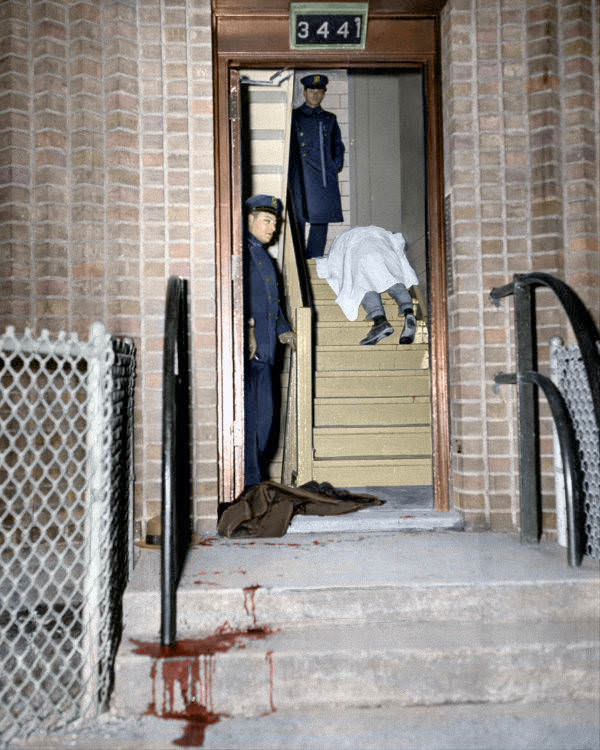
Two police officers with a dead body in a New York apartment stairwell, 1957.
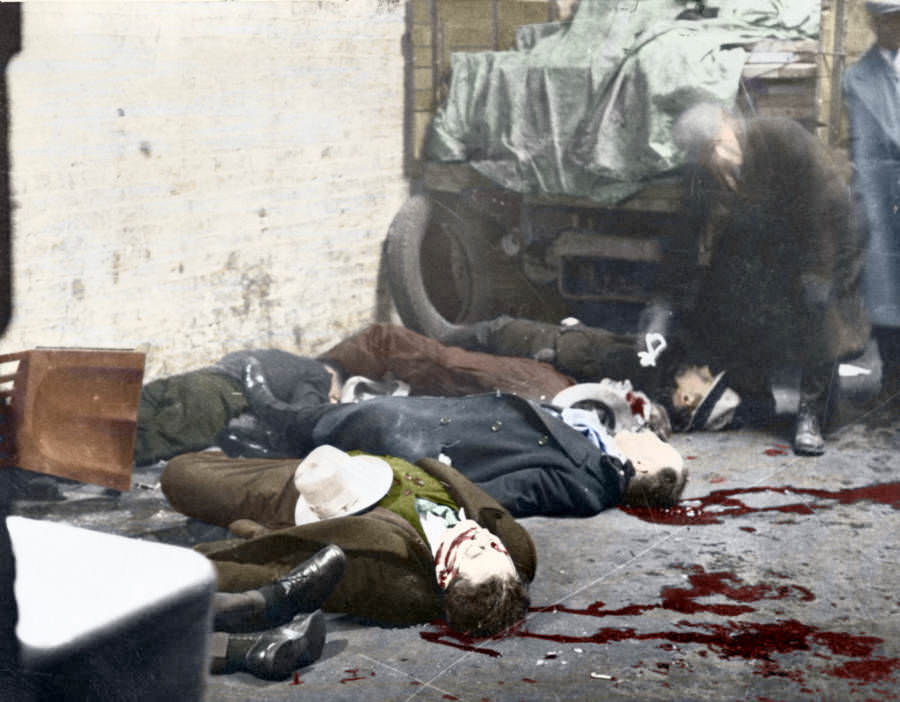
The Saint Valentine's Day Massacre, in which seven members of the North Side Gang were trapped in a garage, lined up against the wall, and shot to death by members of Al Capone's rival gang during a power struggle for control of Chicago, 1929.
The Saint Valentine’s Day Massacre, in which seven members of the North Side Gang were trapped in a garage, lined up against the wall, and shot to death by members of Al Capone’s rival gang during a power struggle for control of Chicago, 1929.

On February 14, 1929, seven members of the North Side Gang were lined up against the wall of a Chicago garage and executed by Capone’s men. The Saint Valentine’s Day Massacre became the defining image of Prohibition-era gang violence. The crime scene photographs — bodies crumpled along a brick wall, blood pooled on the concrete — were printed in newspapers across the country.
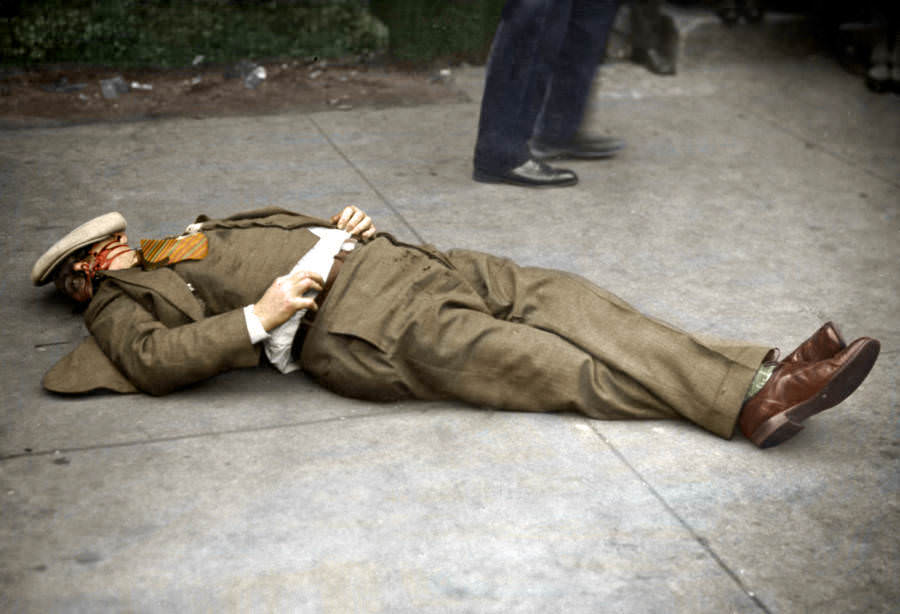
The body of Earl "Hymie" Weiss, leader of Chicago's North Side Gang. He was killed when Al Capone's men opened fire with a submachine gun on him and his associates while they were visiting a courthouse where an ally of his was on trial, 1926.
The body of Earl “Hymie” Weiss, leader of Chicago’s North Side Gang. He was killed when Al Capone’s men opened fire with a submachine gun on him and his associates while they were visiting a courthouse where an ally of his was on trial, 1926.

Hymie Weiss was killed in 1926 outside a Chicago courthouse. Capone’s men opened fire with a submachine gun as Weiss and his associates walked along the street. The brazenness of the attack — carried out in broad daylight near a courthouse — illustrated how little the gangs feared legal consequences at the height of Prohibition.
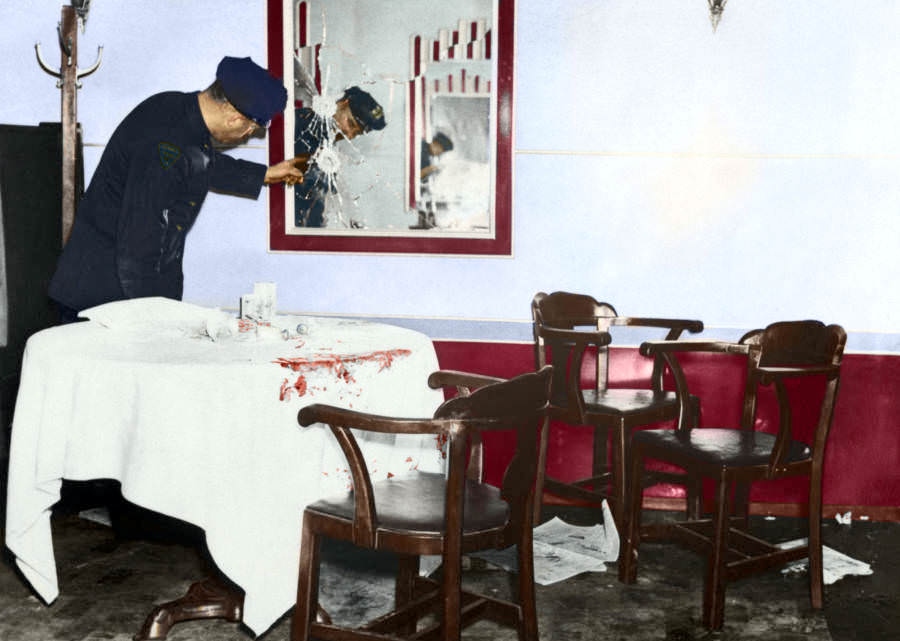
The murder scene of Arthur "Dutch Schultz" Flegenheimer, a powerful New York gangster in the 1920s and '30s who was ultimately killed in Newark, New jersey by an assassin hired by the Mafia Commission.
The murder scene of Arthur “Dutch Schultz” Flegenheimer, a powerful New York gangster in the 1920s and ’30s who was ultimately killed in Newark, New jersey by an assassin hired by the Mafia Commission.
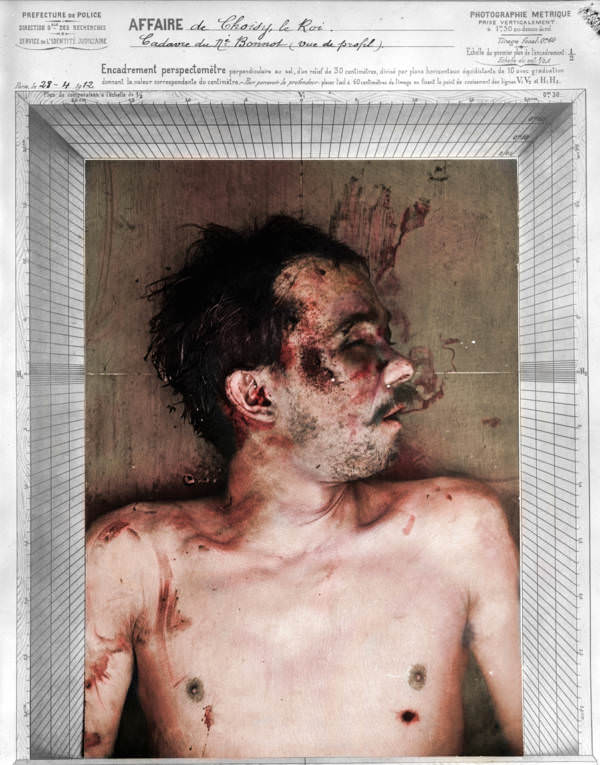
Close-up of a corpse's battered and bloodied face. Angres, France, 1912.
Close-up of a corpse’s battered and bloodied face. Angres, France, 1912.

Not all of these images come from American cities. A 1912 photograph from Angres, France, shows a close-up of a battered and bloodied face. French forensic photography of that era was highly detailed and clinical, often used to develop early identification techniques. The image is among the most confrontational in the collection.
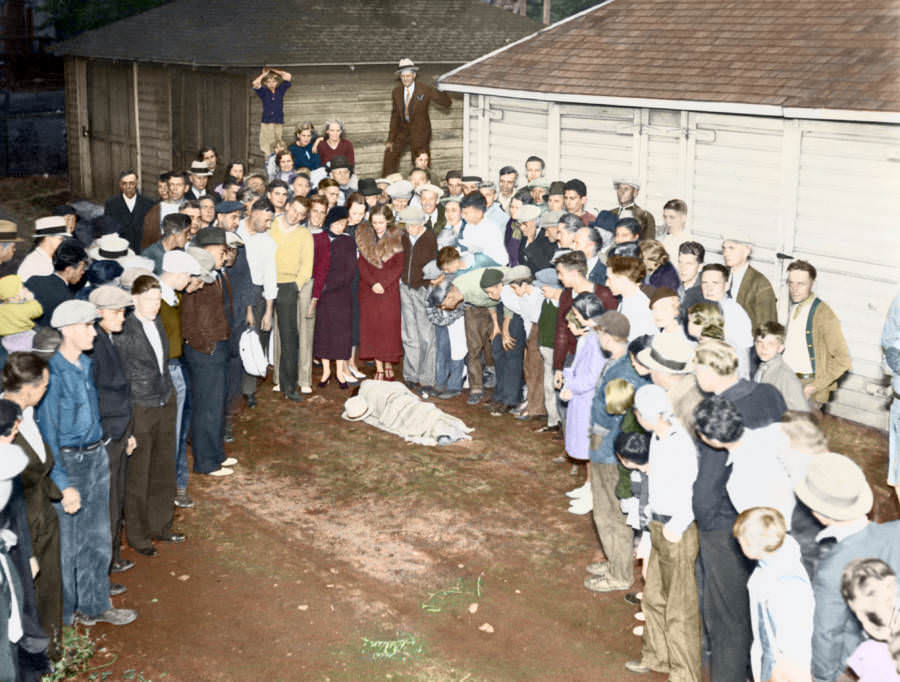
The dead body of Homer Van Meter, an associate of John Dillinger and a notorious bank robber, who was killed after fleeing police in St. Paul, Minn, 1934.

Homer Van Meter ran with John Dillinger’s gang and robbed banks across the Midwest before police caught up with him in St. Paul, Minnesota in 1934. He was shot and killed while trying to flee. His death came just weeks after Dillinger himself was killed outside a Chicago theater. The FBI’s crackdown on Depression-era outlaws was systematic and final.
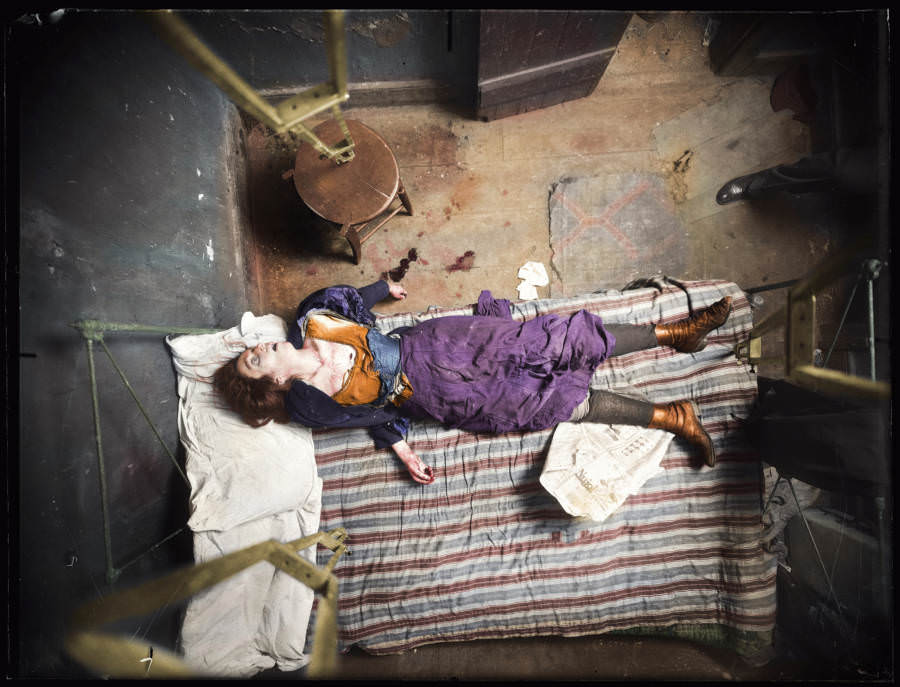
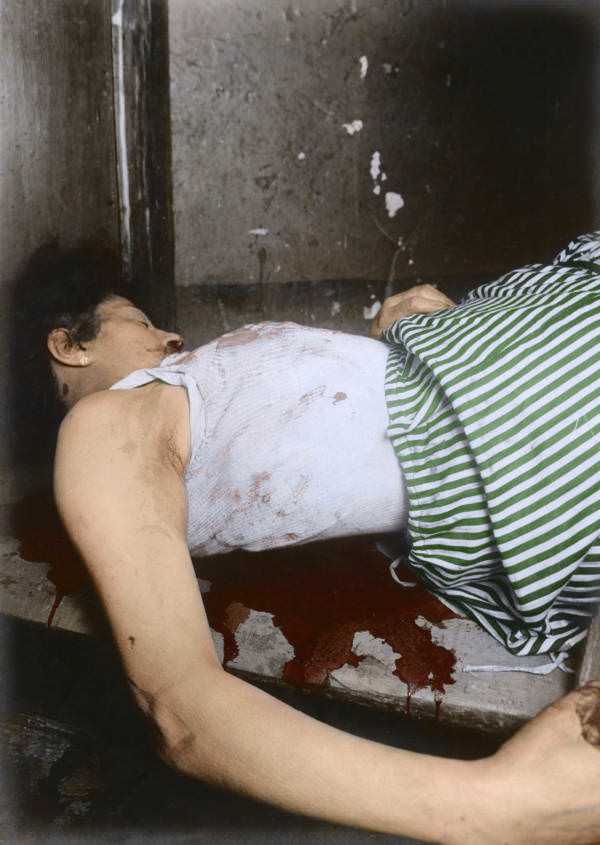
A young woman dead in her bed, 1930.
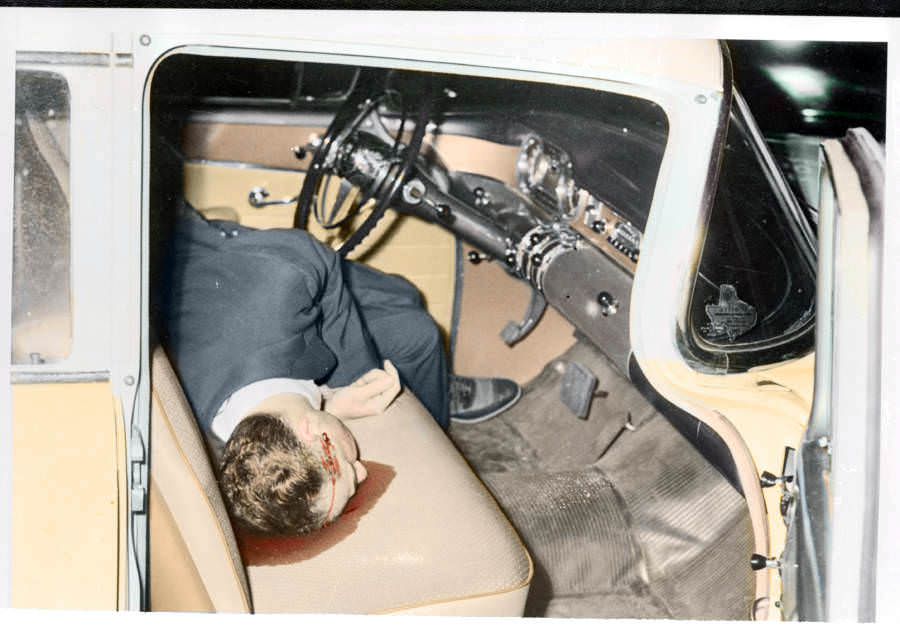
The dead body of Al Capone associate Charles "Cherry Nose" Gioe, who was shot through the head by mafia hitmen hired by a Chicago mob boss whose plans Gioe had unknowingly interfered with, 1954.
The dead body of Al Capone associate Charles “Cherry Nose” Gioe, who was shot through the head by mafia hitmen hired by a Chicago mob boss whose plans Gioe had unknowingly interfered with, 1954.

Charles “Cherry Nose” Gioe was an Al Capone associate who was shot through the head in 1954 by hitmen hired by a Chicago mob boss. Gioe had unknowingly interfered with that boss’s plans, and the punishment was swift. The photograph shows him slumped in his car, a common end for men who crossed the wrong people in mid-century Chicago.
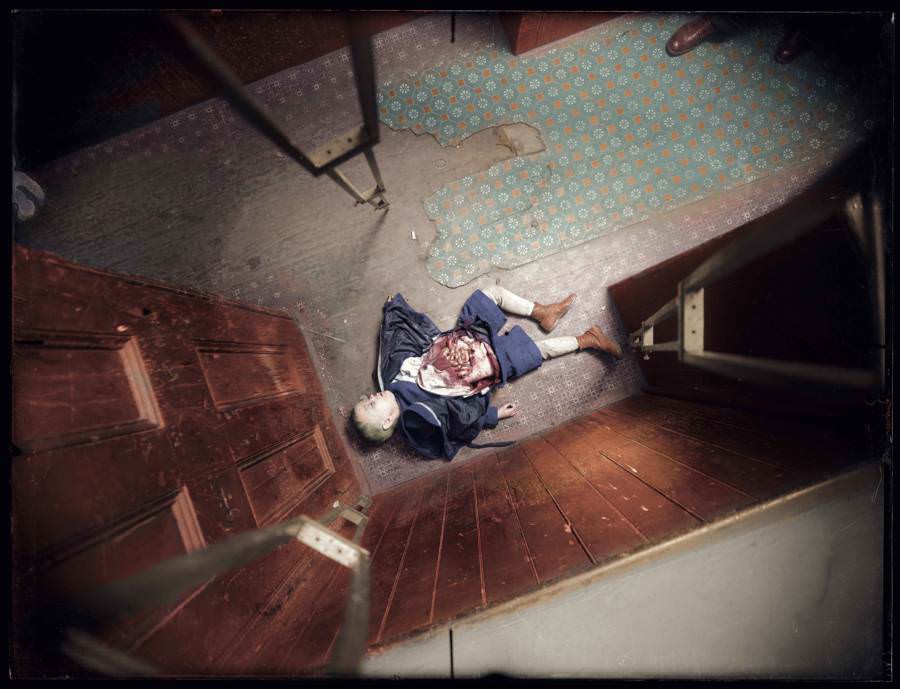
A dead boy with his intestines visible. Date unspecified.

Some images in historical crime archives have no attached names, dates, or case numbers. Among the most disturbing is the photograph of a dead child with visible internal injuries. It was standard practice for investigators to document everything at a scene, regardless of the victim’s age or the severity of the wounds.
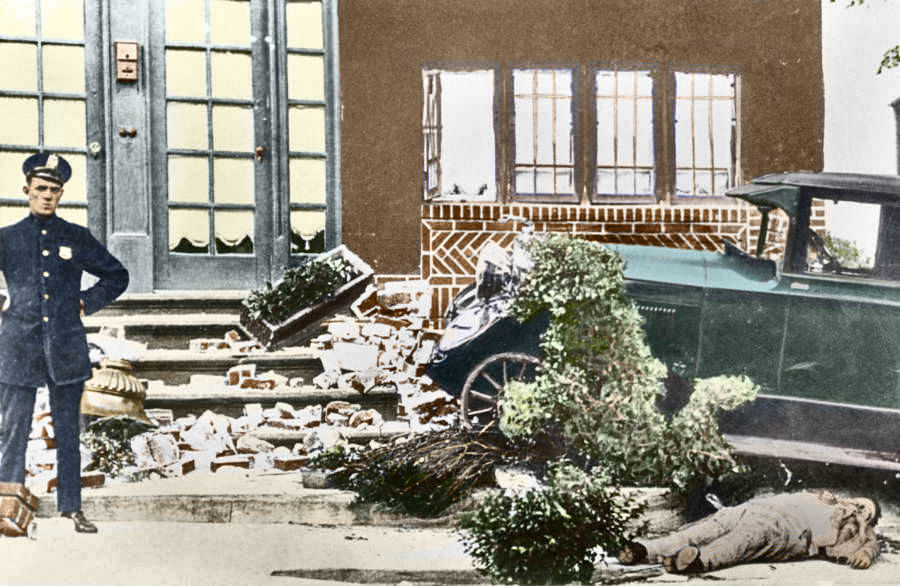
The body of Brooklyn mobster Frankie Yale. He was killed by unidentified rival gangsters following a car chase through the streets of New York, 1928.
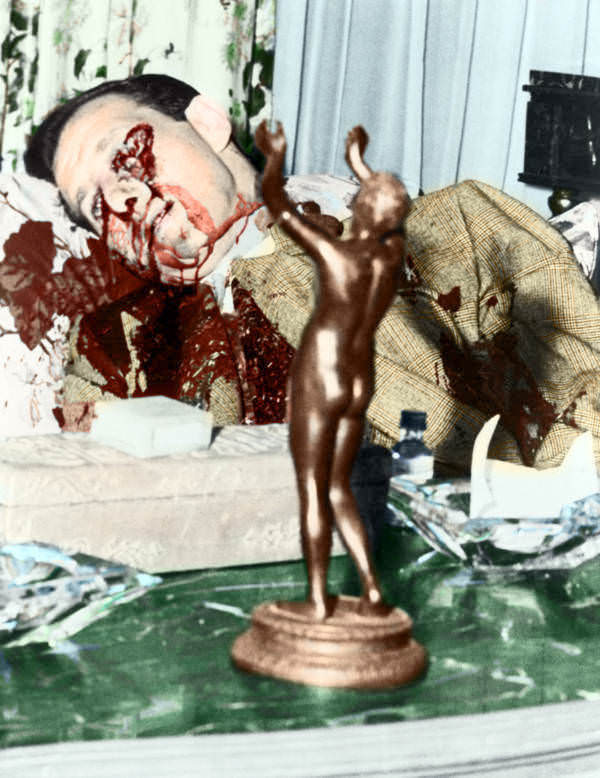
The body of mobster Benjamin "Bugsy" Siegel, who was killed by an unknown assailant who shot him through a window with an M1 Carbine while he was staying at an associate's house in Beverly Hills, 1947.
The body of mobster Benjamin “Bugsy” Siegel, who was killed by an unknown assailant who shot him through a window with an M1 Carbine while he was staying at an associate’s house in Beverly Hills, 1947.

Benjamin “Bugsy” Siegel was shot through a window with an M1 Carbine while sitting in a living room in Beverly Hills in 1947. The killer was never identified. Siegel, one of the most prominent mob figures in the country, had overseen construction of the Flamingo Hotel in Las Vegas. His murder was never officially solved, though suspicion fell on his own associates.
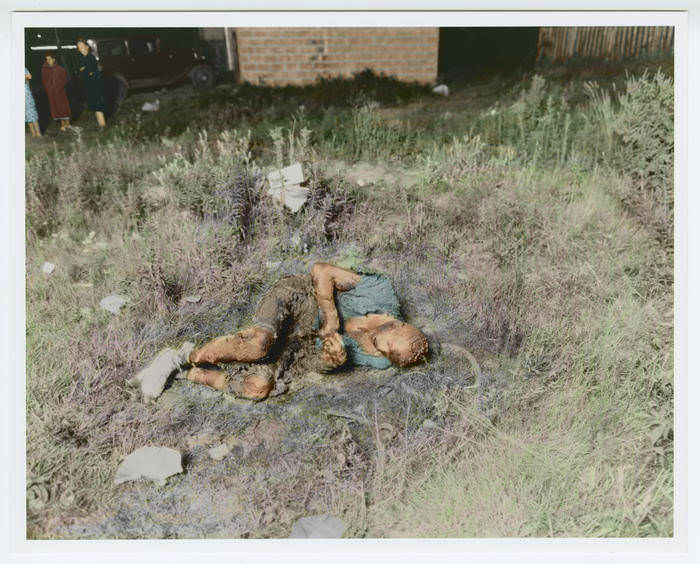
The burnt body of gangster Irving Feinstein, who was set on fire by Murder Inc. killers Harry Strauss and Martin Goldstein and left exposed in a lot in New York City, 1938.

Murder Inc. was a professional killing operation that carried out hundreds of murders for the American Mafia during the 1930s and ’40s. Irving Feinstein was set on fire by two of its killers, Harry Strauss and Martin Goldstein, and left in a vacant lot in New York in 1938. Joseph Rosen, a Brooklyn candy shop owner, was shot and killed in his own store two years earlier by Murder Inc. leader Louis “Lepke” Buchalter.
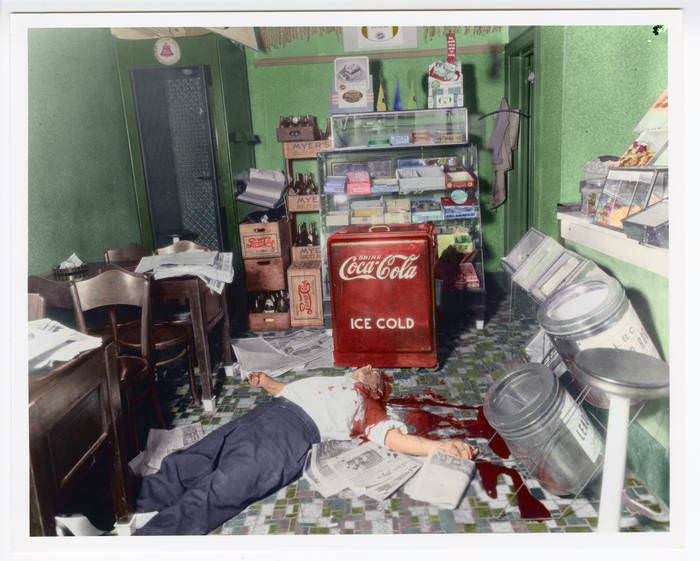
The dead body of Joseph Rosen, a candy shop owner who was killed by Murder Inc. leader Louis "Lepke" Buchalter in his own store in Brooklyn. 1936.
The dead body of Joseph Rosen, a candy shop owner who was killed by Murder Inc. leader Louis “Lepke” Buchalter in his own store in Brooklyn. 1936.
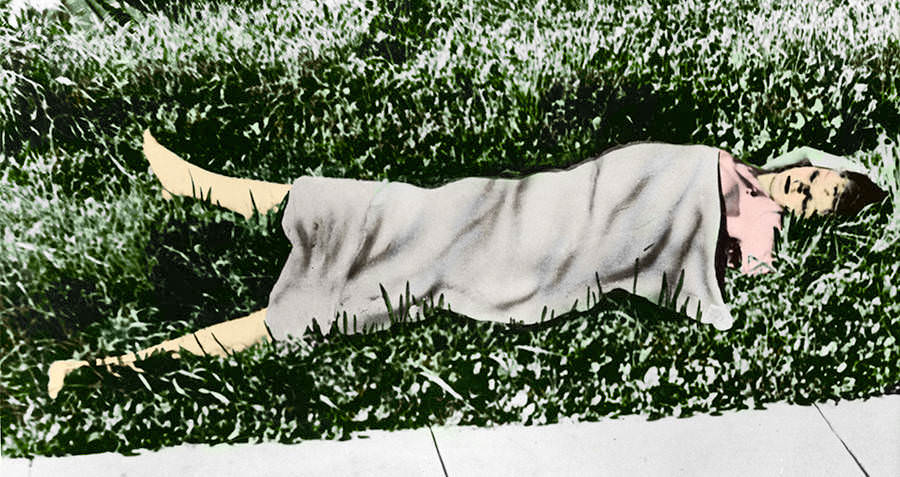
The naked corpse of American aspiring actress and murder victim Elizabeth Short, known as the "Black Dahlia," lying in a vacant lot in Los Angeles, 1947.
The naked corpse of American aspiring actress and murder victim Elizabeth Short, known as the “Black Dahlia,” lying in a vacant lot in Los Angeles, 1947.

The murder of Elizabeth Short in January 1947 remains one of the most infamous unsolved cases in American history. Short, an aspiring actress known as the “Black Dahlia,” was found in a Los Angeles vacant lot. Her body had been completely severed at the waist and drained of blood. The case generated enormous press coverage and has never been officially closed.
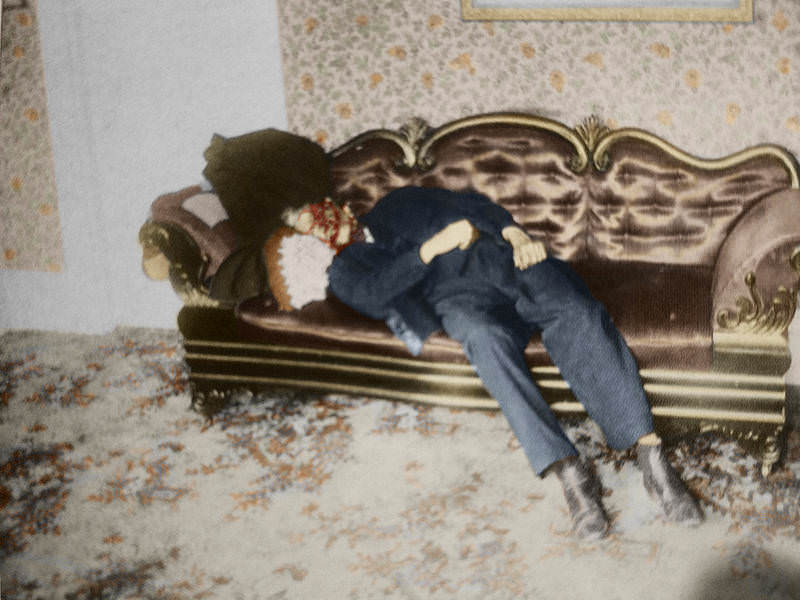
The dead body of Andrew Borden, father of Lizzie Borden, in his house in Fall River, Mass, 1892.

One of the oldest images in this collection dates to 1892. Andrew Borden, father of the infamous Lizzie Borden, was found hacked to death on a sofa in his Fall River, Massachusetts home. His wife, Abby, was killed in an upstairs room the same morning. Lizzie Borden was tried for both murders and acquitted, though the case has never been conclusively solved.
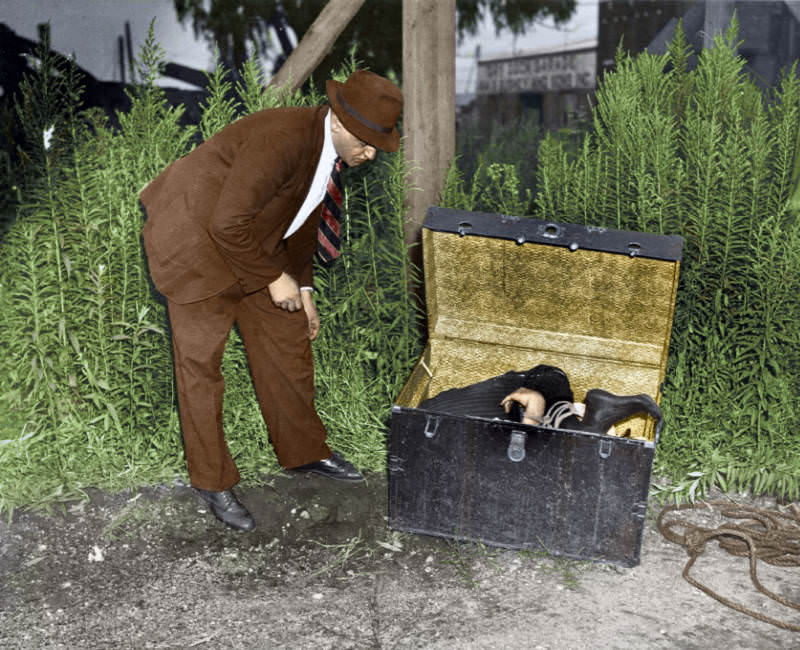
Newspaper photographer Arthur Fellig, better known as Weegee, examines a body stuffed into a trunk and deposited on a patch of waste ground in New York, 1945.

Arthur Fellig, known professionally as Weegee, was a newspaper photographer who became famous for arriving at New York crime scenes before the police. He had a police radio in his car and a darkroom in his trunk. In 1945, he was photographed examining a body that had been stuffed into a trunk and left on waste ground. He treated each scene as both a news event and a photographic opportunity.
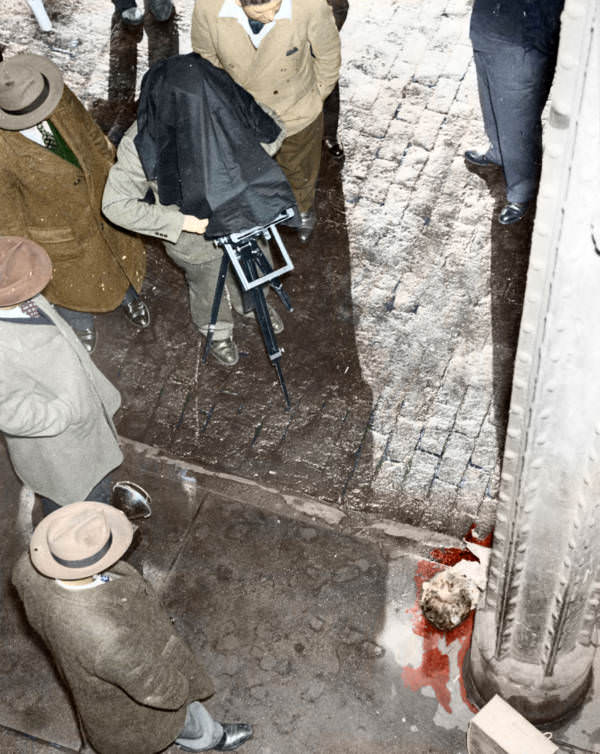
Weegee photographs a human head at the scene of a murder. Circa 1945.
A French crime scene, 1930.
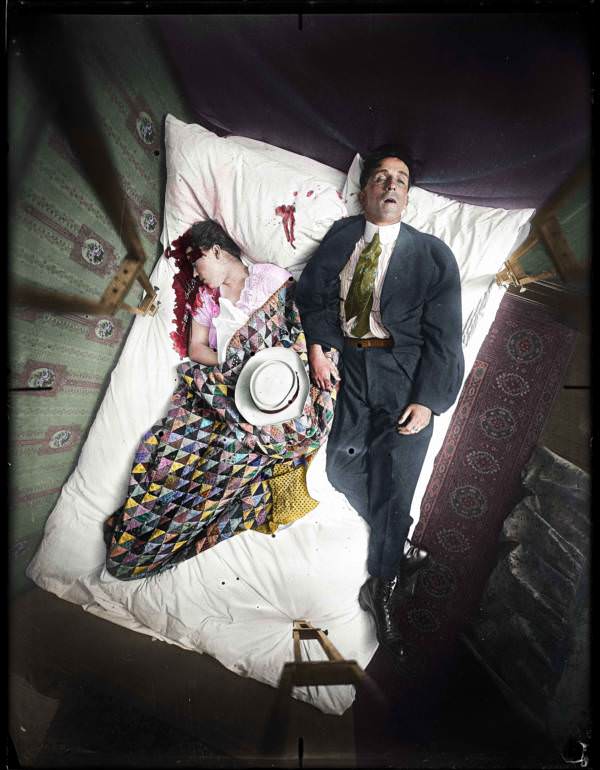
A photo of a bloodied couple lying dead in bed in New York, 1915.

A 1915 photograph from New York shows a couple found dead in bed, both bloodied. Domestic violence and murder-suicides were regularly documented in the same clinical manner as gangland killings. The camera made no distinctions — every scene received the same flat, direct documentation.
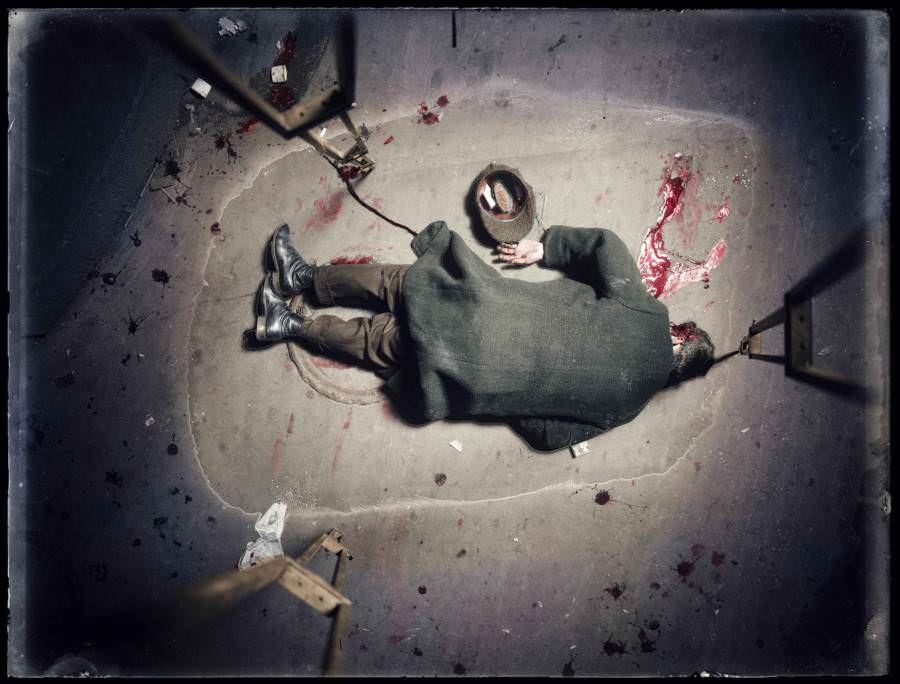
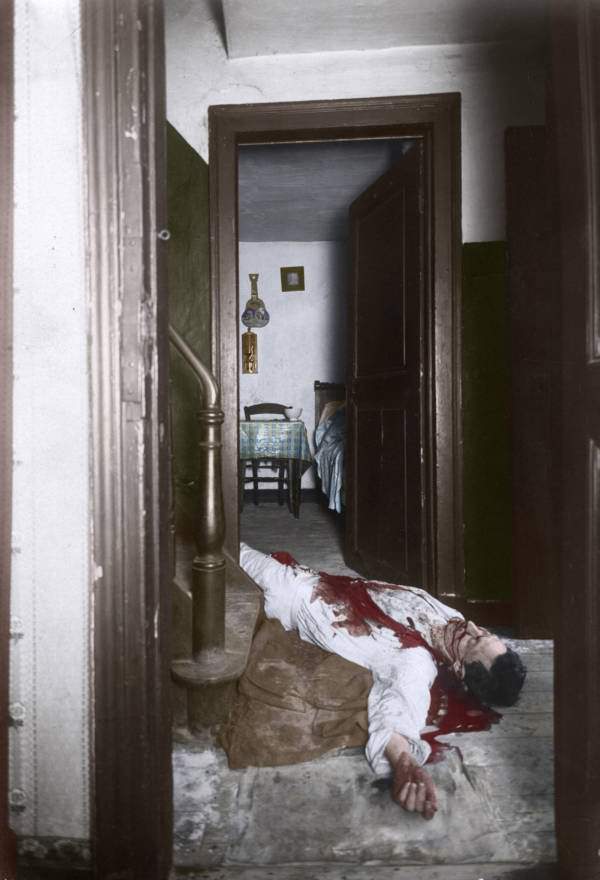
A dead man at the foot of a staircase in a French crime scene. 1912.
An unidentified murder victim, early 20th century.
An unidentified dead man in New York City. Circa early 20th century.

Many victims in these archives were never identified. Their photographs exist as the only record that they lived and died. Early 20th century forensic science was limited, and without witnesses or paperwork, a body could go unidentified indefinitely. These images, now colorized, strip away the distance that black-and-white photography once provided, making the human cost of each scene impossible to ignore.
Enjoyed this post? Get new ones in your inbox.

1 thought on “Horrible Vintage Crime Scenes Brought To Life In Stunningly Dreadful Color”

Leave a Comment

Your email address will not be published. Required fields are marked *

Share this Post 🥺

Please take a moment to share this content. Your support is greatly appreciated! 🙌🙏

Share this Post 🥺

Please take a moment to share this content. Your support is greatly appreciated! 🙌🙏
Scroll to Top
 
Hey Friend, Before You Go.. Please like & follow for more interesting content