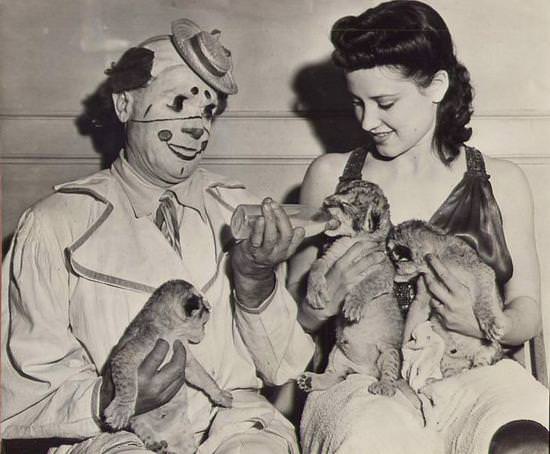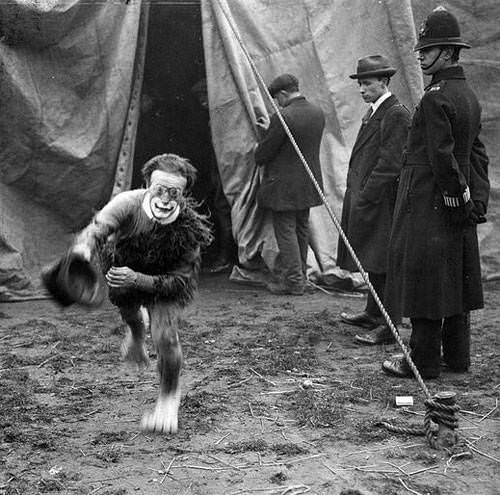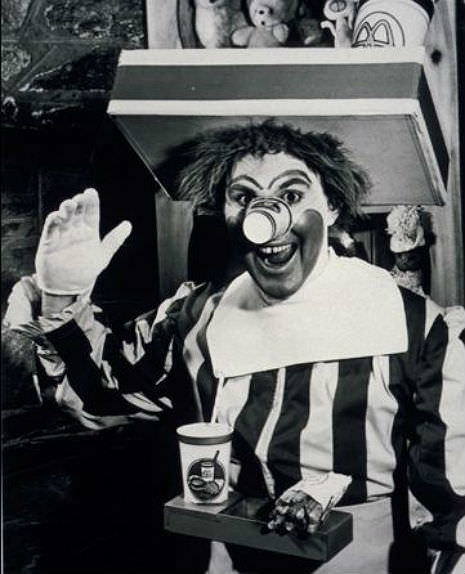

Something about old clown photos just feels wrong. Strip away the color, add heavy greasepaint, and a performer meant to make children laugh suddenly looks like a threat. These vintage images have that exact effect — and they’re hard to look away from.
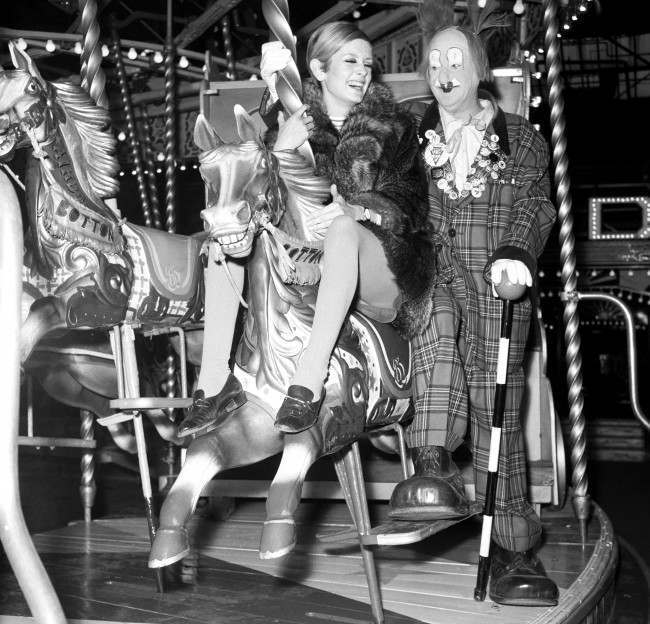
Clowns have existed for centuries, rooted in theatrical storytelling and court jesters. By the 20th century, they became fixtures of circuses and children’s parties. But the painted smile was always a mask, and black-and-white photography has a way of exposing that.
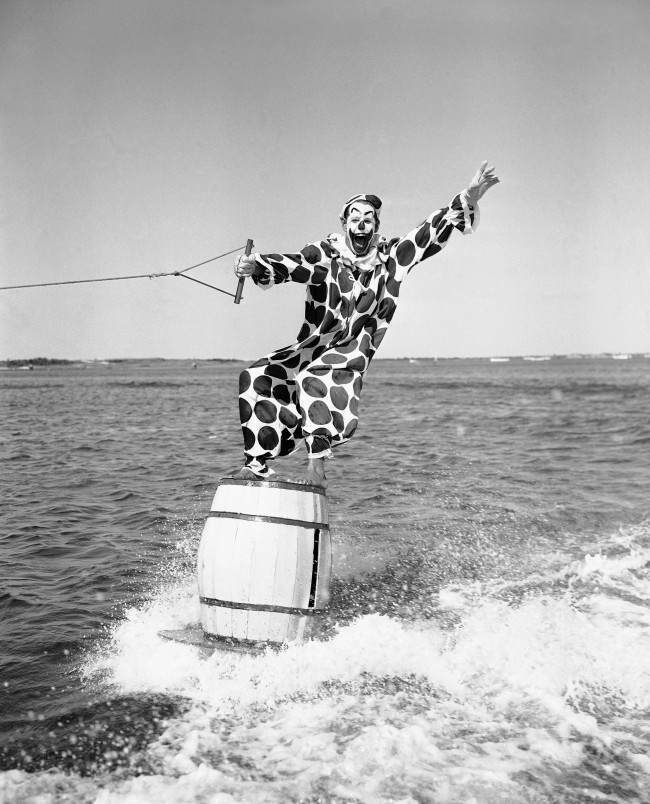
The heavy makeup — exaggerated grins, wide eyes, sharp brow lines — was designed to project emotion to the back of a big tent. Up close and in a still photo, that same makeup reads as deeply unsettling.
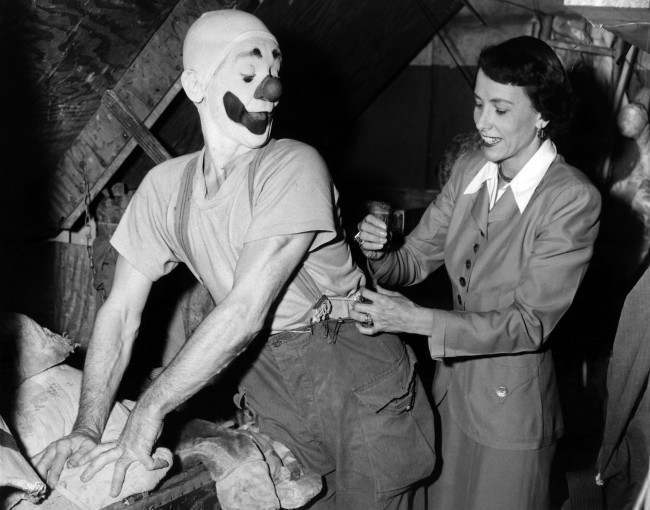
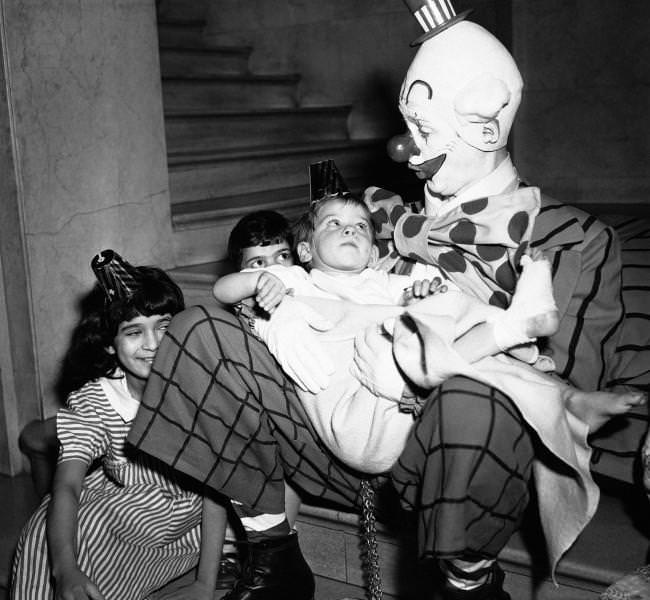
Psychologists call the fear of clowns coulrophobia. Part of what drives it is the unpredictability of the character — a clown can switch from gleeful to aggressive in a split second. These old photos seem to capture that tipping point perfectly.
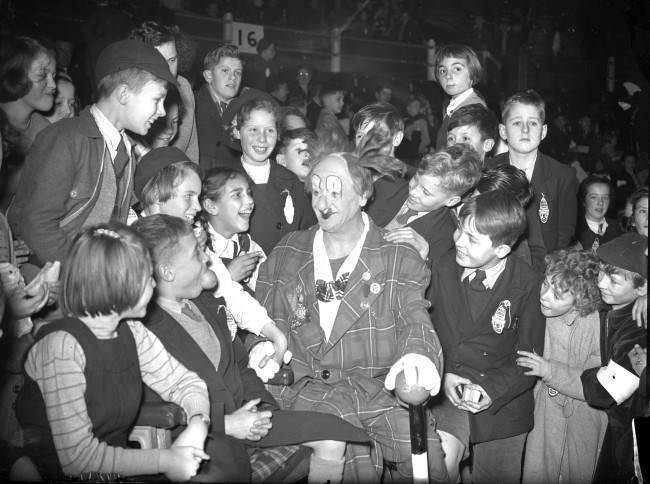
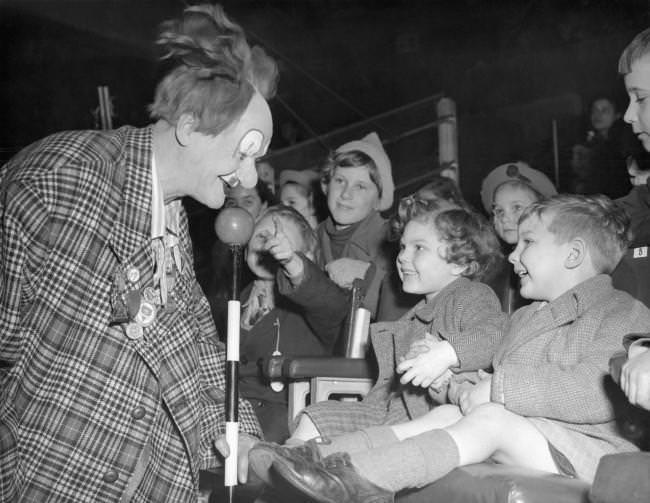
The costumes don’t help. Oversized clothes, strange props, and exaggerated shoes all signal something slightly off about a person. Paired with a frozen, painted expression in a faded photograph, the result feels less like entertainment and more like a warning.
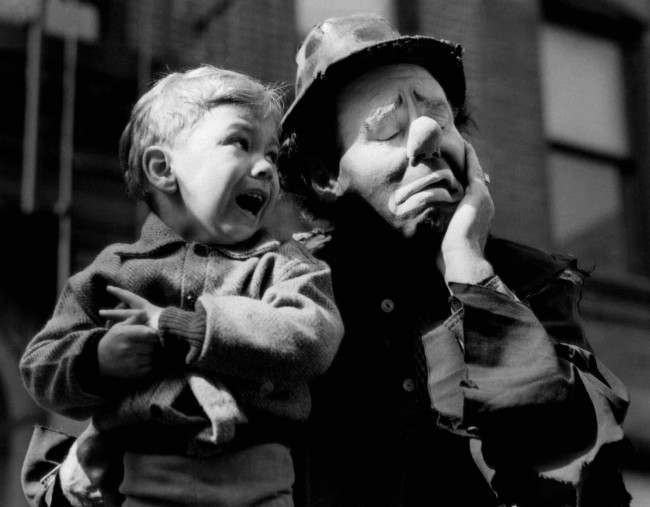
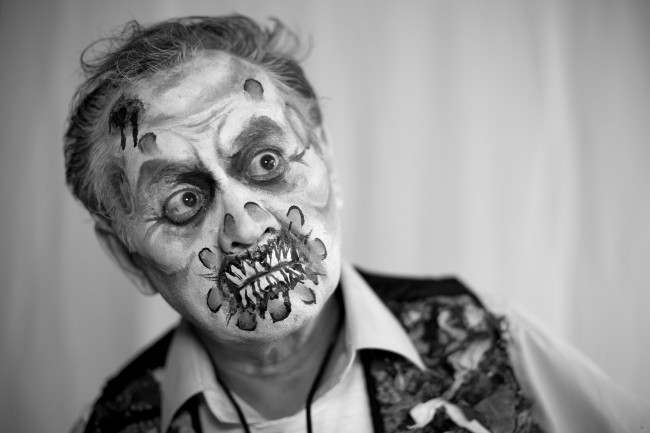
Pop culture has only deepened the dread. Stephen King’s Pennywise tapped into something already lurking in the public consciousness — the idea that a clown’s friendliness is performance, and what’s underneath is far darker.
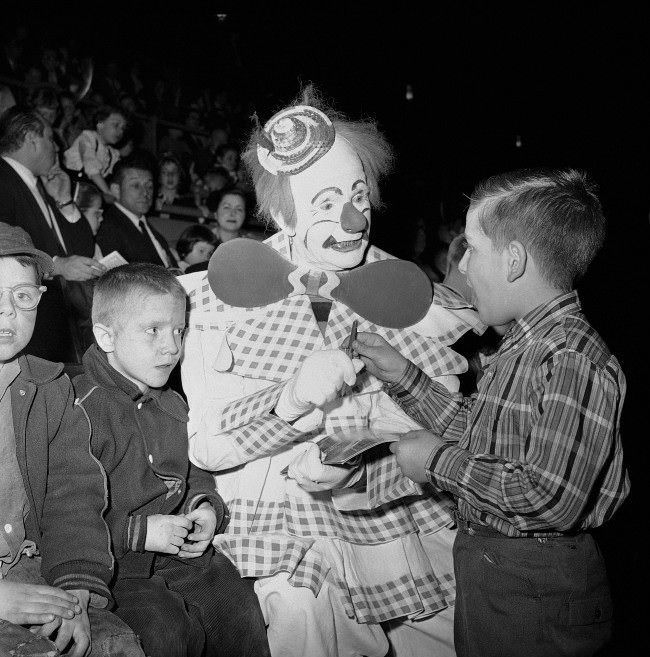
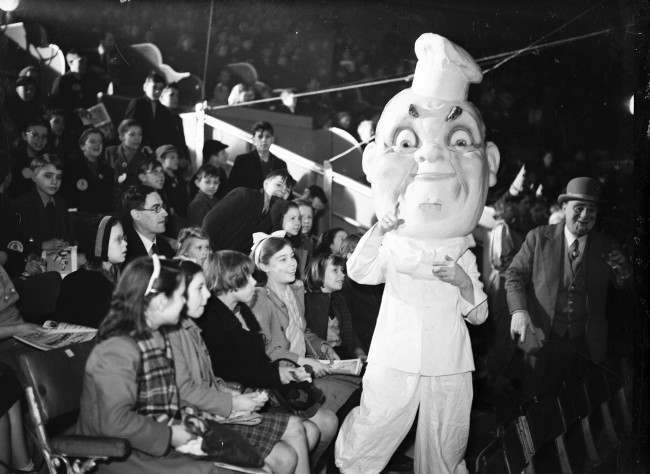
These photos predate Pennywise by decades. Some of these performers were likely beloved in their time. But through a modern lens, their poses, stares, and painted faces tell a very different story.
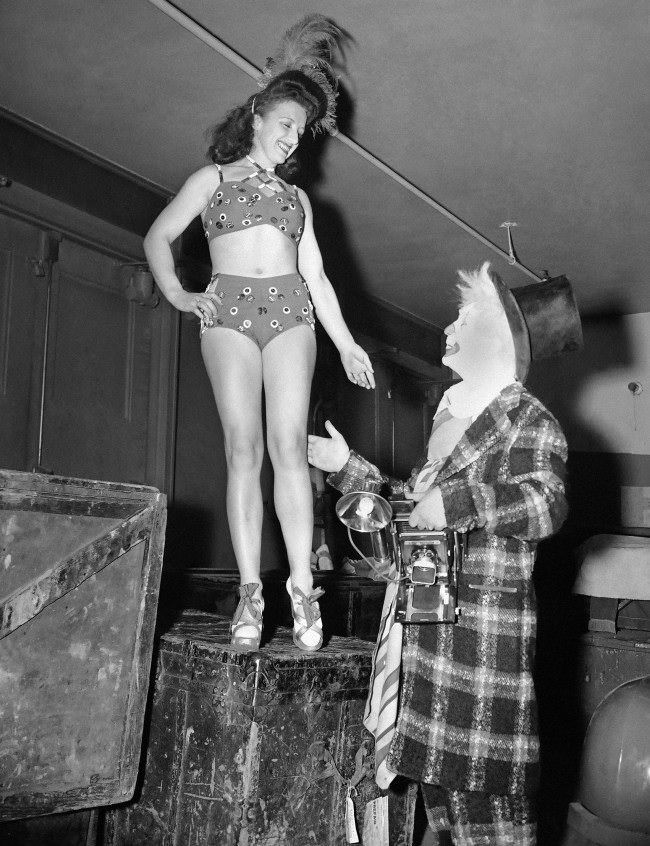
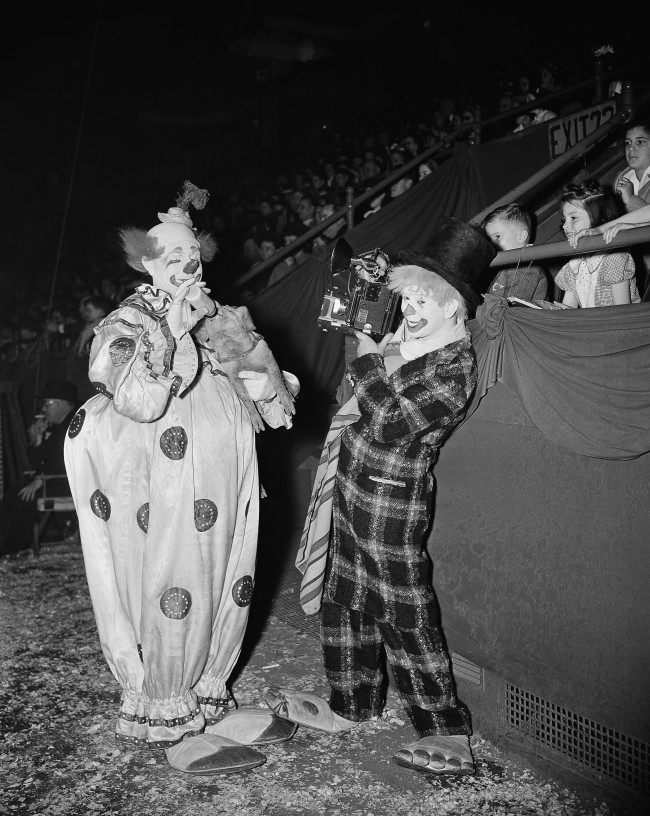
Collectors now actively seek out vintage clown photography for exactly this reason — the strange tension between nostalgia and horror that lives in every frame.