
Before streaming playlists and wireless earbuds, there was the boombox. It was a portable music player built around one or two cassette tape decks and a built-in radio, and it did something no home stereo system could — it moved with you. Developed in the early 1970s, the boombox hit its peak in the 1980s, becoming one of the most recognized objects of the decade. In 1985 alone, over 30 million boomboxes were sold in the United States.
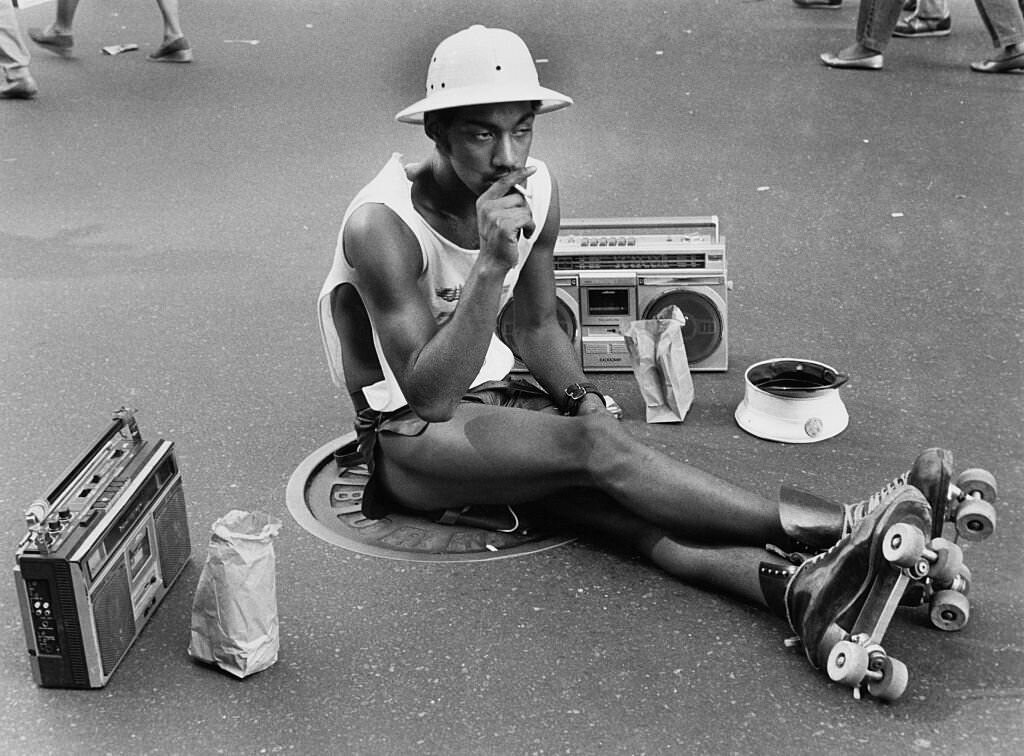
People carried boomboxes to parks, street corners, beaches, and cafes. The whole point was to listen to music publicly — not through headphones, but out loud, with everyone around you sharing the sound. That was the appeal. It wasn’t a private experience; it was a social one. New York City was ground zero for boombox culture, and its streets reflected that energy constantly.
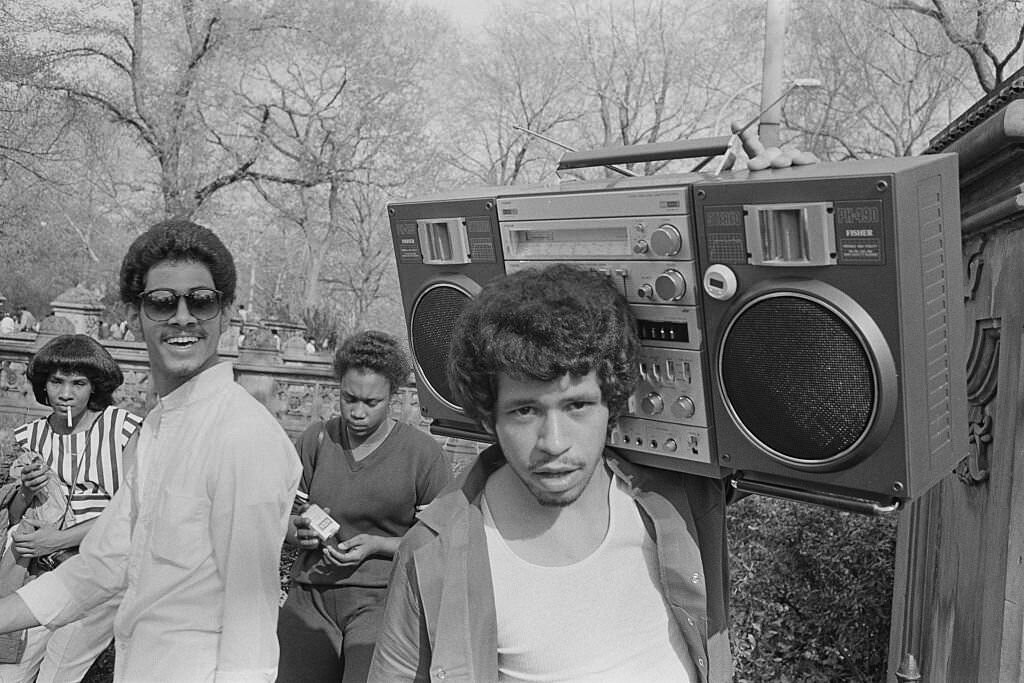
The boombox crossed every boundary — age, nationality, and music genre. Rock musicians embraced it just as readily as hip-hop artists. Phil Lynott of Thin Lizzy was photographed with a giant boombox in Tokyo’s Akihabara electronics district in 1980, grinning in front of a wall of gear.
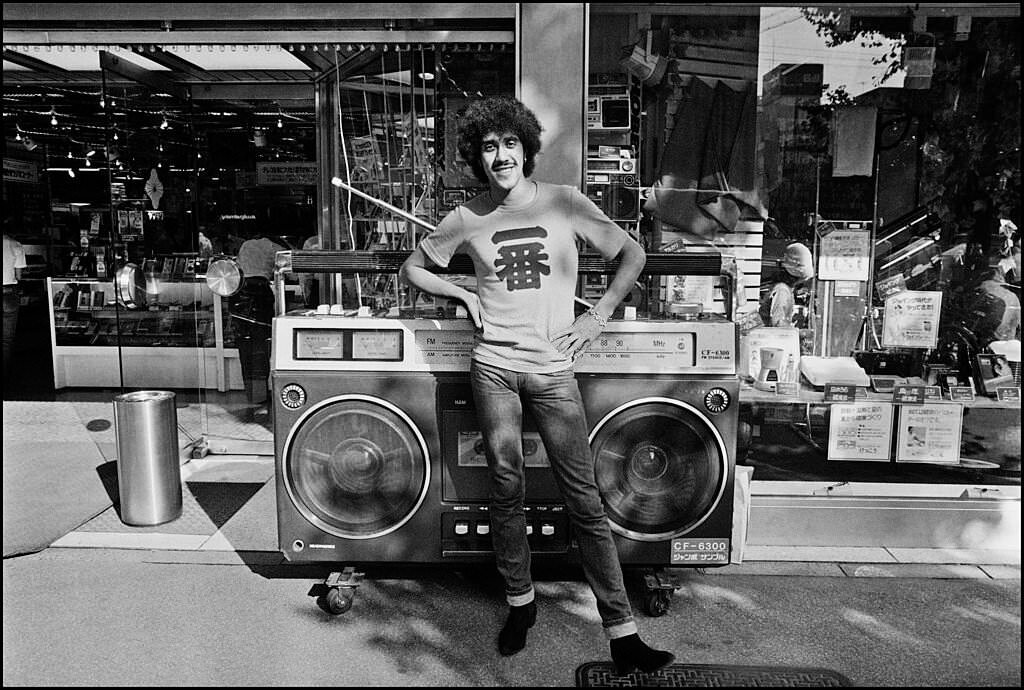
That same year, The Clash’s Mick Jones and Joe Strummer had one on their tour bus before taking the stage at De Montfort Hall. For touring musicians, a boombox was the backstage soundtrack.
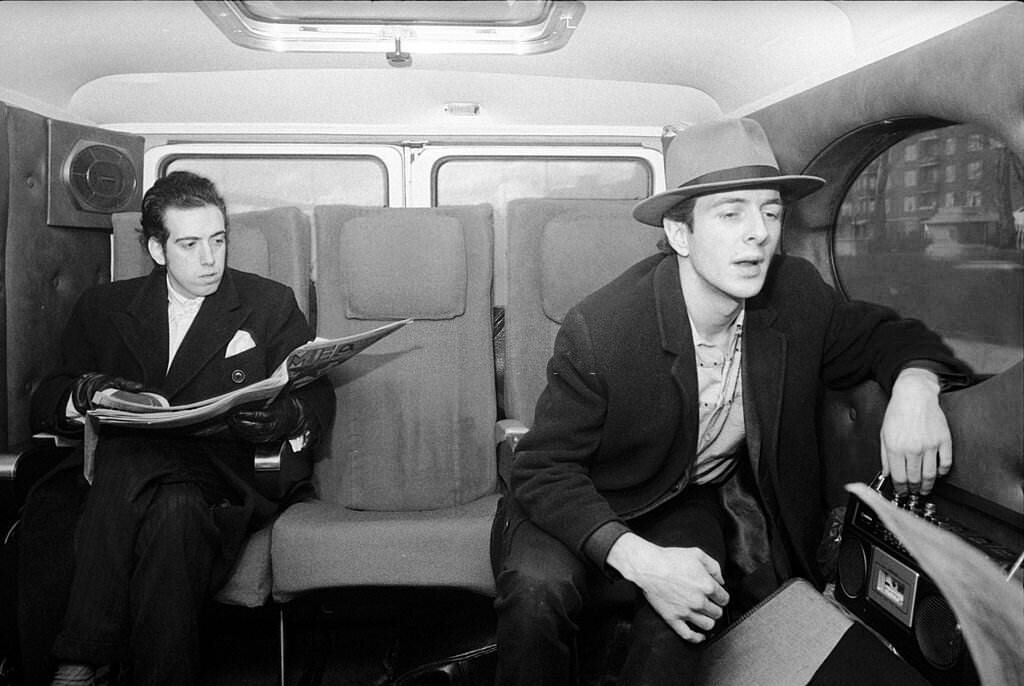
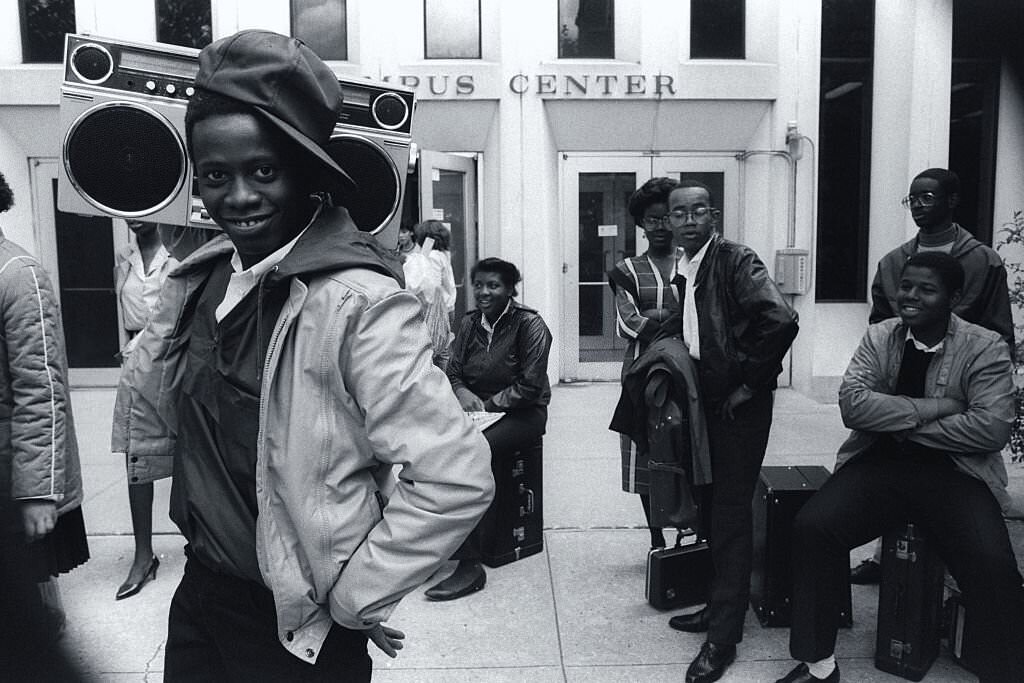
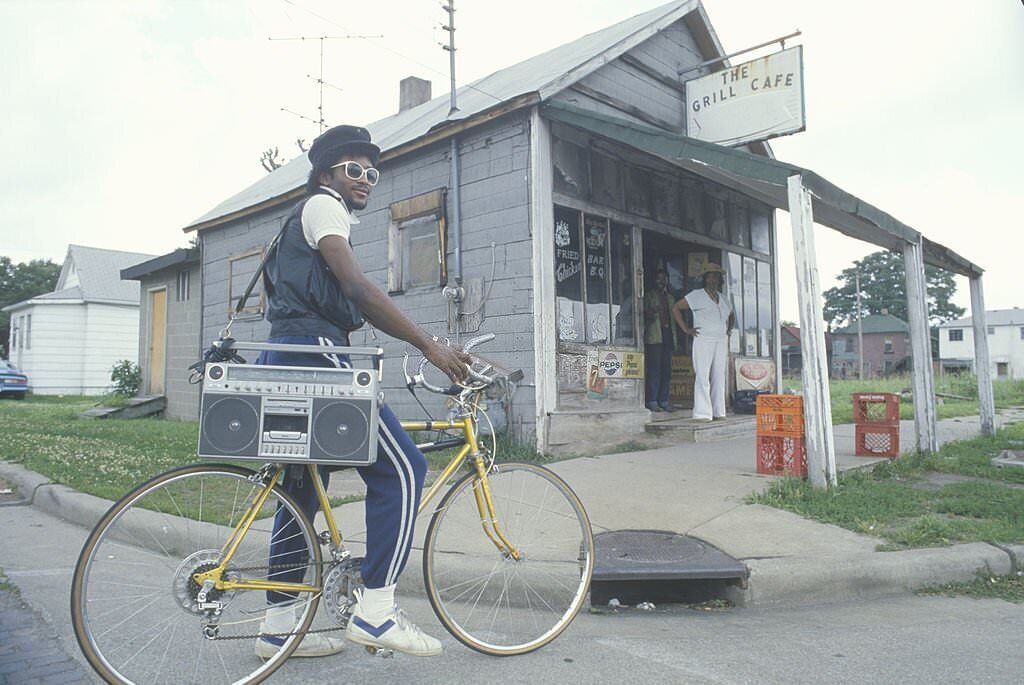
On ordinary city streets, the boombox became a statement. Carrying one on your shoulder through a busy neighborhood was a way of claiming your space. The heavy bass and the sheer size of some models made people take notice. The bigger the box, the louder the message.
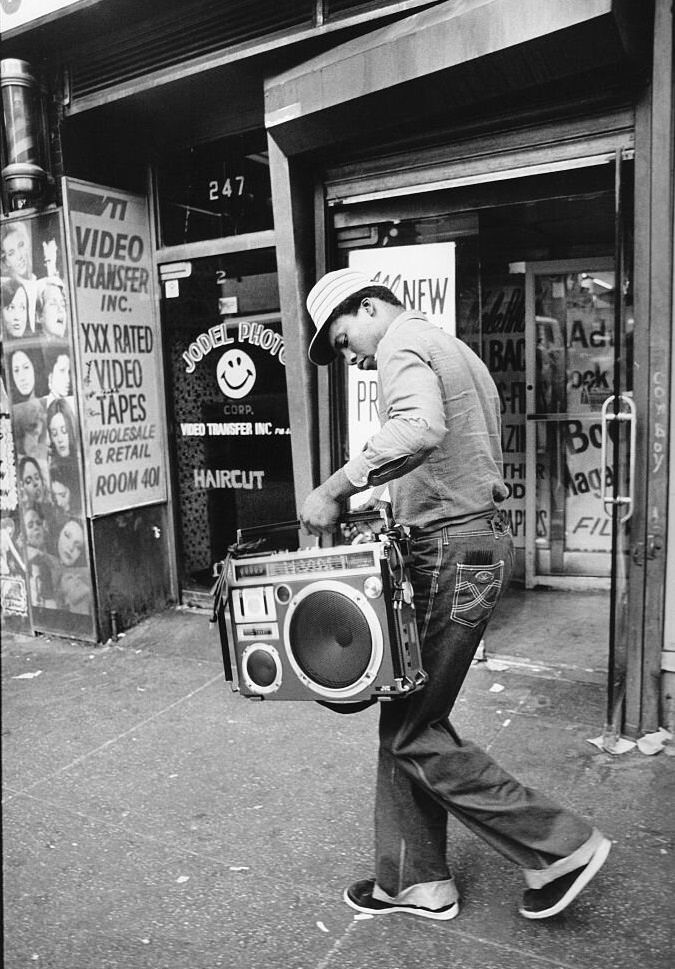
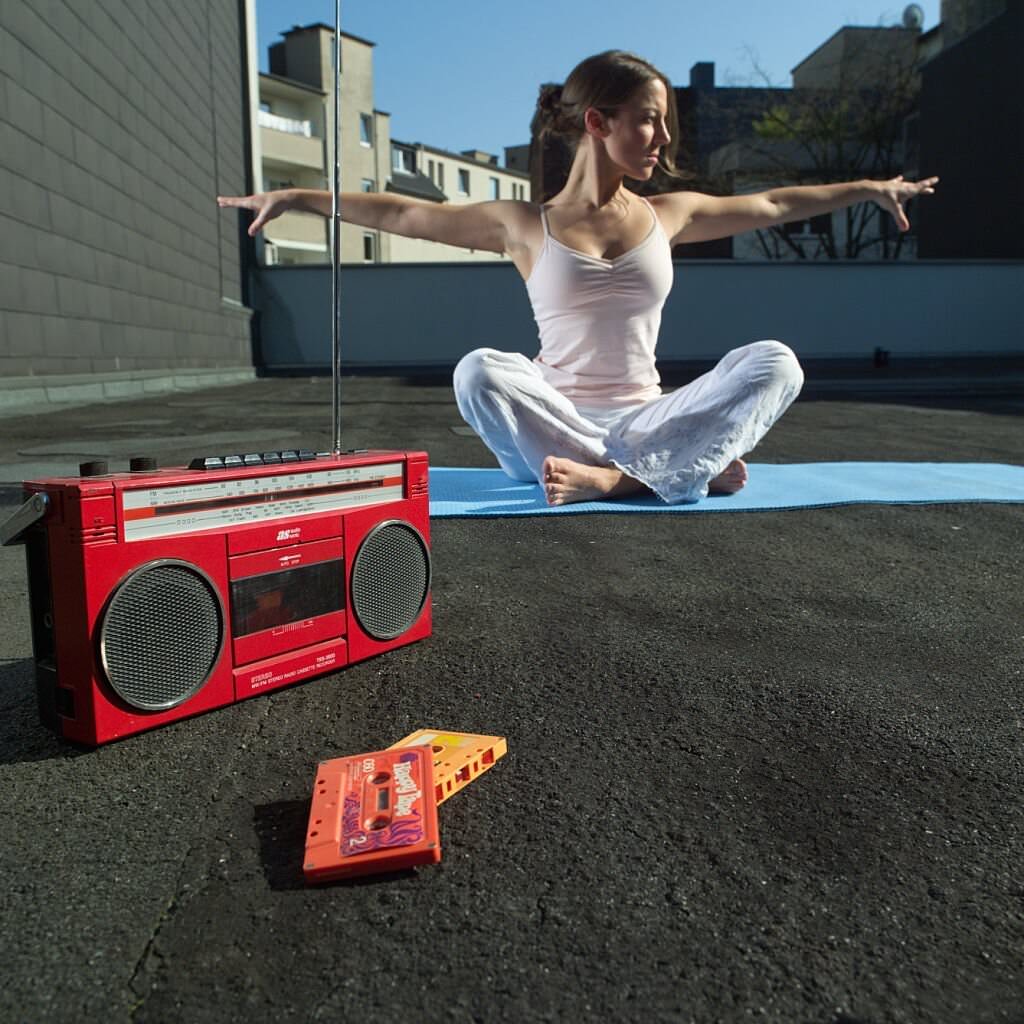
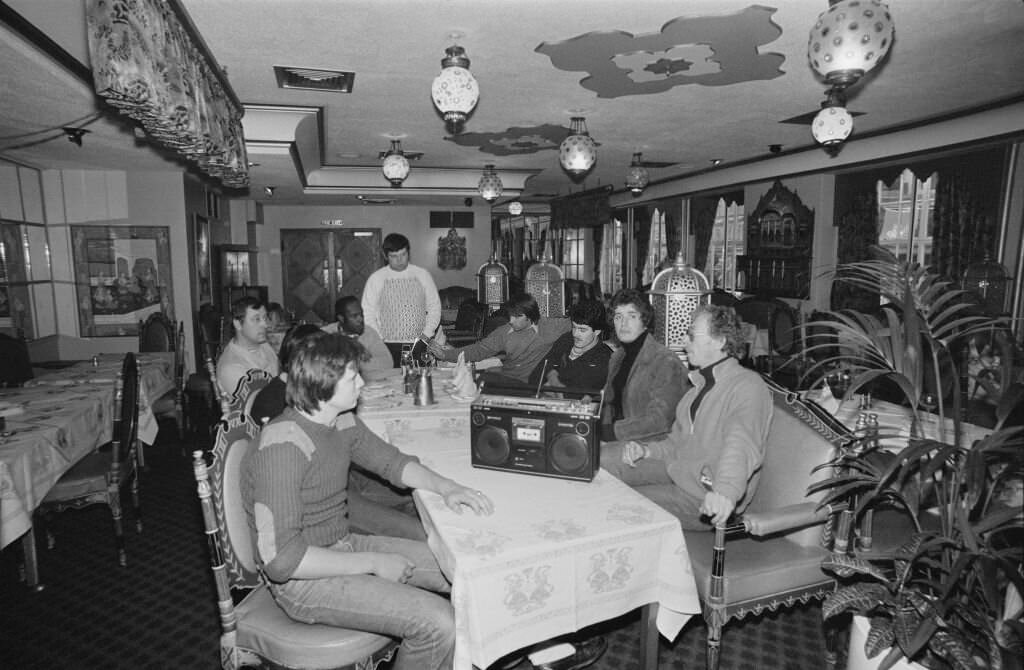
Boomboxes turned up in unexpected places too. Rooftops, restaurant tables, yoga sessions — the device fit wherever people wanted music.
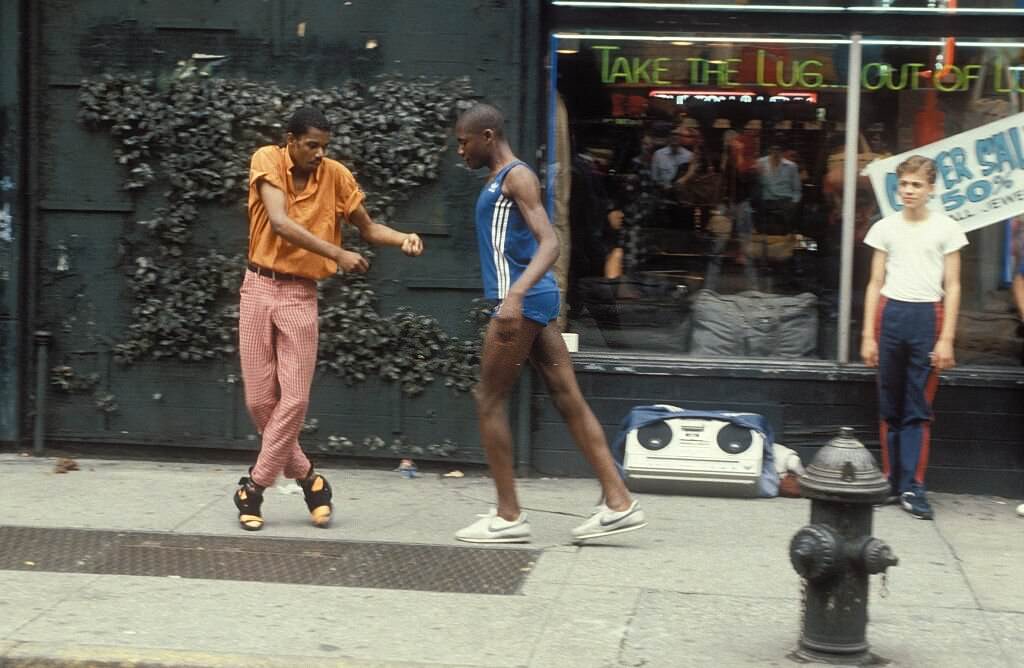
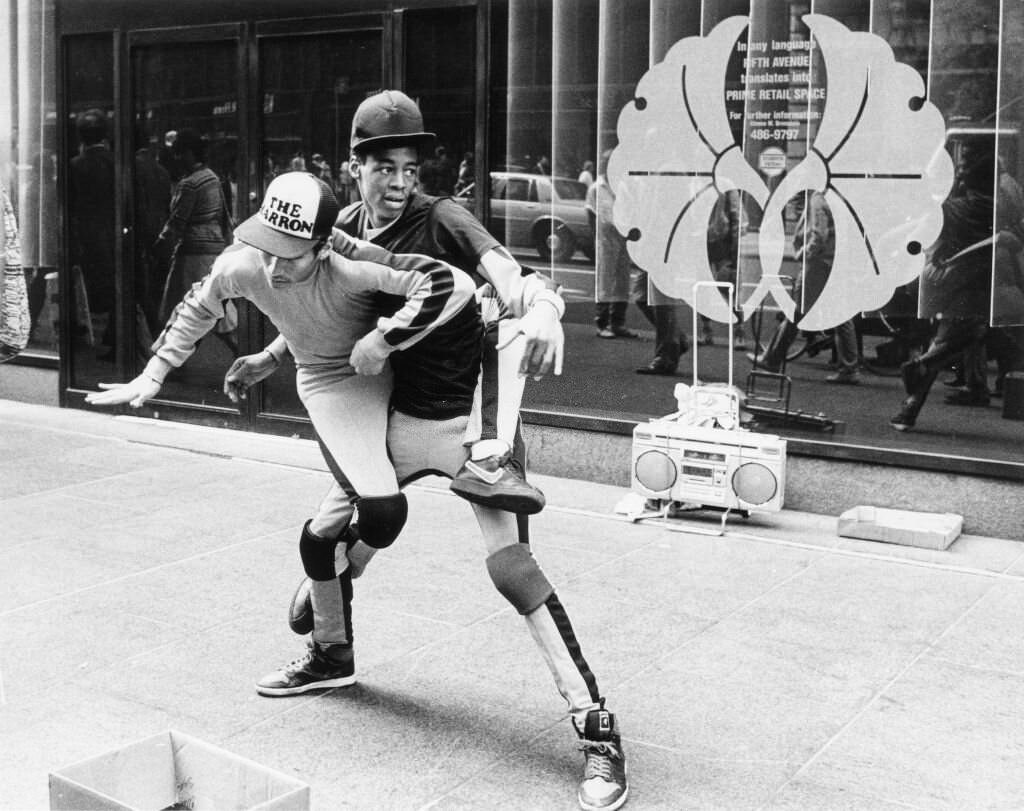
Hip-hop and breakdancing were inseparable from the boombox. B-boys needed music to dance to, and a boombox provided it anywhere — no venue, no stage, no power outlet required. Fifth Avenue in New York became an outdoor stage for crews who set up on the sidewalk and let the music run.
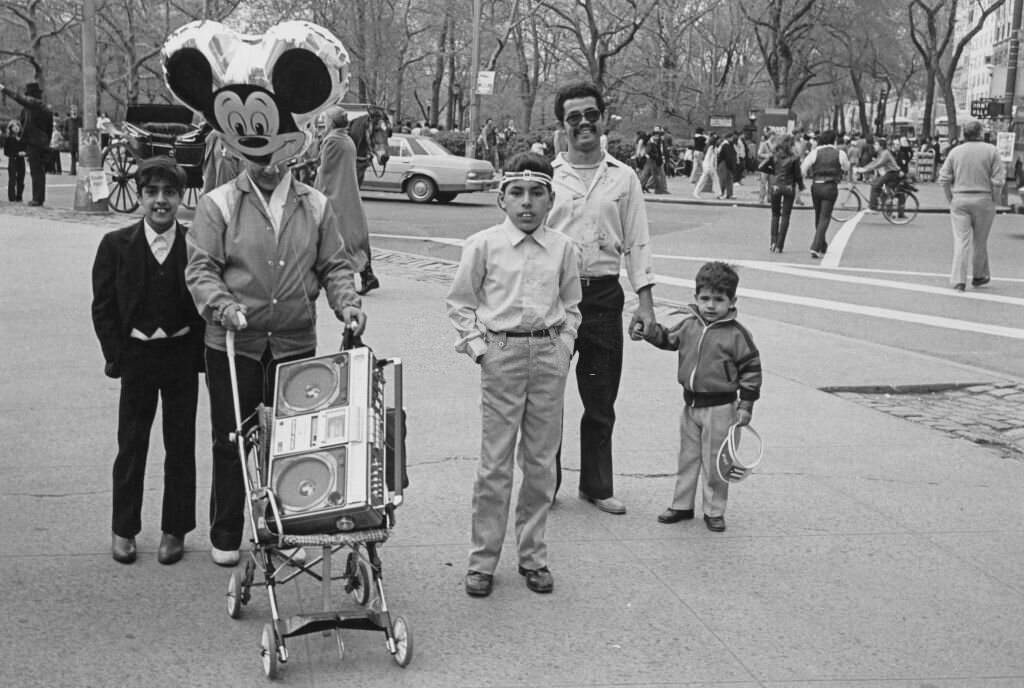
Families brought boomboxes into everyday life. Midtown Manhattan, with its mix of tourists, workers, and locals, was as common a spot as any for someone to walk past with a boombox balanced on their shoulder or tucked under an arm.
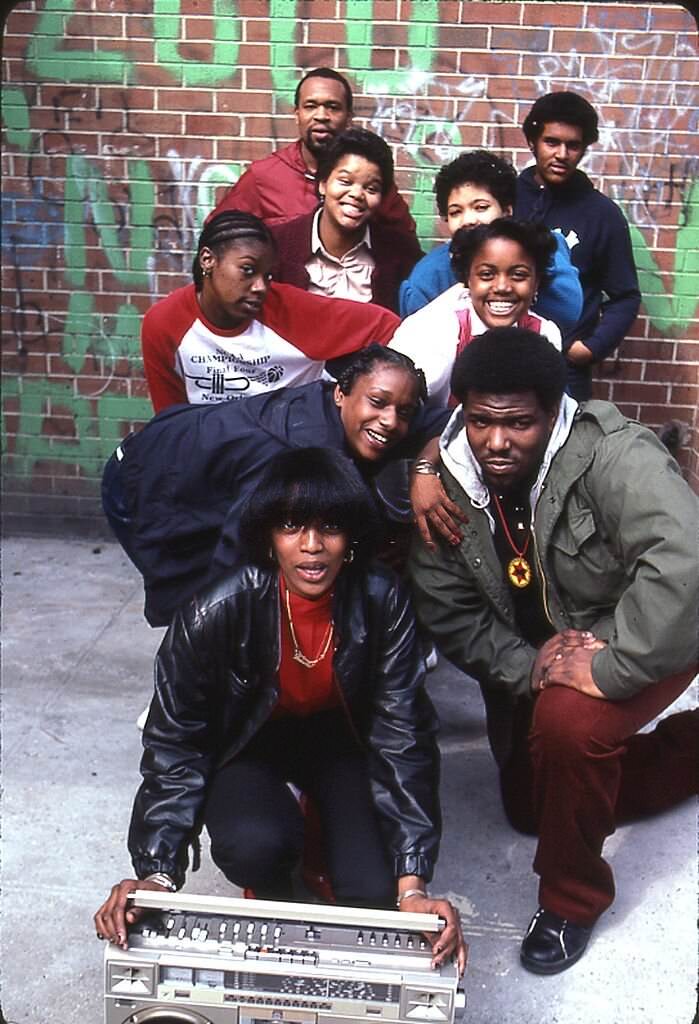
Afrika Bambaataa, widely credited as a founding figure of hip-hop, was photographed with a boombox in 1983. His connection to the culture ran deep — the boombox was as central to early hip-hop as the turntable.
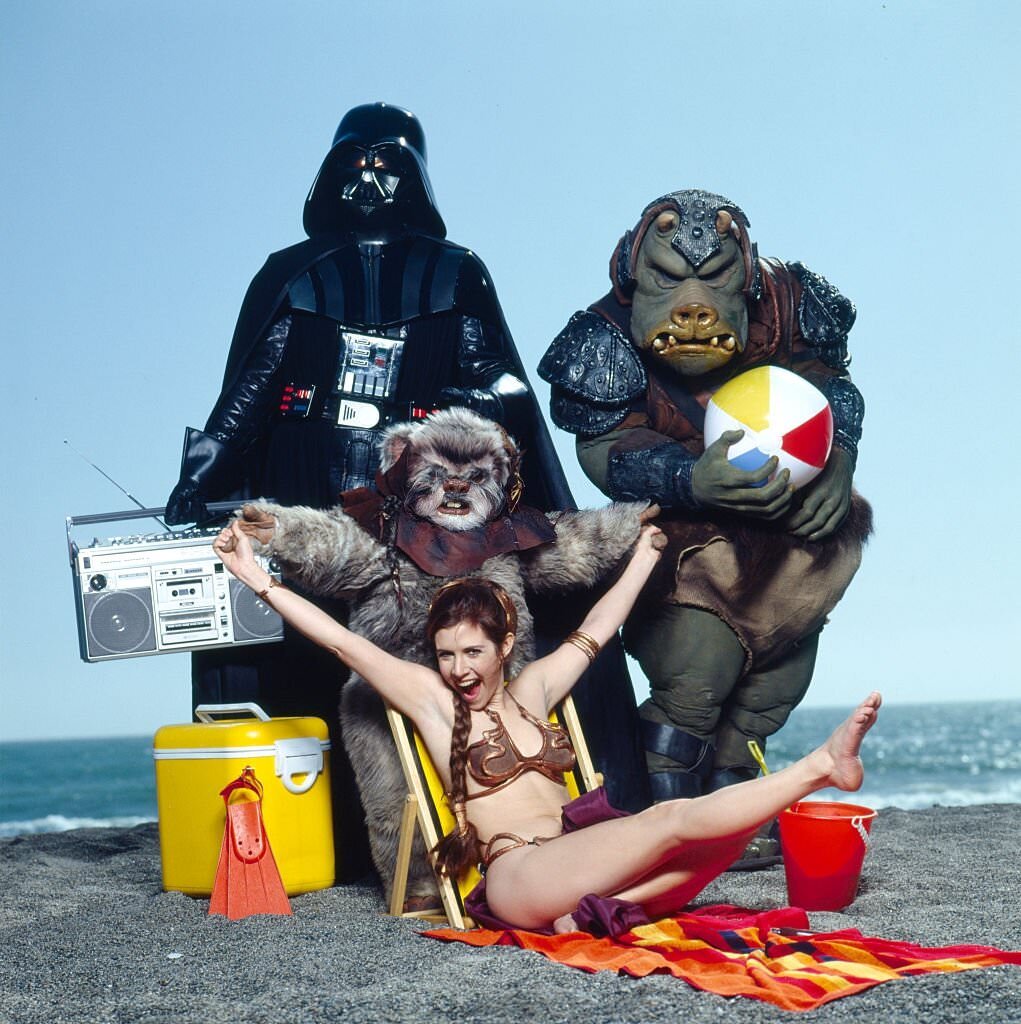
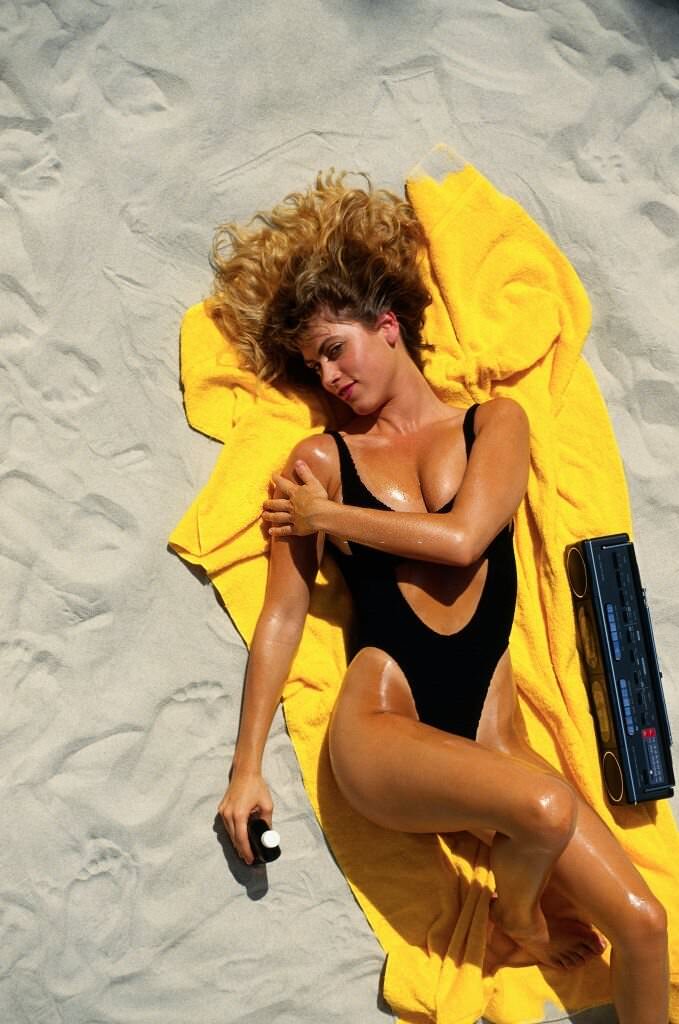
Celebrity sightings with boomboxes became commonplace throughout the decade. In 1983, Carrie Fisher was photographed on Stinson Beach in Northern California with cast members from Star Wars, a boombox nearby. Even a beach trip called for one.
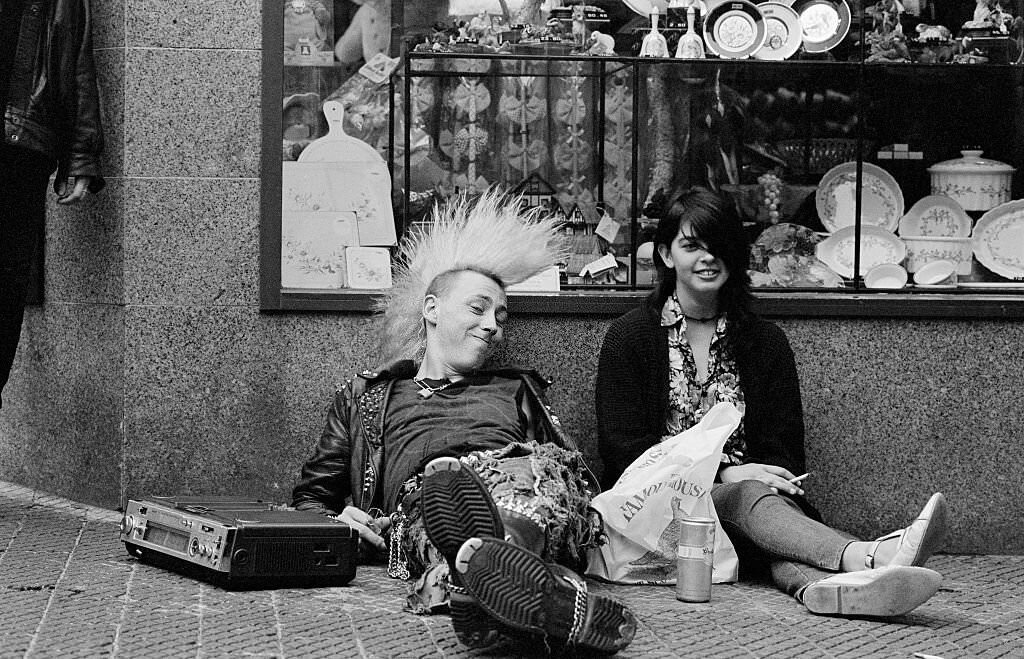
The boombox wasn’t just an American phenomenon. In Frankfurt, Germany, in June 1984, a group of teenagers sat along a shopping street listening to music blasting from a ghetto blaster — the nickname that had taken hold across the Atlantic as well.
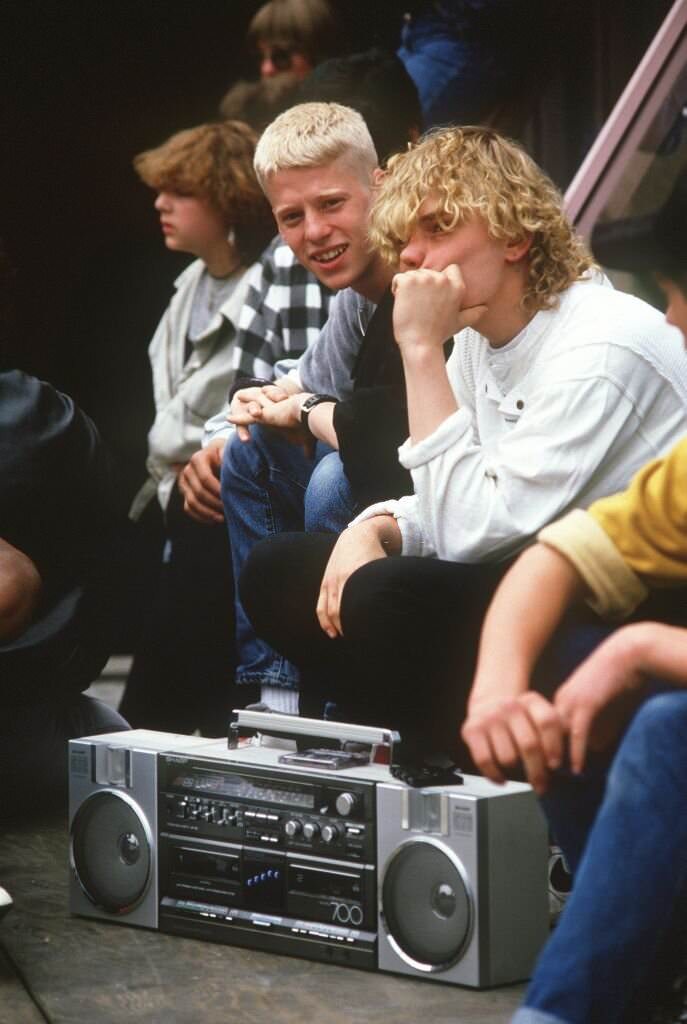
The term “ghetto blaster” stuck because of how heavily the boombox featured in urban communities. Its use was so widespread in certain neighborhoods that the name reflected both its volume and its place in street life. Some cities and towns actually pushed for bans on boomboxes in public spaces because the noise had become a point of conflict.
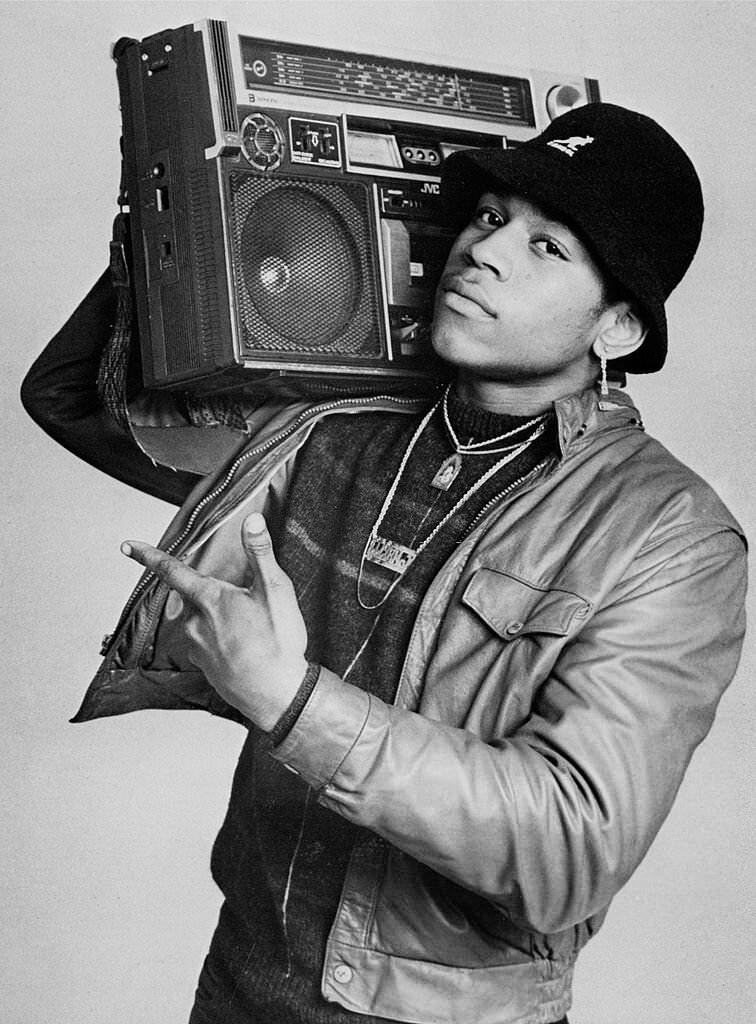
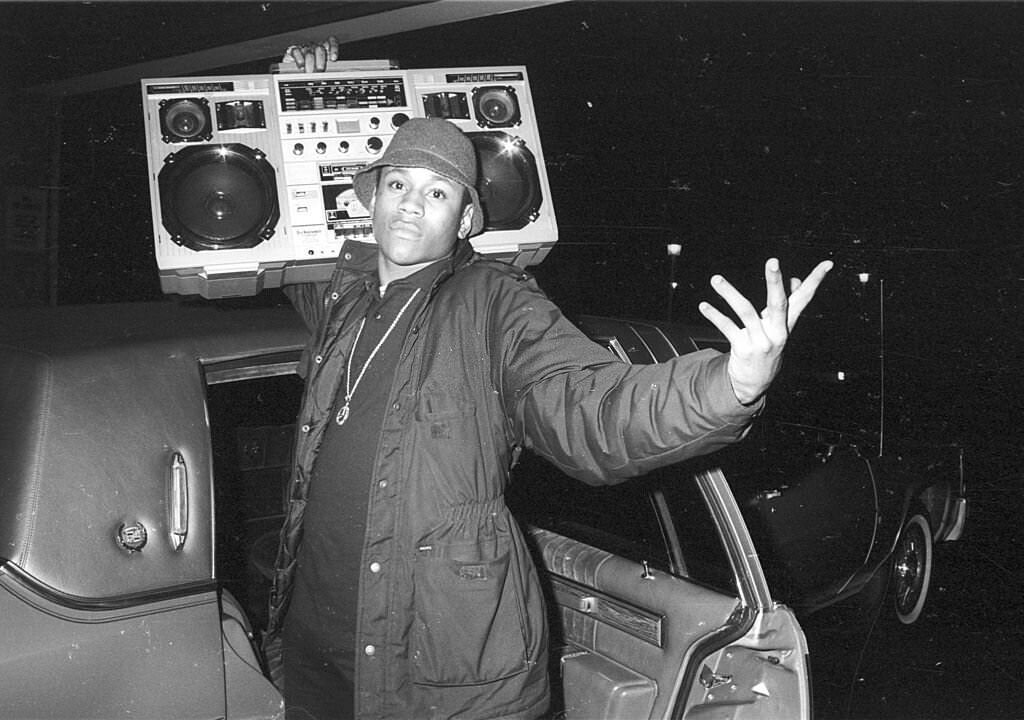
LL Cool J made the boombox part of his identity. His 1985 studio portrait — boombox propped on his right shoulder — is one of the defining images of rap’s early era. No other prop said “hip-hop” quite the same way.
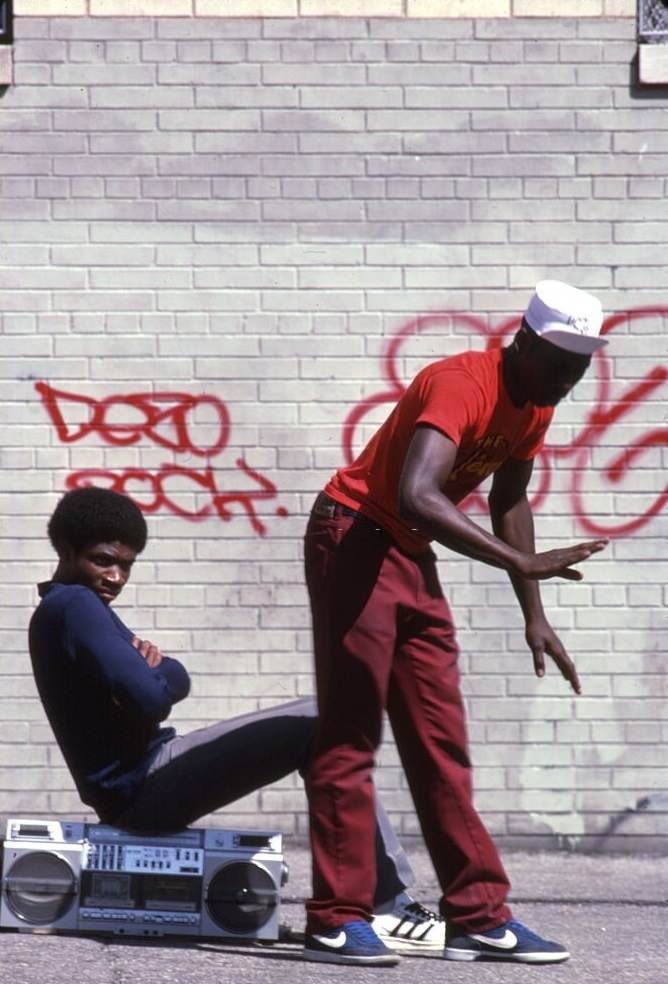
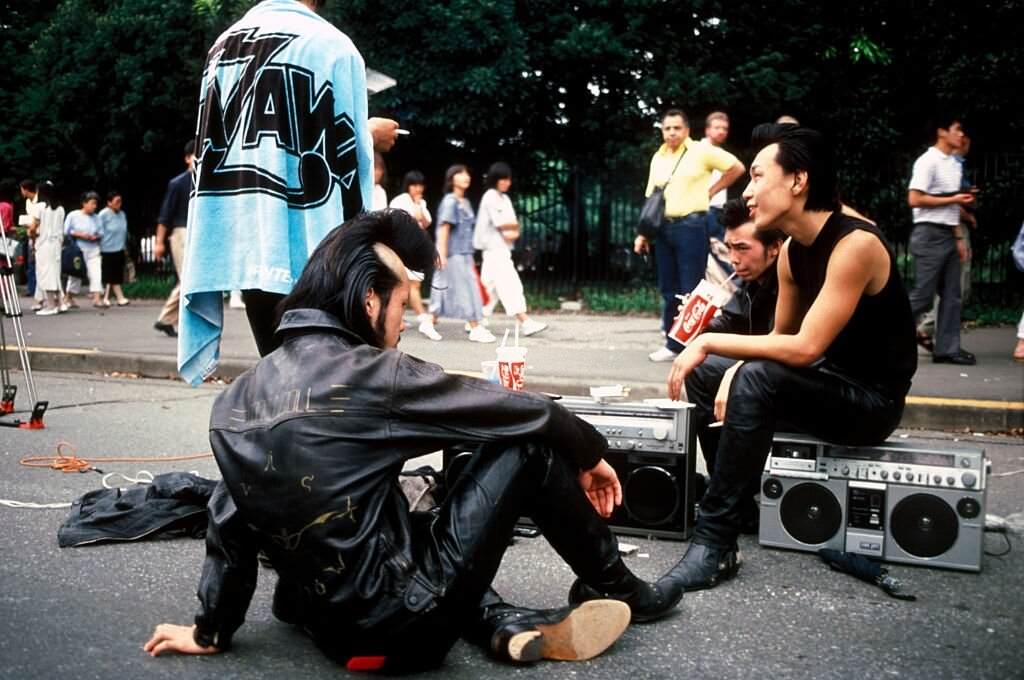
On city streets, a boombox often doubled as furniture. It wasn’t unusual to see someone sitting on one while a friend danced in front of it.
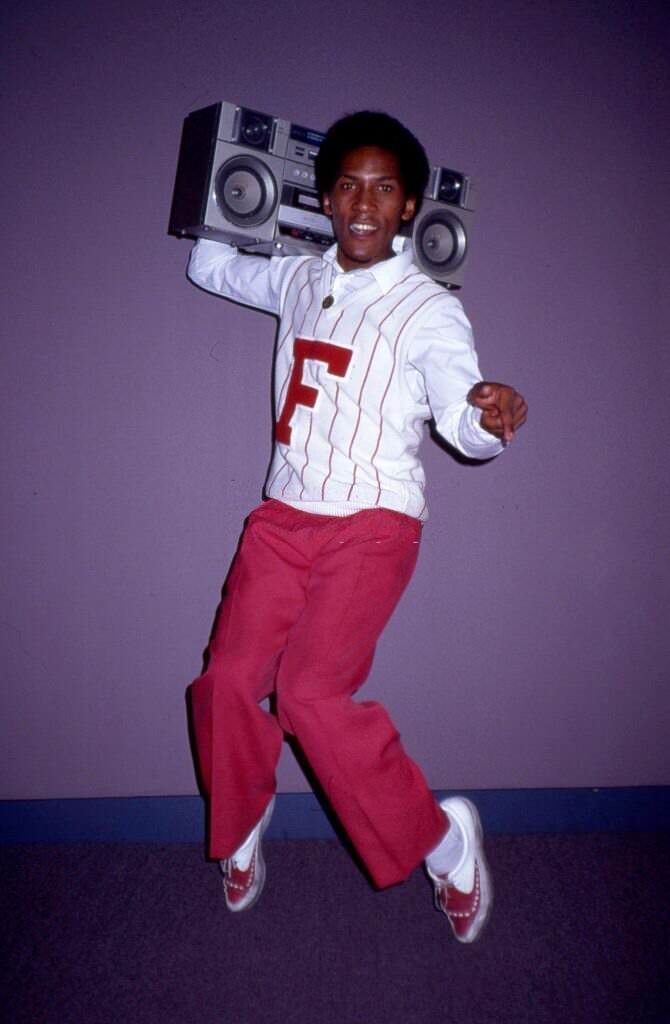
Musicians across every genre used the boombox in their performances and daily routines. R&B artists, jazz legends, and rock acts all appeared with one at some point during the decade.
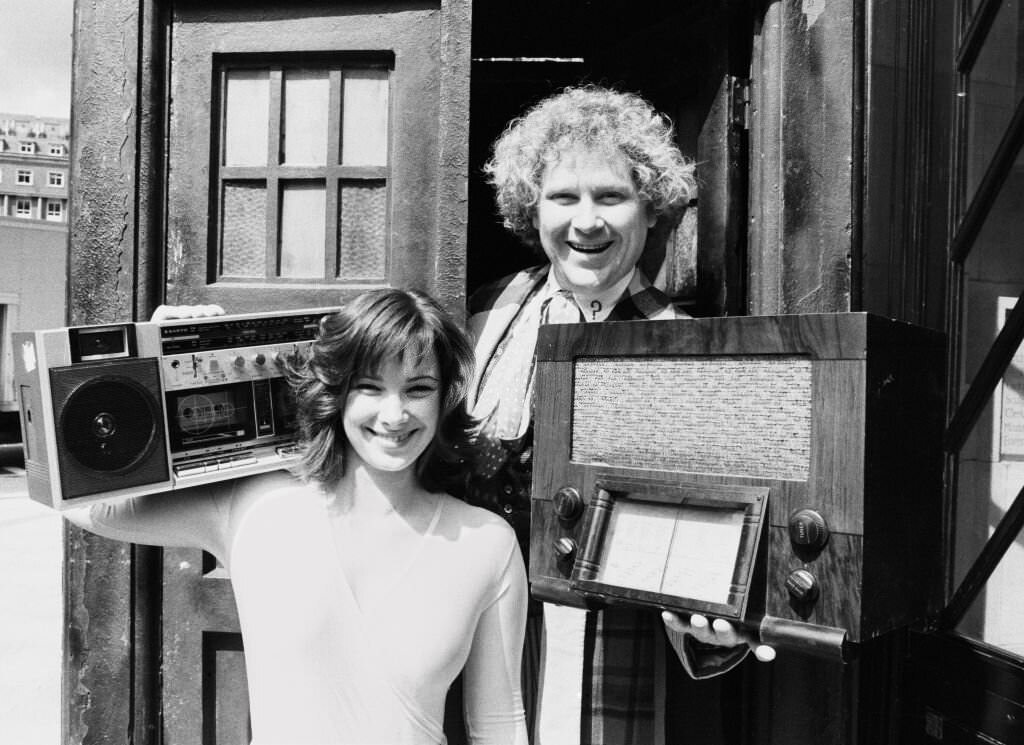
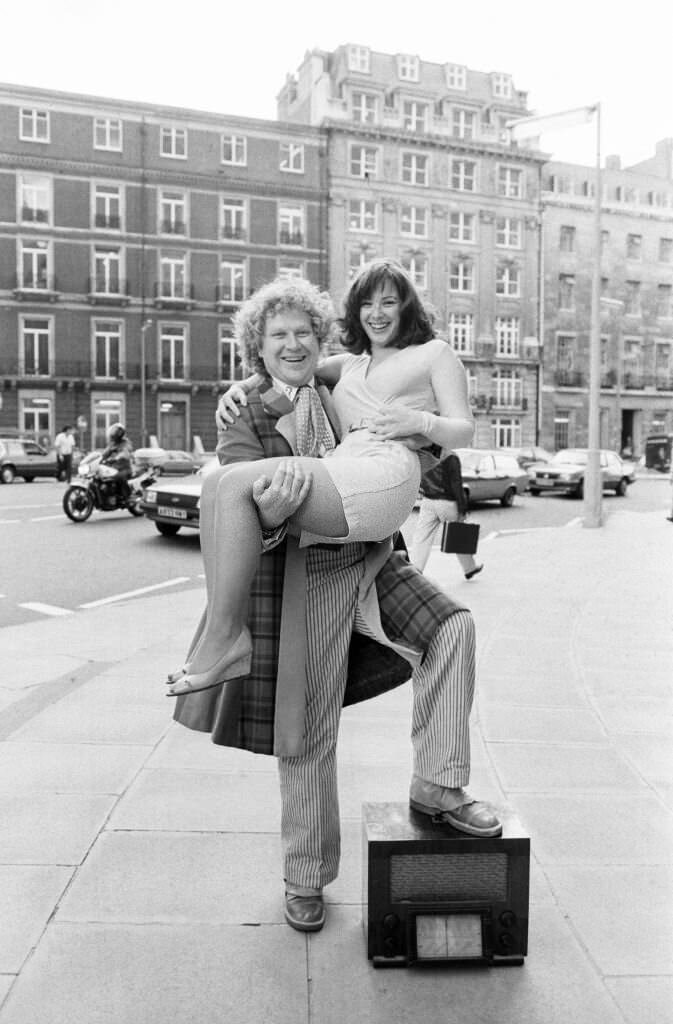
By 1985, the boombox had reached into pop culture far enough that even actors and television personalities were photographed with them. Colin Baker, known for playing Doctor Who, posed with his co-star Nicola Bryant and a boombox that year — twice, apparently.
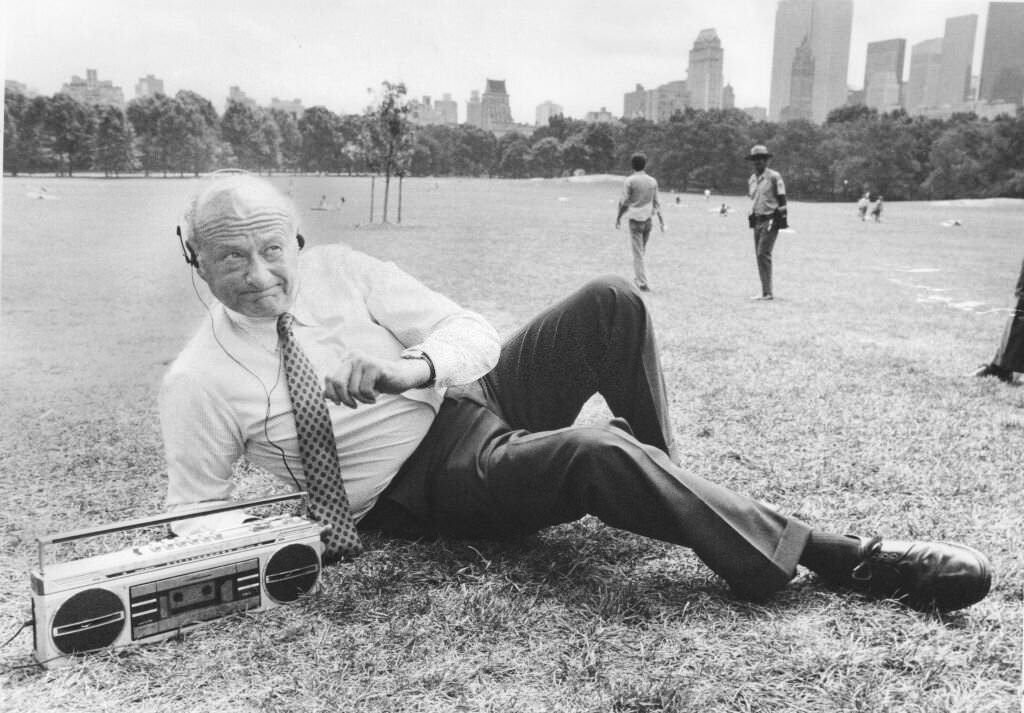
New York Mayor Ed Koch was photographed in 1985 listening to a boombox through headphones — a sign that even city hall had noticed what was playing on the streets.
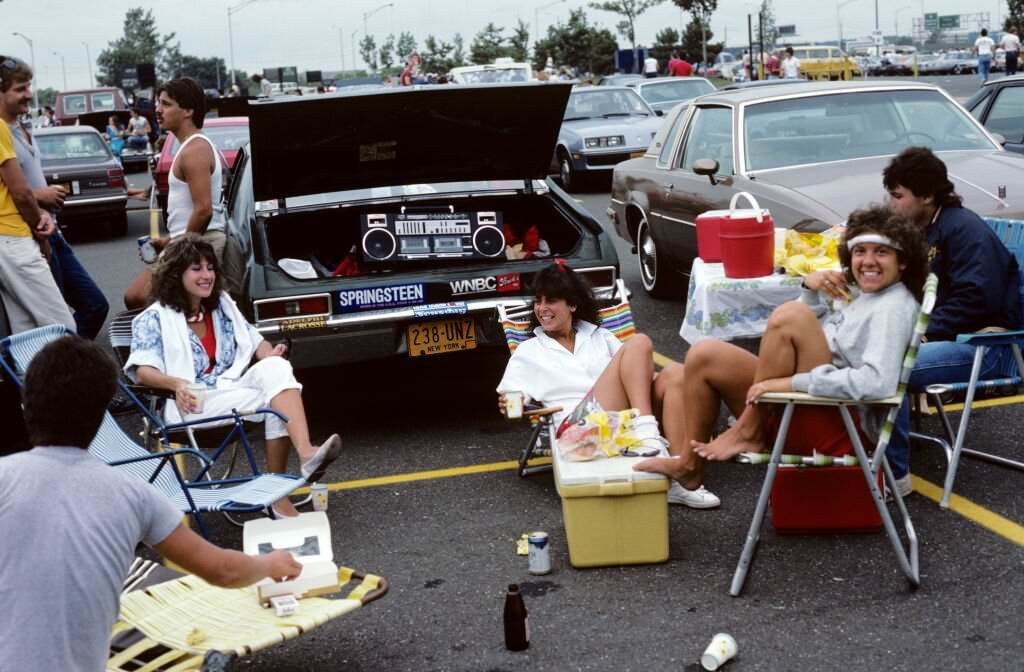
Bruce Springsteen, already a massive star by 1985, brought a boombox to a picnic. The image captures how naturally the device fit into everyday American leisure by mid-decade.
Street entertainment in New York was fueled by boomboxes. Fifth Avenue saw regular performances from dancers and artists who needed nothing more than a charged set of batteries and a clear patch of sidewalk.
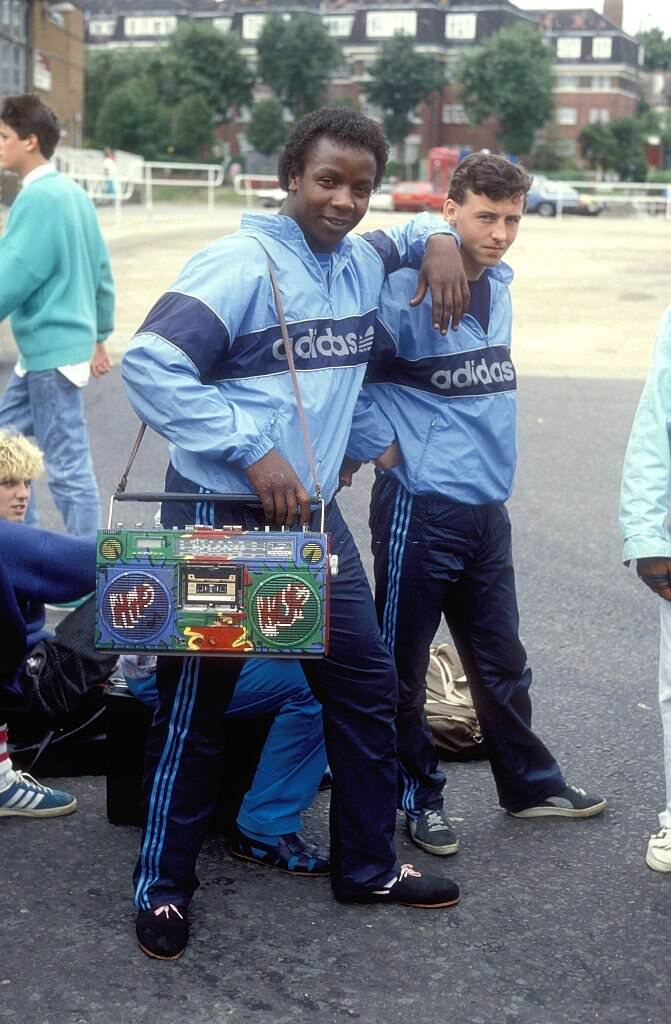
By 1986, the visual identity of boombox culture was firmly established. Adidas tracksuits, a boombox, and an attitude — this was the look. Hip-hop fashion and boombox culture fed each other constantly.
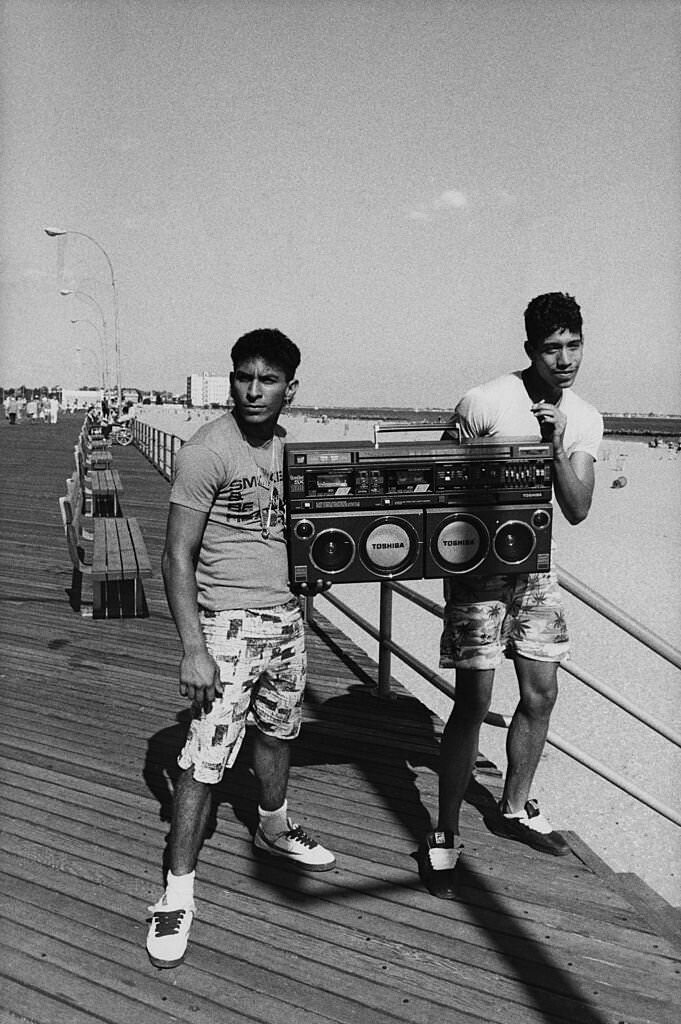
Japan had its own boombox scene. Tokyo’s Harajuku Park in 1986 was home to Teddy Boys who gathered weekly to dance to rockabilly music — and the boombox was their sound system.
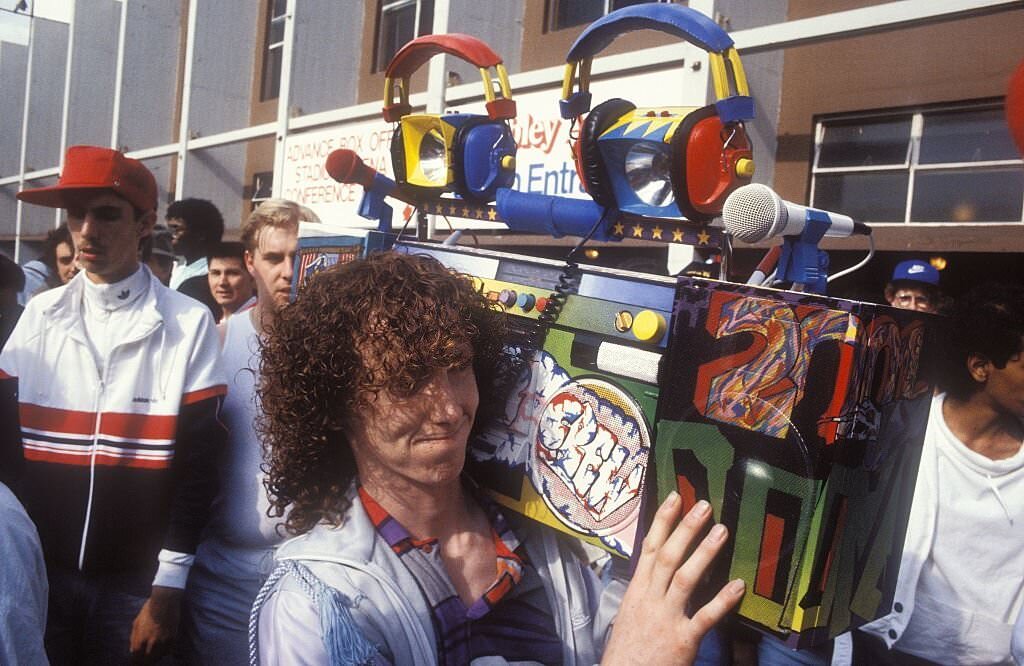
In London, UK Fresh was one of the landmark hip-hop events of 1986. Held at Wembley, it brought together the British hip-hop community and the boombox was everywhere — customized, decorated, and loud.
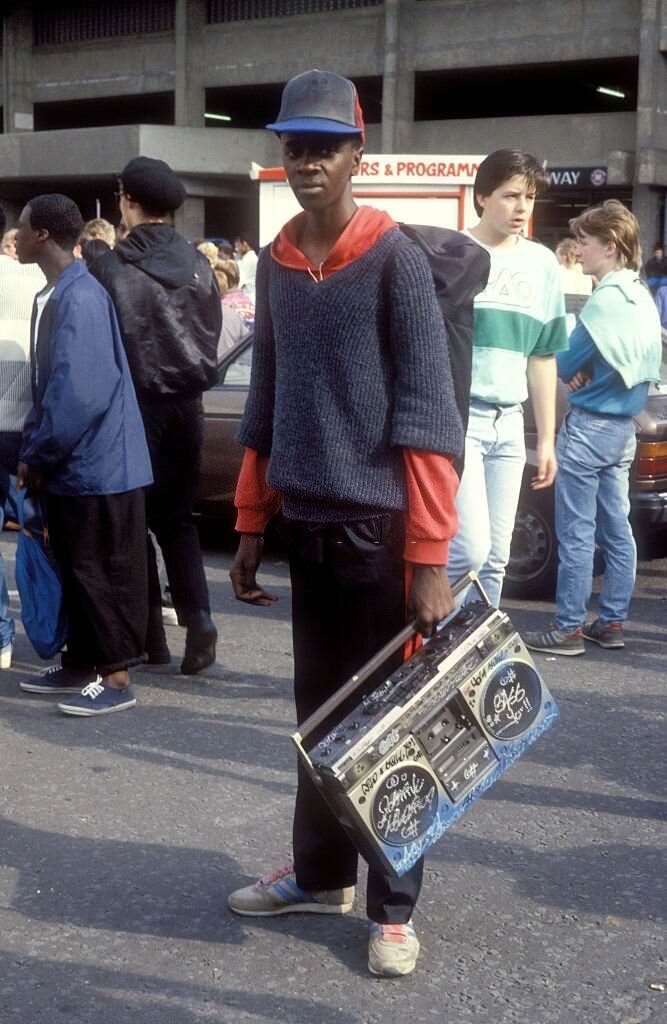
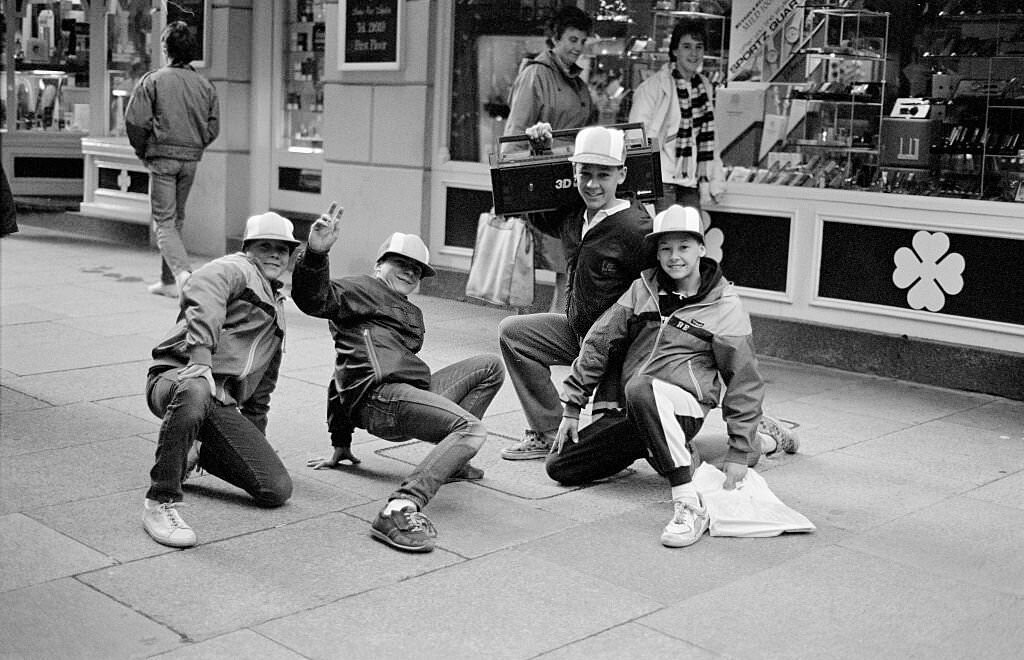
The culture spread well beyond major cities. Even in Guernsey, a small island in the English Channel, kids were posing with boomboxes on the street in 1986, fully locked into the global wave.
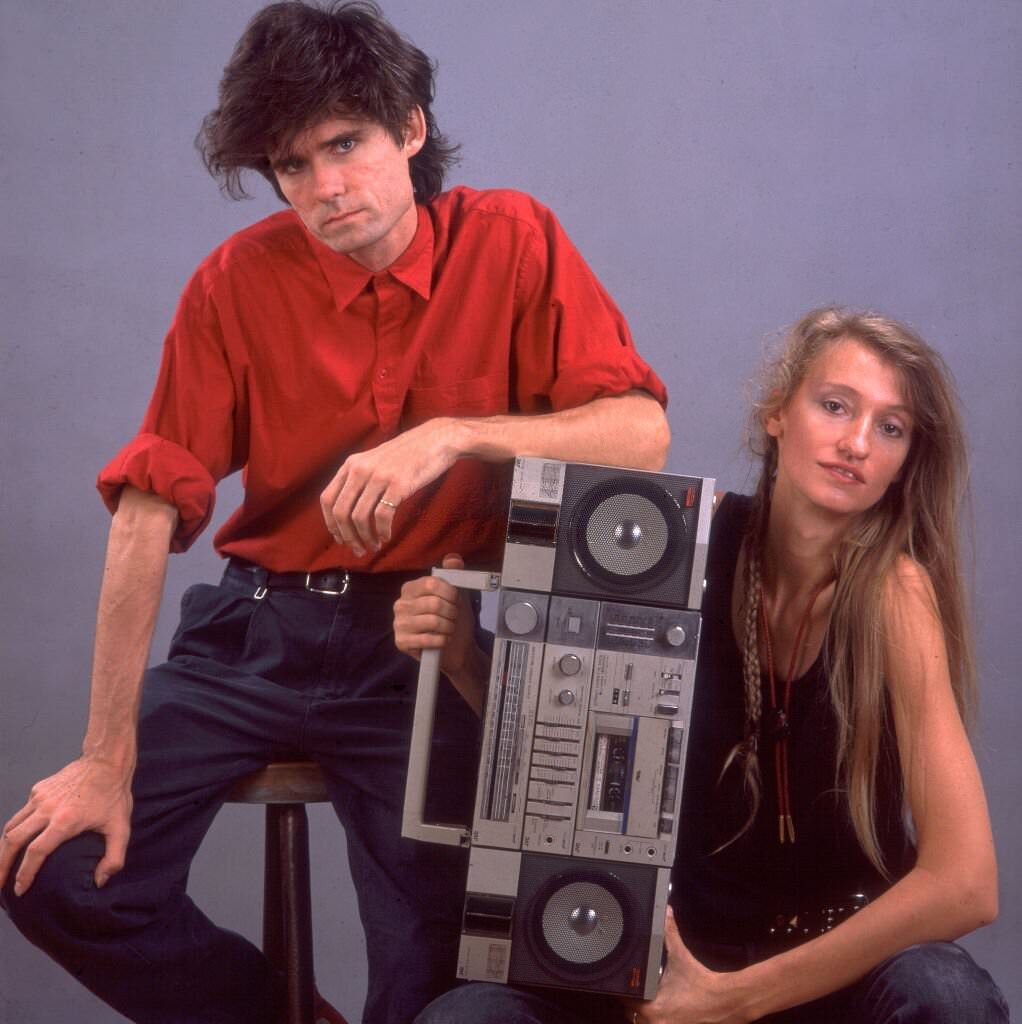
Timbuk 3, the New Wave duo made up of Pat and Barbara MacDonald, were photographed in 1986. Their biggest hit, “The Future’s So Bright, I Gotta Wear Shades,” featured Pat MacDonald playing guitar alongside a boombox as a backing instrument on stage — making the device literally part of the band.
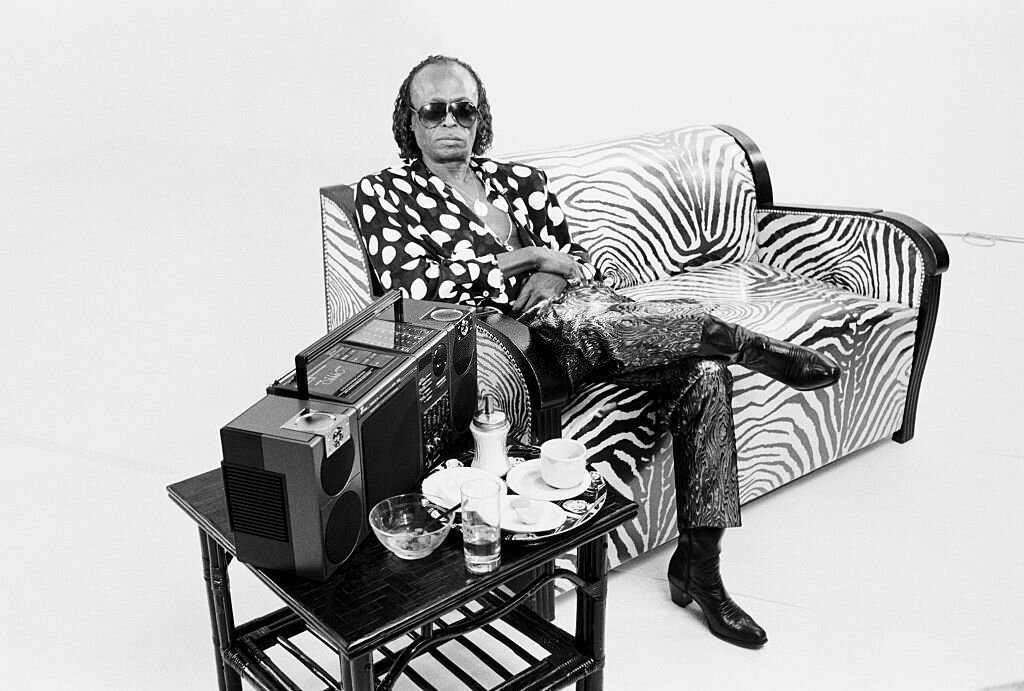
Miles Davis, the jazz legend known for pushing music into new territory, was photographed with his boombox in 1986. It’s a striking image — a musician of his caliber fully at ease with the portable technology that was reshaping how people consumed sound.
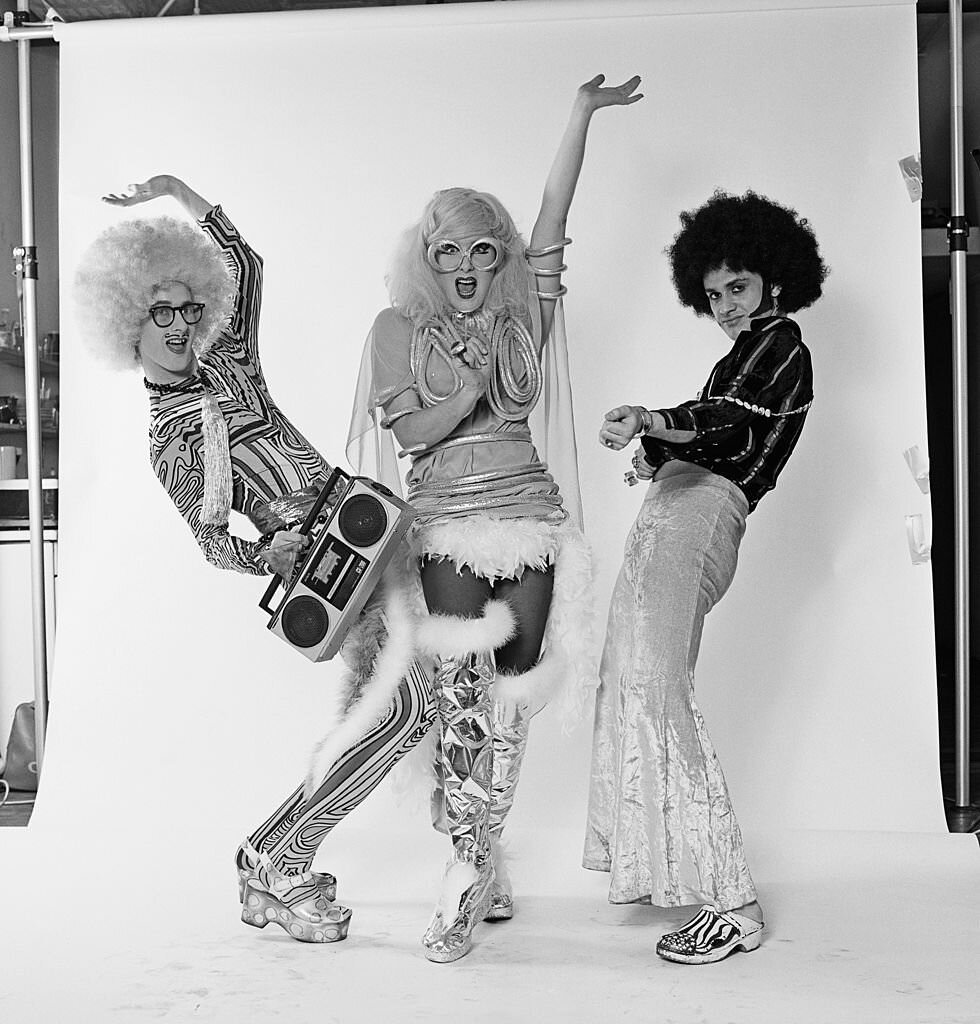
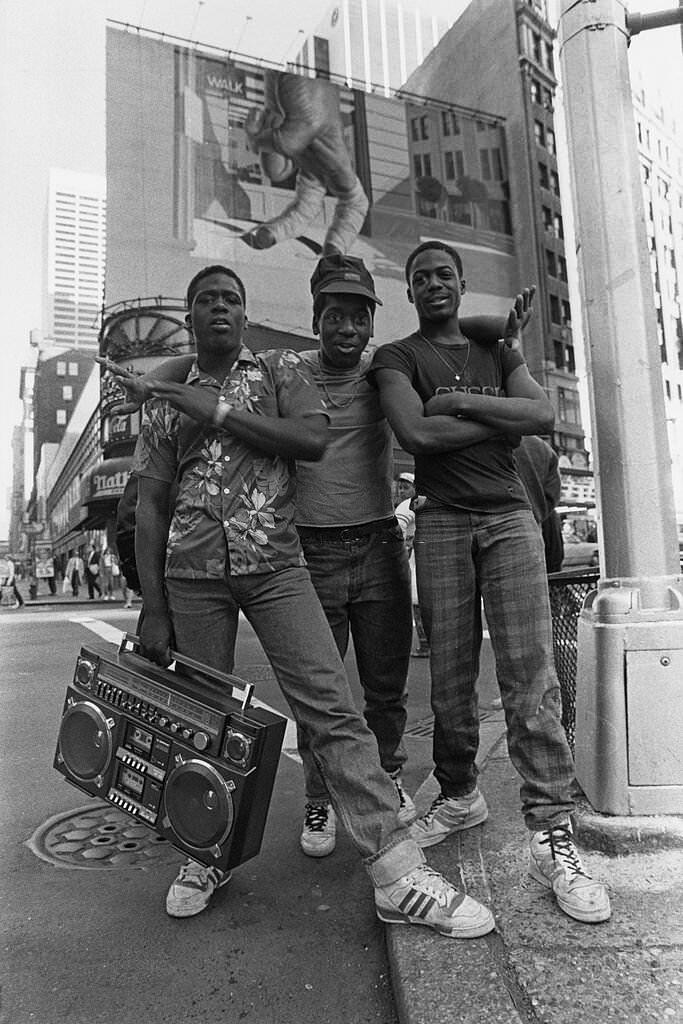
Times Square in 1987 was a very different place from the sanitized tourist hub it later became. It was gritty and alive, and teenagers gathering there with a boombox was a perfectly ordinary sight.
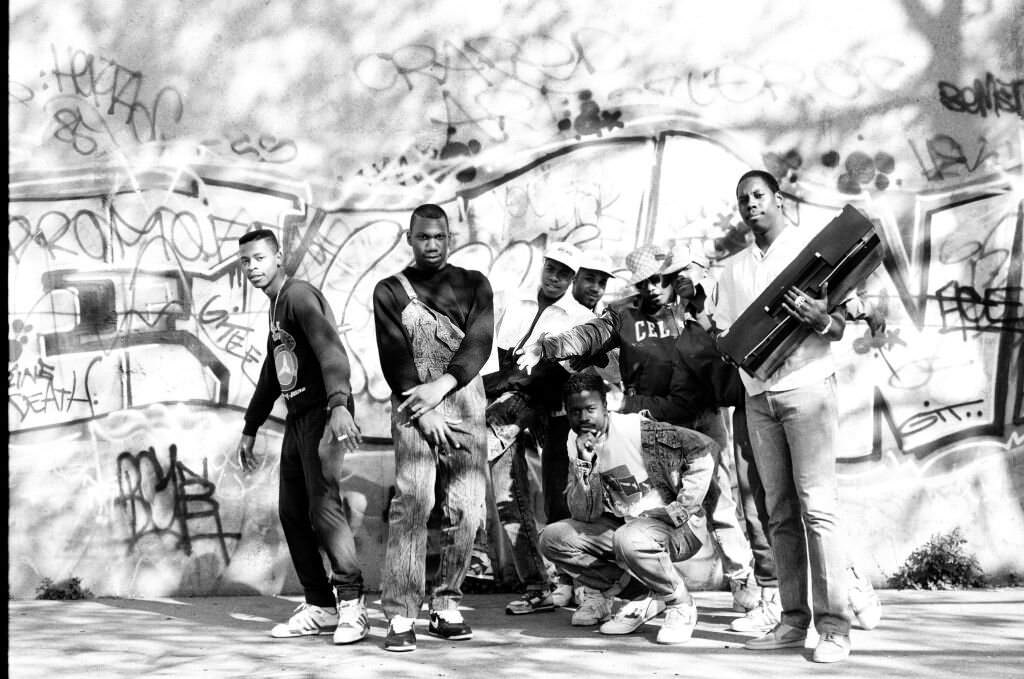
Boogie Down Productions, the Bronx rap group known by the initials BDP, were photographed with a boombox in 1987. KRS-One and his crew were among the voices defining what hip-hop stood for, and the boombox was already their symbol.
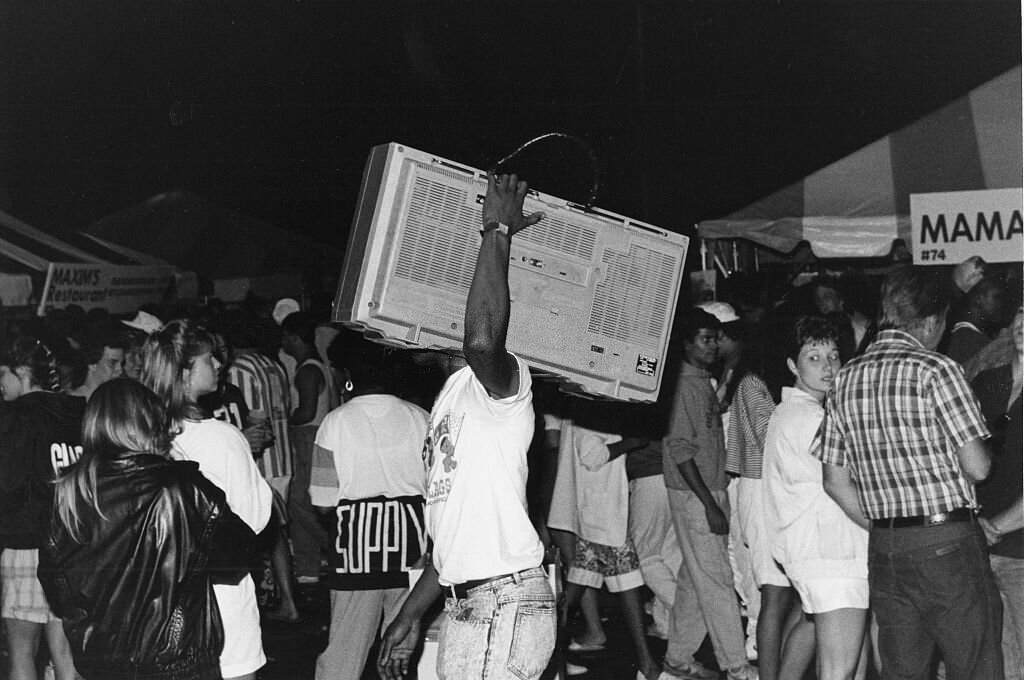
At the Taste of Chicago festival in 1988, a man moved through the nighttime crowd carrying a large boombox — one more scene in which the device served as a personal soundtrack in a public space.
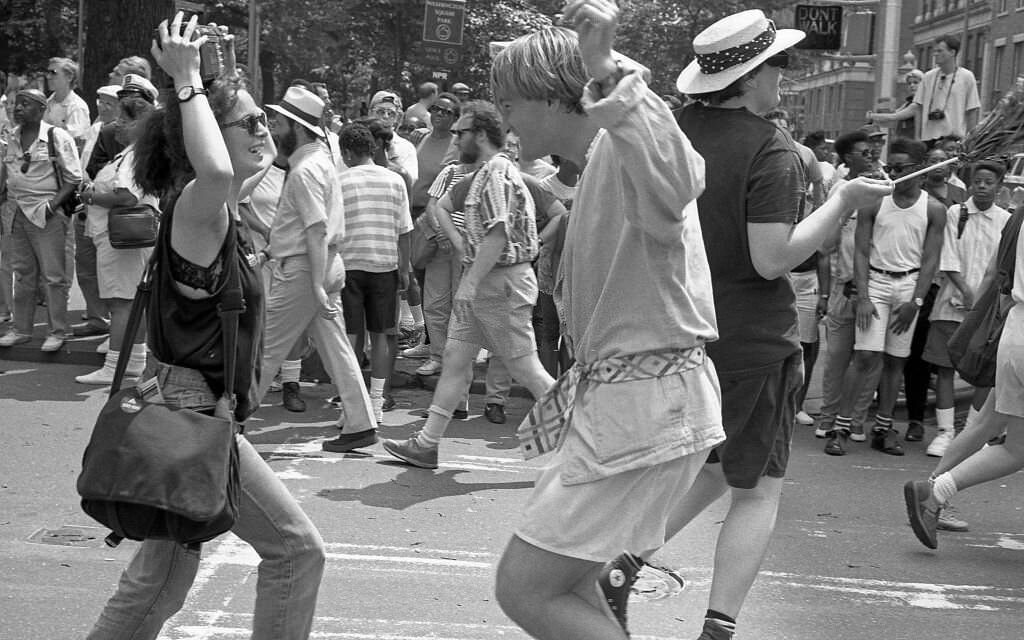
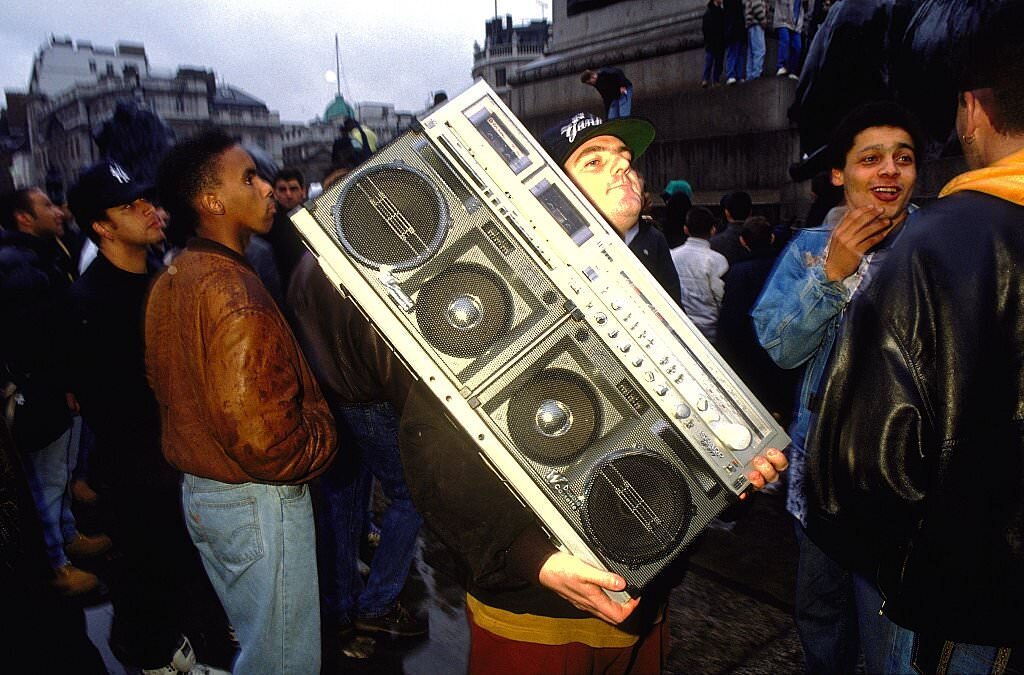
By 1989, the boombox even showed up at political protests. A demonstrator at the “Freedom to Party” march — held in response to proposed restrictions on raves and public gatherings in the UK — carried a large boombox as both a prop and a point. The message was direct: music in public is a right.
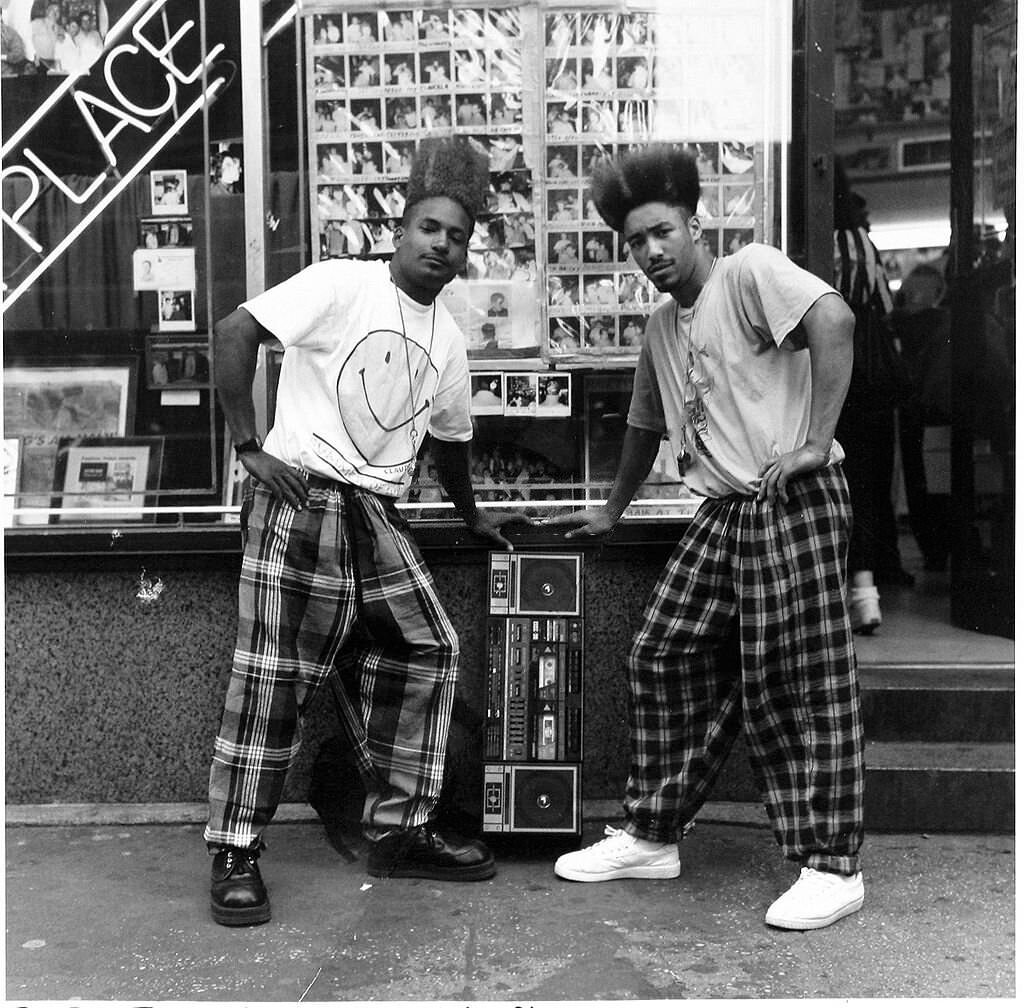
Rap duo Twin Towers brought the decade nearly full circle in 1989, posing outside Astor Place in New York with a boombox. The same city where the culture had started was still producing these scenes as the 1980s closed out.

Those are great!! That’s the New York I grew up in…though the only boombox I ever had was one summer in a rental house…it played LP’s also, was huge. I did have a teeny casette player with speakers but never a proper blaster.
The Astor Place haircut place is still there…not $8 any more, though.
Ed Koch chilling in Sheep Meadow is hilarious.
They weren’t called boomboxes back then. We called them ghetto blaster.
They were absolutely called both
Interesting. Where I’m from they didn’t start getting to be called boomboxes till the late 80s, early 90s. Something about the backlash over the use of the word ghetto.
Grew up on the Jersey side of Philly (and my father was the electronics buyer for a big department store chain back then), and they were mostly called boomboxes. Wasn’t for a few years that I heard the term ghetto blaster, so I can’t say which was first or that Philly was more progressive in not using the ghetto term, but my town was very racially mixed and we all called them boomboxes.
i miss my ghettoboomblaster so much, but then again carrying that thing around when its got like 10 d cell batteries, dedication …. it was a different time in the world
I hated those things. I found it so incredibly rude to broadcast your music so everyone around has to hear it. Same goes for the beach with pick-up trucks blasting C&W music while we are trying to enjoy nature. Yeah, I’m old.
Still blows my mind people lugged around and used those giant power sucking ones given how crappy the batteries tech was back then. We had to buy new batteries after a few hours if there was no outlet. Weren’t d batteries a few bucks a pack even back then?
rechargeables my man. they’d still go out after a few hours vs a few days to weeks for good batteries but you didn’t have to replace them. I had one of those battery sucking machines back in the day, 6 D’s to run it but it was more home stereo you could take with. dual cassette, detachable speakers, EQ and definitely loud enough to piss off the neighbors lol
At 13 I worked the 1982 summer picking onions and tomatoes so I could buy my first boombox and Walkman.
I lived north of LA back then so I never saw a real one. I only saw them in pics and videos. I had a cheap plastic one and walked down the street pretending like it was real haha.
Man. Boom boxes were such a flex at the time. The bigger, the better. I remember people dragging around way too huge boom boxes on kids wagons.