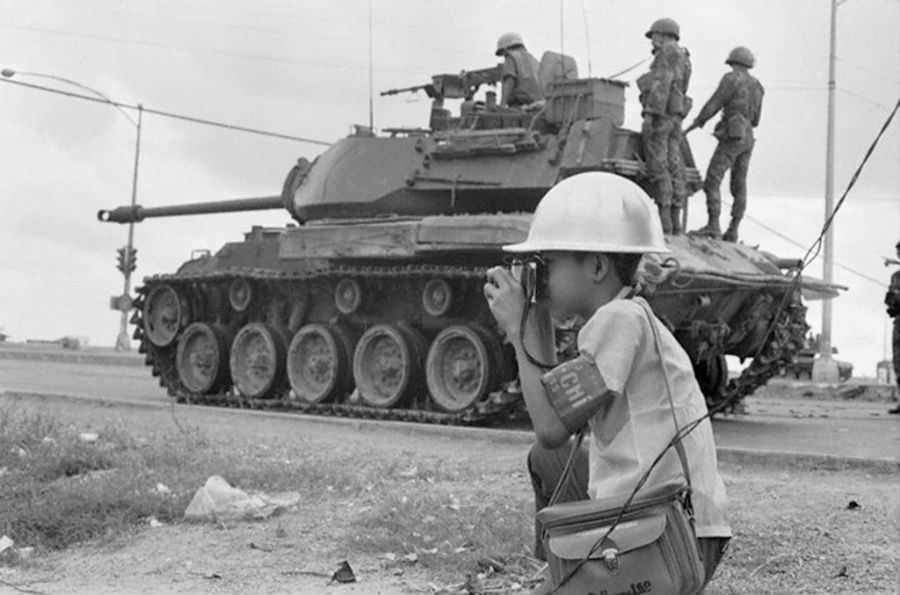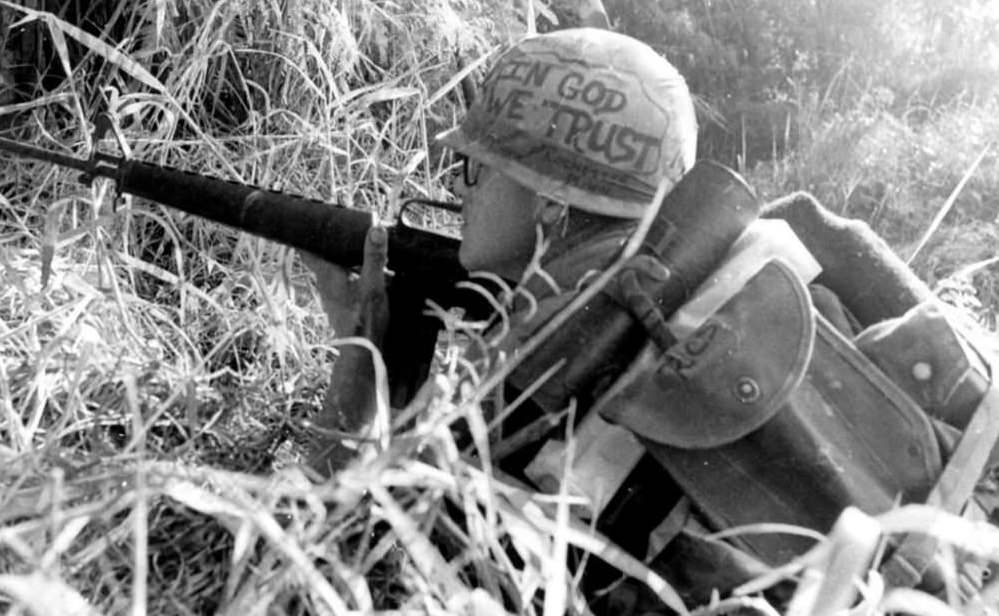
Most photographs from the Vietnam War that the public knows best were taken by professionals — Nick Ut’s image of a naked Vietnamese girl fleeing a napalm attack, or Eddie Adams’s frame of a Saigon police chief shooting a Viet Cong prisoner in the street. Those images defined how the world saw the war. But a separate collection of photographs exists, one far less famous and far more personal. These were taken by the soldiers themselves — young men, many barely out of high school, carrying cheap cameras alongside their rifles.
These pictures do not show the war’s most violent moments. Instead, they show what life actually looked like between the firefights: sandbag duty, swimming in the South China Sea, playing with local children, sitting in cramped jungle outposts, and laughing at USO shows. They are candid in the truest sense. No photographer was staging the shot. No editor was choosing the frame. The soldiers just pointed and clicked.
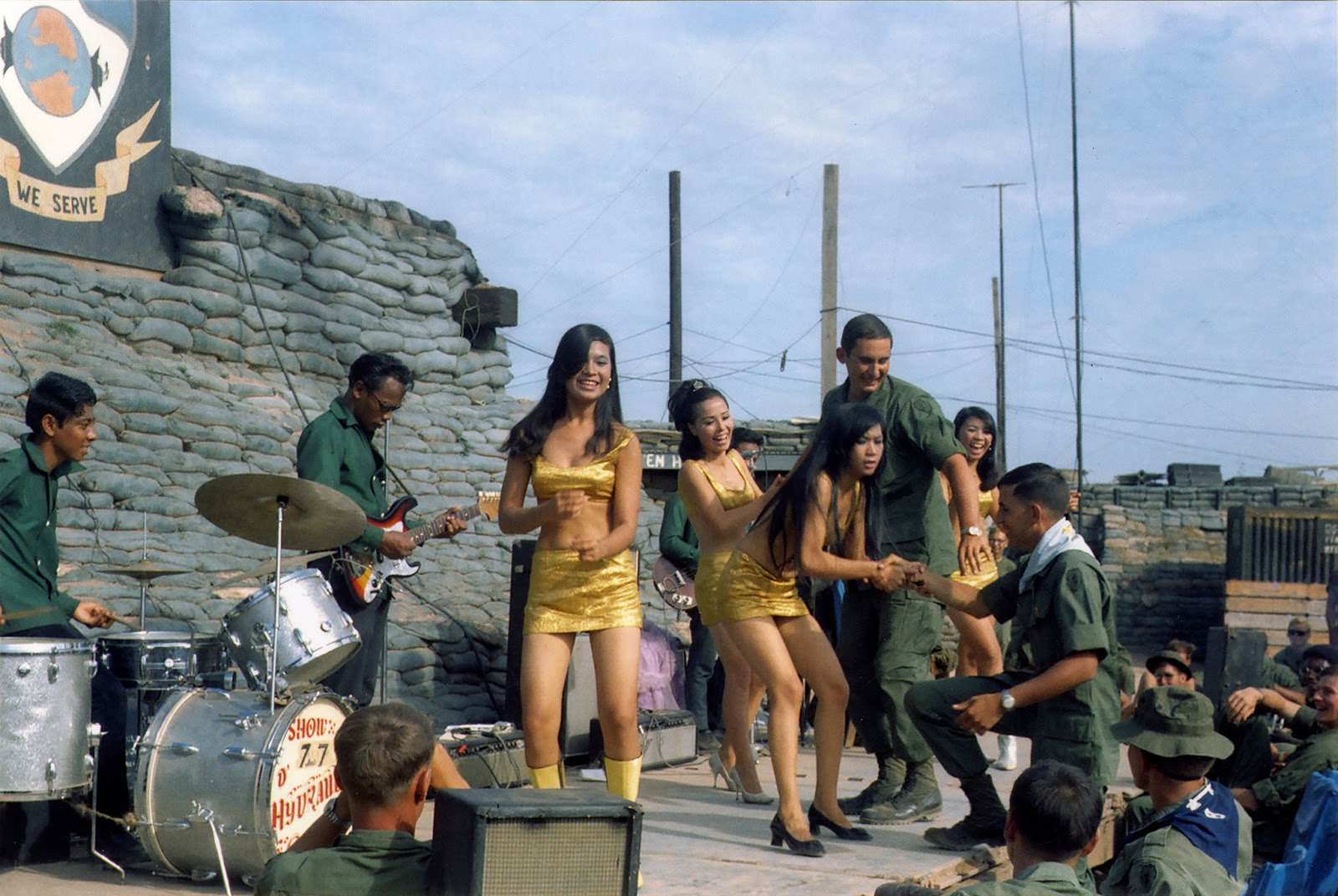
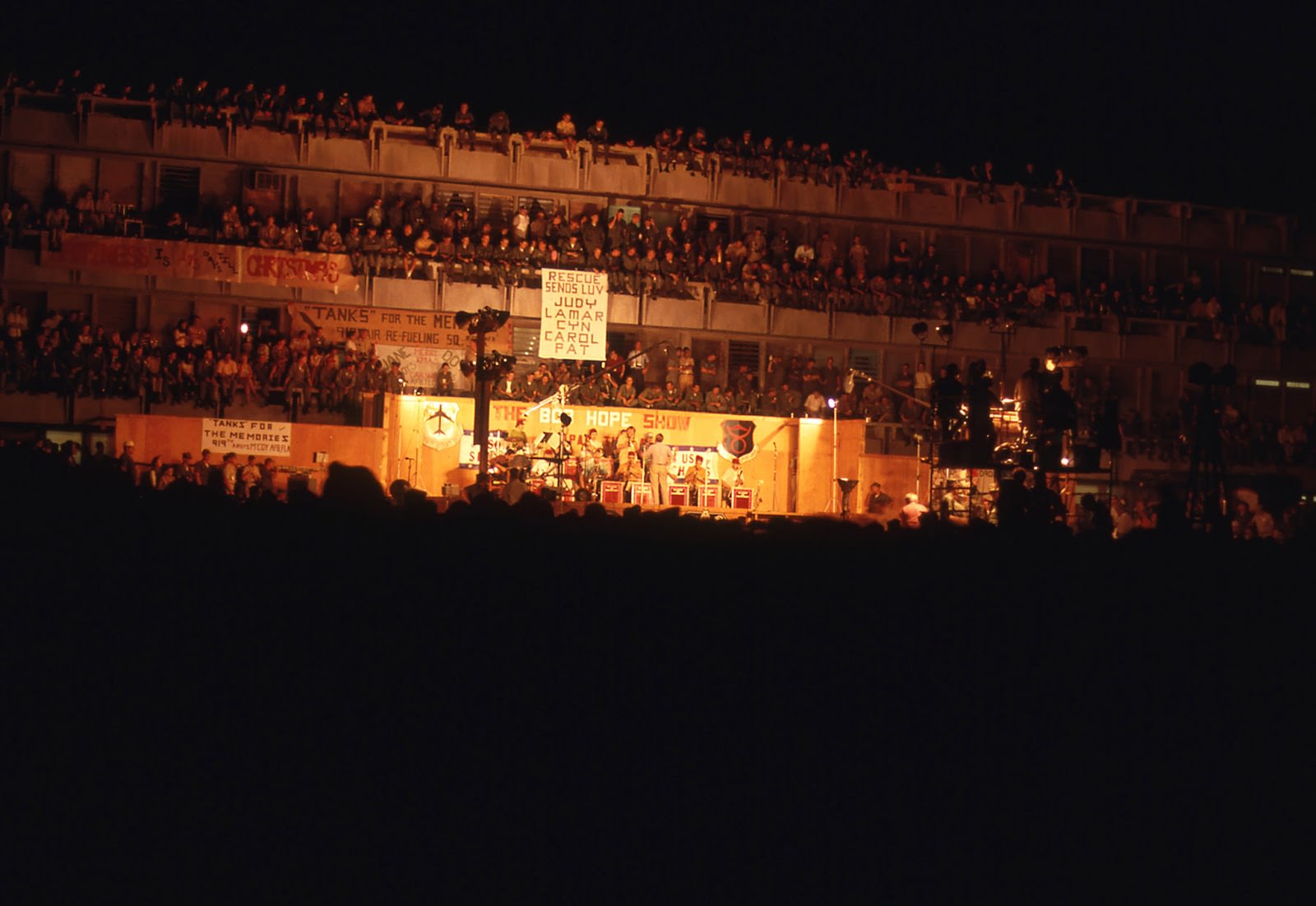
USO shows were one of the few genuine breaks from the grind of deployment. At Fire Base Rawlings in Tay Ninh Province in November 1969, soldiers gathered to watch a live performance — a brief escape from the jungle heat and constant tension. Bob Hope made his own rounds that same year, performing his Christmas show at Utapao Royal Thai Naval Air Station in Thailand in December 1969 for the 4258th Heavy Bombardment Wing.
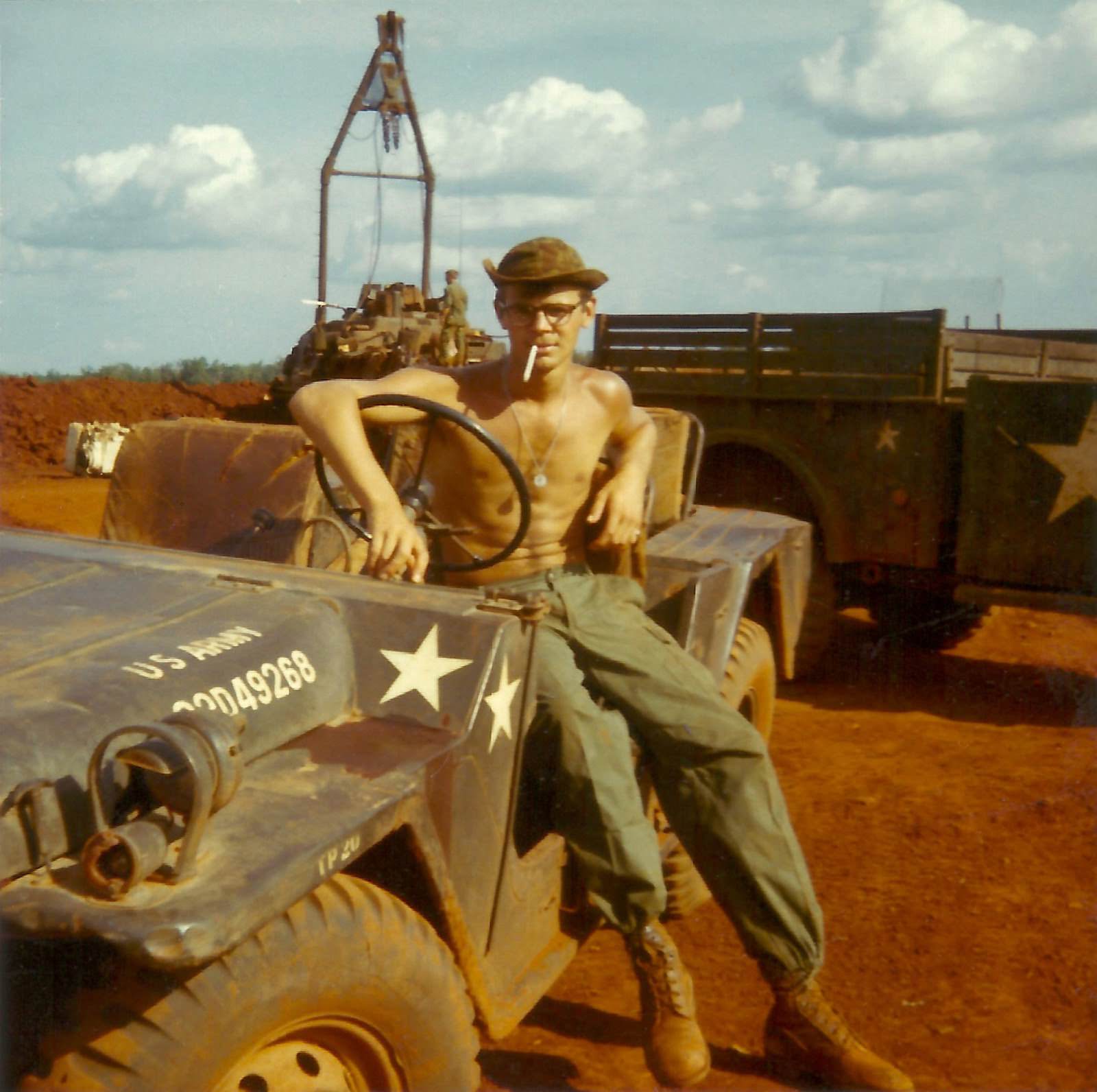
The physical labor of maintaining a base was constant. Filling sandbags was exhausting, repetitive work done in brutal heat. Larry Diesburg was photographed taking a smoking break after a session of sandbag duty near Binh Long — a quiet, human moment that speaks to the daily monotony soldiers endured far from any combat.
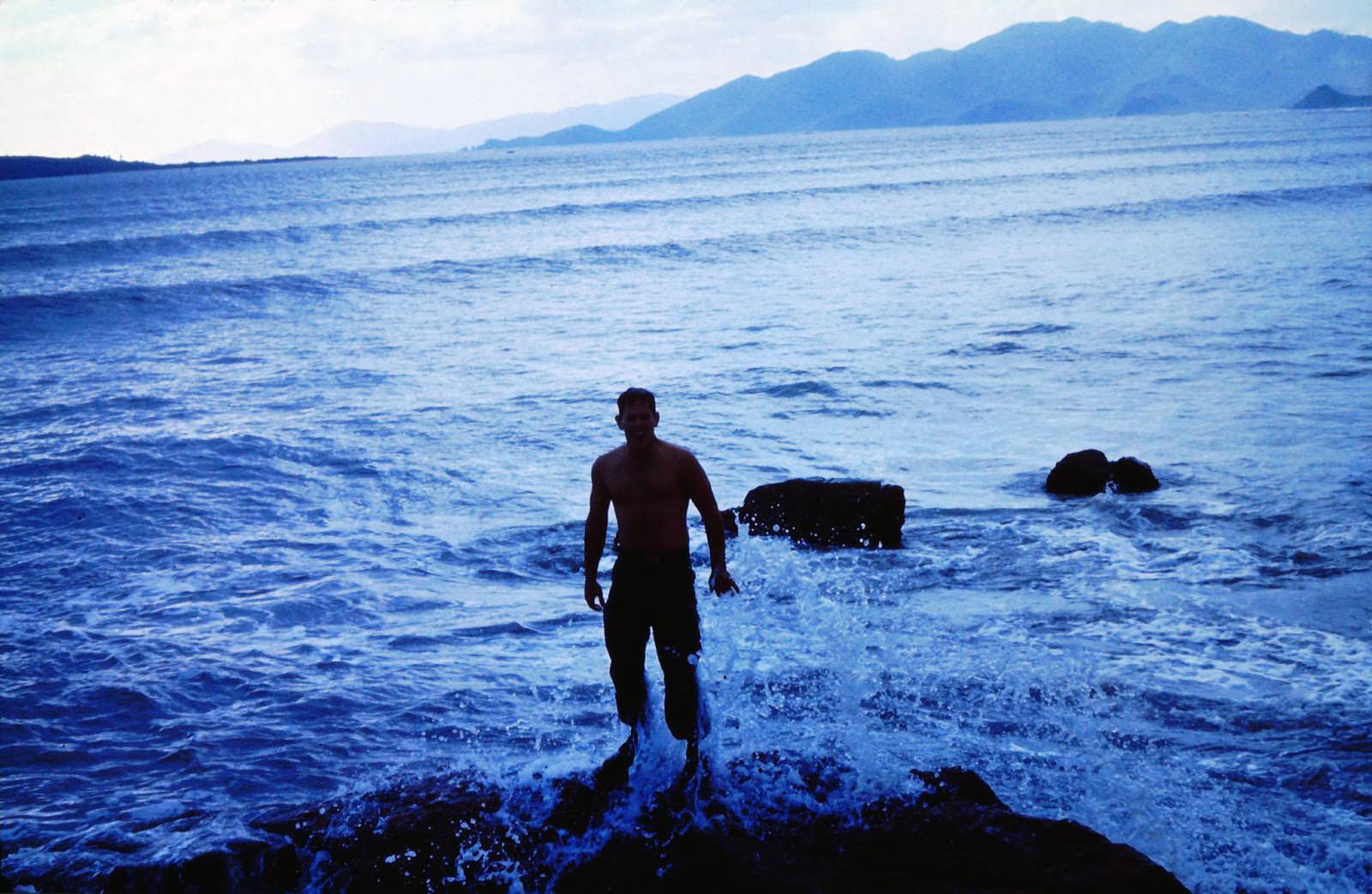
When the chance came to swim, soldiers took it. Near Ninh Hoa in 1968, Gene Bailey was photographed swimming in the South China Sea — one of those rare moments where Vietnam felt less like a war zone and more like any other stretch of coast.
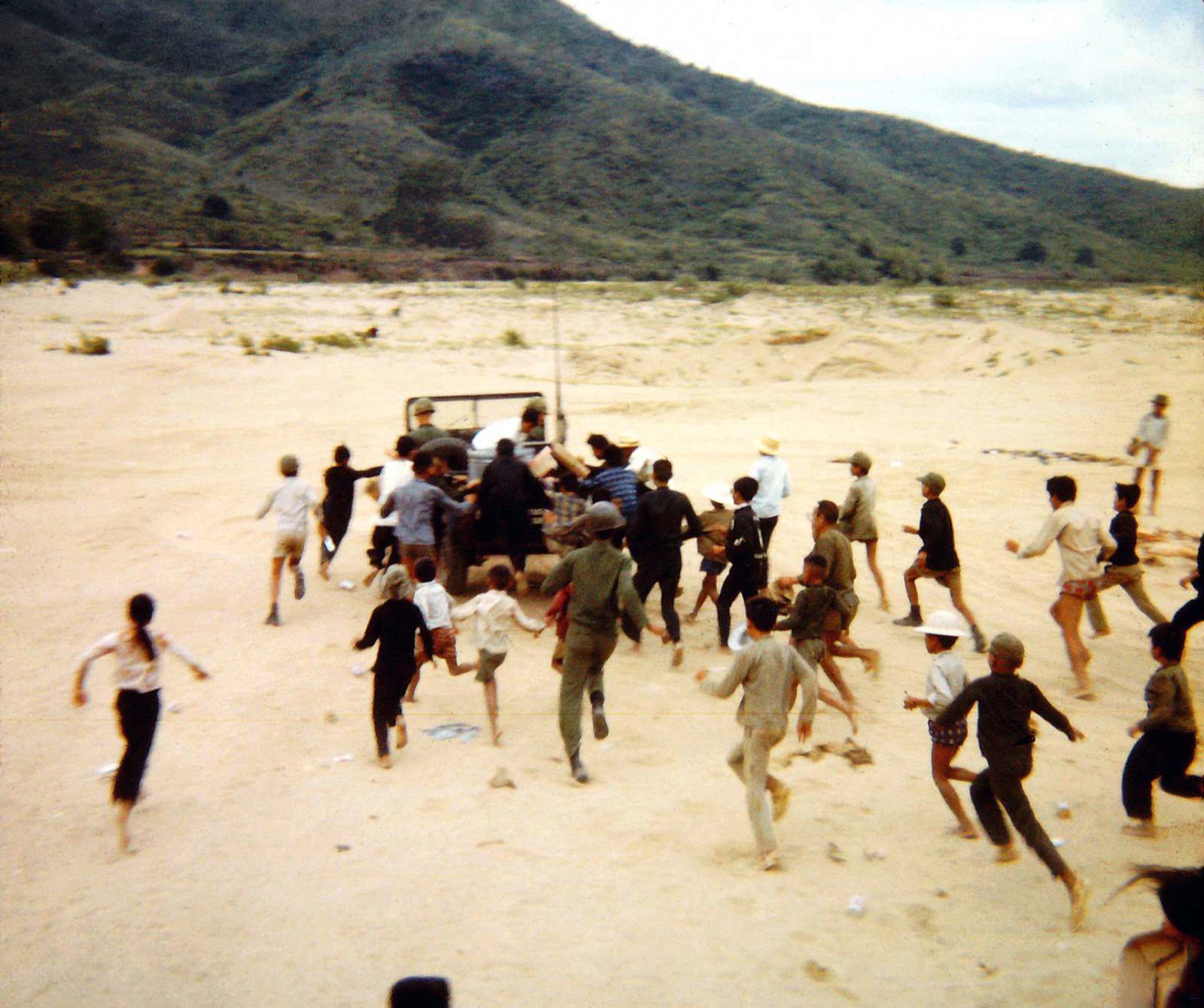
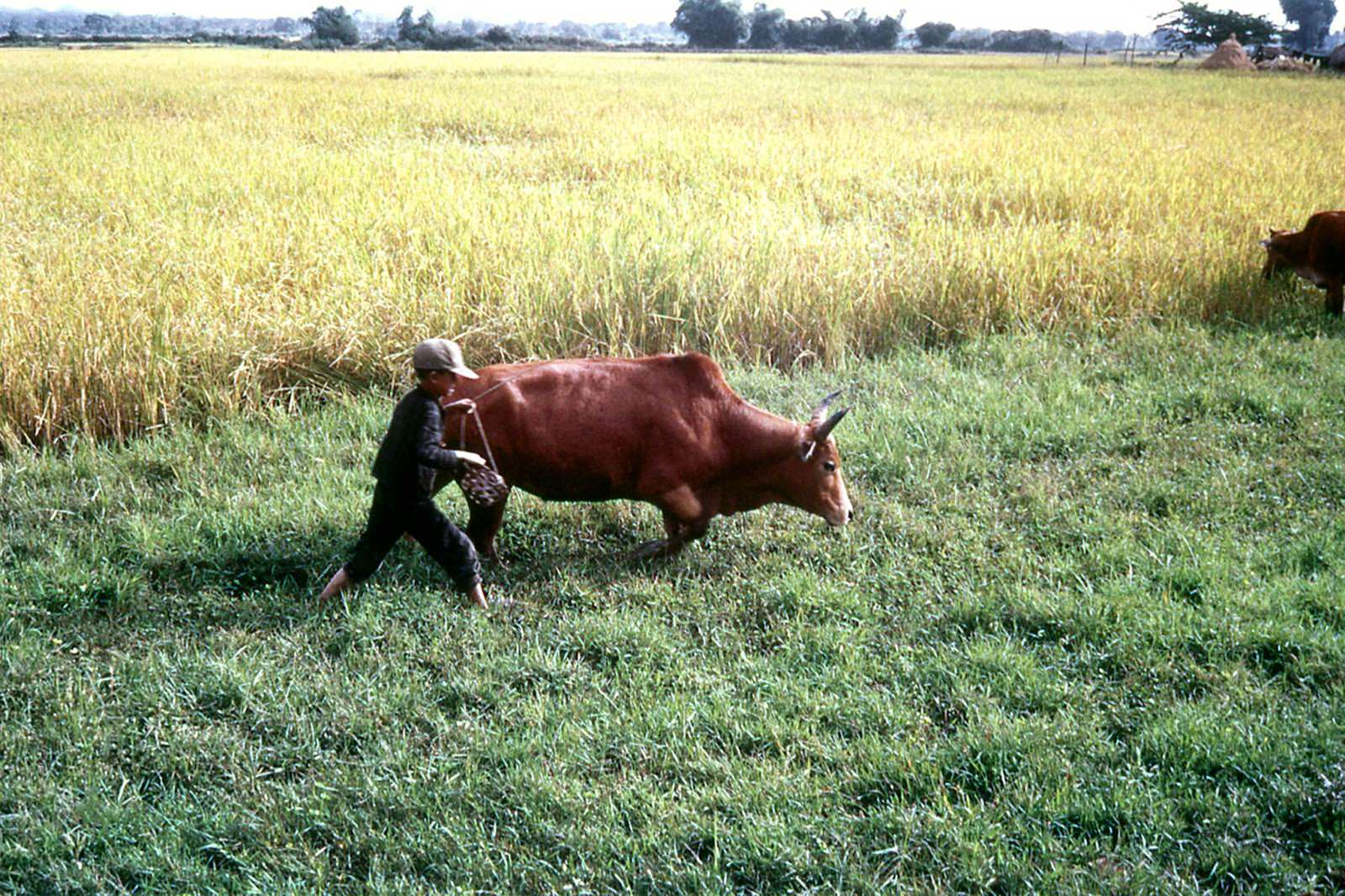
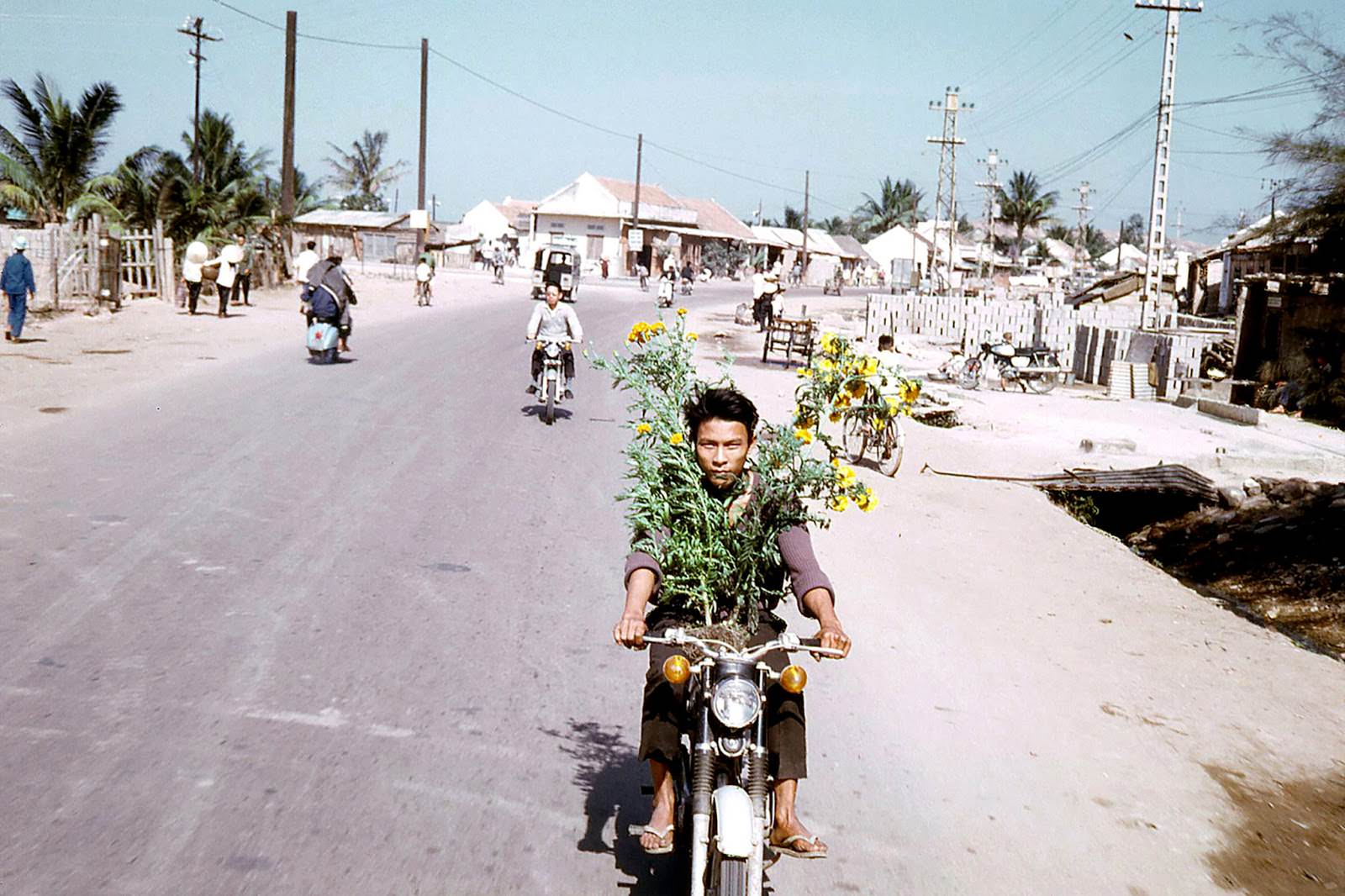
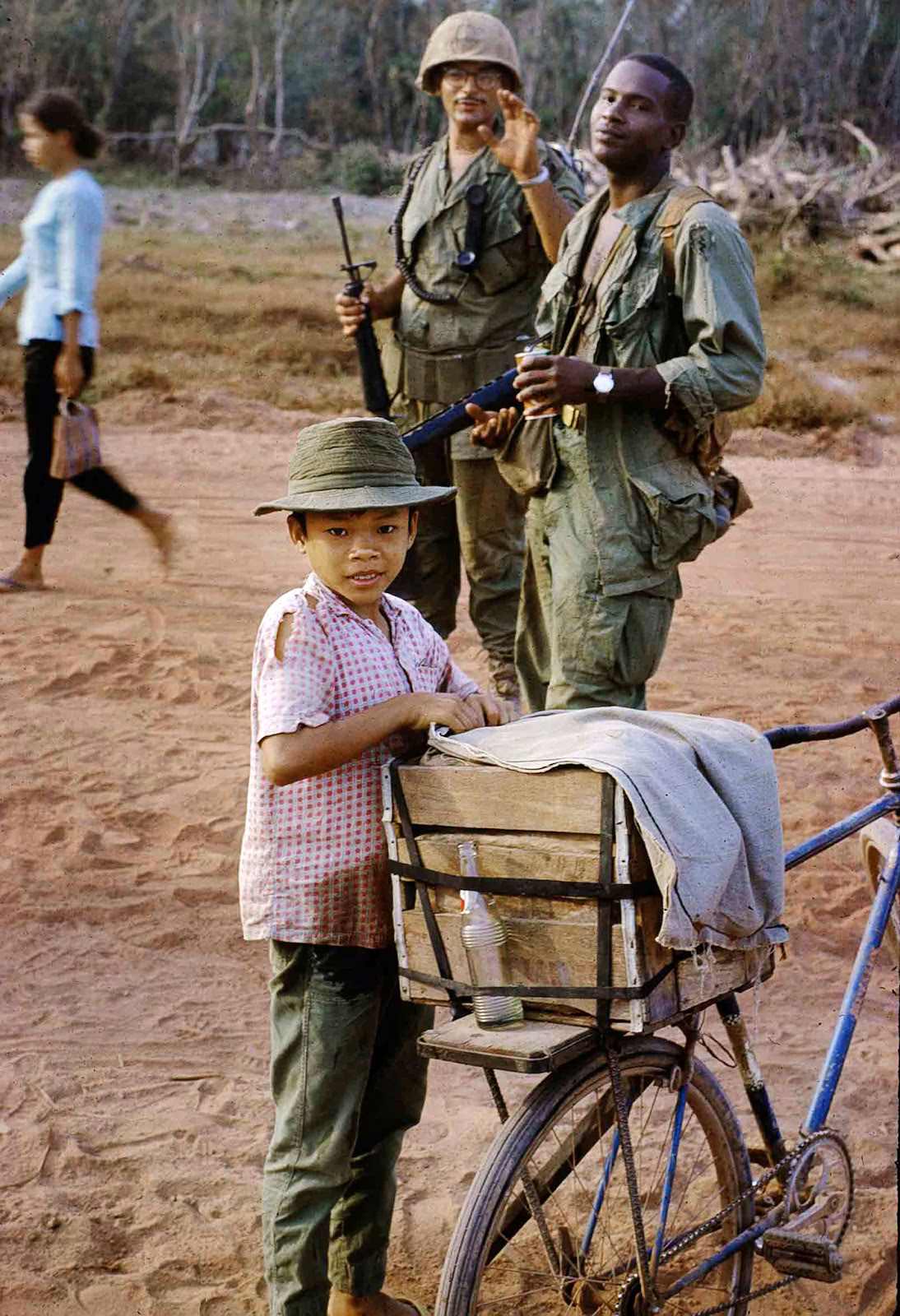
Soldiers also documented the Vietnamese people they encountered daily. A boy working along highway QL-19 near An Khe Pass, a man selling marigolds in Qui Nhon, a child known only as the ‘Coke kid’ photographed alongside Lieutenant Timor and his radio operator in February 1969 — these images capture the texture of a country that many soldiers were seeing for the first time.
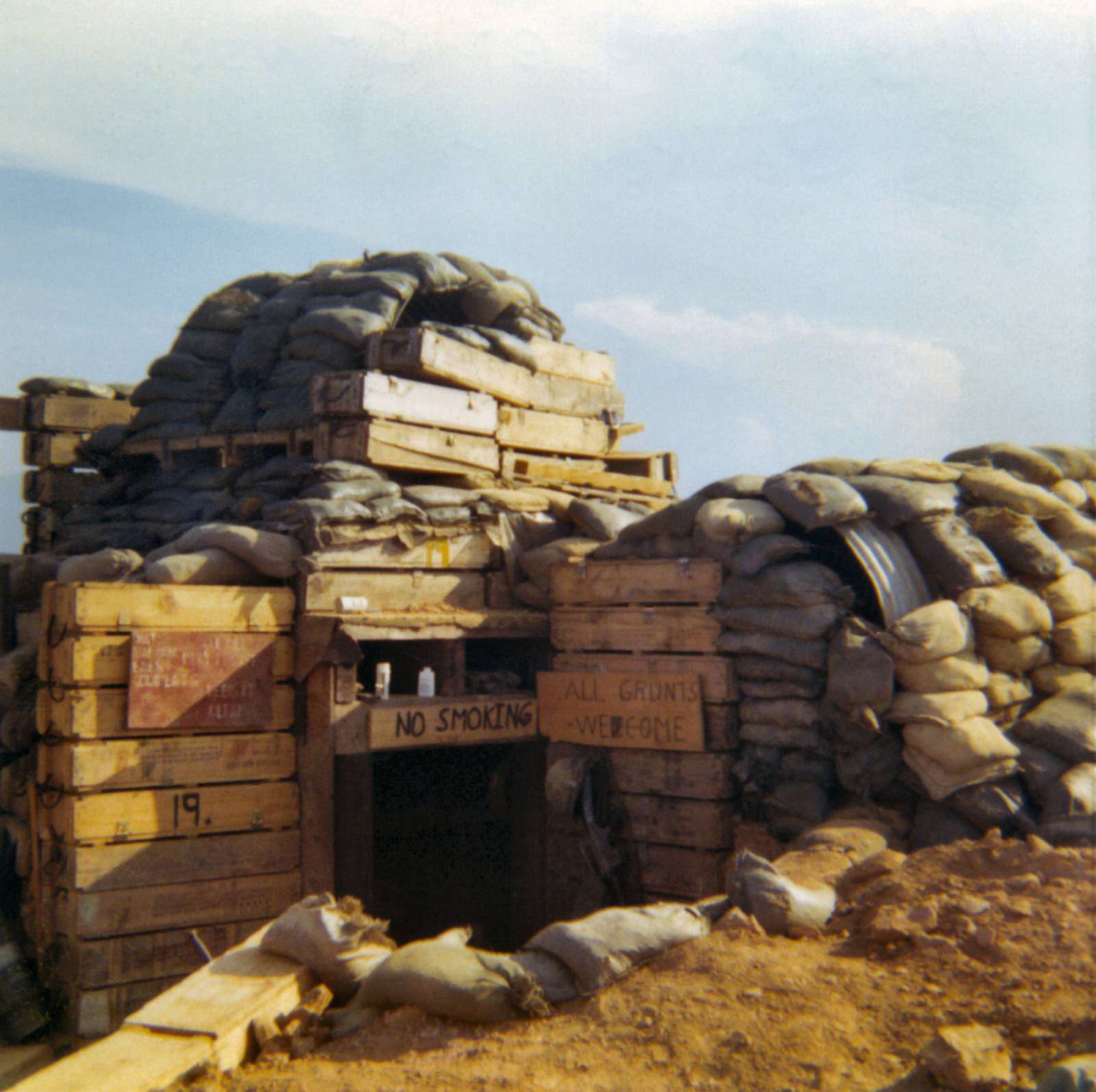
The living conditions in the field were rough and makeshift. One soldier photographed his own living quarters on L.Z. Stinson Fire Base — a cramped, improvised space that he simply labeled ‘My home.’ It was part of Company B, 52nd Infantry, 198th Light Infantry Brigade, 23rd Infantry Division, between 1970 and 1971.
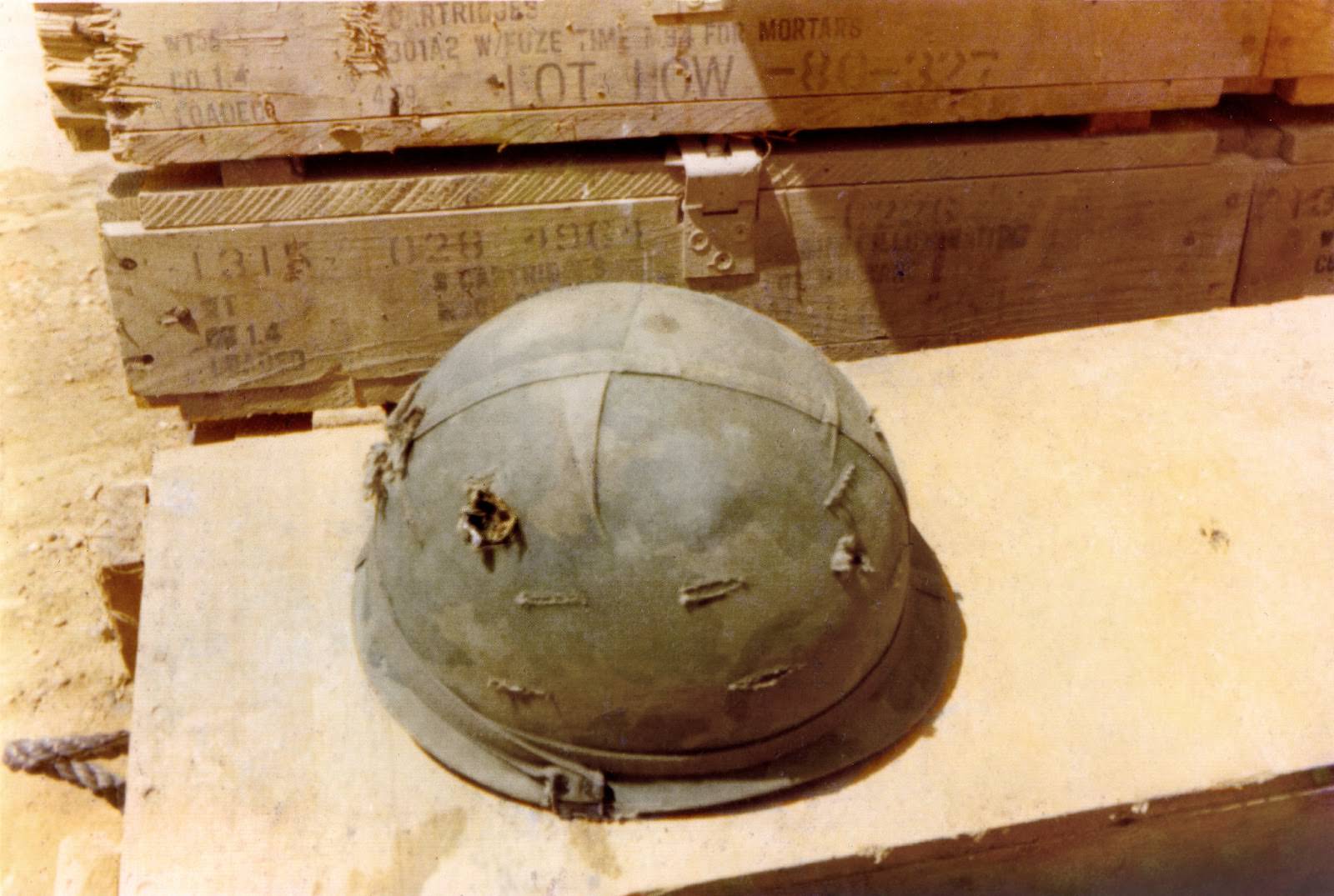
Some photographs are a stark reminder of how close danger always was. One soldier kept his helmet after it was struck by two bullets at Fire Base L.Z. Stinson in Quang Ngai Province — and then photographed it. It is one of the collection’s most arresting images, not because of what it shows, but because of what it means the photographer survived.
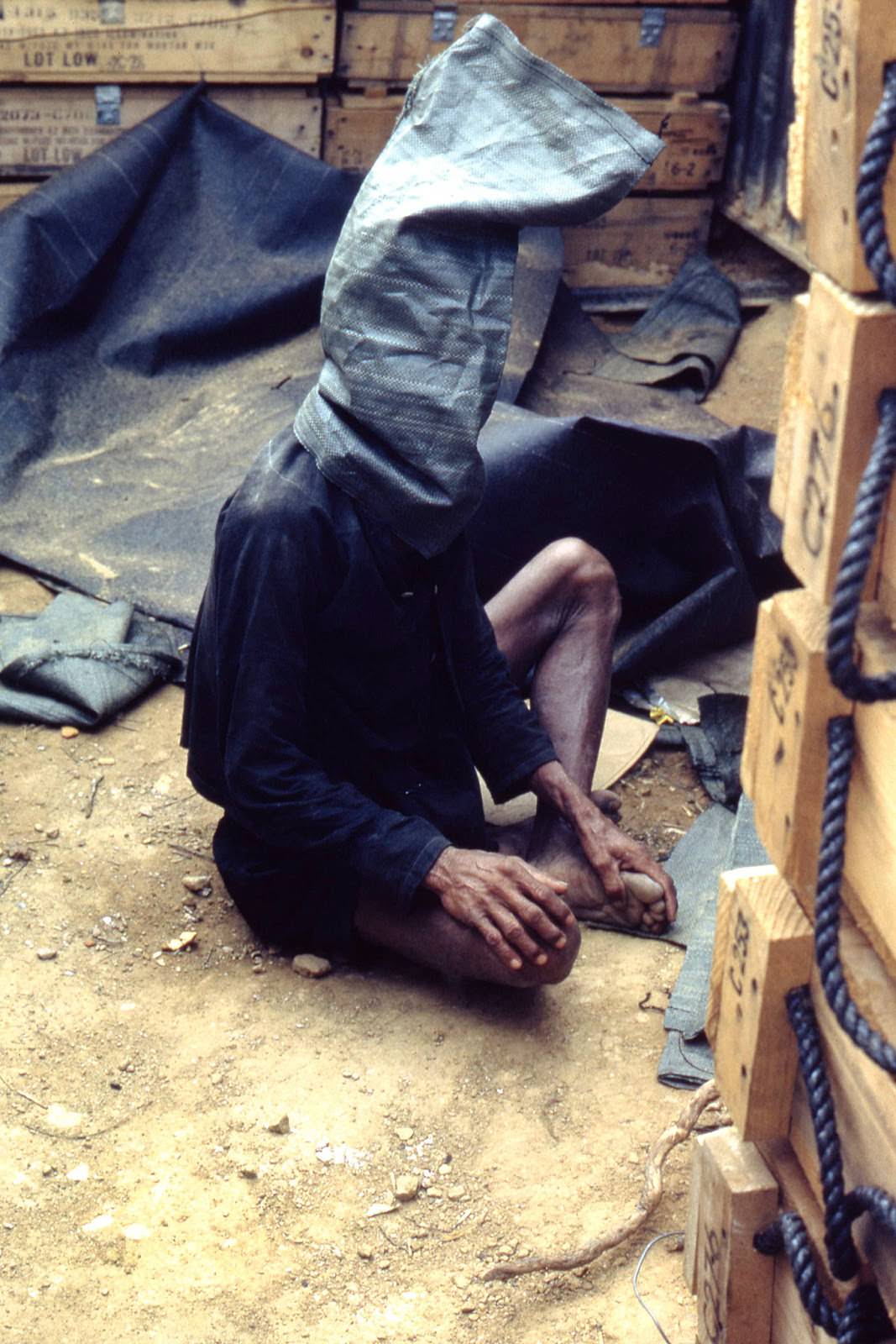
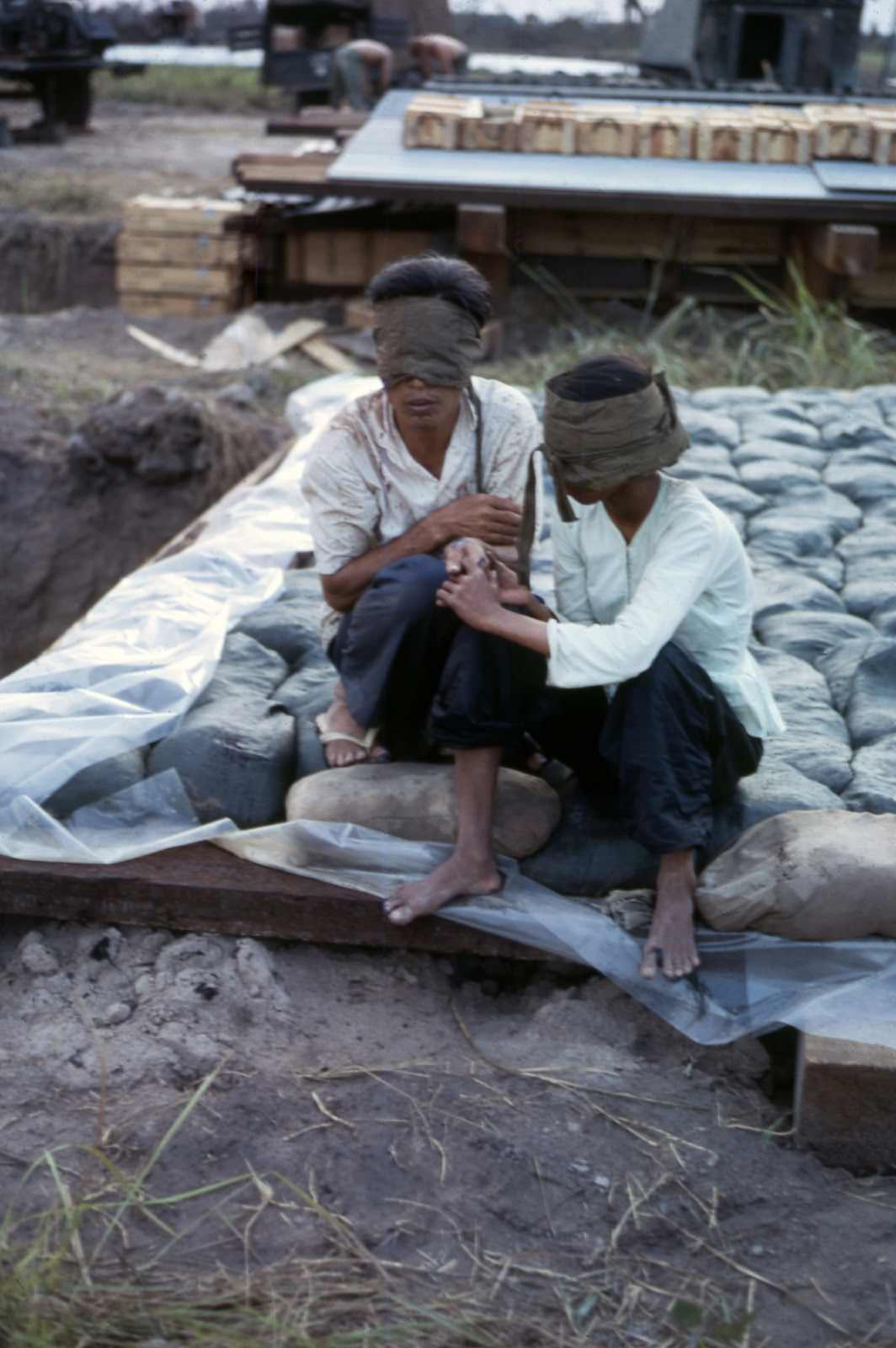
Prisoners were part of the operational reality. A Viet Cong prisoner sits at Landing Zone Stinson in Quang Ngai Province, held for interrogation. Elsewhere, a Viet Cong couple appears blindfolded. These photographs are not dramatized — they are plain documentation of what soldiers saw and recorded.
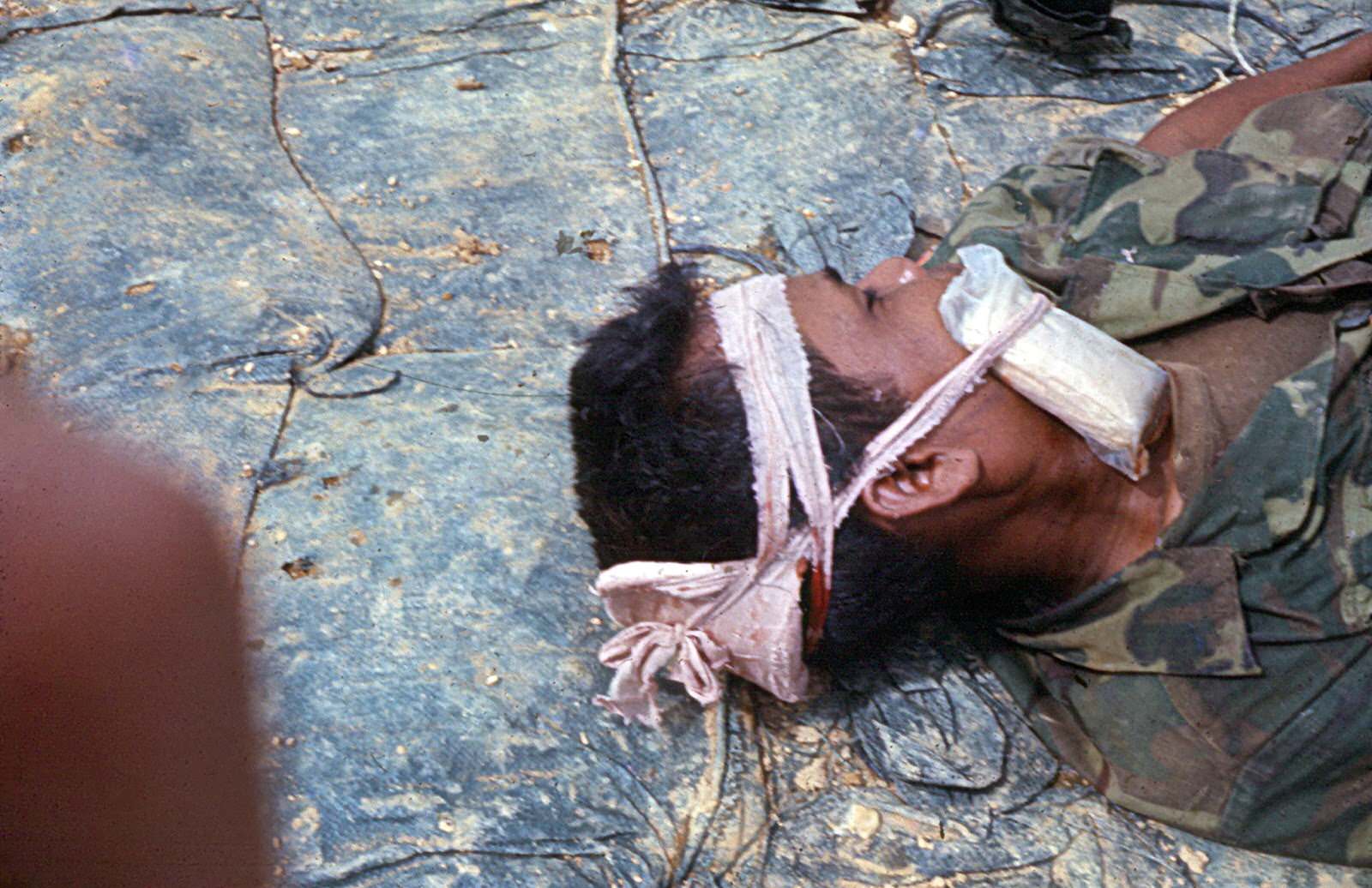
Medical evacuation was a constant feature of the war. A wounded Kit Carson Scout — a former Viet Cong fighter working as a guide for U.S. forces — waits for a medevac helicopter in 1969. These scouts played a critical role in helping American units navigate terrain and enemy tactics, and casualties among them were common.
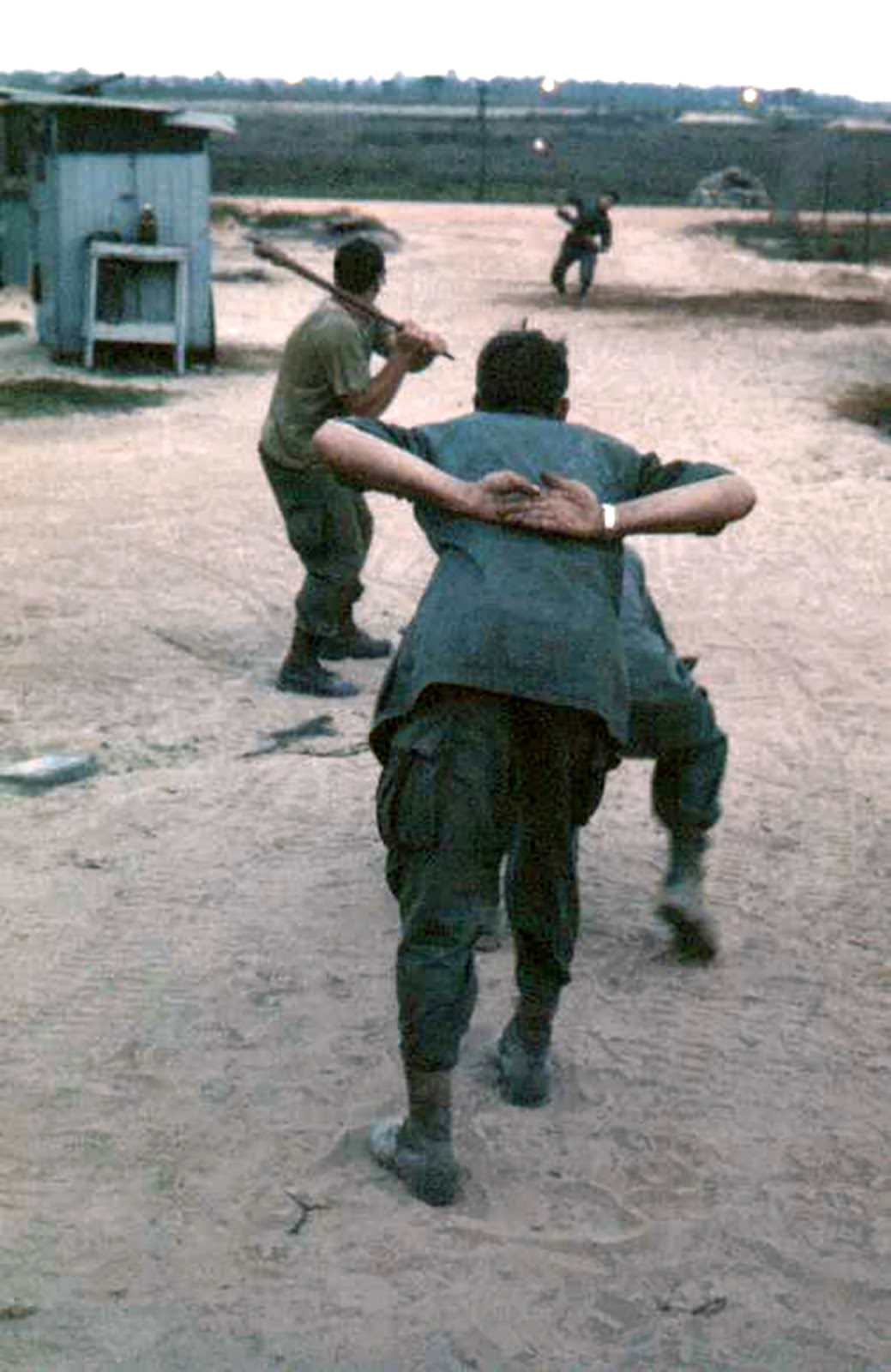
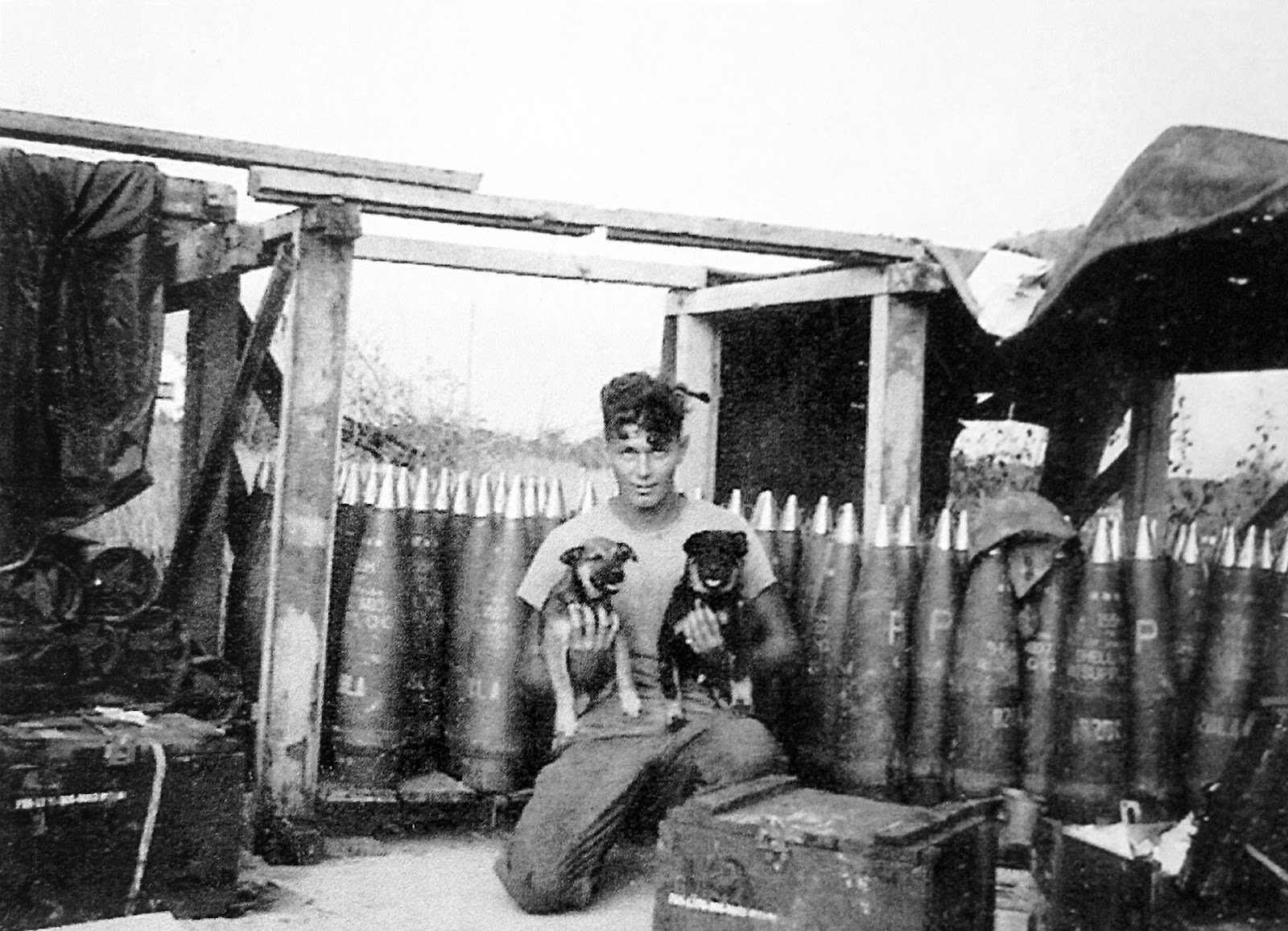
Not every photo carried weight. At Landing Zone Bayonet near Chu Lai, soldiers found time for batting practice. Marvin De Witt was photographed at a Special Forces camp in Tay Ninh cradling two puppies. These moments of normalcy were real and they mattered to the men living through them.
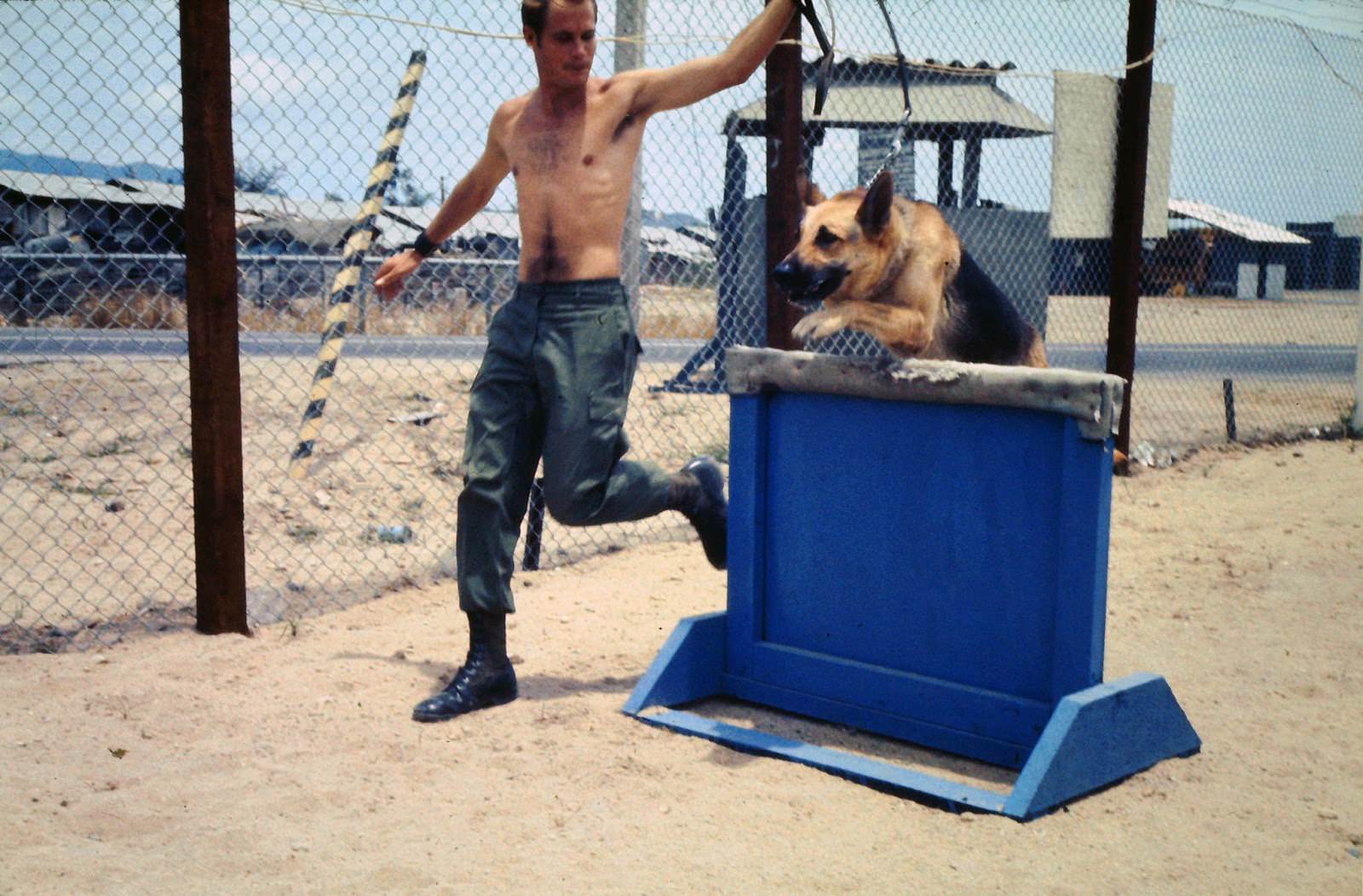
Brian Mowatt ran the exercise course at the Army sentry dog kennels in Nha Trang with his dog Prince. Sentry dogs served important security roles at bases across Vietnam, and the soldiers who handled them developed strong bonds with their animals.
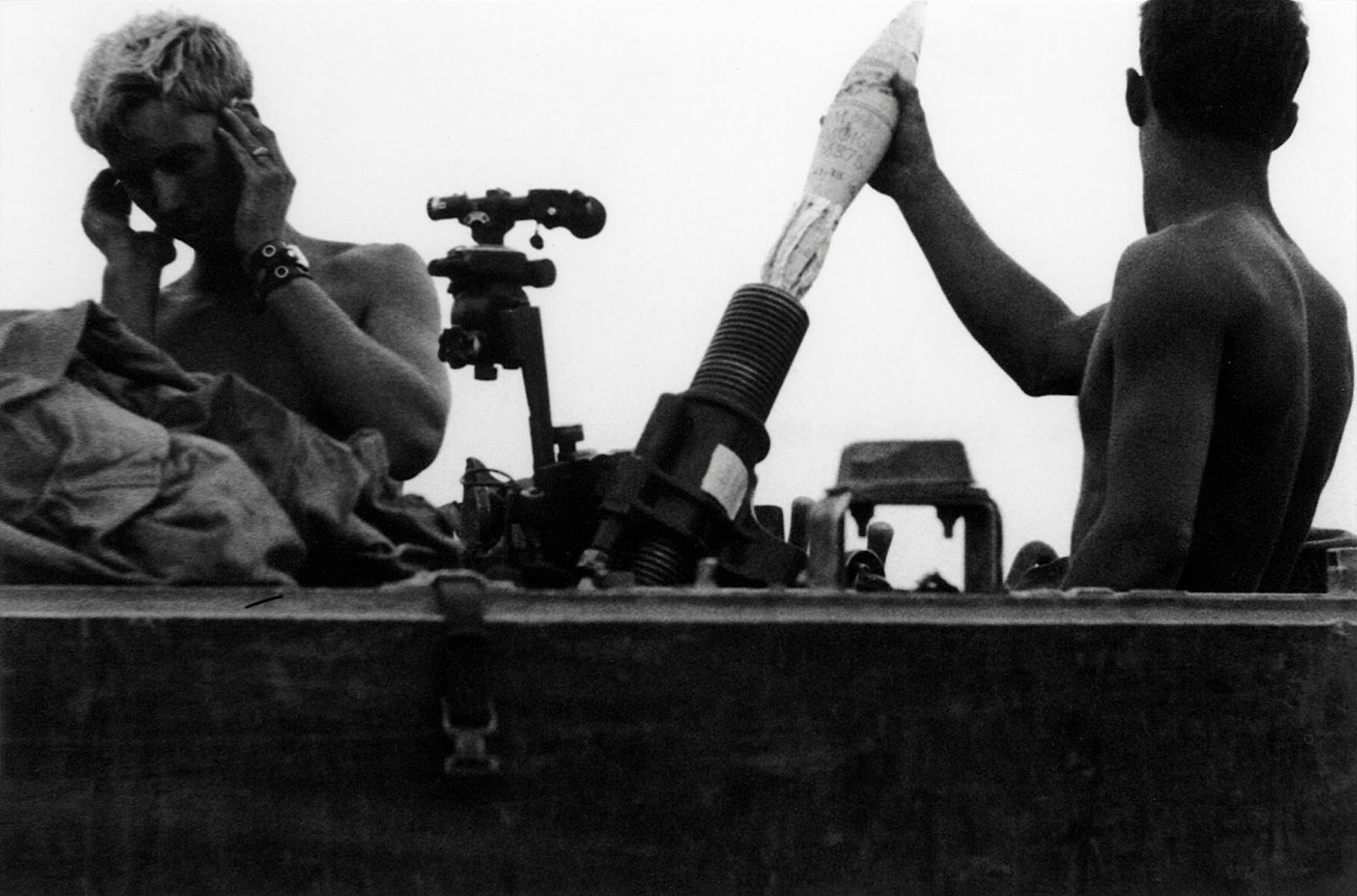
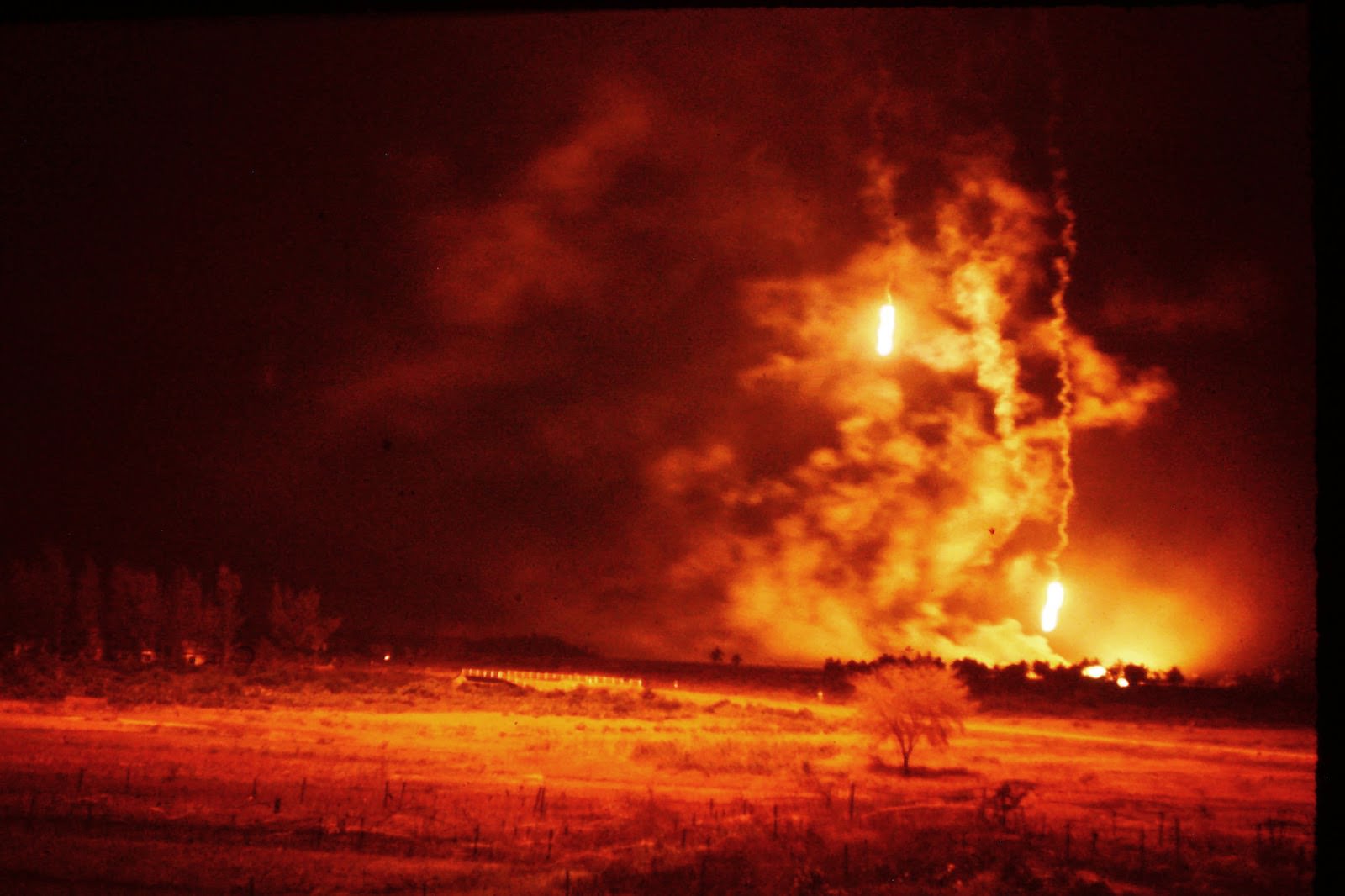
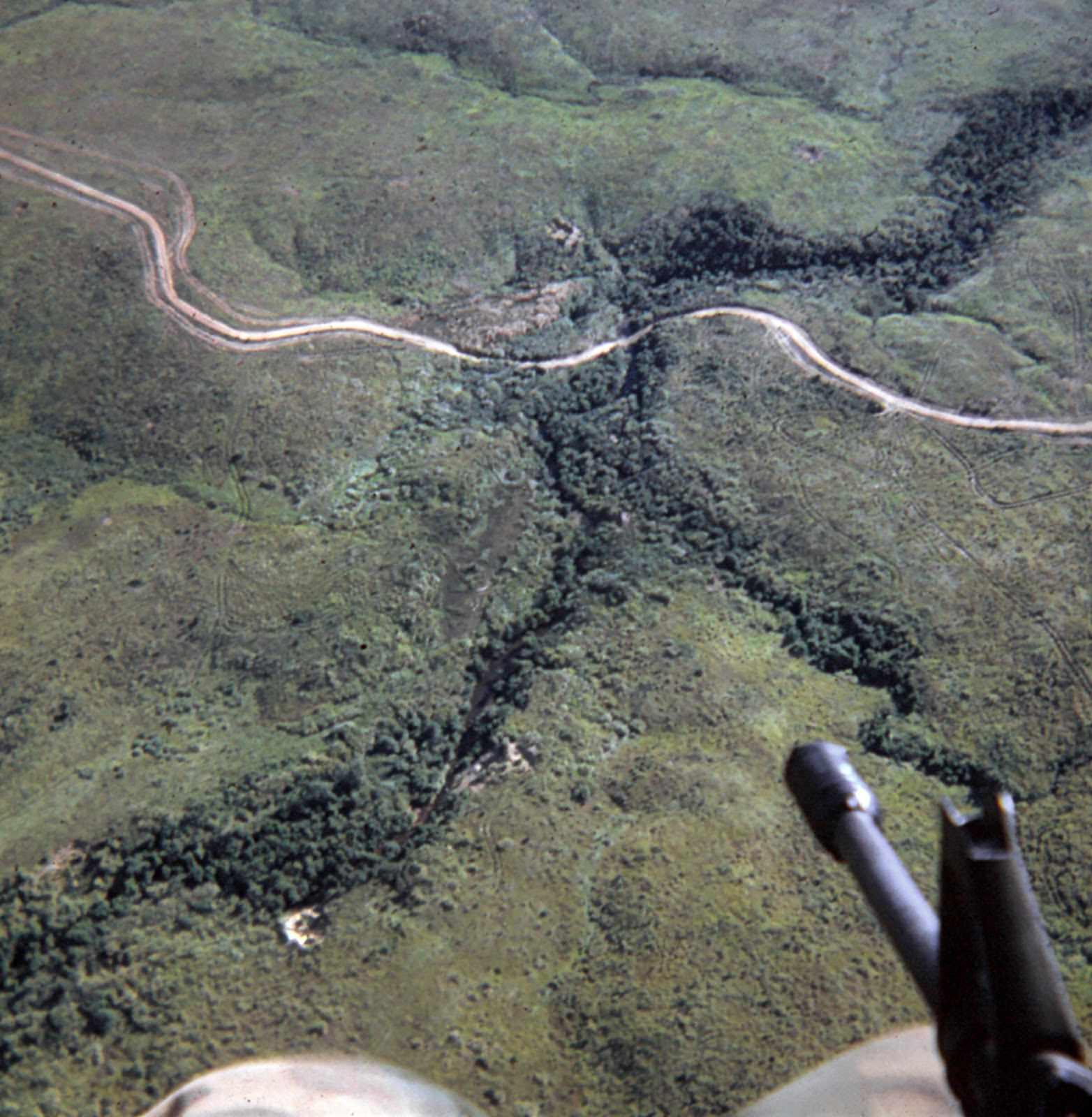
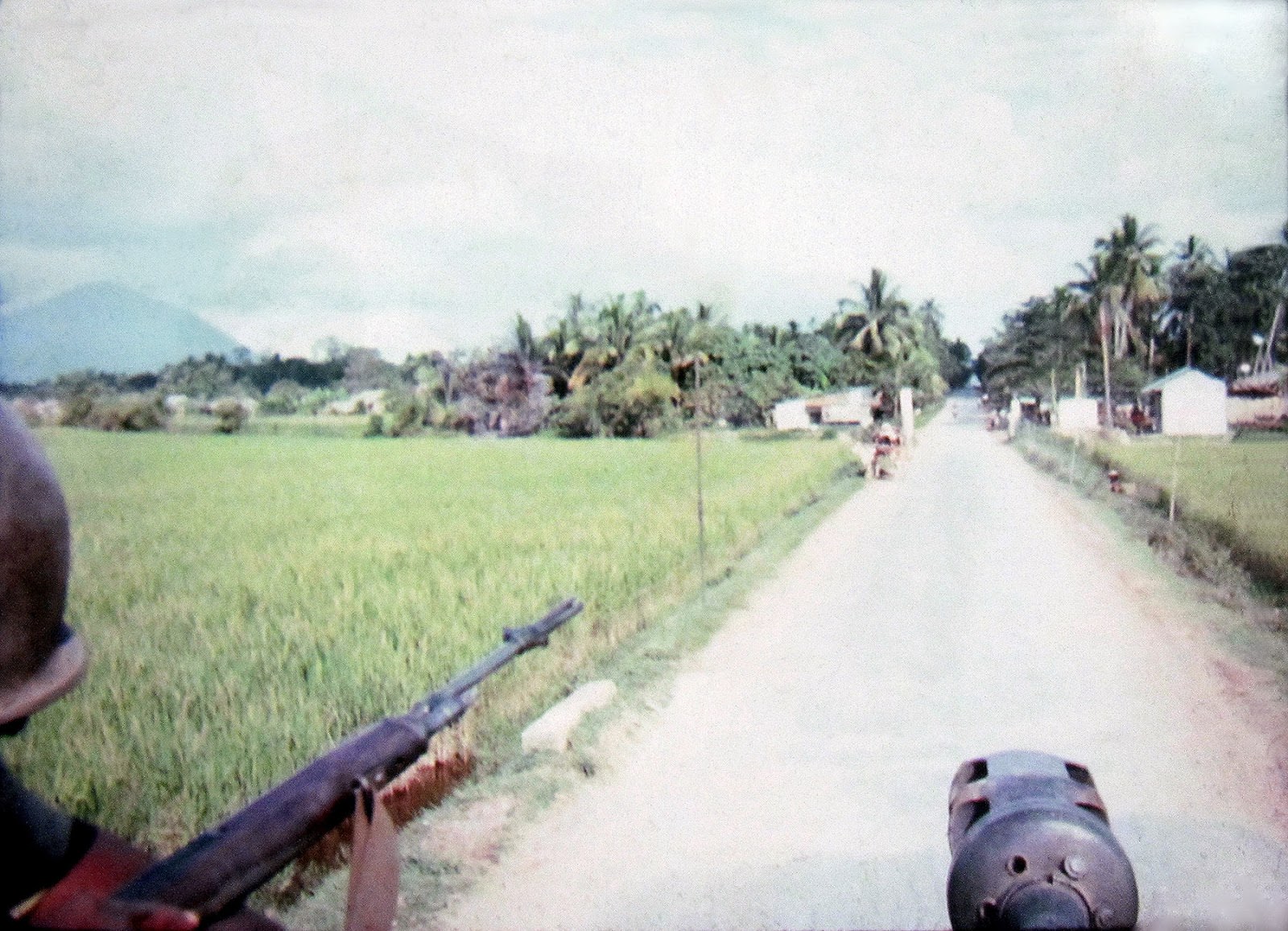
In May 1970, U.S. forces crossed into Cambodia as part of an operation to disrupt North Vietnamese supply lines. Soldiers photographed the mortar battalion at work and captured scenes inside Cambodia near the Memot District. Black Virgin Mountain — a landmark visible from across the border — appears in the background of one frame taken during a mission into Cambodian territory.
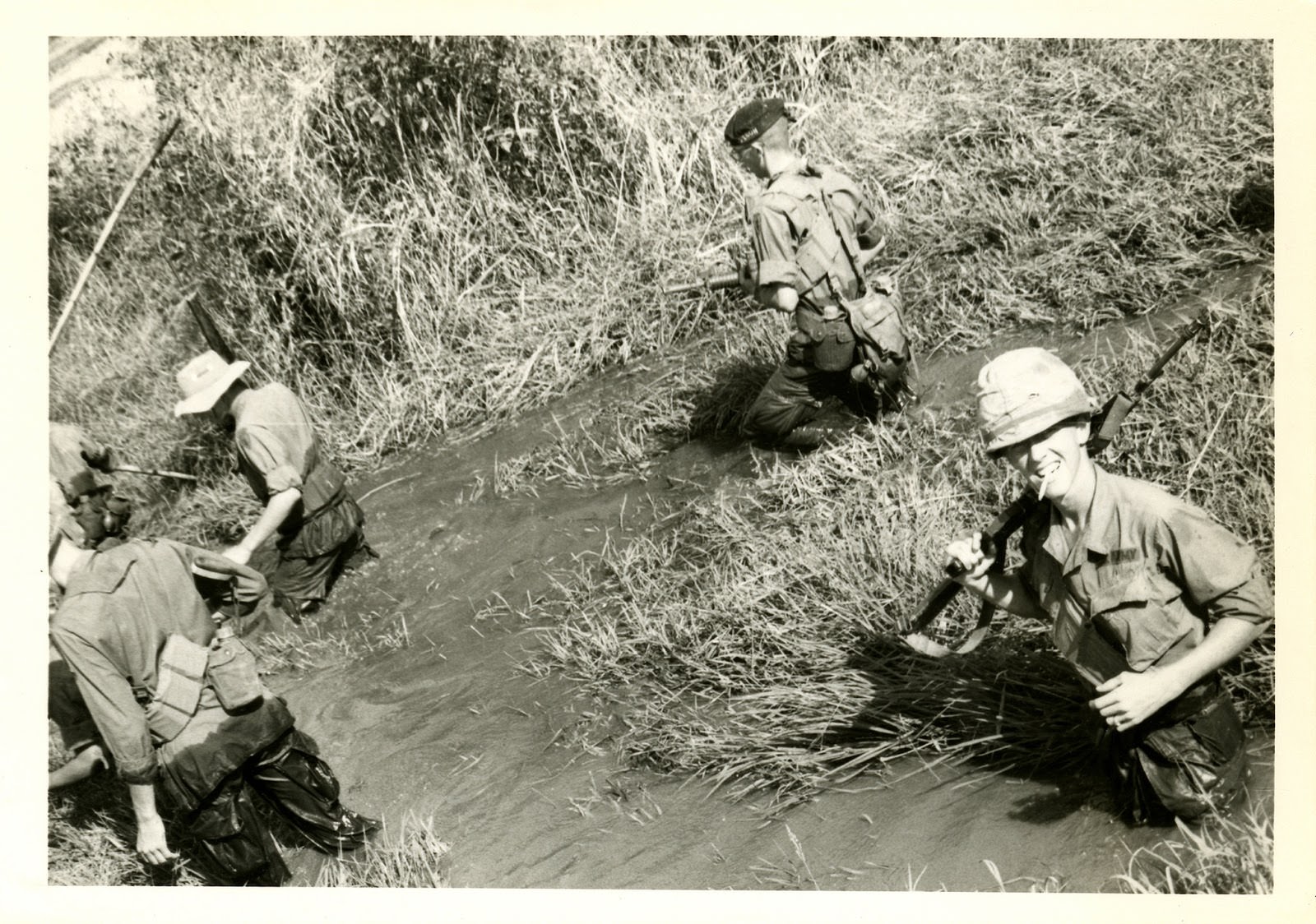
After a gunship strike in northern I-Corps in 1969, a soldier photographed the aftermath. The image is direct and unadorned. Similarly, Michael Patrick Eltrich was photographed on June 11, 1970, positioned in trees in the mountains west of L.Z. Stinson — deep in terrain where the war was still very much active.
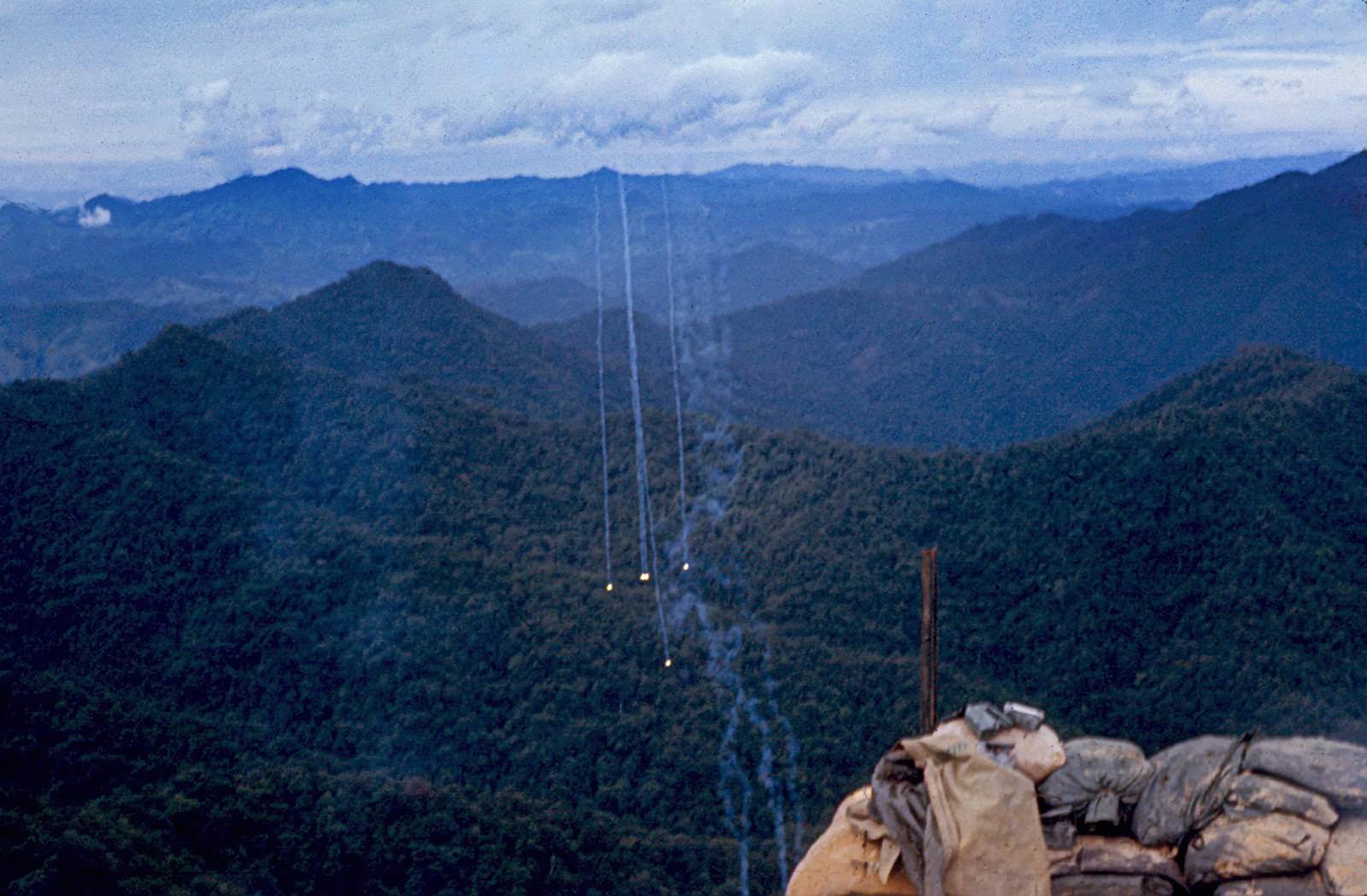
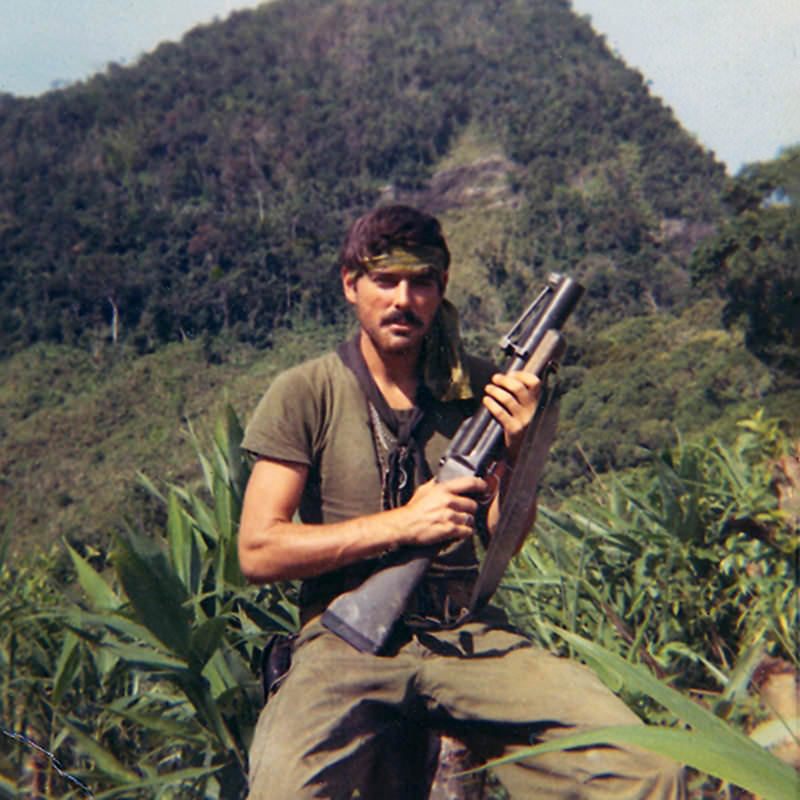
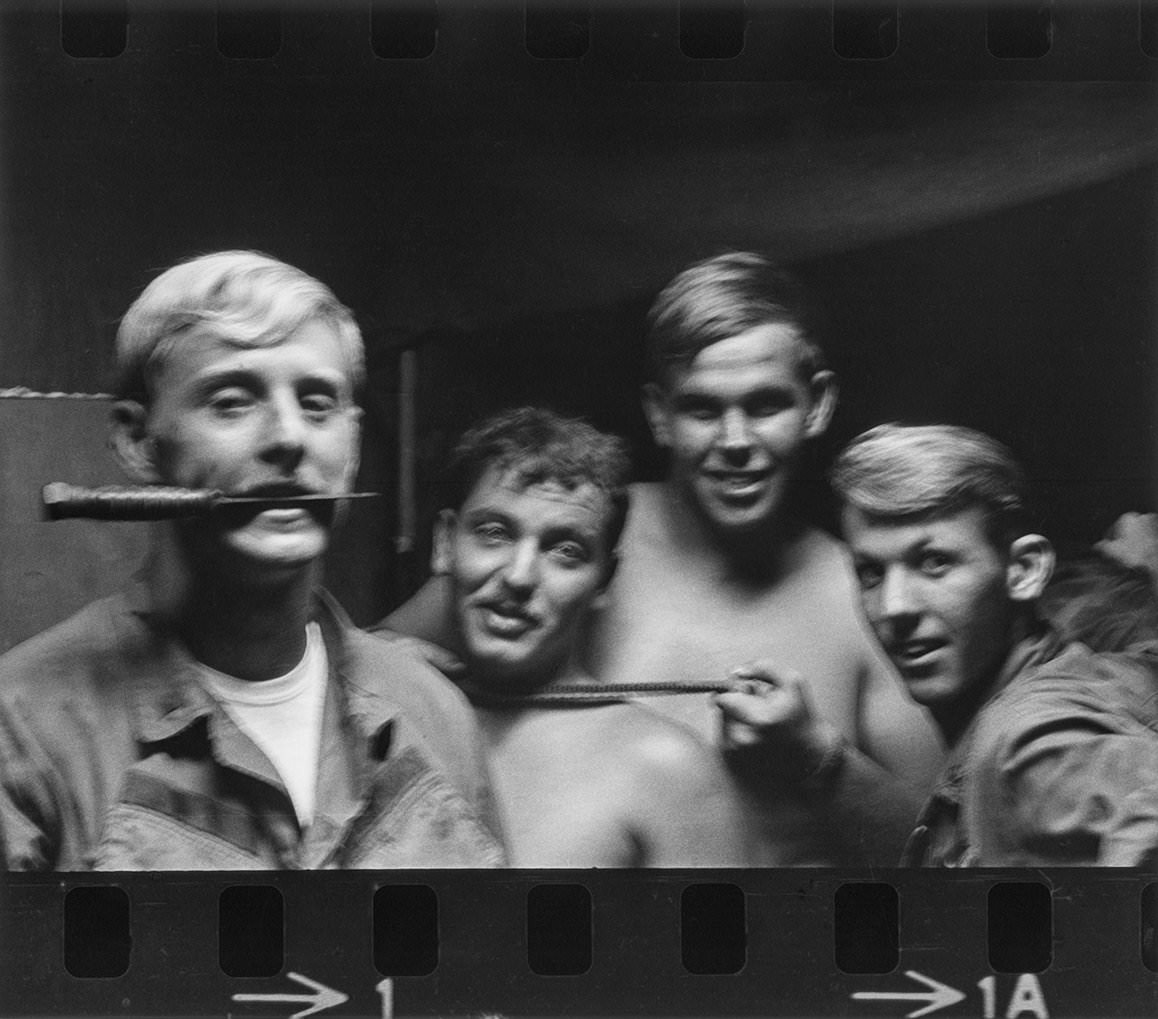
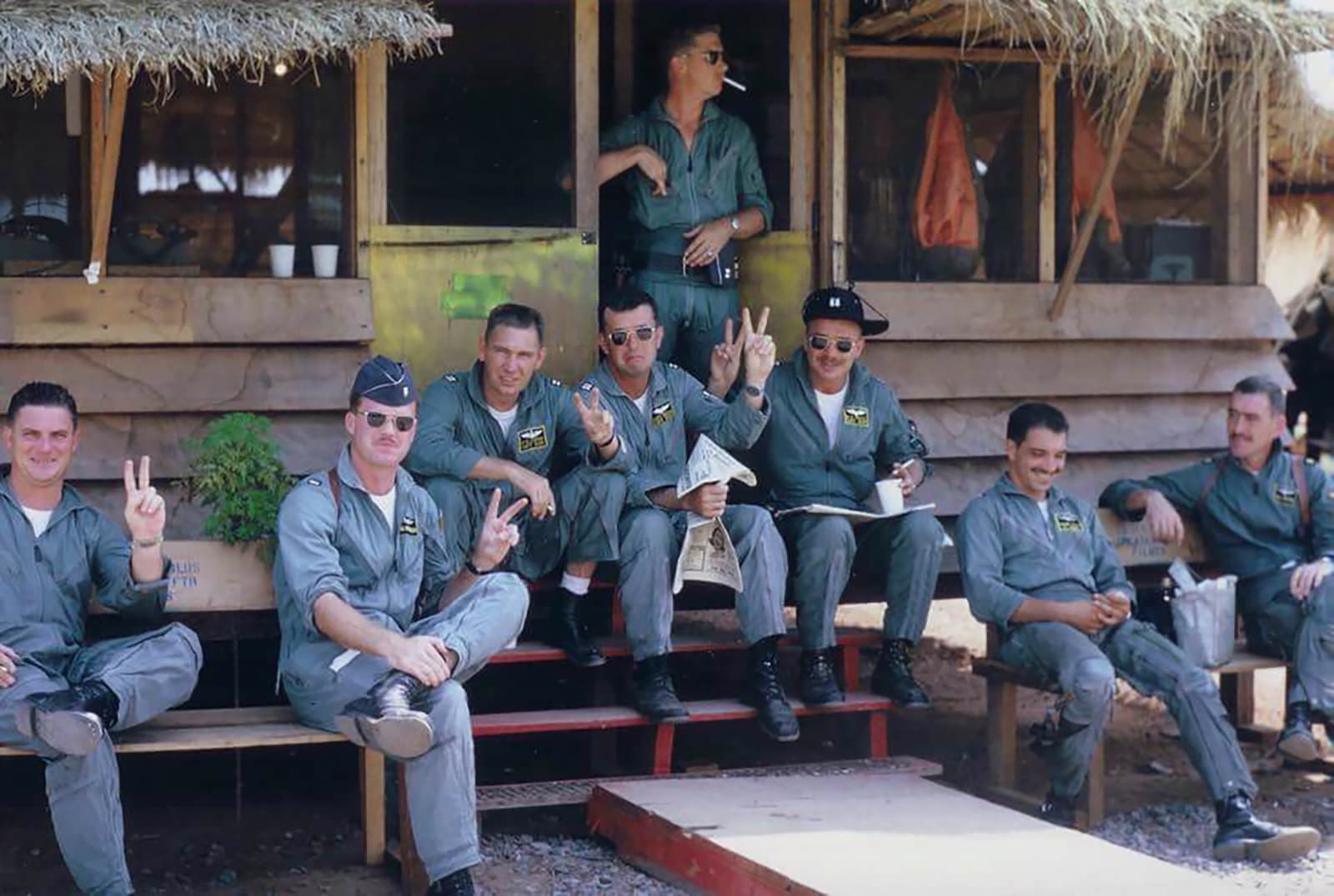
Before shipping out, soldiers photographed each other one last time. A group of men stationed together at Phu Bai were captured on camera on their last night at Fort Lewis in August 1968 — faces young, expressions mixed. A pilot lineup photograph names eight officers in full: Capt. Tom Boatman, 1st Lt. John Morrissey, Capt. Charlie Copin, Capt. Matt Kelch, 1st Lt. Sam Waters, Capt. Ray Moss, 1st Lt. Frank Tullo, and Maj. Bill Hosmer.
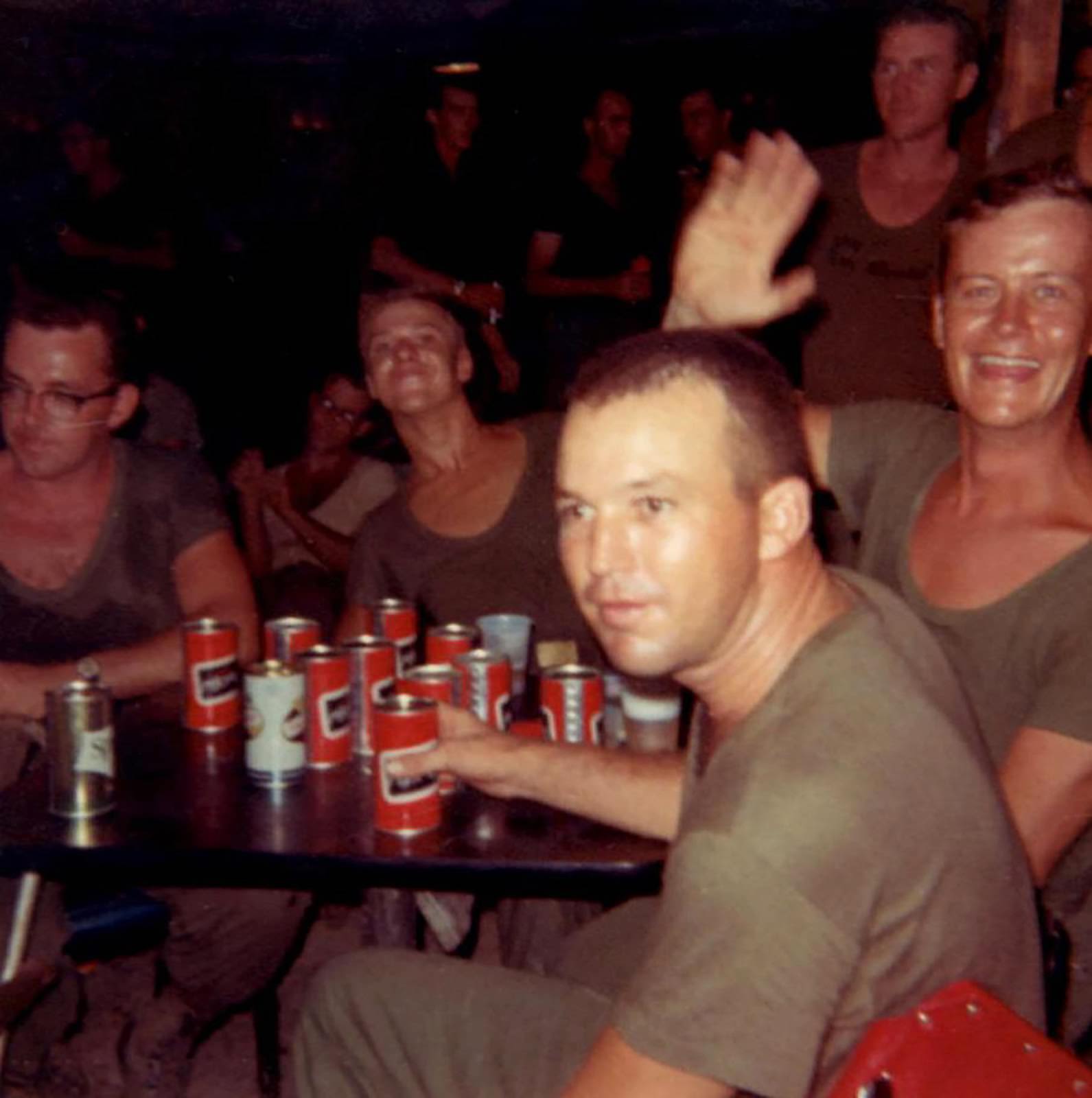
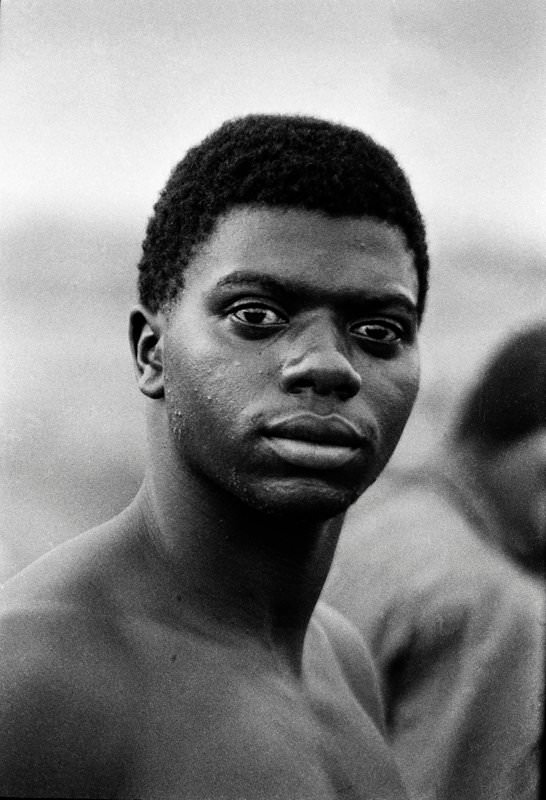
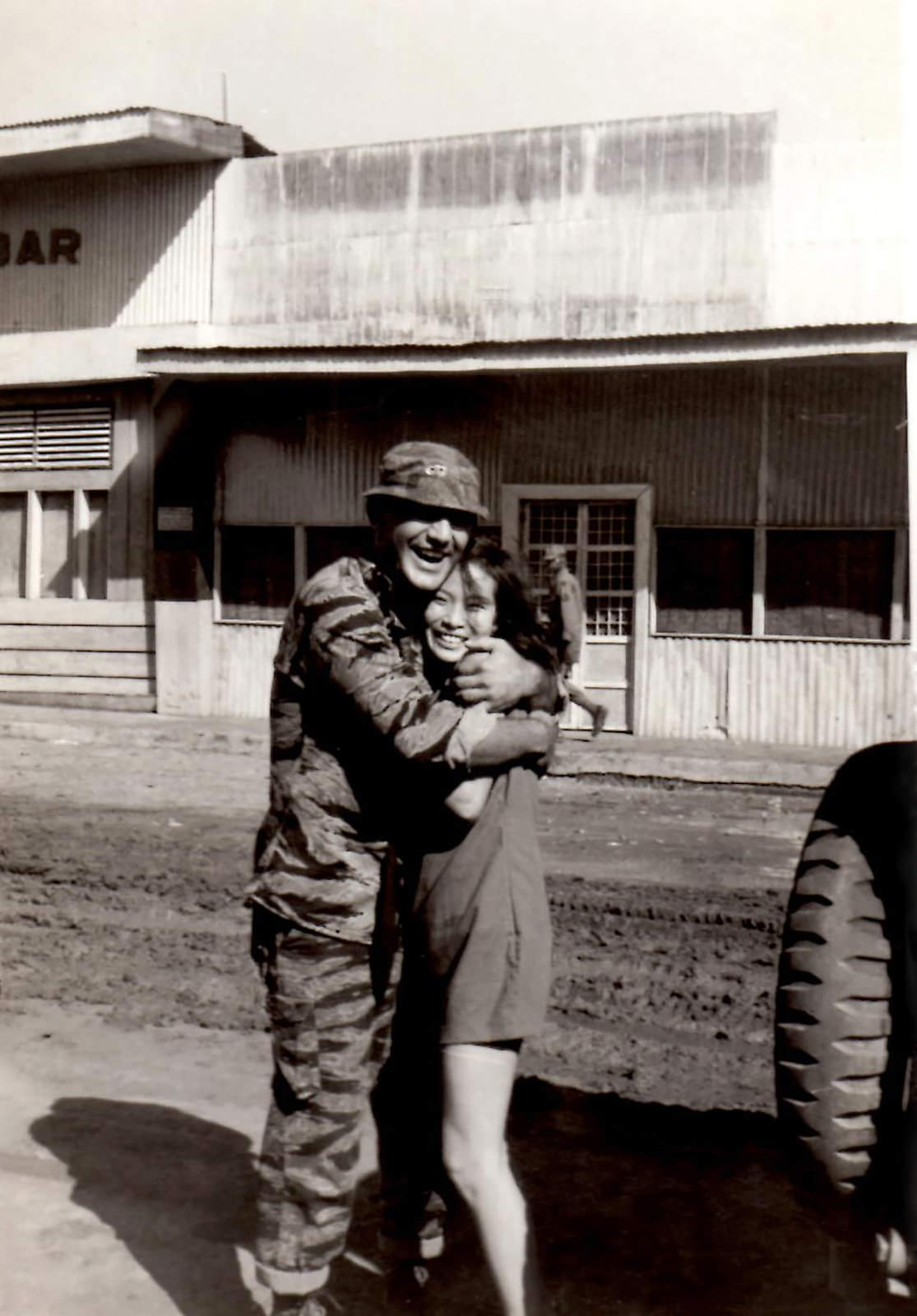
A hug photographed in An Ninh, Ninh Thuan Province, captures a soldier heading home. At Fire Support Base Wood 3 near Tay Ninh, Joe Kempt was photographed in a quiet moment. At Marble Mountain Air Compound in 1970, another unnamed soldier stares into the camera. Each photograph is a small, specific record of a person in a specific place at a specific time — names, dates, and coordinates preserved because a young soldier thought to press the shutter.