
Toronto in the 1970s was a city in motion. Streets that had looked the same for decades were being torn up and rebuilt. Skylines changed year by year. Families packed into streetcars, kids ran through public parks, and vendors pushed carts along busy sidewalks. The photographs from this era capture something raw and honest — a city growing fast, sometimes messily, but always alive.
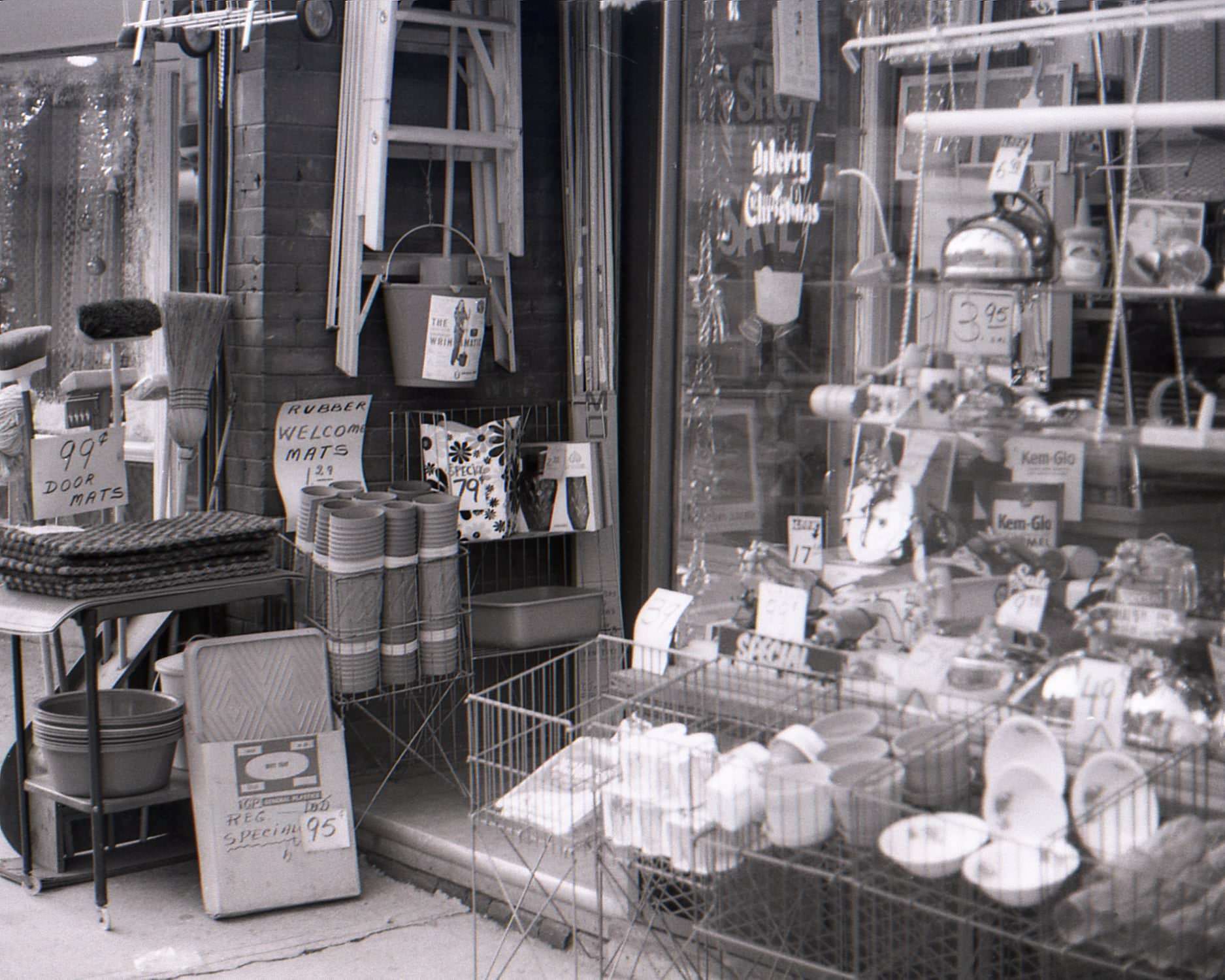
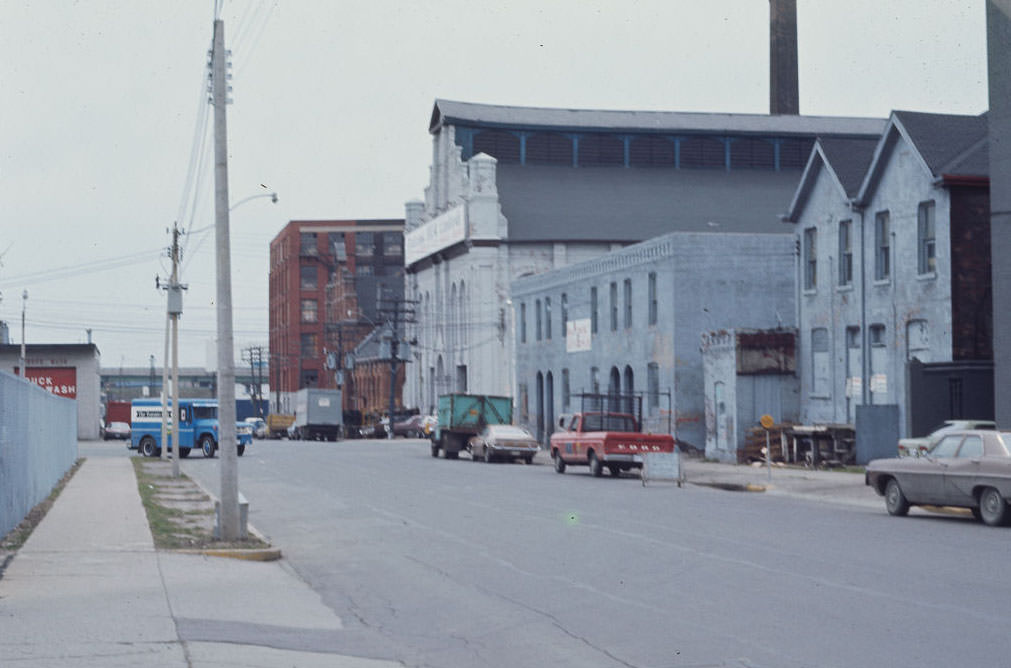
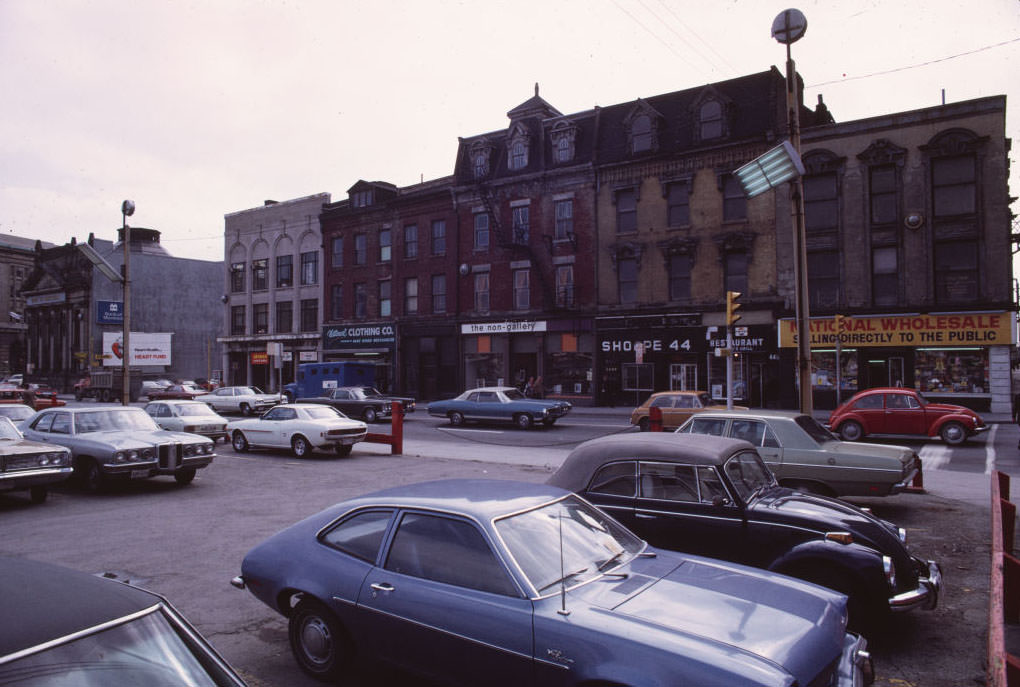
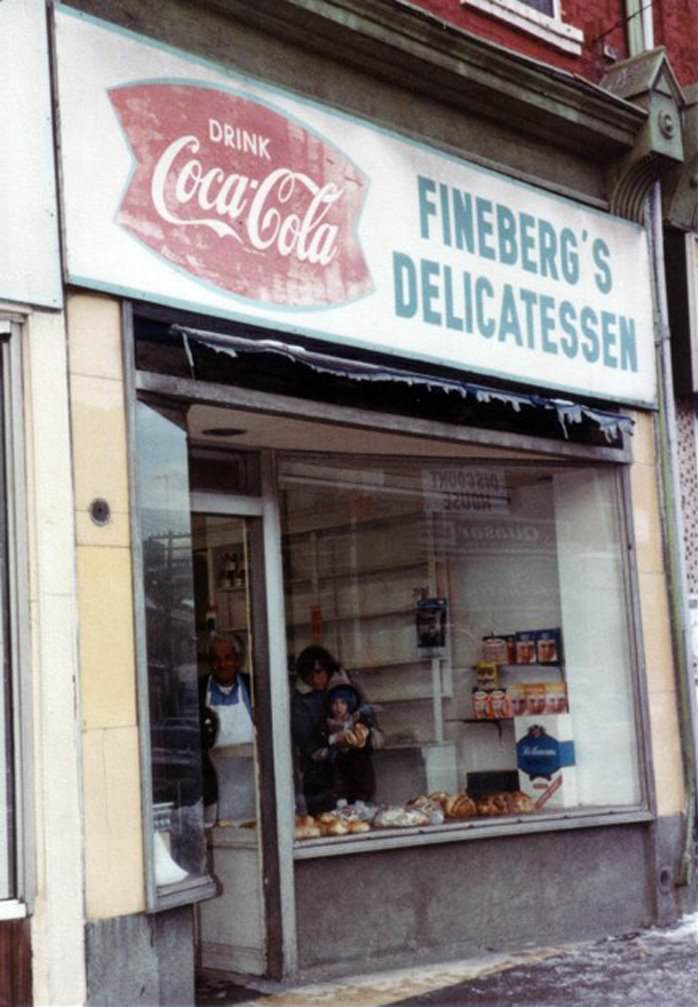
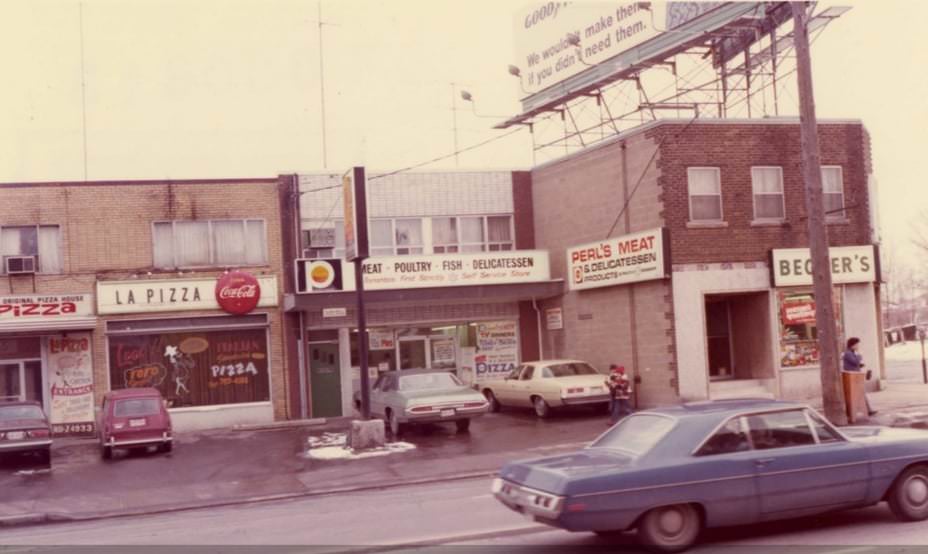
Queen Street West was a hub of everyday commerce in the early 1970s. Small storefronts lined the strip, each with its own character. The buildings carried the industrial grit of the era — brown brick, painted signs, and the kind of worn edges that came from decades of city use. This stretch of the city was far from glamorous, but it was real, and it worked.
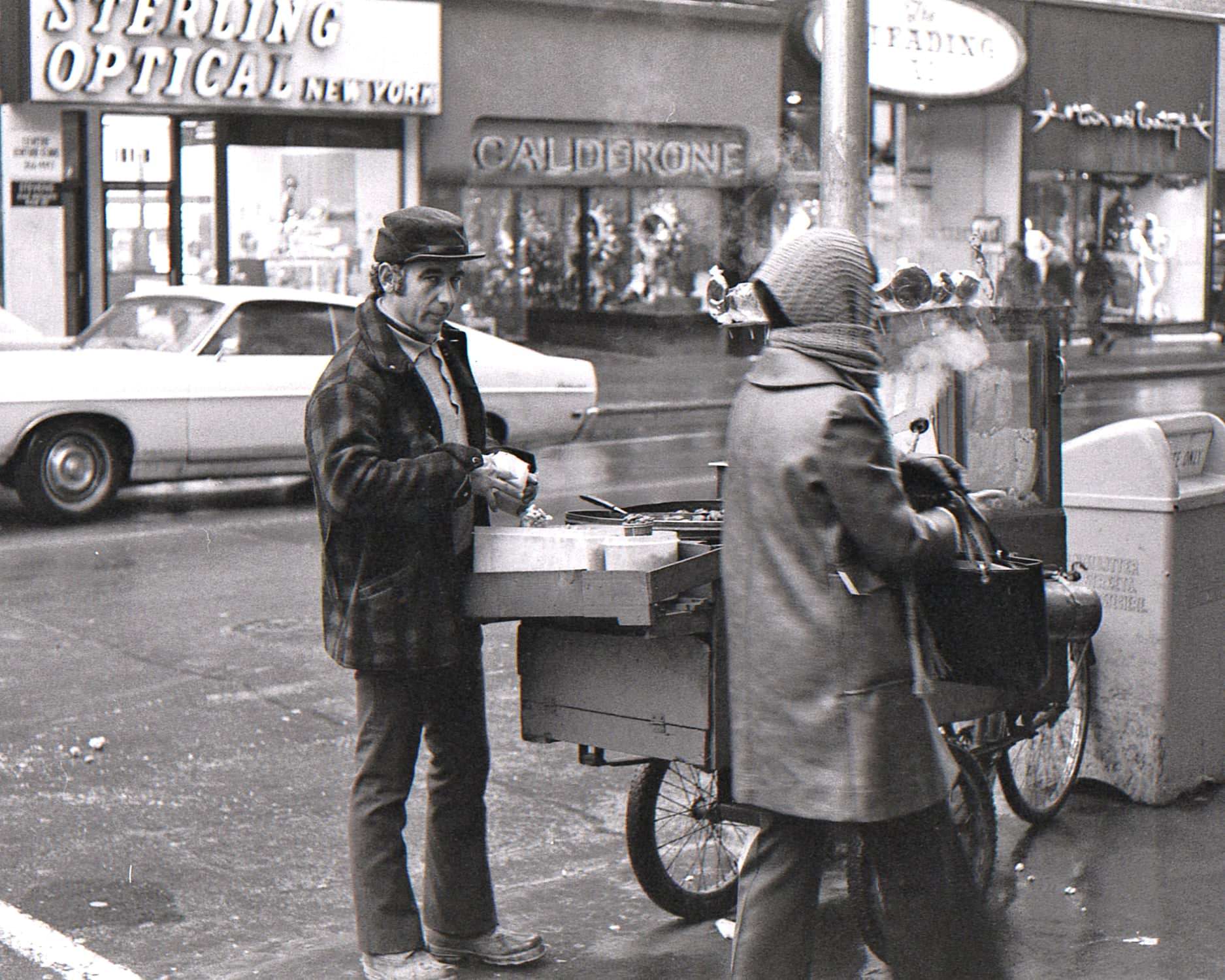
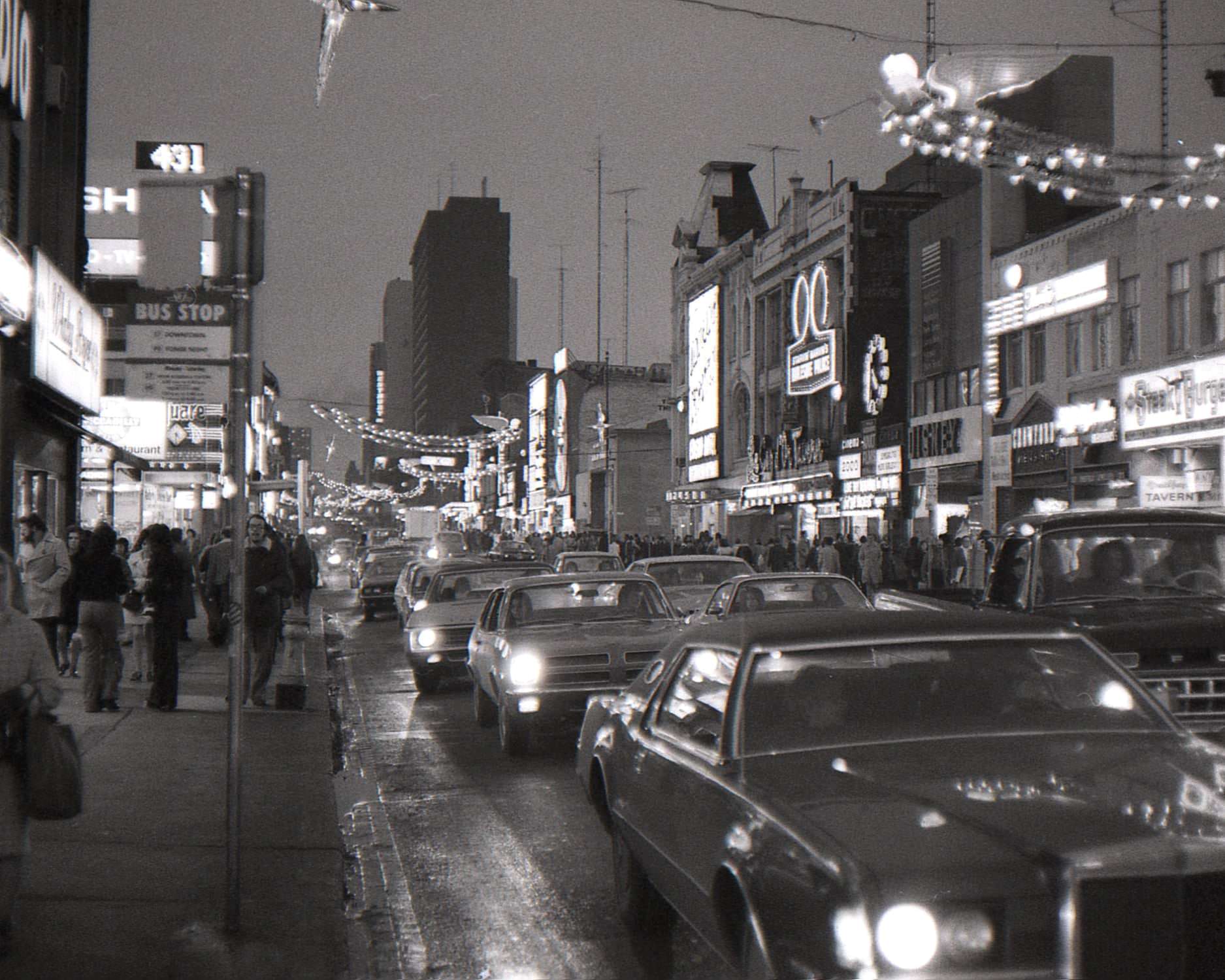
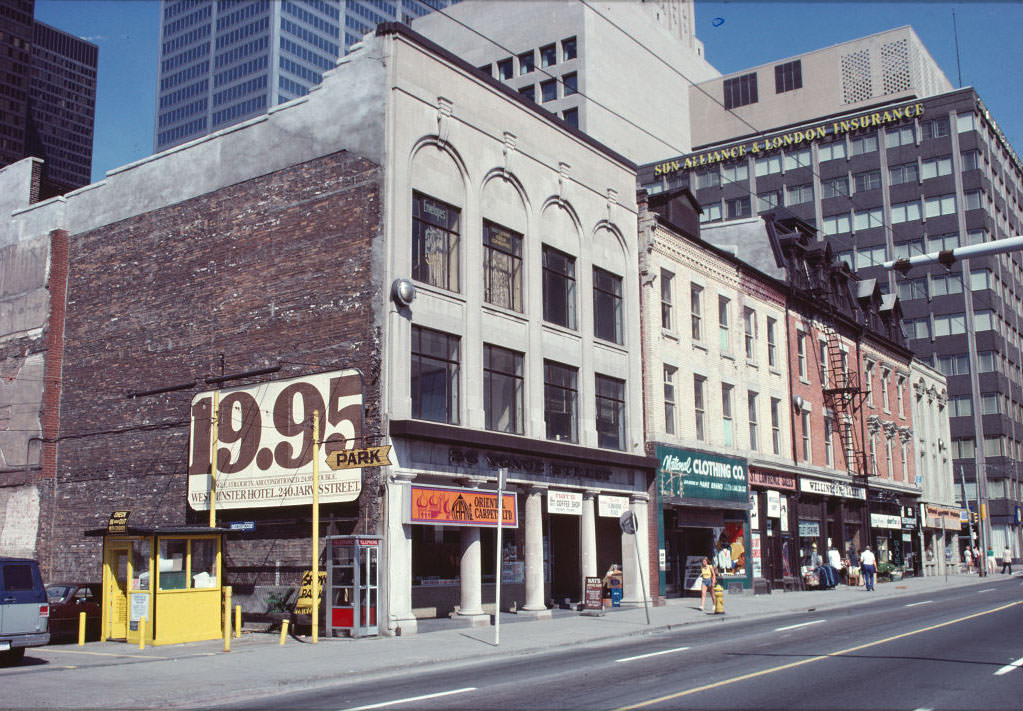
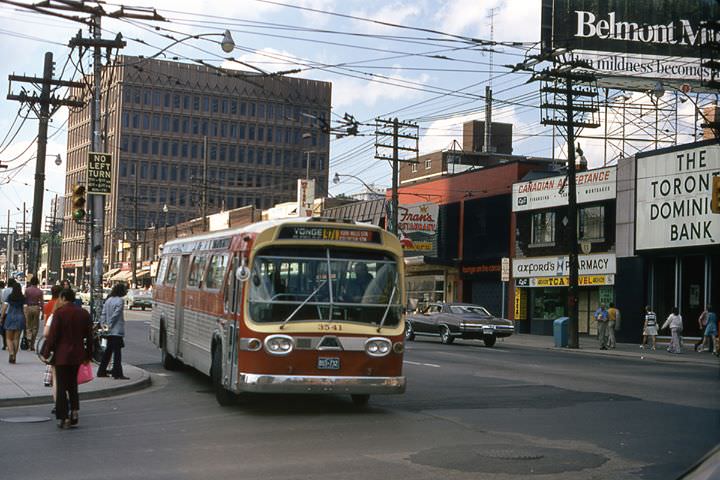
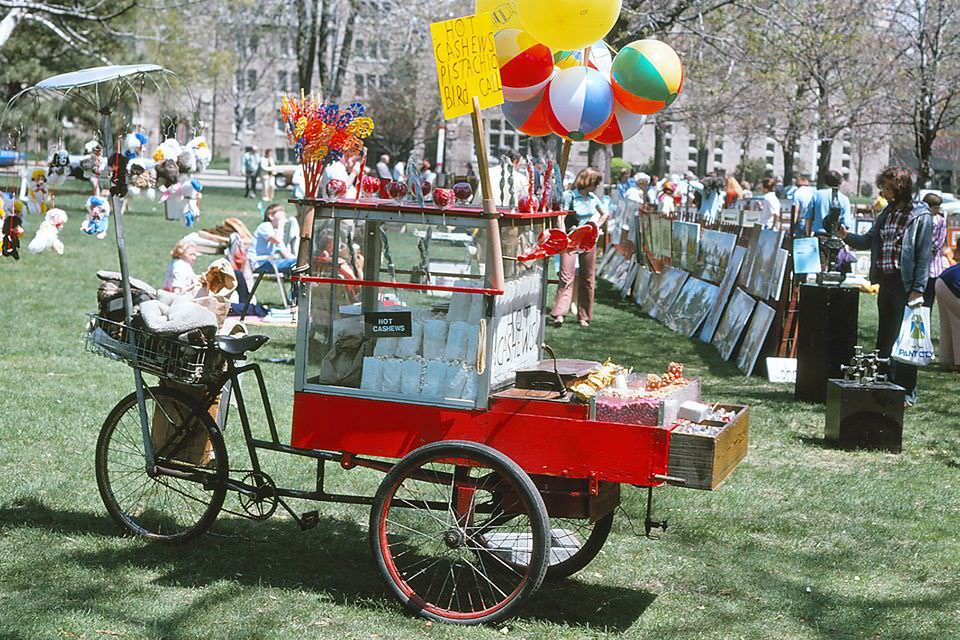
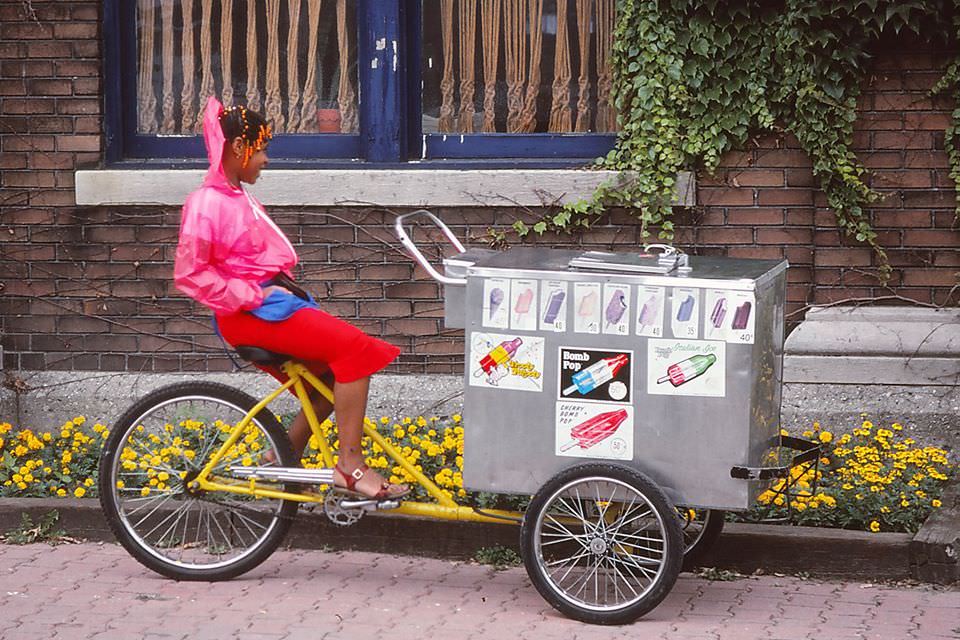
Yonge Street was the spine of the city. Street vendors set up along the sidewalks, and the energy of the strip shifted depending on the hour. By 1972, Yonge had become a magnet for youth culture, commerce, and all manner of foot traffic. The street had a reputation that was part excitement, part danger, and entirely Toronto.
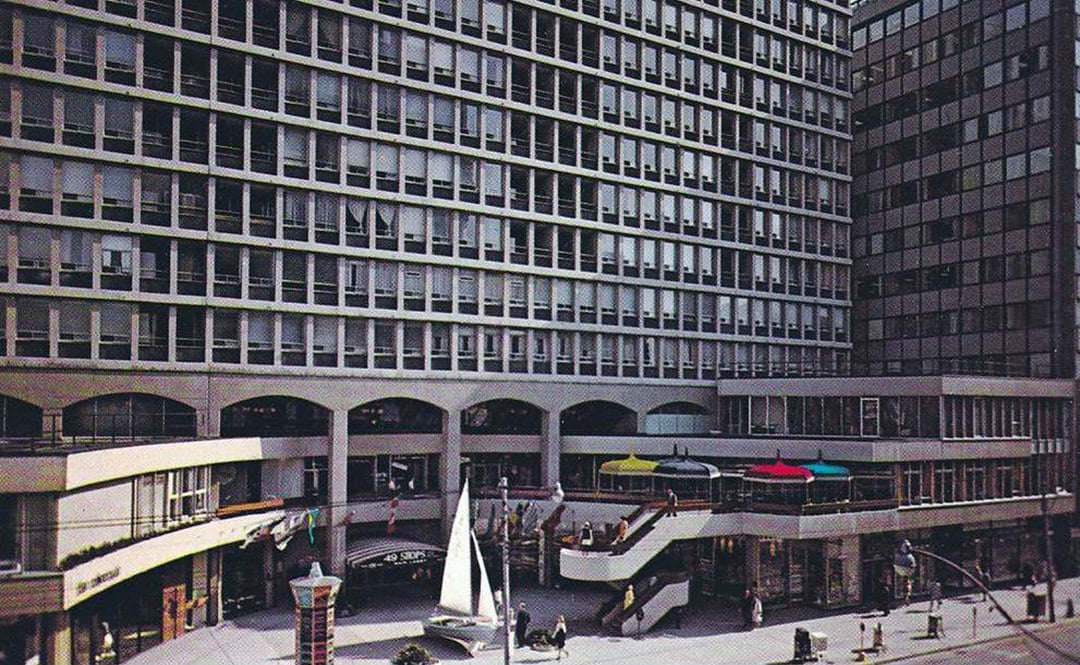
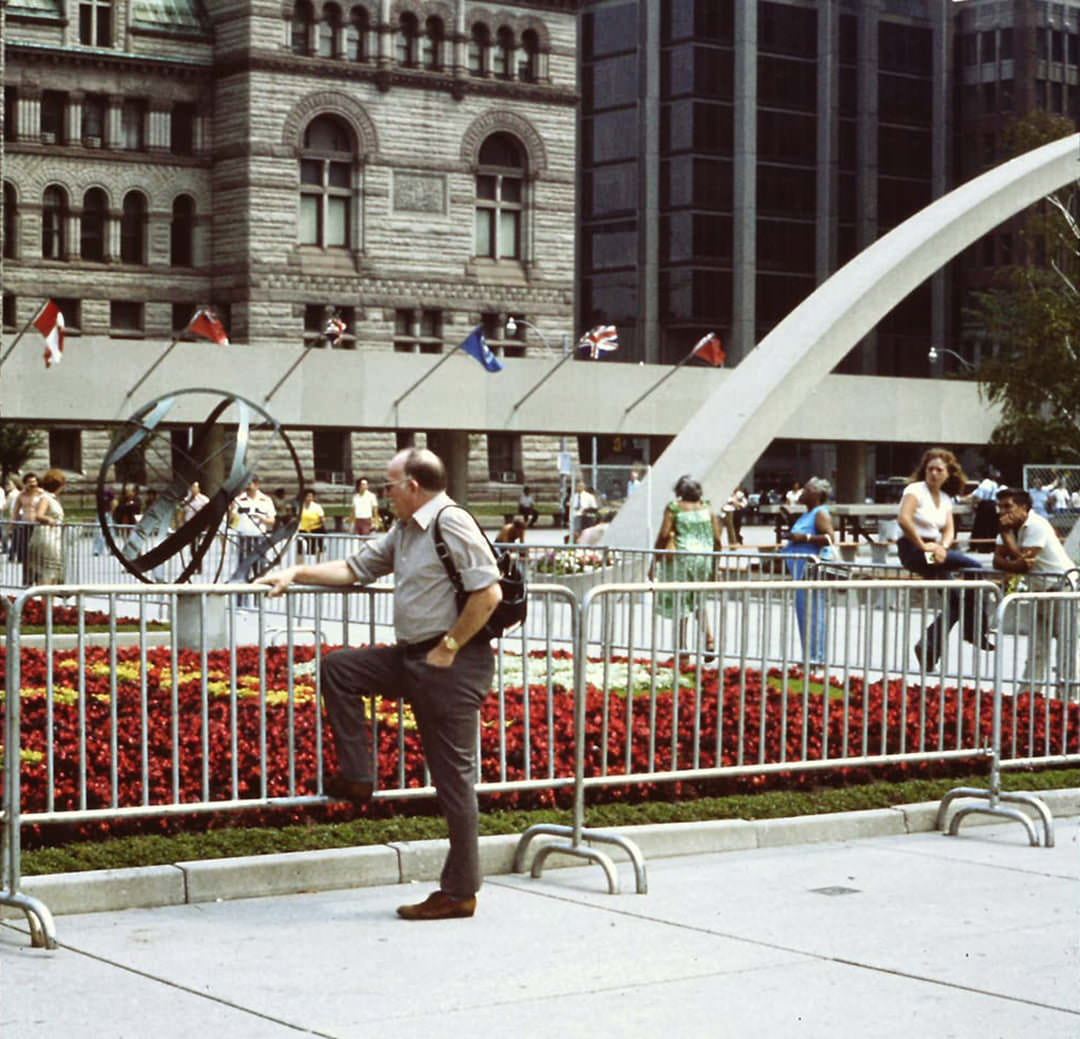
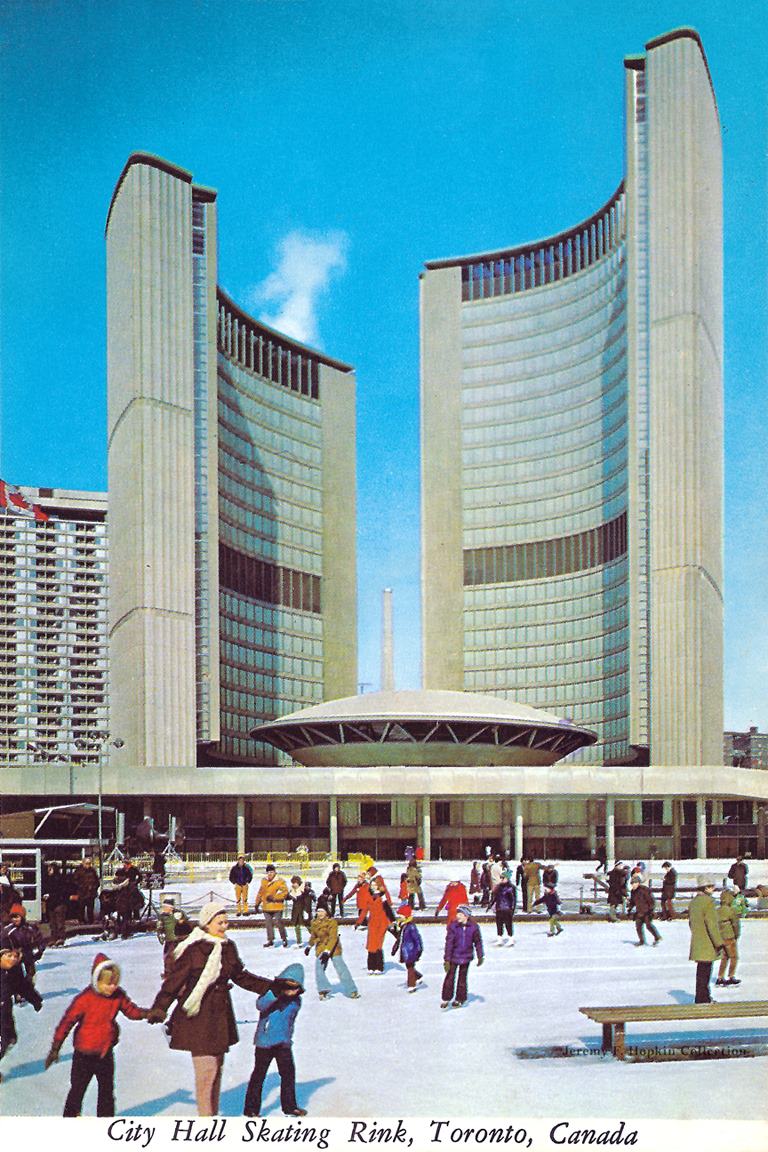
Nathan Phillips Square, opened in 1965, had already become a gathering place for Torontonians by the mid-1970s. Whether it was a summer afternoon stroll or a winter skate on the rink, the square drew people from across the city. It sat in front of the modernist New City Hall — itself a symbol of Toronto’s postwar ambition.
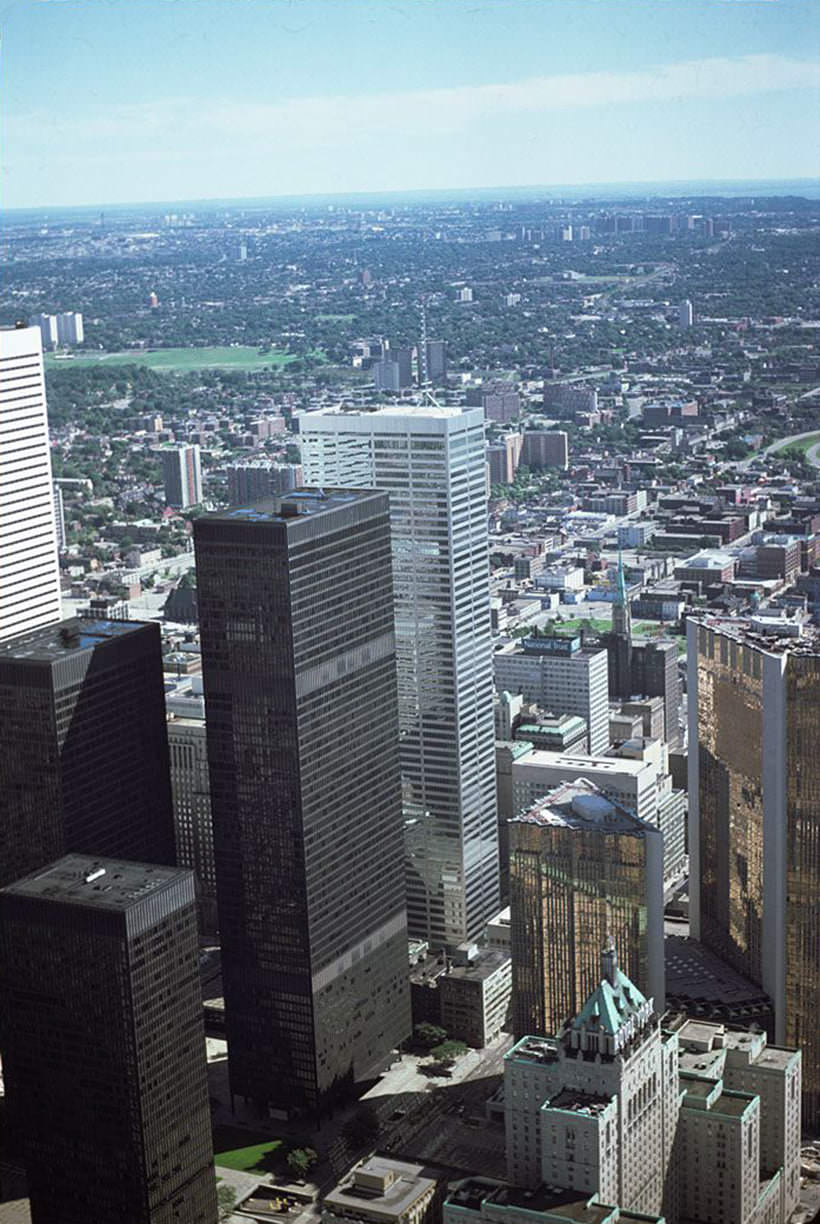
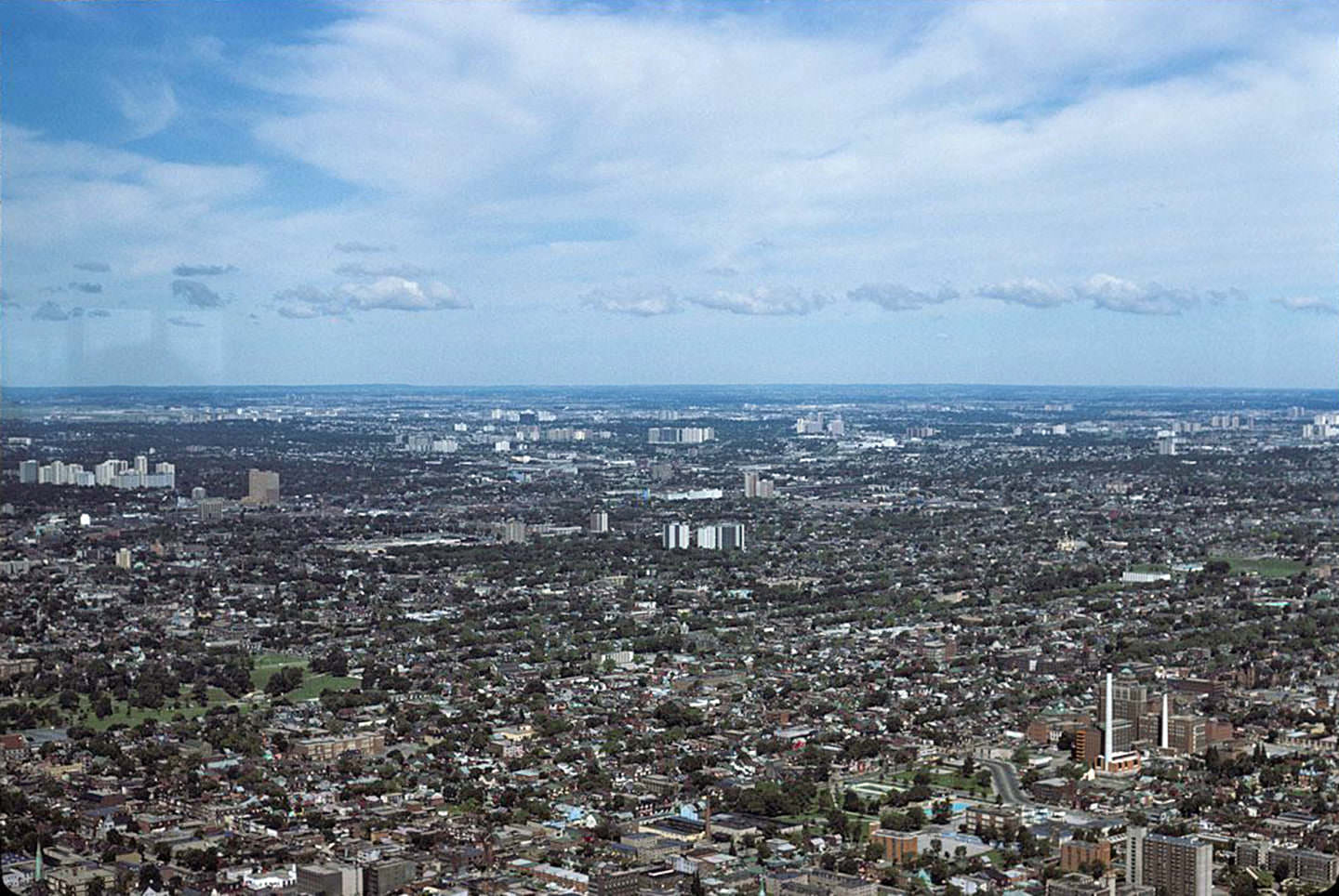
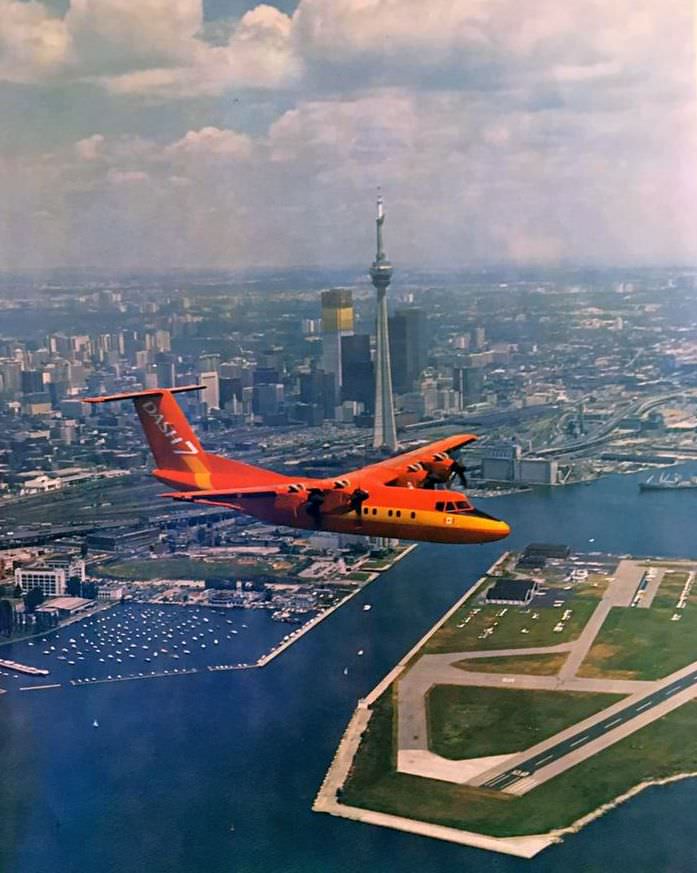
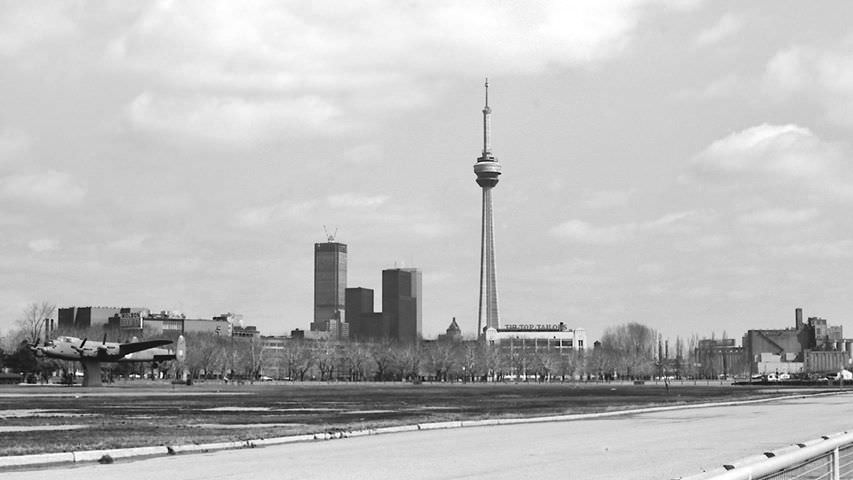
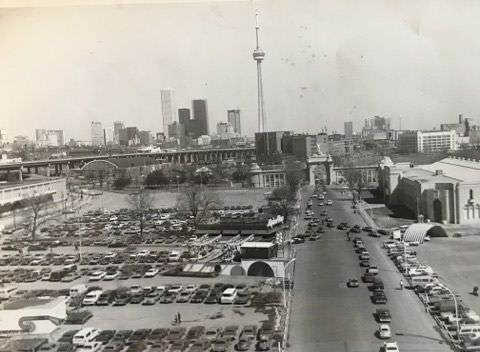
No single structure changed Toronto’s identity more dramatically than the CN Tower. Construction began in 1973, and by August 1976 — when the tower was complete and open — it stood at 553.33 meters (1,815.4 ft), making it the tallest freestanding structure in the world at the time. From its observation deck, the full sprawl of the city laid out in every direction.
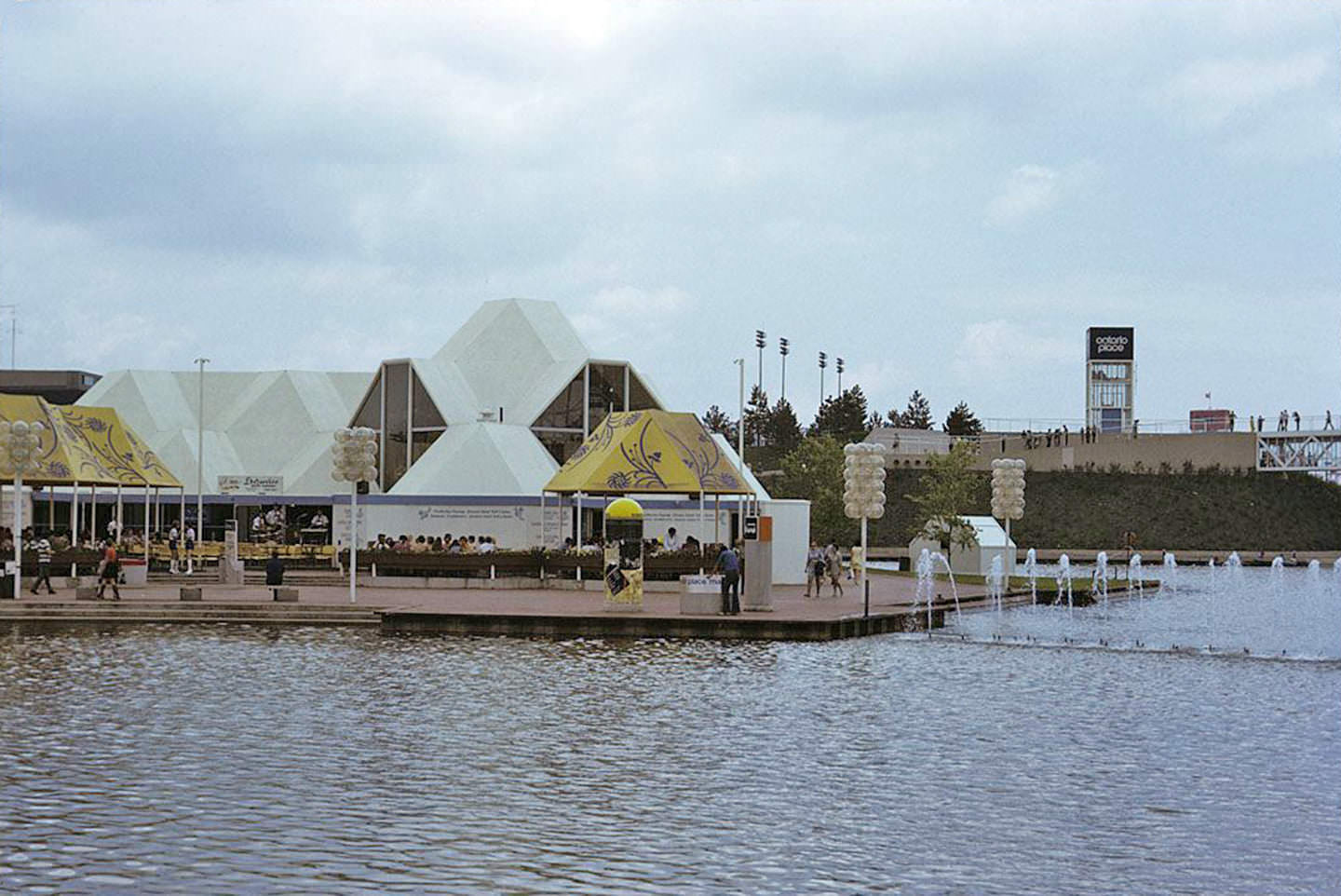
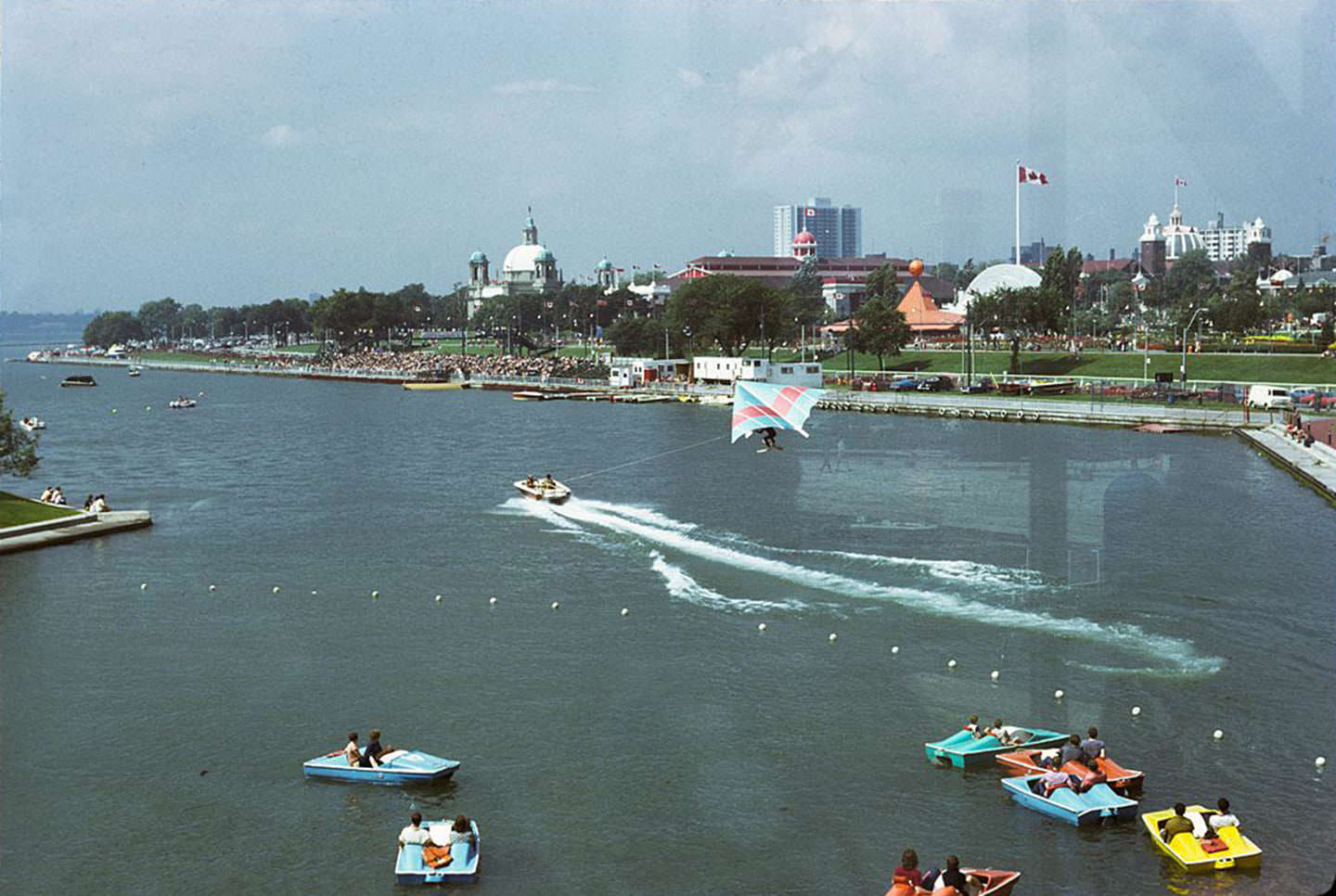
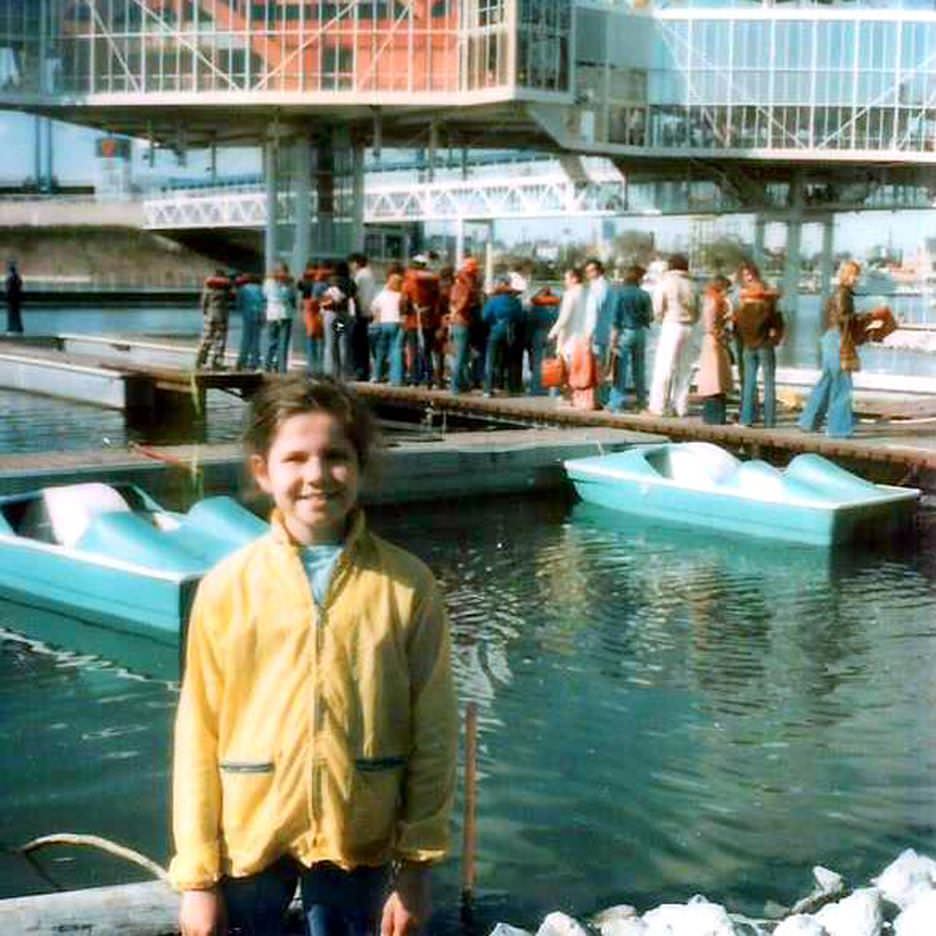
Ontario Place opened in 1971 on three man-made islands along the Lake Ontario waterfront. It was designed to feel futuristic, with pod-shaped structures on stilts rising above the water and a massive geodesic dome anchoring the site. Families came from across the region to experience something that looked like it had been pulled from a science fiction film.
Old City Hall, built in 1899, still anchored the corner of Queen and Bay in the 1970s. While the new City Hall took over administrative functions, the old Romanesque structure remained a courthouse and a familiar landmark. Looking east down Queen Street West toward it in 1975, the contrast between the old stone building and the city’s newer architecture was unmistakable.
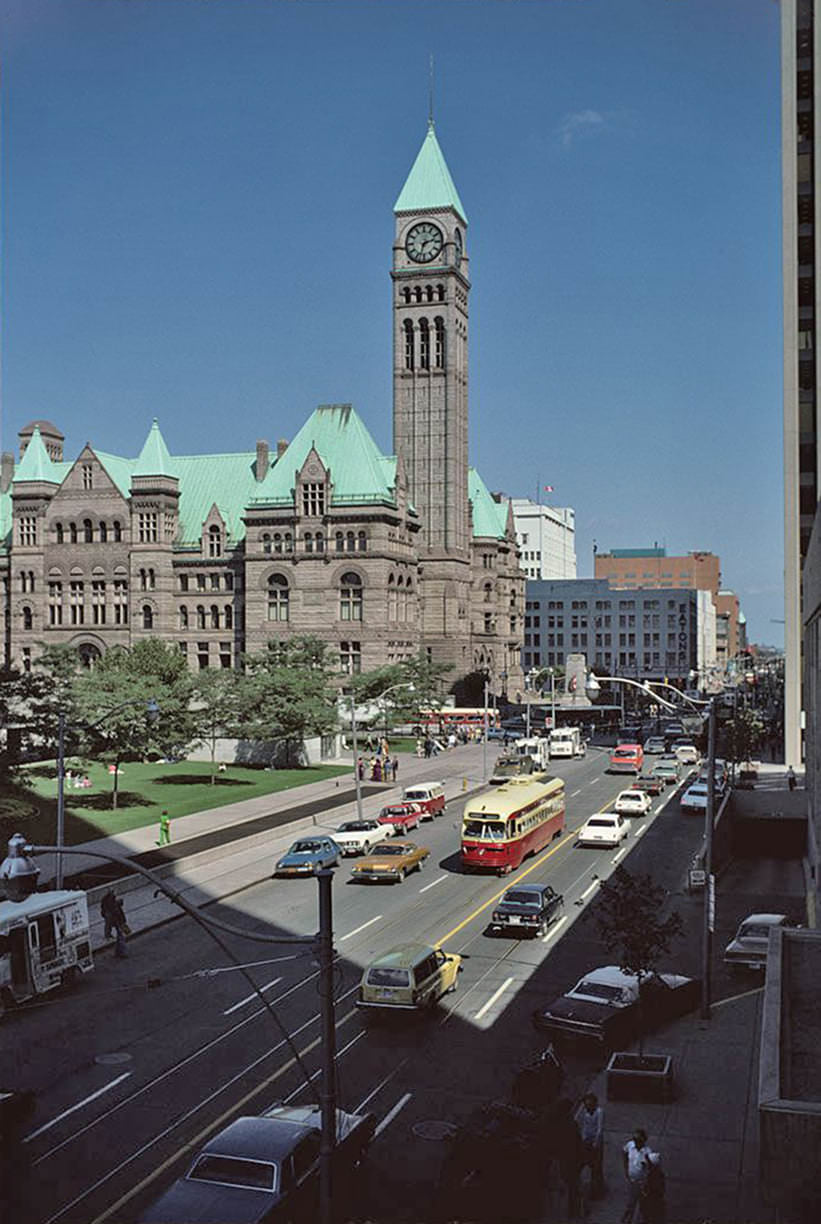
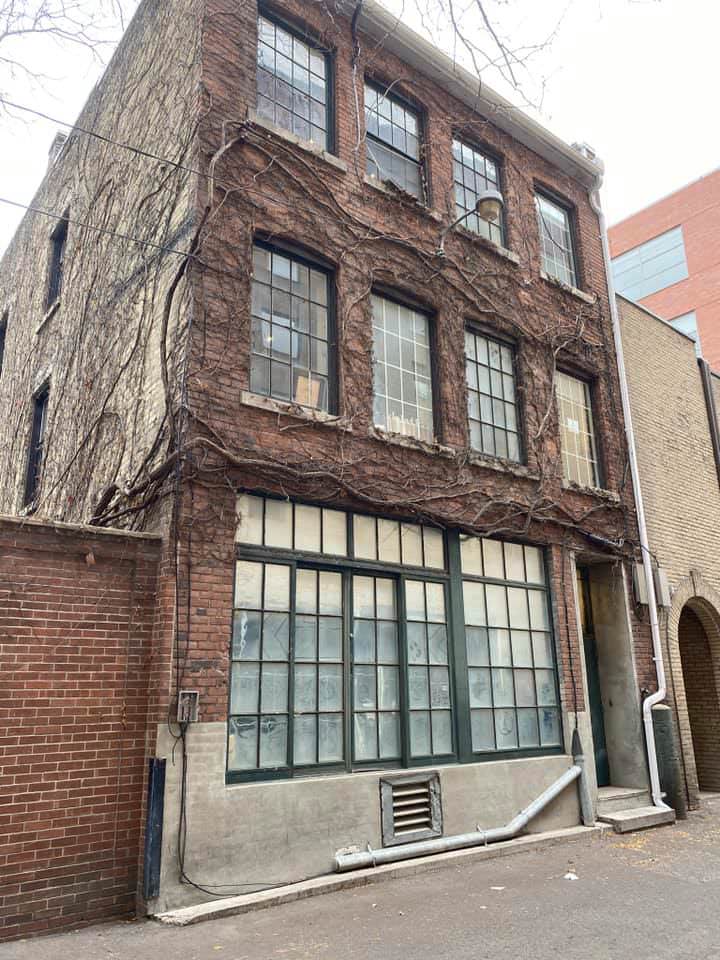
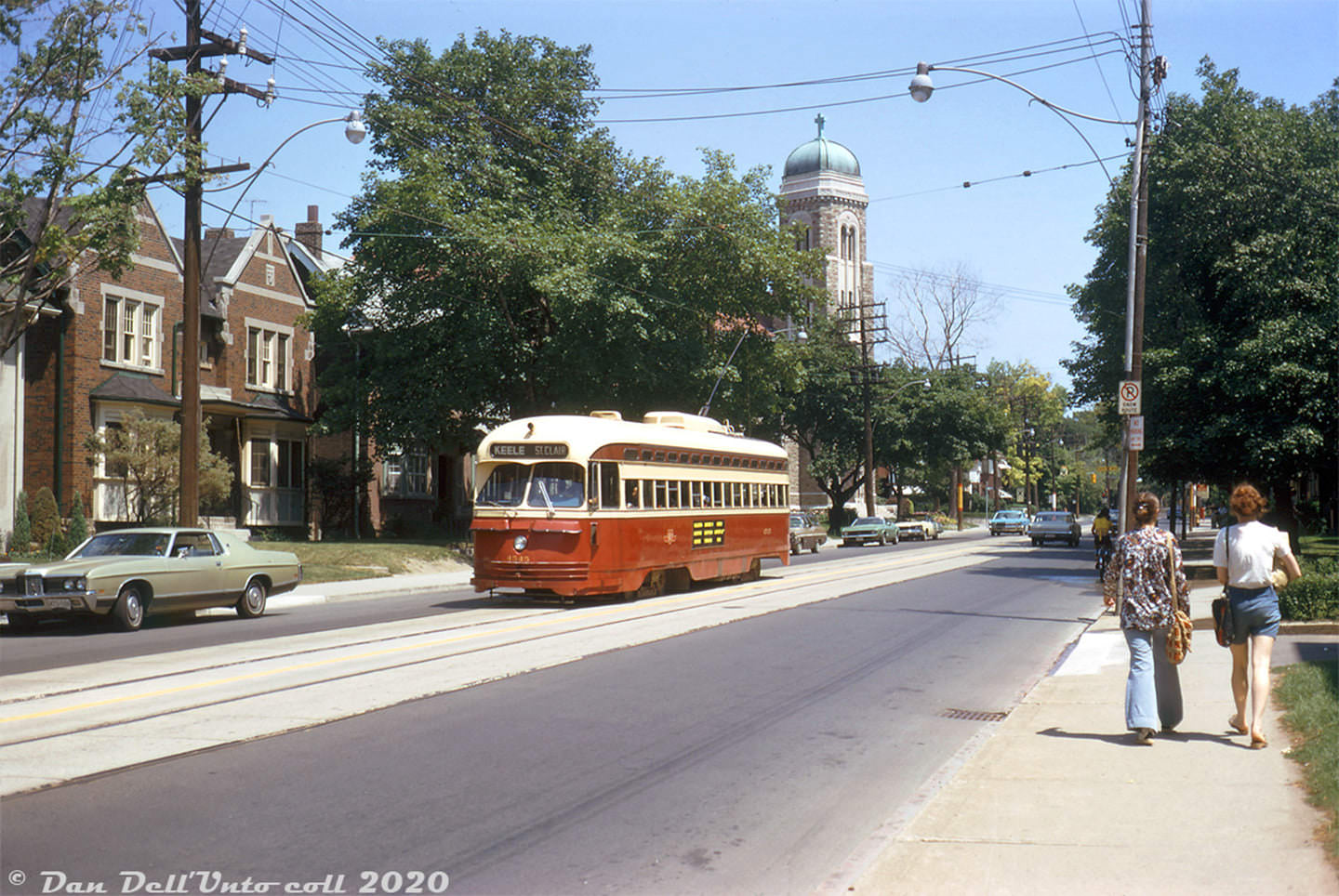
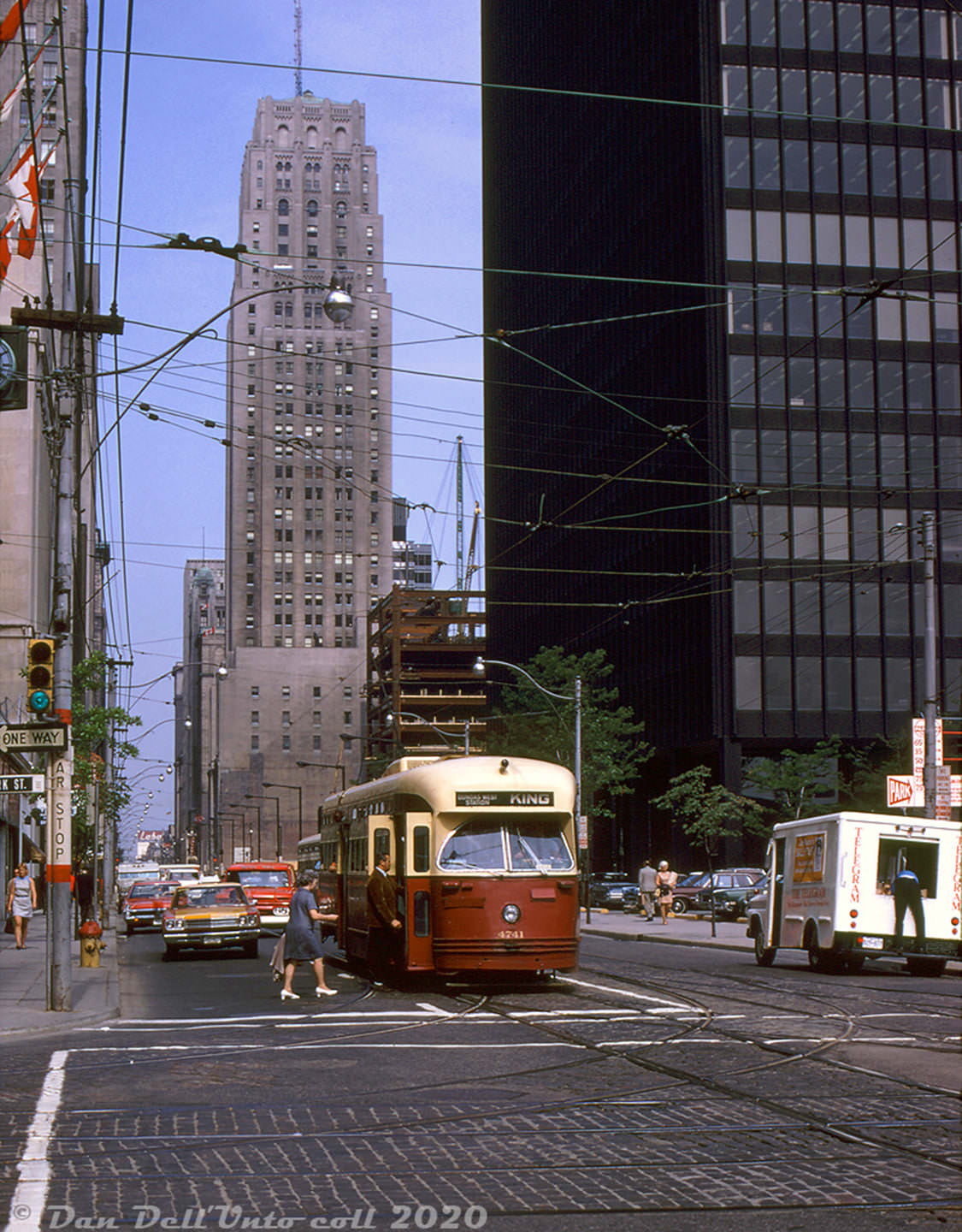
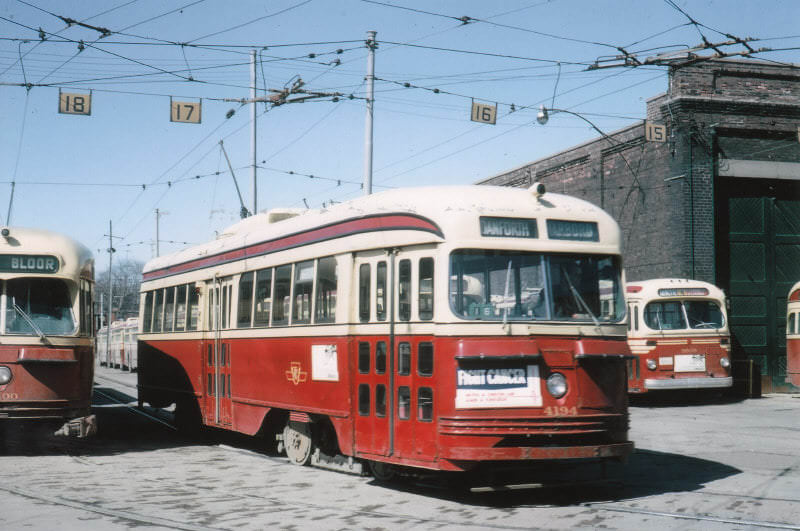
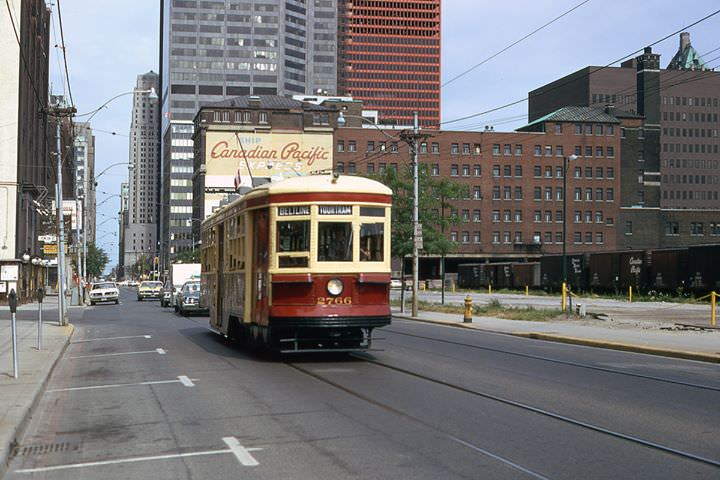
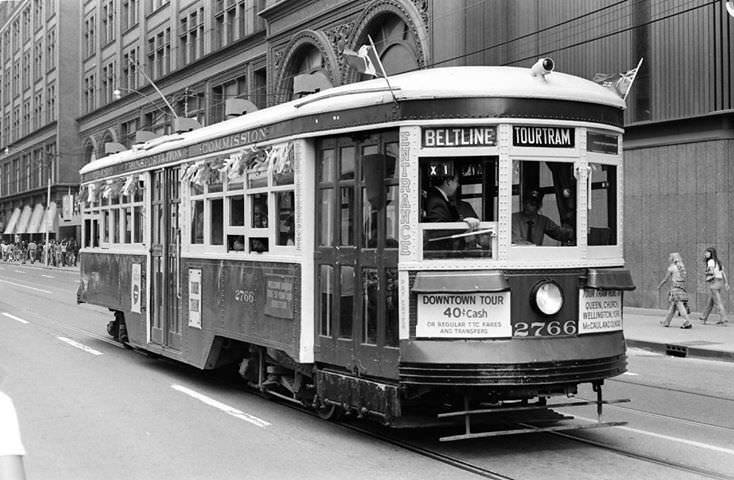
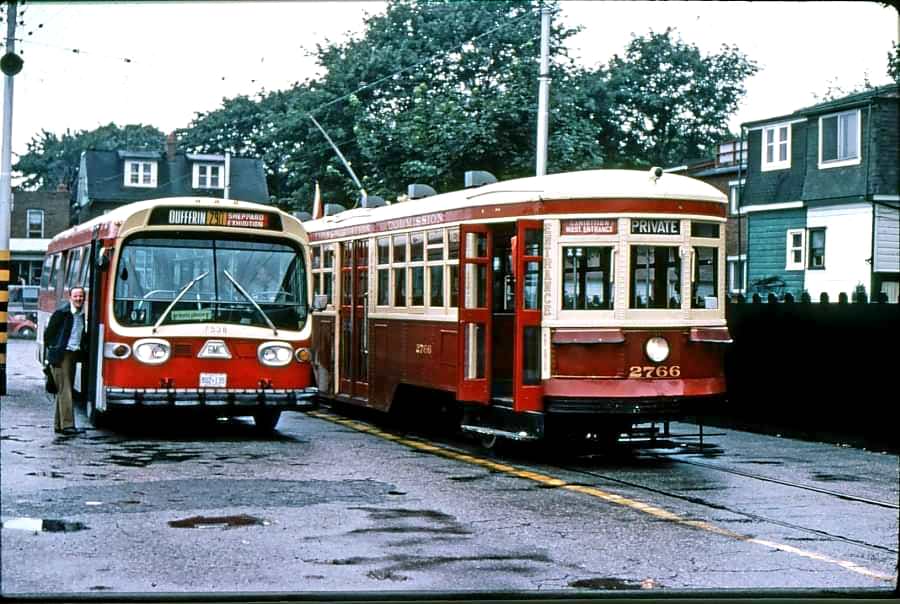
The TTC’s streetcar network was a defining feature of daily life in Toronto. PCC streetcars — some of them acquired secondhand from American cities — still ran on several routes through the decade. They were loud, familiar, and an essential part of how Torontonians moved through their city.
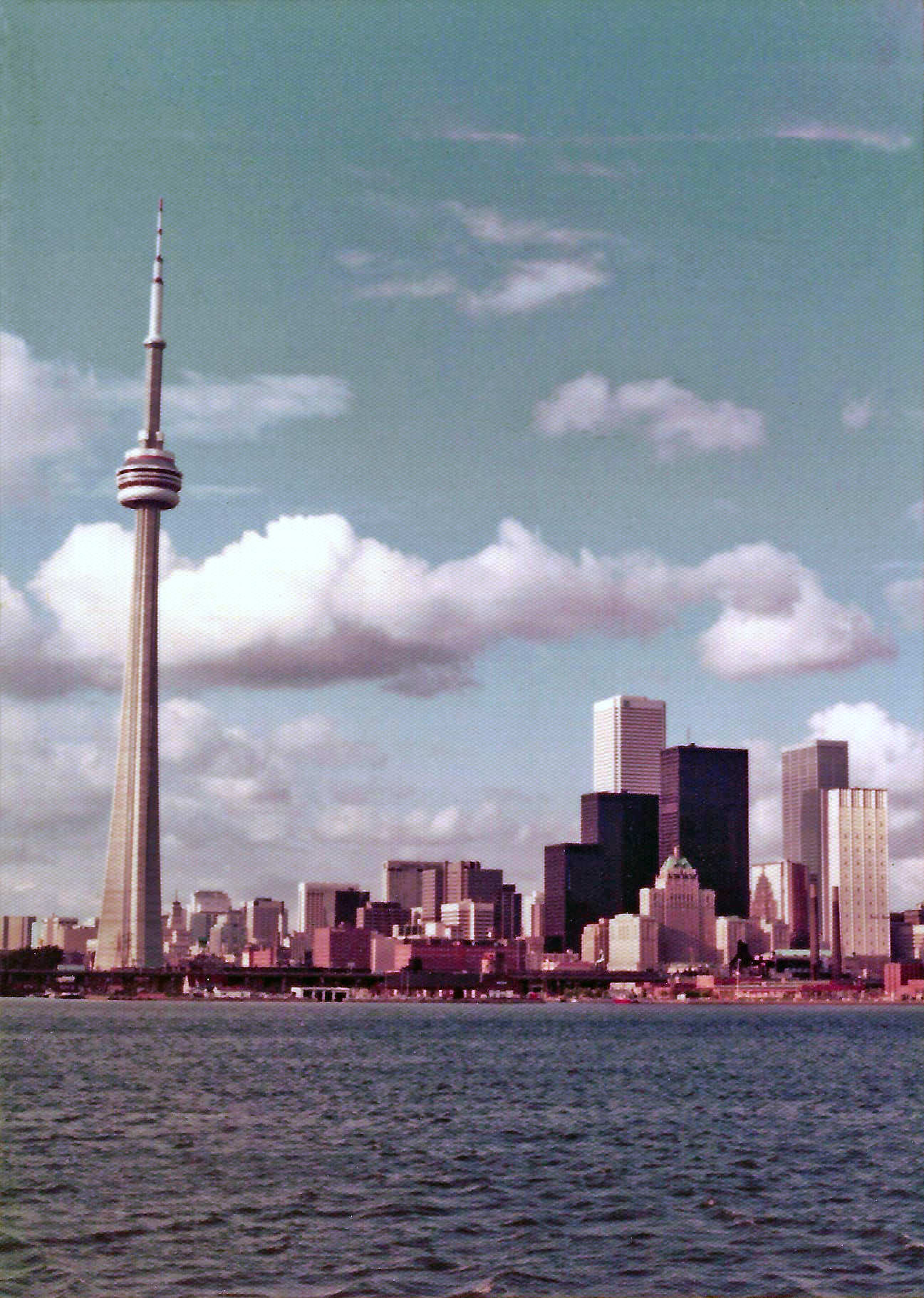
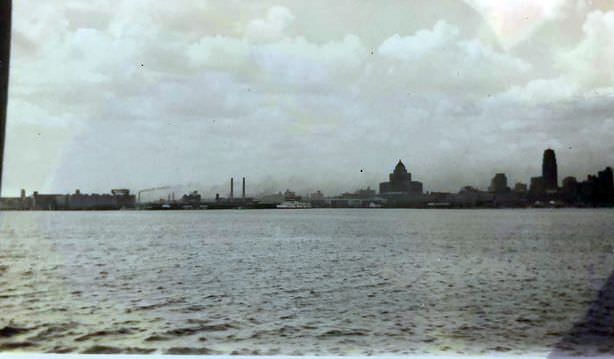
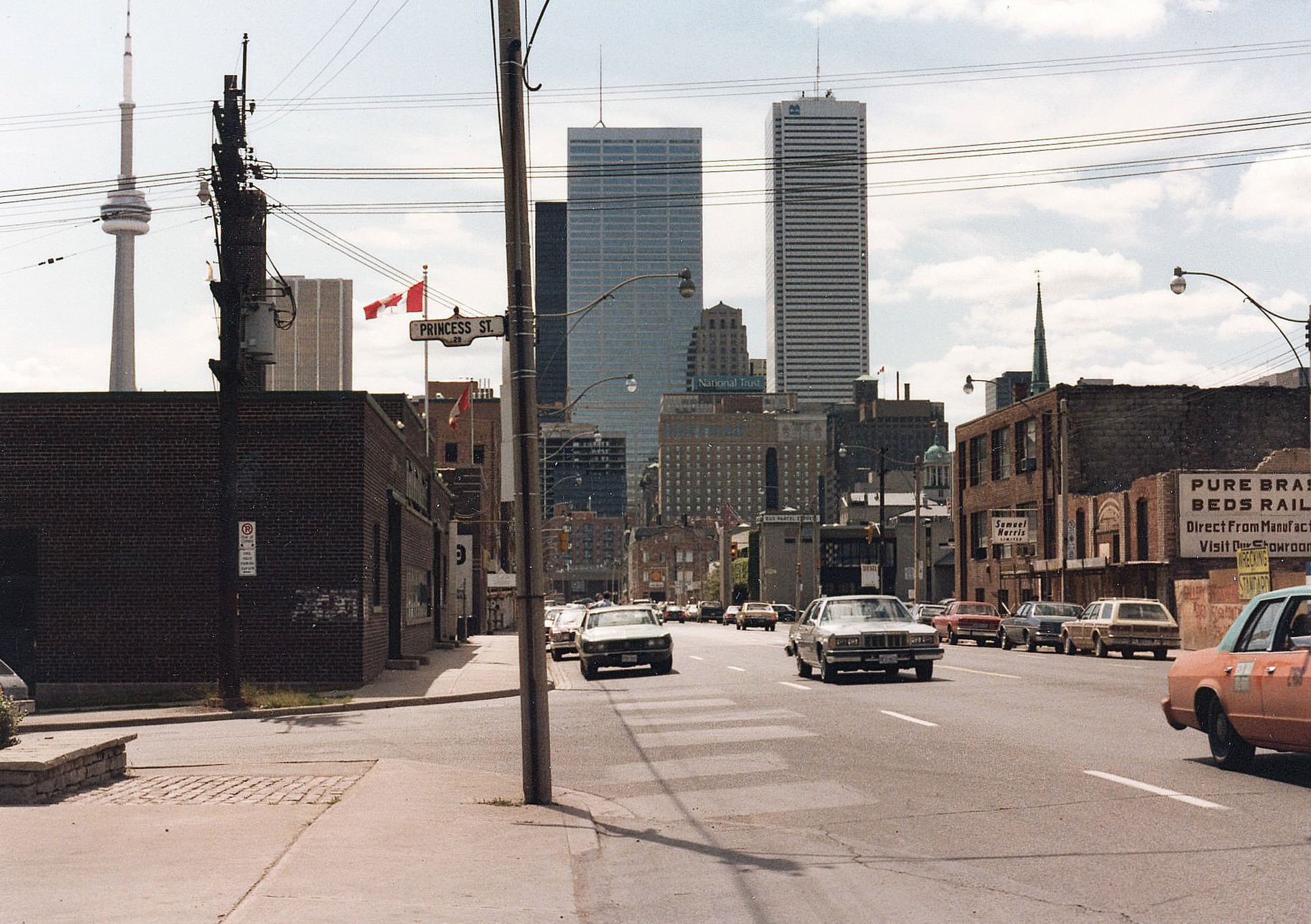
By September 1976, the Toronto skyline was unmistakably different from what it had been just a decade earlier. The CN Tower rose above everything. The Financial District had filled in with towers like First Canadian Place, completed in 1975. The city that once felt modest in its vertical ambitions had firmly announced itself as a major North American metropolis.
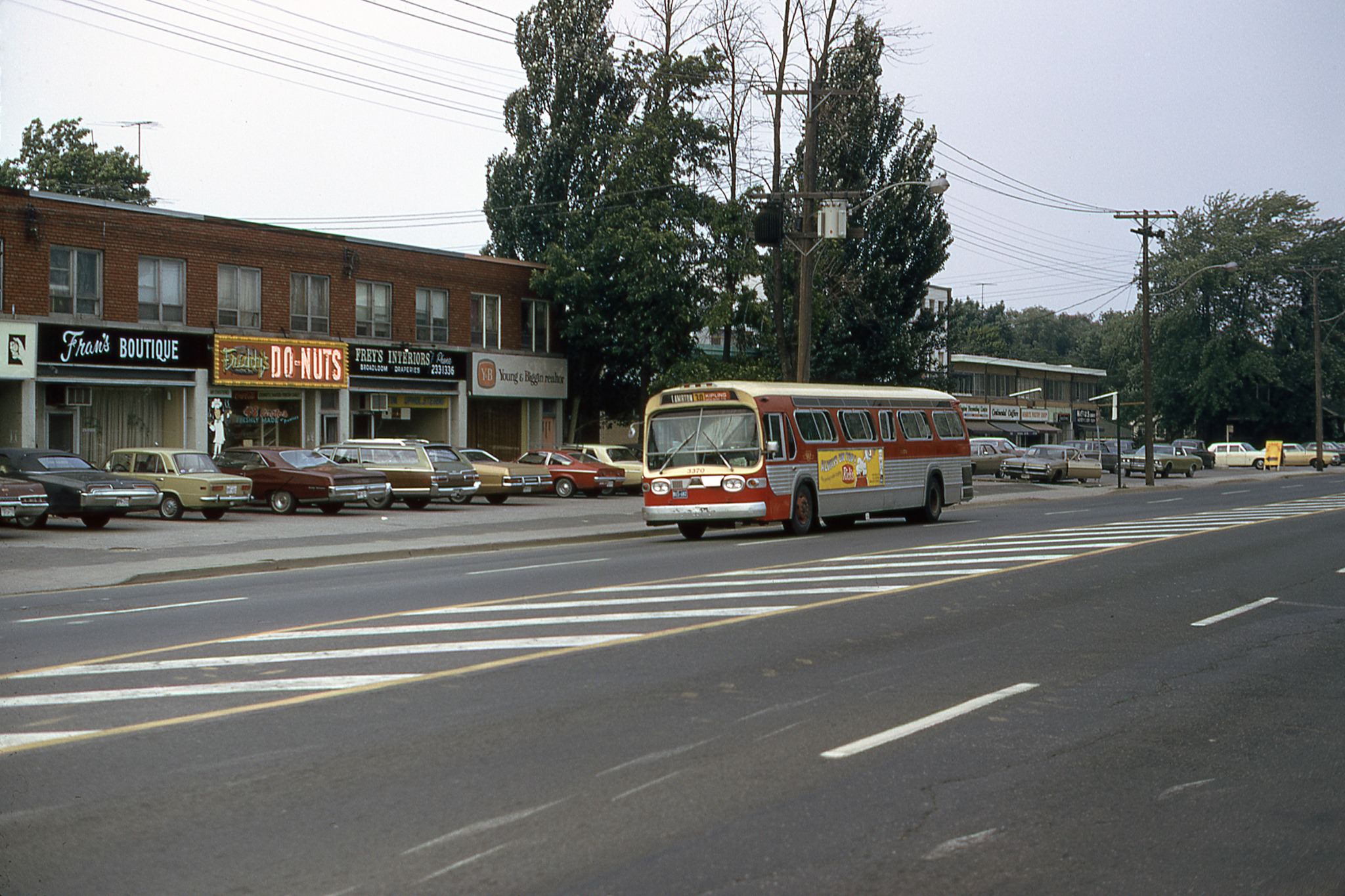
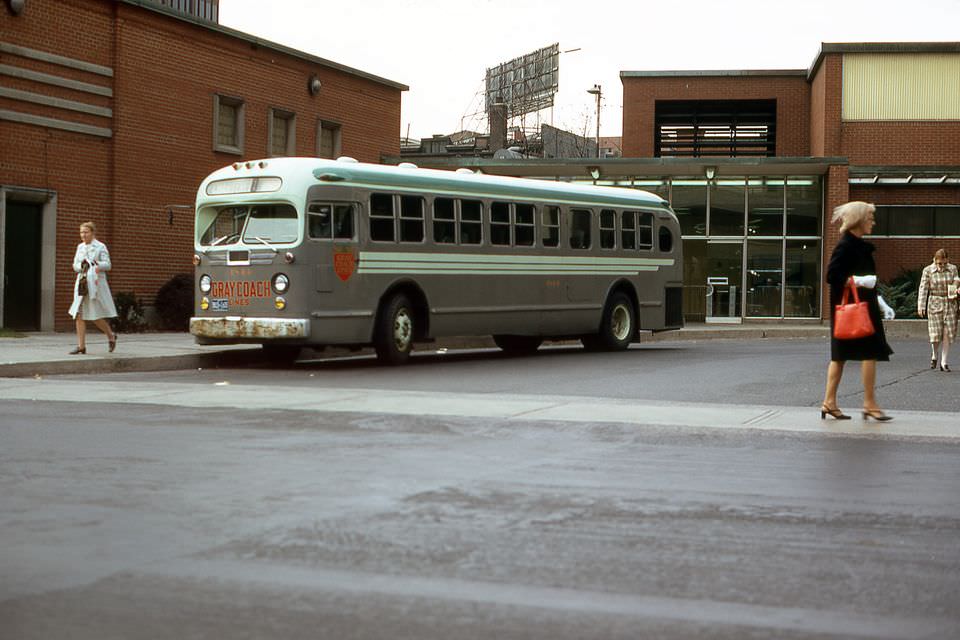
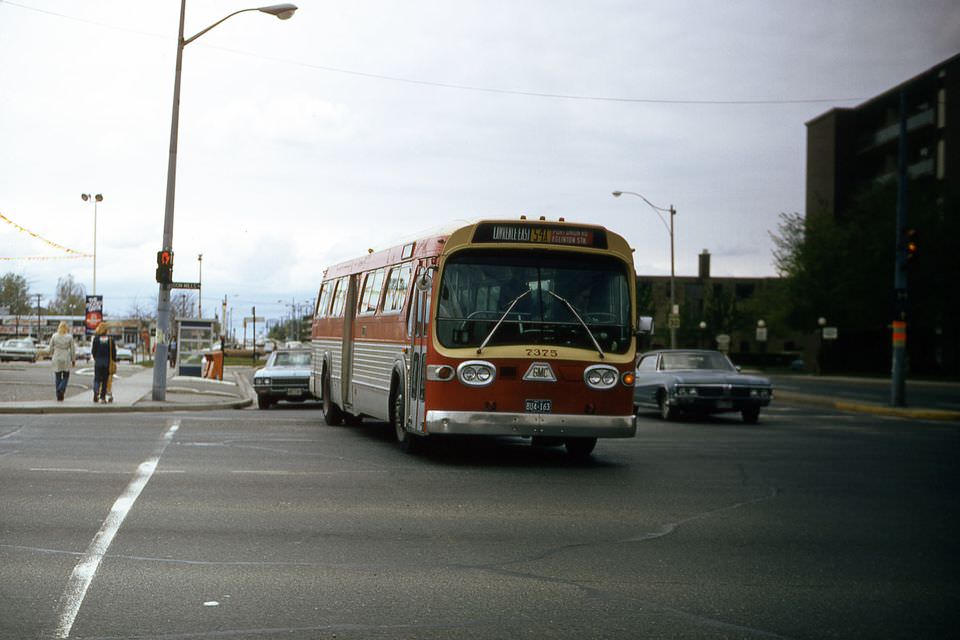
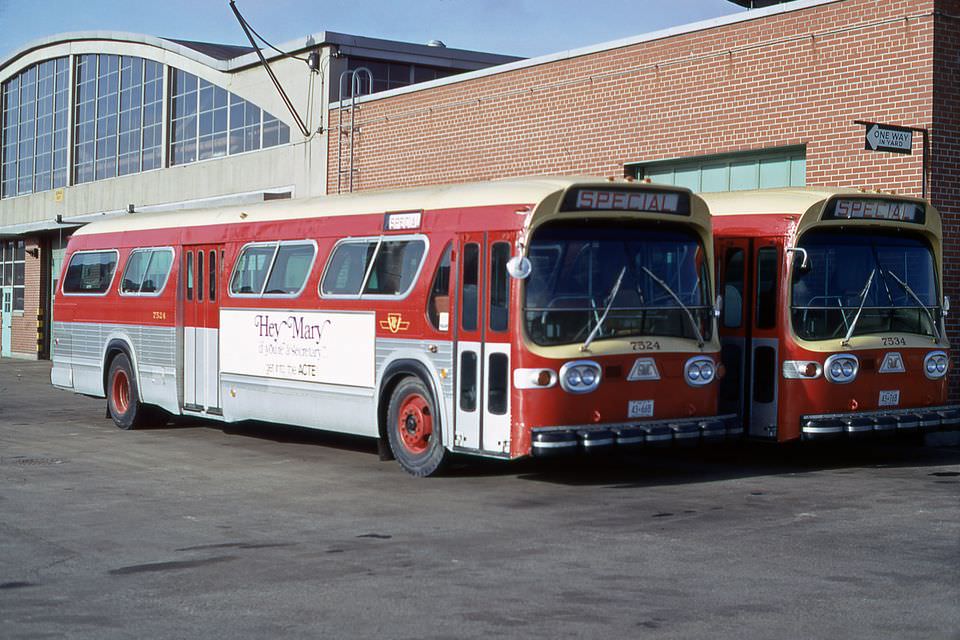
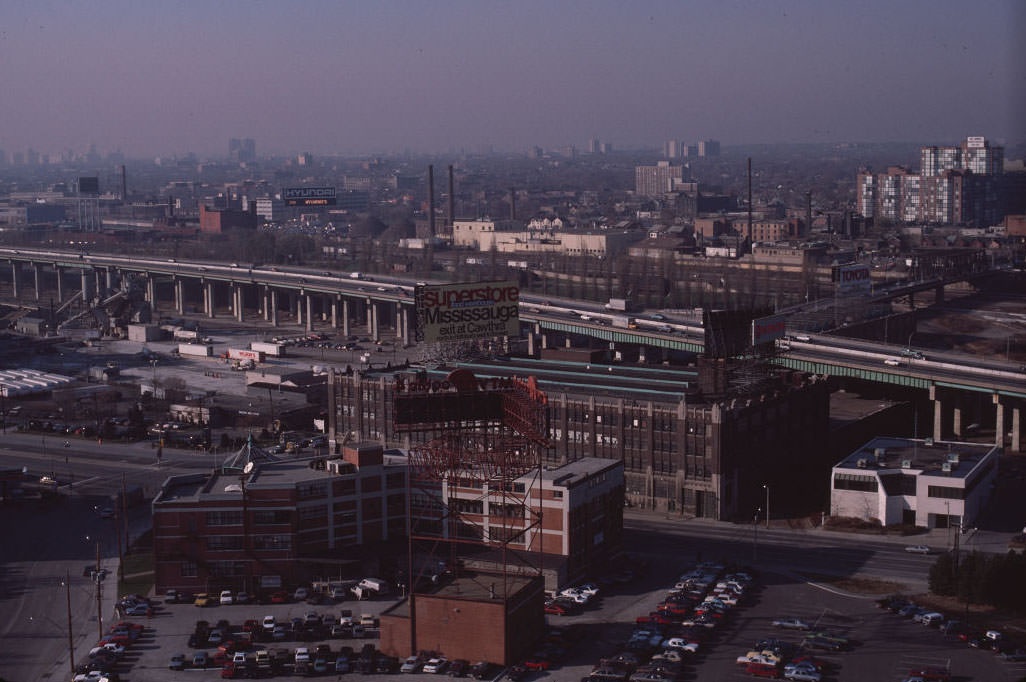
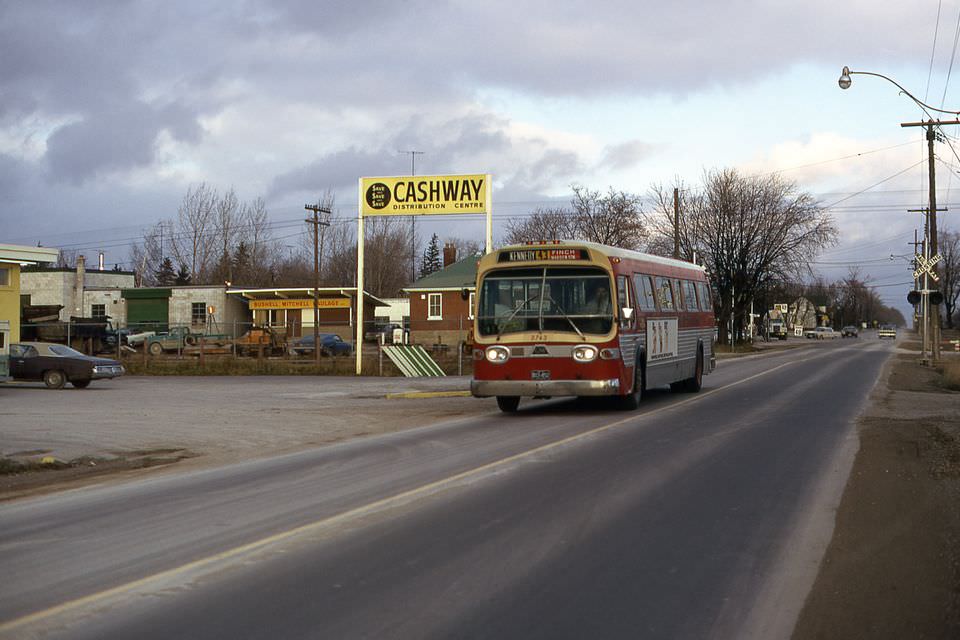
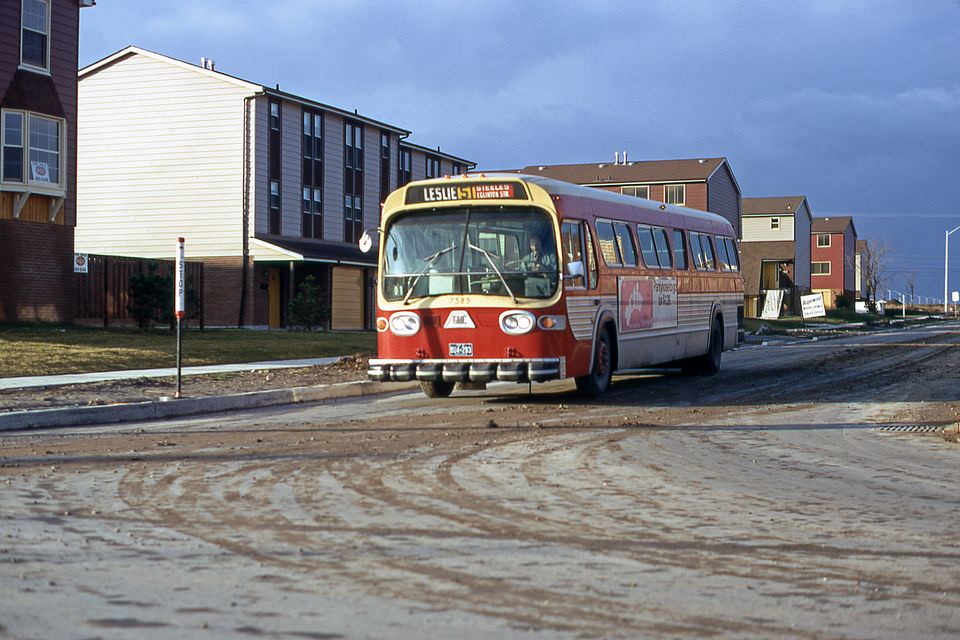
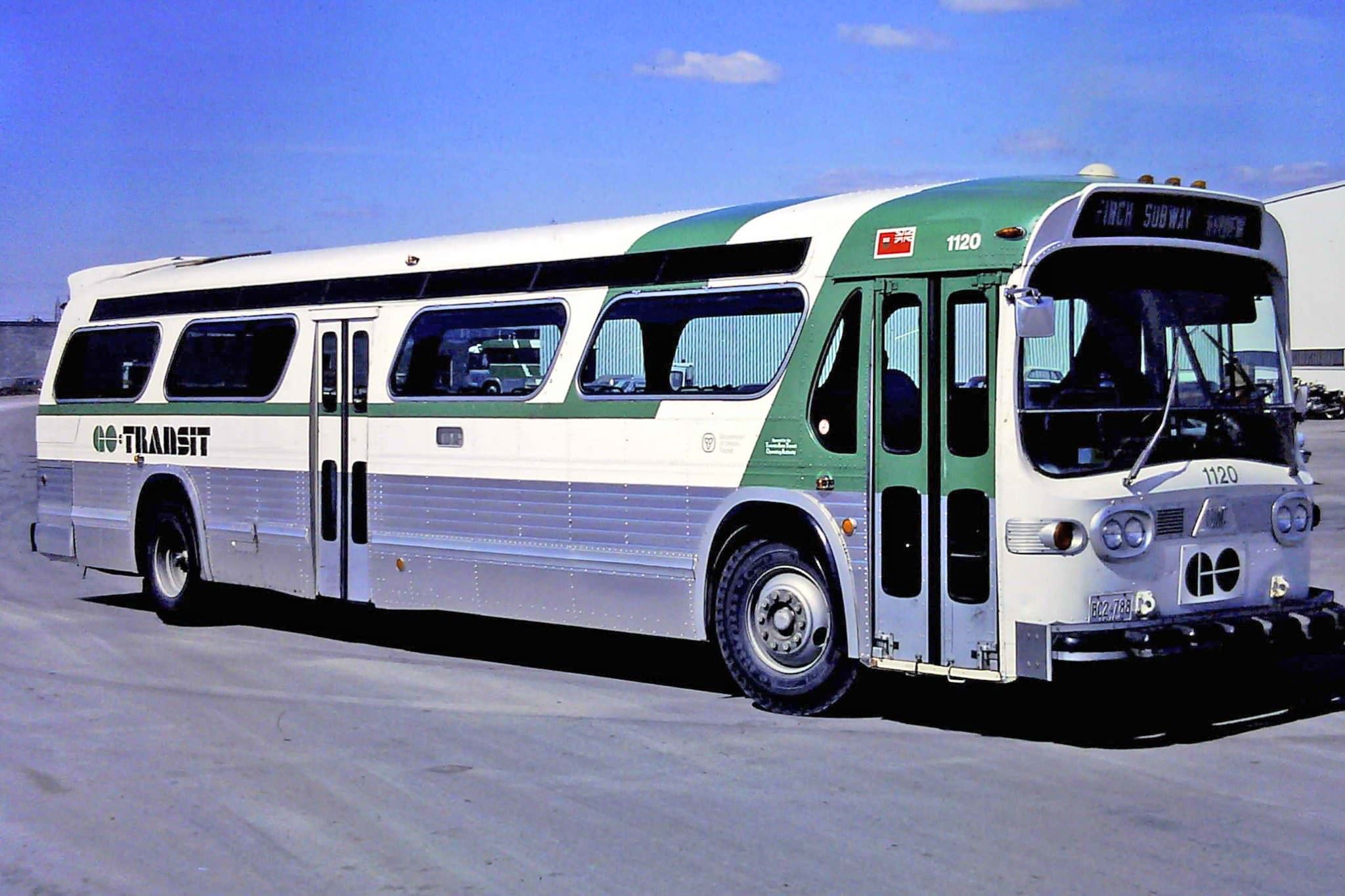
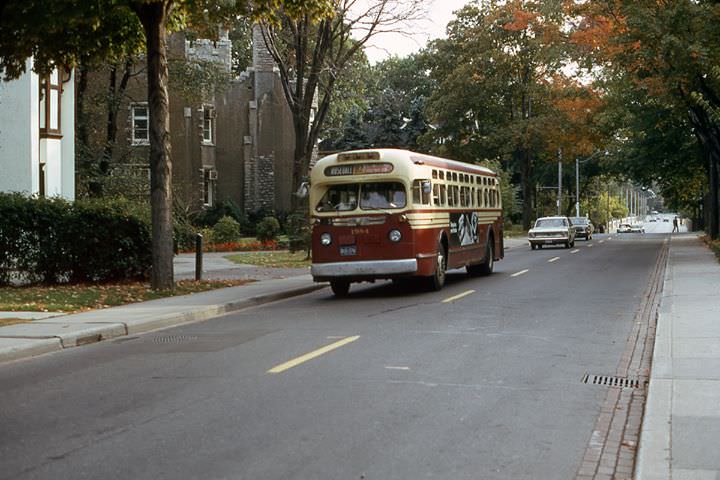
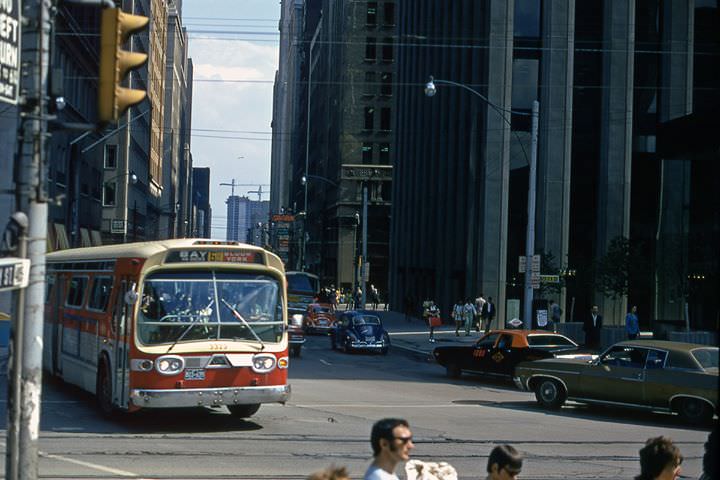
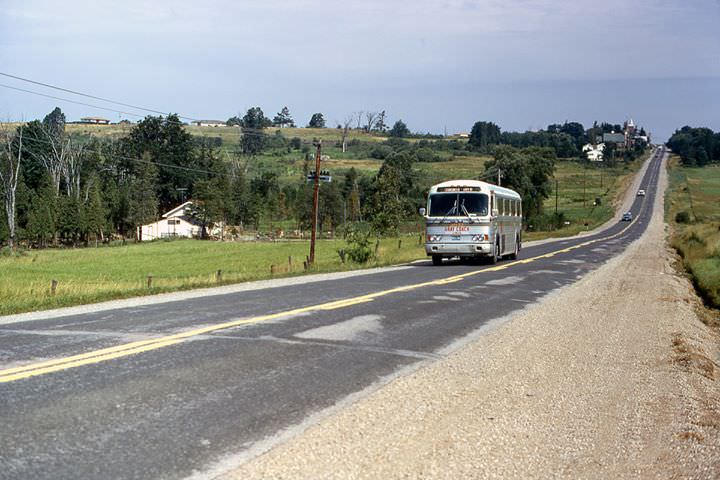
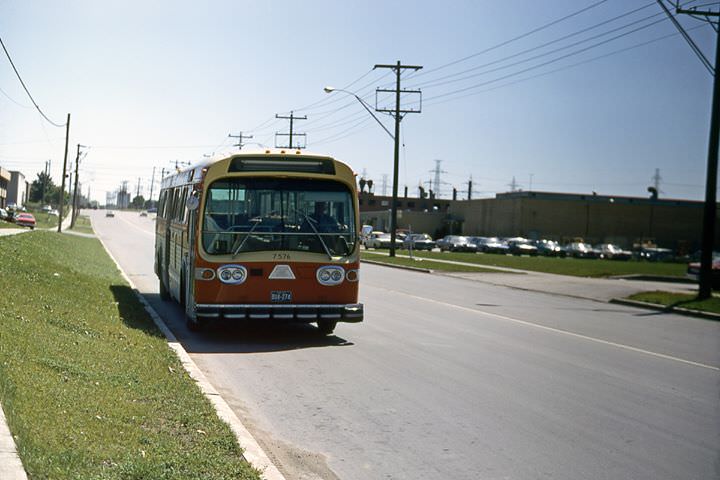
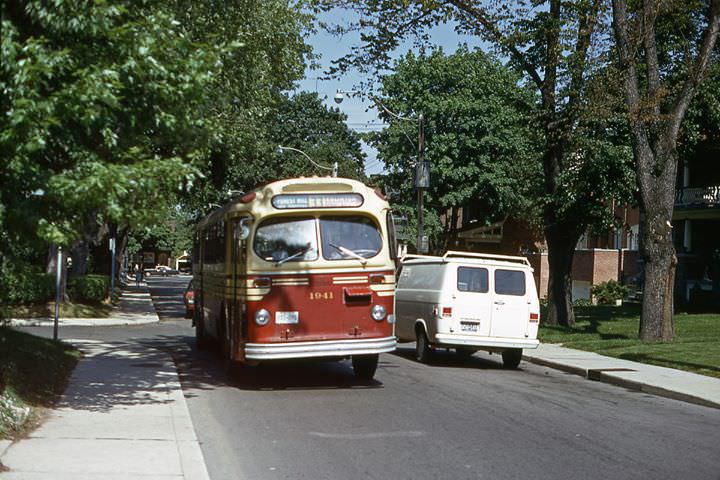
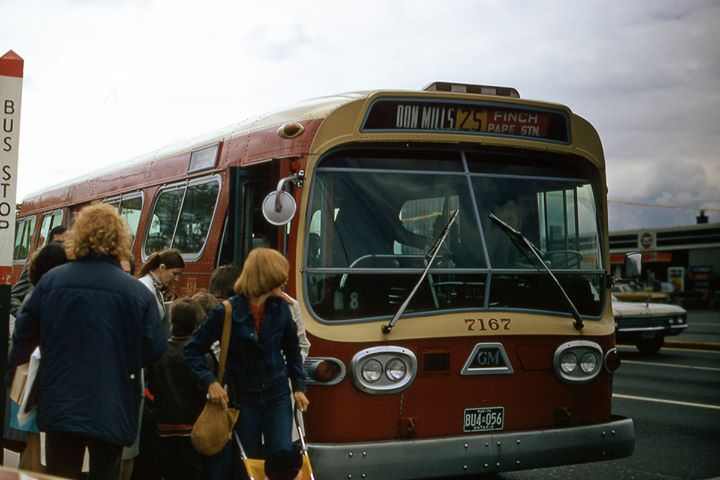
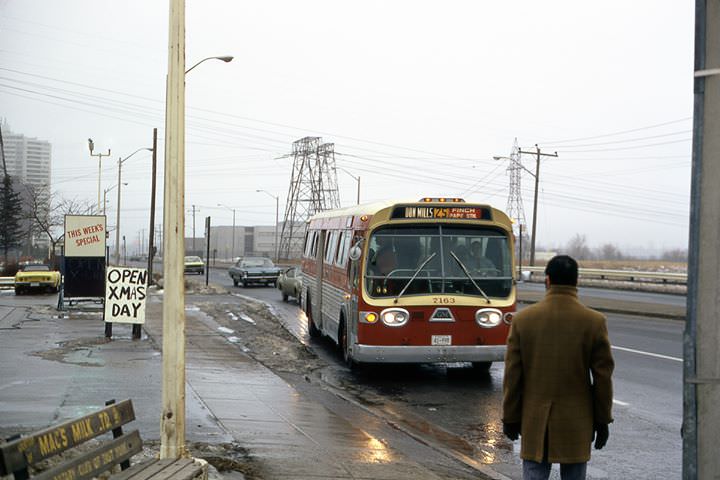
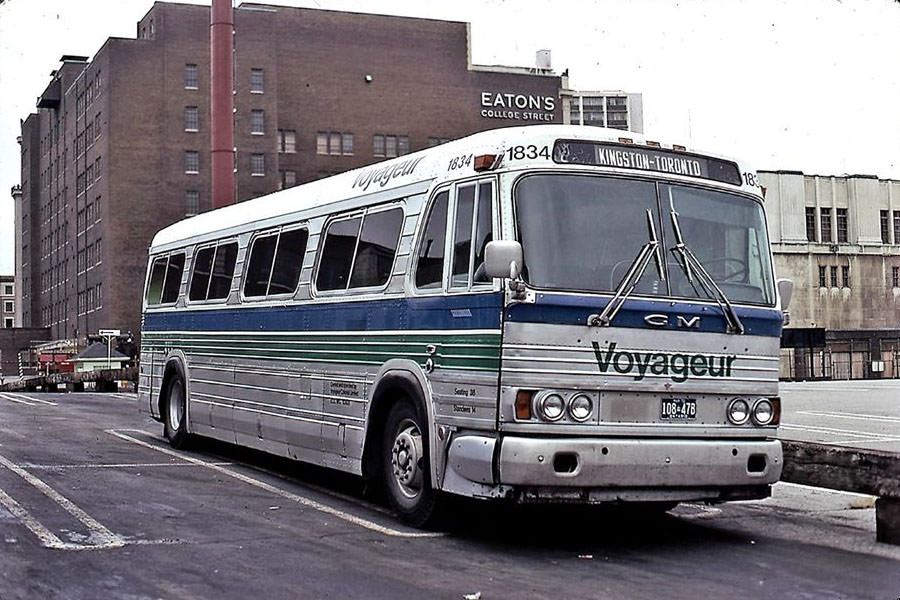
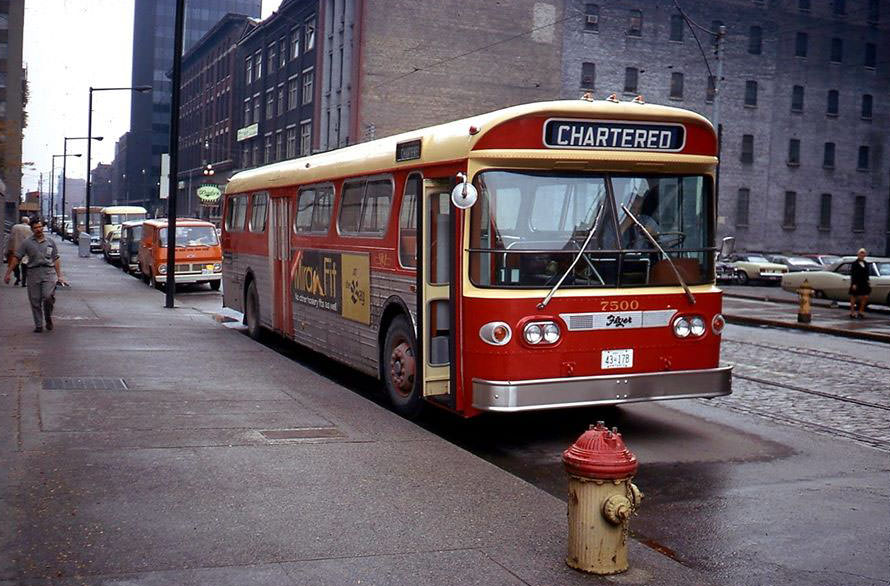
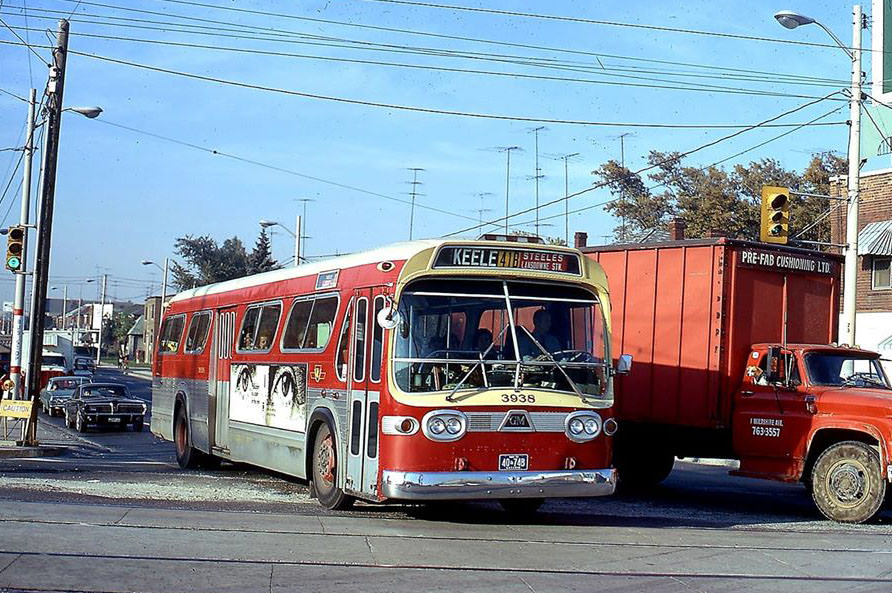
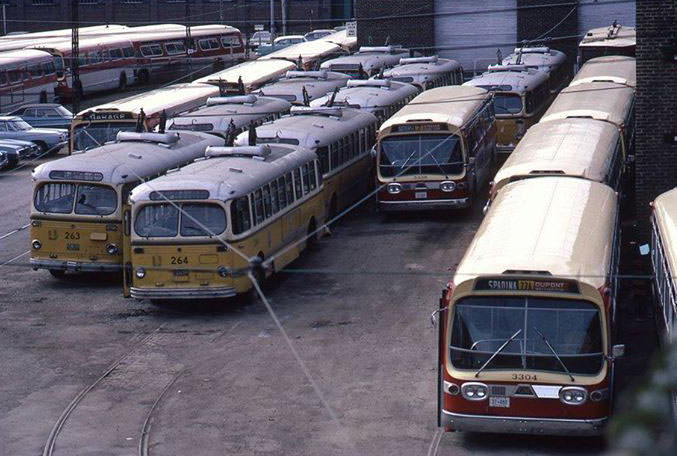
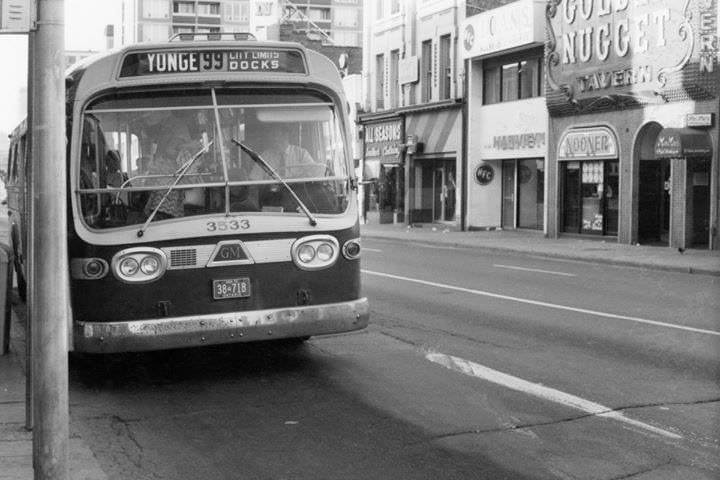
Transit infrastructure was expanding to keep pace with the city’s growth. TTC garages like Lansdowne and Birchmount were busy hubs where buses were serviced, stored, and dispatched across an increasingly complex route network. New General Motors buses were being added to the fleet throughout the decade, replacing older rolling stock.
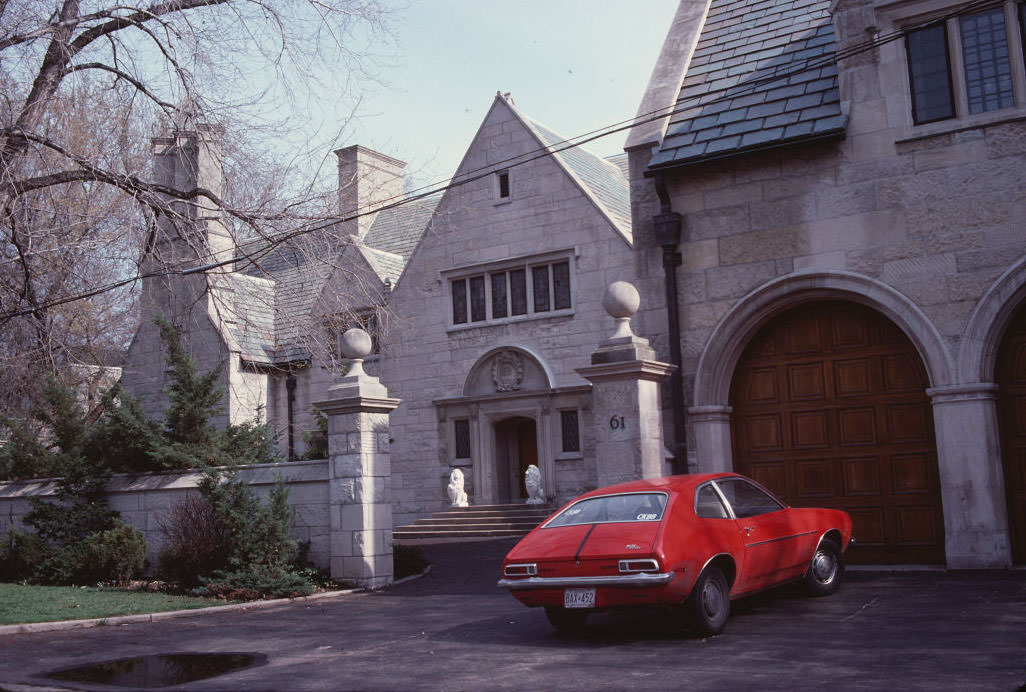
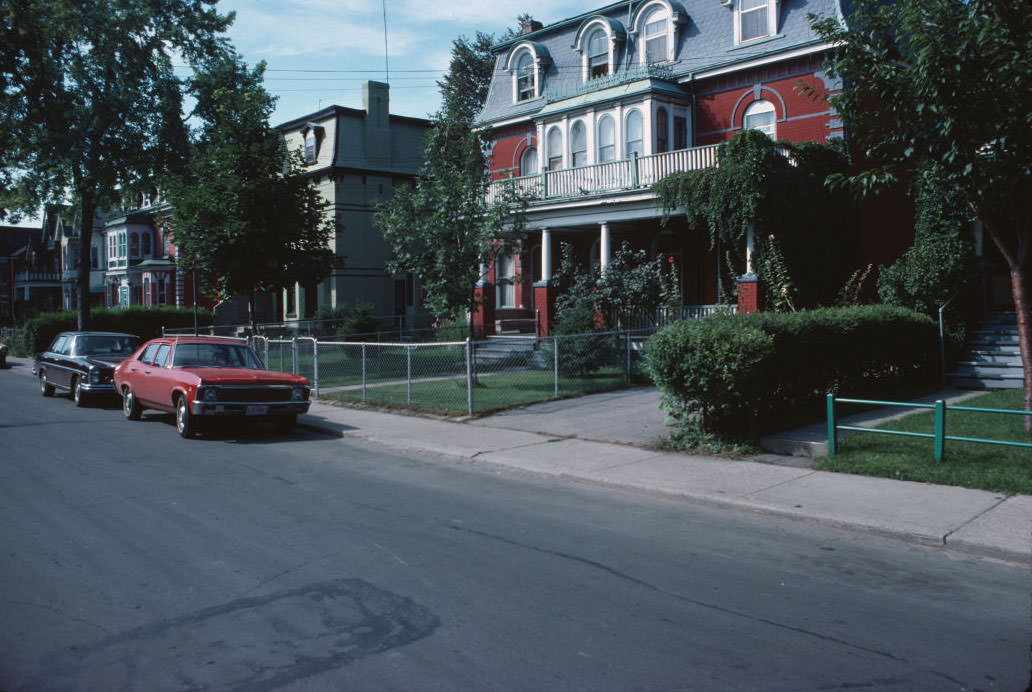
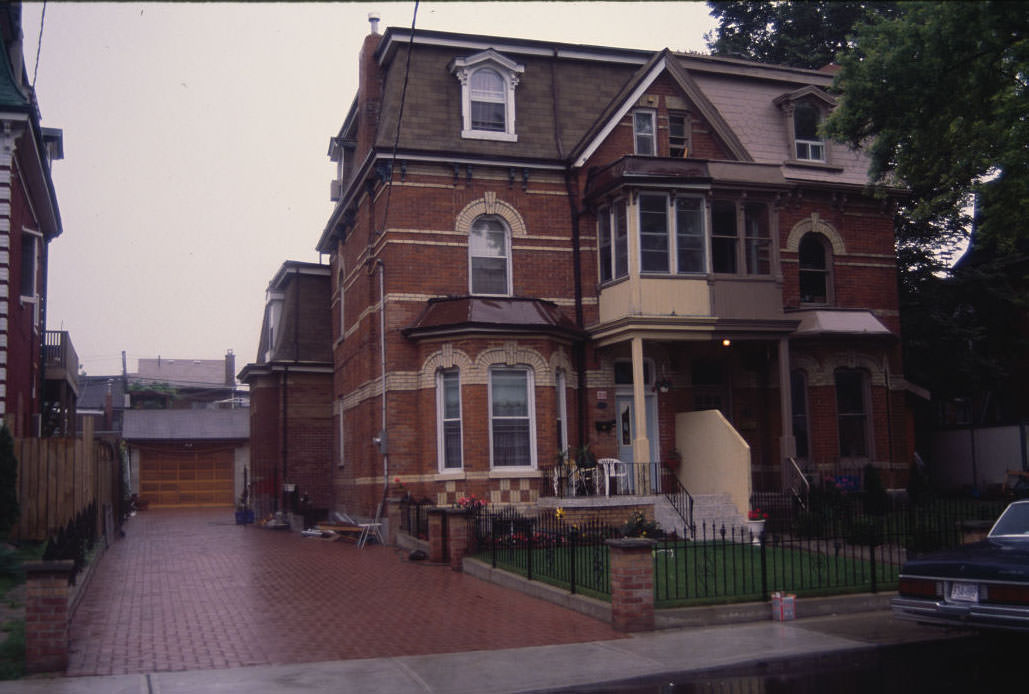
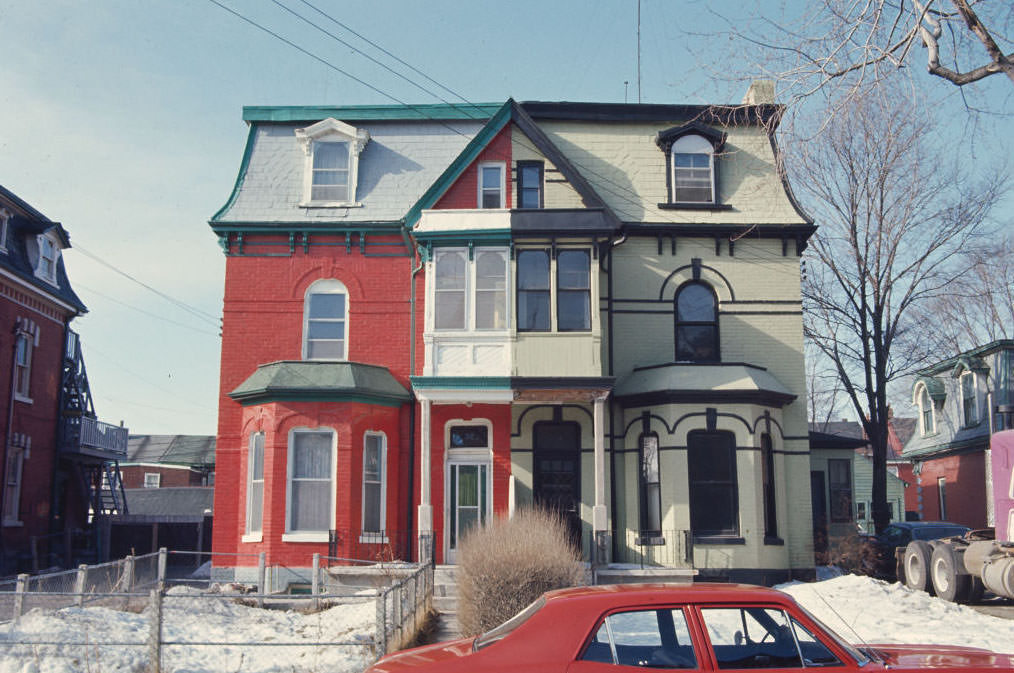
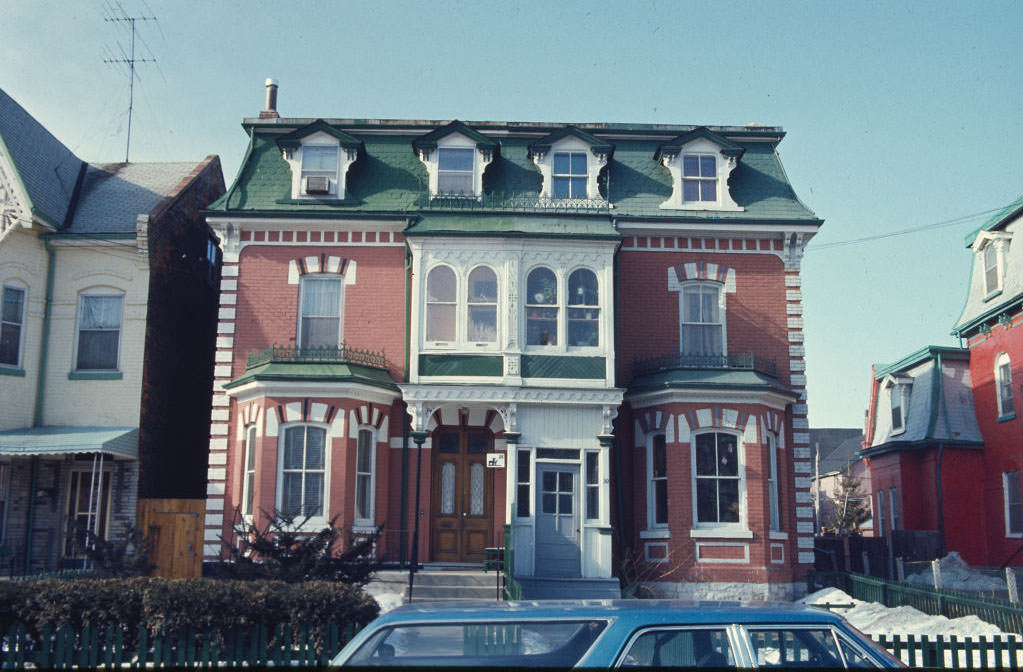
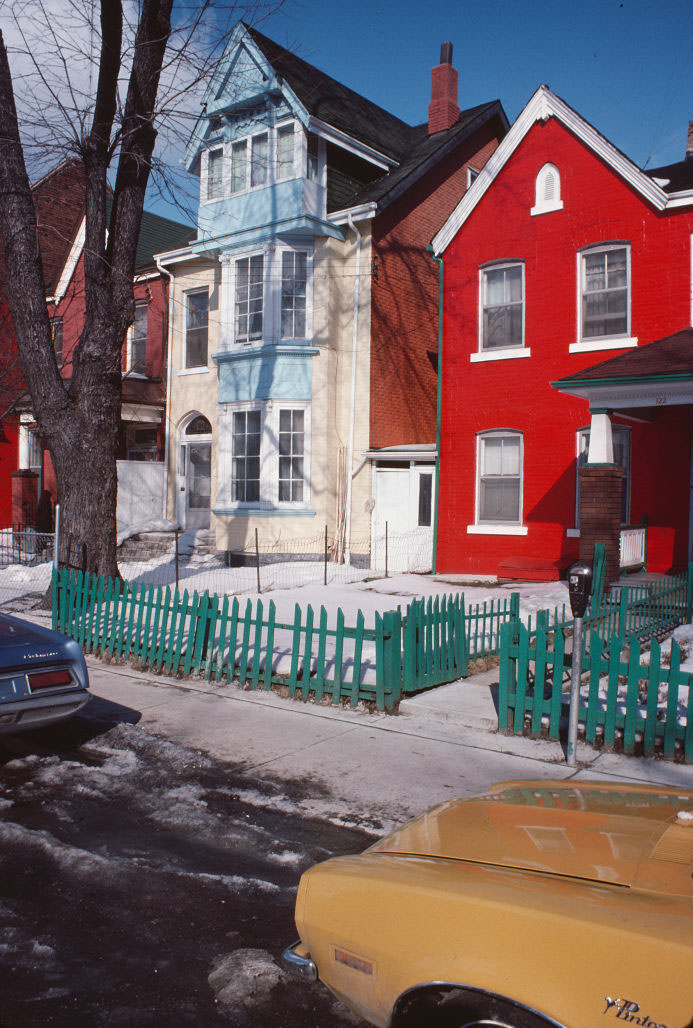
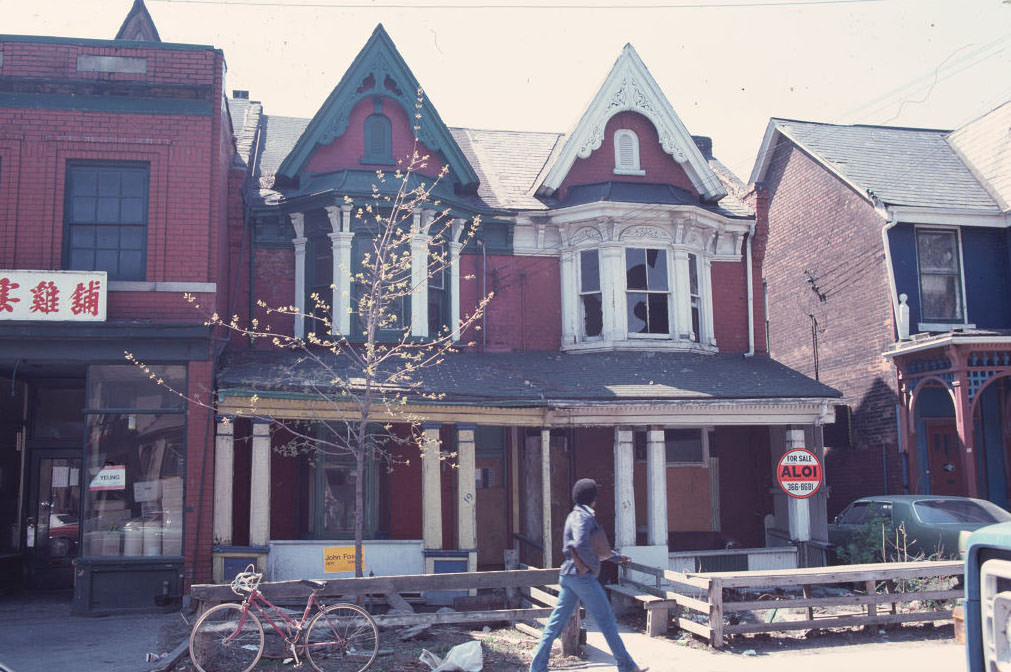
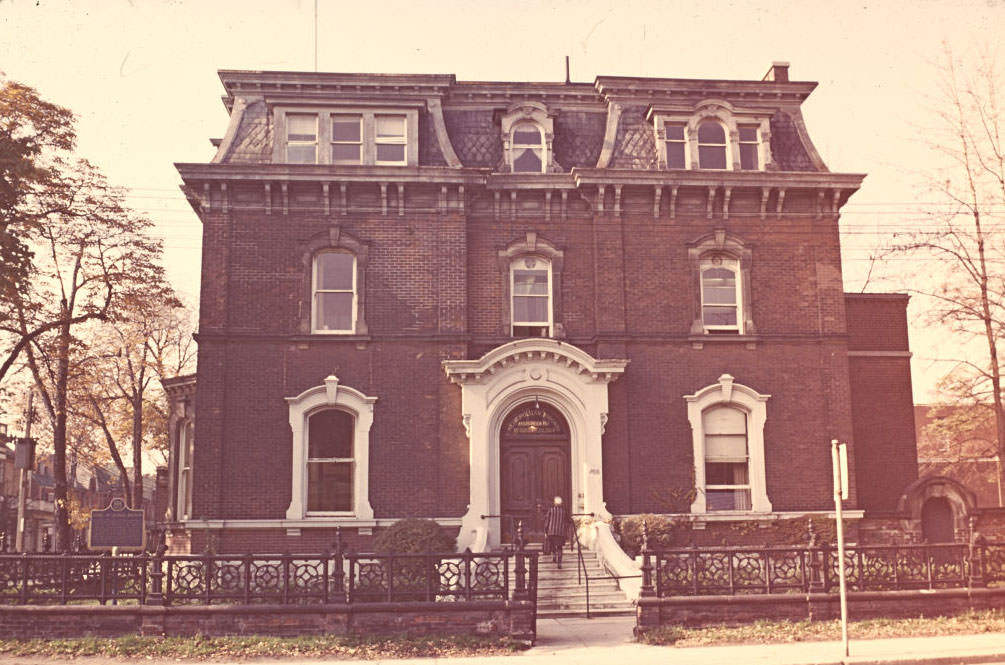
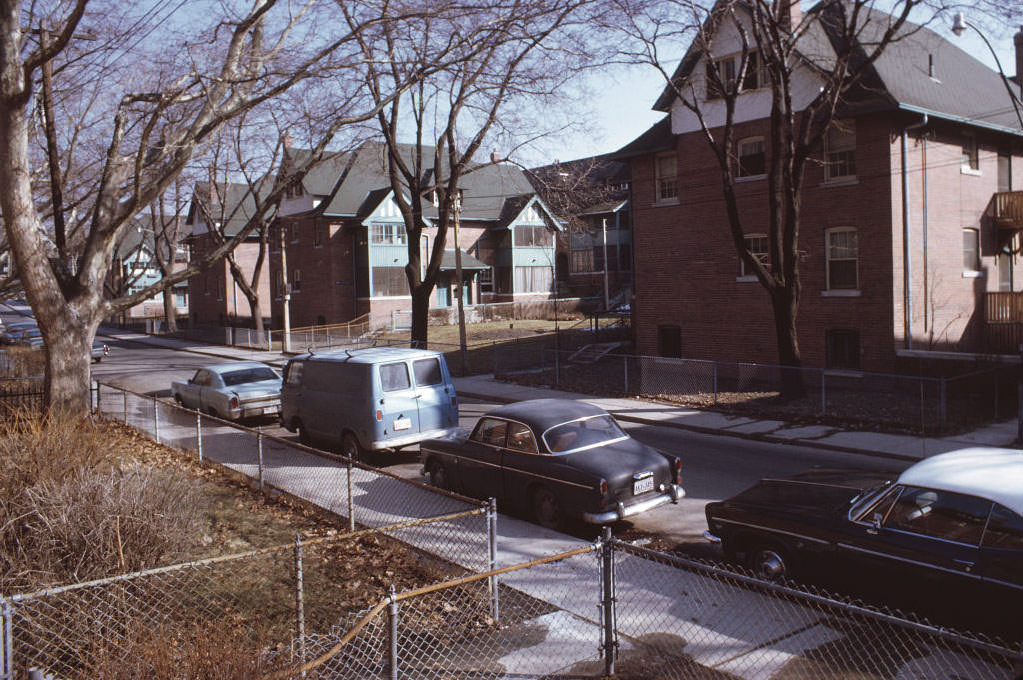
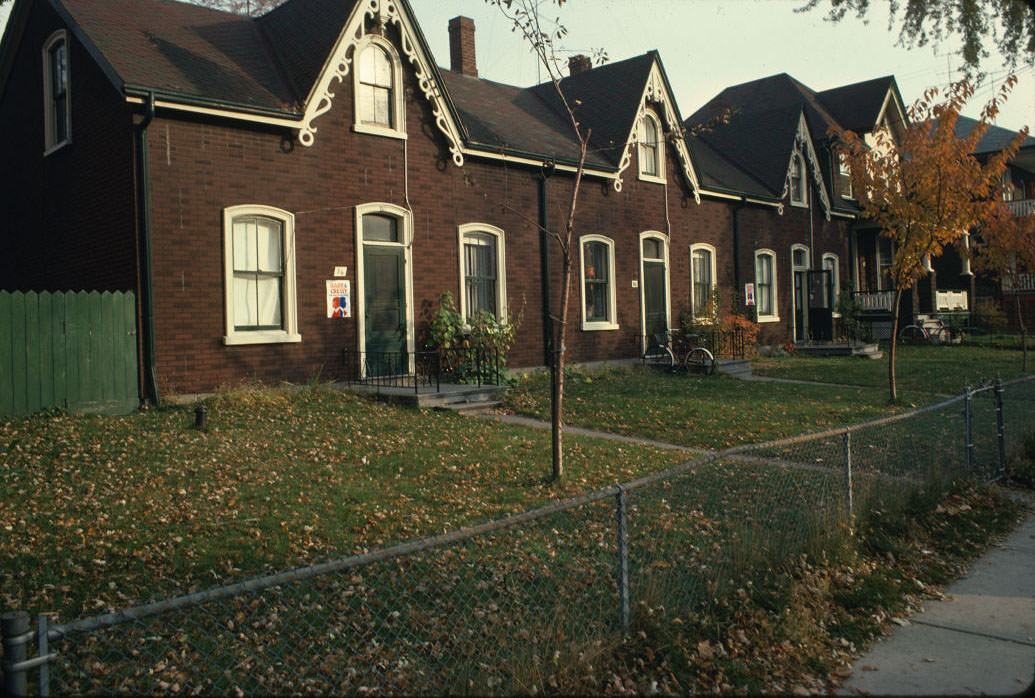
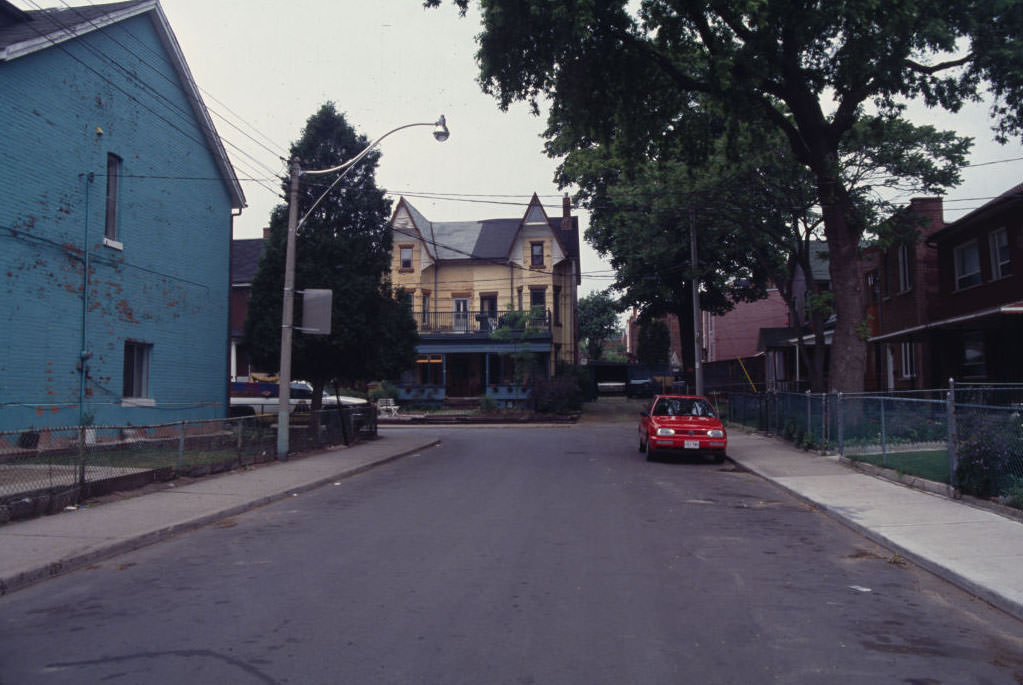
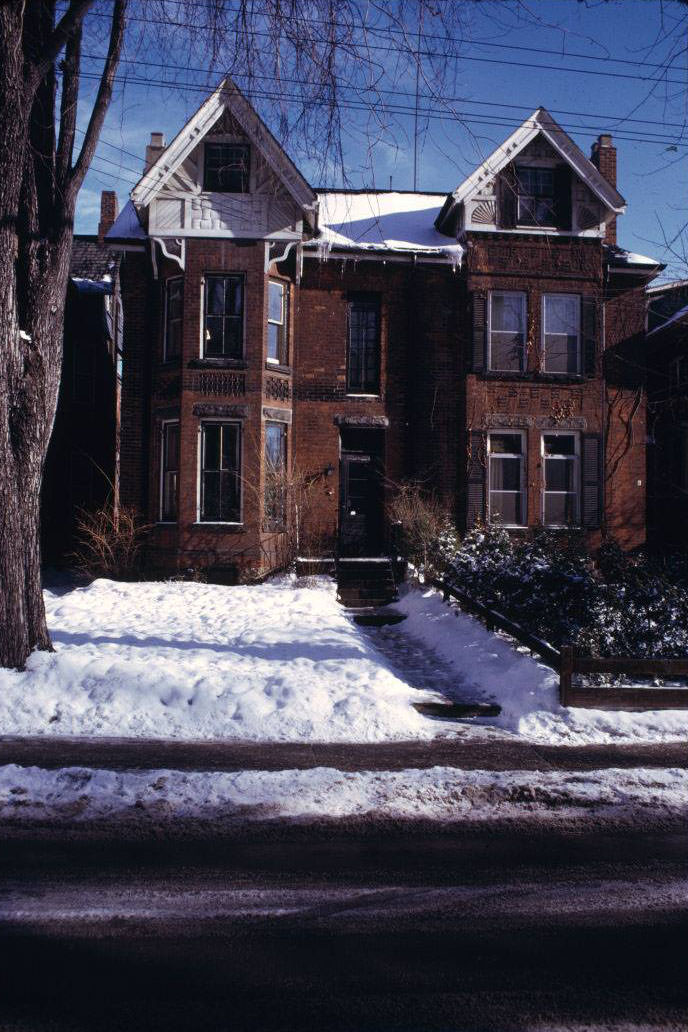
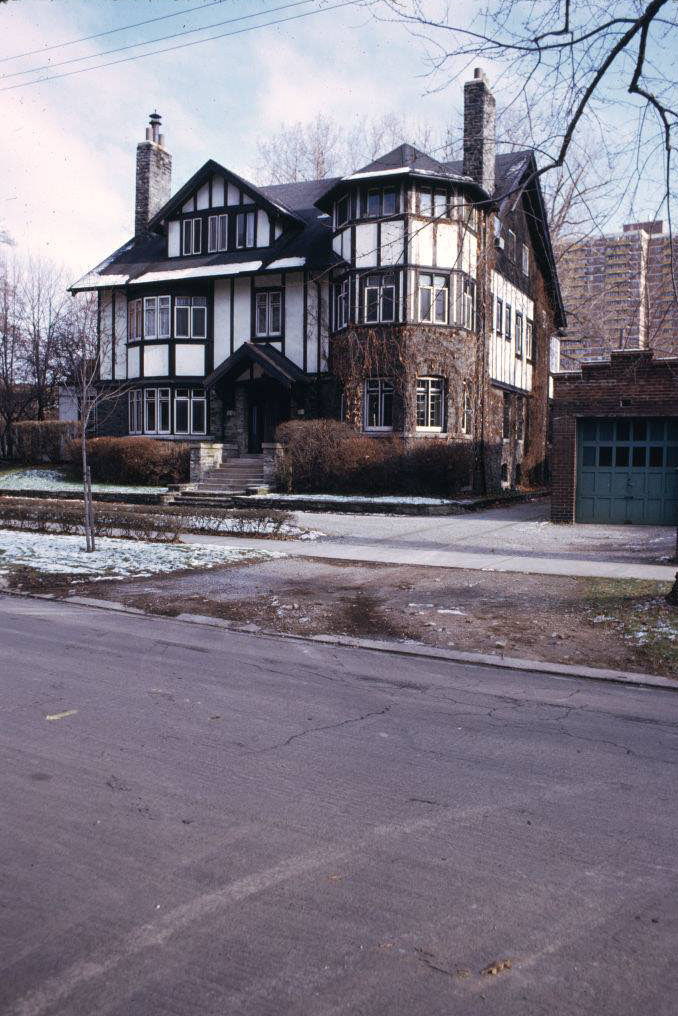
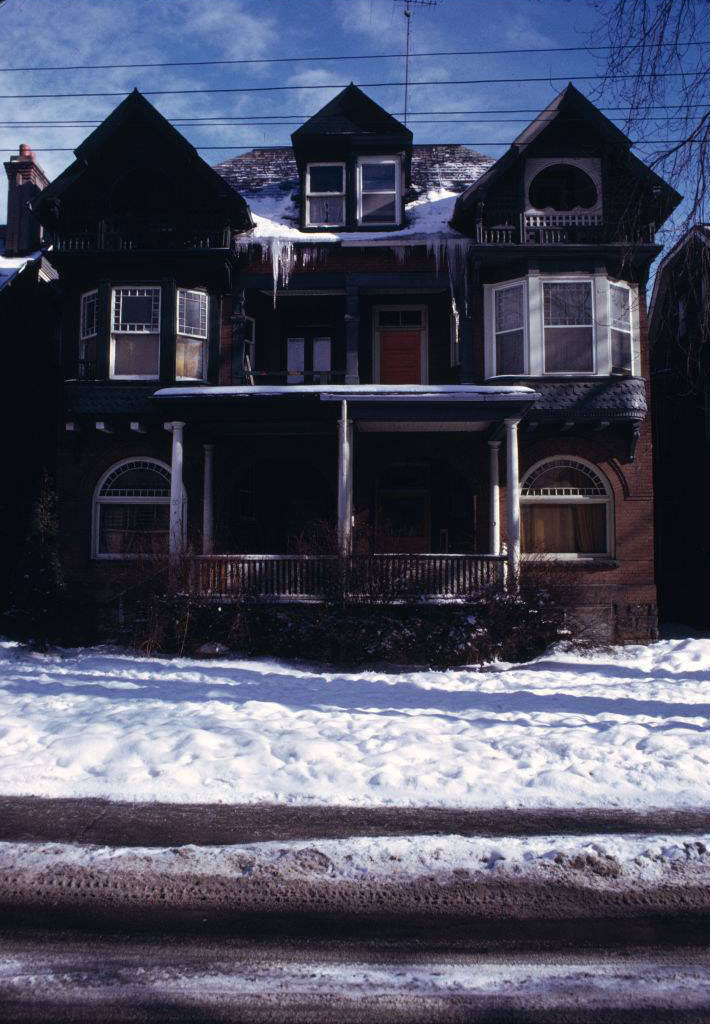
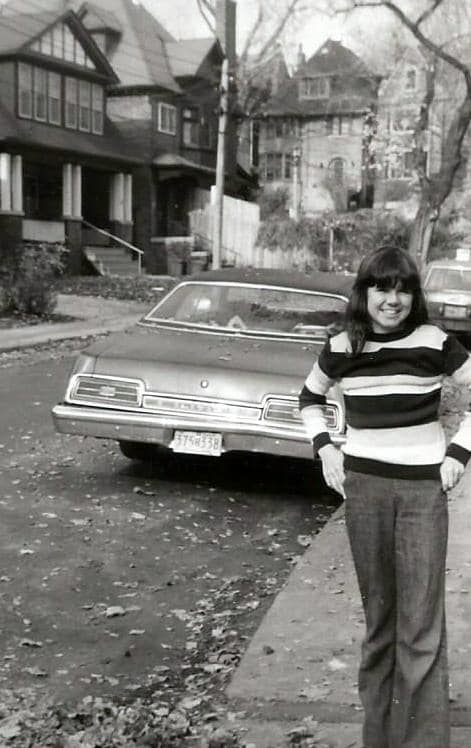
Away from the downtown core, Toronto’s residential streets told their own story. Neighbourhoods like Rosedale, Kensington Market, and the Annex had a mix of Victorian homes, small apartment buildings, and the kind of quiet, tree-lined blocks that made the city livable. These streets changed slowly, even as the skyline shifted dramatically overhead.
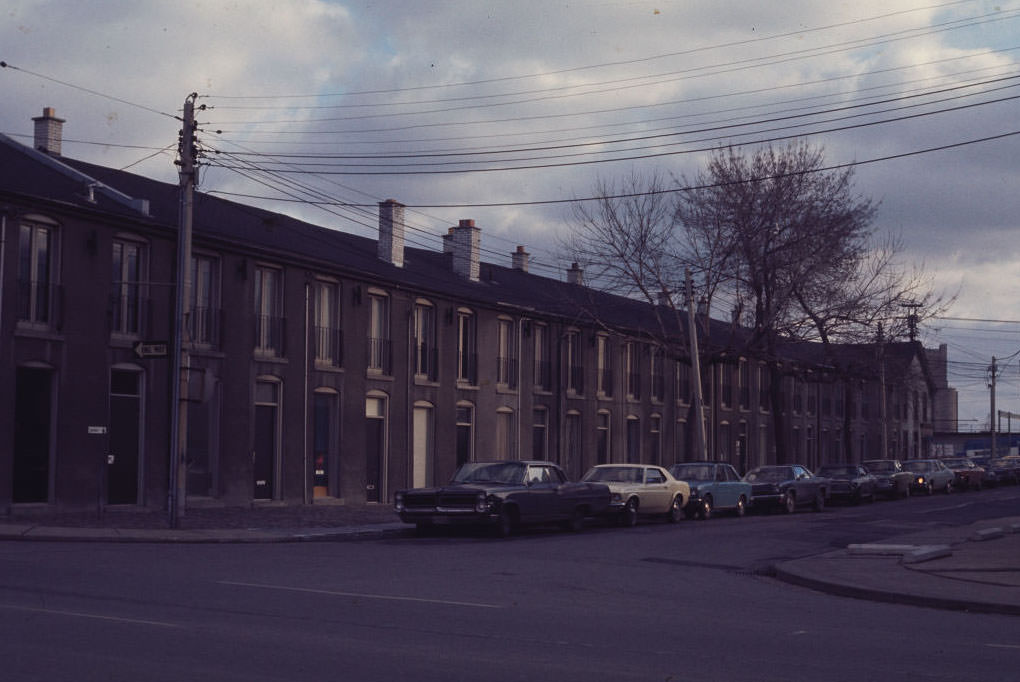
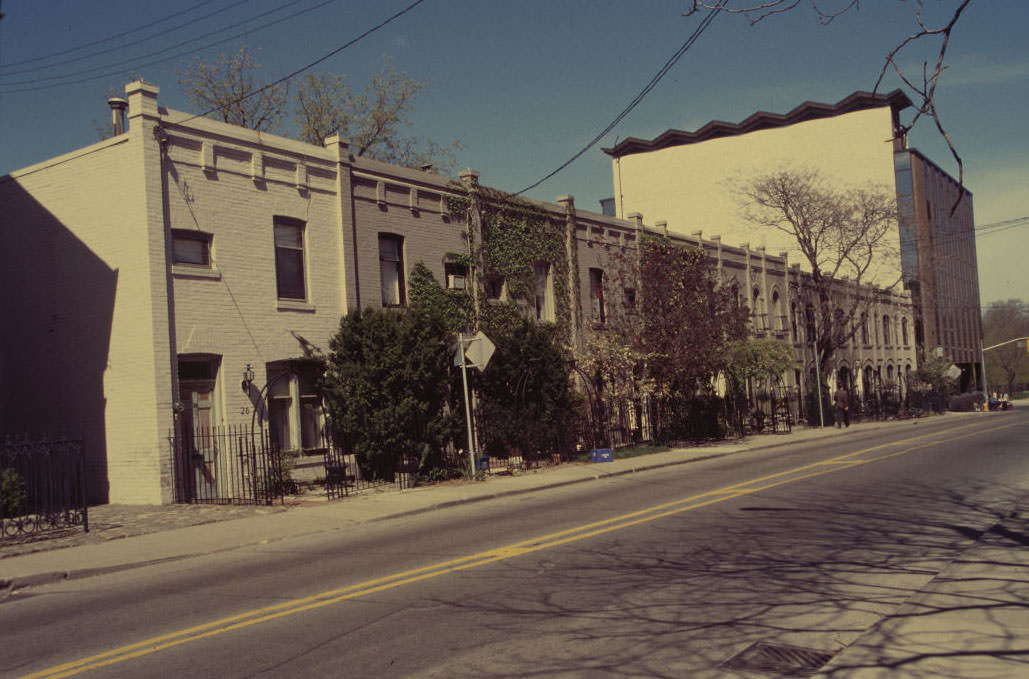
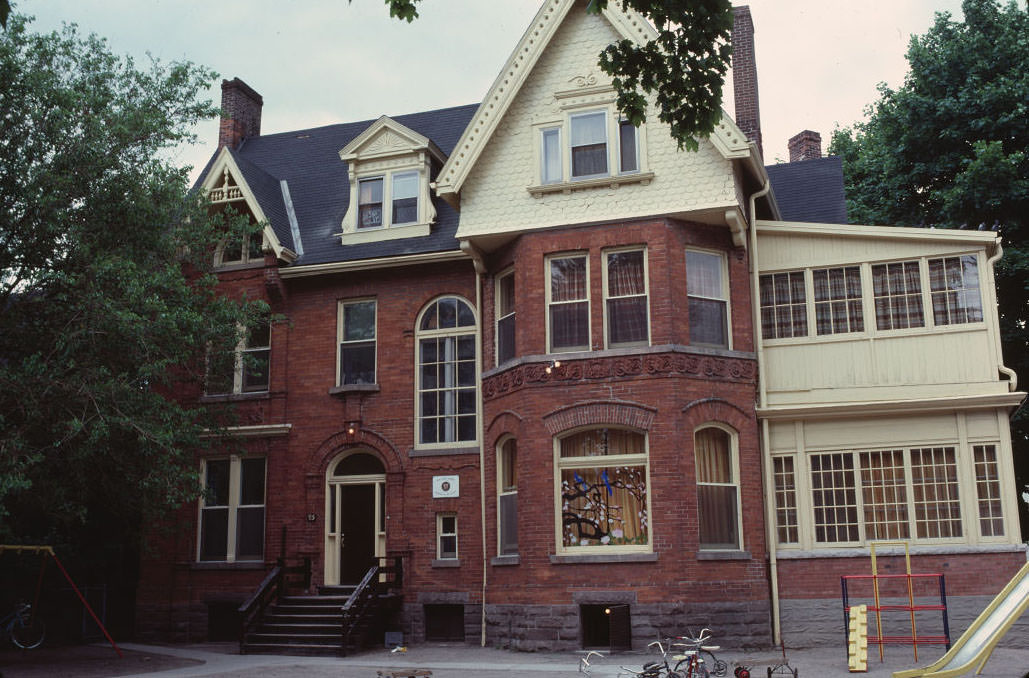
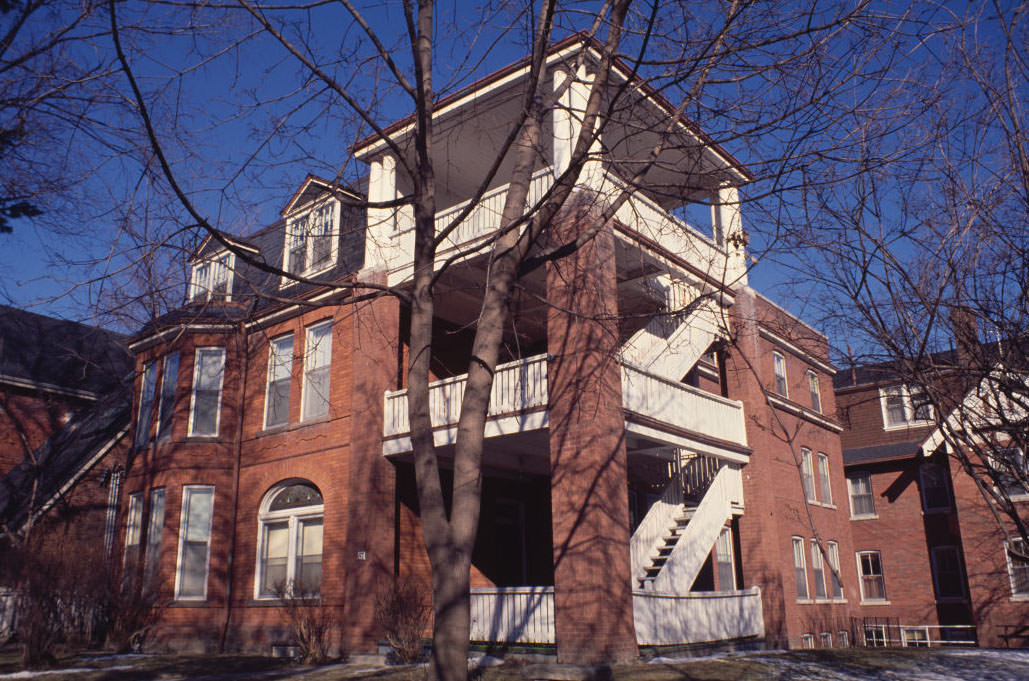
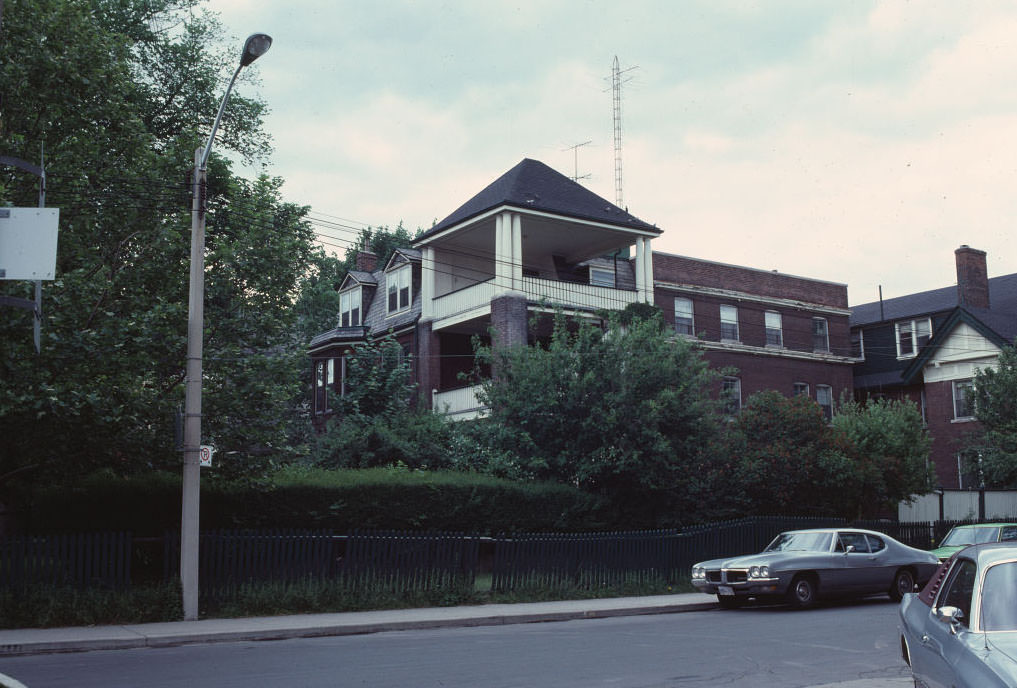
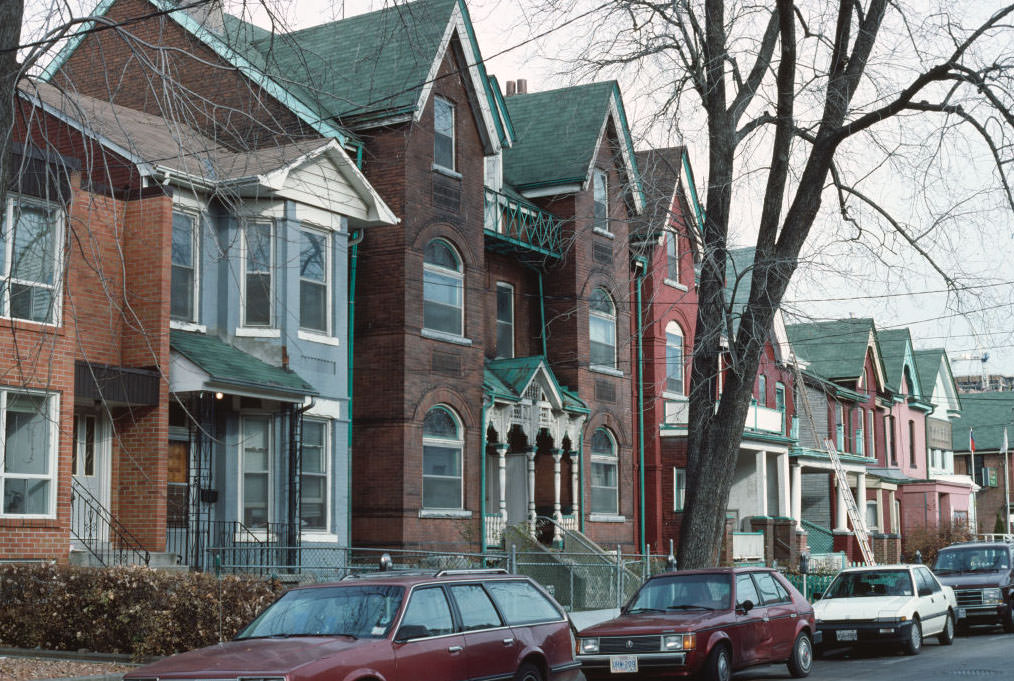
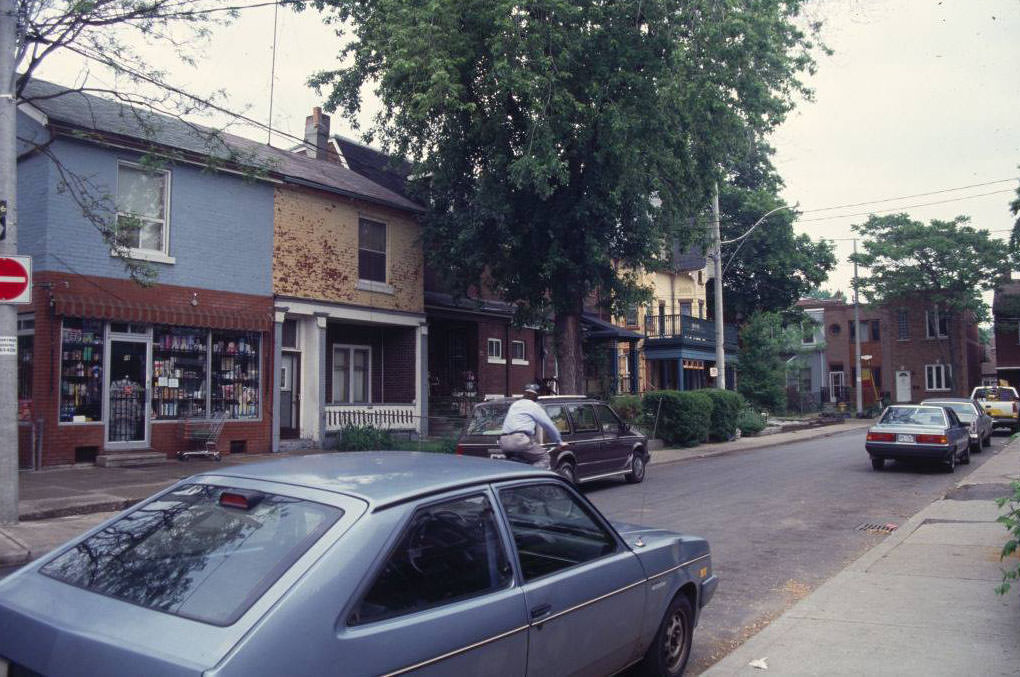
Beaconsfield Avenue in the mid-1970s was a typical west-end residential street. A series of photographs taken in 1976 and later years document nearly every address on the block — row houses, semi-detached homes, and the occasional single-family dwelling. These records were part of ongoing city survey efforts to document Toronto’s built environment before redevelopment could erase it.
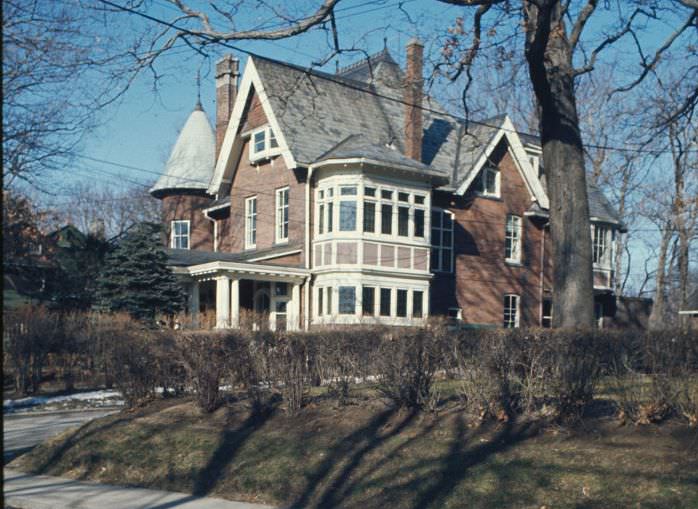
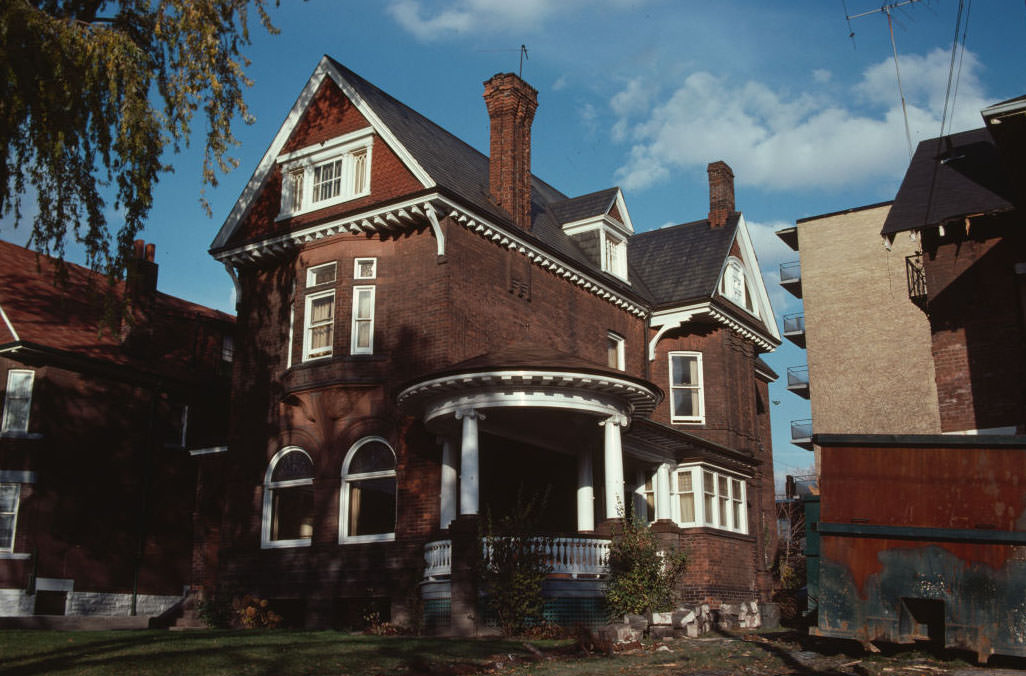
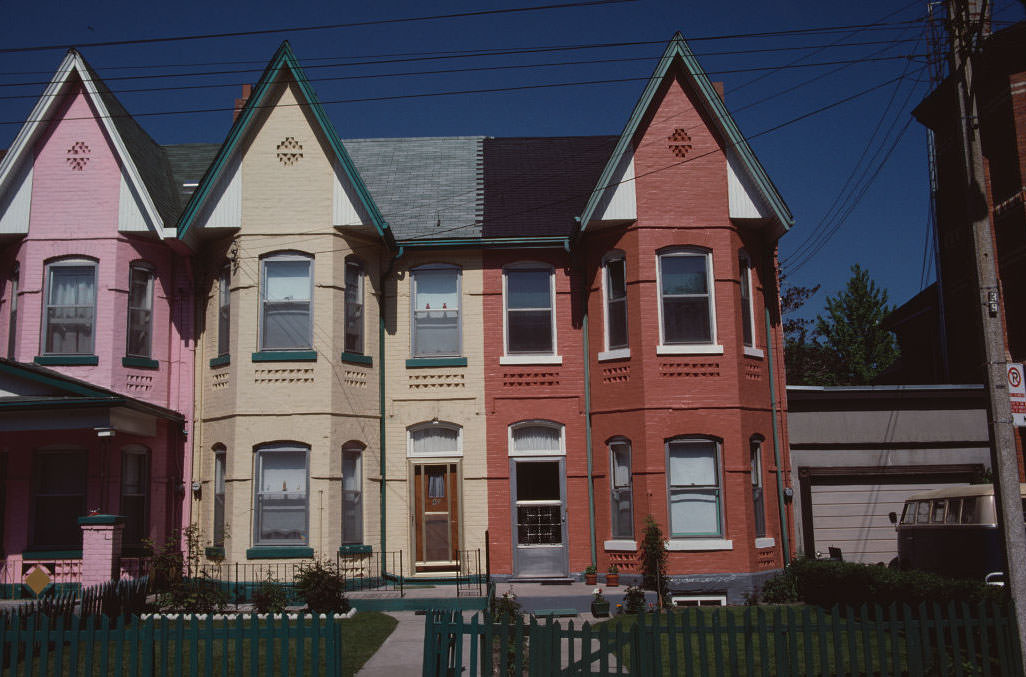
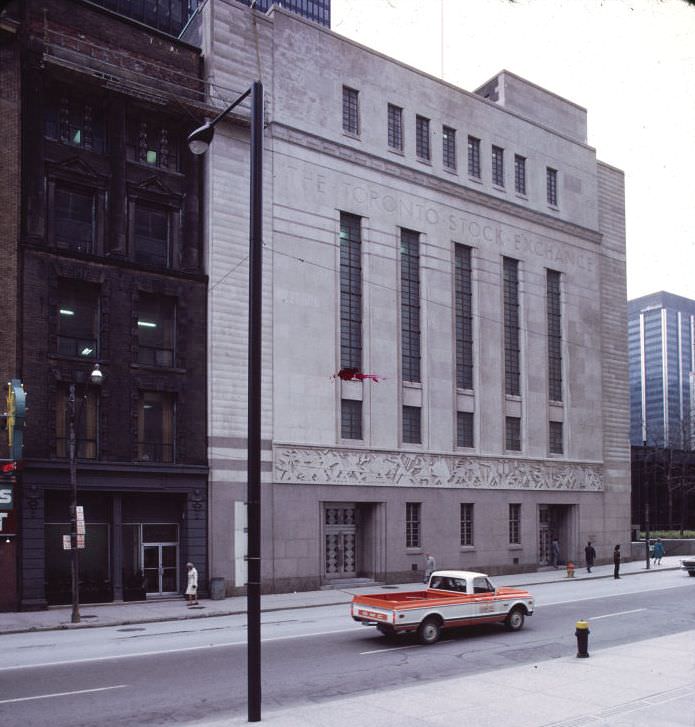
The Toronto Stock Exchange at 222 Bay Street was the beating heart of the city’s financial sector. By 1976, Bay Street had cemented its reputation as Canada’s financial centre. The area surrounding it was dense with corporate towers and suited workers moving between buildings. The Royal Bank Plaza, completed in 1979, added gold-mirrored glass to the mix — a bold architectural statement for the end of the decade.
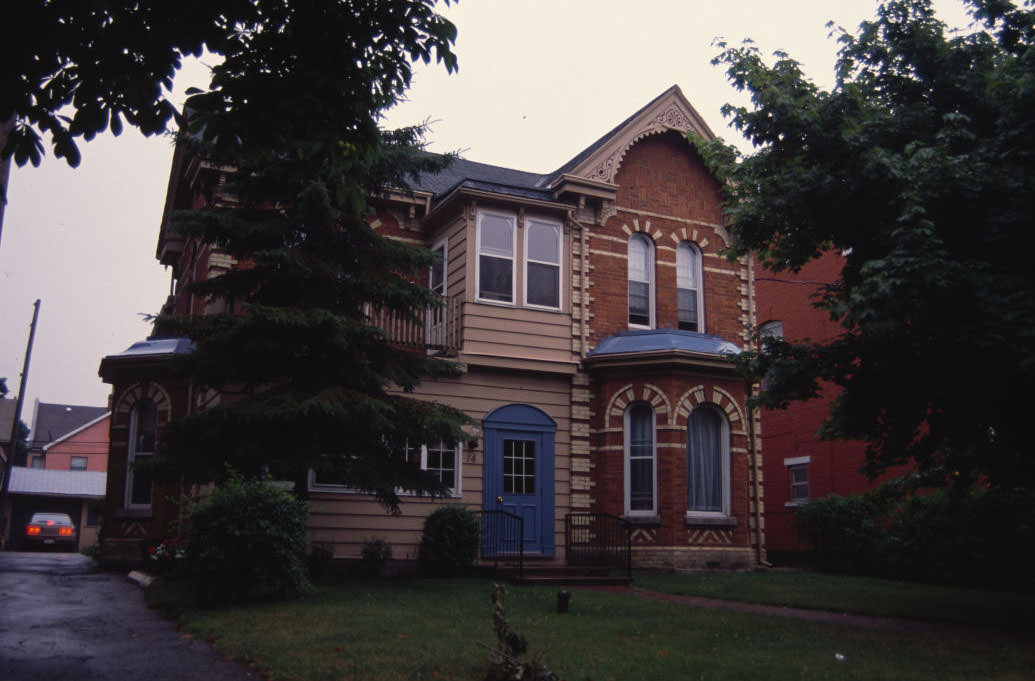
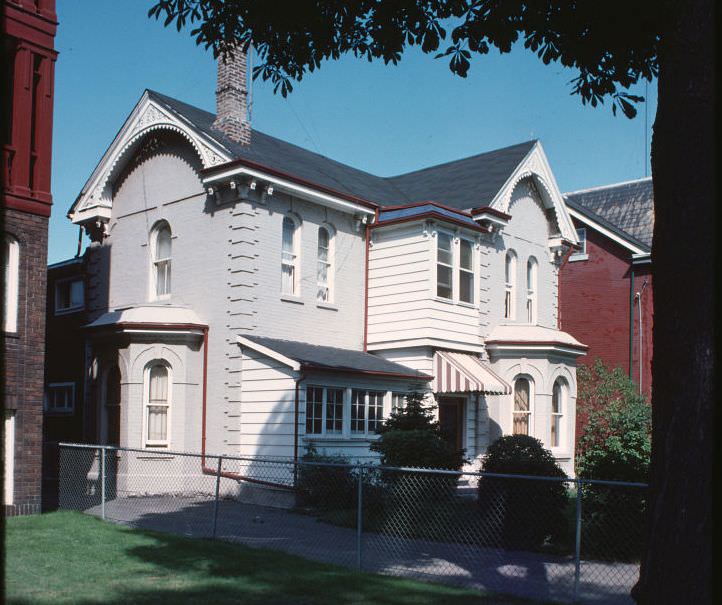
Not every building from this era survived. Some were cut apart and relocated rather than demolished outright. The house at 4 Bancroft Avenue was literally split in half in the late 1970s, with its main section saved and moved west to become part of Bancroft Hall. It was an unusual solution — and a sign that some Torontonians were fighting to preserve at least pieces of what was being lost.
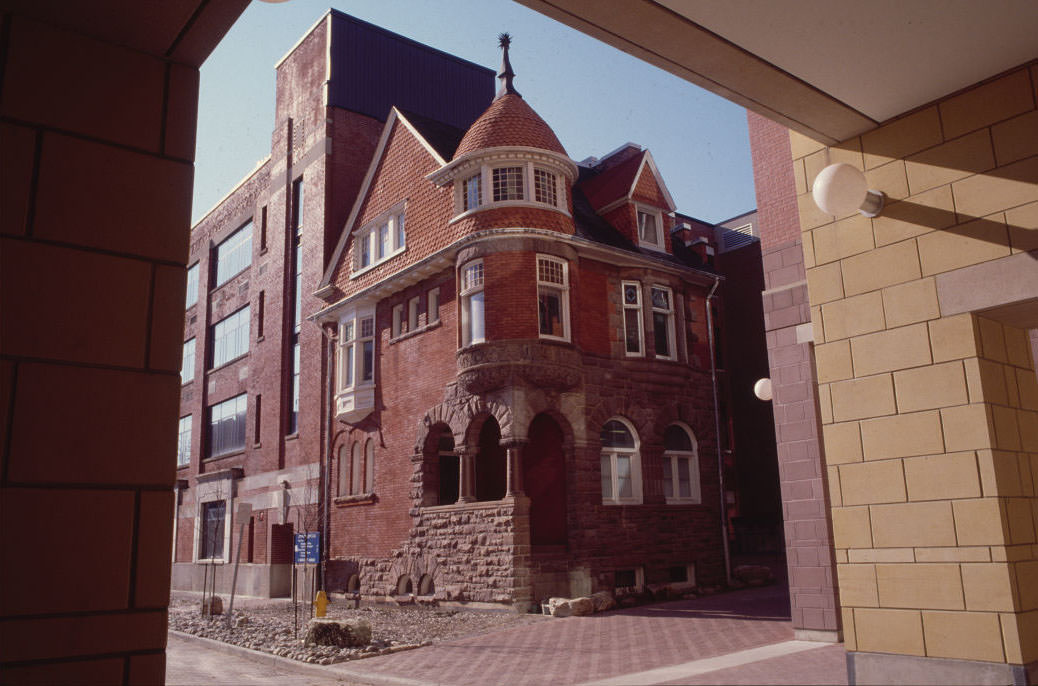
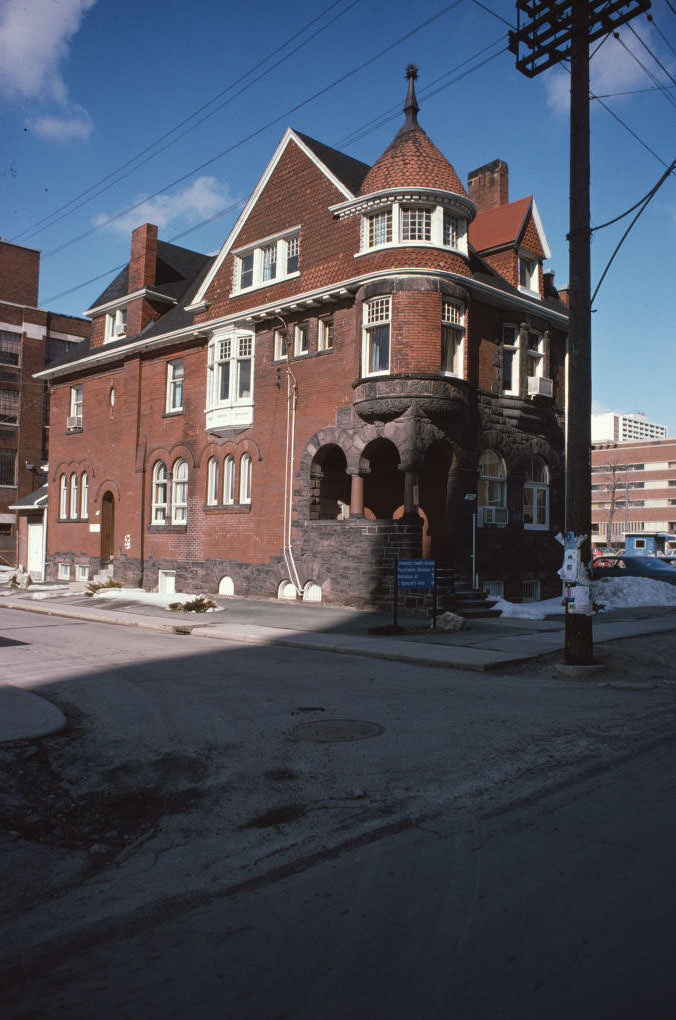
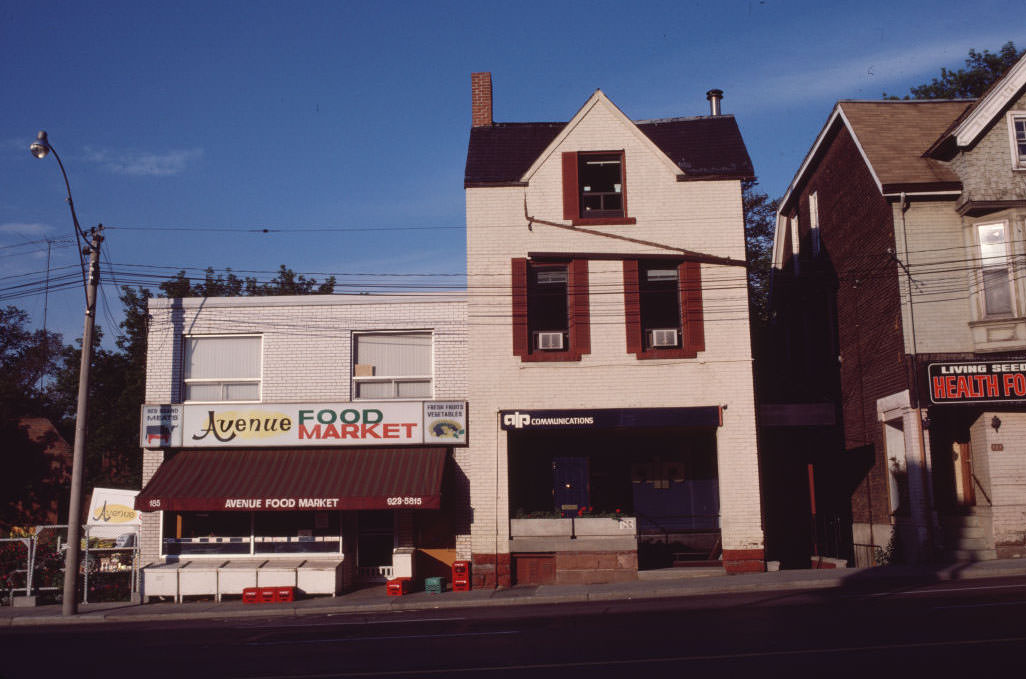
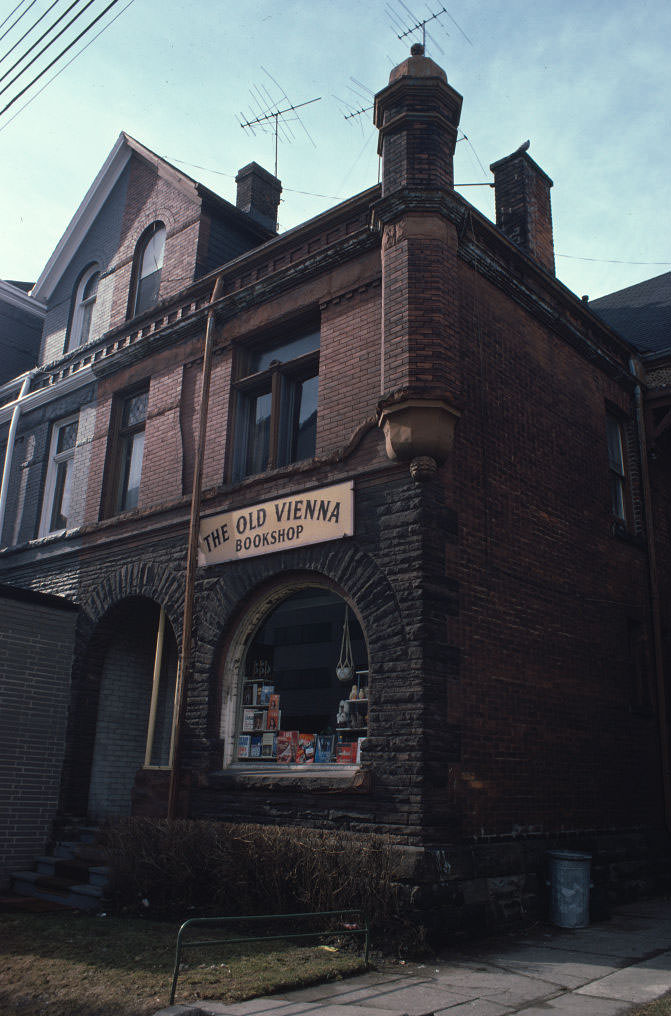
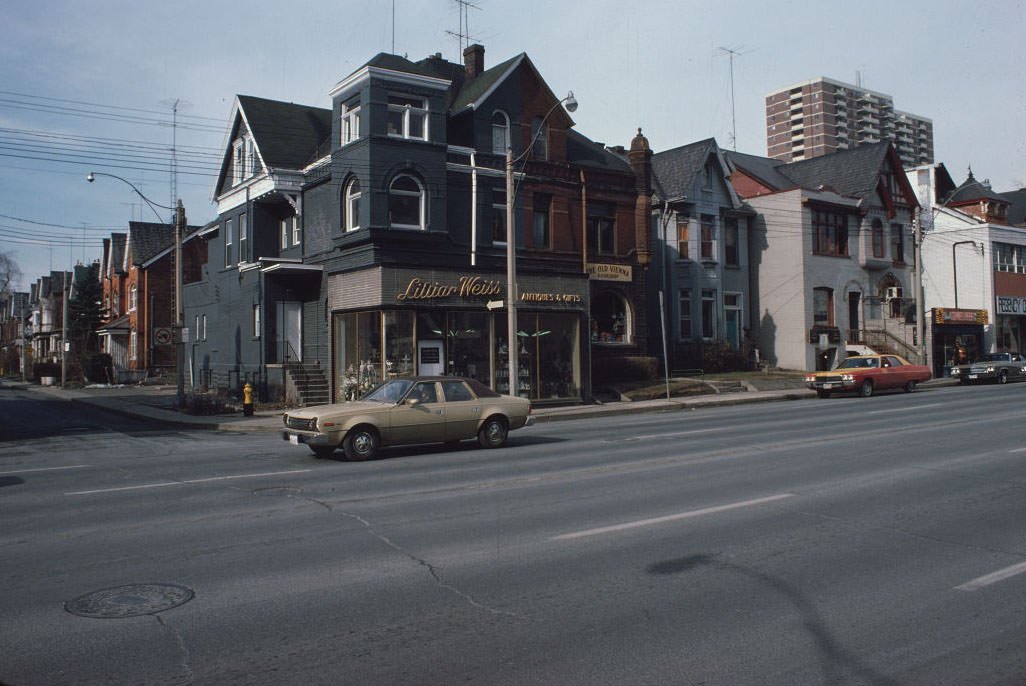
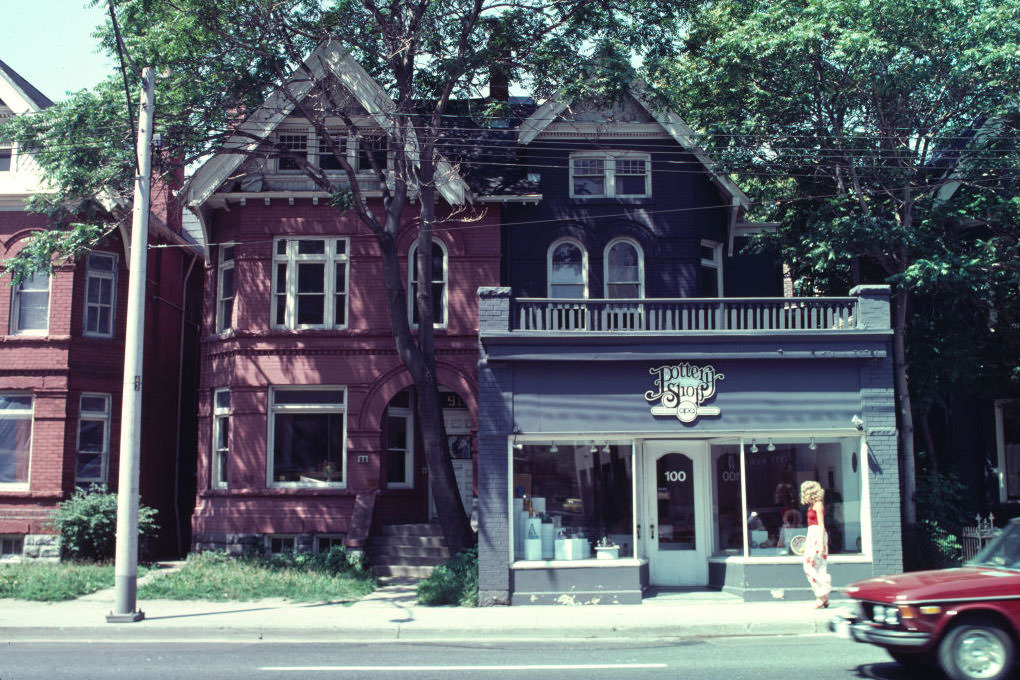
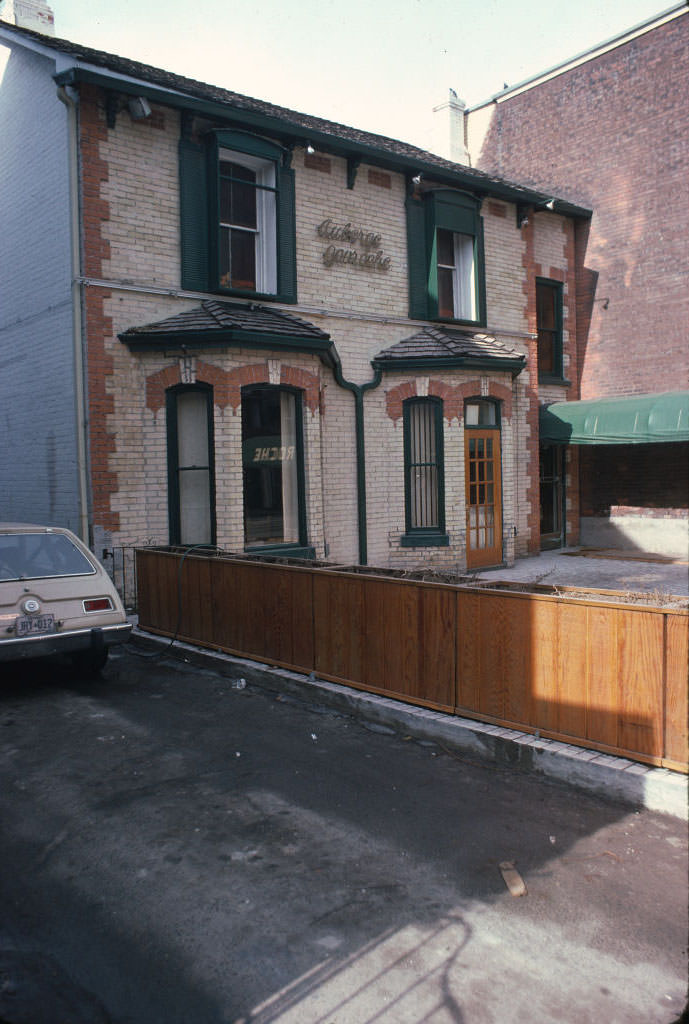
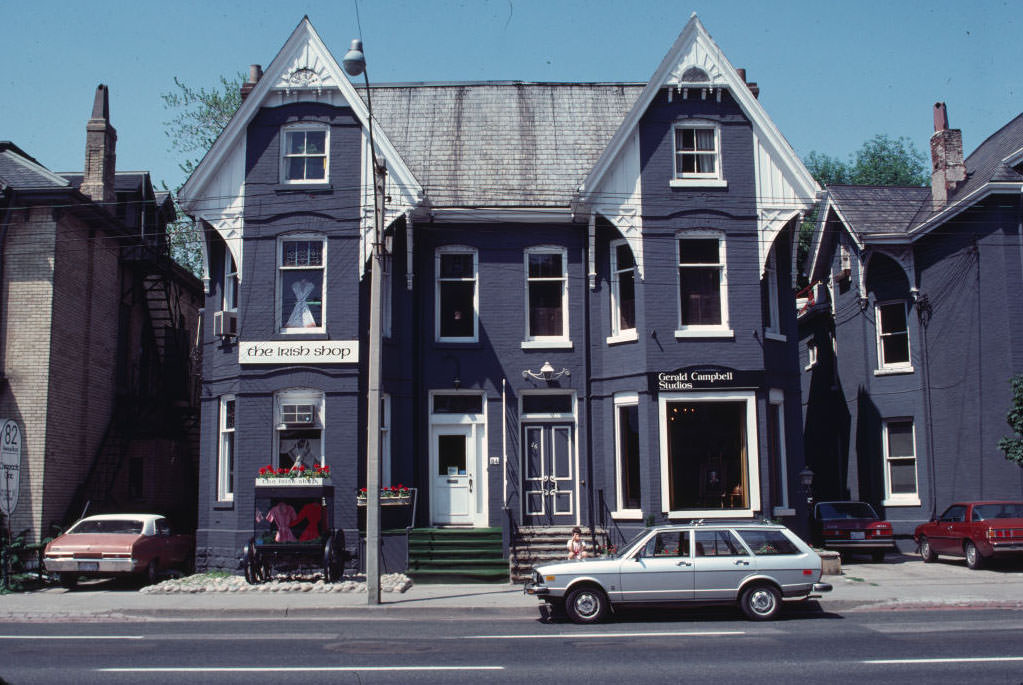
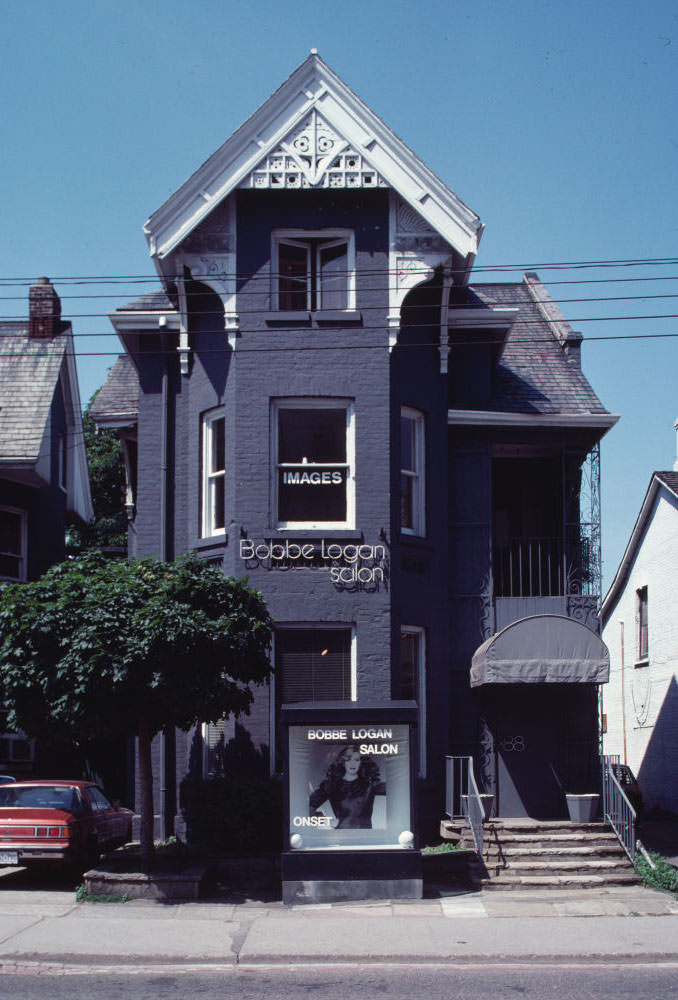
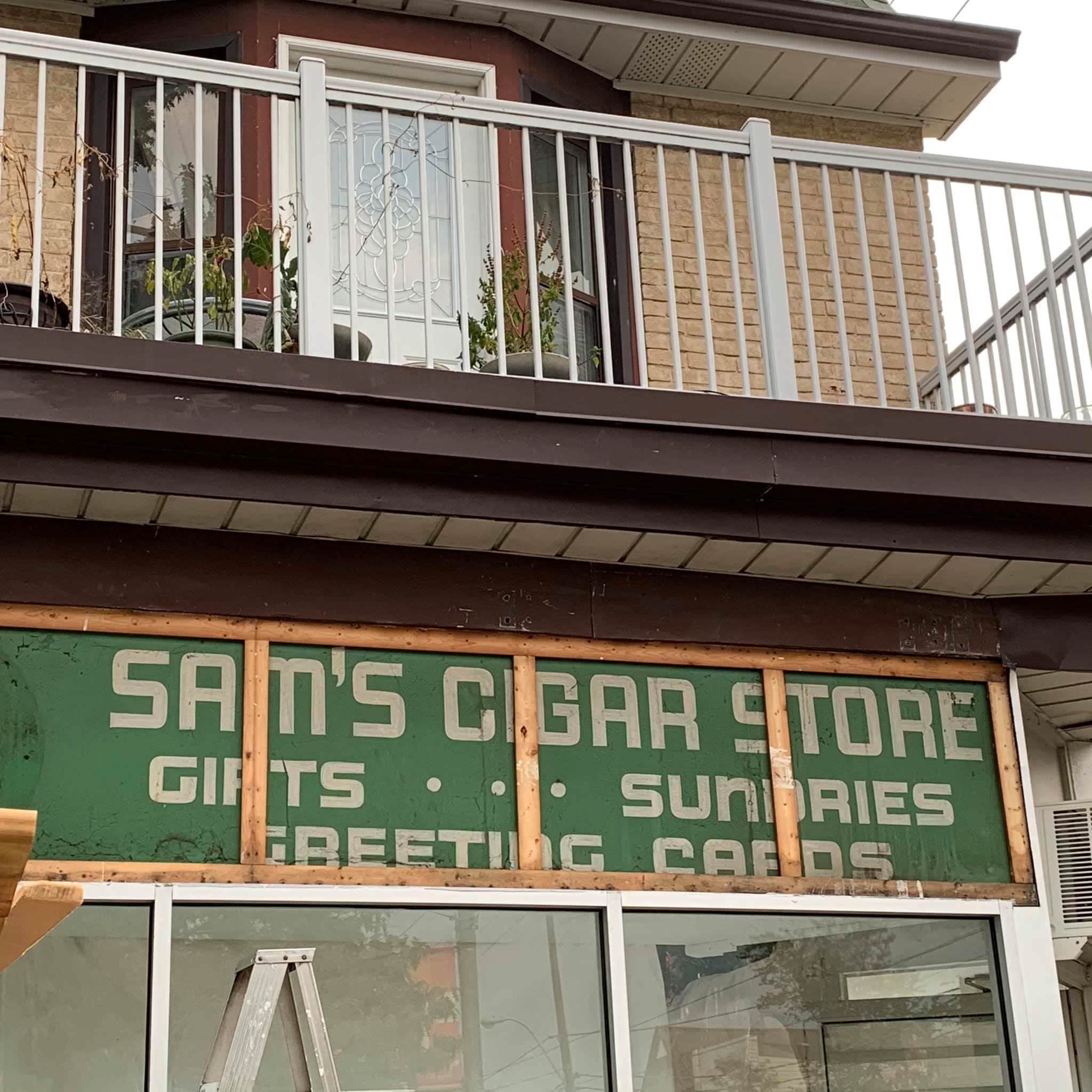
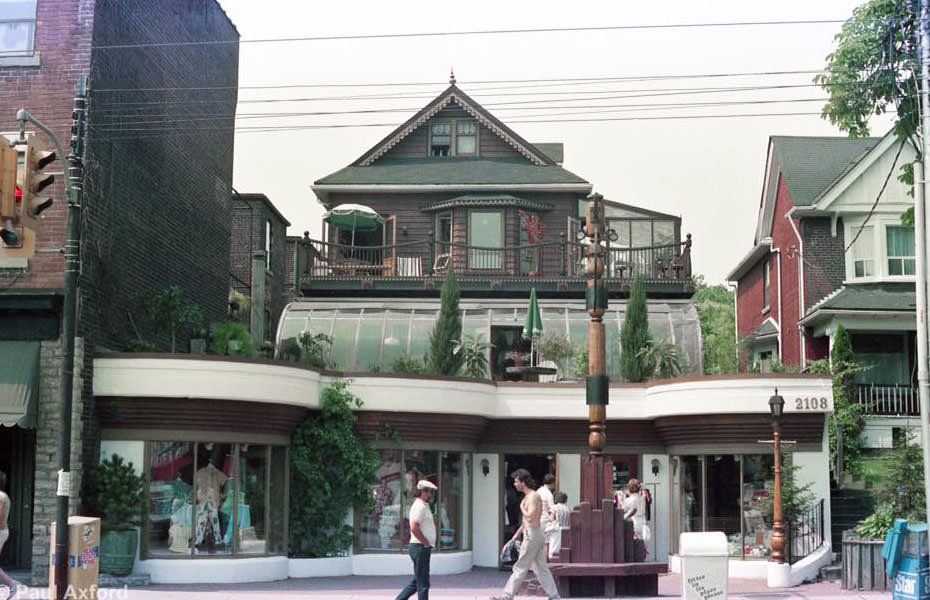
Avenue Road in the mid-1970s was lined with specialty shops that catered to a well-heeled clientele. Antique dealers, bookshops, hair salons, pottery studios, and restaurants occupied the ground floors of older buildings. The Vienna Bookshop, Lillian Weiss Antiques, a pottery shop at number 100, and the Auberge Gavroche restaurant all sat within a short stretch of the same block — the kind of density that made Toronto’s commercial streets genuinely interesting.
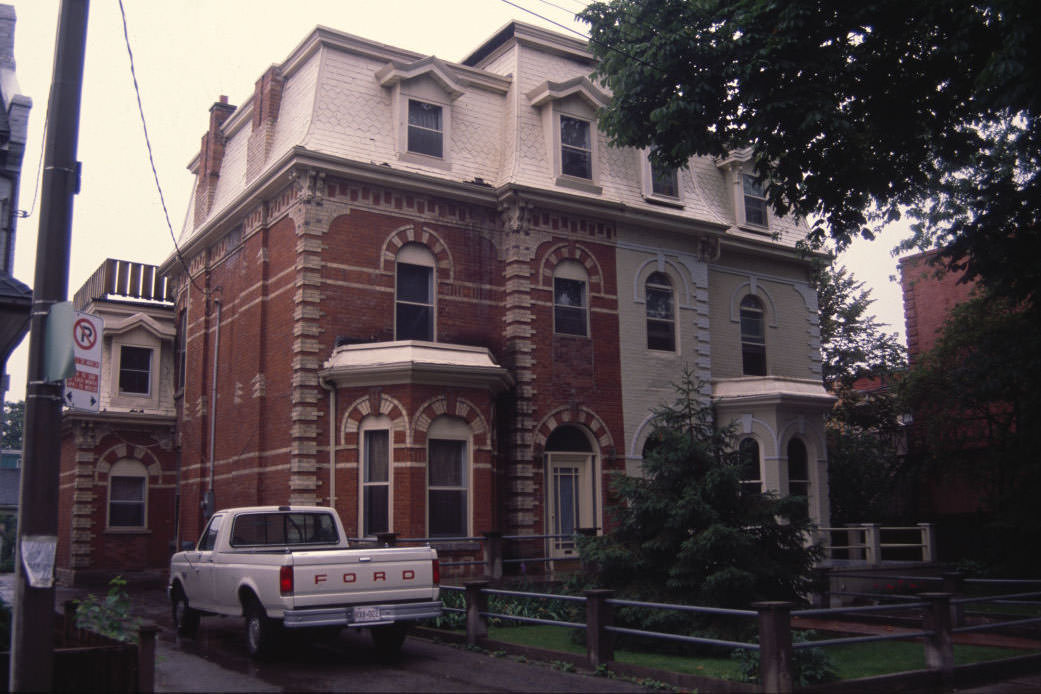
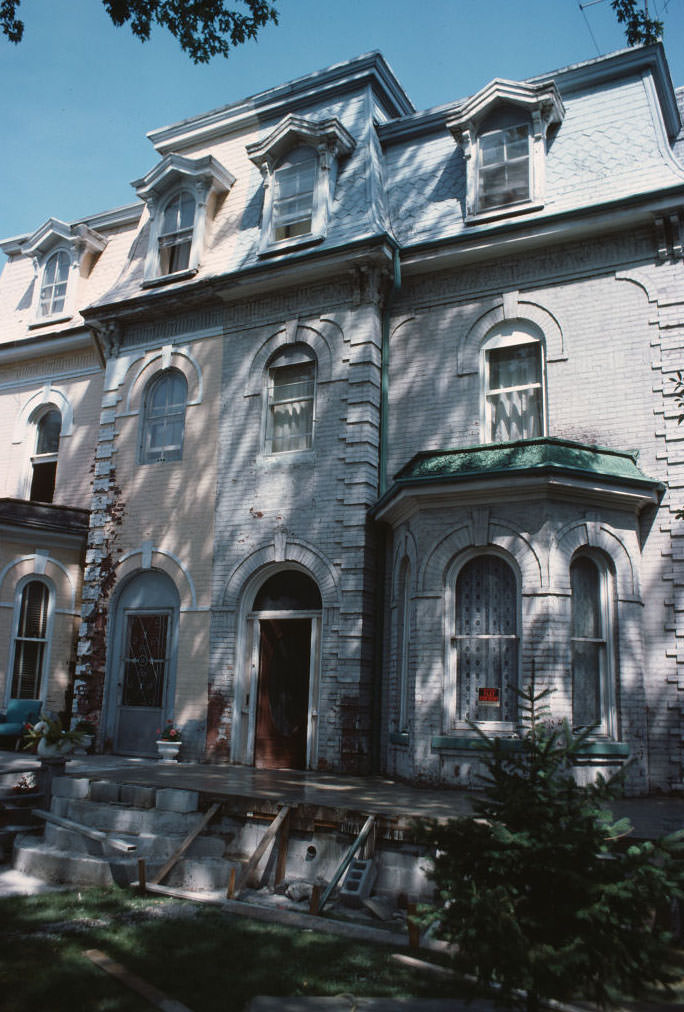
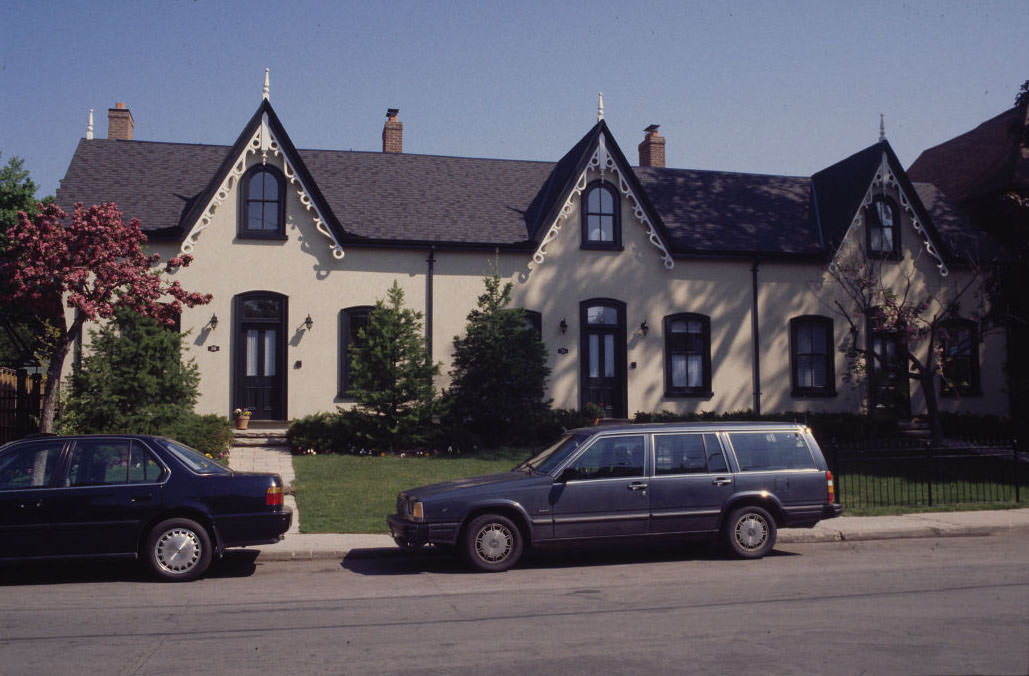
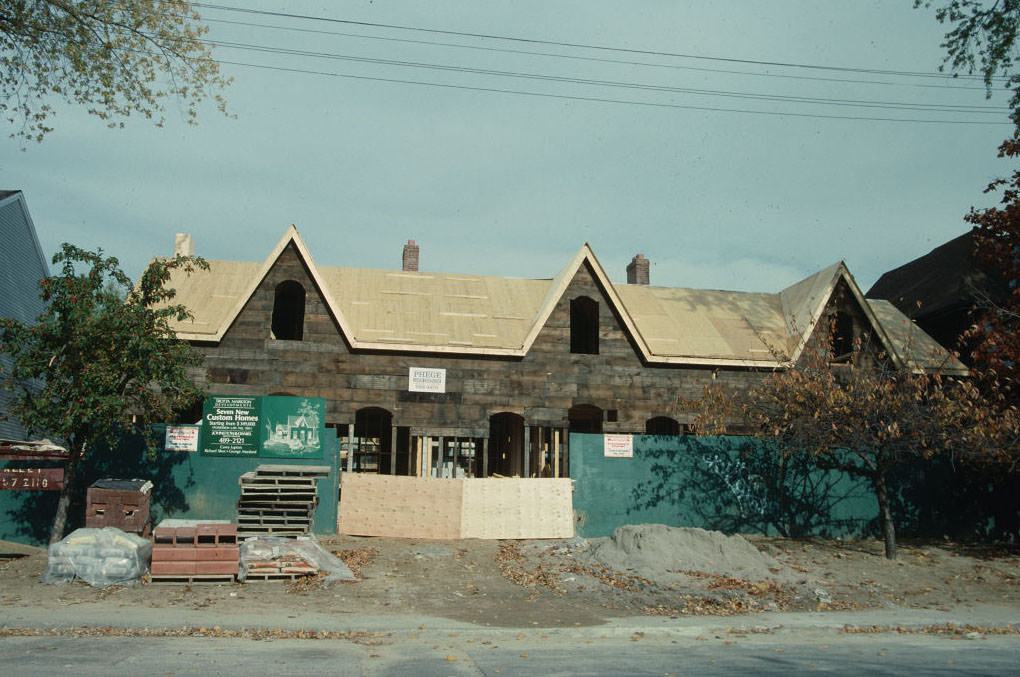
Amelia Street in Cabbagetown underwent a wave of renovation in the late 1970s. Photographs from 1975 and 1979 show the before, during, and after states of the same buildings — a visual record of the neighbourhood’s gentrification process that was beginning to reshape older working-class blocks across the inner city.
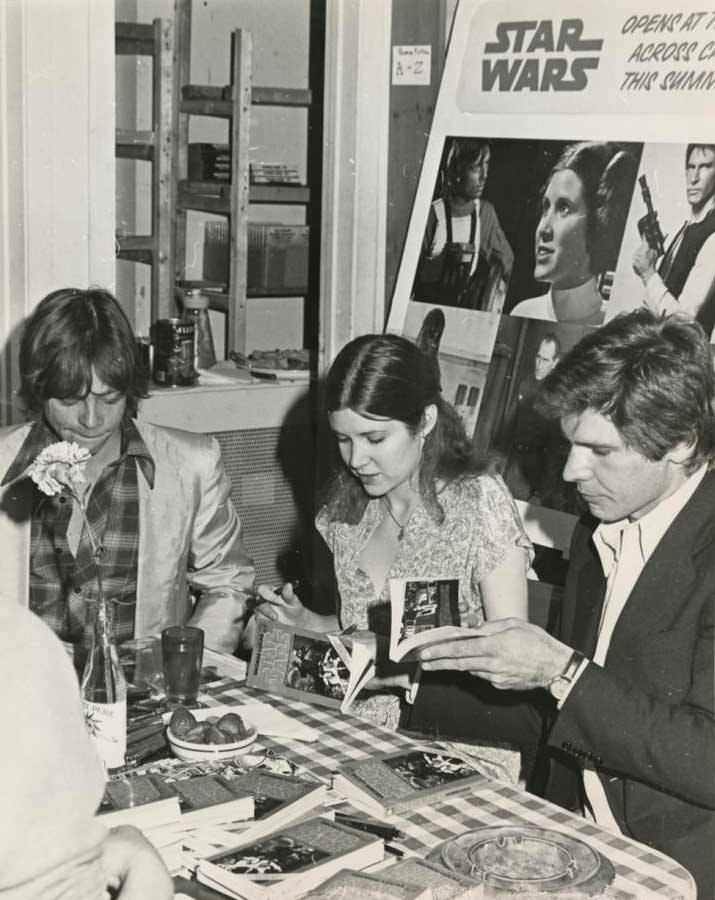
In 1977, a Toronto bookstore hosted something remarkable. Mark Hamill, Carrie Fisher, and Harrison Ford — fresh off the release of Star Wars — turned up for a book signing. The film had opened that summer and was already a sensation. The photo of the three of them at the signing table is one of the more unexpected pieces of Toronto pop culture history from the decade.
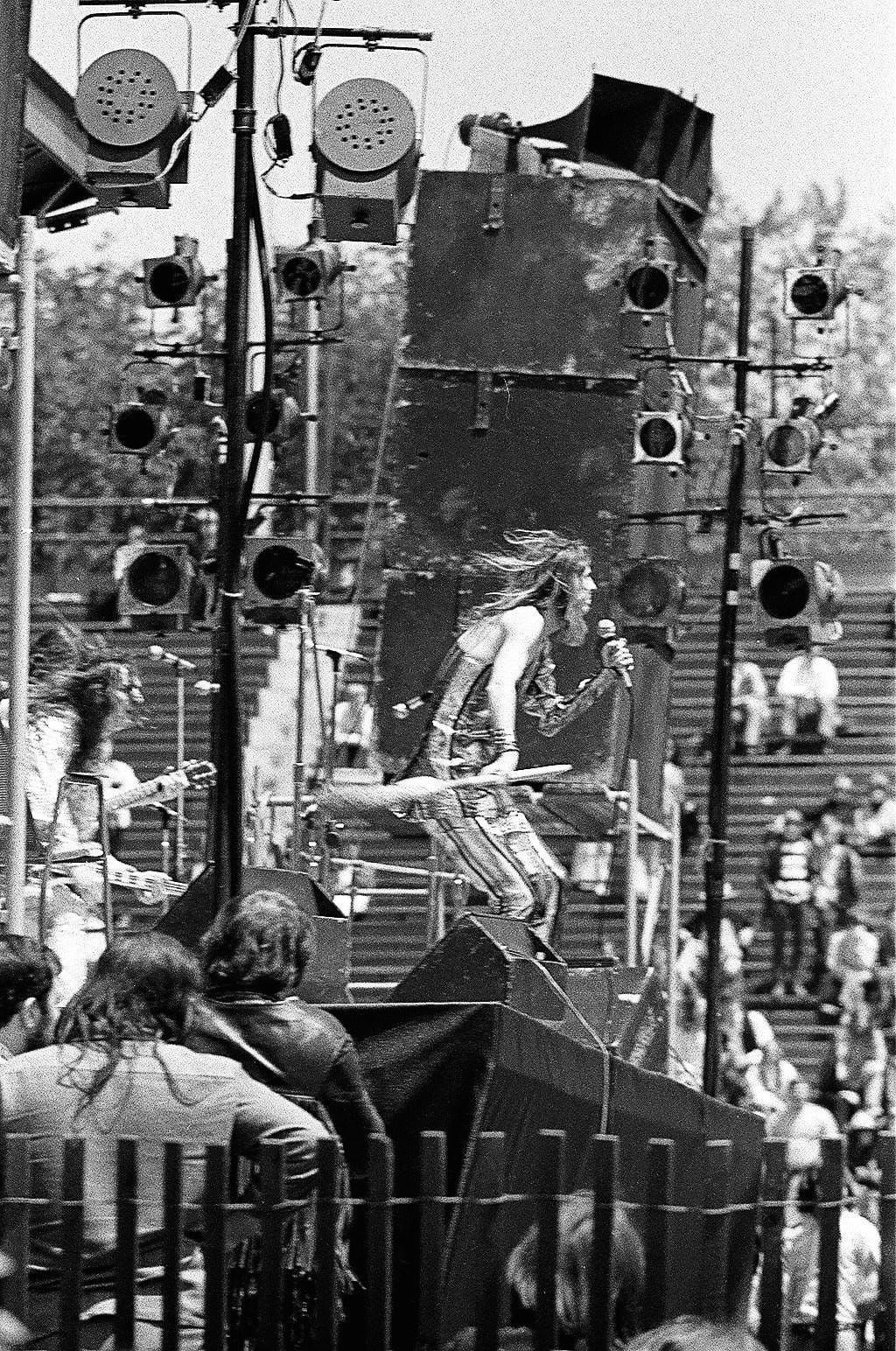
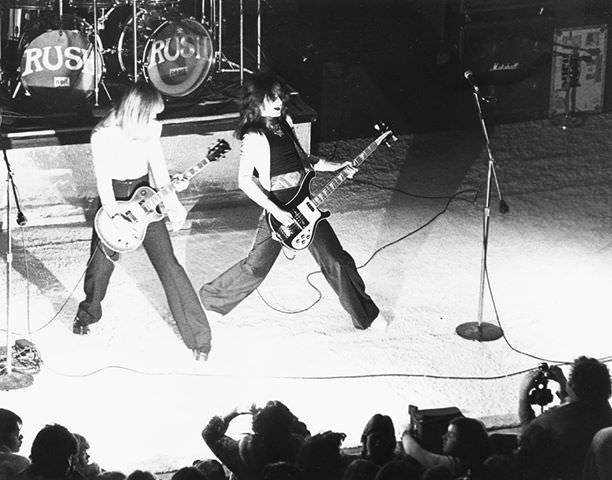
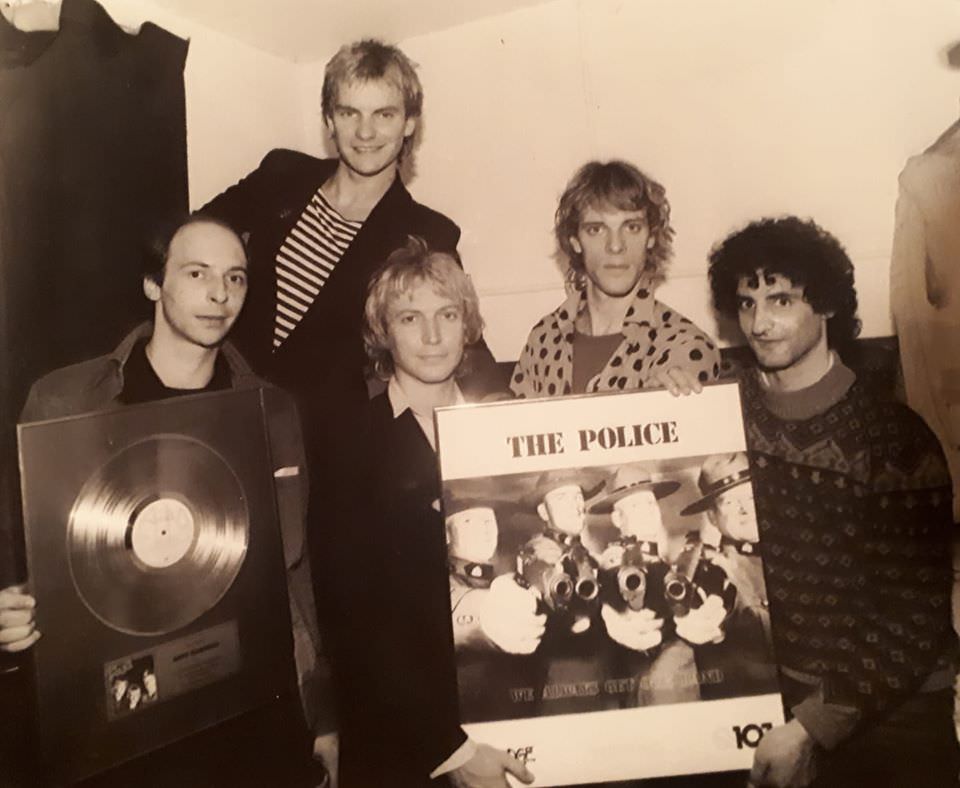
The music scene in 1970s Toronto was loud and eclectic. Alice Cooper made his Toronto debut at the Toronto Pop Festival at Varsity Stadium, delivering a theatrical performance that shocked and delighted the crowd. Later in the decade, on January 10, 1976, Rush played Massey Hall — a hometown show for one of the city’s most celebrated rock exports. Venues like the Horseshoe Tavern kept the underground alive, hosting acts that would define the shift from rock to punk.
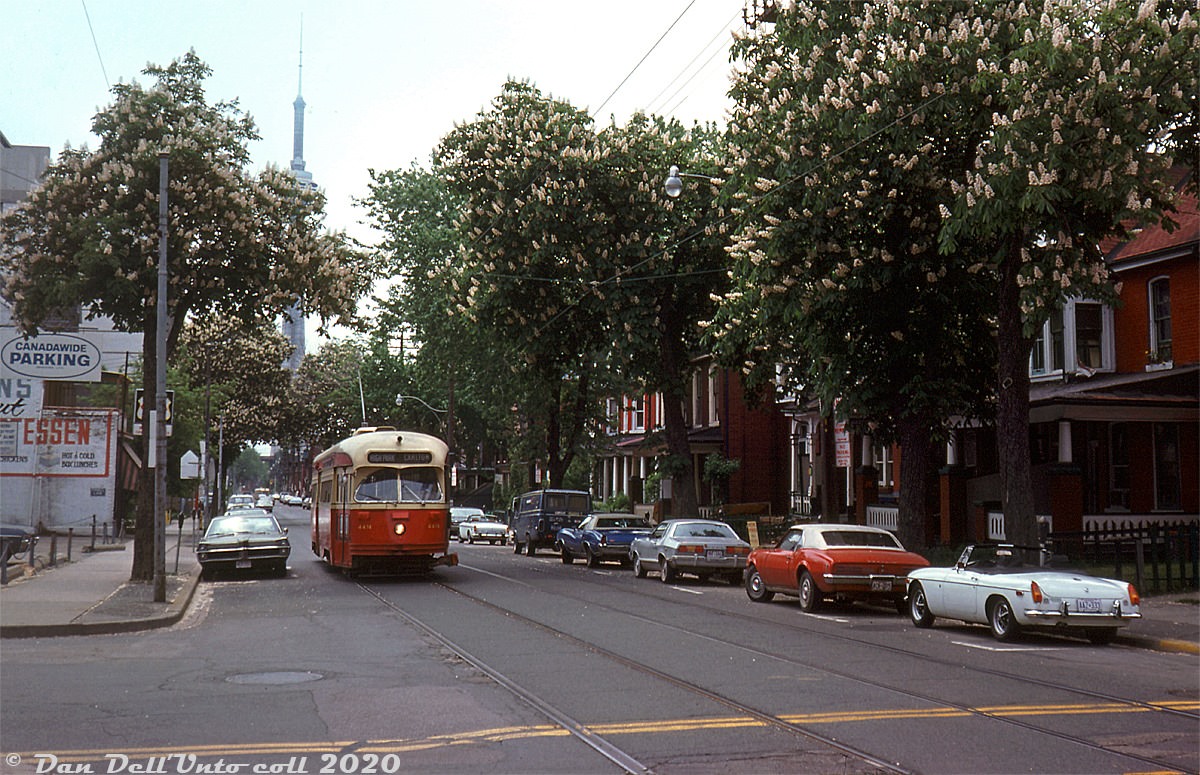
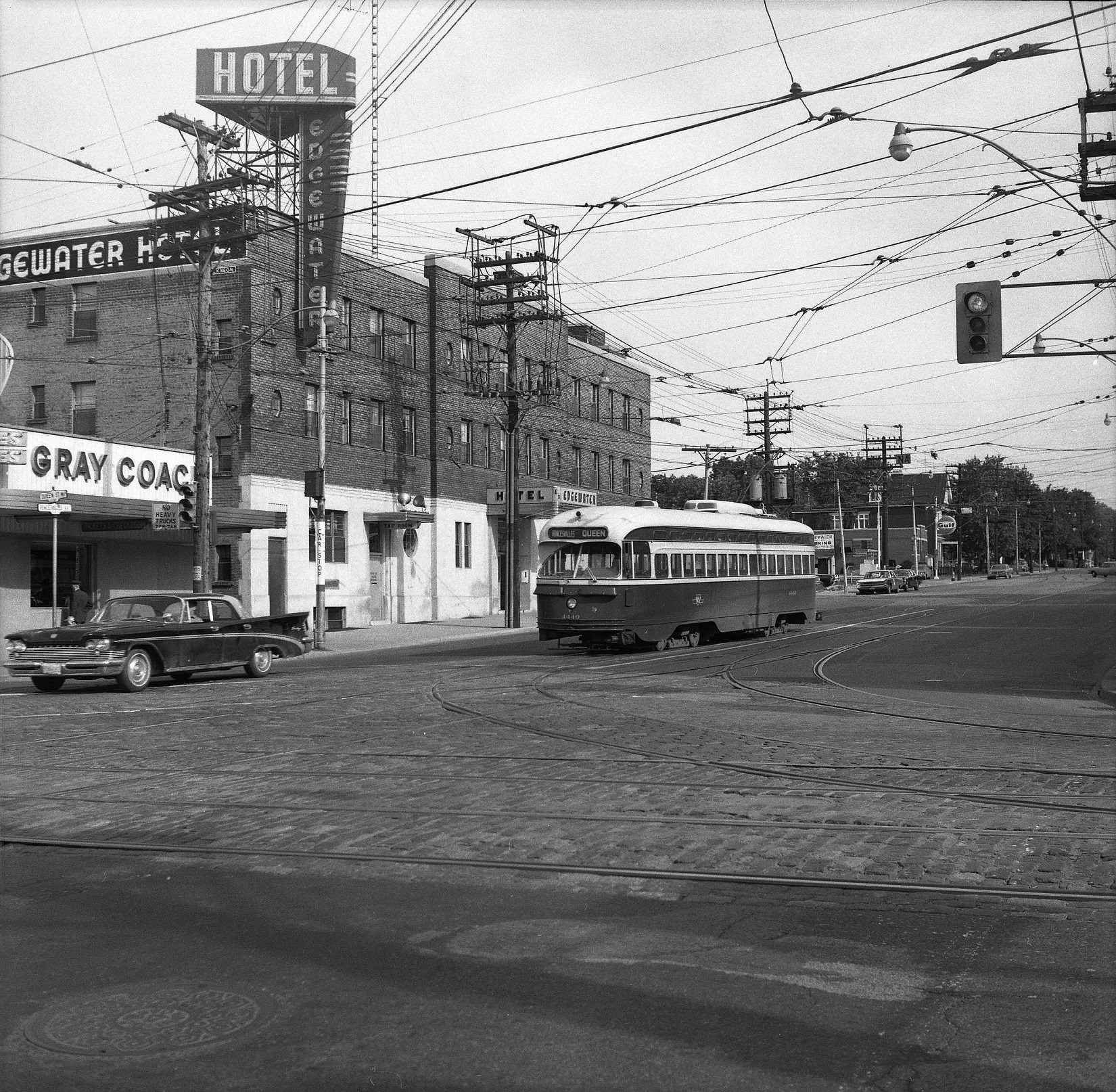
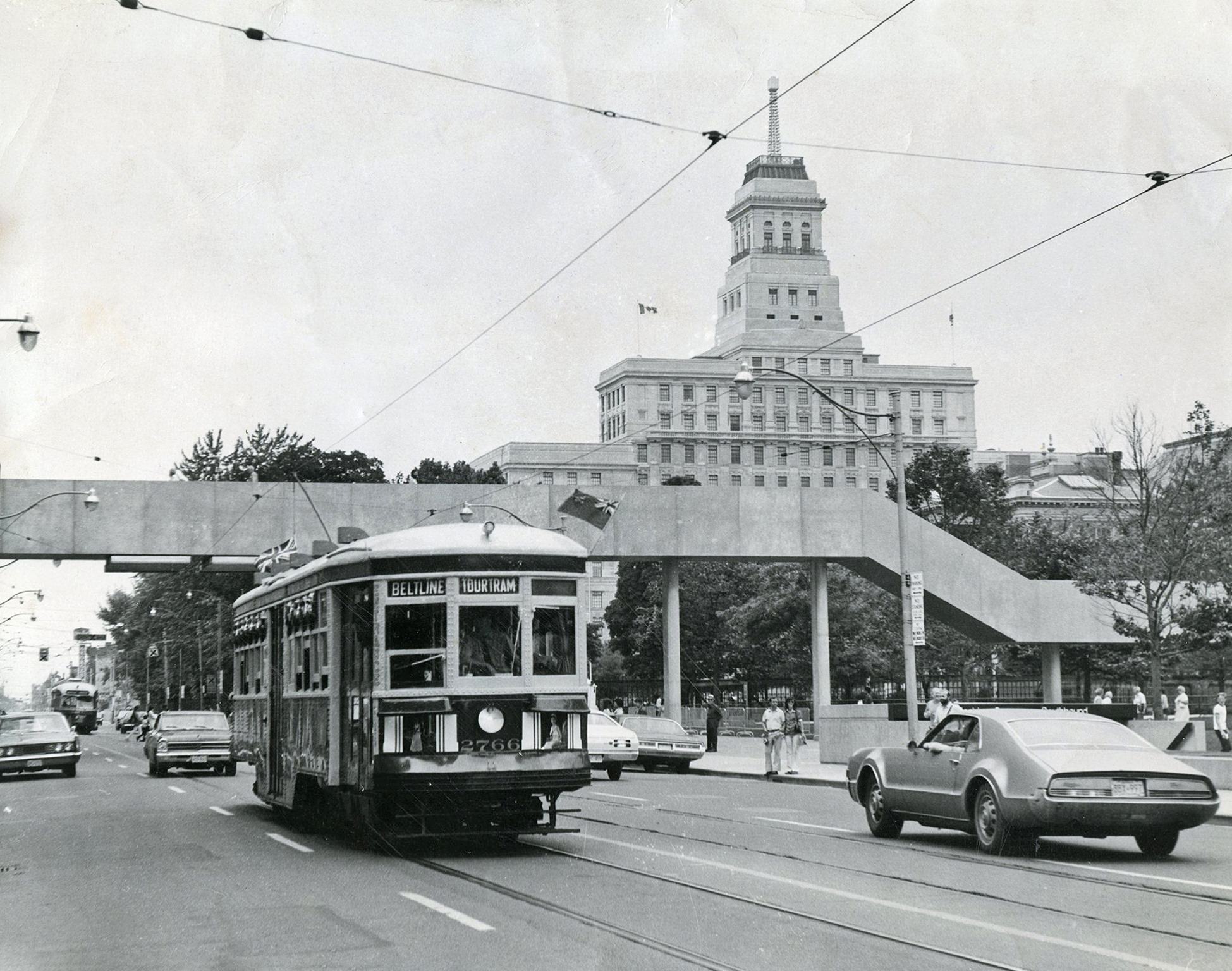
Streetcars on the Carlton and Kingston routes were a constant presence through the first half of the decade. TTC car 4440 on the Kingston line swung south on Roncesvalles to turn east on Queen Street West in July 1970, while car 2766 ran the Queen route eastbound near Bay Street in 1973. These were working machines — not historic novelties — moving thousands of passengers a day through rain, sleet, and summer heat.
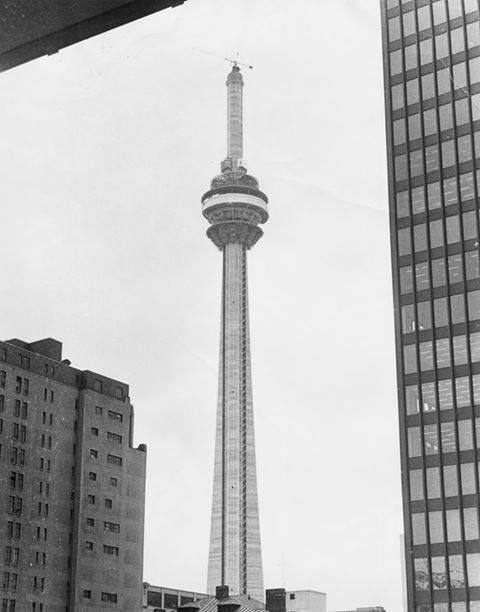
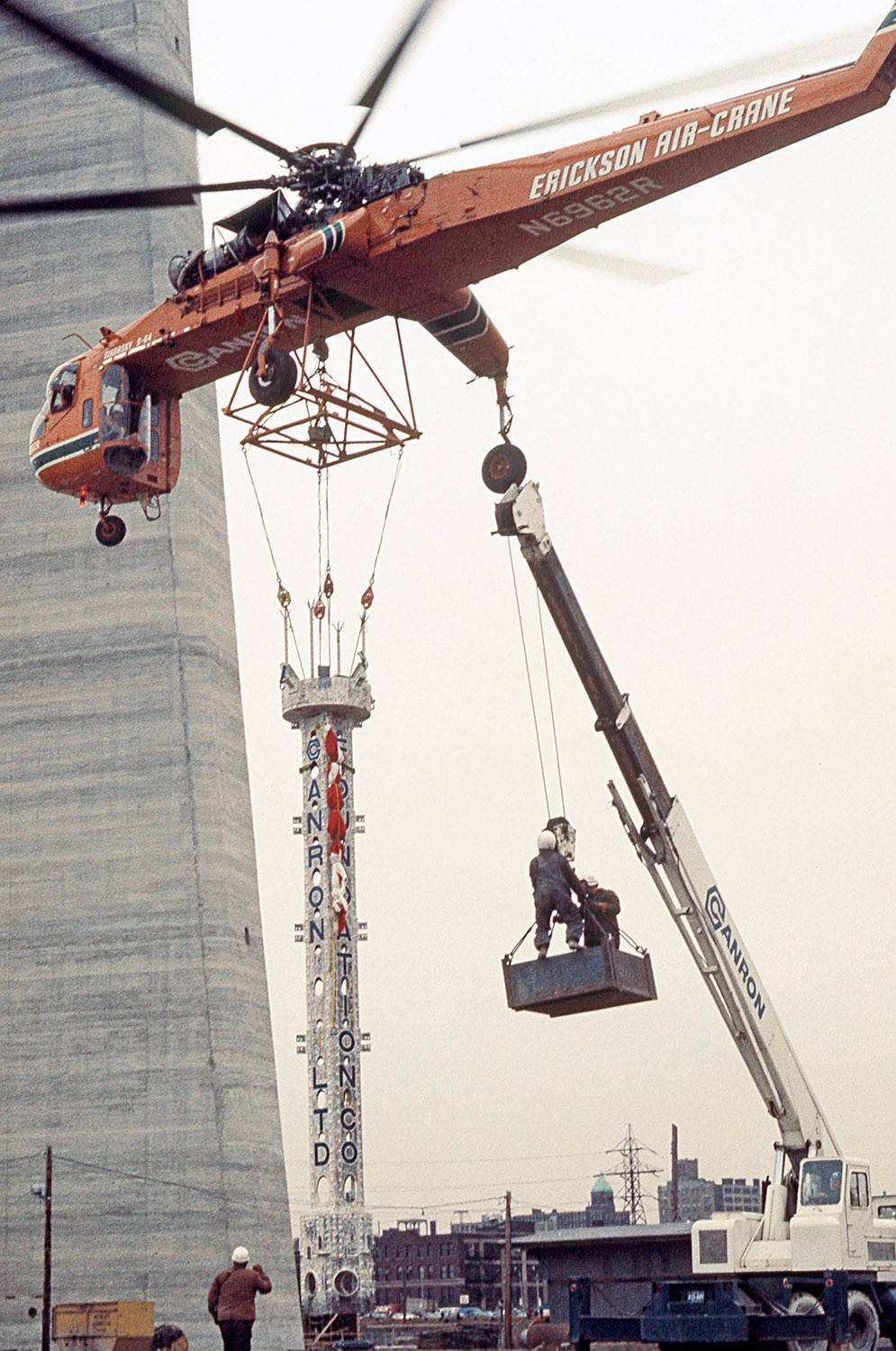
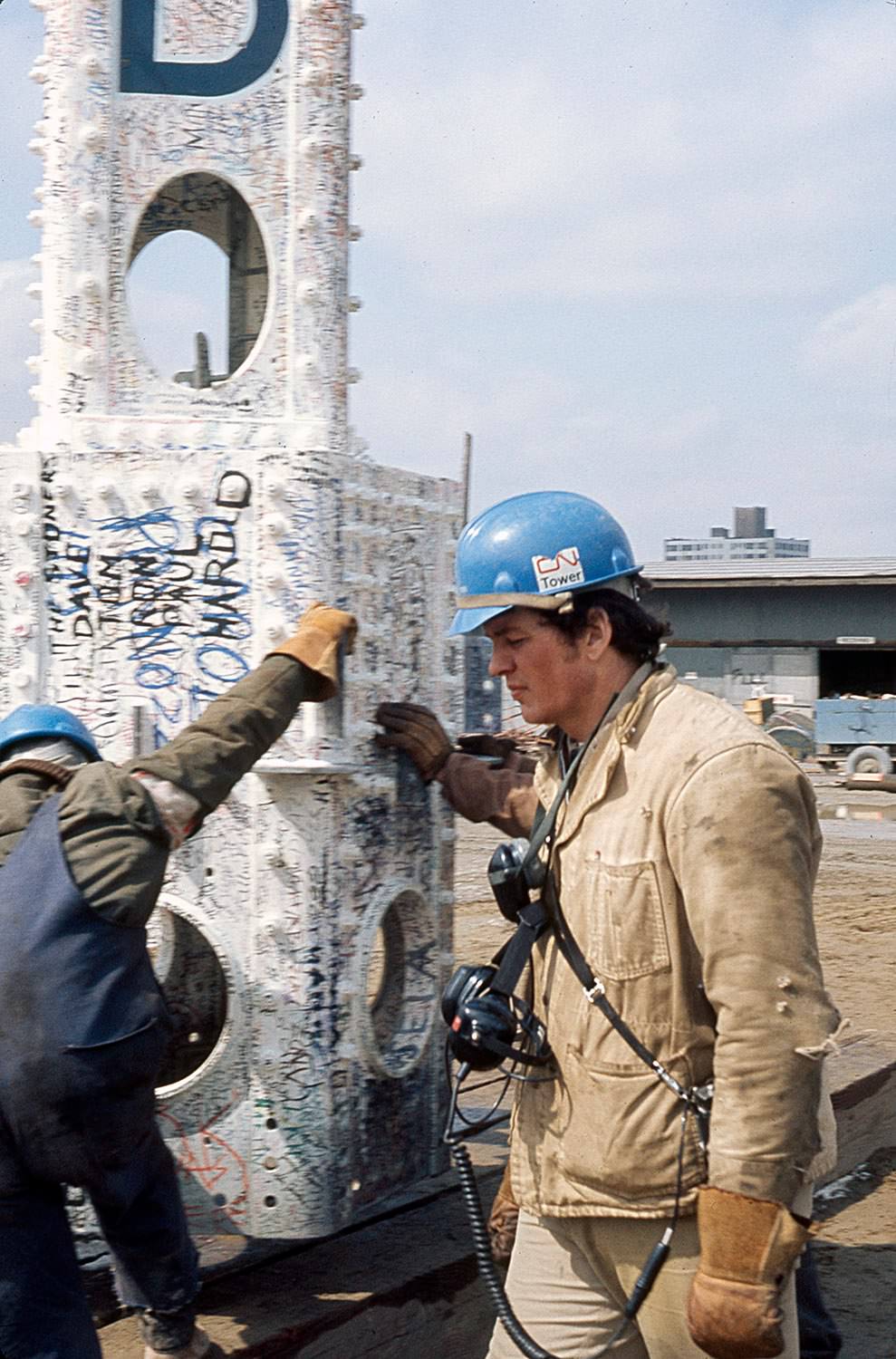
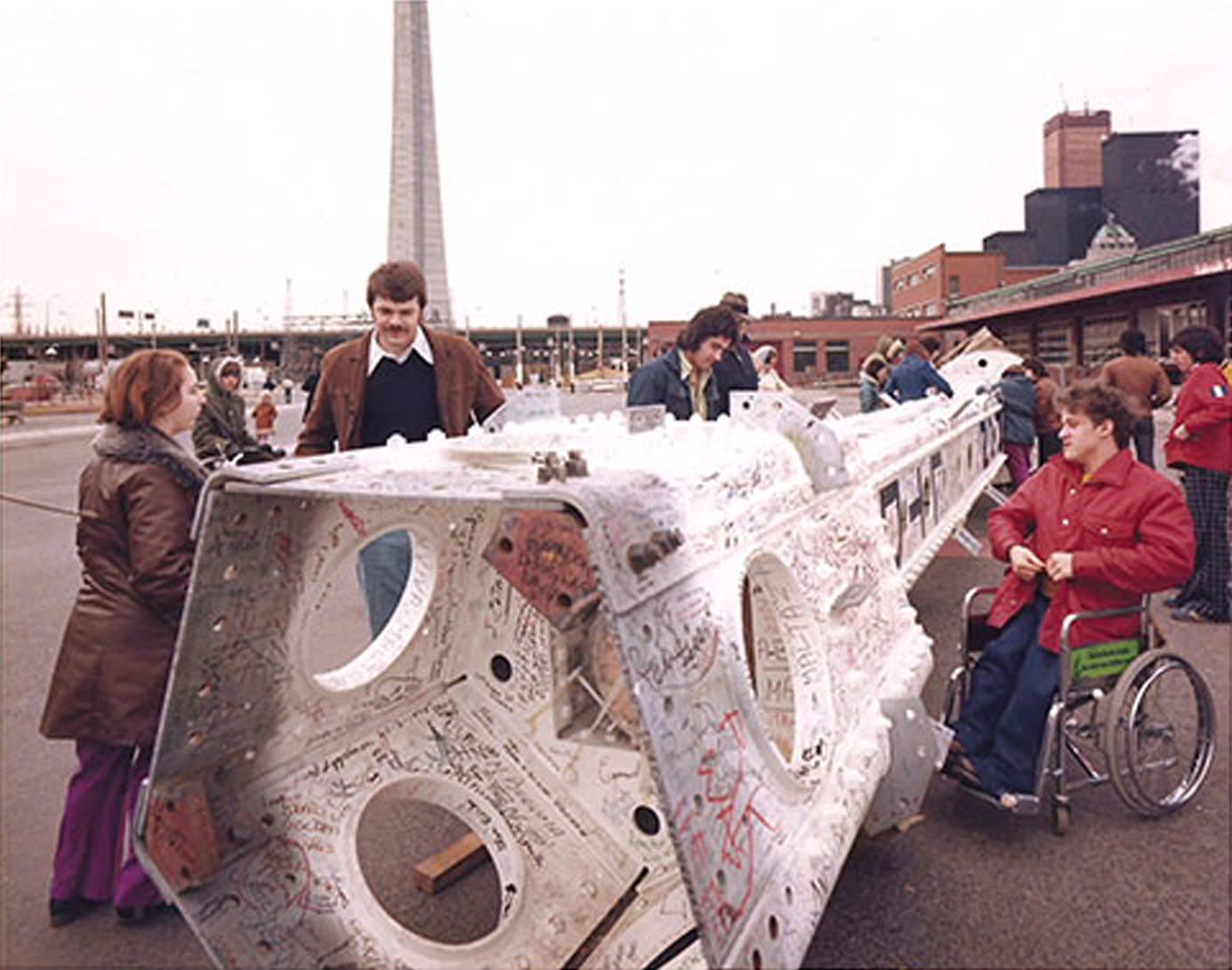
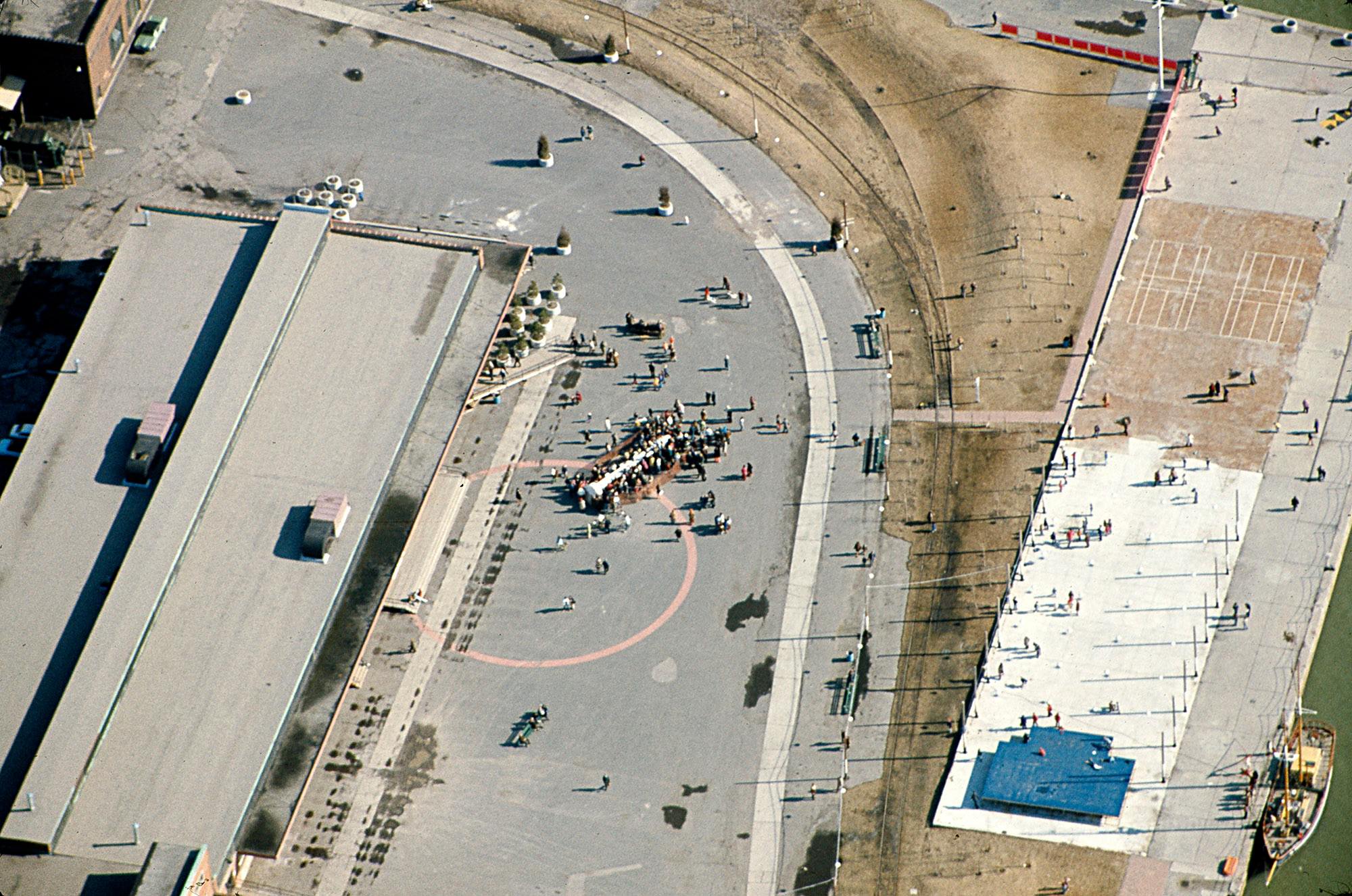
The CN Tower’s construction was a spectacle the whole city watched. Work began in 1973 and the antenna — the tower’s topmost section — was placed by helicopter in April 1975. Workers signed the antenna segment before it went up, leaving their names literally at the top of the world’s tallest structure. The helicopter used for the lift was a Sikorsky, operated under the close watch of crew on the ground. The tower officially opened the following year.
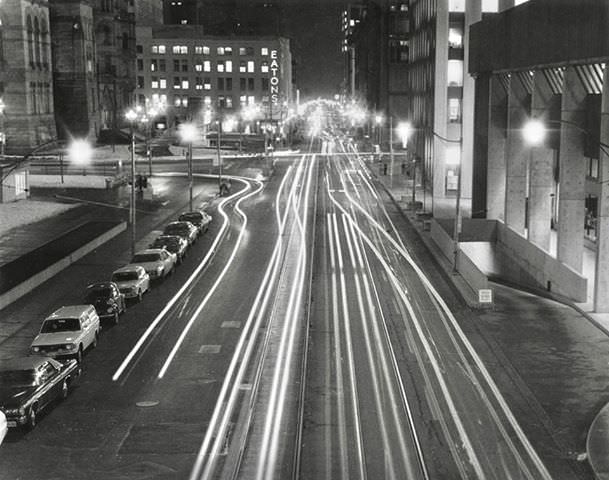
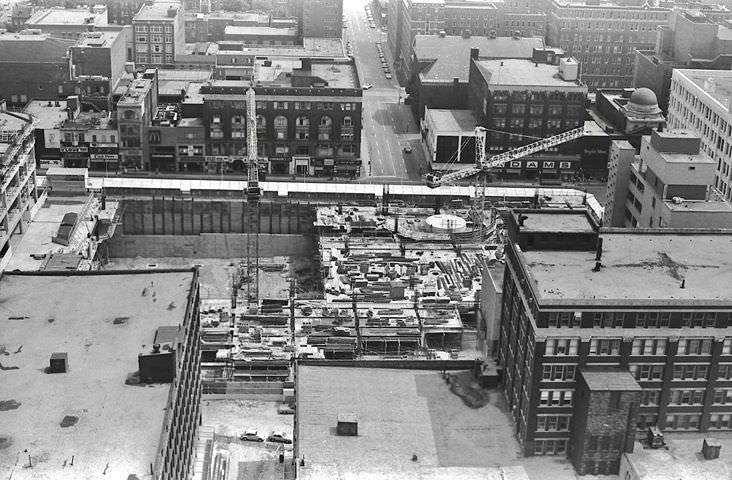
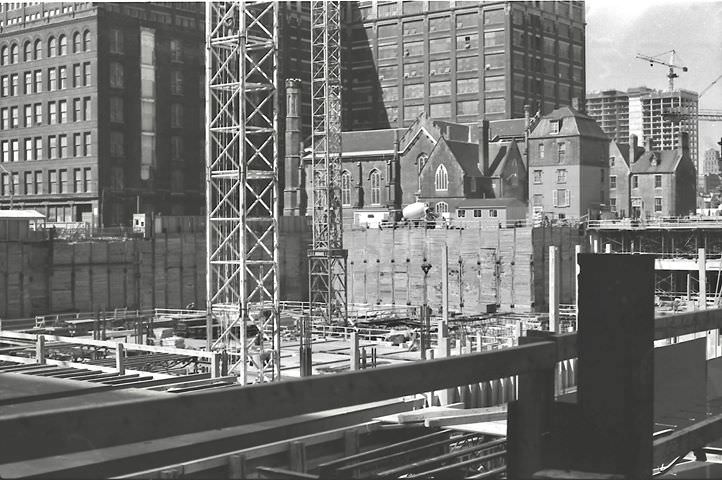
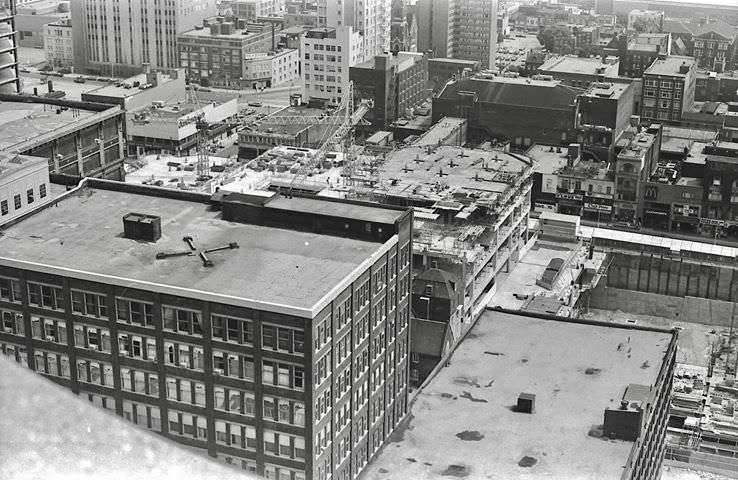
The Eaton Centre was one of the most significant construction projects of the late 1970s. Work was well underway by 1975, with photographs showing the steel skeleton rising near Yonge and Dundas. When it opened in 1977, it transformed that stretch of downtown retail forever. Many heritage buildings in the immediate area were demolished to make room for it — a trade-off that sparked heated debate among preservationists and city planners.
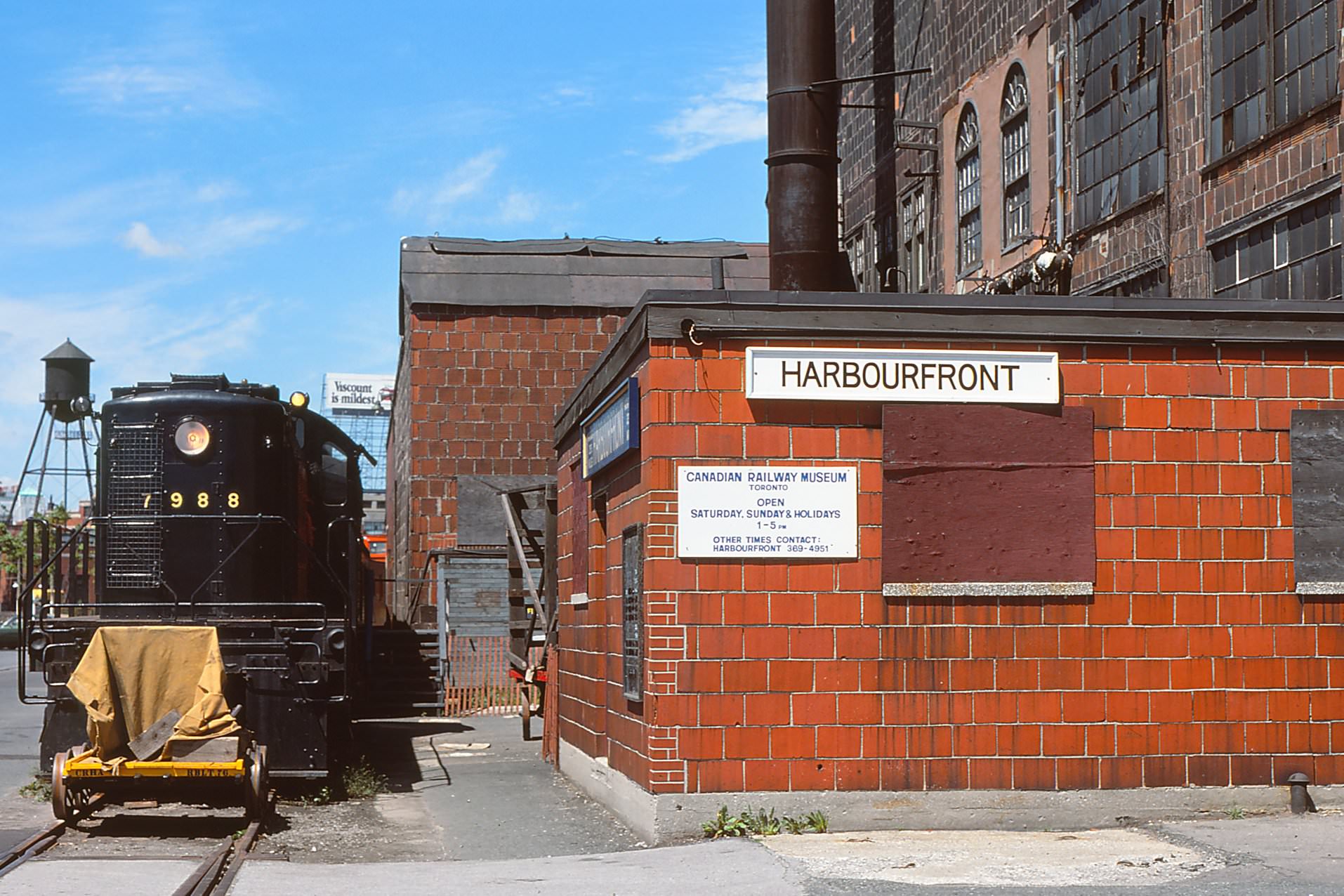
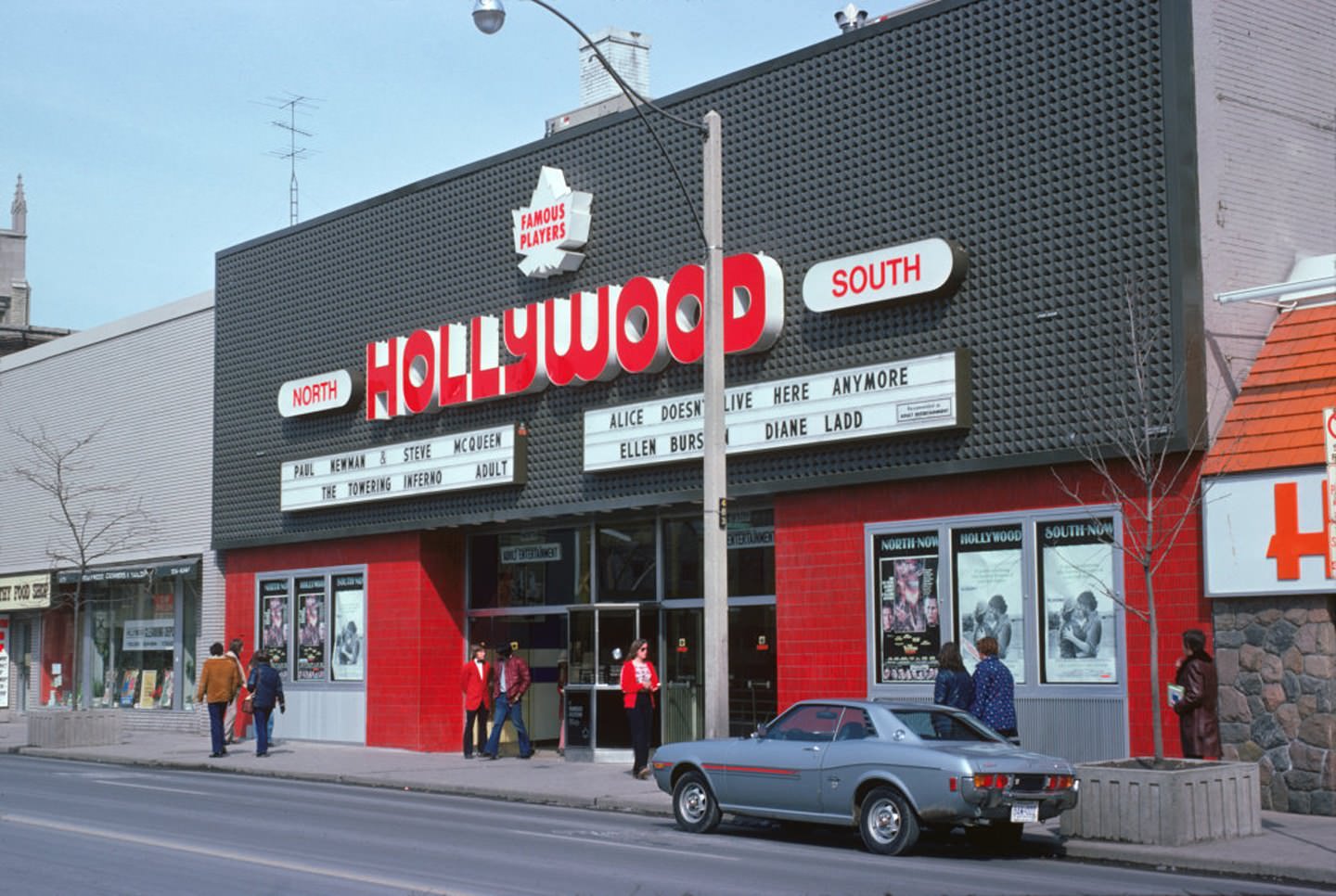
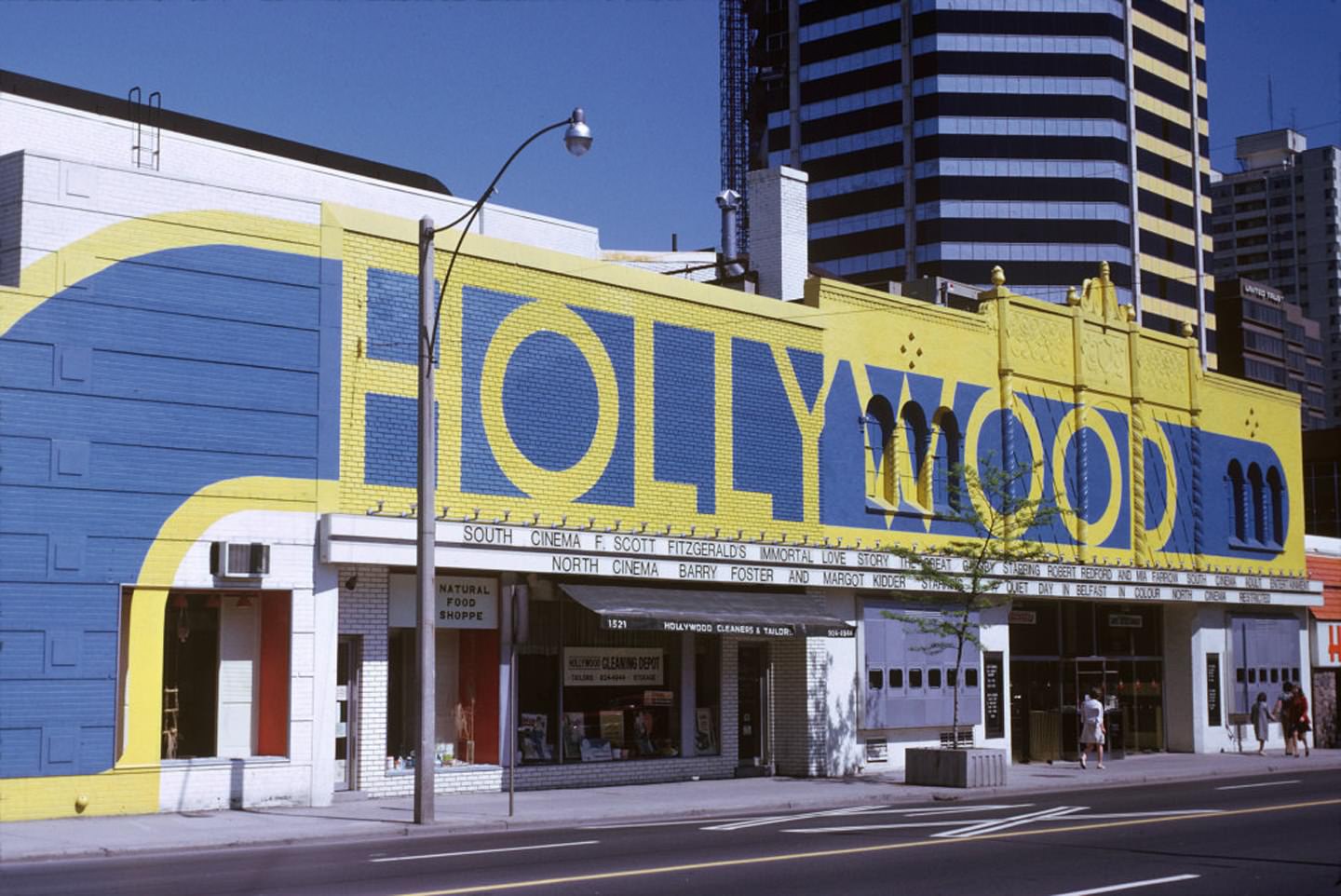
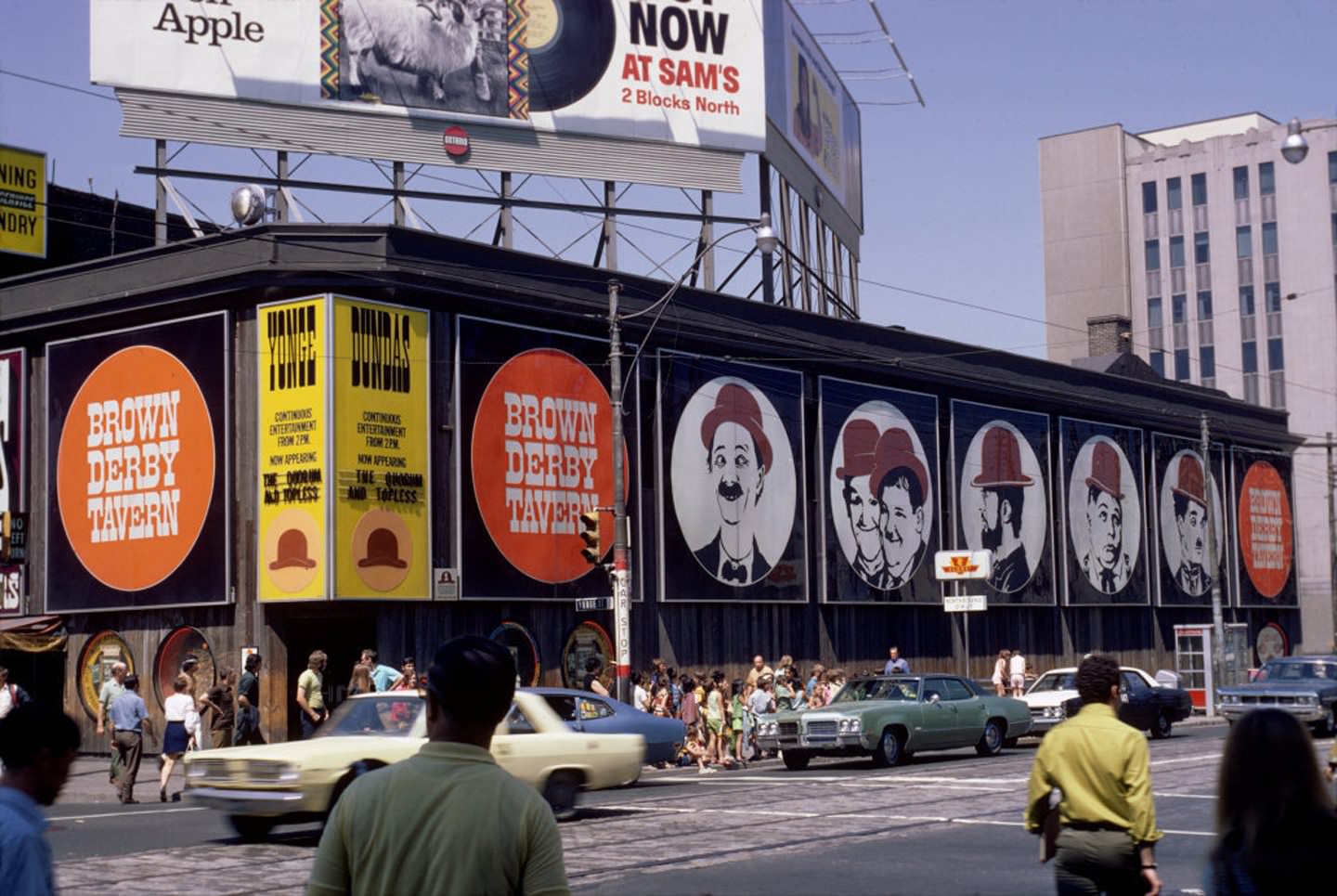
The Hollywood Theatre on Yonge Street, just south of Heath, captured the commercial energy of the strip. Photographed in June 1974 and again in March 1975 following exterior renovations, the theatre was one of many entertainment businesses that defined Yonge Street’s identity in the early part of the decade. A few blocks south, the Brown Derby Tavern sat at the northeast corner of Yonge and Dundas, photographed in June 1971 at the start of the era.
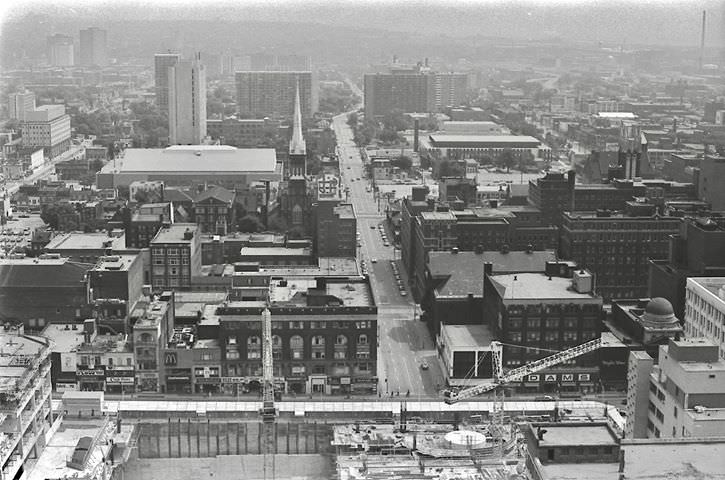
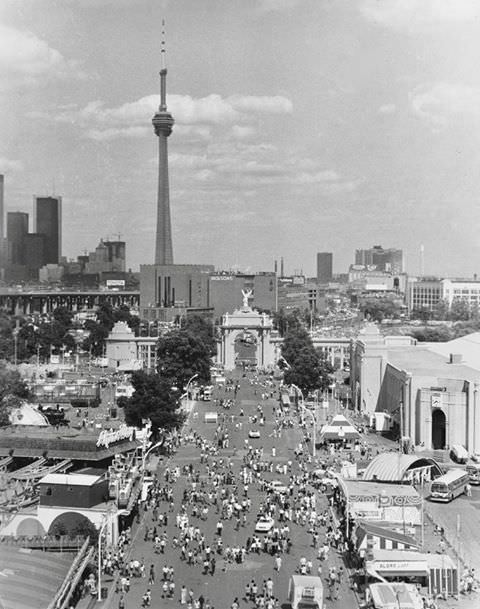
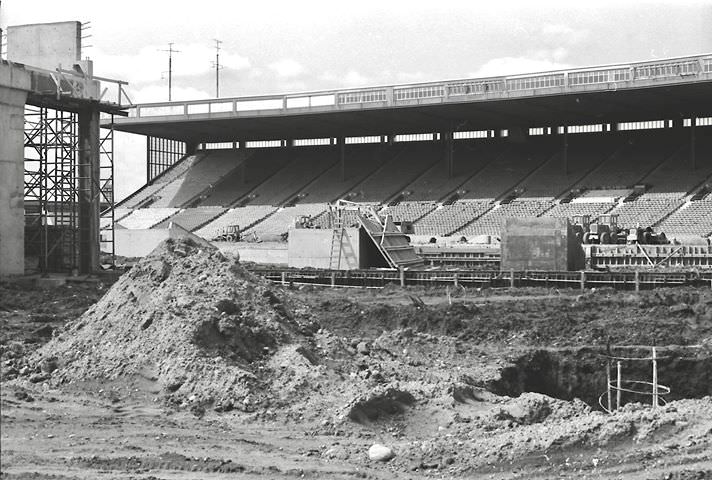
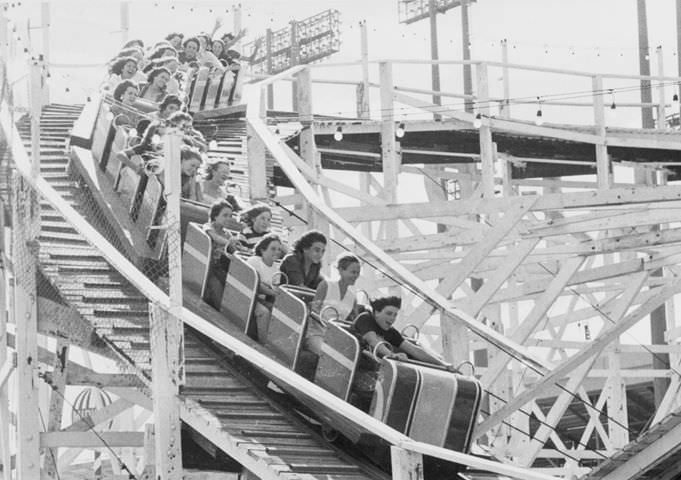
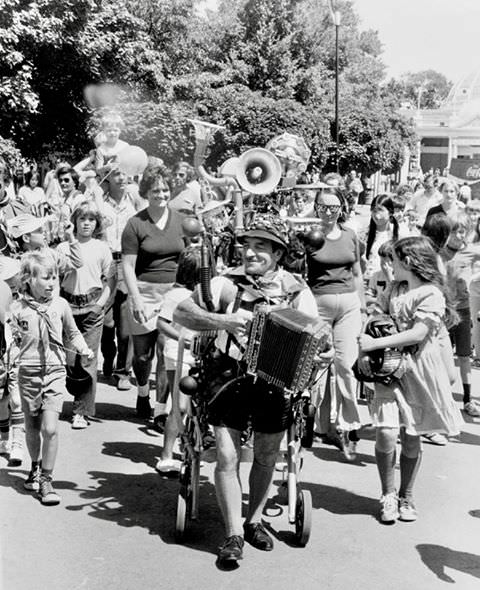
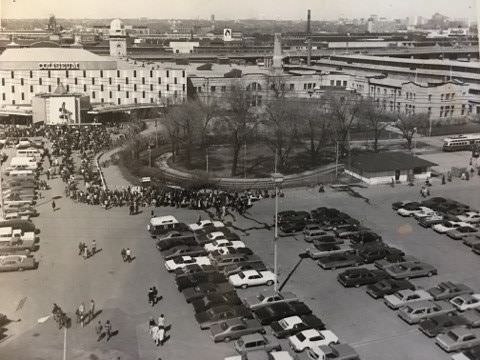
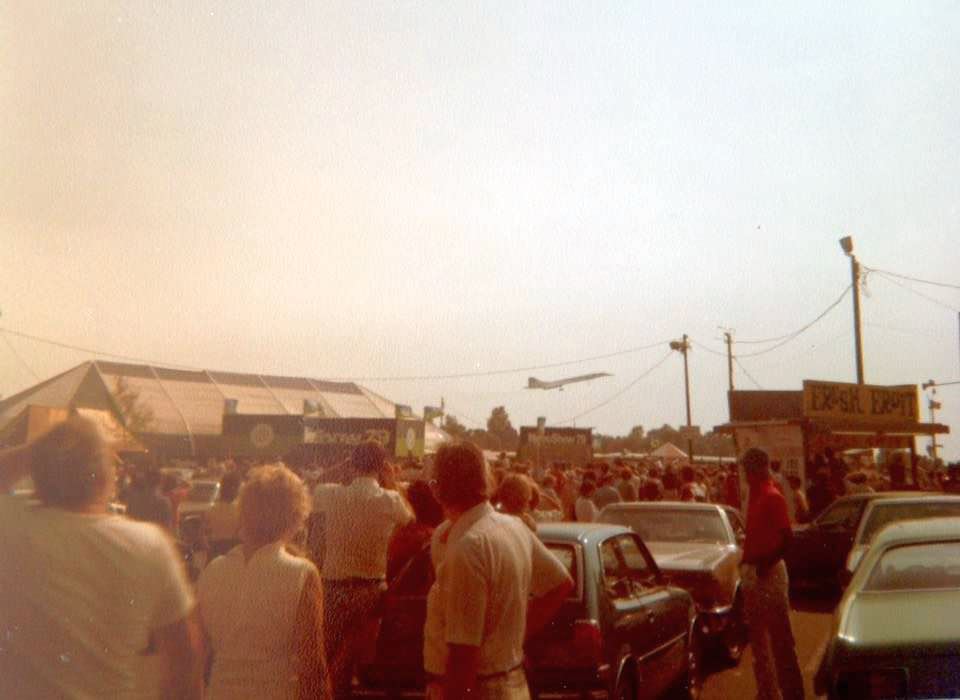
The Canadian National Exhibition remained a major annual event throughout the 1970s. Its 100th anniversary in 1975 brought special celebrations to Exhibition Place. The CNE Grandstand was reconfigured into a stadium that same year. There were rides like The Flyer, one-man band performers drawing crowds, and even a Concorde flyby in 1979. The CNE was the kind of event that felt like a last gasp of summer for every Torontonian who attended.
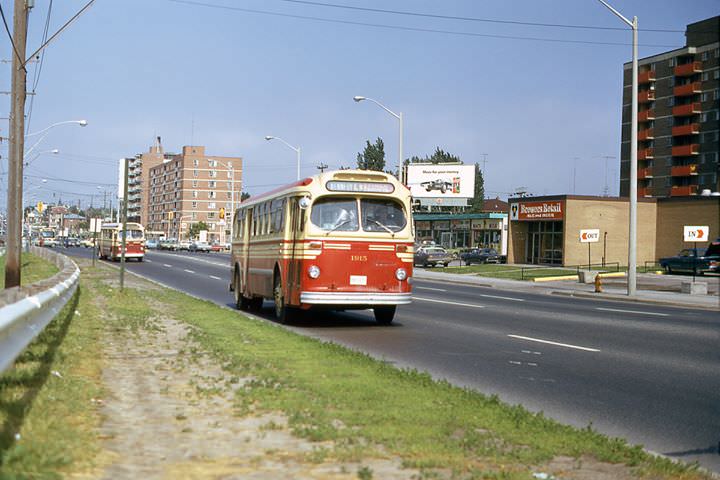
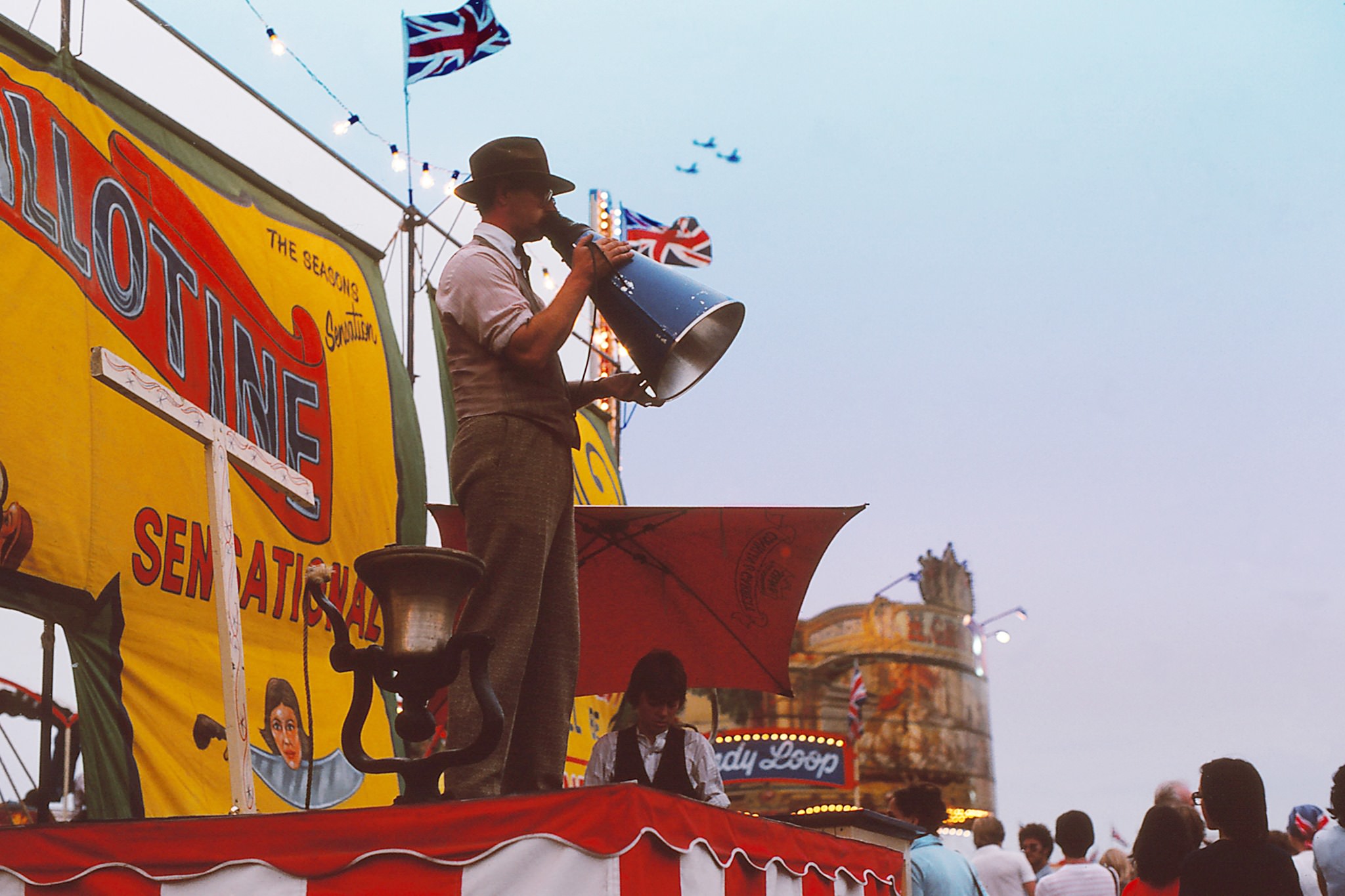
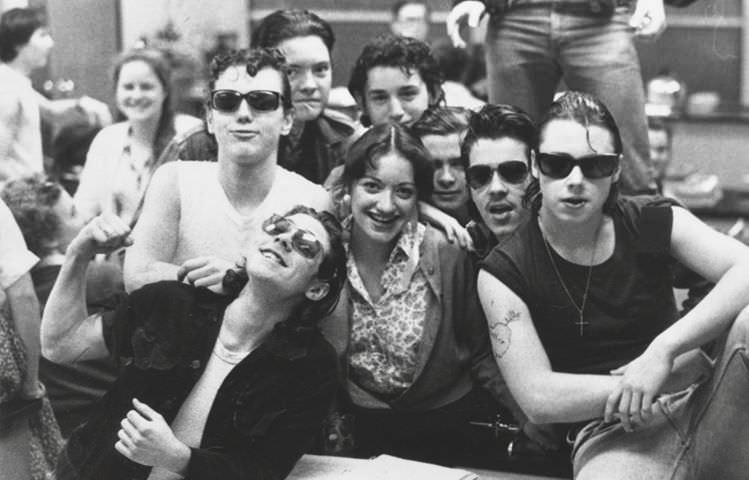
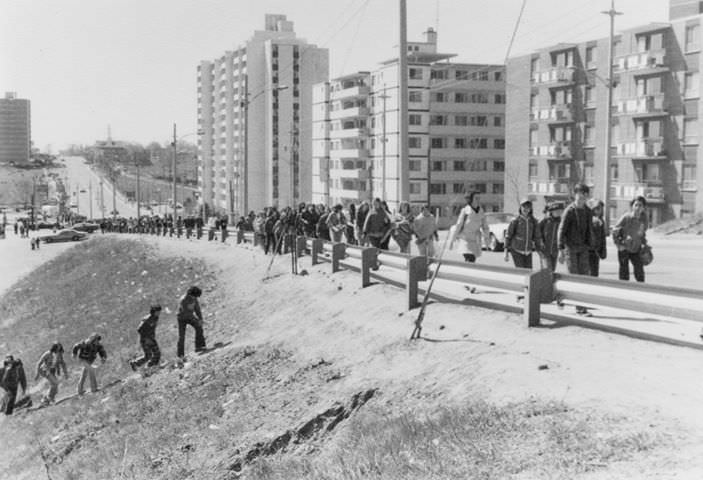
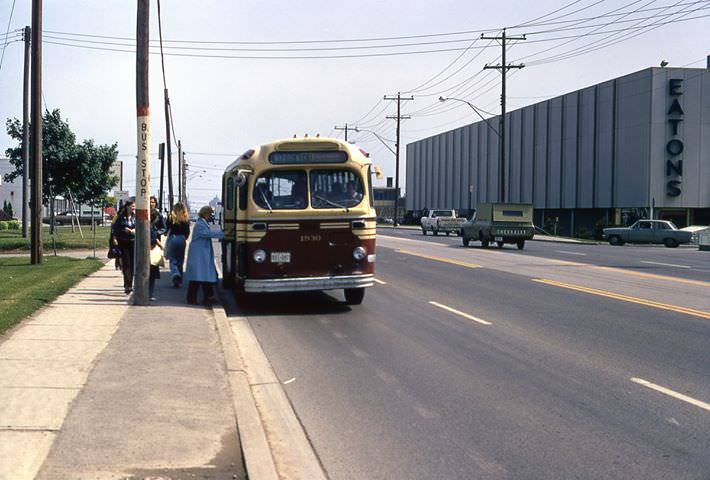
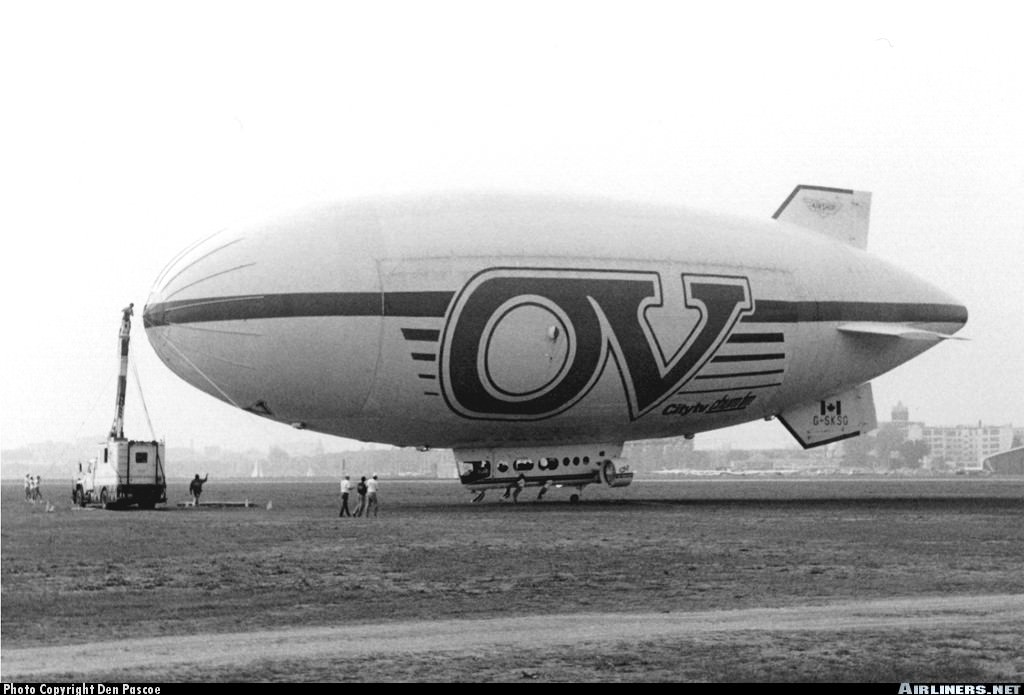
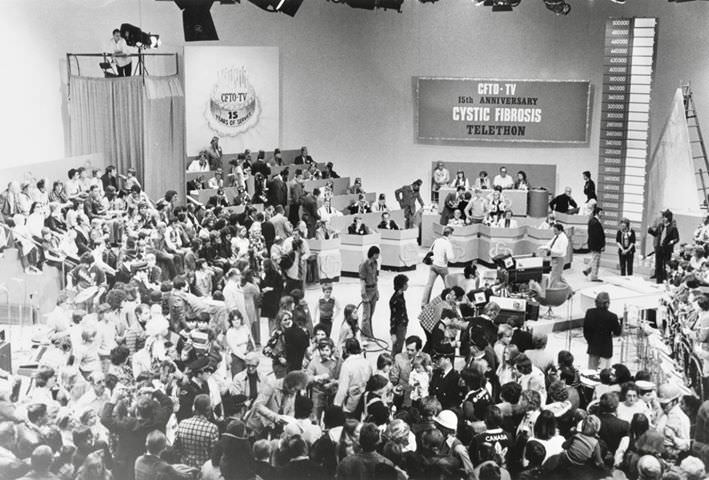
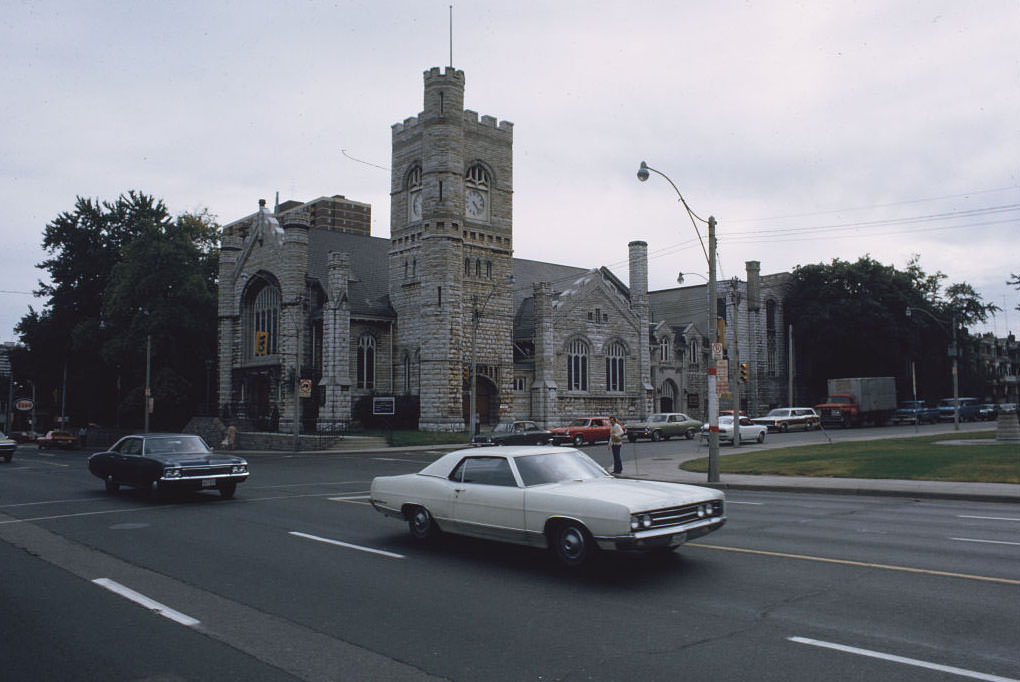
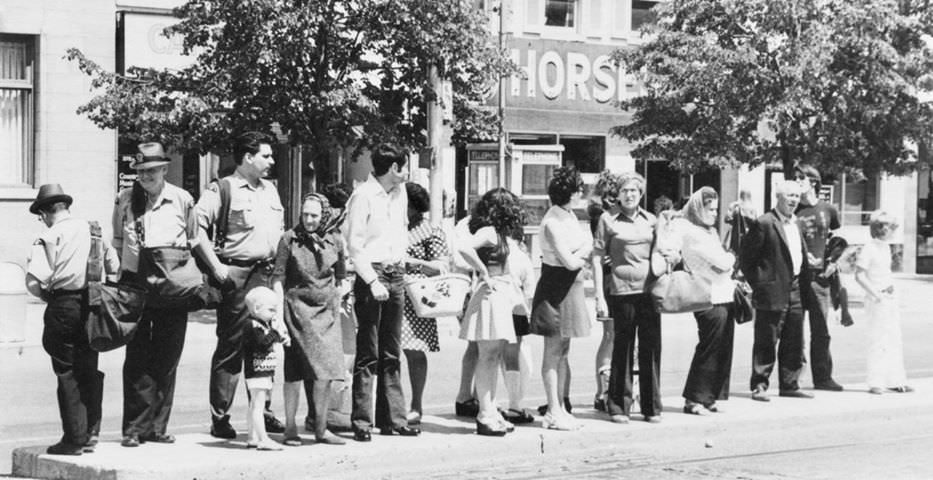
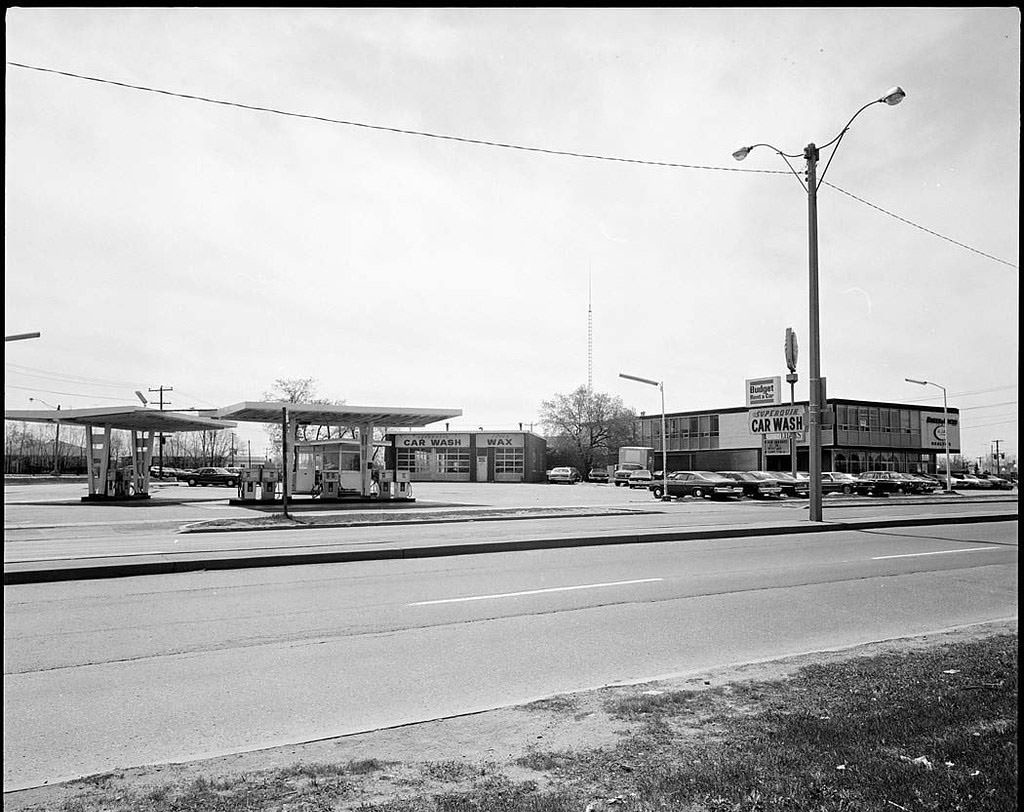
Street-level Toronto in 1974 and 1976 had a texture that photographs capture better than words. Queen and Spadina in 1974 was a busy intersection with the usual mix of transit, pedestrians, and storefronts. Queen Street East in June 1976 carried the same energy. These were working streets — not curated or cleaned up — just the city as it actually was.
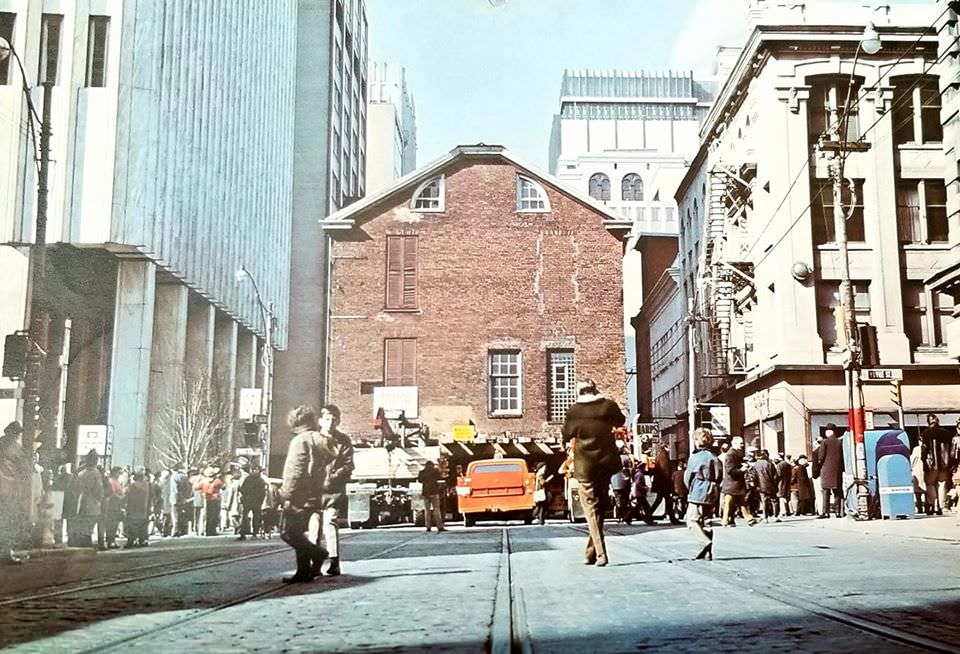
Campbell House — a Georgian mansion built in 1822 — was physically relocated in the 1970s to preserve it from demolition. Moving an entire historic building through city streets required enormous logistical effort, but it reflected a growing awareness in Toronto that not everything old should simply be torn down. The same tension played out on dozens of blocks across the city throughout the decade.
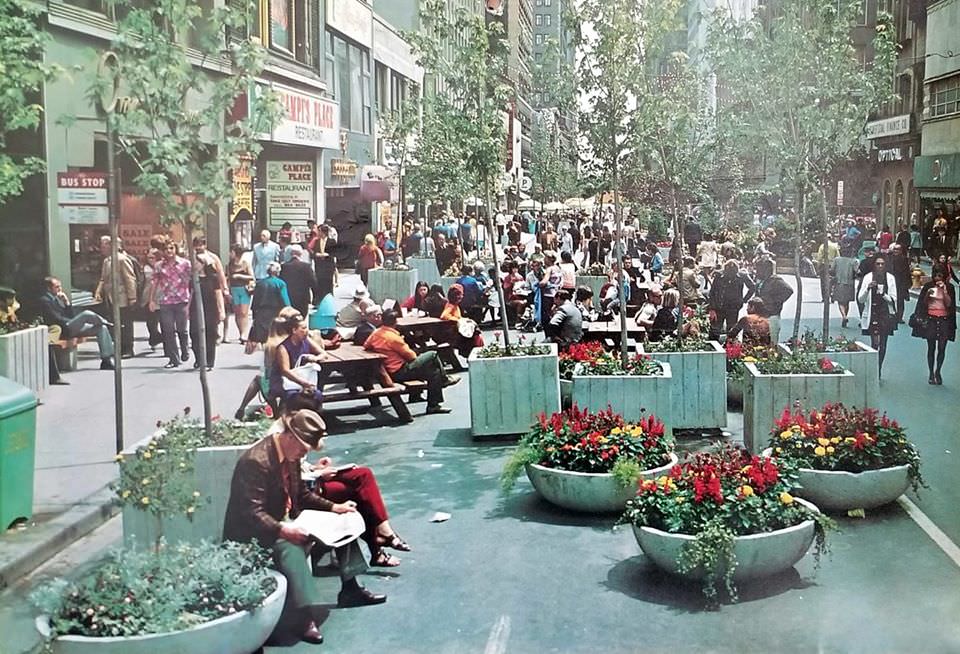
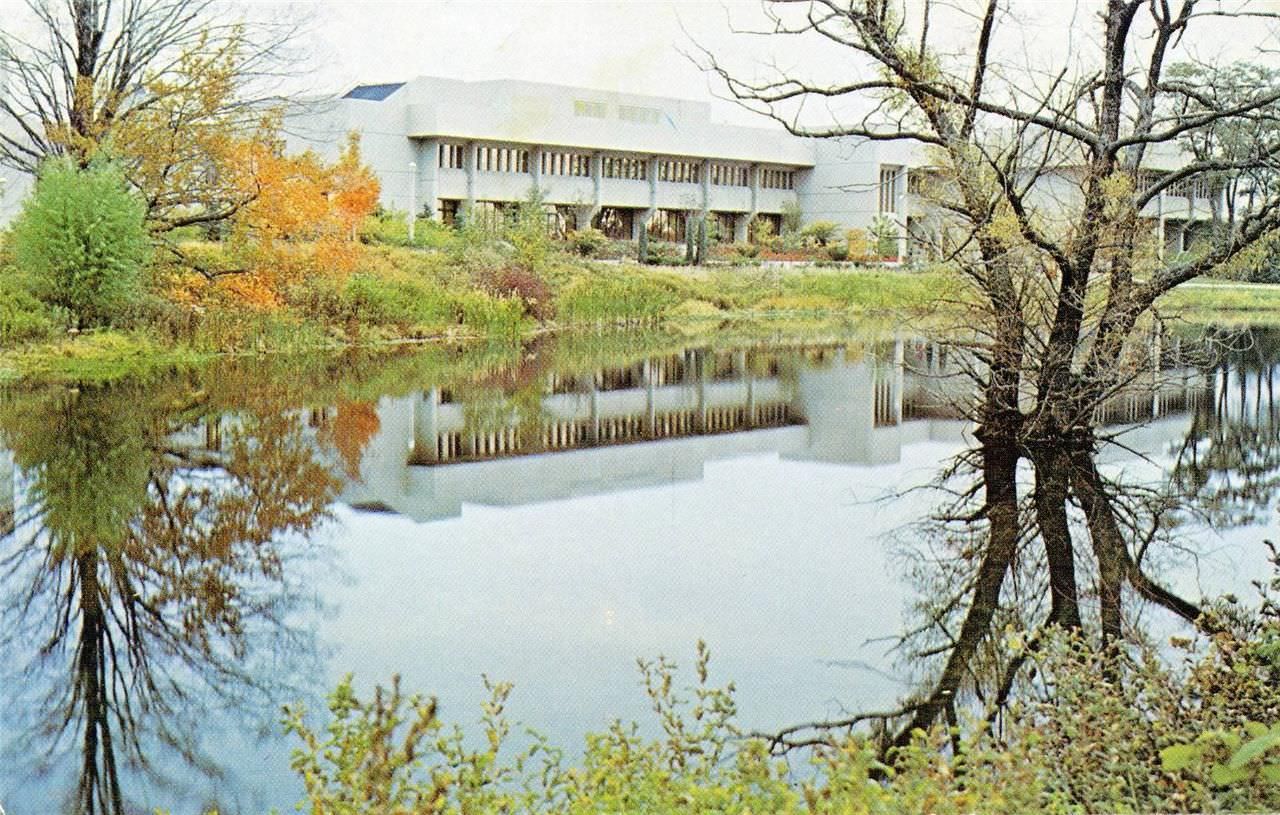
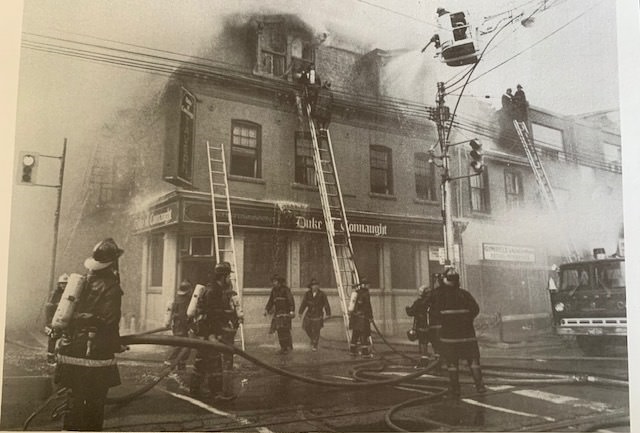
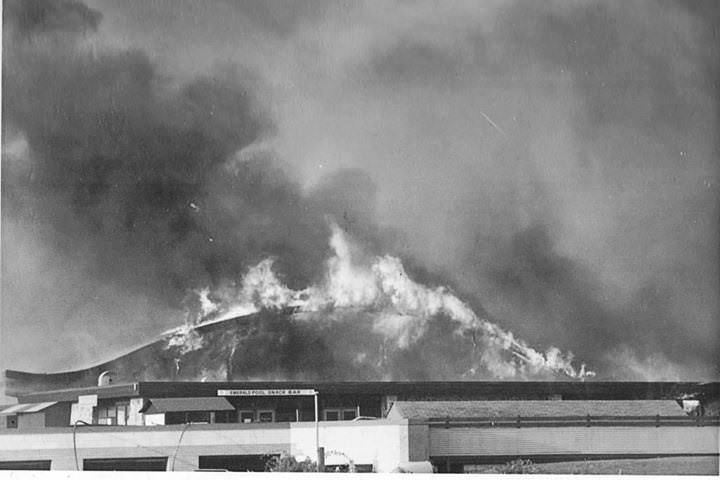
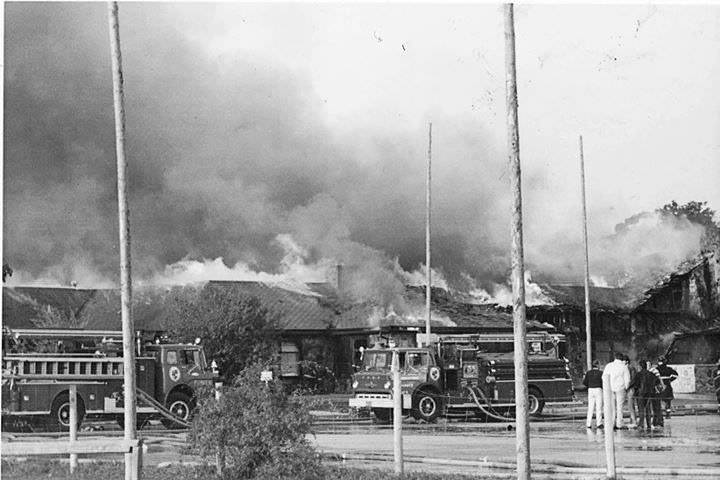
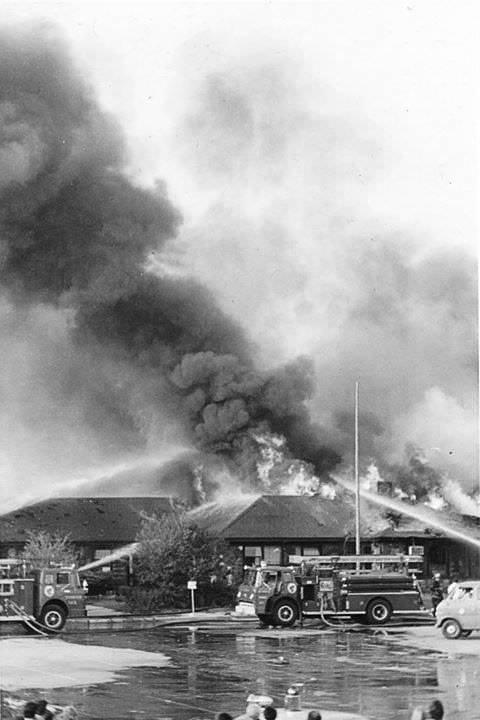
Fires were a grim reality of urban life in 1970s Toronto. The Tam O’Shanter pool complex burned in 1971, captured in a series of photographs showing the blaze at different stages. Later, in 1979, the Duke of Connaught also went up in flames. These events were part of the era’s landscape — a city without the fire suppression technology of later decades, and with plenty of older buildings vulnerable to exactly this kind of disaster.





The simple street scenes of everyday life are so under rated.
My father and I signed our names on the CN Tower antenna piece.
Simpler times 🙂
I want a time machine to take me back to the 70s. I liked Toronto so much back then. I’d even put up with the street cars not being air conditioned.
I want a time machine back to the 70s to buy houses
My parents scrounged up both their salaries for an entire year to buy their first house mortgage-free in Riverdale in 79. That and the loss of Jilly’s in the area are just unthinkable.
great photo set. love seeing the bygone eras
The special newspaper delivery trucks with the open back for easy access to the bundles. I remember those driving around. Long gone though…
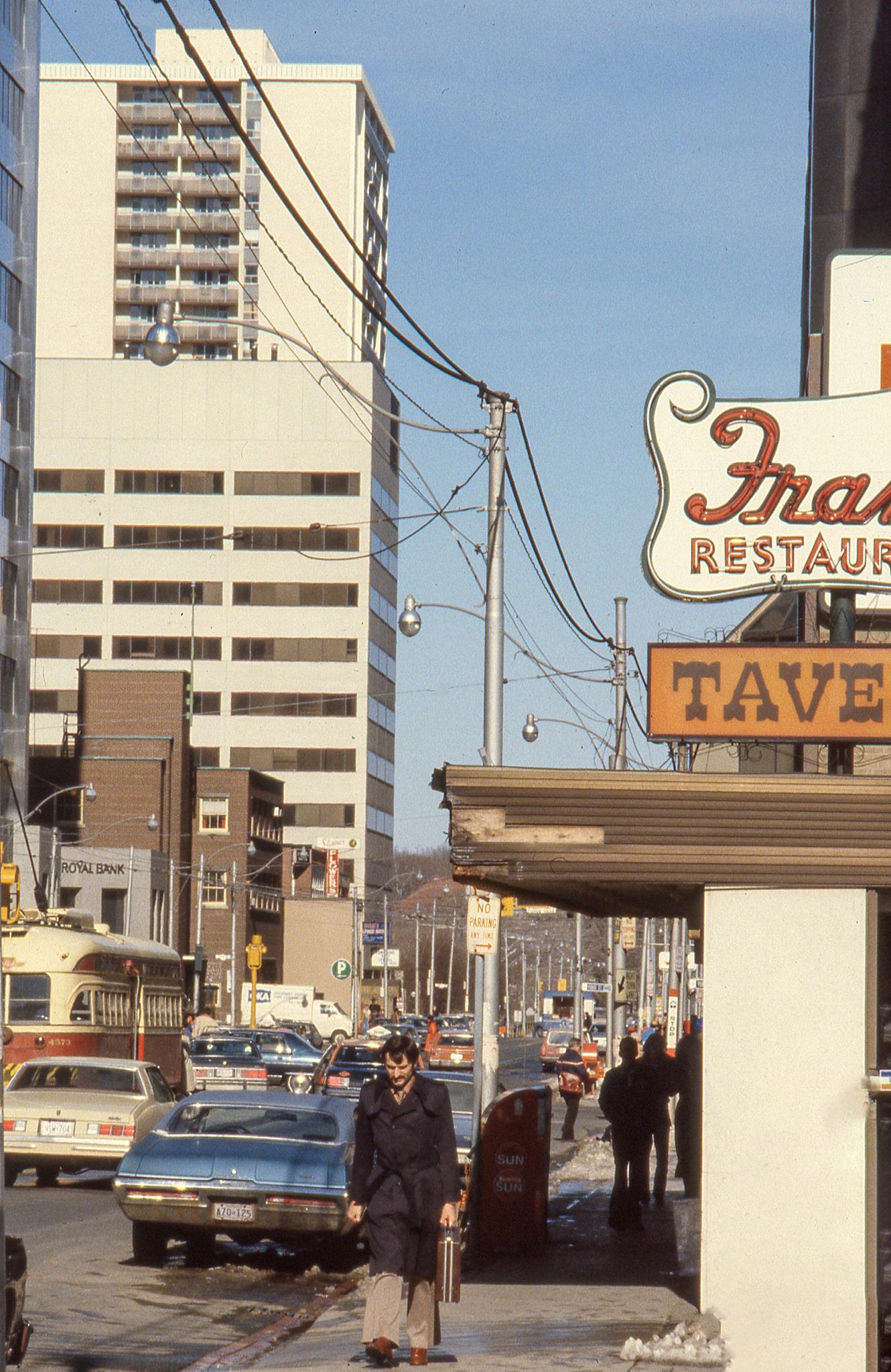
101 – I ate lunch a few times at Fran’s with my dad back in the 80s, he worked just west of there
109 – stepsister and I saw a lot of movies there
120 – who remembers the chestnut guys around the ROM back in the day?
125 – the real thrill was wondering if you were going to jump the track and die
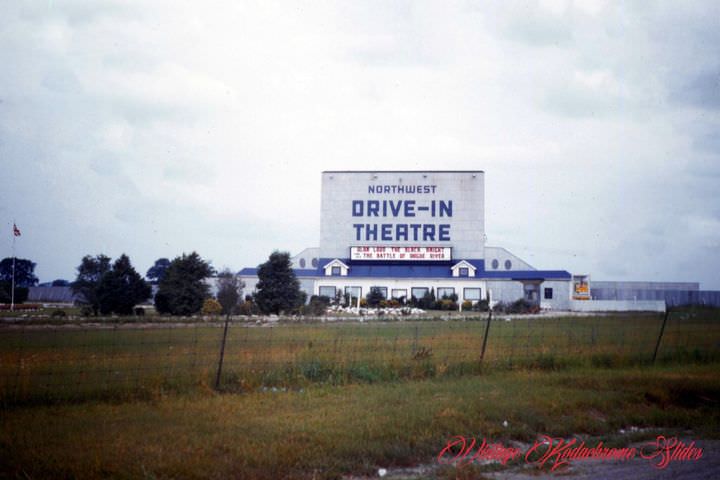
126 – anyone else go on a class trip to see Circus filmed at that studio (401 & McCowan)?
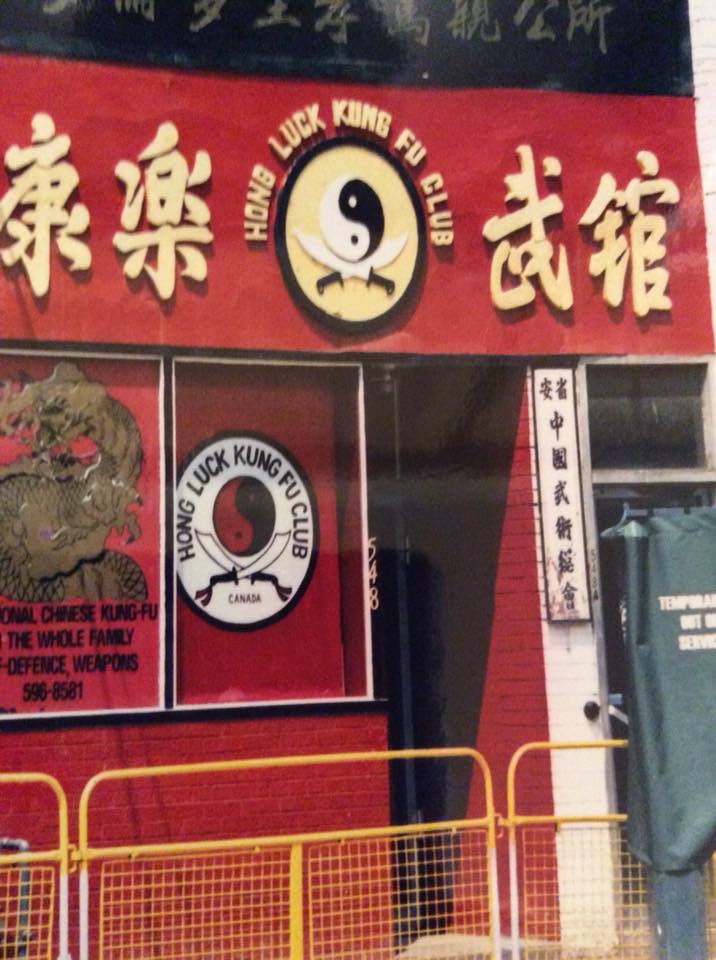
Hong Luck Kung Fu Club is still around, and the outside looks exactly the same as the pictures.