
On the night of April 14–15, 1912, the RMS Titanic struck an iceberg in the North Atlantic and sank in under three hours. Of the 2,208 passengers and crew on board, 1,503 died. Only 705 survived. The disaster shocked the world not just because of the scale of the loss, but because the Titanic had been celebrated as the pinnacle of modern shipbuilding. Construction had begun on March 31, 1909, by Harland and Wolff at Queen’s Island in Belfast, where the ship was built side by side with her sister ship, the Olympic. After two years of work and successful sea trials, the Titanic arrived at Southampton on April 5, 1912, and set sail on Wednesday, April 10, bound for New York City.
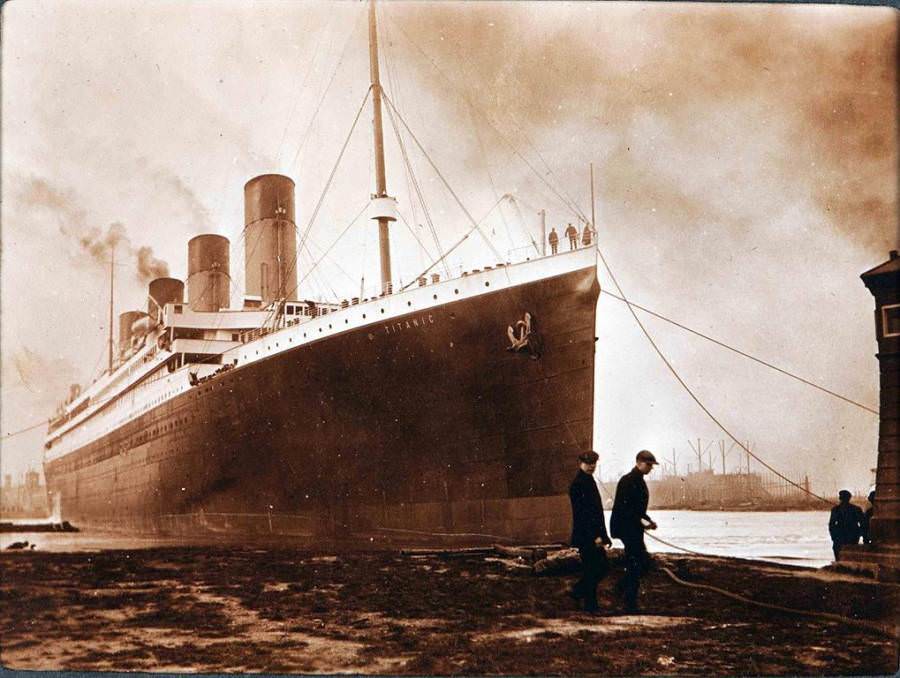
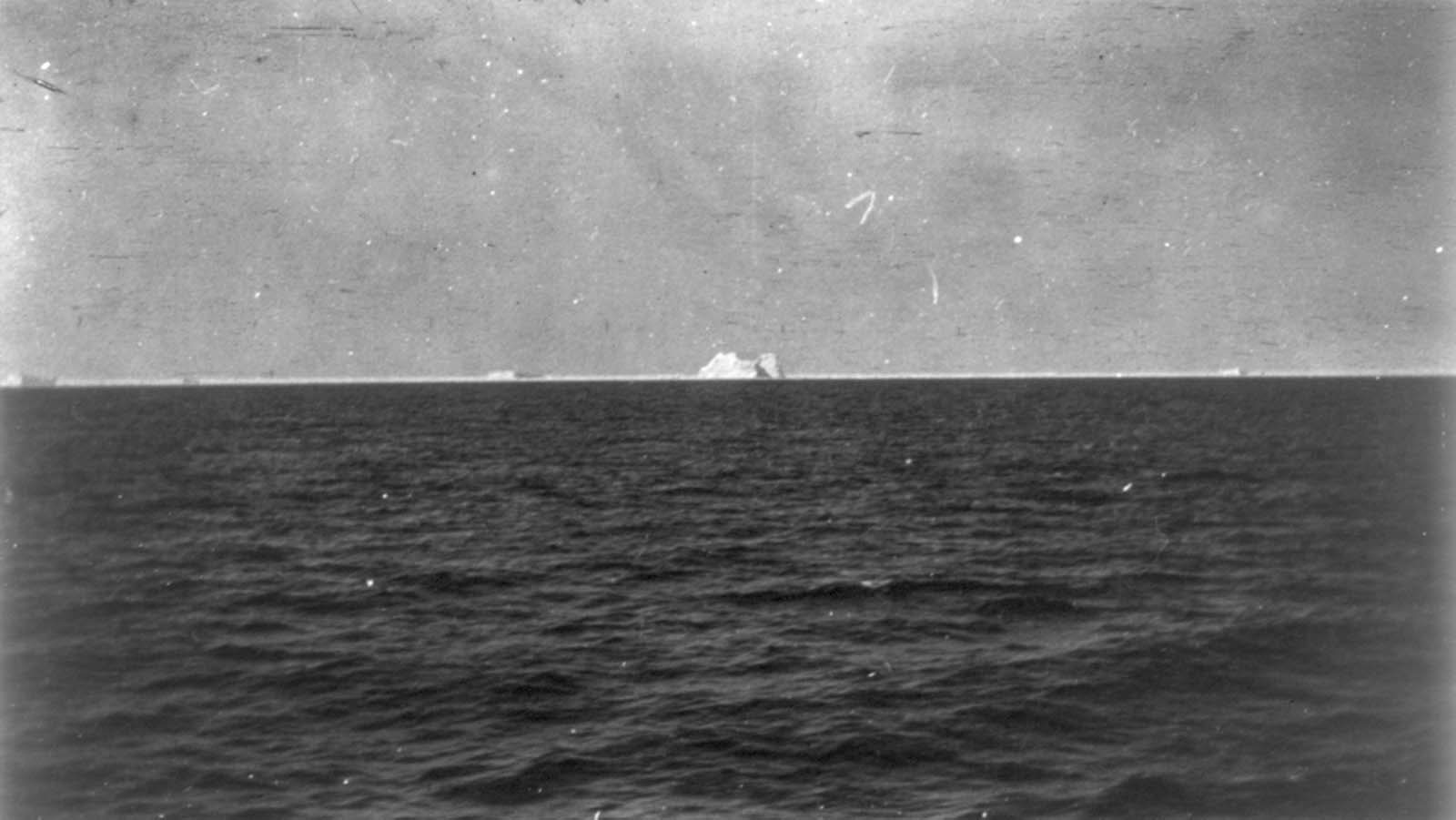
The collision happened at 11:45 PM on Sunday, April 14. The iceberg that struck the ship had been floating silently in the frigid waters of the North Atlantic, invisible in the dark and calm sea. When it was spotted, there was no time to change course. The impact tore open the hull below the waterline, and the ship was doomed.
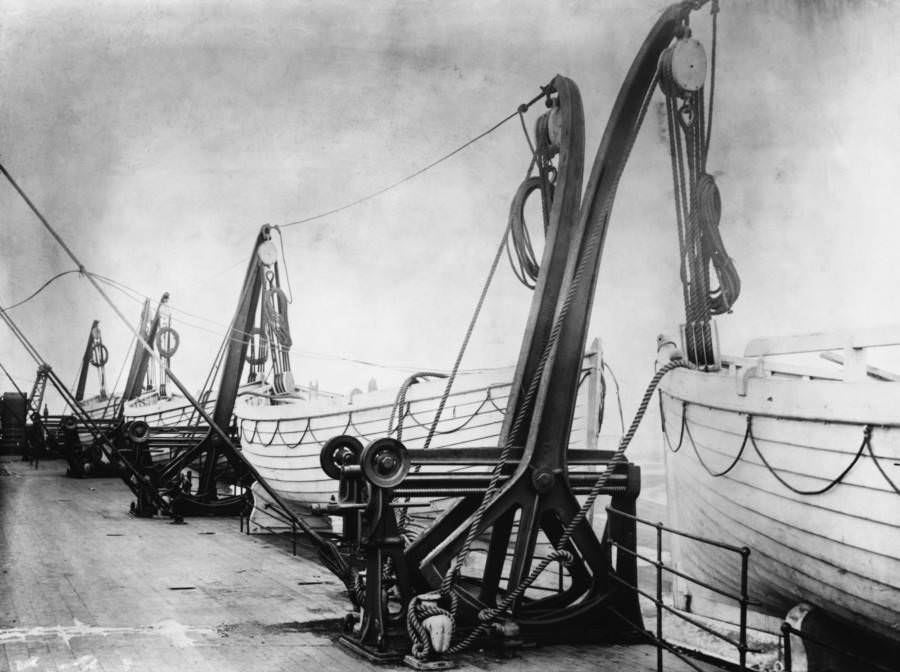
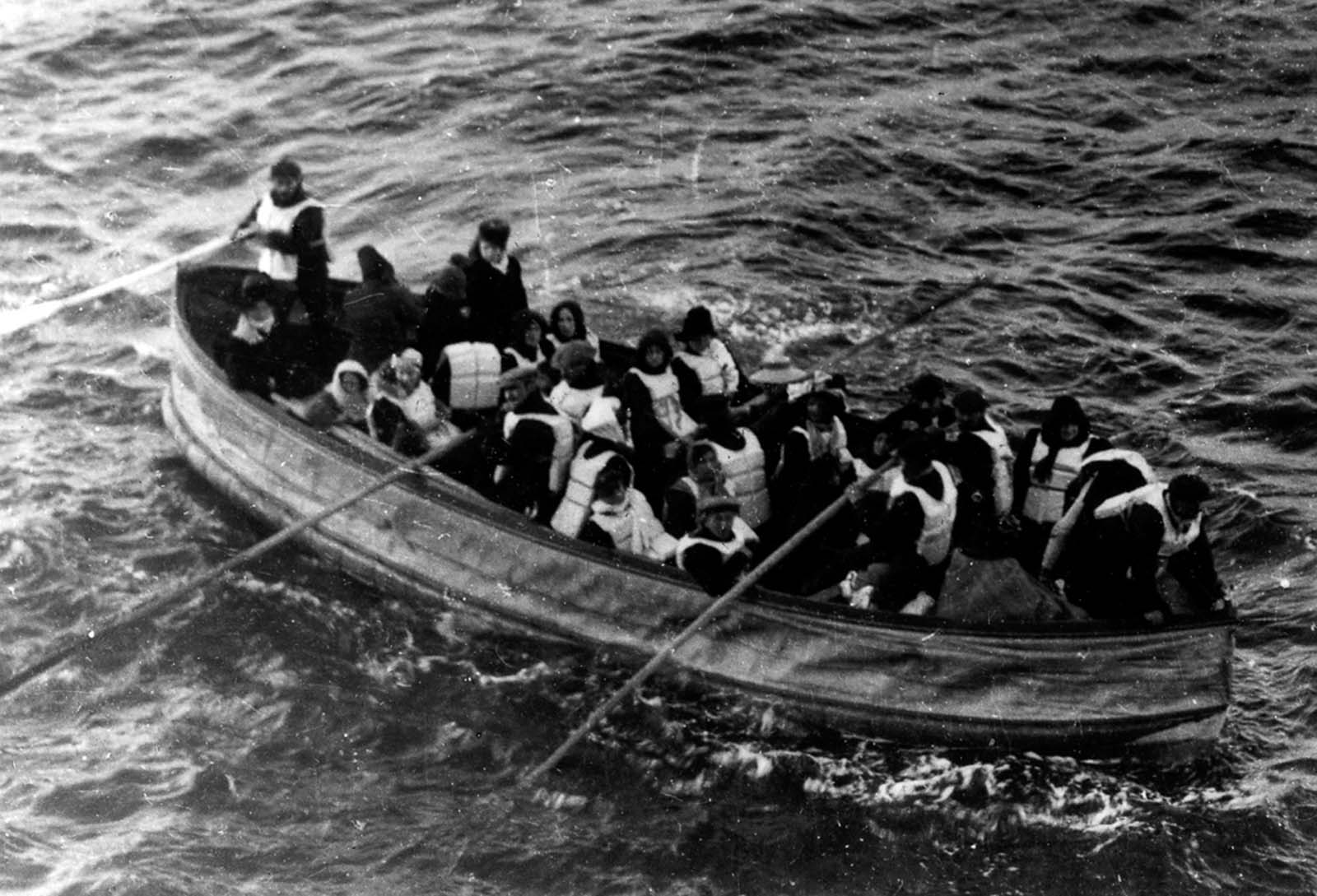
The Titanic carried only 20 lifeboats — far too few for 2,208 people. Even those boats were launched well below their capacity. The first lifeboat to leave the ship had room for 65 people but carried only 25. As the ship tilted and the water rose, chaos and desperate decisions shaped who lived and who died. When the lifeboats finally cleared the wreck site, many survivors could only watch as the ship disappeared beneath the surface.
In the water, the temperature hovered just above freezing. Most of those who ended up in the sea died within minutes from hypothermia. The lifeboats that had launched — many of them half-empty — were slow to return and search for survivors. The few who were pulled from the water alive clung to life by the narrowest of margins.
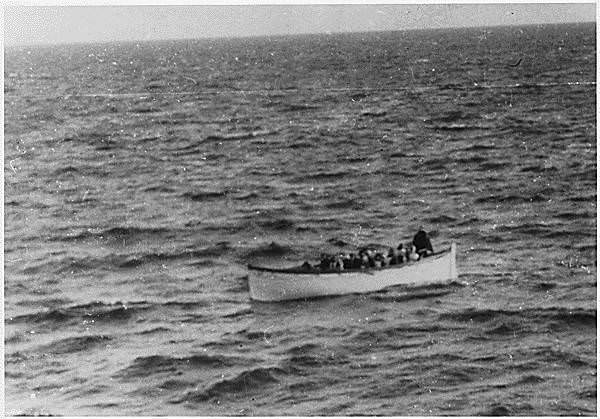
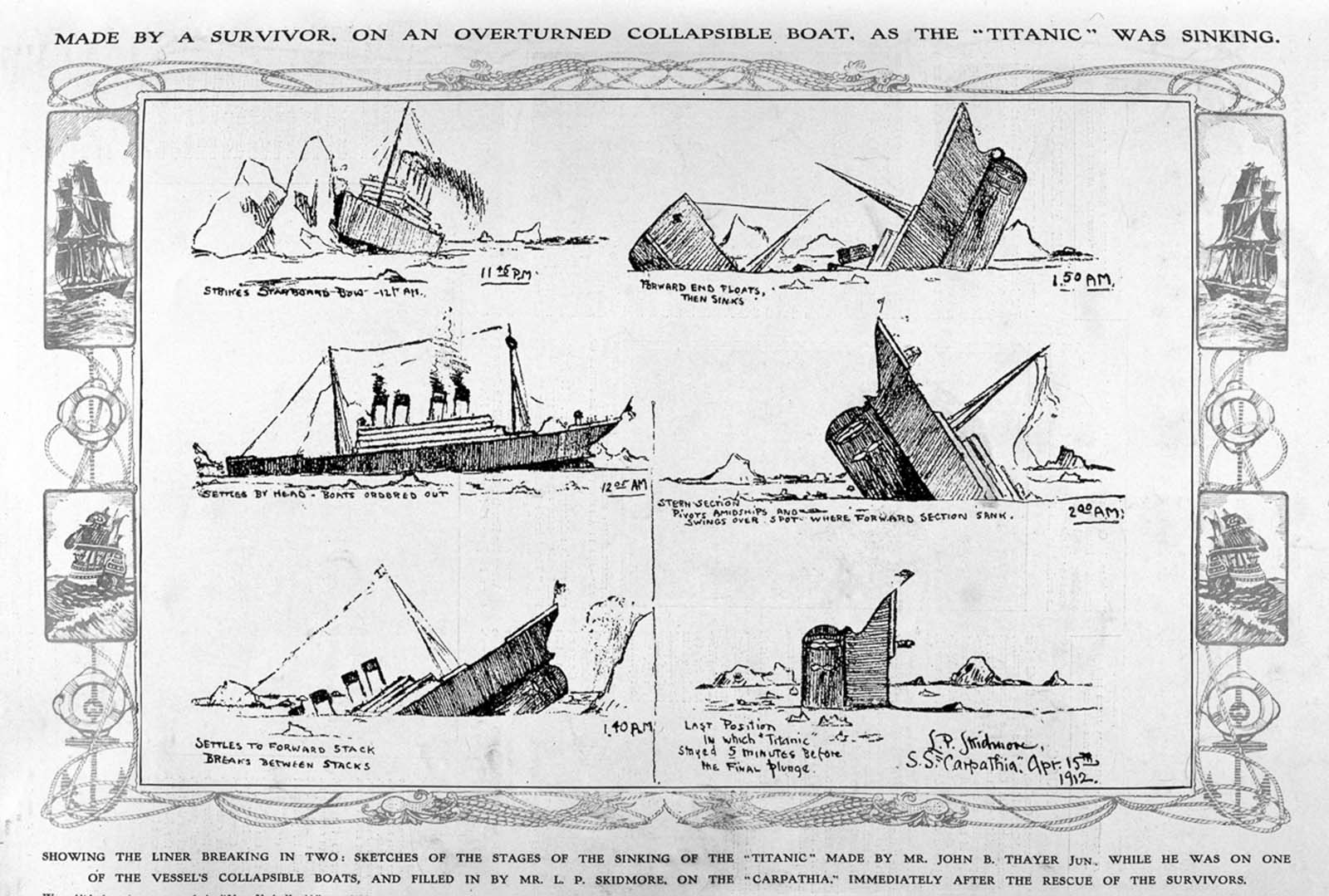
The RMS Carpathia received the Titanic’s distress signal and raced through ice-filled waters to reach the scene. It arrived at approximately 4:00 AM on April 15 and began pulling survivors from the lifeboats. One of the survivors — passenger John B. Thayer — sat on a capsized lifeboat and sketched the sinking from memory while waiting to be rescued. That sketch was later completed by P.L. Skidmore aboard the Carpathia, creating one of the most striking firsthand visual records of the disaster.
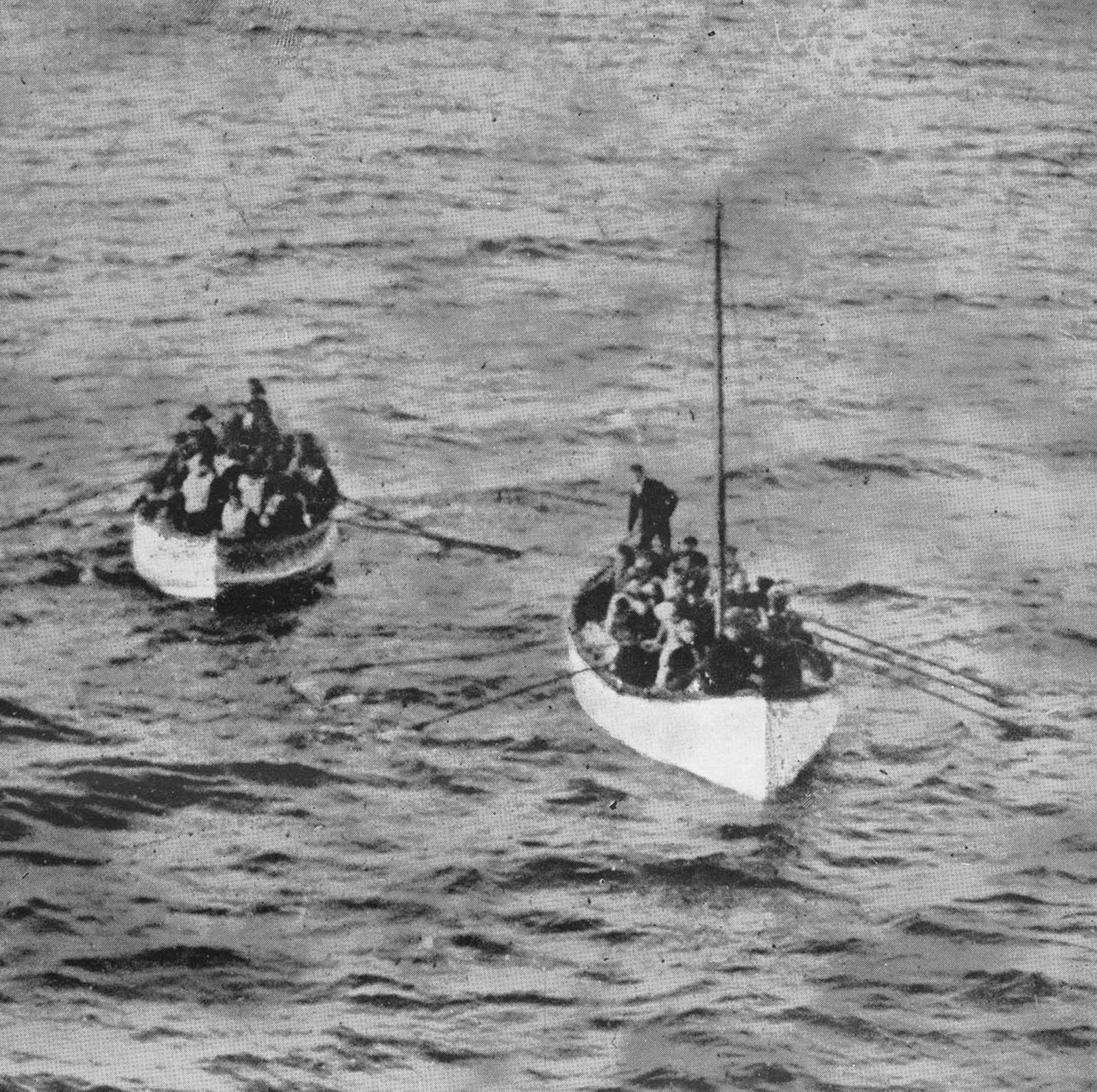
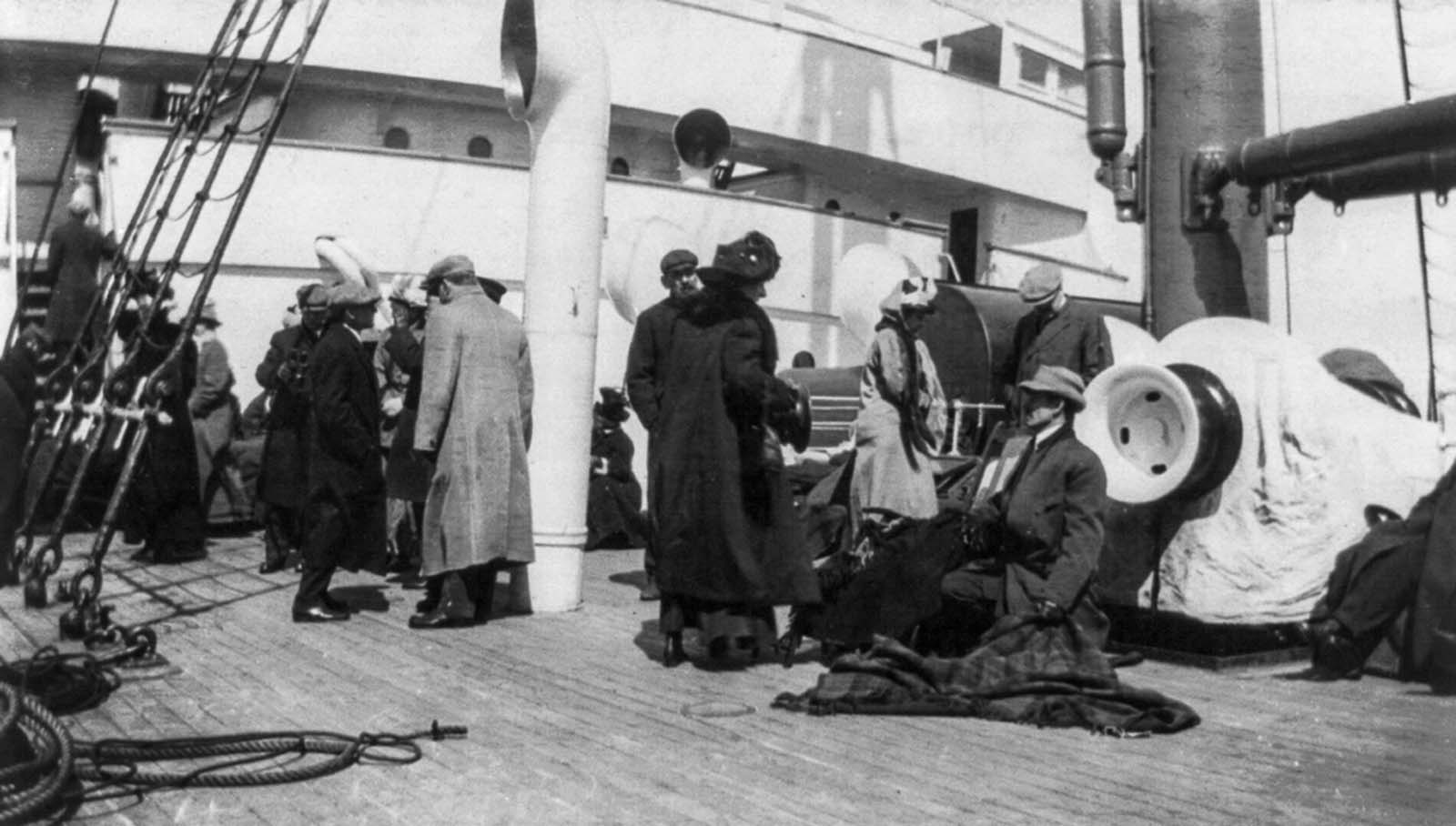
Once aboard the Carpathia, survivors were treated for injuries, exposure, and shock. Many had lost family members. Others didn’t yet know who else had made it. The ship’s crew worked through the morning tending to the 705 people they had pulled from the water and the lifeboats.
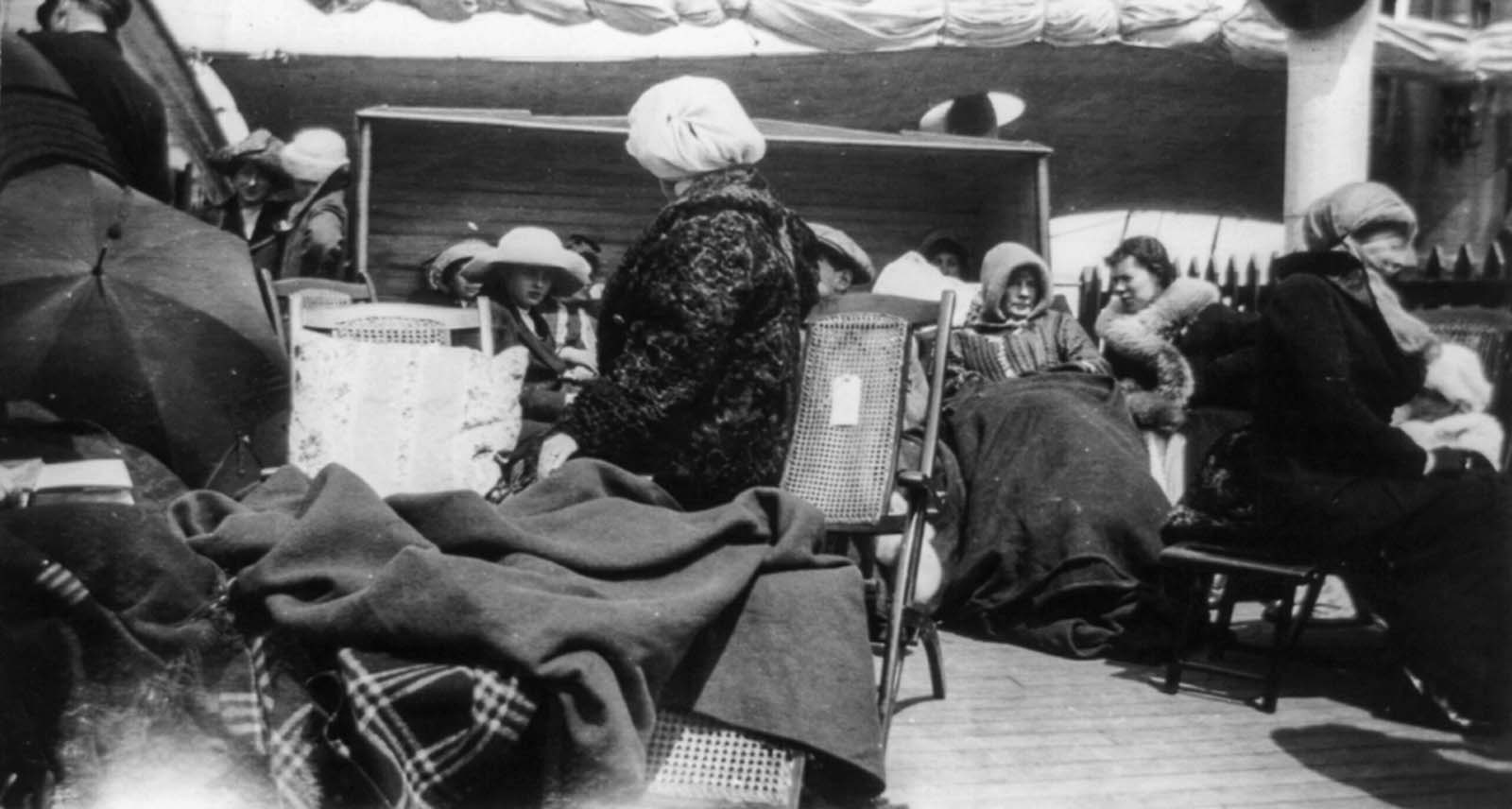
As the Carpathia steamed toward New York, radio operators aboard the ship and other vessels transmitted a steady stream of messages about the disaster. By the time the Carpathia docked at Pier 54 in New York, approximately 40,000 people had gathered on the wharves. Some were there out of shock and curiosity. Many were there hoping to find out if someone they loved had survived.
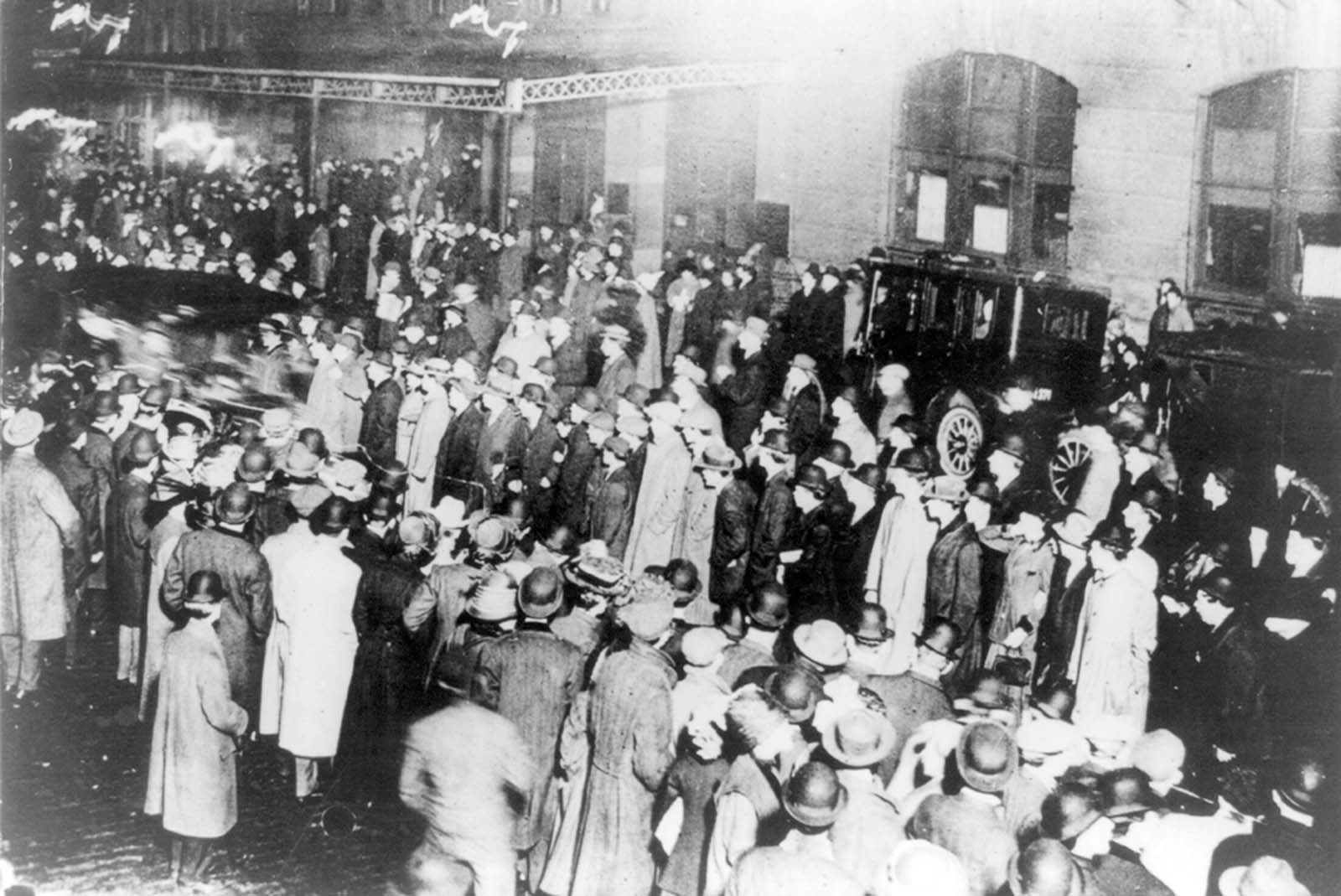
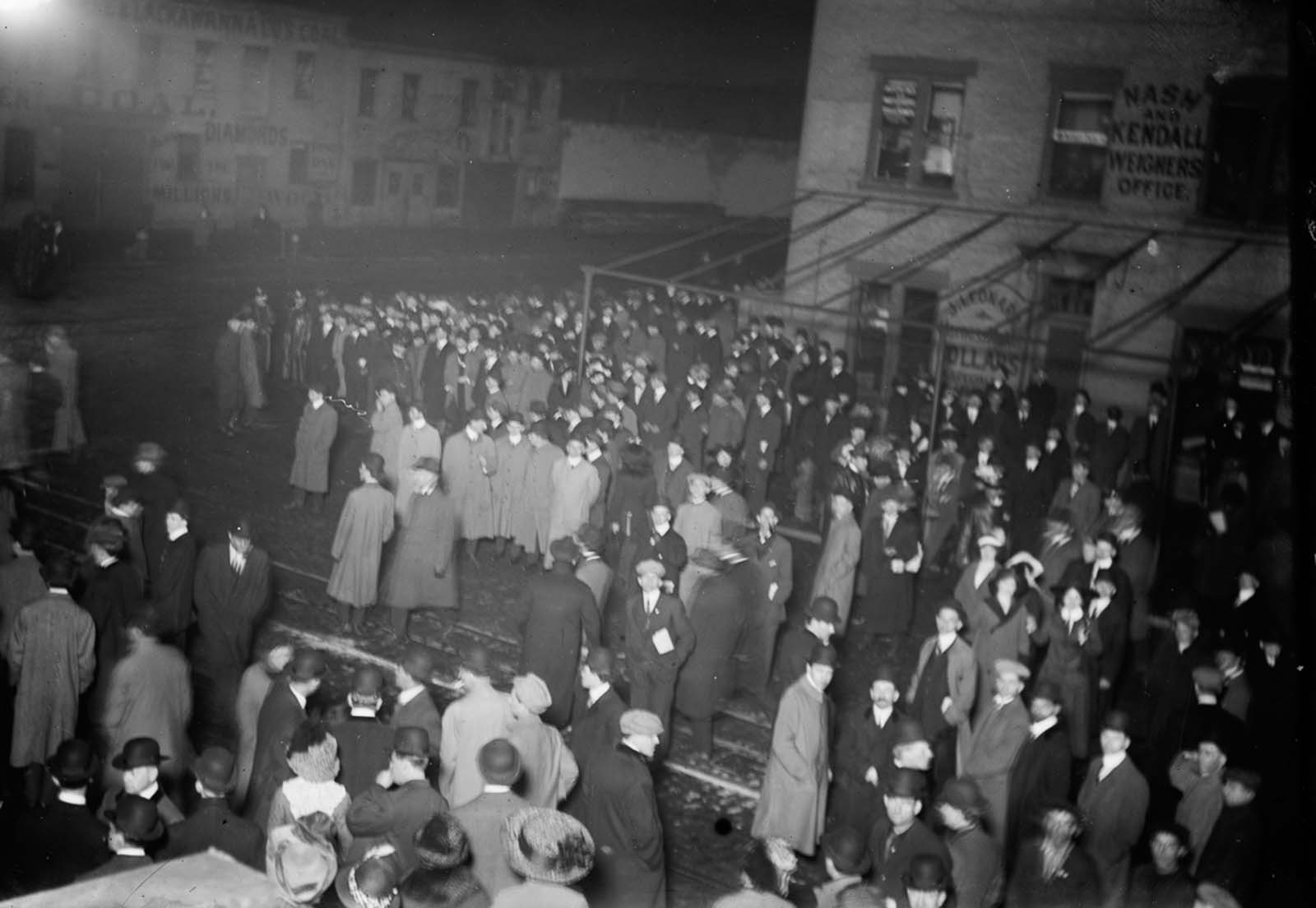
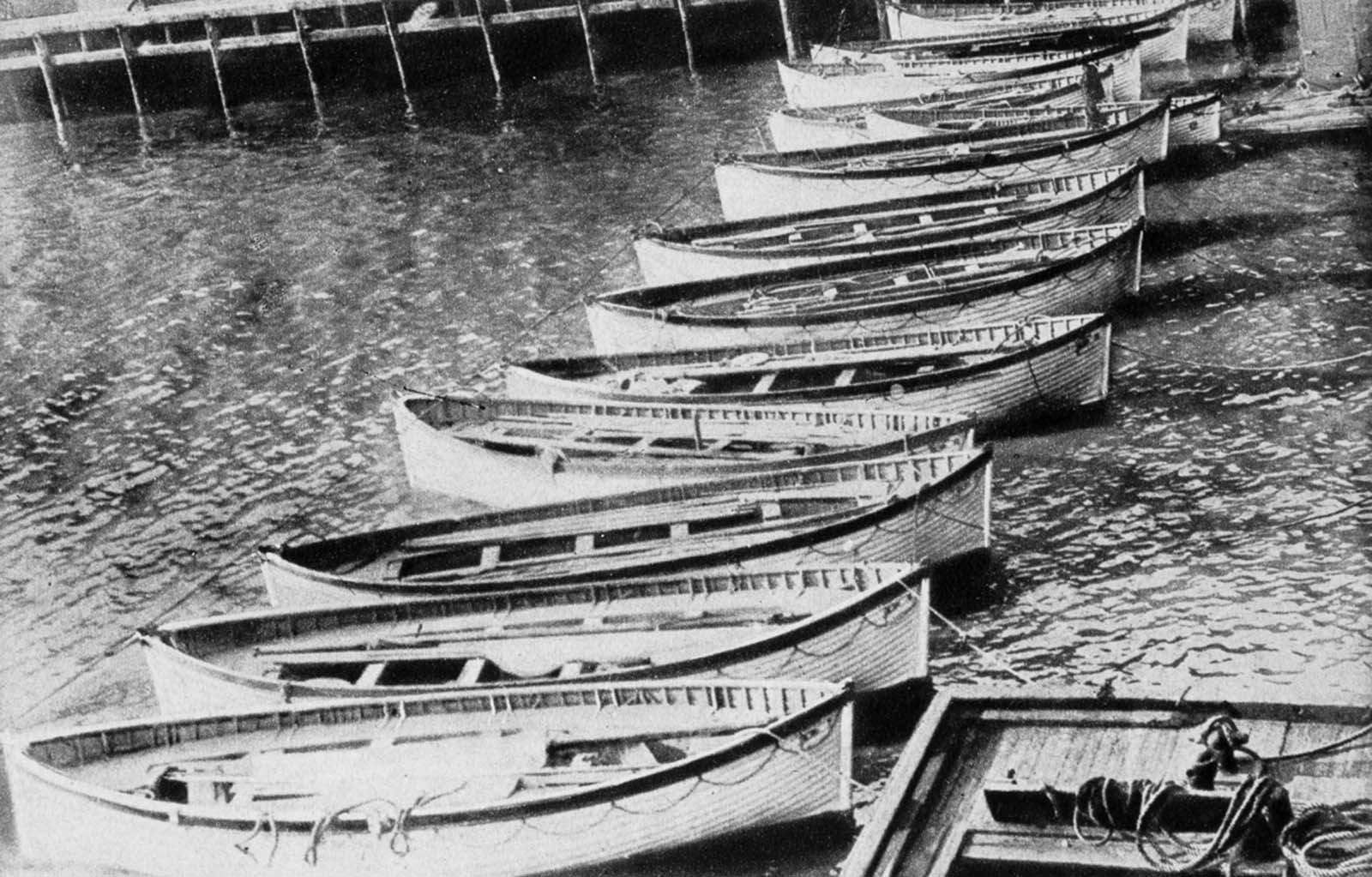
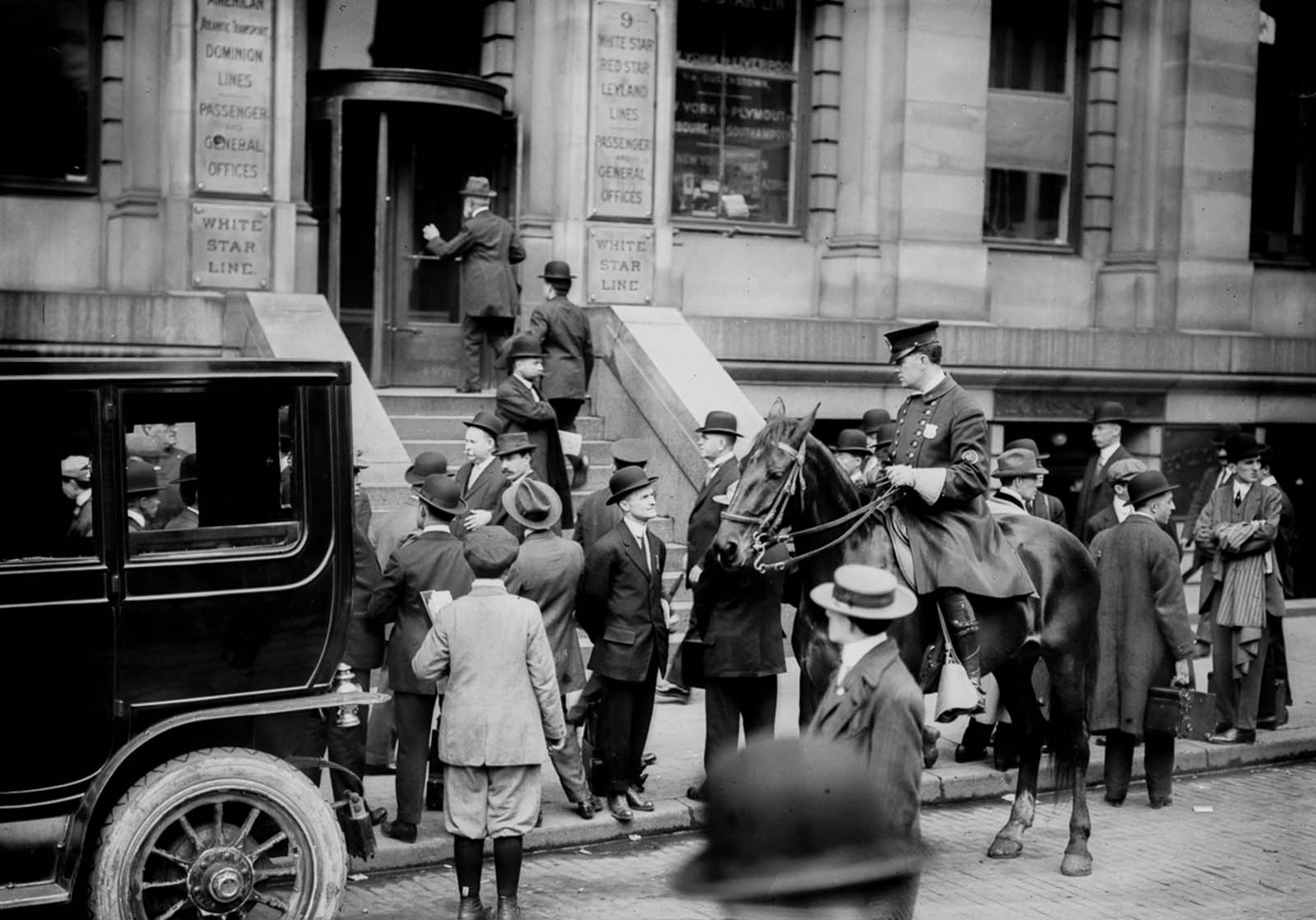
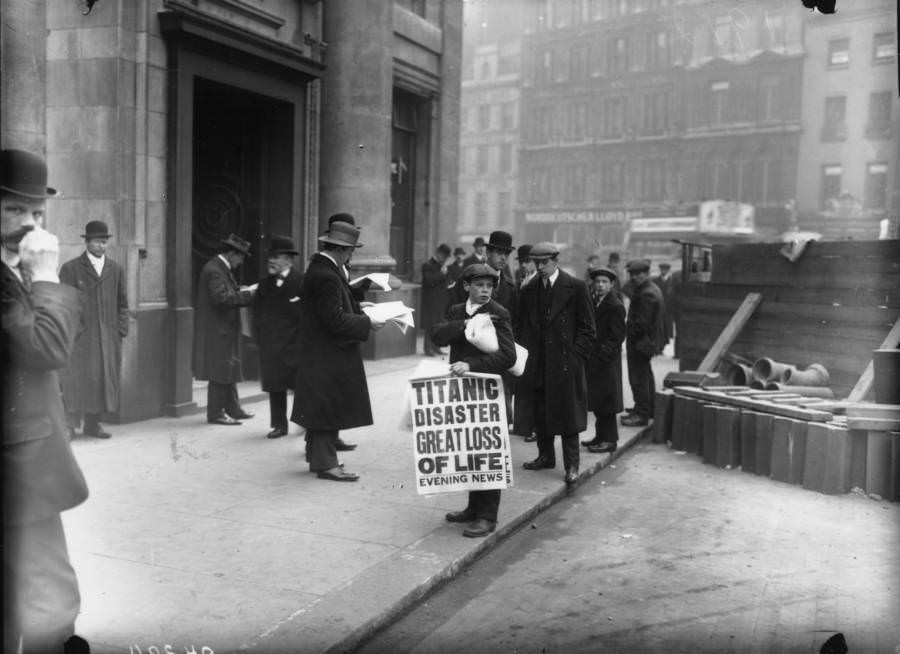
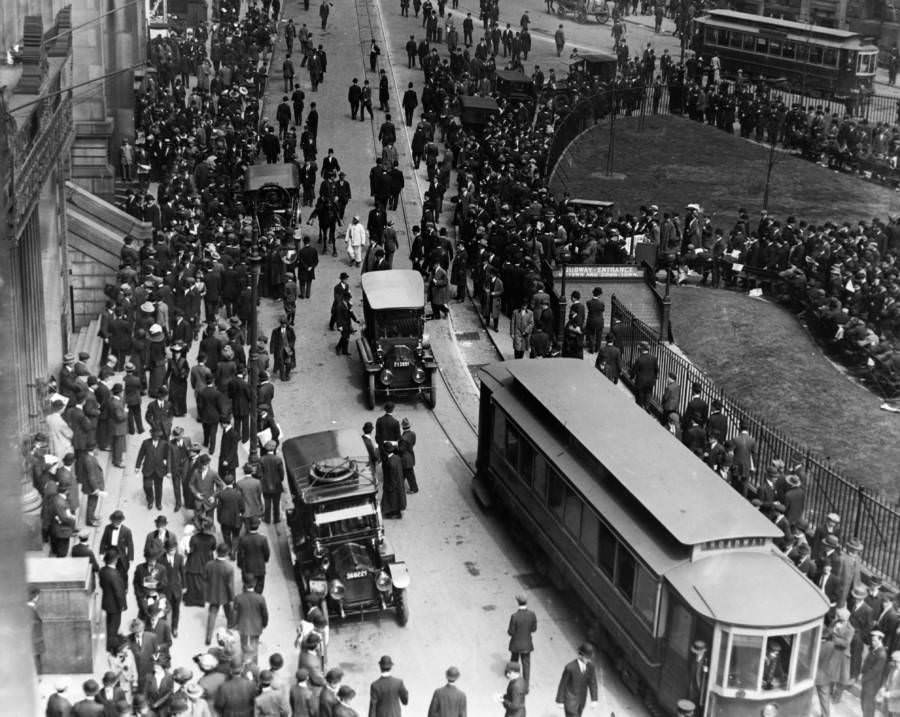
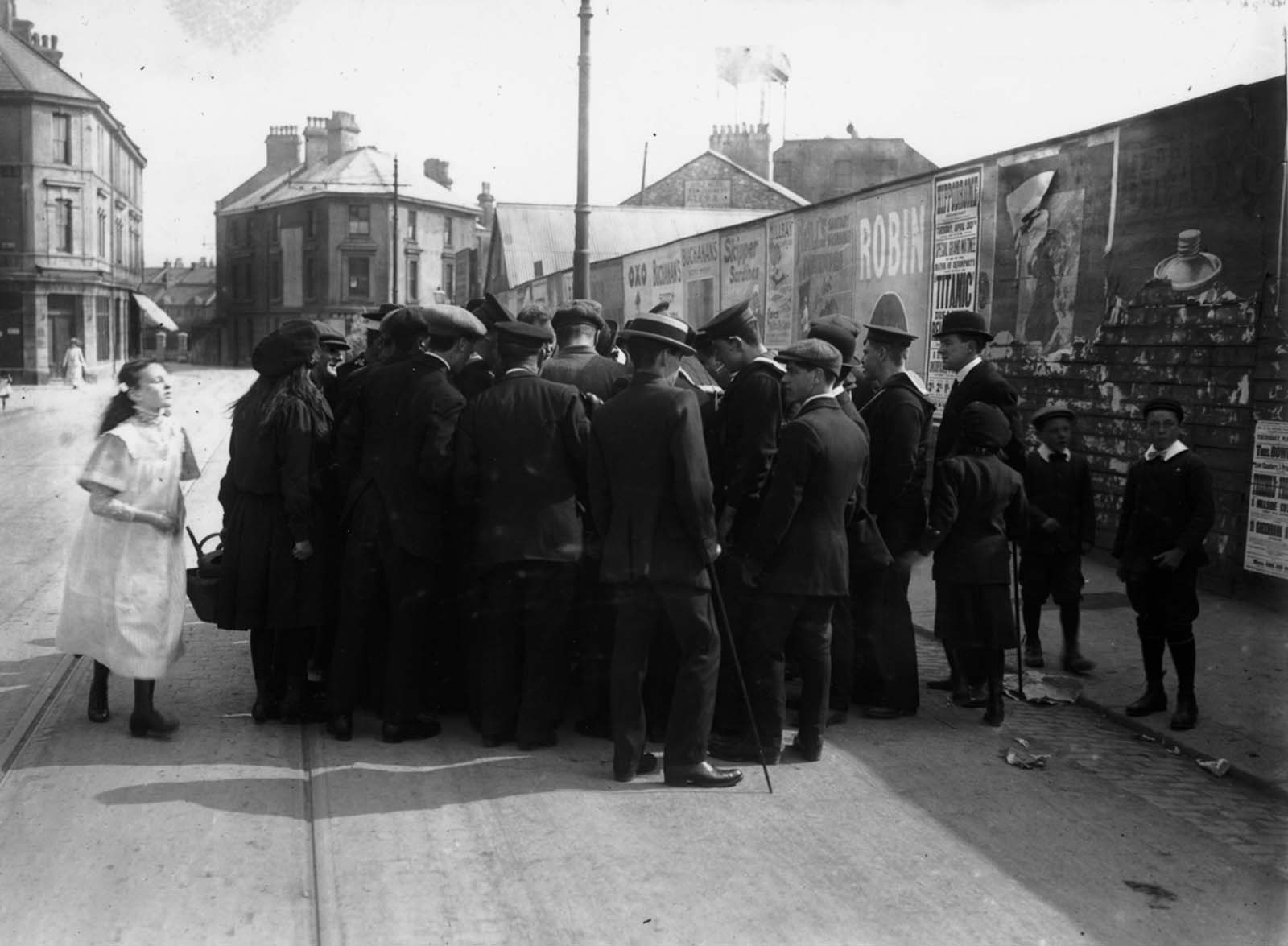
Outside the White Star Line offices in New York and Southampton, crowds stood for hours waiting for news. In Southampton — home port to 699 crew members and many of the passengers — the losses were staggering. Churches across Belfast were packed with mourners. Shipyard workers who had built the Titanic wept openly in the streets.
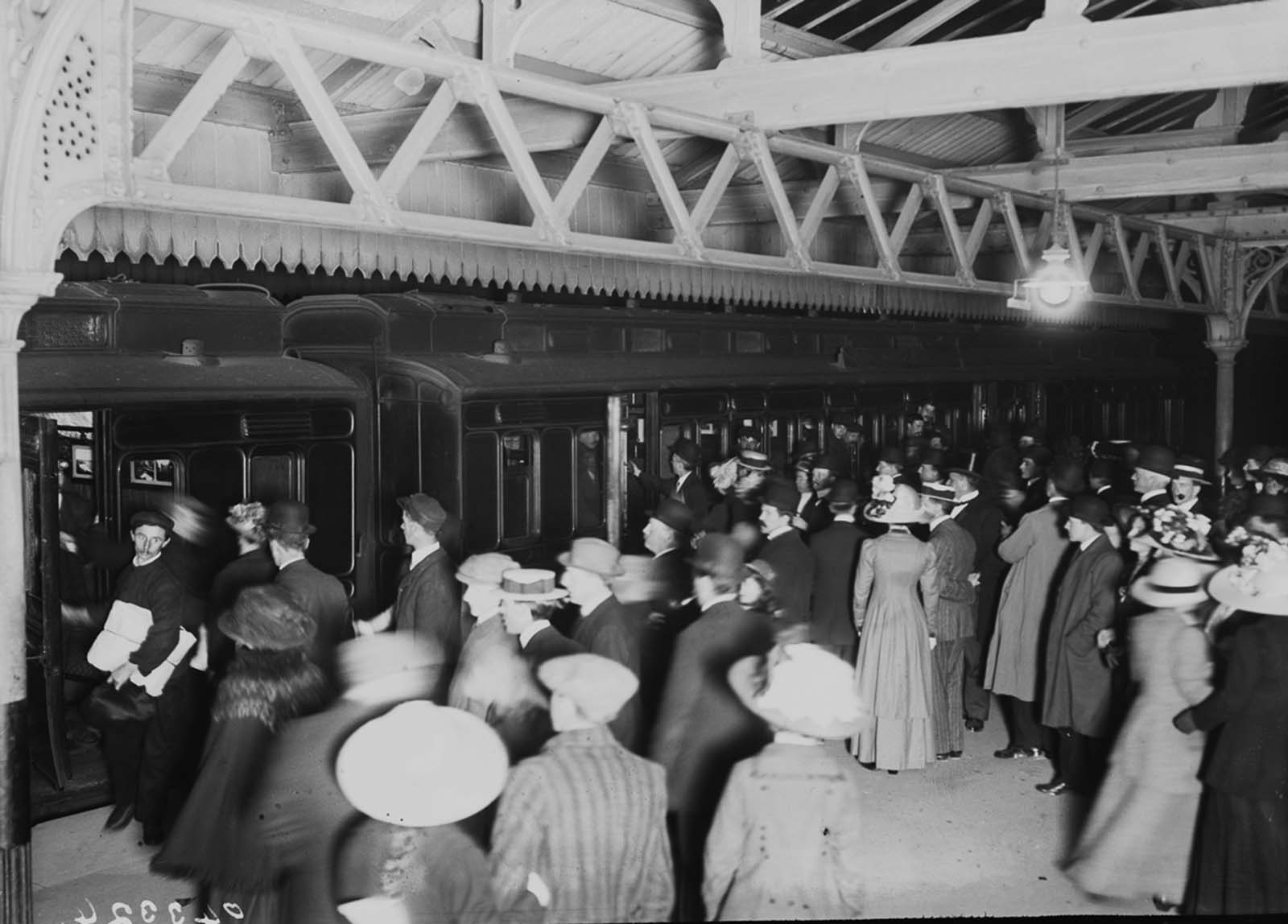
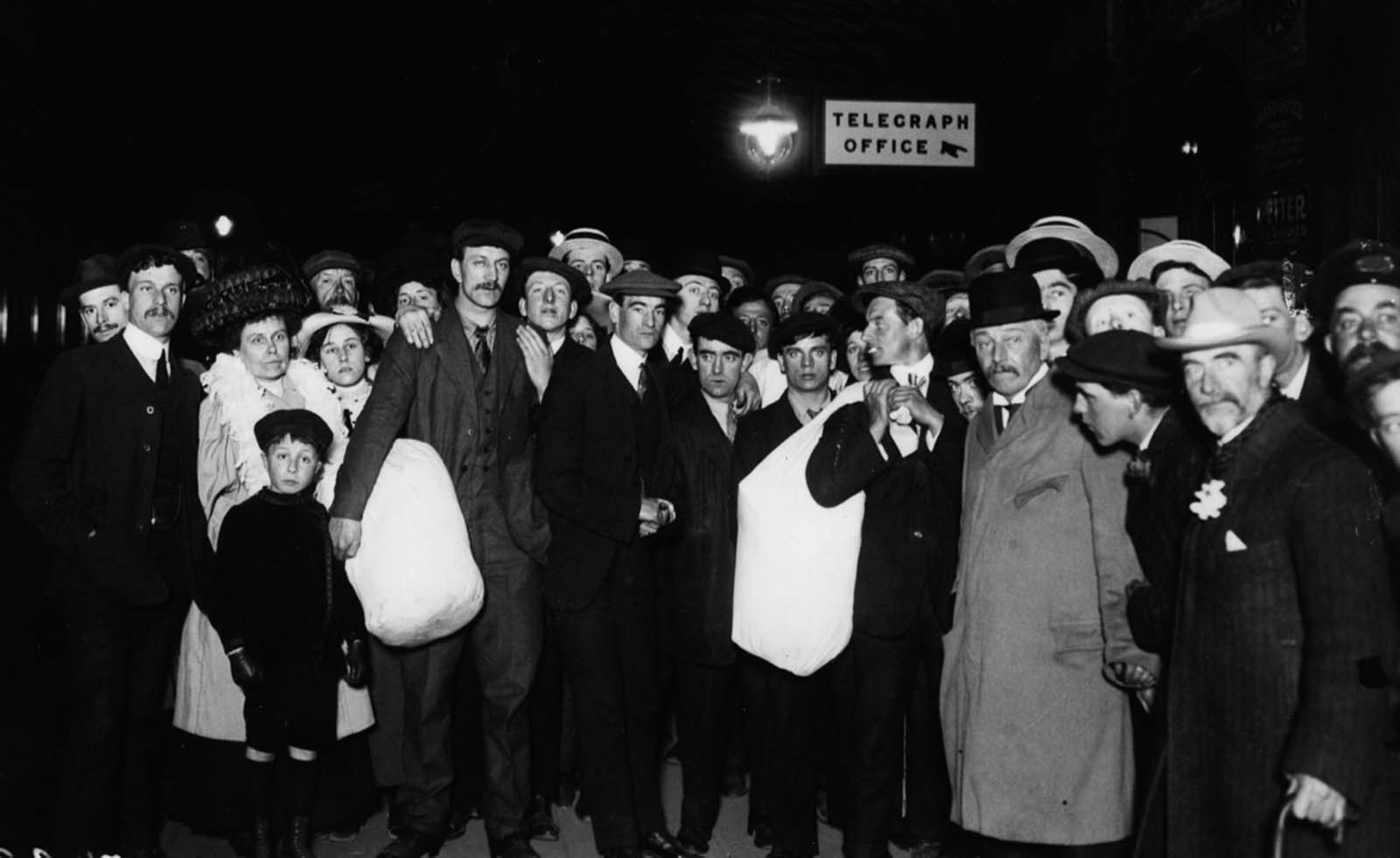
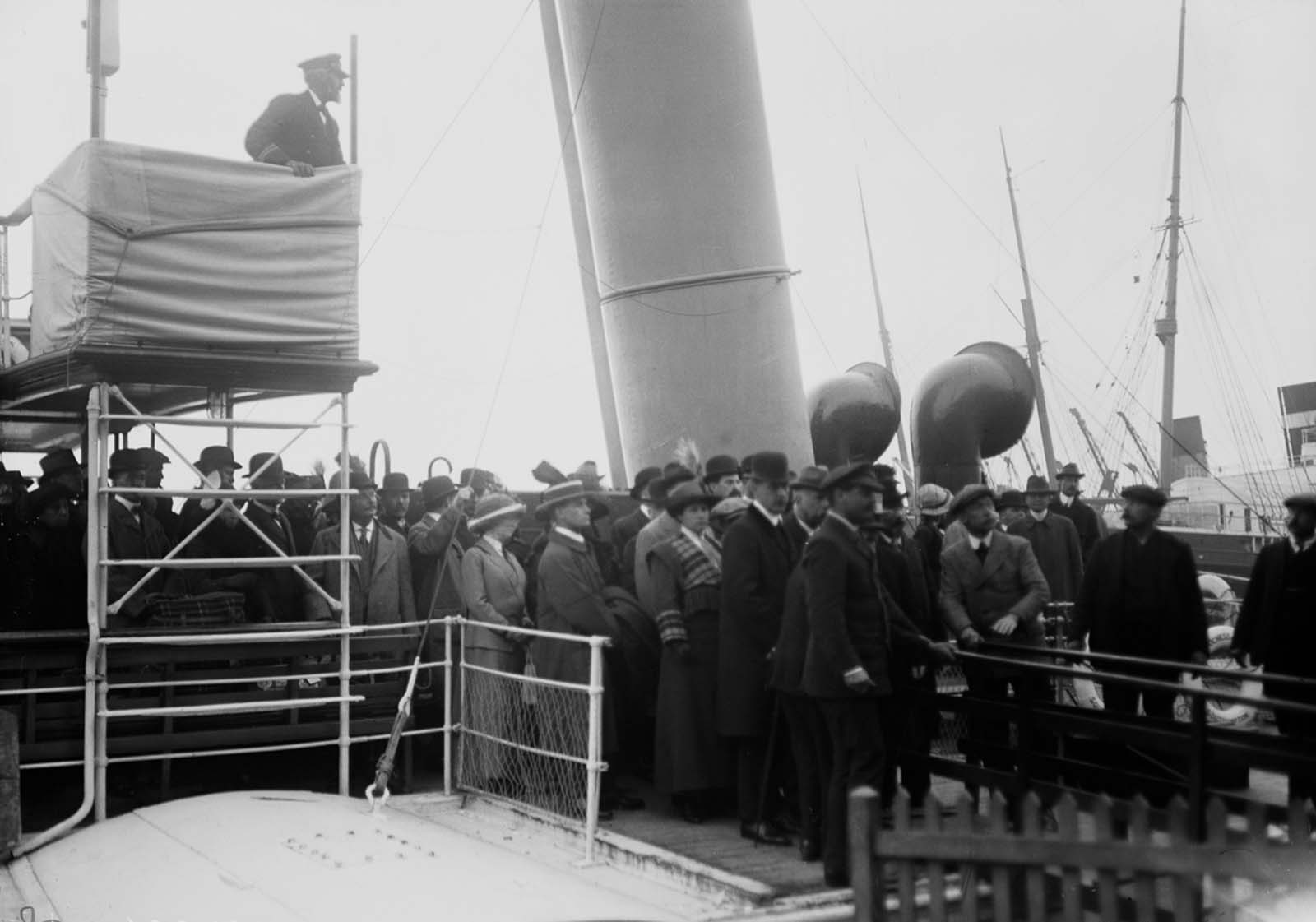
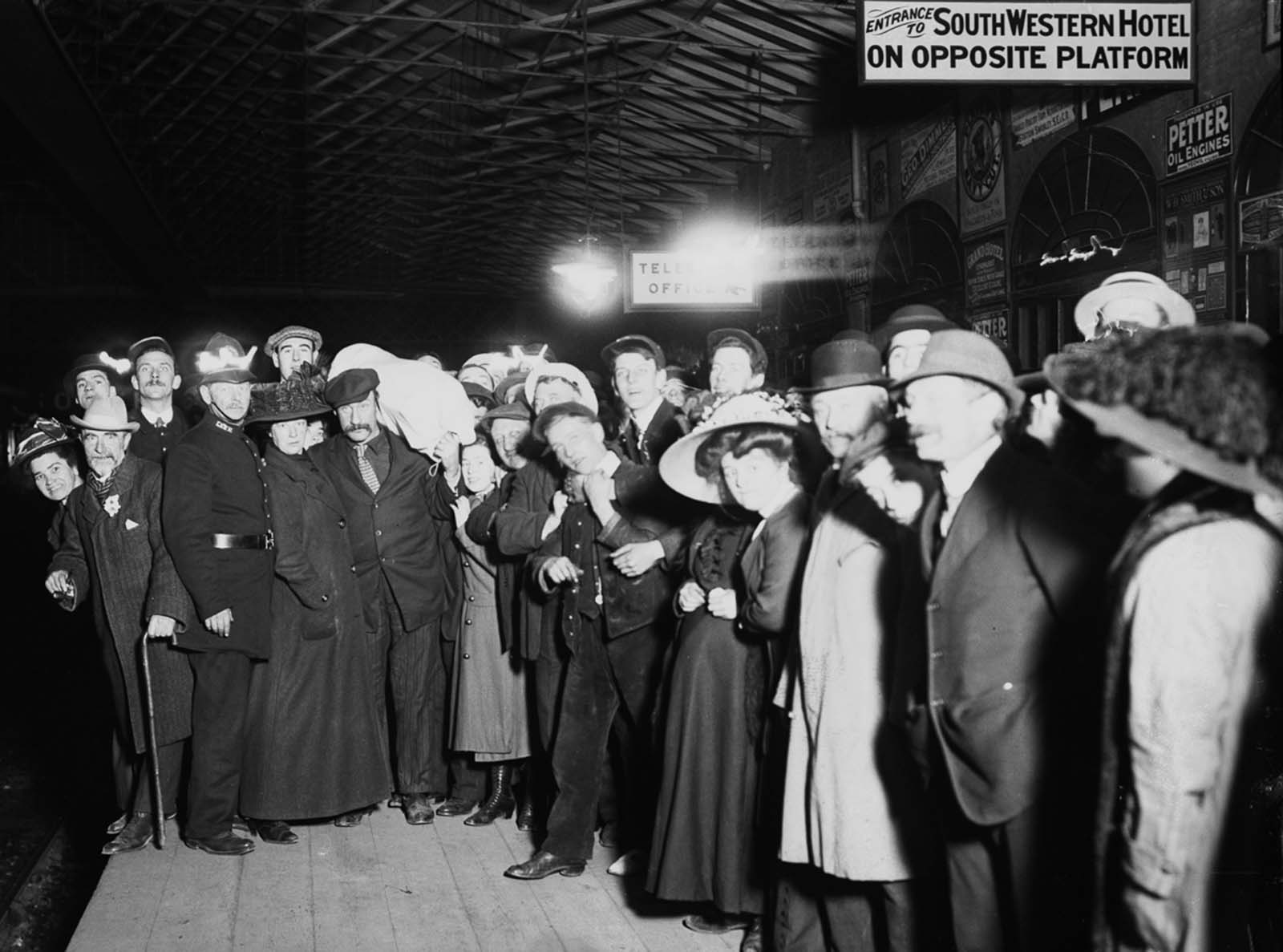
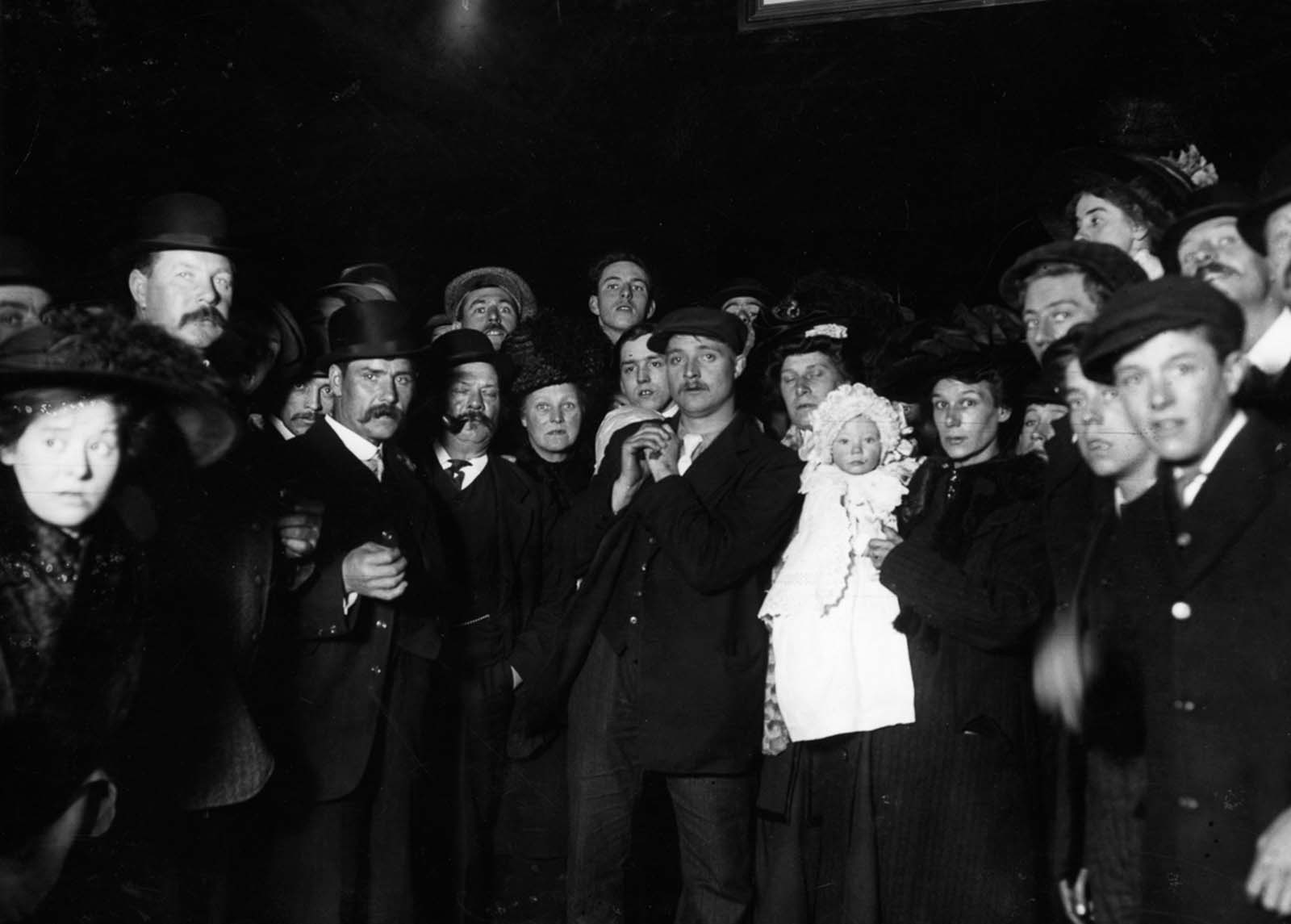
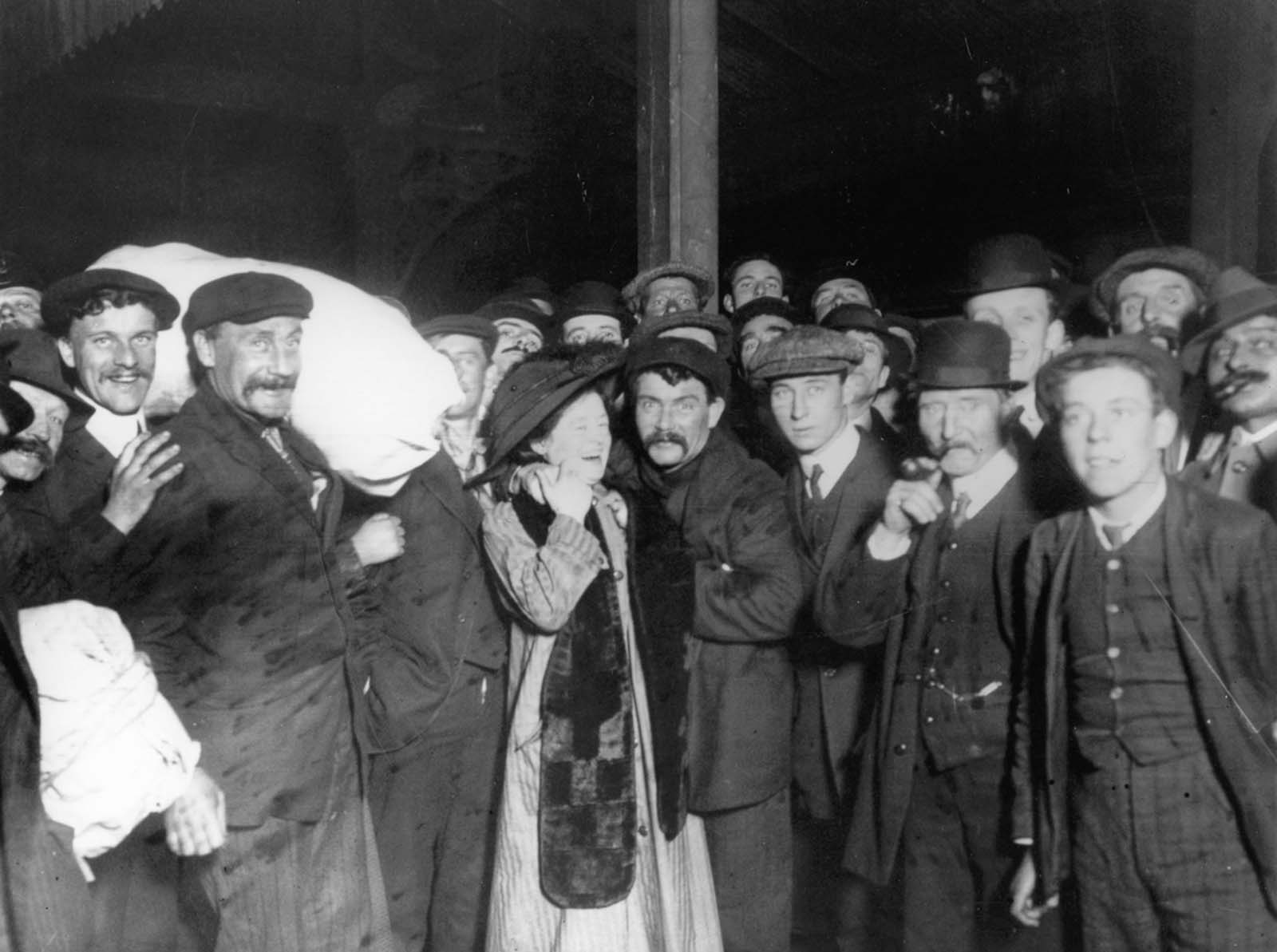
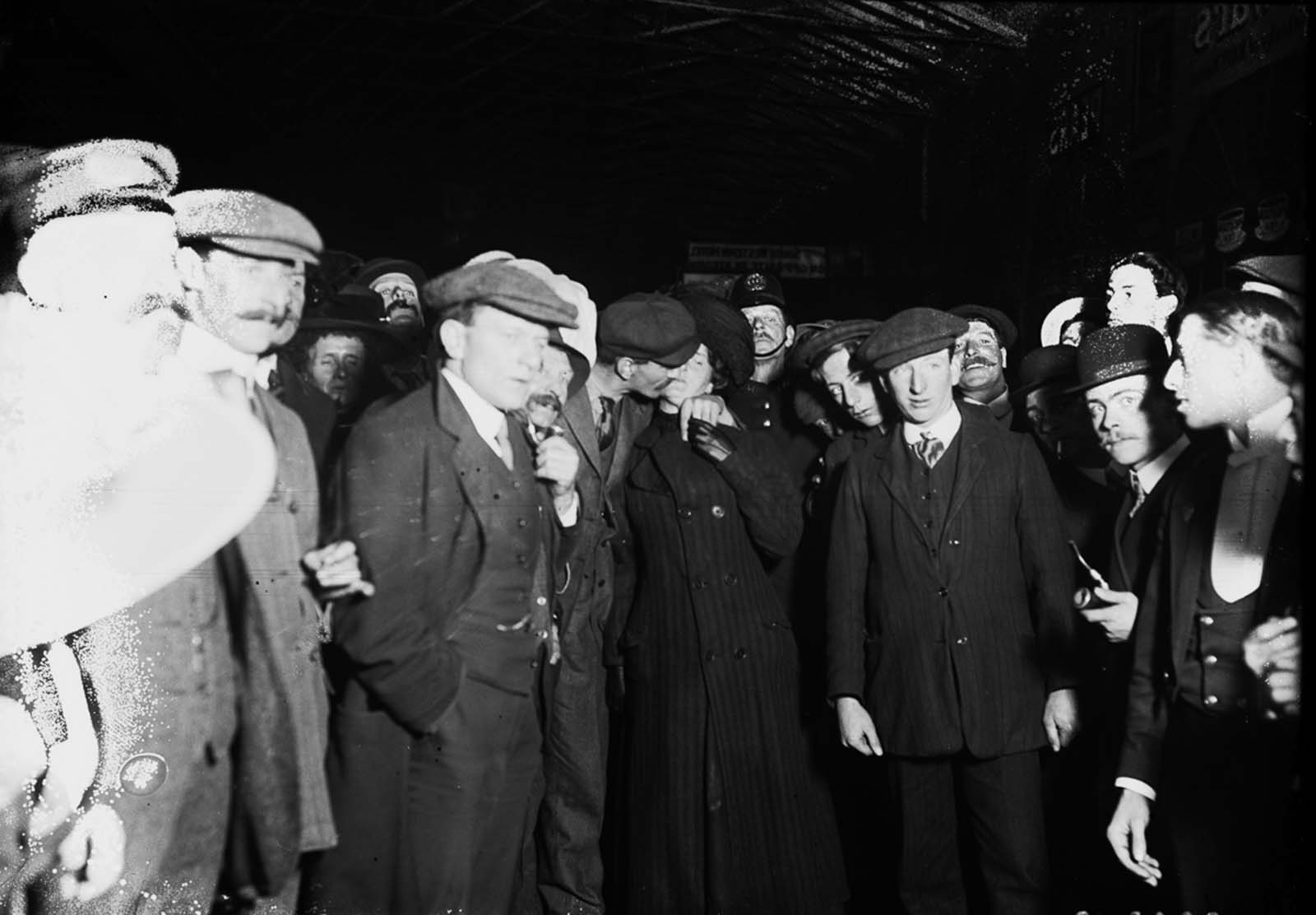
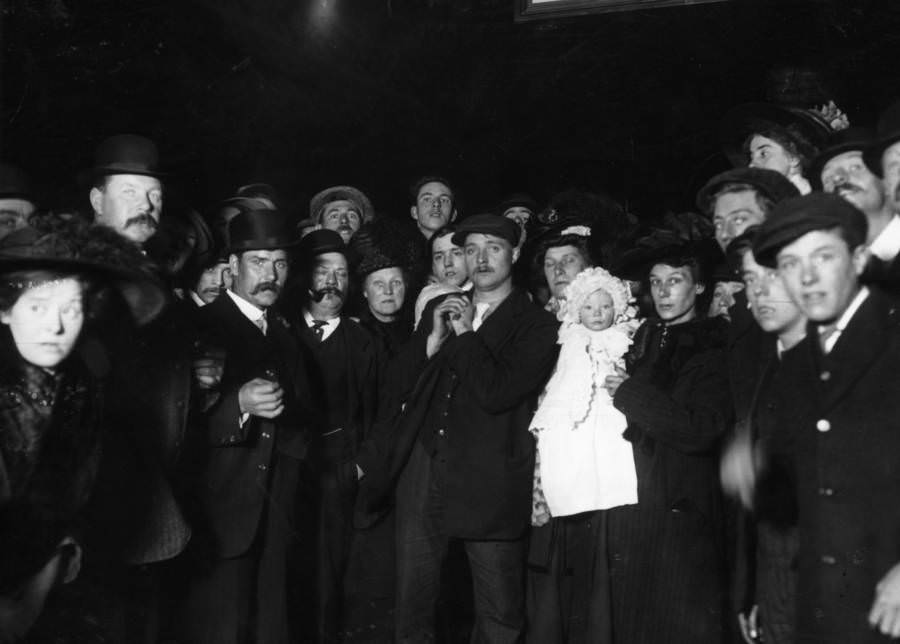
In Southampton, relatives packed railway platforms and dockside areas waiting for the surviving crew to come ashore. Reunions were raw and emotional — a mix of relief and grief playing out in public.
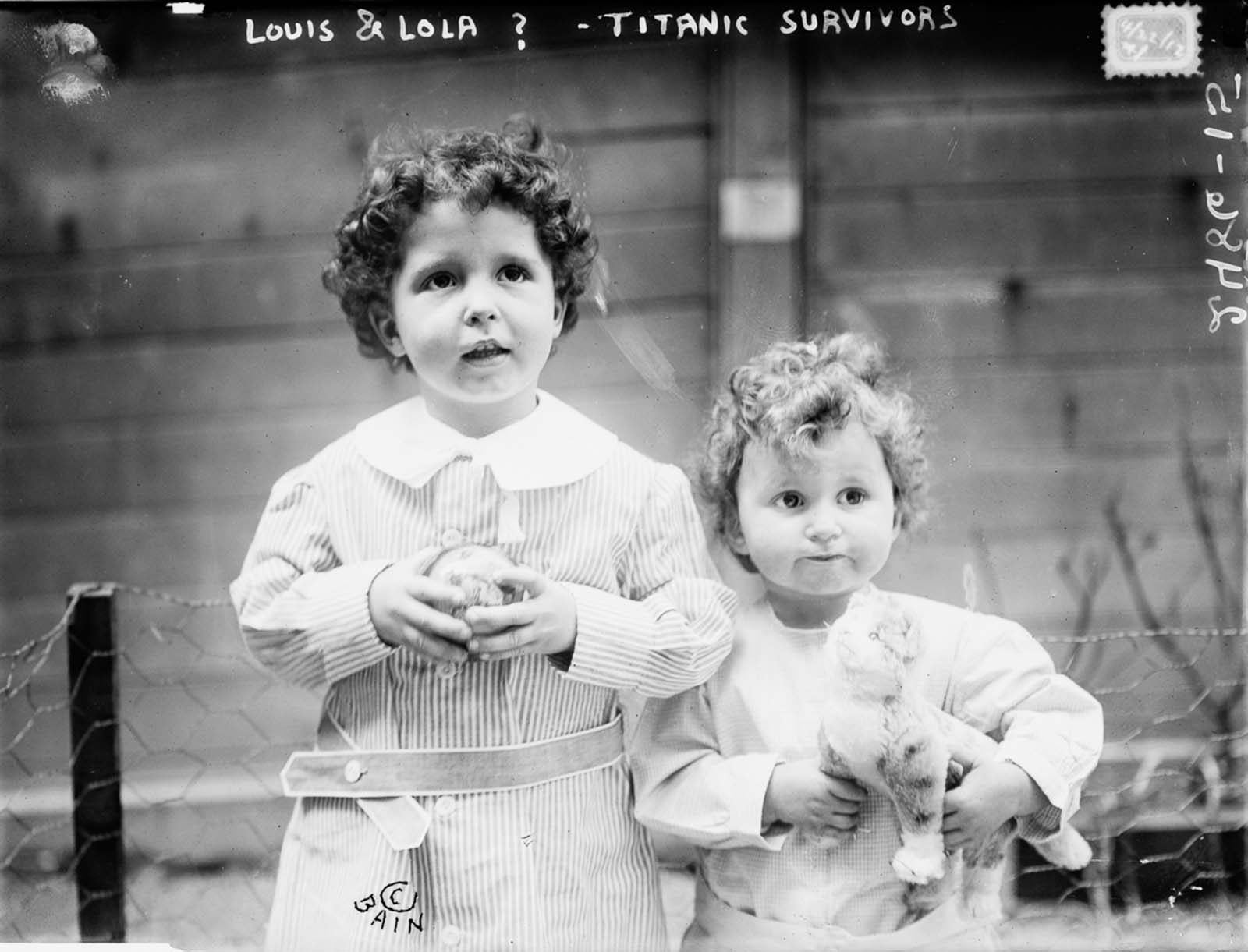
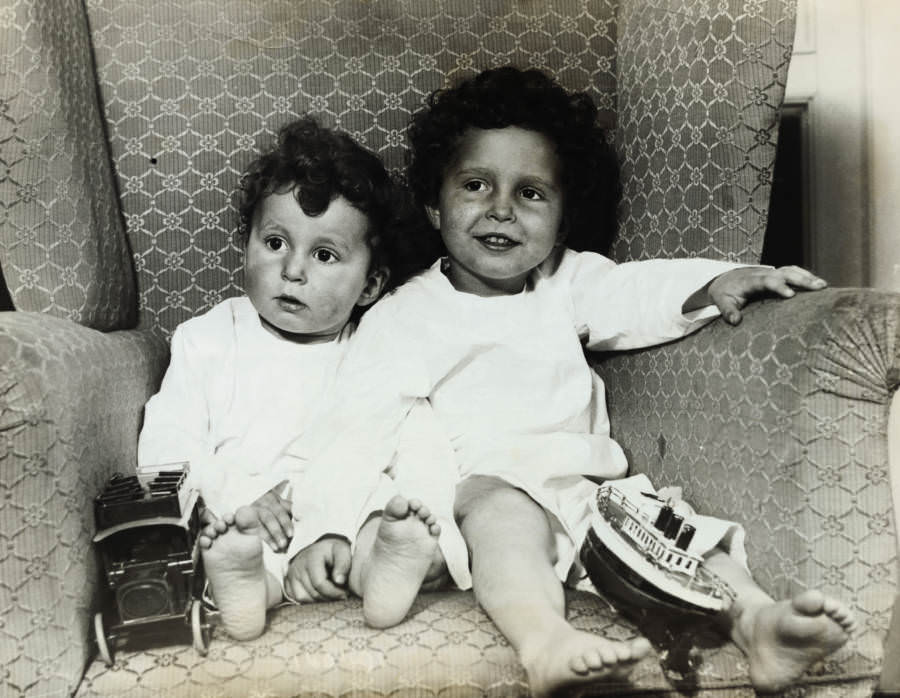
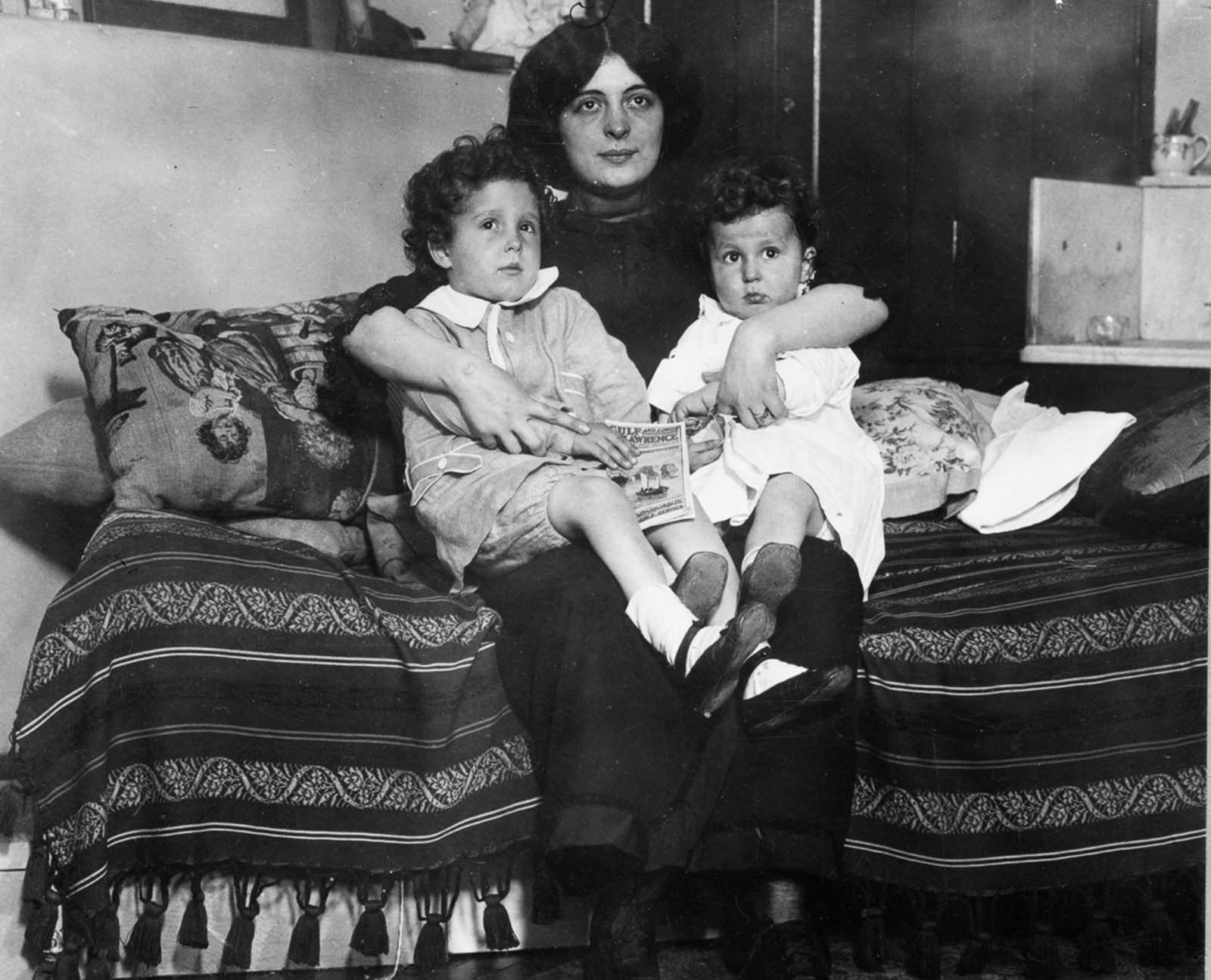
Among the most unusual stories to emerge from the disaster was that of two young boys — Michel Navratil, age 4, and his brother Edmond, age 2. Their father had boarded the Titanic under a false name, Louis Hoffman, using the boys’ nicknames, Lolo and Mamon. He died in the sinking. The boys, unaccompanied and too young to explain who they were, made it onto a lifeboat and were rescued. They were initially referred to in the press as the ‘Titanic orphans.’ Their mother eventually saw their photograph in a newspaper and traveled to New York to reclaim them.
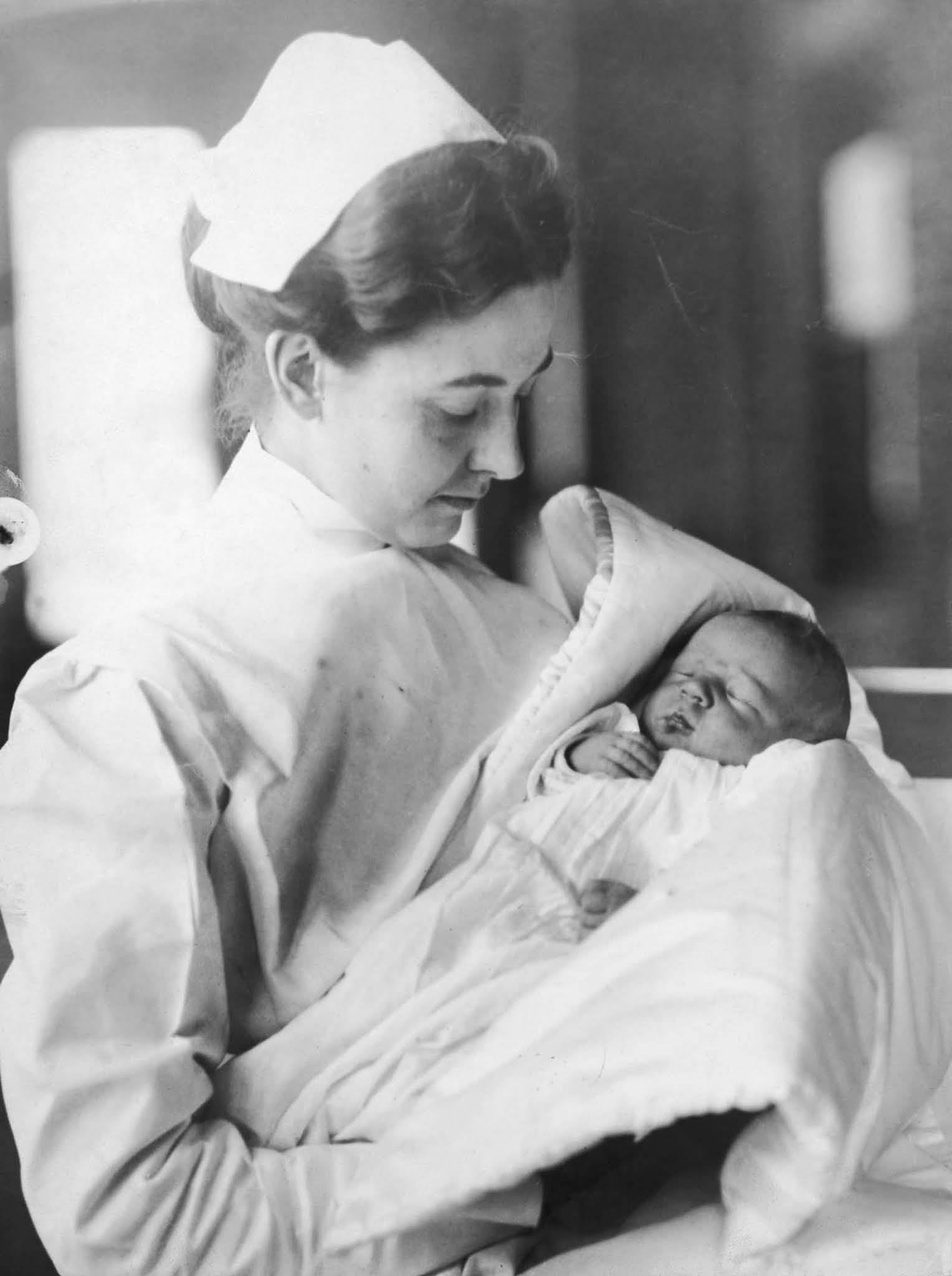
Another story that captured public attention was that of Eloise Smith. She was pregnant and returning from her honeymoon aboard the Titanic when the ship sank. Her husband, Lucien P. Smith, died in the disaster. Eloise survived, and months later gave birth to their son, Lucien P. Smith Jr. Eloise later married fellow Titanic survivor Robert P. Daniel.
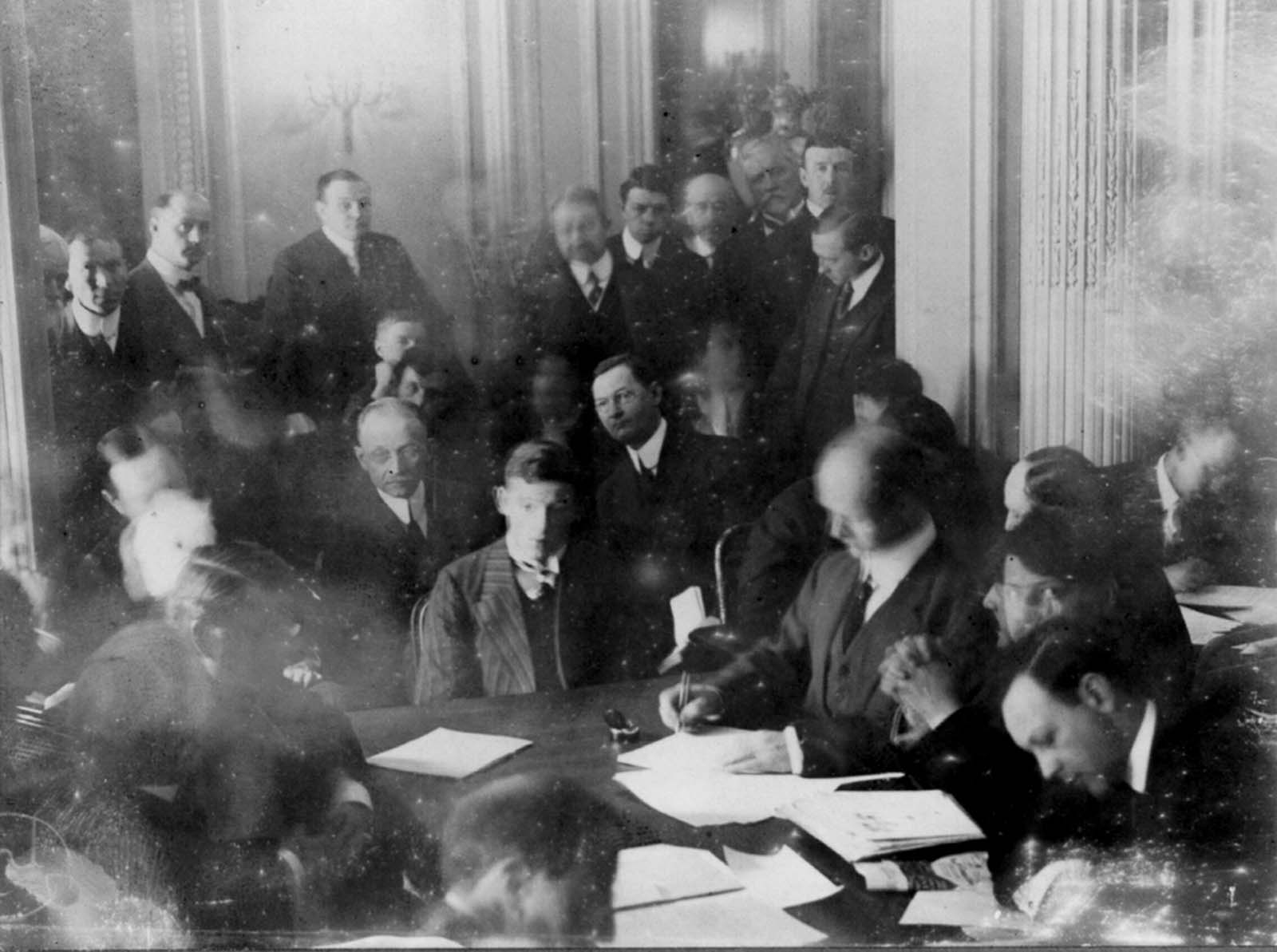
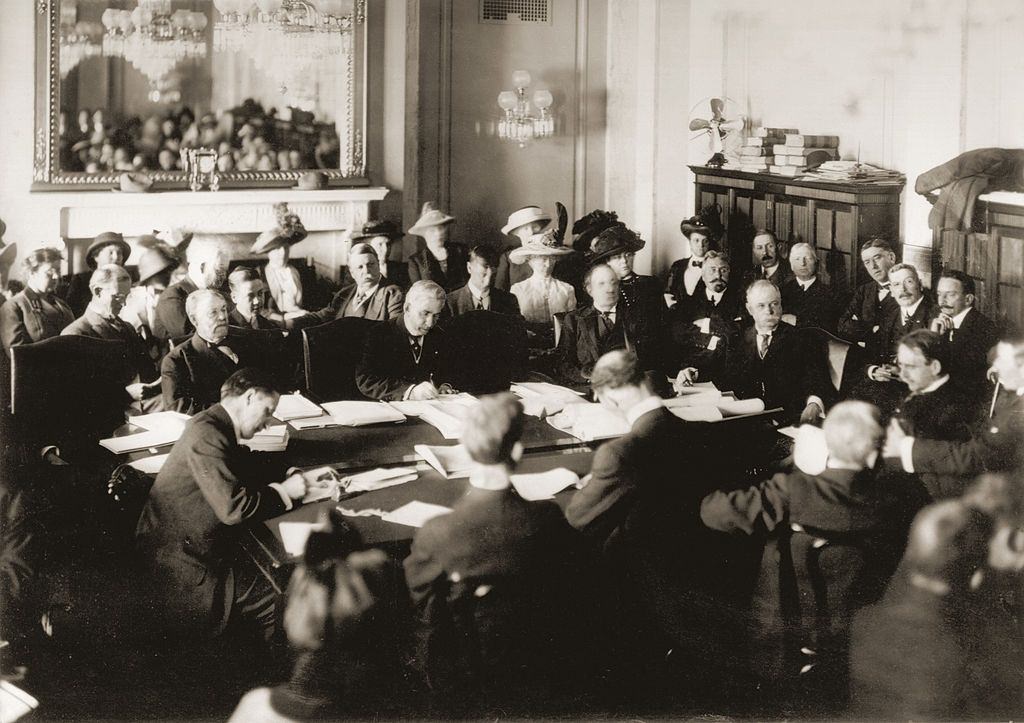
Formal inquiries into the disaster began almost immediately. The U.S. Senate launched its investigation on April 19, 1912, just days after the Carpathia docked. The hearings ran through May 25 and were held in both New York and Washington. Witnesses included wireless operators, surviving crew members, and officers. Surviving stewards were lined up and questioned systematically about the ship’s final hours.
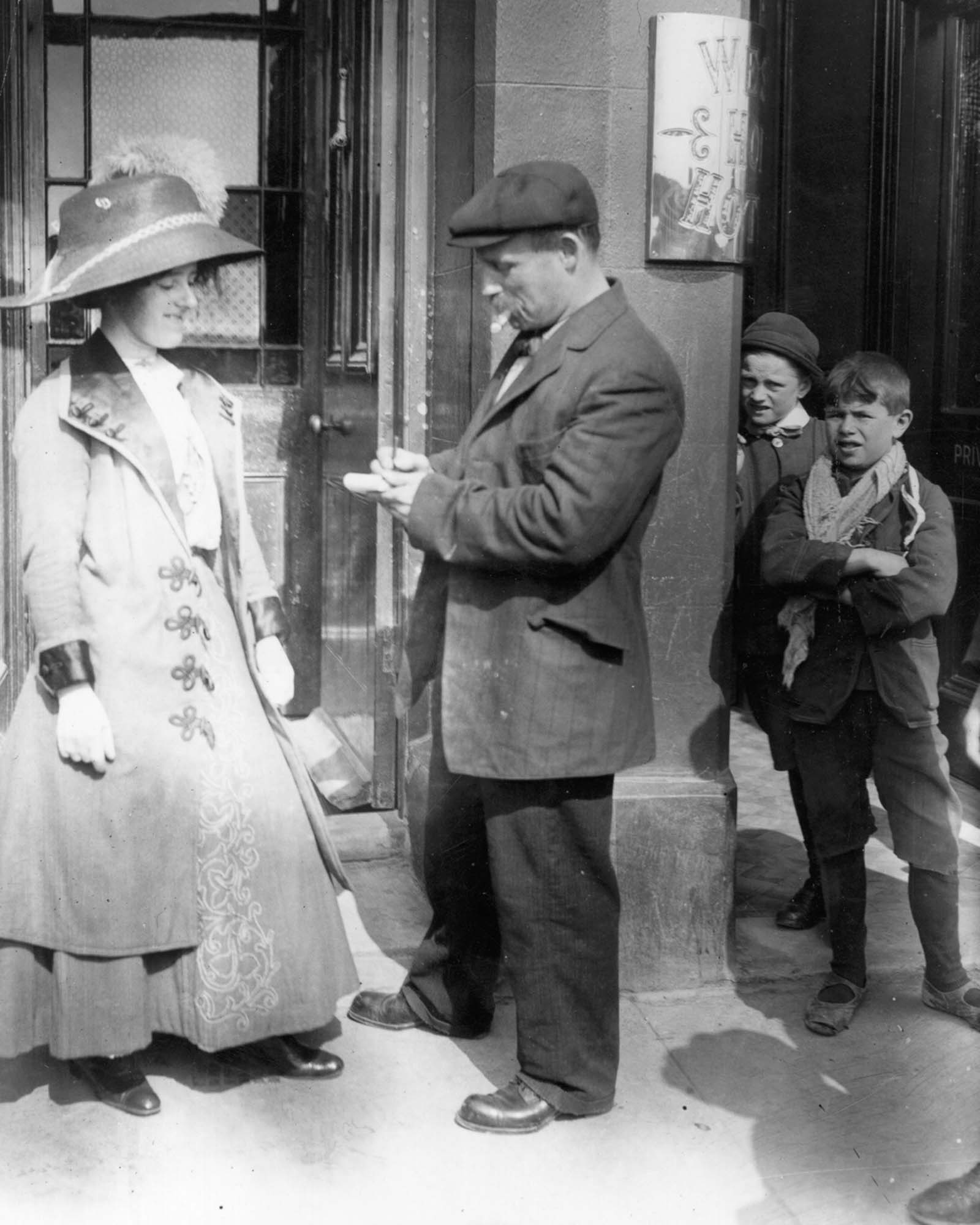
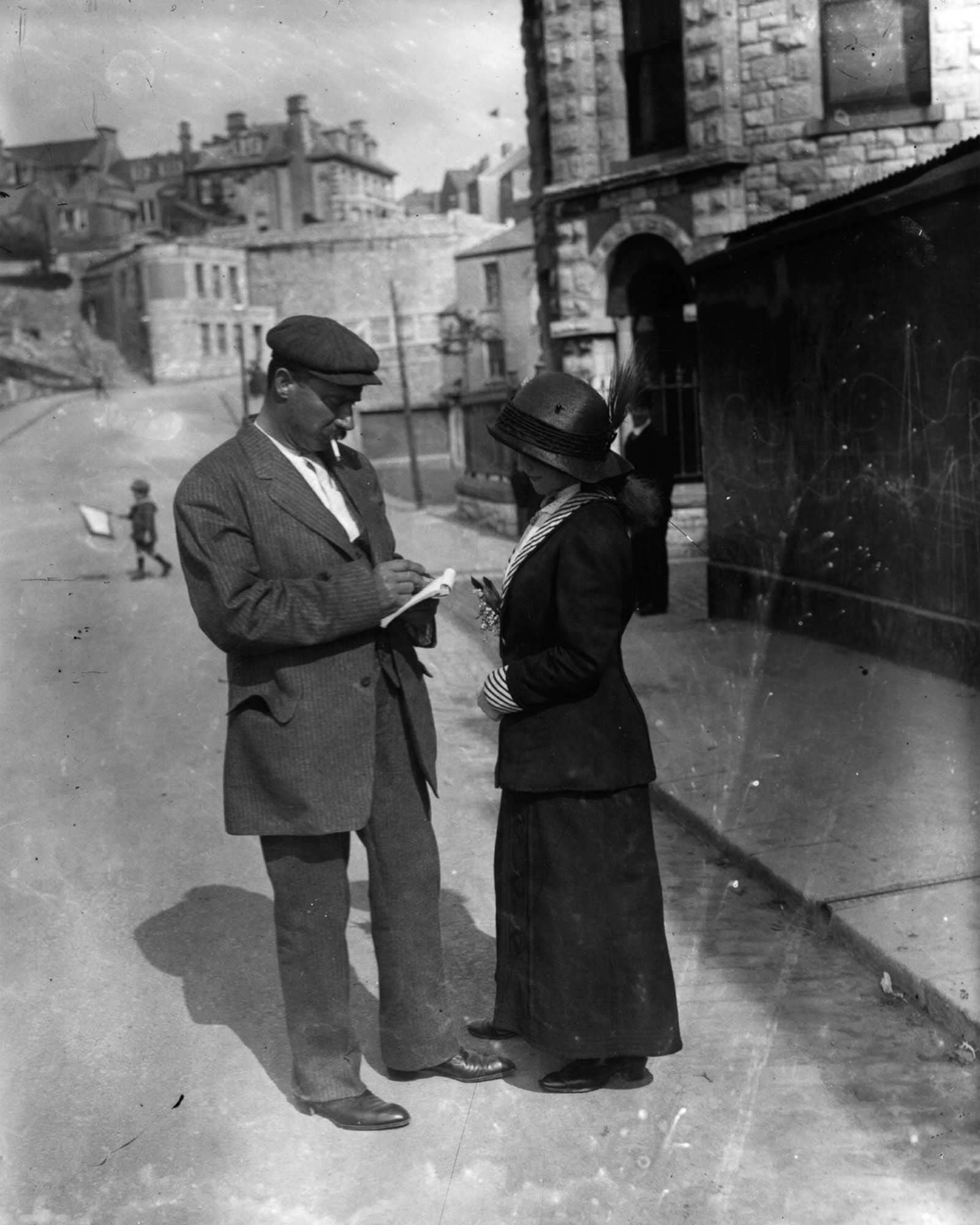
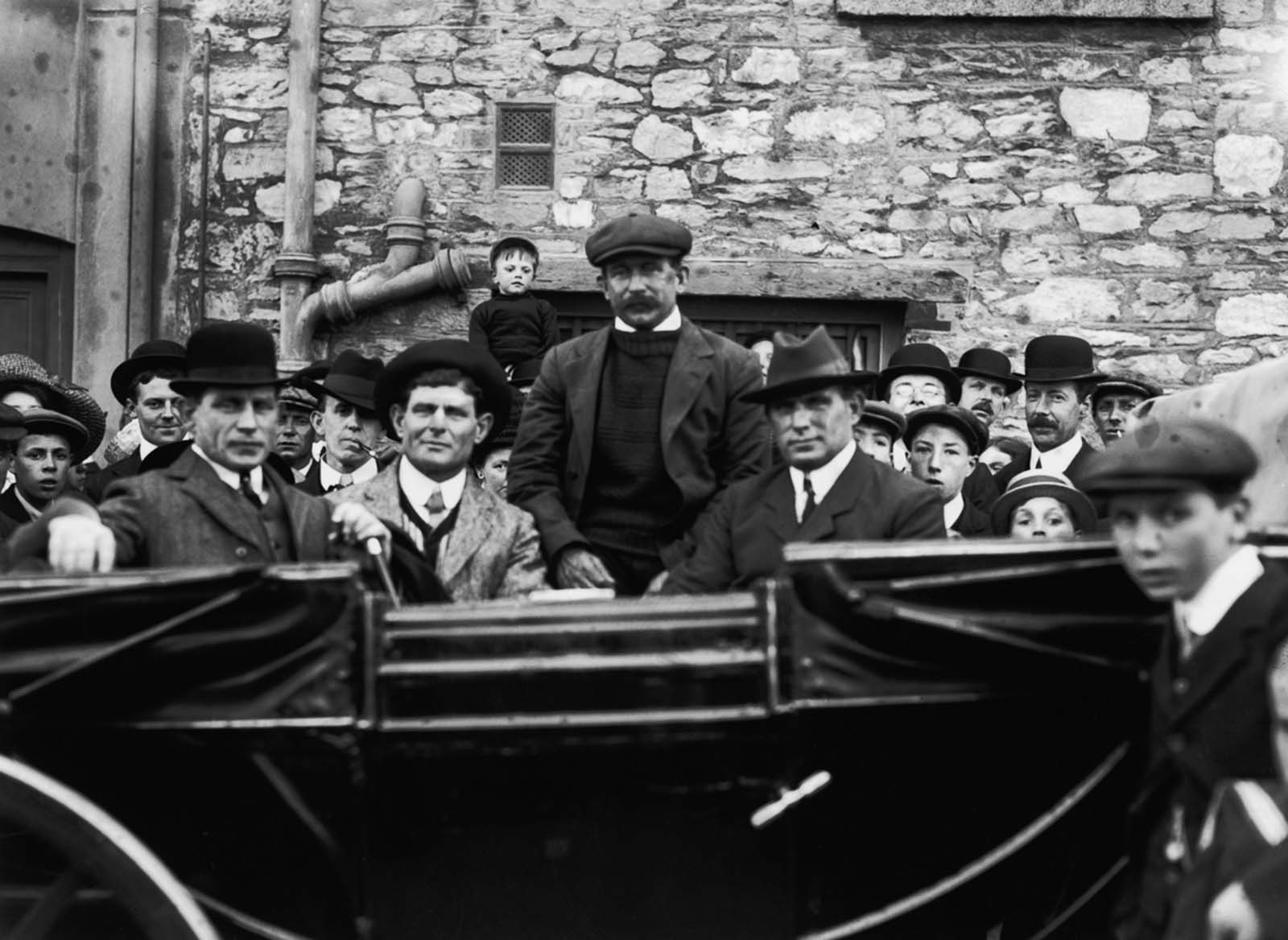
Survivors became figures of intense public interest. Some were asked for autographs in the days after the disaster. Others gathered publicly to share their accounts, drawing large crowds wherever they appeared. Union officials distributed shipwreck pay to eligible crew members who had lost their wages when the ship went down.
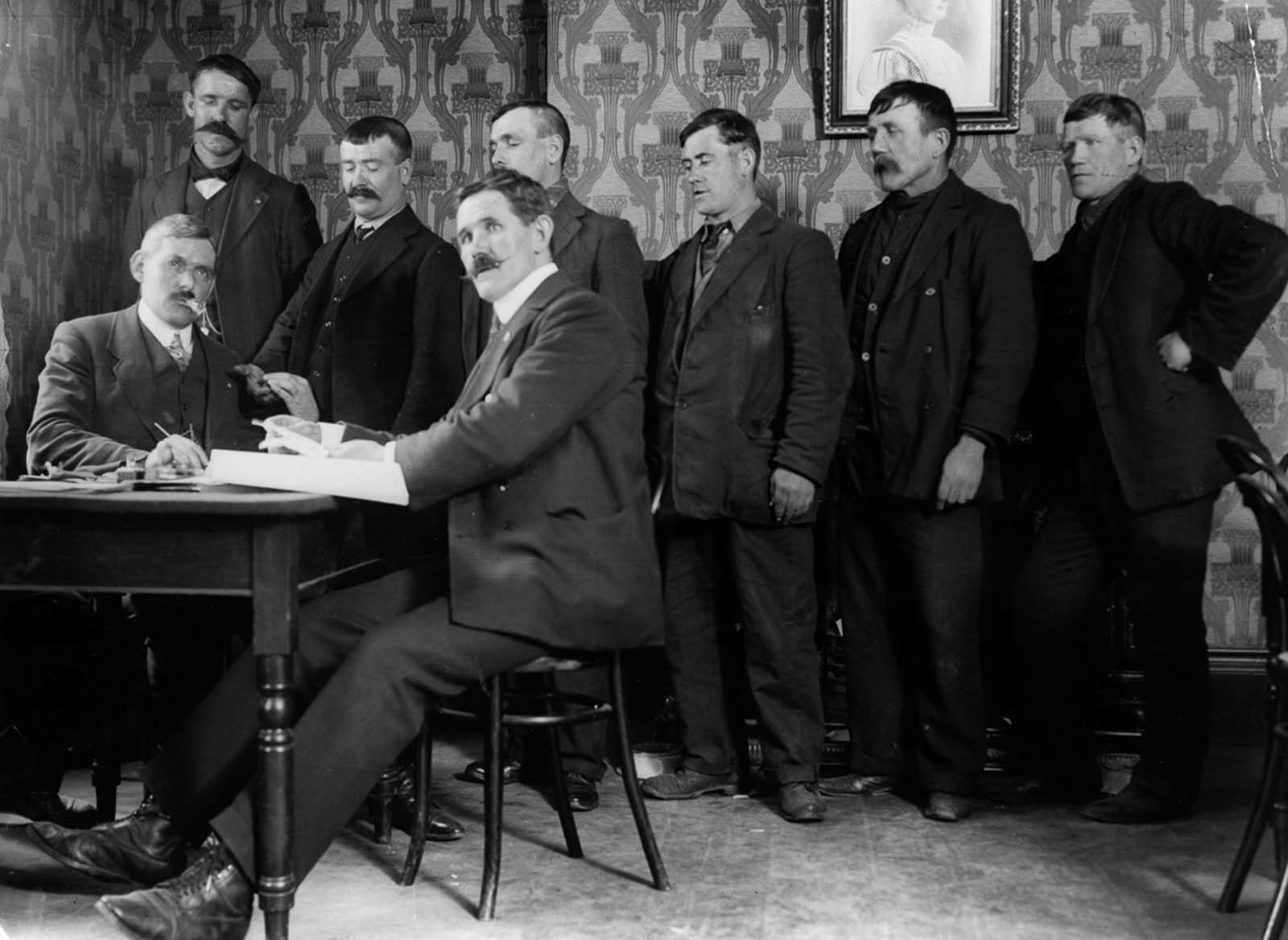
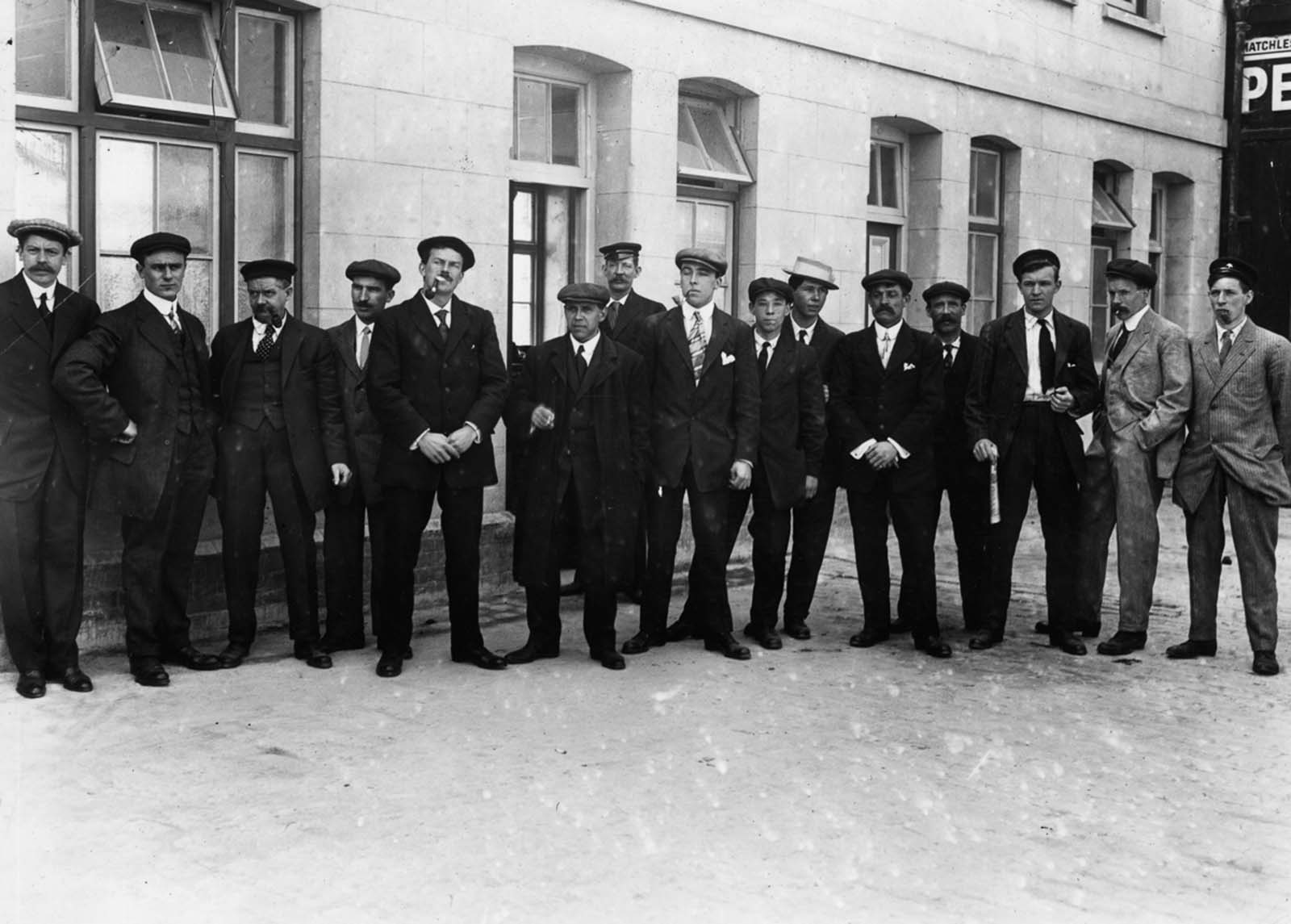
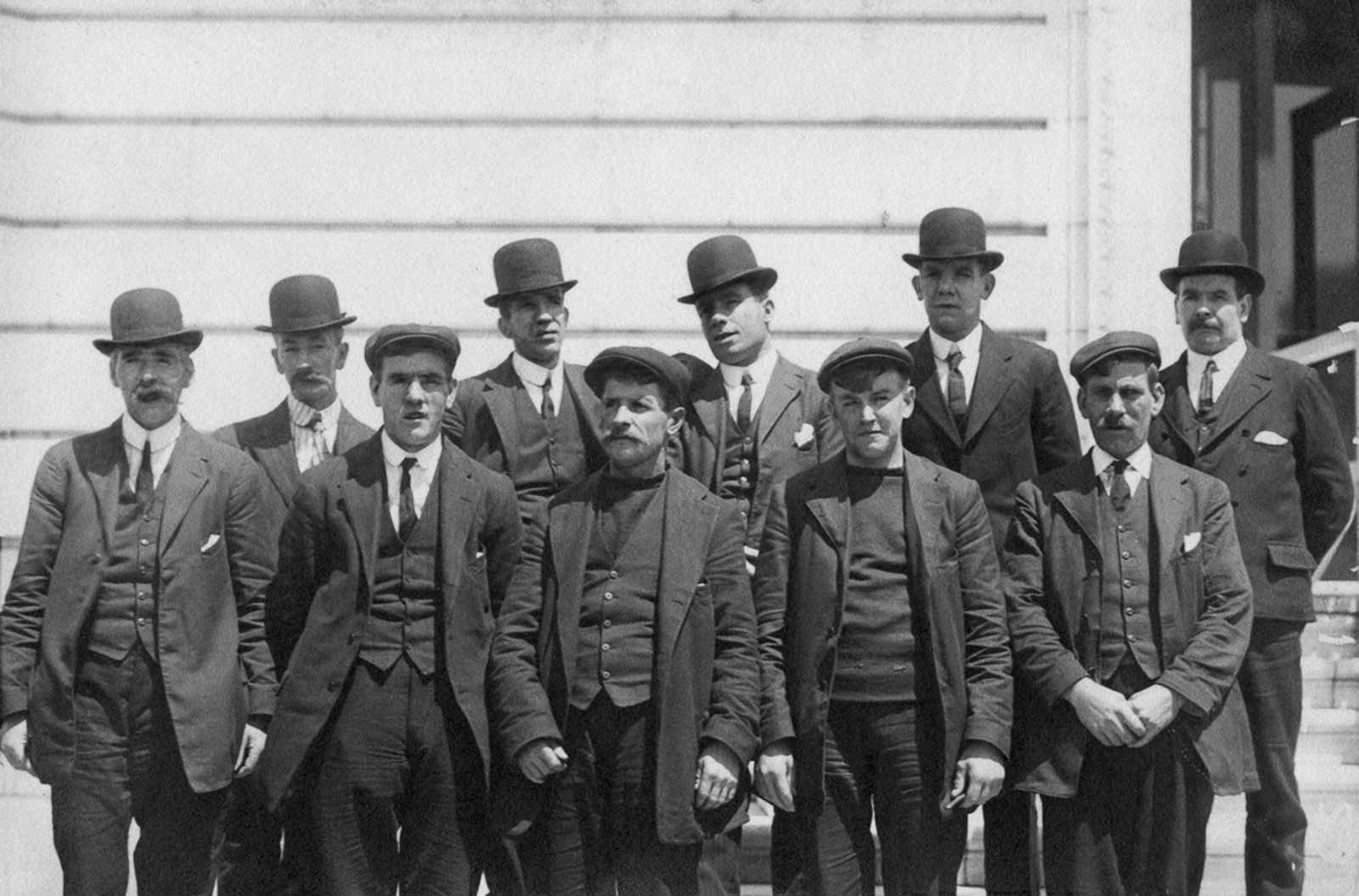
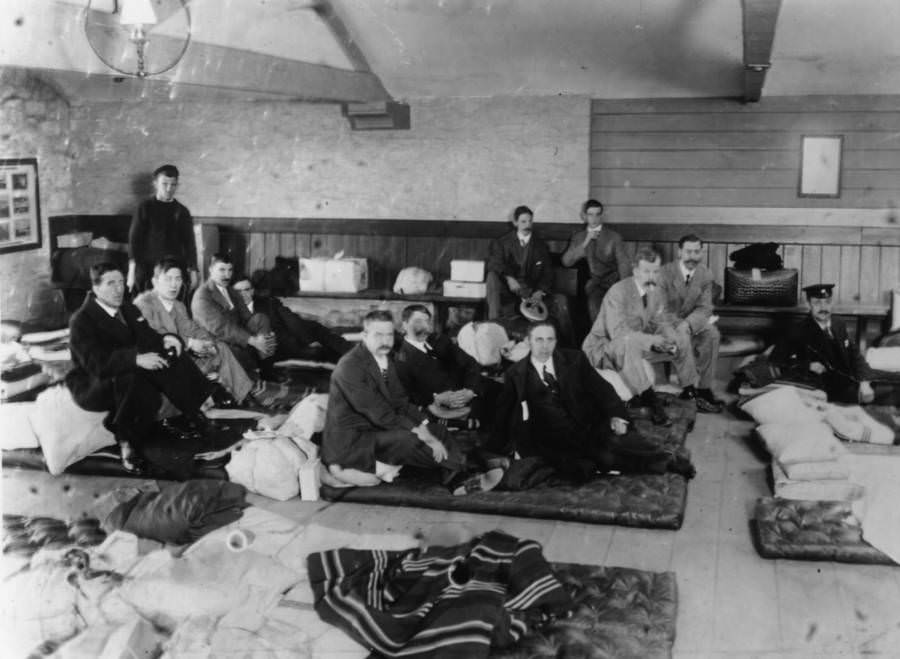
Among the surviving crew were men whose identities are now preserved in photographs taken in the immediate aftermath. One group photo shows ten crew members, including lookout Frederick Fleet — the man who first spotted the iceberg and rang the warning bell — alongside other sailors, firemen, and stewards who made it out alive.





These are fantastic, most of these I had never seen until today! Thanks for the share of these rare pictures!