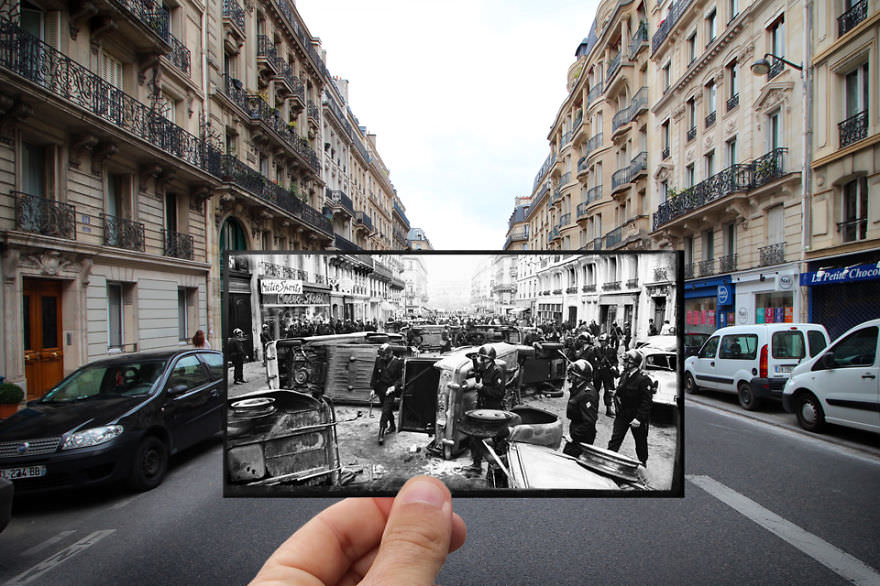
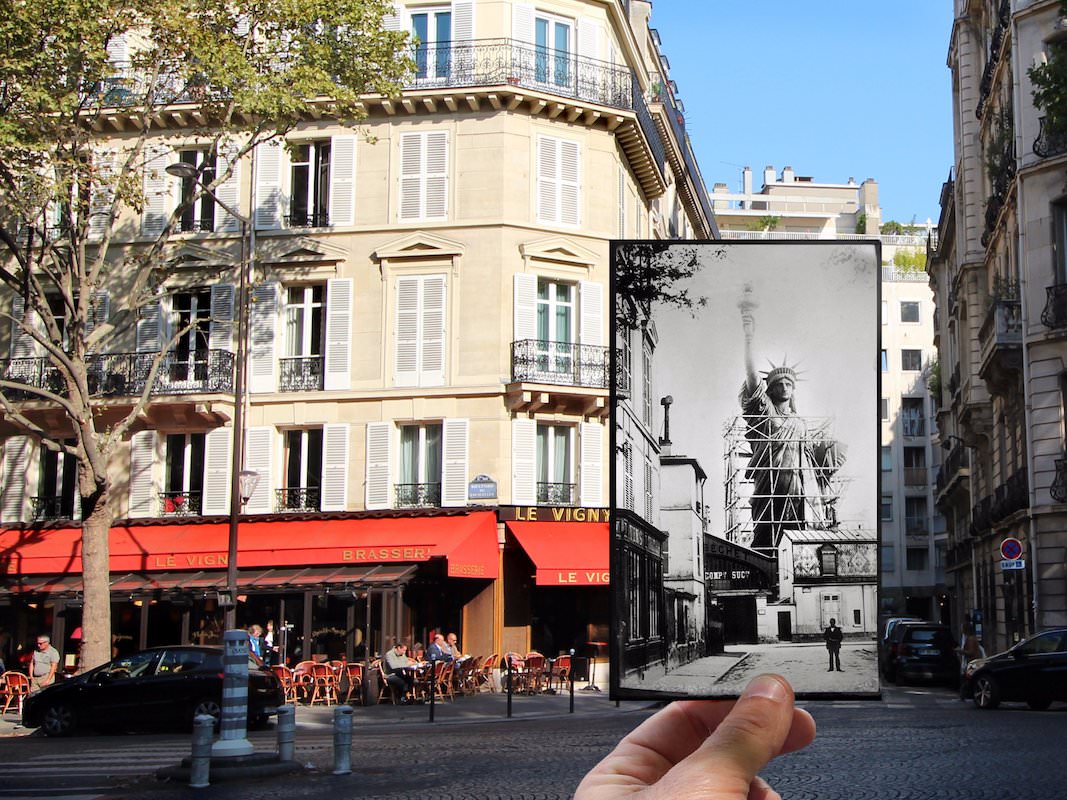
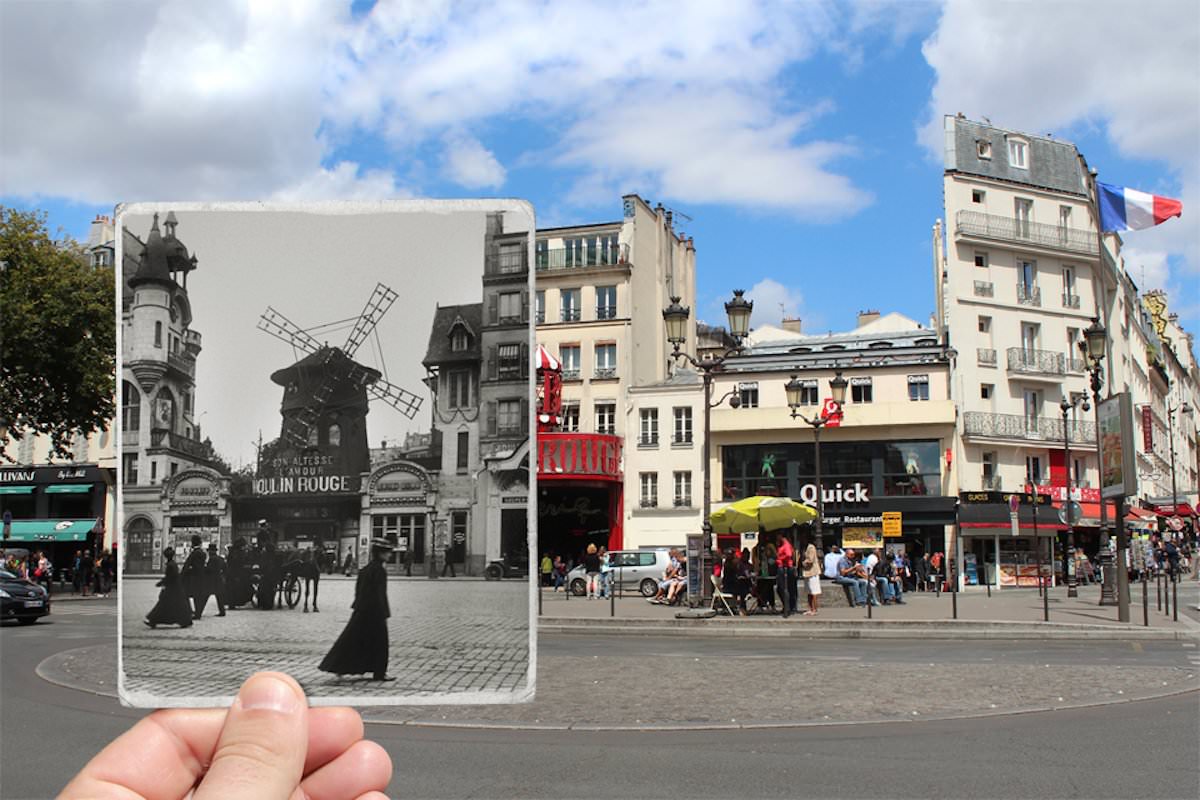
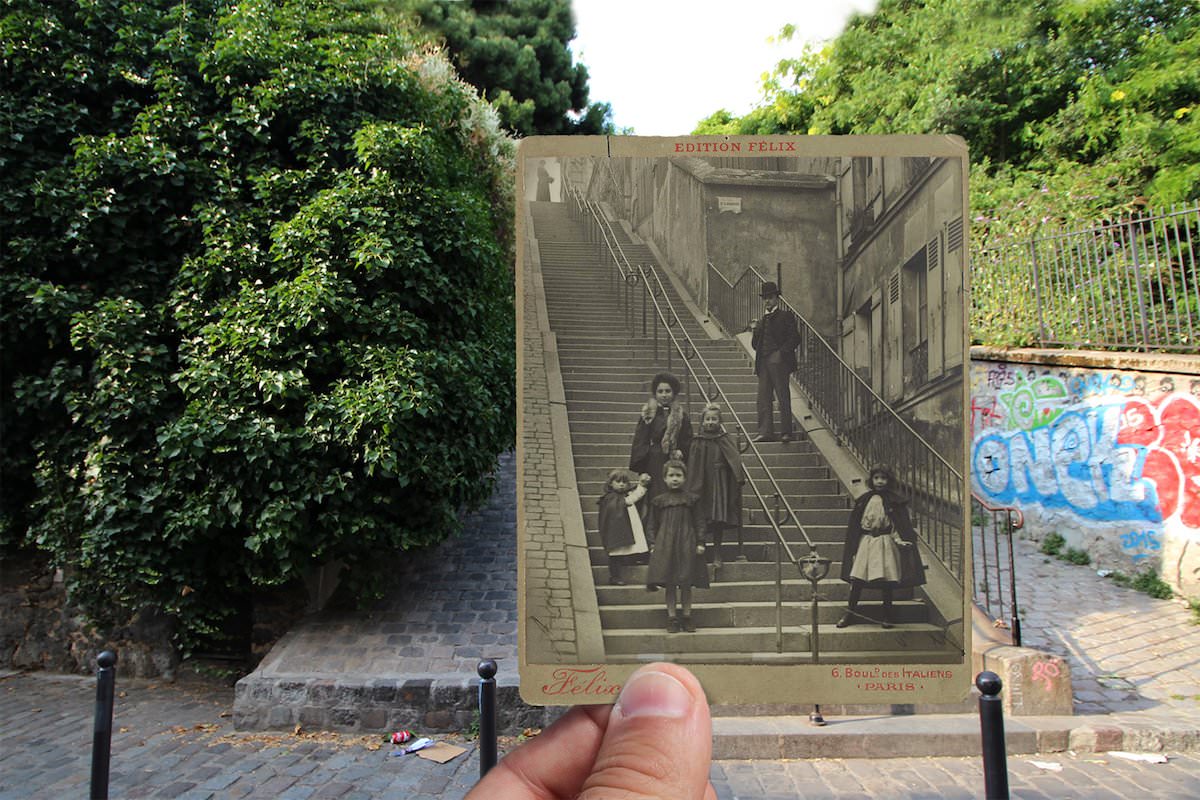
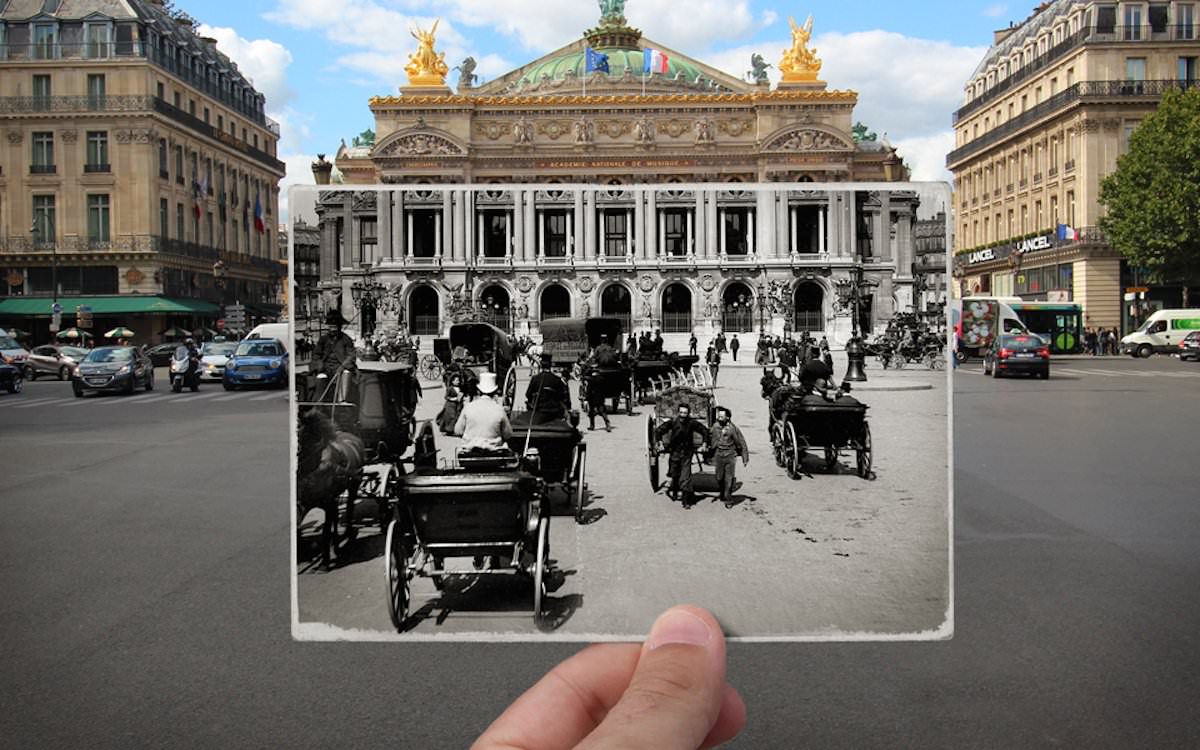
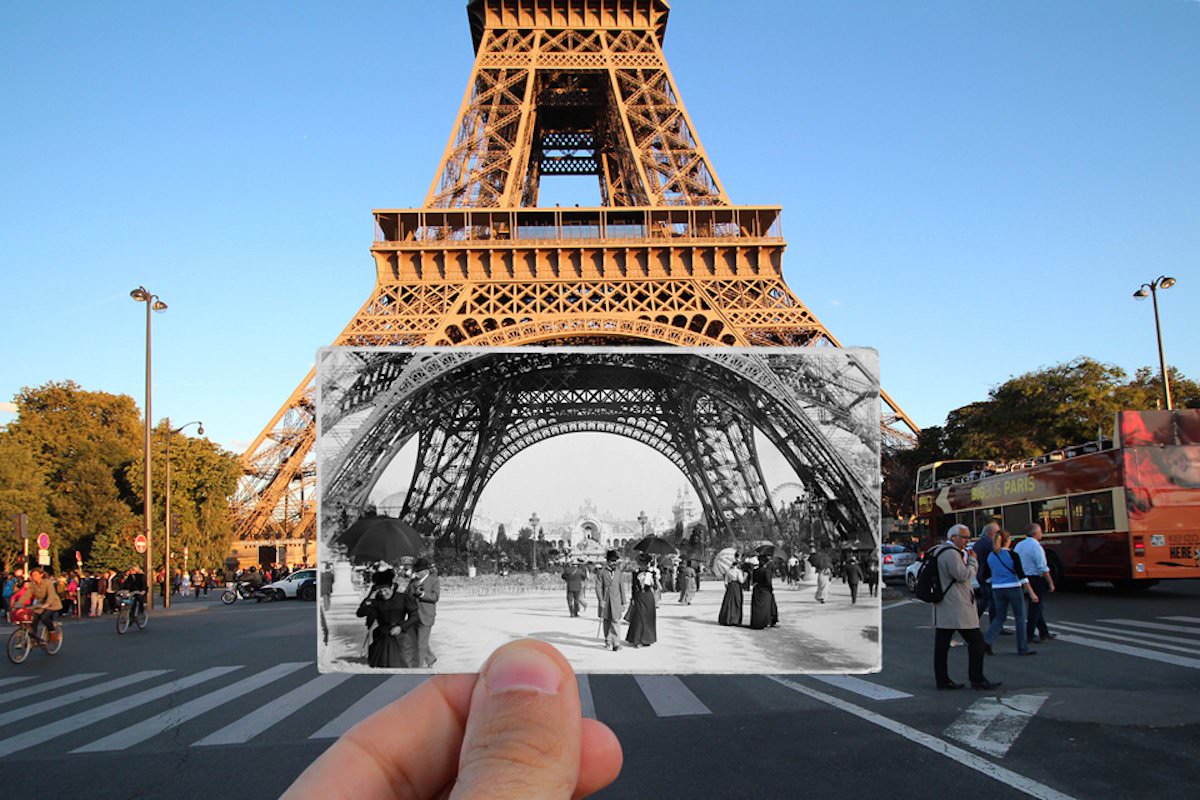
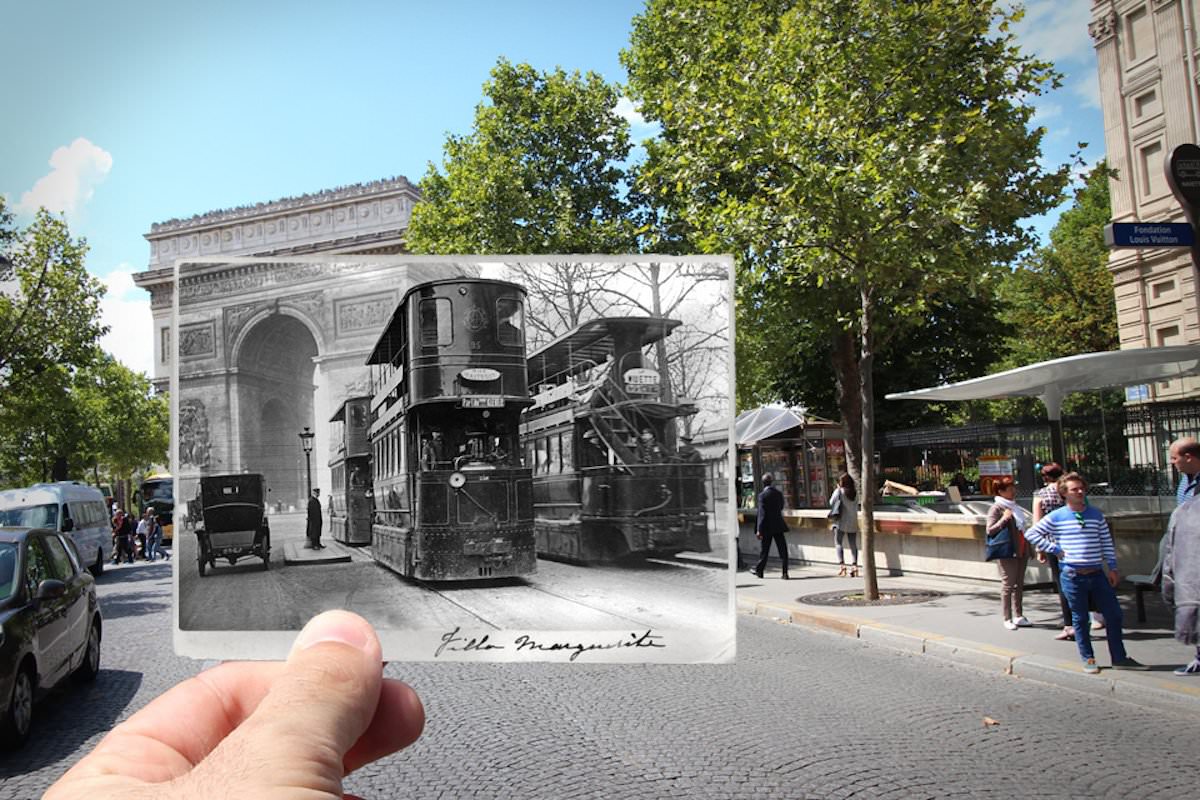
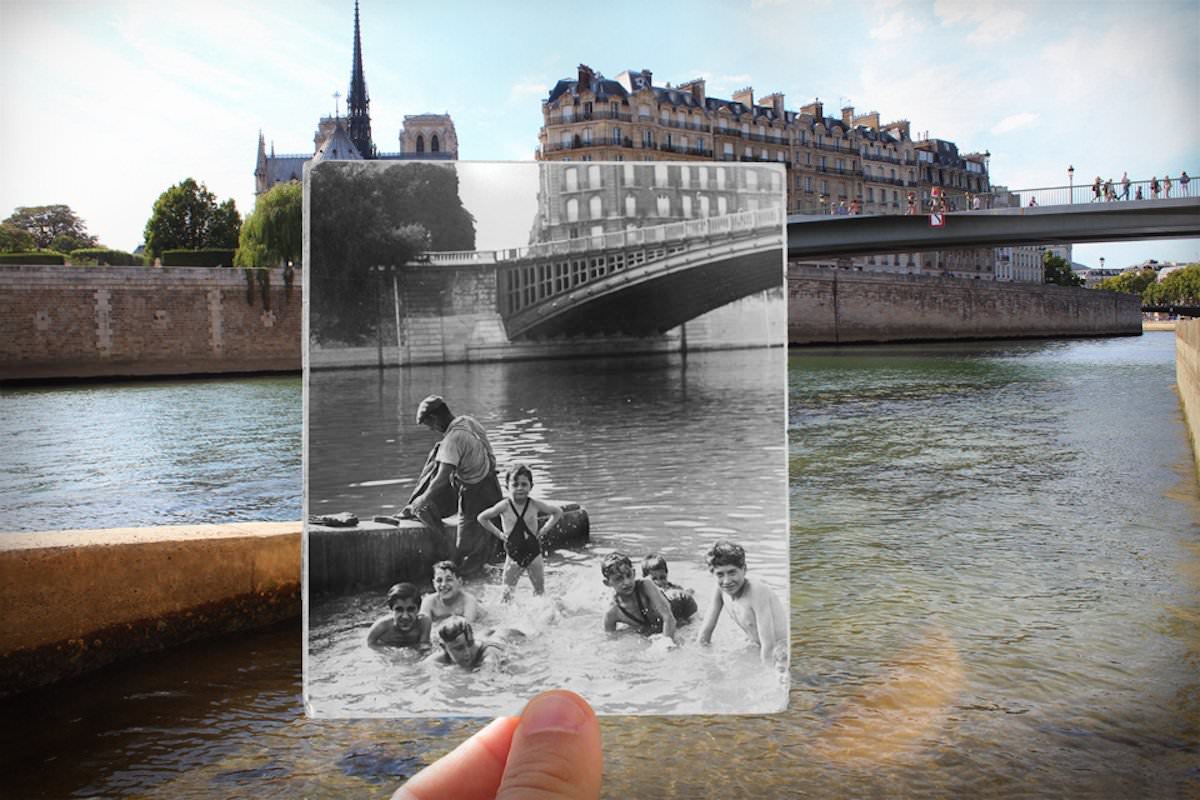
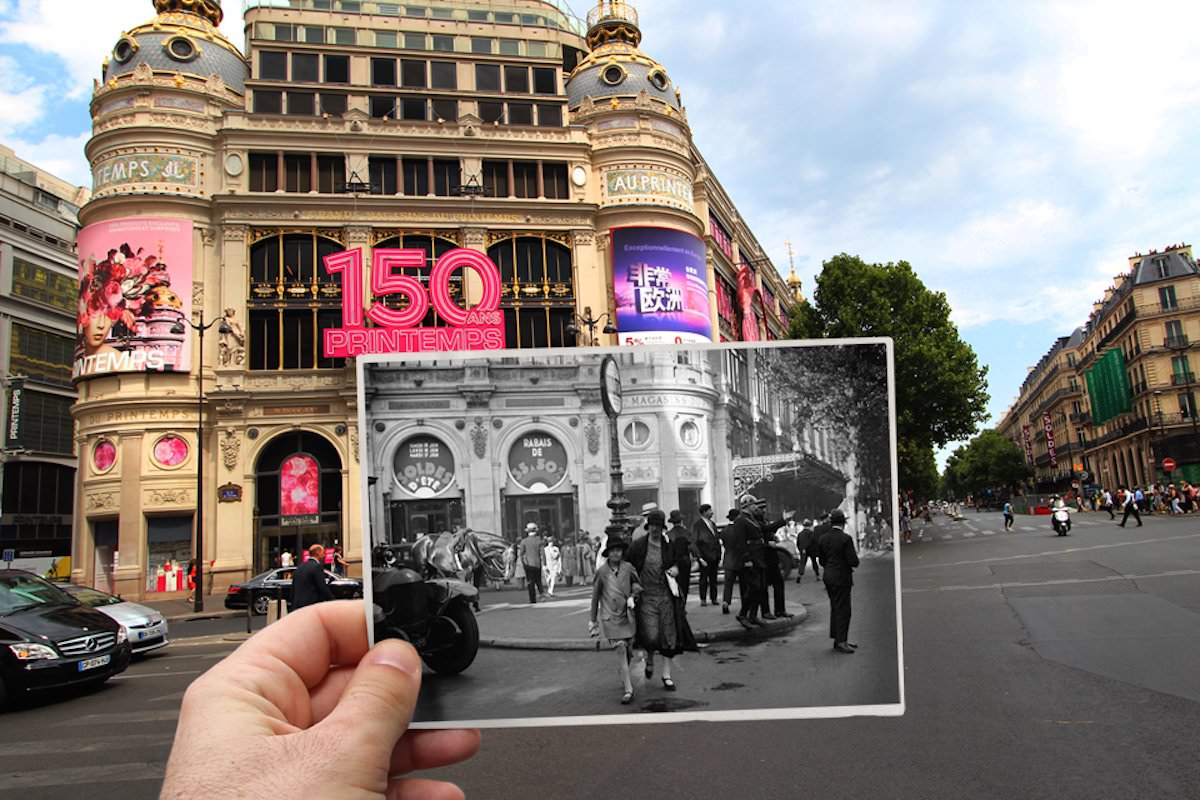
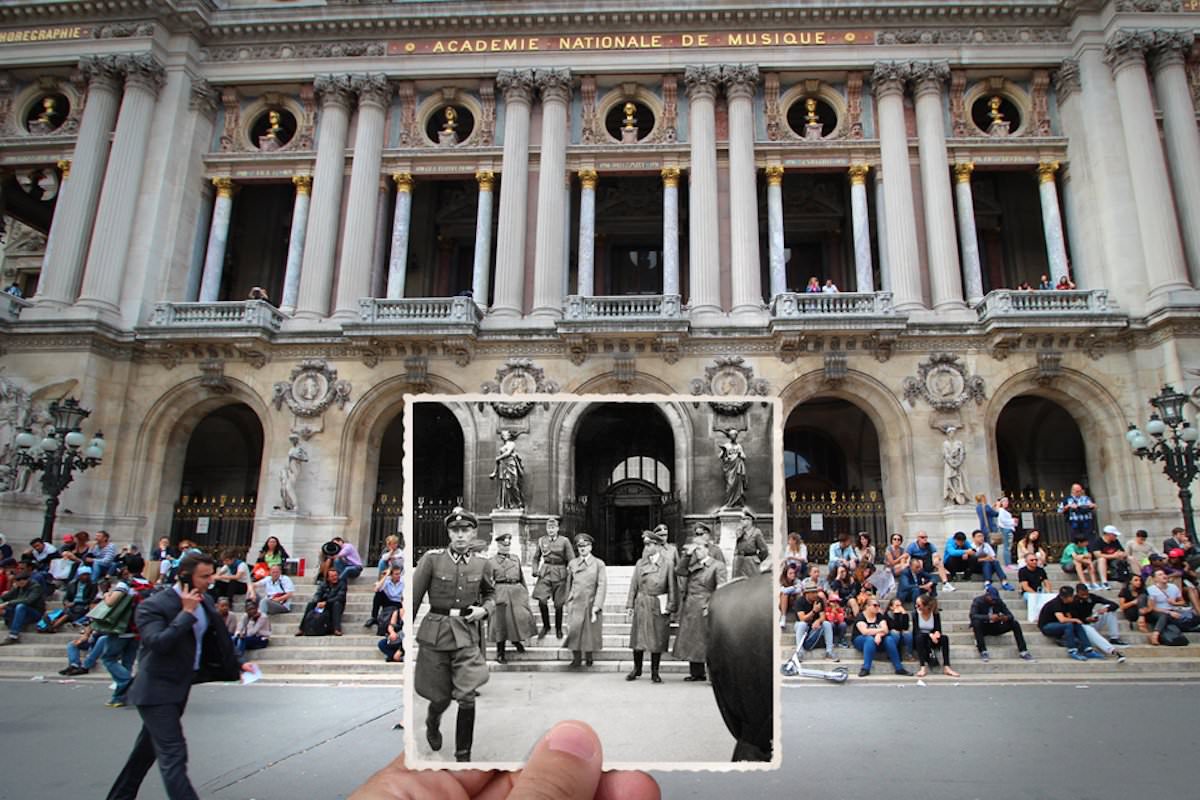
French art director Julien Knez created a striking photo series that layers historical images of Paris on top of modern photographs taken at the same locations. The result is a single frame split between two eras — old and new side by side. The historical images span nearly a century, from 1871 to 1968, and together they trace some of the most dramatic moments in the city’s story.
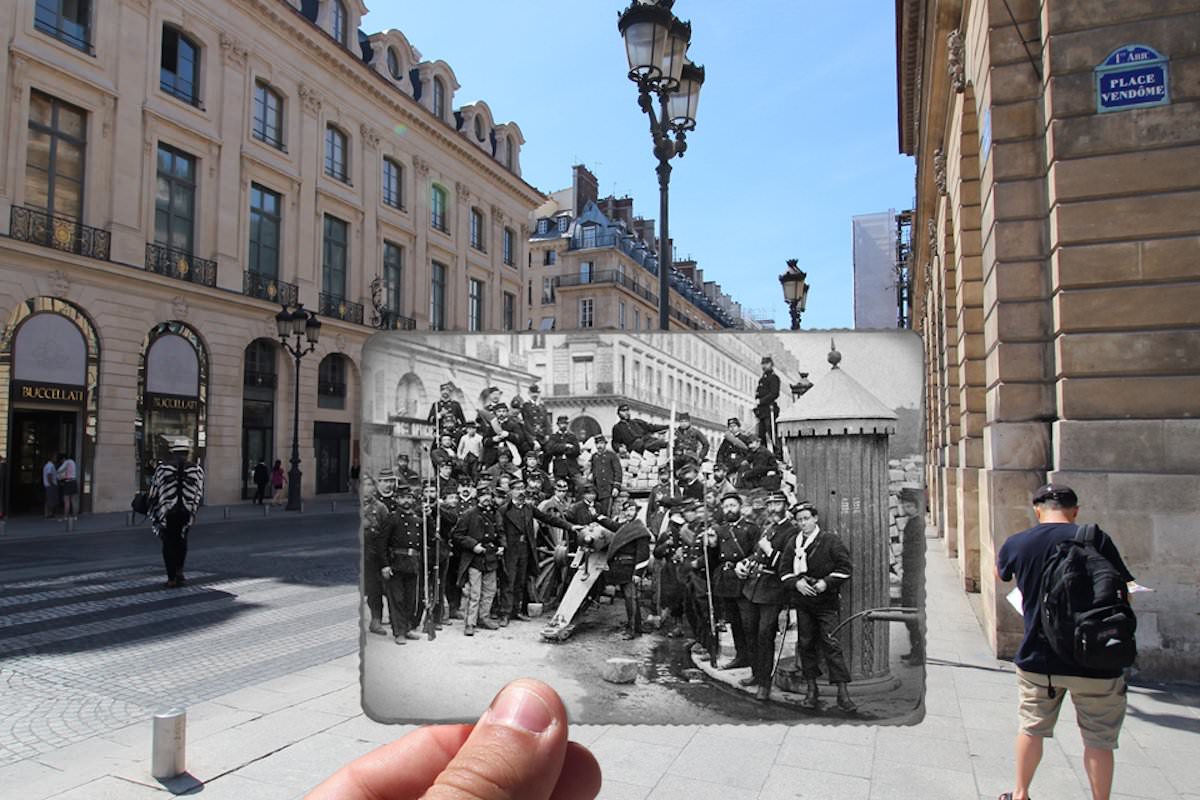
The earliest photos in the series date to 1871, showing streets and squares that still look remarkably familiar today. Paris held on to its stone buildings, wide boulevards, and iron details across generations of change.
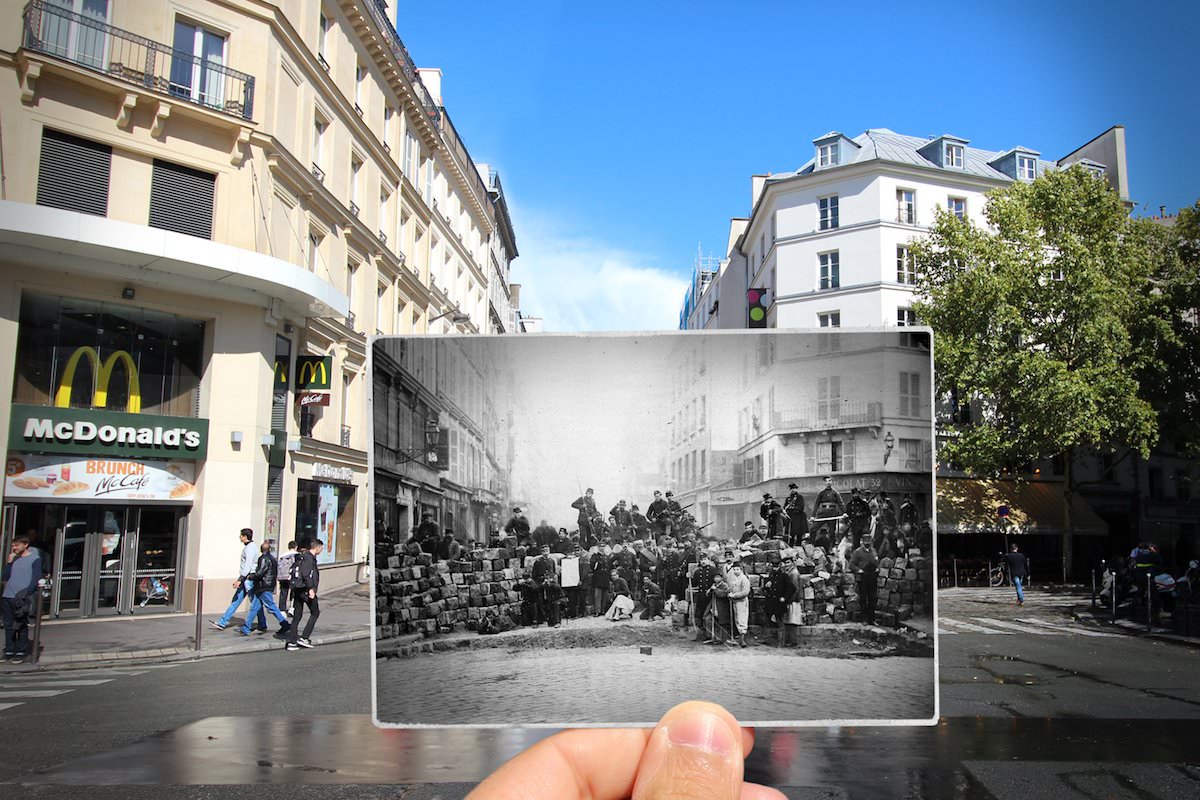
Not every image is of a famous monument. Some capture everyday streets, revealing how ordinary Parisian life looked more than 150 years ago.
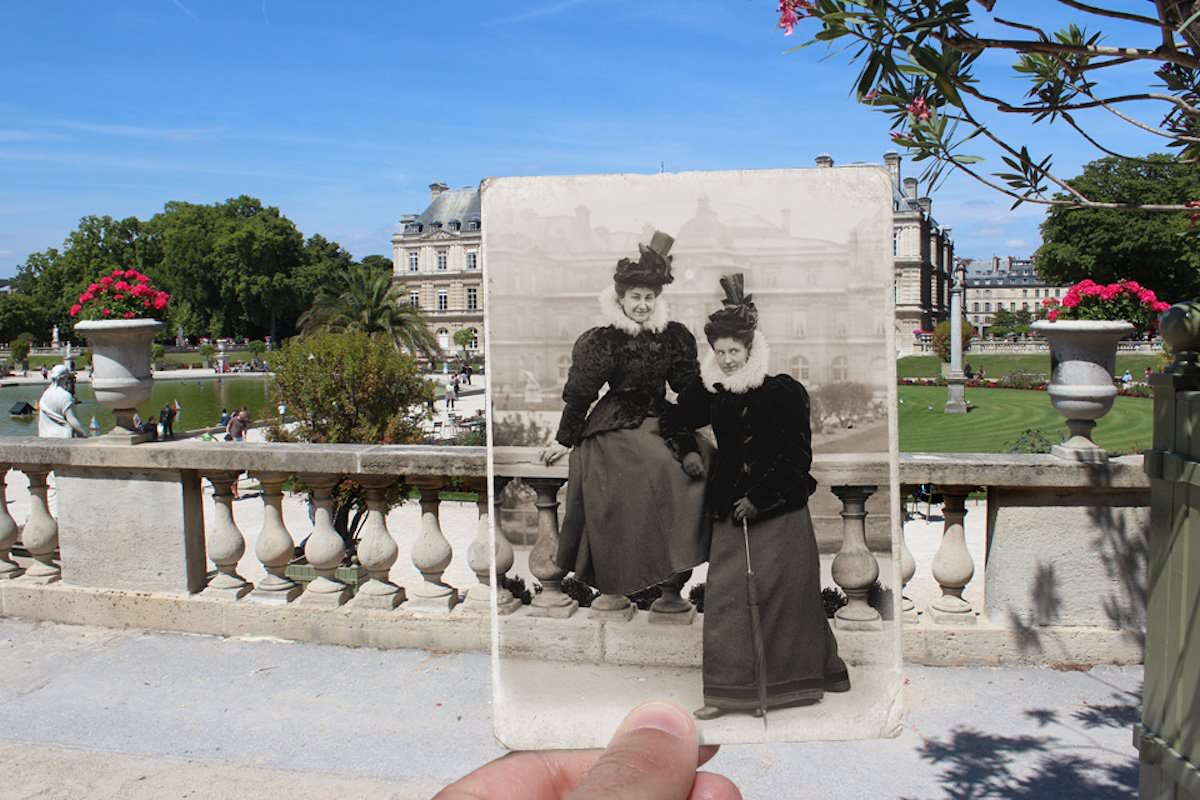
By the turn of the 20th century, Paris was buzzing with new energy. The 1900 World’s Fair drew millions of visitors, and the city’s famous nightlife and architecture were in full swing.
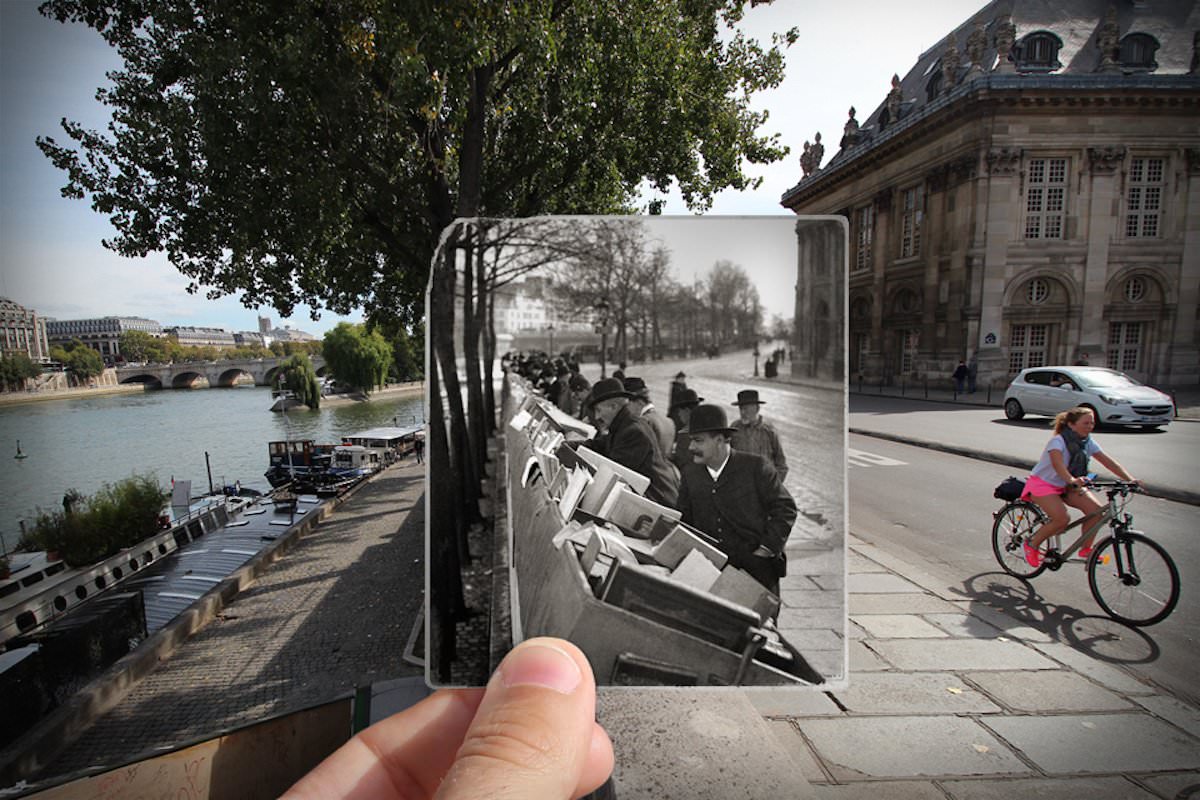
The great flood of 1910 submerged large parts of the city, leaving the Seine’s banks and surrounding streets under water for weeks. The Metro, which had only recently opened, was also affected.
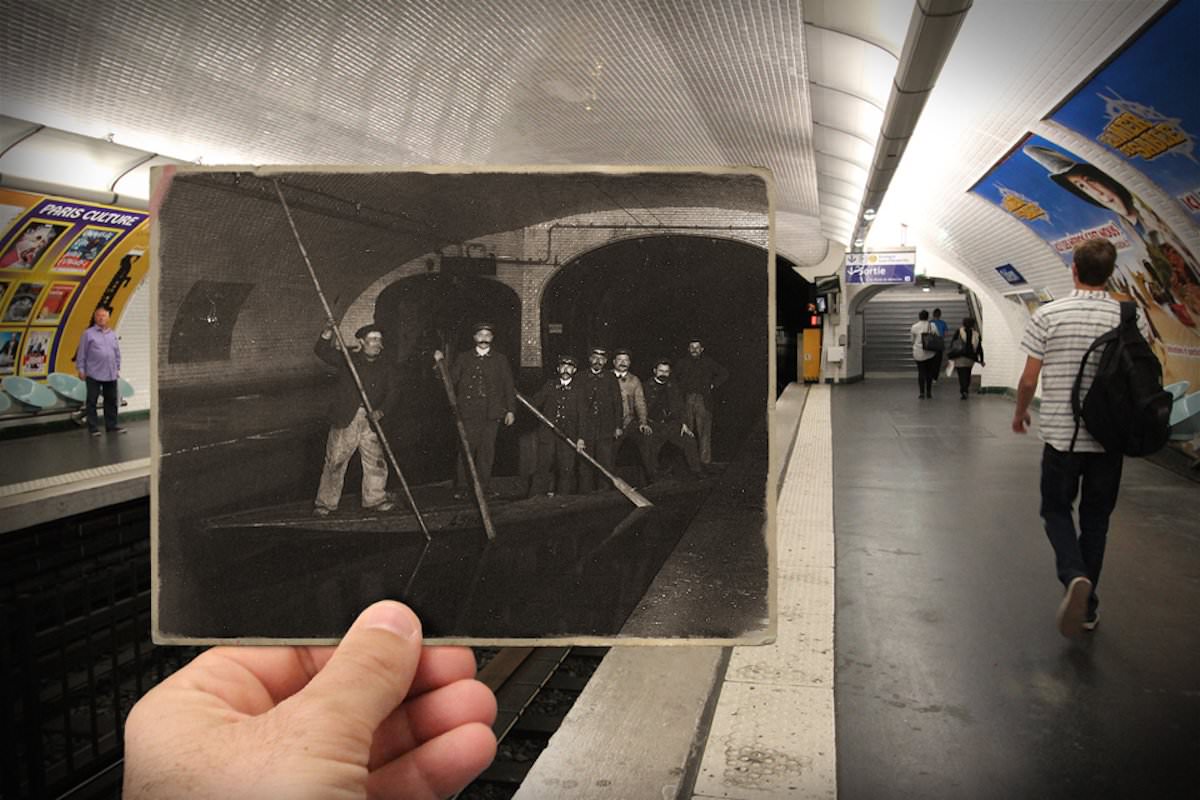
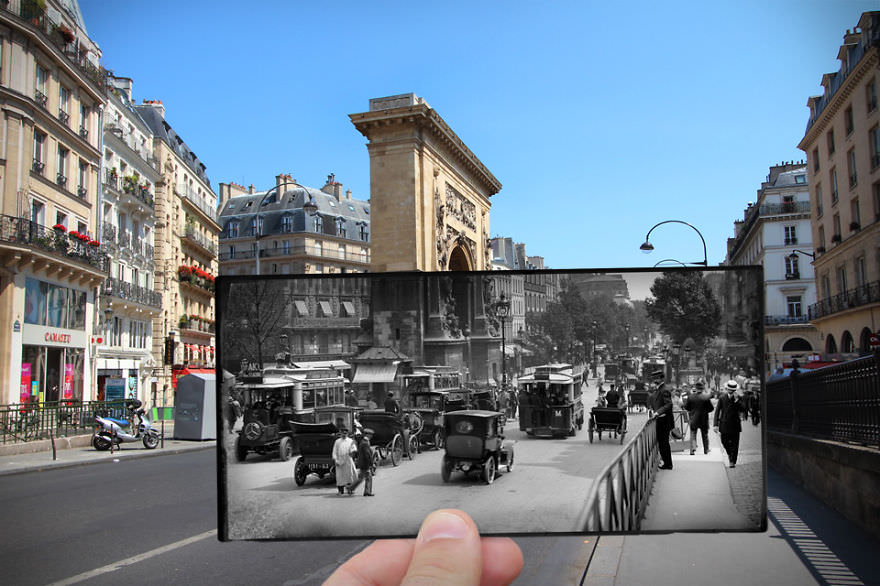
When World War I broke out in August 1914, Paris transformed overnight. Train stations like Gare du Nord became departure points for soldiers heading to the front, crowded with families saying goodbye.
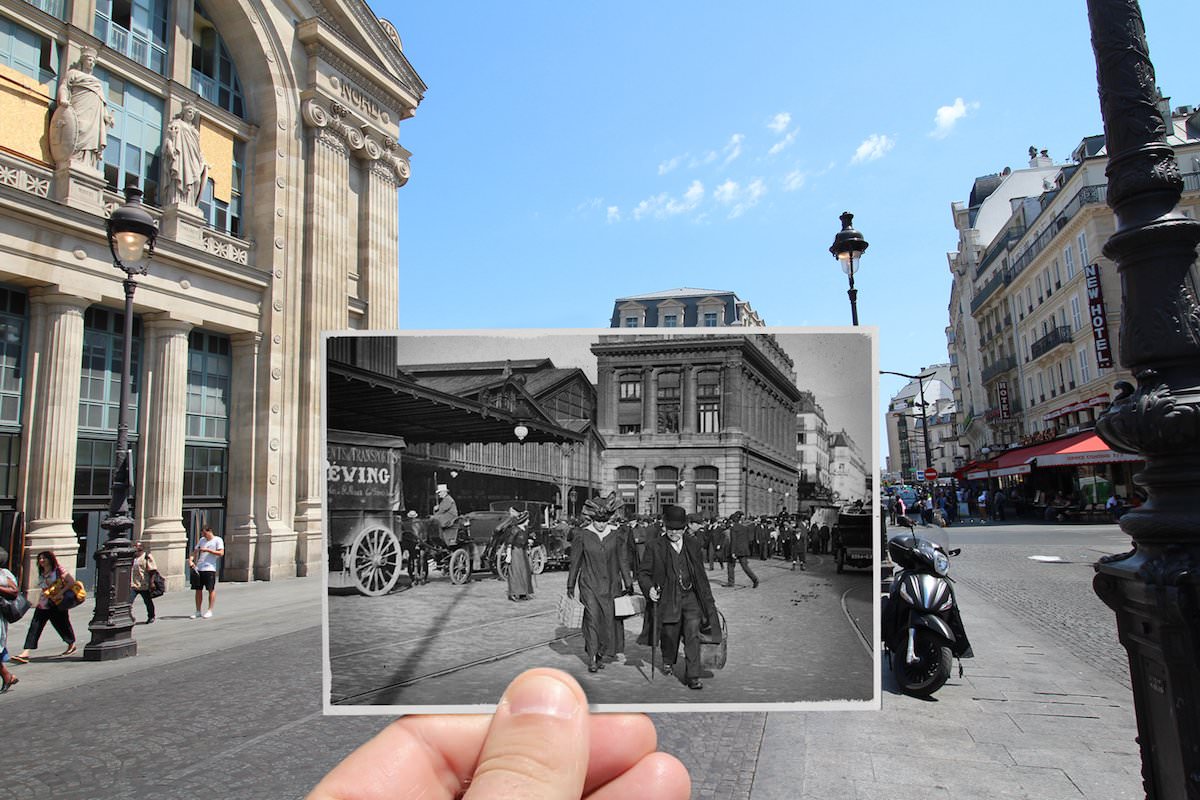
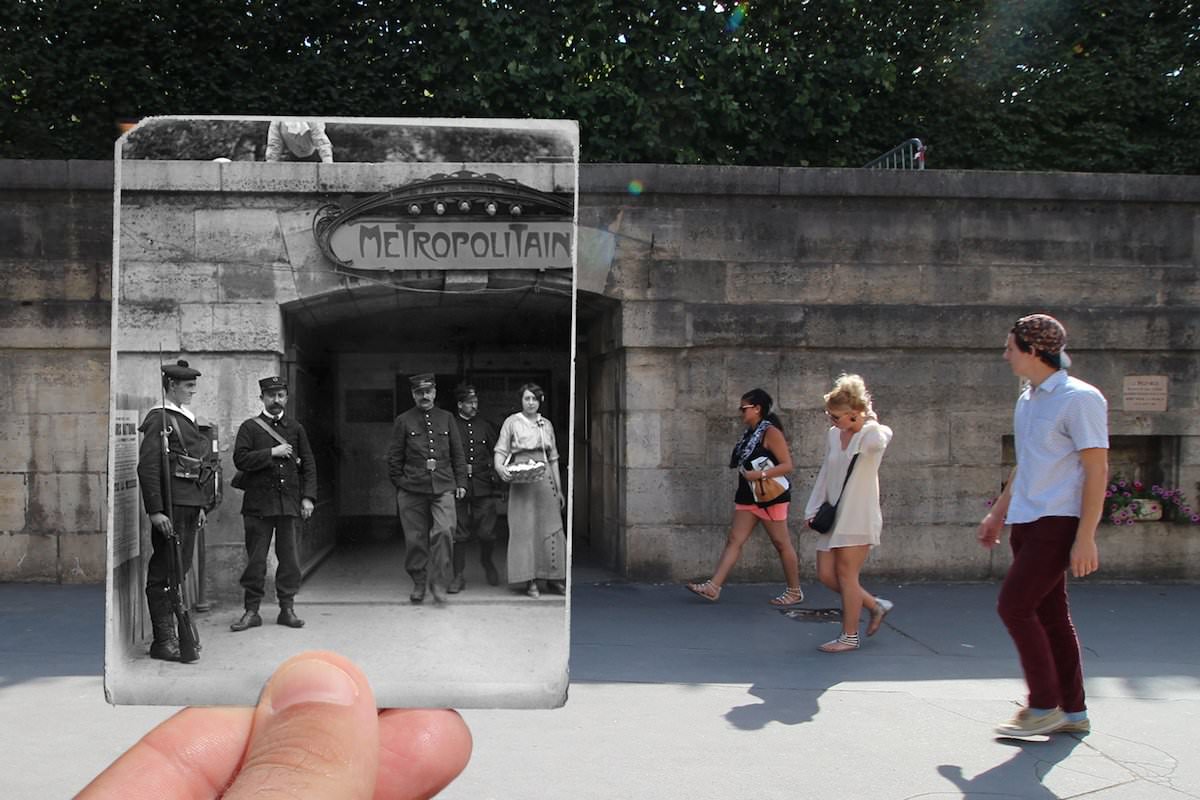
The darkest chapter in the series covers the Nazi occupation of Paris from 1940 to 1944. In June 1940, Adolf Hitler toured the conquered city in person, stopping at landmarks like the Arc de Triomphe and the Opéra — symbols of French national pride now used as backdrops for his victory.
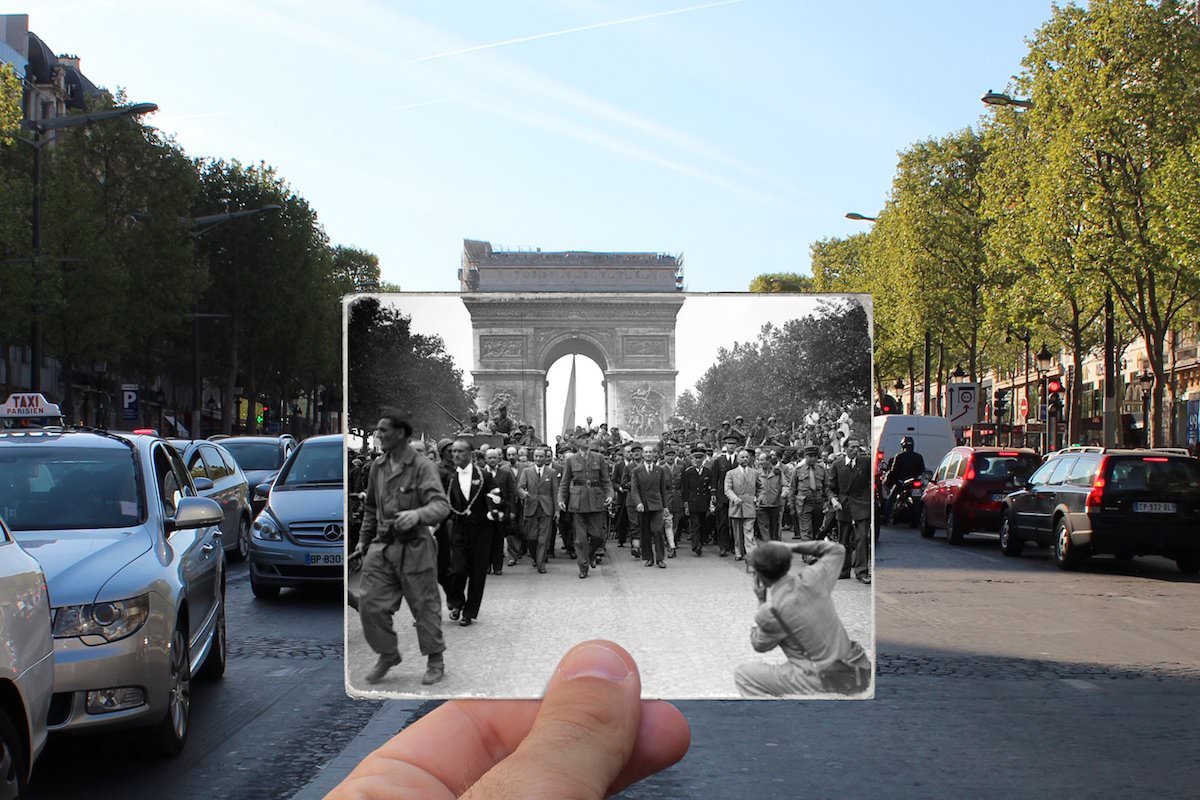
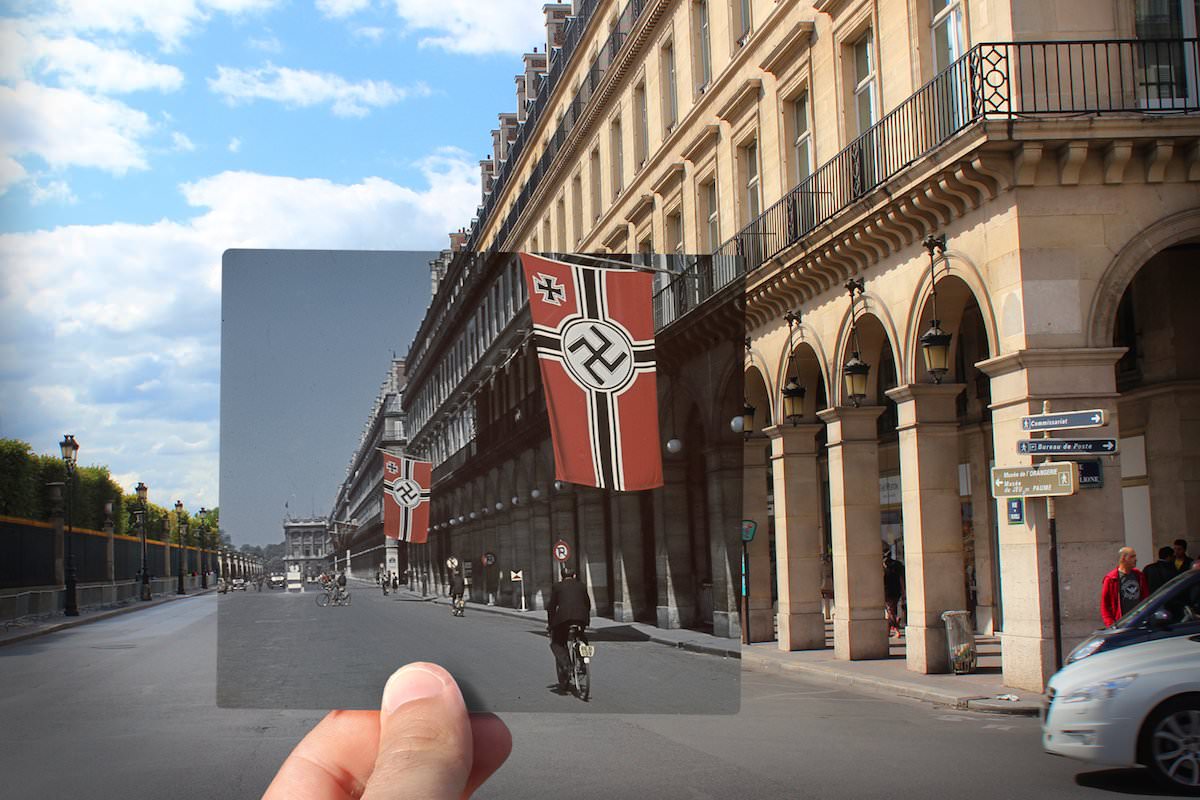
Liberation came in August 1944. Allied forces and French resistance fighters pushed the Germans out, and Parisians flooded the streets to celebrate. The same avenues that had carried Nazi troops now filled with crowds cheering their freedom.
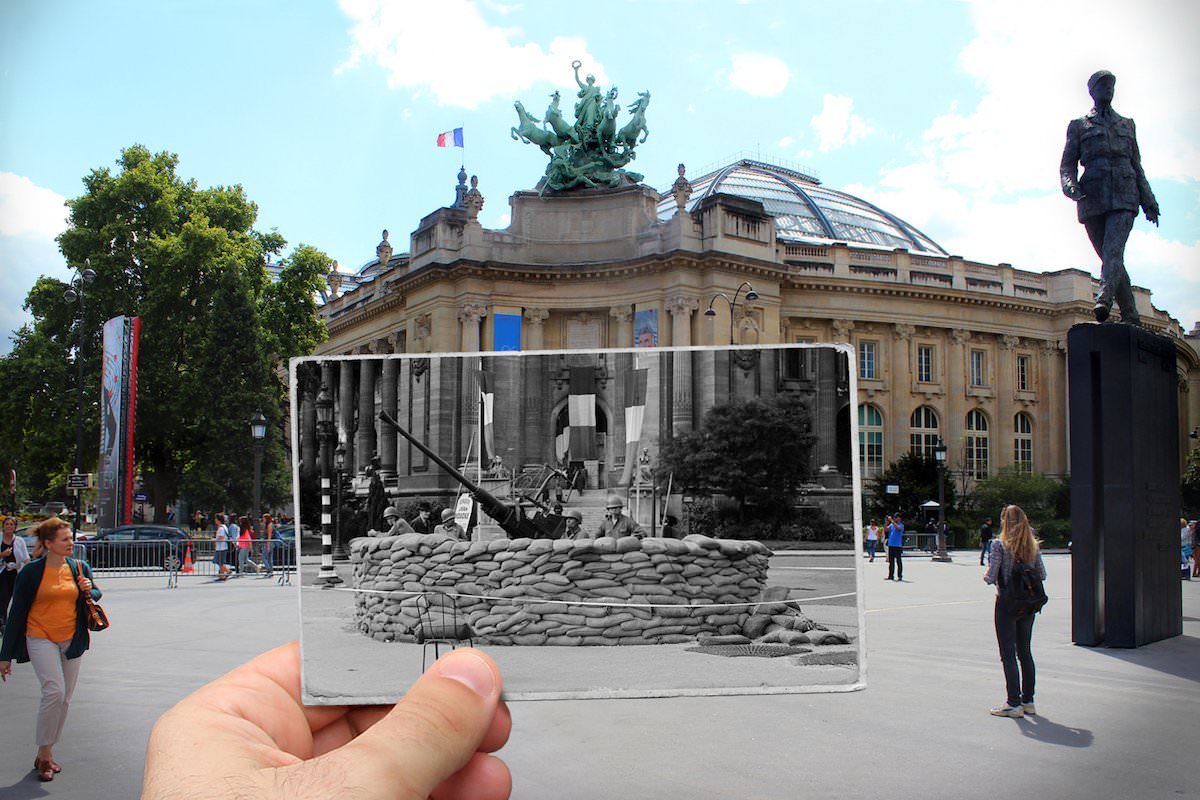
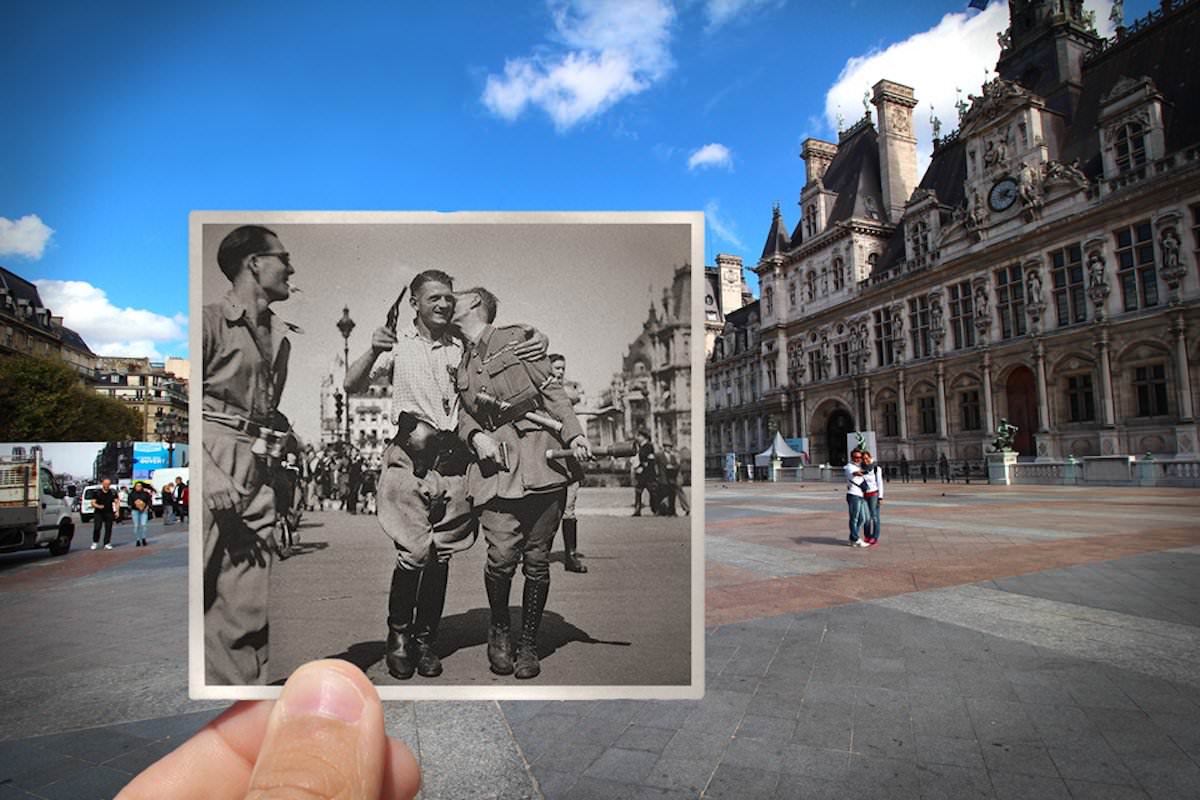
The series closes with 1968, when student protests erupted across Paris. Barricades went up on the Left Bank, and clashes between students and police left the streets scarred — yet the city’s stone facades remained unchanged, as they do today.