When cars first appeared on roads in the late 1890s, they were open to the elements. No roof, no doors, no windshield worth speaking of — just a driver sitting exposed to wind, dust, cold, and rain on unpaved dirt roads. Getting behind the wheel meant suiting up. Early motorists had to dress for survival as much as for style, and a whole new category of clothing was born almost overnight.
Driving in this era was tied almost entirely to wealth. Only the affluent owned cars, which meant motoring became a social event as much as a practical one. Clothing had to be protective, but it also had to signal status. The result was a unique wardrobe that blended function with fashion in ways that had never existed before.
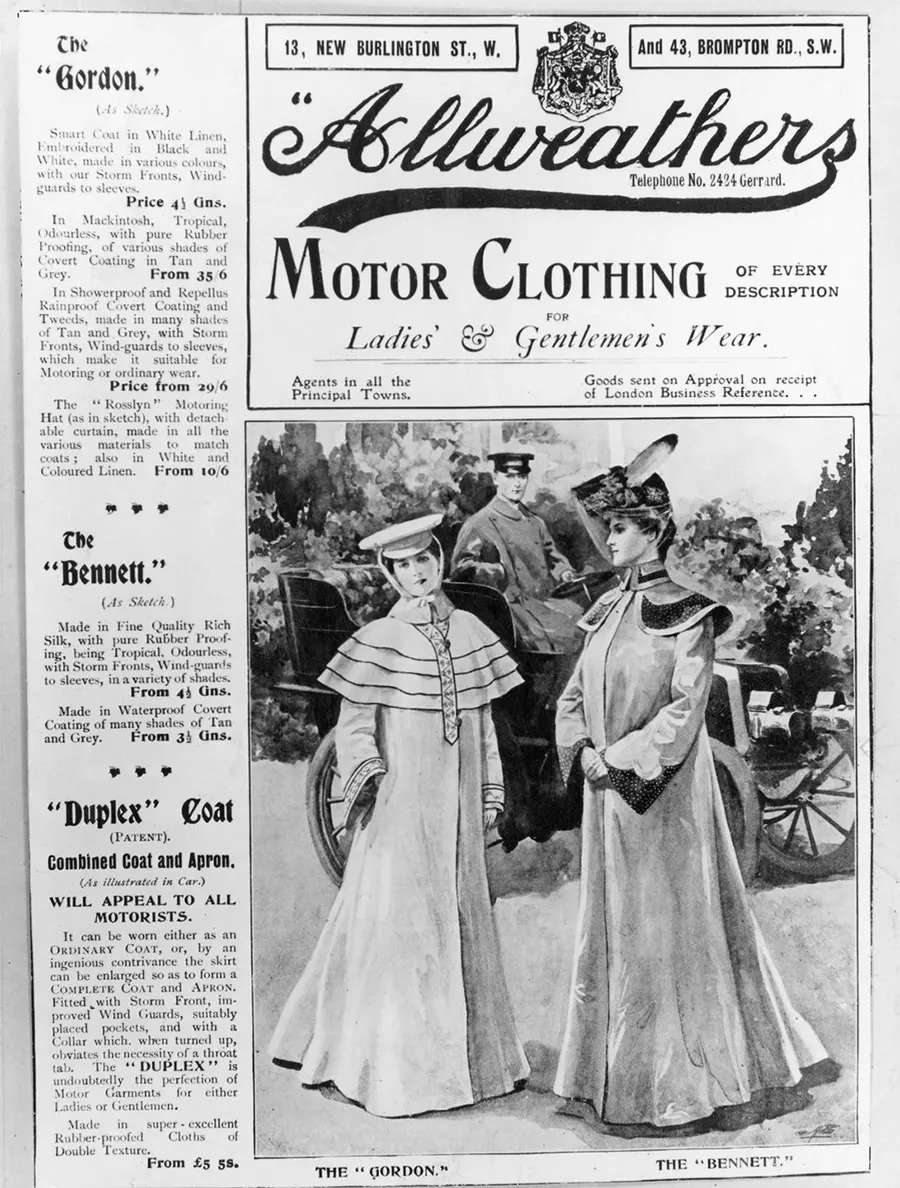
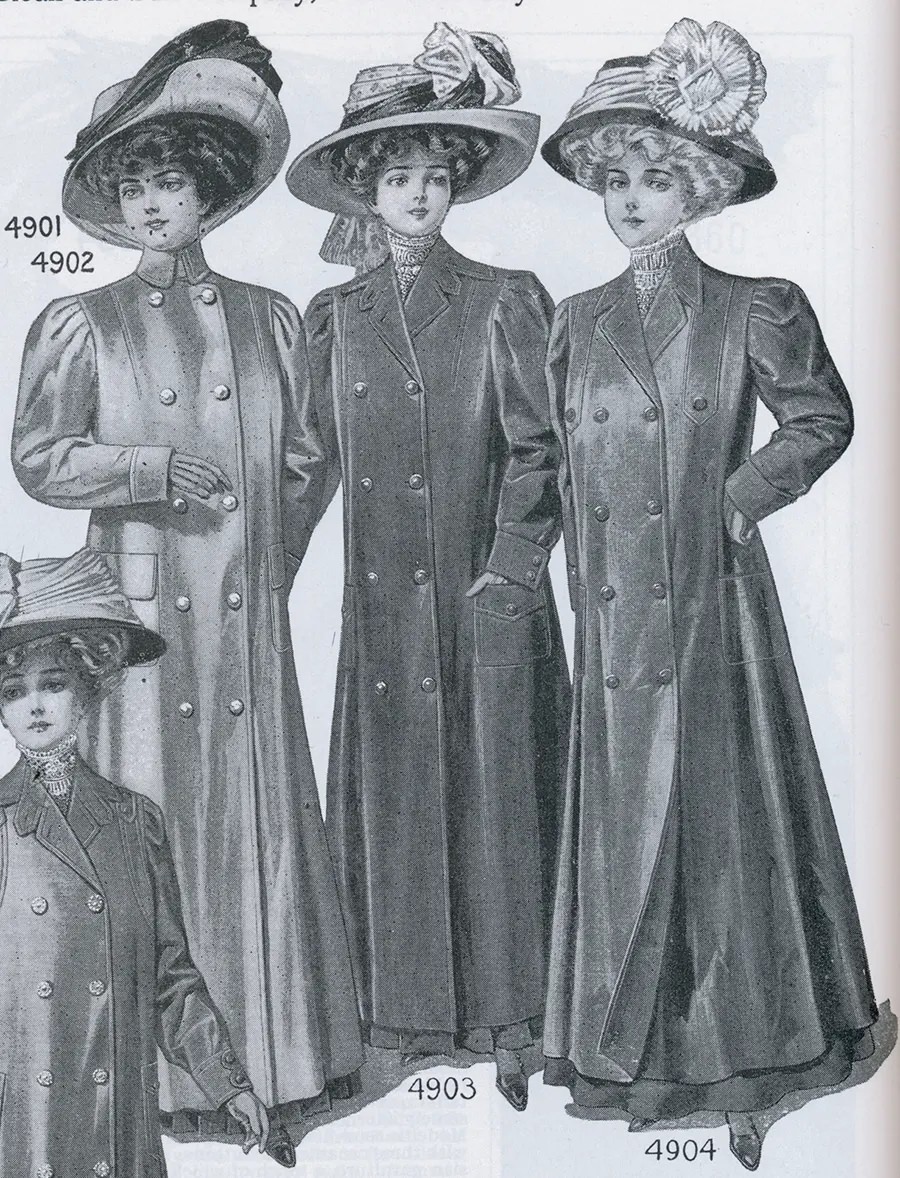
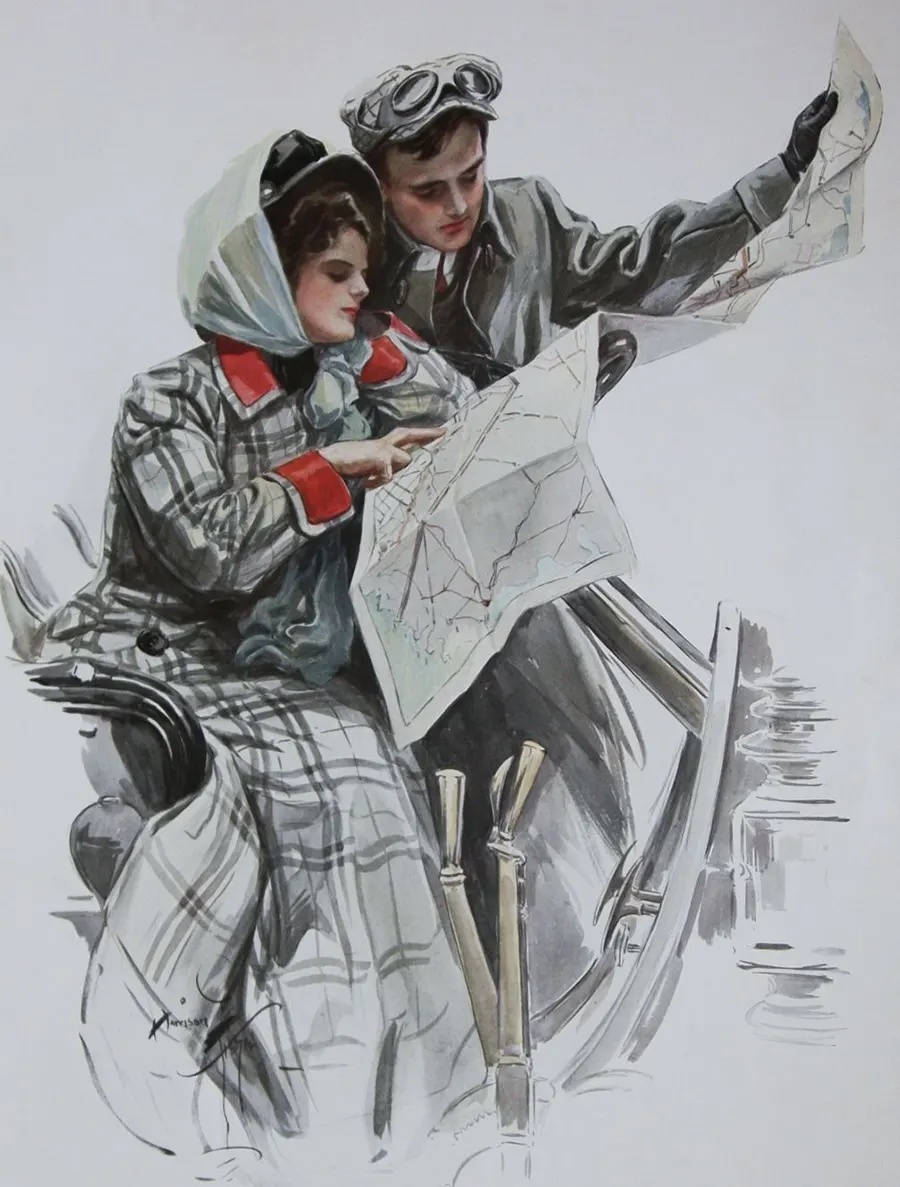
The most common warm-weather garment was the duster, also called a dust coat. These were loose, lightweight overcoats made from canvas, linen, flannel, or alpaca wool. They came in off-white, gray, or beige — neutral colors that hid road dust. The sleeves had elasticated or strapped cuffs to keep grime from creeping up the arms. Both men and women wore them, layered over their regular clothes before stepping into the car.
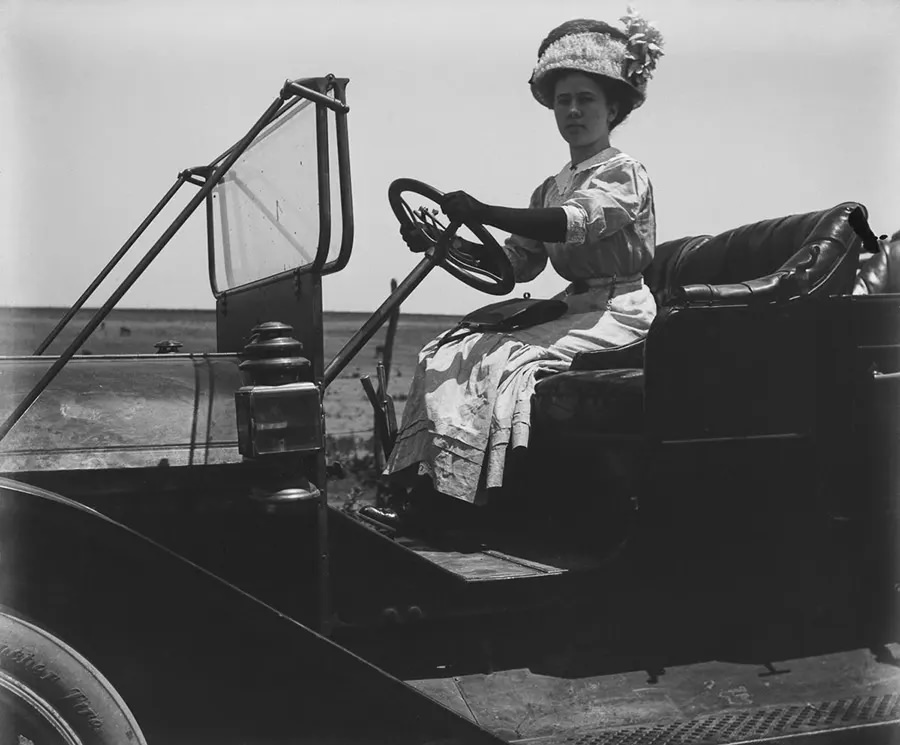
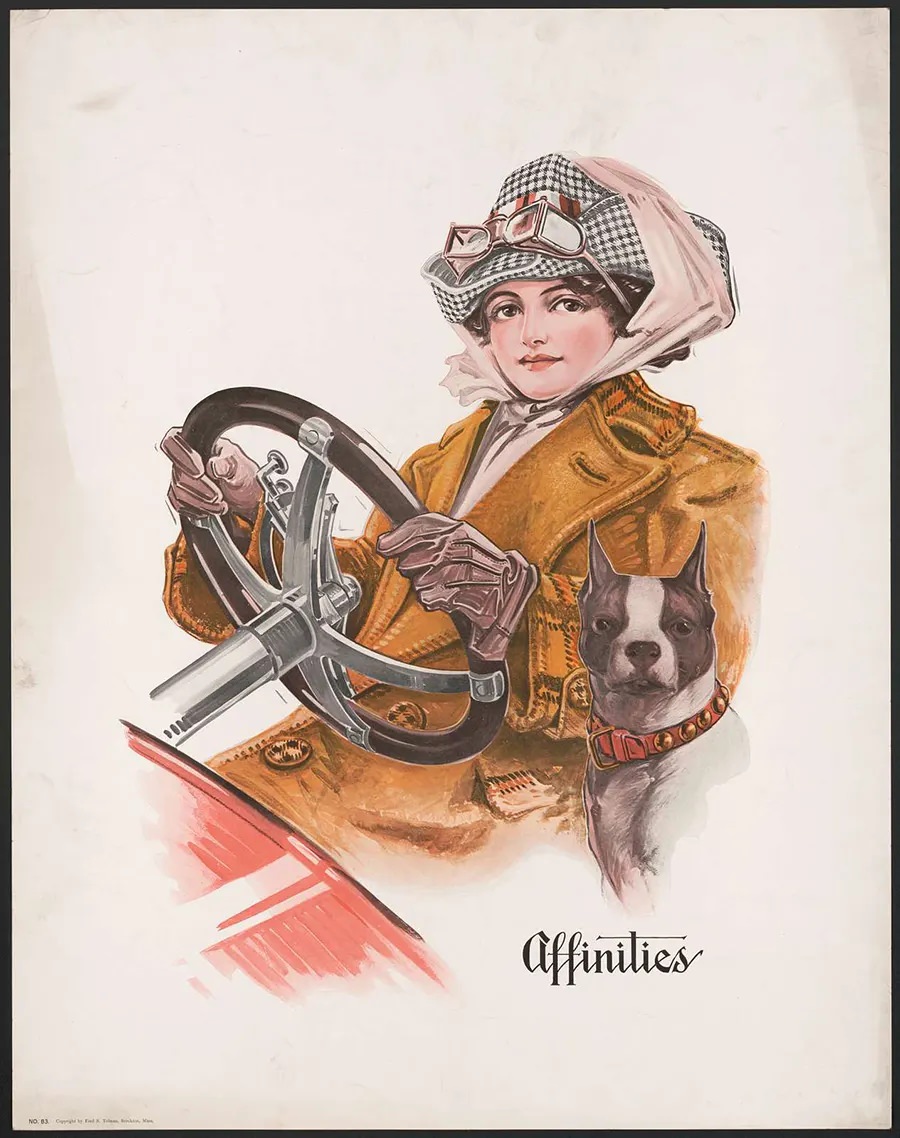
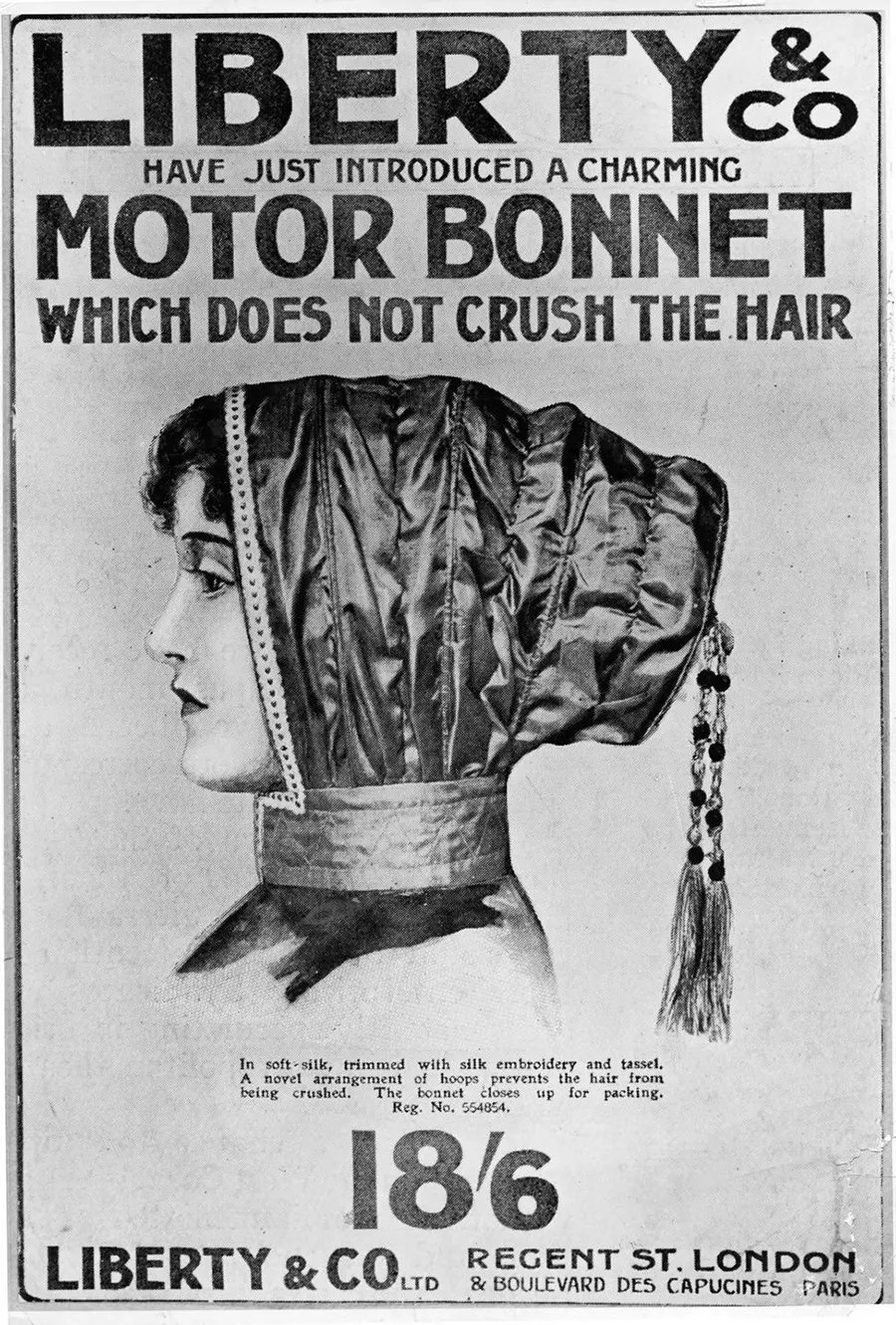
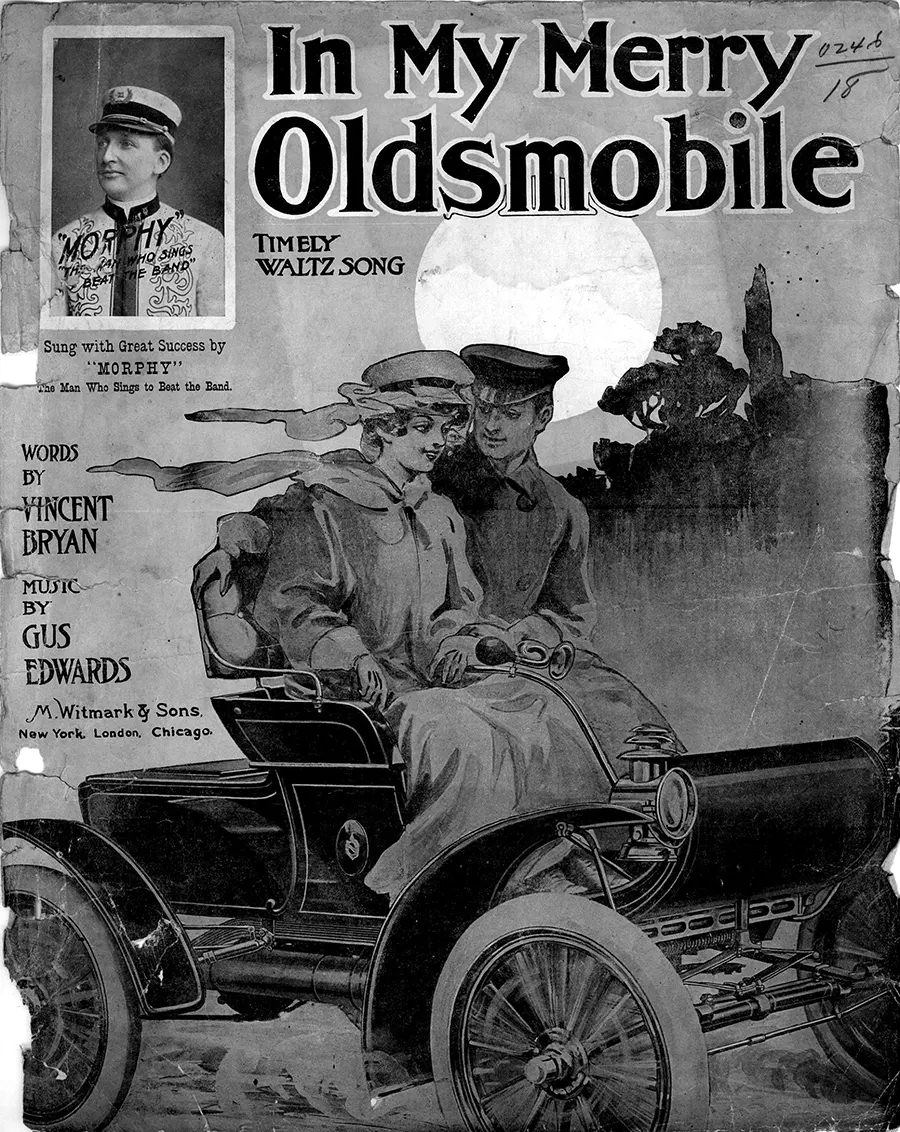
Protecting the head was just as important. A range of options existed: peaked driving caps, standard cloth caps, deerstalkers, and hats fitted with ear flaps. Each style offered a different level of protection from the wind and flying debris. Men leaned toward structured caps, while women had more variety — though many chose peaked caps to shield their faces and hair from dust and oil splatter.
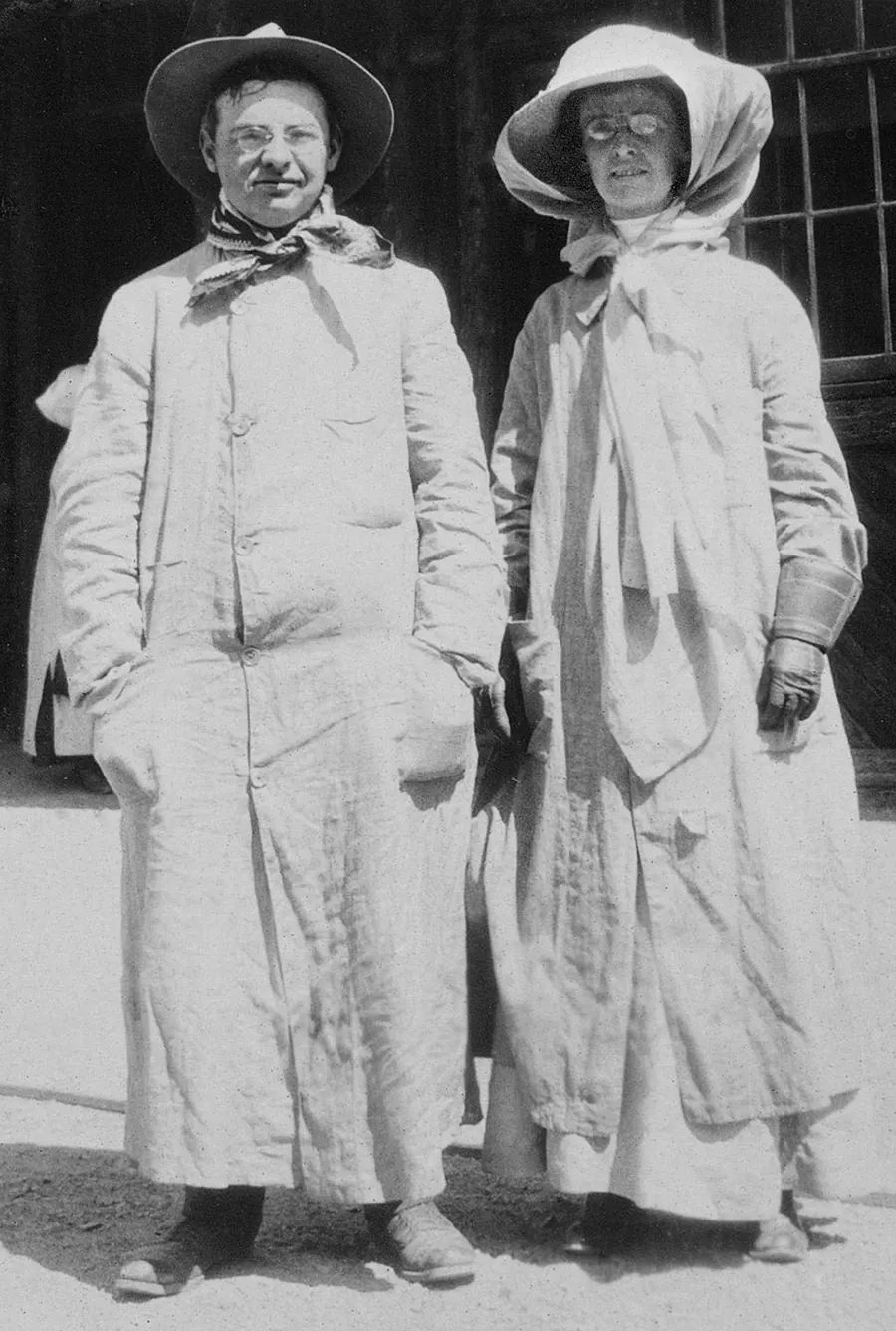
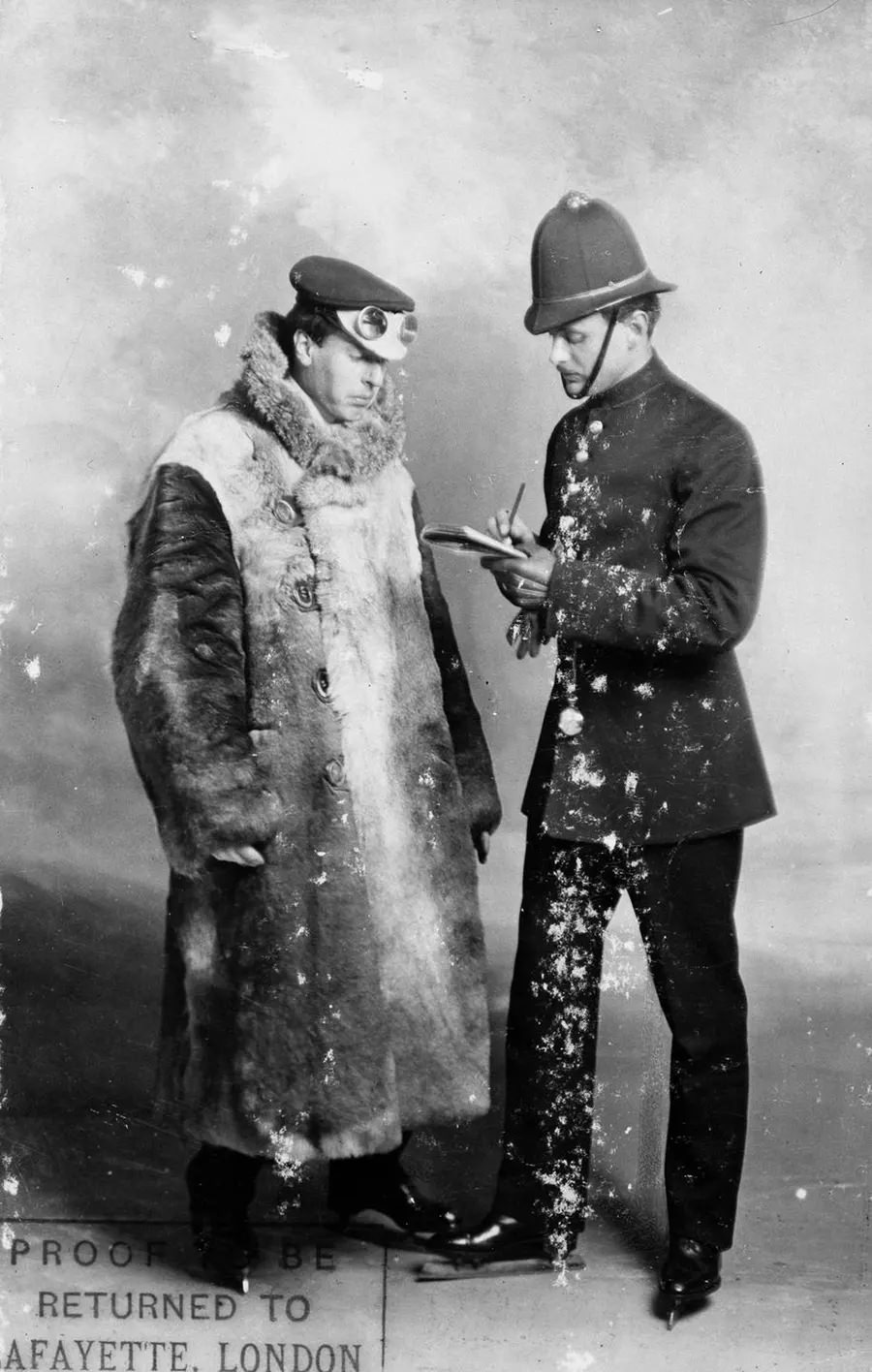
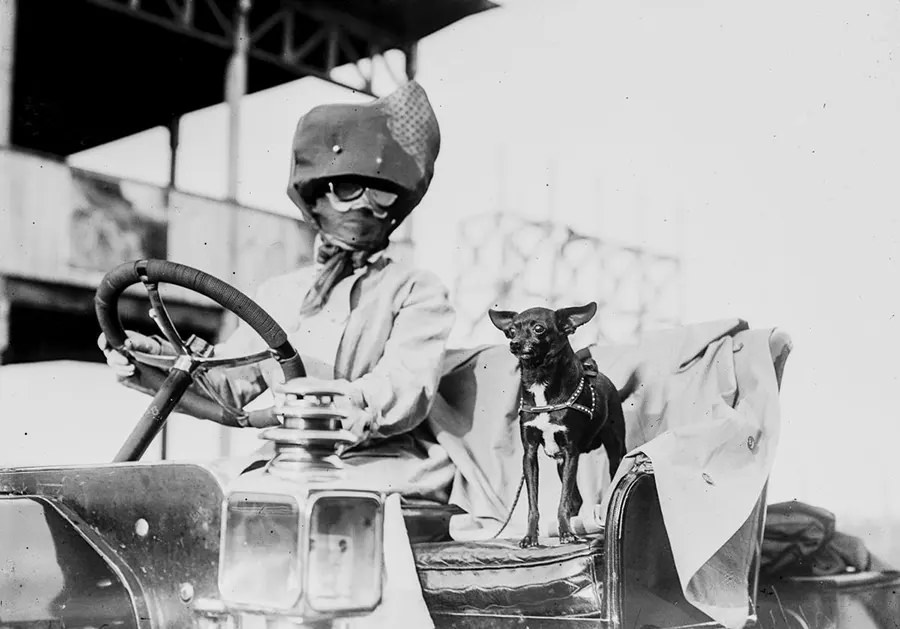
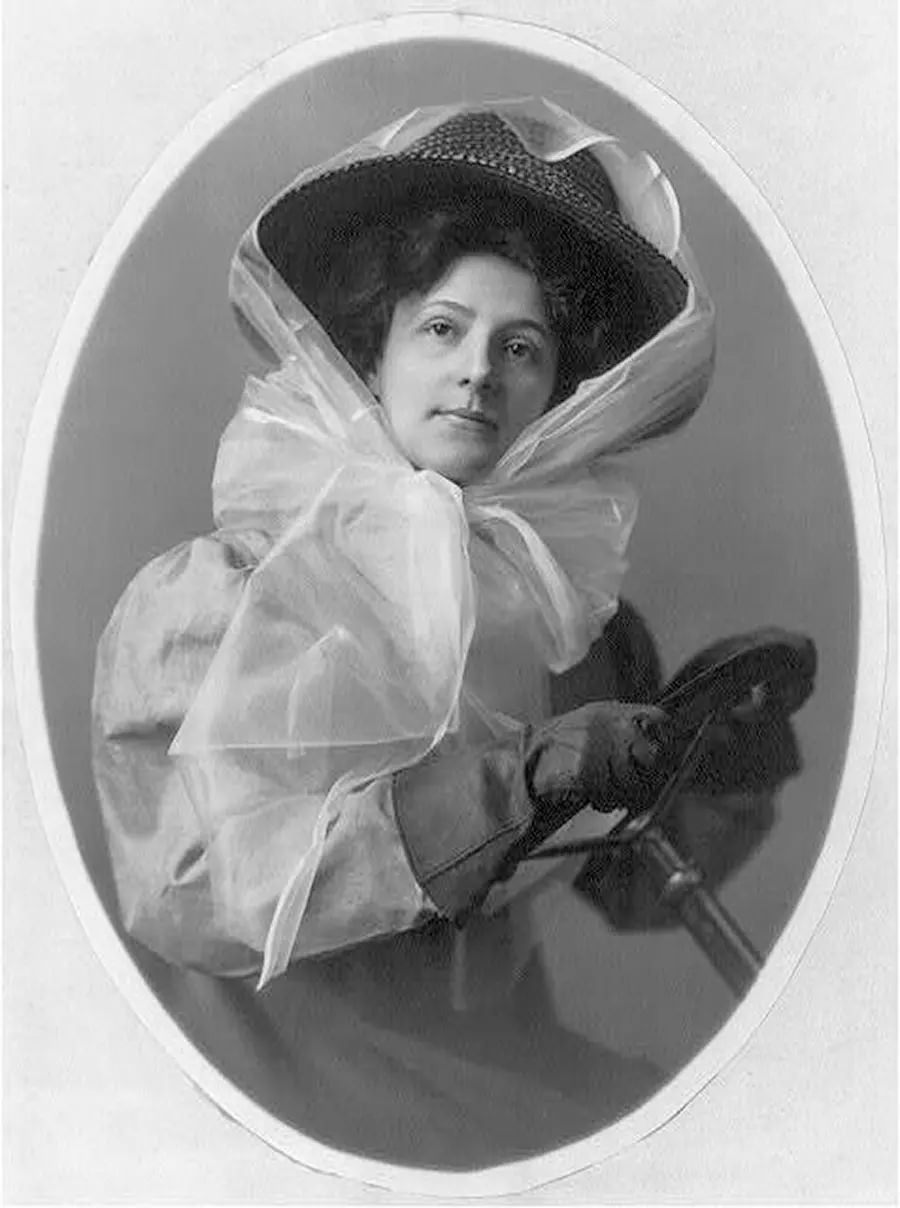
Eye protection was critical. Most male drivers wore goggles — some with convex lenses set in nickel or aluminum frames, others held in place by an elastic strap around the head. A one-piece mica mask was another option, covering more of the face. In winter, goggles did double duty, blocking cold air that could trigger serious eye infections along with dust and debris. Many women preferred veils, which wrapped around their hats and tied under the chin, filtering out grit while keeping their hair in place. Serious female drivers often skipped the veil entirely and wore goggles instead.
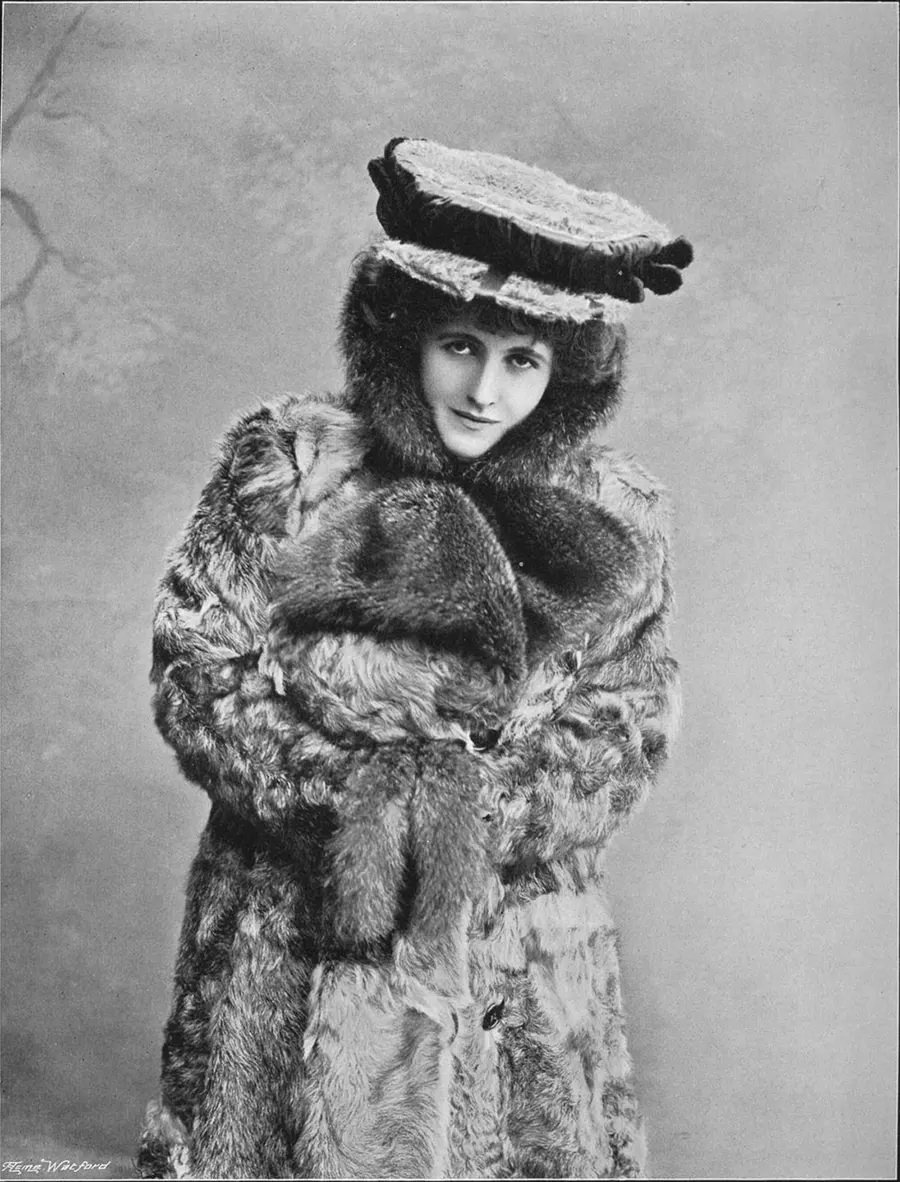
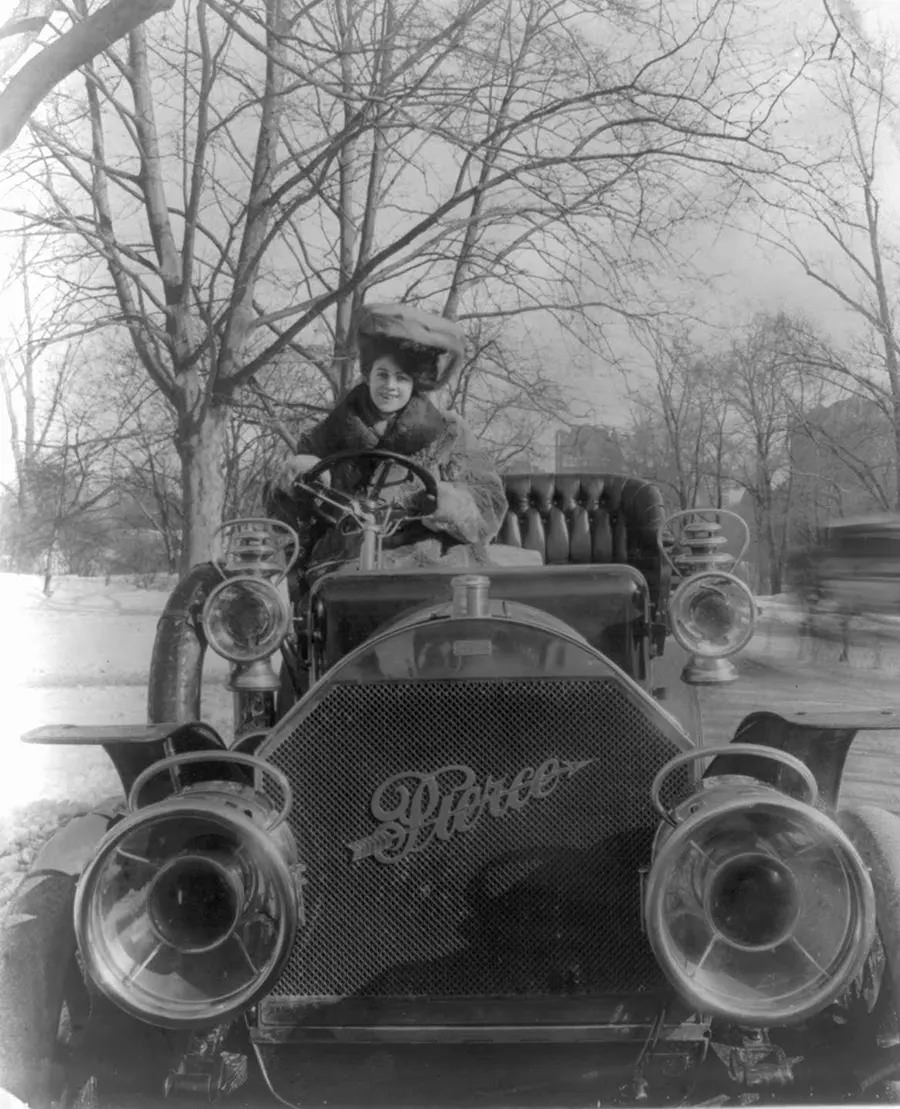
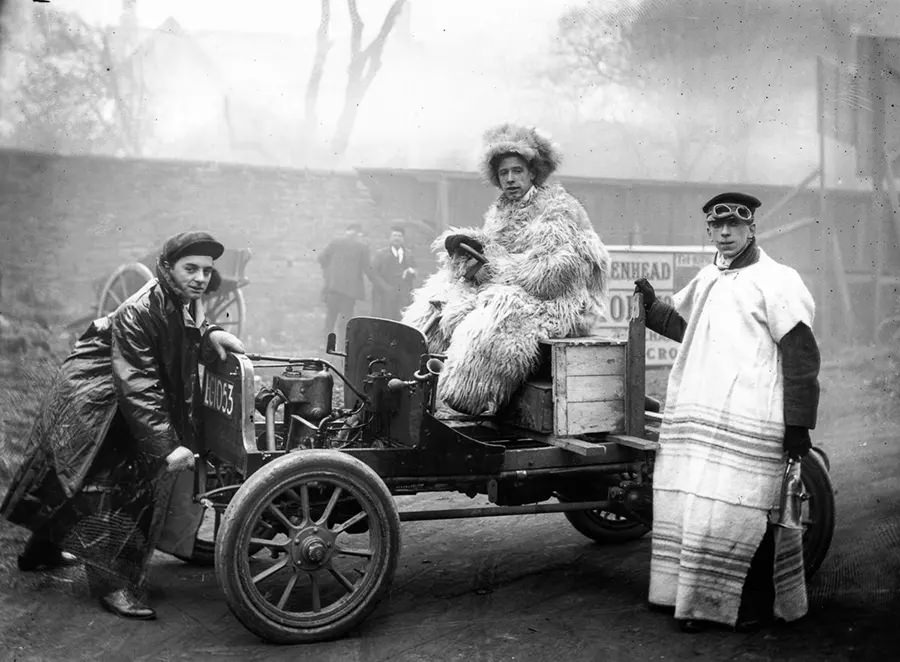
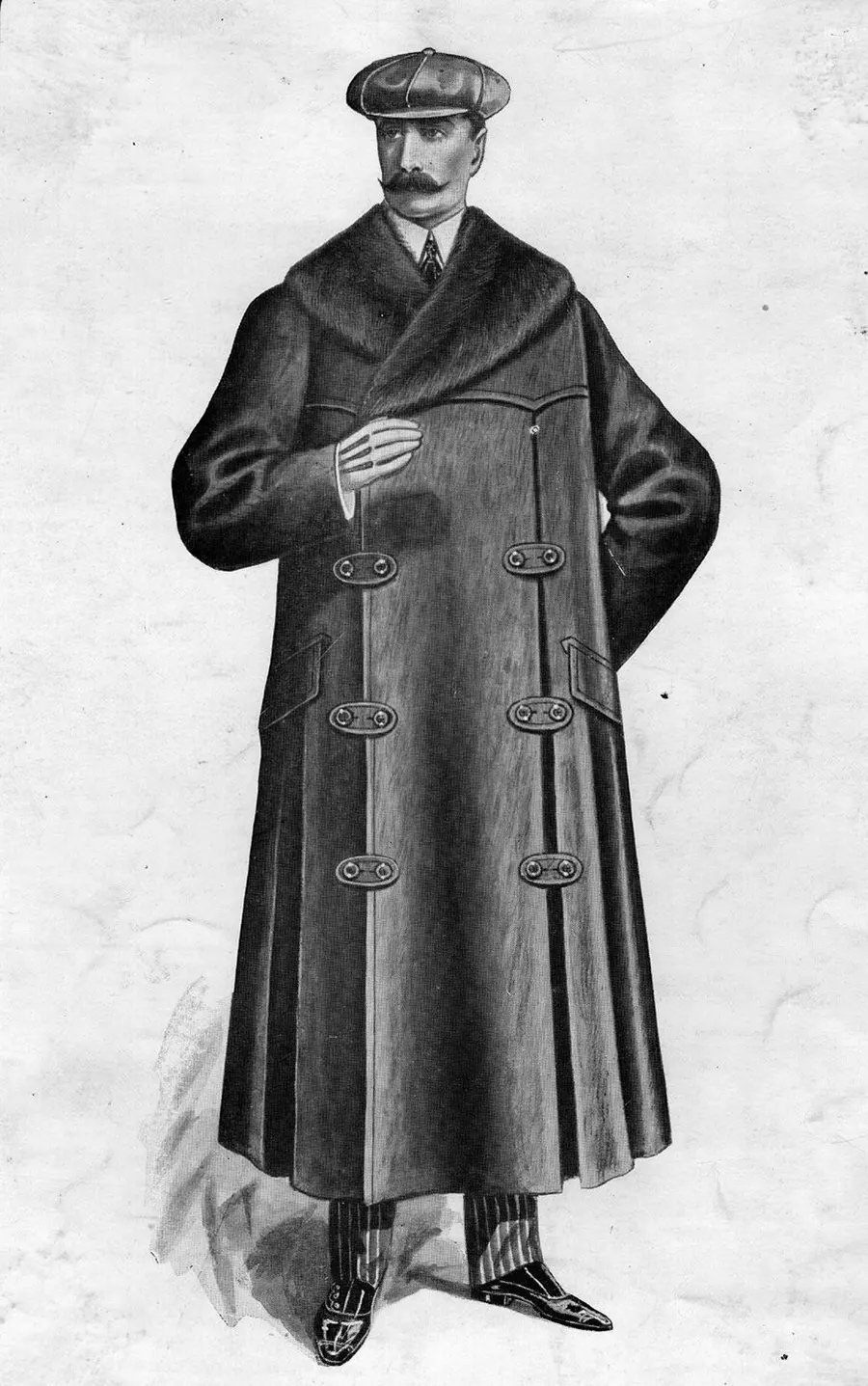
Winter driving required a completely different set of gear. Fur coats were already luxury items before cars existed, but motoring pushed them into a new role. The 1920s brought a wave of bulky, shaggy fur coats for men made from goat, bear, wolf, jackal, and raccoon hides. These rugged garments were especially popular for driving open-topped sports cars, where the cold was most punishing. They were deliberately rough-looking — more about warmth and practicality than refinement.
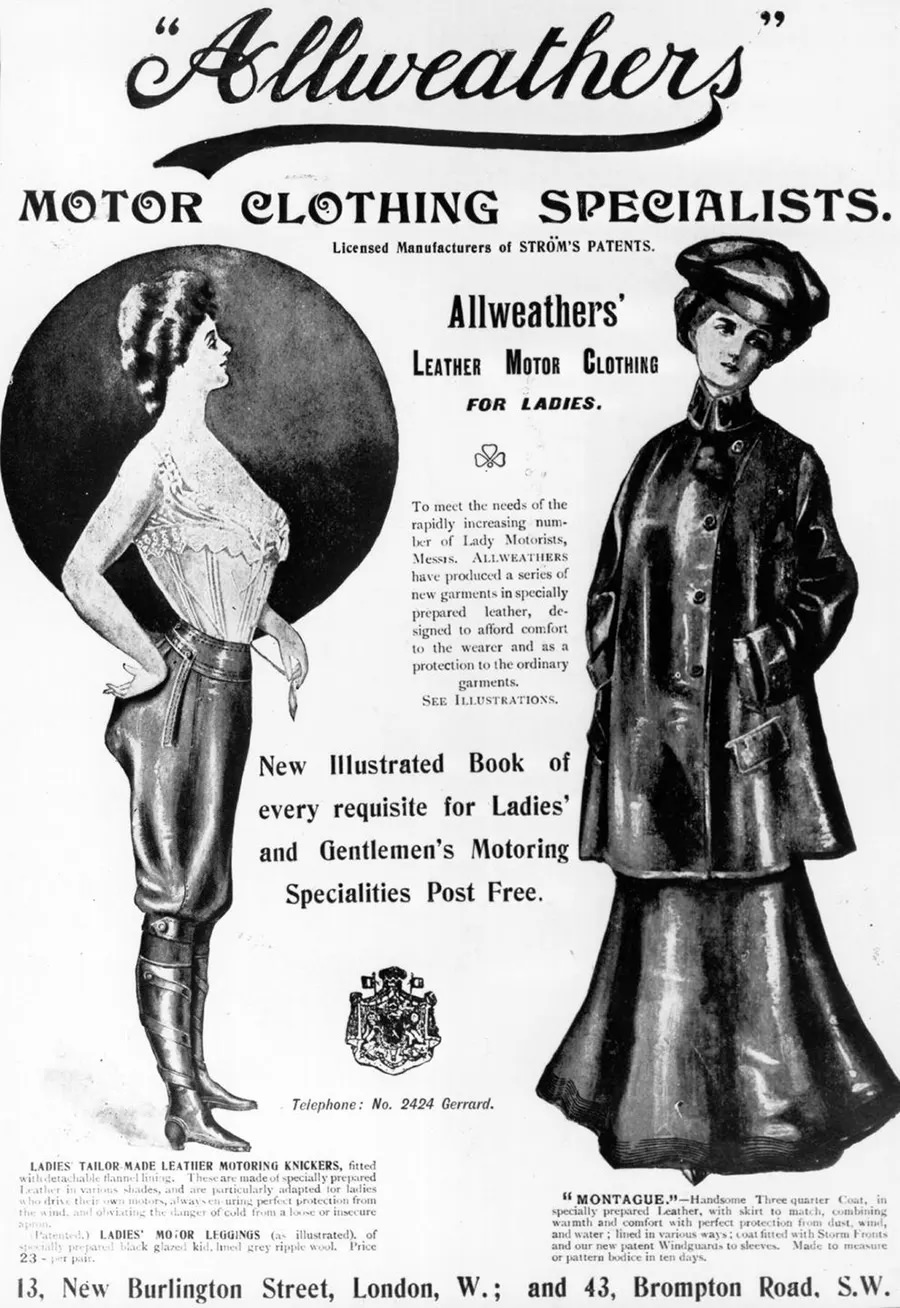
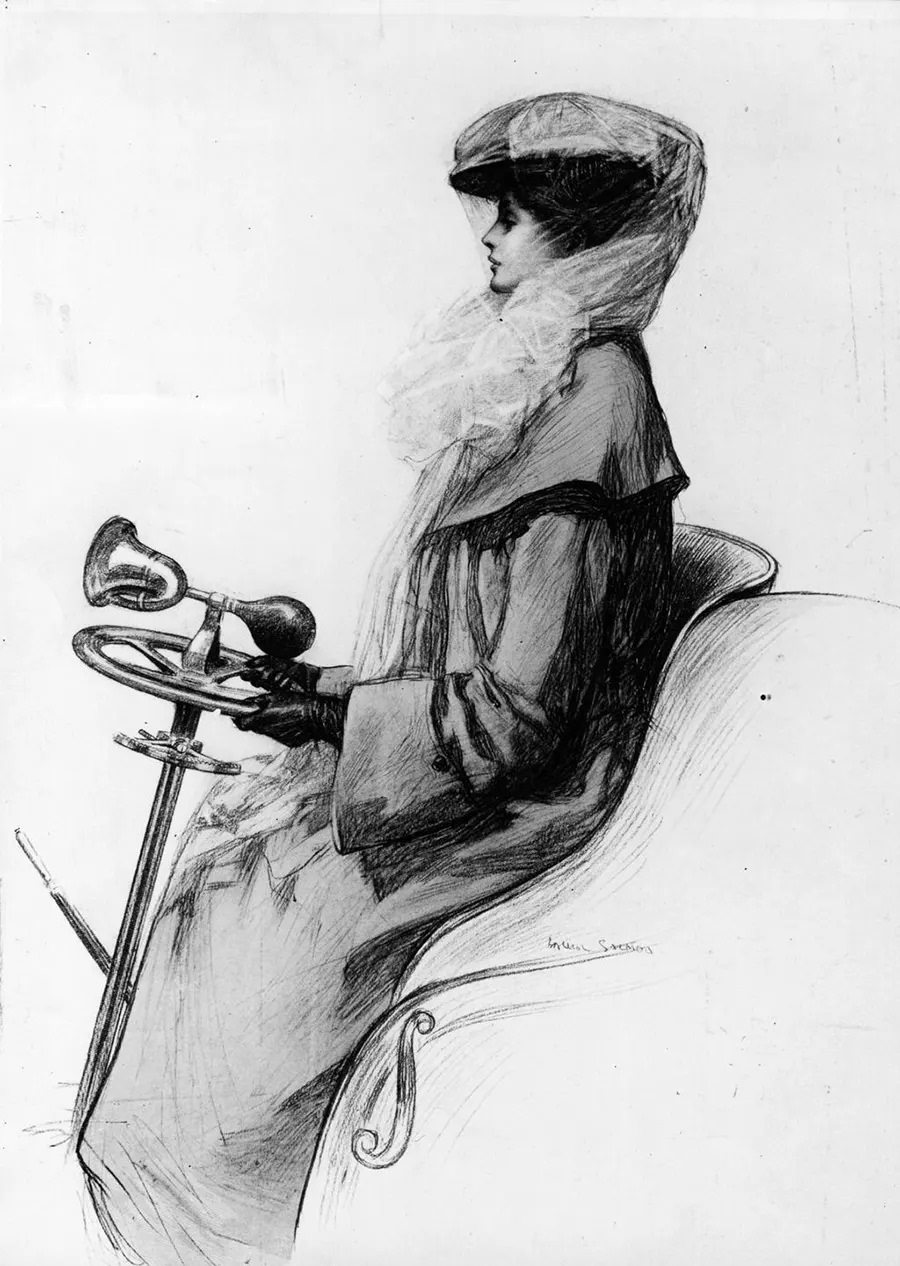
Women’s fur motoring coats followed a different philosophy. They were designed with both comfort and elegance in mind. A coat made from carefully matched gray squirrel skins, for example, might feature contrasting opossum fur at the collar and cuffs. The goal was to look put-together even while battling the elements. These coats also pushed previously unfashionable animal skins into mainstream use, expanding what counted as desirable fur.
Below the waist, drivers used car rugs and aprons. Fur car rugs draped across the lap and legs, and waterproof tarpaulin-style aprons kept rain and road spray off the lower body. These weren’t optional in cold or wet weather — they were essential. Without them, sitting in an open car for any distance meant arriving soaked, numb, or both.
Feet and legs got their own specialized protection. Footmuffs — pouches lined with goat hair or fur-lined leather — enclosed the feet and ankles to trap heat. Foot protectors added another layer of shielding. Some drivers paired their footmuffs with fur lap robes, creating a cocoon of warmth from the knees down. Gauntlets, which were heavy gloves extending up the forearm, protected the hands from cold, wind, and grease.
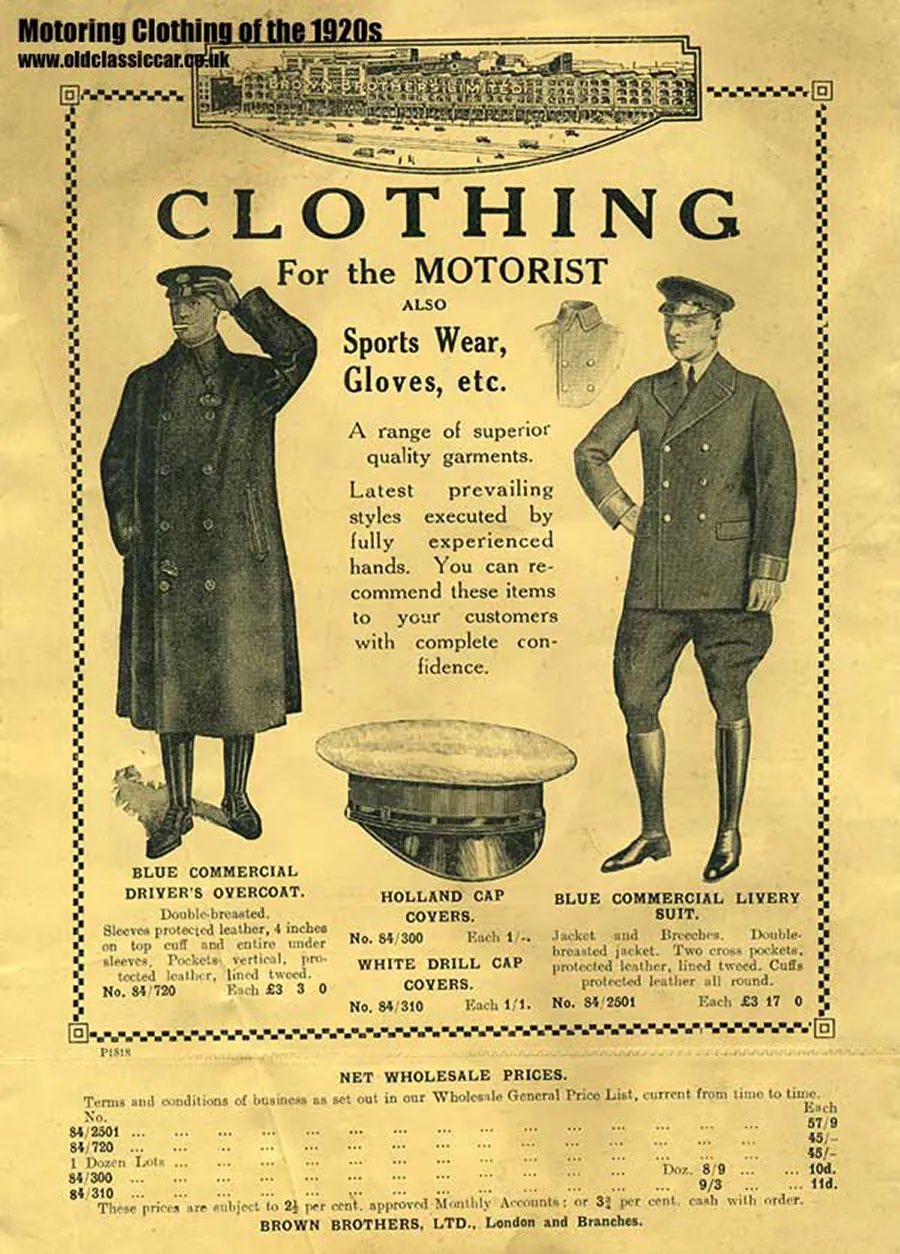
Boots designed for motoring were sturdier and taller than everyday footwear. They needed to handle foot pedals, protect against road grime, and keep the feet warm during long drives. Specialized motoring boots became part of the standard kit for serious drivers, sold alongside goggles and dusters in shops catering to the growing automotive market.
What made early motoring fashion remarkable was how quickly it developed. Within a decade of cars becoming accessible to the wealthy, an entirely new clothing category existed — one with its own vocabulary of garments, materials, and accessories. Each piece had a clear job to do, whether blocking wind, catching dust, or trapping body heat against the cold rush of open-road air.