
Long before streaming services and the internet made virtually any content available on demand, American screen entertainment operated under a strict set of moral rules. The Hays Code, formally known as the Motion Picture Production Code, governed what audiences could and could not see in films from 1934 onward. It banned nudity, restricted violence, and defined acceptable behavior for characters on screen. For over three decades, it shaped the entire American film industry. When television began reaching living rooms across the country in the late 1940s, broadcasters wasted no time drafting their own version of those rules.
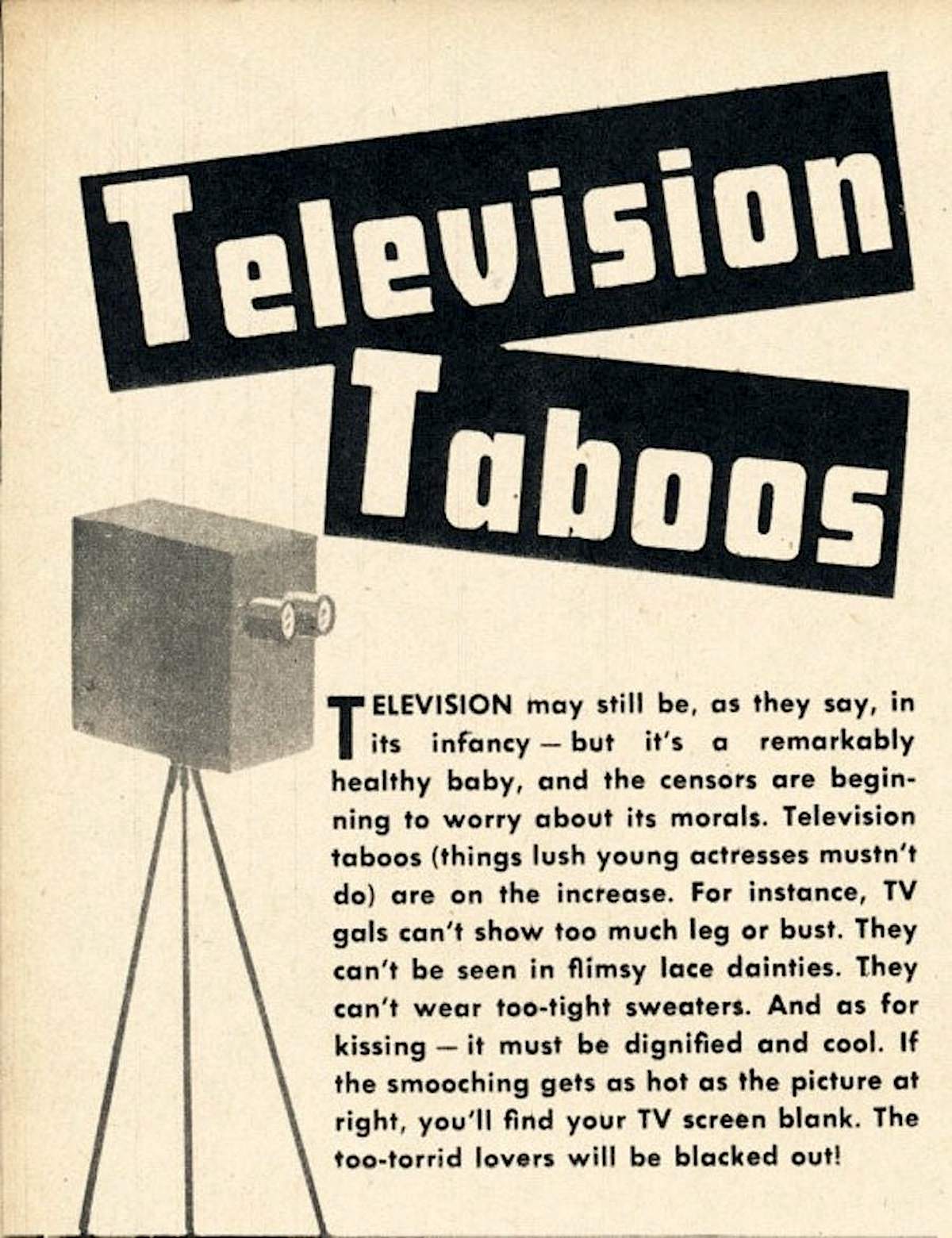
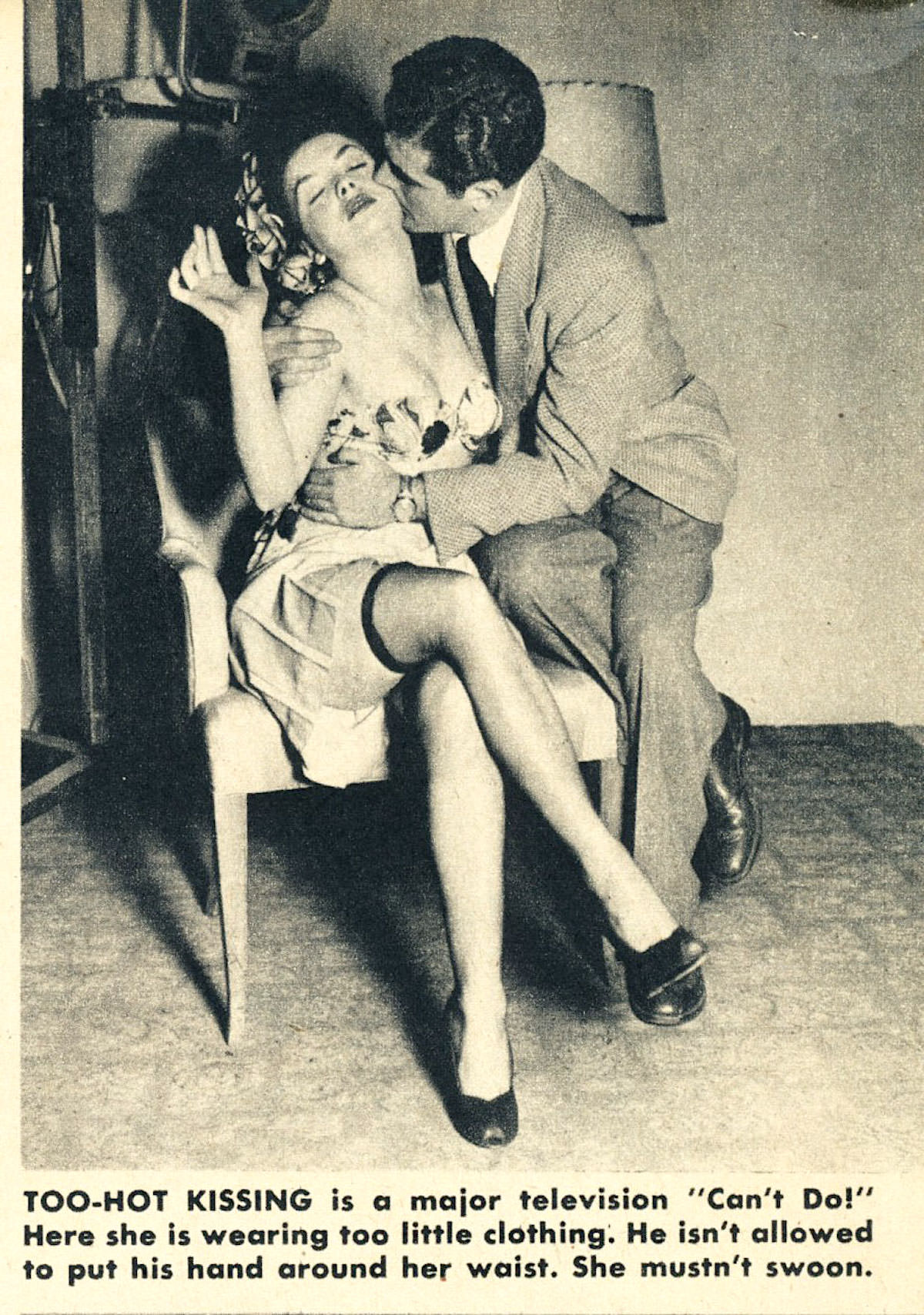
In 1949, a formal guide to television taboos was published, laying out clear boundaries for actors, actresses, and directors working in the new medium. The guide was specific and direct. It covered everything from physical contact between performers to how much of the body could appear on camera. Television was entering millions of homes, and broadcasters were highly aware that their audience included children and families gathered around a single set in the living room. That context made the rules feel necessary to those enforcing them. One of the most closely watched areas in the guide involved physical affection between performers. Kissing on screen was not outright banned, but it was tightly regulated in terms of duration and intensity.
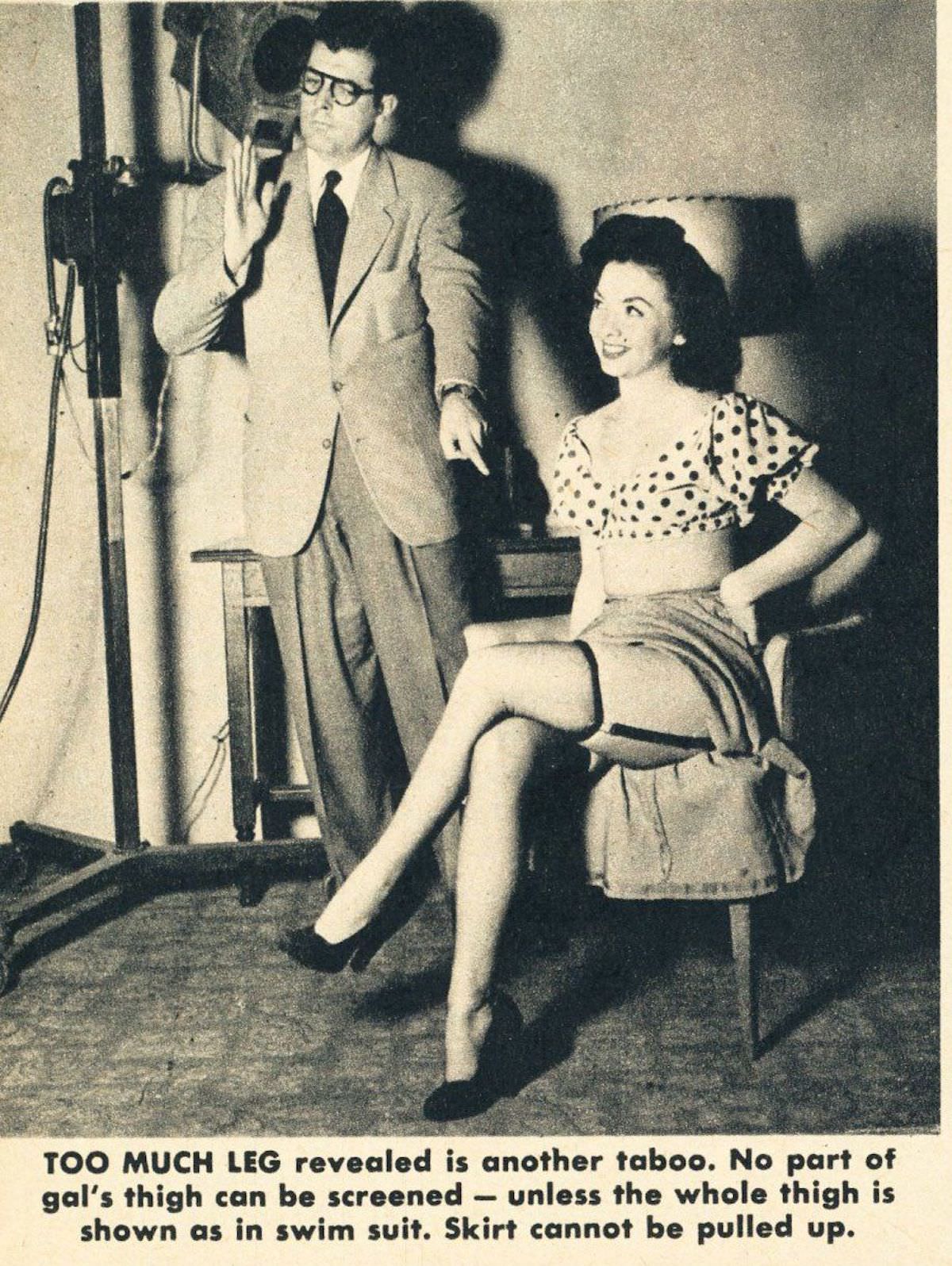
The guide also paid close attention to what female performers wore and how much of their bodies the camera revealed. Skirts or dresses that exposed too much of the leg were flagged as unacceptable for broadcast.
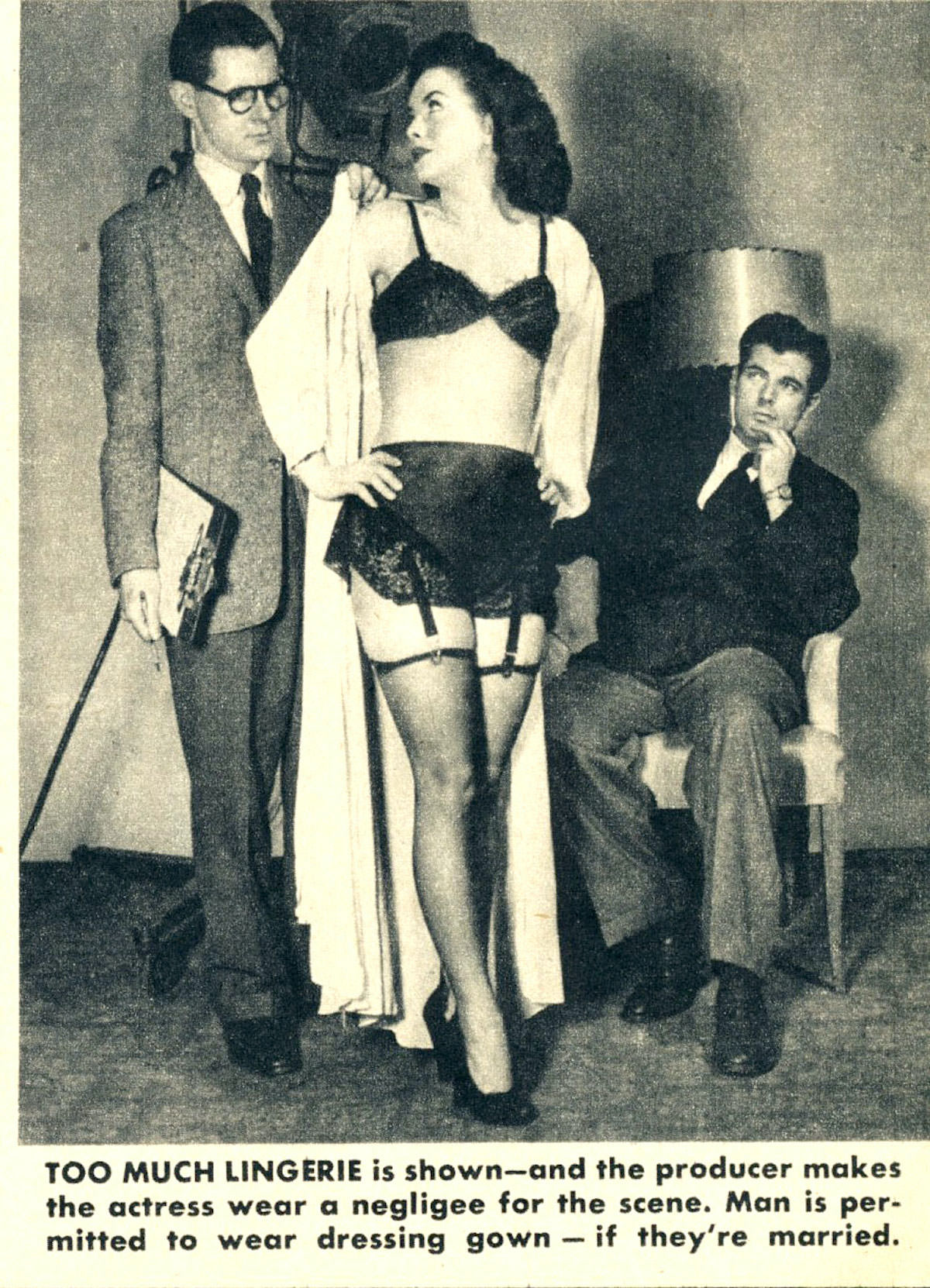
Lingerie scenes faced similar scrutiny. Showing too much undergarment was listed as a clear violation, reflecting the era’s strong sense of modesty around women’s clothing on public display.
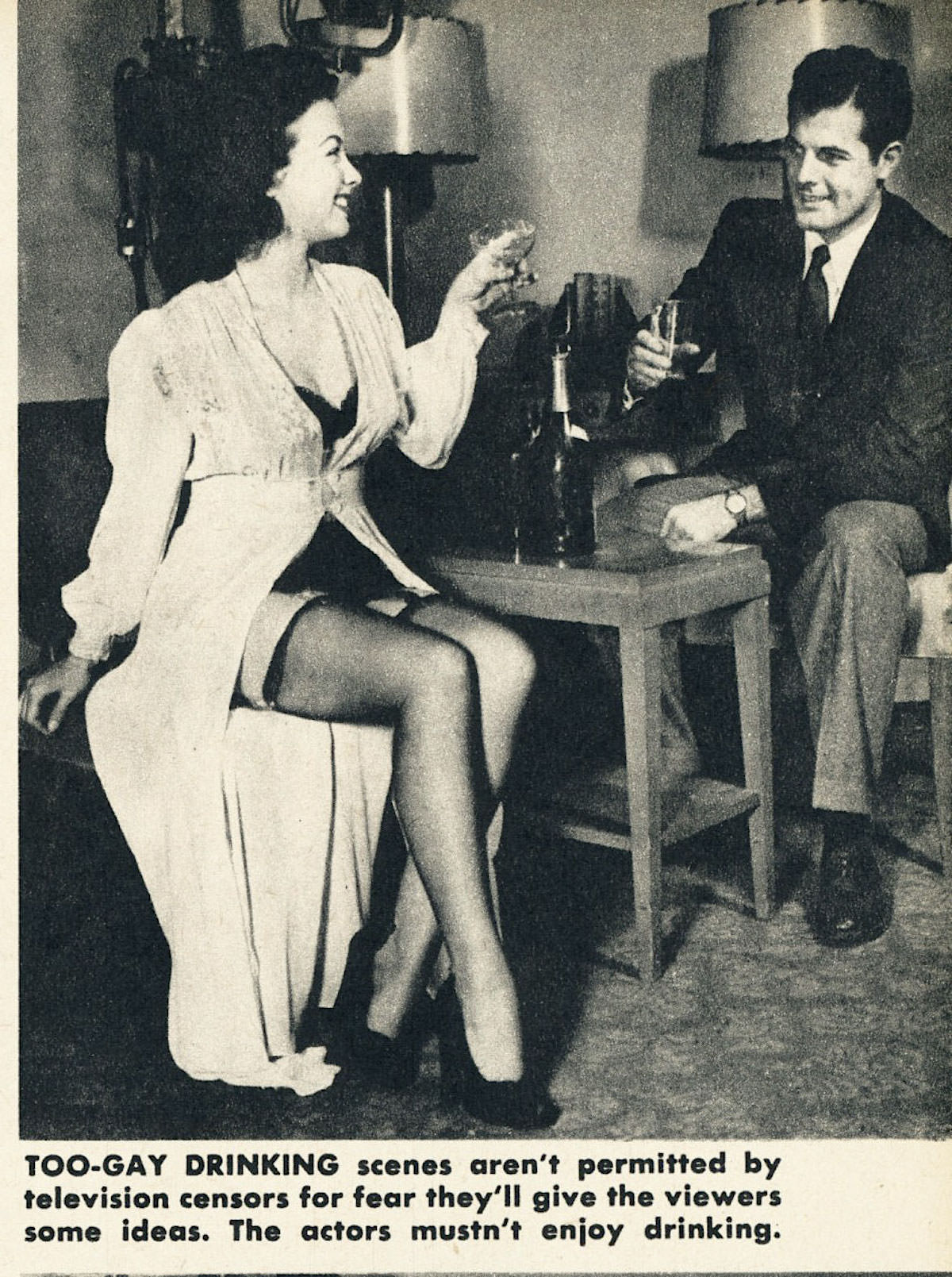
The guide extended beyond clothing and physical contact. It also addressed behavior and attitude on screen. Scenes depicting drinking in a manner deemed too cheerful or celebratory were specifically called out, suggesting that even the portrayal of alcohol consumption carried a moral weight that broadcasters wanted to control.
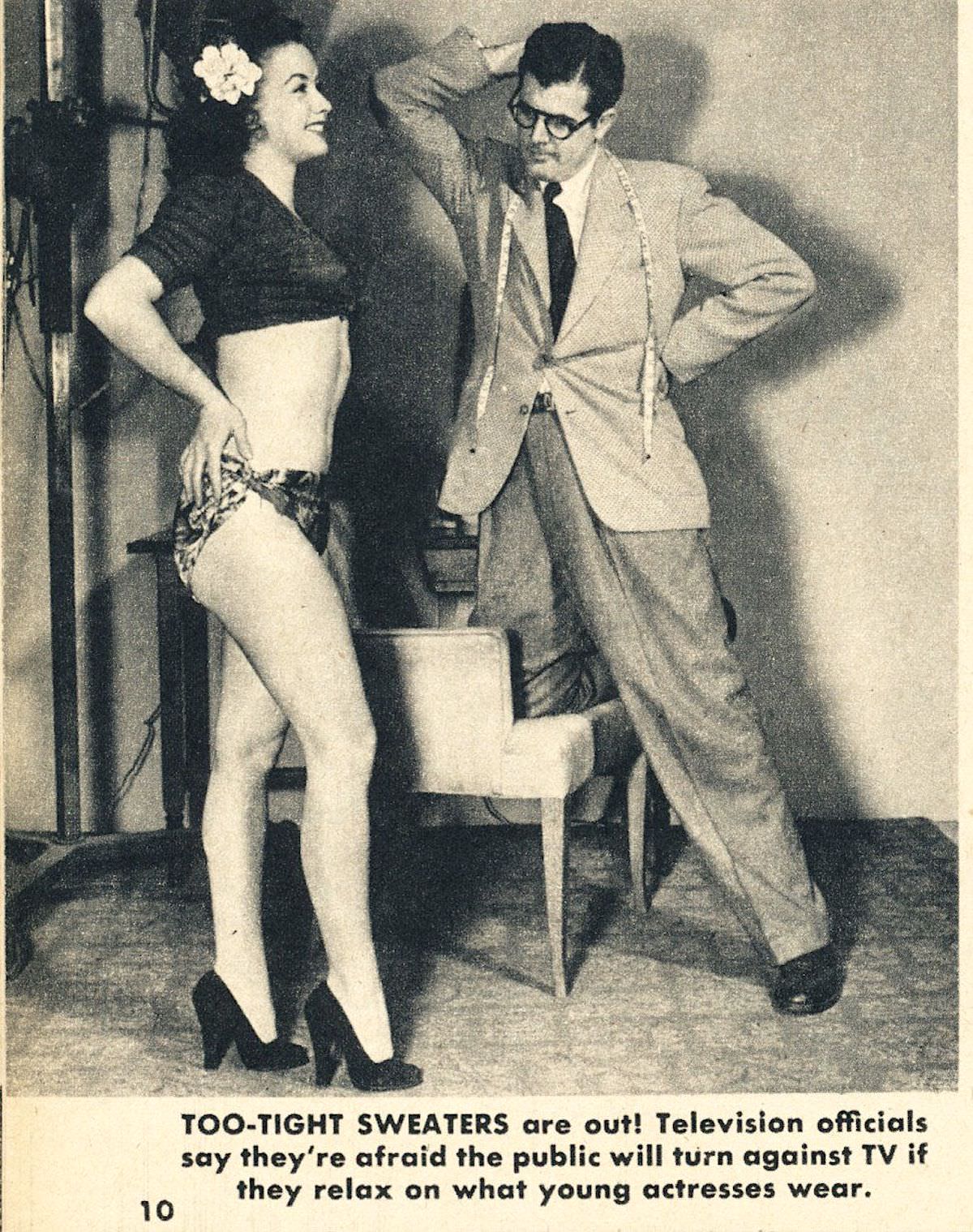
Clothing that fit too closely to the body was another target. Tight-fitting sweaters on female performers were singled out by name in the guide, a detail that speaks to just how granular these rules had become by 1949.
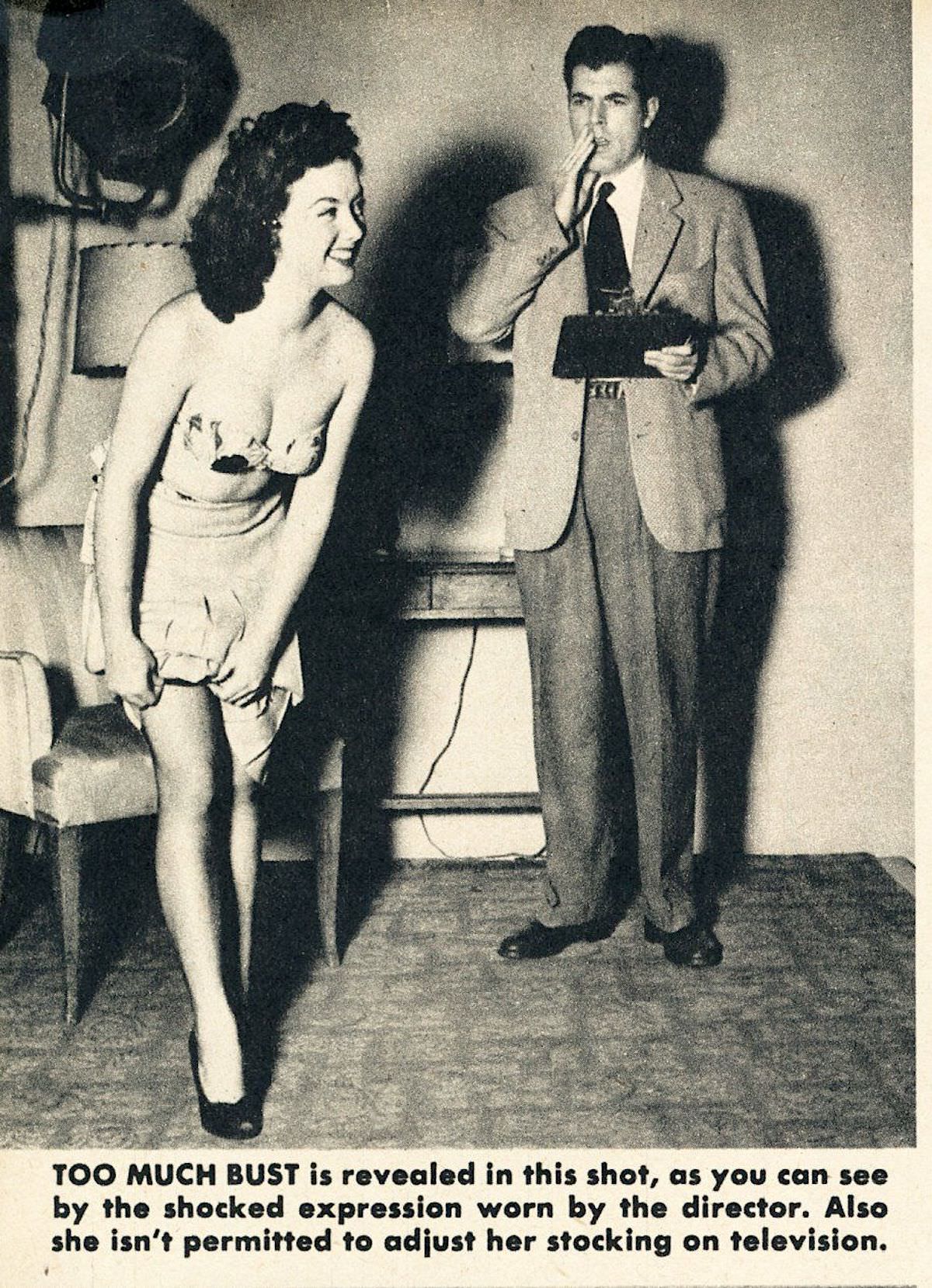
The guide rounded out its rules on women’s appearance with restrictions on how the camera could frame the bust. Shots or costumes that drew attention to the chest were prohibited. Together, these pages form a remarkably detailed picture of what early television considered dangerous or inappropriate for a mass audience. The Motion Picture Association introduced its voluntary film rating system in 1968, replacing the rigid code model. However, these 1949 pages remain a vivid snapshot of a moment when American broadcasters believed it was both possible and necessary to police the screen in precise, written detail.

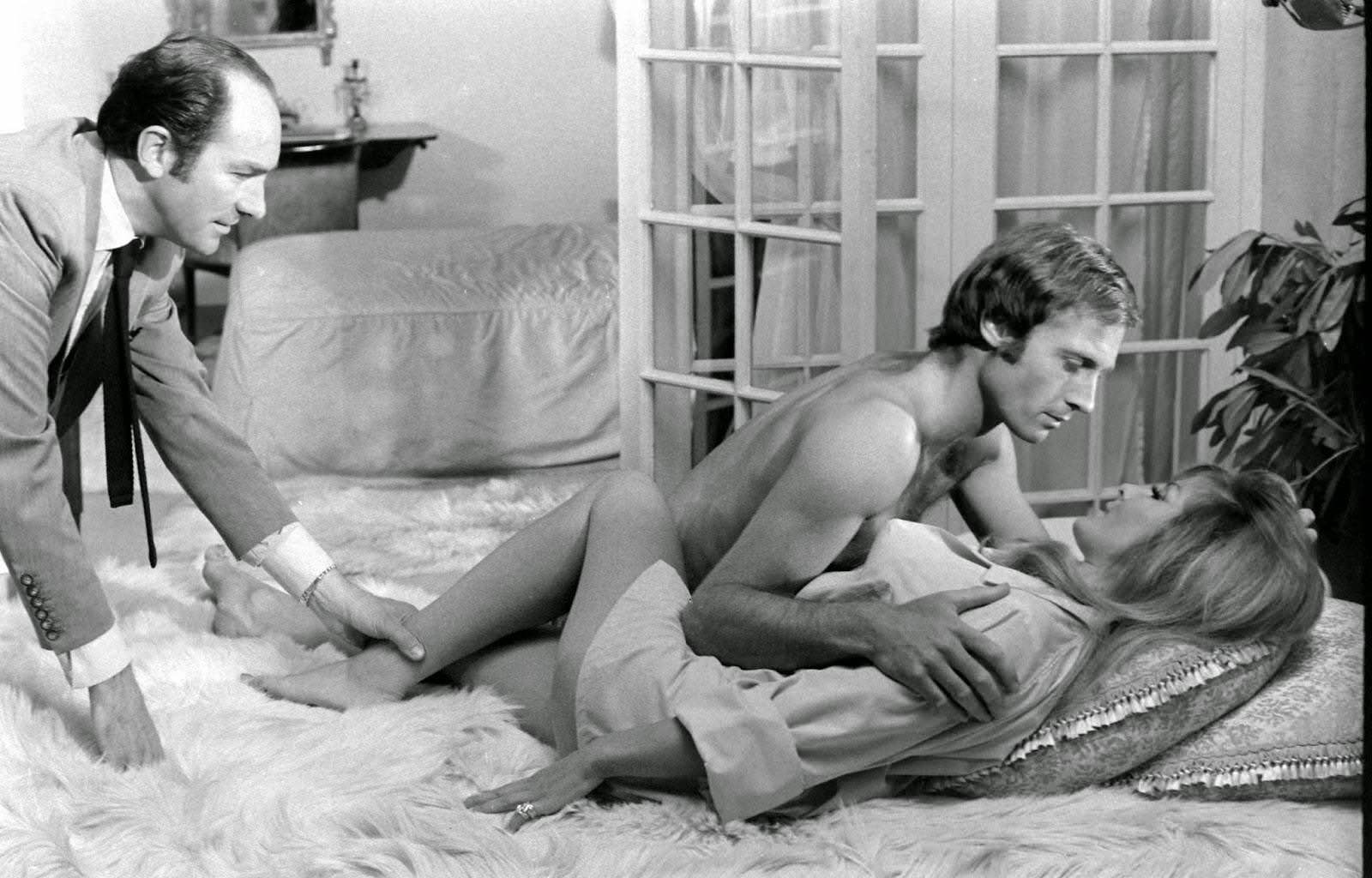
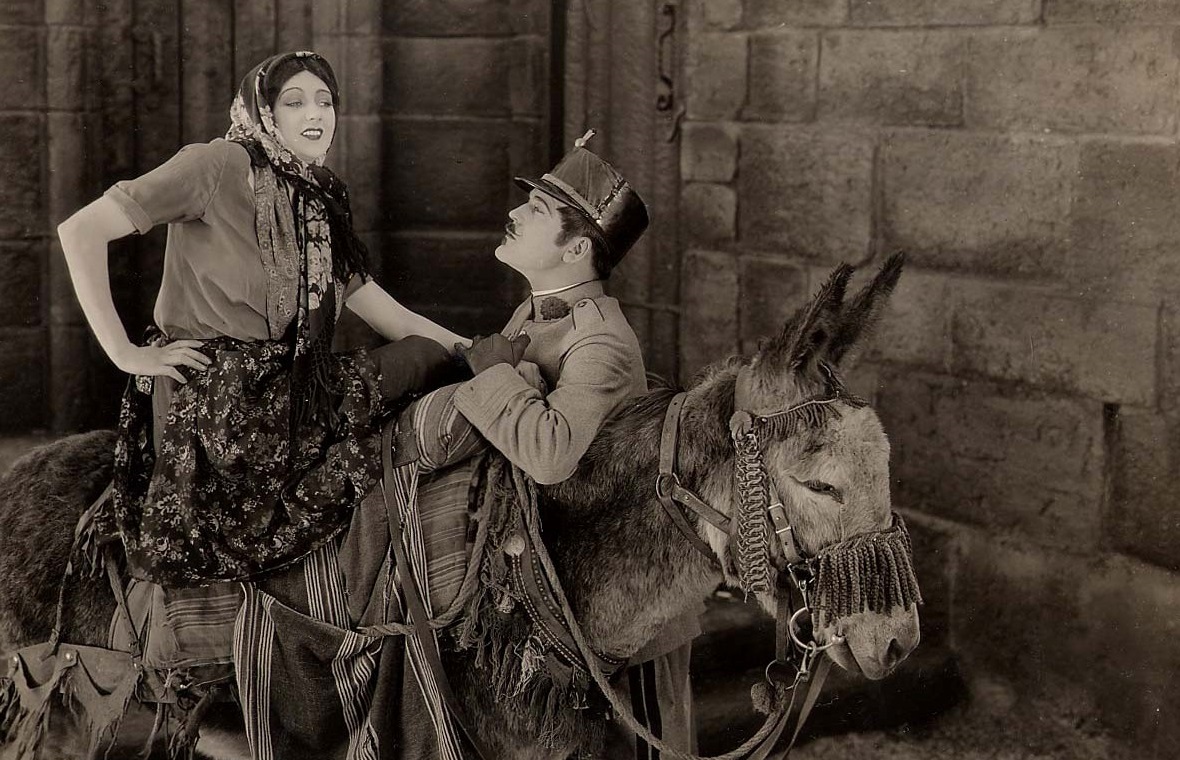

She mustn’t swoon
You Can’t Do That On Television had a lot more slime than this does.