Spain in the 1960s was a country caught between two worlds. Under Francisco Franco’s authoritarian rule, the nation had spent years locked in political repression and economic isolation. But by the start of the decade, something was shifting. Industrial output was climbing fast, living standards were rising, and a new generation of Spaniards — better educated and increasingly urban — was growing restless. The boom brought televisions into living rooms, nearly doubled the number of telephones per capita, and made higher education more accessible than ever before. It also brought deep frustration with a government that seemed determined to keep the country frozen in place.
Barcelona, 1961
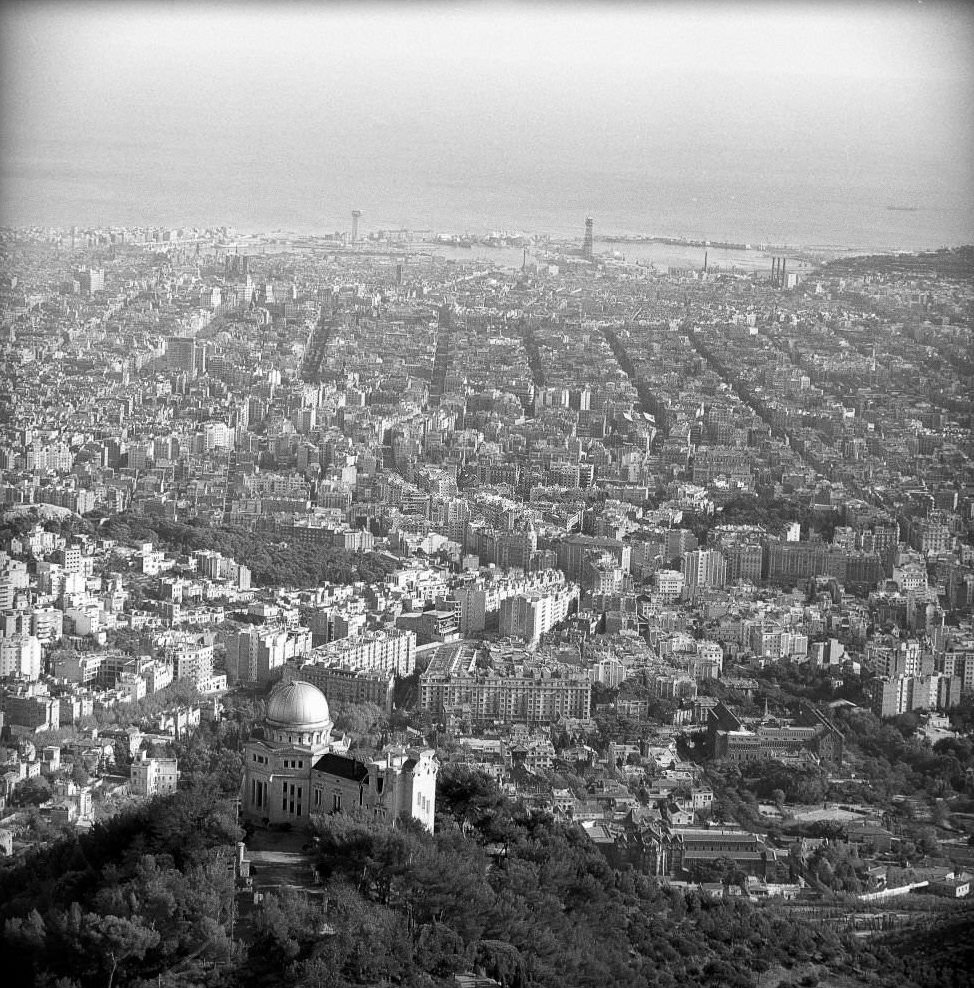
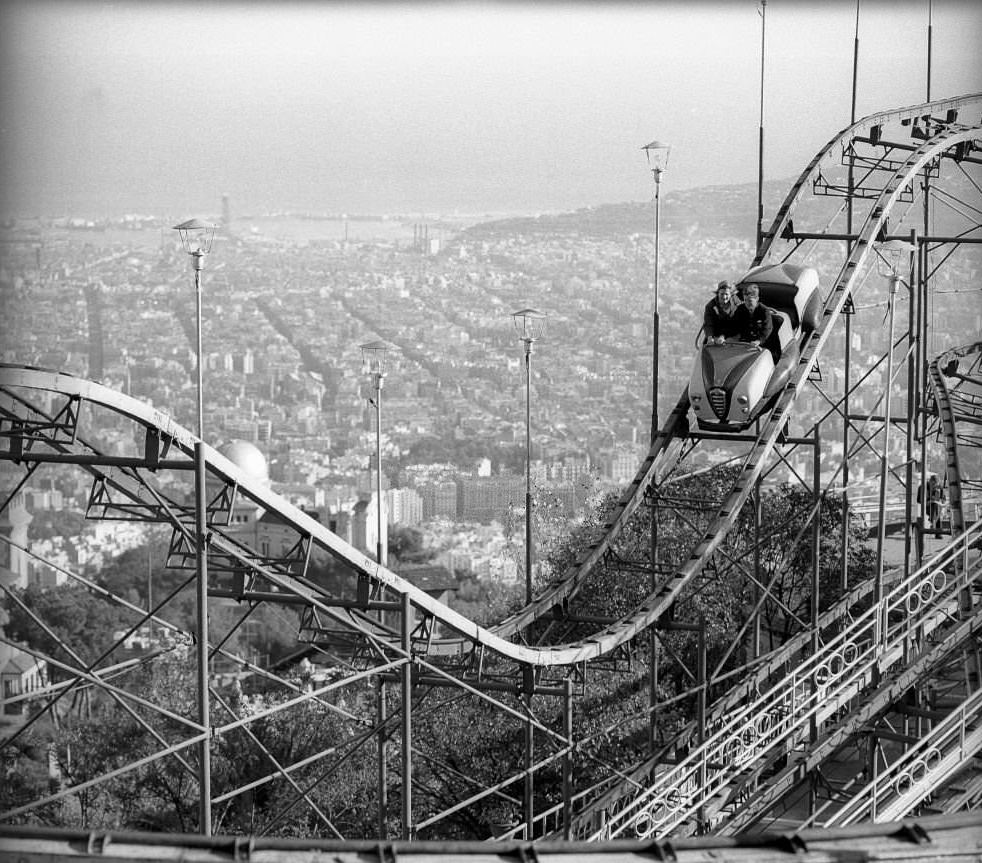
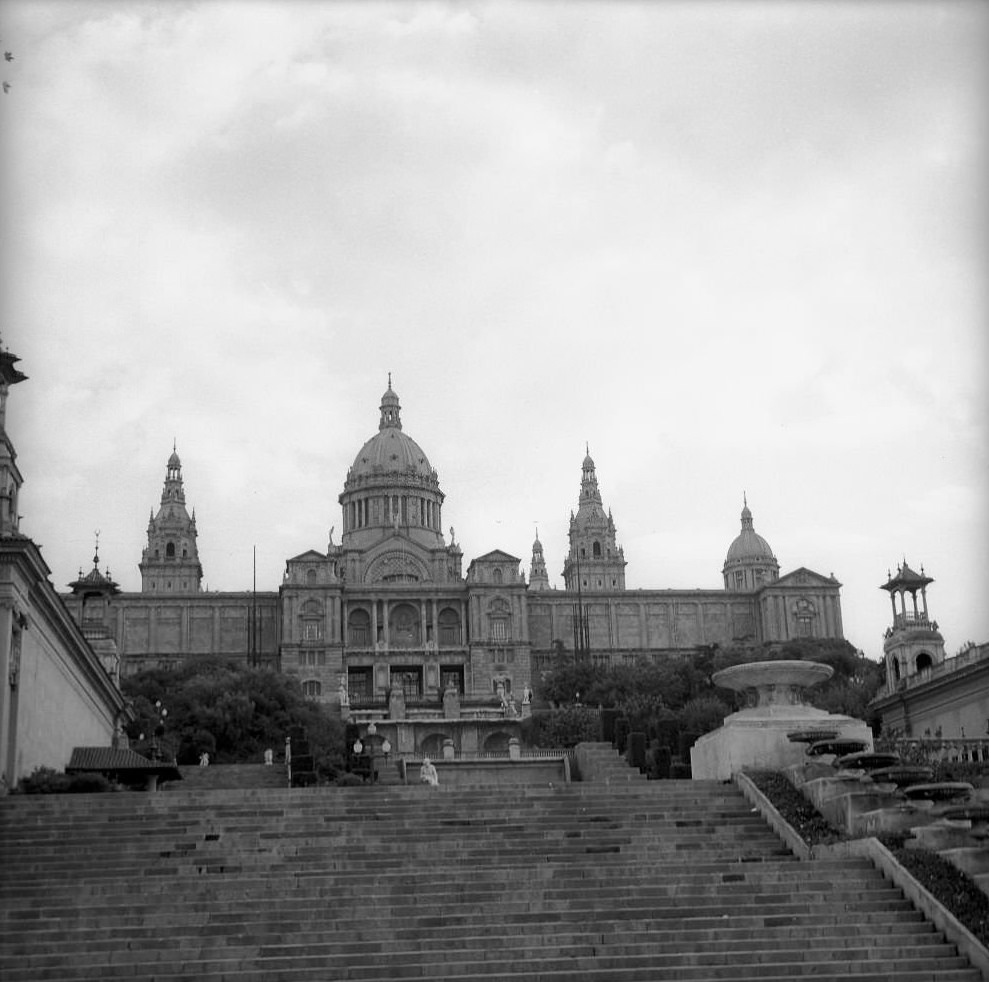
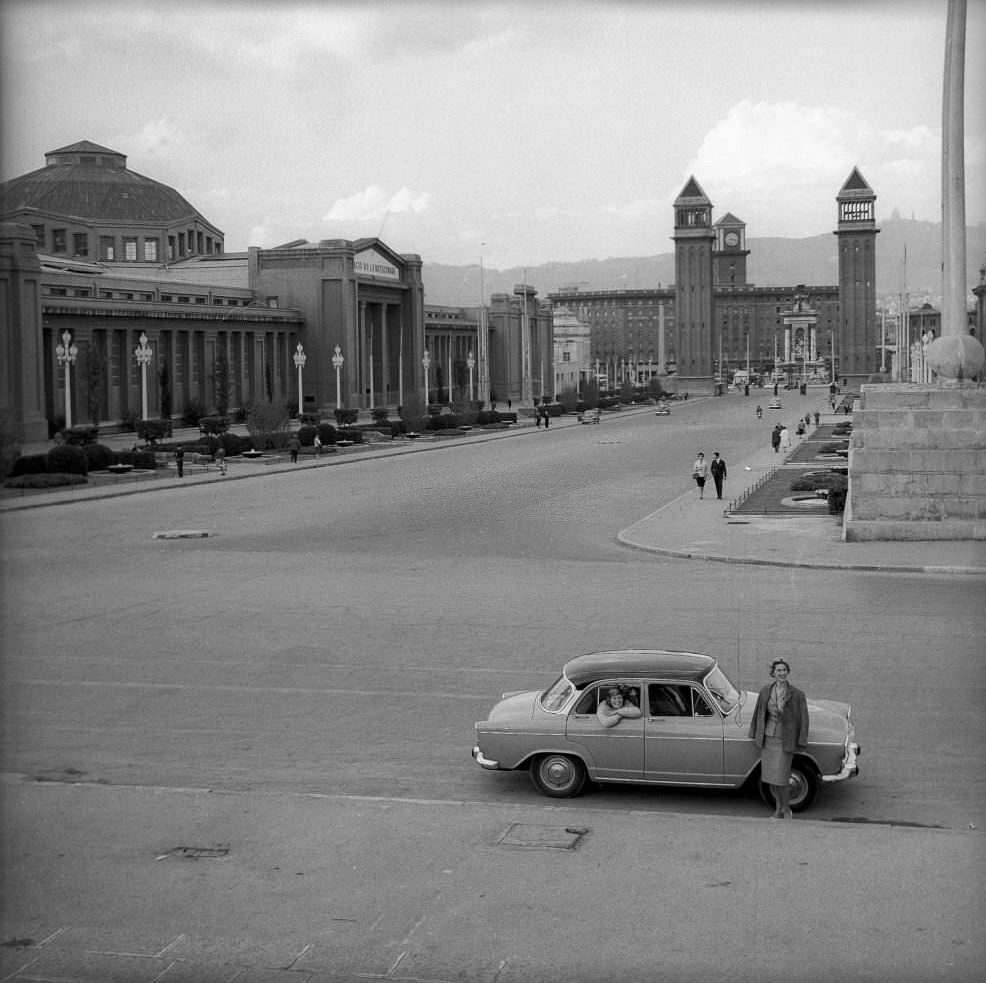
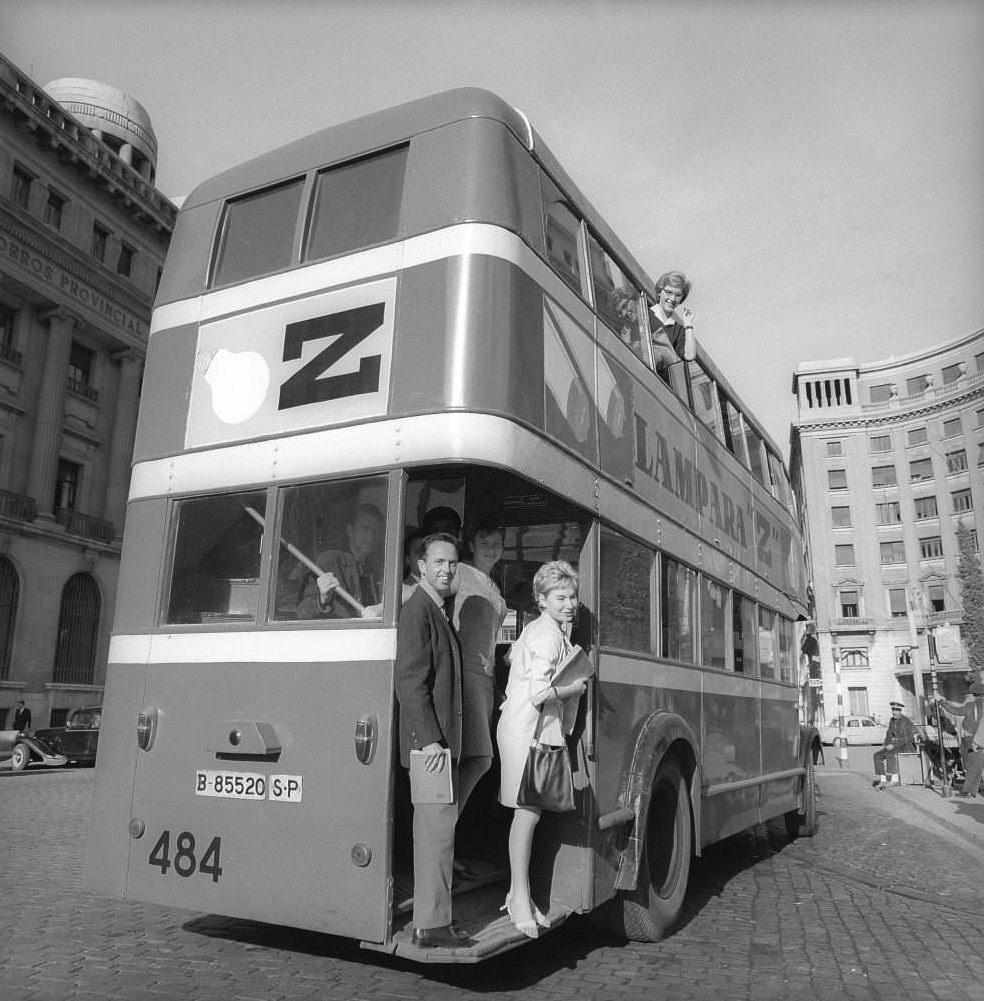
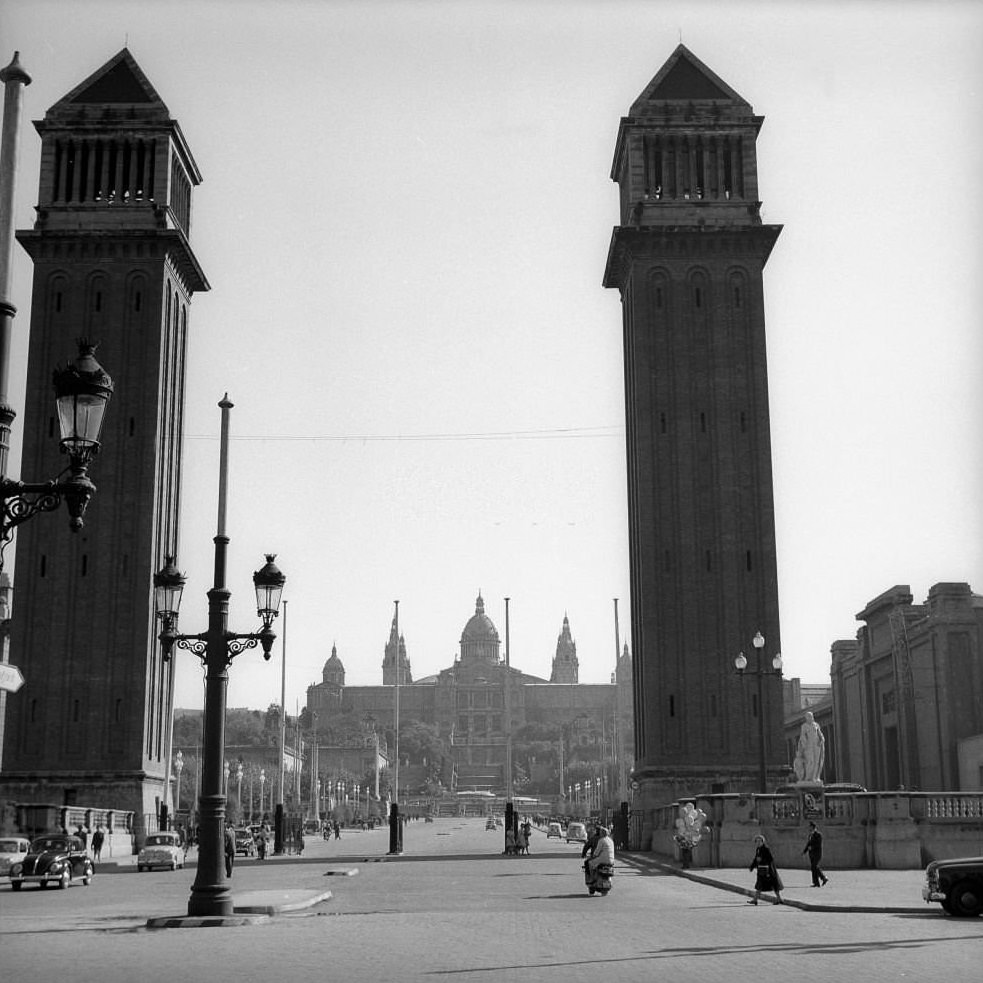
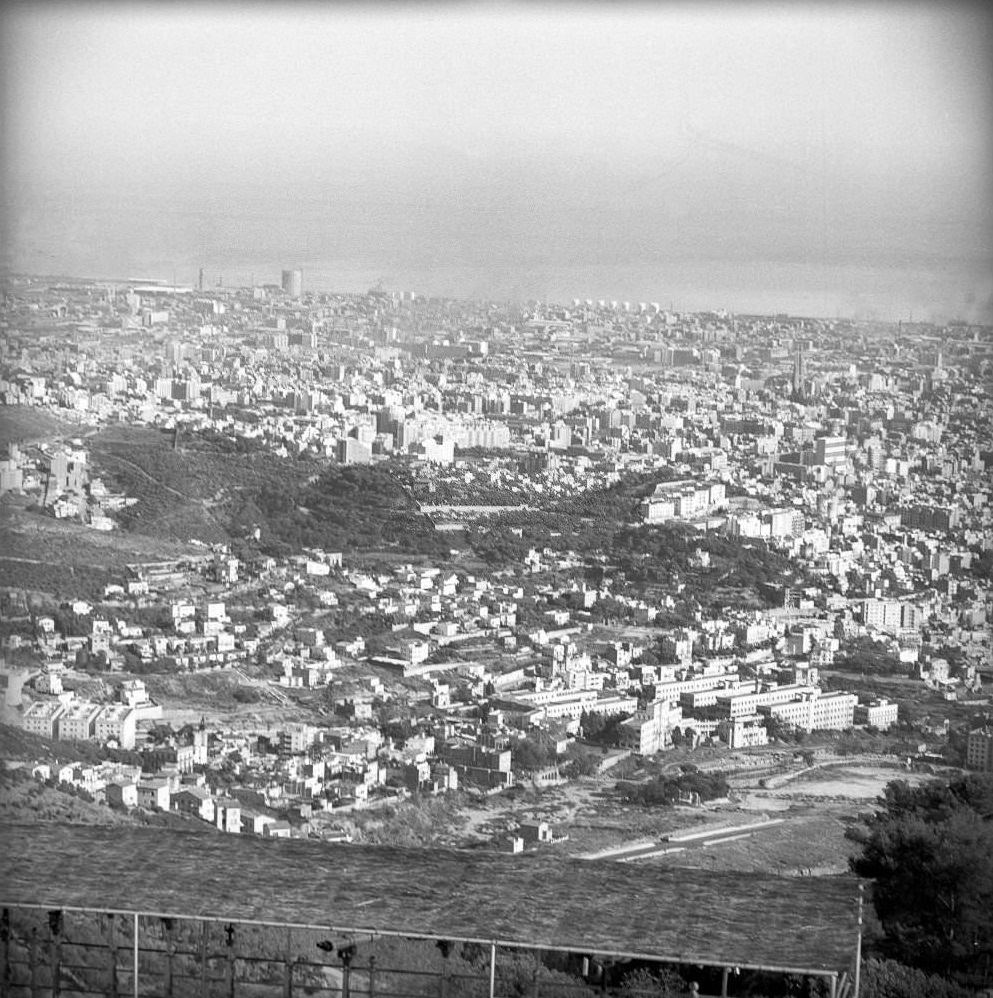
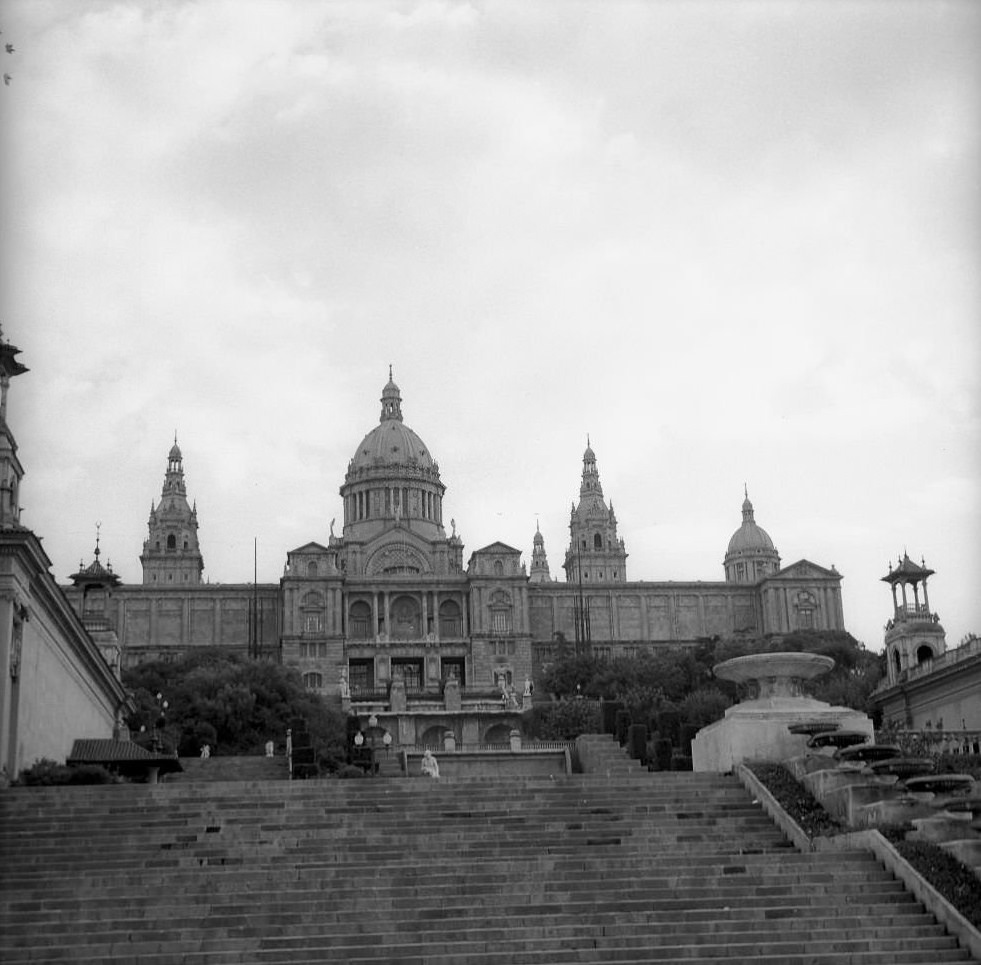
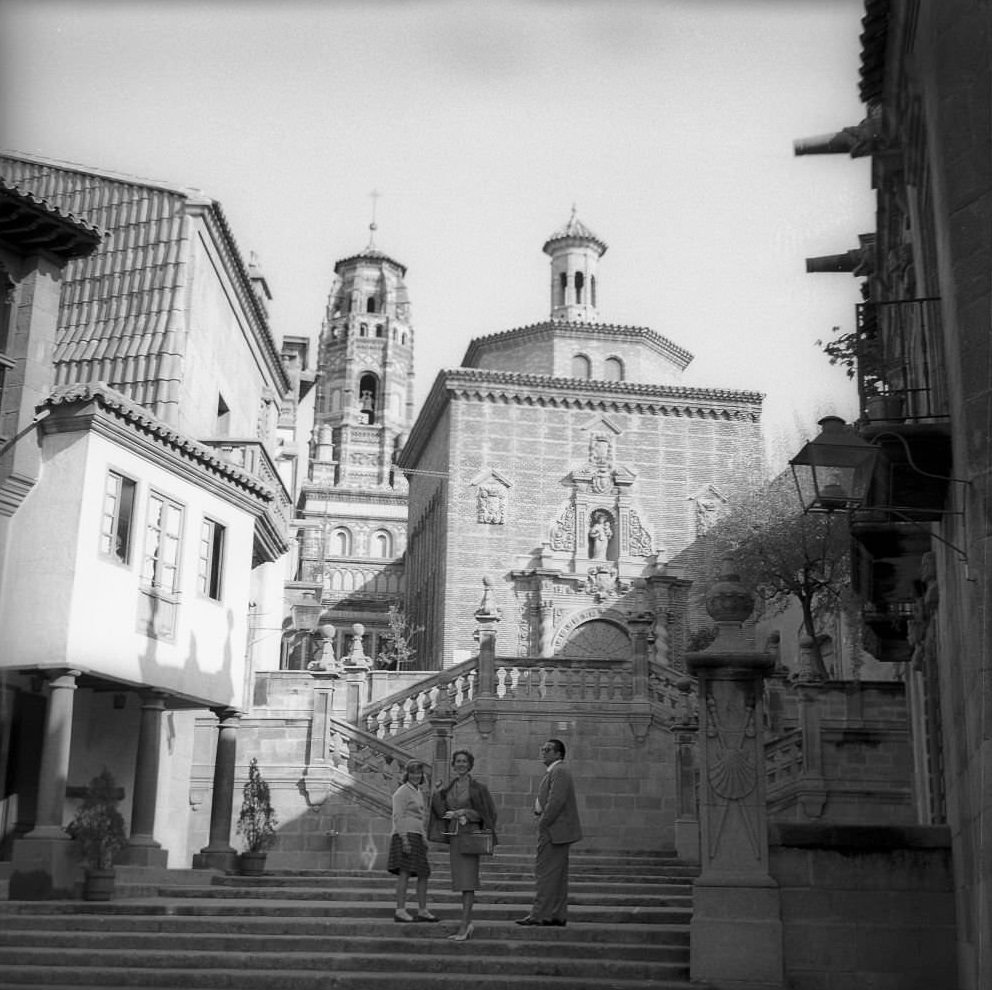
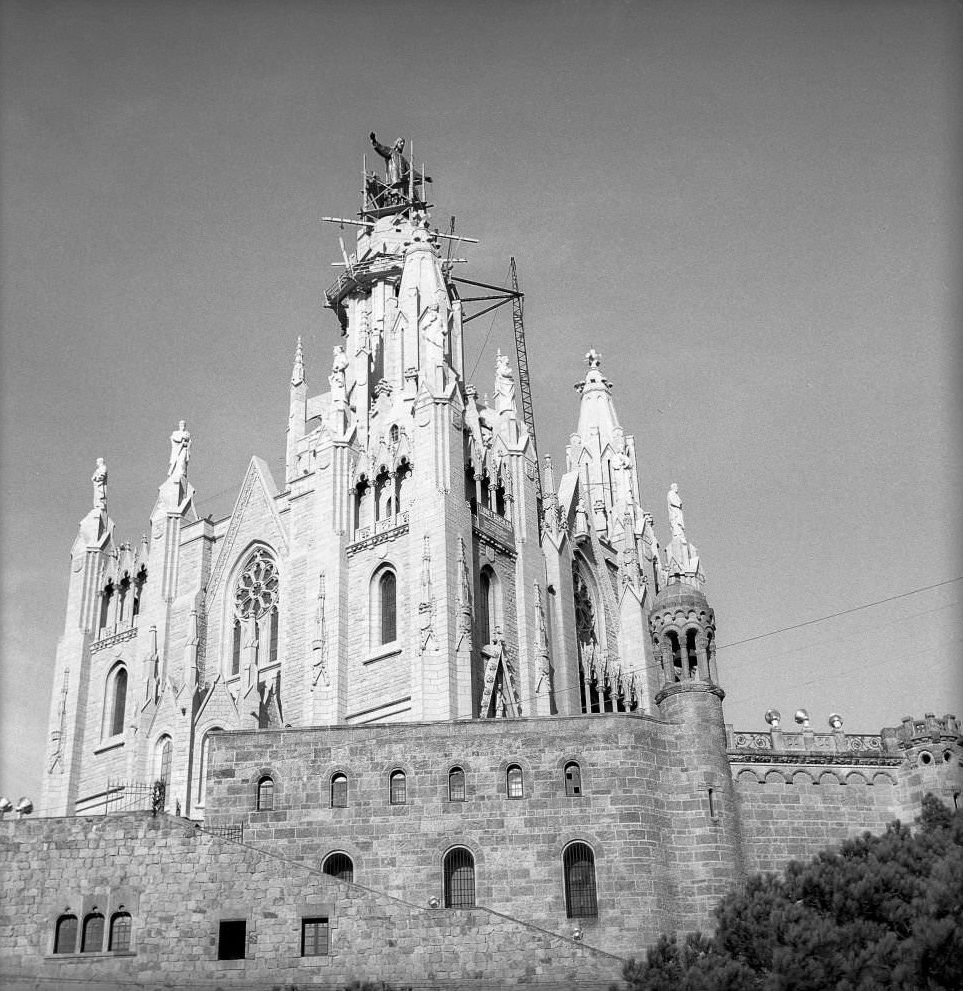
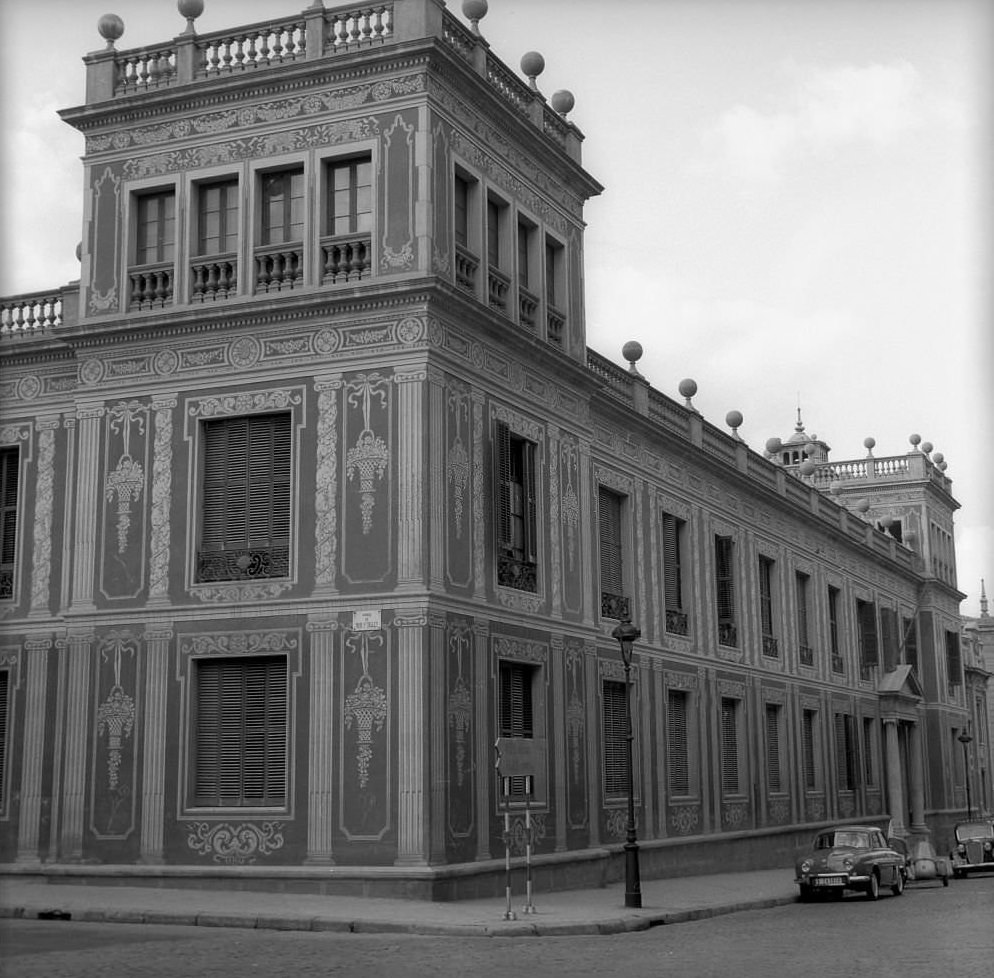
Barcelona was one of the most visible faces of this transformation. In 1961, the city hummed with activity — tourists filled its plazas, double-decker buses moved crowds through wide avenues, and its old neighborhoods still carried the worn, intimate character of an earlier era. The city’s famous amusement park at Tibidabo drew families looking for an escape, while landmarks like the Montjuïc Palace stood as reminders of Spain’s grander ambitions.
Rollercoaster in Tibidabo amusement park, Barcelona 1961Montjuïc Palast Barcelona 1961Tourists in the Plaza de España, Barcelona 1961.
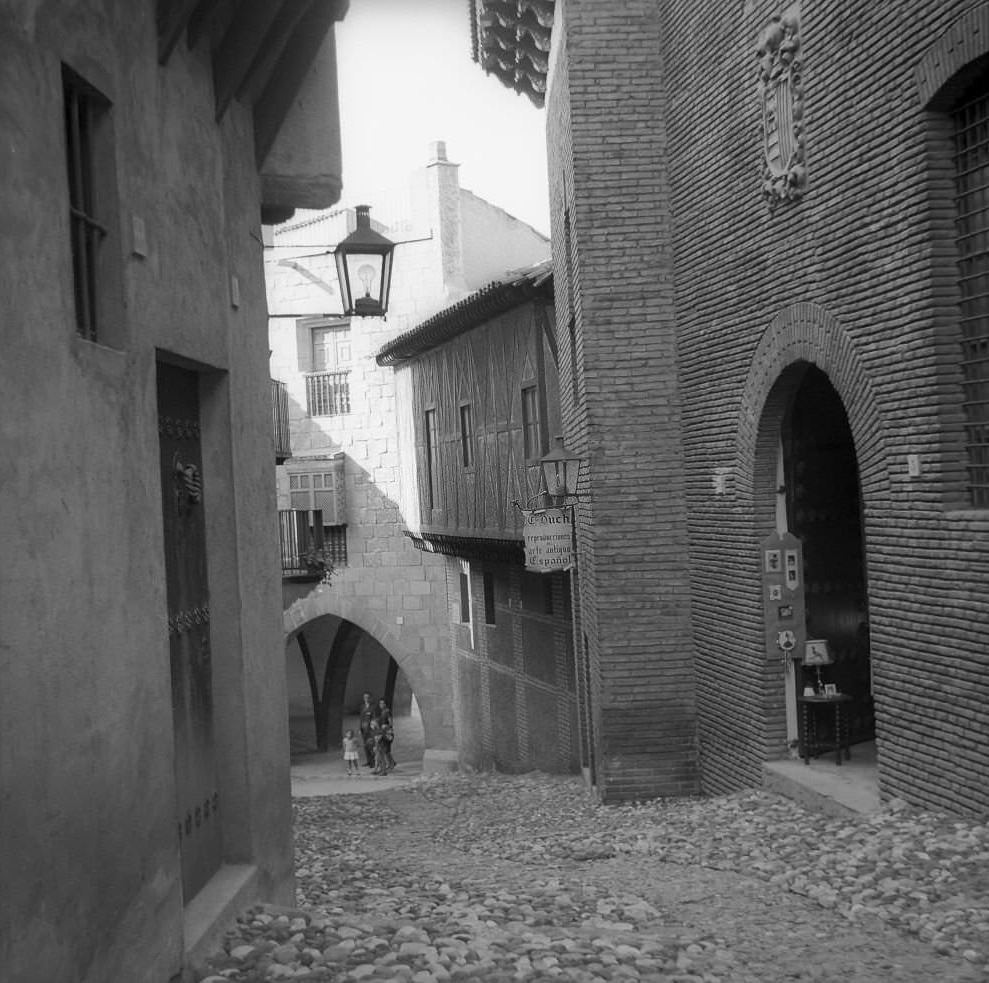
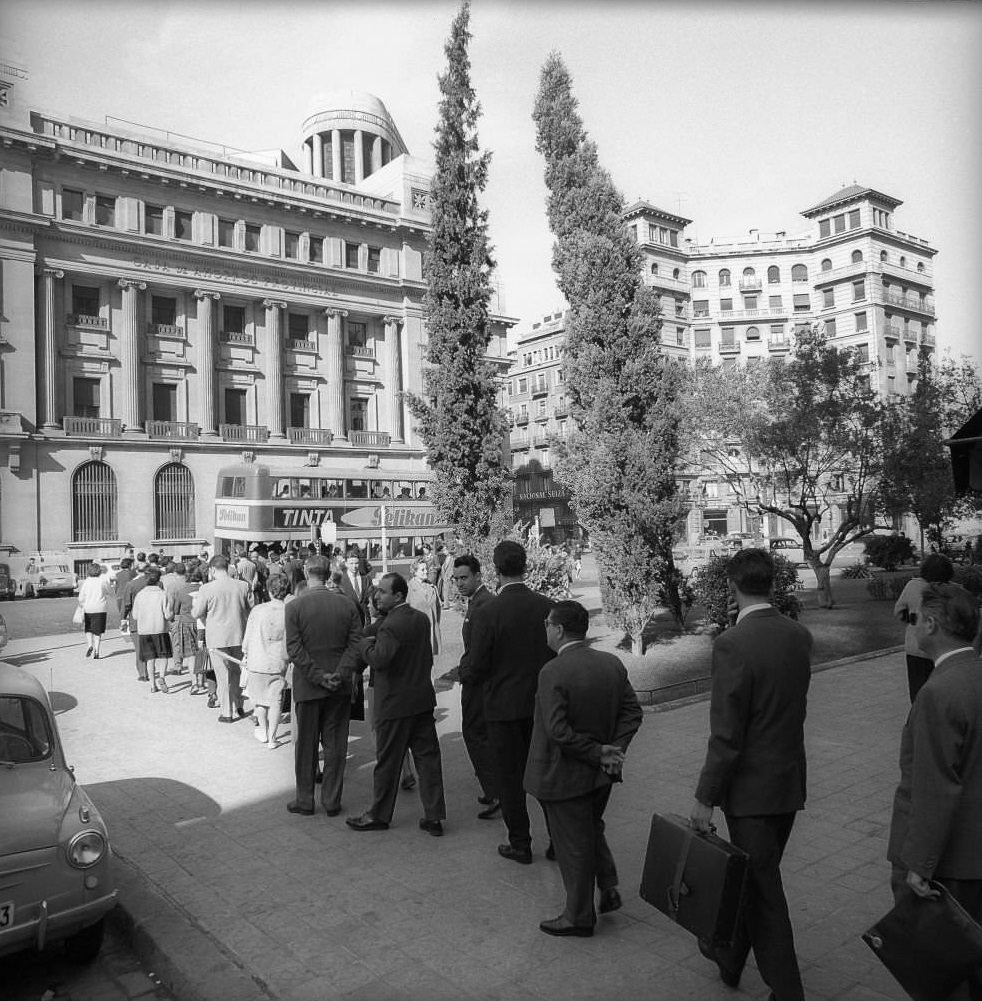
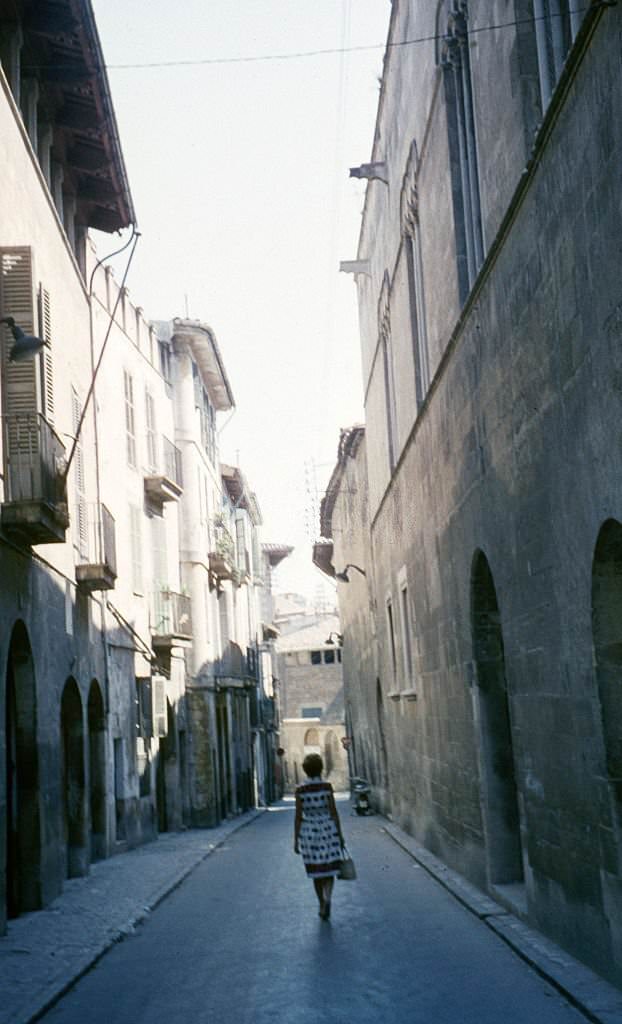
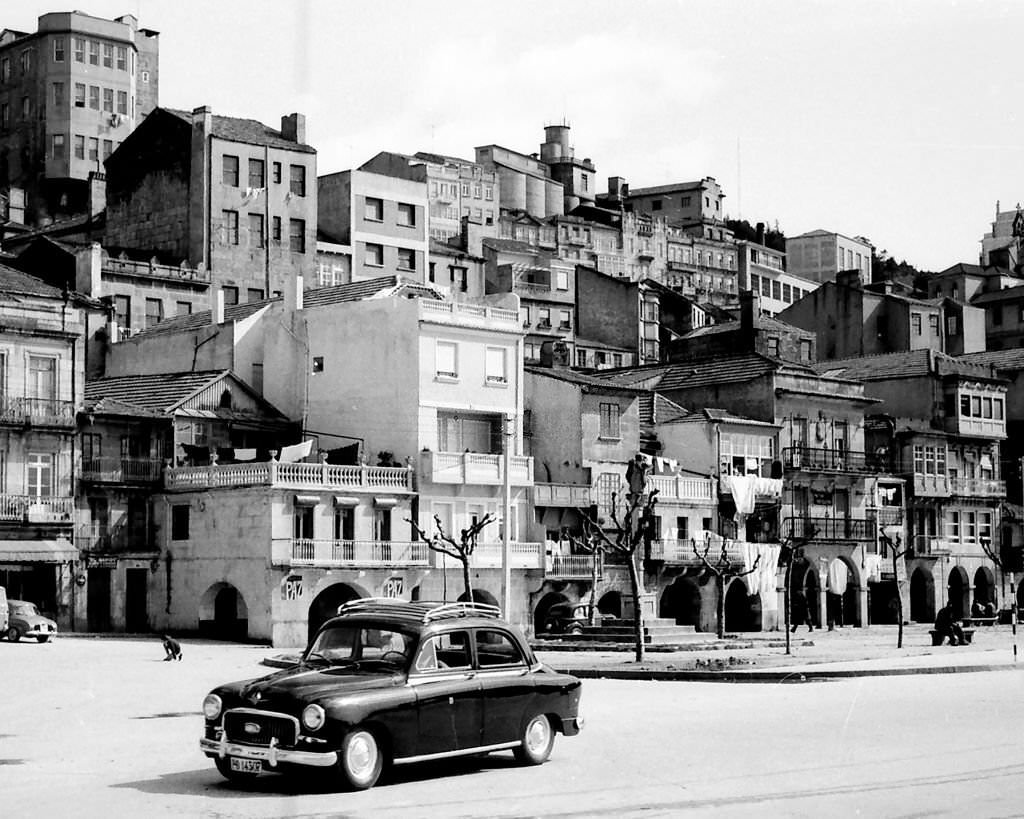
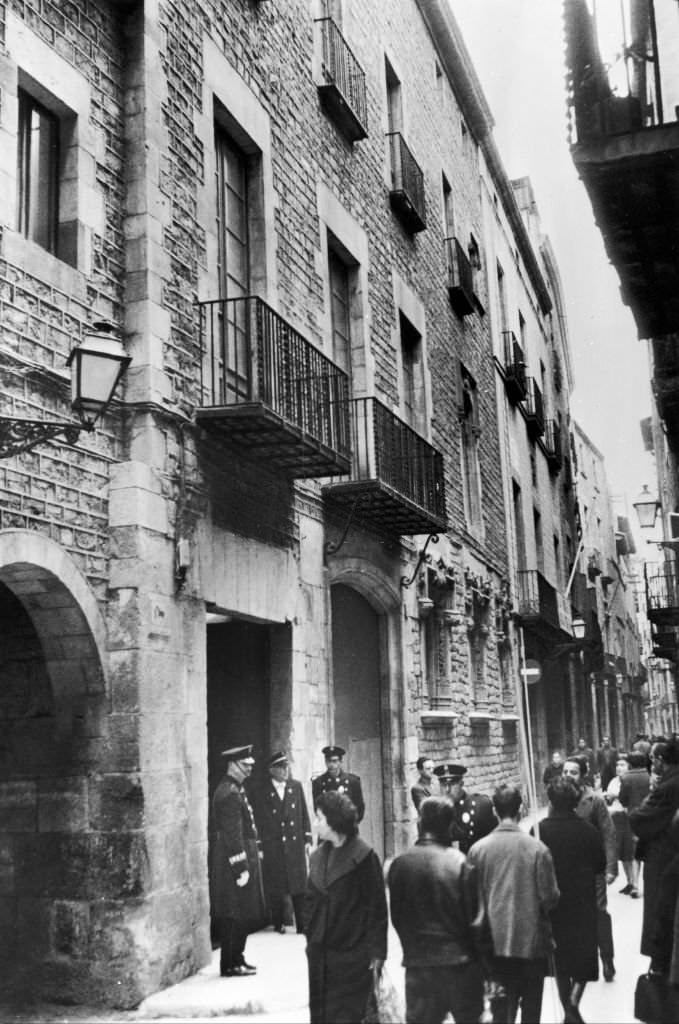
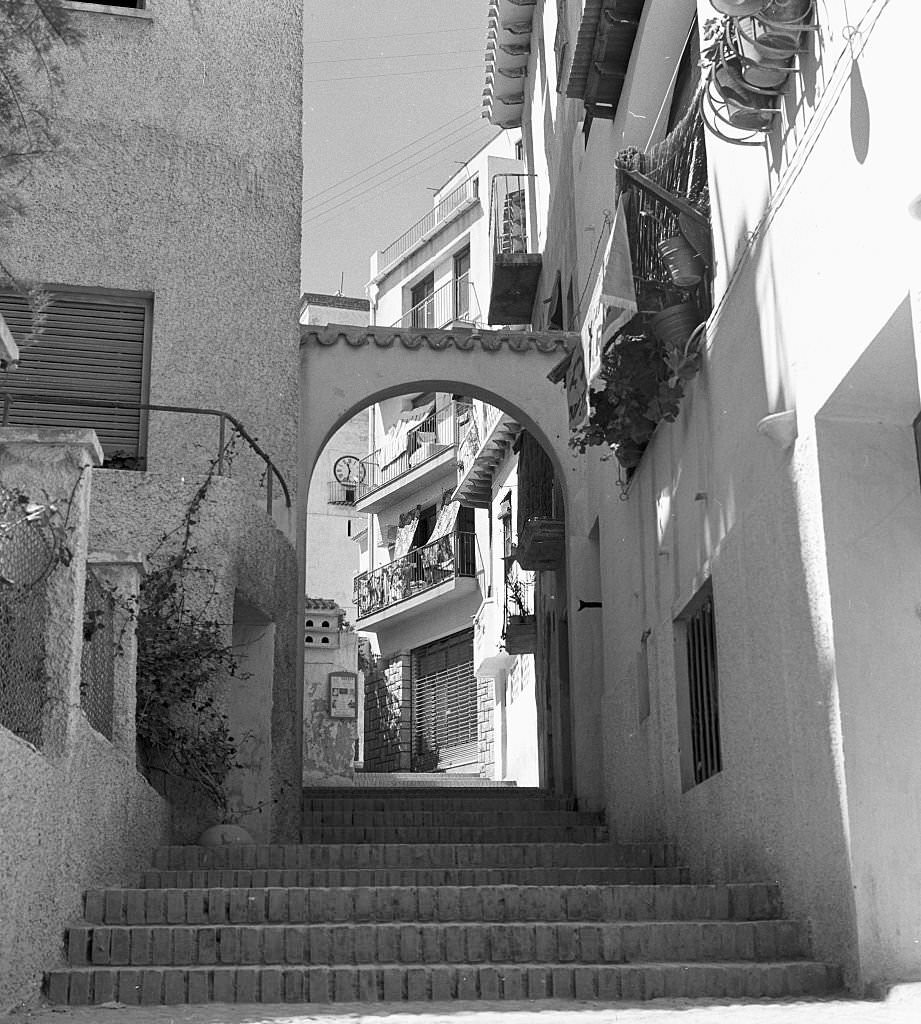
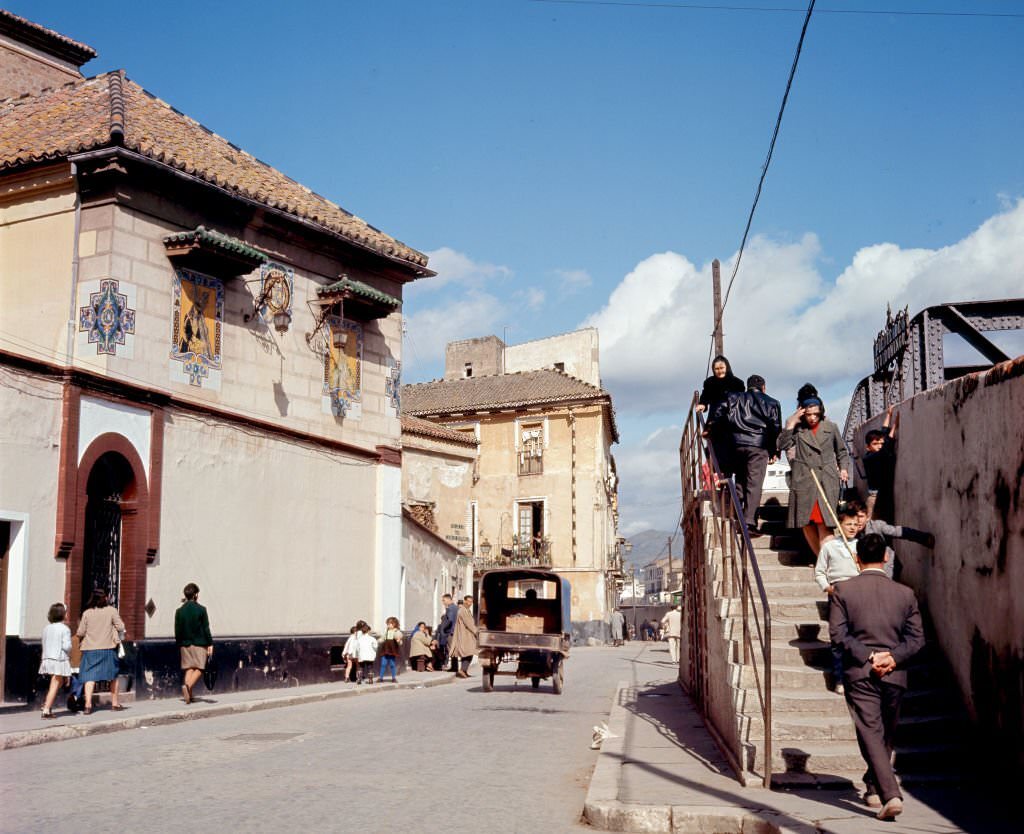
The streets of Barcelona’s old town told a different story. Narrow alleys wound past cramped apartment blocks, and residents going about their daily routines — waiting in queues, riding buses, carrying goods — gave the city its real texture. Housing was a persistent problem across Spain’s growing cities. New buildings went up fast, but the results were often poor: dense, poorly equipped apartment complexes with few amenities and little thought given to the people who would live in them.
Narrow street at old town of Barcelona, 1961Passagiere in Doppeldeckbus, Barcelona, 1961Leute in Warteschlange, Barcelona, 1961Venetian Towers at Plaza de España, Barcelona 1961.Barcelona, 1961
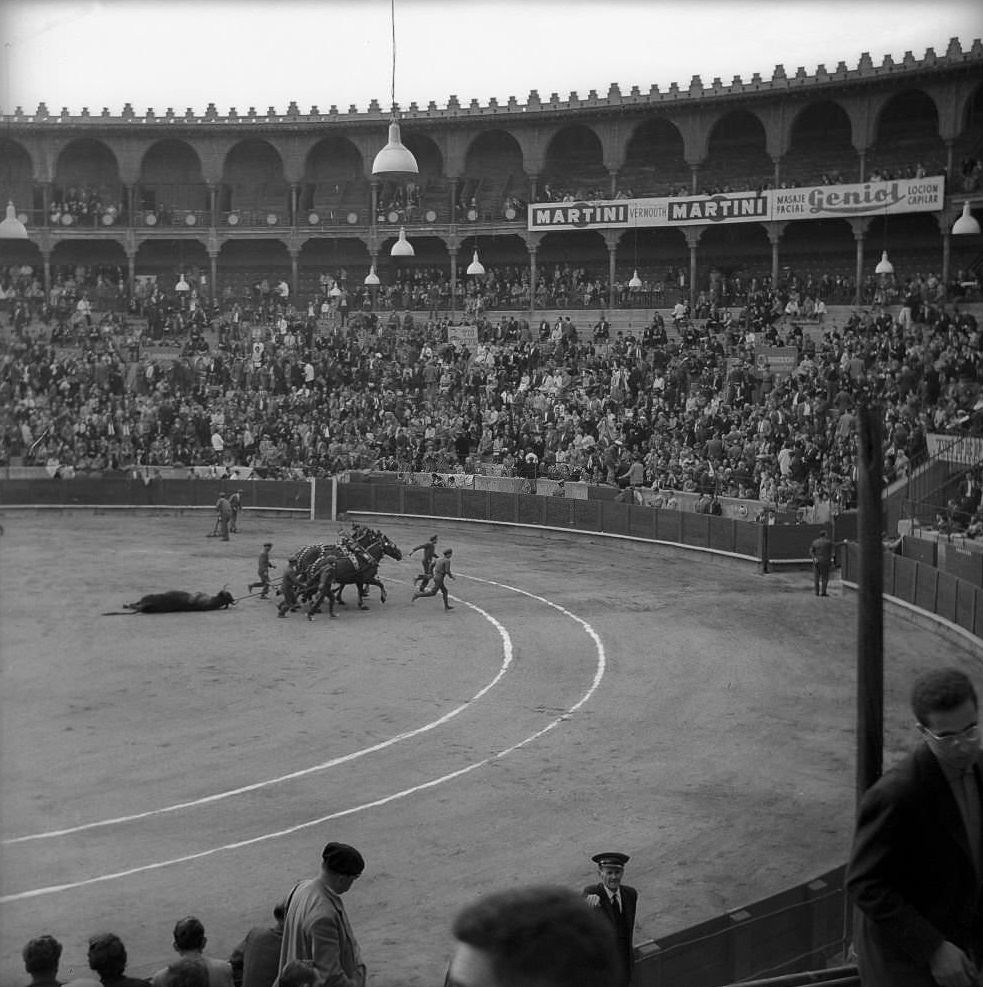
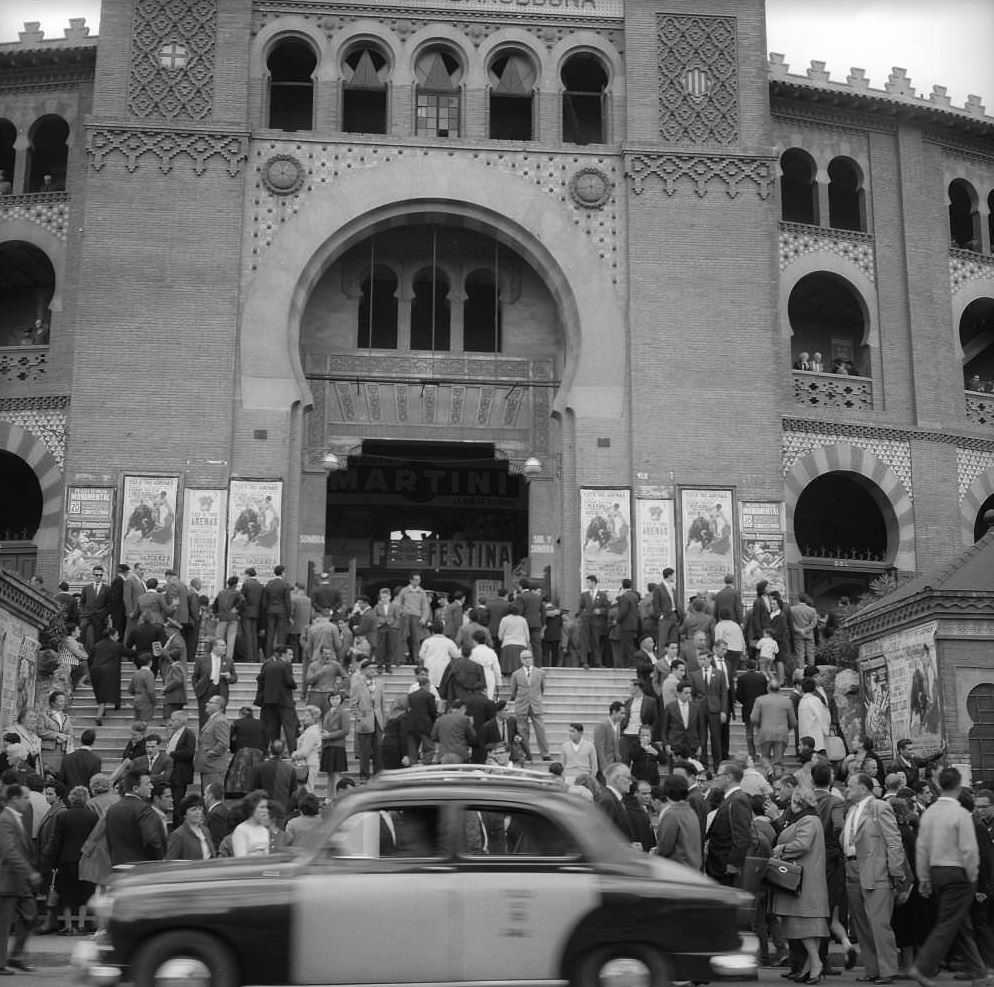
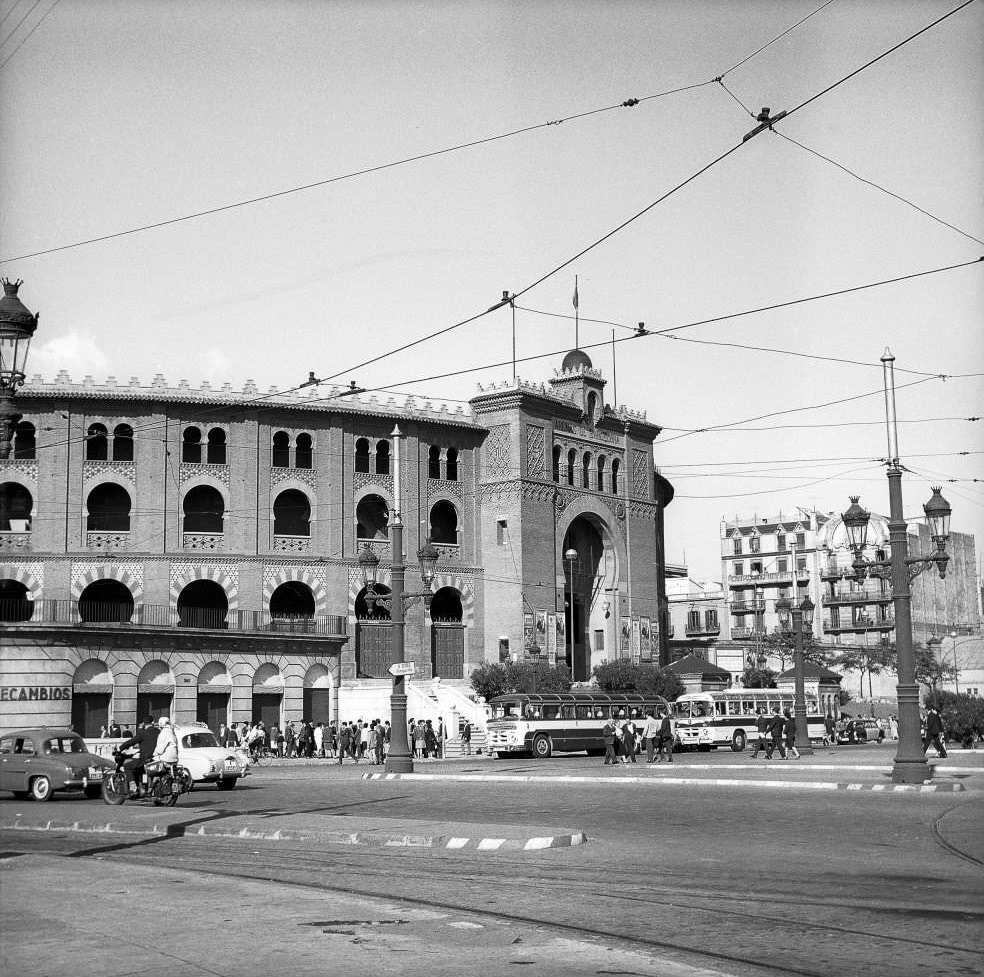
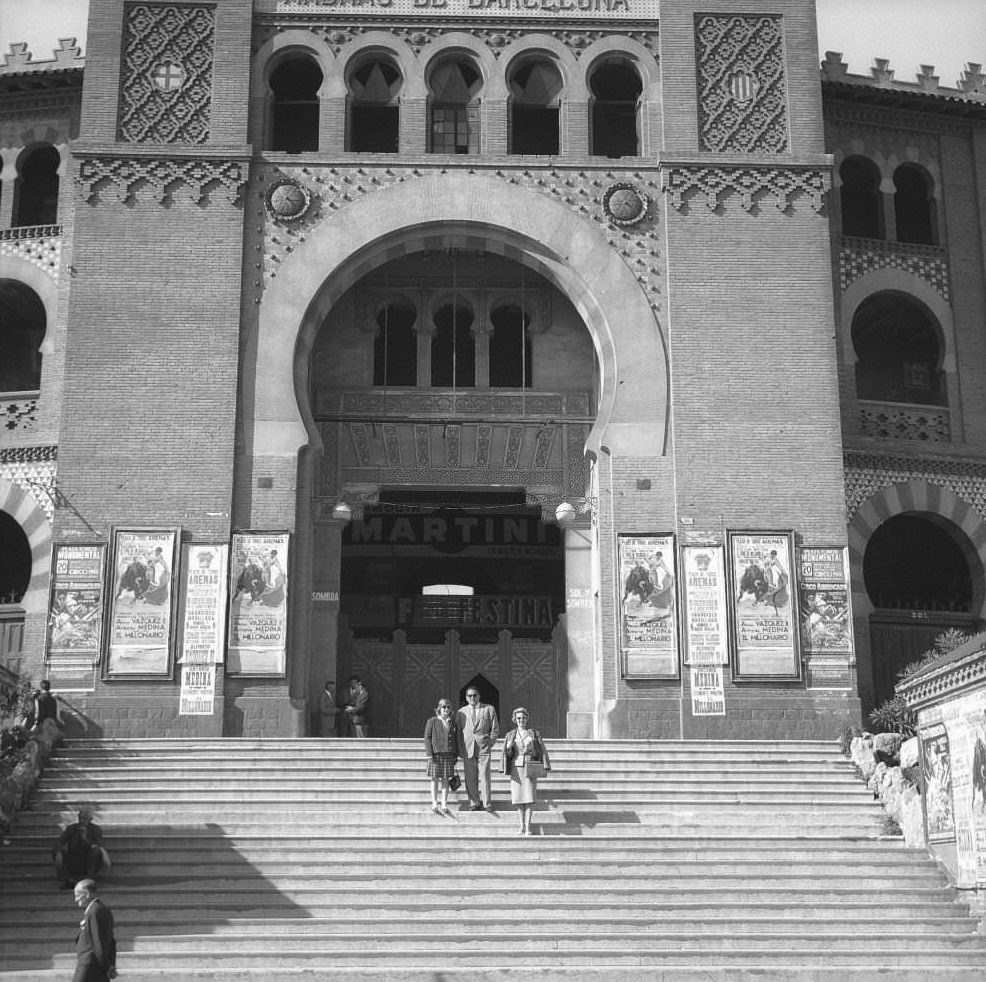
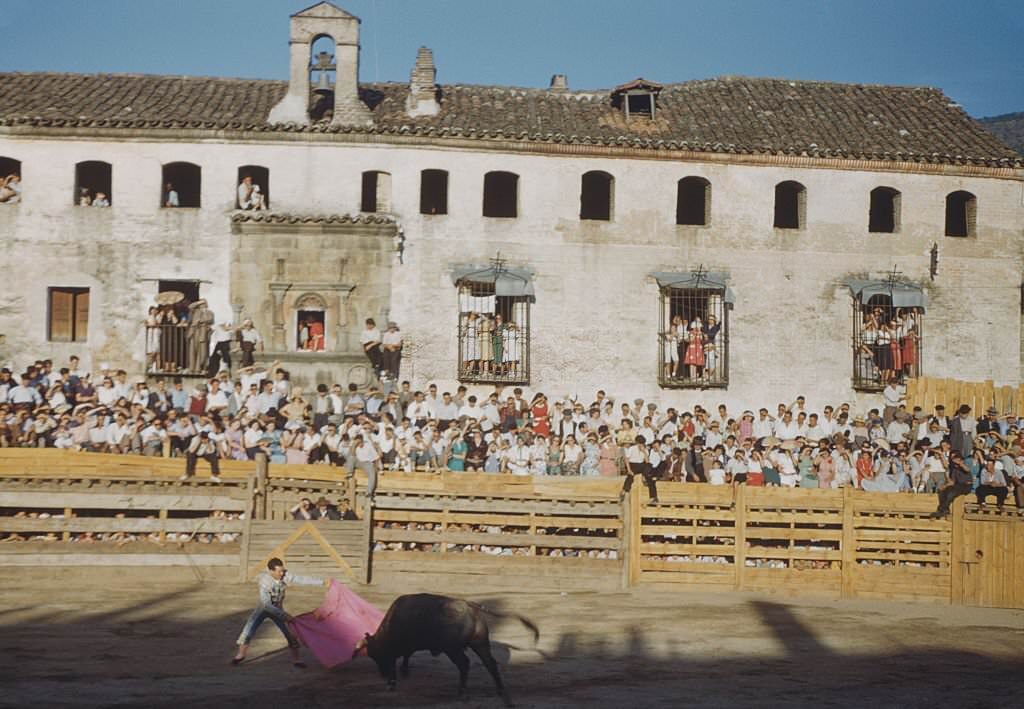
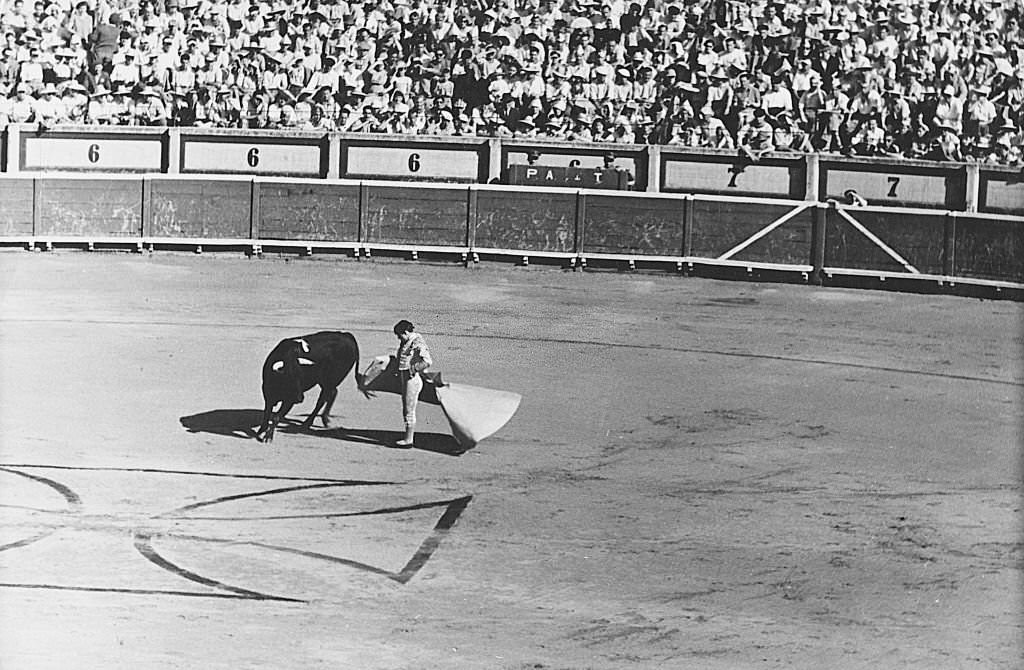
Bullfighting remained a central part of Spanish cultural life. Barcelona’s Plaza de Toros “La Monumental” — one of the largest bullrings in Spain — drew massive crowds in 1961, with spectators packing the stands and matadors working the sand below. The arena’s ornate portal was a statement of civic pride, and the spectacle inside connected modern Spaniards to traditions that stretched back centuries.
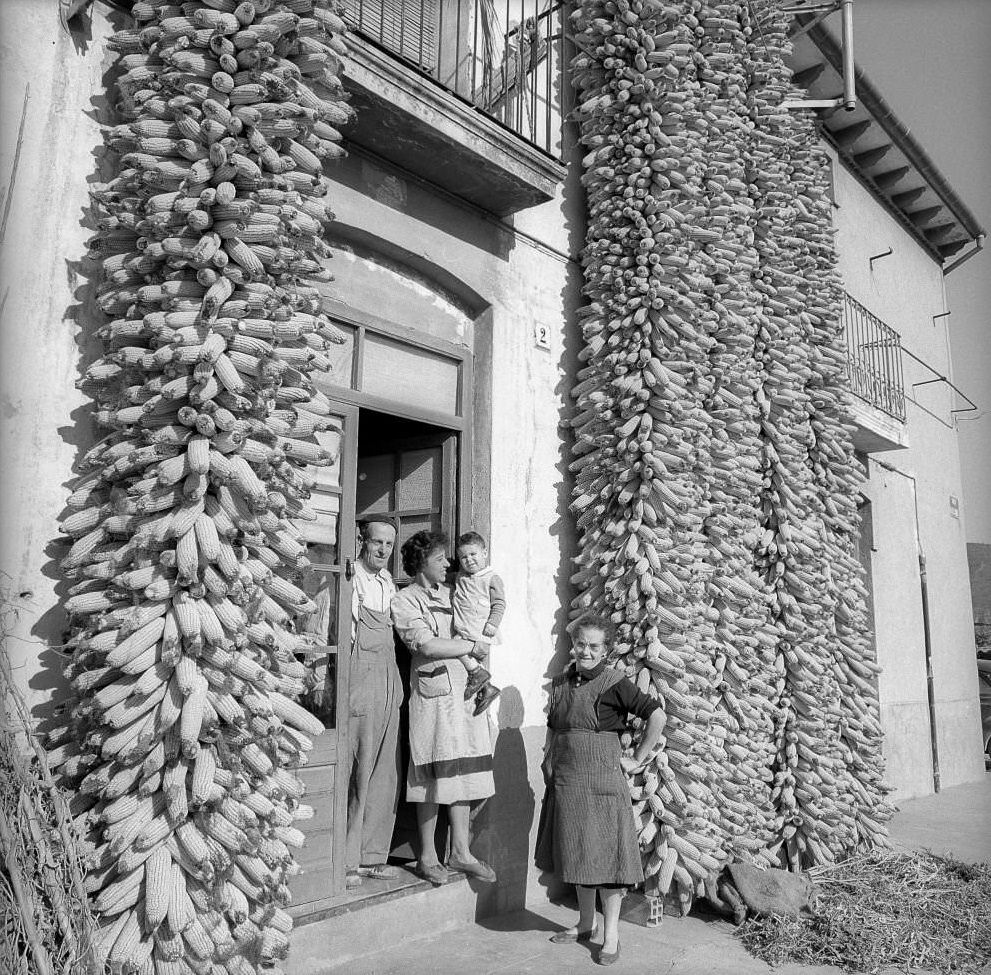
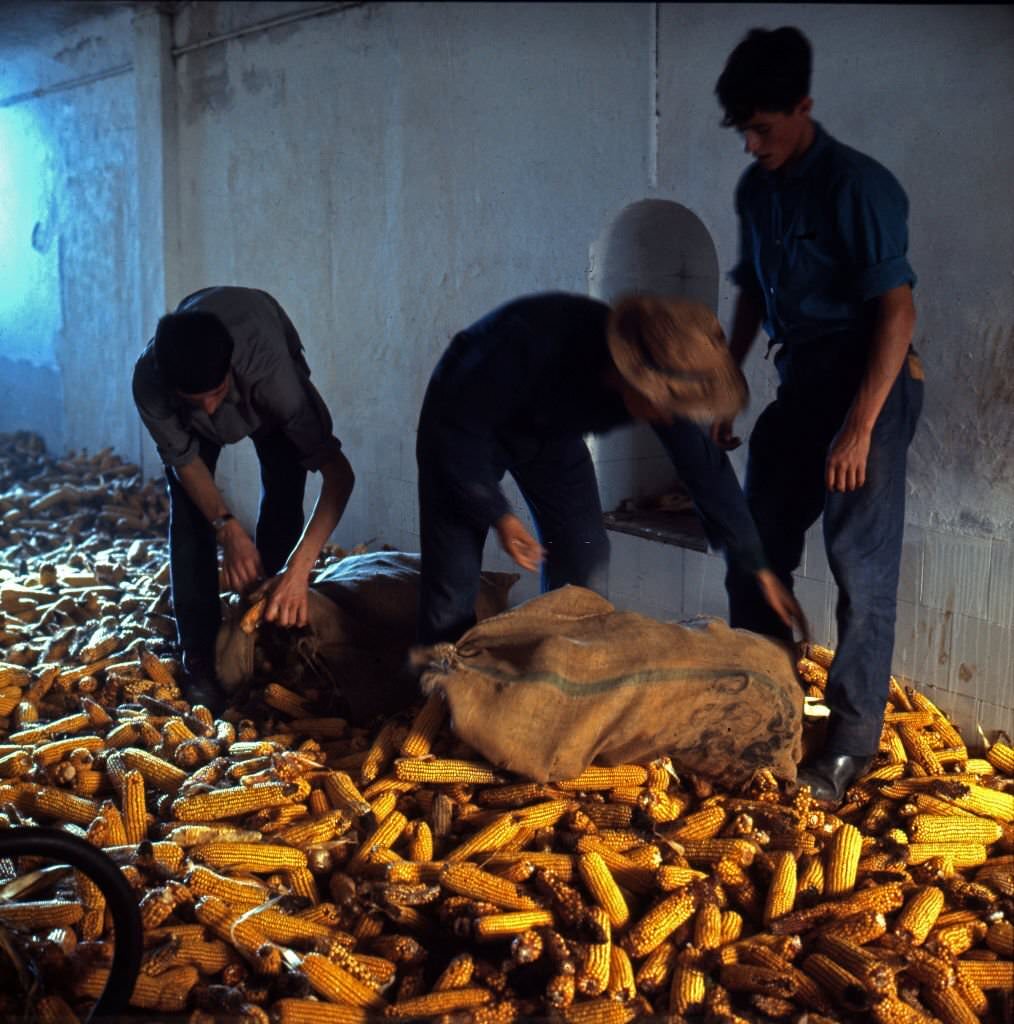
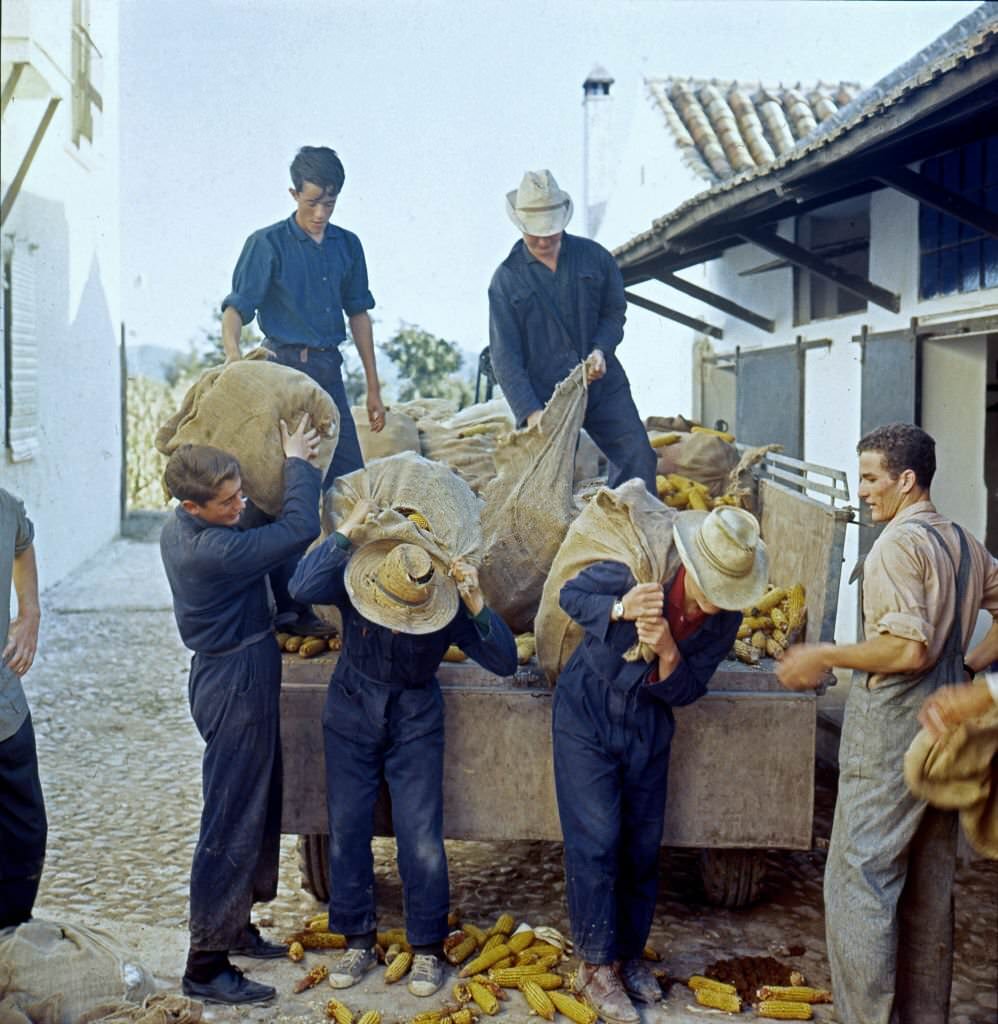
Bullfight in Barcelona Arena 1961.Bullfight arena Plaza de Toros “La Monumental”, Barcelona 1961.Montjuic palace Barcelona, 1961.Bullfight arena Plaza de Toros “La Monumental”, Barcelona, 1961.In the old town of Barcelona 1961.Family with corn crop at house door, Barcelona, 1961.Portal of bullfight arena La Monumental, Barcelona, 1961.Cathedral on Tibidabo, Barcelona, 1961Buildings in the old town of Barcelona, 1961.
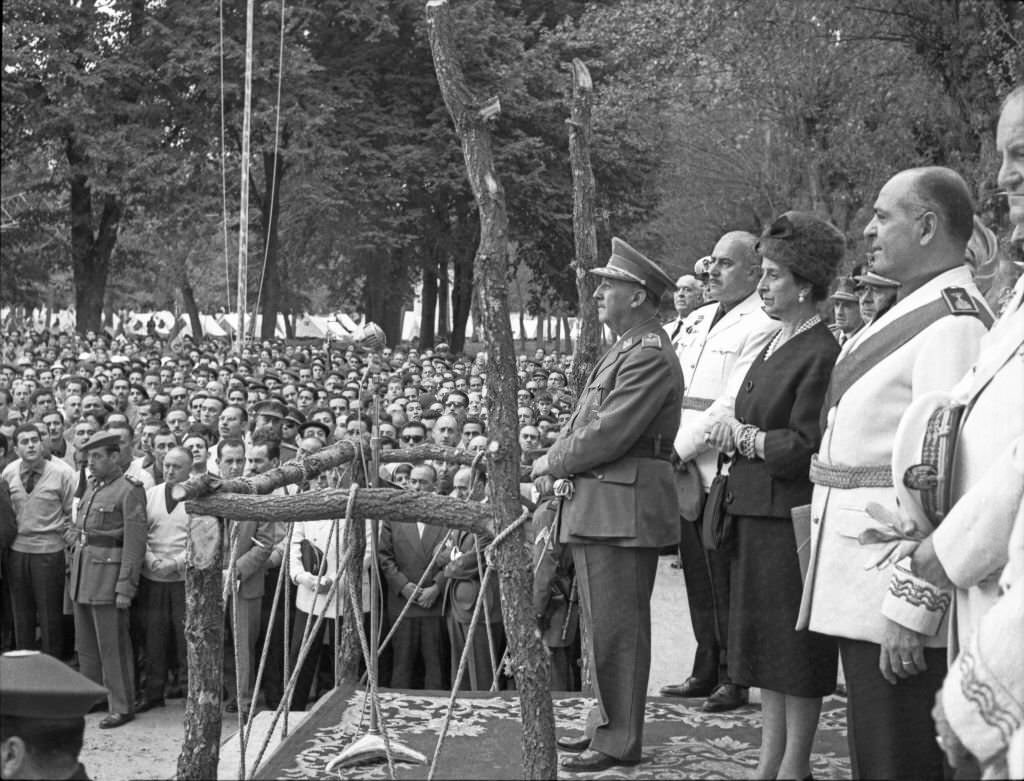
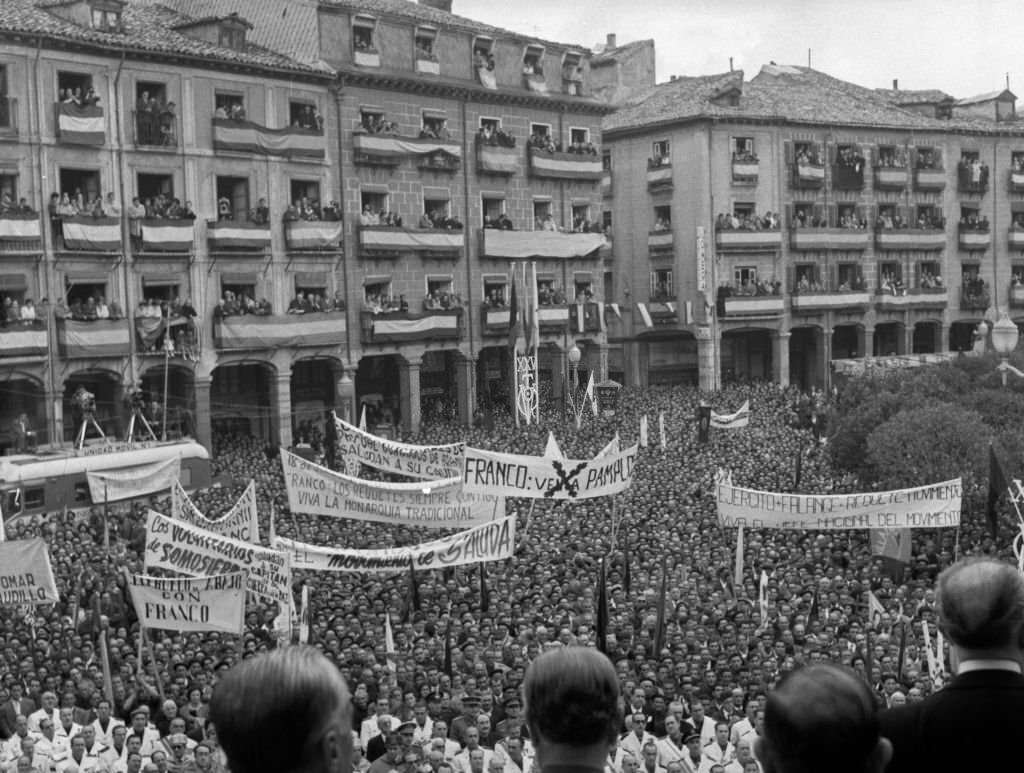
In 1961, Franco marked twenty-five years in power. Celebrations were held across the country, including a major event in Burgos, where crowds gathered to mark the anniversary of his appointment as Head of State. For the regime, such displays were about legitimacy. For many ordinary Spaniards, the mood was more complicated — a growing middle class had begun to see Franco’s restrictions not as protection, but as a wall standing between Spain and the modern world.
Francisco Franco in Burgos during the celebrations of the twenty-fifth anniversary of his appointment as Head of State Government, 1961Crowds in Burgos during the celebrations of the twenty-fifth anniversary of the appointment of Francisco Franco as Head of State Government, 1962
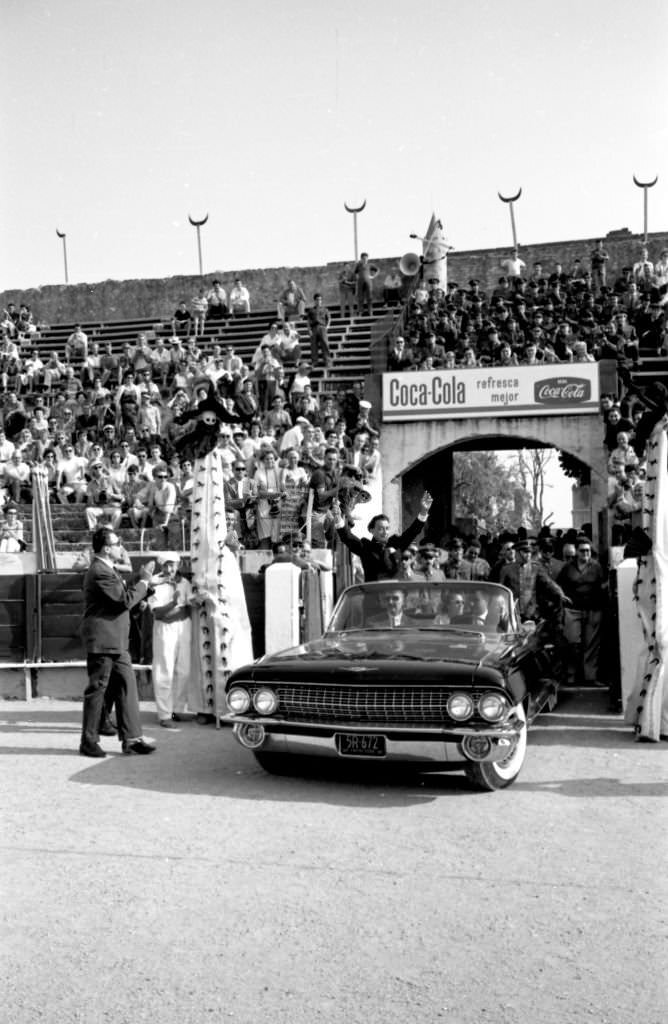
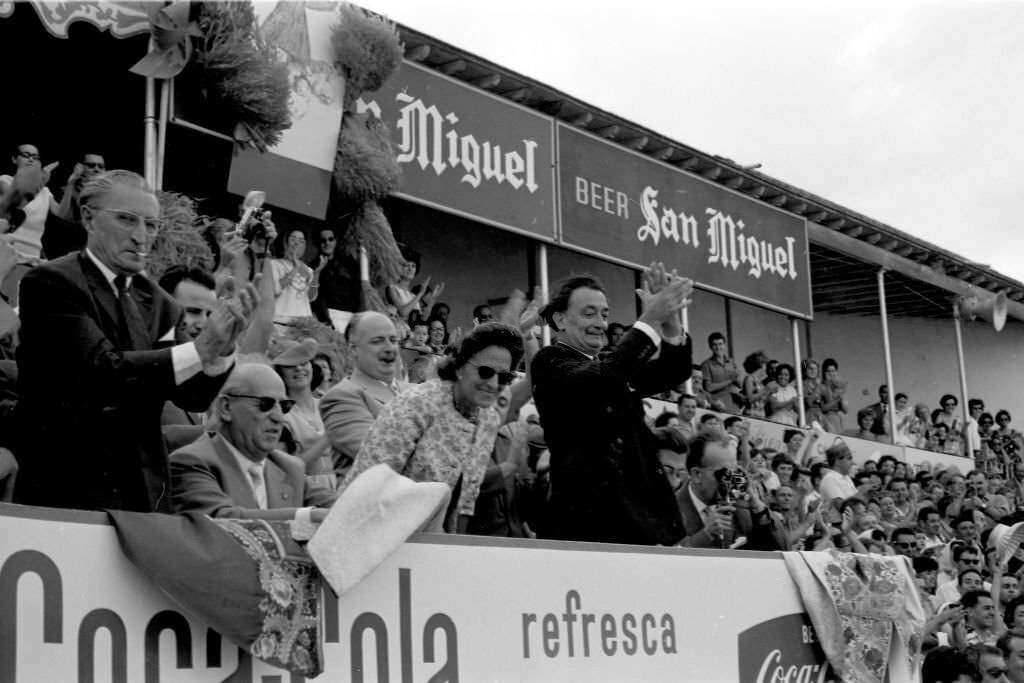
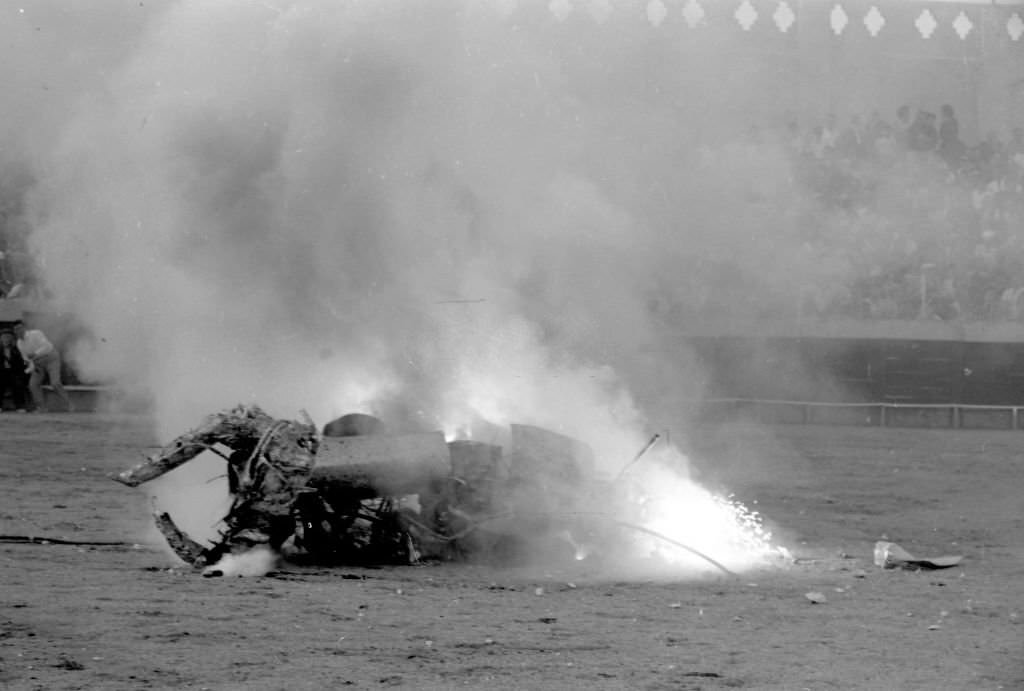
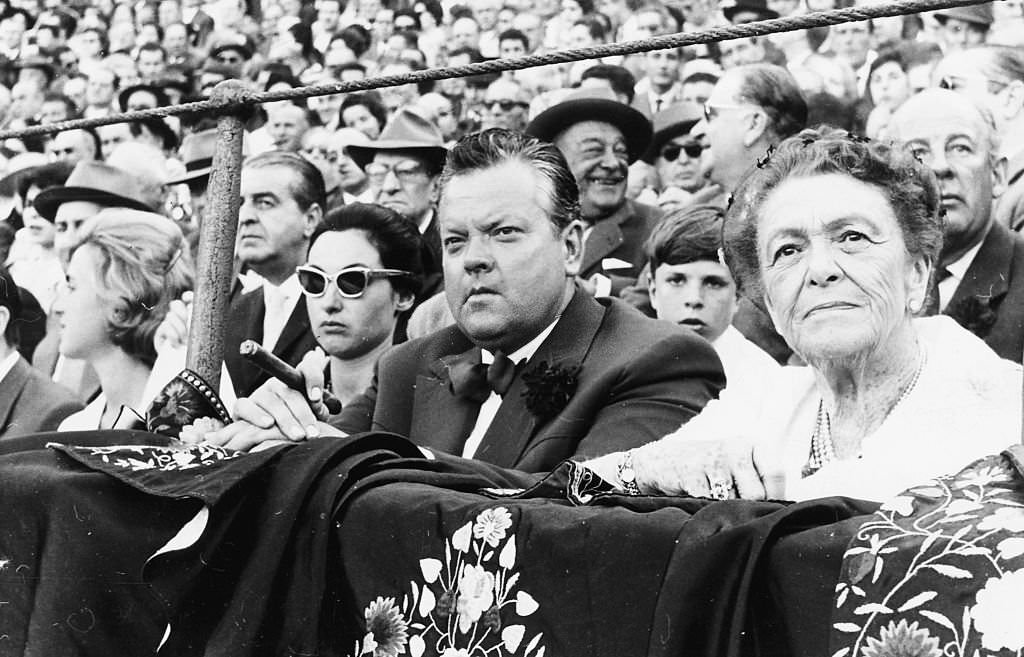
Not all of Spain’s cultural life was solemn. In 1961, Salvador Dalí organized a comic and surrealist bullfight at the Figueres Bullring — a spectacle that was equal parts performance art and public theater. Dalí, who spent much of the decade at his property in Port Lligat on the Costa Brava, watched the event alongside his wife Gala. That same year, actor and director Orson Welles sat in the front row at Seville’s traditional Spring Festival, a reminder that Spain had become a magnet for international artists and celebrities.
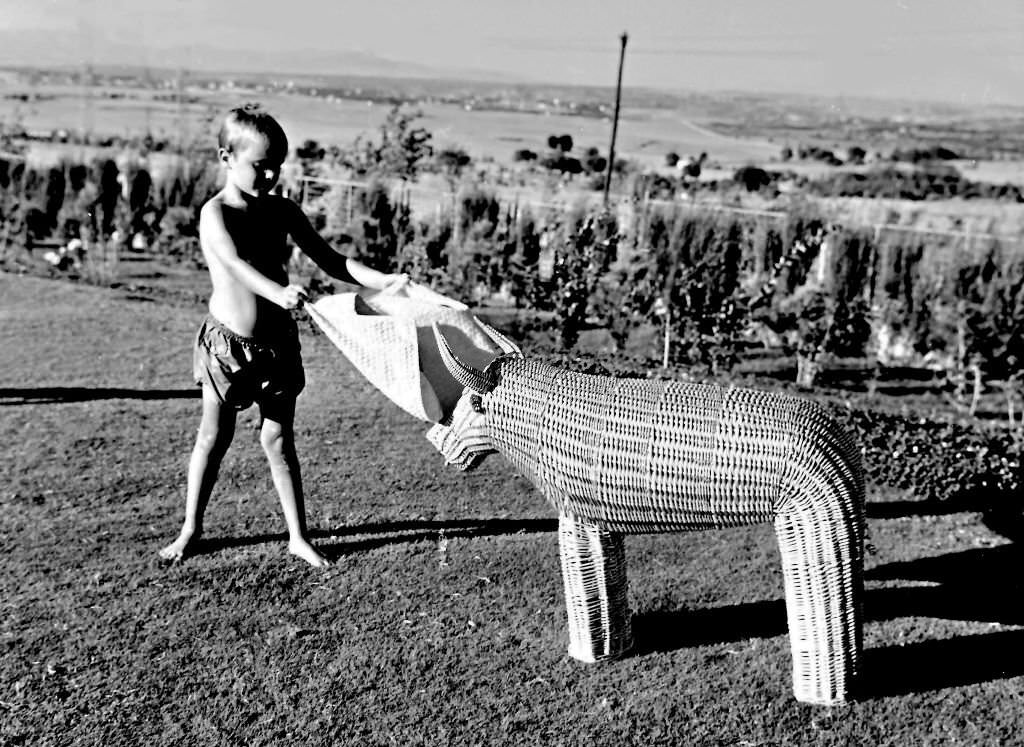
Celebration in the Figueres Bullring of a comic and surrealist bullfight organized by the painter Salvador Dali, 1961.Celebration in the Figueres Bullring of a comic and surrealist bullfight organized by the painter Salvador Dali, alongside his wife Gala Dali, 1961Celebration in the Figueres Bullring of a comic and surrealist bullfight organized by the painter Salvador Dali, 1961Actor and director Orson Welles sitting on the front row watching the traditional Spring Festival in Seville, April 24th 1961.Miguel Bose, son of the Spanish bullfighter Luis Miguel Dominguin and the Italian actress Lucia Bose, playing with a bull of wick, Saelices, Cuenca, Spain, 1961.
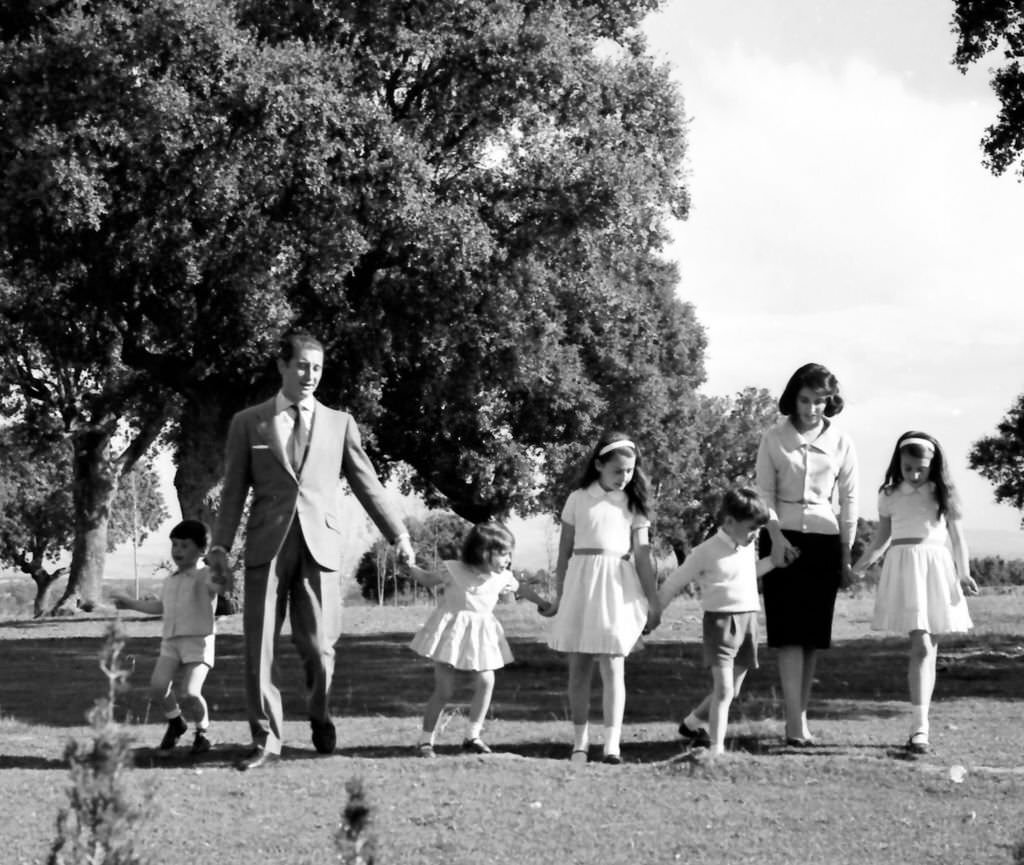
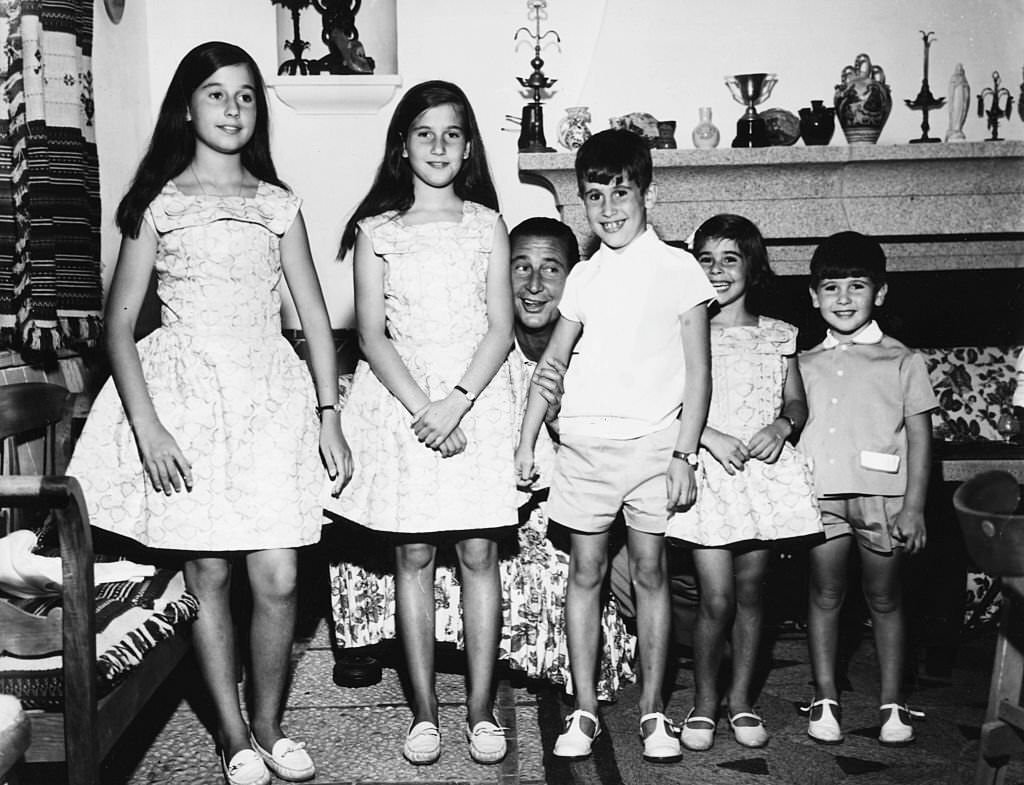
Franco’s family occupied a privileged position within the regime. His son-in-law, Cristóbal Martínez-Bordiú, Marquis of Villaverde, was a prominent cardiac surgeon with close ties to the dictator. In 1961, he was photographed with his wife María del Carmen Franco y Polo — Franco’s own daughter — and their children in the gardens of the Palacio del Pardo in Madrid. Spain’s aristocracy and elite circles remained tightly intertwined with the regime throughout the decade.
Cristobal Martinez-Bordiu, 1961
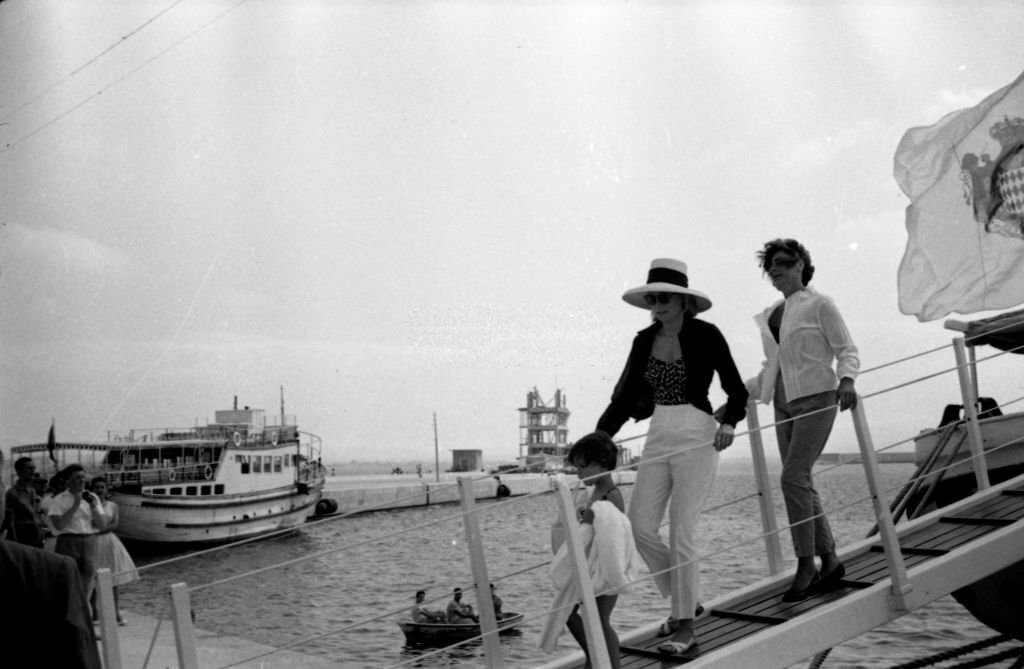
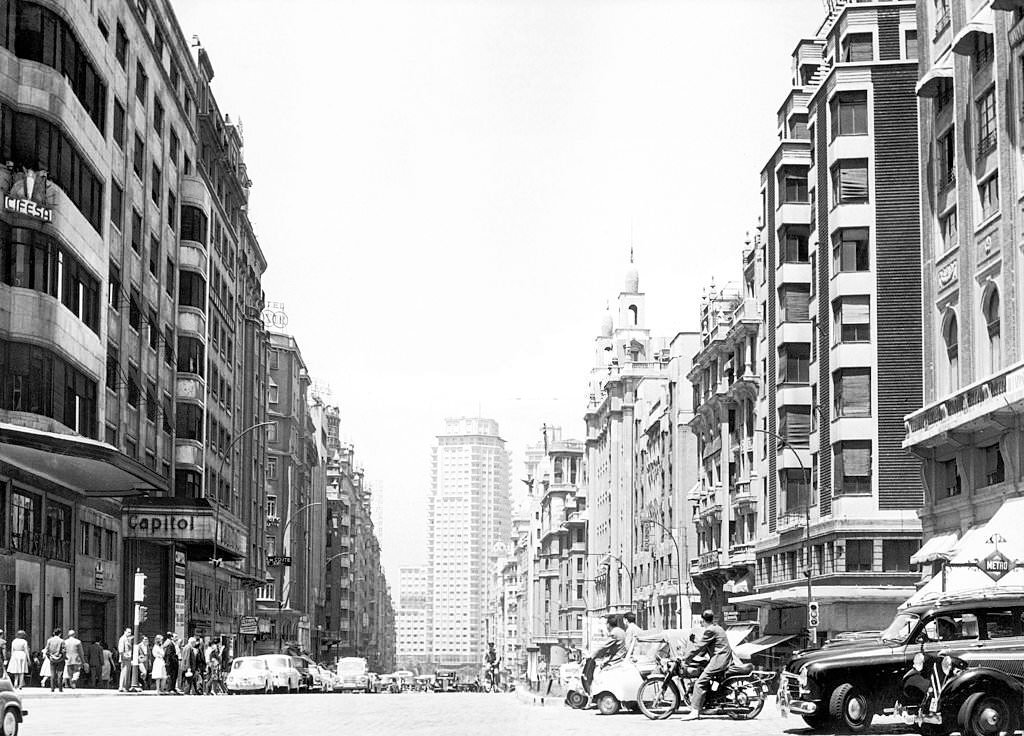
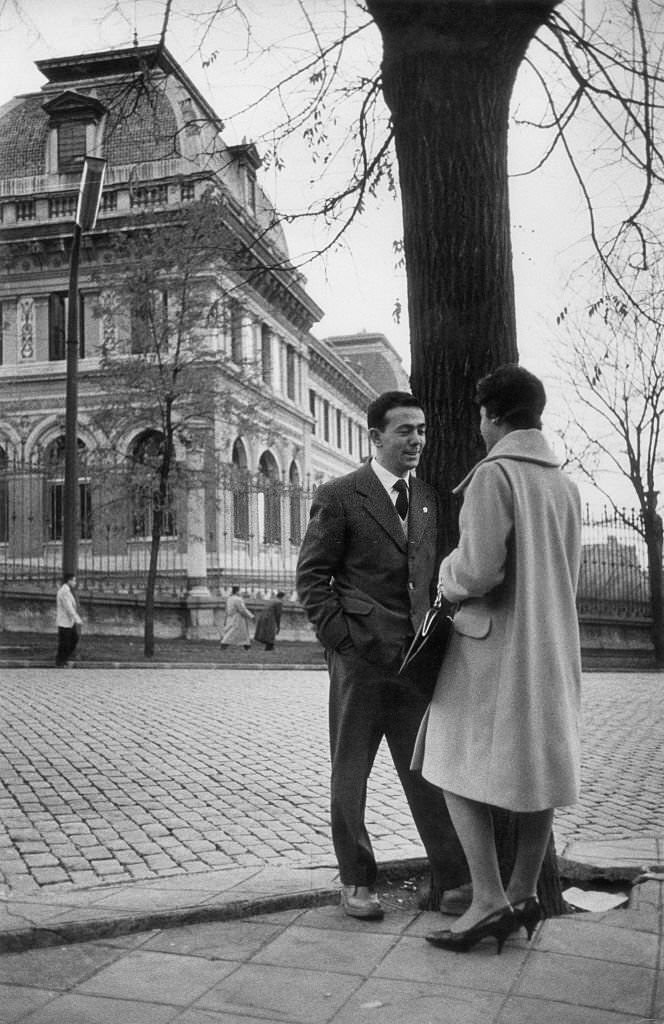
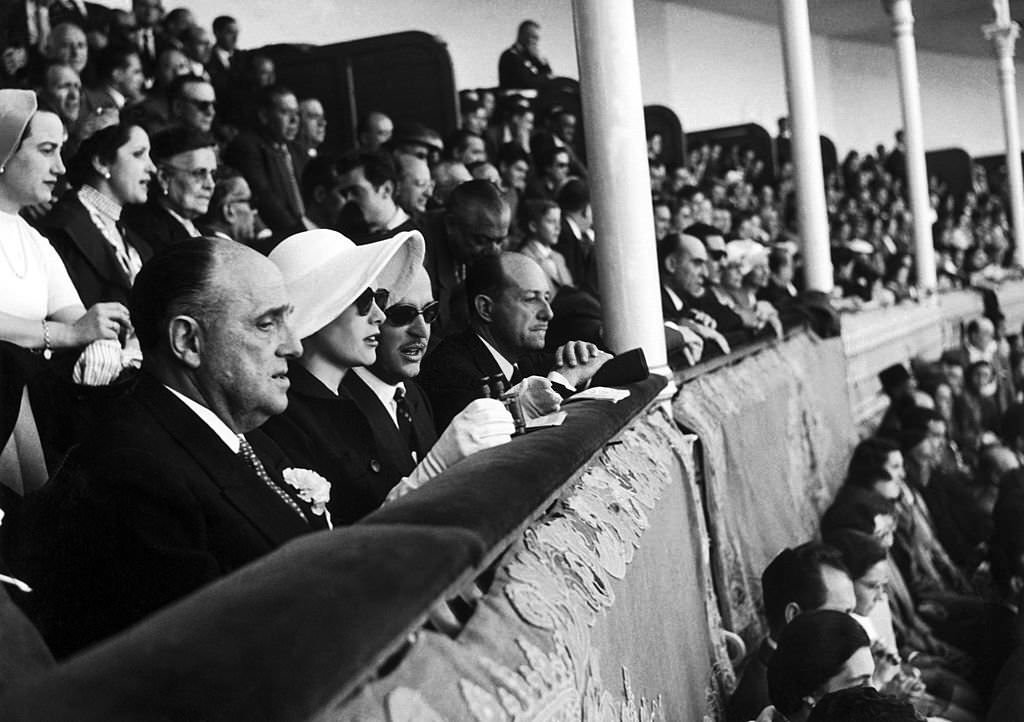
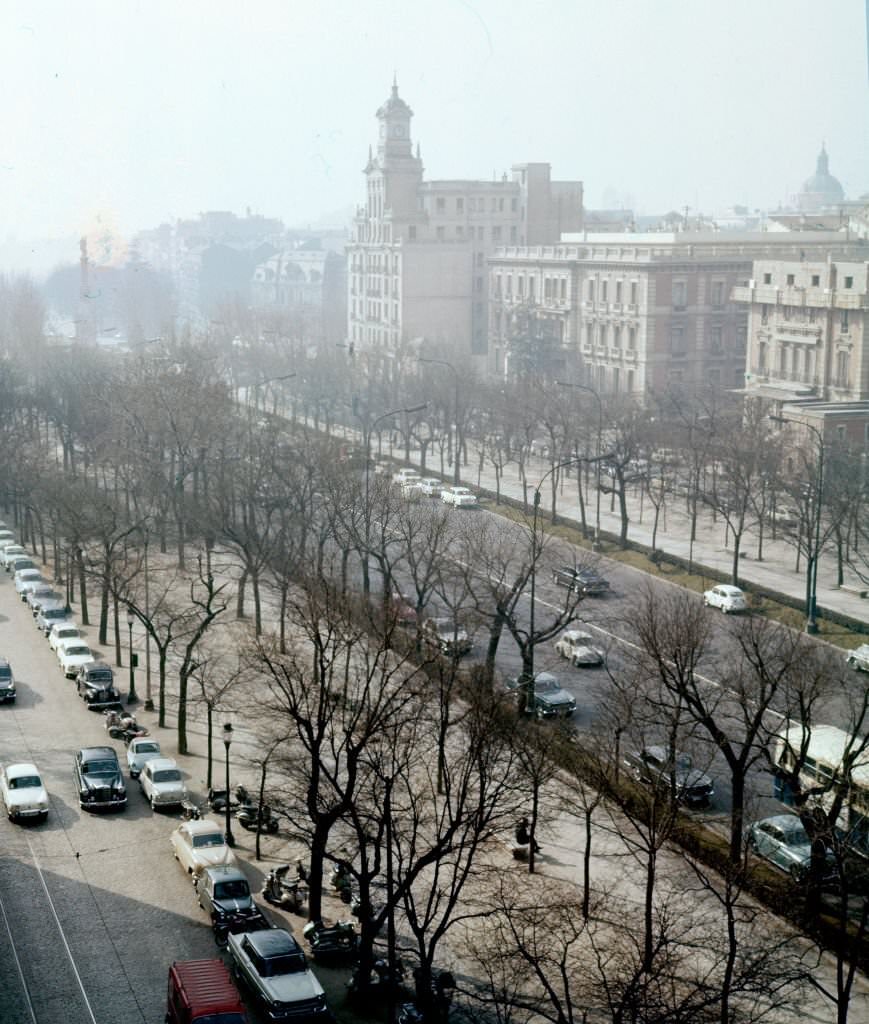
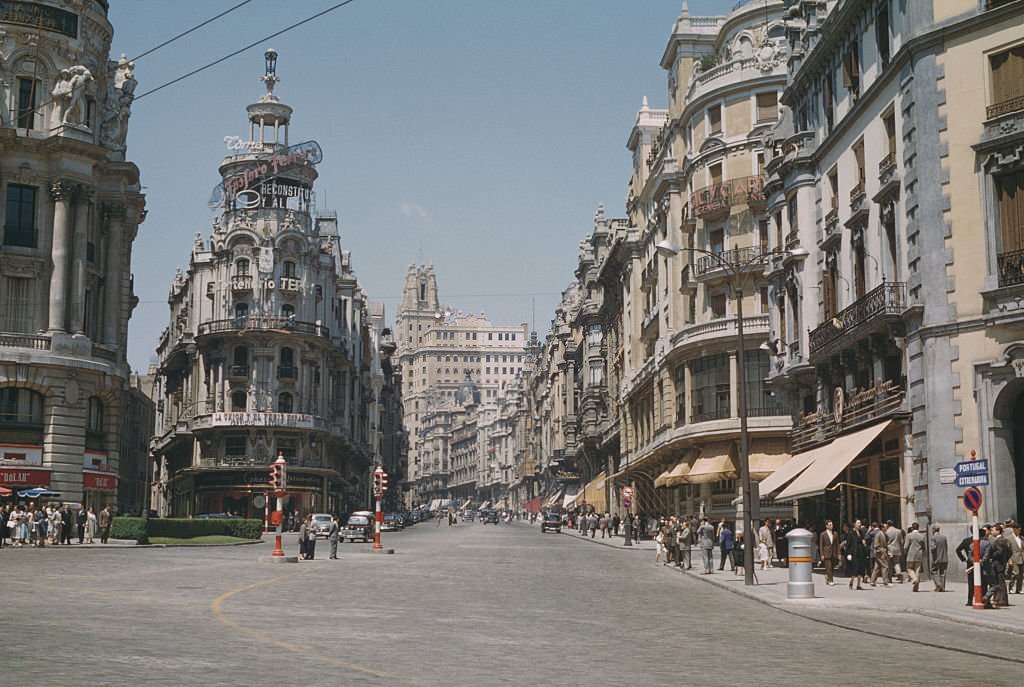
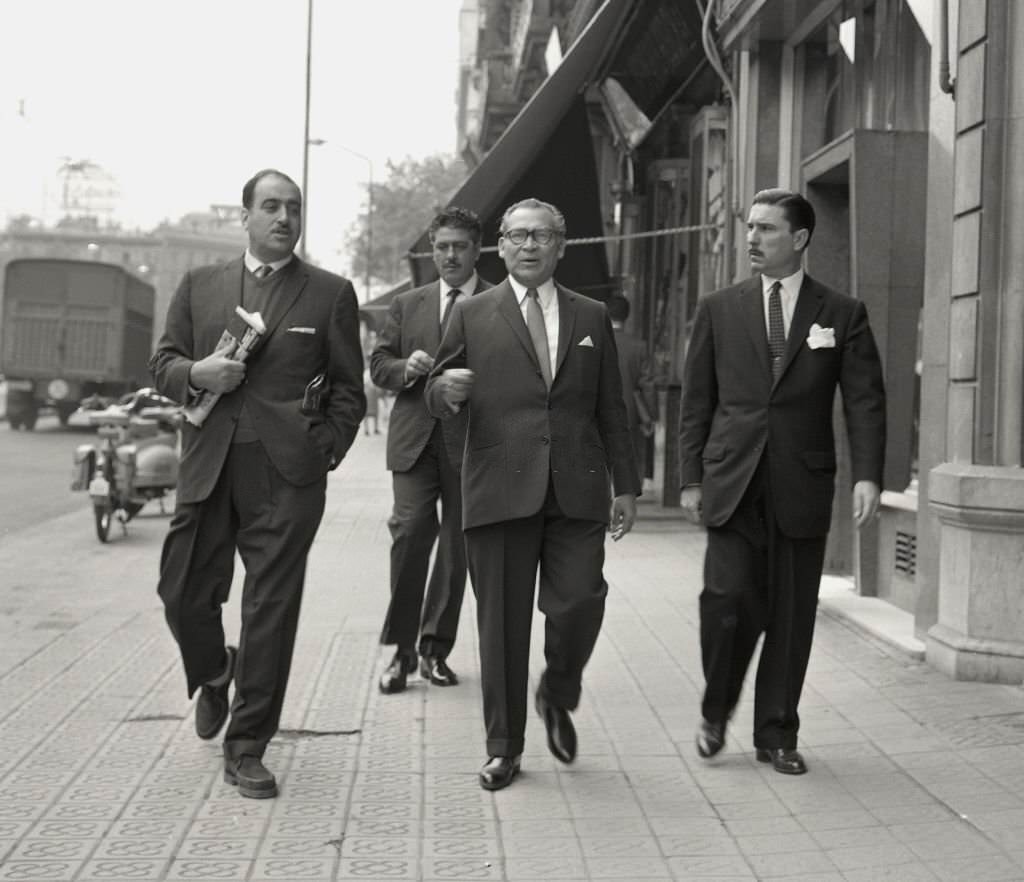
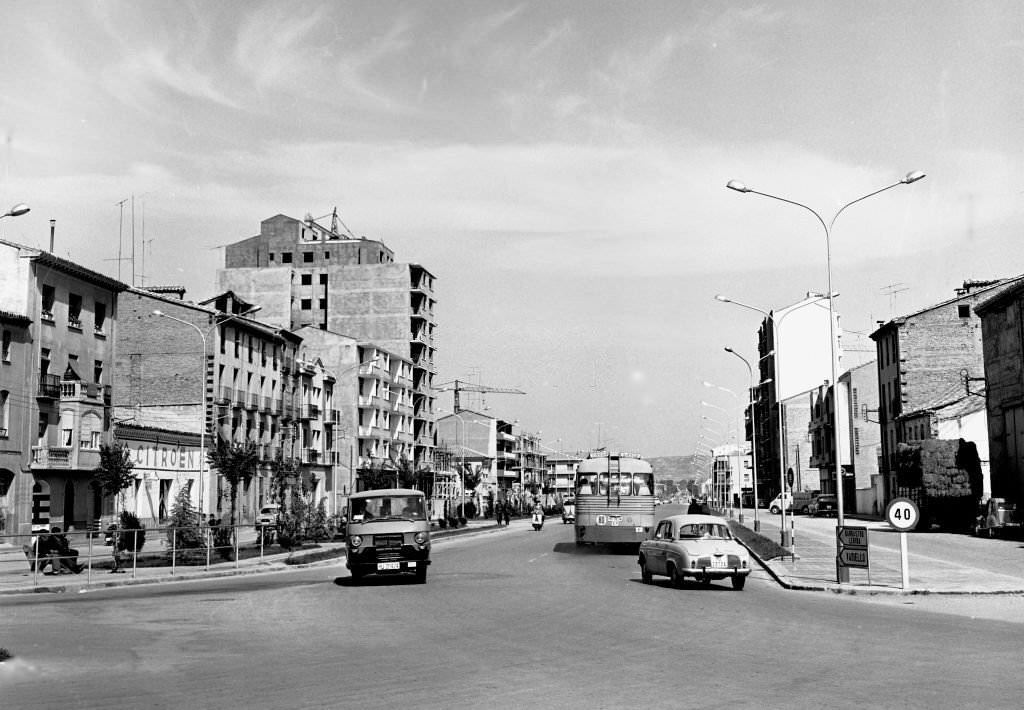
By 1960, Spain’s appeal to foreign visitors was already well established. Prince Rainier III and Grace of Monaco were photographed in Majorca that year, part of a broader trend of European royalty and celebrities using Spain’s coastline as a retreat. Madrid, meanwhile, showed its own contrasts — grand boulevards like José Antonio Street carried both foot traffic and the new wave of automobiles that rising incomes were putting on the road, while city transportation systems struggled to keep pace.
Prince And Princess Of Monaco in Majorca, 1960Jose Antonio Street, Madrid, 1960Spectators watching a bullfight in Spain, 960.A man and a woman chatting beside a tree. Madrid, May 1960
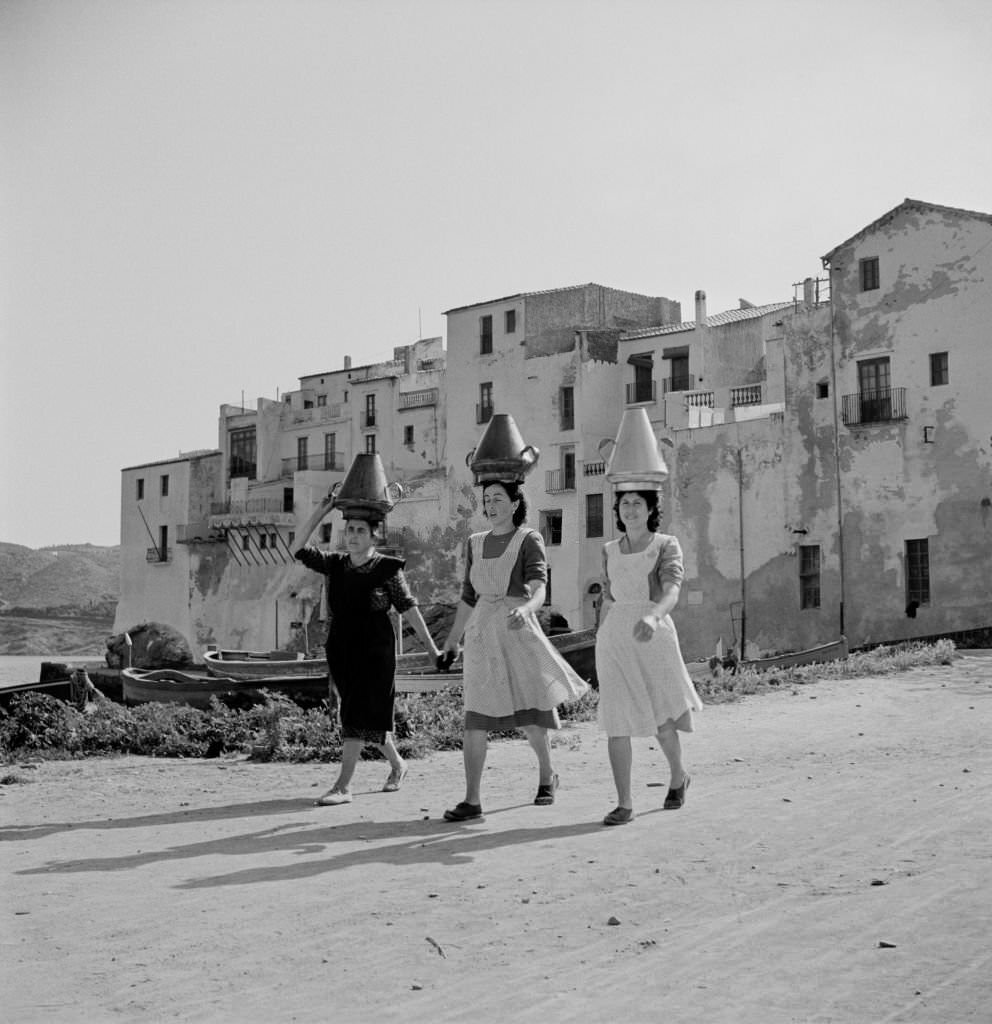
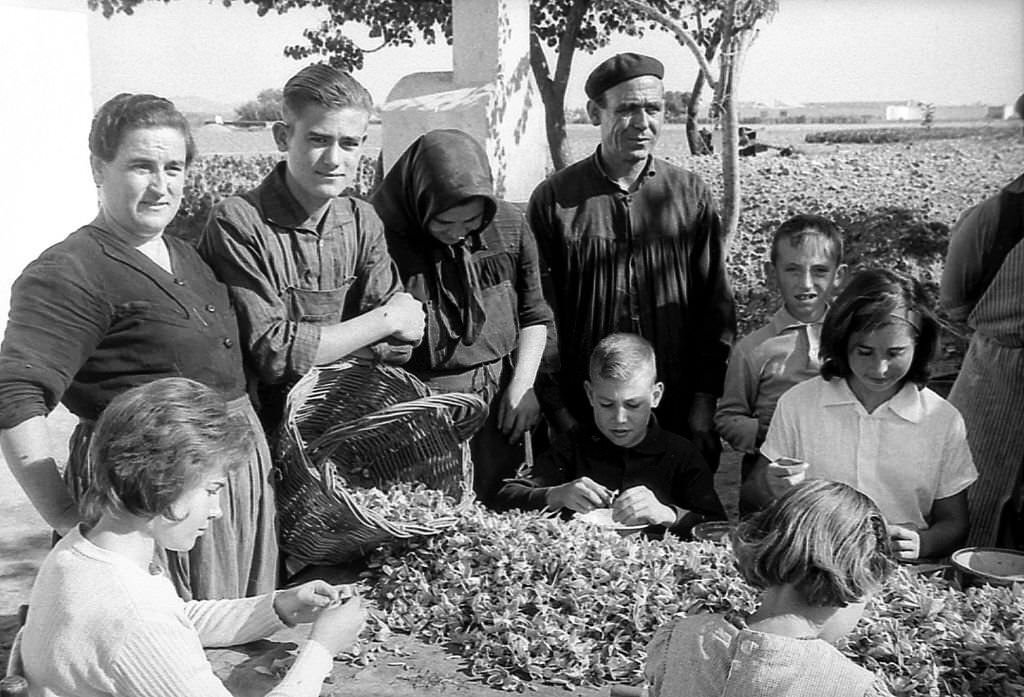
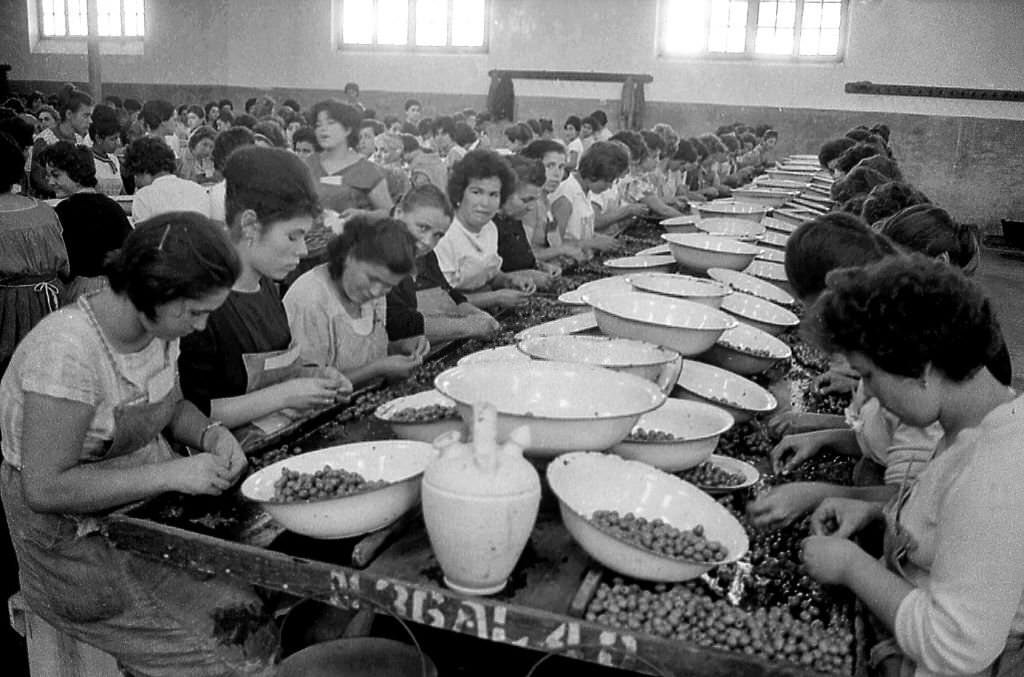
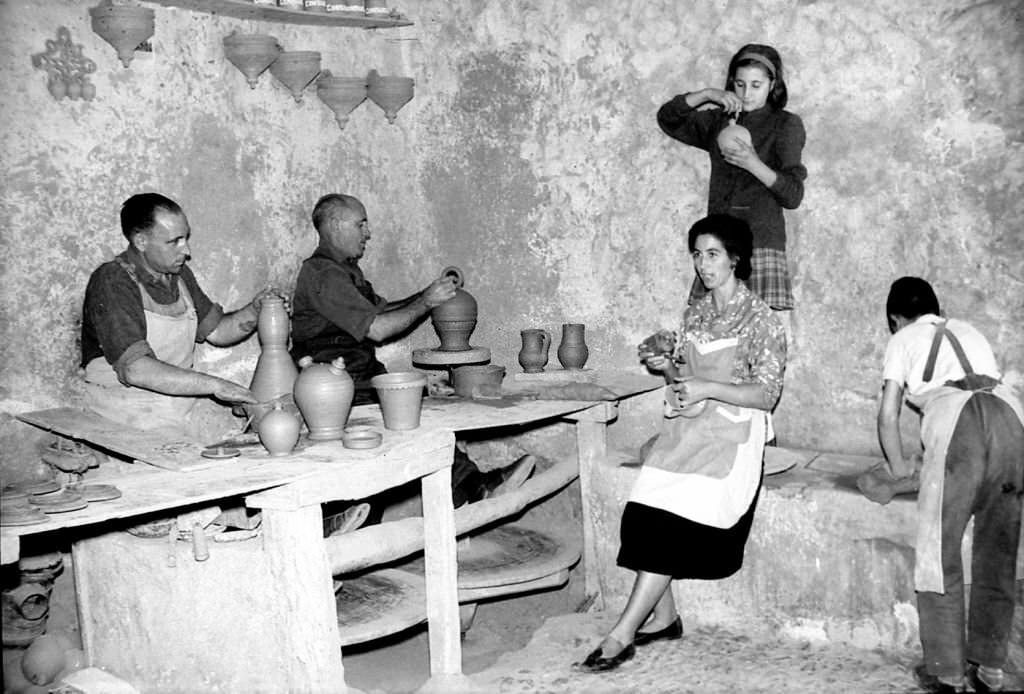
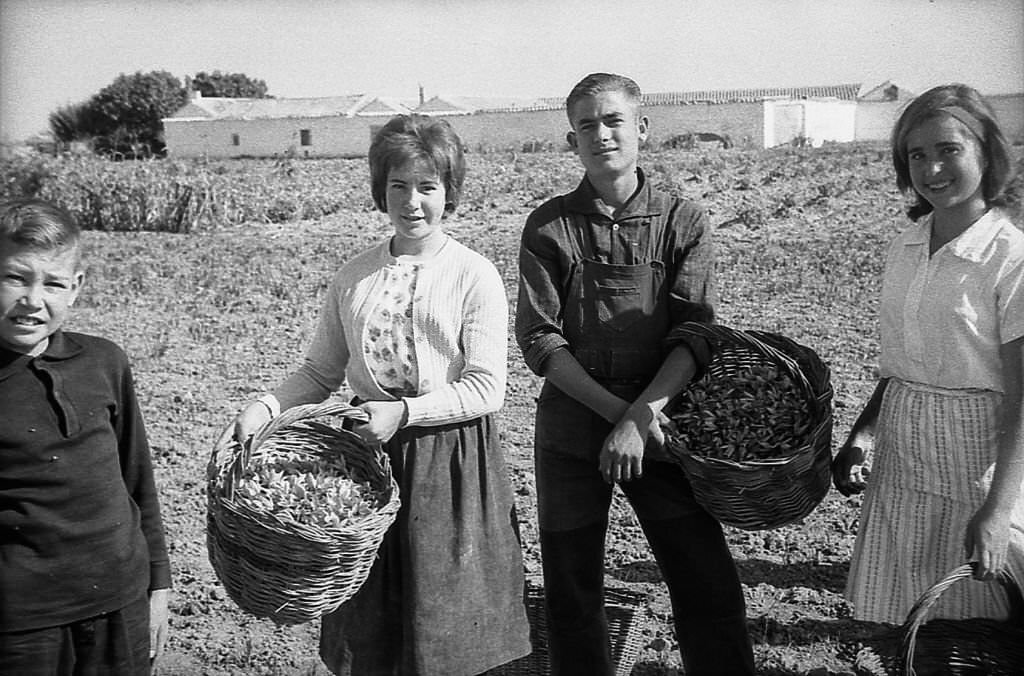
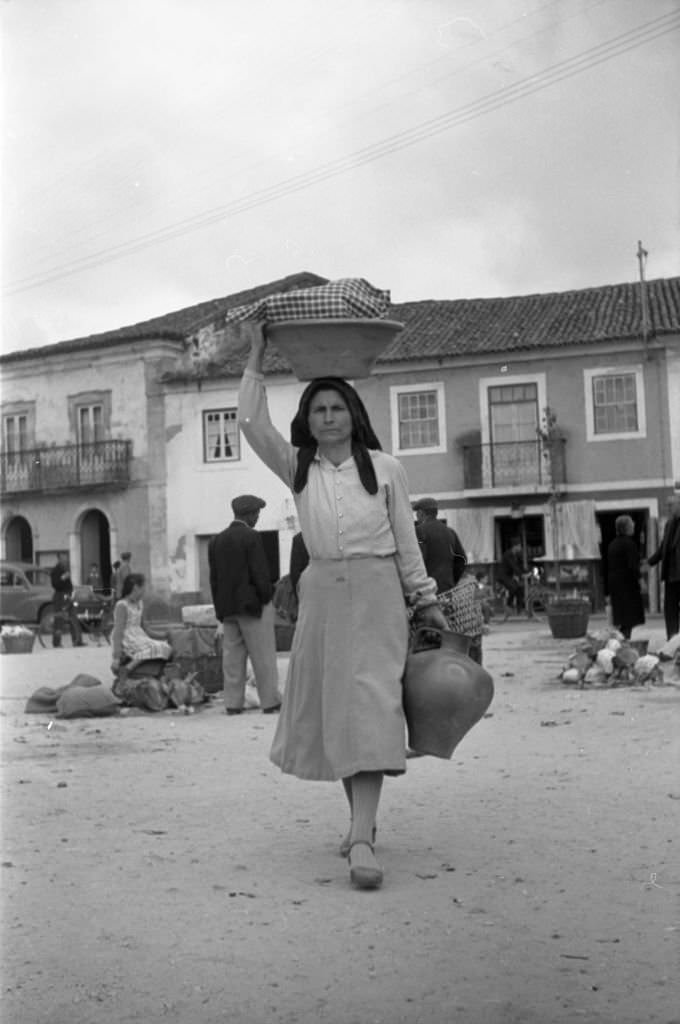
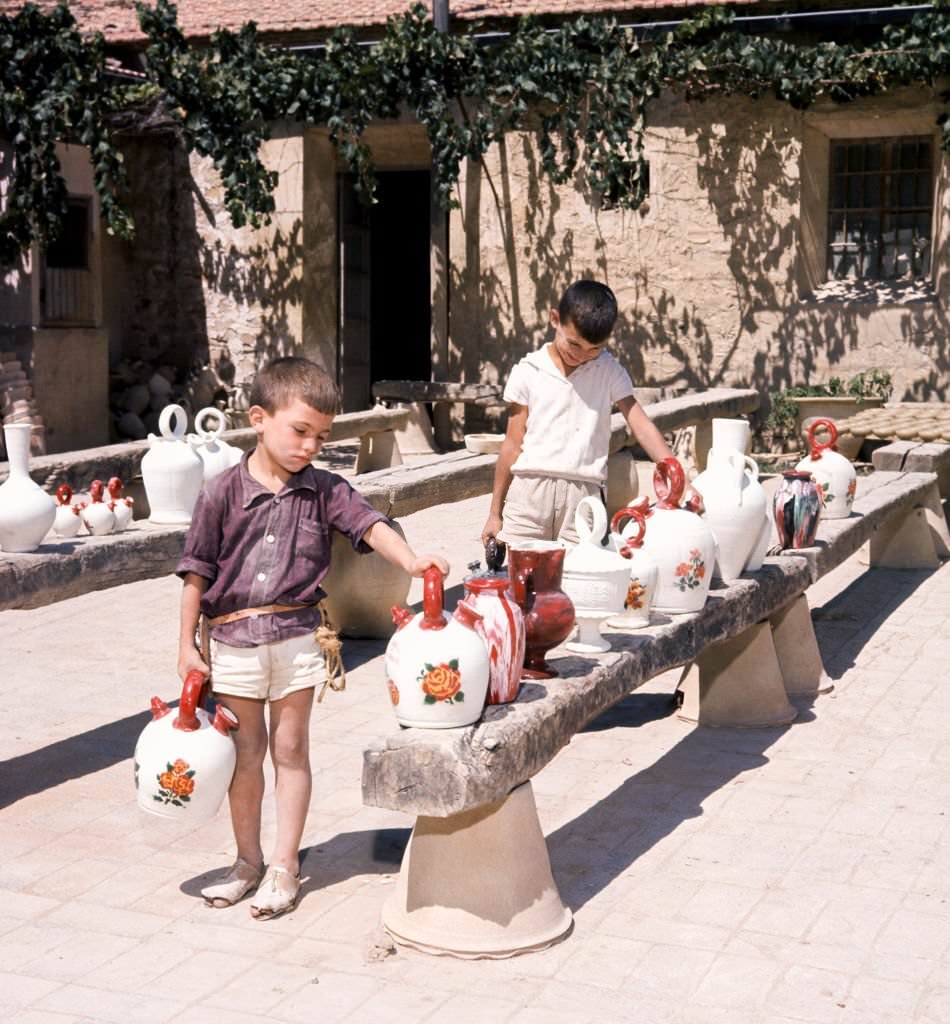
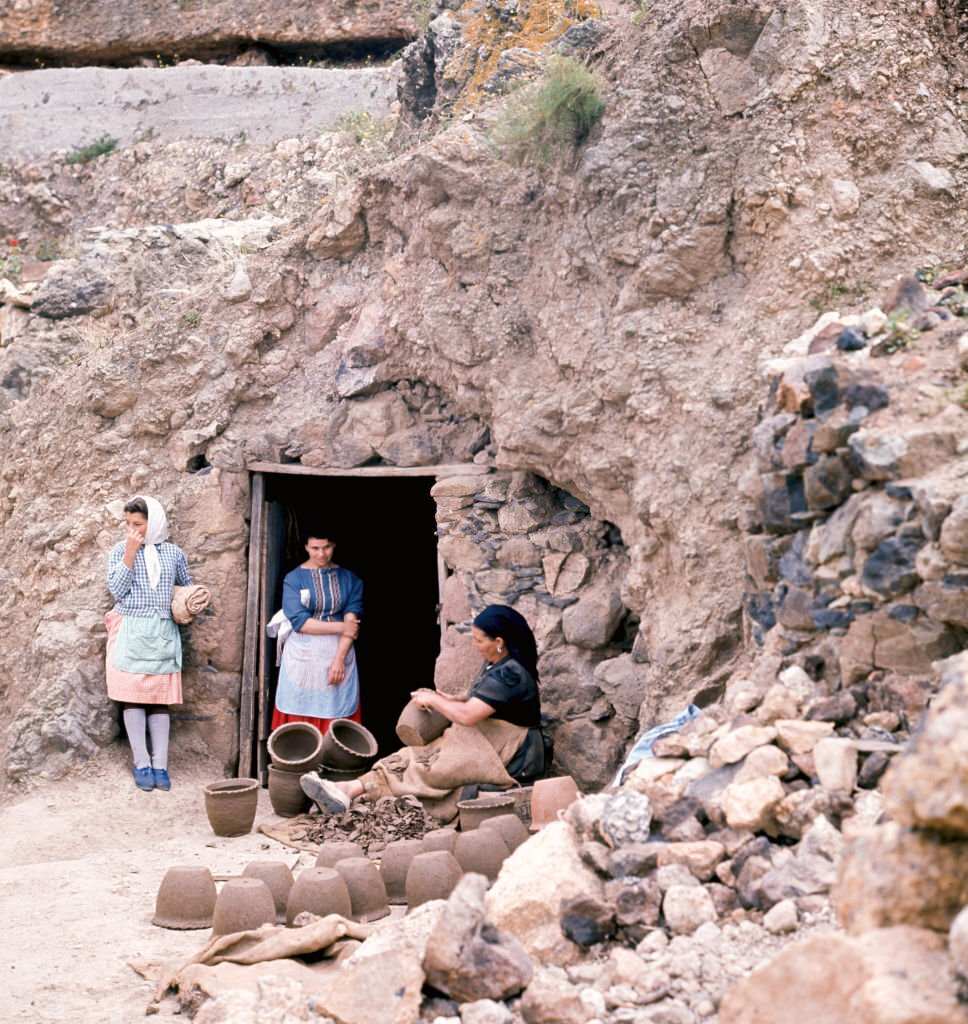
Rural Spain in 1960 operated at a different pace entirely. Women in some regions still carried jars on their heads. Saffron harvests brought entire communities together — men, women, and children sitting side by side to remove the delicate stigmas from the flowers by hand. Olive pits were removed by women working in groups. Potters shaped clay in workshops that had barely changed in generations. These were not relics of a distant past; they were the everyday realities of Spanish life outside the expanding cities.
Women carrying jars on their heads, 1960 in SpainThe Royal Couple Attending a Corrida i Madrid, 1960Several people including children work to remove the stigmas from the saffron flower, in Spain, 960s.Women at work removing the pits from olives, Spain, 1960s.People making pottery in rural Spain, 1960s.Several people with baskets full of saffron flower, in Spain, 1960s.
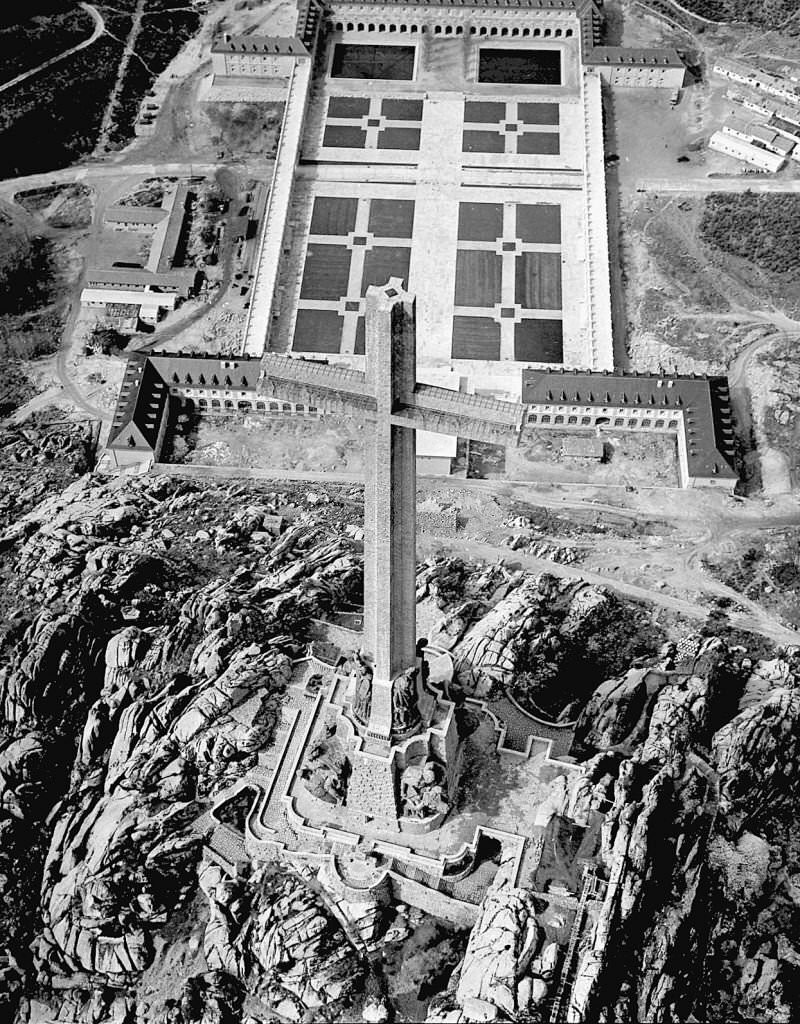
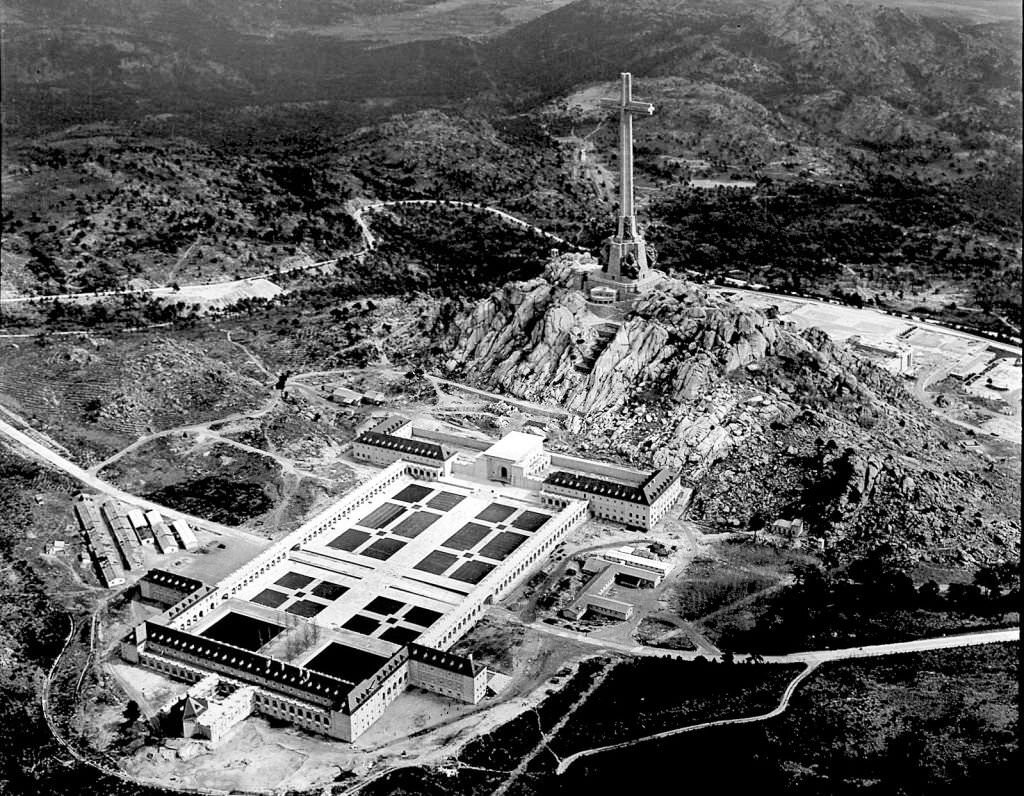
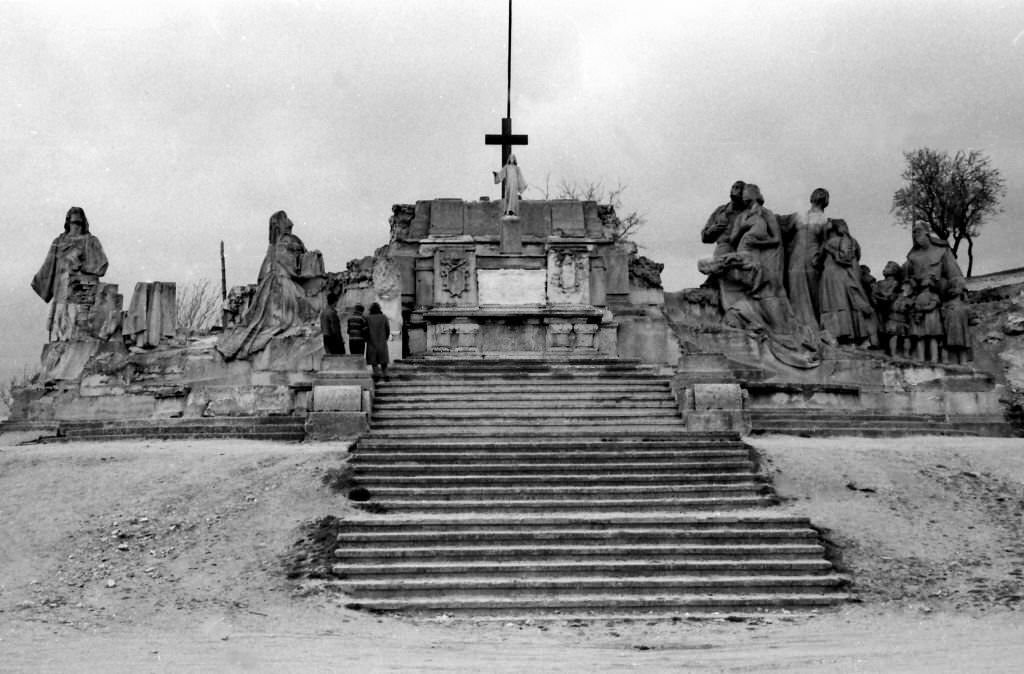
One of the most physically imposing monuments of the Franco era stood in the Valley of Cuelgamuros near Madrid: the Abbey of the Holy Cross of the Valley of the Fallen. Built by Franco’s order and completed in 1959, it was constructed in part using forced labor from Republican prisoners. It loomed over the surrounding landscape as both a religious site and a political statement — a permanent symbol of the regime’s claim over Spain’s past and future.
Abbey of the Holy Cross of the Valley of the Fallen, built by order of the Spanish dictator Francisco Franco in the Valley of Cuelgamuros, in San Lorenzo del Escorial, Madrid, 1960sAbbey of the Holy Cross of the Valley of the Fallen, built by order of the Spanish dictator Francisco Franco in the Valley of Cuelgamuros, in San Lorenzo del Escorial, Madrid, 1960s
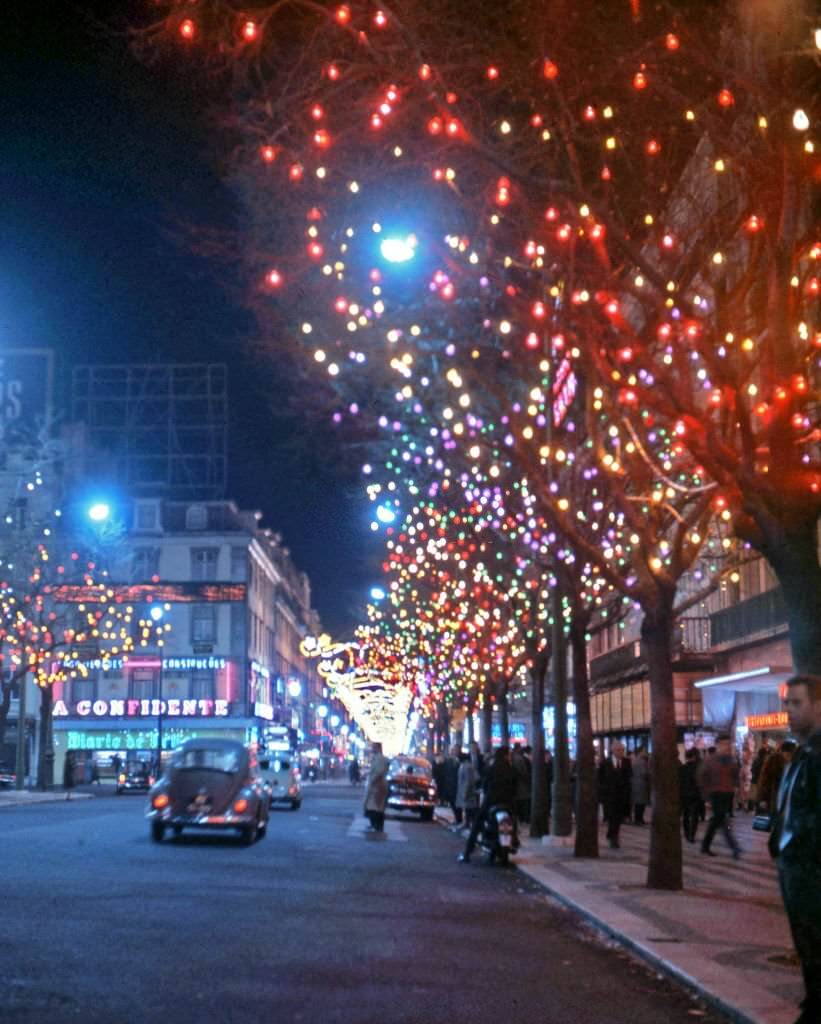
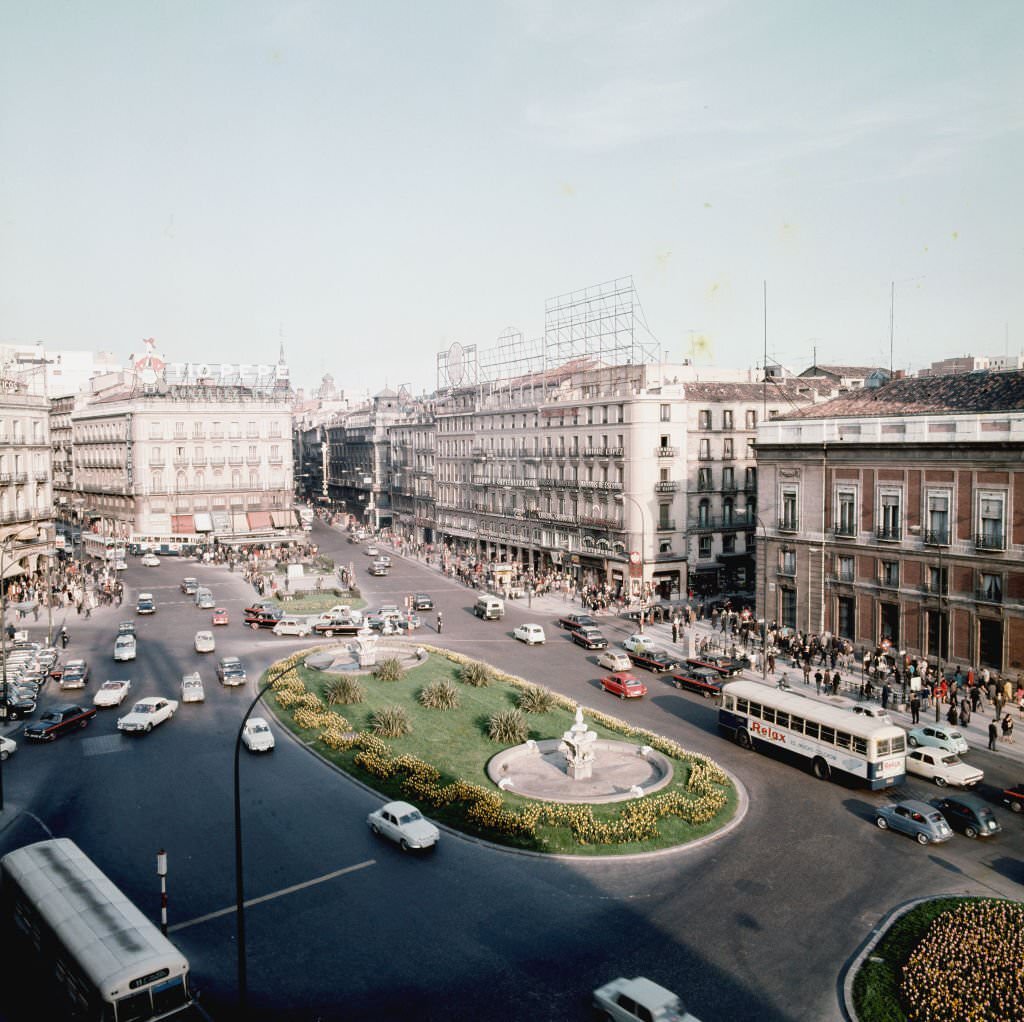
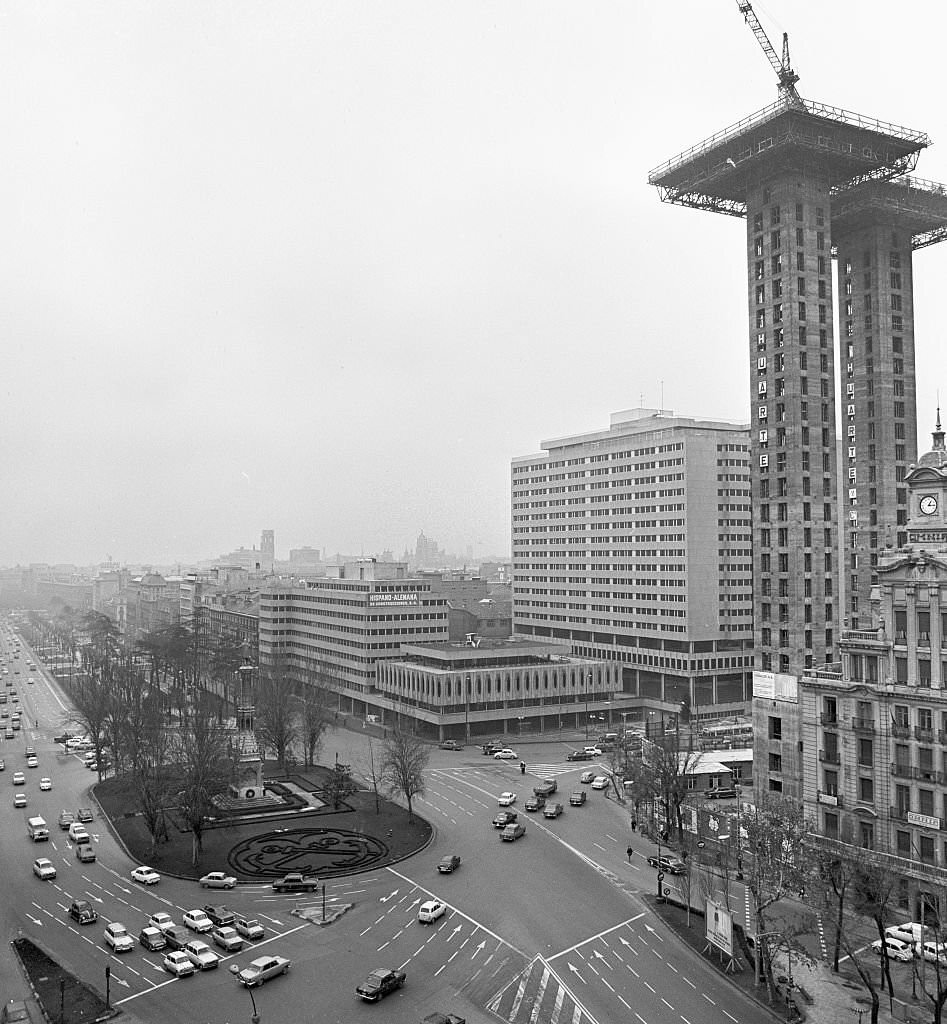
Madrid at the turn of the decade had its own energy. Christmas lights lit up its streets in 1960, and the Puerta del Sol — the city’s historic central square — filled with people. The Paseo de la Castellana stretched southward in a long, tree-lined corridor of commerce and traffic. The city was growing, building upward and outward, even as it struggled with the infrastructure demands that growth was placing on it.
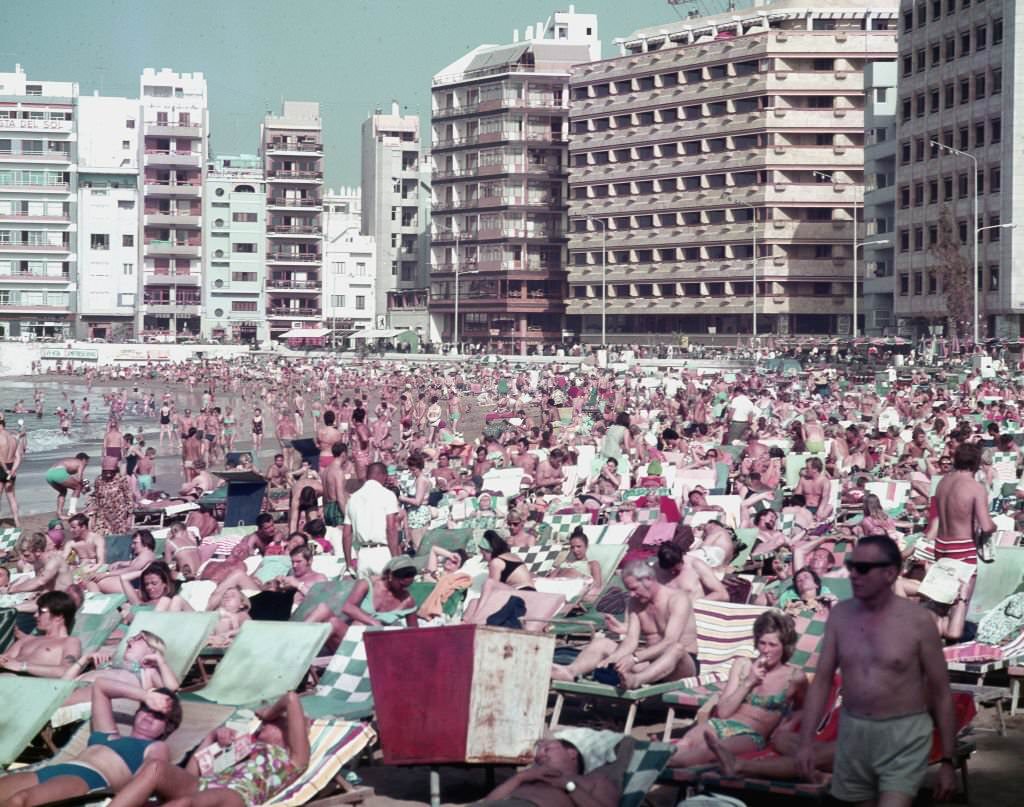
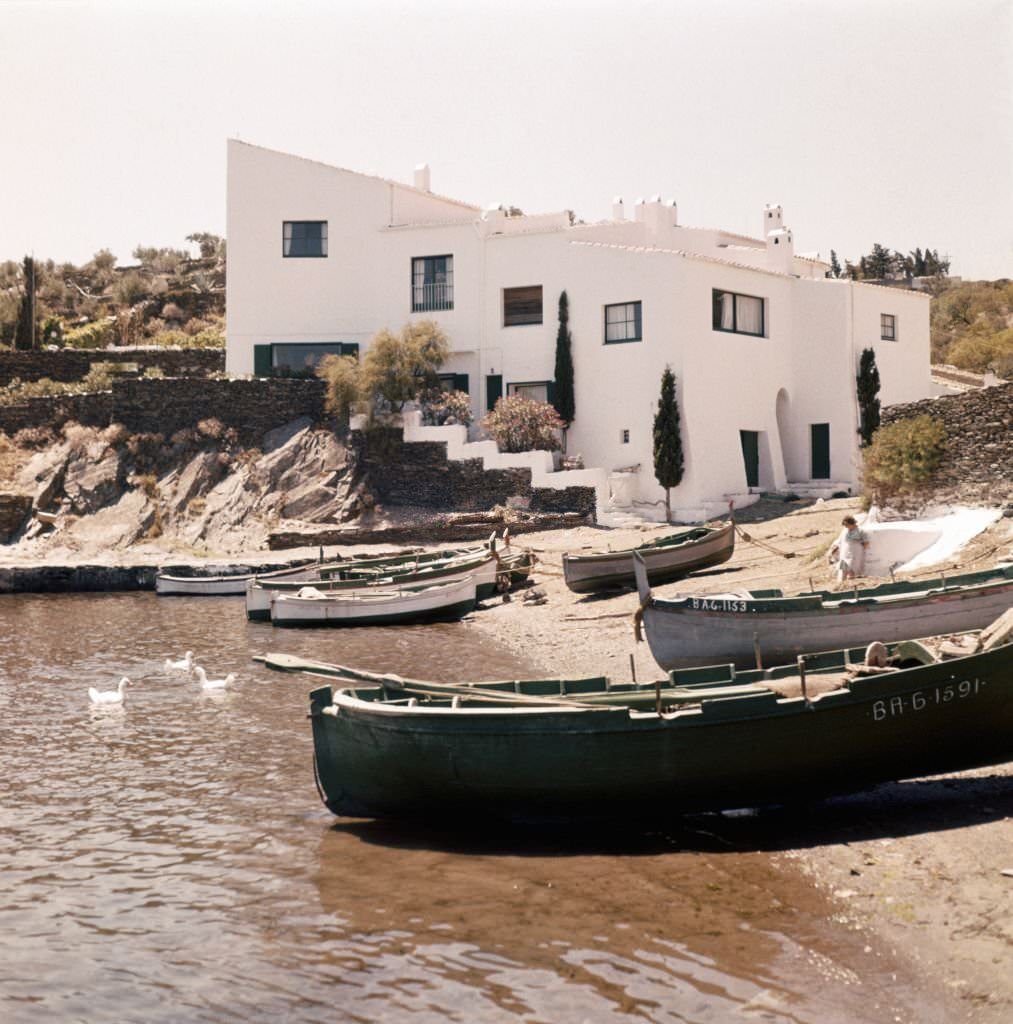
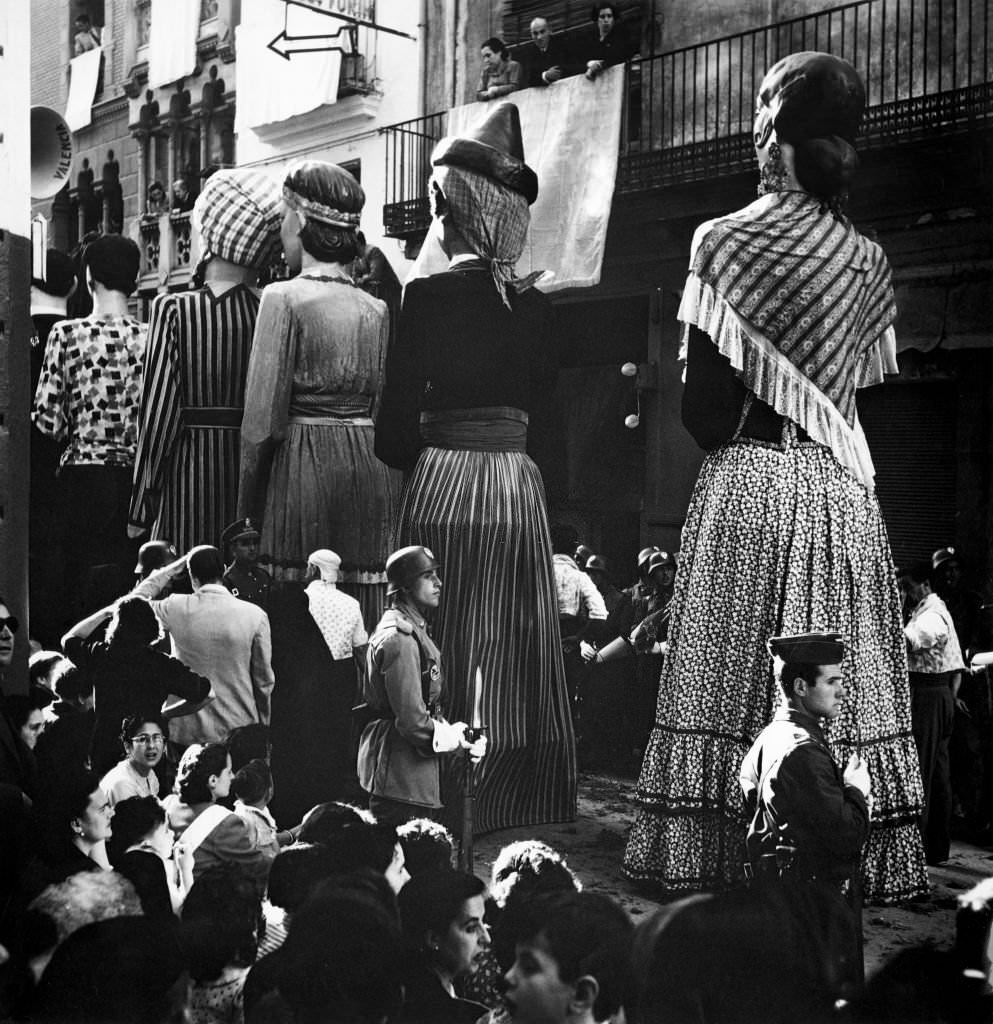
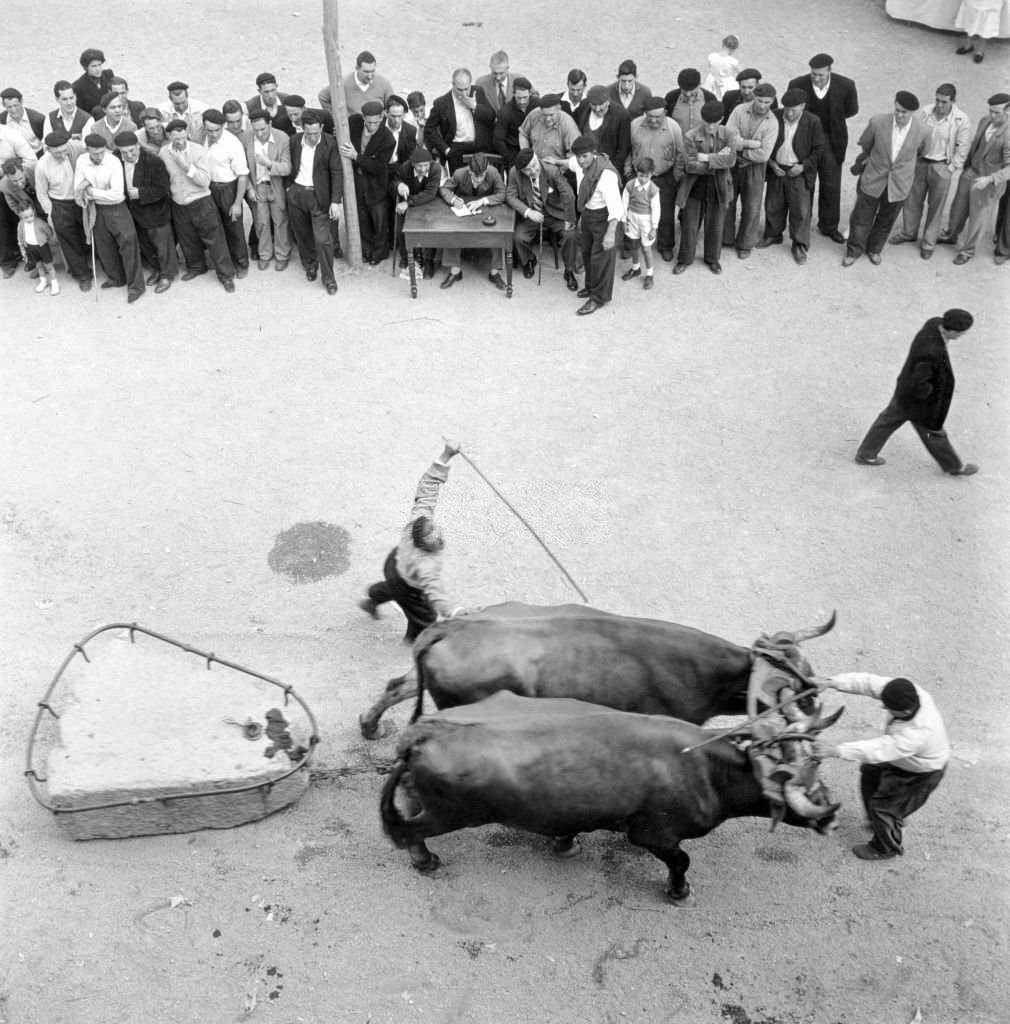
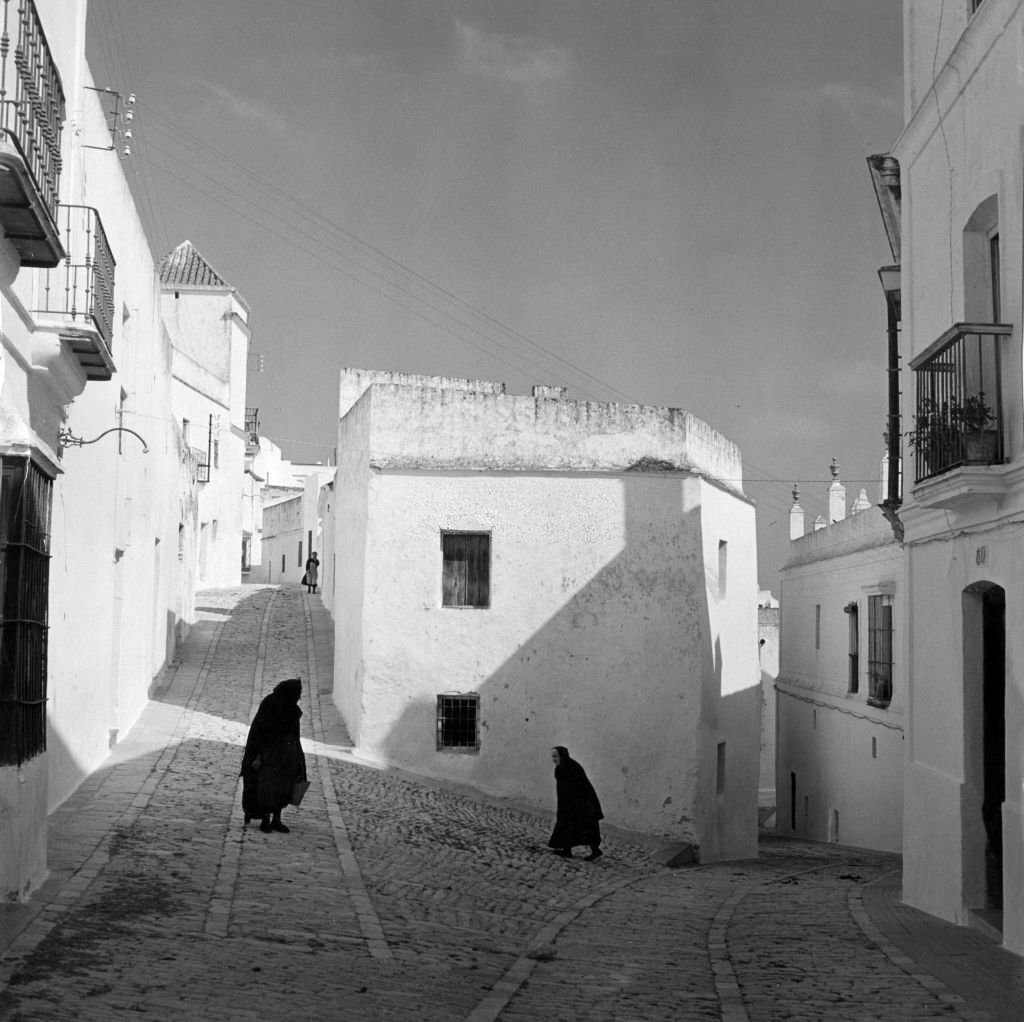
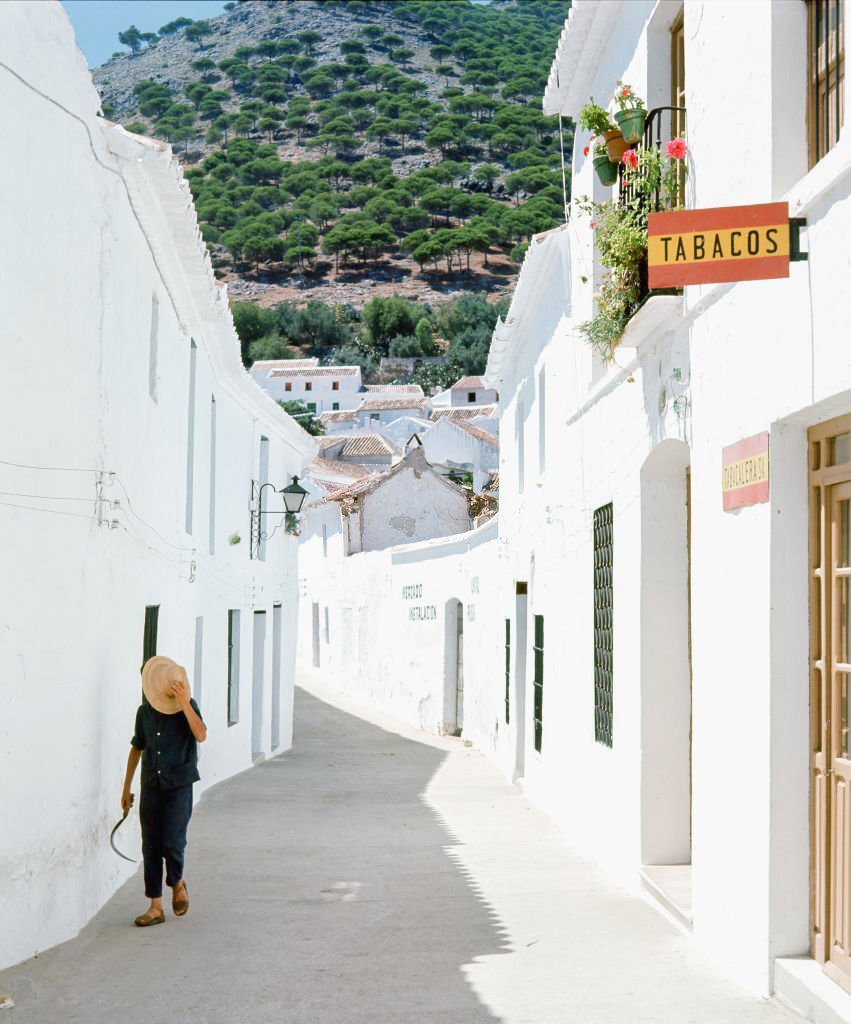
A Madrid street decorated with Christmas lights, in Madrid, Spain, 1960The square Puerta del Sol, Madrid, Spain, 1960.View of the beach “Las Canteras”, Las Palmas, Canary Islands, Spain, 1960.Property of Salvador Dali in Port Lligat, dans les années 1960.Le défilé des géants lors des fallas de Valence, Spain.Epreuve de traction de pierre par de boeufs au Pays Basque, Spain.Rue de Vejer de la Frontera, Spain.View (looking mostly south) along the Paseo de la Castellana, Madrid, Spain, 1960.
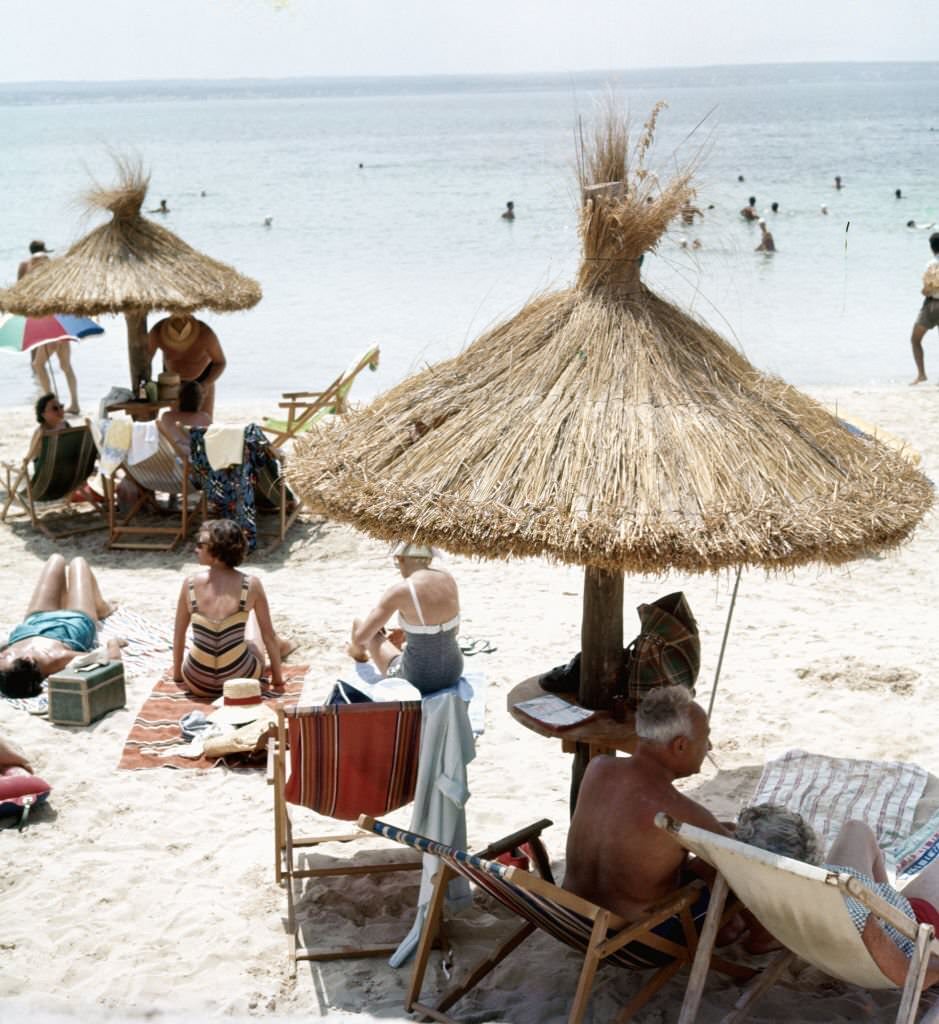
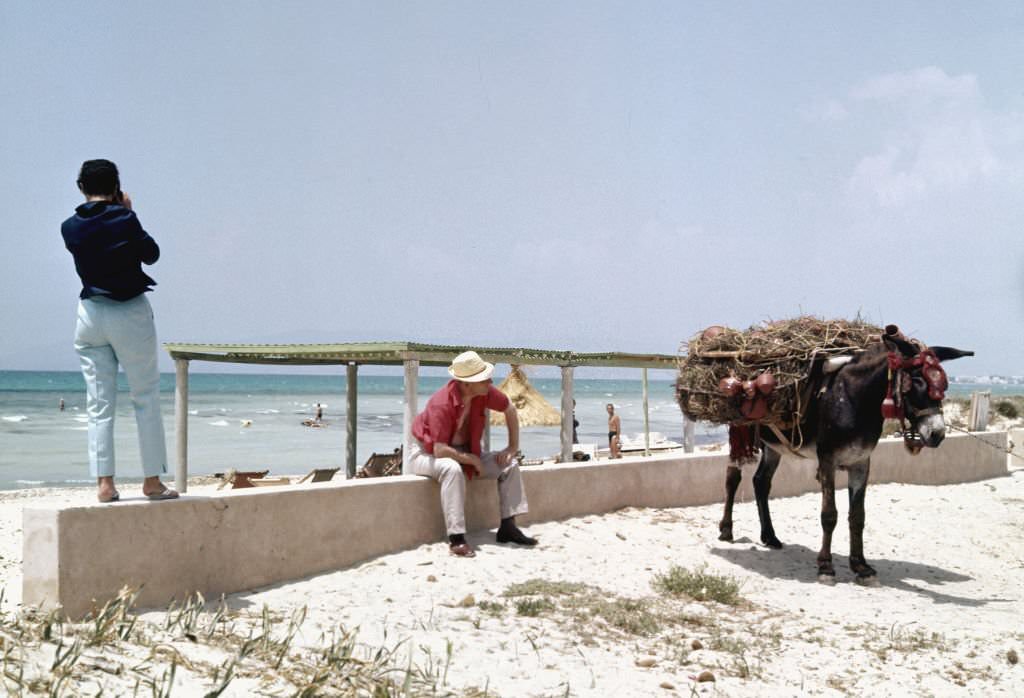
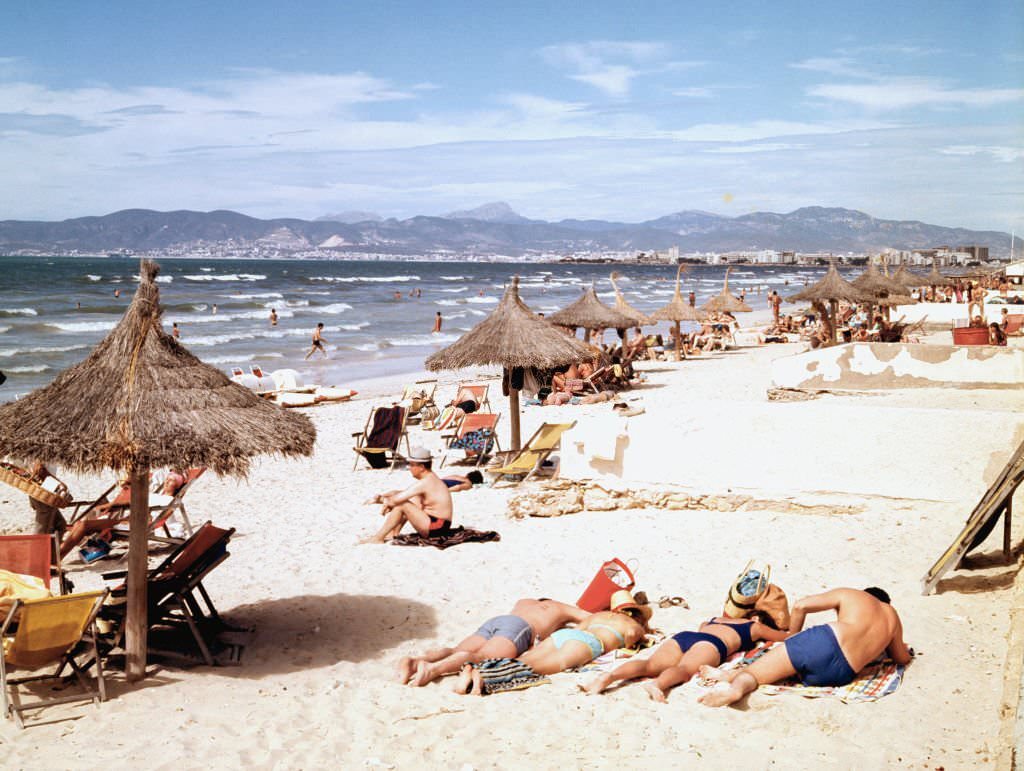
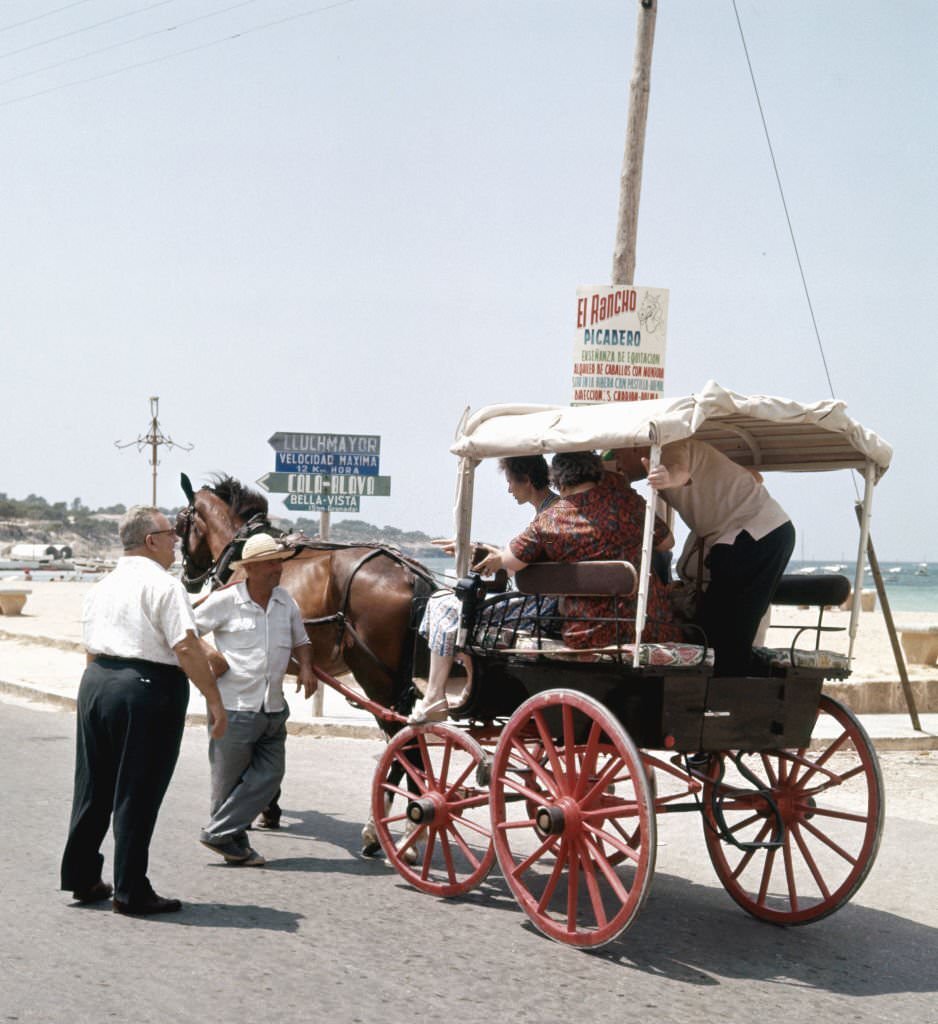
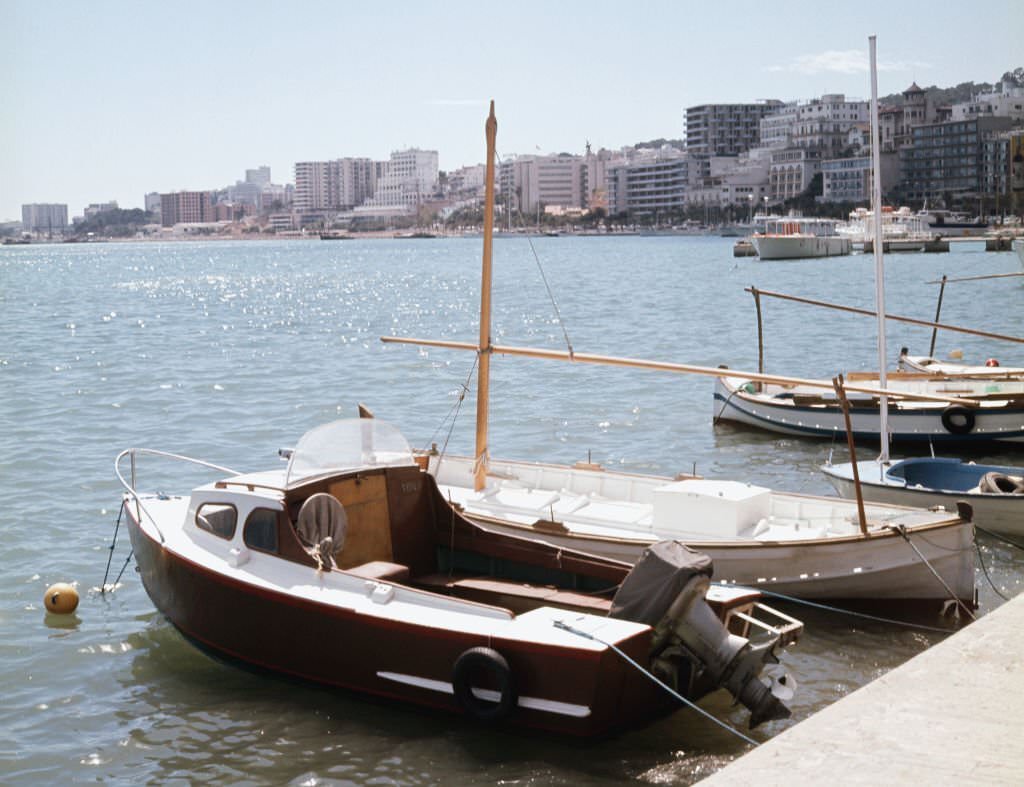
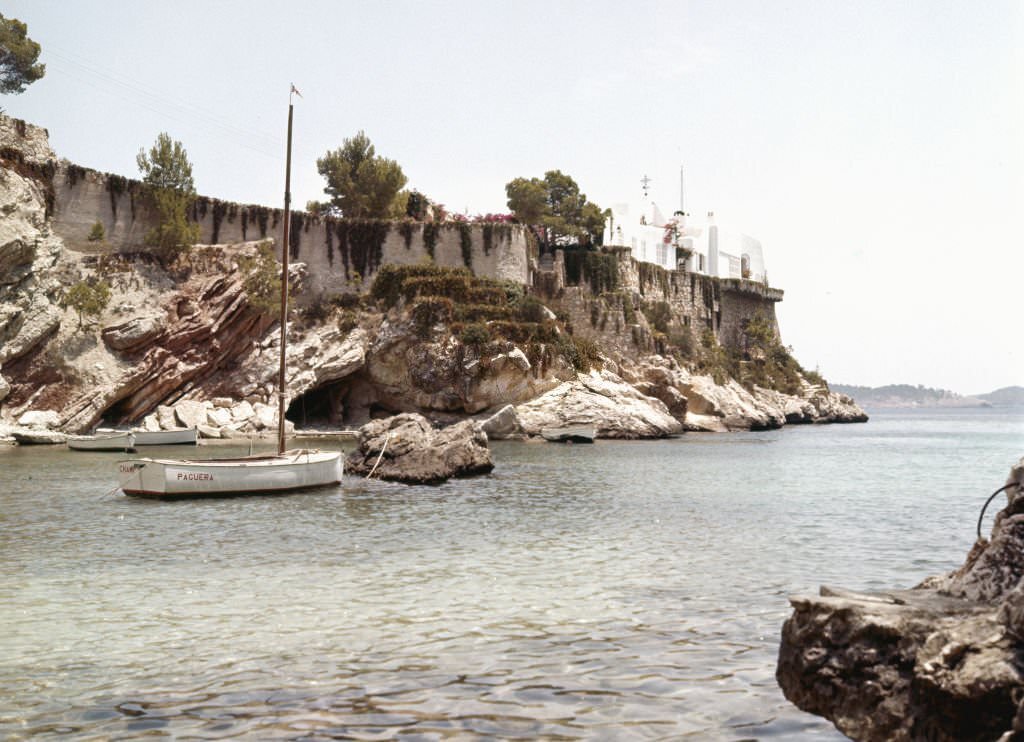
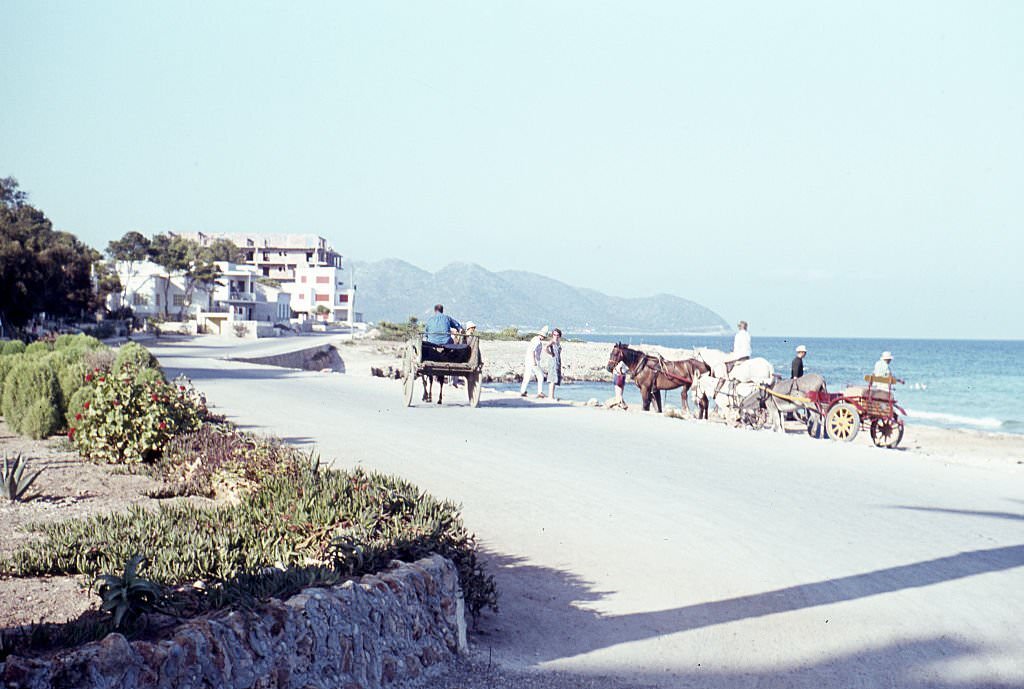
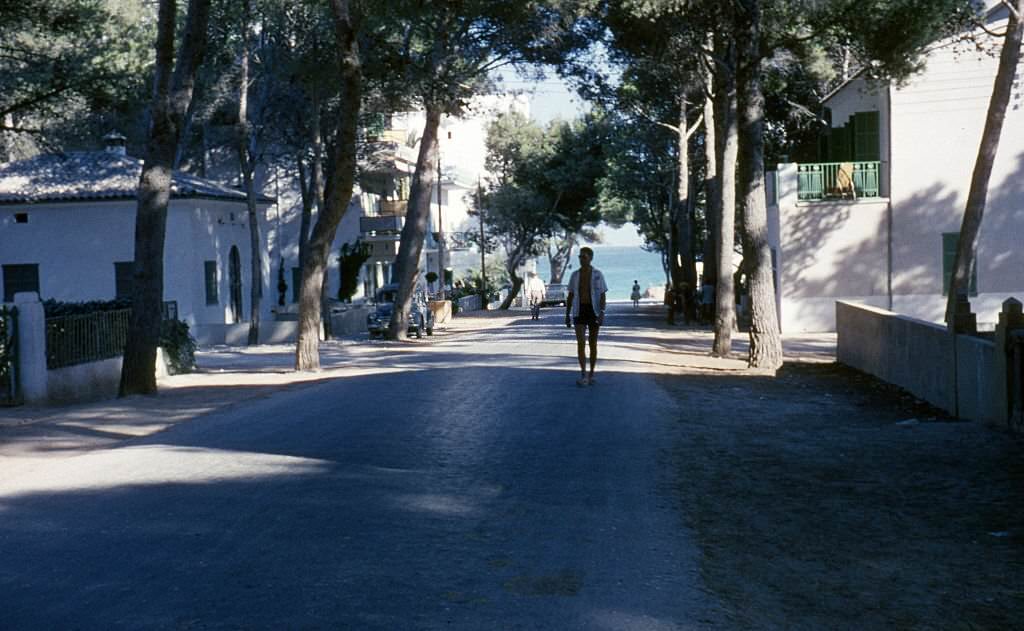
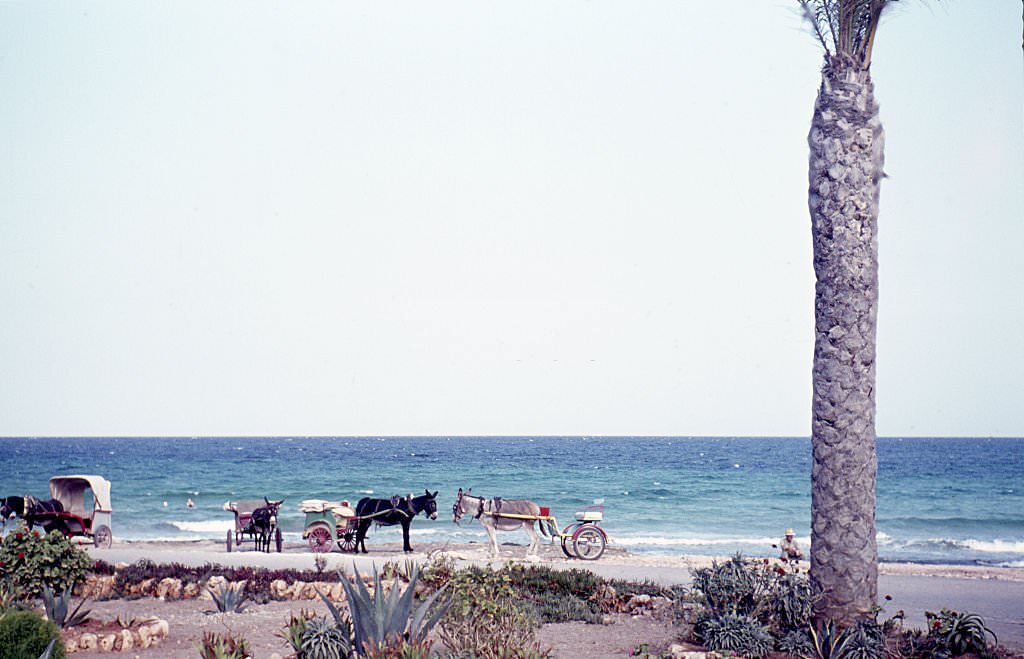
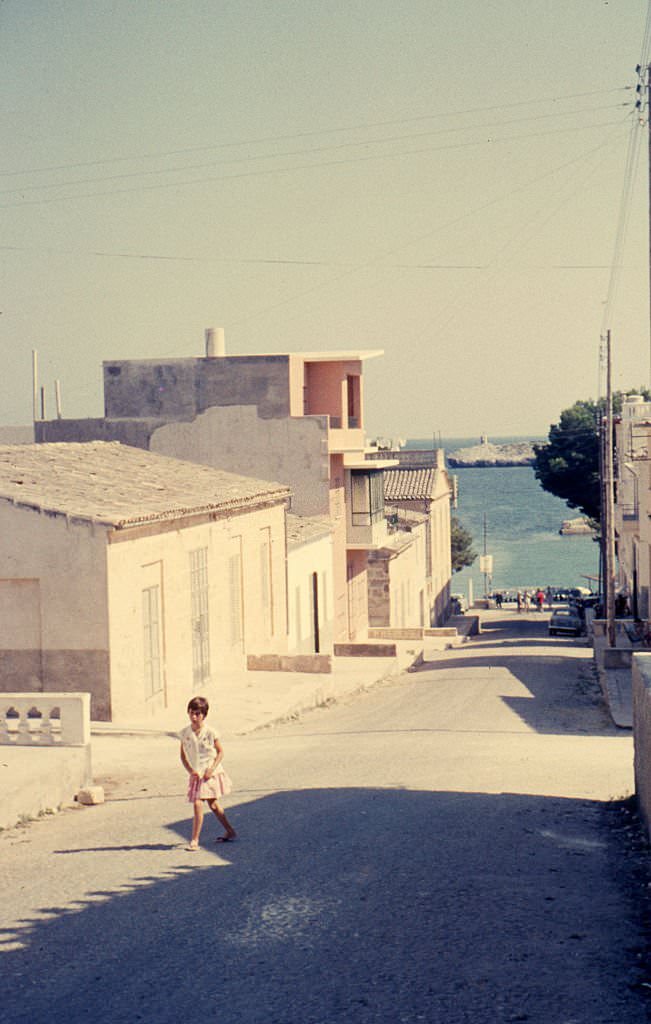
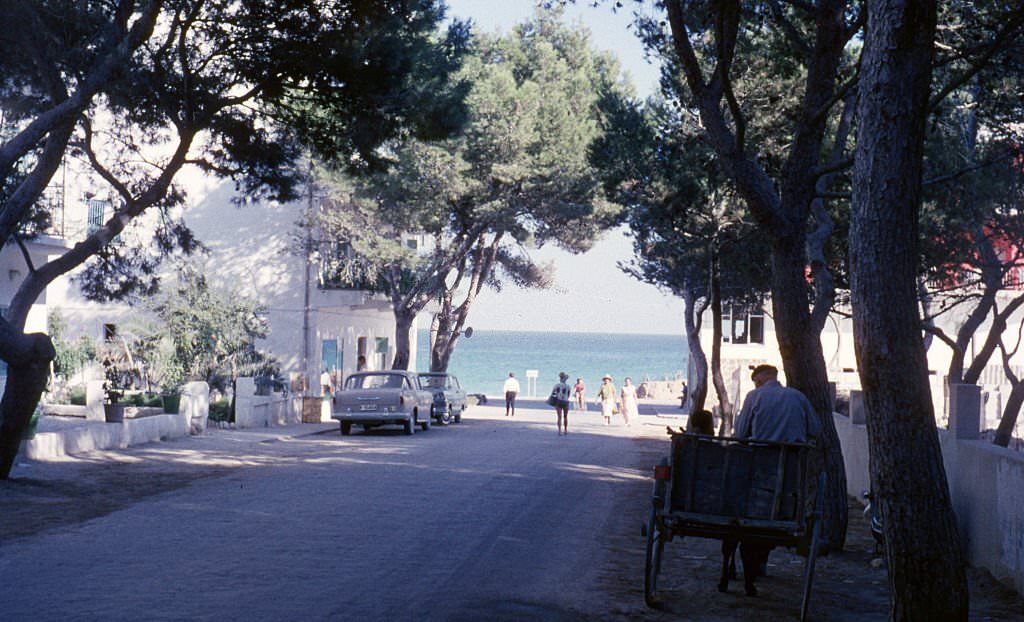
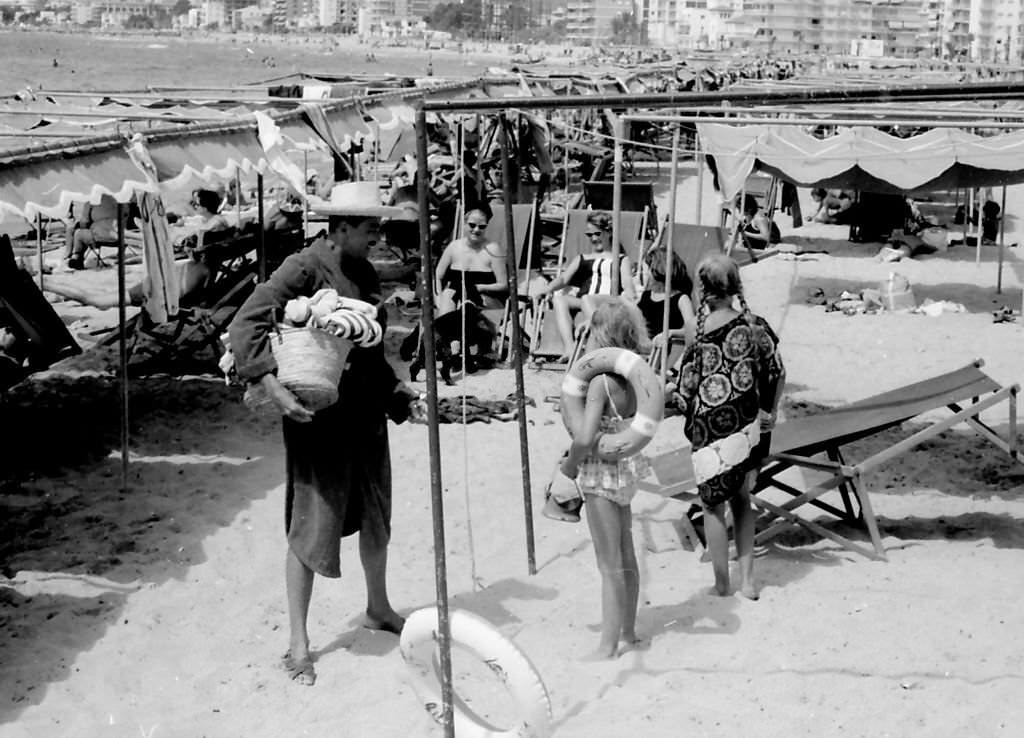
Mallorca in 1960 was already drawing a steady stream of visitors. The beach at Palma de Mallorca was busy with tourists, while street vendors still moved through the town with their donkeys. The port was active and photogenic. The island occupied a peculiar space in Spanish life — modernizing rapidly under the pressure of tourism while still holding onto the rhythms of an older way of doing things.
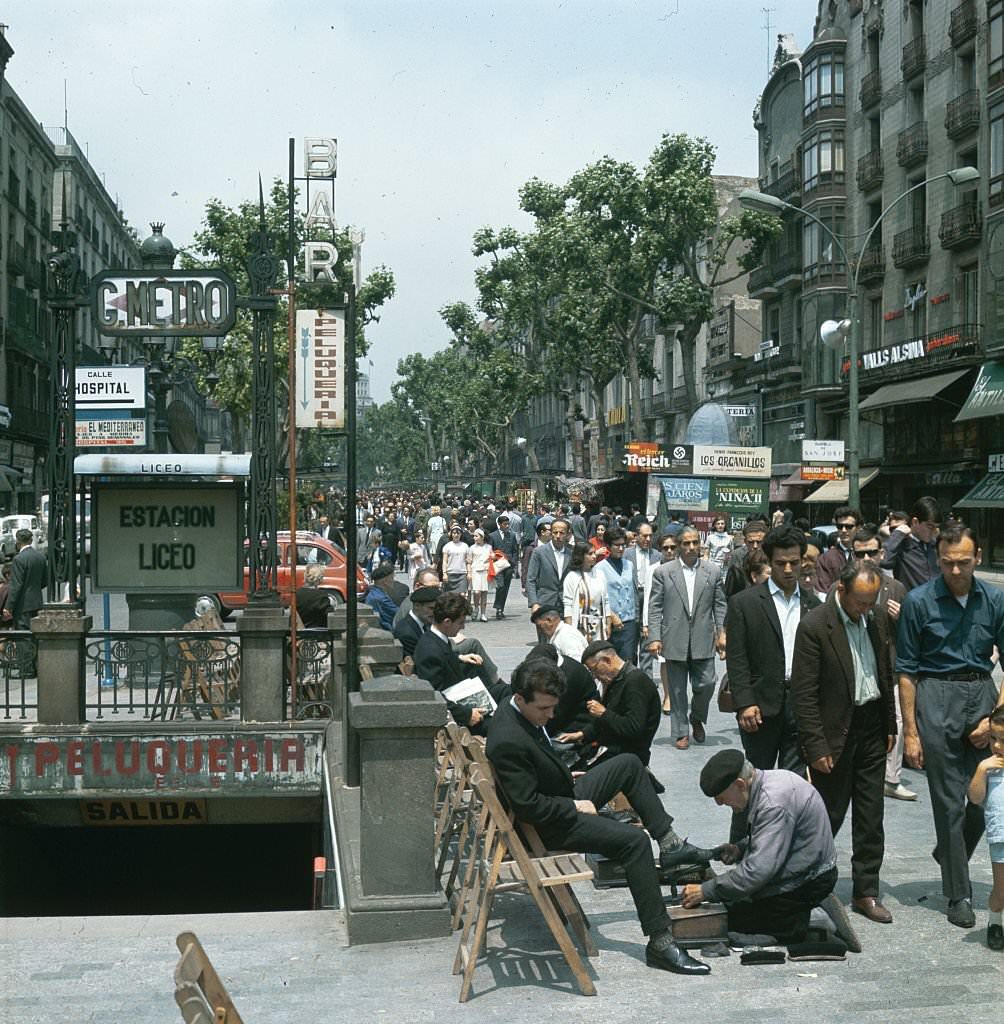
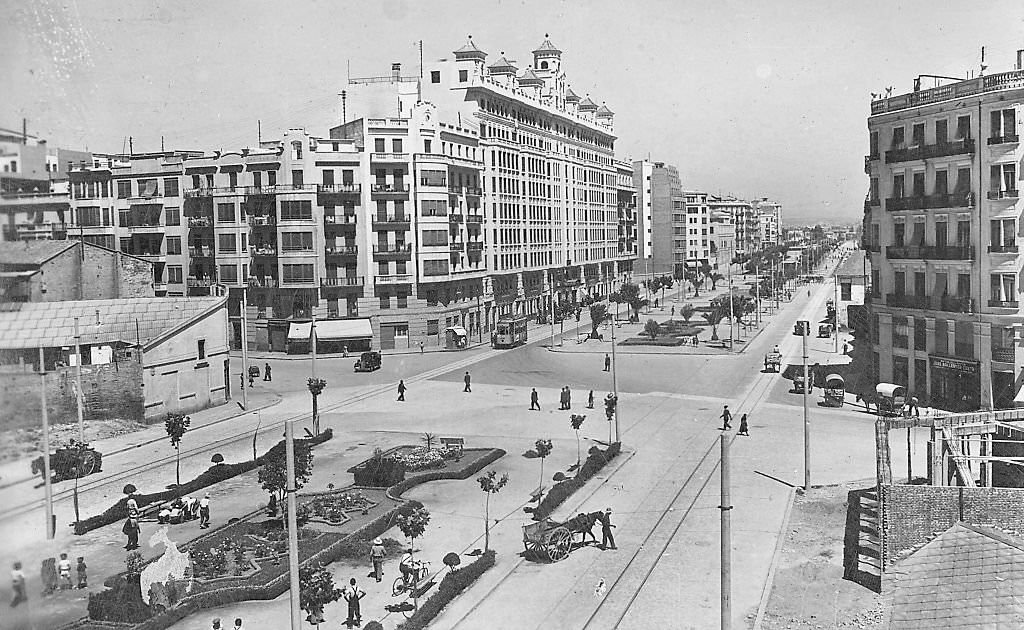
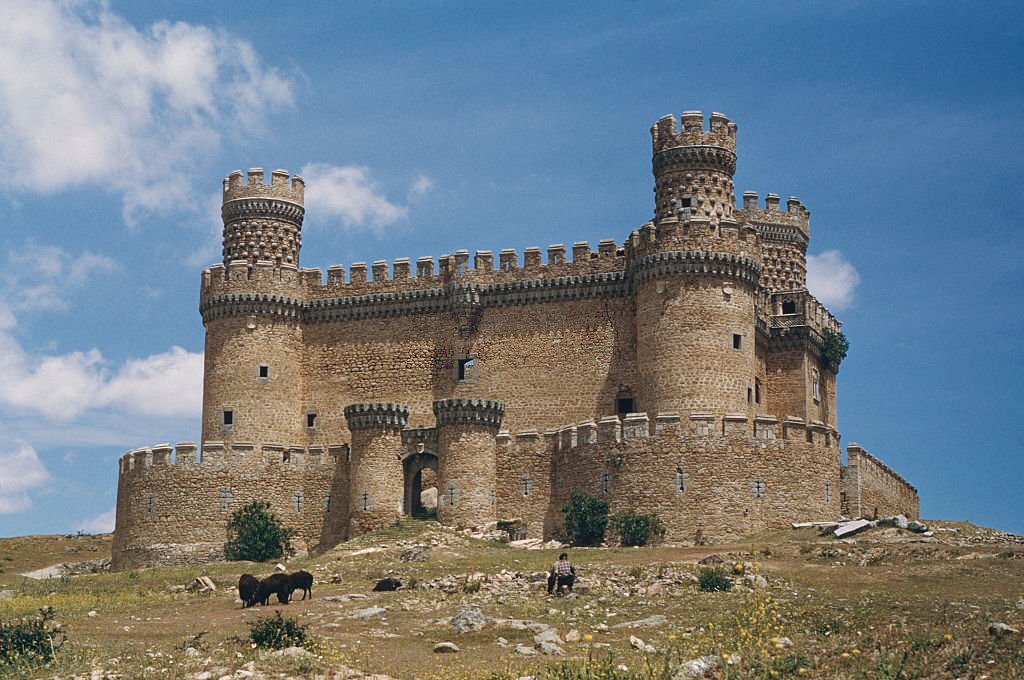
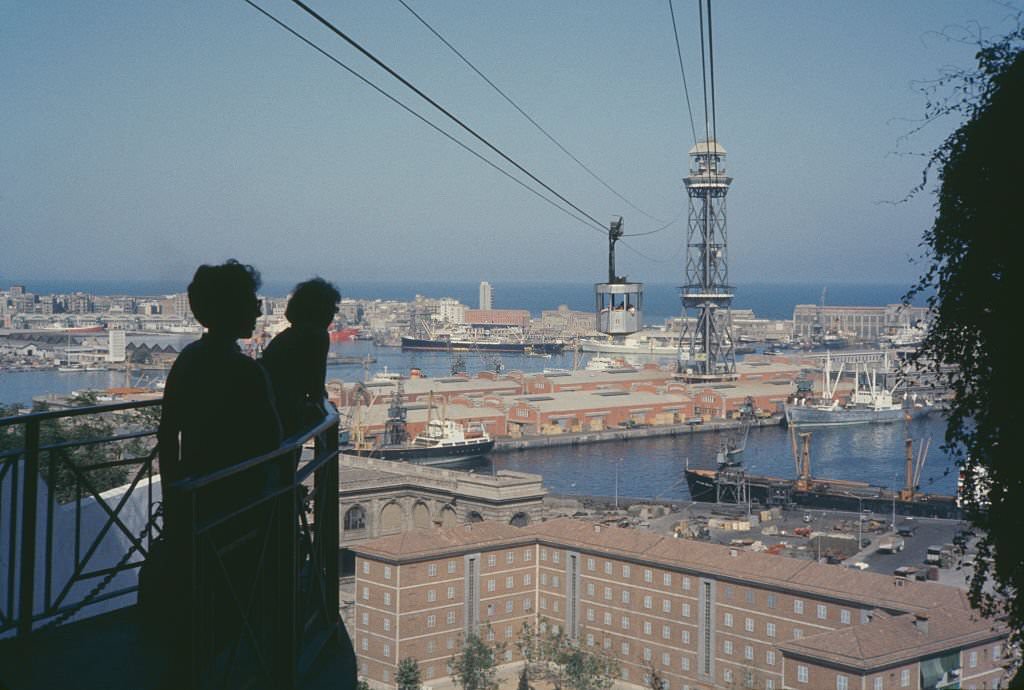
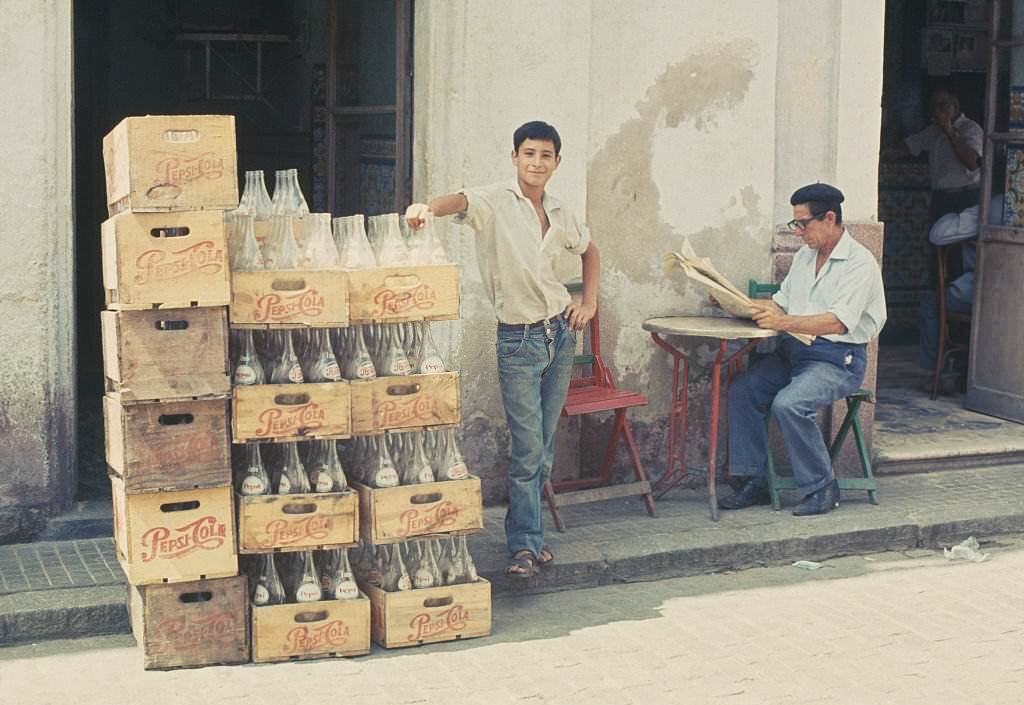
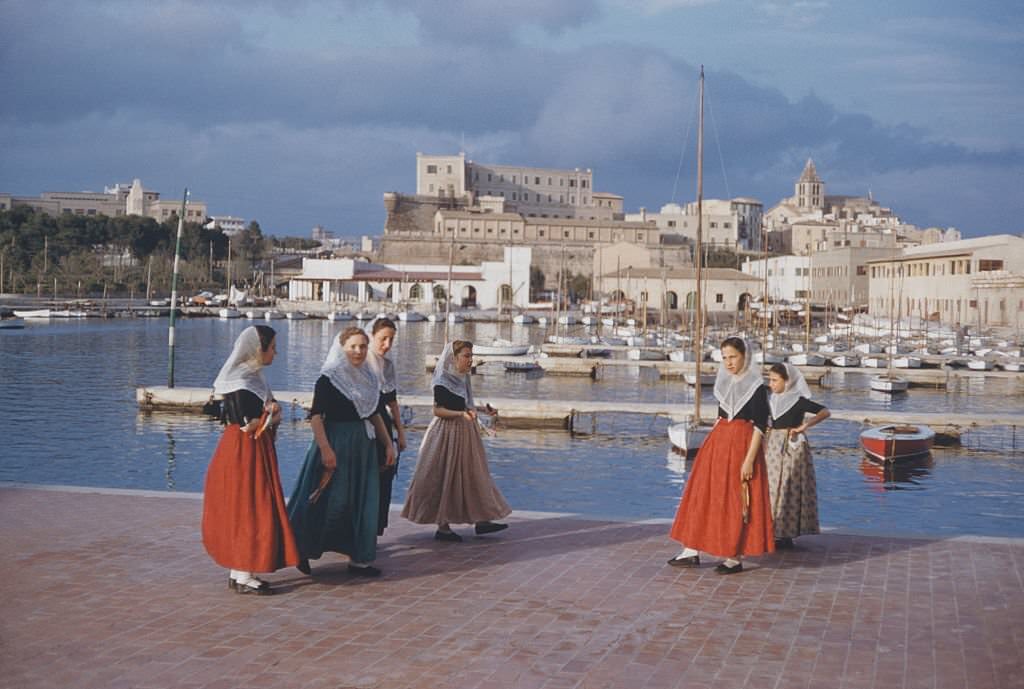
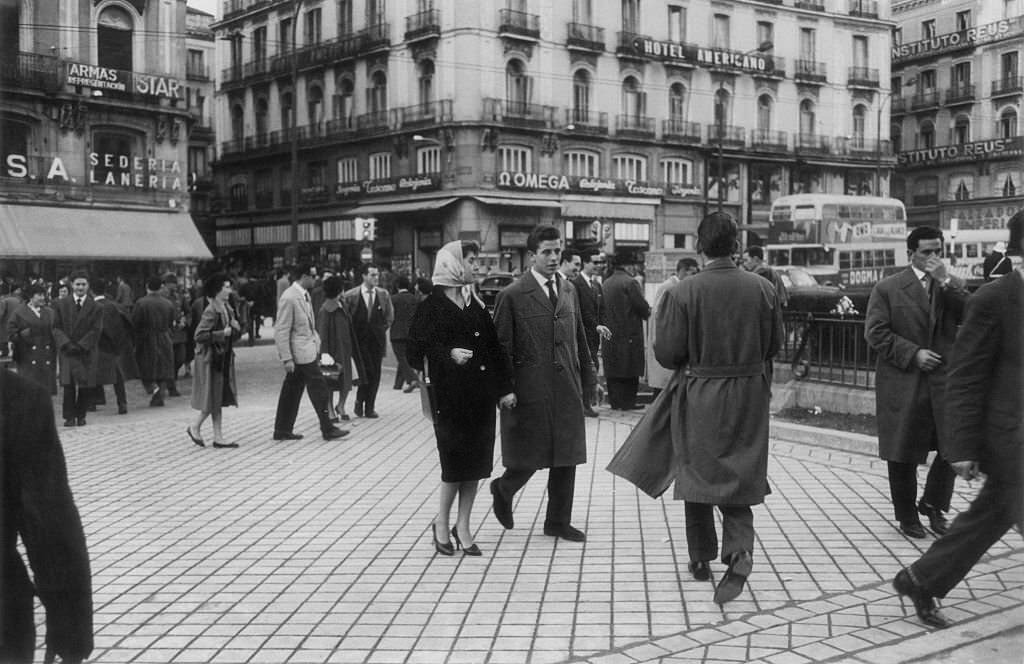
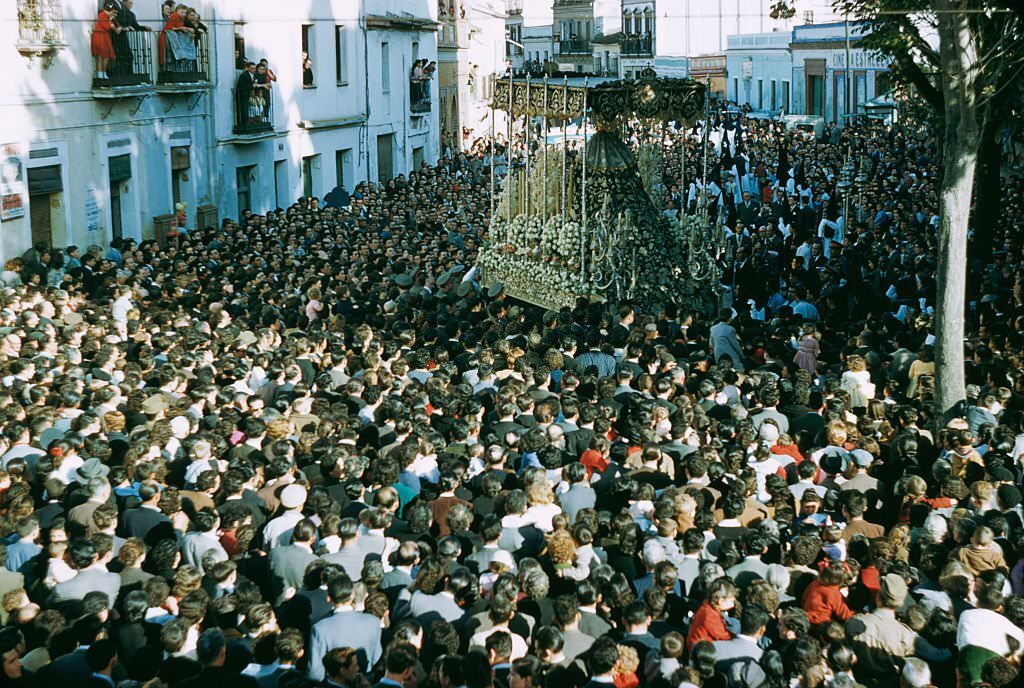
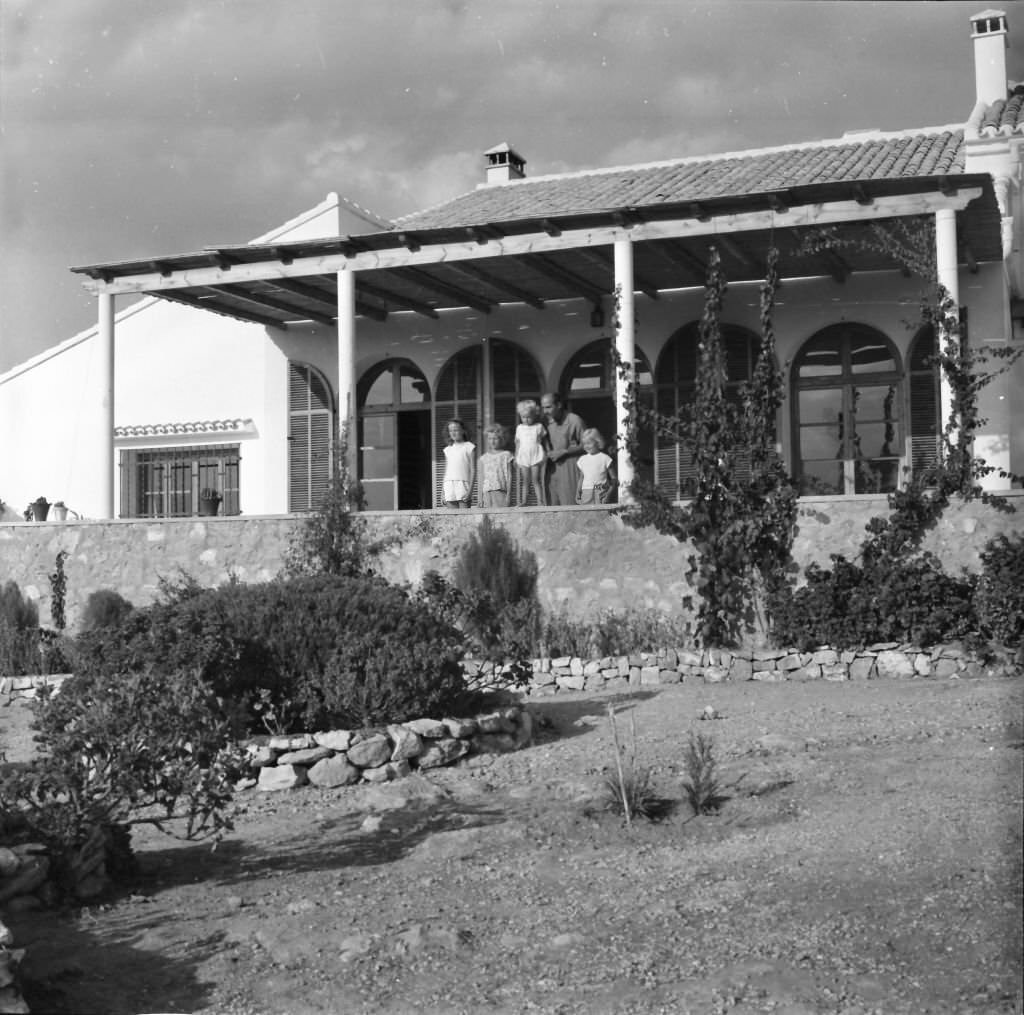
Beach of Palma de Mallorca, 1960Street vendor with his donkey, 1960, Palma de Mallorca, Balearic Islands, Spain.Beach of Palma de Mallorca, 1960, Balearic Islands, Spain.Shoe shiners work alongside the bustling tree-lined walkway of Ramblas de San Jose, Barcelona, Spain.Spanish aristocrat and heart surgeon Marquis Cristobel De Villaverde (behind) with his children, 1960The Gran Via in Valencia, a busy street with tall buildings, Valencia, Spain, 1960.A view of Gran Vía, Madrid, Spain, 1960.The New Castle of Manzanares el Real (aka ‘Castle of los Mendoza’), Manzanares el Real, Spain, 1960.A view of a city in Spain, 1960.The Port Vell Aerial Tramway connecting the Montjuïc hill with Barceloneta, Barcelona, Spain, 1960.A man standing next to crates containing empty Pepsi bottles in El Puerto de Santa María, Cádiz, Spain, 1960.Women and girls in traditional dress walking by the harbour in Majorca, Spain, 1960.Couple in love walking in the streets of Madrid, 1960A crowded street procession probably in Spain, 1960.
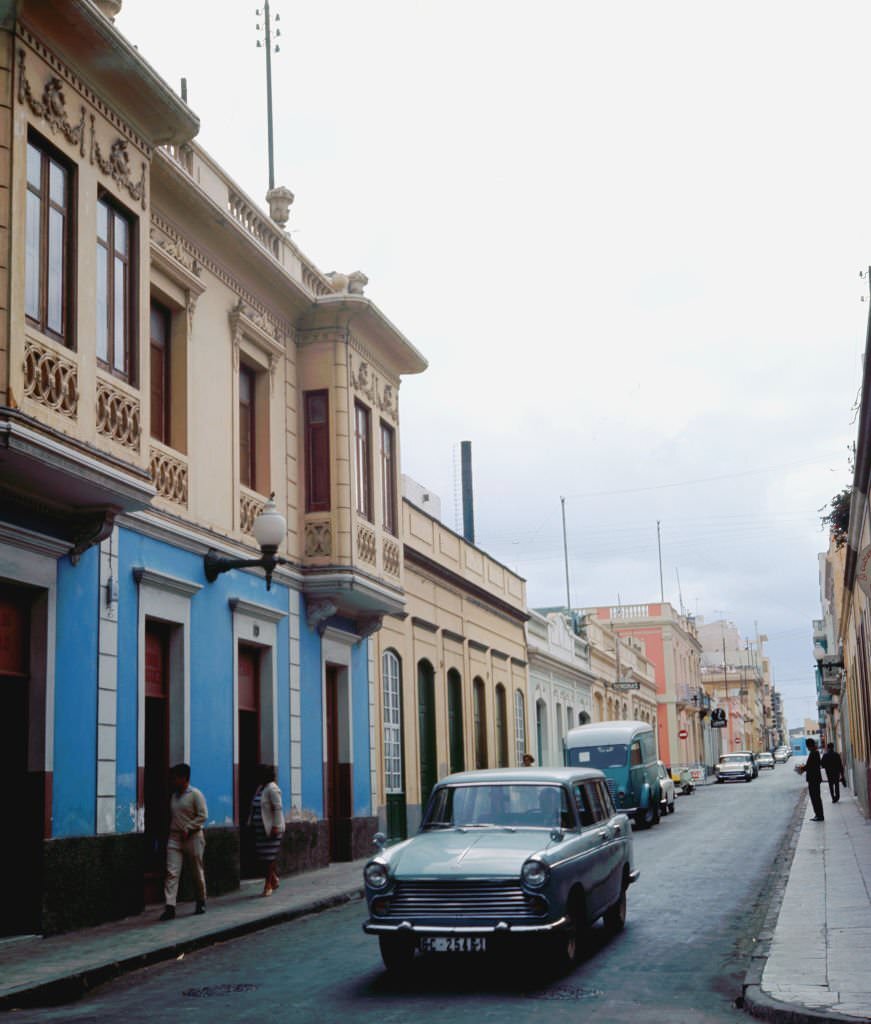
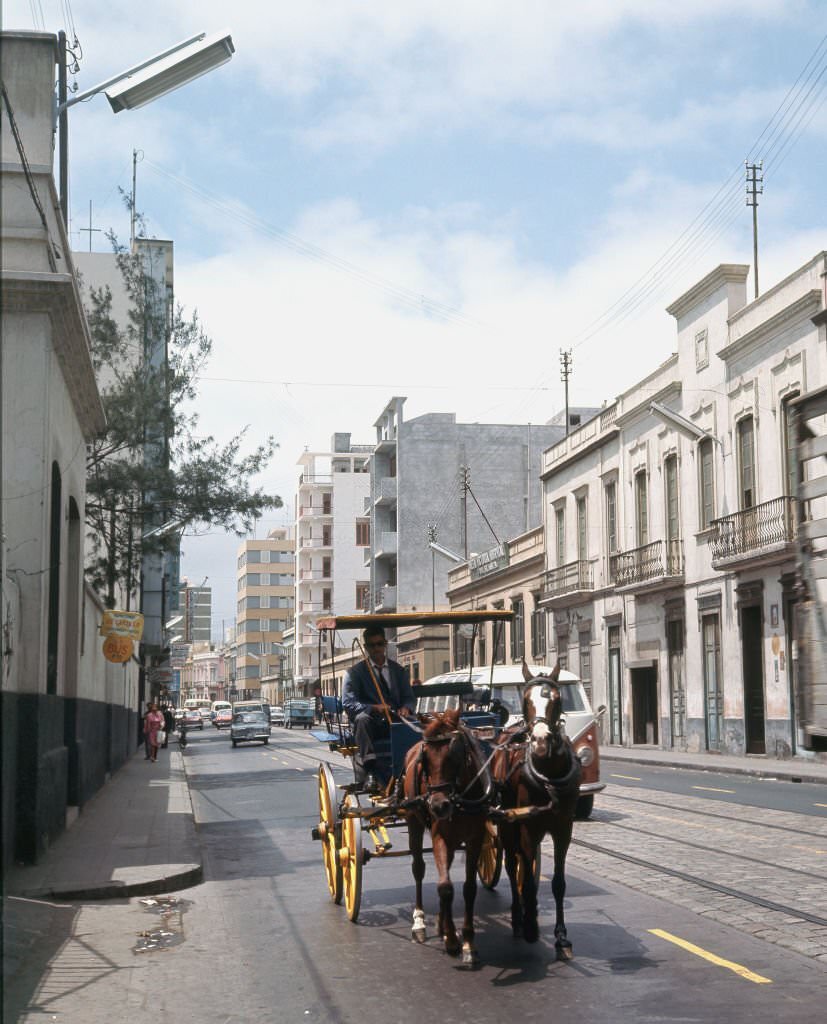
View of Las Palmas, Canary Islands, Spain, 1960.
View of a street of Las Palmas with the house of Christopher Columbus, Canary Islands, Spain, 1960.
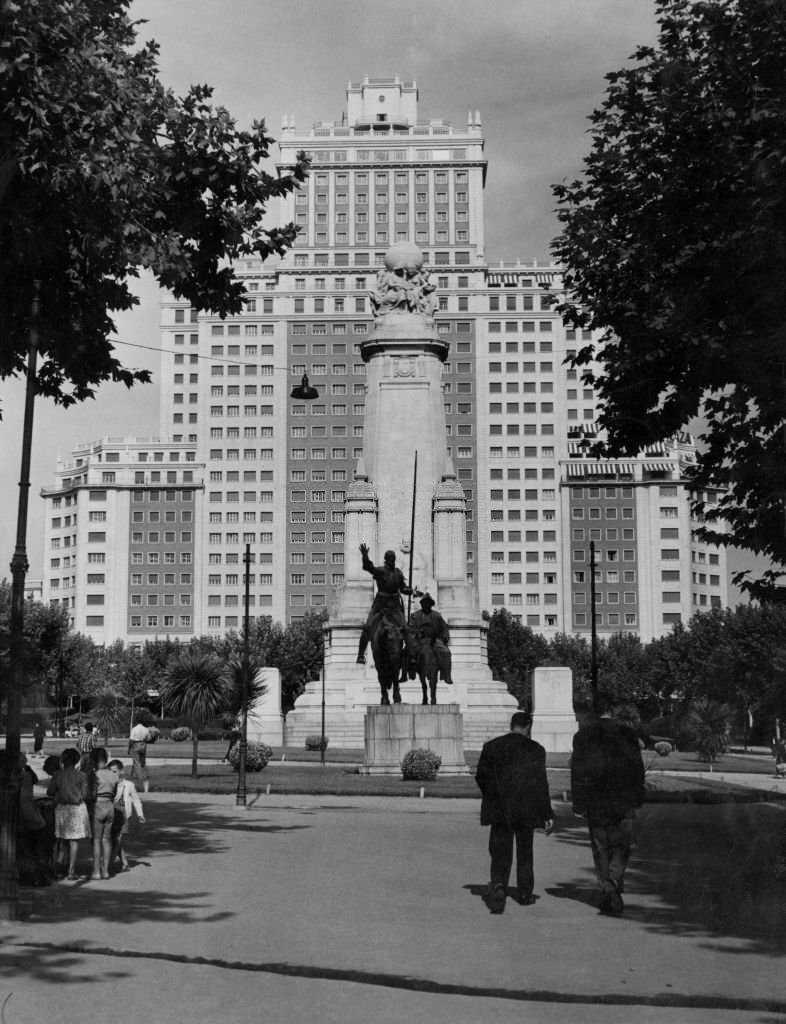
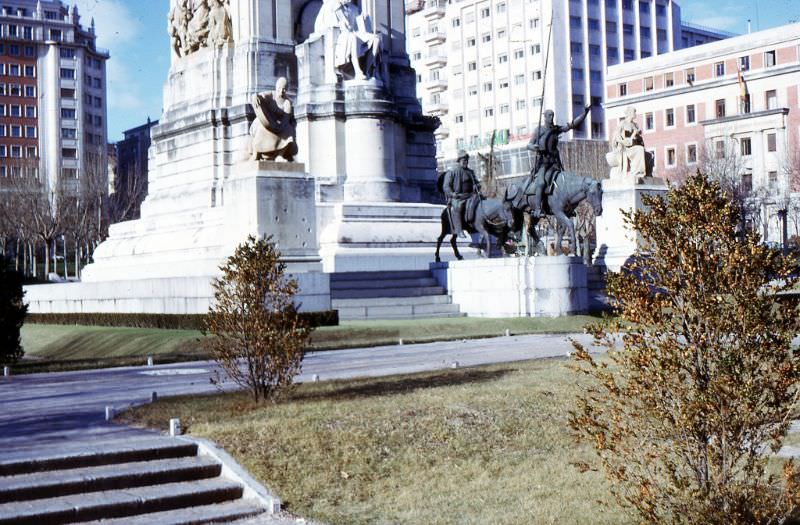
The monument to Cervantes, Don Quixote and Sancho Panza, by Lorenzo Coullaut Valera on Plaza des Espana, Edificio Espana in the background
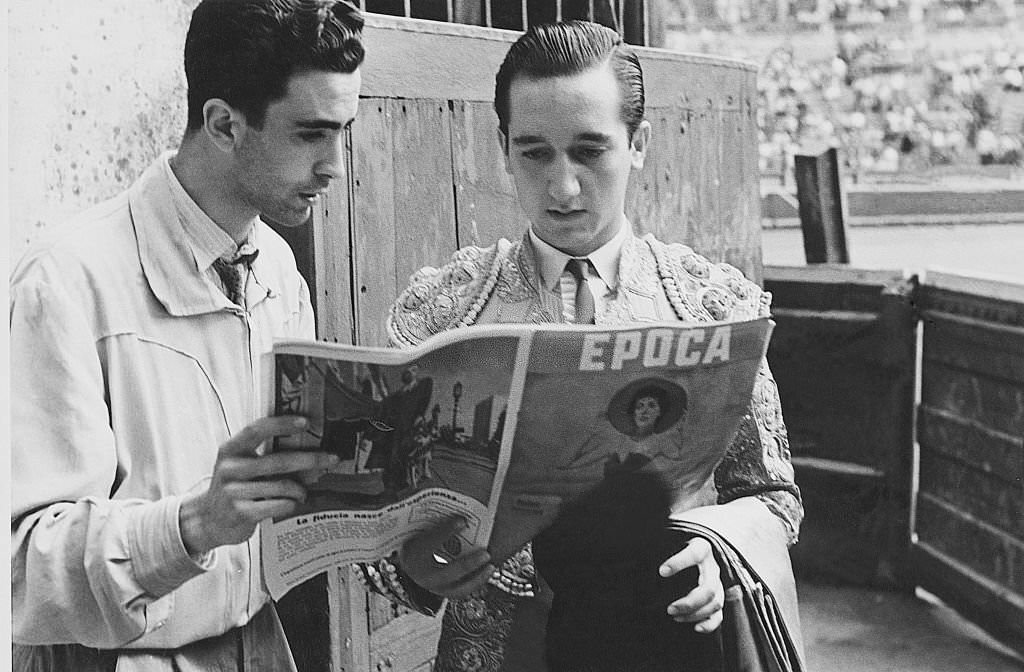
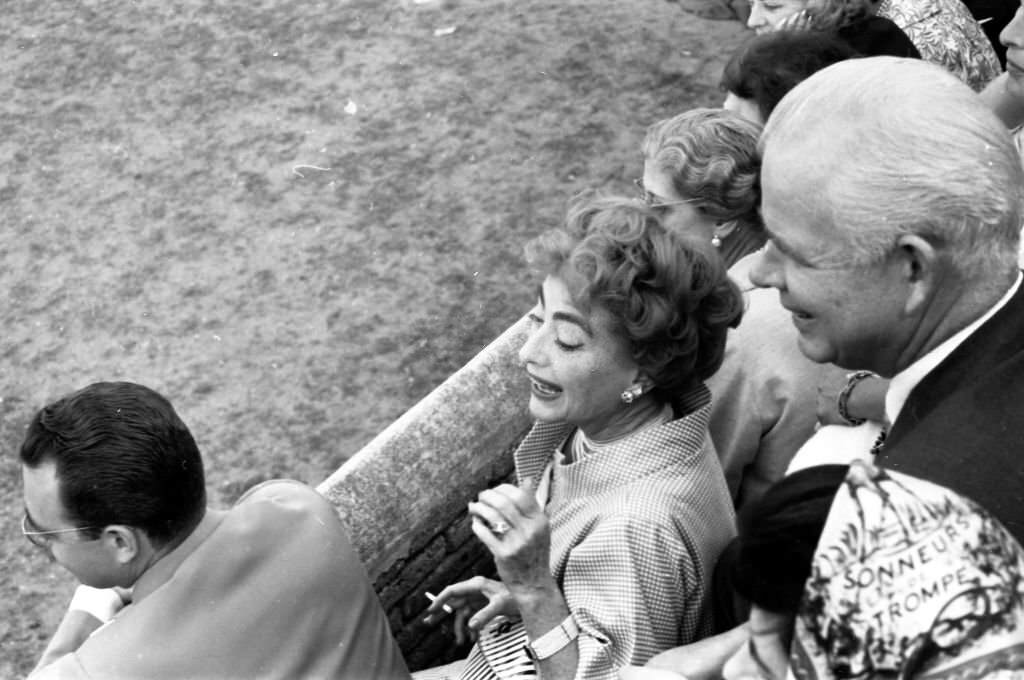
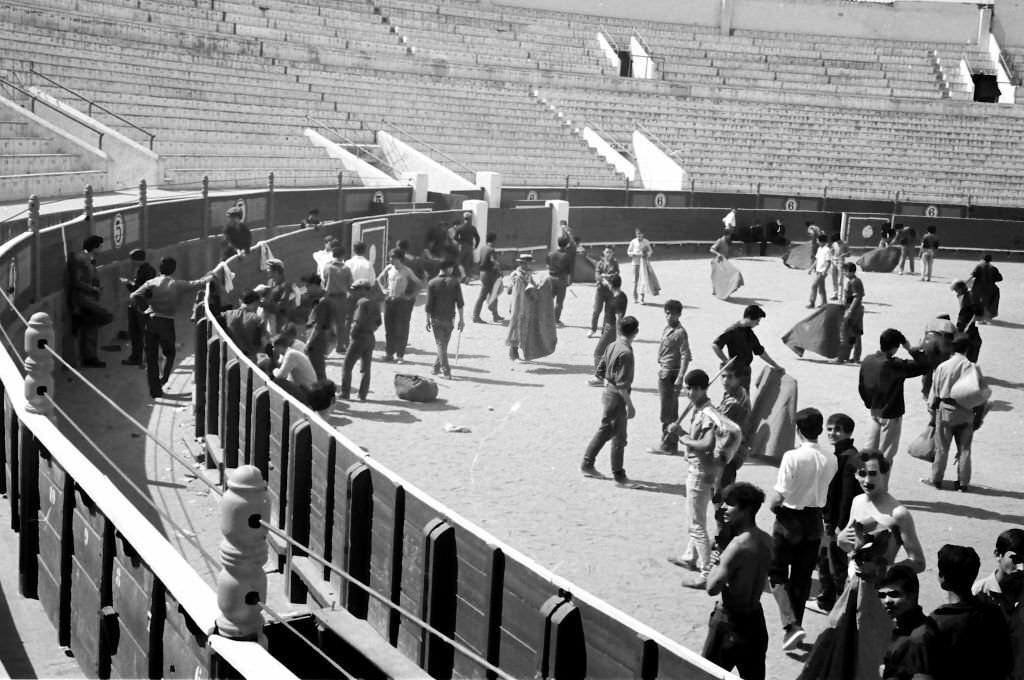
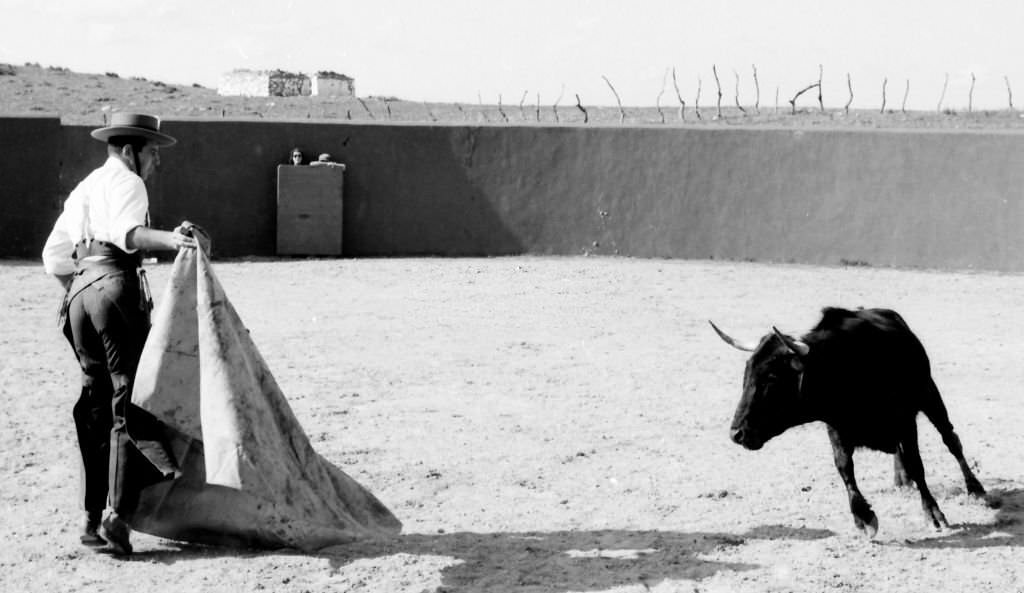
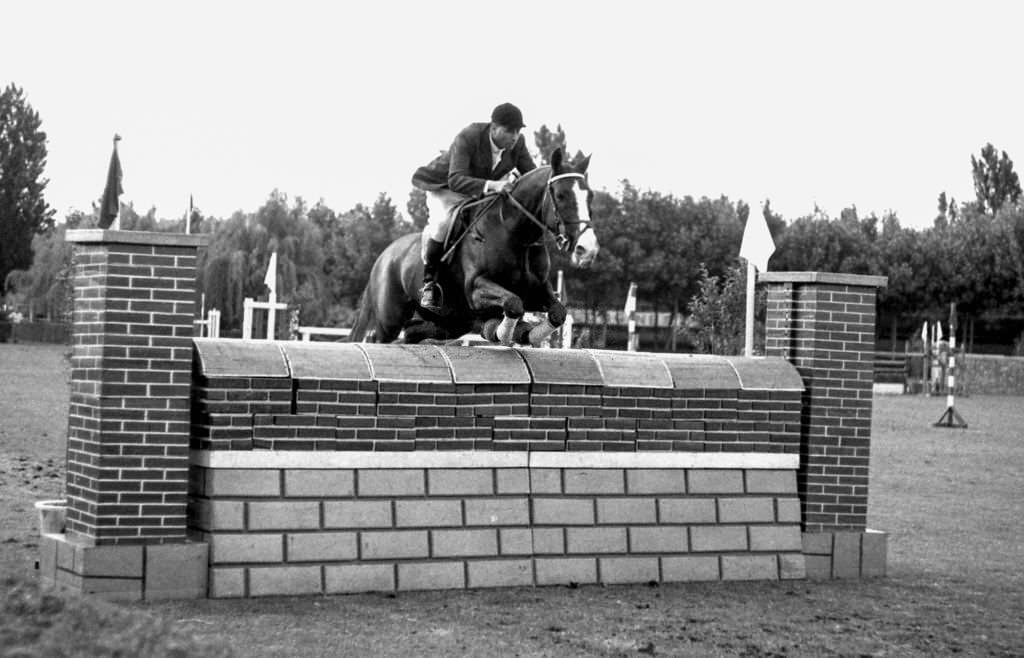
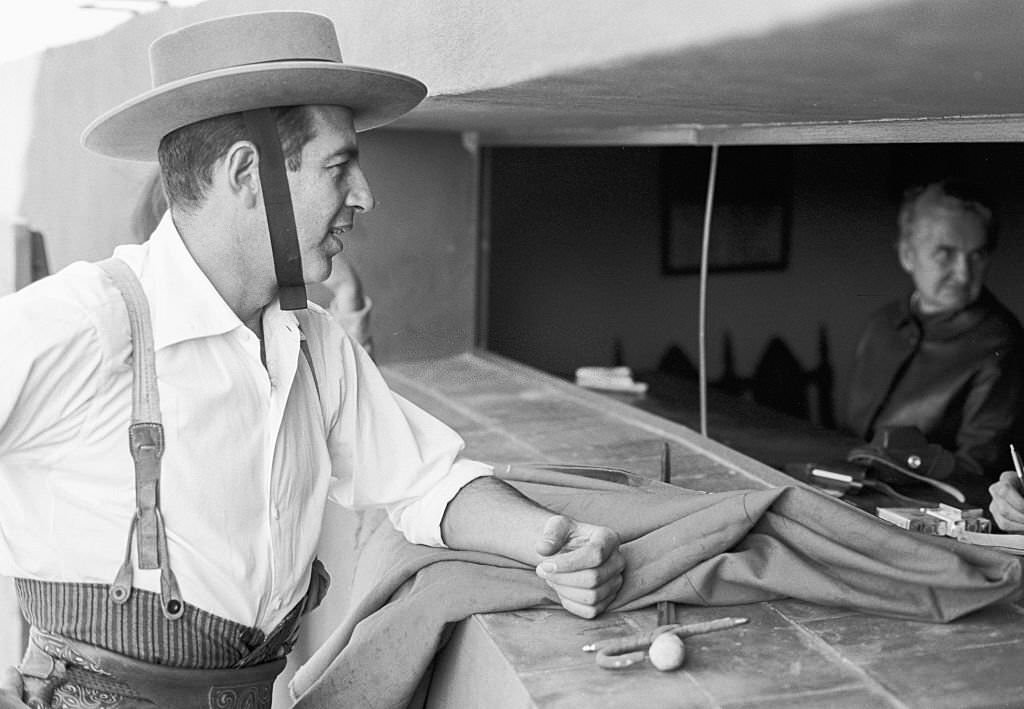
The bullfighting world had its own culture and hierarchies. Matadors — some reading magazines backstage before stepping into the ring — were public figures who drew American actress Joan Crawford to a fight in Madrid in 1962. Aspiring bullfighters known as “maletillas” haunted the edges of the profession in Madrid in 1964, looking for any opportunity to get into the ring. The sport wove through nearly every level of Spanish society.
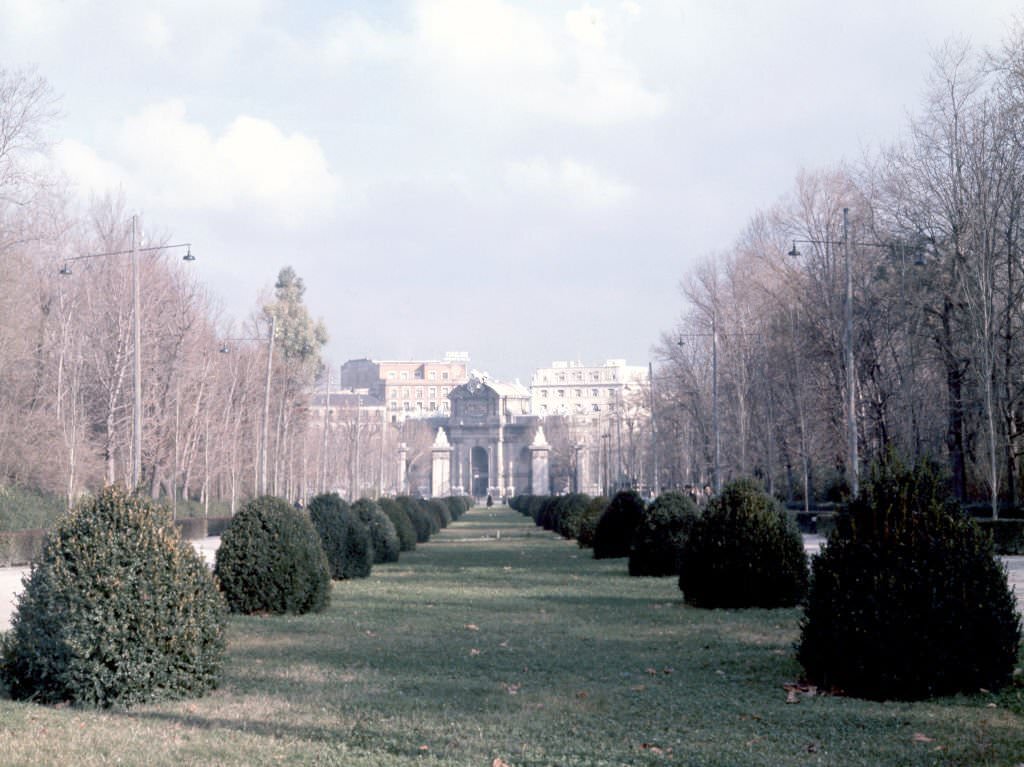
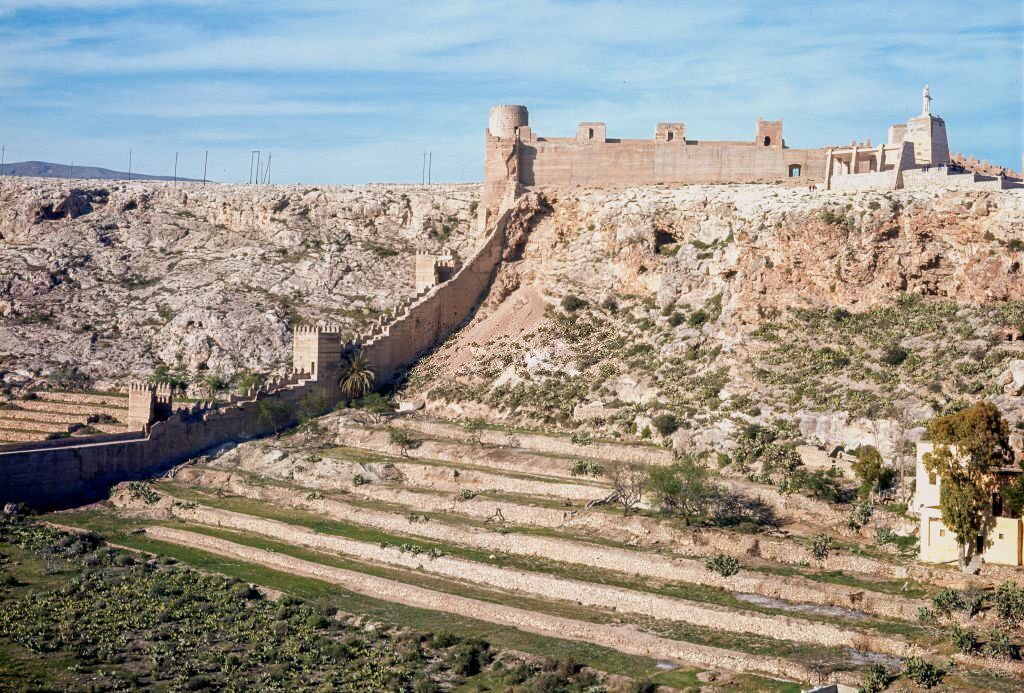
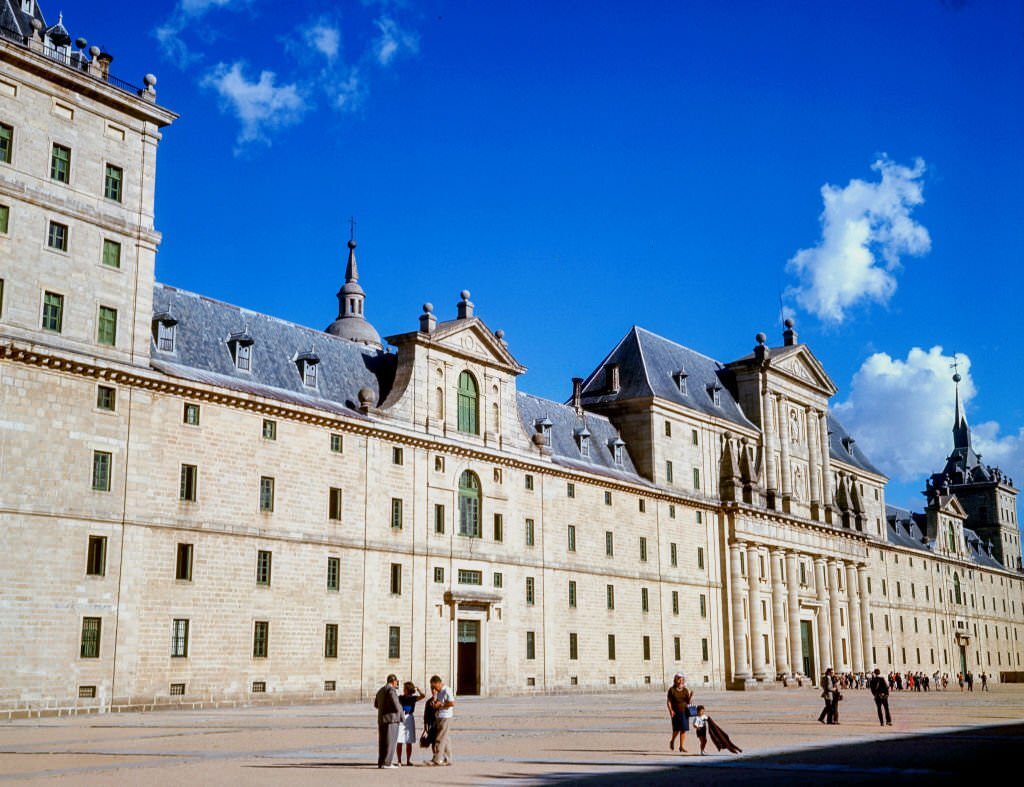
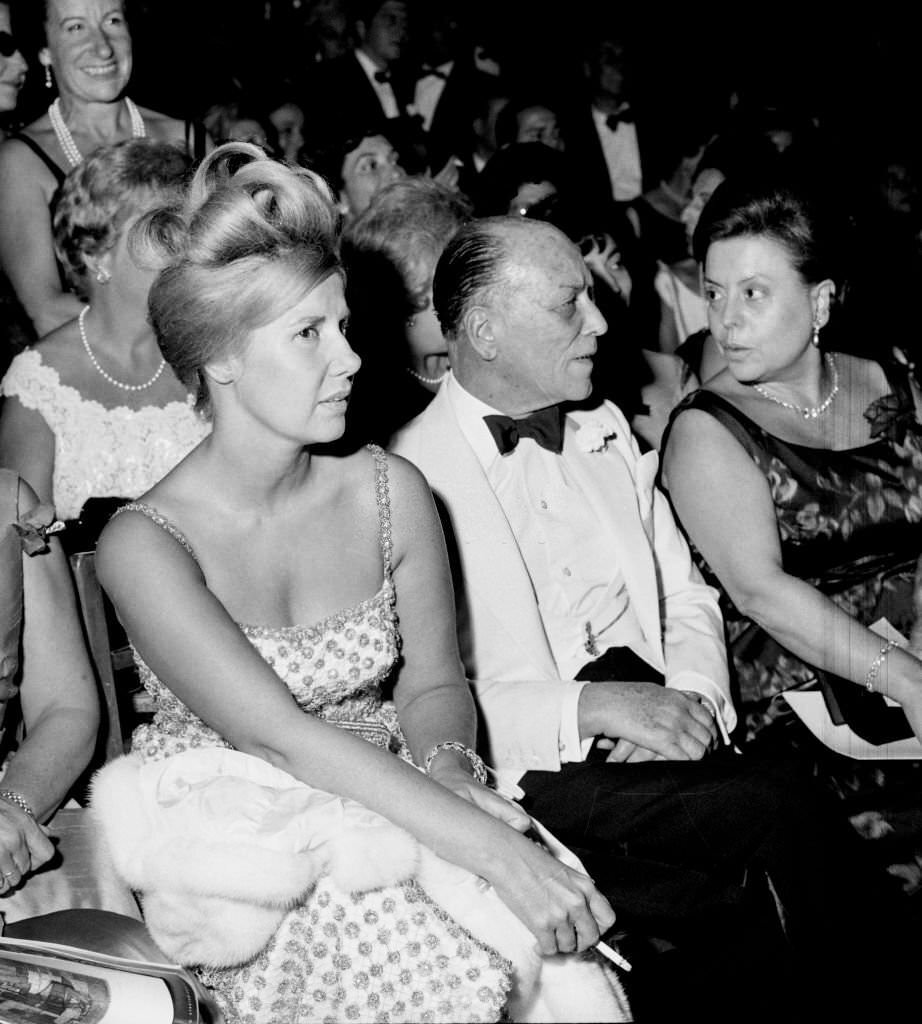
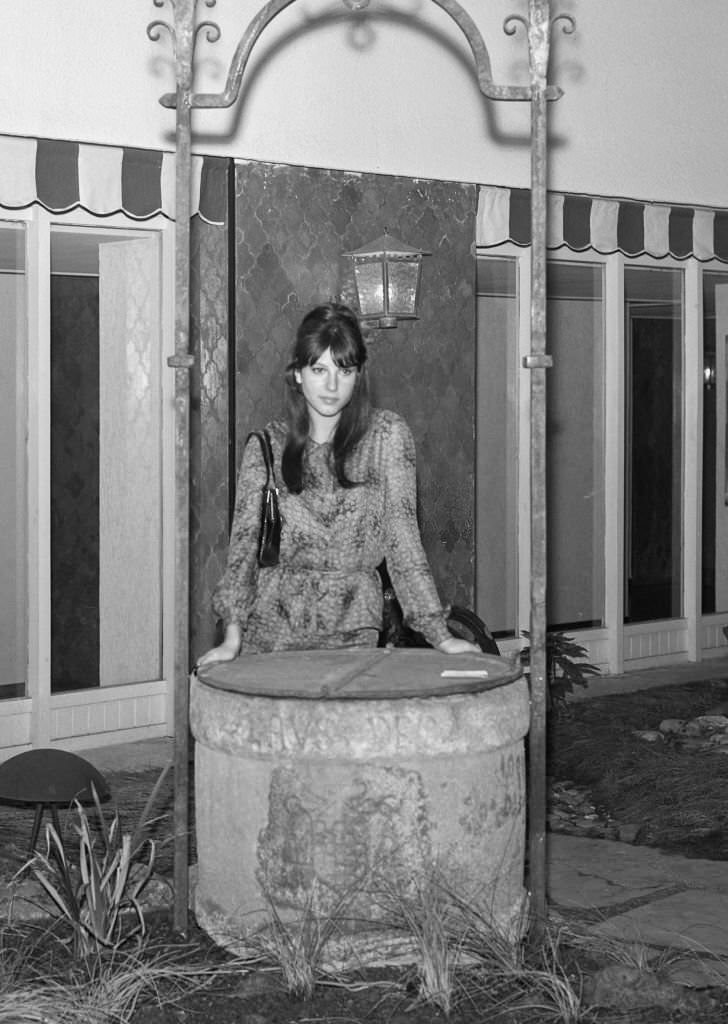
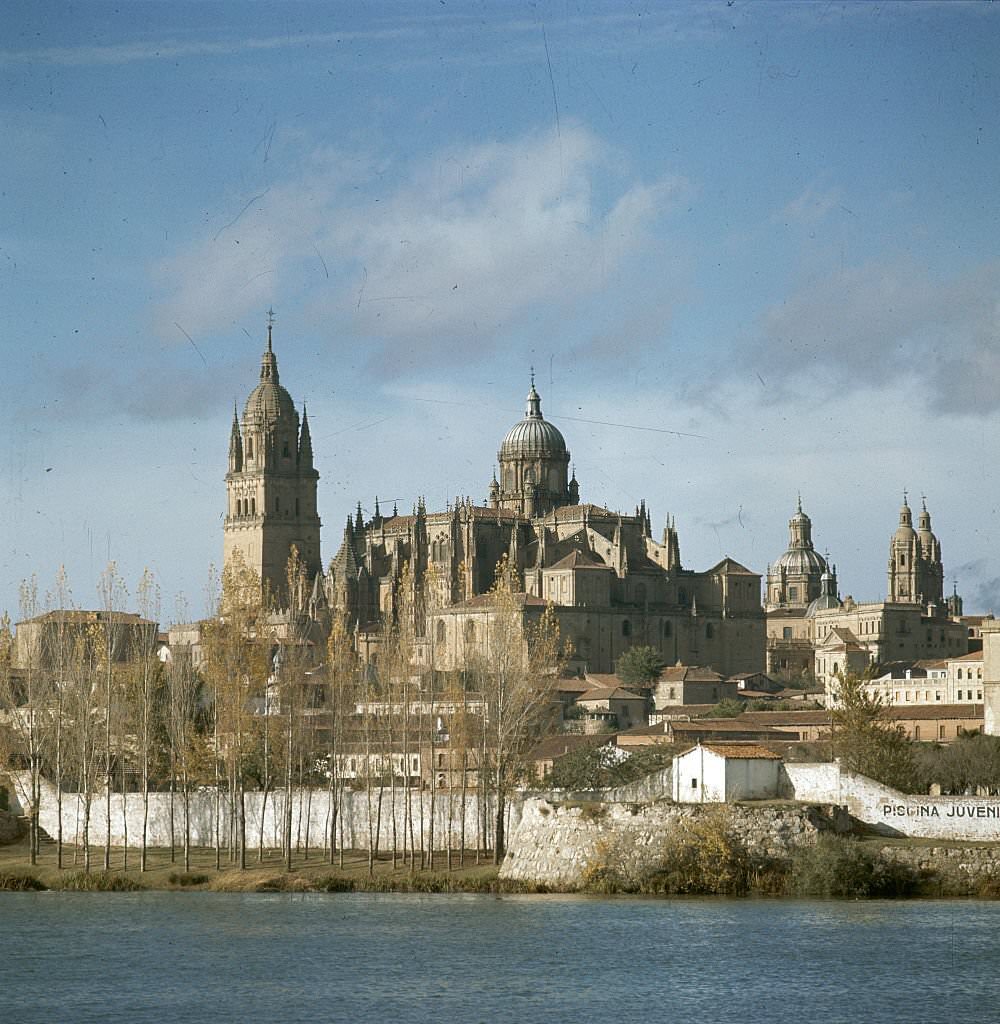
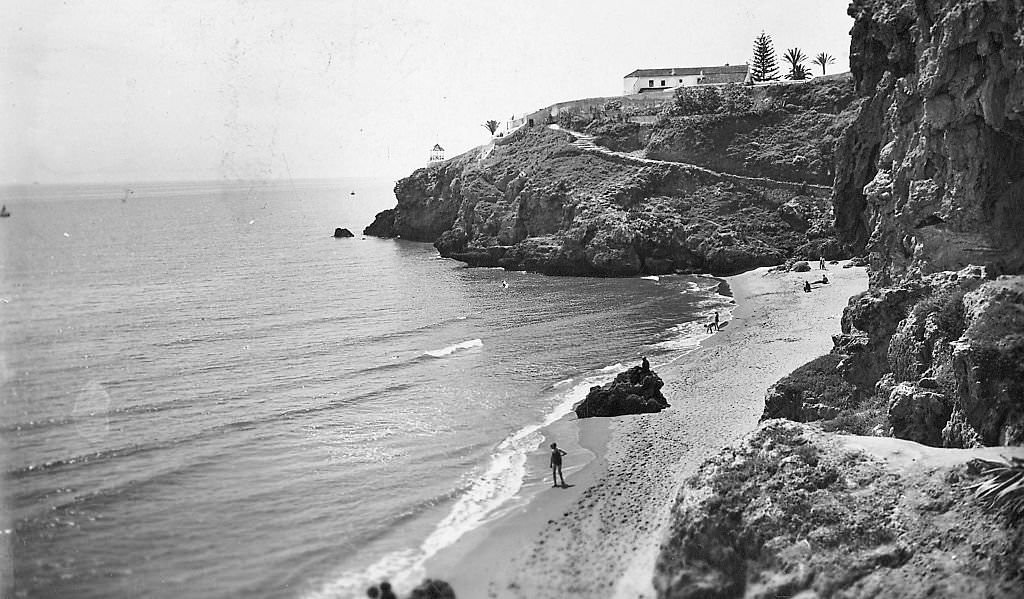
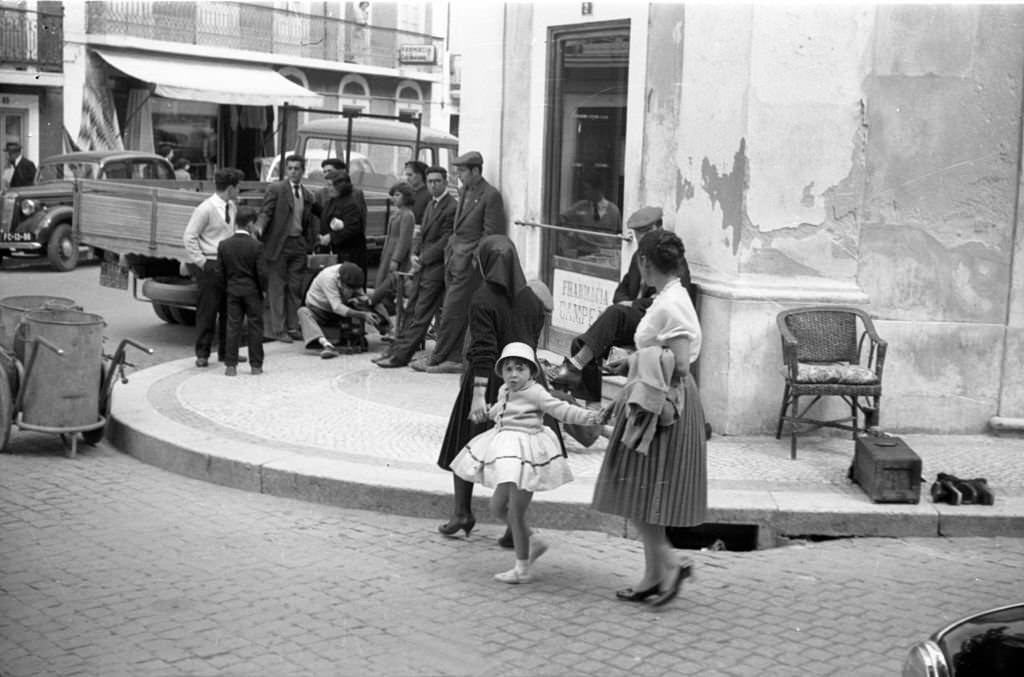
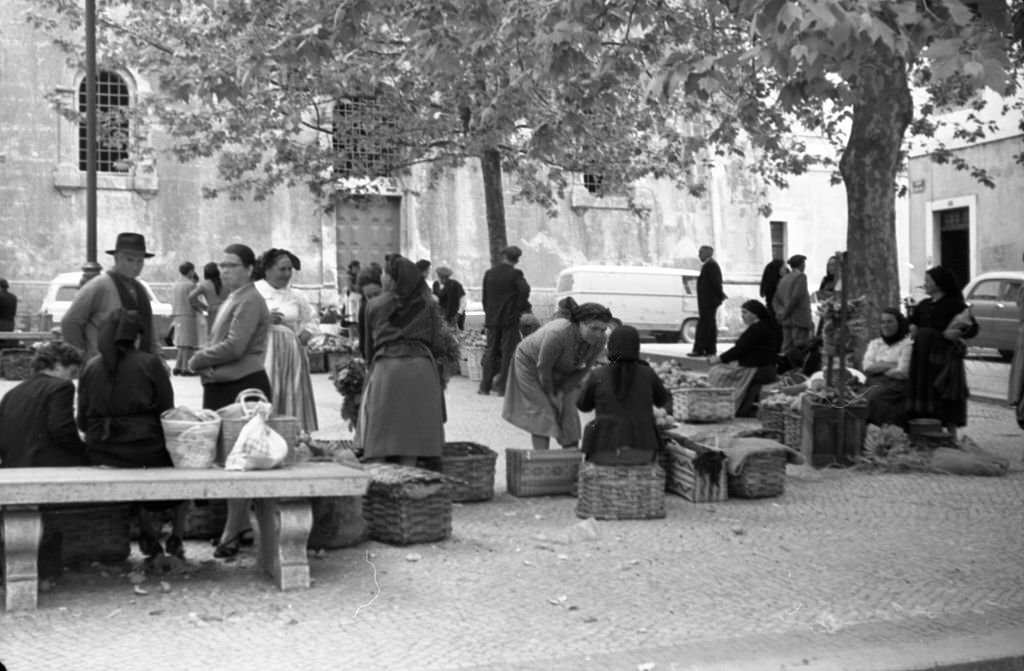
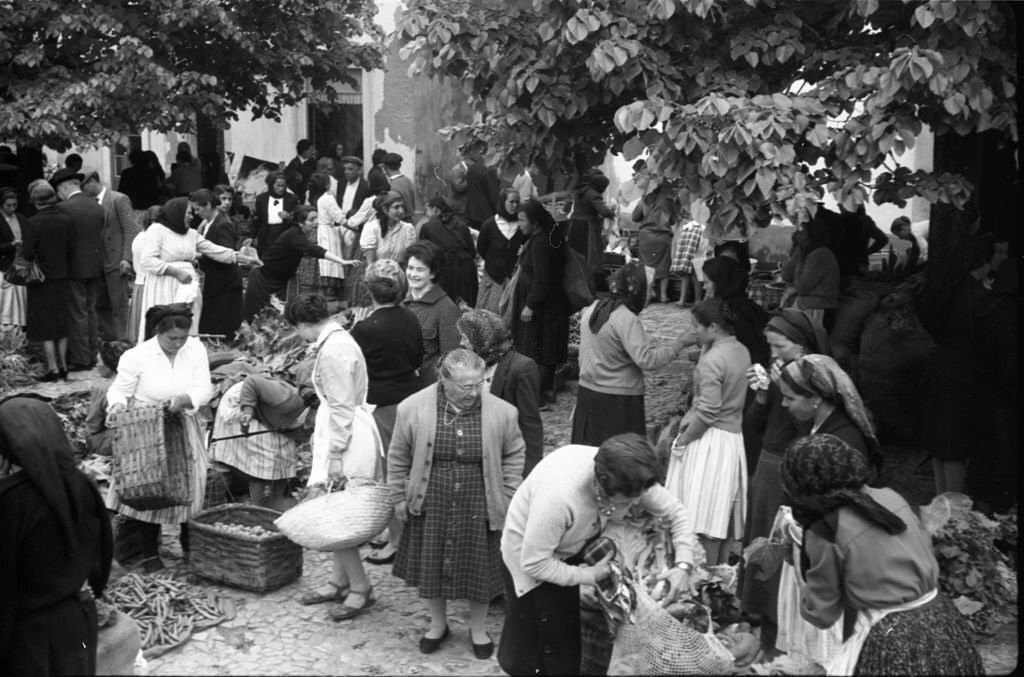
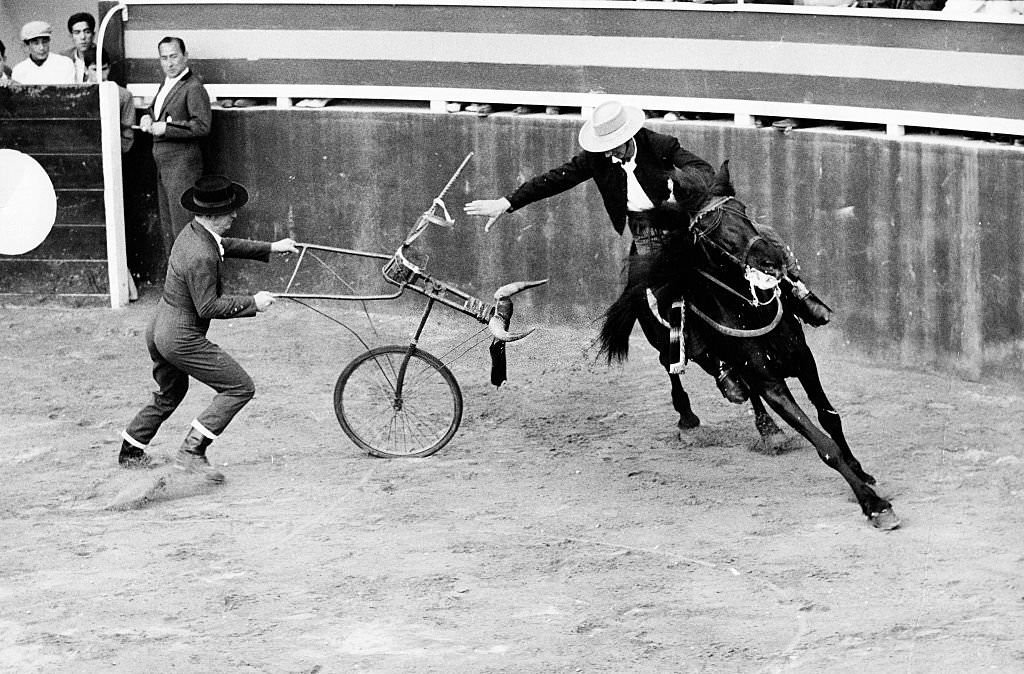
Bullfighter reading the magazine Epoca during a bullfighting. Spain, 1960sBullfighter playing a bullfighting, Spain, 1960sThe Park of Retiro, 1960, Madrid, Spain.Almeria, Arab walls, 1966, Andalucia, Spain.Real monument in San Lorenzo del Escorial, 1960, Madrid, Spain.Carriage at Palma, 1960, Mallorca, Balearic Islands, Spain.Port of Palma, 1960, Mallorca, Balearic Islands, Spain.Port of Palma, 1960, Mallorca, Balearic Islands, Spain.The Duchess of Alba in the “Gala of the Silk”, 1960, Barcelona, Cataluña, Spain.The Italian actress Stefania Sandrelli, 1960, Madrid, Spain.A view across the Tormes River of Old Salamanca, with the tower of the university at left, the cathedral, and the Church of Clerecia. The university is the oldest in Spain.An elevated view from the cliffs over the beach and headland of the southern coast, Malaga, Spain, 1960.Street scene People in front of a shop entrance. A little girl, wears a skirt and a hat, is hold by two womenA woman carries a basket on her head and a big ewer in her hand, 1960Women at the market place, Mardi, 1960sWomen at the market, 1960Spain Balearics Balearic Islands Mallorca Amateur-bullfight in Arenal on Mallorca
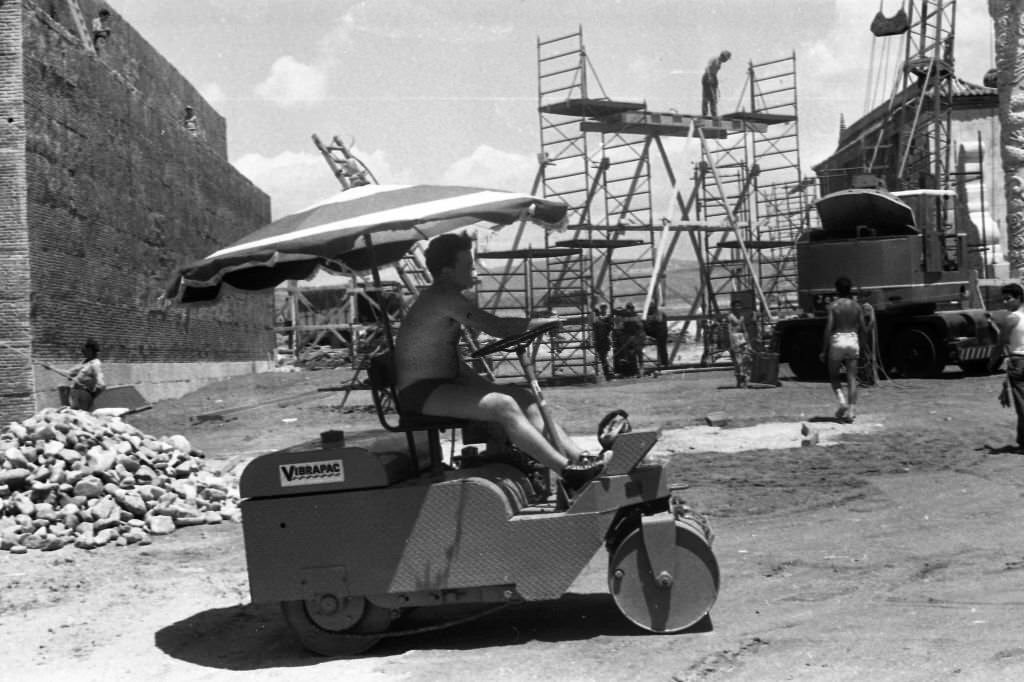
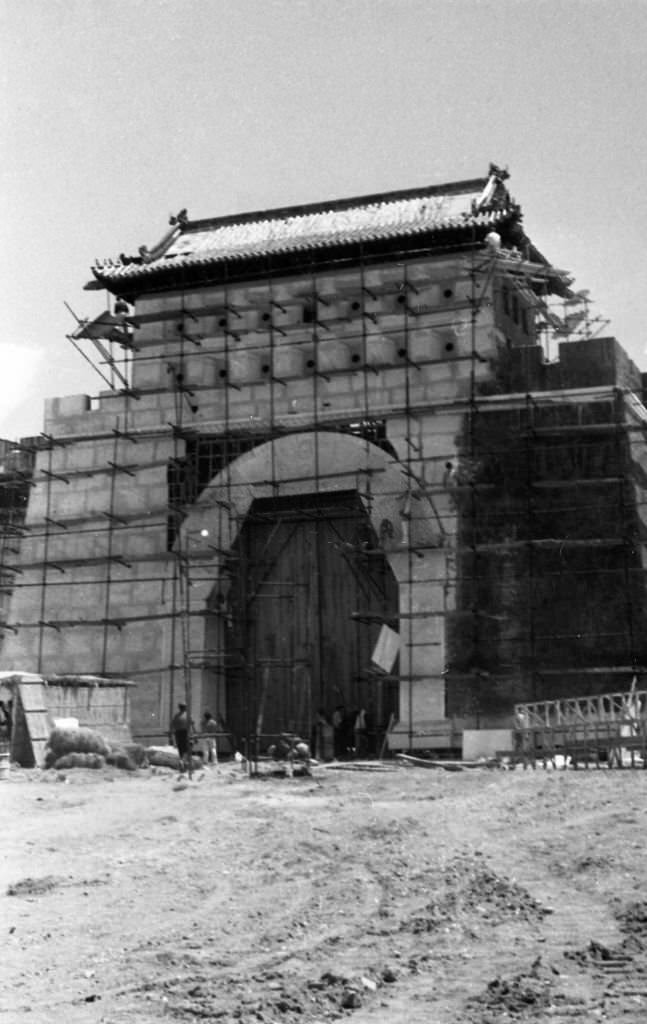
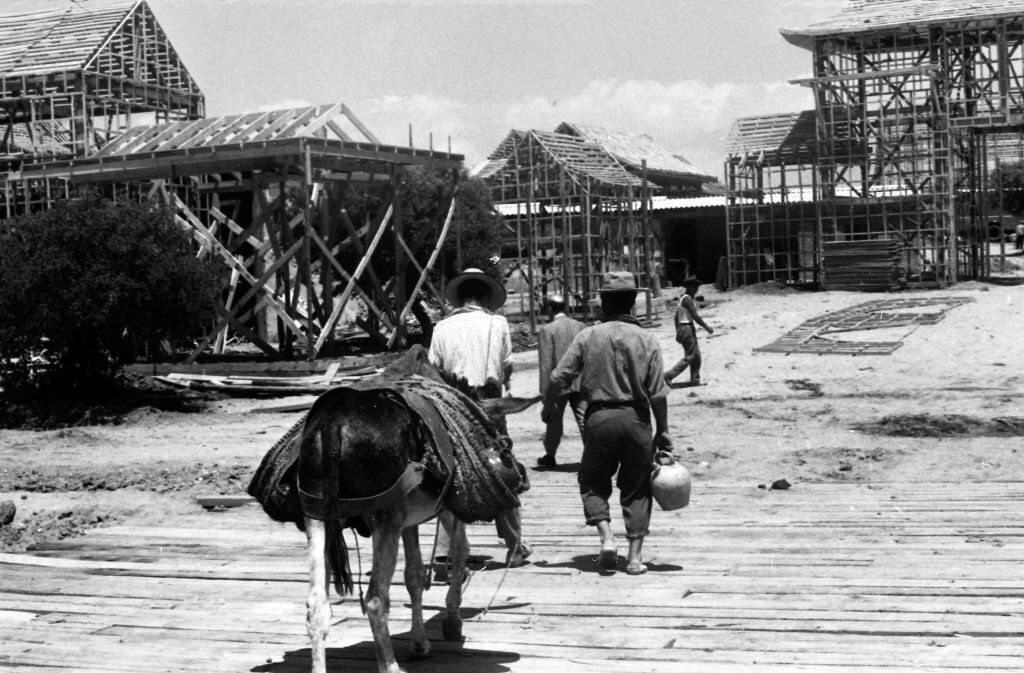
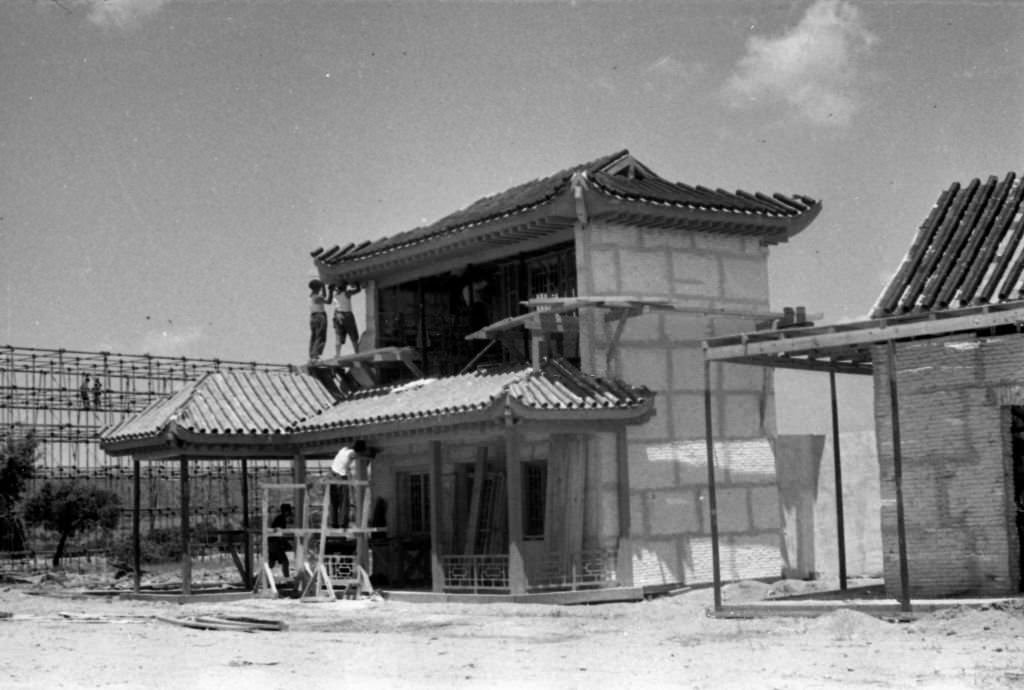
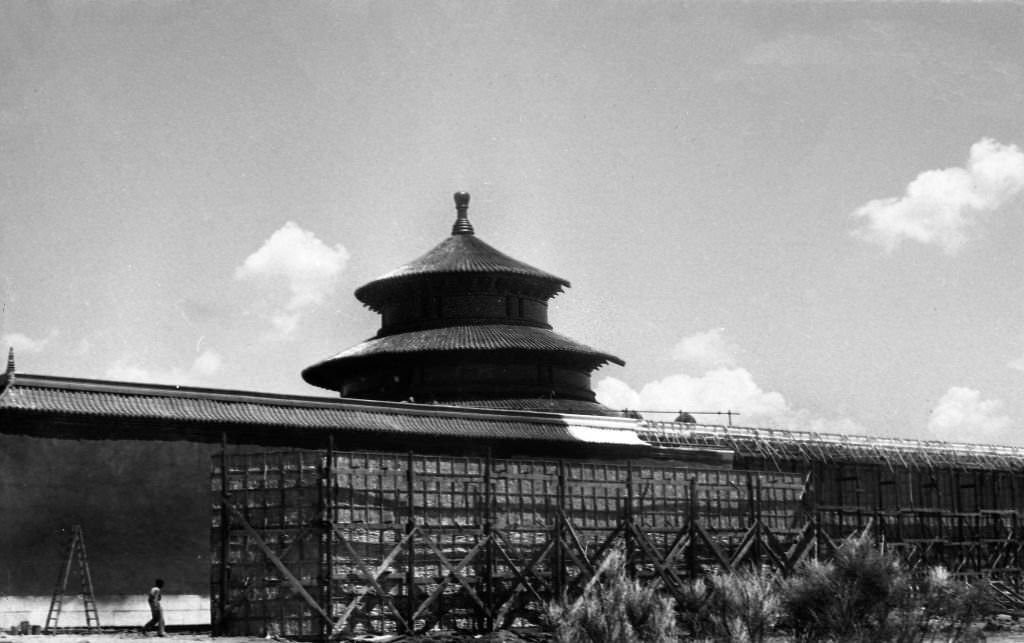
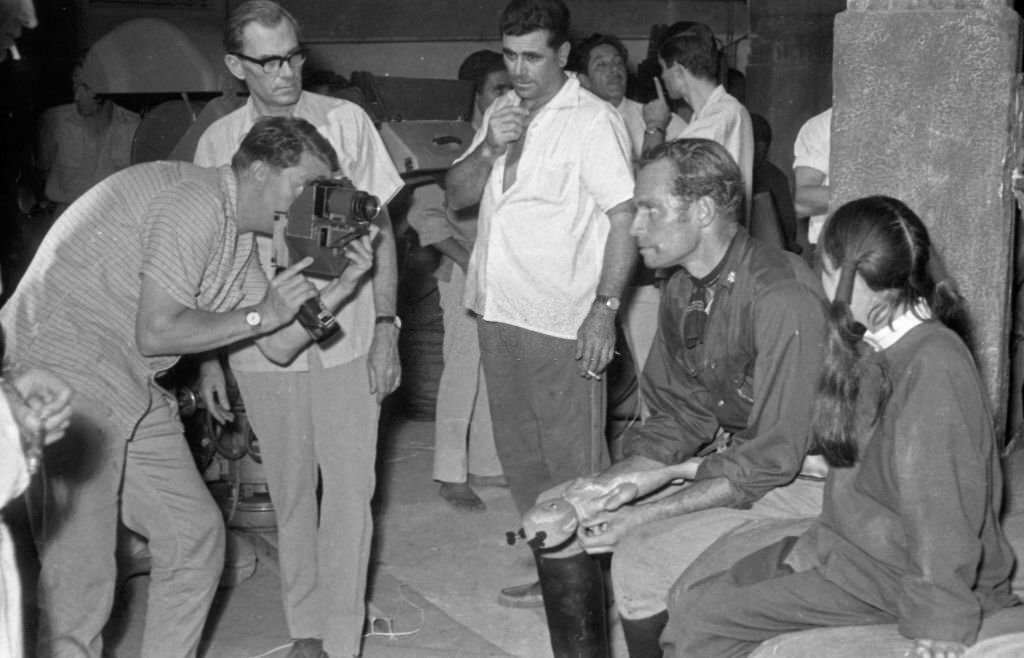
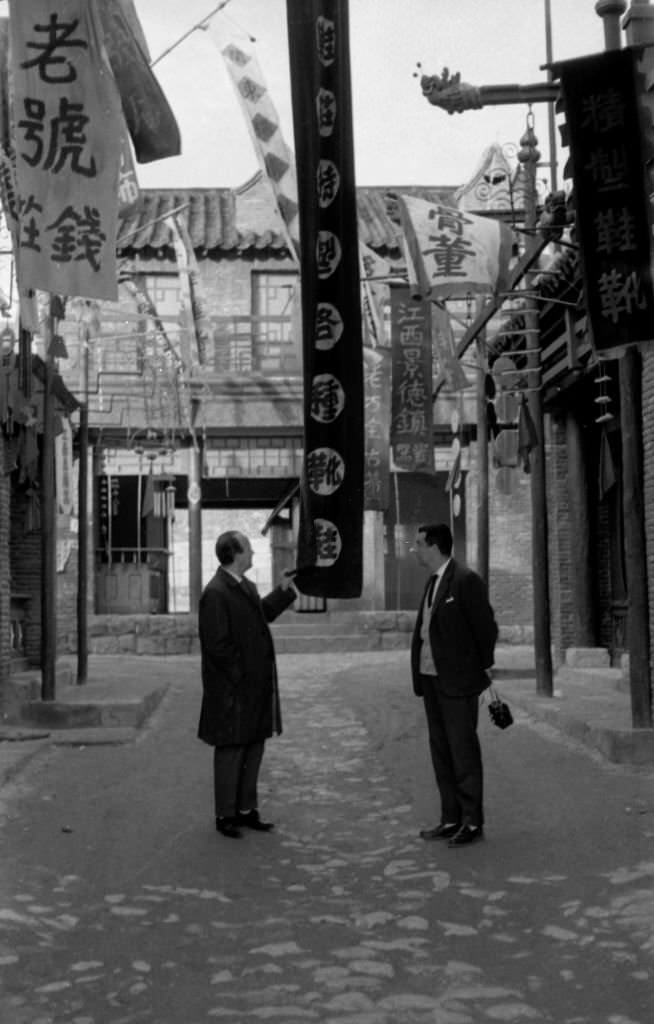
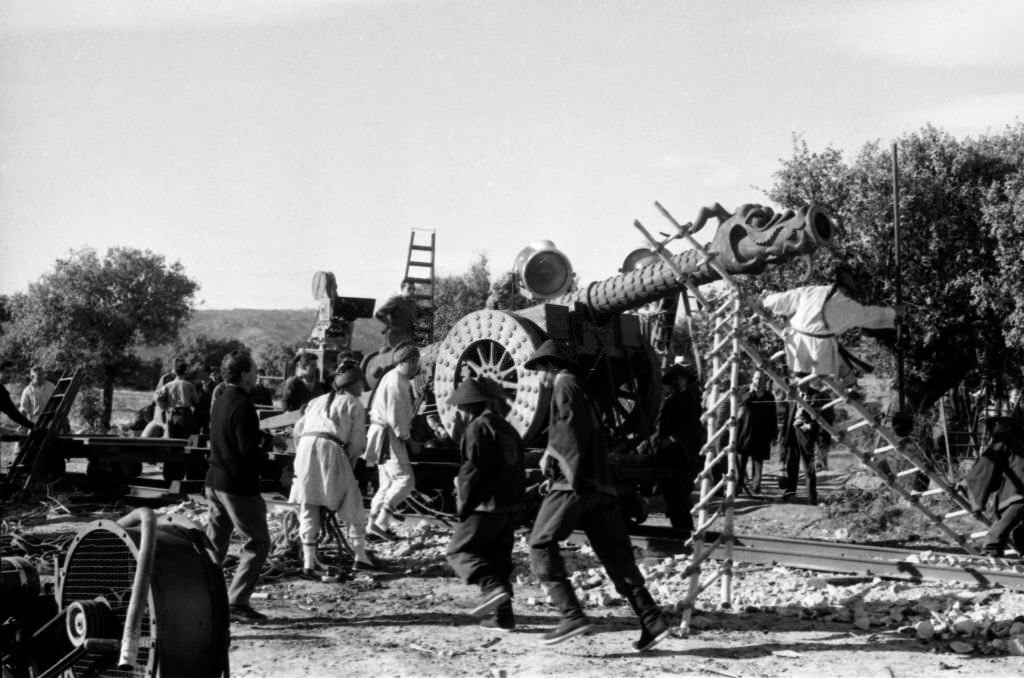
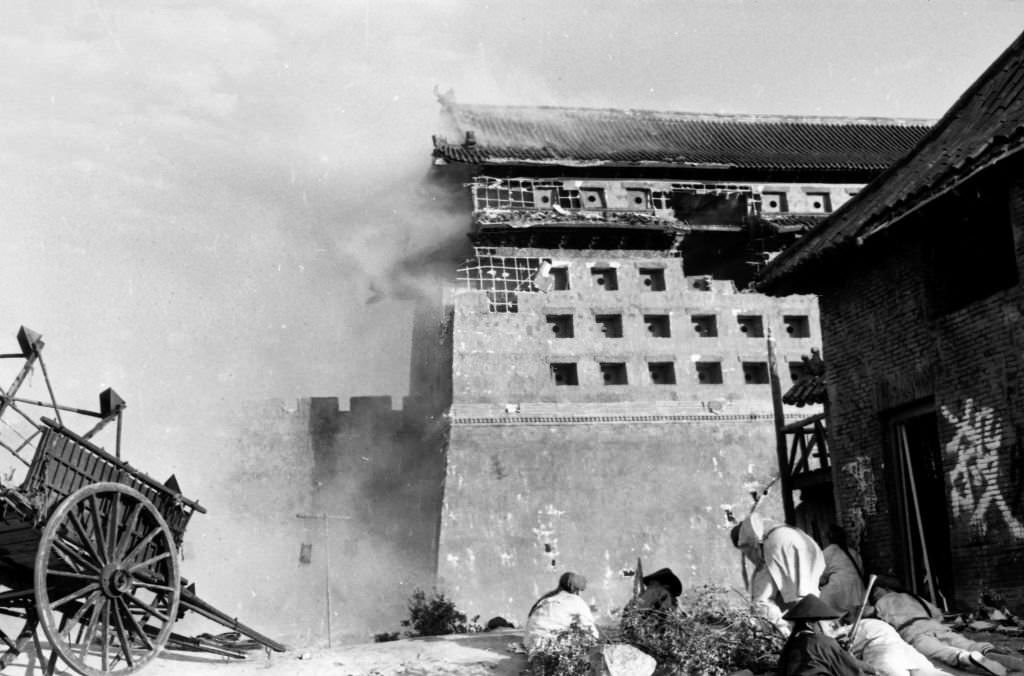
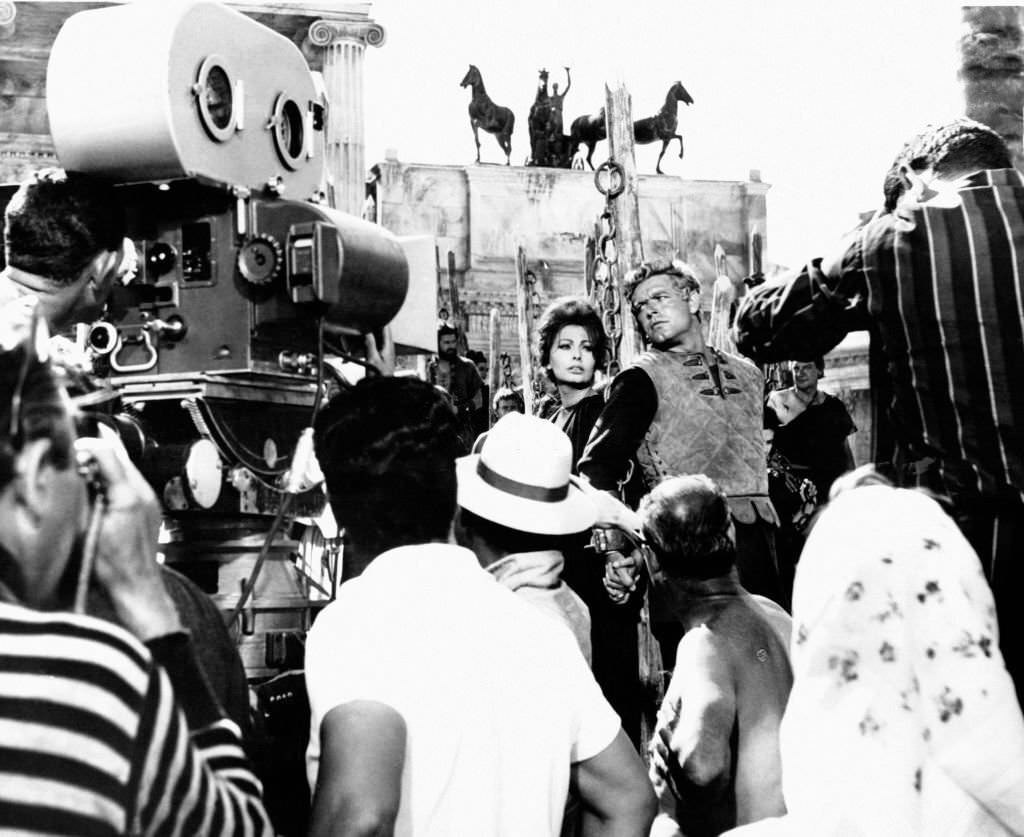
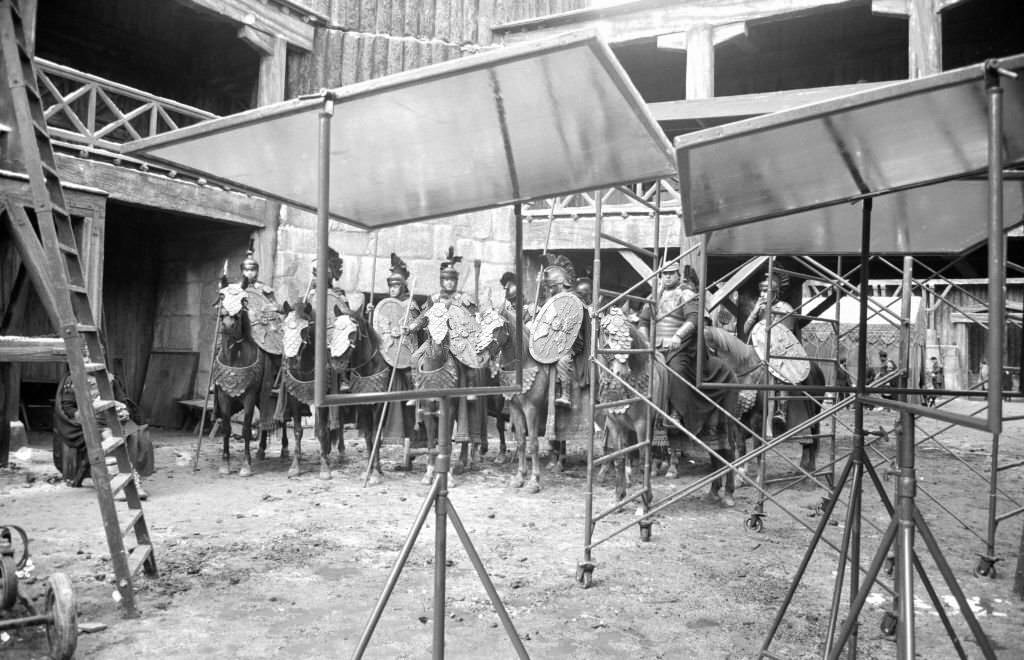
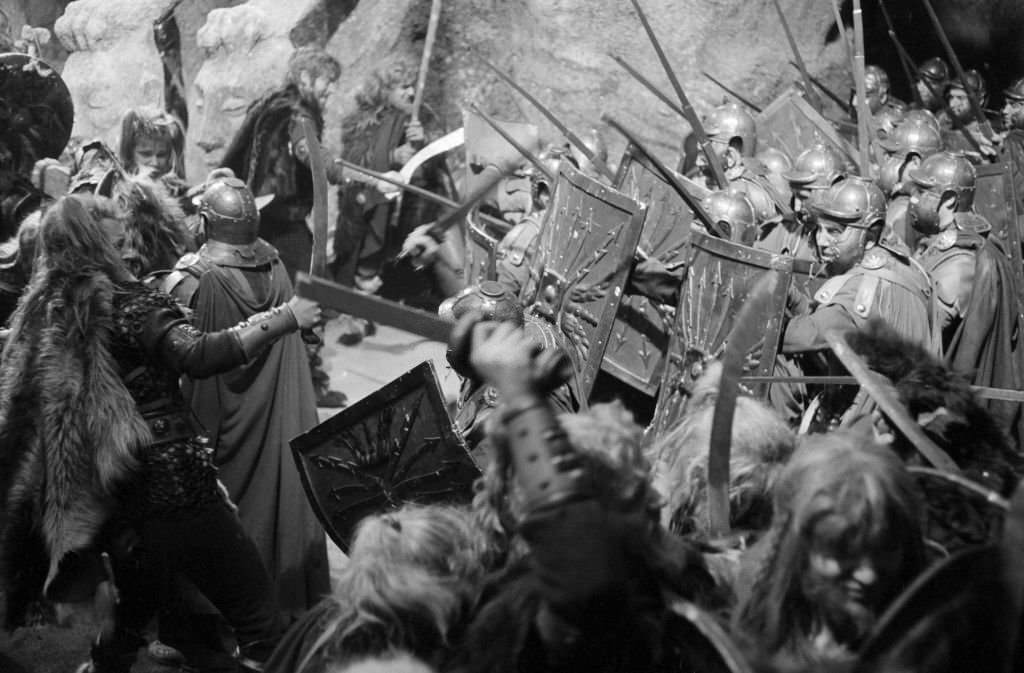
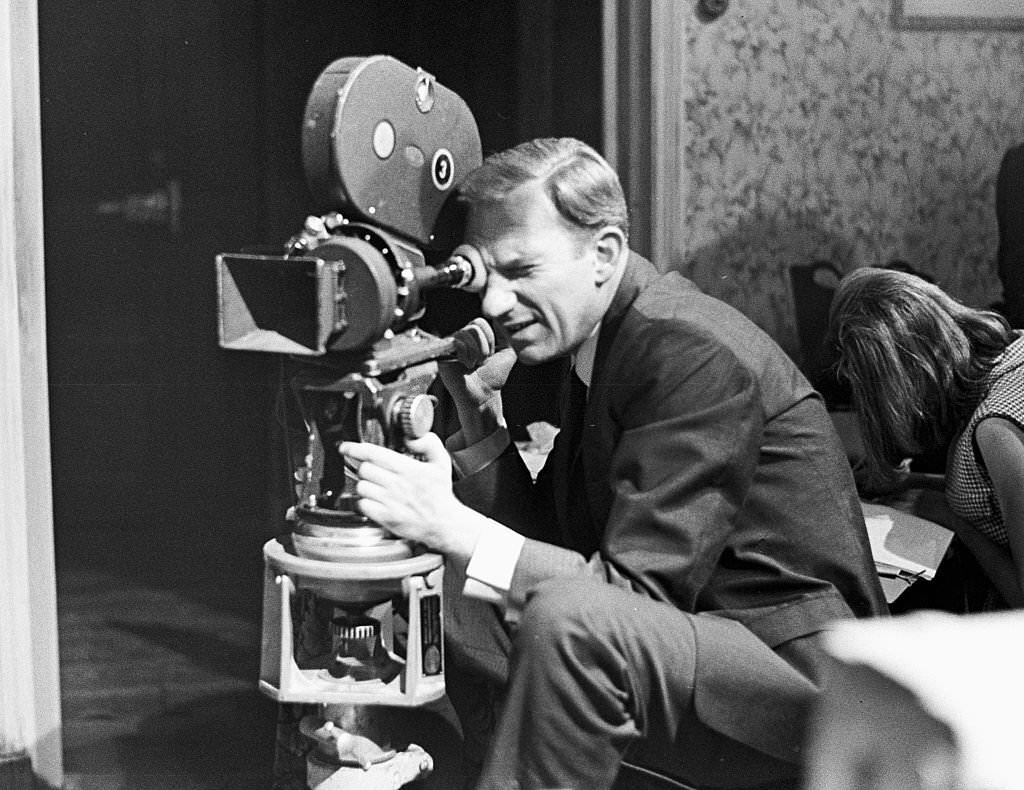
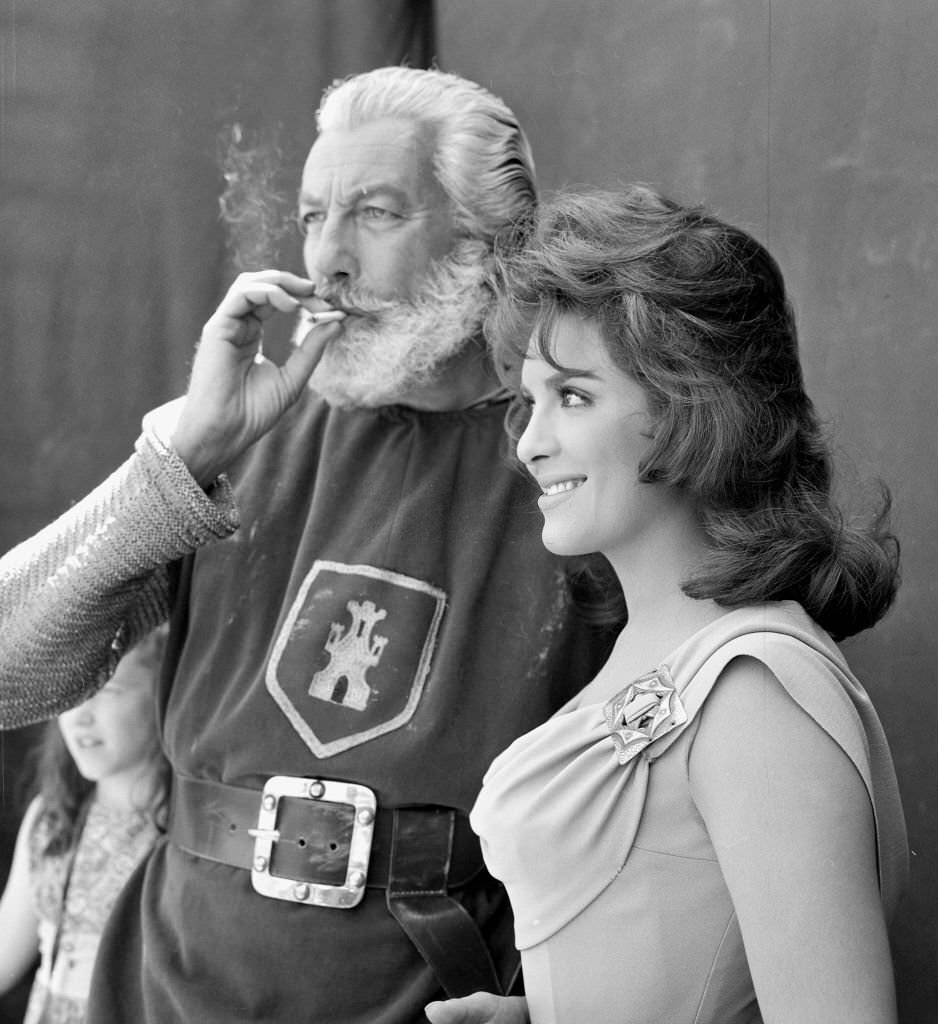
Spain’s film industry and its connections to Hollywood were thriving. Director Vittorio De Sica was in Madrid in 1960 directing a dance scene with his actors. That same year, journalists visited the massive outdoor sets built for “55 Days in Peking” — produced by Samuel Bronston in Las Rozas, outside Madrid — where entire city blocks of 19th-century Peking had been recreated on Spanish soil. Charlton Heston arrived to film his role in 1962. By 1963, Anthony Mann was using Spain to film “The Fall of the Roman Empire,” with Sophia Loren and Stephen Boyd working on elaborate sequences.
Vittorio De Sica directs his actors in a dance scene in Madrid, 1960
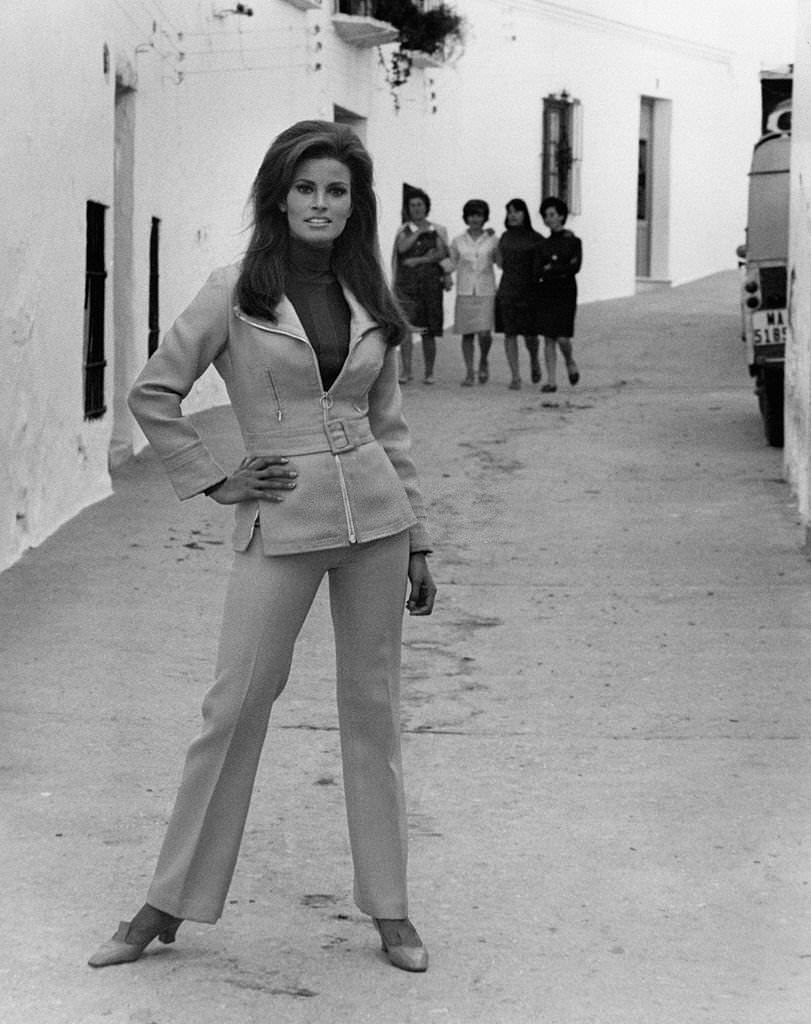
American actress Raquel Welch (Jo Raquel Tejada) posing in a street of the city. She’s in Spain to shot the film Phatom. Malaga, 1966
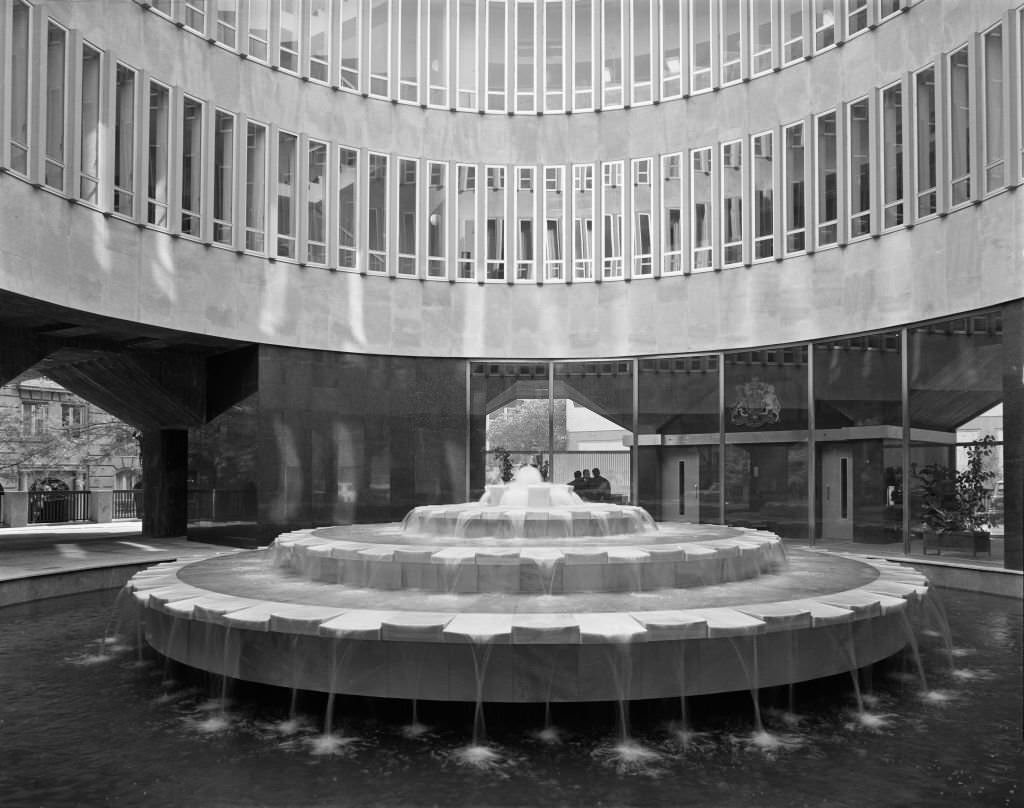
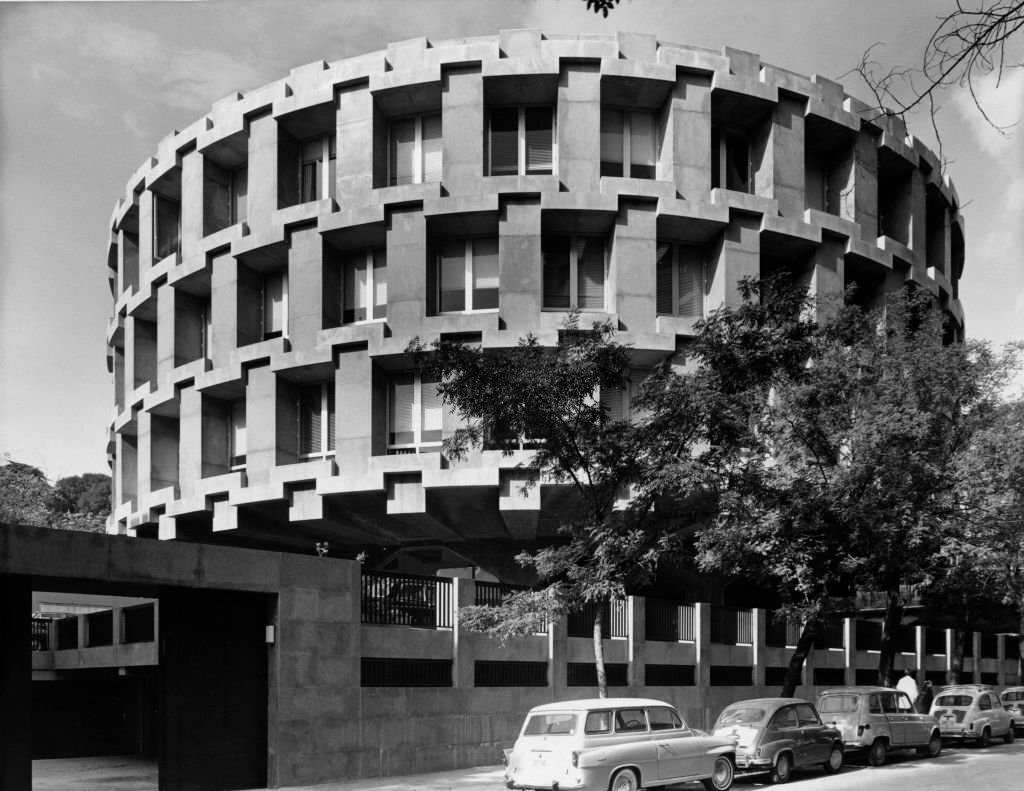
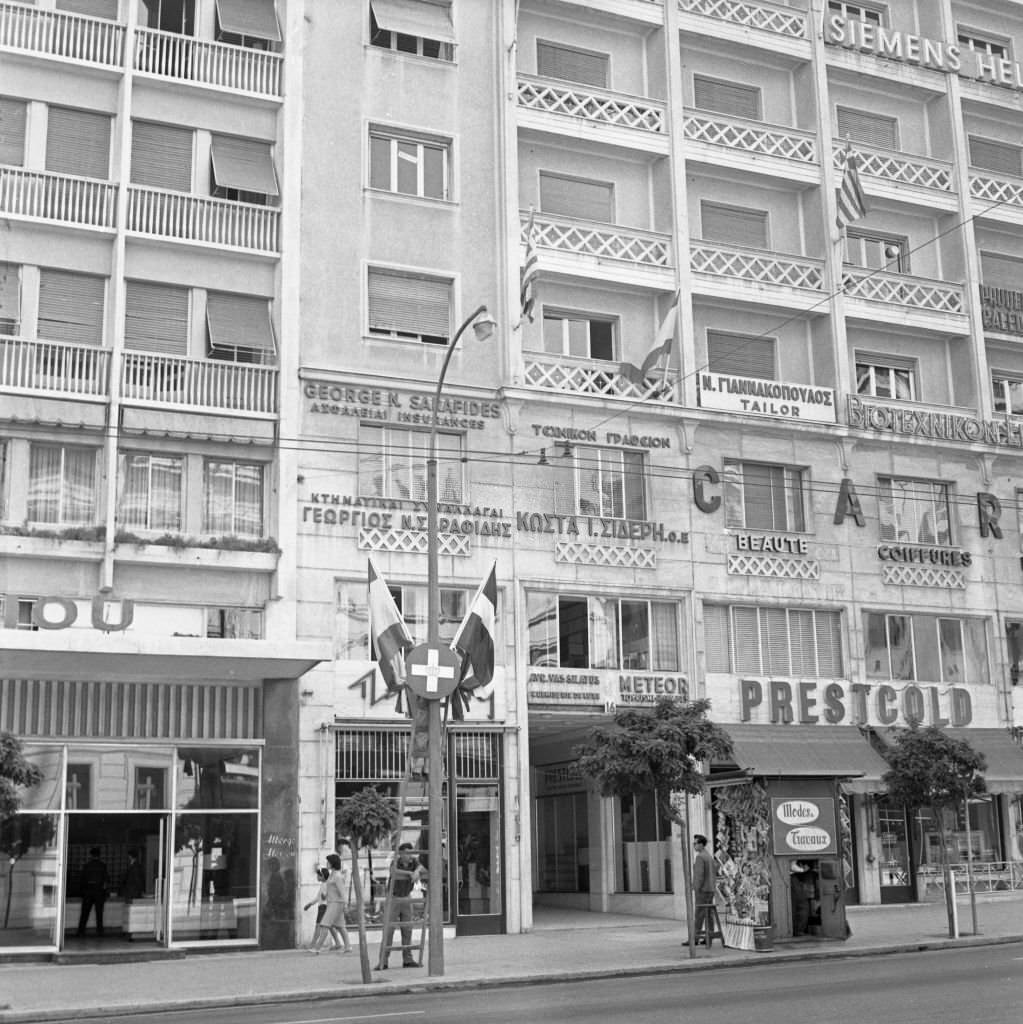
Fountain in the courtyard, British Embassy offices, 16 Calle Fernando El Santo, Madrid, Spain, 1966.British Embassy, 116 Calle Fernando el Santo, Madrid, Spain, 1966.
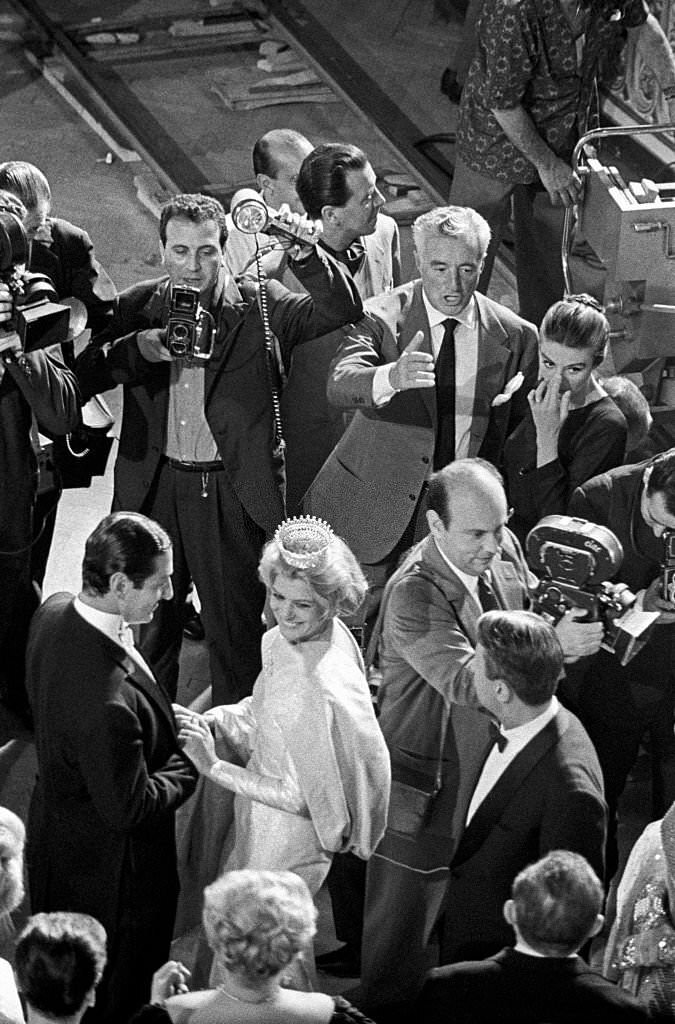
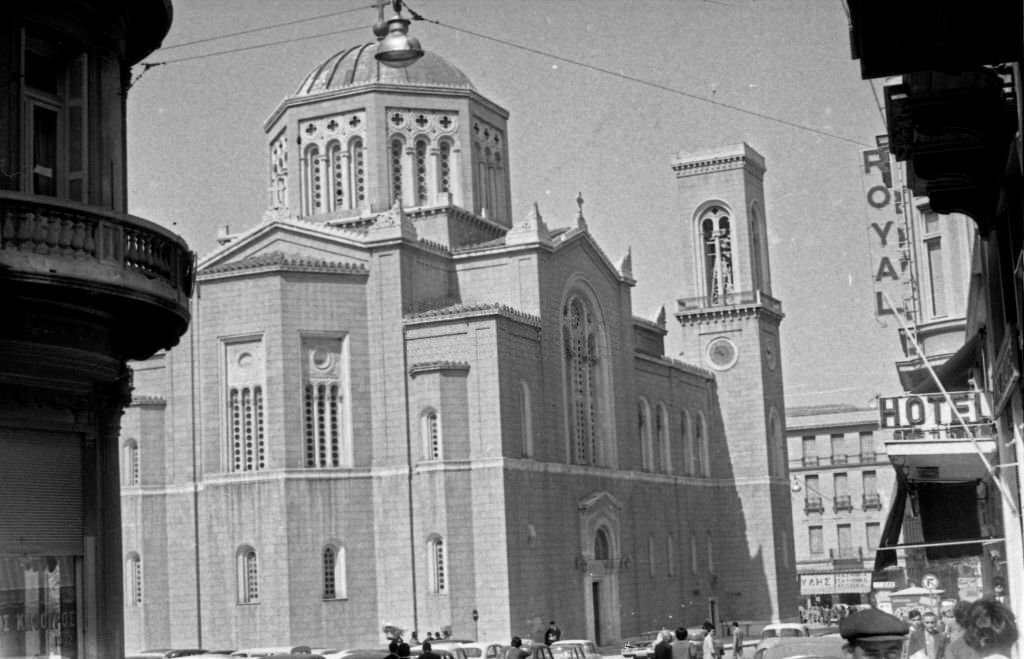
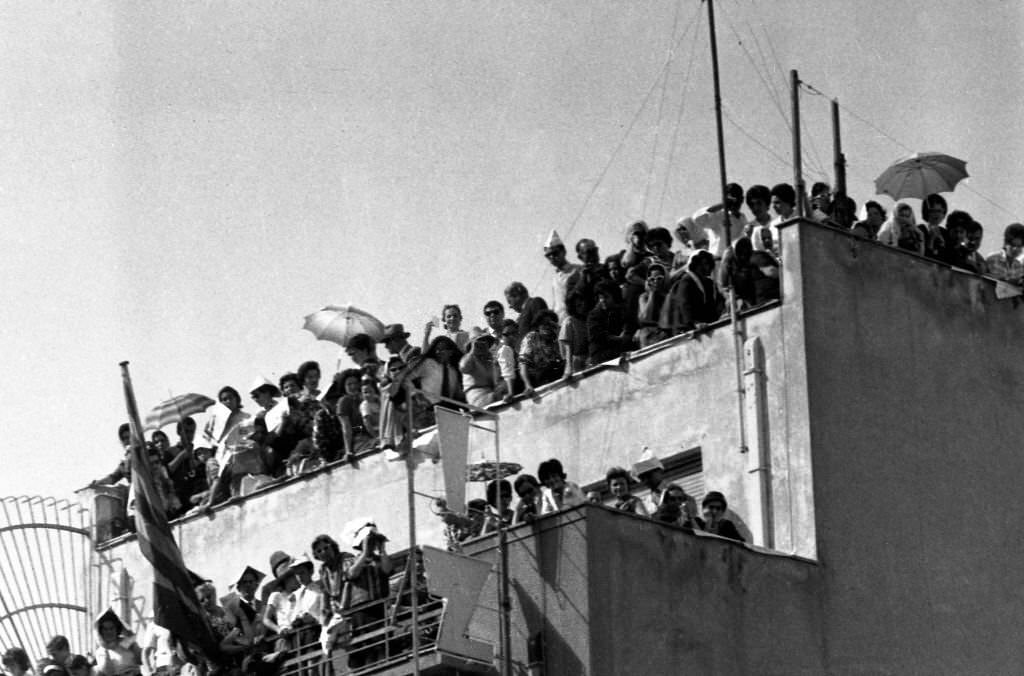
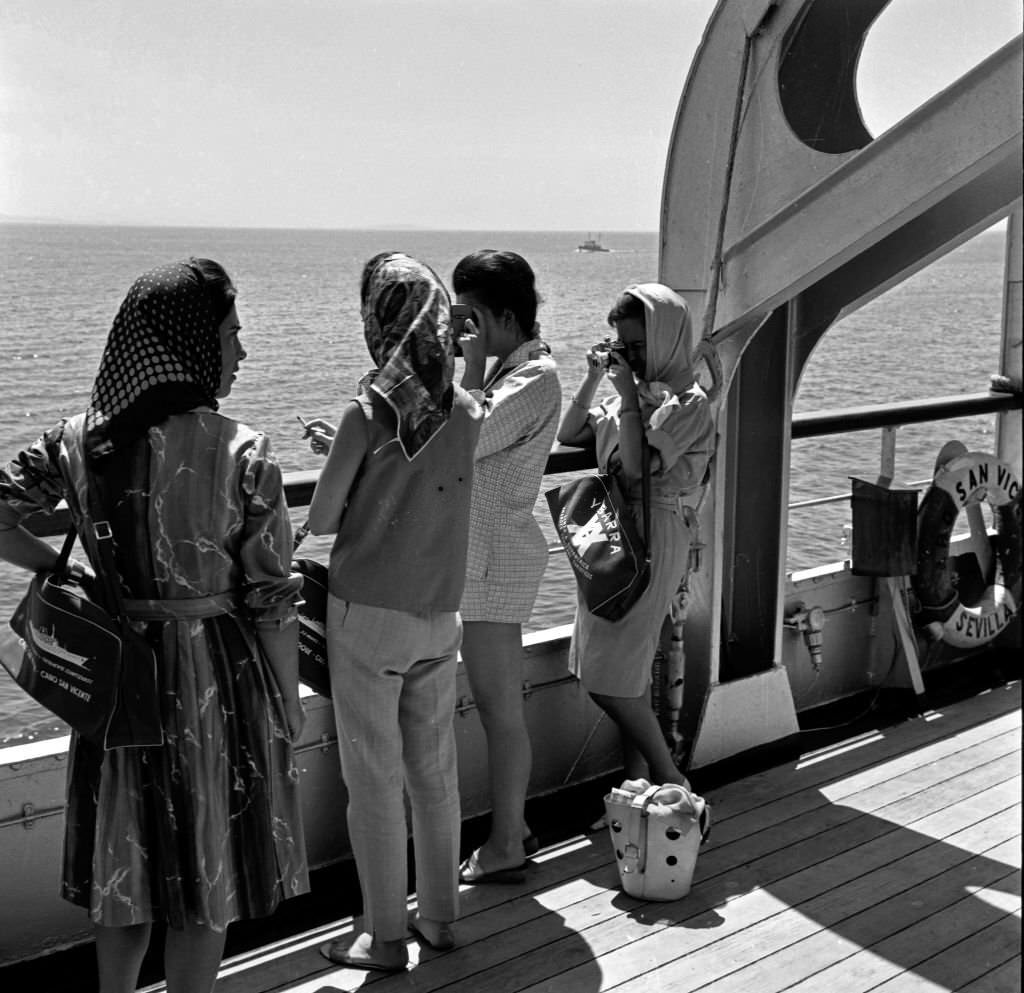
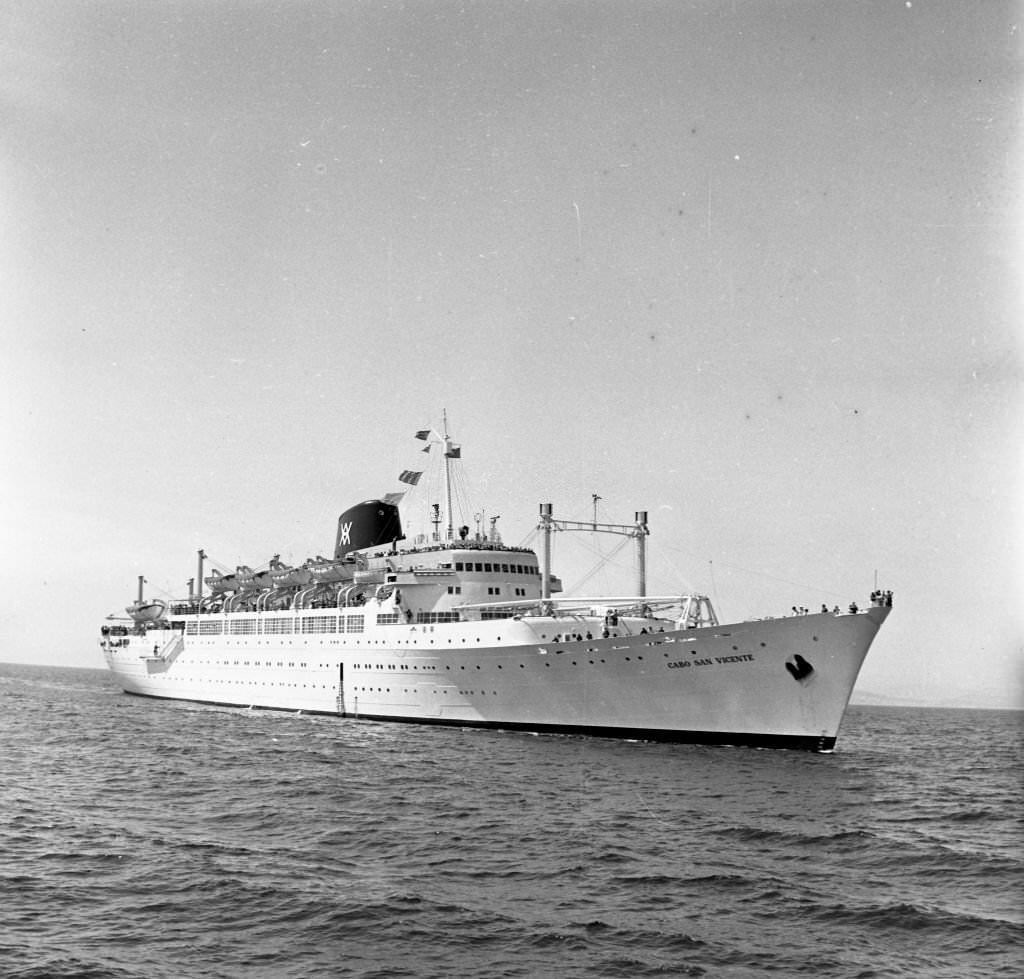
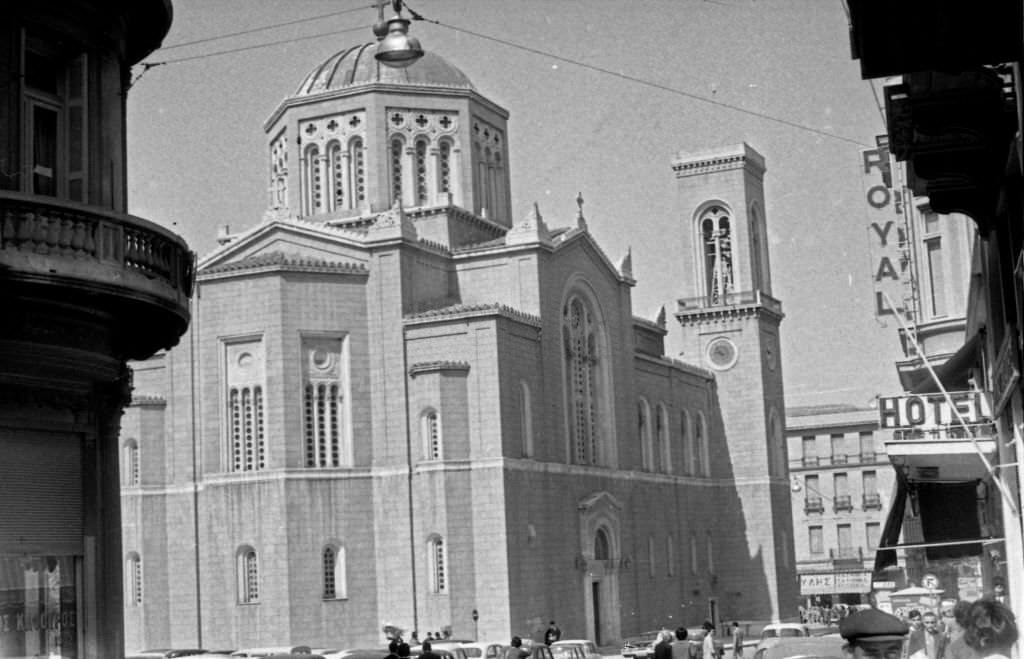
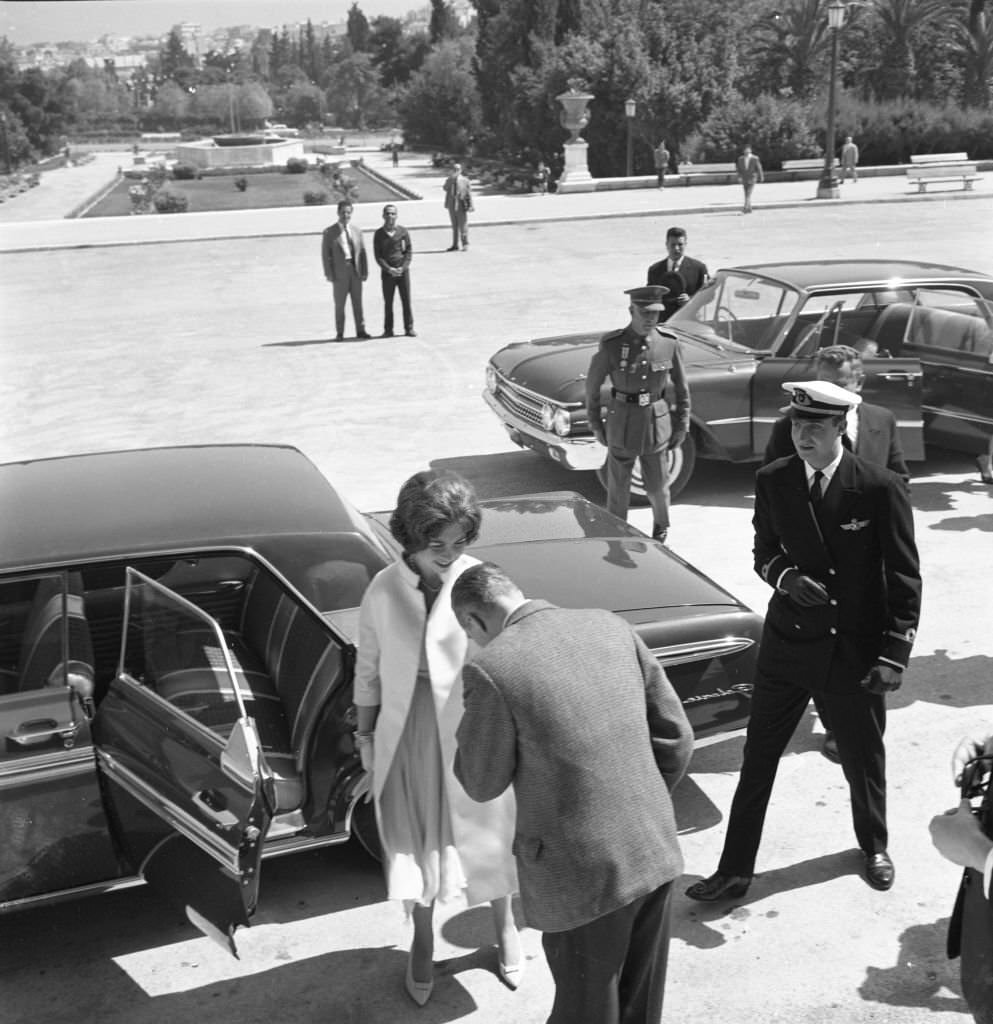
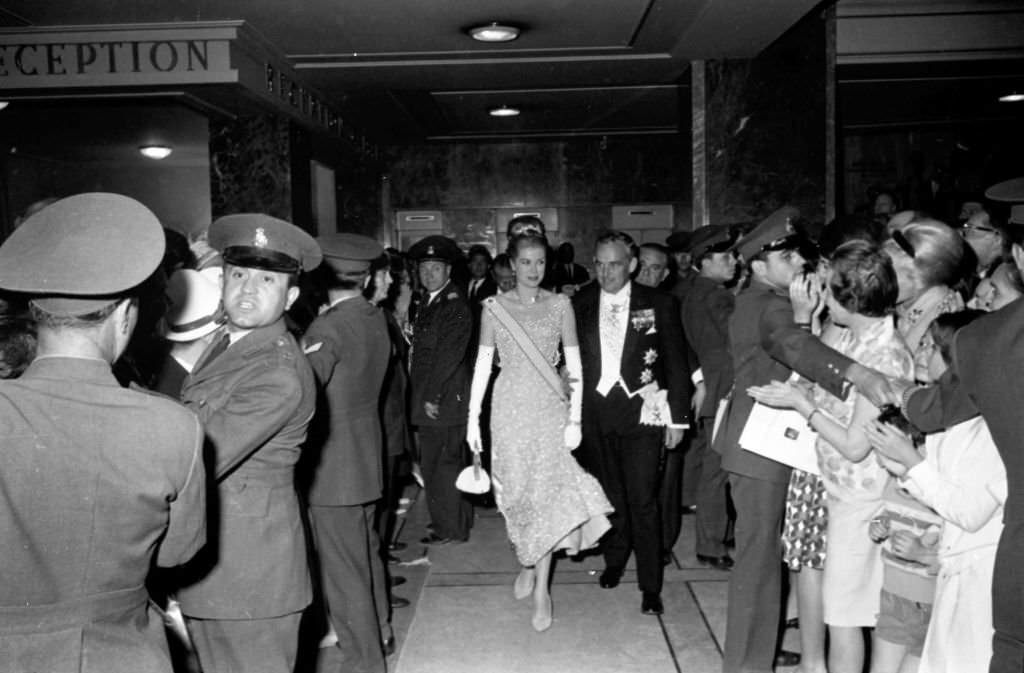
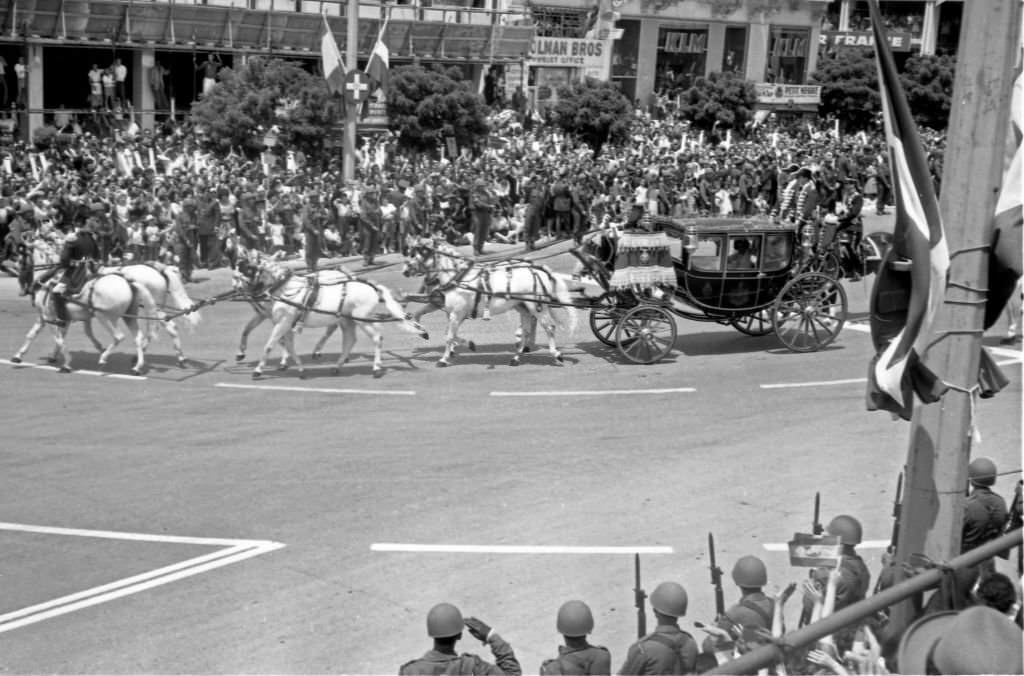
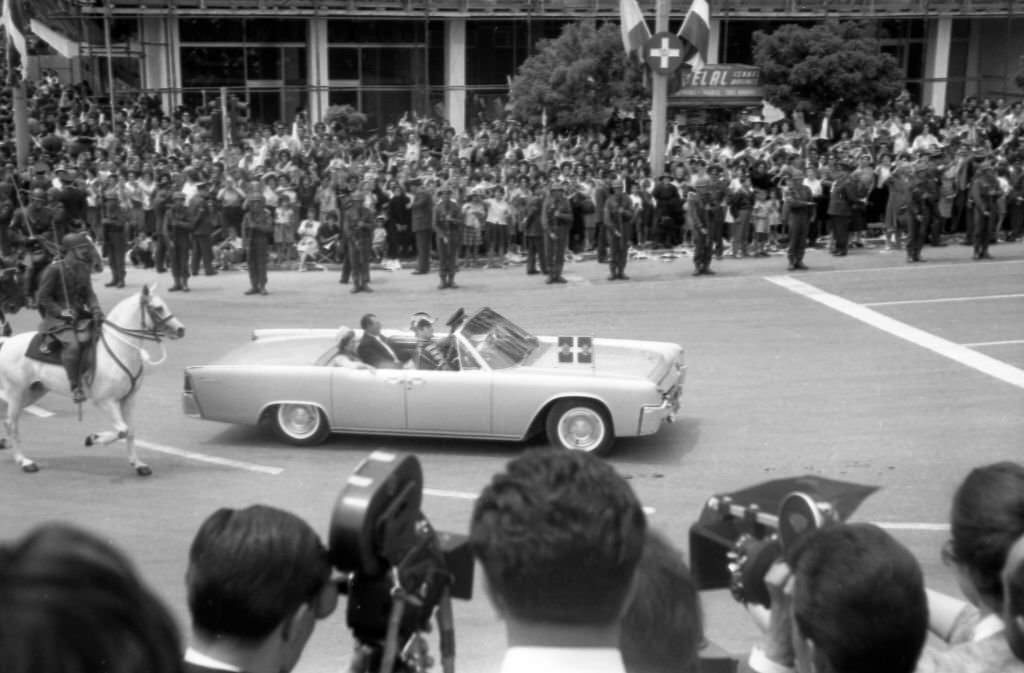
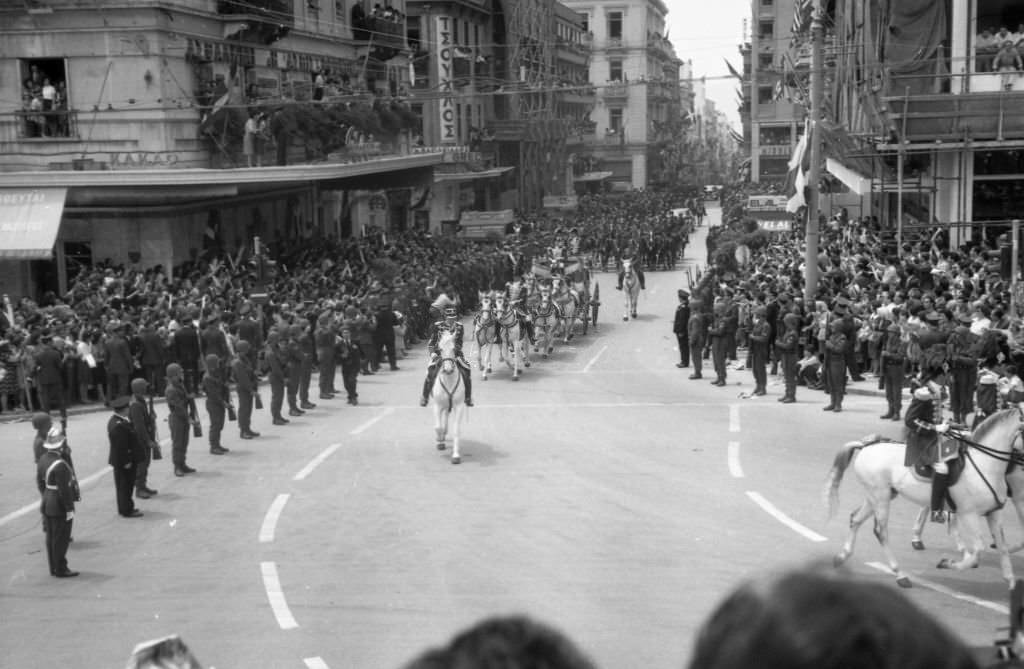
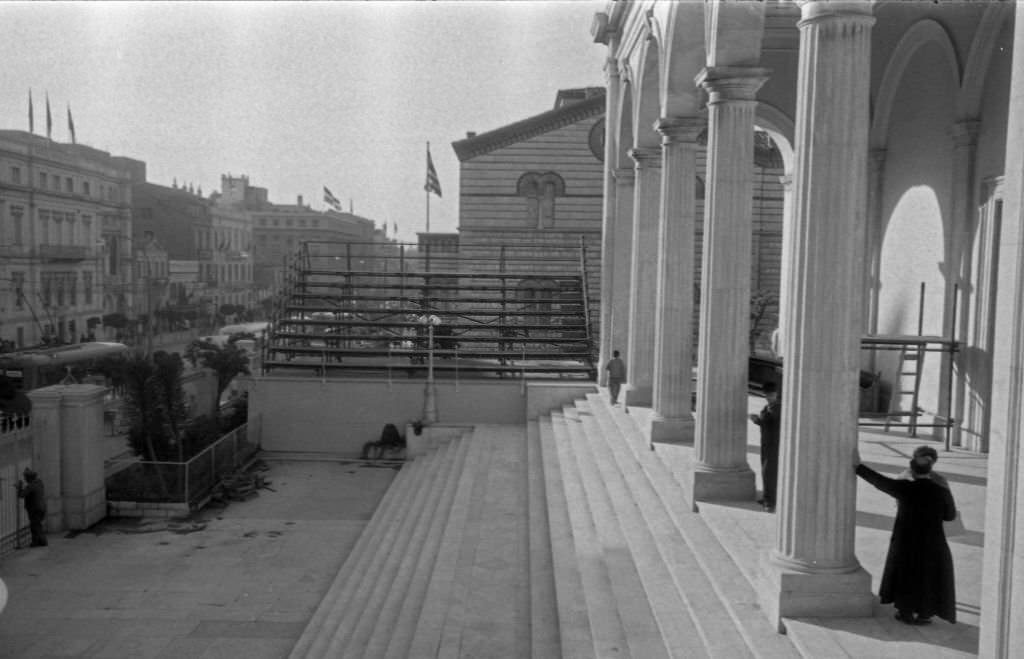
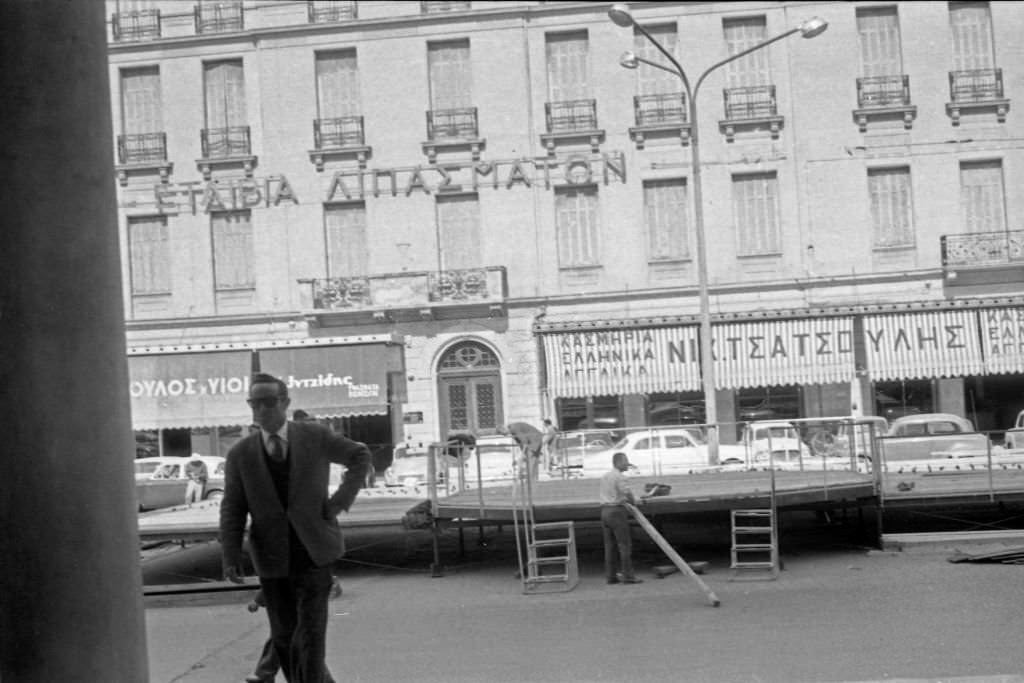
One of the most closely watched events in Spanish high society came in 1962, when Prince Juan Carlos de Borbón married Princess Sofía of Greece at the Church of St. Dionysius Areopagite in Athens. Don Juan de Borbón chartered the transatlantic liner “Cabo San Vicente” to bring Spanish guests to the ceremony. Prince Rainier III and Grace of Monaco were among those who attended the celebrations. The wedding was more than a society event — it was a political moment. Franco would later name Juan Carlos as his successor, a decision designed to ensure that the regime outlasted its founder.
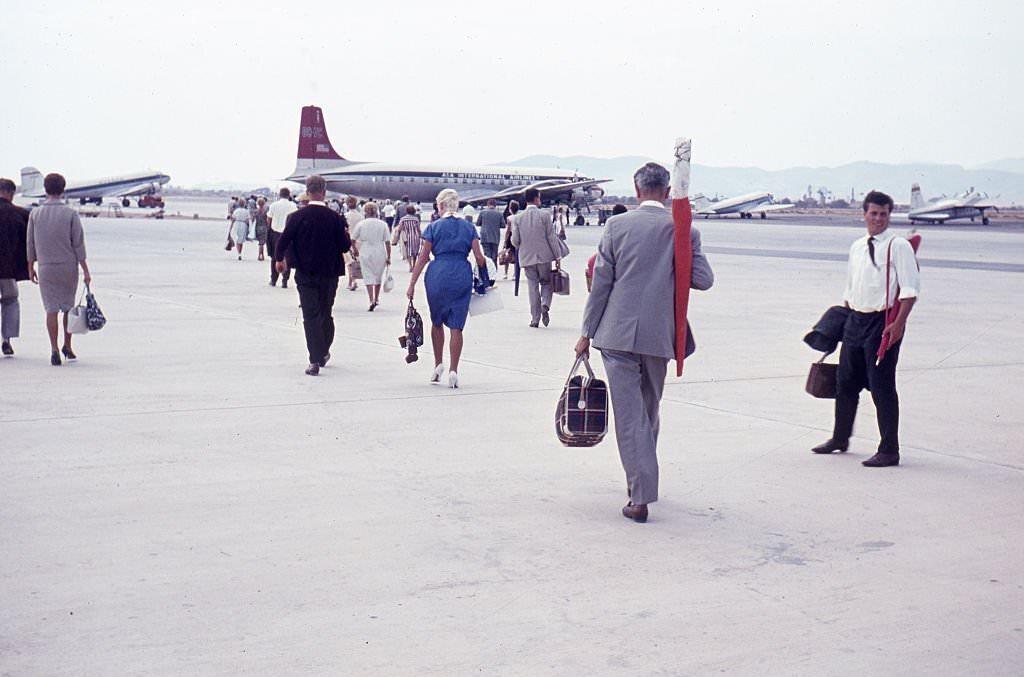
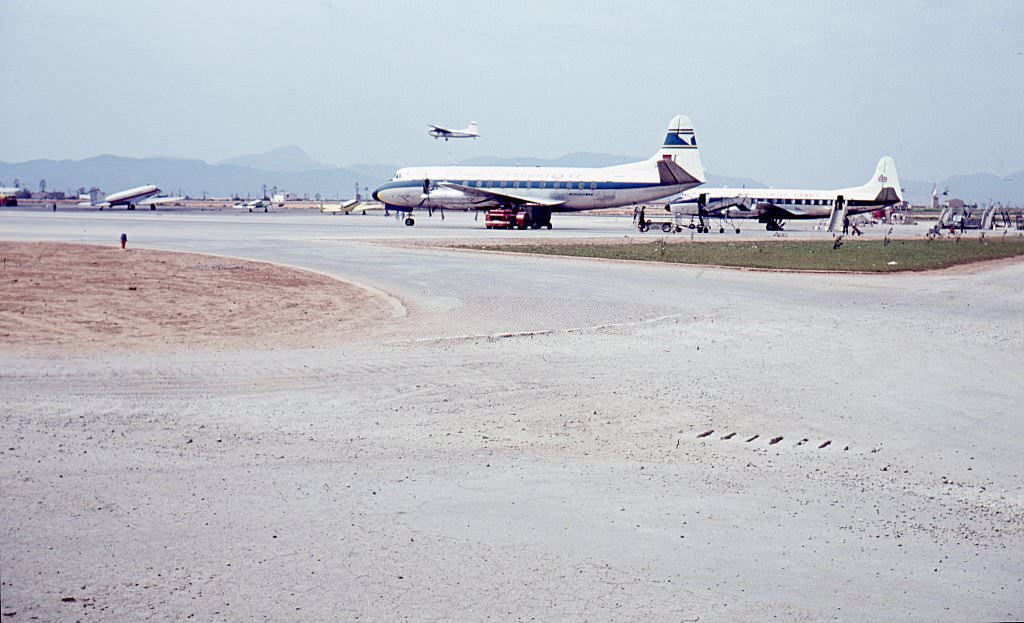
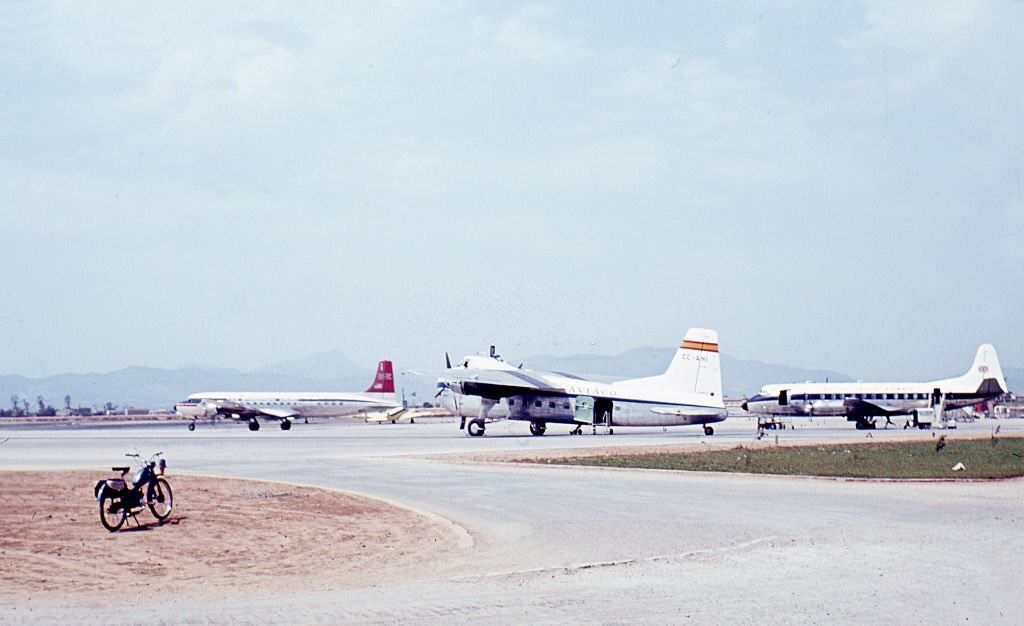
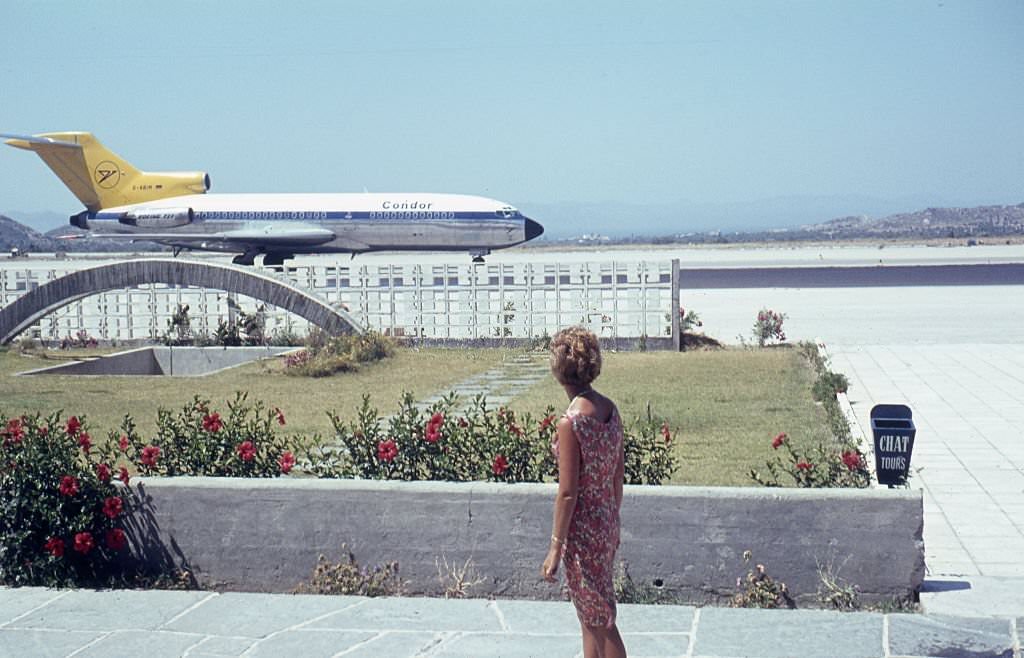
Celebration in the church of St. Dionysius Areopagite of Athens, of the wedding between the Prince of Spain, Don Juan Carlos de Borbon and the Princess of Greece, Sofia of Greece.Celebration in the church of St. Dionysius Areopagite of Athens, of the wedding between the Prince of Spain, Don Juan Carlos de Borbon and the Princess of Greece, Sofia of Greece.Interior of the transatlantic liner “Cabo San Vicente”, ship chartered by Don Juan de Borbon to transport the Spanish guests to the wedding of Don Juan Carlos de Borbon and Doña Sofia of Greece, 1964Interior of the transatlantic liner “Cabo San Vicente”, ship chartered by Don Juan de Borbon to transport the Spanish guests to the wedding of Don Juan Carlos de Borbon and Doña Sofia of Greece, Athens, 1964Celebration in the church of St. Dionysius Areopagite of Athens, of the wedding between the Prince of SpainAmerican actress Joan Crawford attends a bullfight in Madrid, 1962.Europa Press journalists visit the sets of the film “55 Days in Peking” in Las Rozas, Madrid, 1960Europa Press journalists visit the sets of the film “55 Days in Peking” in Las Rozas, Madrid, 1960Europa Press journalists visit the sets of the film “55 Days in Peking” in Las Rozas, Madrid, 1960Europa Press journalists visit the sets of the film “55 Days in Peking” in Las Rozas, Madrid, 1960Europa Press journalists visit the sets of the film “55 Days in Peking” in Las Rozas, Madrid, 1960Mallorca, 1960Mallorca, 1962Mallorca, 1962Mallorca, 1962Palma de Mallorca Airport, 1960American actor Charlton Heston during the filming of the movie “55 Days in Peking” on August 27, 1962 in Madrid, Spain.Mallorca, 1960Mallorca, 1960
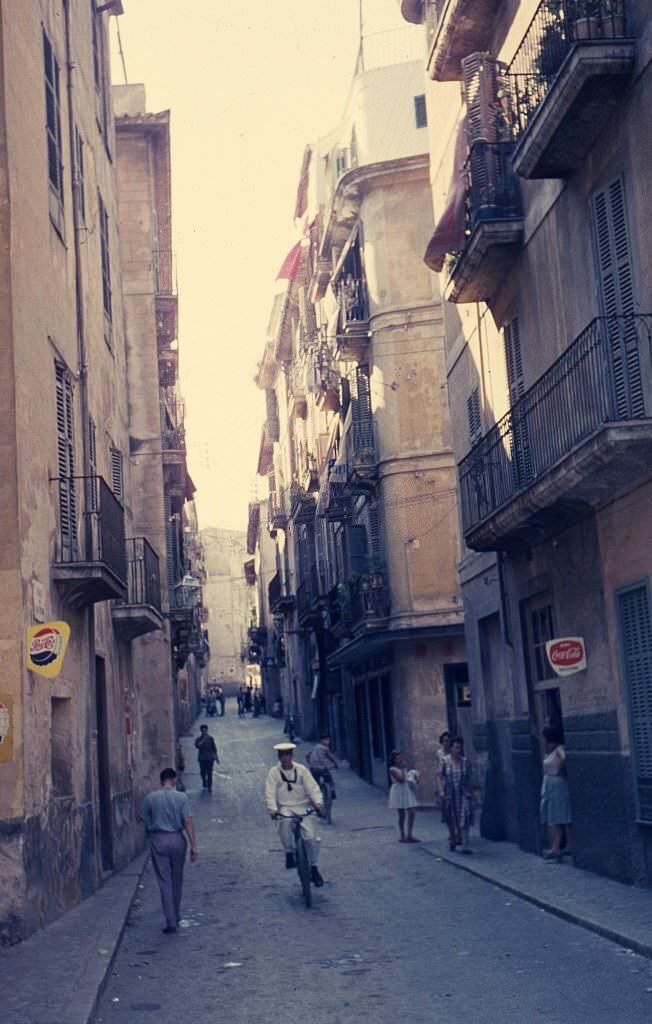
Strasse in der Altstadt, Matrose auf dem fahrrad, 1962
Porto Cristo, Mallorca, 1960
Mallorca, 1962Mallorca, 1962
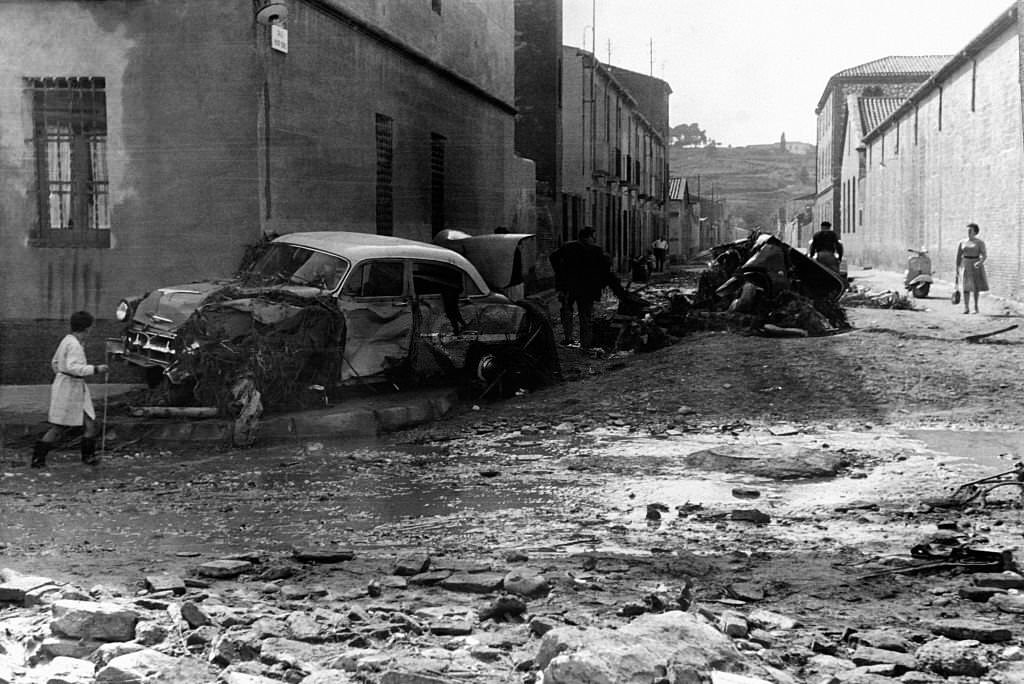
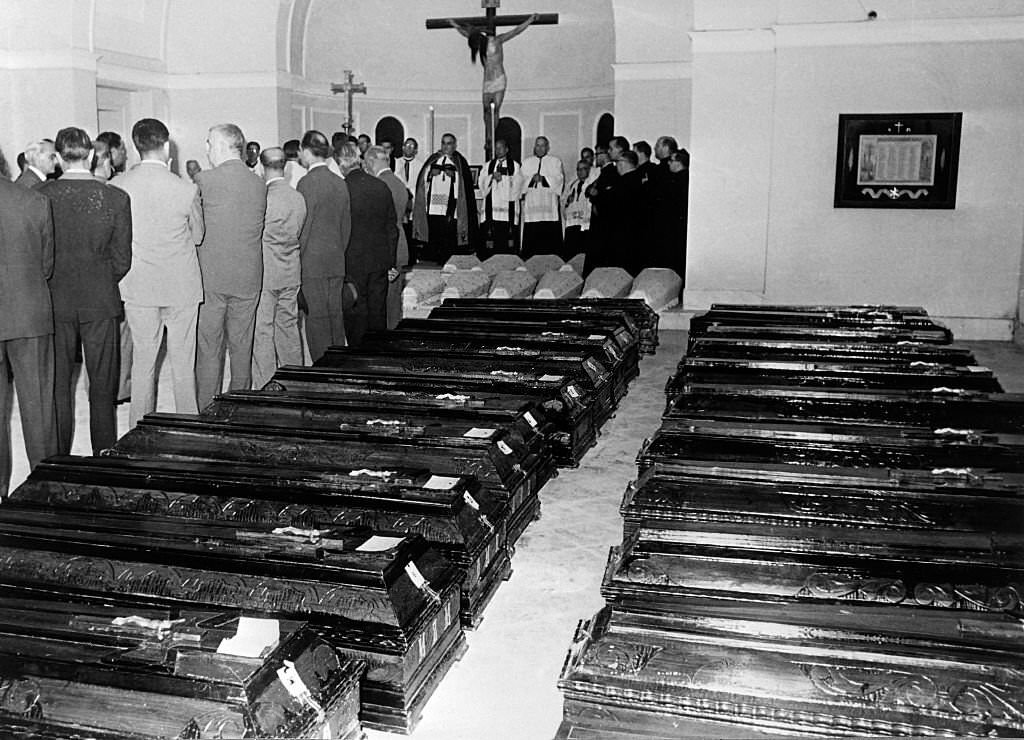
In September 1962, Catalonia was struck by catastrophic floods. Torrential rains hit the region, killing hundreds of people and leaving many more missing. Four days after the disaster, the damage in Terrassa — one of the hardest-hit towns — was still raw and visible. A chapel was set up in Tarrasa on September 30 to hold a memorial for the victims. The floods underscored how fragile Spain’s rapid modernization remained in the face of natural disaster.
Four Days After The Torrential Rains In Catalonia Which Caused The Death Of Hundreds People And Missing, in Terrassa, Spain, on September 29, 1962.Chapel Of The Rest For the Victims Of Floodings In Catalonia, in Tarrasa, Spain, on September 30, 1962.
Four Days After The Torrential Rains In Catalonia Which Caused The Death Of Hundreds People And Missing, in Tarrasa, Spain, on September 29, 1962.
Europa Press journalists visit the sets of the film “55 Days in Peking” produced by Samuel Bronston on October 30 in Las Rozas, Madrid.
Europa Press journalists visit the sets of the film “55 Days in Peking” produced by Samuel Bronston on October 30 in Las Rozas, Madrid.Europa Press journalists visit the sets of the film “55 Days in Peking” produced by Samuel Bronston on October 30 in Las Rozas, Madrid.Madrid, 1960Oto of Habsburg, son of Charles I, last emperor of Austria and Zita Borbon-Parma, during a vacation in Benidorm with his children, 1963, Comunidad Valenciana, Spain.Valencian crafts, 1963
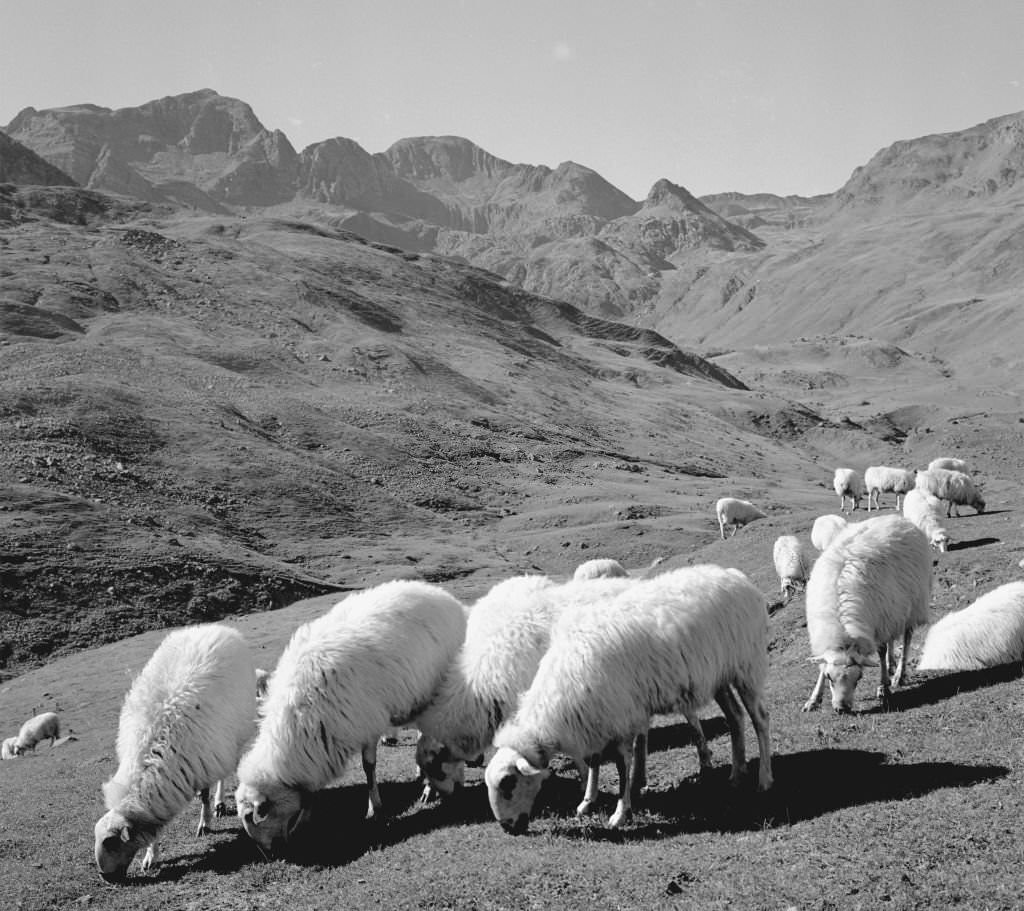
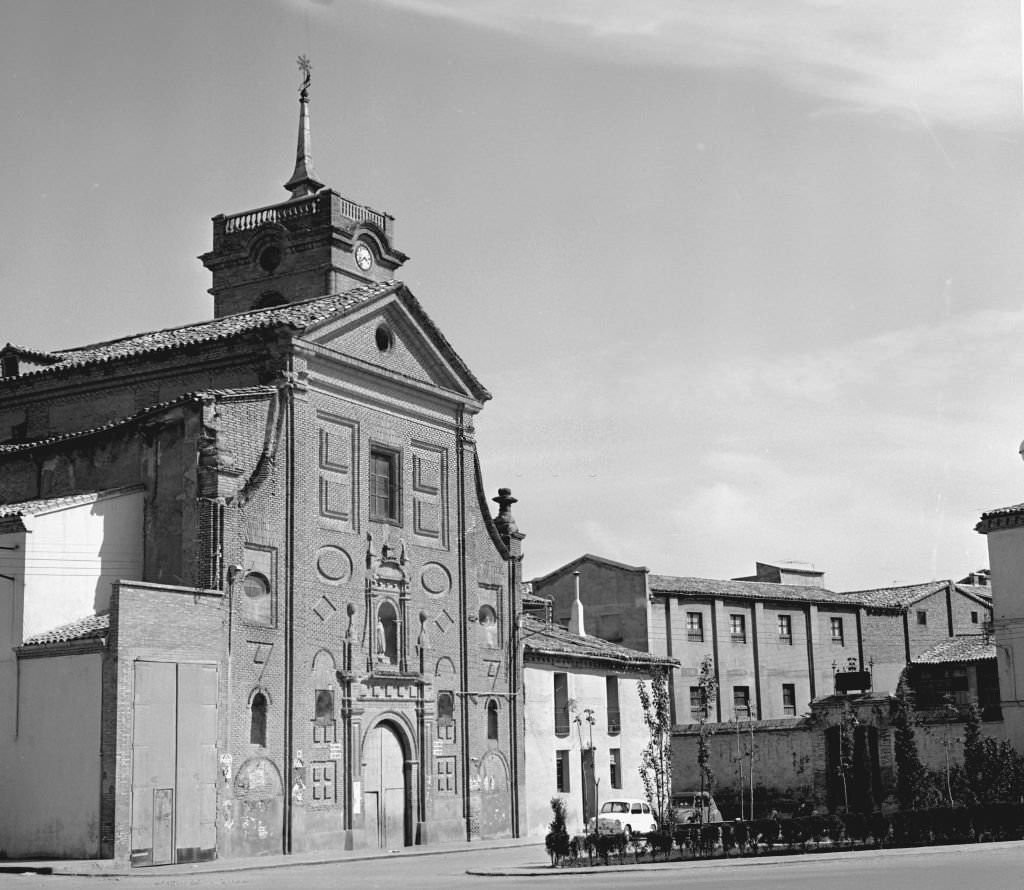
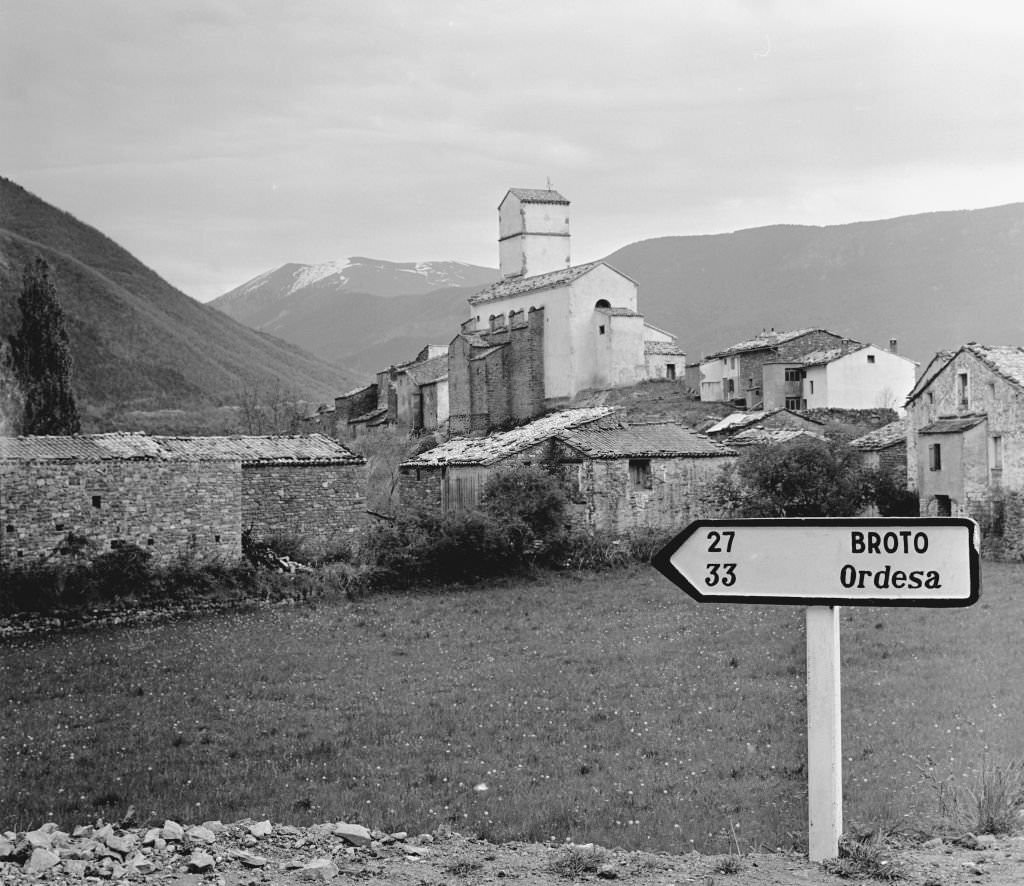
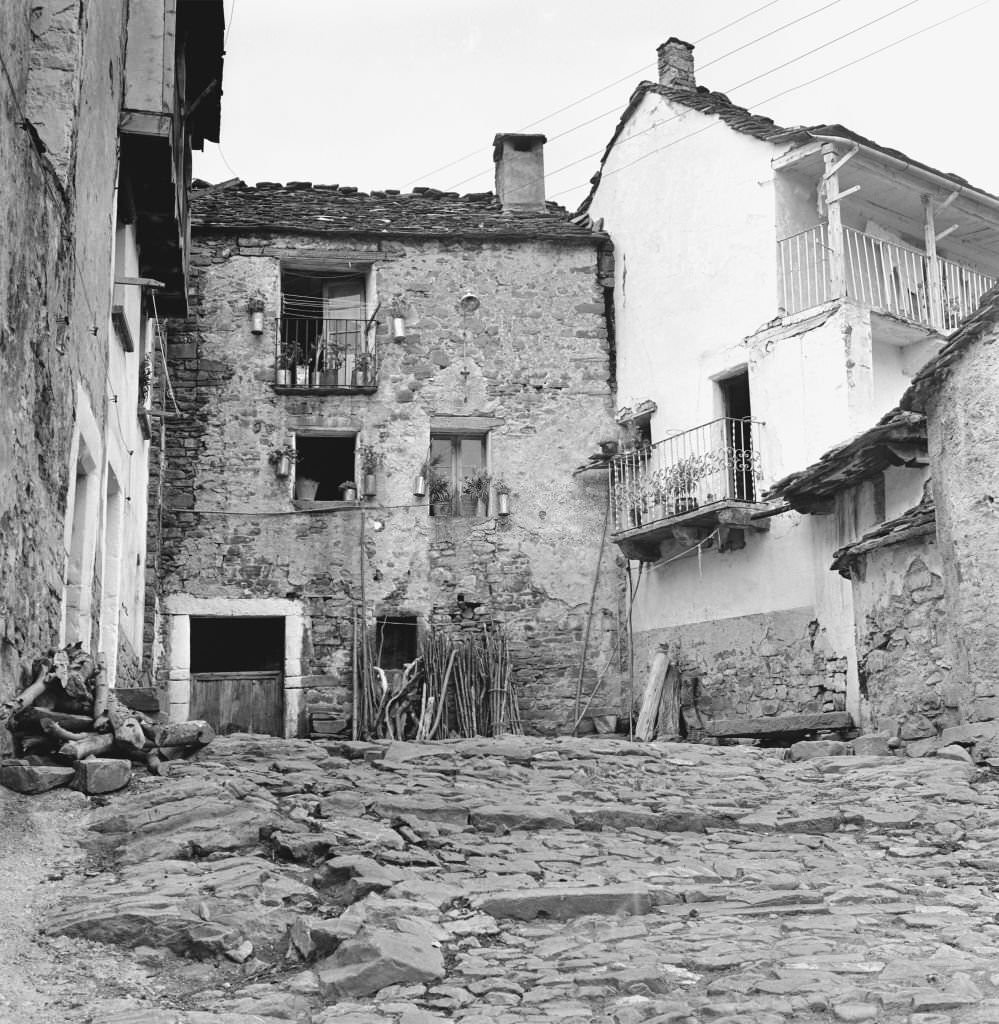
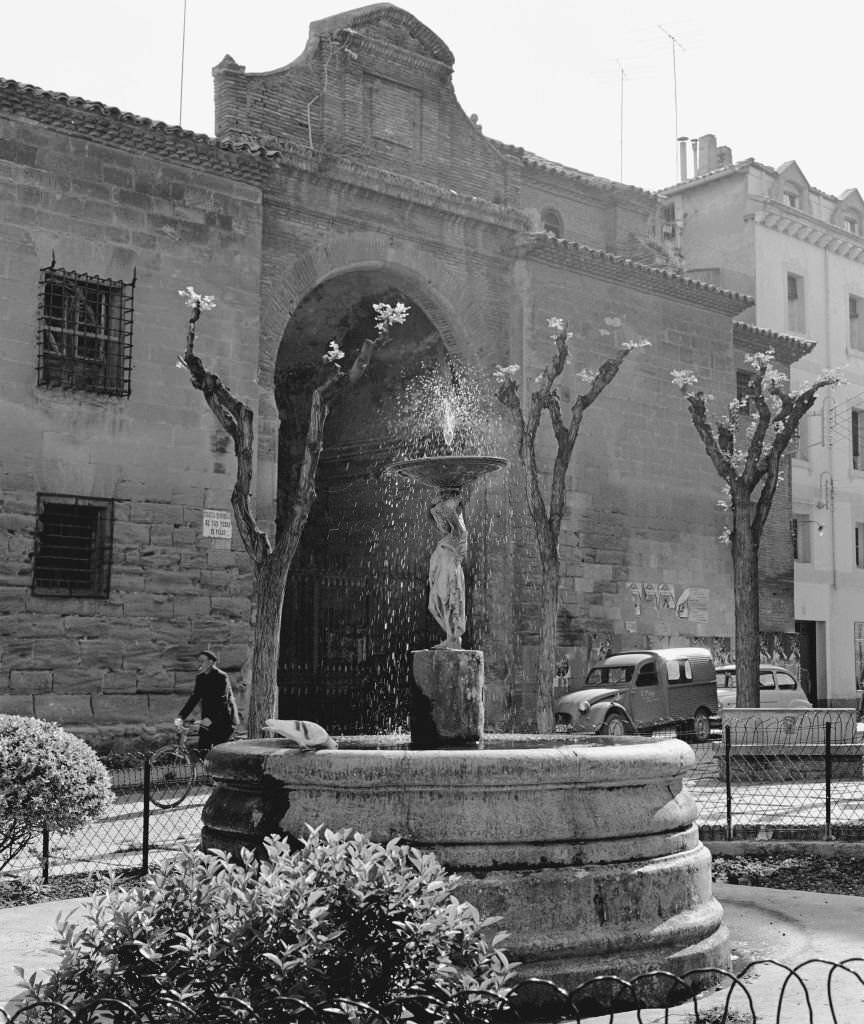
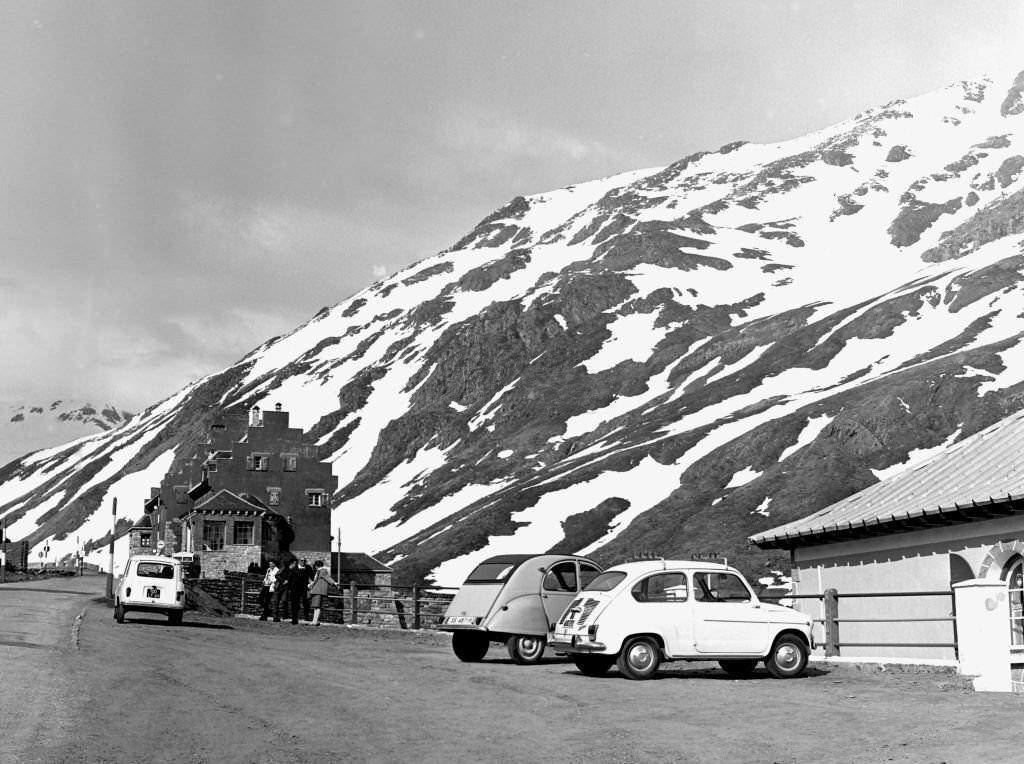
The Aragonese Pyrenees offered a glimpse of a Spain that tourism had not yet reached. In 1963, villages like Biesca and Torla in Huesca province sat quietly in the mountains, their stone buildings and narrow streets unchanged for generations. The Parish Church of Santo Domingo and San Martín in Huesca and the square of “San Pedro el Viejo” were landmarks in a provincial capital that moved at its own pace, far from the construction cranes of Barcelona or the crowds of Madrid.
Spanish actor Francisco Rabal, 1963, Madrid, Spain.The Aragonese Pyrenees, Huesca, Spain, 1963.Parish Church of Santo Domingo and San Martin, Huesca, Spain, 1963.Village of Biesca, Huesca, Spain, 1963.View of the village of Torla, Huesca, Spain, 1963.Square of
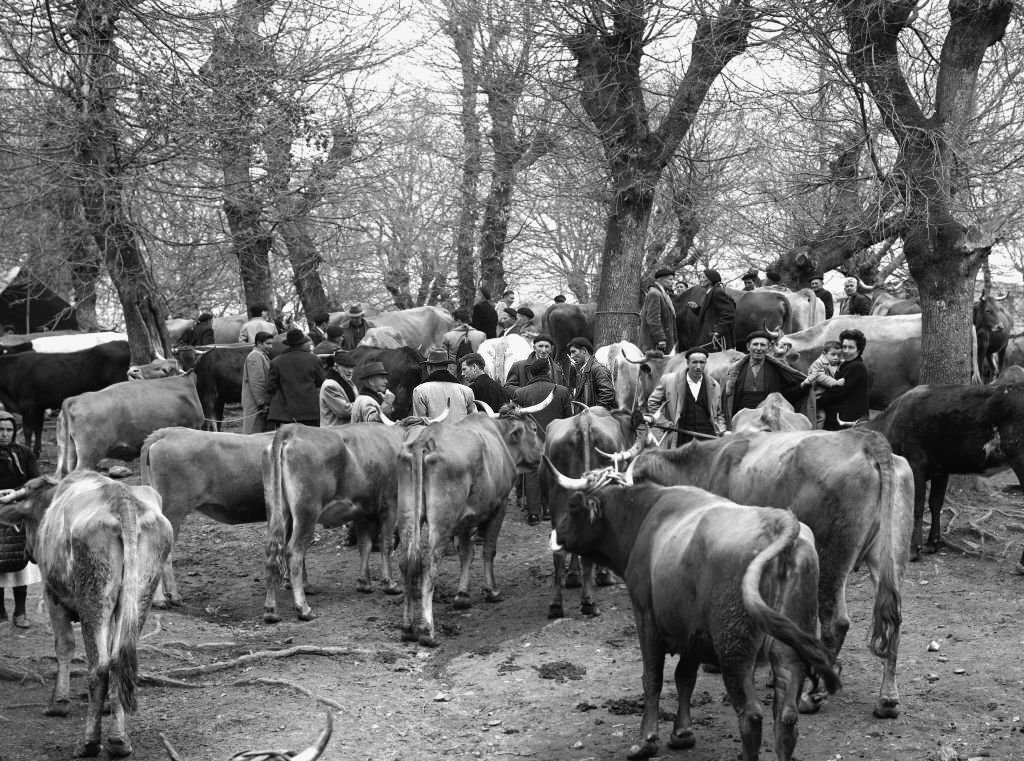
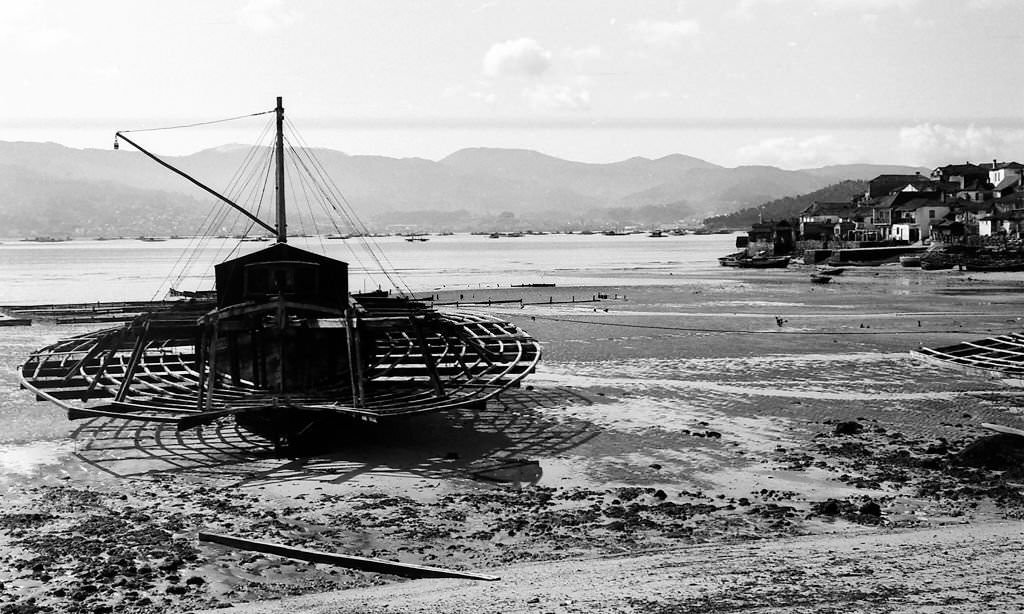
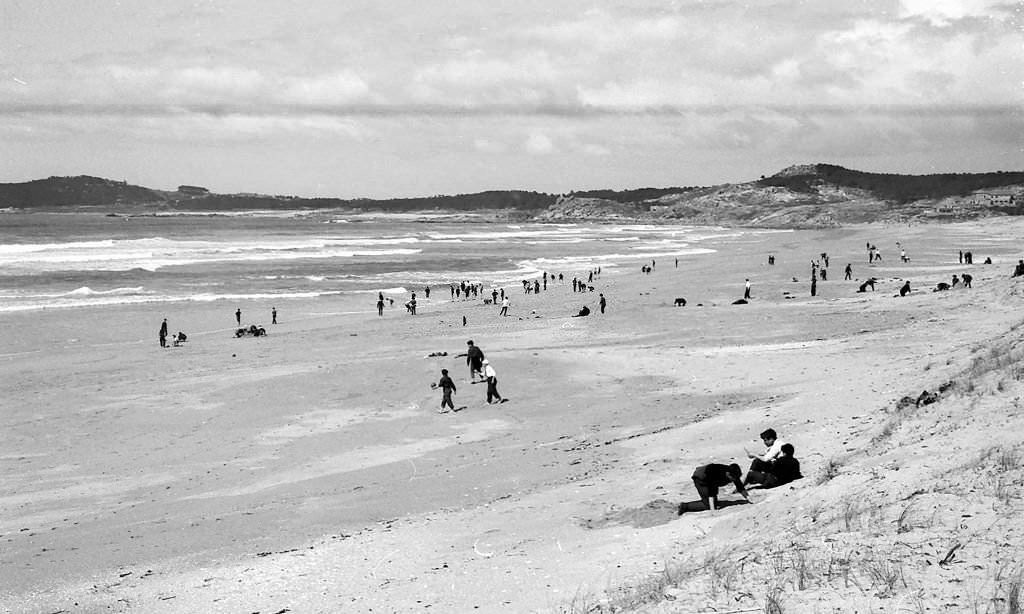
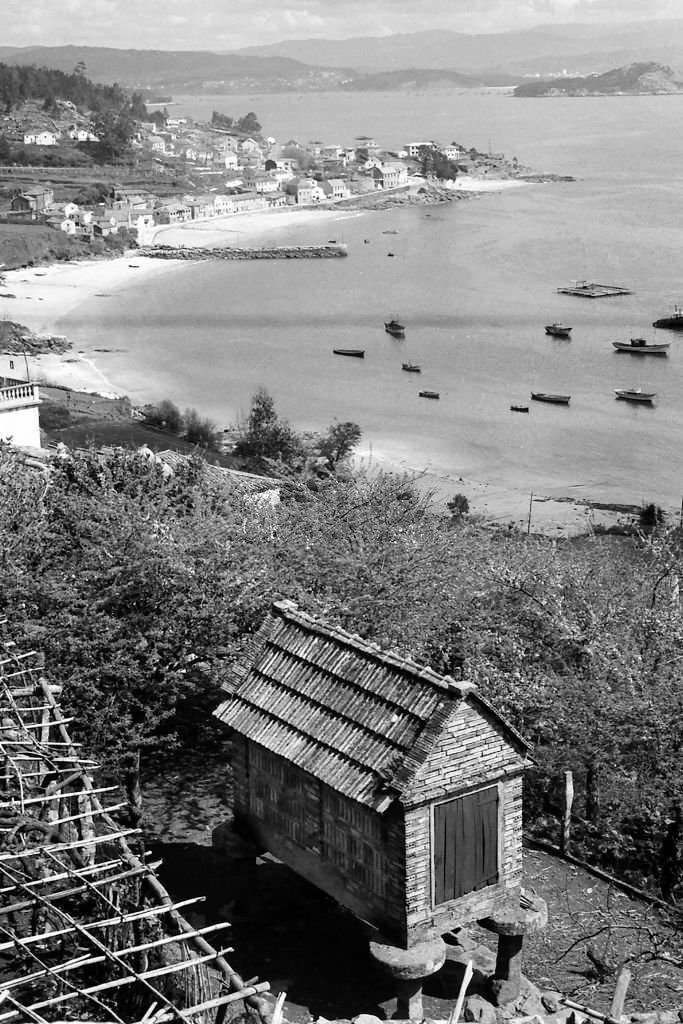
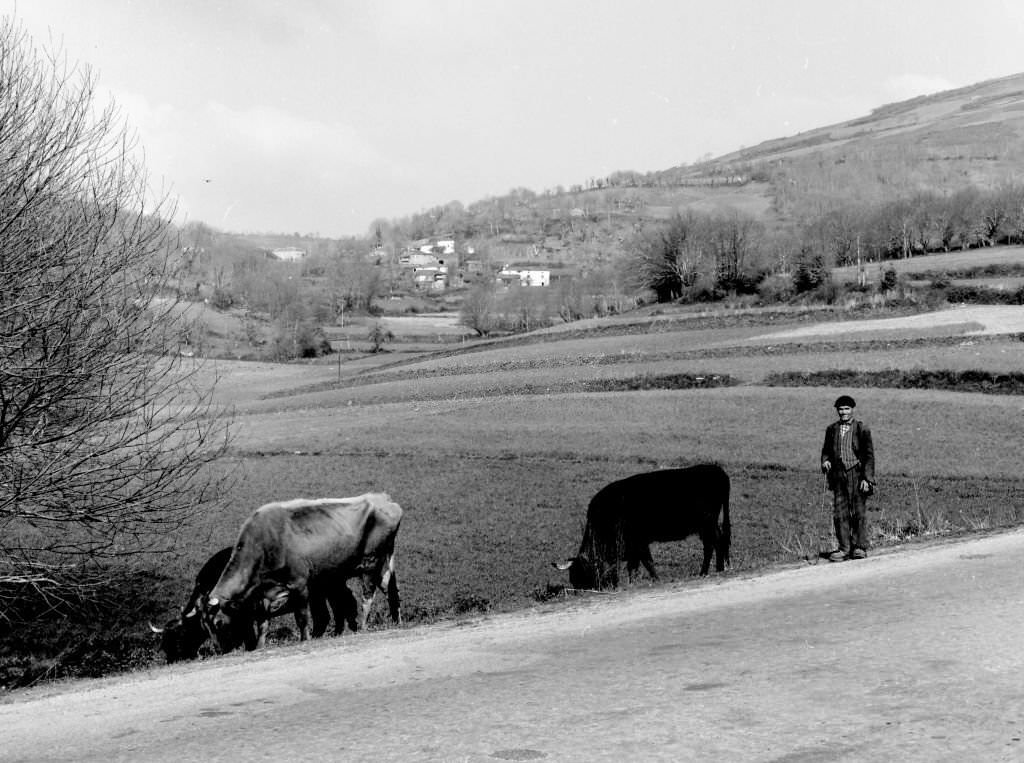
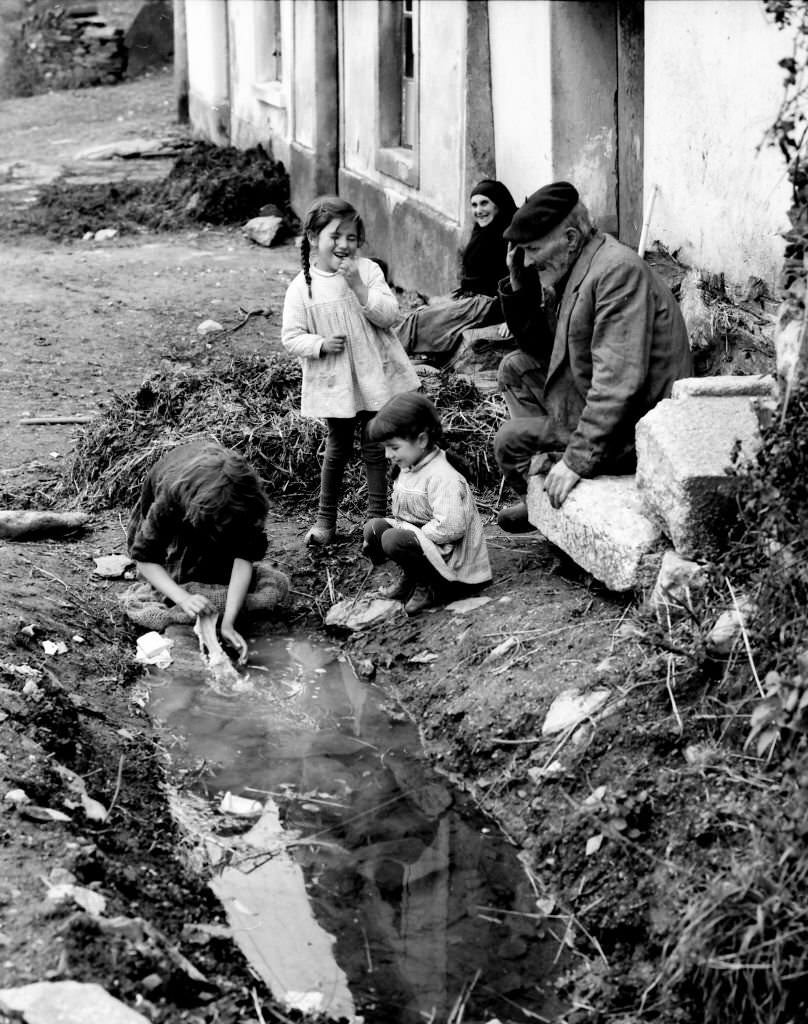
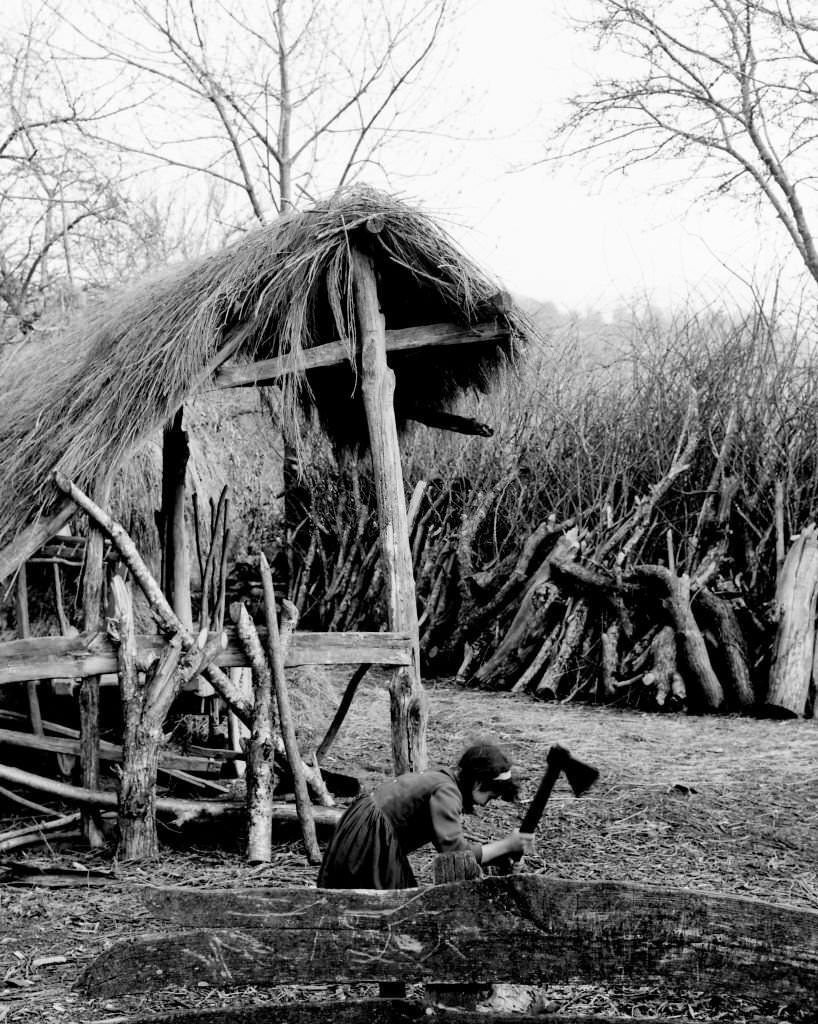
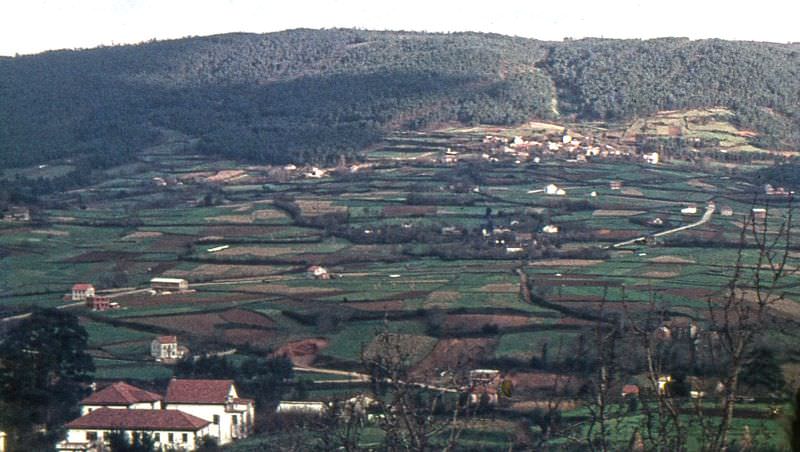
Galicia, in Spain’s northwest, had its own distinct rhythms. In 1963, the cattle fair at Peña brought farmers and their animals together in a setting that had changed little in decades. In the village of Barella, a shepherd moved his cows across open land, a woman washed clothes in a stream, and a girl split firewood by hand. The mussel farms at Combarro in Pontevedra and the beach at Lanzada gave the region a working coastal identity that stood apart from the tourist beaches developing further south.
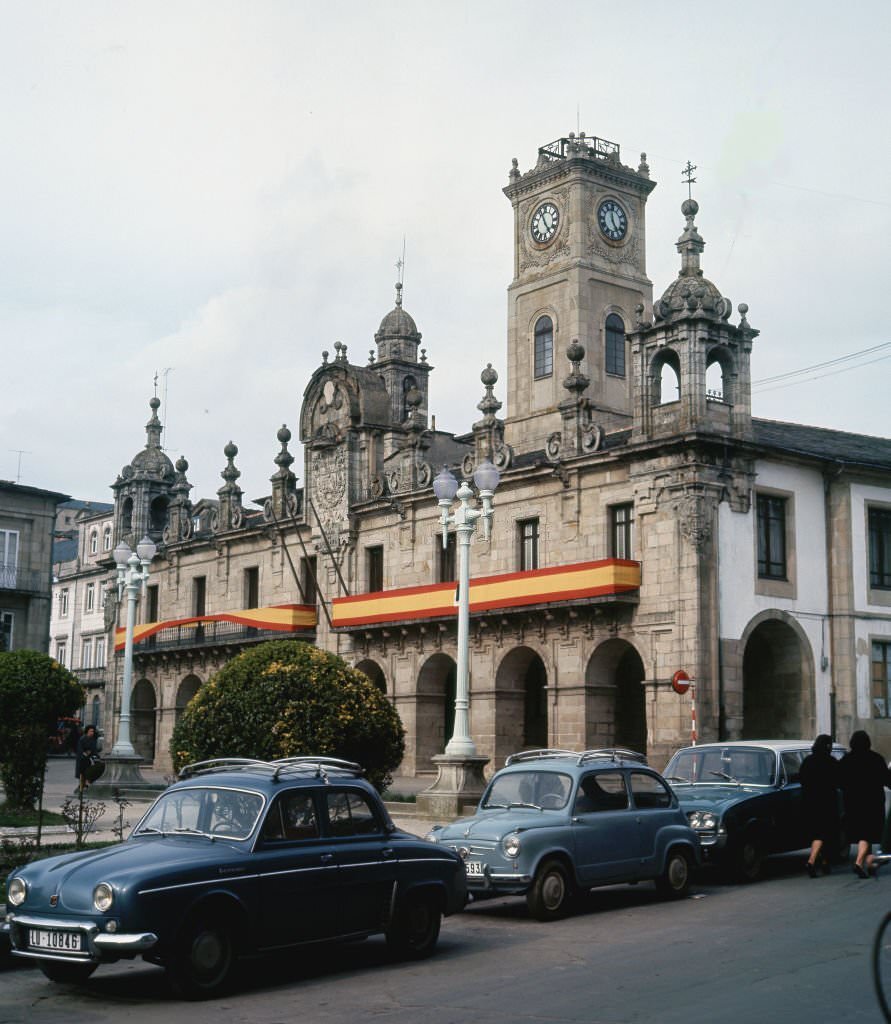
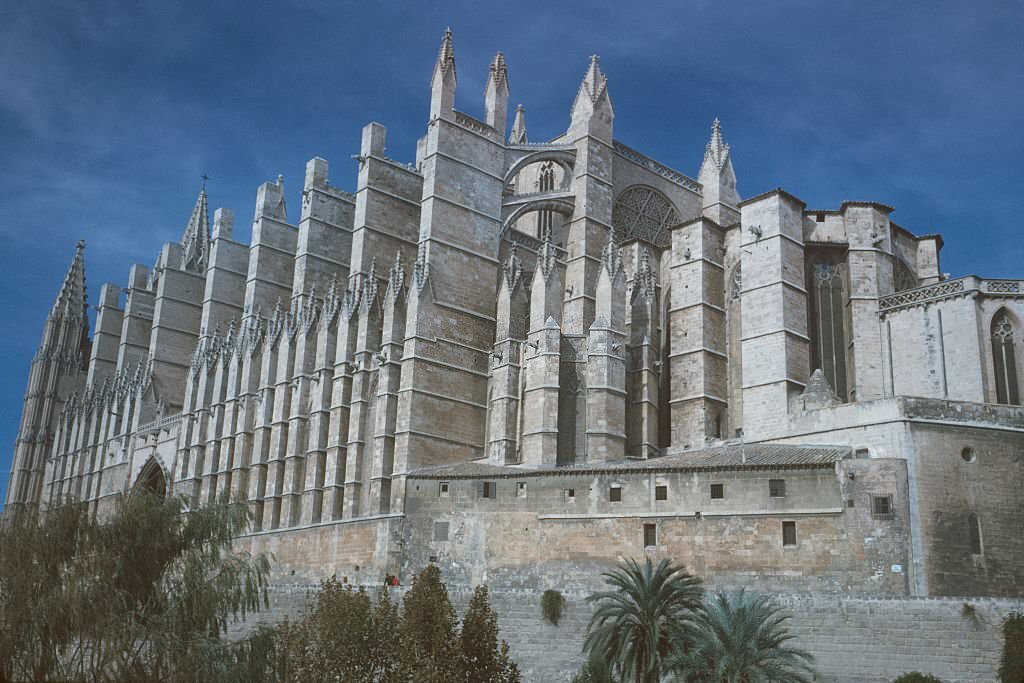
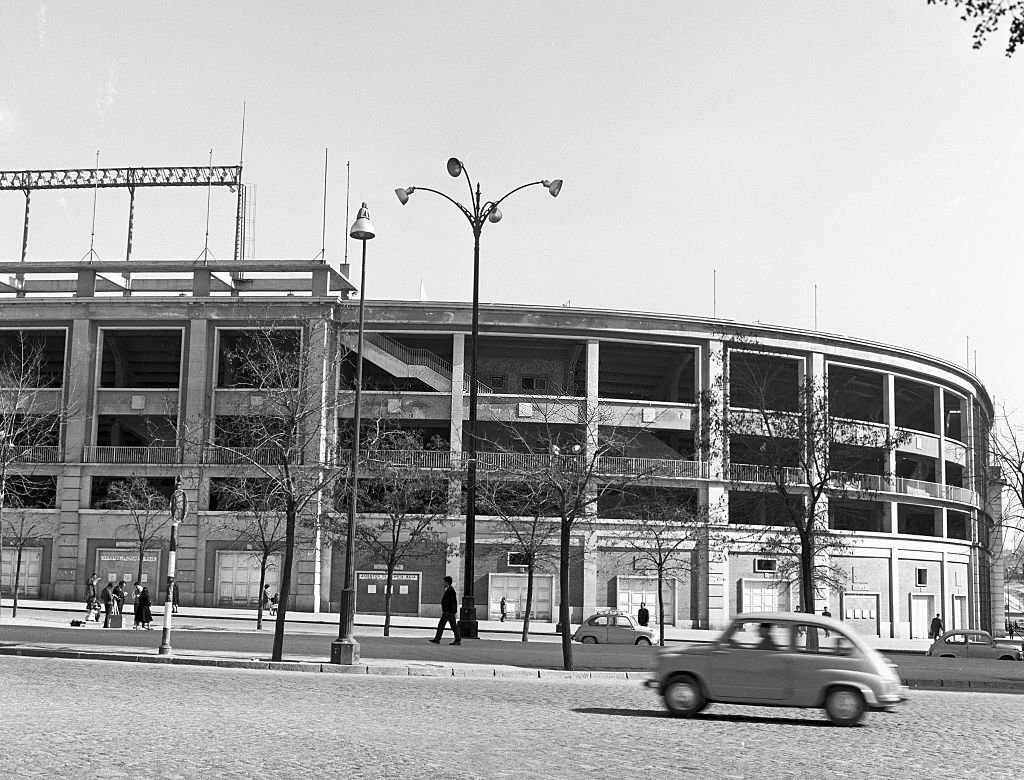
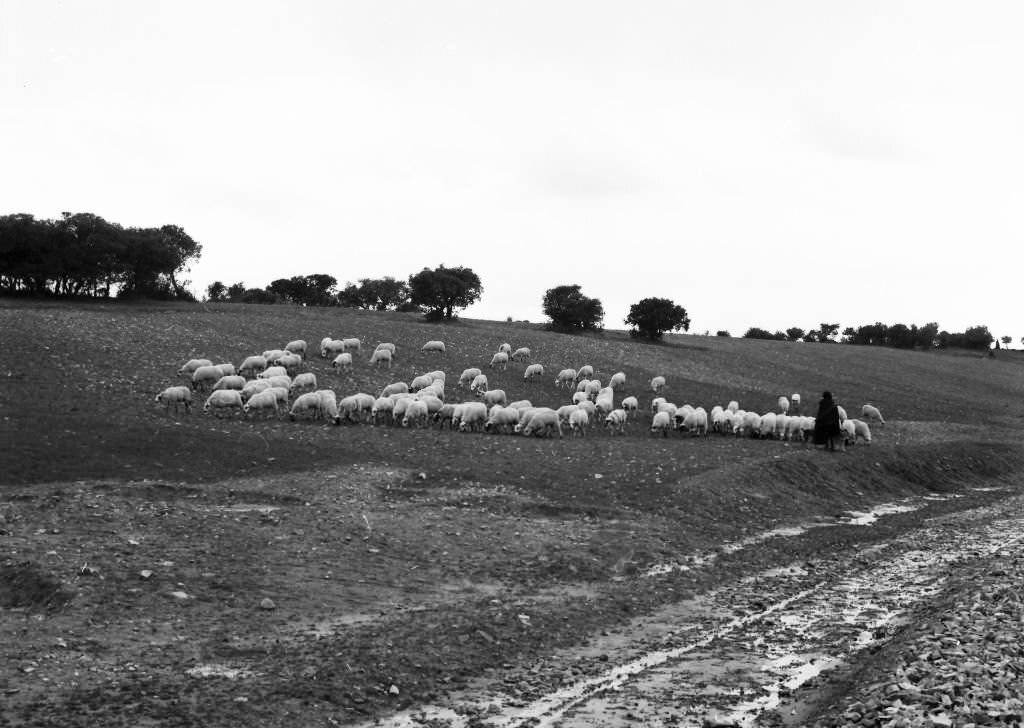
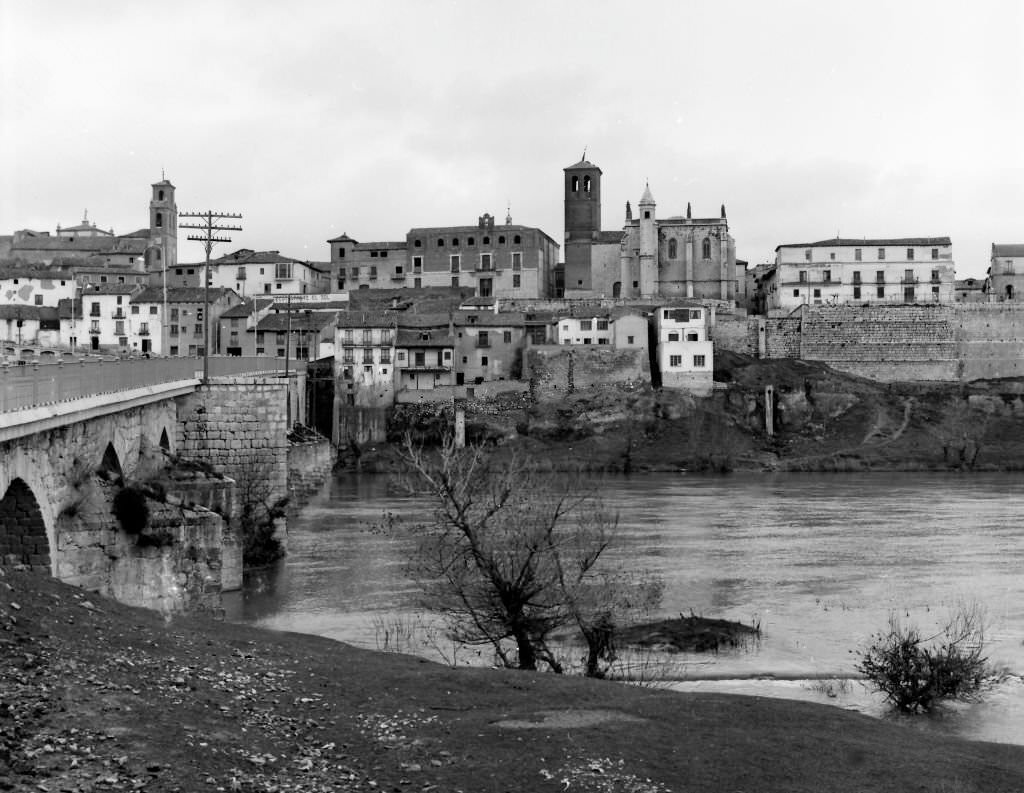
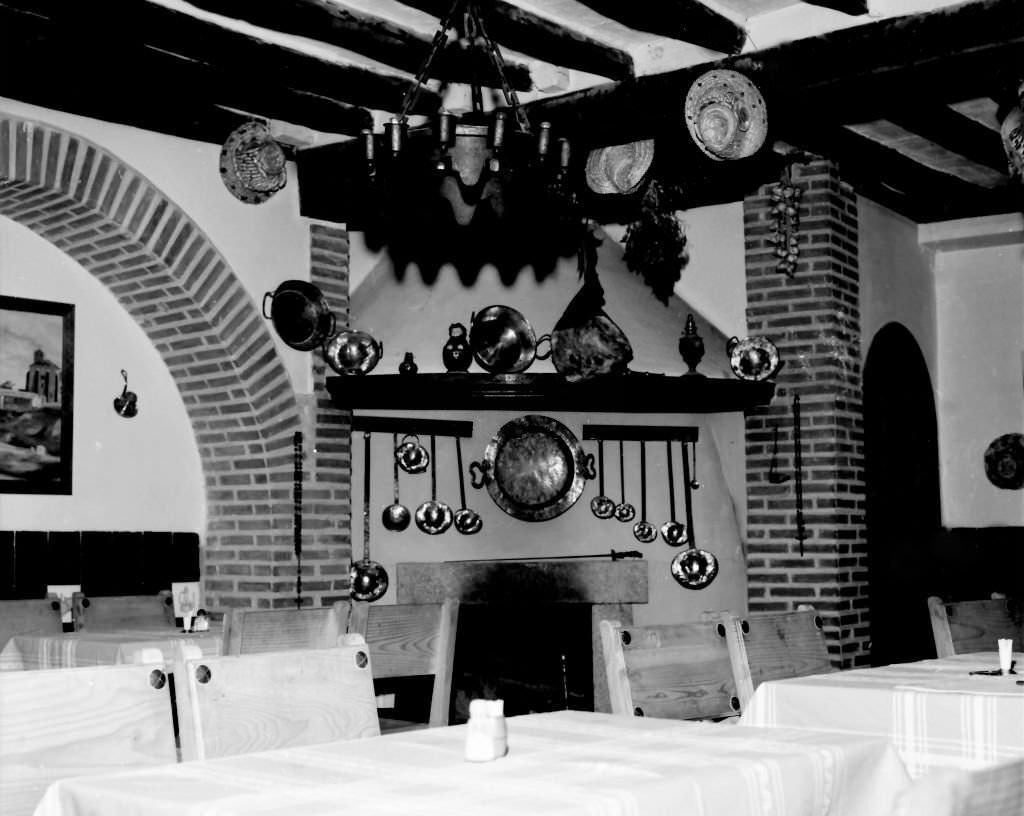
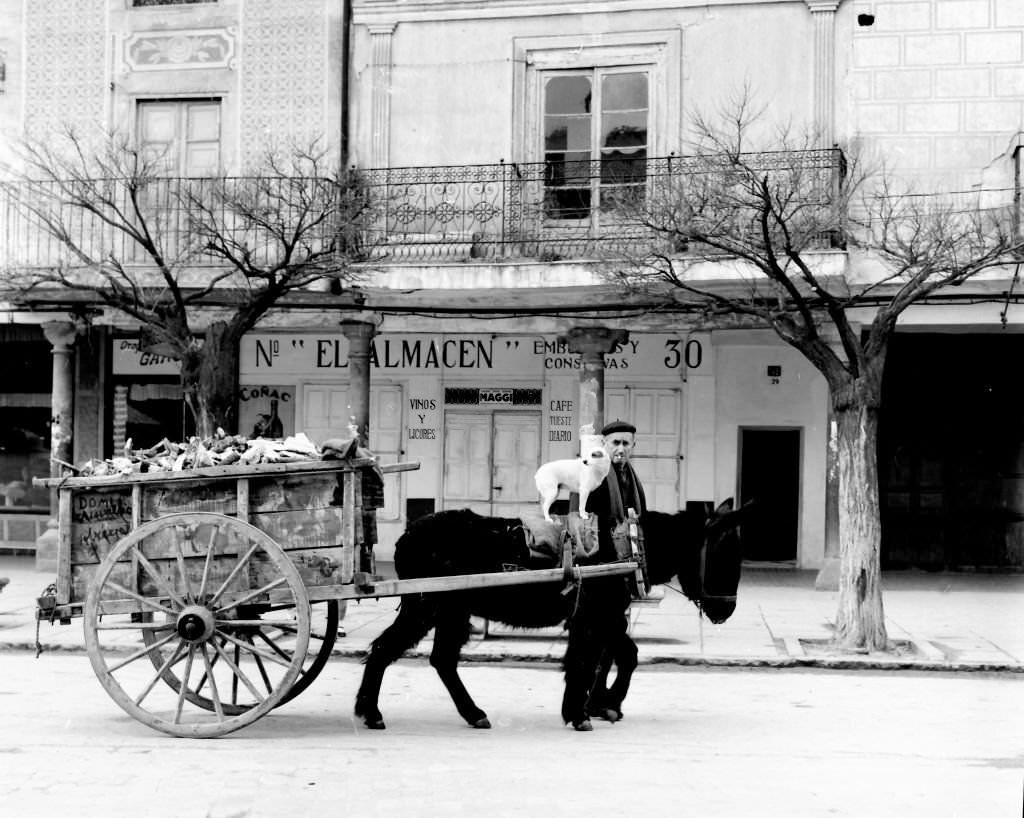
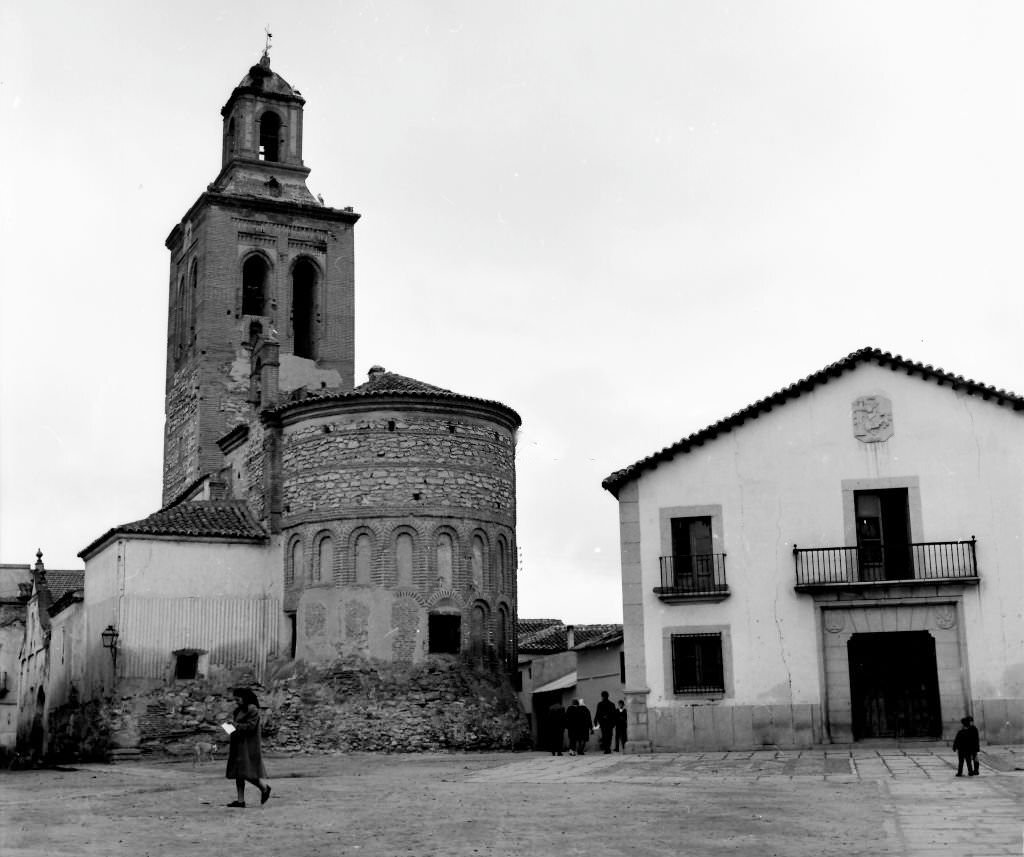
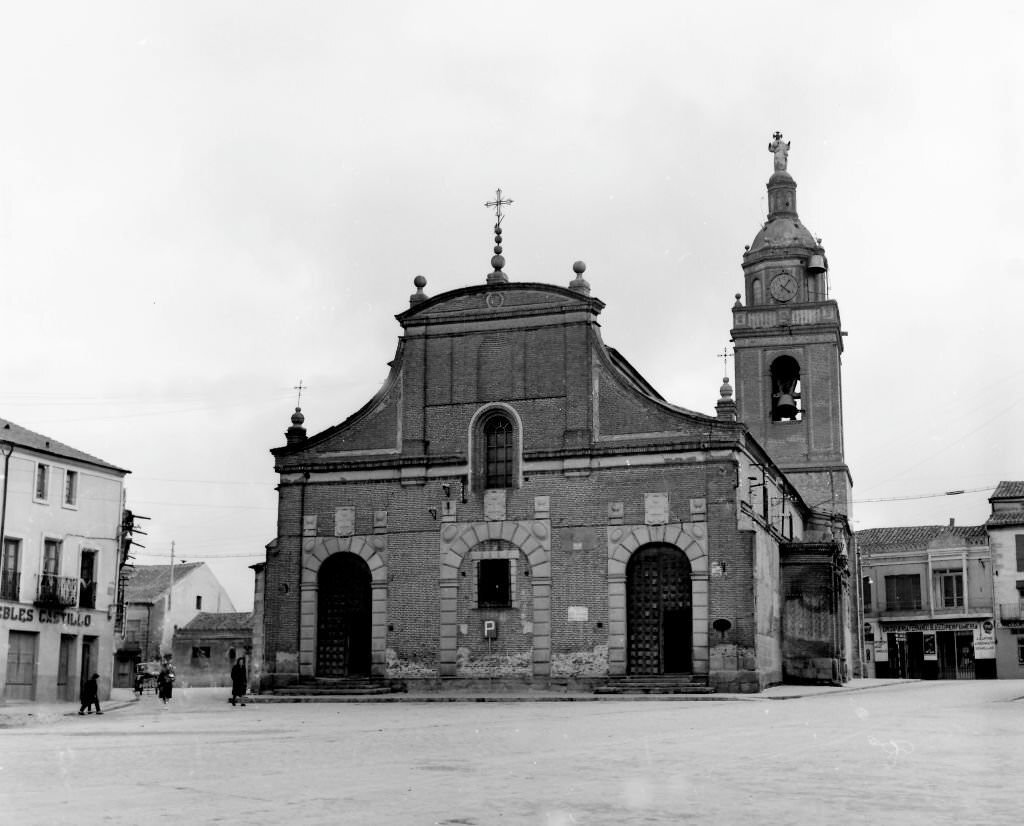
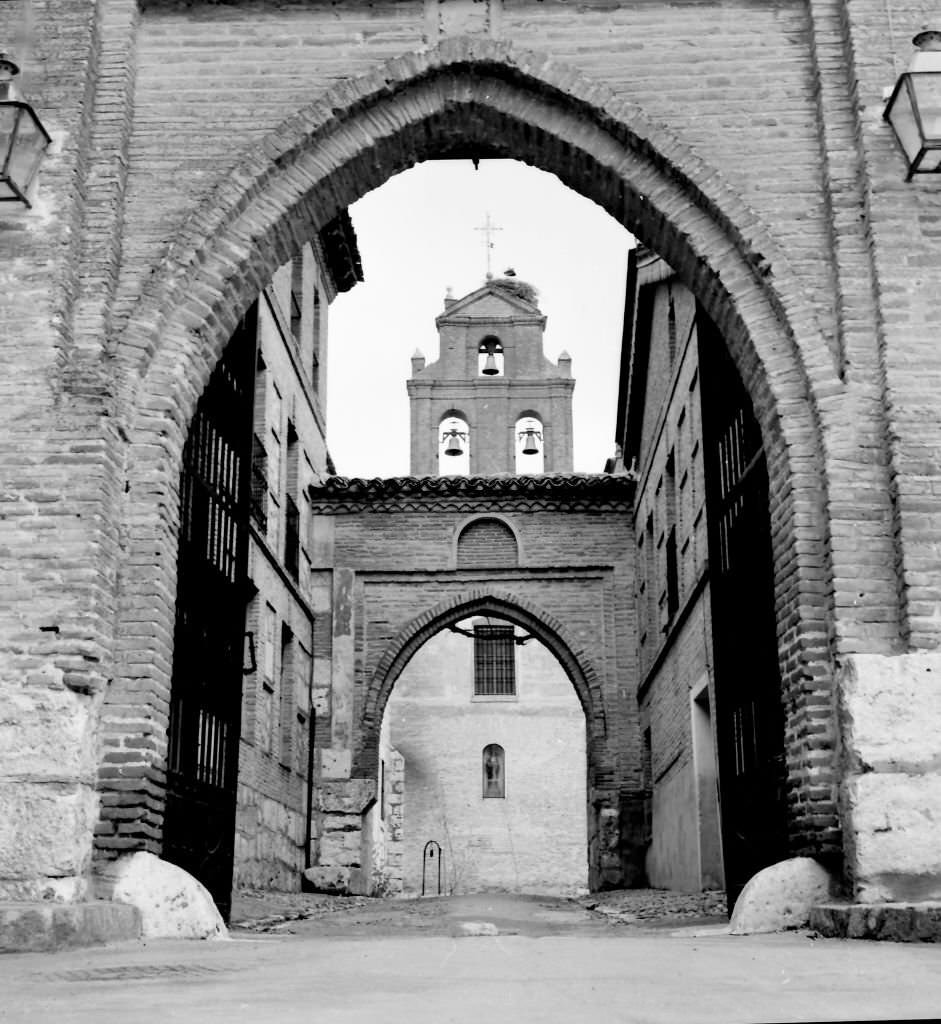
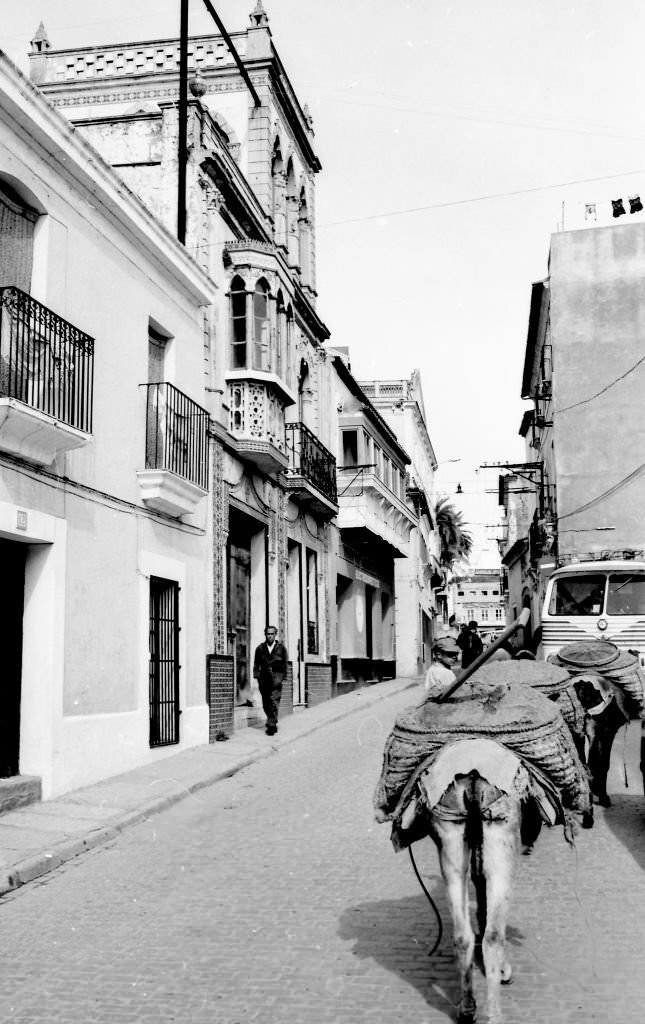
Feast of Fair of the cattle of Peña, Galicia, Spain, 1963.City Hall of Lugo, Galicia, Spain, 1963.Spanish actress Magda Maldonado during a photo shoot, Madrid, Spain, 1963.Woman with her donkeys, Merida, Spain, 1963.A walk through in the The old fountain of the Le Seu, a Roman Catholic cathedral in Palma, Majorca, Spain, 1963.Madrid in the sixties,the stadium Santiago Bernabeu of Real Madrid, 1963, Spain.Tournage du film ‘La Chute de l’Empire Romain’, ici, Sophia Loren and Stephen Boyd chained to a pillier, in Madrid, Spain, in 1963.Flock of sheep in the vicinity of San Martín de Torres, Castilla y León, Spain, 1963.The Ebro river as it passes through Tordesillas, Valladolid, Castilla y Laón, Spain, 1963.A typical meson , restaurant, in Arevalo, Avila, Castilla y León, Spain, 1963.Man transporting garbage in a cart with his donkey and his dog, Arevalo, Avila, Castilla y León, Spain, 1963.The Church of Santa María la Mayor in Arévalo, a work of Mudejar style built between the end of the 12th century and the beginning of the 13th century, is located in the Plaza de la Villa , Avila, Castilla y León, Spain, 1963.he Cerro de los Ángeles is a witness hill located in the municipality of Getafe, about 10 km south of Madrid, 1963Church of Santo Domingo de Silos, Avila, Castilla y León – 1963The Royal Monastery of Santa Clara is located in the Valladolid town of Tordesillas, on the ledge of the Duero River, and is made up of a complex of buildings that include the monastery of order of Santa Clara nuns, plus the rooms of the old palace, plus the Arab baths, Castilla y León, Spain, 1963.Mussel farm in Combarro, Pontevedra, Galicia, Spain, 1963.Lanzada Beach, Pontevedra, Galicia, Spain, 1963.A View of La Coruña, Spain, 1963.Shepherd with his cows, Barella, Galicia, Spain, 1963.
Woman washing clothes in a puddle, Barella, Galicia, Spain, 1963.
Girl cutting wood, Barella, Galicia, Spain, 1963.
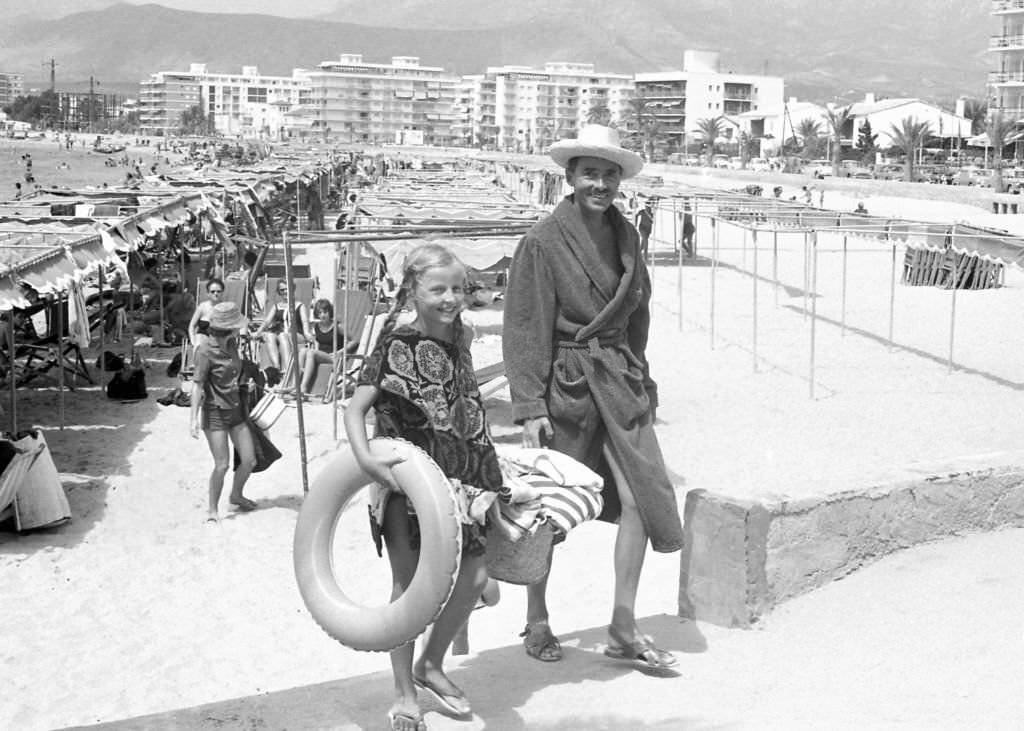
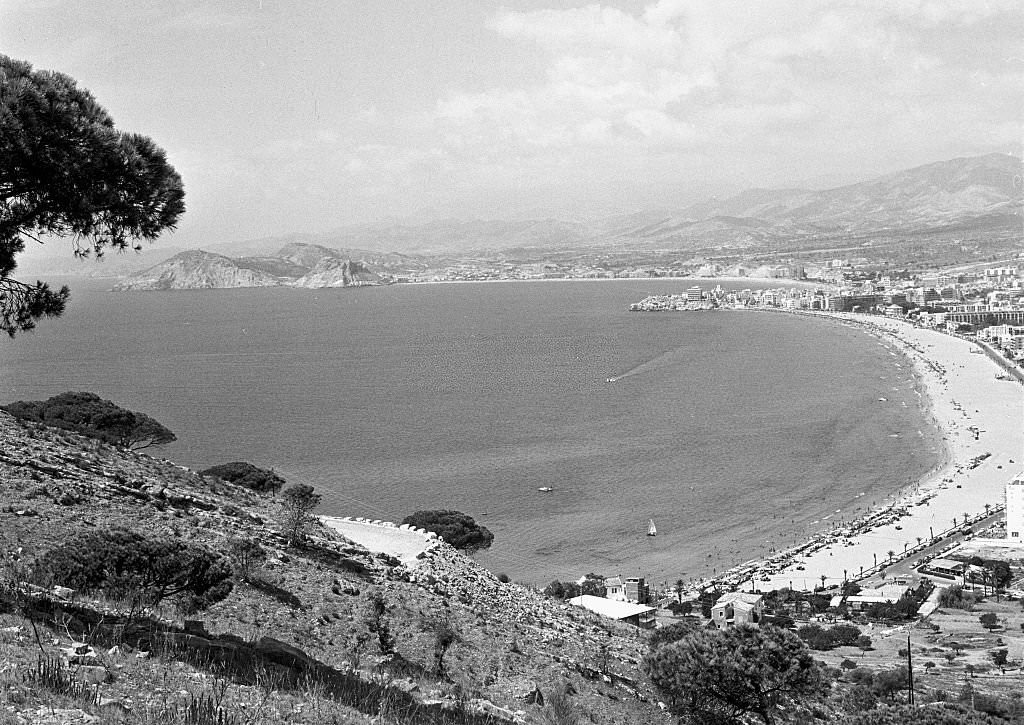
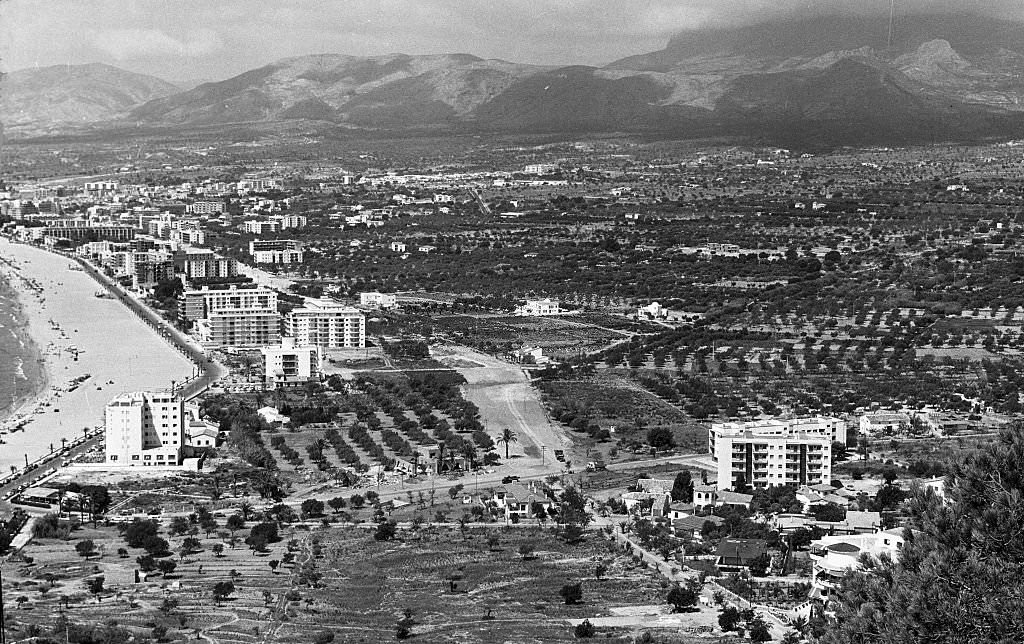
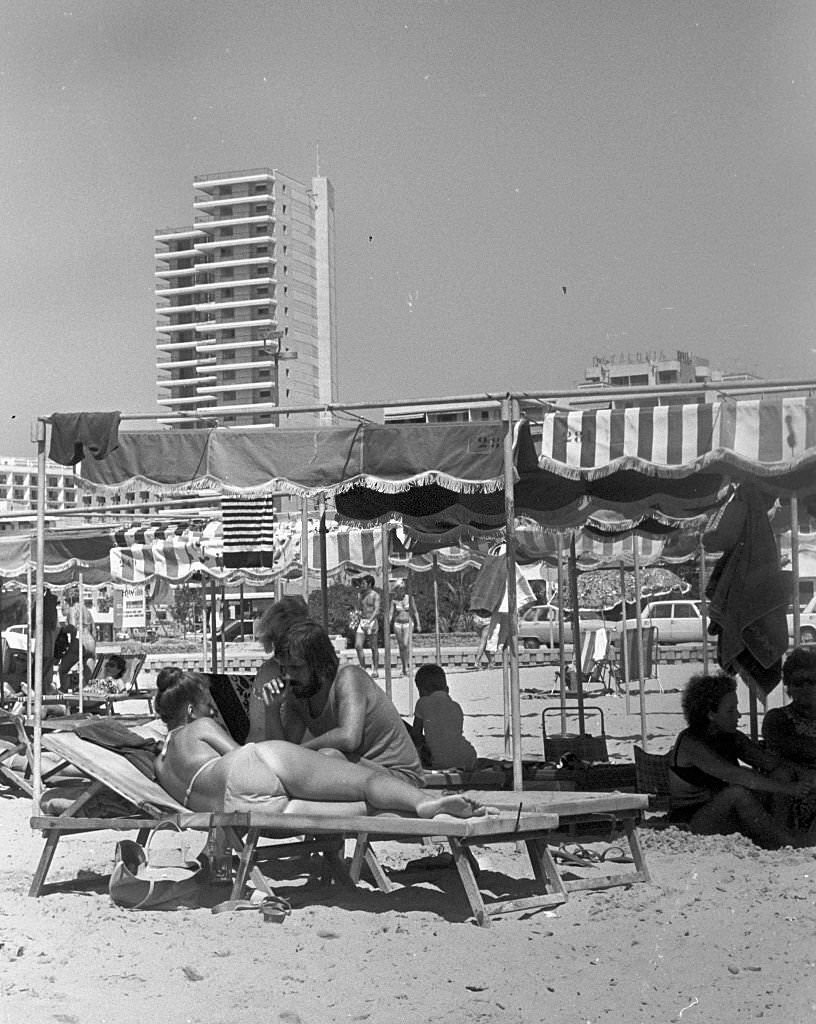
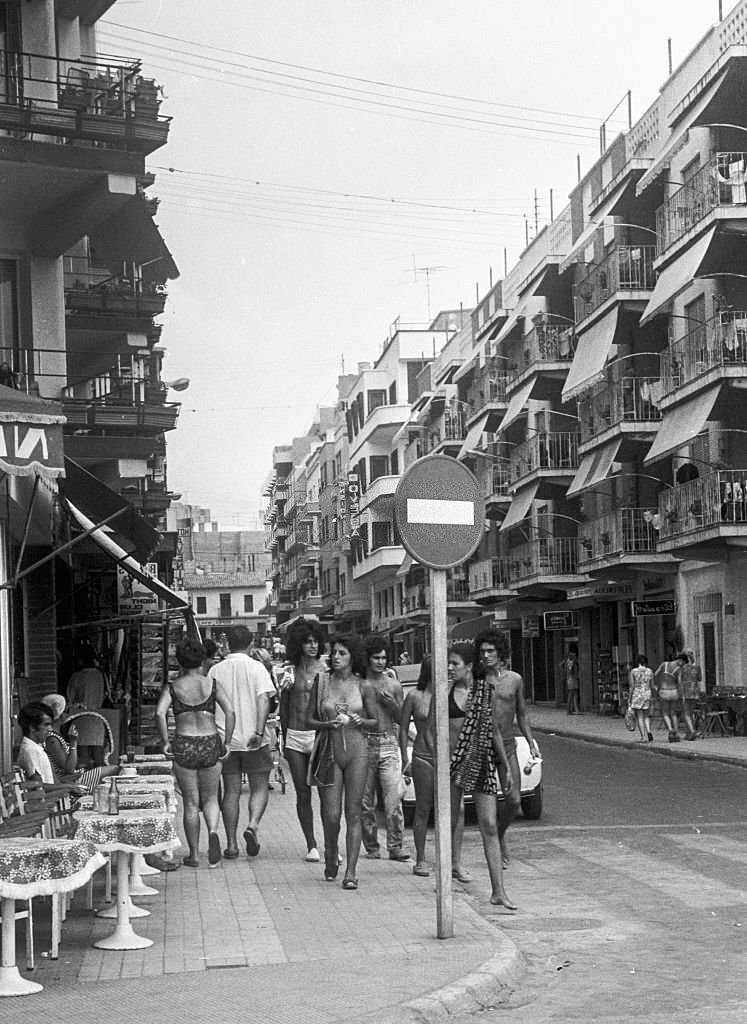
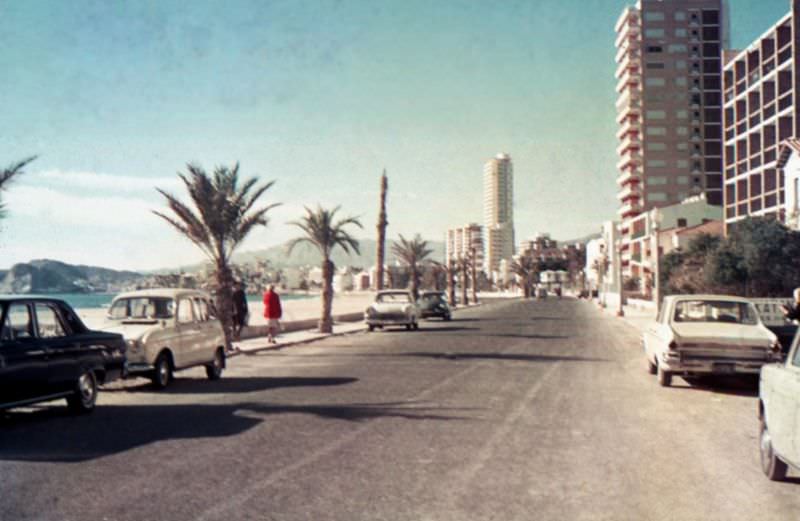
Benidorm, on the Costa Blanca, was in the early stages of the transformation that would make it one of Europe’s most visited resorts. In 1963, Grand Duke Otto von Habsburg was there on holiday with three of his daughters, an early signal of the international attention the town was attracting. By 1964, photographs of Benidorm showed a mix of construction and coastline, with the towers of new hotels beginning to define the skyline that would come to define the town.
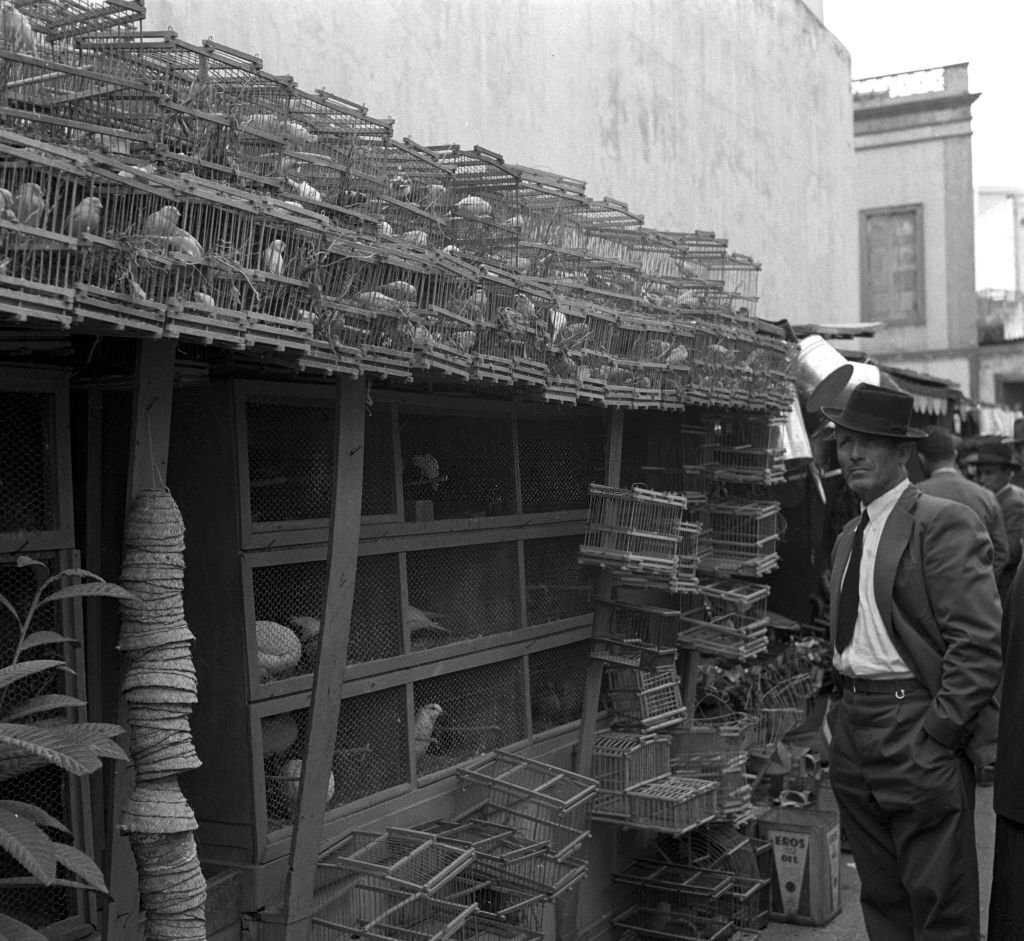
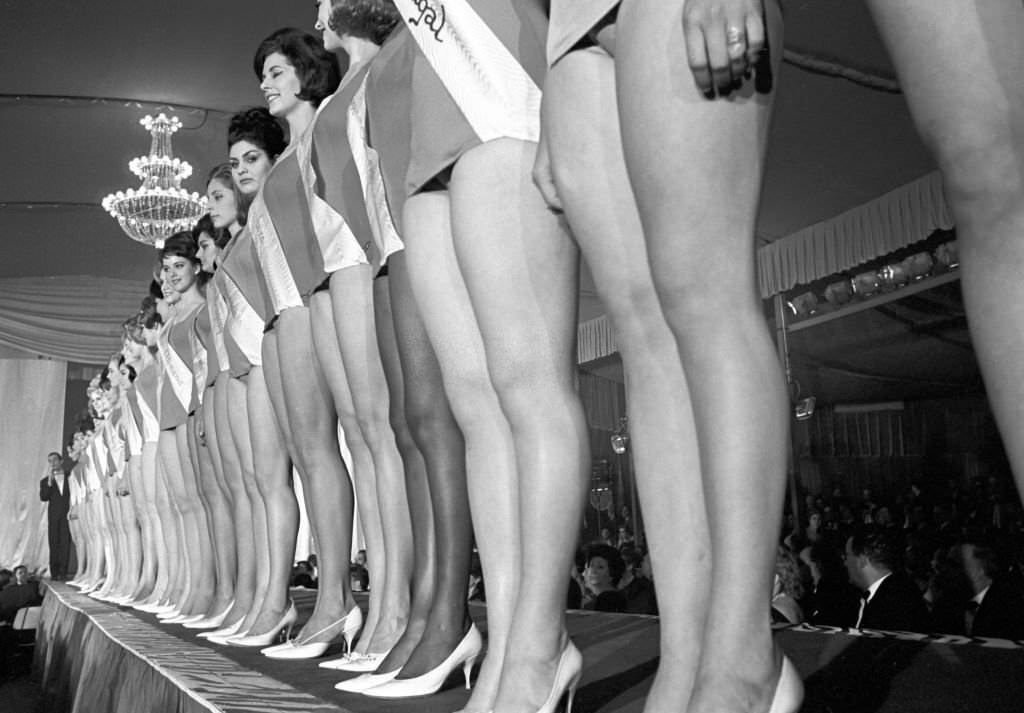
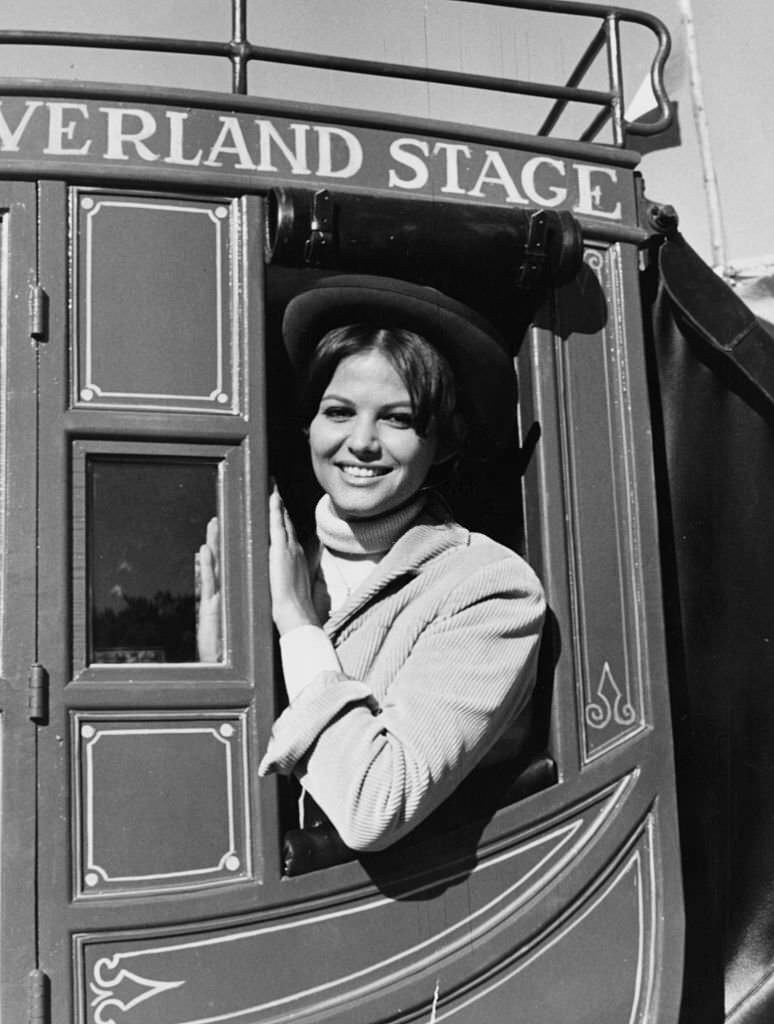
Grand Duke Otto von Habsburg with three of his daughters during a holiday, Benidorm, Alicante, Spain, 1963.Grand Duke Otto von Habsburg with three of his daughters during a holiday, Benidorm, Alicante, Spain, 1963.Panneaux de directions dans une rue en Espagne, in April 1963.A part of the canary birds which can be bought in their home country, the Canary Islands, are imported from Germany.The shooting of the American film “The Fall of the Roman Empire” by Anthony Mann in Spain, 1963The shooting of the American film “The Fall of the Roman Empire” by Anthony Mann, 1963Many long legs could be seen during the contest of ‘Miss United Nations’ on 14 February 1963 on Mallorca.View of The Entrance to the Picasso Museum in Barcelona On March 12, 1963Holidaymakers in Marbella, Spain, April 1963.Spanish footballer Alfredo Di Stéfano in Madrid in September 1963, Spain.Actress Claudia Cardinale sitting in a Stage Coach, as she appears in the film ‘Circus World’, Spain, November 27th 1963.
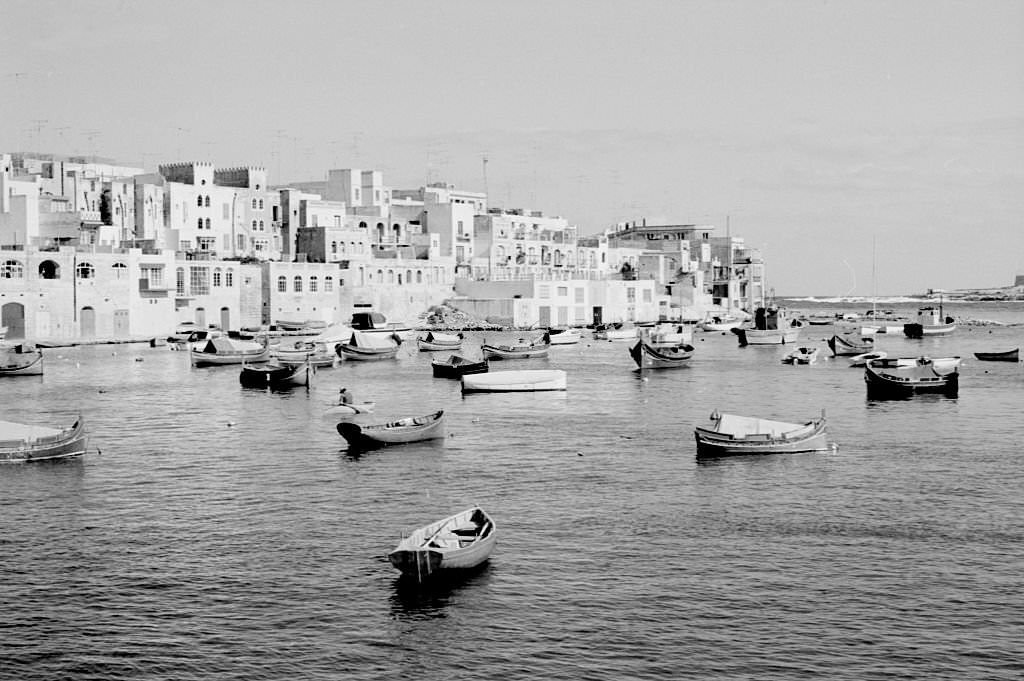
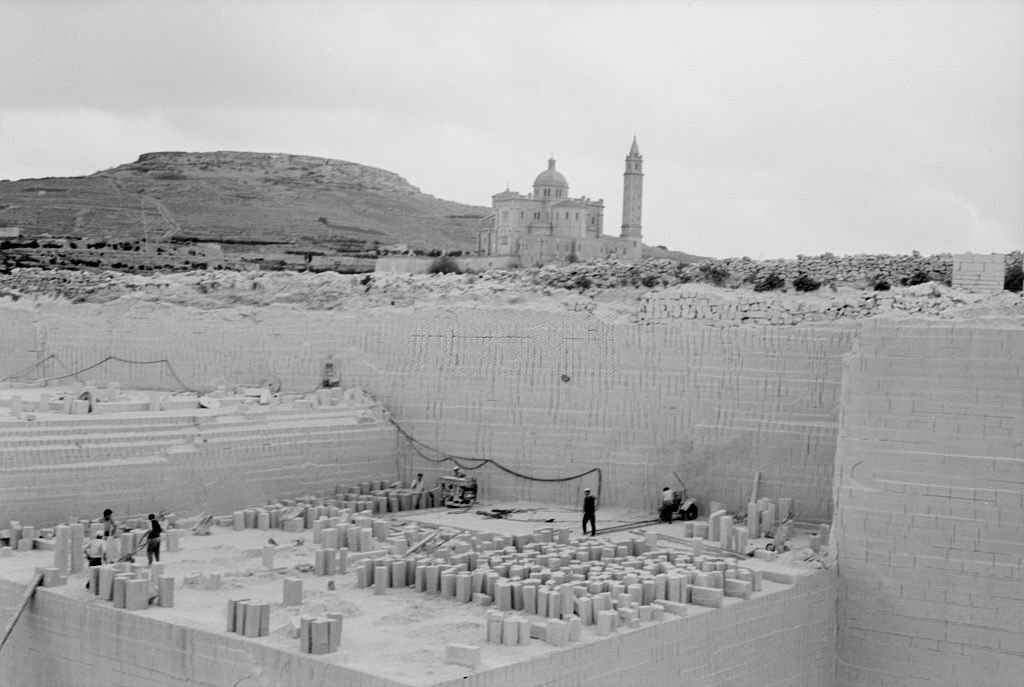
The Canary Islands occupied a world apart from mainland Spain. In 1968, the islands’ fishing harbors were still busy with wooden boats. Quarry workers cut stone by hand. Men gathered outside cafés in the midday heat. A tourist drifted lazily in a rowing boat. The Guanche people — the islands’ original inhabitants — had left their mark on the local crafts and identity, and in 1962, examples of those traditional crafts were still being produced in Gran Canaria.
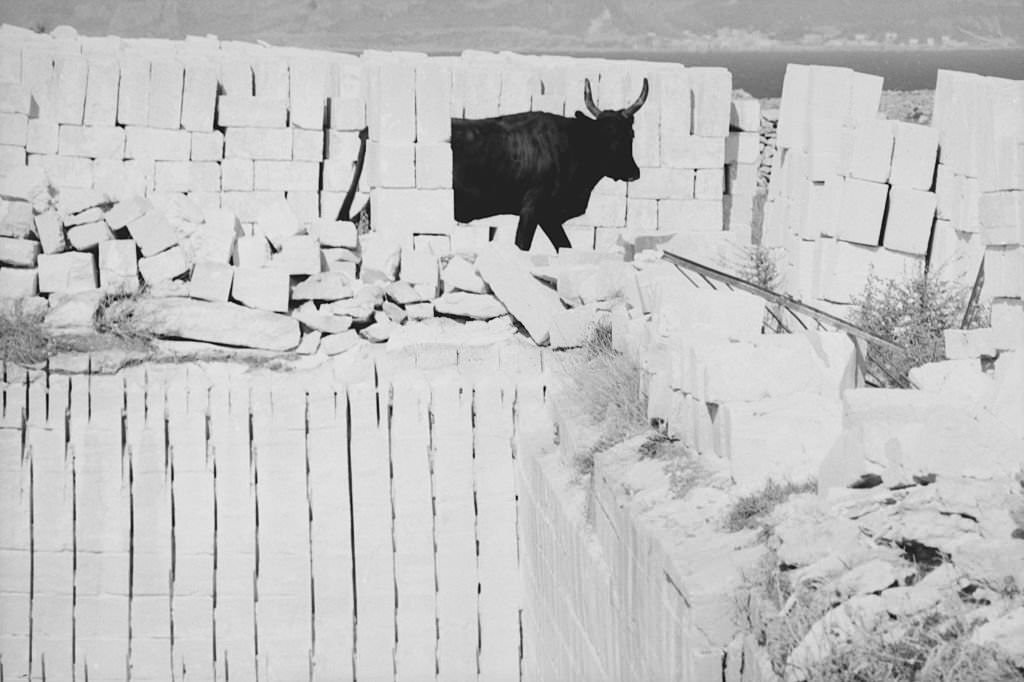
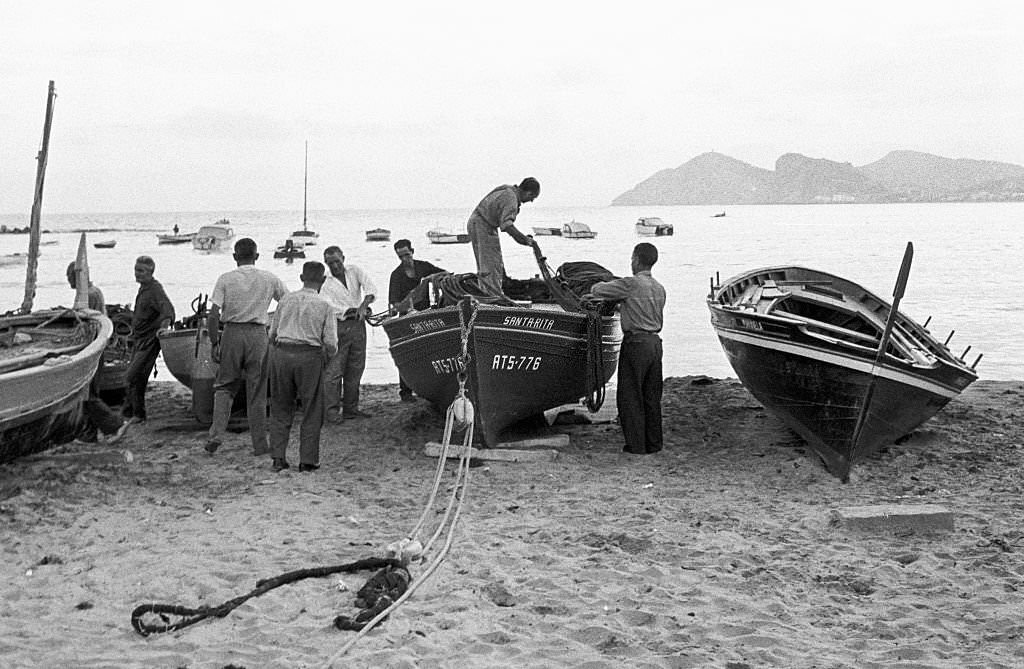
Boats moored somewhere in the Canary Islands. Canary Islands, 1968Workmen at work in a quarry somewhere in the Canary Islands, 1968A bull in a quarry in the Canary Islands, 1968.Boats moored somewhere in the Canary Islands, 1968.A tourist relaxing during a rowing boat trip. Canary Islands, 1968Men outside a café. Canary Islands, 1968
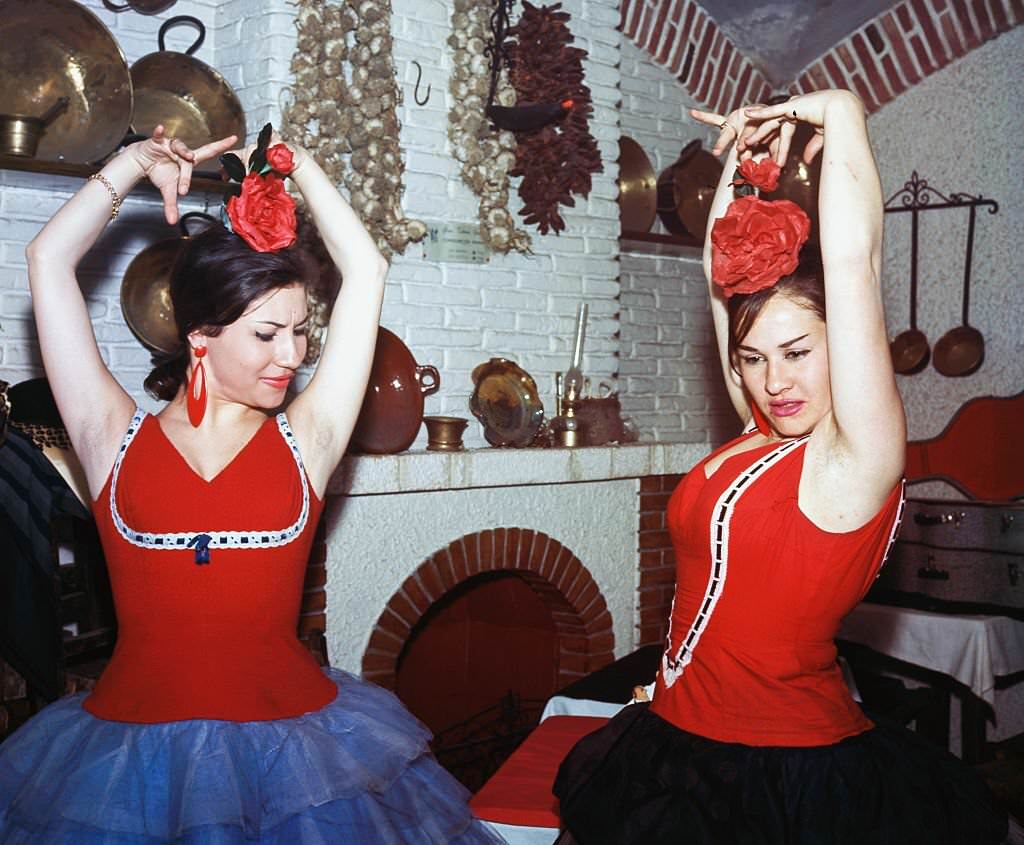
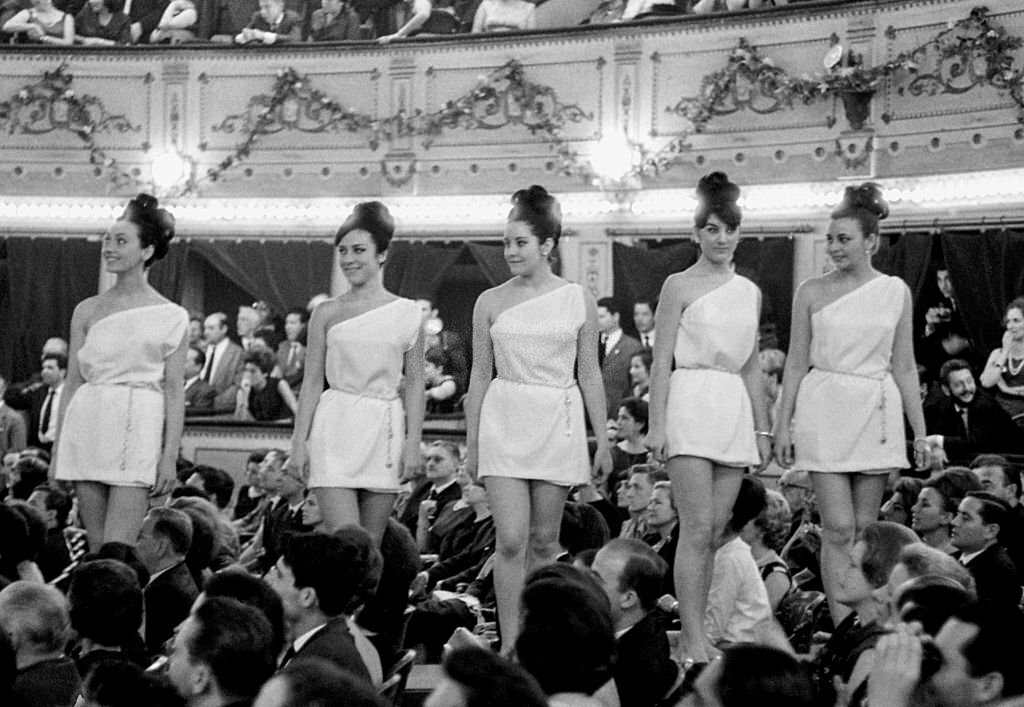
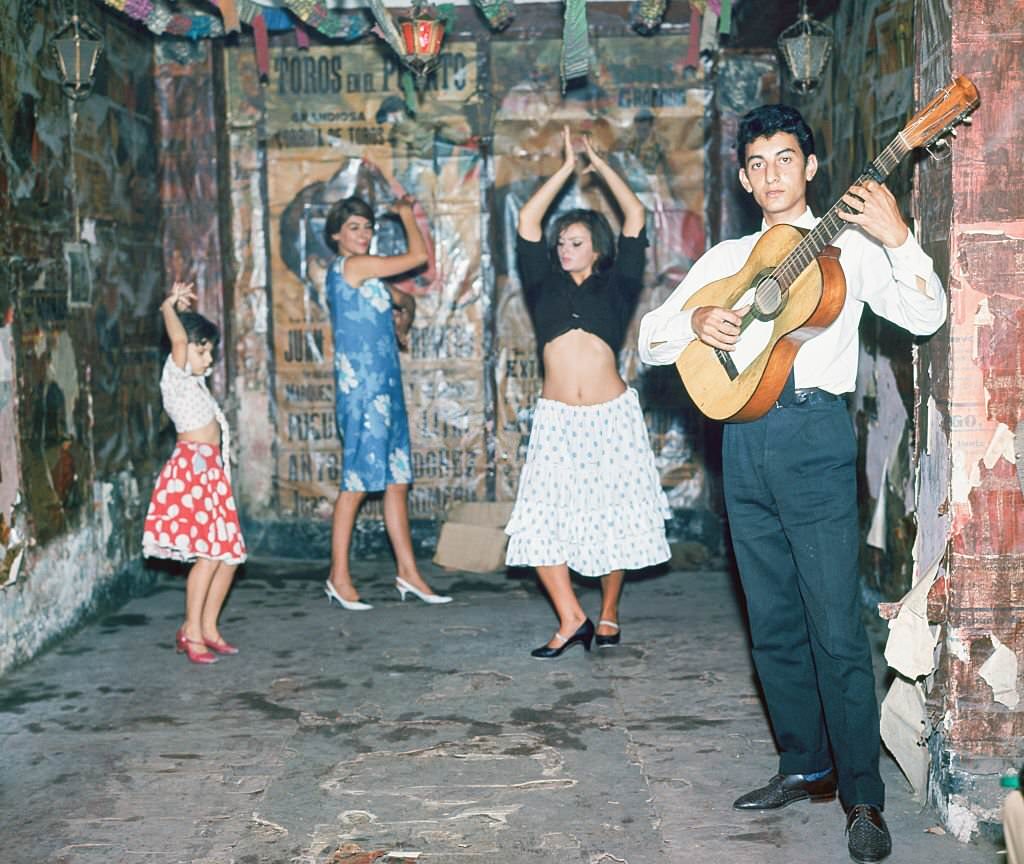
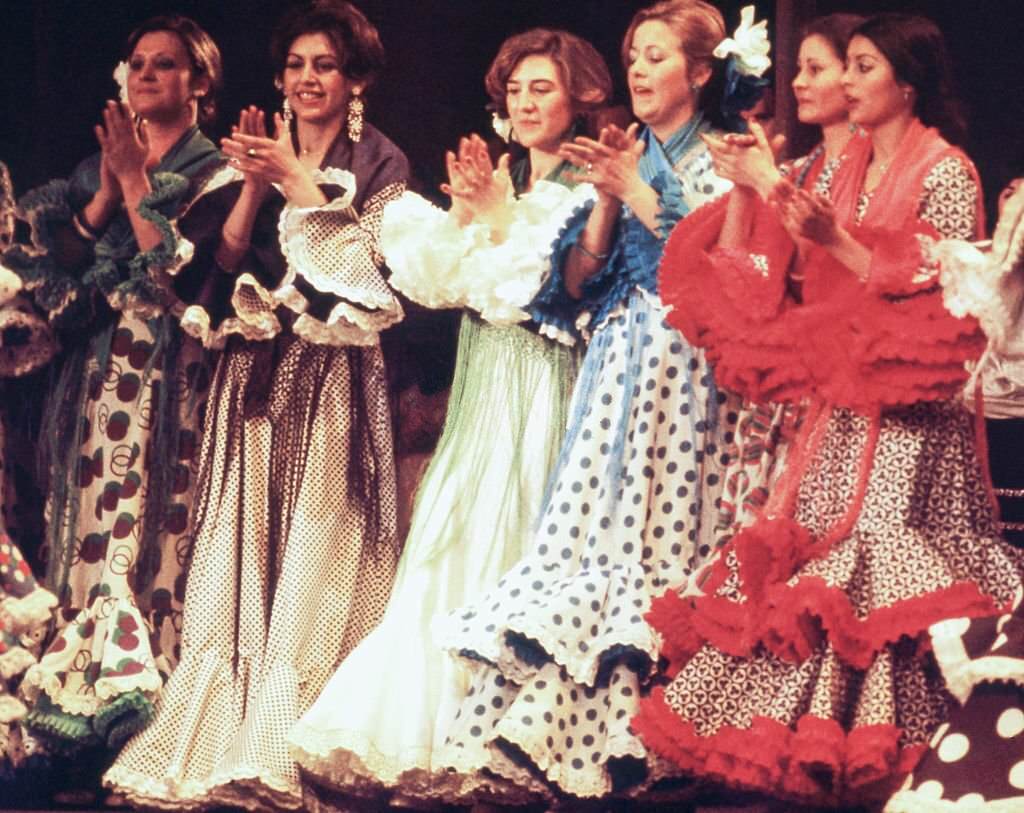
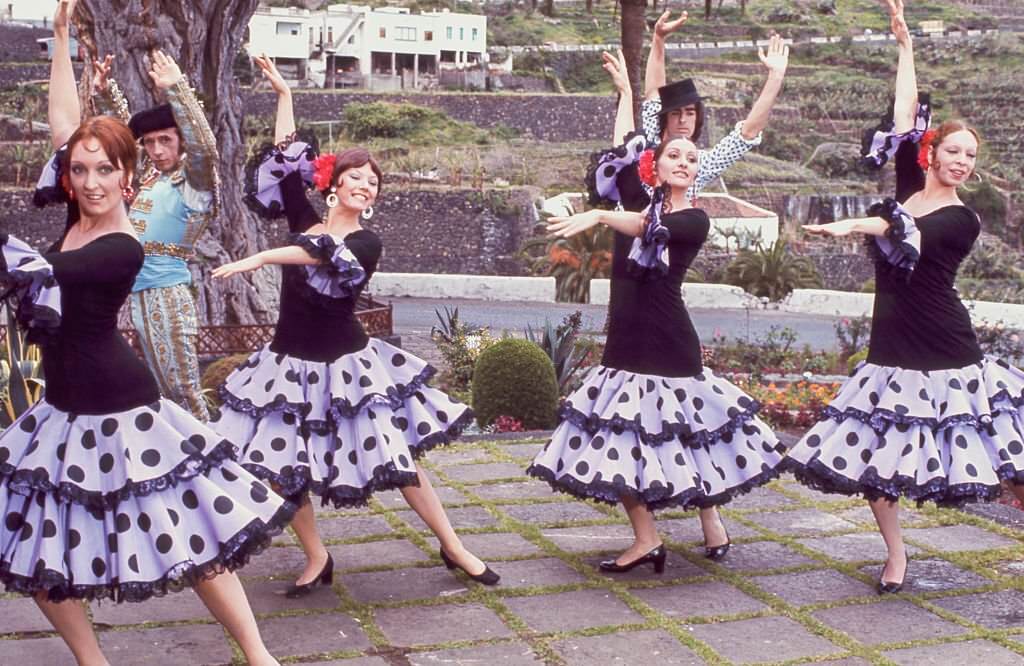
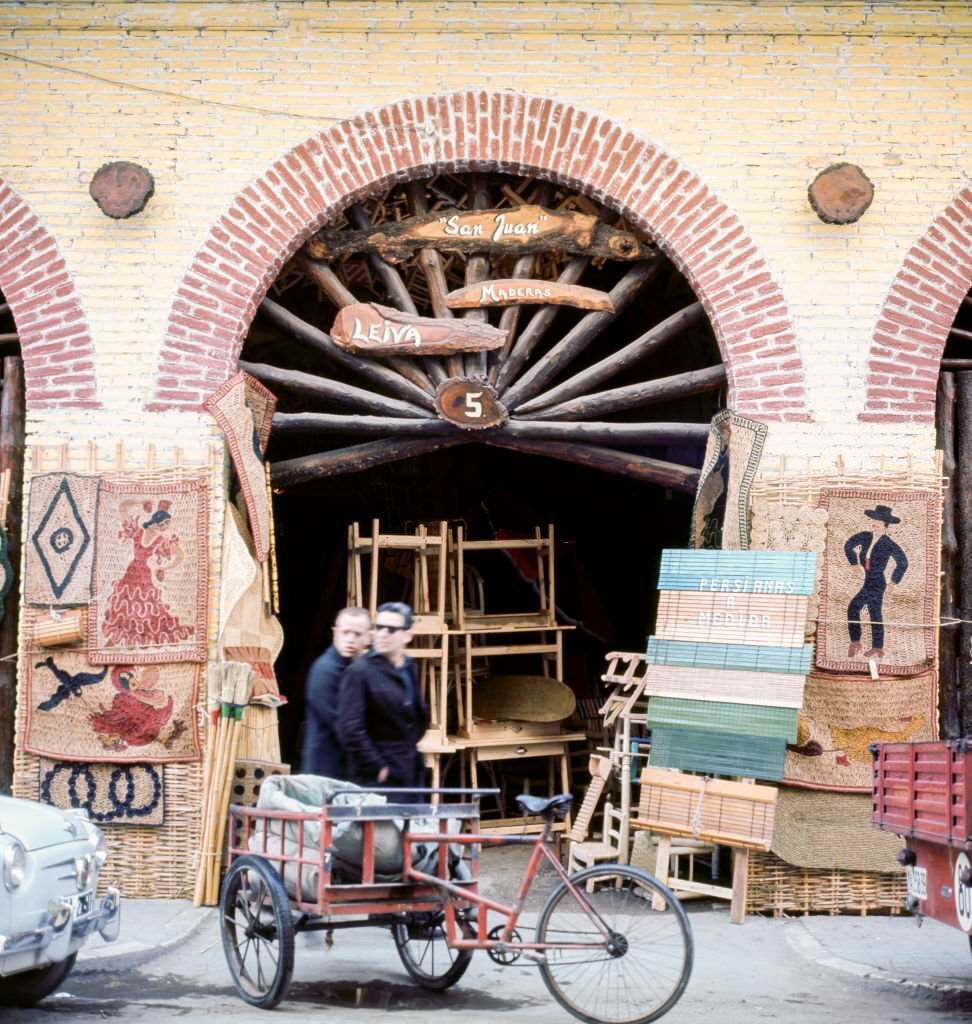
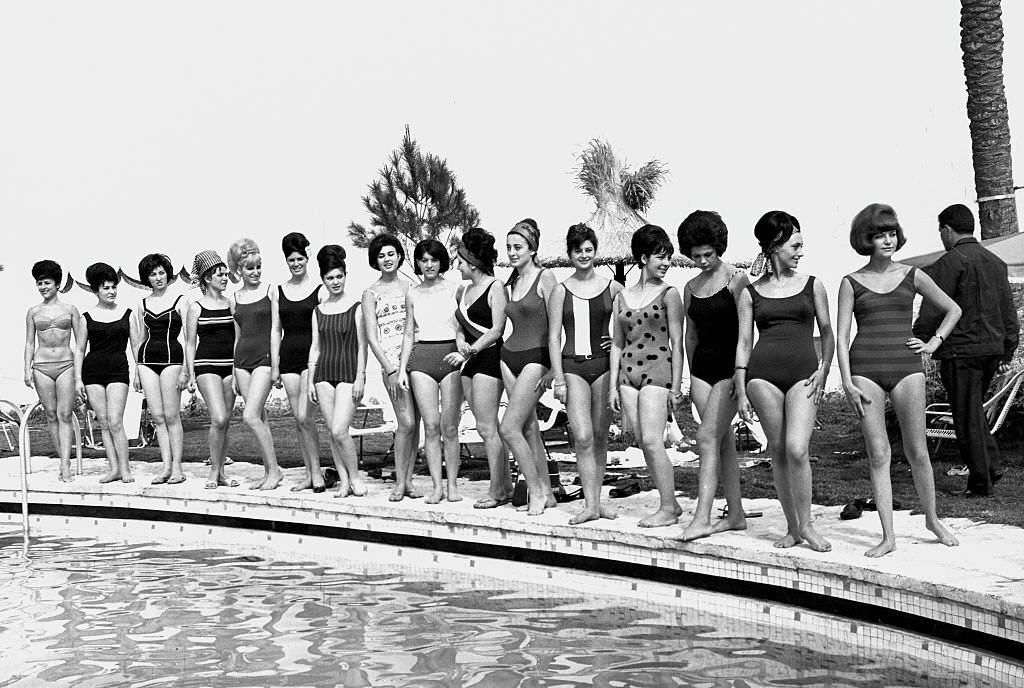
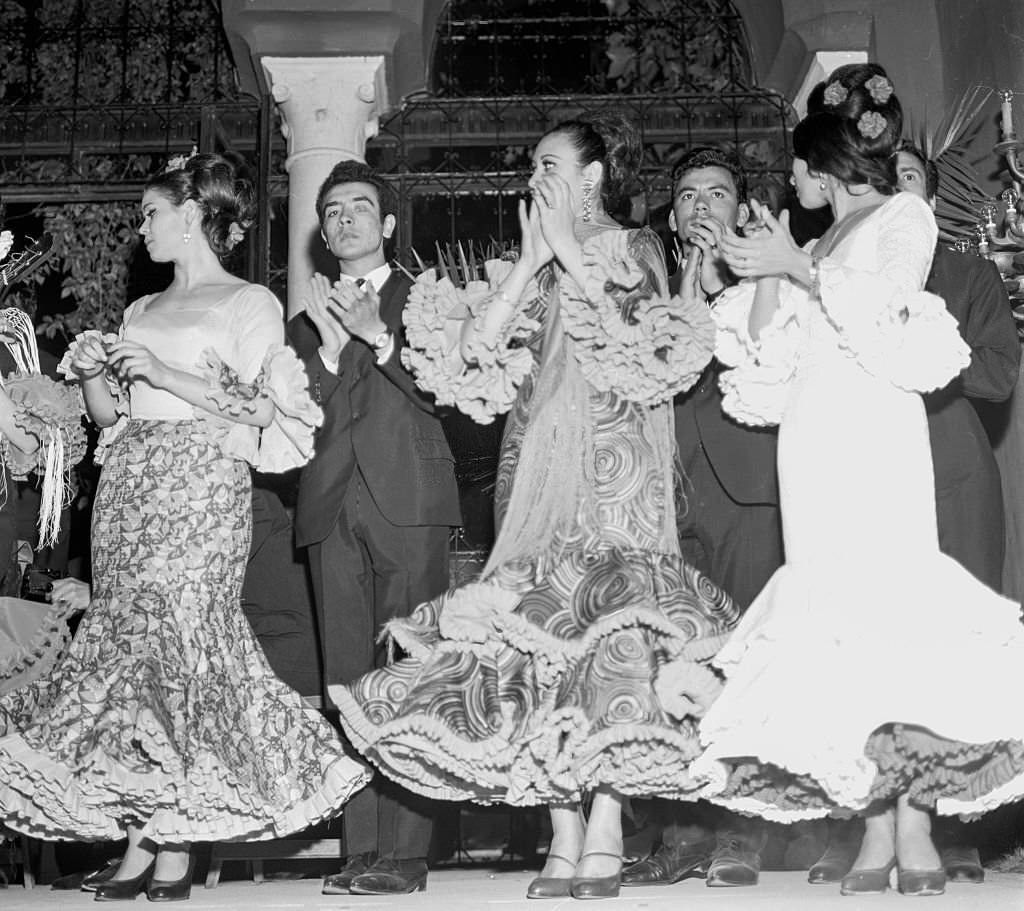
Flamenco was undergoing its own evolution in the 1960s. Schools in Madrid trained dancers in the formal traditions of the art, while in Granada — its spiritual heartland — performers worked in the distinctive Andalusian style that had developed over centuries. The dance was both a living tradition and a cultural export, one that foreign visitors expected and Spaniards guarded jealously. Maruja García Nicolau was named Miss Spain and Miss Europe in 1962, part of a pageant culture that was expanding alongside Spain’s growing tourism industry. The Miss Spain election in Torremolinos in 1964 drew national attention.
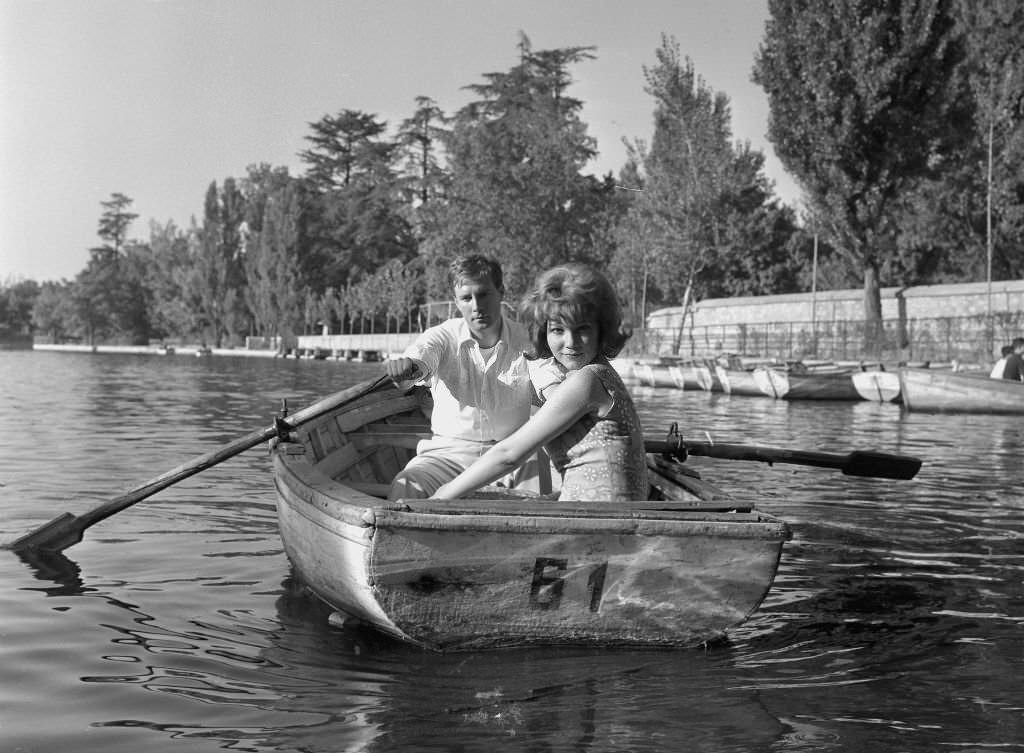
The ‘maletillas’, aspirants to bullfighters, look for an opportunity, 1964, Madrid, Spain.The Spanish actor and film director Fernando Fernan Gomez, 1964, Madrid, Spain.Benidorm, 1964Benidorm, 1964.School of Flamenco, 1964, Madrid, Spain.Miss Spain election 1964, Torremolinois, Malaga, Spain.School of Flamenco, 1964, Madrid, Spain.Spanish flamenco dancers, 1964, Granada, Andalusia, Spain.Spanish flamenco dancers, 1964, Granada, Andalusia, Spain.
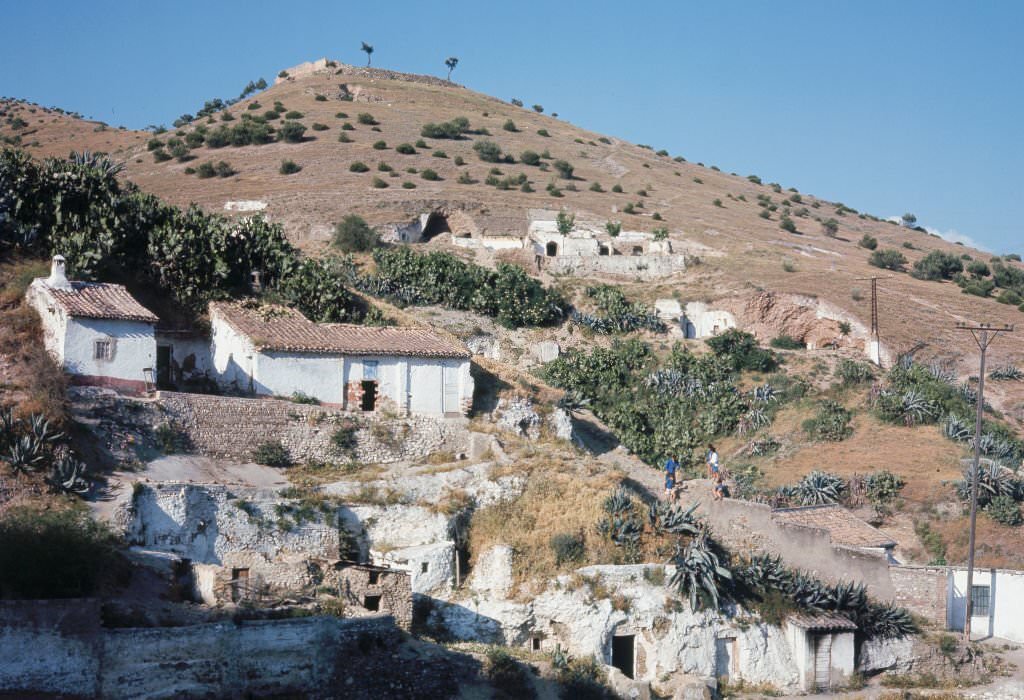
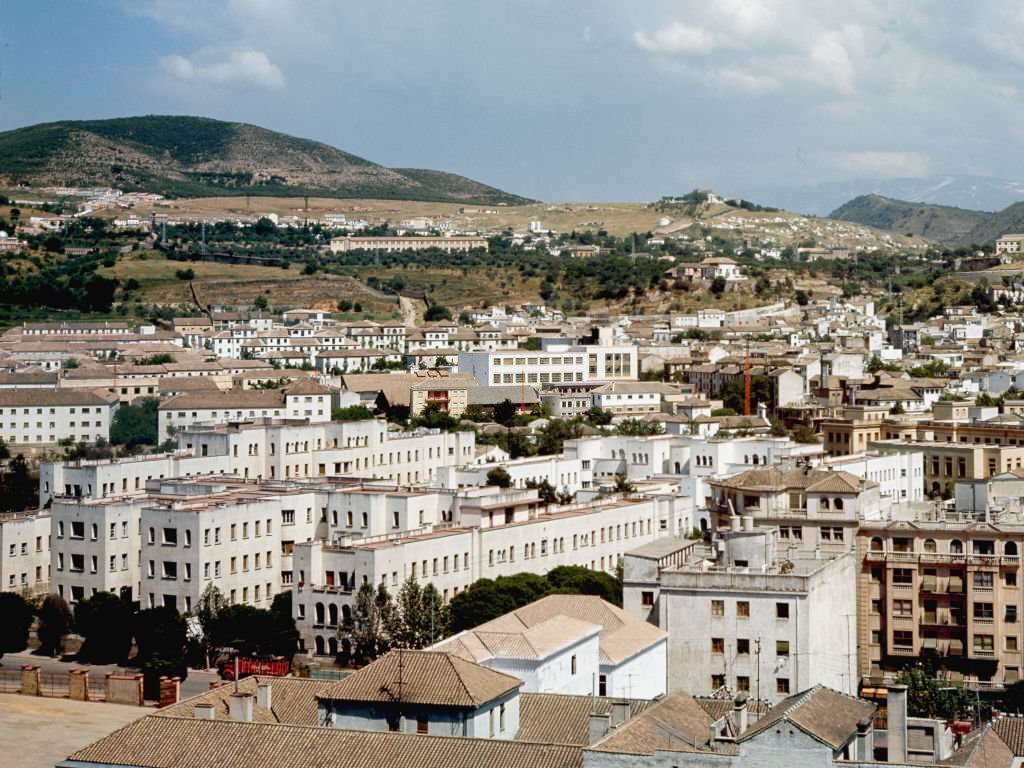
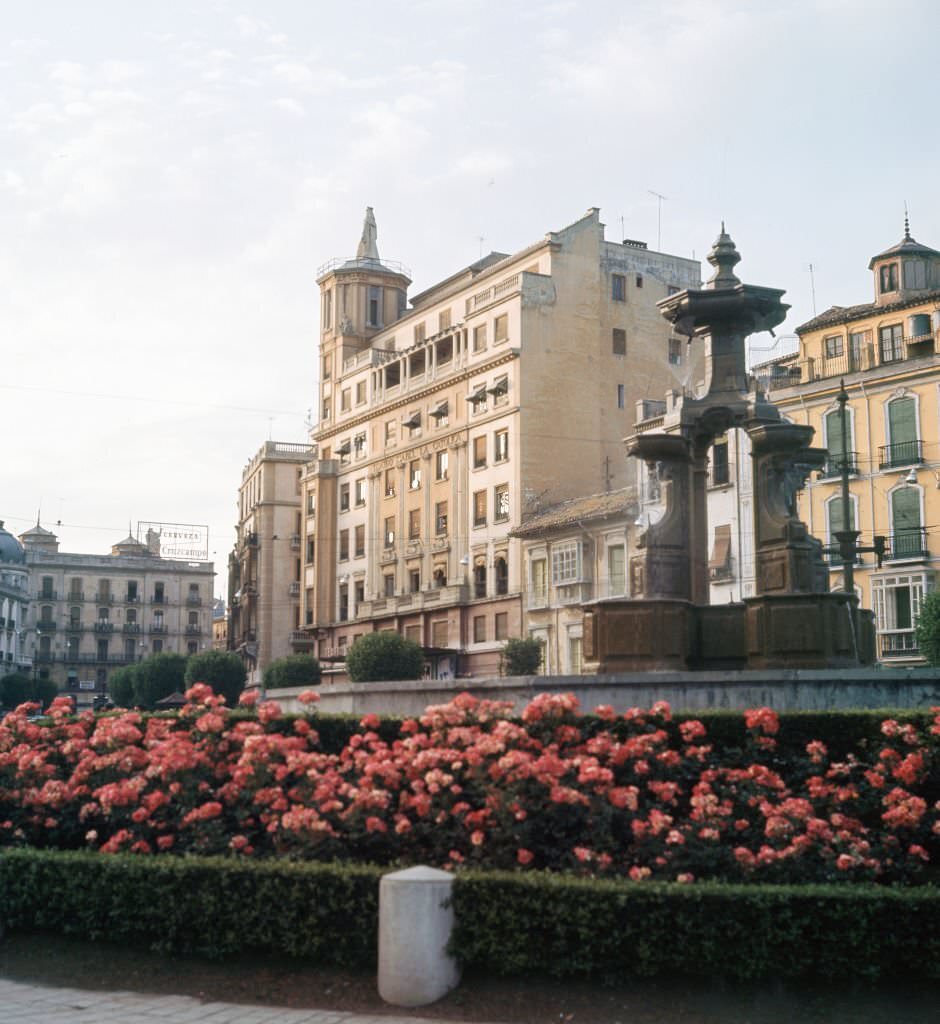
Granada in 1964 presented a striking contrast of old and new. Views from the Alhambra looked out over a city that had barely changed in outline for centuries, while the “Fuente de las Batallas” in the Puerta Real served as a gathering point for residents in the modern city below. Marbella, further down the coast in Málaga, was quietly becoming a destination for the international jet set, its narrow streets and seafront drawing visitors who appreciated the town’s small scale before the larger developments arrived.
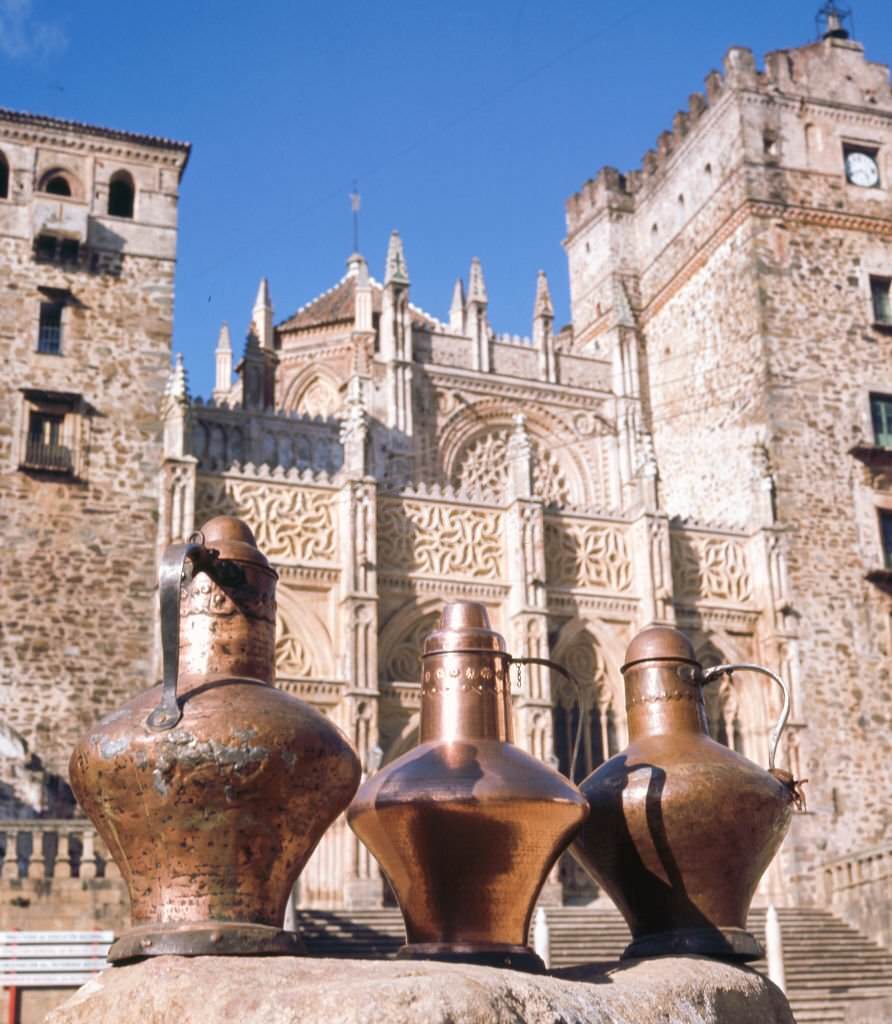
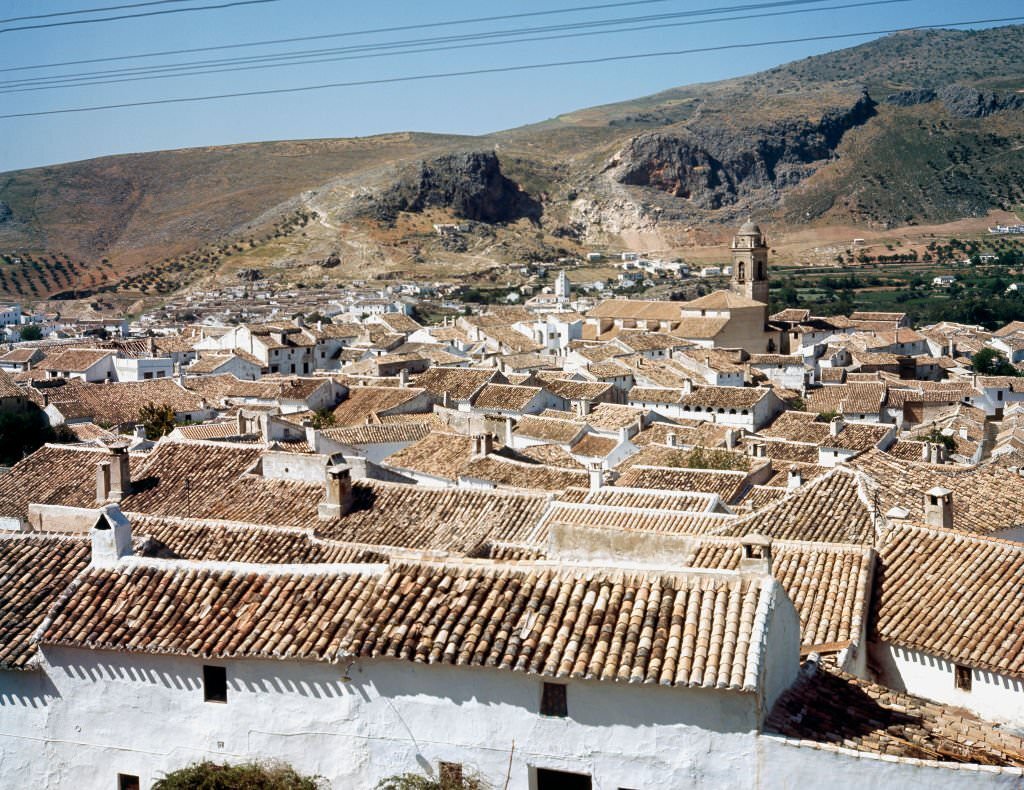
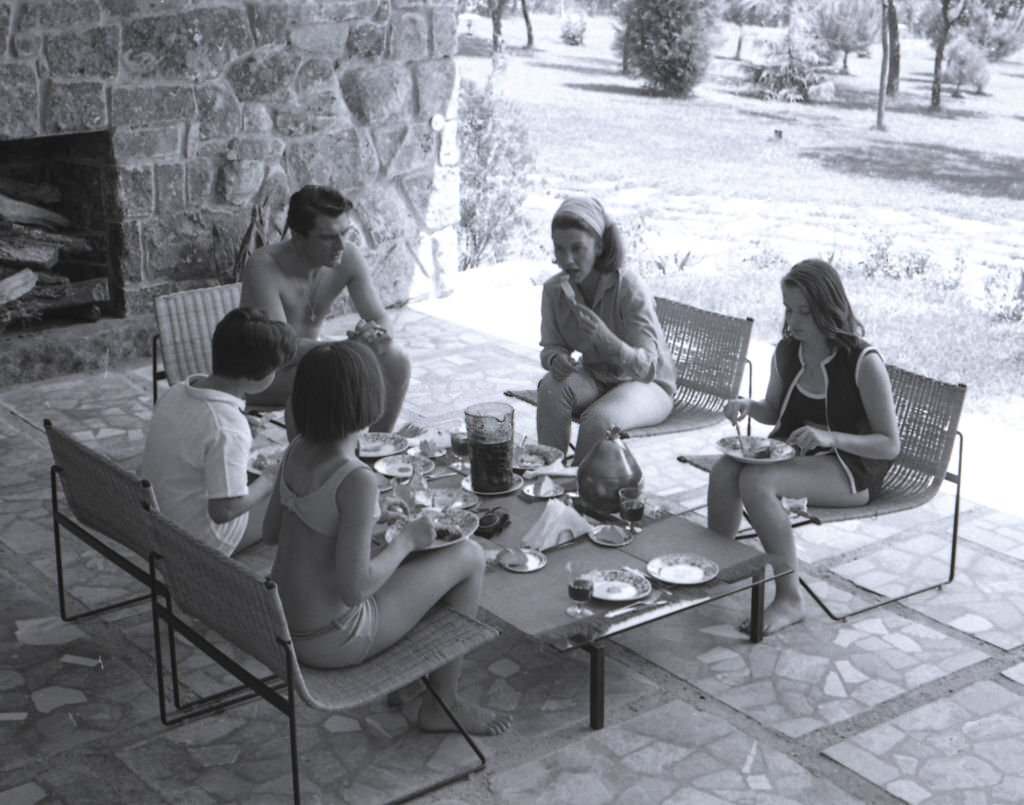
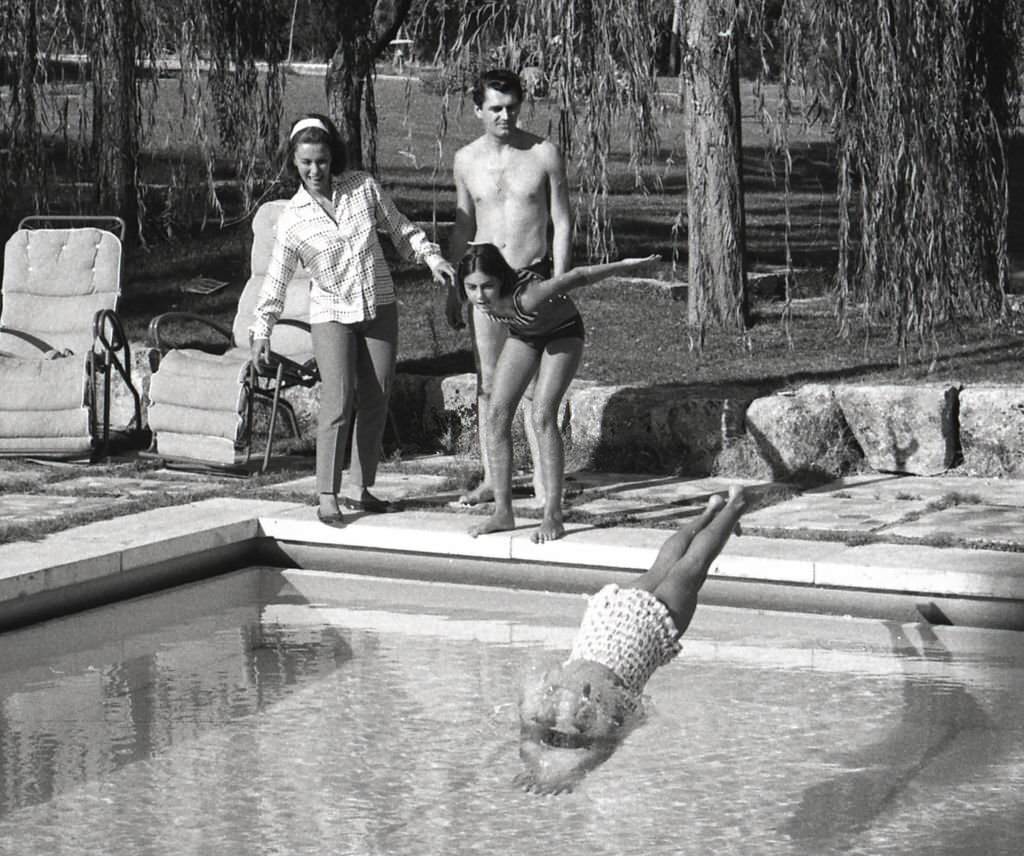
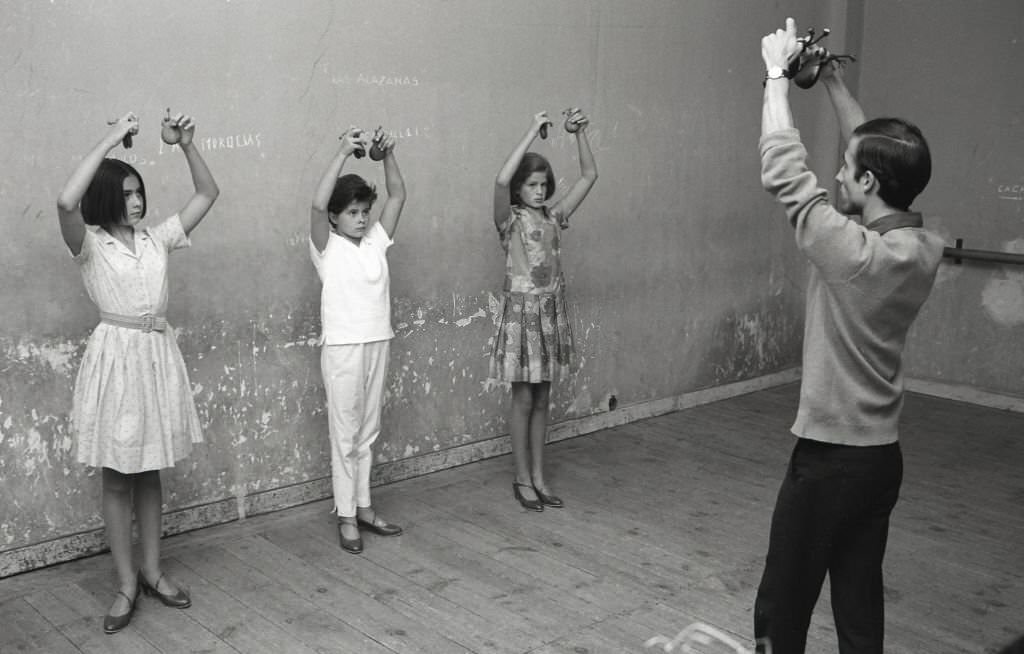
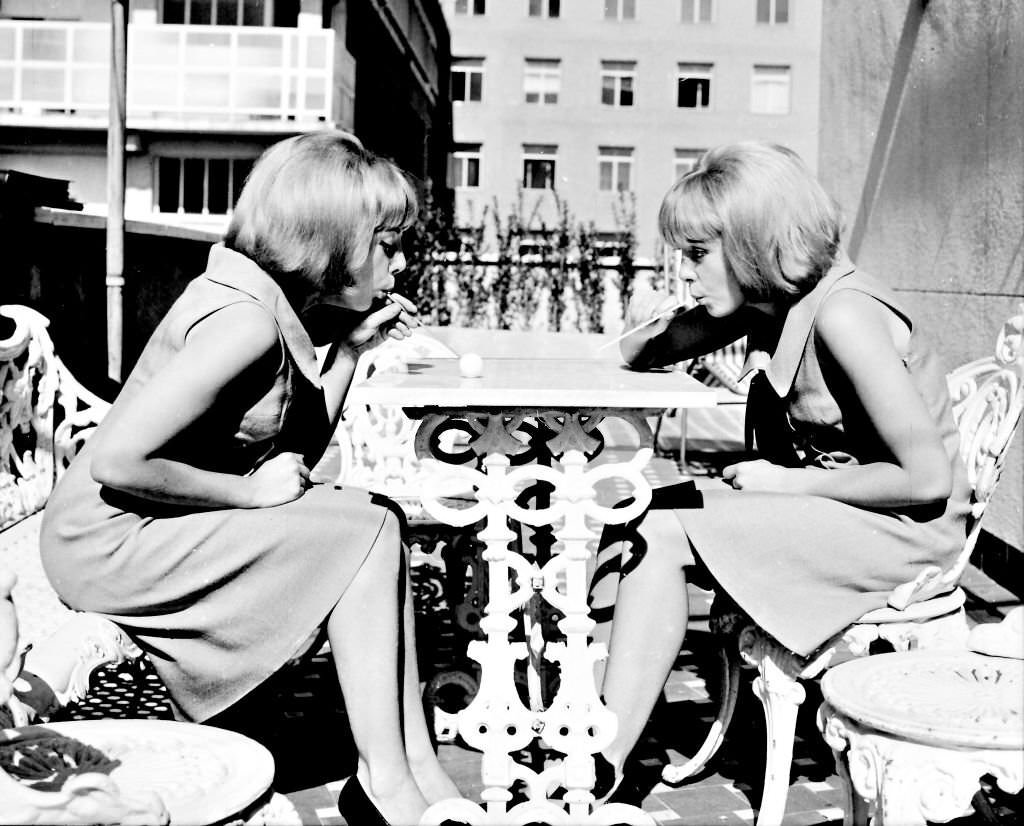
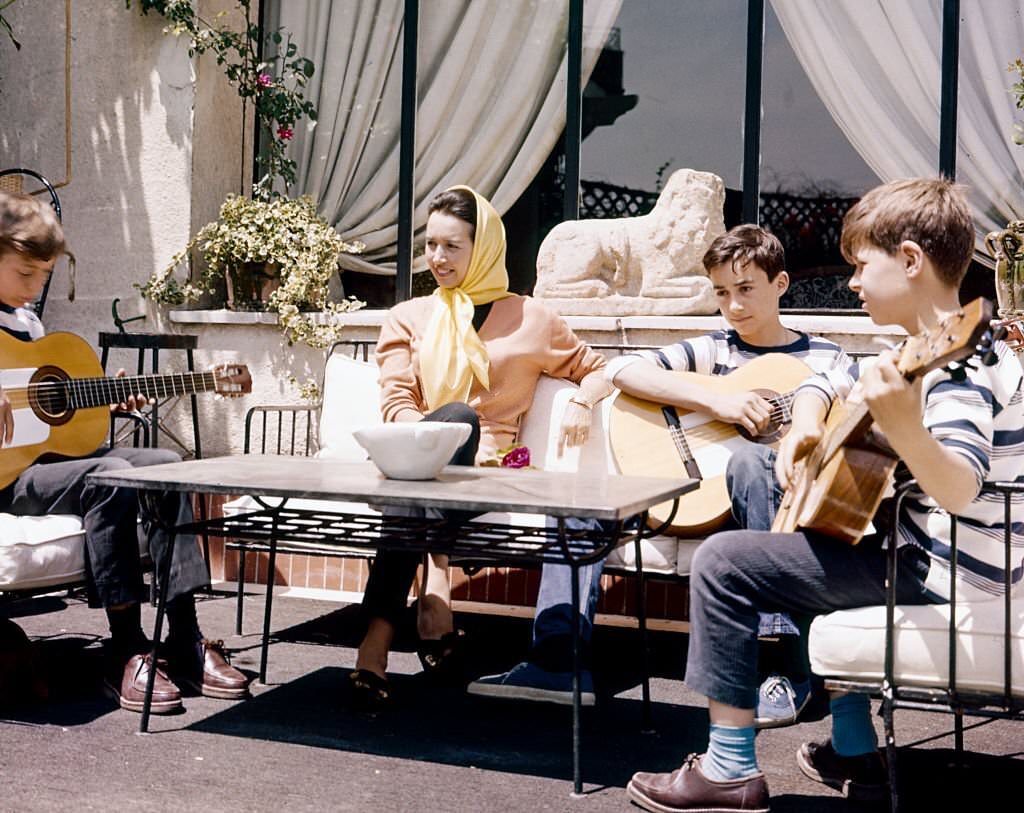
Estremaduran crafts, at the Guadalupe’s Monastery, 1964, Estremadura, Spain.View of Granada, 1964, Andalusia, Spain.View of Granada, 1964, Andalusia, Spain.Granada seen from the Alhambra, 1964, Andalusia, Spain.“Fuente de las Batallas” in the Puerta Real, 1964, Granada, Andalusia, Spain.View along an unspecified street, Marbella, Malaga, Andalusia, Spain, 1964.View along an unidentified street, Marbella, Malaga, Andalusia, Spain, 1964.View of pedestrians as they walk past an antiques shop, Malaga, Andalusia, Spain, 1964.Linda Christian at home of La Moraleja with her husband Edmund Purdom and daughters Romina and Taryn, Madrid, Spain, 1964.Linda Christian at home of La Moraleja with her husband Edmund Purdom and daughters Romina and Taryn, Madrid, Spain, 1964.Romina Power and Taryn Power, daughters of Linda Christian during flamenco lessons in Madrid, Spain, 1964.Spanish actors Gil Vidal and Maria Silva filming The Spanish twin actresses Pili and Mili (Pilar and Aurora Bayona), during a photo shoot, playing children’s games, Madrid, Spain, 1964.Benidorm, 1964.Benidorm, 1964.Benidorm, 1964.Benidorm, 1964.The Quintanilla Countess Aline Griffith with her children, 1964, Madrid, Spain.Election of Miss Spain in Torremolinos, 1964, Malaga, Spain.
View along an unidentified street, Marbella, Malaga, Andalusia, Spain, 1964.
View of Marbella, Malaga, Andalusia, Spain, 1964.
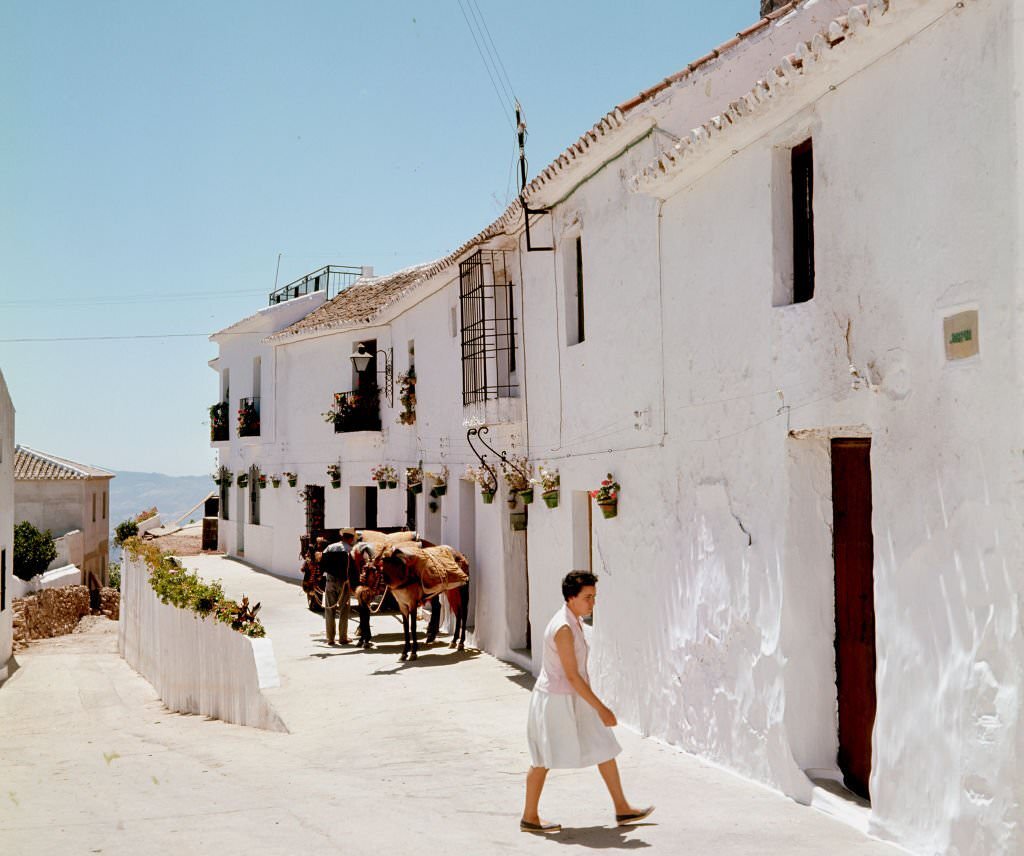
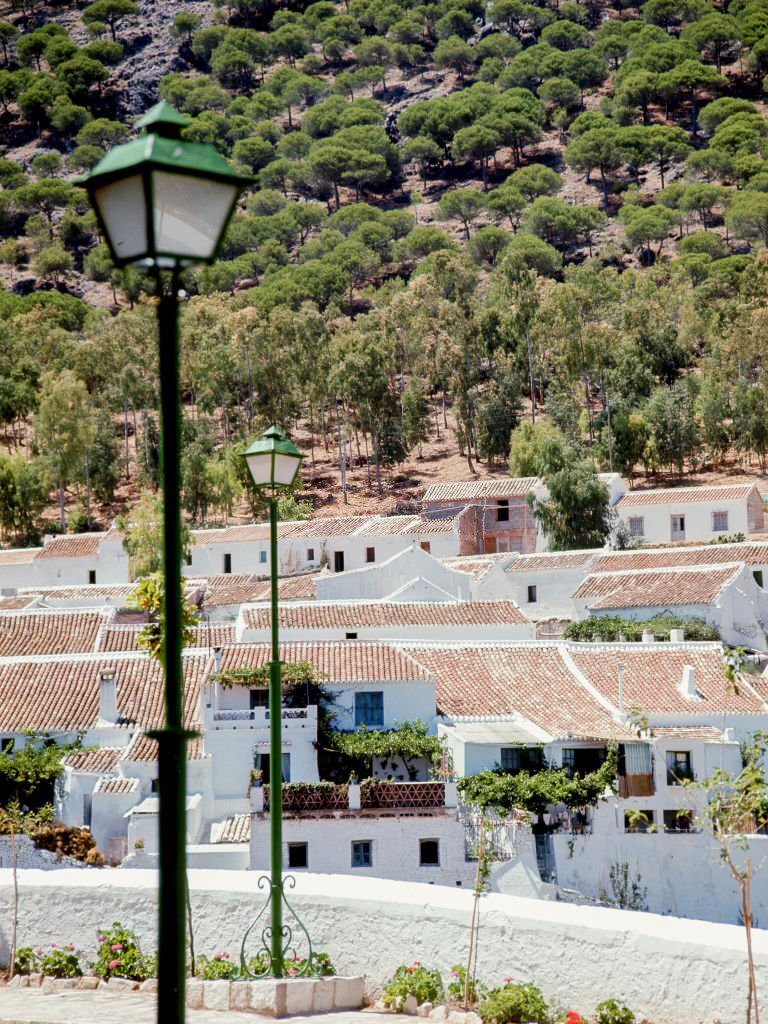
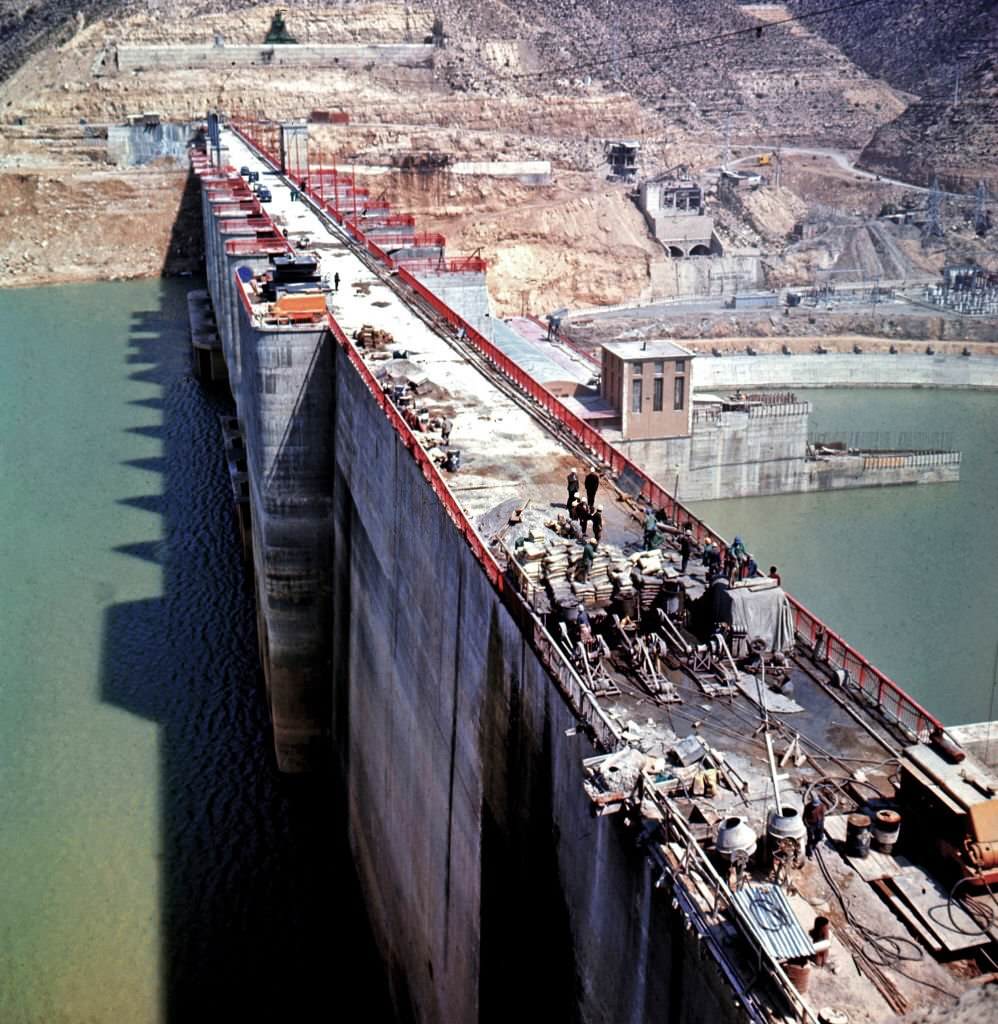
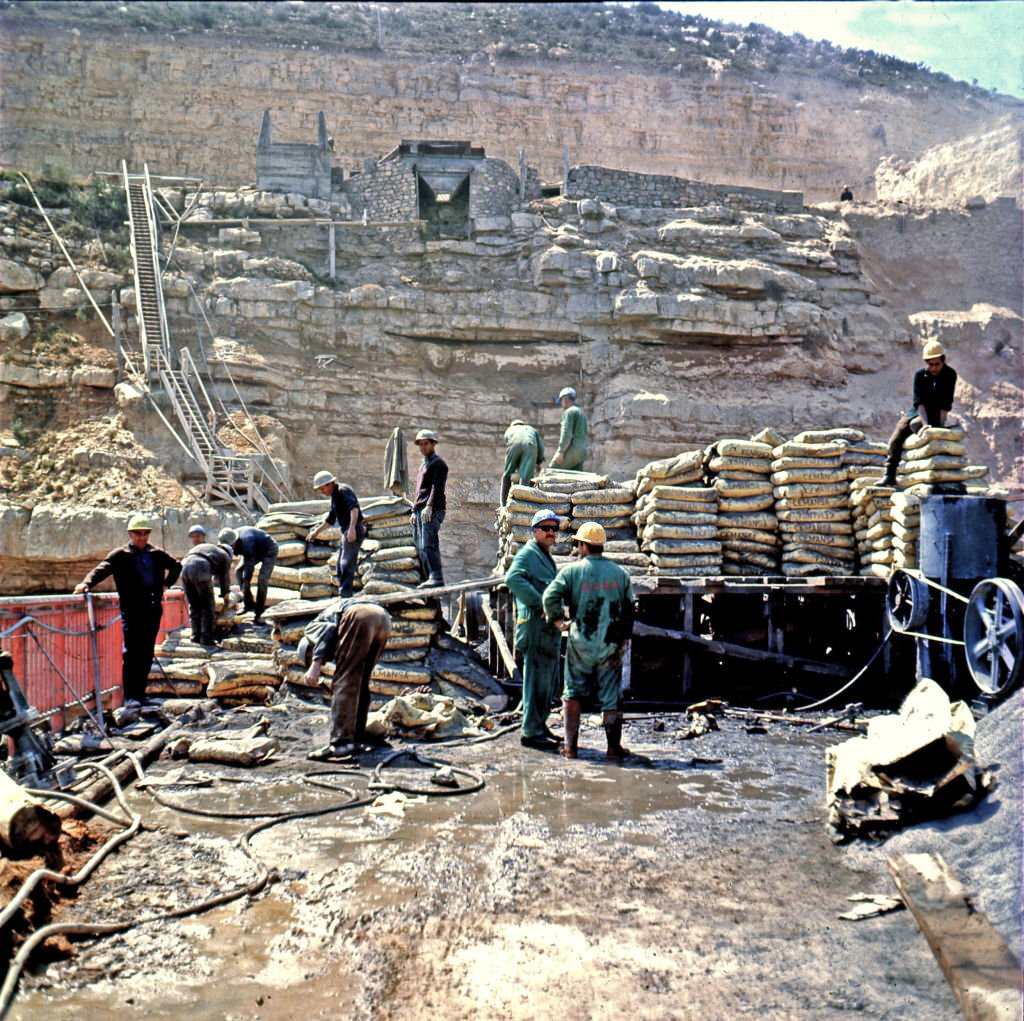
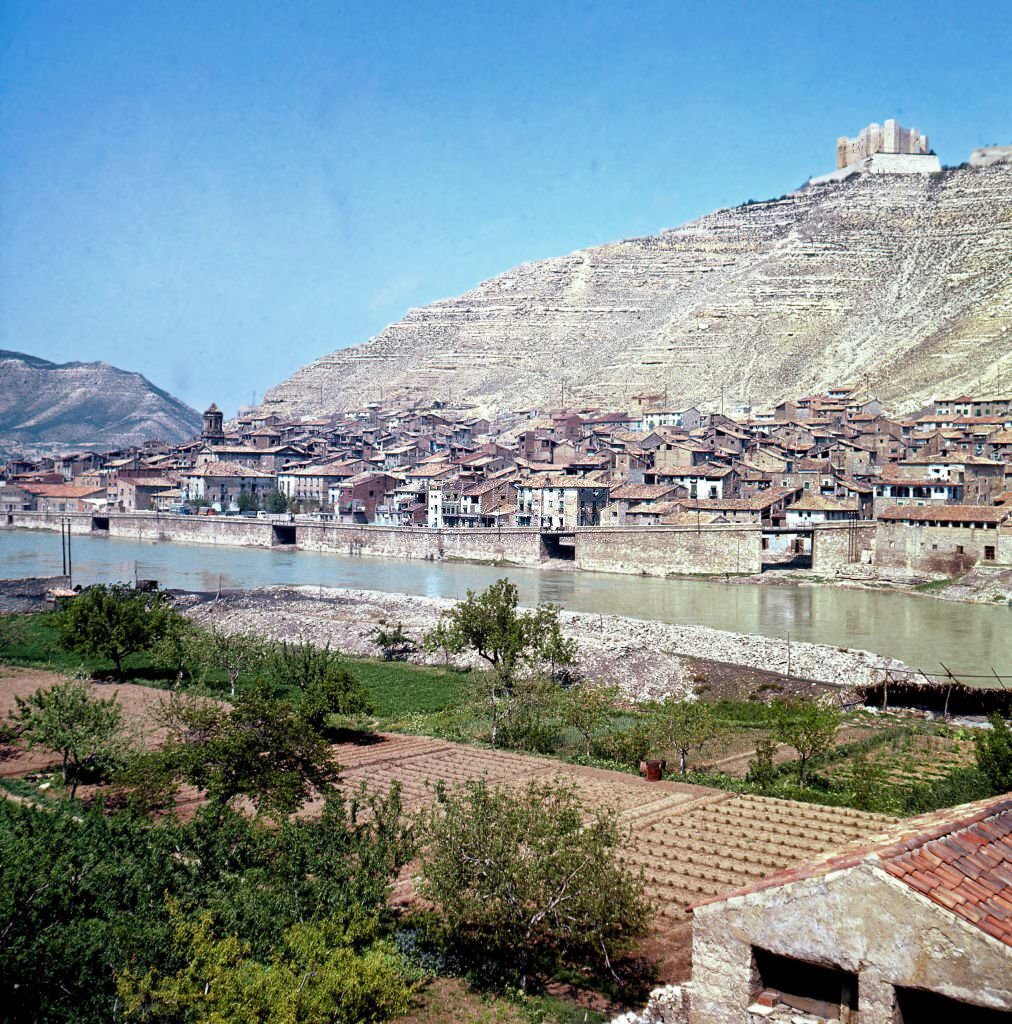
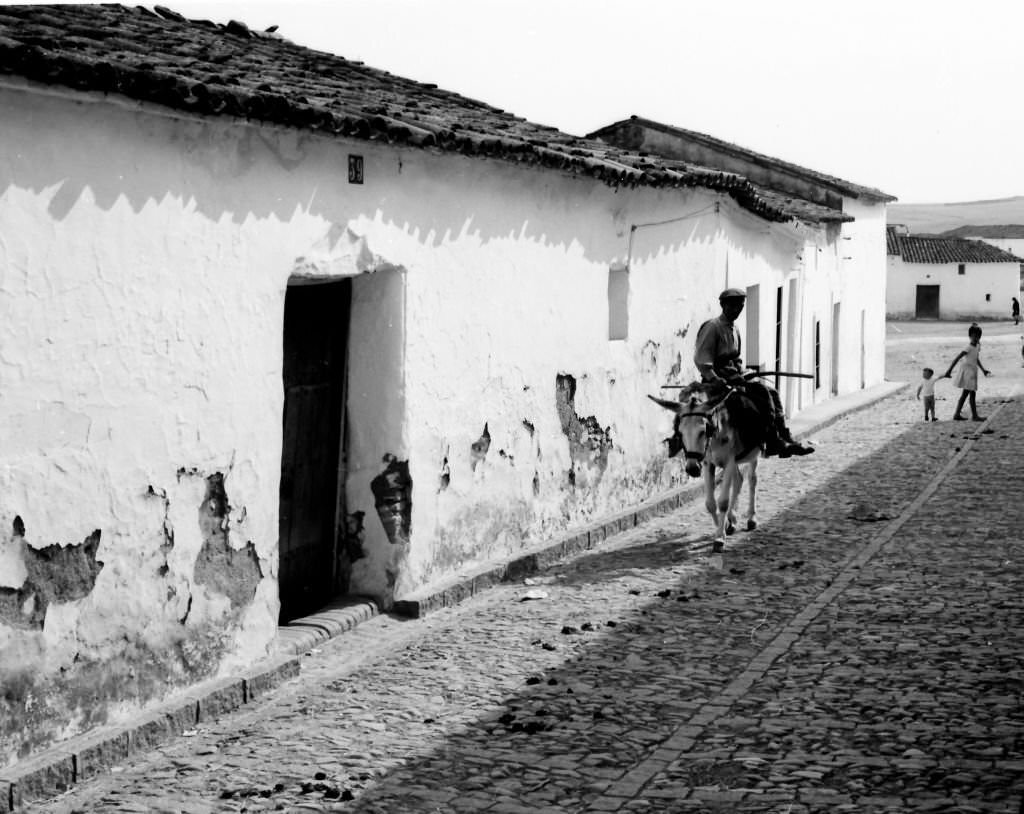
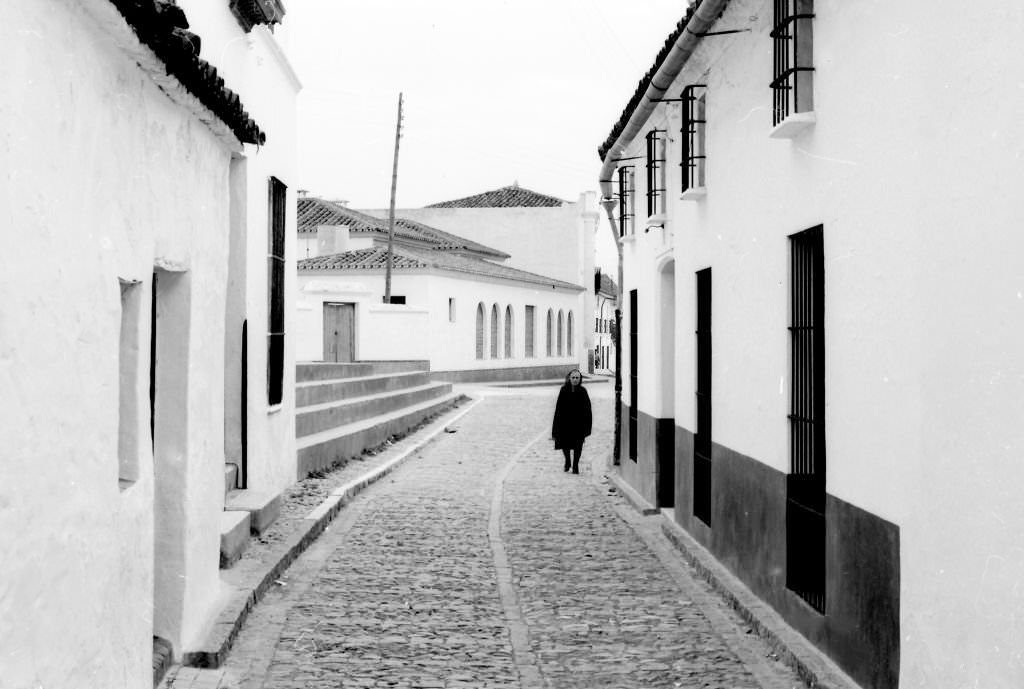
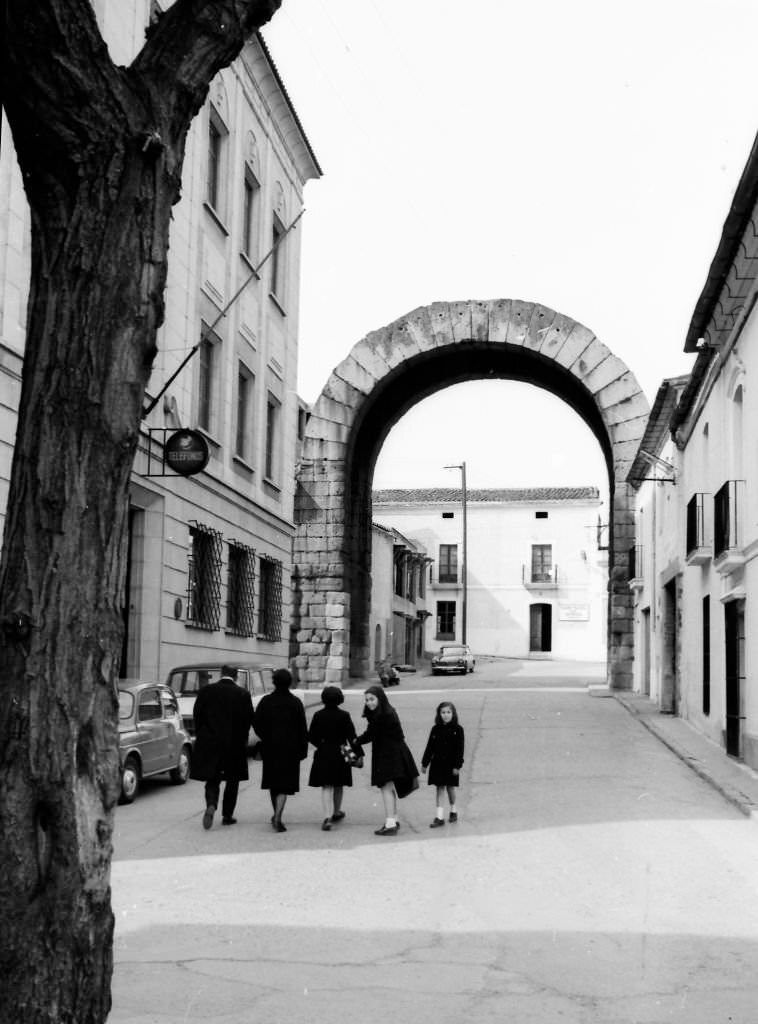
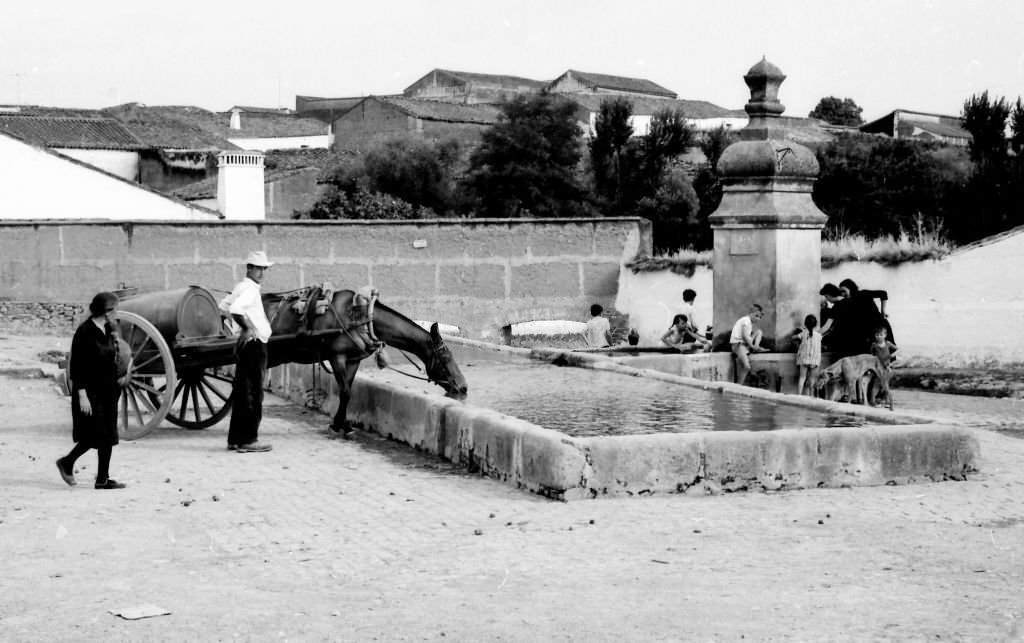
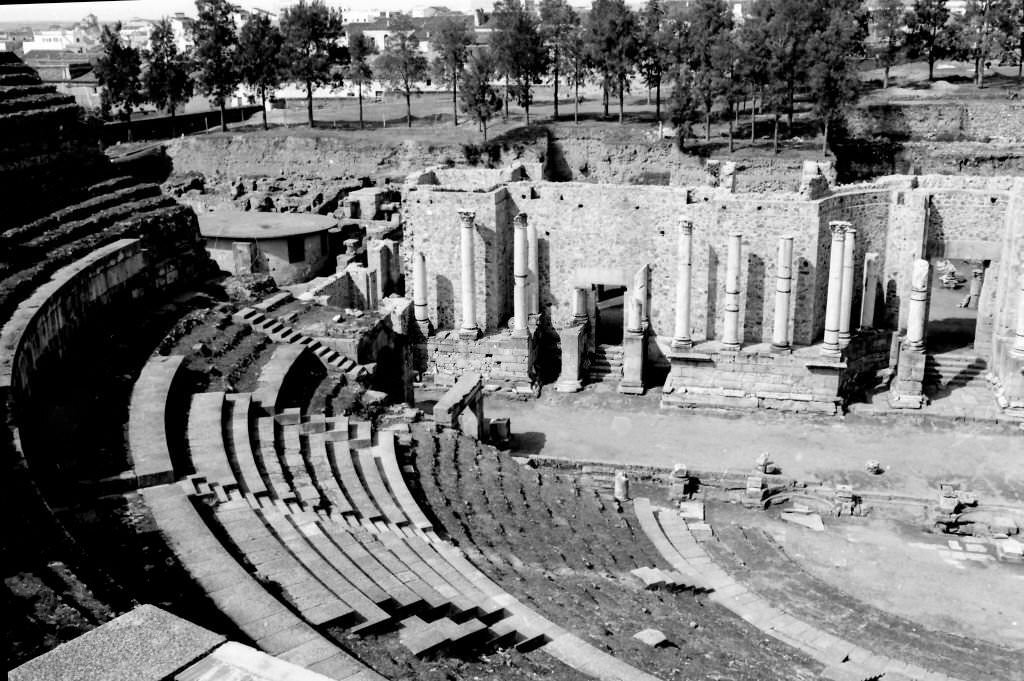
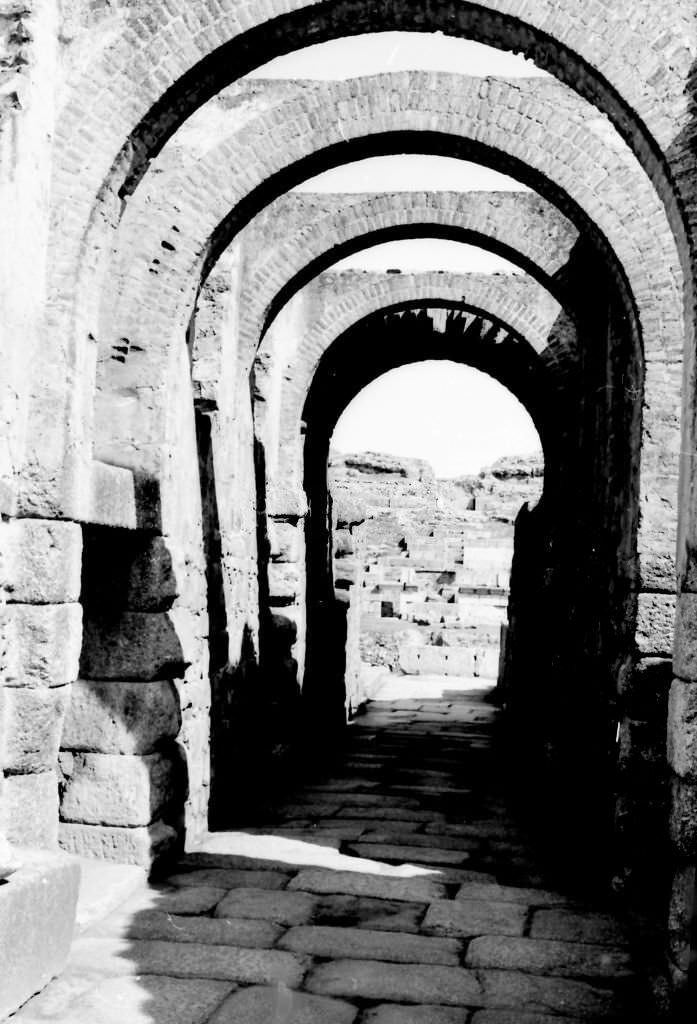
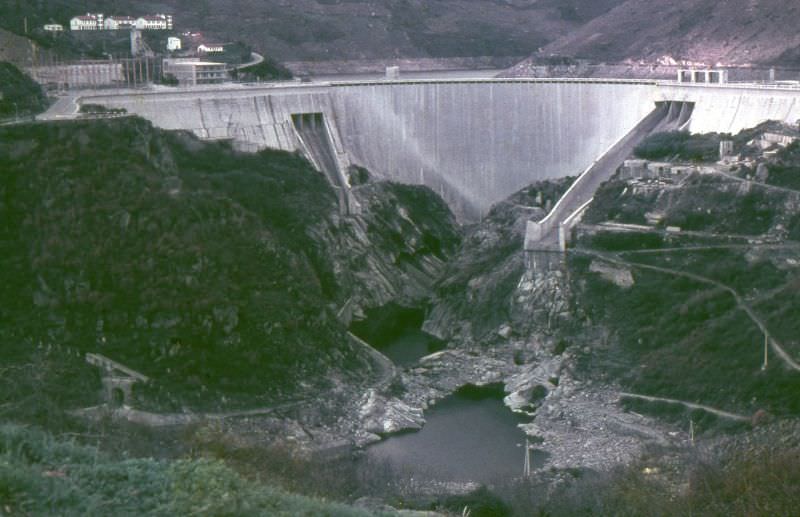
Agriculture remained central to large parts of Spain’s economy. In 1964, students at the agriculture school of Torrealba in Córdoba were learning modern farming techniques. The same year, the massive Mequinenza Dam in Zaragoza Province was under construction — a project that displaced entire communities and flooded historic villages in the name of hydroelectric progress. In Extremadura, farmers still rode donkeys home through small towns like Fuente de los Cantos, where a horse might drink from the town fountain while children played alongside it. The Roman Theater and the Arch of Trajan in Mérida stood as quiet reminders that this land had been shaped by empires long before Franco.
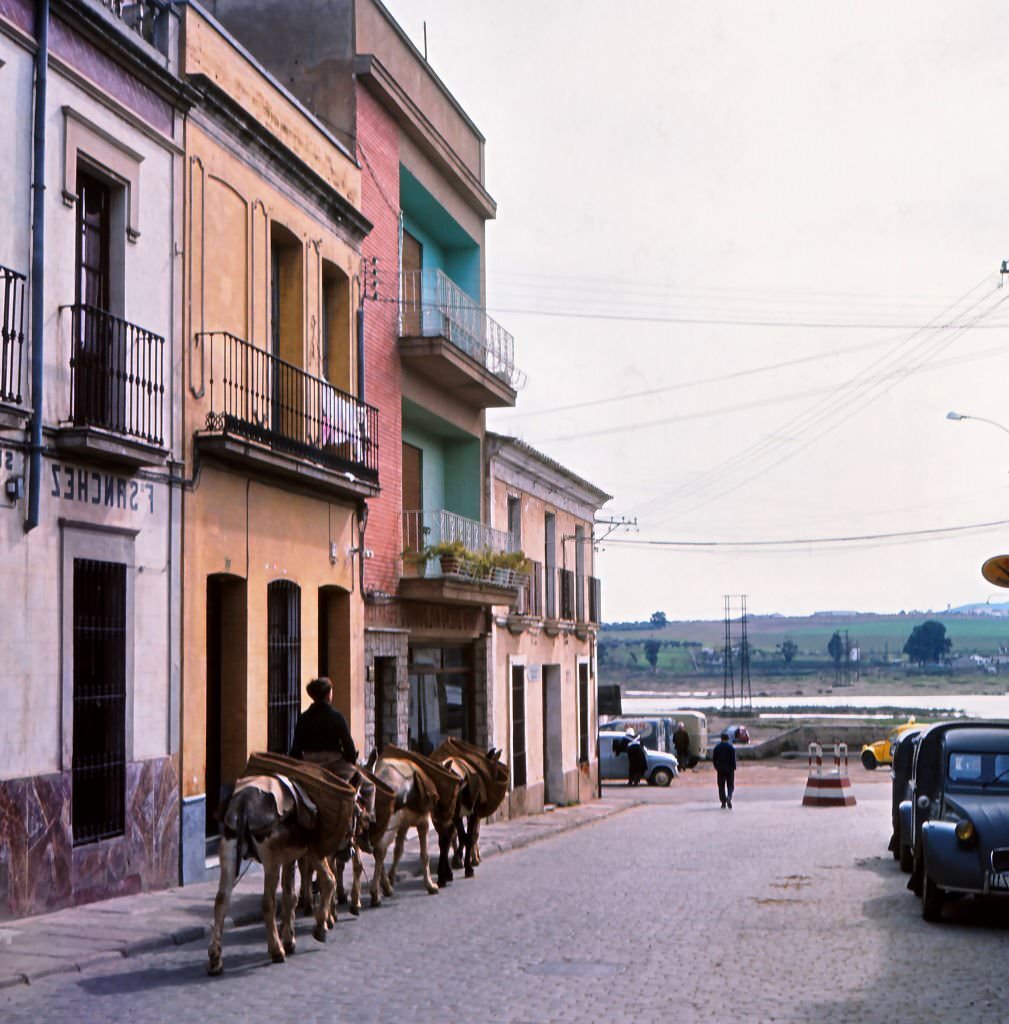
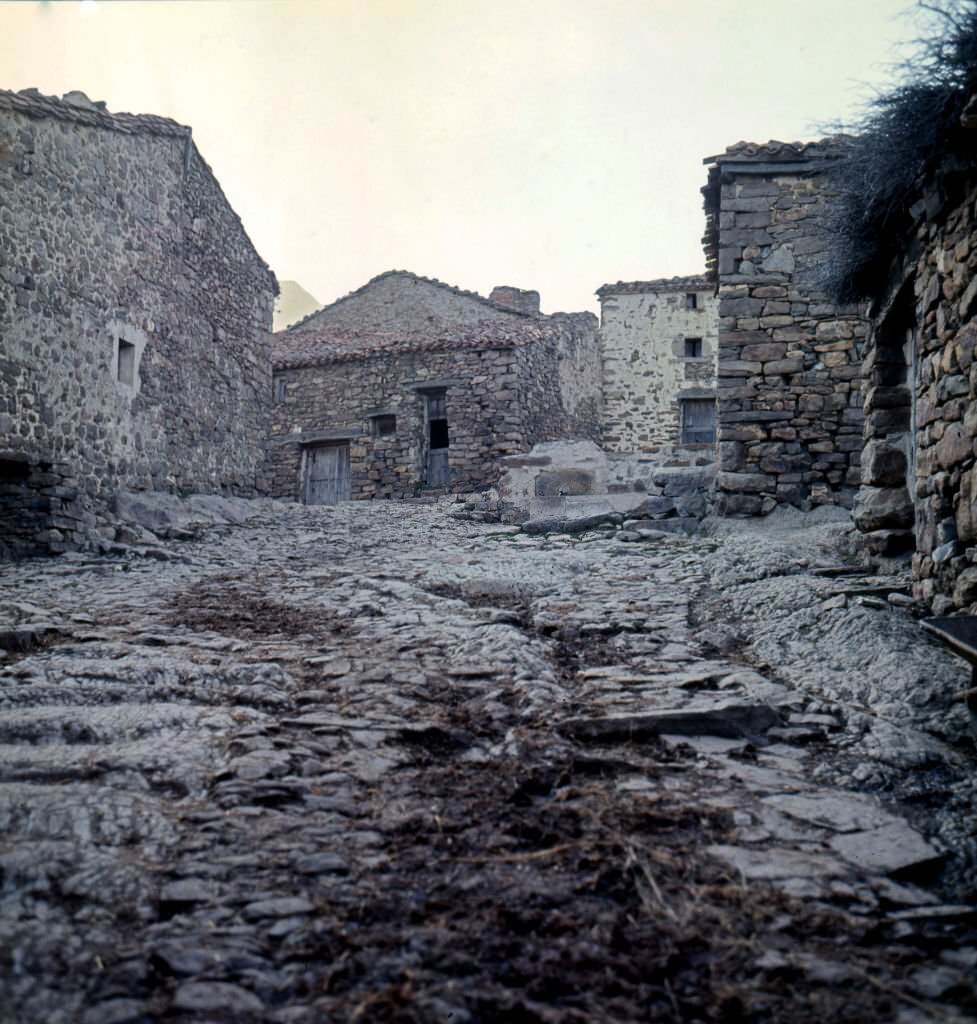
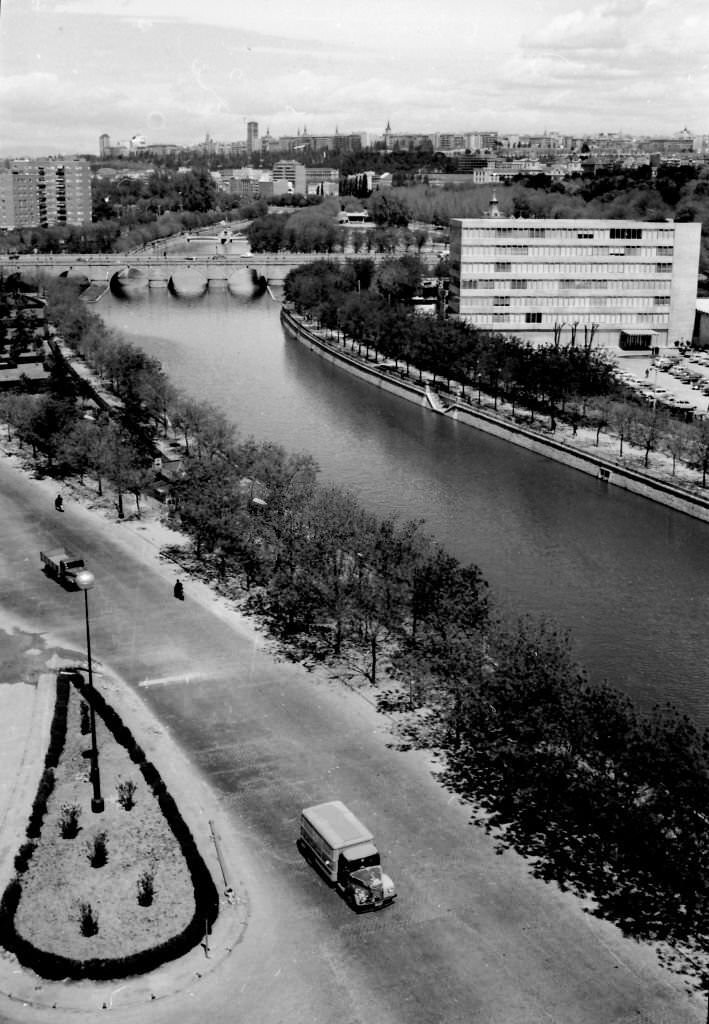
Activities of the agronomist students of the agriculture school of Torrealba, Cordoba, Spain, 1964.Activities of the agronomist students of the agriculture school of Torrealba, Cordoba, Spain, 1964.A general view of Buimanco, the Soria village, Spain that in 1965 was officially declared abandoned.Construction of the Mequinenza Dam in Zaragoza Province, Spain, 1964Construction of the Mequinenza Dam in Zaragoza Province, Spain, 1964Construction of the Mequinenza Dam in Zaragoza Province, Spain, 1964.View of the Manzanares river that crosses the city of Madrid, Spain, 1964.A farmer returns home trotting his donkey in the small town of Fuente de los Cantos, Badajoz, Extremadura, 1964.
A peasant returns home trotting his donkey in the small town of Fuente de los Cantos, Badajoz, Extremadura, 1964.
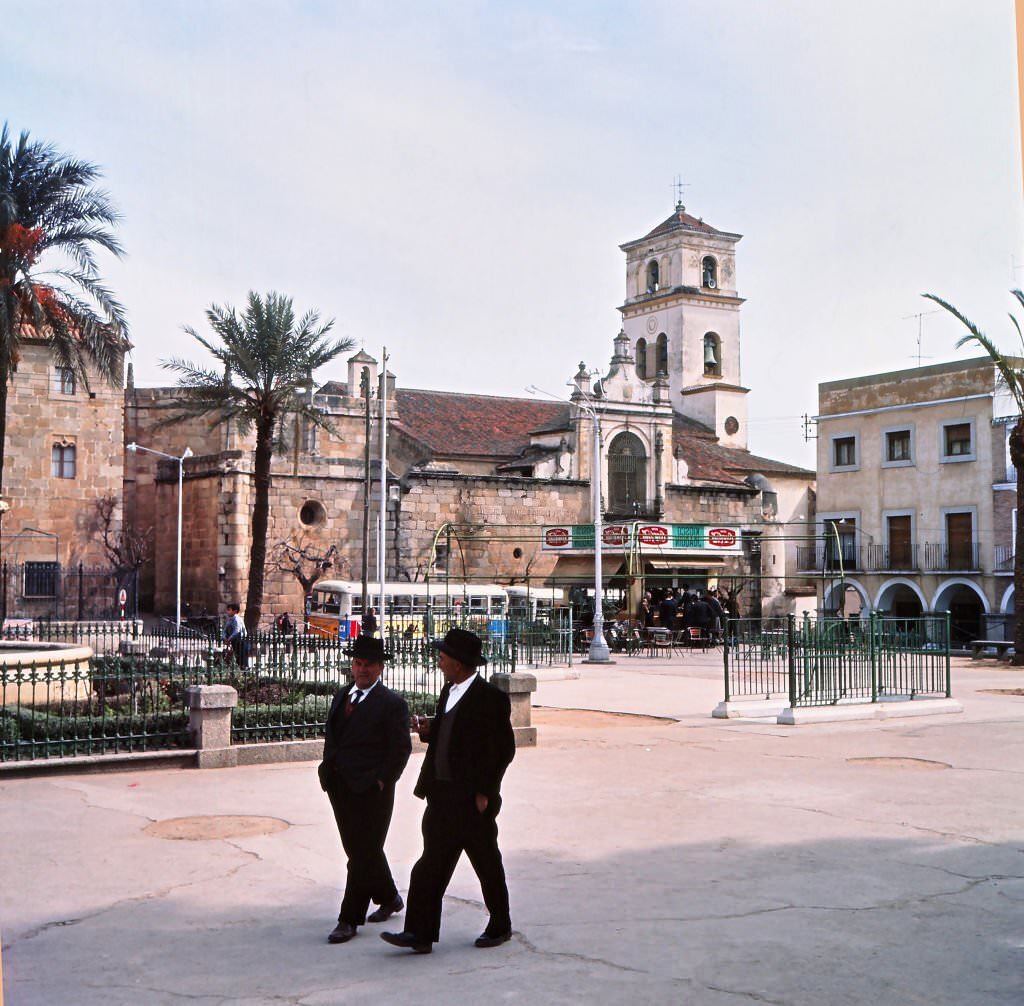
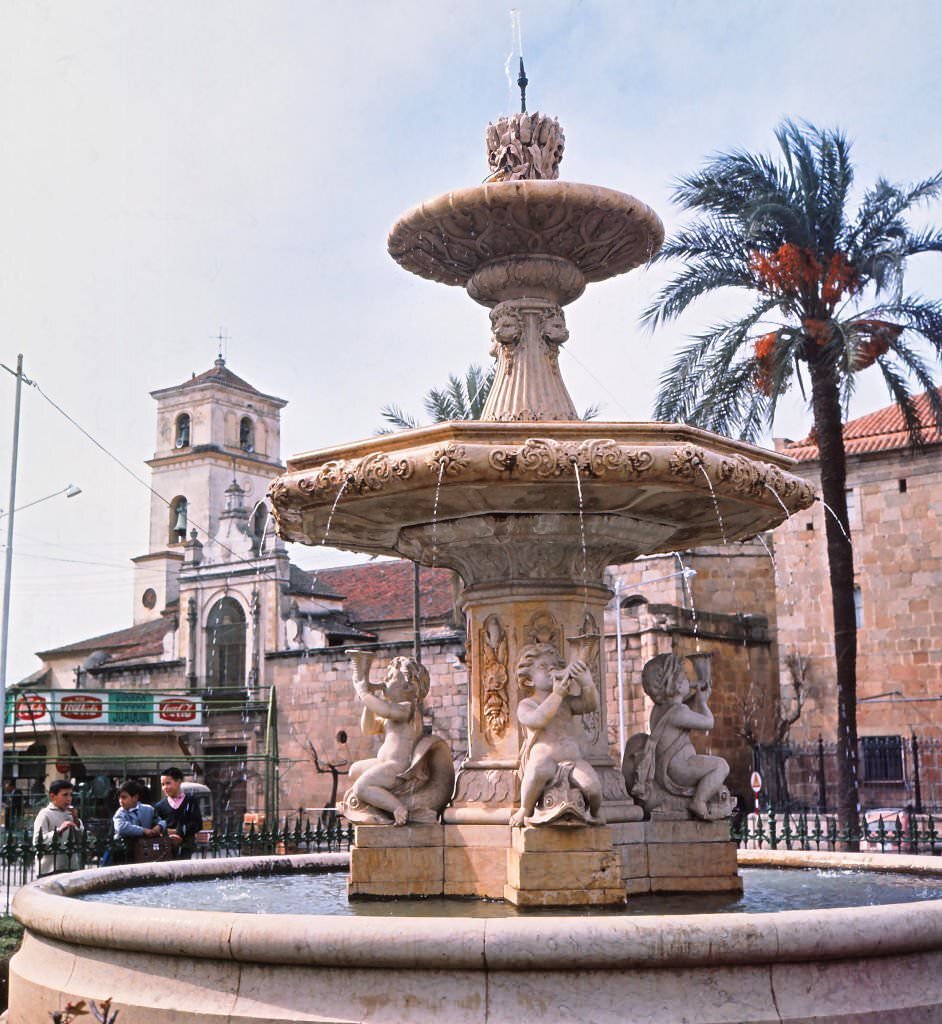
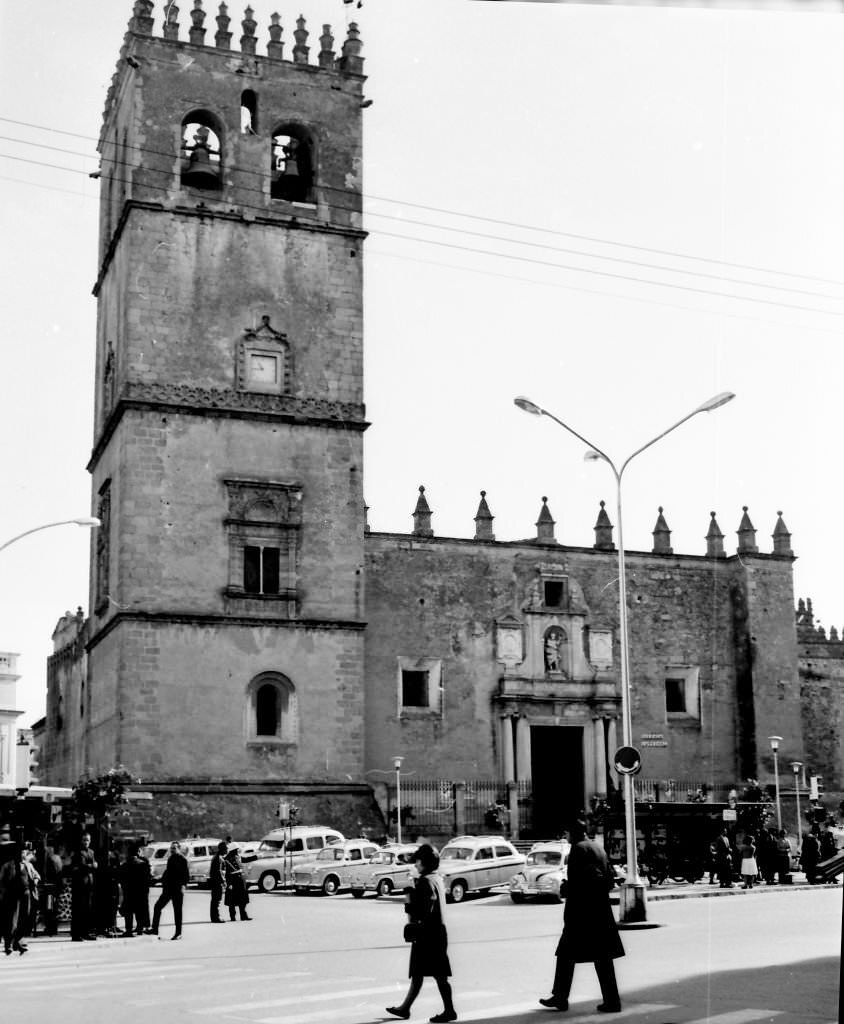
The Metropolitan Cathedral of Santa María la Mayor -Unesco World Heritage Site- is a Catholic temple in Mérida that stands in the Plaza del Ayuntamiento, Badajoz, 1964
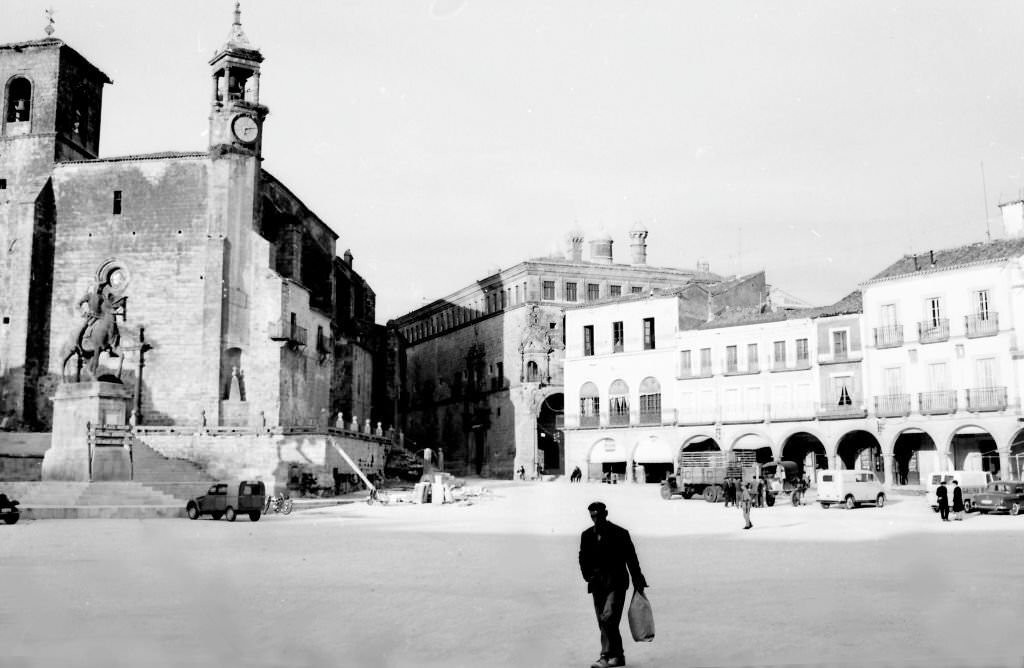
The Plaza Mayor of Trujillo, Caceres, Extremadura, 1964.The lonely walk of an old woman in a deserted street in the small town of Fuente de los Cantos, Badajoz, Extremadura, 1964.
The Arch of Trajan in Merida, Extremadura, 1964.
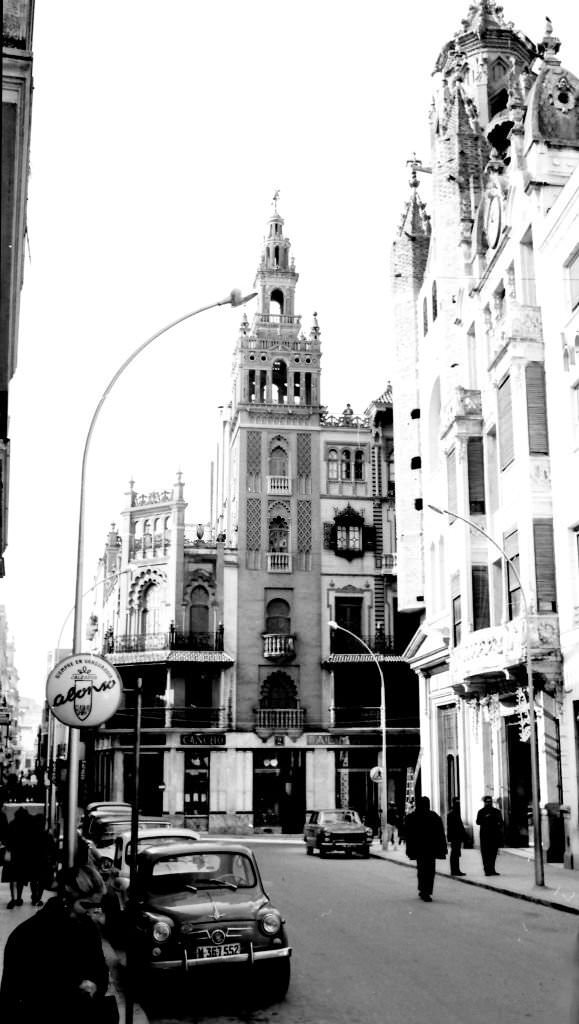
La Giralda is an Andalusian regionalist style building in the city of Badajoz, in the Plaza de la Soledad
A horse drinks and some children play in the fountain in the small town of Fuente de los Cantos, Badajoz, Extremadura, 1964.The Roman Theater in Merida, Extremadura, 1964.
The Roman Theater in Merida, Extremadura, 1964.
View of the Manzanares river that crosses the city of Madrid, Spain, 1964
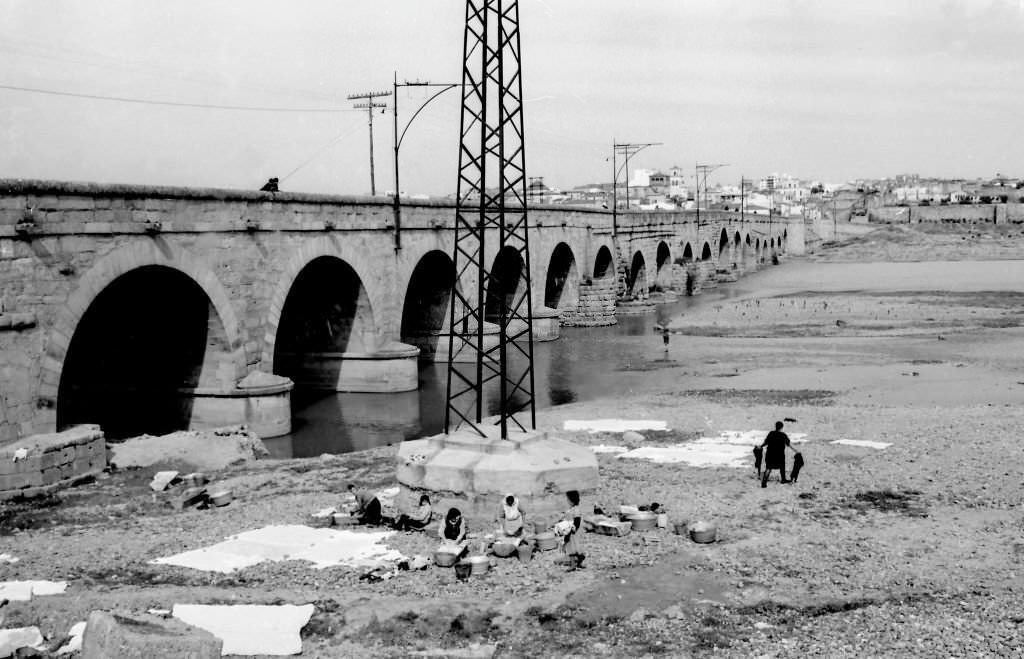
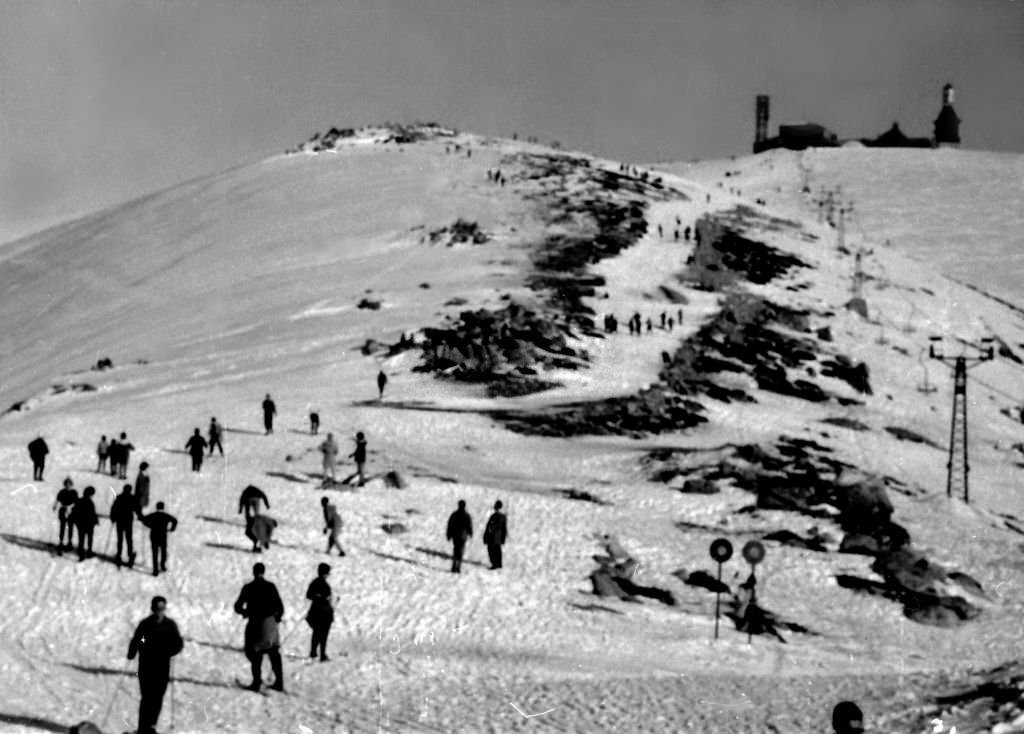
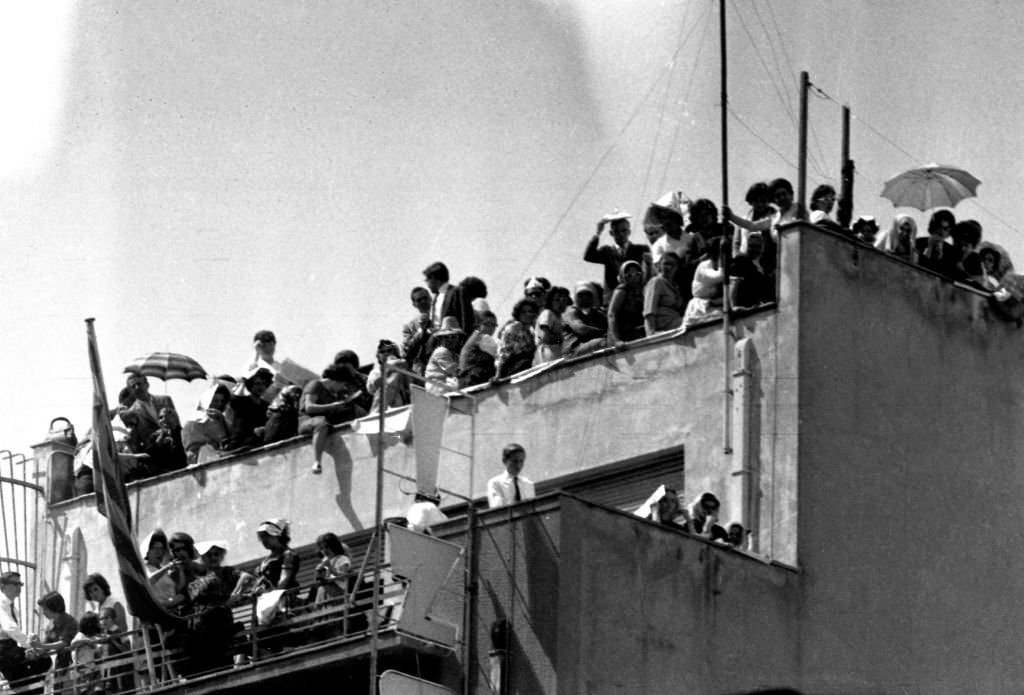
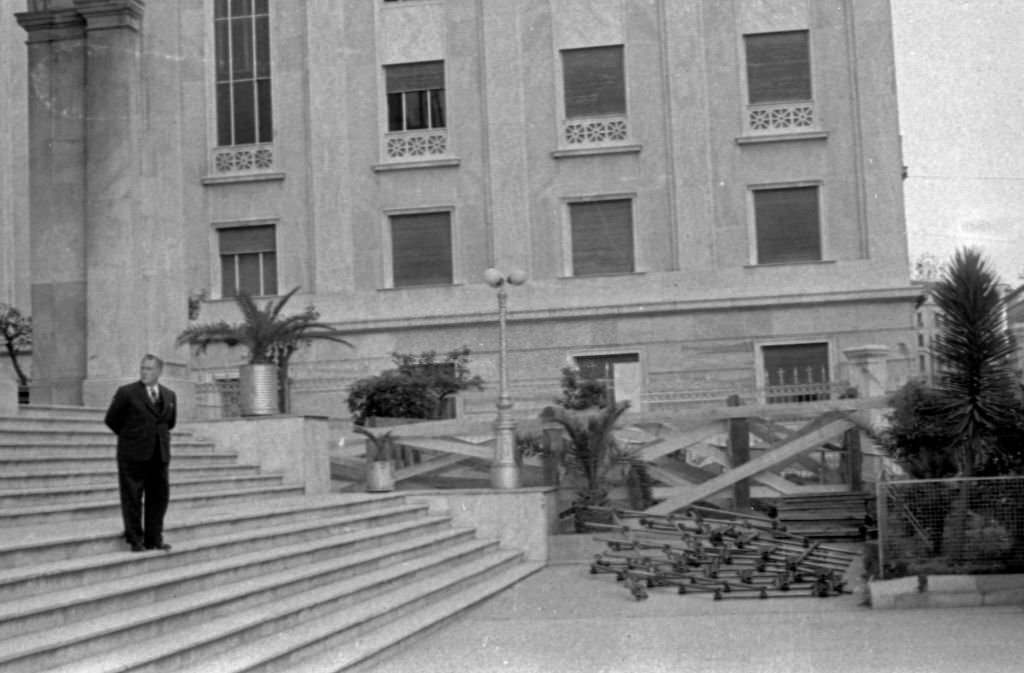
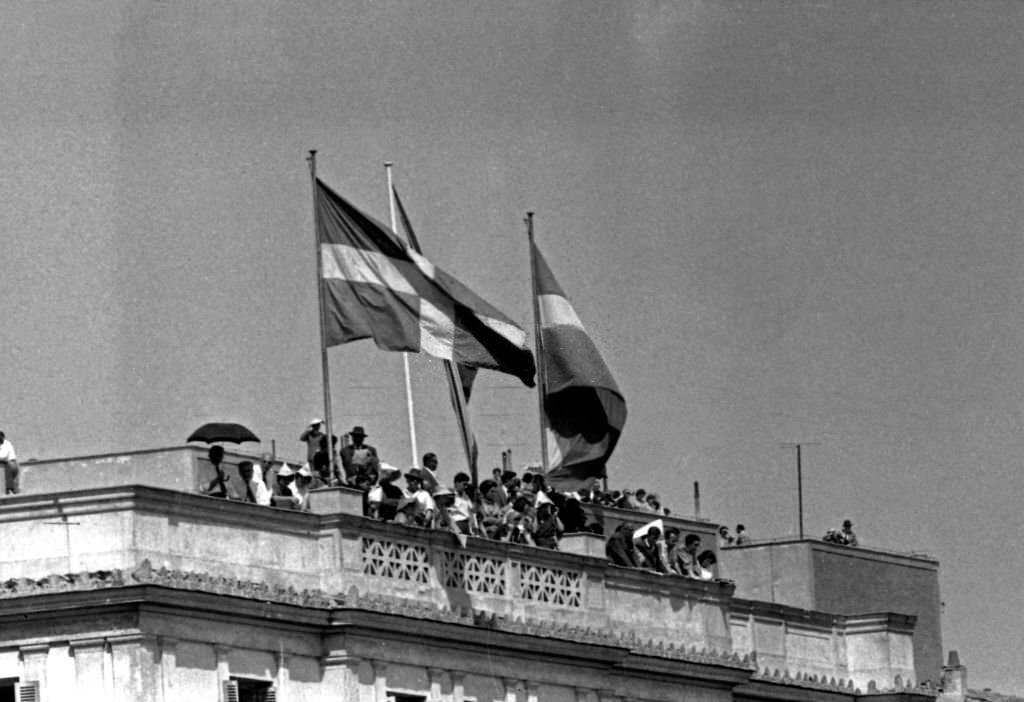
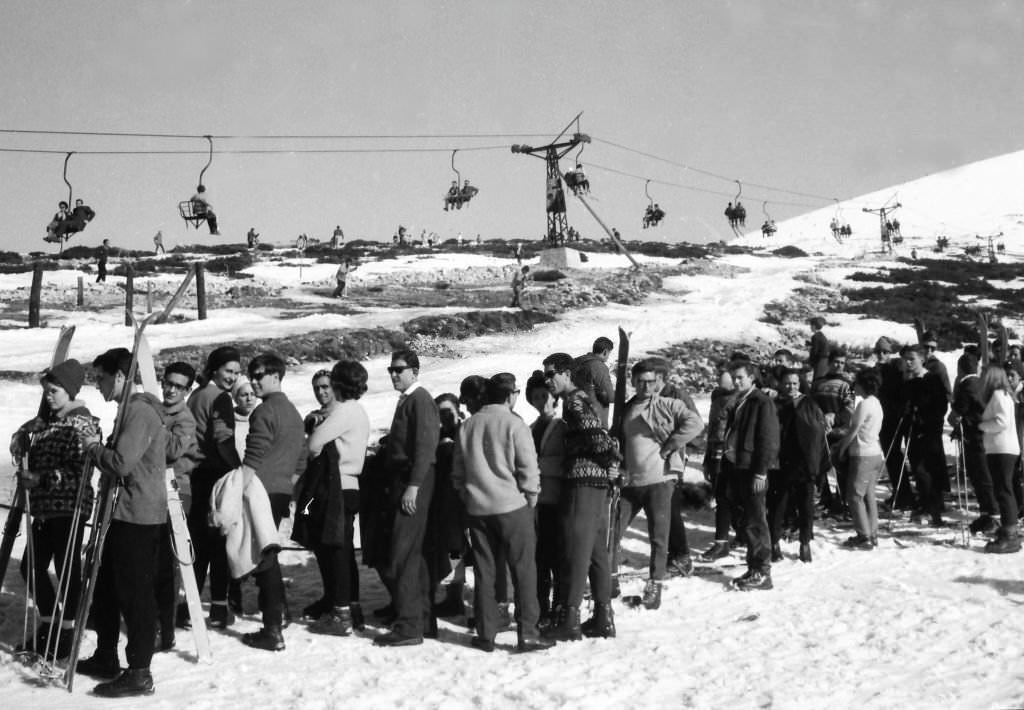
Washerwomen in the river Gévora under a Roman bridge, Badajoz, Extramadura, 1964.The Navacerrada ski resort is located 1200 m. altitude, on the southern slope of the Sierra de Guadarrama, Madrid, Spain, 1964.Celebration in the church of St. Dionysius Areopagite of Athens, of the wedding between the Prince of Spain, Don Juan Carlos de Borbon and the Princess of Greece, 1964Celebration in the church of St. Dionysius Areopagite of Athens, of the wedding between the Prince of Spain, 1962Celebration in the church of St. Dionysius Areopagite of Athens, of the wedding between the Prince of Spain, 1962Celebration in the church of St. Dionysius Areopagite of Athens, of the wedding between the Prince of Spain, Don Juan Carlos de Borbon and the Princess of Greece, 1962Press conference to present the wedding between the Prince of Spain, 1962Prince Rainier III of Monaco and Grace of Monaco, in the hotel lobby waiting to be transferred to the celebration party of the wedding between Don Juan Carlos of Bourbon and Dona Sofia of Greece, 1962.Carriage carrying Doña Sofia of Greece to the celebration in the church of San Dionisio Areopagita of Athens, 1962Don Juan de Borbon and Maria de las Mercedes de Borbon y Orleans in a car on their way to the celebration in the church of San Dionisio Areopagita in Athens, 1962Carriage carrying Doña Sofia of Greece to the celebration in the church of San Dionisio Areopagita of Athens, 1962Celebration in the church of St. Dionysius Areopagite of Athens, of the wedding between the Prince of Spain, 1962Celebration in the church of St. Dionysius Areopagite of Athens, of the wedding between the Prince of Spain, Don Juan Carlos de Borbon and the Princess of Greece, 1962Prince of Spain Juan Carlos de Borbon receives journalists at the Zarzuela Palace on March 21, 1962 in Madrid, Spain.
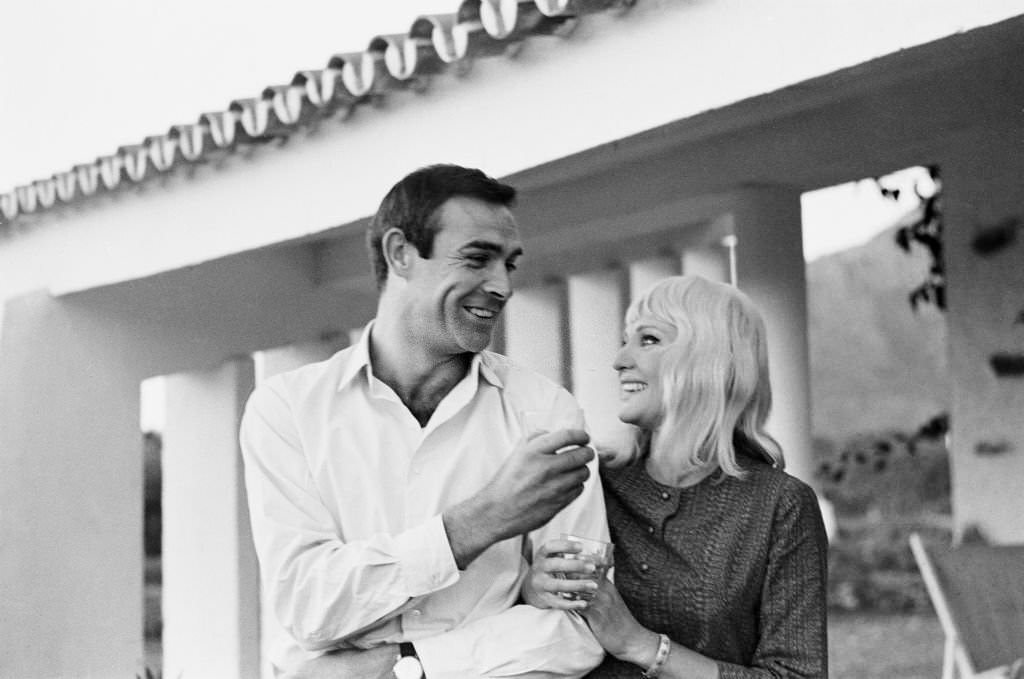
Sean Connery and his wife Diane Cilento spent their honeymoon near Marbella in 1962, shortly after their secret wedding in Gibraltar. Their presence near a small Andalusian resort town was a sign of how quickly Spain’s coast was becoming known beyond its borders. That same year in San Sebastián, American actor Sean Flynn joined bullfighters in the arena — a gesture that showed how deep the fascination with Spanish culture ran among foreign visitors. In 1966, a much younger Raquel Welch arrived in Málaga to film “Phantom,” posing in city streets between takes.
Actor Sean Connery who plays James Bond, actress Diane Cilento on their honeymoon near Marbella in Southern Spain, shortly after their secret wedding in Gibraltar, 1962
During his stay in San Sebastian the American actor Sean Flynn goes down to the arena with some bullfighters, Spain, 1962.
Spanish flamenco dancer La Chunguita, Madrid, Spain, 1962.
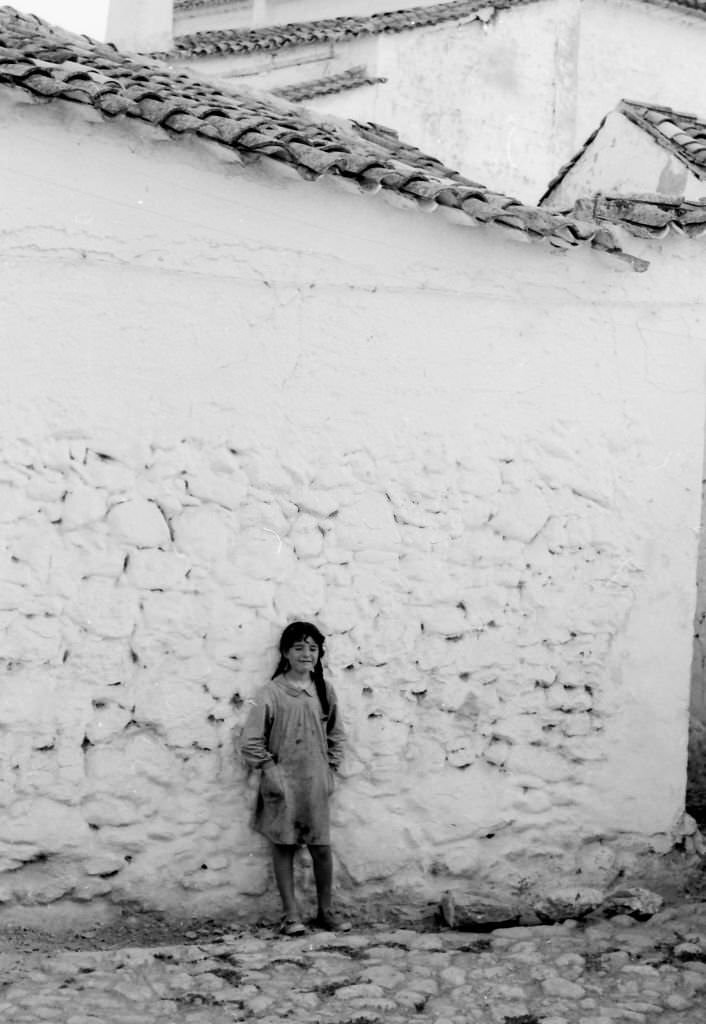
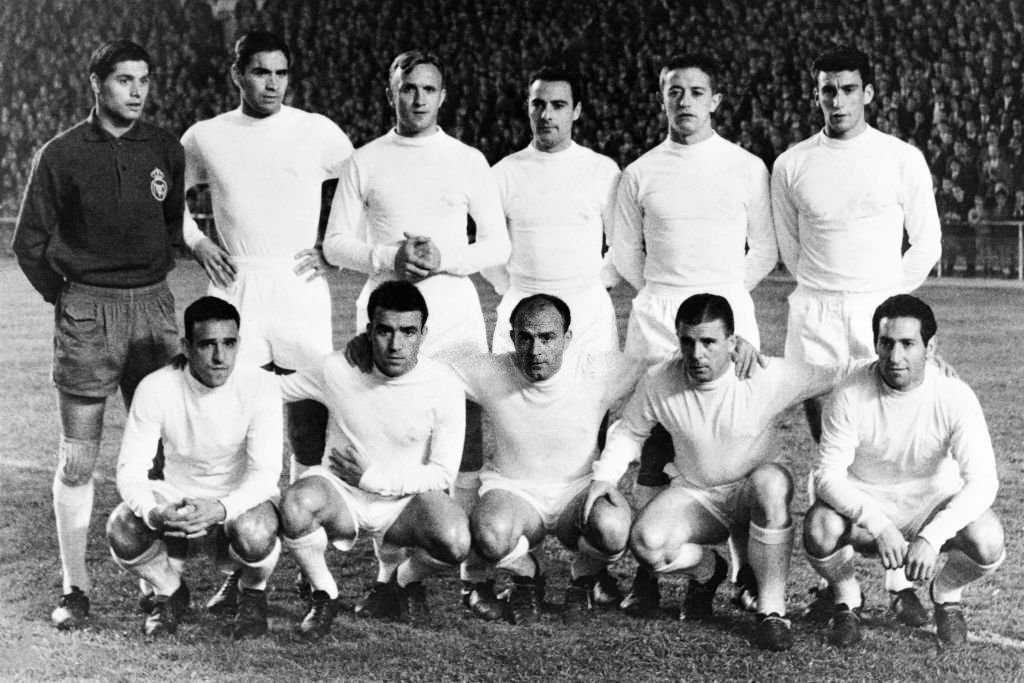
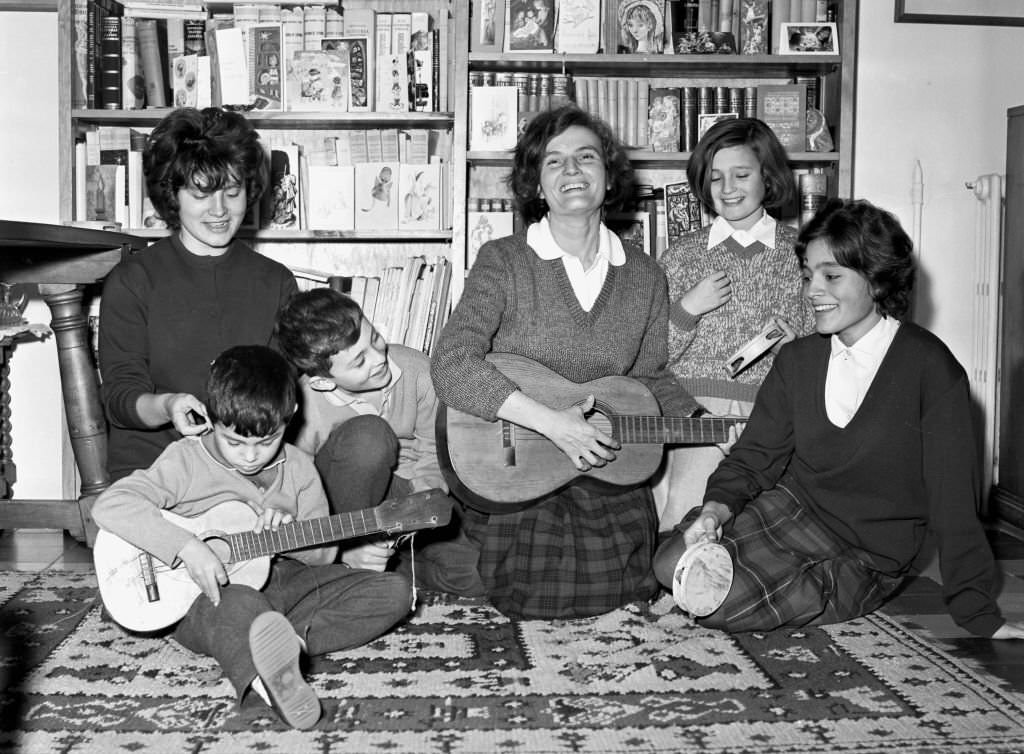
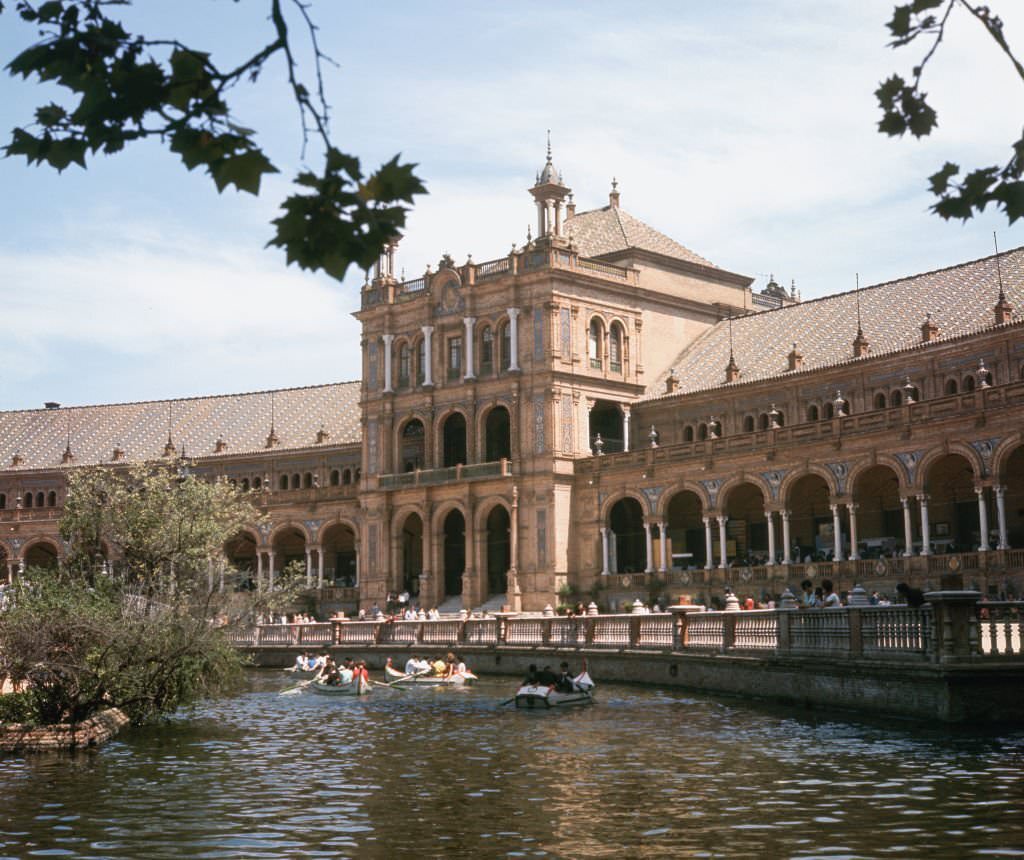
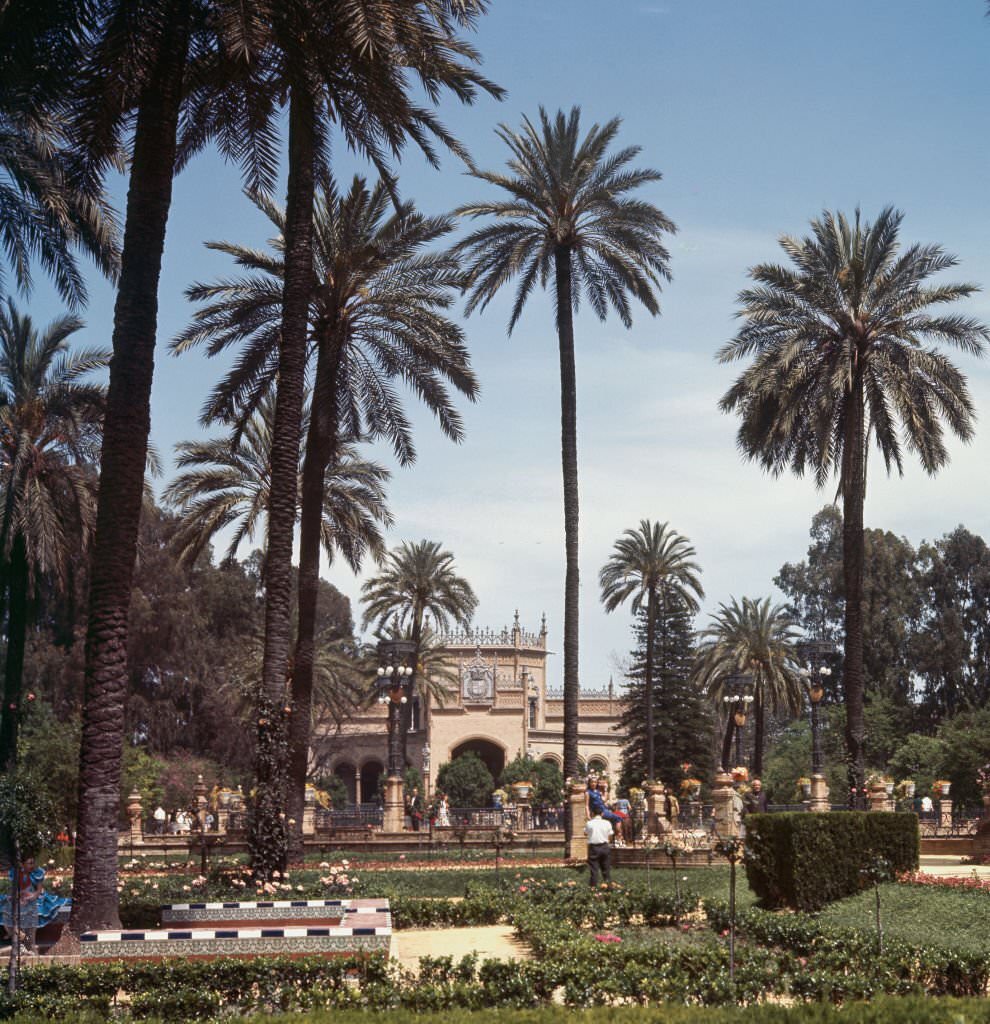
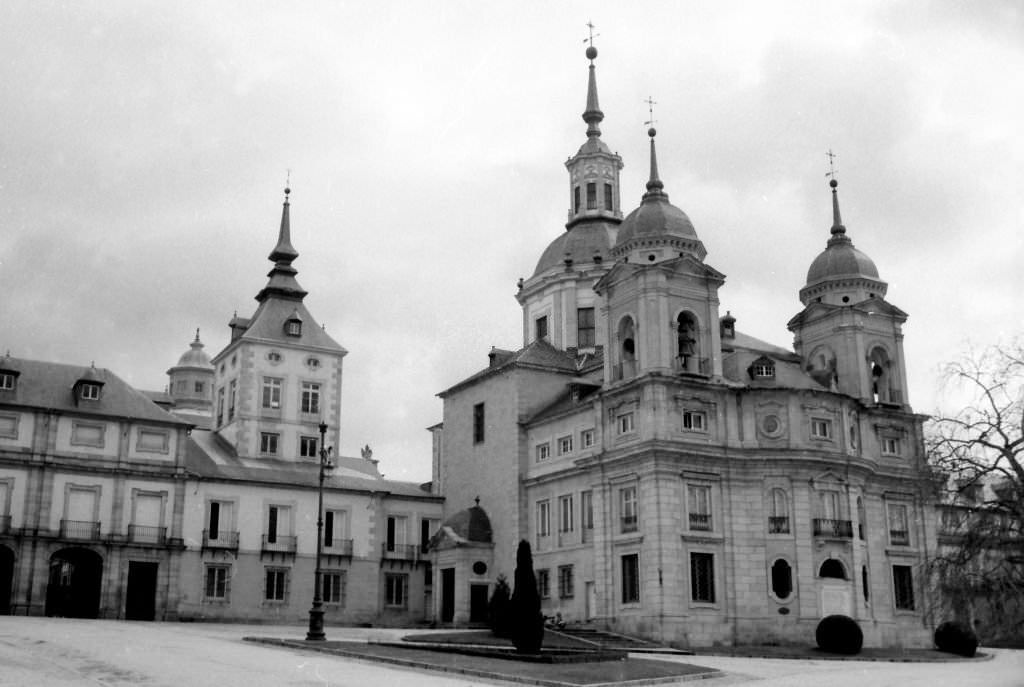
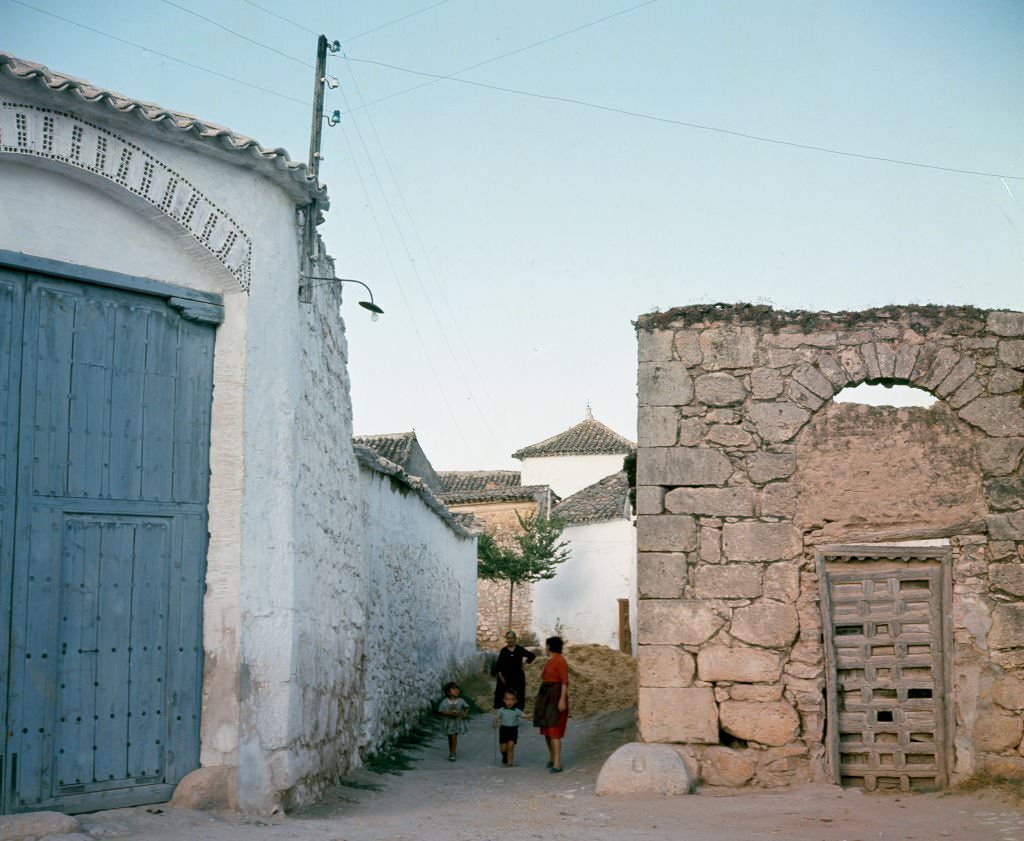
Lonely girl leaning against a wall in El Toboso, Castilla La Mancha, Spain, 1962.The Real Madrid team is pictured before a match in 1962, in Madrid.Spanish writer Carmen Laforet, 1962, Madrid, Spain.Maria Luisa Park, 1962, Seville, Andalusia, Spain.Maria Luisa Park, 1962, Seville, Andalusia, Spain.
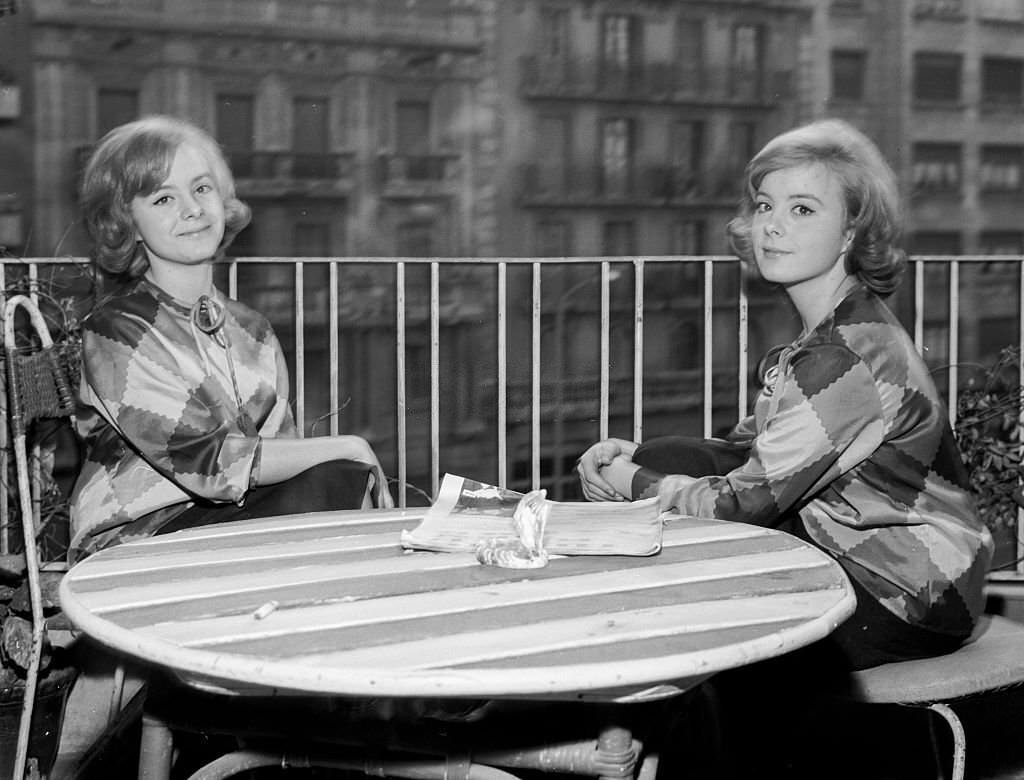
Maruja Garcia Nicolau, Miss Spain and Miss Europe 1962, Barcelona, Spain.
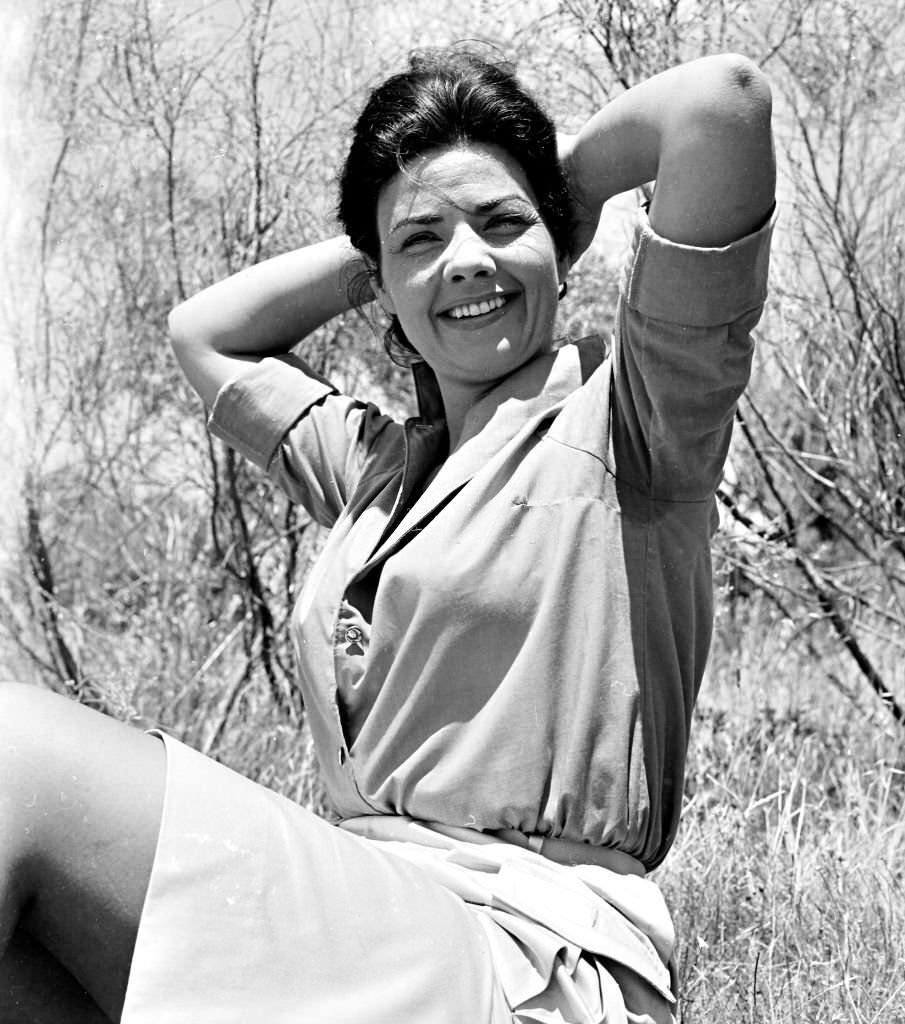
Spanish actress Eulalia del Pino, Madrid, Spain, 1962.
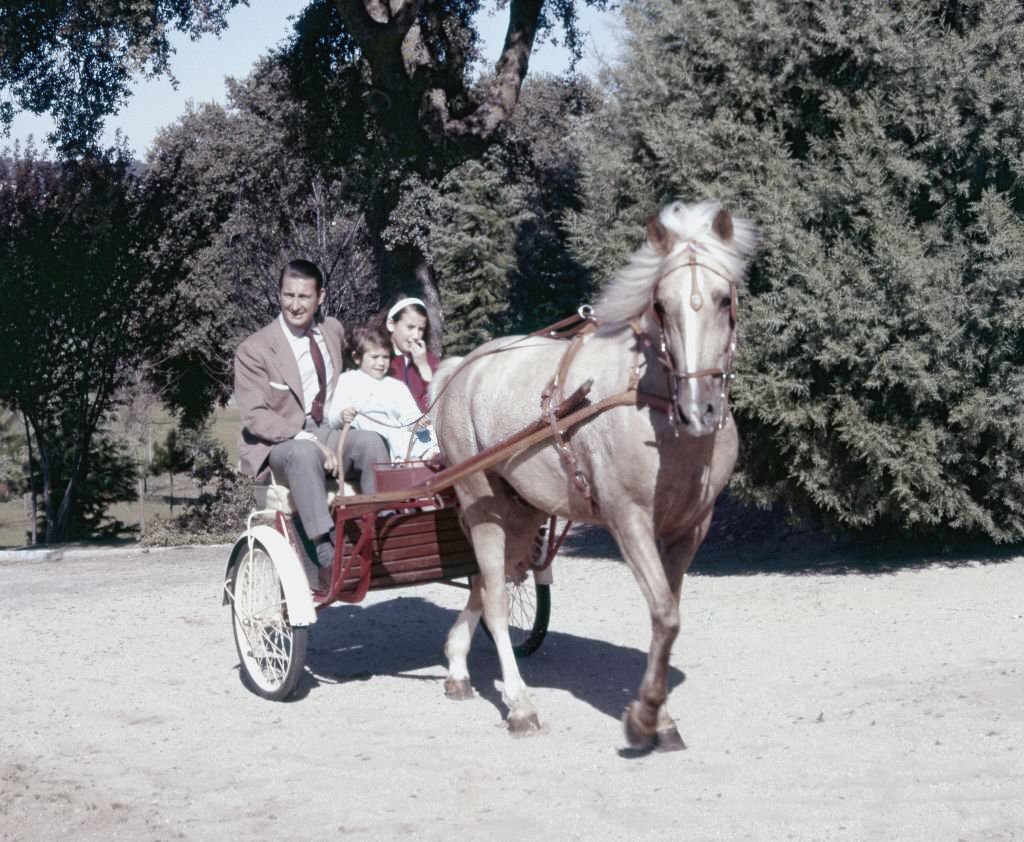
Spanish aristocrat Cristobal Martinez Bordiu, Marquis of Villaverde, in a carriage ride with his children in the garden of Pardo Palace, Madrid, Spain, 1962.Spanish bullfighter Antonio Ordoñez with a bull in his farm Fulgencio Bautista former President of Cuba in his exile in Madrid, Spain, 1962.
By the mid-1960s, the political temperature was rising. Strikes multiplied in the industrial centers, and university students grew increasingly vocal in their opposition to the regime. Franco declared a state of exception across all of Spain in early 1969 after an unprecedented wave of unrest. He lifted it in March of that year, but the damage to the government’s image was already done. In 1966, the Organic Law of the State was approved by referendum, offering a small degree of political liberalization while keeping Franco’s system intact. The following year, the Law on Religious Freedom eased restrictions on non-Catholics, and censorship laws were softened to allow limited freedom of expression. These were concessions from a regime under pressure — not a change of heart.
View of the ski resort of Candanchu, Pyrenees of Huesca, Aragon, Spain, 1962.View of Huesca, Spain, 1962.Spanish rider Francisco Goyoaga, 1962, Madrid, Spain.Crafts of the Guanches, Canarian aboriginals,1962, Gran Canaria, Canary Islands, Spain.The Spanish actress Paloma Valdes, 1962, Madrid, Spain.The Mexican actress Teresa Velazquez and the American actor Cesar Romero in the filming of the movie’ El Valle de las Espadas’, 1962, Madrid, Spain.School of Flamenco, 1962, Madrid, Spain.The two Spanish actresses Pili and Mili, twin, at their home in Madrid, 1962, Madrid, Spain.Antonio Ordonez In His Bullring.Spanish Royal PalaceThe Navacerrada ski resort is located 1200 m altitude, on the southern slope of the Sierra de Guadarrama, Madrid, Spain, 1964.
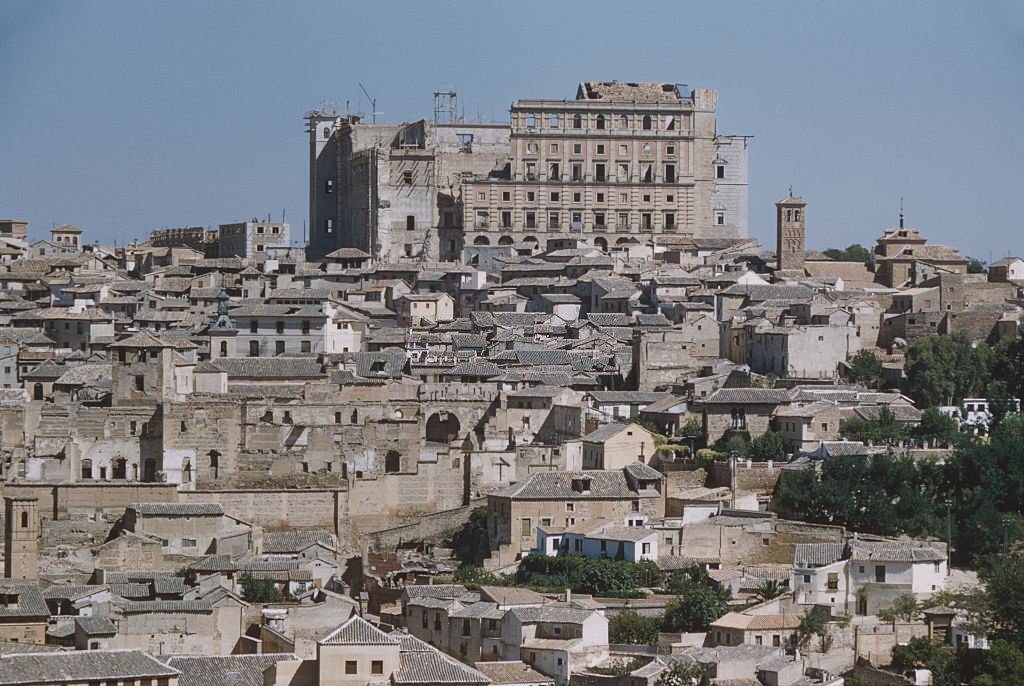
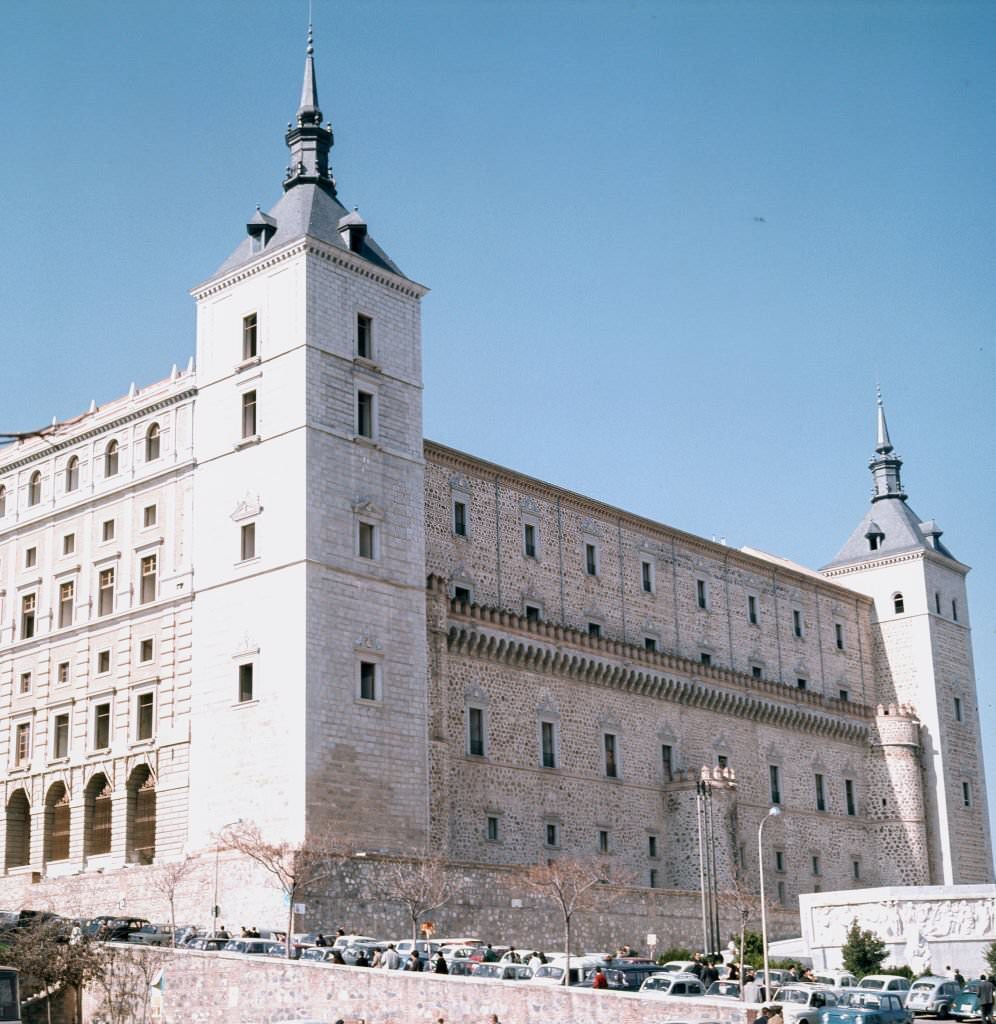
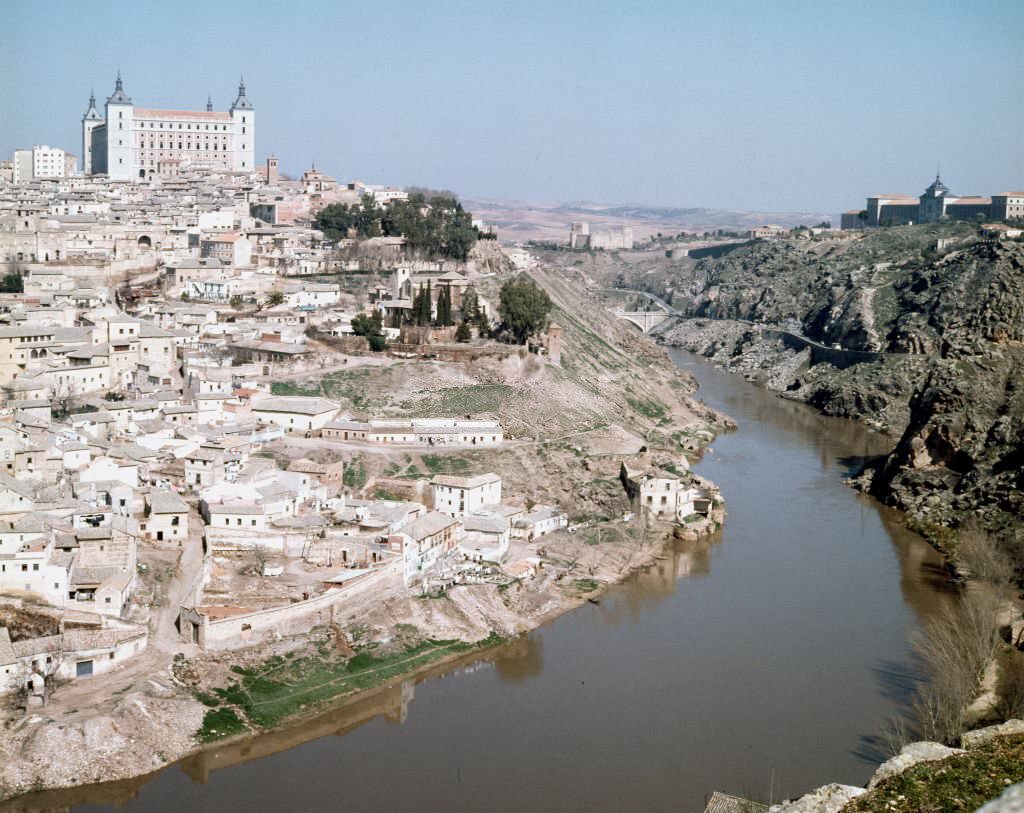
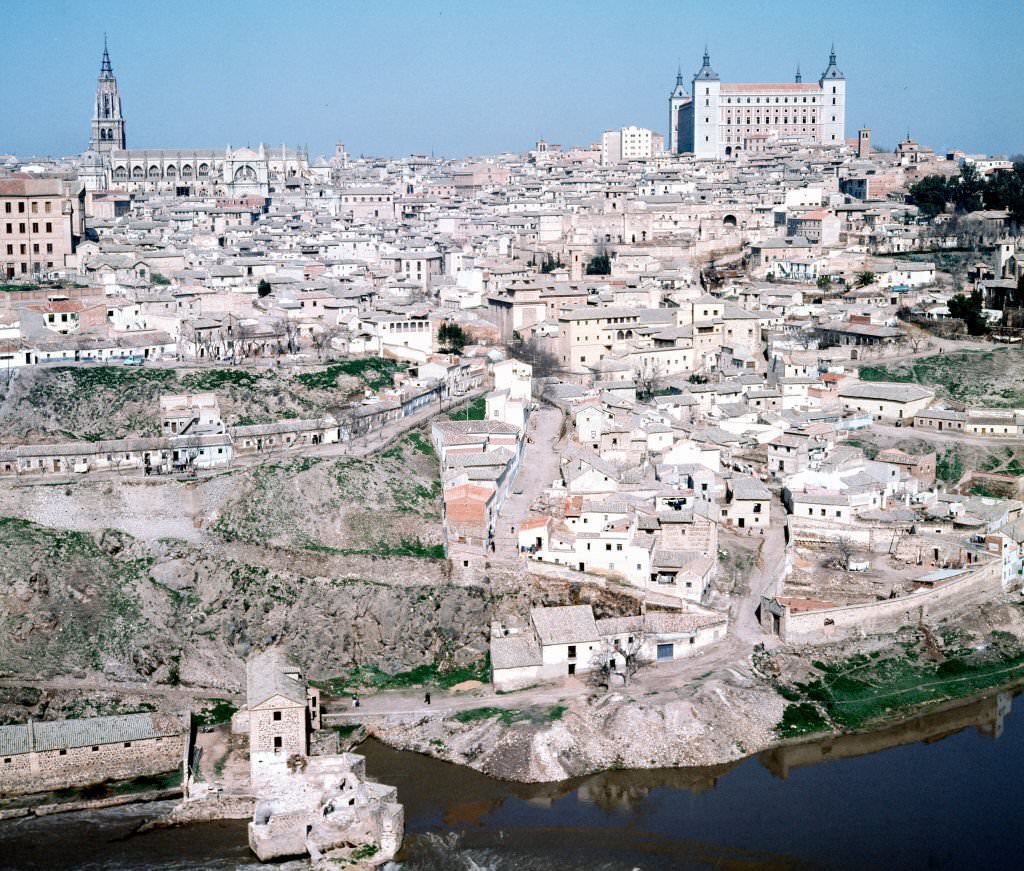
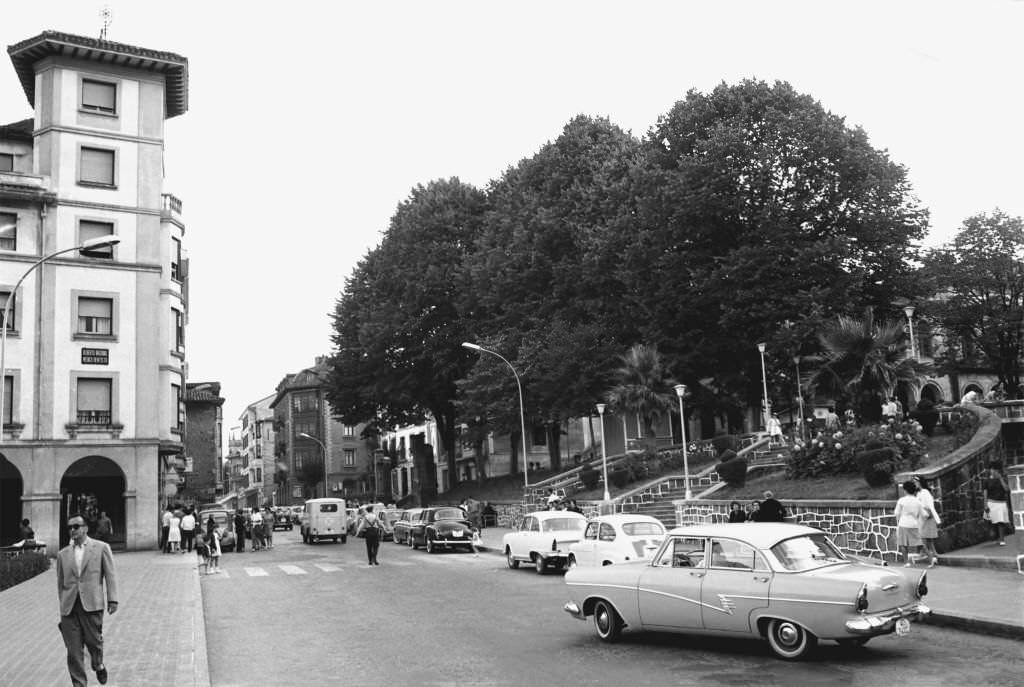
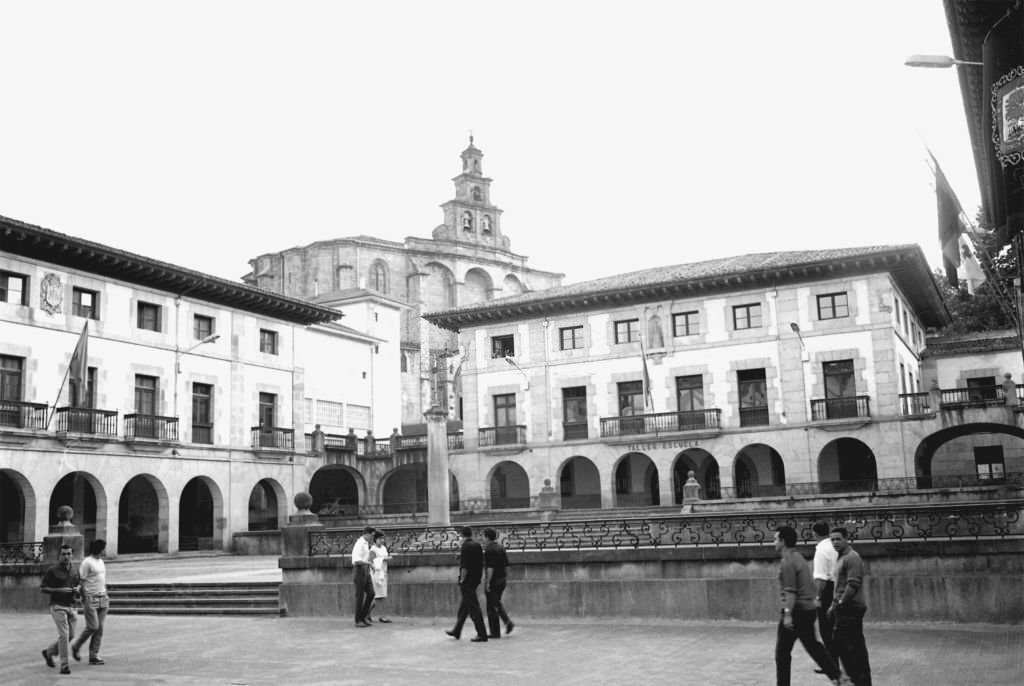
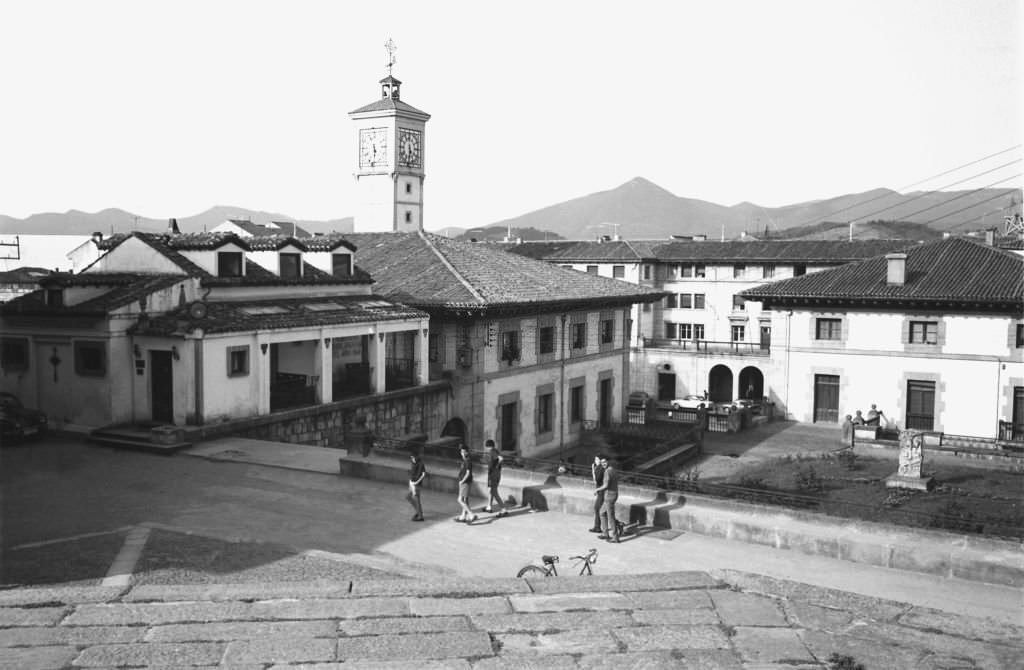
Toledo in 1965 offered an image of timeless Spain — the Tagus River curving around the old city, the Alcázar rebuilt after its devastation in the Civil War, and the Plaza Mayor busy with local life. Guernica in the Basque Country, a town whose name had become synonymous with the horrors of the Civil War thanks to Pablo Picasso’s 1937 painting, was photographed in 1965 as a quiet, rebuilt community. The wounds of 1937 were not visible in the streets, but they were never far from Spain’s collective memory.
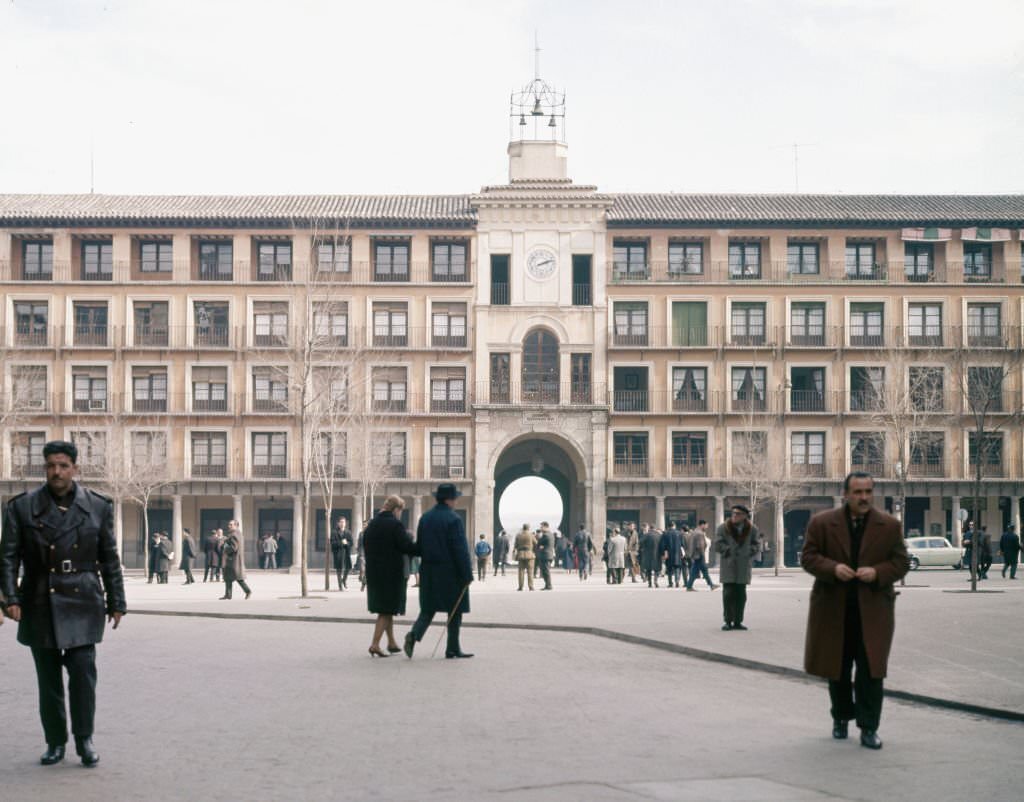
The “Plaza Mayor”, 1965, Toledo, Castilla La Mancha, Spain.View of El Toboso, 1965, Toledo, Castilla la Mancha, Spain.El Alcazar”, 1965, Toledo, Castilla La Mancha, Spain.Toledo and the Tajo river, 1965, Castilla La Mancha, Spain.View of Toledo and the Tajo river, 1965, Castilla La Mancha, Spain.Guernica, Vizcaya, Spain, 1965.View of Guernica, Vizcaya, Spain, 1965.View of Guernica, Vizcaya, Spain, 1965.View of Guernica, Vizcaya, Spain, 1965.
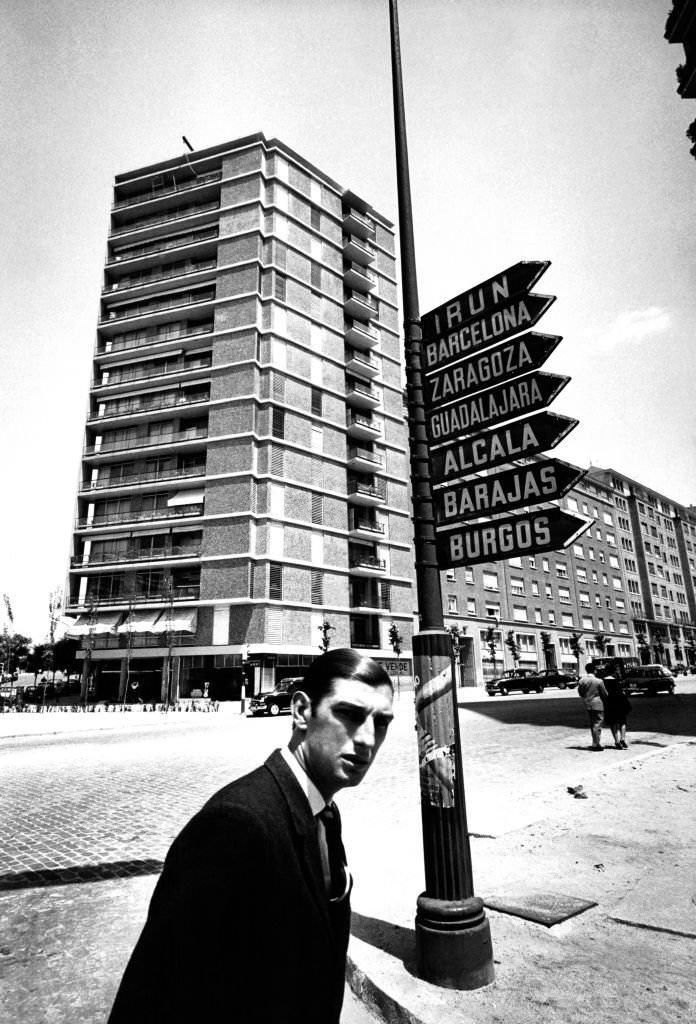
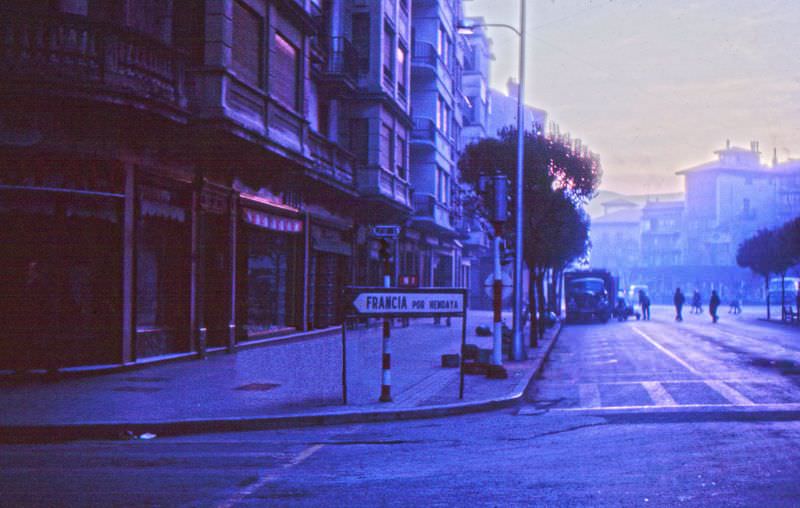
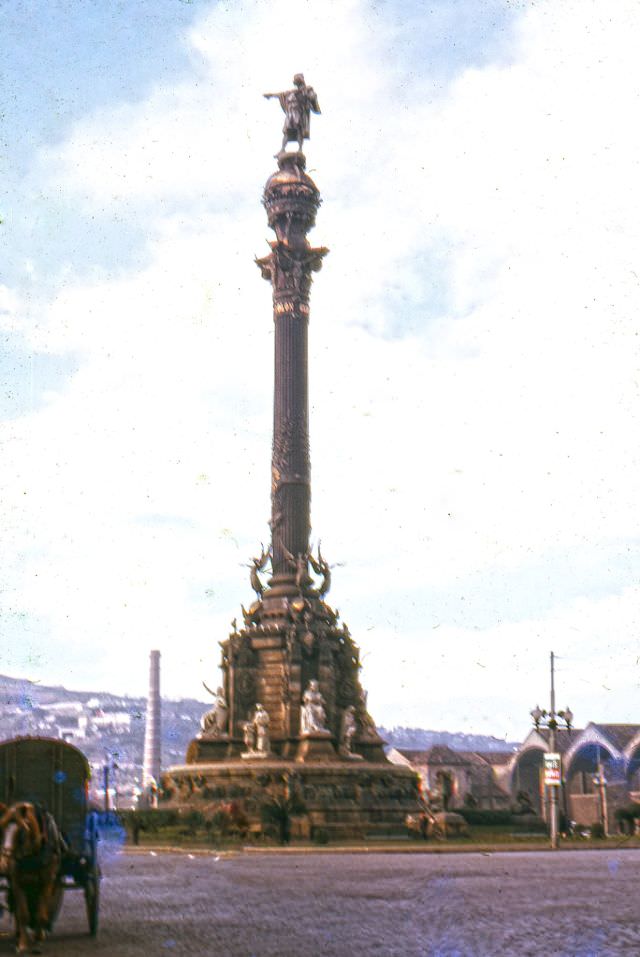
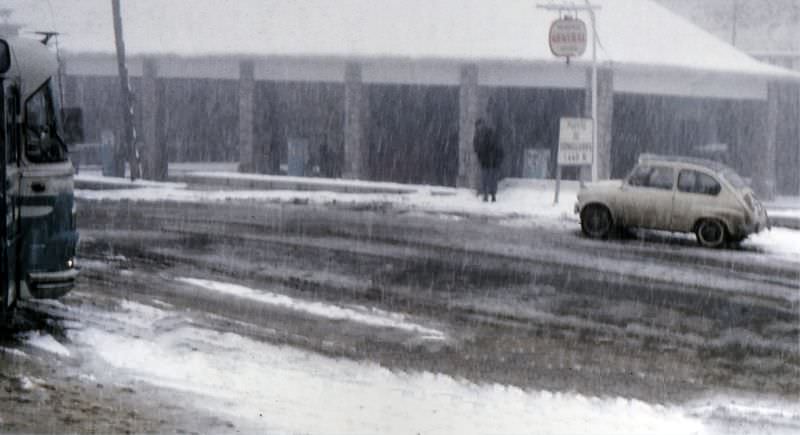
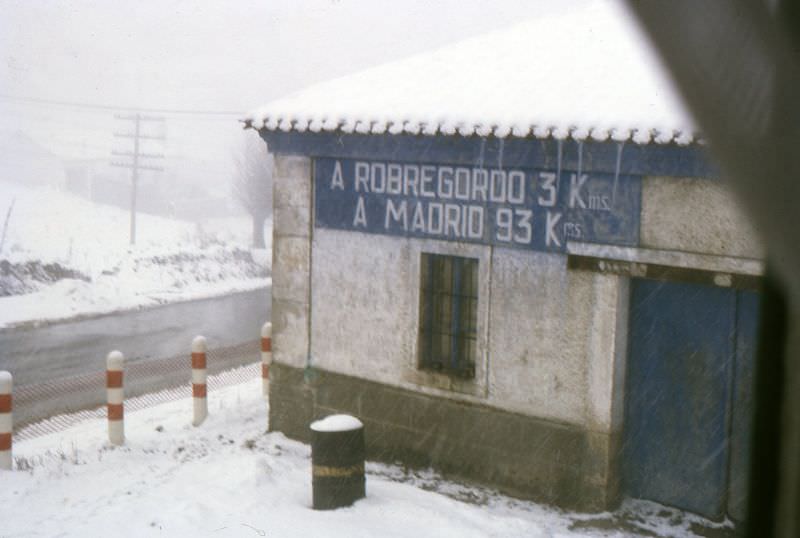
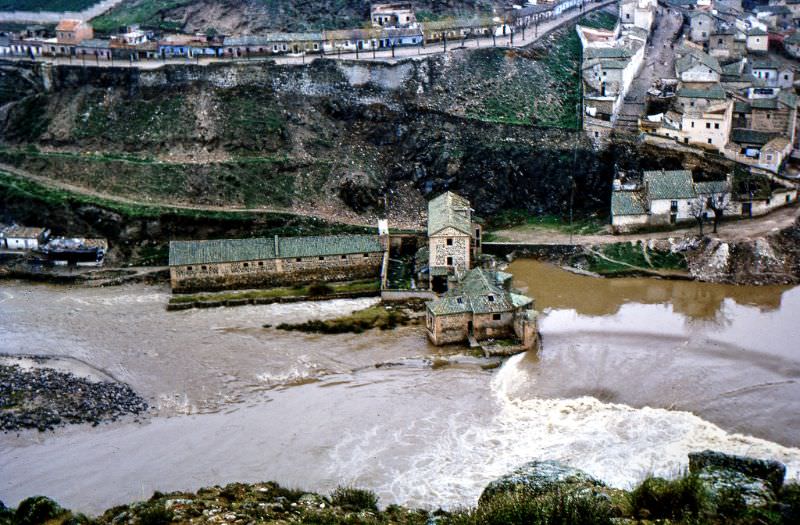
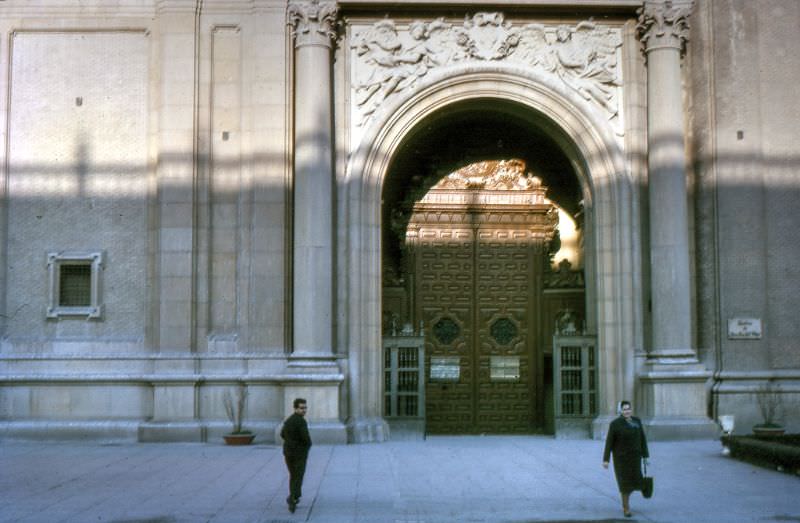
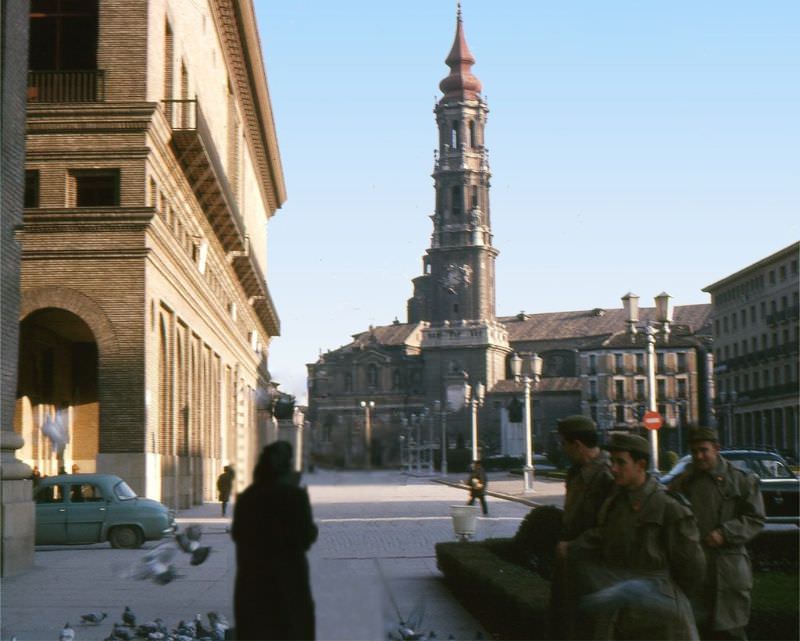
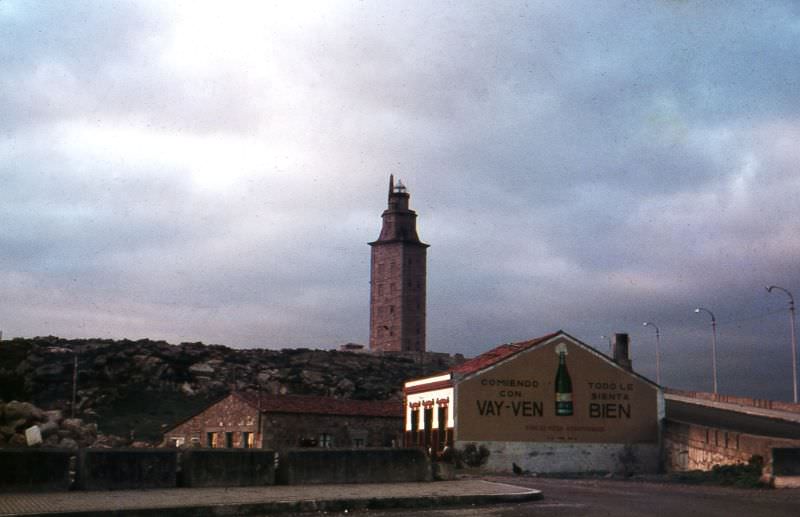
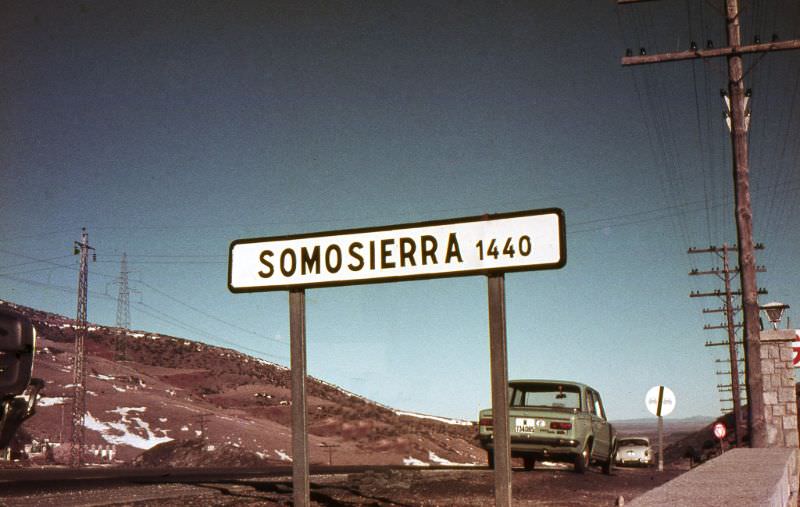
Winter scenes from January 1963 captured a different side of Spain — snow at the Somosierra pass, the Cathedral of the Savior in Zaragoza, and the frozen stillness of the Tagus at Toledo. A sign near Irún pointed the way to France, marking the northern edge of the country at one of its main border crossings. By December 1966, the Galician countryside around El Ferrol was deep in winter quiet, and the Hercules Tower in A Coruña — one of the oldest working lighthouses in the world — stood against the Atlantic sky.
“Francia por Hendaya” sign, Irún, Janury 1963Cervantes’ monument, España square, Madrid, January 1963Columbus Monument, Barcelona, January 1963Snowfall in the port of Somosierra, January 1963Somosierra pass, Guadarrama hills, Janury 1963Tagus River, Toledo, January 1963The Cathedral of the Savior, Zaragoza, January 1963Town hall, Zaragoza, January 1963Chantada, Galicia, December 1966Galician countryside at El Ferrol, Galicia, December 1966Hercules Tower, A Coruña, Galicia, December 1966
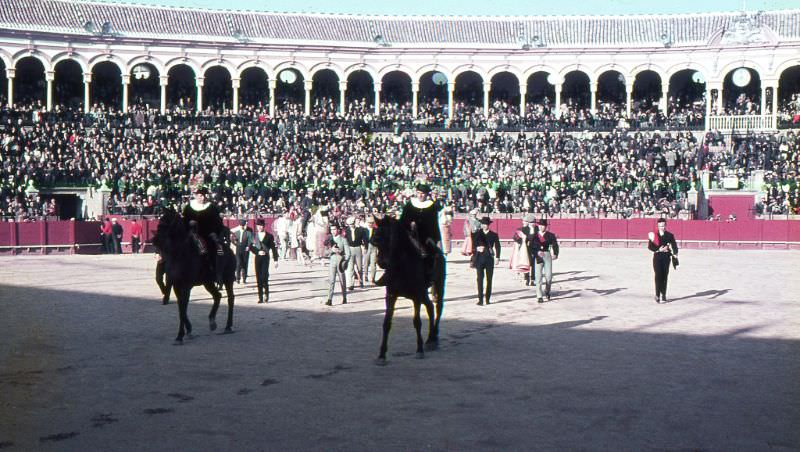
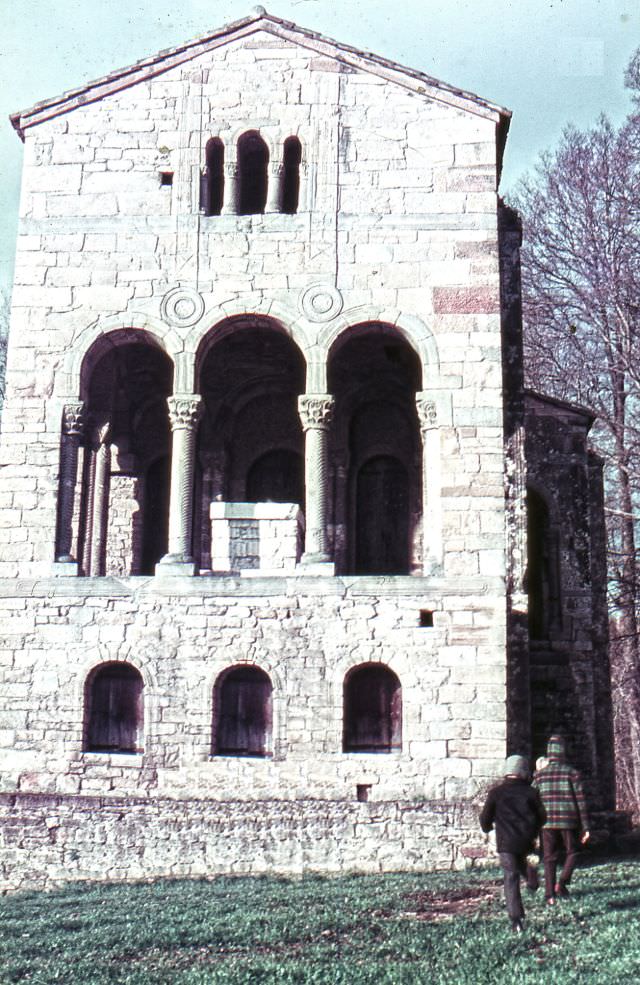
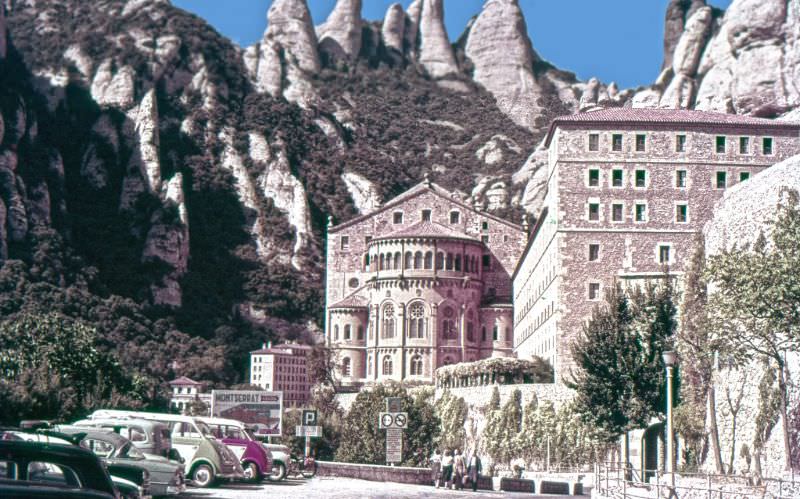
By 1967, Spain’s regions each carried their own distinct visual identity. Benidorm in Valencia in January of that year already showed signs of the building surge that was remaking the coastline. In Seville, the bullring was being dressed for the season’s first corrida in February. Oviedo’s Church of Santa María del Naranco — a pre-Romanesque building from the 9th century — stood in quiet contrast to the modern activity in the cities below. The Montserrat Monastery in Catalonia, accessible only by cable car or a steep mountain road, drew pilgrims and tourists alike.
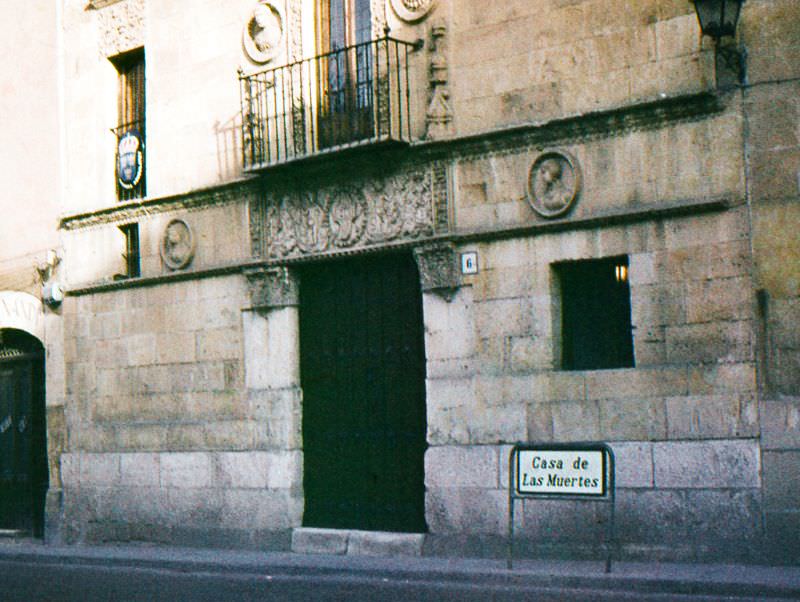
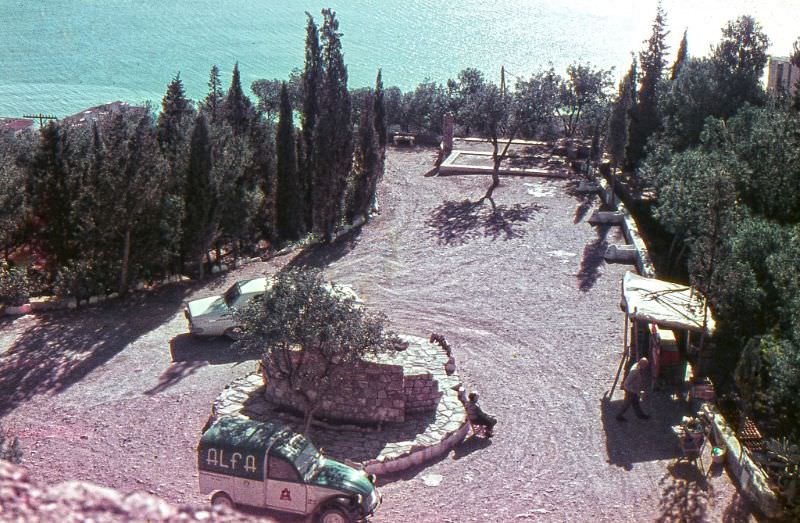
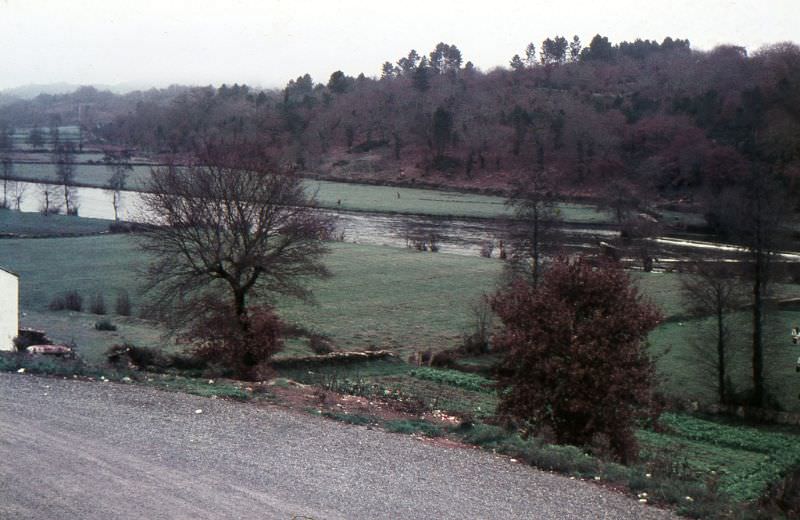
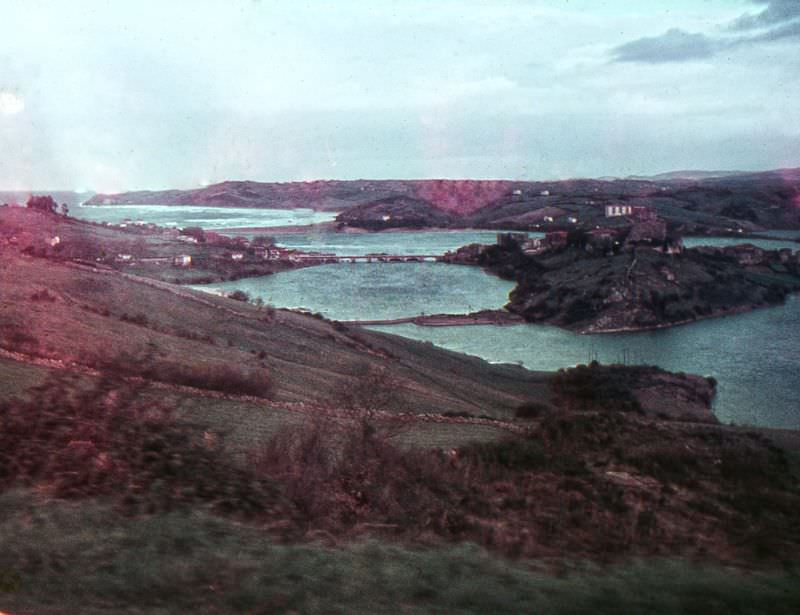
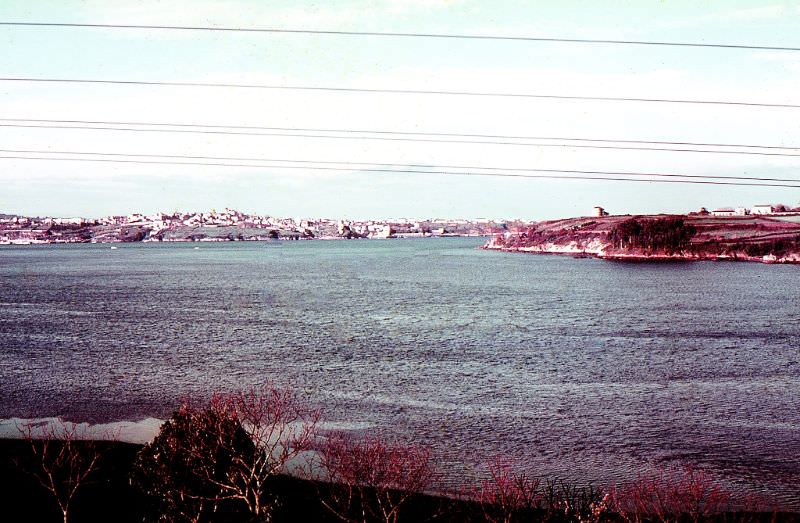
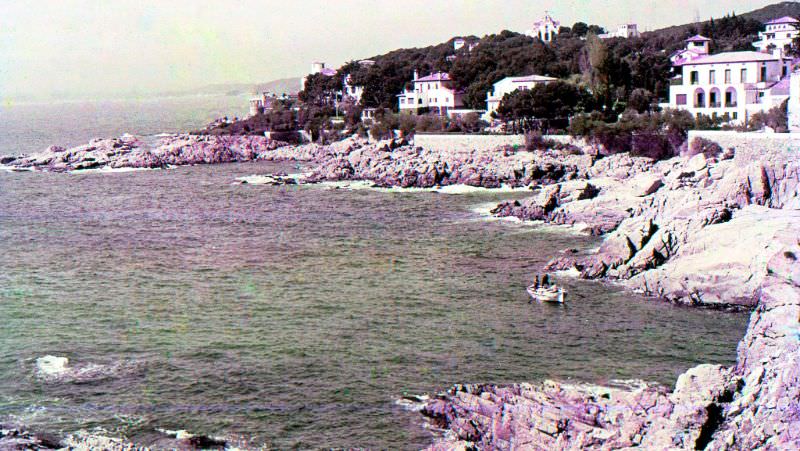
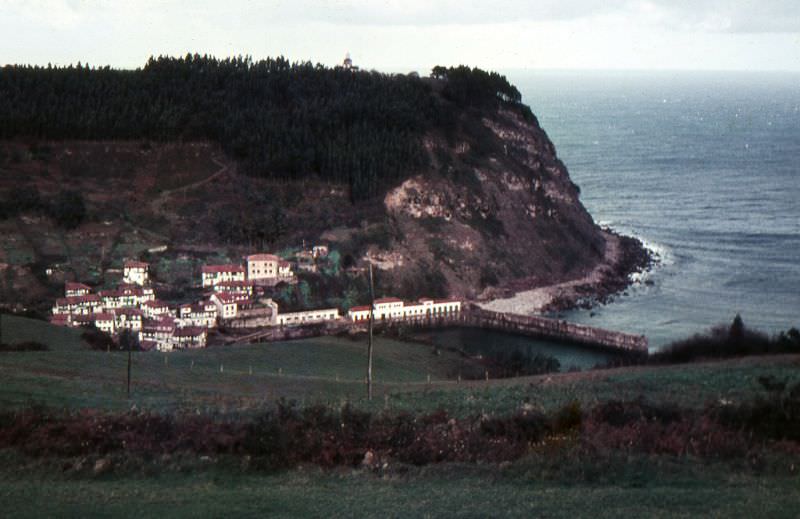
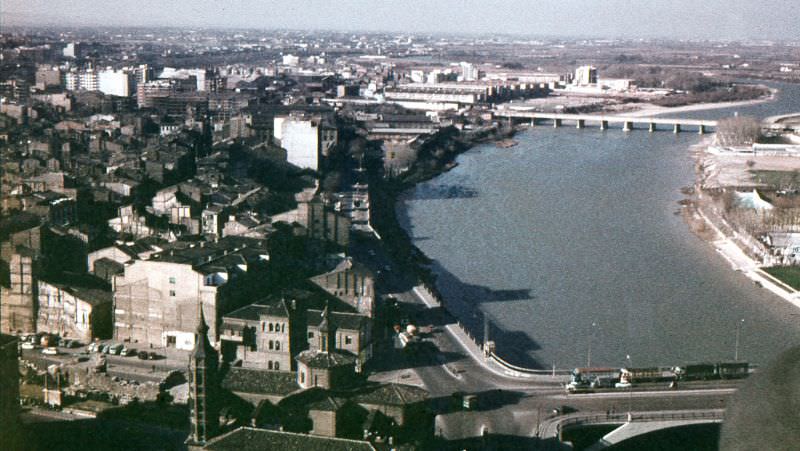
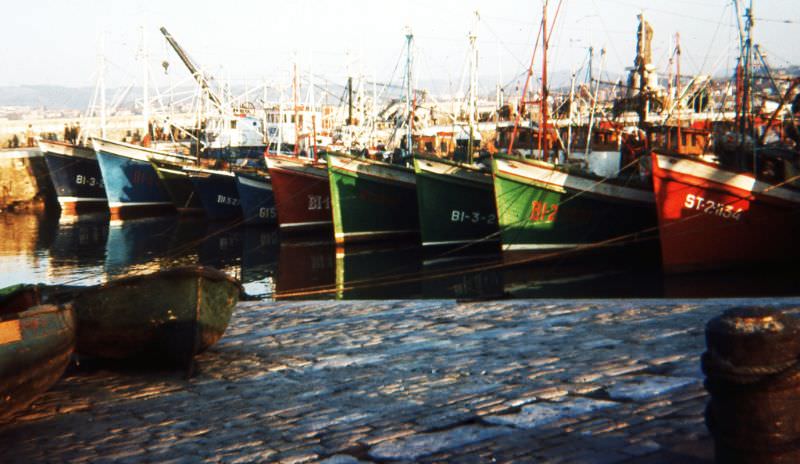
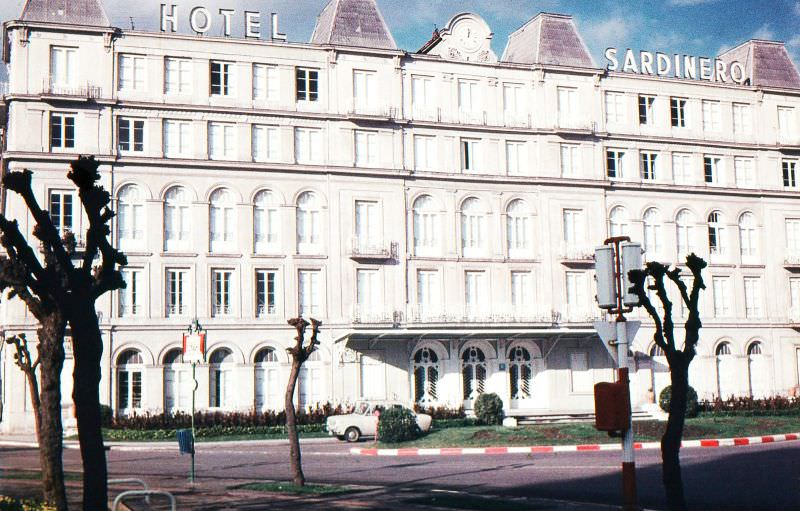
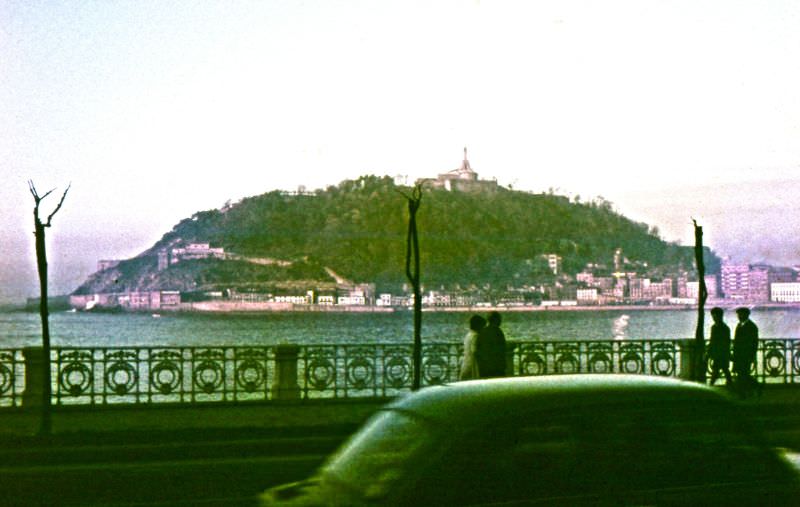
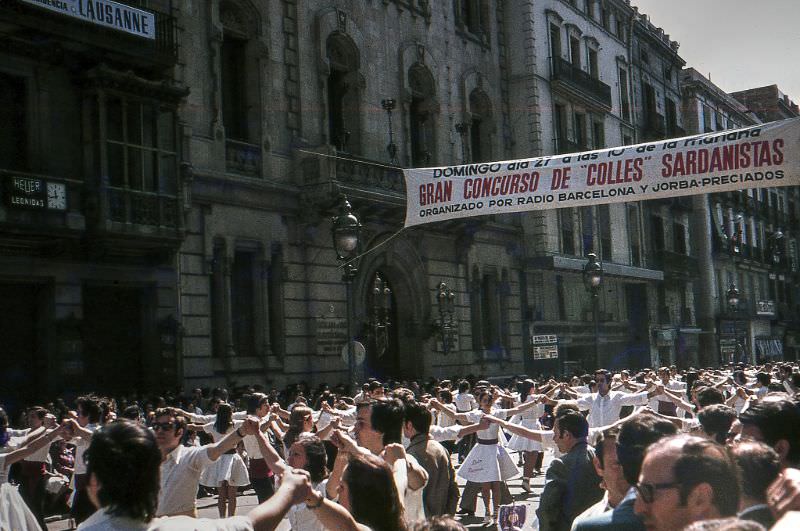
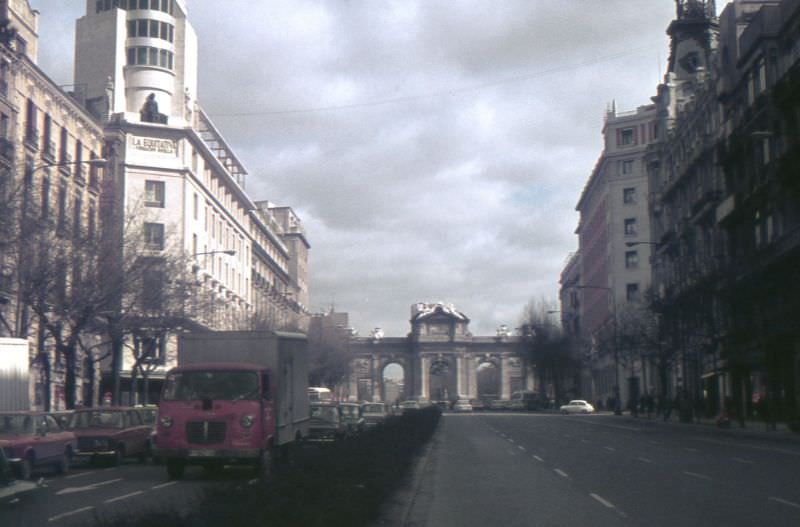
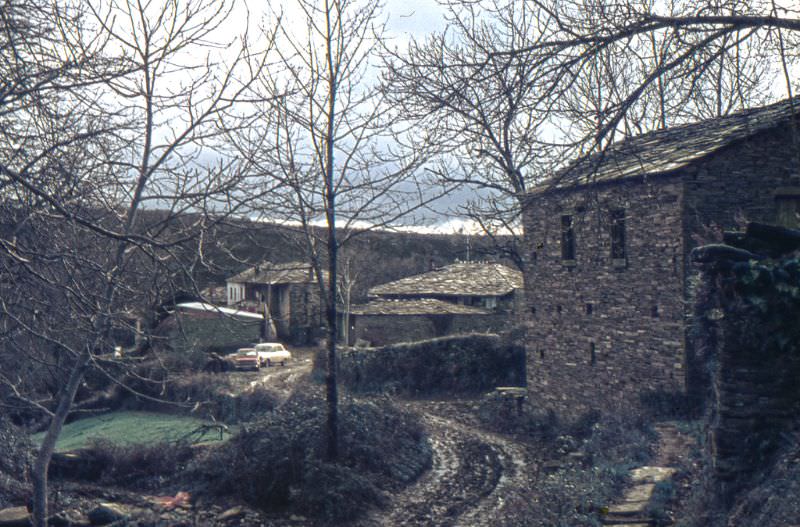
Benidorm, Valencia, January 1967Bullfighting show is ready to begin, Seville, February 1967Church of Santa Maria del Naranco, Oviedo, January 1967Death’s house, Salamanca, January 1967Gibralfaro, Málaga, January 1967Minho river, Galicia, January 1967Montserrat Monastery, January 1967Ría de Villaviciosa, Asturias, January 1967Ría de Viveiro, Lugo, January 1967Sant Feliu de Guixols, Costa Brava, May 1967Tazones, Asturias, January 1967Ebro river from Basilica del Pilar, Zaragoza, March 1968Fishermen boats bows at Tazones, Asturias, December 1970Hotel Sardinero, Santander, Cantabria, January 1971San Sebastián, January 1971Somosierra pass, Guadarrama hills, January 1971Street dance, Barcelona, July 1975Calle de Alcalá, Madrid, February 1977Santalla de Bardaos, Galicia, January 1977