When the first rockets broke through Earth’s atmosphere, the excitement didn’t stay on the launchpad. It spread straight into the fashion world. The Space Race between the United States and Soviet Union gave designers a powerful new source of inspiration, and by the mid-1960s, clothing had transformed into something that looked like it belonged on another planet.
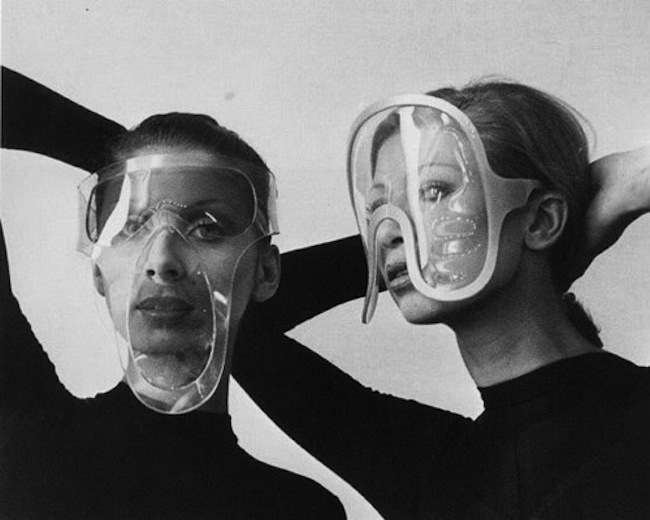
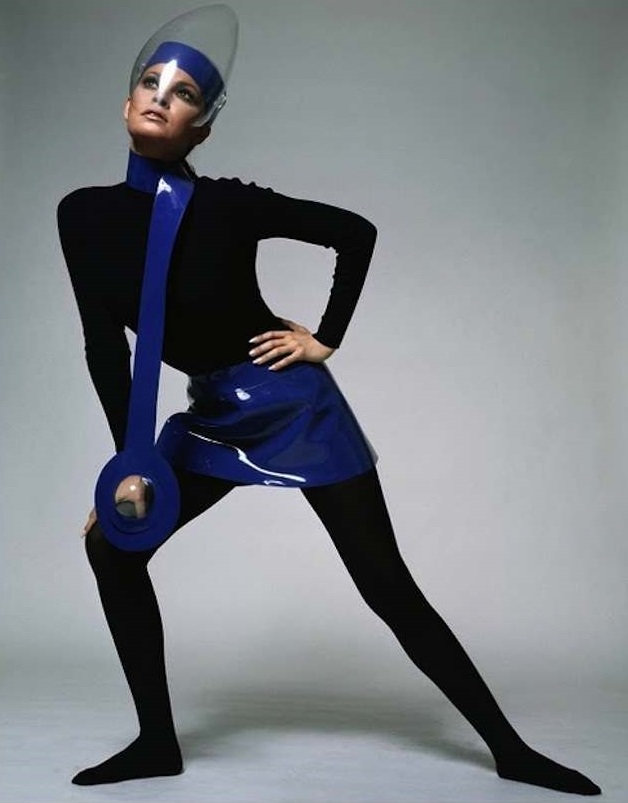
Pierre Cardin became one of the defining figures of Space Age fashion. His designs leaned heavily on geometric shapes, sharp angles, and a sleek minimalism that felt entirely modern. He worked with shiny materials like vinyl and polyester, fabrics that caught light the way a spacecraft hull might. Cardin wasn’t just making clothes — he was building a vision of the future.
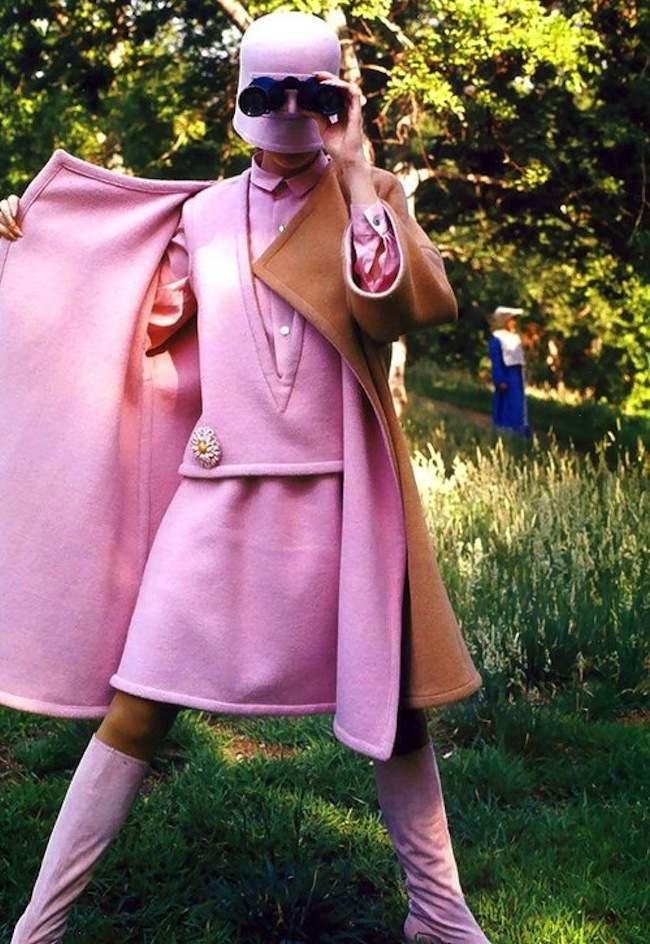
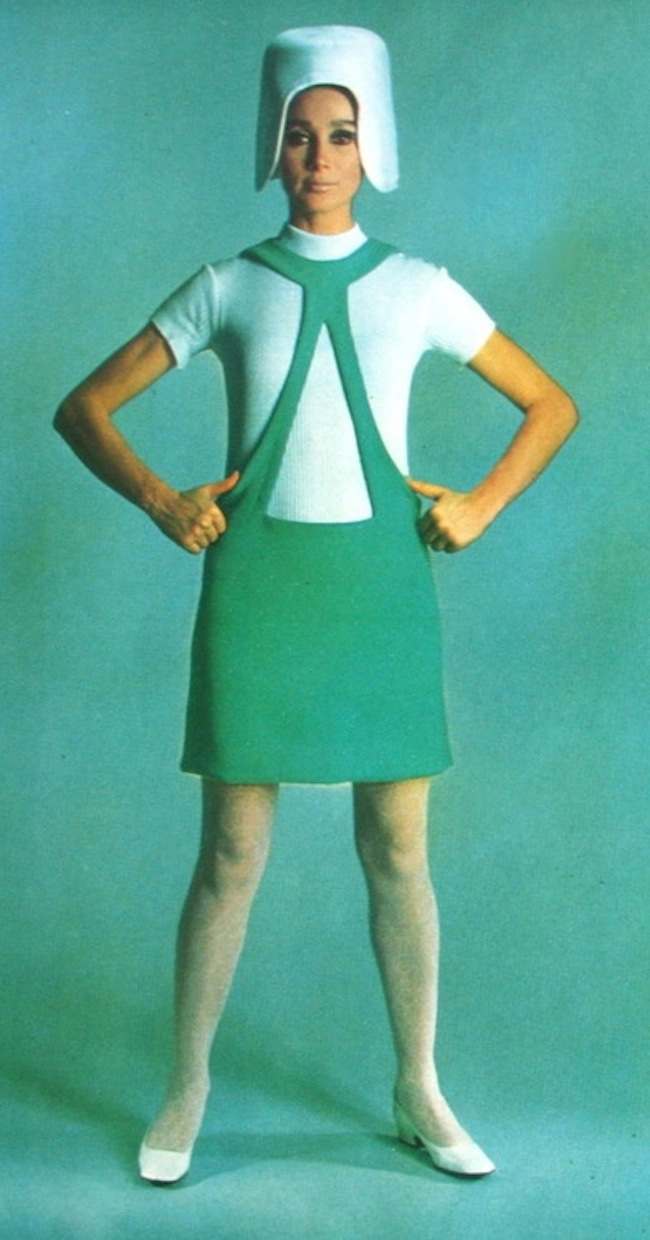
André Courrèges pushed the movement further by introducing the mini skirt, one of the most recognized garments of the decade. His collections featured bright, flat colors, clean geometric cuts, and white go-go boots that became instantly iconic. Courrèges designed for youth — his pieces were bold, playful, and deliberately broke from the structured, conservative fashion of the 1950s.
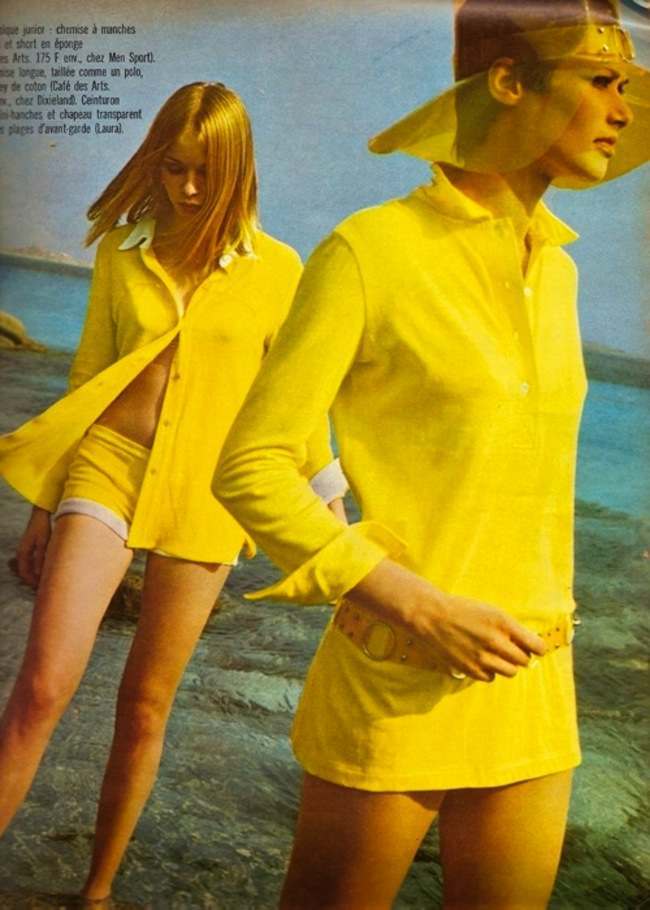
Color was central to the Space Age aesthetic. Bright whites, metallics, and primary colors dominated collections. Silver and gold were especially popular, directly mirroring the reflective surfaces of satellites and rocket components. These choices weren’t arbitrary — they signaled optimism at a time when humanity genuinely believed the stars were within reach.
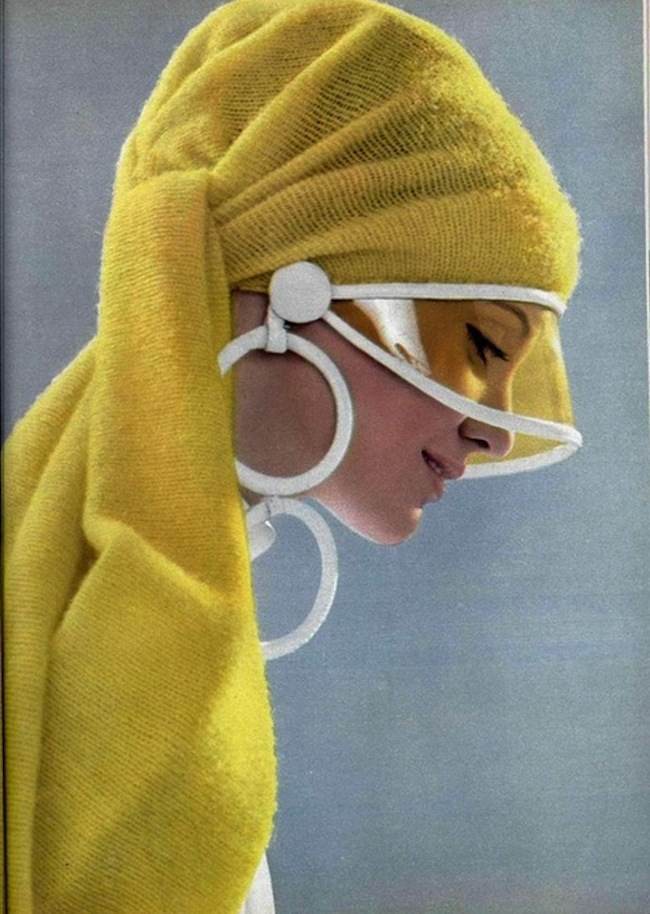
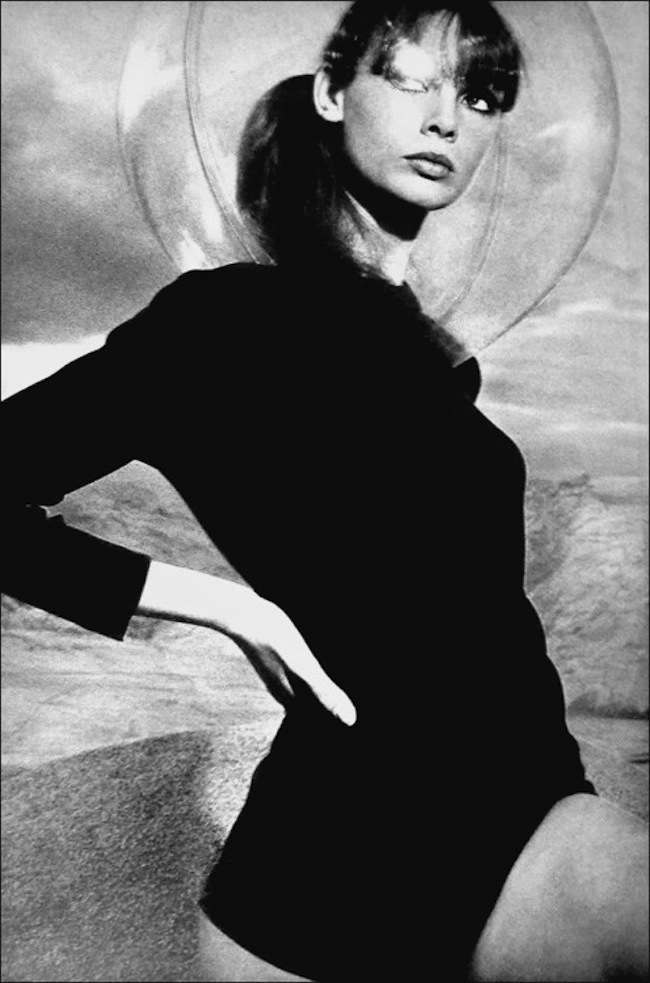
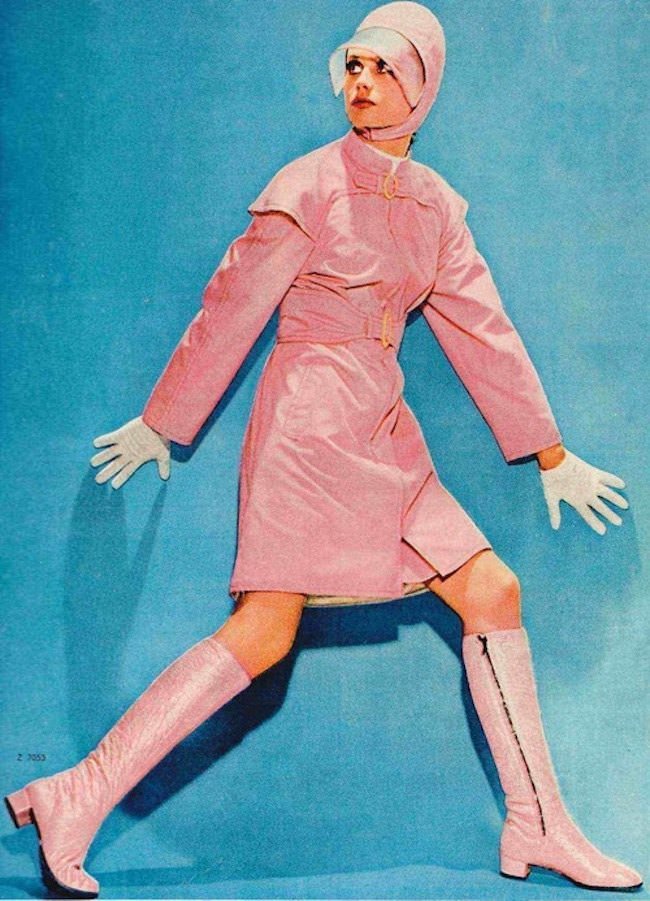
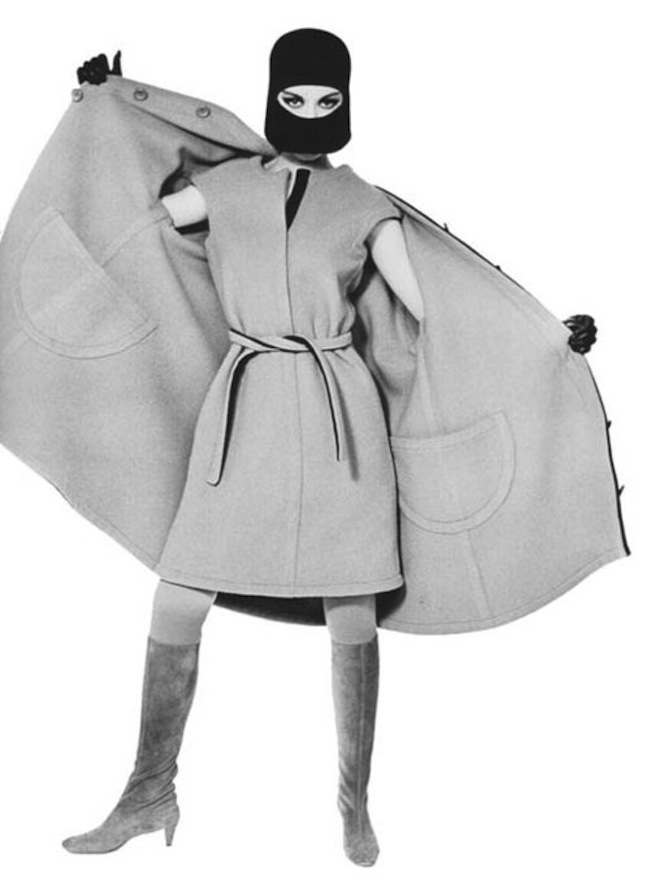
Fashion magazines like Vogue and Harper’s Bazaar photographed models in futuristic settings, spreading these trends to readers worldwide. Eastern European publications also embraced the movement, as seen in Czech and Slovak fashion spreads from the late 1960s.
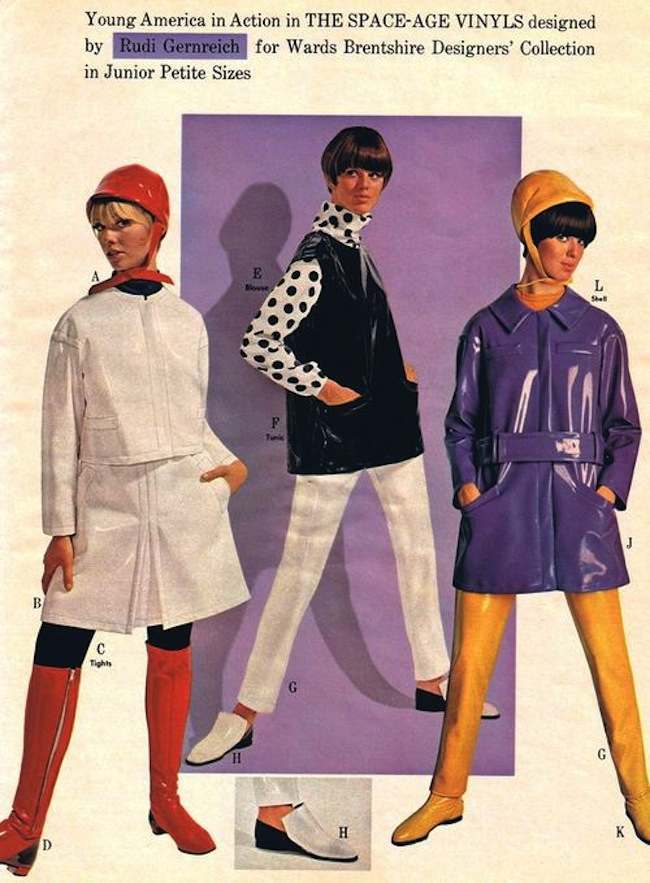
Designers also experimented with entirely new materials. Plastics and synthetic fabrics allowed for construction techniques that natural textiles simply couldn’t support. Rudi Gernreich, based in the United States, brought vinyl into mainstream fashion with striking, body-conscious designs that challenged what clothing was even supposed to look like.
Pierre Cardin’s output during this period was relentless. His 1966 collections refined the geometric, futuristic silhouette he had been developing for years, producing some of the most reproduced images of 1960s fashion.
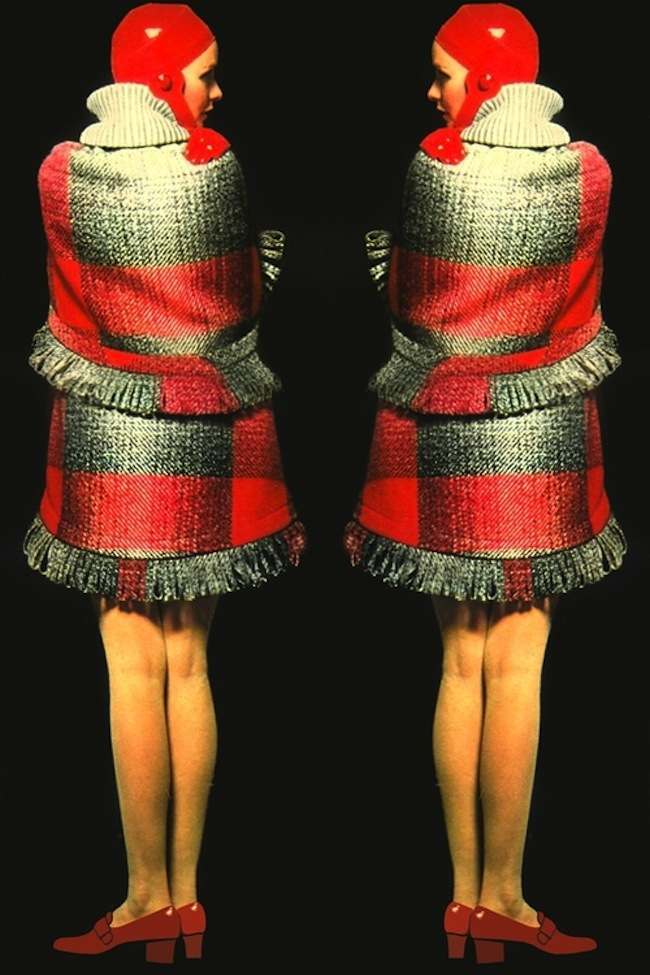
British designer John Bates also contributed significantly to the Space Age look. Working in London during the height of its cultural explosion, Bates produced structured, mod-influenced pieces that shared the same clean lines and forward-thinking attitude defining the era’s most exciting work.
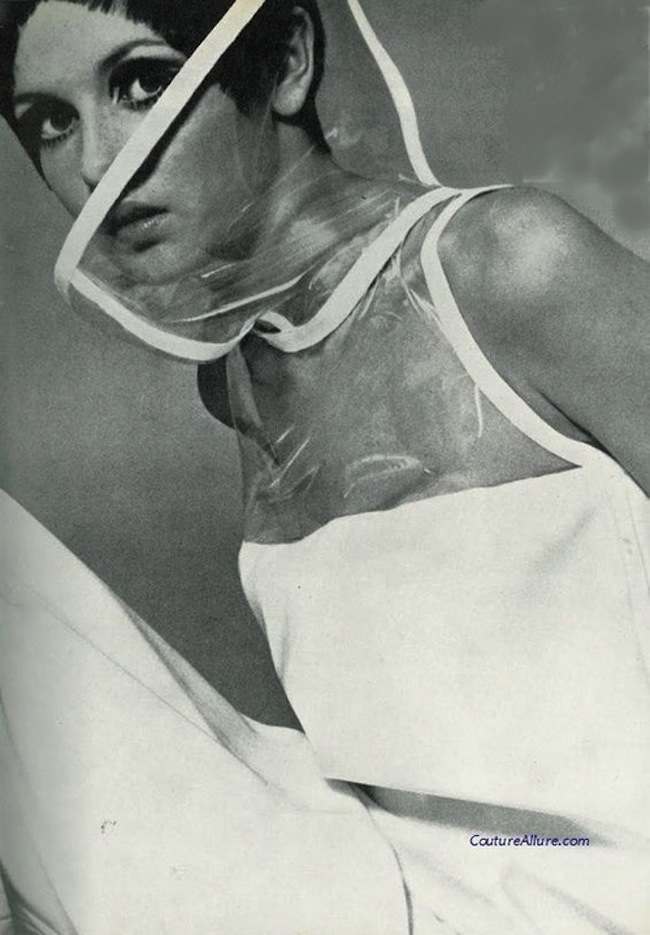
The Space Age aesthetic even attracted Hollywood. Actress Raquel Welch wore Pierre Cardin designs that demonstrated how far luxury fashion had moved from traditional tailoring. His 1969 work showed a maturation of the style — still futuristic, but more refined.
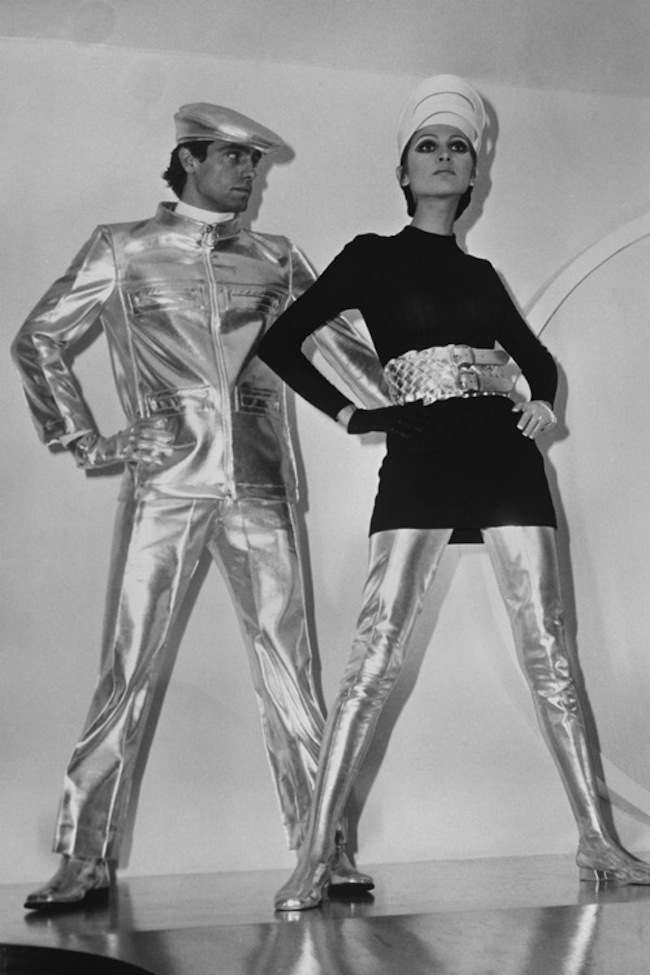
Cardin also extended his vision into menswear. His suits featured high collars, narrow ties, and sharp tailoring that replaced the conservative cuts of previous decades. Space Age fashion was never exclusively a women’s movement — men’s wardrobes shifted just as dramatically.
Rudi Gernreich’s muse Peggy Moffitt became one of the most recognizable faces of Space Age fashion. With her stark makeup and precise styling, she embodied the look’s sharp, almost otherworldly character. Films like Barbarella and 2001: A Space Odyssey reinforced these aesthetics on screen, blurring the line between costume design and runway fashion.
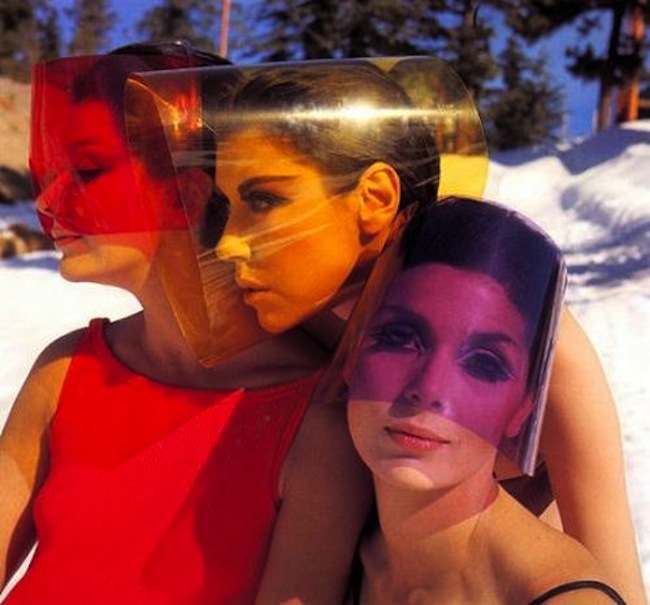
Large round sunglasses with mirrored lenses, star-shaped earrings, and planet-inspired pins completed the Space Age look. Model Jean Shrimpton represented the era’s ideal — youthful, striking, and entirely modern. Young people across the world used these styles to signal a break from tradition and a belief in a radically different future.