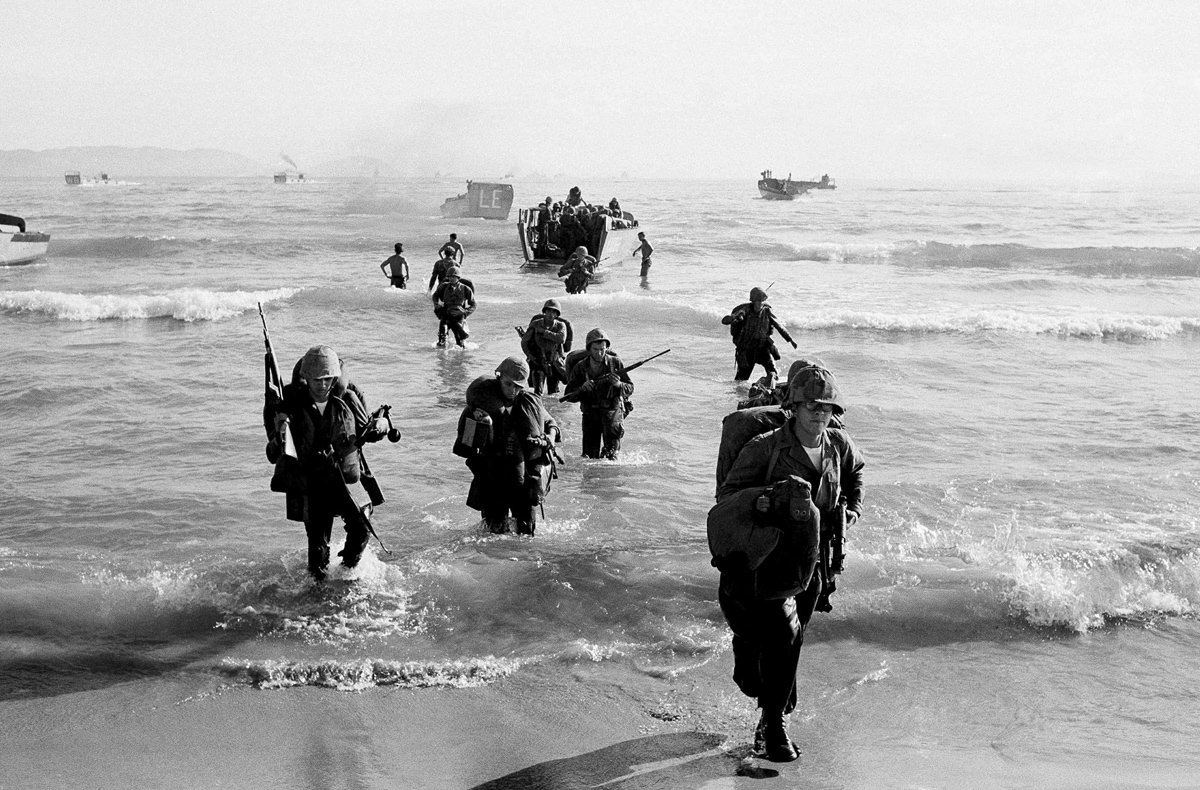
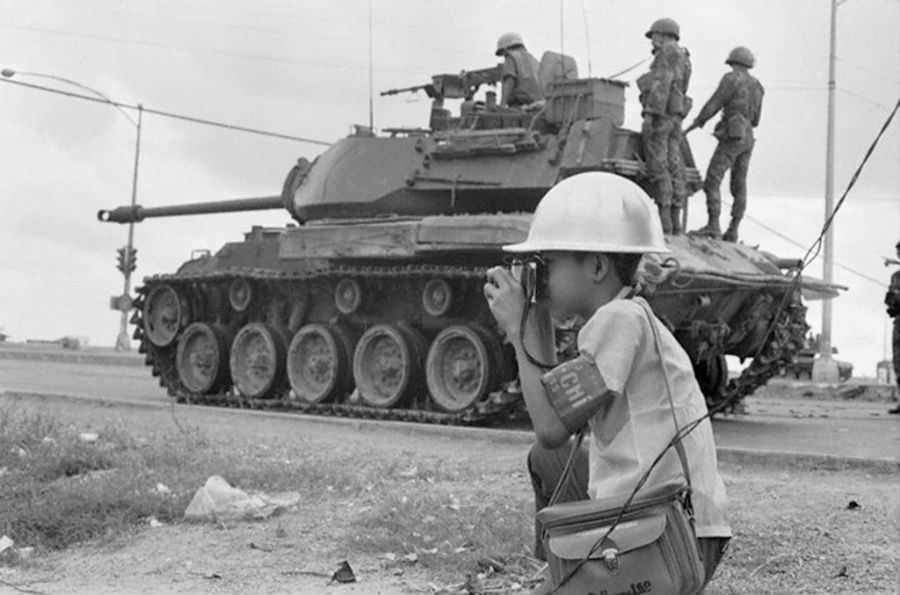
American soldiers in Vietnam wore the M1 helmet — a piece of gear the troops simply called the “steel pot.” First introduced in 1941, it was standard-issue headgear that had served through World War II and Korea before landing on the heads of a new generation of young Americans. For most new recruits, the first experience with it was during basic training or boot camp, where freshly shaved heads made the hard metal shell feel even more uncomfortable than it looked. It was heavy, it was awkward, and it was theirs for the duration.
Before Vietnam, helmet markings were mostly practical. GIs and Marines occasionally scrawled something like “Kilroy was here” — a running joke of the World War II era — or some other offbeat phrase. But the standard markings were rank insignia and unit designations. Nothing personal. Nothing political. The helmet was a tool, and it was treated like one.
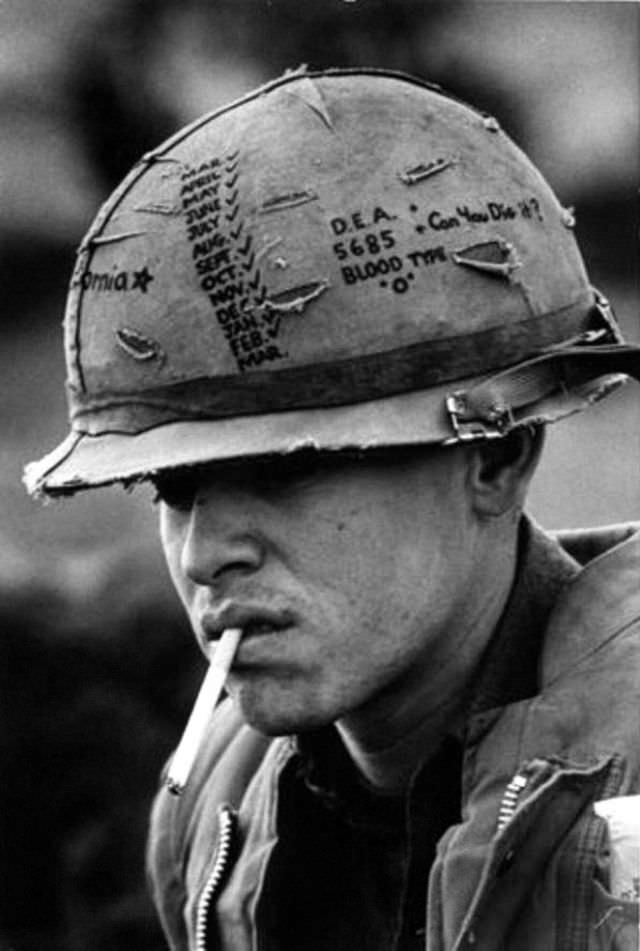
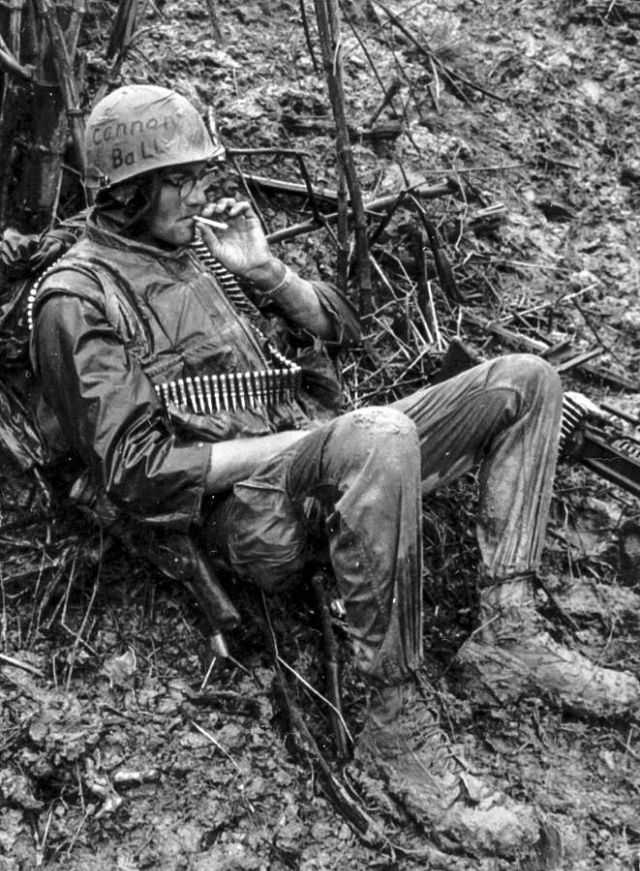
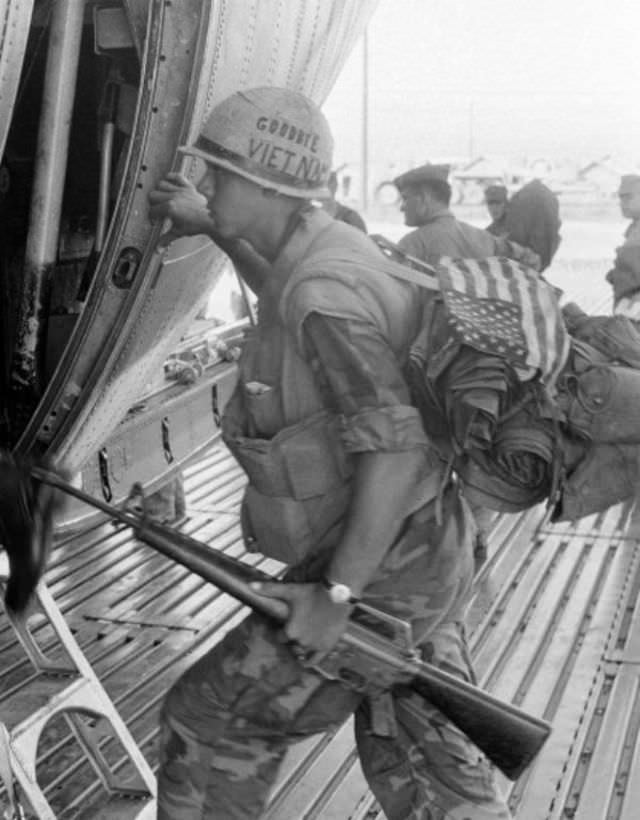
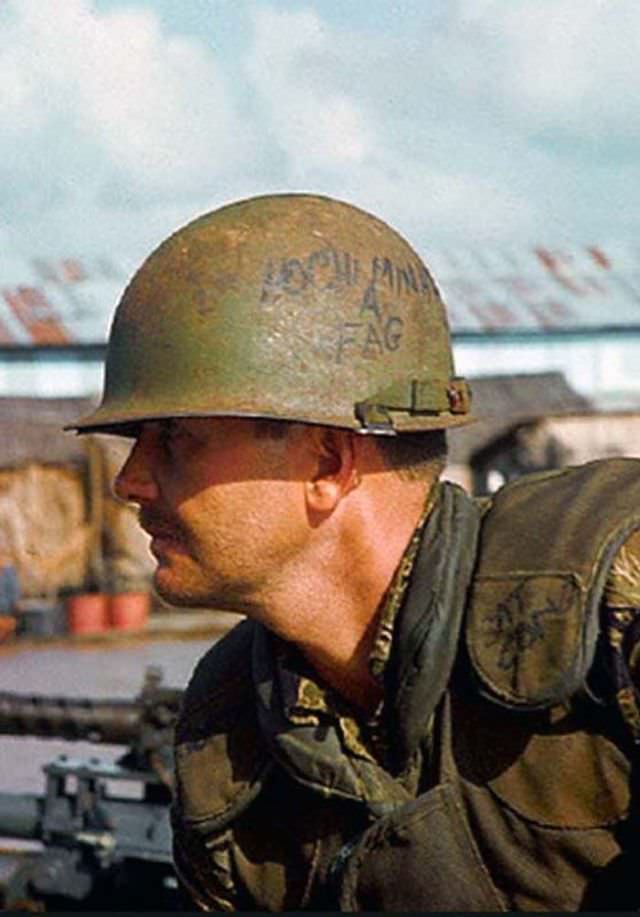
Vietnam changed that. The conflict had a different character — politically divisive back home, brutal and murky on the ground — and soldiers found the helmet cover a surface just wide enough to say something. In the early years of American involvement, the messages were relatively tame. Soldiers wrote their girlfriends’ names, their hometowns, city and state shoutouts, peace signs, and short-timer calendars counting down the days until their tour ended.
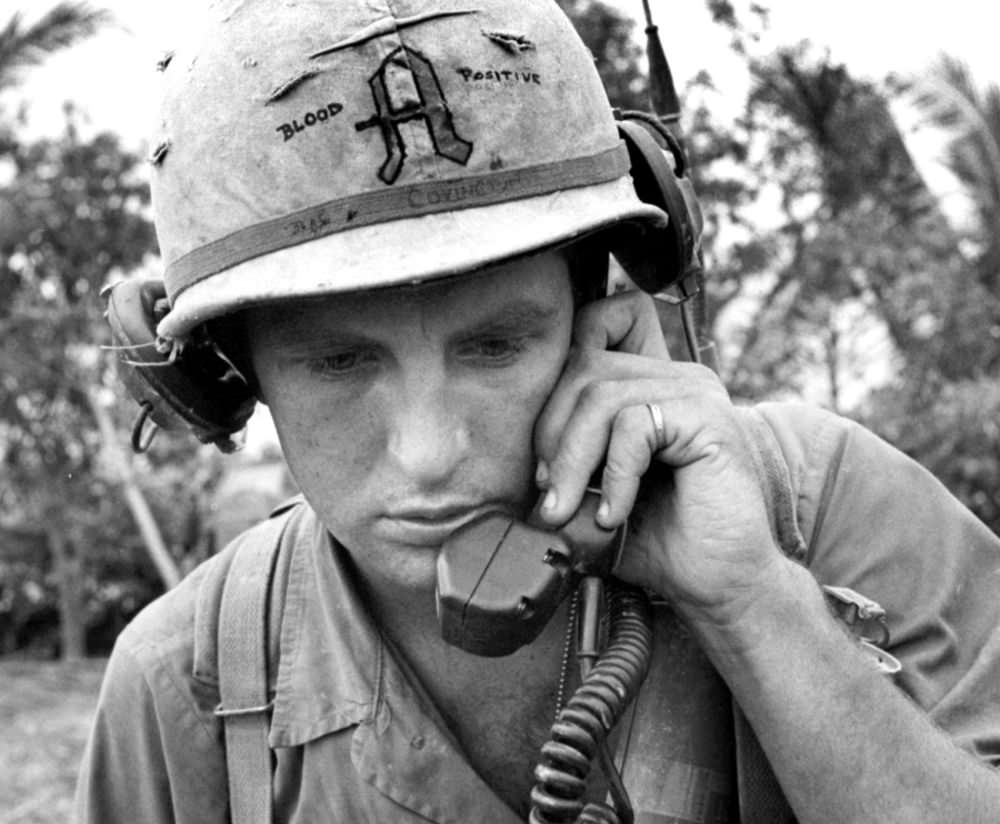
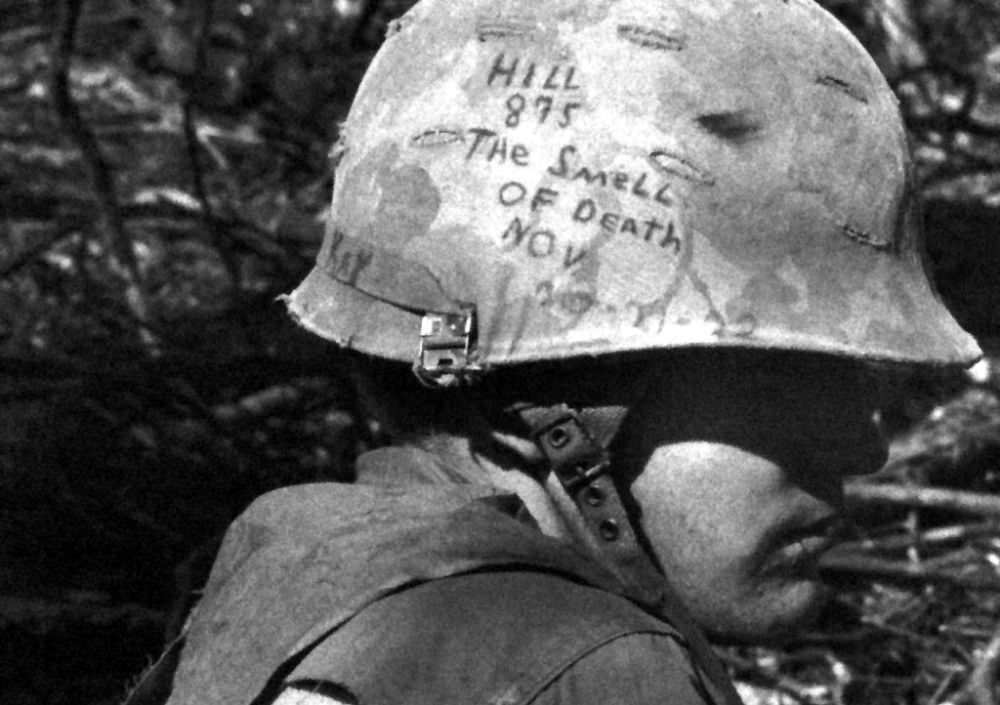
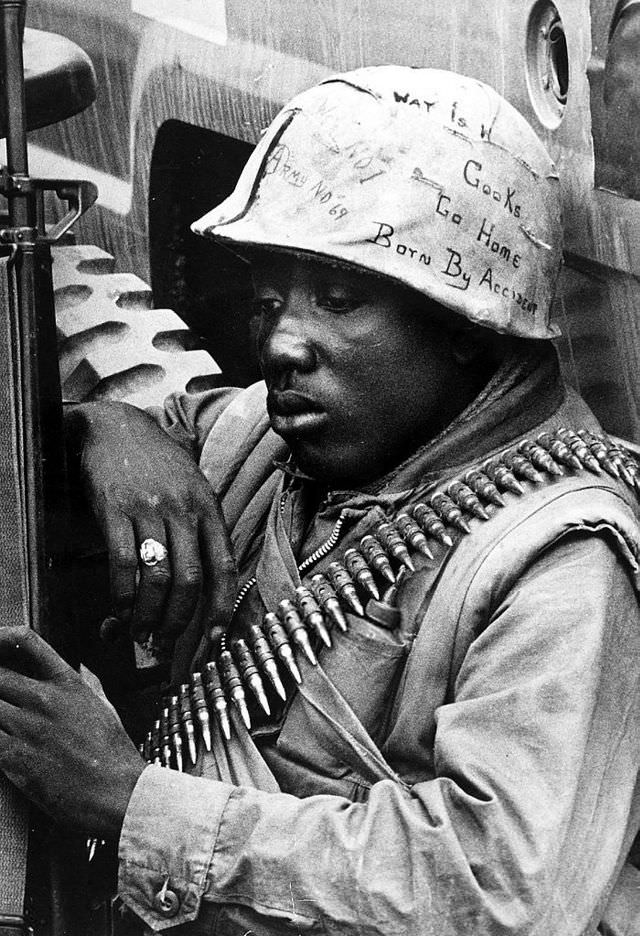
As the war dragged on and casualties mounted, the writing on helmets grew darker, sharper, and more honest. The slogans shifted from nostalgia and longing to biting satire and raw humor rooted in the daily reality of combat. These weren’t scripted protest messages — they were the unfiltered thoughts of young men living under constant threat, with very little control over their own lives. The helmet cover became one of the few places a soldier could speak freely.
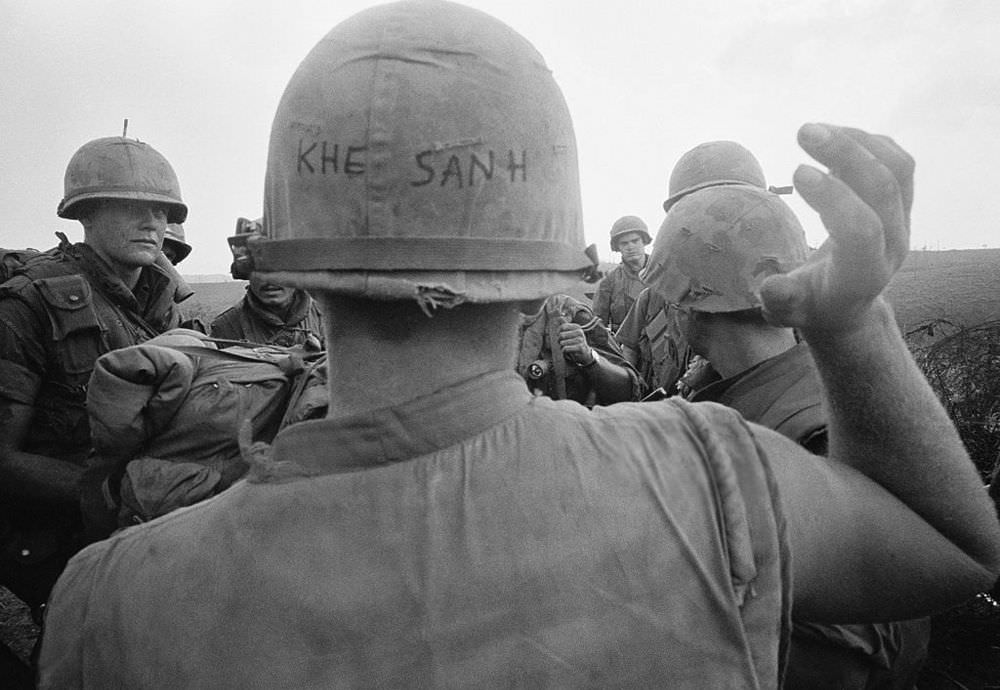
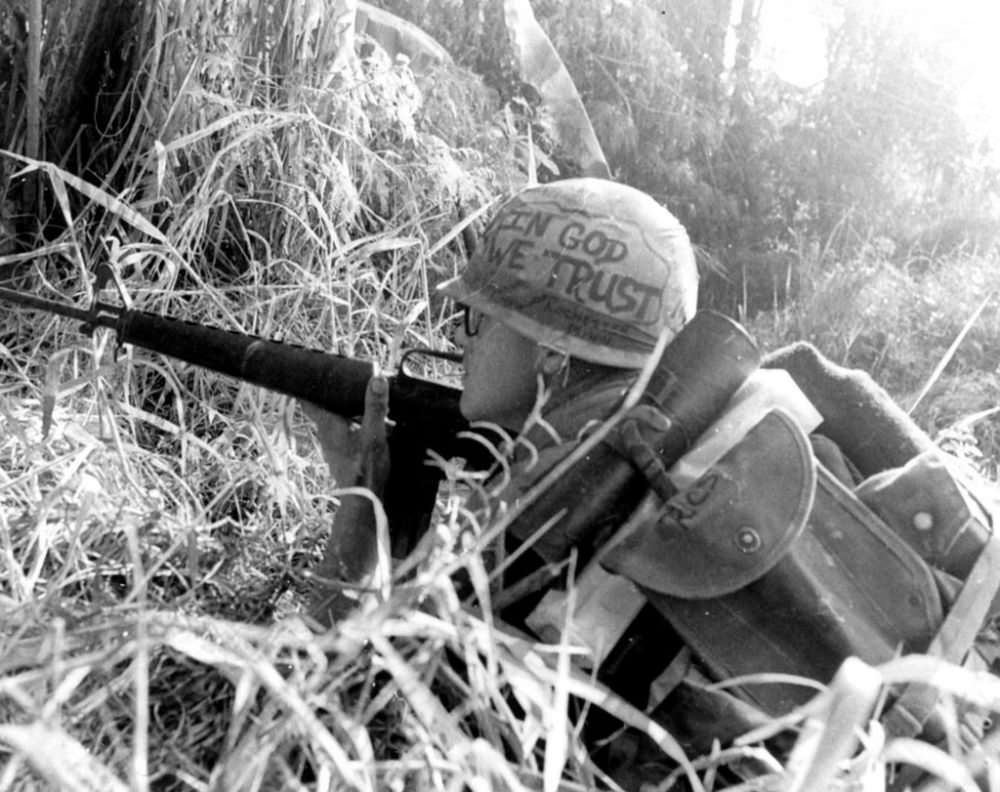
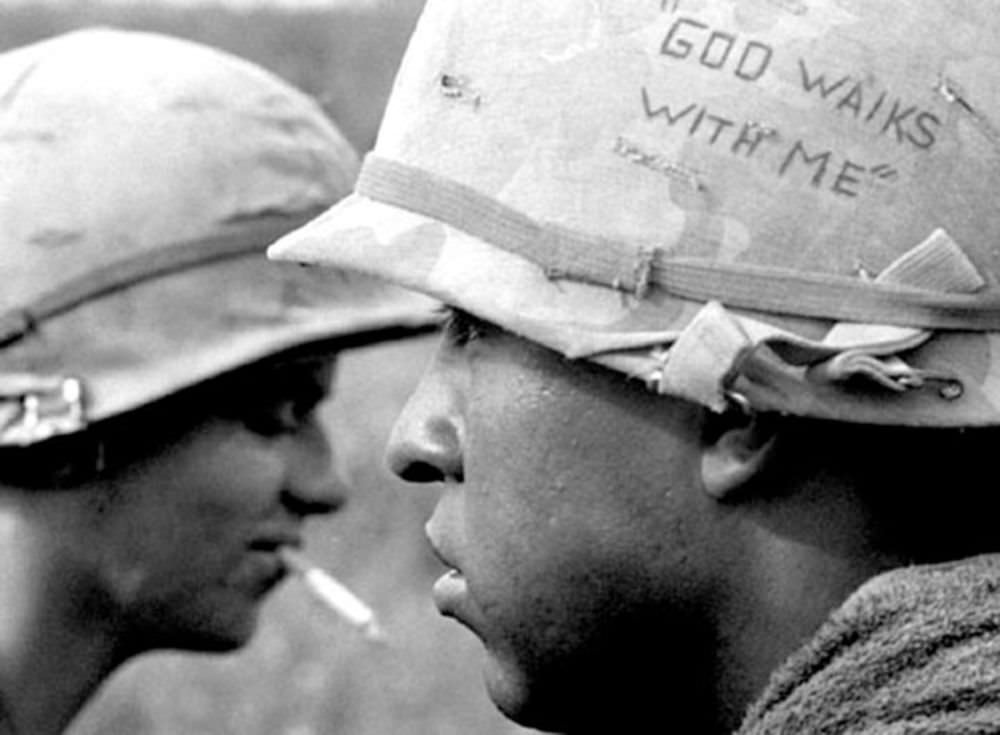
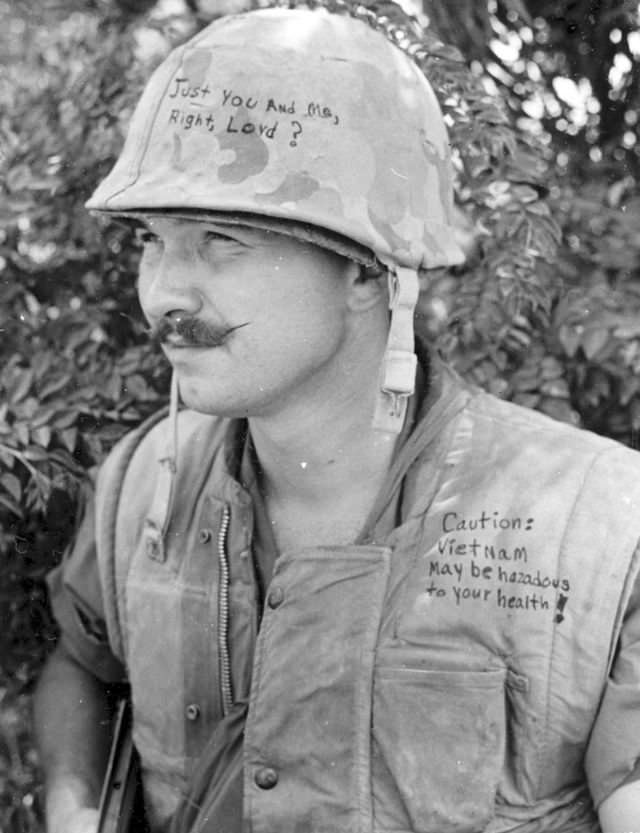
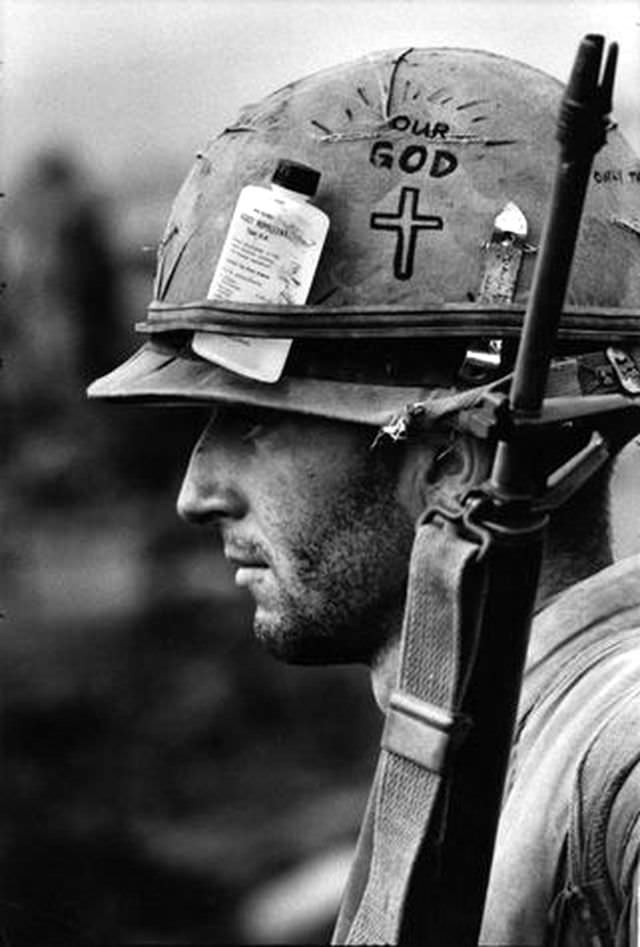
Religion appeared often. Soldiers leaned on faith when everything else felt uncertain. Phrases like “In God We Trust” or “God Walks With Me” weren’t ironic — they were sincere. Other religious references carried a darker edge, reflecting the desperate, often grim bargain soldiers felt they were making every time they stepped into the field.
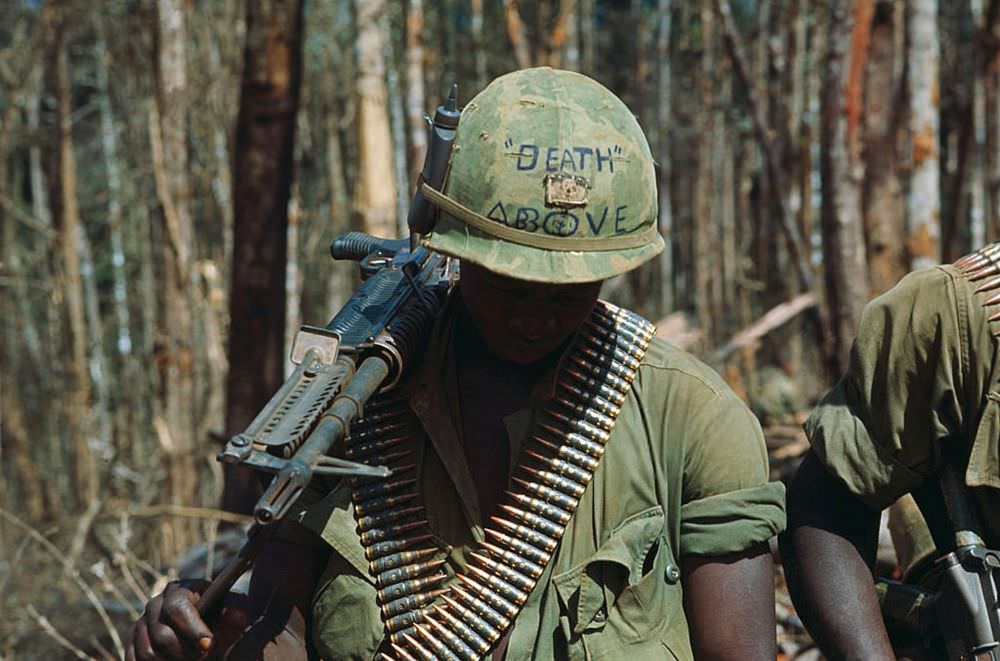
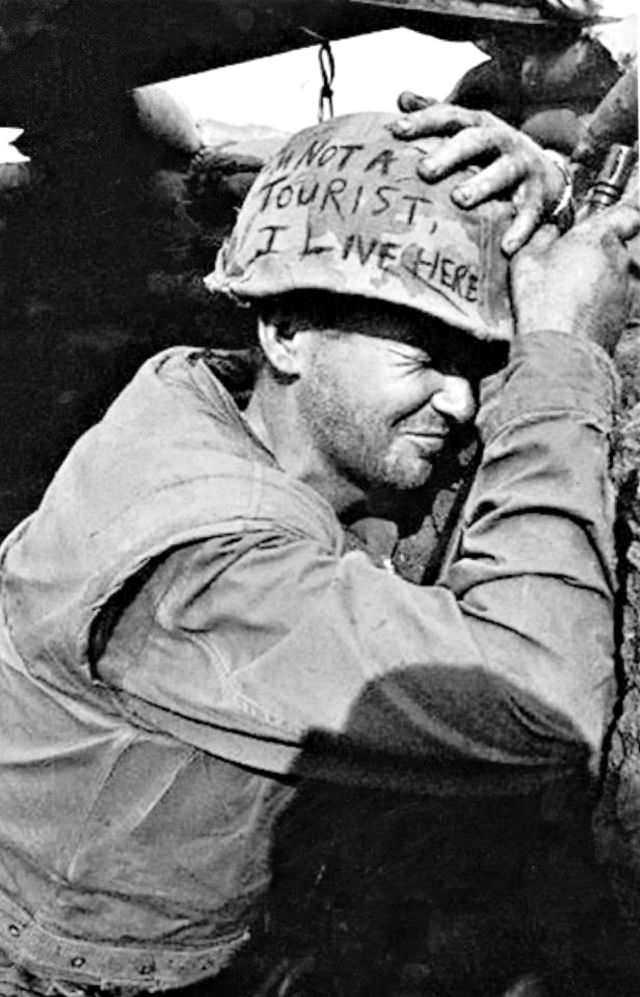
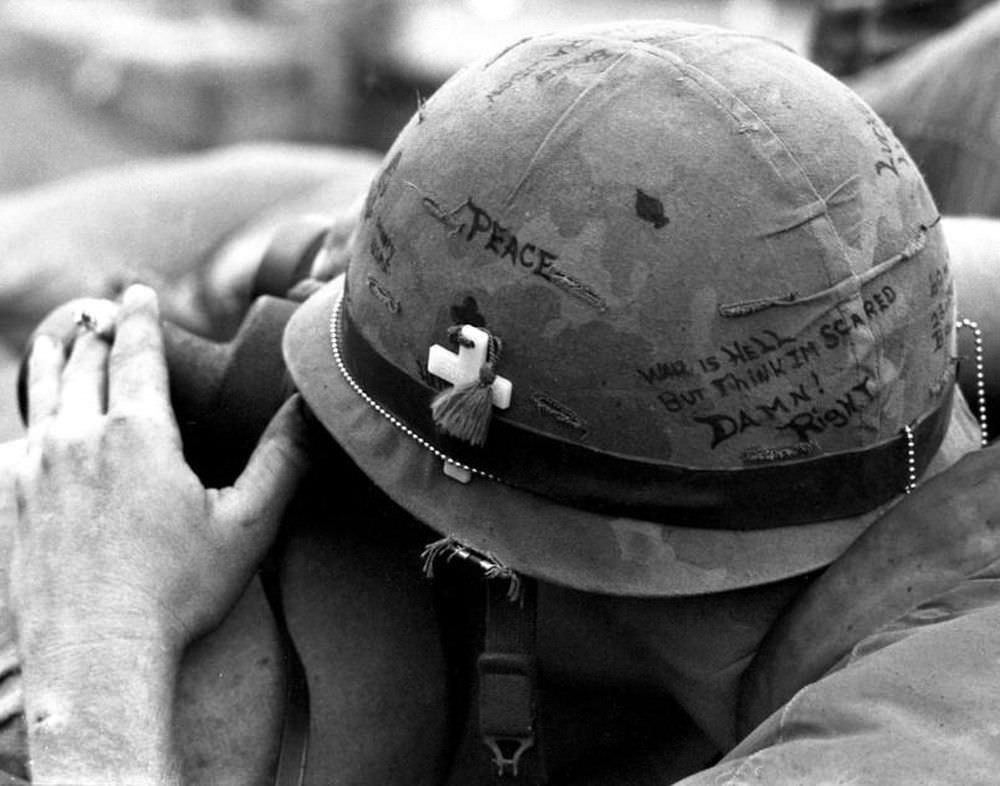
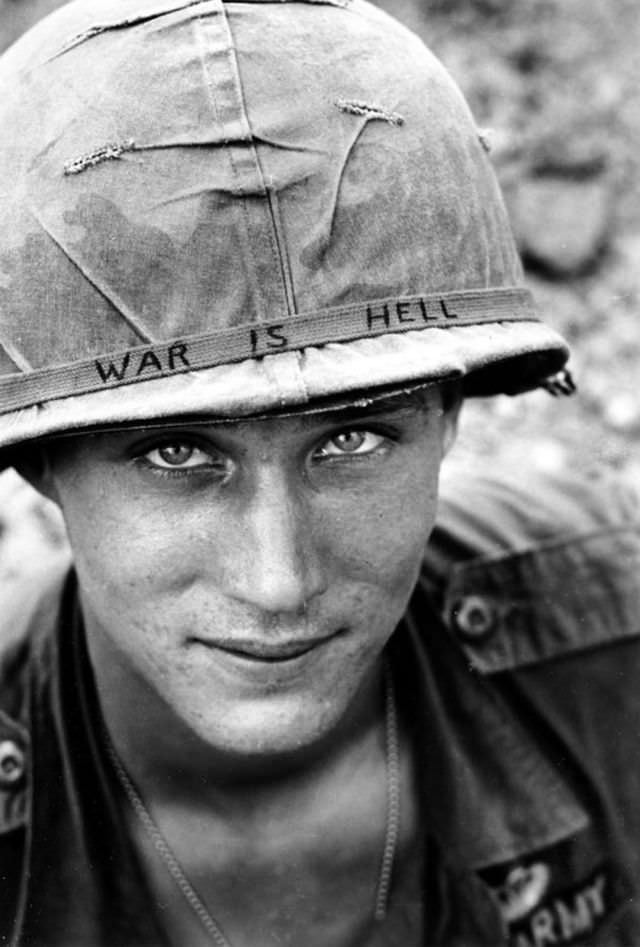
Some slogans were blunt admissions of fear. “War is Hell, I’m Scared. Damn Right!” wasn’t a joke — it was an honest statement that happened to be funny because of how plainly it said what everyone already felt. Others were sarcastic jabs at the situation soldiers found themselves in, like “I’m Not a Tourist. I Live Here.” — a dark nod to the fact that Vietnam had become, unwillingly, home.
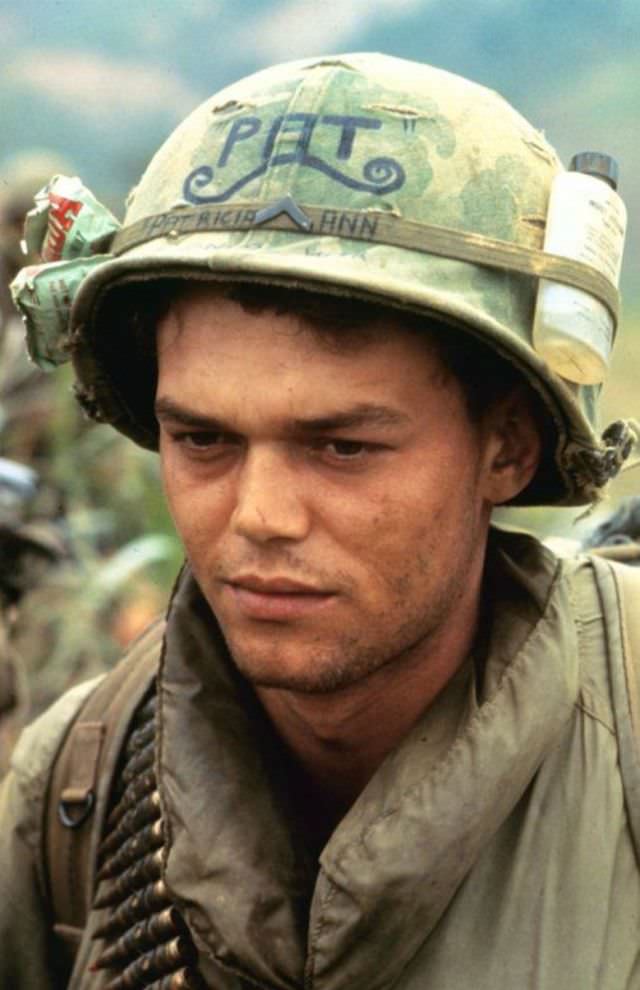
Names of women — wives, girlfriends, sisters — stayed common throughout the war. Writing a name on a helmet was a way of keeping someone close when they were thousands of miles away. It was personal in a way that unit designations never were. A name meant someone was waiting, and that mattered.
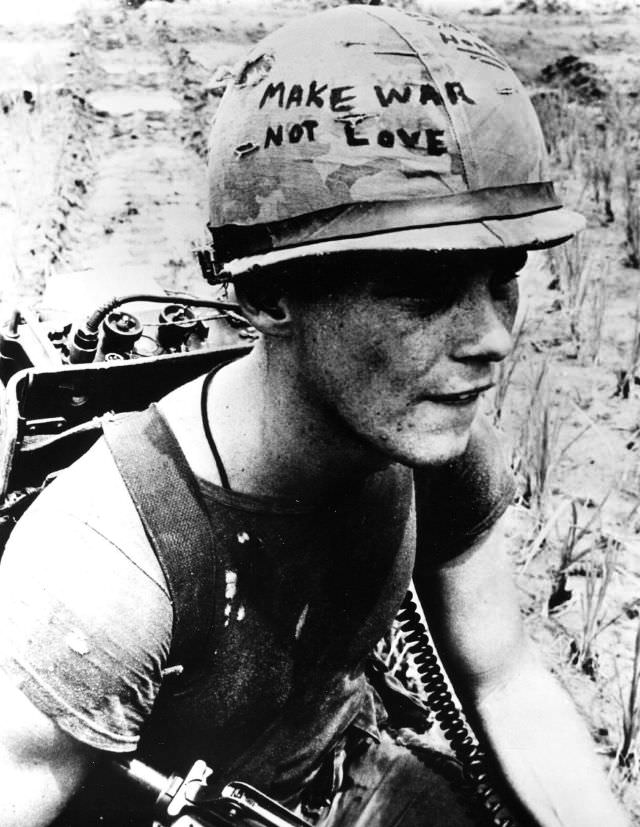
The anti-war movement back in the United States used the slogan “Make Love, Not War” at rallies and protests. Some soldiers flipped it — writing “Make War, Not Love” — in what read as both a joke and a commentary on how far removed their world was from the peace marchers at home. Other helmets carried the original anti-war phrase, showing that dissent existed inside the military just as much as outside it.
“War is Good Business, Invest Your Son!” was among the most pointed slogans photographed on a Vietnam-era helmet. It mocked the idea that the war had economic or political motivations while regular young men paid the price with their lives. It was the kind of thing that would have been unthinkable on a helmet in previous wars — and its appearance showed how much the relationship between soldiers and the military establishment had changed.
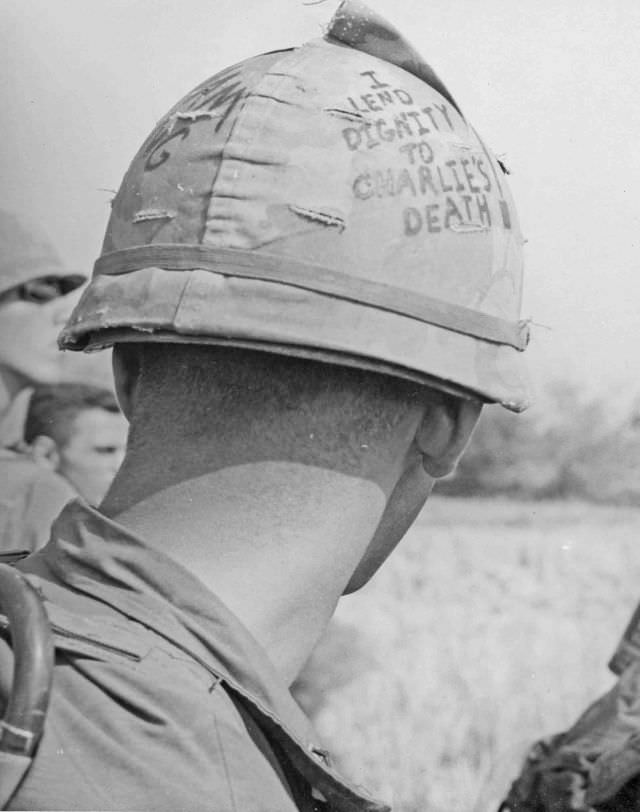
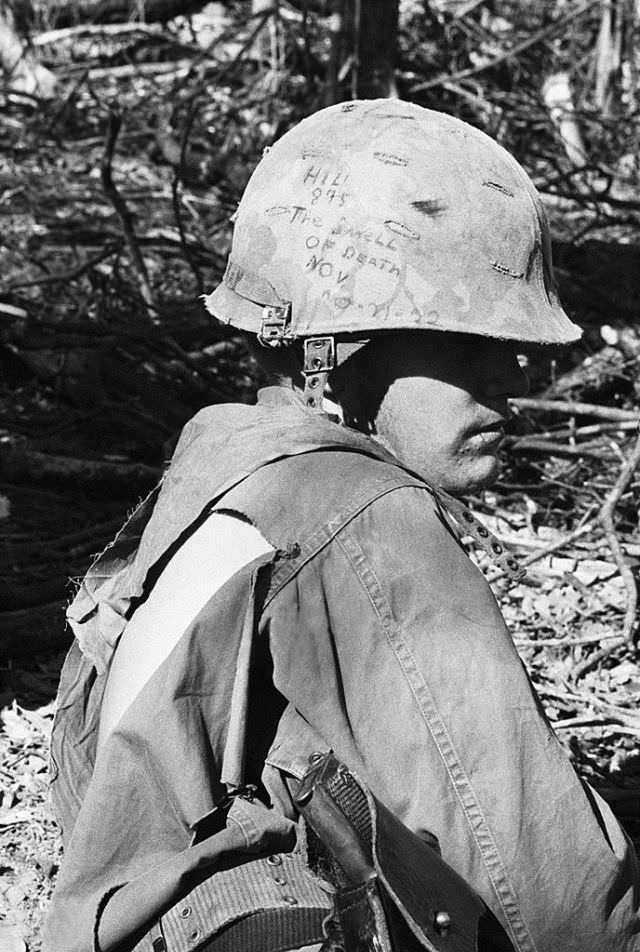
Some slogans referenced specific places that had become synonymous with death. Hill 875 and Khe Sanh were not abstract locations — they were sites of some of the war’s bloodiest fighting, and soldiers who had been there, or knew men who had, carried those names with them. Writing “Hill 875 — The Smell of Death” on a helmet was not drama. It was memory.
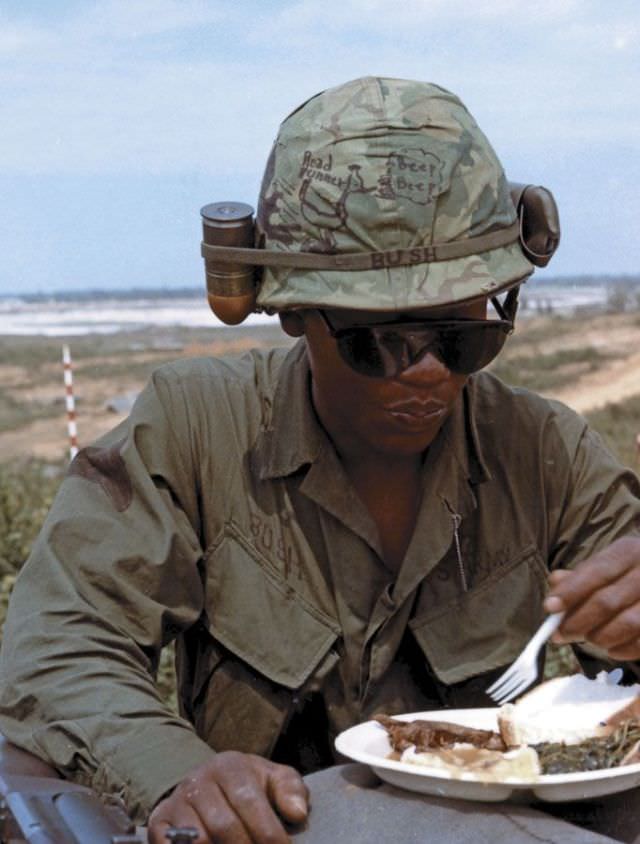
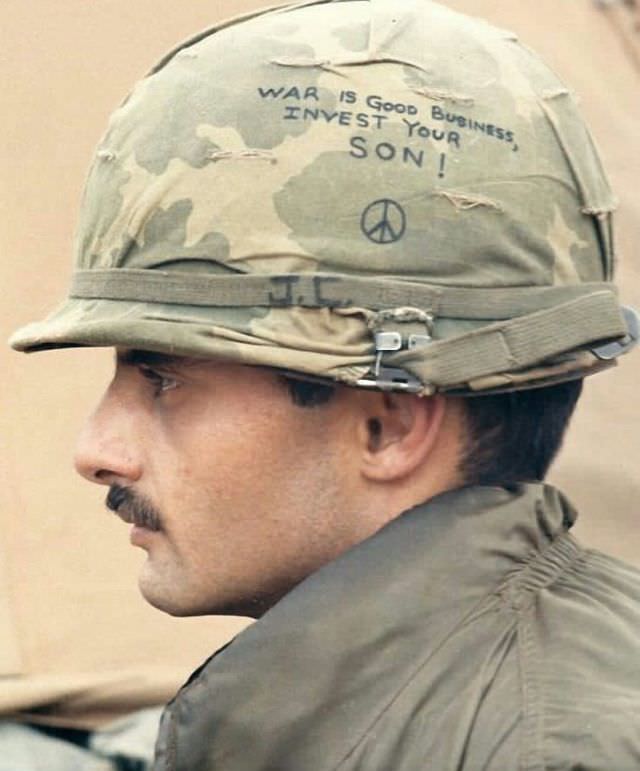
Not everything was heavy. Cartoon references, pop culture nods, and pure nonsense appeared too. “Road Runner, Beep Beep” sat alongside blood type notations and countdown dates. That mix — the absurd next to the deadly serious — captured something real about what it felt like to be young, scared, and stuck in a war that seemed to have no clear end.
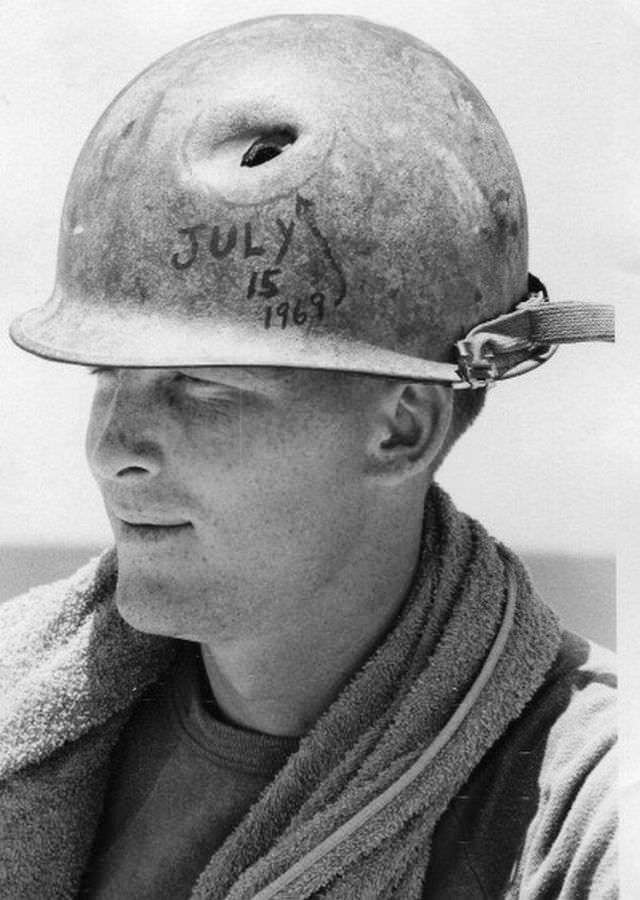
Dates held weight. A date written on a helmet could mark the day a soldier arrived in-country, the day a friend died, or a countdown target. July 15, 1969 written on a helmet meant something specific to the man who wore it, even if the full story behind it is lost to time. These personal timestamps turned a piece of military equipment into something closer to a journal.
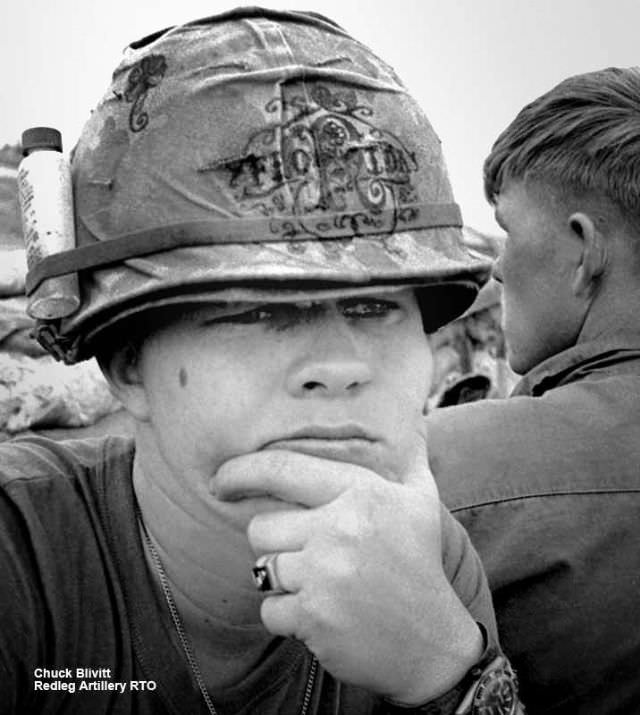
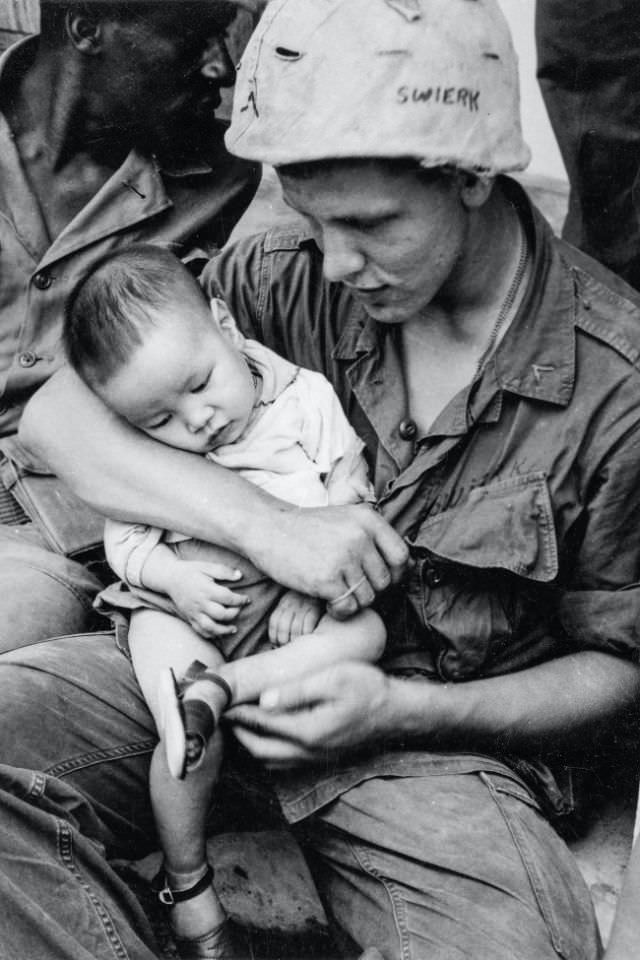
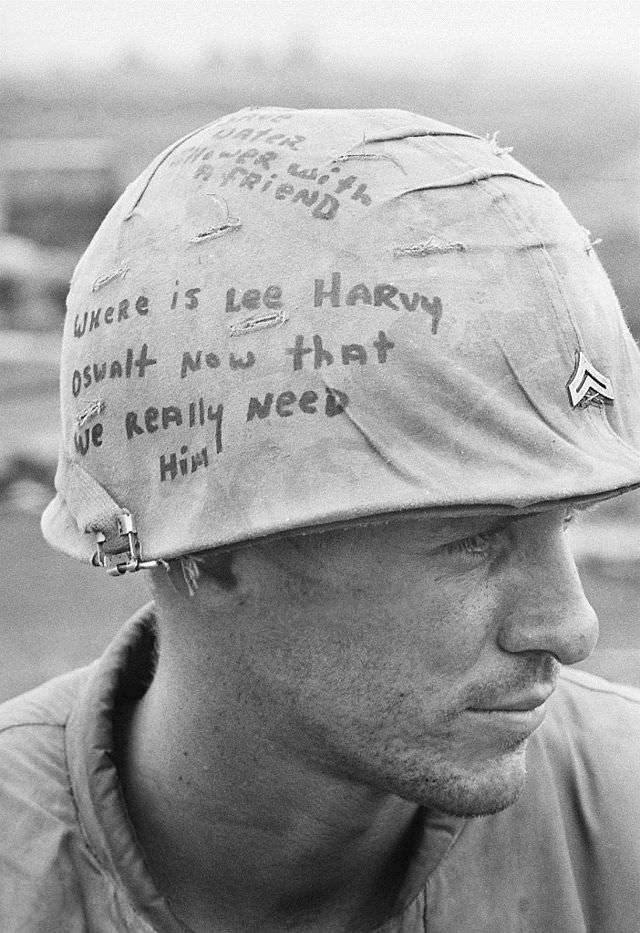
Some of the most politically charged slogans went straight at the leadership. “Where Is Lee Harvey Oswald Now That We Really Need Him?” was a direct and shocking reference to the assassination of President Kennedy — repurposed as a protest against whoever was in power and responsible for keeping the war going. It was the kind of statement that showed just how deep the frustration ran inside the ranks.
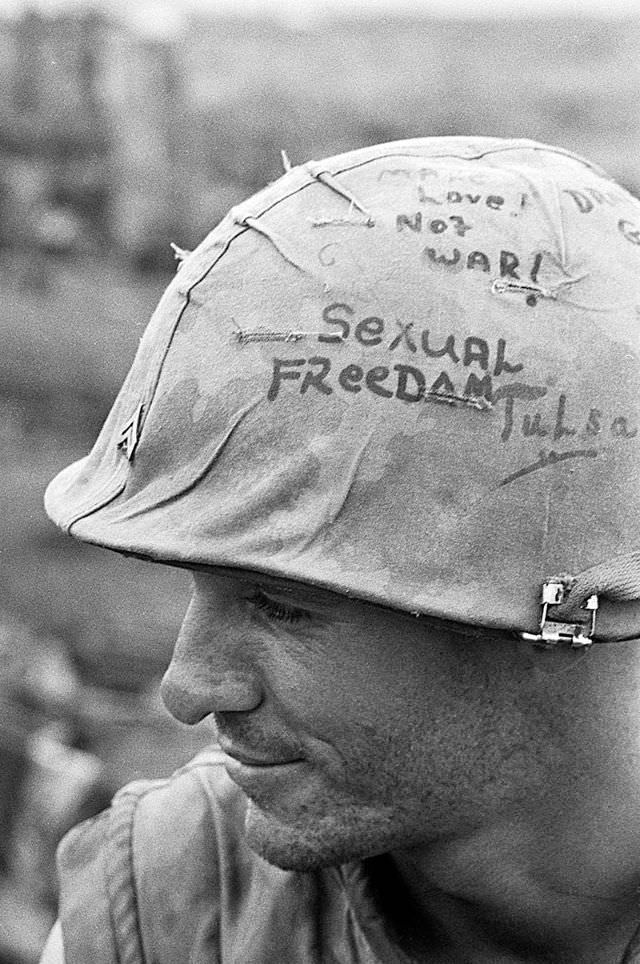
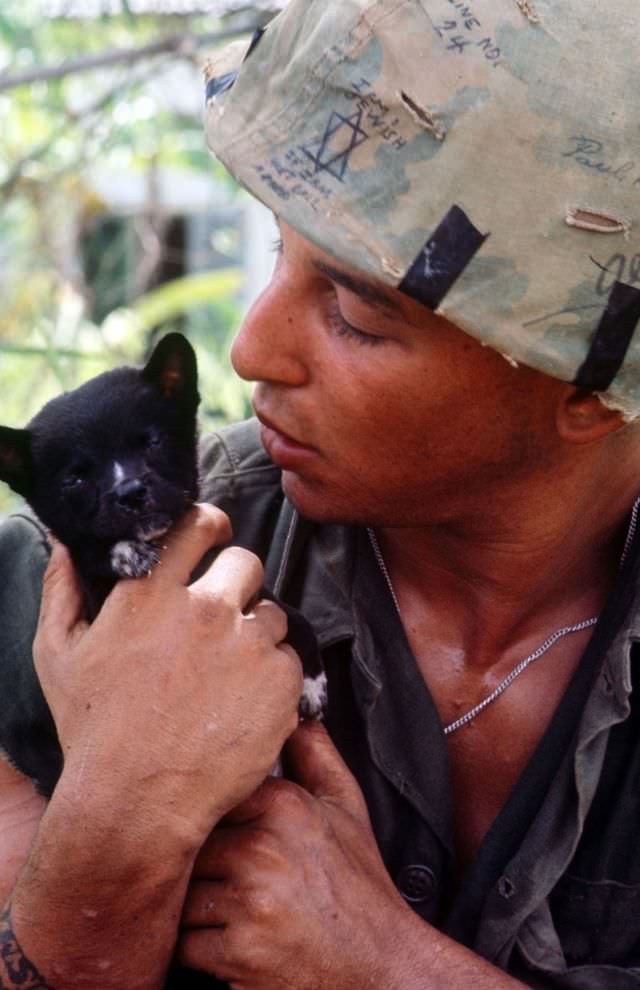
Personal identity also showed up. “I Am Jewish” on a helmet was a statement of pride in an environment where identity was often stripped away by the uniformity of military life. Hometowns like Tulsa appeared alongside broader slogans, grounding a soldier’s protest or humor in a specific place and person.
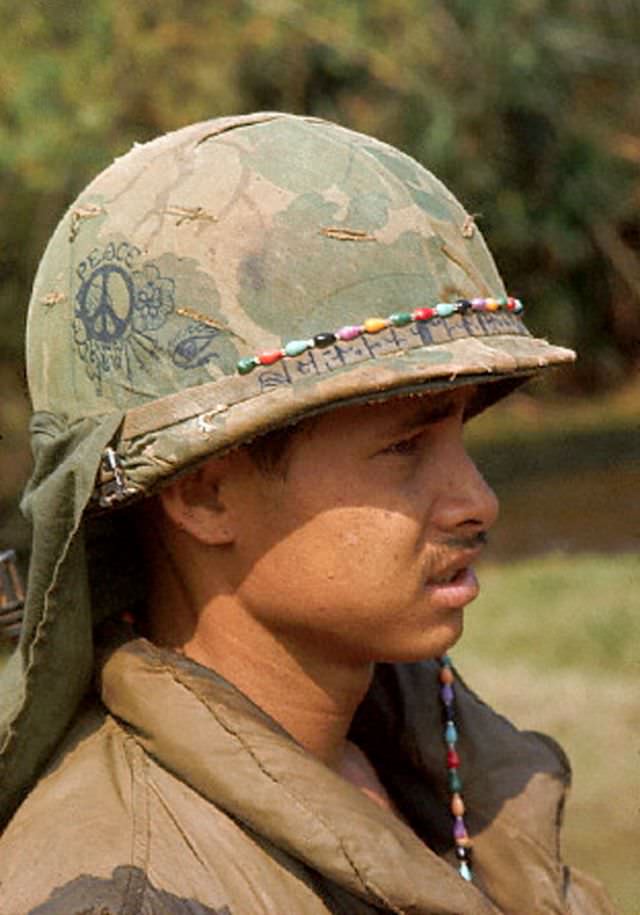
The single word “Peace” — written plainly on a helmet worn in an active war zone — carried more weight than any protest sign back home. These men weren’t observers of the conflict. They were inside it, writing their hopes and their anger and their humor in marker on the only surface they had.
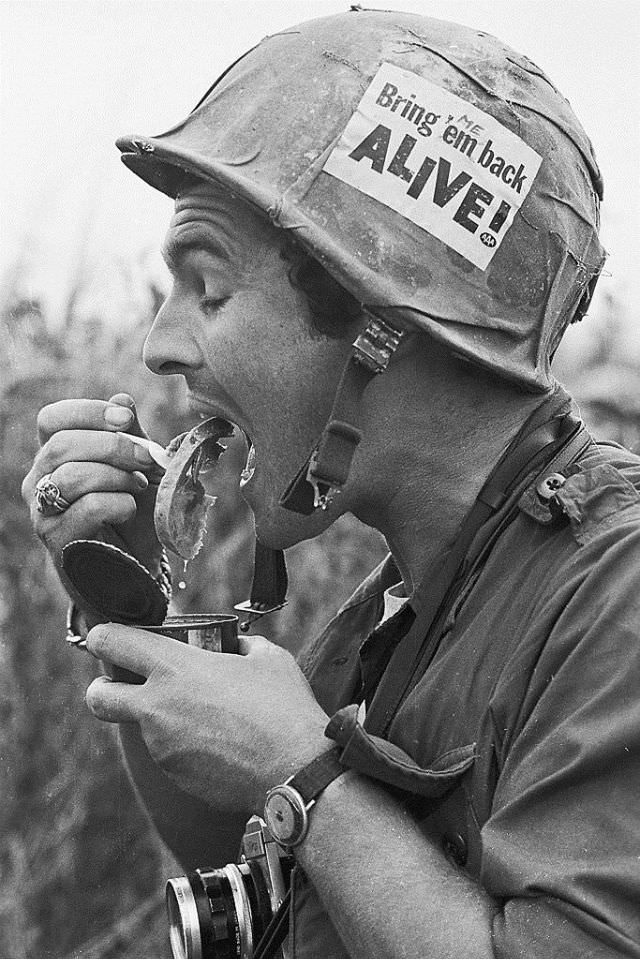
Blood type notations were practical — they helped medics work fast in a crisis. But written alongside dark jokes or personal messages, they blurred the line between utility and self-awareness. A soldier noting his blood type on the same helmet where he wrote “Bring Me Back Alive” was doing more than following protocol. He was acknowledging, in plain terms, the real possibility that he might need both.