Hey There! Before You Go. 😧
Get the best vintage content straight into your inbox!

Don't worry, we don't spam

Fascinating Vintage Photos of Soho in the 1950s That Show Street Scenes and Everyday Life

In the 1950s, Soho was unlike anywhere else in London. Packed into its narrow streets were jazz clubs, espresso bars, cheap restaurants, and bustling open-air markets. It was loud, crowded, and alive at all hours. The area attracted artists, musicians, working-class youth, and international visitors all at once. This was the beating heart of a city that was slowly shaking off postwar austerity and finding a new identity.

Gangs controlled many of the clubs and bars in Soho during this period, and police corruption was well documented. Yet despite — and in some ways because of — that lawless undercurrent, Soho became a magnet for creative people and night owls. The streets hummed with jazz, early rock and roll, and the sounds of a generation that had no interest in playing it safe.
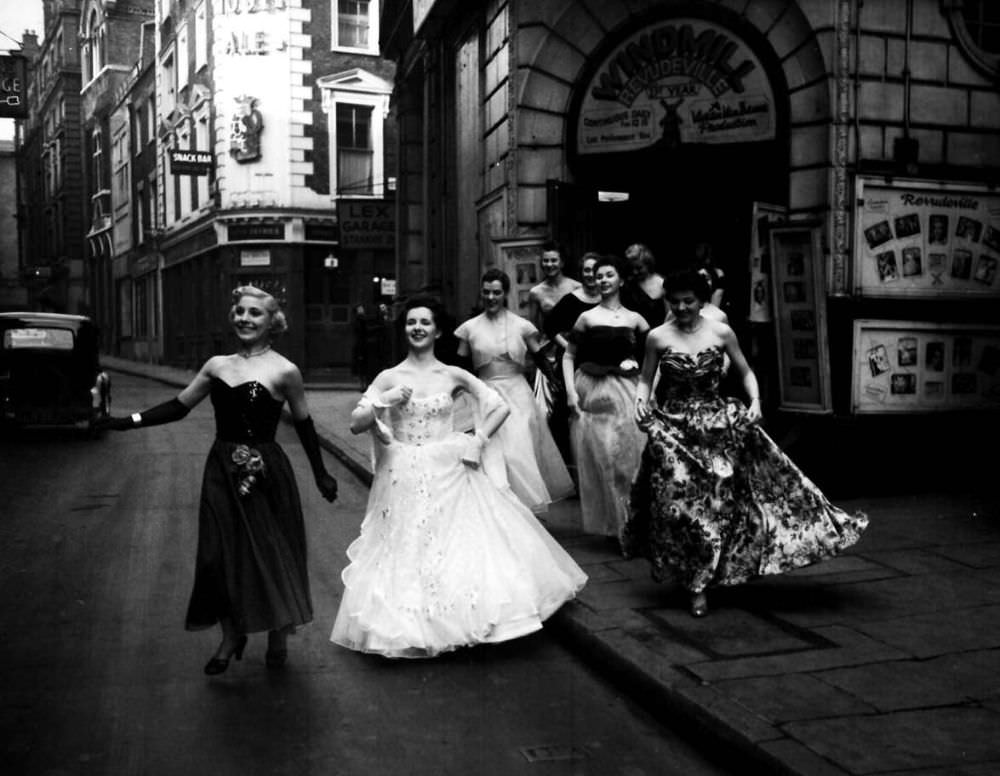
The Windmill girls dash across London's Soho to a party in 1953.
The Windmill girls dash across London’s Soho to a party in 1953.

The Windmill Theatre on Great Windmill Street was one of Soho’s most famous landmarks. It ran continuous variety shows and became known for its chorus performers. Street entertainers set up nearby to catch the foot traffic spilling out from the theatre and the surrounding clubs.
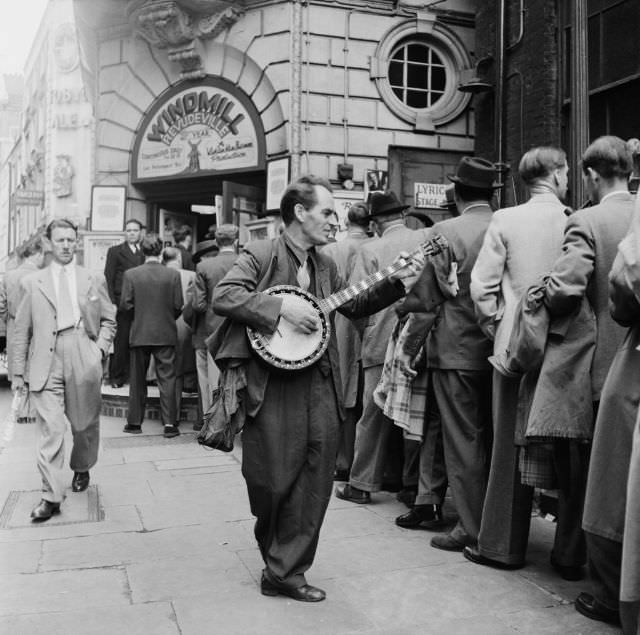
A banjo player entertaining the customers outside the Windmill Theatre, 1953.

On summer days, Londoners didn’t have to go far to find a place to relax. St Anne’s Churchyard Gardens offered a rare patch of green in the middle of the neighbourhood, and during heat waves, locals made full use of it.
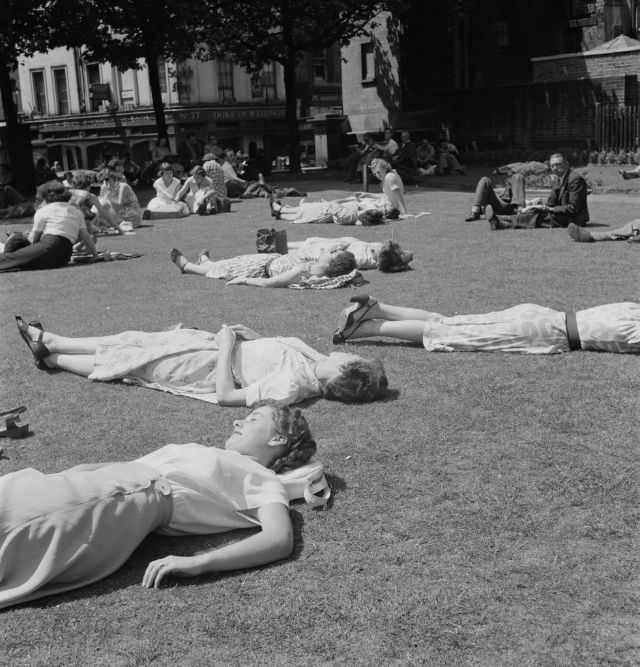
Londoners relaxing during a summer heat wave at St Anne's Churchyard Gardens, 1952.
Londoners relaxing during a summer heat wave at St Anne’s Churchyard Gardens, 1952.

Shaftesbury Avenue cut through the edge of Soho, lined with theatres and foot traffic at all hours. Visitors and locals alike made it part of their regular circuit through the neighbourhood.
The Barbour Brothers from Blackpool strolling down Shaftesbury Avenue, 1952.

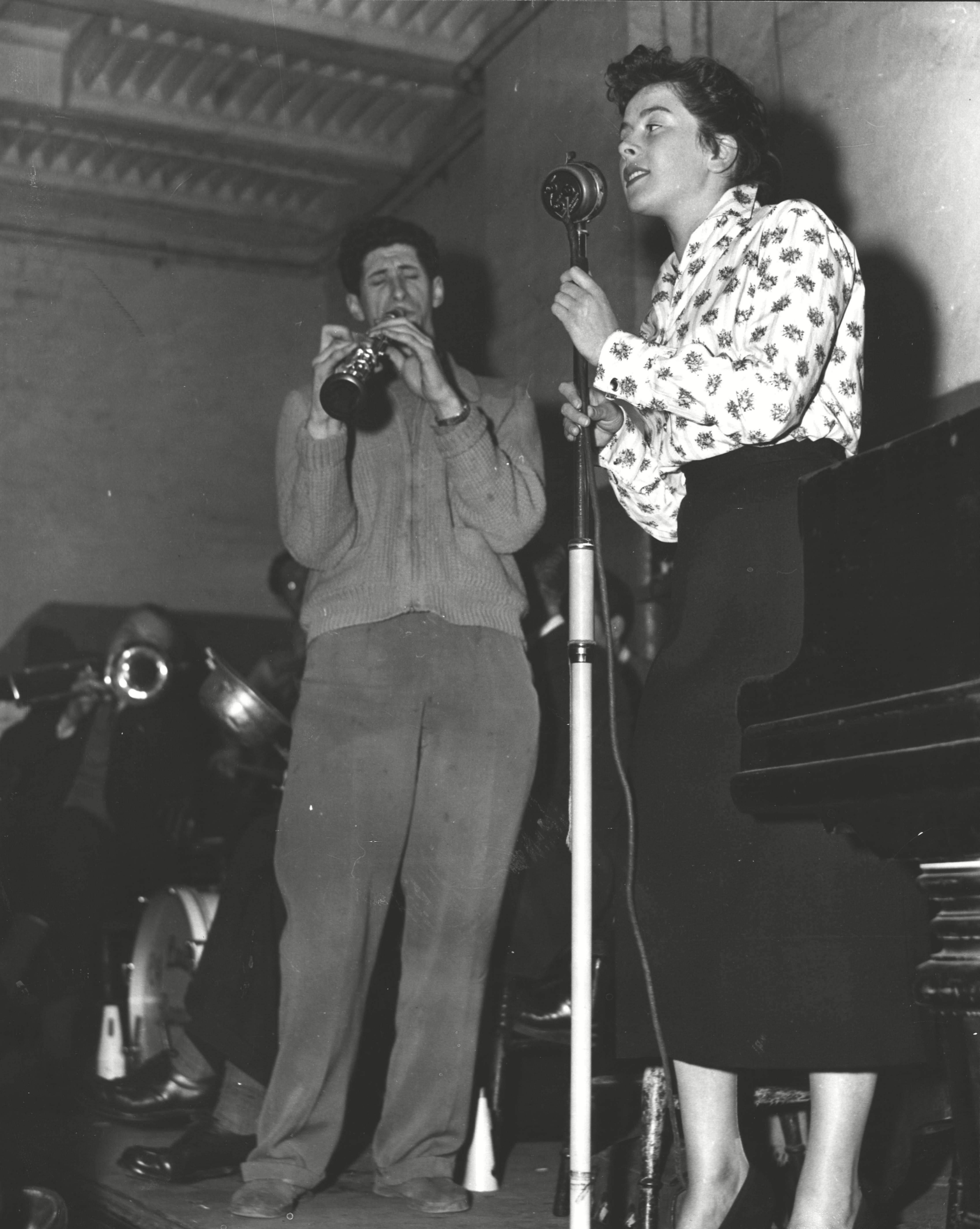
Jazz was central to Soho’s identity in the 1950s. Clubs like Cy Laurie’s drew serious audiences who came to listen, dance, and be part of a scene that felt genuinely underground. The Blue Heaven was another fixture, where couples danced close to live music in dimly lit rooms.
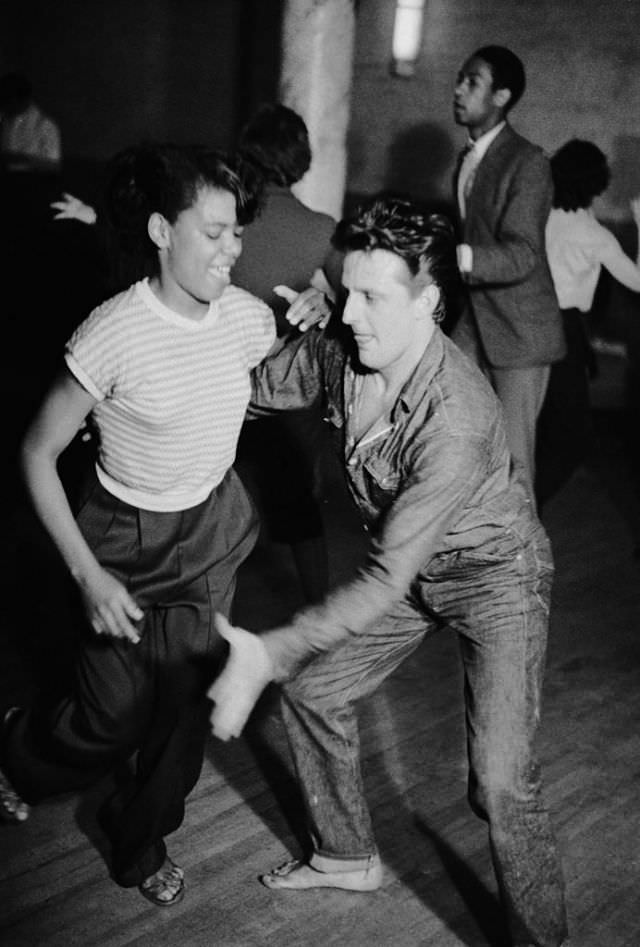
A couple dancing at jazz club the Blue Heaven, 1954.
School Teacher Pam Heagren Singing At Cy Laurie's A Soho Jazz Club, April 1956.
School Teacher Pam Heagren Singing At Cy Laurie’s A Soho Jazz Club, April 1956.

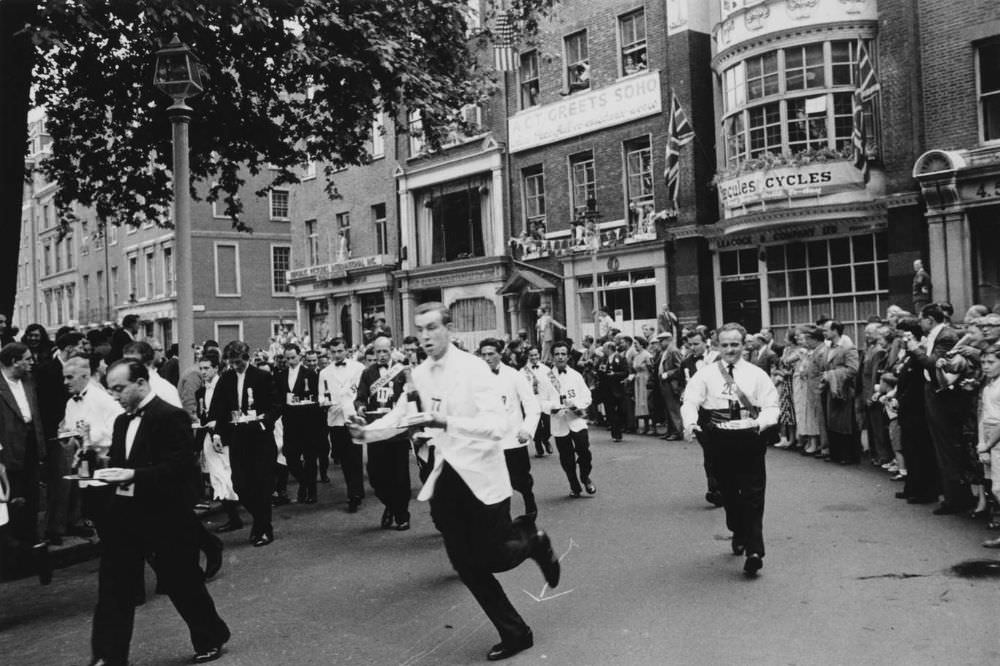
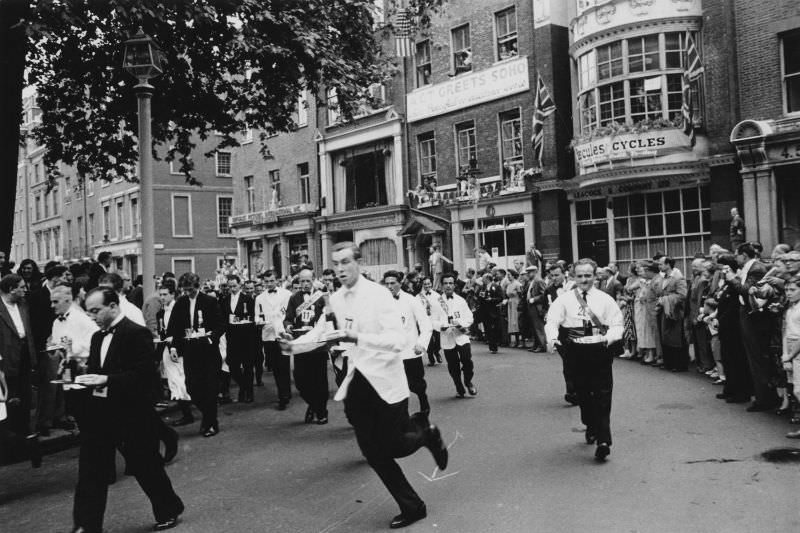
The annual Soho Fair was one of the neighbourhood’s biggest events. It drew crowds into the streets with parades, contests, and pageantry. In 1955, the fair opened with a prizewinning tableau carried through the streets, while waiters competed in their own race, balancing half-bottles of champagne from Soho Square to Greek Street.
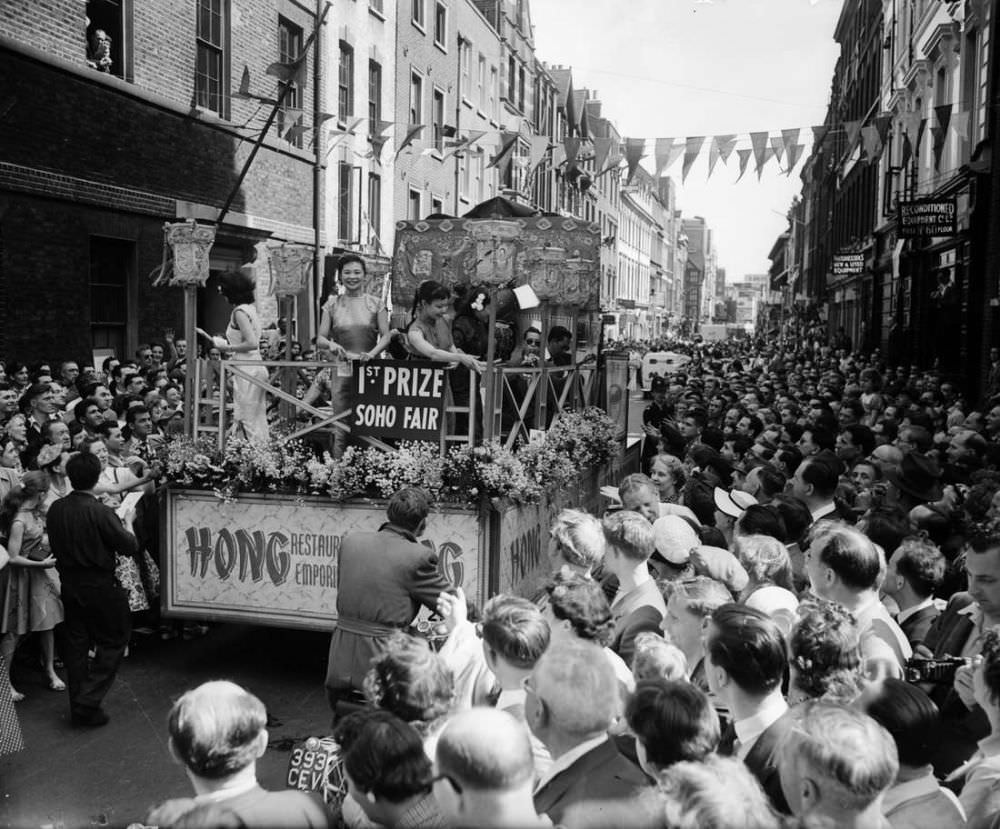
The first prizewinning tableau on parade through the streets of Soho, London, at the opening of the Soho Fair in 1955.
Waiters carrying half bottles of champagne set off on the annual waiters' race from Soho Square to Greek Street in 1955.
Waiters carrying half bottles of champagne set off on the annual waiters’ race from Soho Square to Greek Street in 1955.

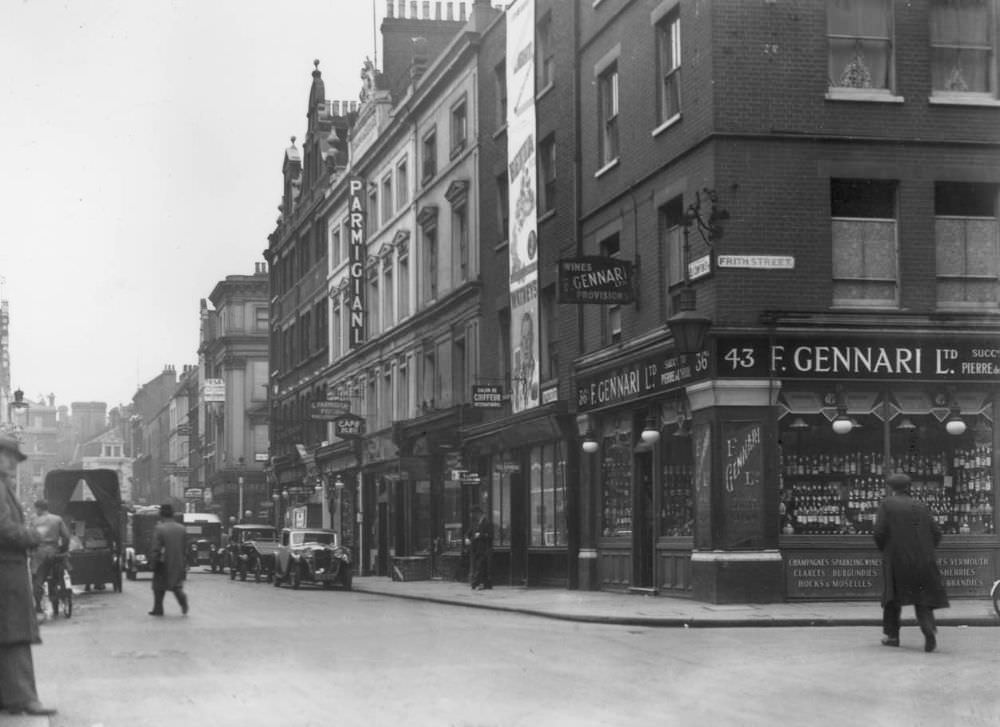
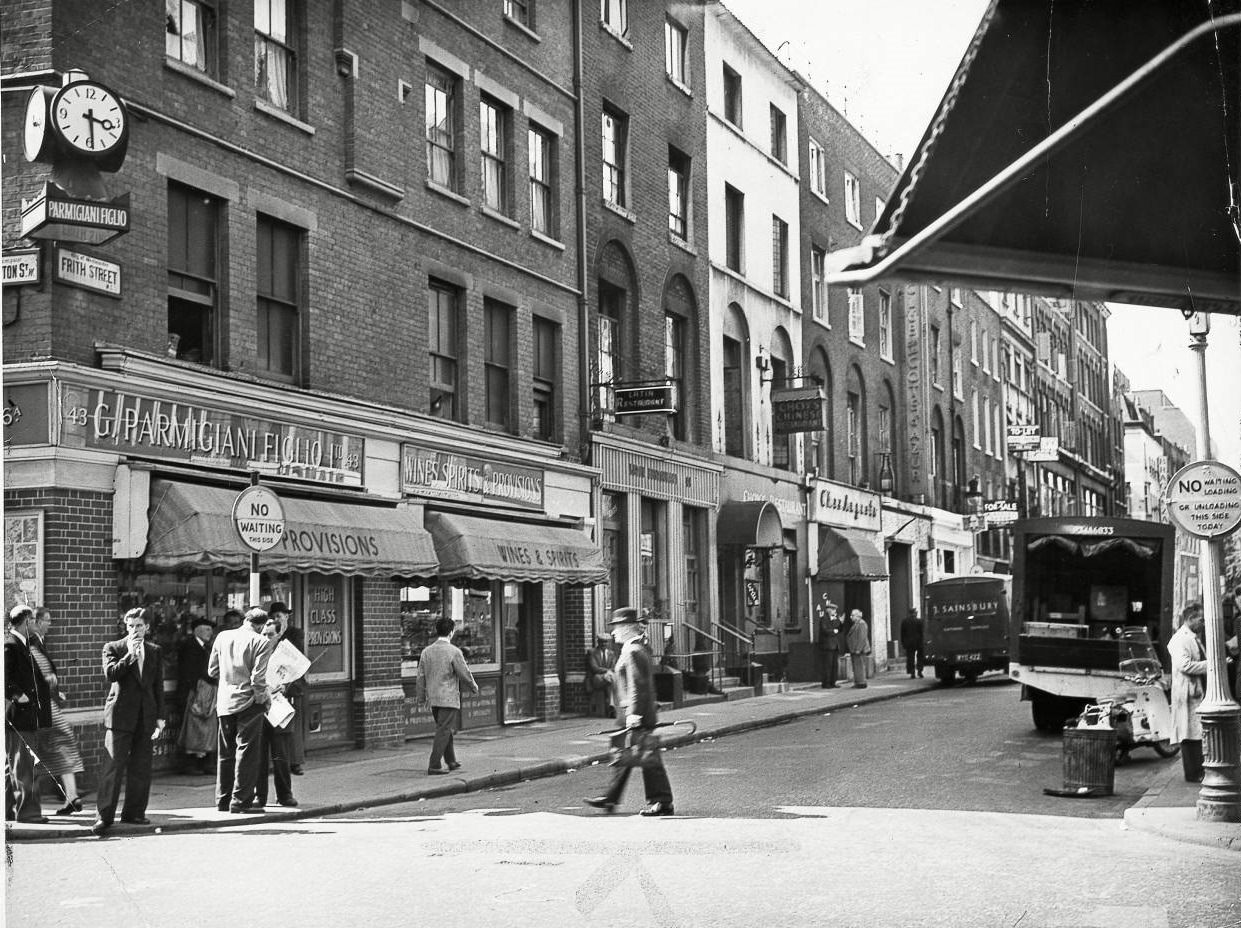
Frith Street was one of Soho’s main arteries. In 1955, its shopfronts and cafes reflected the eclectic mix the neighbourhood was known for — Italian delis next to music venues, coffee bars steps away from pubs.
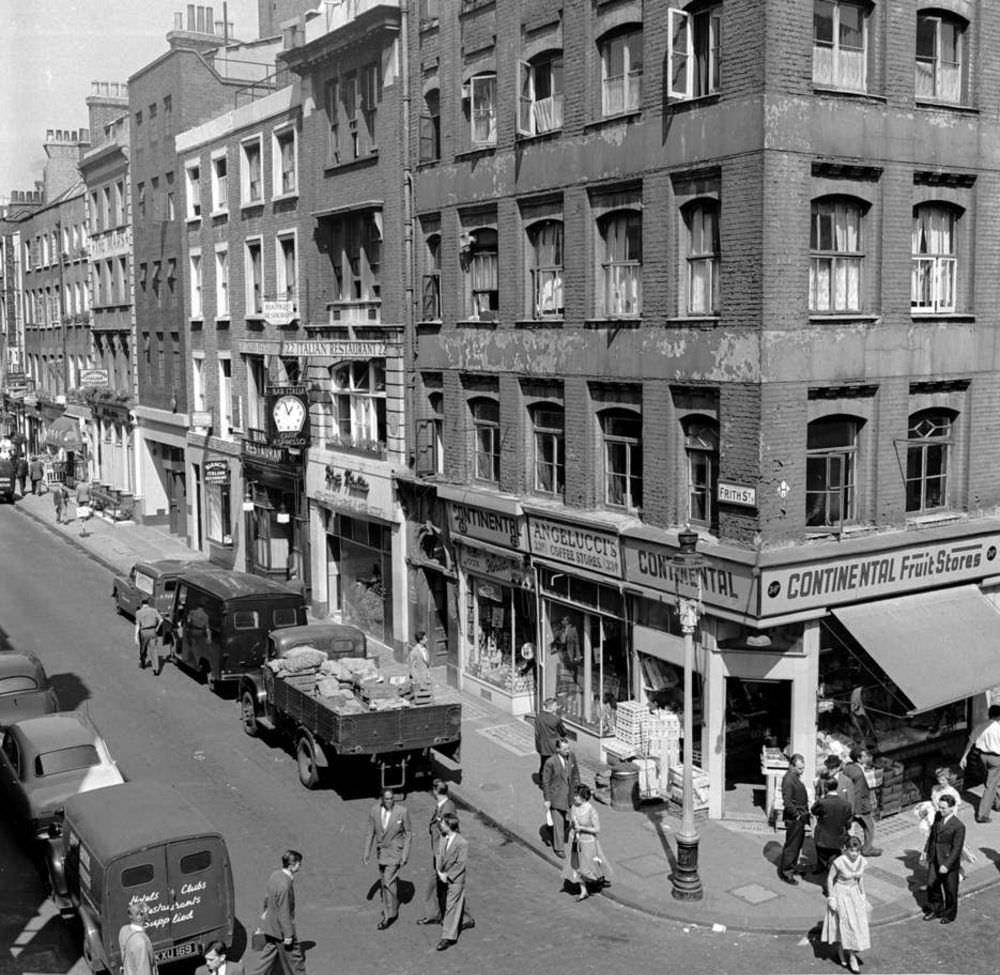
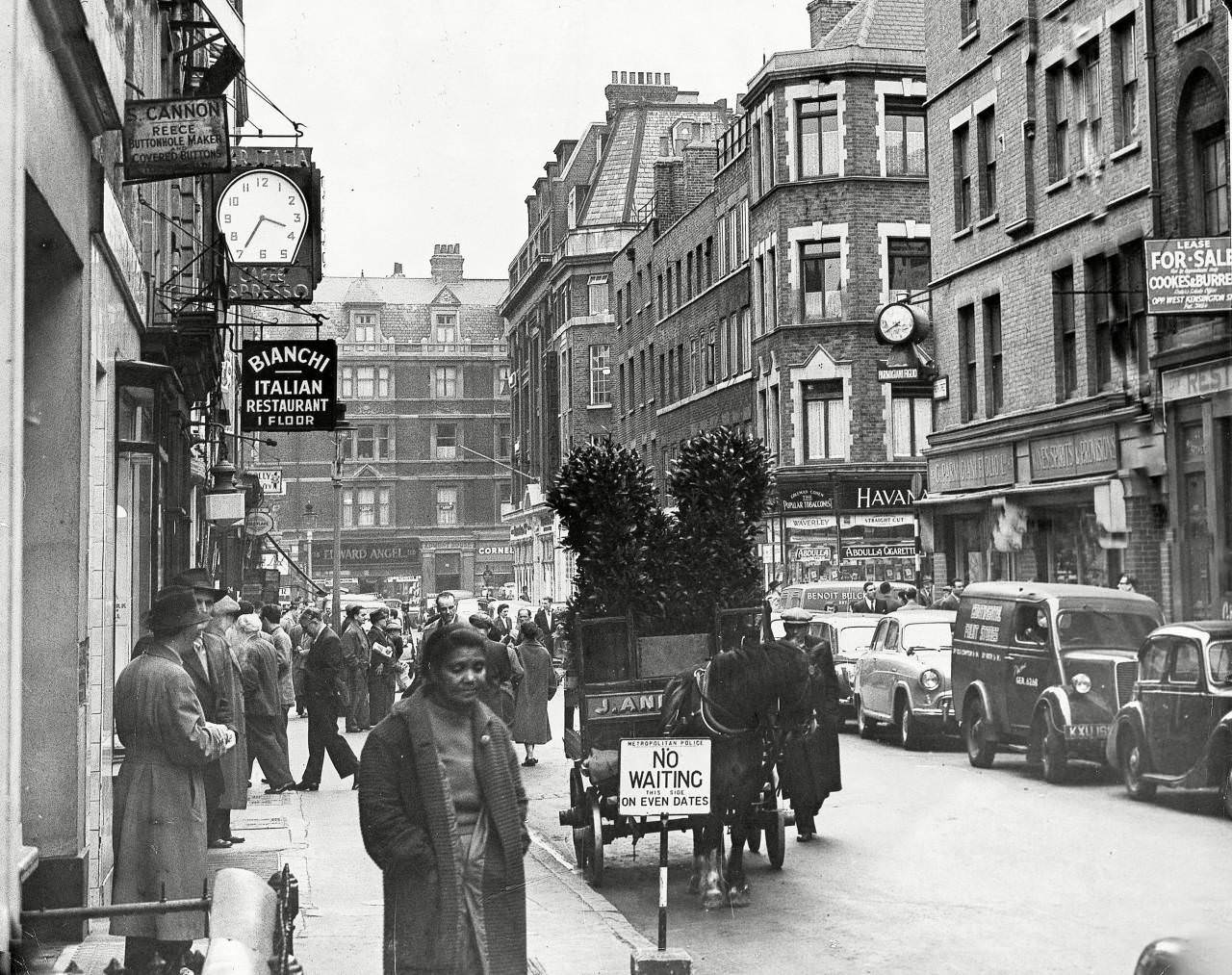
Frith Street in Soho, London in 1955.
Frith Street in Soho, April 1955.

Young people gathered on Soho’s streets in groups, treating the neighbourhood as their own open-air social club. The backstreets were just as lively as the main roads. For London’s youth in the mid-1950s, Soho was where you went to see and be seen.
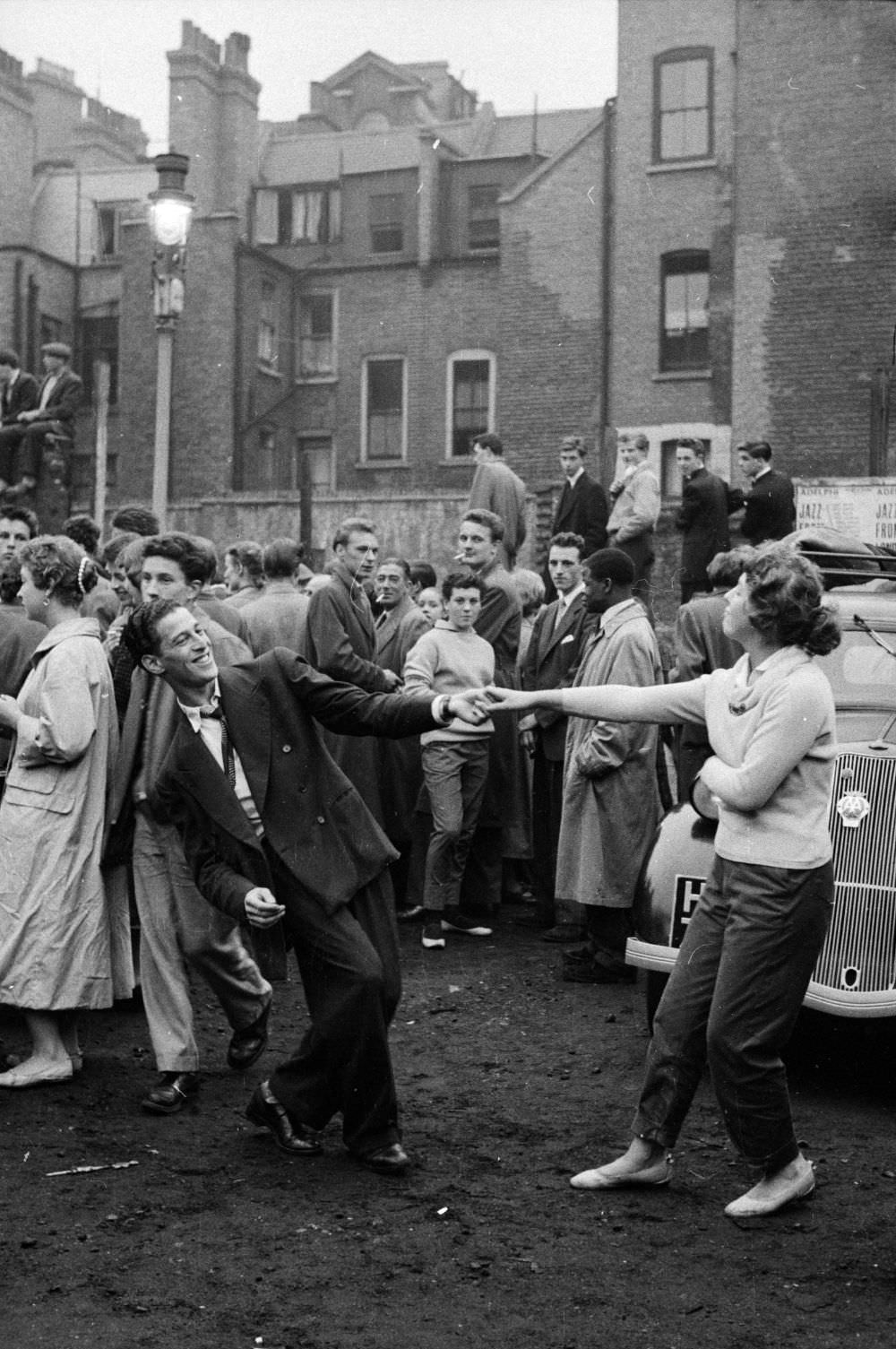
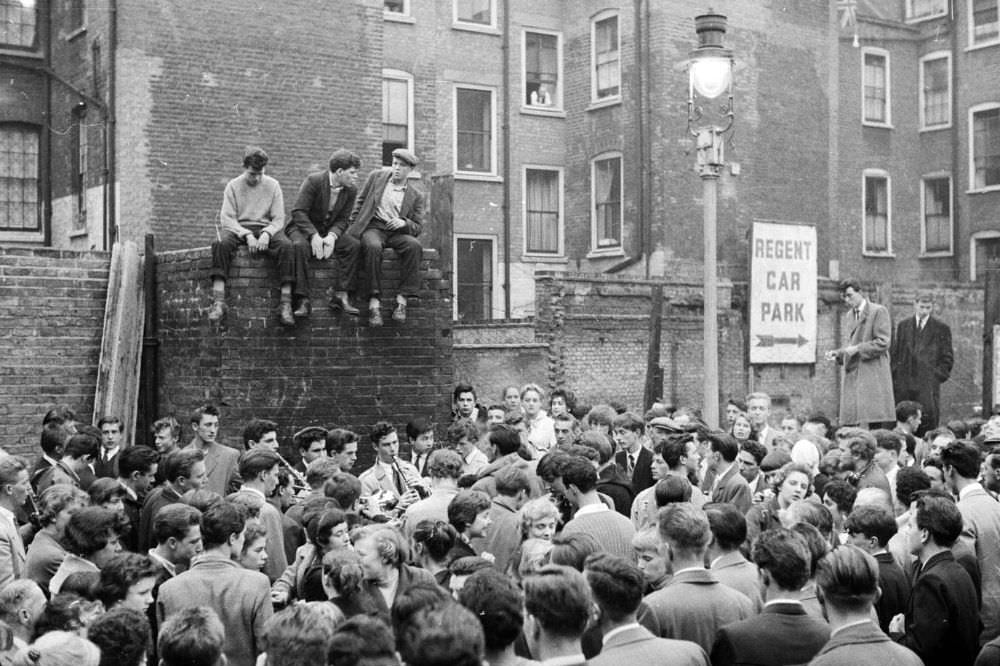
London's youth hang out on the streets of Soho in 1956.
London’s youth hang out on the streets of Soho in 1956.
London's youth hang out on the streets of Soho in 1956.
London’s youth hang out on the streets of Soho in 1956.
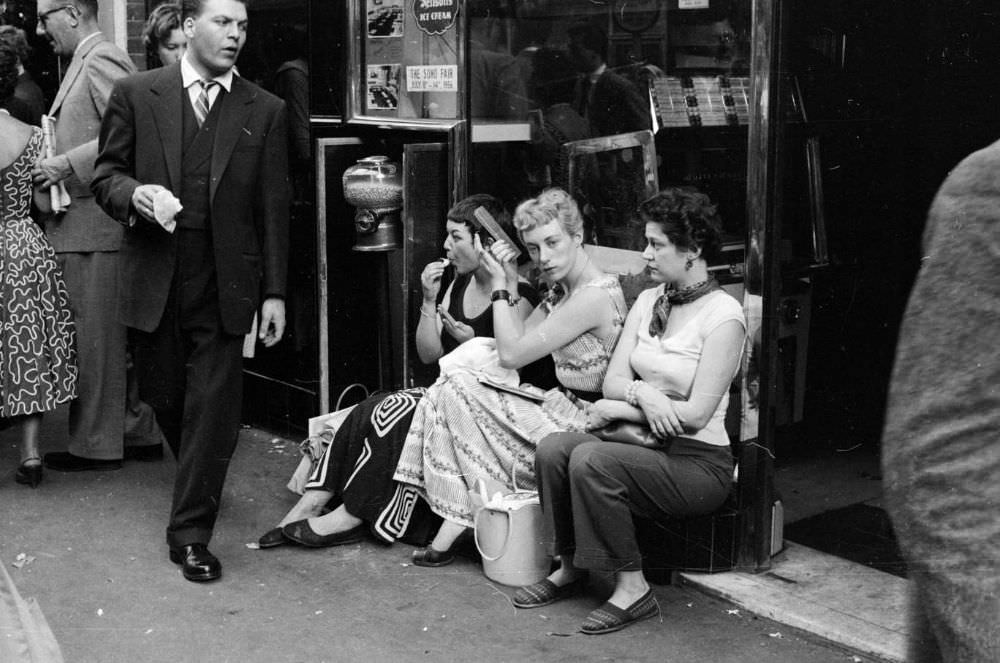
A group of young women 'hanging out' on the streets of Soho, London in 1956.
A group of young women ‘hanging out’ on the streets of Soho, London in 1956.
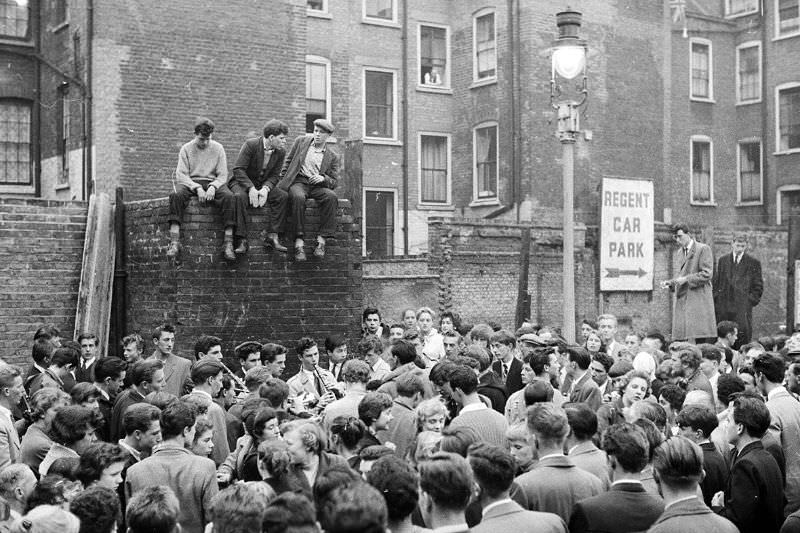
London's youth hanging out on the backstreets, 1956.
London’s youth hanging out on the backstreets, 1956.

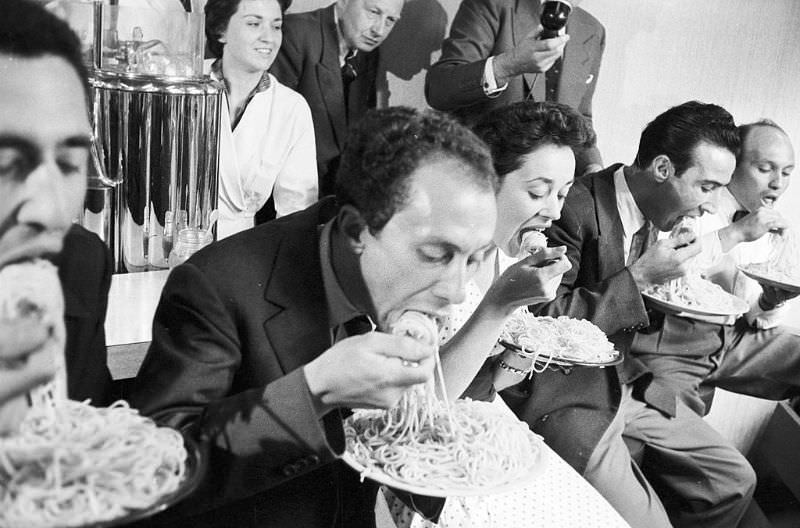
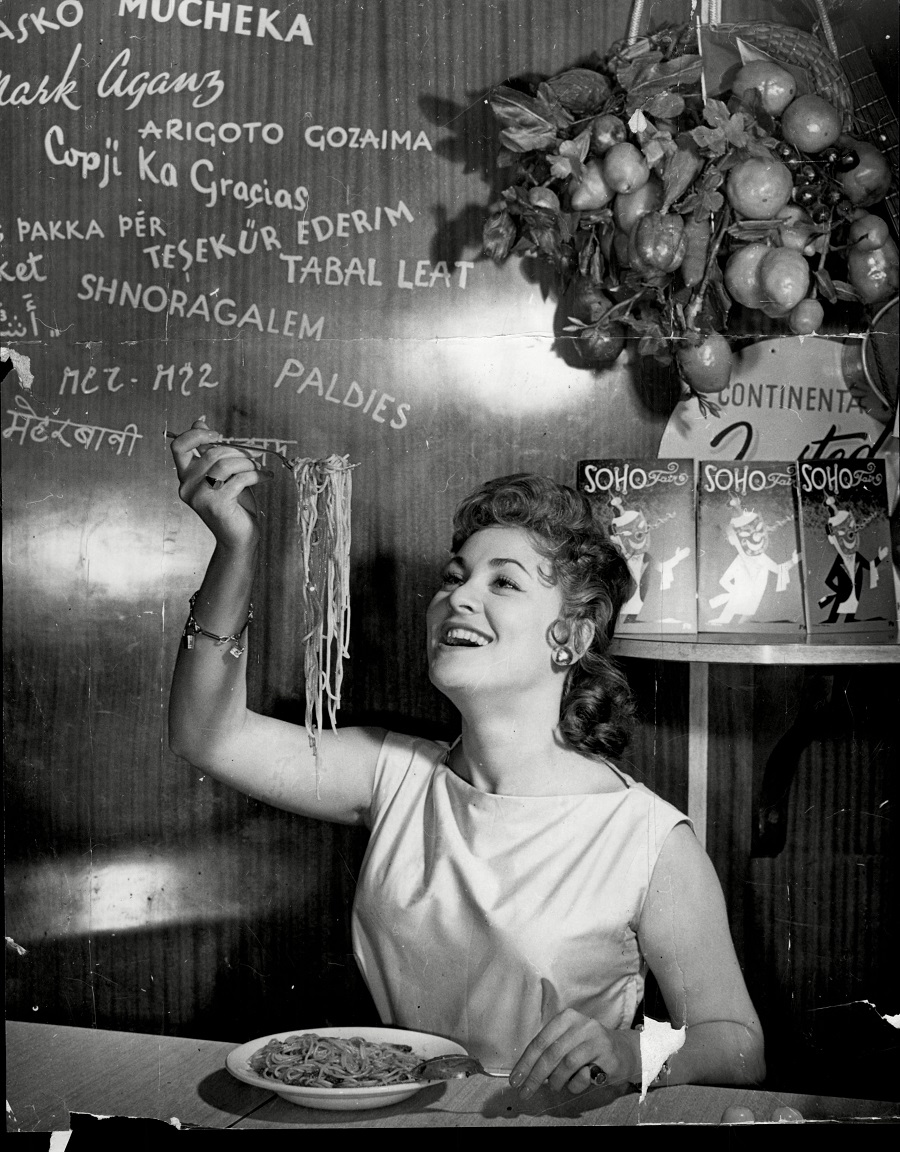
The 1956 Soho Fair included a spaghetti-eating contest held on Frith Street, which drew quite a crowd. Andria Loran, democratically elected as Queen of Soho 1956 under her real name Maureen Smith, competed alongside Mirv Arvinen, Miss Finland 1955. The event captured the playful, international character that Soho had developed by the mid-decade.
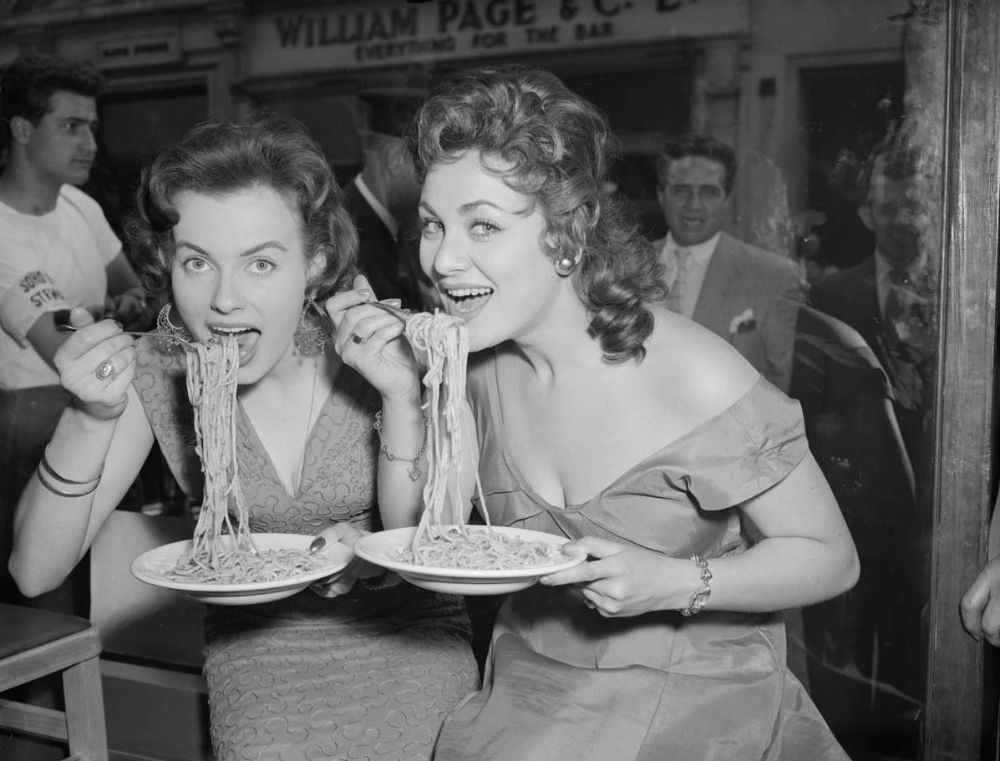
Mirv Arvinen (Miss Finland 1955) and Soho's Fair Queen Andria Loran (right) try their hand at scoffing a plate of pasta at the Soho Fair spaghetti-eating contest on Frith Street, Soho, London in 1956.
Mirv Arvinen (Miss Finland 1955) and Soho’s Fair Queen Andria Loran (right) try their hand at scoffing a plate of pasta at the Soho Fair spaghetti-eating contest on Frith Street, Soho, London in 1956.
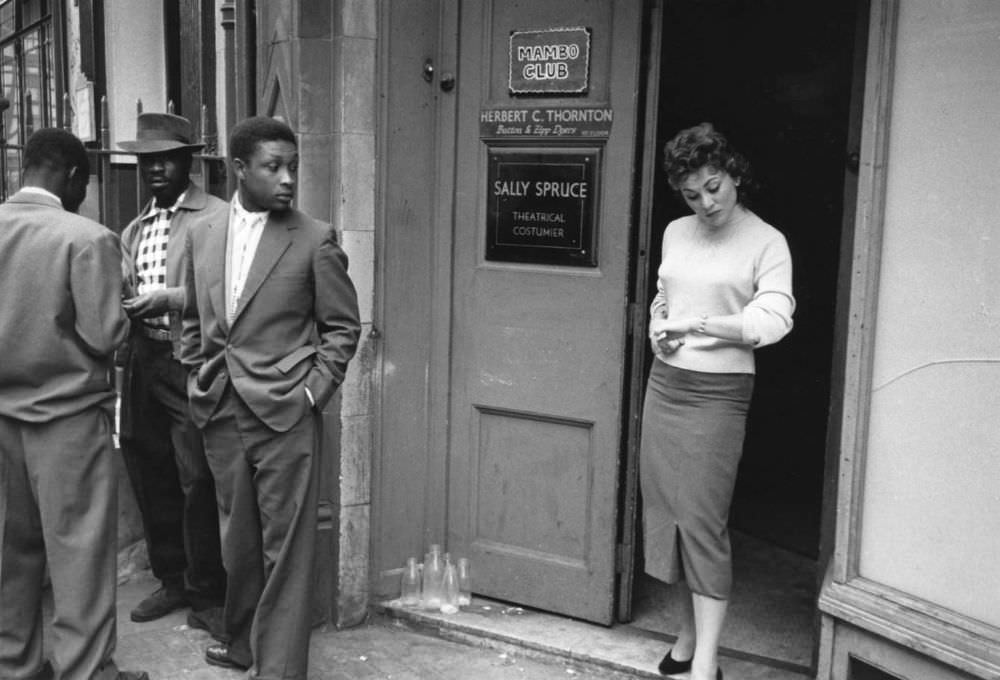
Andria Loran, a model in London's Soho, democratically elected 'Queen of Soho 1956', stands in the doorway of the Mambo Club.
Andria Loran, a model in London’s Soho, democratically elected ‘Queen of Soho 1956’, stands in the doorway of the Mambo Club.
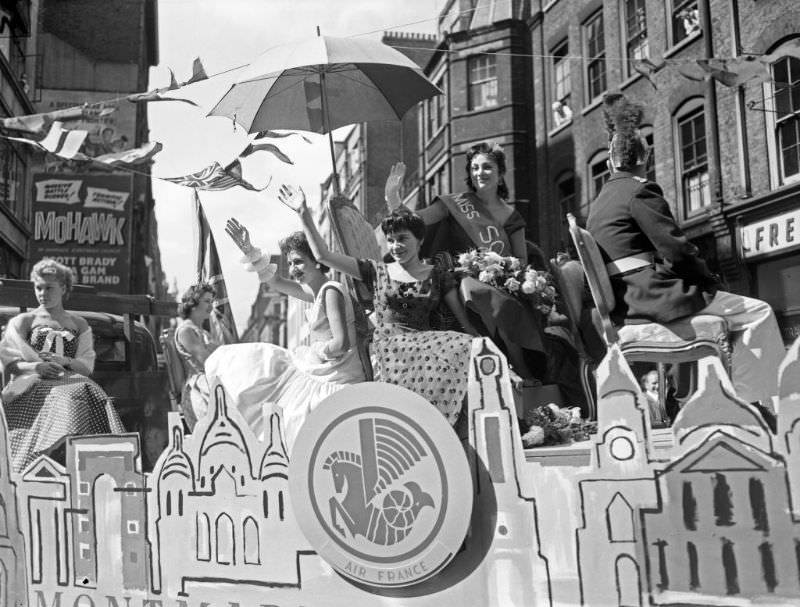
Miss Soho waving to the crowds during the annual Soho Fair, 1956.
Pasta eating contest, 1956.
Soho's Fair Queen Andria Loran (real Name Maureen Smith) tries her skill at Spaghetti Eating, July 1956.
Soho’s Fair Queen Andria Loran (real Name Maureen Smith) tries her skill at Spaghetti Eating, July 1956.

The fair’s parade along Old Compton Street was a spectacle in its own right. It drew all kinds of participants and onlookers, and the atmosphere on the street was loud and celebratory.
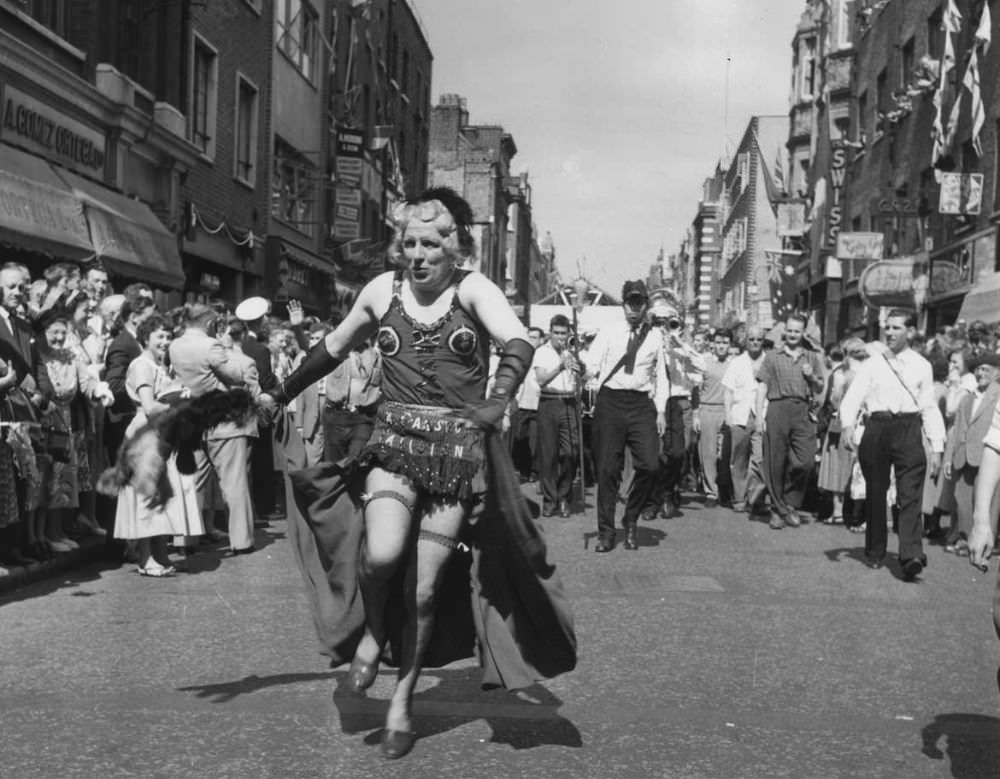
A man in drag heads a carnival procession down Old Compton Street during the Soho Fair in 1956.

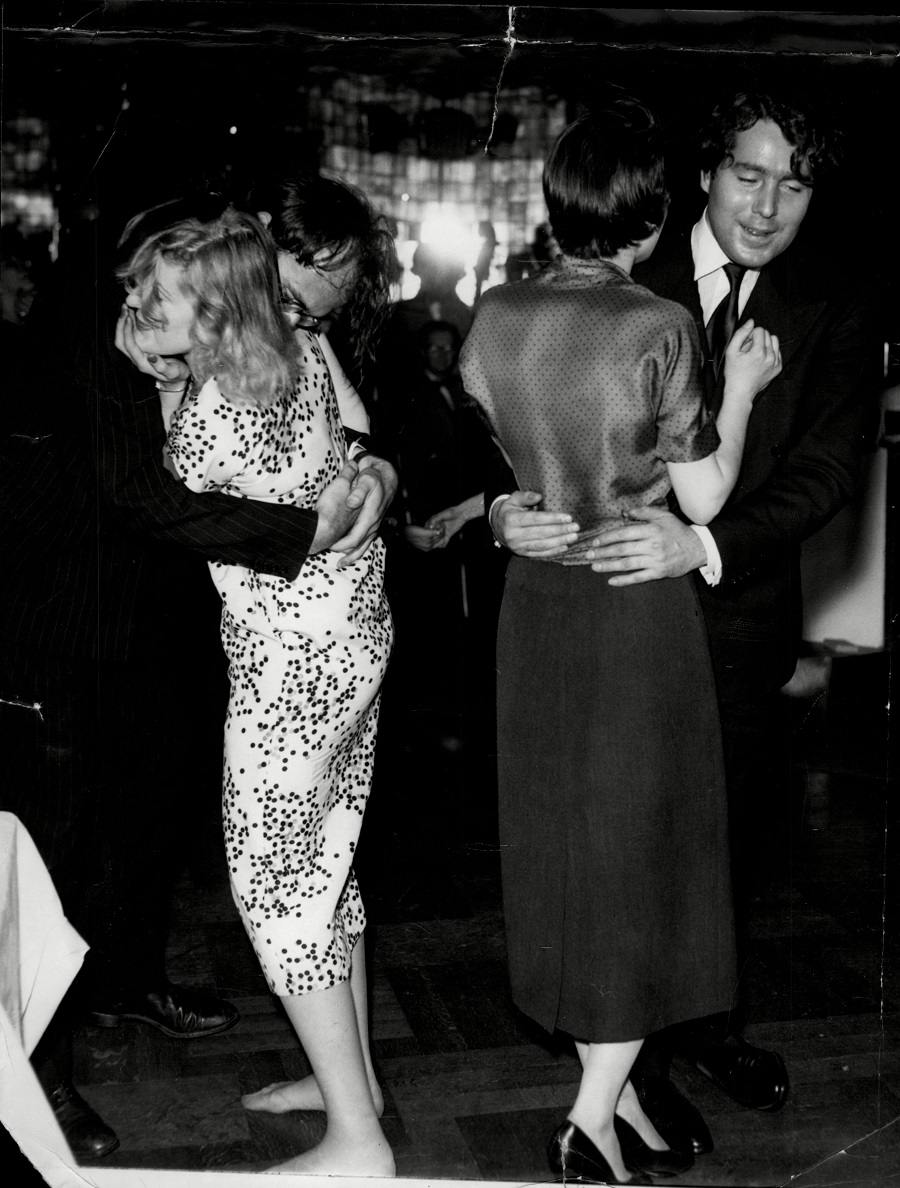
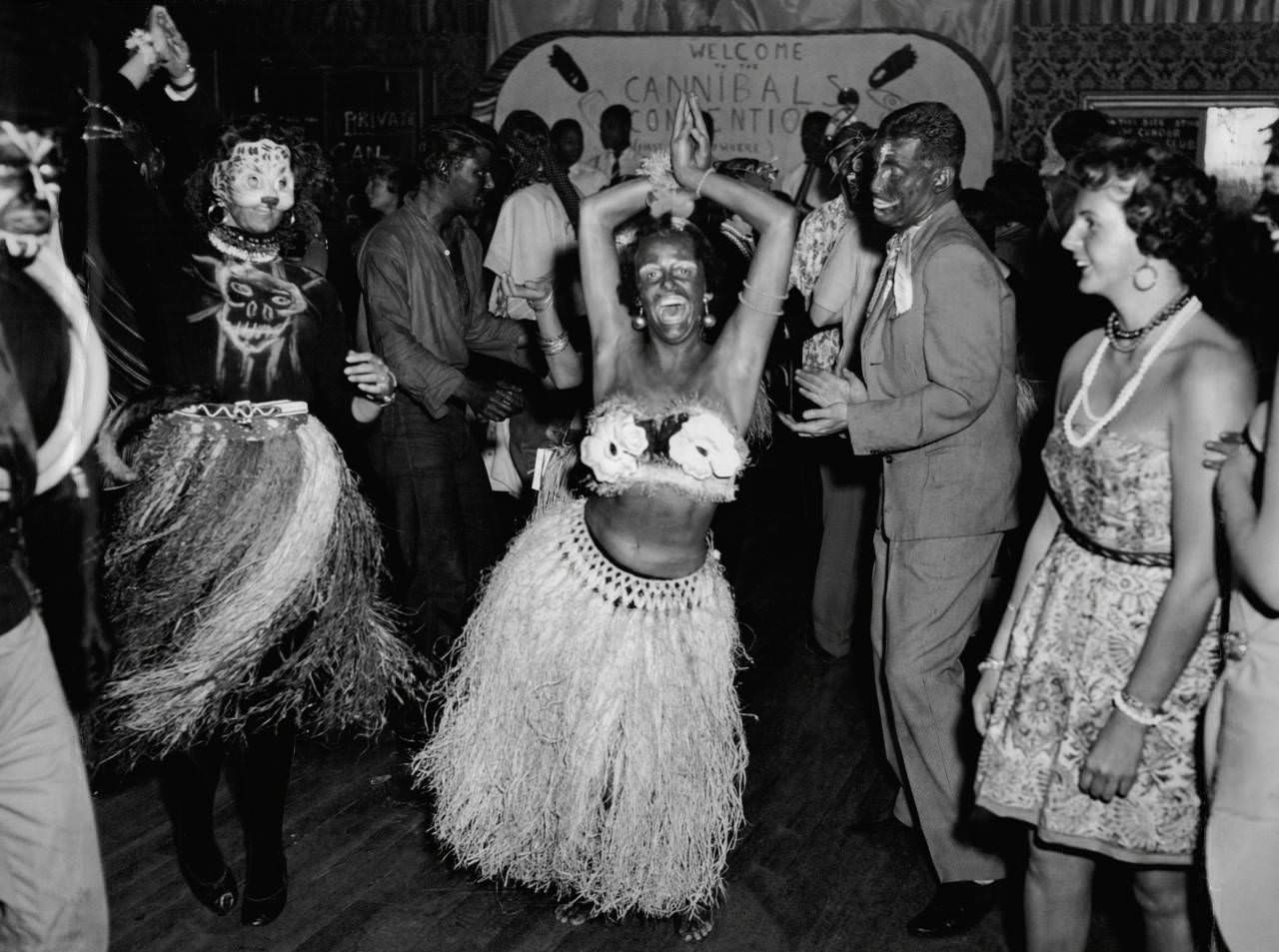
Soho’s nightlife in 1956 was thriving. The Gargoyle Club on Dean Street attracted a well-connected crowd, with notable figures from London’s social and artistic circles dancing late into the night. The Le Condor Club on Wardour Street hosted themed events that brought diverse crowds together.
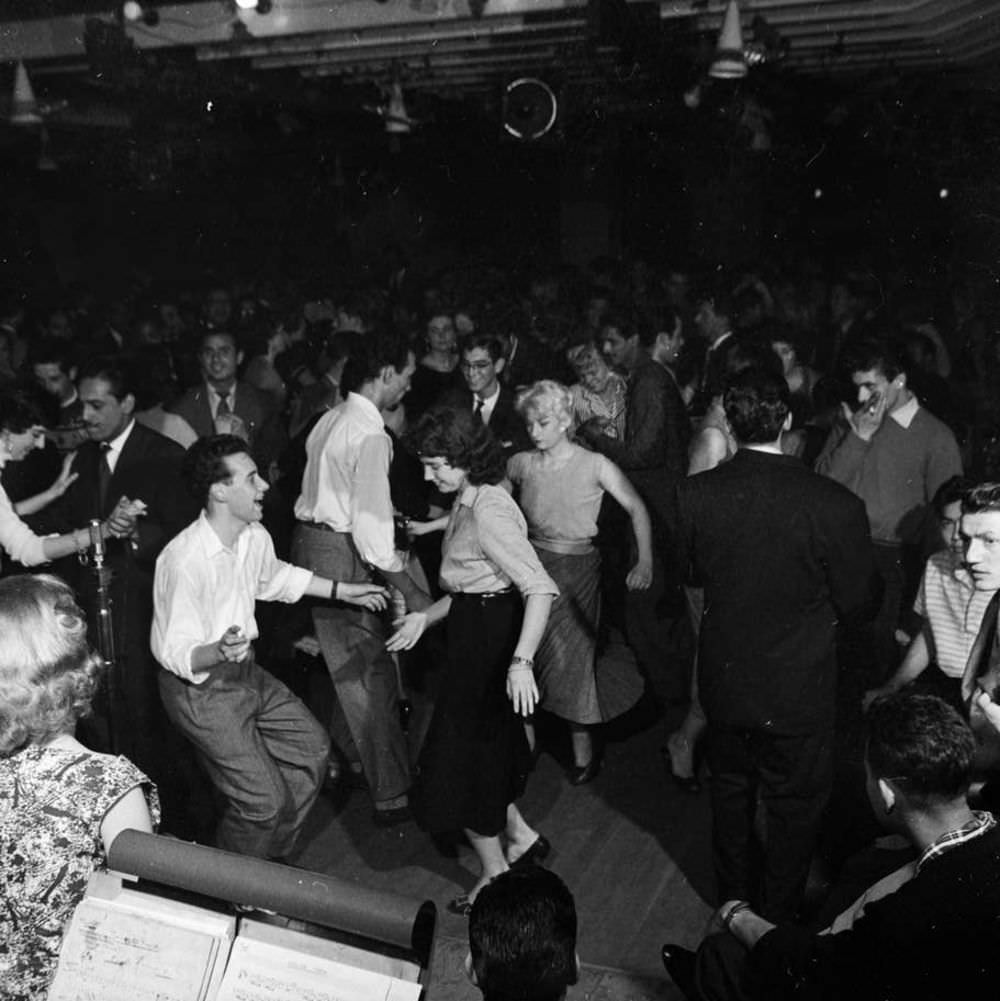
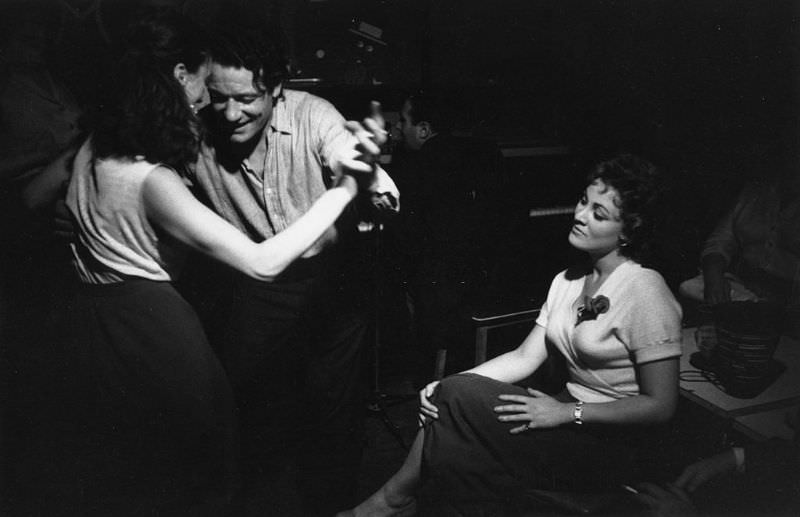
Londoners enjoy the Soho nightlife in 1956.
People dancing at the Gargoyle Club, 1956.
Left Nicholas Mosley (Baron Ravensdale) And Mrs Raymond Carr Right Lady Grantley And David Tennant Dancing At The Gargoyle Club In Soho London.
African ball at Le Condor Club in Wardour street Soho London 16 Nov 1956.

Soho’s streets were equally busy during the day. Women would stop to greet each other on corners, young men would lean against storefronts, and the markets drew shoppers from across the city. Two women leaning from the windows of a brothel on a 1956 street was a common enough sight — prostitution operated openly in parts of Soho during this era.
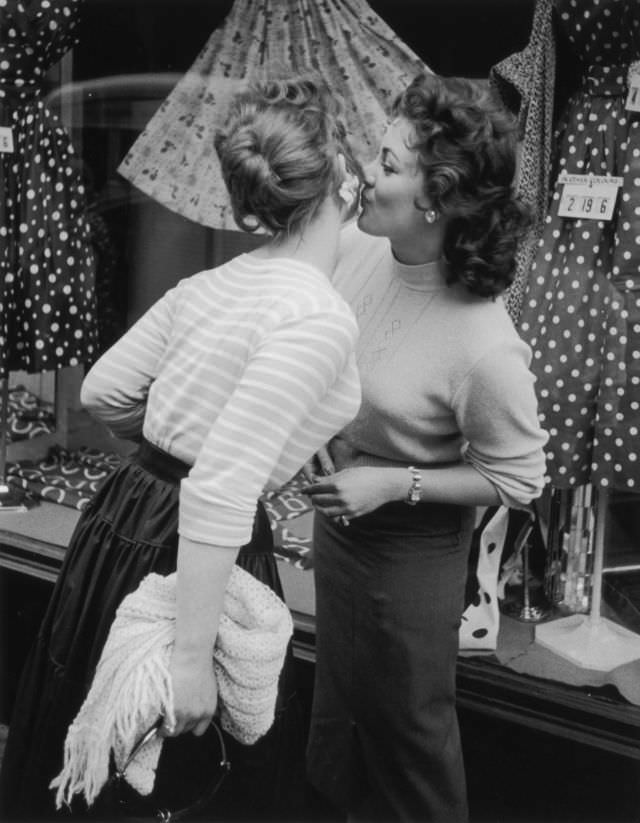
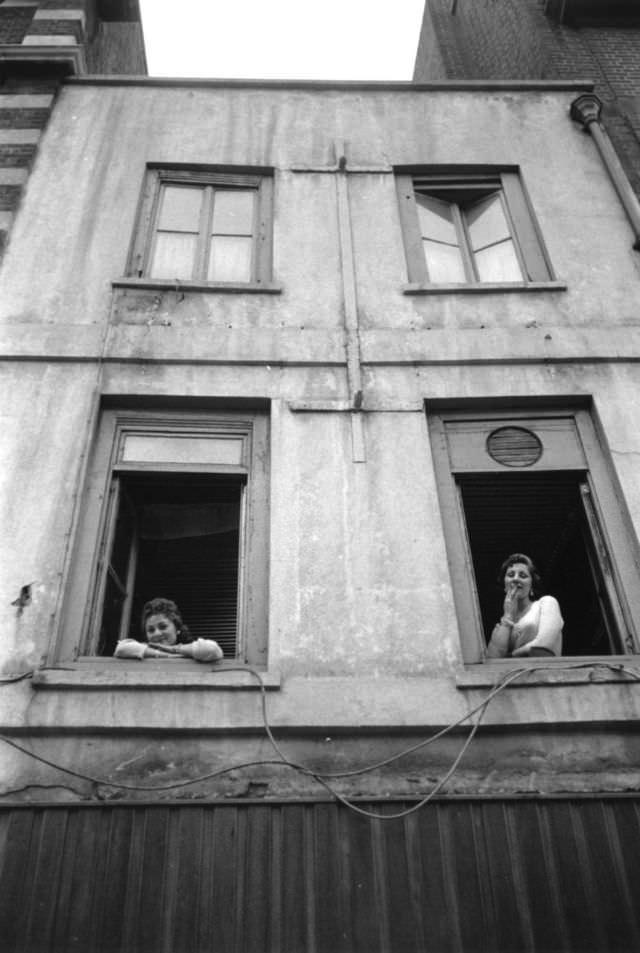
Young girls greeting each other, 1956.
Two women leaning out the windows of a brothel, 1956.

Brewer Street and Wardour Street formed another busy corridor in Soho. Shops, food vendors, and bars lined both sides, and in summer the streets were rarely quiet. The corner where the two streets met was a recognisable spot for anyone who spent time in the neighbourhood.
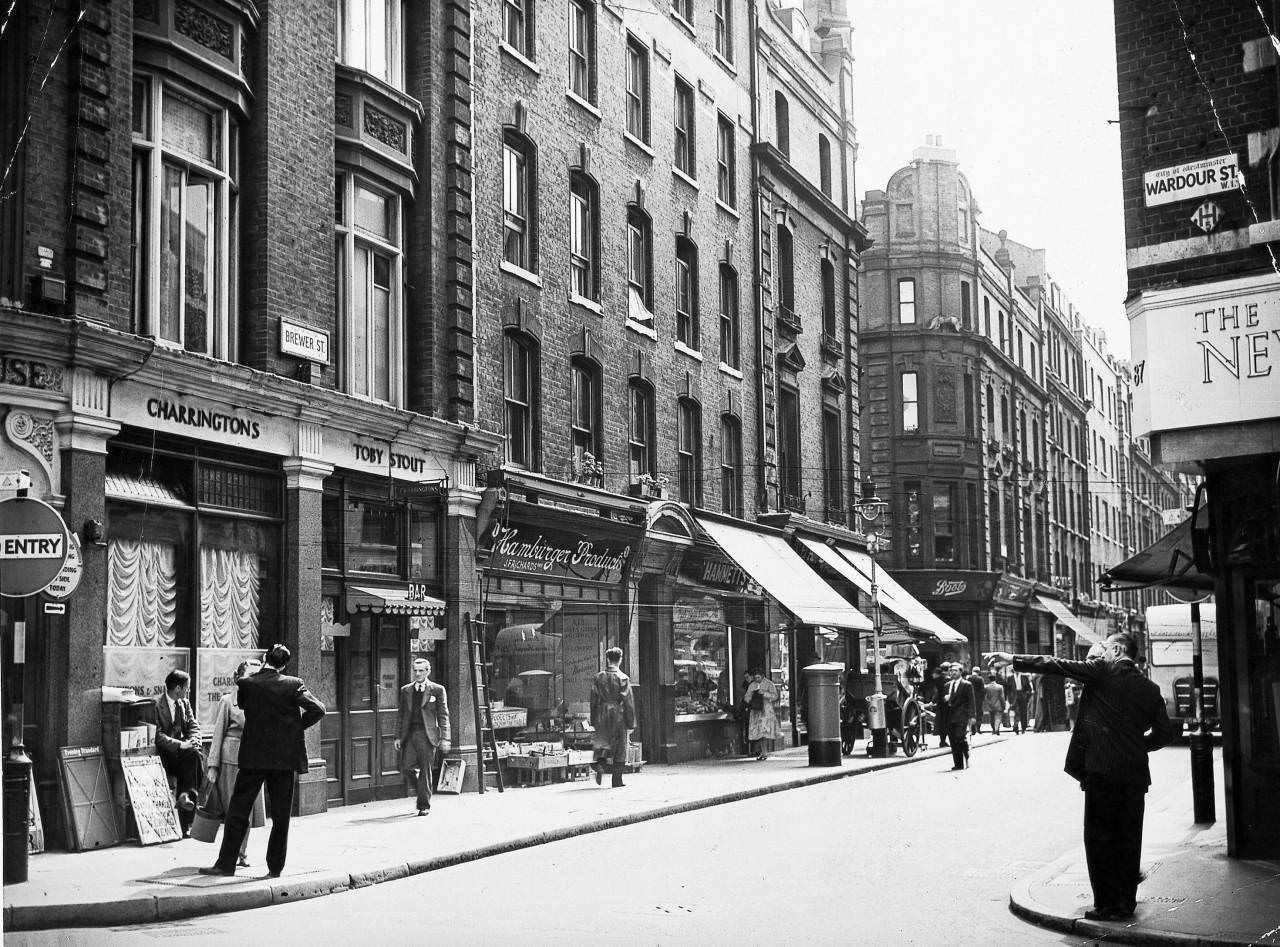
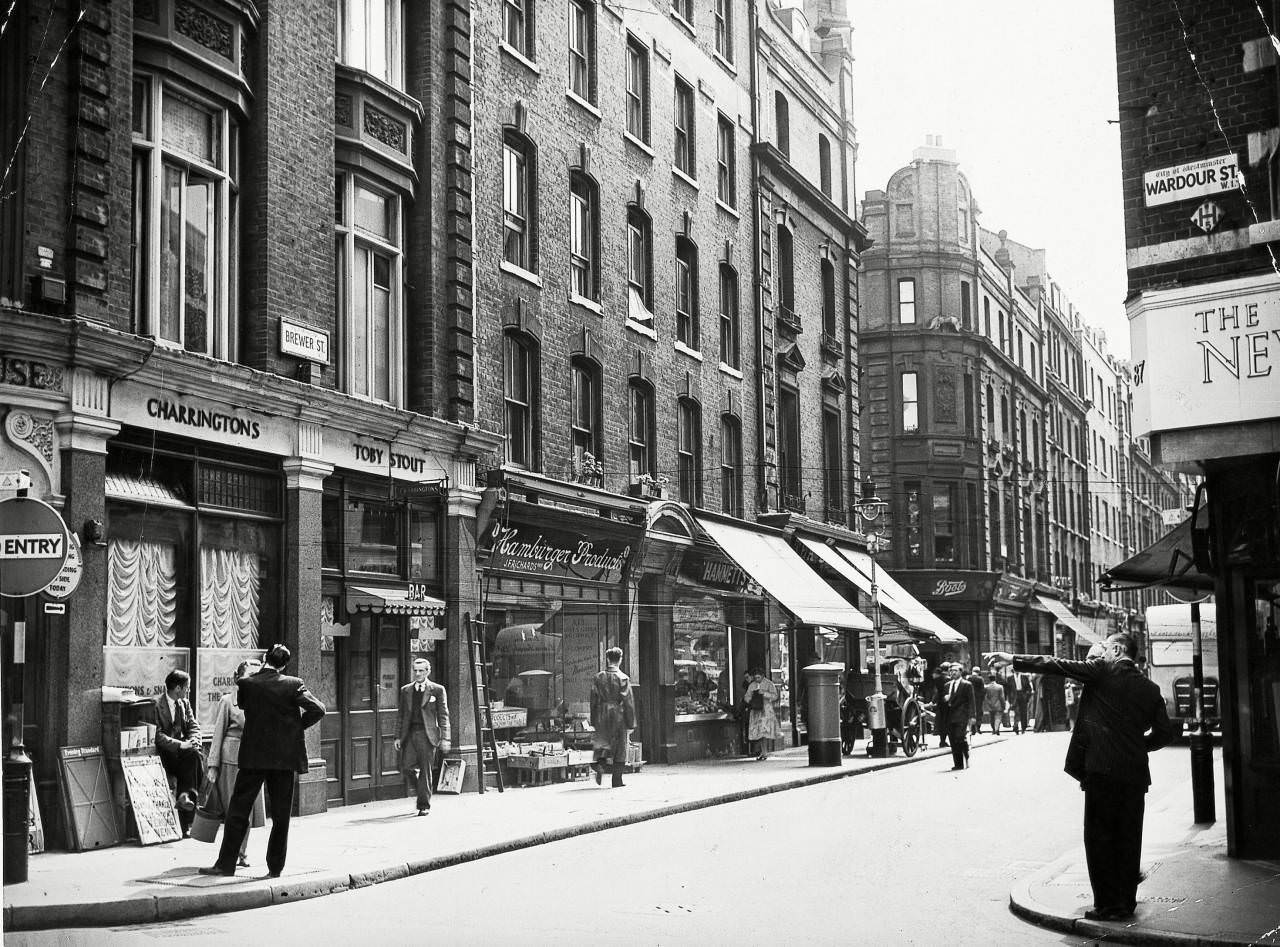
Brewer Street and the corner of Wardour Street in Soho, London, July 1956.
Brewer Street and the corner of Wardour Street in Soho, London, 29 Jul 1956.

Soho’s food scene was a genuine draw. The neighbourhood had a strong Italian and continental European influence, with delis and restaurants serving food that was still relatively exotic to many Londoners. Restaurants like the Moulin D’Or employed trained chefs who brought professional kitchen discipline to Soho’s dining scene.
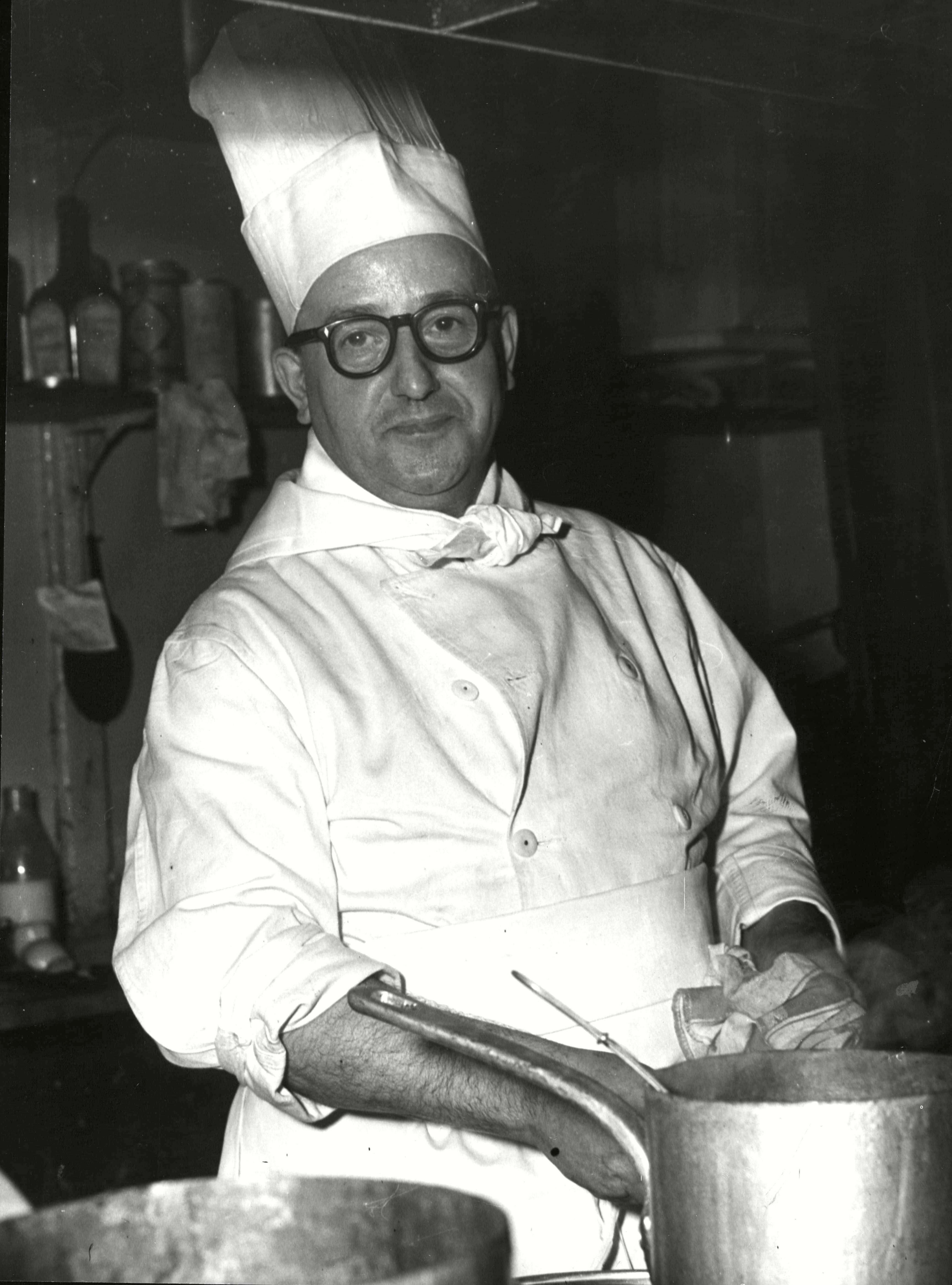
Chef John Wright Former Sergeant in the Catering Corps Cooking in the Kitchen of the Moulin D'or Restaurant Soho, 27 Dec 1955
Chef John Wright Former Sergeant in the Catering Corps Cooking in the Kitchen of the Moulin D’or Restaurant Soho, 27 Dec 1955
G Parmigiani Figlio Ltd delicatessen, Soho, 29 Jul 1956

Berwick Street Market was one of the busiest open-air markets in the area. Celebrities and ordinary shoppers mixed freely in its stalls. Actor Michael Wilding and playwright Noël Coward were both spotted there, chatting among the market vendors.
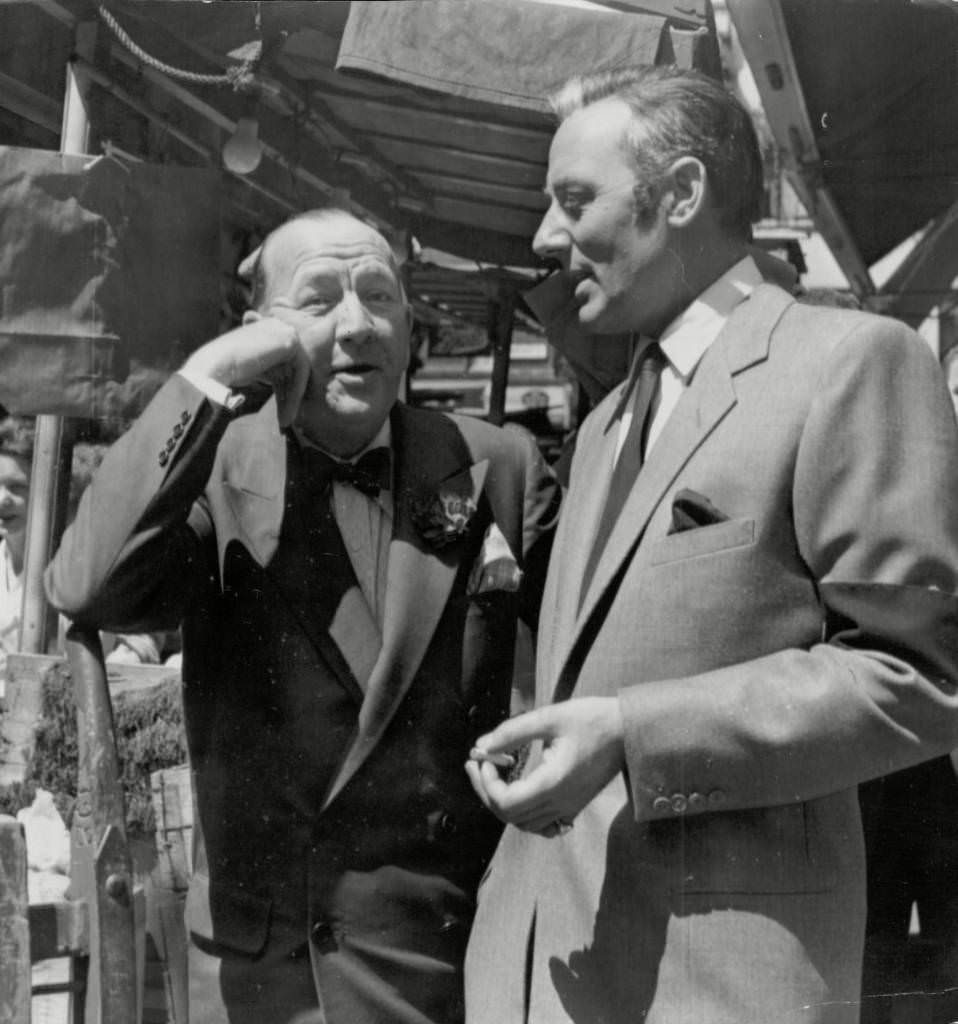
Noel Coward chats With Michael Wilding In Soho's Berwick Market
Noel Coward chats With Michael Wilding In Soho’s Berwick Market

La Caverne was one of several basement clubs that drew young men looking for music and a social scene. These venues were small, often dimly lit, and packed on weekends. They played an important role in the early development of British youth culture.
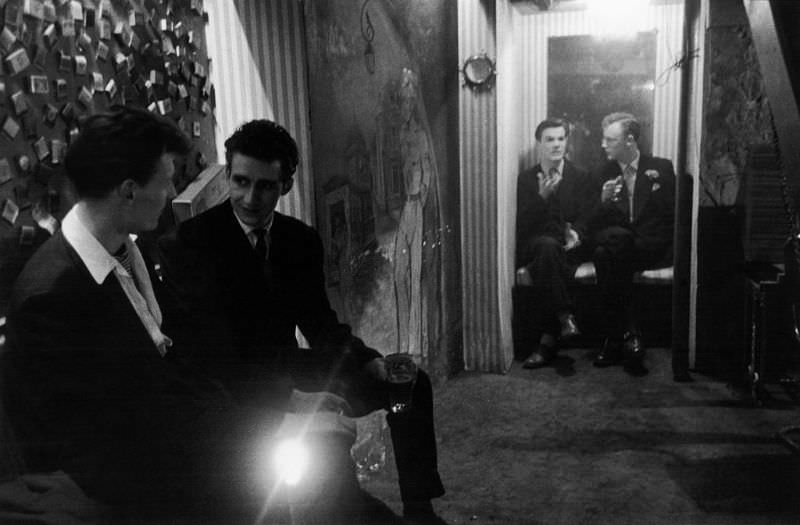
Young men at La Caverne nightclub, 1955.

Food also appeared as entertainment. A 9-foot-long baguette shared between four women was the kind of spectacle that Soho could produce on any given afternoon, blending the neighbourhood’s love of good food with its flair for the theatrical.
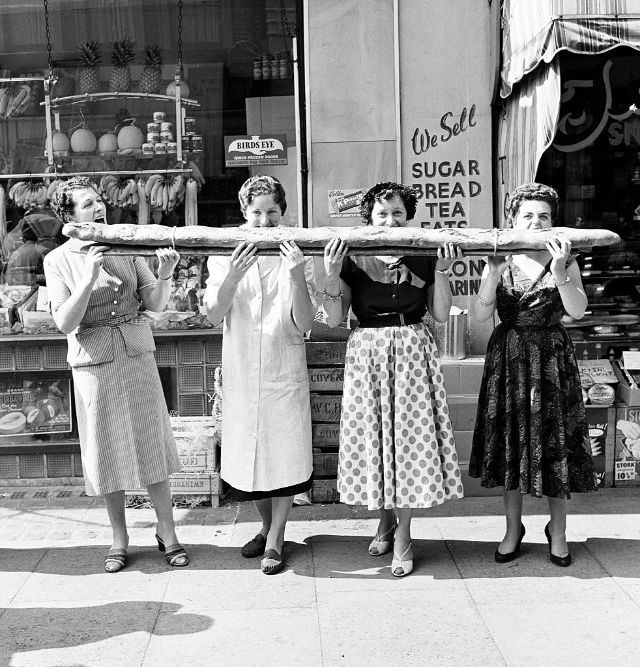
Four women sharing a 9-foot-long baguette, 1955.
Waiters carrying half bottles of champagne setting off on the annual waiters' race from Soho Square to Greek Street, 1955.
Waiters carrying half bottles of champagne setting off on the annual waiters’ race from Soho Square to Greek Street, 1955.

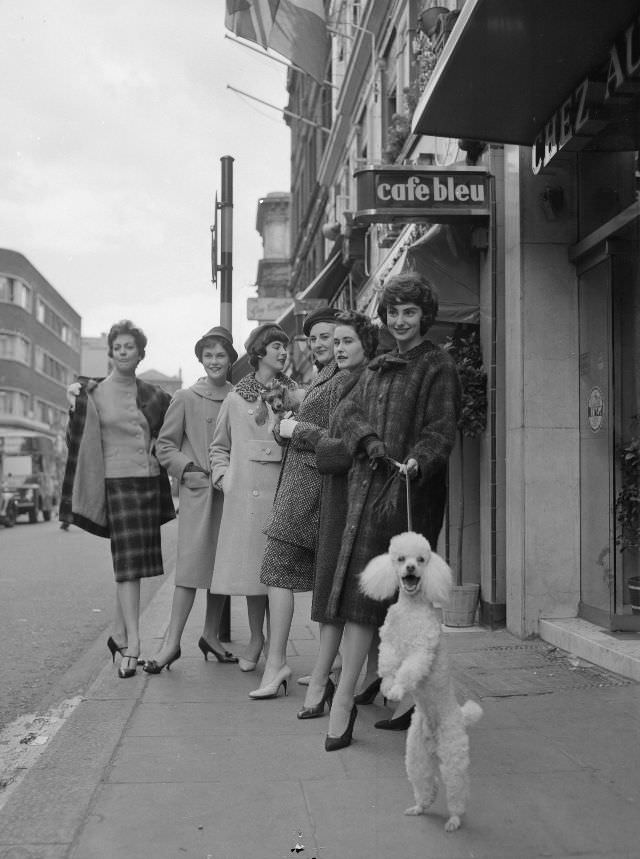
By 1957 and into the late 1950s, street fairs and public gatherings continued to pull crowds onto Soho’s roads. Music, dancing, and informal performances in the open air were regular occurrences. Fashion was also becoming a bigger part of the neighbourhood’s identity, with French haute couture previews taking place alongside the more working-class street culture.
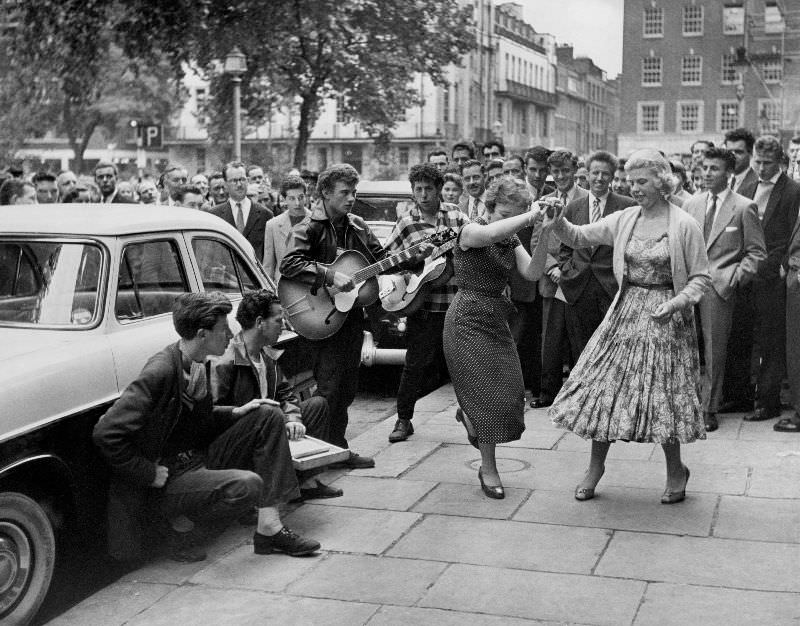
A group playing and jiving in the street at a fair, 1957.
Six models giving a preview of the latest in French haute couture, 1958.

By 1959, the streets of Soho showed subtle changes but remained packed with life. Old Compton Street and Frith Street still anchored the neighbourhood’s commercial core, while Gerrard Street — later to become the centre of London’s Chinatown — was still a mixed street of shops and residences.
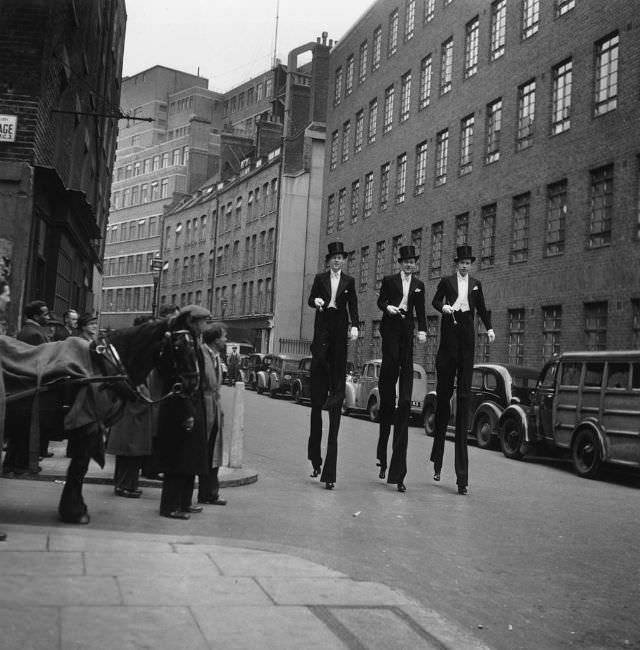
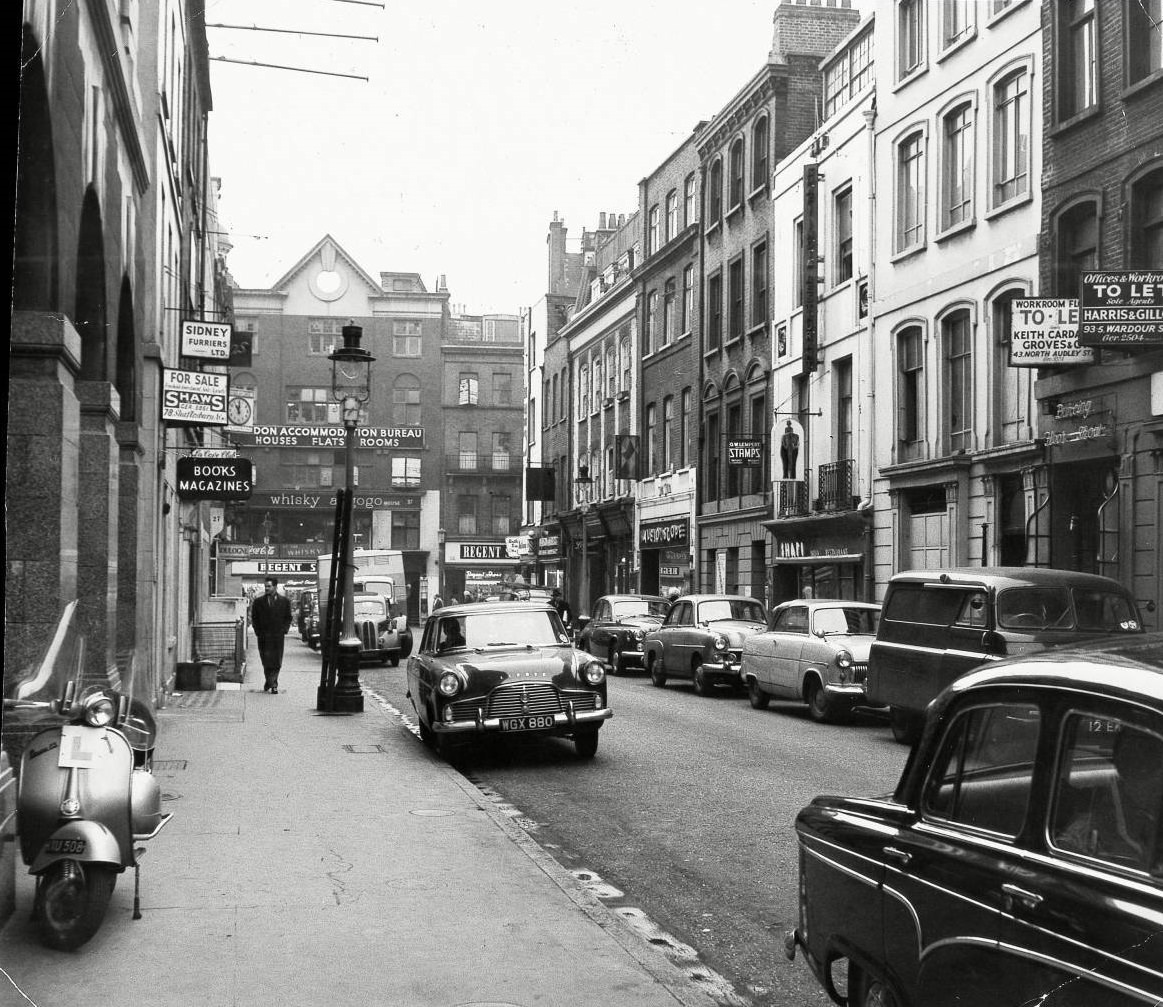
A view down along the shops, cafes and bars from the junction of Old Compton Street and Frith Street in London's Soho in 1959.
A view down along the shops, cafes and bars from the junction of Old Compton Street and Frith Street in London’s Soho in 1959.
Gerrard Street, 3rd December 1959.
Enjoyed this post? Get new ones in your inbox.

Leave a Comment

Your email address will not be published. Required fields are marked *

Share this Post 🥺

Please take a moment to share this content. Your support is greatly appreciated! 🙌🙏

Share this Post 🥺

Please take a moment to share this content. Your support is greatly appreciated! 🙌🙏
Scroll to Top
 
Hey Friend, Before You Go.. Please like & follow for more interesting content