
Sicily in the 1970s was a world of contrasts. Italy was changing fast — politically, economically, and socially — but this island in the middle of the Mediterranean held tight to its own rhythm. Narrow alleys, open-air markets, handmade cheese, and ancient stone buildings defined daily life just as much as the slow creep of modernization. These vintage photographs capture that tension beautifully, freezing a decade in which tradition and transformation lived side by side.
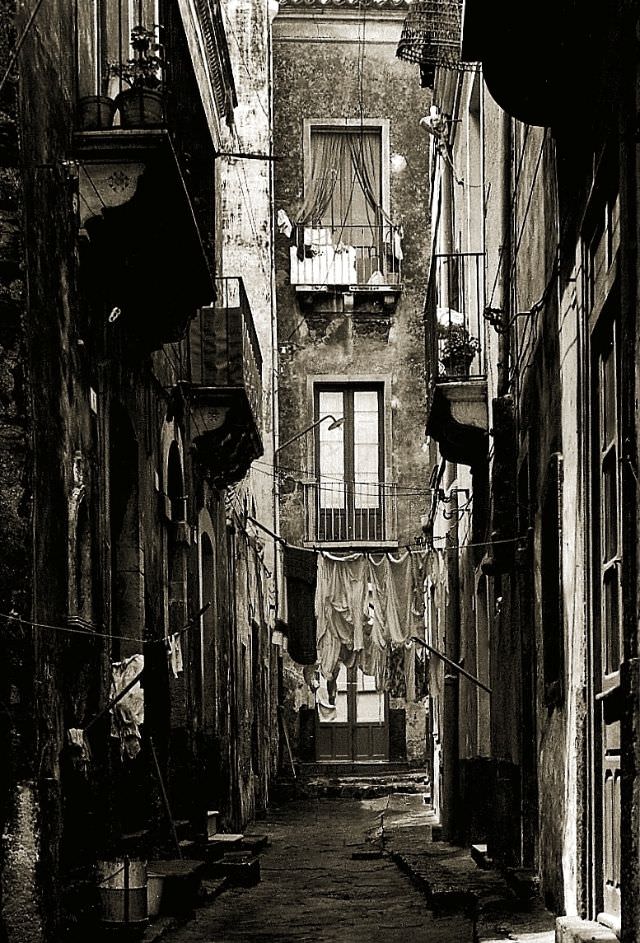
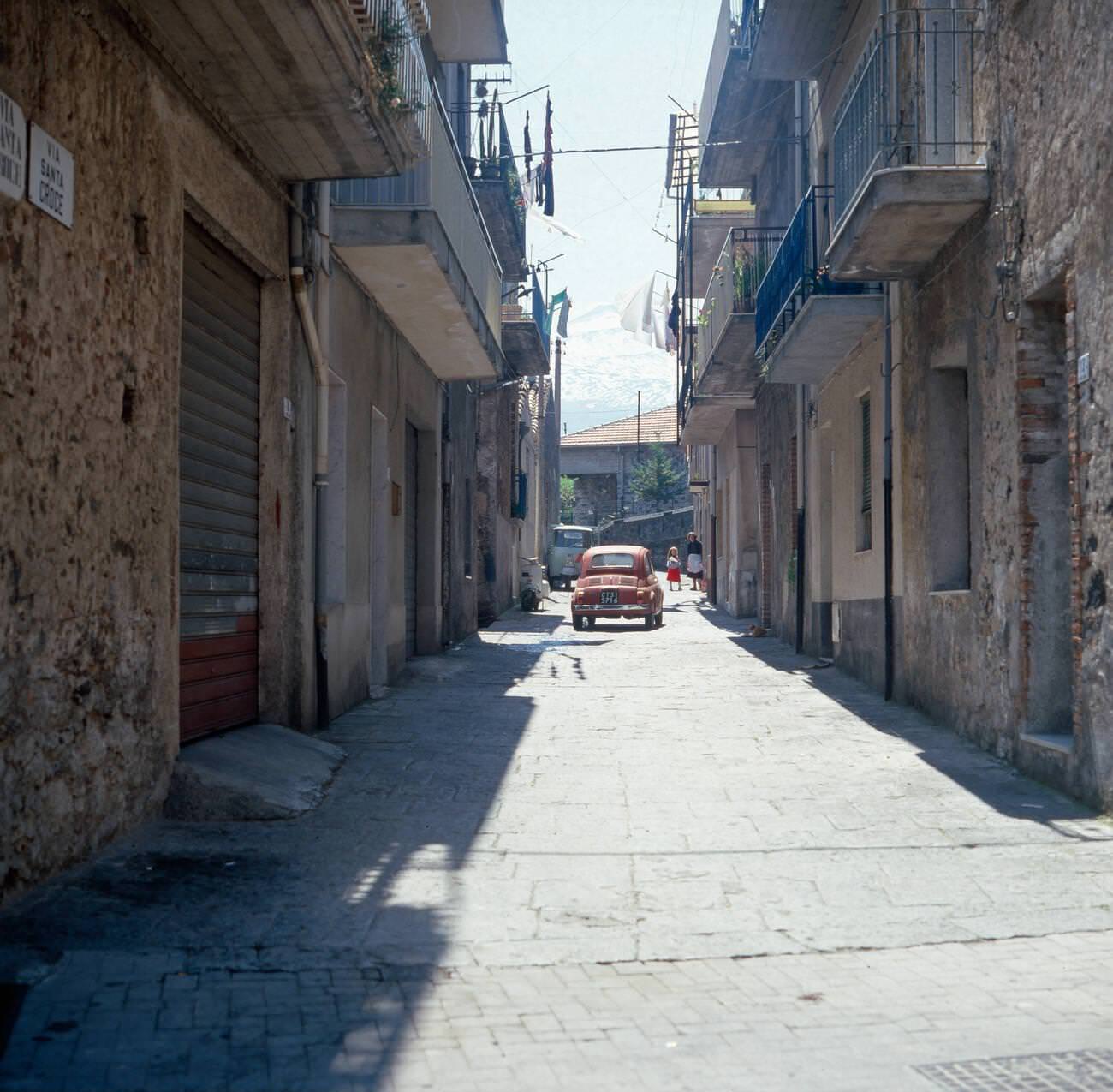
Catania, Sicily’s second-largest city, sat at the foot of Mount Etna with a character all its own. Its streets were loud, crowded, and alive. Vendors shouted prices over each other, cats threaded between market stalls, and the smell of fresh fish mixed with volcanic air. The city’s black basalt architecture — built after the catastrophic 1693 earthquake — gave Catania a dark, dramatic look that no other Sicilian city could match.
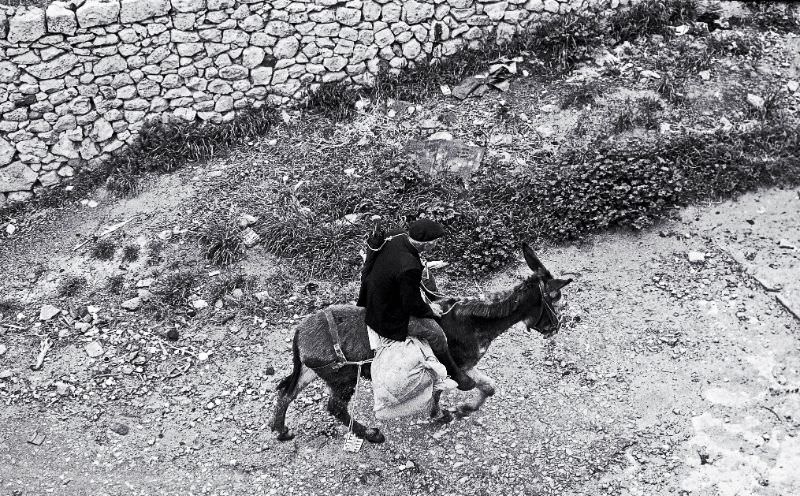
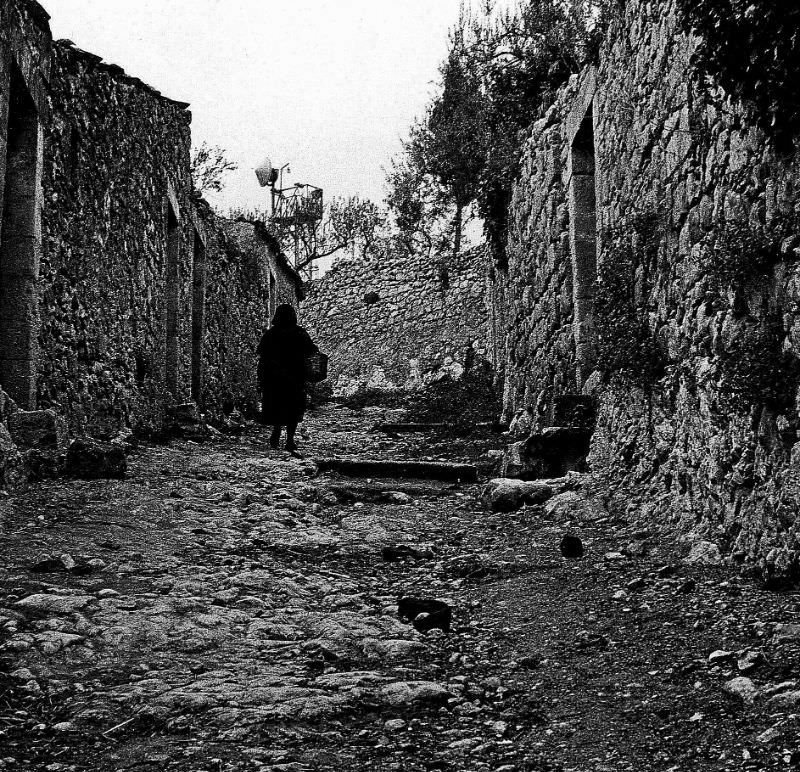
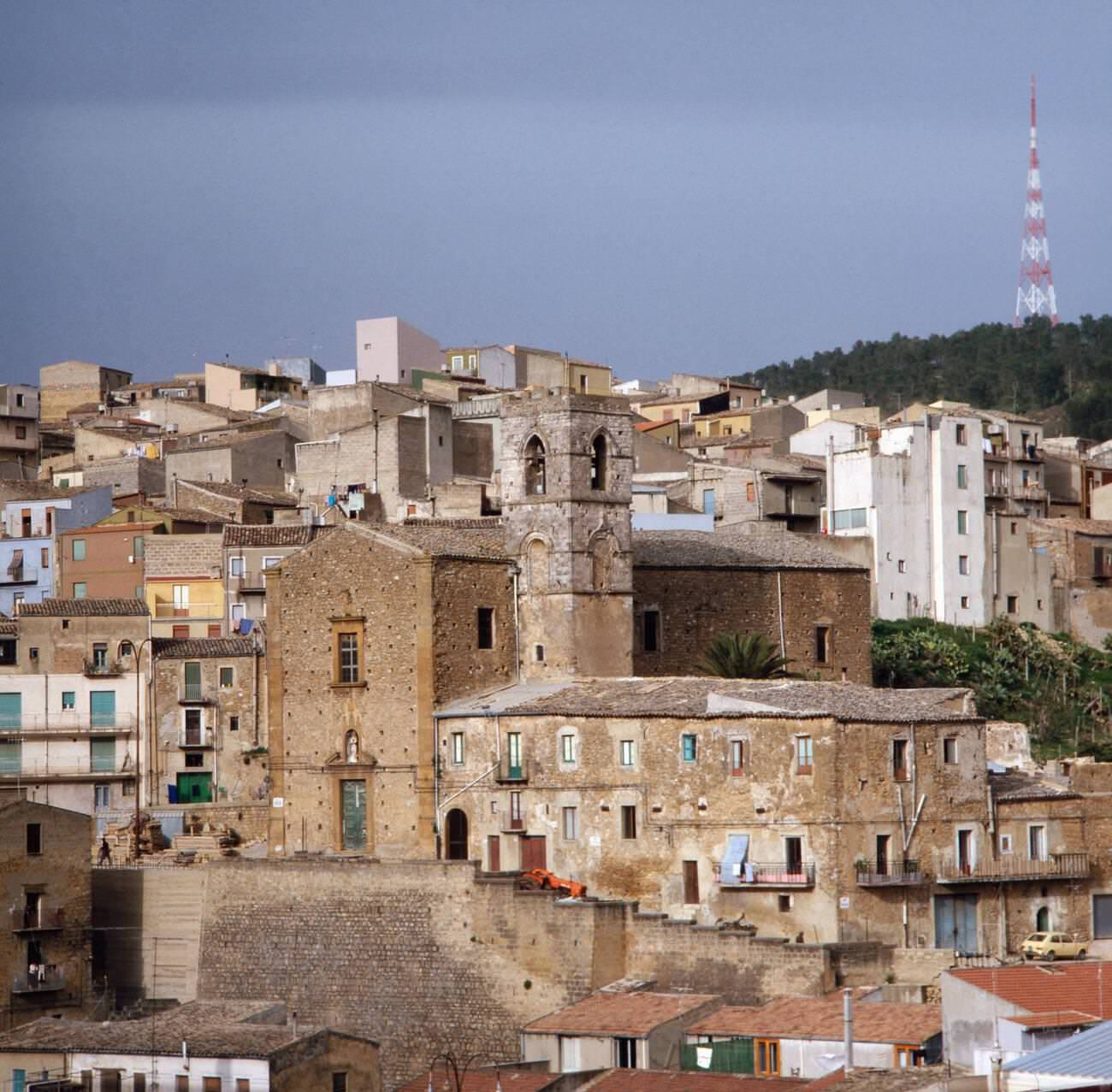
Away from the busy cities, smaller towns like Ferla and Ragusa moved at a different pace entirely. Ferla, a quiet hilltop village in the province of Syracuse, was home to tight-knit communities where daily life unfolded in the open — on doorsteps, in courtyards, and along stone-paved lanes. Photographers who visited in 1971 found a place where time seemed to bend, where artisan traditions had changed little in generations.
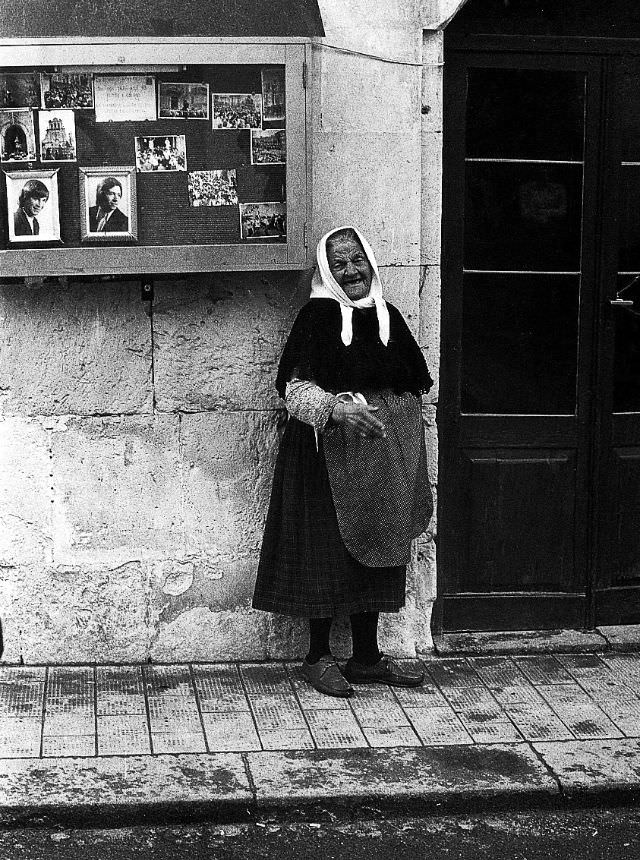
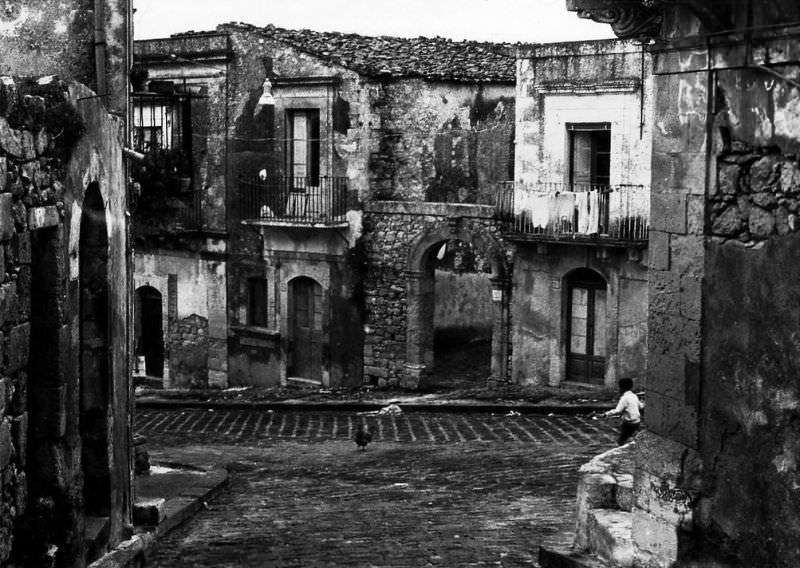
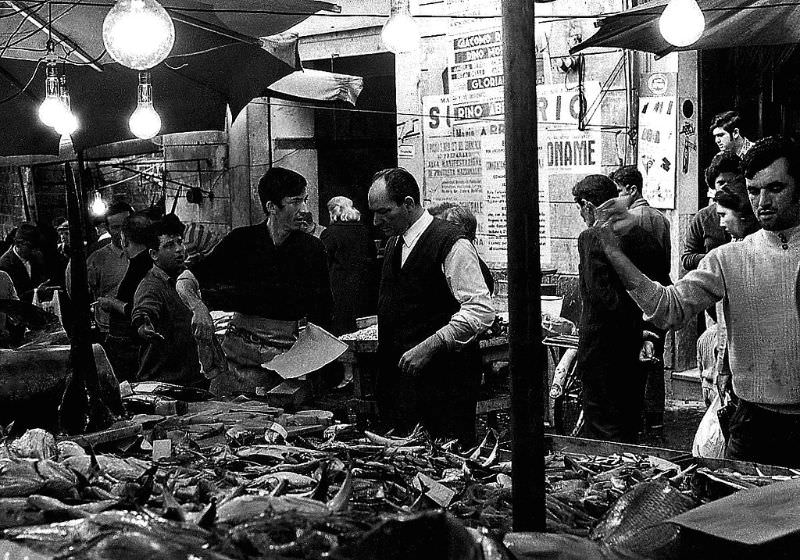
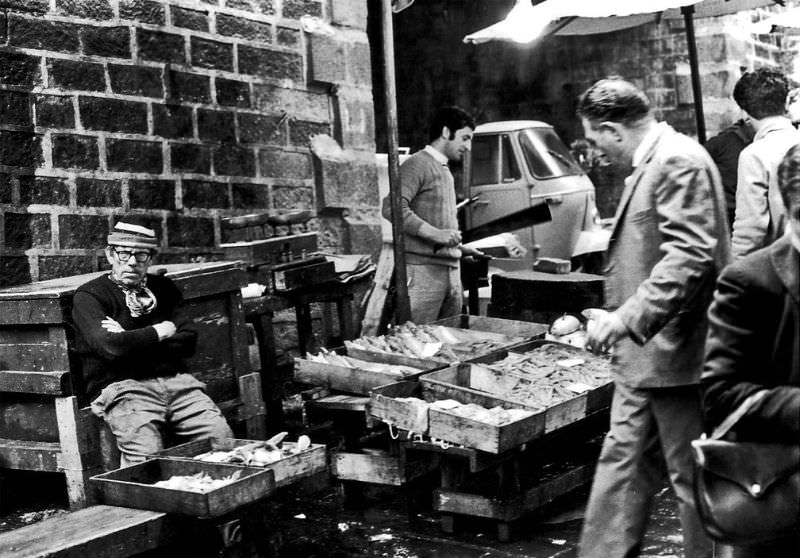
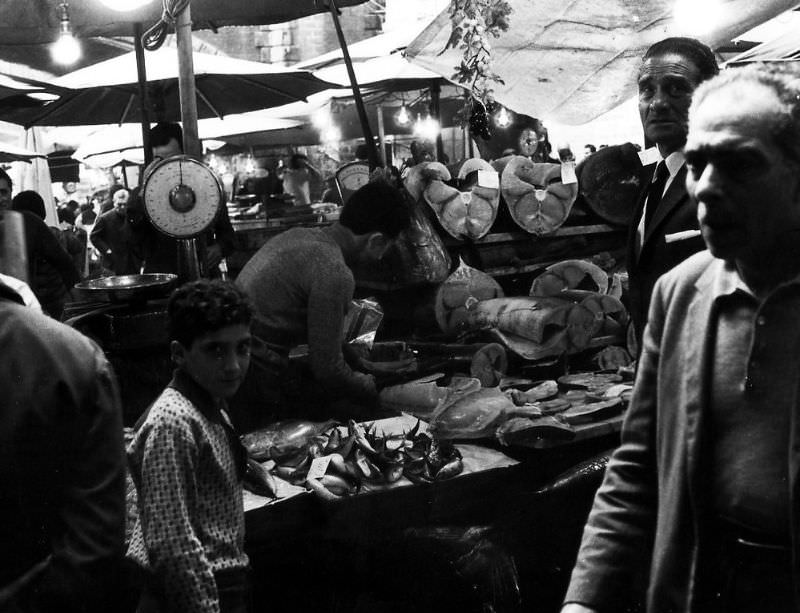
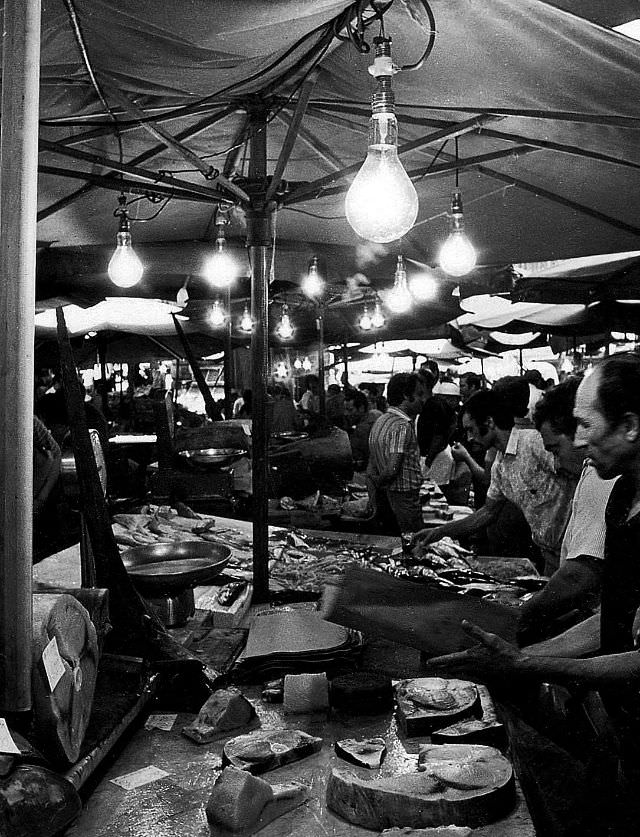
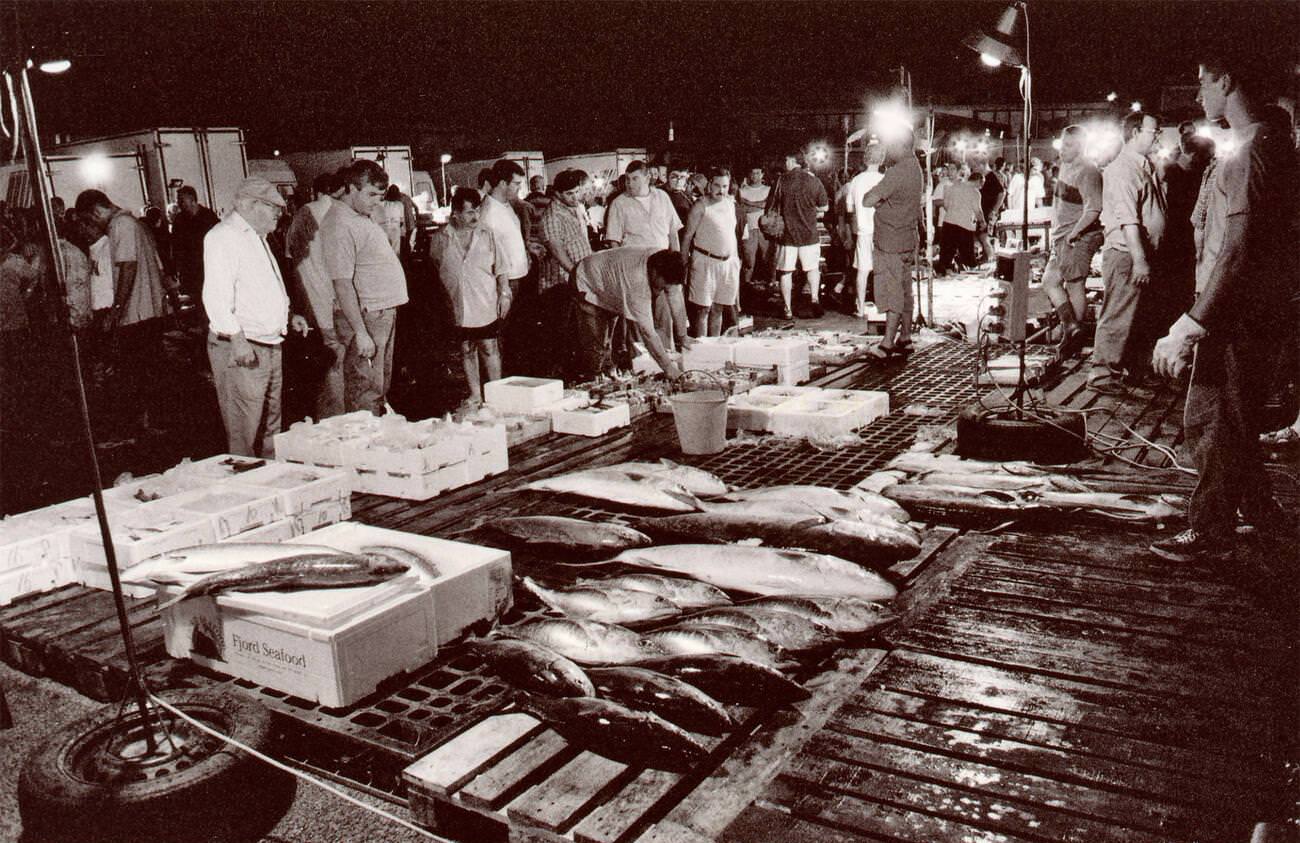
Catania’s fish market — La Pescheria — was one of the most theatrical food markets in all of Sicily. Held in a sunken square just behind the cathedral, it drew fishermen, housewives, restaurateurs, and curious visitors every morning. Swordfish, sea urchins, squid, and mussels were laid out on ice and wood, while vendors performed a near-theatrical ritual of haggling that had been practiced for centuries.
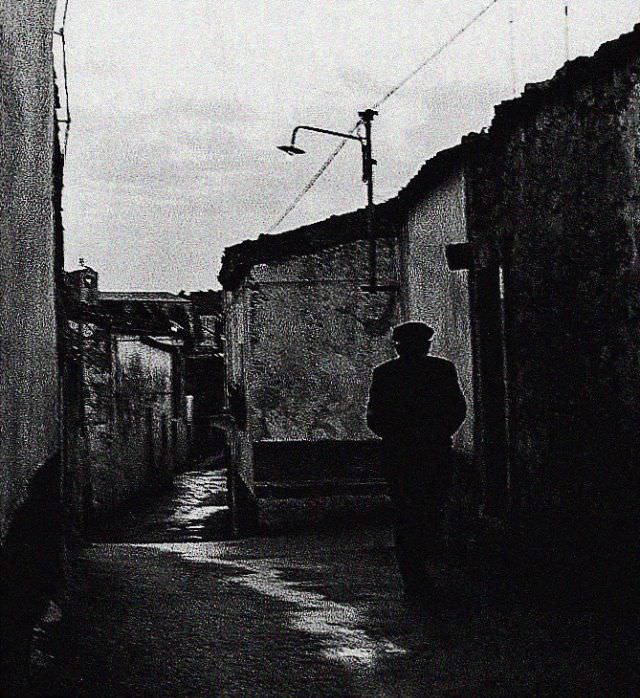
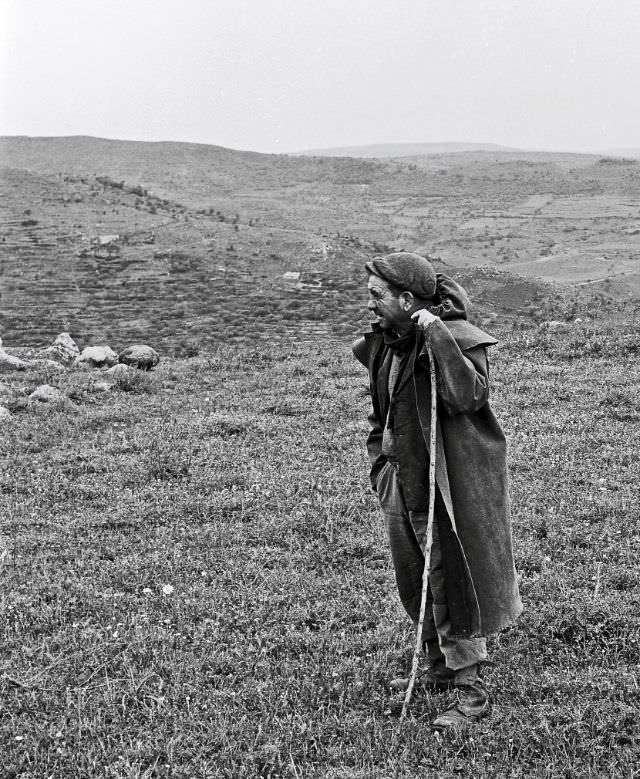
Back in Ferla, the pace of rural life was captured in extraordinary detail. The village had a ghostly quality in certain light — whitewashed walls, empty lanes, and the echo of footsteps on stone. Photographers in 1971 documented not just places but people: shepherds, cheese-makers, and elderly residents going about lives that looked almost unchanged from the previous century.
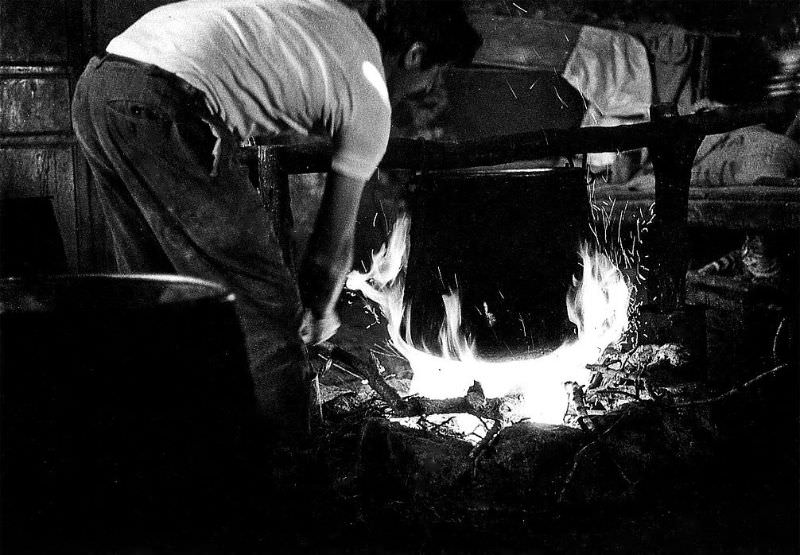
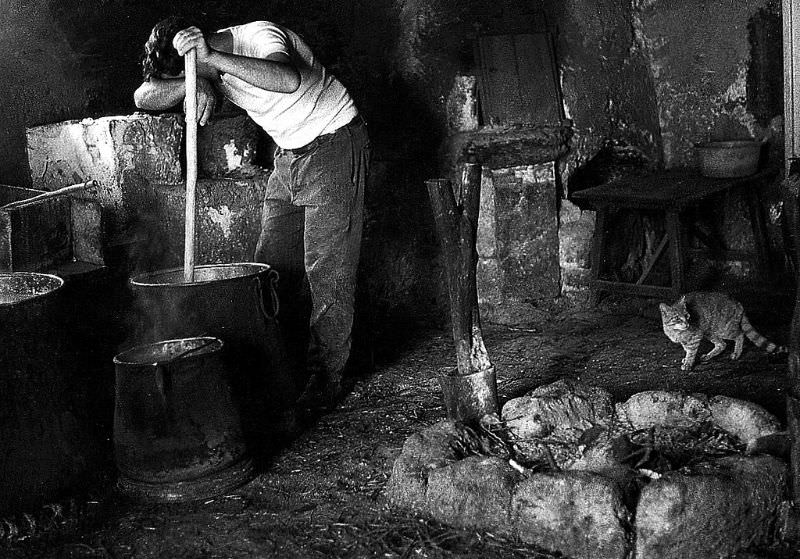
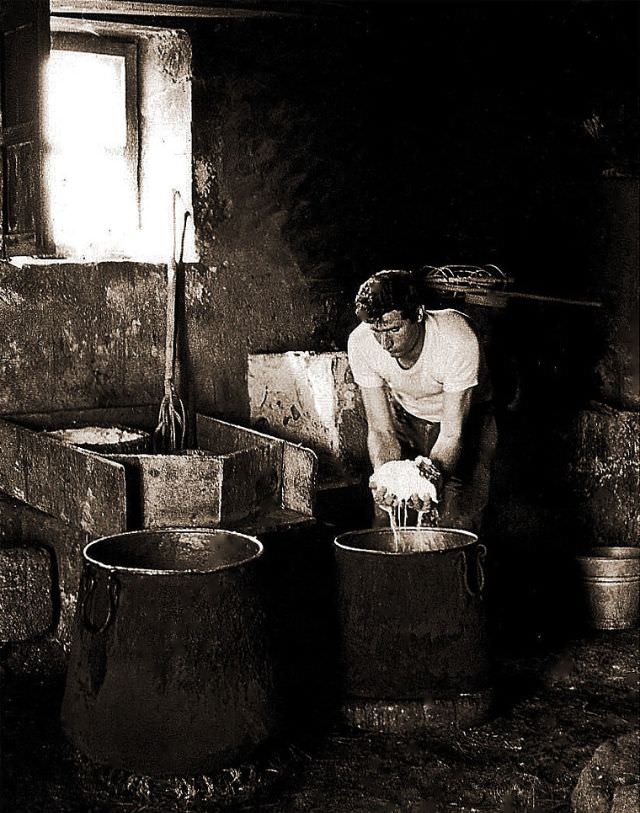
Sheep’s milk ricotta was a staple of the Sicilian countryside. In villages like Ferla, it was produced by hand in small batches, using methods passed down through families over generations. The whey was heated, the curds were lifted by hand, and the finished ricotta was sold fresh — still warm — at local markets or directly from the farm. It was a living craft, not a romantic idea.
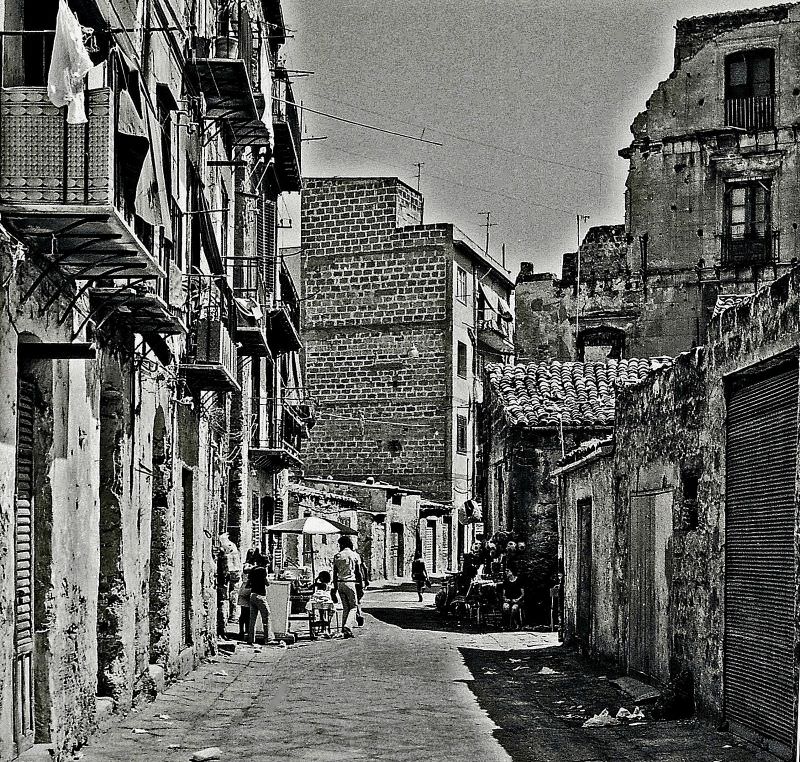
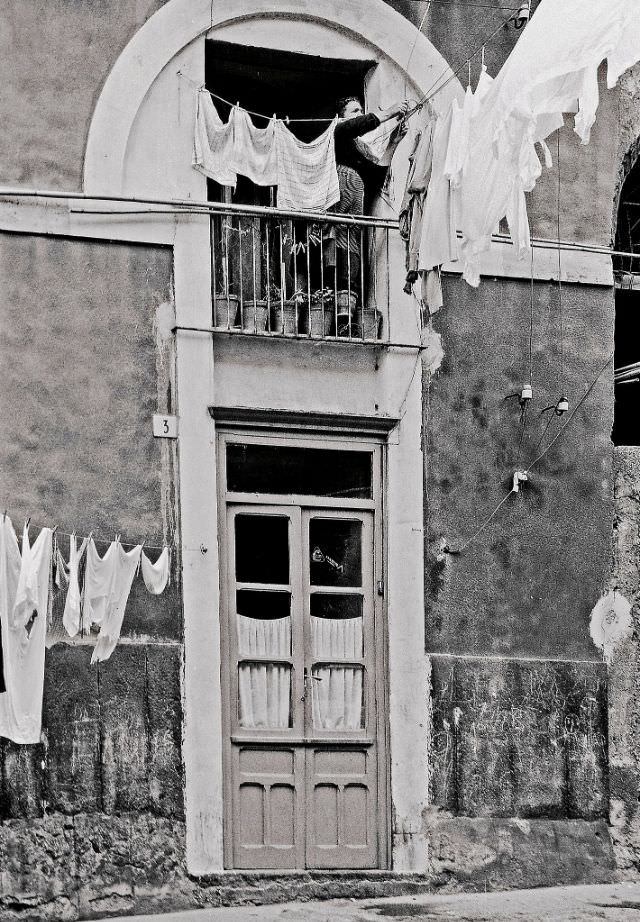
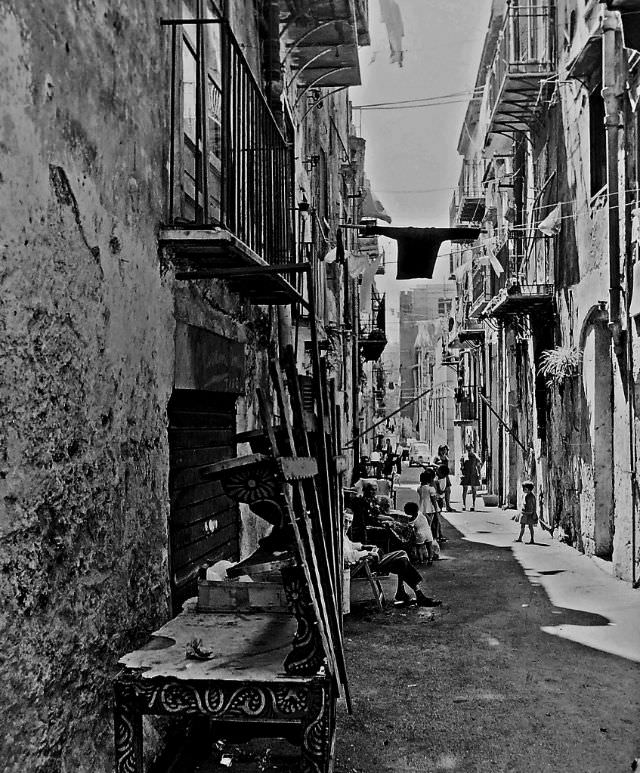
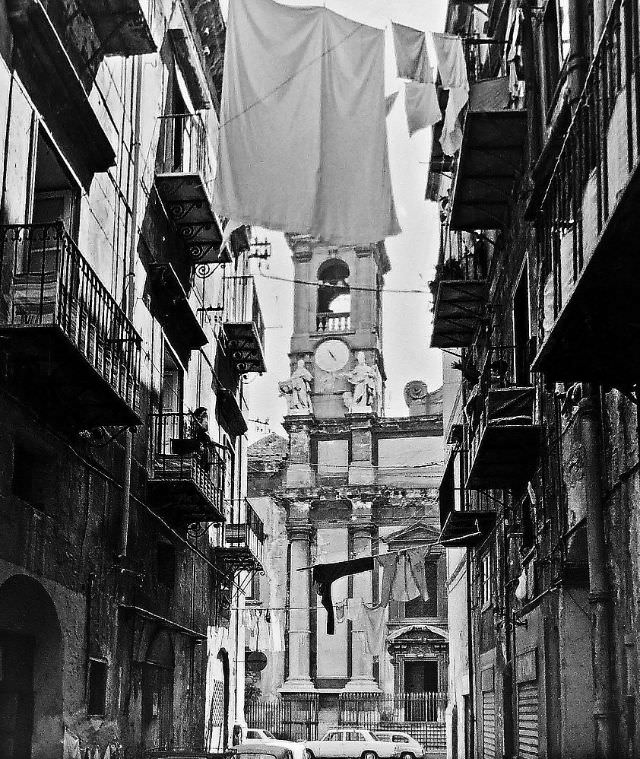
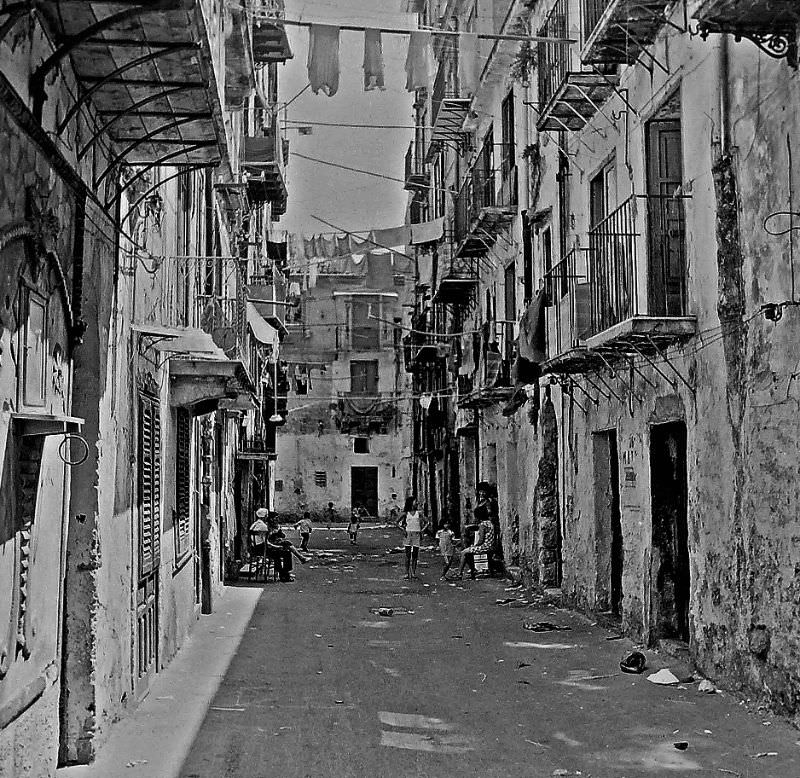
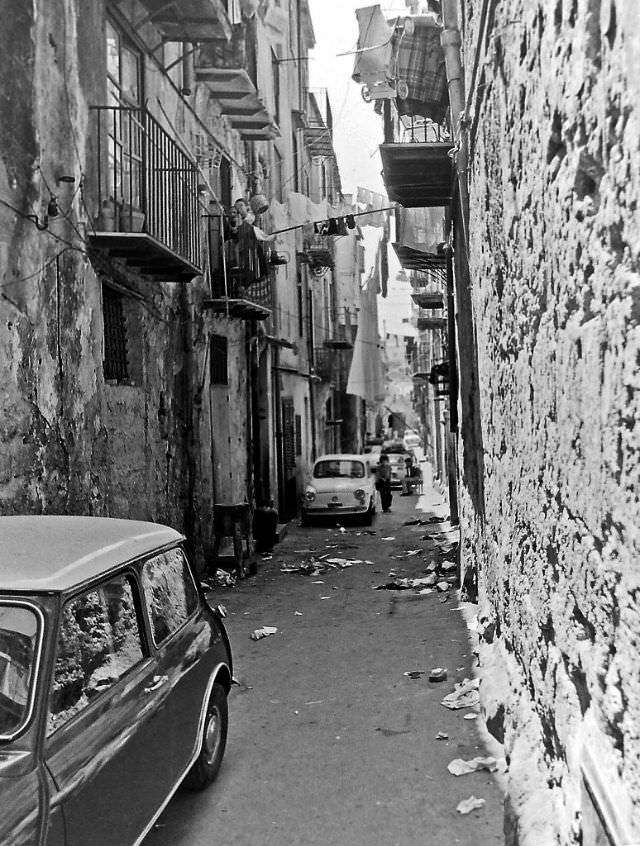
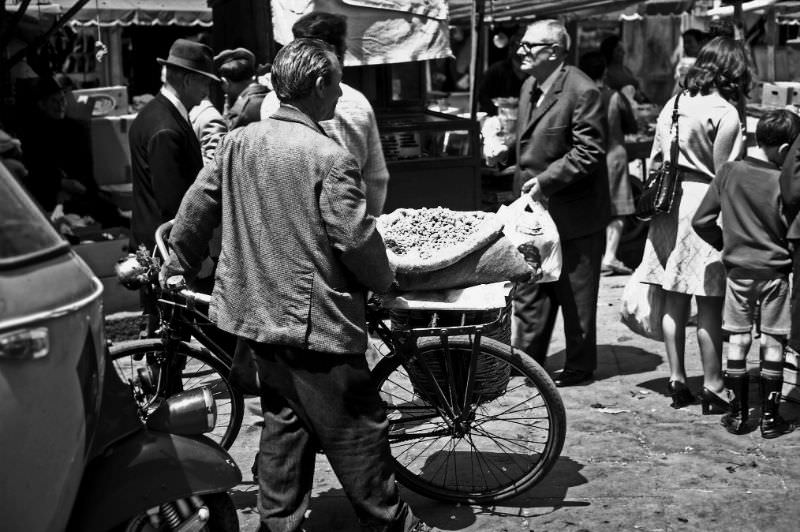
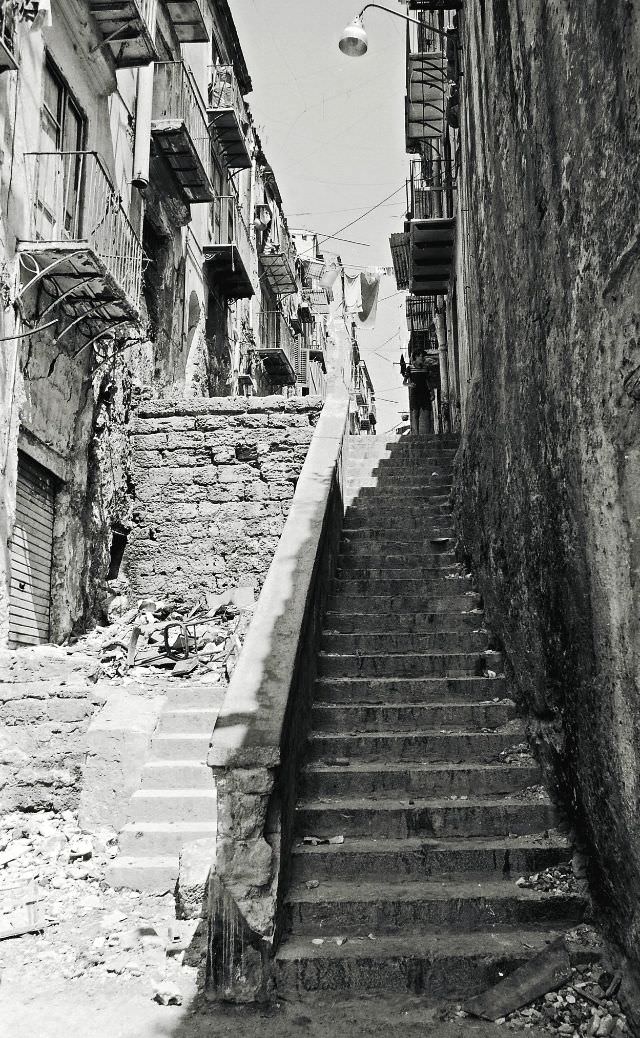
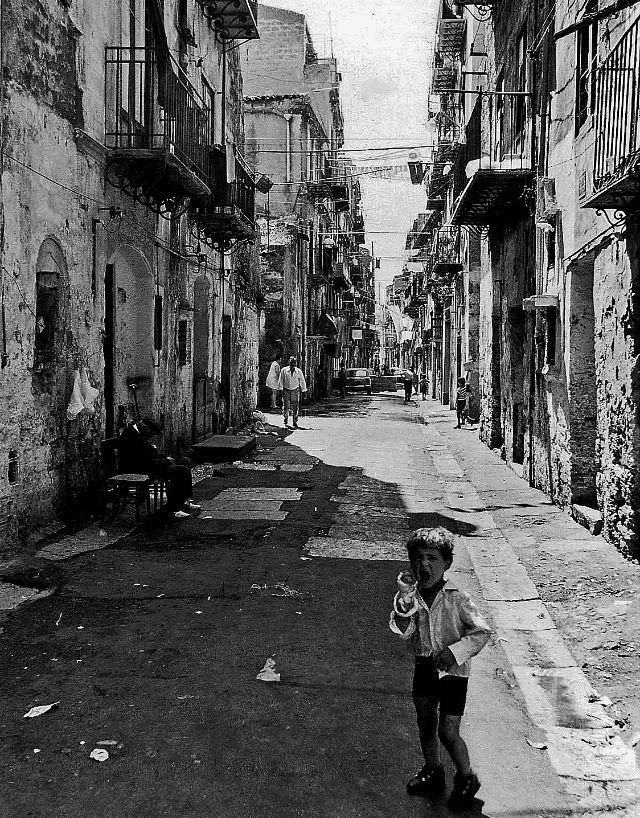
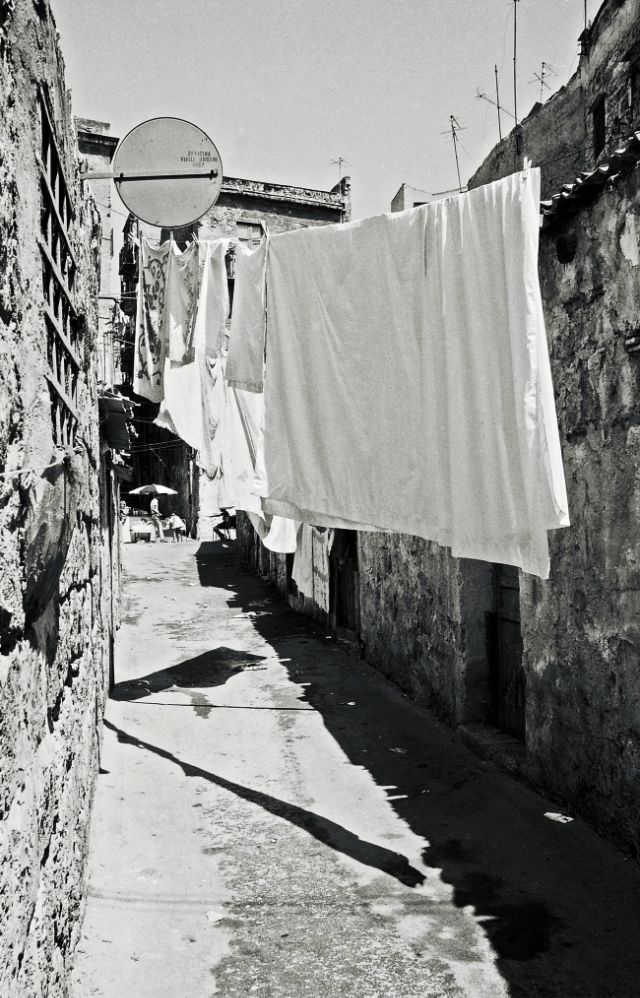
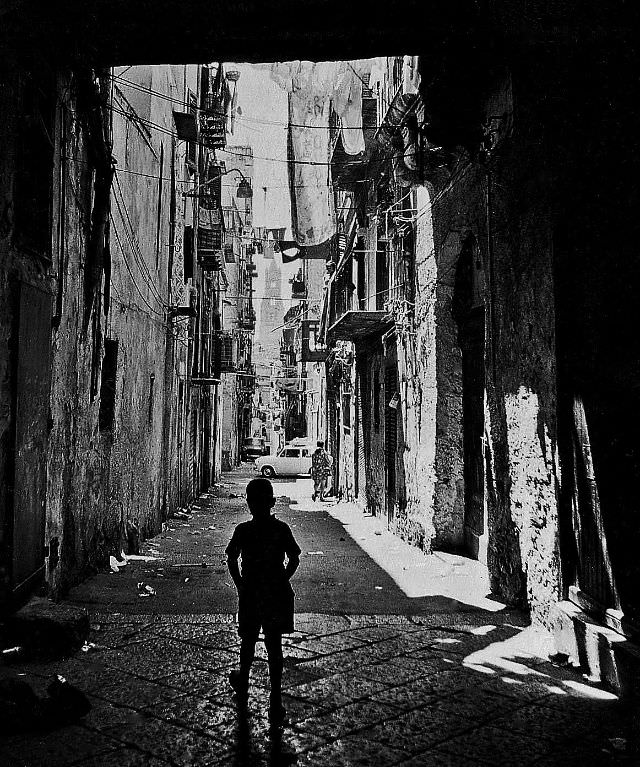
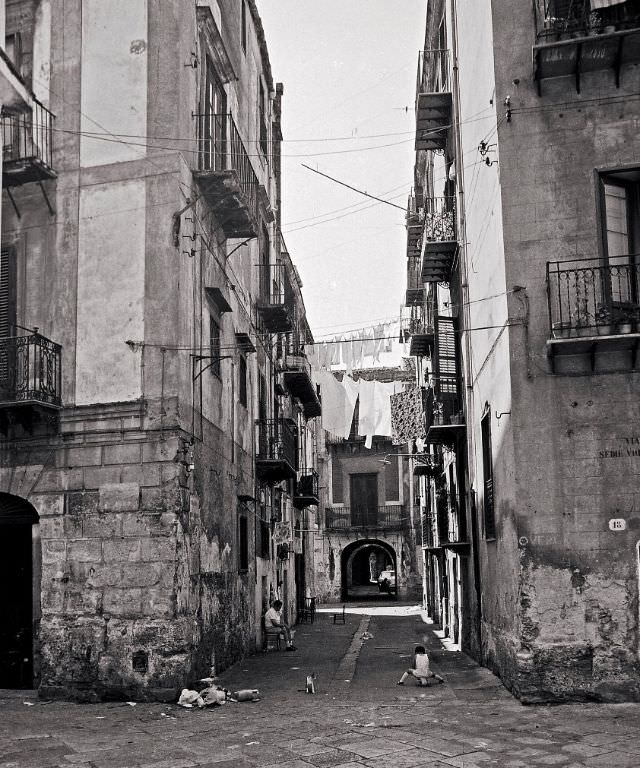
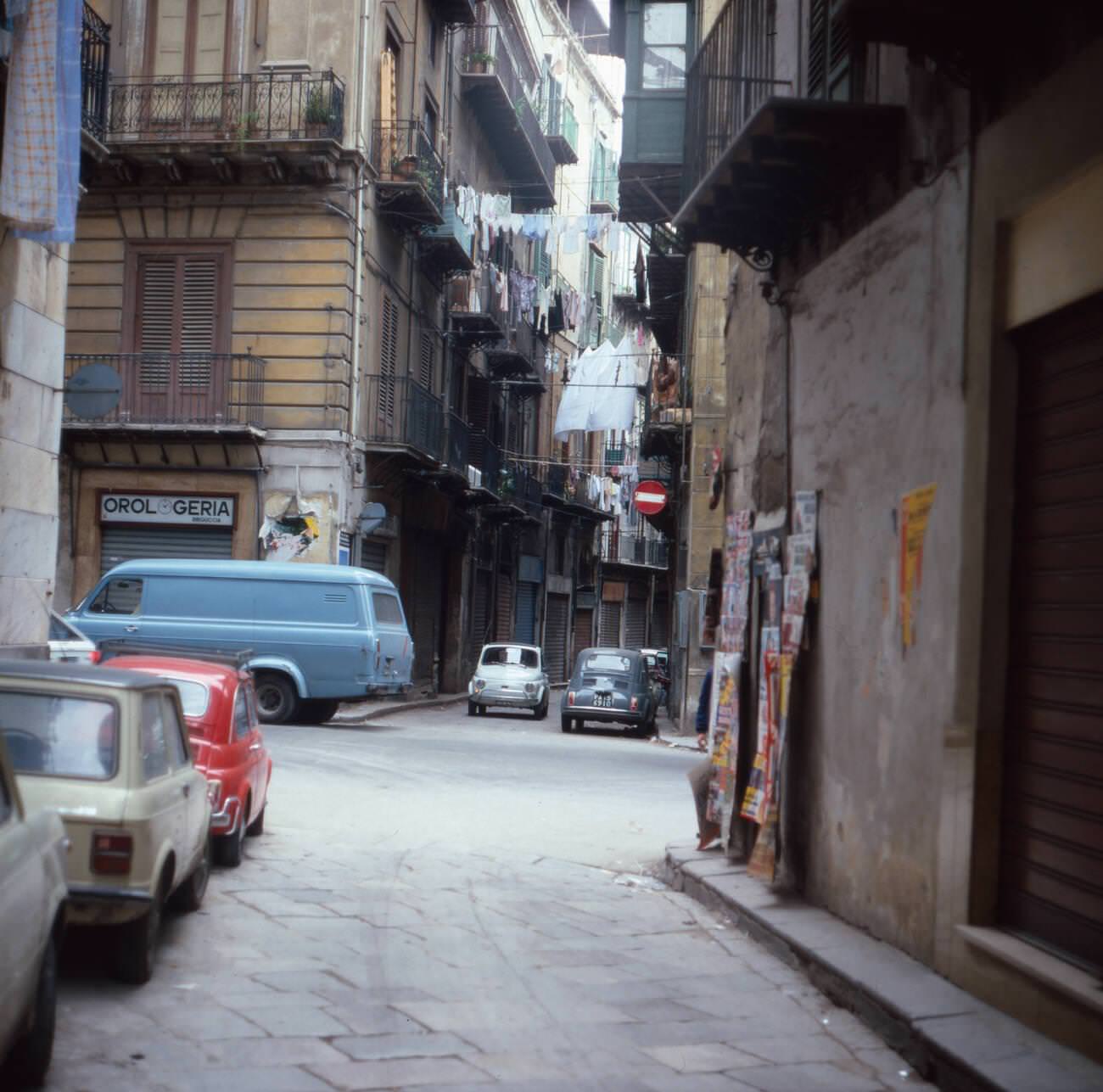
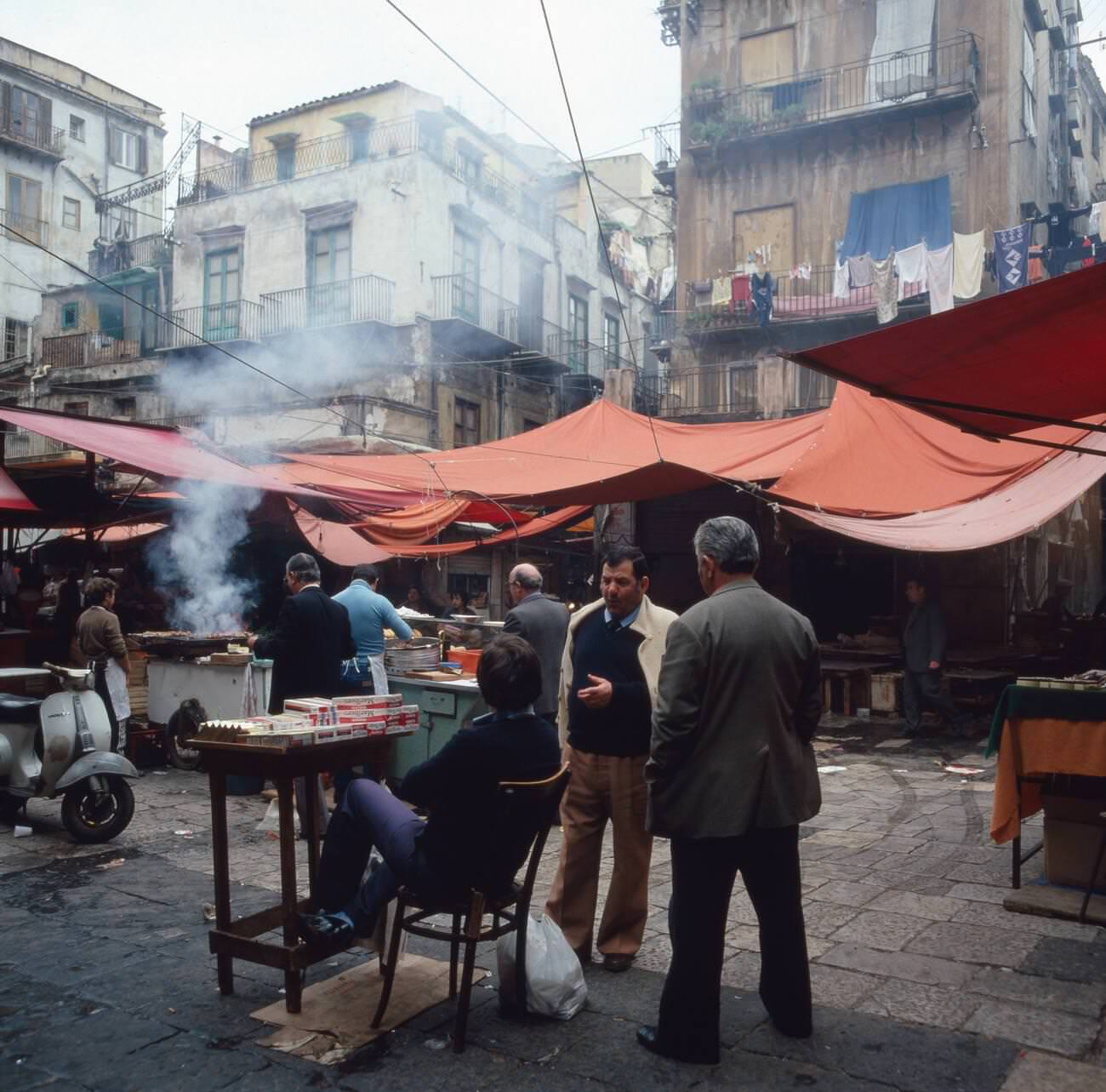
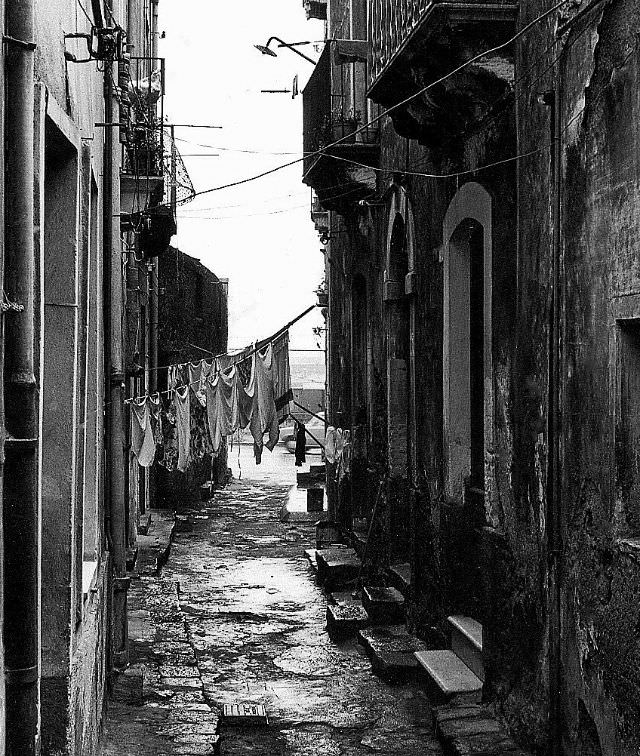
Palermo in the early 1970s was a city of extraordinary energy and deep poverty existing in the same block, sometimes in the same building. The alleyways of the historic center — the Kalsa, the Capo, the Vucciria — were packed with people. Children played alongside chickens and dogs. Laundry hung between buildings, blocking the sun. Street vendors sold everything from boiled chickpeas to fresh cockles out of carts and baskets.
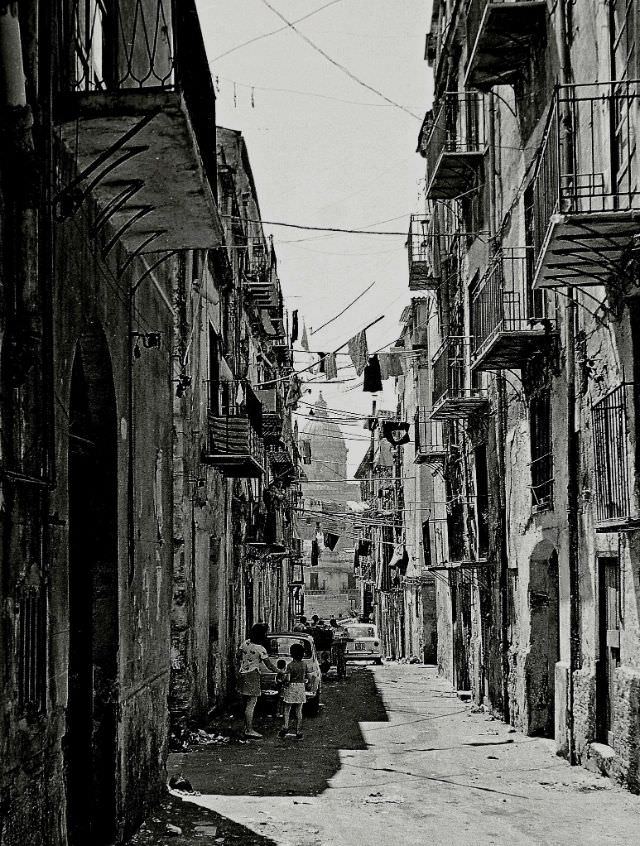
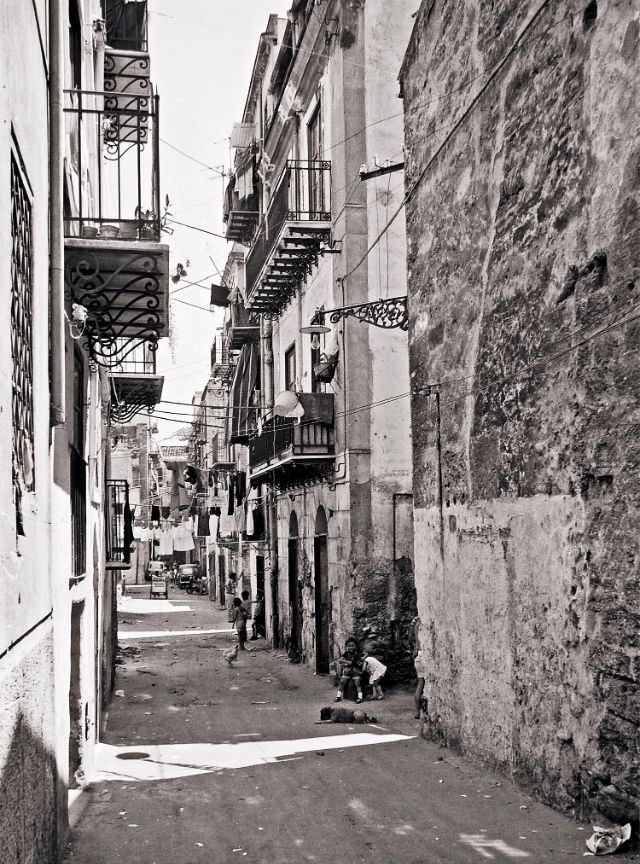
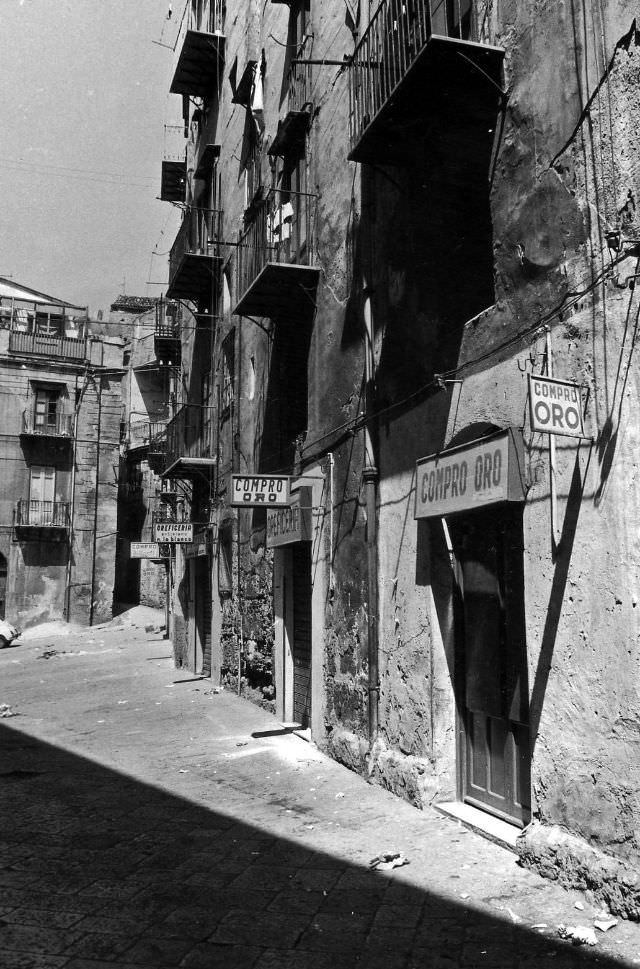
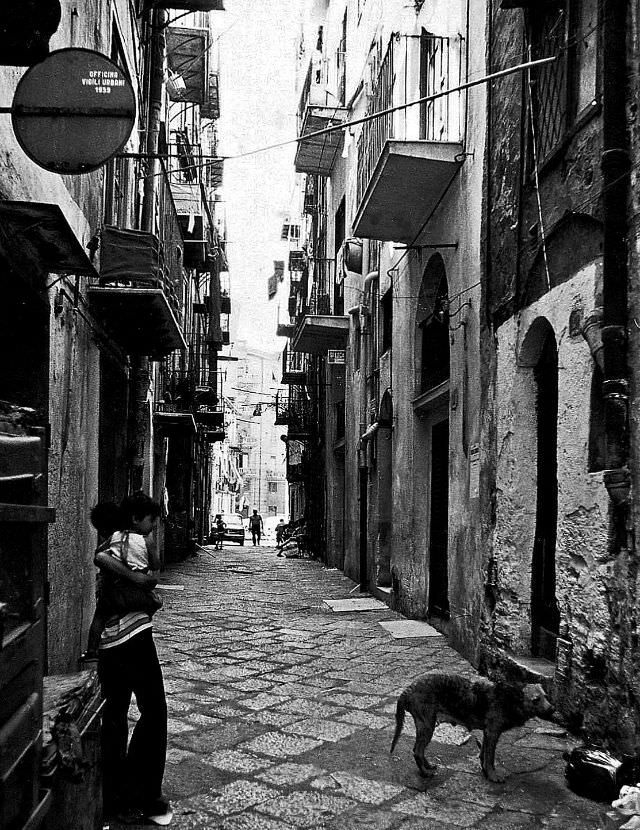
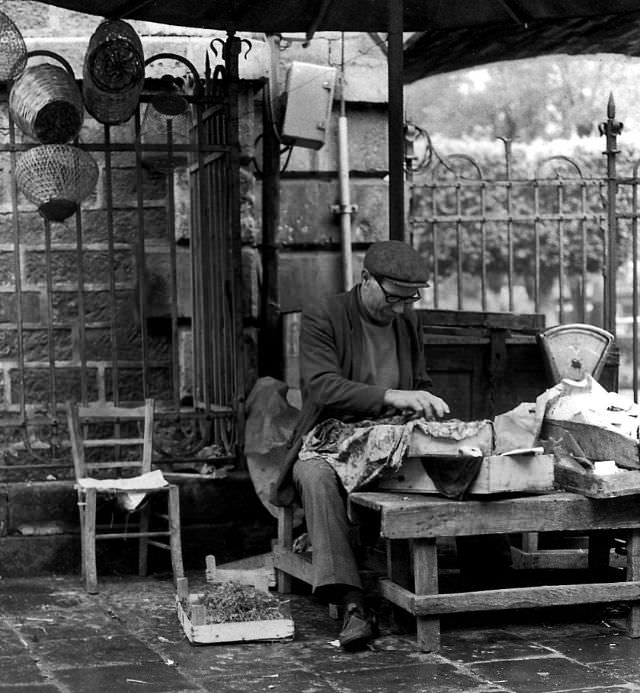
Fish markets in both Catania and Palermo were among the most photographed scenes in 1970s Sicily — and for good reason. They were raw, vibrant, and completely unfiltered. The Vucciria market in Palermo was especially famous, a labyrinth of stalls where vendors worked under bare bulbs and tarpaulins, selling fish, meat, cheese, and vegetables in conditions that had barely changed since the Arab traders who shaped Palermo’s food culture centuries earlier.
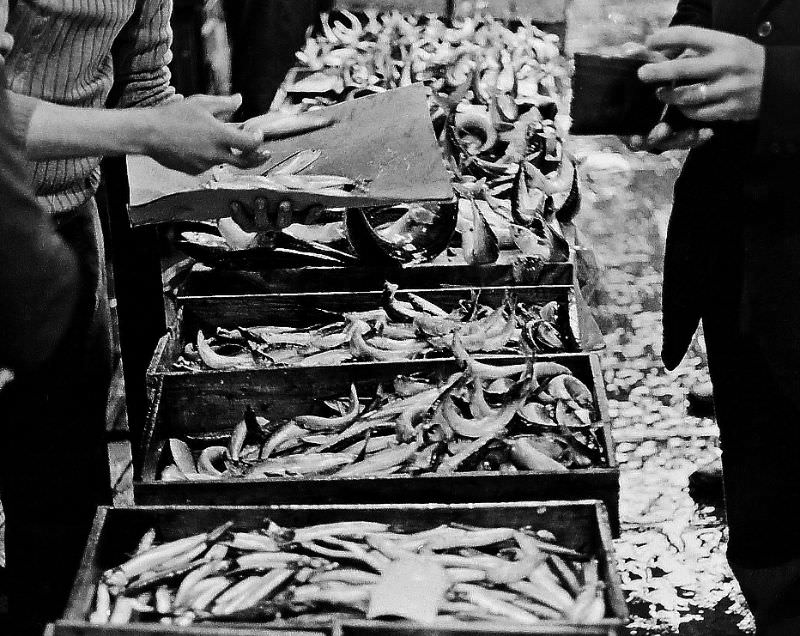
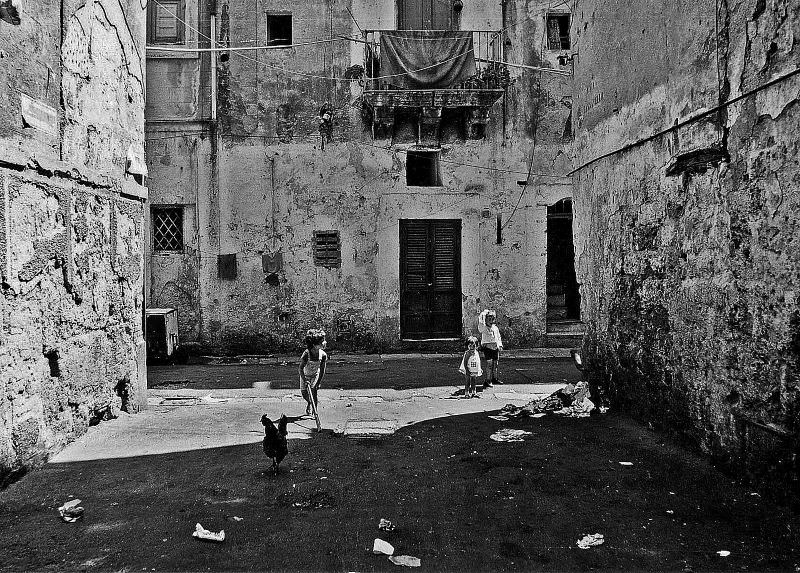
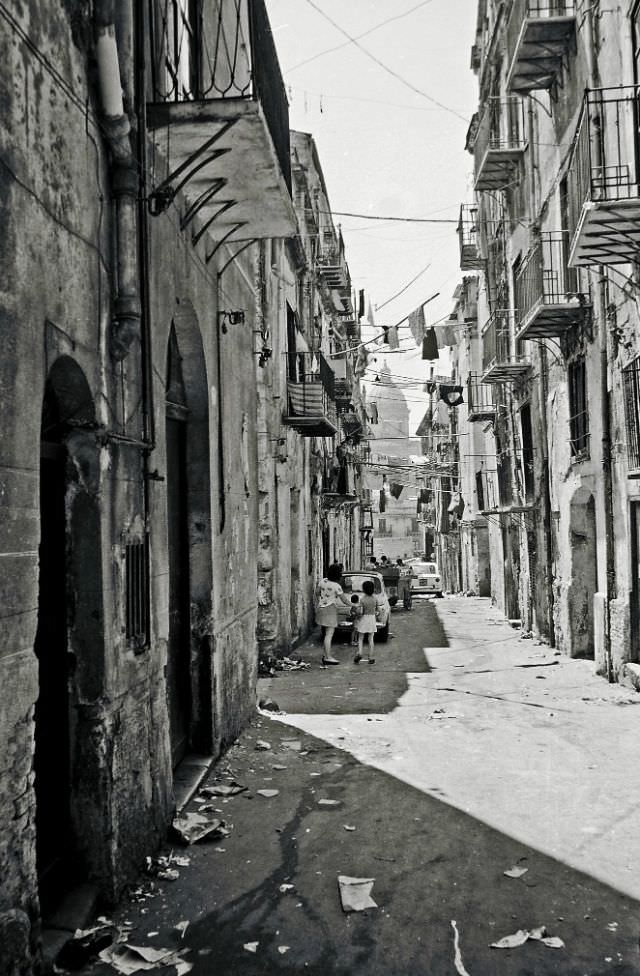
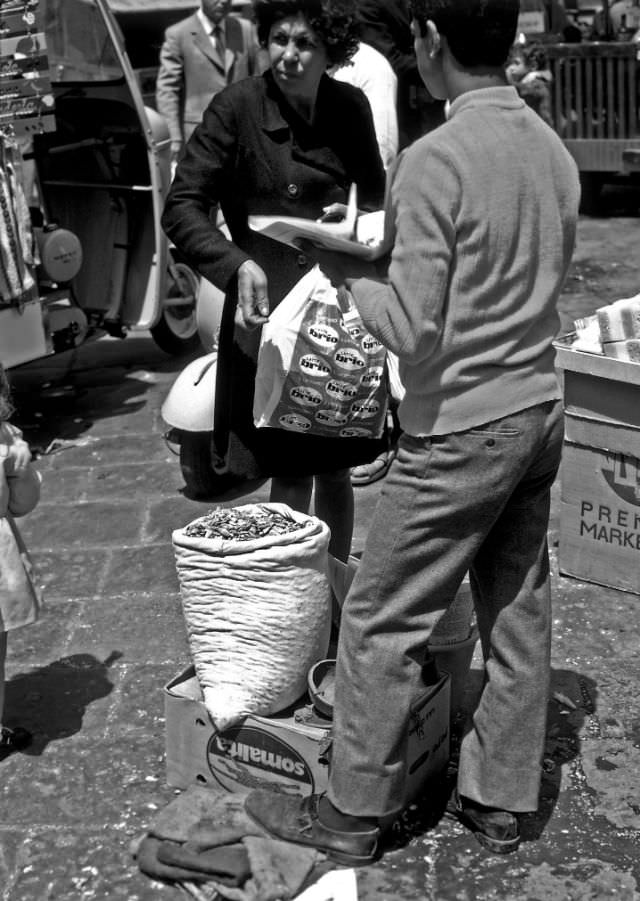
Street food in Palermo was — and remains — a serious part of daily life. Vendors pushing carts loaded with boiled chickpeas, fried snacks, or shellfish were fixtures in every neighborhood. These were not tourist attractions. They fed working people who had neither the time nor the money for a sit-down meal. A paper cone of chickpeas or a cup of fresh cockles bought from a street seller was lunch for much of Palermo’s population.
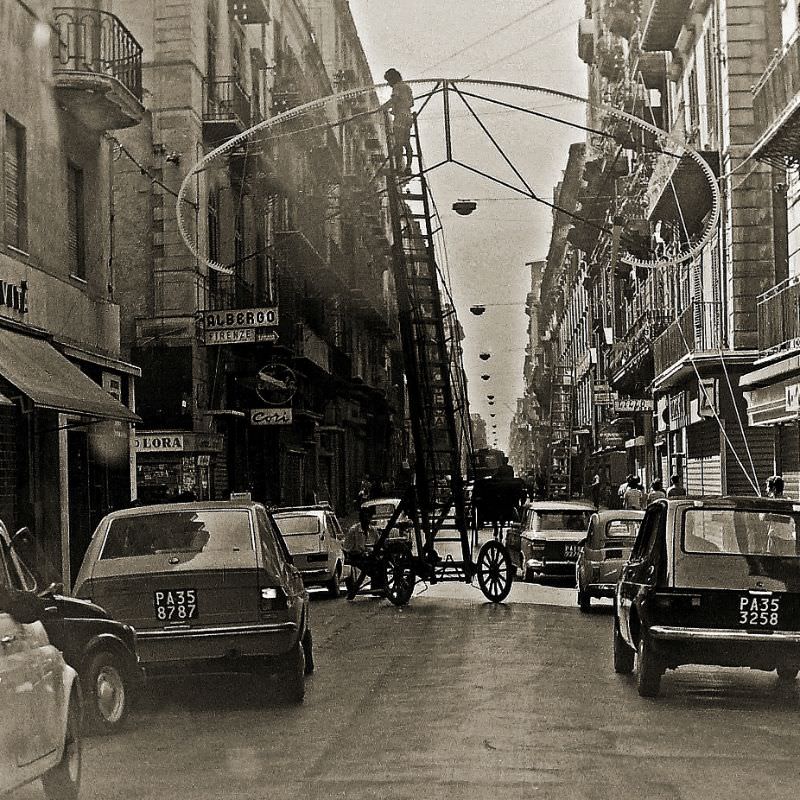
One of Palermo’s most celebrated events in 1973 was U Fistinu — the Feast of Santa Rosalia, the city’s patron saint. Held every July, the festival commemorated Rosalia’s intervention during the 1624 plague. A massive float carrying her statue was pulled through the city streets while fireworks lit up the harbor. Hundreds of thousands of people filled the Corso Vittorio Emanuele to watch the procession, which blended Catholic devotion with the theatrical energy that defined Palermo’s street culture.
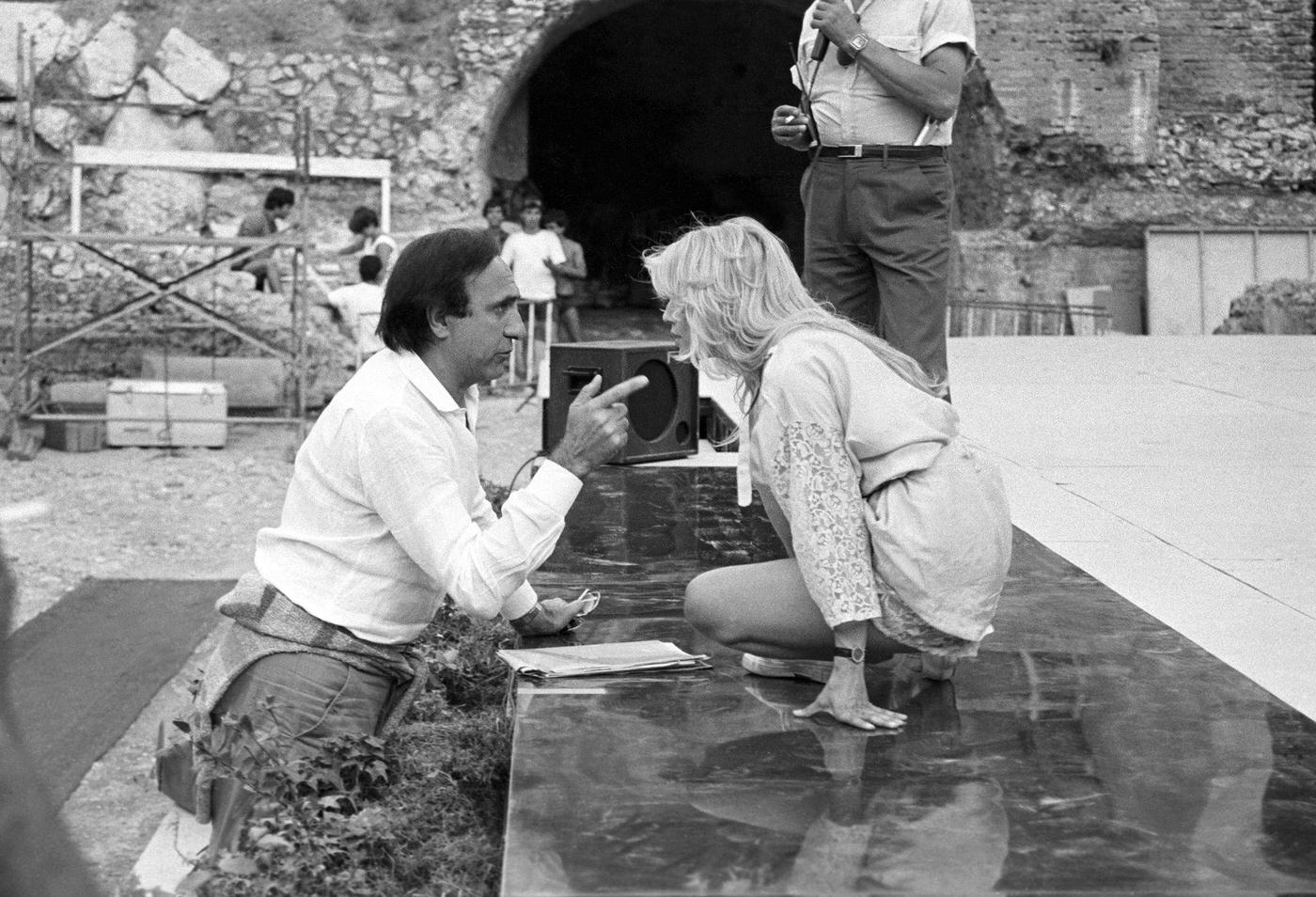
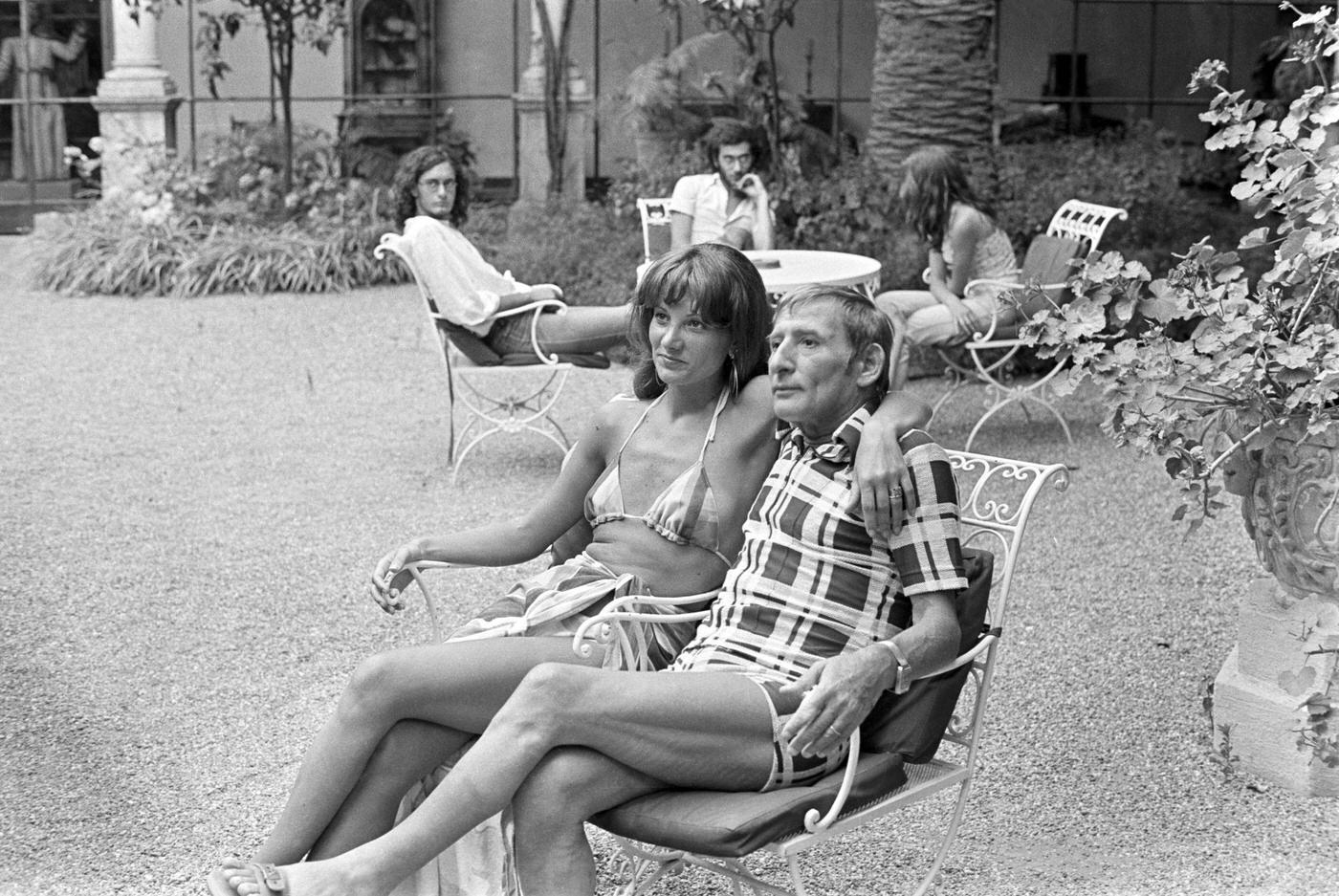
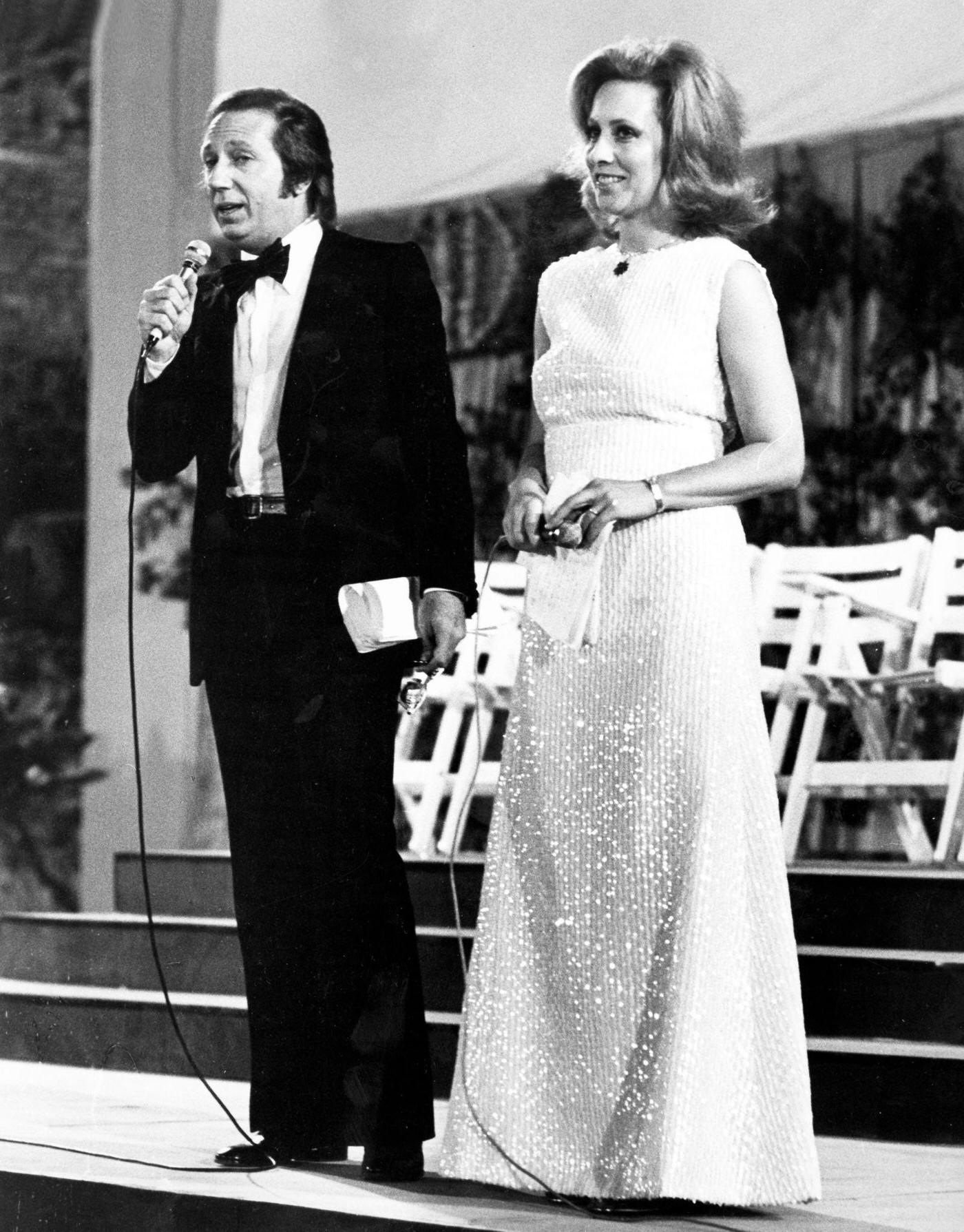
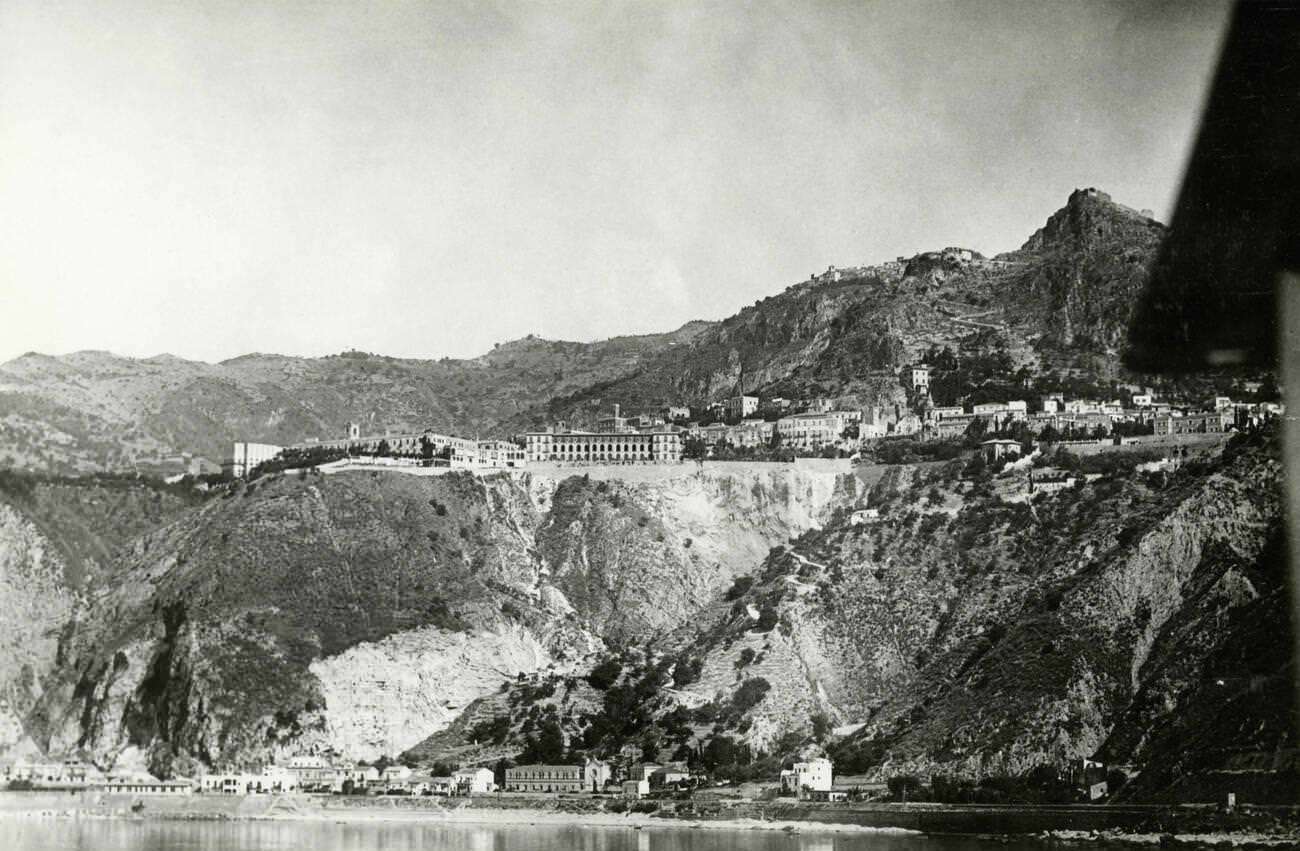
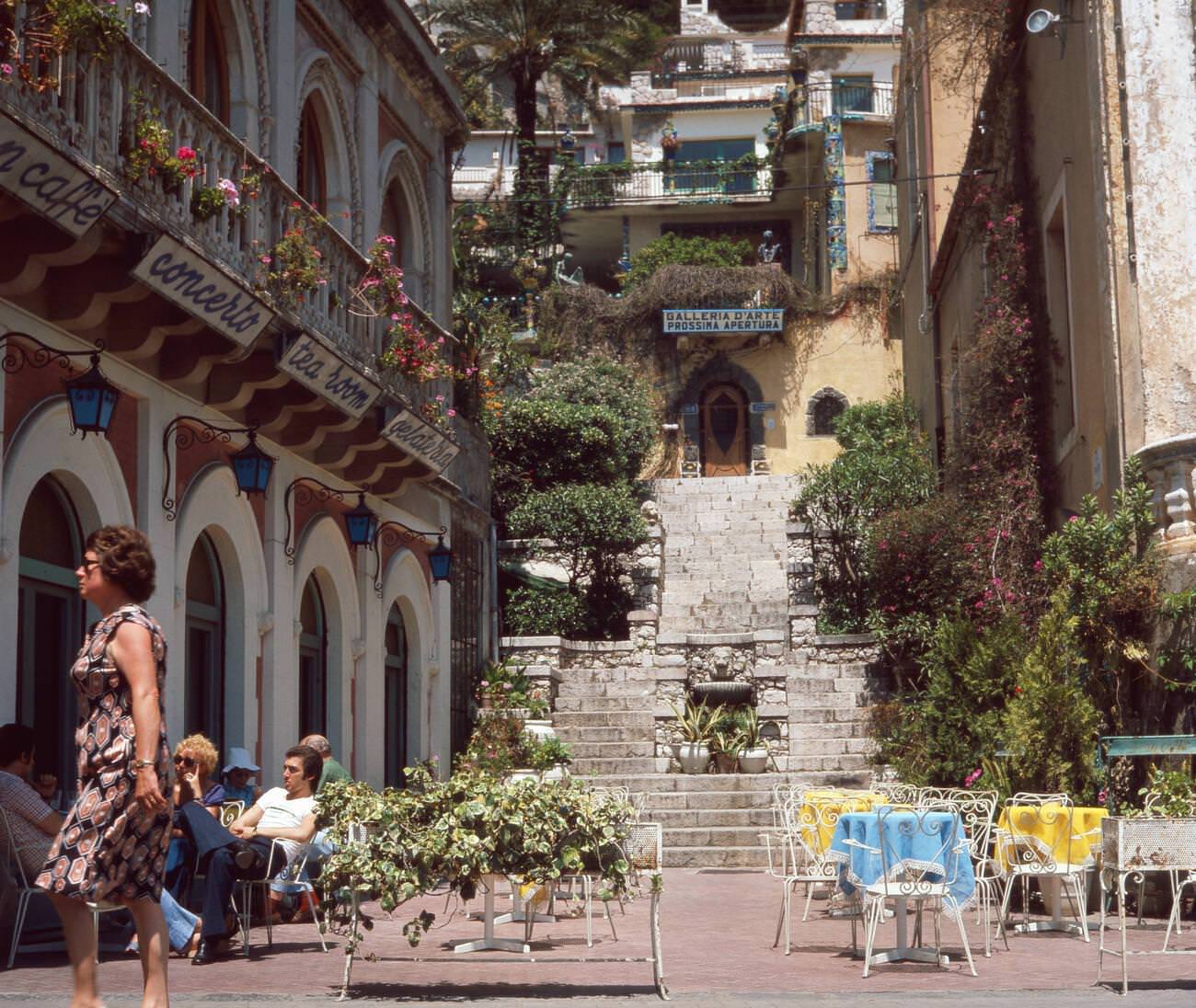
Taormina, perched on a hillside above the Ionian Sea with Mount Etna visible in the distance, was Sicily’s most glamorous destination in the 1970s. The town hosted prestigious cultural events, including the David di Donatello awards — Italy’s version of the Oscars — and drew Italian television and film personalities to its ancient Greek theatre and hillside hotels. In July 1972, television hosts Mike Bongiorno and Rosanna Vaudetti led the David di Donatello ceremony there.
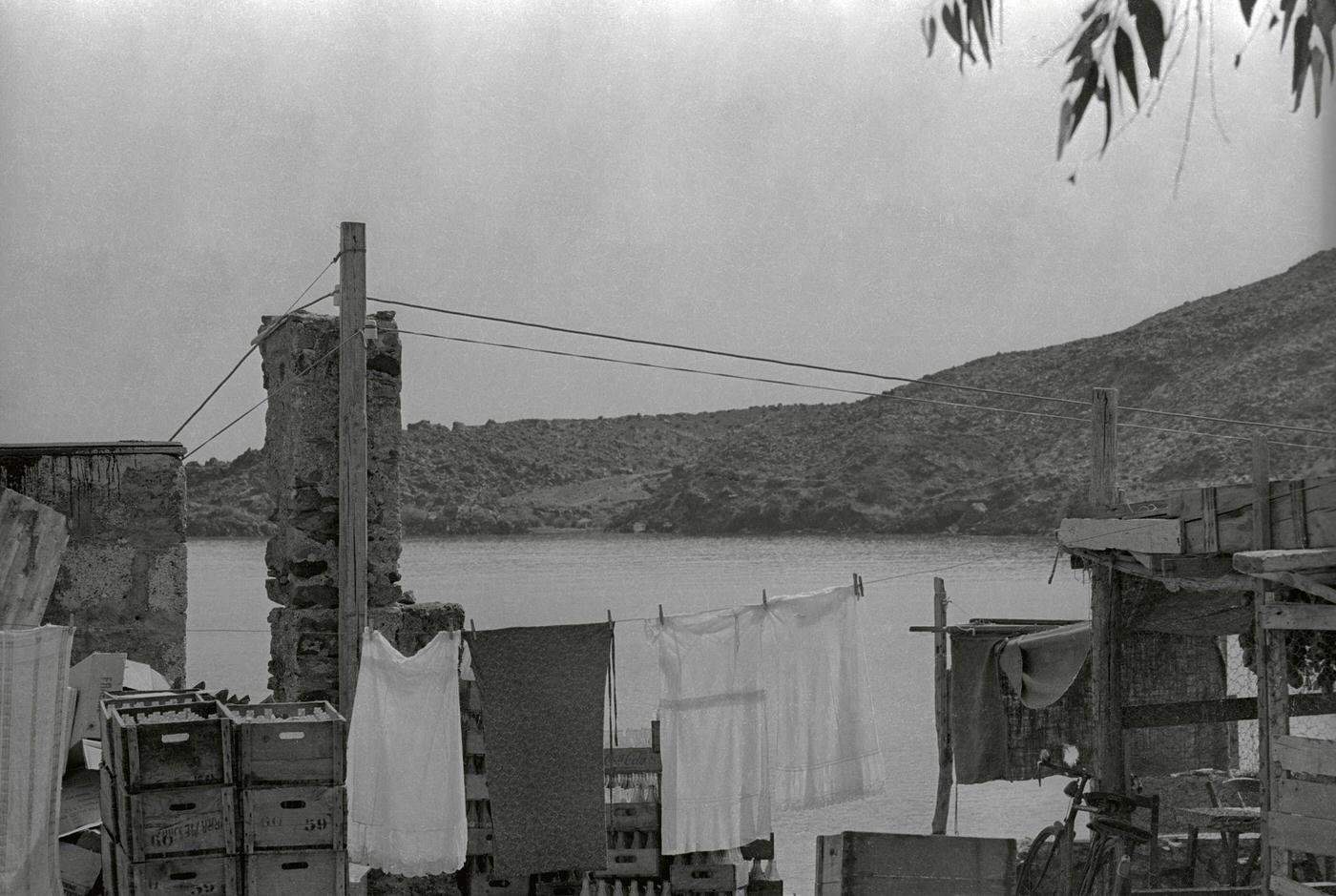
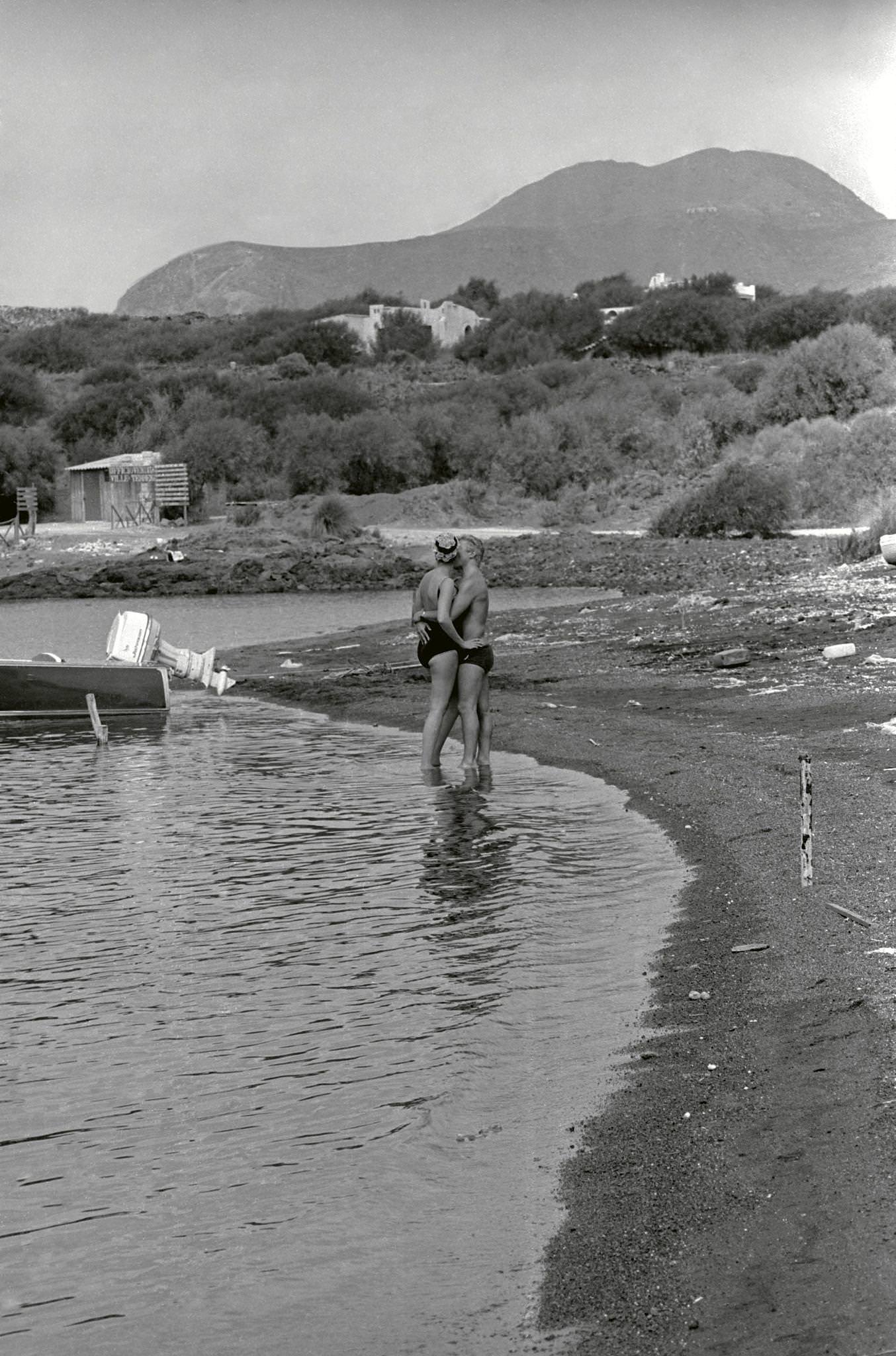
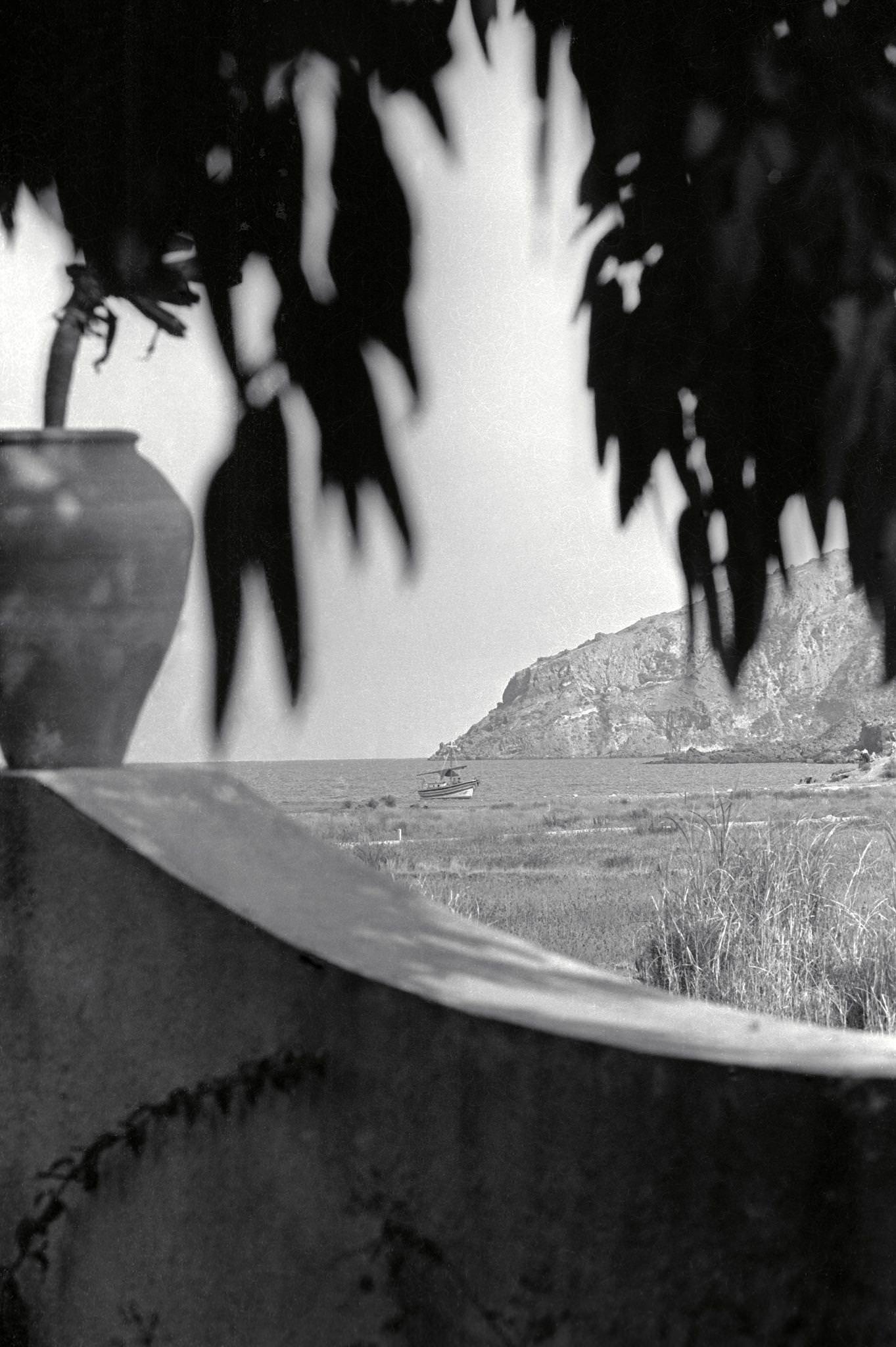
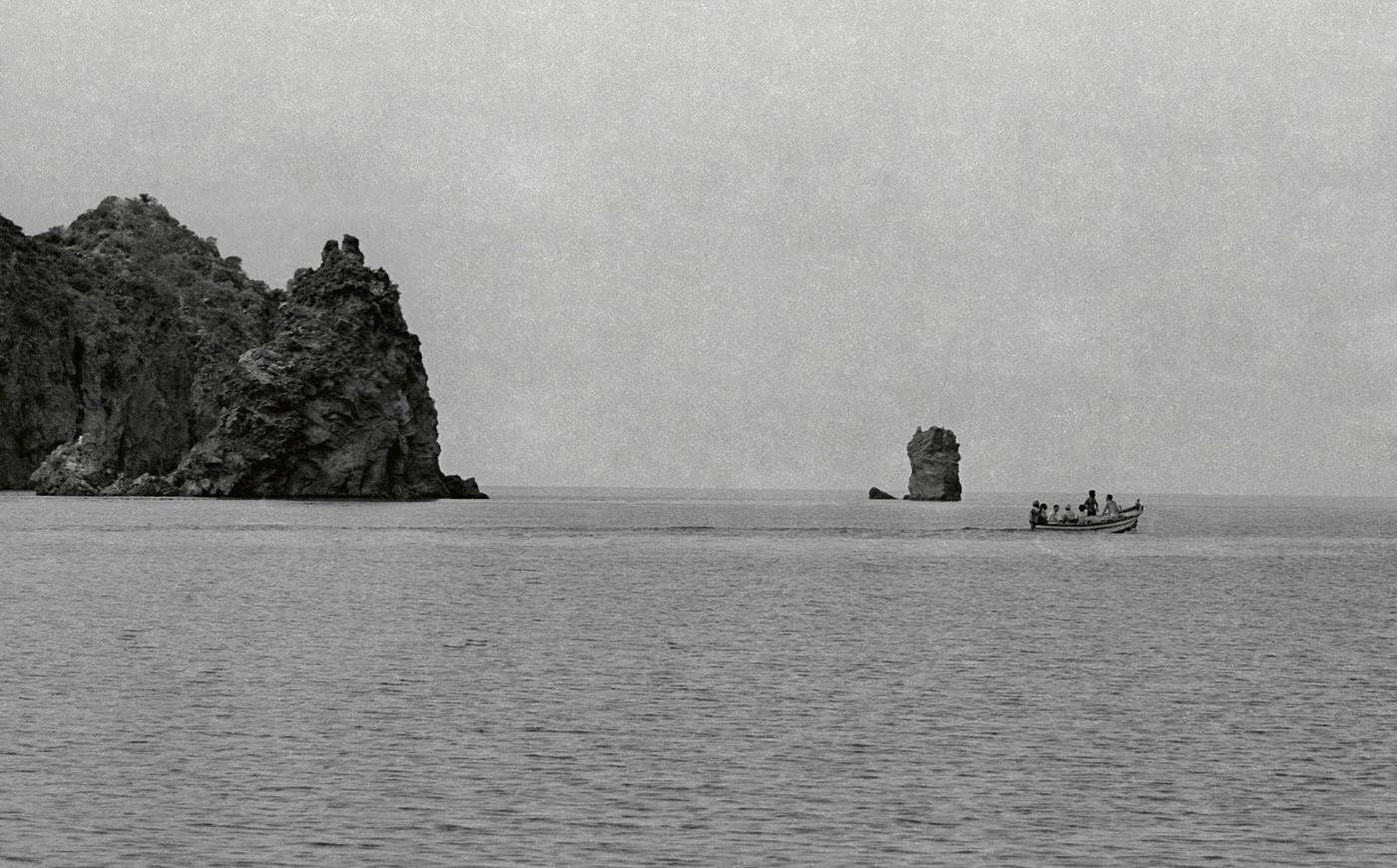
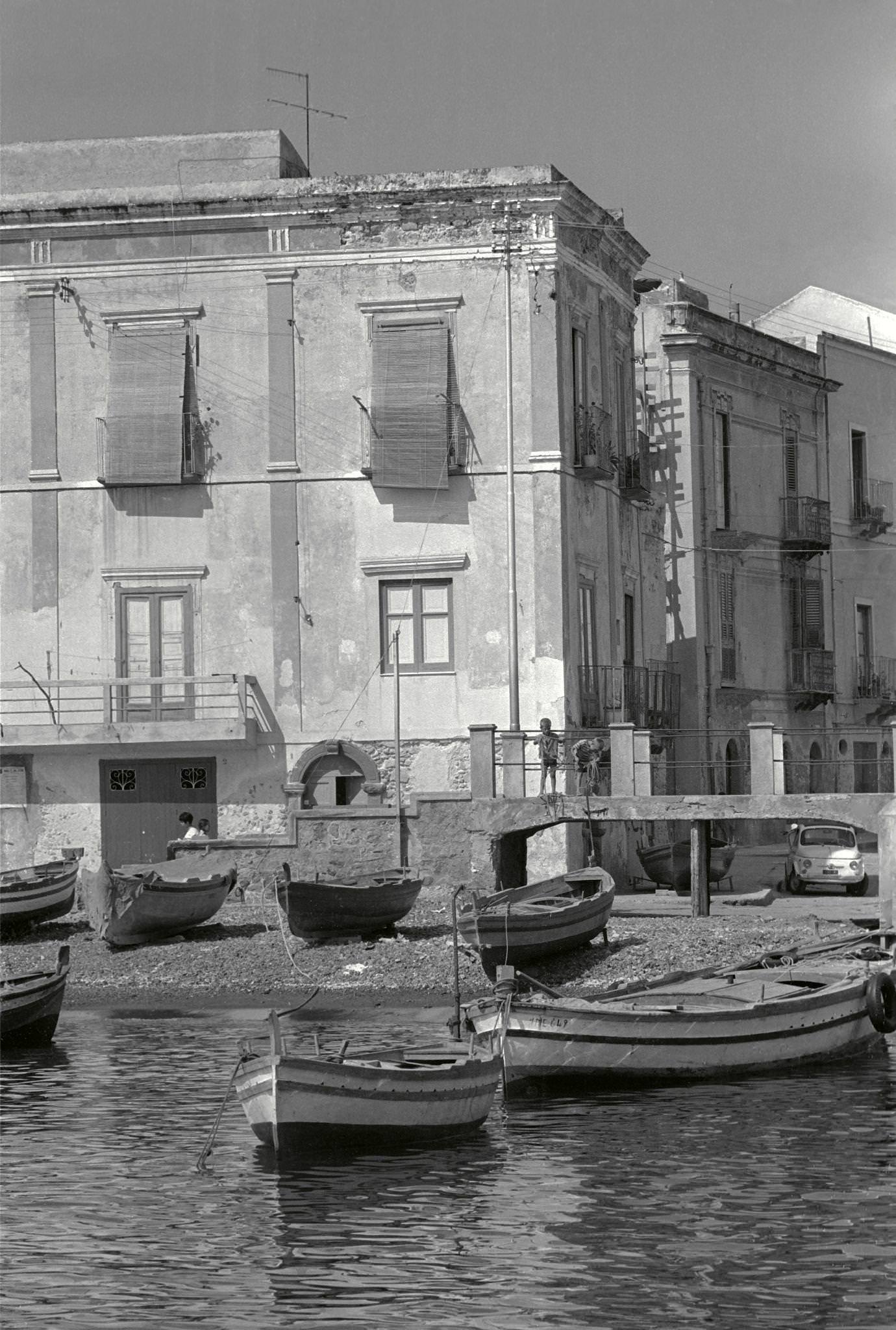
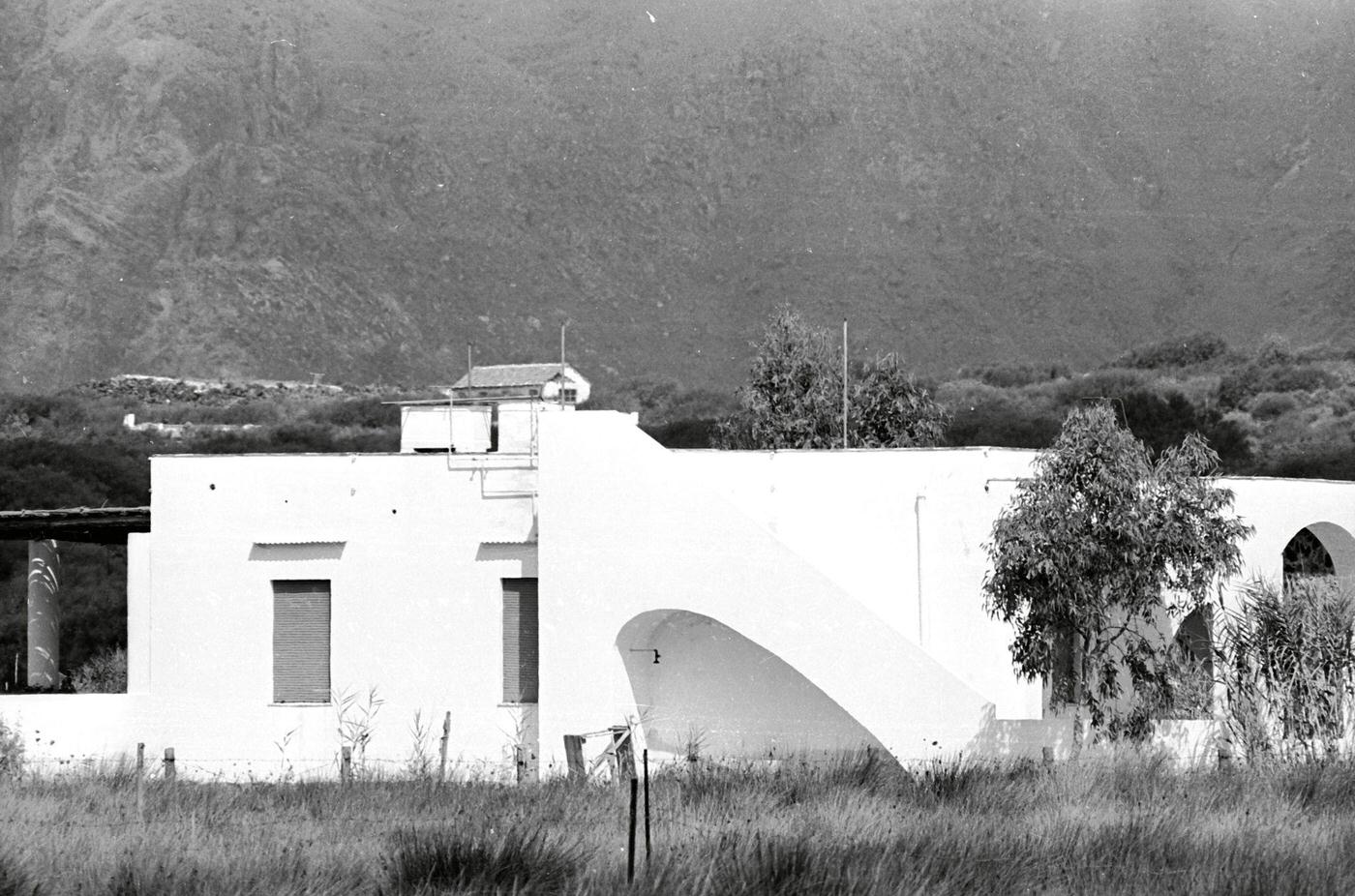
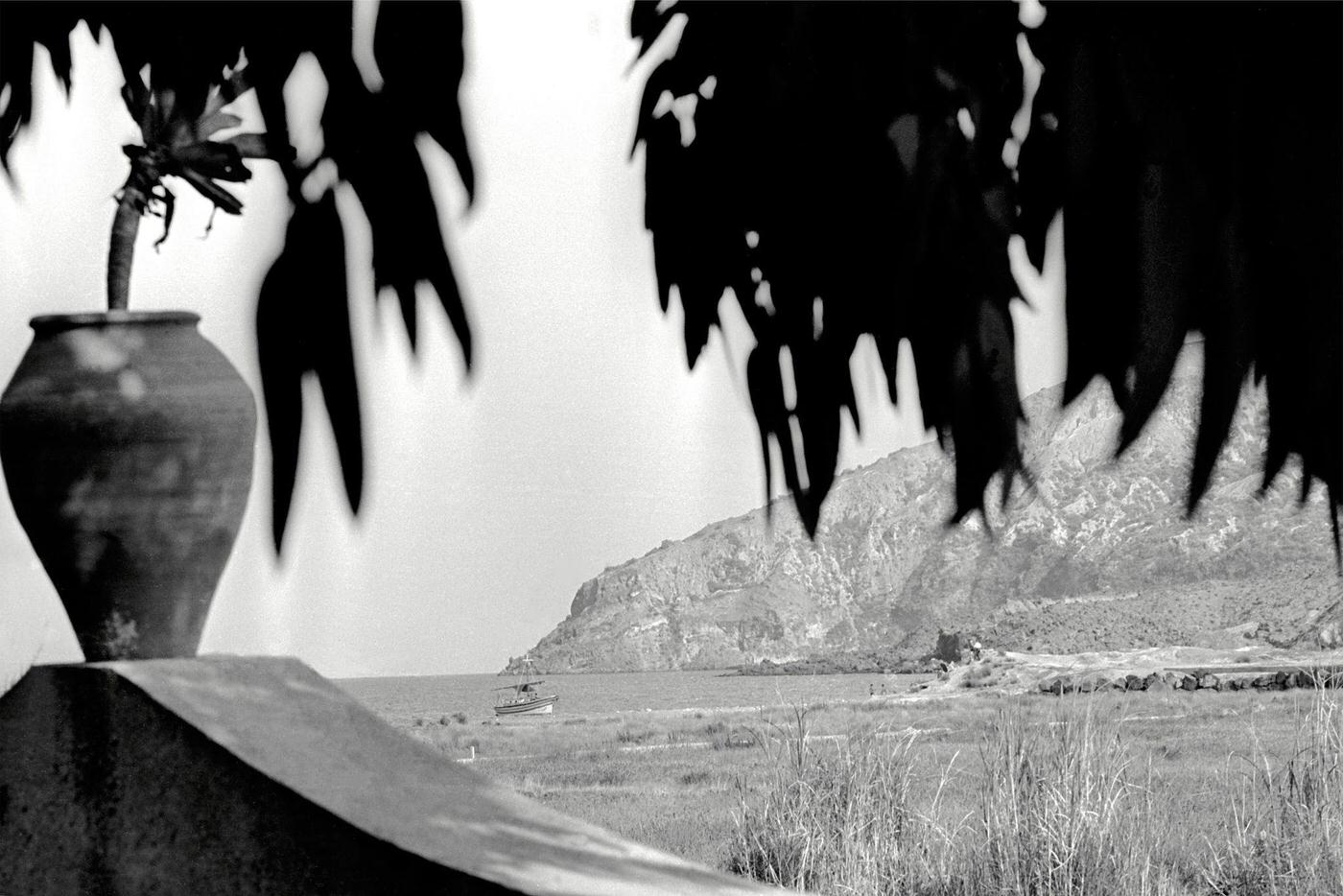
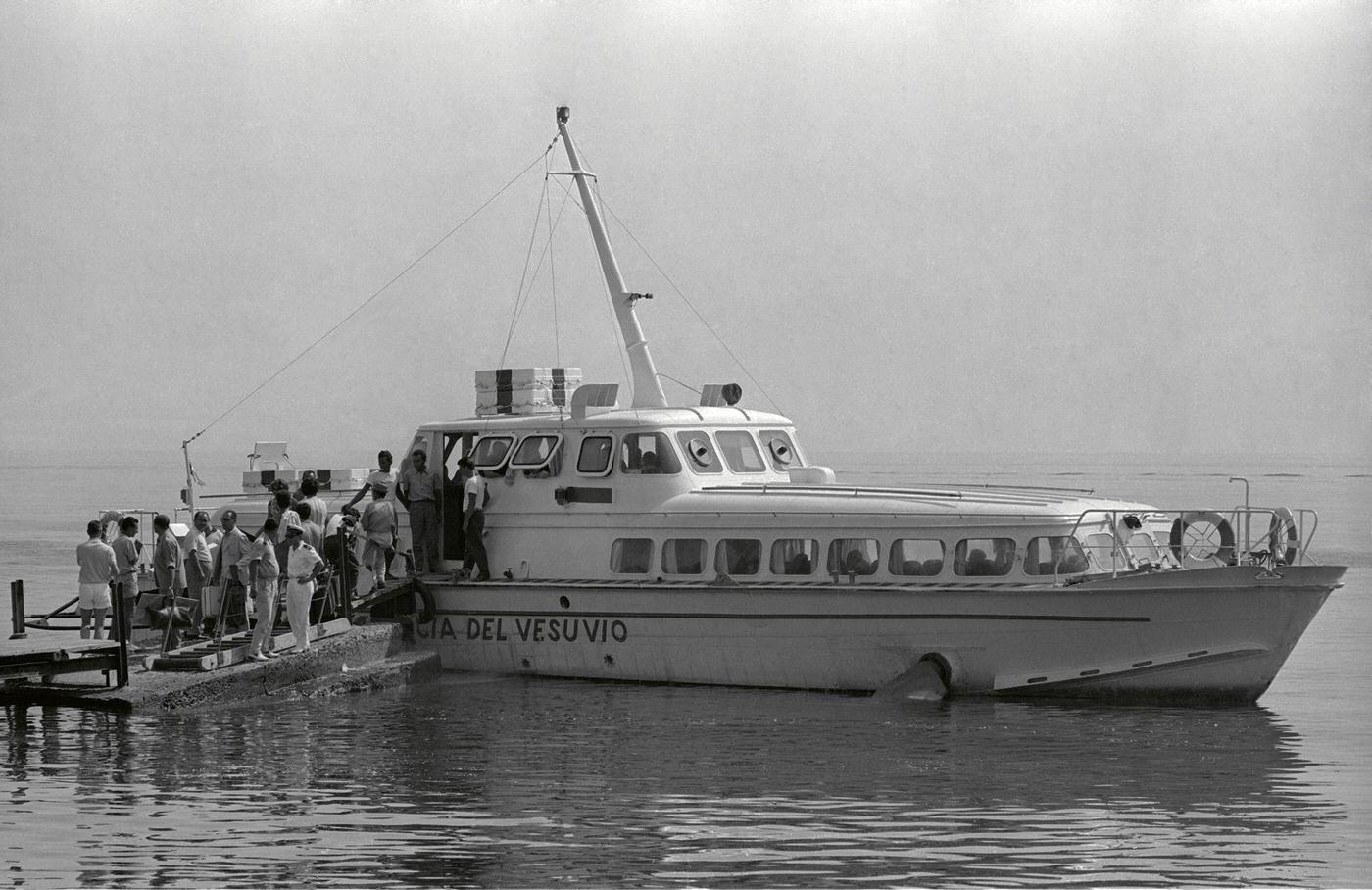
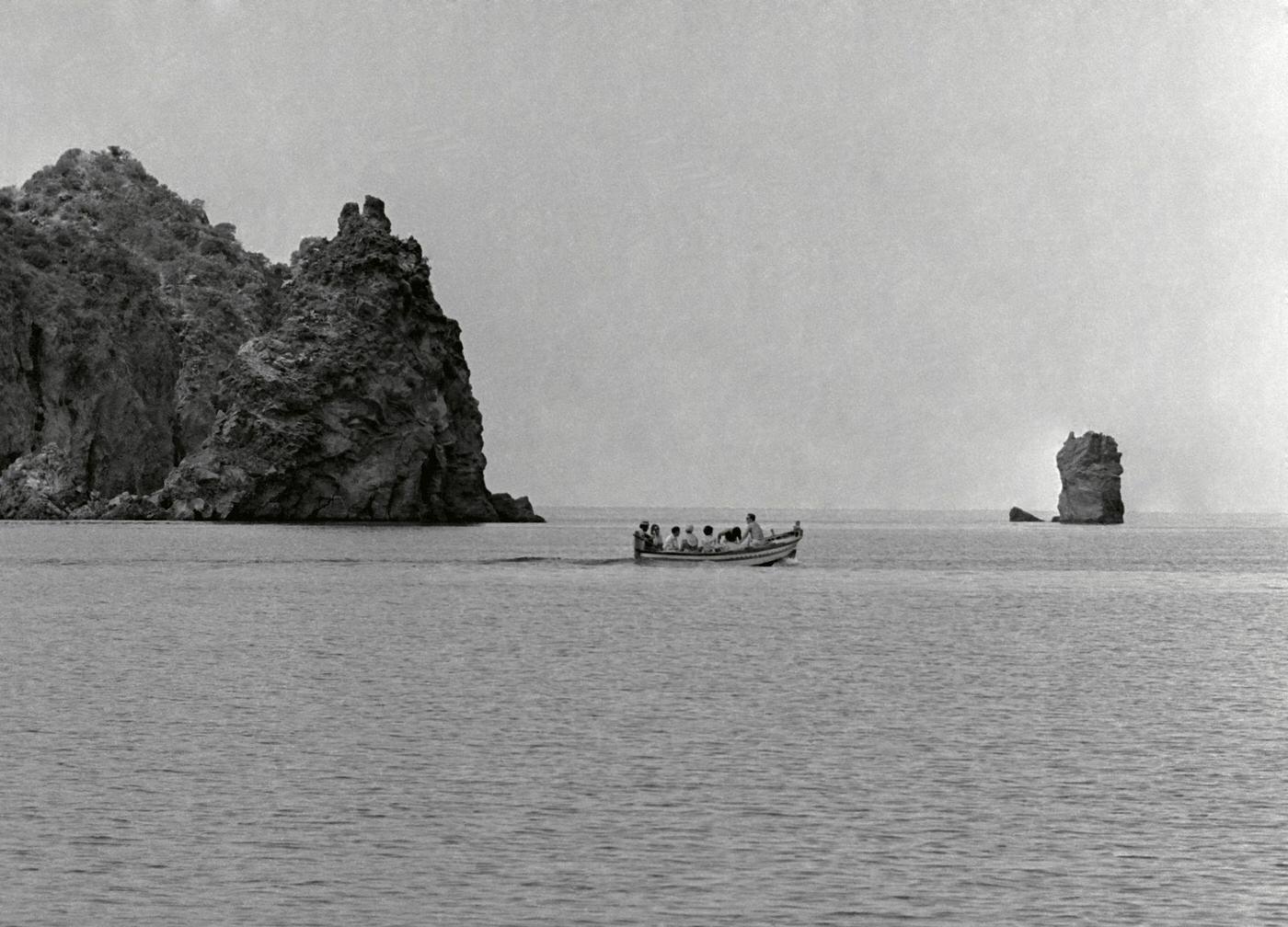
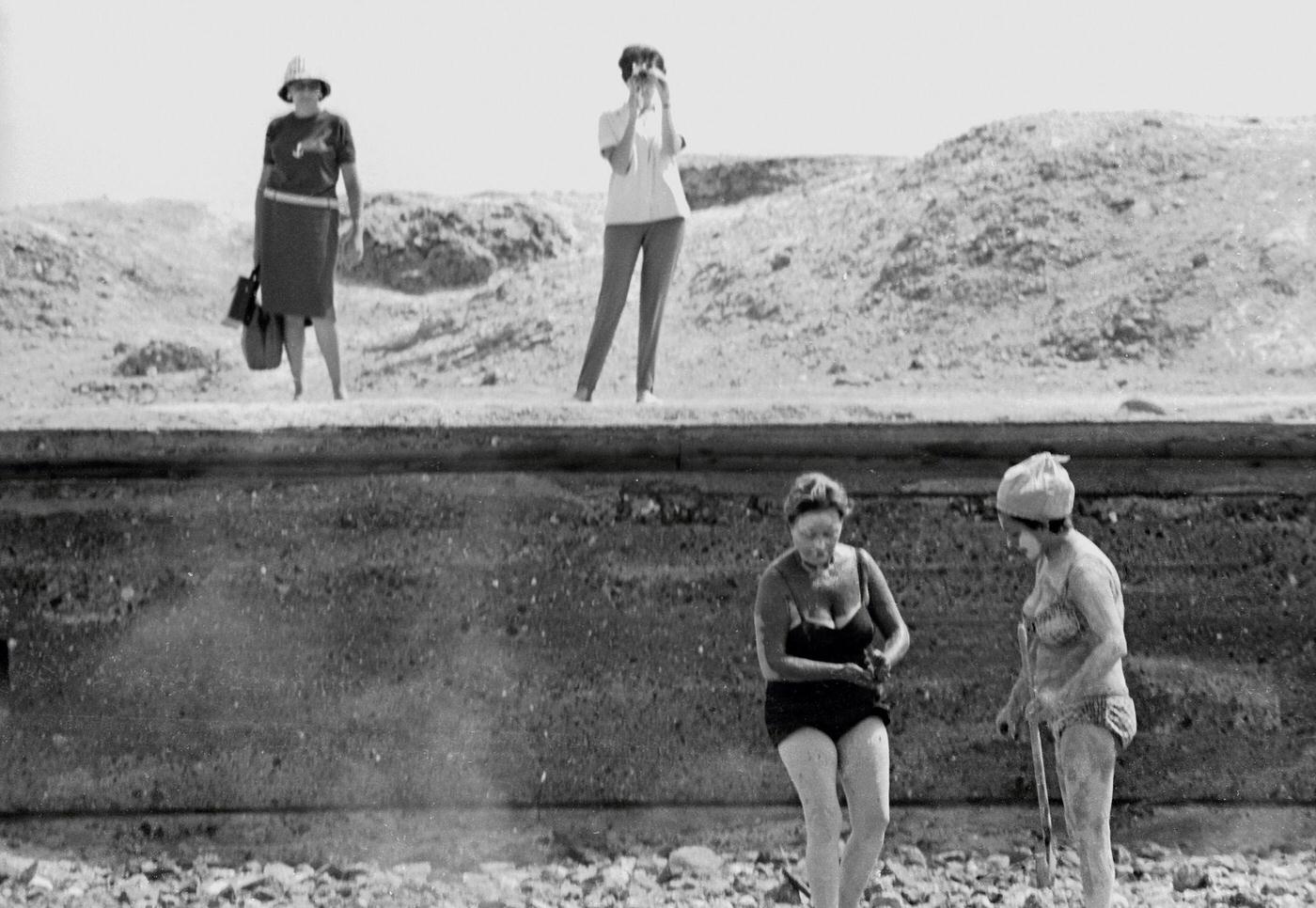
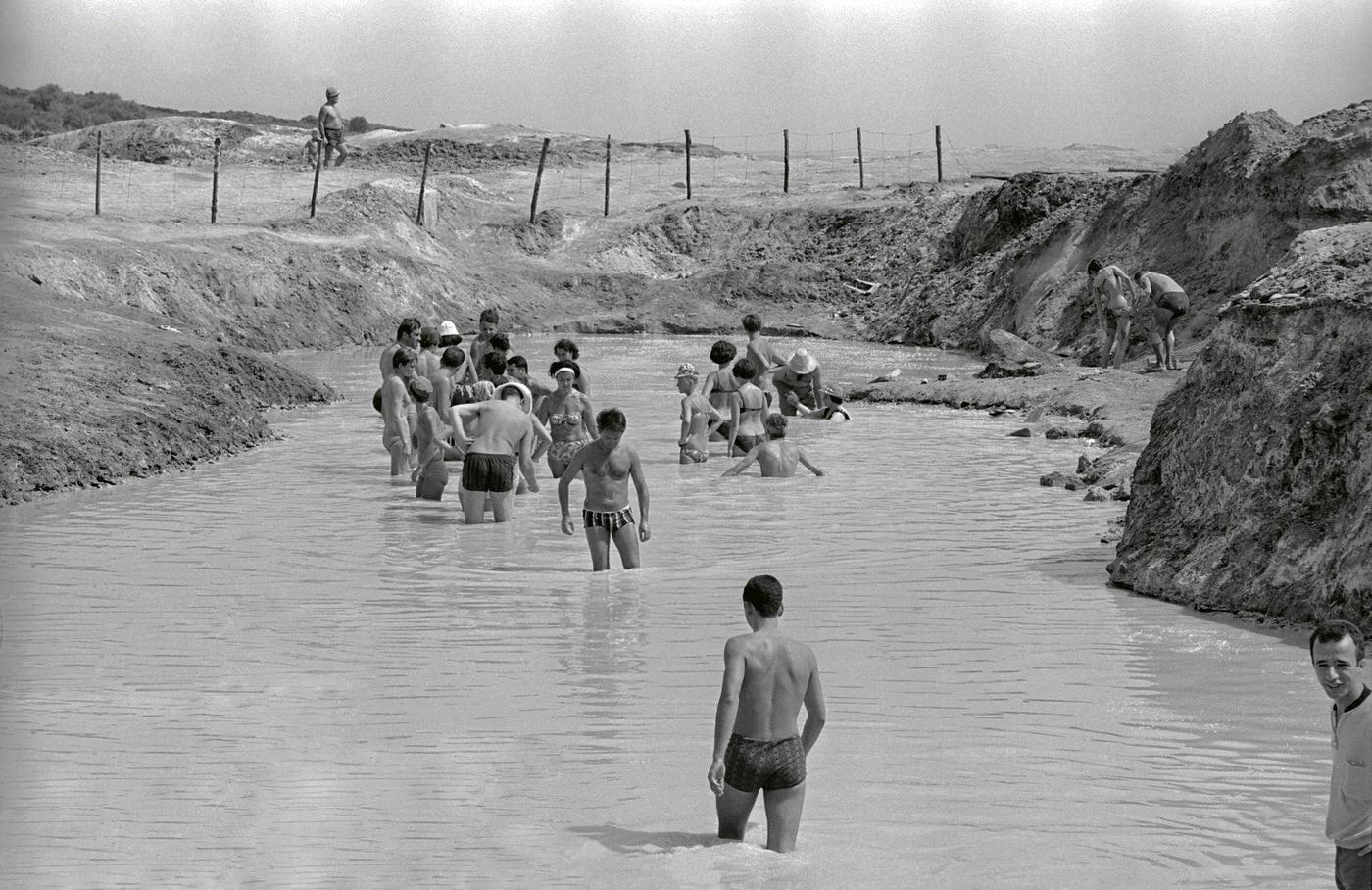
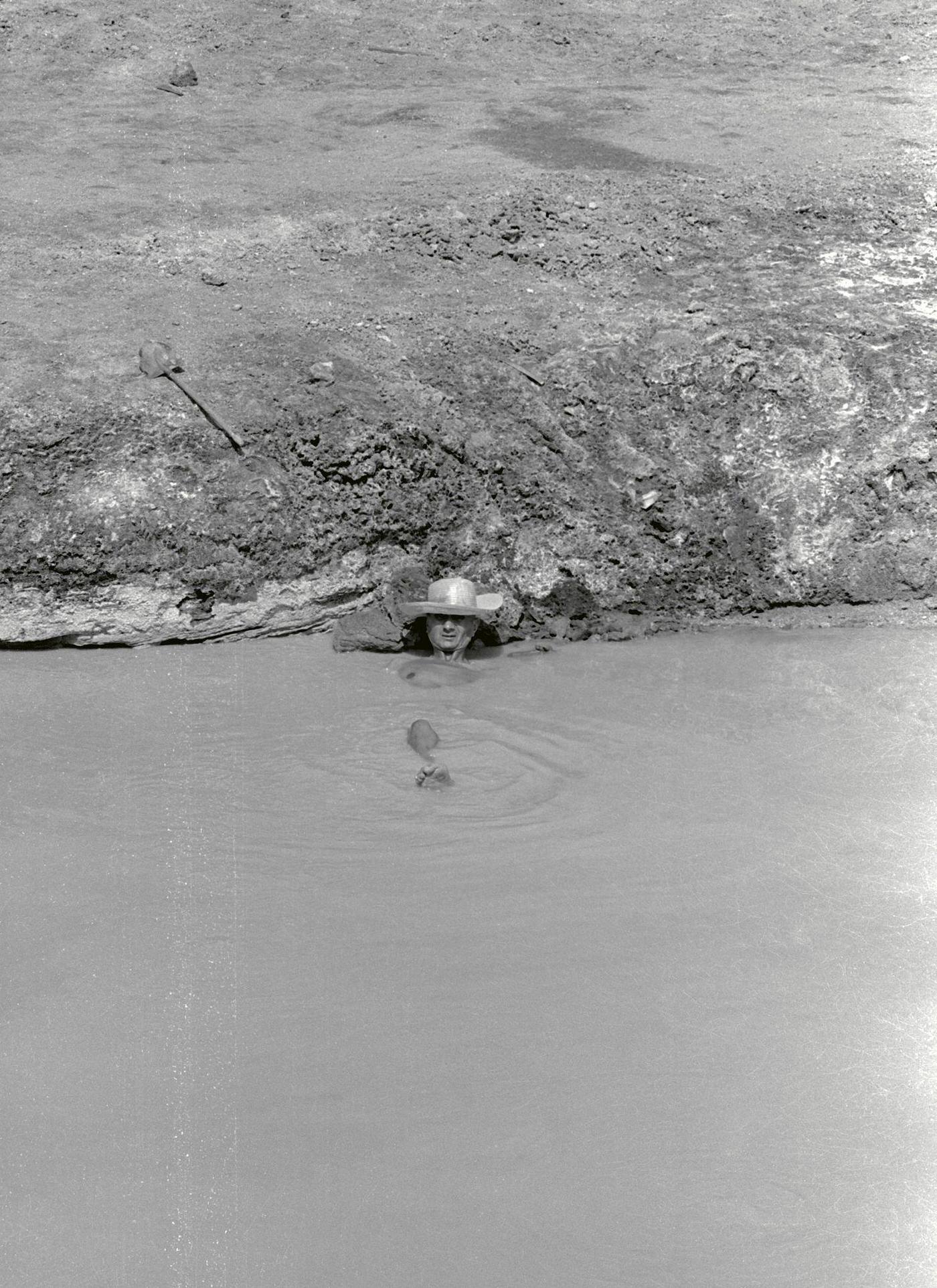
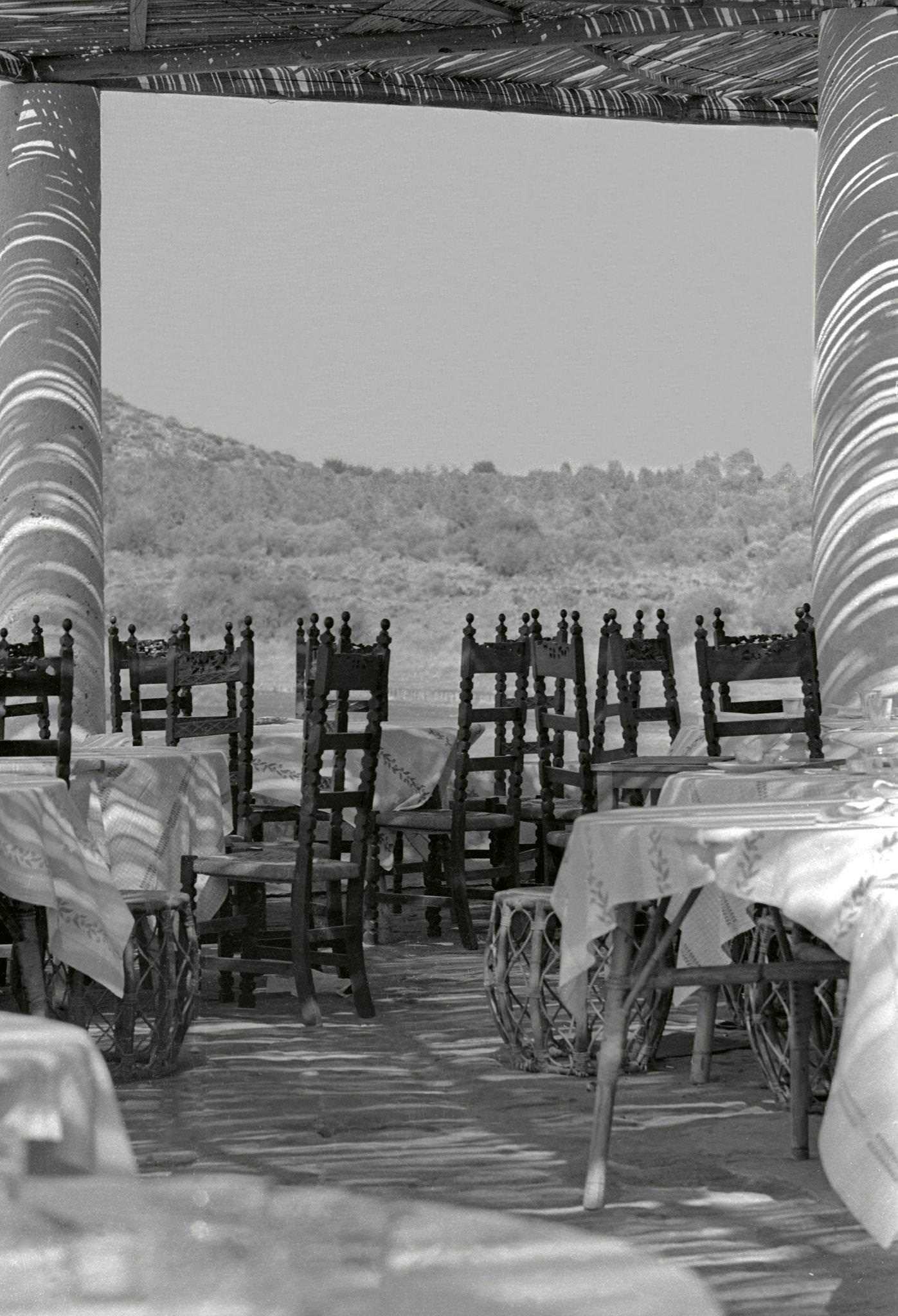
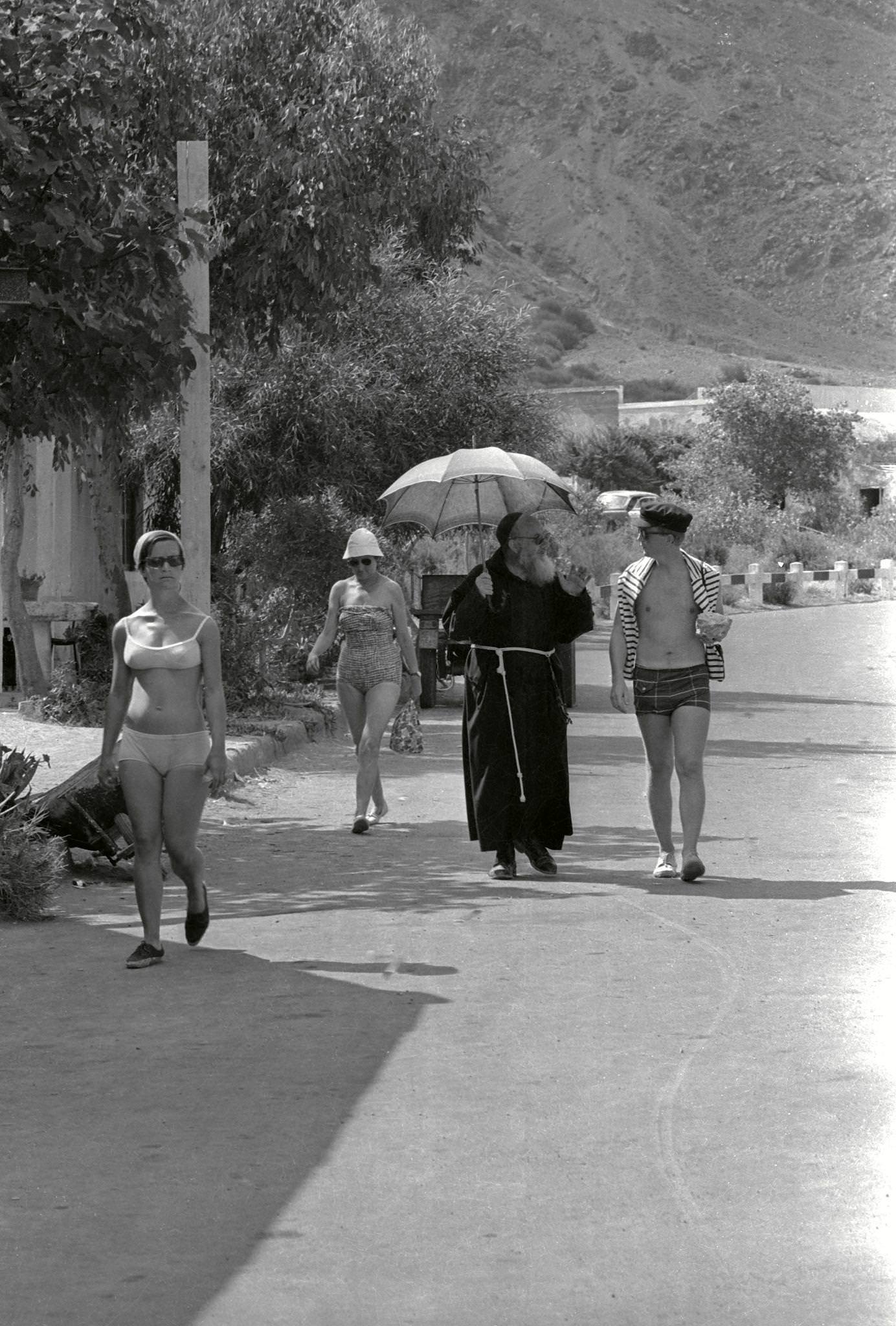
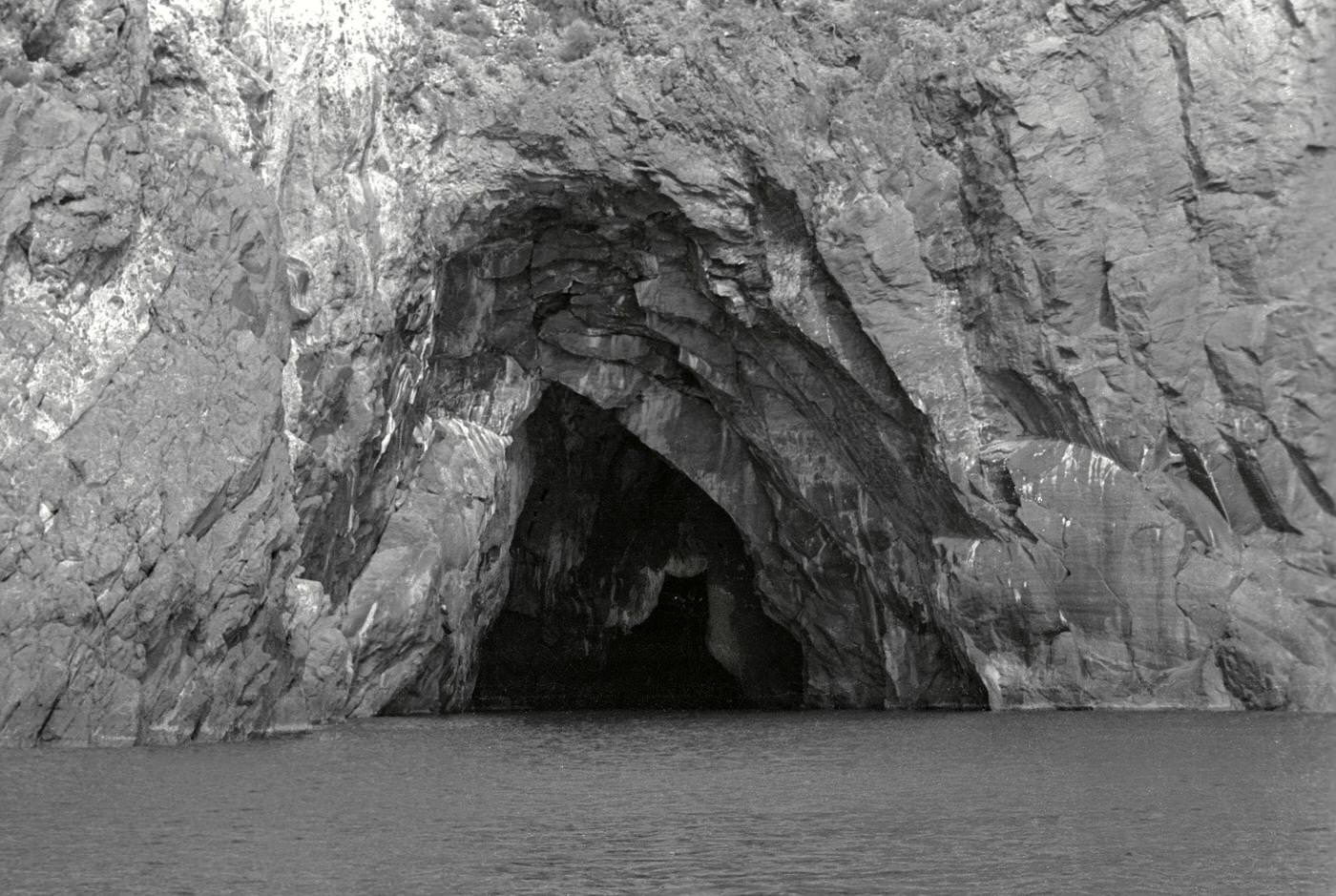
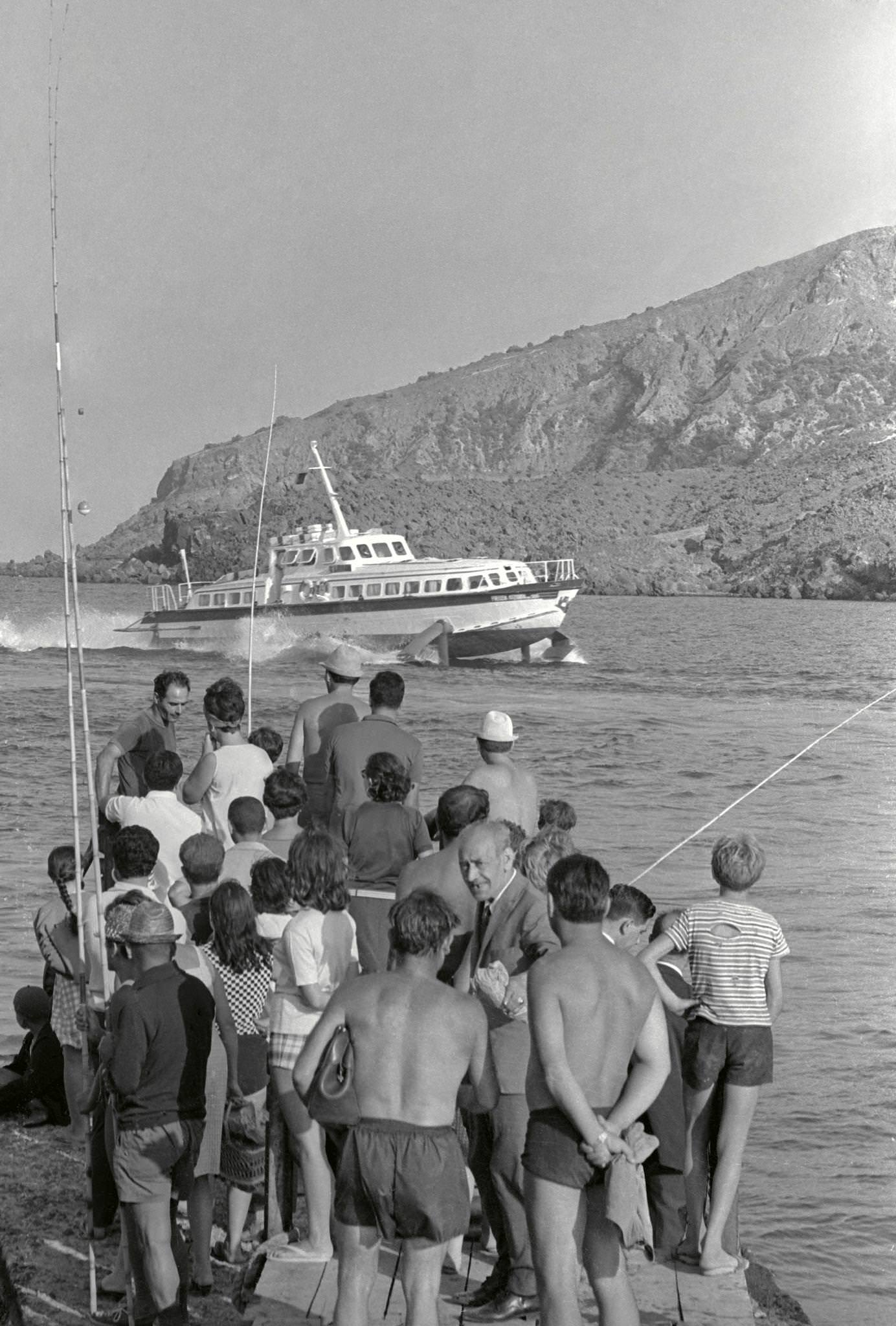
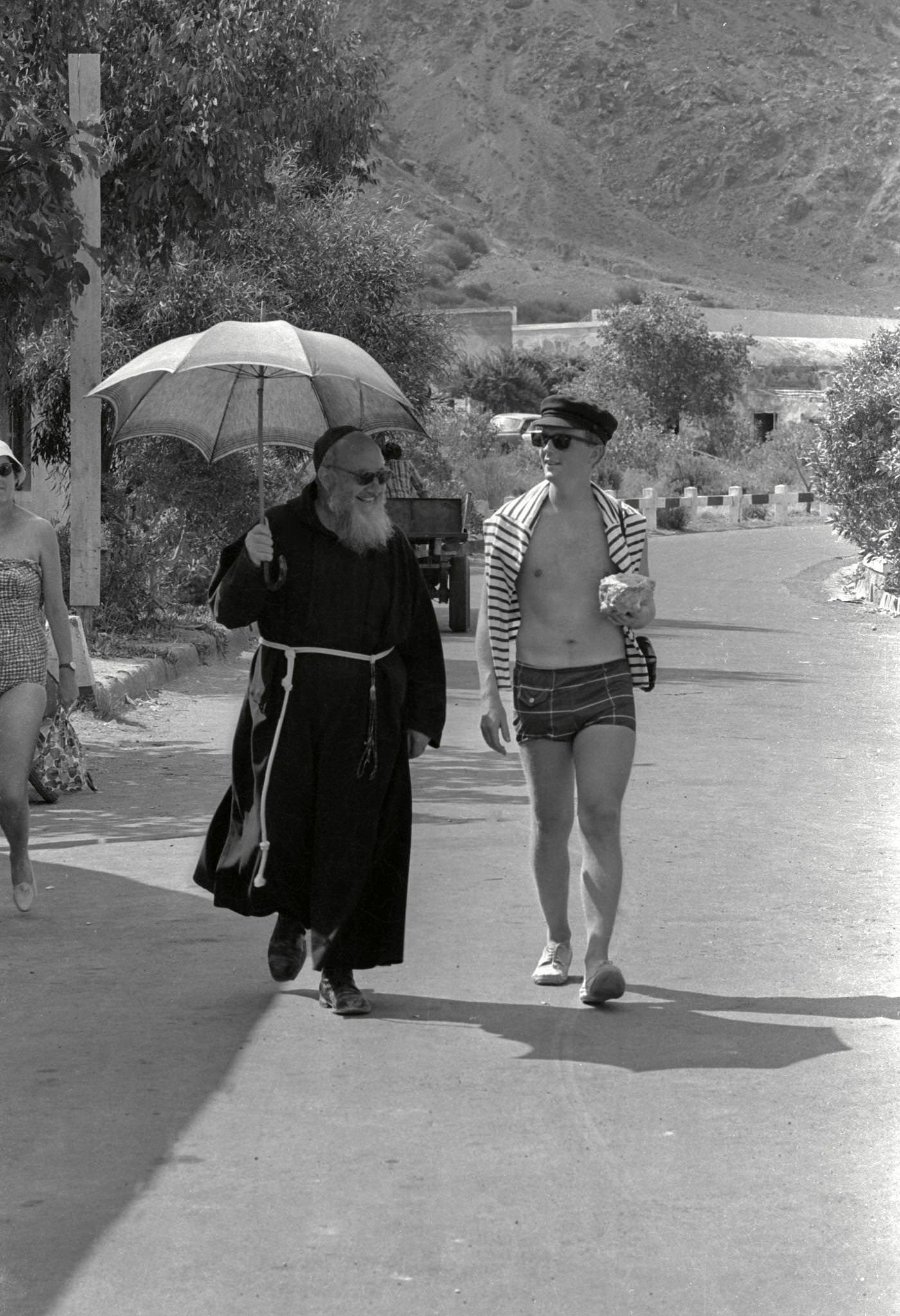
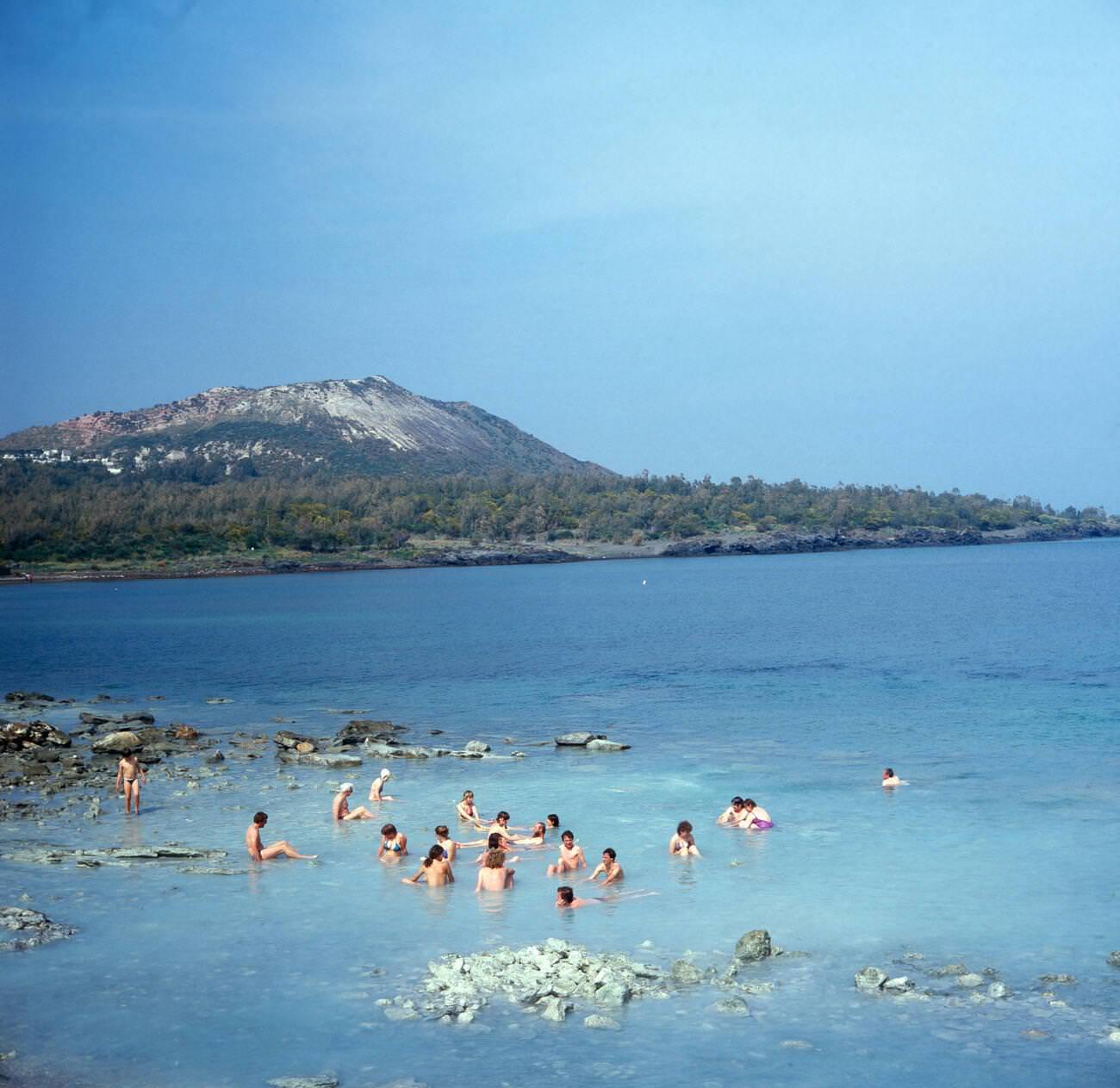
Vulcano Island, one of the Aeolian Islands just north of Sicily, attracted a different kind of visitor in 1970. The island is geologically active, and its famous sulfur mud baths drew tourists who came to soak in the warm, mineral-rich pools near the main crater. Getting there meant taking a hydrofoil across open water, and once on the island, life was simple — fishing boats, small restaurants, whitewashed houses, and the ever-present smell of sulfur.
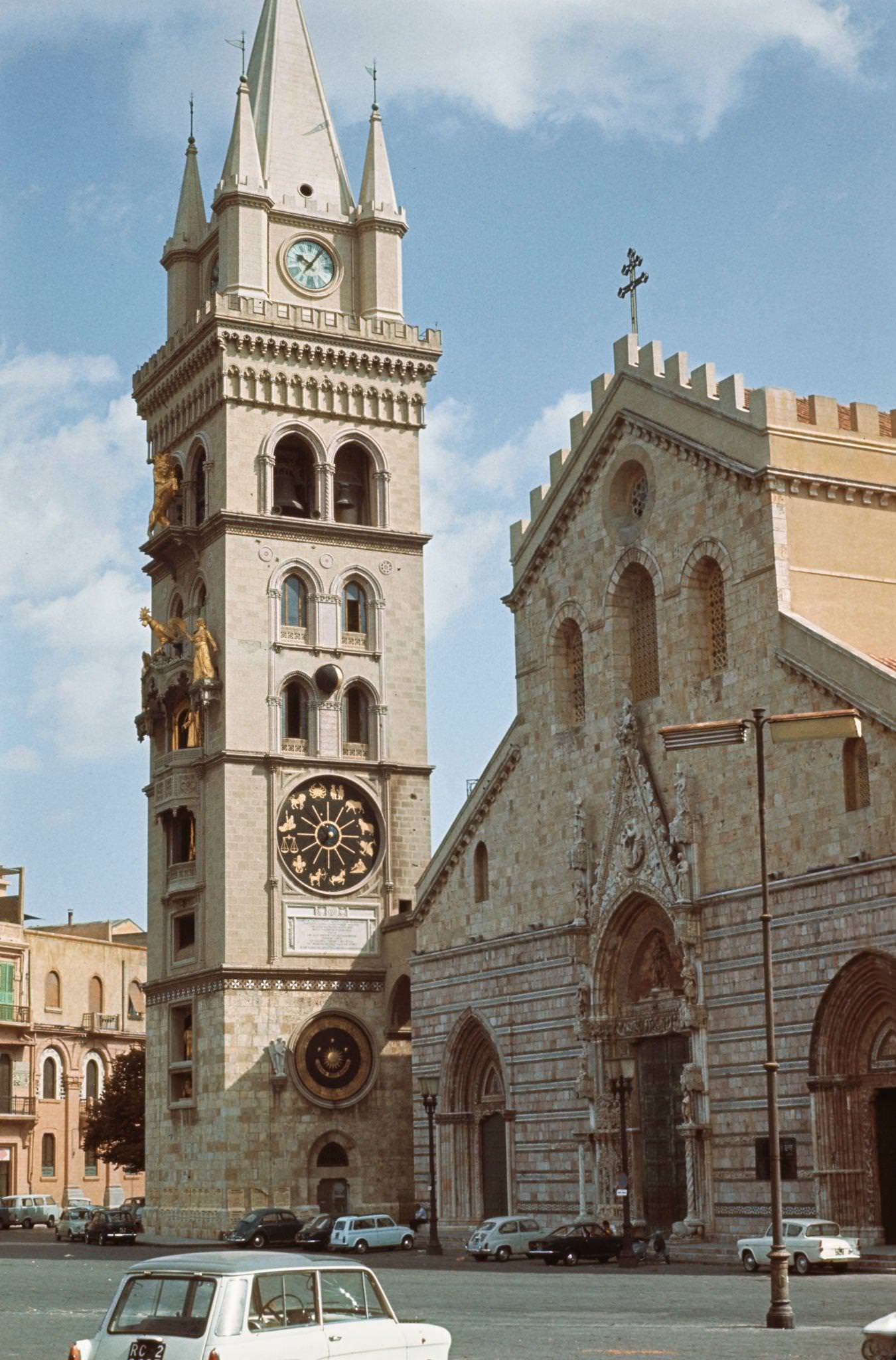
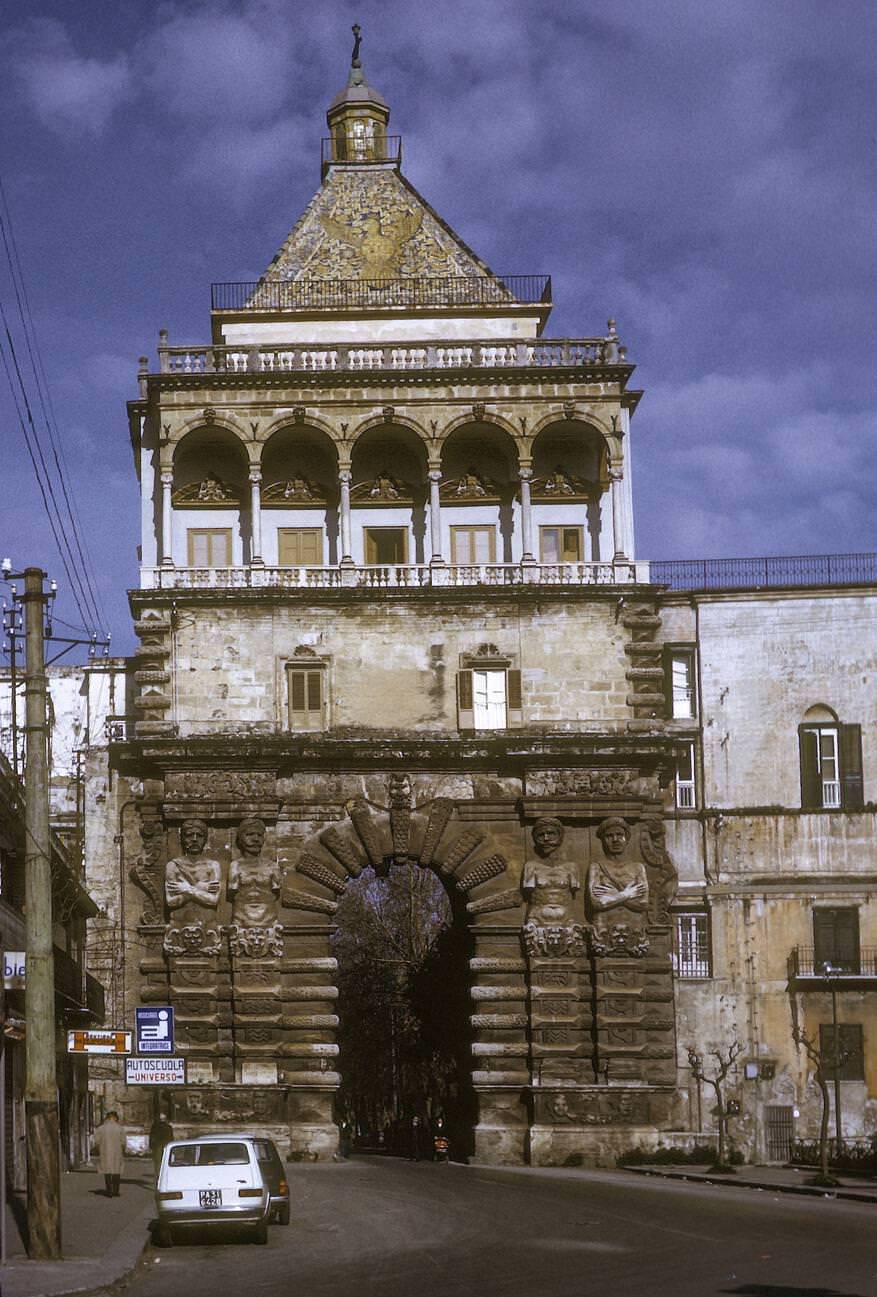
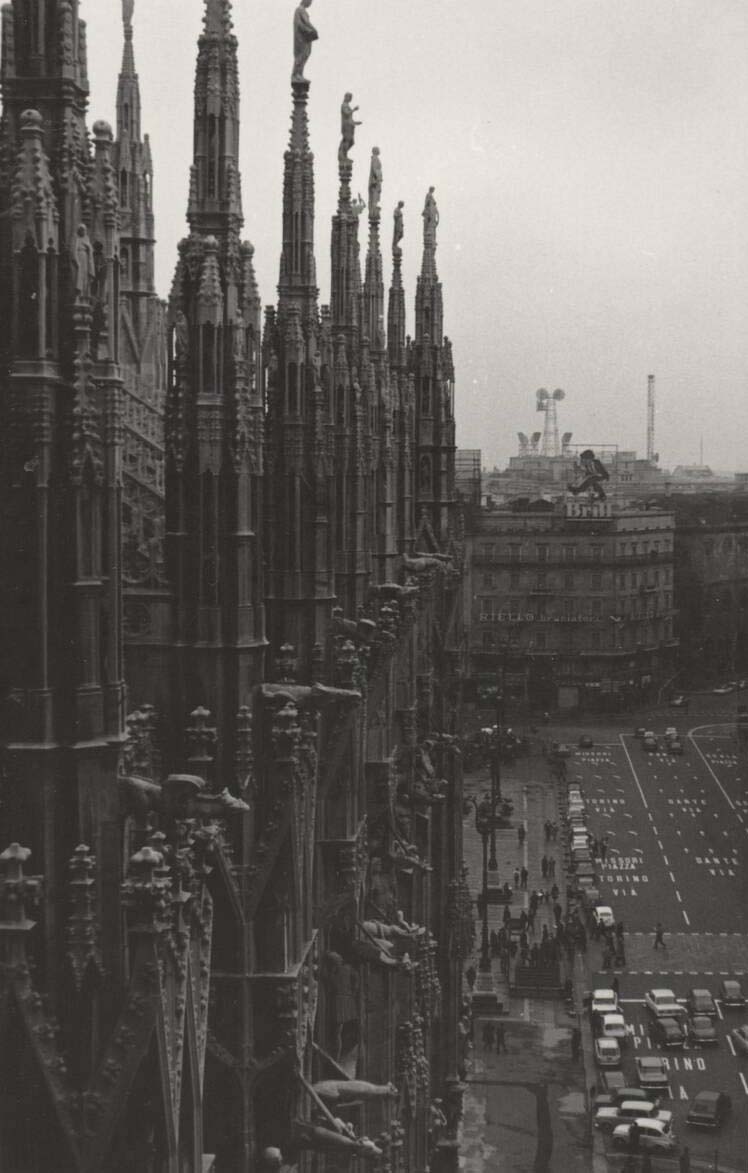
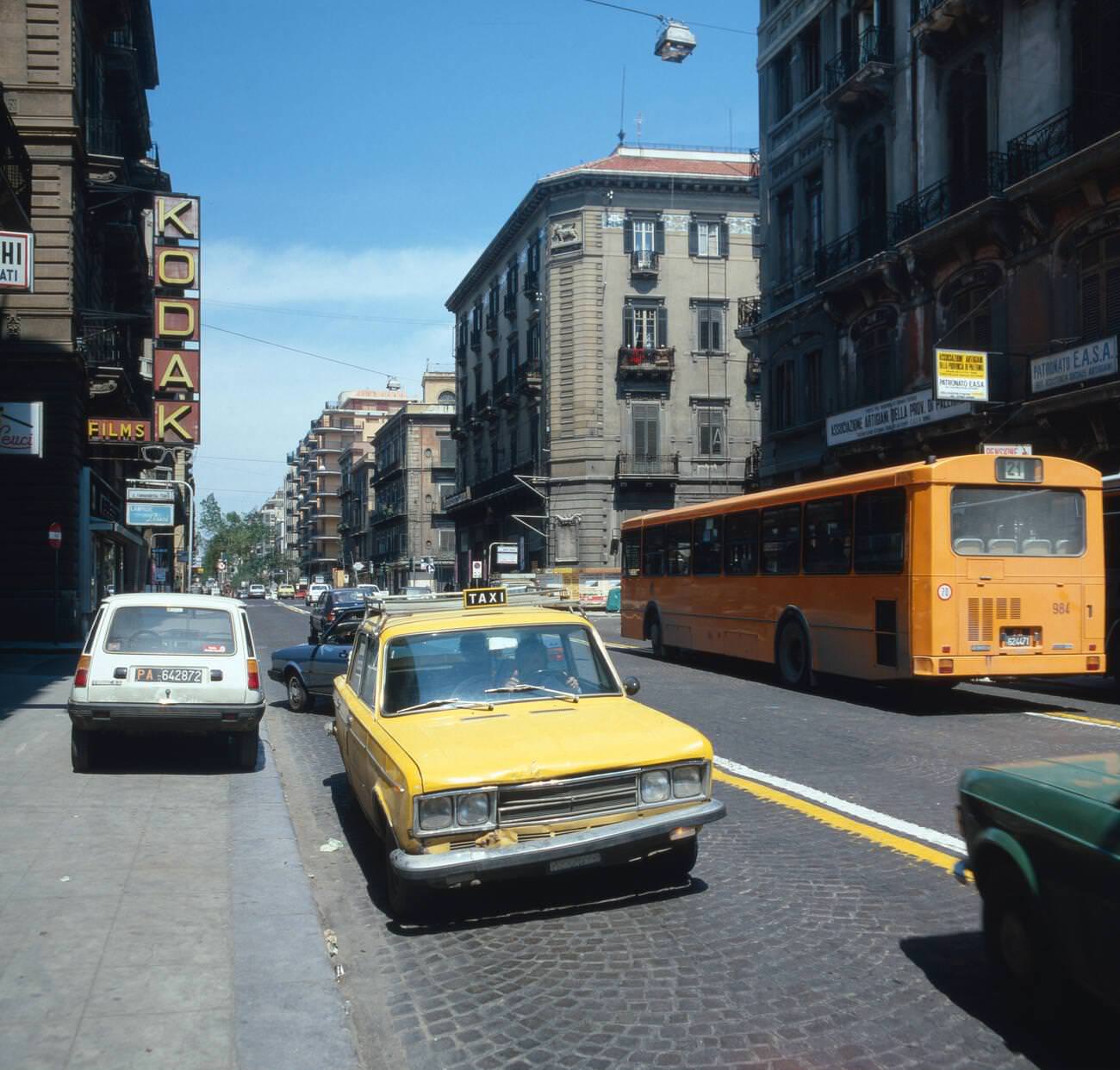
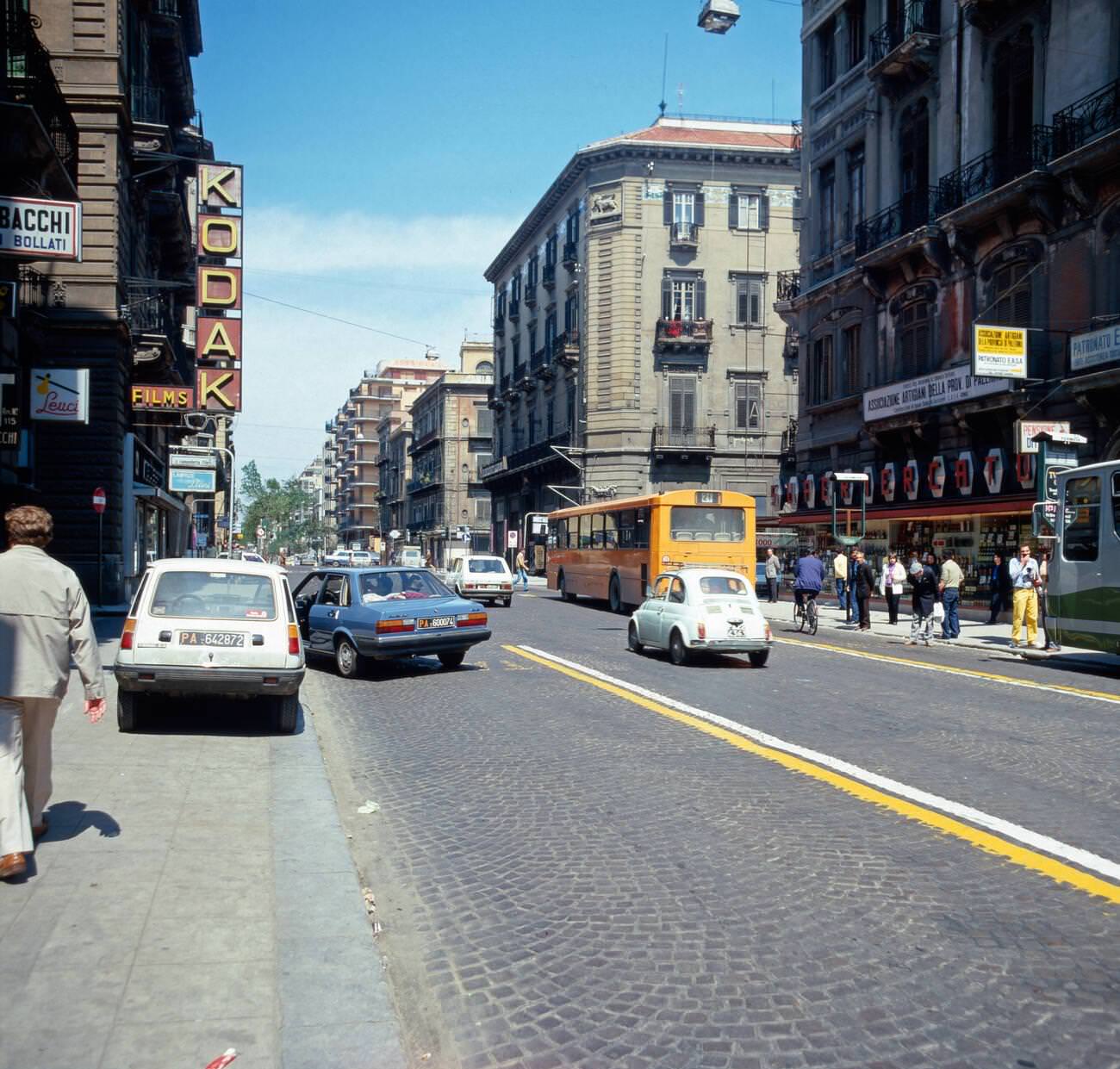
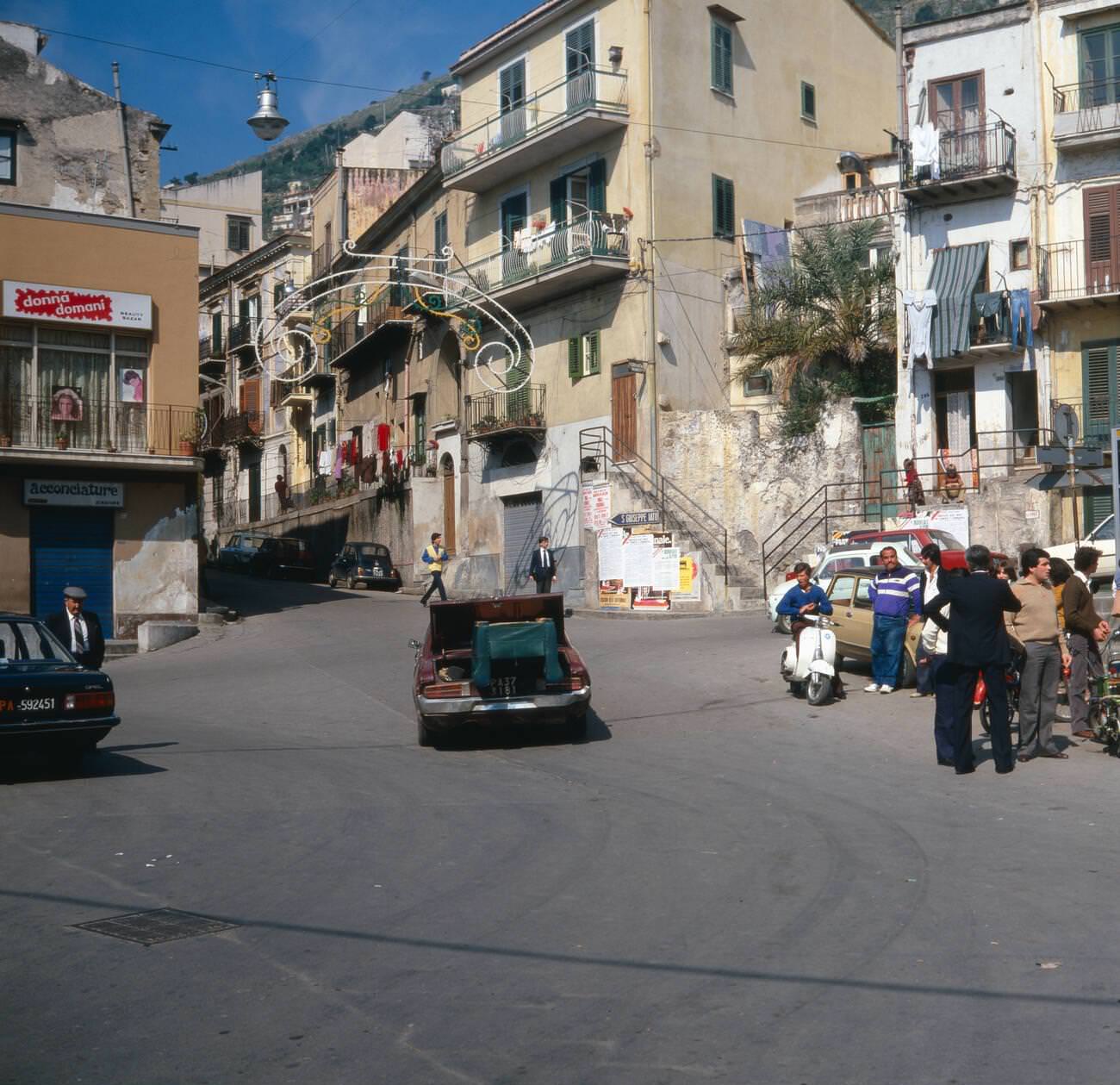
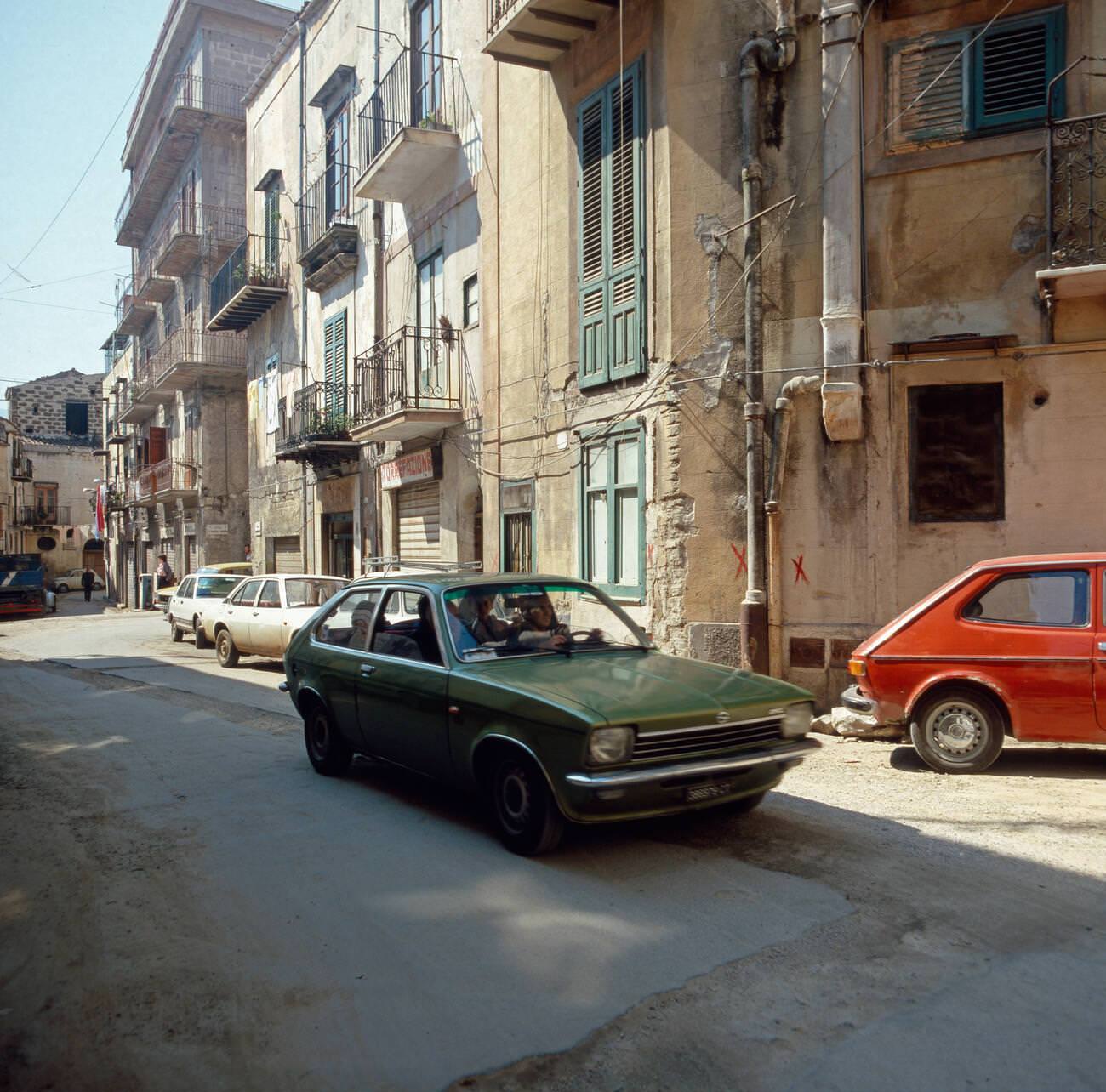
On the mainland of Sicily, Messina’s cathedral square and Palermo’s streets showed a different side of the island — one that was catching up with Italy’s postwar automobile boom. Cars were increasingly common in Sicilian cities by the early 1970s, and in Palermo, traffic jams became part of urban life. The Porta Nuova, the 16th-century gate built in 1535 to mark the entry into Palermo’s old walled city, now stood in the middle of a busy, motorized cityscape.
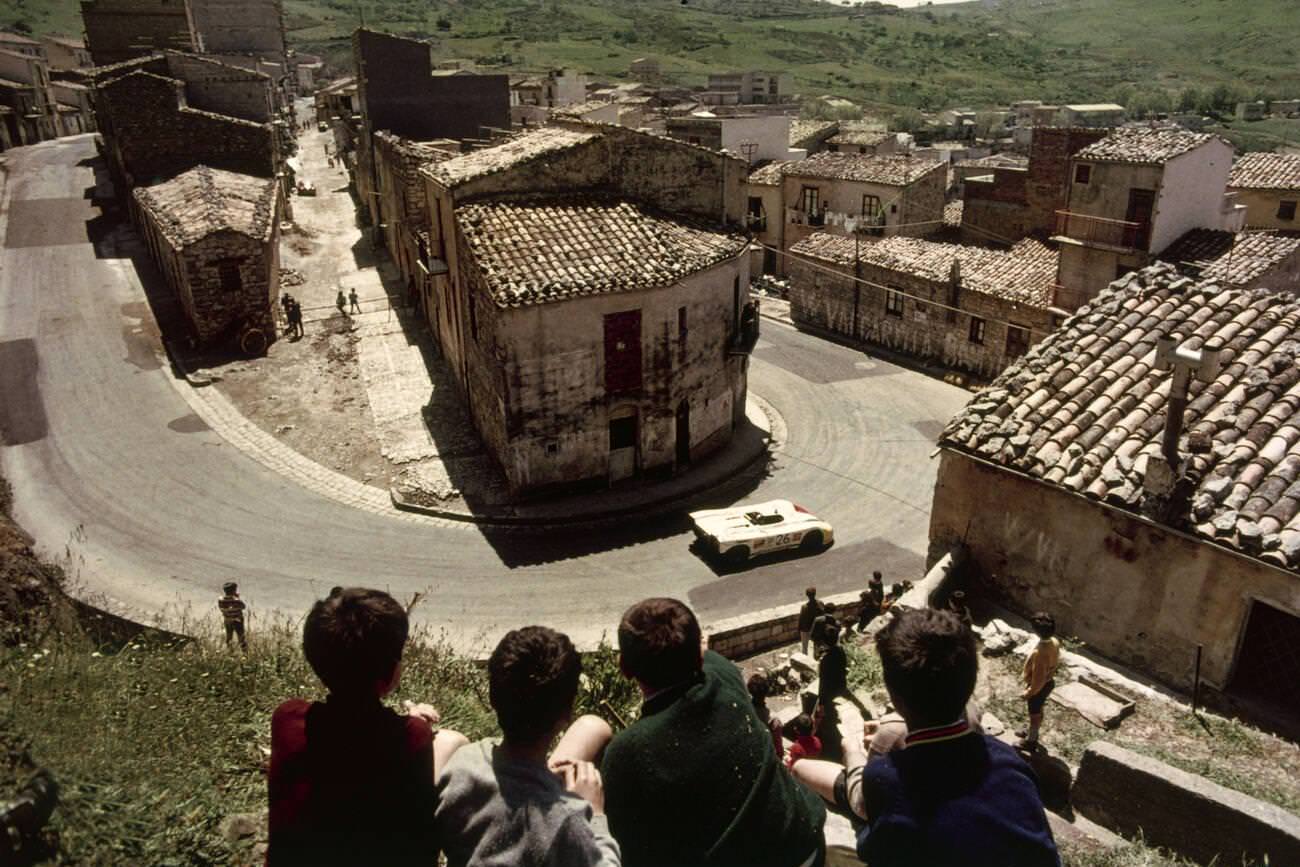
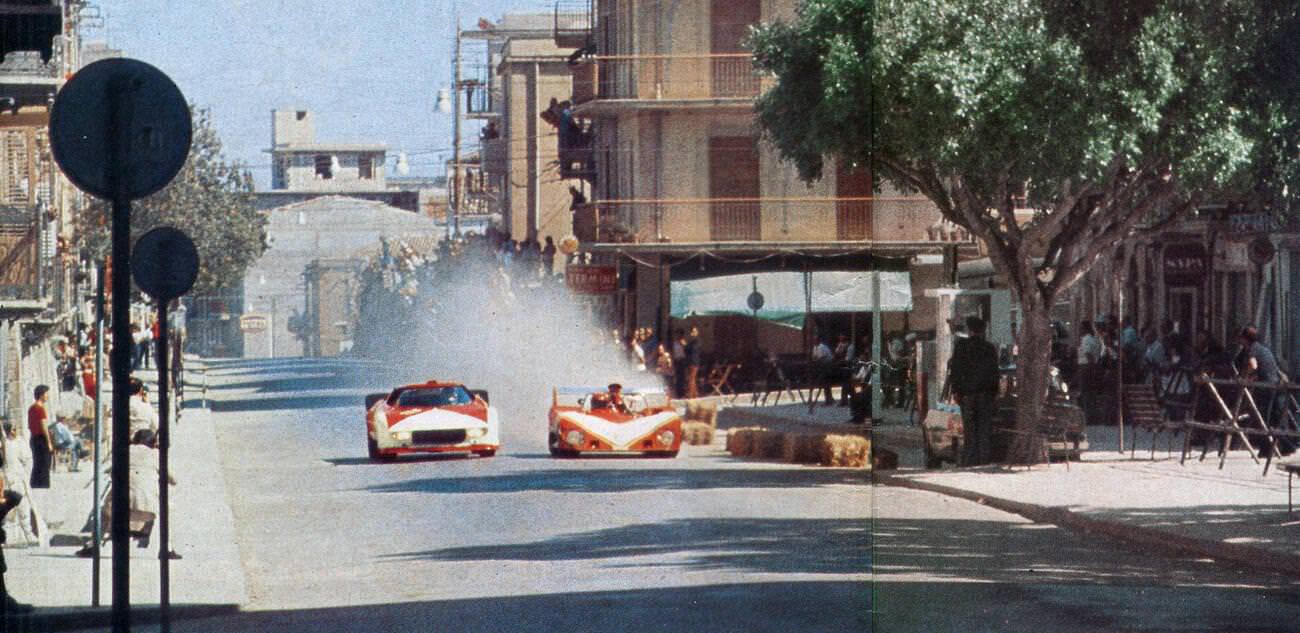
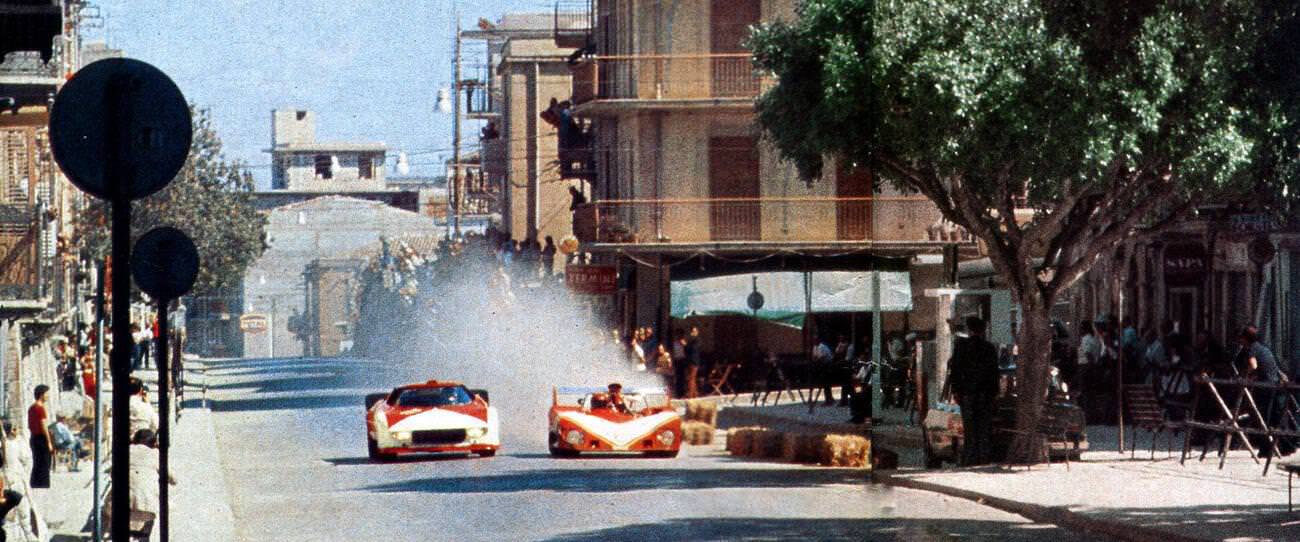
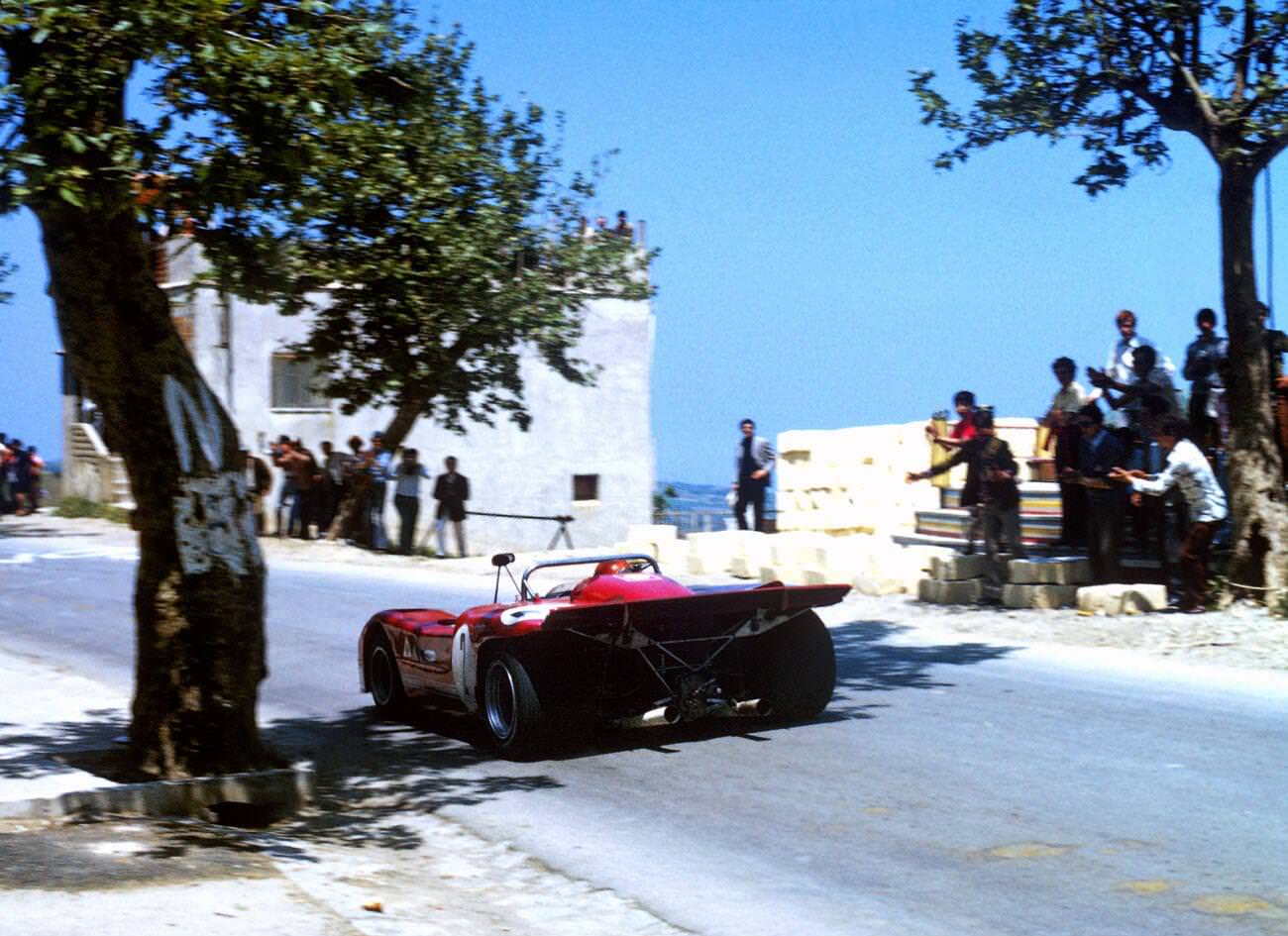
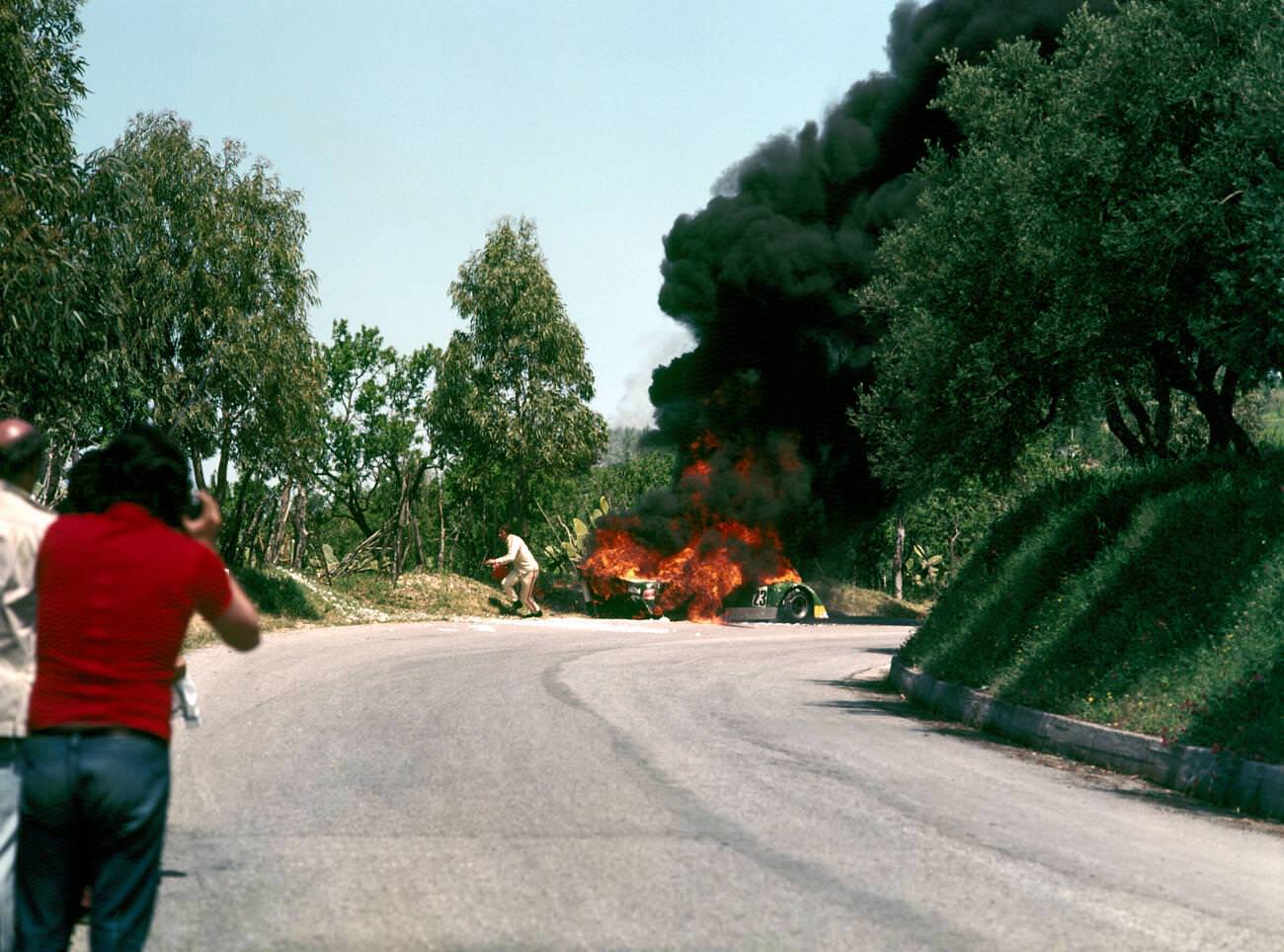
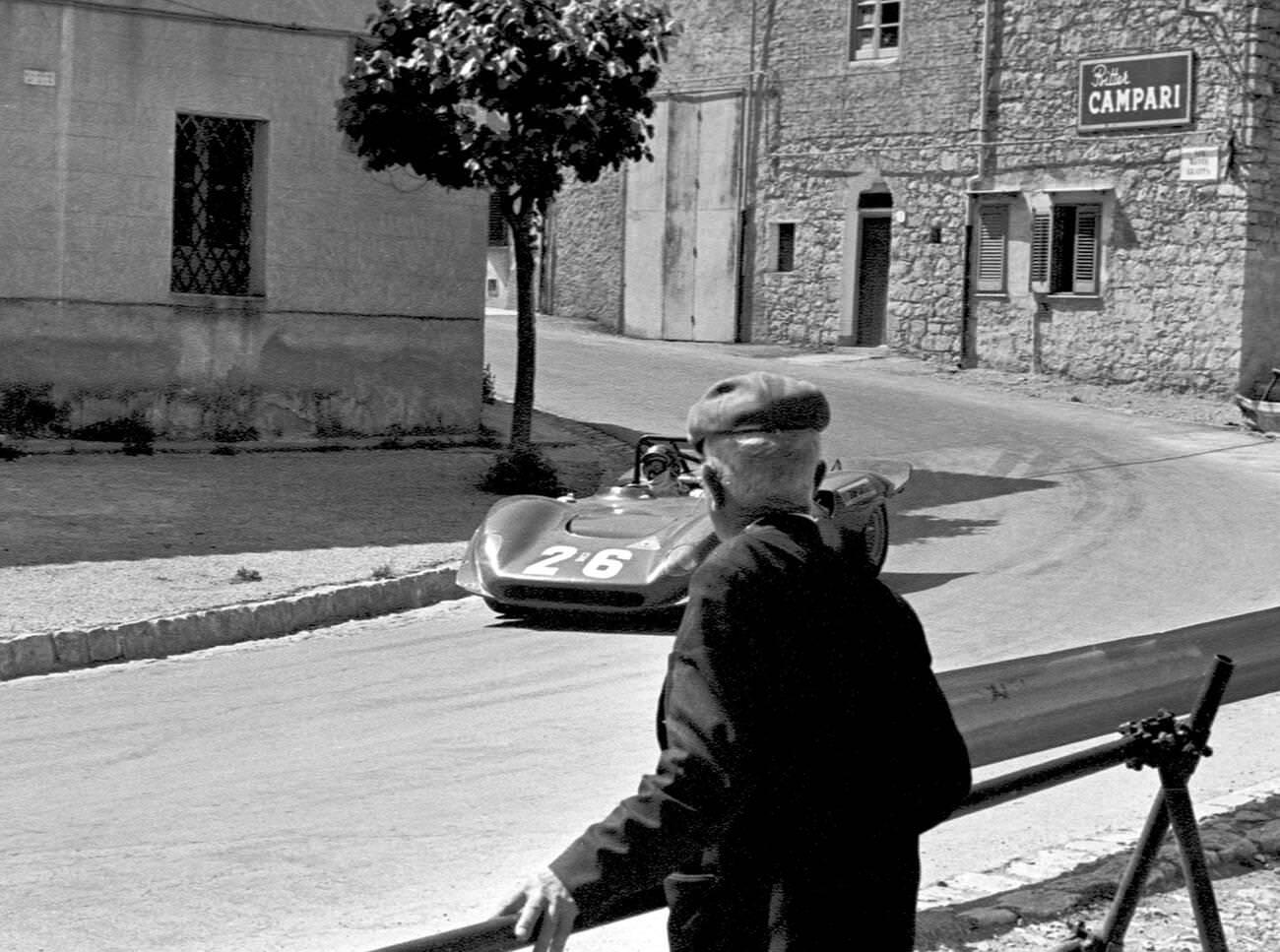
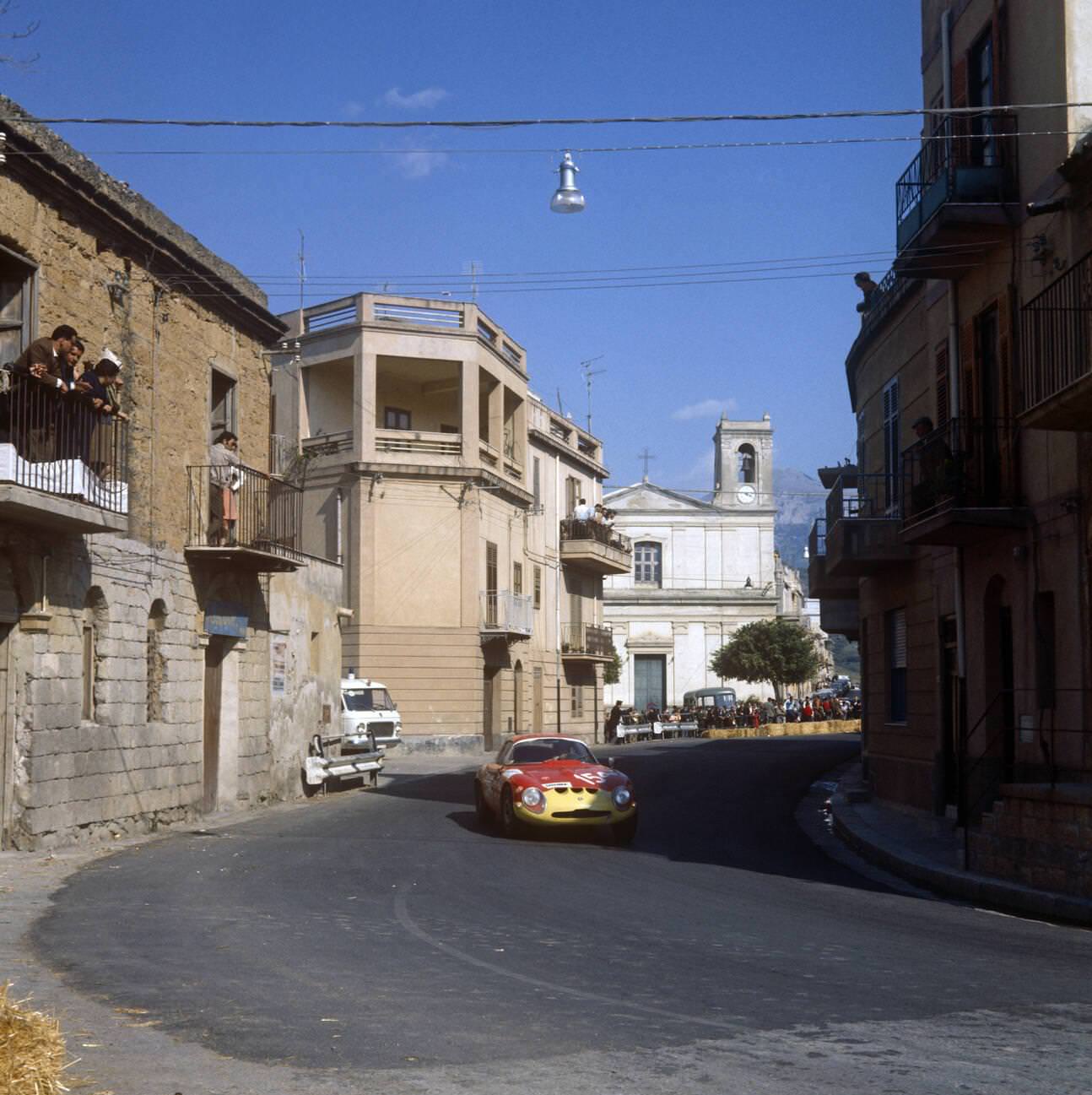
The Targa Florio was one of the oldest and most dangerous road races in the world. Run through the mountain roads of Sicily’s Madonie region since 1906, it drew the biggest names in international motorsport throughout the 1970s. The race was not run on a closed circuit but on public roads, with spectators lining the edges just feet from cars traveling at race speed. Crashes were common. In 1973, Abele Tanghetti’s Chevron B21 caught fire in a crash that ended his race. In 1971, Andrea de Adamich drove an Alfa Romeo T33, and Lo Piccolo’s Ferrari Dino 206S retired without finishing.
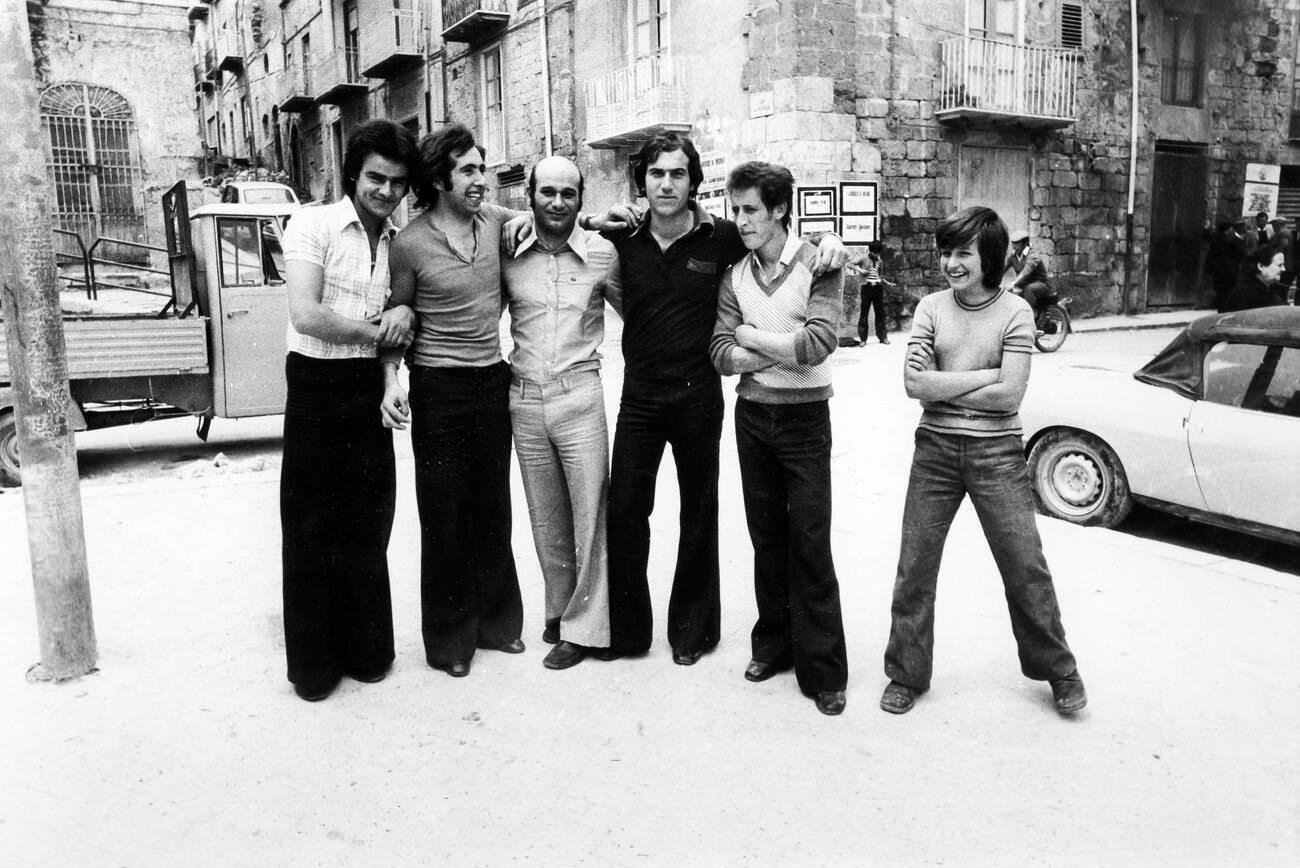
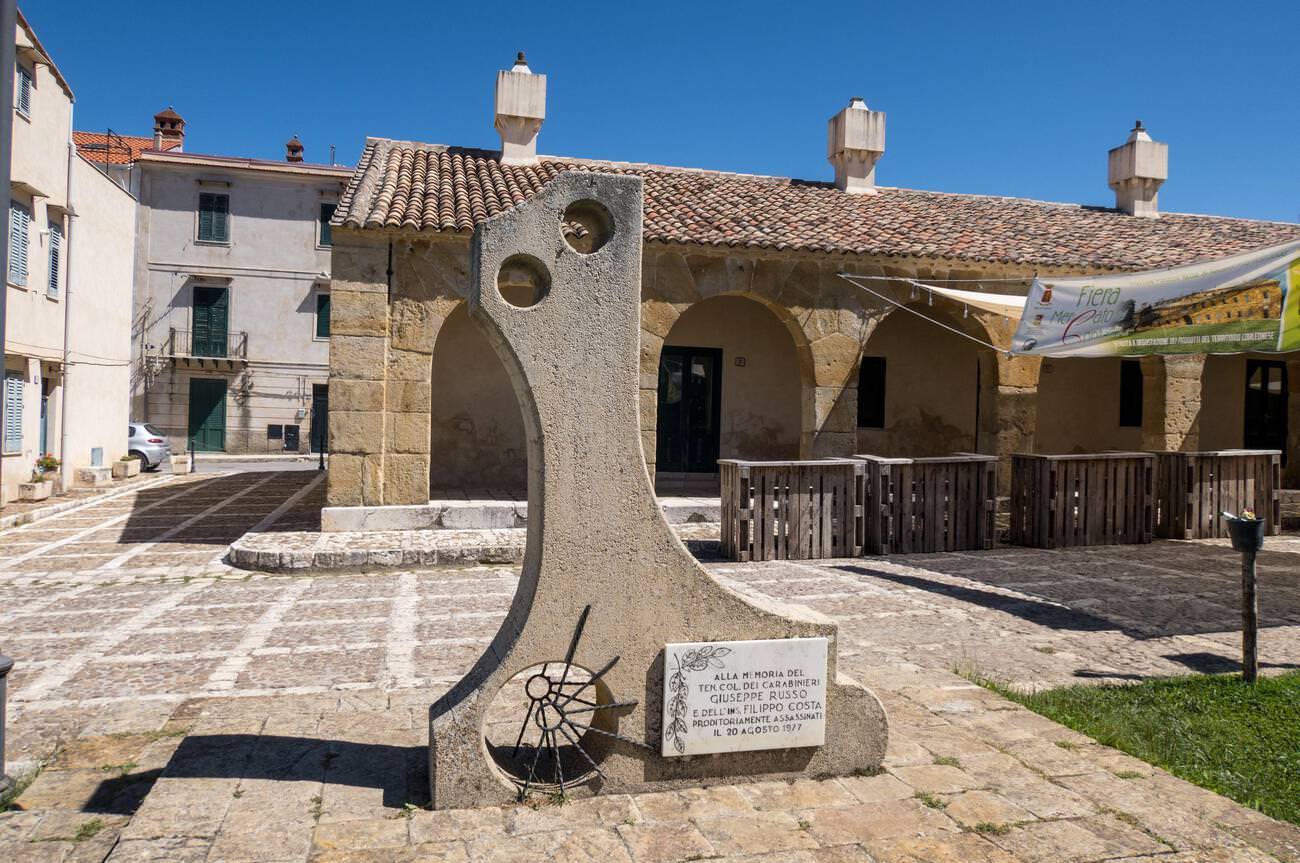
By the mid-1970s, the Mafia’s grip on parts of Sicily was impossible to ignore. In the village of Ficuzza, in August 1977, a monument to Mafia victims stood on the village green — a stark, public reminder of the violence that had taken lives across the island. Sicily’s mafia wars of the 1970s claimed politicians, judges, police officers, and civilians. The monument in Ficuzza represented communities that refused to stay silent.
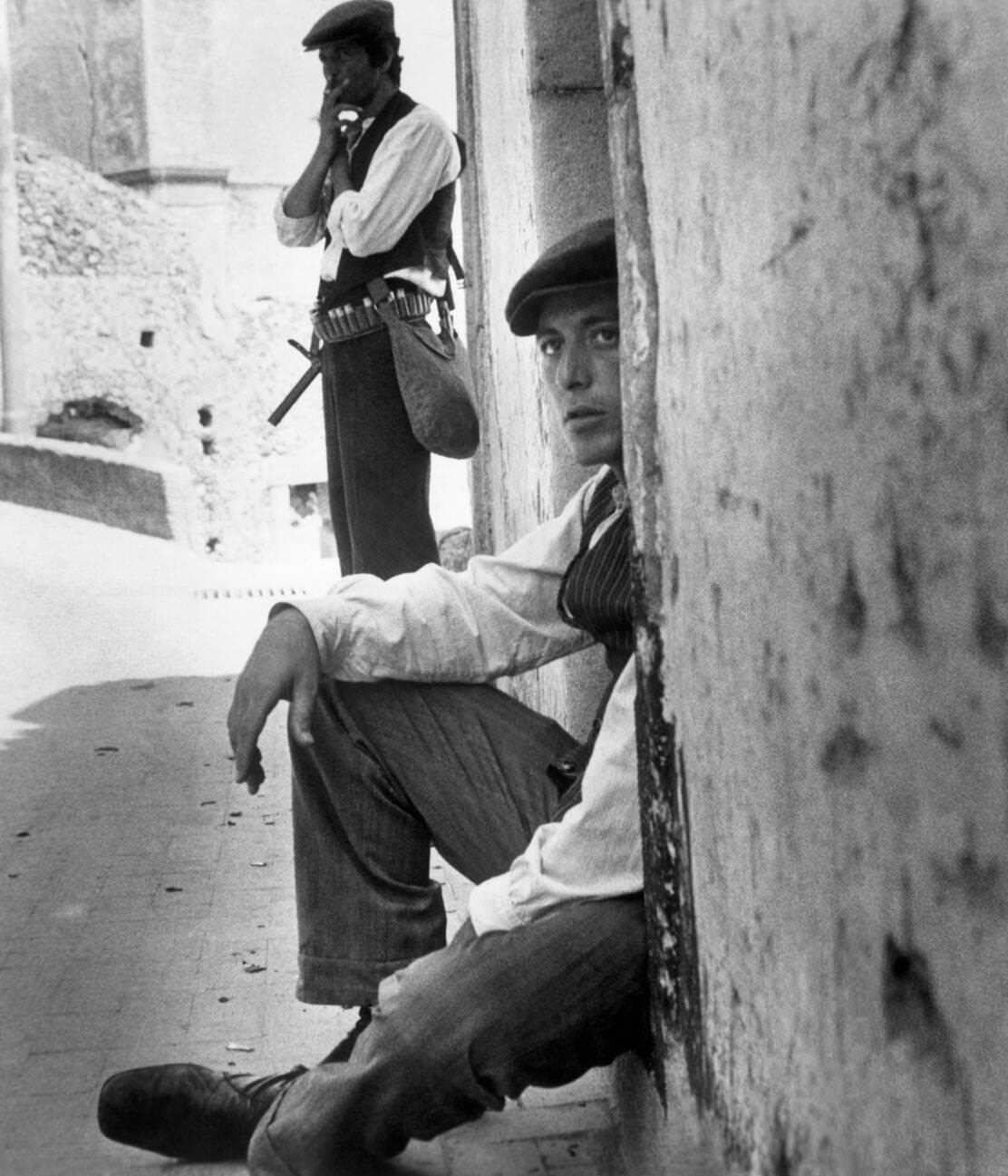
Francis Ford Coppola’s The Godfather, released in 1972, brought Sicily to screens worldwide. Several key scenes were filmed on the island, showing its rugged landscapes, hilltop villages, and old-world atmosphere. The film cemented a specific global image of Sicily — ancient, proud, and dangerous — that both reflected and shaped the way outsiders understood the island for decades.
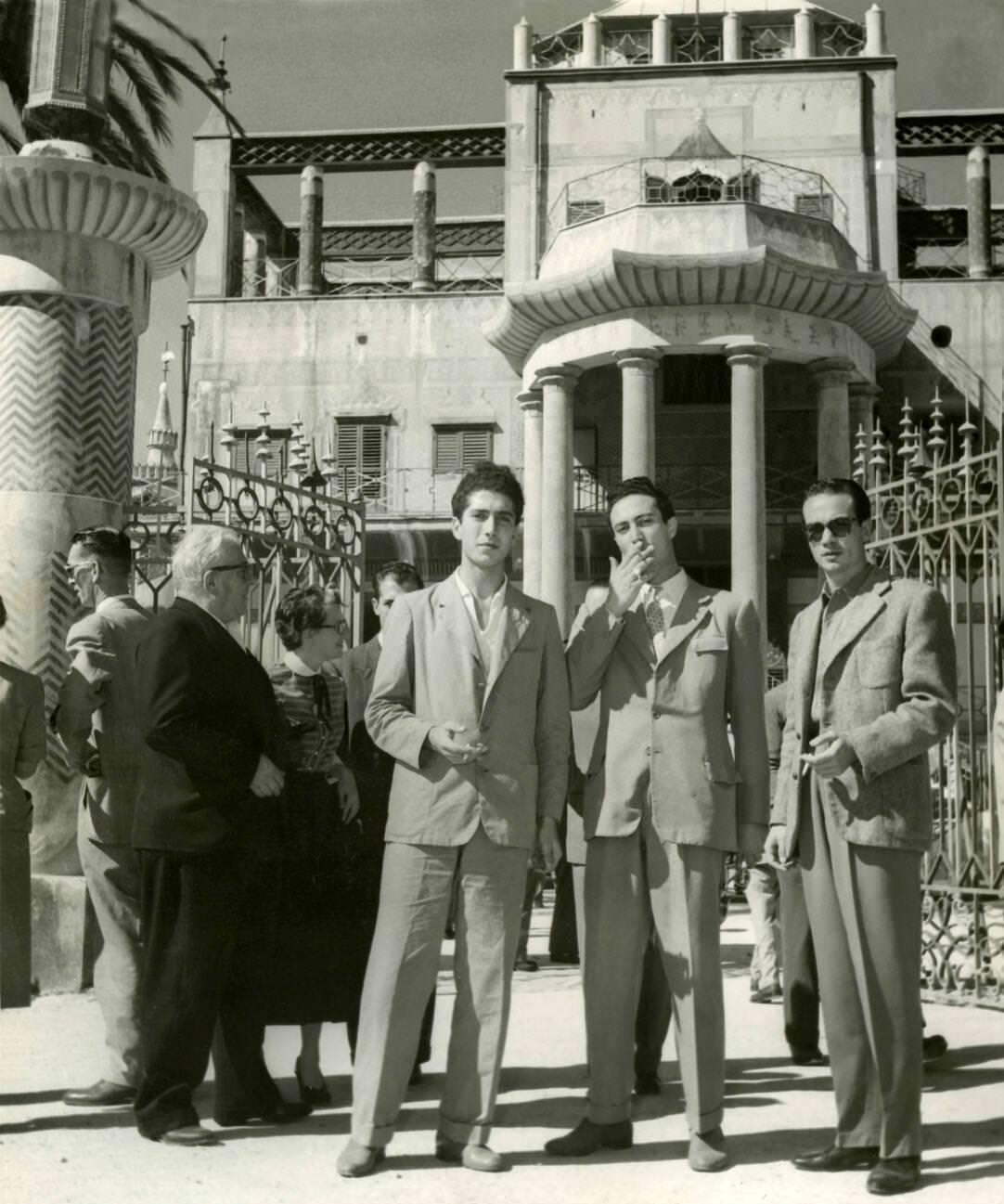
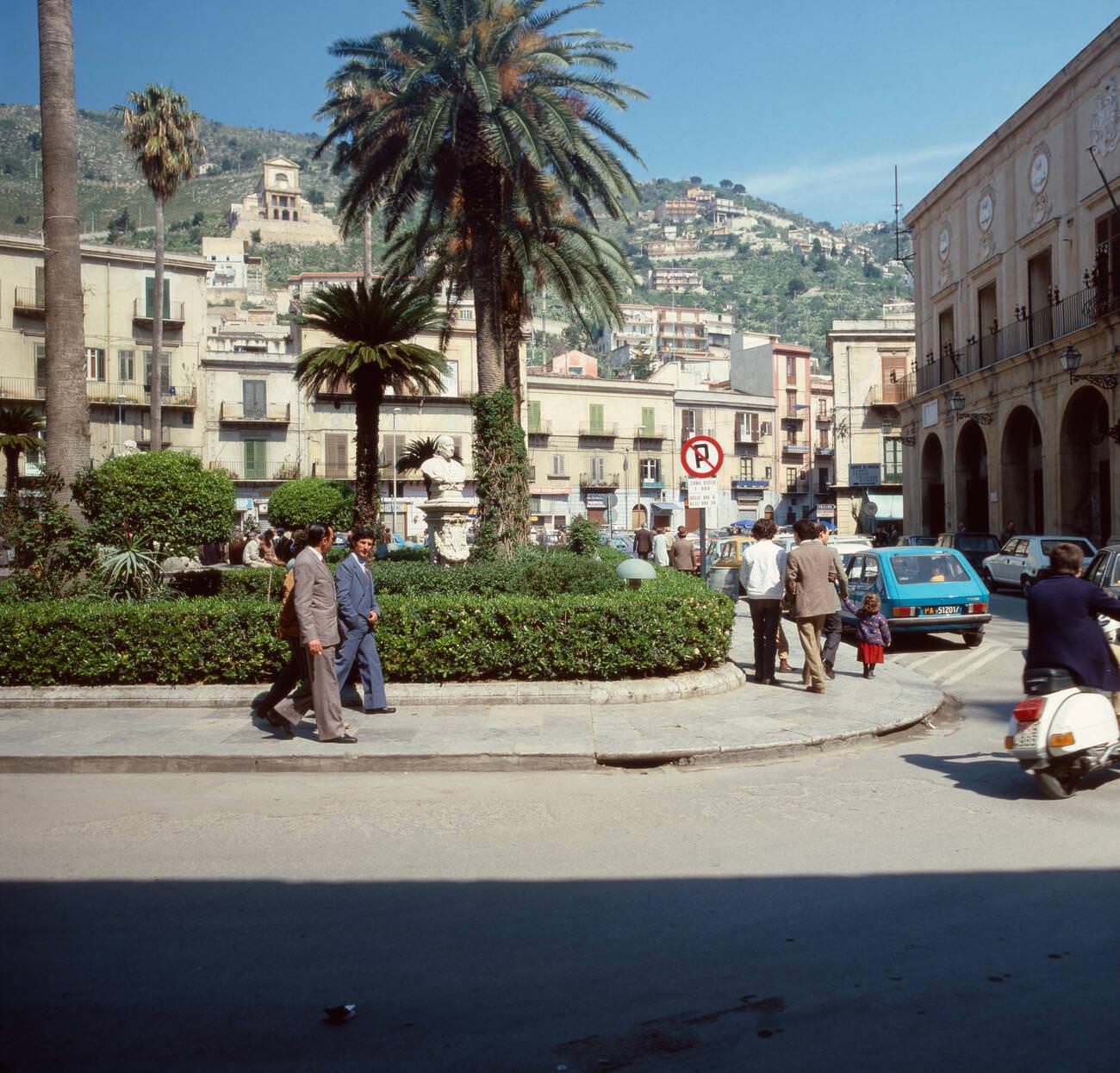
Monreale, a hilltop town just outside Palermo, was a required stop for any visitor with an interest in history. Its cathedral, built by Norman king William II in the 12th century, contained one of the largest and most complete mosaic cycles in the world — over 6,000 square meters of gold-backed Byzantine mosaics covering the interior walls and ceiling. In the 1970s, tourists made the short trip from Palermo to stand inside it, often overwhelmed by the scale and detail of what they found.
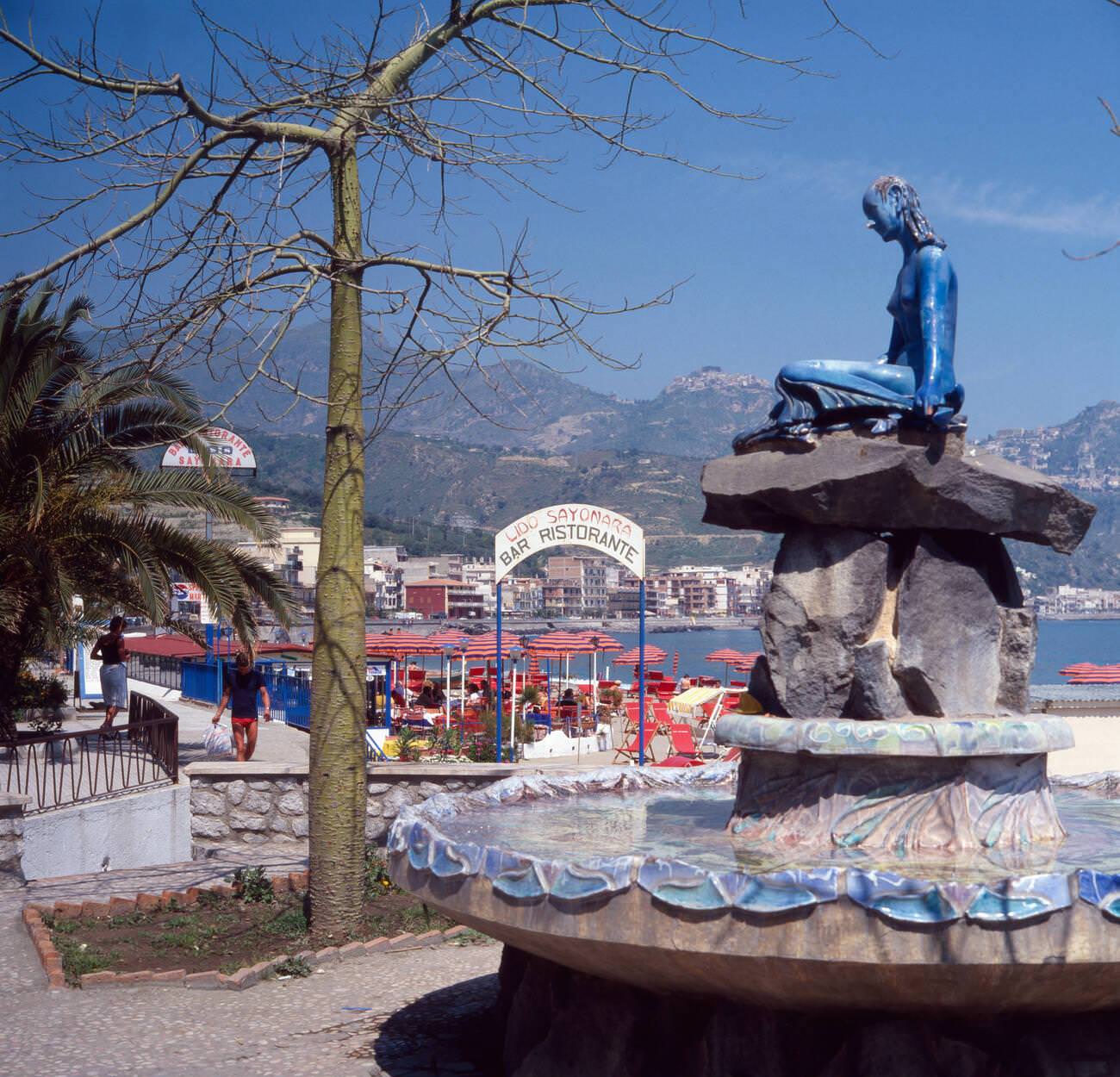
Taormina’s beaches and the shoreline at Giardini-Naxos, directly below the hilltop town, drew steady crowds of sun-seekers throughout the decade. Giardini-Naxos sat on the site of the first Greek colony in Sicily, founded in 734 BC, but by the 1970s it was better known for its long sandy beach and calm waters. Tourists from northern Europe and the Italian mainland came for weeks at a time, drawn by the climate, the food, and the scenery.
The Targa Florio’s early years in the 1970s included the 1970 race itself, where Pasquale de Francisci and Settimino Ballistreri raced an Alfa Romeo Giulia TZ through the Madonie mountain roads. The race covered the same roughly 72-kilometer circuit lap after lap, with competitors navigating stone walls, blind corners, and village streets at speed. It was a race that tested endurance and local knowledge as much as outright pace.





And they still park like that
So many pics. Thanks!
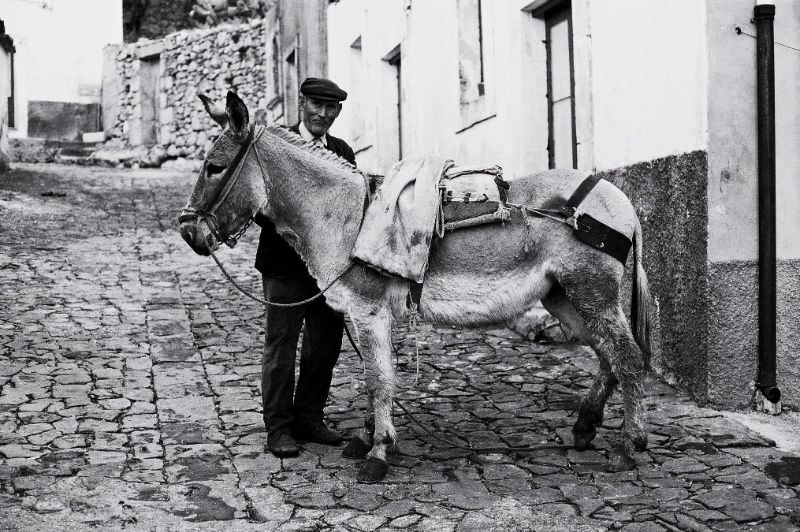
My first trip there was in 1977 and I spent most of my time in a little town called Lucca Sicula in the province of Agrigento and it’s a tiny little mountain town. There were still loads to of people using mules and donkeys as beast of burden and they would go to the mountain spring with their mules to fetch big jugs of water because the municipal water supply wasn’t available every day. It was glorious.
Mine was in 1969. Since then I came to Sicily almost every year, as my grandad was from Sicily, and my family owns a home there. Mules and horses were used till late 90s. In ’69 the village we lived in was really small, not so many shops, a tiny supermarket and four bars. There was only one butcher shop which opened three days a week, as lots of people were fishermen. Same situation in Summer. Water has always been an issue, and Little has changed.
I visited family in 1974. Catania , Taormina, Caltanissetta, Santa Caterina..
The fish market in Catania is not much changed…