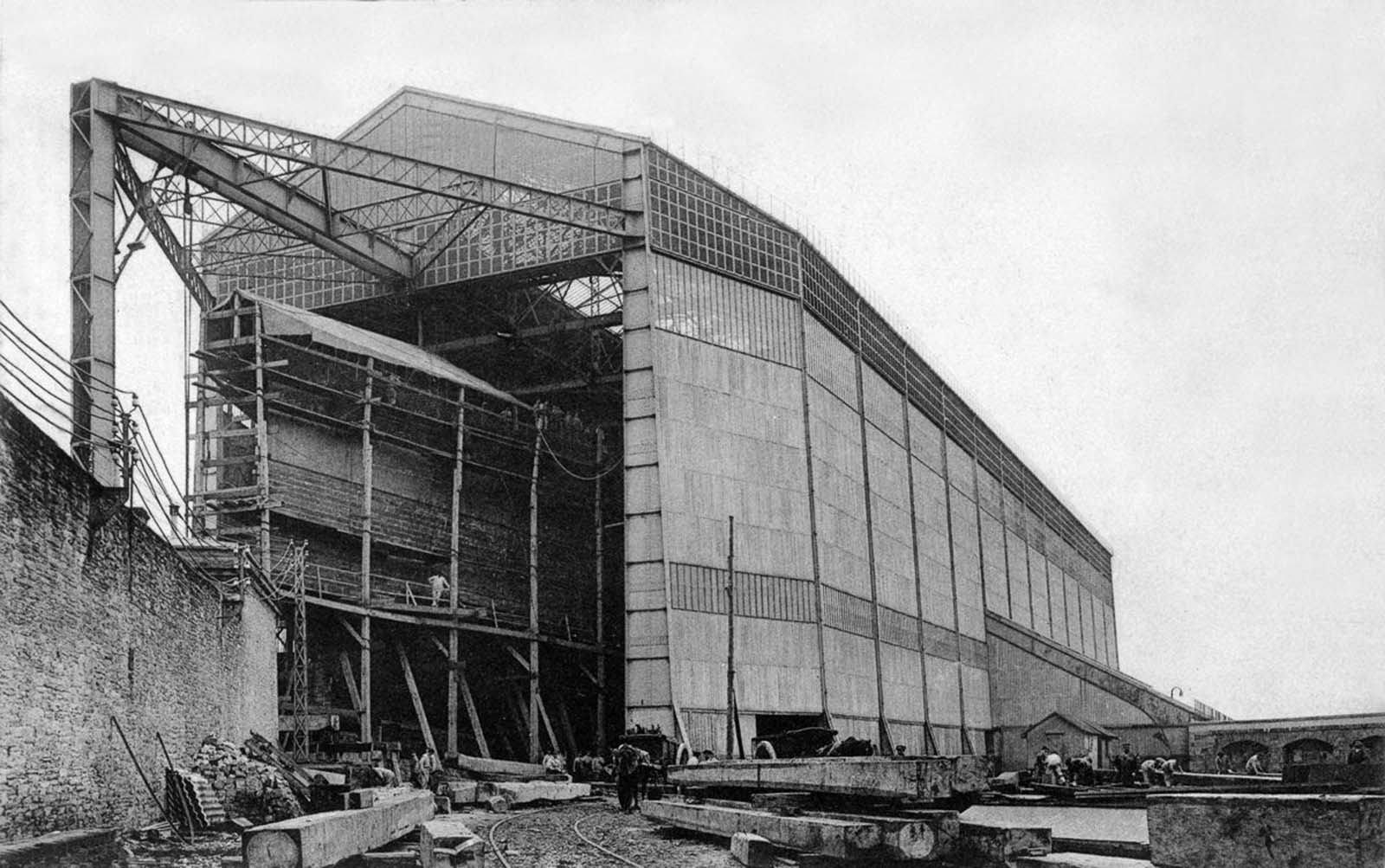
For most of human history, ships were built from wood. Shipwrights used techniques passed down over thousands of years, shaping hulls by hand and relying entirely on wind to cross oceans. Then, in the span of just a few decades during the 19th century, almost everything changed. Steam engines, iron construction, and screw propellers transformed shipbuilding from a craft into an industry — and the shipyards that drove this revolution left behind a remarkable photographic record.
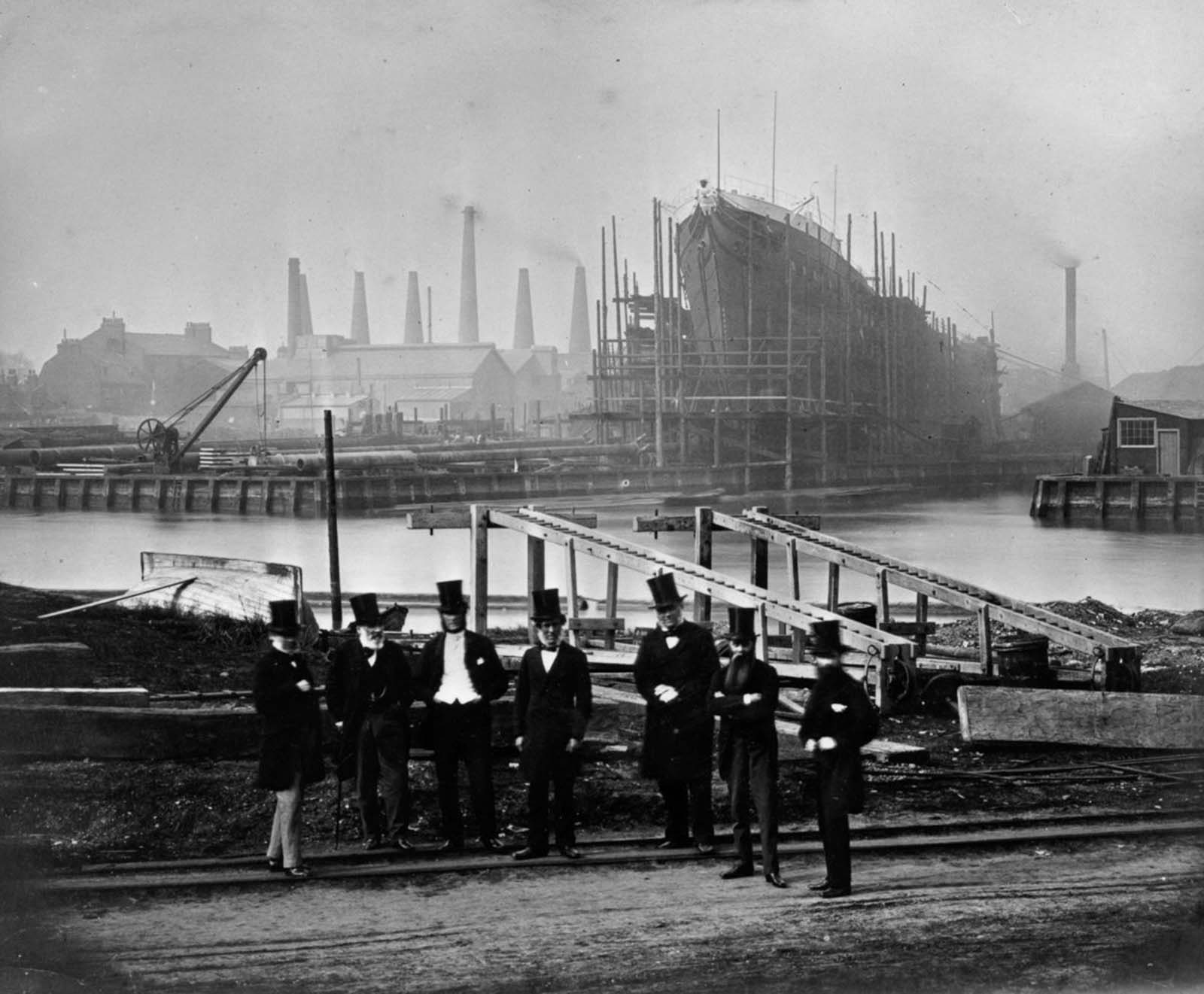
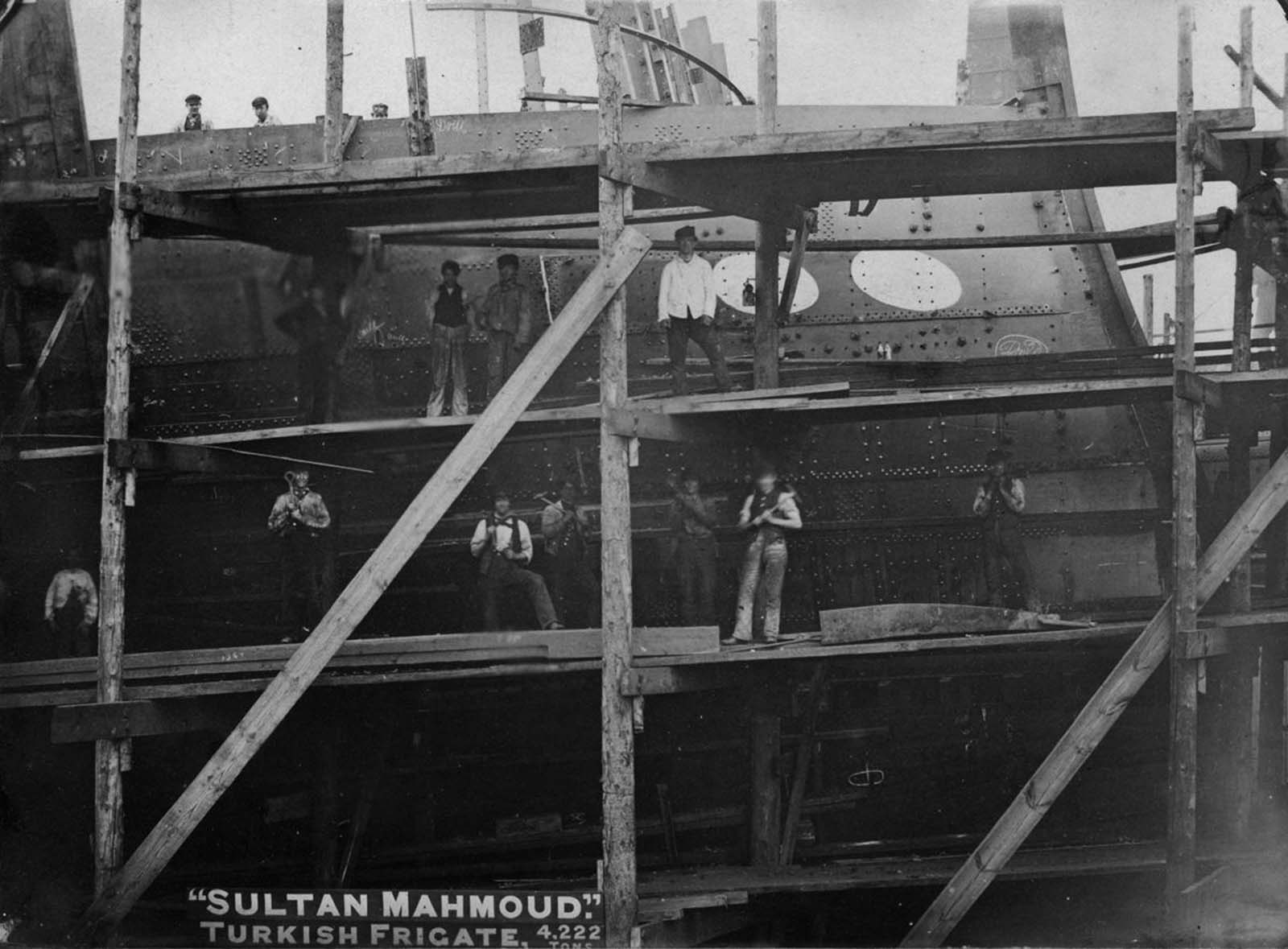
Britain sat at the center of this transformation. By 1890, British shipyards were producing roughly 90% of the world’s ships. Queen Victoria’s government actively sponsored shipbuilding to protect the trade and naval routes that held her colonial empire together. Royal patronage and government contracts poured money into yards along the Thames, the Tyne, and the Clyde, turning them into some of the most productive industrial sites on earth. The shift from wood to iron did not happen overnight. Early builders used iron only to reinforce wooden frames, adding strength without fully abandoning the old material. Over time, iron took over more of the structure. Some ships were built with wooden hulls wrapped around iron frames. Others used iron plates throughout. Iron hulls allowed ships to be built far larger than wood ever permitted, with more interior space for cargo and machinery.
Steam propulsion went through its own evolution. The earliest steam-powered vessels used paddle wheels — large rotating wheels mounted at the stern or along the sides of the hull. They worked well enough on rivers and calm coastal waters, but the open sea was a different matter. In heavy swells, a rolling ship would lift one paddle wheel clear out of the water while the opposite wheel drove deeper beneath the surface. The engines strained unevenly, and the ships were difficult to control. The solution came with the screw propeller. Mounted beneath the waterline at the stern, the propeller stayed submerged regardless of how much the ship rolled. Its efficiency did not change with depth. It was smaller, lighter, and far less exposed to damage than a paddle wheel. Ocean-going steam travel only became truly practical once screw propellers replaced paddles as the standard method of propulsion. Ships fitted with paddle wheels are designated “PS” for paddle steamer, while those driven by screws carry the designation “SS” — which stands for screw steamer, though the decreasing use of paddle vessels has led many to read it simply as “steamship.”
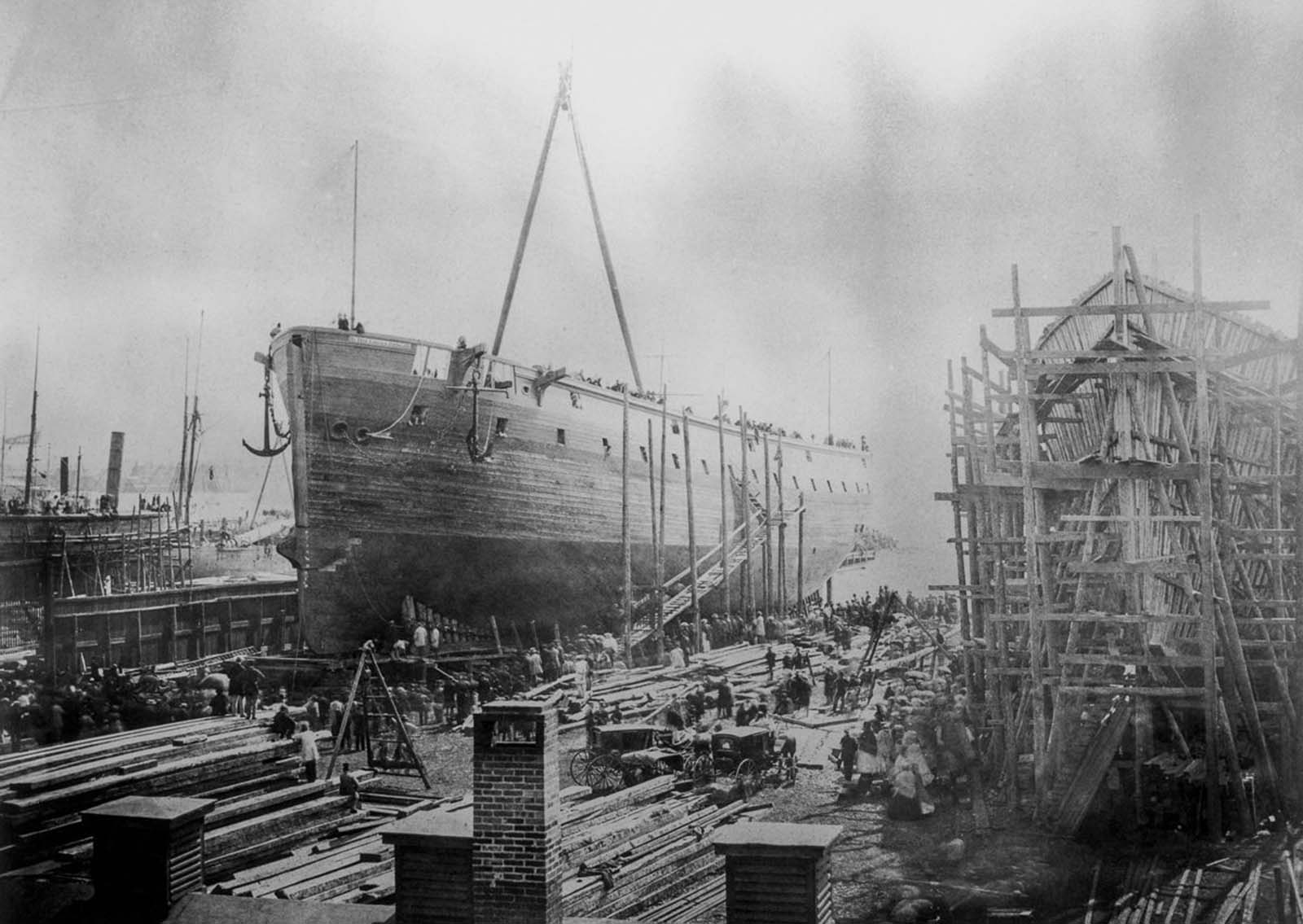
American shipyards were also producing landmark vessels during this period. The William H. Webb Shipyard in New York was one of the most prominent in the country, taking on both domestic and international contracts. Among its notable commissions was a warship built for the Italian government.
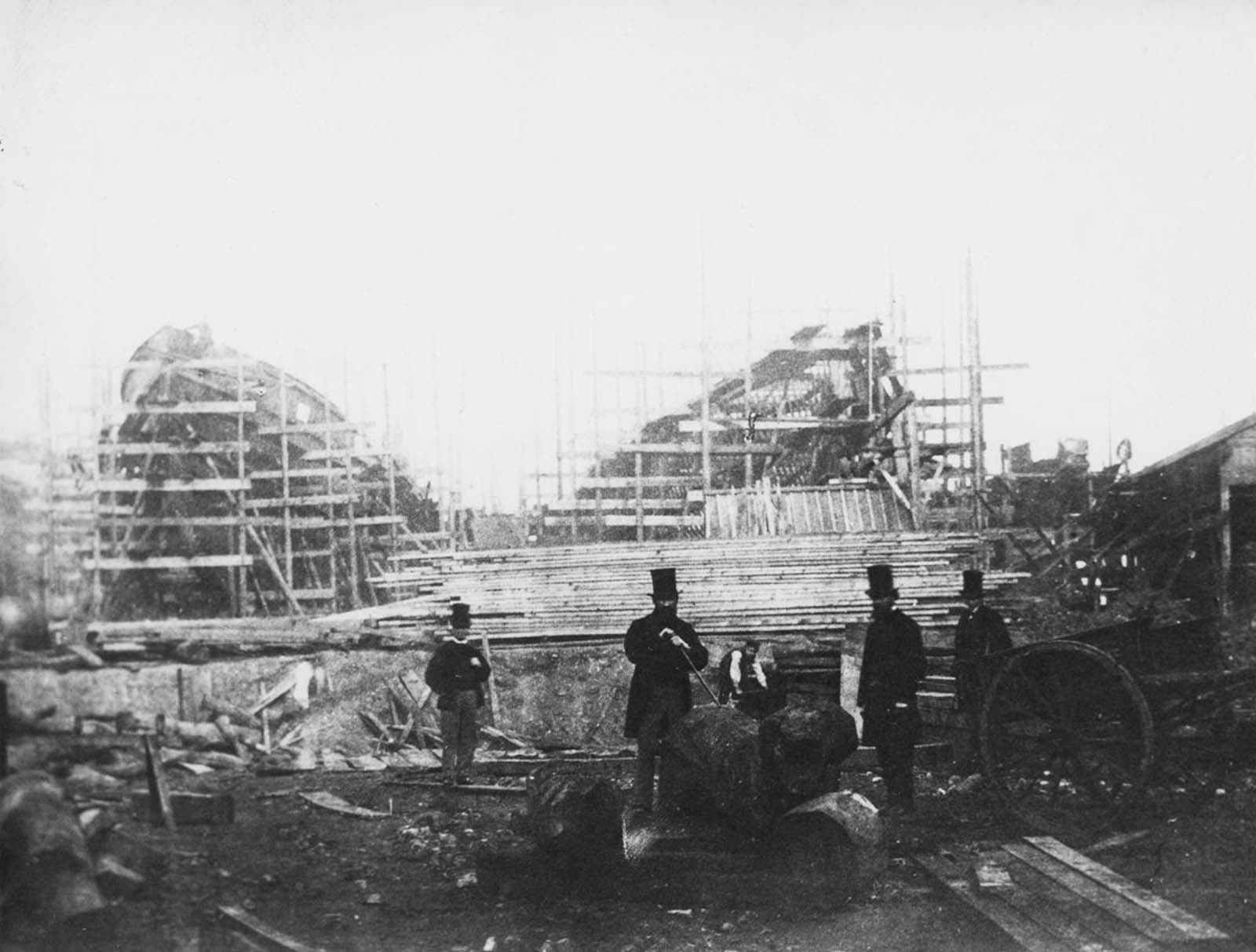
Back in Britain, private yards competed fiercely for government and commercial orders. London alone was home to several major operations. James Ash & Company was one of the capital’s established builders, contributing to the growing fleet of iron and steam vessels that were remaking global trade.
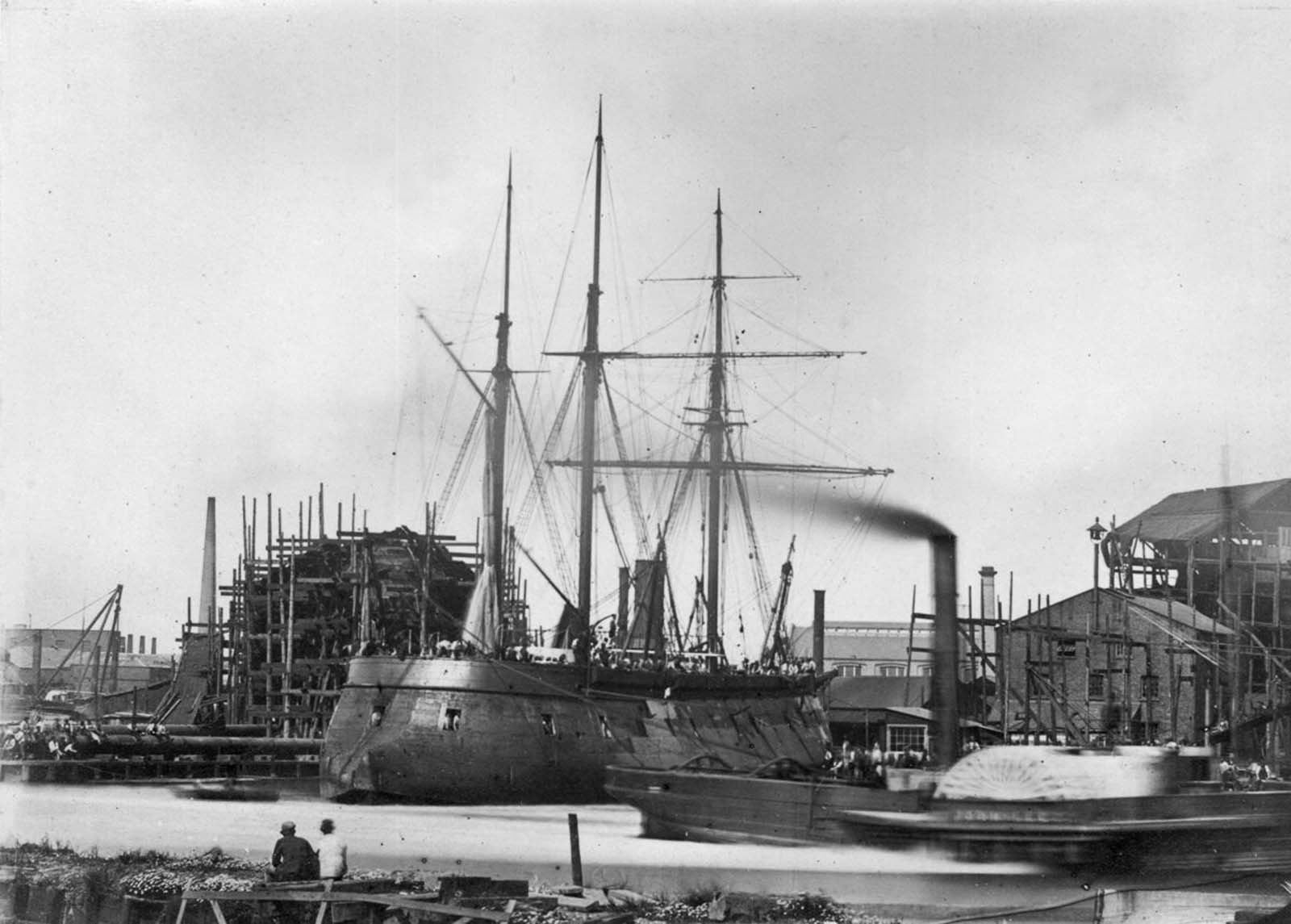
Military applications drove much of the innovation during these years. Navies across Europe were racing to develop ironclad warships — vessels with iron-armored hulls that could withstand cannon fire that would splinter a wooden ship. Russia was among the powers investing in iron-cased warships by the early 1860s, following the brutal lessons of the Crimean War.
Commercial steamships were being launched all along the British coast during the same period. East Anglia, not traditionally a center of heavy industry, was home to yards producing open-deck steamers for coastal and short-sea trade routes.
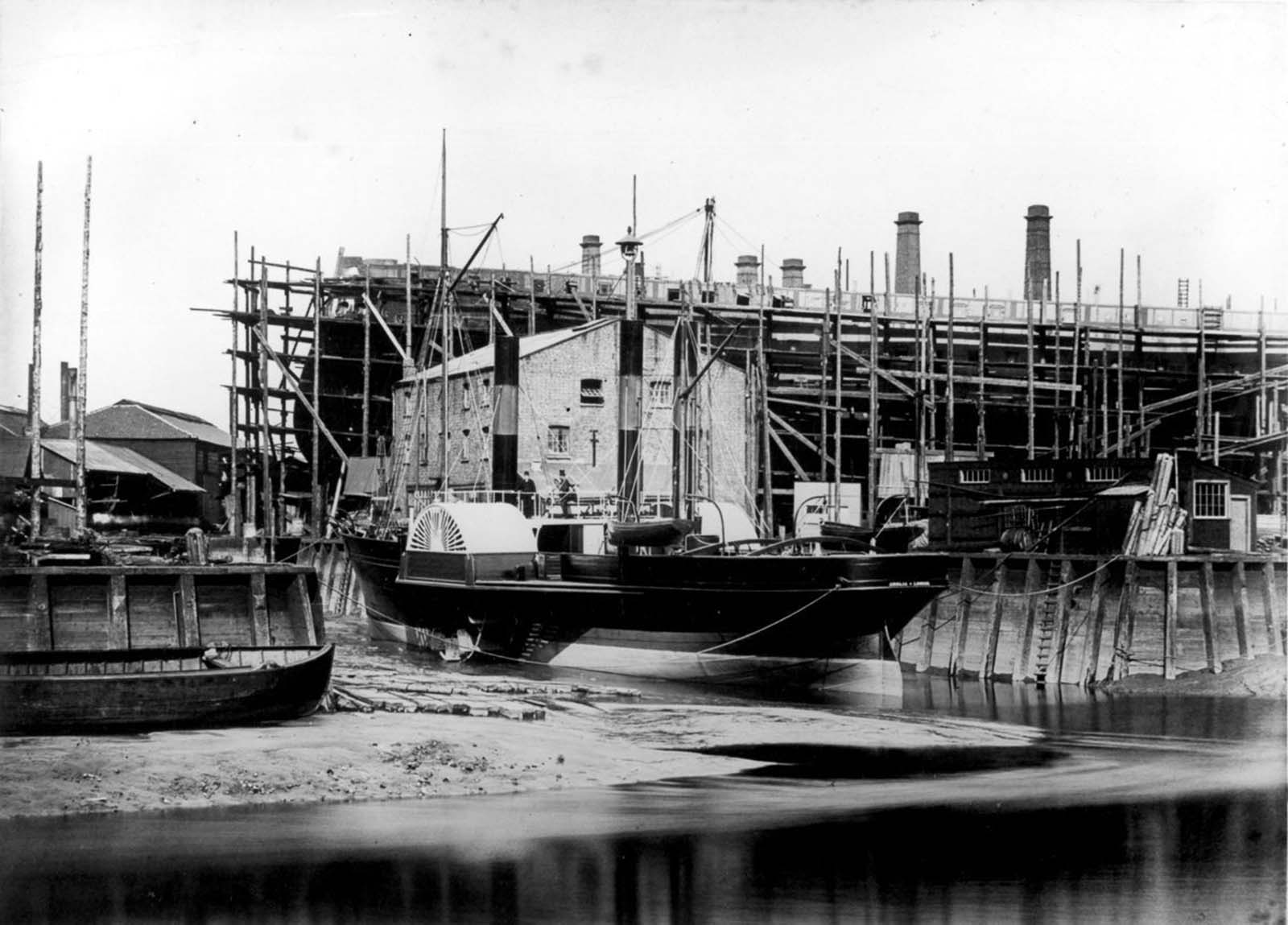
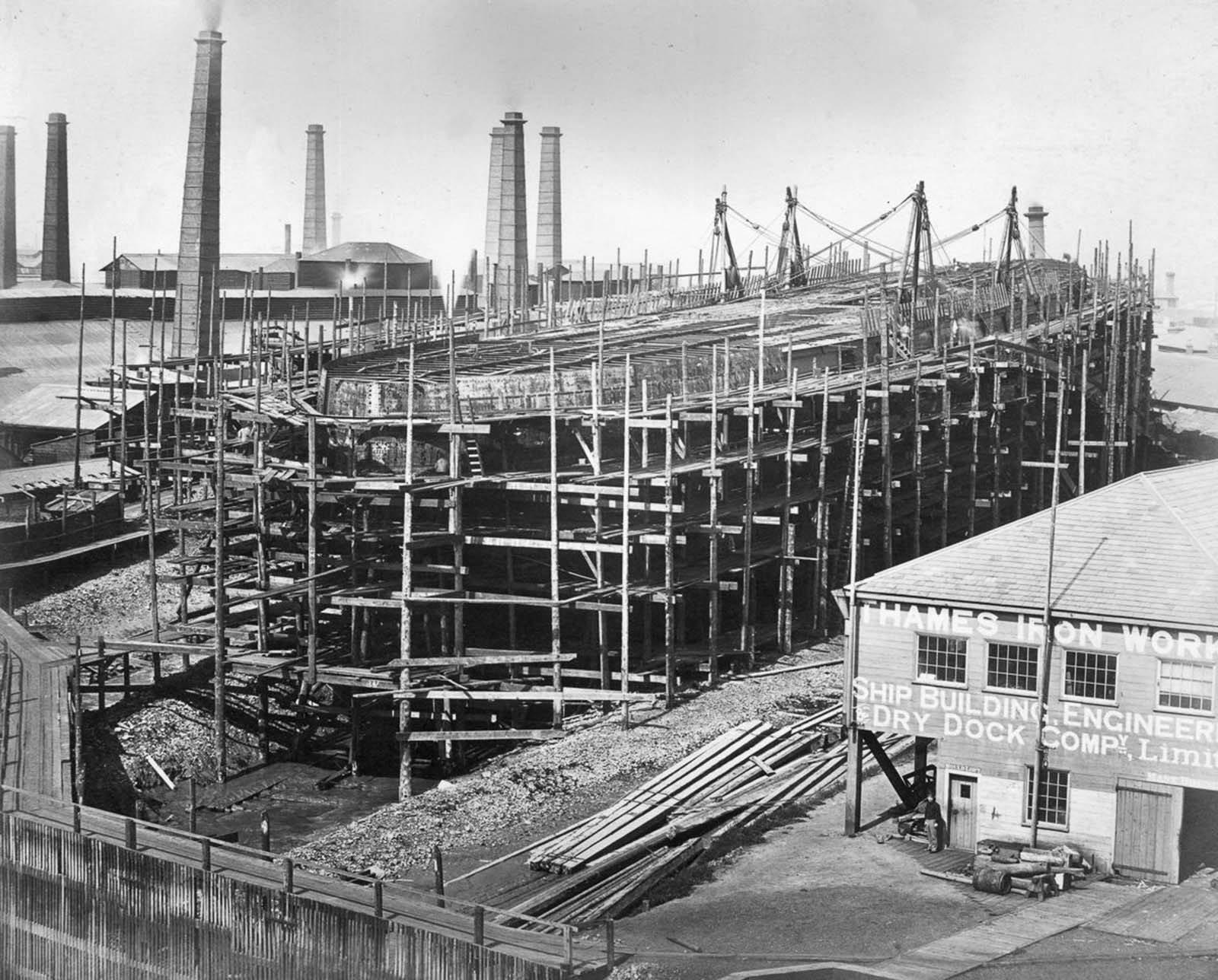
The Thames Iron Works in London was one of the most important yards of the Victorian era, responsible for building some of the Royal Navy’s most significant vessels. In 1867, workers there were engaged in the construction of a major new ship — a project that illustrated how large-scale and mechanized the industry had become.
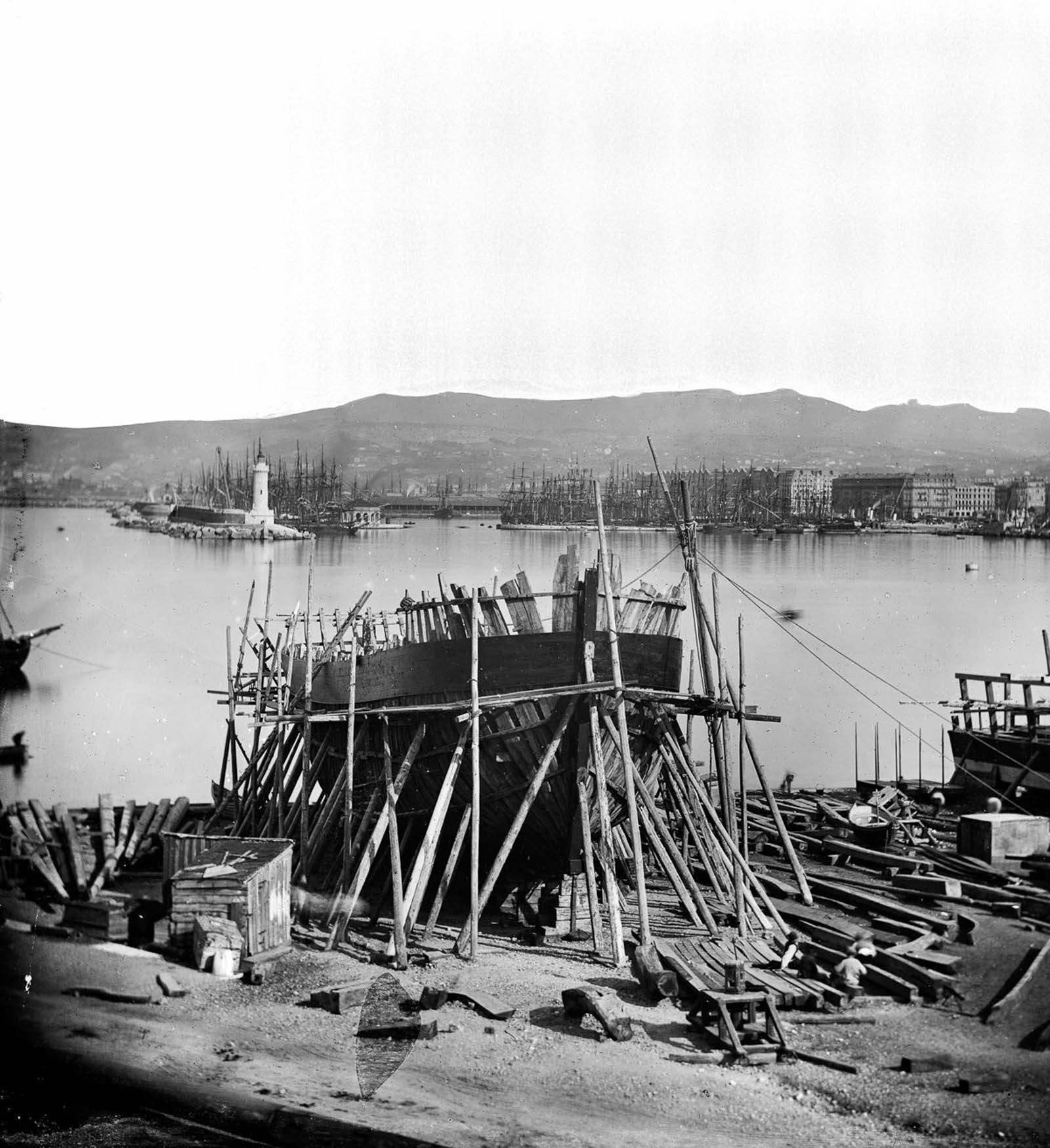
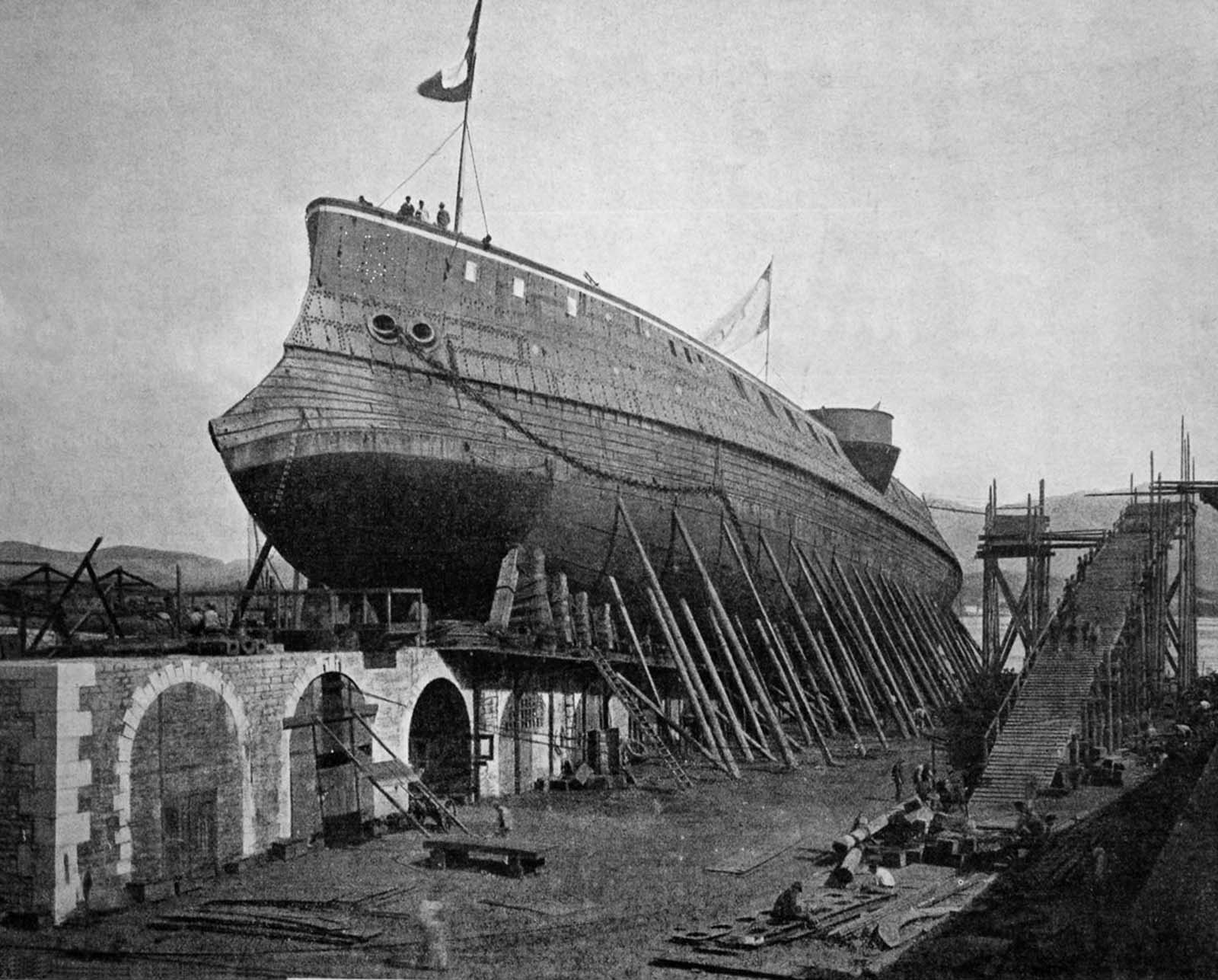
French yards were just as active. On the Mediterranean coast, Seyne-sur-Mer became a key center for naval construction. The launch of a warship there in 1884 drew crowds and marked another milestone in the steady expansion of Europe’s steam-powered naval fleets.
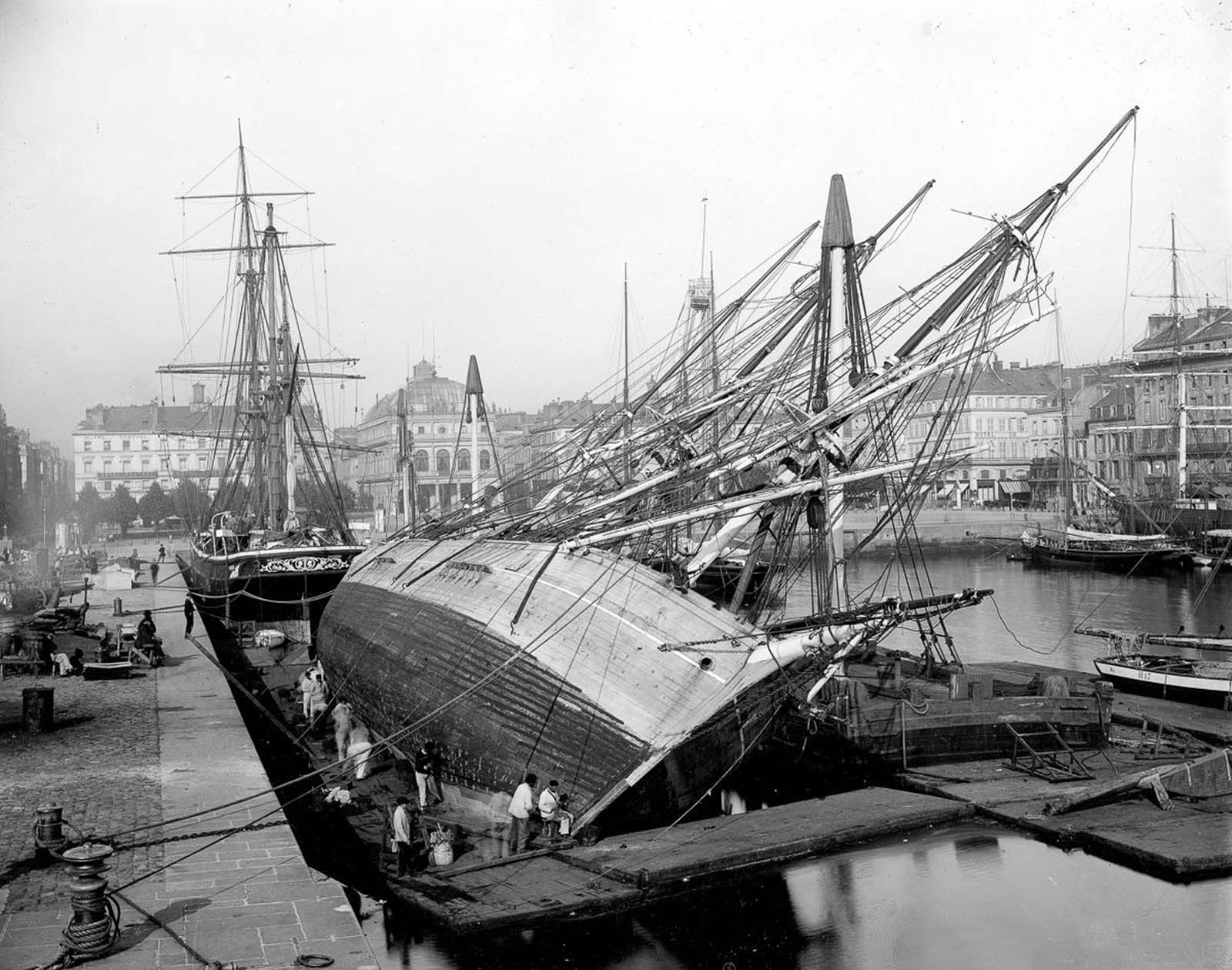
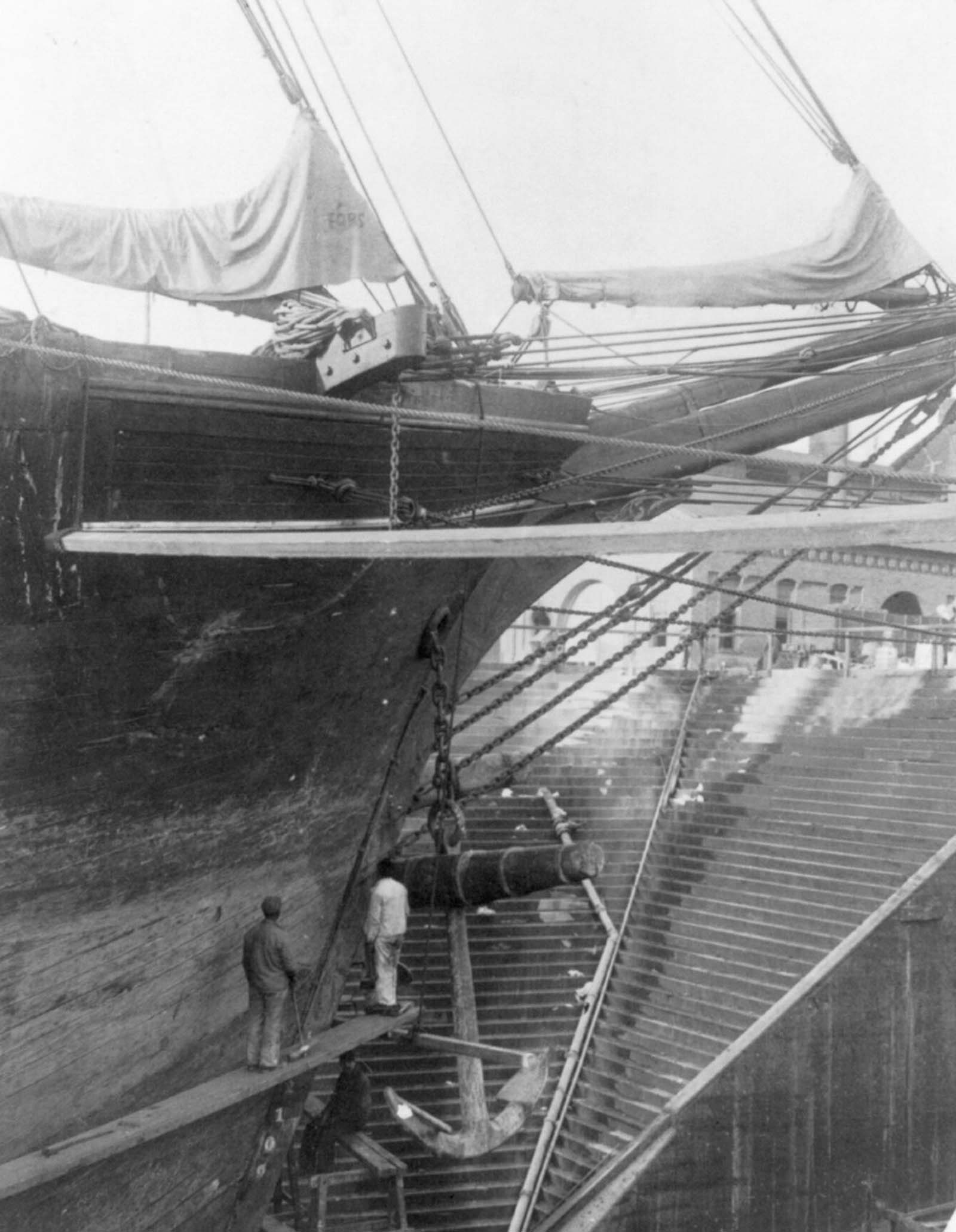
Maintaining iron and steam vessels required infrastructure that wooden-ship culture had never needed on the same scale. Dry docks — enclosed basins that could be drained of water so a ship’s hull was fully exposed — became essential at every major port. Hull repairs, propeller work, and engine maintenance all depended on them.
In the United States, the Newport News Shipbuilding Company in Virginia had grown into one of the country’s leading yards by the close of the century. Founded in 1886, it employed thousands of workers and took on both naval and commercial contracts. The men who built these ships worked long hours in physically demanding conditions, often in close proximity to heavy machinery, open furnaces, and massive swinging hull plates.
As the century turned, London’s yards were still operating at full capacity. New orders kept the riverbanks busy, and iron construction had become completely standard for large vessels.
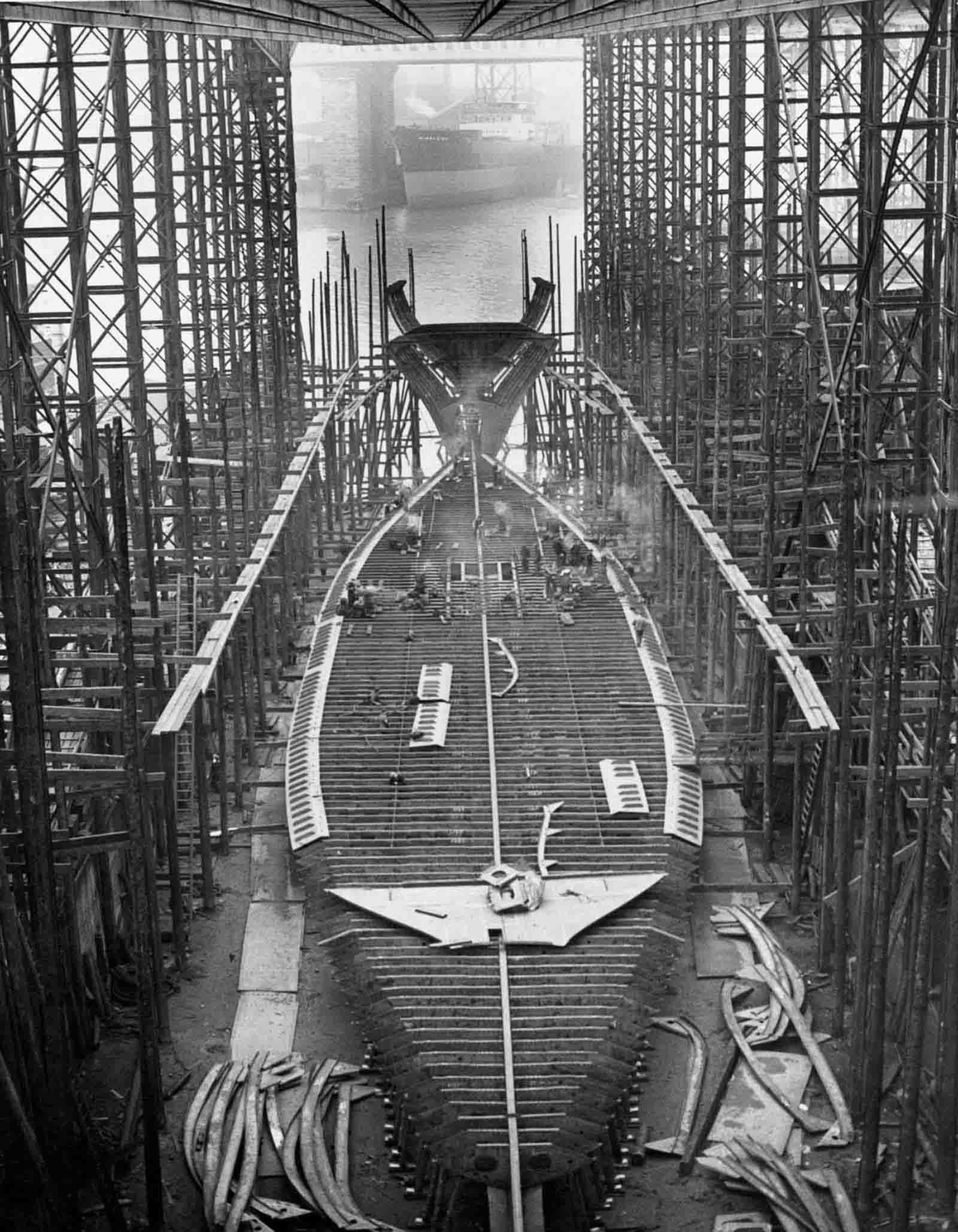
Not every shipyard made the full transition to iron and steam. On the American Pacific Coast, wooden shipbuilding remained viable for certain types of vessels well into the early 1900s. Portland, Oregon, with its access to abundant timber from the surrounding forests, was still producing wooden ships at the turn of the century.
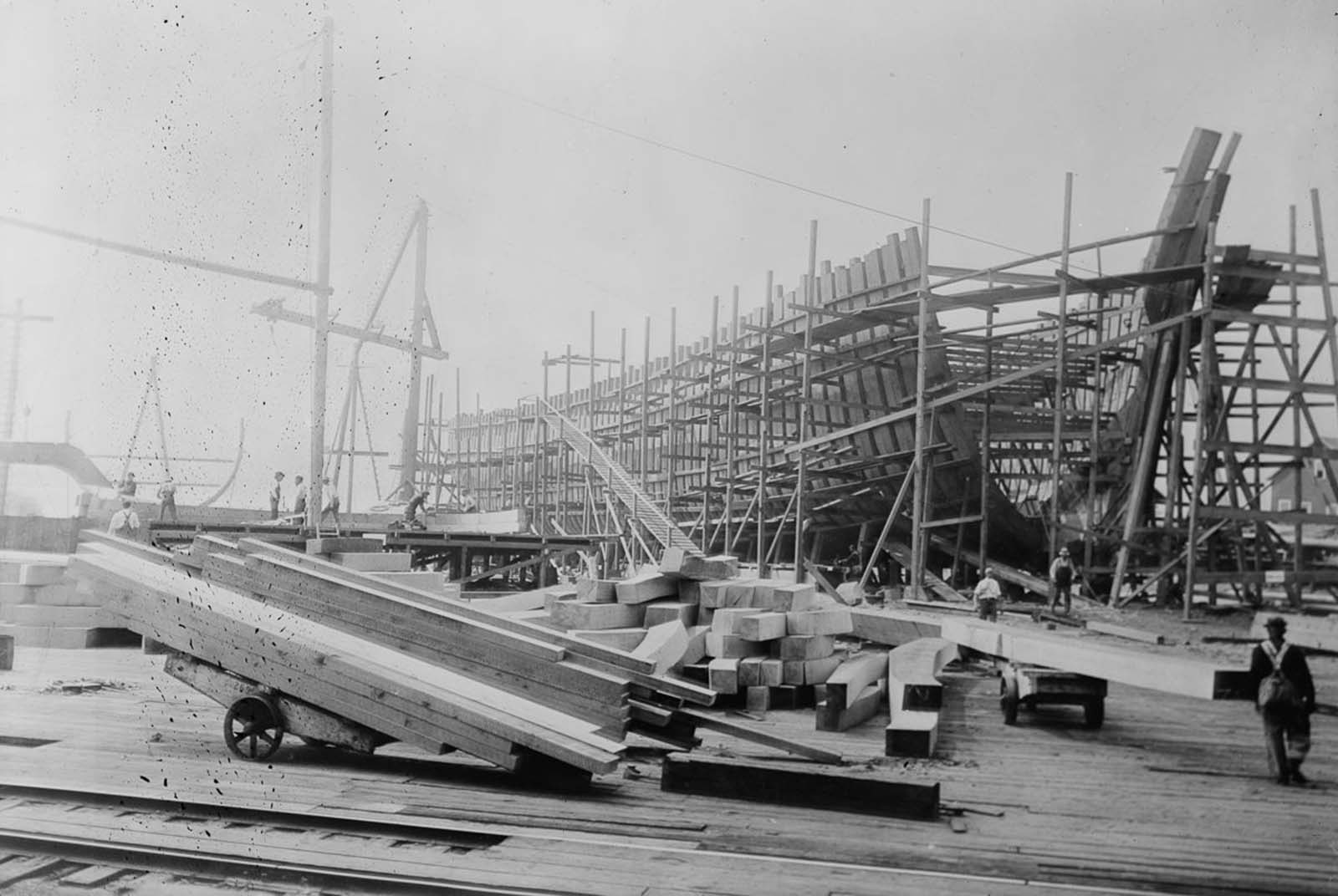
On the East Coast, Philadelphia had developed into a major center of American shipbuilding. Its yards in 1900 represented the full industrial scale that the trade had reached — sprawling facilities capable of laying down multiple hulls at once and housing hundreds of skilled workers.
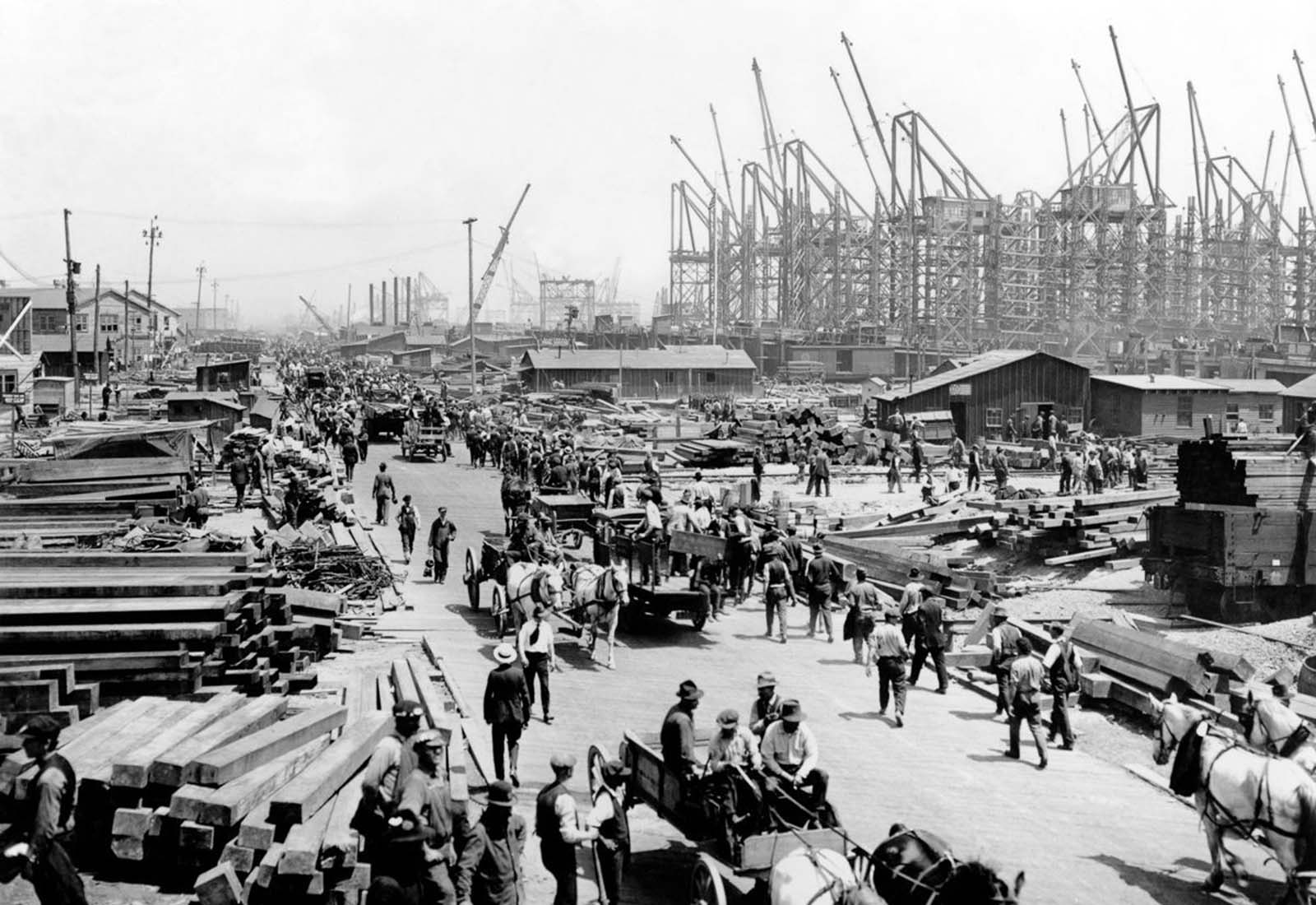
France’s strategic naval base at Cherbourg, on the English Channel, housed one of Europe’s most important military shipyards. The facility had been expanded significantly throughout the 19th century and remained a critical site for French naval power into the new century. The yards there built and maintained warships that reflected the very latest in steam and iron technology.