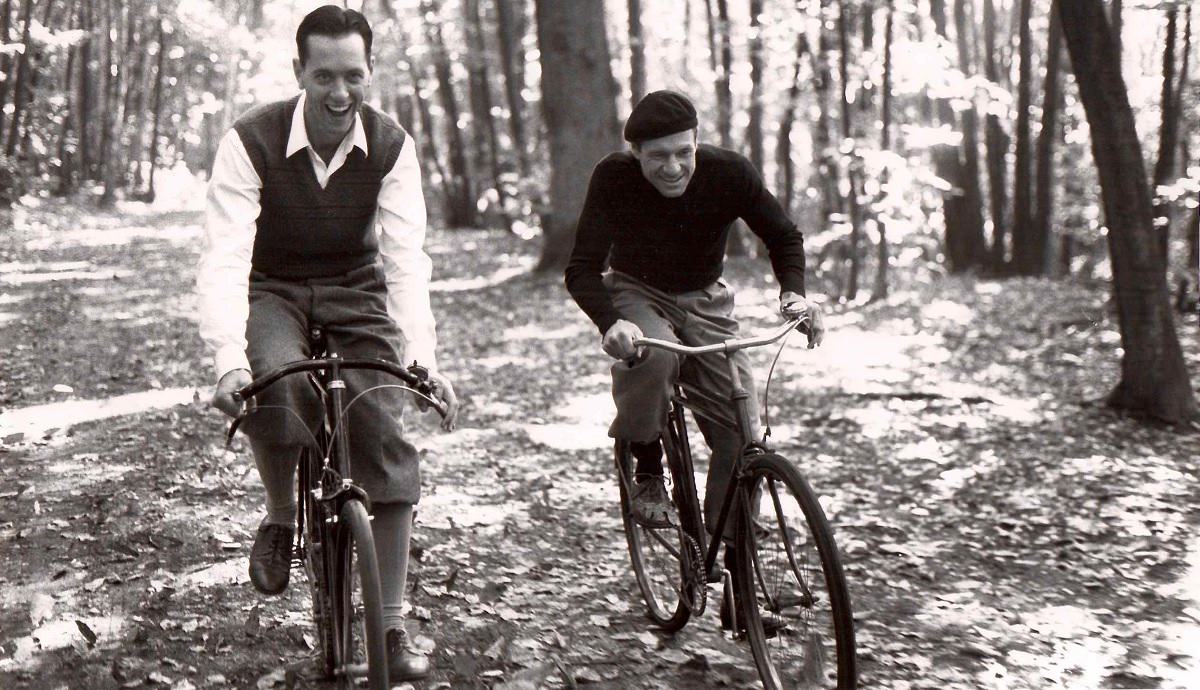
Sarasota, Florida earned its title as the “Circus Capital of the World” for good reason. For decades, the city served as the winter home of the Ringling Bros. and Barnum & Bailey Circus — the most famous circus operation in American history. Every year, performers, trainers, stagehands, and crew descended on Sarasota to rehearse, regroup, and prepare for the next season. By 1949, the circus world was thriving, and Sarasota was its beating heart.
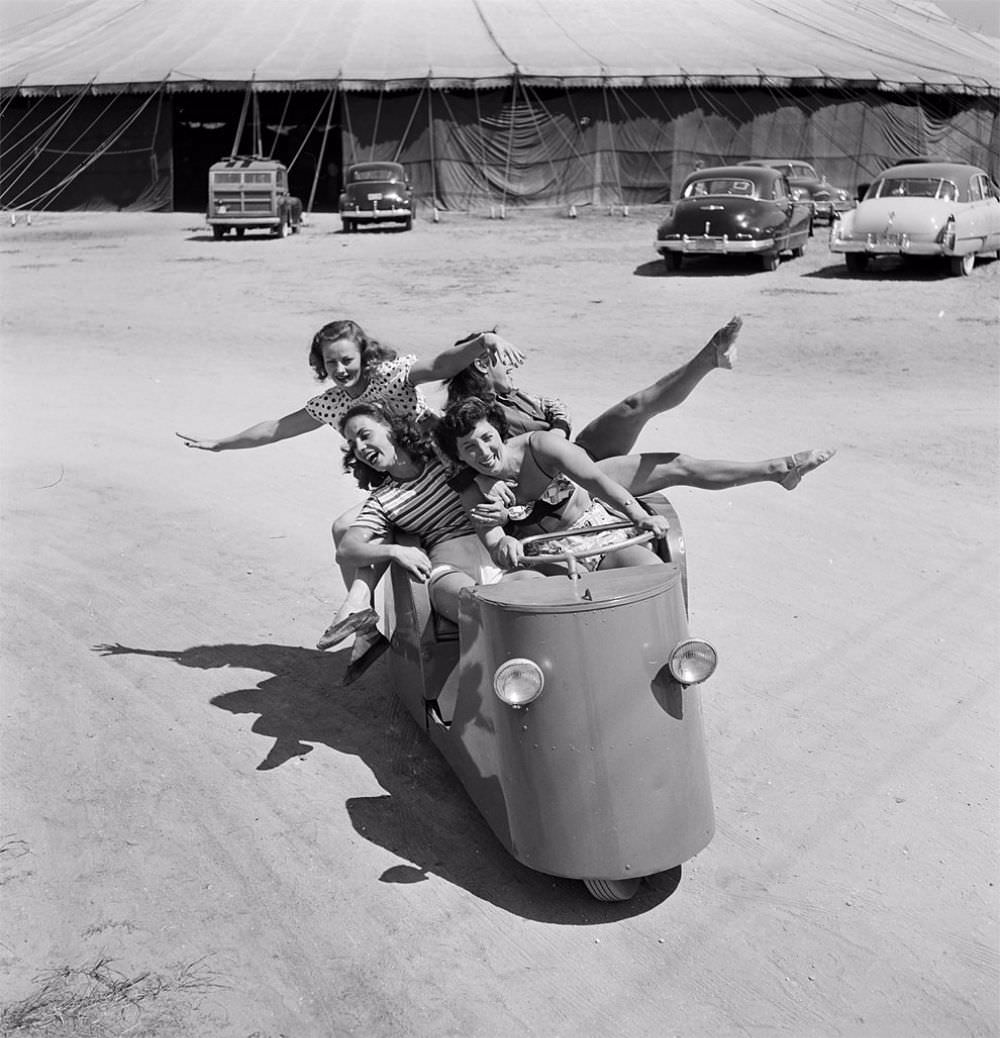
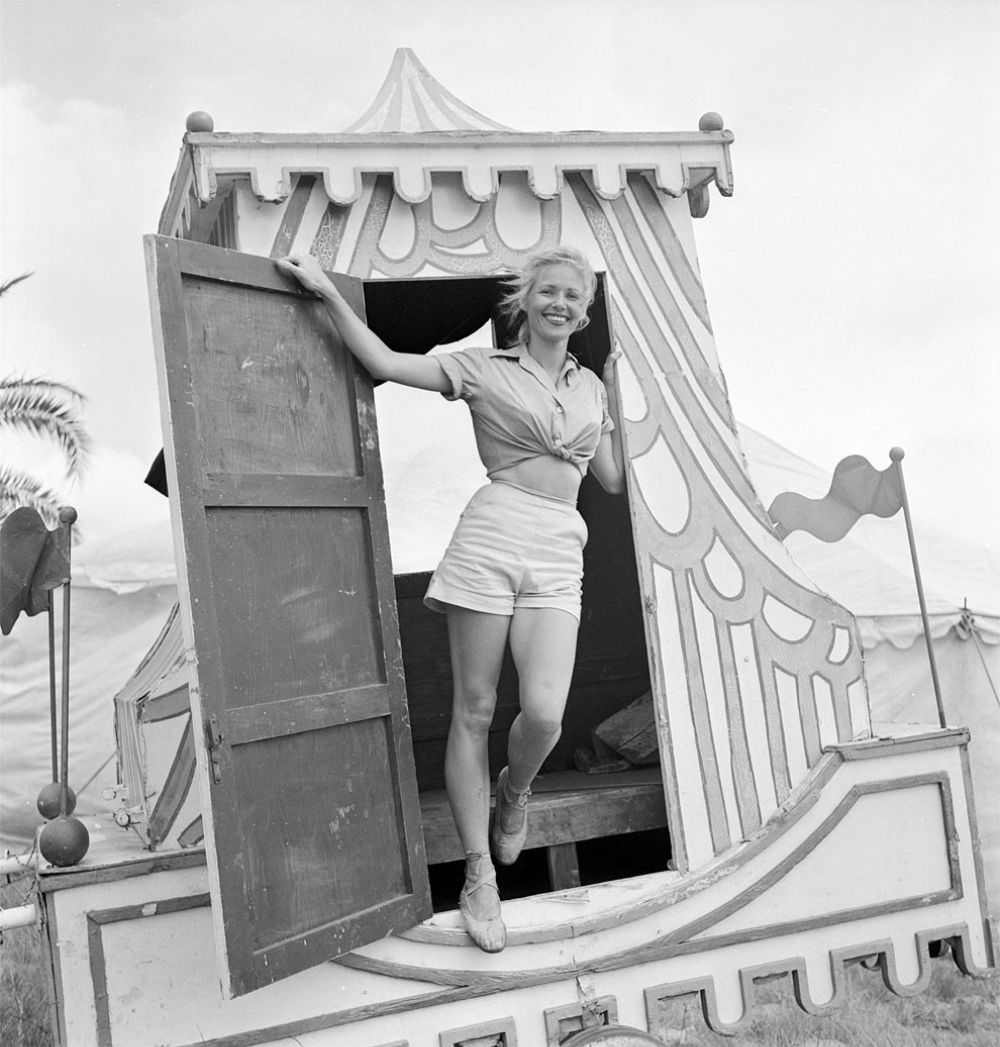
In that same year, Life magazine assigned photographer Nina Leen to document the world behind the big top. Leen was already well-known for her sharp eye and her ability to capture candid, genuine moments. Her assignment in Sarasota gave her full access to rehearsals, downtime, and everything in between. The result was a remarkable series of photographs showing the acrobat performers — widely referred to as “circus girls” — not just performing, but simply living.
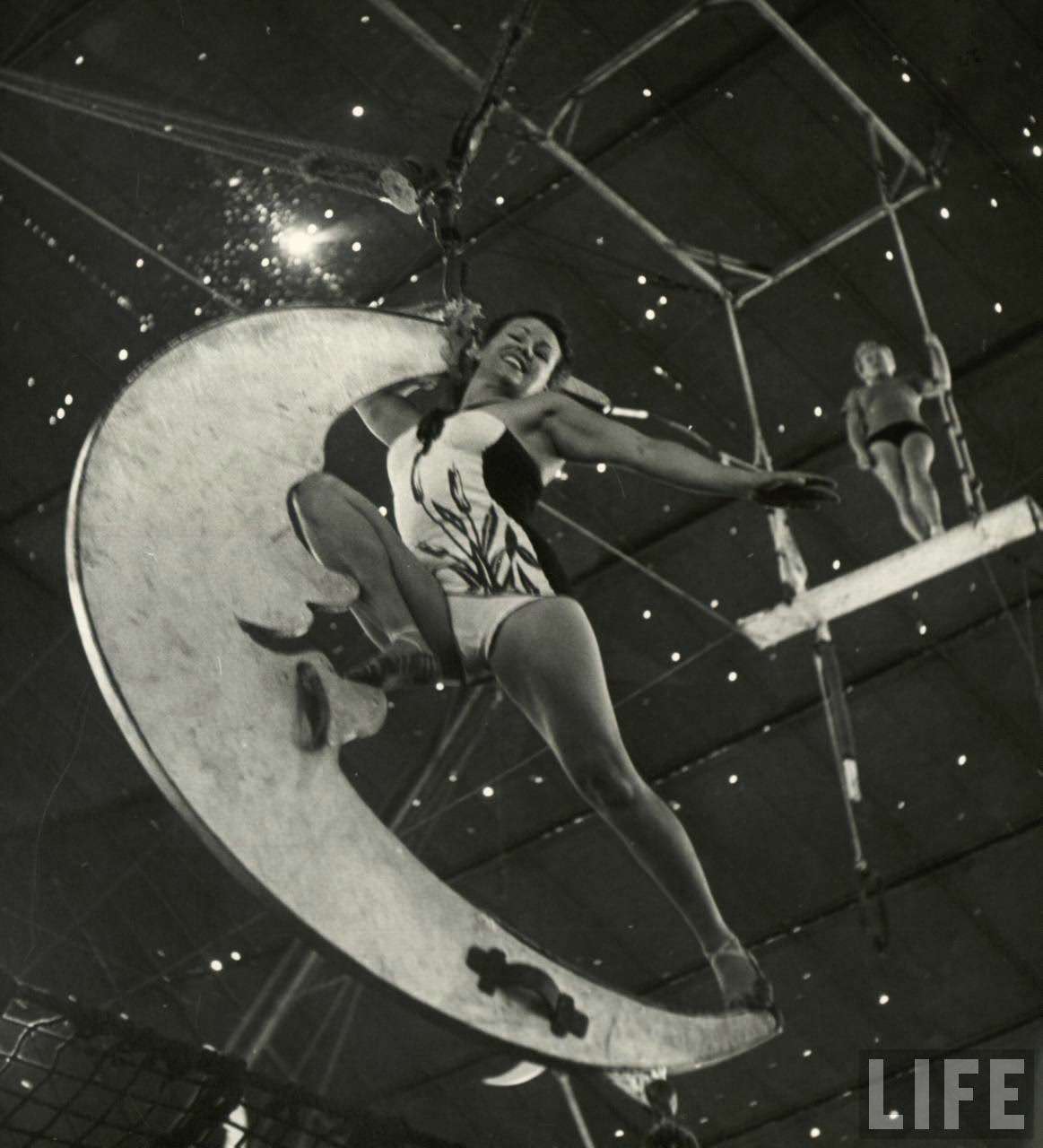
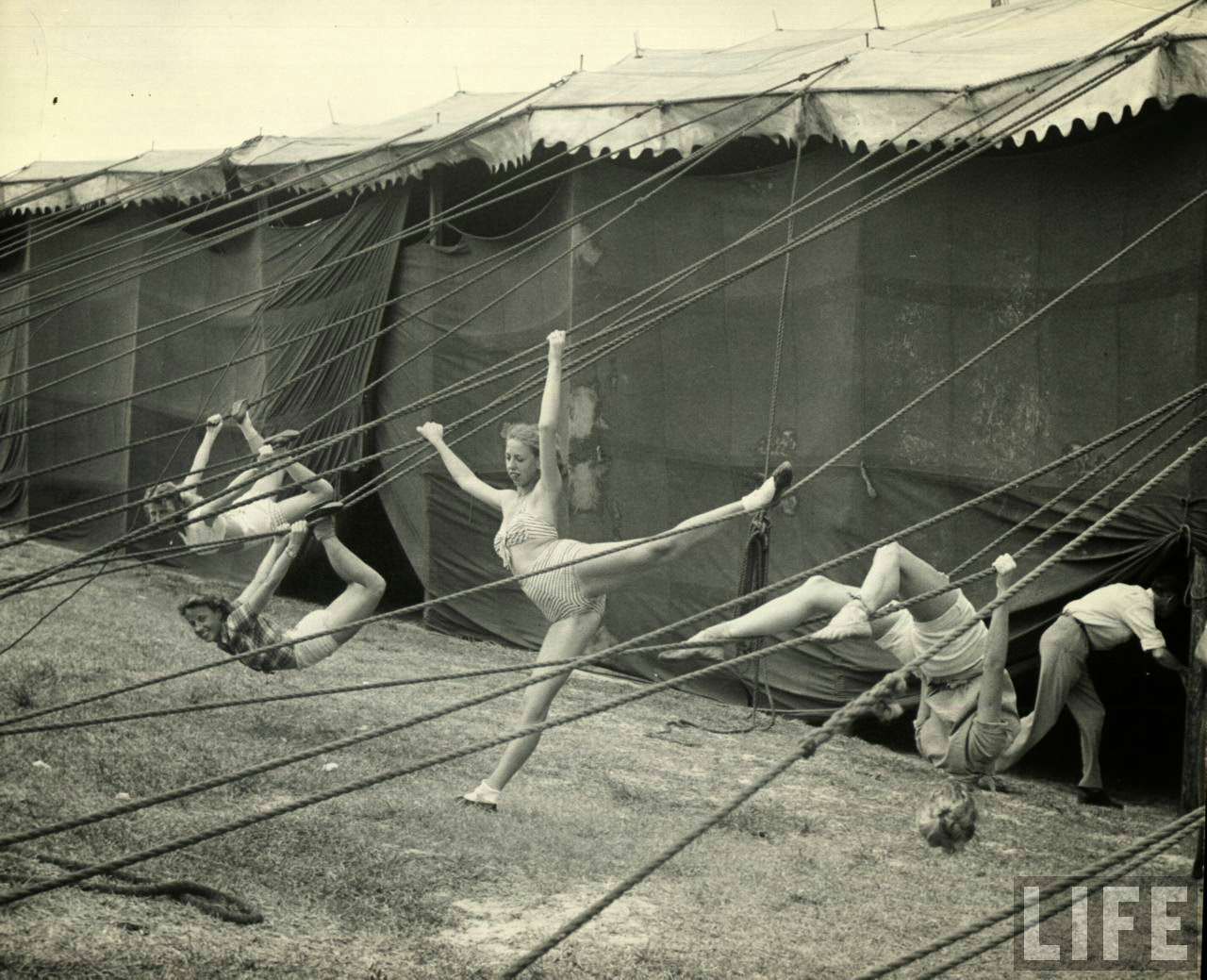
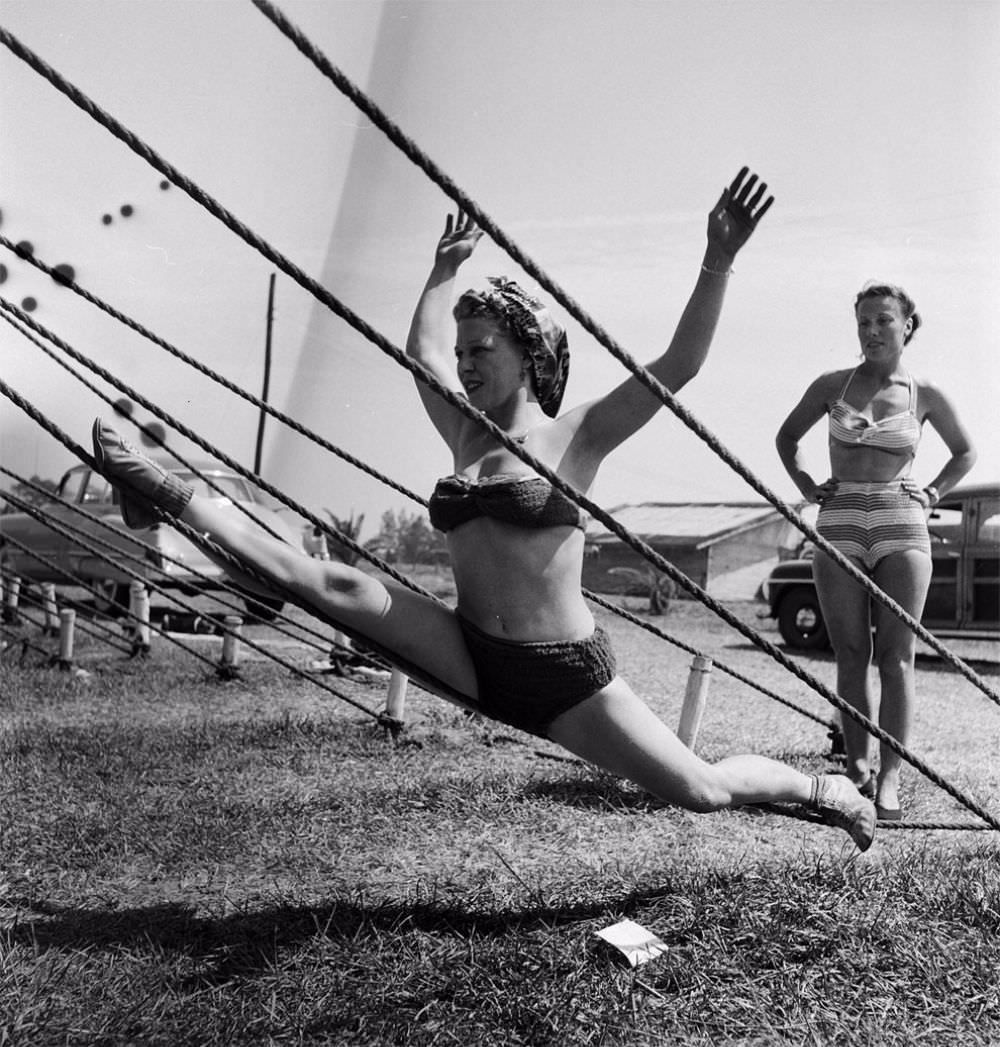
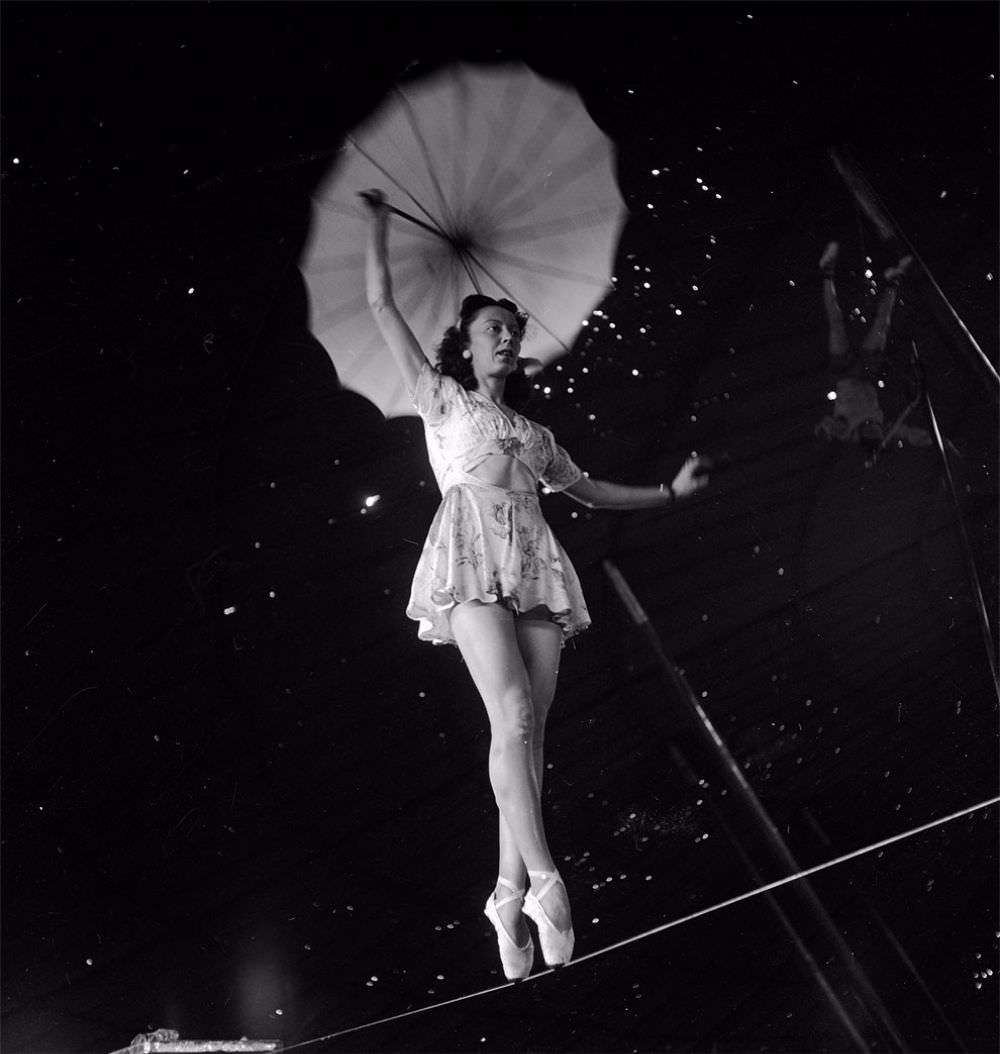
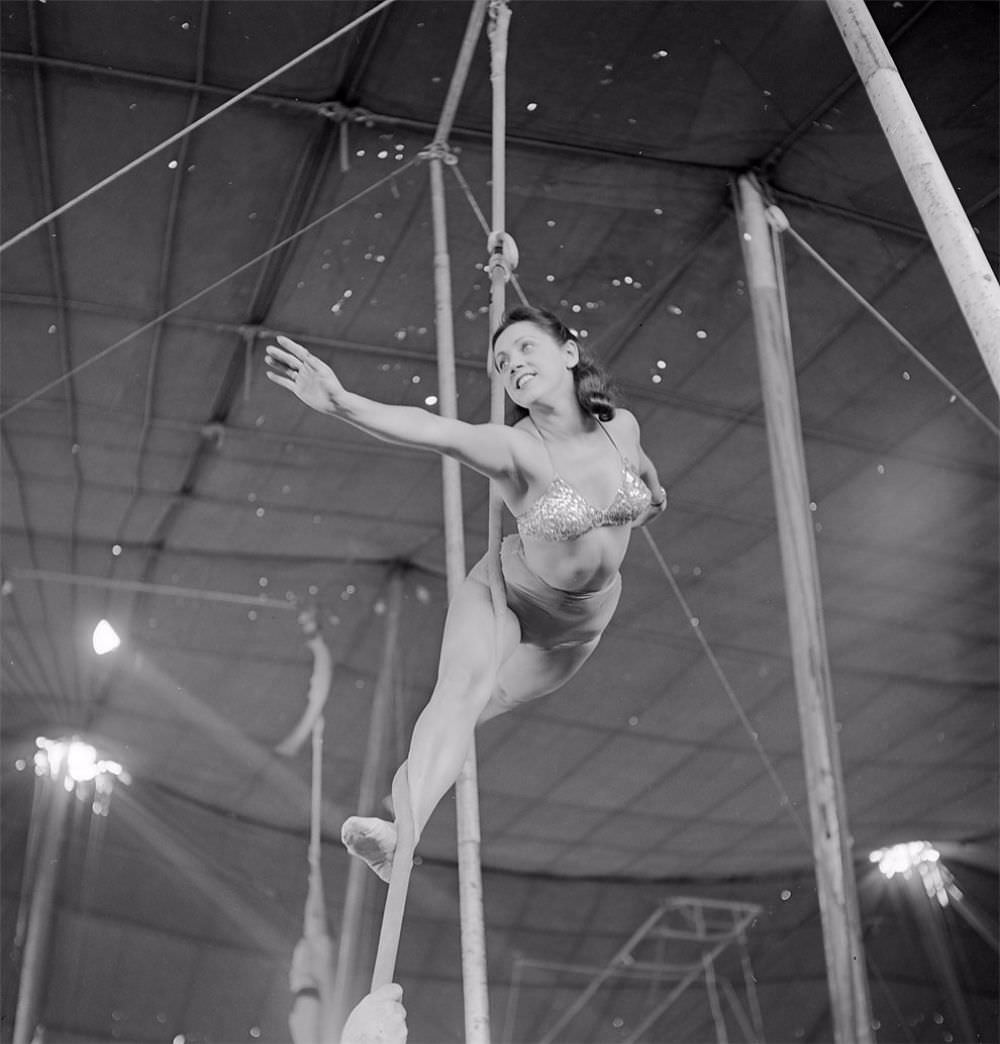
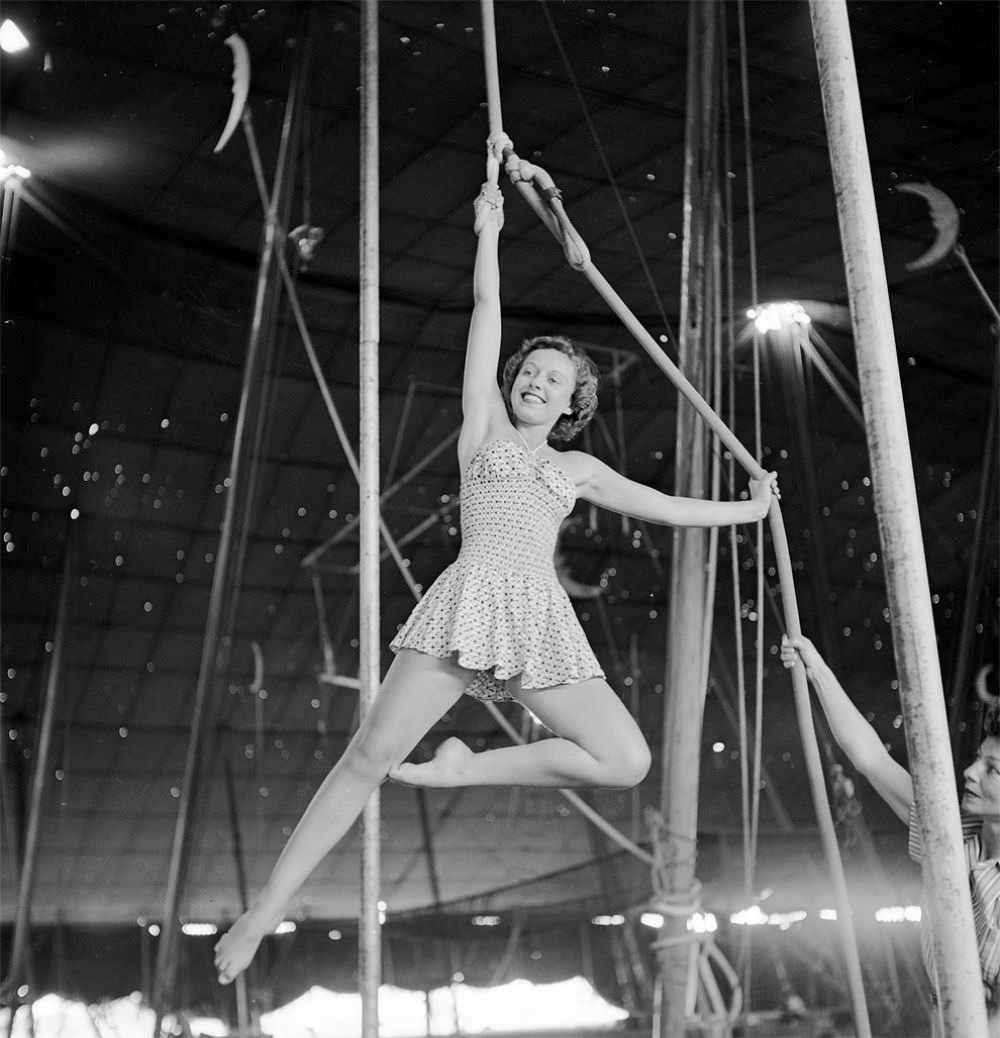
These women were serious athletes. The aerial and rope acts they performed required months of daily training. Tent ropes served as both practice equipment and the actual stage for their acts. Balance, timing, and raw physical strength determined whether a routine succeeded or failed. There was no room for error when performing high above a crowd of thousands.
Rehearsals were long and physically demanding. The performers drilled their routines repeatedly, often working through discomfort to get a move exactly right. Props like umbrellas weren’t just for show — they helped with balance during wire and rope work, and mastering their use was part of the act itself.
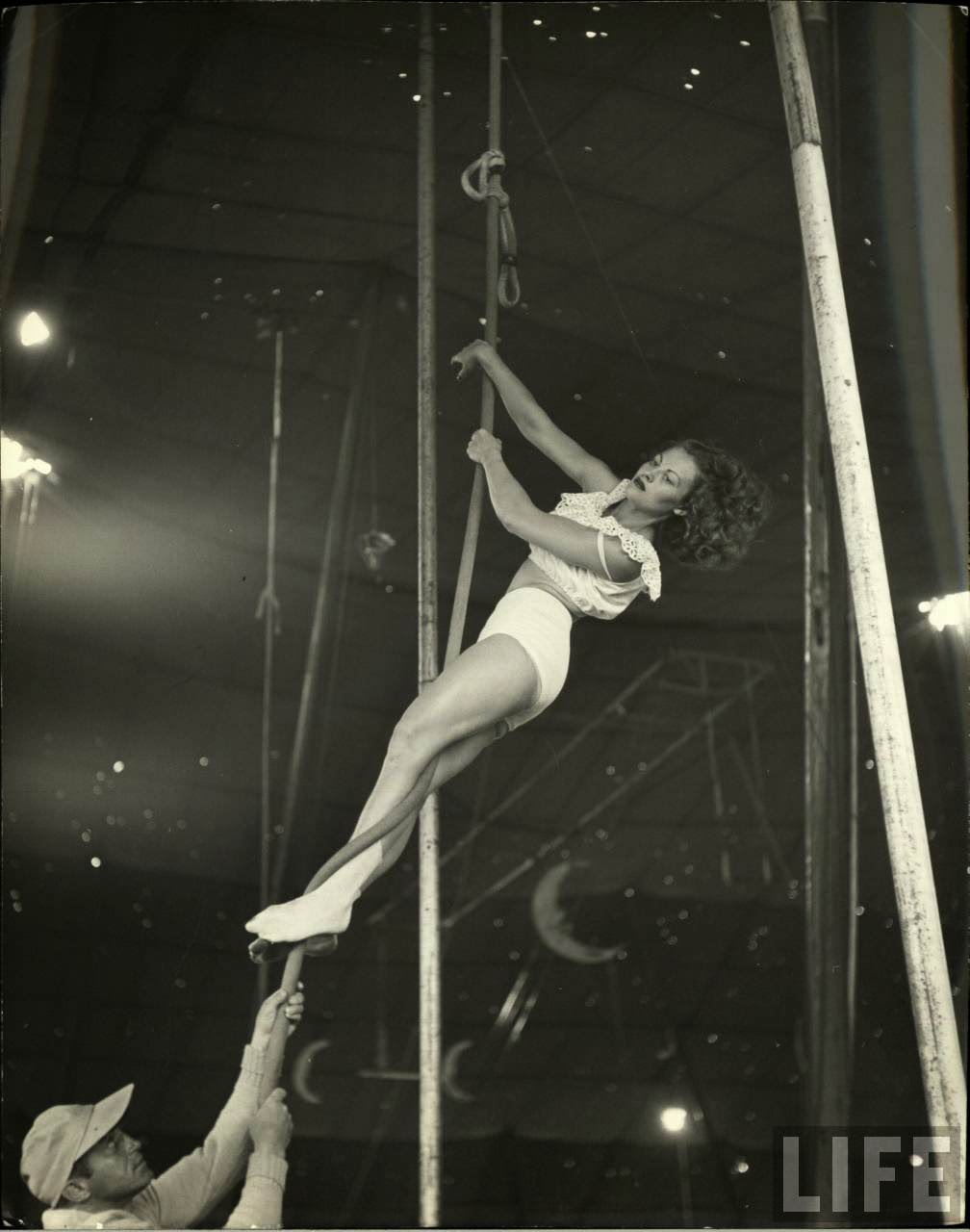
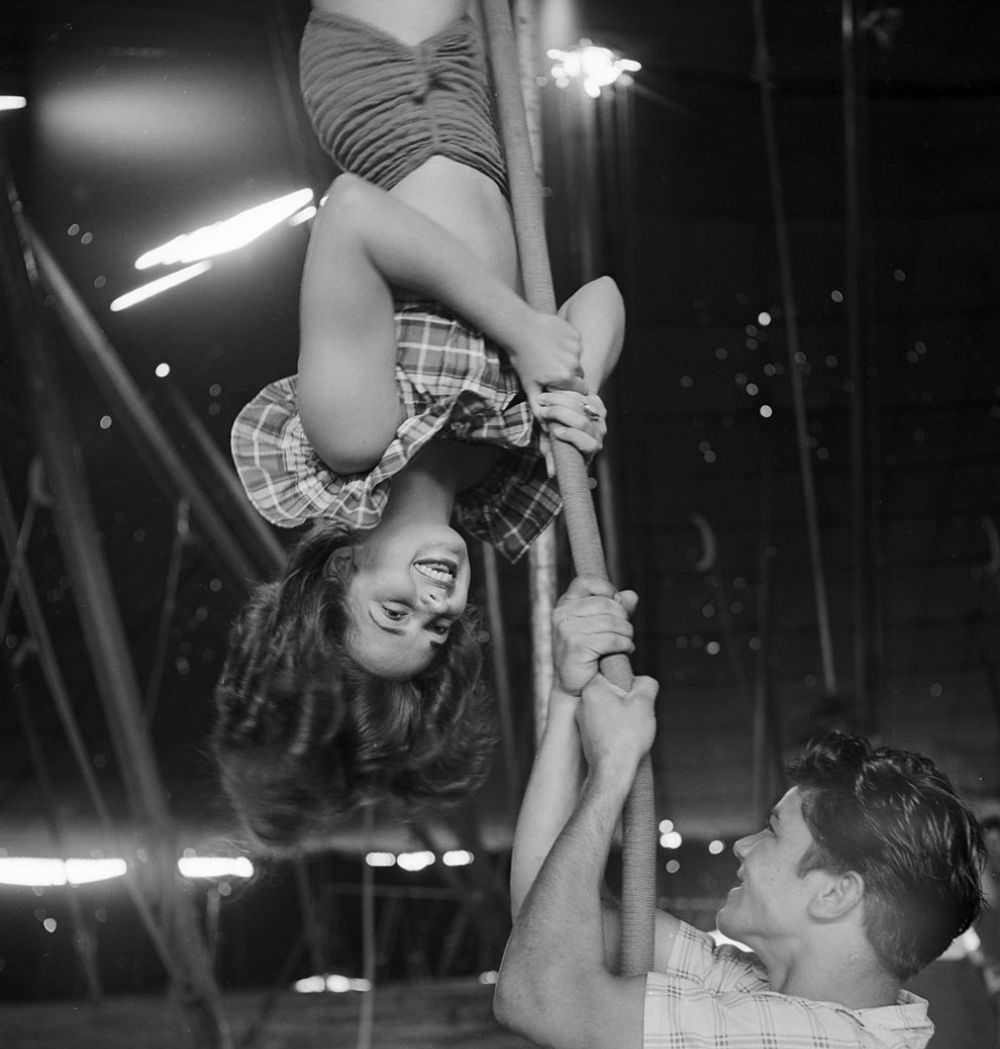
Circus work was always a team effort. Riggers and assistants held ropes, managed equipment, and kept the rehearsal space safe. The collaboration between the acrobats and the supporting crew was constant and essential. A well-timed hold on a rope could mean the difference between a clean landing and a dangerous fall.
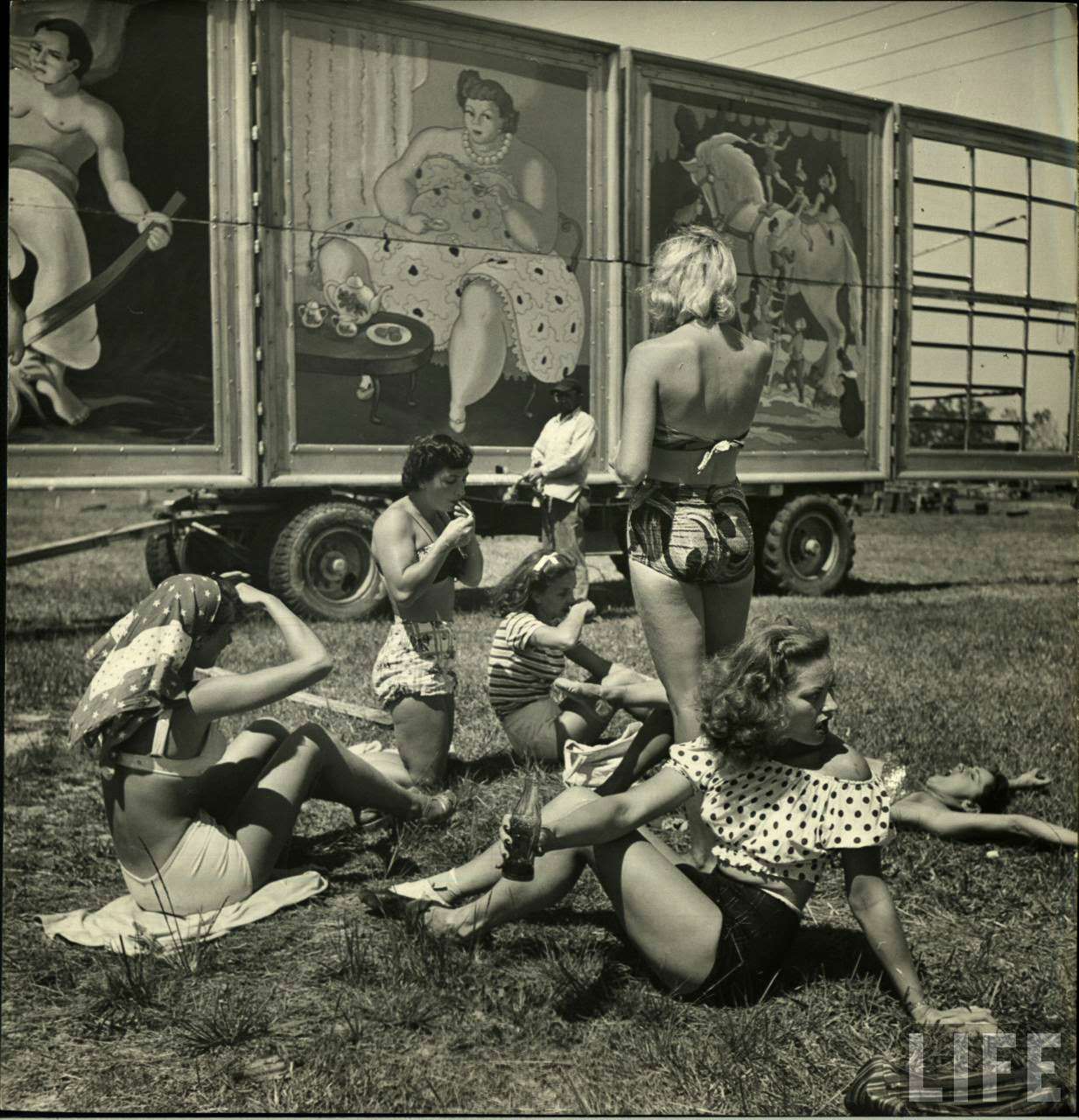
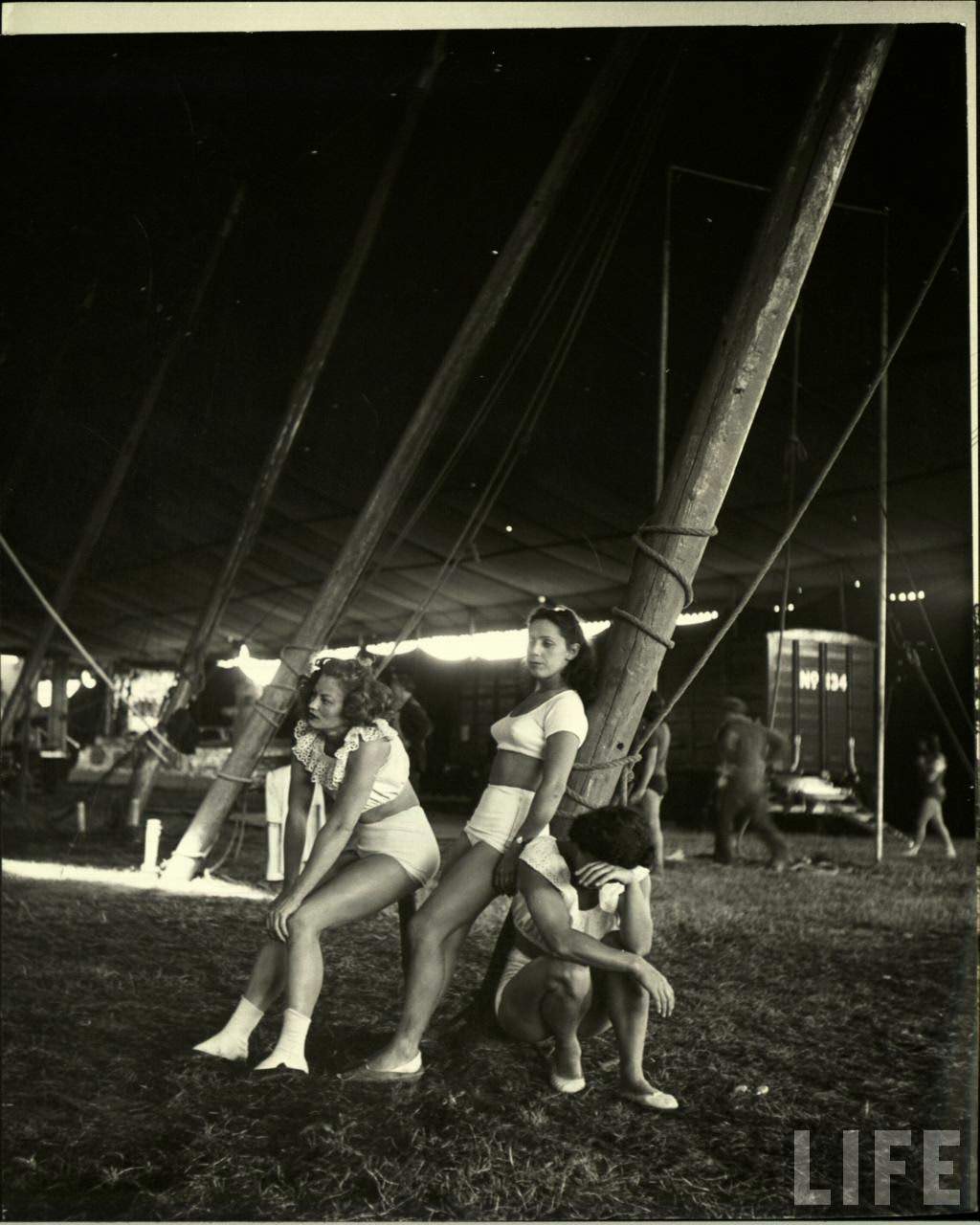
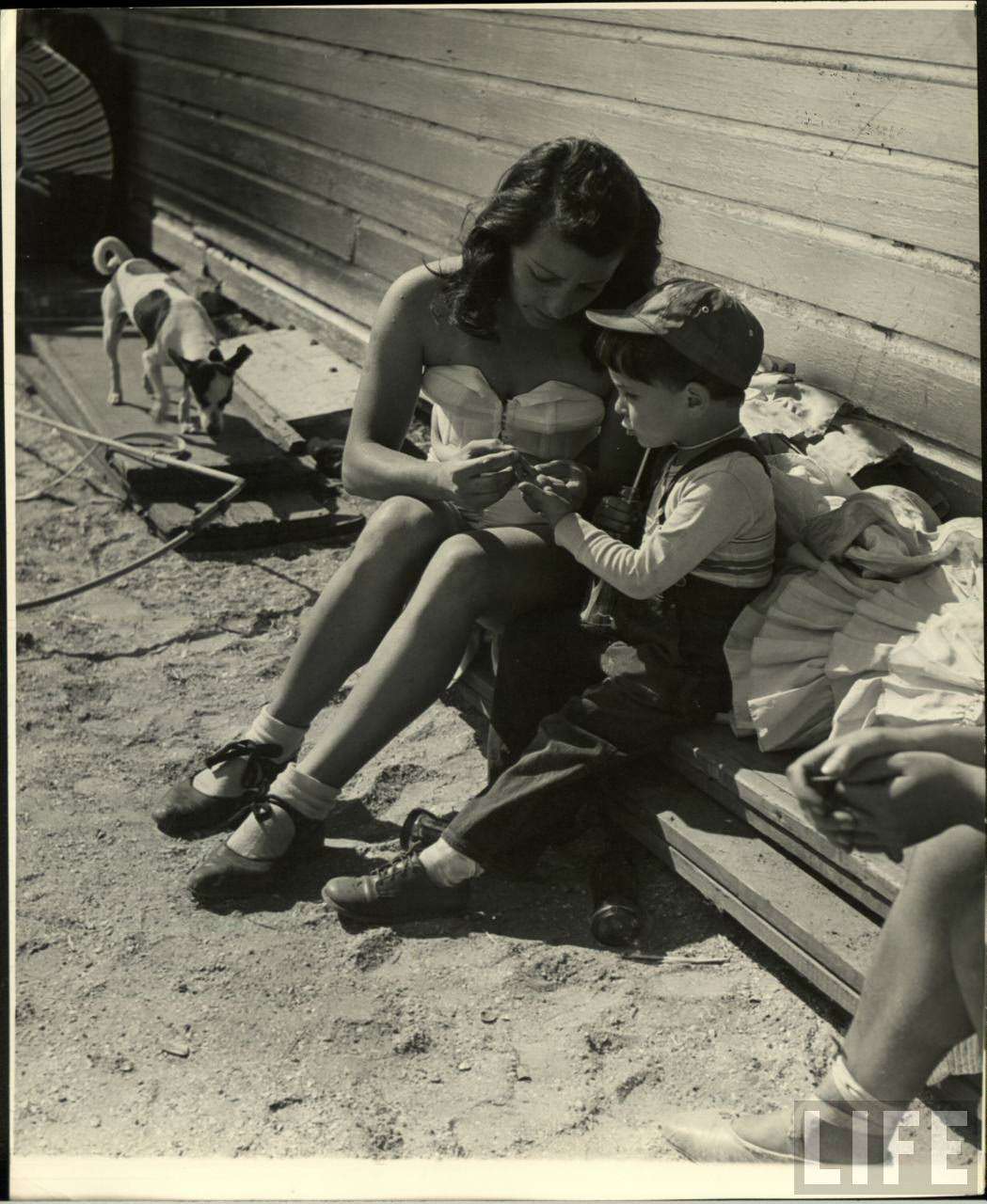
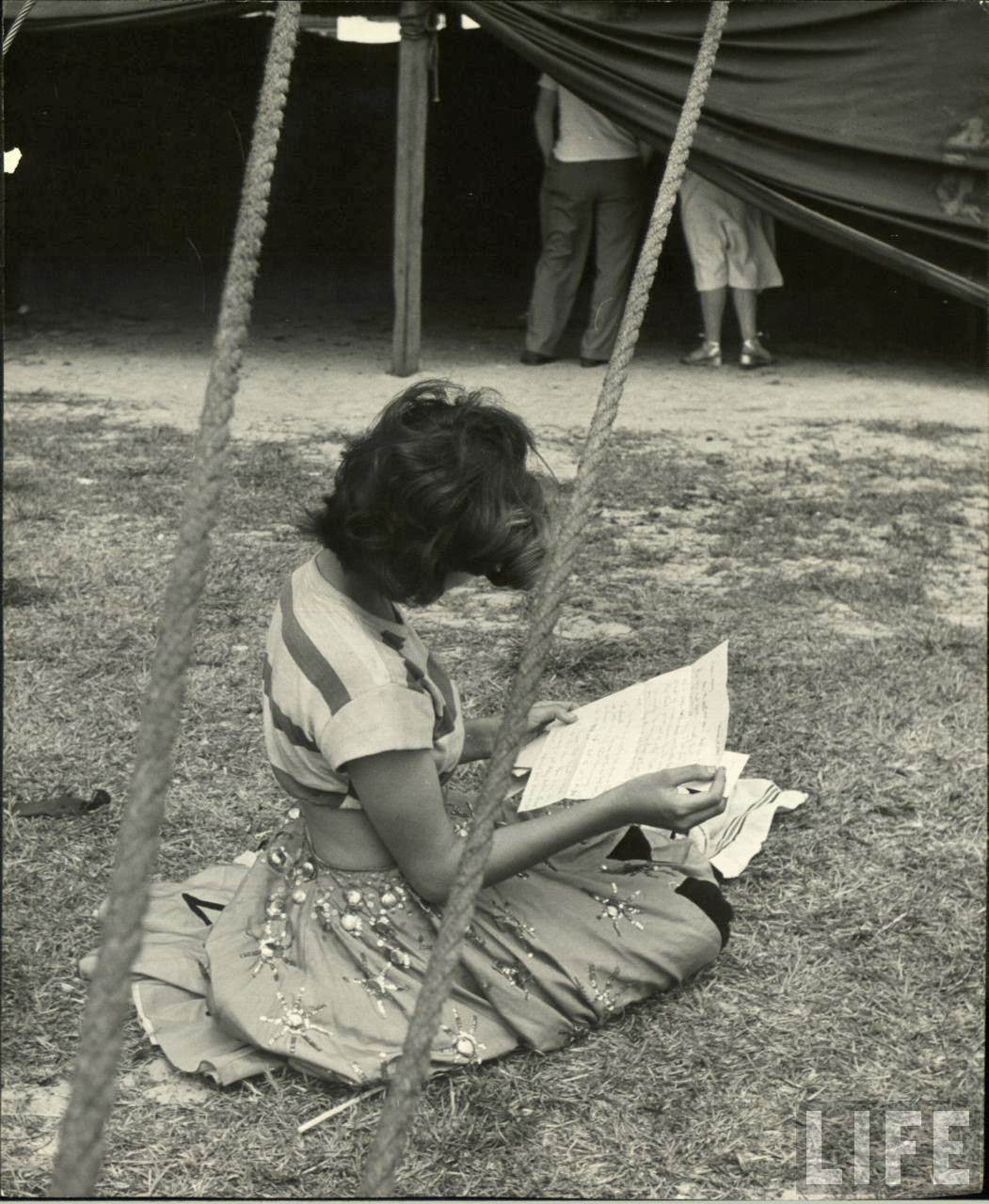
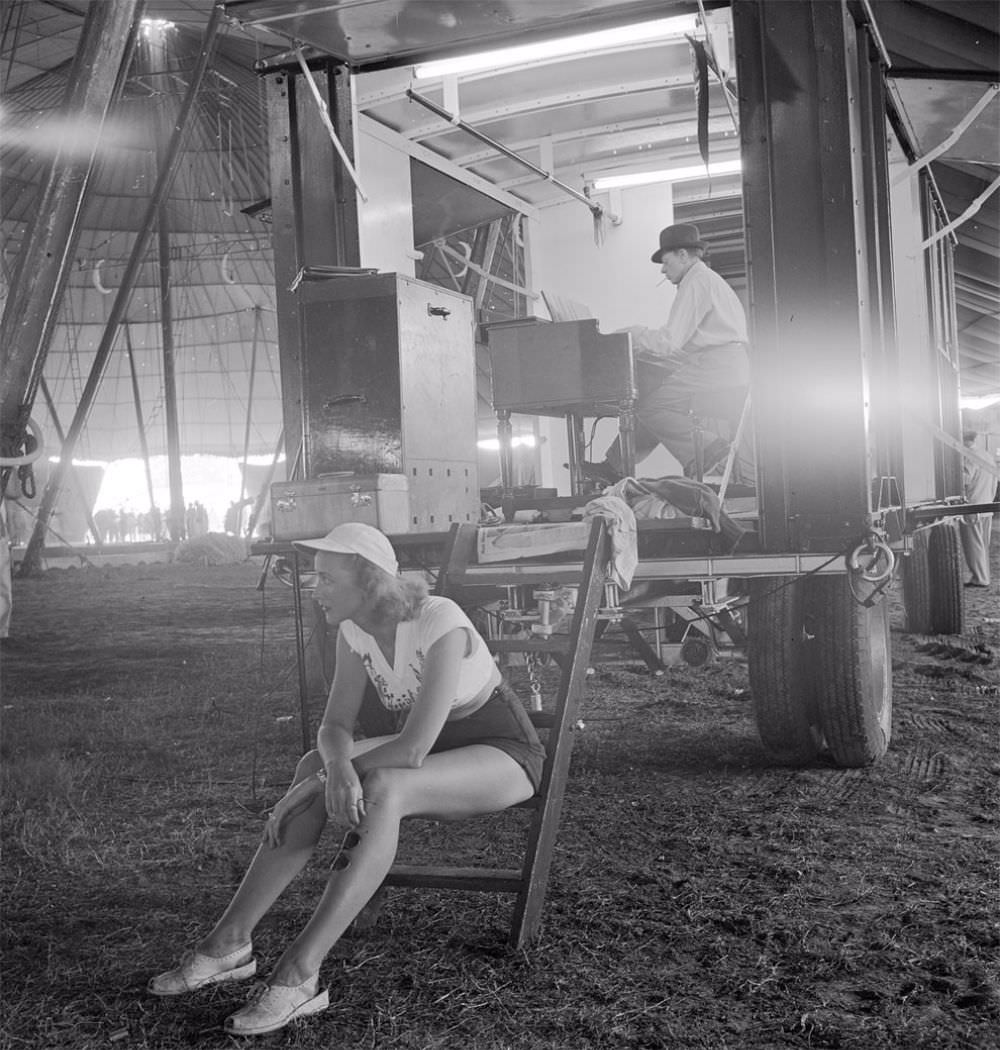
Between training sessions, the performers found time to rest wherever they could. Ladders, wooden planks, and patches of open ground all became temporary resting spots. These quiet in-between moments are some of the most telling in Leen’s collection — they strip away the glamour of the spotlight and show the performers as working women taking a break from a demanding job.
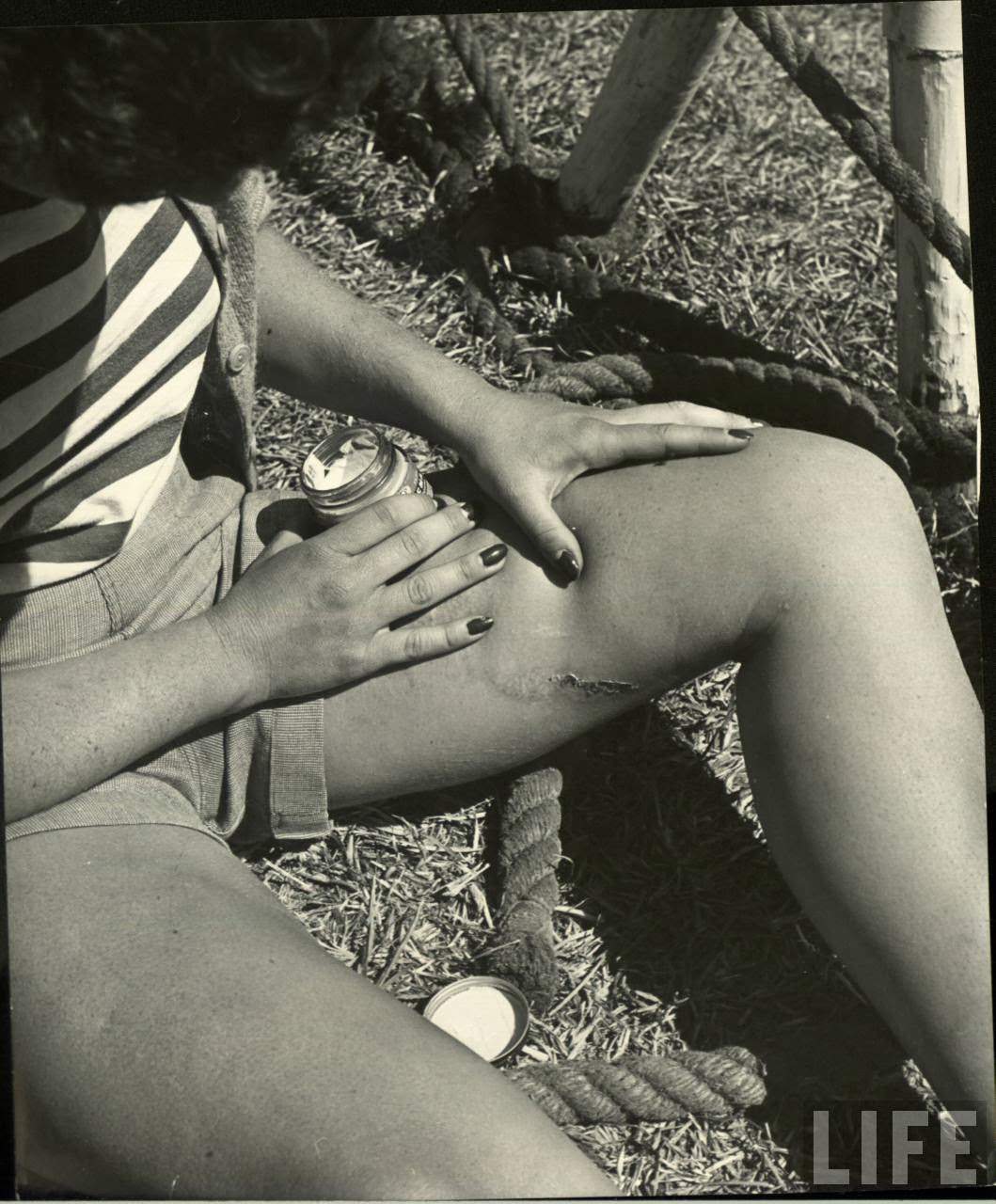
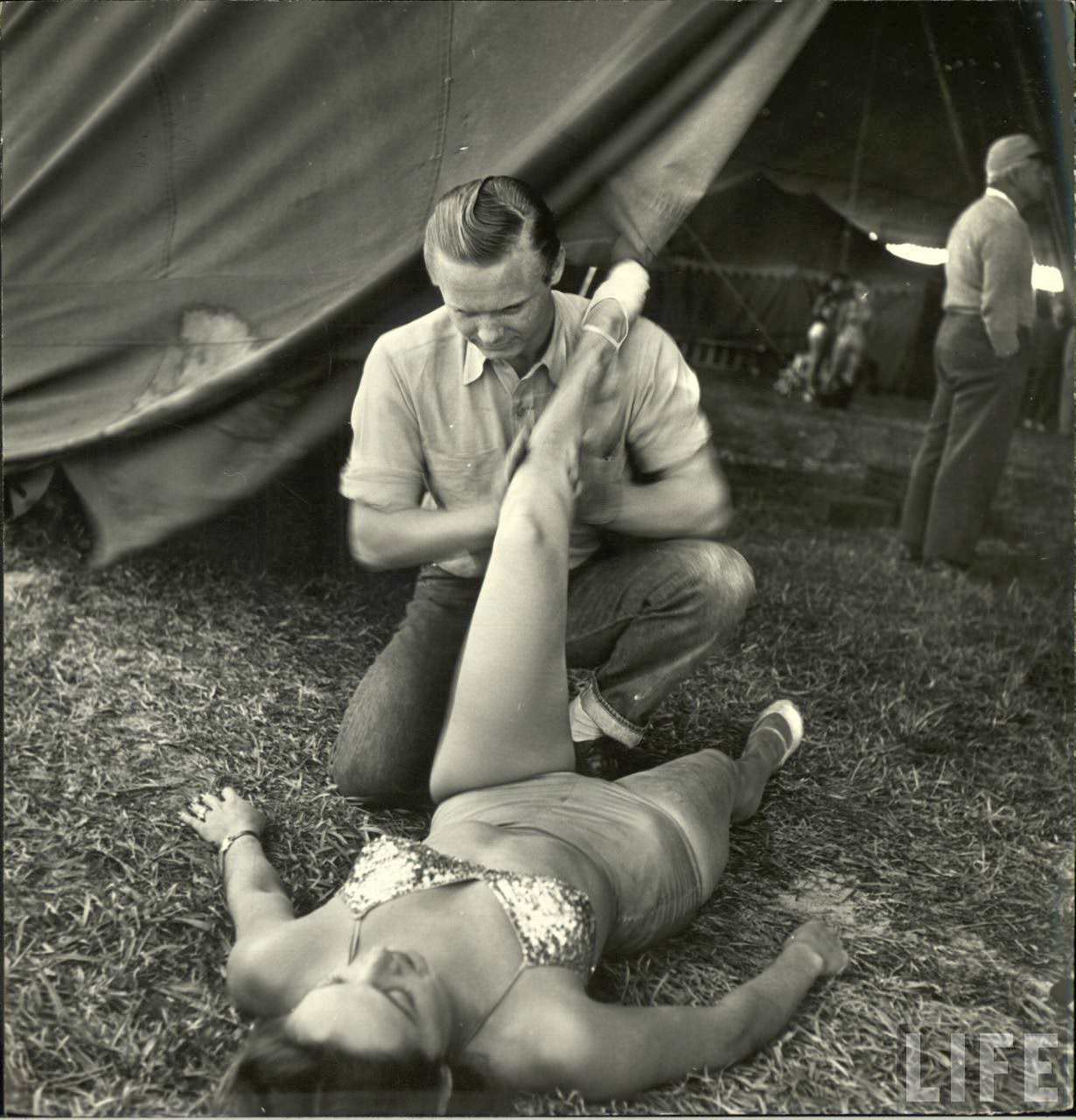
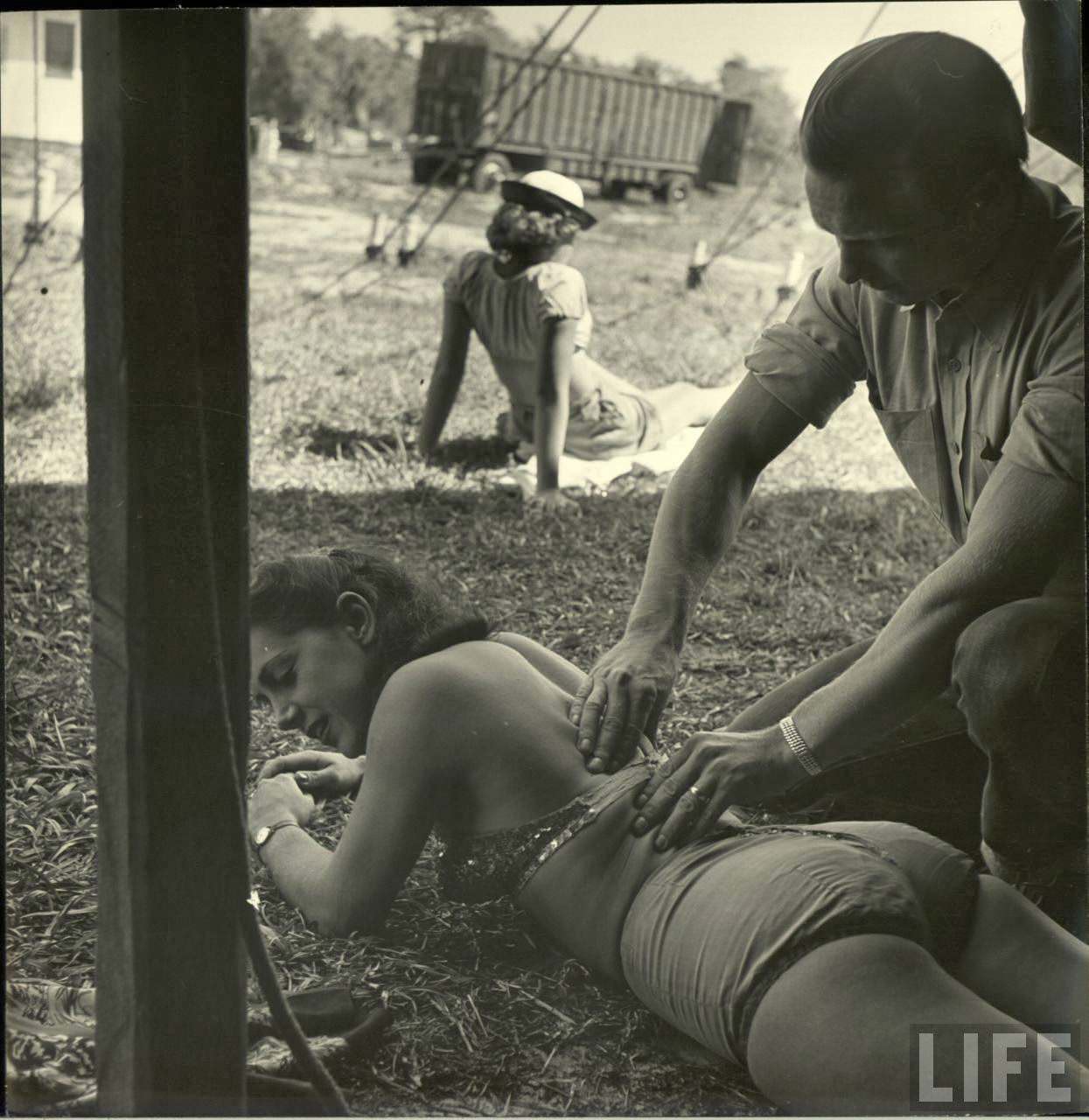
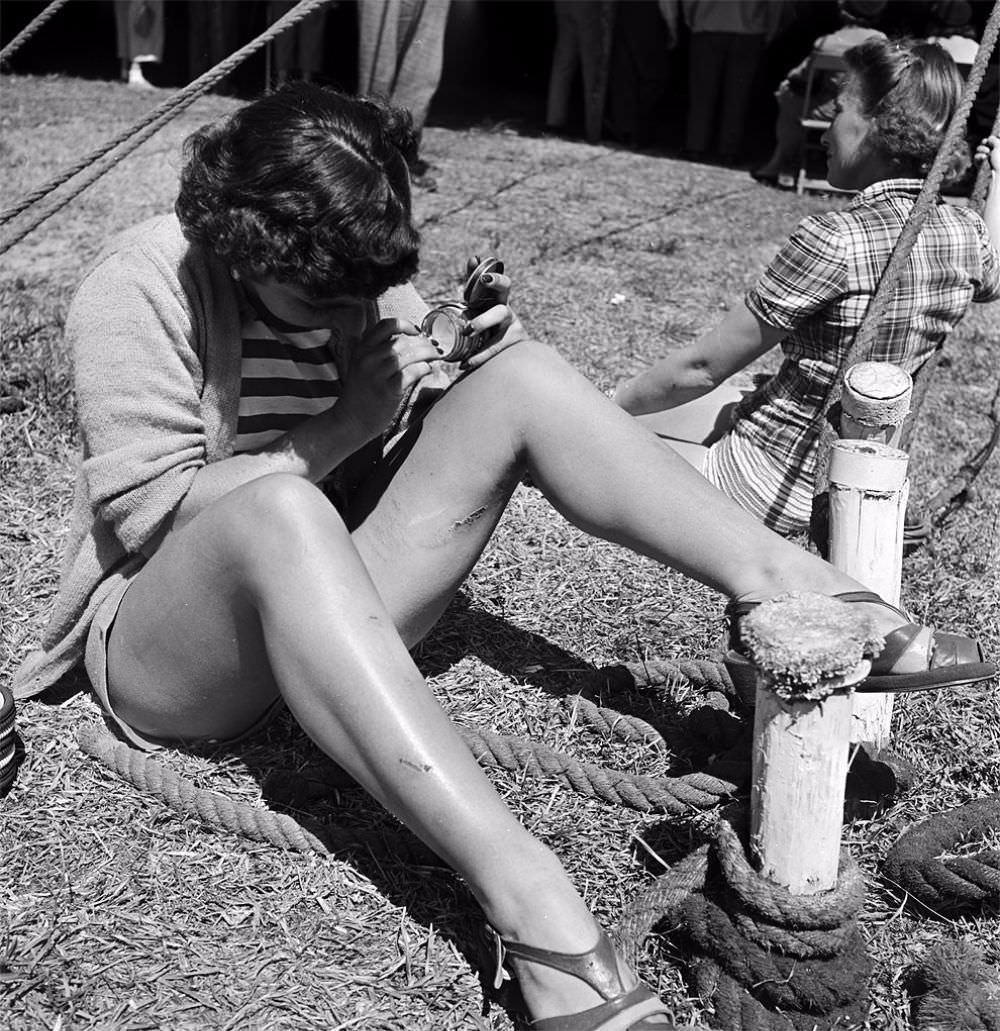
Injuries were a routine part of life under the big top. Rope burns, scrapes, and muscle strain were common. Performers treated minor wounds themselves, keeping basic supplies on hand during rehearsals. Stopping for a small injury wasn’t always an option when there was a show schedule to meet.
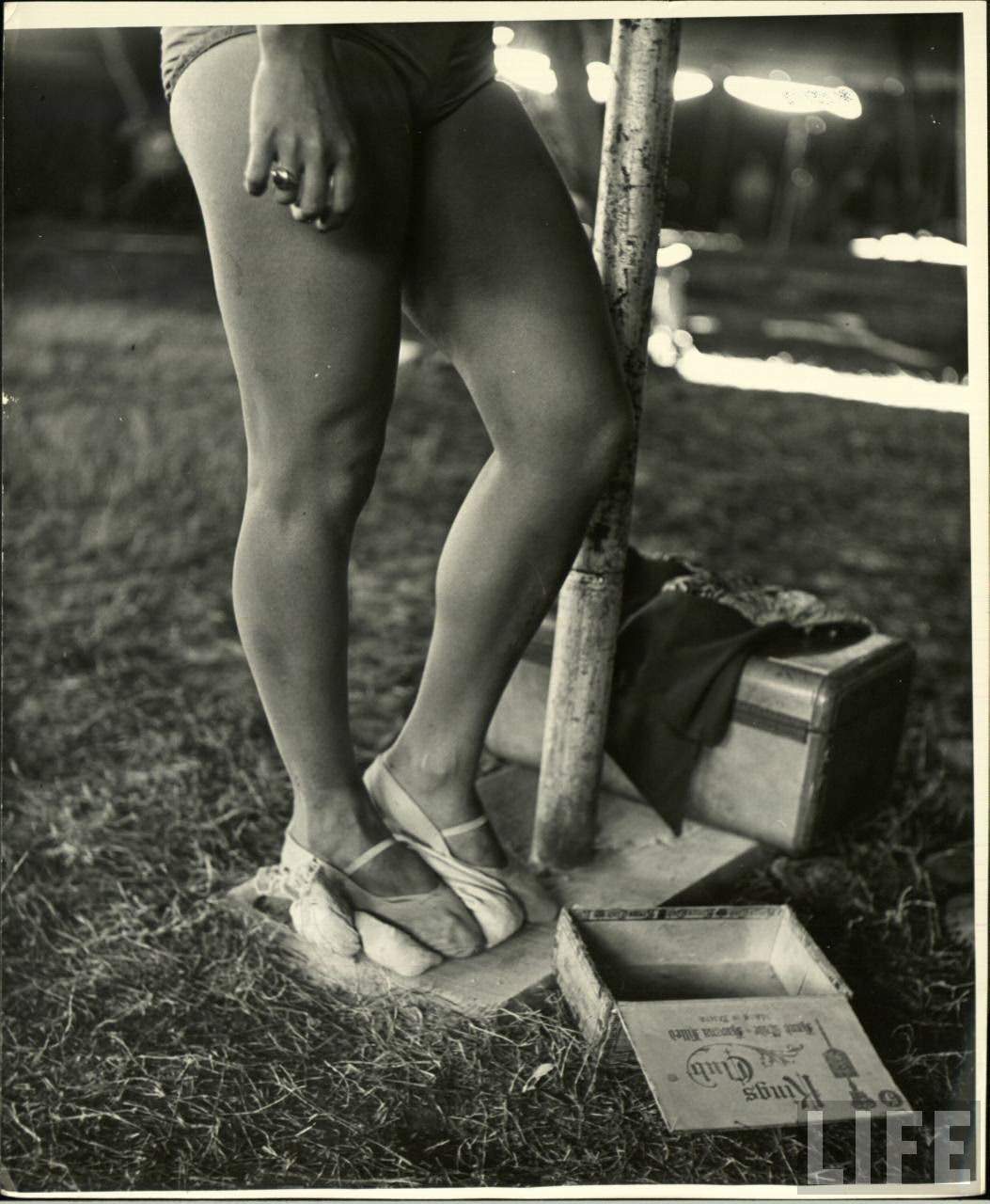
The physical environment of a circus rehearsal space was organized chaos. Poles, ropes, and rigging filled the open floor area, with performers and crew navigating around each other constantly. Despite the crowded conditions, every person knew their role and where they needed to be at any given moment.
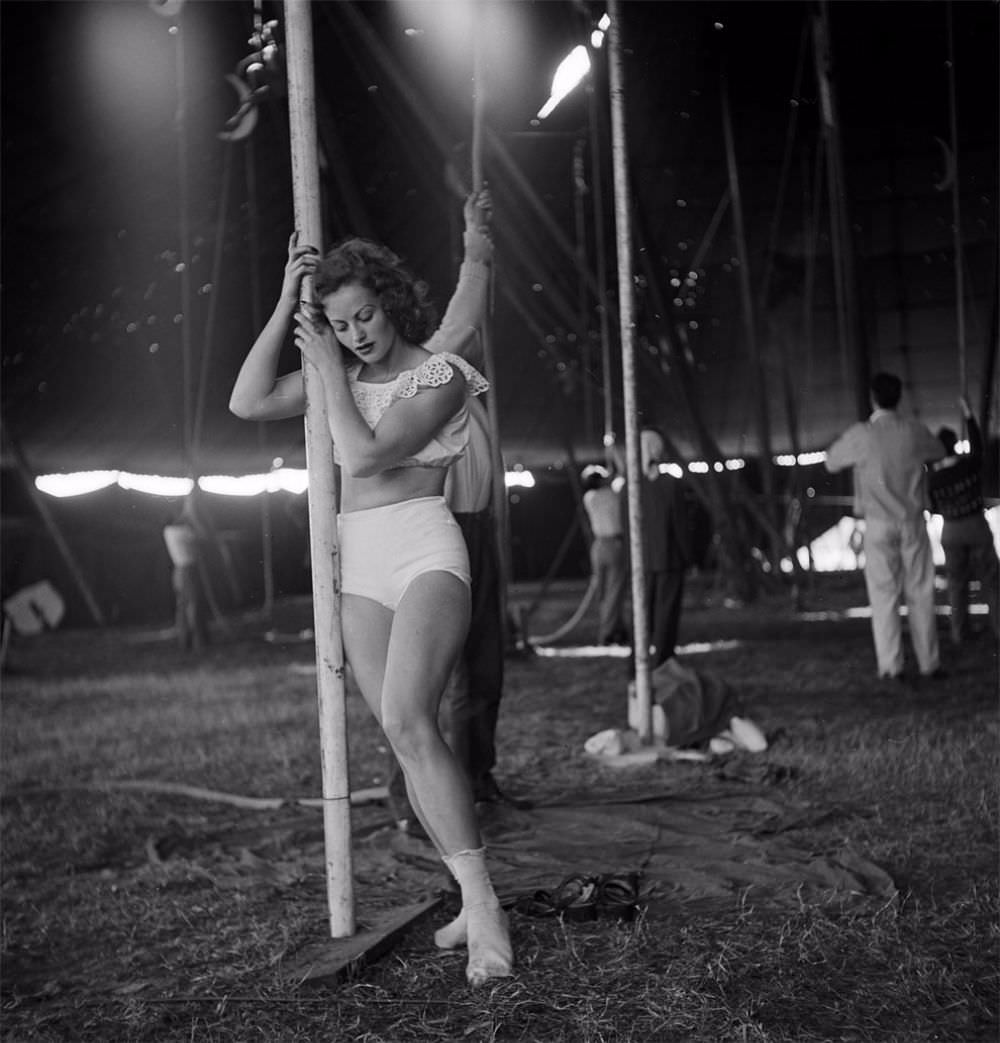
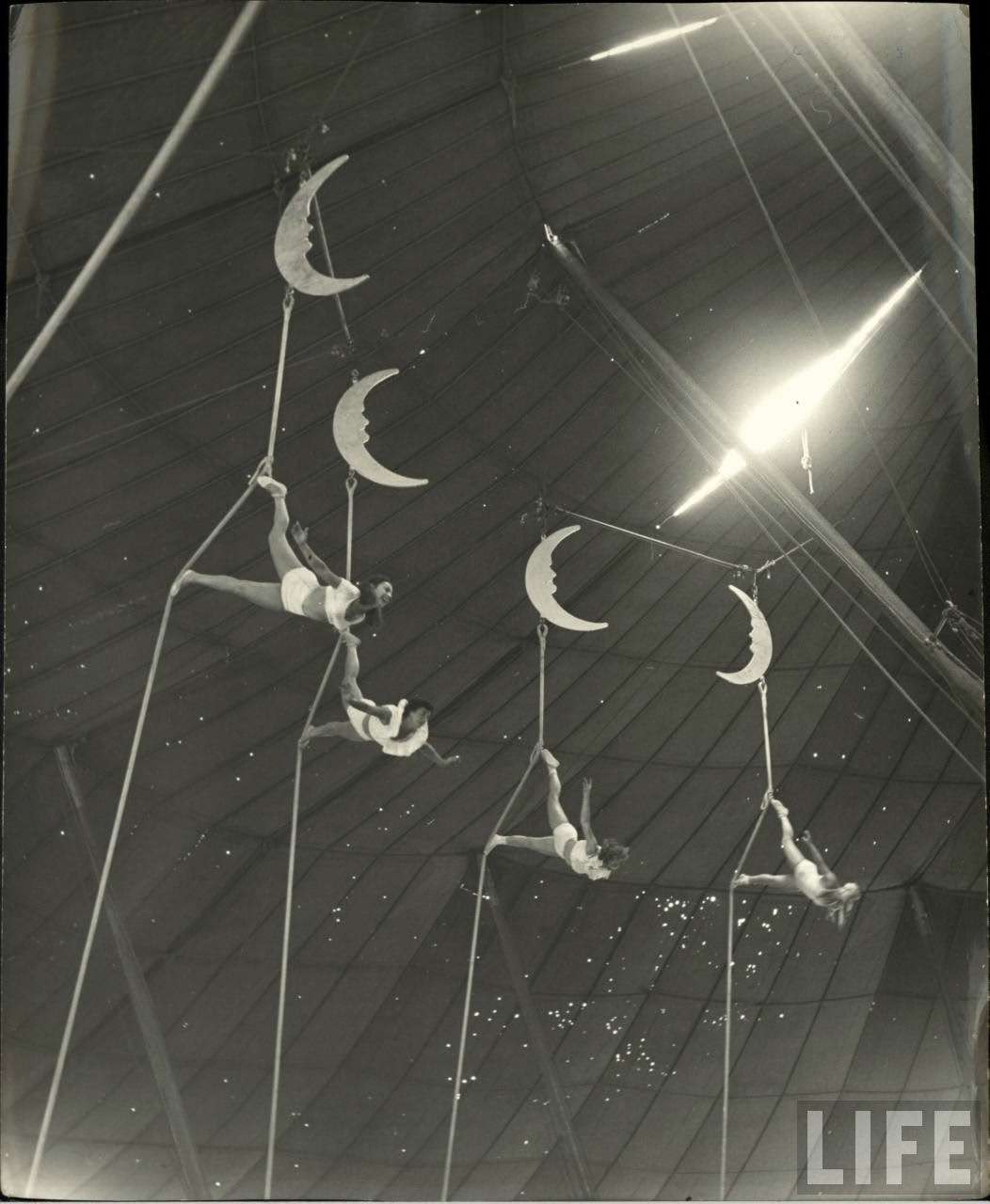
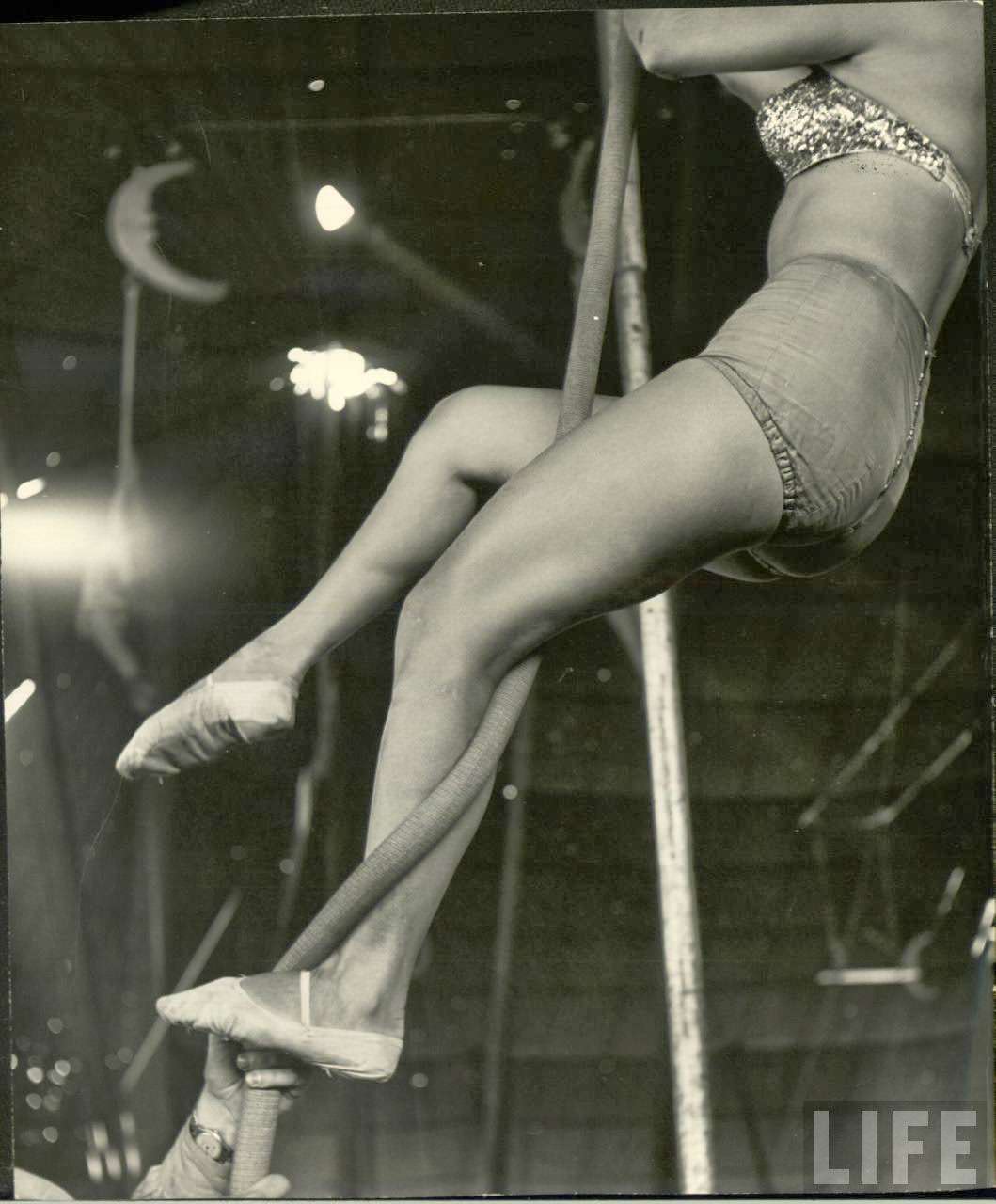
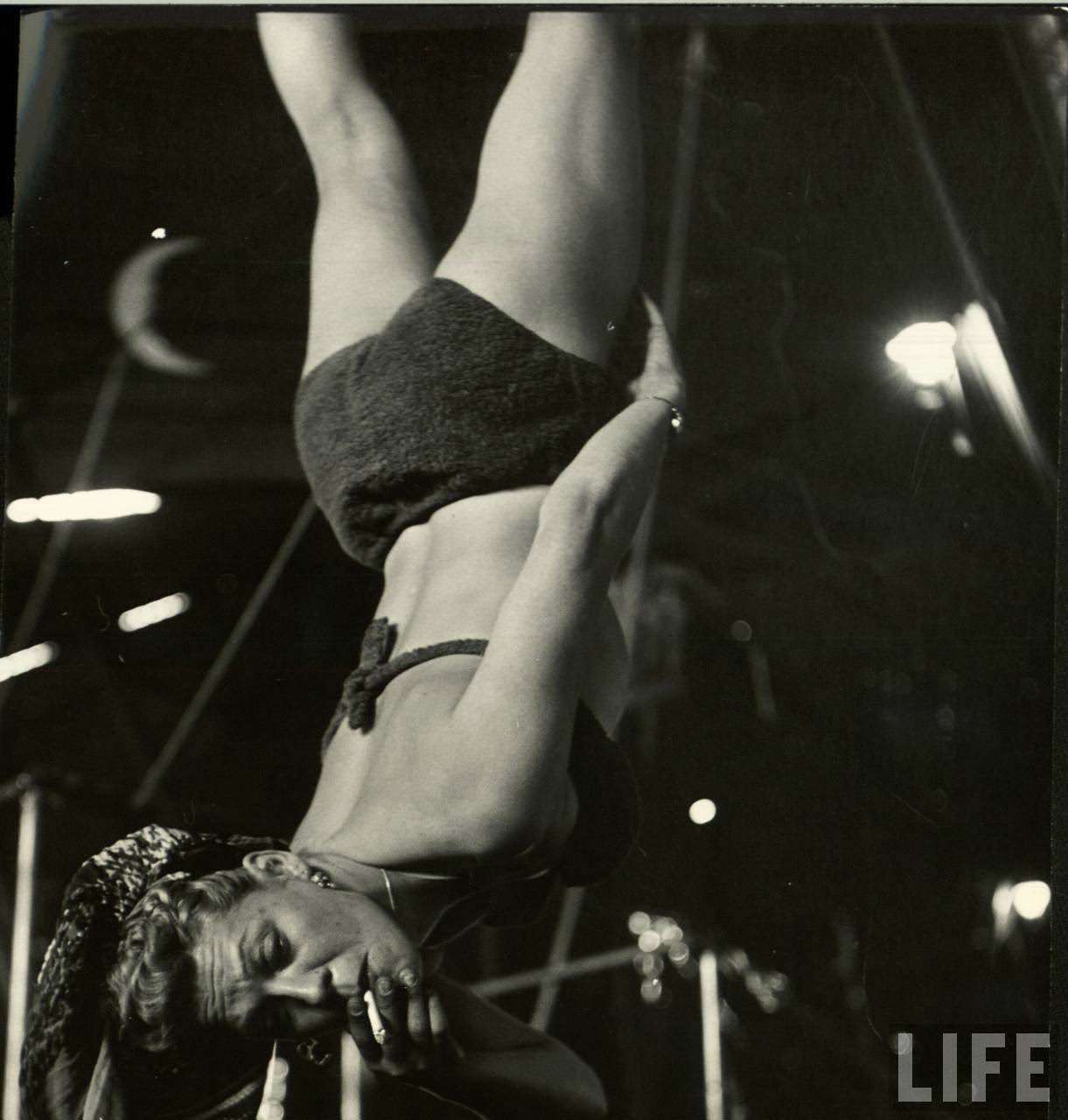
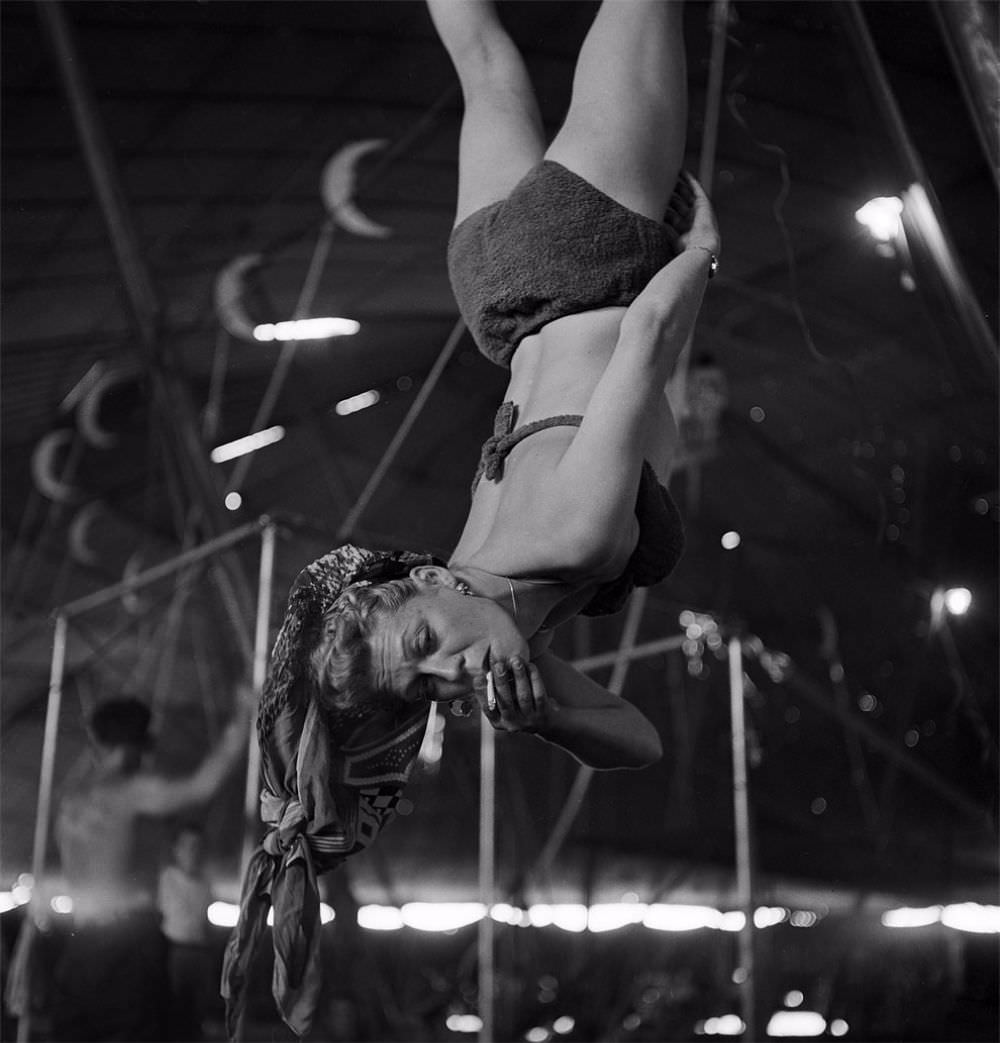
Aerial rope work was one of the most visually striking acts in the circus lineup. Aerialists climbed, twisted, and suspended themselves in ways that looked effortless to audiences but required years of training to execute safely. The strength needed to hold a body in mid-air using only arms and core muscles is extraordinary by any standard.
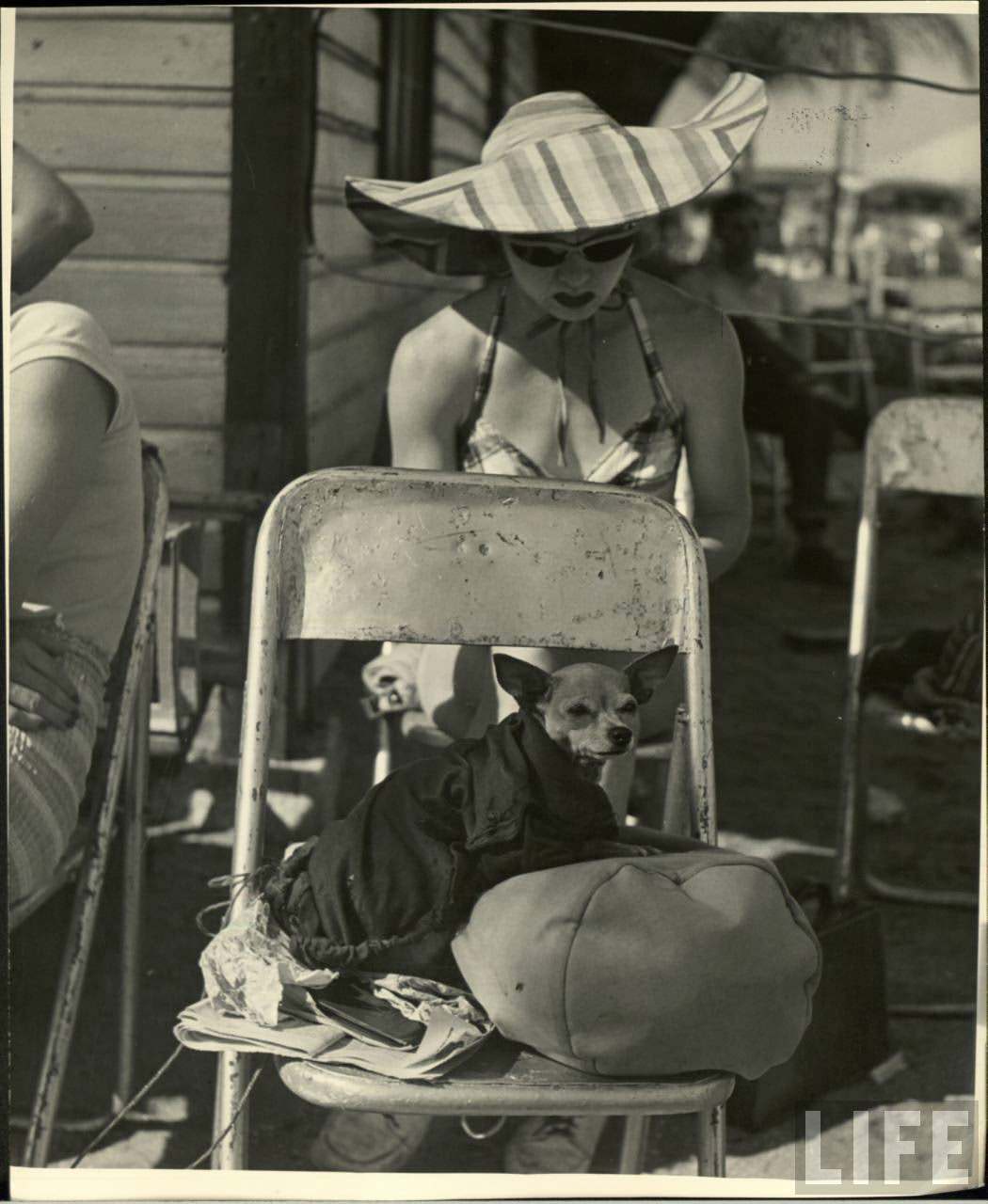
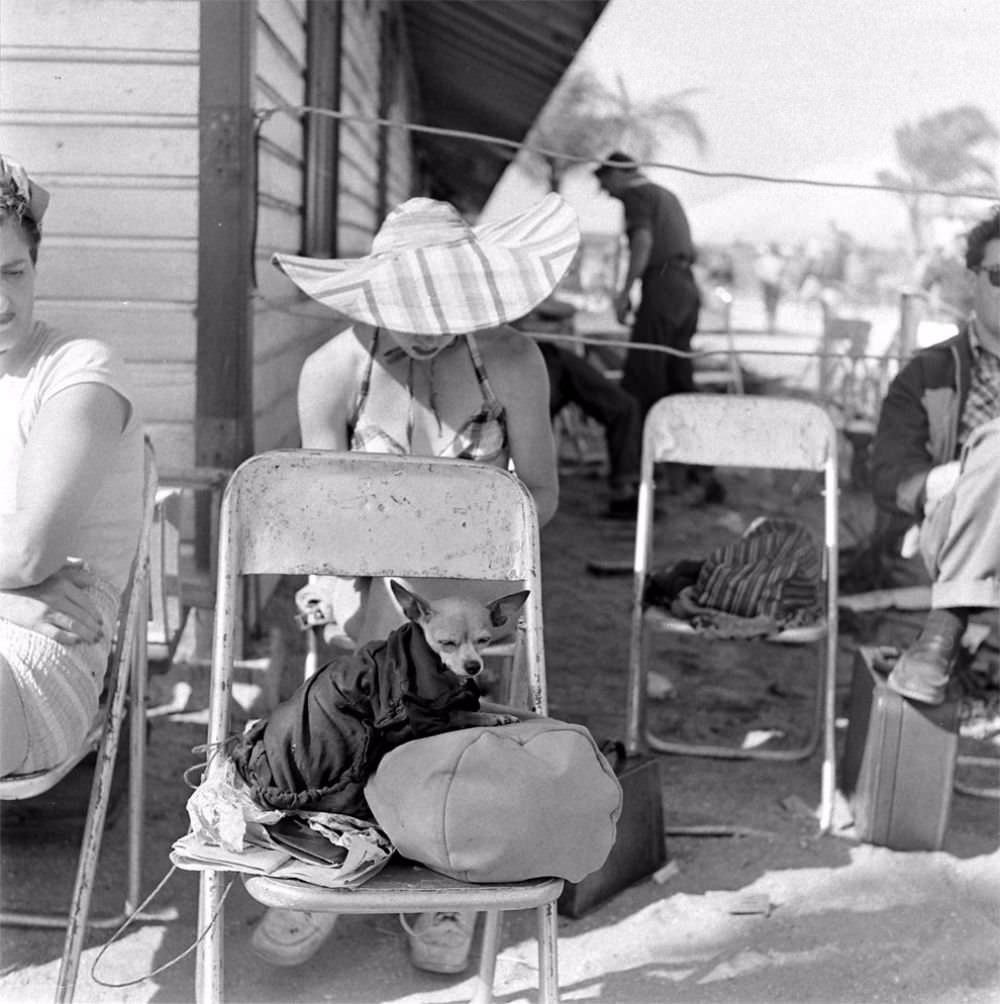
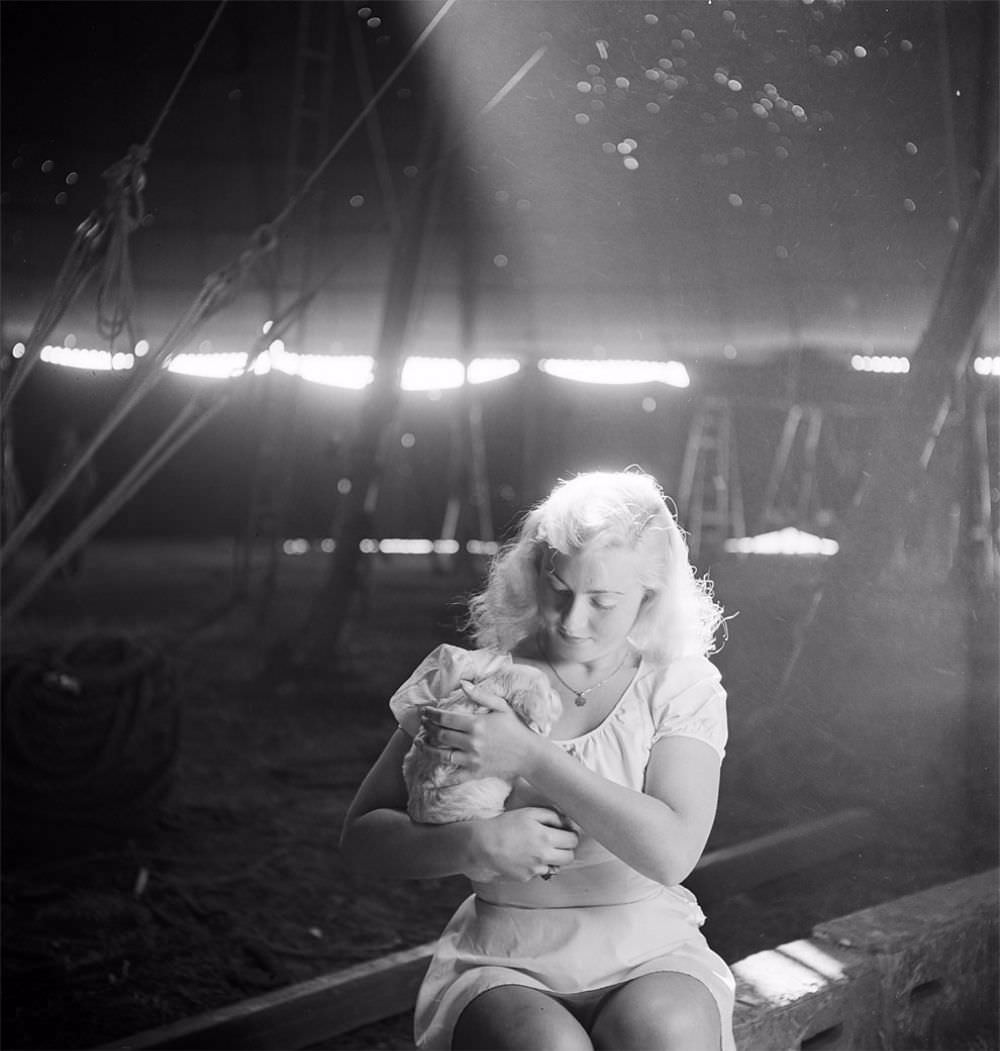
Life at the circus also had its quieter, more personal moments. Pets were a common sight in the performer community, and many of the women kept dogs as companions. These animals traveled with the circus, becoming fixtures of the backstage world that audiences never saw.
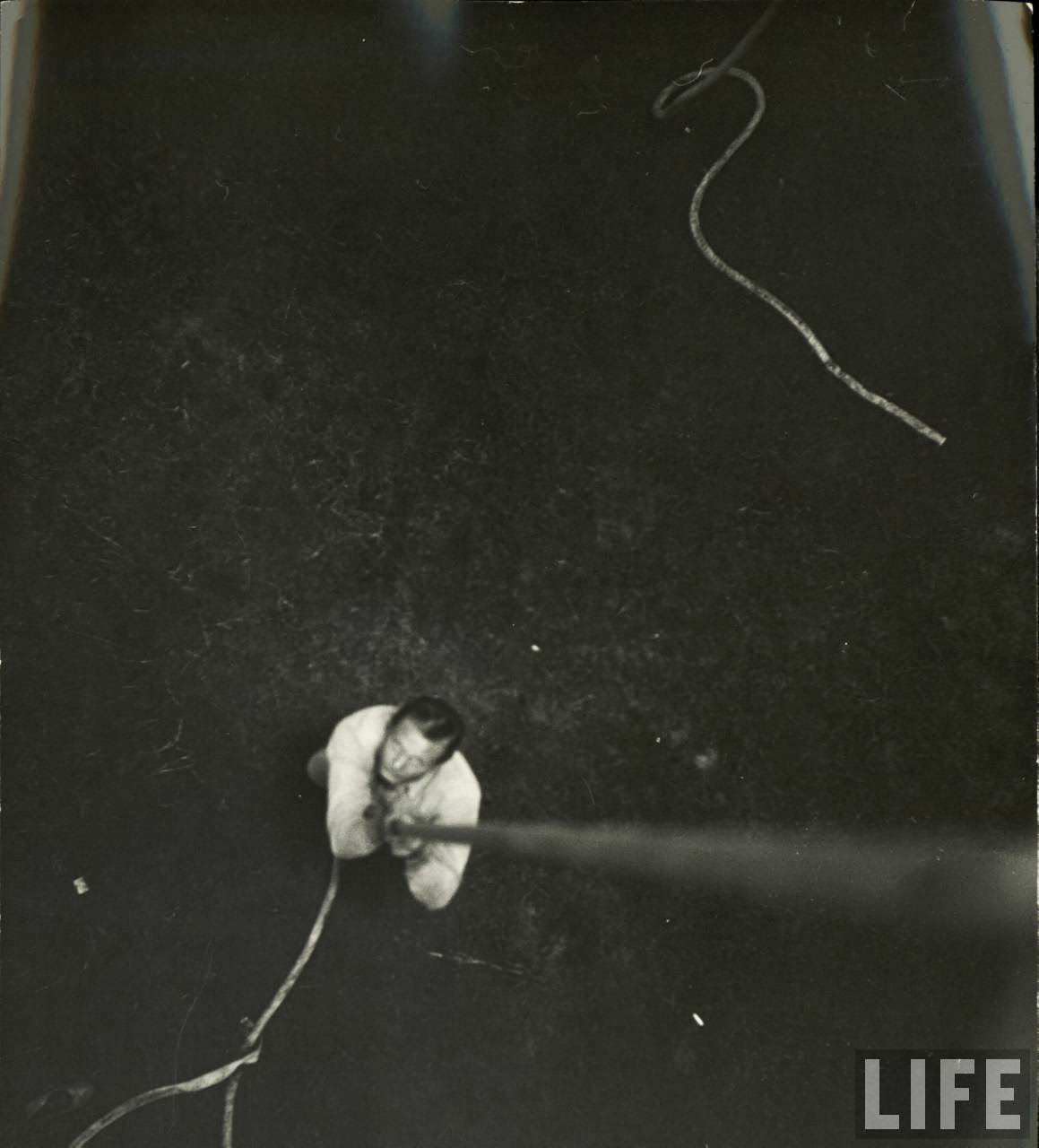
The teamwork between aerialists extended beyond the actual performance. During practice runs, fellow performers often served as ground crew, managing the ropes that kept their colleagues safe. Trust between the women was built over years of working closely together in high-stakes conditions.
Nina Leen’s assignment captured the full spectrum of circus life — from the peak of athletic performance to the mundane rhythms of a working day. Her photographs were published in Life, giving American readers a window into a world most had only seen from the audience seats. The behind-the-scenes footage was just as compelling as the shows themselves.
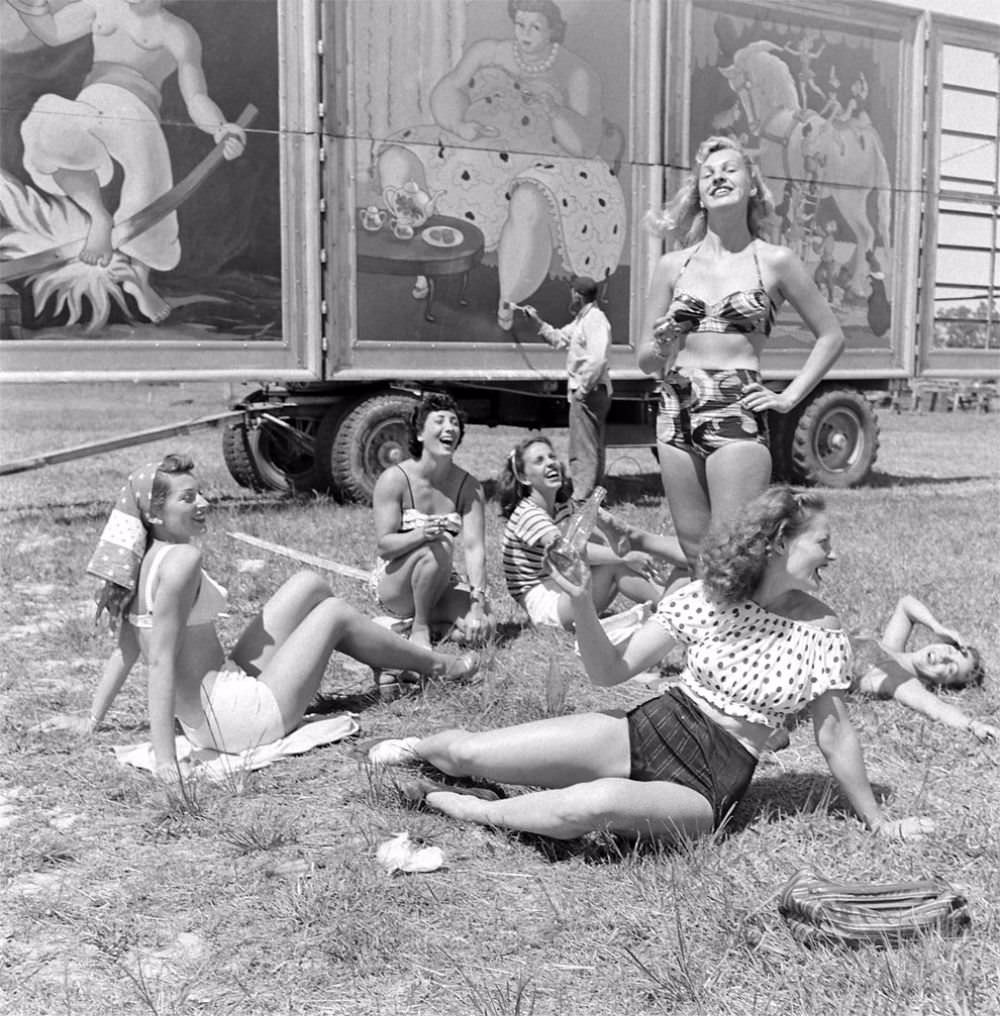
Some rehearsal shots show acrobats mid-practice with other performers watching nearby. These moments of observation were part of the learning process. Watching a colleague work through a difficult move allowed others to spot technique issues and offer adjustments before the act went in front of a live audience.
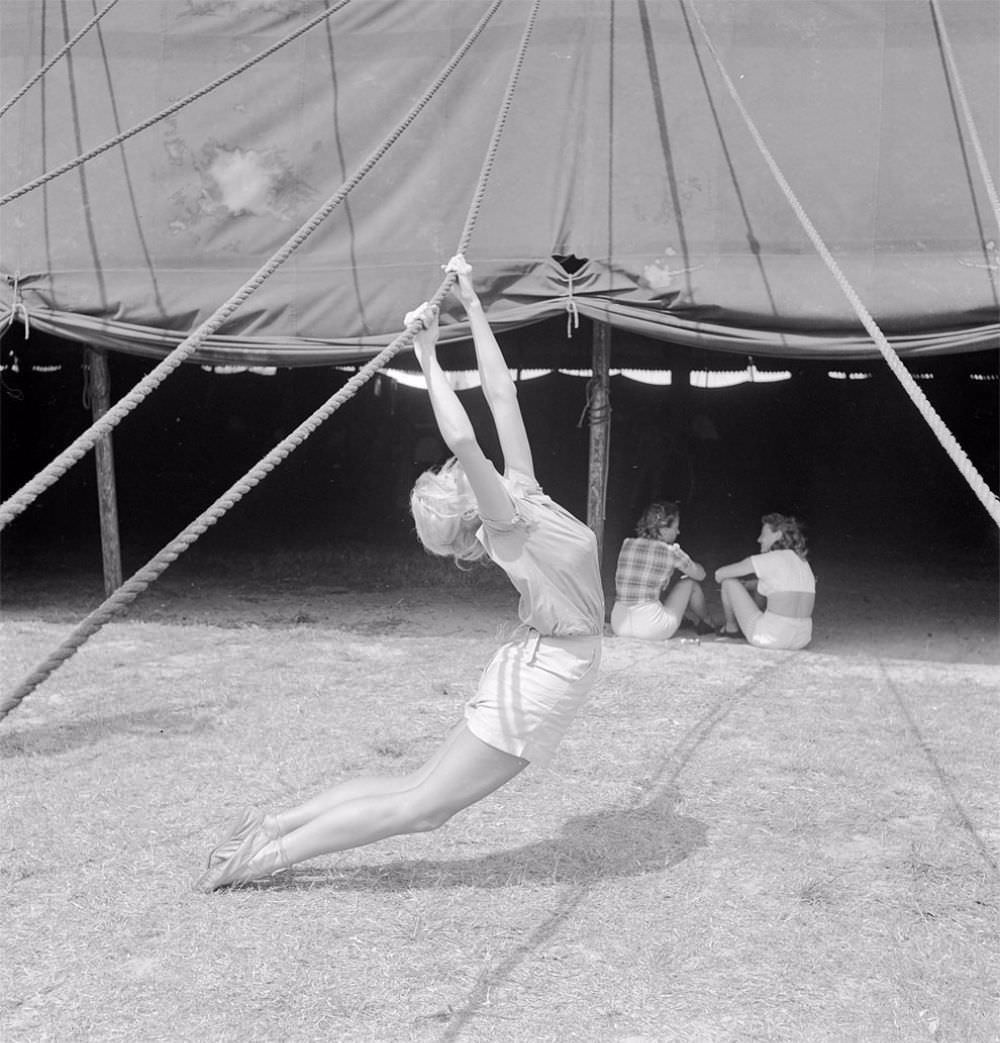
Smoking was common among performers of the era, and the circus world was no different. Aerialists lit up between — and sometimes during — rehearsals, treating cigarettes as a standard part of the downtime routine. It was a reflection of the broader social norms of 1940s American life, where smoking carried no stigma and was nearly universal across all professions.
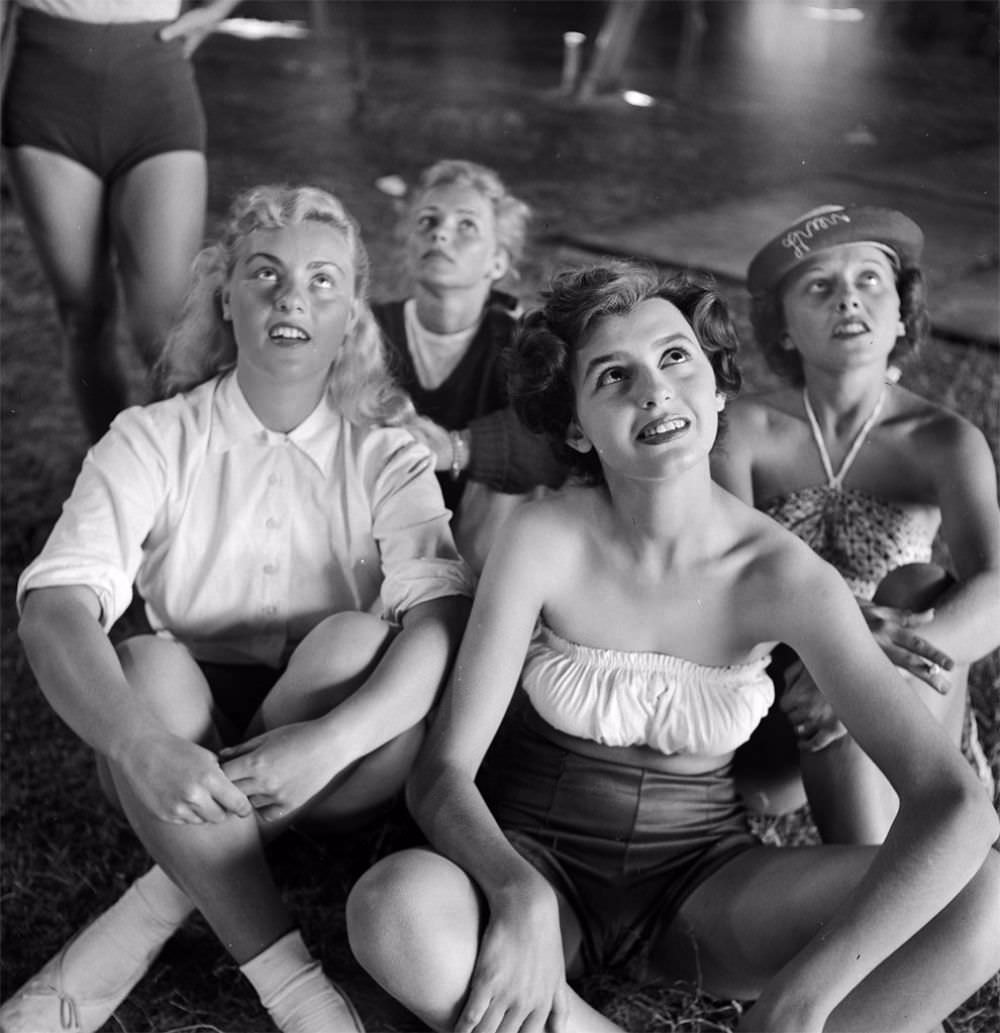
The social bonds between the women who lived and worked together were strong. They shared living quarters, meals, training space, and the particular pressures that came with a life constantly on the move. Between rehearsals, they gathered in small groups, talked, and unwound — a normal response to a physically demanding schedule.
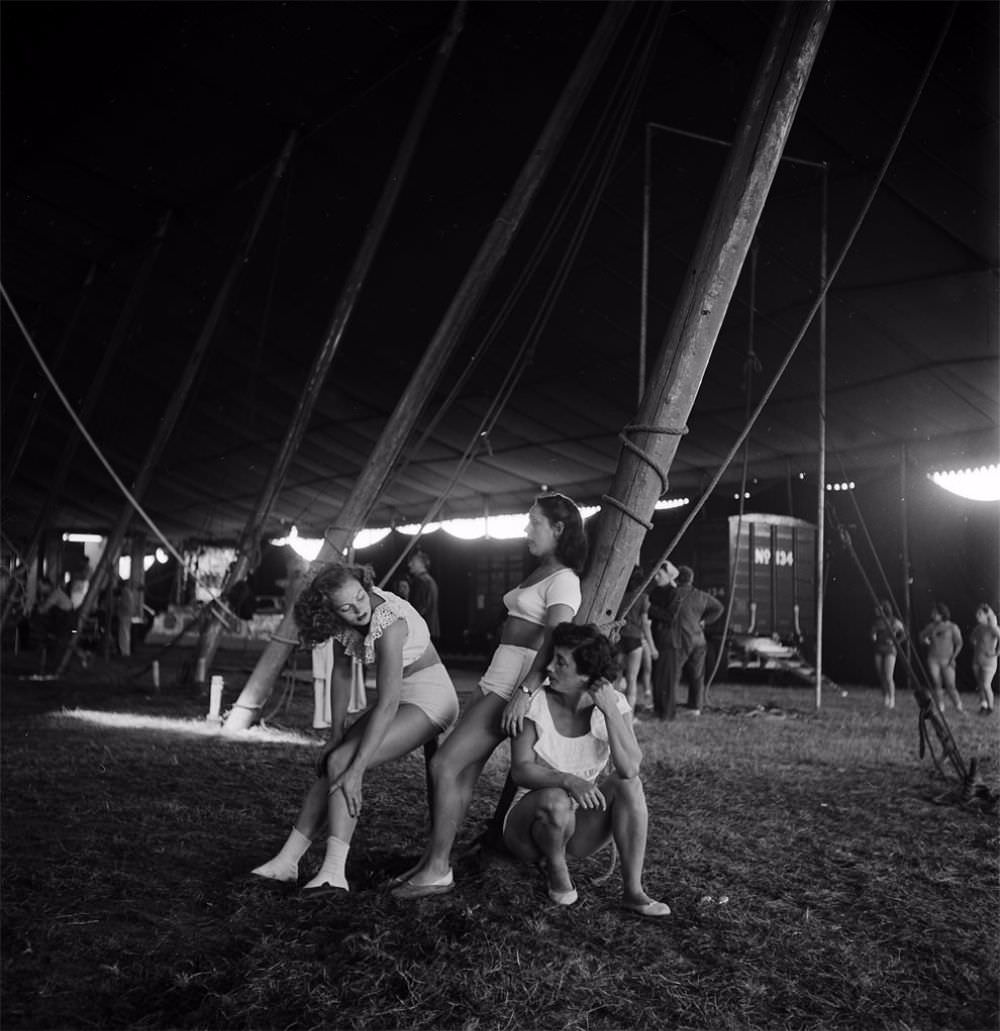
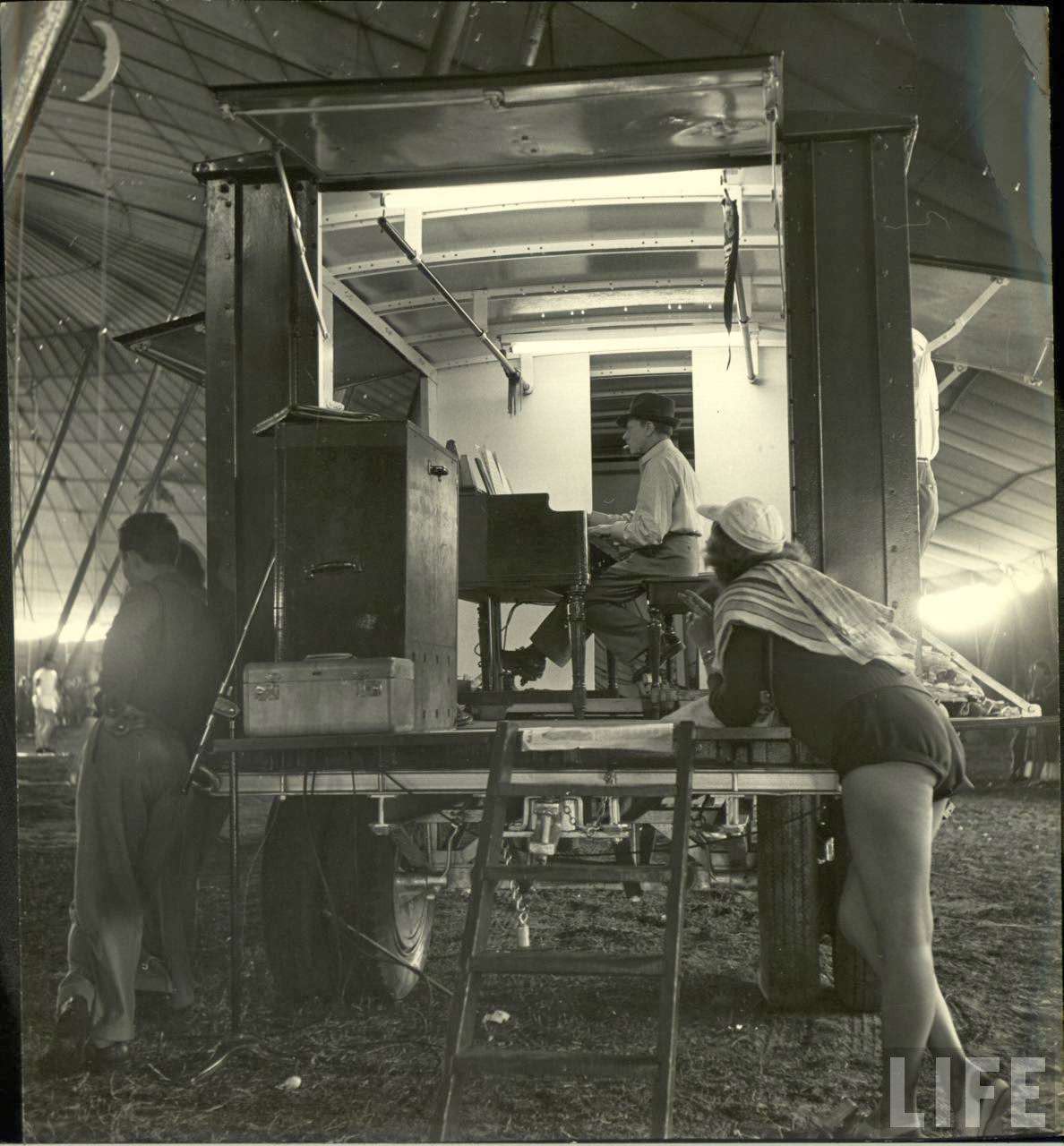
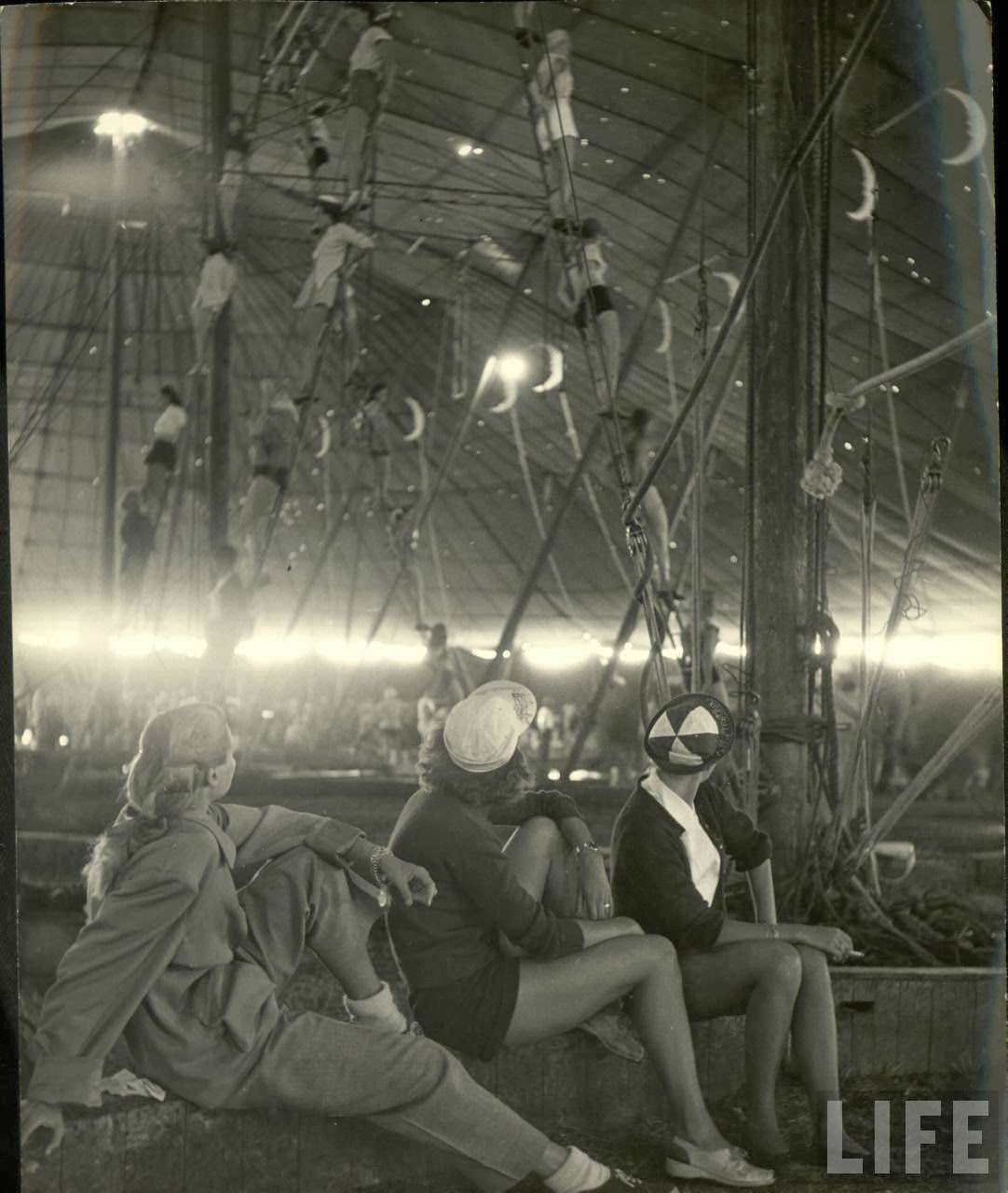
Watching other acts rehearse was both a social activity and a professional one. Performers sitting together and observing the aerialists above them were studying technique as much as they were taking a break. This kind of peer learning was built into the culture of circus training.
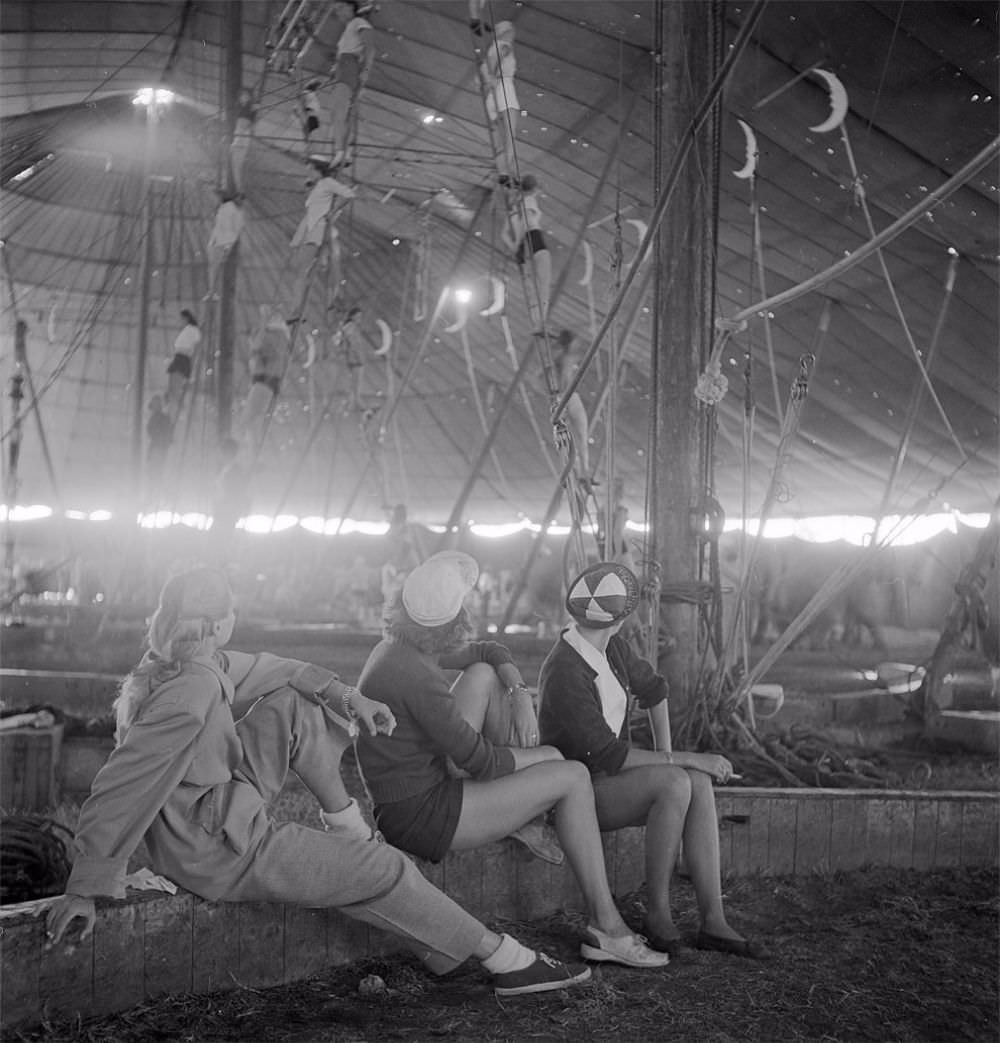
Group photographs from the rehearsal floor show the sheer number of performers involved in a single production. Ringling Bros. and Barnum & Bailey was not a small operation. Dozens of acrobats, aerialists, and stage performers rehearsed under the same roof, each preparing their own segment of the larger show.
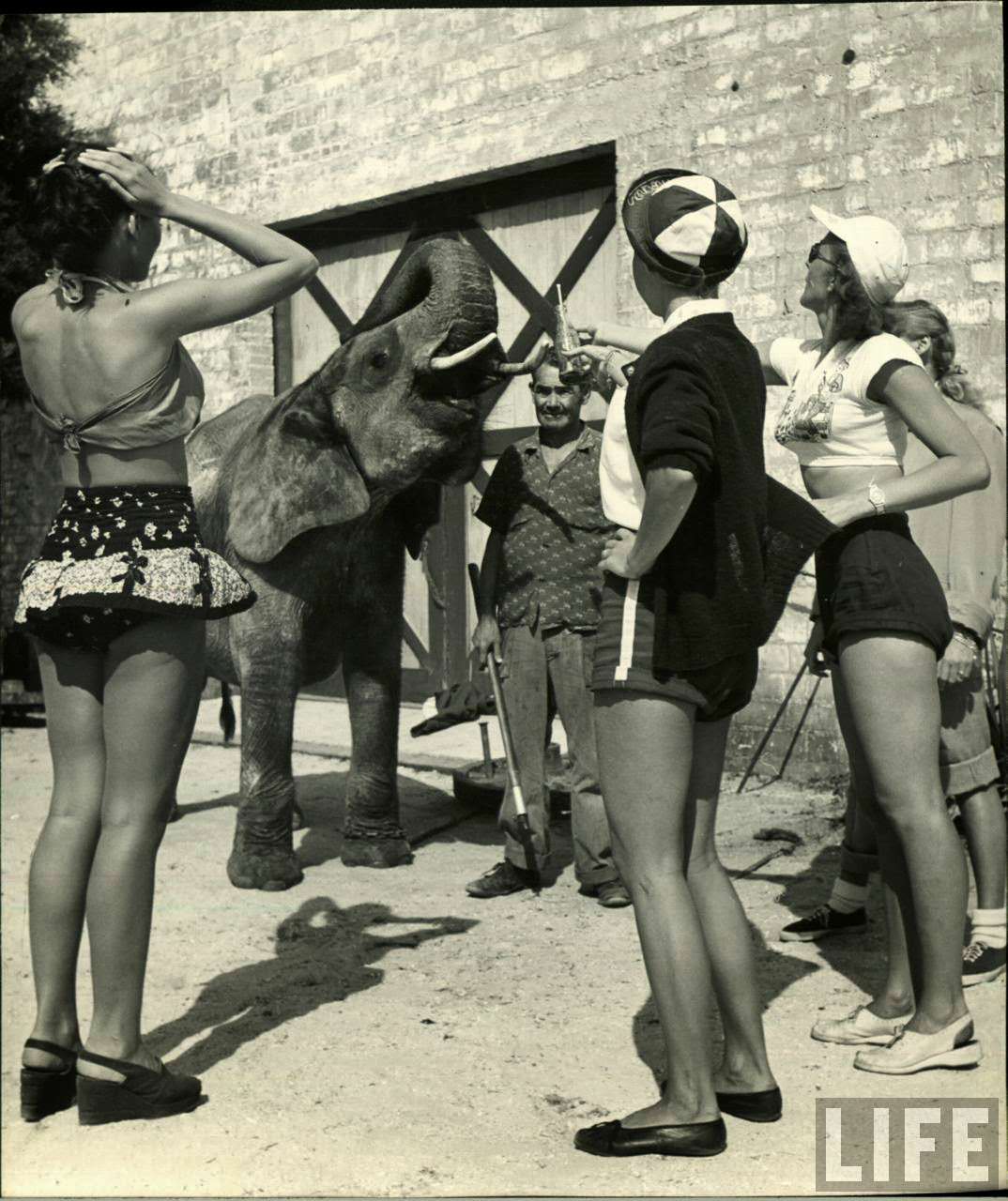
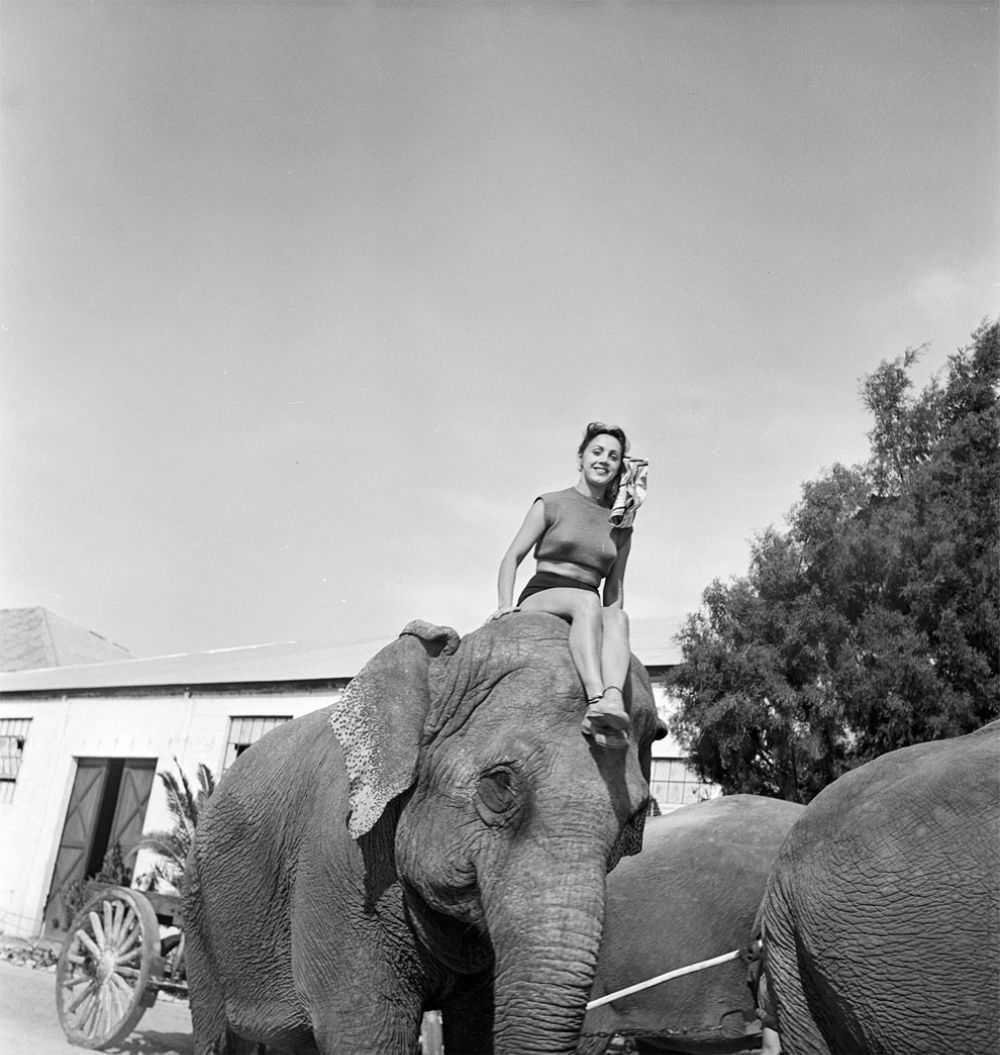
Among the most striking images Leen captured was a performer perched atop an elephant during a rehearsal break. Elephants were central to the Ringling Bros. circus identity, and the performers who worked alongside them developed close familiarity with the animals. Sitting on an elephant’s head was just another unremarkable Tuesday for a Sarasota circus girl in 1949.
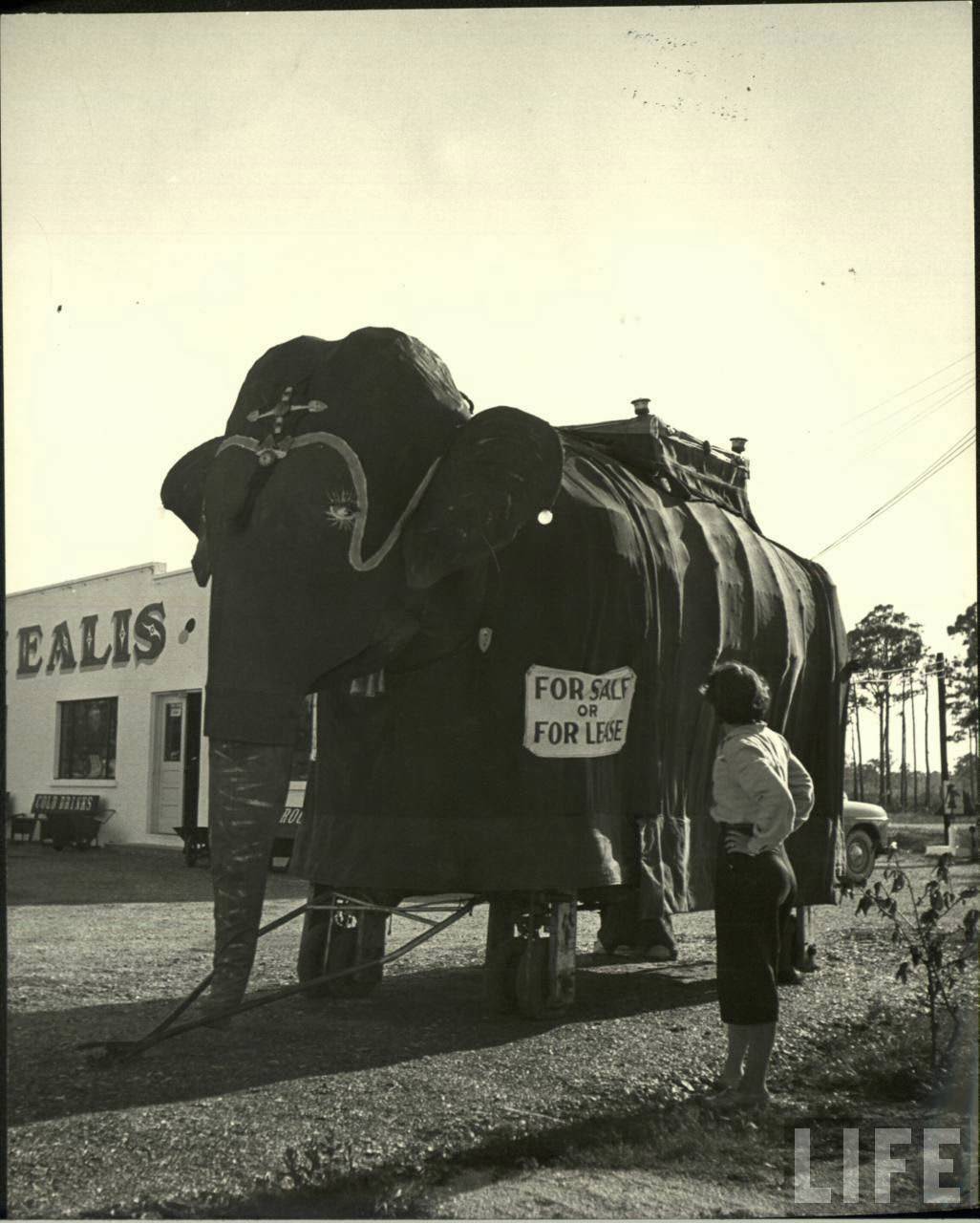
The circus vehicles that transported equipment and crew between sites were a constant presence in Sarasota. These large vehicles were part of the logistical backbone that kept the whole production moving. For the performers, they were a familiar part of the daily landscape — both a means of getting around and a marker of the traveling life they had chosen.