Ralph Earl Madsen was one of the most striking figures of the early 20th century. Standing over 7 feet 6 inches tall (2.28 meters) and weighing 228 pounds (104 kg), he towered over nearly every person he ever met. Despite the nickname that followed him throughout his career, he was not from Texas. He was born on April 19, 1897, in Norfolk, Nebraska, and grew up far from the Lone Star State.
His height was a genetic outlier in every sense. His father stood 6 feet 2 inches, and his mother was 5 feet 8 inches. His two sisters and a brother were all around five feet eight inches tall. Ralph dwarfed them all. Yet despite his enormous frame, some of his measurements were surprisingly ordinary. He wore a size nine shoe, and his hands were average in size — details that surprised people who expected everything about him to be oversized.
Ralph spent most of his life on a ranch and most of that time in the saddle. He became skilled in veterinary work, developing real expertise with horses, sheep, cows, and pigs. He could ride, rope, and handle livestock with the confidence of someone who had done it his entire life. These were not just show skills — they were earned through years of hard ranch work in Nebraska.
When World War I broke out, Madsen tried to enlist — not once, but twice. He attempted to join both the United States military and the Canadian forces. Both turned him down. Military authorities decided he was too tall for the trenches and would make an easy target. It was a rejection that must have stung, but it redirected his life in a very different direction.
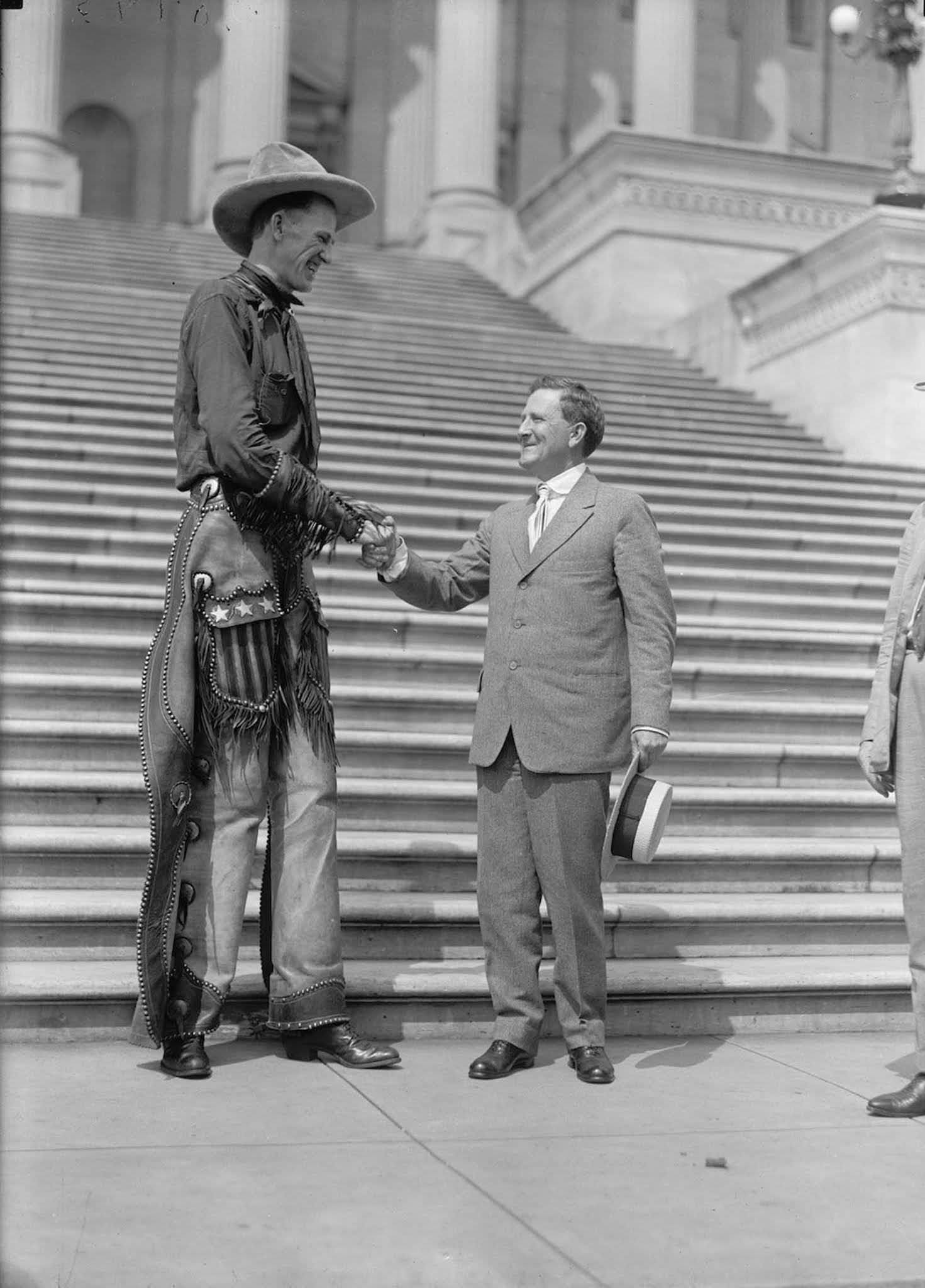
After the war, Madsen teamed up with a manager named Sam Houston, who saw an opportunity. Houston promoted him under the name “Tex” Madsen and marketed him as a native Texan cowboy. The branding worked. The combination of Madsen’s genuine ranch skills — his riding and roping abilities were real — and his extraordinary height made him an immediate attraction on the sideshow and fair circuit. For years, he toured across the country, becoming one of the most photographed men of his era.
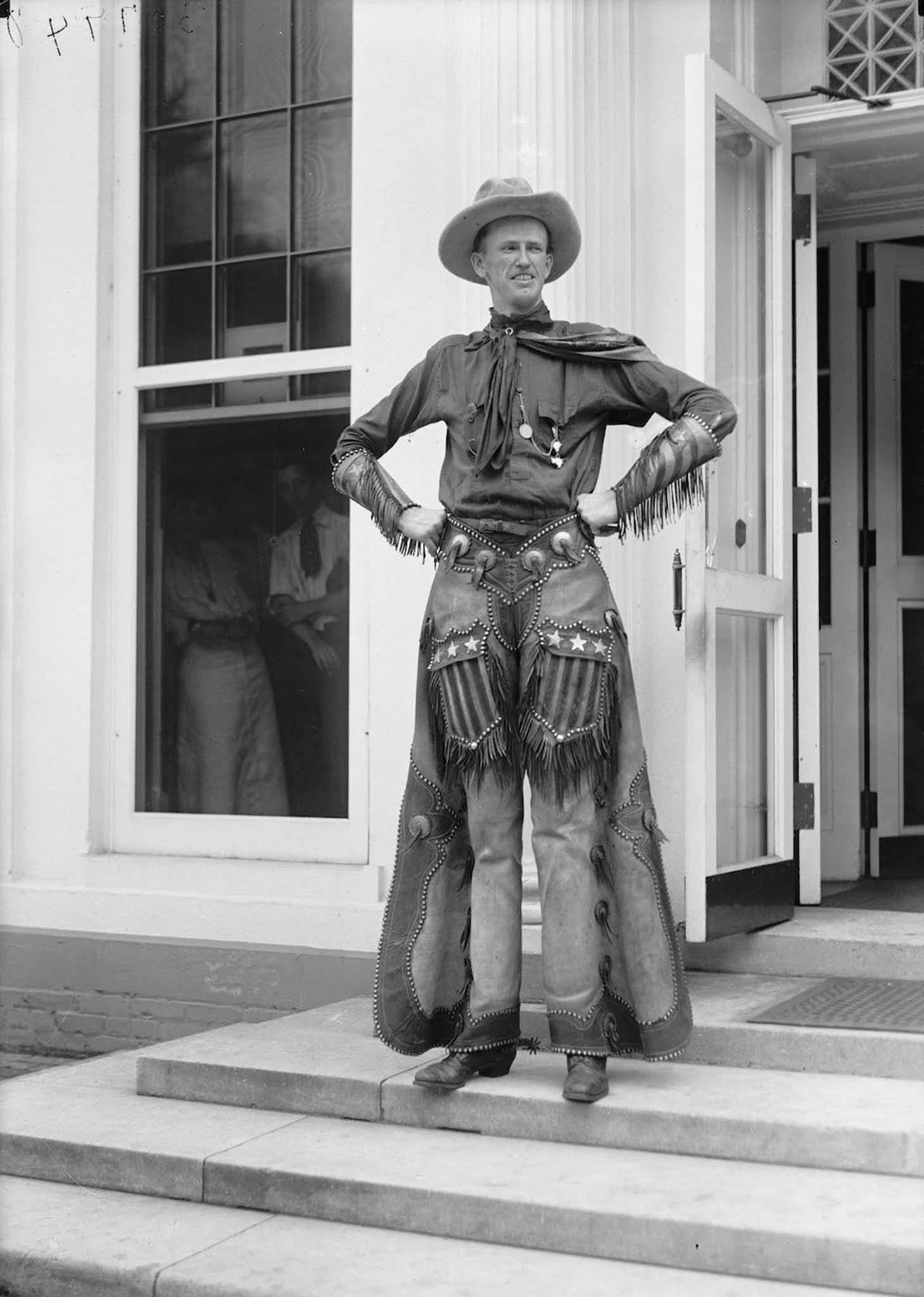
His fame brought him to some notable places. In 1919, he visited Washington, D.C., where he met with President Woodrow Wilson. That same year, he shook hands with Senator Morris Sheppard at the Capitol. These were not casual public appearances — they reflected just how well-known Madsen had become in a short period of time. He was a figure that politicians and public figures wanted to be seen with.
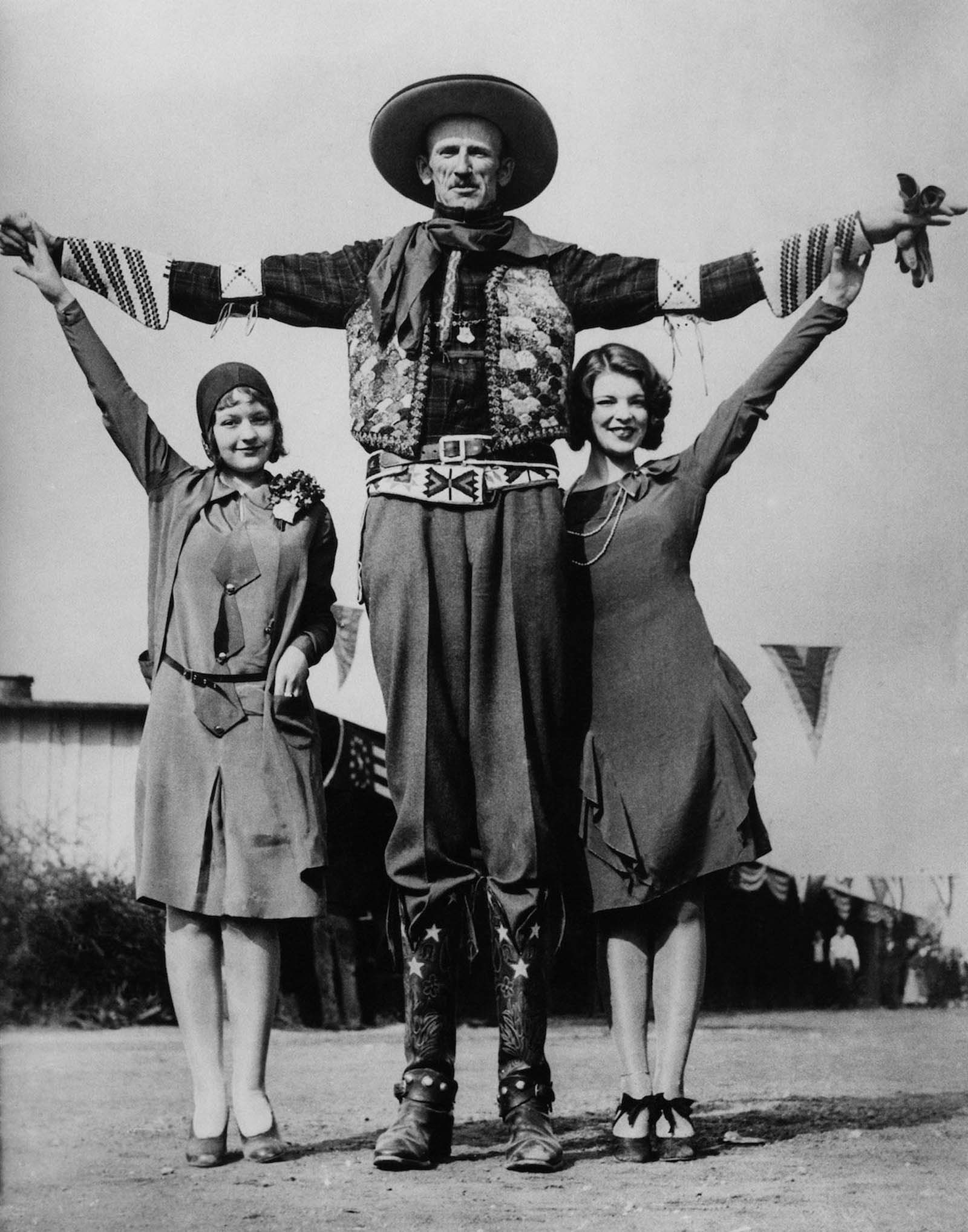
New York City gave Madsen one of his most memorable moments. He made an appearance at Times Square on Broadway, drawing such a massive crowd that a traffic policeman stepped in and told him he had two choices: sit down or move on. The scene captured exactly what his daily life was like — wherever he went, people stopped and stared. Ordinary sidewalks and streets were not built for a man of his size, and crowds formed around him without any effort on his part.
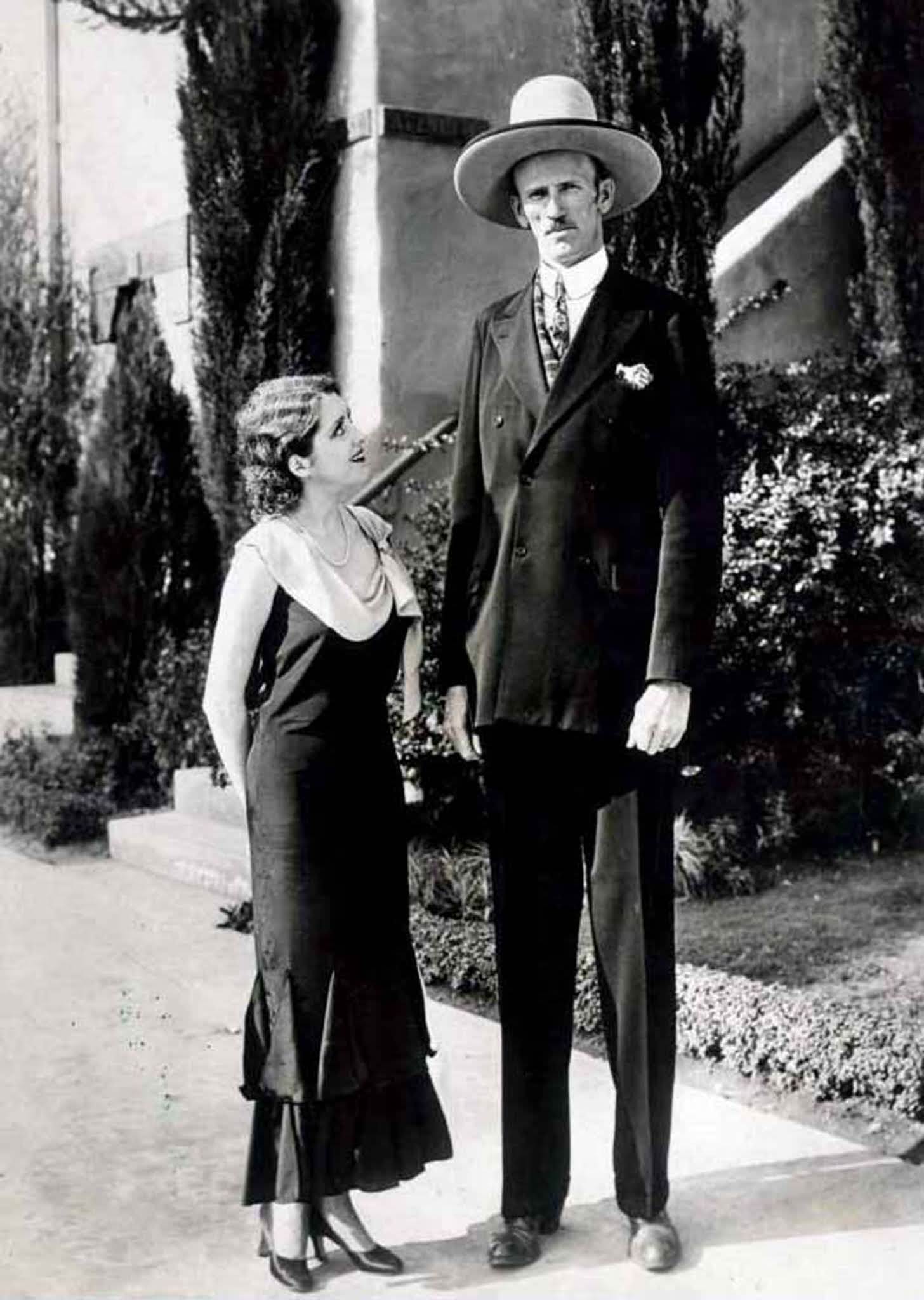
Hollywood came calling, and Madsen stepped in front of the camera. He appeared in several motion pictures, including Ring Marriage (1928), The Sideshow (1928), and Mama’s Little Pirate (1934). As part of promoting his films, he toured Eastern cities, meeting audiences and building his public profile. His screen presence was undeniable — a man of his stature needed no special effects to command attention.
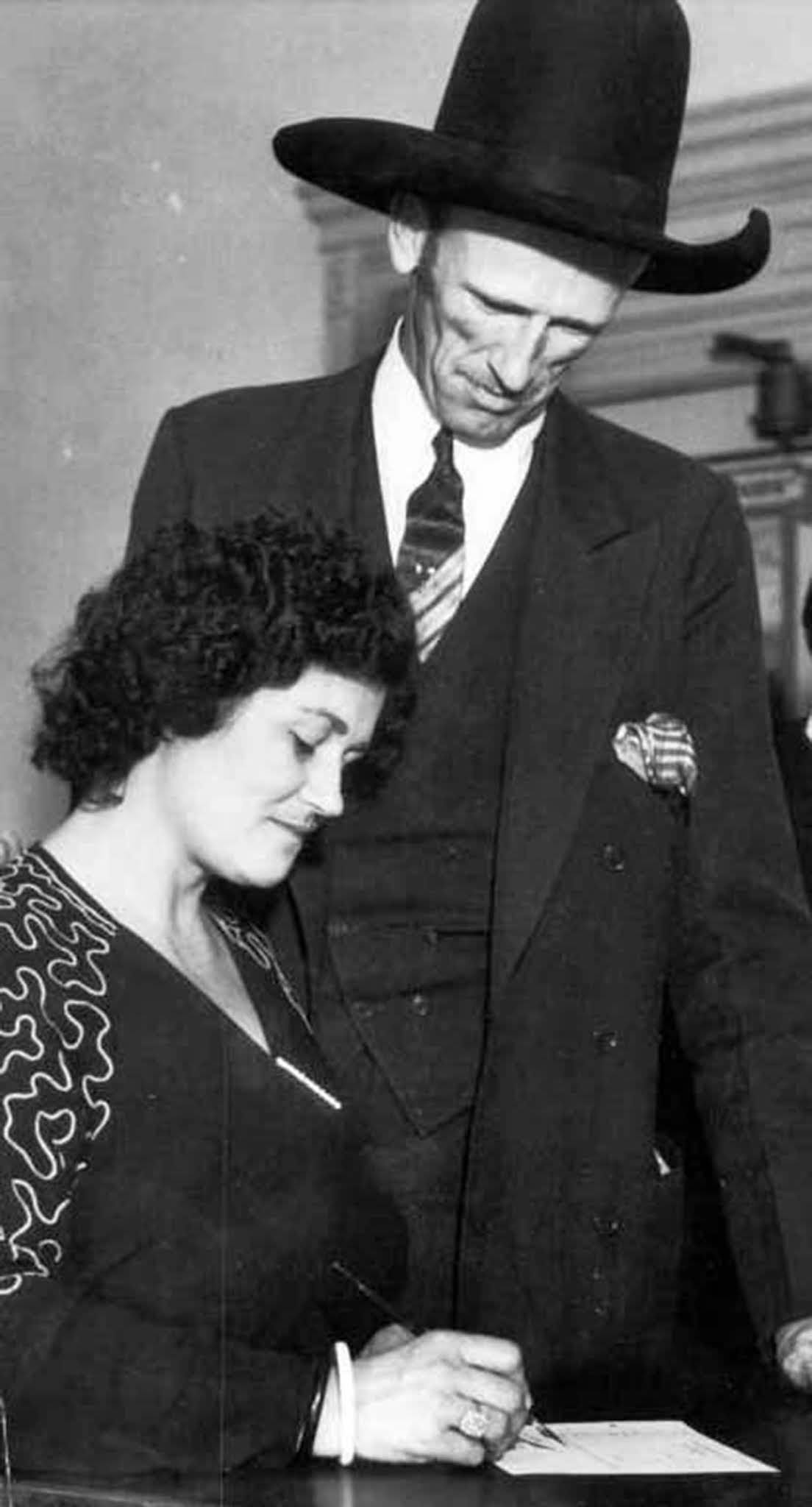
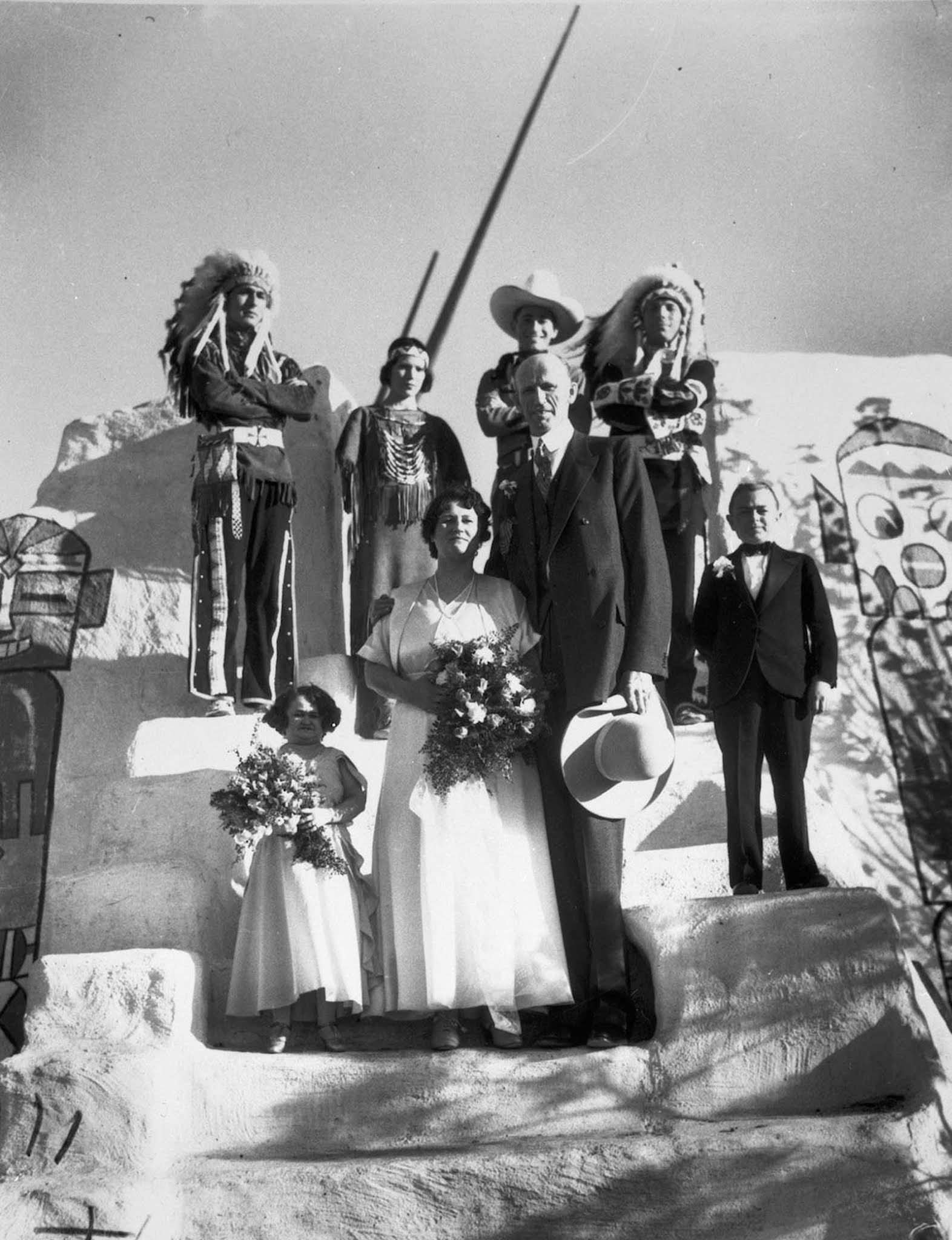
In 1932, Ralph Madsen married Verne Marie Rice in Los Angeles. The height difference between them was remarkable — she stood about five feet five inches shorter than him. The wedding took place at Ramona Village in Los Angeles, California, and drew attention just as everything else in his life did. The couple made a striking pair by any measure.
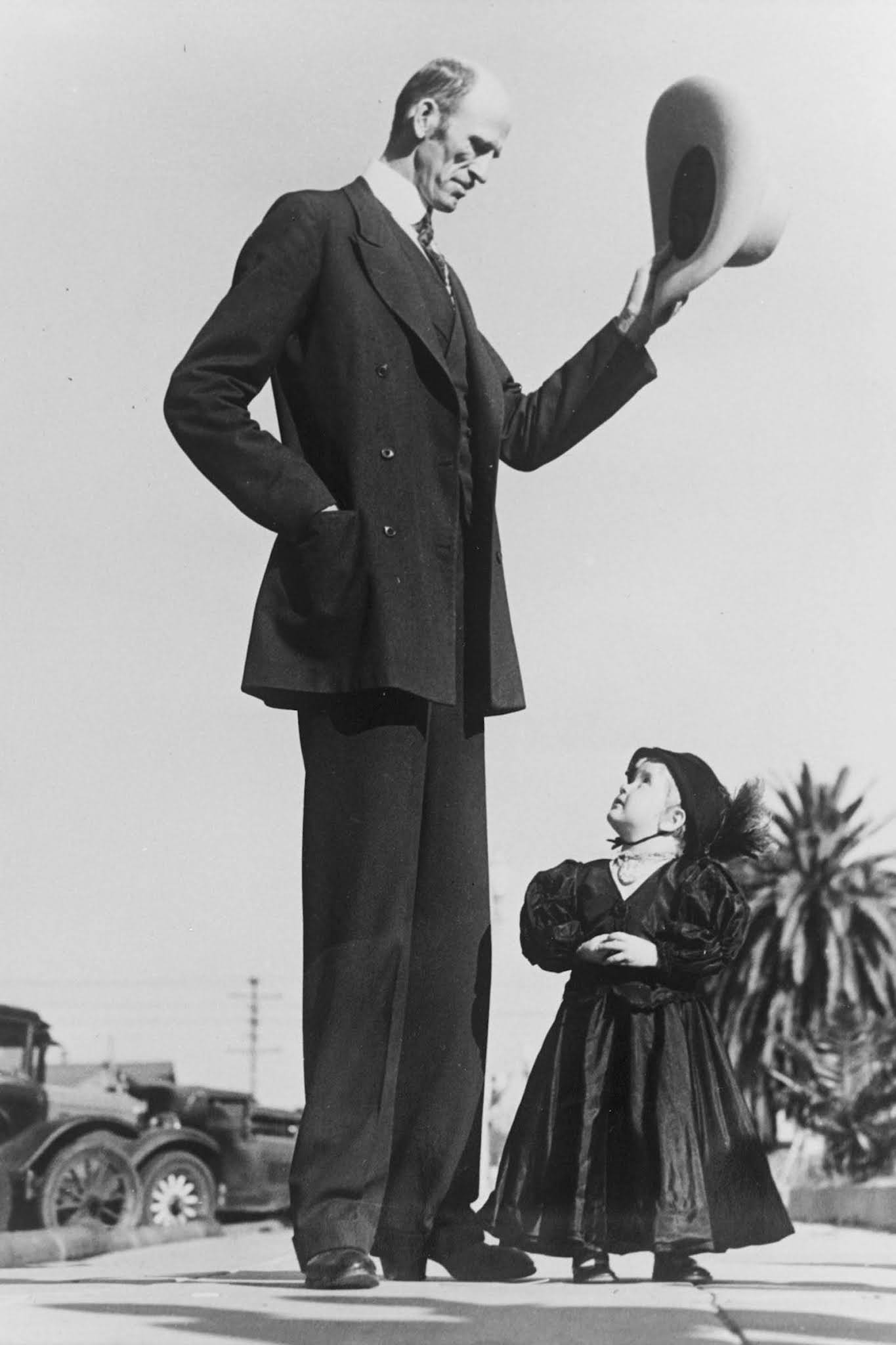
That same year, Madsen was photographed in Santa Monica, California, greeting a woman named Barbara Carlson. The image shows him raising his hat in a courteous gesture — a simple action that, given his height, looked anything but ordinary. Scenes like this played out constantly throughout his public life, turning everyday moments into spectacles simply because of who he was.
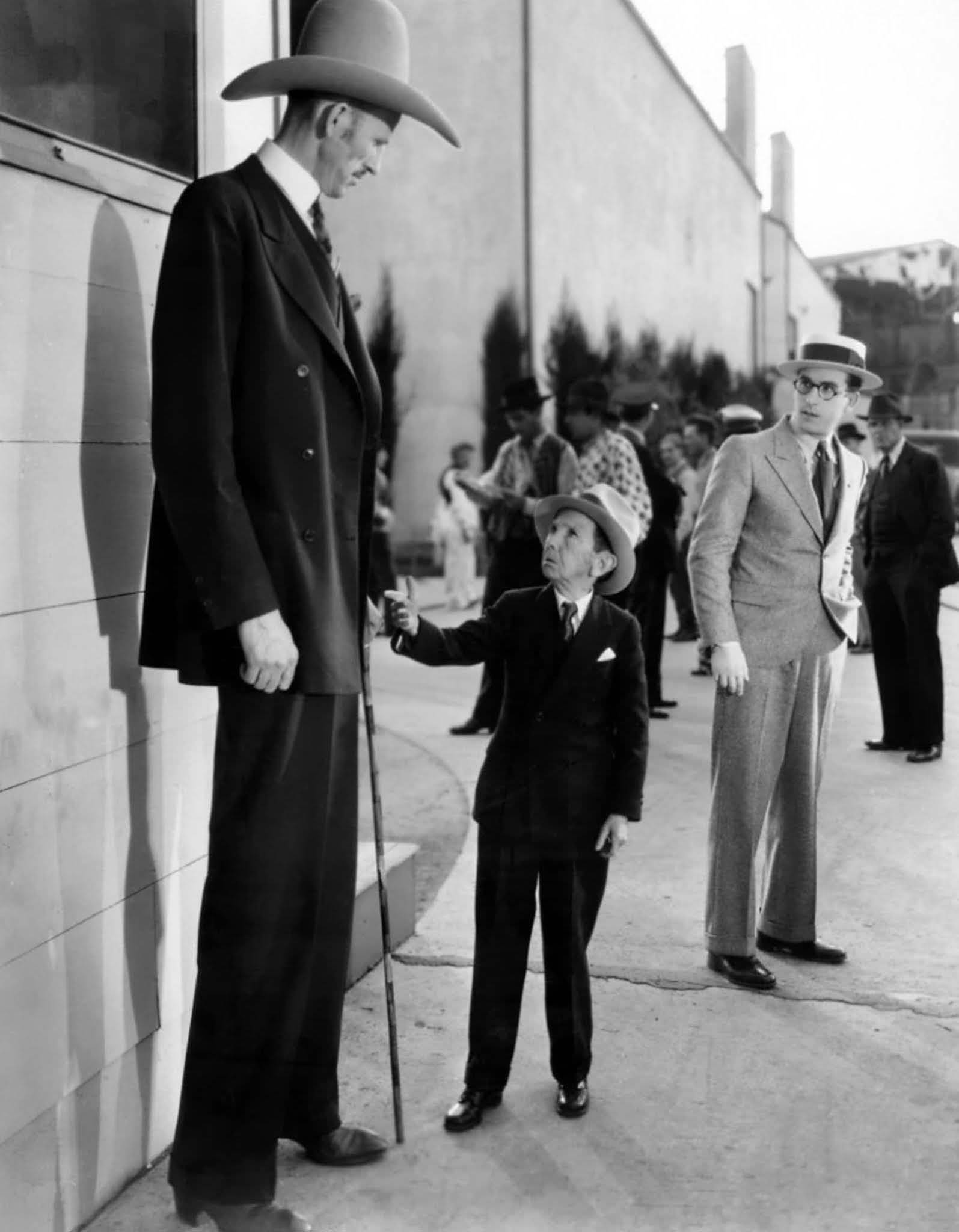
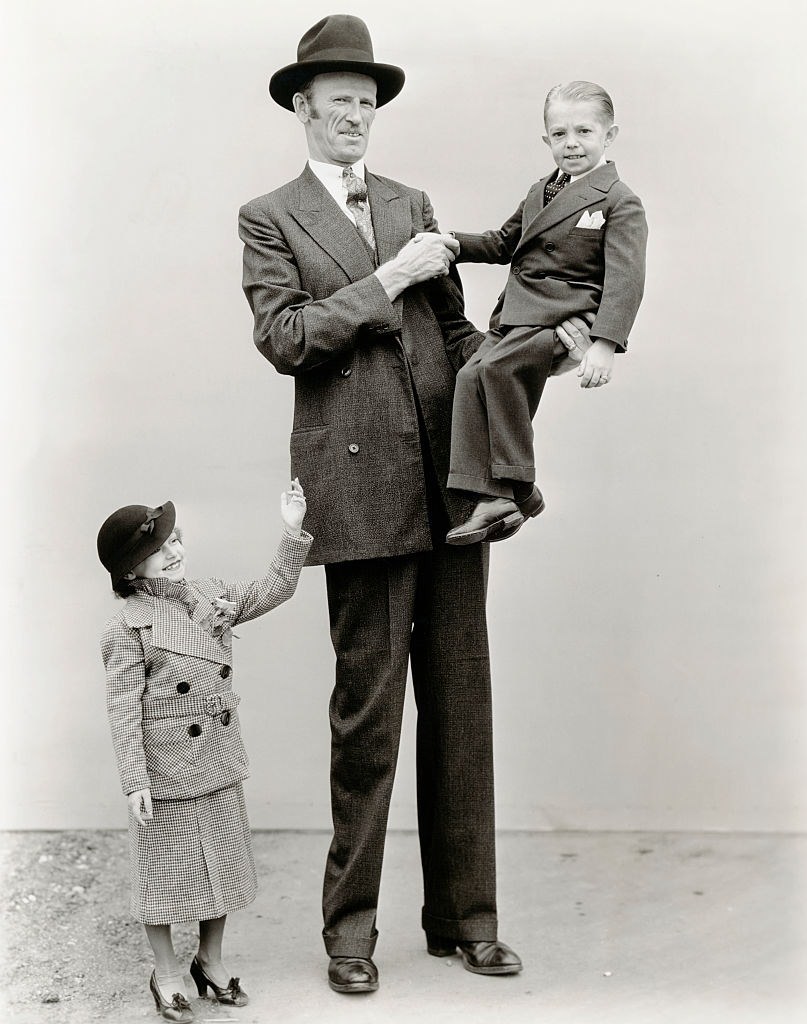
Madsen’s interactions with people of short stature were also well-documented. One photograph shows him lifting a small person named George Brasno completely off the ground just to shake his hand, while George’s wife Olive waves nearby. The image captures the sheer scale of the man in a way that few photographs can. It also shows a playful, good-natured side of Madsen — someone who leaned into the spectacle of his own existence rather than shying away from it.
Ralph Earl Madsen died in Nebraska in 1948 at the age of 51. He had lived a life that crossed from the ranch to Broadway, from the sideshow circuit to Hollywood, and from country fairs to the White House. A Nebraska ranch hand who was repackaged as a Texan cowboy, he navigated the gap between who he actually was and the character the public wanted him to be — and he did it for decades, with a size nine boot on the ground and his hat raised high in the air.