Quebec is Canada’s largest province by area and its second-largest by population. Its name comes from an Algonquian word meaning “where the river narrows” — a fitting description for a place shaped by the mighty St. Lawrence River and the quiet beauty of Orléans Island. In the 1960s, Quebec was in the middle of one of the most dramatic shifts in its history, and these photographs capture that world in vivid detail.
The decade brought what historians call the Quiet Revolution — a wave of socio-political and cultural change that reshaped nearly every corner of Quebec life. It grew out of Canada’s post-war expansion and Quebec’s long-standing role as the country’s leading province before and after Confederation. Montreal, one of Canada’s largest cities, sat at the center of it all. Its streets, buildings, and social fabric were visibly transforming. These photos — taken across Montreal and the surrounding communities of Bois-des-Filion and Rosemère — are a direct window into that era.
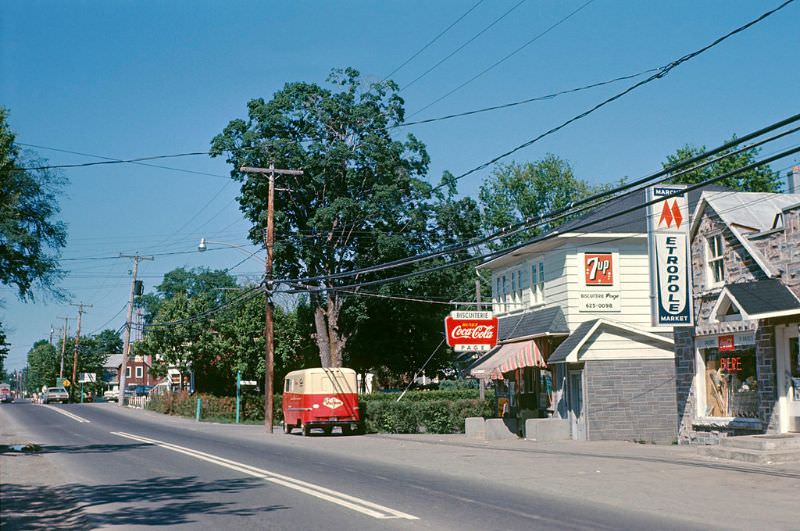
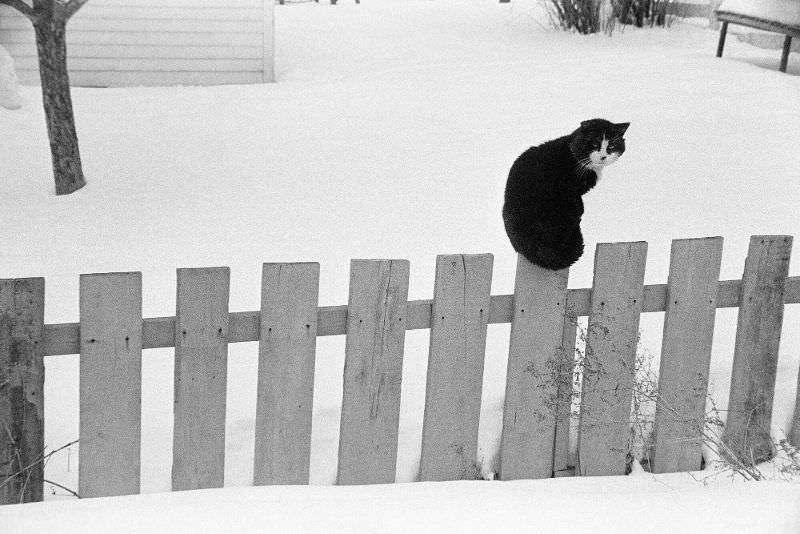
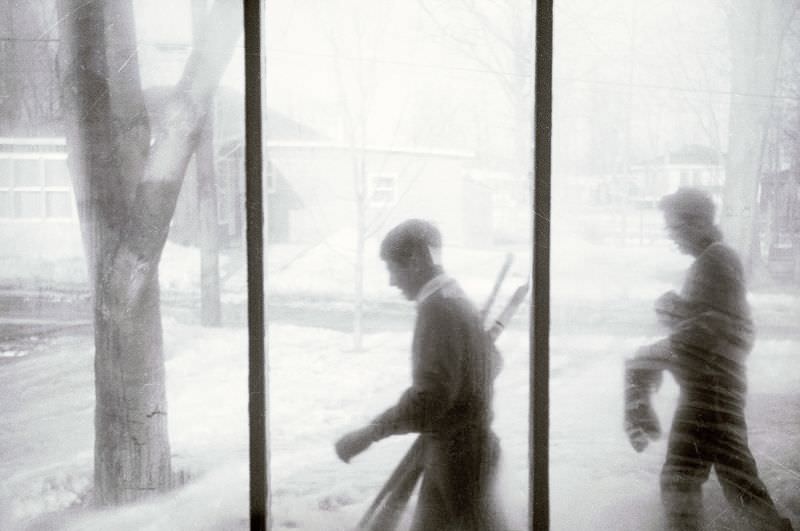
Beyond Montreal, smaller communities along the river lived at a quieter pace. Bois-des-Filion, a town north of Montreal on the Mille Îles River, appears in several photographs from this period. Summer greenery, frozen waterways, and the small details of everyday life — a cat perched on a fence, rain-streaked glass — all tell their own story about life outside the big city.
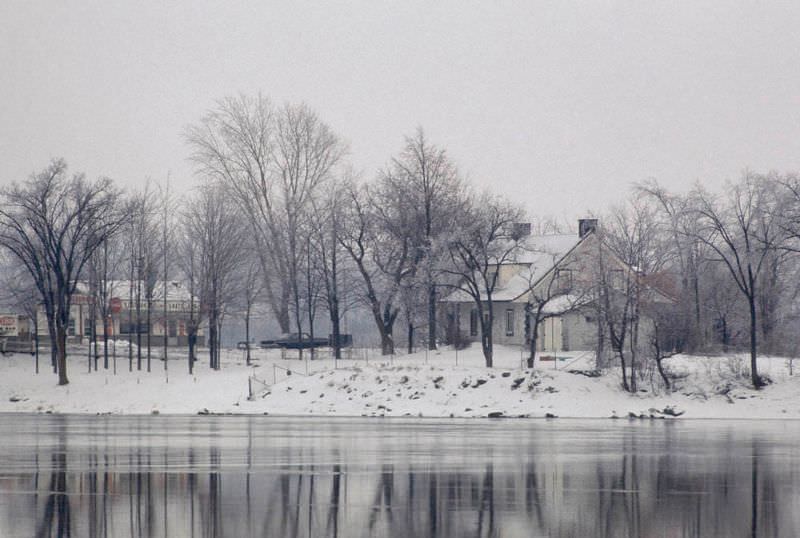
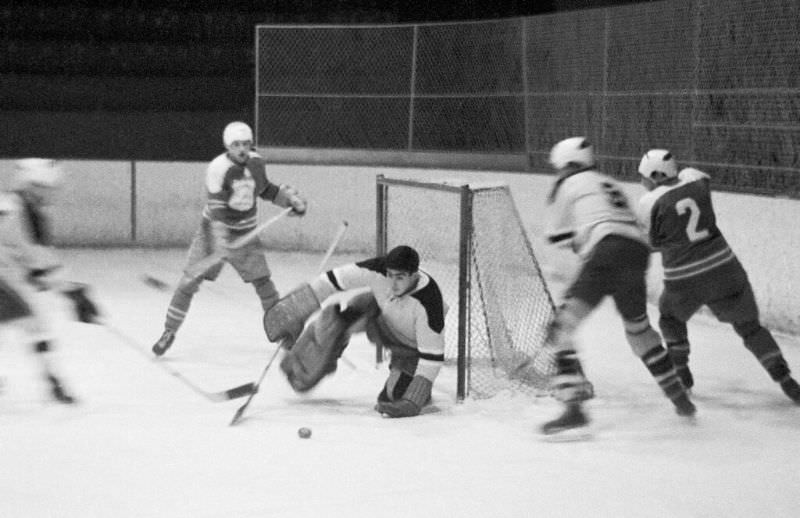
Winter in Quebec was never just a backdrop — it was a way of life. Hockey was woven into the community from a young age, with midget-level games drawing crowds to local rinks across the province in the mid-1960s. These weren’t professional events. They were neighborhood rituals, and the photographs from the ice tell that story plainly.
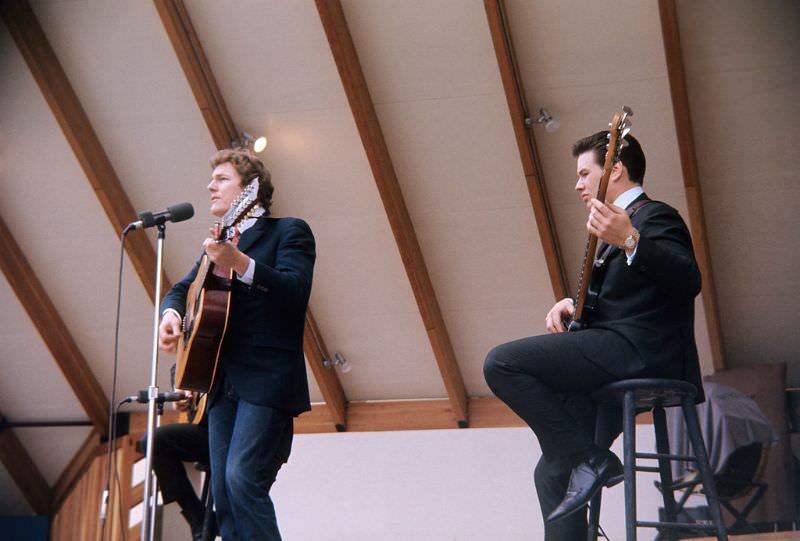
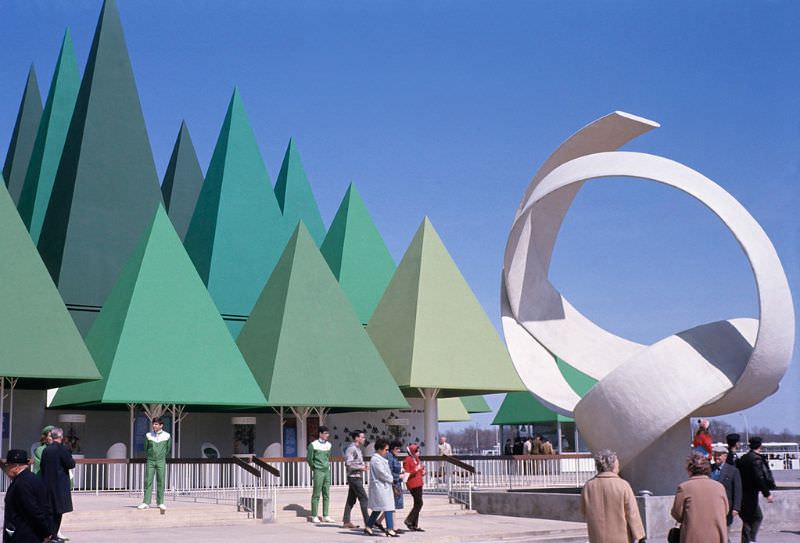
The single biggest event of the decade in Quebec was Expo 67 — the World’s Fair held in Montreal from April to October 1967. It drew over 50 million visitors from around the globe and placed Montreal on the international stage like never before. Performers, pavilions, and national delegations filled the grounds on Île Sainte-Hélène and the man-made Île Notre-Dame. A young Gordon Lightfoot took the stage there in May 1967, early in what would become a celebrated career in Canadian folk music.
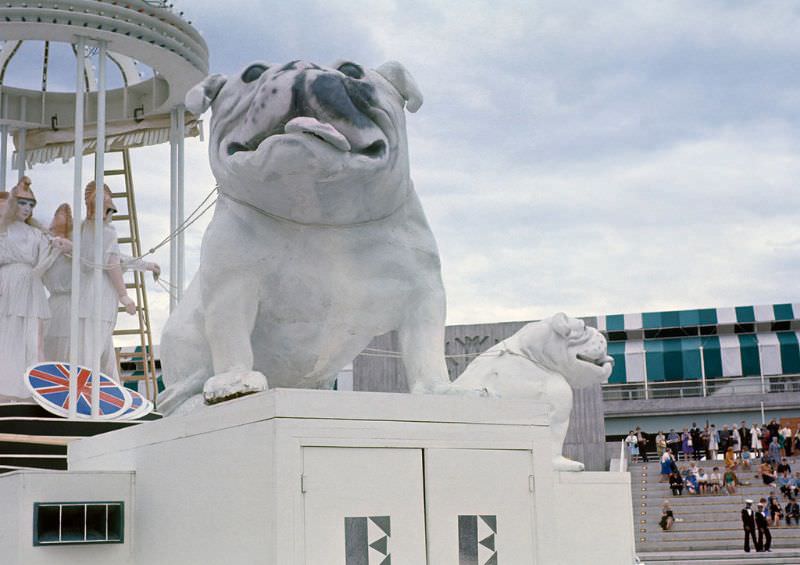
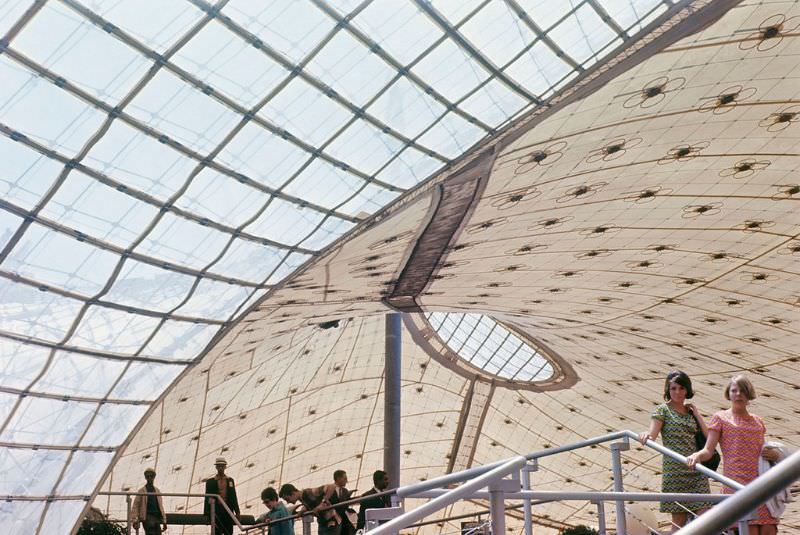
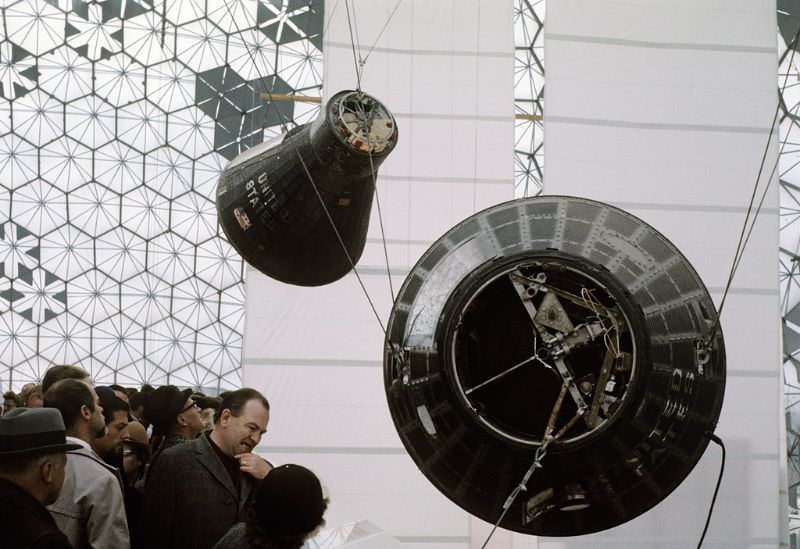
Nations from across the world built elaborate pavilions at Expo 67, each designed to showcase their culture, industry, and identity. Britain marked its own presence with a dedicated national day celebration, while the West German pavilion drew visitors with its striking interior design. The United States pavilion — housed under a massive geodesic dome designed by Buckminster Fuller — became one of the fair’s most iconic structures.
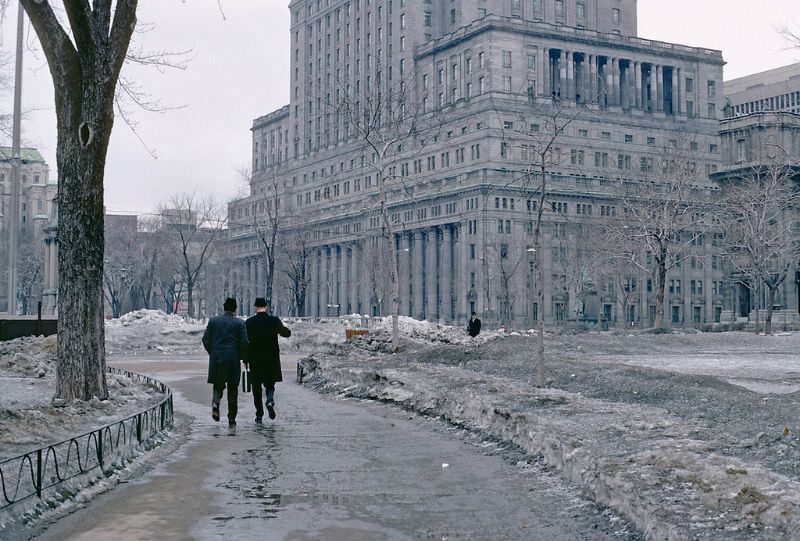
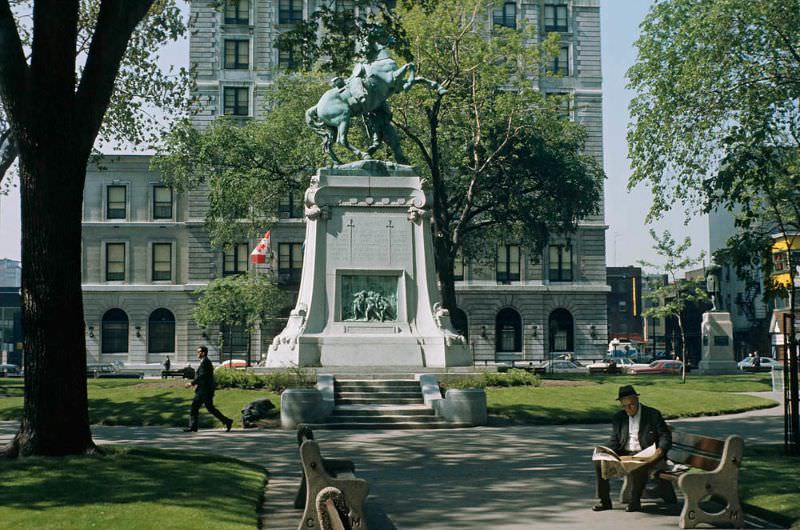
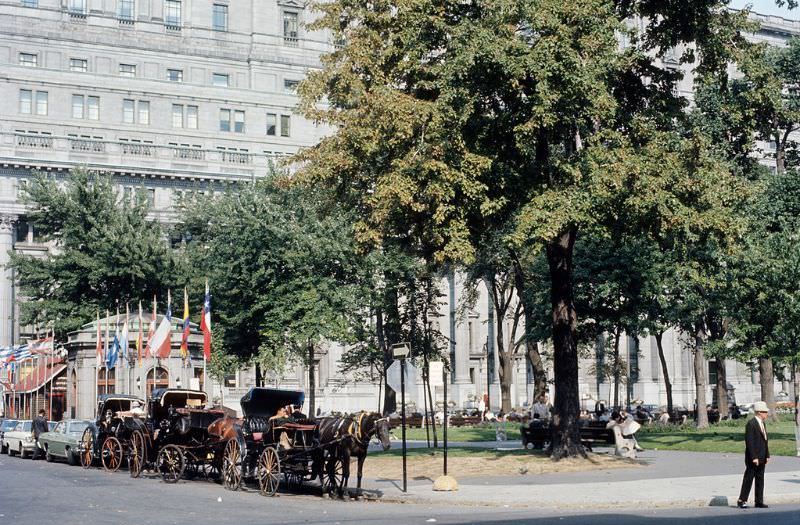
Dominion Square, located in the heart of downtown Montreal, was one of the city’s main public gathering spaces throughout the 1960s. Office workers, tourists, and locals passed through it daily. The square sat across from Mary Queen of the World Cathedral and near the Sun Life Building, one of the largest structures in the British Empire when it was completed. Photographs from 1967 and 1968 show the square in full use during the summer months.
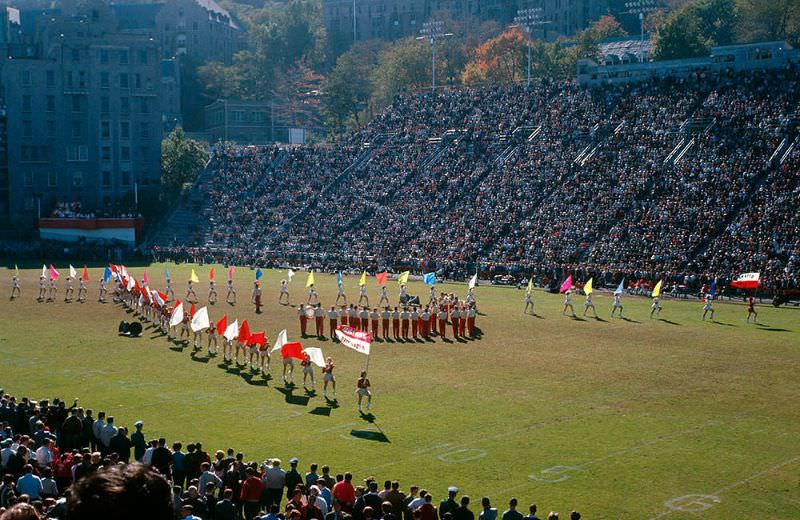
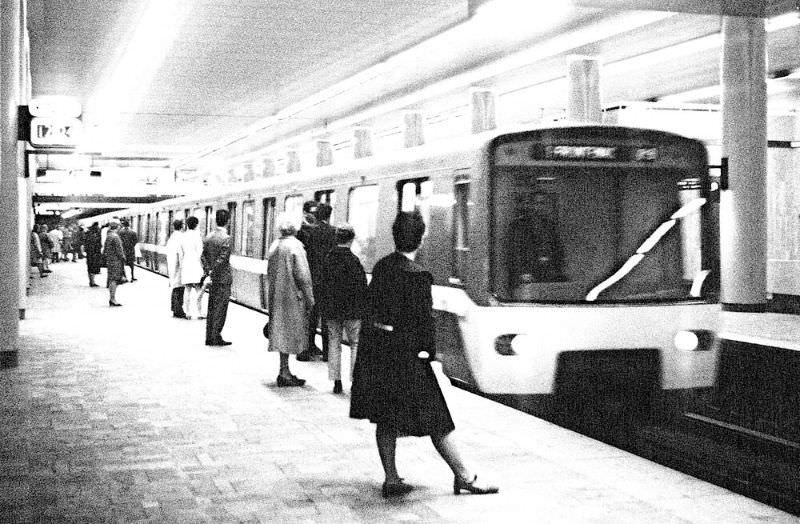
McGill University anchored the intellectual and athletic life of English-speaking Montreal. Its stadium hosted football games as far back as September 1964, drawing crowds to the hillside below Mount Royal. By October 1967, the nearby McGill Metro station — part of Montreal’s brand-new subway system that had opened just a year earlier in 1966 — was already becoming a fixture of daily commuter life in the city.
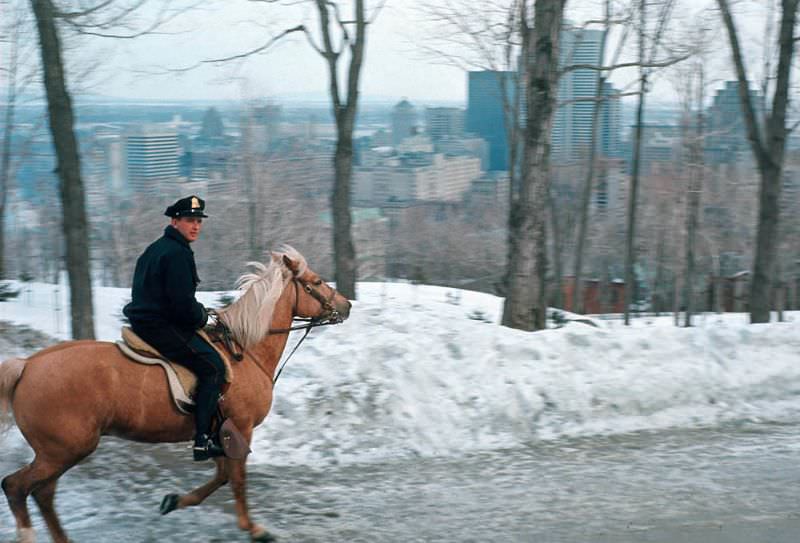
Mount Royal — the hill that gives Montreal its name — offered a commanding view of the city below. In March 1967, photographers climbed above the urban sprawl to look back at the skyline, capturing Montreal in the middle of its Expo year transformation. The mountain’s cross, erected in 1924, stood as a permanent landmark above a city that was rapidly modernizing.
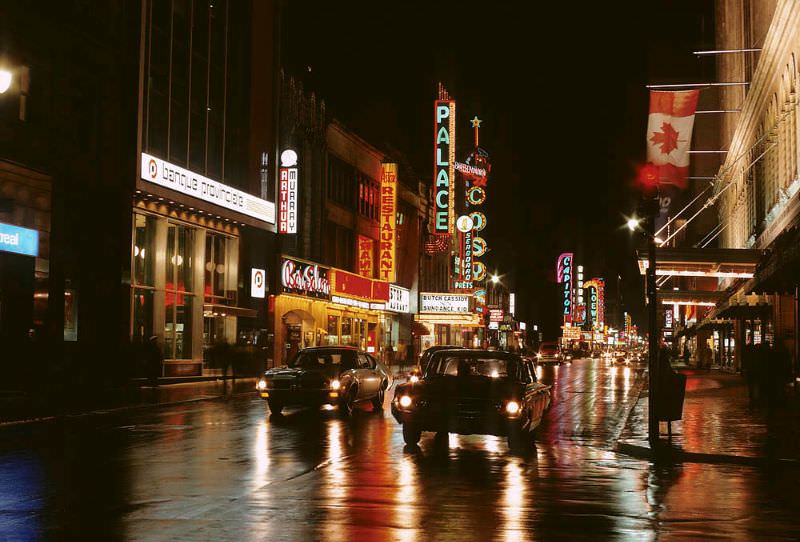
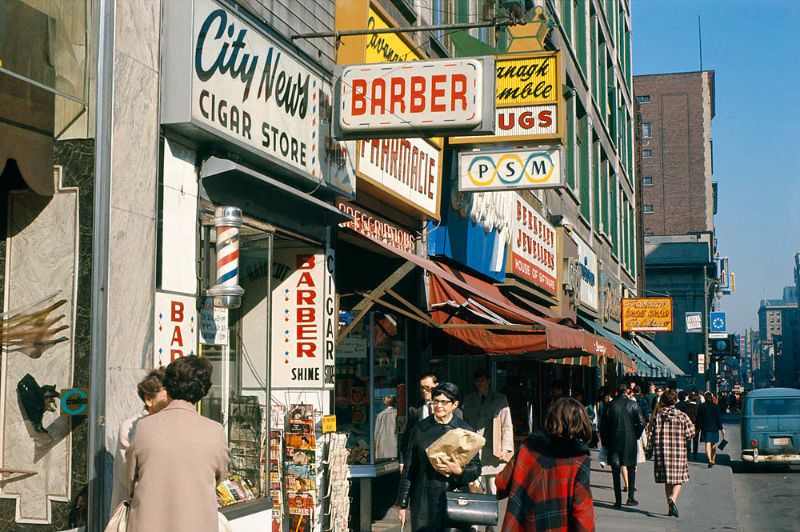
St. Catherine Street was Montreal’s commercial spine throughout the 1960s. Department stores, theaters, and shops lined its length, and foot traffic was constant regardless of the season. By October 1967, the street reflected a city that had just hosted the world — busier, more cosmopolitan, and fully aware of its place on the global map.
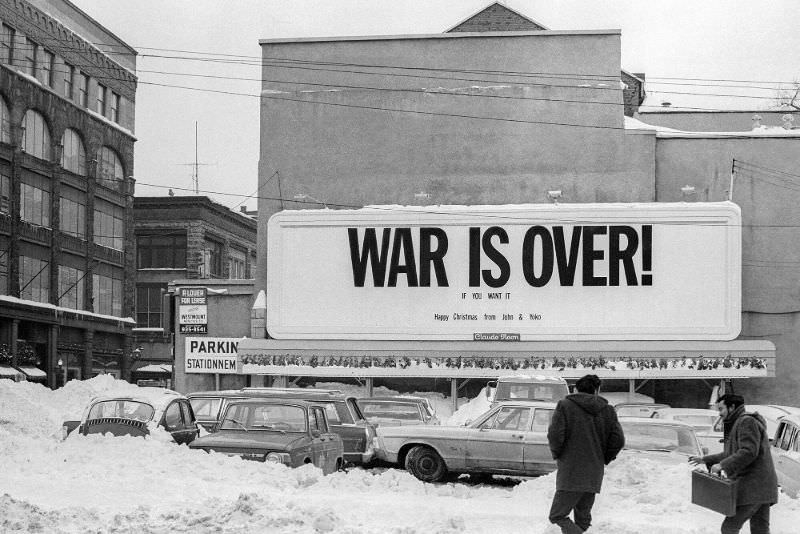
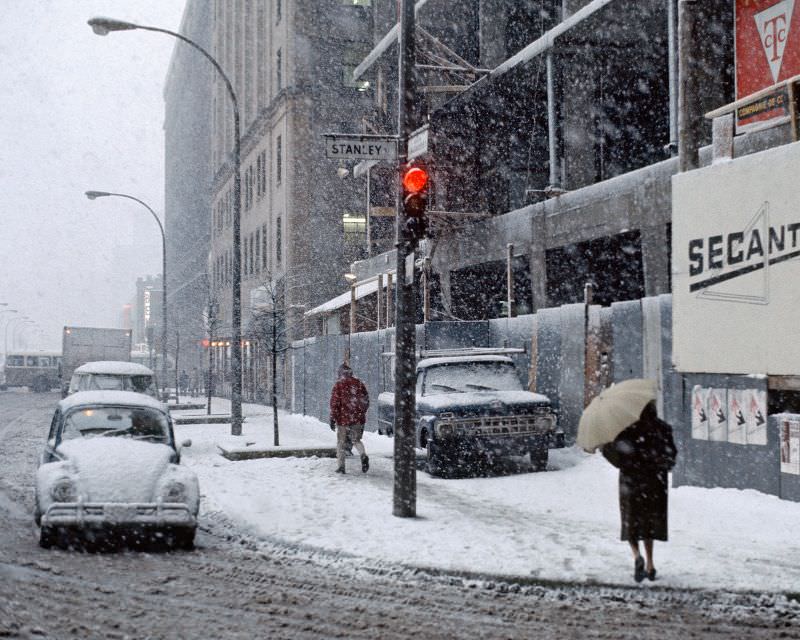
By 1969, the energy of Expo 67 had given way to a different mood. Anti-Vietnam War protests spread across North American cities, and Montreal was no exception. Demonstrators took to the streets carrying “War Is Over” signs, echoing the sentiment that John Lennon and Yoko Ono had amplified during their famous Montreal Bed-In for Peace earlier that same year. Meanwhile, December brought the city’s familiar blanket of snow and the glow of wet streets on winter nights.
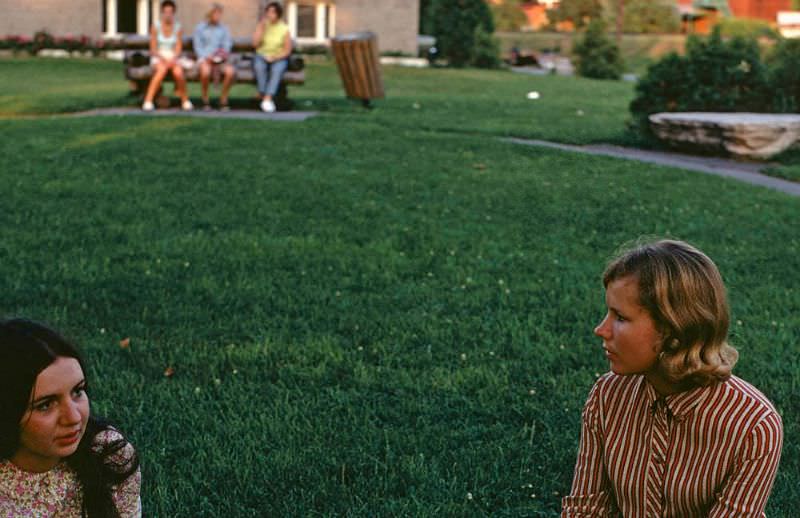
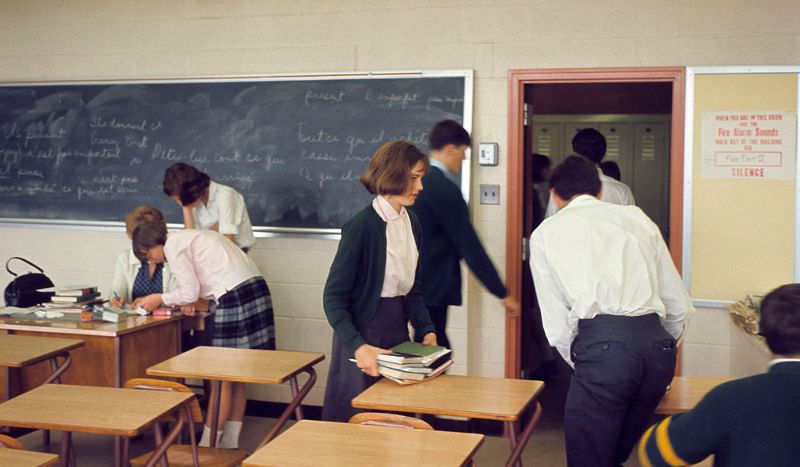
Summer in Montreal brought people outdoors in force. Parks filled with residents enjoying the warm months, a stark contrast to the long winters the city endured each year. August 1969 captured women relaxing in one of the city’s green spaces — a simple, human moment from a decade defined by far larger events. Outside the city, Rosemère’s high school stood as a reminder that the decade’s changes reached well beyond Montreal’s downtown core.