
Puerto Rico sits in the northeast Caribbean Sea, a mountainous island where steep slopes cover roughly one-quarter of the land. Christopher Columbus arrived in 1493 and named it San Juan Bautista, after St. John the Baptist. Spanish colonization began in the early 1500s, and the island remained under colonial rule for centuries before the United States took control following the Spanish-American War of 1898. By 1952, Puerto Rico became a self-governing territory, and Puerto Ricans gained the right to elect their own governor. The photographs below were taken mostly between 1937 and 1946, many by photographers working for the U.S. Farm Security Administration. They show the island during a pivotal era — when sugar and tobacco still drove the economy, factory work was expanding, and daily life carried both hardship and routine.
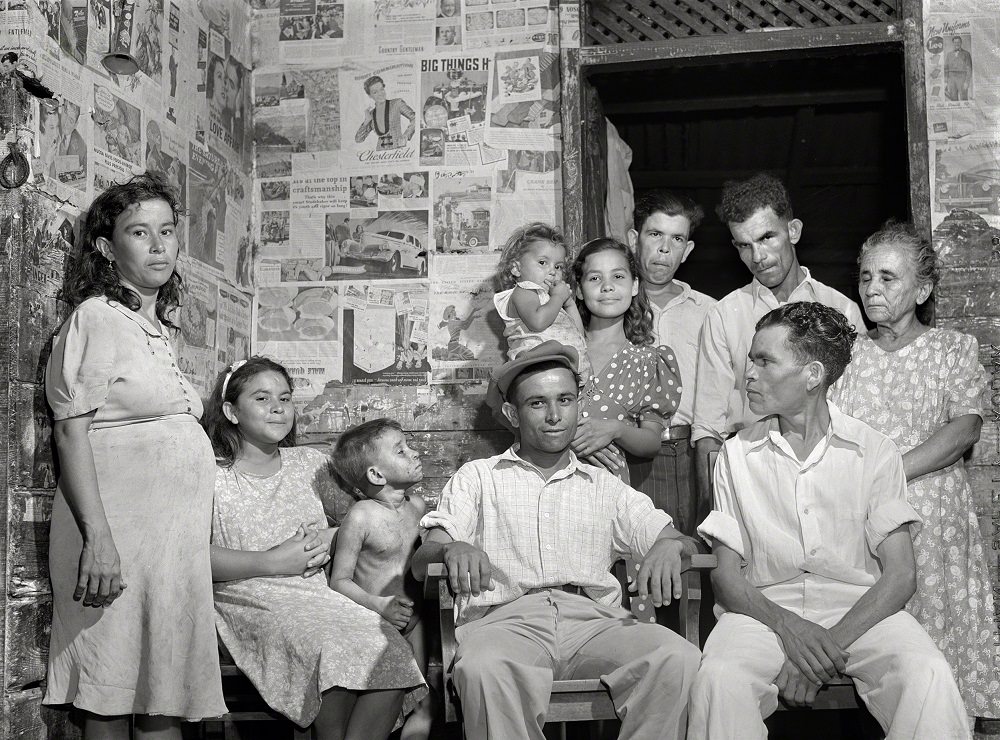
Sugar was the backbone of Puerto Rico’s economy in the early 1940s. Large sugar companies operated mills across the southern part of the island, and entire communities grew up around them. Workers and their families lived in company-owned housing, often clustered directly behind the mill buildings.
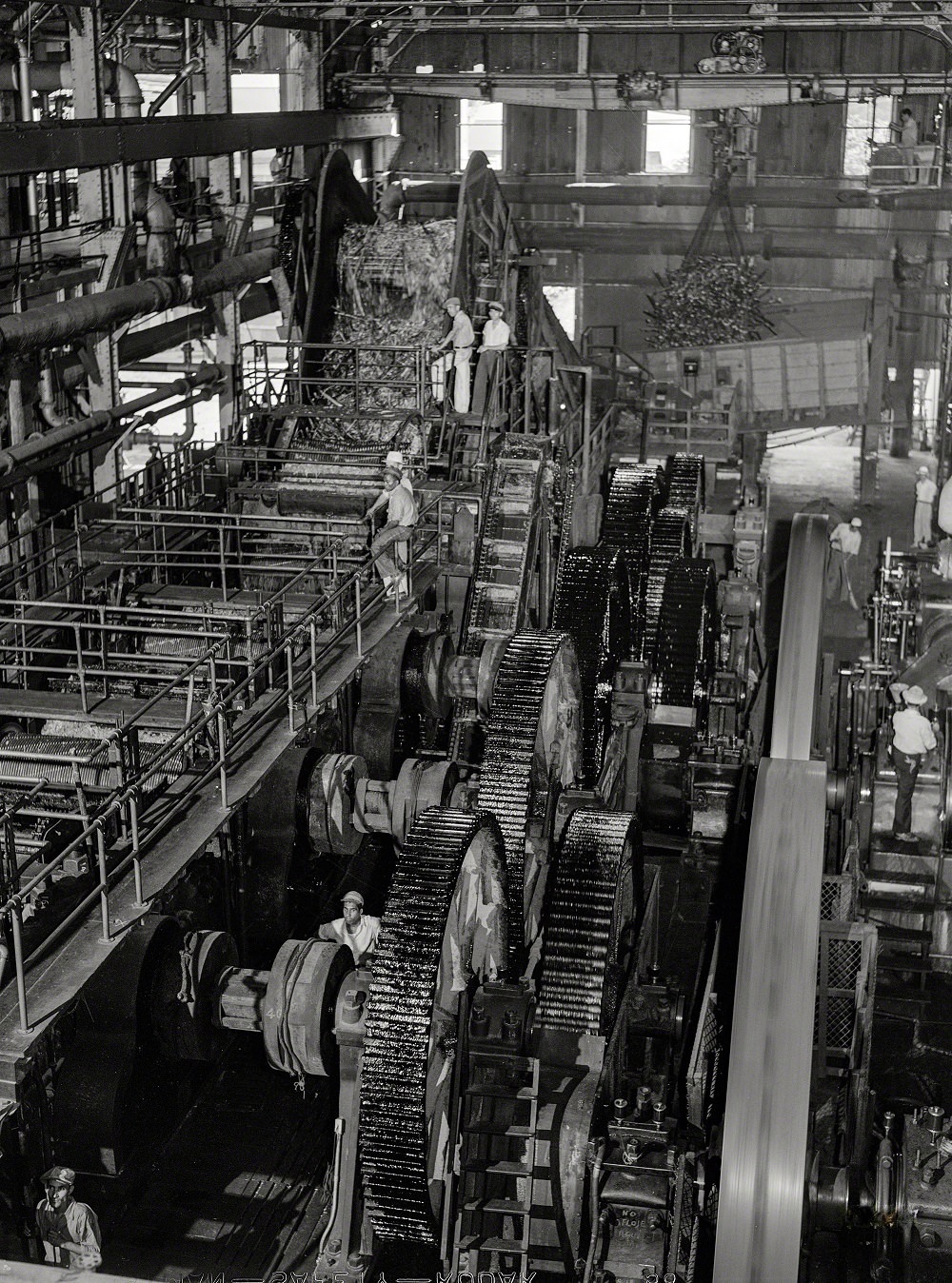
The mills themselves were massive industrial operations. The South Puerto Rico Sugar Company was one of the largest, running a major plant in Ensenada. These facilities processed enormous quantities of cane harvested from the surrounding fields.
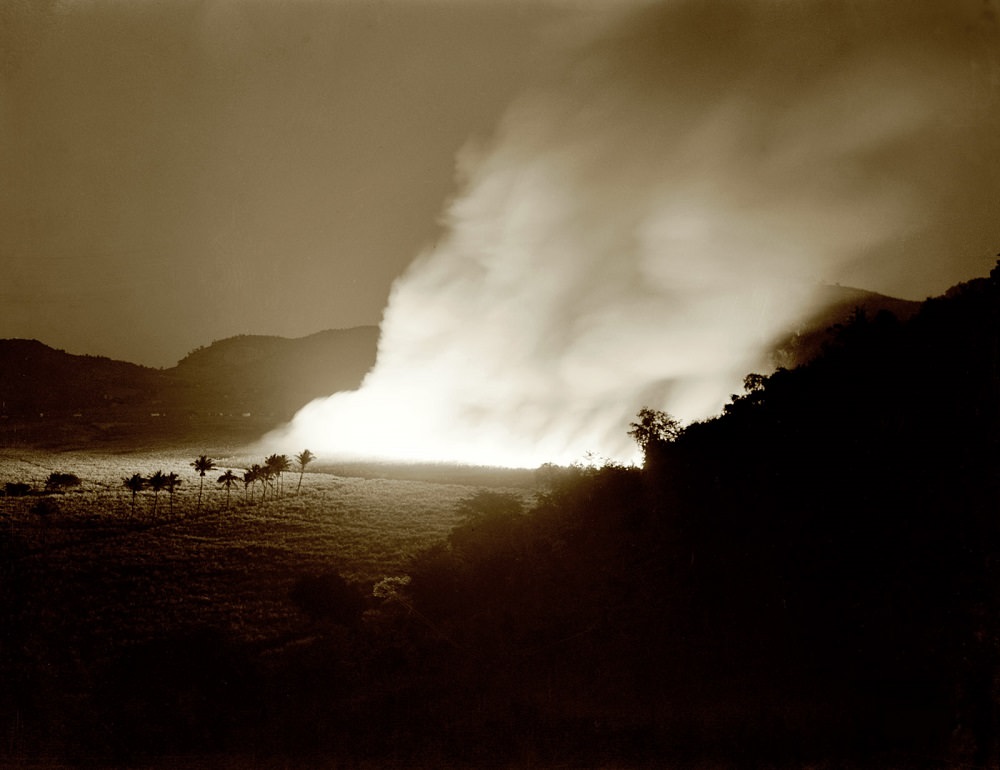
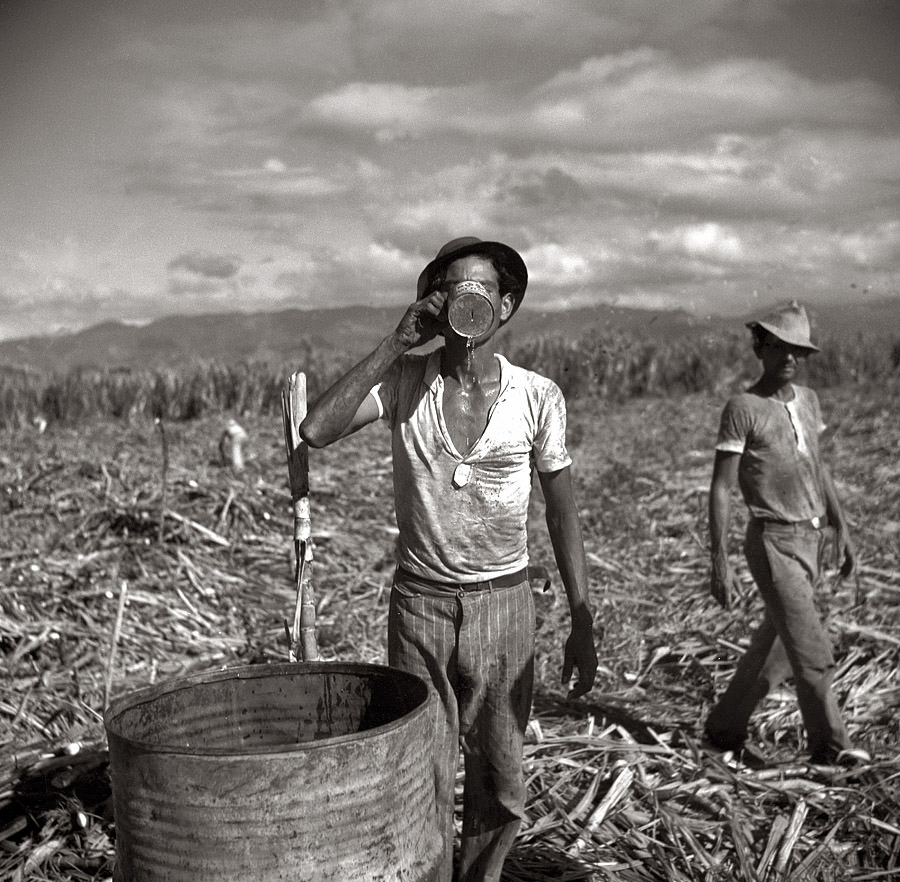
Before harvest, sugar cane fields were deliberately set on fire. Burning cleared away the dry leaves around the stalks, making cutting faster and easier for field workers.
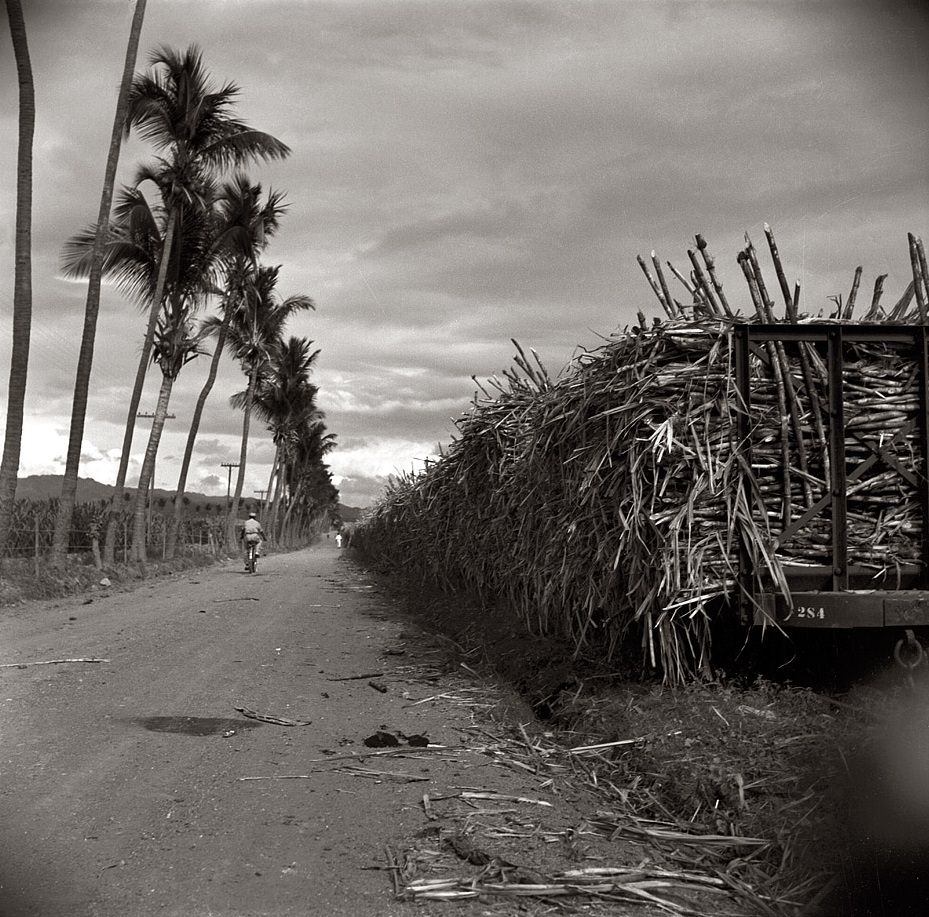
Once cut, the cane was loaded onto trains and transported directly to the mills. Plantation rail lines were a common feature across the sugar-growing regions near Ponce.
Agricultural laborers on these plantations worked long hours under the sun. Their wages were low, and the work was physically demanding through every phase of the growing and harvesting cycle.
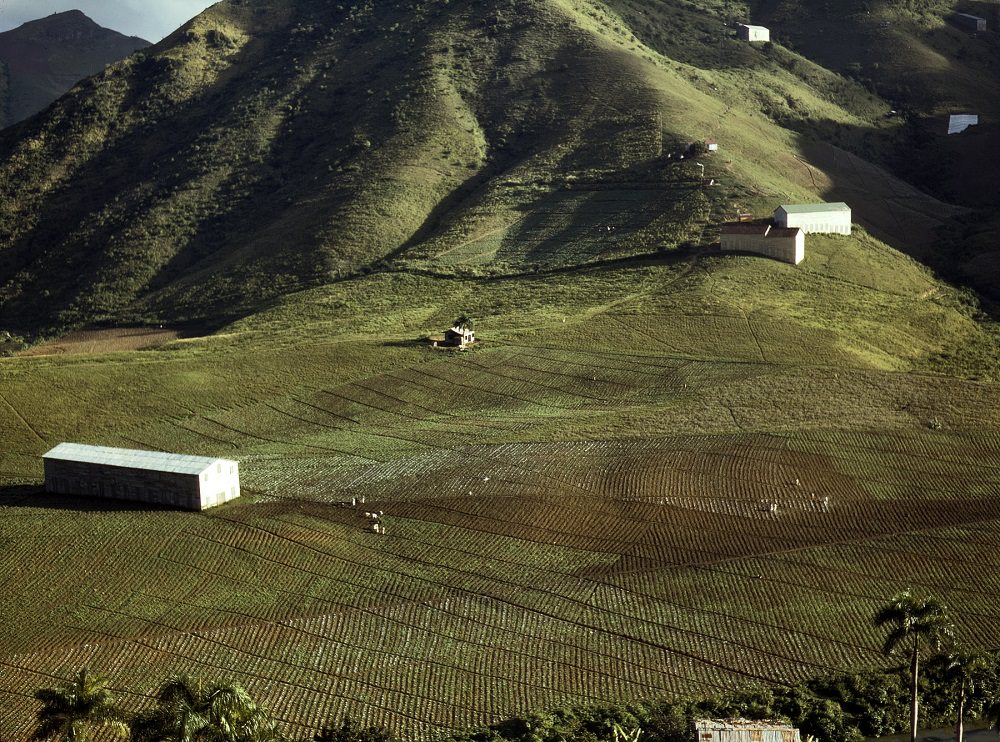
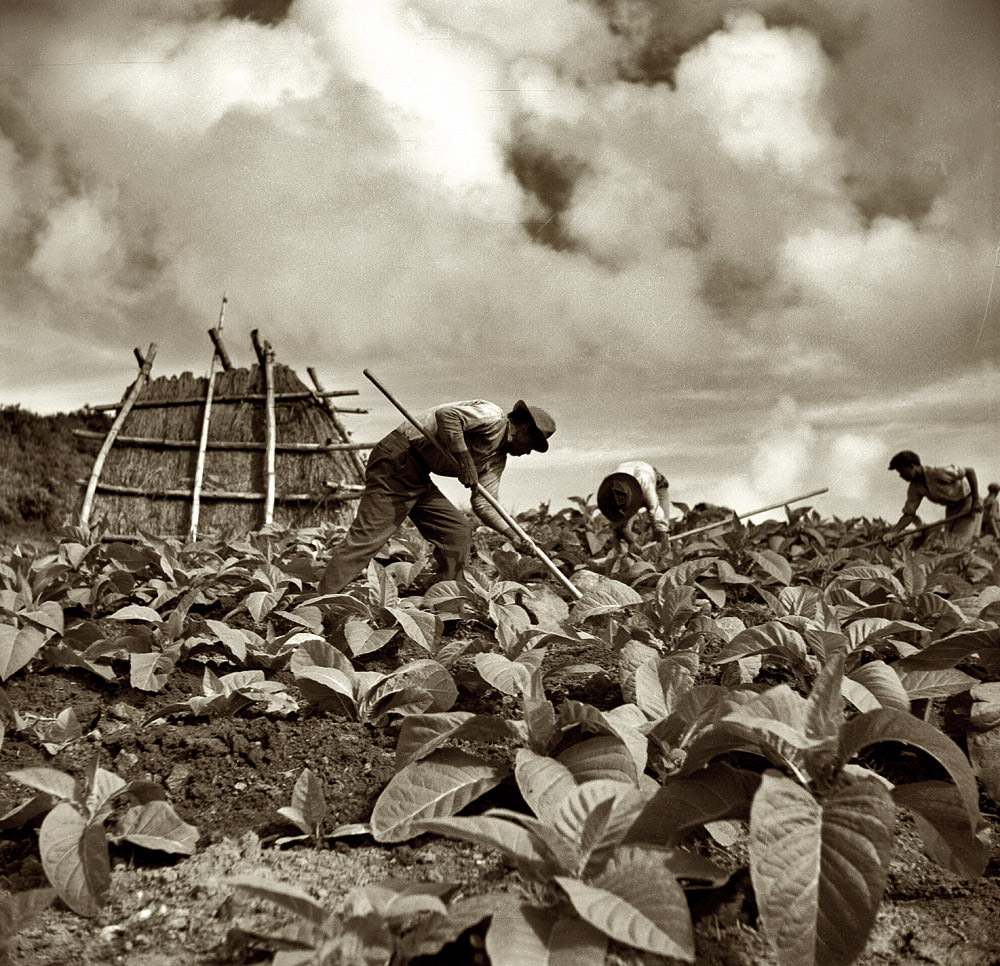
Tobacco was the island’s other major crop. Workers cultivated it in experimental fields managed by government programs like the Puerto Rico Reconstruction Administration, which tested better growing methods in the highlands near Cayey.
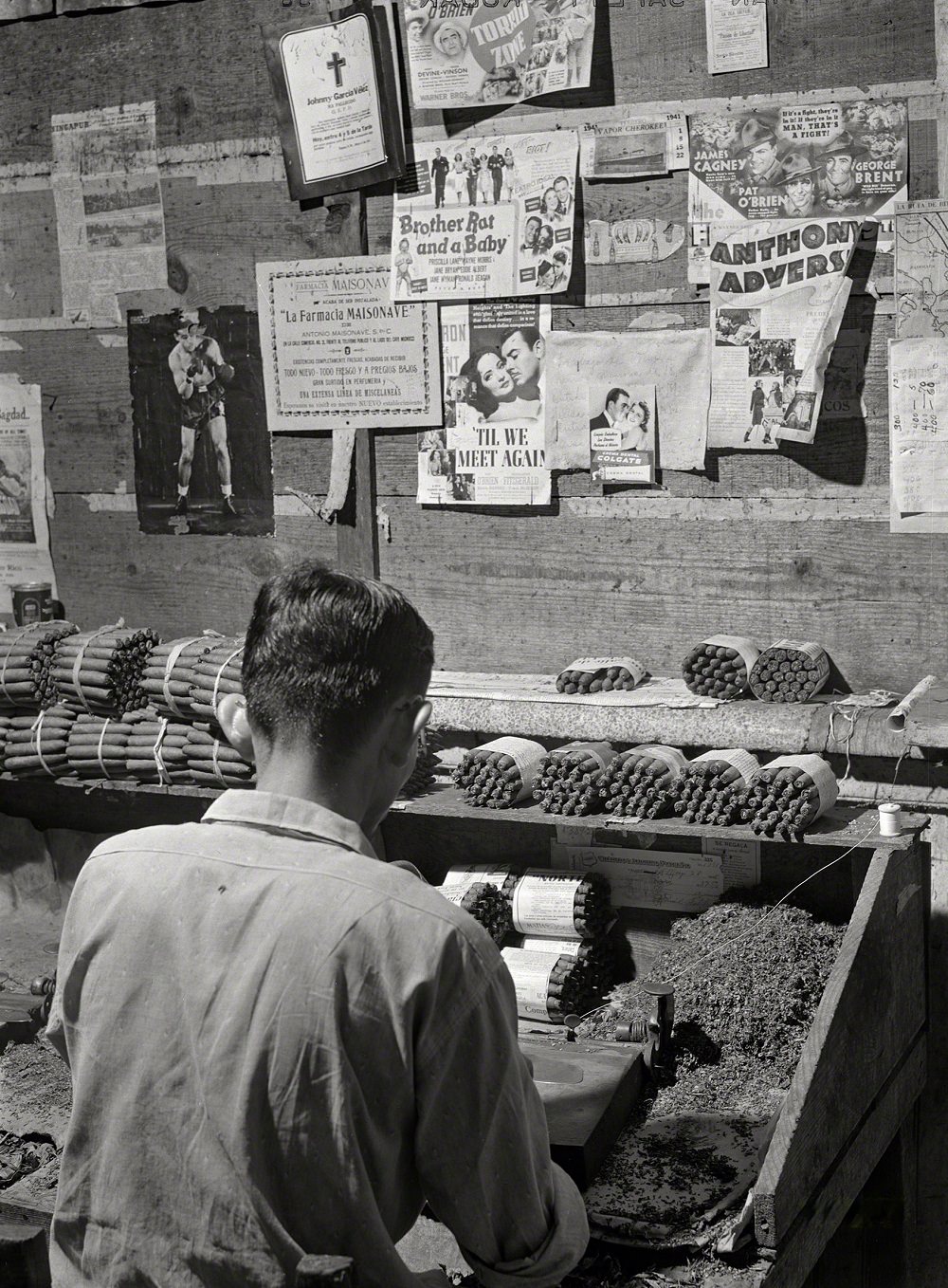
Tobacco also supported small-scale manufacturing. In the town of Yauco, individual workers hand-rolled cigars in modest factory settings, producing goods sold across the island and beyond.
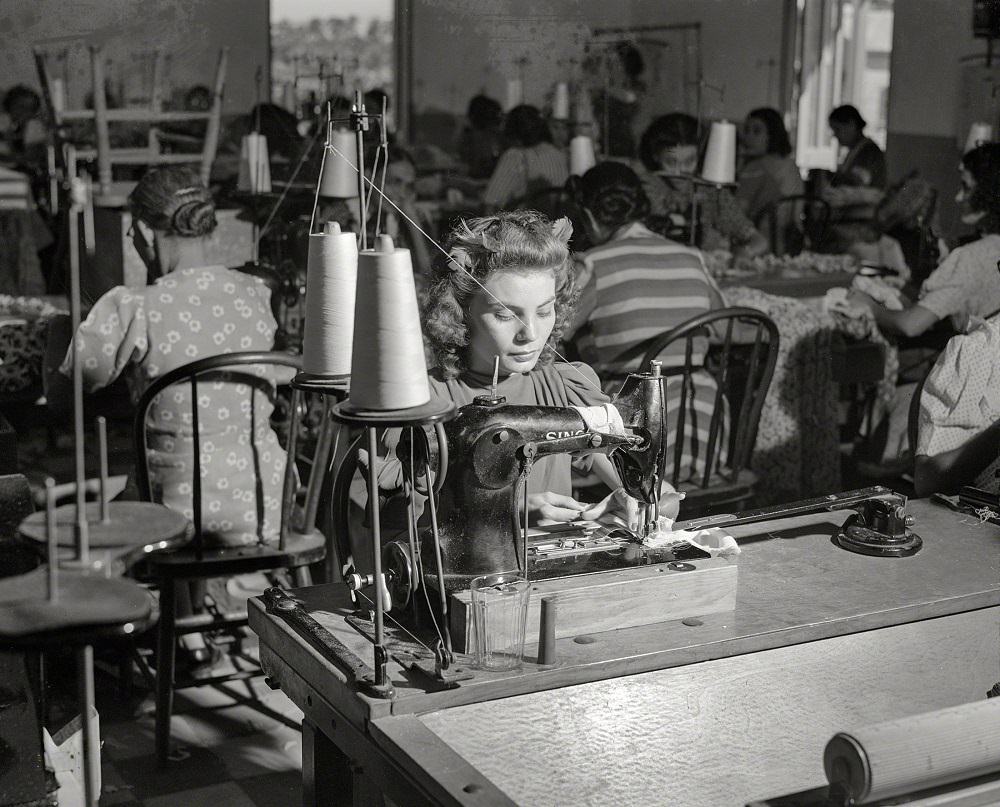
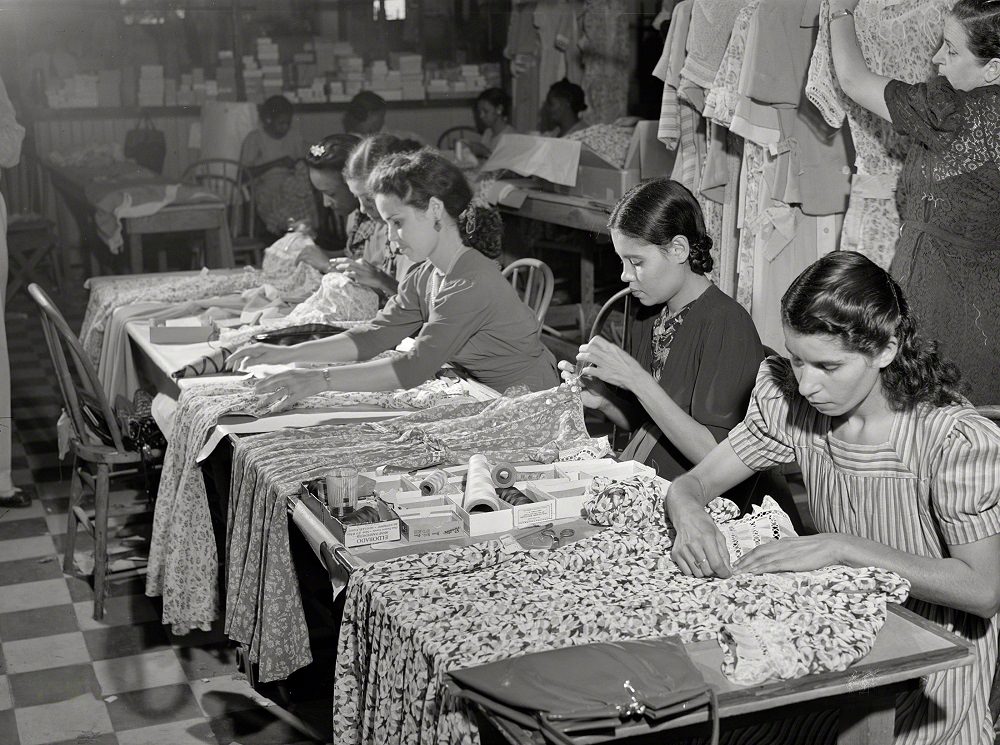
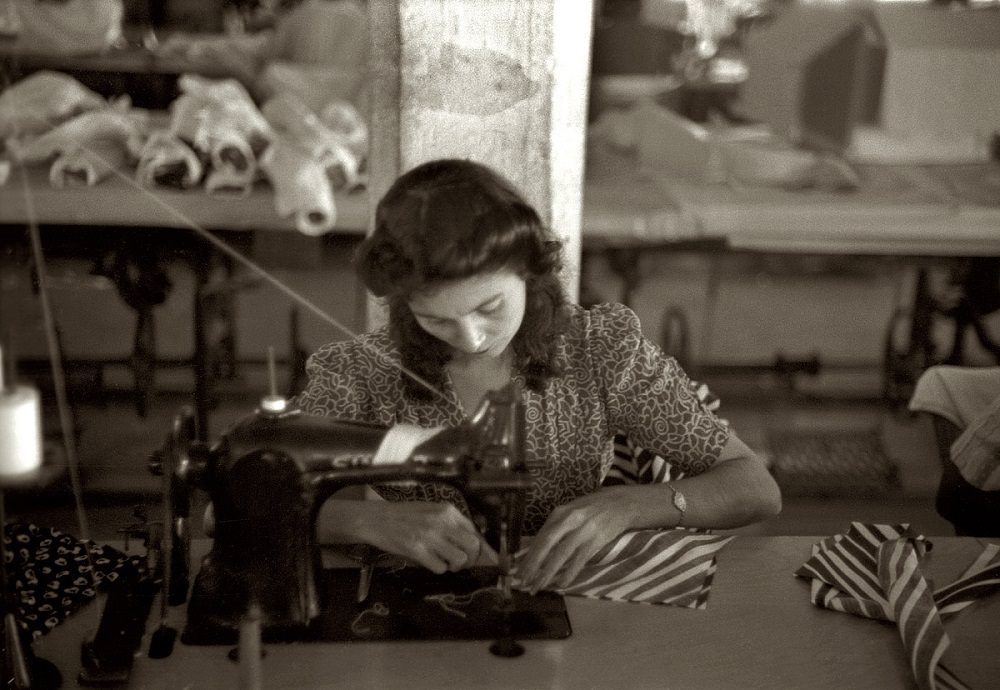
Needlework and garment production employed large numbers of women in San Juan by the early 1940s. Factories in the city brought women together to sew dresses and do detailed textile work, providing wages at a time when factory jobs were becoming a growing part of the island’s economy.
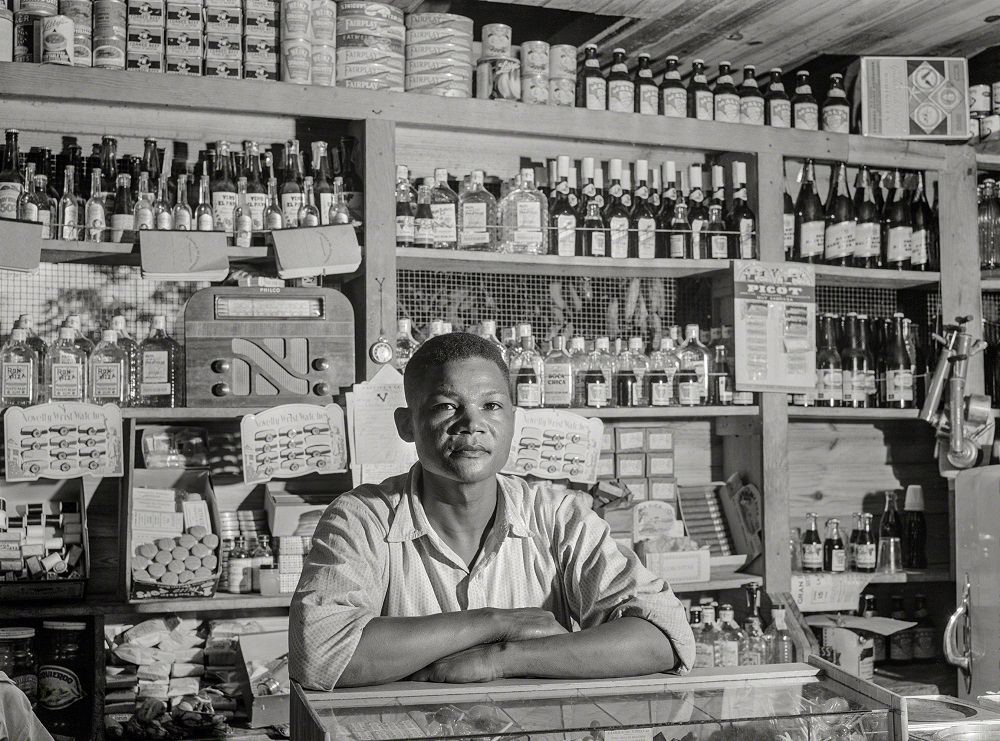
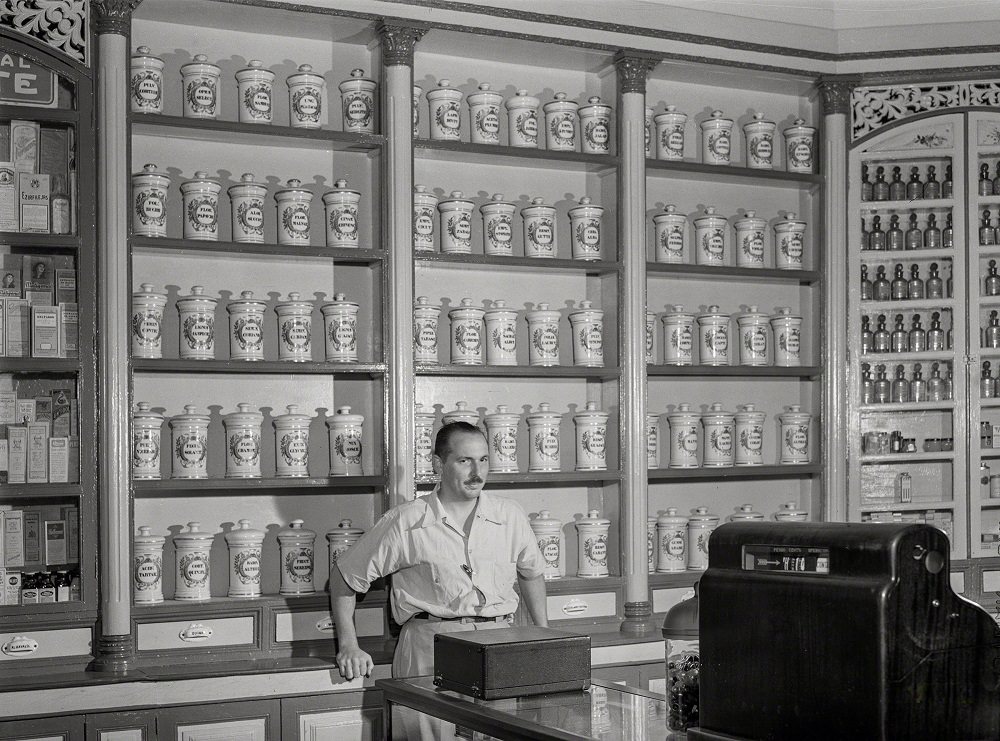
Outside the factories, small businesses served local communities. In Bayamón, a general store proprietor ran the kind of shop that supplied a neighborhood with basic goods. In Lares, an apothecary store provided medicine and remedies to residents.
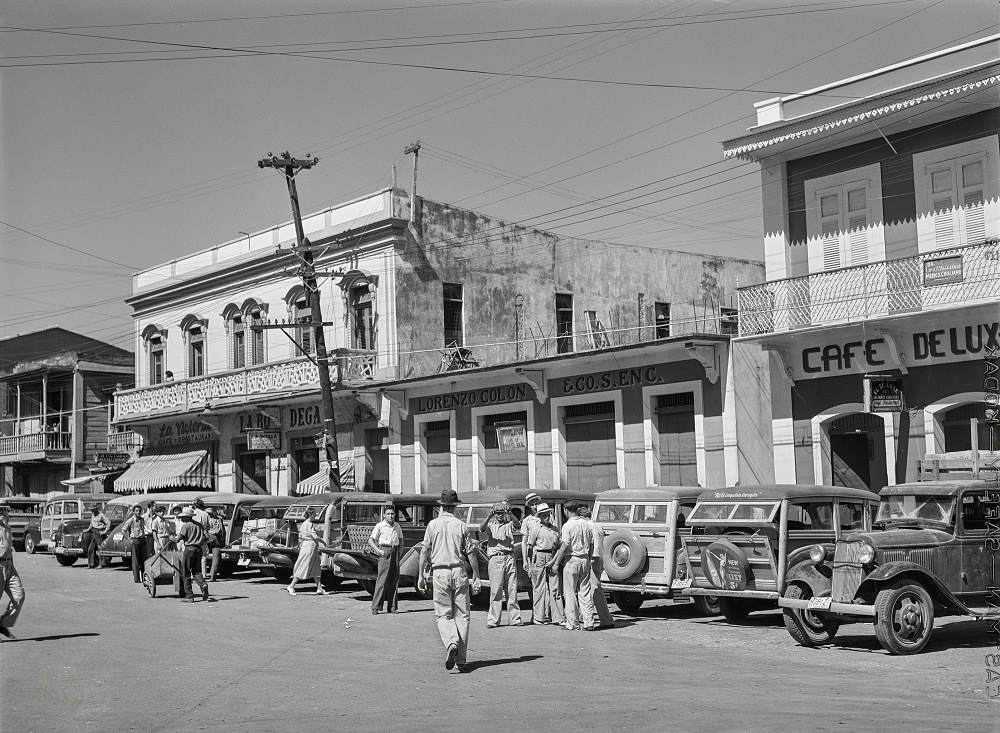
Transportation between towns depended heavily on shared vehicles known as públicos — station wagons that served as informal taxis. In Arecibo, a row of them lined up waiting for passengers heading to nearby towns and villages.
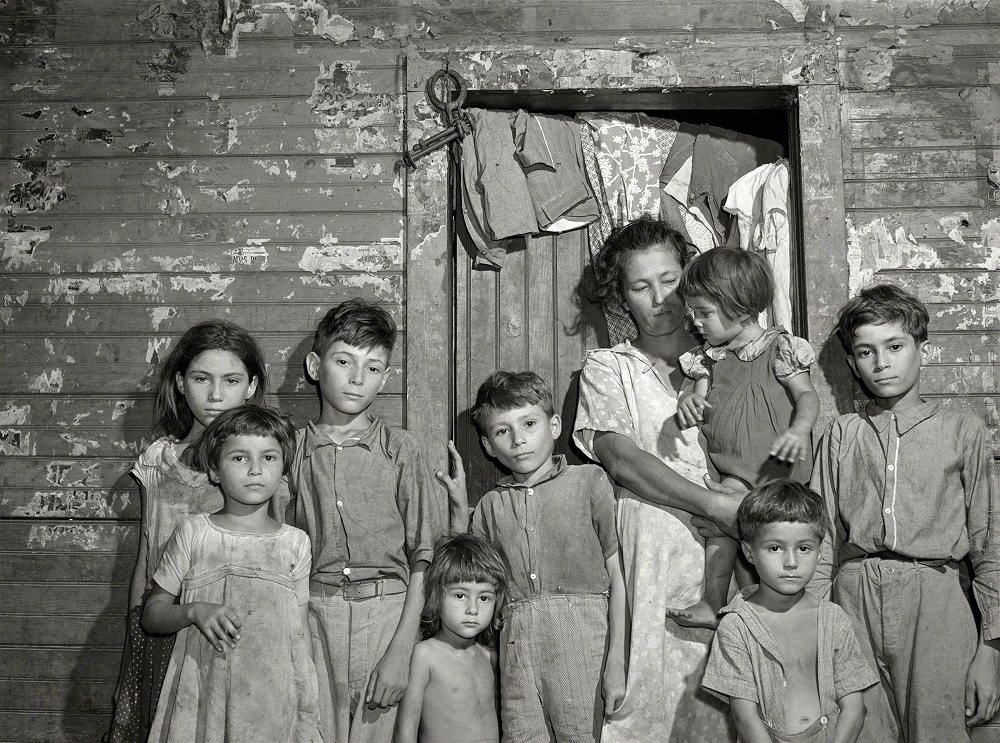
The Farm Security Administration documented the lives of rural Puerto Rican families who had received government loans to stabilize their finances. These FSA borrowers were part of a federal effort to lift struggling rural households during an economically difficult period.
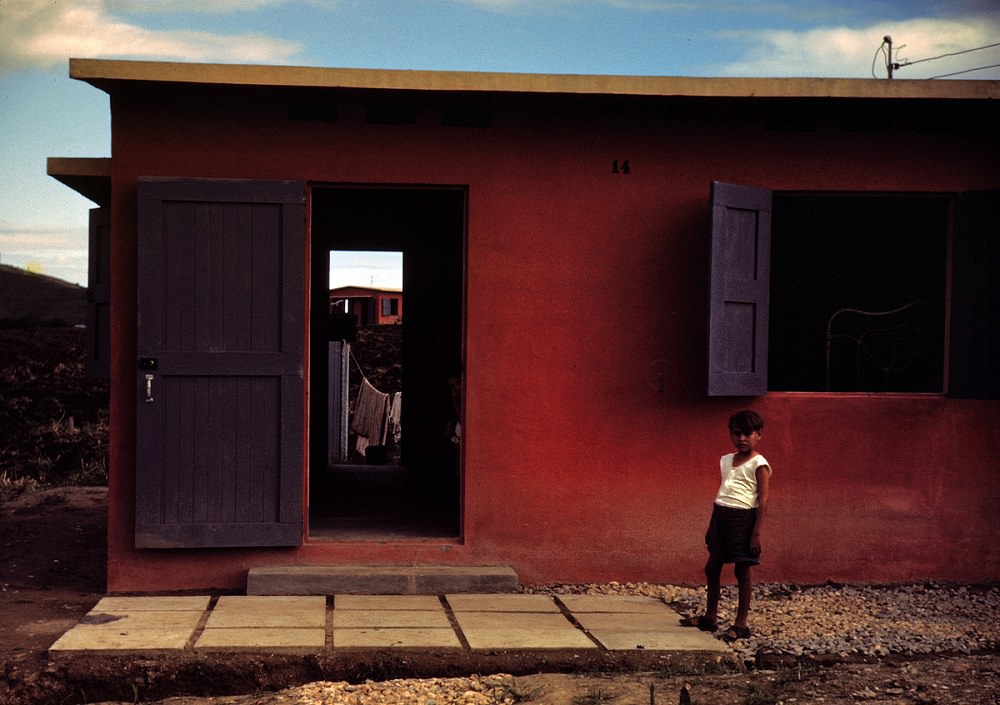
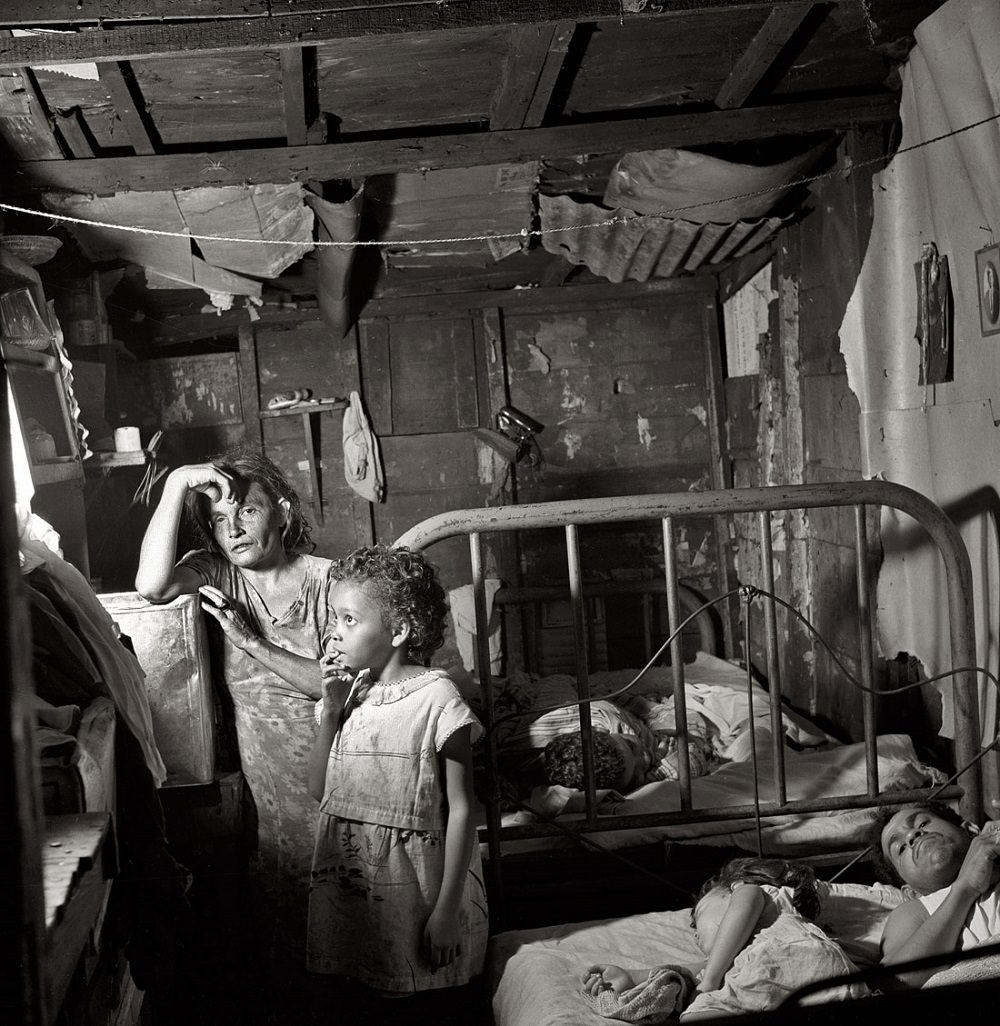
For workers in the poorest areas, living conditions were stark. Inside a shack in Porta de Tierra, a neighborhood on the edge of San Juan, the interior showed bare walls, minimal furnishings, and crowded quarters that were typical of the island’s most impoverished communities.
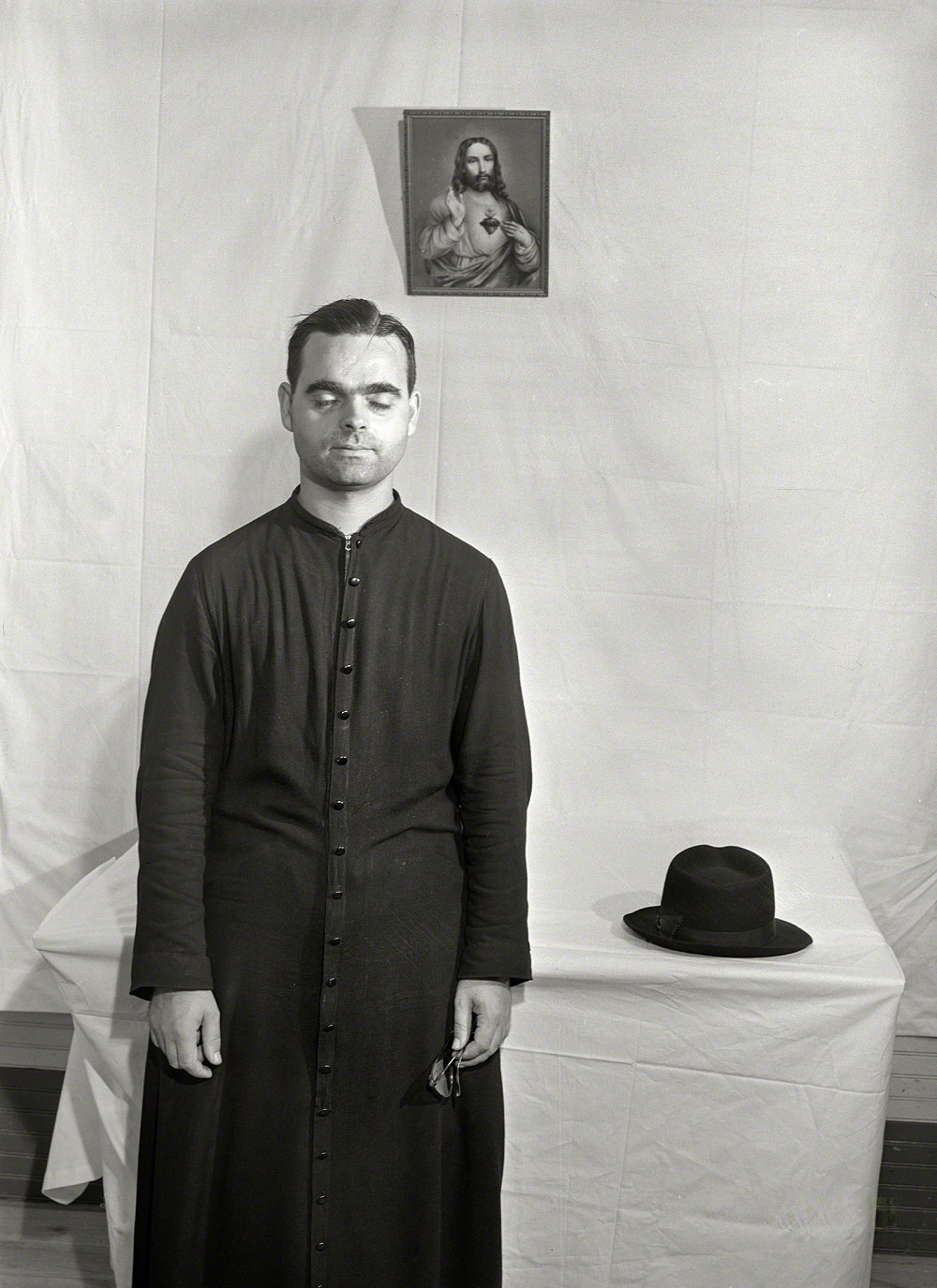
Religion was deeply woven into everyday Puerto Rican life. In Corozal, a Catholic priest led a Mass, performed baptisms, and blessed homes as part of a tenant purchase celebration — a community event tied to a government land program that helped residents gain ownership of their properties.
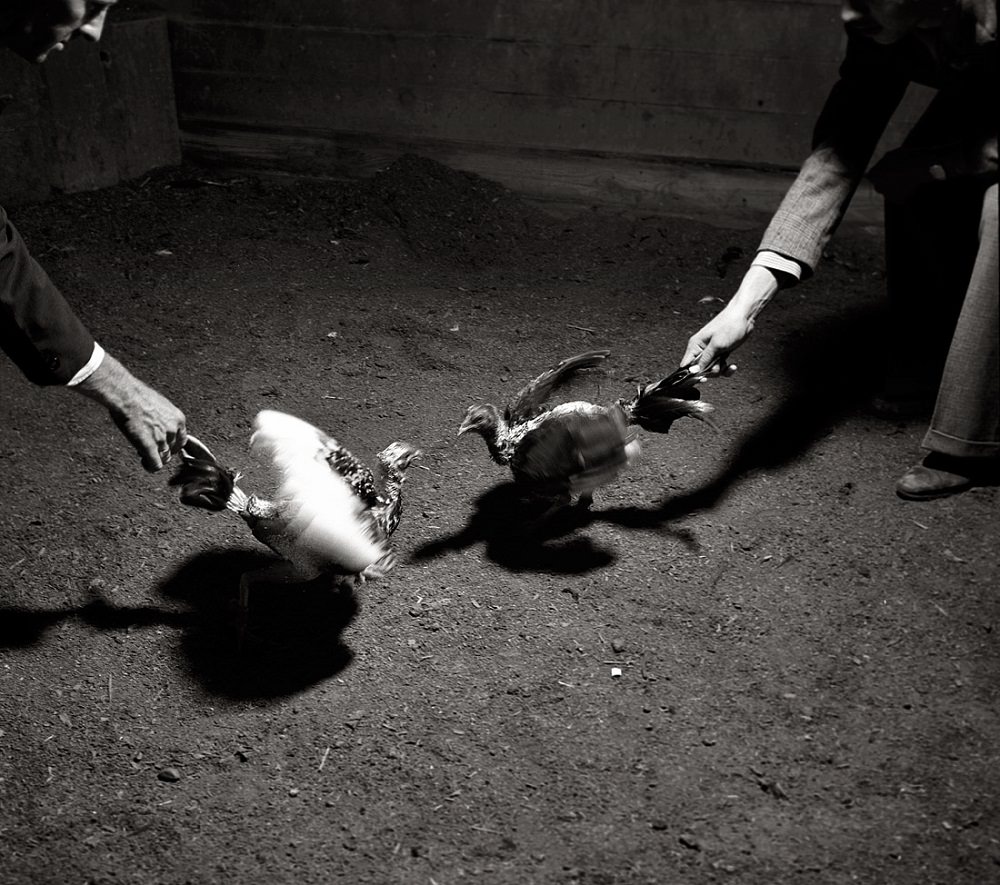
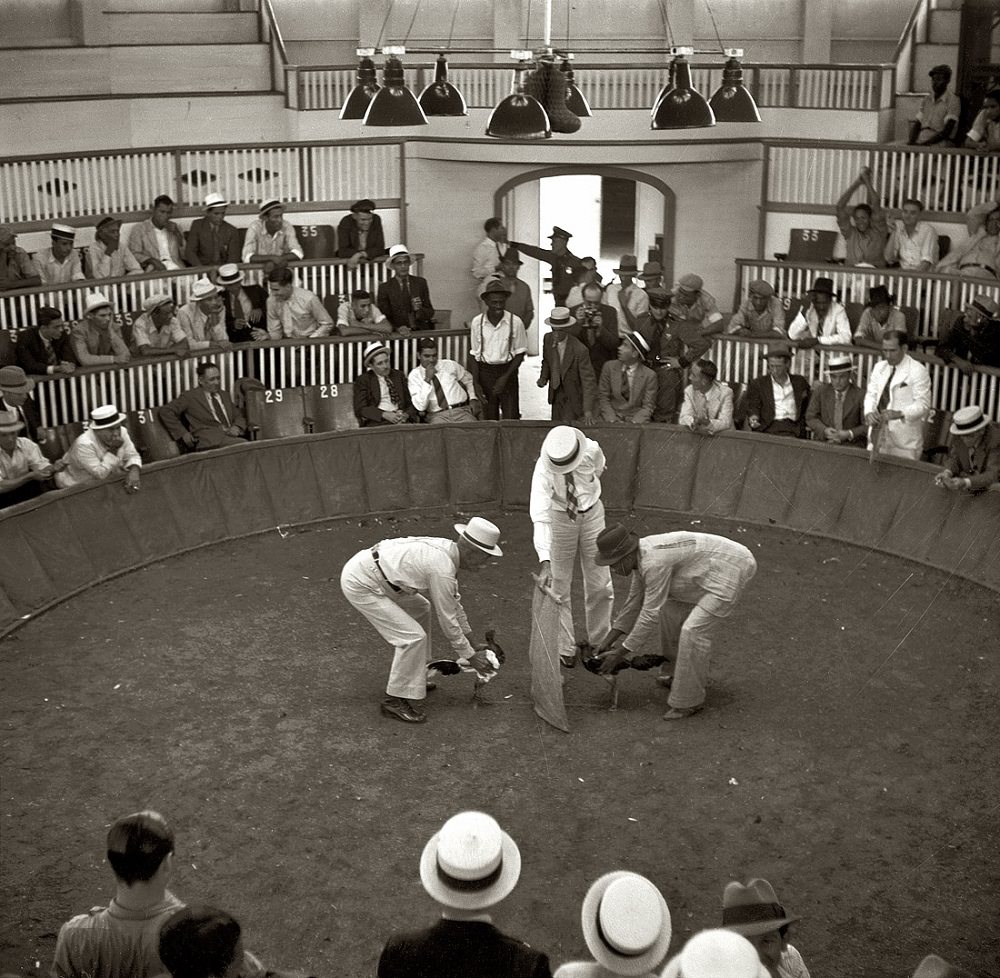
Cockfighting was a well-established tradition across the island. Roosters were trained and conditioned in dedicated arenas before being matched against each other in front of crowds who gathered to watch and wager.
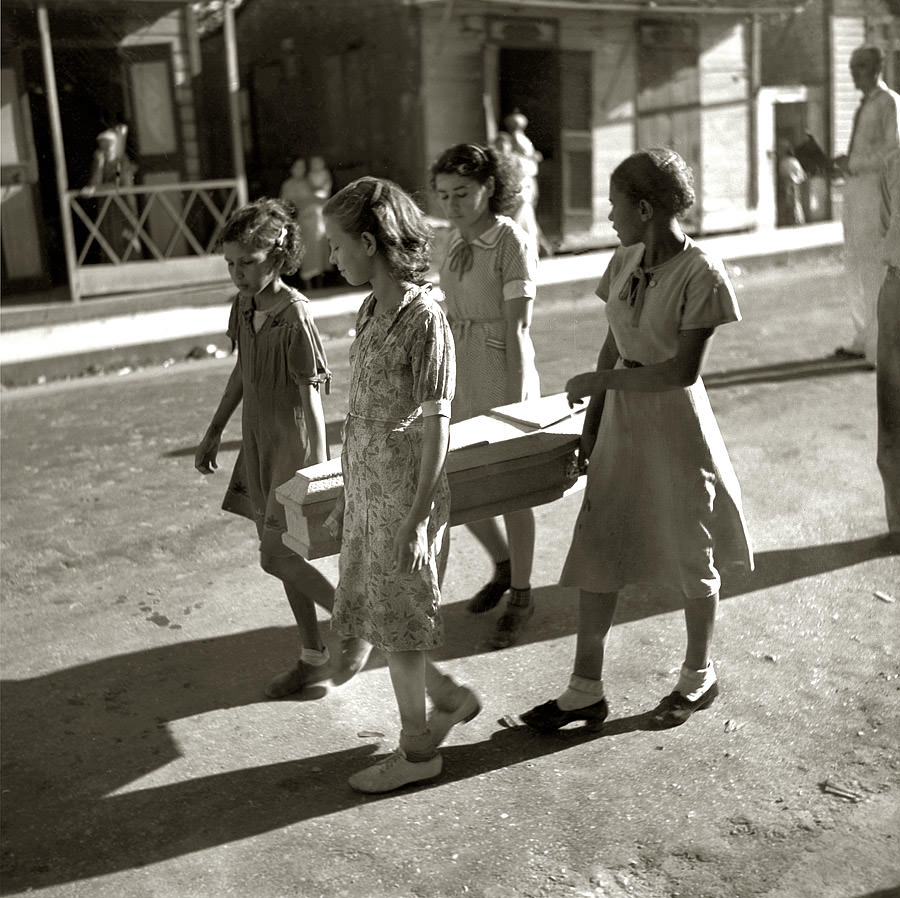
Death rituals reflected both Catholic custom and local practice. In Ponce in 1938, the funeral of a child was photographed — an event that, while painful, was documented as part of the fabric of community life on the island.
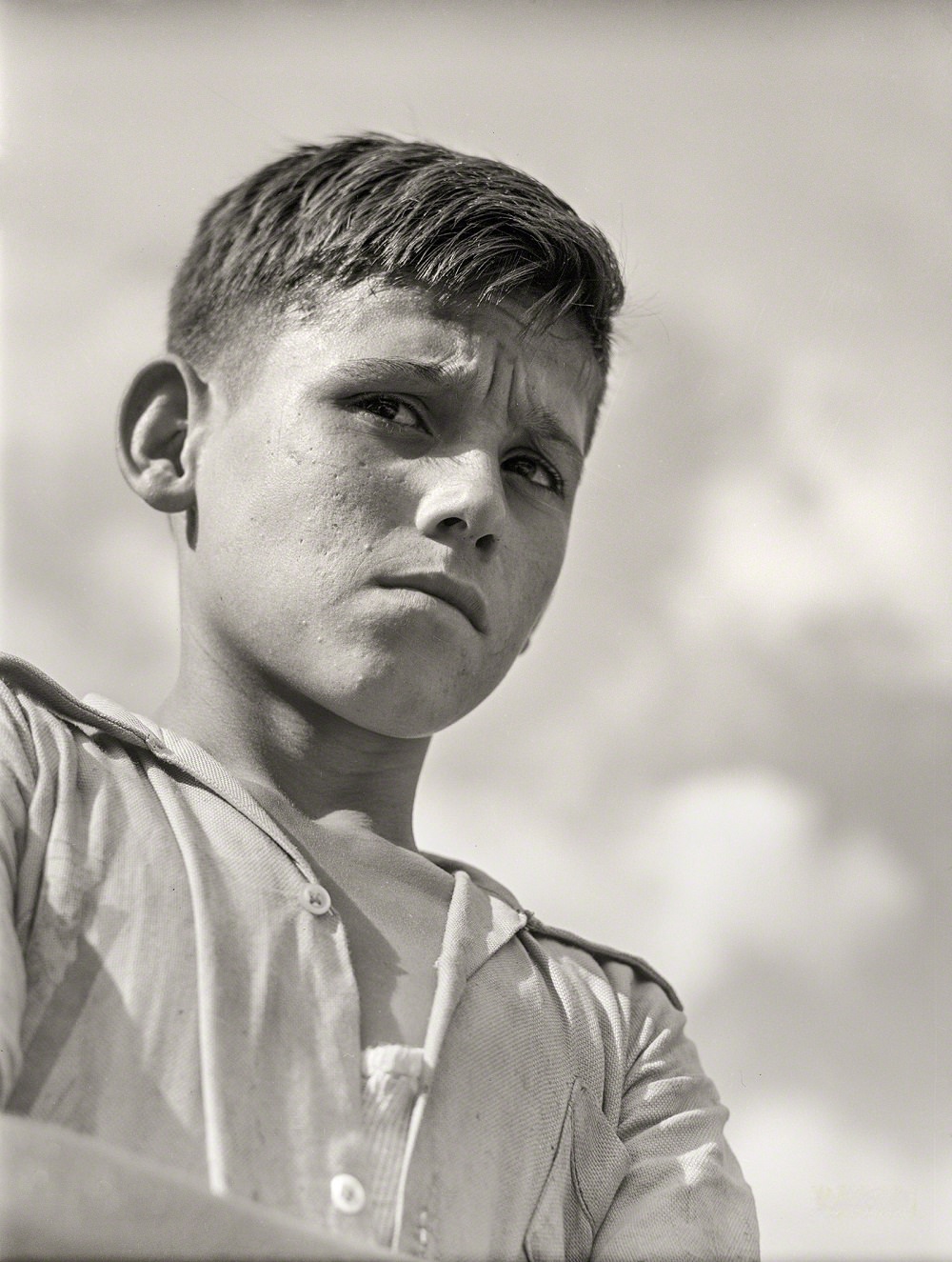
San Juan, the island’s capital, presented a range of faces. A boy photographed in nearby San Sebastián, aerial views of the city’s rooftops, and street-level shots of San Juan’s busy thoroughfares all captured the texture of urban life in the early 1940s.
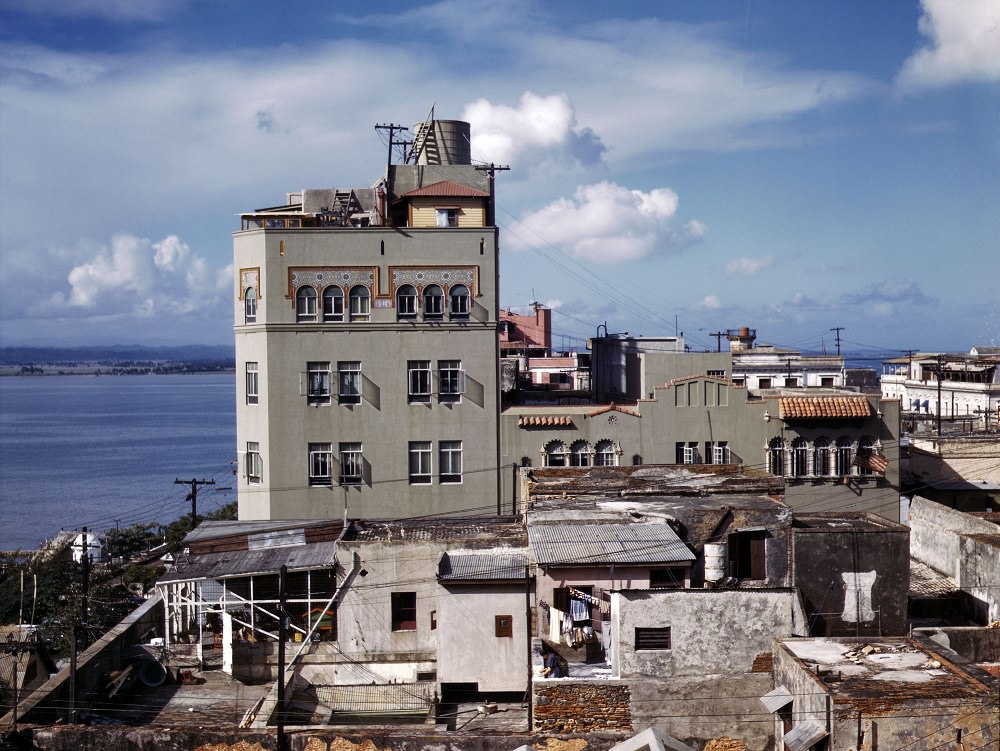
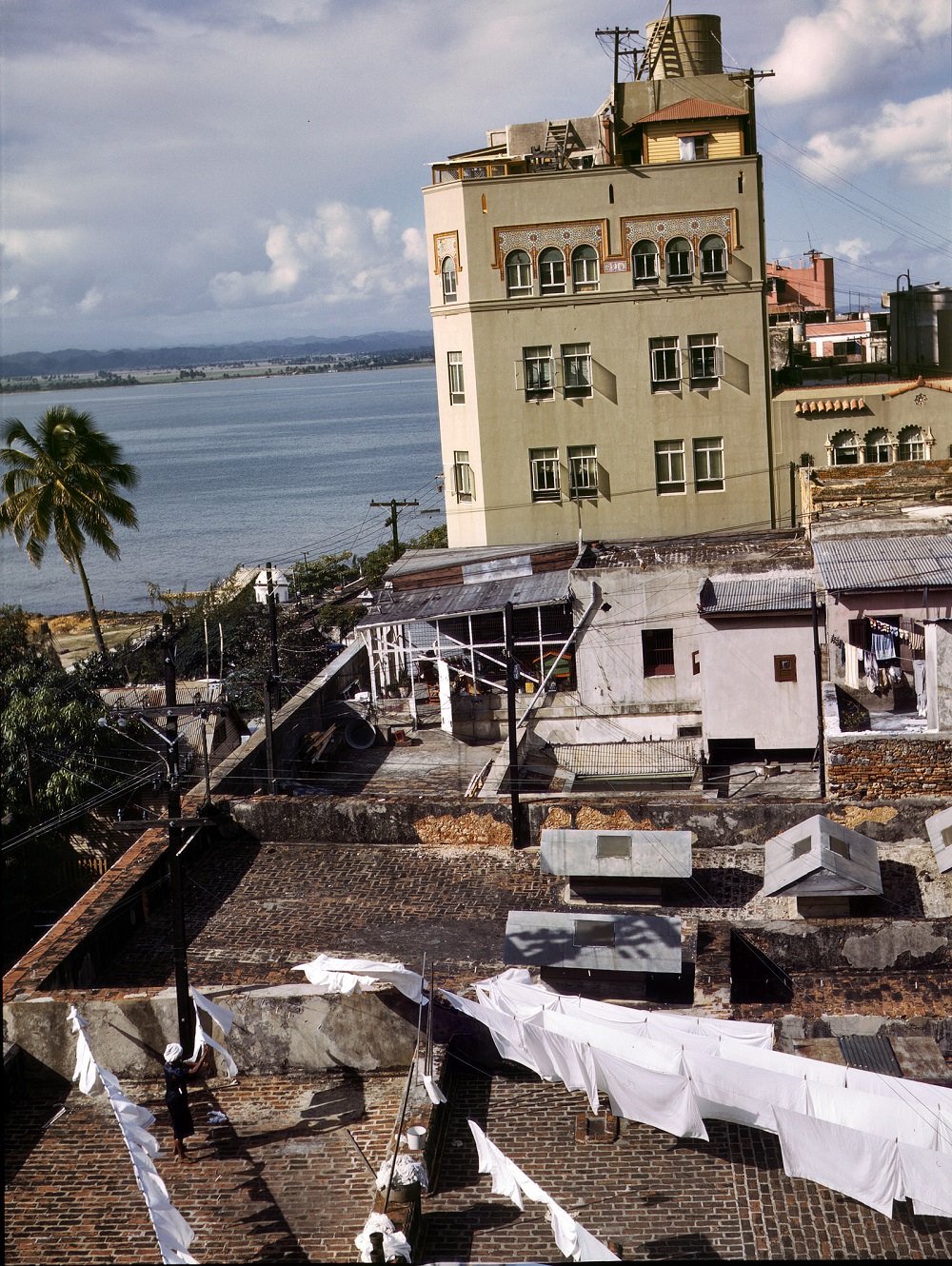
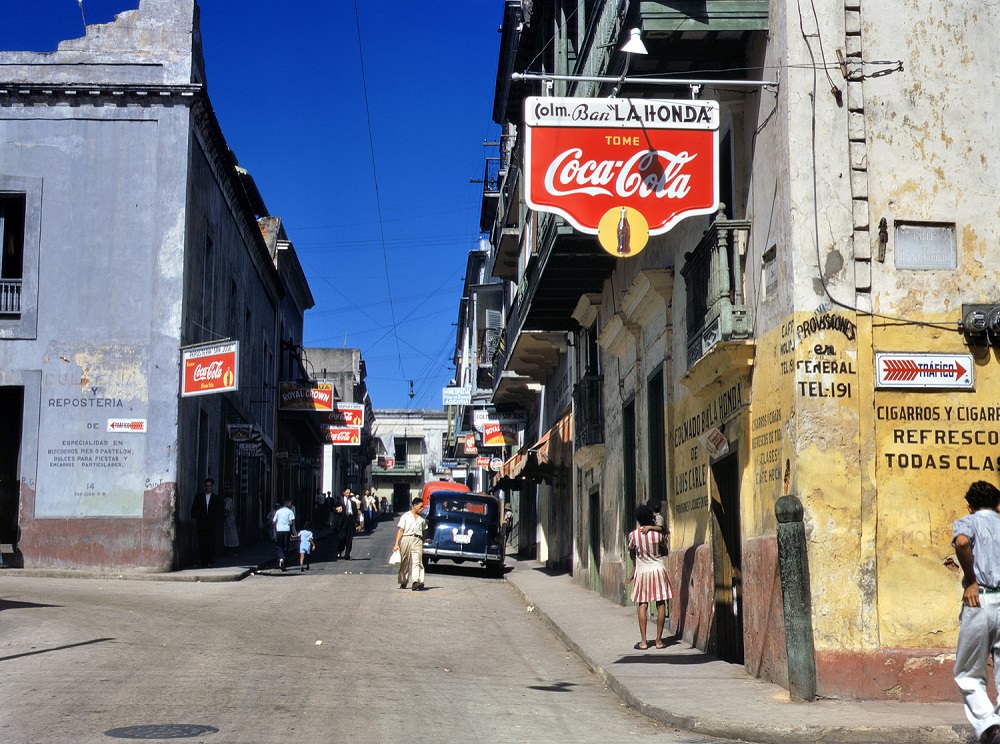
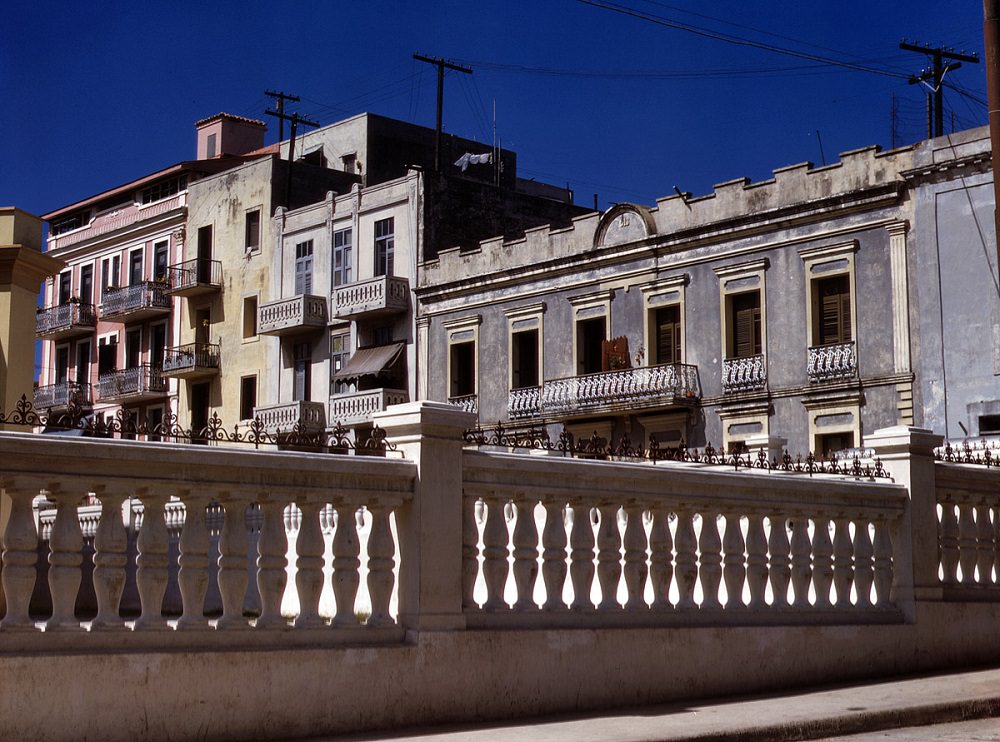
The older parts of San Juan showed the Spanish colonial architecture that dated back centuries. Apartment buildings near the cathedral stood as reminders of the island’s deep European roots, even as the city modernized around them.
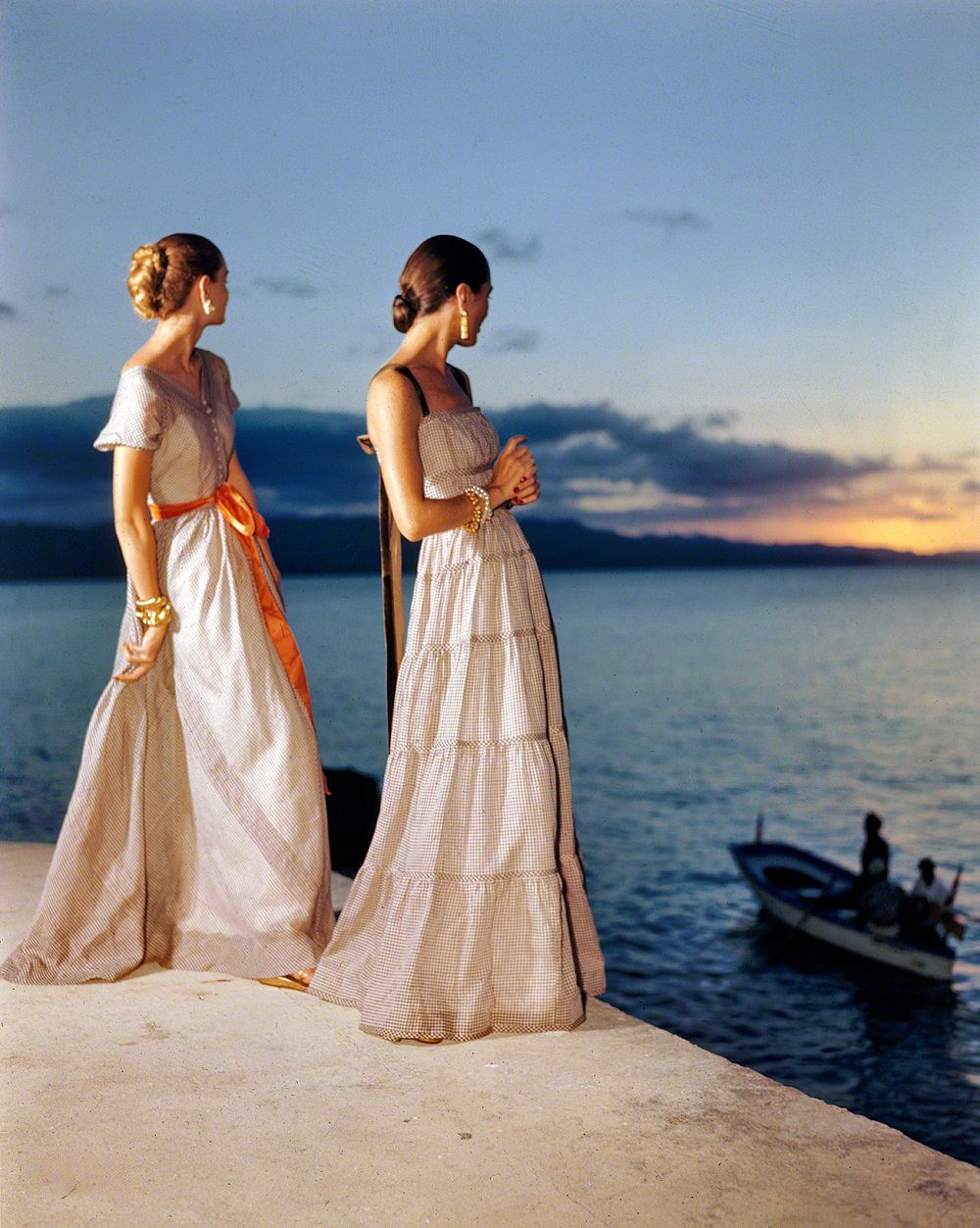
By 1946, a different side of San Juan appeared along the waterfront. Women dressed in evening gowns stood near the water’s edge — a scene that contrasted sharply with the sugar fields and factory floors photographed just a few years earlier.
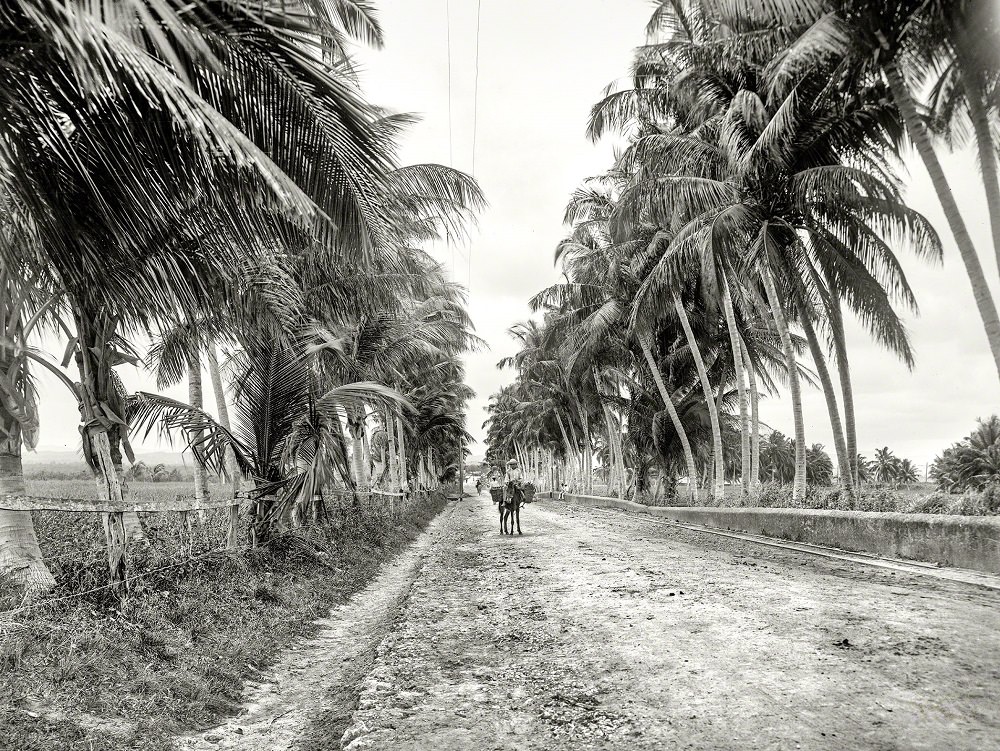
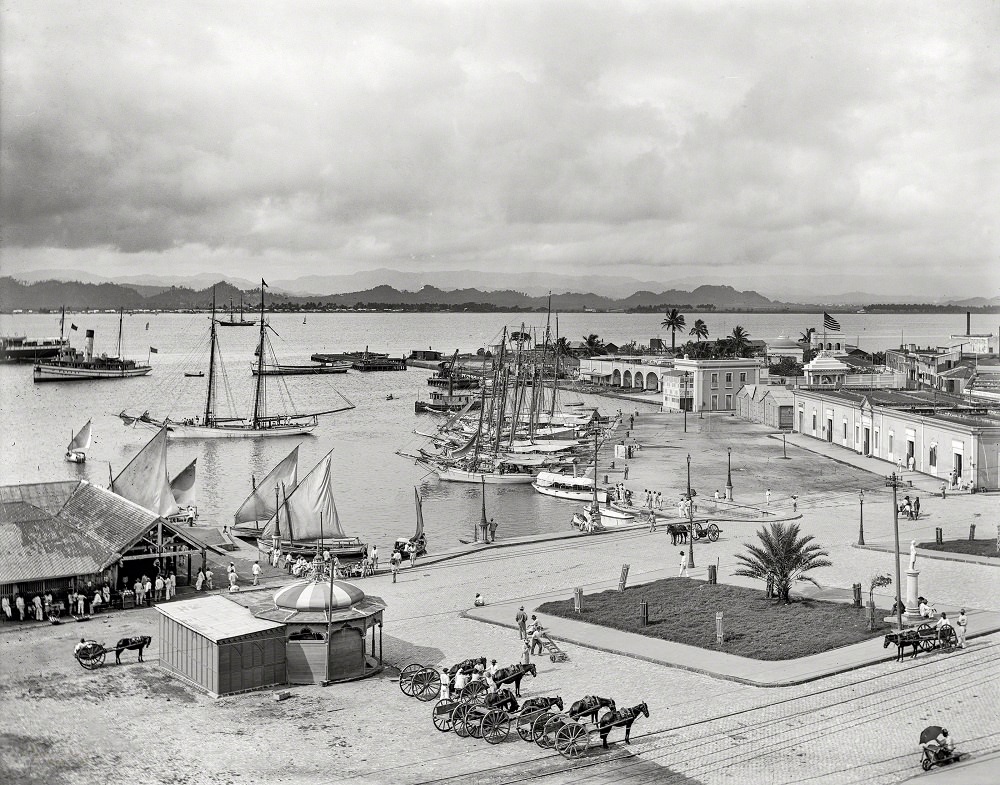
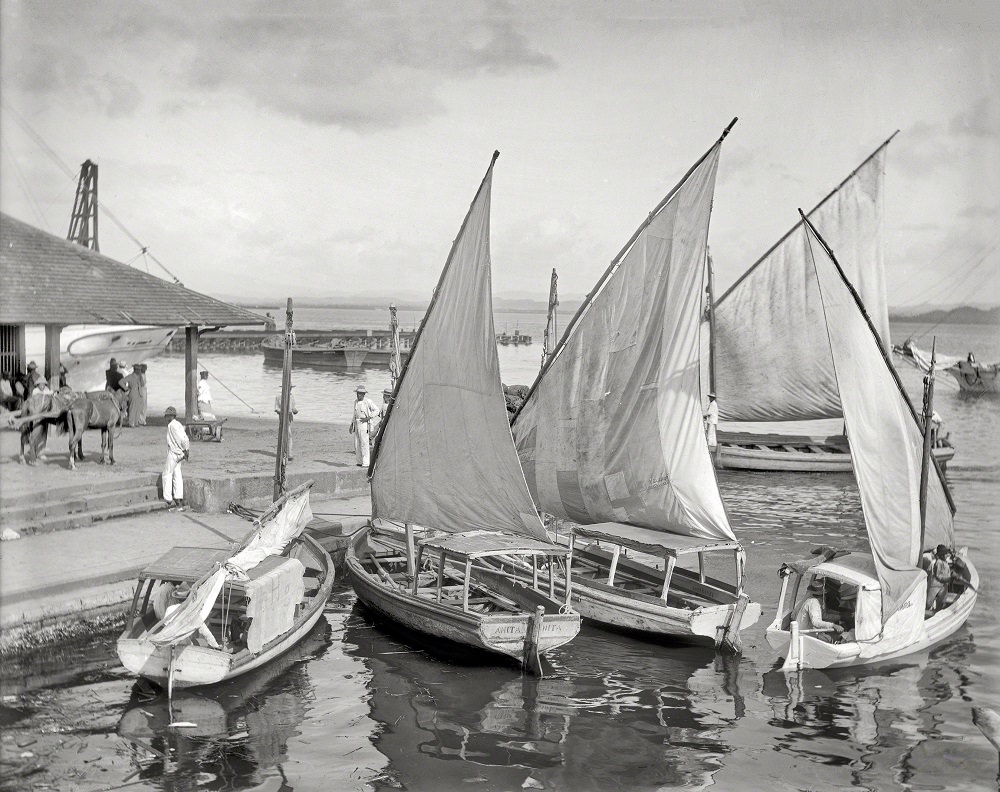
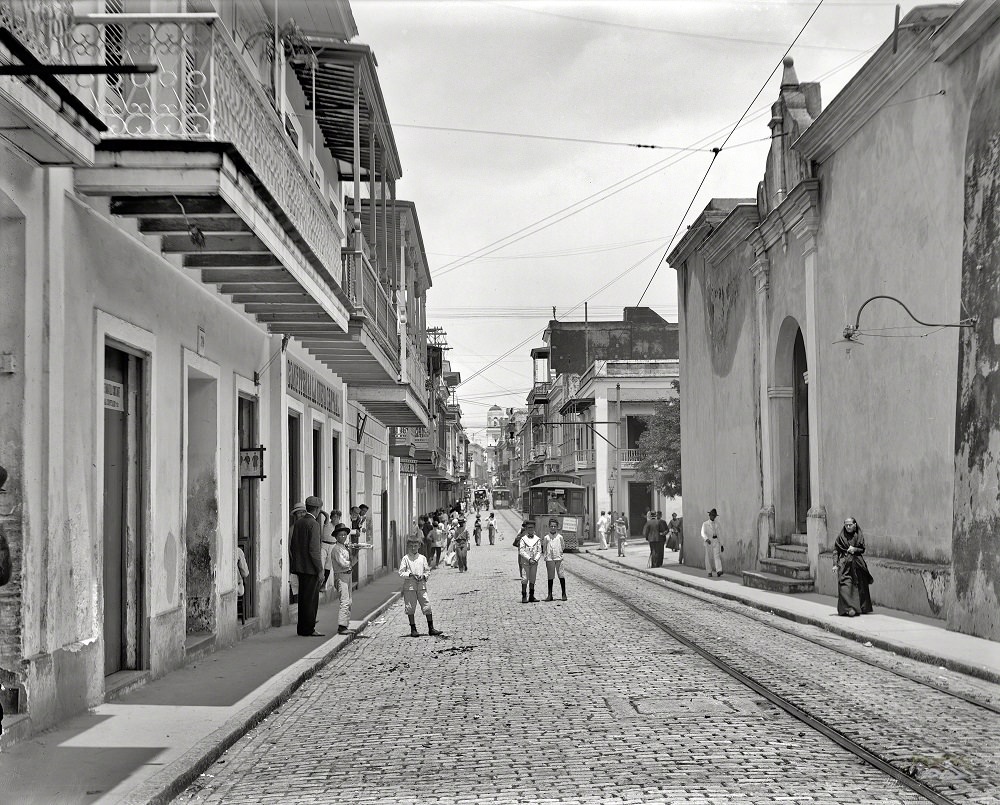
Earlier photographs from around the turn of the century show how San Juan looked before this period of change. The Military Road, La Marina district, the harbor filled with native sailboats, and Calle de San Francisco all document the city’s earlier character — a place still shaped largely by Spanish colonial infrastructure and a waterfront economy.





These are the photos of the Ukrainian era? anyway tremendous.
Great photos. I’m not so sure the last one is from that period.
I recognized the photo of the boy in San Sebastián, because it’s one of my favorites from the Library of Congress collection. https://www.loc.gov/item/2017798847/
It was taken by photographer Jack Delano in January 1942. The world was in the midst of World War II.
Beautiful photos. That Joe Louis pic is iconic.
Their was a great exhibit in the Mueso de Las Americas, on a photographer, he had photos from the 70s. Amazing work.
Amazing how much yet how little the marina has changed in all San Juan.