Long before the revolutions and wars that reshaped the 20th century, China was already one of the most populous and agriculturally sophisticated civilizations on Earth. With a centralized government, deeply rooted traditions, and a mastery of farming that fed hundreds of millions, China stood apart from the rest of the world — not through industrialization, but through the sheer scale and organization of its society. The photographs in this collection span from roughly 1870 to 1946, capturing a country caught between ancient customs and the pressures of a rapidly changing world.
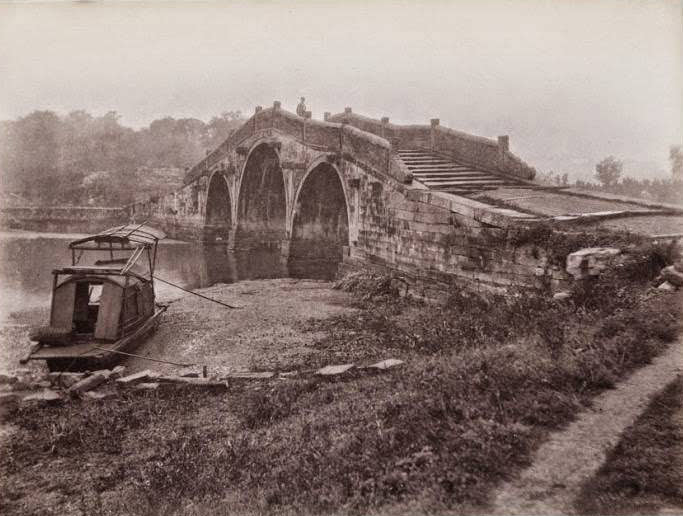
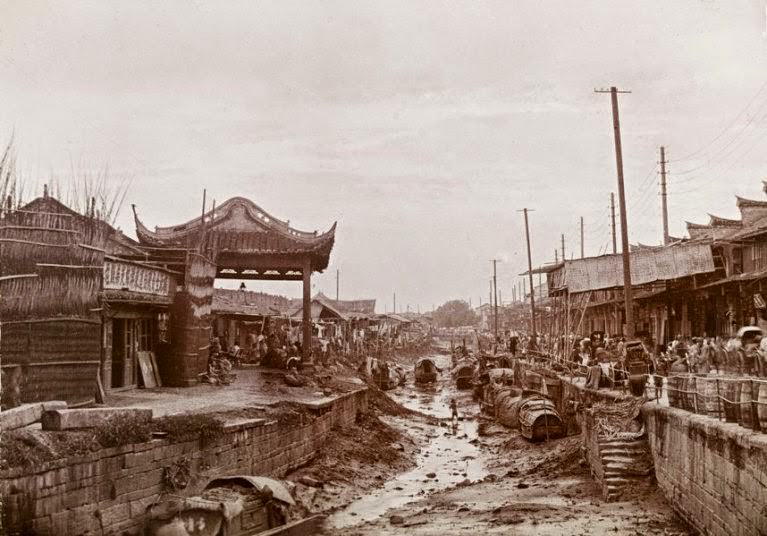
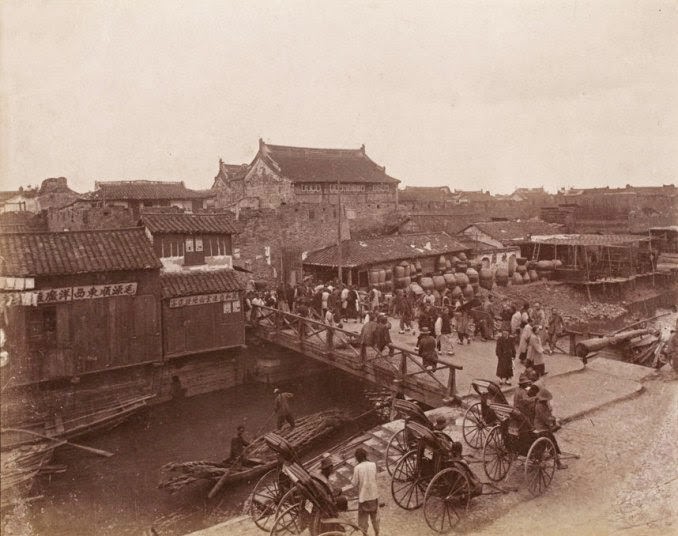
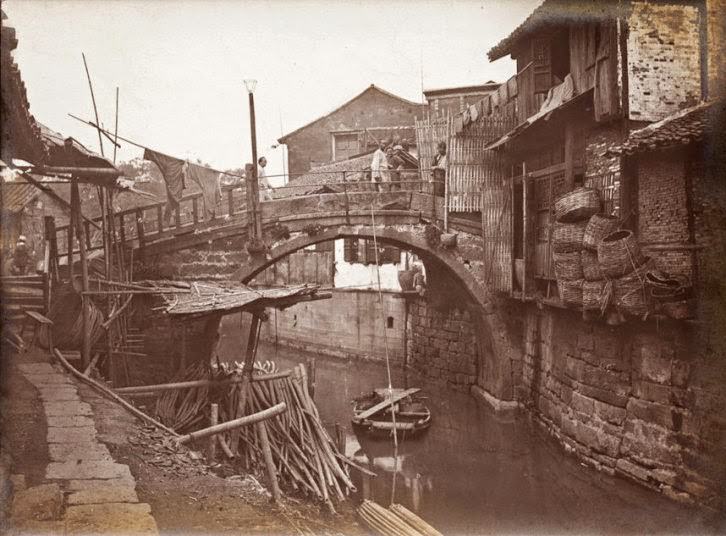
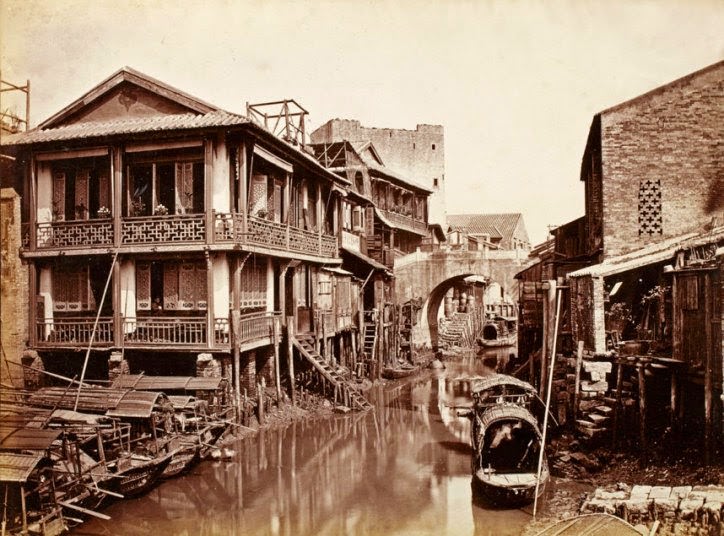
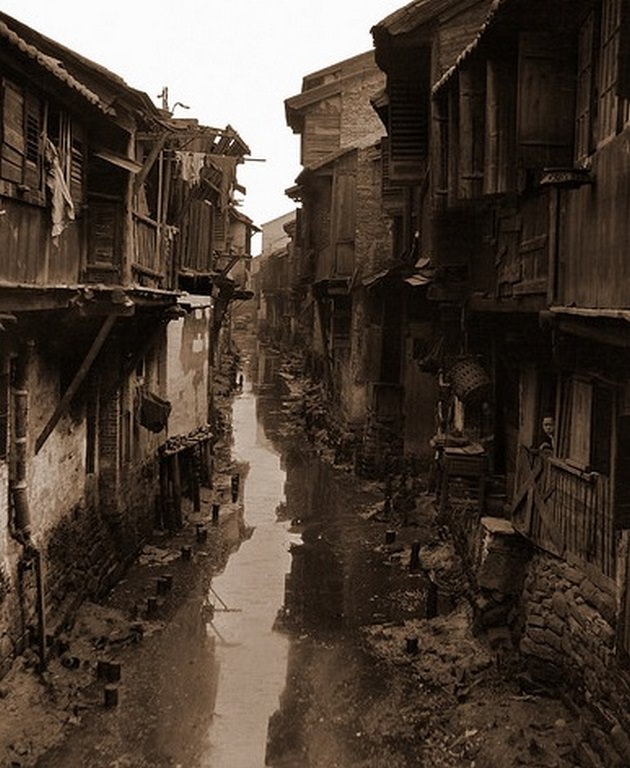
Shanghai was, by the late 19th century, one of the most important cities in all of Asia. Its waterways, bridges, and gates were the connective tissue of a city always in motion. The following images capture the city’s built environment at the turn of the century, before much of it was transformed by modernization and war.
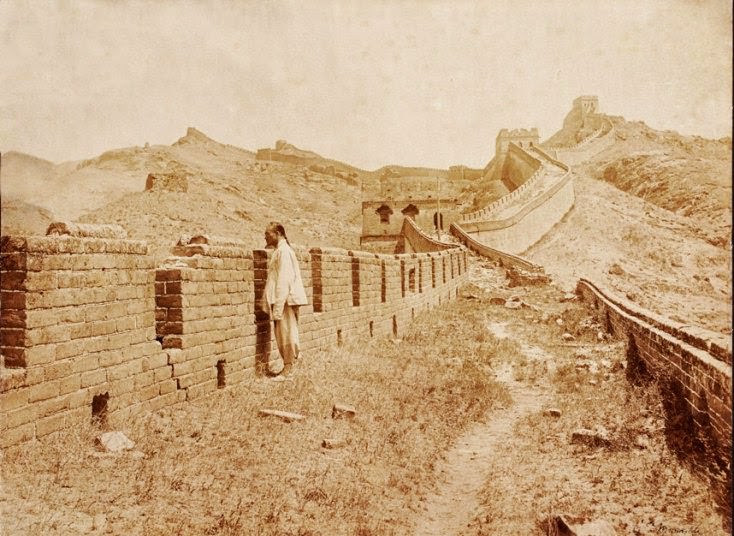
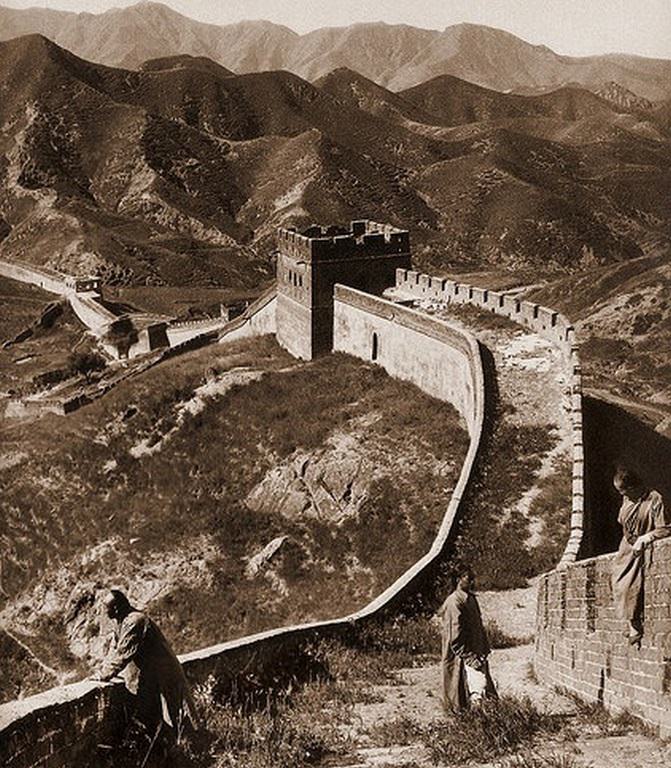
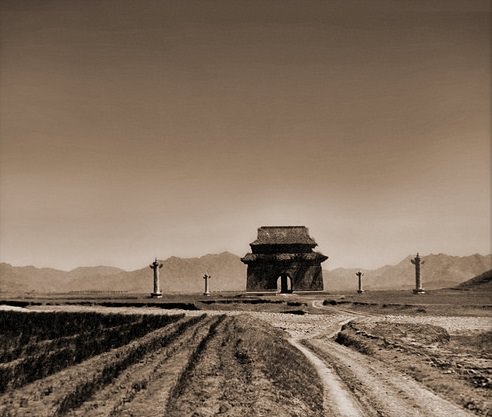
China’s most iconic structure, the Great Wall, stretched thousands of miles across the northern landscape. Built and rebuilt over centuries to defend against invasion, it had become a symbol of the country’s long history by the time Western photographers turned their lenses toward it in the 1880s. These early photographs show the Wall in a state of weathered permanence, long past its active military use but still deeply meaningful to the Chinese people.
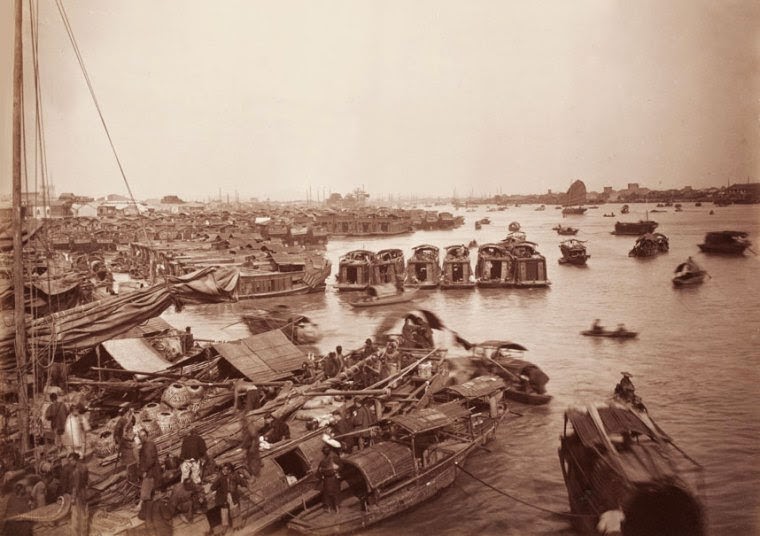
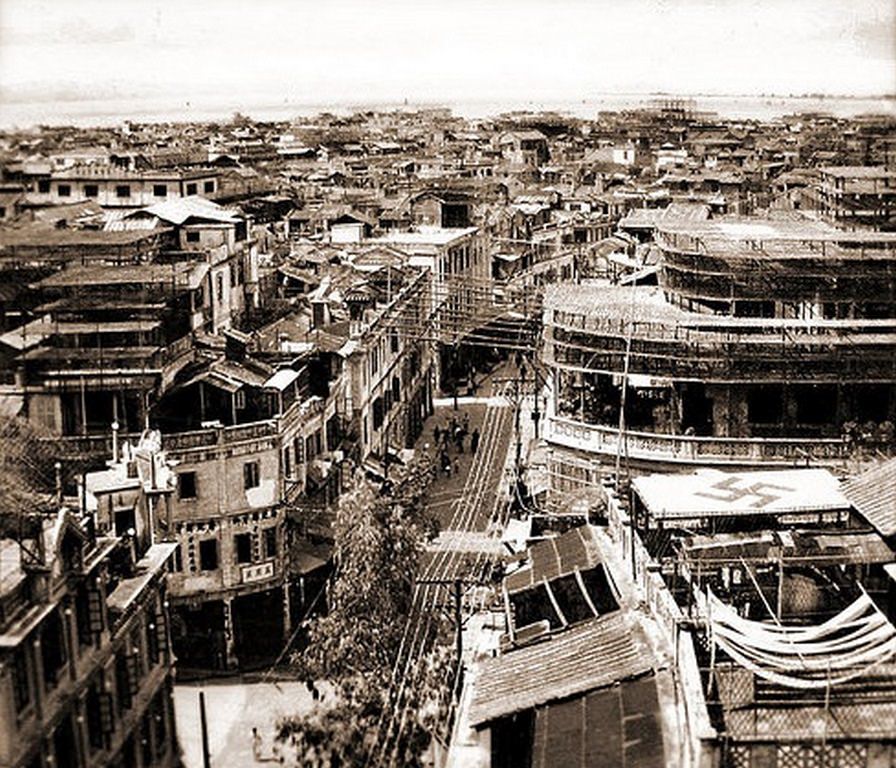
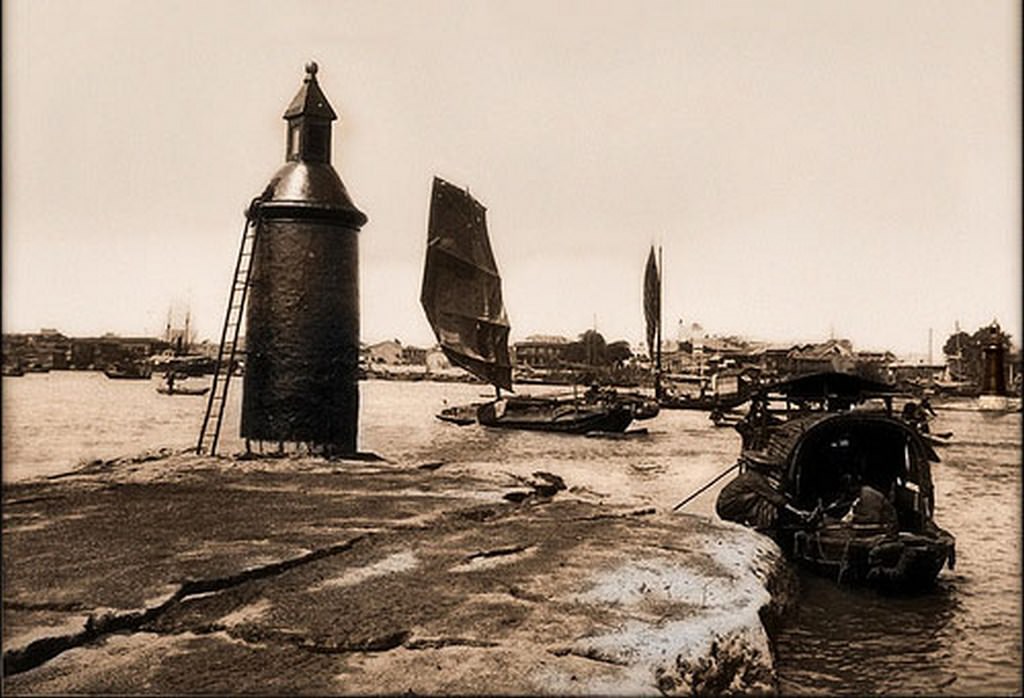
Port cities like Foochow (modern-day Fuzhou) and Canton (modern-day Guangzhou) were central to China’s trade networks, both domestic and foreign. Their harbors, canals, and rivers were the lifeblood of commerce. Western merchants and photographers who passed through these cities left behind images that document a world of boats, waterways, and bustling trade that has since changed almost beyond recognition.
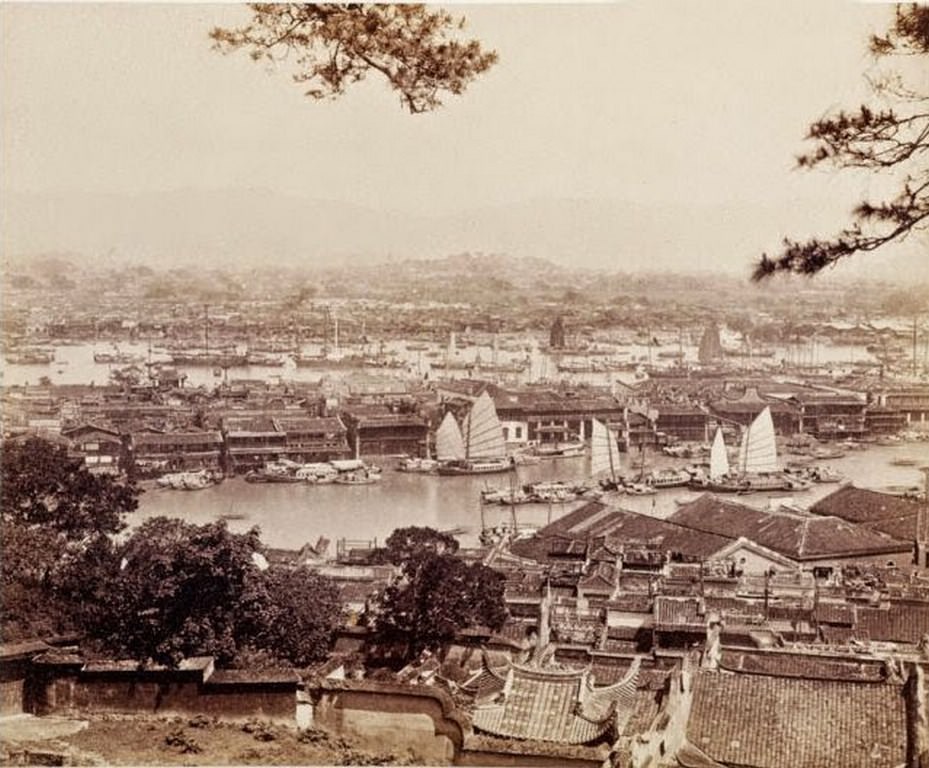
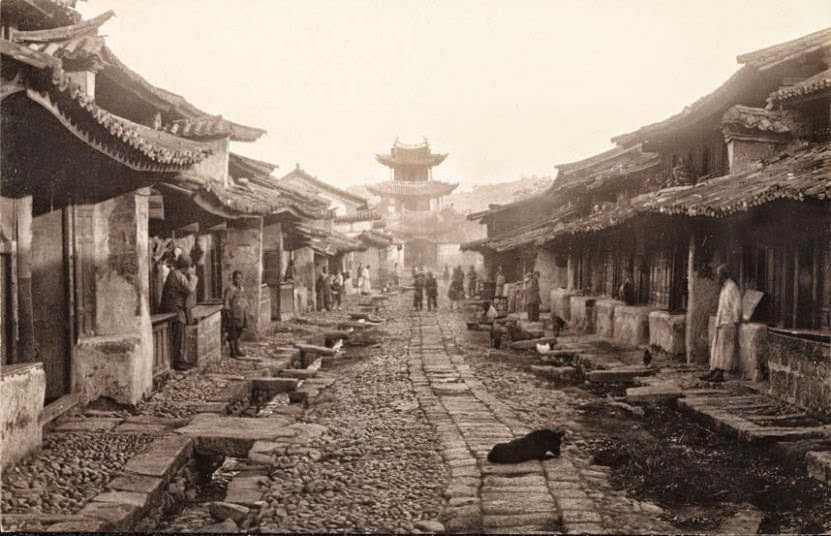
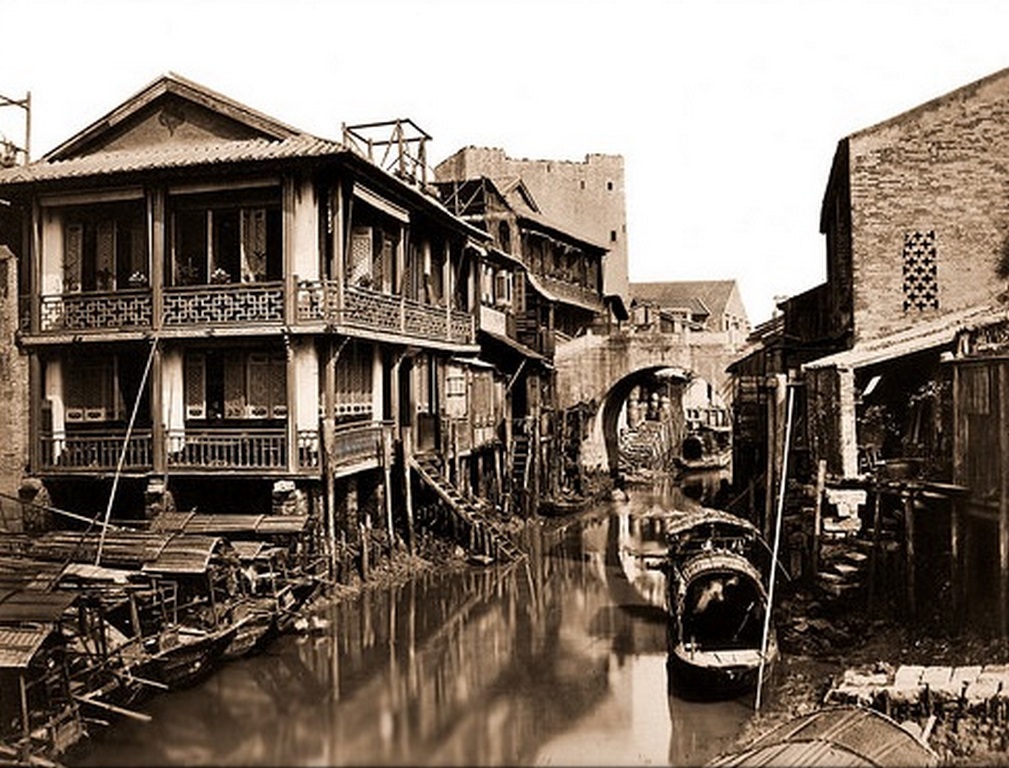
The Pearl River flowing through Canton was a central artery of southern Chinese life. Along its banks, homes, shops, and temples crowded together. The Wanham Canal nearby served both transportation and daily household needs. Photographer Afong, one of China’s earliest known commercial photographers, captured these scenes with a precision that gave the outside world its first real look at how ordinary Chinese families lived.
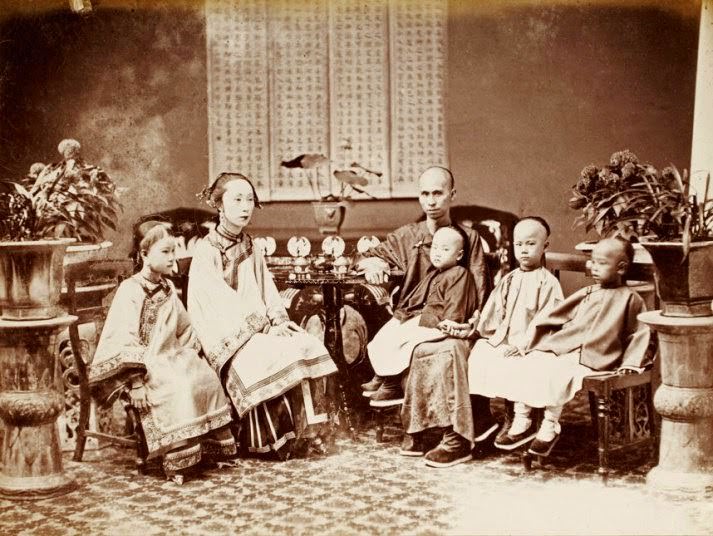
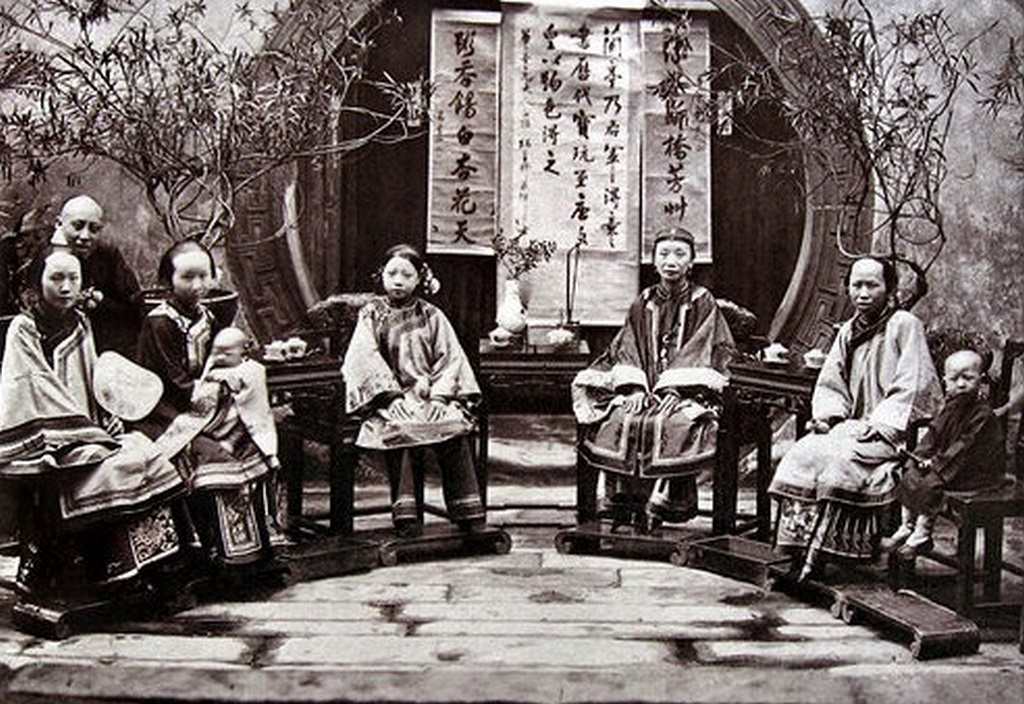
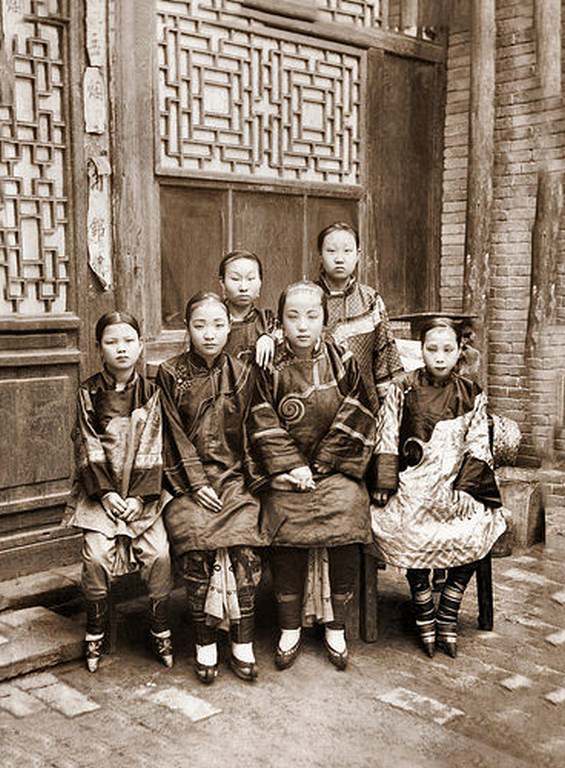
Family was the cornerstone of Chinese society. Multi-generational households operated under a strict Confucian framework that defined roles by age, gender, and social standing. Women in particular faced significant restrictions — including the painful practice of foot binding, which was applied to young girls across much of China and persisted well into the 20th century. These photographs document Chinese families and women as they actually appeared, without idealization.
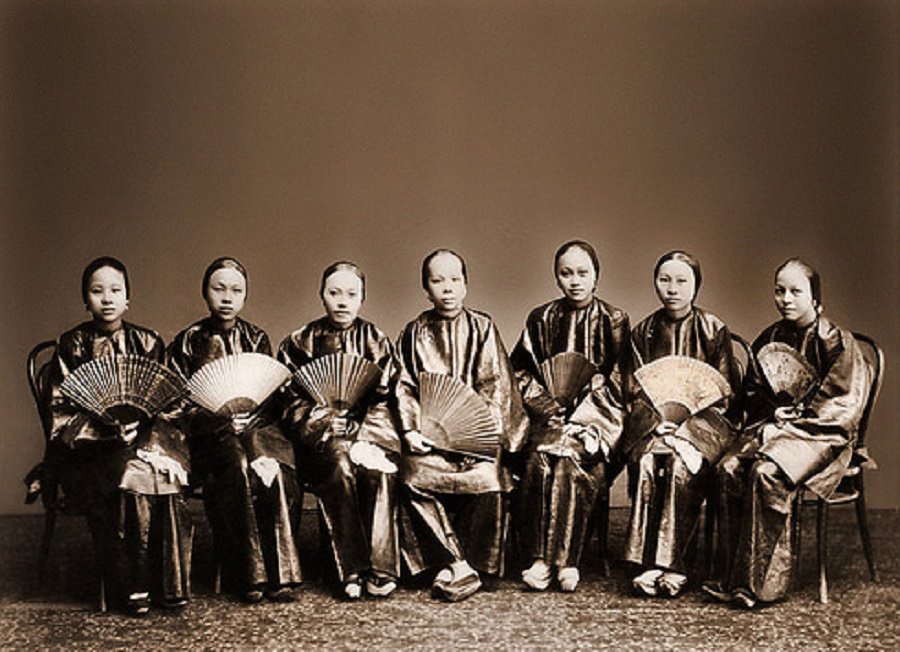
By the late 19th century, Western nations had carved China into spheres of influence, granting themselves trade rights, legal exemptions, and territorial concessions. Chinese resentment toward this foreign domination exploded in 1900 with the Boxer Rebellion — a violent uprising led by members of the Society of Righteous and Harmonious Fists. The Boxers attacked foreign nationals, Christian missionaries, and Chinese Christians across the country. An eight-nation military alliance eventually crushed the rebellion, and its aftermath left the Qing dynasty weaker than ever.
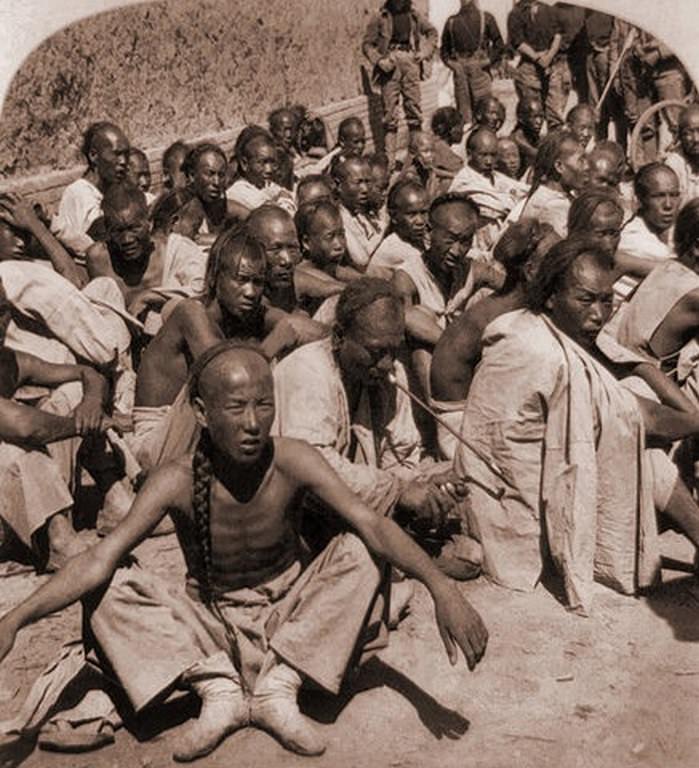
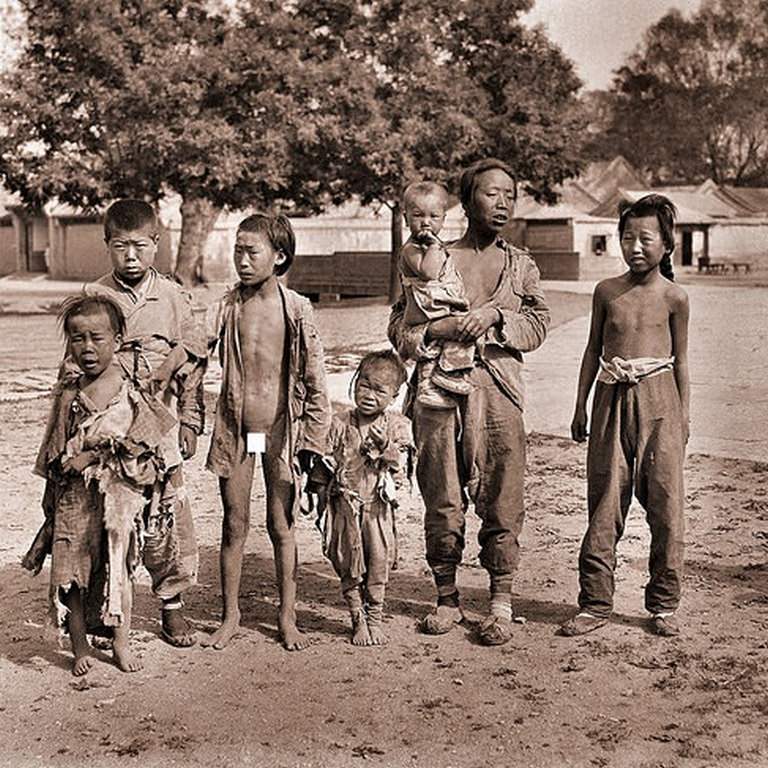
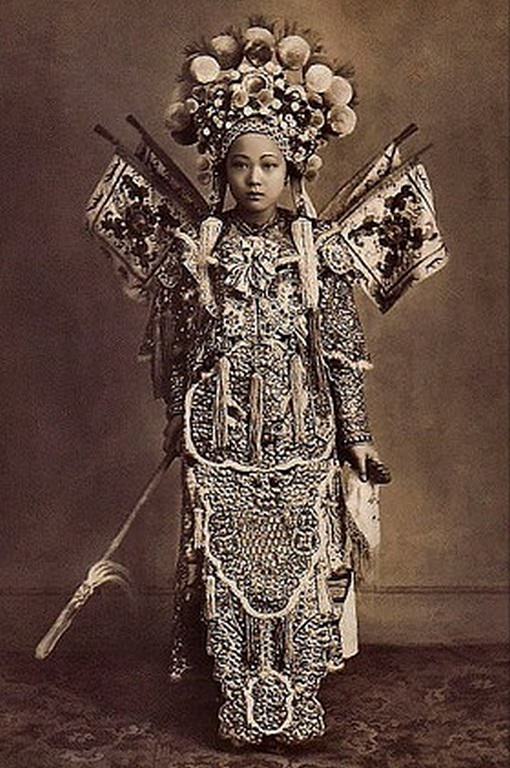
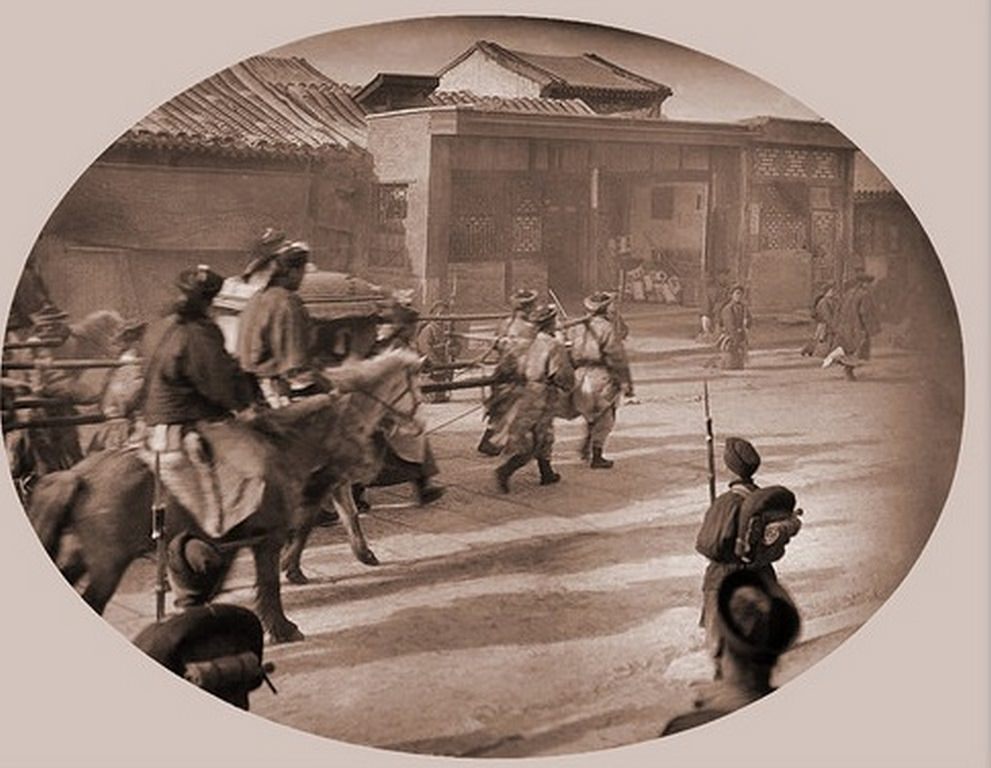
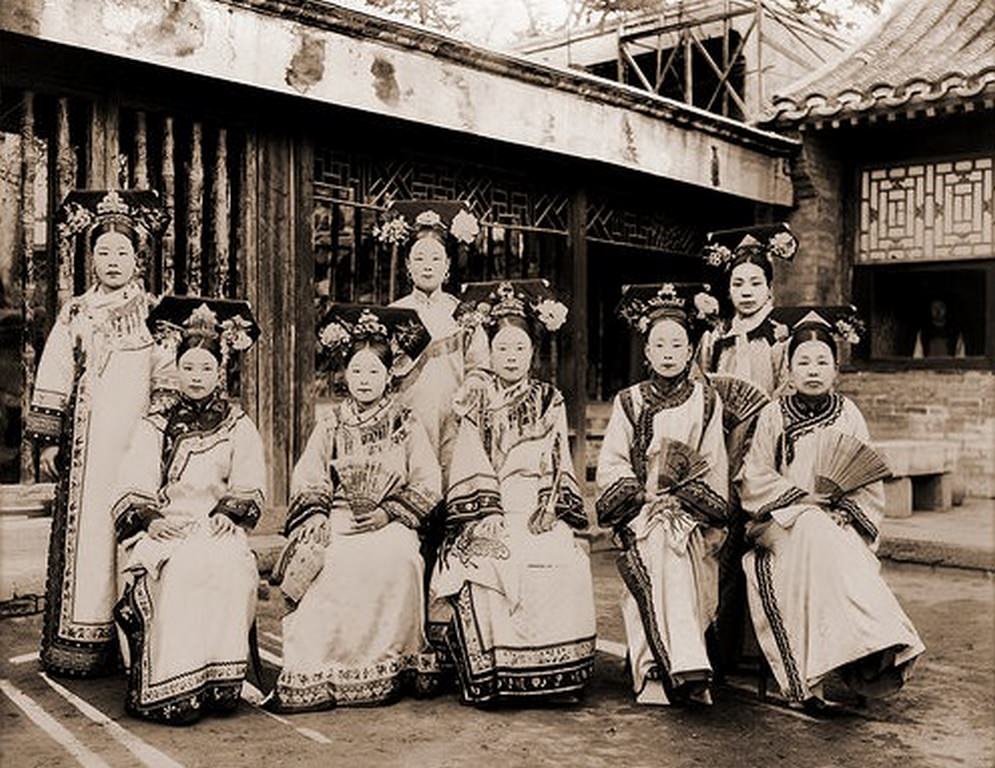
Empress Dowager Cixi was among the most powerful figures of the late Qing dynasty. After the Boxer Rebellion ended in humiliation for China, she was forced to flee Beijing before eventually returning to the capital in 1902. Her return was a carefully staged political event, photographed and documented as a show of restored imperial authority — though in reality, the dynasty’s grip on China was slipping fast. Inside the palace, customs were rigid. Even the Manchu ladies of the court were not exempt from official decrees, as seen in the remarkable 1910 photograph below.
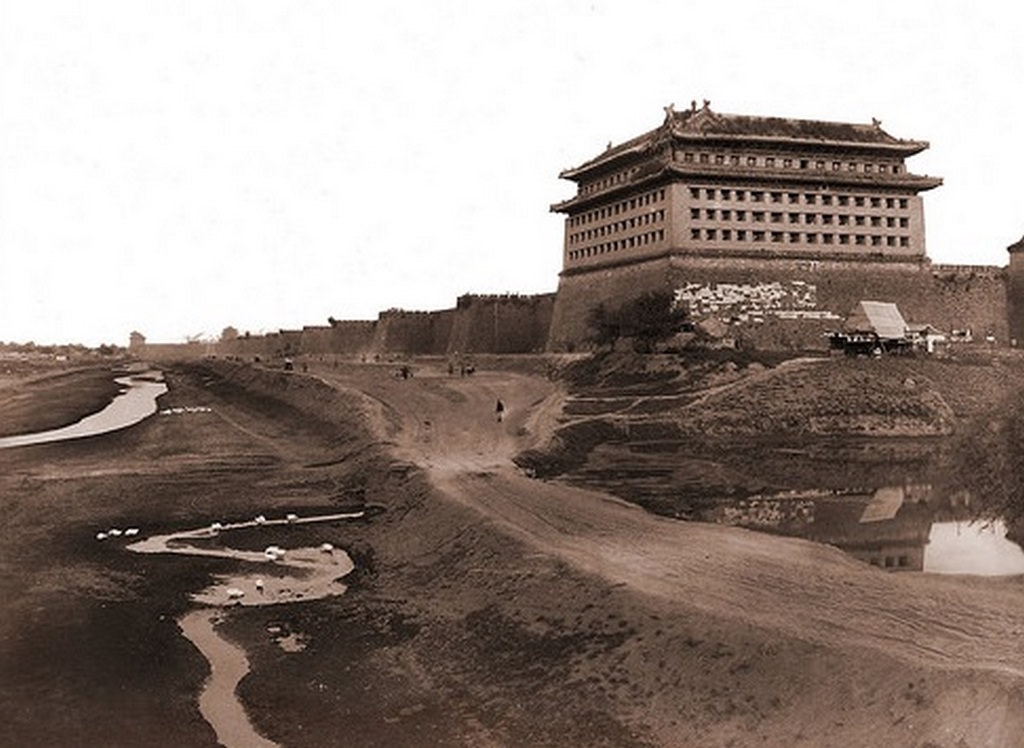
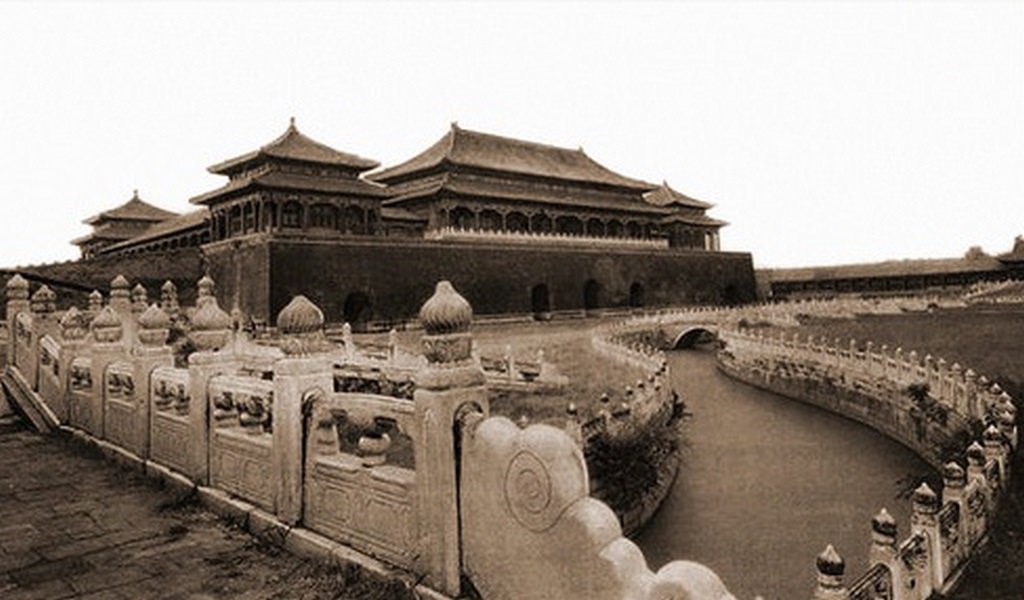
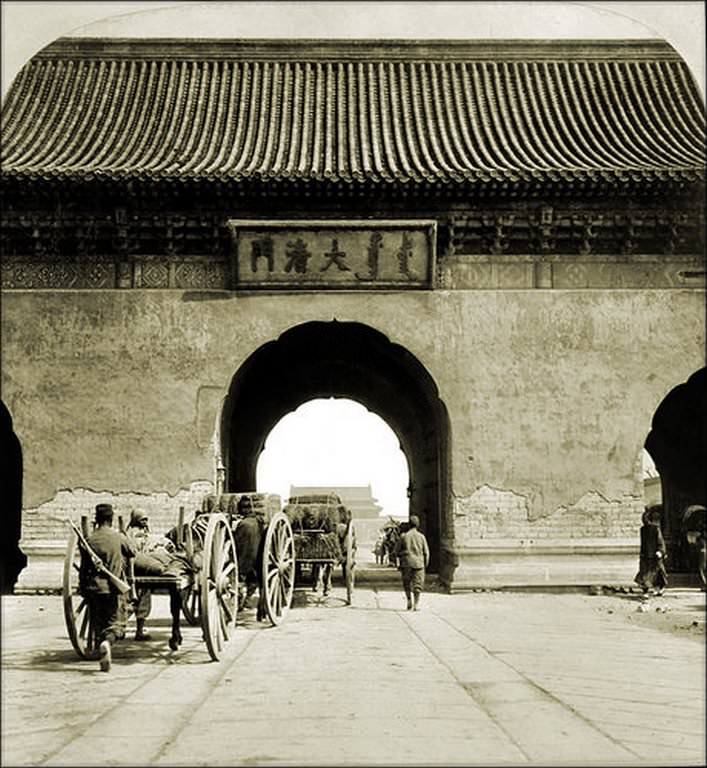
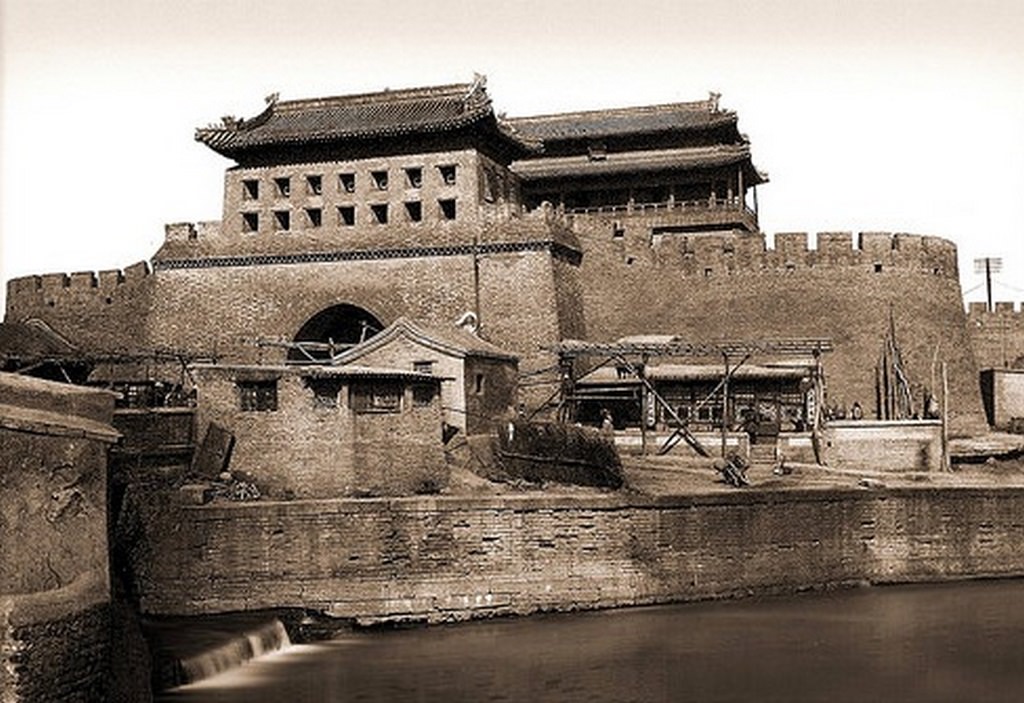
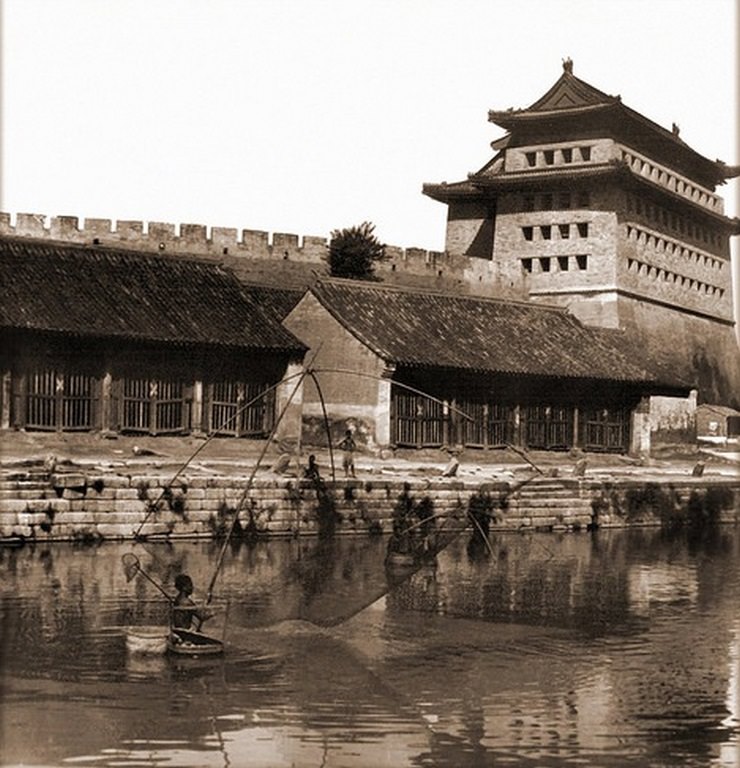
Peking, known today as Beijing, served as China’s imperial capital and was defined by its massive defensive walls, ceremonial gates, and formal city structure. The Tartar City walls enclosed the inner districts where Manchu bannermen and imperial officials lived, separate from the outer Chinese city. These walls were not merely defensive — they communicated power and social order in physical form.
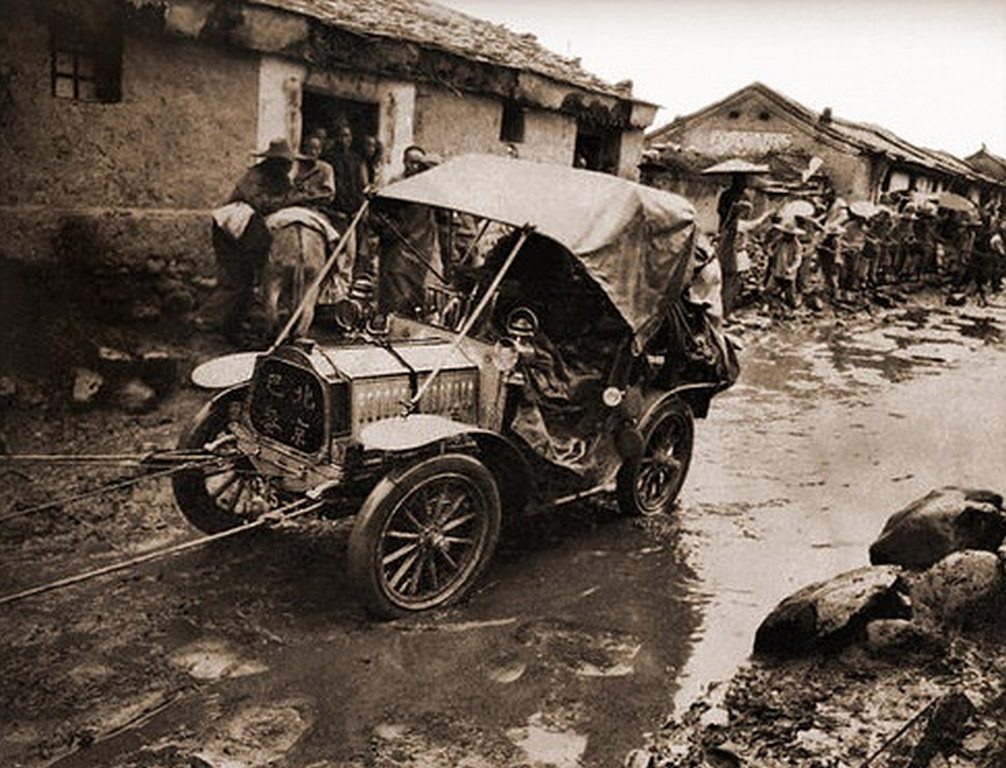
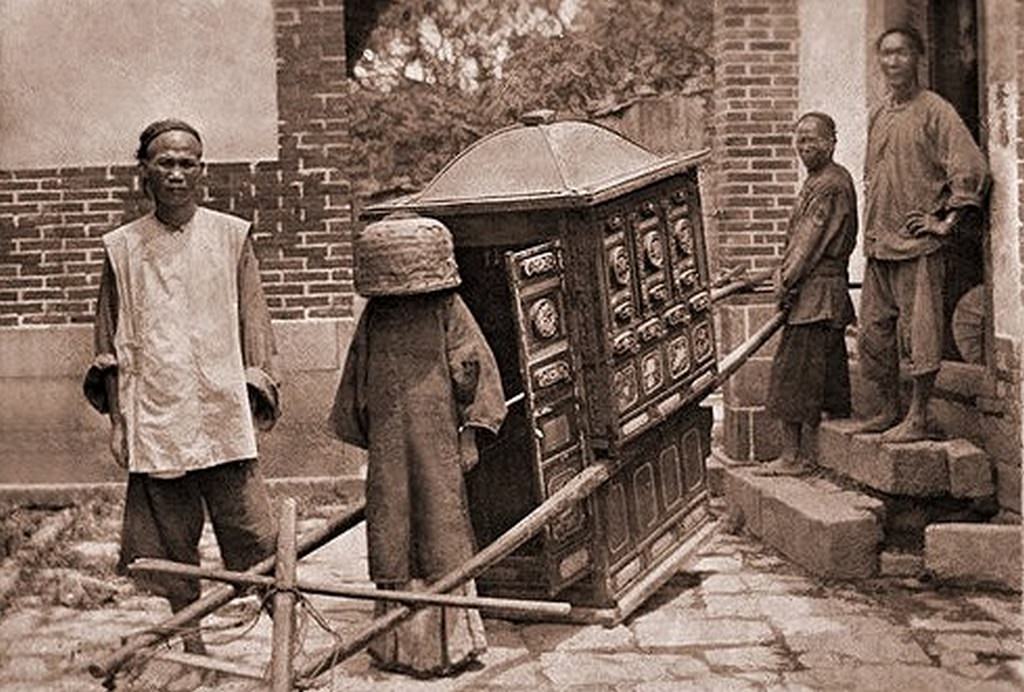
Even as political instability gripped the country, ordinary life continued in all its complexity. Weddings took place with traditional ceremony, food vendors worked the streets, and scholars prepared for imperial examinations. In 1913, a bride traveling to her wedding in Fuzhou was photographed mid-procession — one of countless moments of daily life that the camera preserved even as the political world around it fractured.
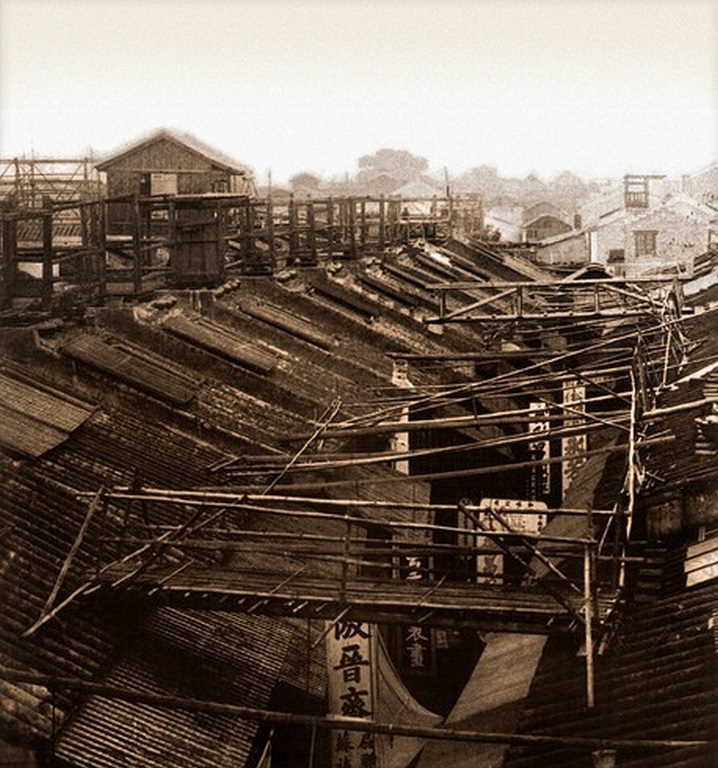
Canton’s rooftop police were a practical solution to a city with densely packed streets too narrow for ground-level patrols. Officers used elevated bridges strung between buildings to cross from rooftop to rooftop, monitoring the streets below. This unusual infrastructure was a direct reflection of how Chinese cities had grown organically over centuries, without the grid planning that characterized Western urban development.
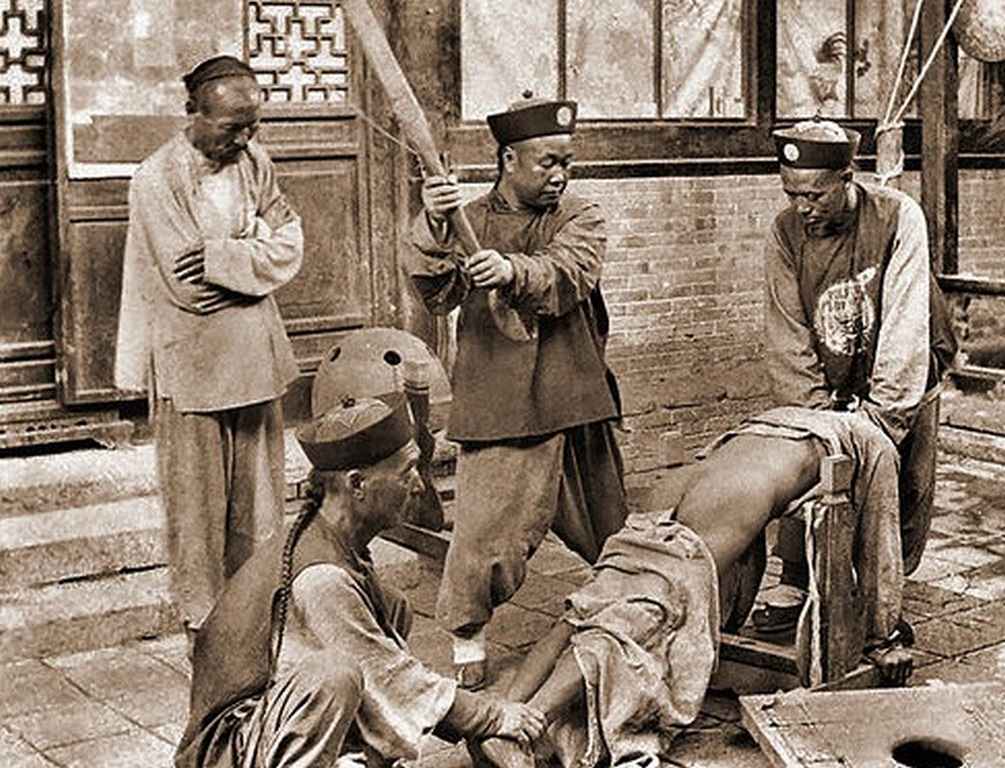
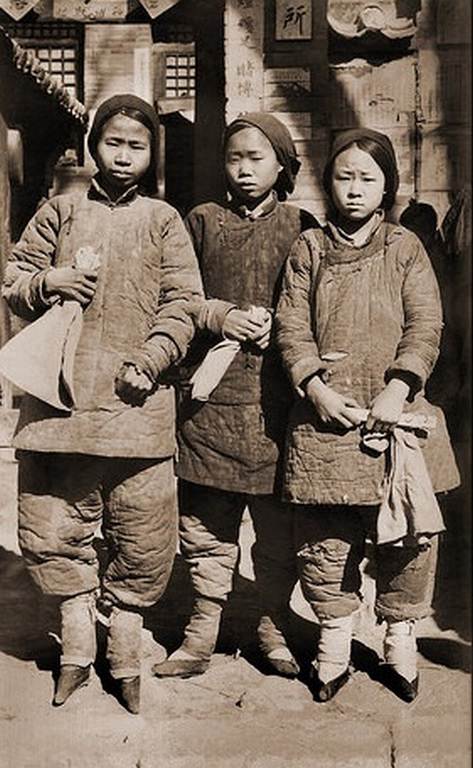
Education occupied a central place in Chinese society, particularly through the imperial examination system that determined who could enter government service. Mission schools established by Western missionaries added a new dimension to Chinese education in the late 19th and early 20th centuries. Meanwhile, the ancient practice of foot binding, applied to girls as young as four or five, was documented by Western and Chinese photographers alike. By 1930, the practice was officially banned, though it persisted in rural areas for years afterward.
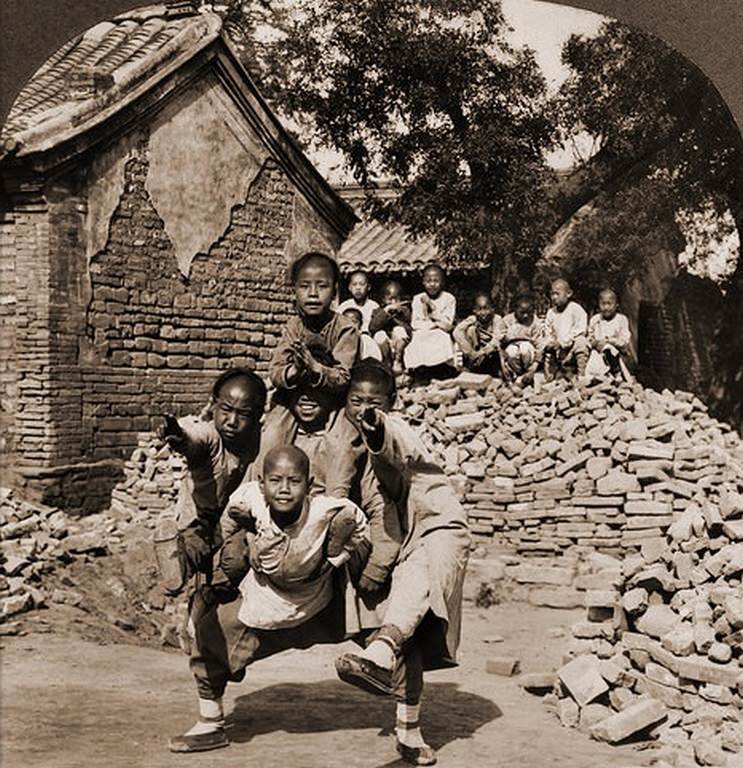
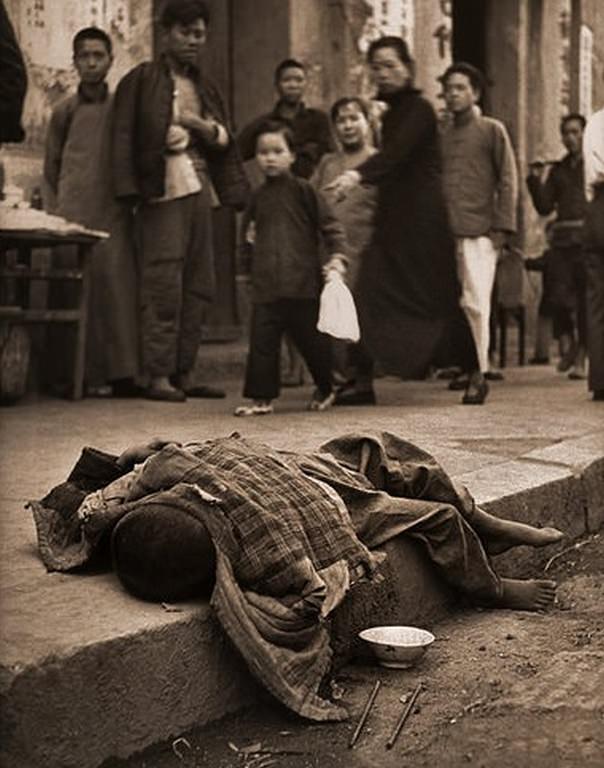
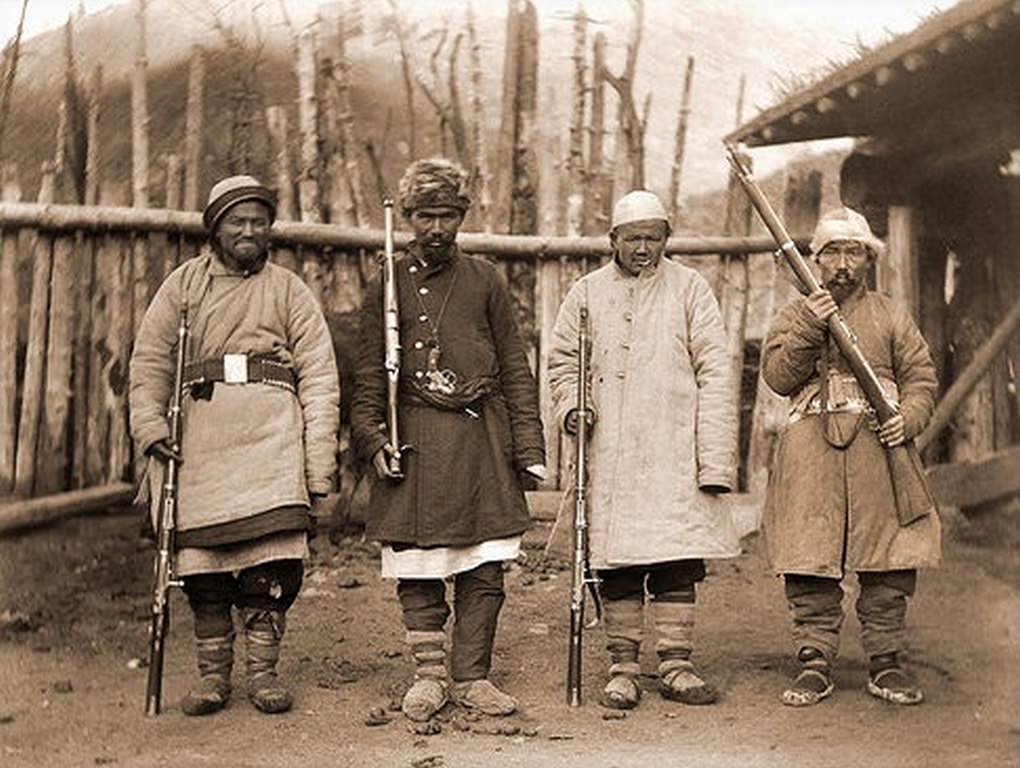
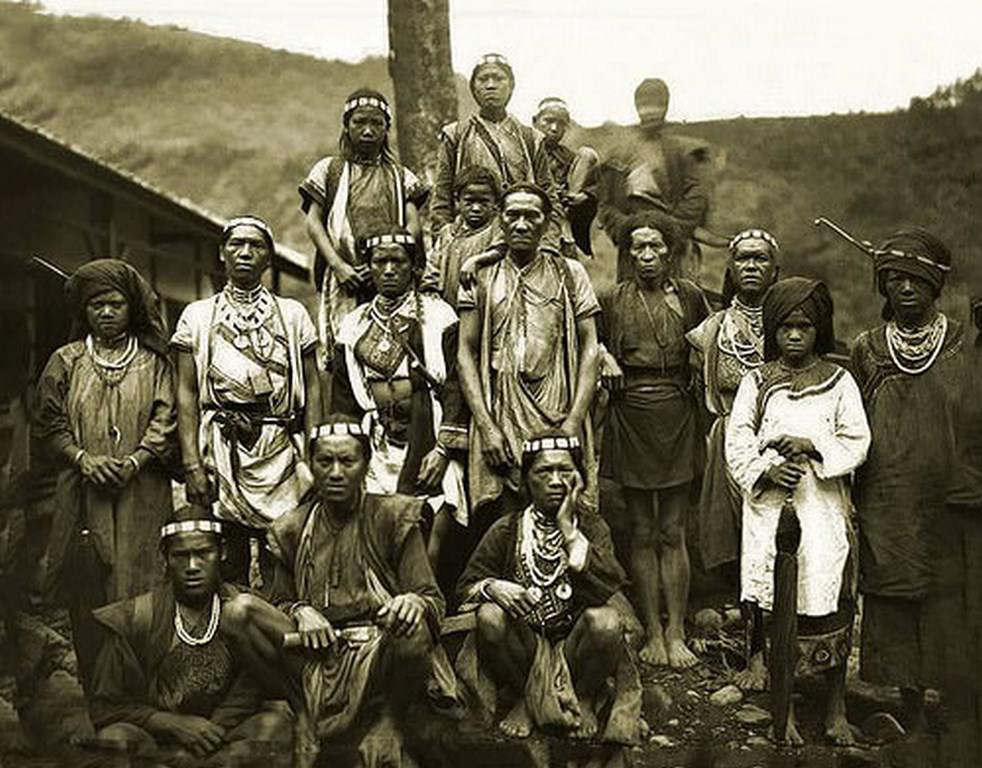
China’s territories extended far beyond the Han heartland to include Taiwan, Tibet, and the vast frontier regions of Xinjiang. The indigenous peoples of Taiwan, including the Bunun tribe of Formosa, lived in ways almost entirely separate from the imperial world of Beijing. Tibet, too, operated under its own religious and political structures, with Buddhist monasteries dominating both the landscape and the daily life of Tibetan people.
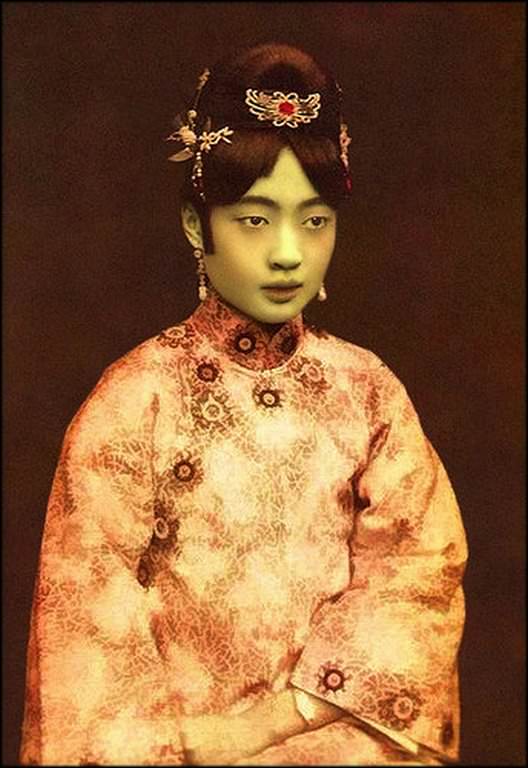
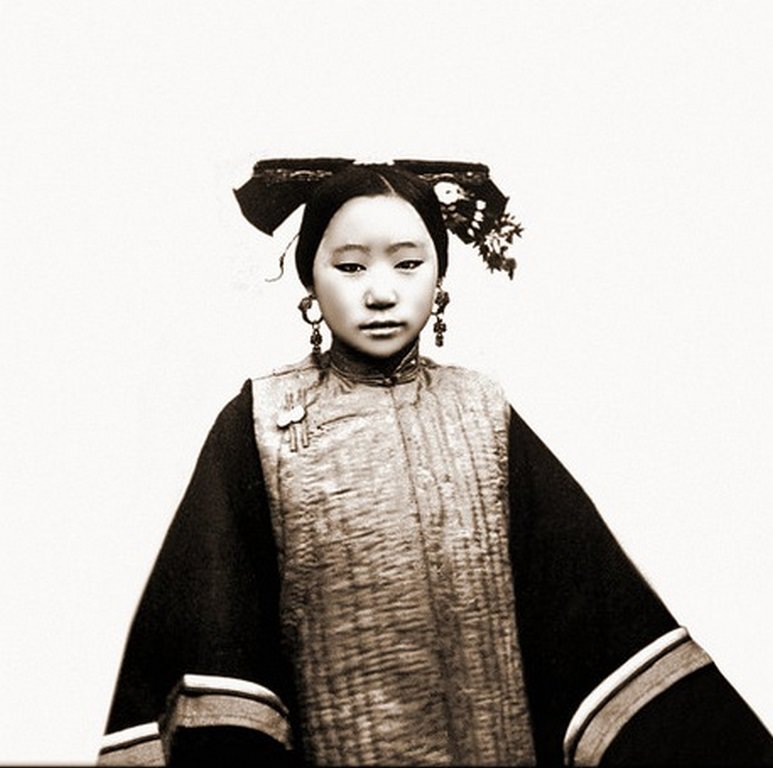
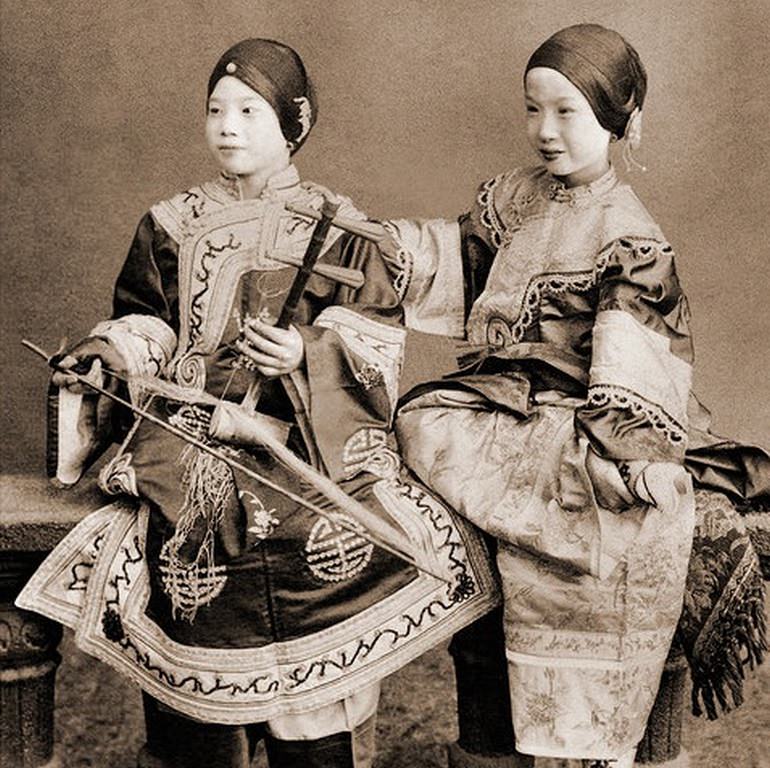
Manchu women of the Qing court wore elaborate hairstyles that served as markers of rank and ethnic identity. The towering coiffures photographed in Peking in 1896 required significant time and skill to construct and were distinct from the styles worn by Han Chinese women. These photographs provided some of the first direct visual documentation of Qing court culture available to Western audiences.
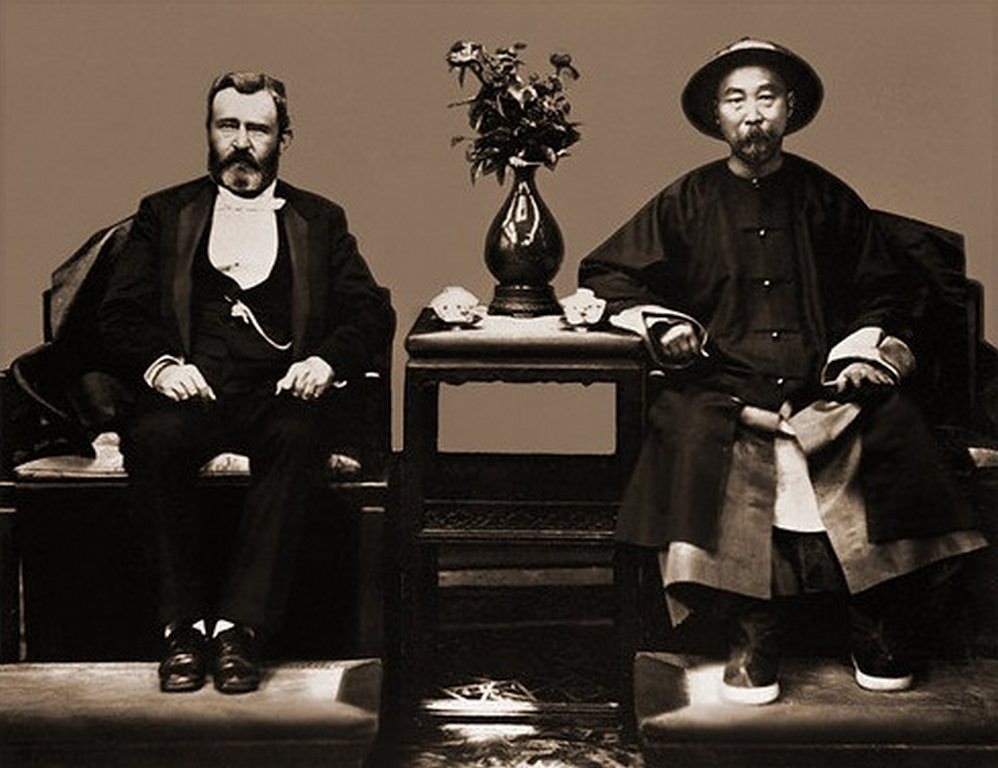
Foreign dignitaries made their way to China throughout this period, sometimes to negotiate, sometimes simply to observe. Former U.S. President Ulysses S. Grant visited Tientsin in 1879 and met with the powerful Chinese official Li Hung Chang. The photograph dated 1896 showing both men together stands as a rare document of diplomatic contact between two very different worlds.
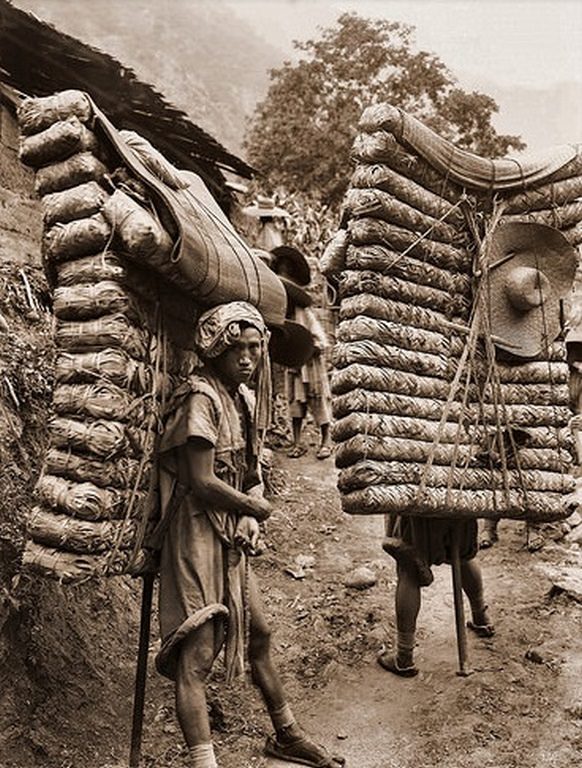
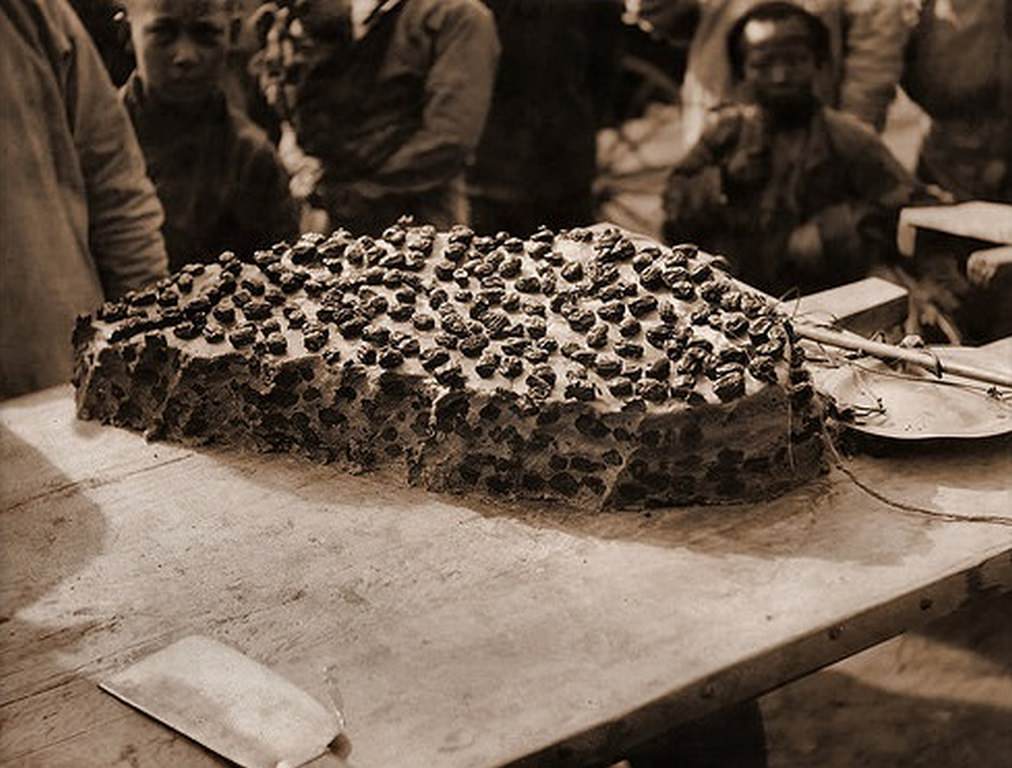
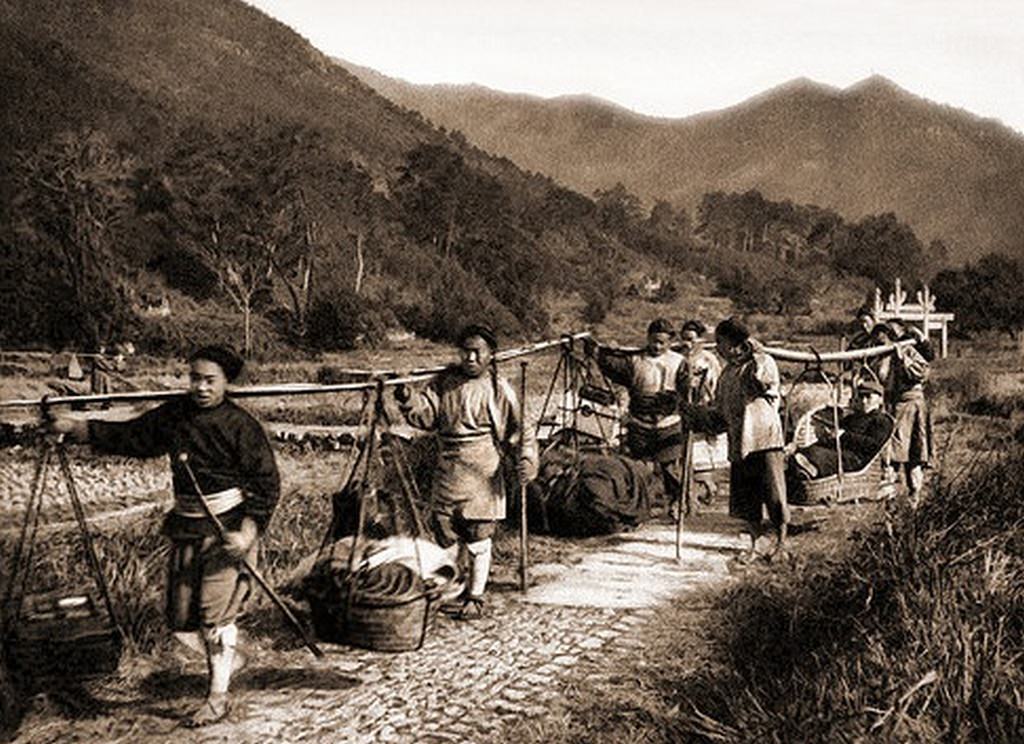
Tea was one of China’s most important exports, carried by hand across mountain passes and loaded onto boats for transport along rivers and coastal trade routes. The men photographed in Sichuan in 1908 carry enormous loads of compressed tea bricks on their backs, each man bent forward under a weight that could exceed 100 kilograms. This type of human cargo transport was common throughout the country, particularly in regions too rugged for wheeled vehicles.
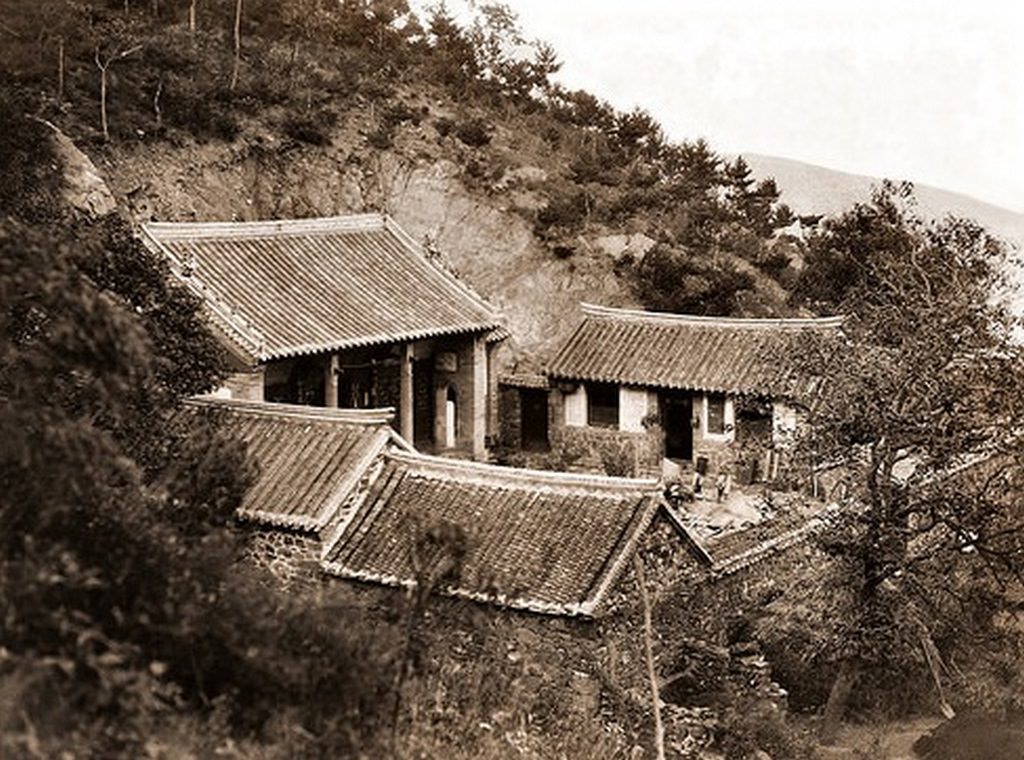
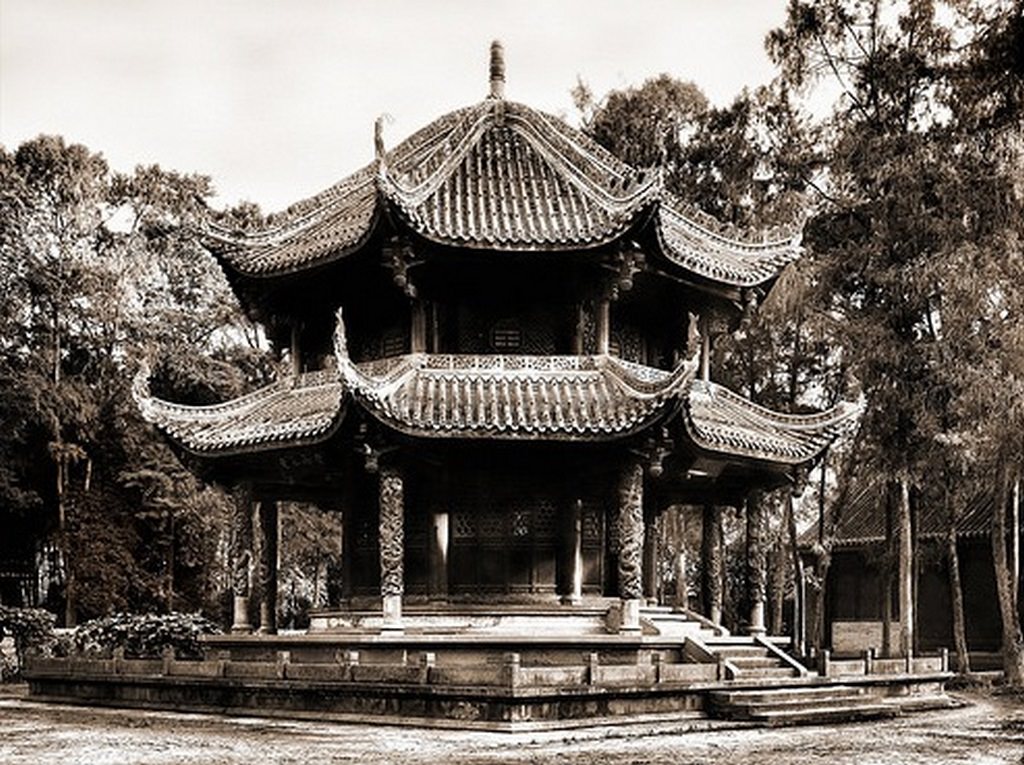
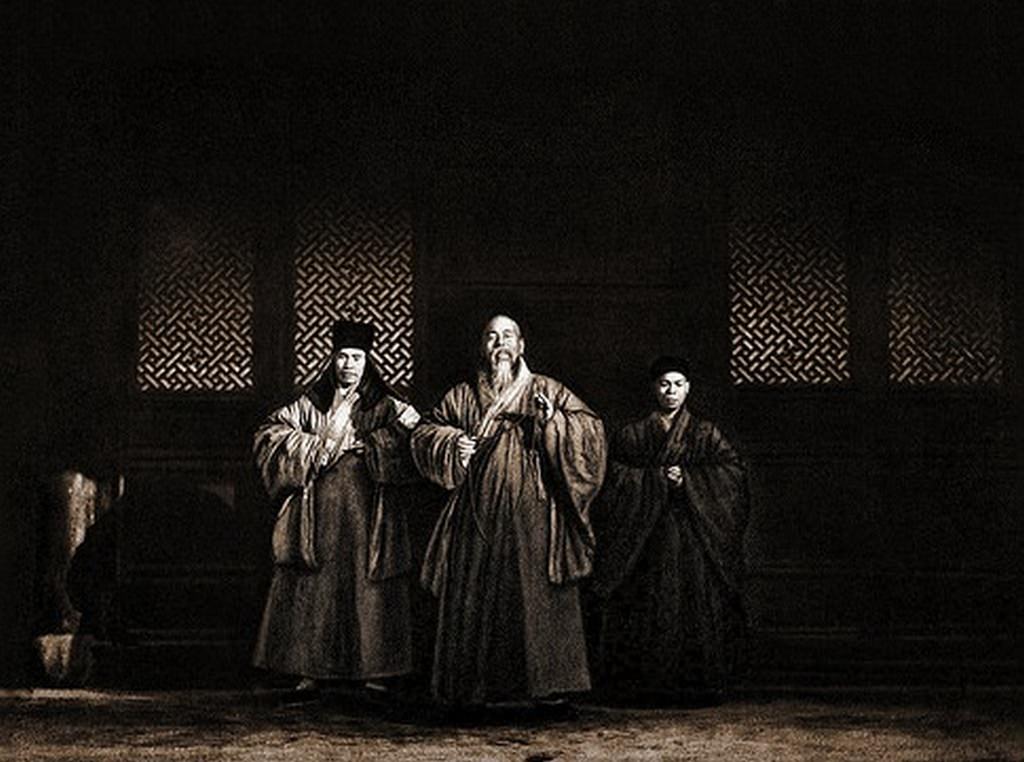
Religious life in China took many forms. Buddhist and Taoist temples dotted the landscape from the coast to the mountains, serving as centers of community, scholarship, and ritual. The forest temples near Chefoo and the Ching Yang Temple in Chengdu were typical of a religious architecture that blended natural surroundings with carefully maintained sacred spaces. Monks and abbots oversaw these institutions, managing not only spiritual affairs but also land, education, and local charity.
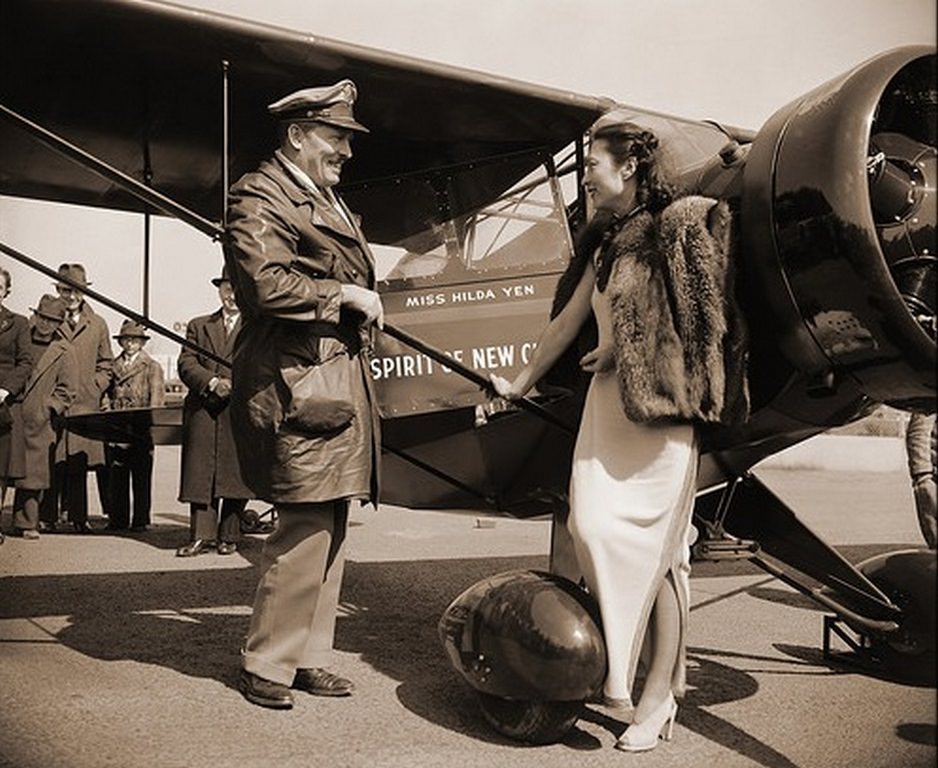
By the late 1930s, China had entered a brutal war against Japanese invasion. In the midst of that conflict, surprising moments still occurred. In 1939, a Chinese aviatrix — a female pilot — received the gift of a new plane from American air racing celebrity Colonel Roscoe Turner in Washington, D.C. It was a striking image of a woman navigating both the air and the international stage during one of China’s darkest decades.
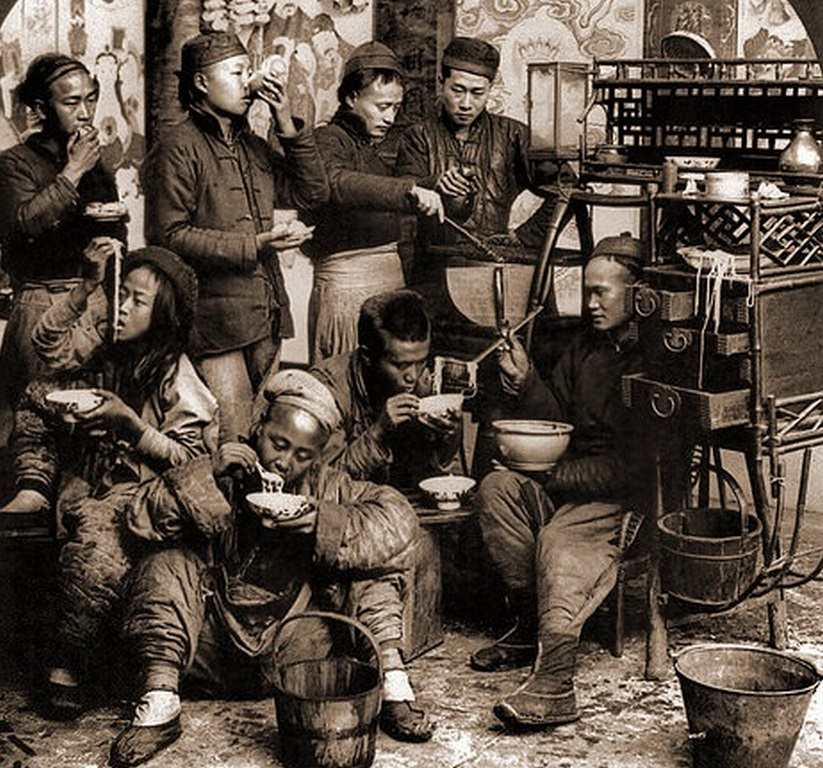
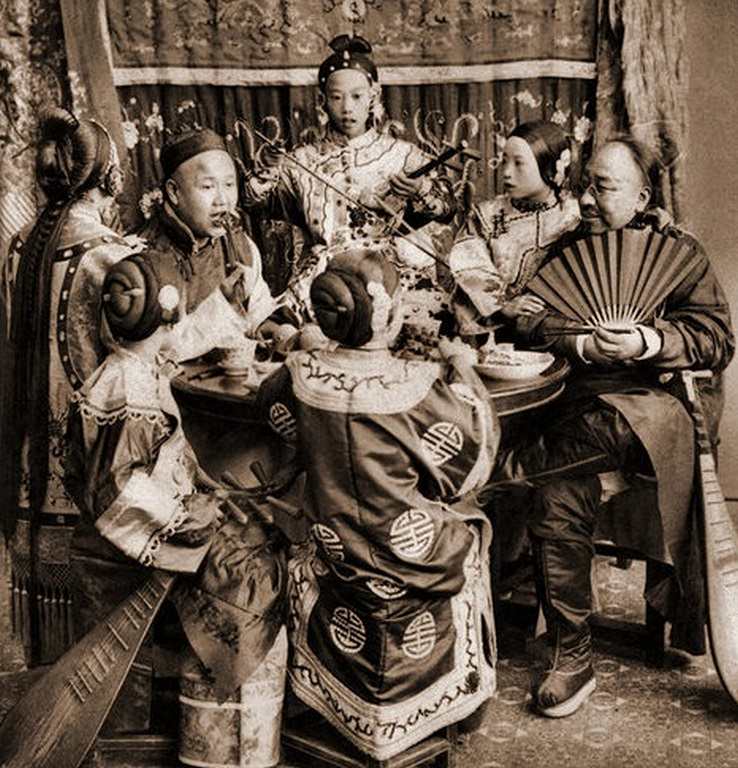
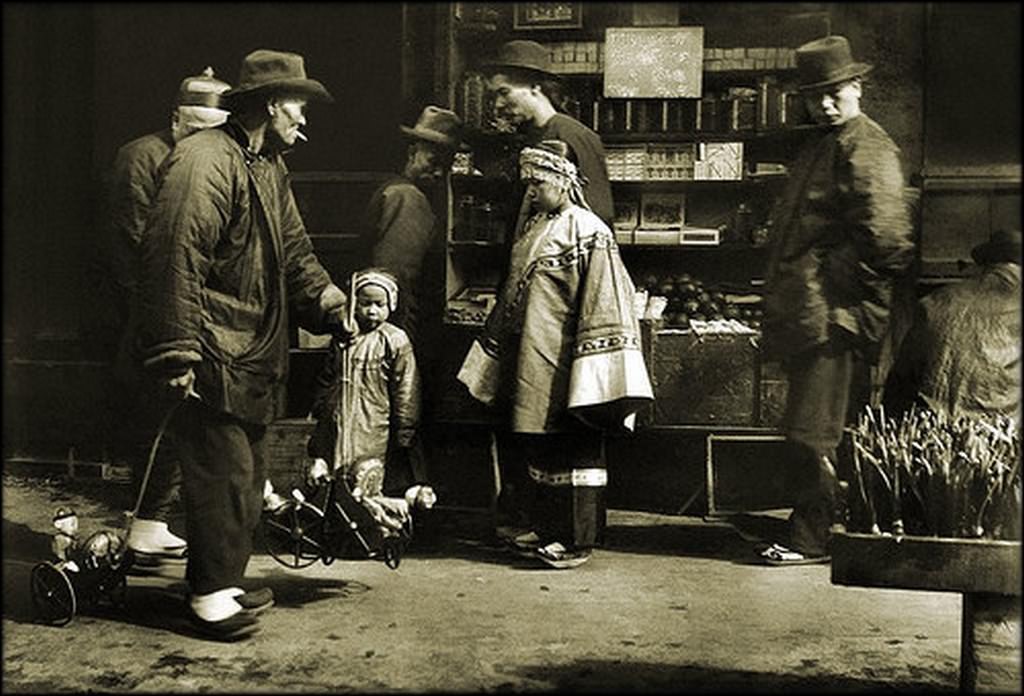
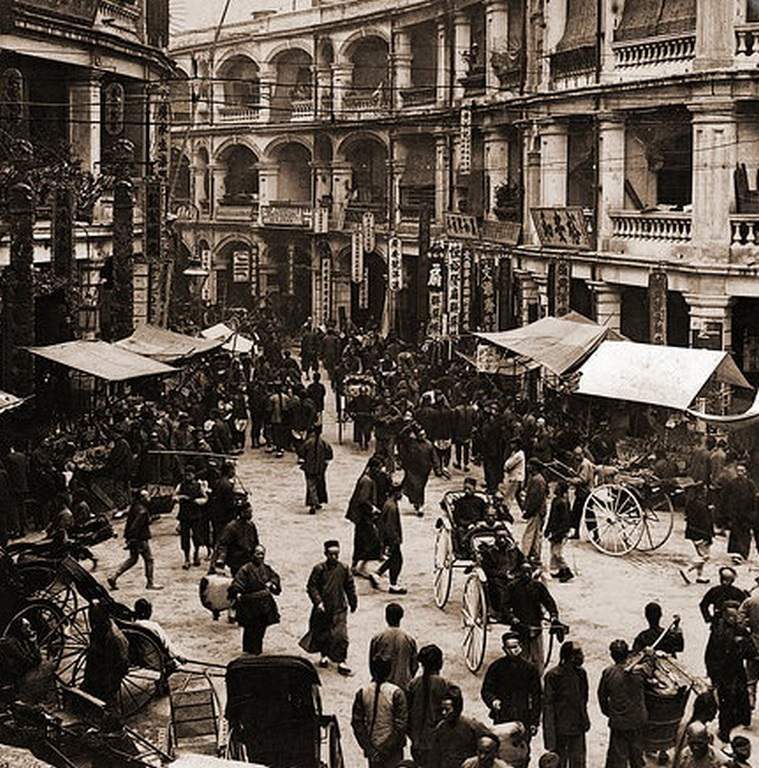
Street food was a defining feature of Chinese urban life. Mobile food stalls — pushcarts loaded with noodles, rice, dumplings, or porridge — served workers, laborers, and the poor who had no kitchens of their own. At the other end of the social scale, wealthy merchants entertained themselves in dining halls accompanied by singing girls hired for the evening. These two worlds existed simultaneously in cities like Canton and Peking, separated by wealth but occupying the same streets.
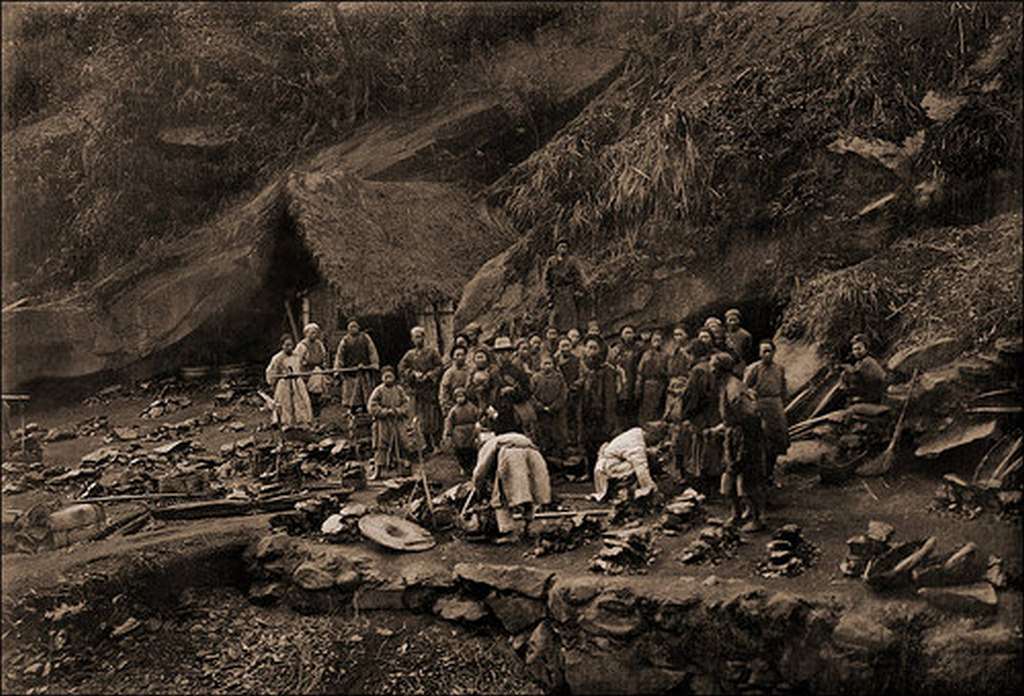
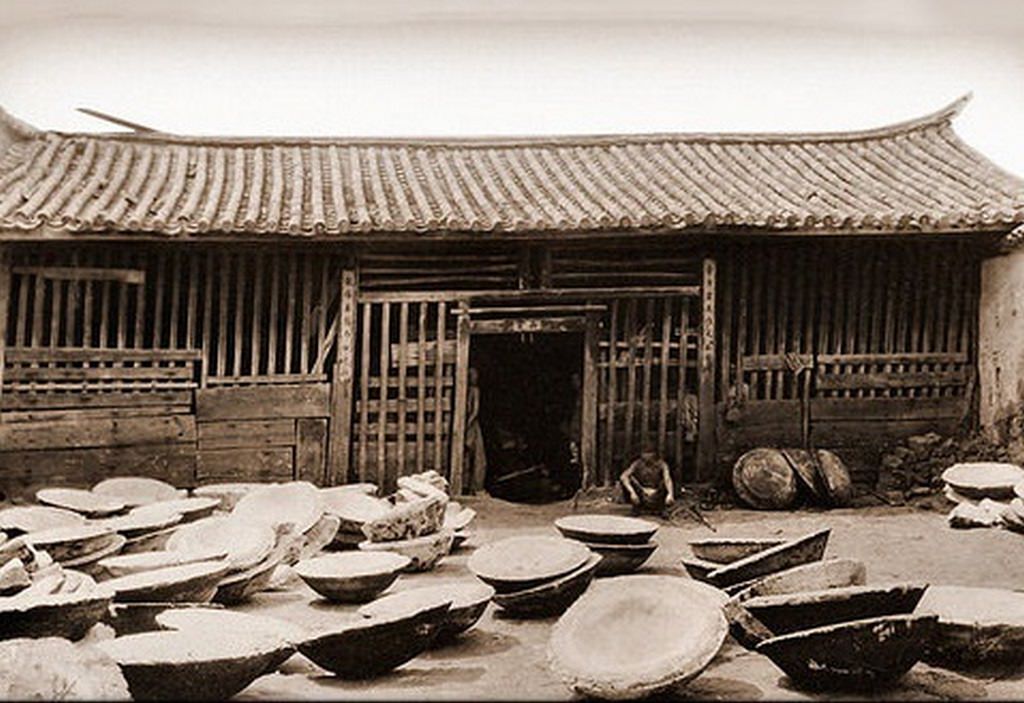
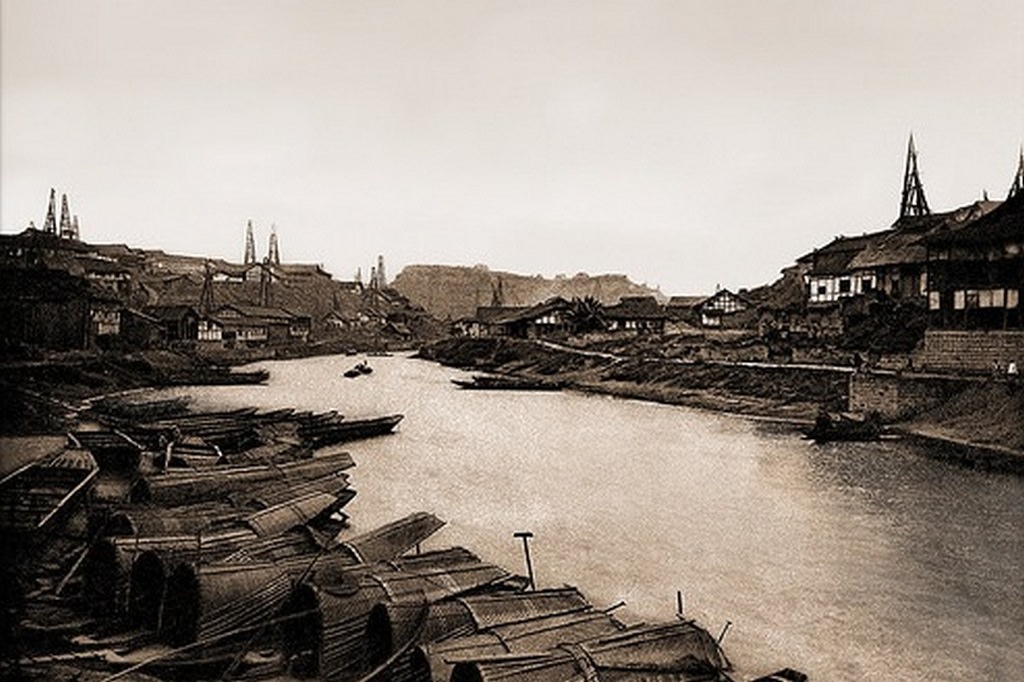
China’s salt wells in Sichuan Province were industrial operations unlike almost anything else in the world. Workers drilled into the earth using bamboo pipes and extracted brine that was then boiled down to produce salt — one of the most valuable commodities in Chinese history. The 1906 photograph of the Tzeliutsing salt works shows a skyline of wooden derricks that looks almost industrial, predating the oil rigs that would later use similar technology in the West.
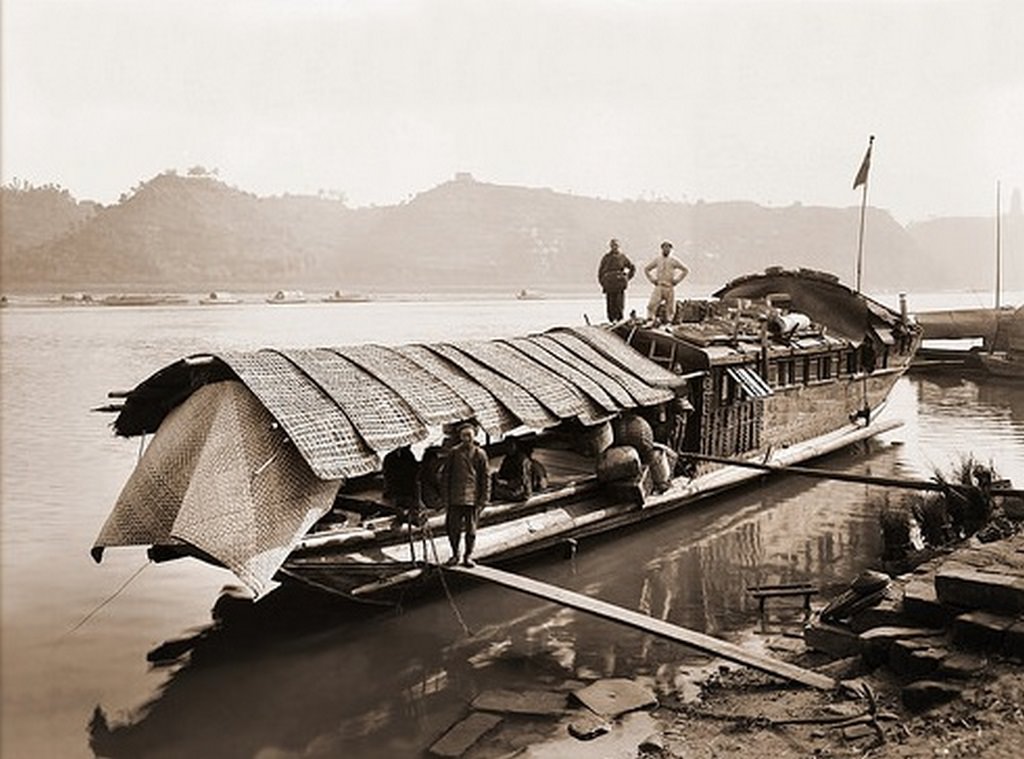
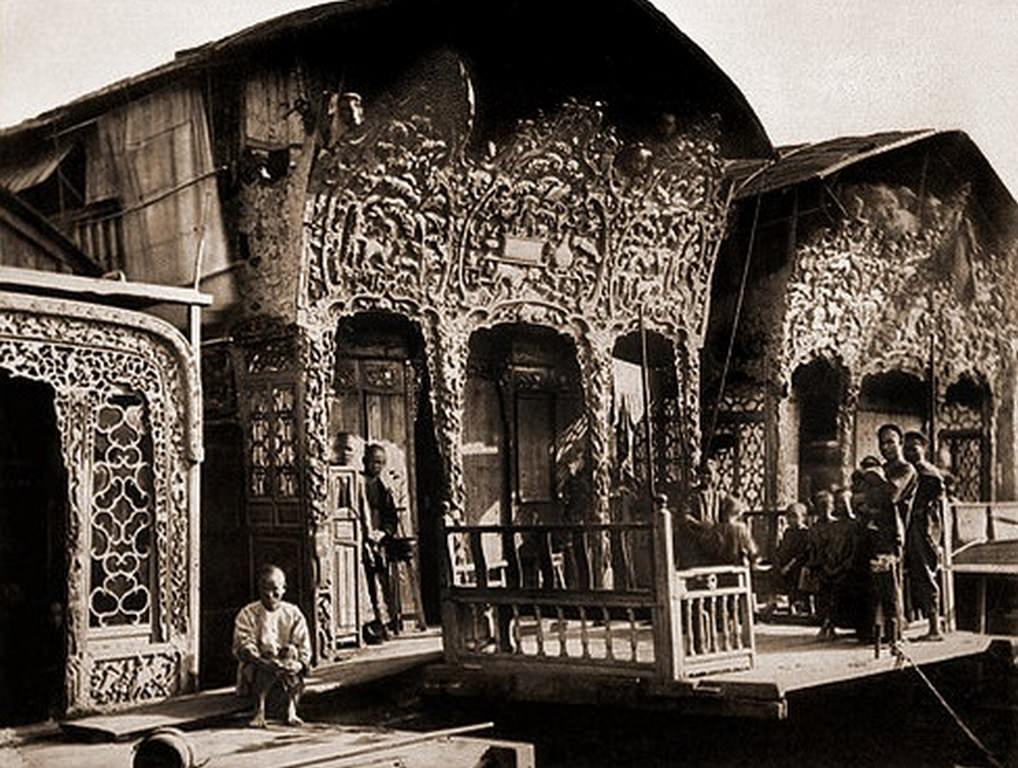
Canton’s flower boats were floating entertainment venues moored along the Pearl River. These elaborately decorated vessels hosted feasts, gambling, music, and the company of women hired to entertain guests. They were a well-documented feature of Canton’s nightlife and a source of significant revenue. By the early 20th century, their numbers had declined, but they remained a recognized part of the city’s social landscape through the late 19th century.
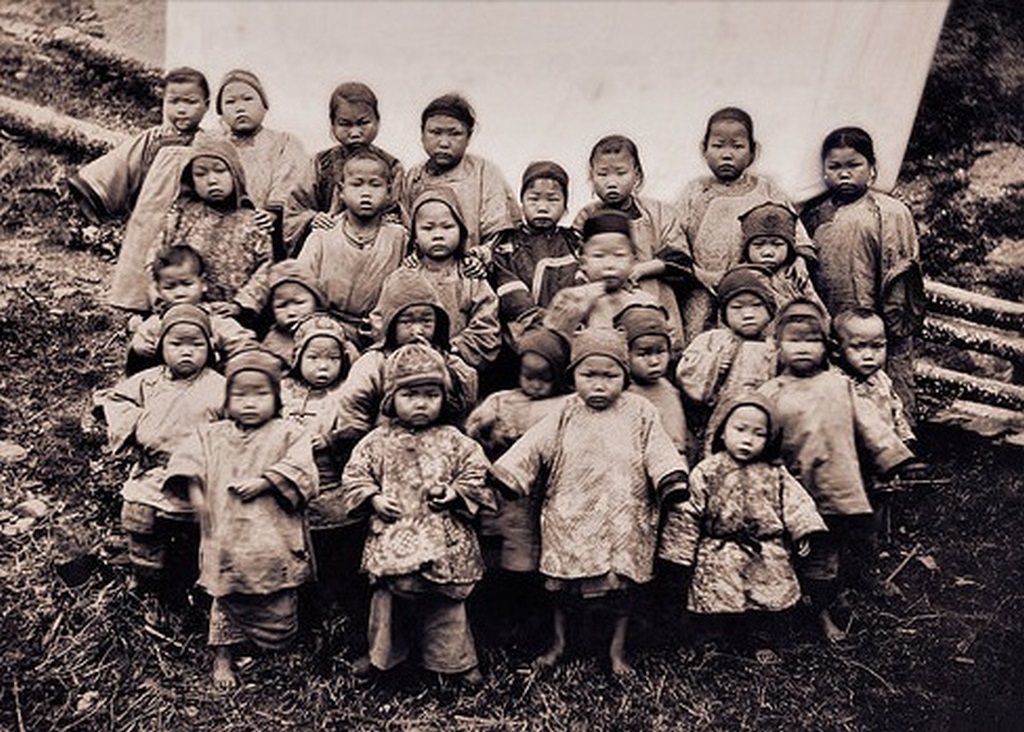
Child trafficking was a documented and widespread problem in late Qing China, particularly in coastal cities and impoverished rural areas. Young girls were kidnapped or sold and transported to distant cities where they were put to work as domestic servants or, in the worst cases, sold into brothels. The photograph of kidnapped girls in Foochow in 1904 was taken by missionaries working to expose and combat the trade. Such images were used in reform campaigns both inside China and abroad.
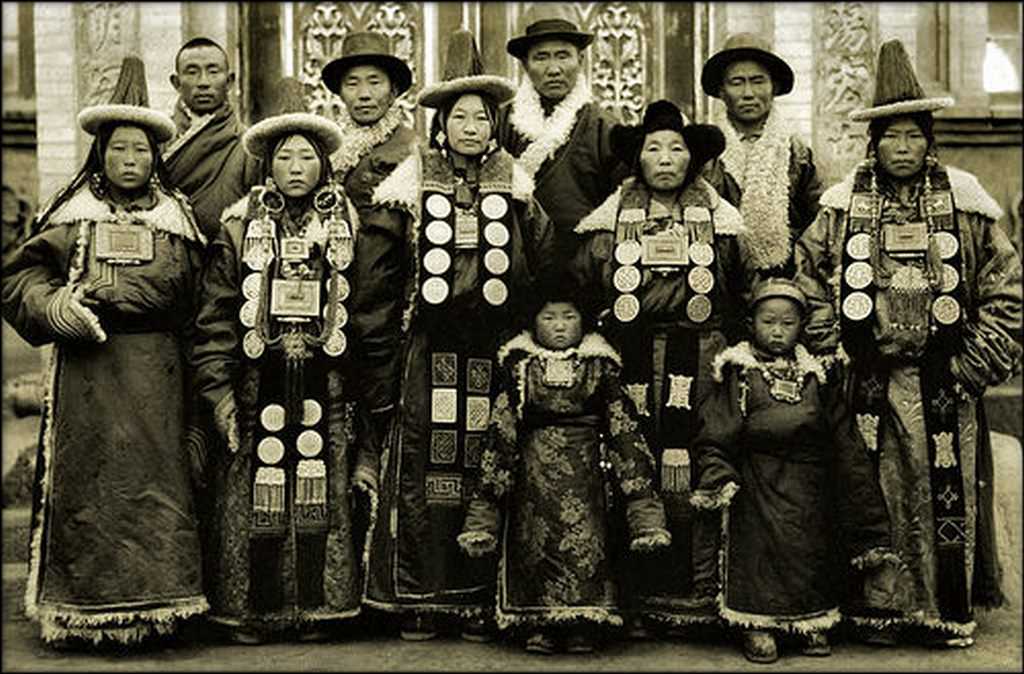
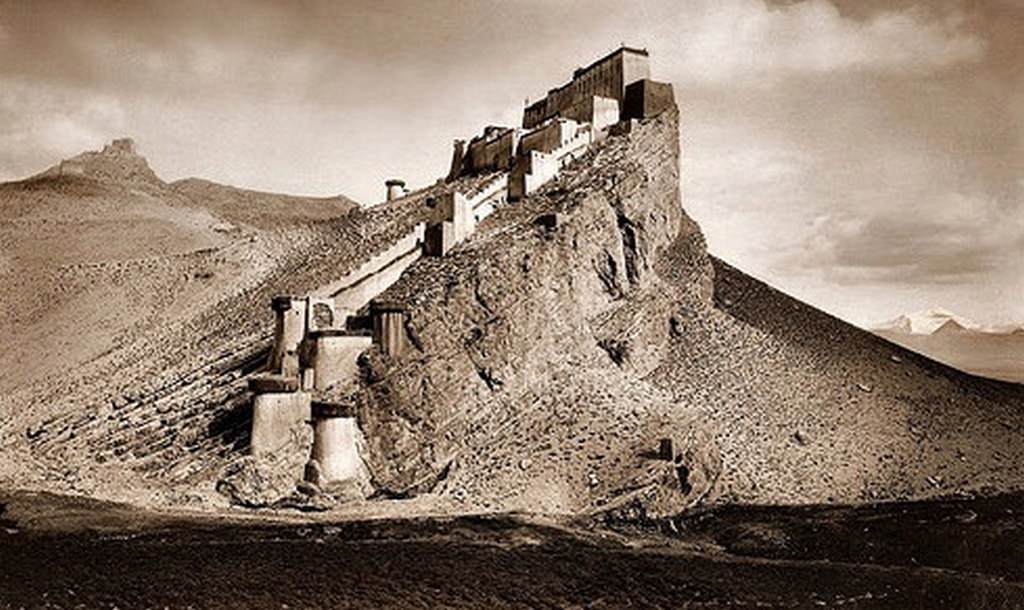
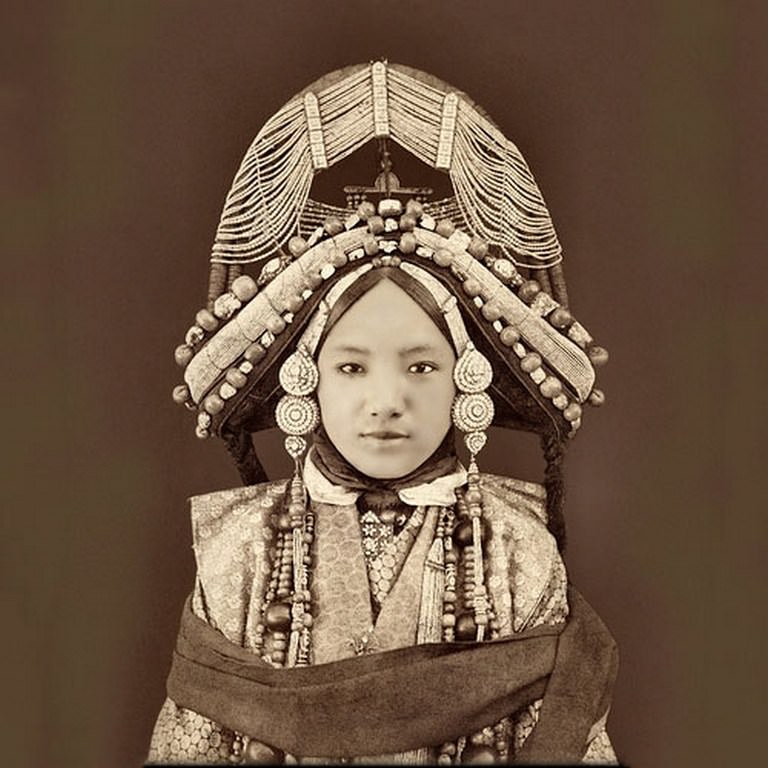
Tibet in the late 19th century was largely closed to outside visitors, making photographs from the region exceptionally rare. Western explorers and military expeditions managed to capture images of Tibetan religious figures and landscapes that the rest of the world had never seen. The 1879 photograph of a Tibetan Lhacham — a title given to the daughters of certain high lamas — and the image of Kampa Dzong fortress in 1904 represent some of the earliest visual records of Tibetan life available to outside audiences.
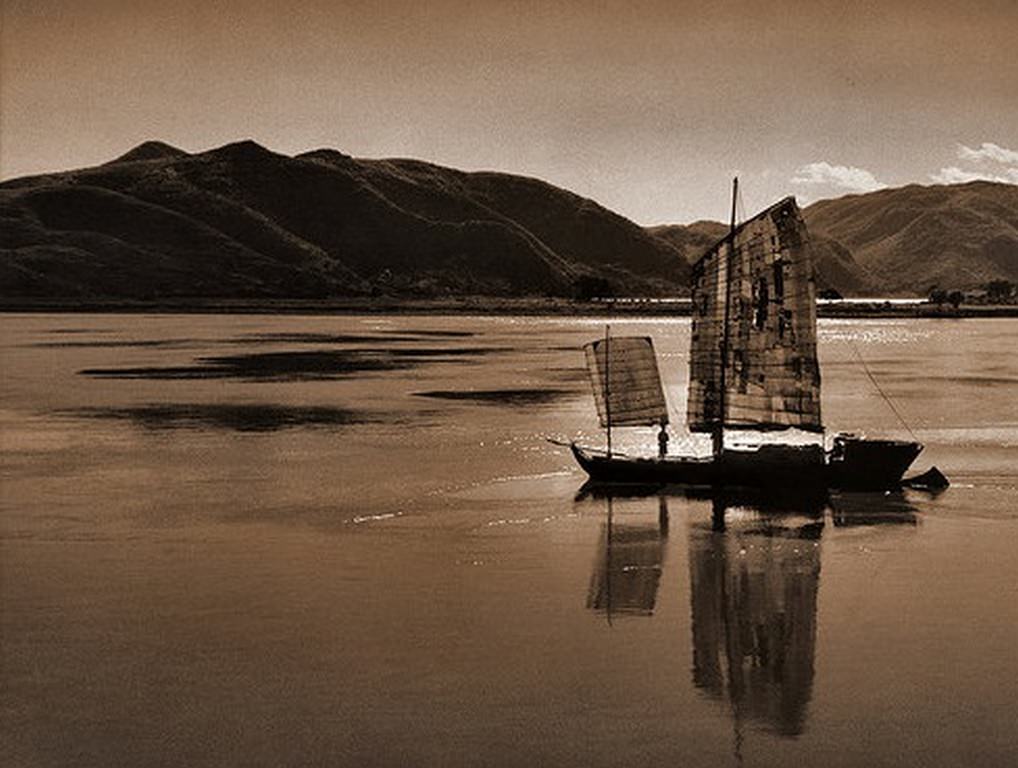
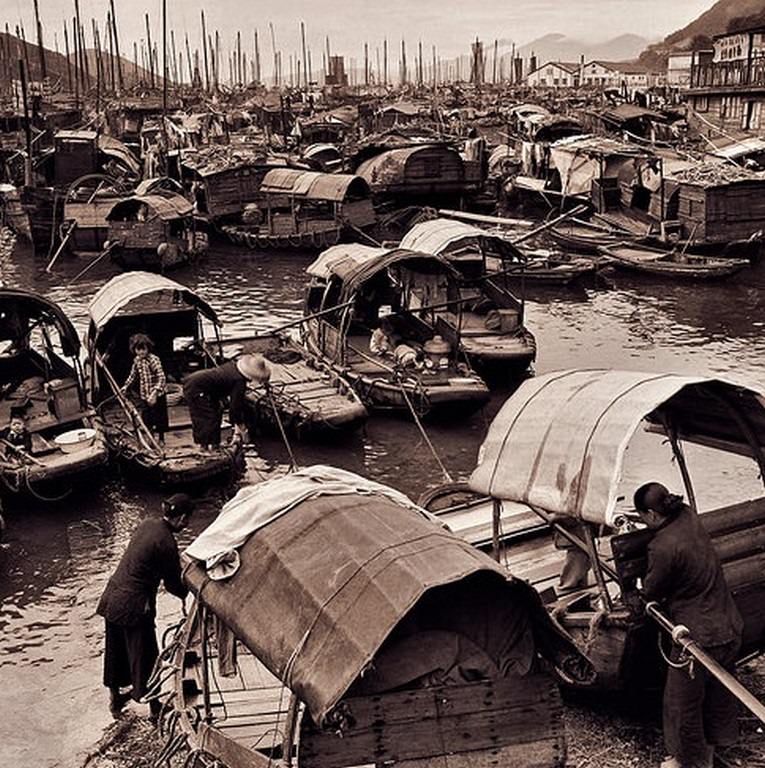
Fishing was a way of life along China’s coasts, rivers, and canals. In Aberdeen Harbor on Hong Kong Island, entire families lived aboard junks — traditional Chinese wooden sailing vessels — generation after generation. They fished, traded, repaired their boats, cooked, raised children, and died all on the water. By 1946, when these photographs were taken, Hong Kong was recovering from Japanese occupation and these fishing communities were resuming the rhythms of life that had defined them for centuries.
The examination hall in Canton was one of the most extraordinary structures in all of China. With 7,500 individual cells, it was where candidates for the imperial civil service came to sit grueling multi-day examinations that tested their mastery of classical Chinese literature, philosophy, and law. Passing meant a government post, social prestige, and the financial security of an official salary. Failing — which most candidates did — meant returning home to try again the following year.
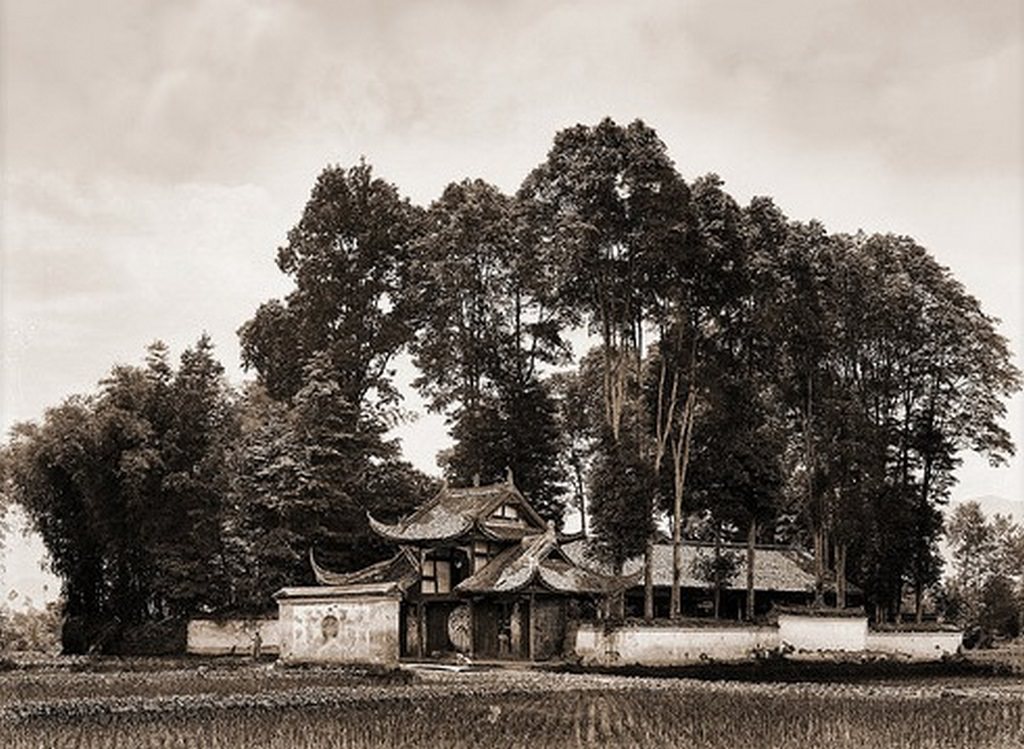
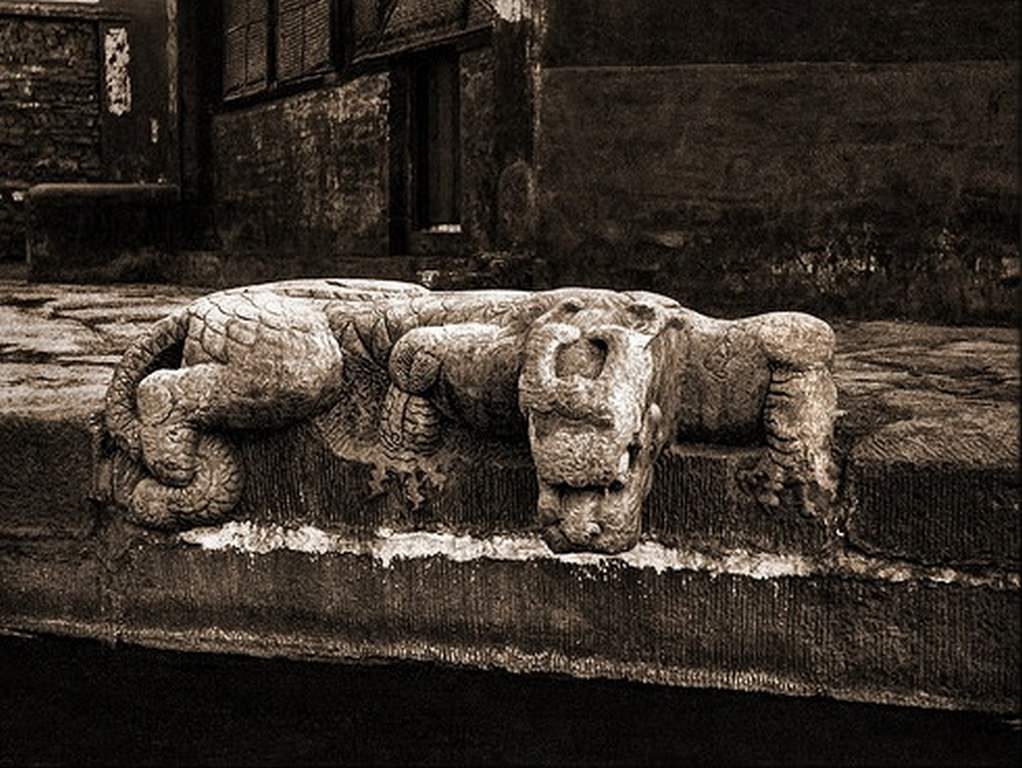
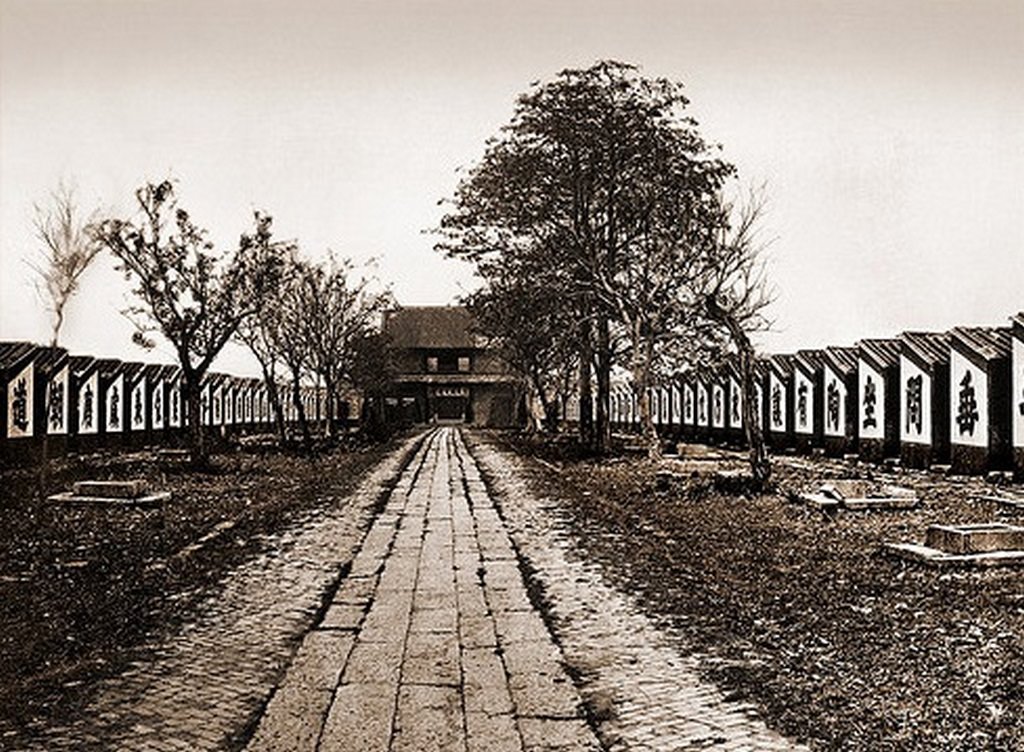
German photographer and explorer Ernst Boerschmann traveled through China between 1906 and 1909, documenting religious architecture and daily life along rivers and canals. His photographs of the journey to the Monastery of the Boys of Heaven near Ningbo, and the abbot of the monastery himself, offered European audiences a rare and detailed glimpse into Chinese monastic life. His work remains among the most comprehensive photographic surveys of pre-republican China.
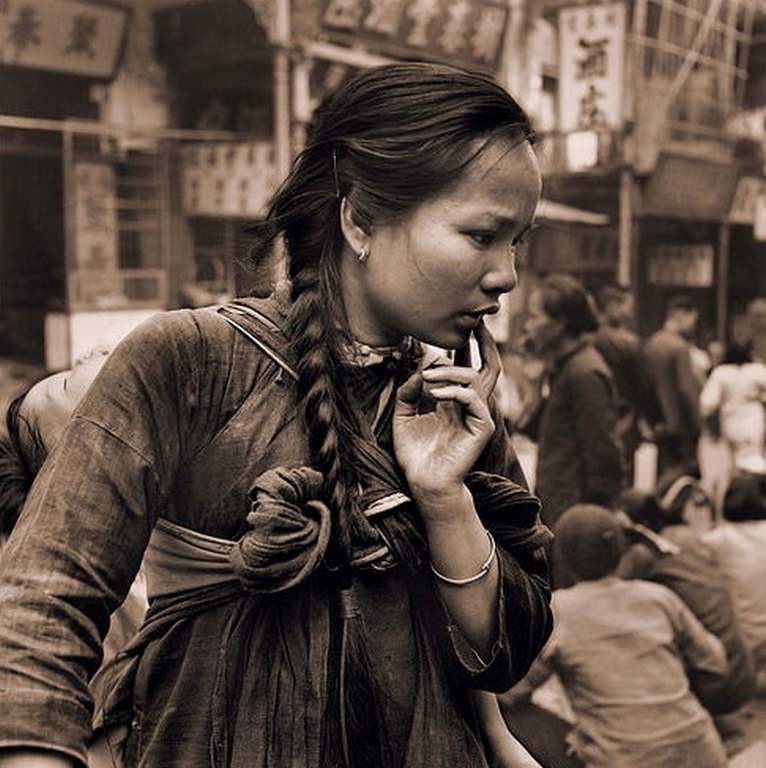
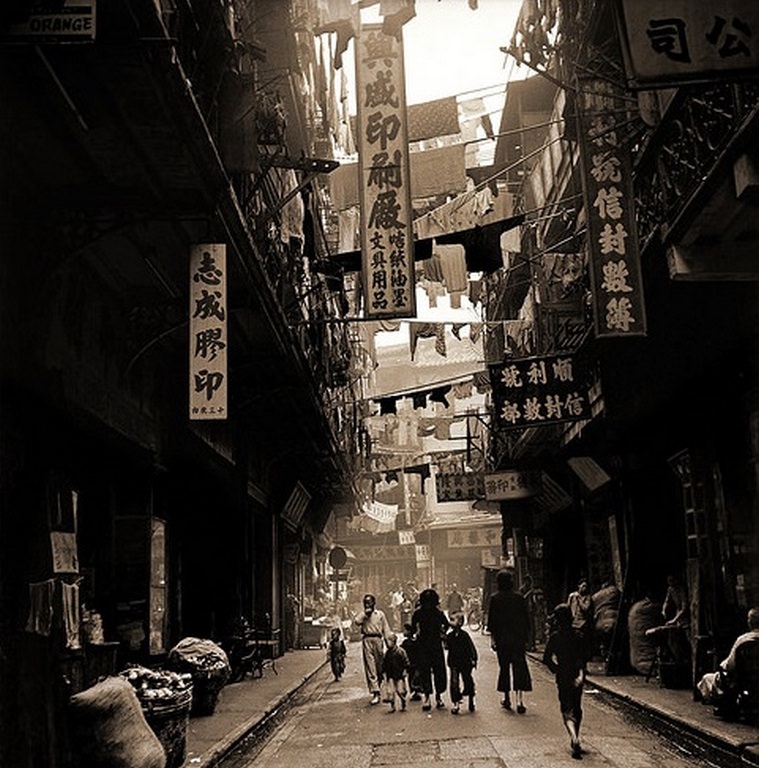
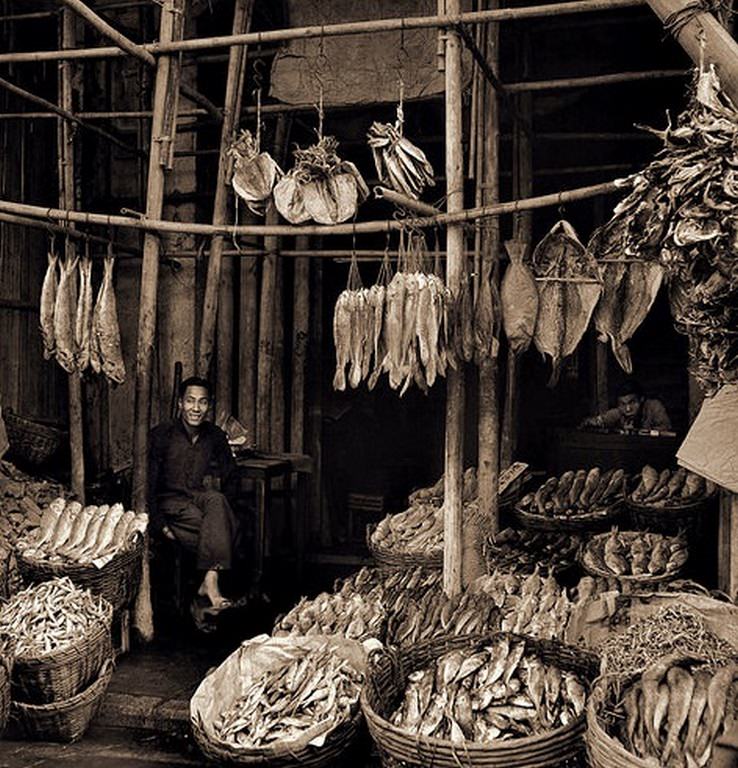
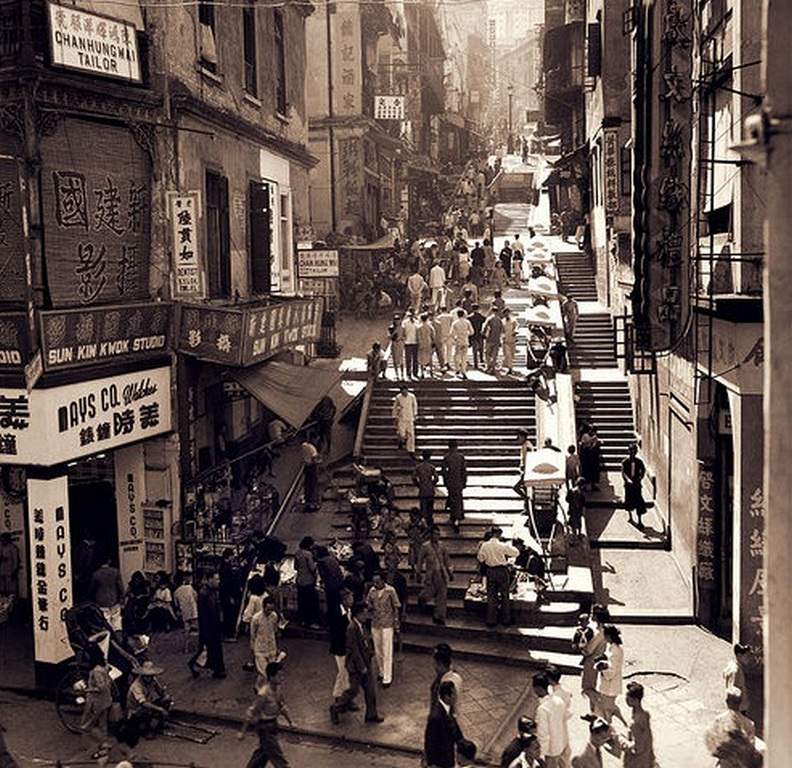
Hong Kong in 1946 was a city returning to life after the Japanese occupation had ended in August 1945. The markets of Hong Kong Island filled again with vendors, shoppers, and children. In the Western District, shop goods spilled out onto backstreet sidewalks. In the Eastern Districts, fishermen sold their catches from baskets heaped with the day’s haul. A young mother carried her child through a crowded market on her back — a scene unchanged across decades. These images capture the immediate post-war moment before the city’s rapid transformation into a global financial hub.
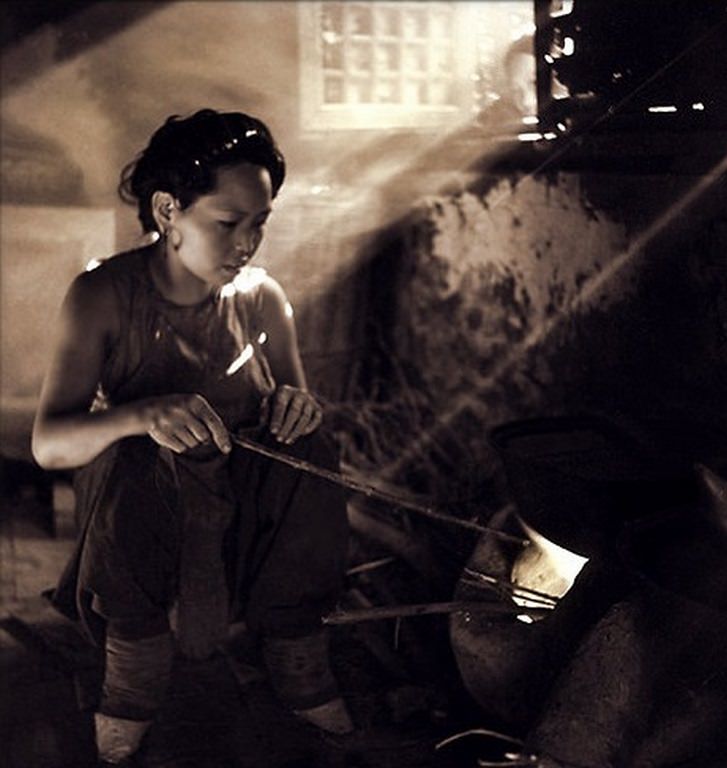
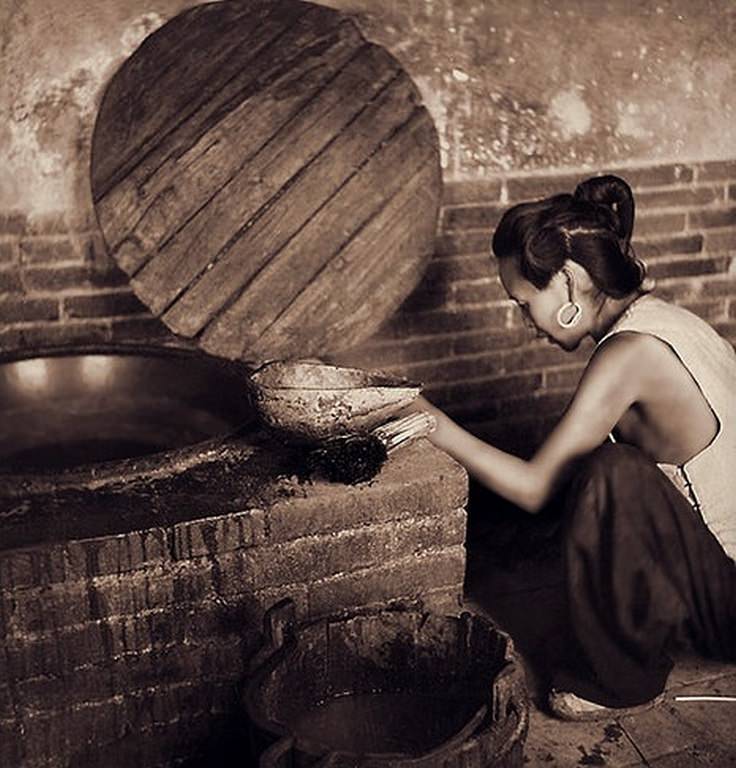
Inside the homes of rural China, life was spare and physical. In the so-called ‘Lost Tribe Country’ — a term used by Western travelers to describe the ethnically diverse borderlands of southwestern China — women cooked over brick stoves using gourds fashioned into ladles and tools. One photograph from 1936 shows a woman with bound feet tending a stove inside her home, a detail that places her birth sometime in the late 19th century, before reform movements had taken hold in the countryside.
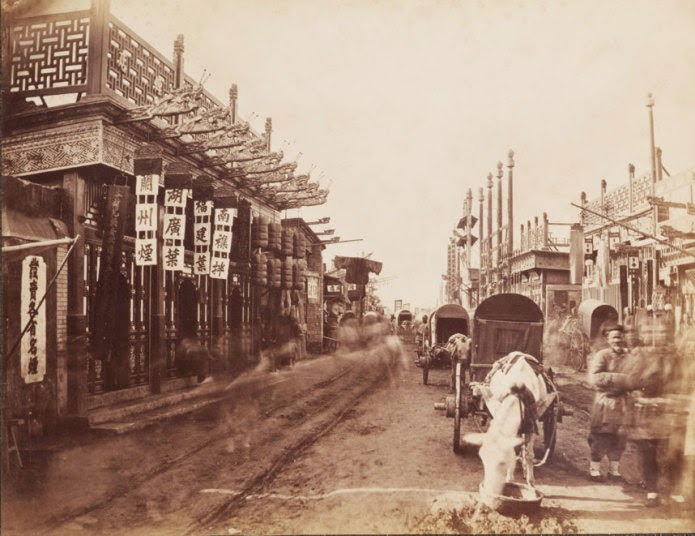
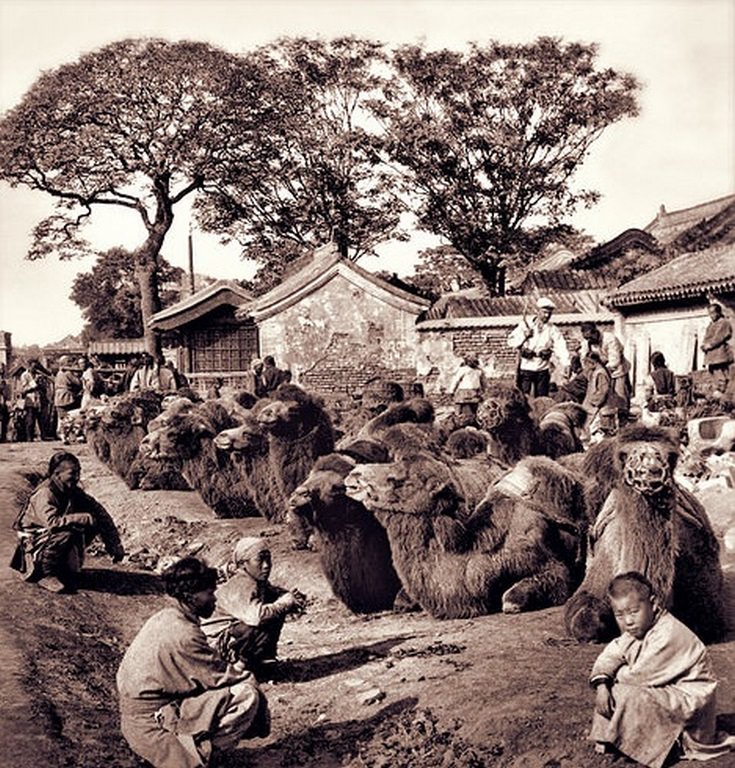
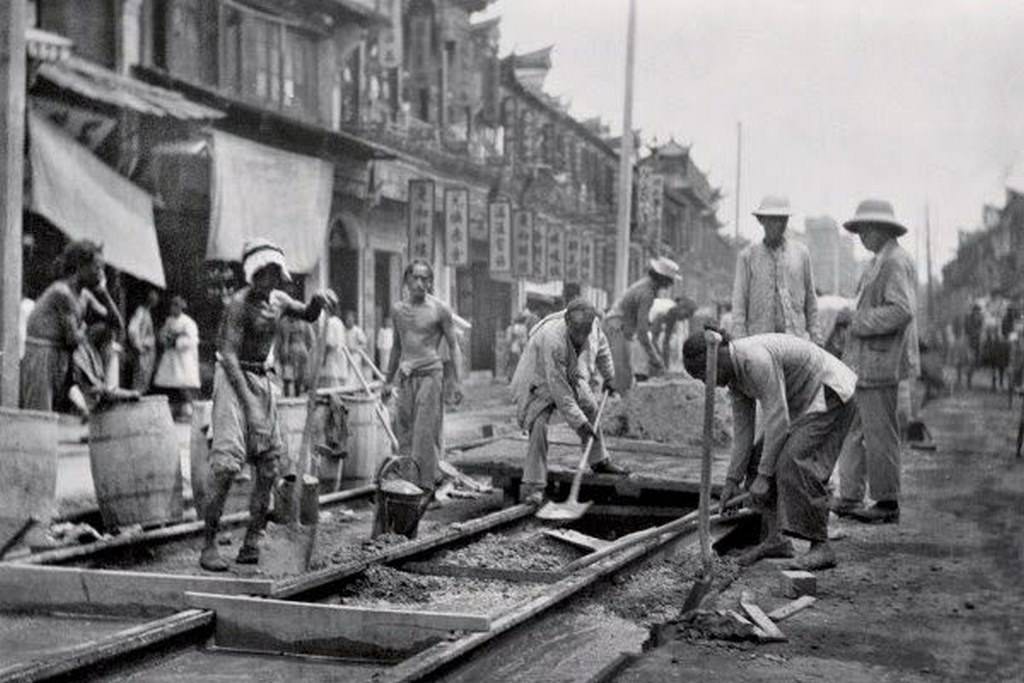
Camels were a primary means of transport in northern China, moving goods across the arid plains and deserts where neither boats nor wheeled carts were practical. A 1901 photograph described as showing ‘China’s common carrier — her substitute for railways’ captures a camel square in Peking, where lines of animals waited to be loaded and dispatched. At the same time, in cities like Shanghai, electric trolley rails were being laid in the streets, marking the beginning of a different era in Chinese transportation.
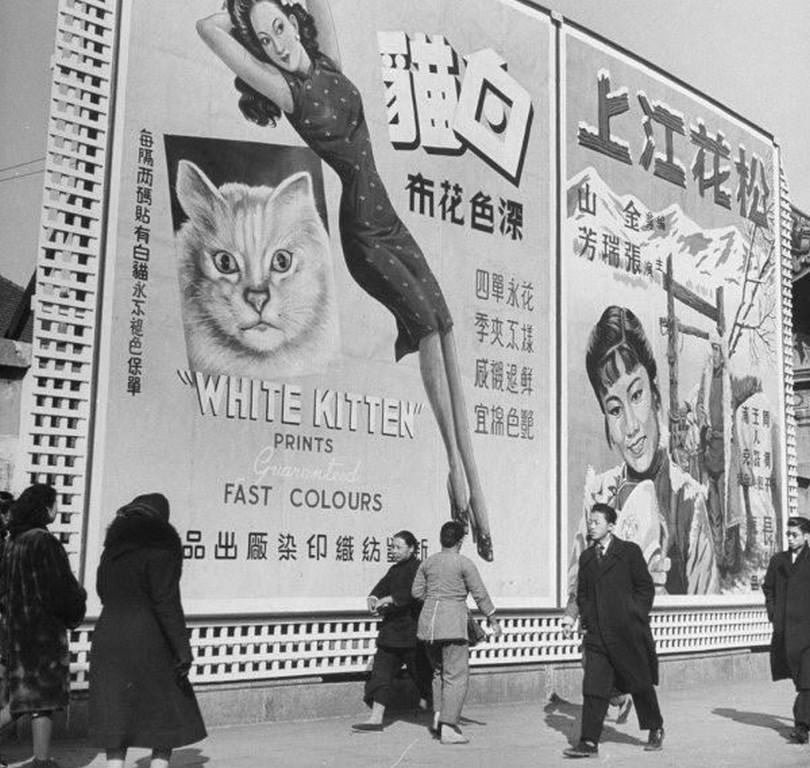
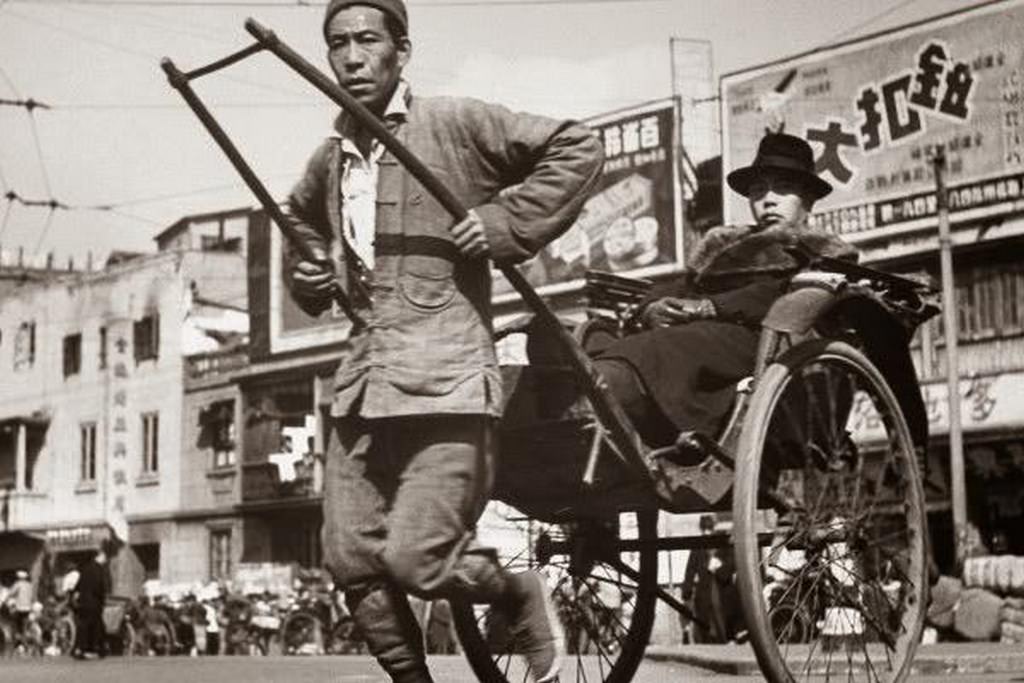
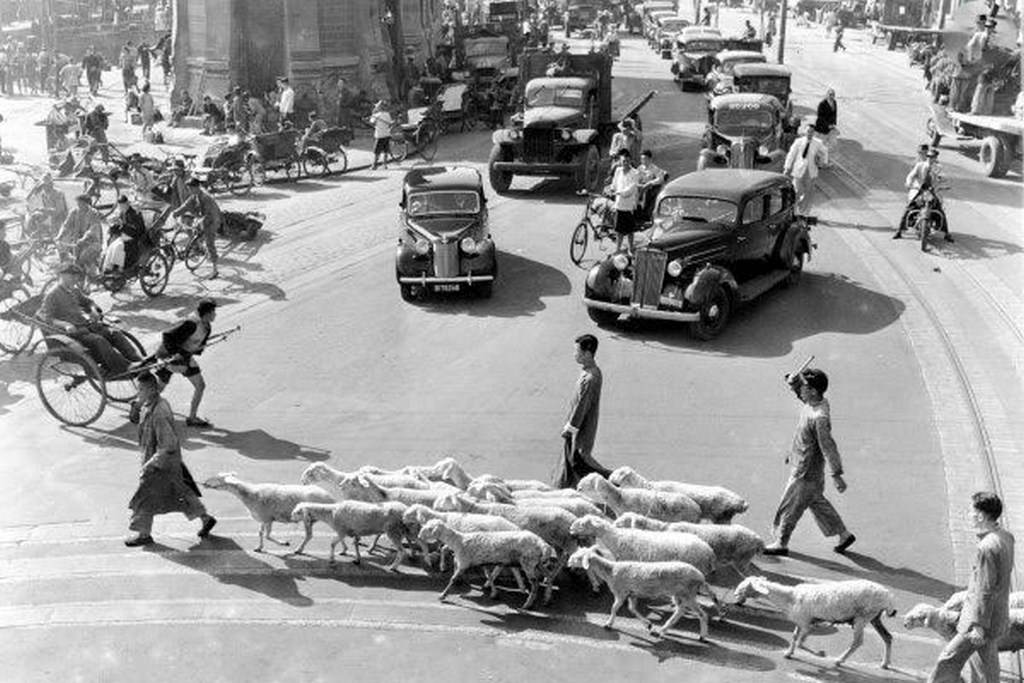
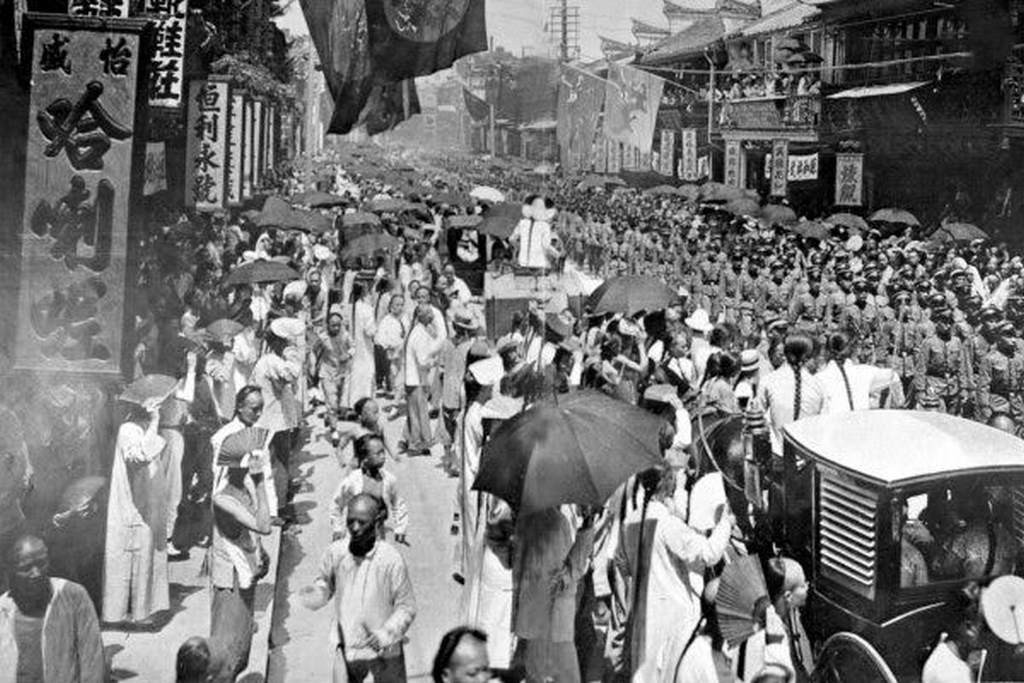
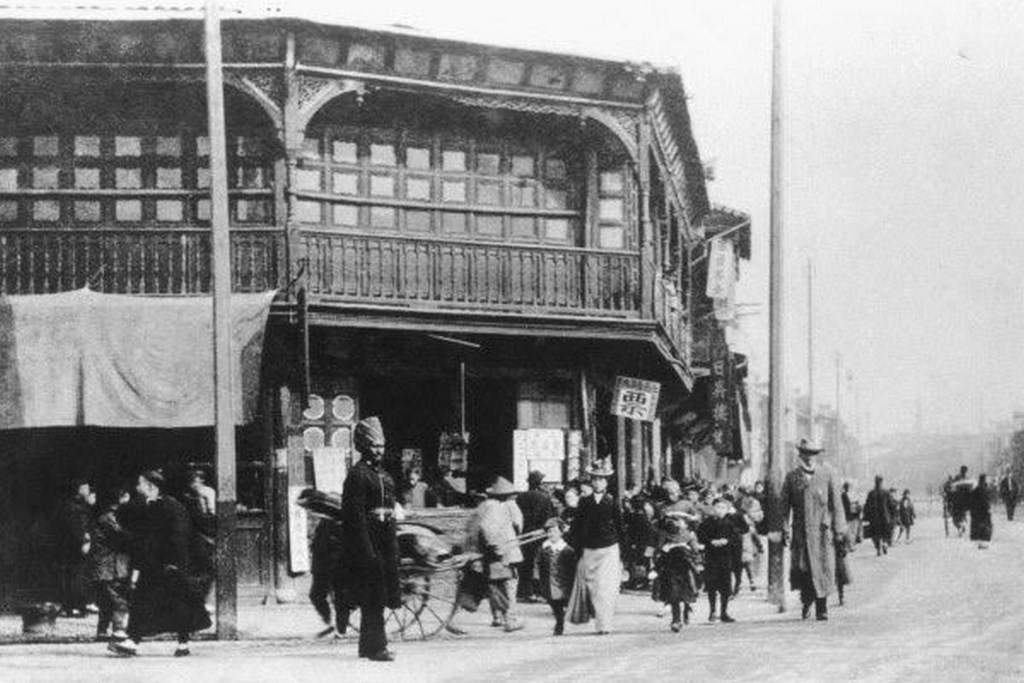
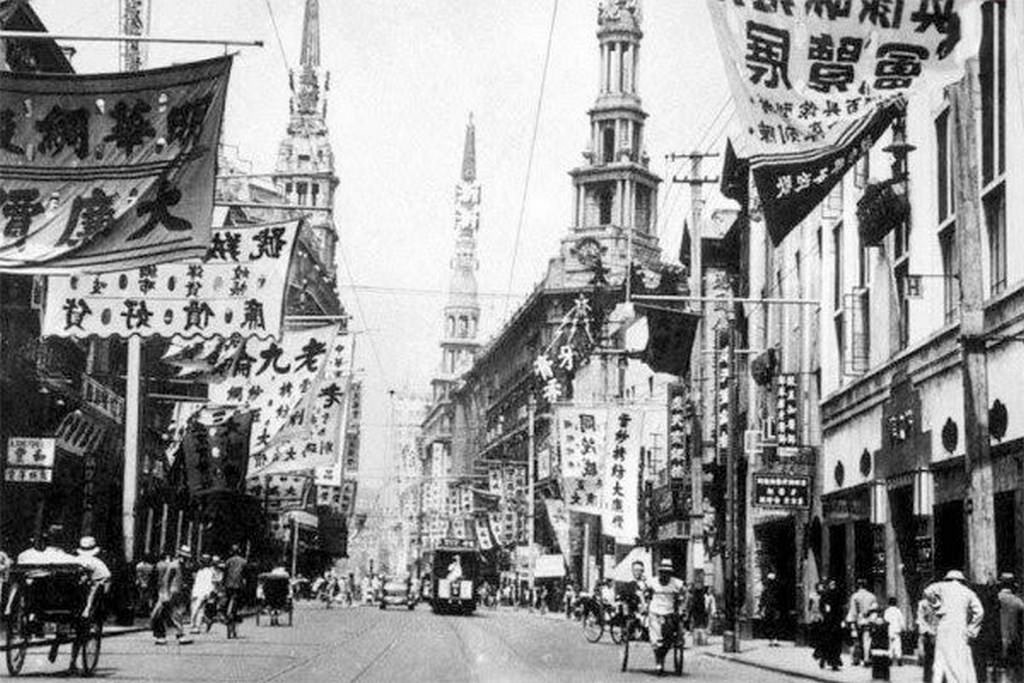
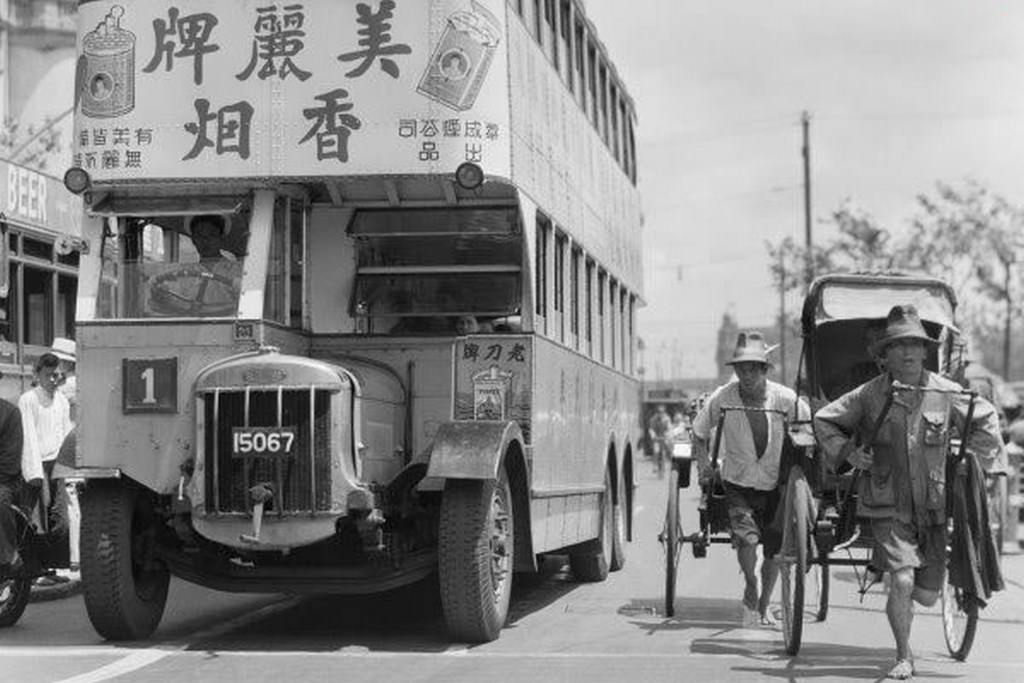
Shanghai’s commercial streets underwent a dramatic transformation between the 1900s and the 1940s. By 1907, workers for the Shanghai Electric Construction Company were laying streetcar rails along Nanjing Road. By the 1930s, Nanjing Road had become one of the most commercially dense streets in Asia, lined with department stores, cinemas, and restaurants. Advertisements covered buses, billboards, and every available surface. Rickshaw pullers moved through streets packed with goods, people, and noise.
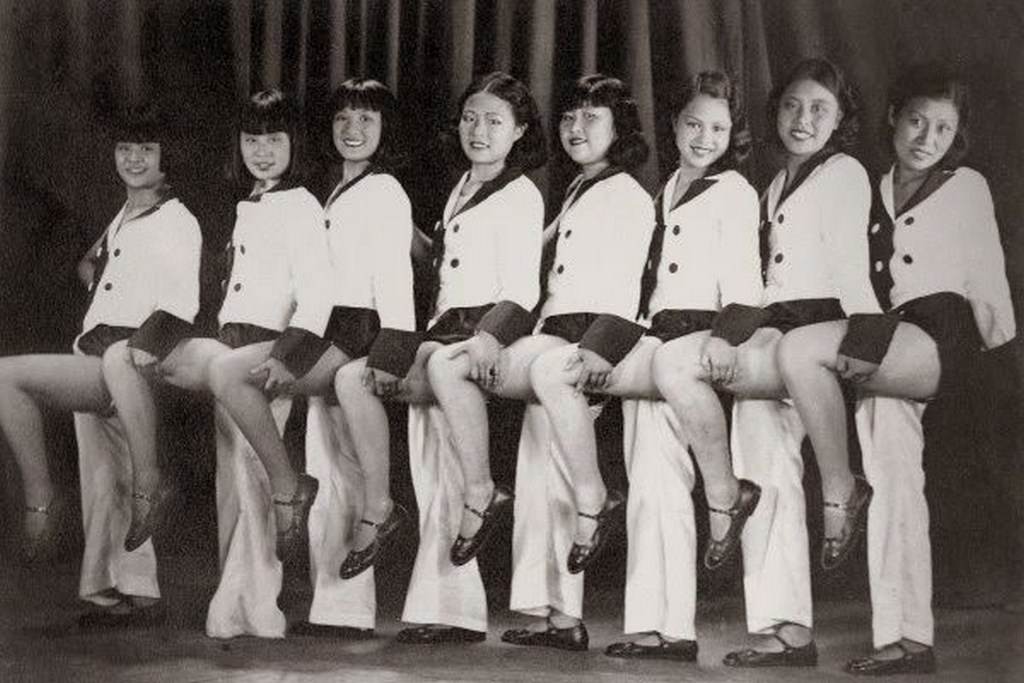
Shanghai’s film and entertainment industry grew rapidly in the 1920s and 1930s. The Star Film and Theater School, founded in 1922, trained a generation of Chinese actors and directors. Singer Zhou Xuan, known as the ‘Golden Voice,’ became one of the most celebrated entertainers in Chinese history, her recordings broadcast across the country. Shanghai during this period was as culturally vibrant as any city in the world.
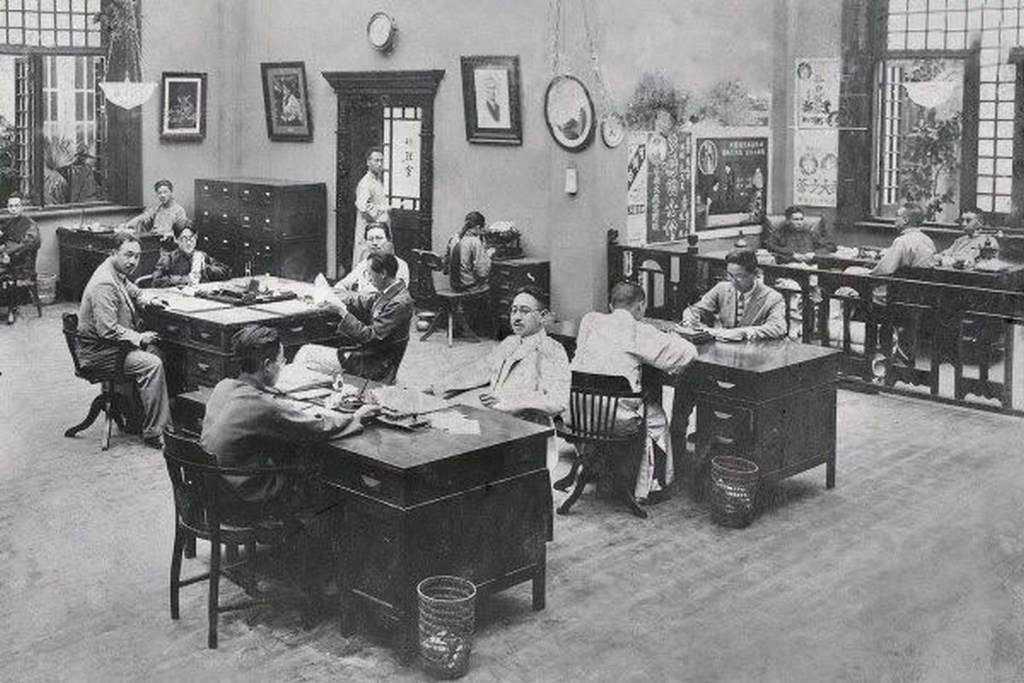
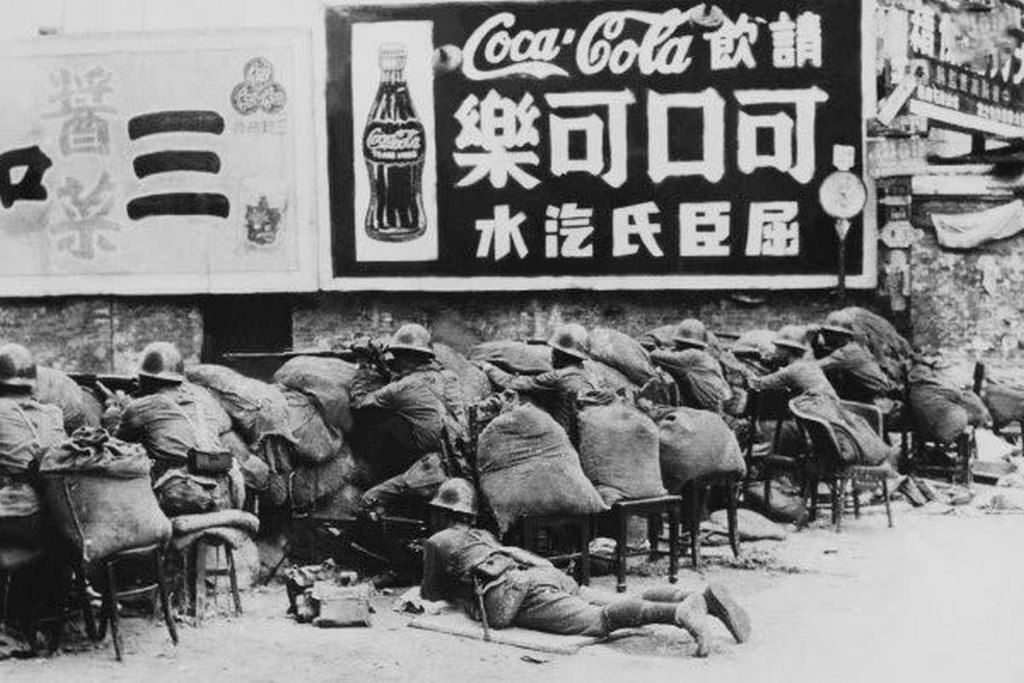
The 1911 Revolution — known as the Xinhai Revolution — ended more than 2,000 years of imperial rule in China and established the Republic of China under Sun Yat-sen. It was driven by widespread frustration with the Qing government’s failure to modernize the military, resist foreign domination, and address poverty. Shanghai was a key site of the revolution’s early battles, and the city’s recovery from the initial violence was photographed in real time.
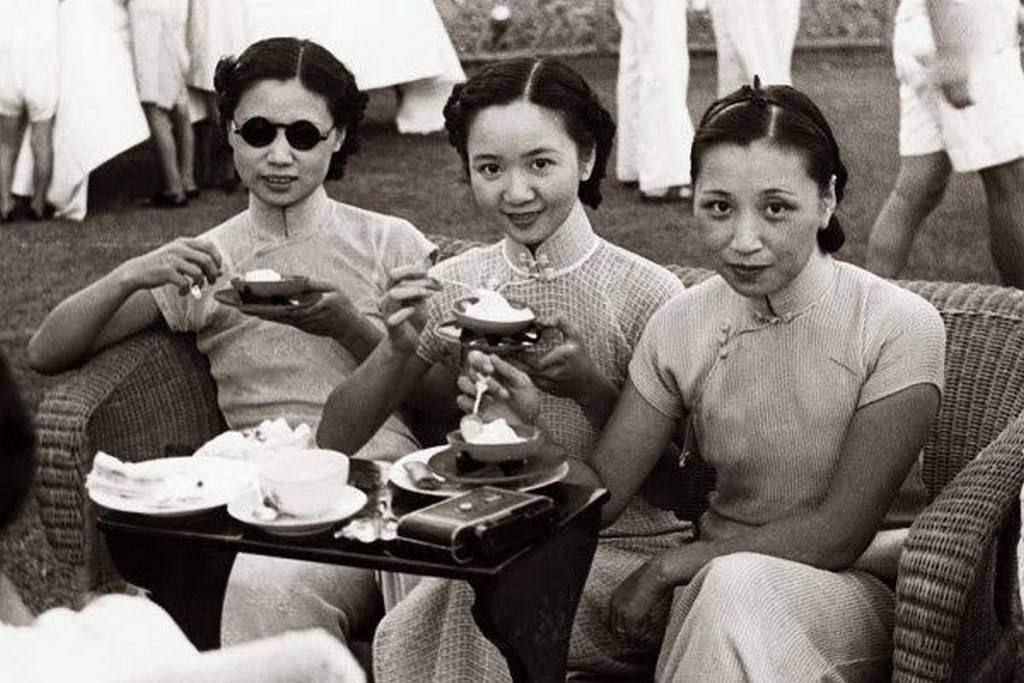
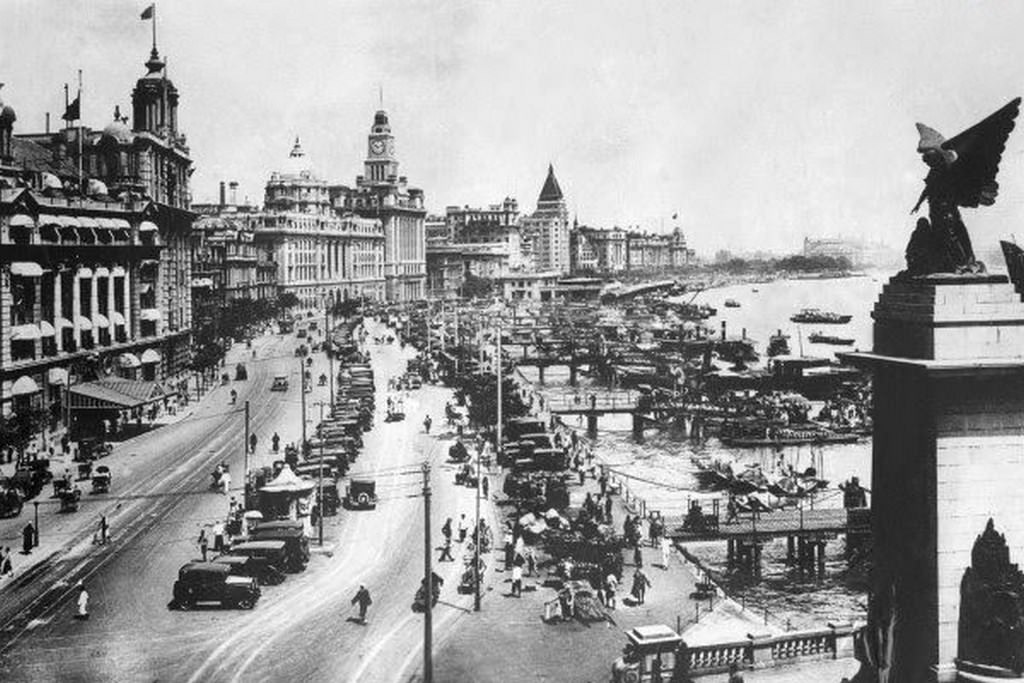
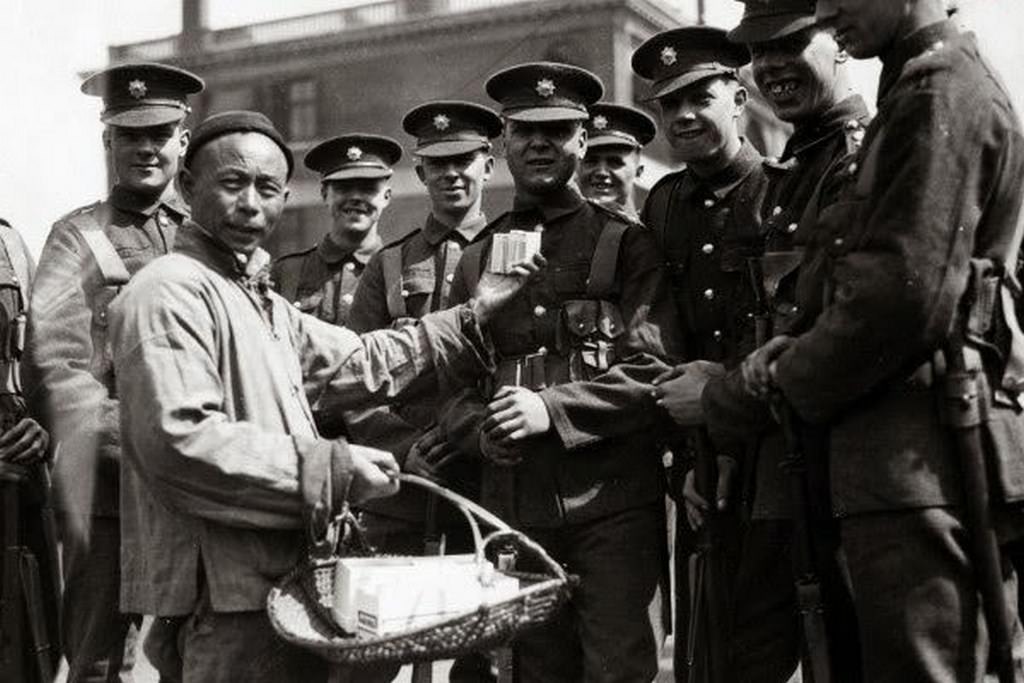
The Bund, Shanghai’s famous waterfront promenade, was the face of the city’s international ambitions. By the 1930s, its European-style buildings housed banks, trading companies, and consulates from around the world. Public buses along the Bund were covered in advertisements. Cigarette sellers approached foreign soldiers on the streets. The mix of Chinese and foreign cultures was so dense and constant that Shanghai existed as its own distinct world, unlike anything else in China or elsewhere.
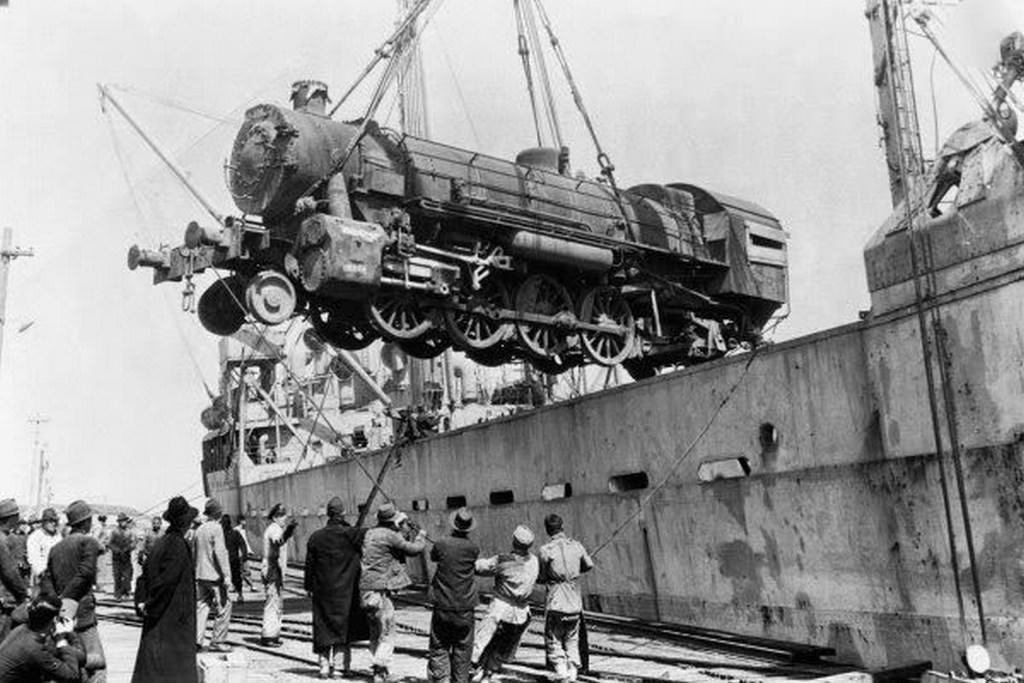
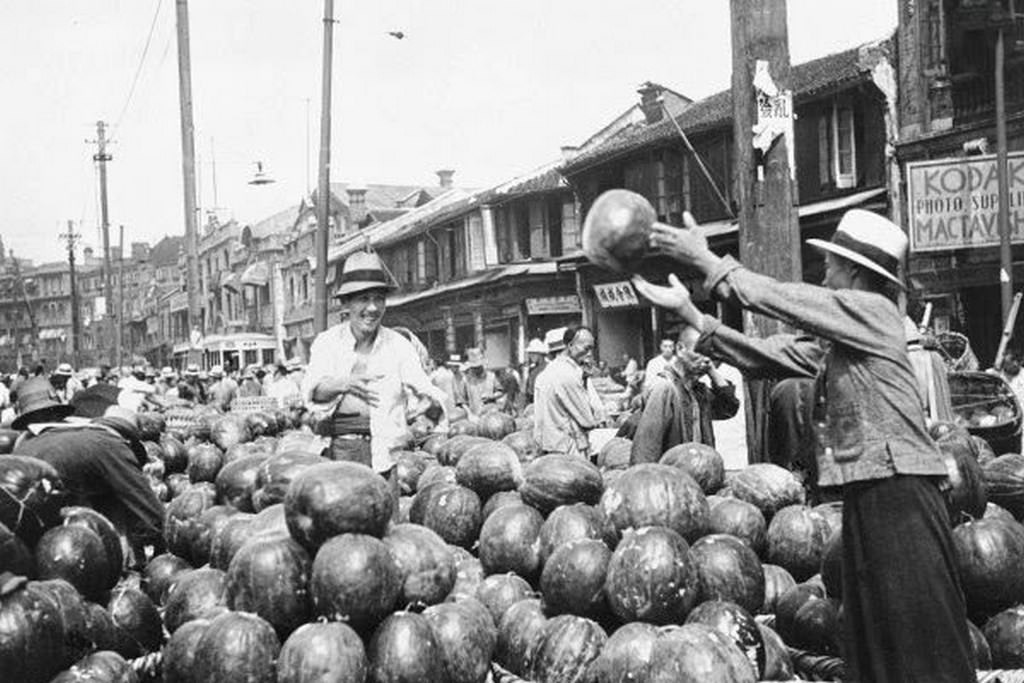
Shanghai’s docks were among the busiest in Asia throughout this period. Laborers unloaded watermelons, machinery, and supplies by hand. After World War II ended, the United Nations Relief and Rehabilitation Administration shipped locomotive engines into the city to help rebuild China’s shattered transport network. The physical work of reconstruction was done almost entirely by hand, with thousands of dock workers carrying loads that would eventually require cranes.
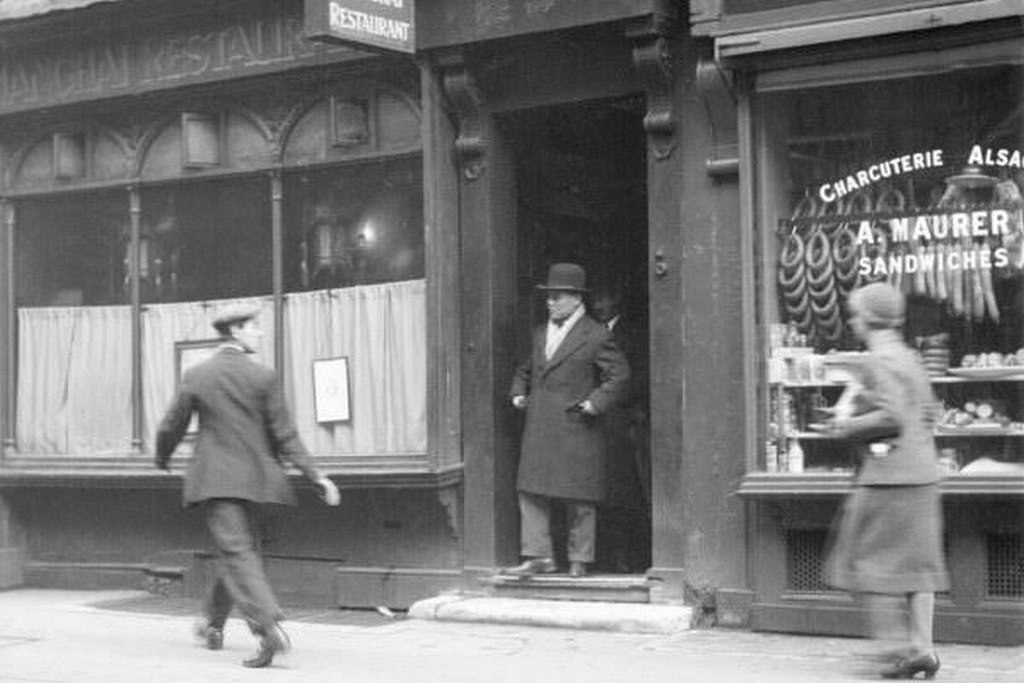
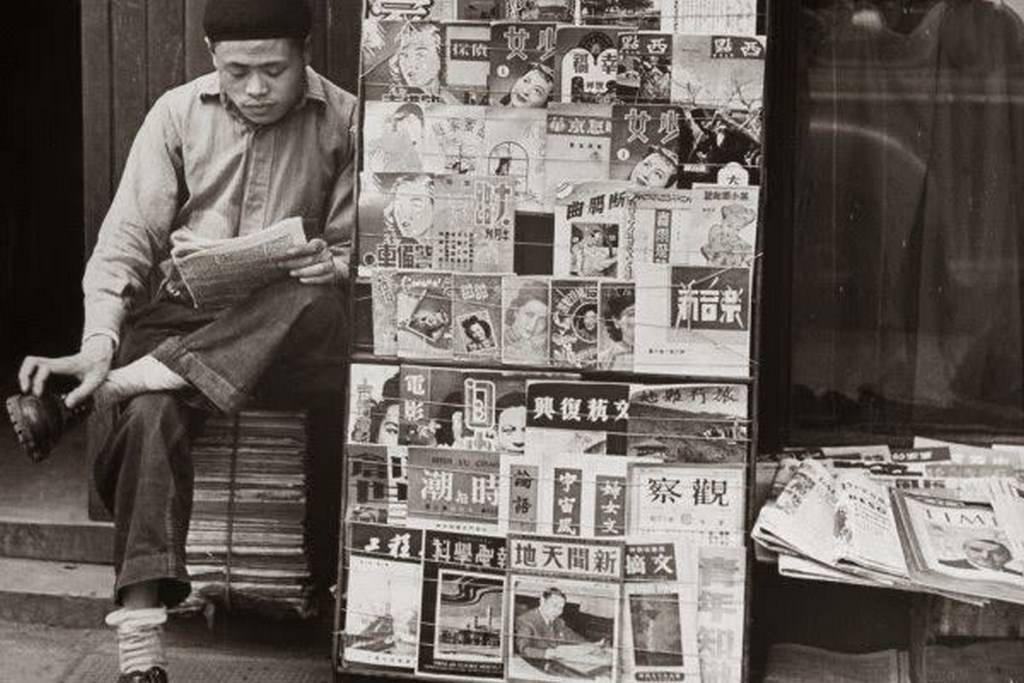
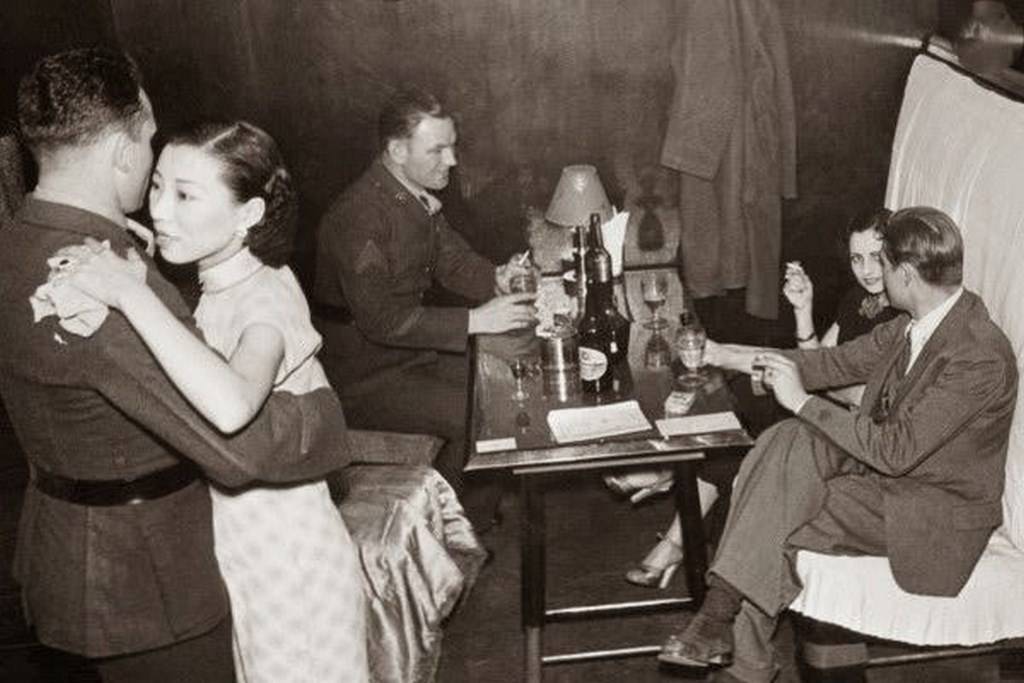
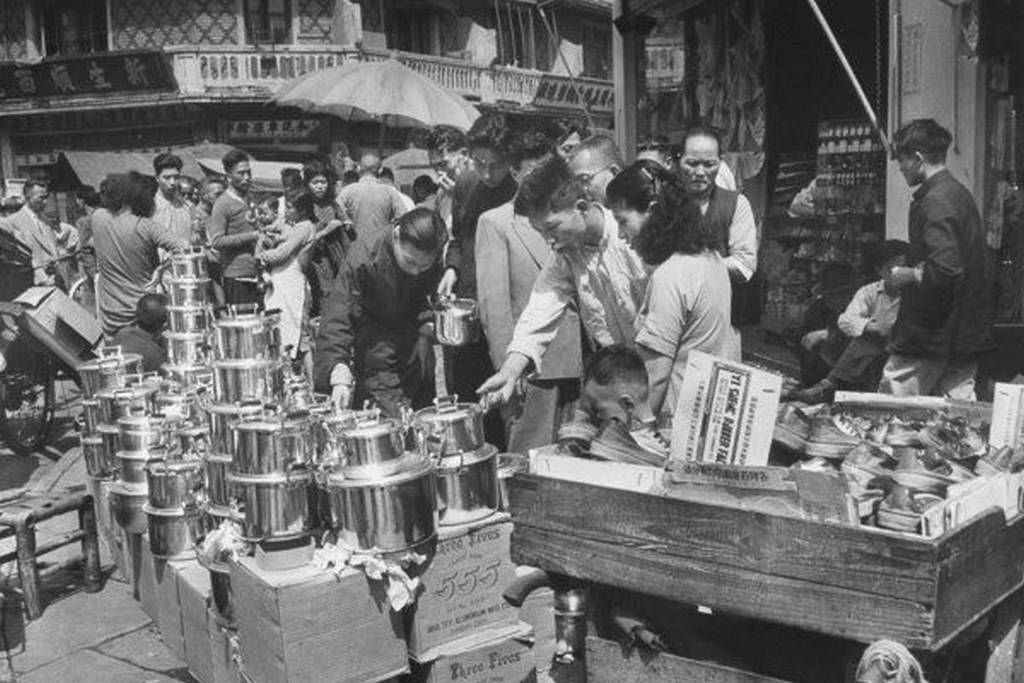
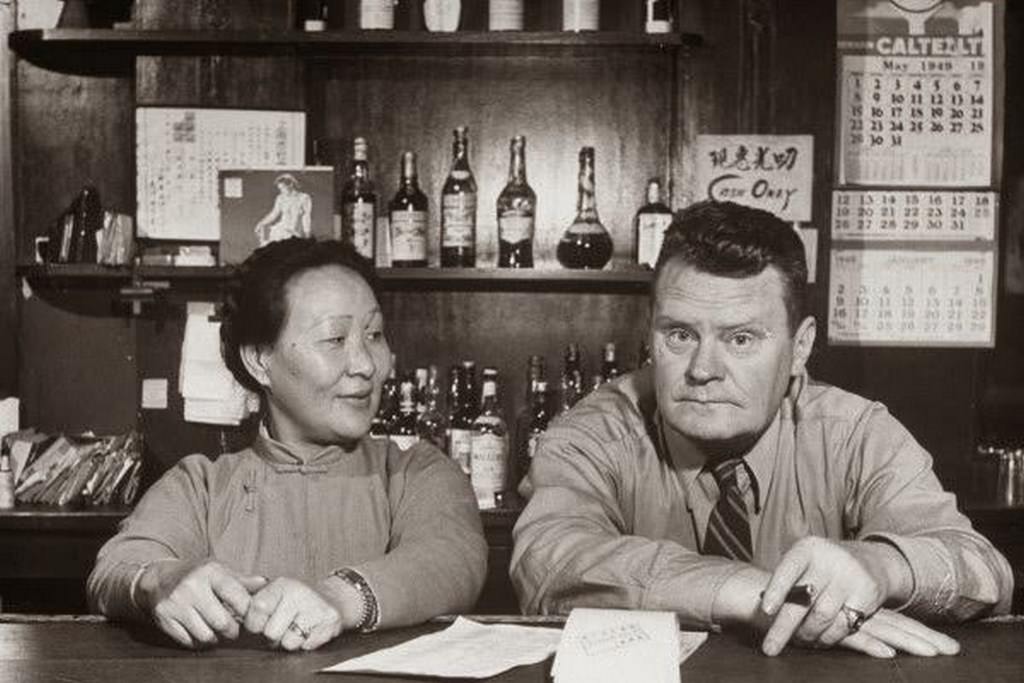
The War of Resistance against Japan, which began officially in 1937, transformed Shanghai from a cosmopolitan commercial center into a city divided by occupation zones and street-level survival. Newsstands sold papers covering the war’s progress. Vendors sold branded goods from sidewalk stalls. After the war ended in 1945, the city quickly attempted to return to something resembling normal life — soldiers and dancing girls, American bar owners and their Chinese wives, all part of the patchwork of a city that had endured occupation and was now trying to rebuild.