The word “pin-up” was first used in print in 1941, but the art form itself goes back to the 1890s. Pin-up images featured women in poses that were flirtatious and visually striking, yet still modest by the standards of the day. They walked a careful line between bold and demure, and that balance is a big part of what made them so popular. These photos were also commonly called “cheesecake” shots, a slang term that stuck around for decades.
World War II marked the golden age of pin-up art. Soldiers carried these images with them overseas, pinning them to the walls of barracks and painting them onto the noses of bombers. The images served as a reminder of home and became deeply tied to the culture of the era. Some of the most iconic pin-up paintings from this period were reproduced millions of times and distributed to troops around the world.
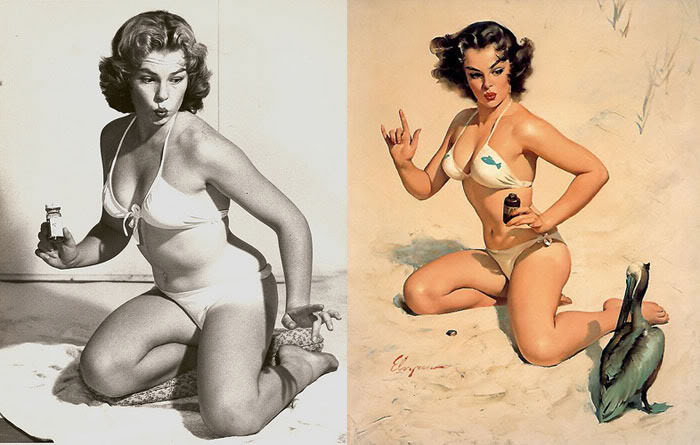
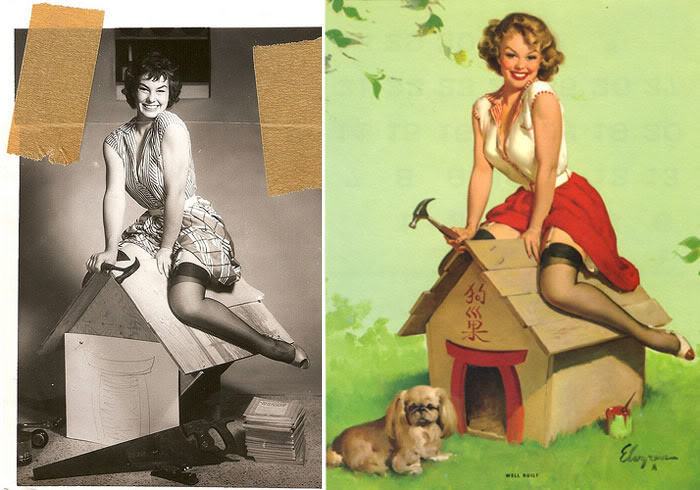
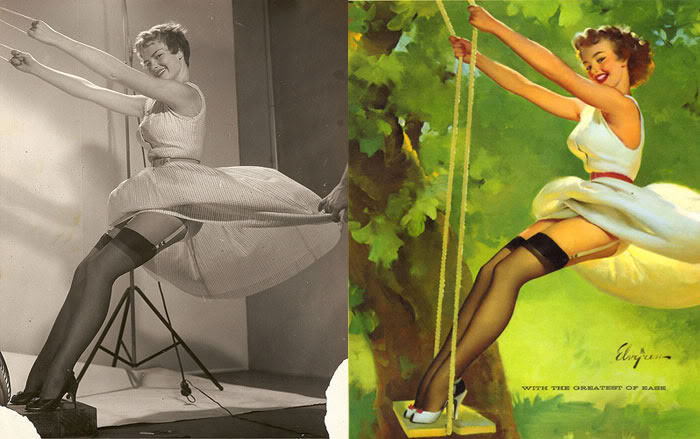
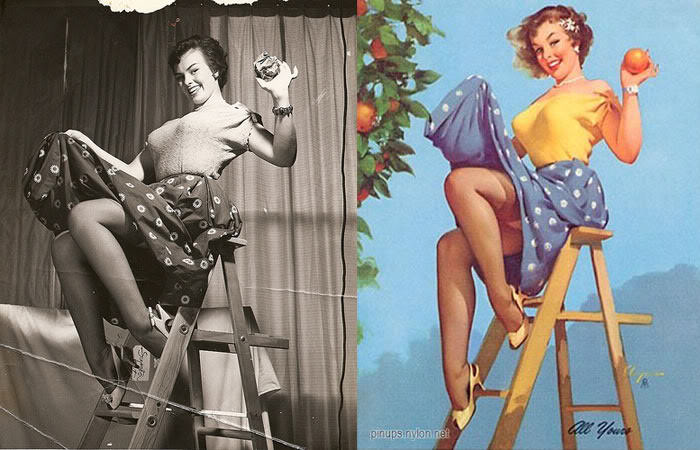
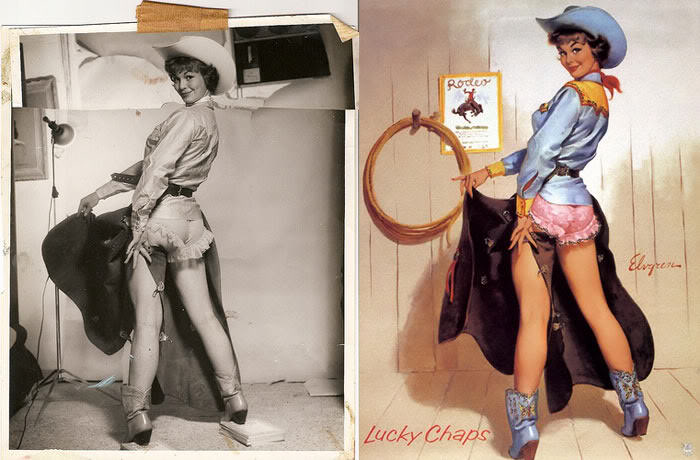
What many people don’t realize is that these paintings weren’t created from imagination alone. Artists worked from real photographs of real women. A model would pose for a photographer, and the artist would then use that photo as a reference to create a painted illustration. The painting process allowed artists to alter and idealize the model’s appearance in ways that a camera simply couldn’t do on its own.
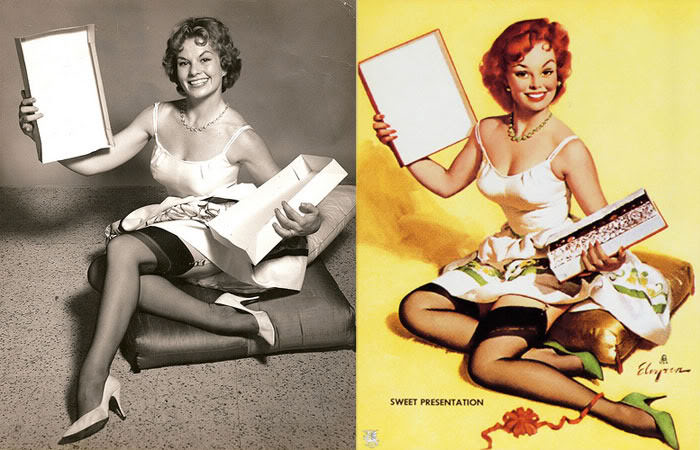
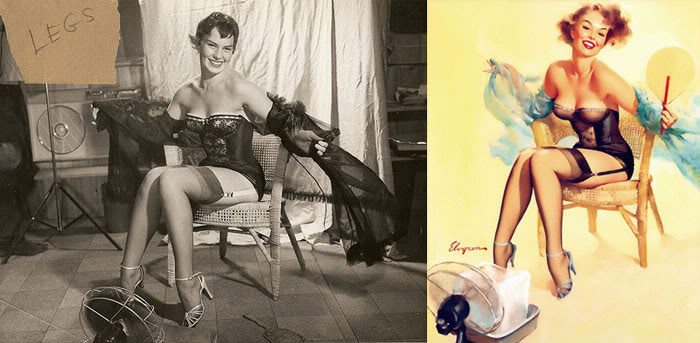
There was no digital editing software in this era. No Photoshop, no filters, no retouching tools. The artist’s brush was the only editing tool available. Paint was used to slim waists, lengthen legs, brighten skin, and amplify curves. The finished painting often looked noticeably different from the original photograph, pushing the model’s features toward an exaggerated, almost cartoon-like ideal of beauty.
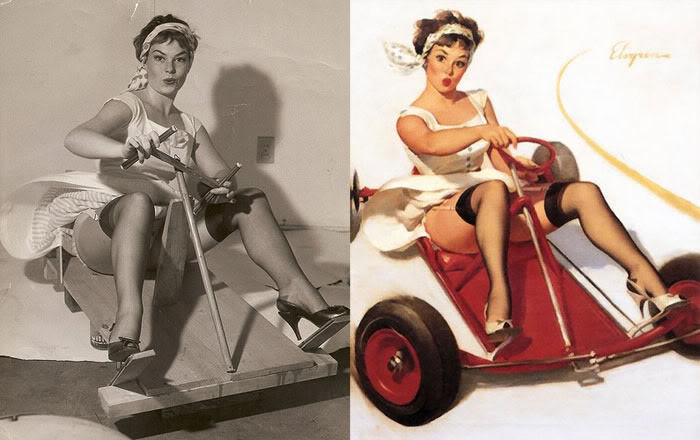
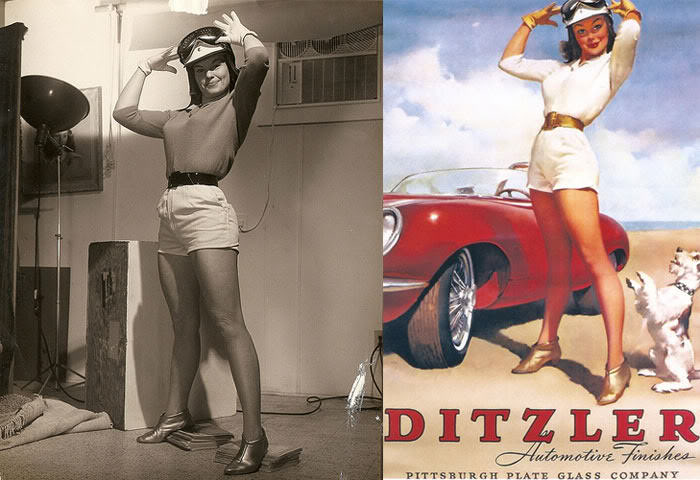
No artist is more closely associated with classic pin-up paintings than Gil Elvgren. His work is immediately recognizable — smooth skin, bright eyes, playful expressions, and figures that pushed well beyond realistic proportions. Elvgren worked for the Brown & Bigelow calendar company and produced hundreds of paintings over his career. His style set the visual standard that most people think of when they picture pin-up art.
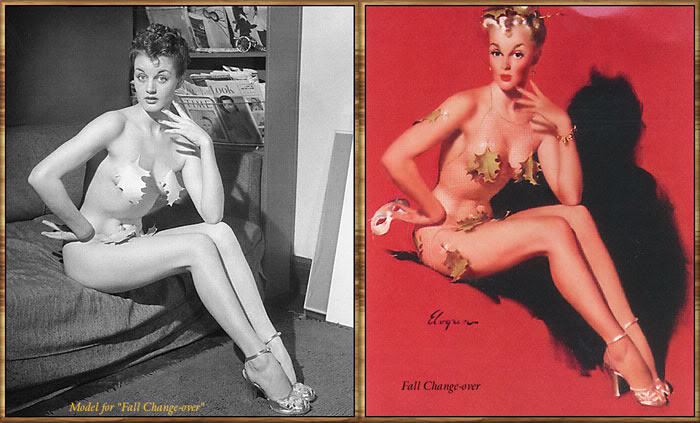
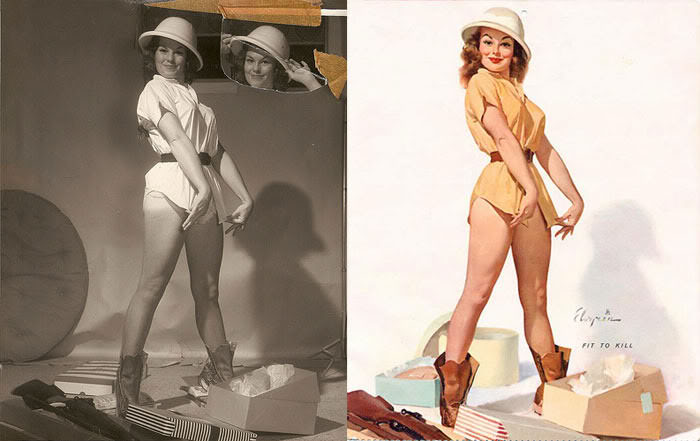
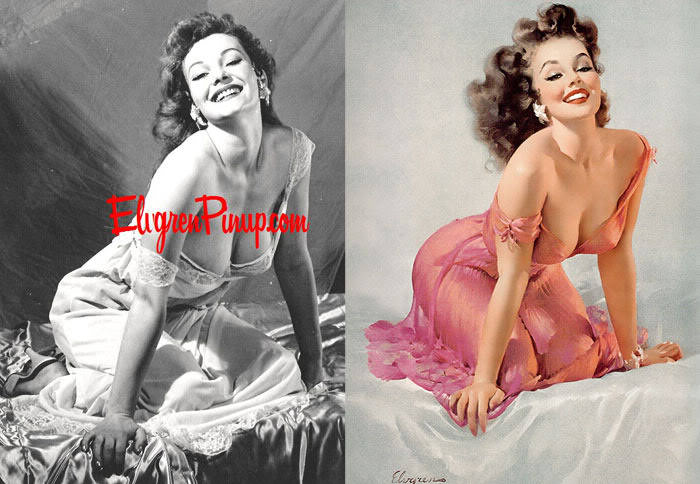
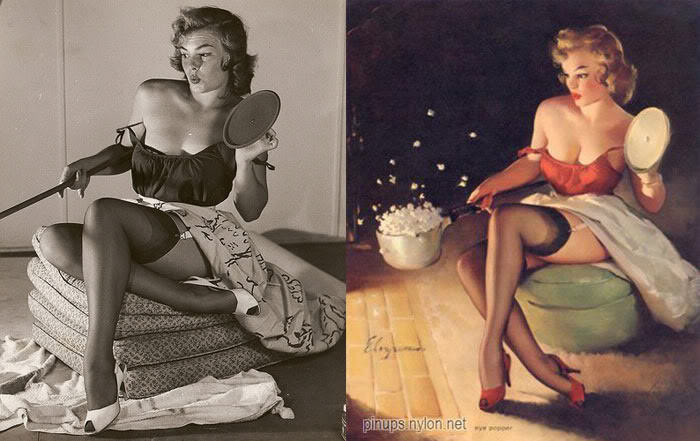
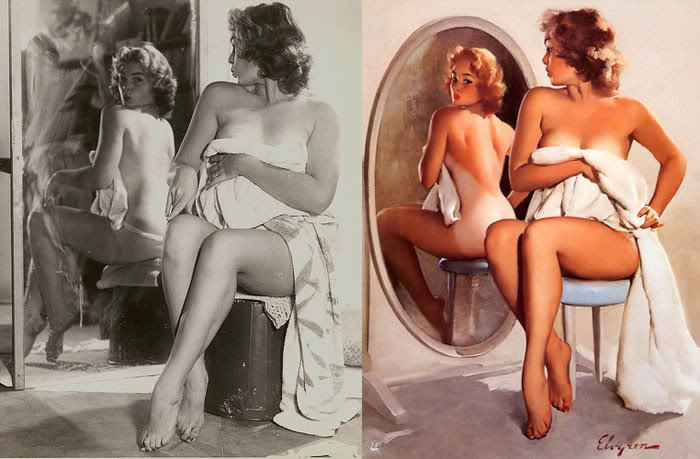
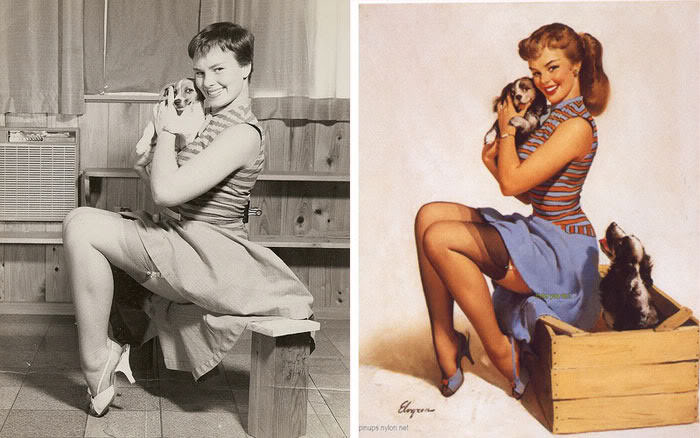
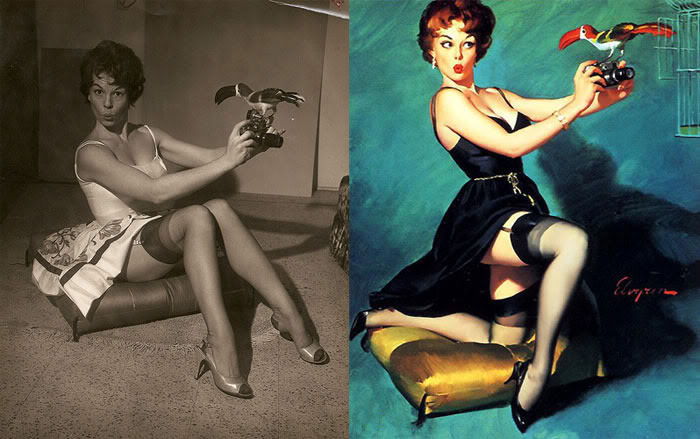
Elvgren’s process always began with a live model and a photographer. He would carefully stage the pose, select the lighting, and direct the shoot before a single brushstroke was made. The photographs he worked from show attractive, natural-looking women. The paintings that resulted from those same photos show figures with dramatically narrower waists, fuller curves, and flawless skin — a transformation made entirely by hand.
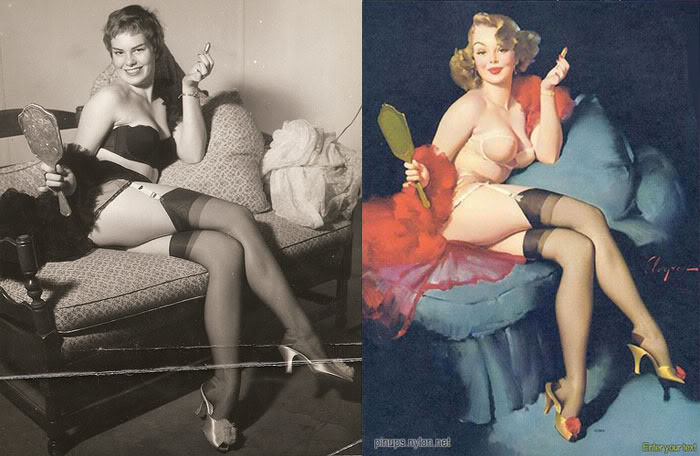
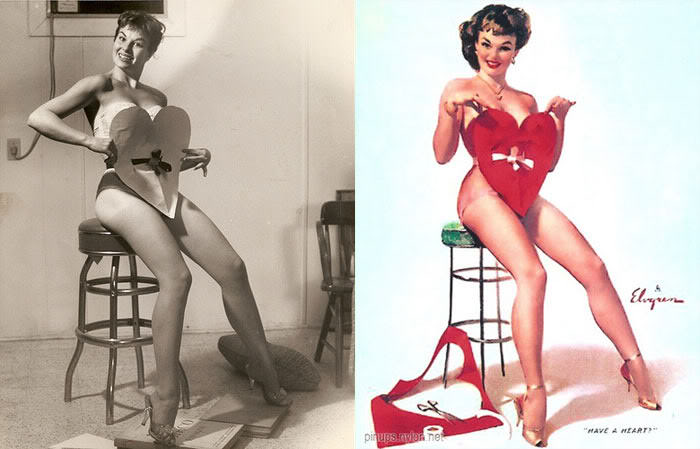
Side-by-side comparisons of the original photos and the finished paintings make the transformation easy to see. The core pose is usually the same, and the model’s facial features are still recognizable. But the proportions are different, the colors are richer, and every flaw visible in the photo has been smoothed away. The woman in the painting is a heightened, idealized version of the woman who sat in front of the camera.
Other notable pin-up artists followed a similar process. Alberto Vargas, who created the famous “Varga Girls” for Esquire magazine and later Playboy, also worked from photographic references. His paintings featured even more elongated, stylized figures than Elvgren’s. The Varga Girl became a cultural icon of the 1940s and was widely reproduced on military aircraft, playing cards, and calendars.
The women who modeled for these artists were often professional models, actresses, or women connected to the entertainment industry. Some became well-known in their own right. Others remained anonymous, their faces and bodies translated into painted ideals without their names being attached to the finished work. The model was a starting point, and the artist determined where the image ended up.
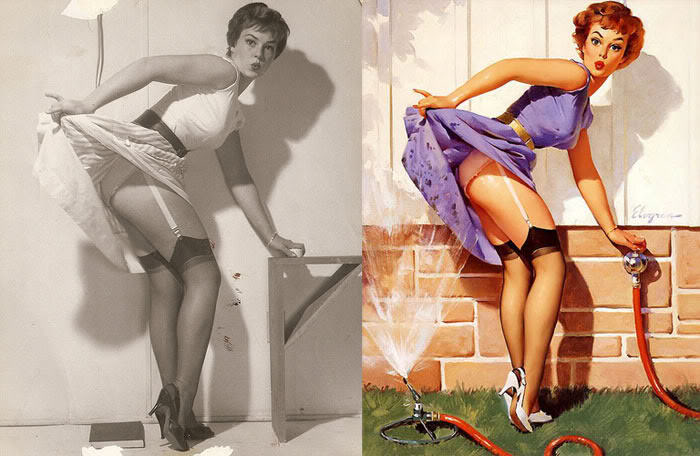
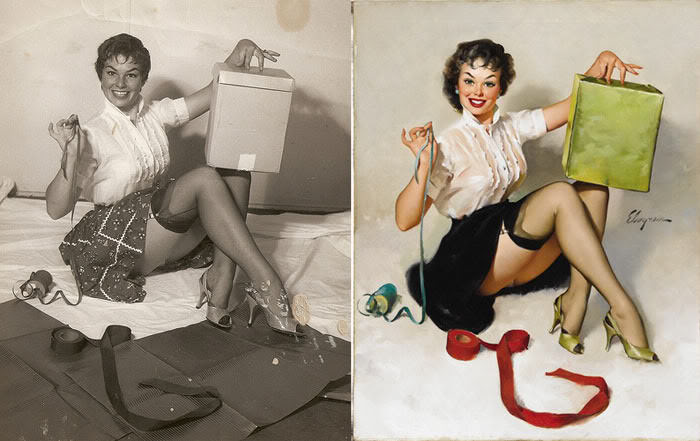
The physical process of creating these paintings required significant skill. Elvgren and his peers worked primarily in oils, building up layers of paint to achieve smooth gradients across skin tones. Getting the lighting right was particularly important — the warm, glowing look that defines classic pin-up art required careful control over highlights and shadows. Artists spent many hours on a single piece.
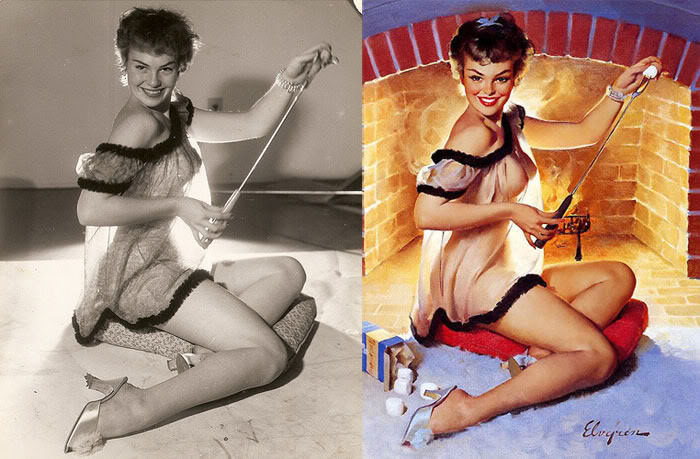
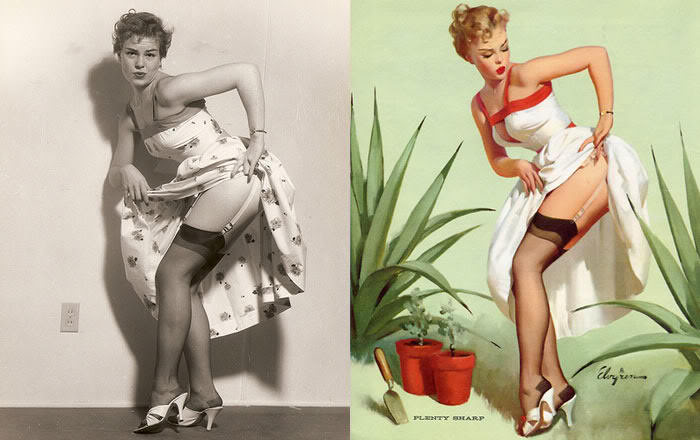
Looking at the before-and-after comparisons, one thing becomes clear: the women in the original photographs are attractive and well-posed, but they look like real people. The women in the paintings look like something else entirely — polished to a degree that no human being actually achieves. The gap between photo and painting is a direct record of what the artists added, removed, and changed to meet the beauty standards of their time.
Pin-up art was a mass-market product. These paintings appeared on calendars sold in gas stations and hardware stores, on the sides of military vehicles, and in magazines distributed across the country. The artists who created them were commercial illustrators first, and their goal was to produce images that would appeal to the broadest possible audience. The idealized beauty in the paintings was a deliberate commercial choice.
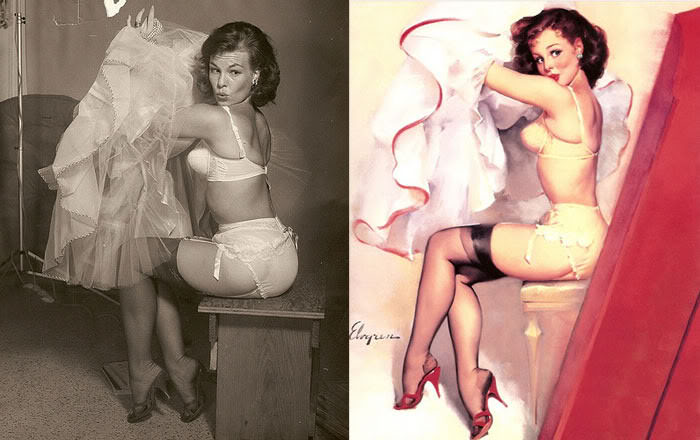
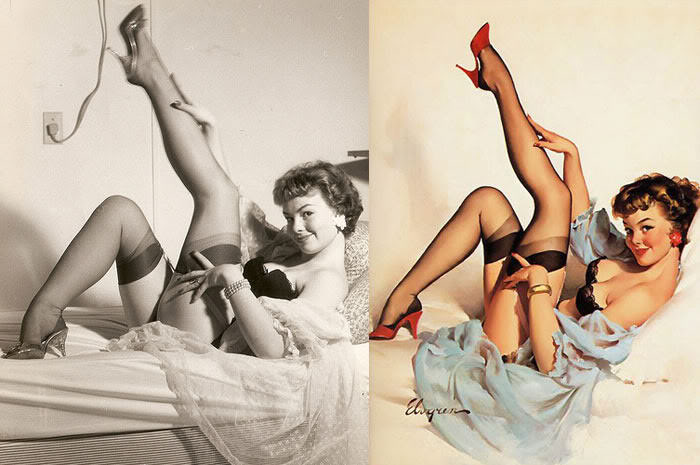
The poses in pin-up art were carefully designed to be suggestive without crossing into explicit territory. A raised hem, a surprised expression, a playful glance over the shoulder — these were the tools of the trade. The model in the original photograph had to capture that same energy, and the photographer played a key role in making sure the reference image translated well to paint.
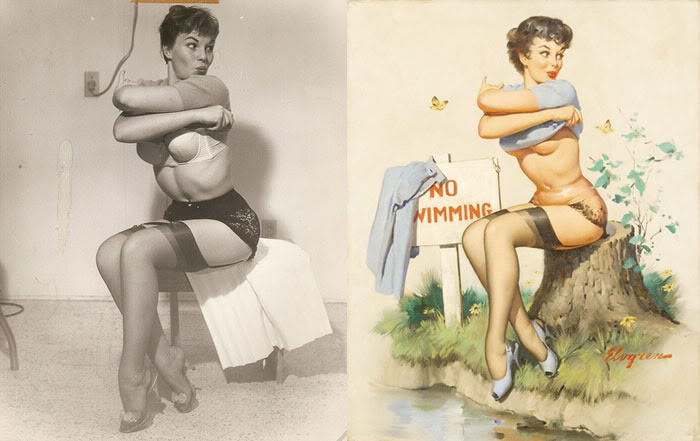
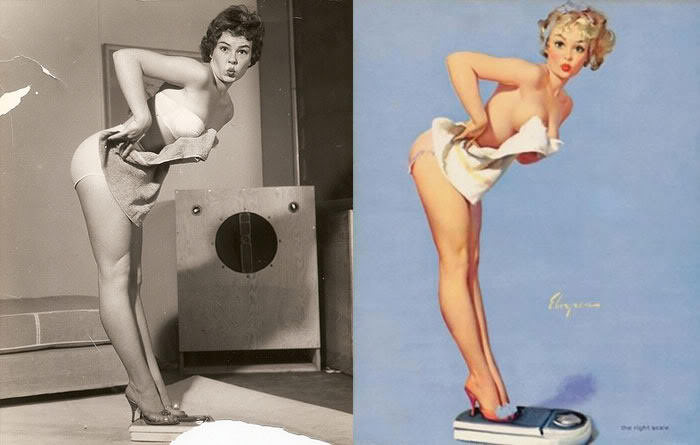
What these before-and-after images document is a pre-digital form of image manipulation. Long before software made it easy to alter a photograph, artists were doing the same thing by hand — reshaping bodies, smoothing imperfections, and constructing an ideal that lived on canvas rather than in reality. The tools were different, but the act of editing a woman’s appearance to match an impossible standard was already fully developed.
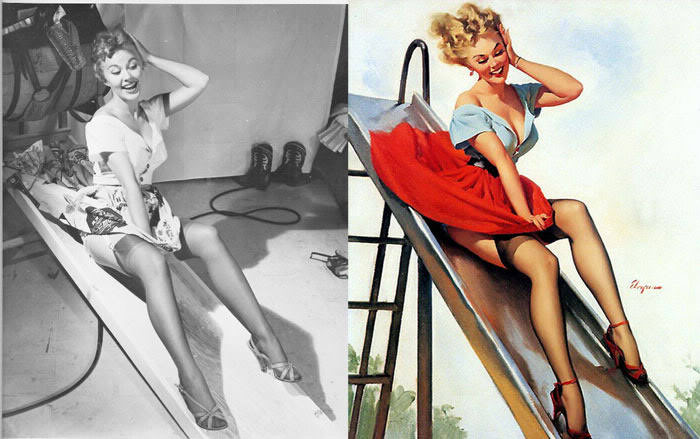
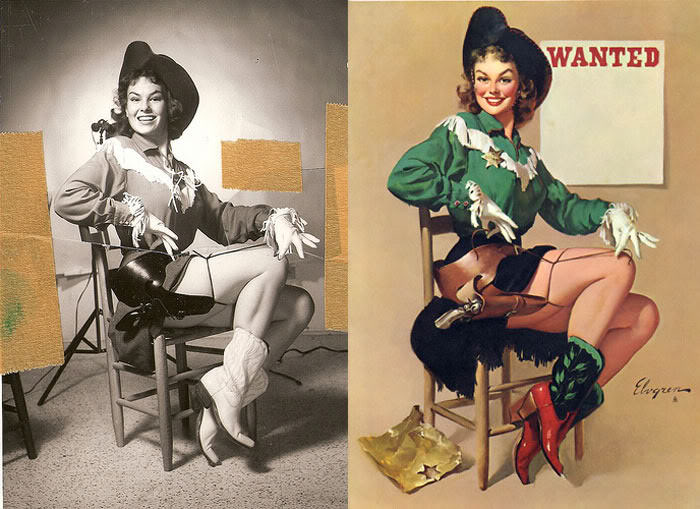
Every painting in this collection started as a photograph of a real woman. The images below show both — the original photo and the finished artwork side by side. The model’s identity is preserved in the reference photo, while the painting shows what the artist chose to emphasize, exaggerate, or erase.