
Pie Town sits along U.S. Highway 60 in Catron County, New Mexico, in a stretch of high desert country that most travelers pass through without stopping. The community was established in the 1920s by a man named Clyde Norman, and despite its small size, it built a distinct identity around its people, its land, and its food. The pies that gave the town its name have drawn visitors for decades, and the annual Pie Festival — featuring pie-baking contests, music, races, and arts and crafts — keeps that tradition alive today. The land around Pie Town also holds ruins from Native American communities, remnants of a much older history beneath the same sky.
In 1940, the U.S. Farm Security Administration sent photographer Russell Lee to document the people living here. What Lee captured across several visits — in June, September, and October of that year — was a community of homesteaders, farmers, and families carving out daily life in one of the more remote corners of the American Southwest. His photographs are straightforward and unposed enough to feel real. They show people working the land, gathering together, feeding their children, and making music. The collection is one of the most complete photographic records of a small rural American community from that era.
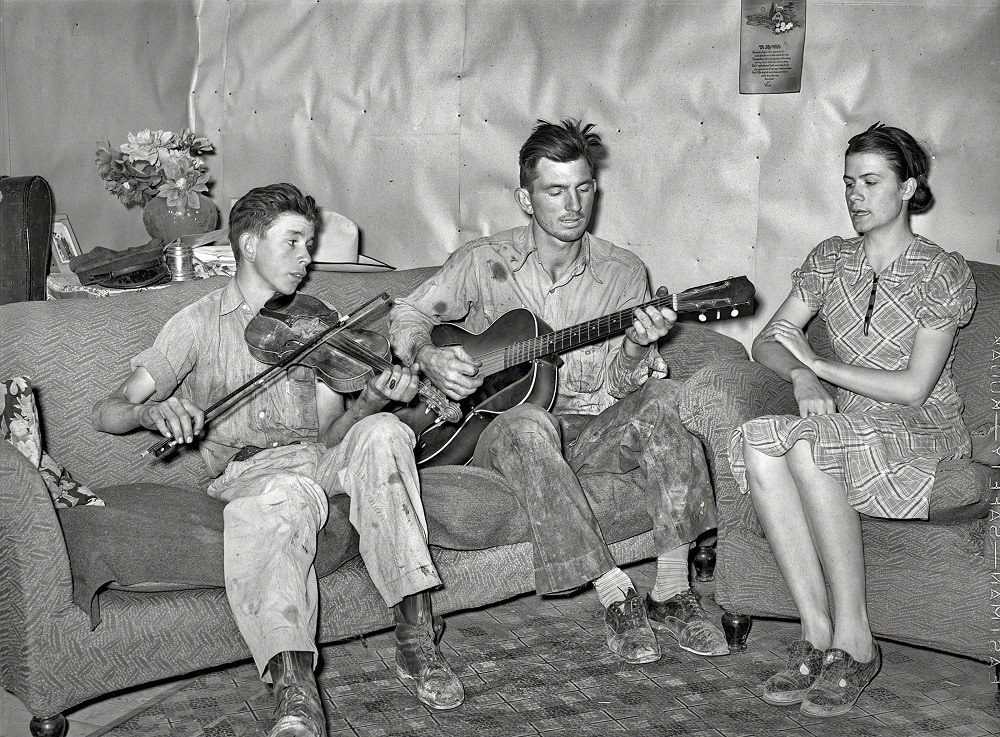
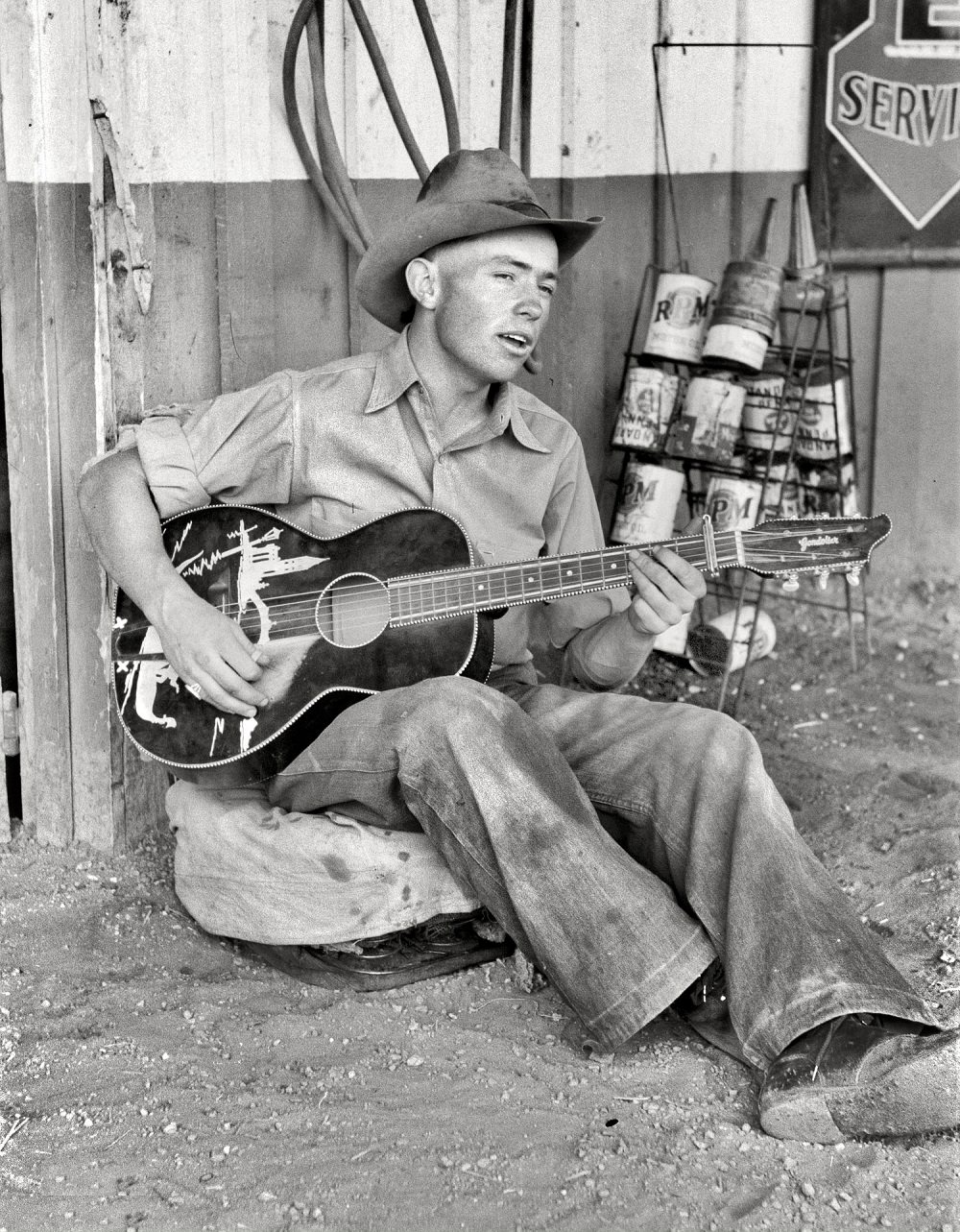
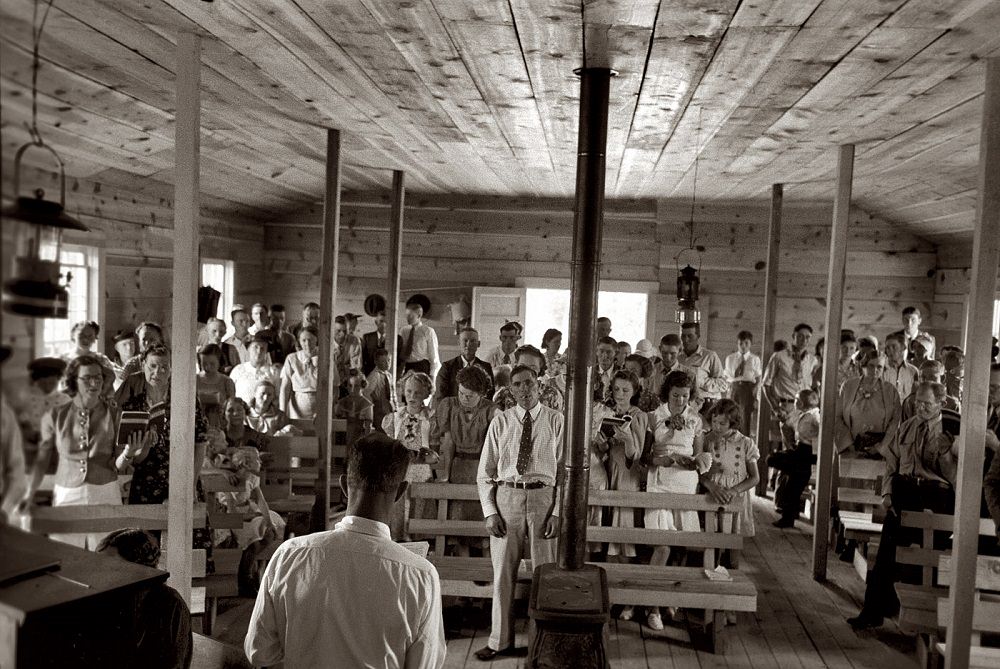
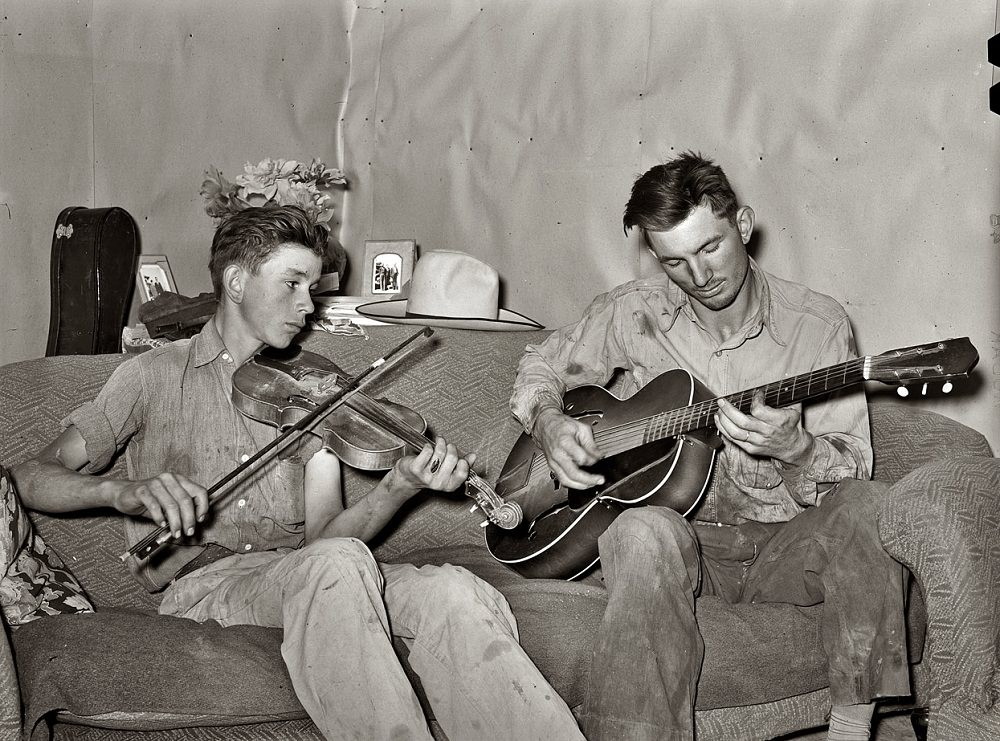
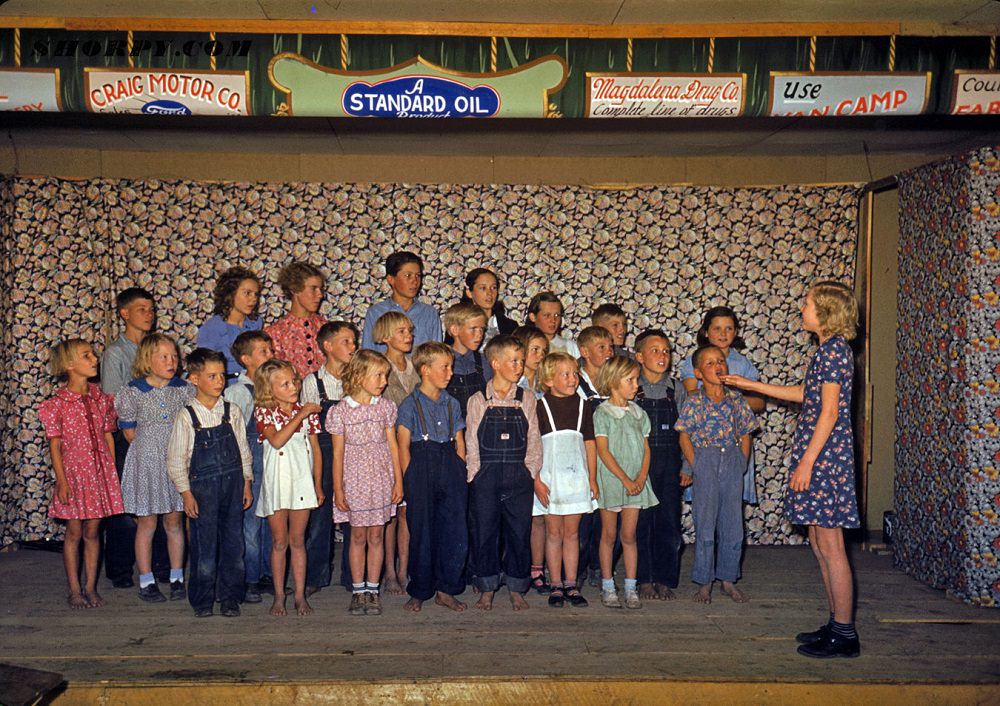
Music was woven into the social fabric of Pie Town. Community sings drew families from across the area, and homemade music — guitars, voices, harmonies passed between siblings — was a regular part of life. These weren’t formal performances. They were neighbors gathering in whatever space was available, sharing songs they already knew by heart.
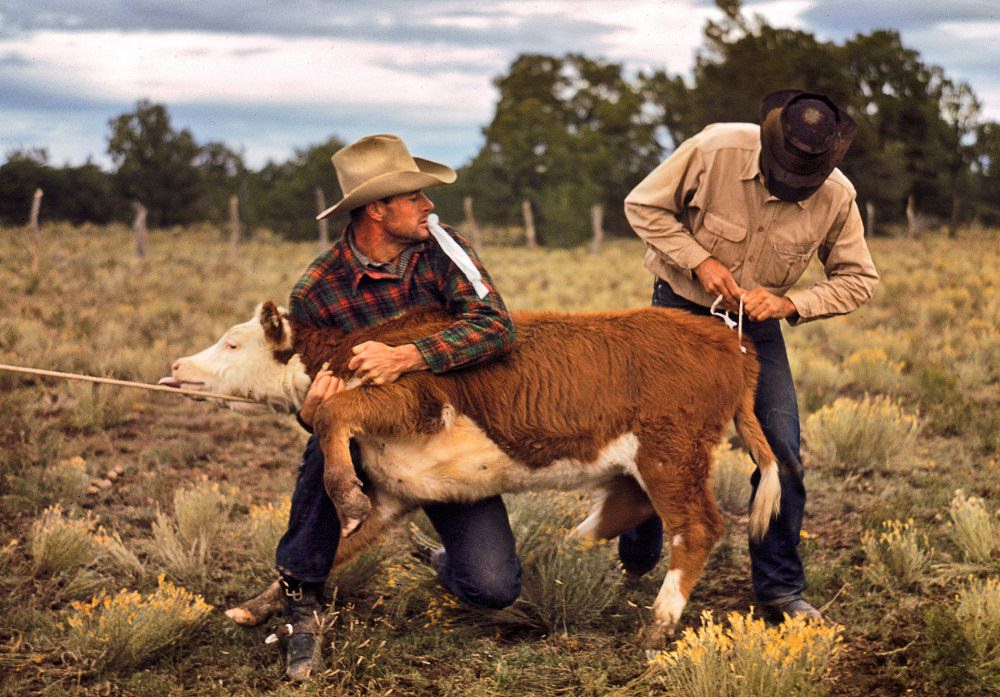
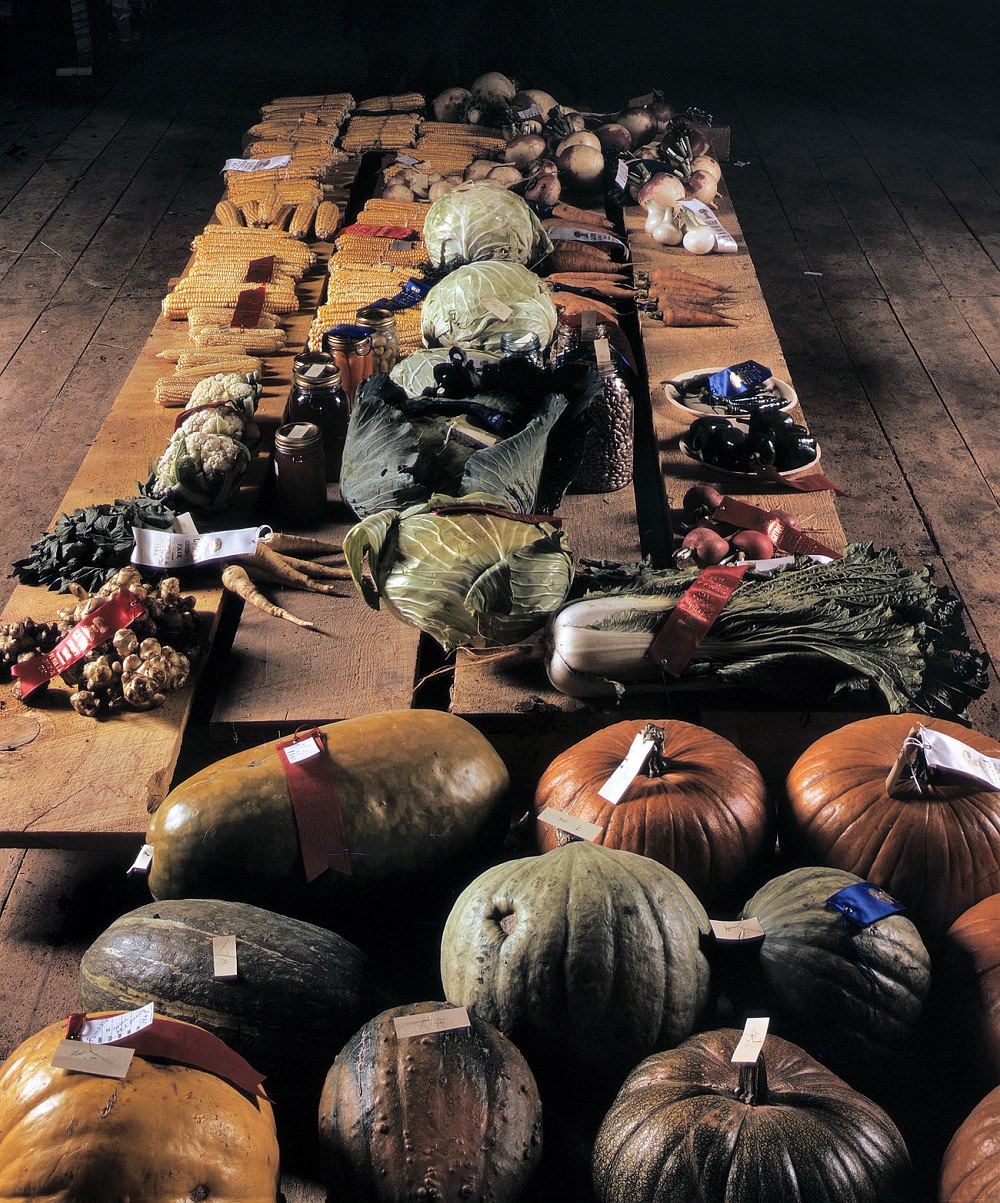
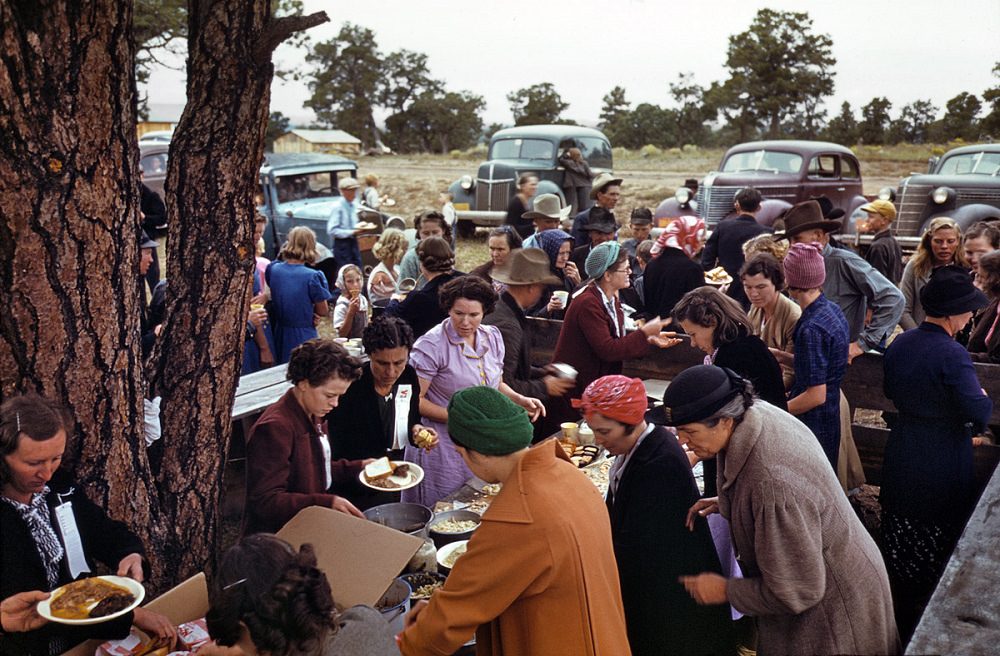
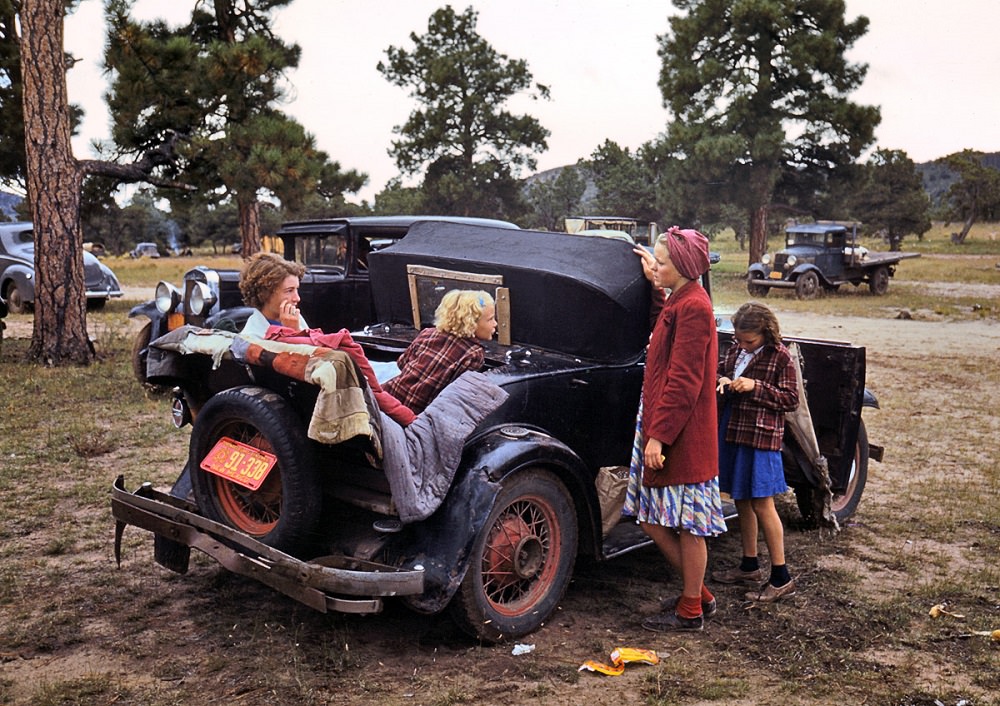
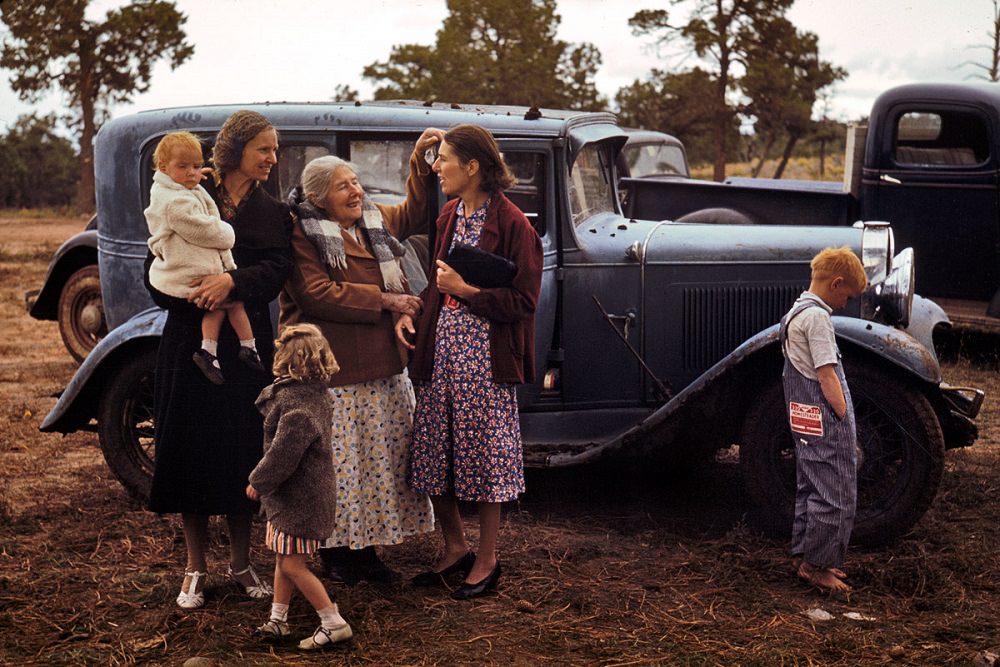
The Catron County Fair held at Pie Town was a major event on the community calendar. It brought the rodeo, barbecue dinners, crop displays, and large group gatherings that gave residents a rare chance to step back from their daily labor. The rodeo drew crowds, and events like tying a ribbon on a calf’s tail were crowd favorites that mixed humor with skill.
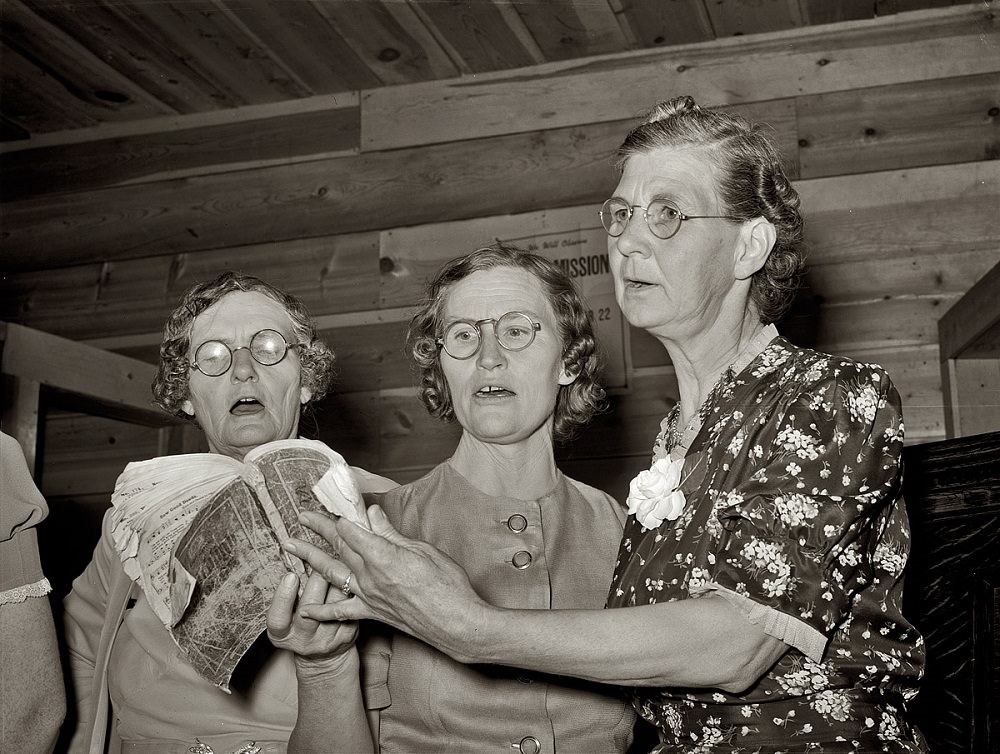
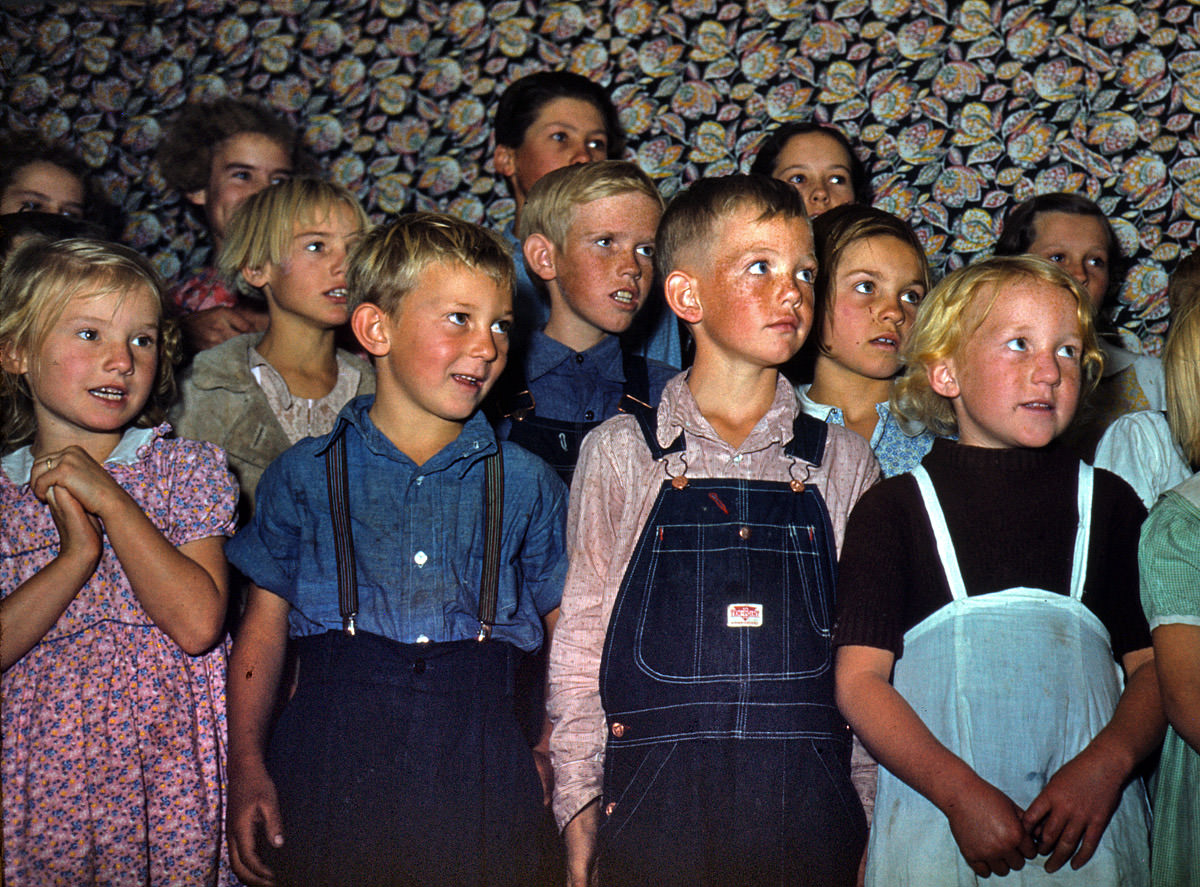
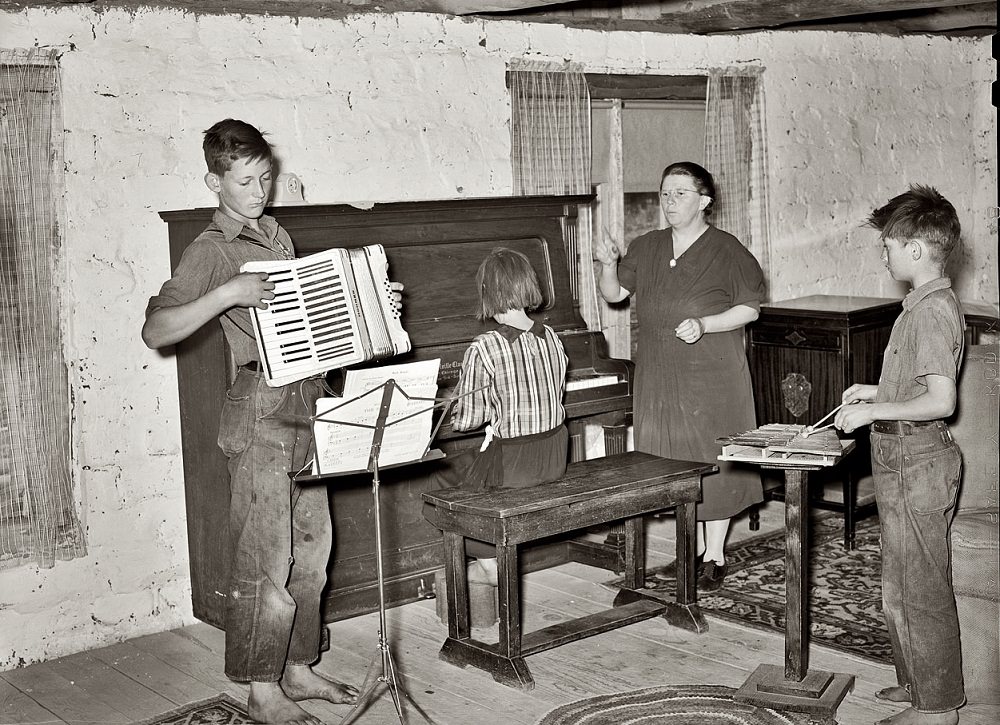
The community sings weren’t limited to adults. Schoolchildren took part in musical programs, and the all-day sing events were exactly what they sound like — full days of communal music that brought generations together. The Work Projects Administration even funded a music class for local homesteaders, taught by a homesteader’s wife who served as the instructor.
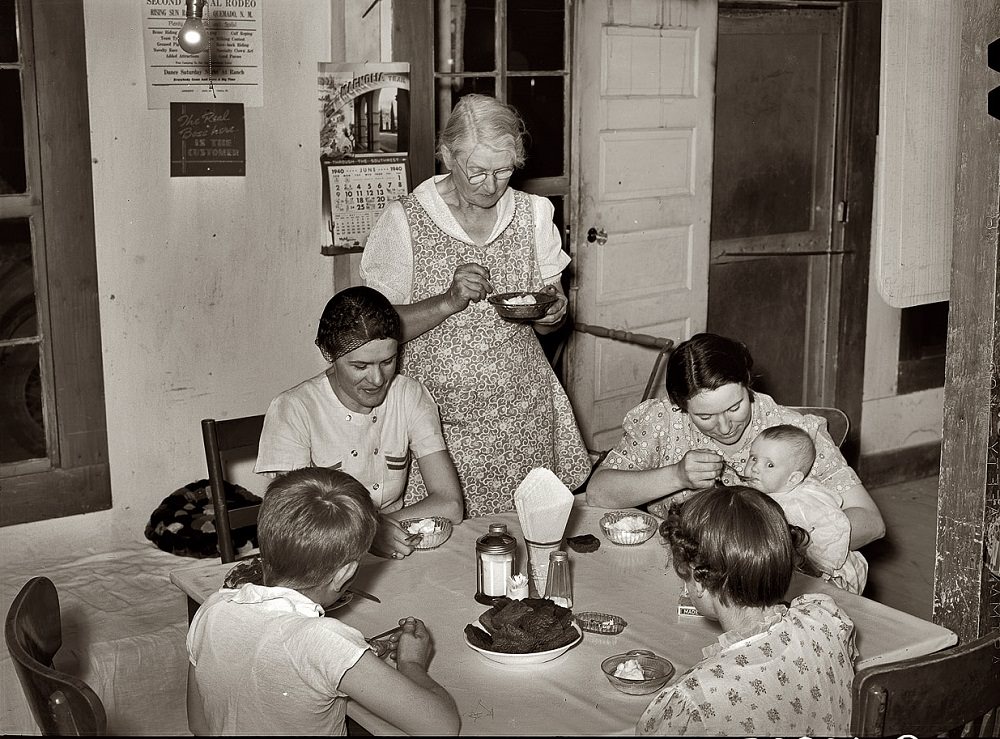
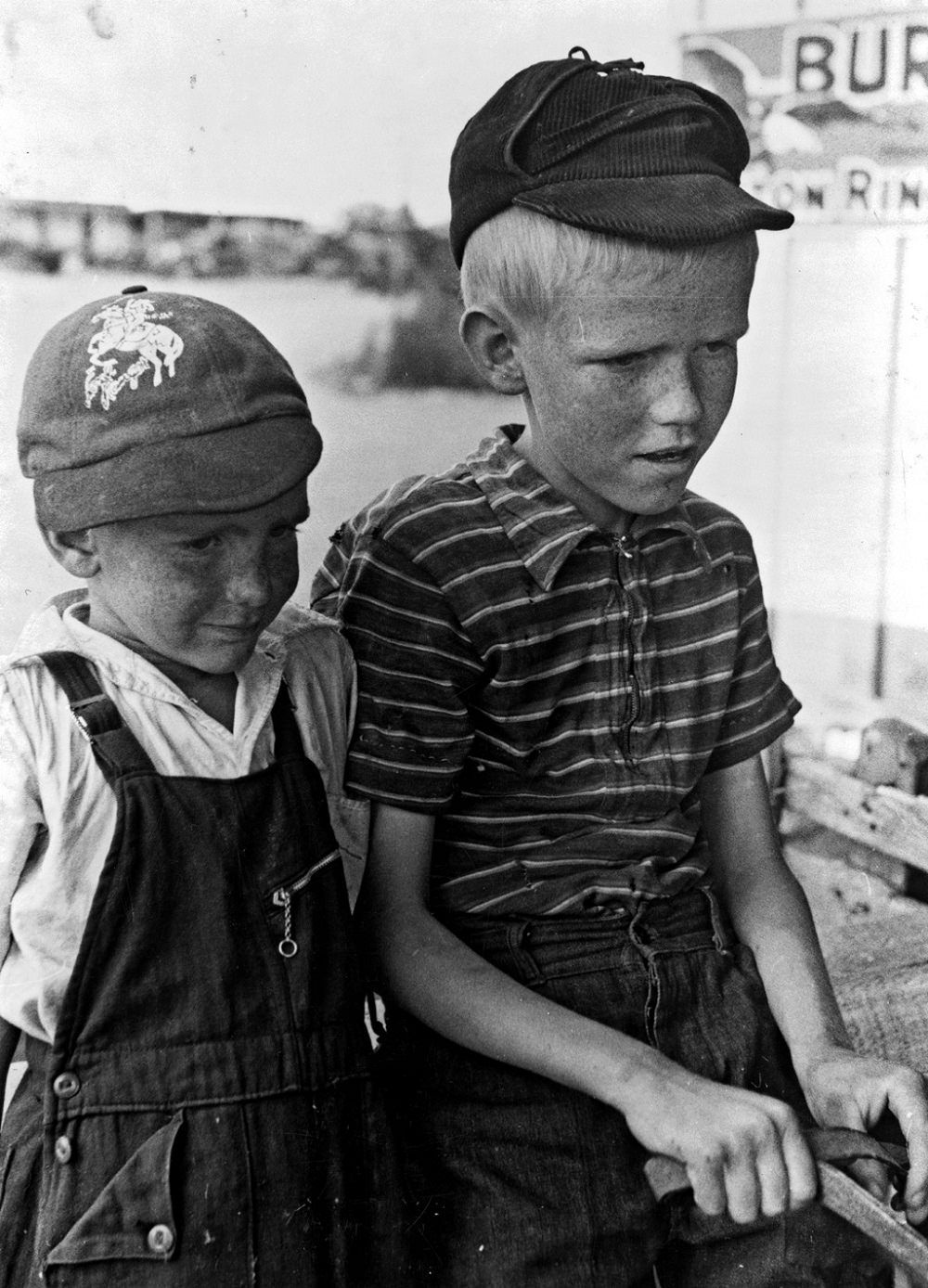
Between the music and the fair, Pie Town residents also found smaller, quieter moments of pleasure. An ice cream party in June 1940 shows a group gathered casually, enjoying something simple. The Leatherman boys riding in a burro-drawn cart gives a glimpse of childhood in a place where entertainment was invented rather than purchased.
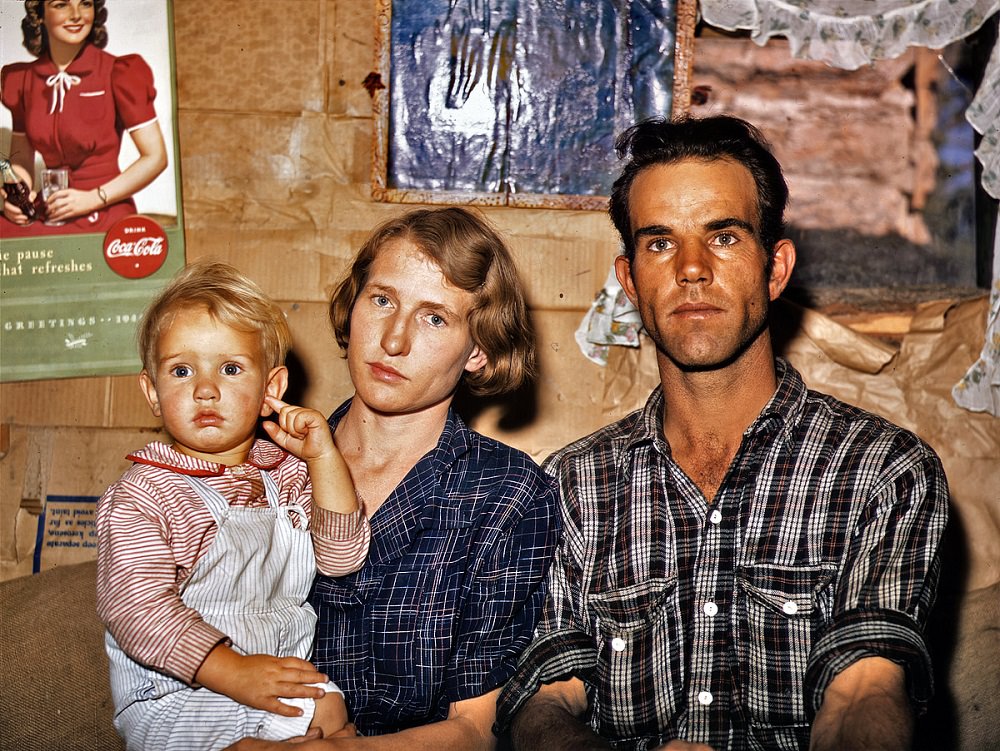
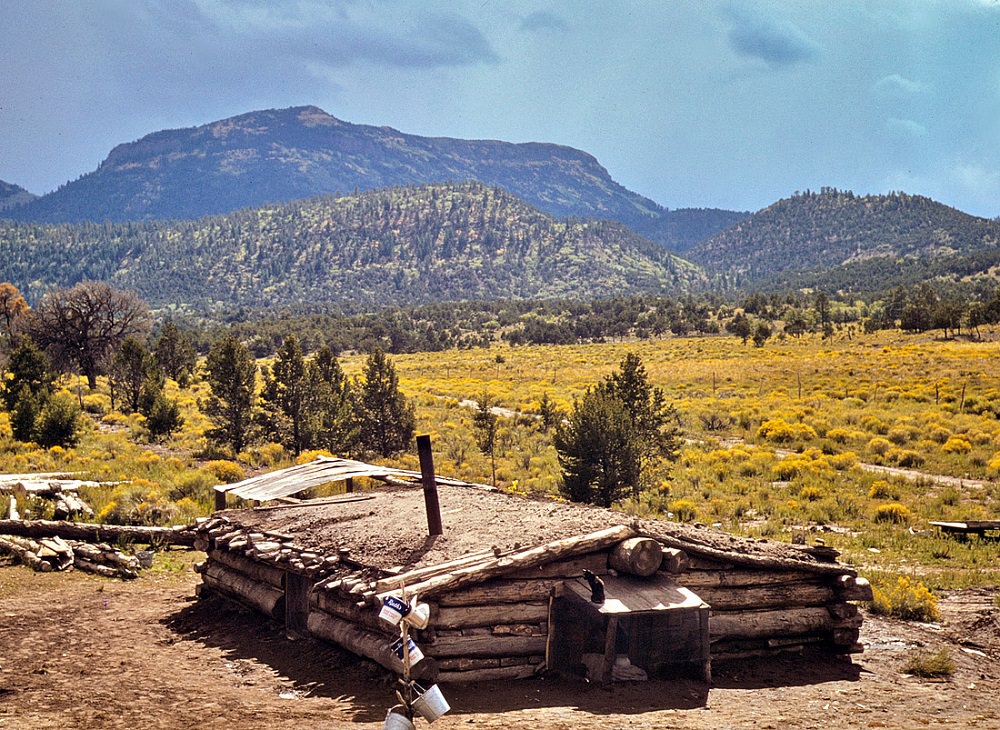
Housing in Pie Town told its own story of hardship and resourcefulness. Many homesteaders lived in dugout homes — structures partially dug into the earth, with dirt floors and minimal insulation. The Jack Whinery family was one such household. Whinery, his wife, and their five children lived in a dugout that Russell Lee photographed both inside and out. The interior image showing Whinery with his wife and youngest child on a dirt floor is one of the starkest frames in the entire collection.
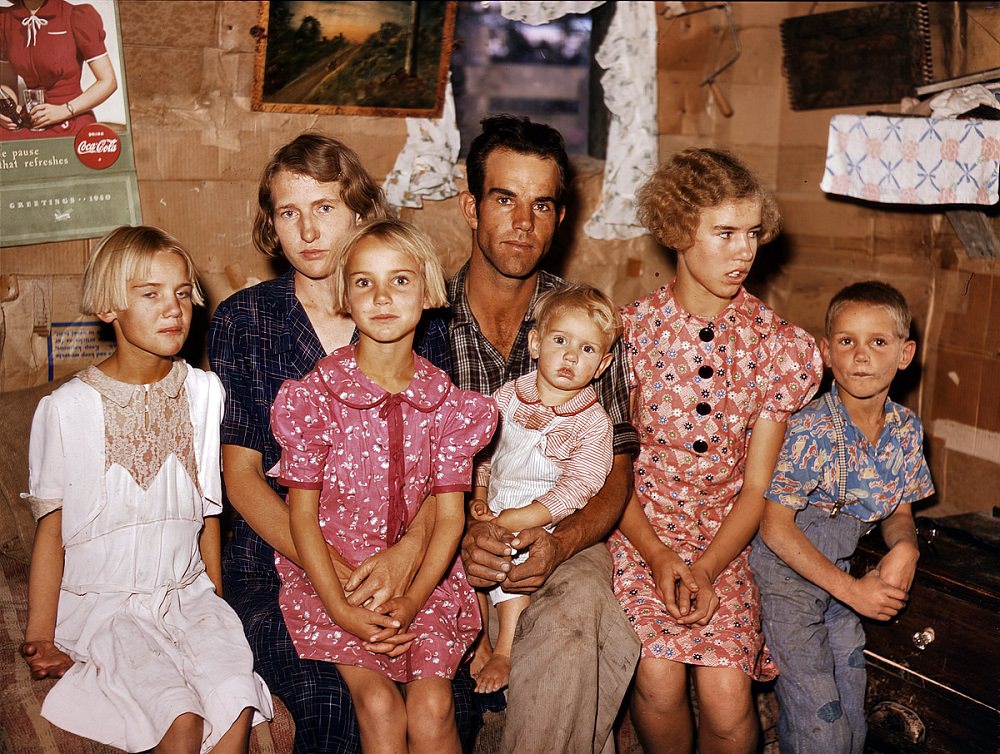
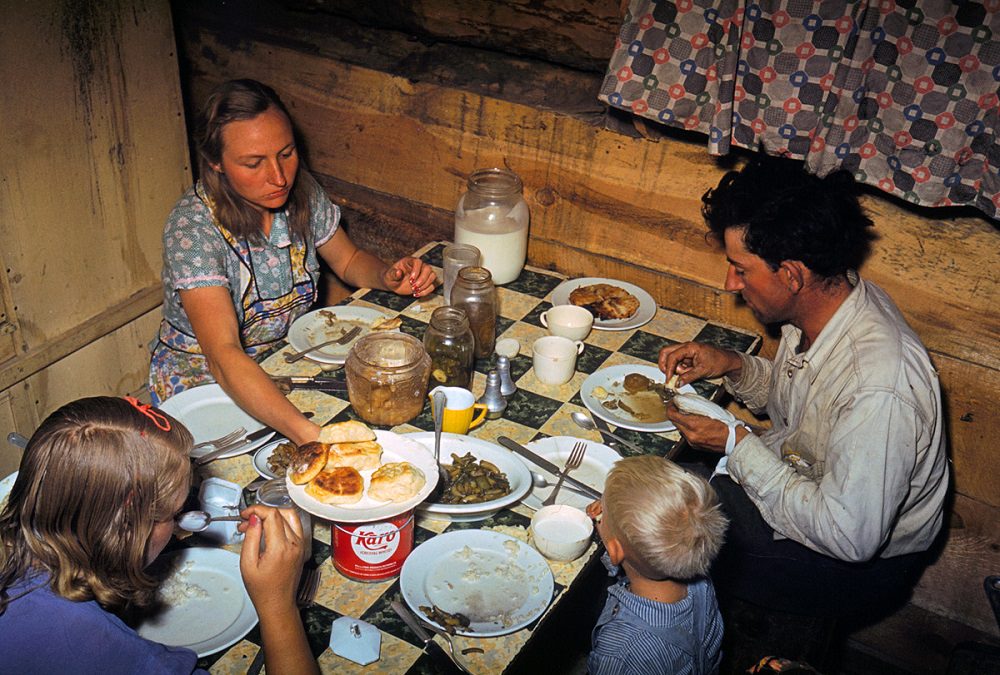
The Whinery dugout wasn’t unique. Faro and Doris Caudill, another homesteading couple, also lived in a dugout home with their family. Lee photographed their house with Mount Allegro visible in the background — a detail that placed these modest, ground-level dwellings against the landscape that defined the region. Inside, the Caudill family sat down to dinner in that same dugout, a scene Lee captured in October 1940.
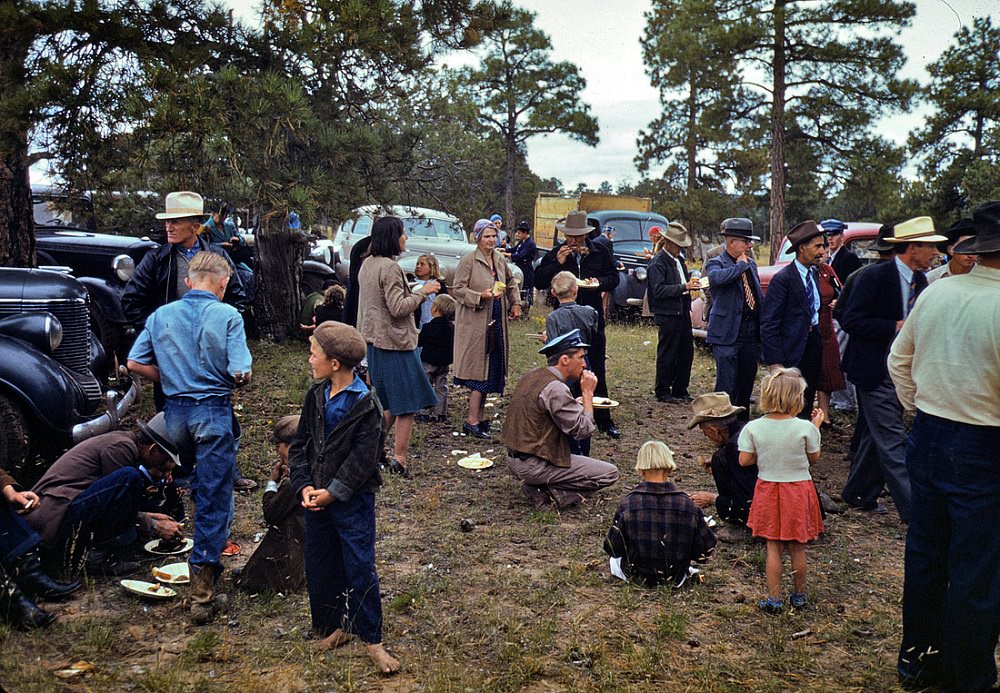
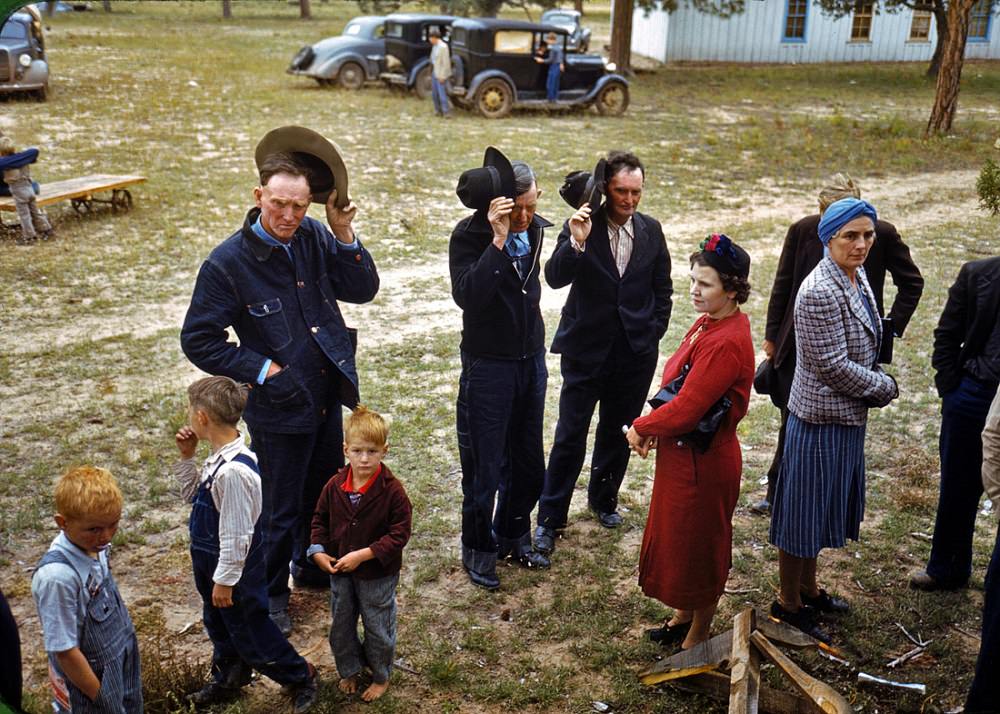
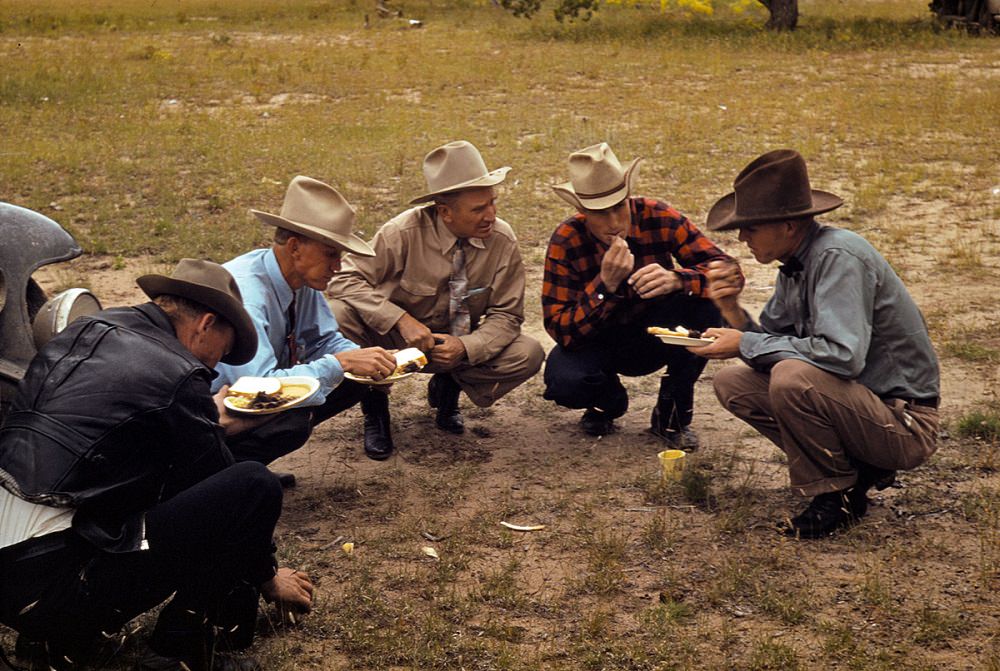
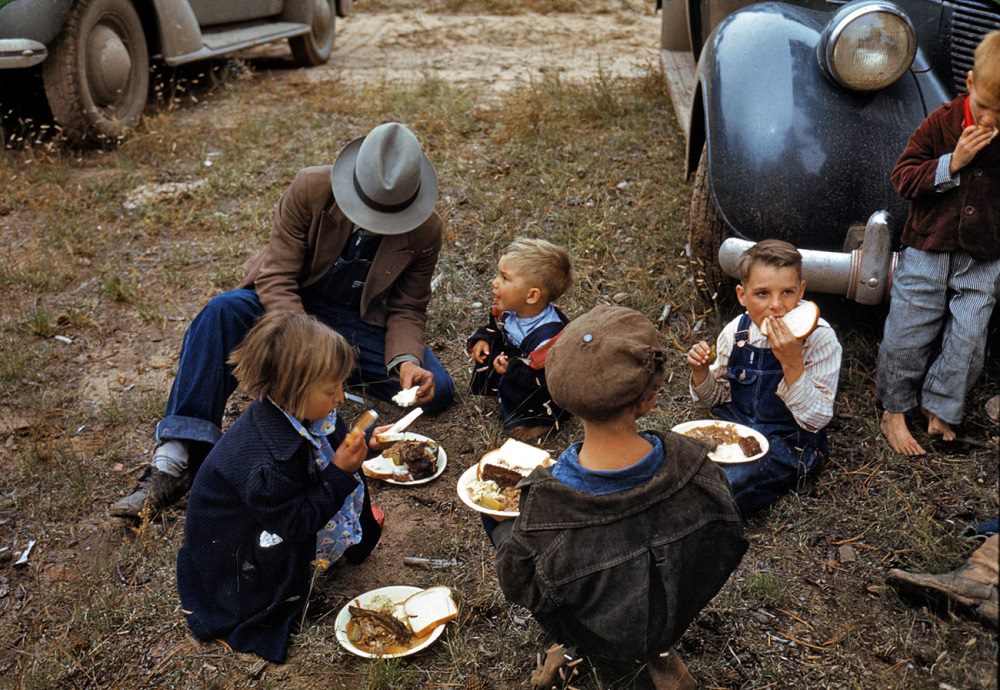
The Catron County Fair barbecue was a communal event on a large scale. Lee photographed it from multiple angles — men gathered around the pit, plates being served, families eating together, and the moment before the meal when the crowd stopped to say grace. That prayer before the barbecue was captured plainly: heads bowed, hats off, food waiting.
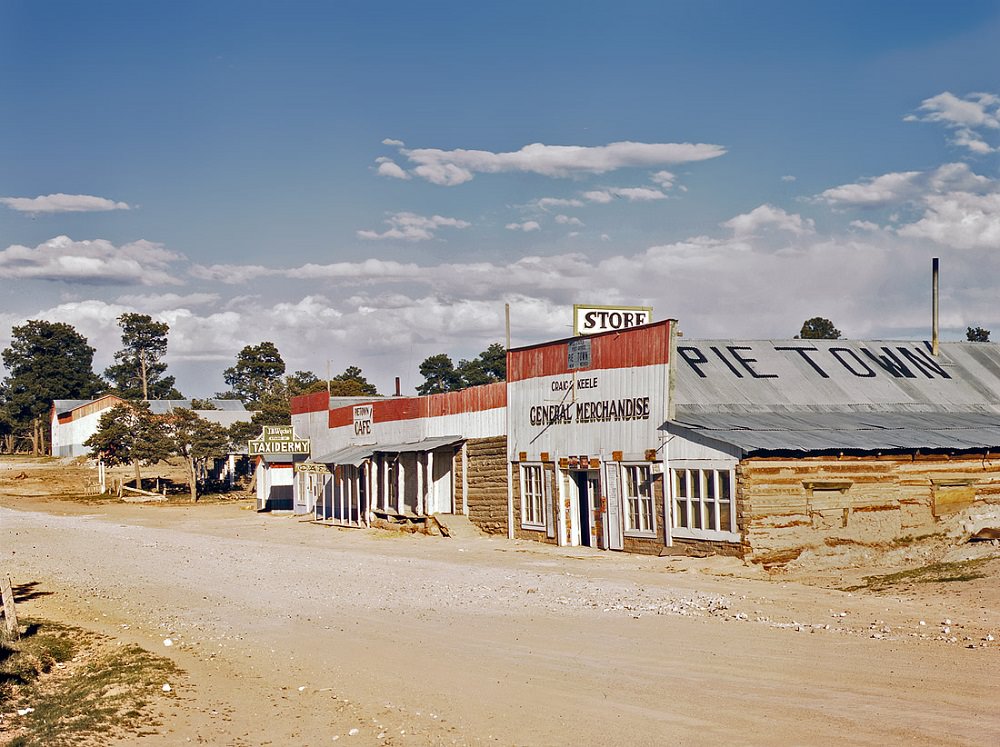
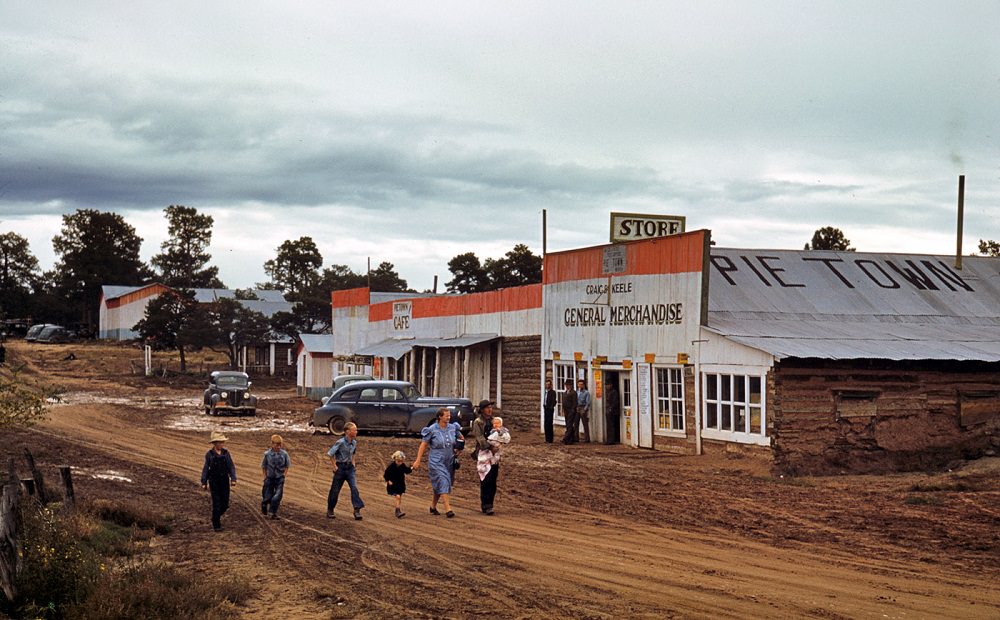
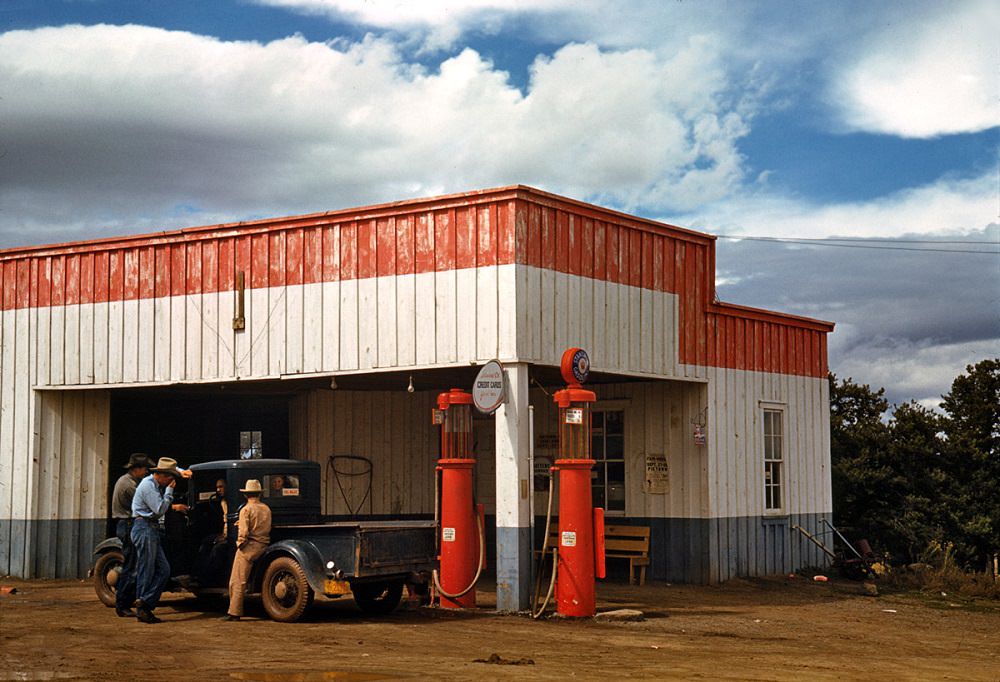
Main Street in Pie Town was a short stretch. A general merchandise store, a filling station with a garage, and a handful of other structures made up the commercial center. Lee photographed Main Street in both September and October, and the two shots together capture the sparse, functional nature of a town built around necessity rather than growth.
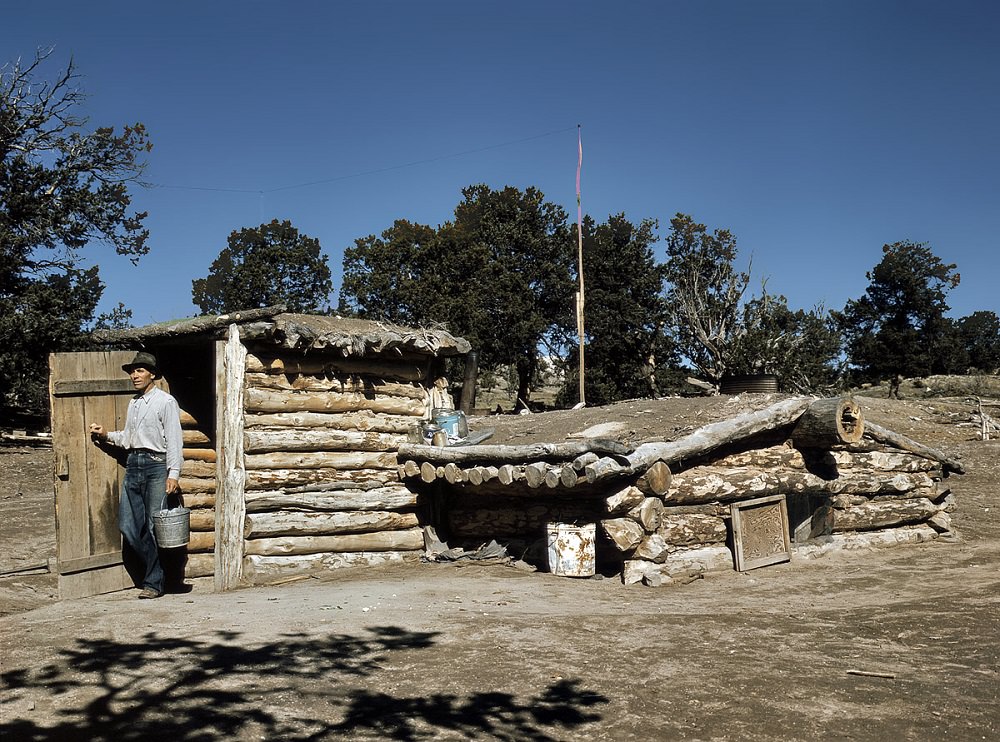
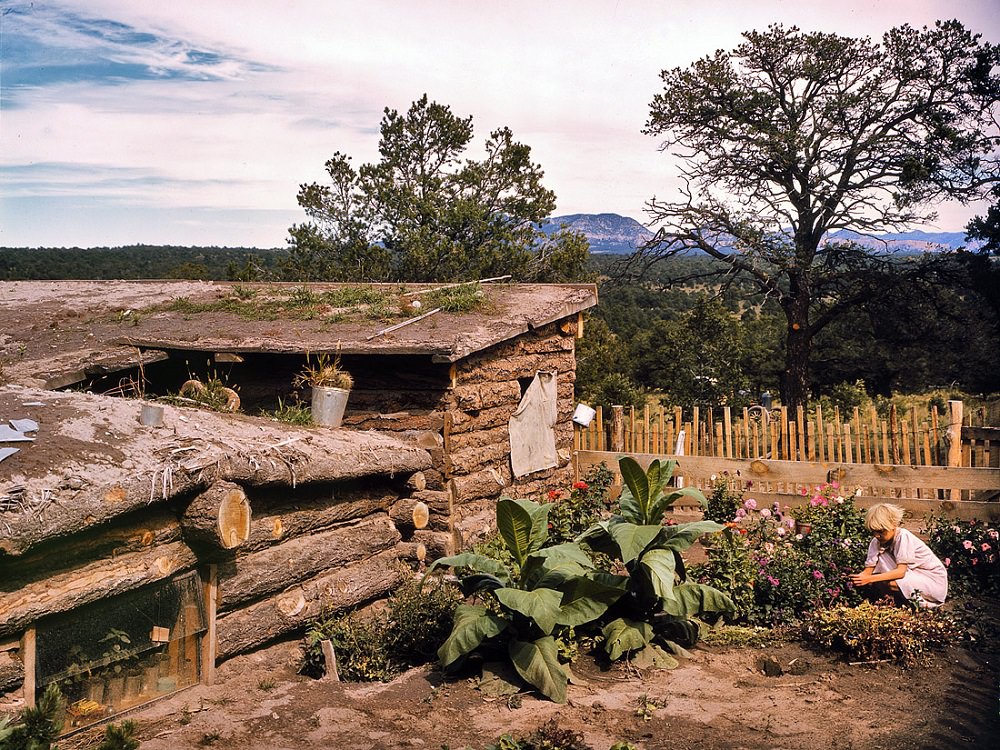
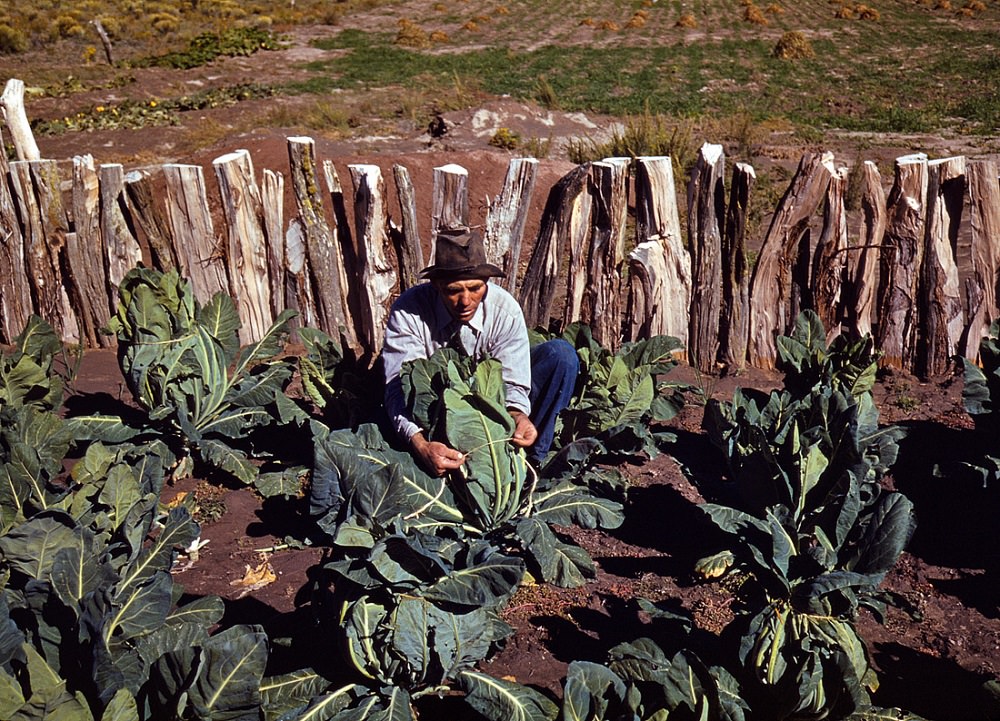
The gardens attached to these dugout homes were essential, not decorative. Mr. Leatherman’s vegetable garden included cauliflower he carefully tied and tended. Jack Whinery’s garden sat directly beside his dugout, visible in a wide exterior shot that showed just how close the growing space was to the living space. Food production and home life occupied the same small plot of ground.
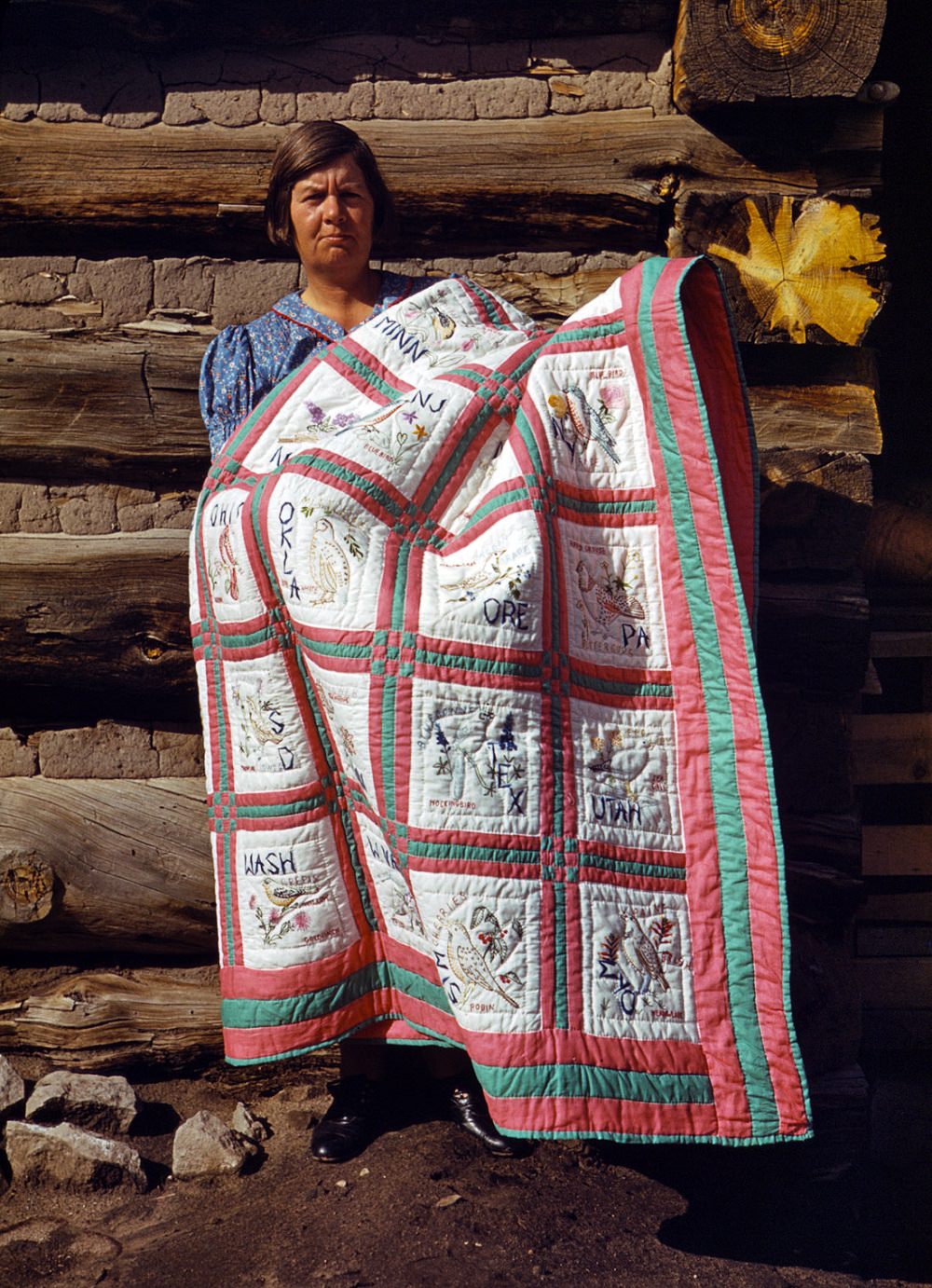
Women in Pie Town carried a substantial share of the workload. Mrs. Stagg worked alongside her husband in the fields — plowing, planting, weeding corn, and harvesting beans. During the noon break, she quilted. Lee’s caption for her photograph spells this out in full, giving her contributions the same documentation he applied to the men and children he photographed throughout the year.
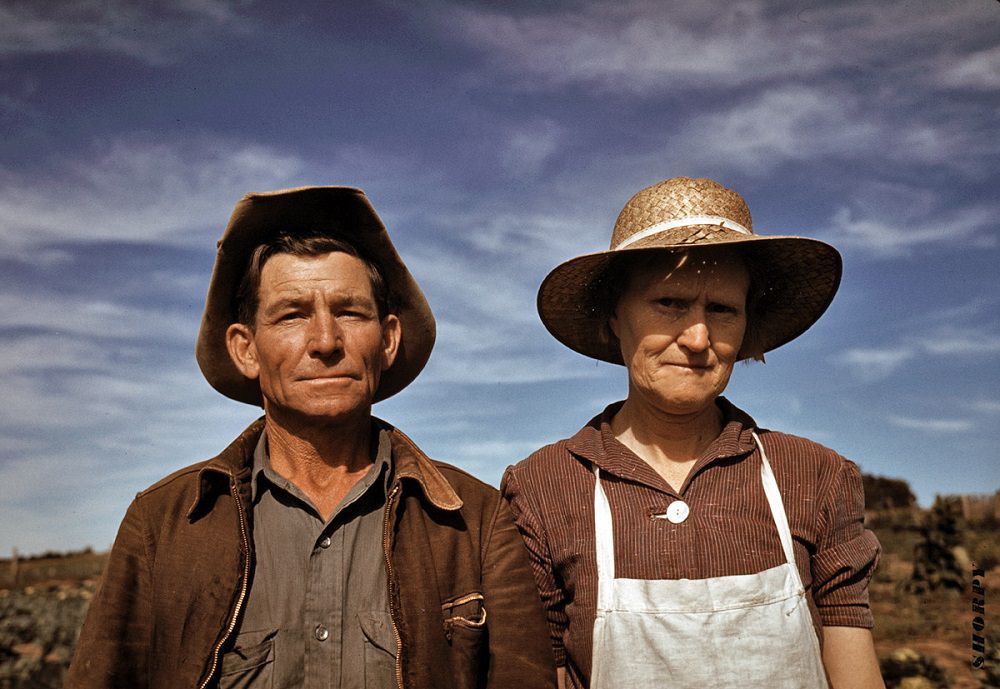
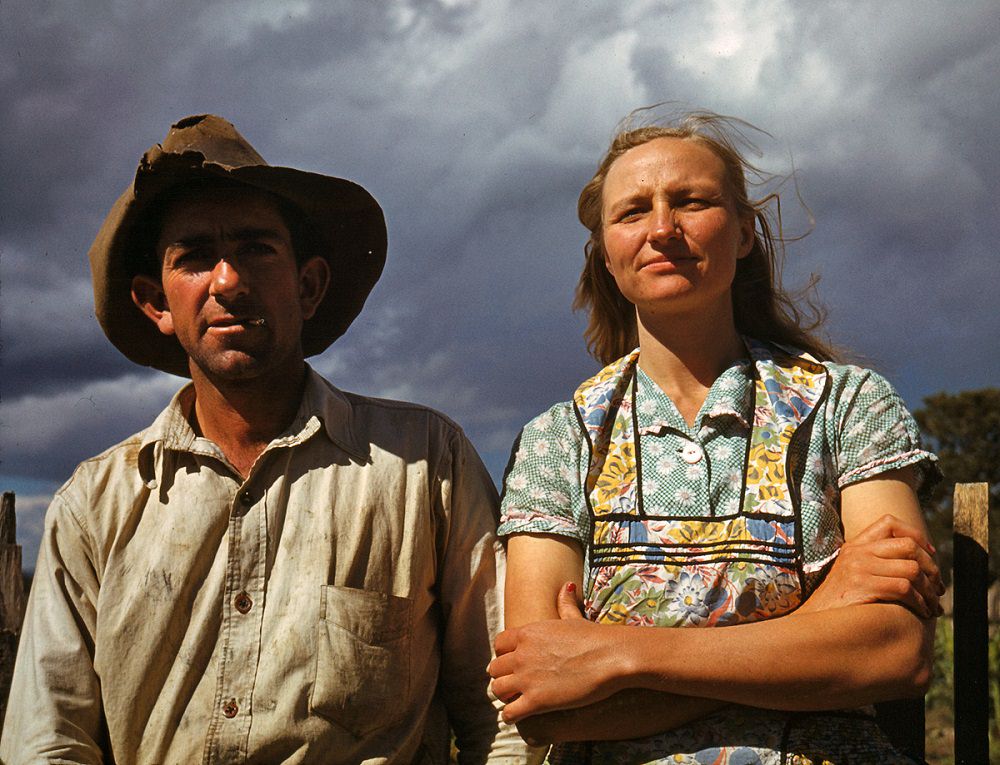
Homesteaders Jim Norris and his wife appear in Lee’s October portraits as a couple who, like so many others in the area, built their lives from scratch on land that demanded constant effort. The portrait of the Caudills — Faro and Doris — taken the same month, shows two people who had committed fully to the homesteading life in one of New Mexico’s more unforgiving landscapes.
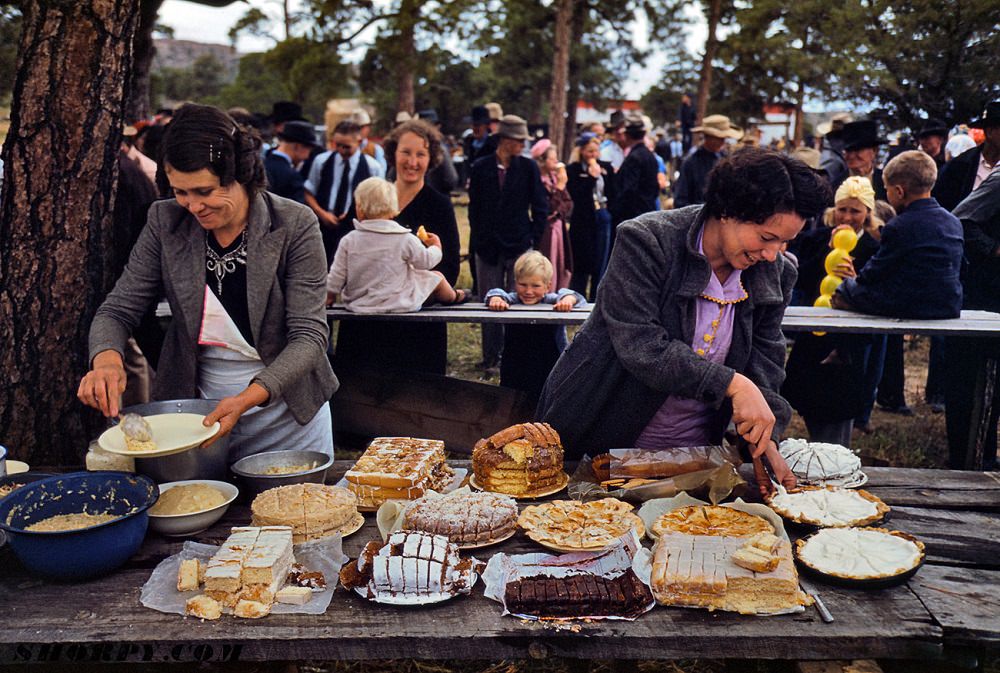
Russell Lee’s visits to Pie Town in 1940 produced a remarkable range of photographs — portraits, landscapes, interiors, public events, and private moments. Taken together, they document a community that was simultaneously isolated and tightly knit, living in conditions that required real endurance while still finding time to gather, celebrate, and make music.





Thanks for sharing! What a unique little place
I went through Pie Town about 5 years ago when I read its name on a map. Since then, I’ve been looking for land somewhere in west central New Mexico and planning to move from the Midwest. Since then, I’ve been back every year!