

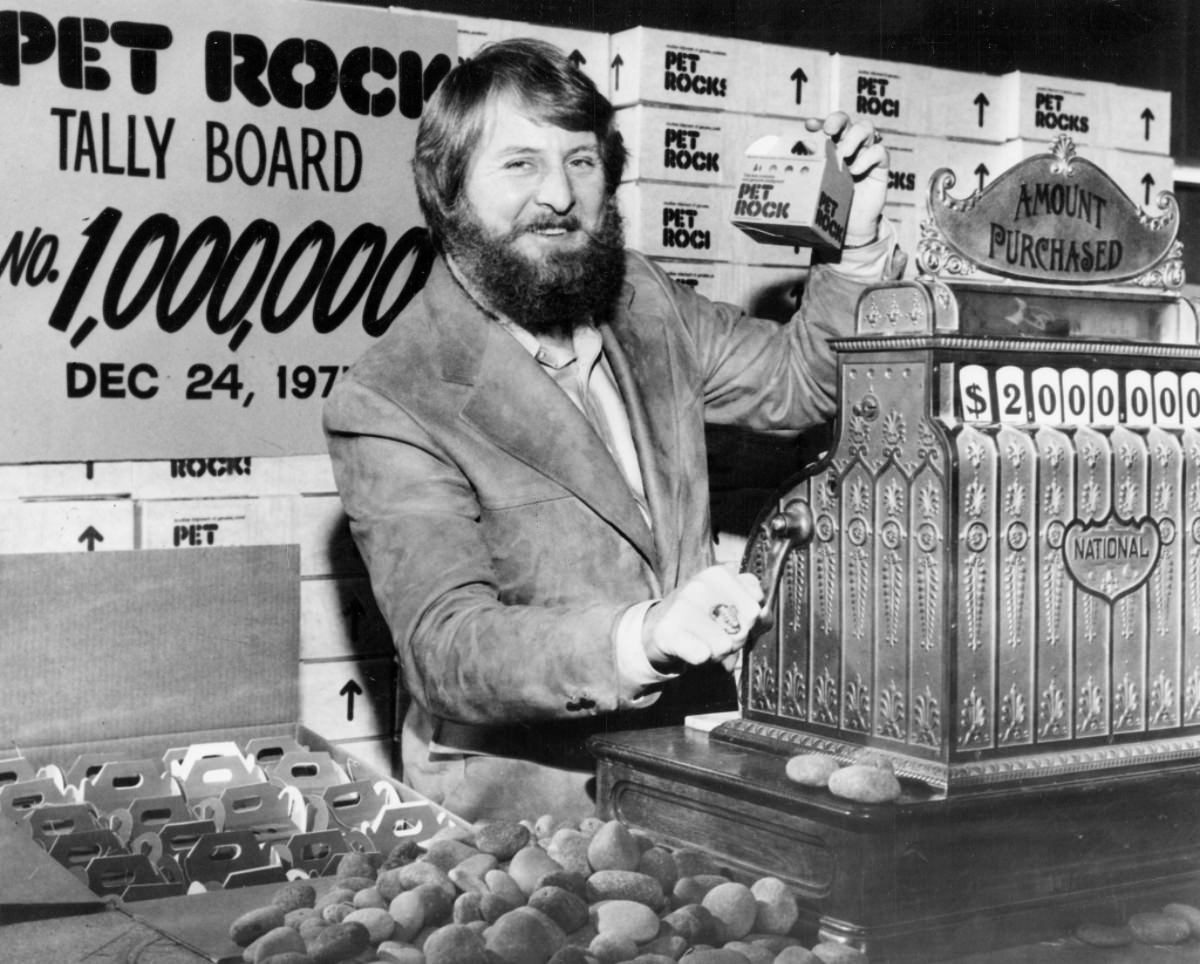
In 1975, an advertising executive named Gary Dahl sold over a million rocks and became a millionaire. Not gemstones. Not rare minerals. Plain, smooth rocks — the kind you could find on any beach. The Pet Rock was one of the most absurd commercial fads in American history, and it peaked during the Christmas season of 1975 in a blaze of consumer enthusiasm that lasted just six months.
The idea was born in a bar. Dahl was listening to his friends complain about their pets — the feeding, the walking, the vet bills, the mess. As the complaints piled up, Dahl landed on a joke: the perfect pet was a rock. Rocks don’t need to be fed, walked, bathed, or groomed. They don’t get sick. They don’t chew the furniture or disobey commands. They don’t die. For a group of tired pet owners venting over drinks, it was a funny thought. For Dahl, it became a business plan.
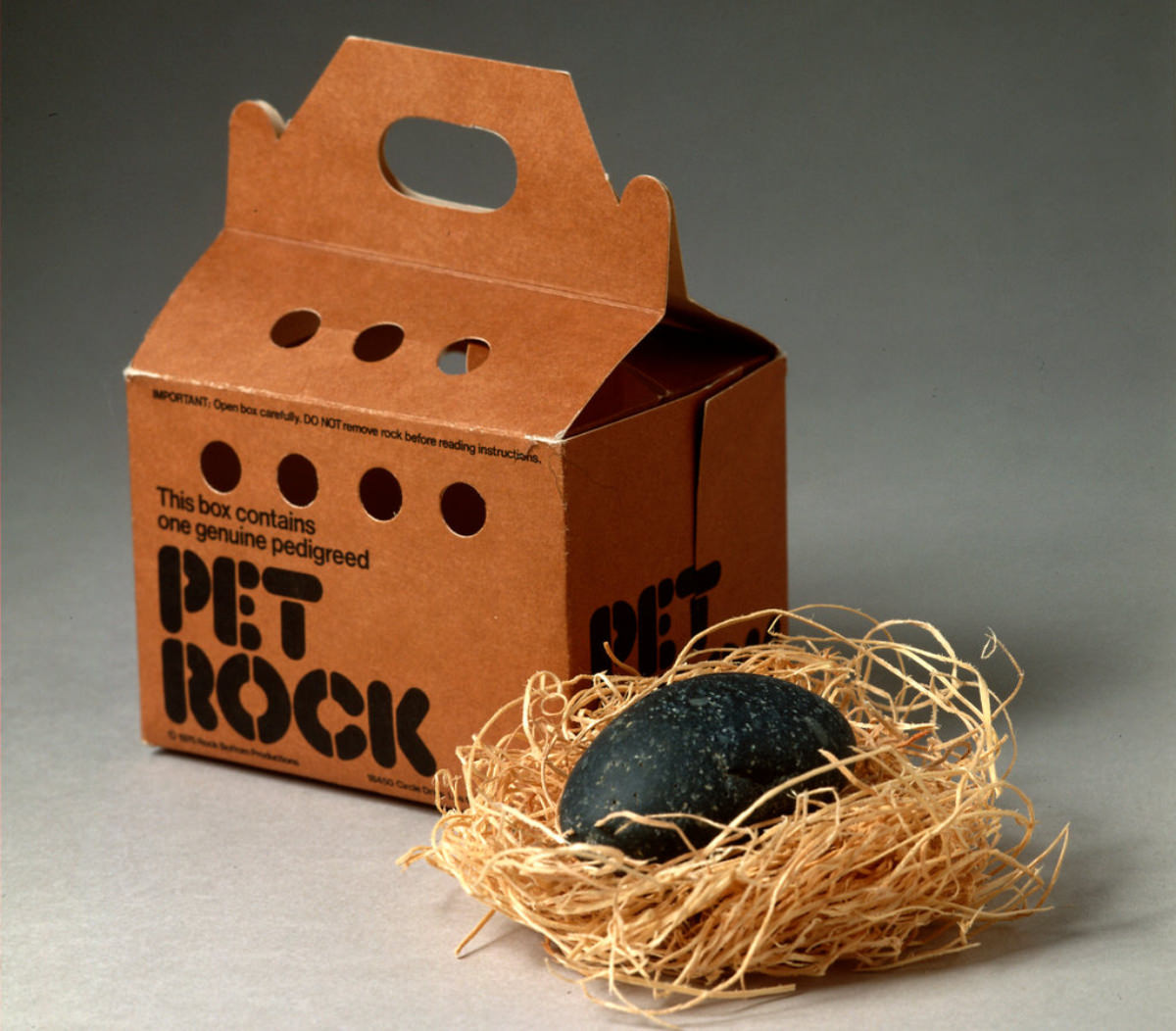
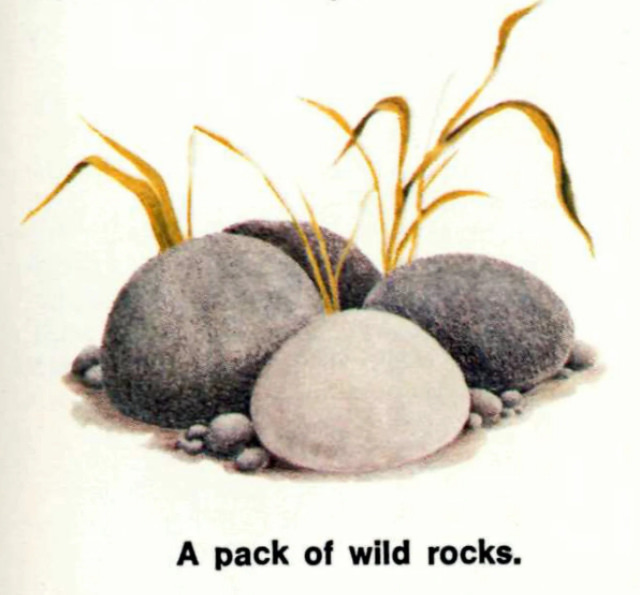
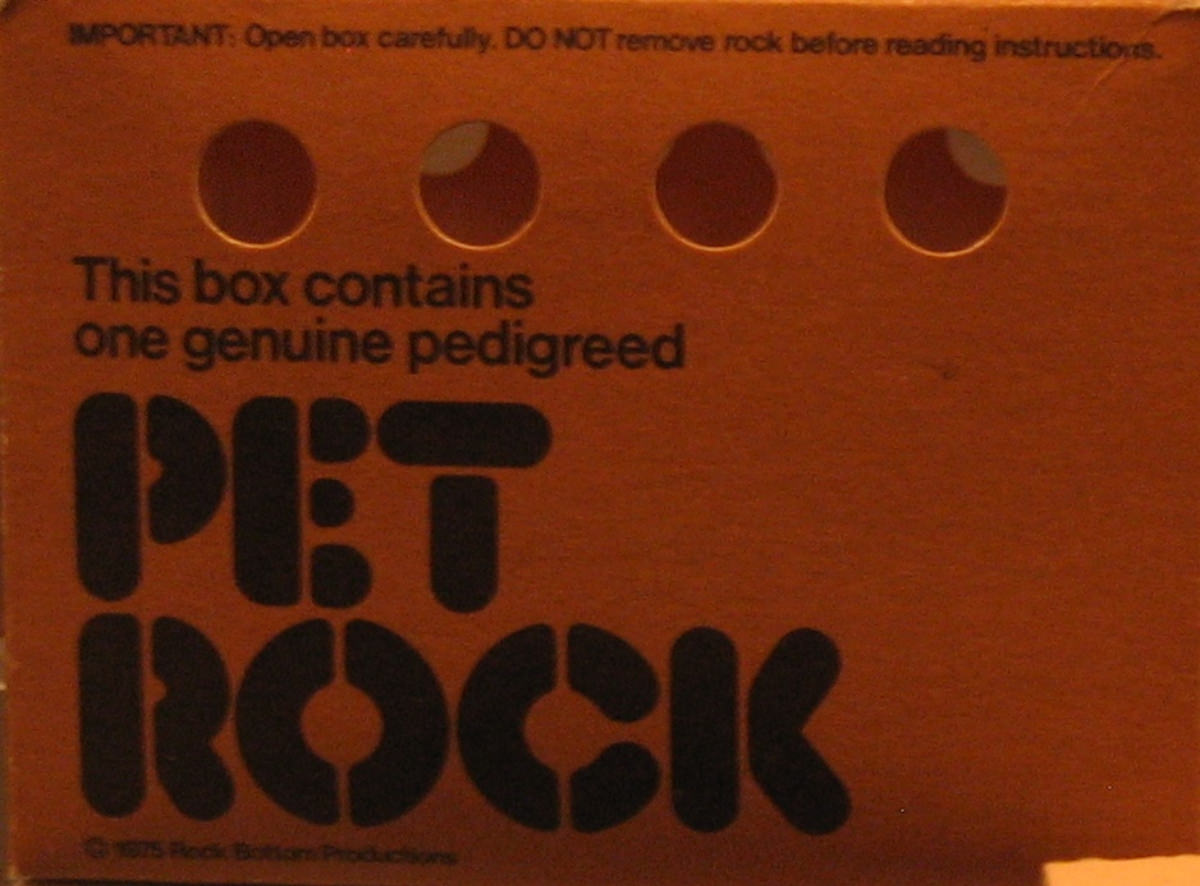
Dahl sourced his rocks from Rosarito Beach in Baja California, Mexico. They were smooth, round, and uniform — the kind of stone that fit perfectly in the palm of a hand. At one cent apiece, they were nearly free. He packed each one into a custom-designed cardboard box complete with straw bedding and punched-in air holes, as if the rock inside needed to breathe. The packaging alone sold the joke. Buyers knew exactly what they were getting, and they bought it anyway.
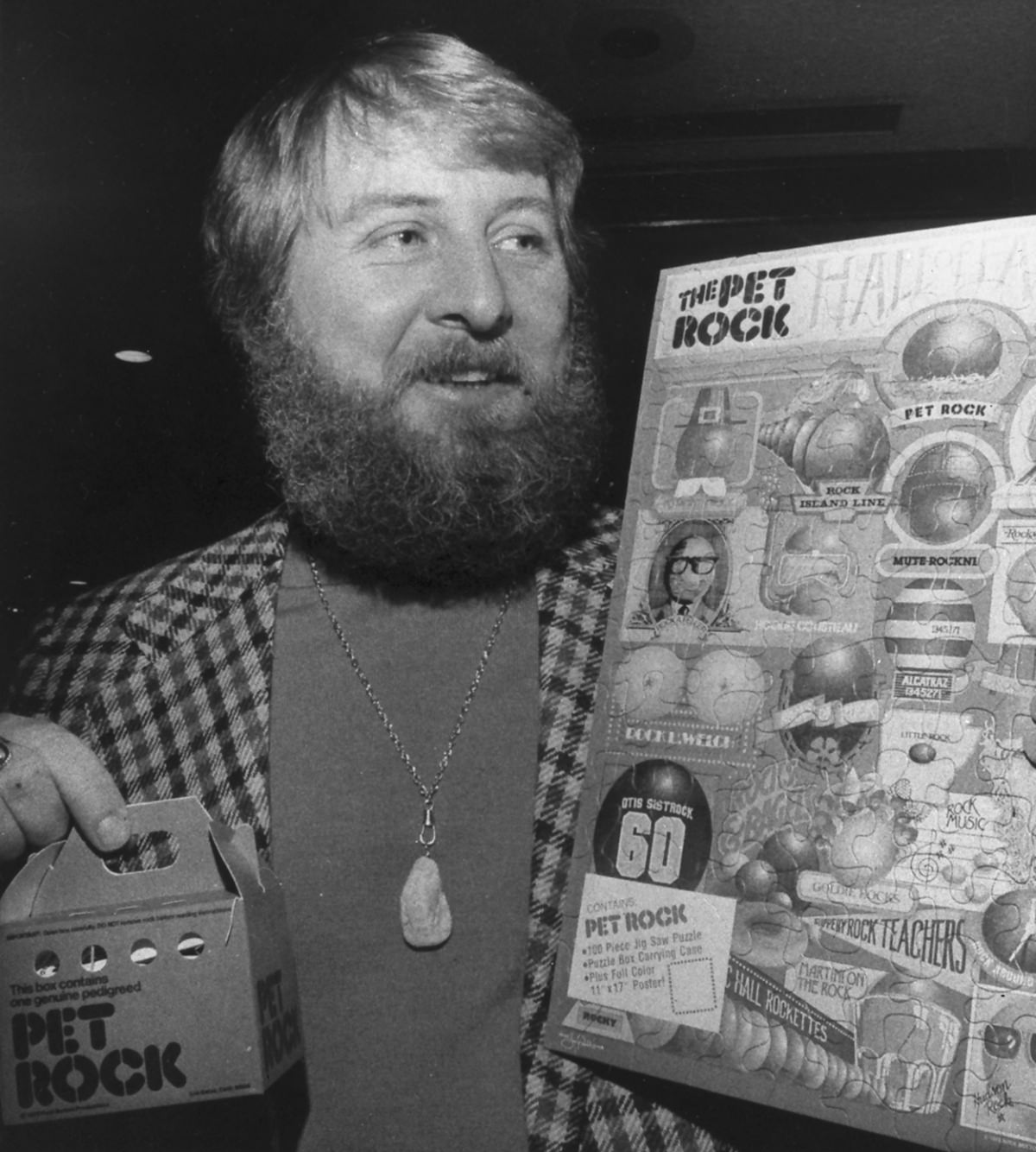
Dahl’s biggest expense was the die-cutting and manufacturing of the boxes. The straw was nearly free. For the first print run of the accompanying booklet, Dahl tacked the job onto a client’s printing order, then trimmed the copies himself. The result was a 32-page manual titled The Care and Training of Your Pet Rock, which cost him almost nothing to produce.
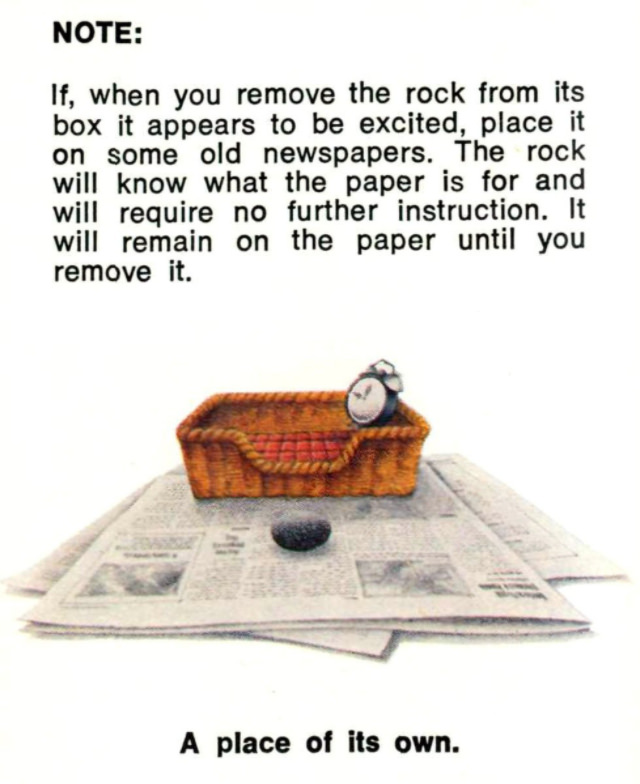
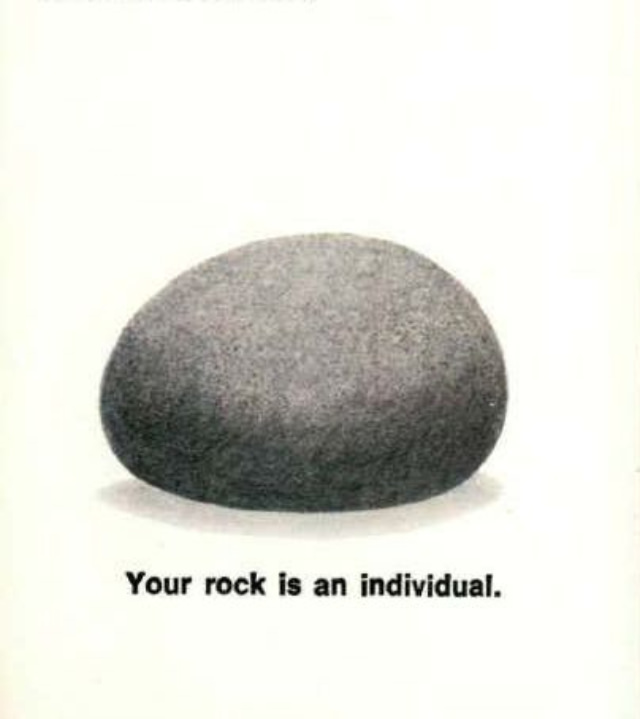
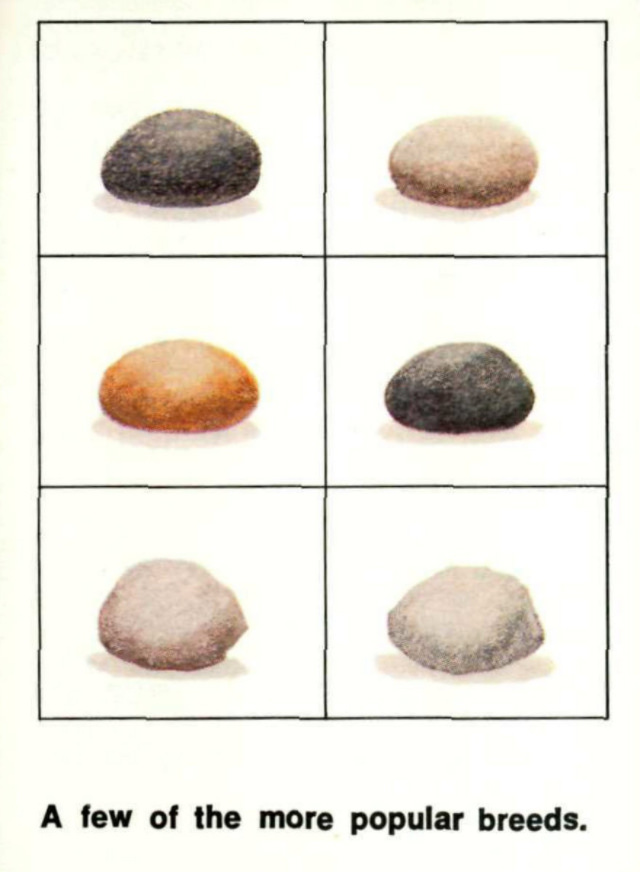
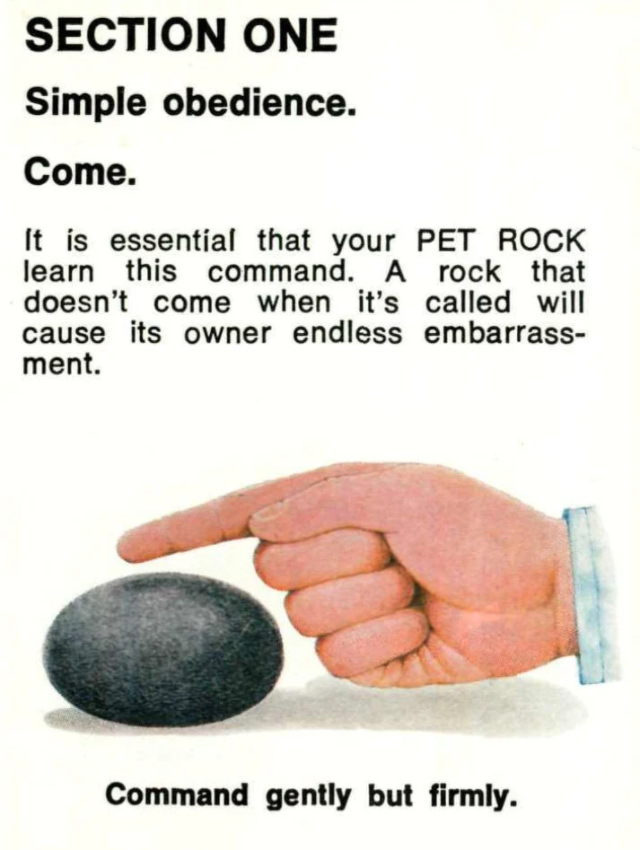
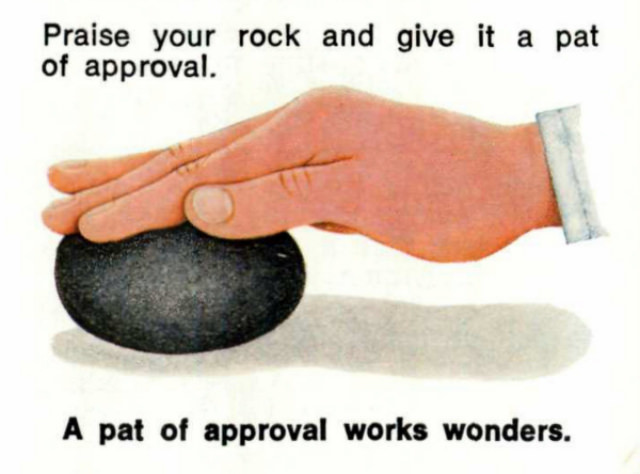
The manual was the real product. It was loaded with gags, puns, and straight-faced instructions for raising and caring for a rock. Dahl wrote it as if the stone were a living companion, and the deadpan tone made it funnier the more seriously it played along. One passage read: “Your PET ROCK will be a devoted friend and companion for many years to come. Rocks enjoy a rather long life span, so the two of you will never have to part — at least not on your PET ROCK’s account.” Another section continued: “Once you have transcended the awkward training stage, your rock will mature into a faithful, obedient, loving pet with but one purpose in life — to be at your side when you want it to and to go lie down when you don’t.”
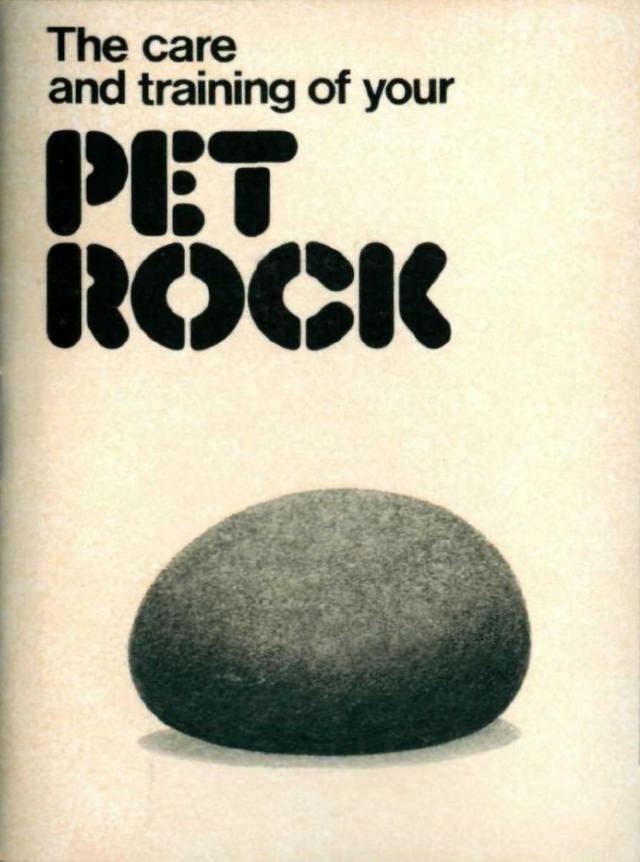
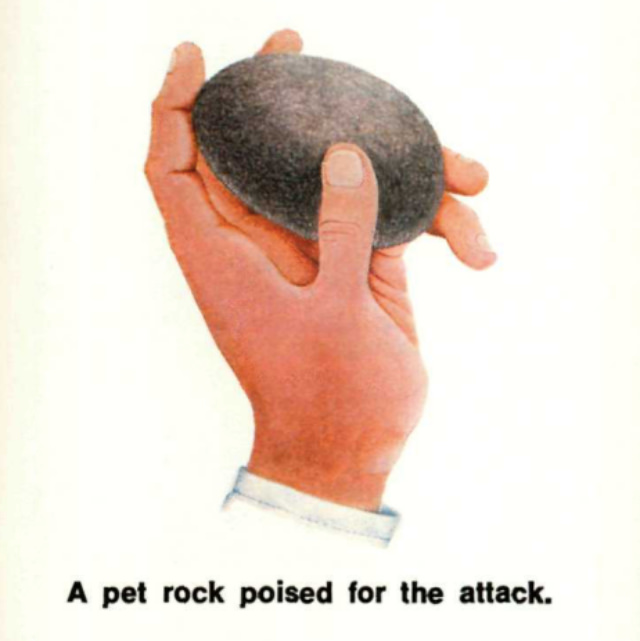
The manual also included a training section that listed commands a Pet Rock could learn. Commands like “sit” and “stay” were described as effortless — for obvious reasons. “Roll over,” however, required some assistance from the trainer. There were no instructions for feeding or bathing, because none were needed. The manual acknowledged this without apology and moved on.
Dahl sold each Pet Rock for $3.95 — roughly $4. With production costs kept to a bare minimum, the profit margin on each unit was enormous. During the 1975 holiday season, sales exploded. Dahl moved more than a million units in six months and walked away a millionaire. Retailers couldn’t keep them in stock through Christmas. It was the kind of consumer frenzy that made people genuinely question what they were spending money on — and then buy one anyway as a gift.
The fad didn’t survive into the new year. By February 1976, sales had dropped sharply, and retailers began discounting unsold stock. The craze had burned bright and fast, the way novelty fads tend to. Within six months of its launch, the Pet Rock had gone from a bar joke to a million-dollar product and back to a punchline.
What made the Pet Rock work wasn’t the rock itself — it was the packaging and the manual. Dahl was an advertising man, and he understood that the product was really the idea. The box with air holes, the straw bedding, the straight-faced training guide: all of it framed a worthless stone as something worth owning. It was a piece of performance art disguised as a consumer product, and millions of Americans were happy to be in on the joke.
Dahl’s background in advertising gave him tools that most novelty inventors lacked. He knew how to write copy, how to present a product, and how to make something feel like an event. The Pet Rock wasn’t marketed as a toy or a gag gift — it was marketed as a pet, complete with the full emotional language of pet ownership. That commitment to the bit is what made it sell.
The economics of the Pet Rock are almost as remarkable as the concept itself. Rocks at one cent each, straw for nearly nothing, a booklet piggybacked onto an existing print job, and a cardboard box as the main cost — Dahl built a million-dollar business out of materials that totaled a few cents per unit. At $3.95 retail, the markup was staggering. It remains one of the most efficient profit machines in the history of novelty products.
The Pet Rock disappeared from shelves as quickly as it arrived, but it didn’t vanish entirely. On September 3, 2012, Pet Rocks became available again. Rosebud Entertainment holds the trademark rights to Pet Rock in the United States, keeping the brand alive decades after its original six-month run.
The 1975 holiday season gave Americans a lot of things to remember, but few were as strange as the sight of a smooth Mexican beach stone sitting in a straw-lined box under a Christmas tree. Parents gave them to children. Friends gave them to friends. The joke was the gift, and for a few weeks in December 1975, that was enough for more than a million people.

Friend of the family.
Dude had some conviction about his idea. Hardest part was finding anyone to give him $$ to help fund it. Insane how much they took off.
The creator made $15 million in 6 months. Unreal.
I still find mine oddly comforting. Maybe because I just like having something cold, heavy, and hand-sized to hold onto.
Though mine’s a “stray”, I found him myself instead of buying one. Maybe that makes him all the more special to me.
You’re better off with a loving rescue Rock than paying for an overbred Rock with a host of health issues from unscrupulous breeders.
Who really rescued who?
A real life Thicky Holden if I’ve ever seen one – the booklet was pretty funny, though!
Short lived?
I was still getting pet rocks in the early 80s. Maybe the trend just took longer to get to rural areas.
Pet rocks are still around today. In an official capacity even.
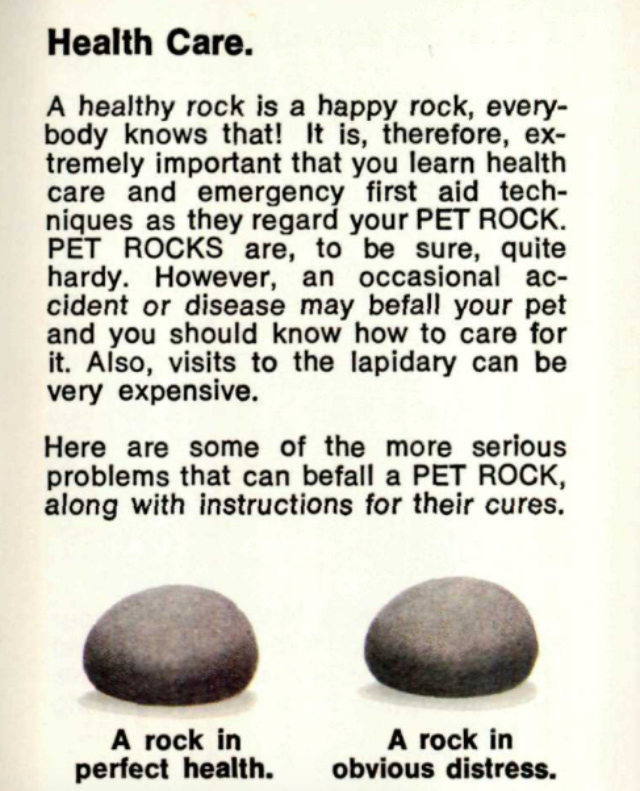
“Visits to the lapidary can be very expensive”
That man was a genius!