Passover is one of the most important festivals in the Jewish calendar. It commemorates the liberation of the Israelites from slavery in ancient Egypt more than 3,300 years ago — a story told in the Hebrew Bible’s Book of Exodus. Led by Moses, the Israelites left behind generations of bondage under the pharaohs and emerged as a free people. Every year, Jewish families and communities mark this event through the Passover seder, a ritual meal filled with prayers, symbolic foods, and the retelling of the Exodus story.
The photographs below were taken in Berlin between 1946 and 1950. They show a Jewish community rebuilding its religious life in the immediate aftermath of the Holocaust. The people in these images had survived one of history’s greatest atrocities and were gathering — in synagogues and in homes — to observe a festival about survival and freedom. That context gives every image a weight that goes beyond ordinary religious celebration.
One of the central moments of the Passover seder involves the youngest child at the table asking four ritual questions, beginning with “Why is this night different from all other nights?” The questions prompt the adults to retell the Exodus story, keeping the tradition alive across generations.
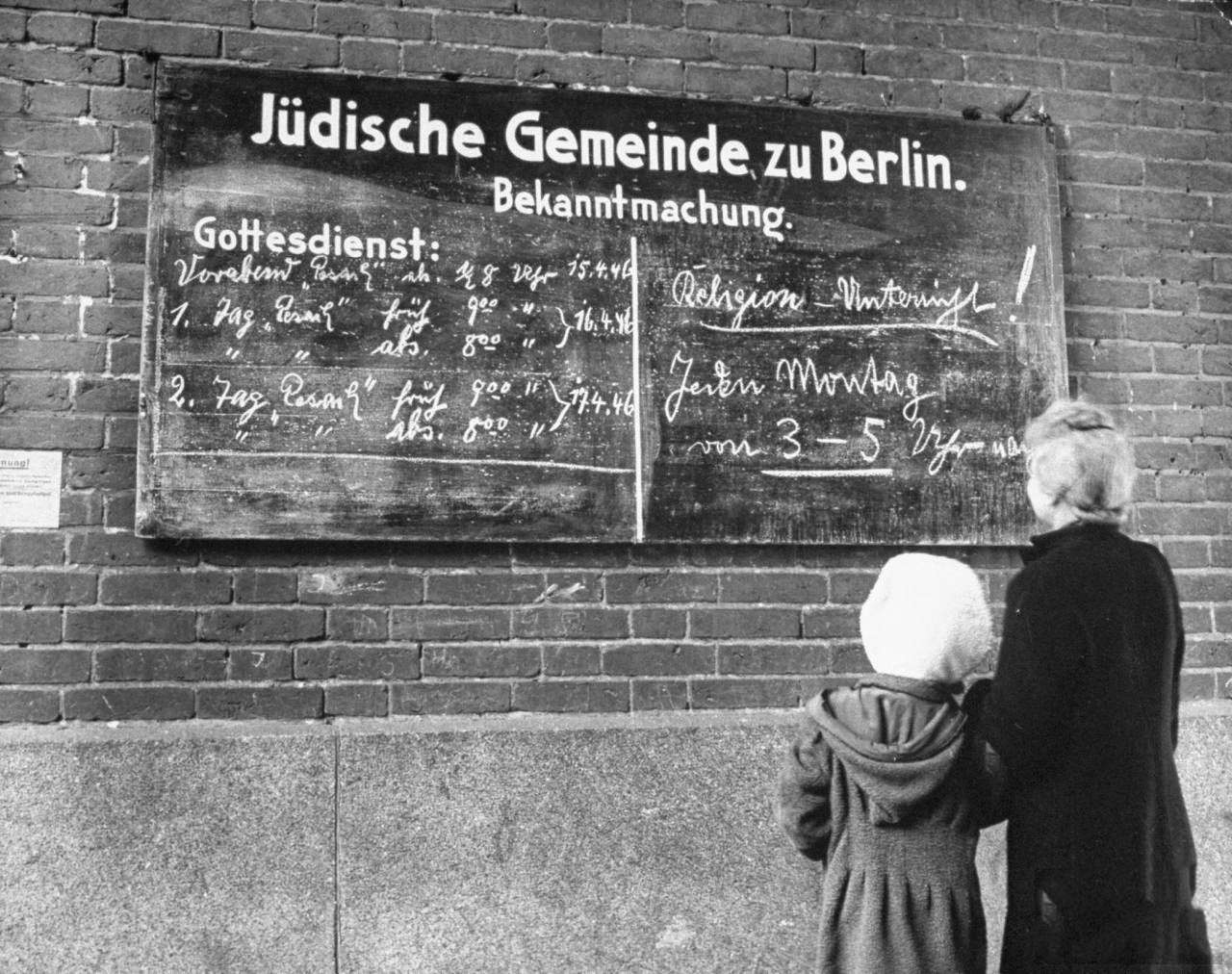
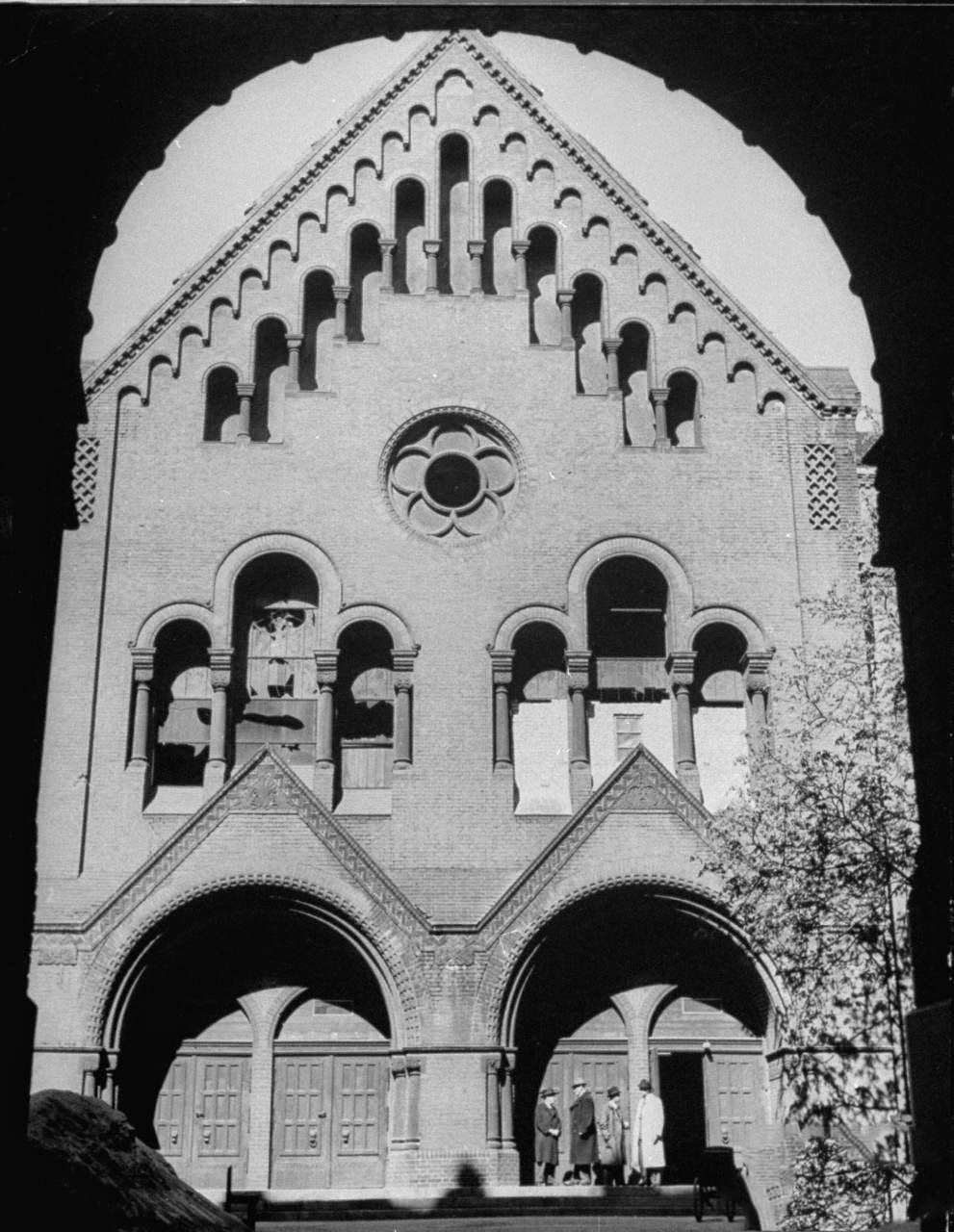
Outside the synagogue, community members gathered to read notices and announcements posted on bulletin boards — a common way for Jewish congregations in postwar Berlin to share information about services, relief efforts, and community news.
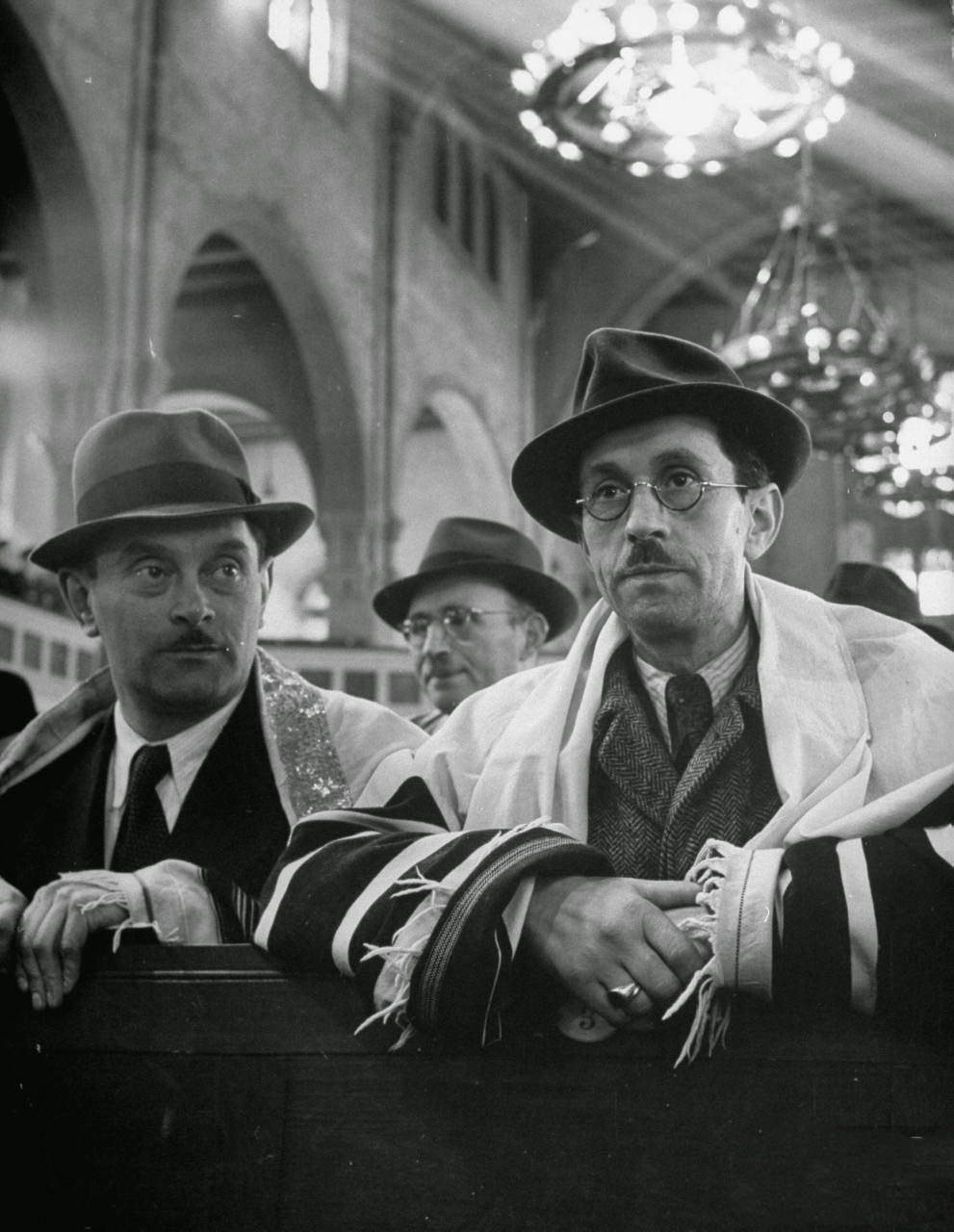
Inside, Jewish men attended synagogue services in observance of the festival. For many of these men, simply being able to worship openly was itself a profound act — something that had been systematically denied and violently punished under Nazi rule just years earlier.
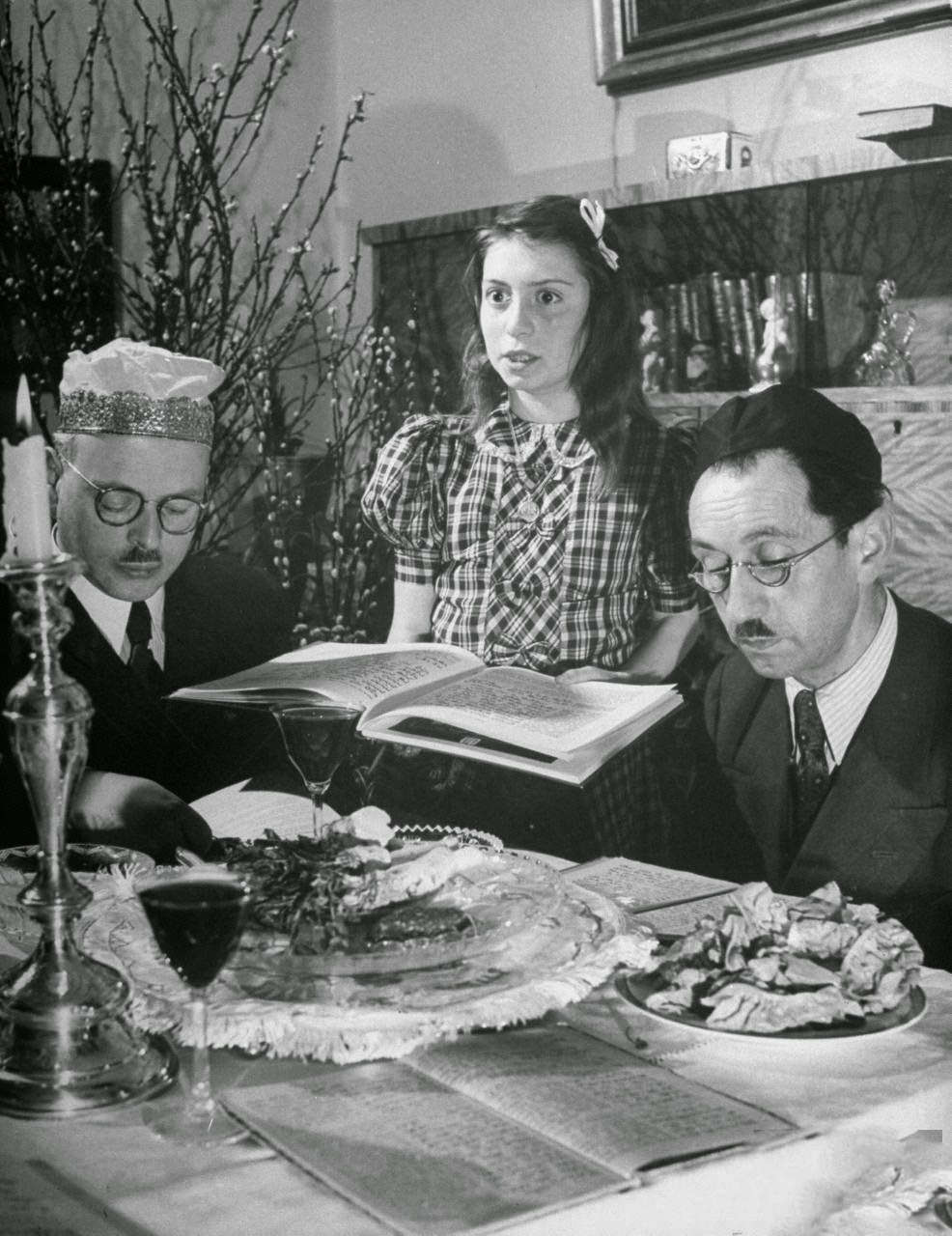
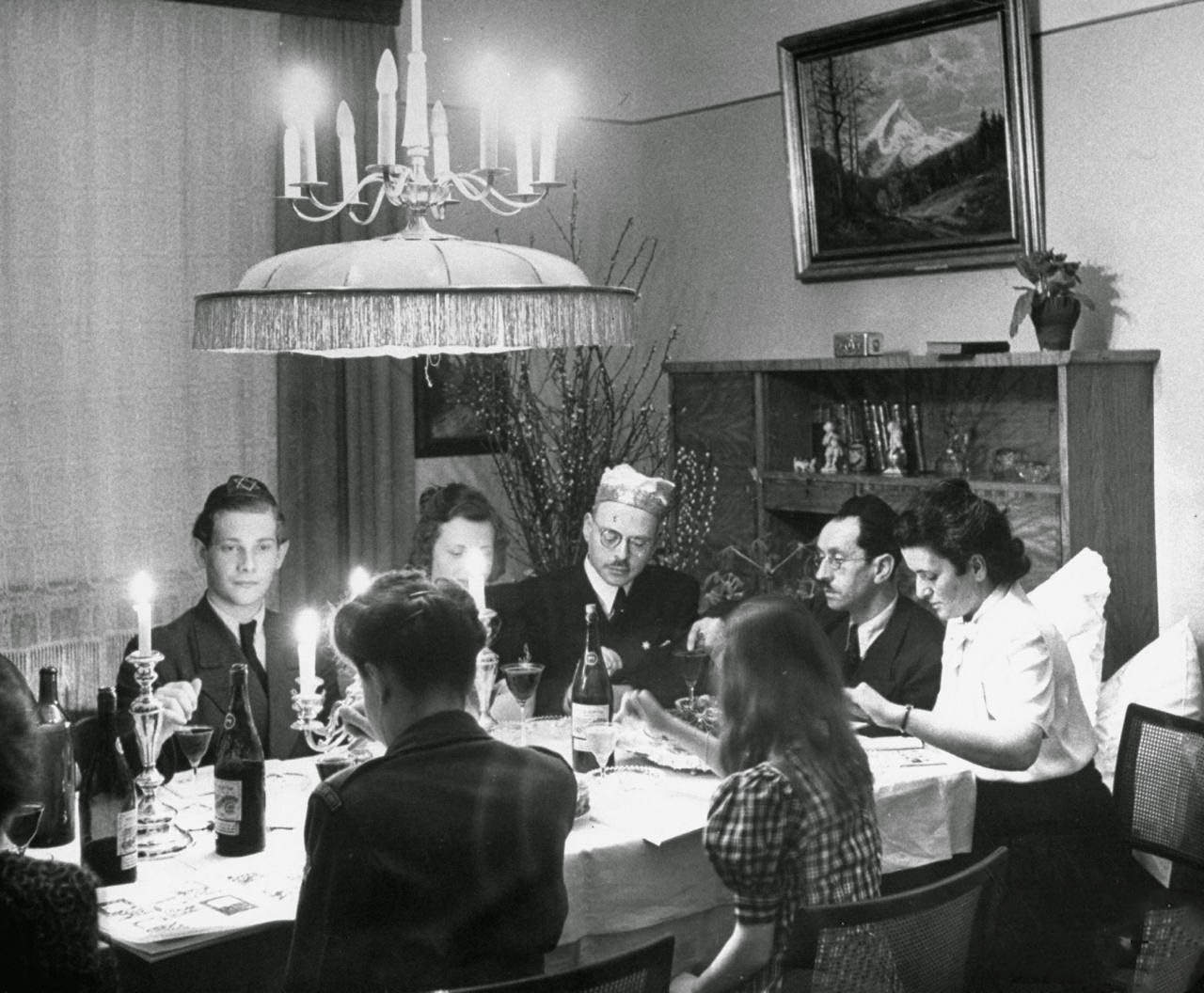
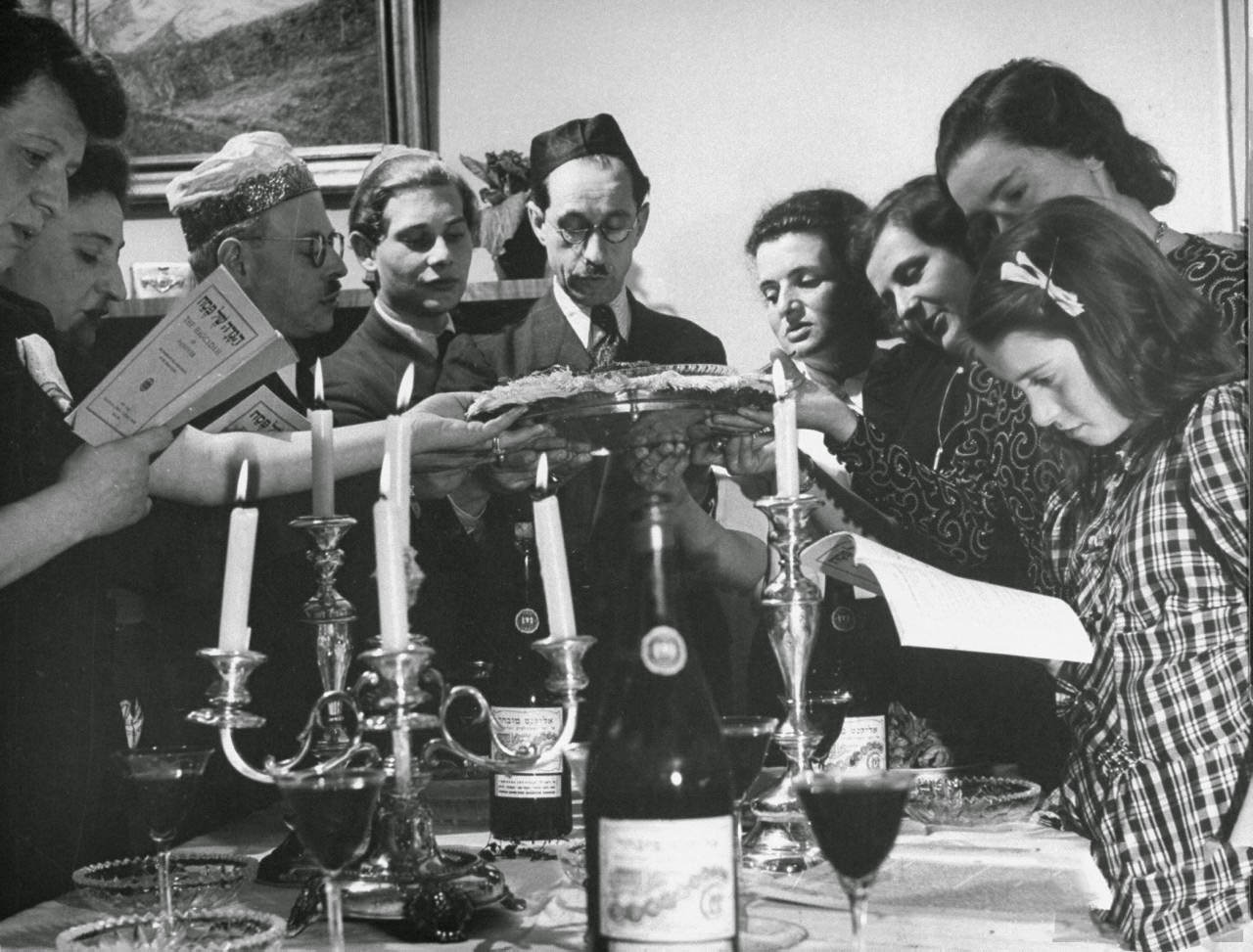
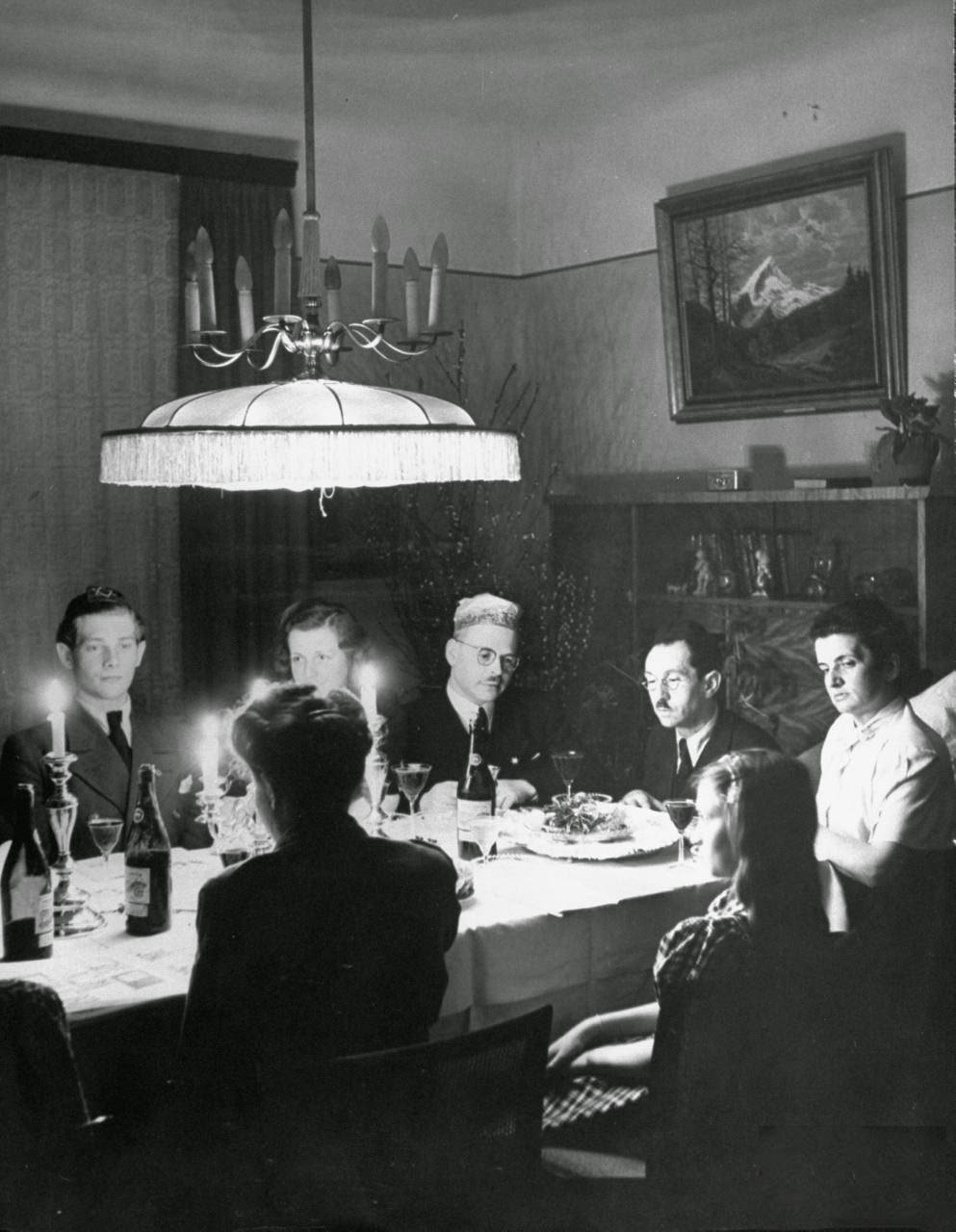
The seder meal was held in homes as well. Families invited guests to join them around the table for the Passover Eve seder, sharing food, prayers, and the retelling of the Exodus. These gatherings carried deep personal meaning for survivors who had lost family members to the Nazi genocide.
At the synagogue, the reading of the Torah scrolls was a central part of the Passover service. The Torah — the first five books of the Hebrew Bible — contains the full account of the Exodus, and its public reading during Passover connects the congregation directly to the ancient text.
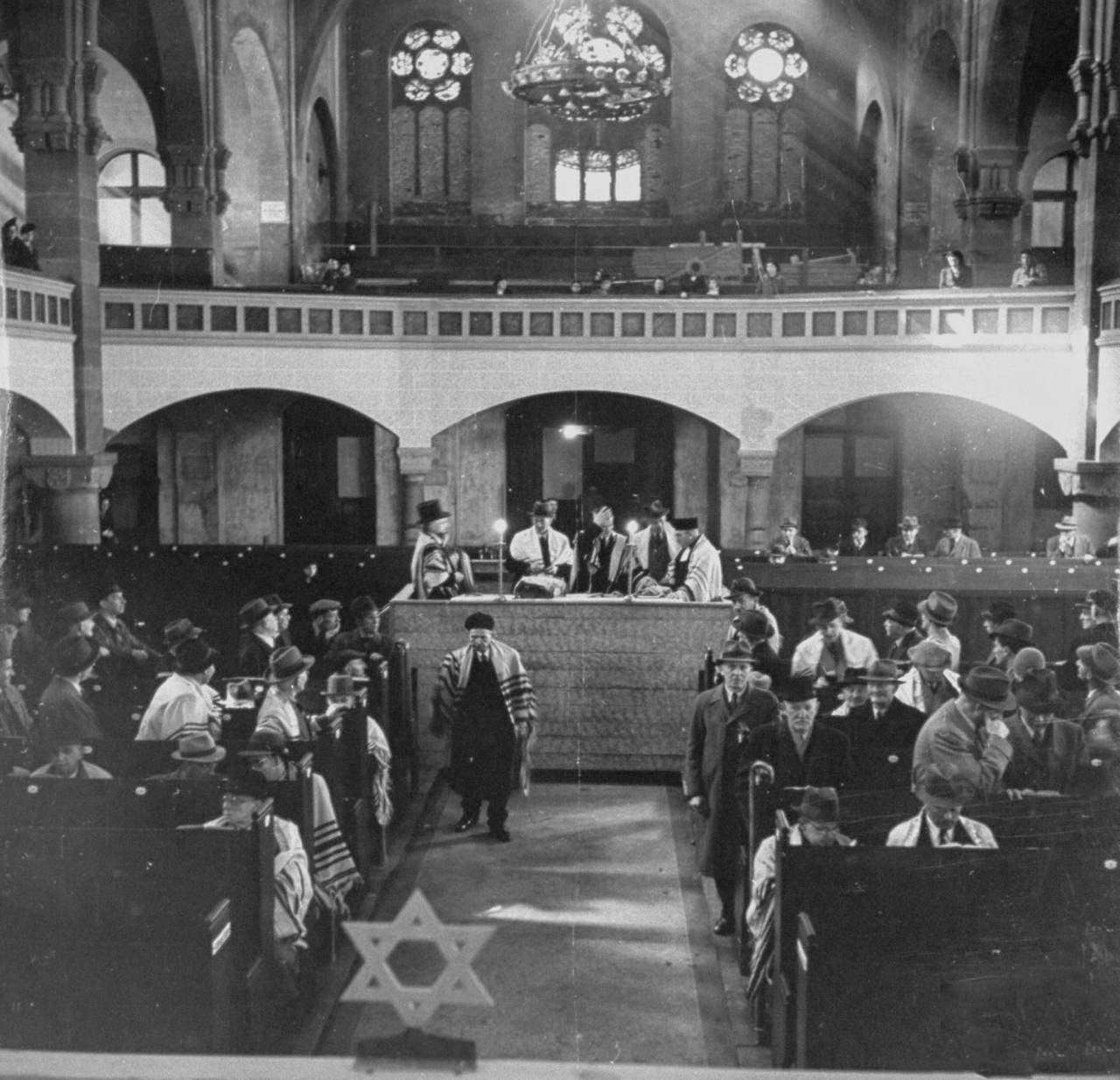
Among the most striking images in this collection is one showing the arm of Gunter Ruschin. A concentration camp tattoo is clearly visible on his forearm as he holds open a book containing the questions and answers of the Jewish Exodus from Egypt. Ruschin served as the Chief Cantor of the Berlin Jewish community. The tattoo — a permanent mark of Nazi persecution — appears in direct contrast with the sacred text in his hands.
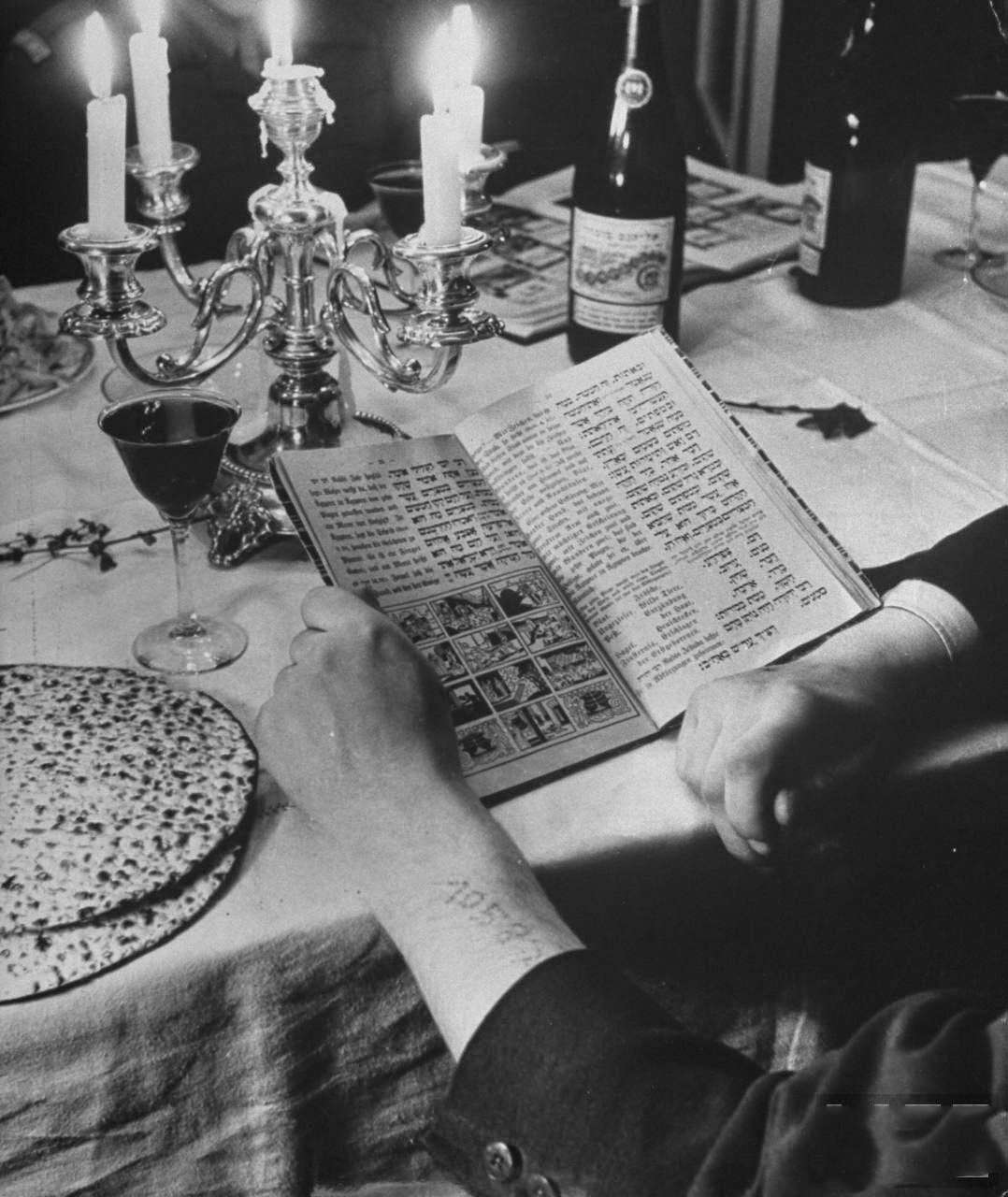
As Chief Cantor, Ruschin led the congregation in prayer and song. In Jewish worship, the cantor holds a central role, chanting liturgical texts and guiding the community through services. Here, Ruschin is photographed lifting the Torah scrolls toward the worshipers — a ritual moment known as Hagbah, performed to show the congregation the text of the Torah.
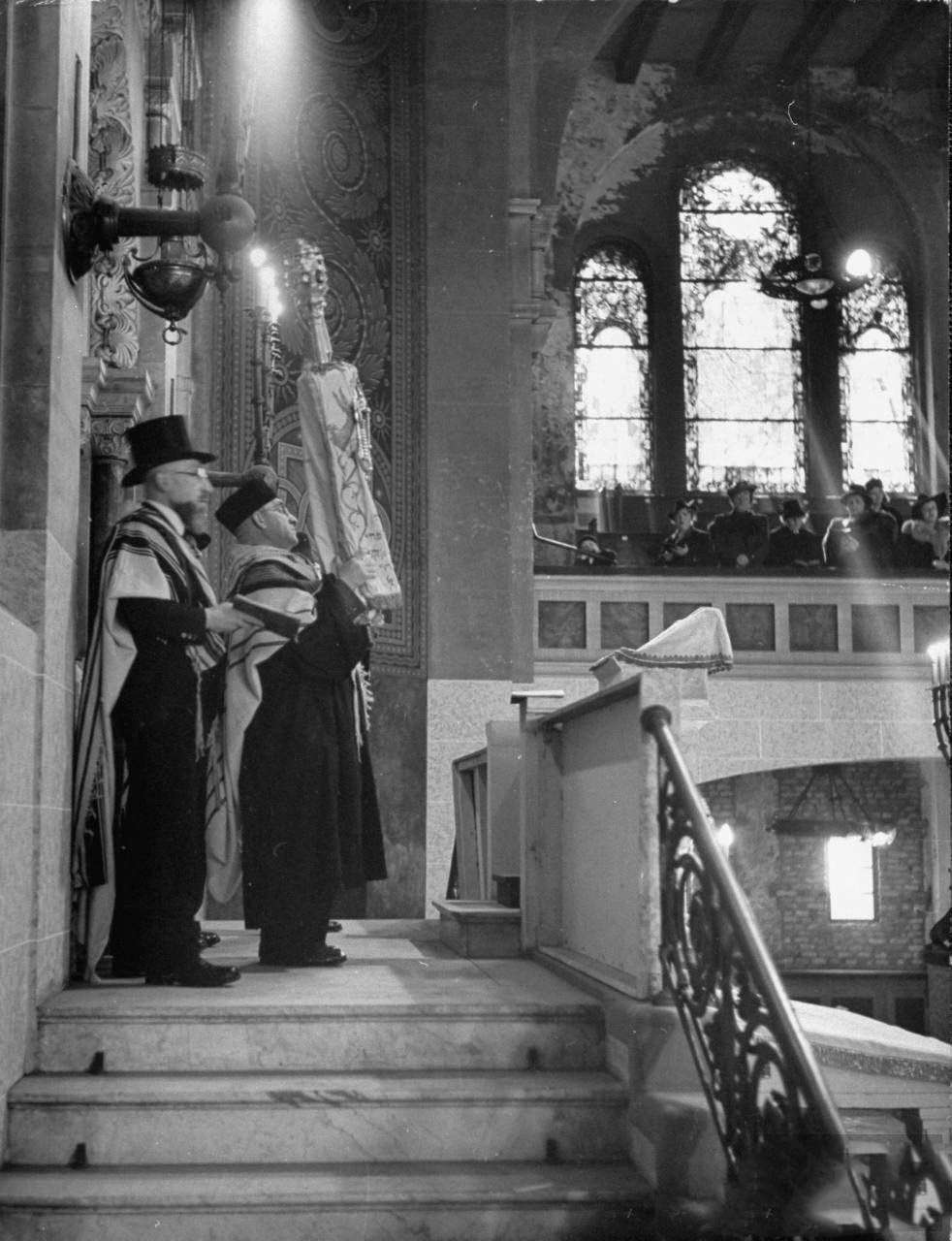
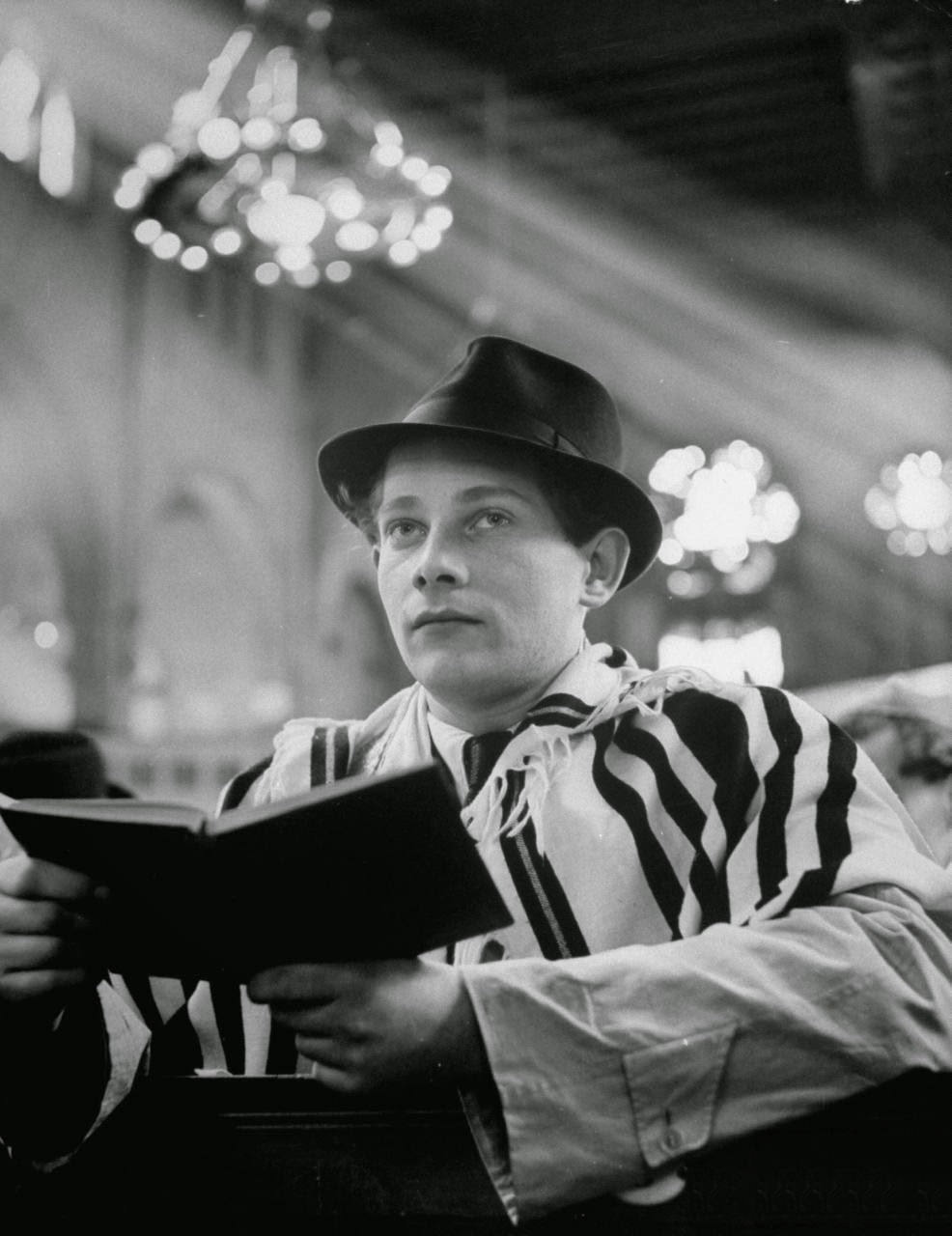
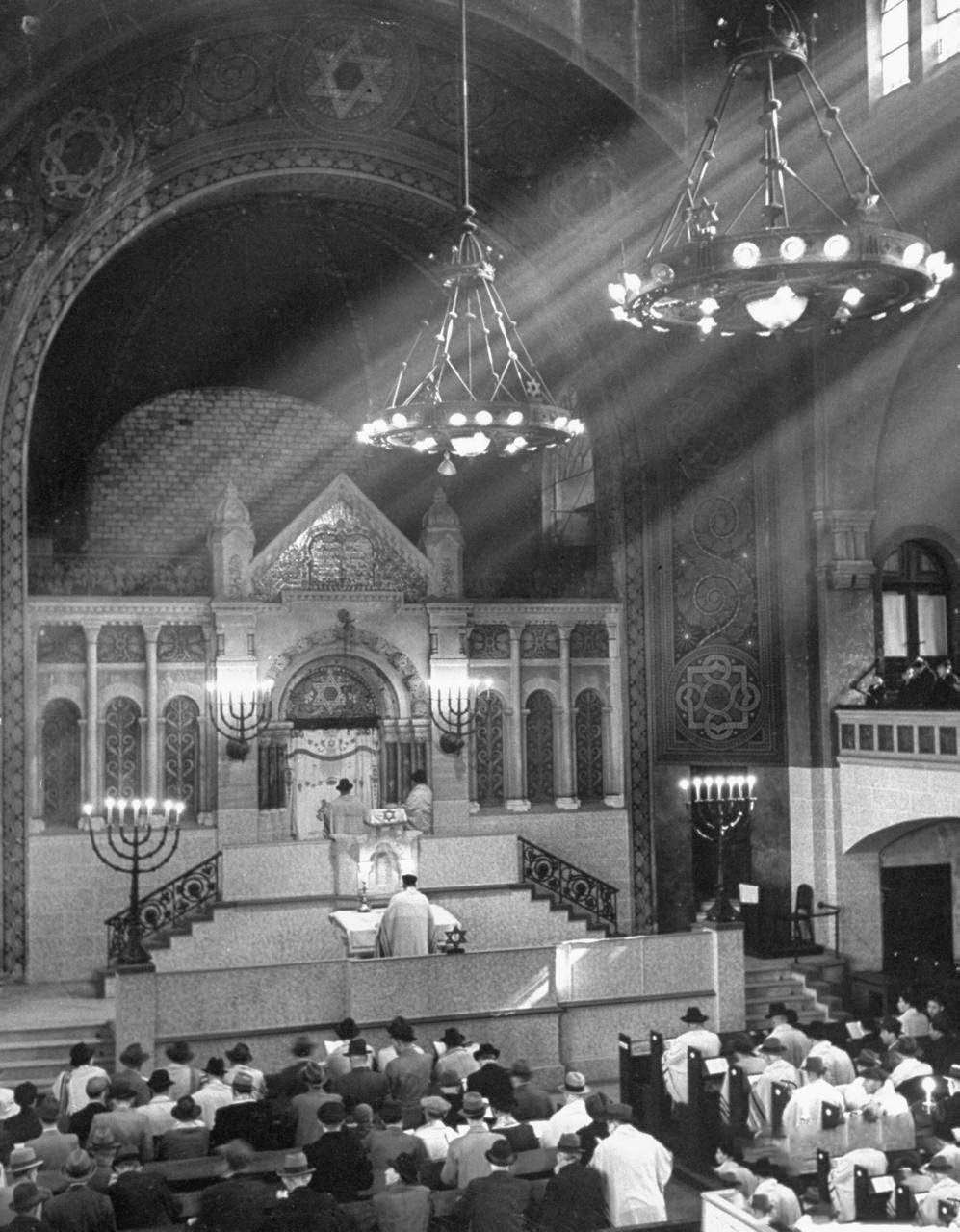
The congregation filled the synagogue for Passover services. Men, women, and children took their places in the pews, following along with the prayers and readings that have structured Jewish Passover worship for centuries.
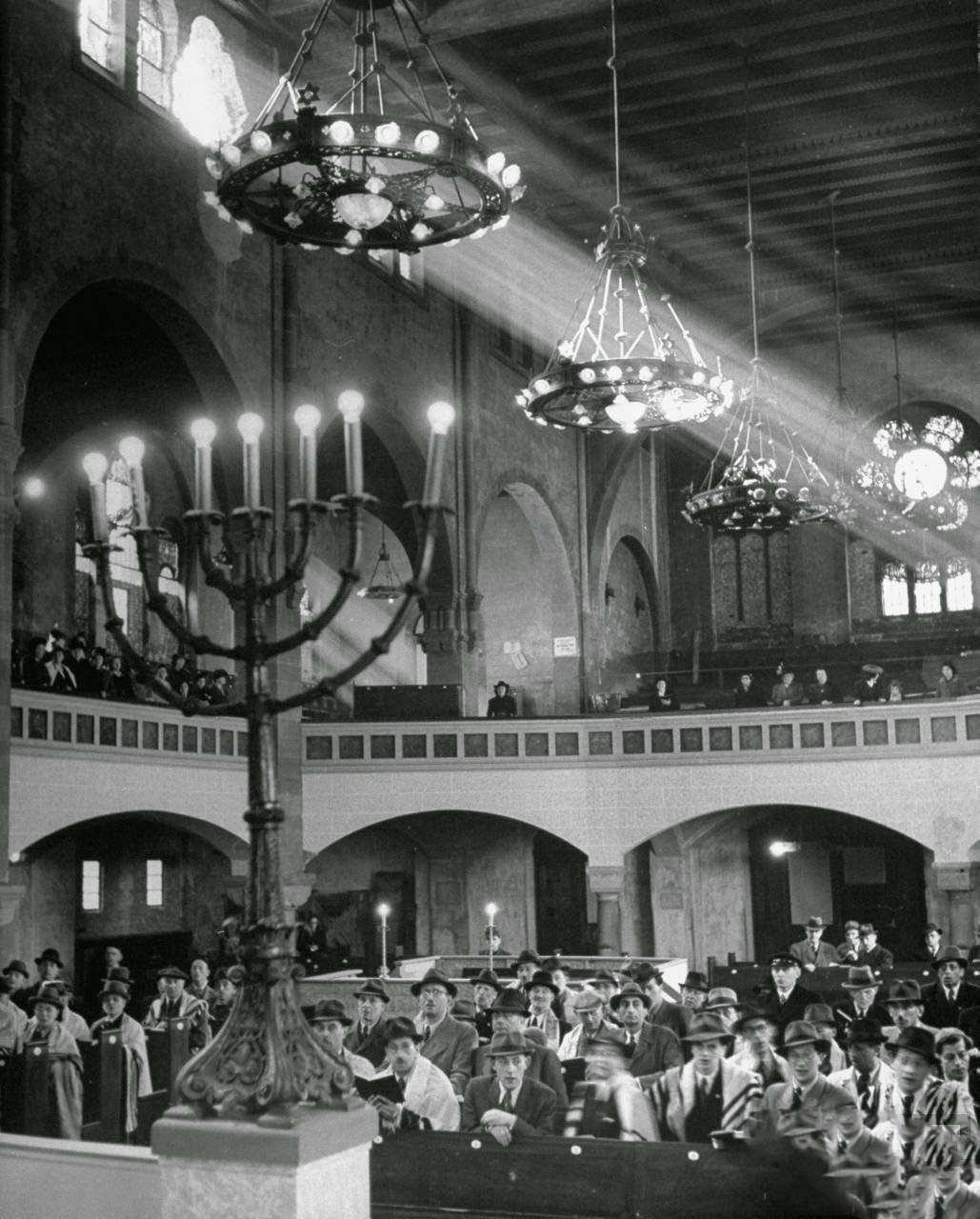
Many in the congregation were concentration camp survivors. These German Jews had endured years of imprisonment, forced labor, and systematic brutality. Their presence at Passover services in Berlin — a city that had been the administrative heart of the Nazi regime — was a direct act of continuity and defiance.
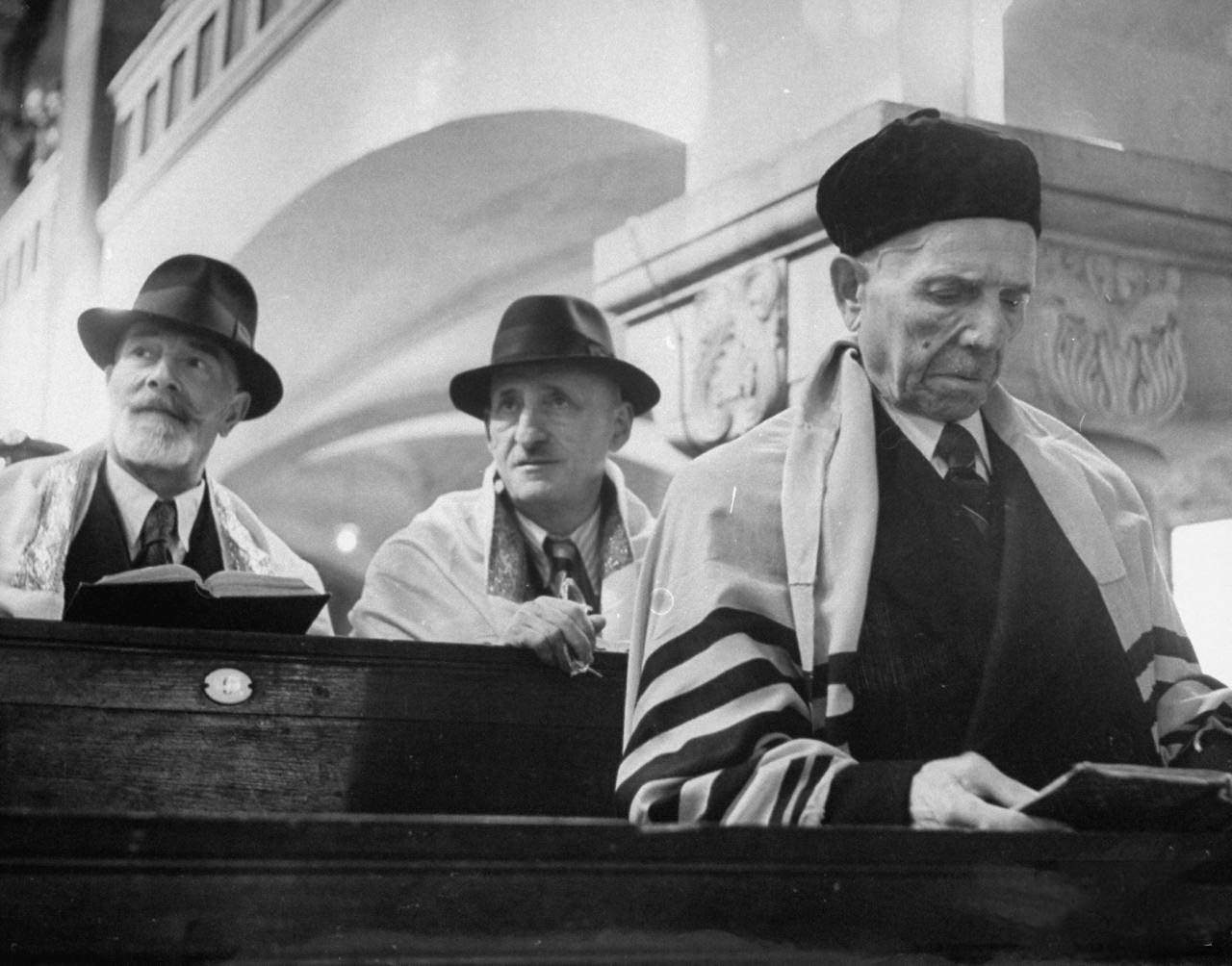
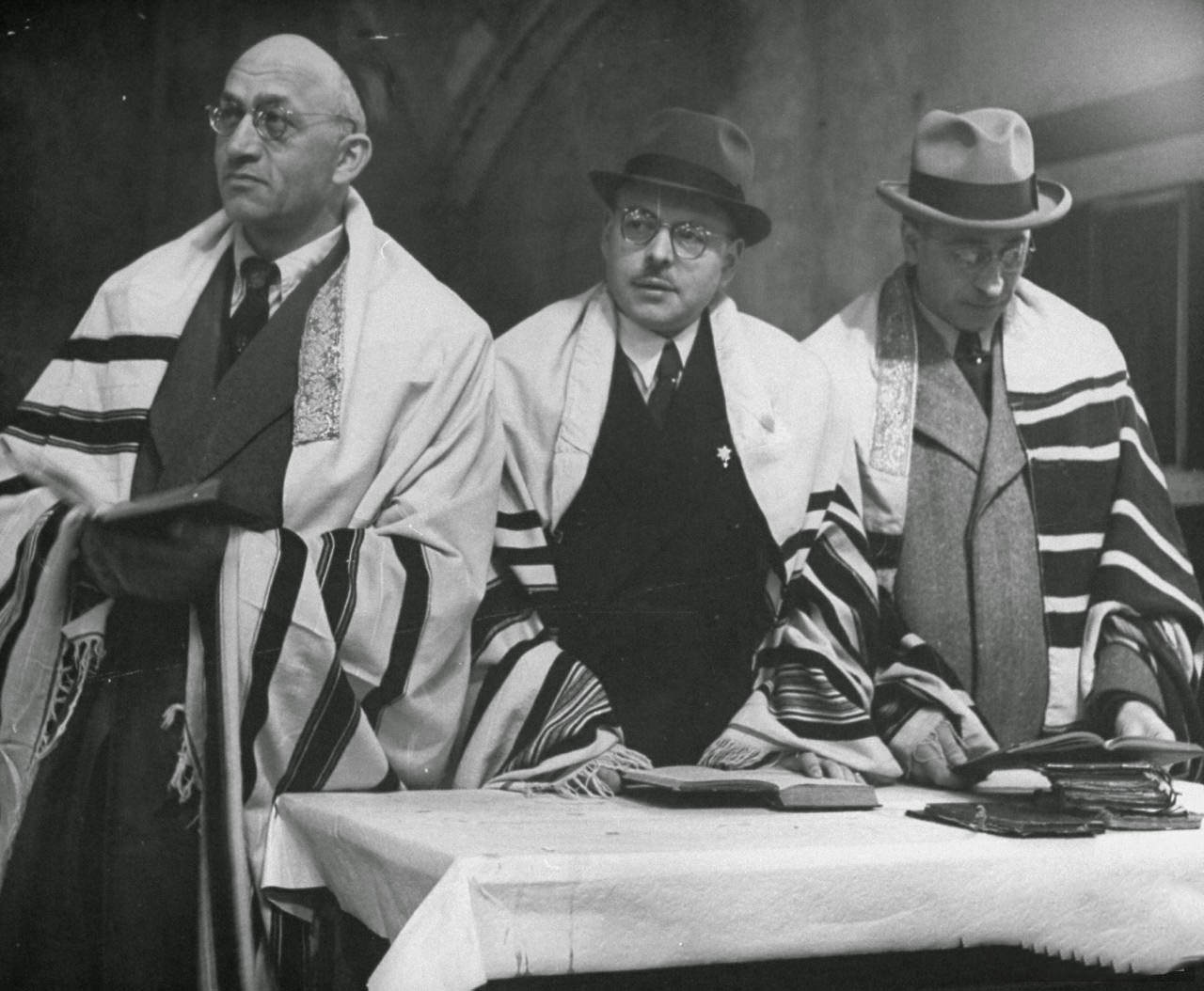
Community leadership played an important role in organizing postwar Jewish life in Berlin. Three of the community’s leading representatives were photographed together at the synagogue during Passover, a sign that institutional Jewish life was being deliberately rebuilt.
From the outside, the Berlin synagogue stood as a visible marker of Jewish presence in the city. Synagogues across Germany had been burned and destroyed during Kristallnacht in November 1938. Those that remained functional after the war became vital centers for the surviving community.
Back at the seder table, participants observed one of Passover’s most important rituals: tasting bitter herbs, or maror. The bitter taste is meant to recall the suffering of the Israelites under Egyptian slavery. For survivors of the Nazi camps, that symbolism carried a meaning far beyond the ancient story.
Prayer remained at the heart of the Passover observance. German Jews gathered in their synagogue to recite the liturgy, sing traditional songs, and fulfill the religious obligations of the festival — routines that Nazi persecution had attempted to erase entirely.
The seder meal was also a social occasion, bringing extended family and guests together. Multiple generations sat at the same table, sharing the ritual foods and readings that defined the night.
Chief Cantor Gunter Ruschin, whose concentration camp tattoo appears in an earlier photograph, is shown here at prayer in the synagogue. A survivor himself, Ruschin stood before his congregation as both a religious leader and a living witness to what the Berlin Jewish community had endured — and what it continued to hold onto.