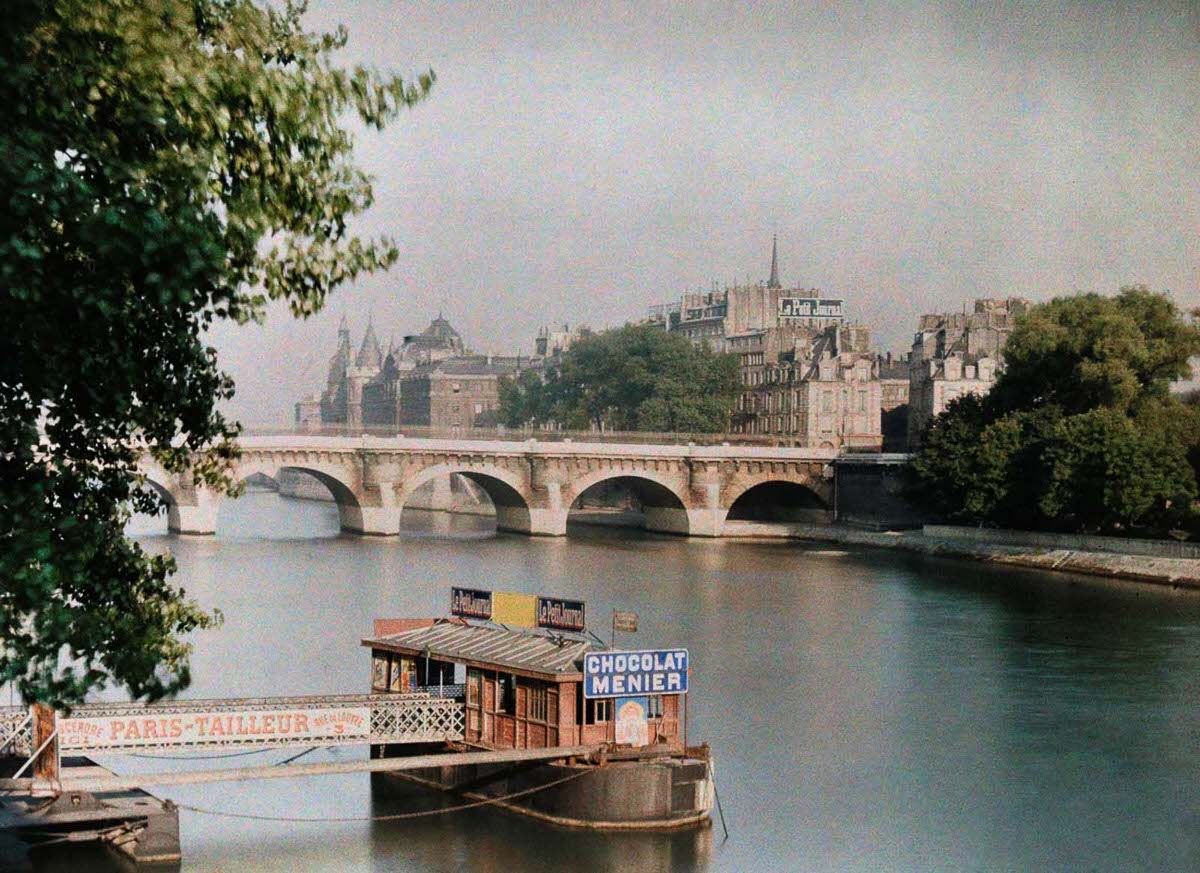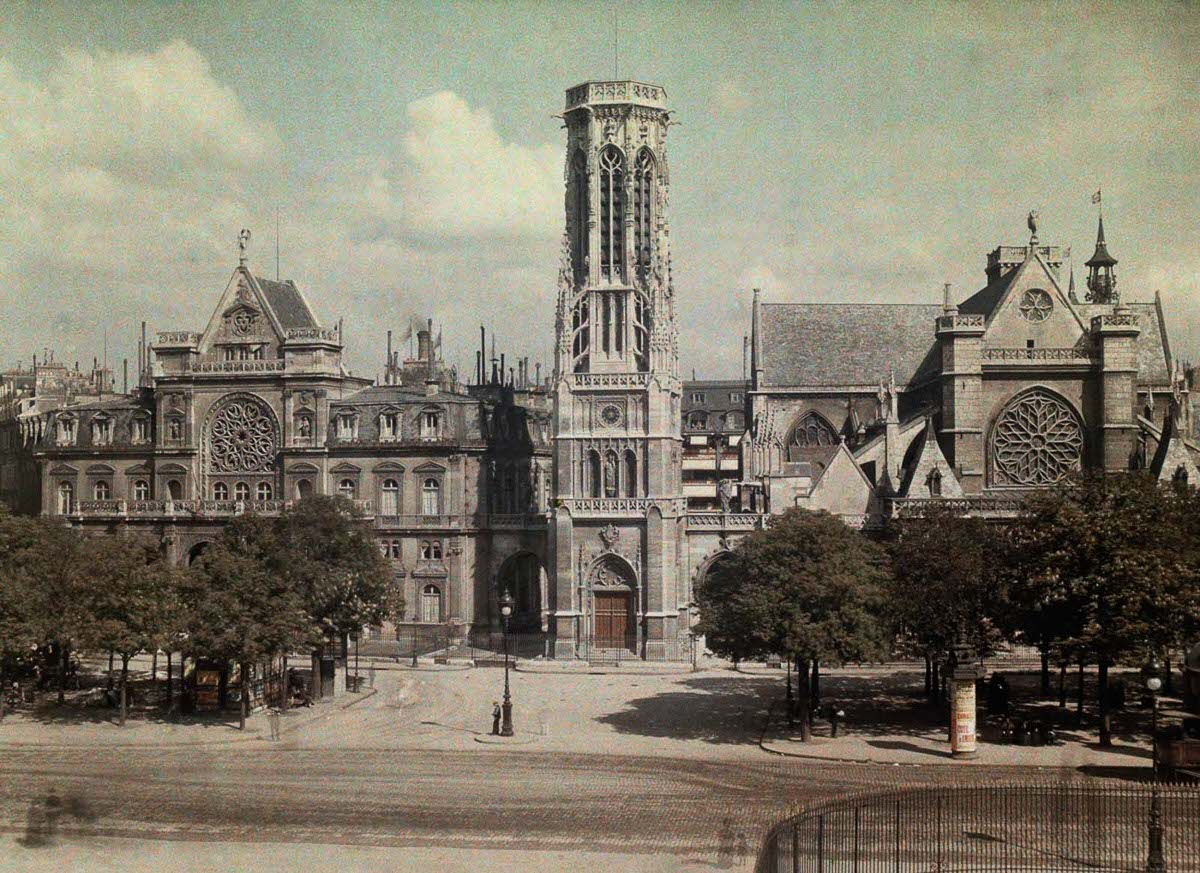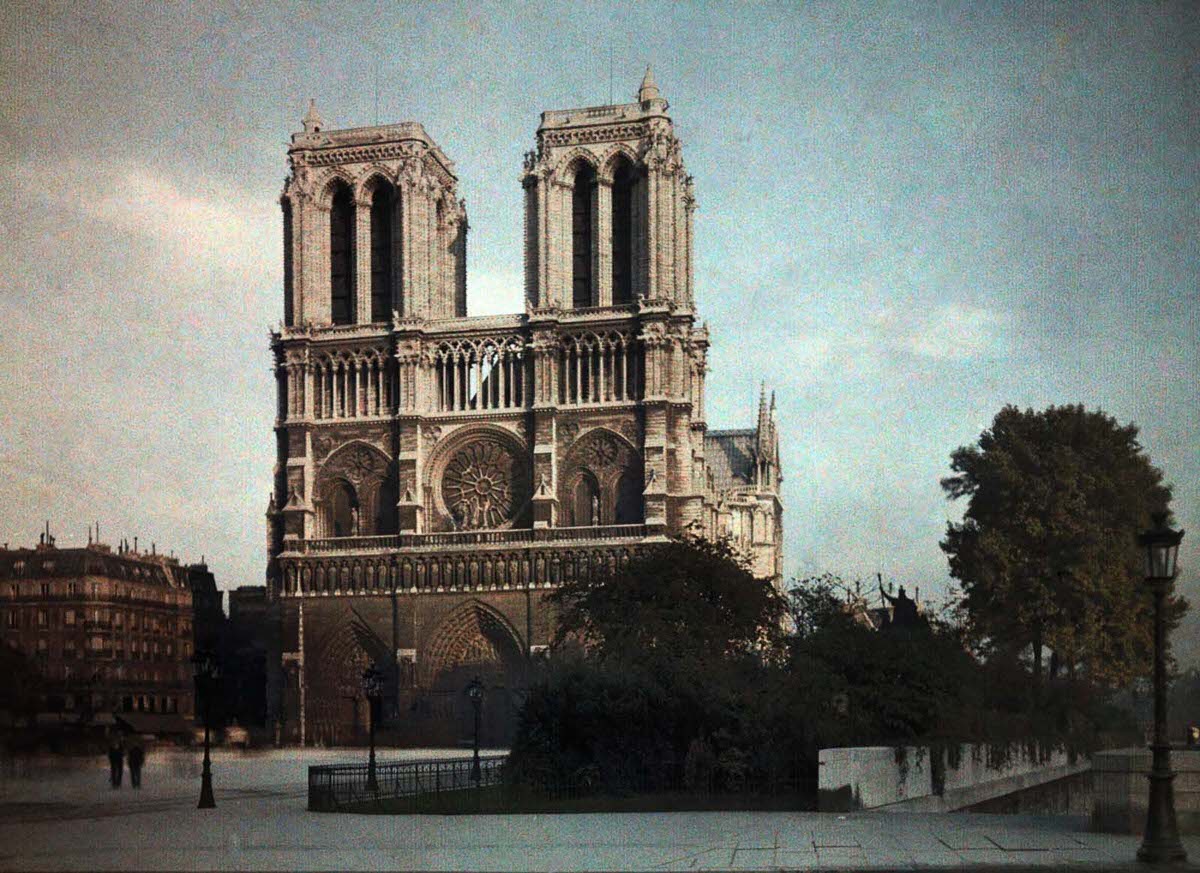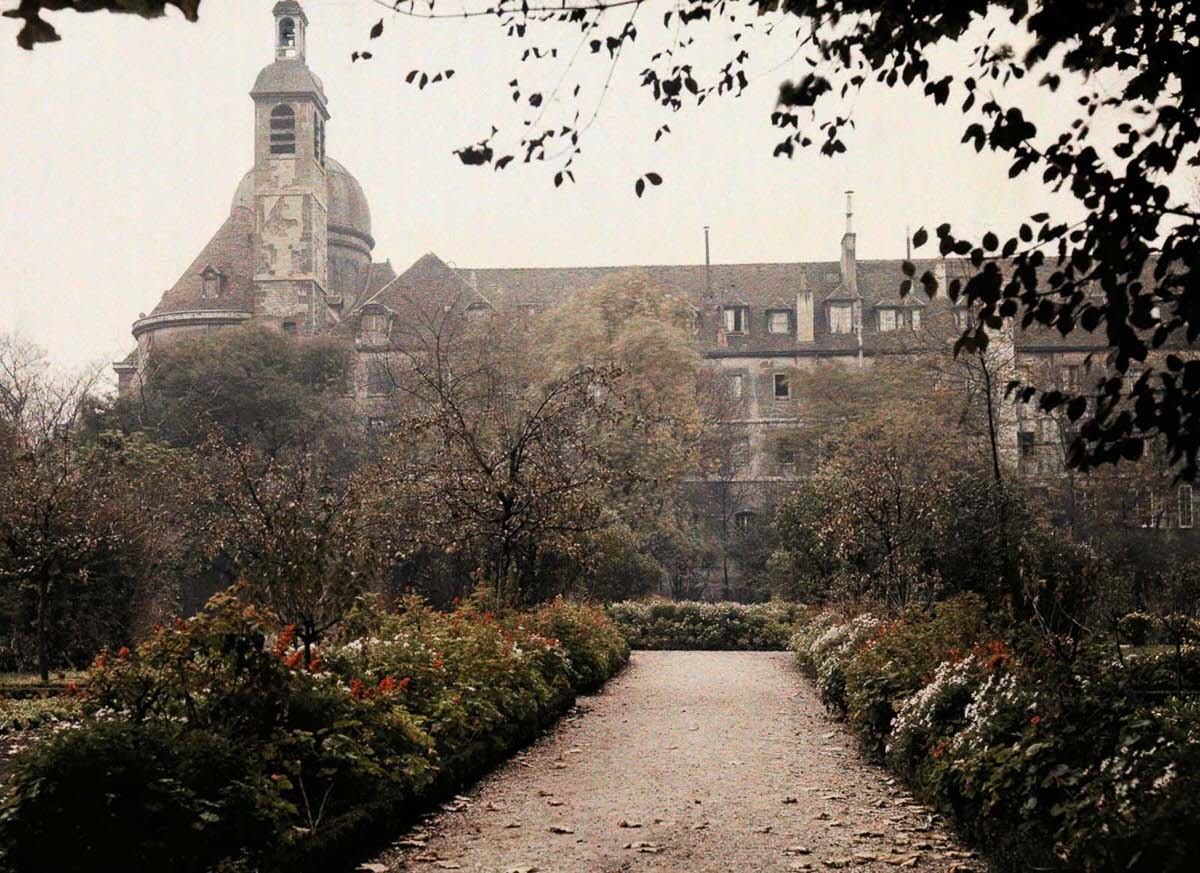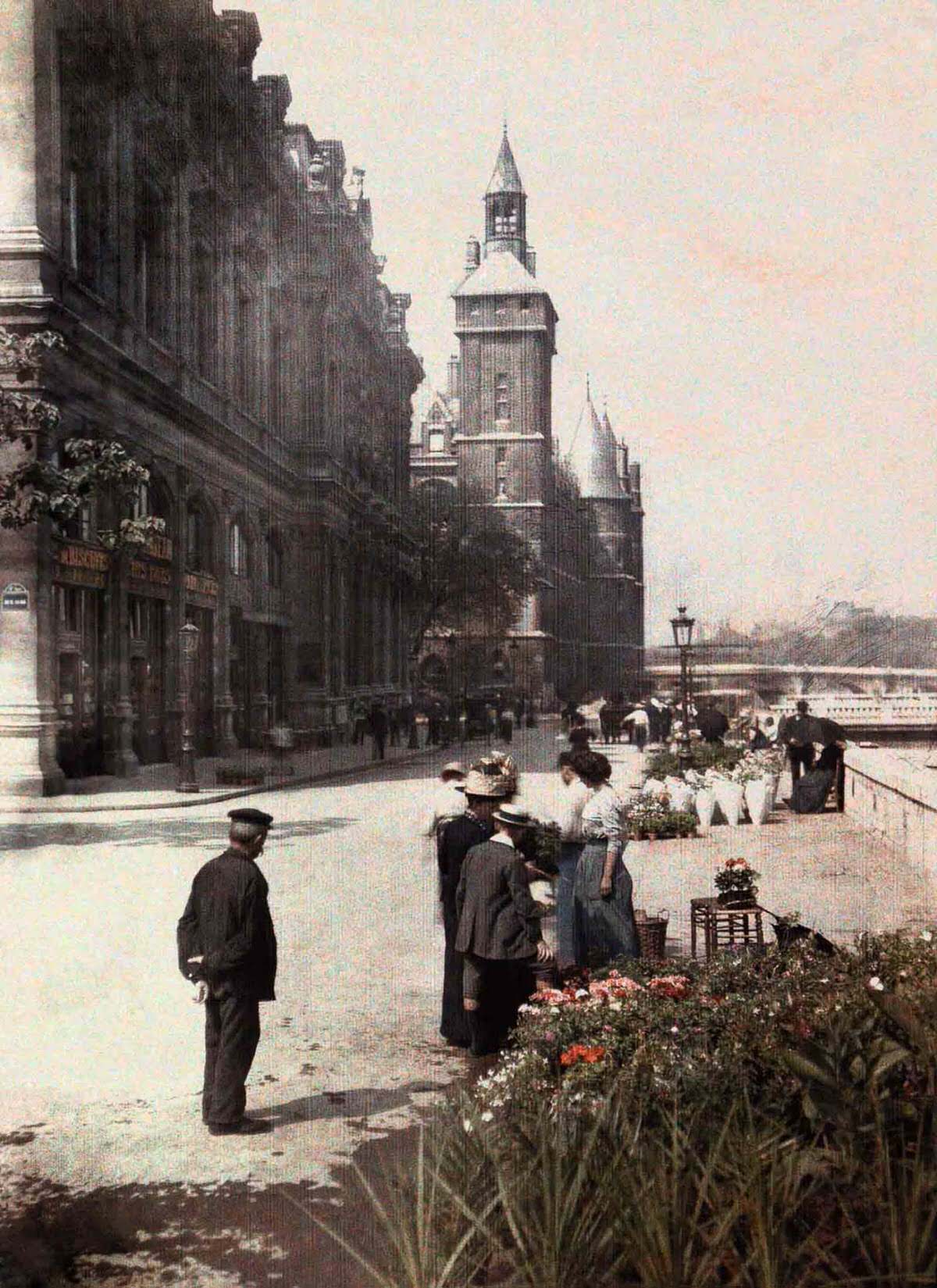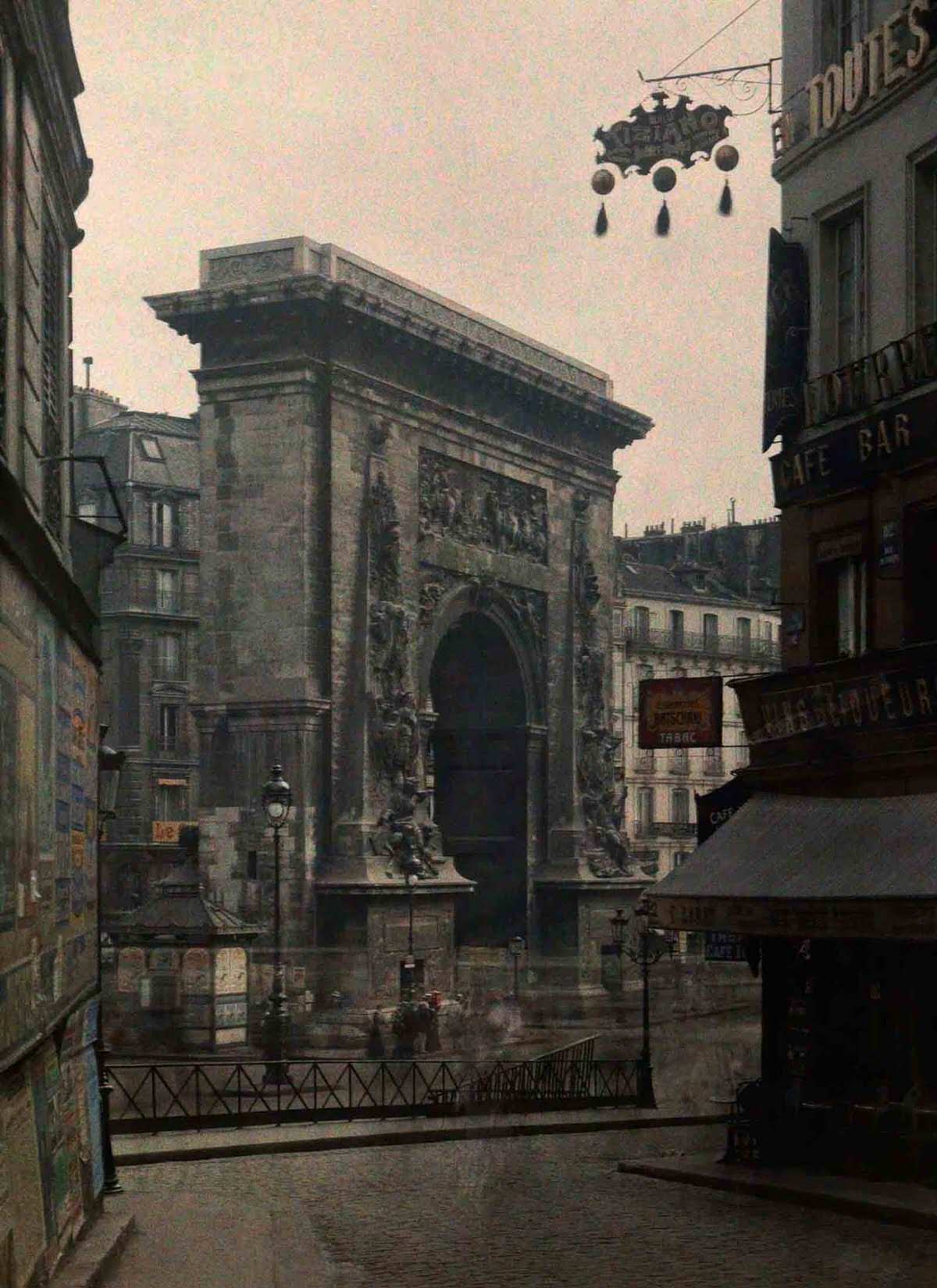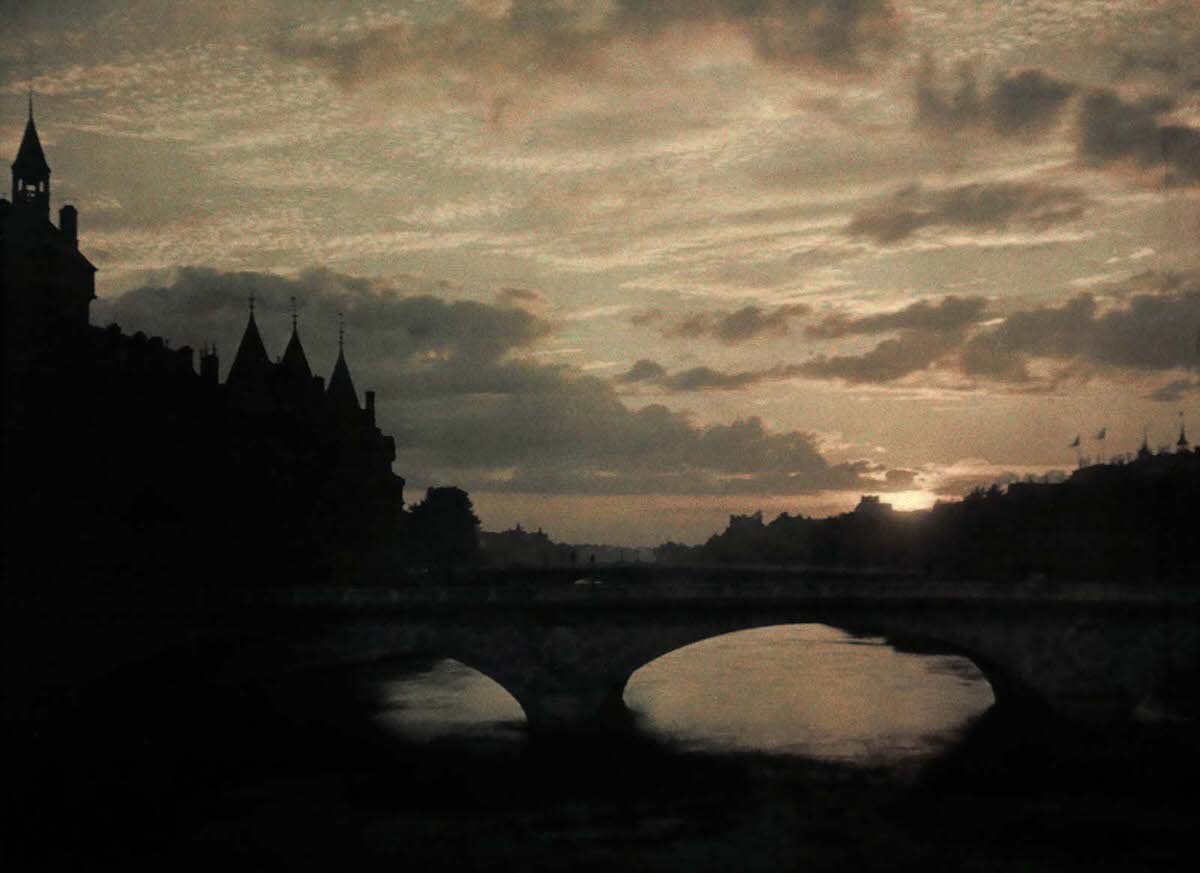
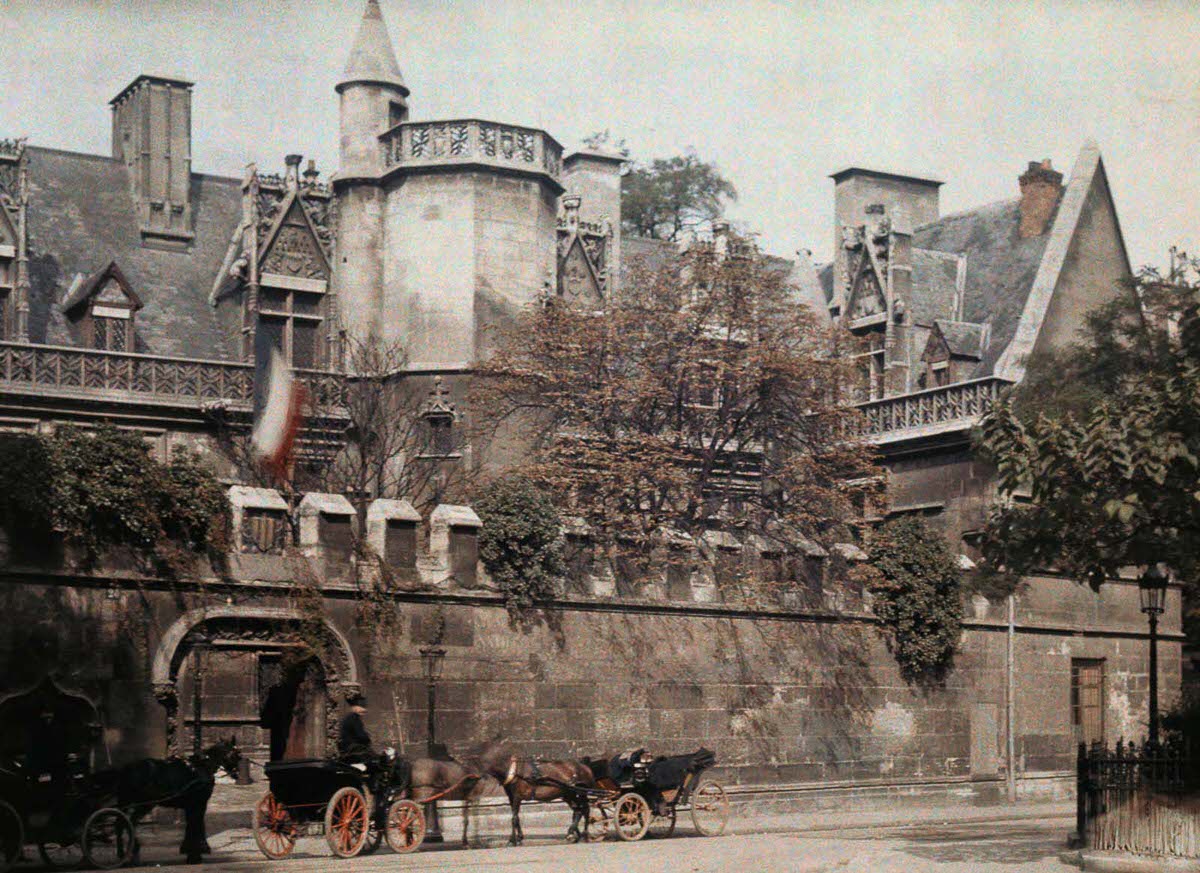
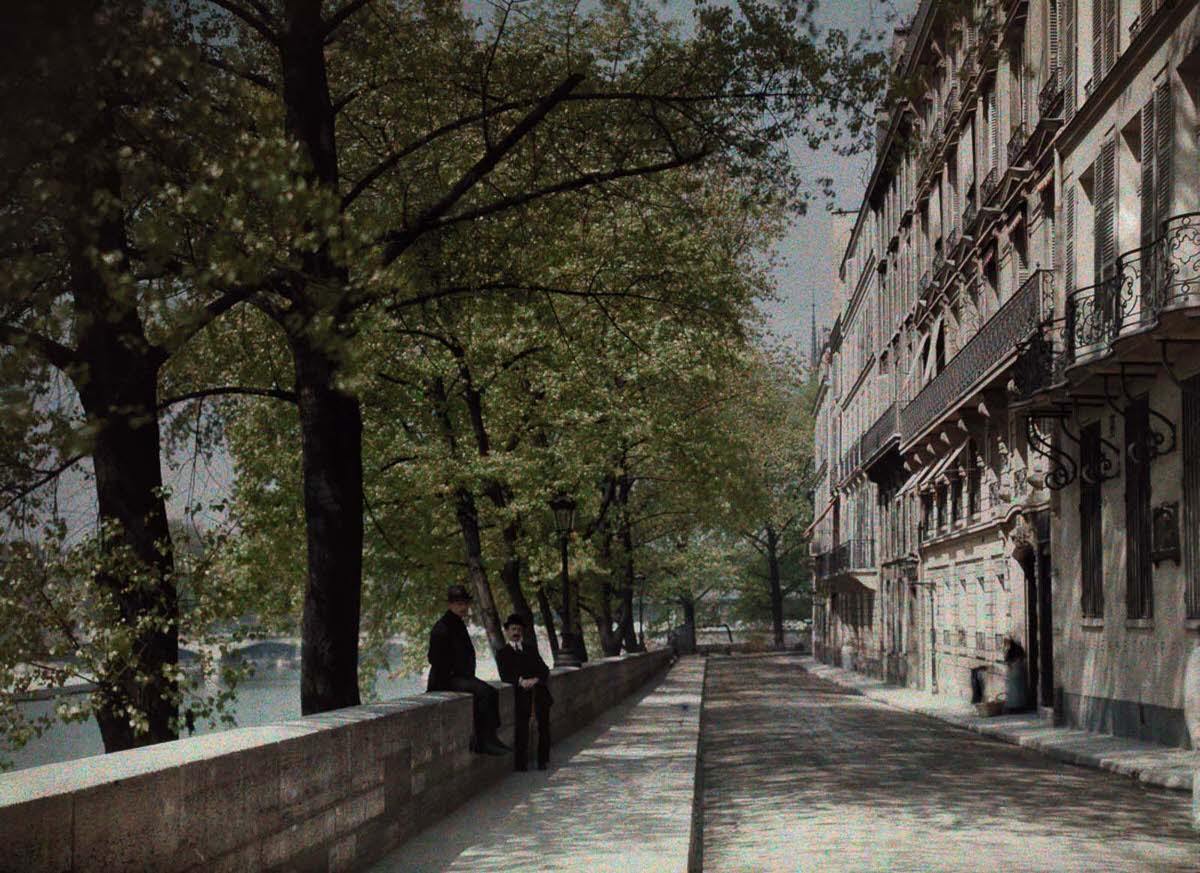
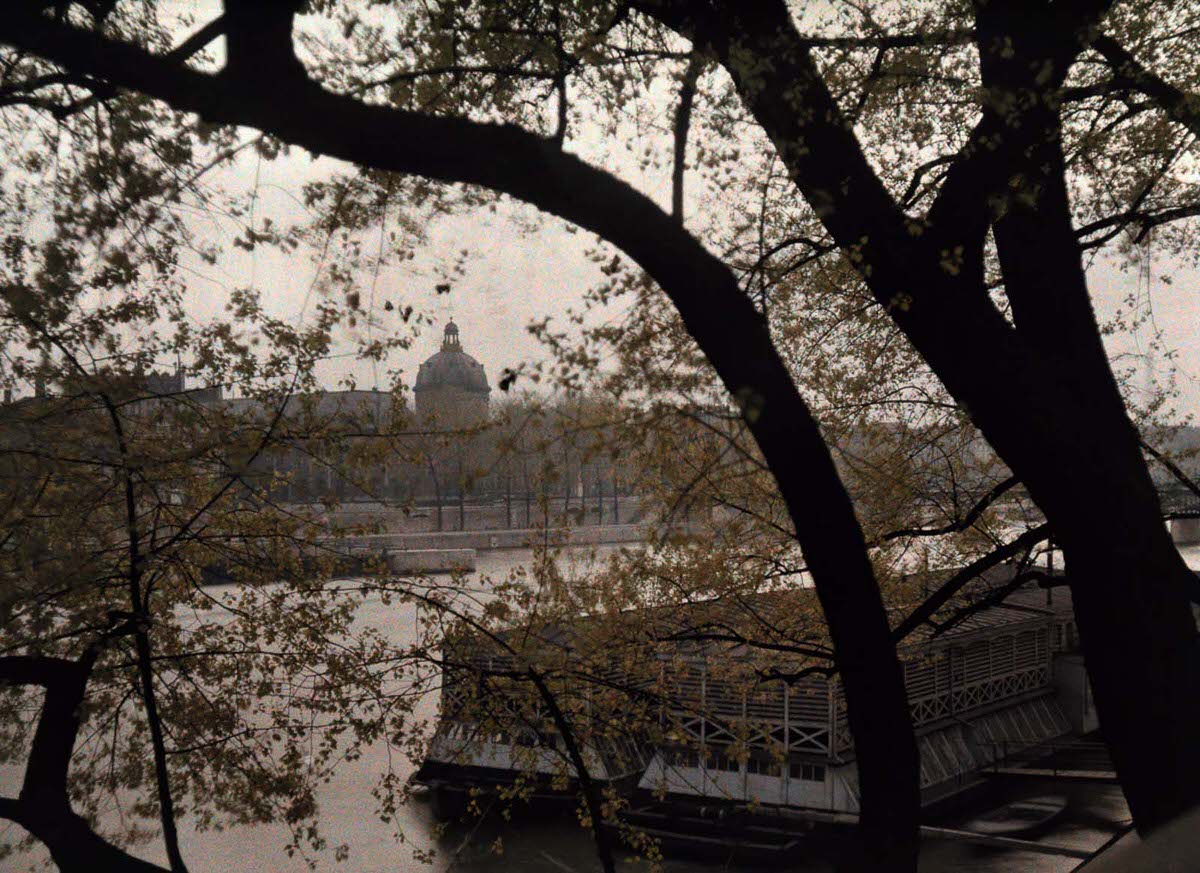
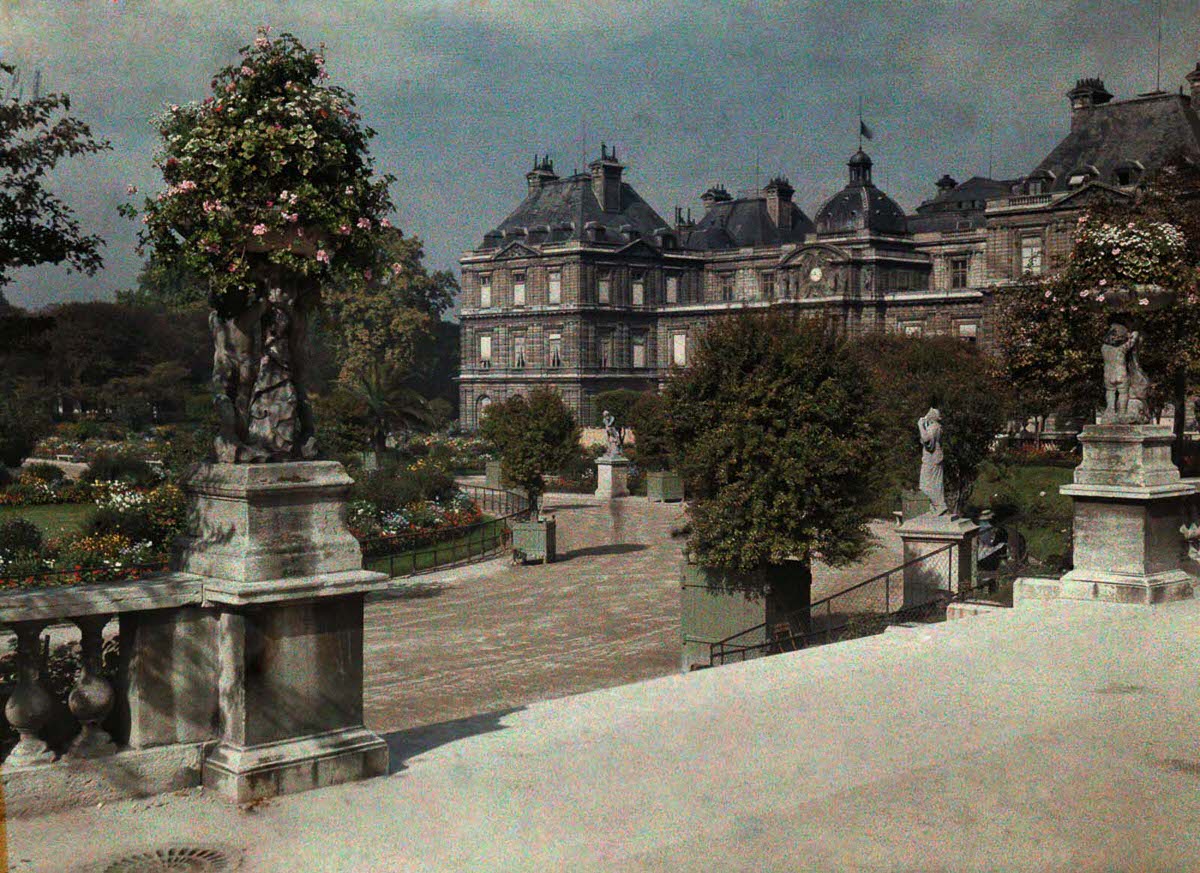
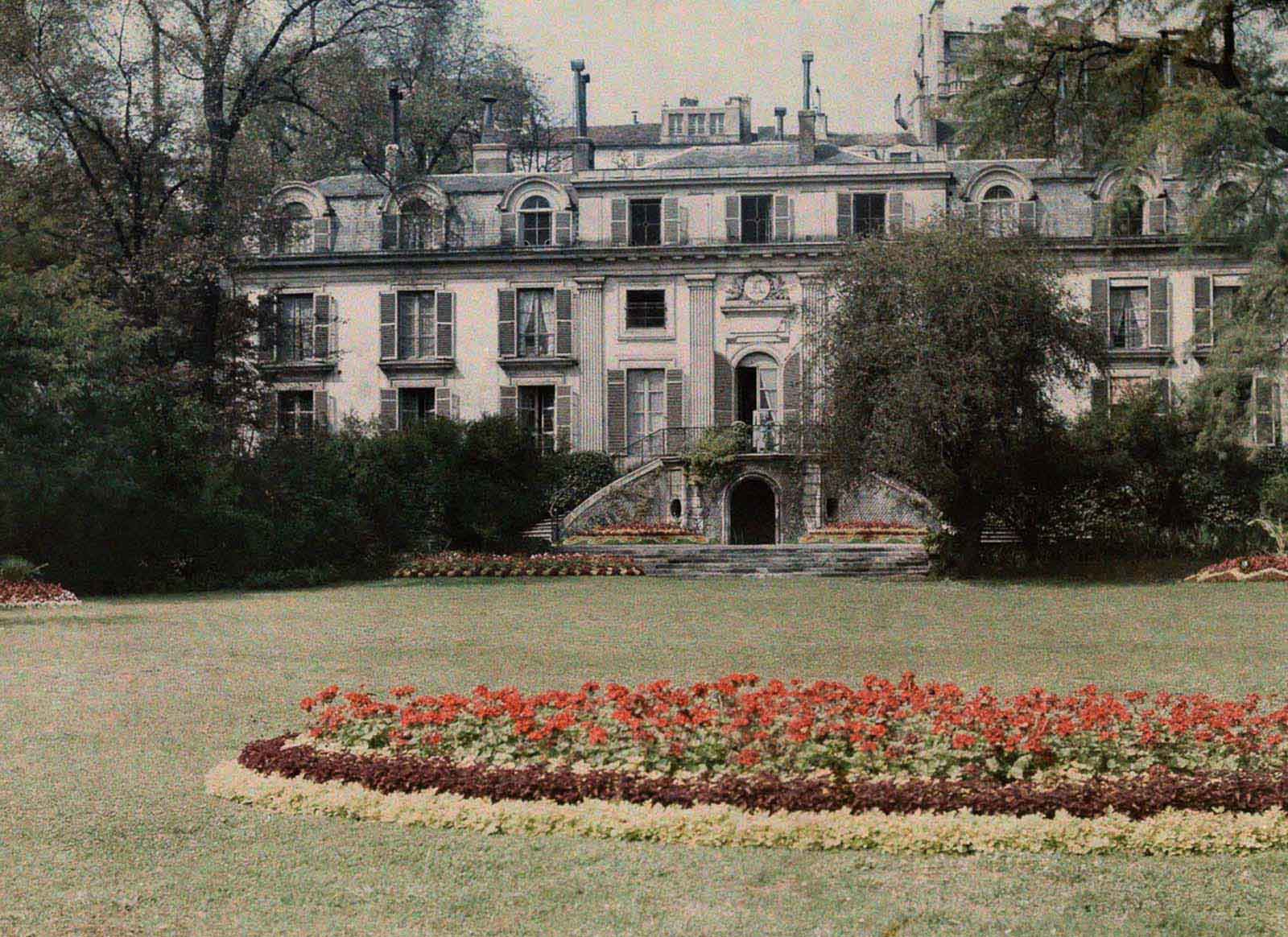
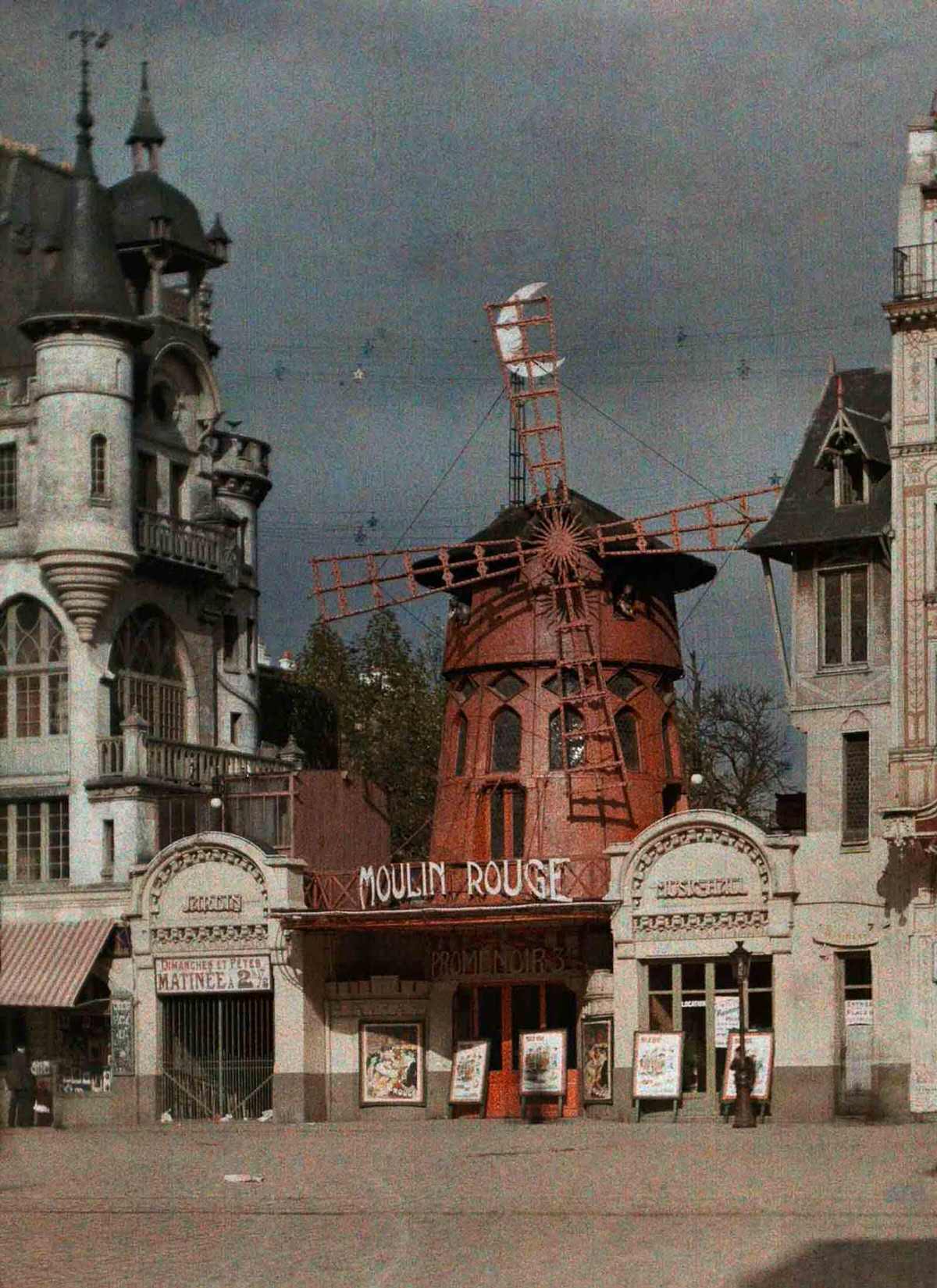
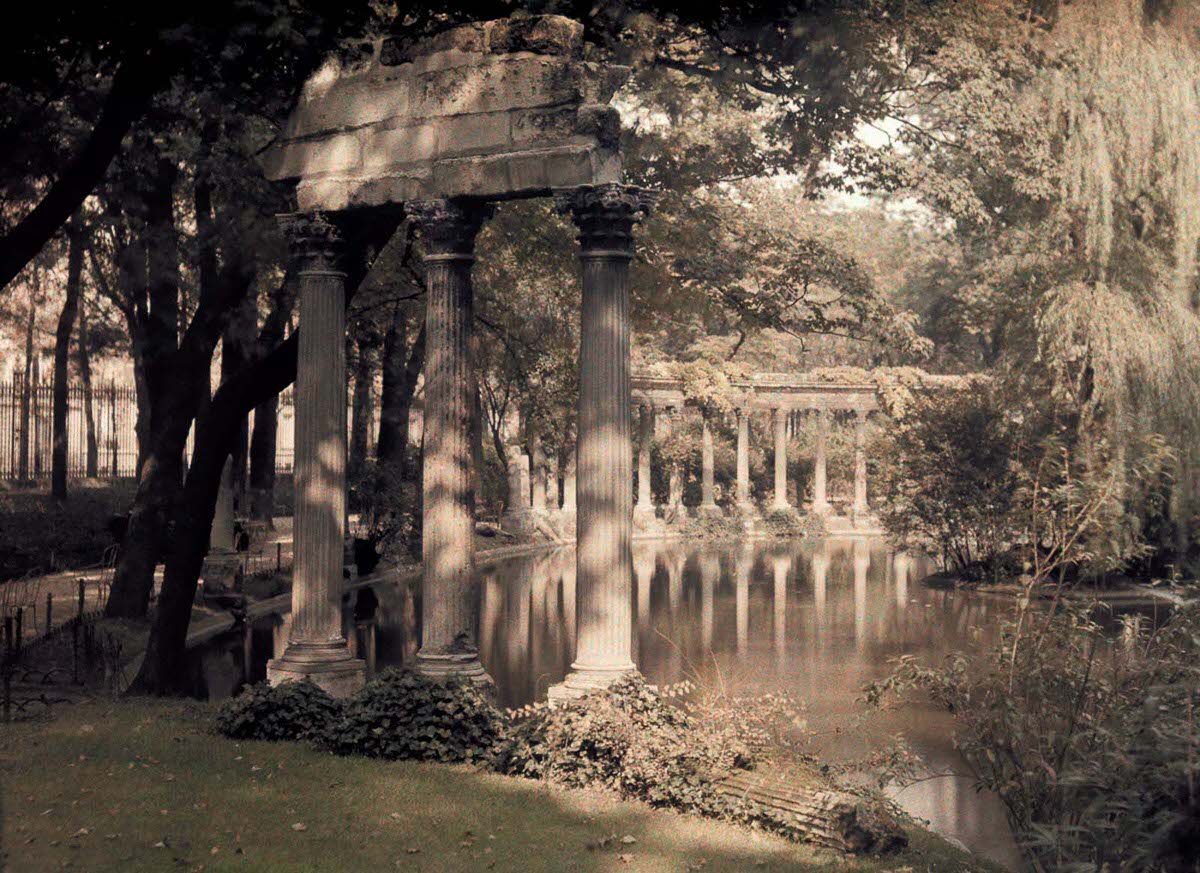
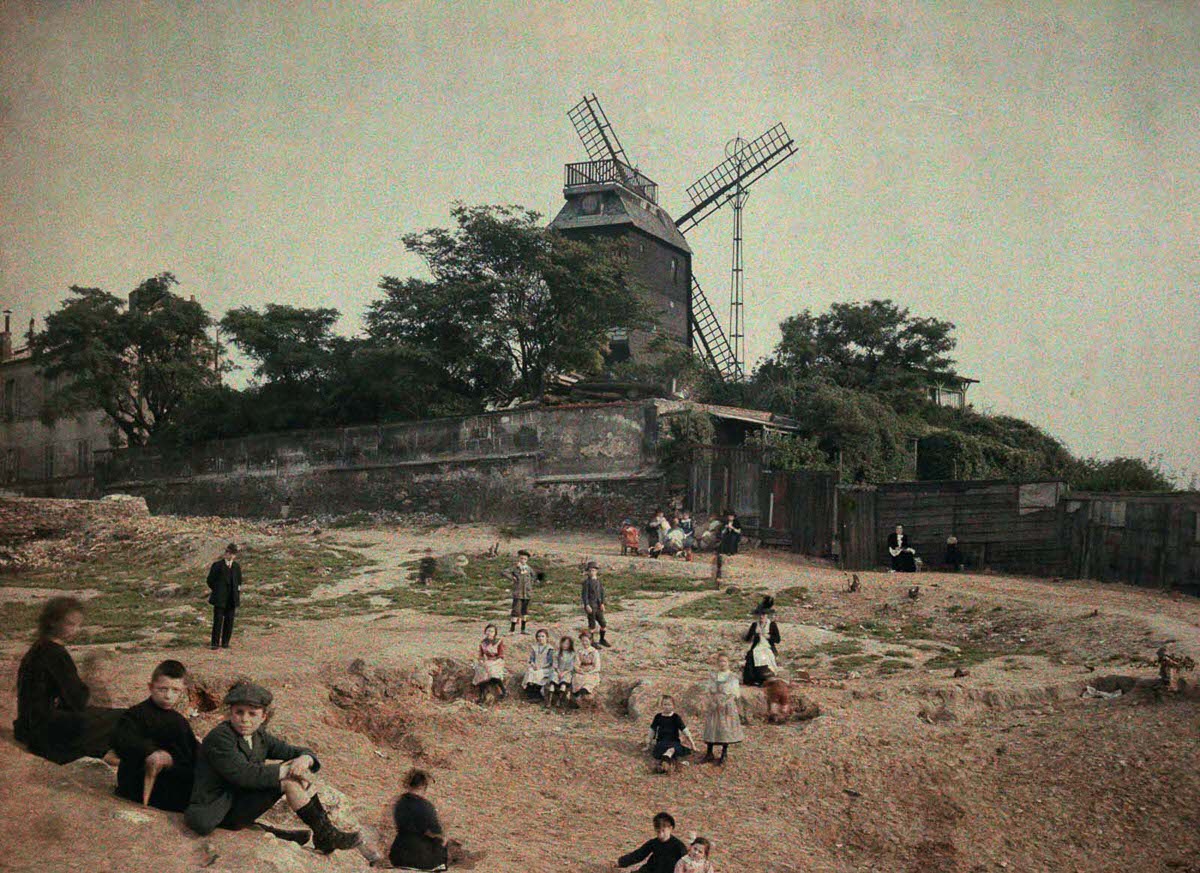
Most people think of early 20th-century photography as black and white. These images of Paris in 1923 prove otherwise. Photographer Jules Gervais-Courtellemont captured the French capital in full, vivid color just a few years after the end of World War I, using a process called autochrome — the first practical color photography technique ever made available to the public. Autochrome plates were coated in roughly four million microscopic grains of potato starch per square inch, dyed red, green, and blue. When light passed through those starch grains and hit the photographic emulsion beneath, the result was a soft, luminous color image unlike anything else of its era. The finished photographs have an almost painterly quality to them.
In 1923, Paris was a city rebuilding its identity. The war had ended only five years earlier, yet the French capital was already reclaiming its status as a world center of fashion, decorative art, and architecture. Streets buzzed with daily life — flower markets, butcher shops, workers along the Seine — all of which Gervais-Courtellemont framed with a documentary eye.
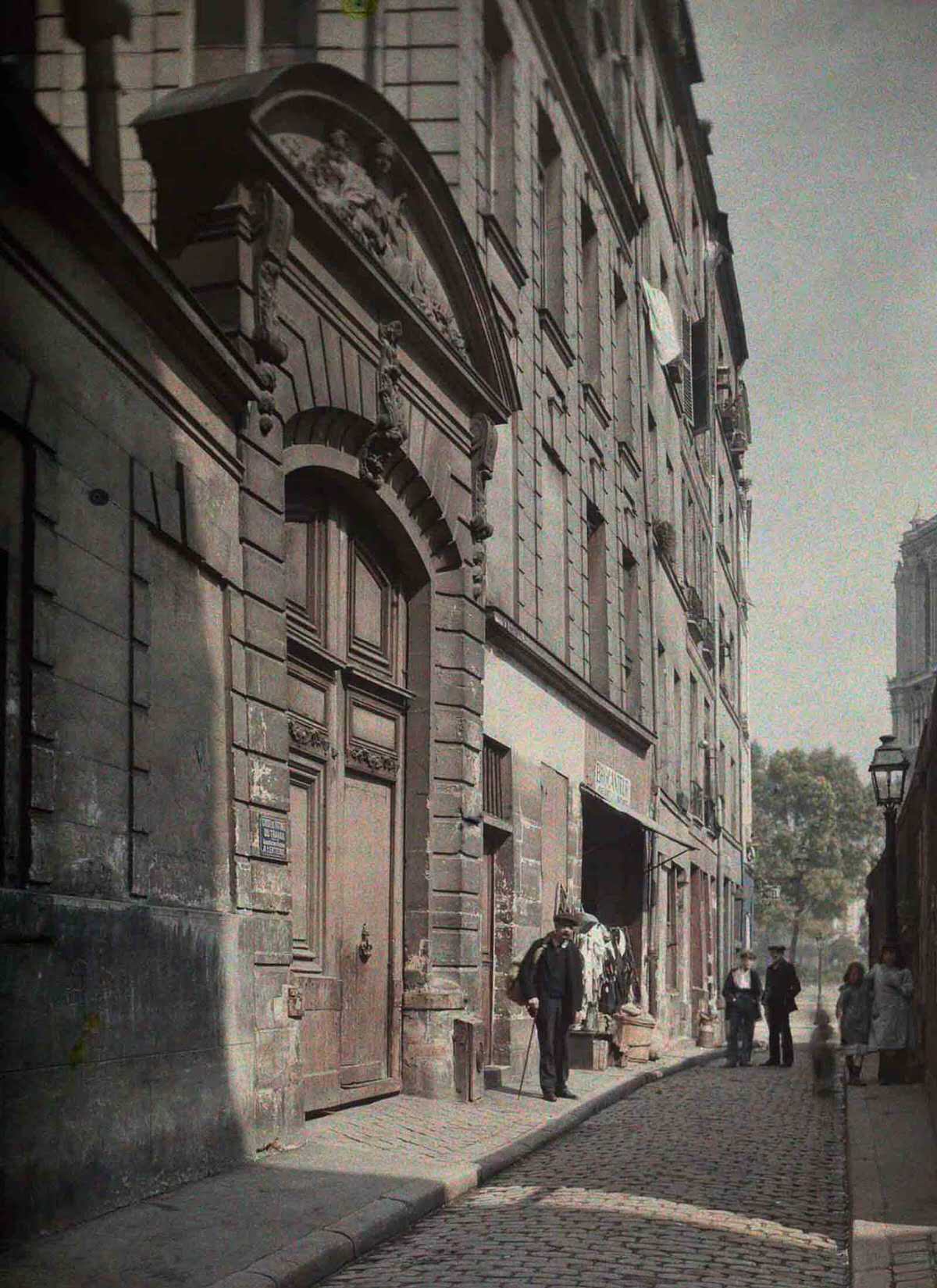
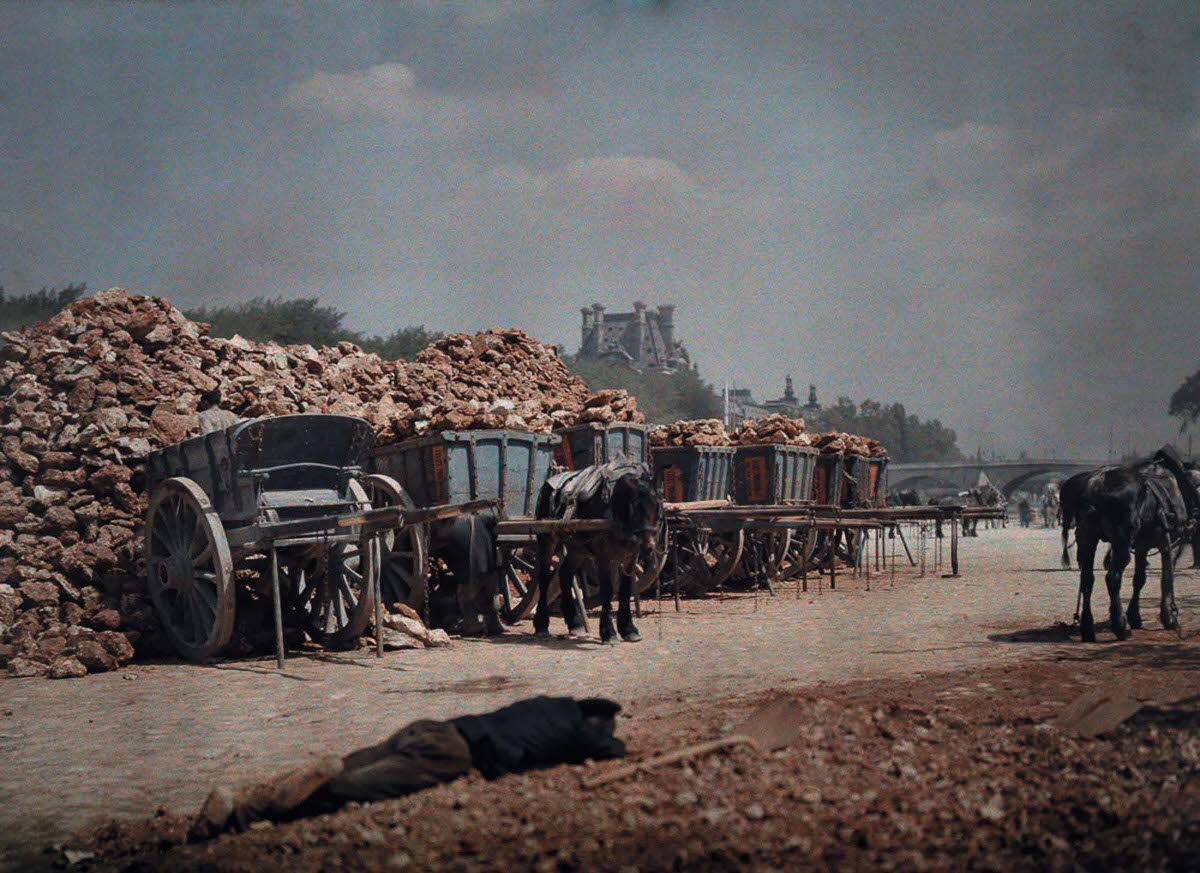
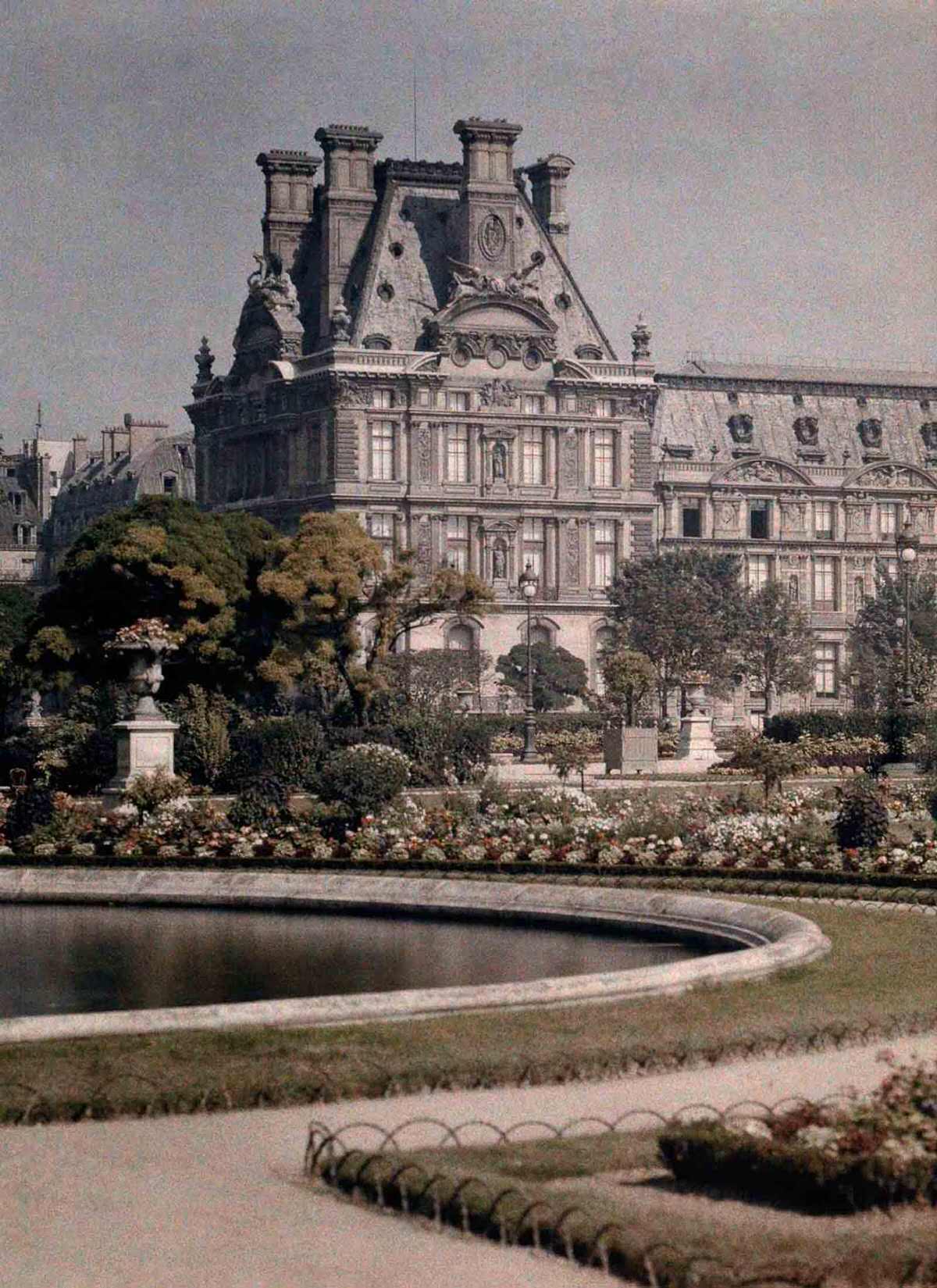
The photographs cover an enormous range of the city. Grand public spaces sit alongside narrow medieval alleys. Formal gardens are captured in the same collection as working riverbanks crowded with horses and laborers.
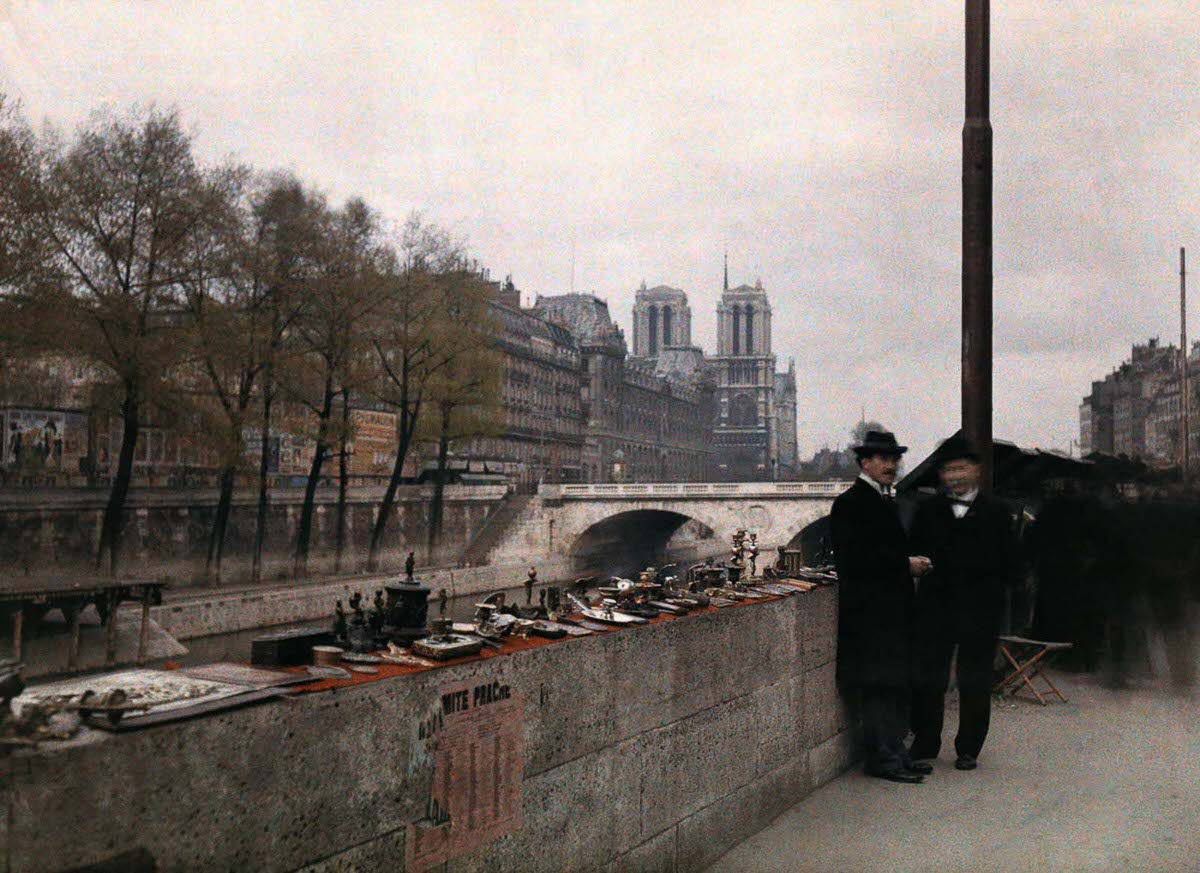
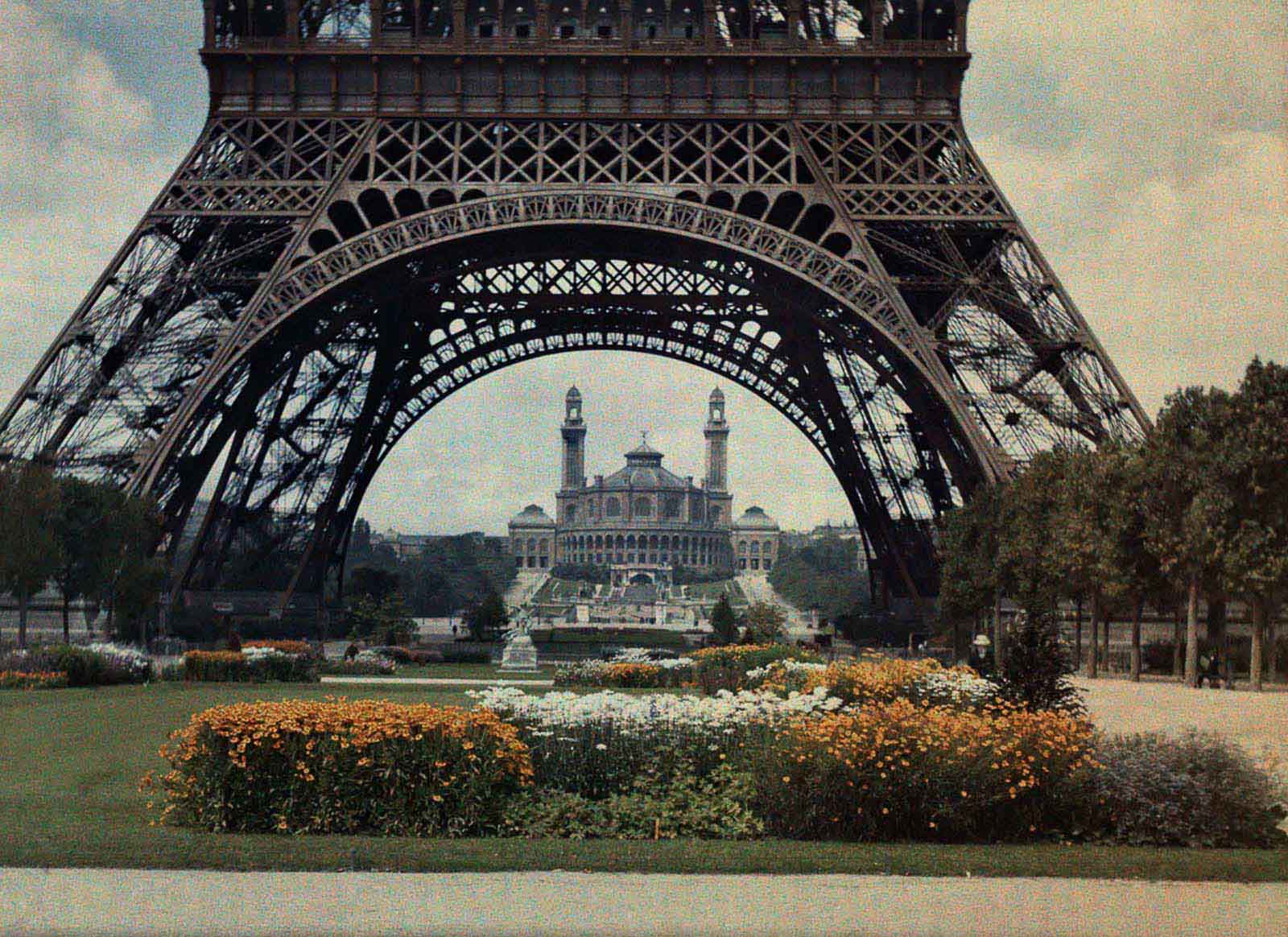
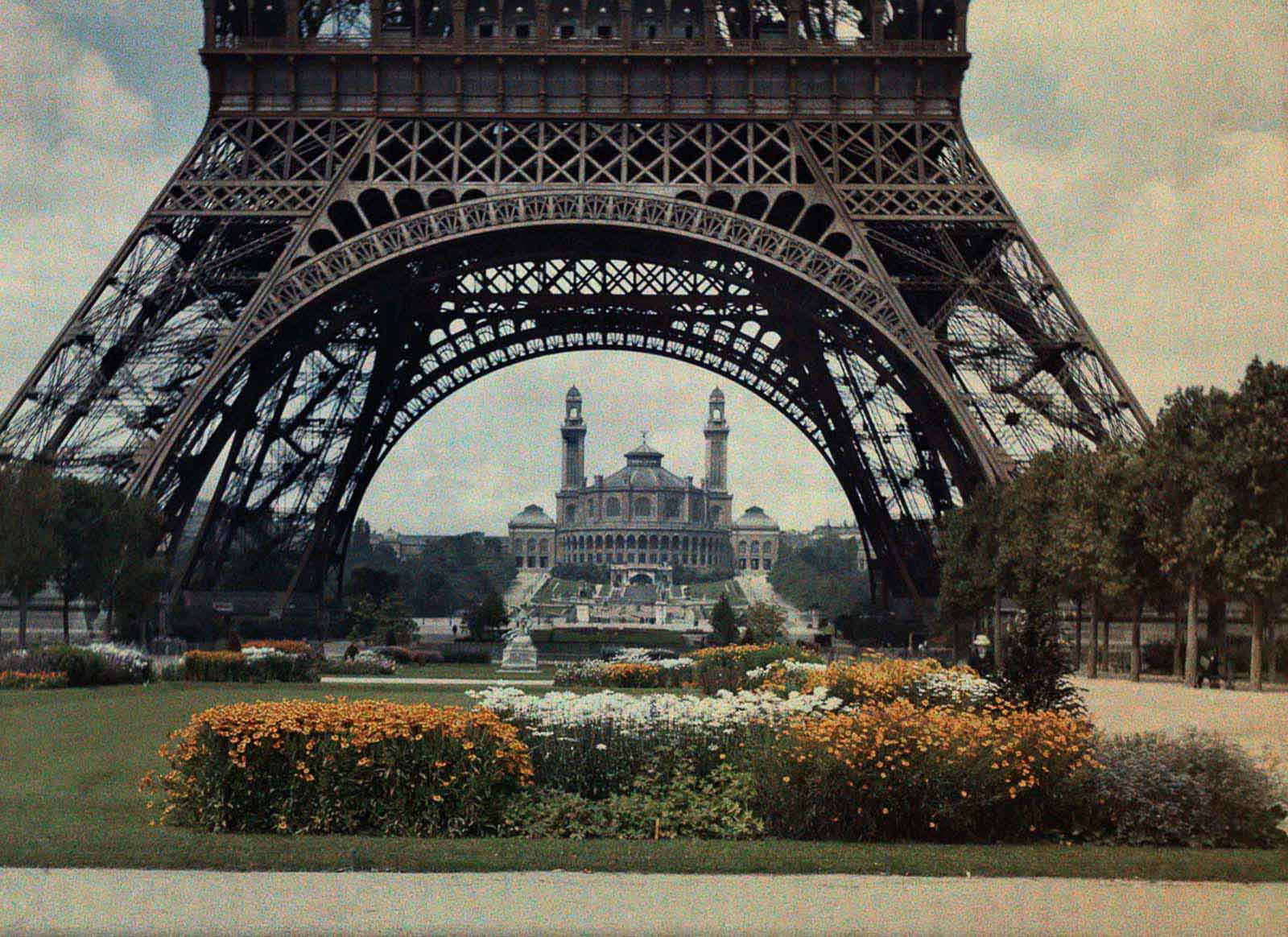
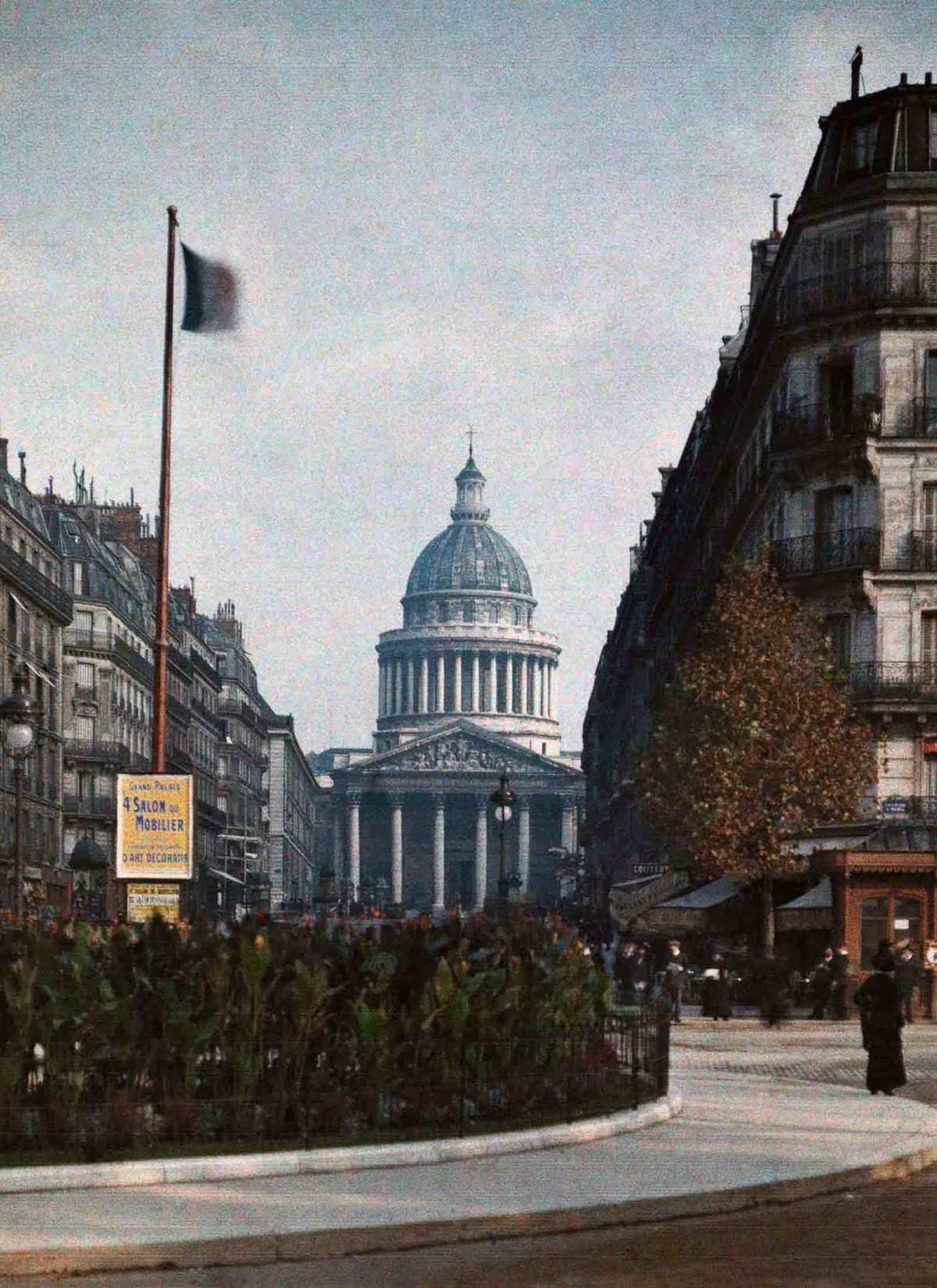
Landmarks that still define Paris today appear here as they looked a full century ago. The Palais Garnier opera house, Notre Dame cathedral, the Panthéon, and the Eiffel Tower all feature in the collection, rendered in warm, faded tones that make them feel both familiar and strikingly distant.
The city’s waterways play a recurring role throughout the series. The Seine appears in multiple shots — sometimes calm and reflective at twilight, other times busy with people going about their day on the Île de la Cité or along the quays.
Montmartre gets its own chapter in this visual record. The Moulin Rouge and the Moulin de la Galette — the old windmill-turned-dance hall made famous by Renoir’s paintings — both appear, grounding the neighborhood’s artistic reputation in real, documented color.
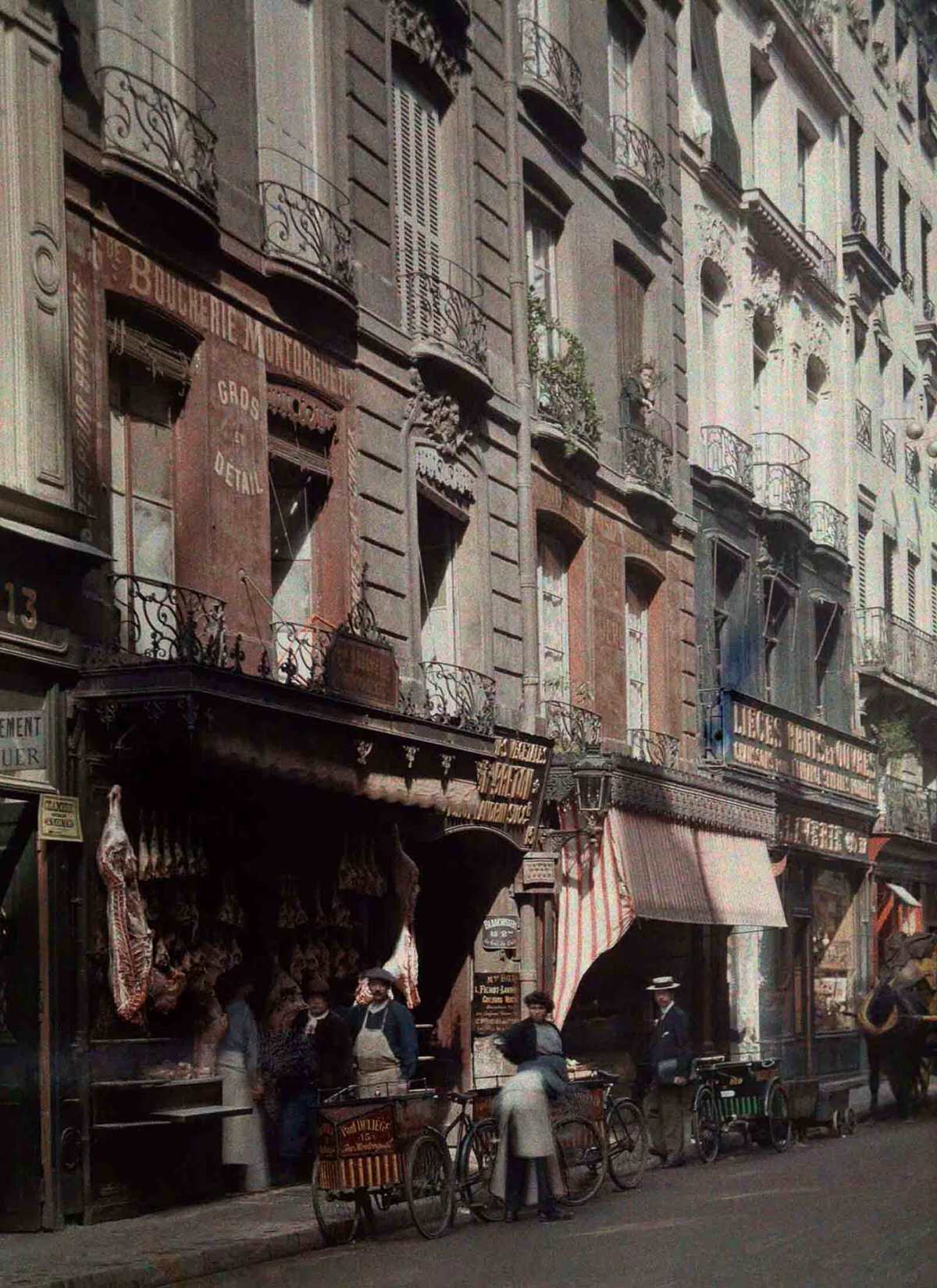
Street-level scenes give the collection much of its energy. A worker asleep beside carts of rubble, vendors near Notre Dame, and a busy butcher’s shop all show the ordinary texture of Parisian life that grander architectural shots tend to leave out.