
On the night of November 13, 1985, a volcanic mudflow buried the Colombian town of Armero under thick, heavy sludge. More than 23,000 people died. Among the survivors who were pulled from the debris, one story stood apart from all the others — a thirteen-year-old girl named Omayra Sánchez, who spent nearly three days trapped neck-deep in water and debris, watched by rescuers who could not free her.
Nevado del Ruiz is a snow-capped volcano standing 17,500 feet above sea level in the central Andes of Colombia. The town of Armero sat about 30 miles east of the volcano’s crater, home to roughly 31,000 people. The volcano had a long history of activity. It first erupted in 1845 and had shown renewed signs of life since the early 1980s. Two months before the disaster, the Colombian government published an official hazard map and issued warnings to nearby communities. The warnings were not acted upon in time.
The events of November 13 began in the afternoon. At 3:00 P.M., black ash columns rose from the Arenas Crater. Colombia’s geological department called for evacuation, and official orders were issued at 7:00 P.M. But a chain of failures kept the message from reaching the people who needed it most. Electrical outages cut off emergency communications to local authorities. Residents who could see the ash were told it was not a serious threat. Many went to bed that night believing they were safe.
At 9:09 P.M., the volcano exploded. The eruption itself was relatively modest — it melted between five and ten percent of the ice cap covering the crater. But that was enough. The meltwater mixed with volcanic rock, ash, and soil to form a lahar: a fast-moving river of volcanic mud and debris. The lahar cascaded down the mountain, filling river valleys and channeling directly toward Armero. When it arrived, it covered 85 percent of the city. Houses, streets, and thousands of people were buried under the flow within minutes.
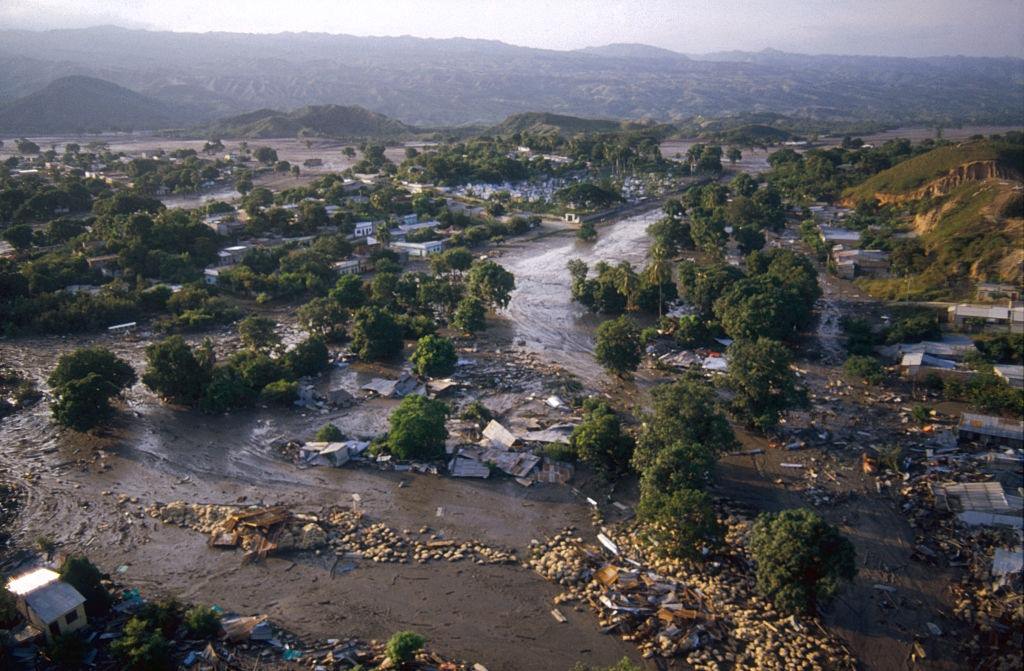
The destruction was total in most of the city. Thirteen villages beyond Armero were also destroyed. The final death toll reached 23,000, making the Armero disaster one of the deadliest volcanic events in recorded history. Residents who had tried to flee were caught by the flood mid-escape. The debris moved fast and with enormous force, and many had no time to react.
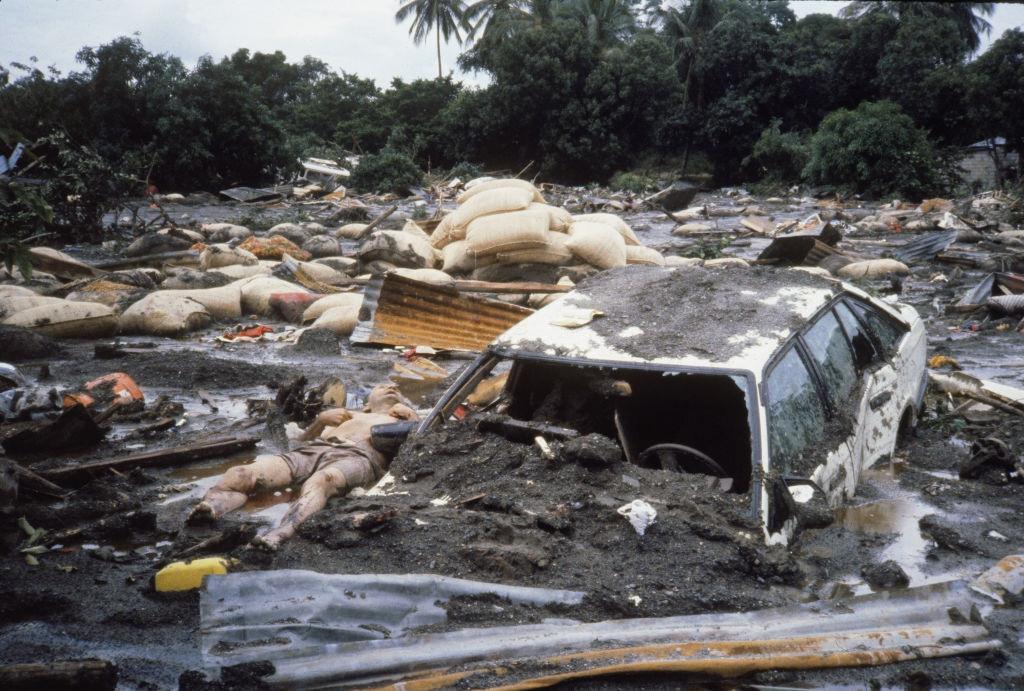
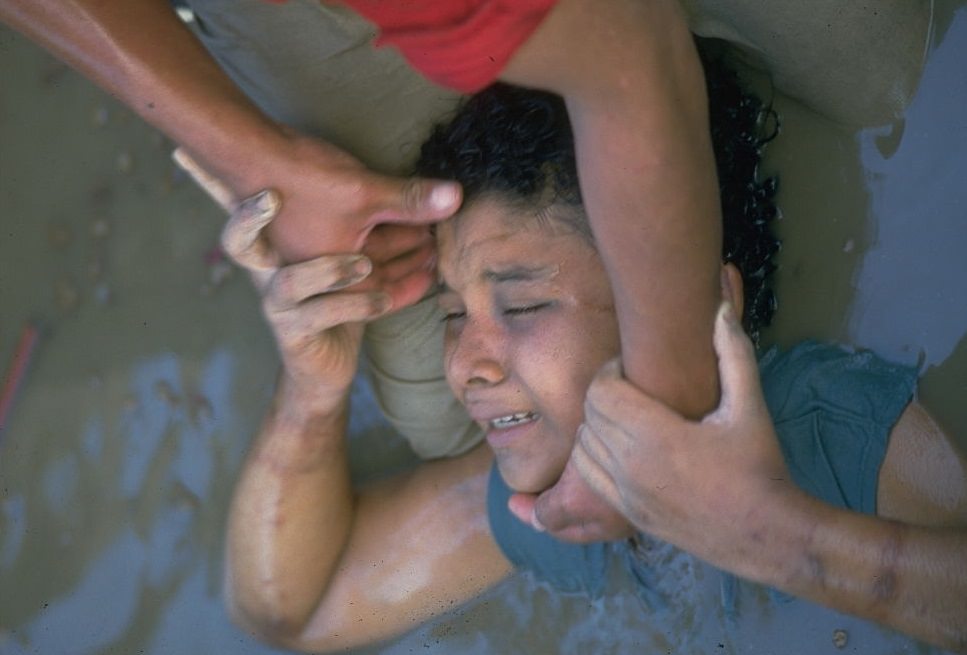
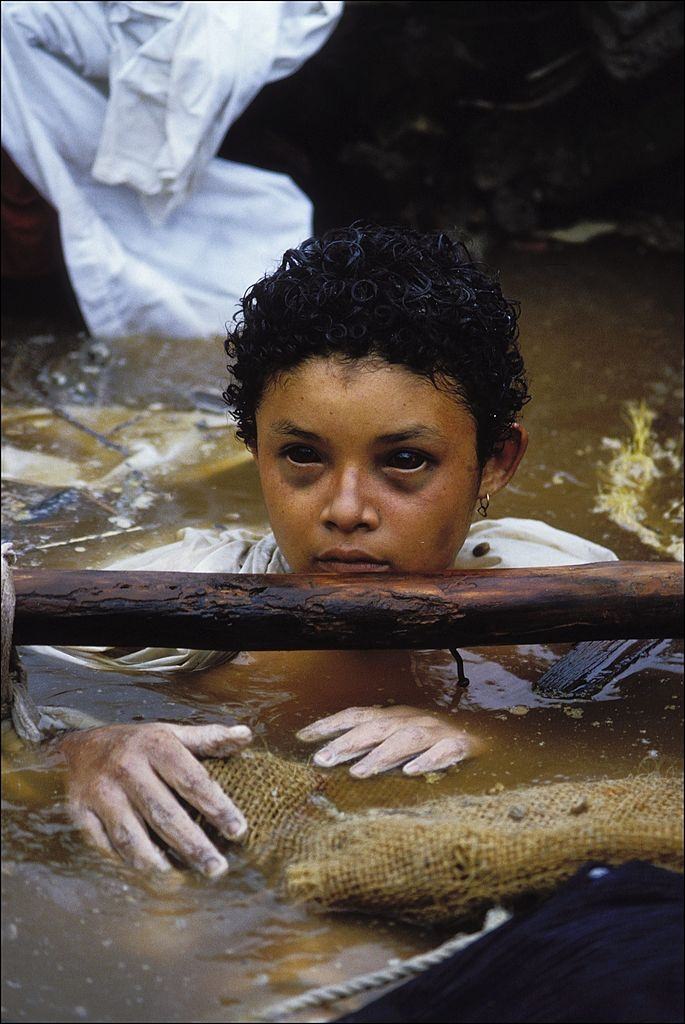
Omayra Sánchez was thirteen years old and lived in Armero with her family. When the lahar struck, it destroyed her home. Her father and her aunt were buried in the debris. Omayra survived the initial flow, but she was not free. She was trapped from the waist down in a tangle of wreckage, submerged in neck-deep water. Her legs were pinned beneath what rescuers eventually determined was the roof of her family’s house, with her aunt’s body pressing against her feet from below. She was locked in place and could not move.
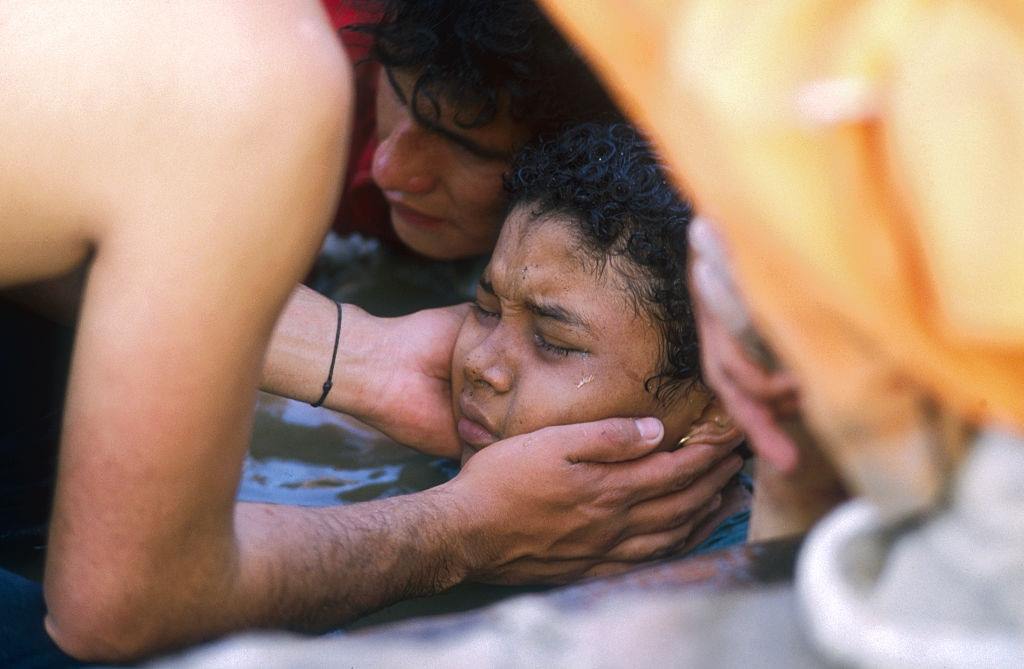
Red Cross volunteers and local residents reached her and immediately began trying to pull her free. To keep her head above water and prevent her from drowning, rescuers placed a rubber tire around her upper body. It held her upright while they worked. Teams took turns trying to find a way to loosen the debris around her legs. They brought in a pump to drain the water from around her. Nothing worked. Her legs were bent under heavy concrete in a kneeling position, and the structure around her could not be safely moved.
Amputation was considered as a last option. But the medical team on site did not have the equipment needed to safely perform the procedure in those conditions. The water surrounding her was contaminated, and her body had already been exposed for hours. Doctors and rescue workers agreed that attempting an amputation would most likely kill her faster than leaving her in place. With no viable options remaining, the decision was made not to operate.
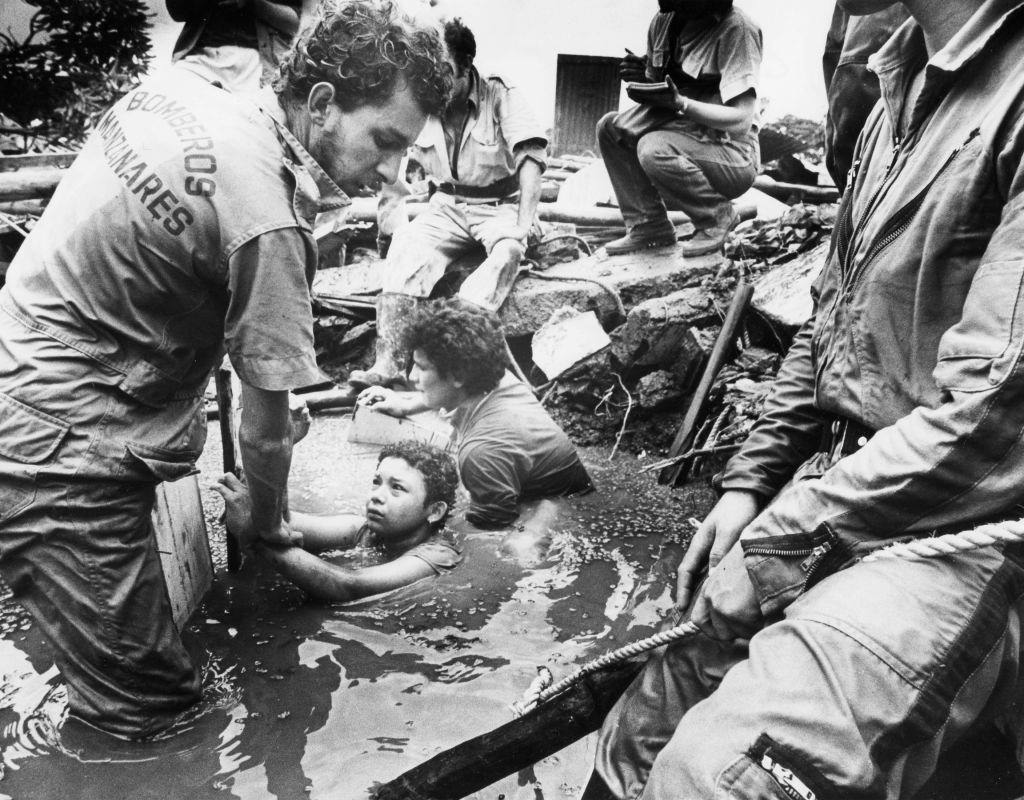
Through all of this, Omayra remained remarkably composed. She spoke to the people around her, sang songs, and asked for sweet things to eat. She drank soda that rescuers passed to her. She gave interviews to journalists who gathered at the scene. In one exchange with German Santamaria, a reporter from the Colombian newspaper El Tiempo, she said, “I’m going to miss a year because I haven’t been to school for two days.” She was worried about falling behind in class. She also asked rescuers to let her know when they needed to rest, not wanting them to exhaust themselves on her behalf.
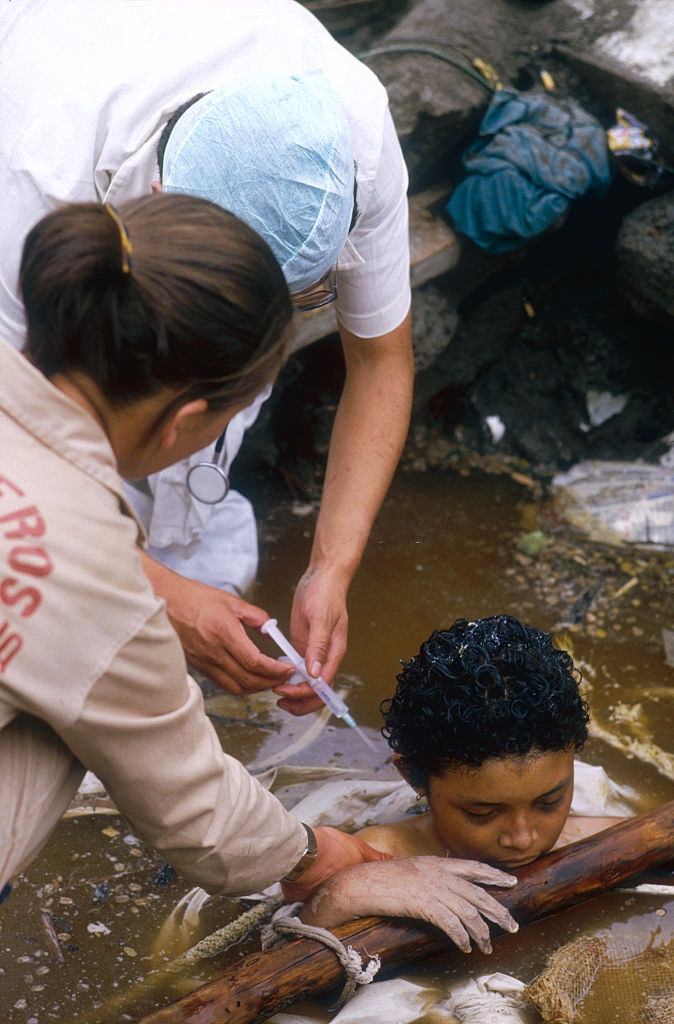
There were moments when the fear broke through. She prayed. She cried. At times she asked the people around her to simply leave her alone so they could rest. But she kept talking, kept engaging with the world around her, even as her body began to fail. Rescuers and medical workers stayed by her side throughout the three days she remained trapped.
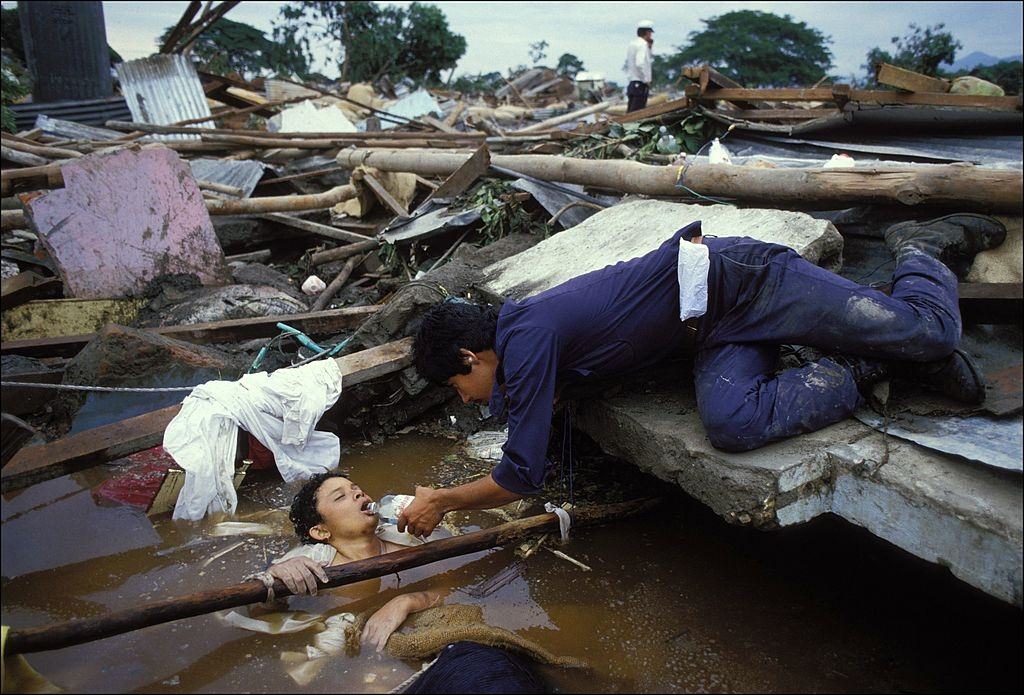
By the final hours, the physical signs of her deterioration were clear. Her eyes turned red. Her face swelled. Her hands became a bleached, deathly white — the result of prolonged exposure to cold, contaminated water. The damage to her body was extensive and irreversible. Three hours before she died, she asked the volunteers around her to let her rest. She said goodbye to her mother.
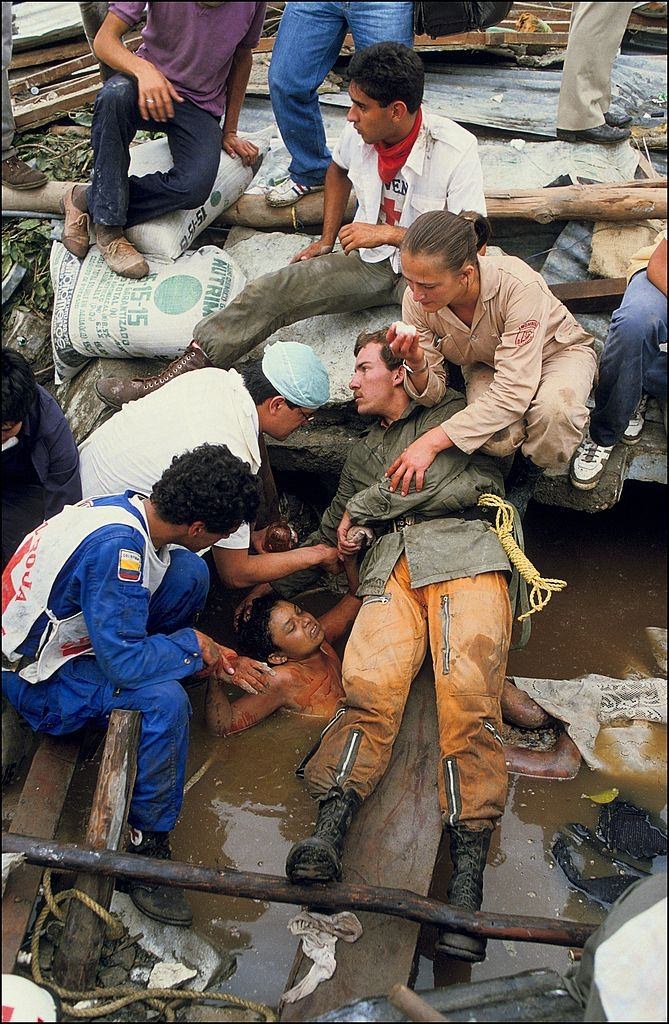
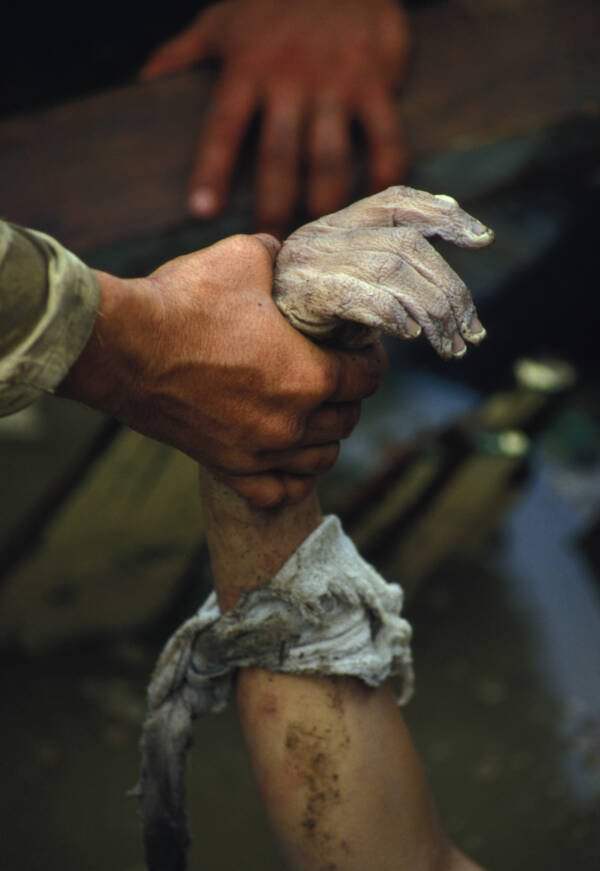
Omayra Sánchez died at 9:45 A.M. on November 16, 1985, roughly 60 hours after the volcano erupted. The cause of death was exposure — most likely a combination of gangrene and hypothermia brought on by days spent submerged in contaminated floodwater. She was thirteen years old.
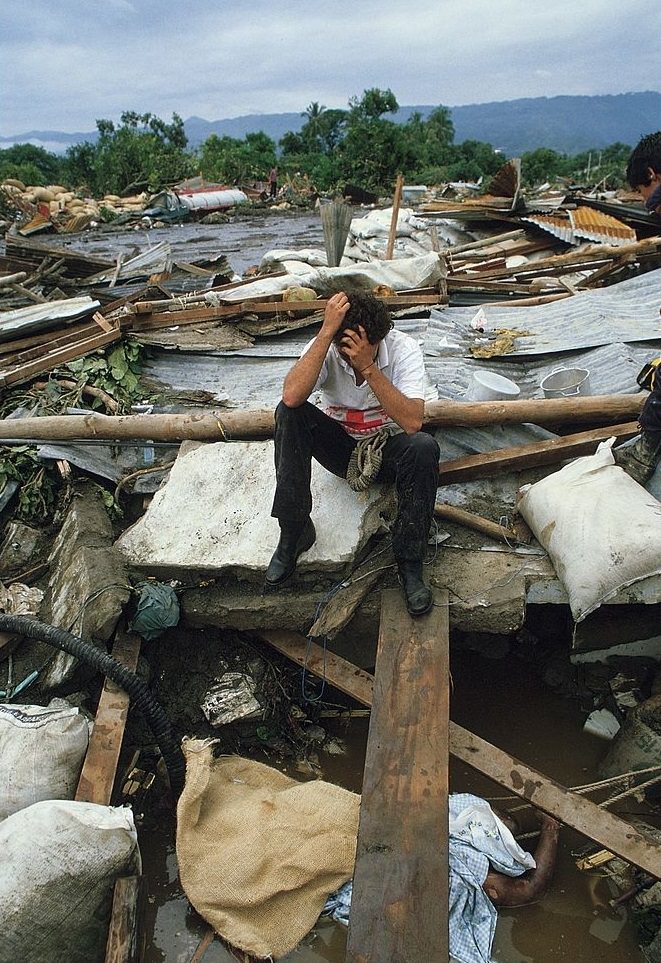
Her mother, Maria Aleida, was a nurse. She learned of her daughter’s death while being interviewed live on Caracol Radio. She wept quietly as the hosts asked their listeners to observe a moment of silence. The photographs taken of Omayra during the three days she was trapped were published six months after her death. The images, taken by photographer Frank Fournier, were seen around the world and drew widespread public attention to both the disaster and the failures of response that surrounded it. Fournier’s most well-known photograph of Omayra later won the World Press Photo of the Year award for 1985.
The Armero tragedy exposed serious breakdowns in disaster preparedness and emergency response. The hazard map had been drawn. The warnings had been issued. But the systems meant to act on those warnings failed at nearly every level — from communication infrastructure to the speed of evacuation orders. By the time the lahar reached Armero, tens of thousands of people had no idea how close the danger was.


I know I am not a doctor or an expert, but I just can’t make sense of this story and why decisions were made to do this. Chainsaws to remove the debris, water pumps, antibiotics, even the amputation idea. 100% chance of death if she stays, 90% chance of death if we amputate. Last time I checked 10% is greater than 0%. And, the final complaint, when they knew that there was no hope, why 3 nights of suffering? Give her a shot of a medicine and let her die peacefully. I don’t get it. I wish I had more info.
I don’t know how long ago you posted this reply. But I only came across this story last week and it’s haunting me… It really is.. I agree with you also
..
This one is right up there with Nutty Putty. Such a long time to anticipate certain death.
Holy crap these images have been in my head since seeing them on the news when I was a kid but I had no idea what they were until now. Thank you.
I’ve looked over this so many times but had never seen photos from earlier in the event. Only the later ones with her eyes having blackened. I was wondering if it was her when I clicked on the article. Tragic.
We never forgot.
I always think this when she pops up. Heartbreaking but she’s not forgotten poor little angel x
I wasn’t alive when it happened, but it’s an important part of the story of our country.
These people didn’t have to die, the government failed them.