Philadelphia entered the 20th century as Pennsylvania’s largest city and one of the most important industrial centers in the United States. After the Civil War, waves of European immigrants and African Americans arrived and reshaped its neighborhoods. Factories, rail lines, and shipyards drove the economy forward. By 1900, the city was home to massive operations like the Baldwin Locomotive Works, William Cramp & Sons Ship and Engine Building Company, and the Pennsylvania Railroad — each employing thousands of workers and placing Philadelphia at the center of American manufacturing.
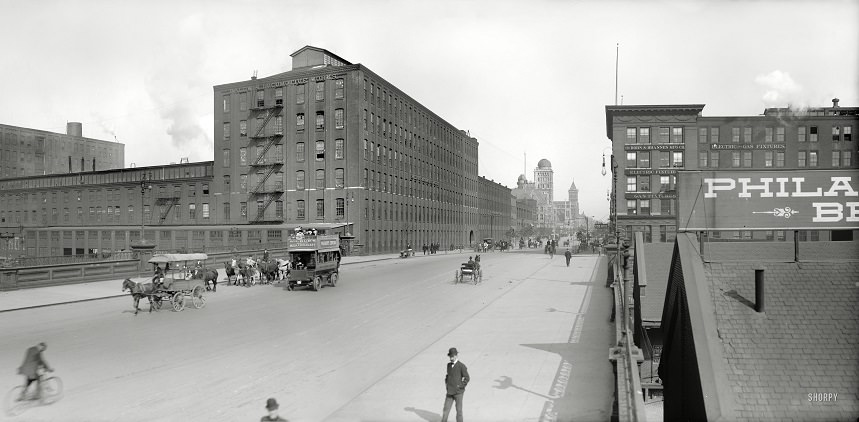
Baldwin Locomotive Works, Philadelphia circa 1908
The Baldwin Locomotive Works was one of the most famous manufacturing operations in the world. Located in Philadelphia, it produced steam locomotives that were shipped across the country and overseas. The sheer scale of the factory reflected how deeply industry had embedded itself in the city’s identity by the early 1900s.
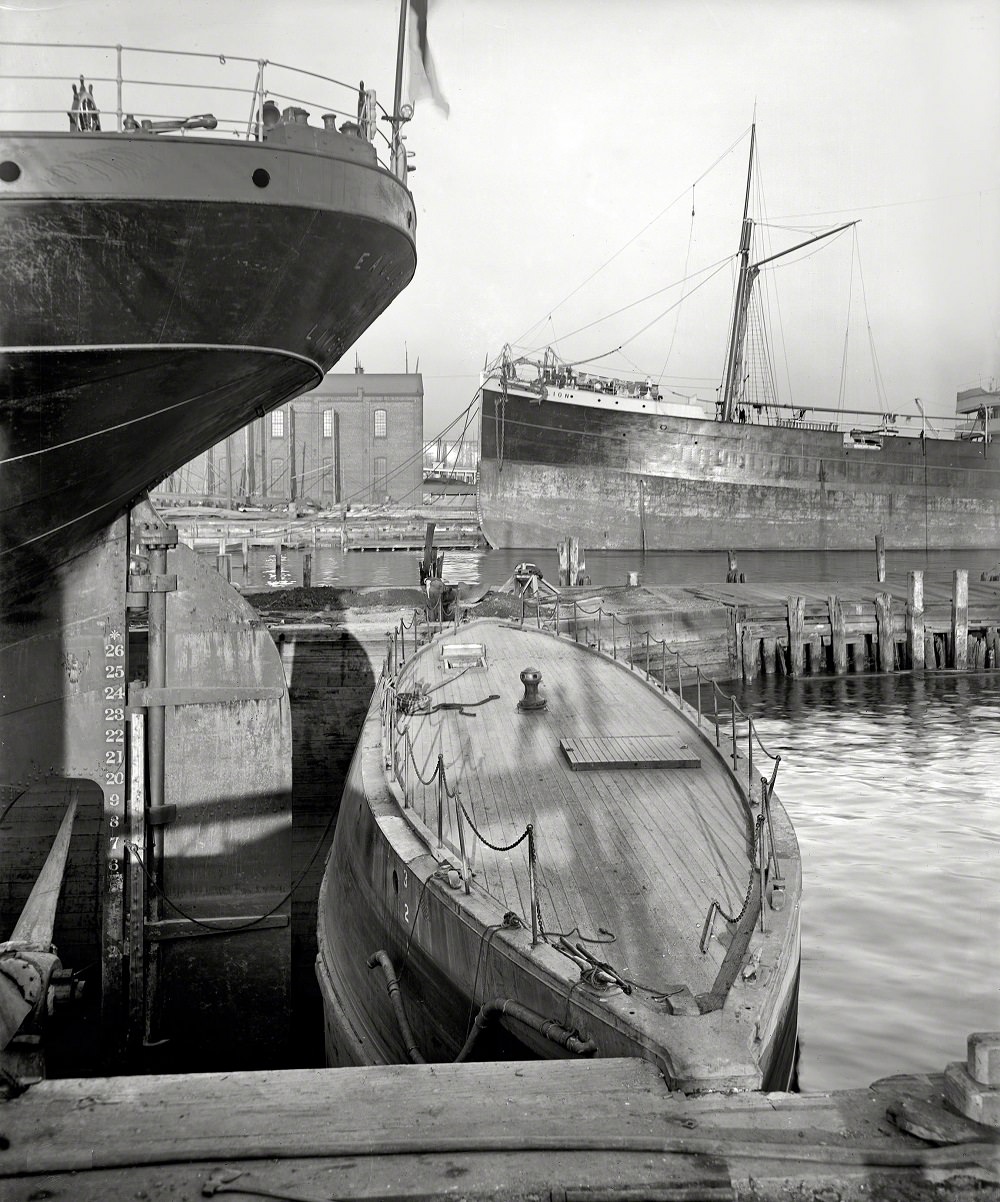
The Gate at Cramp’s dry dock, Philadelphia, 1900
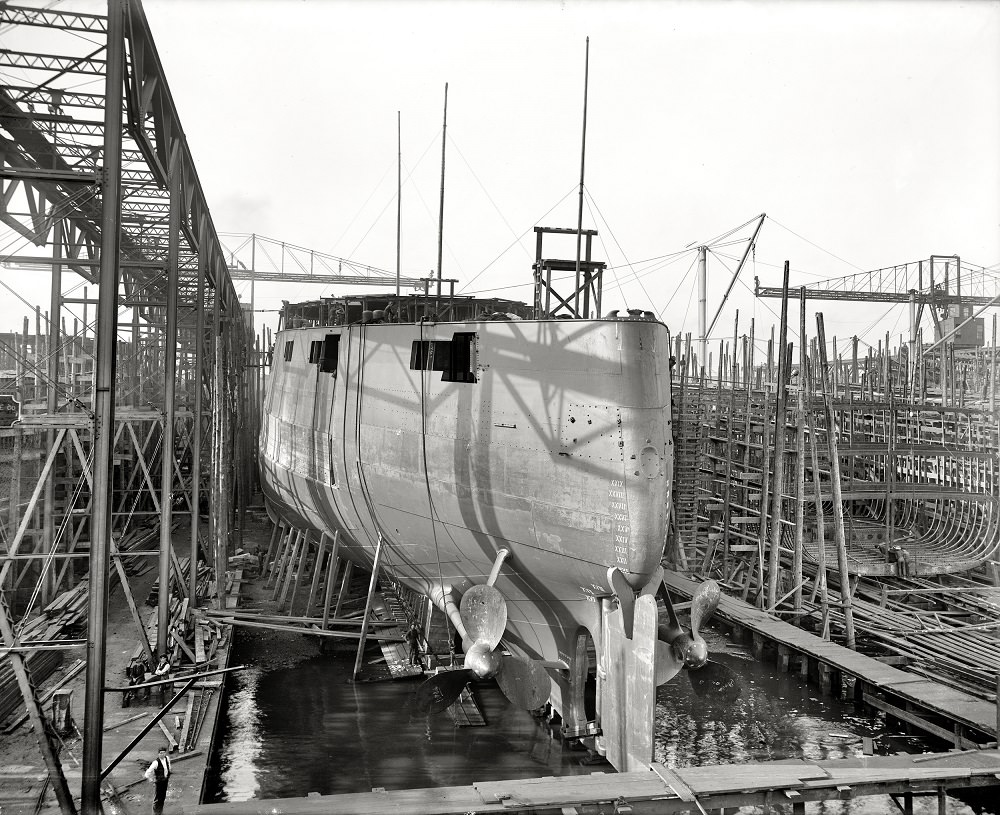
William Cramp & Sons was Philadelphia’s other industrial giant. The shipyard at the Delaware River built naval vessels and ocean liners for clients around the world. In 1900, the yard launched the Russian warship Retvizan, a battleship ordered by the Imperial Russian Navy — a striking sign of the company’s international reach.
Russian warship Retvizan, day before launching, Cramp’s shipyards, Philadelphia, 1900
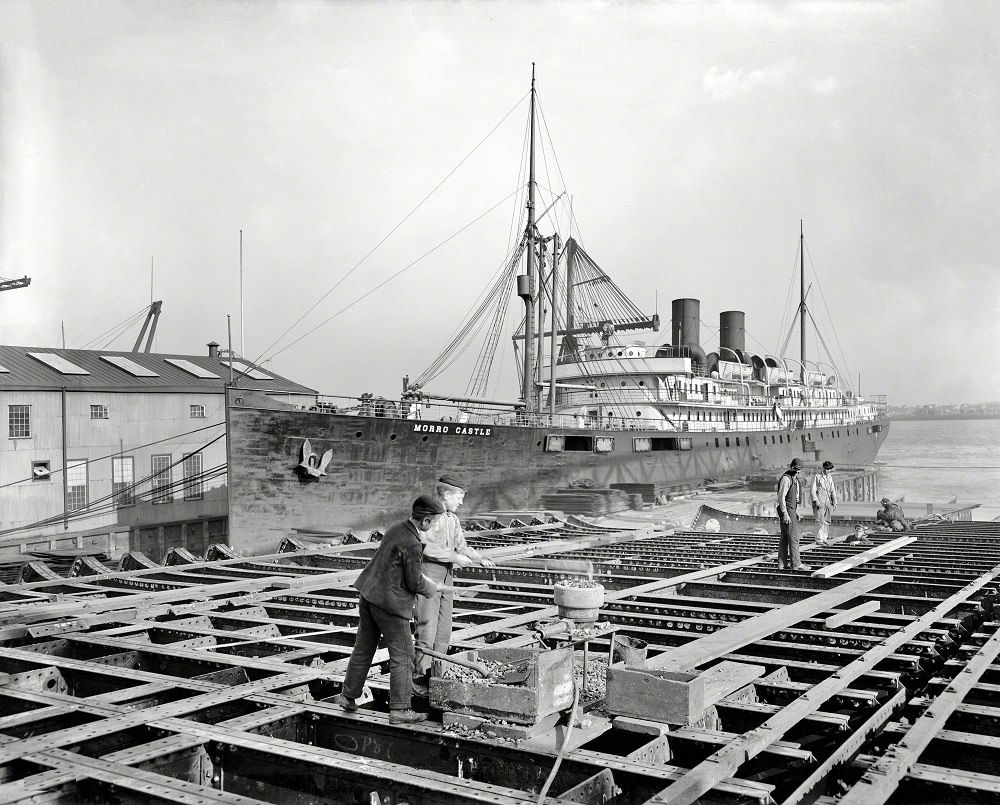
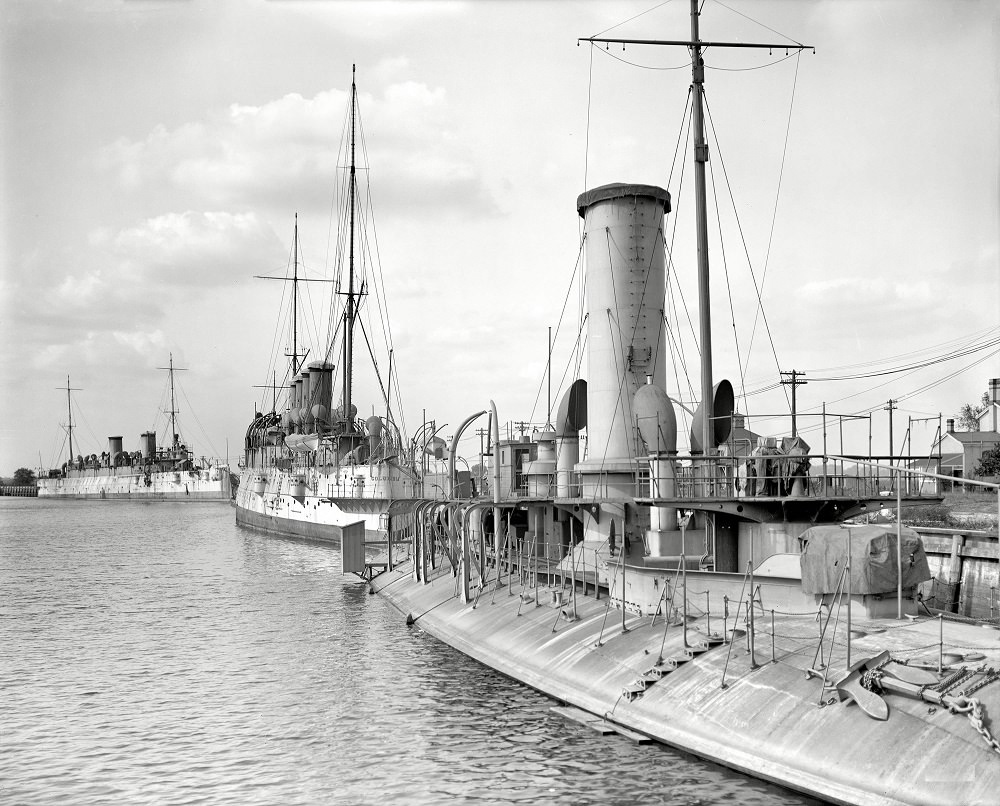
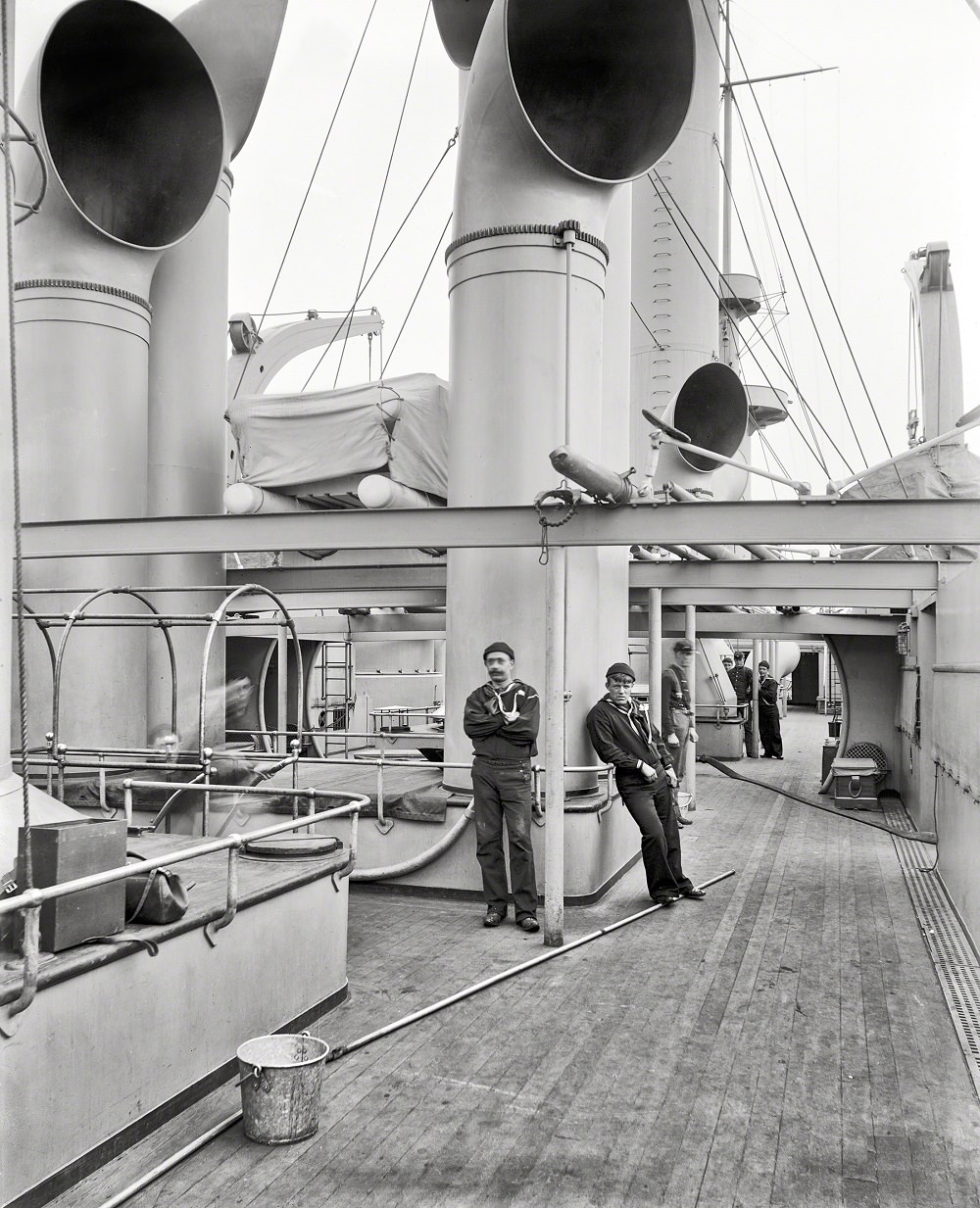
The S.S. Morro Castle, another vessel associated with Cramp’s shipyards, was also photographed at the Philadelphia yard around 1901. The Navy Yard at League Island was equally active, home to warships that represented American sea power at the turn of the century.
S.S. Morro Castle, Cramps Shipyards, Philadelphia circa 1901Ships at League Island Navy Yard, Philadelphia circa 1908
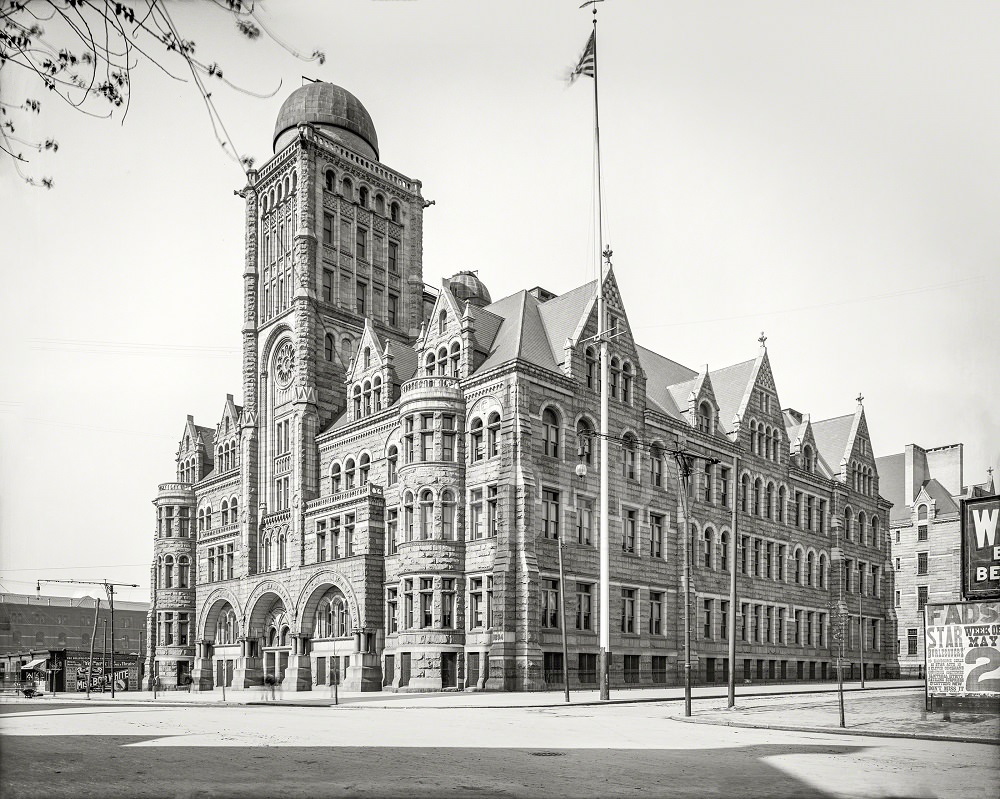
Despite its industrial strength, Philadelphia in the early 1900s had earned a damaging nickname: “Corrupt but content.” Political graft ran deep through city government. One official estimated that $5 million was lost every year through corruption in city infrastructure programs alone. And yet the city kept building. City Hall, completed in 1901, towered over Broad Street. New boulevards, bridges, and skyscrapers began to define the skyline. In 1907, the city opened its first subway line, connecting neighborhoods that were once difficult to reach.
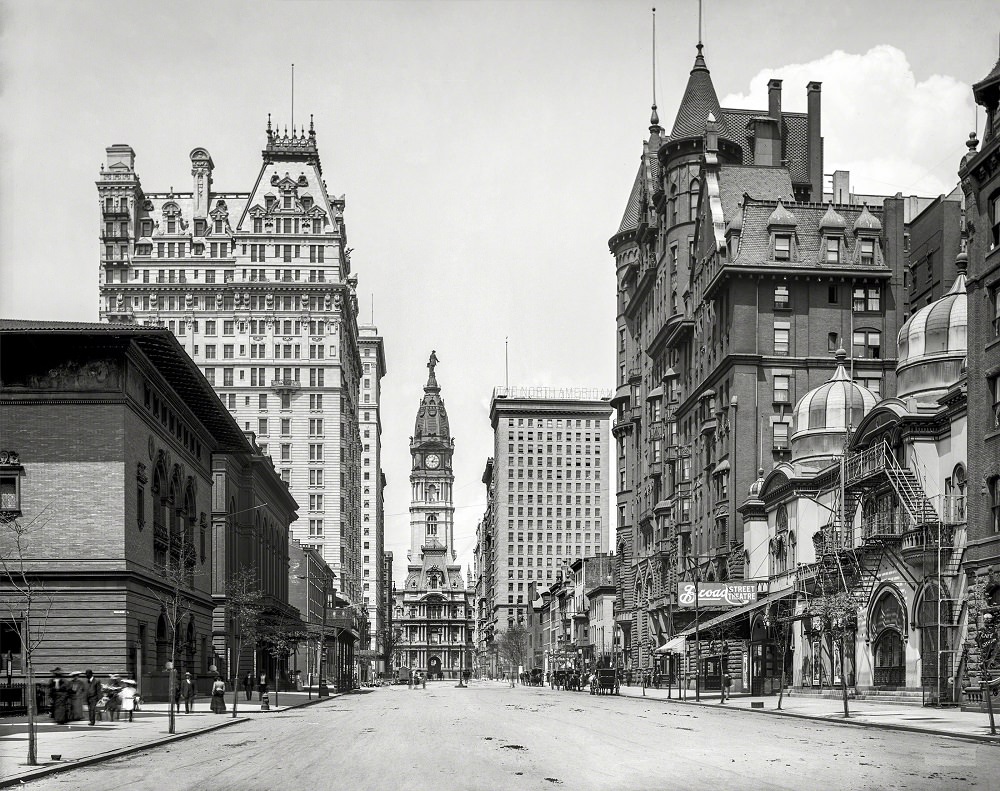
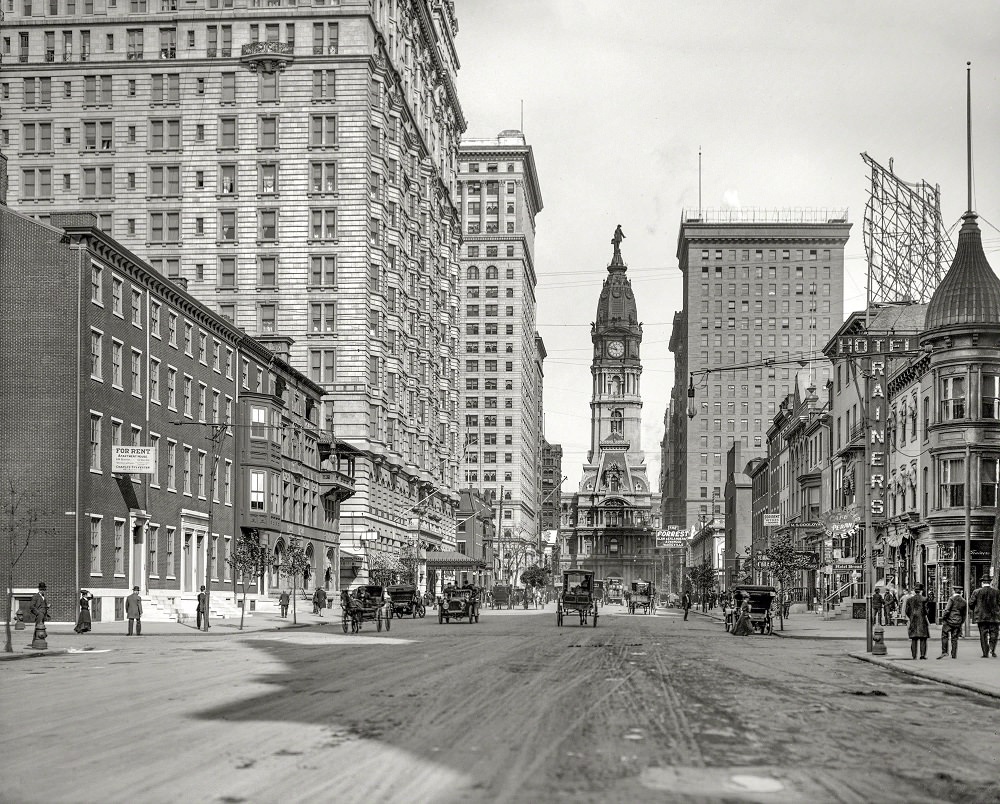
City Hall clock tower from South Broad Street, Philadelphia circa 1904
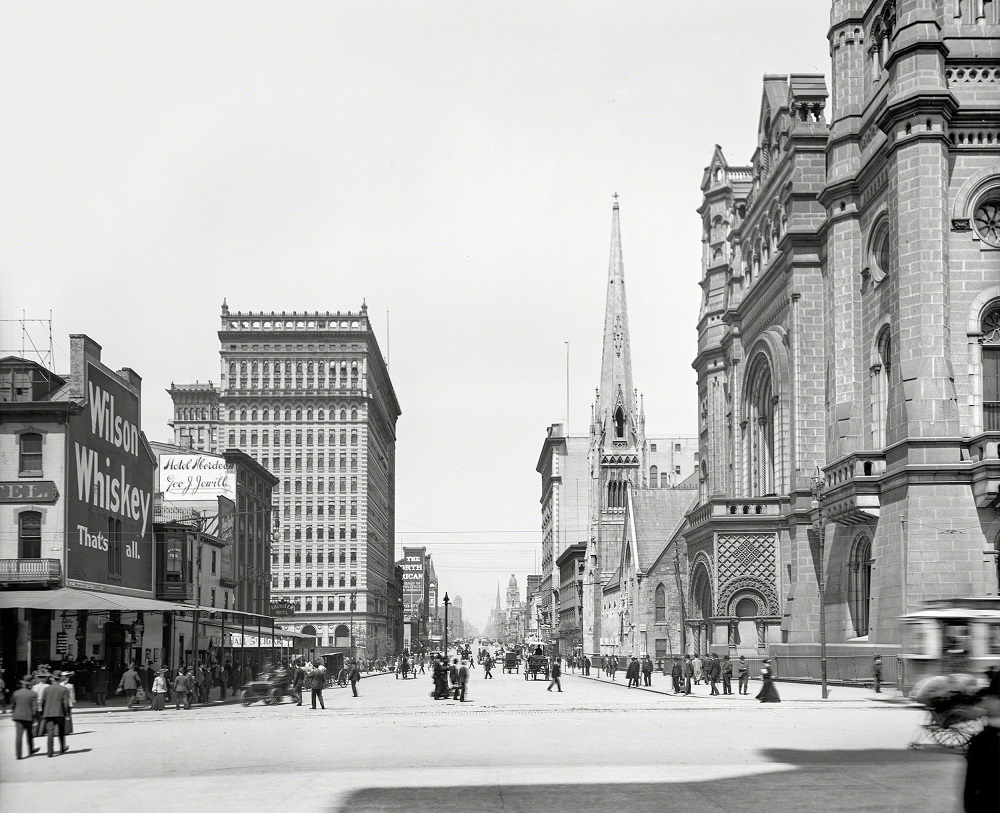
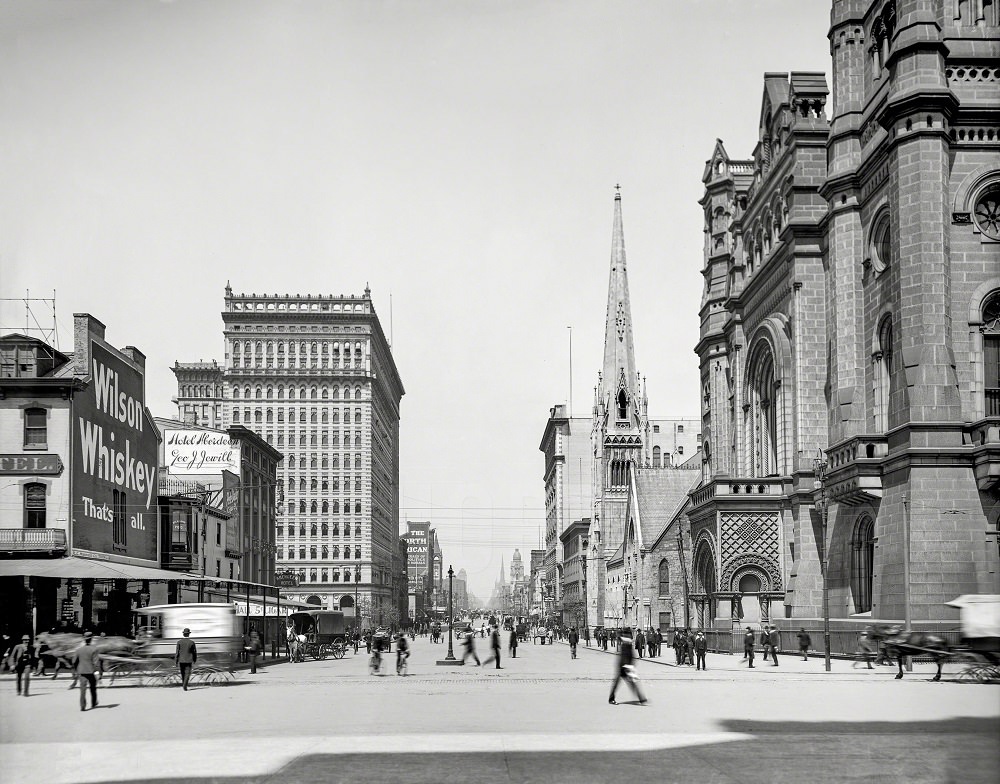
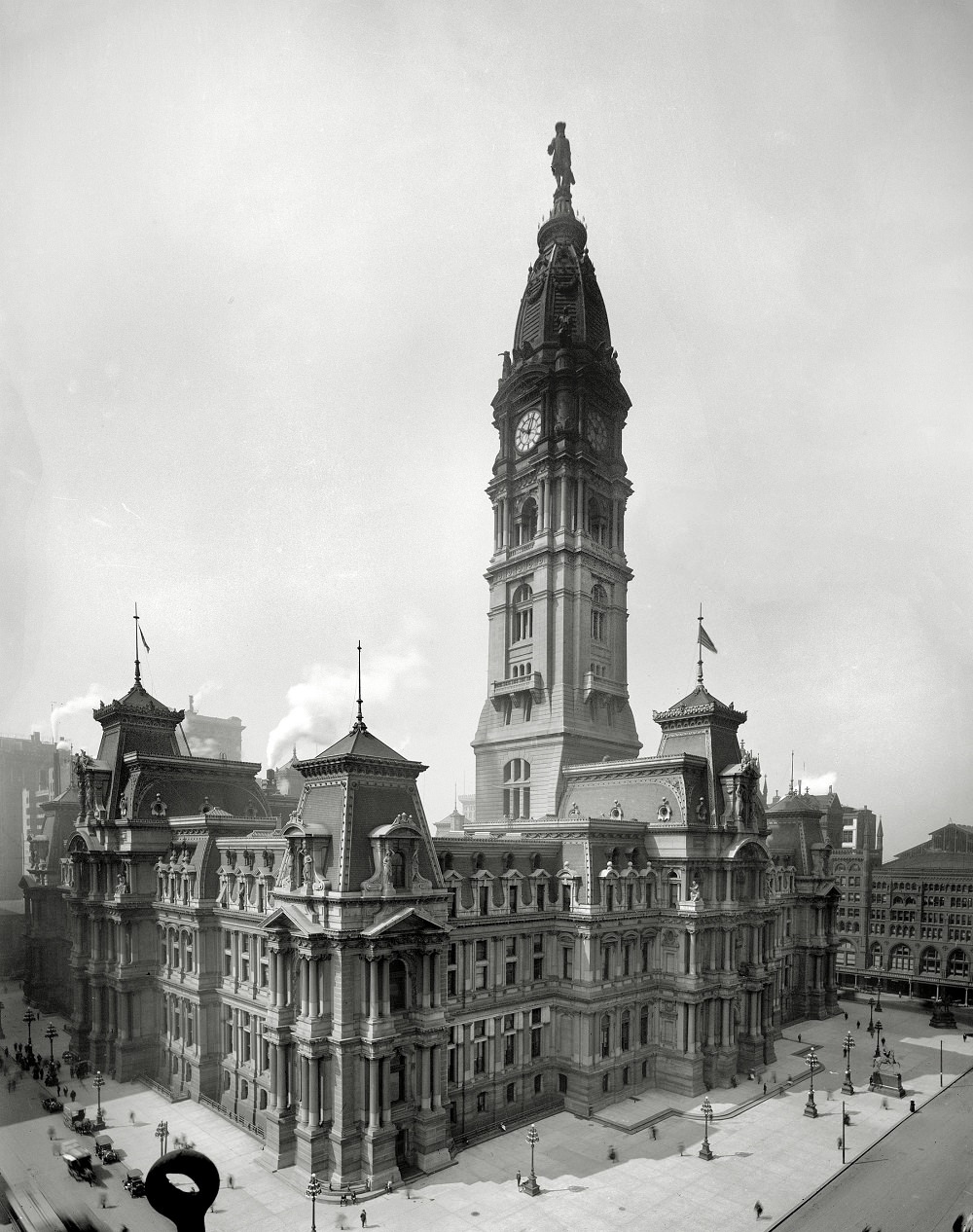
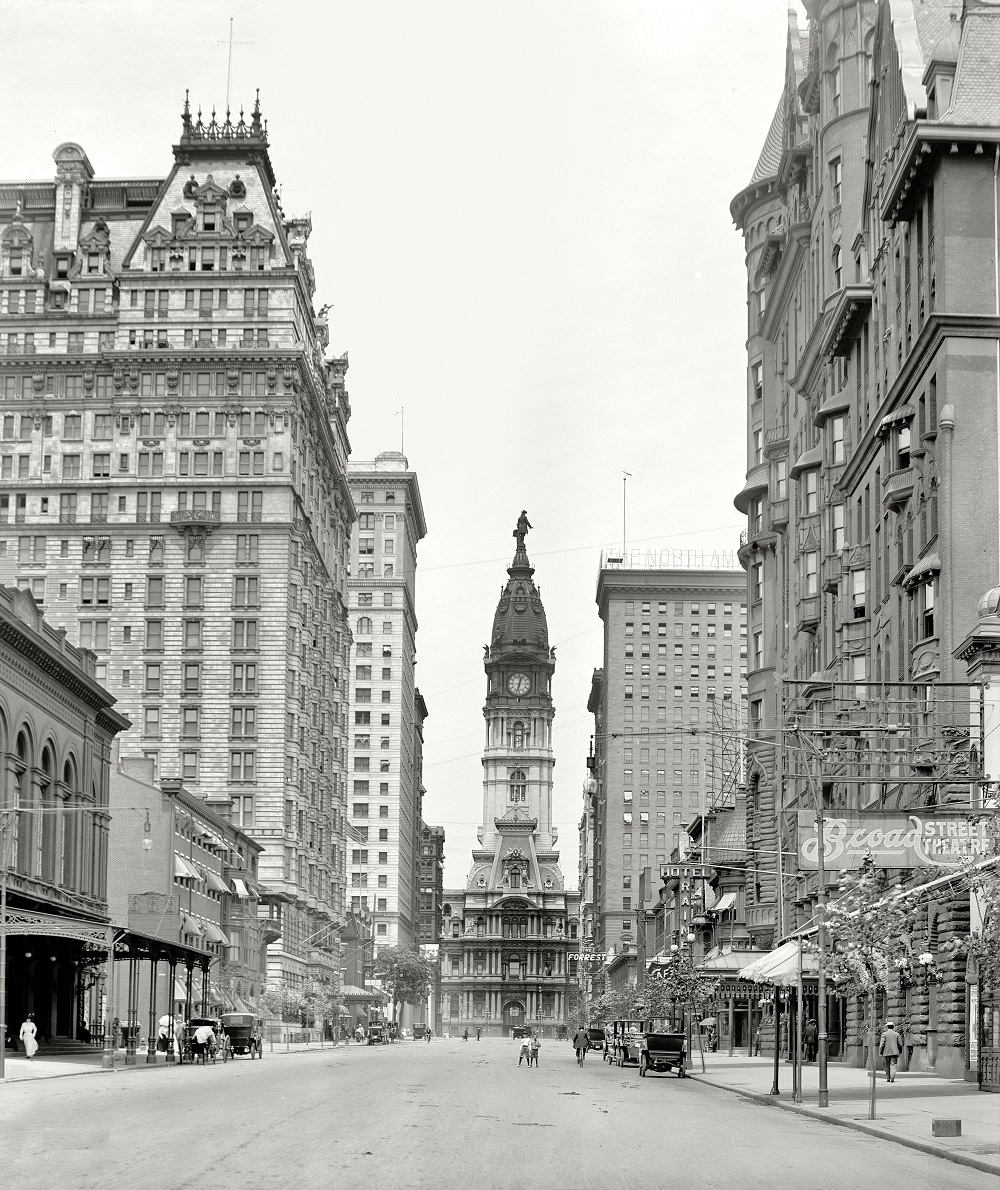
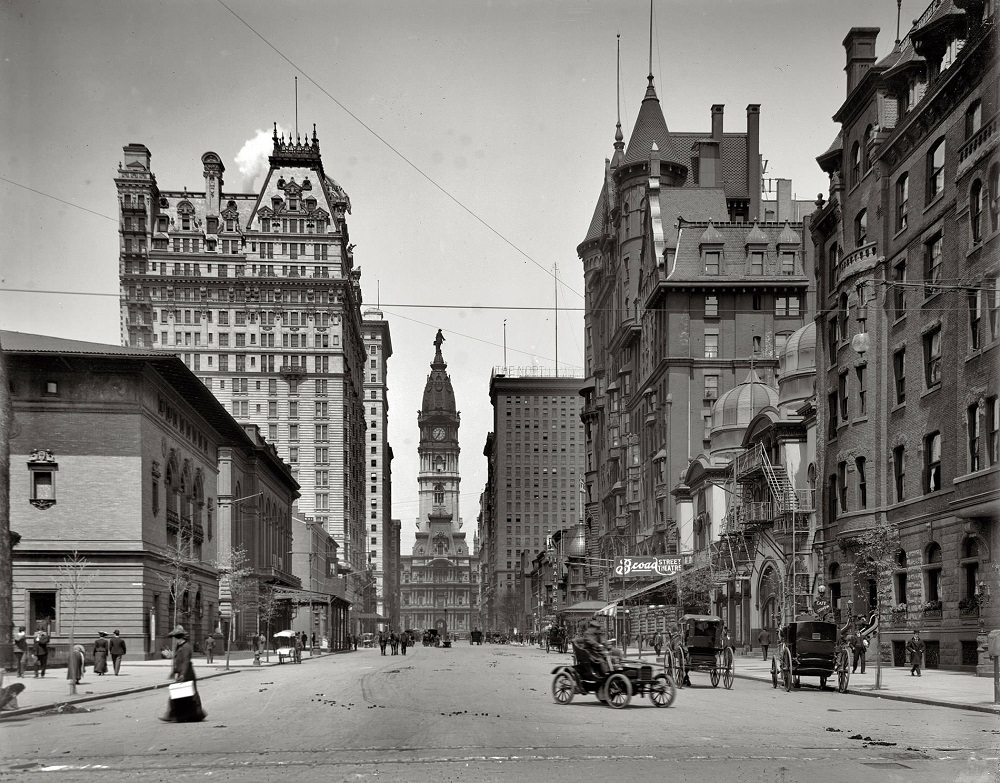
City Hall sat at the center of Philadelphia’s civic life. Its tower, topped with a bronze statue of William Penn, was visible from nearly every major street. Looking north from City Hall along Broad Street, the Masonic Temple and Arch Street Methodist Church framed the view — two landmarks that had anchored the city for decades.
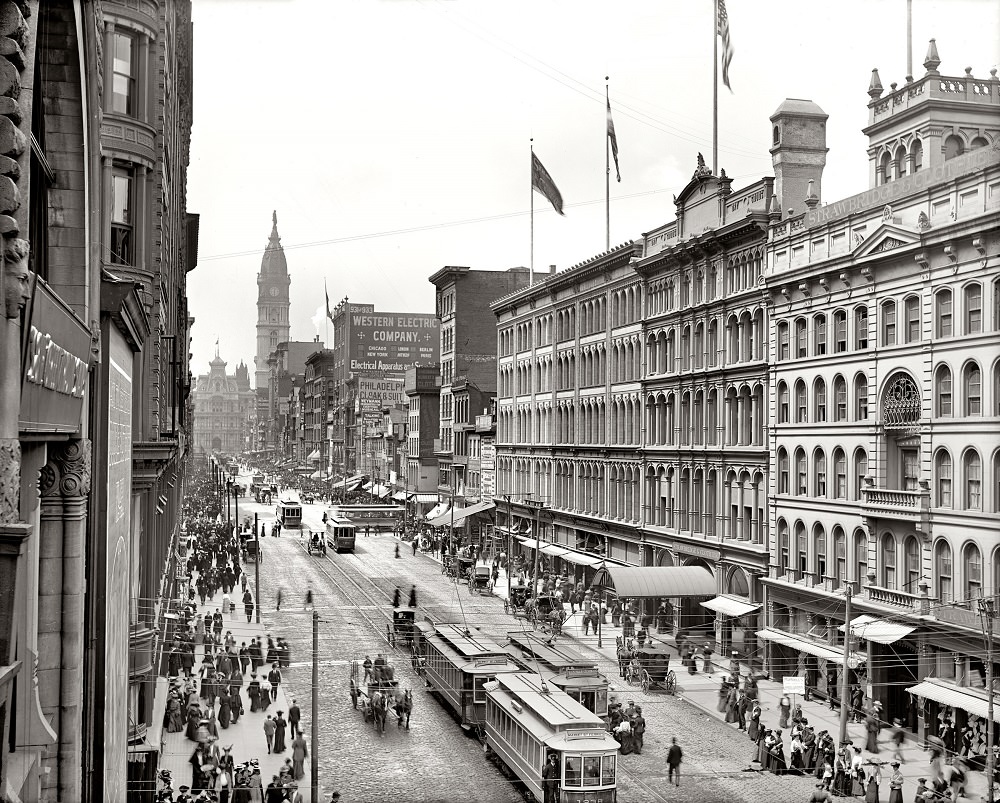
Masonic Temple and Arch Street Methodist Church, north from City Hall, North Broad Street, Philadelphia, 1904Market Street and City Hall from Eighth, Philadelphia circa 1904
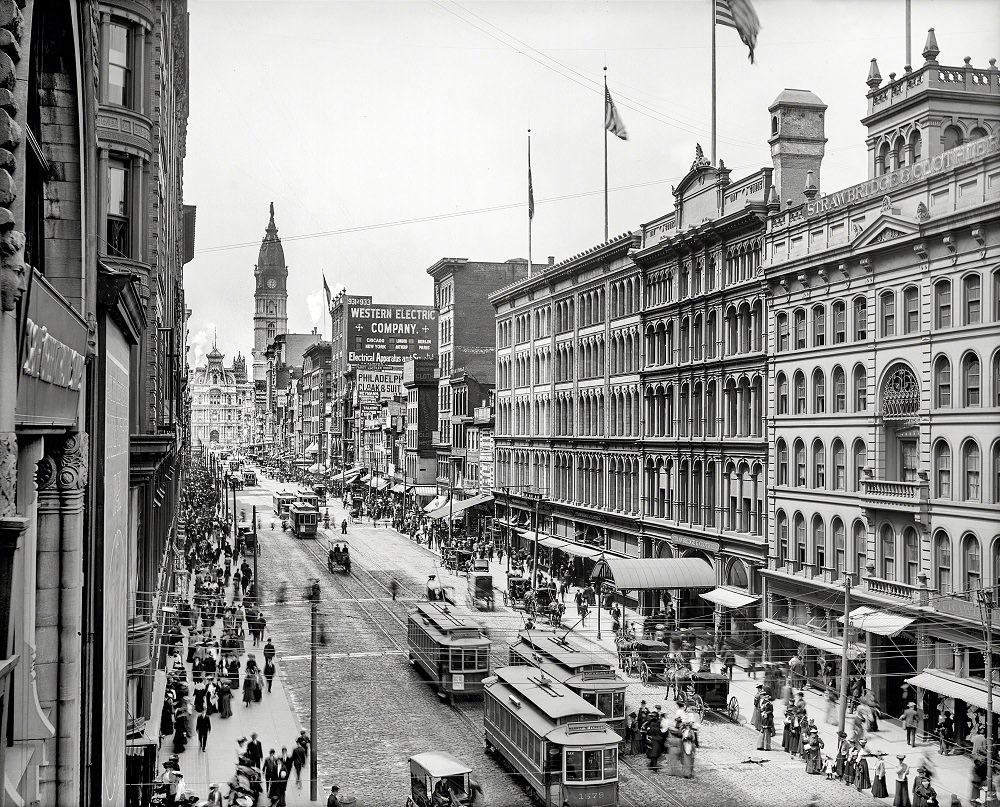
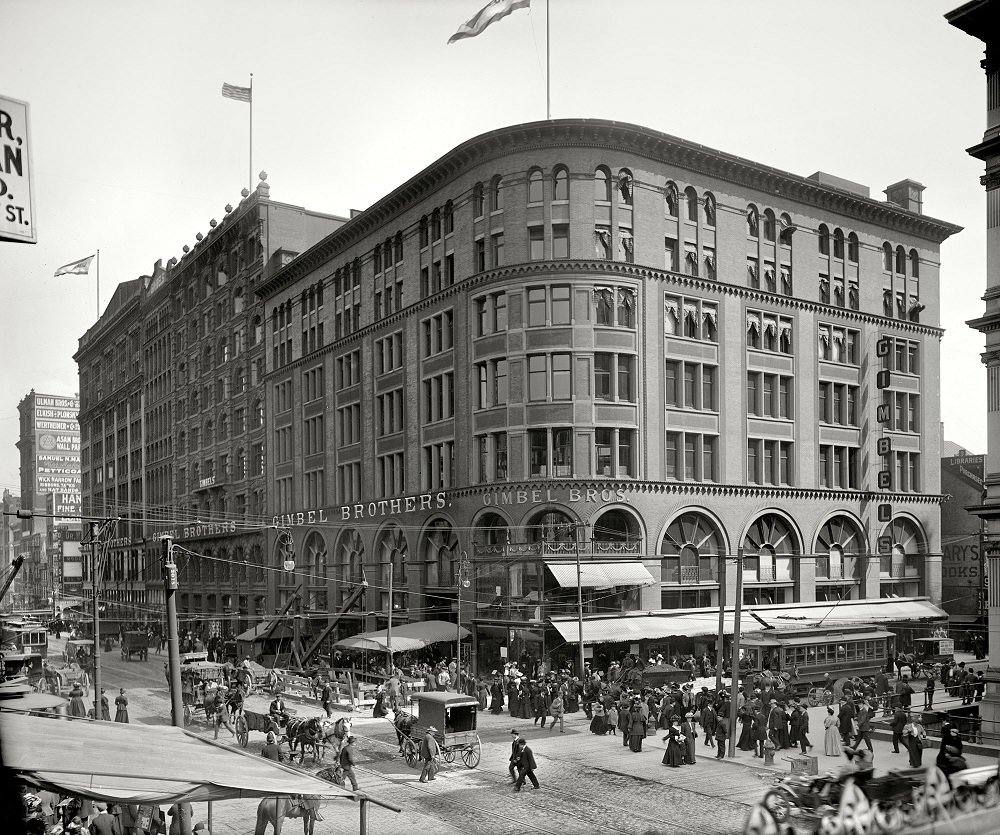
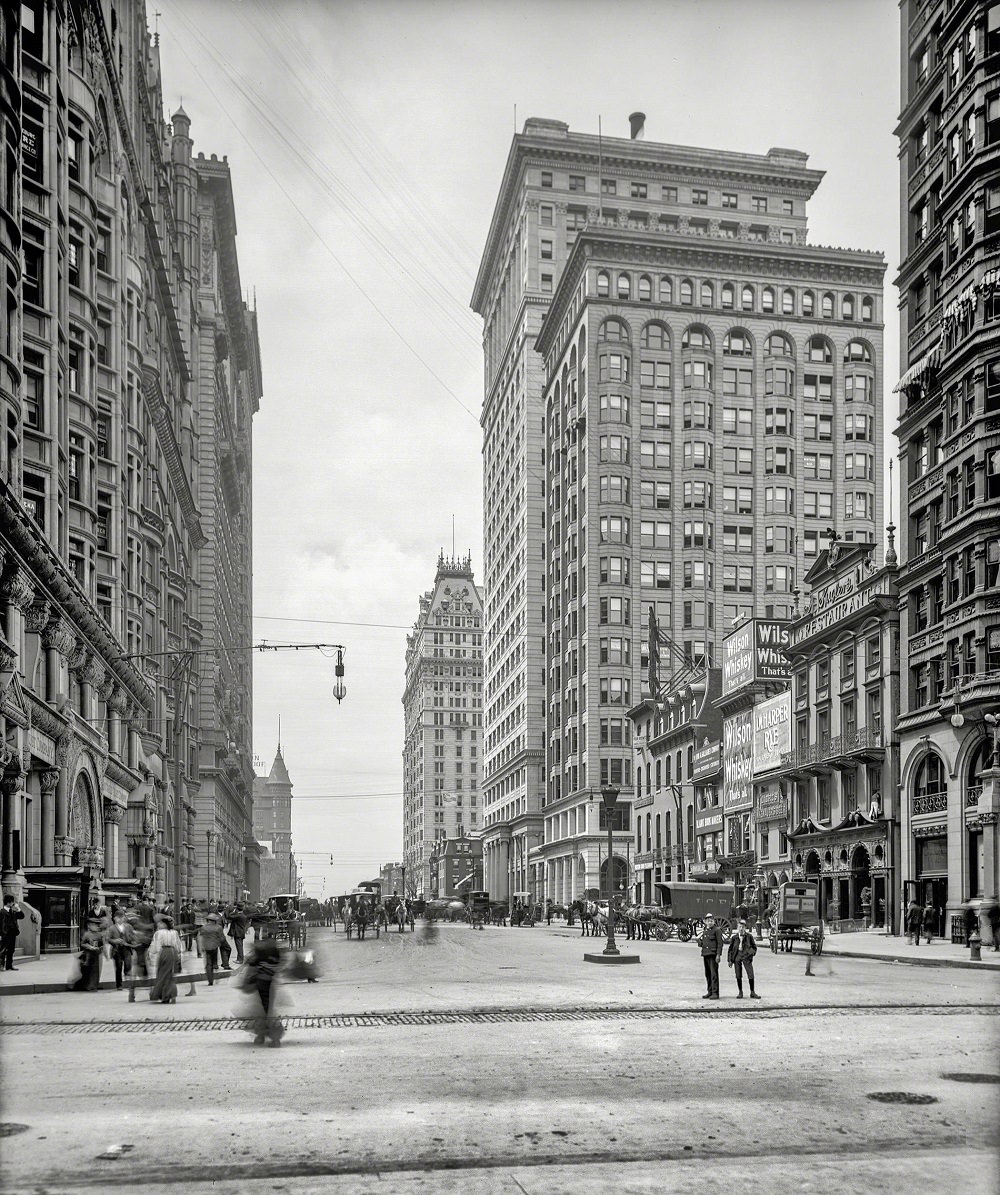
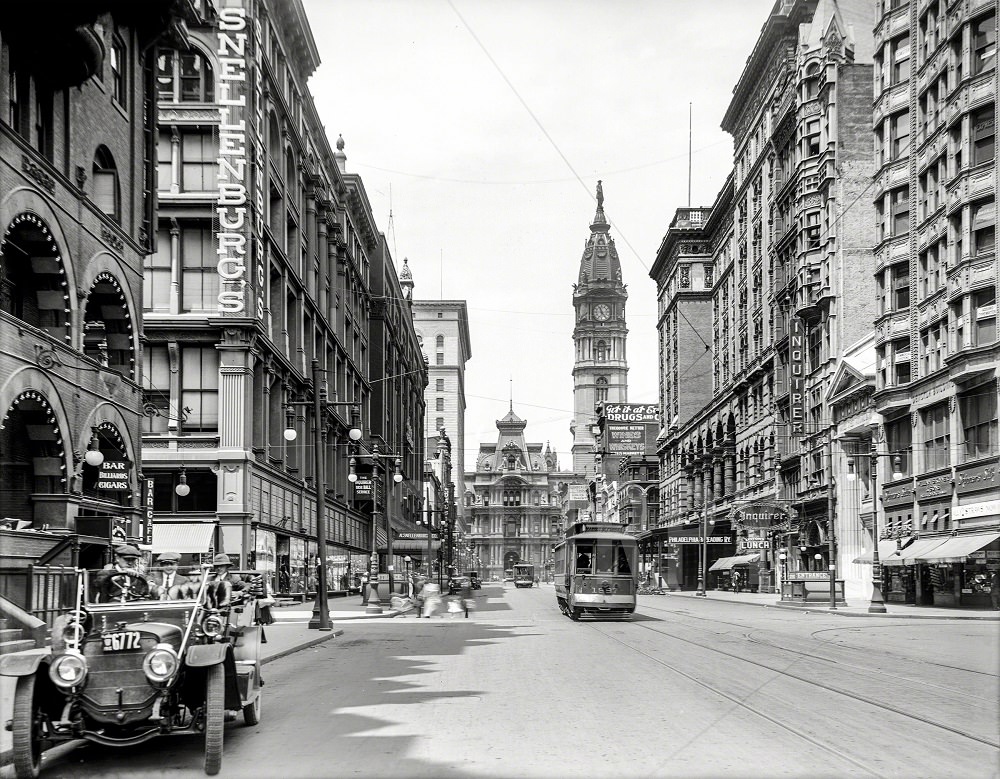
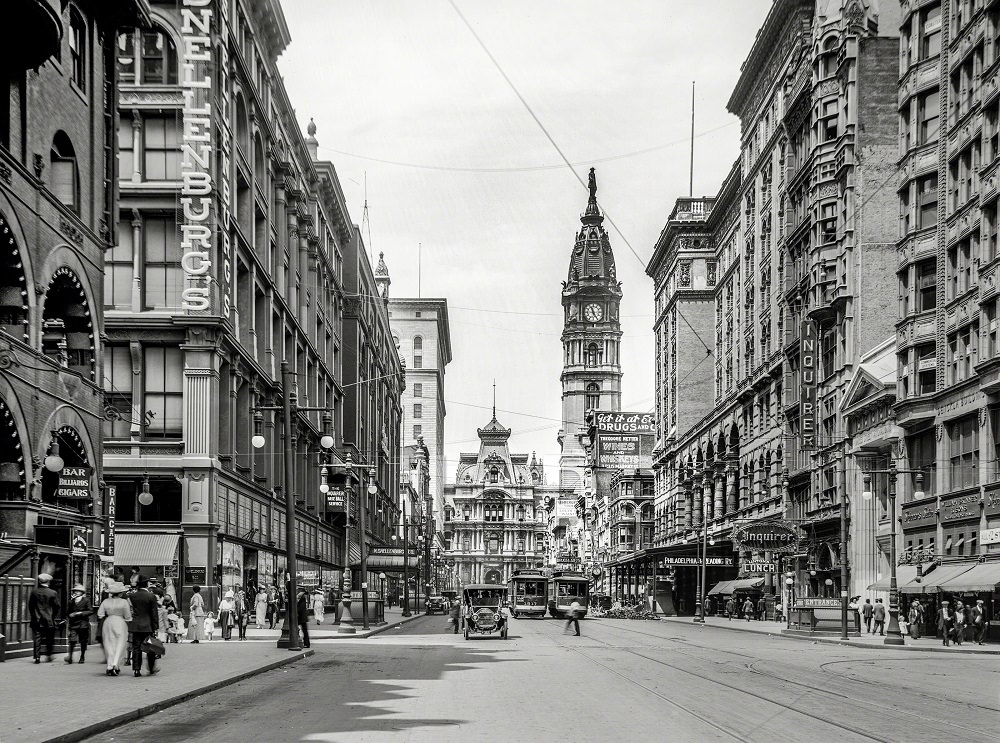
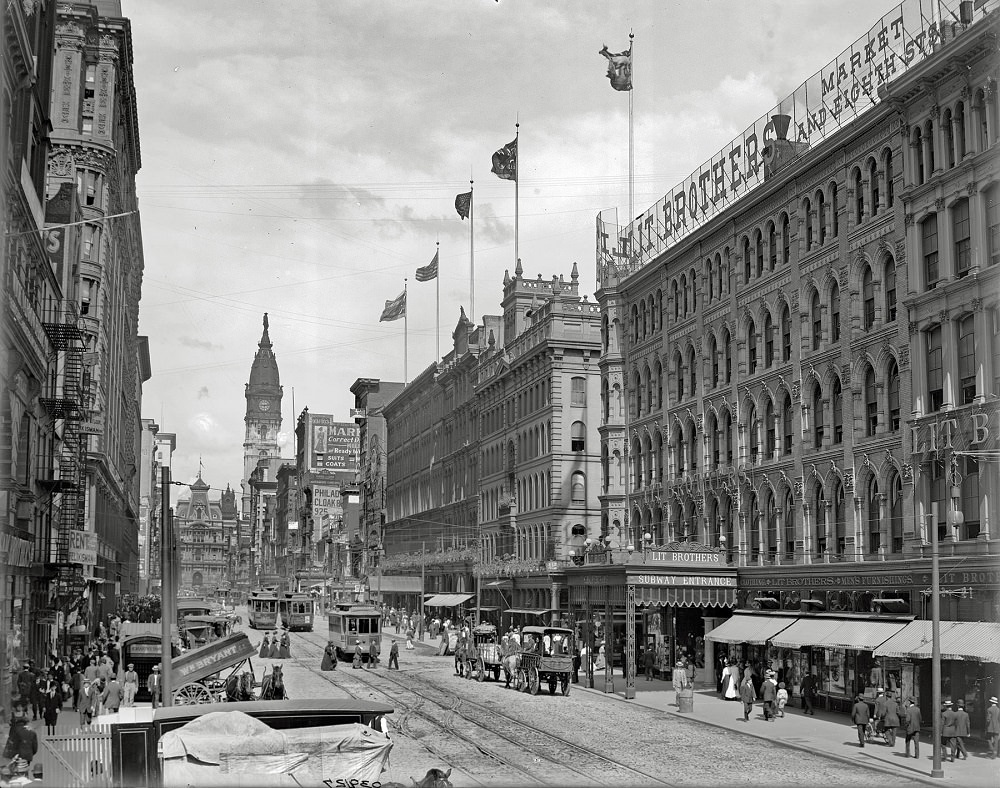
Market Street was the city’s main commercial artery. Streetcars ran along its tracks while shoppers, workers, and delivery wagons crowded the sidewalks. Department stores like Gimbel Brothers drew crowds to the blocks around 9th and Market. The street hummed with commercial energy that matched the pace of a rapidly growing city.
Gimbel Brothers store, Market and 9th, Philadelphia circa 1905Chestnut Street west from 12th, Philadelphia circa 1910
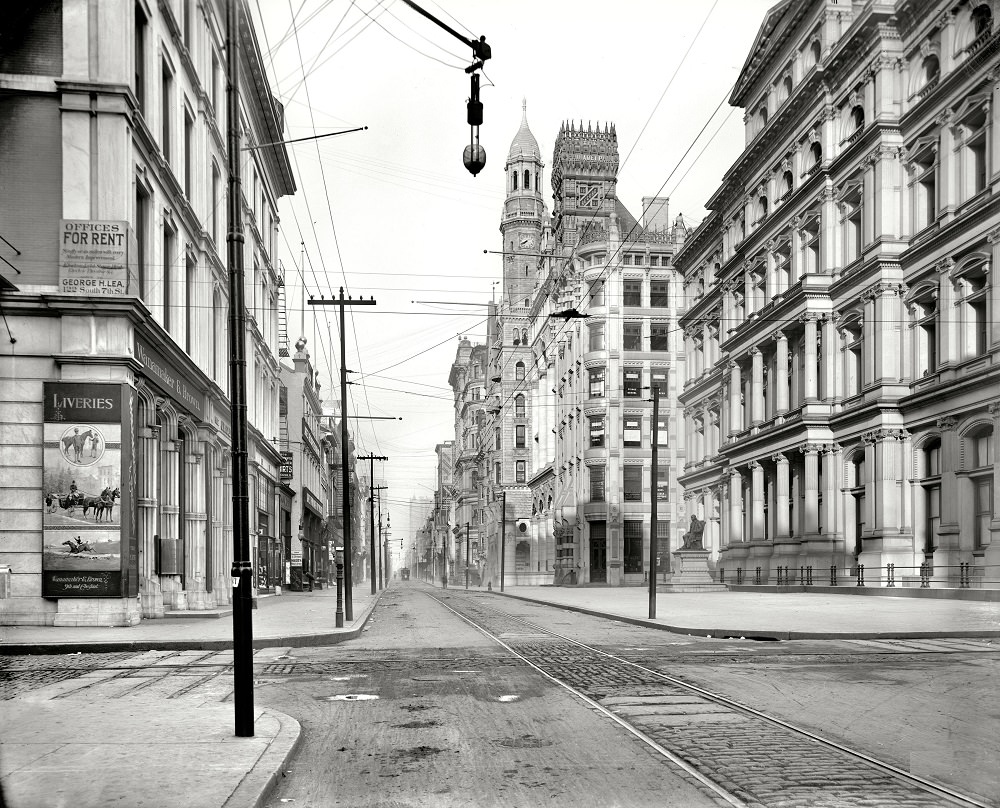
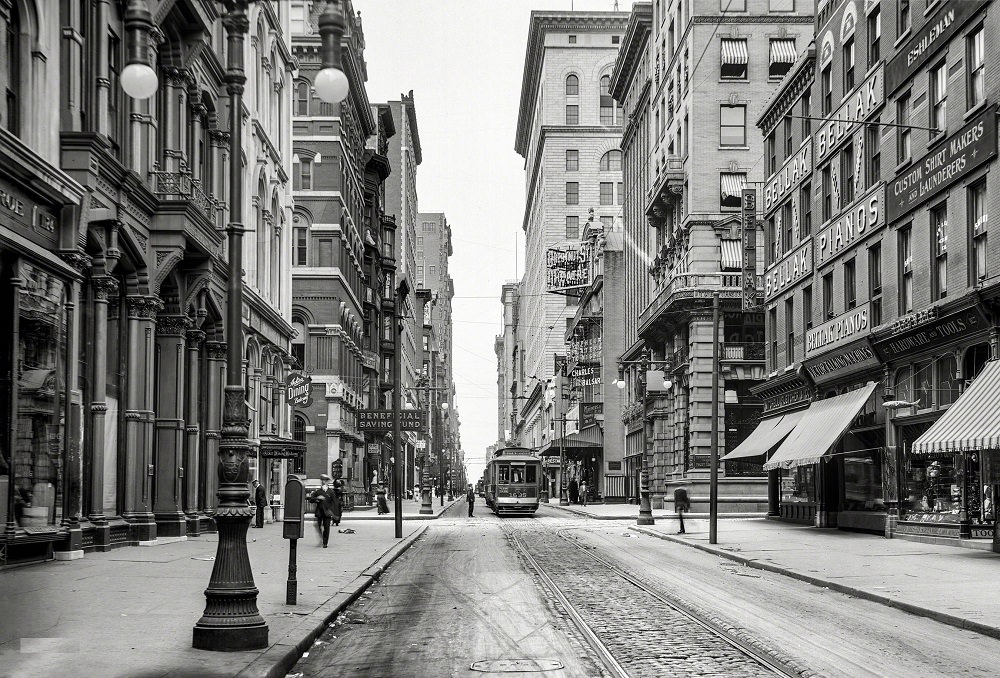
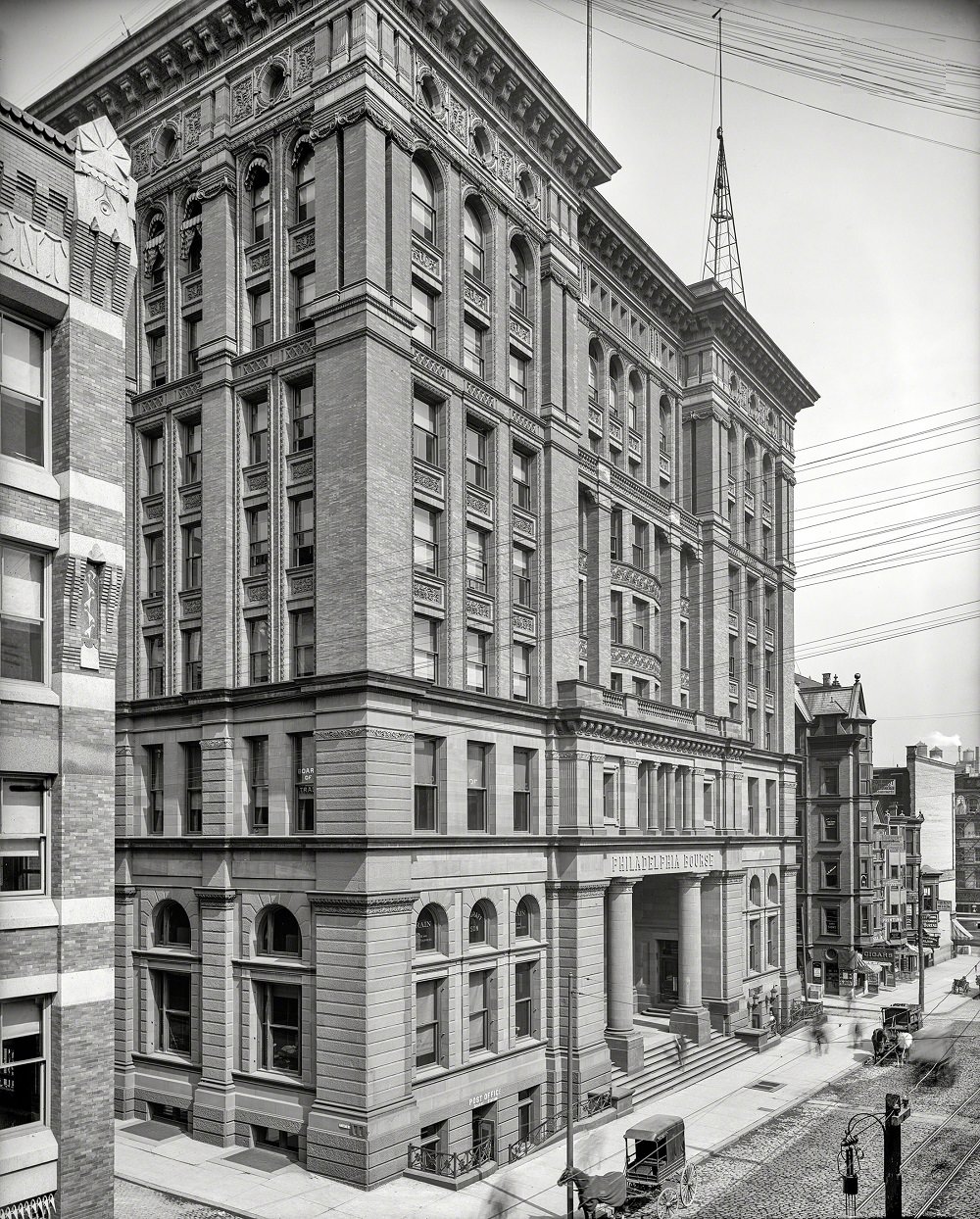
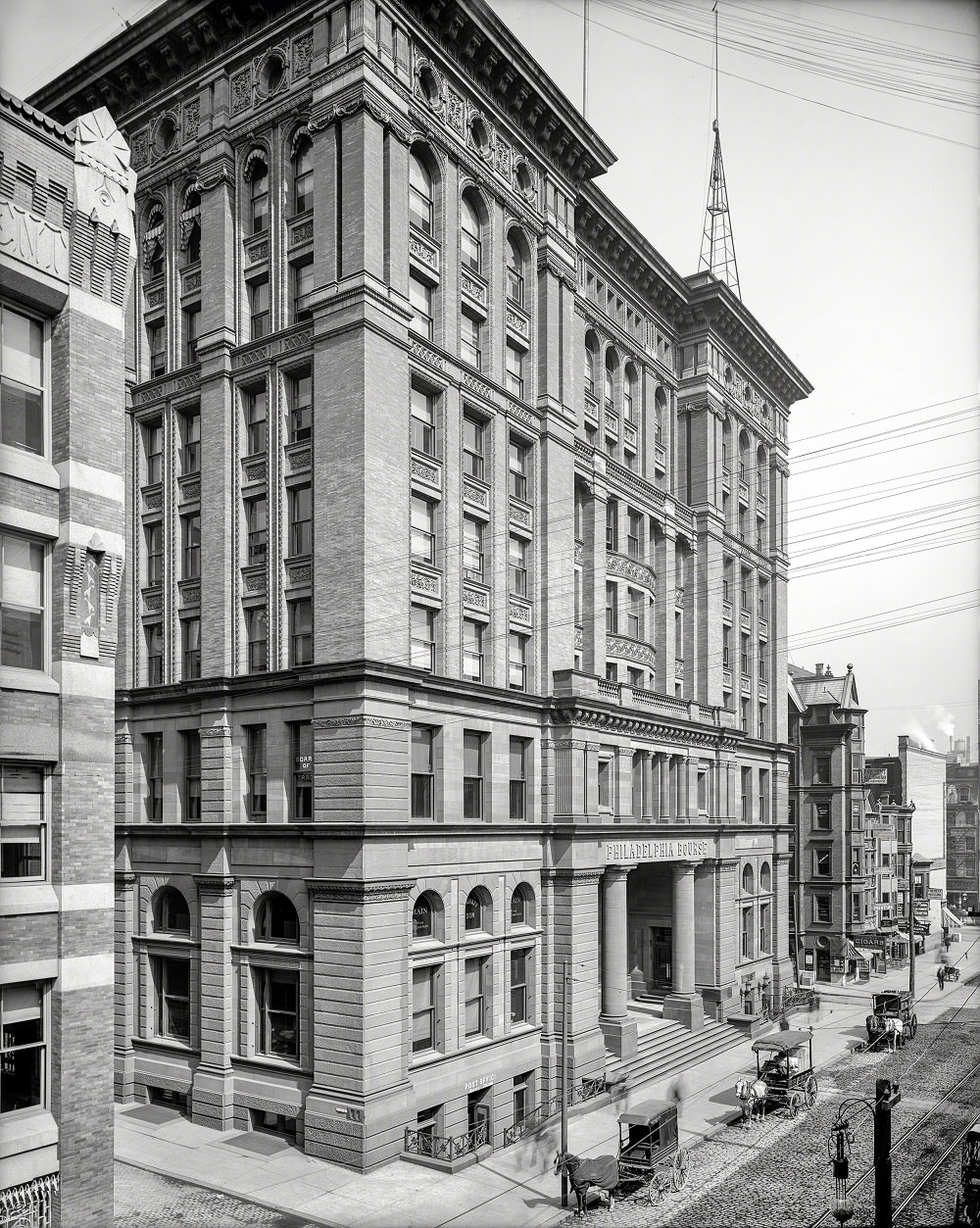
Chestnut Street offered a different character — lined with banks, legal offices, and fine retail shops. The Philadelphia Bourse, located at Fourth and Ranstead, served as the city’s commodities and stock exchange. Built in 1895, its grand interior made it one of the most impressive commercial buildings in the country.
The Philadelphia Bourse, Fourth and Ranstead streets, 1904
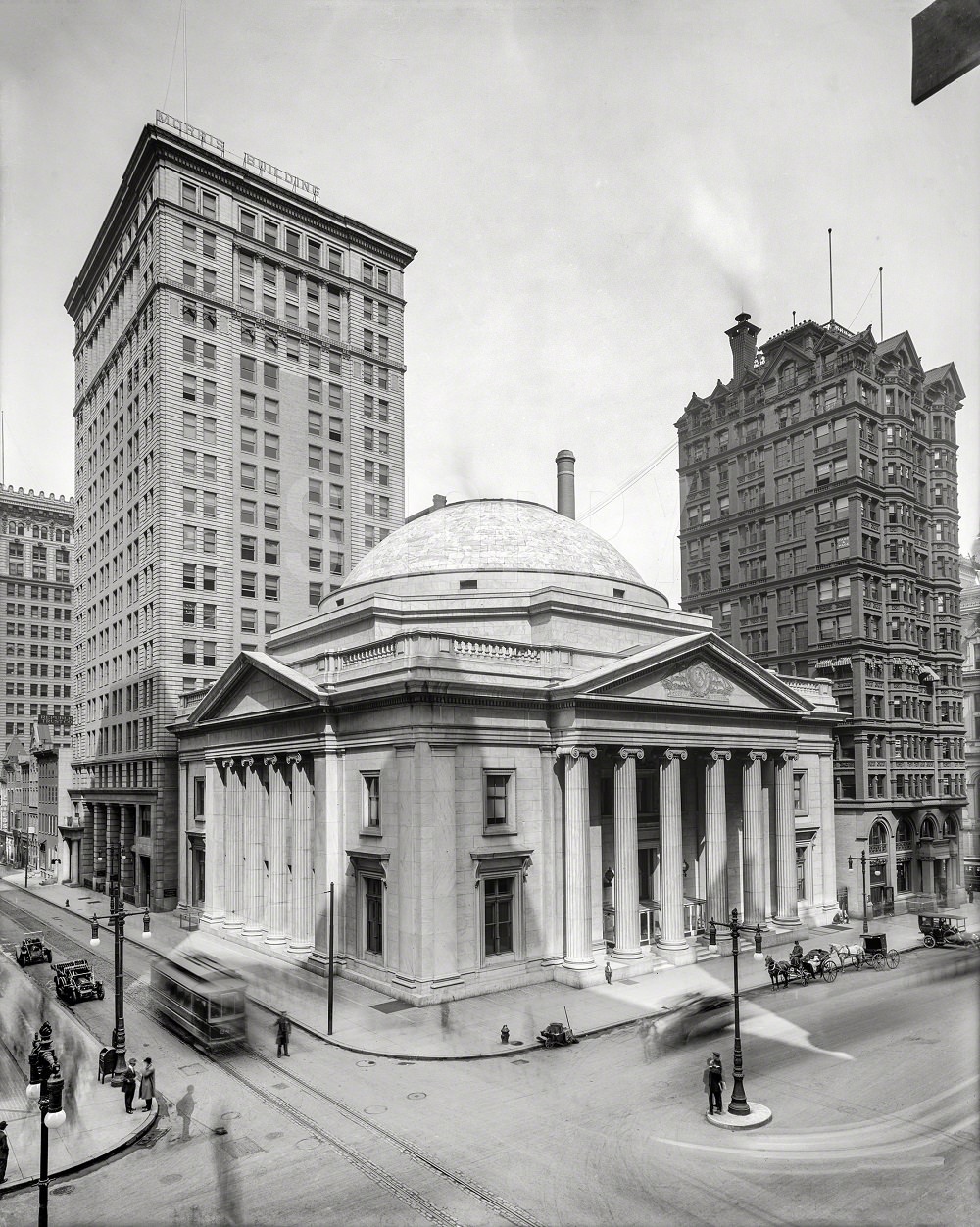
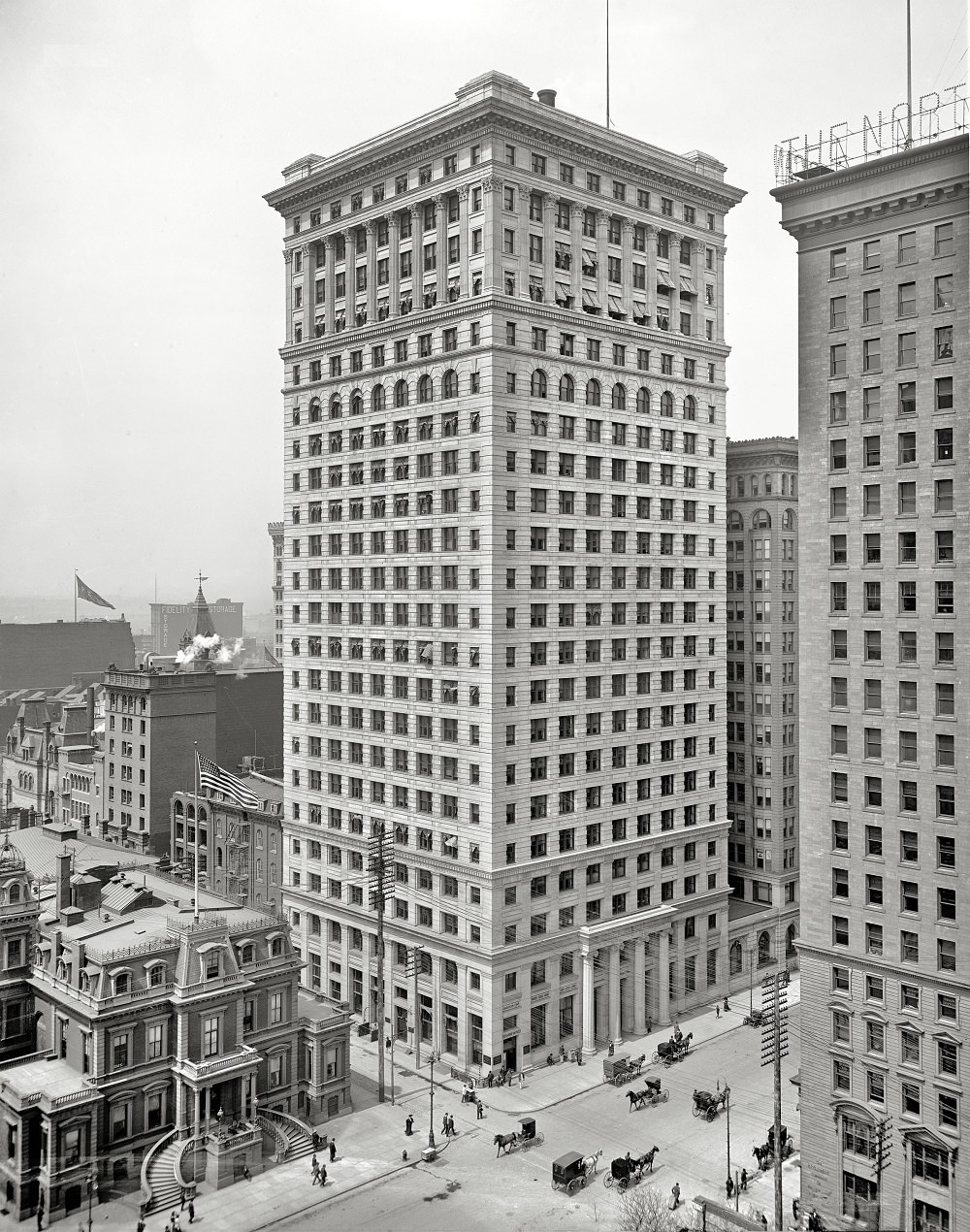
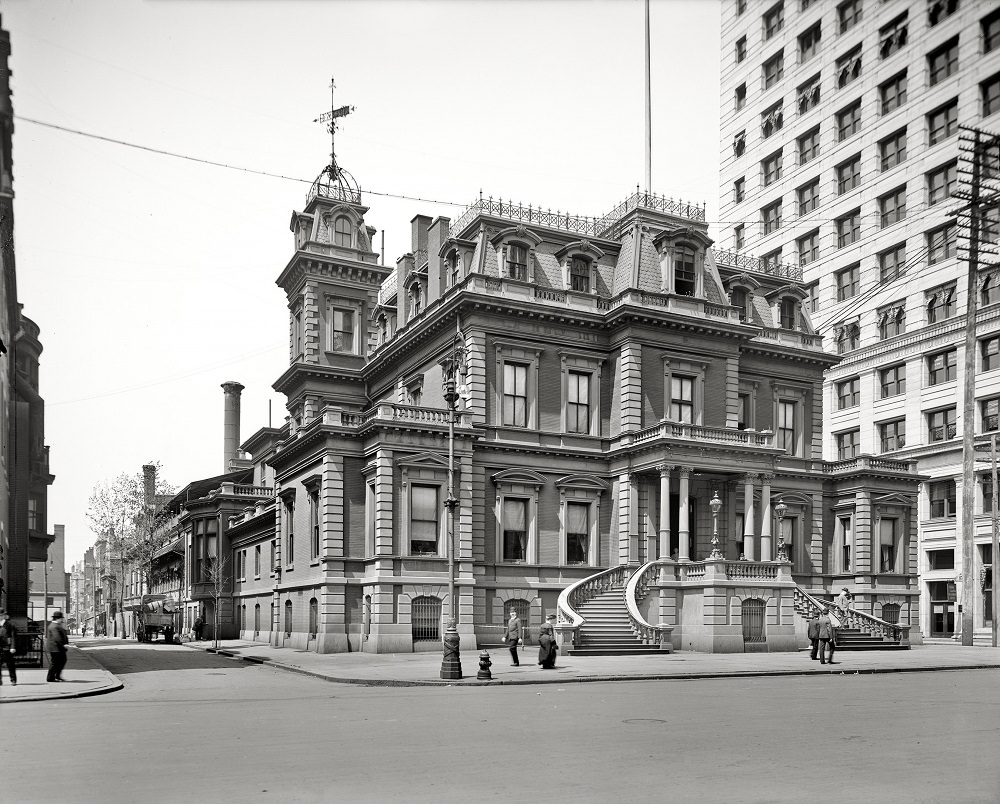
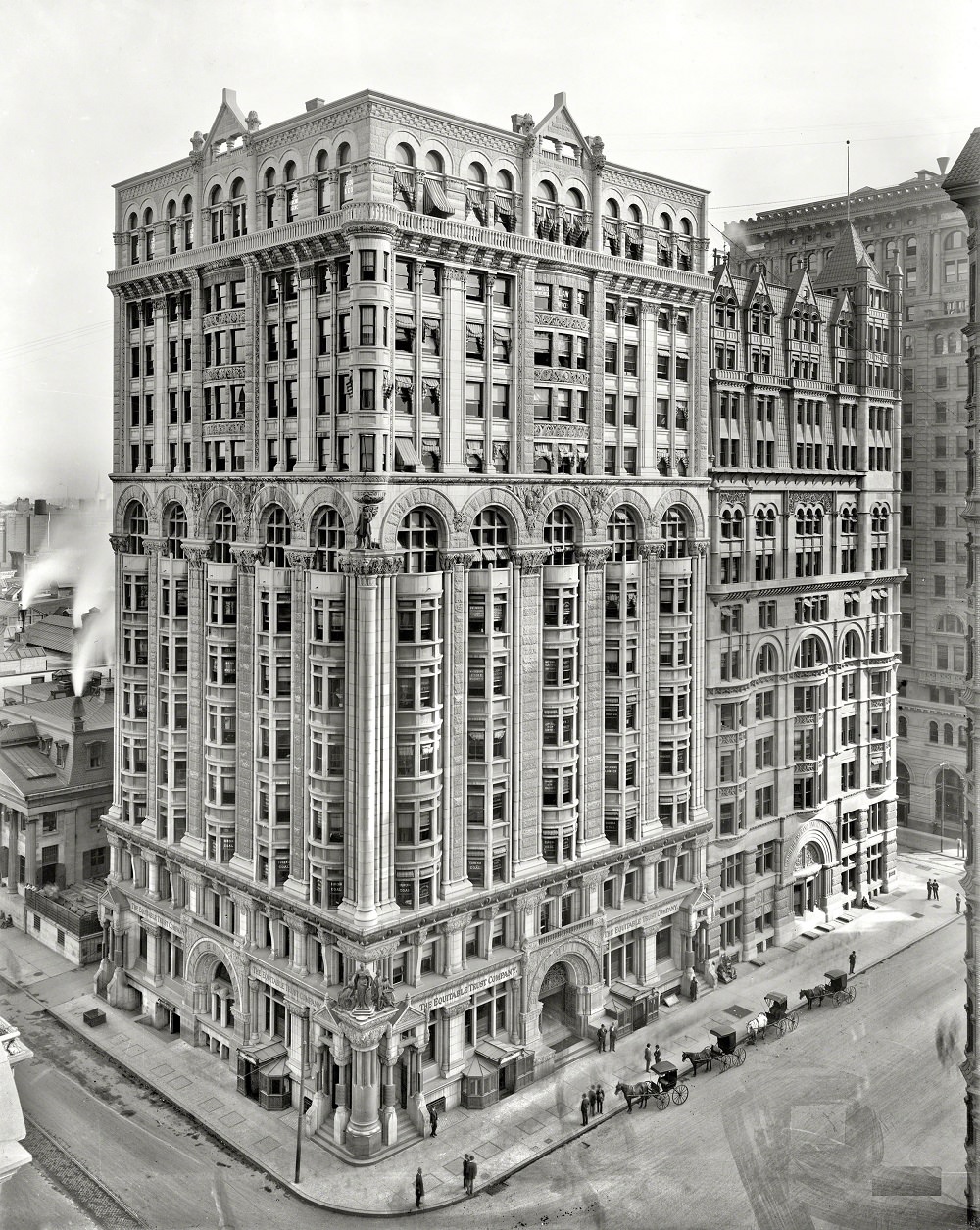
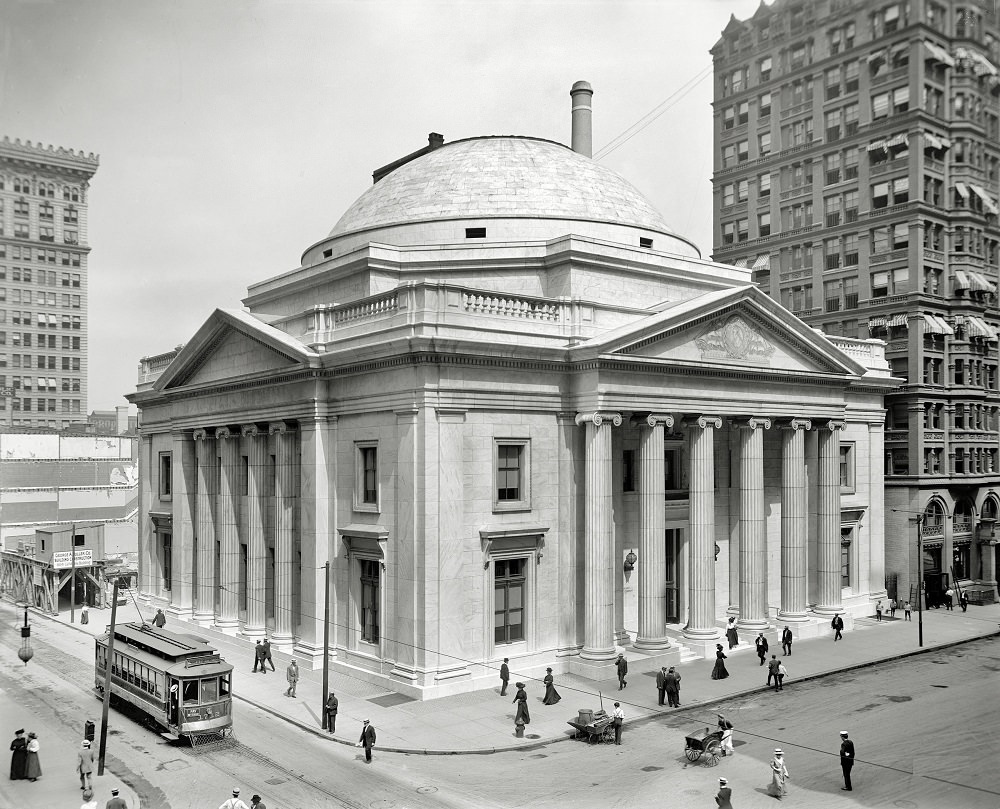
Philadelphia’s financial district grew steadily in the early 1900s. The Girard Trust Building at Broad and Chestnut, modeled after the Pantheon in Rome, was completed in 1908. The Land Title Trust Building and the Betz Building added to a skyline that was beginning to look unmistakably modern. These structures stood alongside older institutions like the Union League Club, which had served Philadelphia’s elite since the Civil War.
Girard Trust Bldg., Broad and Chestnut streets, Philadelphia circa 1910
Land Title Trust Building, Philadelphia, 1905
Union League Club, Philadelphia, 1905
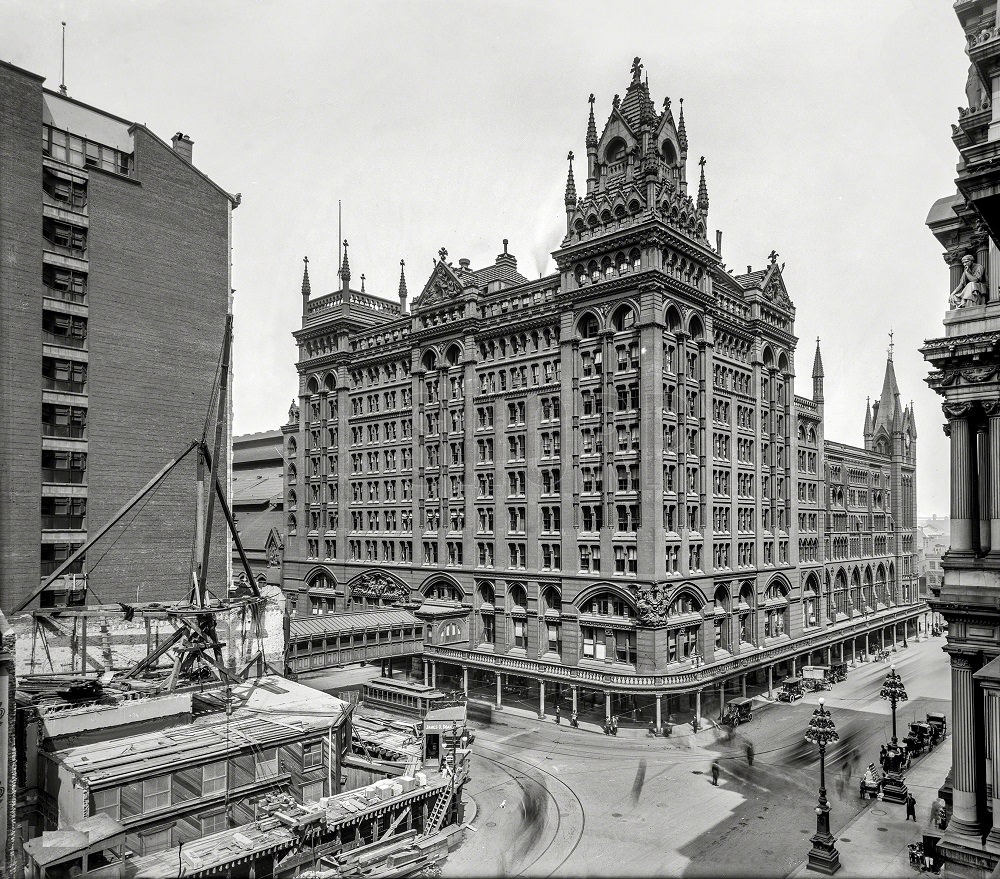
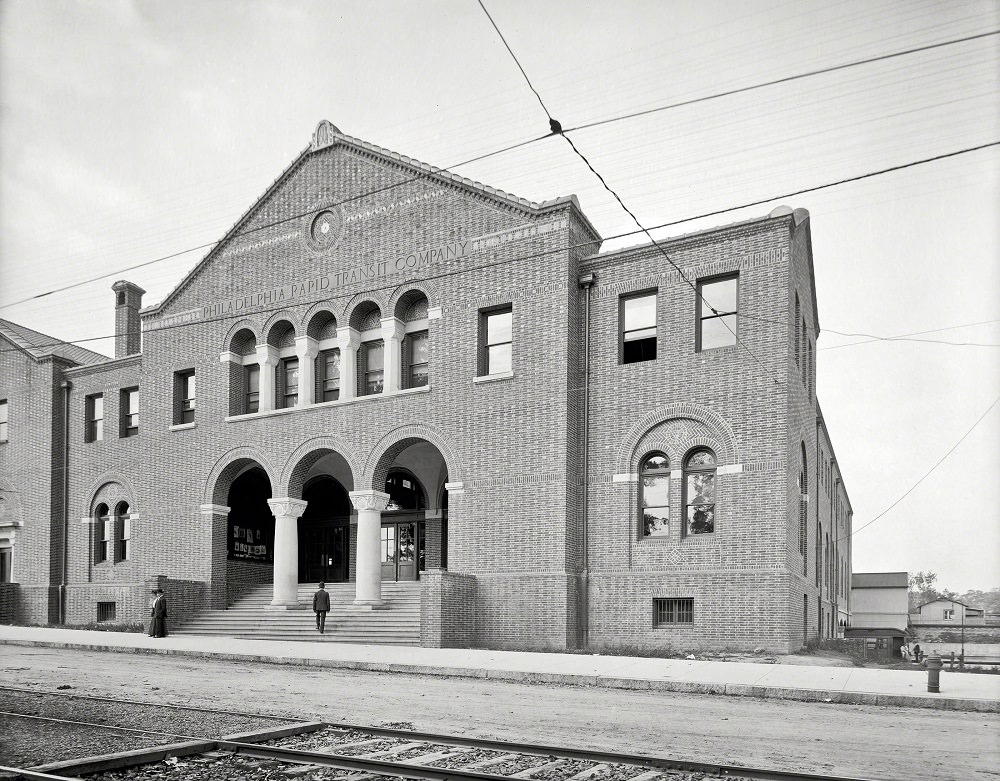
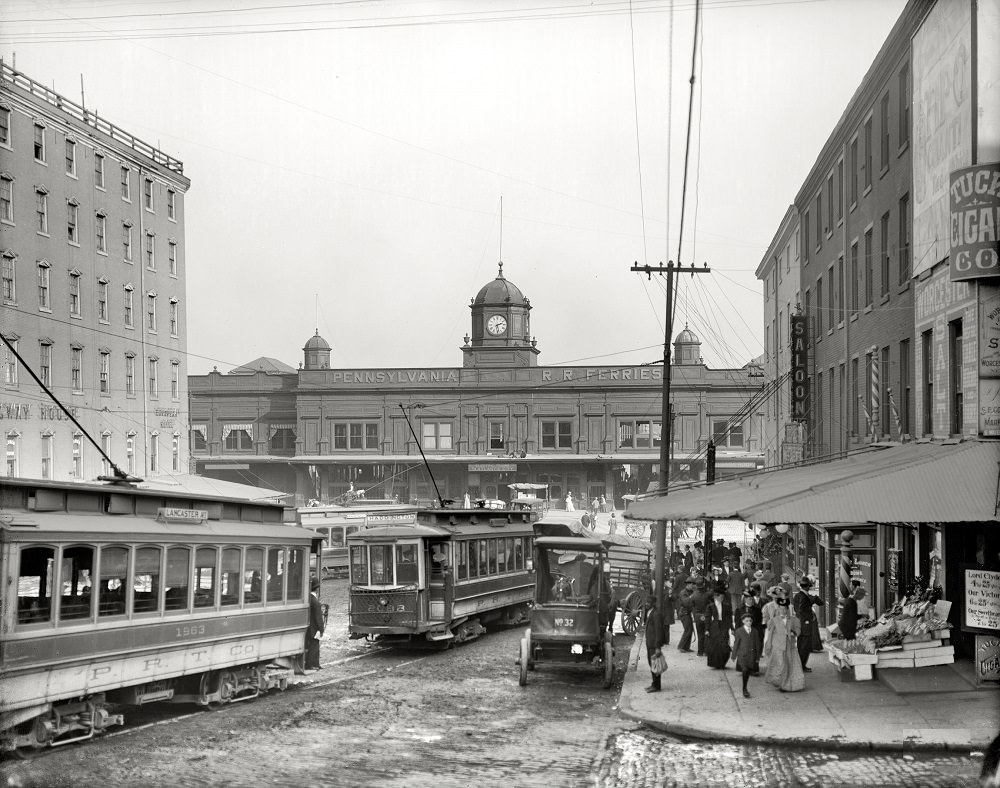
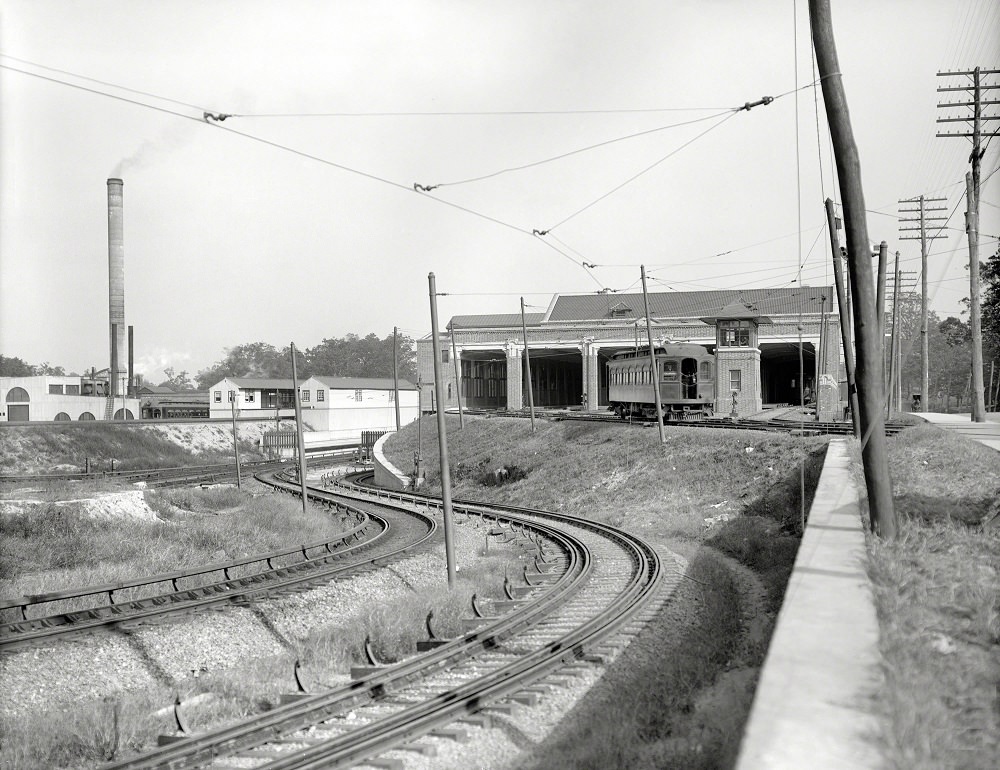
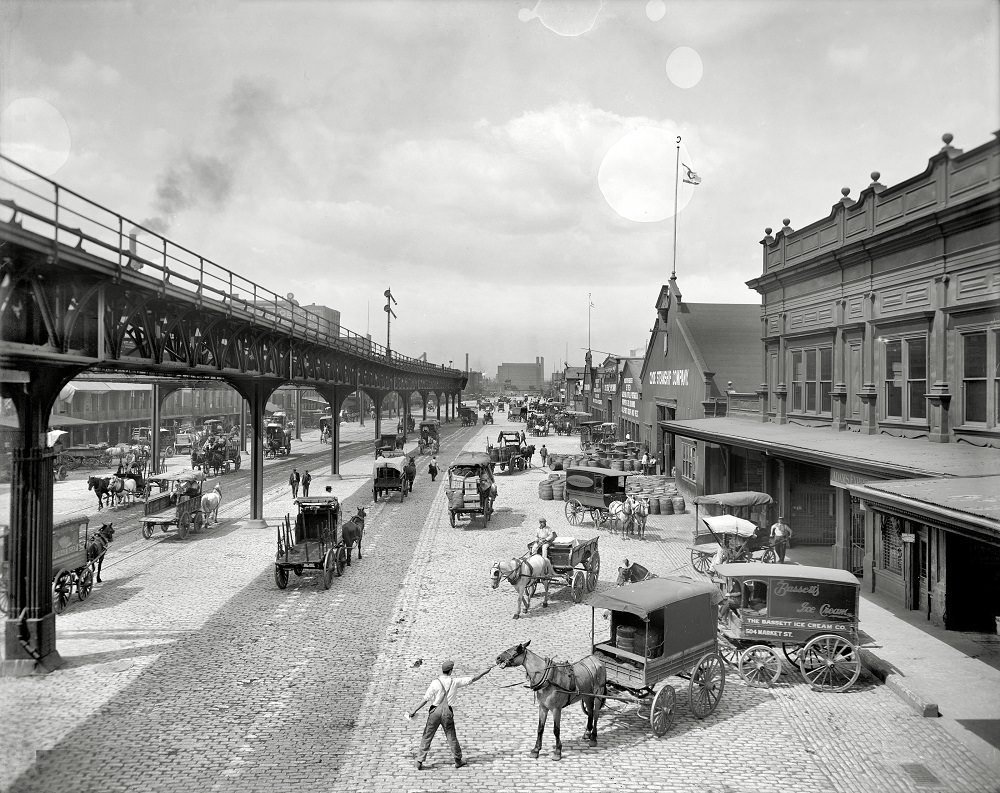
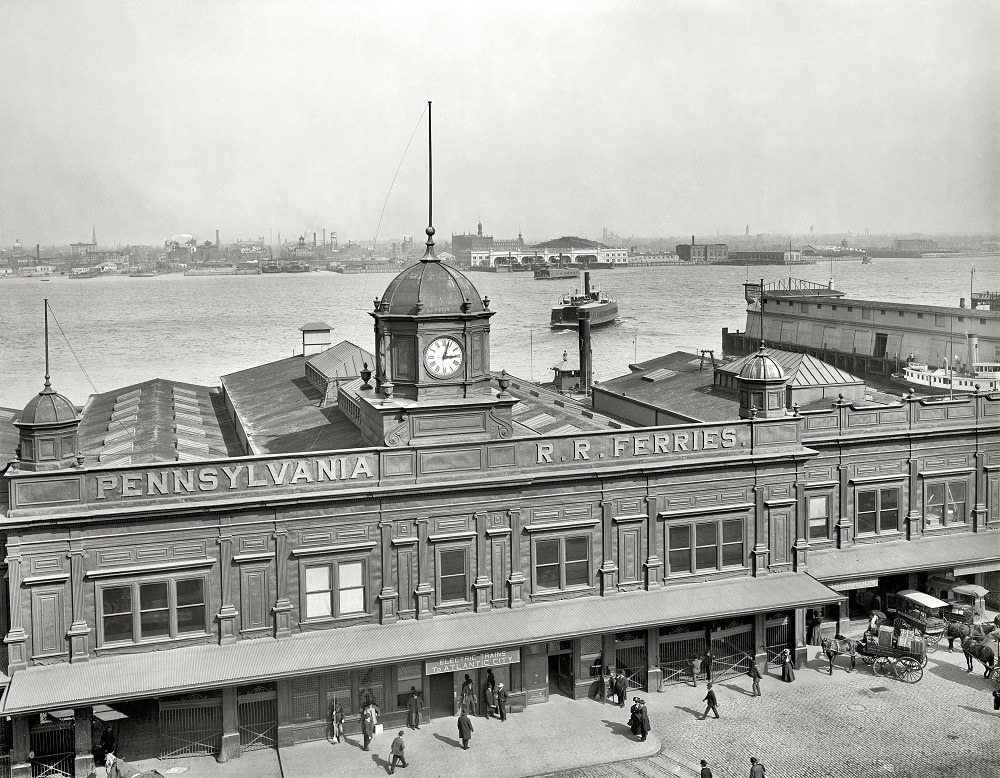
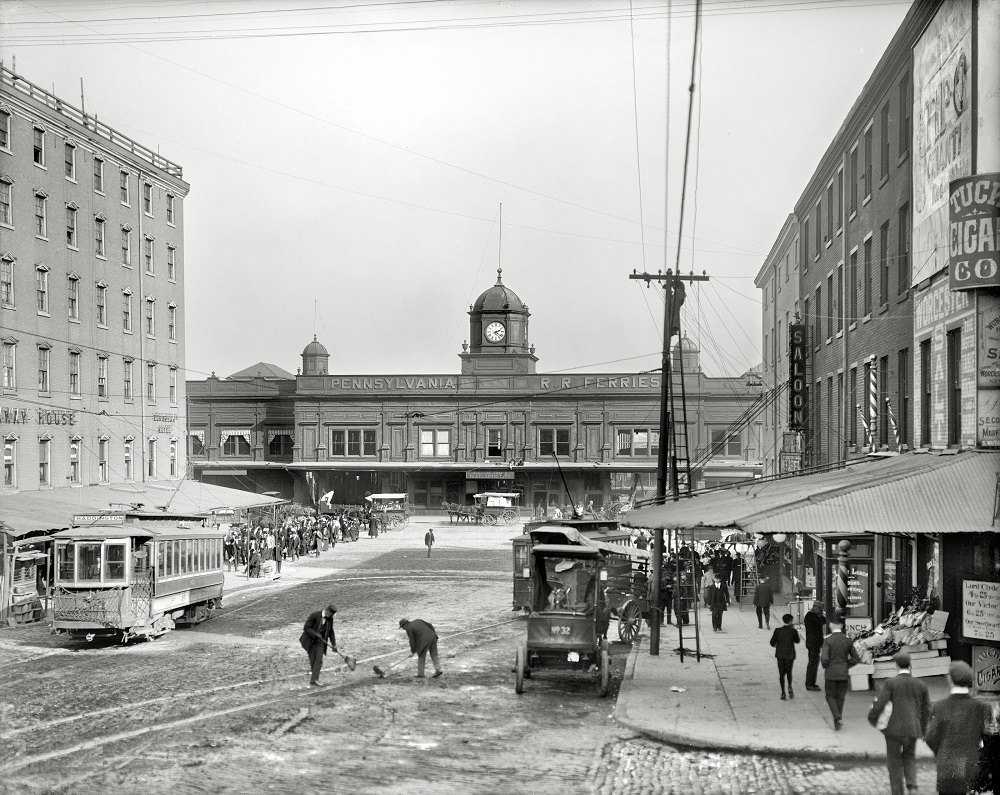
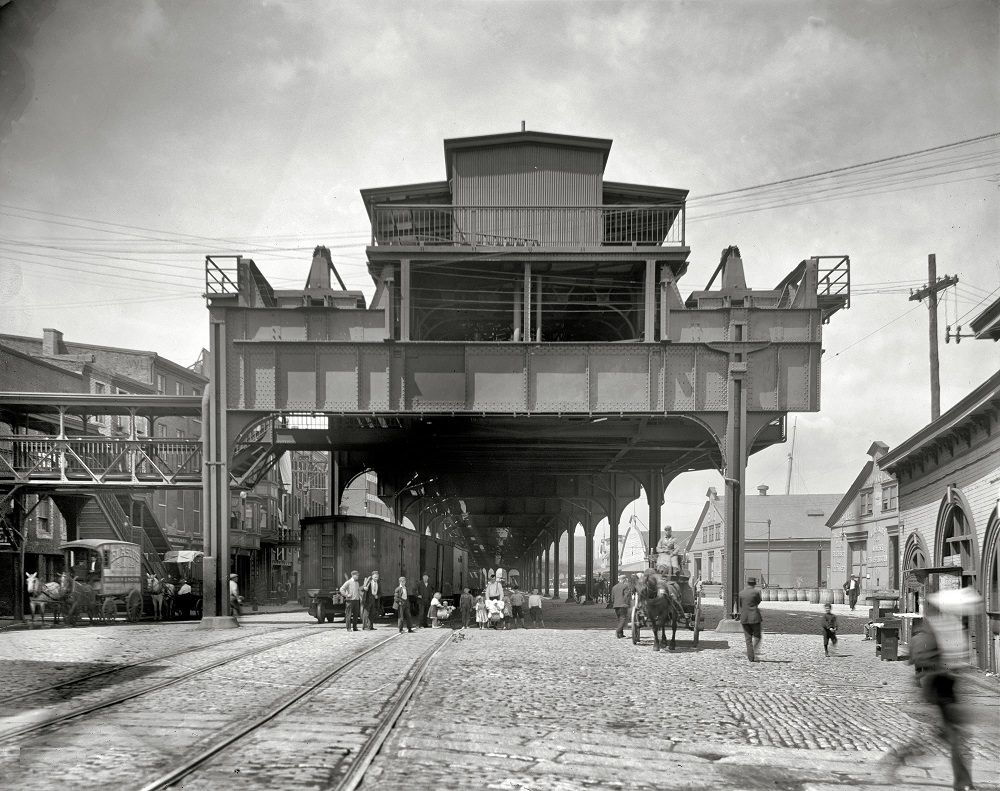
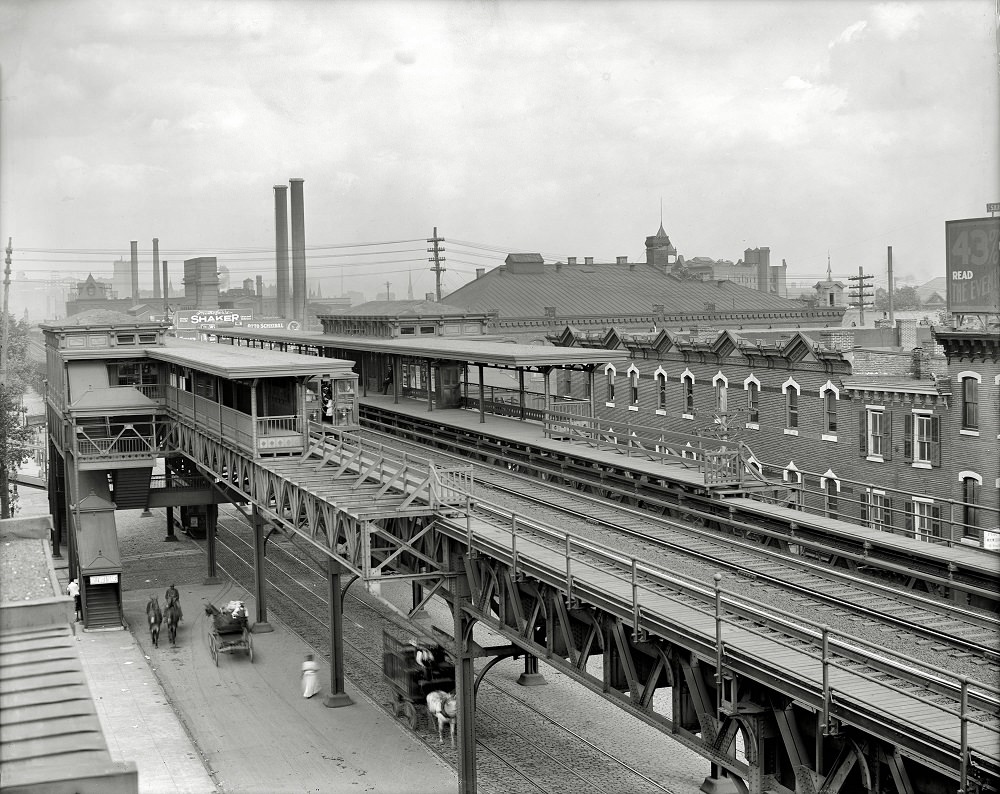
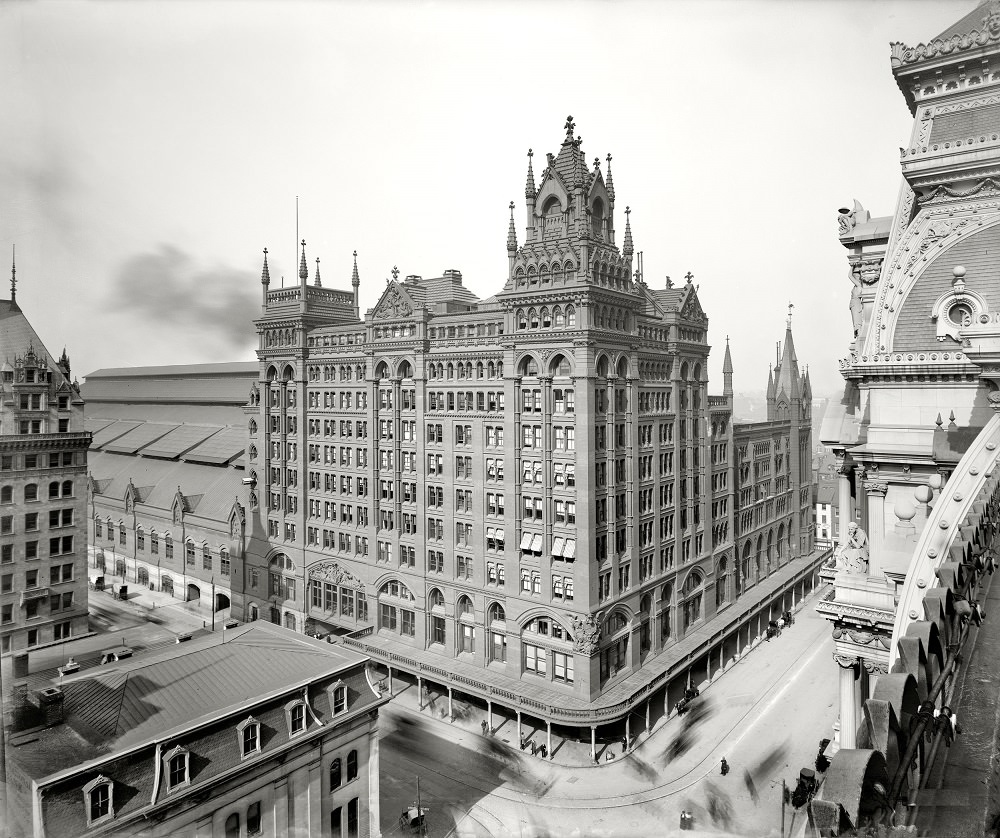
The Pennsylvania Railroad dominated transportation in and out of Philadelphia. Its Broad Street Station was one of the busiest rail terminals in the country. Ferry terminals on Market Street connected the city to New Jersey across the Delaware River, while an elevated railway system moved commuters through neighborhoods like West Philadelphia, stopping at stations like 36th Street and the terminal at 70th and Market.
Broad Street Station of the Pennsylvania R.R., Philadelphia circa 1905Elevated railway terminal, 70th and Market streets, Philadelphia, 1906Pennsylvania Railroad ferry terminal, Market Street, 1905
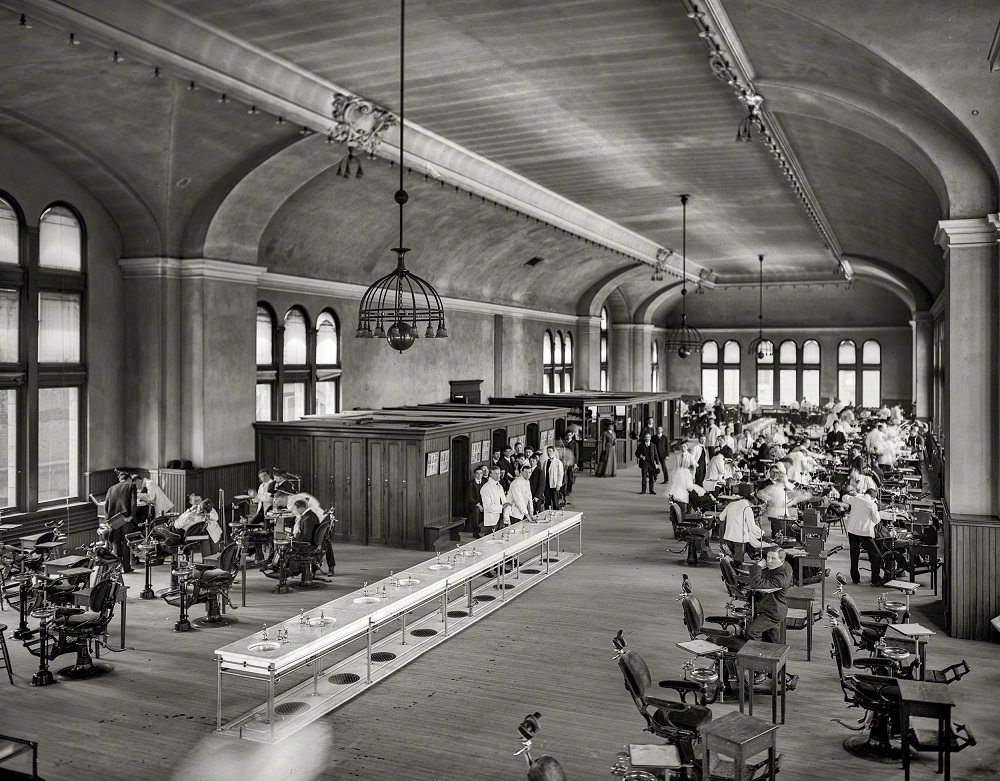
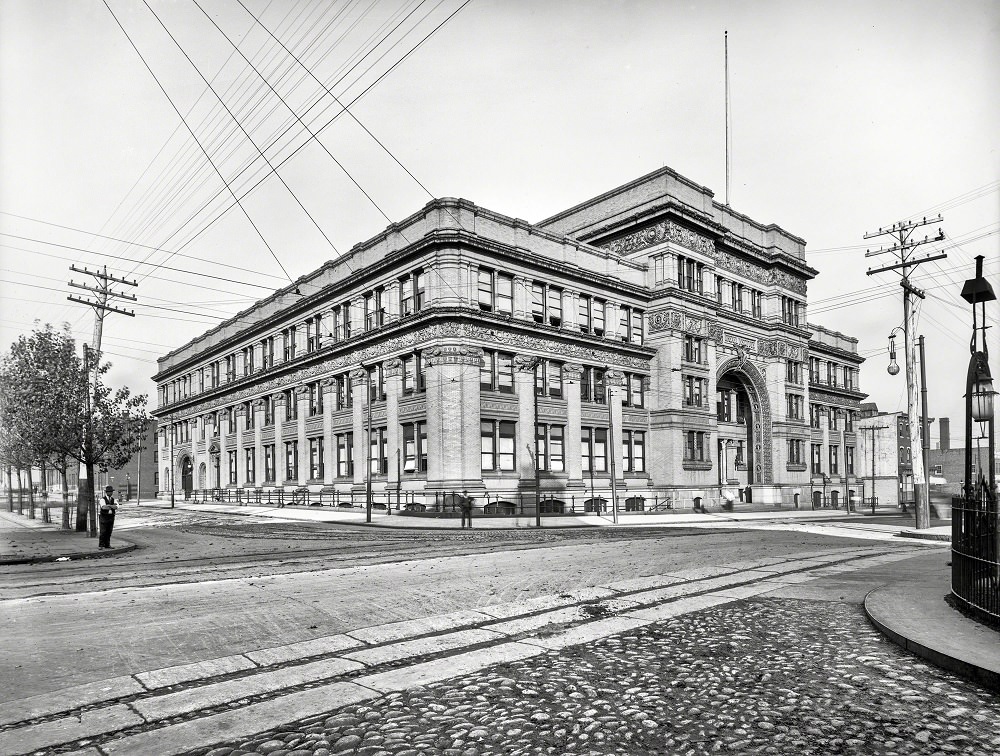
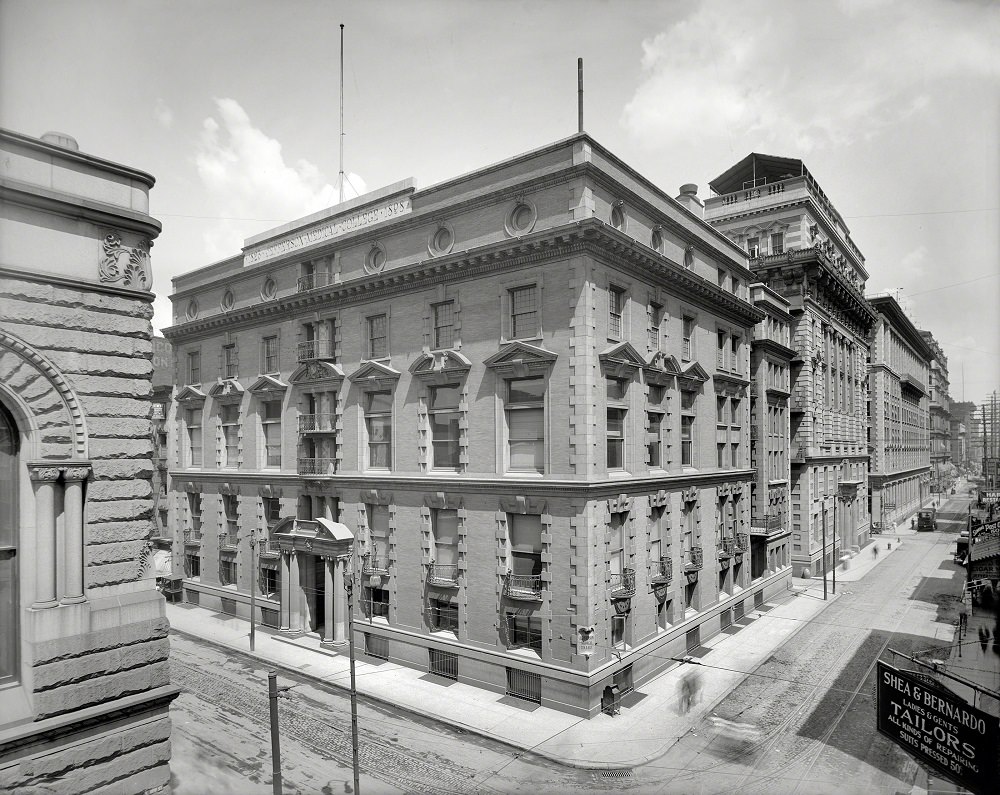
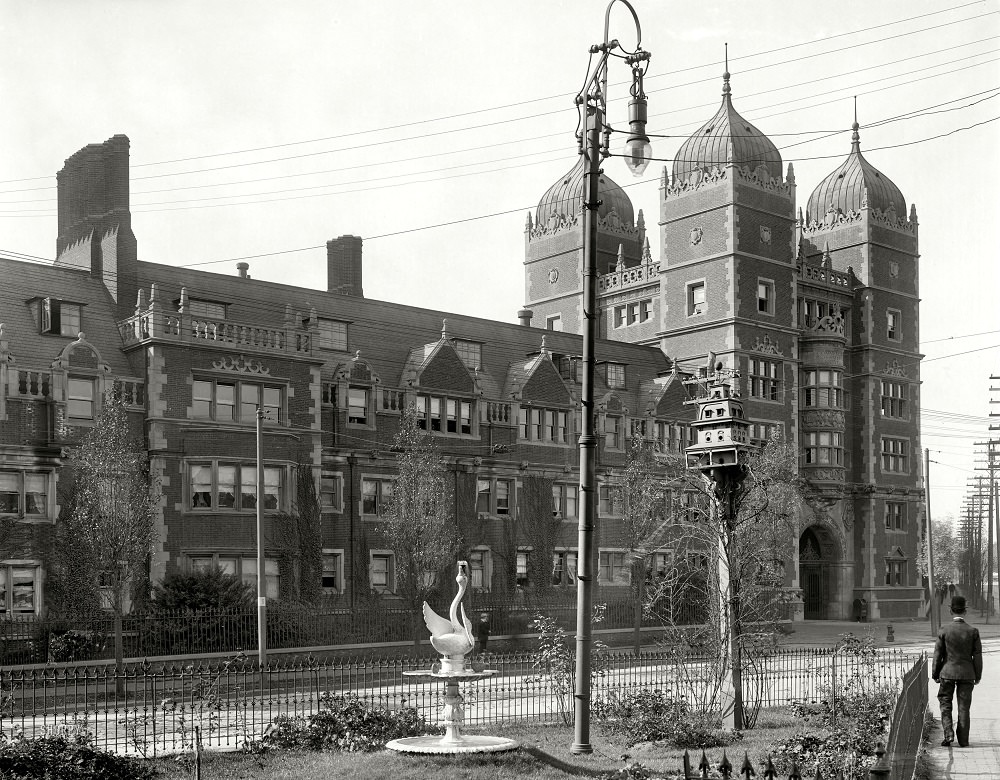
Education was a significant part of Philadelphia’s identity. The University of Pennsylvania, founded in 1740, operated a full campus with dormitories and specialized facilities including a dedicated Dental Hall. Drexel Institute, founded in 1891, trained students in technical and industrial skills. Jefferson Medical College on 10th Street was one of the most respected medical schools in the country.
Dental Hall, University of Pennsylvania, Philadelphia circa 1904Drexel Institute, Philadelphia, 1900Jefferson Medical College and Hospital, 10th Street, Philadelphia, 1909
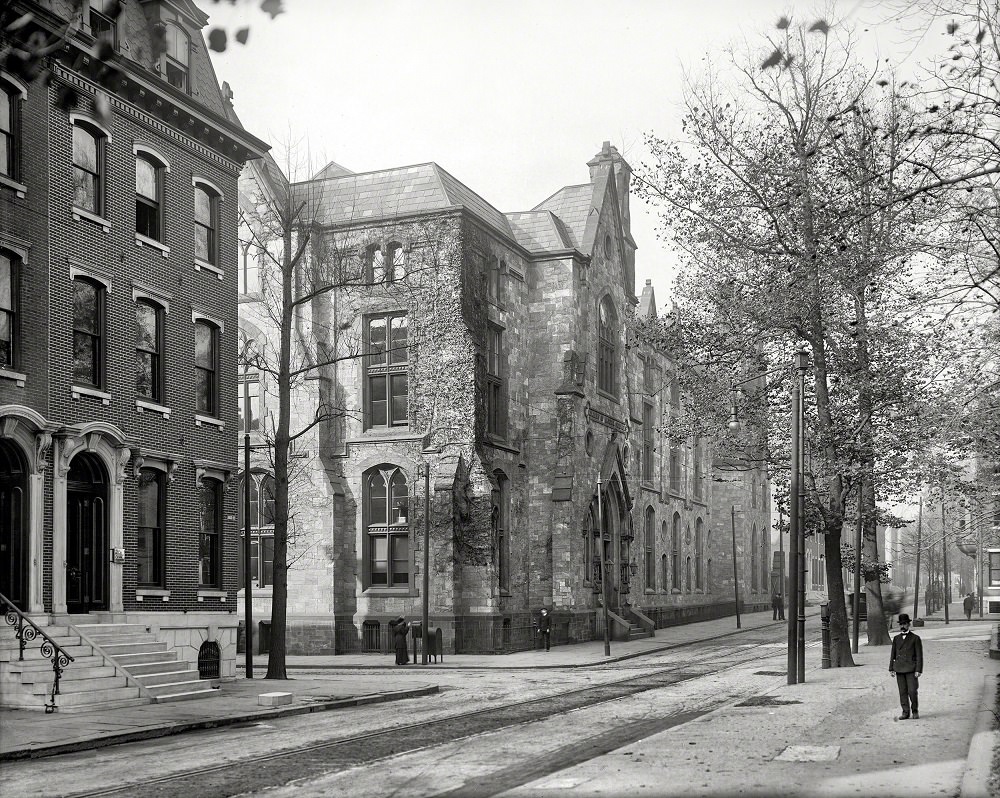
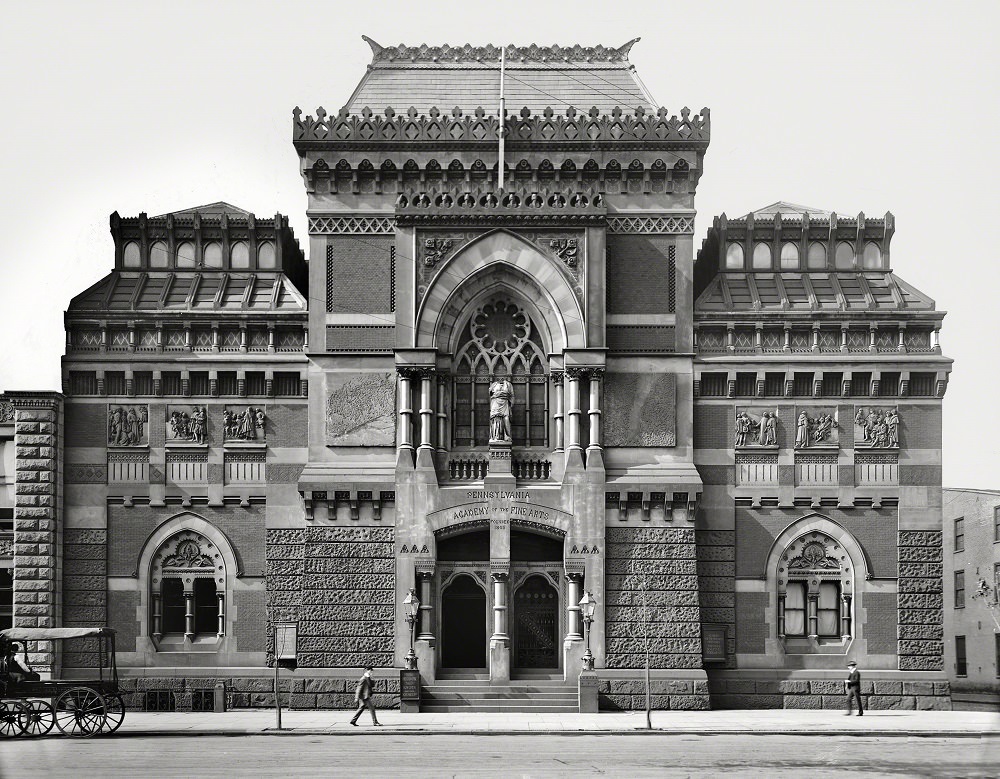
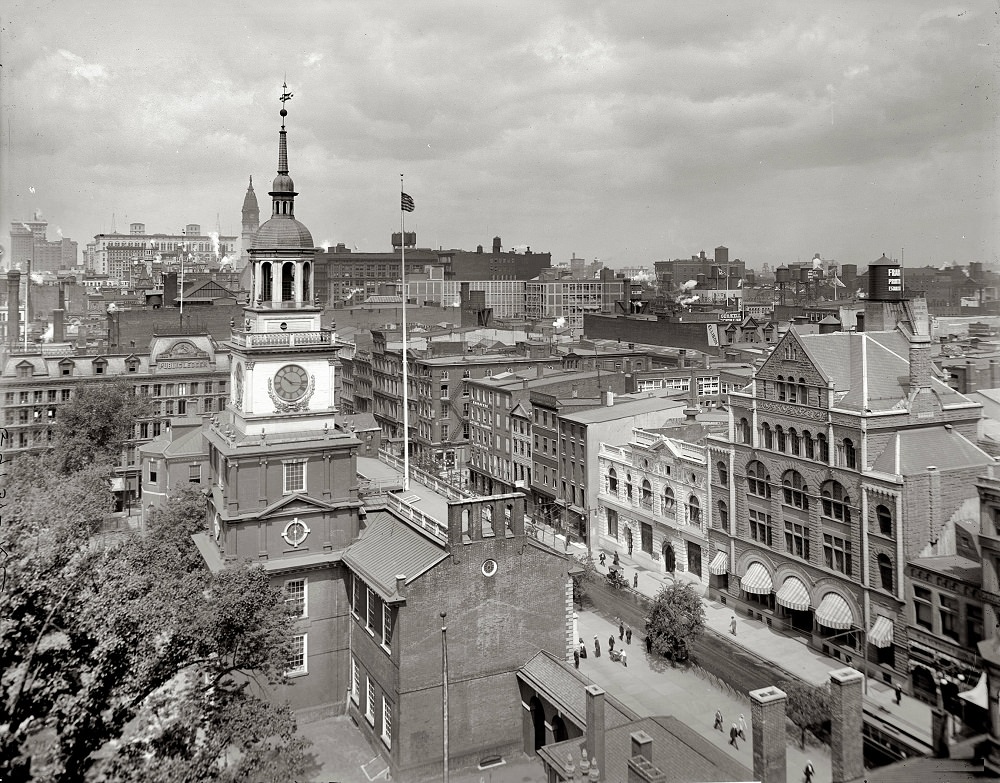
Cultural institutions clustered around Logan Square and the surrounding streets. The Academy of Natural Sciences on Race Street was one of the oldest natural history museums in the Western Hemisphere. The Pennsylvania Academy of the Fine Arts, the oldest art museum and school in the country, anchored the arts district near Broad Street. Independence Hall remained a touchstone for the city’s identity, still standing at Independence Square as it had since the founding of the nation.
Academy of Natural Sciences, Race Street at Logan Square, Philadelphia circa 1906Pennsylvania Academy of the Fine Arts, Philadelphia, 1900Independence Hall at Independence Square, Philadelphia, 1910
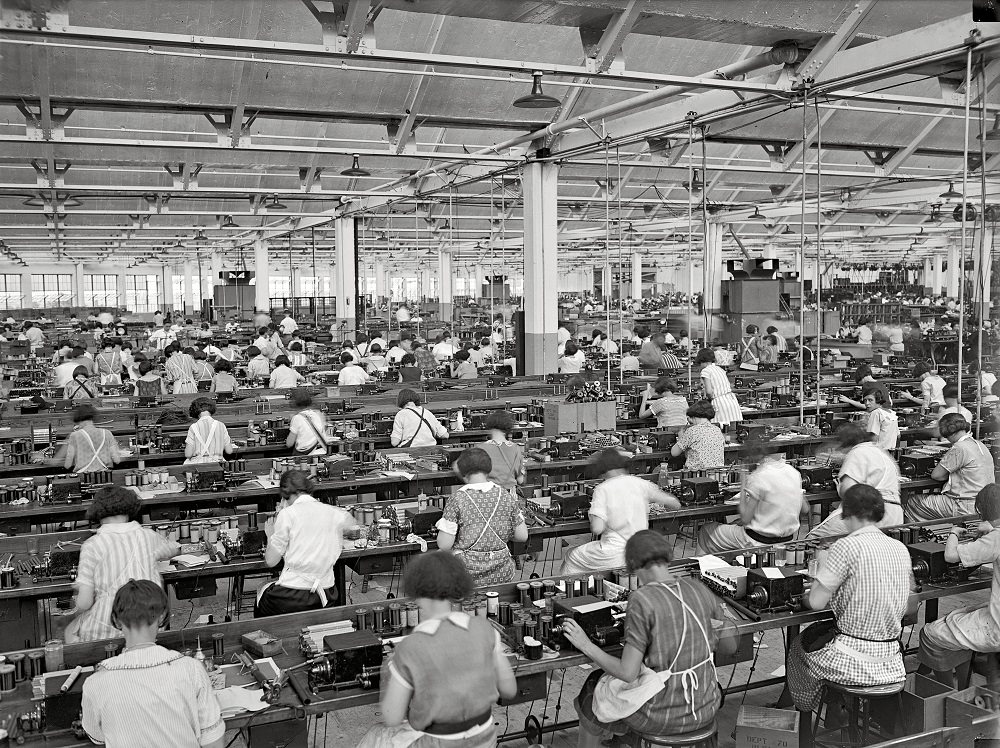
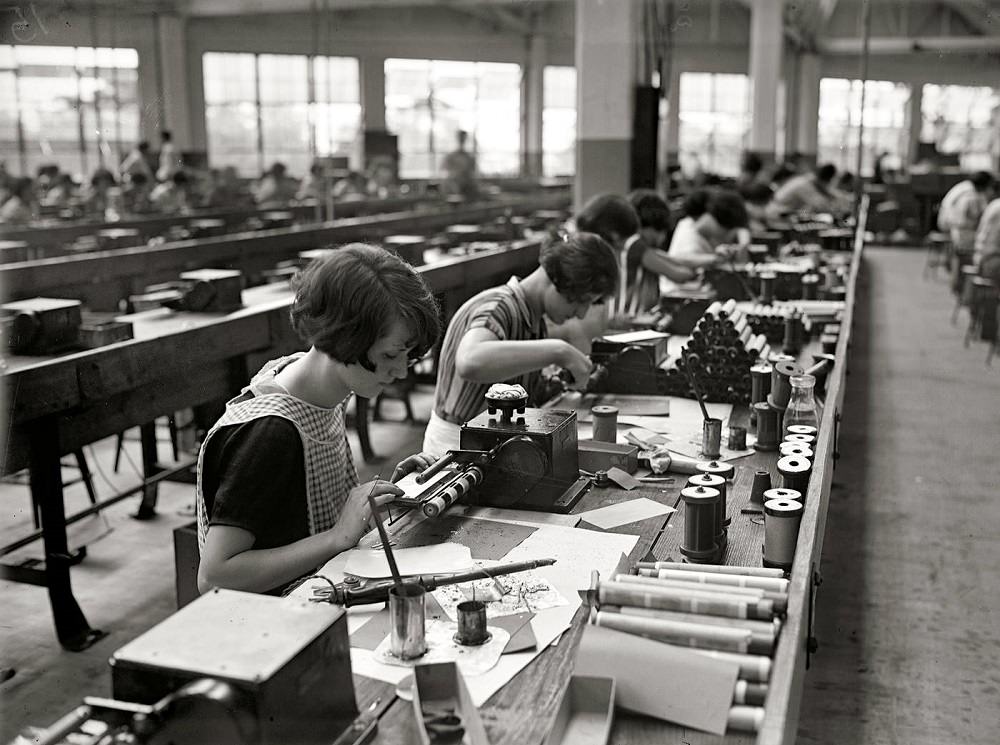
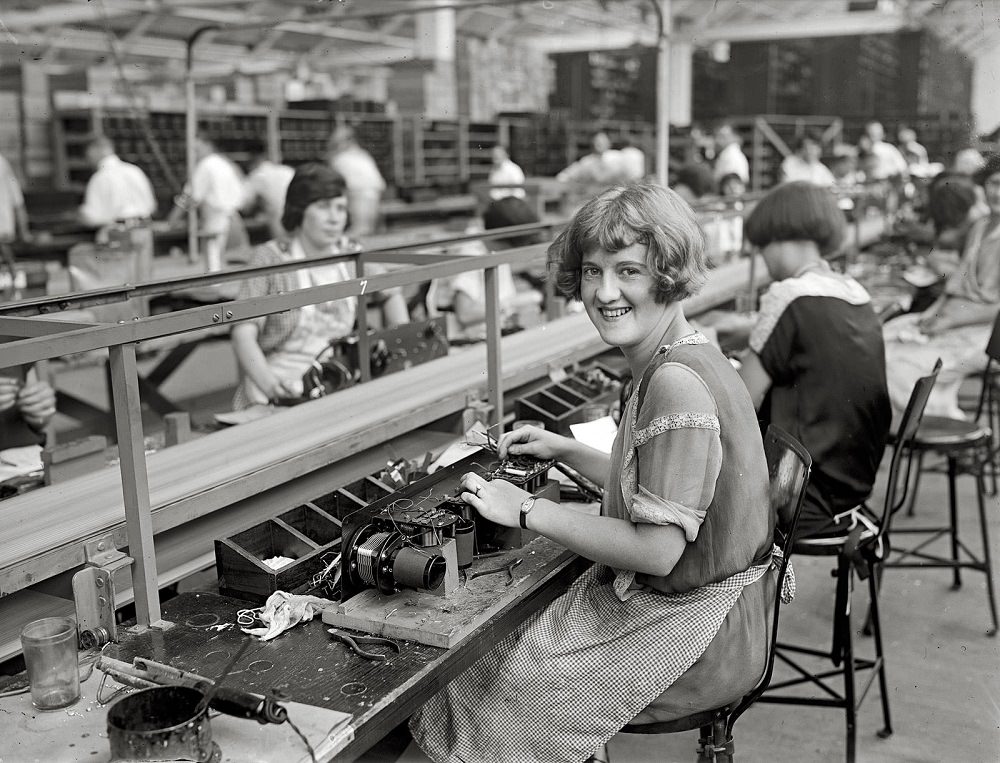
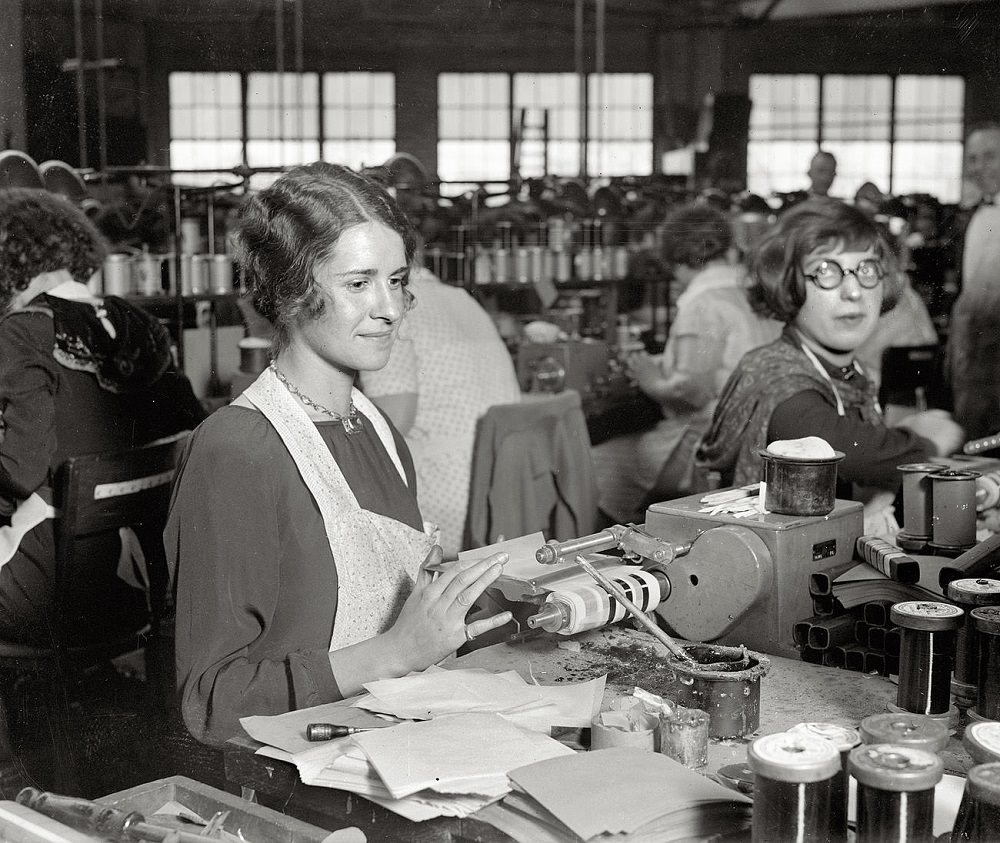
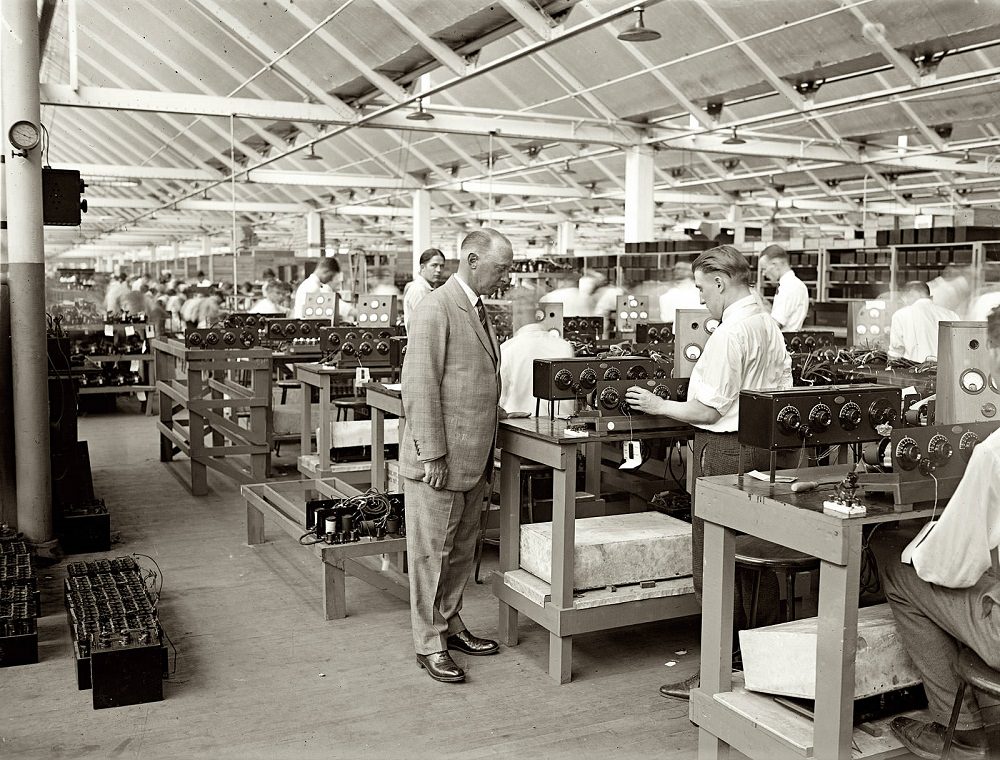
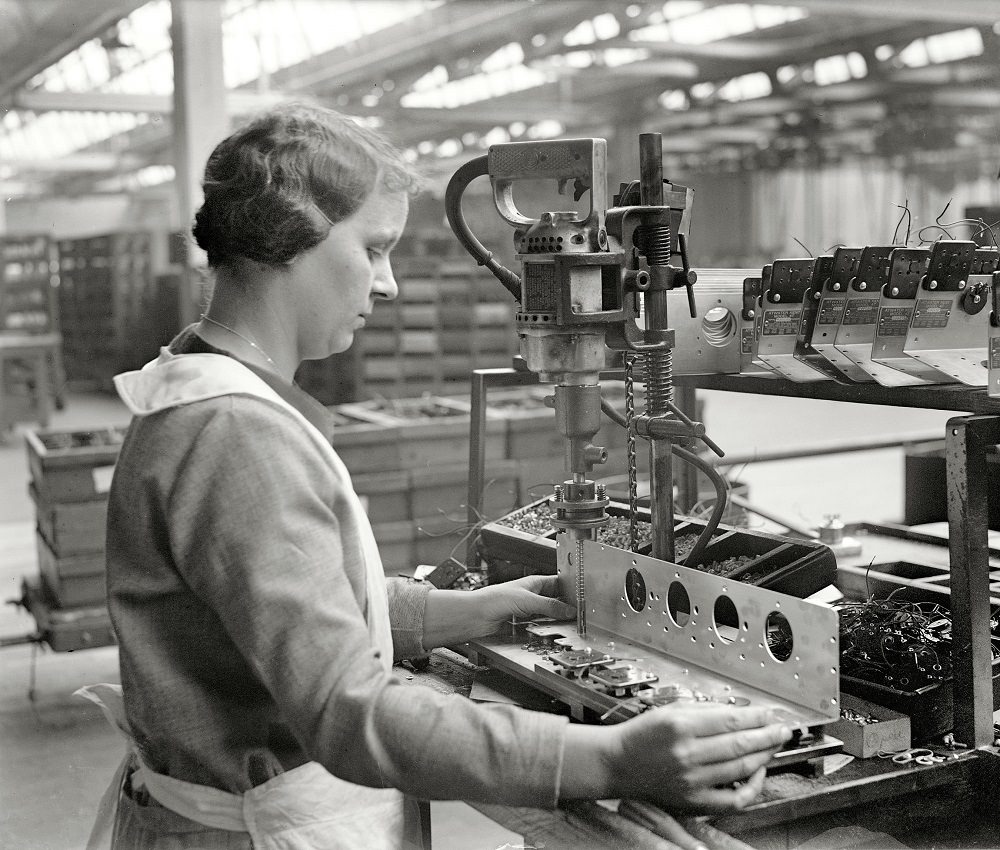
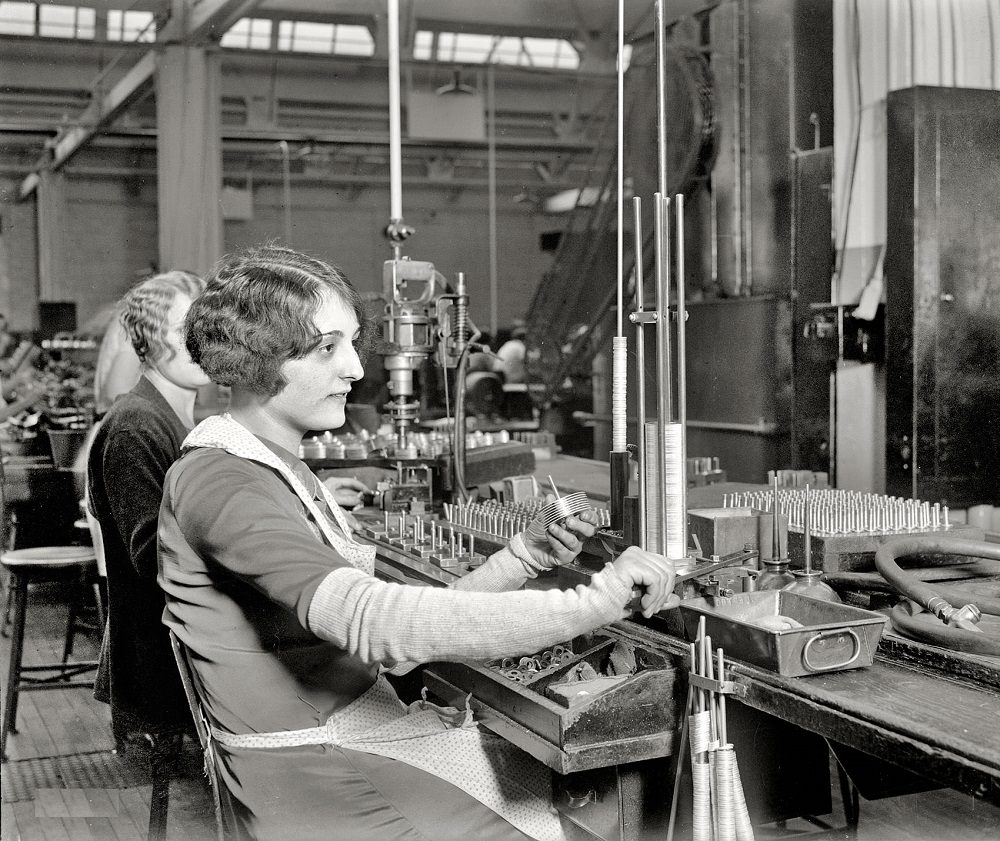
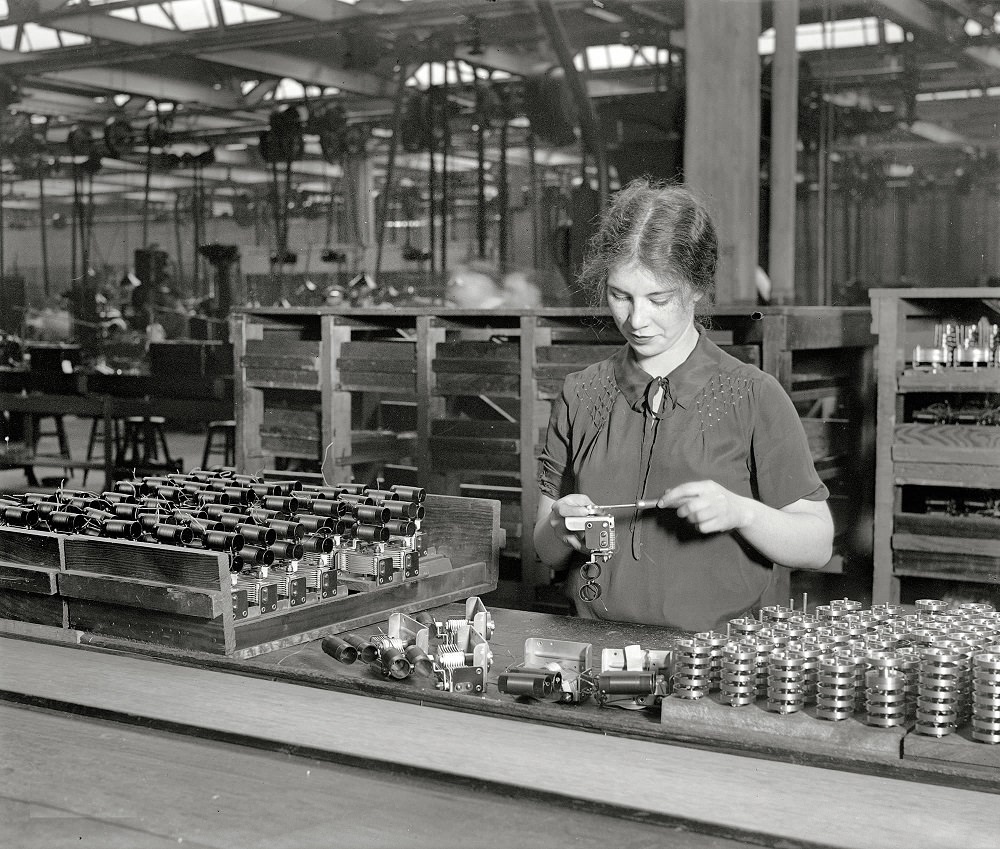
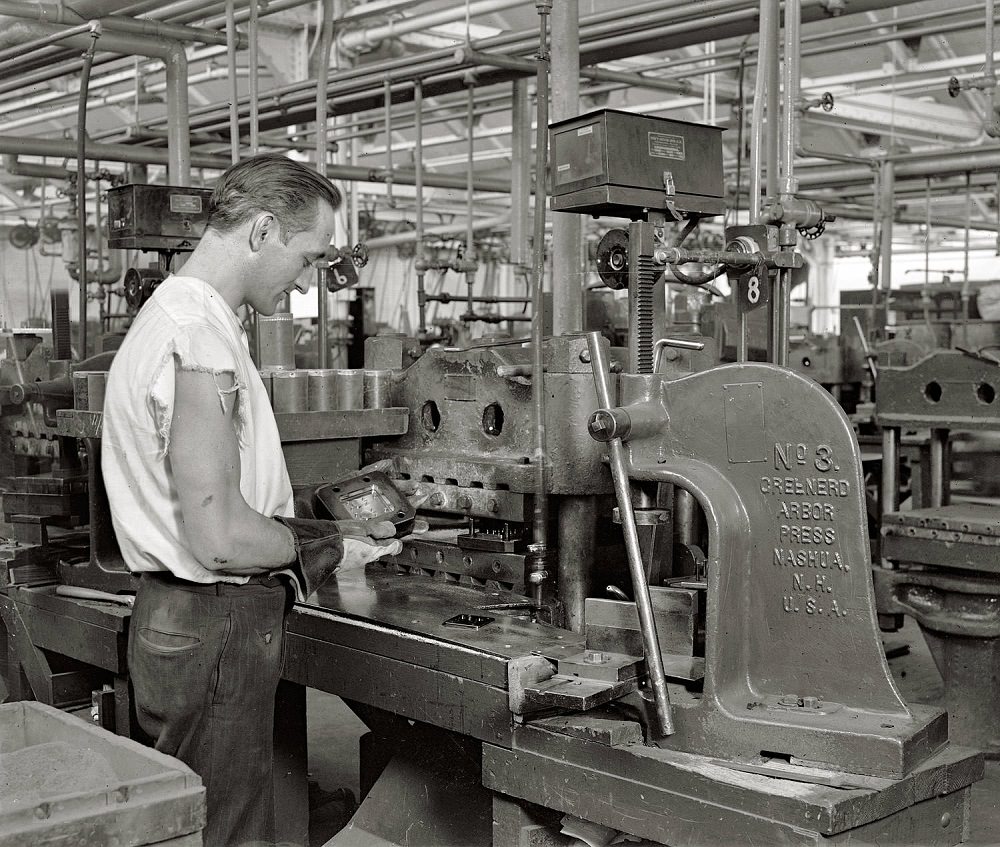
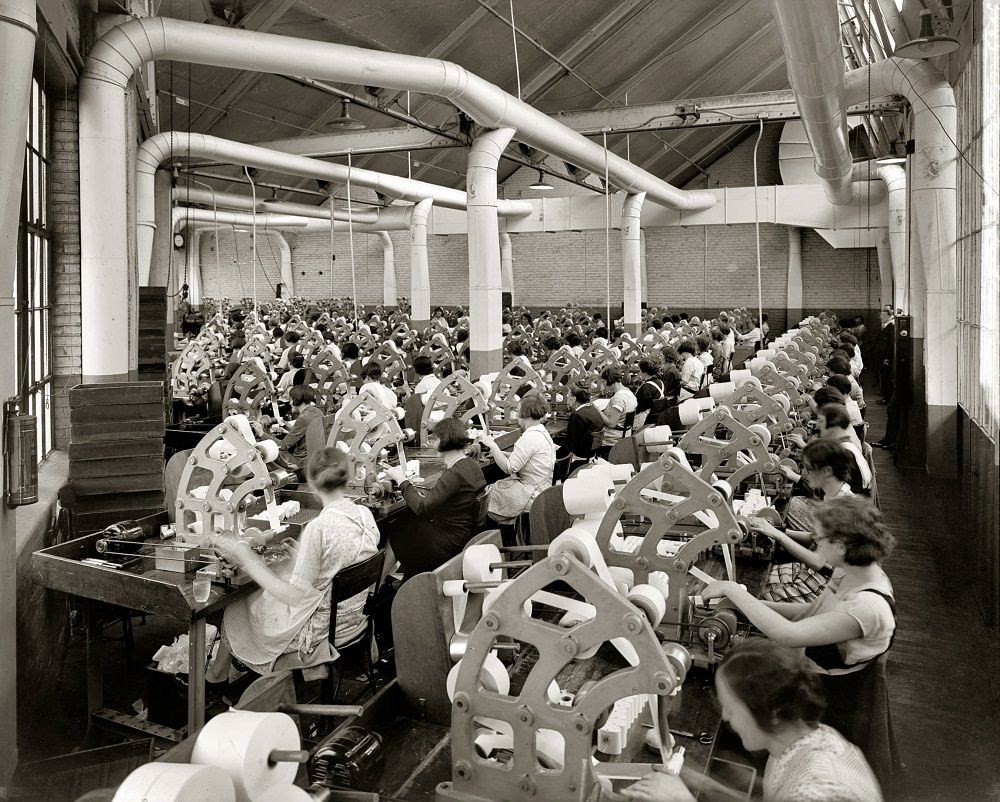
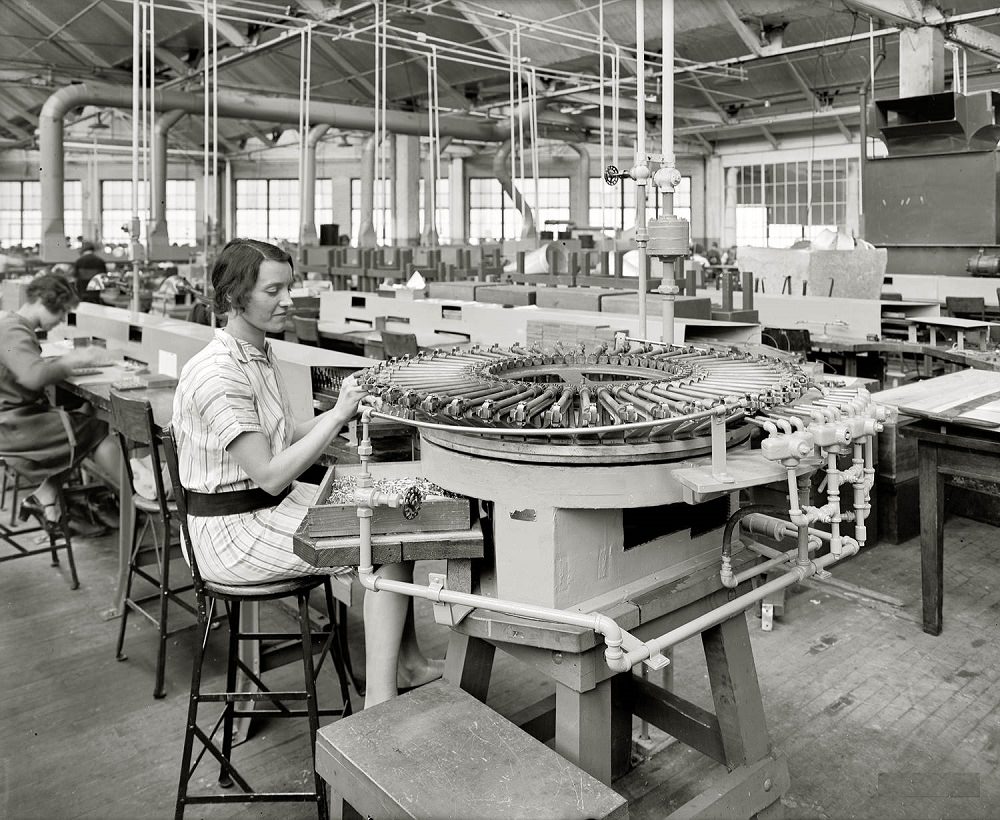
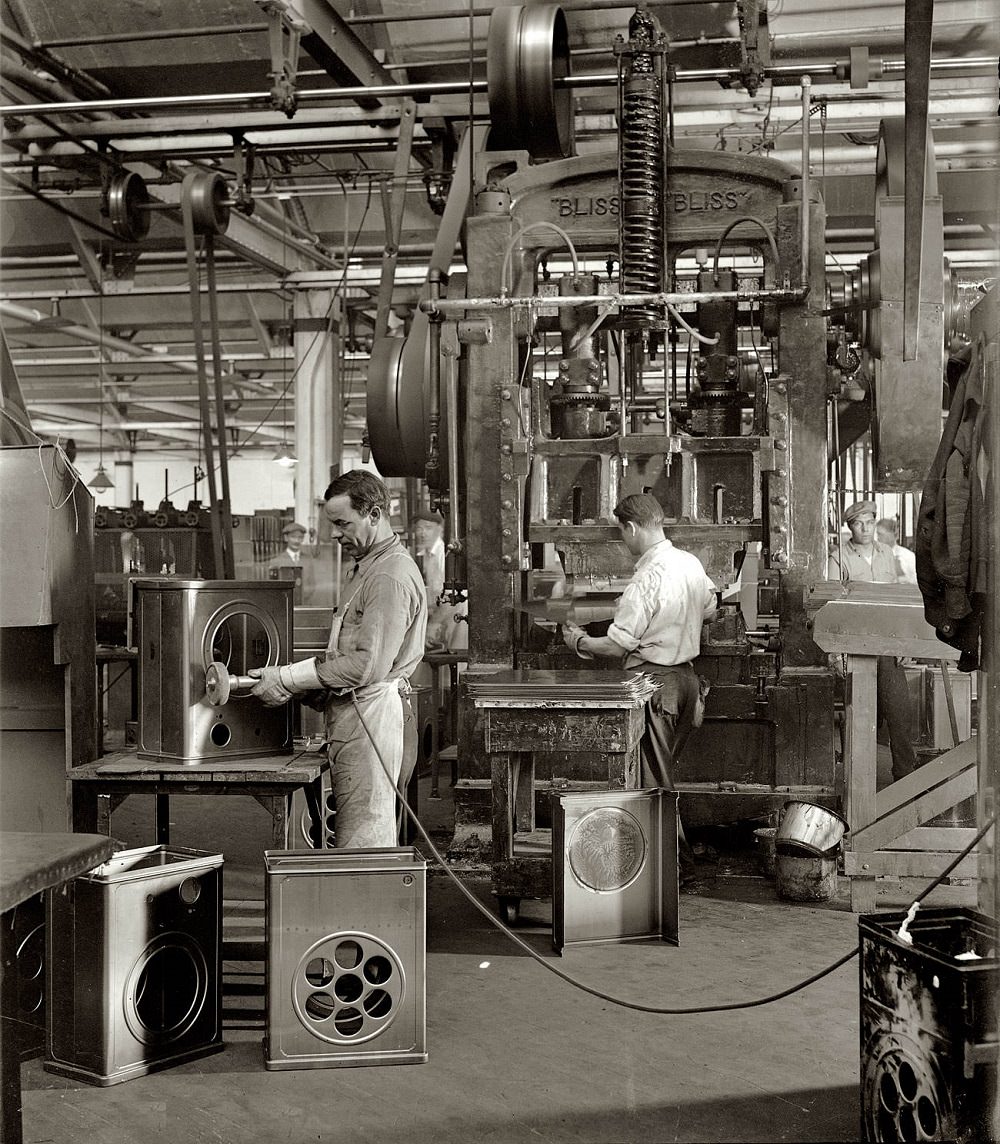
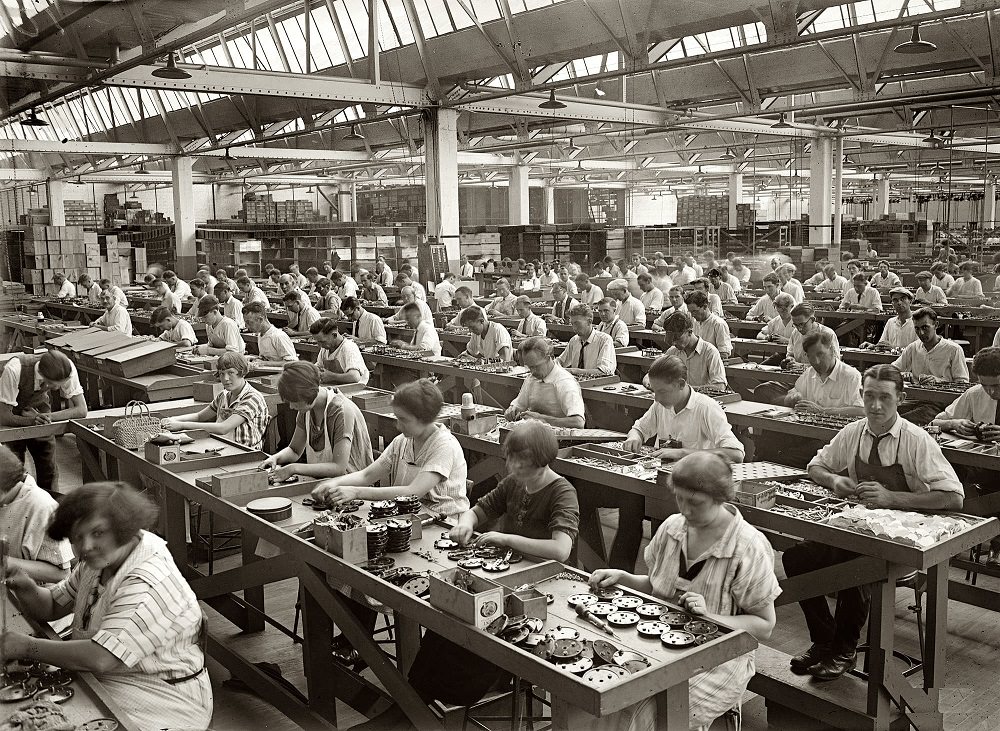
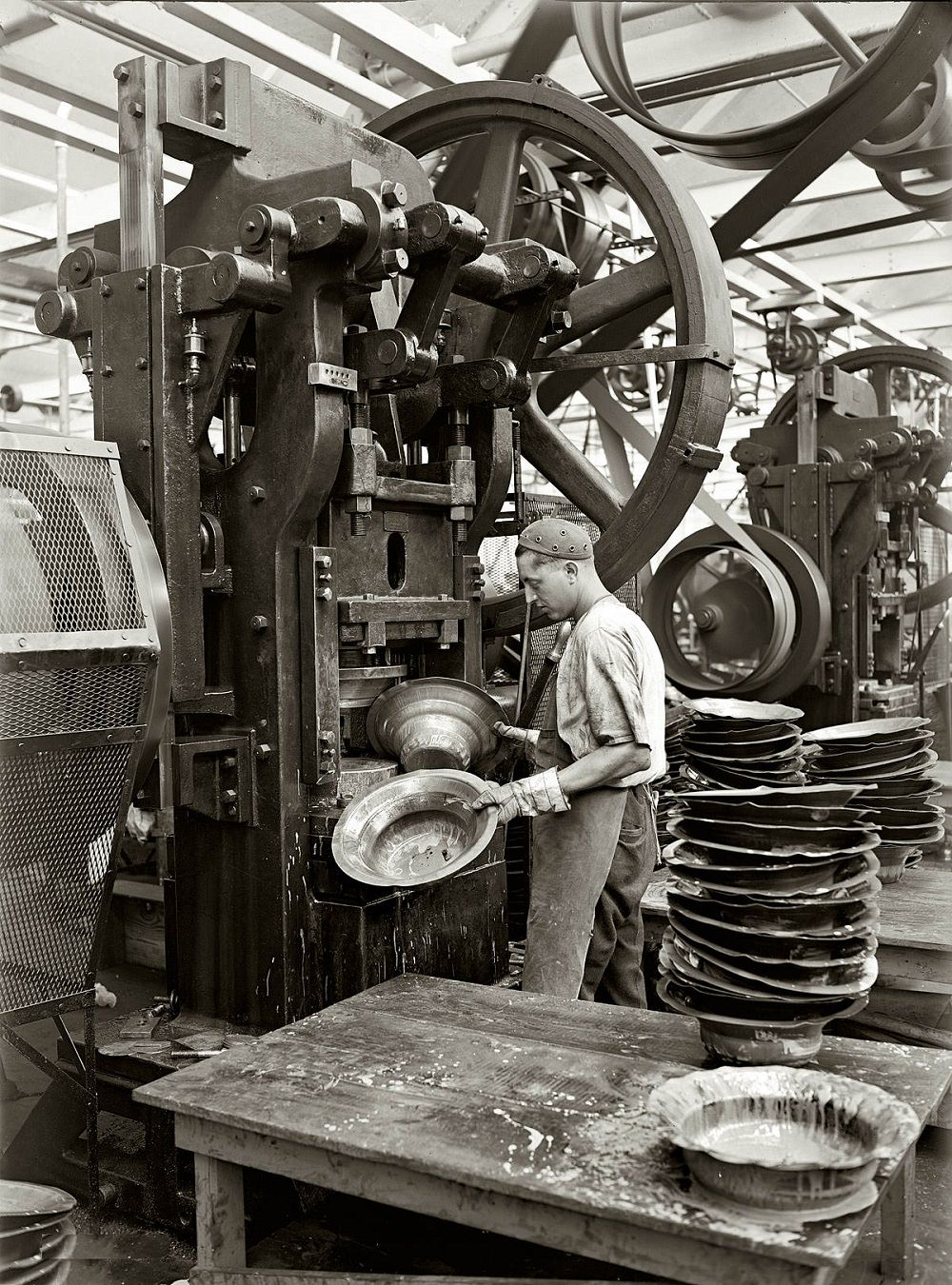
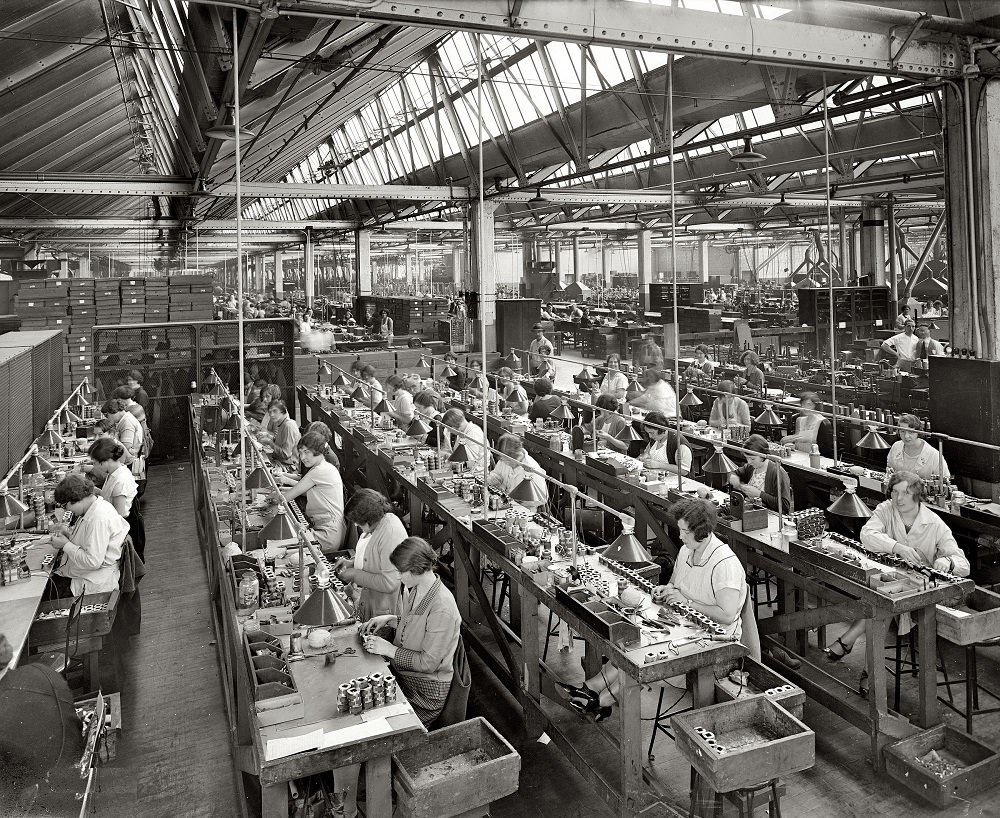
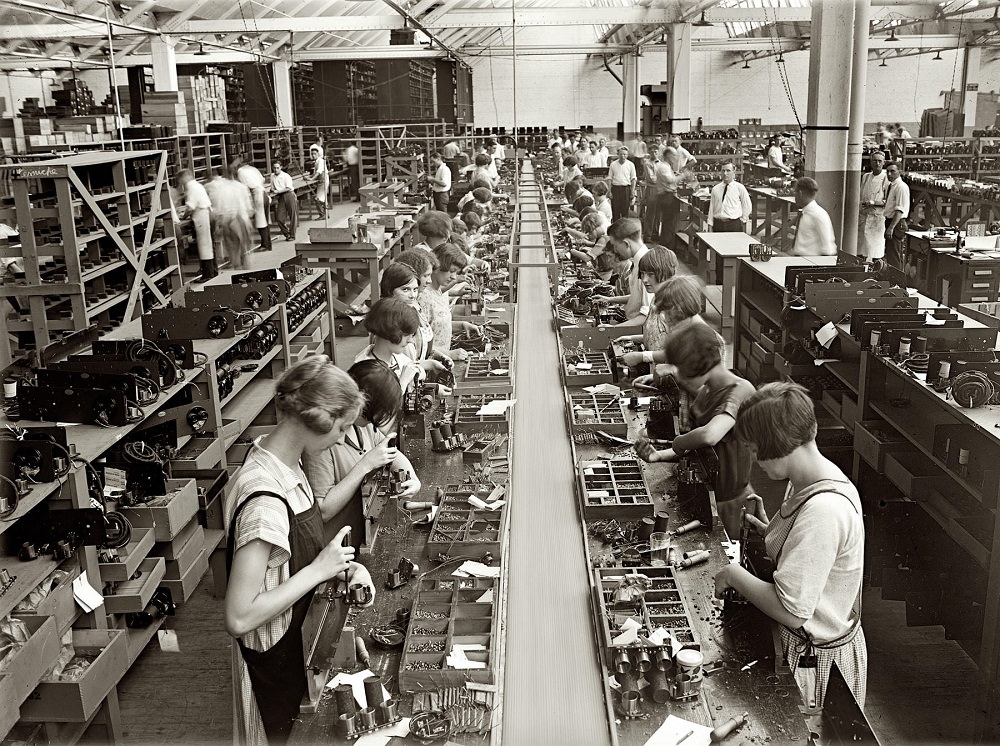
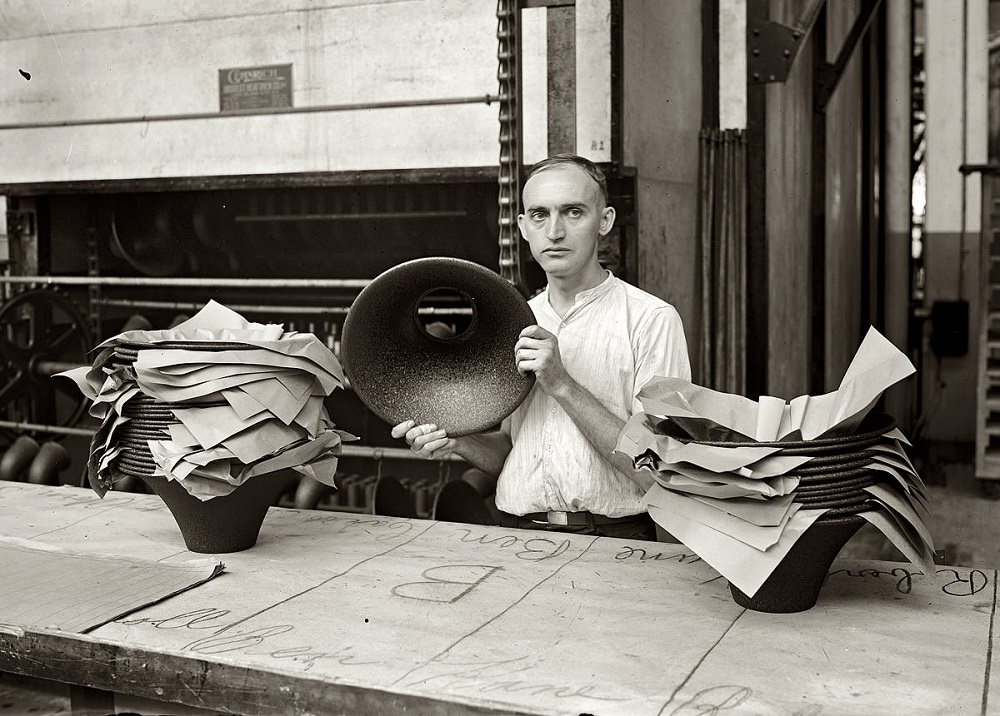
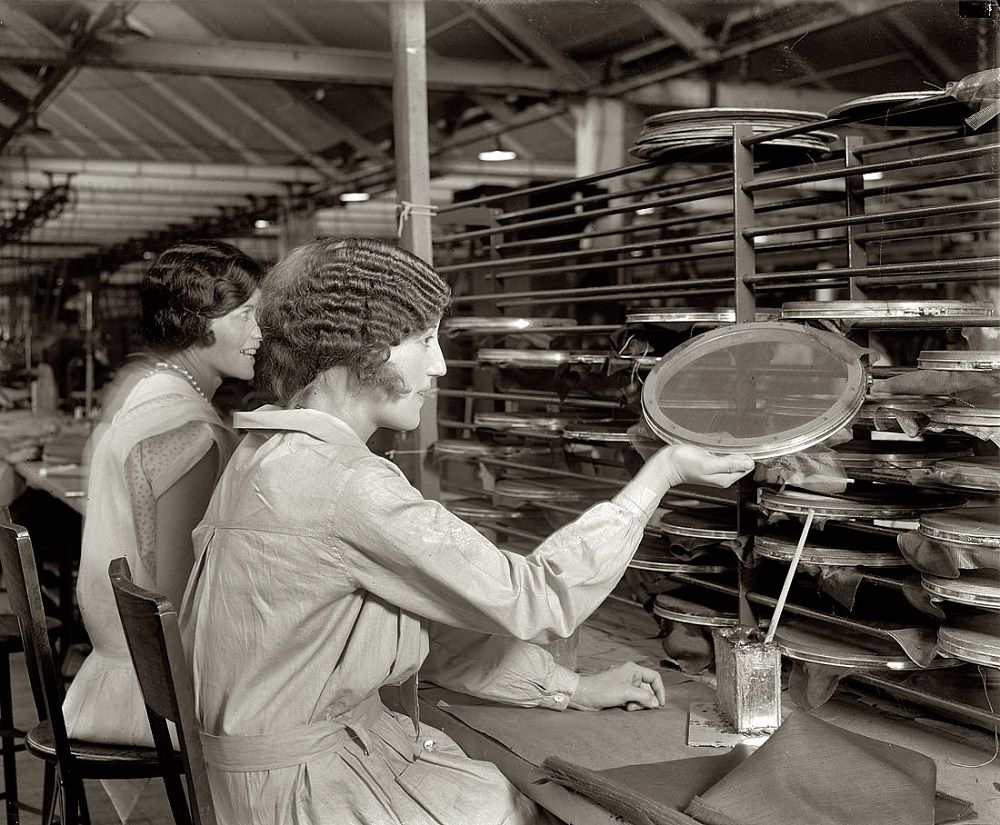
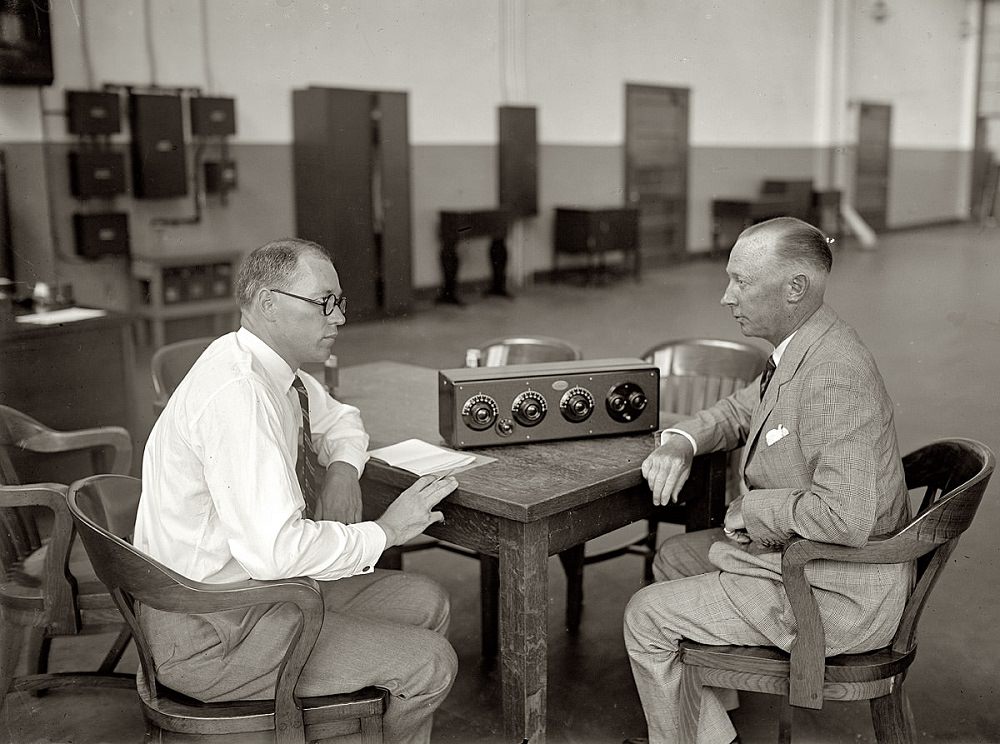
By the 1920s, Philadelphia had become a hub for radio manufacturing. The Atwater Kent factory on Wissahickon Avenue was among the largest radio production facilities in the world. Arthur Atwater Kent opened the plant and scaled production rapidly. Hundreds of workers — many of them women — assembled radio sets, wound transformer coils, stamped loudspeaker bells, and tested finished units on long production lines.
Atwater Kent radio factory, Philadelphia, 1925Winding transformer coils at the Atwater Kent radio factory in Philadelphia, 1925Starting assembly of set (Mary Ramsey), A worker at the Atwater Kent radio factory in Philadelphia, 1925Production workers at the huge Atwater Kent radio factory in Philadelphia, 1928Atwater Kent at test table.” Namesake of the Atwater Kent radio empire at his Philadelphia factory, 1925
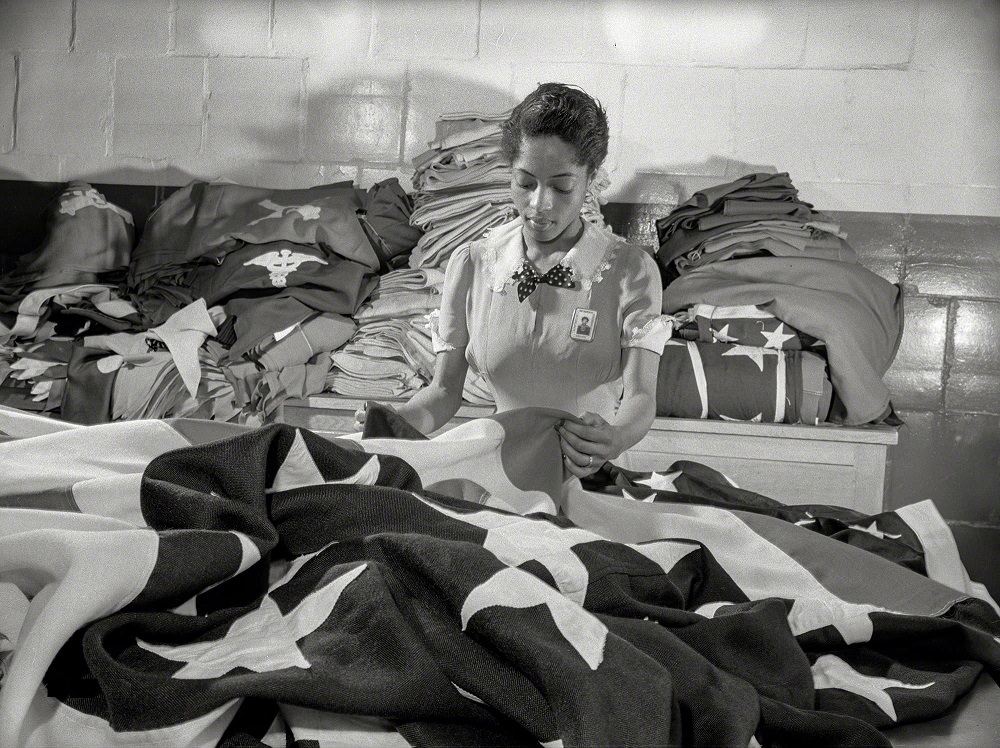
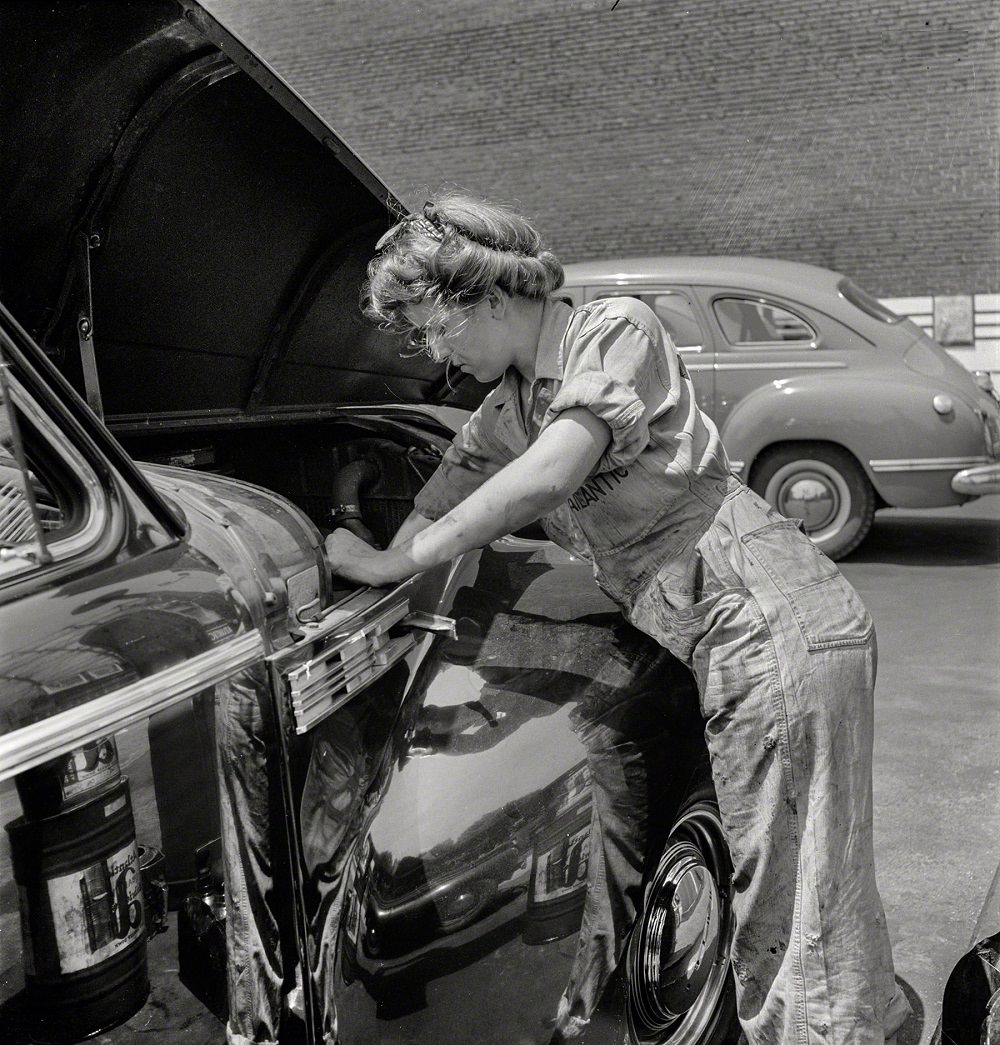
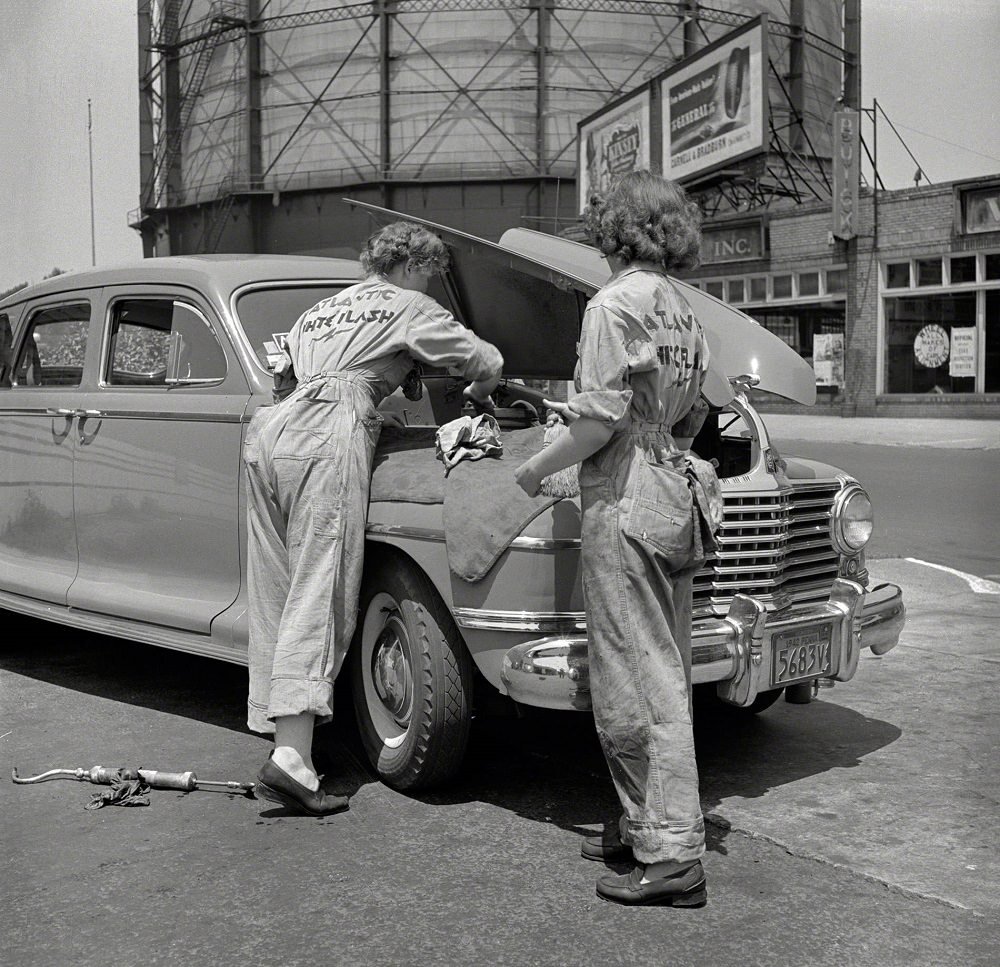
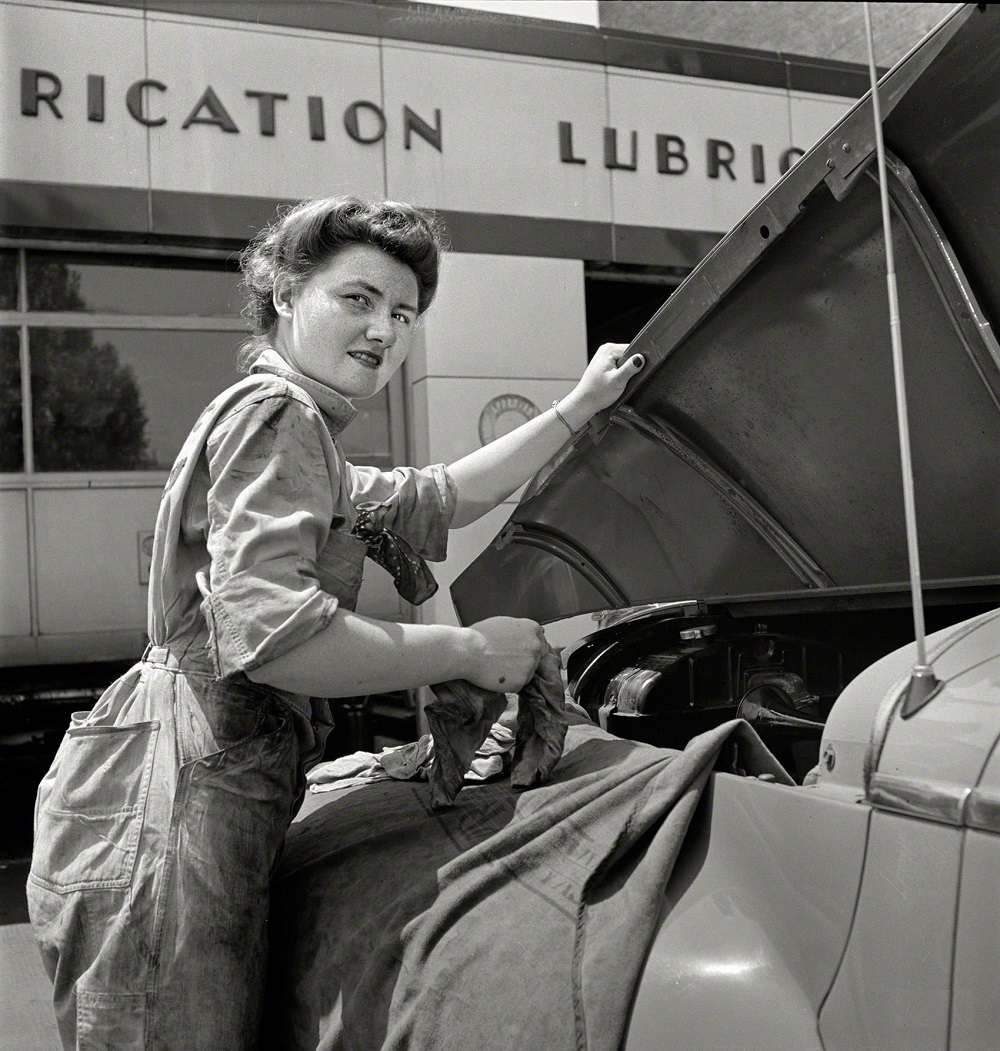
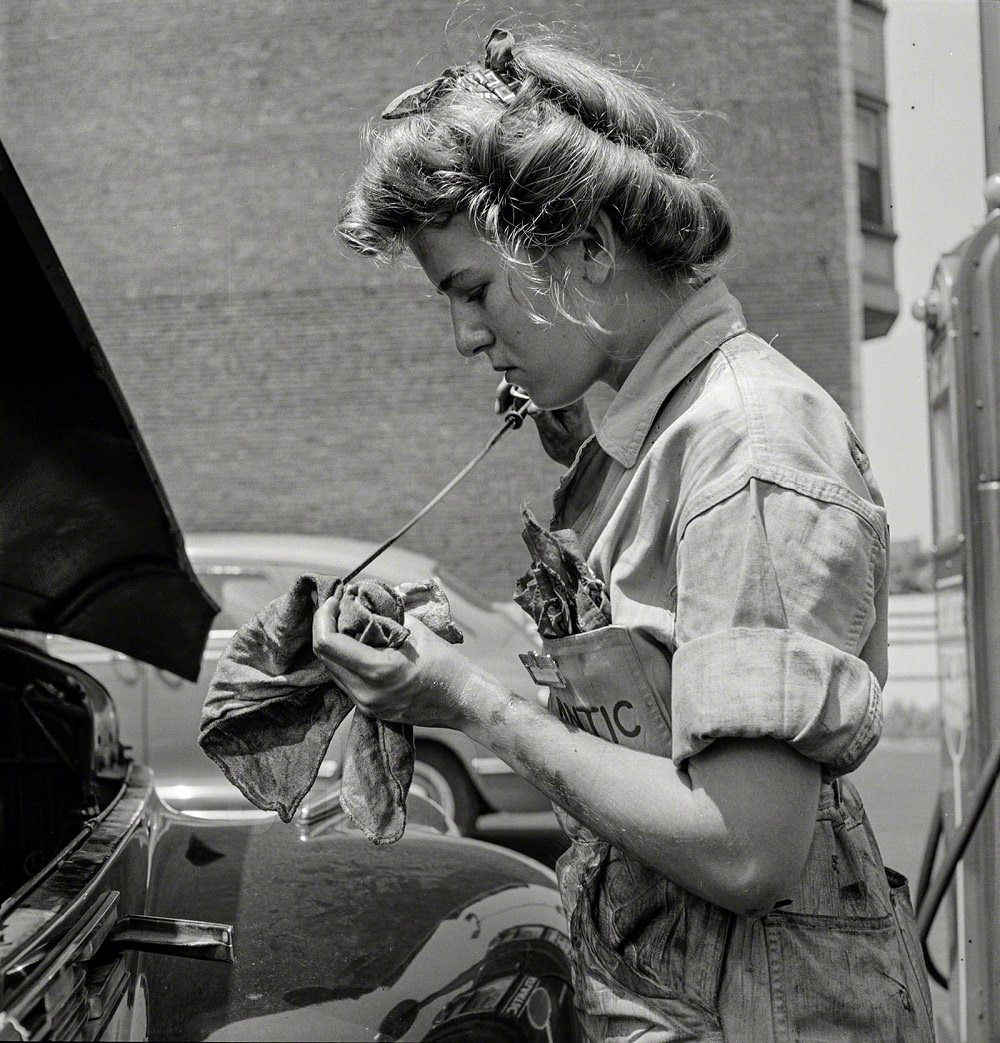
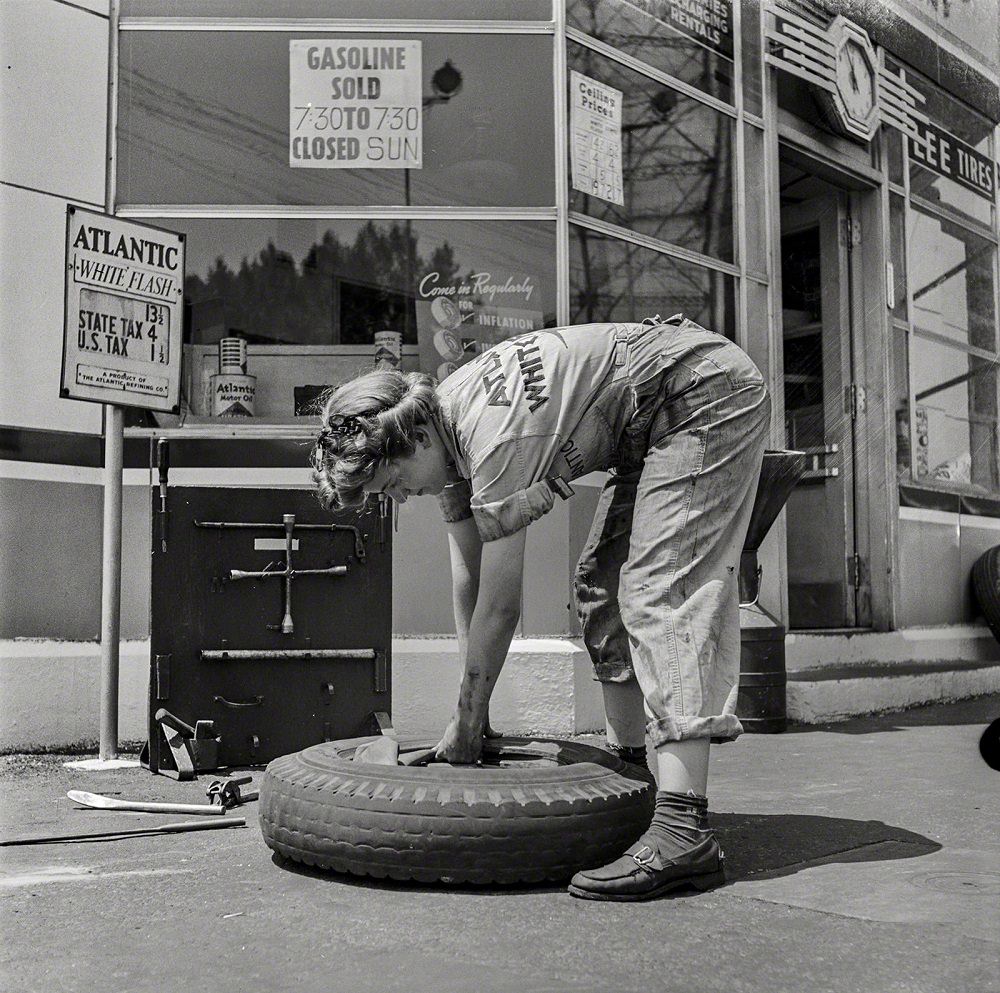
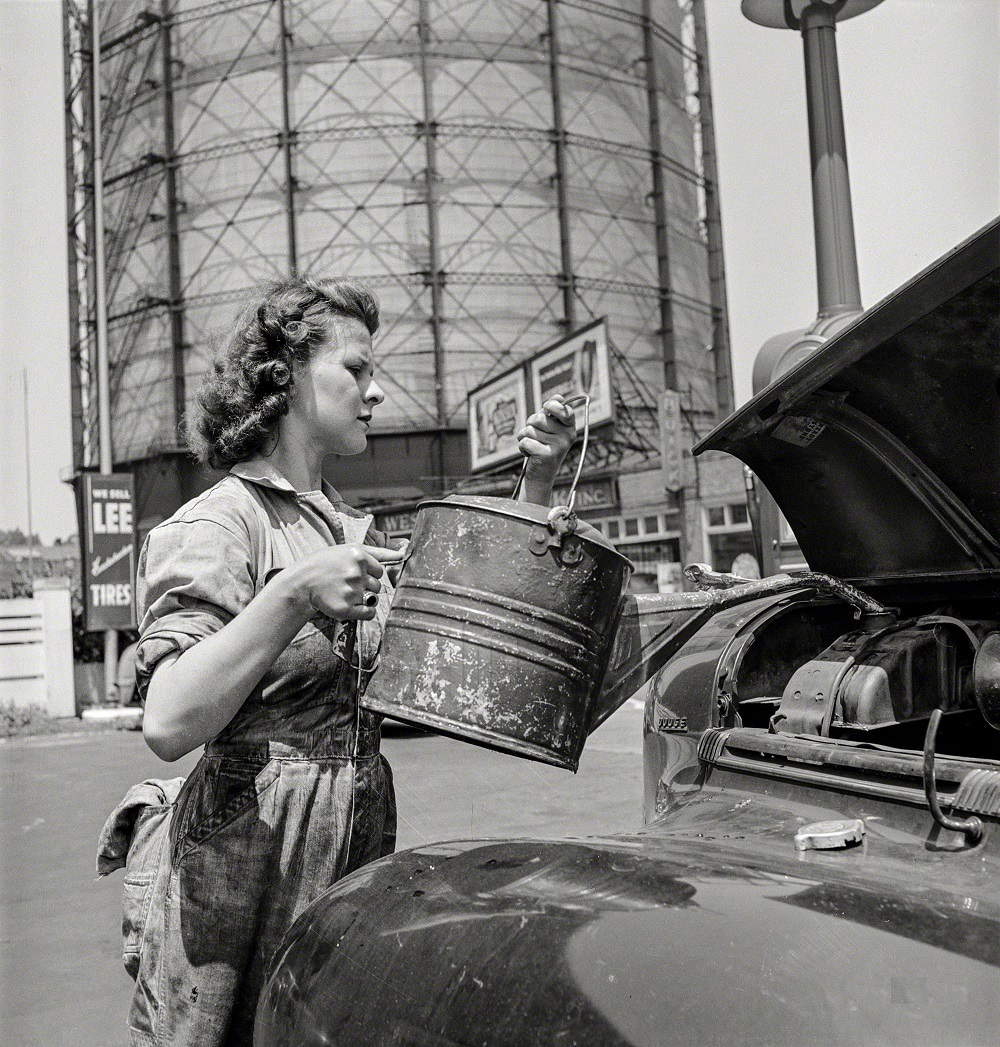
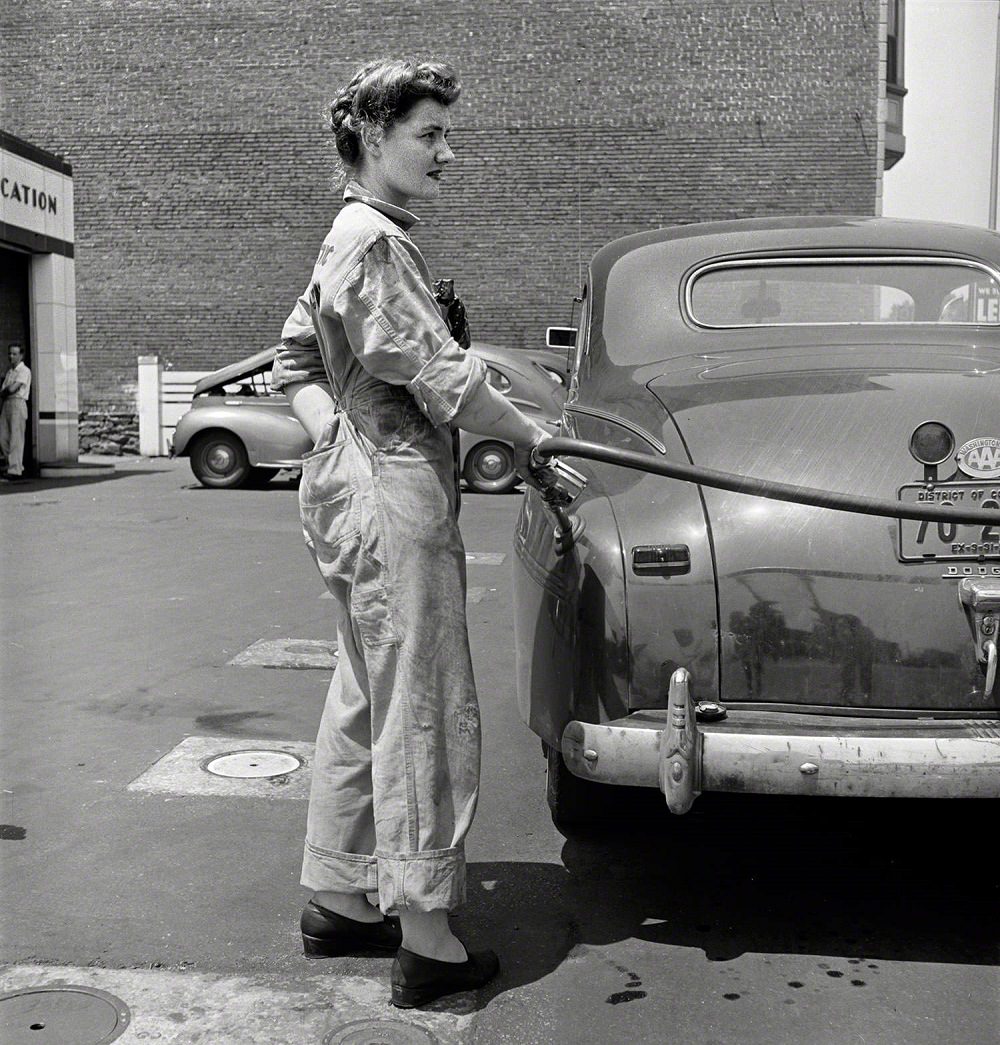
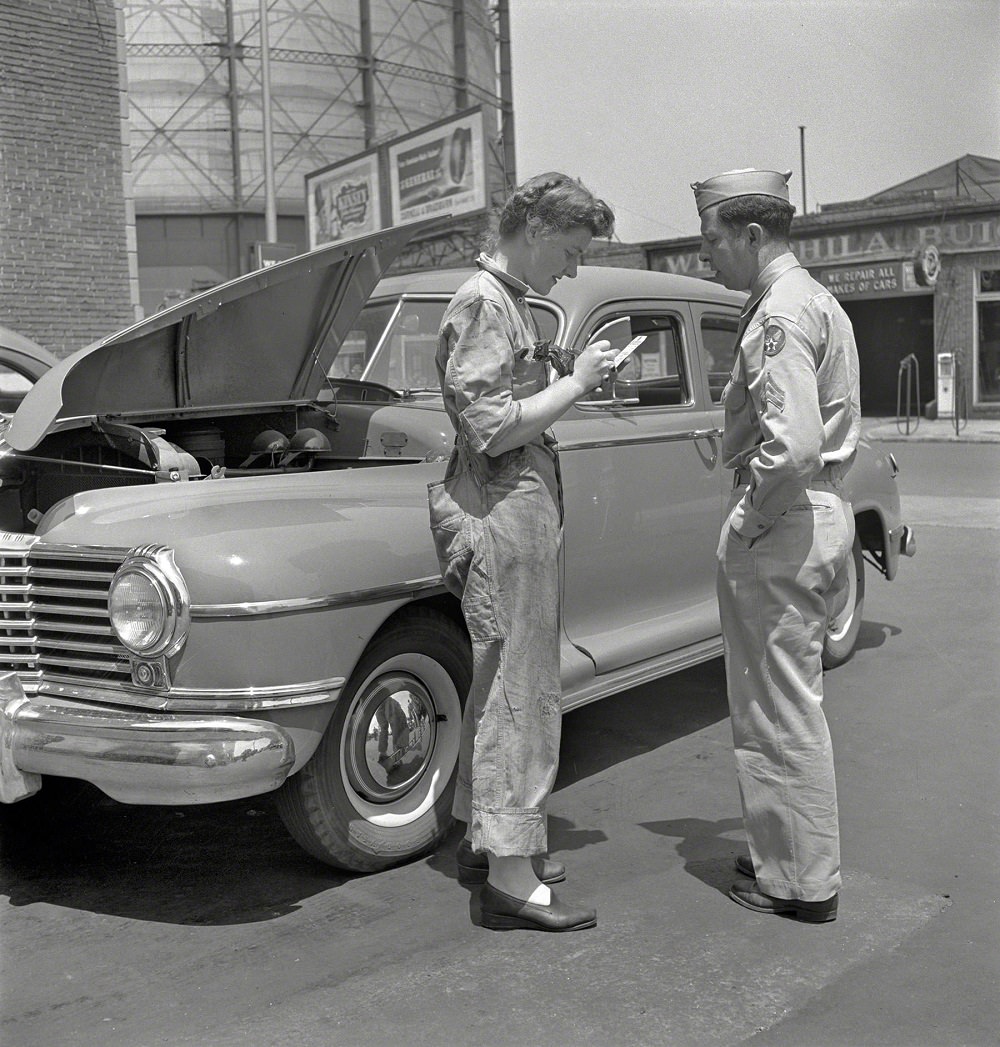
World War II brought new demands to Philadelphia. The Quartermaster Corps organized supply operations out of the city in 1942. With men away at war, women stepped into roles that had previously been closed to them. At the Atlantic Refining Company garages, women like Natalie O’Donald and Frances Heisler worked as service station attendants — pumping gas, checking vehicles, and keeping the city moving while the workforce had been redirected to the war effort.
Philadelphia Quartermaster Corps, May 1942Miss Natalie O’Donald, attendant at the Atlantic Refining Company garages, Philadelphia, June 1934Miss Frances Heisler, a garage attendant at one of the Atlantic Refining Company garages, Philadelphia, Pennsylvania, June 1943Women garage attendants at the Atlantic Refining Company, Philadelphia, June 1943
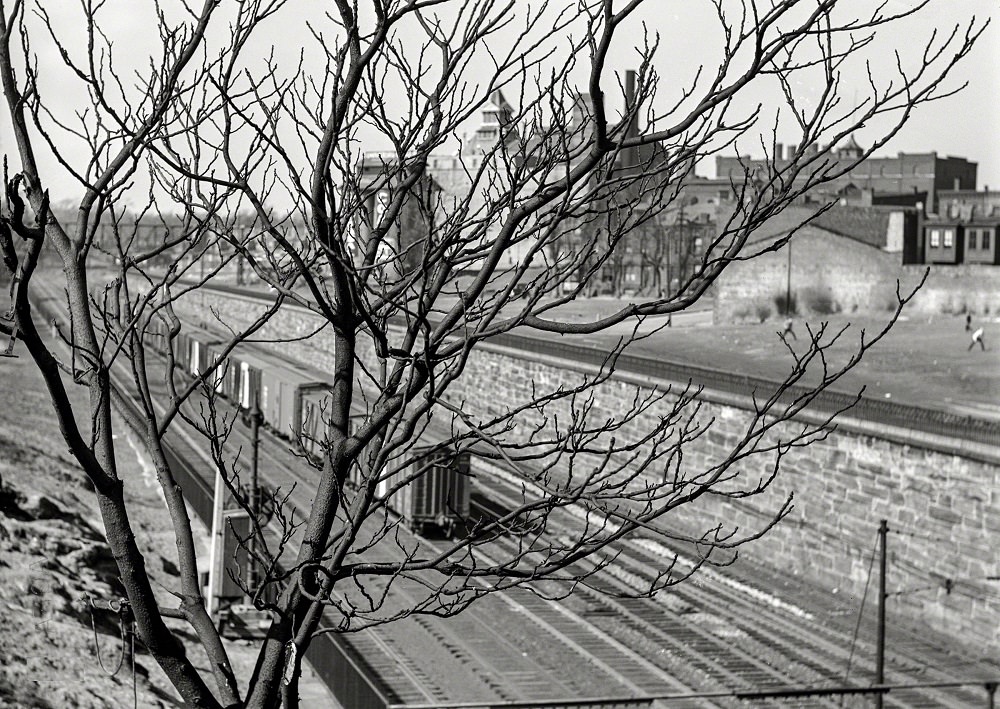
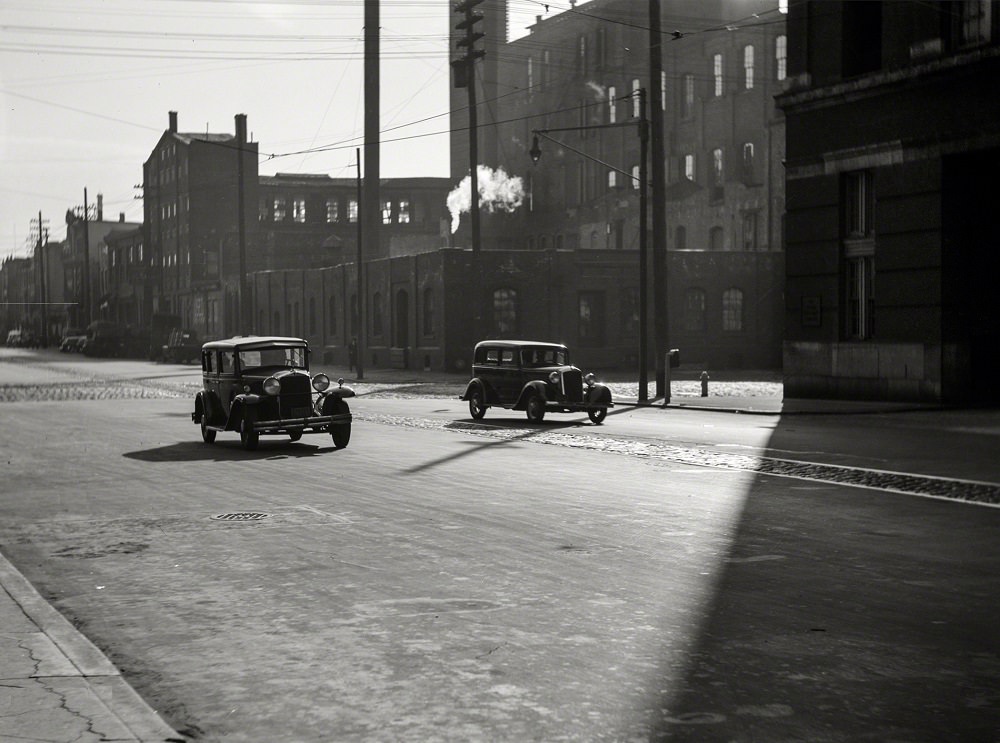
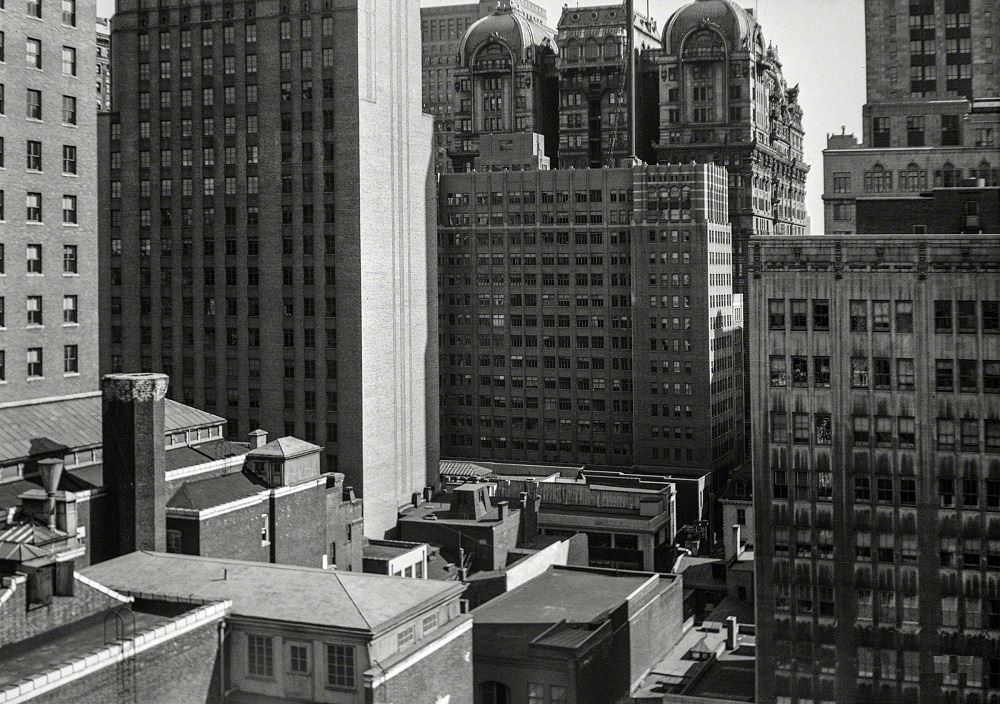
Philadelphia’s streets in the 1930s reflected the economic strain of the Great Depression. Photographs from Spring 1938 show Reading Railroad tracks running past an abandoned brewery — a visible reminder of businesses that had closed. Cars lined South Fifth Street while storefronts along downtown blocks near Walnut and Broad streets stayed open, though the economic pressure was evident in the quieter foot traffic and worn facades.
Reading Railroad tracks with an abandoned brewery in the background, Pennsylvania, Spring 1938Cars on South Fifth Street, Philadelphia, Pennsylvania, Spring 1938Downtown buildings near Walnut and Broad streets, looking east, Pennsylvania, Spring 1939
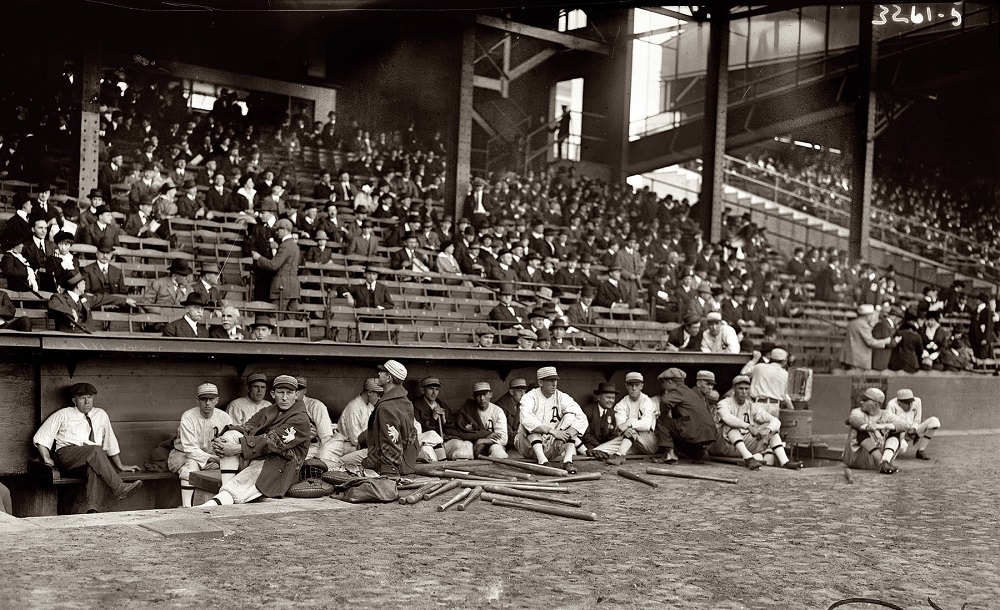
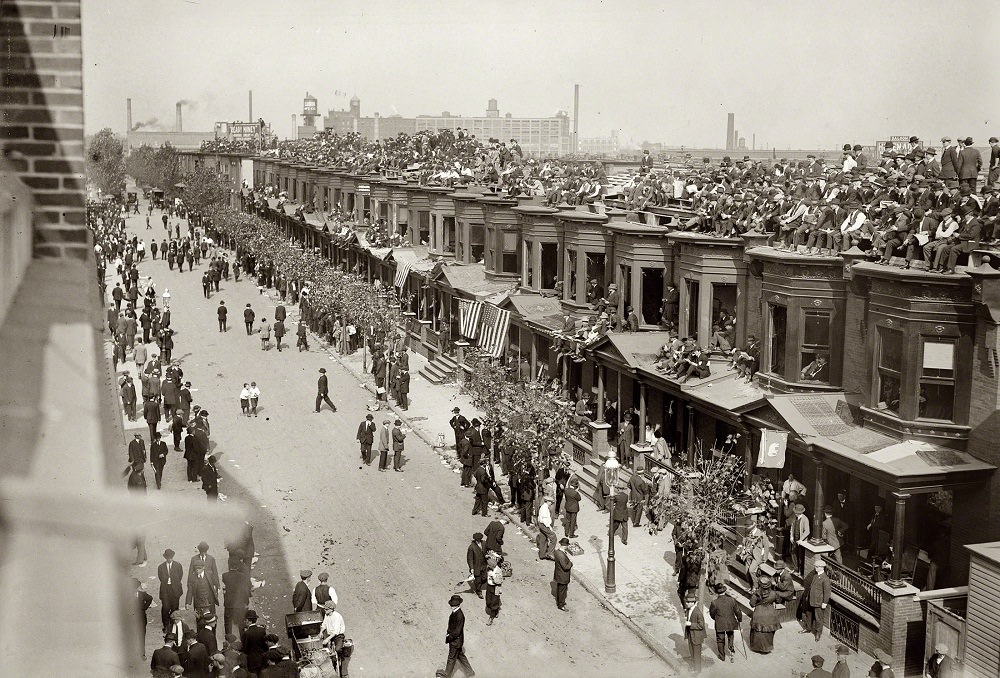
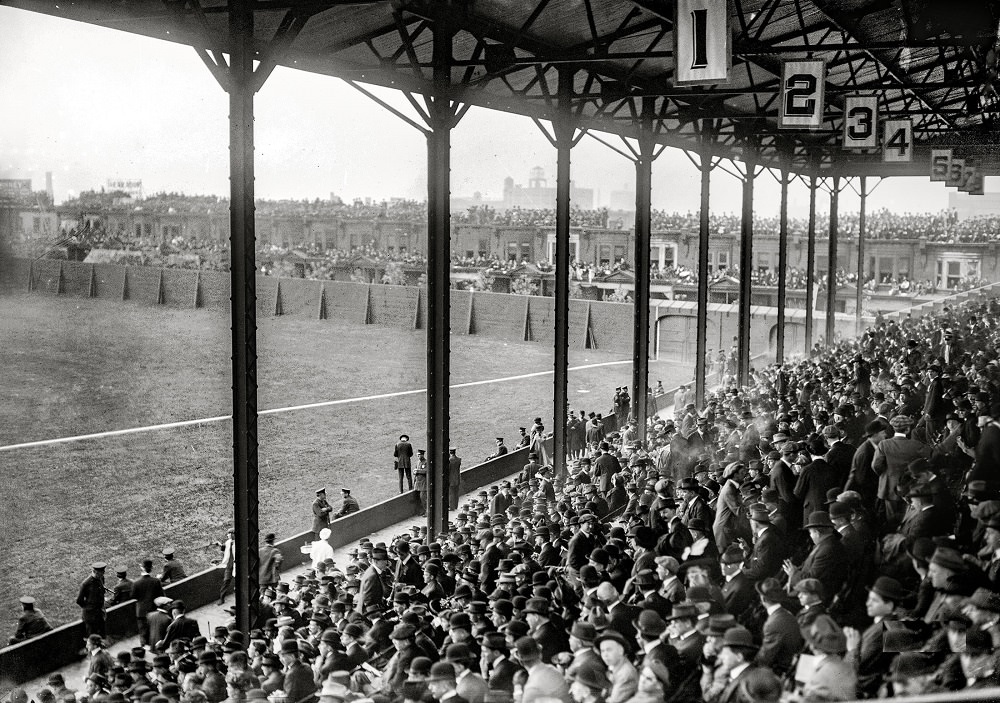
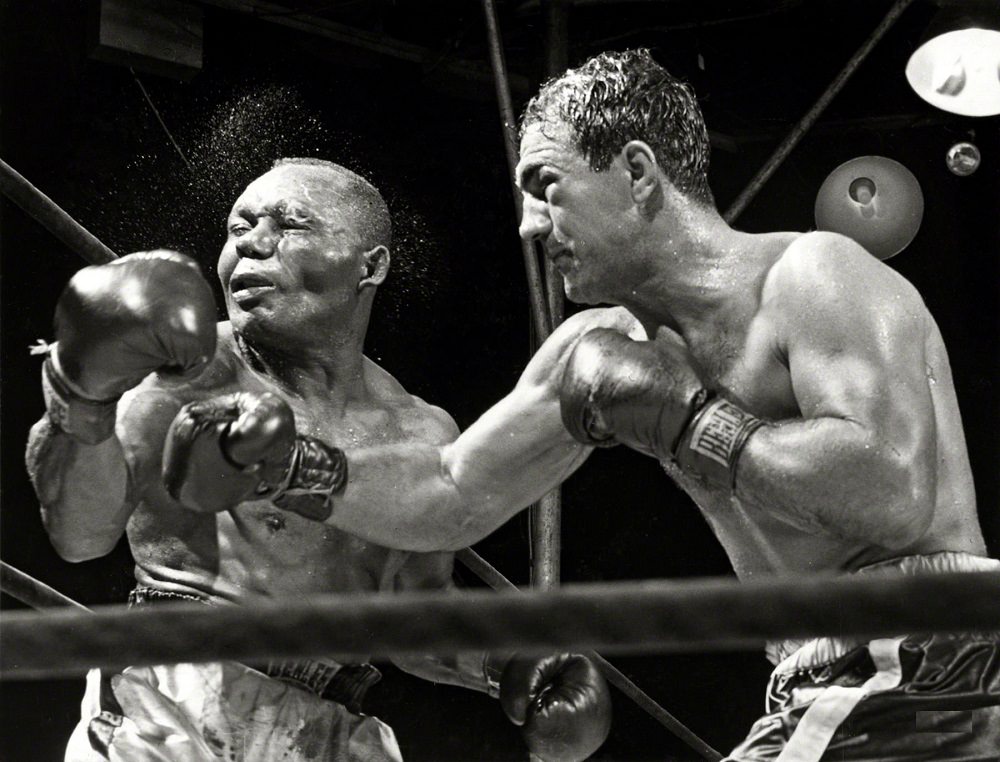
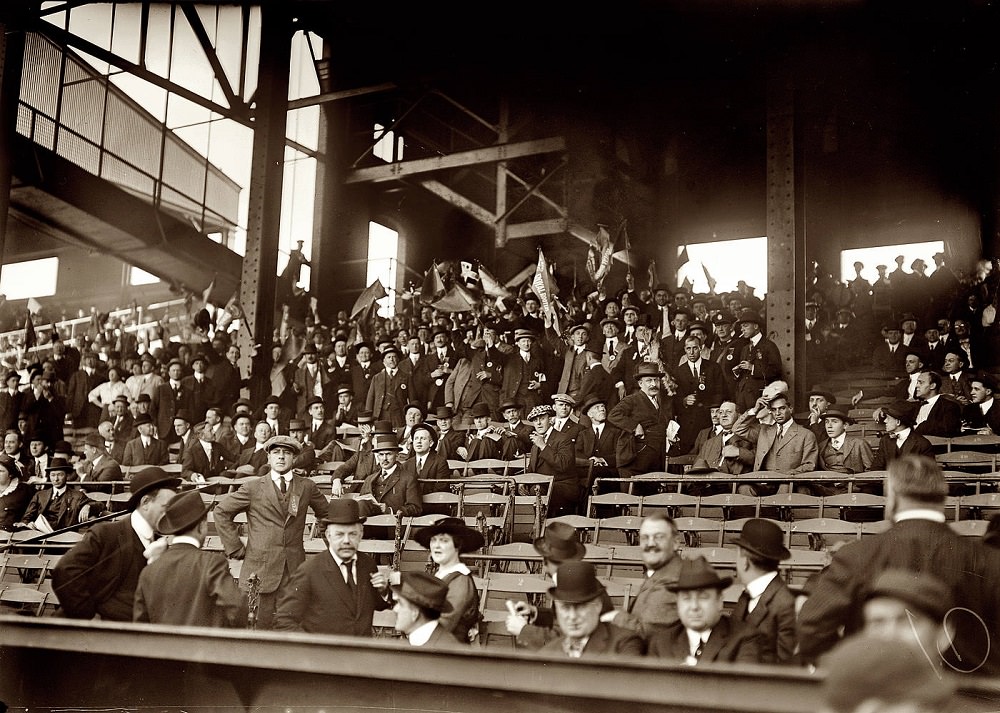
Sports were a central part of Philadelphia life. Shibe Park, opened in 1909, hosted the Philadelphia Athletics. The 1914 World Series brought large crowds to the park — fans filled the grandstands while others watched from rooftops on the surrounding streets. In 1952, the city hosted one of boxing’s most celebrated moments when Rocky Marciano knocked out Jersey Joe Walcott at Municipal Stadium to claim the World Heavyweight Championship.
Philadelphia Athletics dugout prior to start of Game 1 of 1914 World Series at Shibe Park, October 9, 1914Watching the first game of the 1914 World Series from rooftops overlooking Shibe Park in Philadelphia, October 9, 1914First-base grandstand at Shibe Park, Philadelphia, 1913 World SeriesRocky Marciano KO’s Jersey Joe Walcott, is new World Heavyweight Champion, Philadelphia, 1952
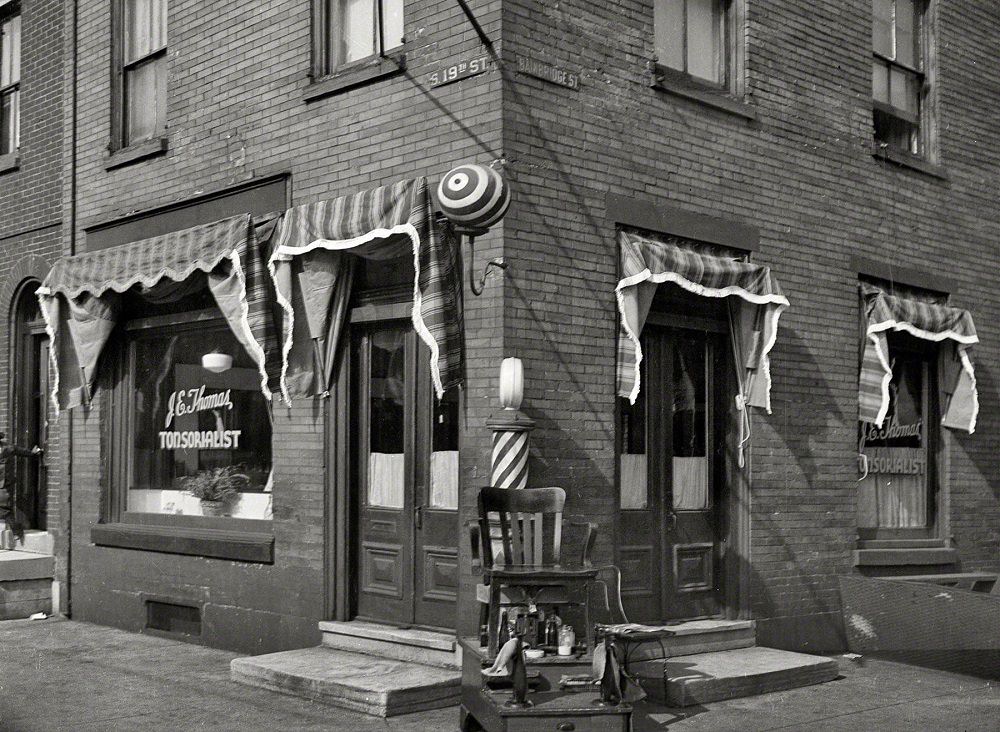
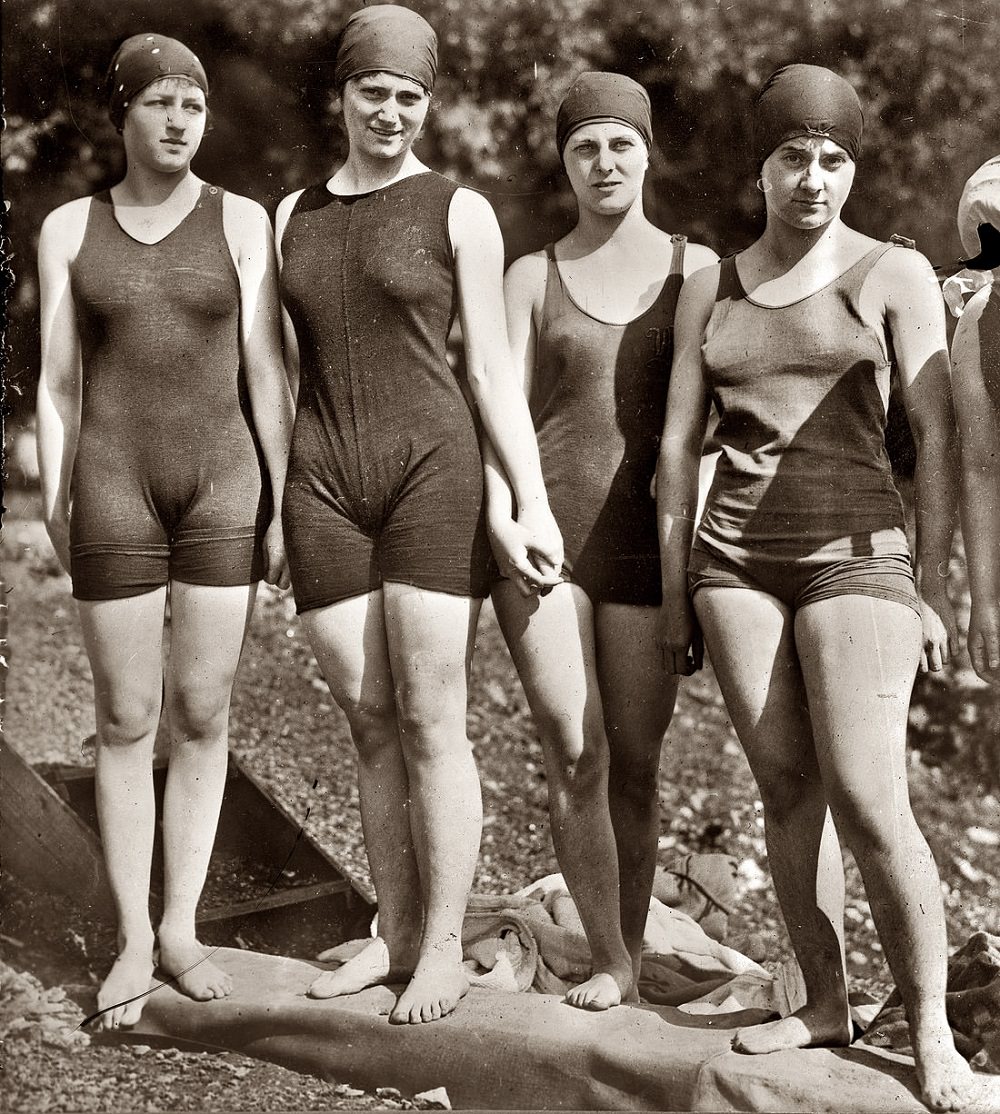
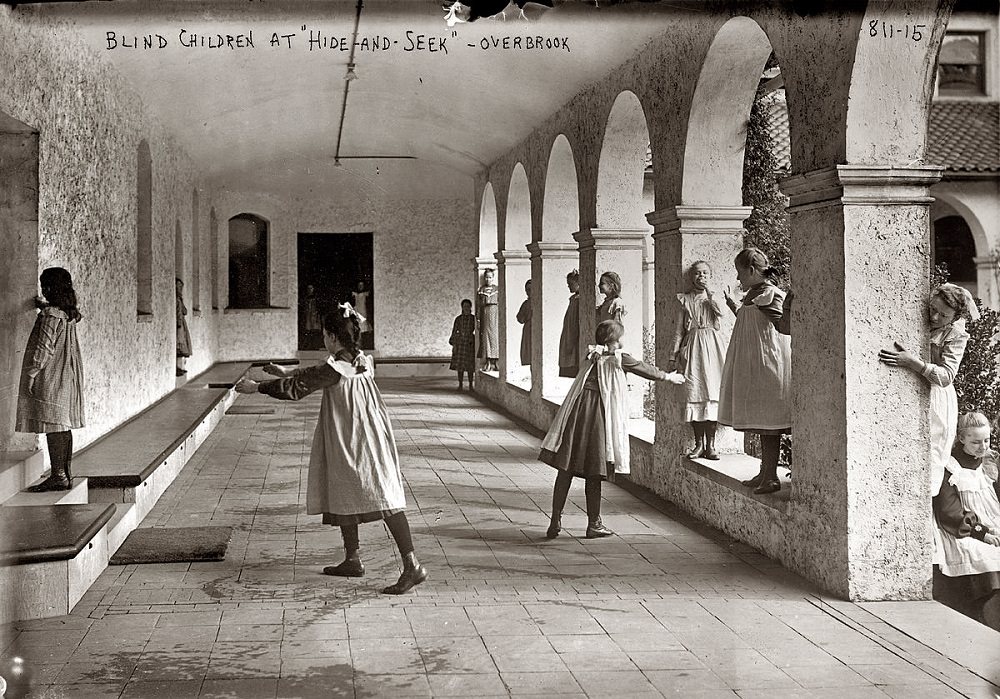
Neighborhood life in Philadelphia showed the full texture of the city. Barber shops on Bainbridge Street served working-class residents in South Philadelphia. The Mermaid Club drew members who gathered in bathing suits around 1920. Blind children played hide-and-seek among the pillars of the Overbrook School in 1912. Acrobatic performers like the Four Novelty Grahams took the stage at the Victoria Theatre in 1910. These snapshots capture everyday Philadelphia — the parts of city life that never made the front page but defined the experience of living there.
Barber shop at 19th and Bainbridge Streets, Philadelphia, Spring 1937Mermaid Club, Philadelphia.” Members in bathing suits circa 1920.Blind children playing hide-and-seek among arcade pillars, at the Overbrook School in Philadelphia, 1912Four Novelty Grahams, acrobatic performers at the Victoria Theatre, Philadelphia, 1910
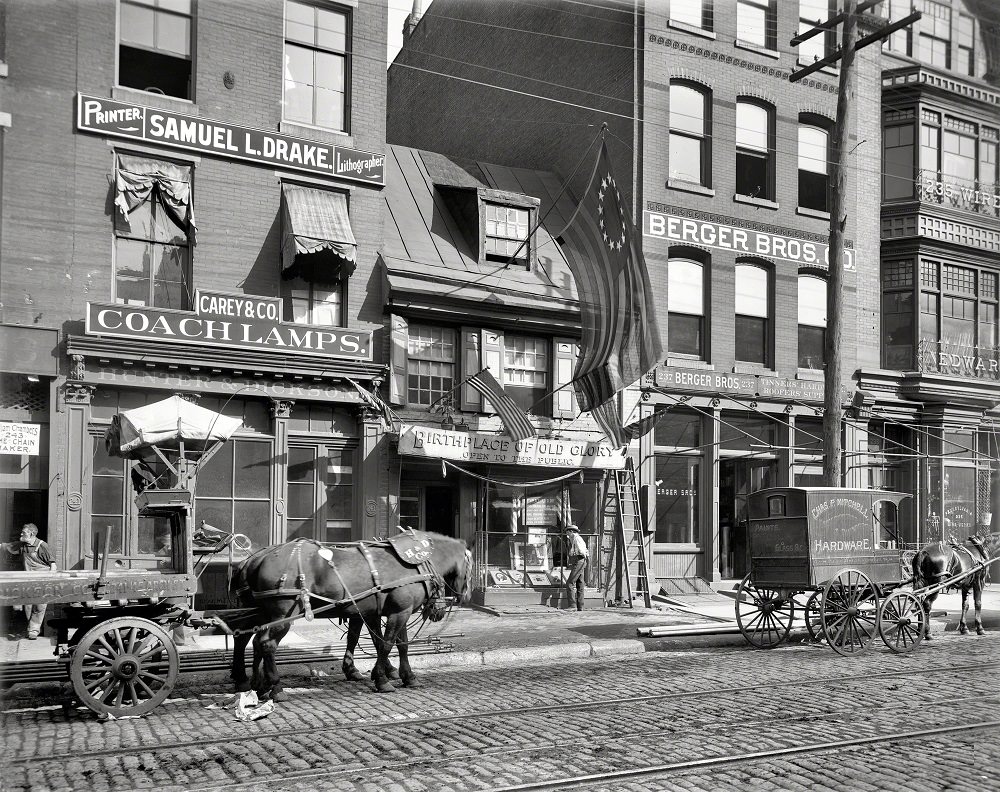
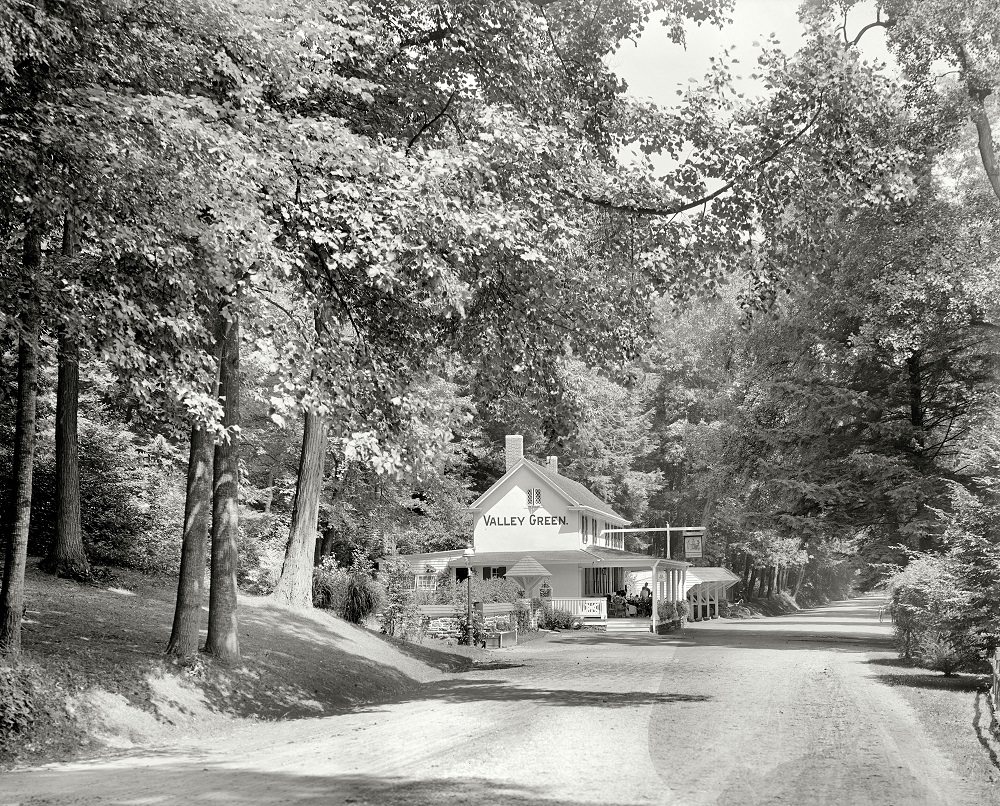
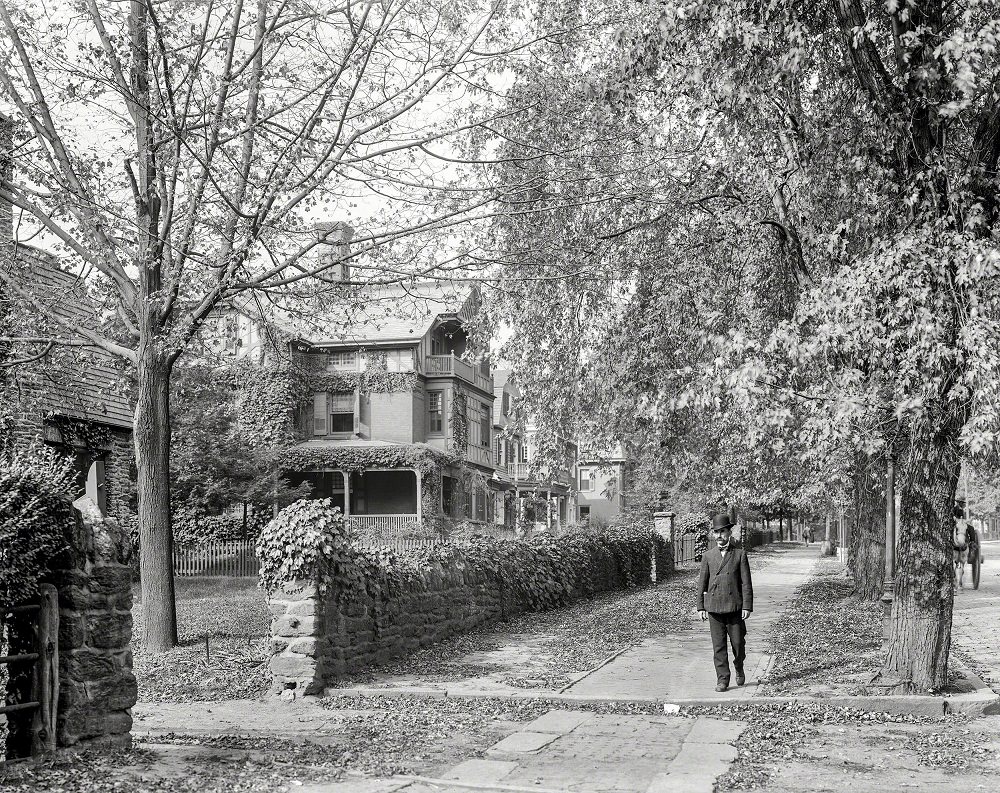
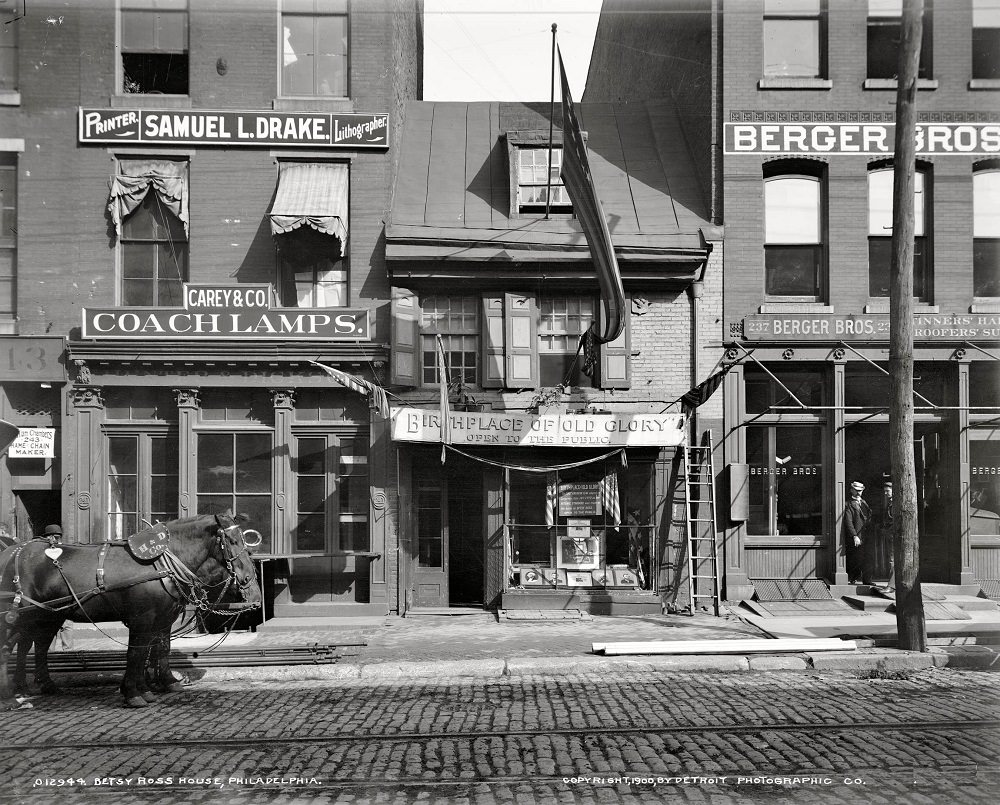
The following photographs span several decades of Philadelphia history. They include views of Broad Street, the waterfront, historic houses like the Betsy Ross House, hotel facades, park scenery in Fairmount Park, and the working corners of a city that was constantly in motion. Taken together, they form a detailed visual record of how Philadelphia looked and functioned during one of the most transformative periods in its history.
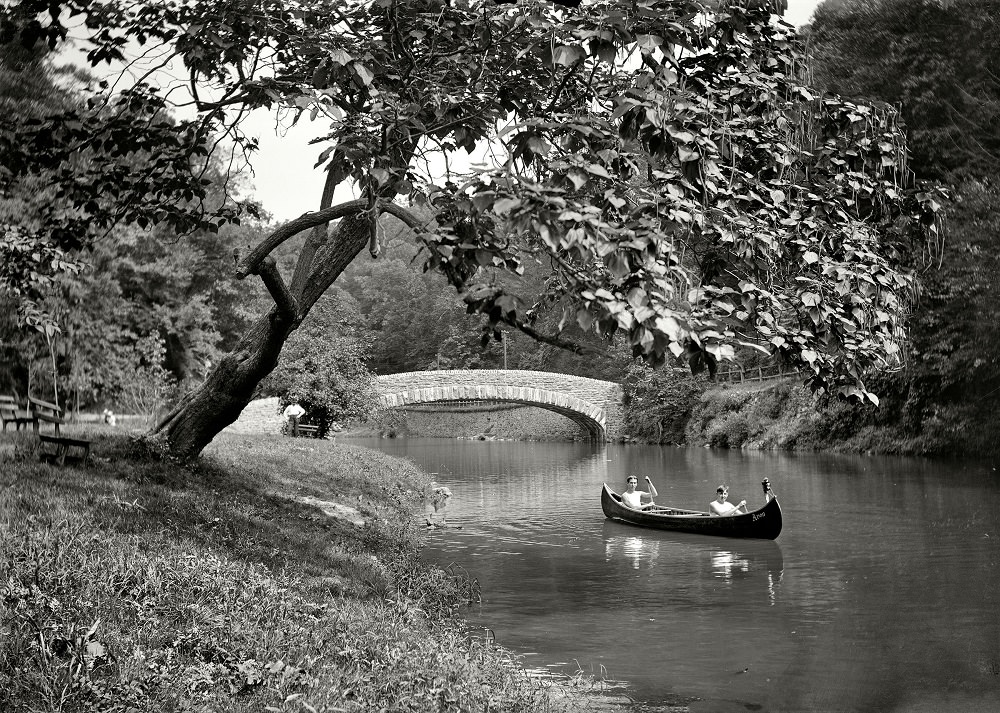
South Broad Street from City Hall, Philadelphia circa 1905Broad Street, Masonic Temple and Arch Street Methodist Church, north from City Hall, Philadelphia circa 1904Broad Street north from Locust with view of City Hall, Philadelphia circa 1907Betsy Ross House, Philadelphia, 1900Valley Green, Fairmount Park, Philadelphia circa 1909Hermit Lane Bridge on the Wissahickon, Philadelphia circa 1906
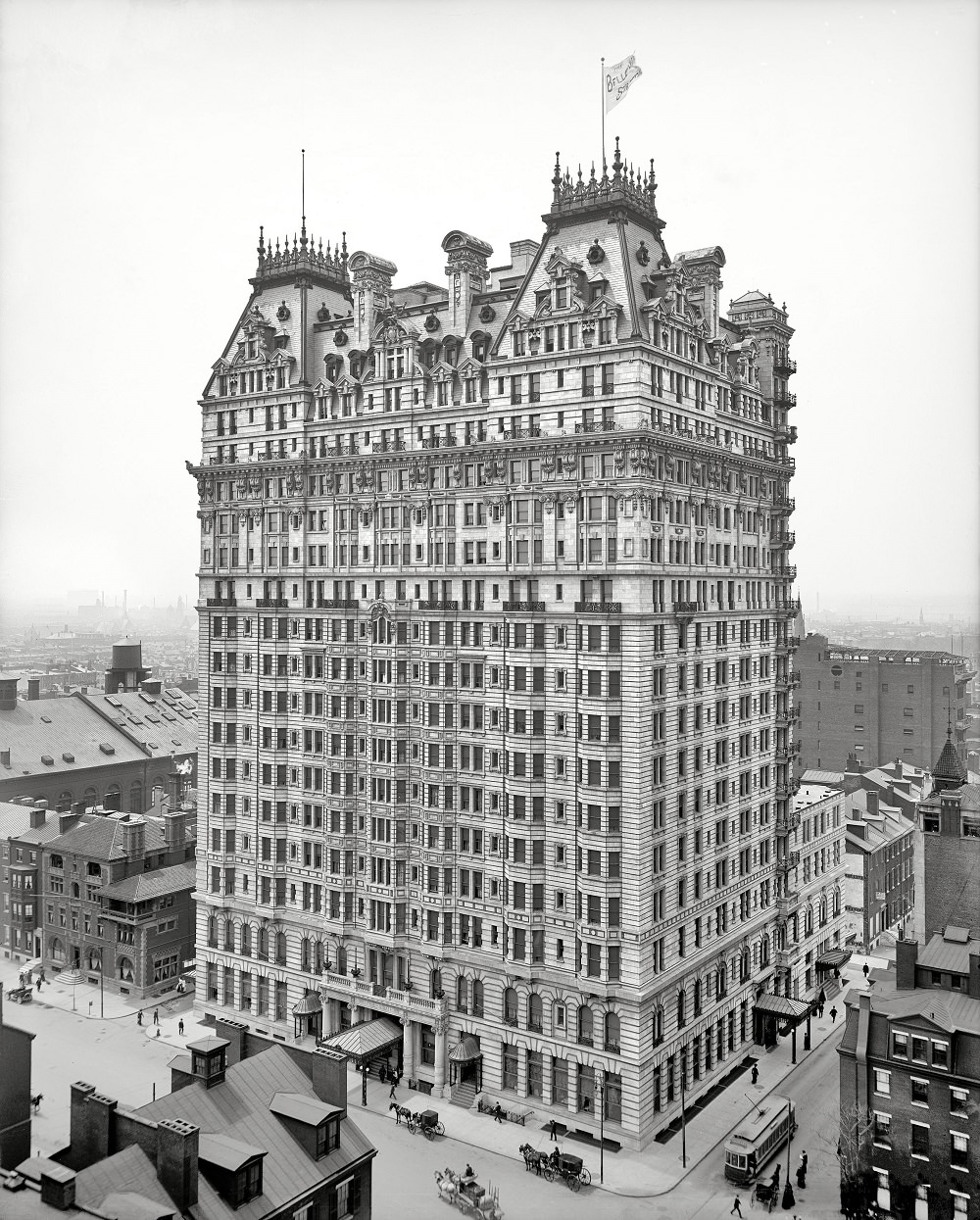
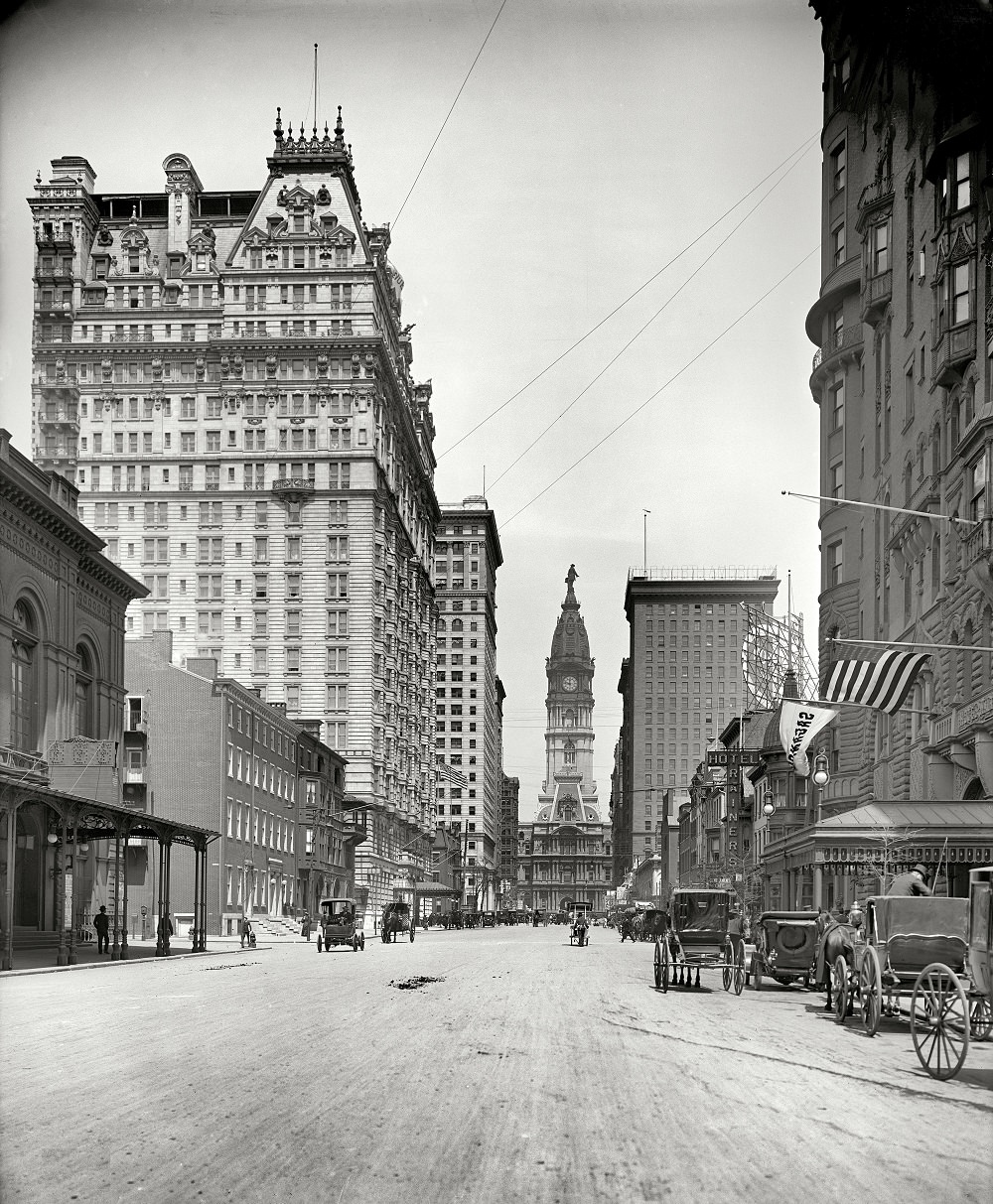
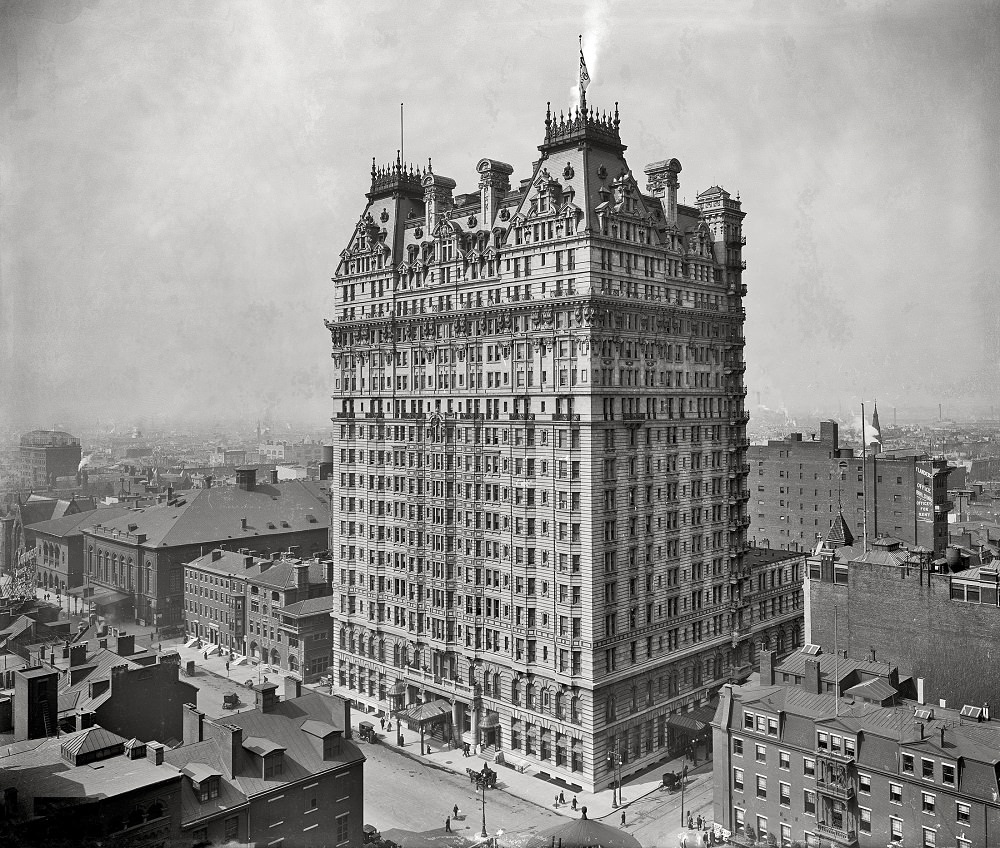
The Bellevue-Stratford Hotel, Philadelphia circa 1905
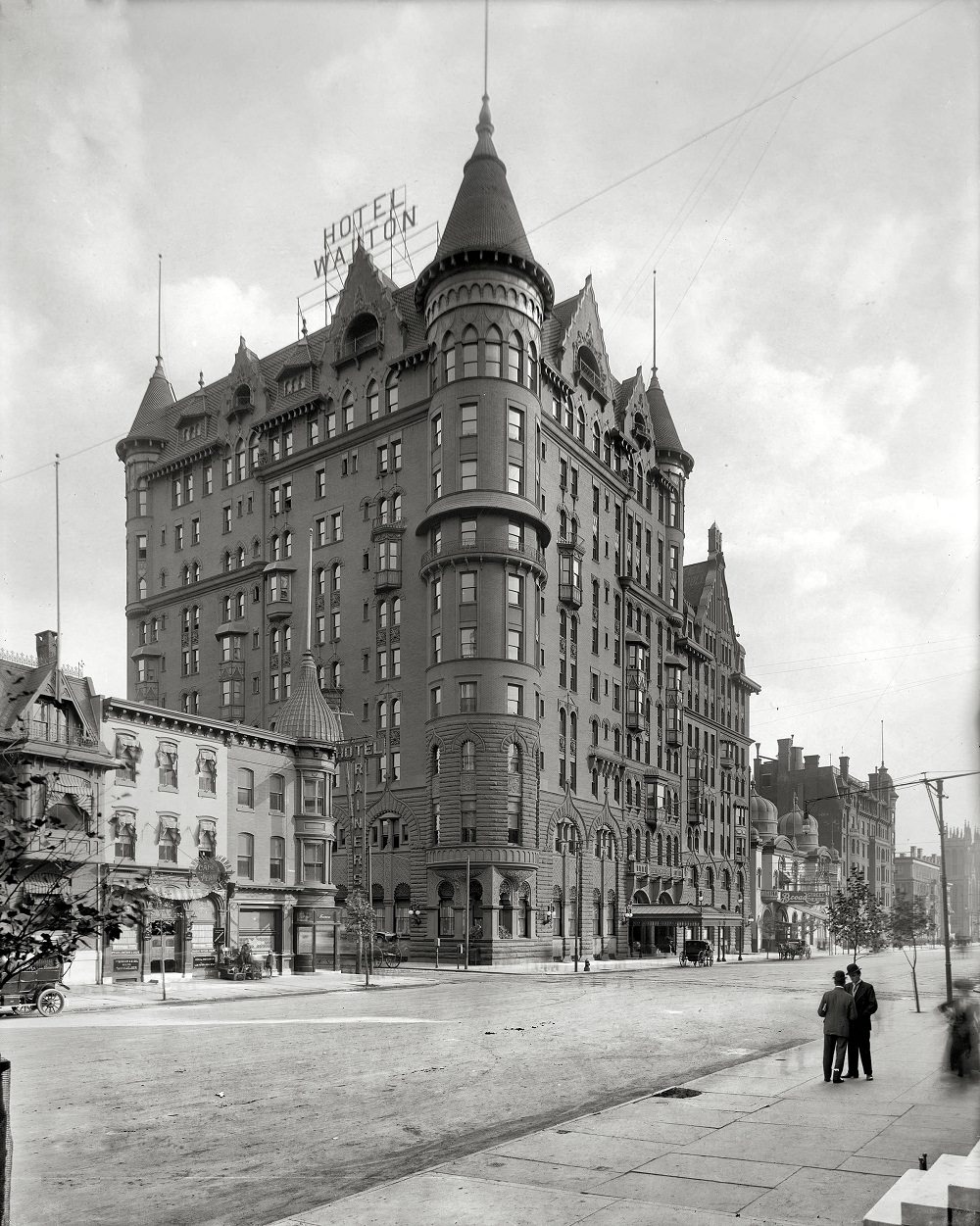
Hotel Walton, Broad Street, Philadelphia circa 1908
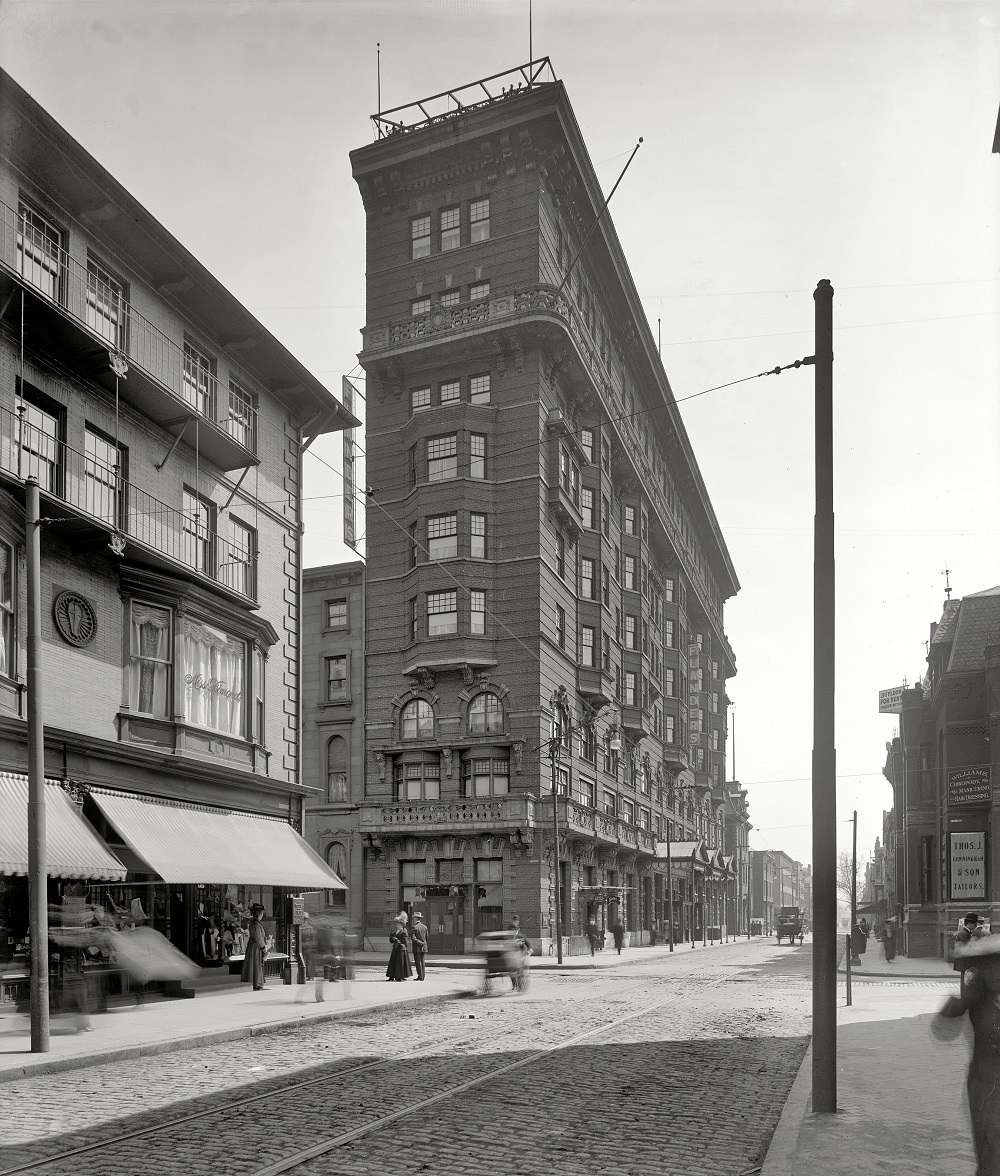
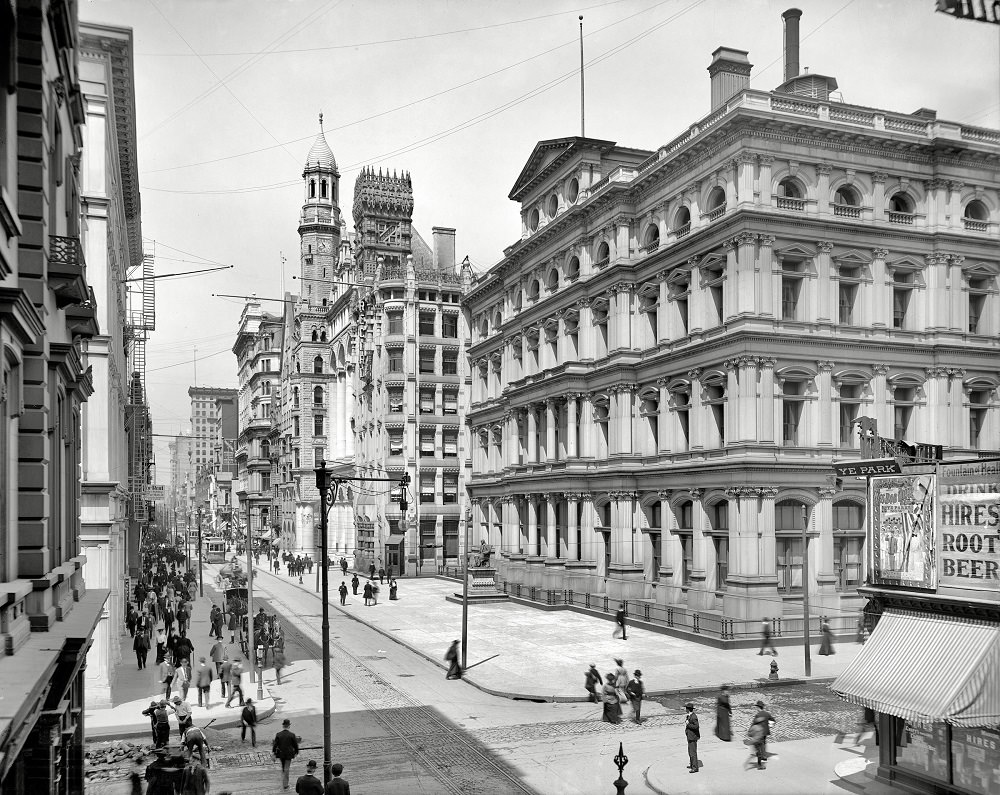
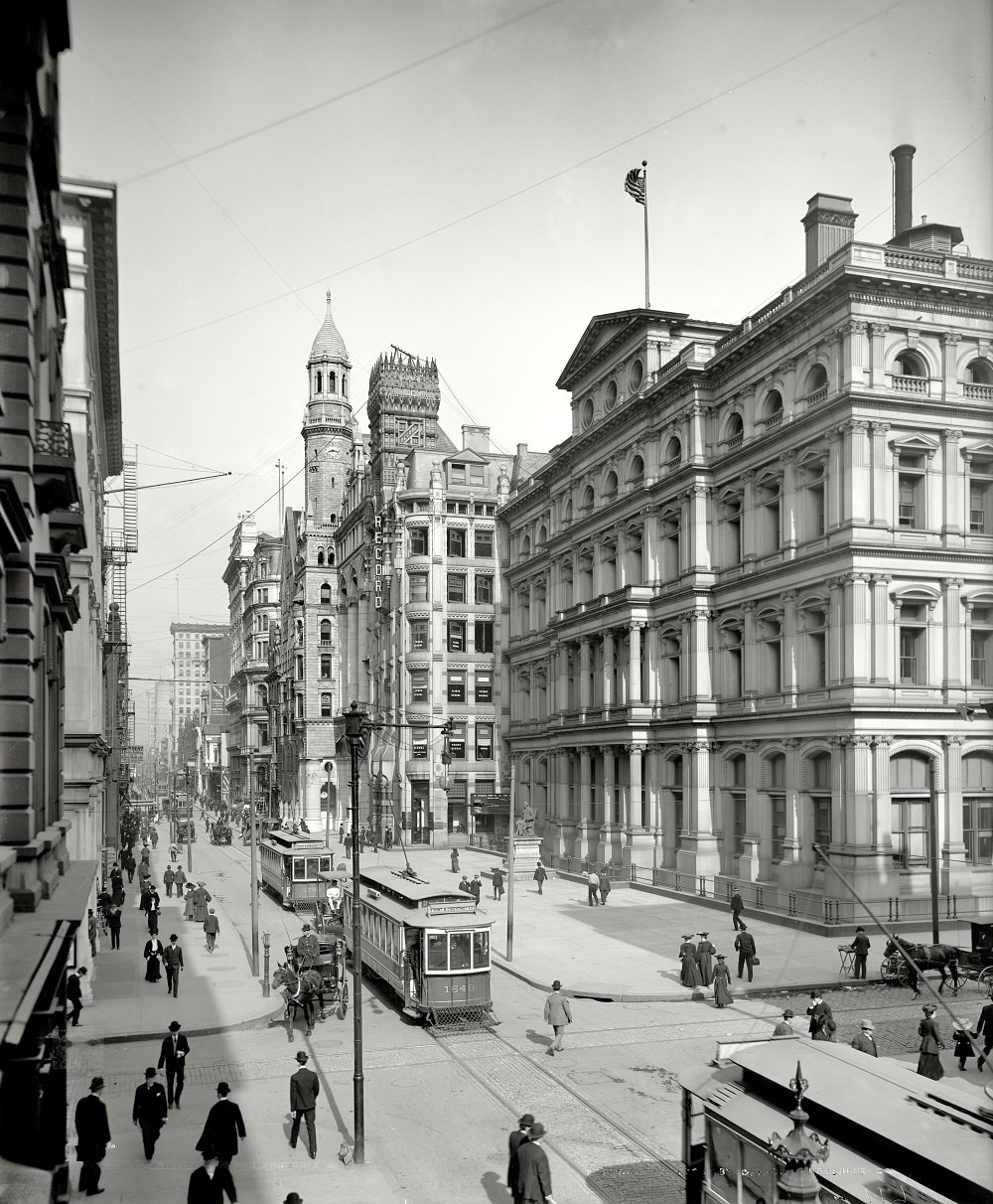
Hotel Flanders, Philadelphia, Pennsylvania, circa 1905Philadelphia Post Office, circa 1900Chestnut Street and post office, Philadelphia circa 1904Chestnut Street from Ninth, Philadelphia circa 1900
Chestnut Street, Philadelphia circa 1906
The Philadelphia Bourse, Fourth and Ranstead street, 1904
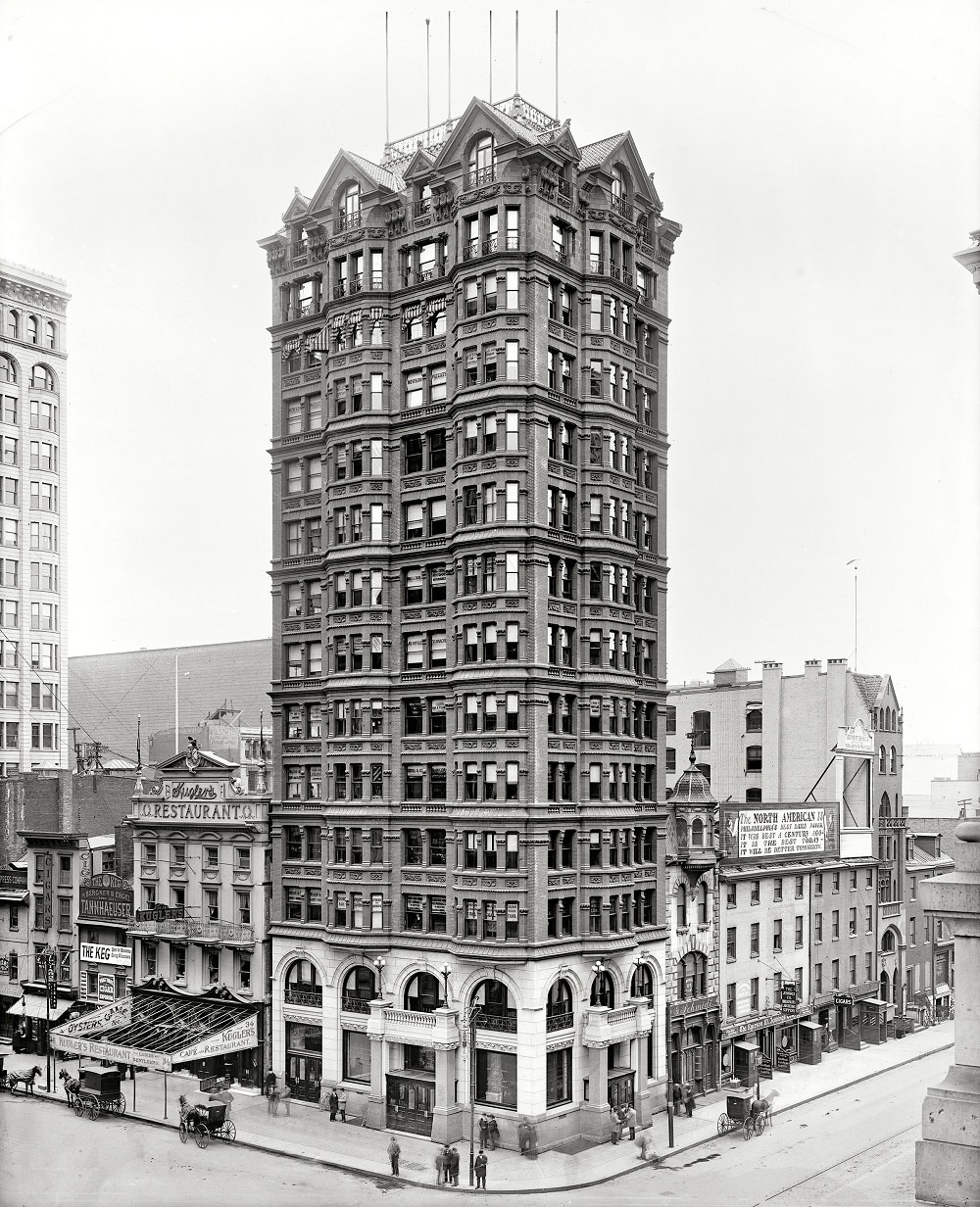
Betz Building, Broad and South Penn Square, Philadelphia, 1900
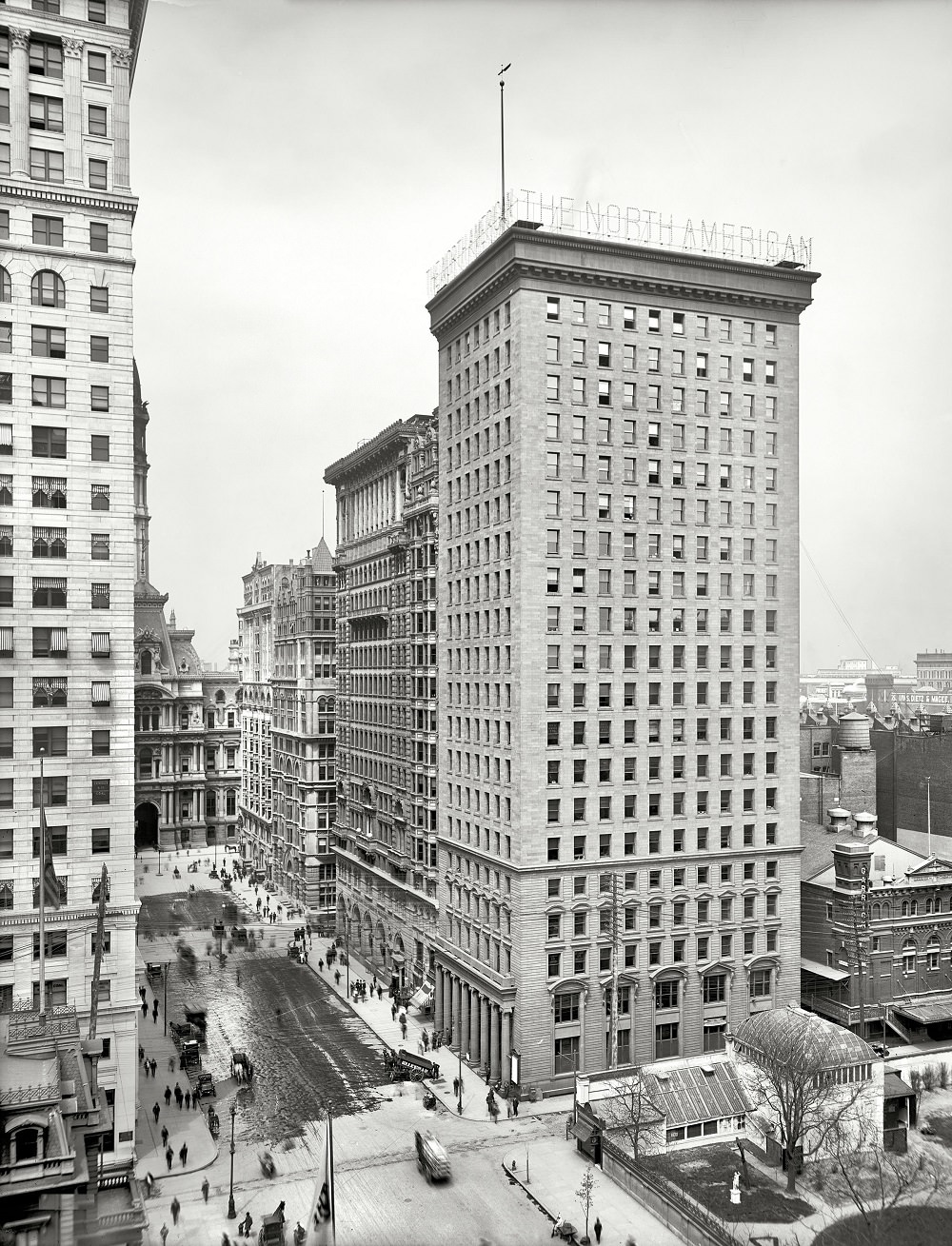
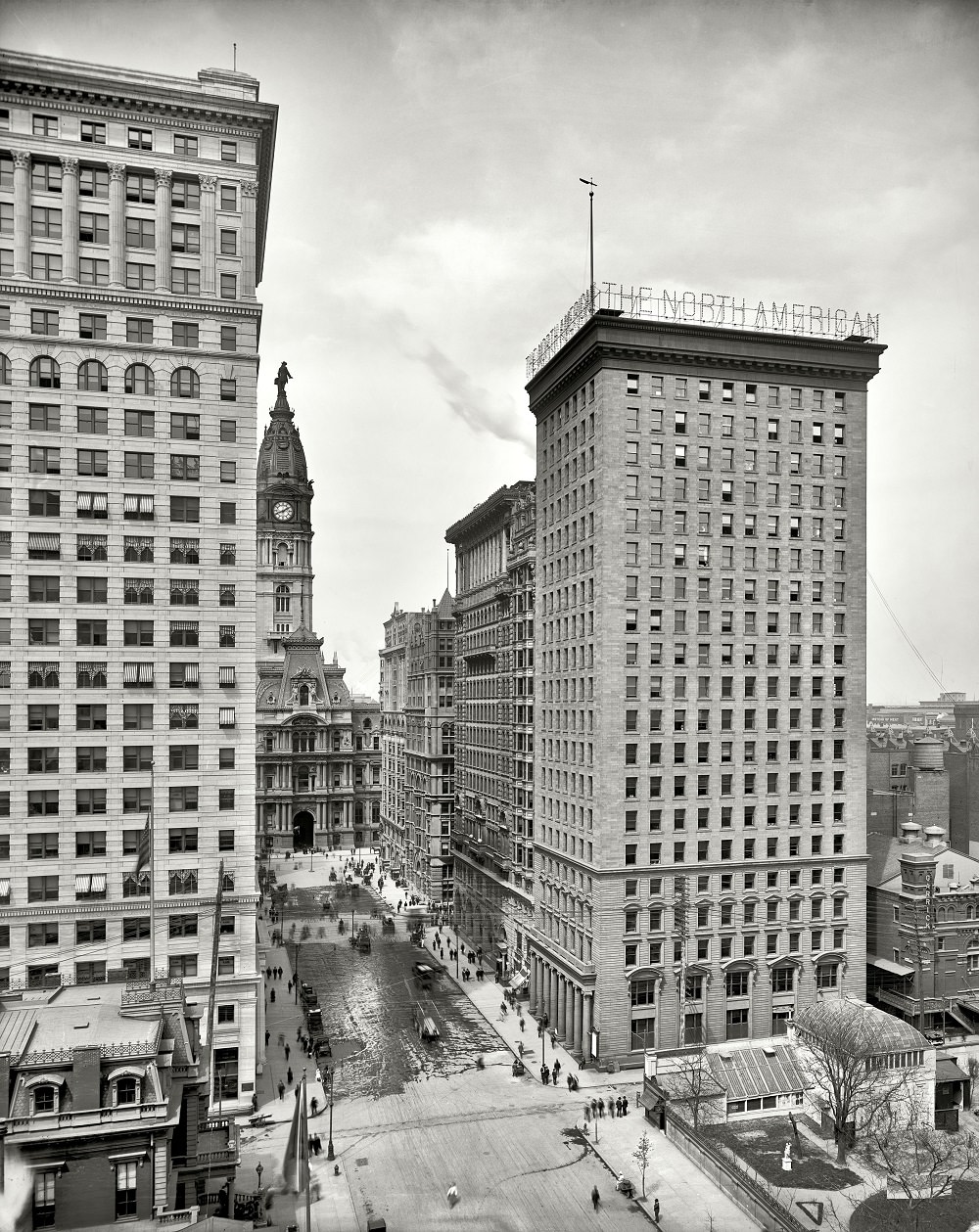
North American, Real Estate Trust, City Hall and Land Title Building, Philadelphia circa 1905
The North American and Real Estate Trust buildings, Philadelphia circa 1904
West End Trust Co. building, Philadelphia circa 1909
Girard Trust Company, Philadelphia circa 1909
City Hall, Philadelphia’s soot-stained City Hall, 1910
City Hall, Broad Street north from Locust, Philadelphia 1907
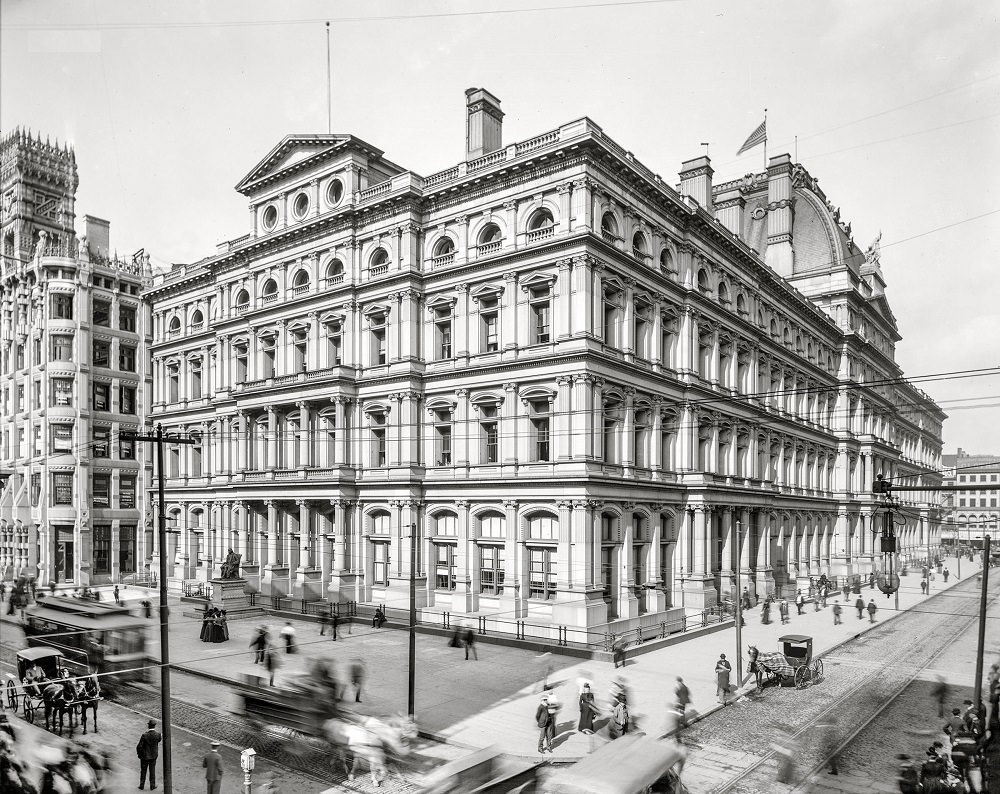
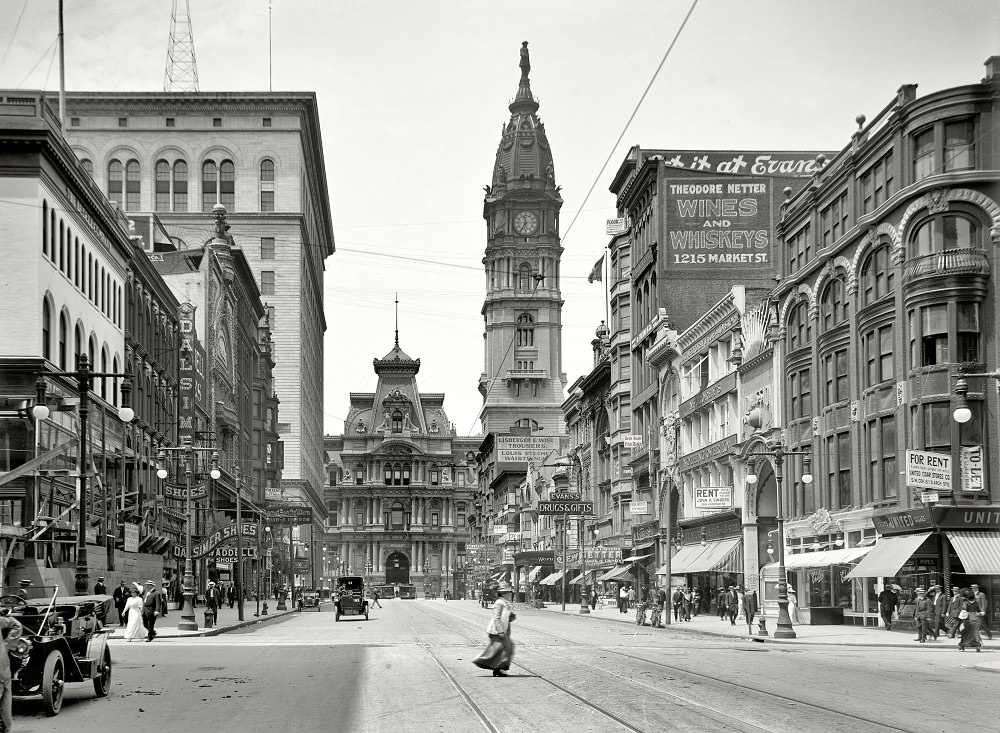
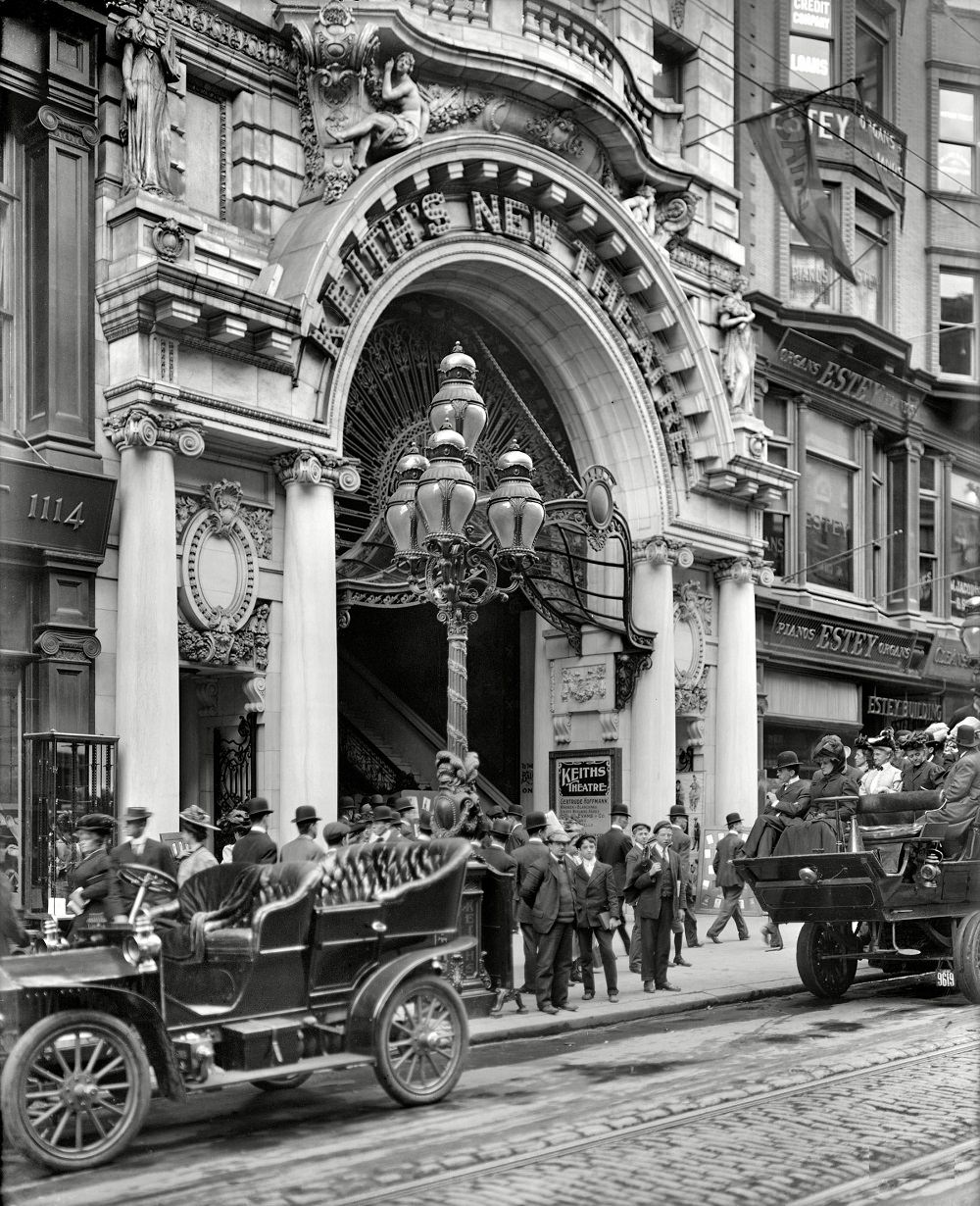
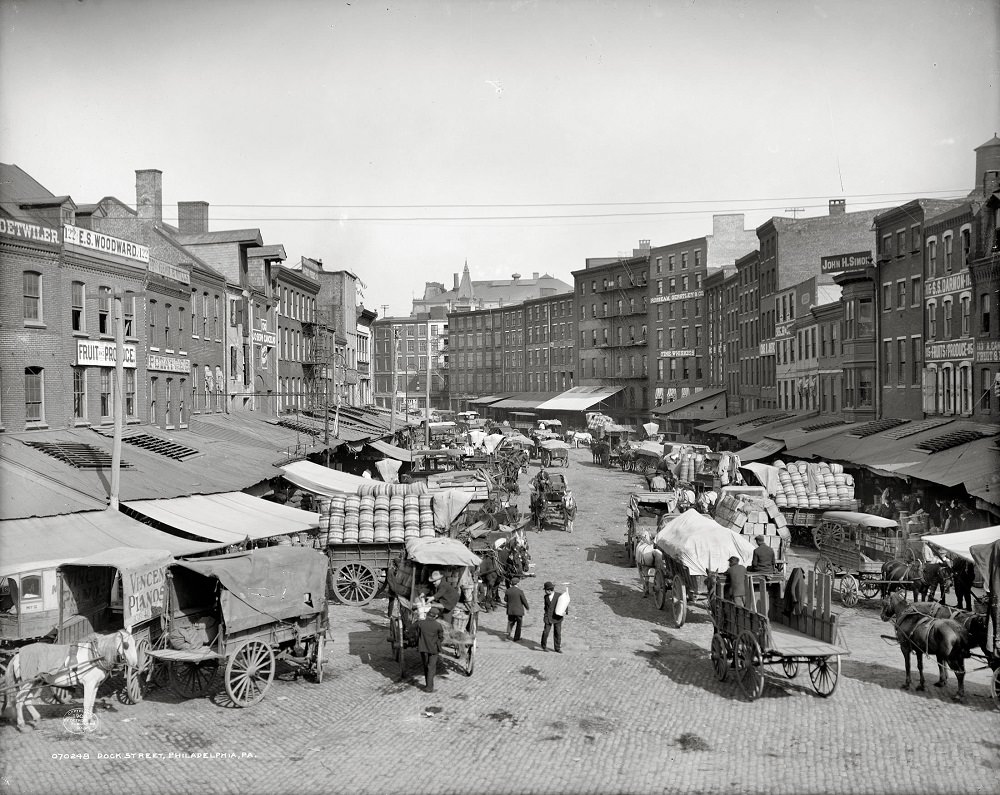
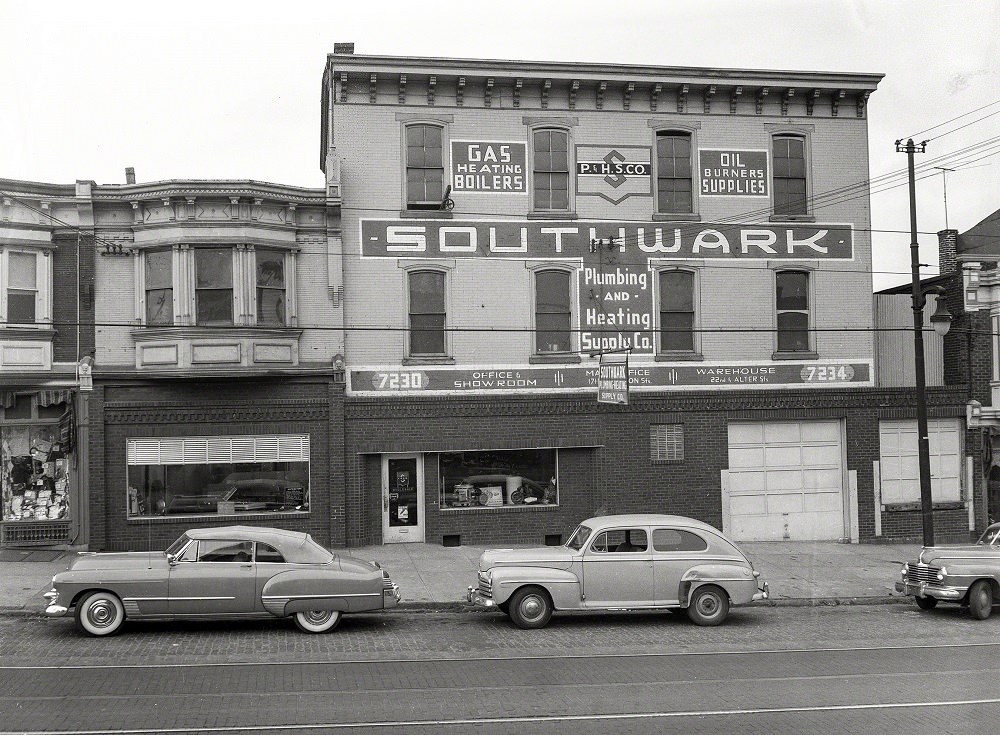
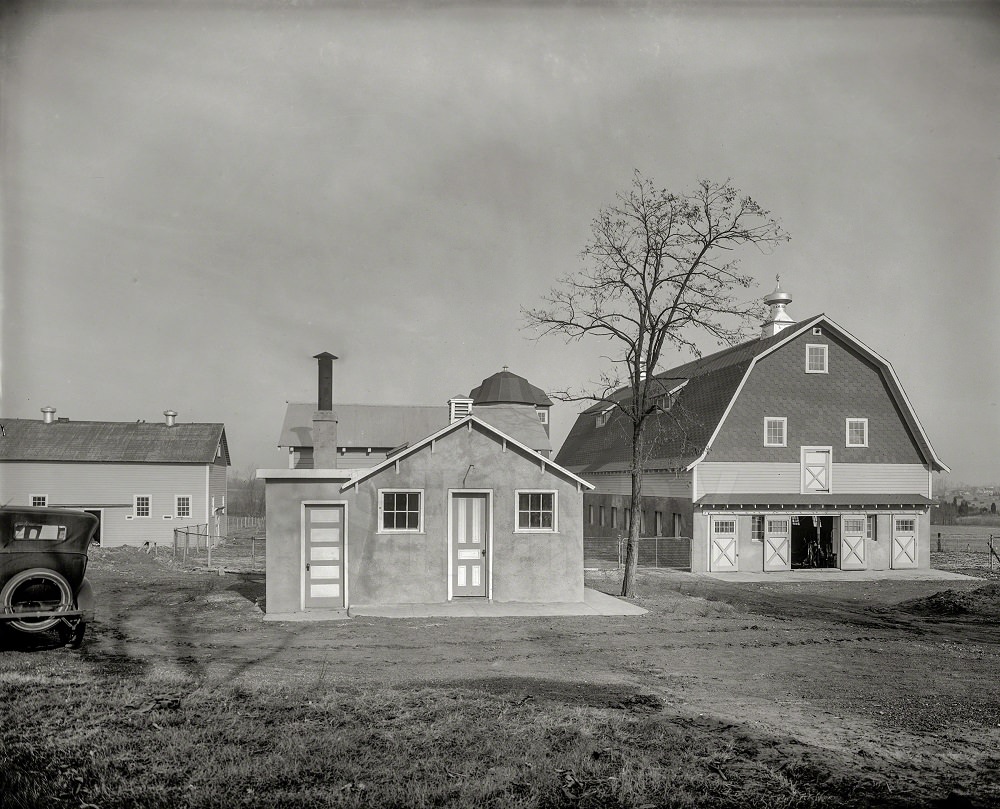
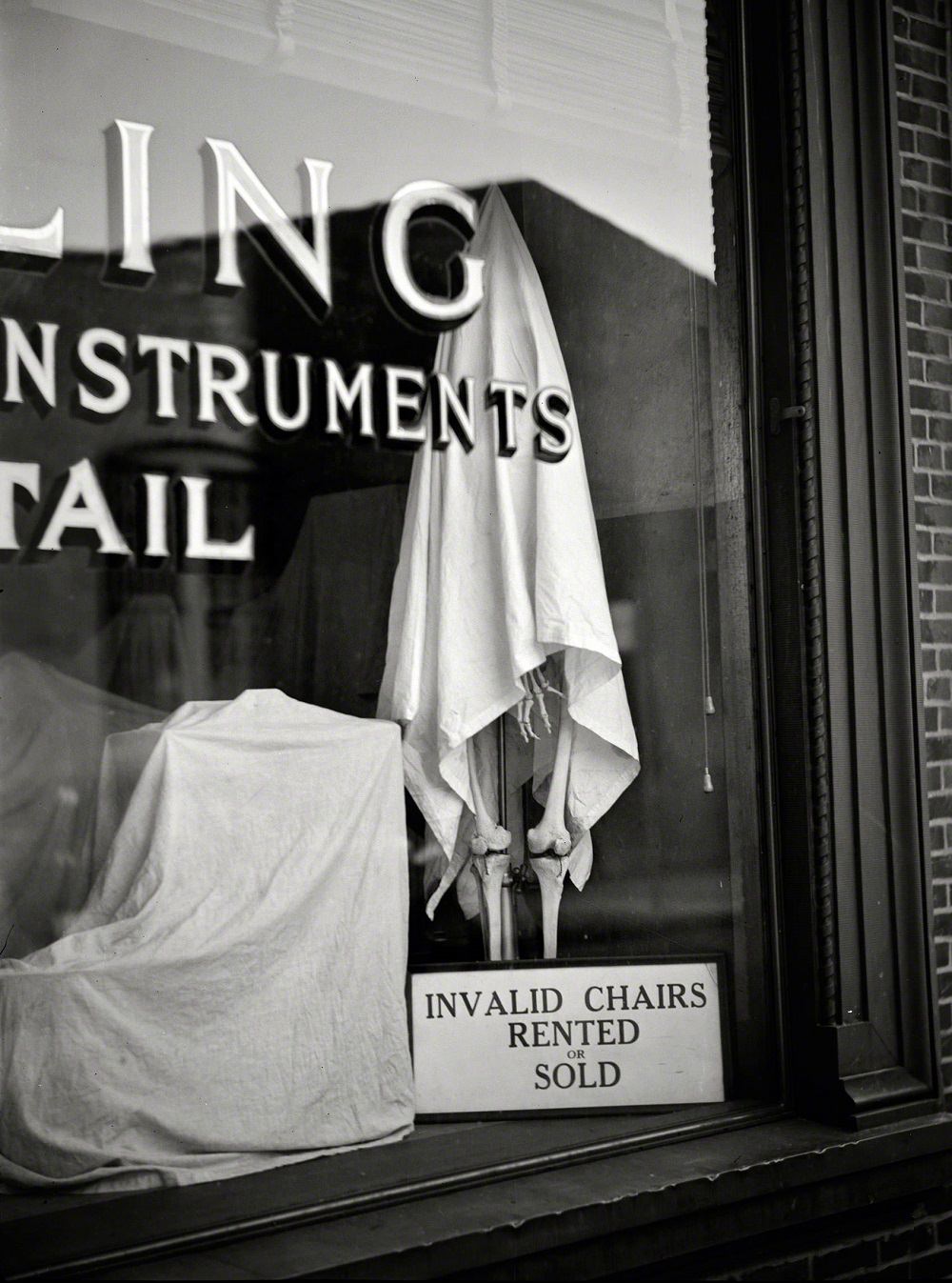
Broad Street north from Walnut.” With City Hall, William Penn and two young friends center stage, Philadelphia circa 1909Broad Street north from Spruce, Philadelphia circa 1905City Hall and Market Street west from 11th, Philadelphia, 1912Market Street west from Eleventh, with view of City Hall, Philadelphia circa 1912Market St. west from 12th, Philadelphia City Hall, 1910Market Street from Eighth, City Hall’s clock tower at the end of the street, Philadelphia circa 1904Market Street at Eighth in Philadelphia circa 1905Entrance to Keith’s Theatre, Philadelphia, 1907Delaware Avenue, foot of Market Street, Philadelphia circa 1908Pennsylvania R.R. ferry terminal, Market Street, Philadelphia circa 1908Pennsylvania Railroad ferry terminal, Market Street, 1905The elevated railway at Delaware & South Streets, Philadelphia circa 1905The Elevated station at 36th Street, Philadelphia, Pennsylvania, circa 1908Elevated railway terminal, 70th and Market streets, Philadelphia, 1906League Island Navy Yard, Philadelphia. U.S.S. Brooklyn spar deck, 1898Dock Street, Philadelphia, circa 1908Germantown, Wayne Avenue, Philadelphia circa 1908Dormitories, University of Pennsylvania, Philadelphia circa 1908Boys High School, Philadelphia, 1904Betsy Ross house, Philadelphia, 1900The Bellevue-Stratford Hotel, Philadelphia circa 1910Broad Street Station of the Pennsylvania R.R., 1900Atwater Kent Factory for T.R. Shipp, Philadelphia circa 1928Assembling room, Atwater Kent radio factory, Philadelphia, Pennsylvania, circa 1928Atwater Kent radio factory, Philadelphia 1929The Atwater Kent factory, which made radios and auto ignition parts, Philadelphia circa 1928Atwater Kent radio factory in Philadelphia, 1925Another happy worker at the giant Atwater Kent radio factory in Philadelphia circa 1925The Atwater Kent radio factory in Philadelphia in 1928Condenser assembling department, Philadelphia, 1925Stamping loudspeaker bells at the Atwater Kent radio factory, Philadelphia, 1925The Atwater Kent radio factory in Philadelphia circa 1925.Radio set assembling room, 1925Atwater Kent radio factory, Philadelphia, 1925Speaker grille assembly at the Atwater Kent radio factory in Philadelphia, 1928Frank Aiken and Atwater Kent at the new Atwater Kent radio factory, Philadelphia, 1925Boston rooters at Shibe Park, Philadelphia, 1914Southwark Plumbing & Heating Supply, Philadelphia, 1949Miss Natalie O’Donald, service-station attendant at the Atlantic Refining Company garages, Philadelphia, June 1934Miss Natalie O’Donald, service station attendant, Philadelphia, June 1934Miss Ruth Gusick, formerly a clerk in a drugstore, Philadelphia, June 1934Chestnut Farms Sanitary Dairy, Philadelphia, 1925Miss Frances Heisler, pump attendant at one of the Atlantic Refining Company garages in Philadelphia, Philadelphia, June 1943Miss Frances Heisler (last seen here), attendant at one of the Atlantic Refining Company garages, Philadelphia, June 1943Window of a medical supply house near Market and Twenty-Third Street, , Philadelphia, 1938
This was a double-edged sword. The railroad, the city, and the people all hated it in one way or another. There was no way to turn around since it was a stub-end station. All trains had to back in or back out. A tunnel through the 18th connected the viaduct from 30th (known colloquially as the Chinese Wall) to the platforms on the 30th, which is why the area north of Market remained underdeveloped until the late 20th century. Smog from the steam locomotives also polluted the skyscrapers surrounding the station. It was, however, a sight to behold.
Seriously, I don’t understand why they didn’t just convert it into an office building. The architecture is beautiful, especially compared to the bland office buildings.
There appears to be a “gas bladder” filled up in the background of one of the shots. Previously I learned about these old metal frames on this sub, and now I get to see one in action. Interesting.
It is unthinkable that the modern buildings would be built like these in the US today. Over the past 70 years, more than 95% of the buildings built in the US have been pure shit, even half decent buildings are rare. The places America builds now are absolutely atrocious; not only are they cheap, half-assed eyesores which make me envy the blind, but they are also built in nightmarish, car-infested suburban hellholes that make me want to throw up. It will never again be possible for our country to build awe-inspiring, memorable cities like New York City, Chicago, Philadelphia, Boston, New Orleans, Detroit, San Francisco, just to name a few. The modernists have ruined the US beyond repair.
buildings should have windows like that. Google Maps shows a beautiful view of it. It’s time for us to come up with a better identity than “random square shapes on the skyline”.
Buying a building for a higher price is the way to go. Sheet metal and glass buildings aren’t built because they look better; they’re built because they’re cheaper than 20 stories of stone
Looking at these photo, so long ago, and thinking that my grandpa was born eleven years later is strange, he remembered dead horses being left on the street. In the future, what will the children of people born now see? It would be nice if it were a better world, but I fear that it won’t be. He remembered an old Civil War vet encampment where horse shit was a problem. Even a tenuous connection to the Civil War freaks me out. The subject of trolleys is interesting. Millions of lines of track were laid within a few years. Life was changed by them.
Future developments are happening so quickly, like a stone rolling downhill and picking up speed. As we try to gauge its momentum, we end up just keeping up.
Yesterday, my friend and I discussed the speed of time. Summer, for example, seems to last forever when you are a child. It seems that my college romances lasted longer than those in my thirties.
With age, time has begun to slow down. There are some events that seem like they happened yesterday when they happened years ago and there are some events that seem like they happened ages ago when they happened just a couple of years ago.
I remember reading a book about the public transit systems in NYC and Boston that even in Philly. Basically, before cars became a big deal, people walked, used horses or omnibuses, and eventually trollies. As no one stopped and there were no traffic signals, if someone was crossing the street, they were lucky not to get killed. If you tried to cross, you had to look for traffic and cross quickly. Since subways took most traffic below ground and made it easier for people to walk, they were supposed to solve the problem.
This just shows me we’d be such a better-looking city without all the cars. Opens up so much space. We’re already very walkable but I hate that we’re so reliant.
Interesting photos, and it’s great that many of the buildings are still there. Shame that some can’t appreciate the history and just think, “cars bad.”
The big clean up was fake. All it did was push a bunch of criminal chemical corporations out of Philadelphia and into neighboring counties. Look at the Revere chemical Corporation as a pristine example of that.






Man I love old photos. I wish I could be a time tourist.
It’s sad to lose some magnificent buildings.
There must have been something special about Broad St. station
This was a double-edged sword. The railroad, the city, and the people all hated it in one way or another. There was no way to turn around since it was a stub-end station. All trains had to back in or back out. A tunnel through the 18th connected the viaduct from 30th (known colloquially as the Chinese Wall) to the platforms on the 30th, which is why the area north of Market remained underdeveloped until the late 20th century. Smog from the steam locomotives also polluted the skyscrapers surrounding the station. It was, however, a sight to behold.
Seriously, I don’t understand why they didn’t just convert it into an office building. The architecture is beautiful, especially compared to the bland office buildings.
Probably because it burned down.
The building didn’t burn down. The train shed caught fire twice but was replaced both times.
Oh, that’s interesting, thanks. There always seemed to
be the impression that the whole thing went up, and that’s why they razed it. Guess I need to learn more about it!
I loved the Betz Building and the Furness design on South Broad (across from the Kimmel). It’s a shame both were torn down.
There appears to be a “gas bladder” filled up in the background of one of the shots. Previously I learned about these old metal frames on this sub, and now I get to see one in action. Interesting.
I wish our buildings were as grand and glorious as these
It is unthinkable that the modern buildings would be built like these in the US today. Over the past 70 years, more than 95% of the buildings built in the US have been pure shit, even half decent buildings are rare. The places America builds now are absolutely atrocious; not only are they cheap, half-assed eyesores which make me envy the blind, but they are also built in nightmarish, car-infested suburban hellholes that make me want to throw up. It will never again be possible for our country to build awe-inspiring, memorable cities like New York City, Chicago, Philadelphia, Boston, New Orleans, Detroit, San Francisco, just to name a few. The modernists have ruined the US beyond repair.
Back to when America’s grand architecture style was the rule
It’s a damn shame that we destroyed so much historic beauty in this city.
awesome pictures
some clean sidewalks.
There’s no doubt that we used to be a much prettier city.
The streets and sidewalks are cleaner than they are today
It’s amazing how well dressed everyone is. Comparatively, we look like slobs.
In 50 years, people might be saying that about us. By then, Grittys may not be the dominant species.
Ah, but the smells might be different.
I’d rather wear Nike Dri Fits over moist wool booty stink from the days before tide
sometimes feel sick to my stomach when I see the historic architecture that has been lost in this city.
buildings should have windows like that. Google Maps shows a beautiful view of it. It’s time for us to come up with a better identity than “random square shapes on the skyline”.
Buying a building for a higher price is the way to go. Sheet metal and glass buildings aren’t built because they look better; they’re built because they’re cheaper than 20 stories of stone
Looking at these photo, so long ago, and thinking that my grandpa was born eleven years later is strange, he remembered dead horses being left on the street. In the future, what will the children of people born now see? It would be nice if it were a better world, but I fear that it won’t be. He remembered an old Civil War vet encampment where horse shit was a problem. Even a tenuous connection to the Civil War freaks me out. The subject of trolleys is interesting. Millions of lines of track were laid within a few years. Life was changed by them.
Future developments are happening so quickly, like a stone rolling downhill and picking up speed. As we try to gauge its momentum, we end up just keeping up.
Yesterday, my friend and I discussed the speed of time. Summer, for example, seems to last forever when you are a child. It seems that my college romances lasted longer than those in my thirties.
With age, time has begun to slow down. There are some events that seem like they happened yesterday when they happened years ago and there are some events that seem like they happened ages ago when they happened just a couple of years ago.
I remember reading a book about the public transit systems in NYC and Boston that even in Philly. Basically, before cars became a big deal, people walked, used horses or omnibuses, and eventually trollies. As no one stopped and there were no traffic signals, if someone was crossing the street, they were lucky not to get killed. If you tried to cross, you had to look for traffic and cross quickly. Since subways took most traffic below ground and made it easier for people to walk, they were supposed to solve the problem.
I love the photos, but the series has an odd fasciation with women who work in gas stations
It was a novelty in the 40s
This just shows me we’d be such a better-looking city without all the cars. Opens up so much space. We’re already very walkable but I hate that we’re so reliant.
No looters, either.
Interesting photos, and it’s great that many of the buildings are still there. Shame that some can’t appreciate the history and just think, “cars bad.”
None of those people in the radio factory pictures were allowed to have a beer after work
Doesn’t Philadelphia still look like that including classic cars
Also no matter what you show me Pittsburgh was always worse and has improved far more
Philadelphia did a lot of cleaning up in preparation for the Bicentennial.
The big clean up was fake. All it did was push a bunch of criminal chemical corporations out of Philadelphia and into neighboring counties. Look at the Revere chemical Corporation as a pristine example of that.