
Mobile is Alabama’s oldest city and one of the most historically layered cities in the American South. It officially became part of the state in 1819, but its story stretches back much further. Before that, Mobile spent its first century under the flags of France, Great Britain, and Spain — each leaving a mark on the city’s culture, architecture, and street layout. During the Civil War, Mobile sided with the Confederacy, and its port played a key role in Southern supply lines.
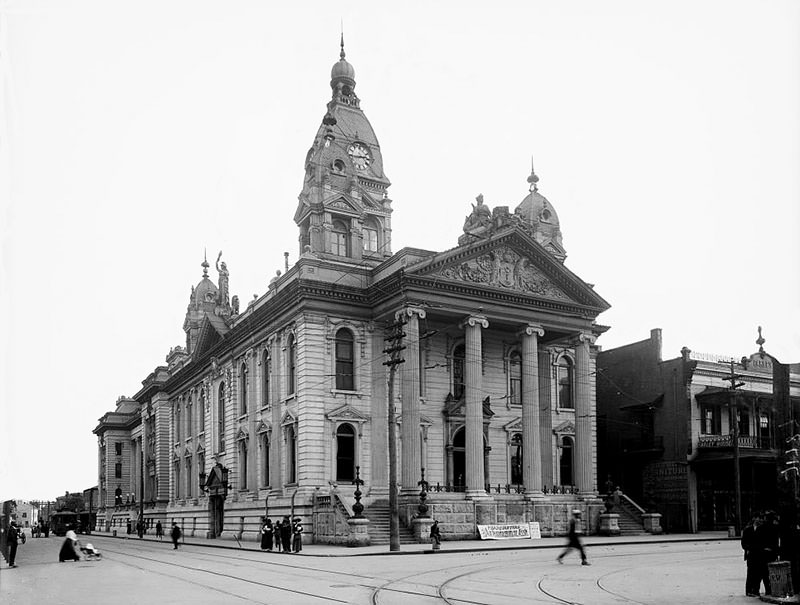
The turn of the 20th century brought real momentum. New industries — shipbuilding, steel, cotton processing, and iron production — pulled in large numbers of immigrants and roughly doubled the city’s population. The federal government poured $3 million into harbor improvements to deepen the shipping channels, turning Mobile into a serious commercial port. The city’s downtown reflected that growth, with grand hotels, ornate commercial buildings, and busy streets.
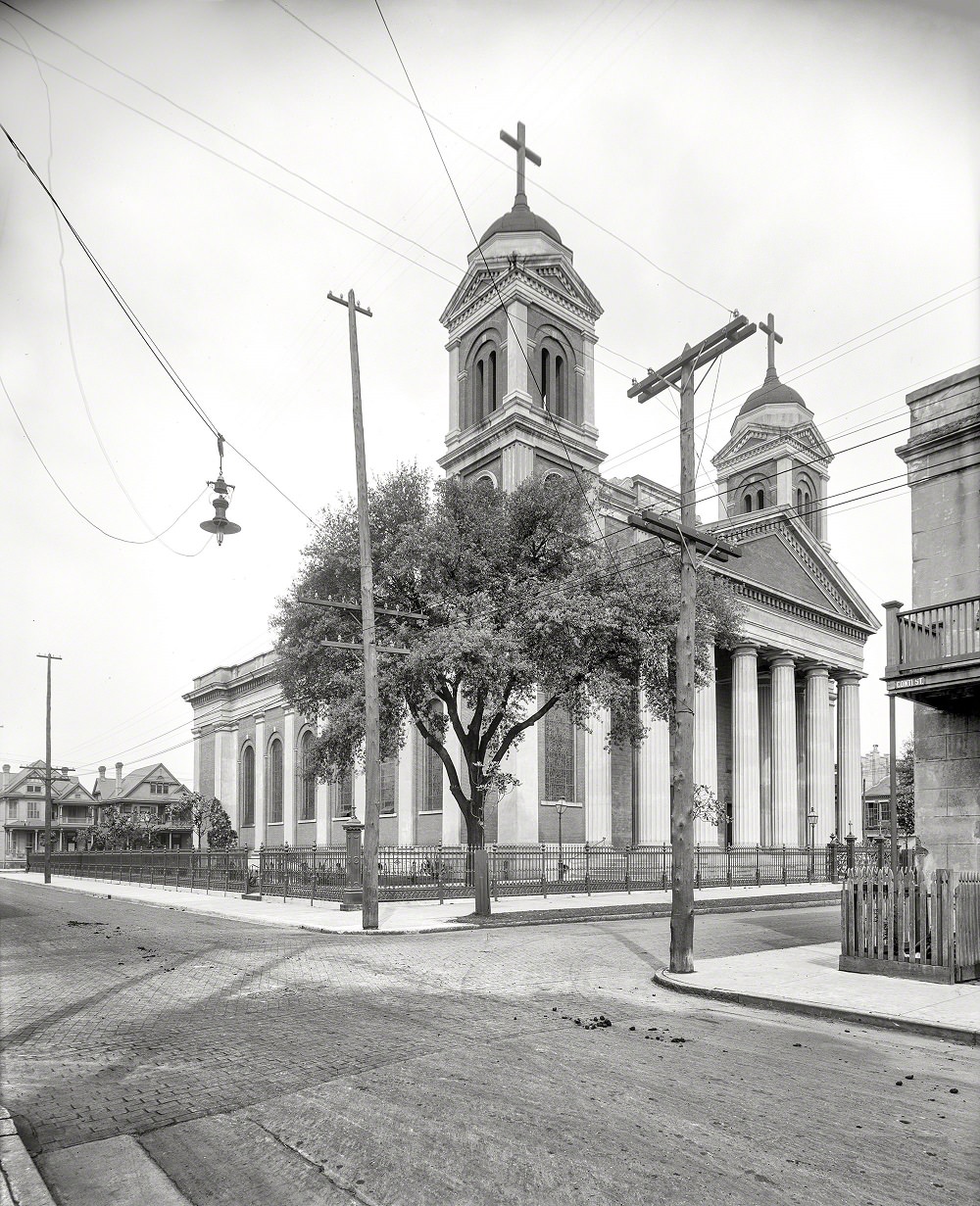
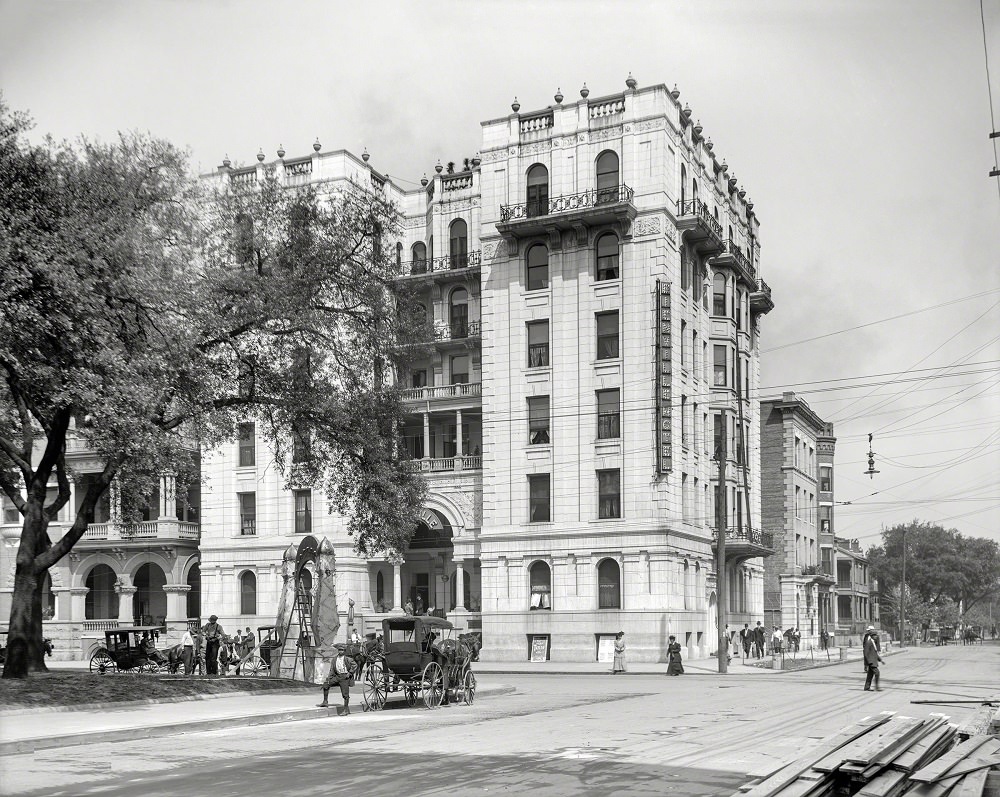
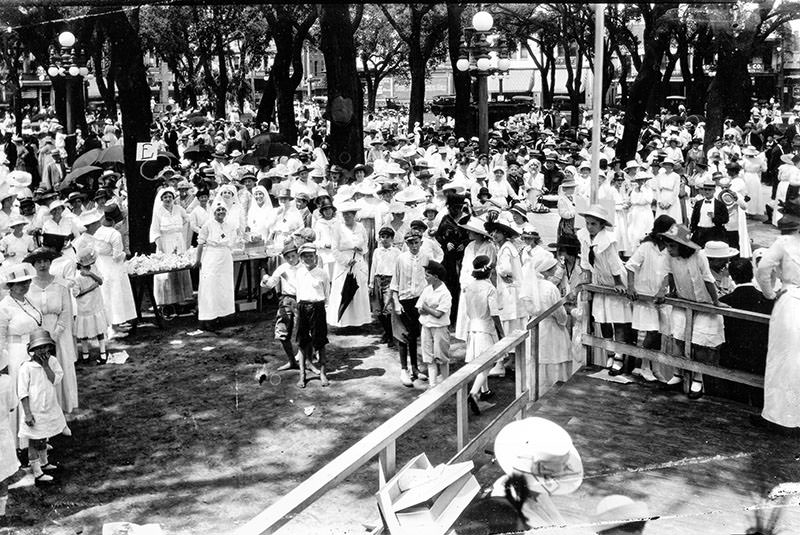
Religion was central to Mobile’s identity. The Catholic Cathedral of the Immaculate Conception on Conti Street stood as one of the city’s most recognizable landmarks, a reminder of Mobile’s deep French and Spanish Catholic roots. Just as prominent was the civic and commercial fabric of the city, which took shape around Bienville Square — one of the city’s oldest public spaces.
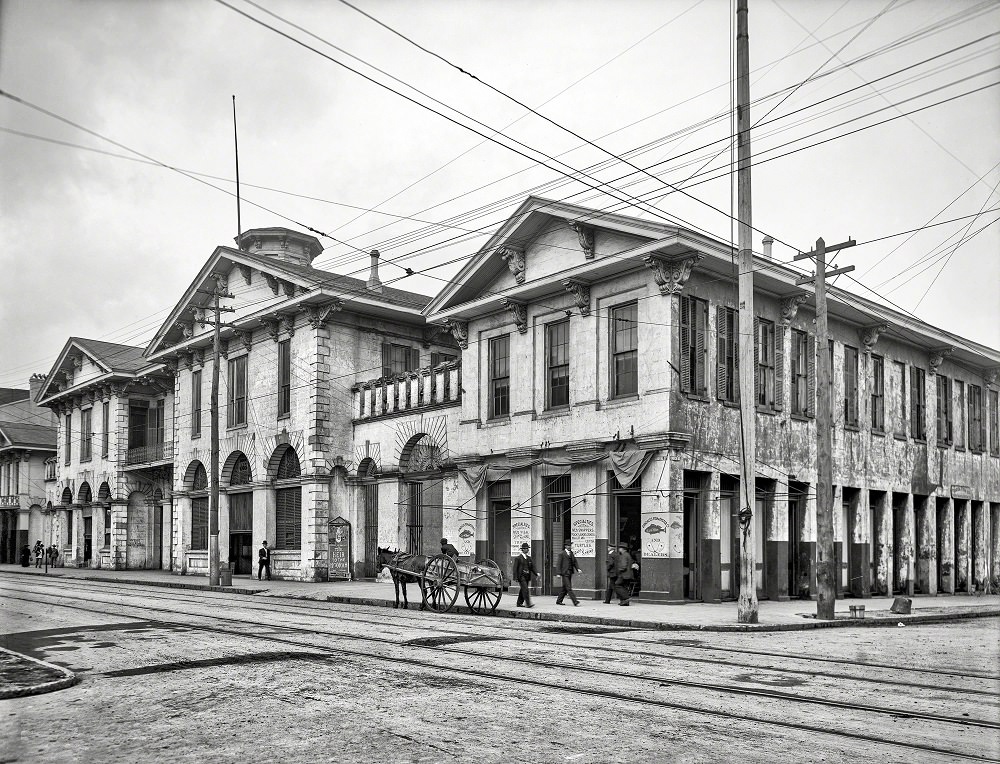
The Old Market House at Royal and Church Streets was a physical center of trade and daily commerce in early Mobile. Markets like this one handled everything from produce to dry goods, and the streets around them buzzed with foot traffic, wagons, and vendors. By the late 1930s, photographers documenting the American South for federal agencies captured a different side of the city — its older neighborhoods and private homes.
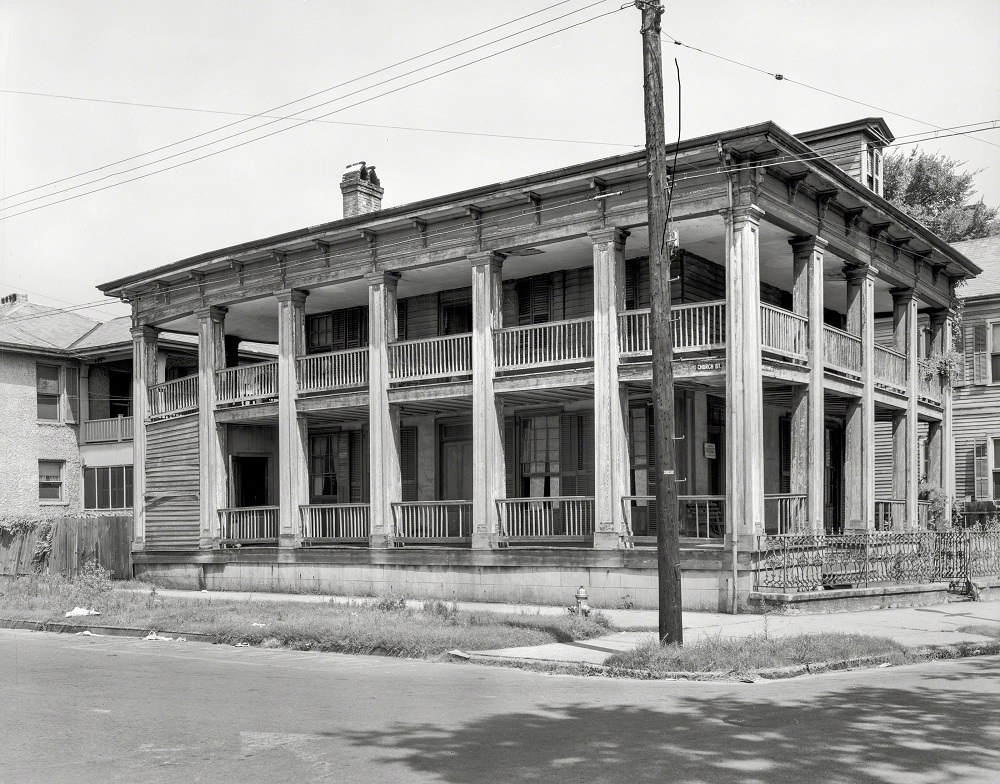
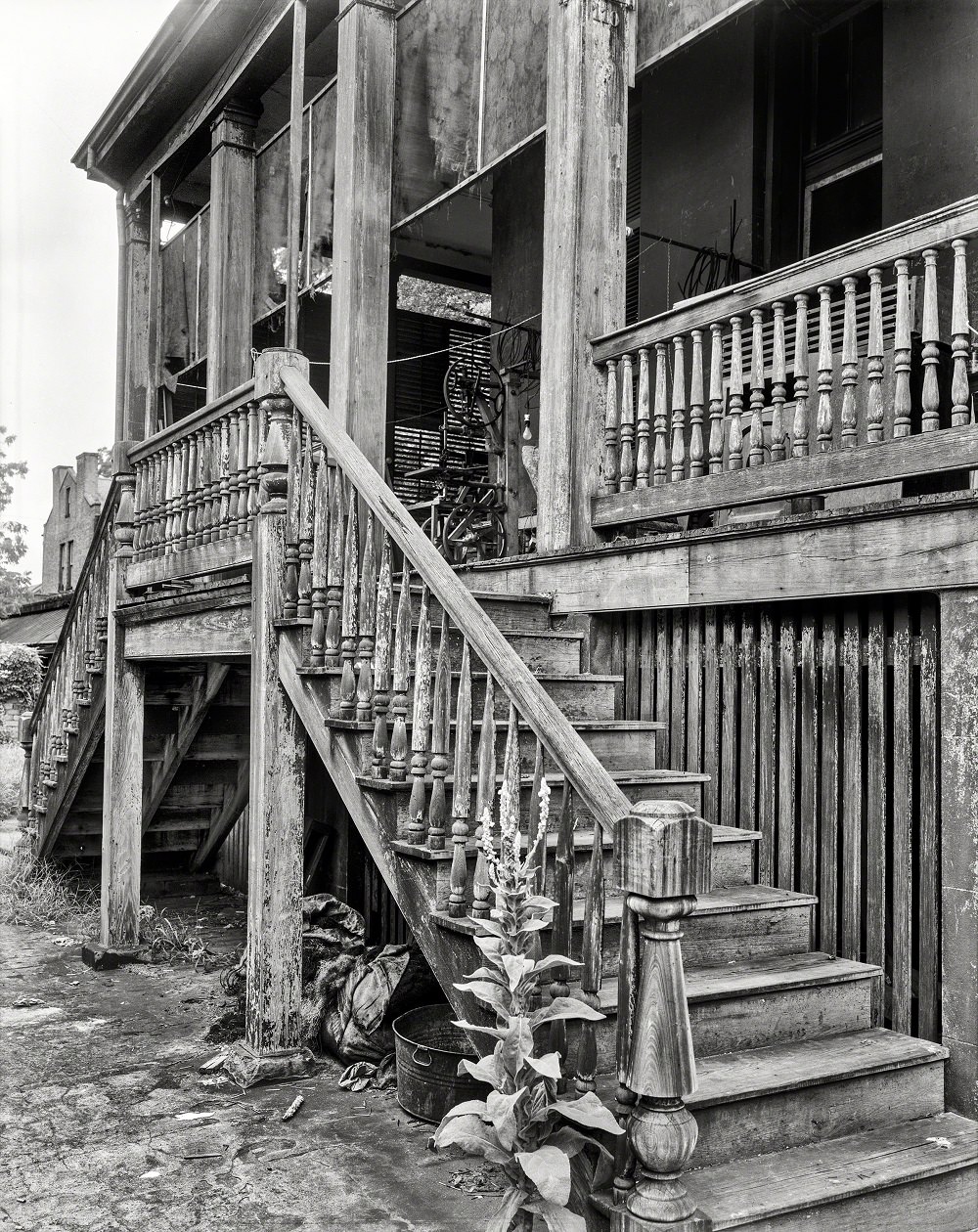
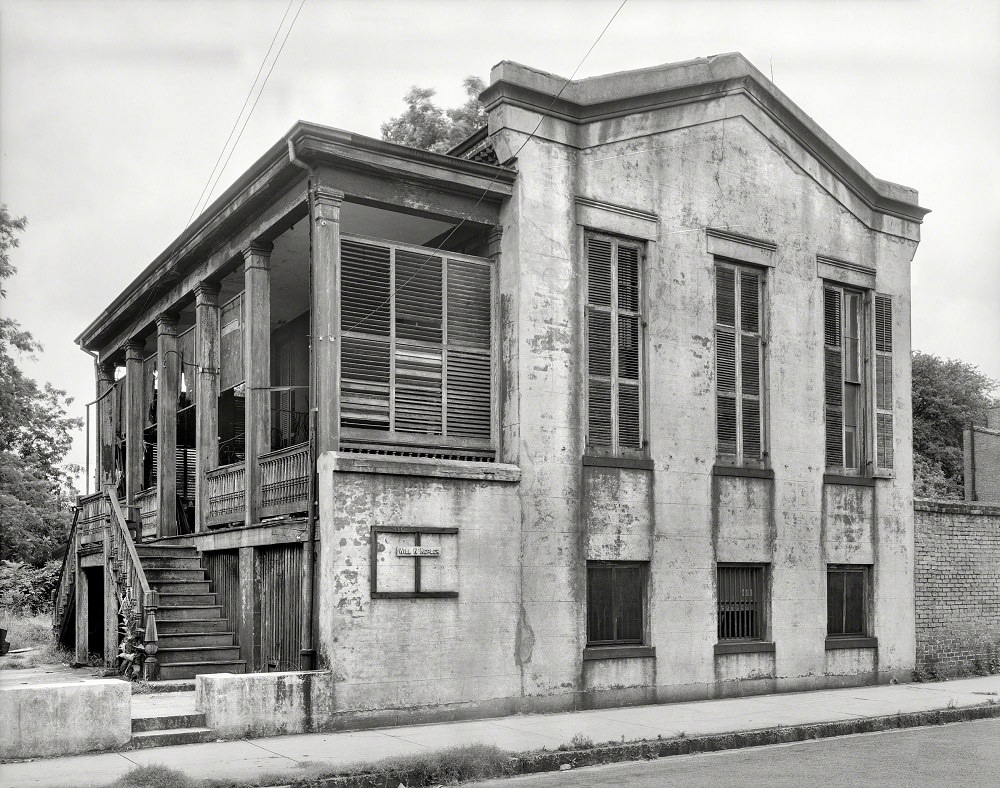
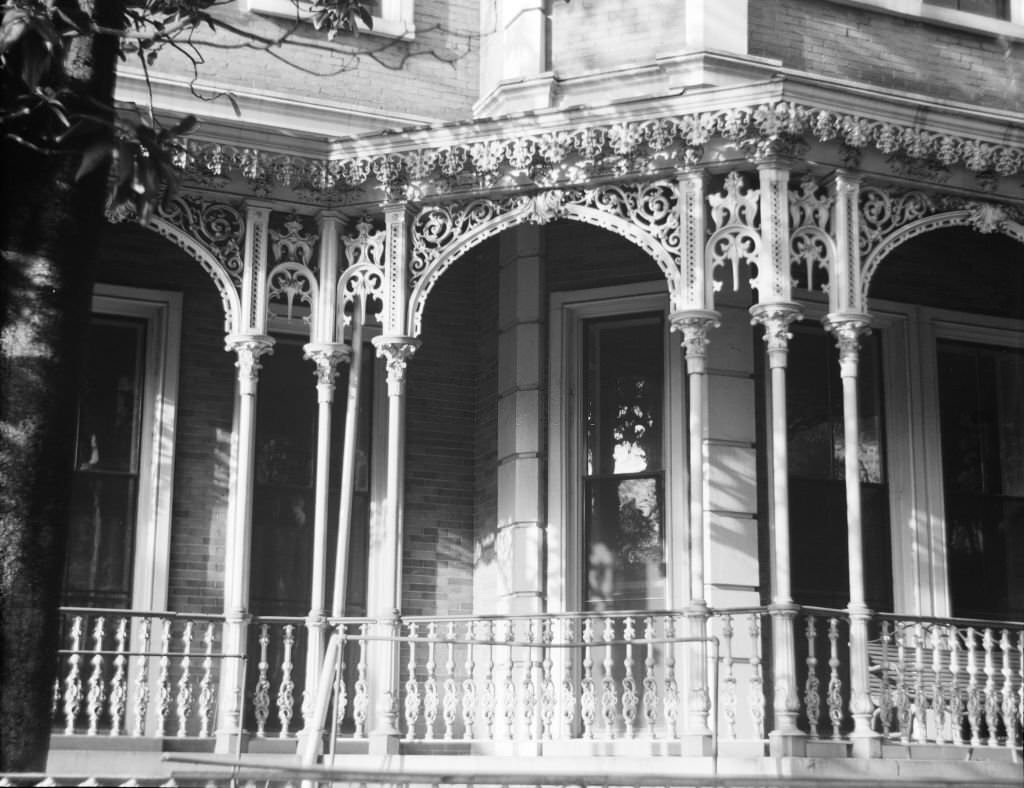
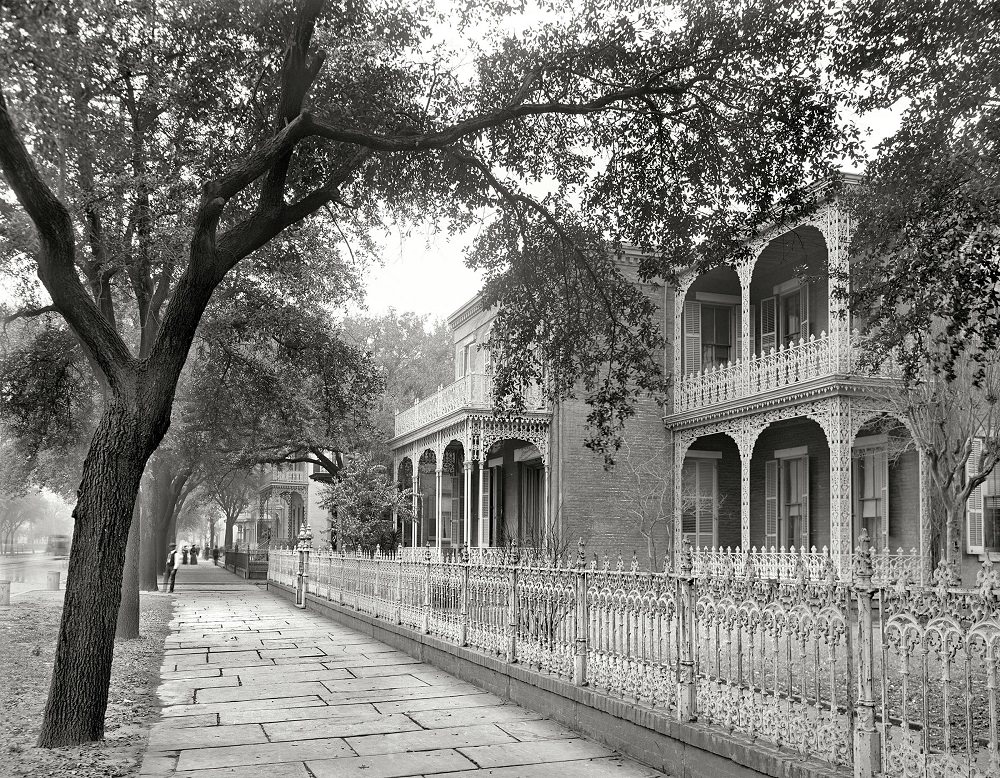
Mobile’s residential architecture was unlike anything else in Alabama. Homes featured cast ironwork porches, wide shuttered windows, and unusual design details that blended Southern, Creole, and European influences. Many of these structures dated back decades and survived into the 20th century largely intact. Walker Evans, one of America’s most celebrated documentary photographers, made a point of capturing that ironwork detailing during his time in the city.
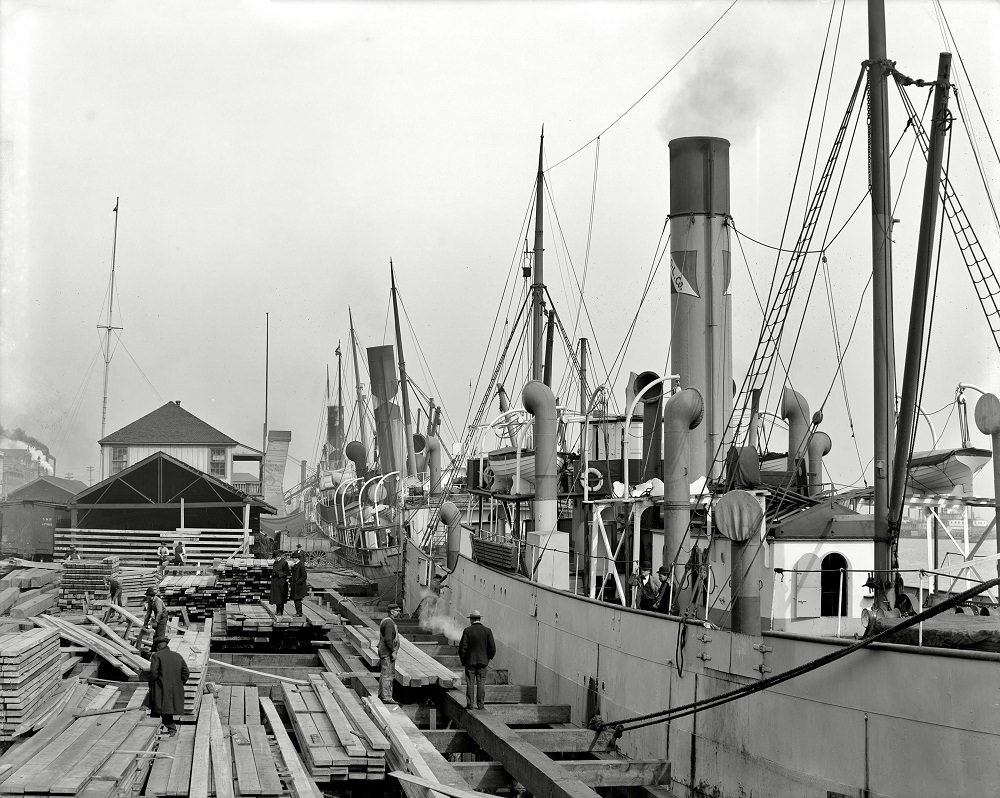
Mobile’s waterfront was the engine driving the city’s economy. The Mobile River and the port handled enormous volumes of cotton, bananas, timber, and other goods. River packets — small steamboats — moved cargo and passengers along inland waterways, connecting Mobile to towns and farms across the region.
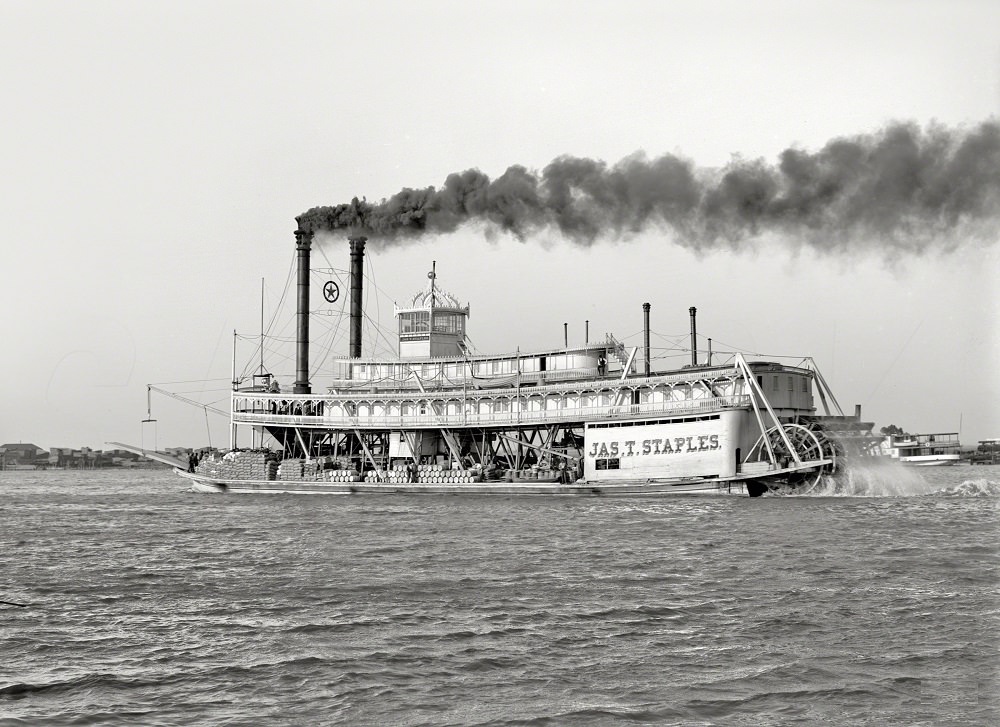
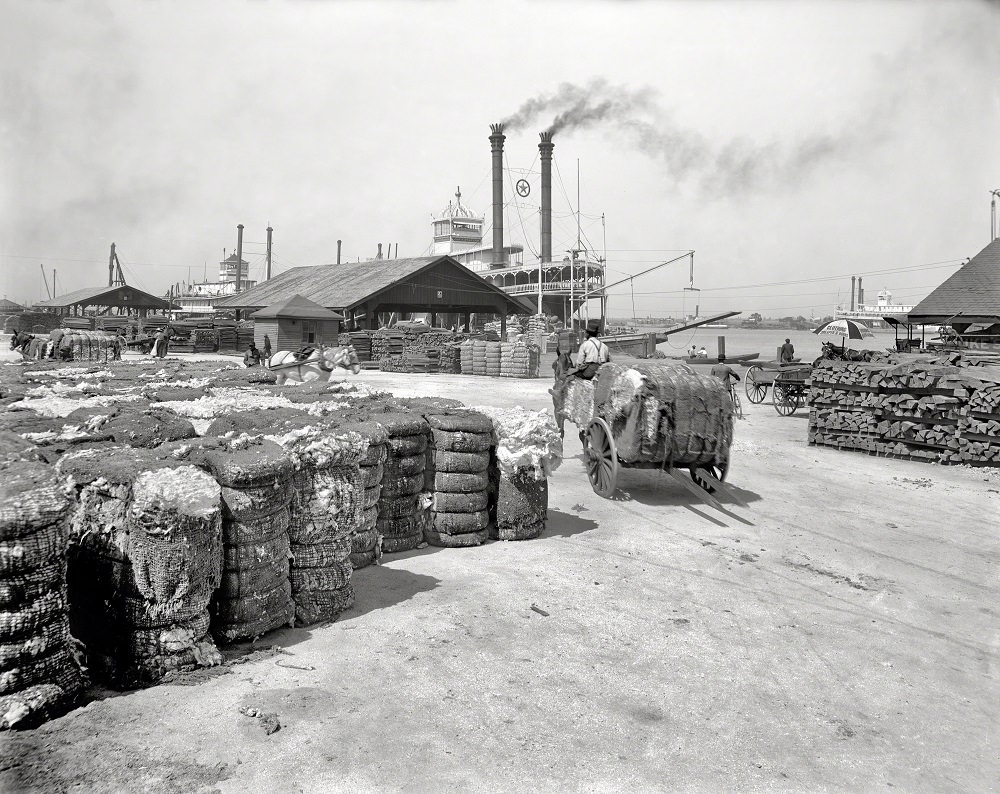
Cotton was king at the Mobile docks. Bales stacked high on the waterfront were loaded onto ships bound for mills in the Northeast and in Europe. The Cotton Exchange building was where deals got done — a grand structure that made clear just how much money flowed through the trade.

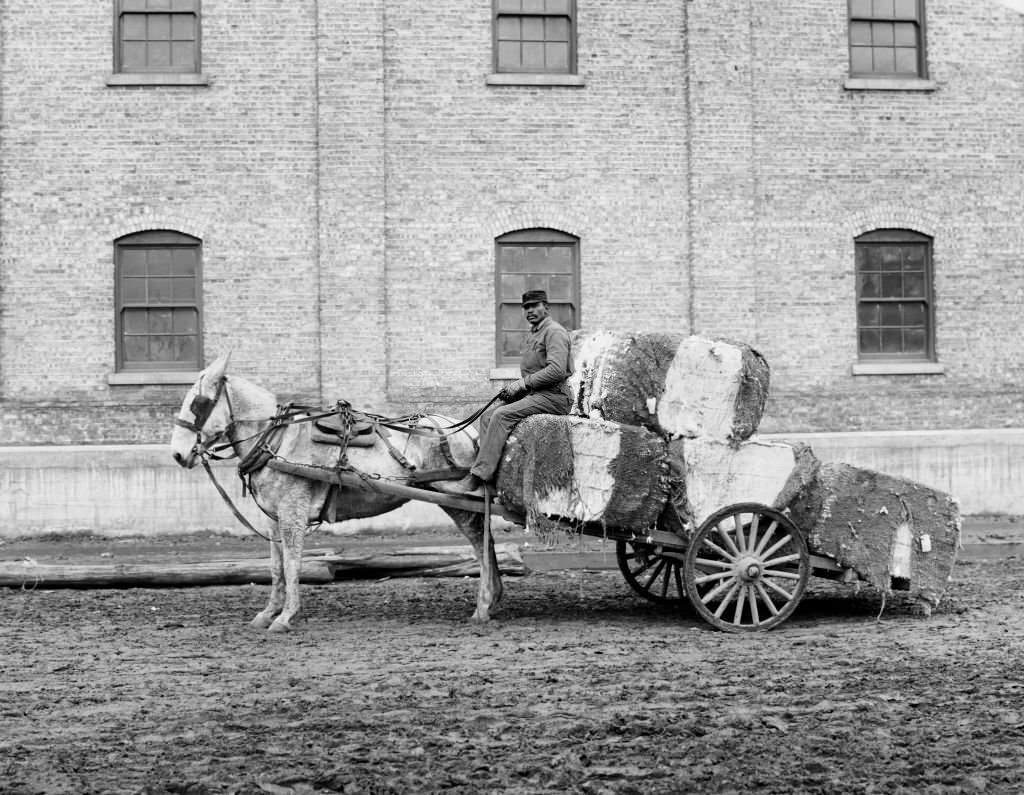
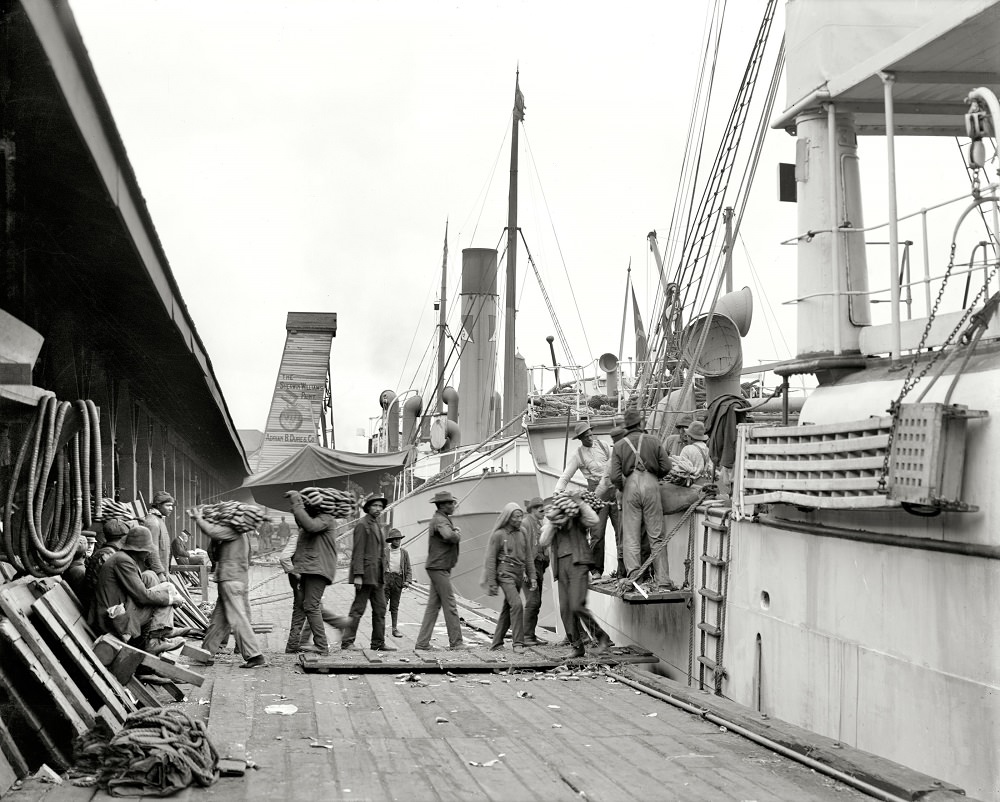
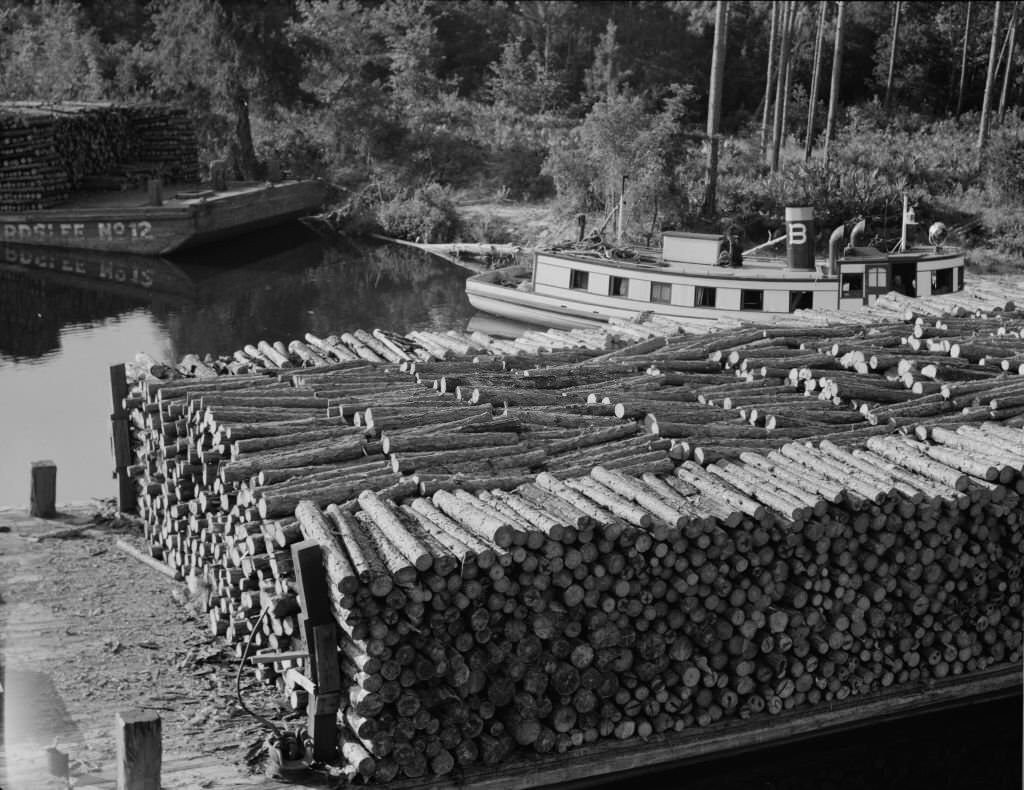
Beyond cotton, the port handled an impressive variety of goods. Banana steamers arrived regularly, their cargo unloaded by dockworkers in scenes that reflected Mobile’s role as a gateway for Central American fruit imports. Timber floated down inland waterways to reach the city’s mills and loading points.
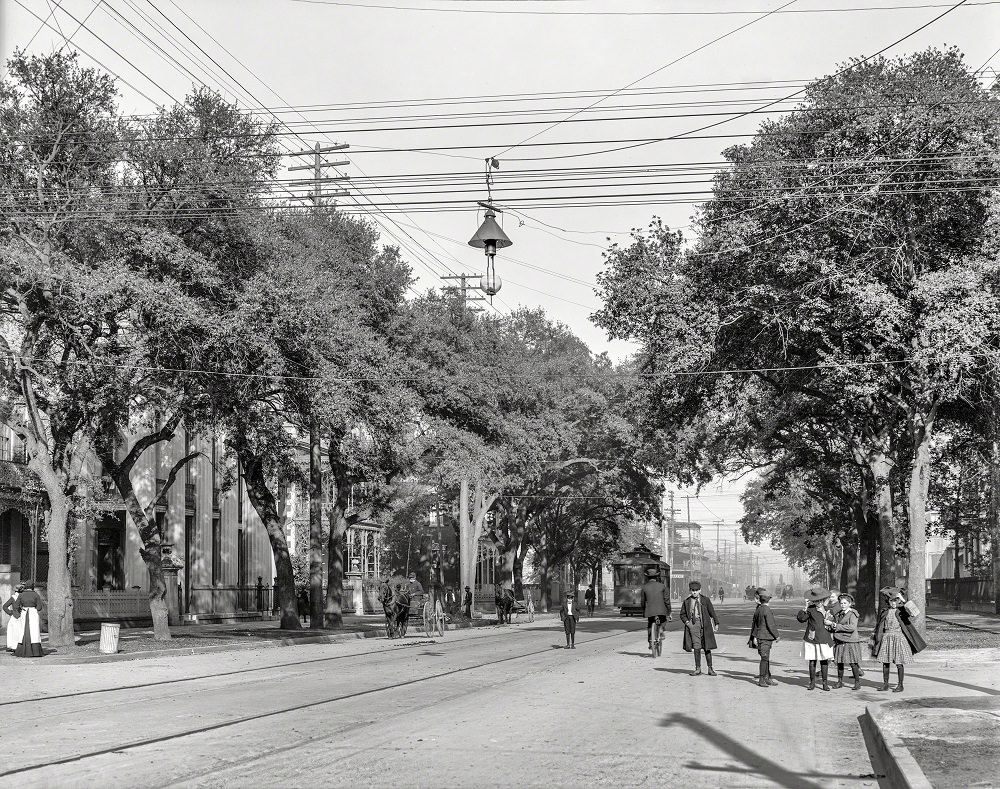
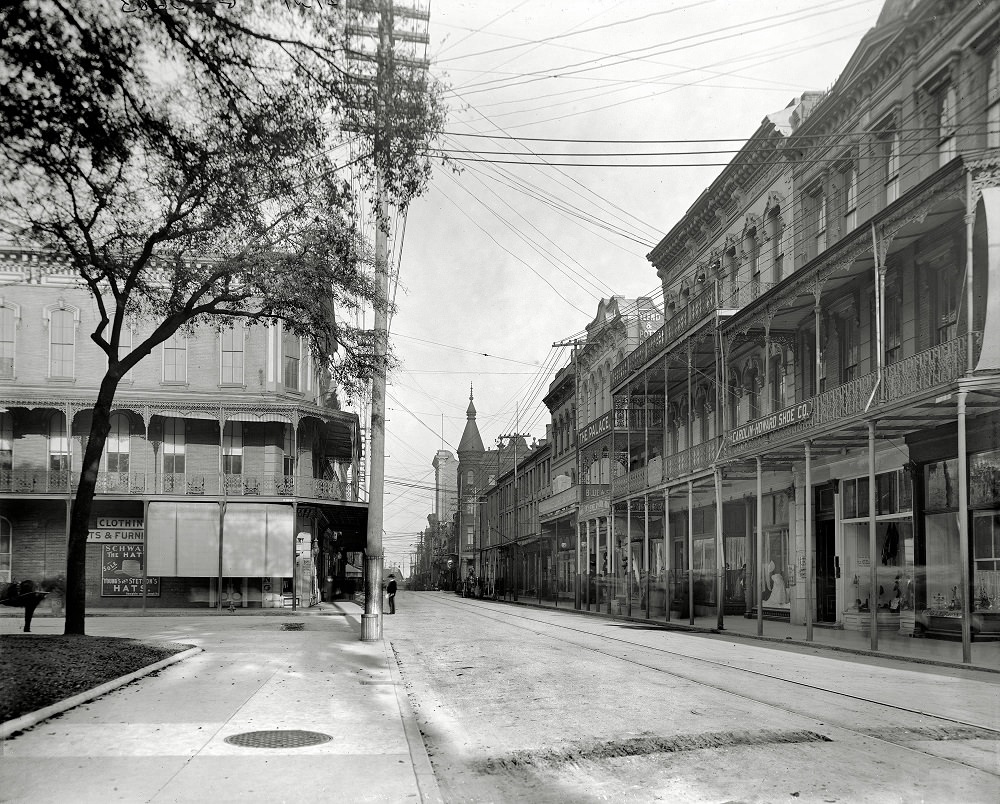
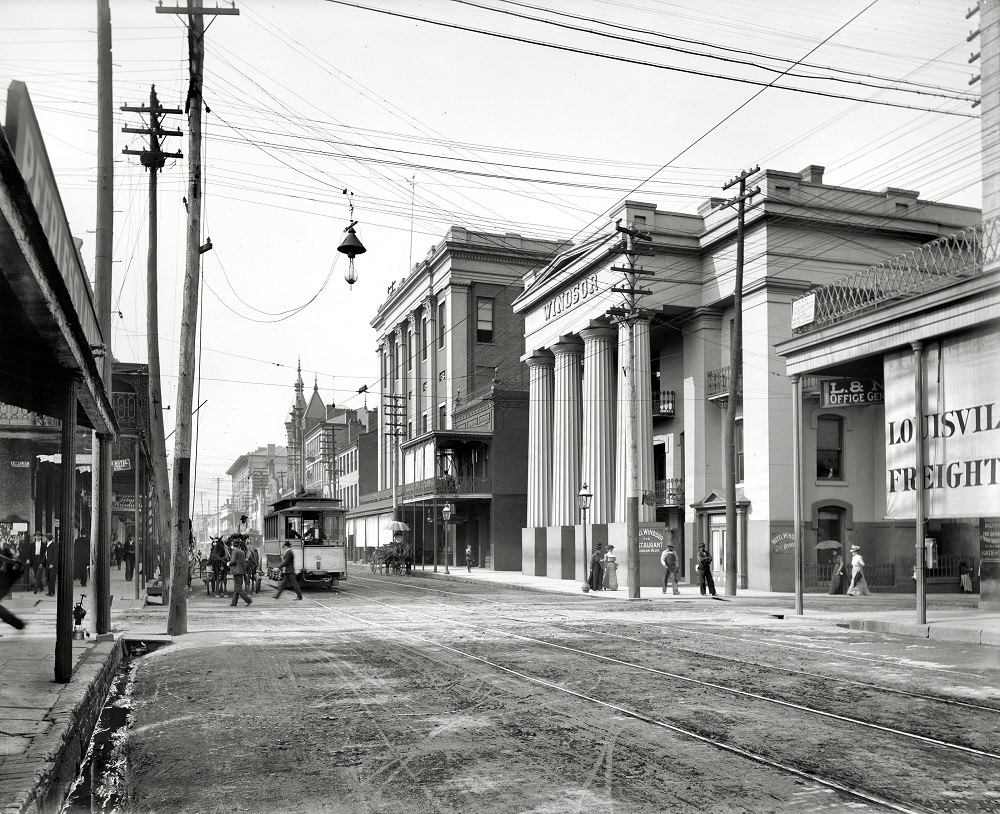
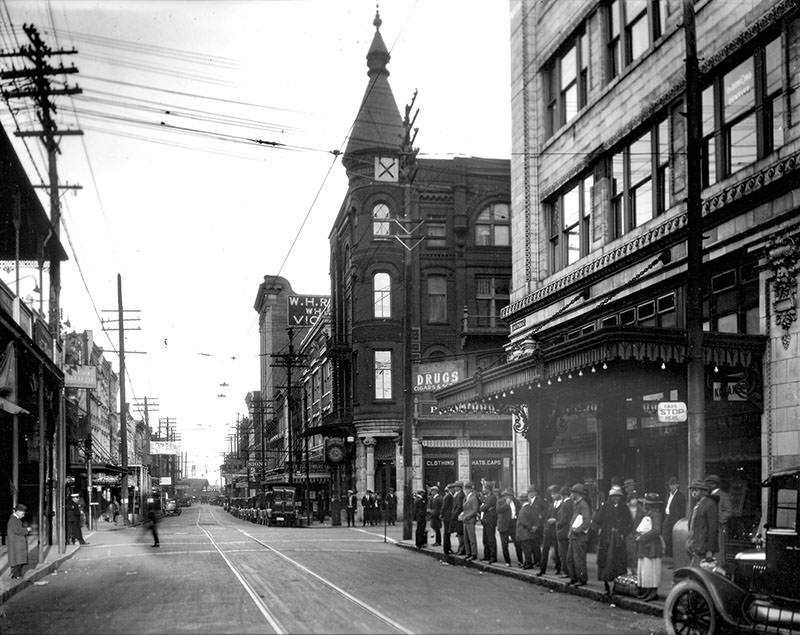
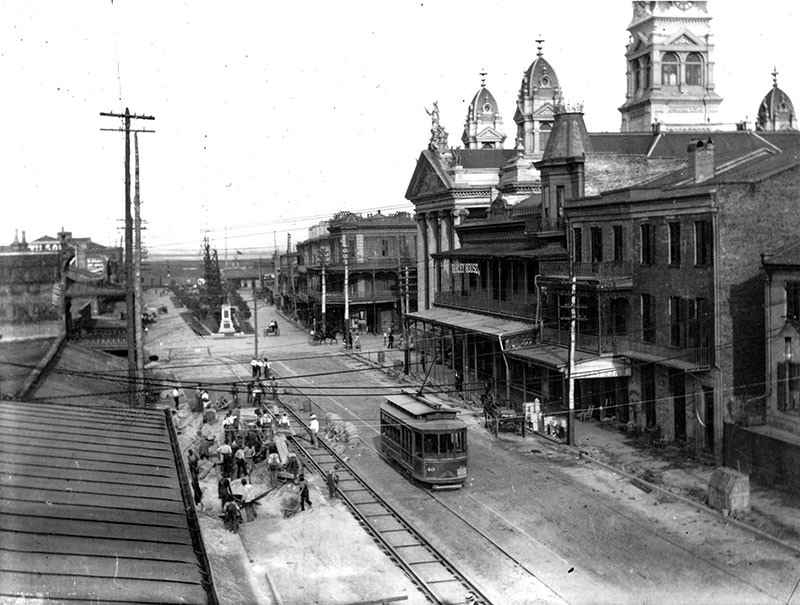
The city’s streets told their own story. Government Street and Dauphin Street were two of Mobile’s main commercial corridors, lined with storefronts, hotels, and public buildings. Royal Street, running north to south through the heart of downtown, was photographed repeatedly during this era — both its busy commercial blocks and its quieter residential stretches.
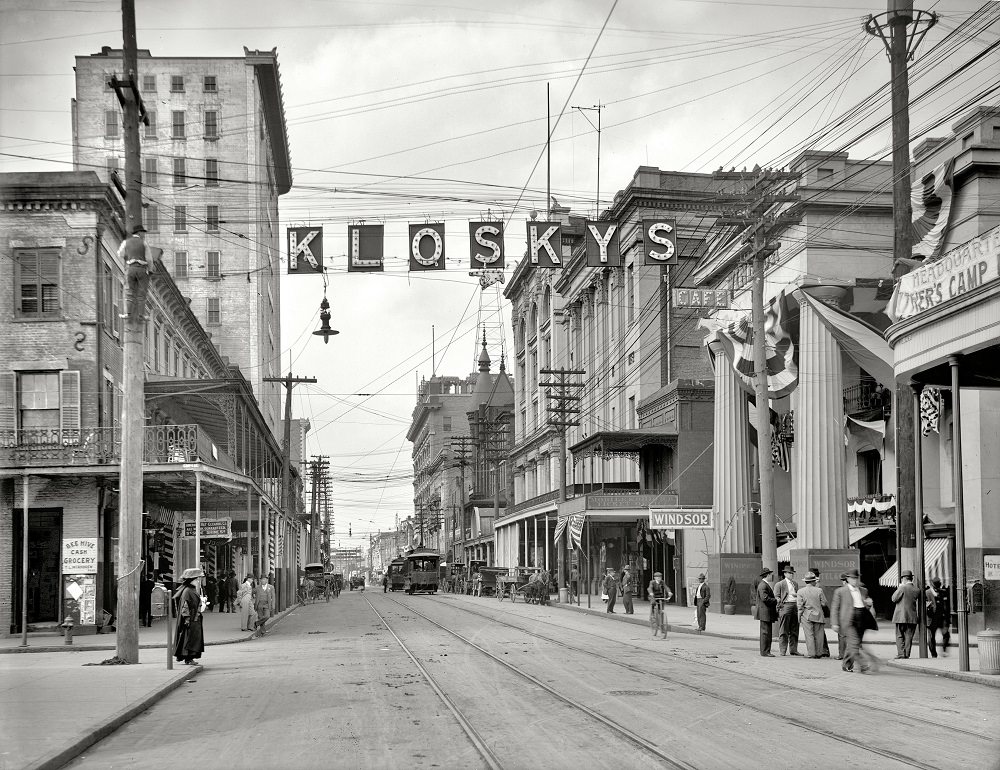
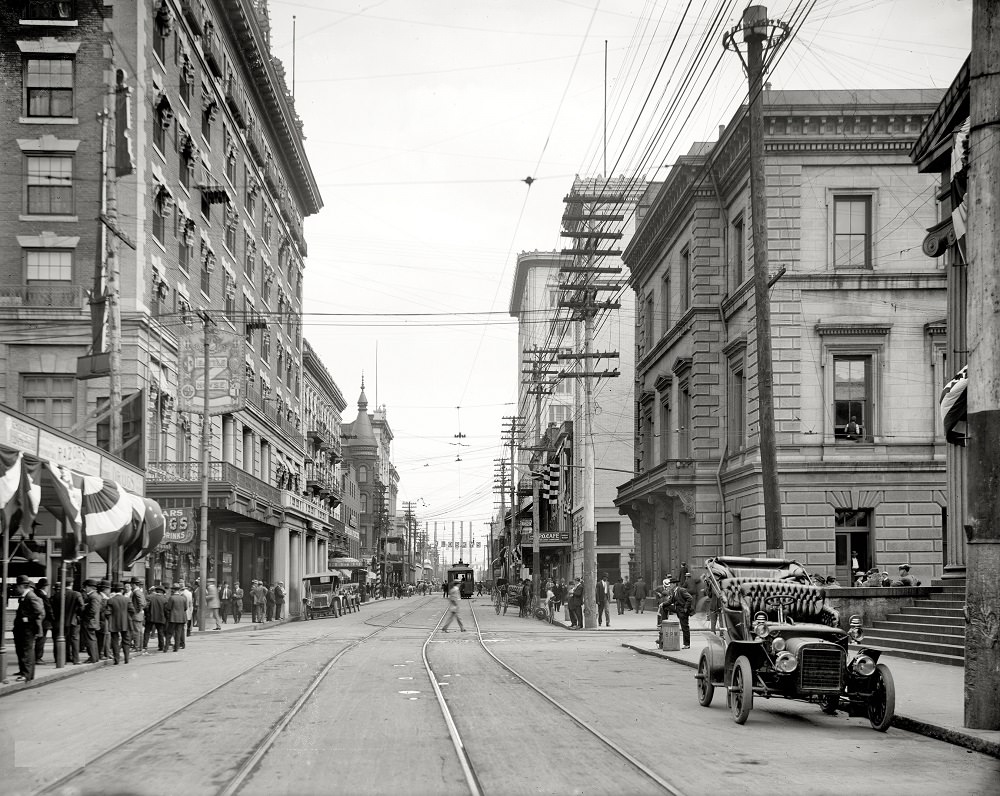
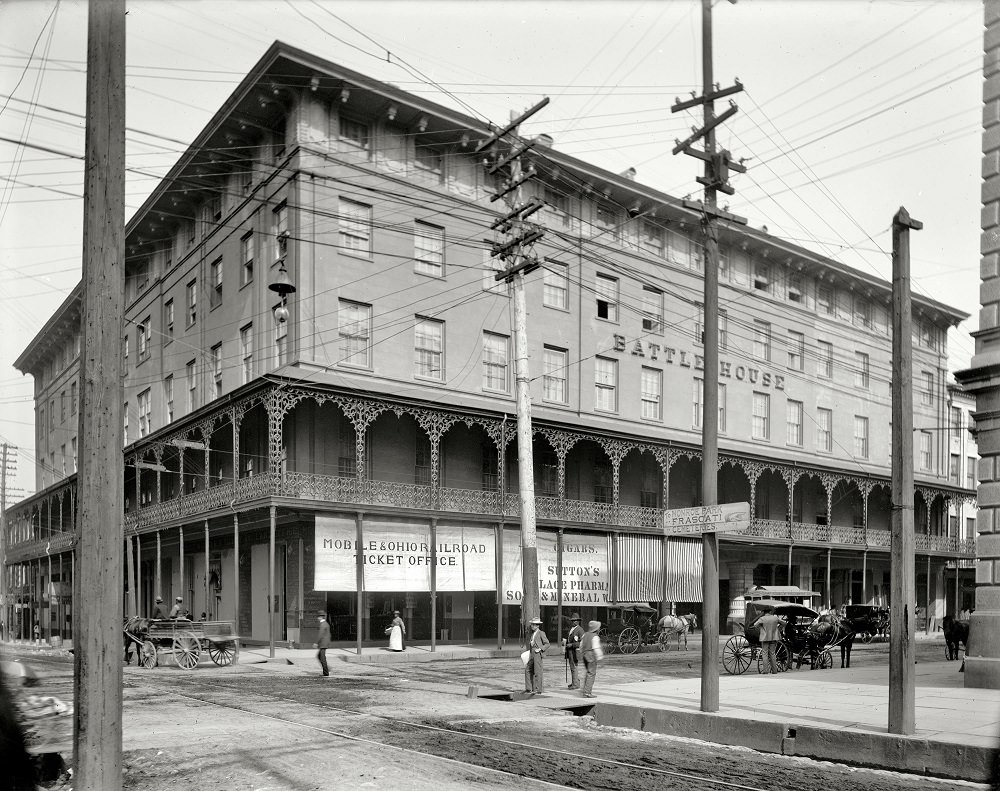
Hotels were a measure of a city’s ambition, and Mobile had several impressive ones. The Hotel Windsor and the Battle House were among the most prominent, attracting business travelers, politicians, and visitors passing through the Gulf South. The Bienville Hotel, overlooking Bienville Square, was another fixture of the city’s hospitality scene around 1910.
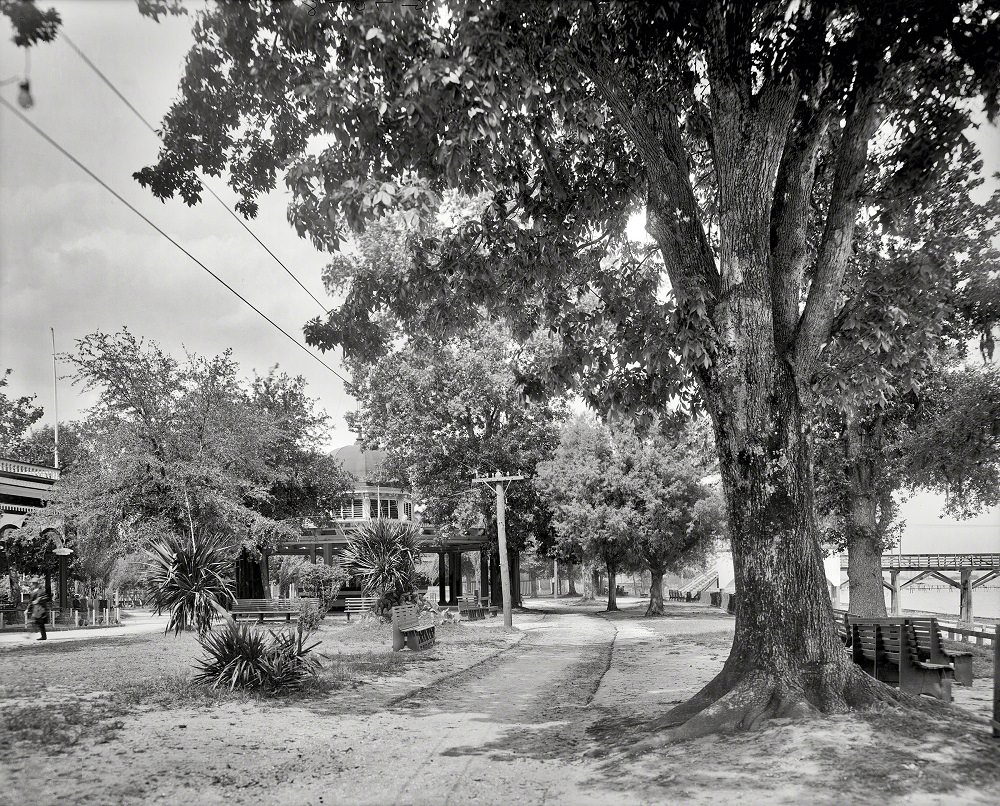
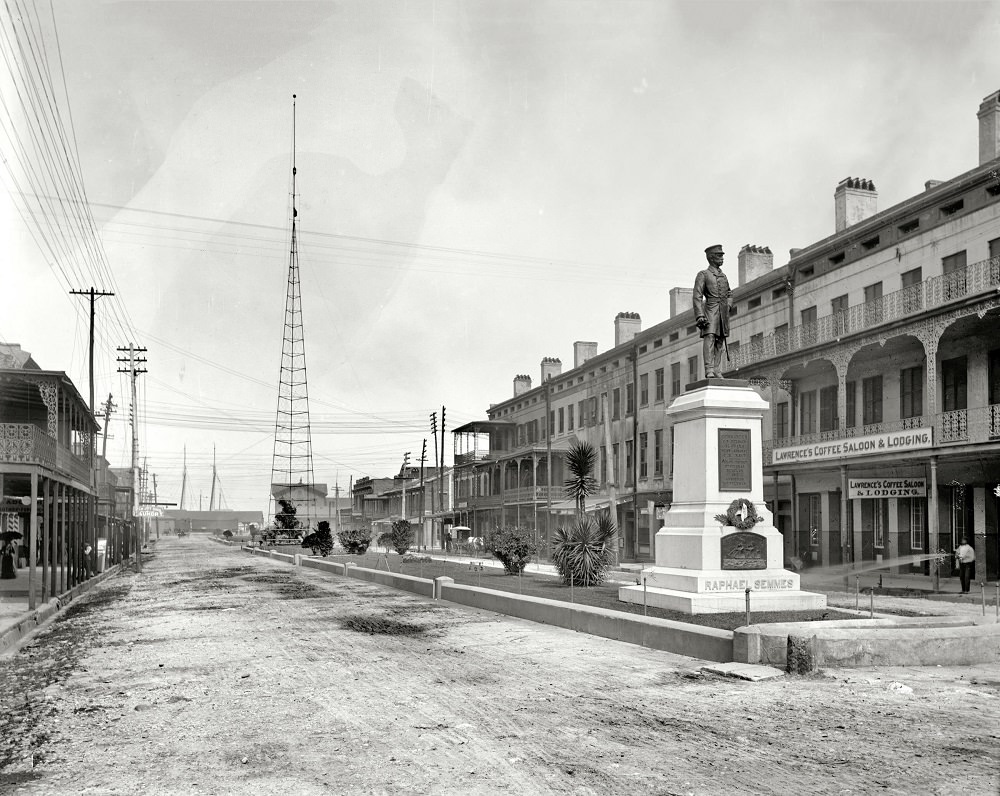
Public spaces like Monroe Park and Duncan Place gave residents a place to gather. The Semmes monument at Duncan Place honored Admiral Raphael Semmes, a Confederate naval commander, and stood as a visible piece of the city’s Civil War memory well into the 20th century.
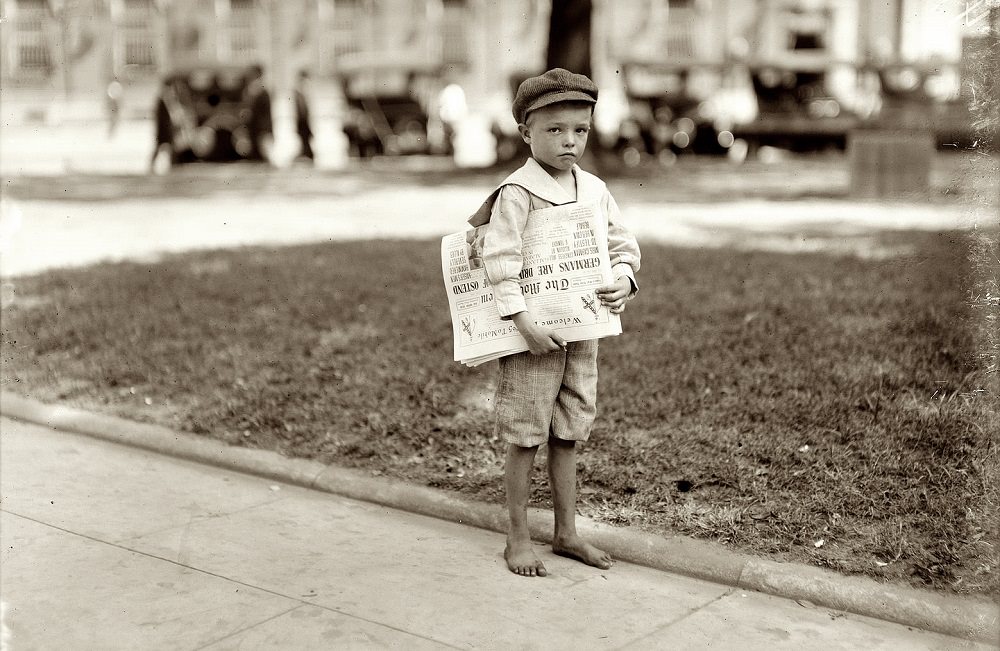
Child labor was common in Mobile during the early 1900s. Photographer Lewis Hine documented working children in the city as part of his work for the National Child Labor Committee. In 1914, he photographed young boys working at the Barker Cotton Mills, a seven-year-old named Ferris on the job, and an eleven-year-old office boy employed by a law firm. A young newsboy who started his shift at daybreak was another subject — children doing adult work for little pay.
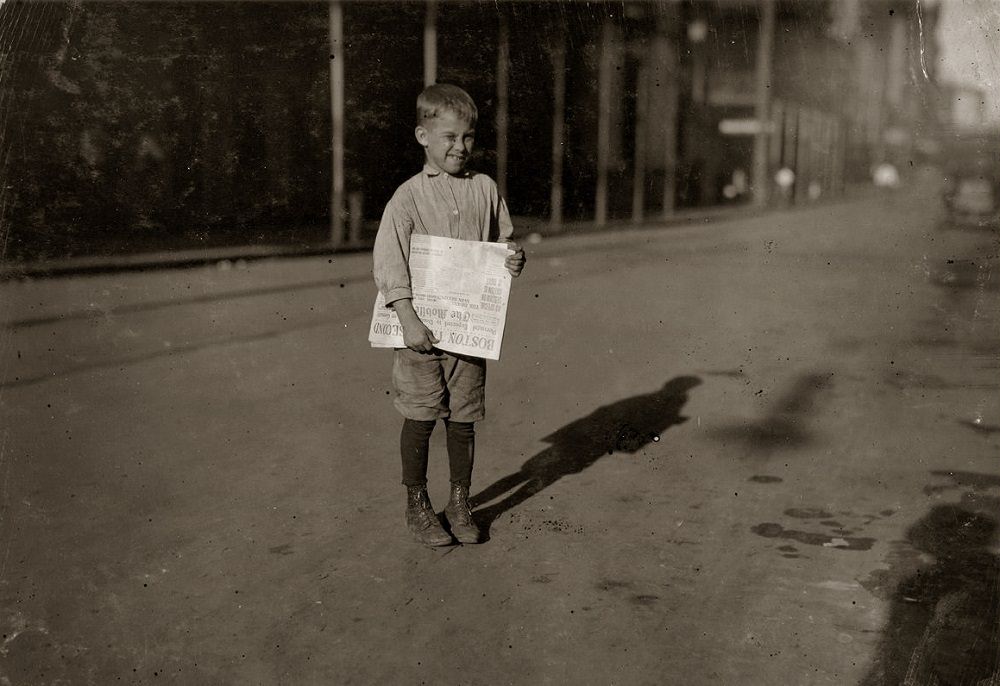
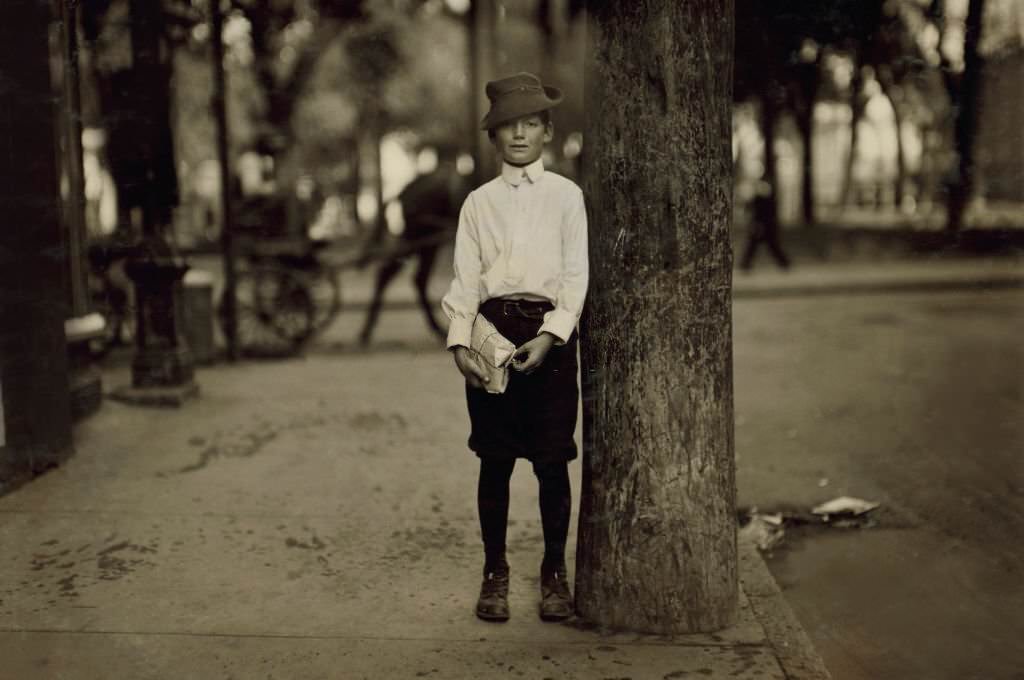
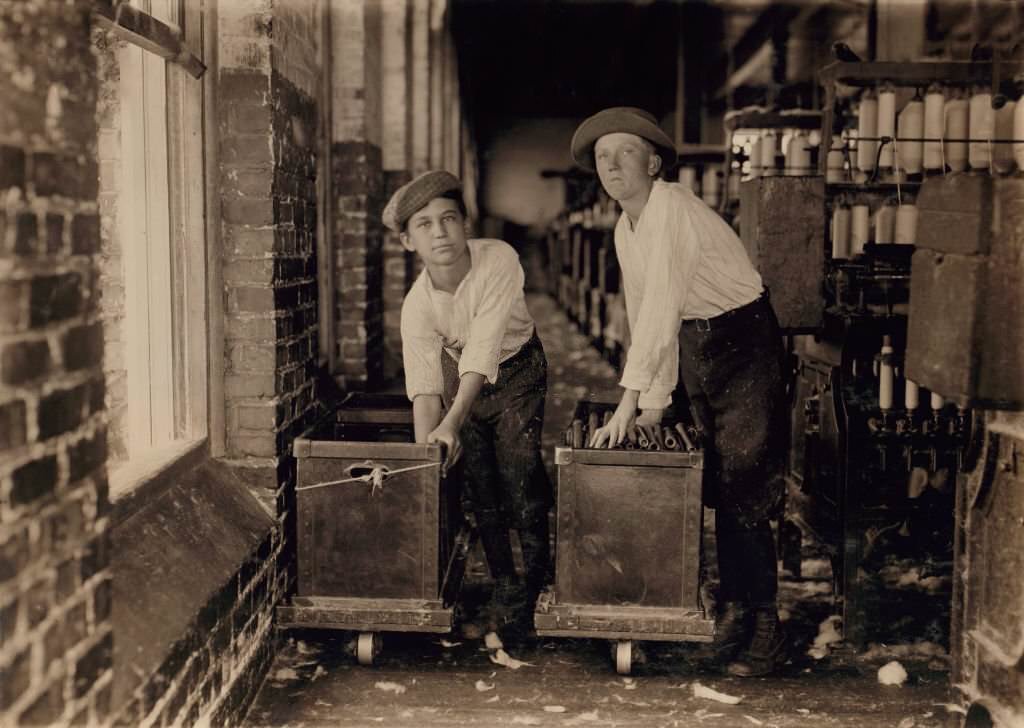
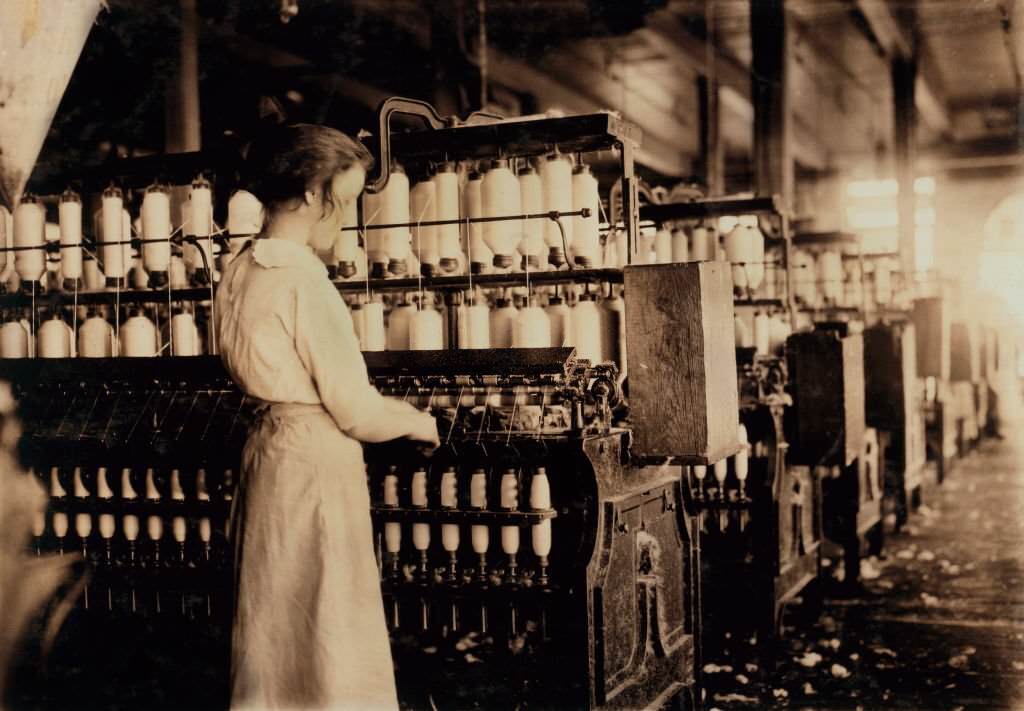
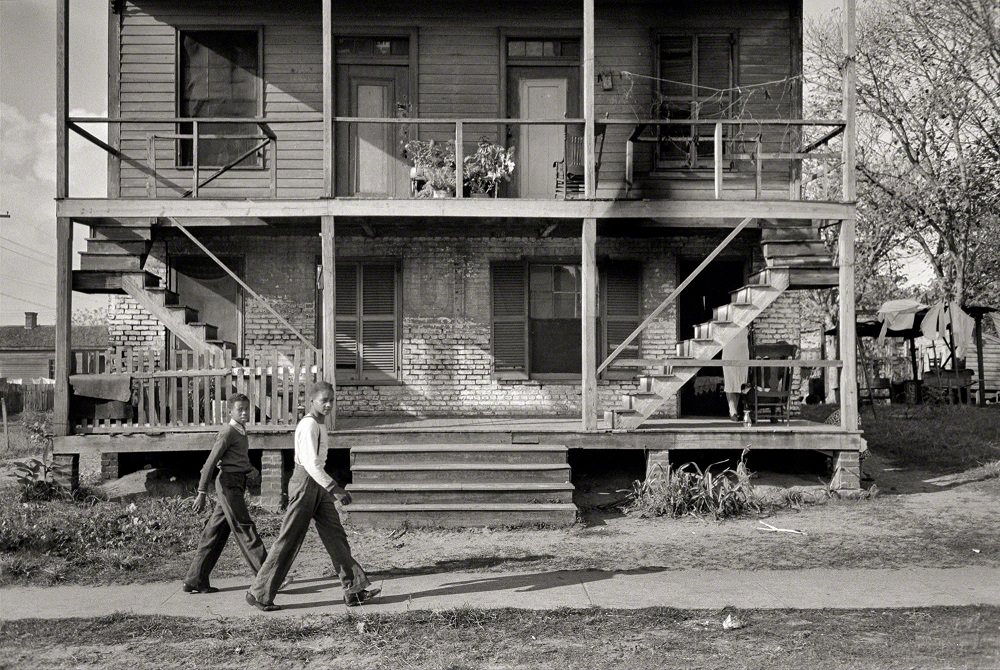
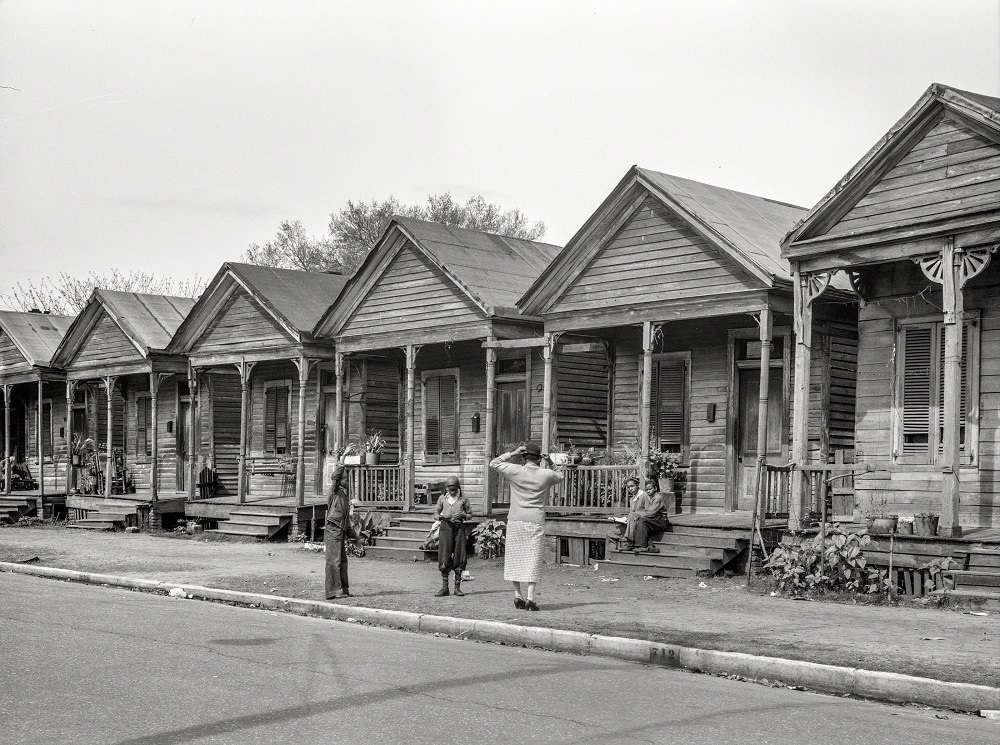
Black residents of Mobile lived in sharply segregated conditions. A 1937 photo simply labeled “Negro houses” recorded the housing realities faced by the city’s African American community during the Jim Crow era — modest structures standing in stark contrast to the grander homes and public buildings elsewhere in the city.
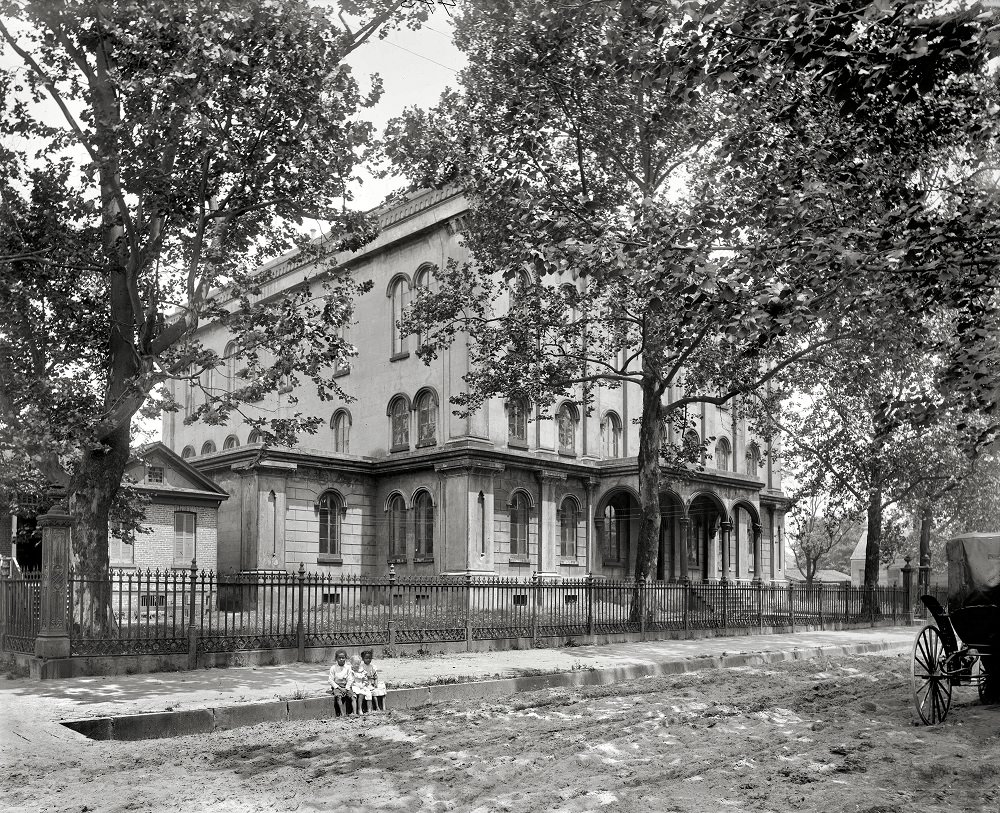
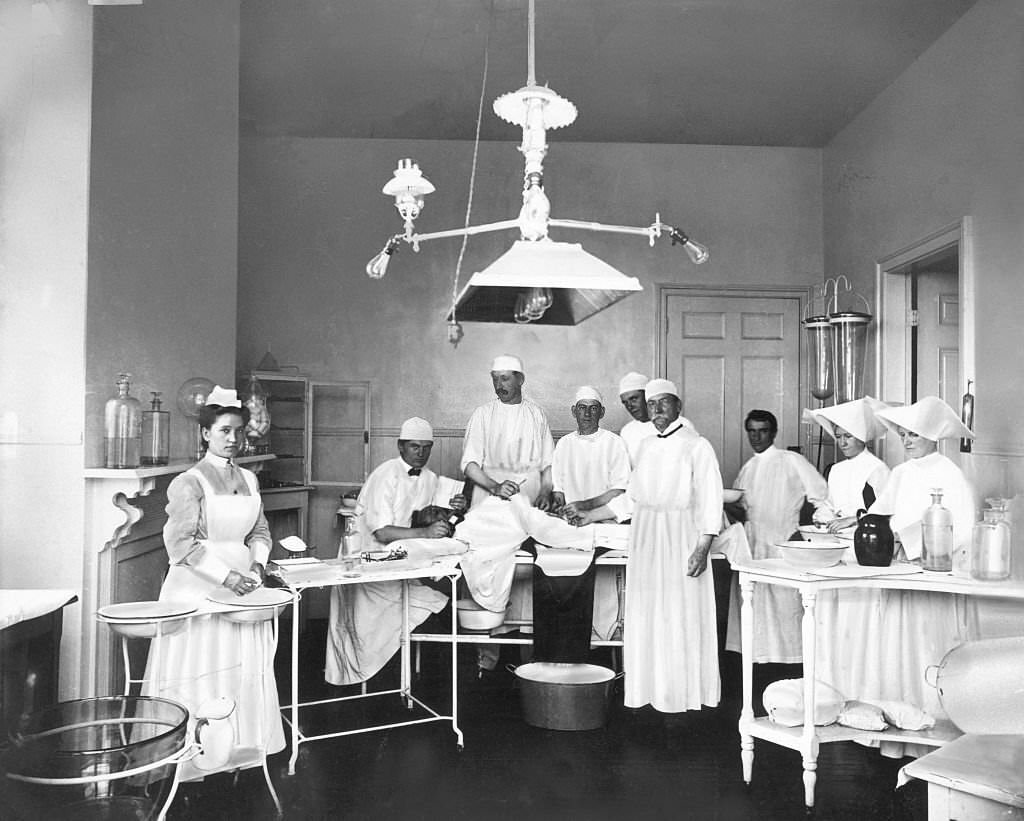
Medicine in early Mobile was still developing. The Alabama Medical College, photographed around 1901, trained the region’s doctors. An operating room photo from the same era shows physicians and nurses posed around a patient before surgery — a reminder of how public and procedural medicine was at the time, and how far removed from modern privacy standards.
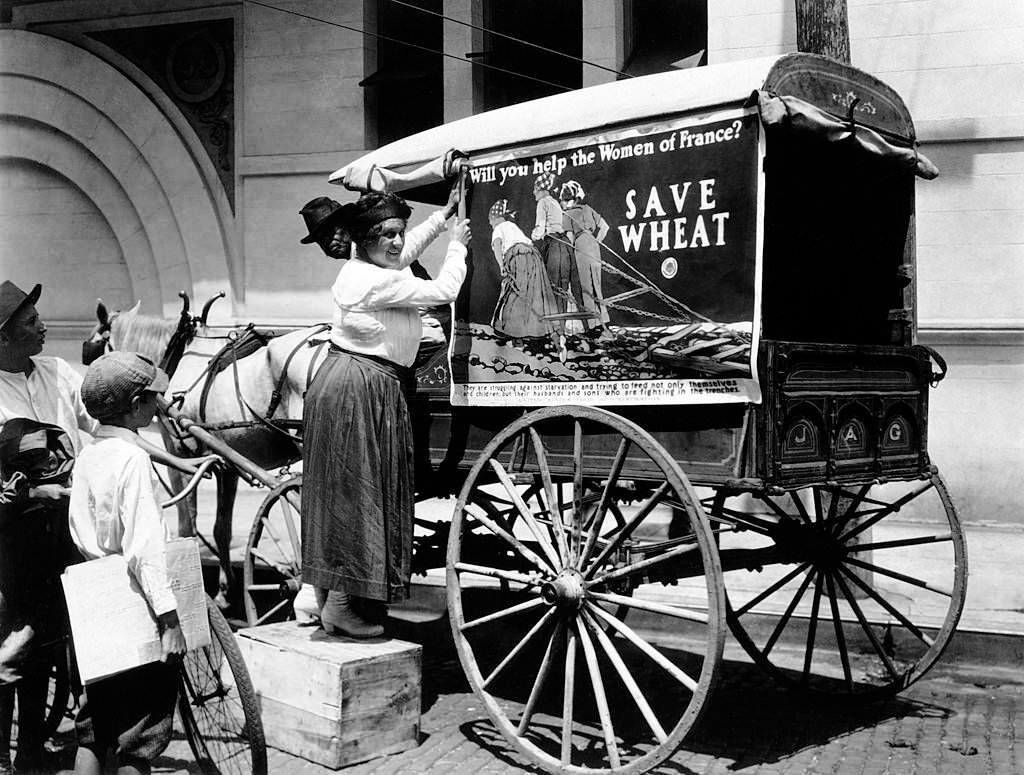
World War One reached Mobile in visible ways. In 1918, workers tacked up U.S. Food Administration posters urging residents to “Save Wheat” and support the women of France — a domestic war effort that brought the conflict directly into city streets and storefronts.
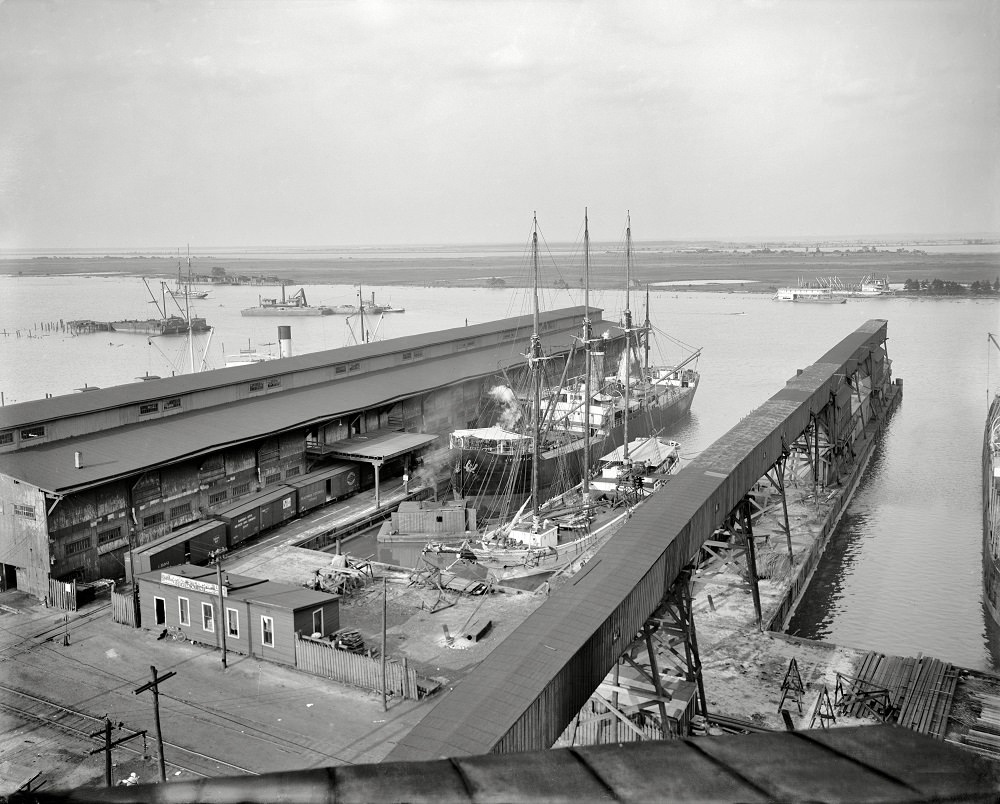
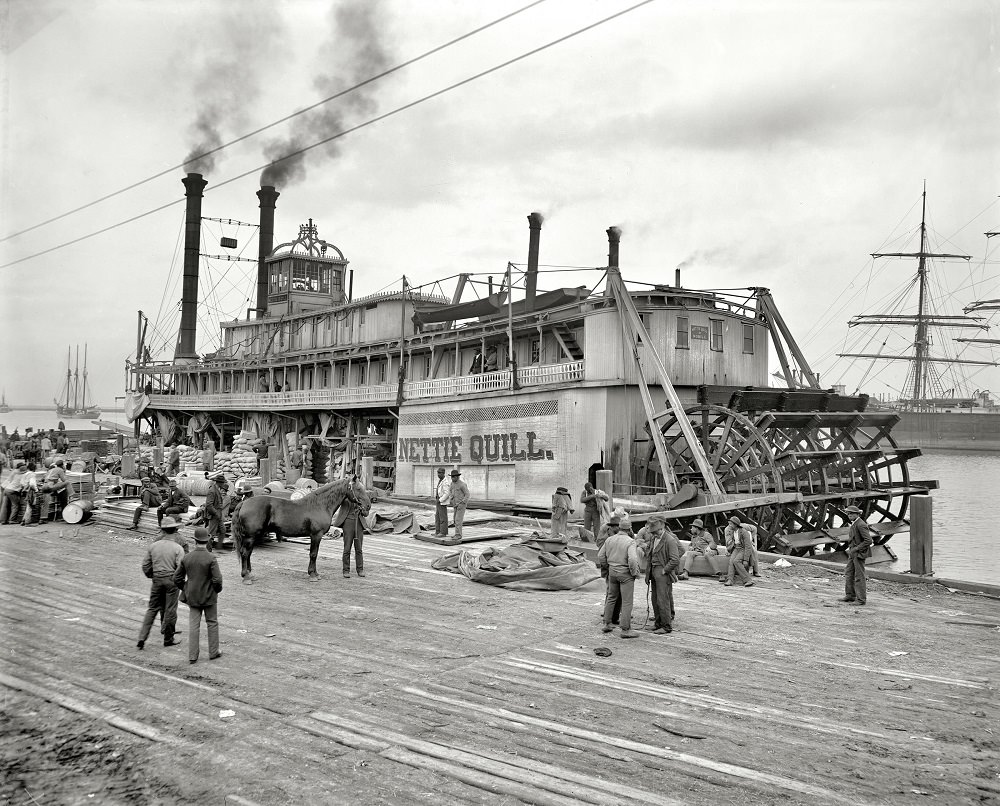
The Southern Railway terminals connected Mobile to the broader national rail network, making it easier to move goods and people in and out of the city. River packets like the Nettie Quill continued working the inland waterways alongside the growing rail infrastructure.
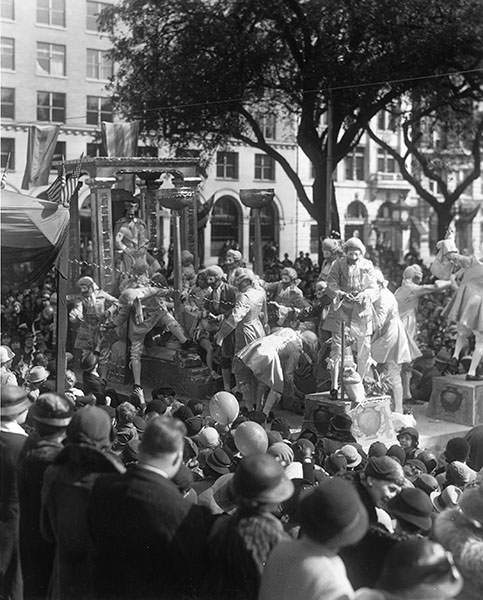
Mardi Gras has deep roots in Mobile — the city actually claims the oldest Mardi Gras celebration in the United States, predating New Orleans. The 1935 photo of the King Felix III float captures that festive tradition in full swing, with elaborate parade floats rolling through the city’s streets.
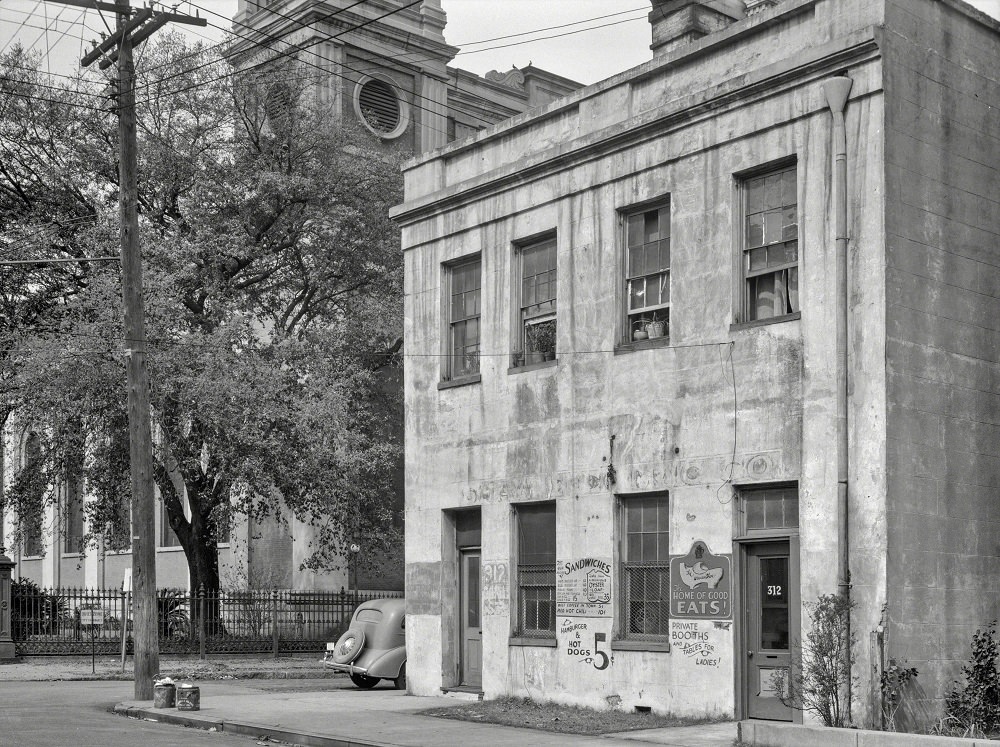
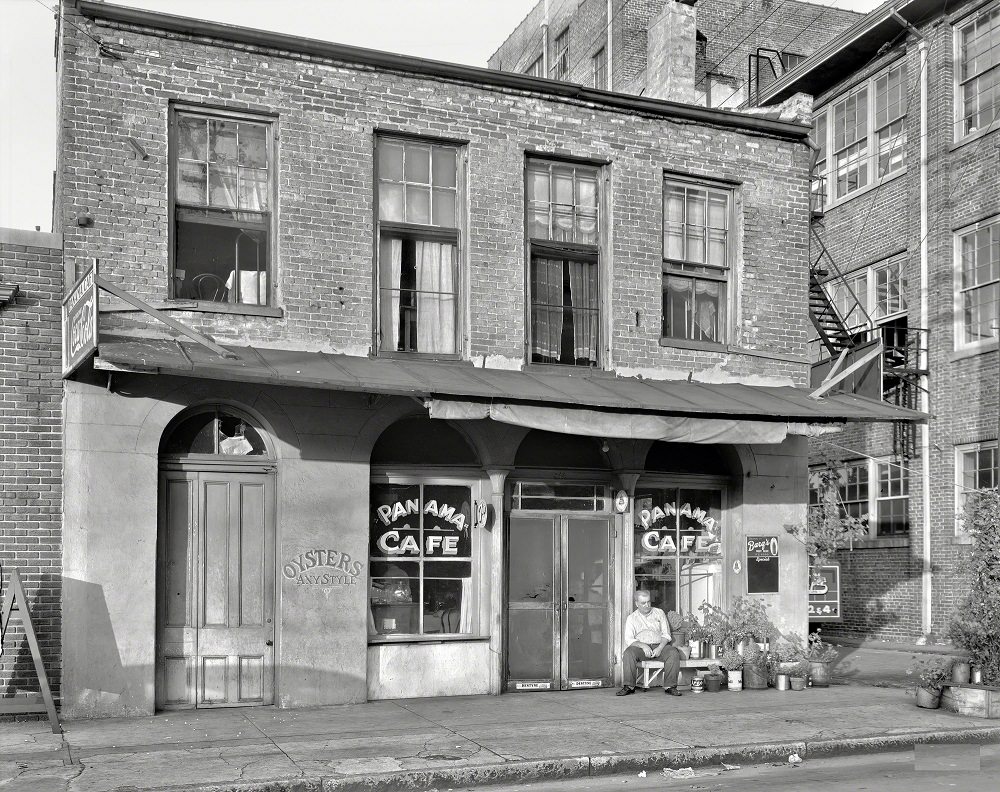
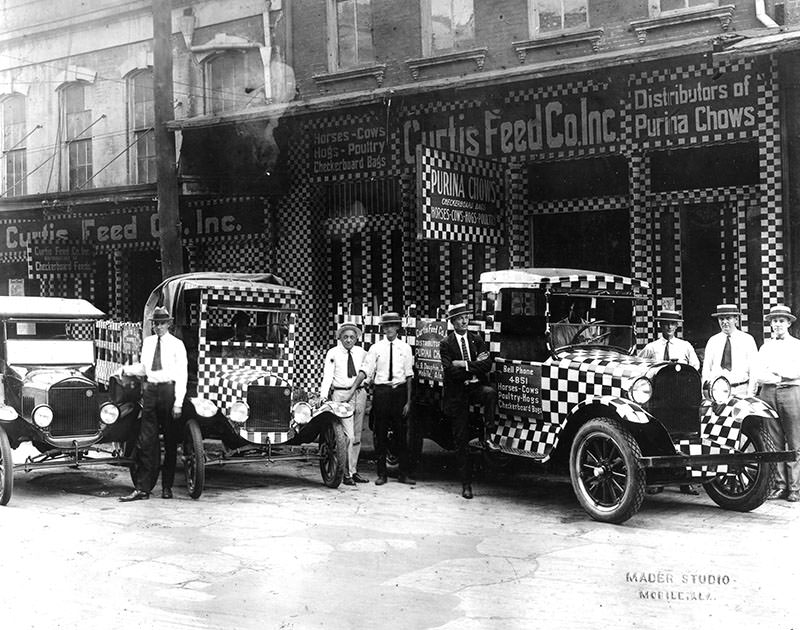
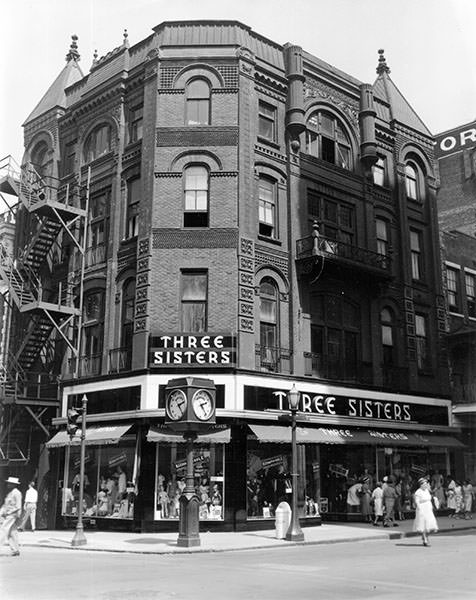
Retail and commerce filled Mobile’s older streets. Collins store on Royal Street near St. Louis Street was one of many neighborhood businesses that served the surrounding community. Feed stores, corner shops, and small firms employed workers throughout the city.
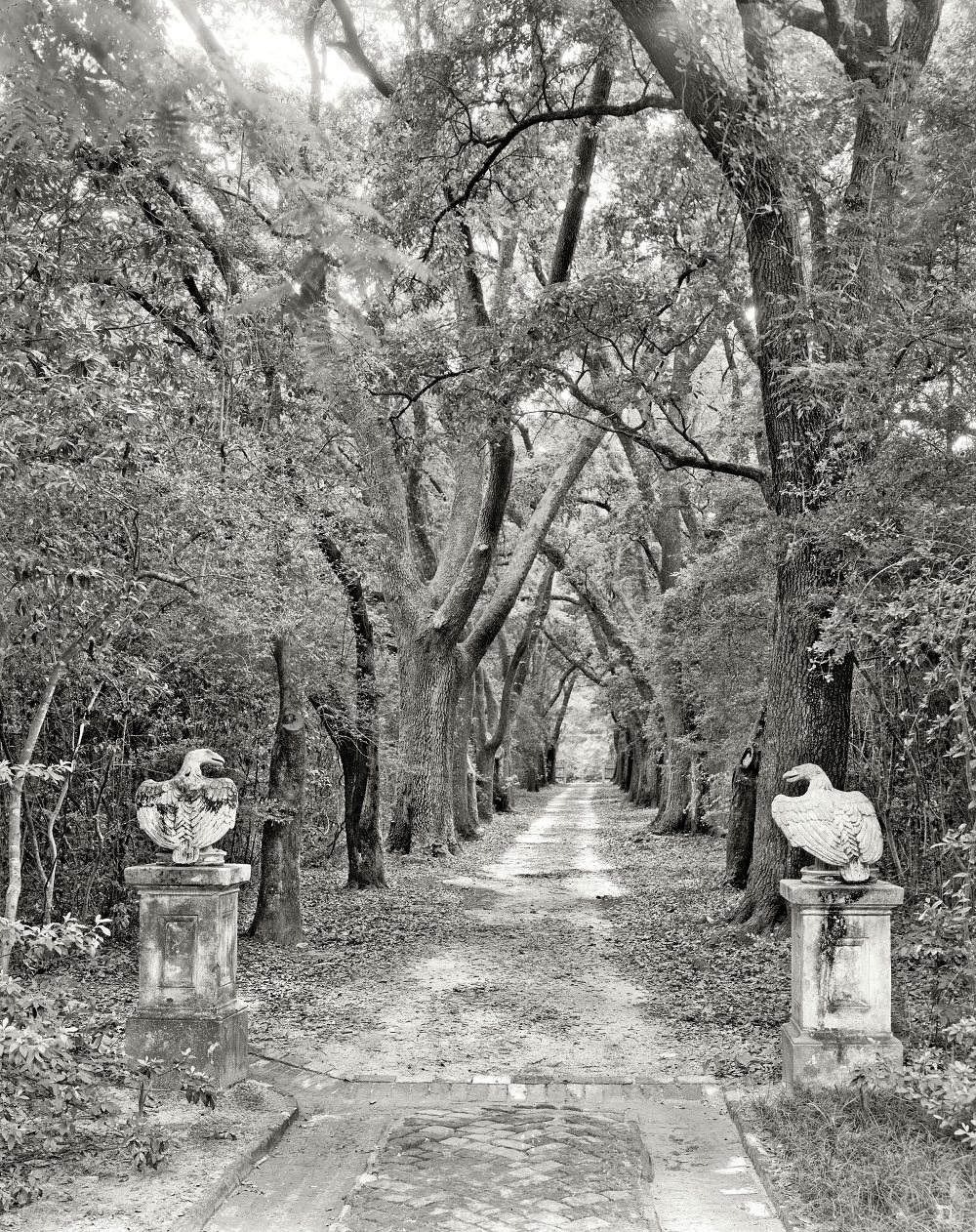
The Dawson House and other landmarked properties represented the private wealth that had accumulated in Mobile through generations of trade. Many of these homes featured long driveways, mature trees, and architectural details that set them apart from ordinary residential buildings.
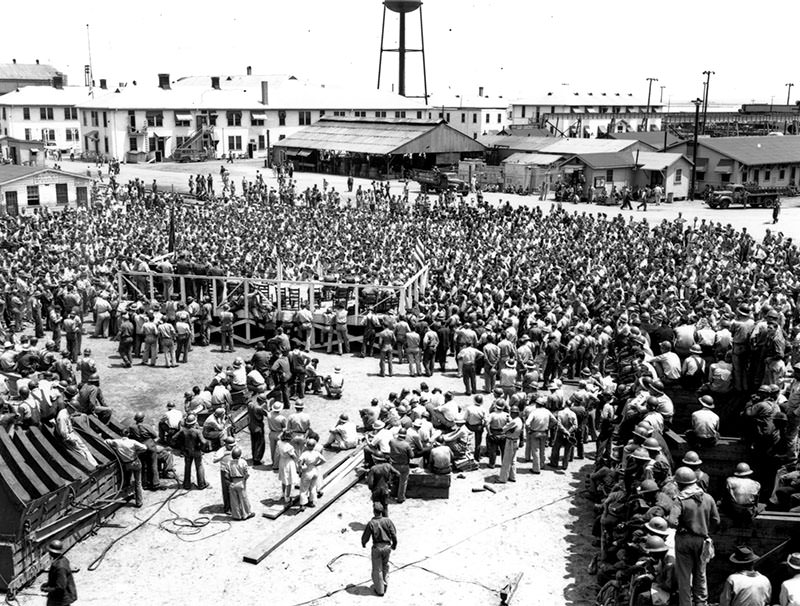
World War II brought a massive surge in shipbuilding to Mobile. The city was one of eighteen in the United States to produce Liberty ships — cargo vessels built at speed to supply Allied forces. The war years swelled the city’s white working-class and middle-class population as workers flooded in to fill the shipyards. When the war in Europe ended in May 1945, Mobilians took to the streets.





Very beautiful photos! Thank you for posting
Even then, some of those old buildings looked old.
This is an excellent look at the past.
Is it just me, or do some of the roads look better than ours now
My mother was born in Mobile in 1909. I believe the residence of Edward William REIL (her father) was on Government Street. Mr. Reil ran a grocery store at their residence. Alice Gage Schumaker was my grandmother. My mother, Margaret Alice, was the baby of eight children. Edna, Laura, Leslie, Edward, Clifford, Thomas and Effie REIL Please email me if you have any information.
Thank you Aung Budhh.
Indeed, Mobile is a stunning and historic city.
It’s disheartening that we dismantled all of our streetcars in the United States. Hopefully, we can work towards reconstructing some of them someday.
I live in Mobile now. It’s sad seeing some of the buildings we lost but I’m amazed at how many buildings in these pictures are still intact and being used today.
I’m so glad we’re seeing a post on Mobile here. We’re the oldest city in the state (as far as I know), and definitely the most unique city in the state. When Alabama became a state we were already 117 years old. But people in other parts of the state seem to forget we’re down here.
Wow, I didn’t know the Battle House was surrounded with such beautiful ironwork. I wonder what it’d take to restore that to the building.
Awesome photos, time for a before and after project
Beautiful. I wish the whole city were on board to restore and/or maintain all of these places.
Wow, I didn’t know the Battle House was surrounded with such beautiful ironwork. I wonder what it’d take to restore that to the building.
Awesome photos, time for a before and after project
Beautiful. I wish the whole city were on board to restore and/or maintain all of these places.
It looked more like a real city then than it does now. And I think they had fewer potholes.
Honestly, I’ve lived across two continents and multiple countries and states, and I have never seen more potholes (and abysmal road conditions overall) anywhere else than I have since living in Alabama.
Wait until you see Louisiana.
We call Mobile “pothole city.” My theory is that allowing potholes to proliferate is cheaper and easier than hiring and paying more traffic cops.