
Buffalo, New York is the second-largest city in the state, and at the turn of the 20th century, it was one of the most industrially active cities in the entire country. Sitting at the eastern end of Lake Erie, Buffalo benefited enormously from the Erie Canal, its railroad connections, and its access to Great Lakes shipping routes. These advantages made it a natural hub for heavy industry and commerce. Before European settlers arrived, the region was home to the Iroquois Nation, whose presence in the area predates the 17th century. By the 1900s, Buffalo had transformed into a dense, fast-moving city where steel mills, flour mills, iron works, automobile plants, and meat-packing facilities ran around the clock.
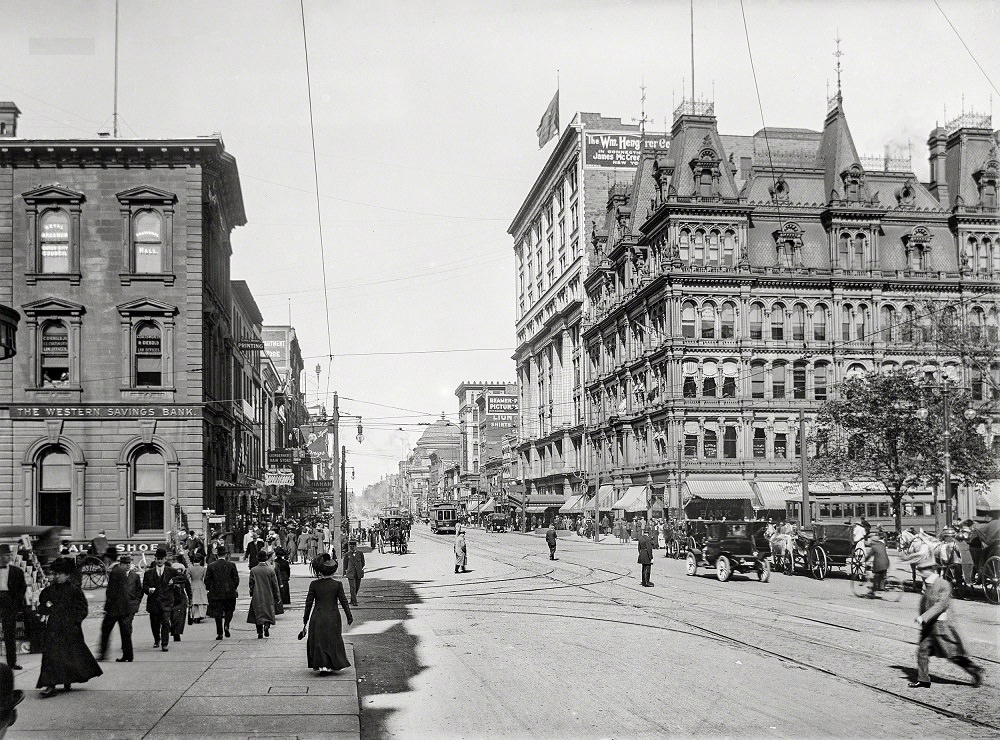
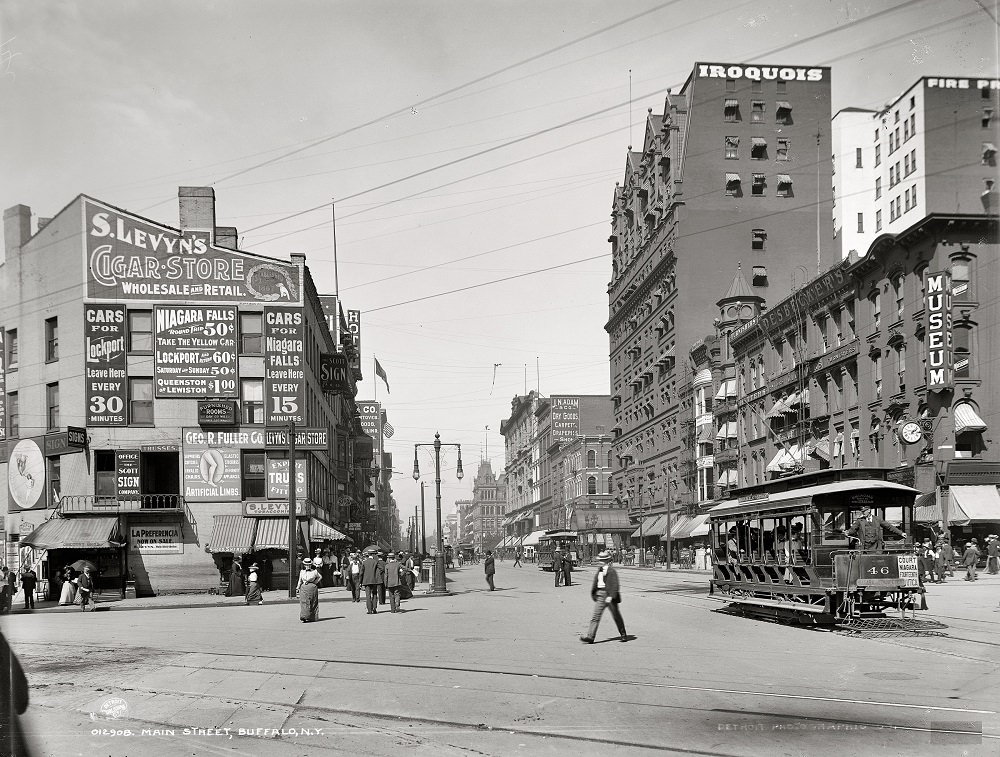
Main Street was the commercial spine of Buffalo. Trolley lines ran down the center of the road, and the sidewalks were lined with businesses, hotels, and banks. The street was busy throughout the day, with horse-drawn vehicles and early automobiles sharing the road. Buildings along Main Street reflected the city’s wealth and ambition — many were several stories tall, faced with stone, and built to last.
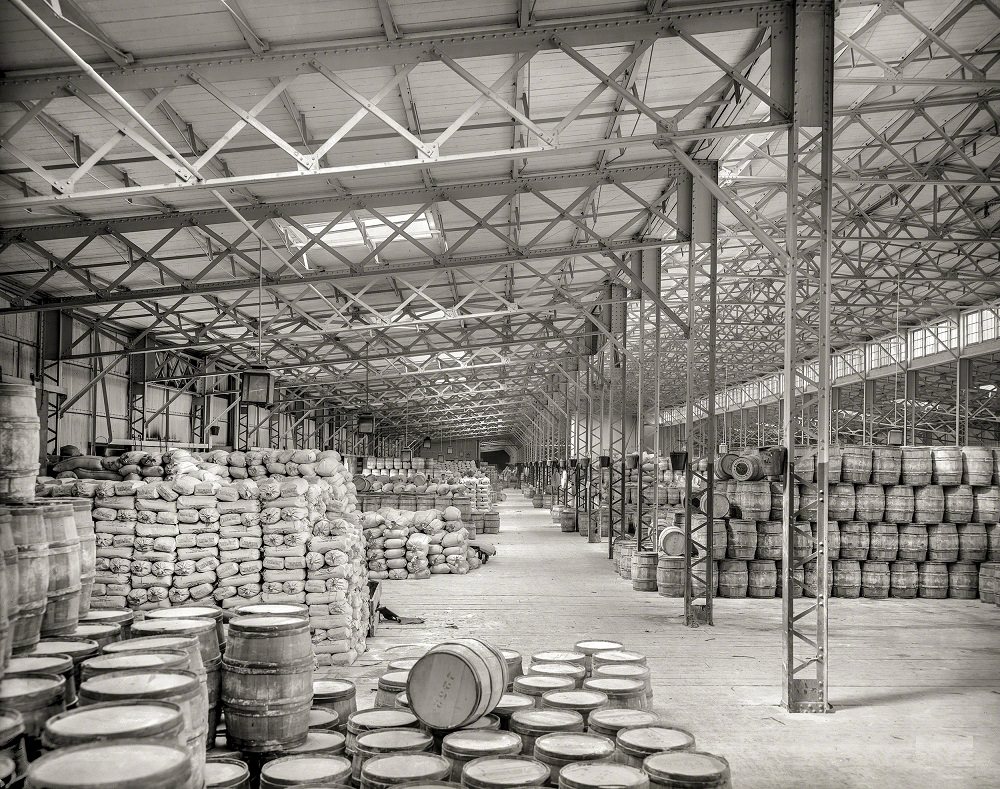
Railroads were just as important to Buffalo as its waterways. The New York Central Railroad operated extensive freight operations in the city, moving raw materials and finished goods in and out at a massive scale. The freight sheds along the rail yards were enormous, built to handle the constant flow of cargo that kept Buffalo’s industries alive.
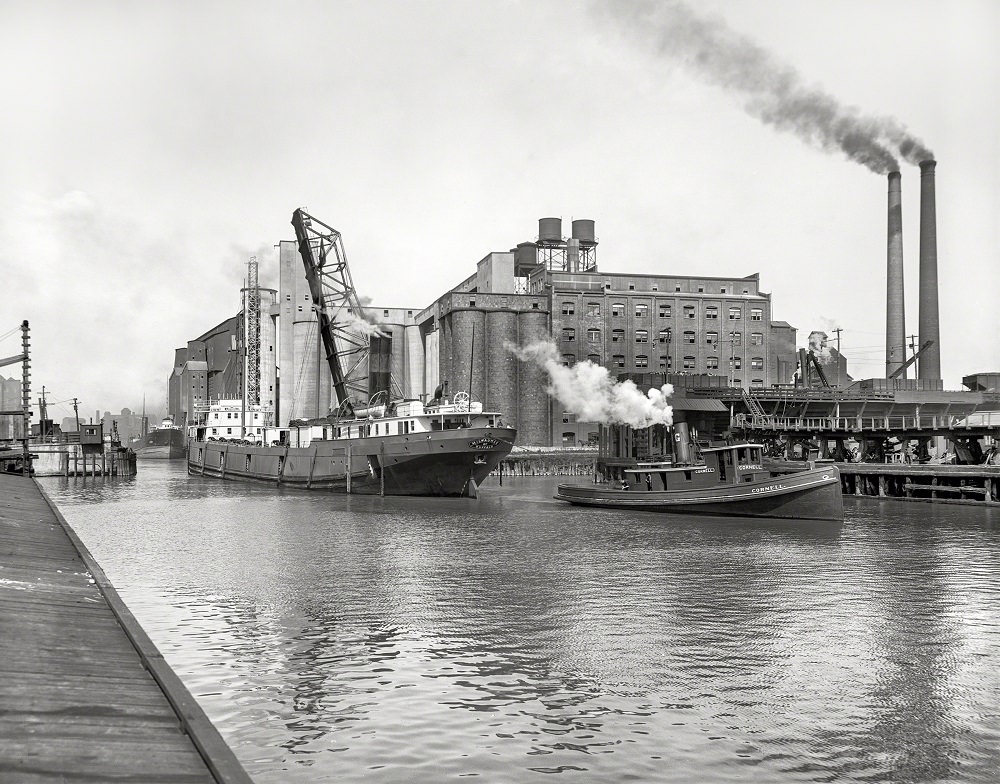
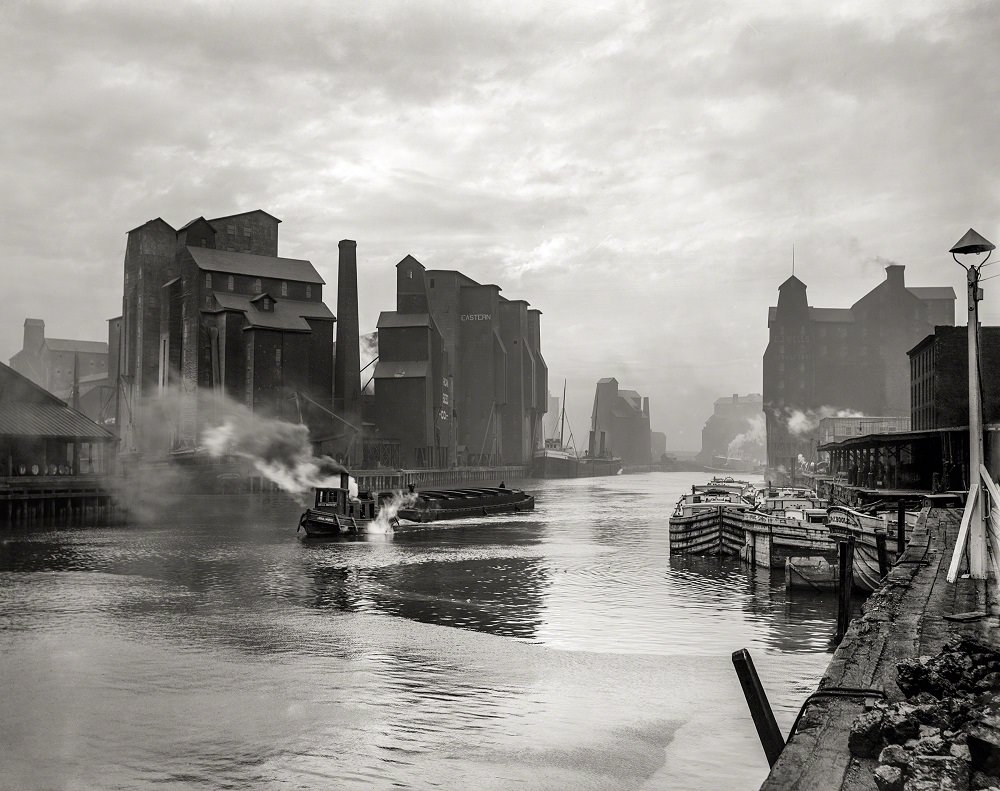
Grain processing was one of Buffalo’s defining industries. The city sat at the point where grain shipments from the American Midwest arrived via the Great Lakes, making it the ideal location for large-scale milling operations. The Washburn-Crosby Company — which would later become General Mills — ran one of its major milling operations in Buffalo. Grain elevators towered over the waterfront, and the smell of flour was part of daily life near the river.
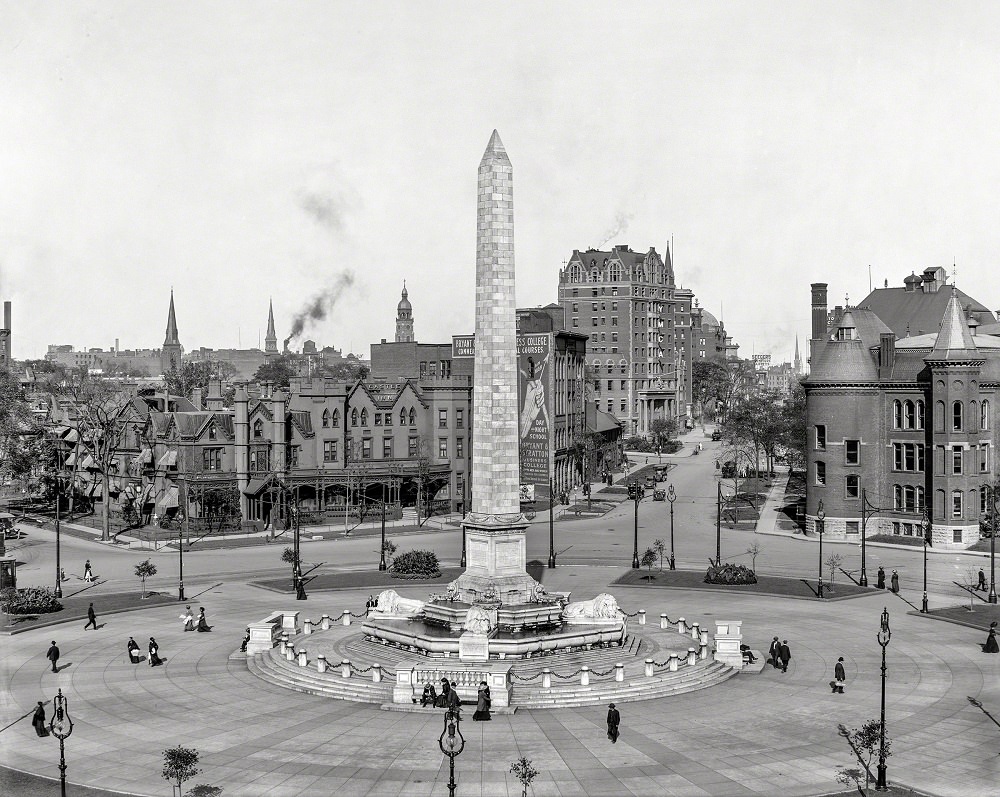
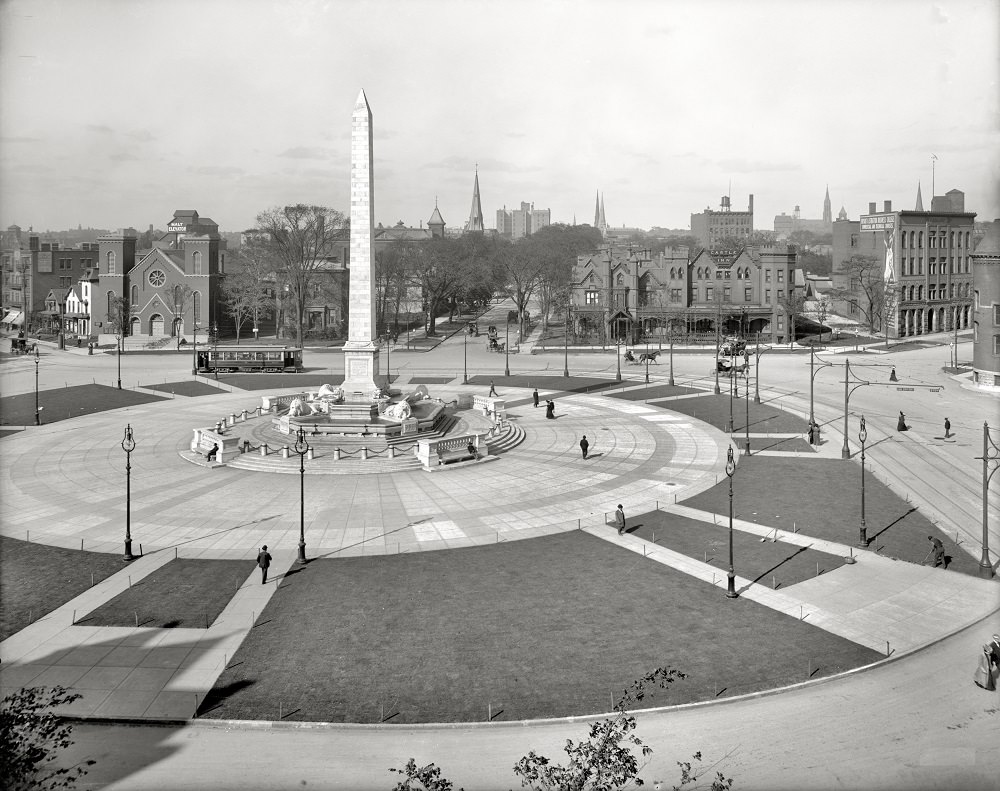
Buffalo holds a dark place in American presidential history. President William McKinley was shot at the Pan-American Exposition in Buffalo on September 6, 1901, and died eight days later. A monument in his honor was erected at Niagara Square, one of the city’s central public spaces. The square itself was a key landmark, anchoring the downtown street grid that had been laid out by Joseph Ellicott in the early 19th century.
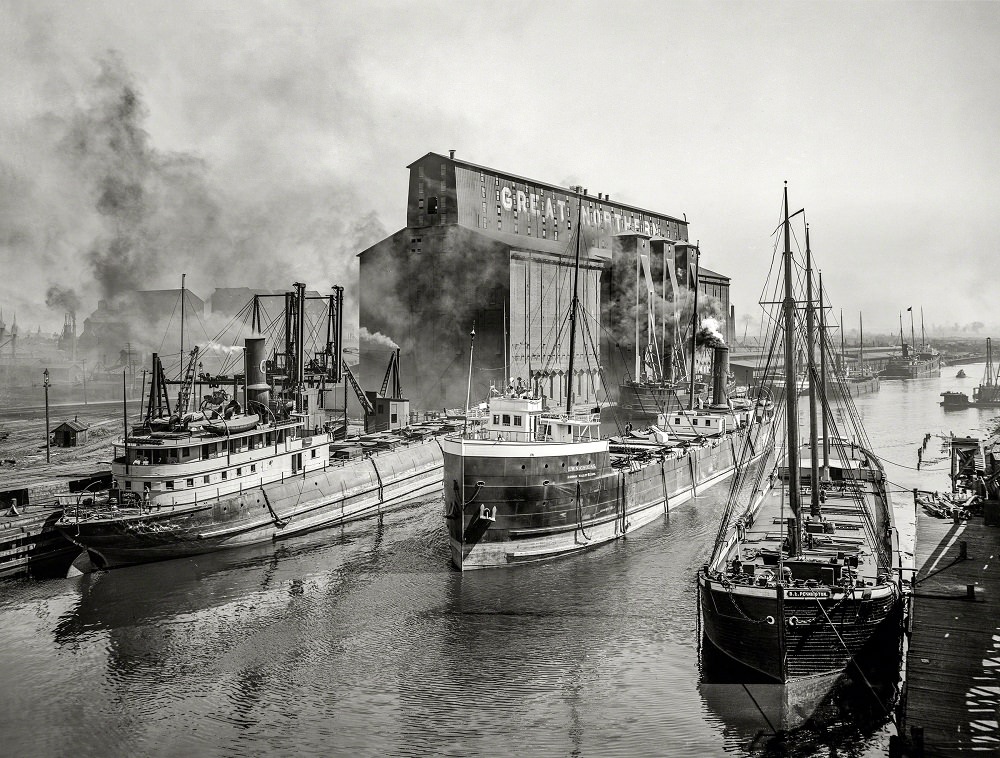
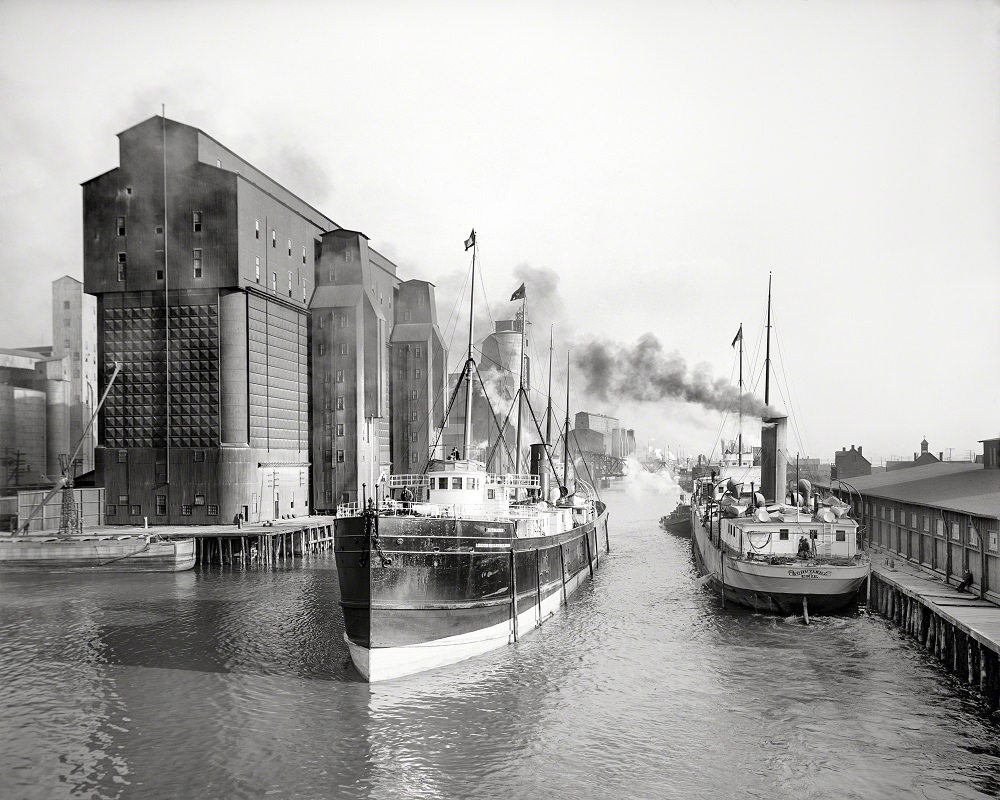
The Buffalo waterfront was defined by its grain elevators — massive concrete and steel structures that loomed over the harbor. The Great Northern Elevator was among the largest in the world when it was built. Ships arriving from Great Lakes ports offloaded thousands of bushels of grain directly into these structures, which stored and processed it before sending it east by rail. Buffalo handled more grain than any other city in the United States at the peak of this era.
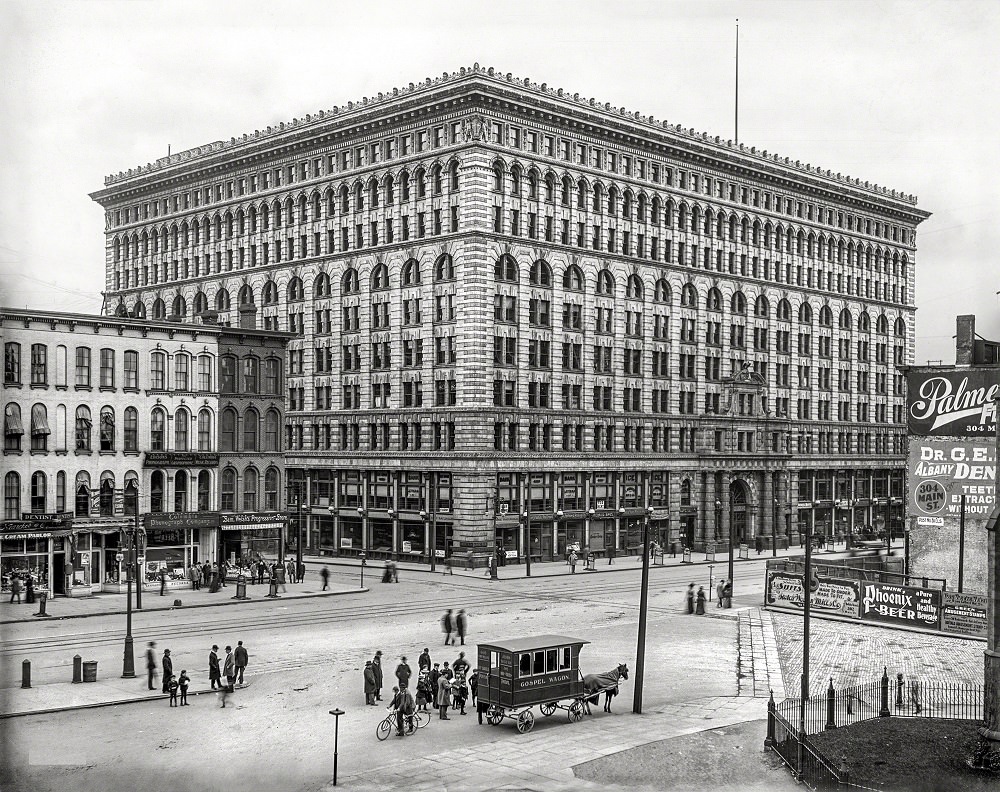
When it was completed in 1896, the Ellicott Square Building was the largest office building in the world. Designed by Charles Atwood of D.H. Burnham & Company, it covered an entire city block and featured a grand interior courtyard with a mosaic tile floor. The building was a symbol of Buffalo’s commercial confidence at the turn of the century. Tenants included lawyers, financial firms, and local businesses — all drawn to the heart of the city’s business district.
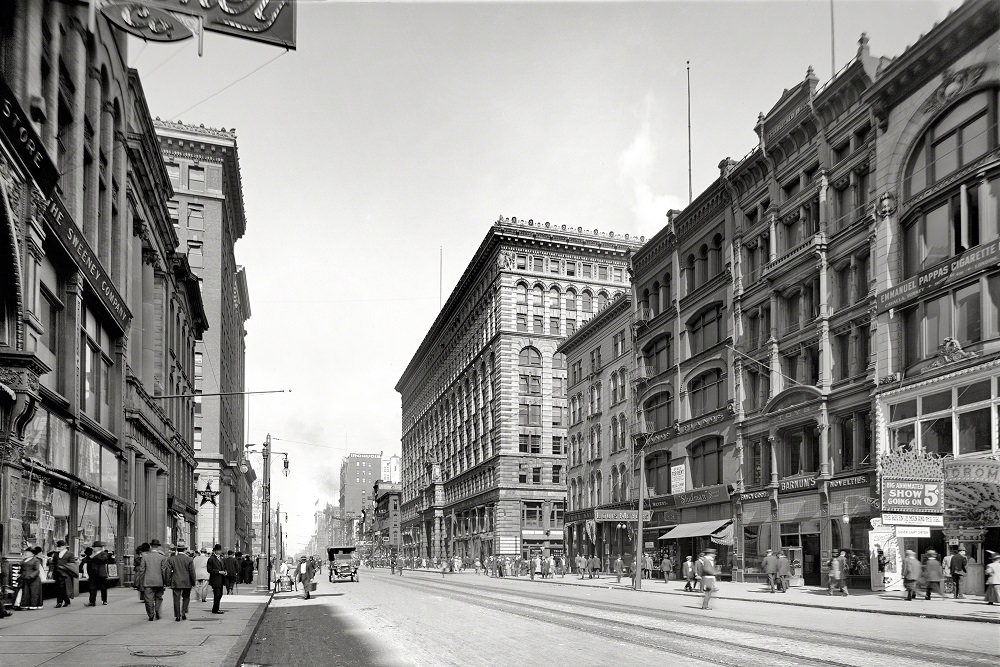
By 1911, Main Street showed even more signs of Buffalo’s growth. Electric streetcars had replaced older transit methods, and the skyline was filling in with taller structures. Department stores, banks, and commercial buildings competed for attention along the corridor. The street was a place where working-class residents, businesspeople, and visitors all moved through the same space.
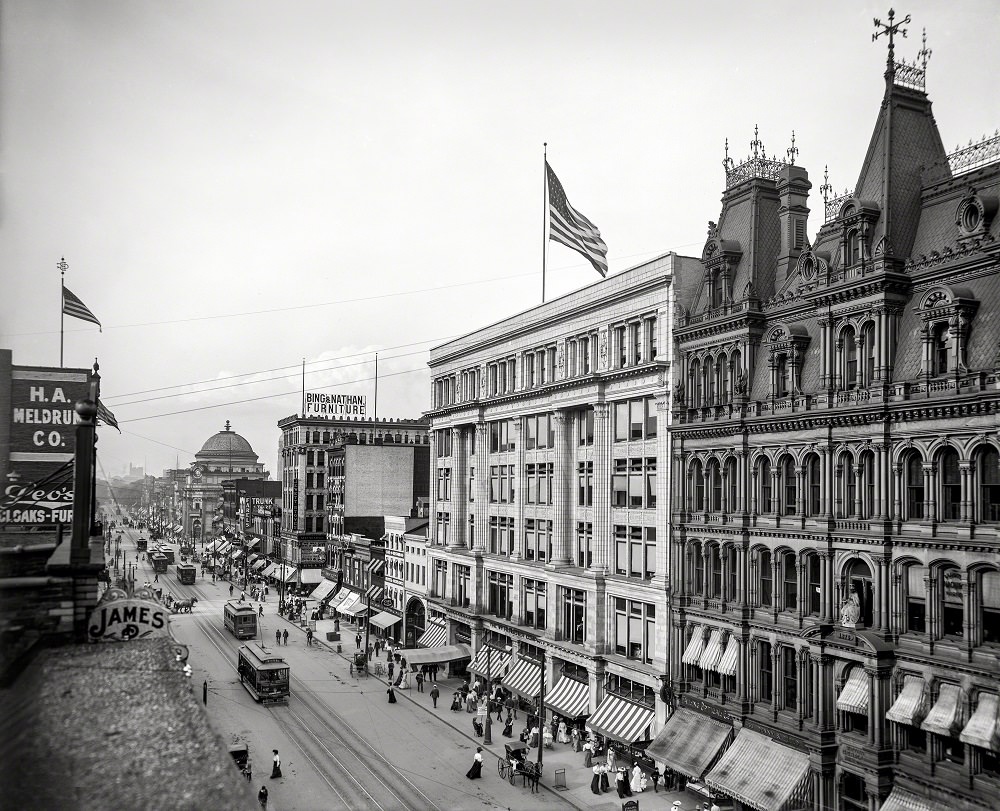
The Buffalo Savings Bank building, with its large Beaux-Arts dome, was one of the most recognizable structures on Main Street. Built in 1901, it was designed to project stability and prestige at a time when many Americans were still skeptical of banking institutions. Nearby, Hengerer’s department store drew shoppers from across the city and surrounding region. These two buildings together captured the dual nature of early 20th century downtown Buffalo — financial power and retail commerce side by side.
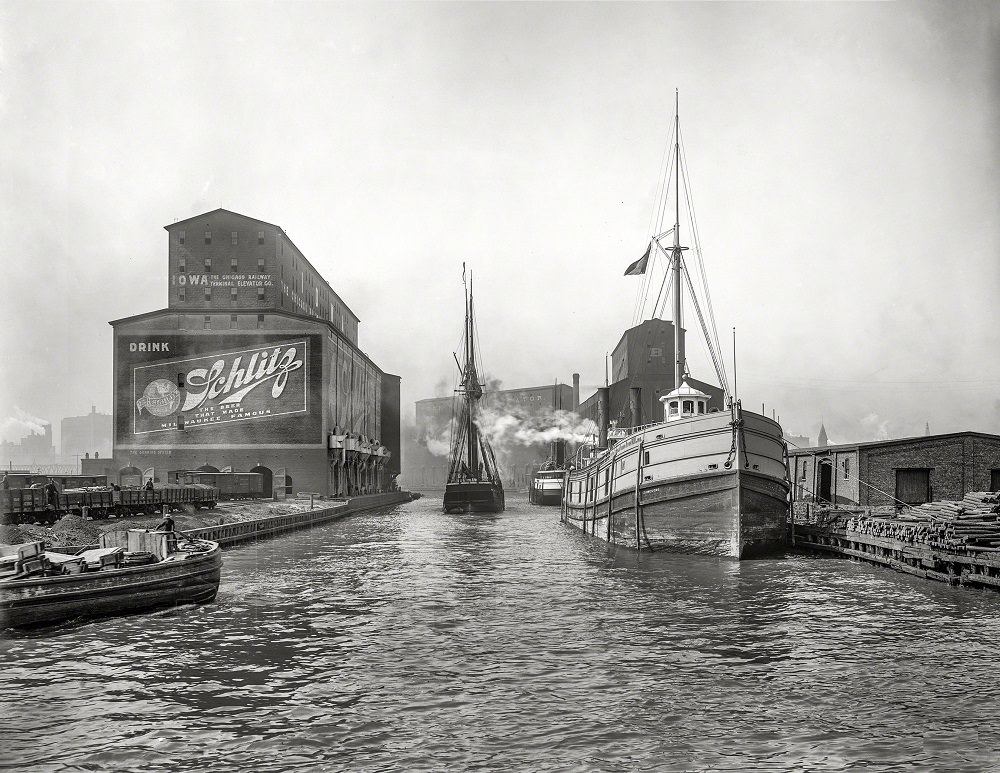
Buffalo’s grain elevator industry did not exist in isolation. The entire Great Lakes corridor — from Chicago to Buffalo — was lined with similar infrastructure. Chicago’s river elevators operated on the same model, receiving grain from the western plains, storing it, and shipping it east. The competition and cooperation between these cities shaped the grain trade that fed much of the eastern United States and parts of Europe.
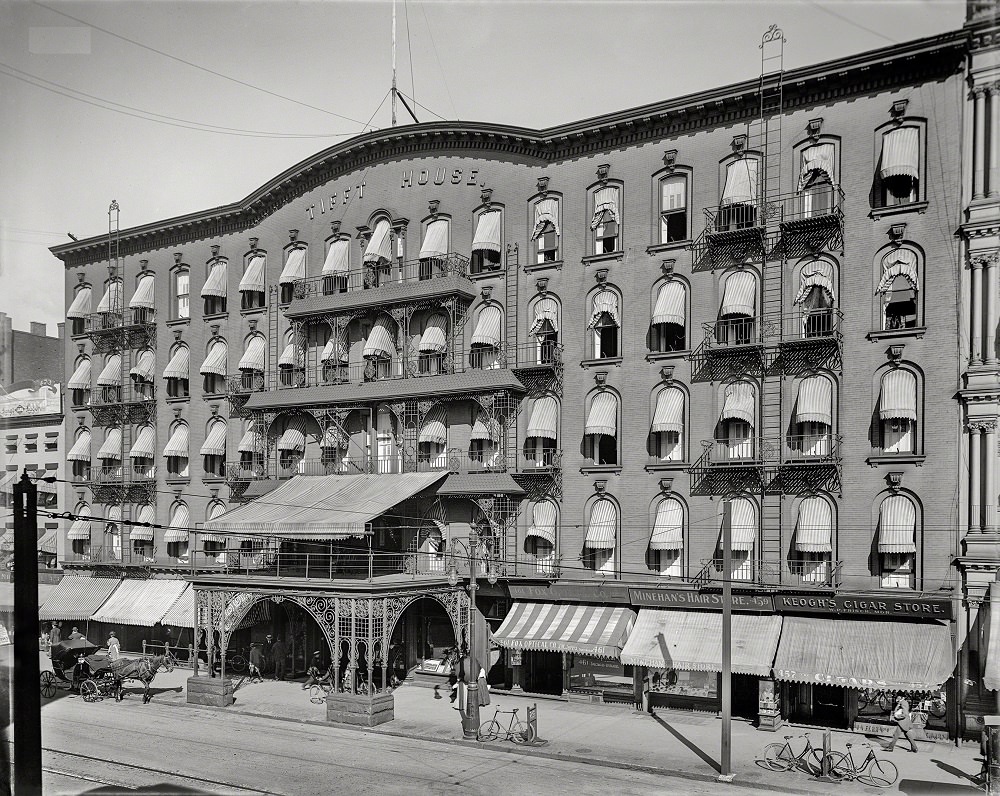
The Tifft House was one of Buffalo’s well-known hotels, located on Main Street and frequented by travelers and business visitors. Hotels like the Tifft served an important function in a city with heavy rail traffic — they were stopovers for people moving between New York City and the Midwest. The building’s presence on Main Street placed it at the center of Buffalo’s social and commercial activity.
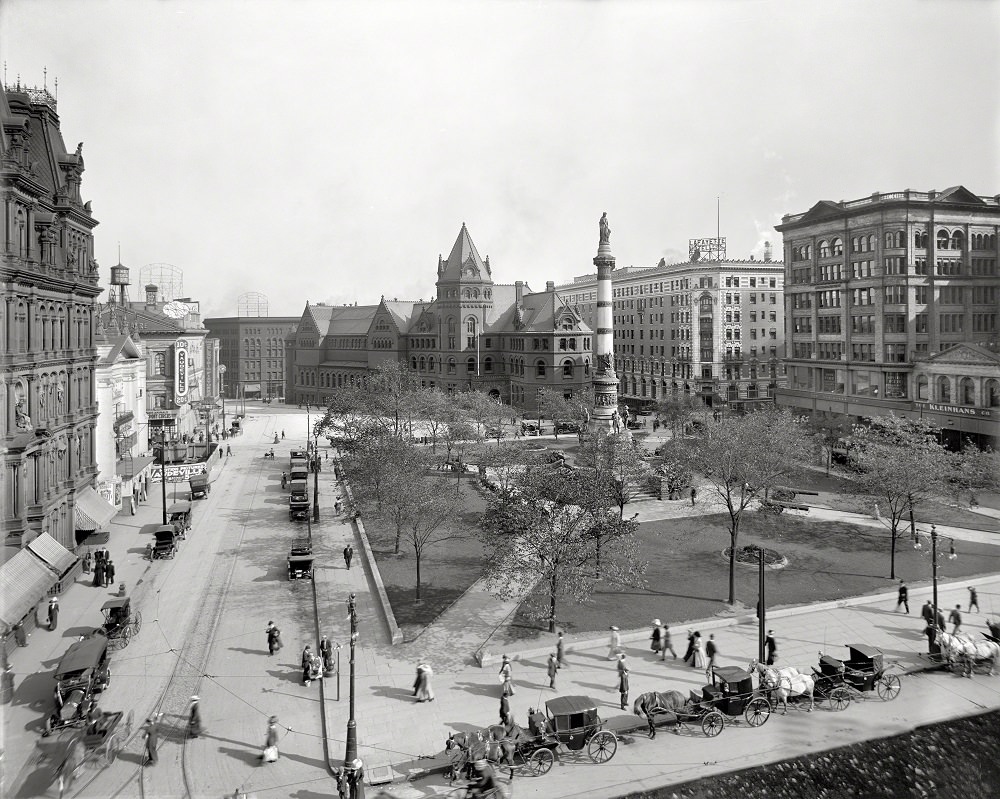
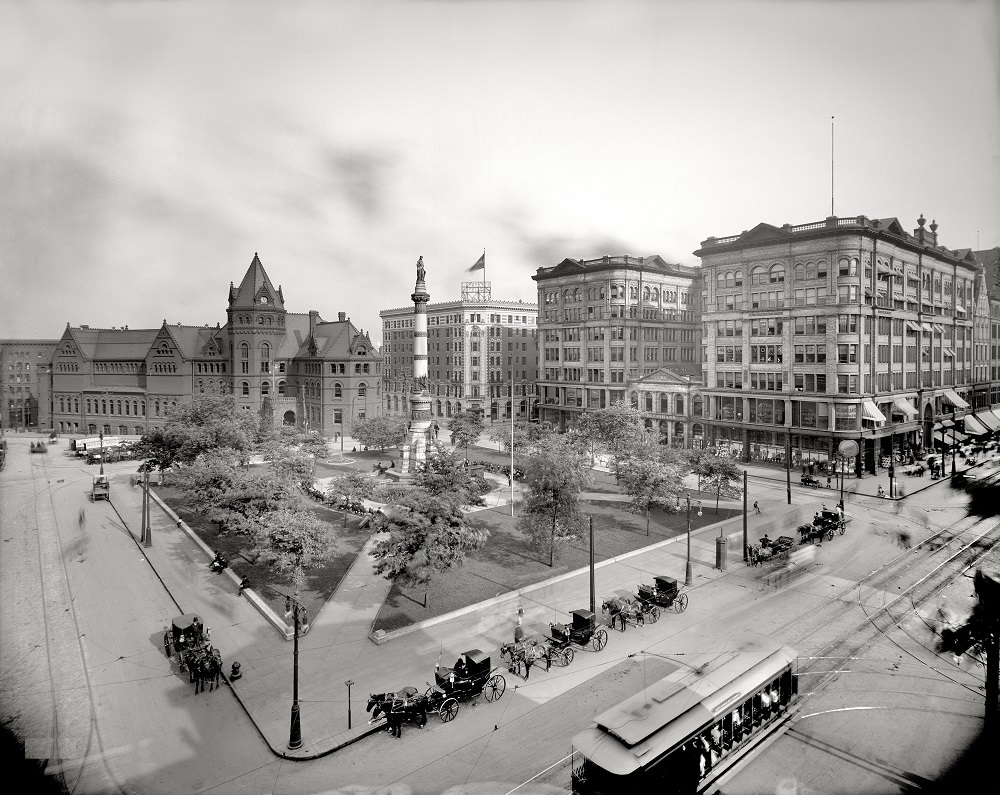
Lafayette Square served as one of Buffalo’s civic anchors. Located near the downtown core, it was a gathering point for residents and a site for public life. The surrounding buildings included law offices, newspapers, and civic institutions. The square’s design reflected Buffalo’s aspiration to be a city of culture and order, not just industry.
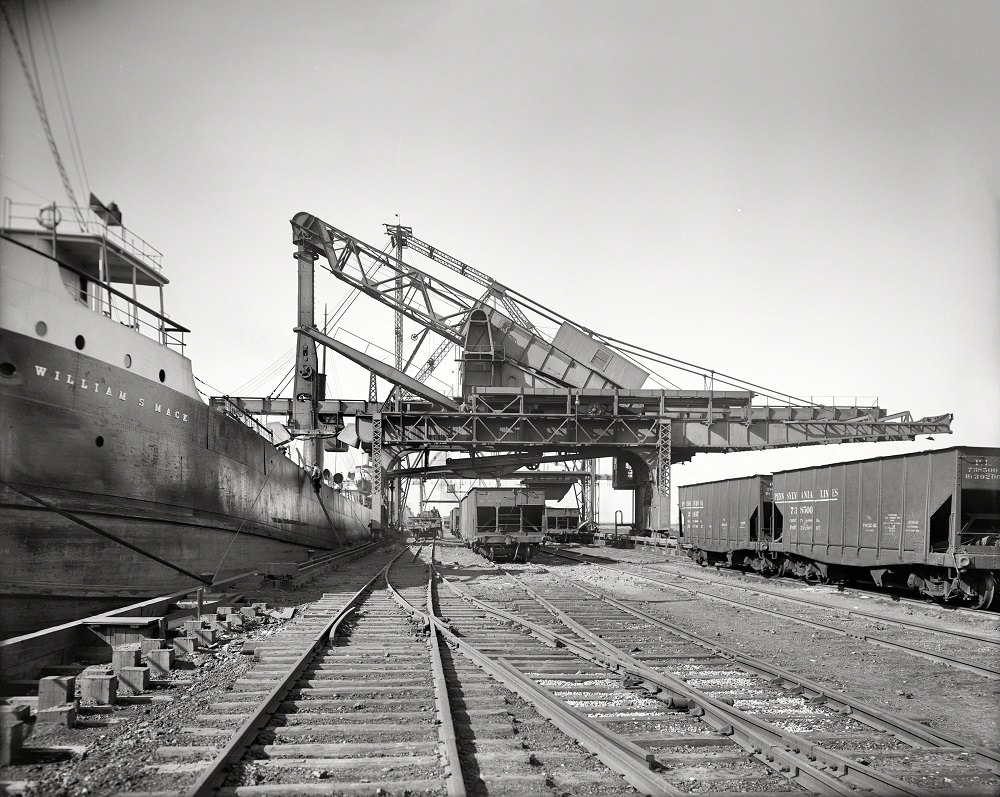
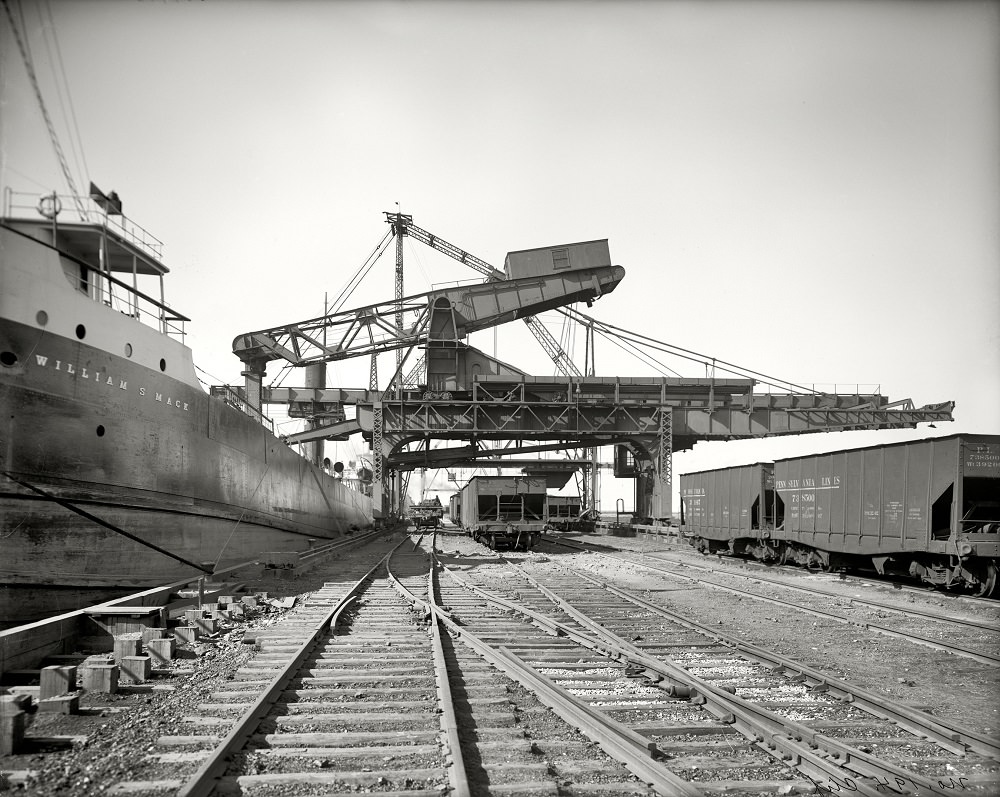
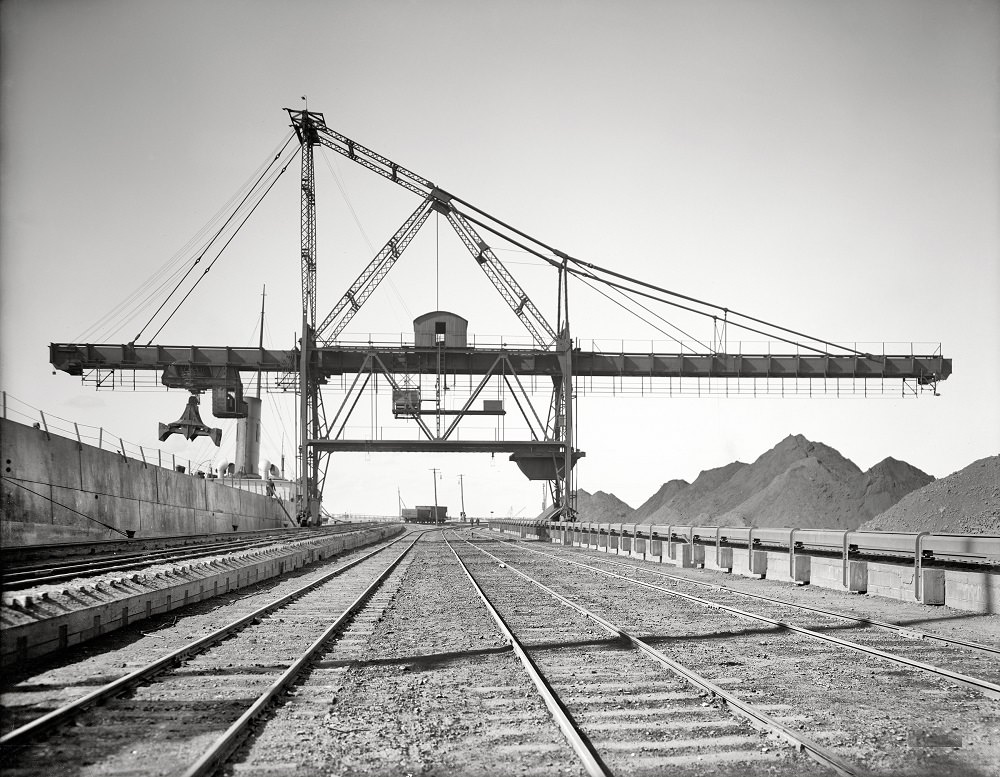
One of the most impressive pieces of industrial machinery operating in early 20th century Buffalo was the Hulett unloader. Invented by George Hulett in 1898, these massive electric machines used a clamshell bucket to scoop iron ore directly from the holds of ships. Before the Hulett, ore was unloaded by hand — a backbreaking process that took days. With Hulett machines, the same job was done in hours. Buffalo’s steel industry depended on these machines to move the ore that fed the furnaces at nearby Lackawanna.
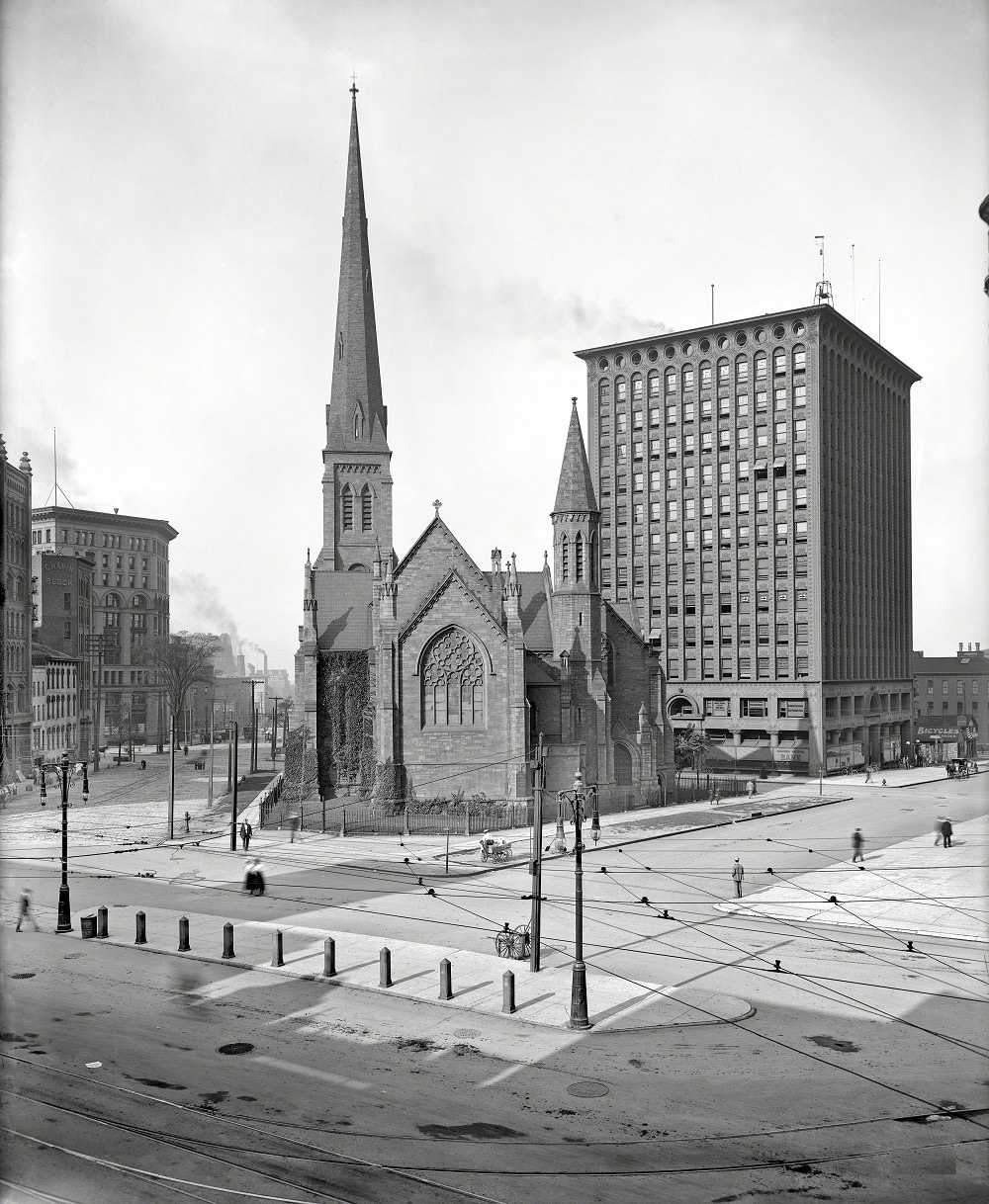
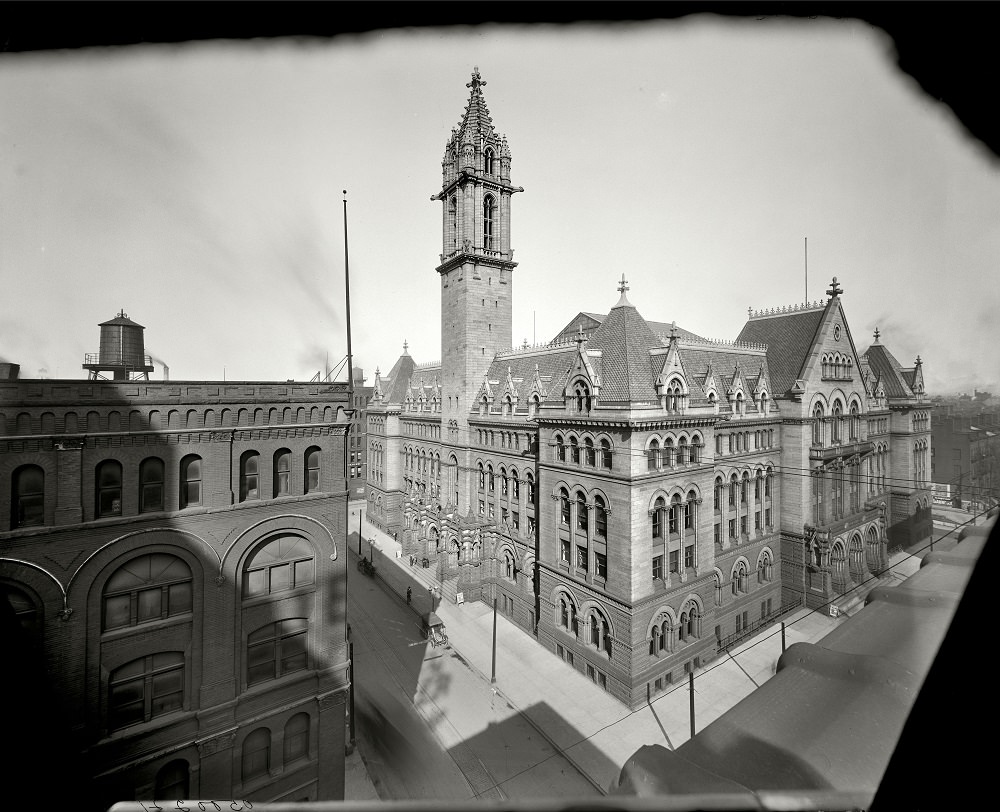
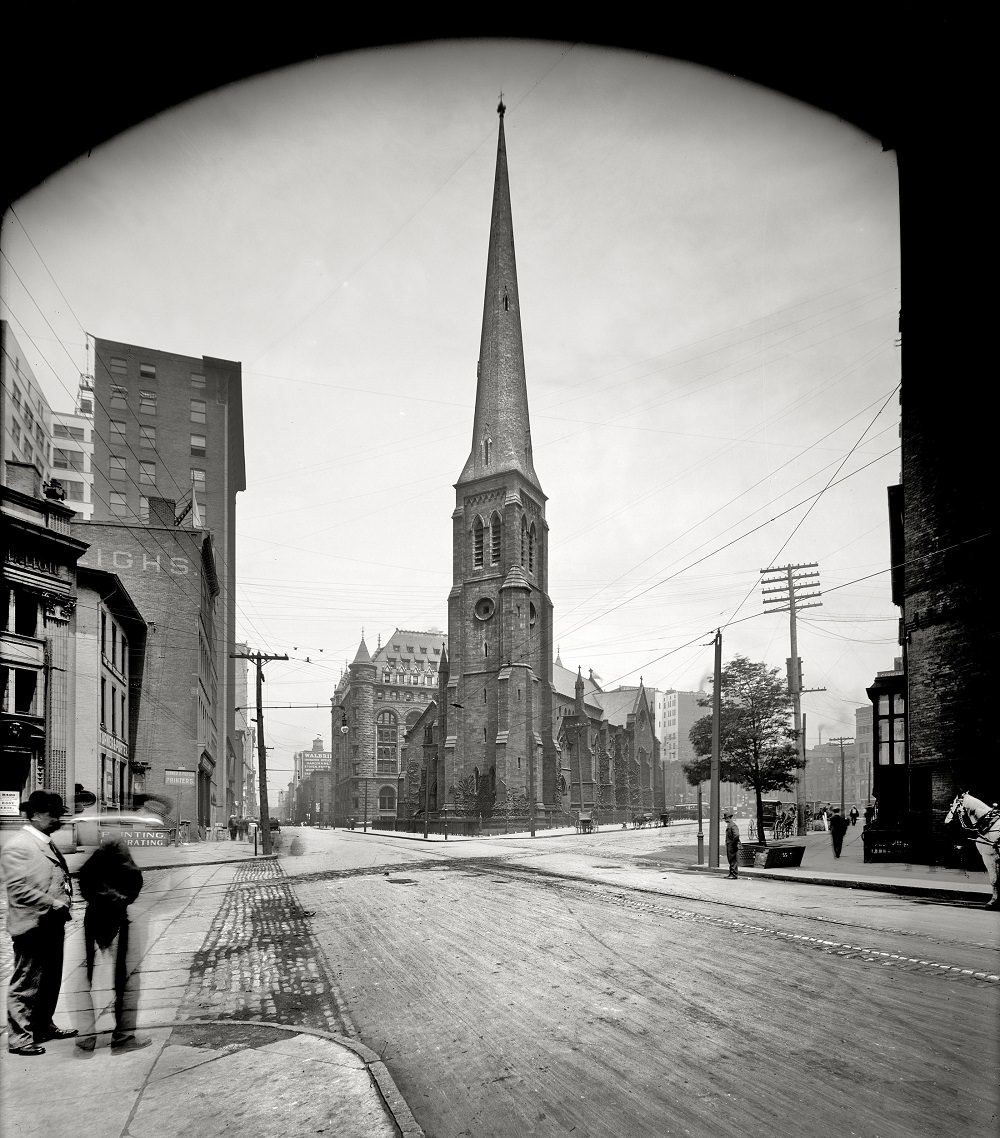
St. Paul’s Episcopal Cathedral is one of Buffalo’s most important architectural landmarks. Designed by Richard Upjohn and consecrated in 1851, the Gothic Revival stone building dominated the city’s religious and architectural landscape. By 1900, it stood as a testament to Buffalo’s deep roots and its aspiration toward permanence. The cathedral served the city’s established Protestant community and remained one of the most recognized structures in downtown Buffalo.
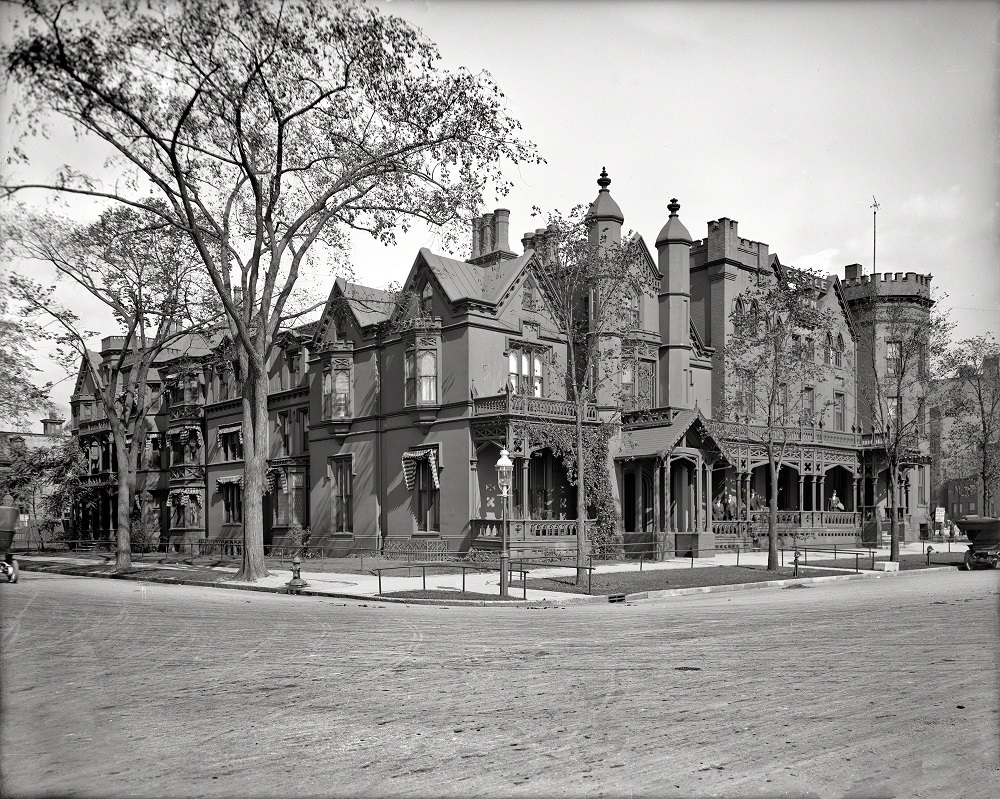
The Castle Inn was a distinctive Buffalo establishment, its name reflecting its architectural style. Buildings like this one catered to visitors arriving by rail or steamship. By 1908, Buffalo had a well-developed hospitality industry, driven by the steady flow of travelers through one of the busiest transit corridors in North America.
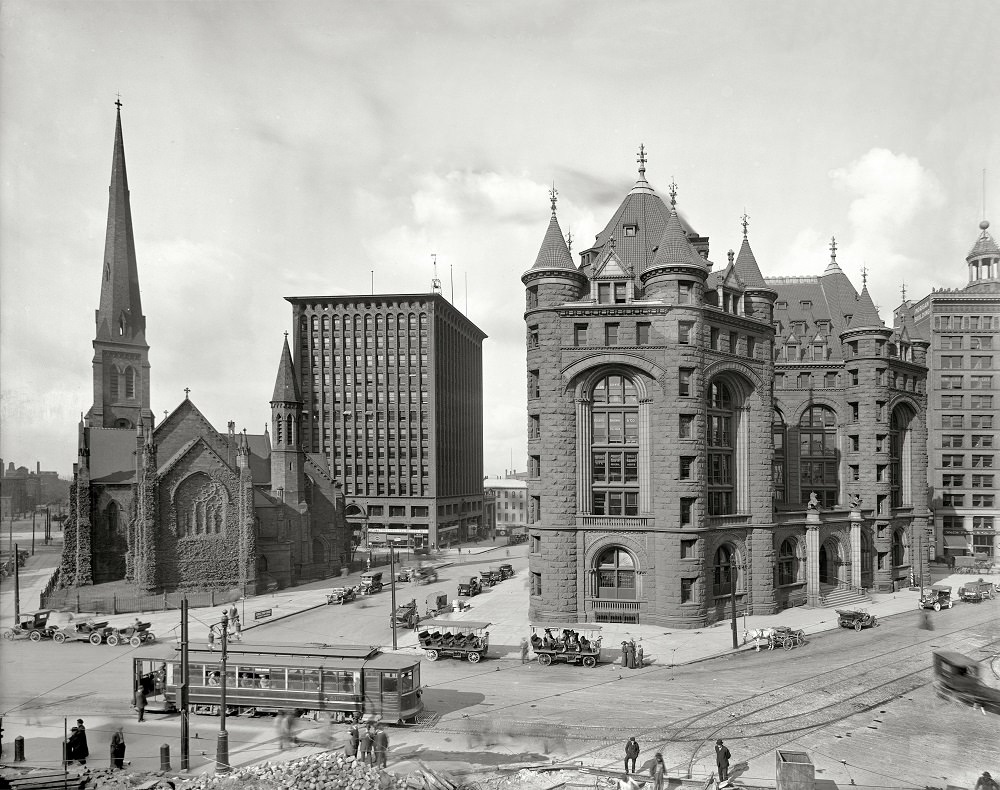
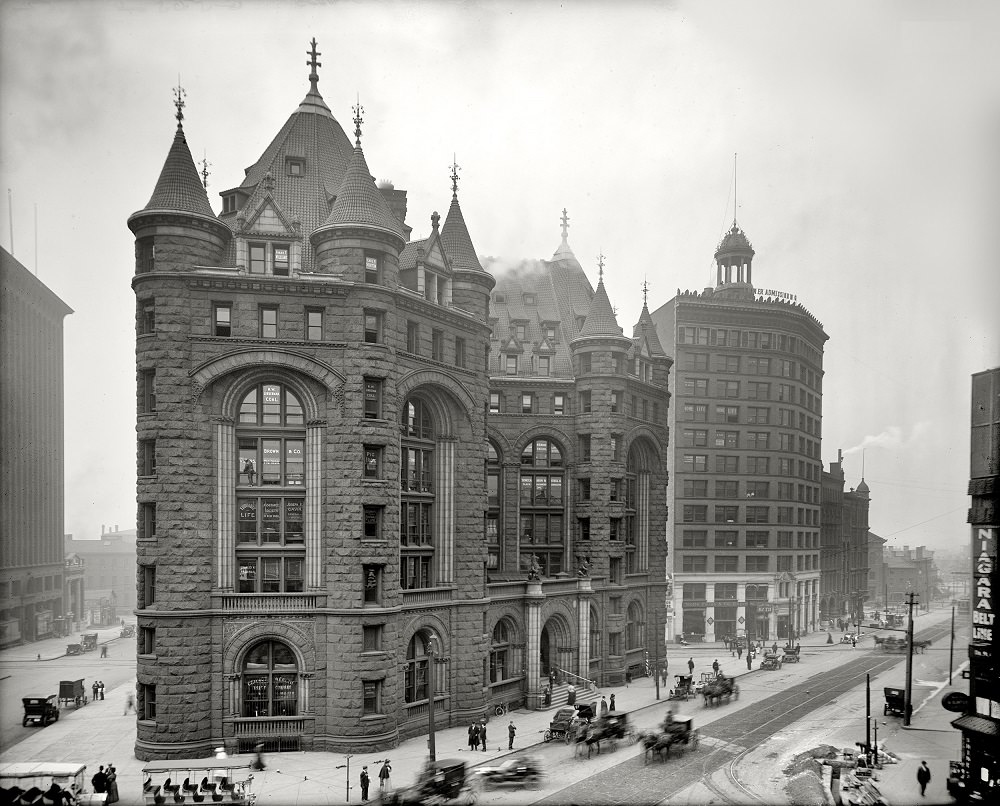
Shelton Square brought together some of Buffalo’s most impressive structures in a single view. The Prudential Building — also known as the Guaranty Building — was designed by Louis Sullivan and Dankmar Adler and is considered one of the earliest skyscrapers in American architectural history. Its intricate terra cotta exterior stood in striking contrast to the Gothic stone of St. Paul’s Cathedral just across the way. The Erie County Savings Bank added another layer of civic grandeur to this densely built section of downtown.
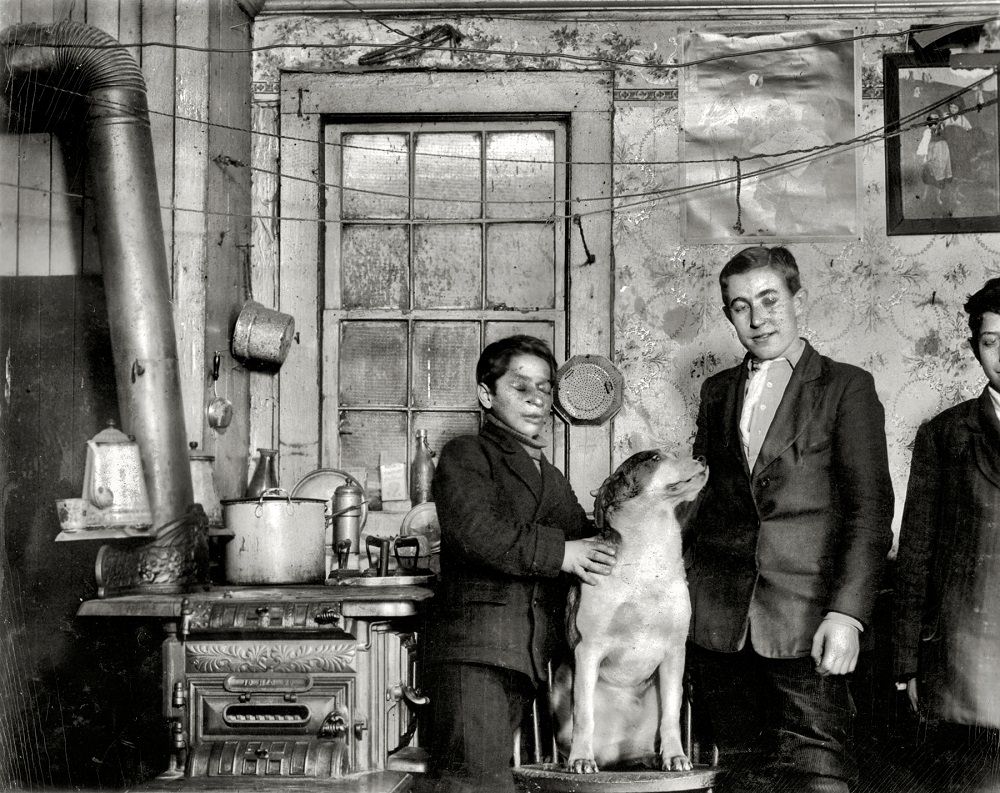
Not all of Buffalo’s story was told through its commercial buildings. Residential neighborhoods like the one on Terrace Street were home to working-class and immigrant families who filled the labor rolls of the city’s factories and mills. By 1910, Buffalo had a large and diverse immigrant population, including communities from Italy, Poland, Germany, and Ireland, among others. These neighborhoods were dense, practical, and alive with daily activity.
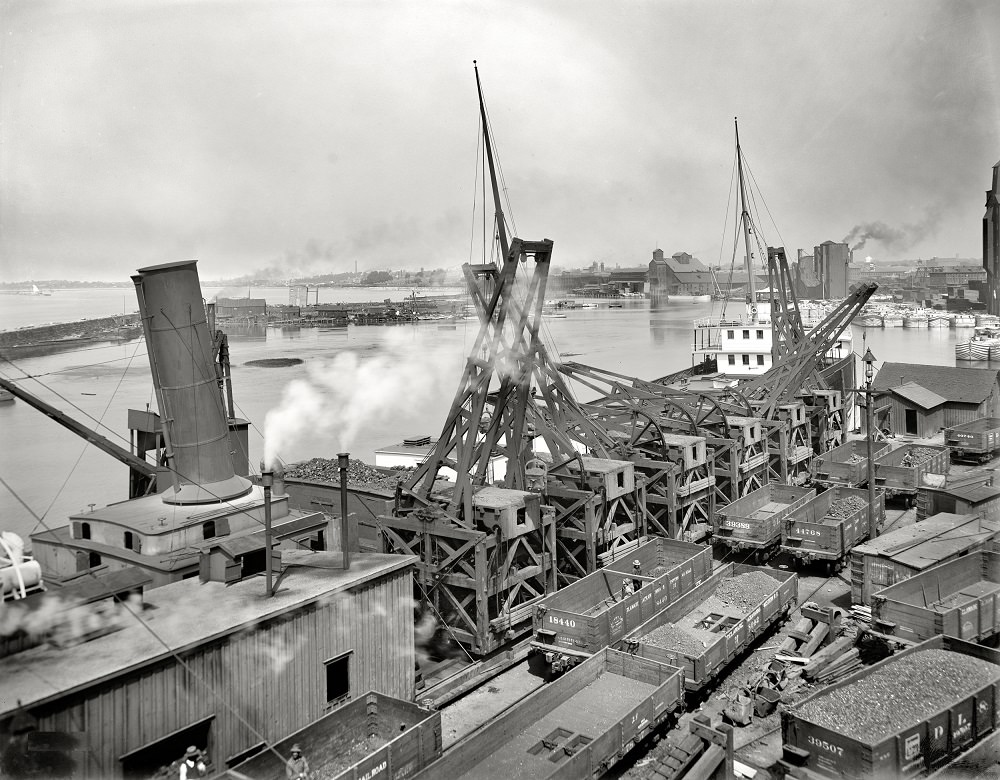
The Lackawanna docks, just south of Buffalo proper, were the industrial heartbeat of the region’s steel production. Ore arrived from the Lake Superior iron ranges by ship and was transferred to the Bethlehem Steel plant — then known as the Lackawanna Steel Company — which was one of the largest steel facilities in the world at the time. Equipment like the Thornberger hoist was essential to keeping the flow of raw materials moving at the speed the furnaces required.
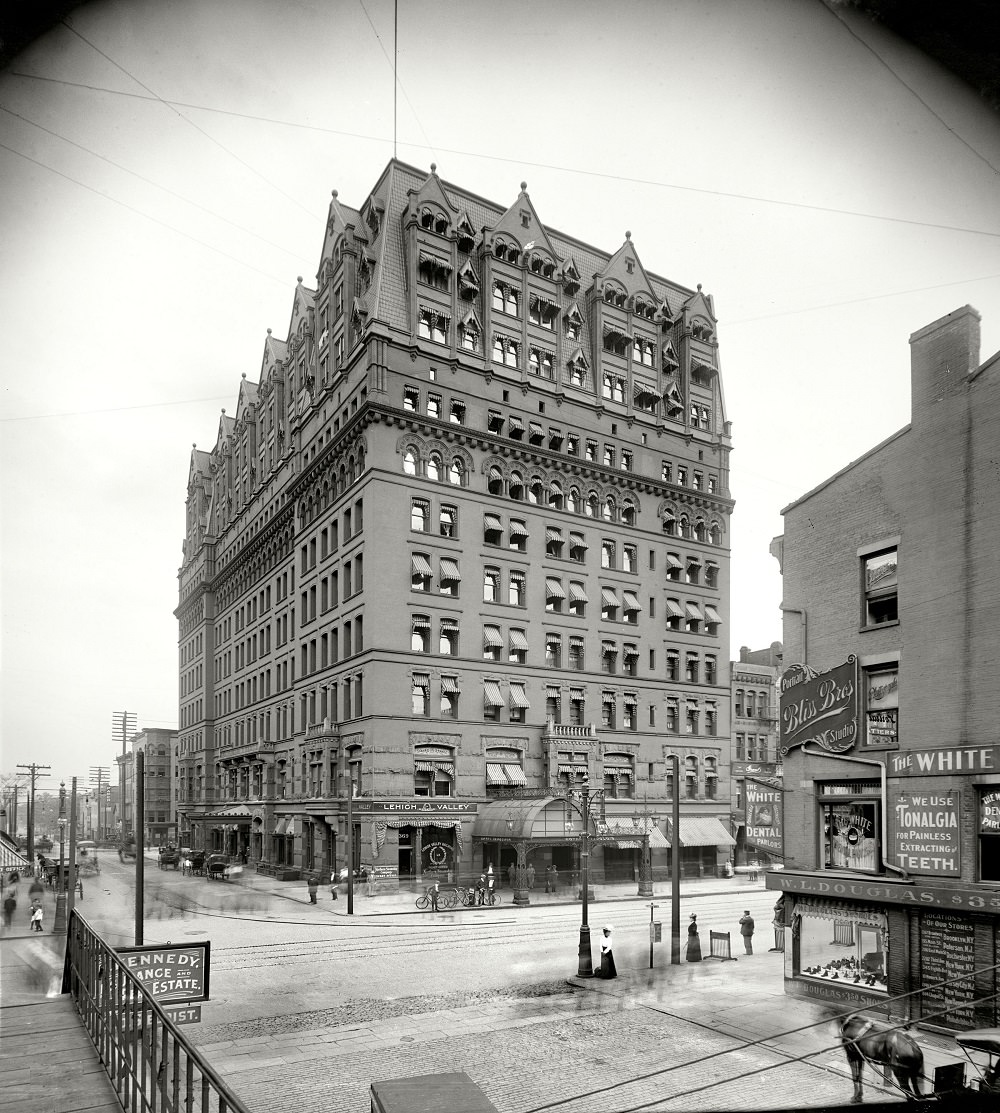
The Hotel Iroquois was a fixture of Buffalo’s downtown. Long exposure times in early photography caused moving pedestrians to appear as blurred, ghost-like figures — a common artifact of the era’s camera technology. Despite the visual oddity, photos like this one capture the genuine energy of a busy downtown street in 1900, with real foot traffic that reflected the city’s commercial vitality.
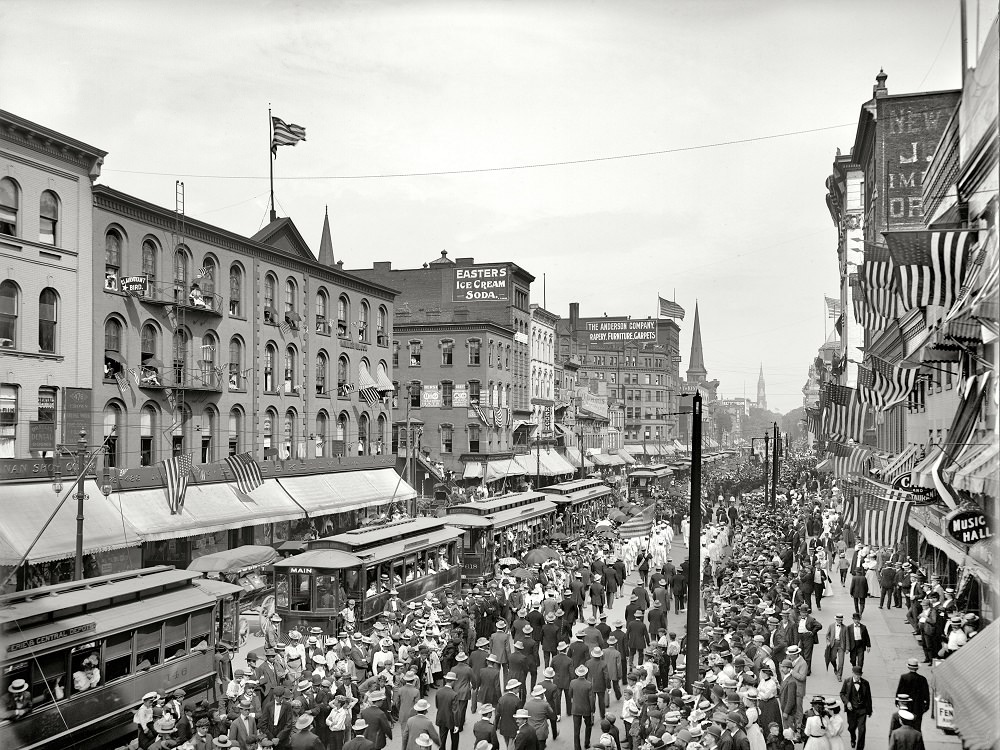
Buffalo’s Labor Day parade drew enormous crowds to Main Street. The city’s industrial workforce was large and well-organized, and Labor Day was a significant occasion. Unions representing workers from the grain elevators, railroads, steel mills, and factories all participated. The parade was both a celebration and a public display of workers’ collective power in a city that depended on their labor.
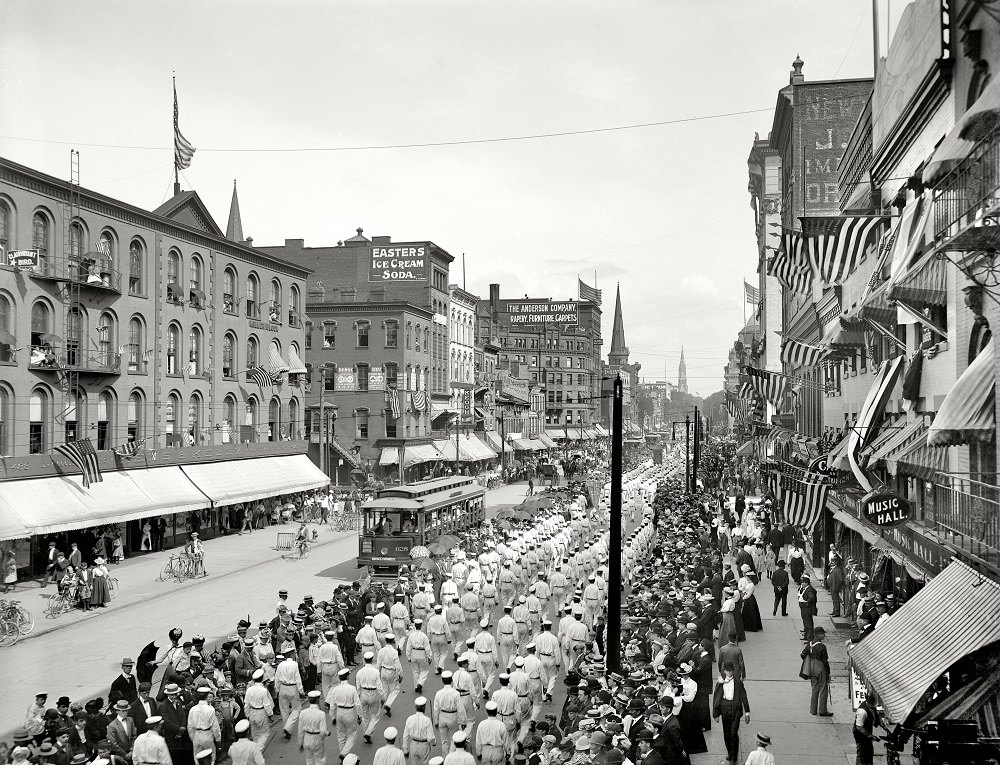
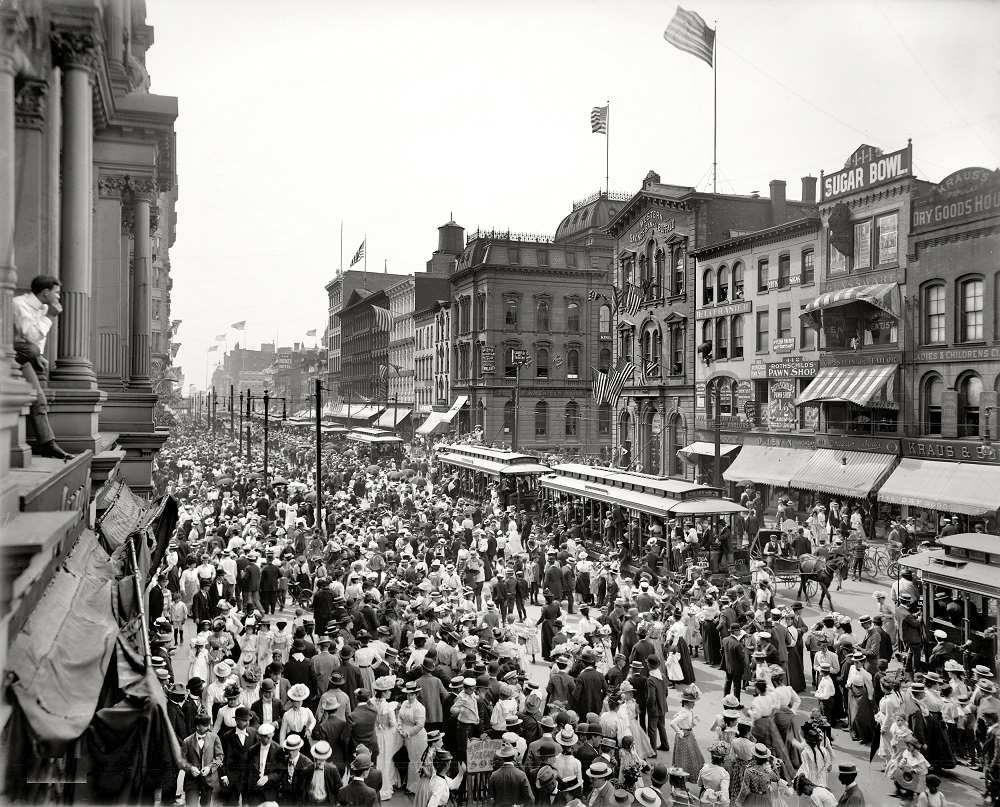
The crowds that lined Main Street for the 1900 Labor Day parade show just how many people lived and worked in Buffalo at the time. The sidewalks were packed shoulder to shoulder, with spectators leaning from windows and filling every available vantage point. The city’s population at this time was well over 350,000 and still growing, on its way to a peak of more than half a million in the mid-20th century.
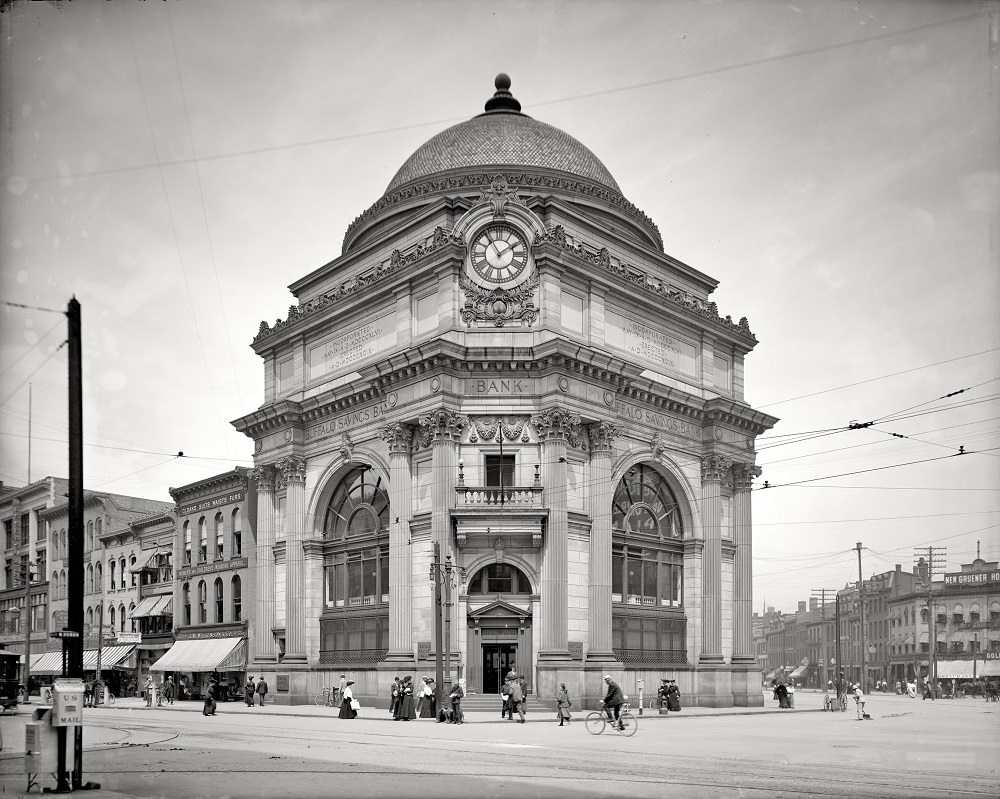
The Buffalo Savings Bank was one of the city’s most prominent financial institutions. Its domed Beaux-Arts building on Main Street was designed by Green & Wicks and completed in 1901. The interior featured a grand banking hall lit by the dome above, meant to inspire confidence in depositors. The bank served both wealthy clients and ordinary workers who were building their savings in a growing industrial city.
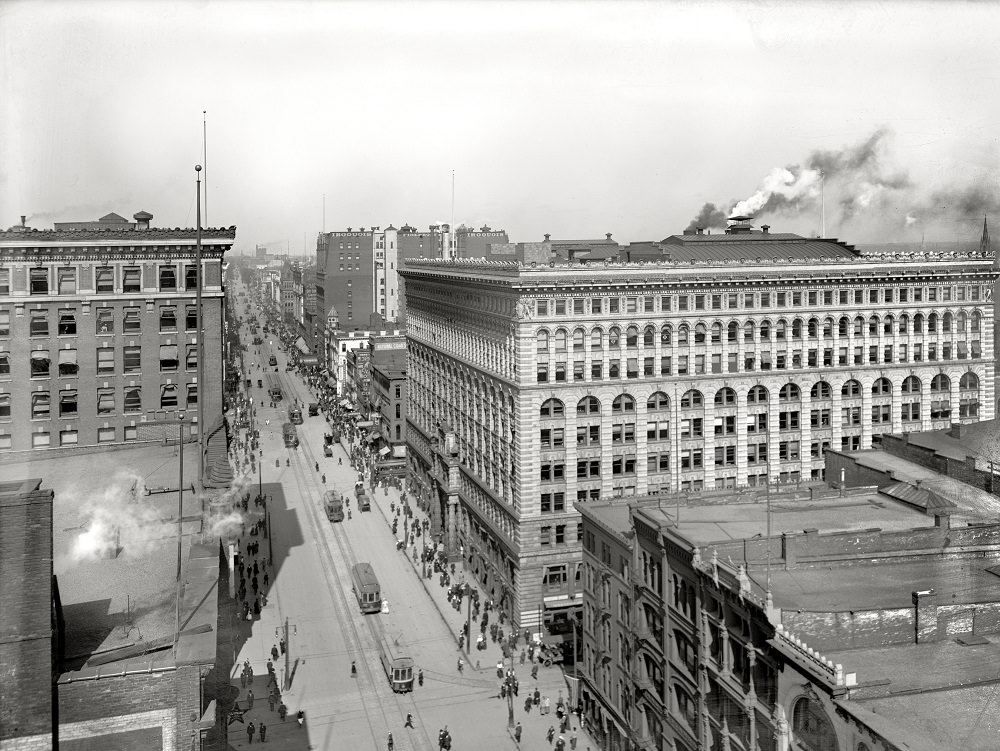
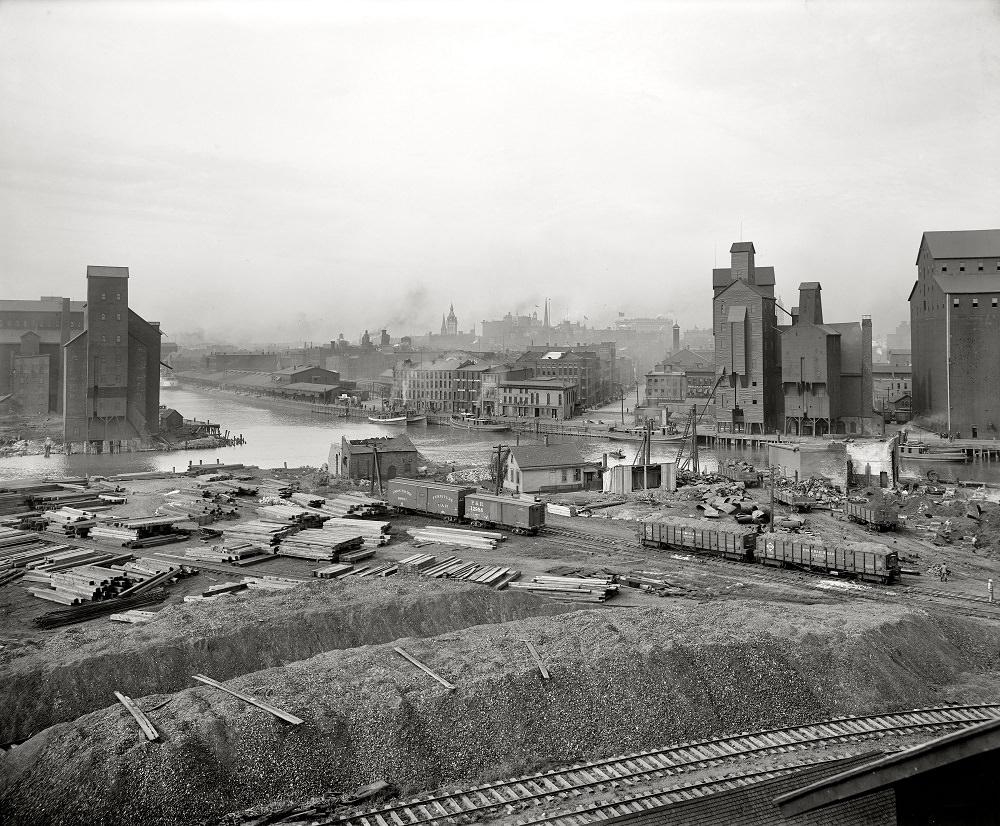
From above, Buffalo’s layout in 1905 revealed a city of considerable scale and order. The radial street plan laid out by Joseph Ellicott — modeled loosely on Pierre Charles L’Enfant’s design for Washington, D.C. — gave the city a distinctive pattern of diagonal avenues converging on central squares. The waterfront was packed with industrial infrastructure, while the interior neighborhoods were laid out in a more conventional grid.
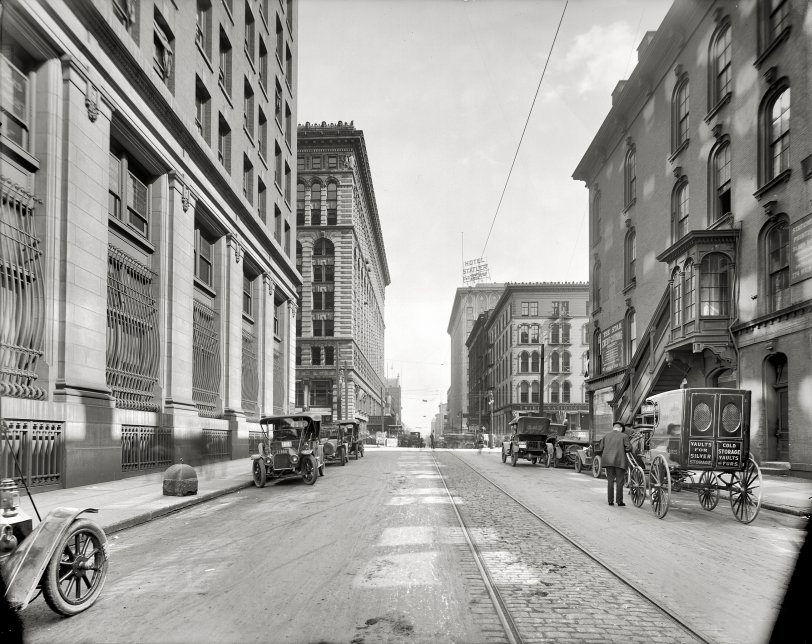
Swan Street offered a look at a different side of downtown Buffalo — quieter than Main Street but still lined with commercial and civic buildings. Streets like Swan formed the connective tissue between the city’s major public spaces, and the buildings along them housed the offices, shops, and services that supported daily life.
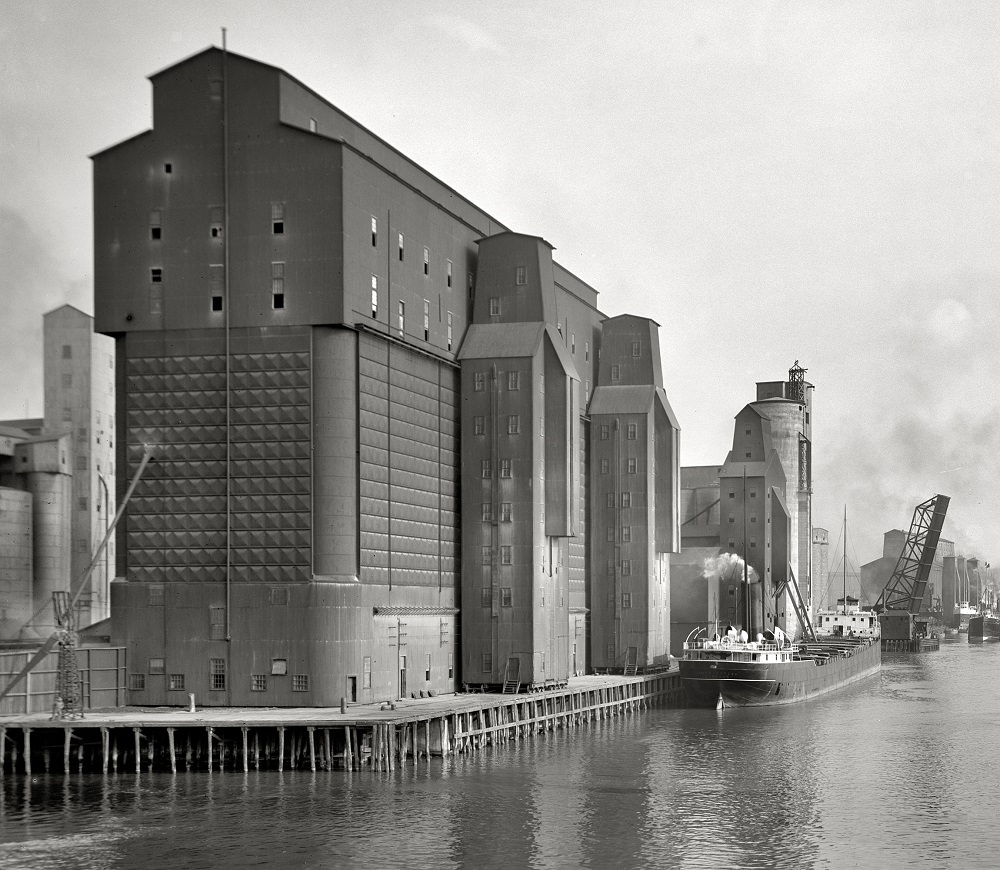
The canal harbor was the functional engine of Buffalo’s grain trade. Ships from across the Great Lakes docked here to offload their cargo into the towering elevators that lined the banks. The network of canals, slips, and wharves was engineered over decades to handle increasing volumes of freight. By 1910, this infrastructure represented one of the largest grain-handling systems in the world.
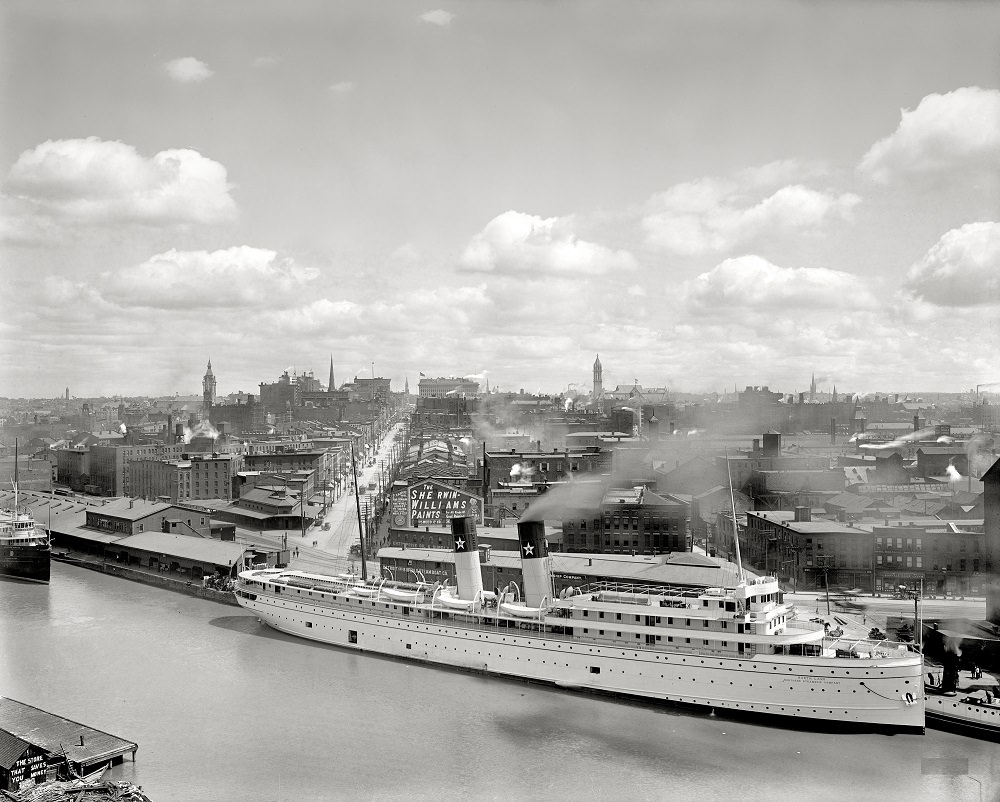
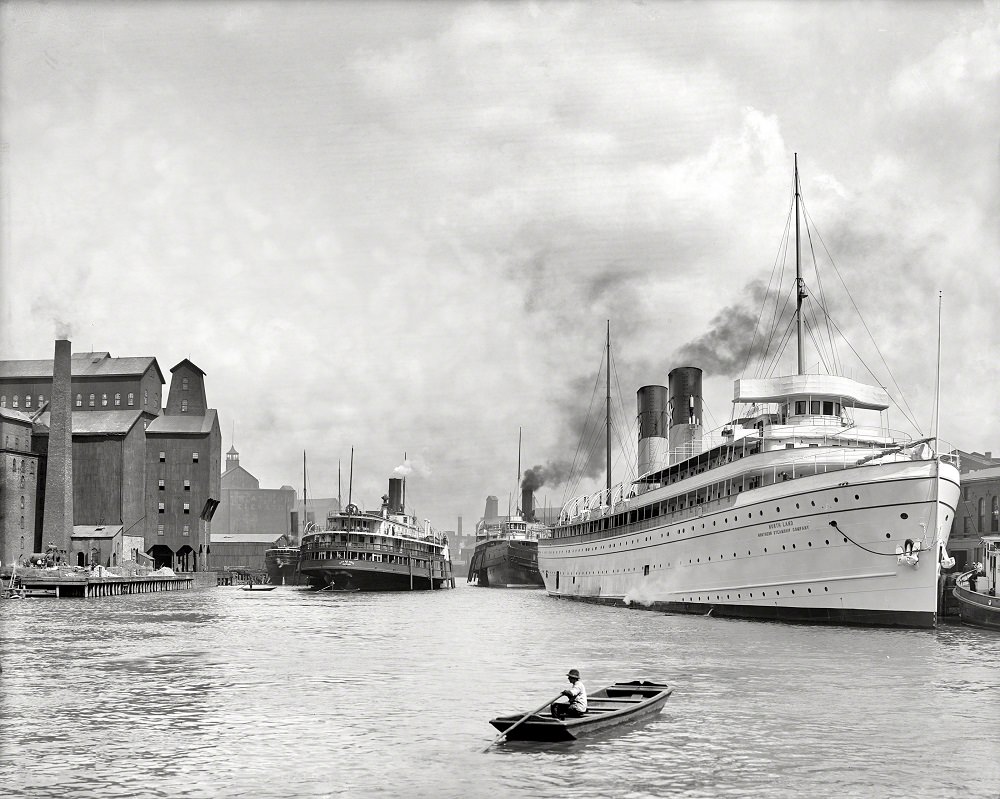
Passenger steamers like the North Land connected Buffalo to other Great Lakes ports, including Cleveland, Detroit, and Chicago. Long Wharf was a point where the city’s commercial life met its transportation network. Travelers arriving by steamer stepped off into one of the most active urban waterfronts in North America, with the storefronts and buildings of Main Street rising just ahead of them.
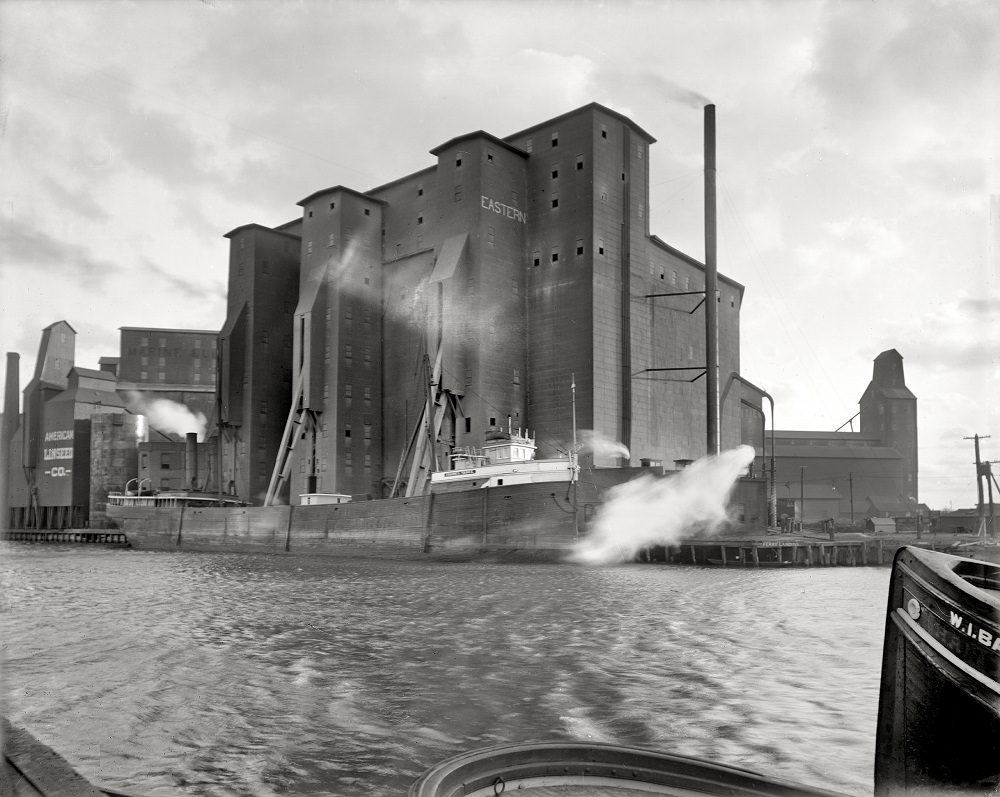
The Eastern Elevator was one of many grain storage facilities that lined Buffalo’s waterfront. Ships like the Frank L. Vance were purpose-built Great Lakes bulk carriers, designed to move grain, ore, and coal in enormous quantities. These vessels were the workhorses of the inland sea trade, and Buffalo was their eastern terminus for the grain route.
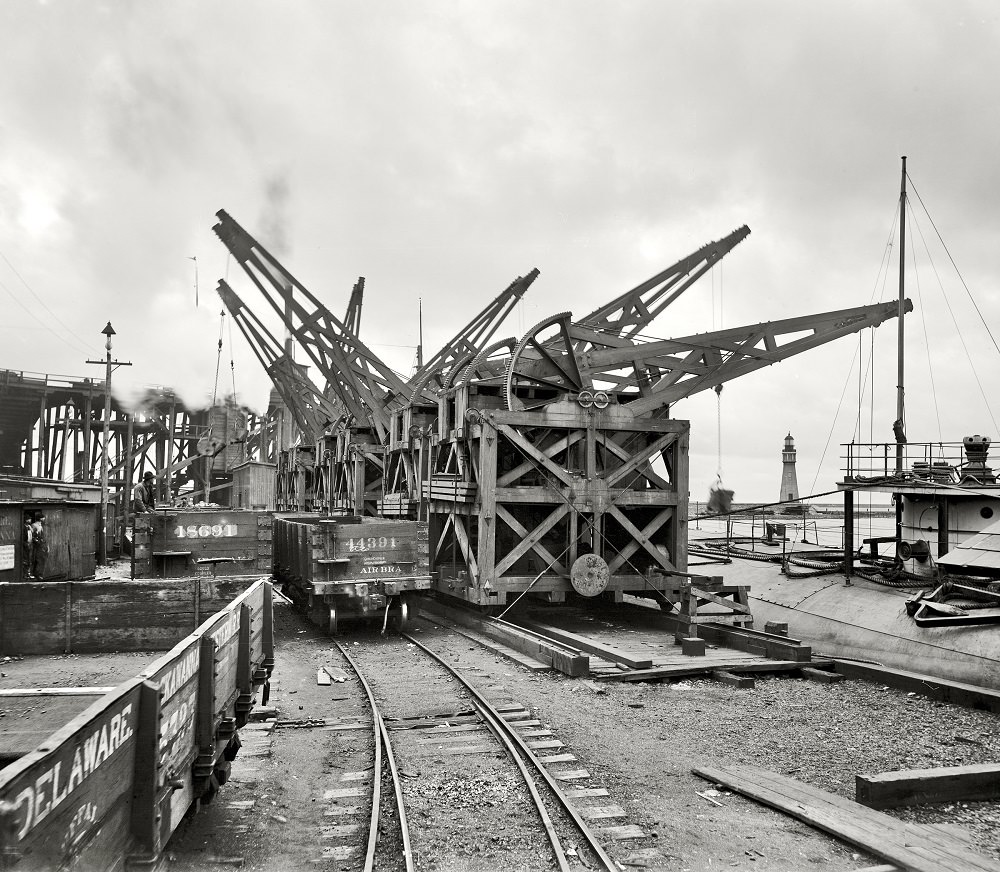
The whaleback steamship was a design unique to the Great Lakes, developed by Alexander McDougall in the late 19th century. Its rounded hull and low profile made it highly efficient for bulk cargo. Unloading these ships at Buffalo required heavy equipment and large labor crews, all working in coordination to keep the ore moving to the steel plants as fast as possible.
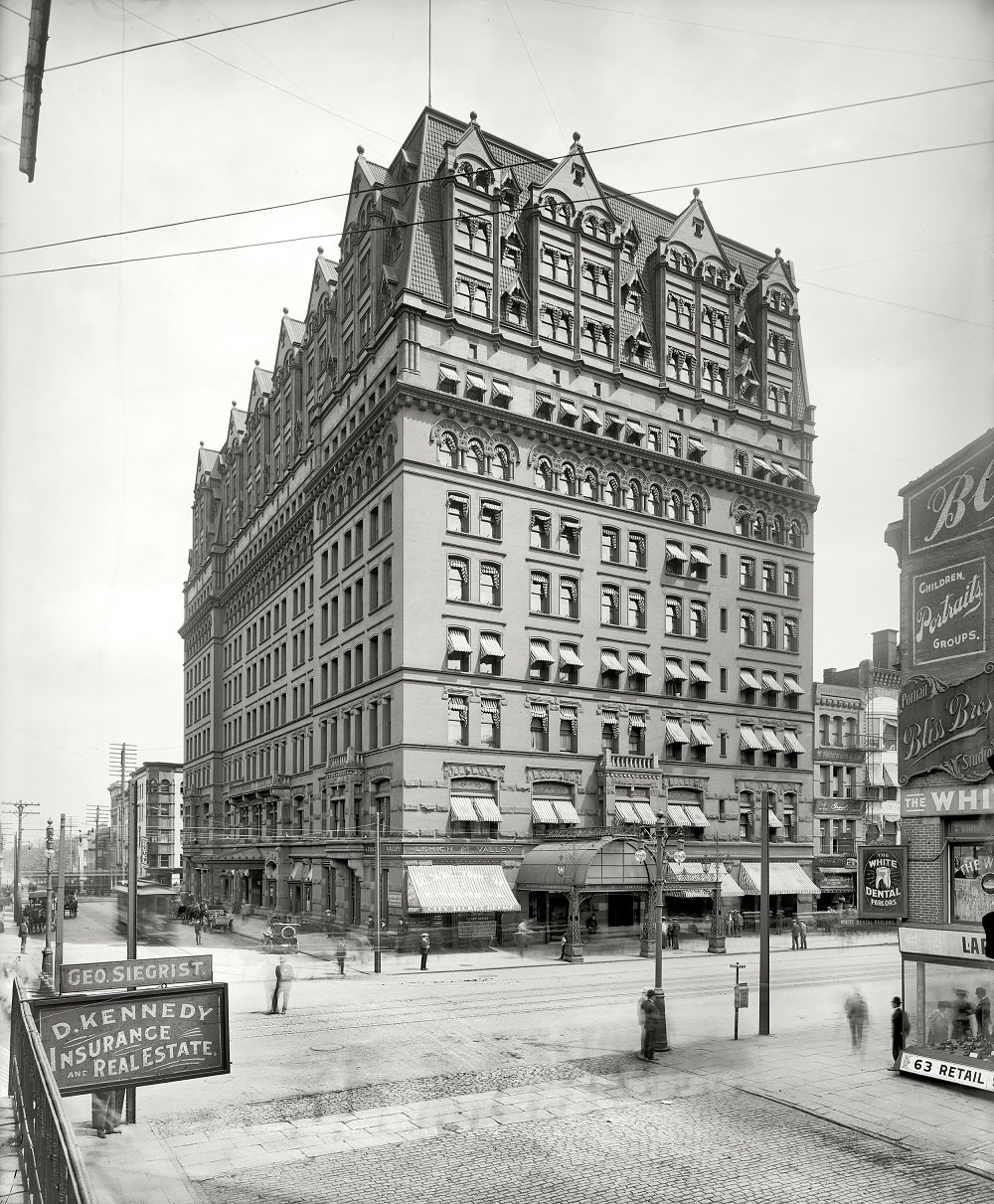
The Hotel Iroquois stood as one of Buffalo’s better-known lodging establishments in the early 1900s. Its location near the commercial center of the city made it convenient for business travelers. The hotel’s name, drawn from the Iroquois Nation that originally inhabited the region, was a common naming convention of the era, applied to businesses and buildings across western New York.
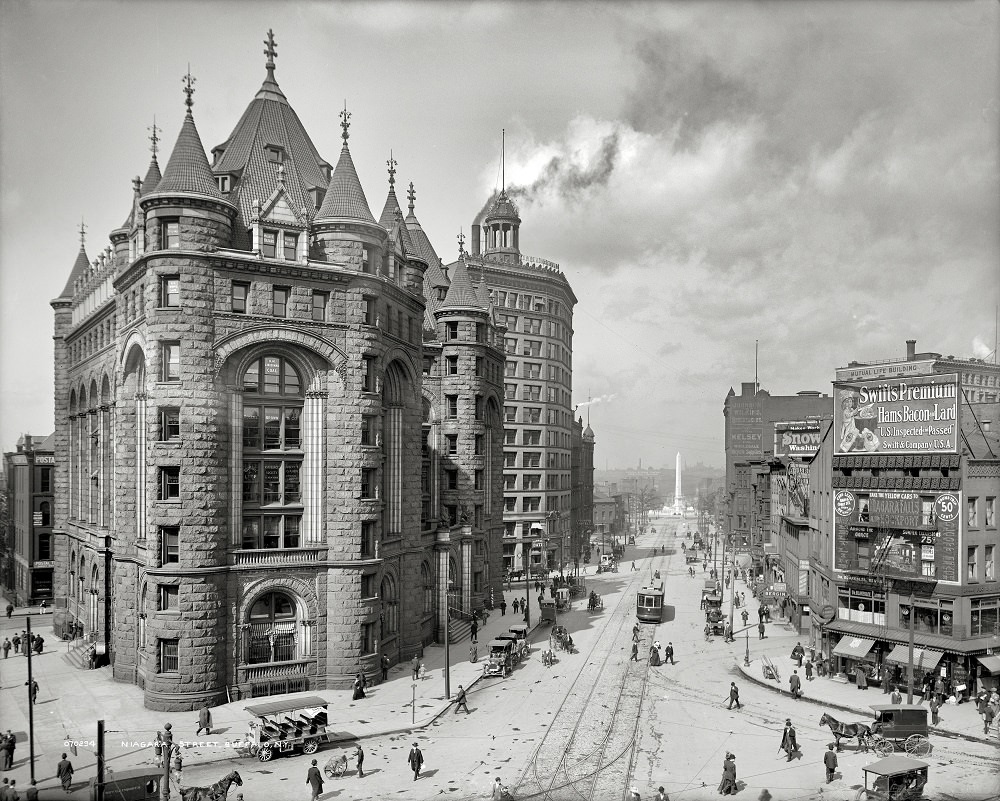
The Erie County Savings Bank was one of the most architecturally prominent financial buildings in Buffalo. Its location on Niagara Street placed it in the heart of the city’s civic and commercial core. The bank’s building reflected the era’s belief that financial institutions should project permanence and trustworthiness through their architecture — heavy stone facades, classical columns, and grand interior spaces.
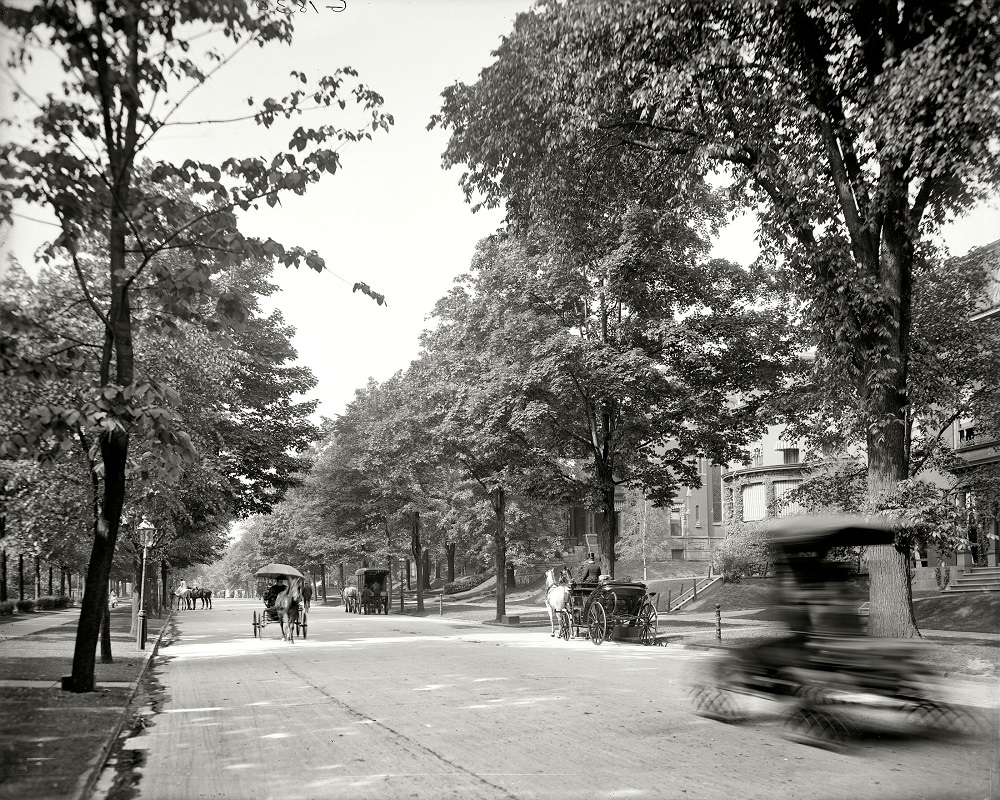
Delaware Avenue, running north from downtown, was Buffalo’s most prestigious residential street. By the early 1900s, it was lined with the mansions of industrialists, merchants, and professional families. Elm trees shaded the wide boulevard, and the houses ranged from Victorian-era designs to newer Beaux-Arts and Colonial Revival styles. The avenue represented the private wealth that Buffalo’s industries had generated for its upper class.
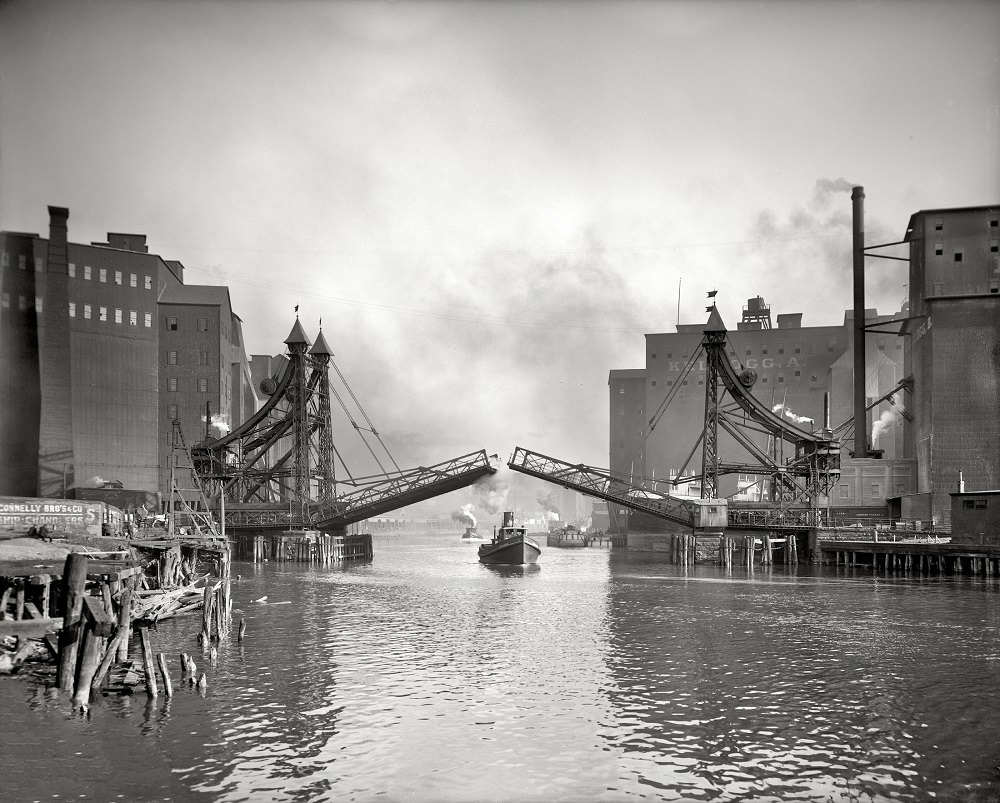
The Jack-Knife Bridge at the foot of Michigan Street was a movable bridge that allowed ship traffic to pass through the city’s ship canal while also serving street-level vehicle and pedestrian traffic. These bascule-style bridges were a practical necessity in a port city where industrial water traffic could not be interrupted. The bridge was a daily reminder of how thoroughly shipping shaped the physical structure of Buffalo’s streets and neighborhoods.
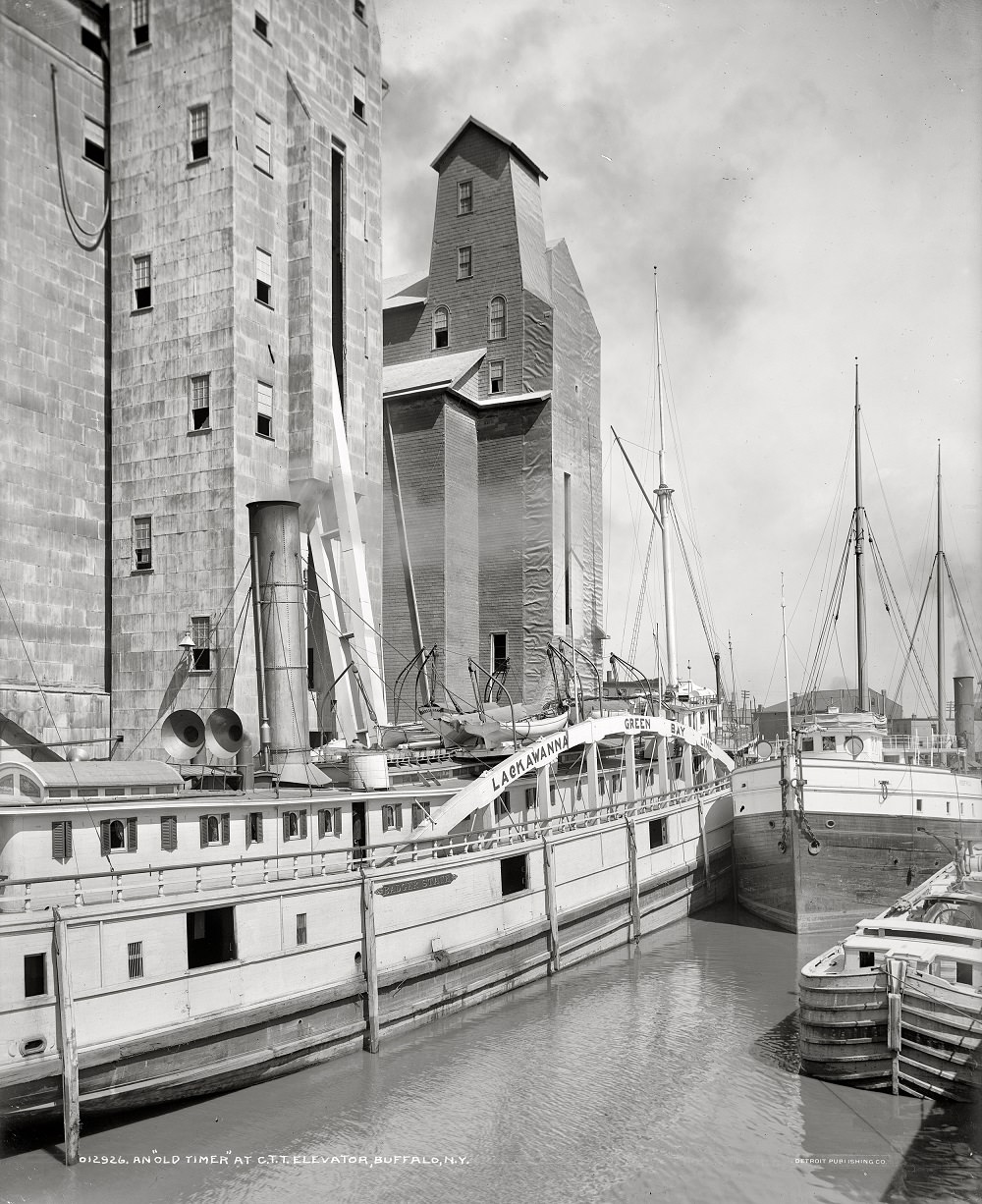
Workers at Buffalo’s grain elevators spent their careers in physically demanding and often dangerous conditions. The C.T.T. elevator, like others along the waterfront, required hands-on labor to manage the mechanical systems that moved grain from ships to storage. The men who worked these facilities knew the equipment and the rhythms of the trade intimately.
Buffalo’s merchant community in 1900 was a diverse and active group. Storekeepers, tradespeople, and vendors operated throughout the city’s commercial districts, serving a population that was large and economically active. The city’s retail sector grew alongside its industrial base, providing everything from basic goods to luxury items for residents at every income level.
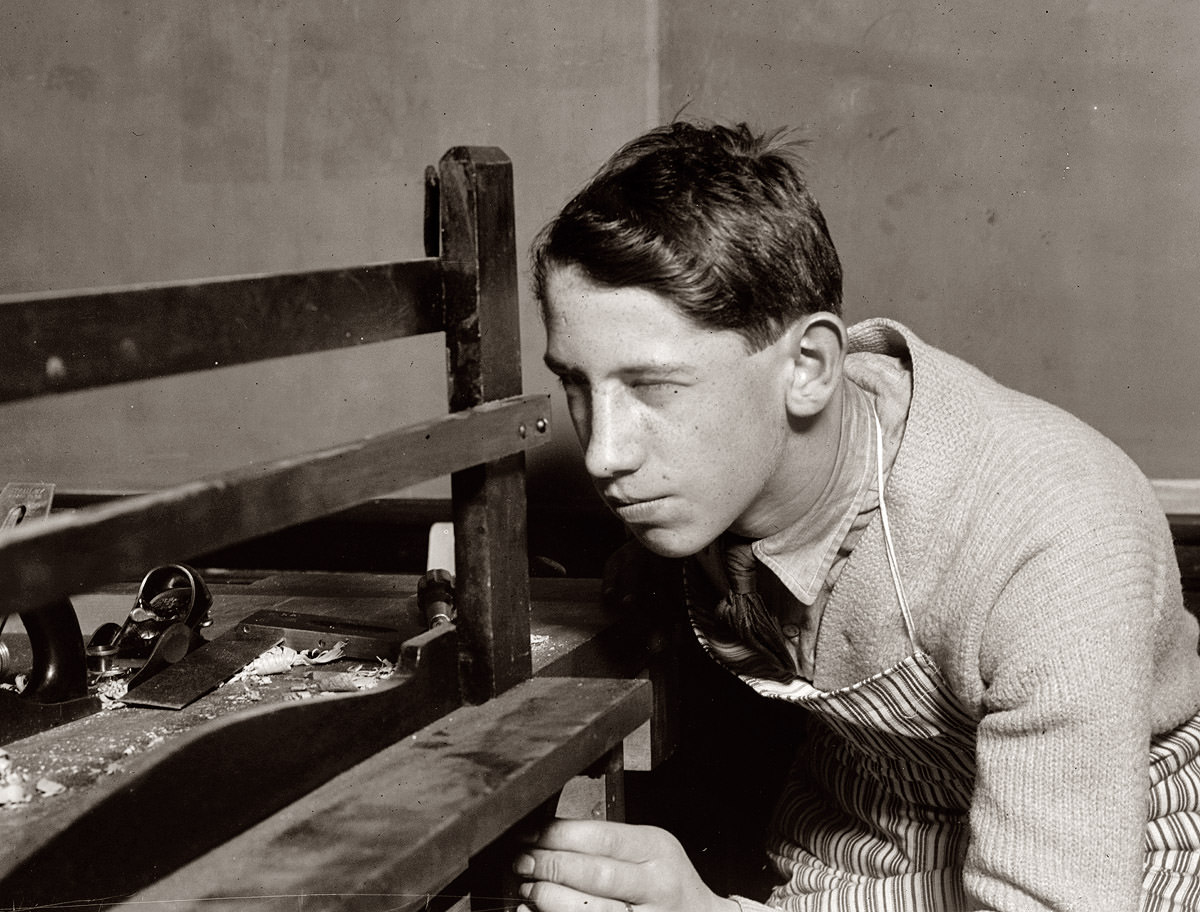
Vocational education was a practical priority in a city built on manufacturing. Buffalo’s vocational schools trained students in trades like machining, carpentry, electrical work, and other skilled labor fields. By 1910, the city understood that its industries required not just raw physical labor, but workers with specific technical skills. These schools fed graduates directly into the factories and workshops that kept Buffalo running at full capacity.





I liked it better than before
Buffalo was highly important at the turn of the century, but you don’t mention that. Feel fortunate that you cannot smell and breathe anything related to that period
That’s so cool!
Broadway Fillmore? Nothing from there?? Nice photos
These are amazing! Is much of that architecture still standing today?
This city got butchered for the automobile
100000%. It got destroyed.
TIL: Lafayette Square used to be square.
Also, Kleinhans used to be on Lafayette Square? Did not know that.
Shea’s and Kleinhan’s were families that owned multiple theaters around the area.