
Boston entered the 20th century as one of America’s most layered and historically dense cities. Founded in 1630 by English Puritans, it had already survived centuries of political upheaval, rapid growth, and devastating disaster. The Great Boston Fire of 1872 had burned 776 buildings across 65 acres, causing $60 million in damage. Yet the city rebuilt, expanded, and kept moving. By the time these photographs were taken — mostly between 1900 and 1910 — Boston was a city of streetcars, stone churches, working wharves, and busy commercial streets.
The Old State House, one of Boston’s most enduring landmarks, stood at the center of city life. Built in 1713, it was the site of the Boston Massacre in 1770 and served as the seat of colonial government. By 1906, it was surrounded by the noise and movement of a modern city — but the building itself hadn’t changed much.
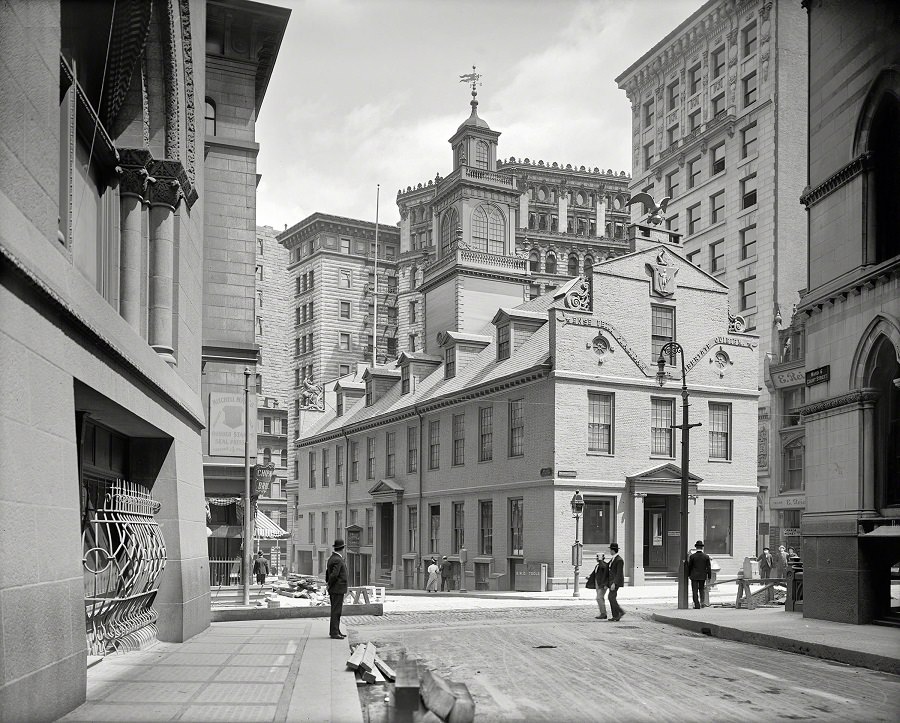
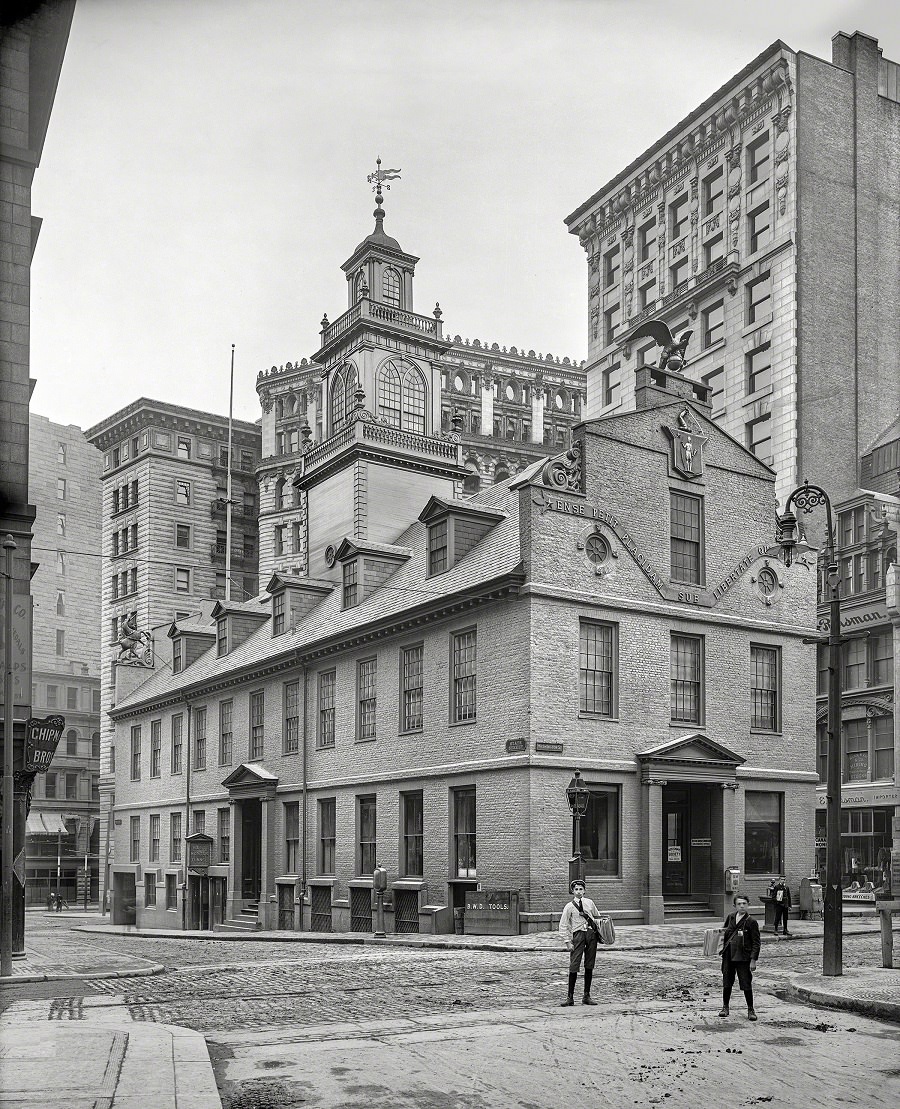
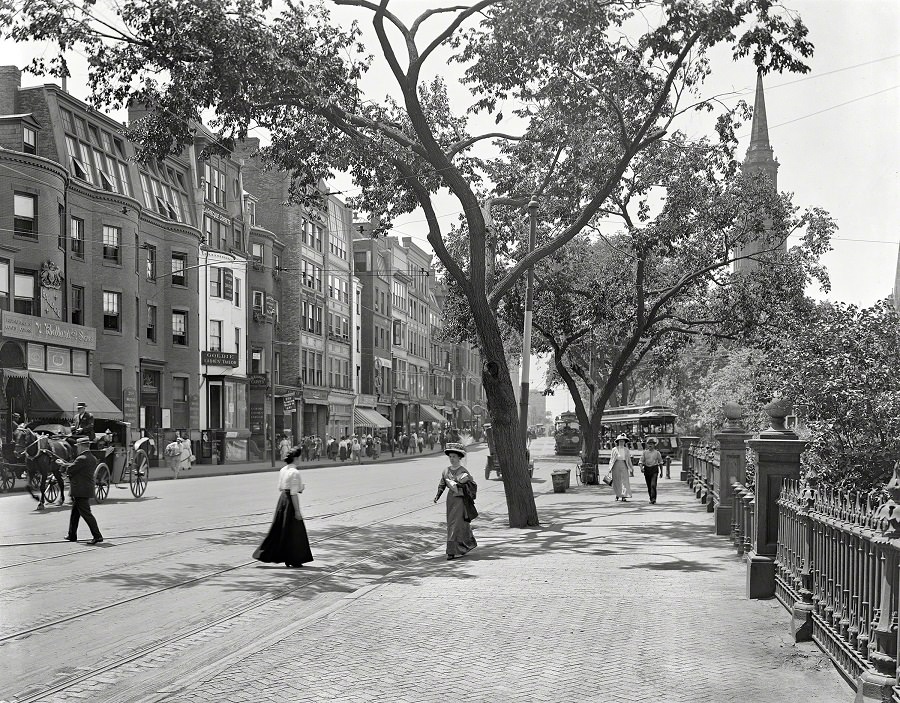
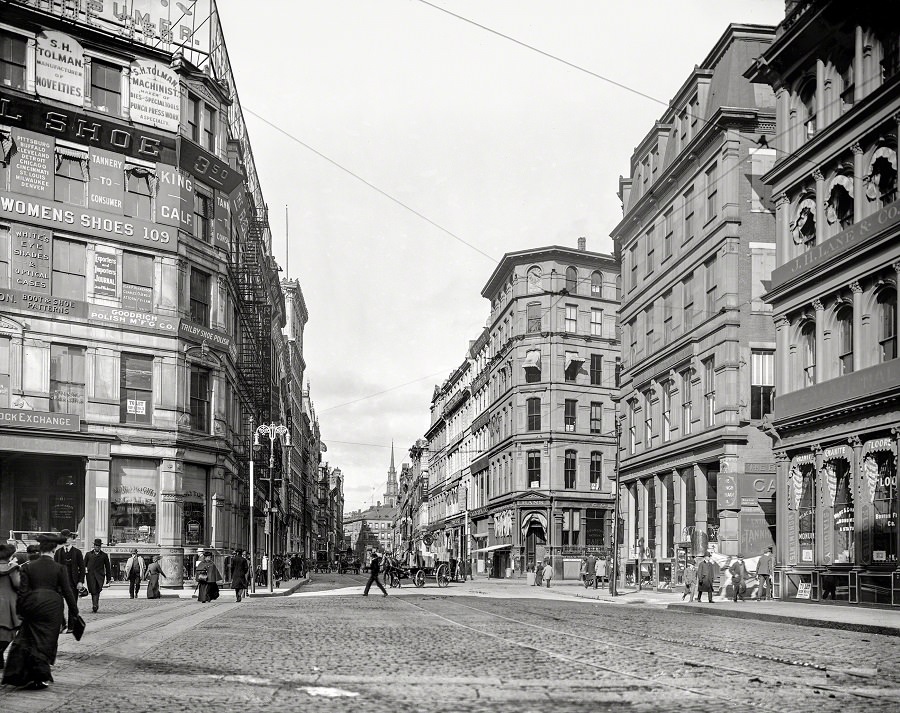
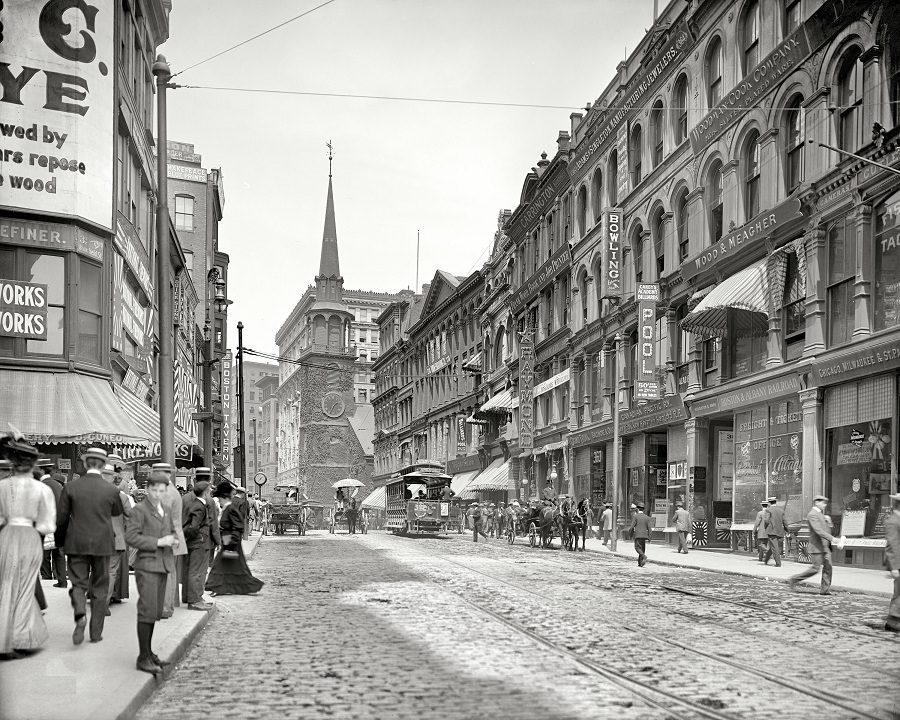
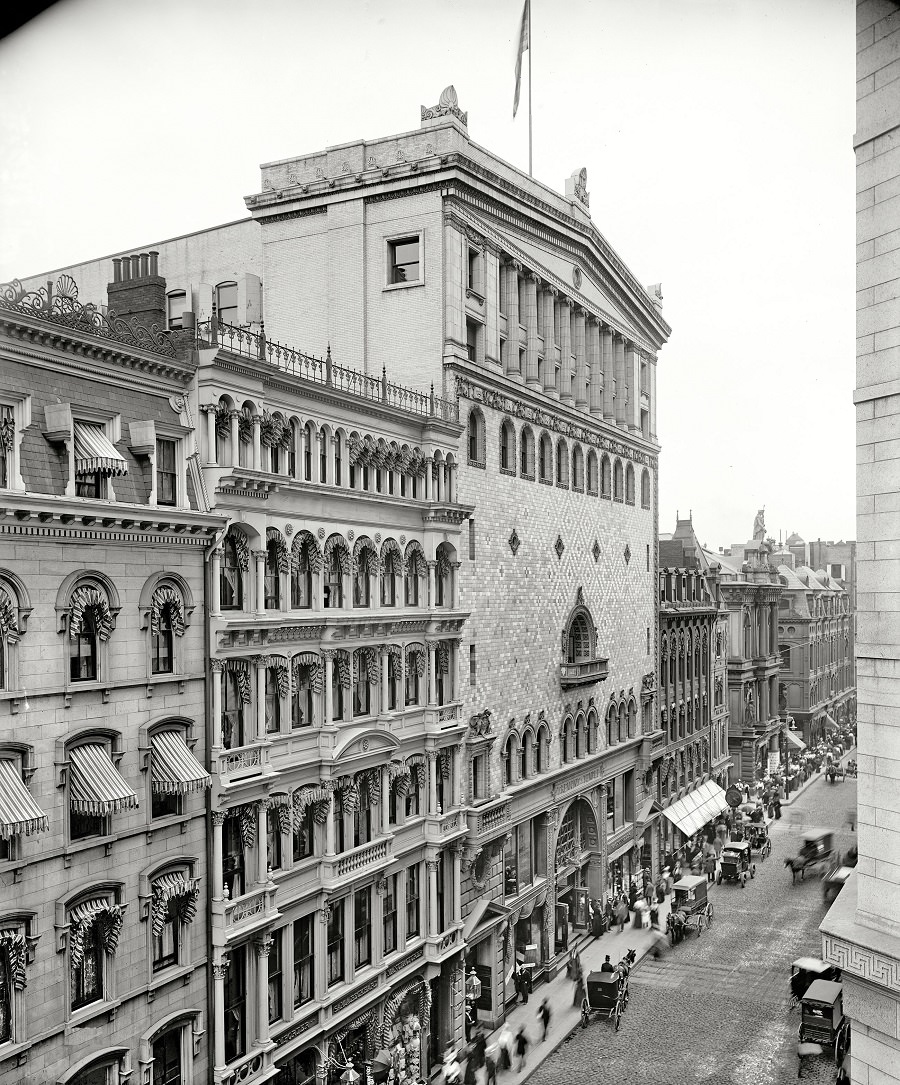
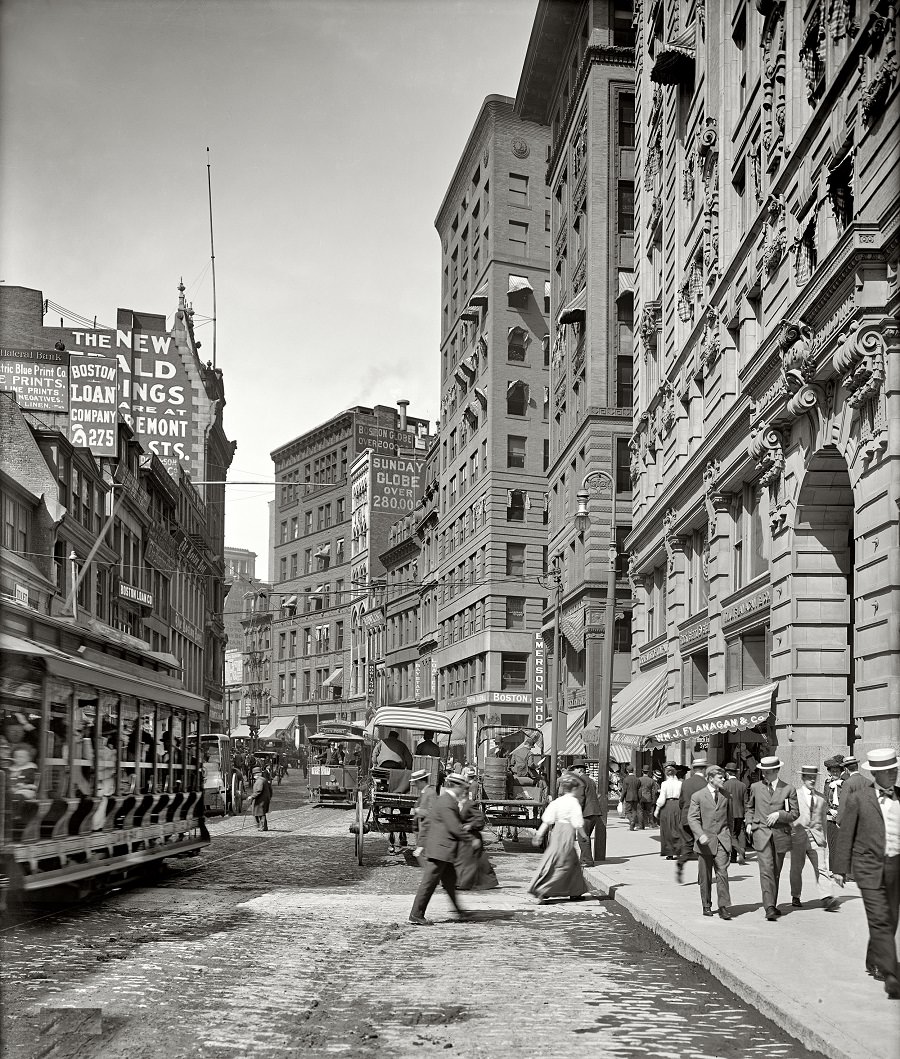
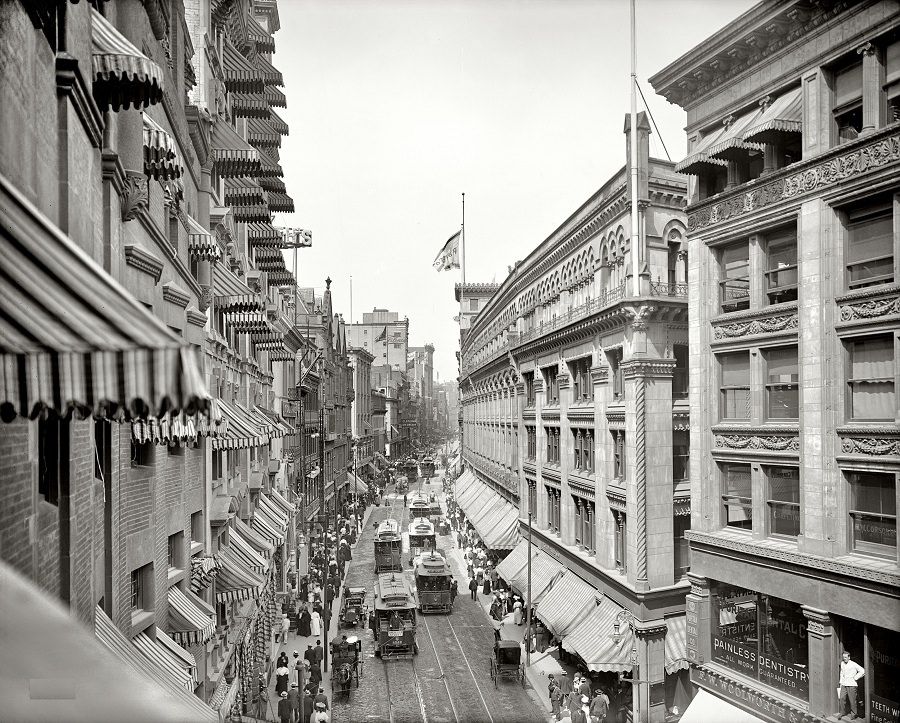
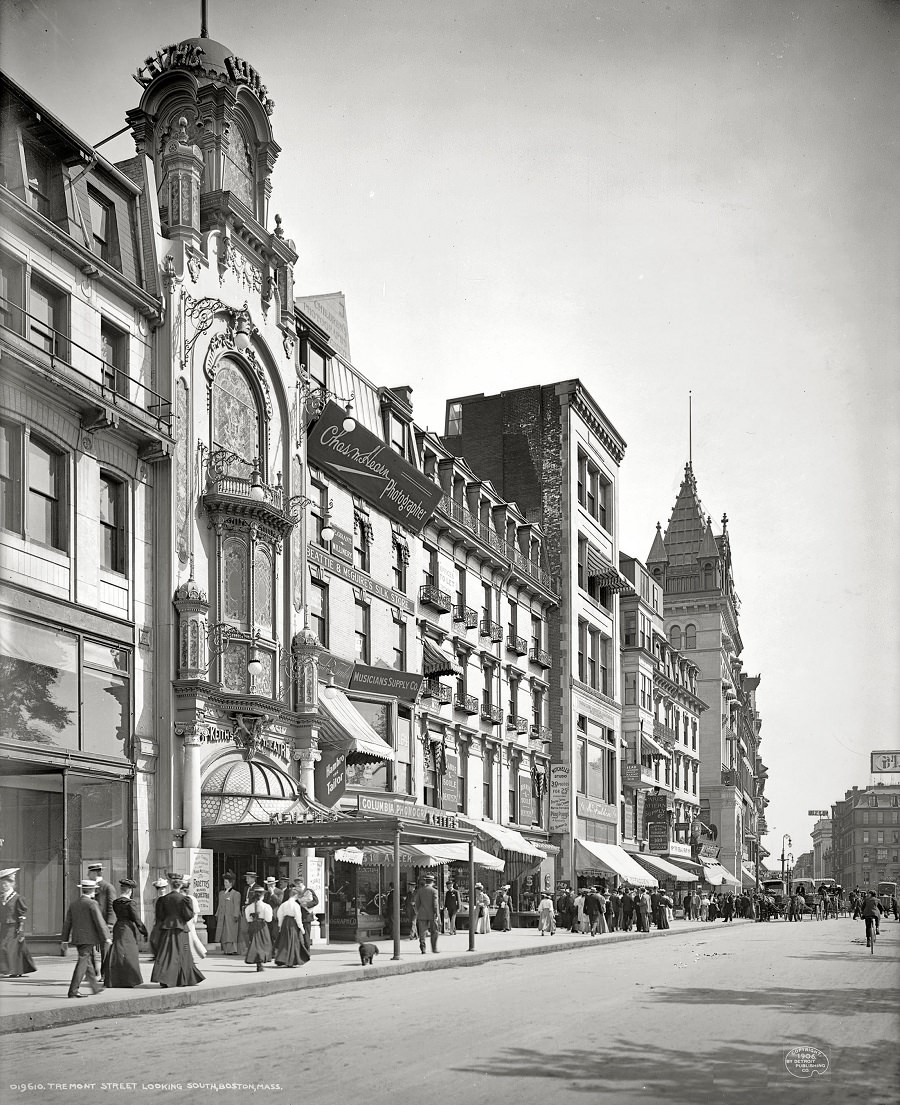
Washington Street and Tremont Street were the commercial backbones of early 20th century Boston. Both streets were lined with shops, hotels, and public buildings. Horse-drawn carriages and early electric streetcars shared the road, and pedestrians filled the sidewalks at all hours. These streets connected the old parts of the city to newer developments pushing outward in every direction.
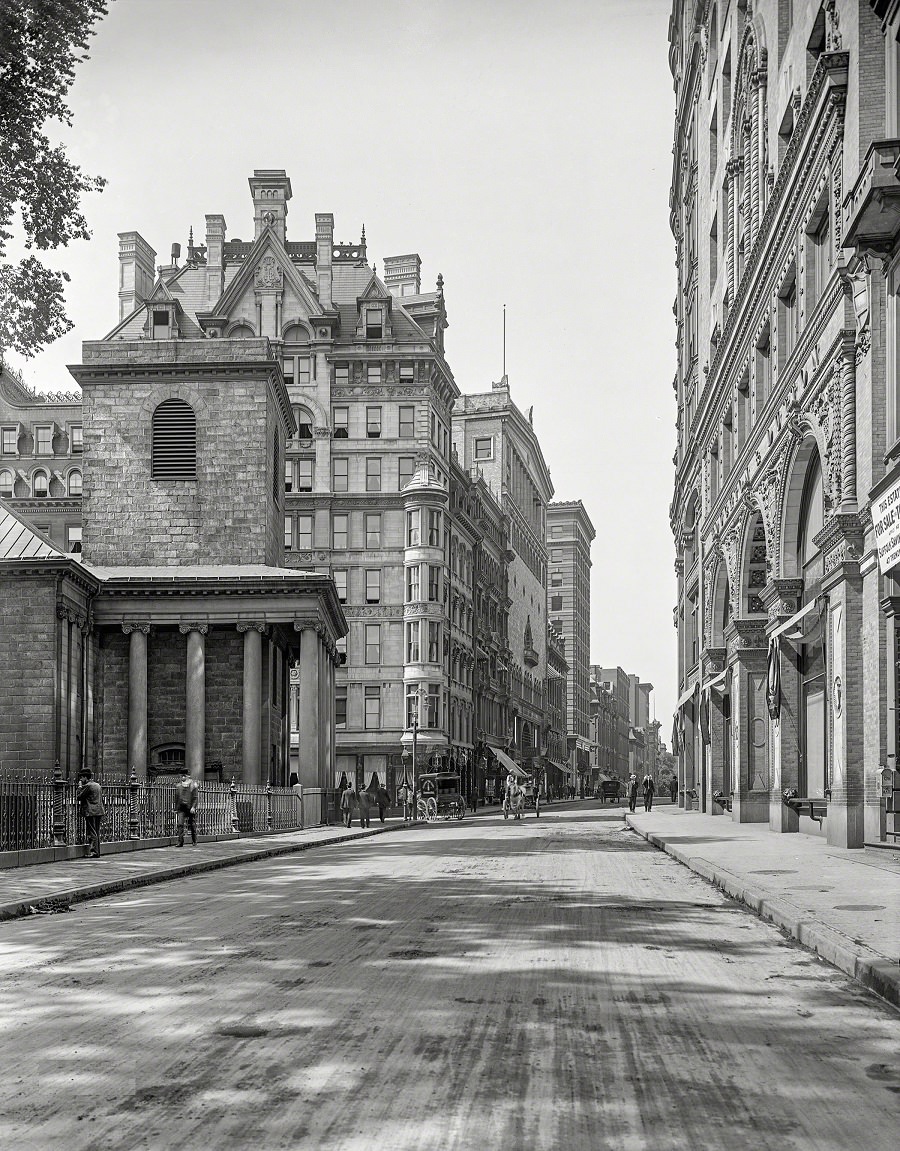
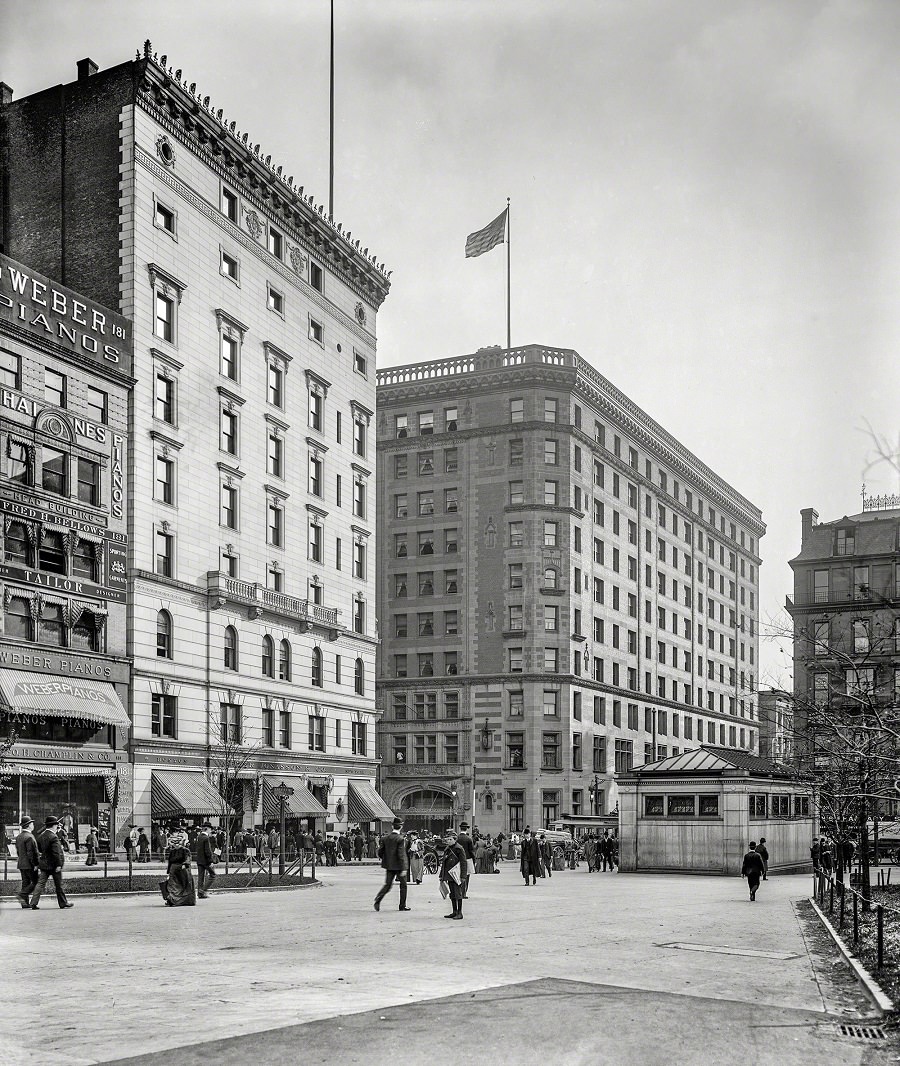
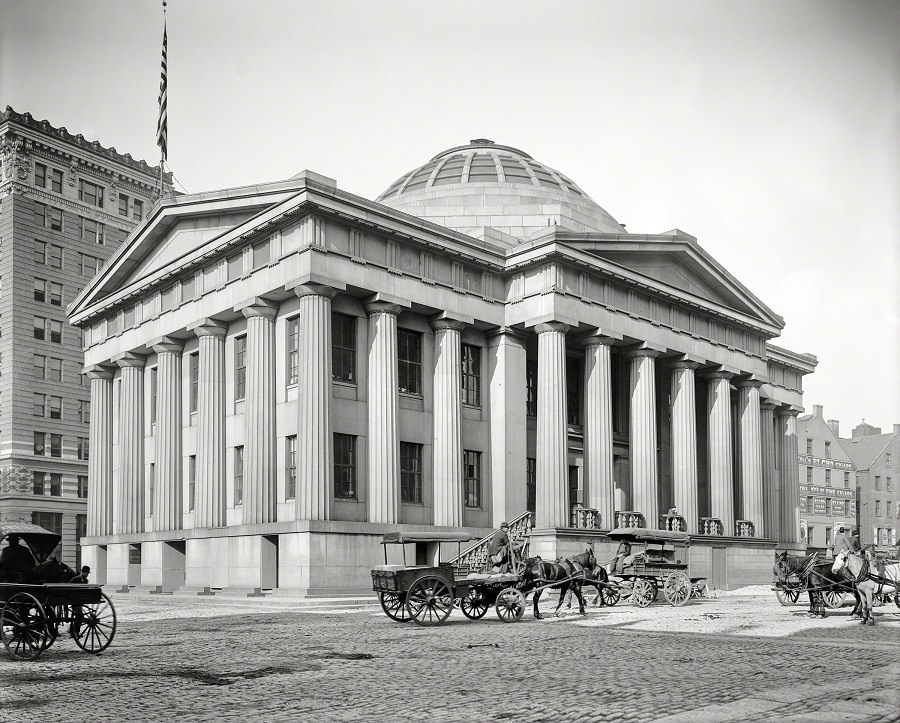
The Custom House on McKinley Square was Boston’s federal hub for shipping and trade. Built between 1837 and 1847, it handled the enormous volume of goods flowing through Boston Harbor. At the time these photos were taken, the tower that would eventually make it one of Boston’s most recognizable skyline features had not yet been added — that came in 1915.
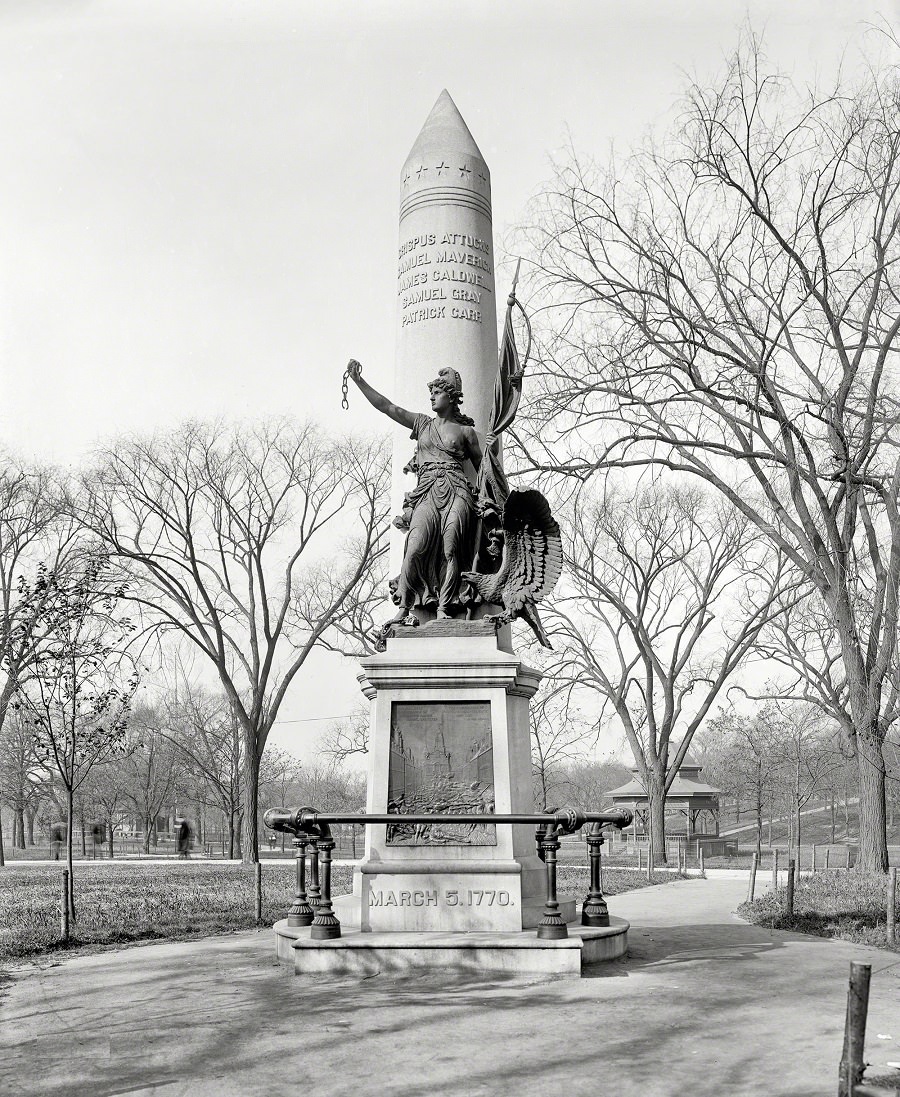
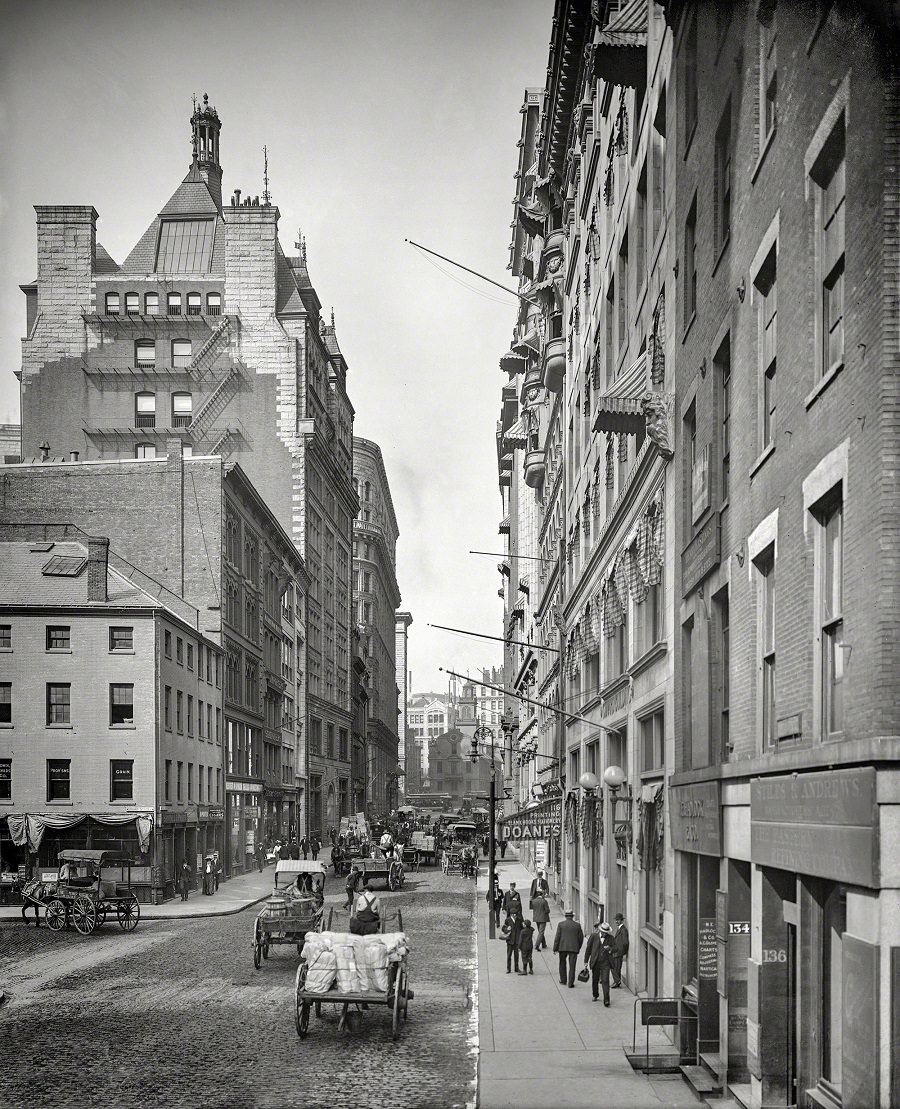
The Boston Massacre Monument in the Boston Common was erected in 1888 to mark the site of the 1770 shooting in which British soldiers killed five colonists. It remained a gathering point for Bostonians in the early 1900s. State Street nearby was a financial district packed with banks, brokerages, and trading firms — a street where money moved fast and buildings were built to impress.
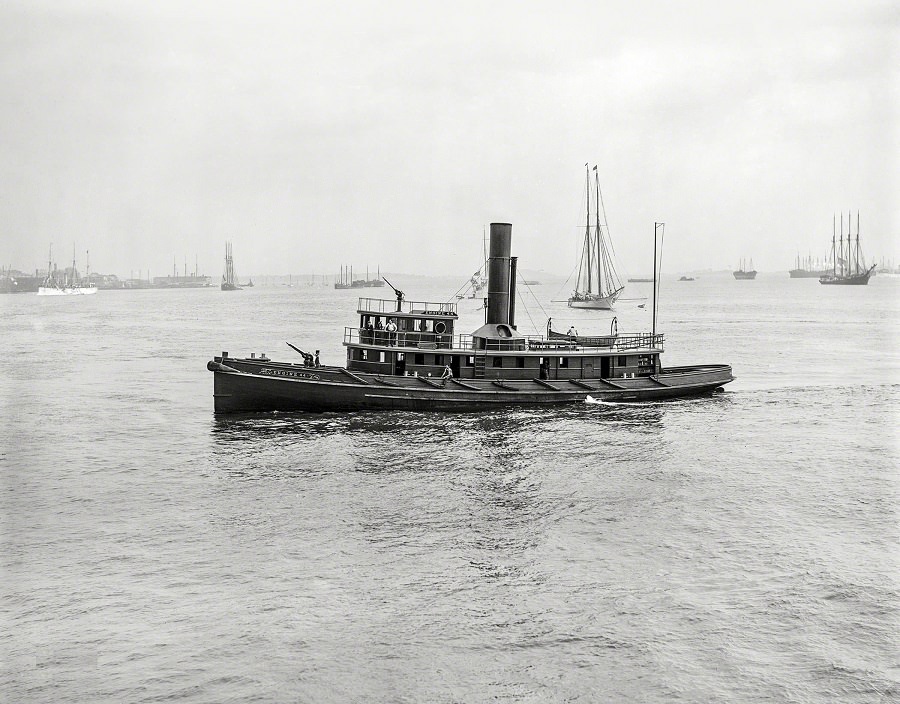
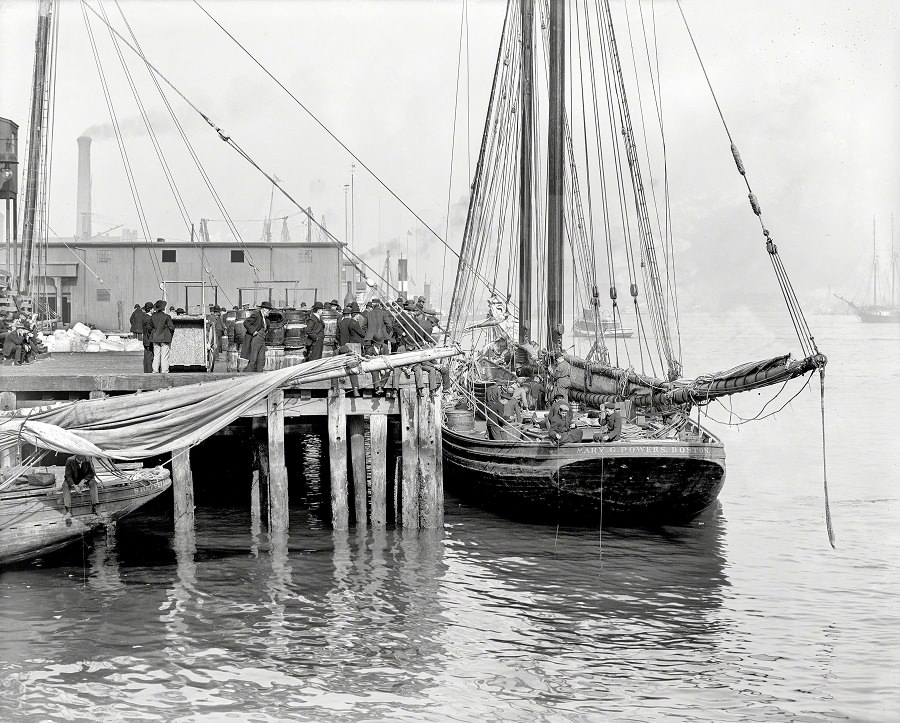
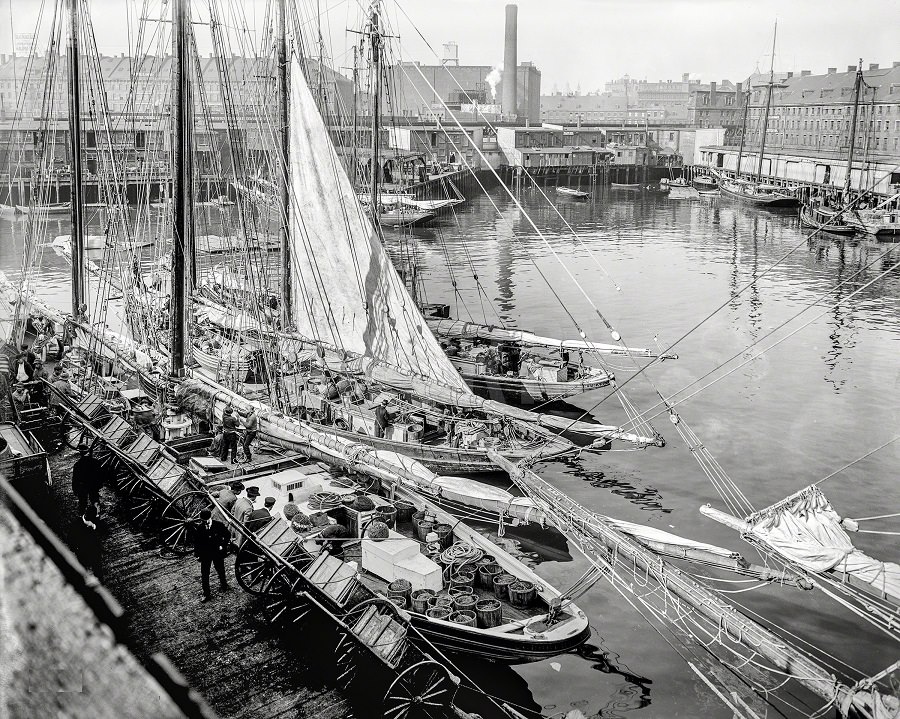
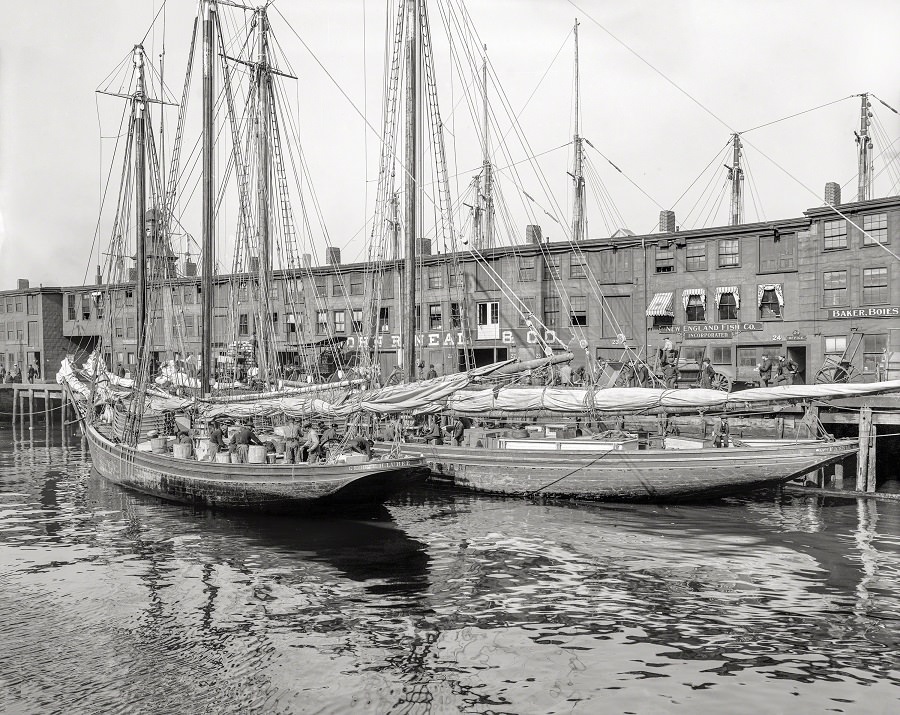
Boston’s harbor was one of the busiest on the East Coast. The city maintained a fireboat — Engine No. 44 — to protect the waterfront from fires that could spread quickly among the wooden docks and ships. The harbor was also home to fishing schooners at ‘T’ Wharf, where crews unloaded their catches directly onto the docks for sale.
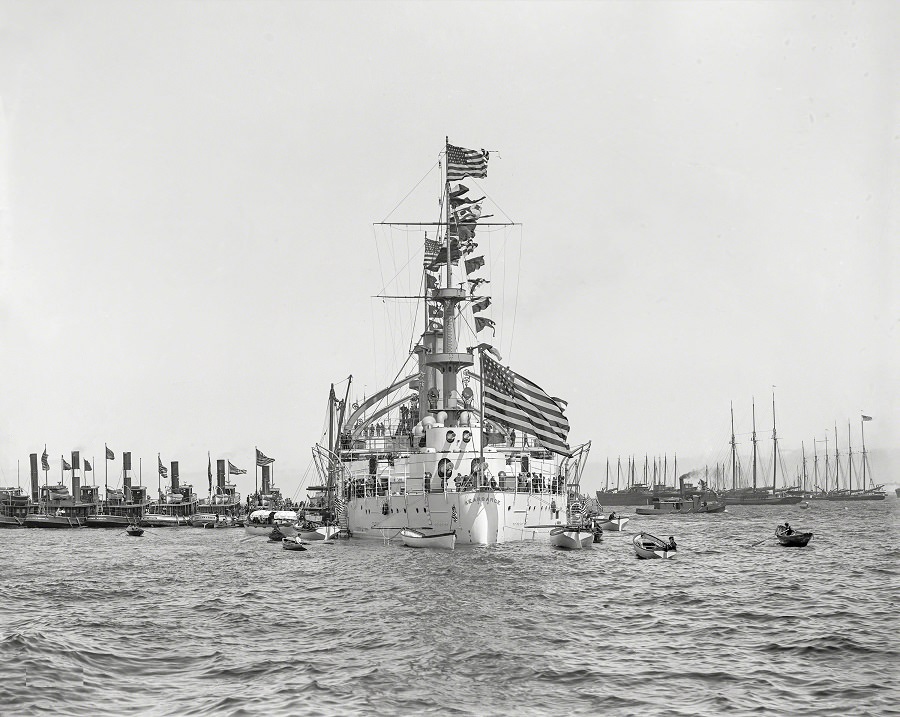
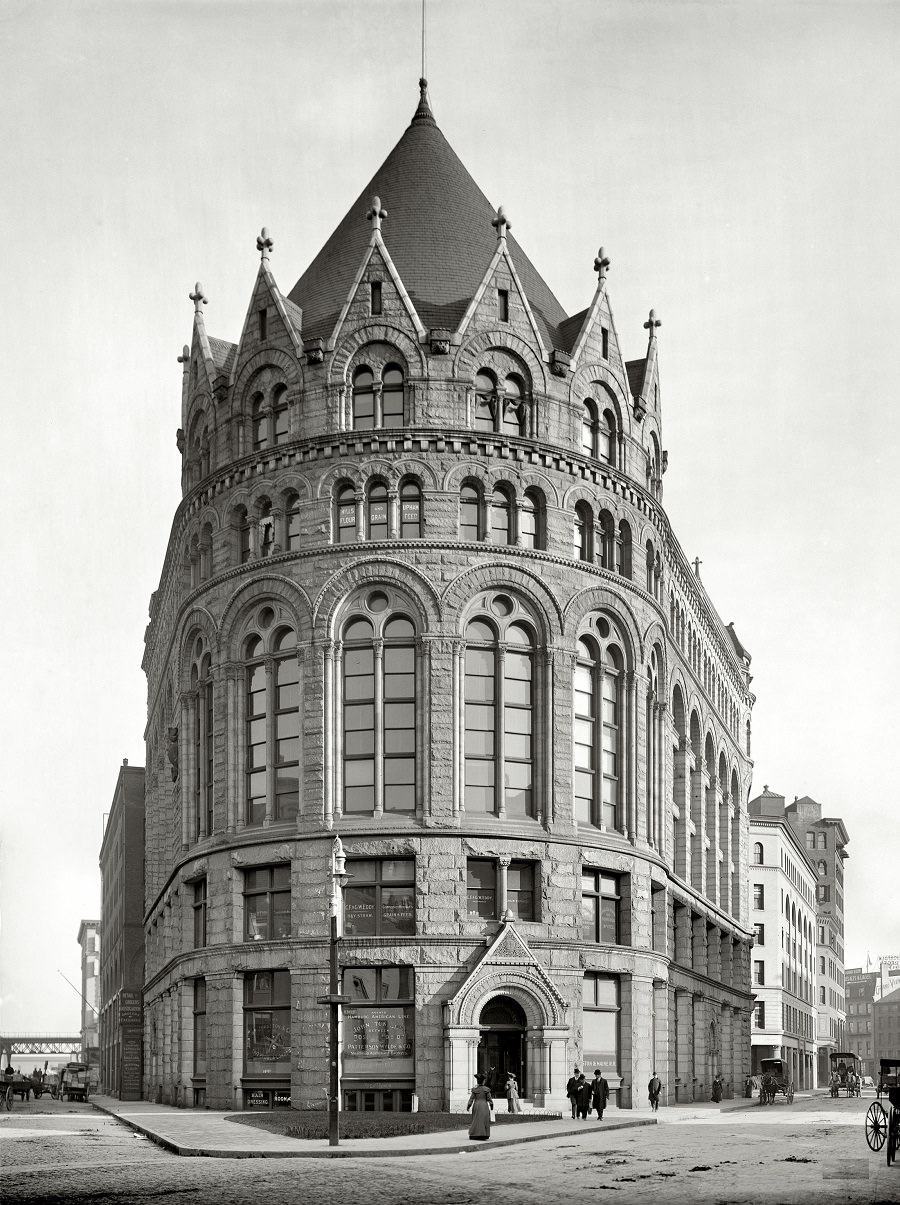
The U.S.S. Kearsarge was one of the U.S. Navy’s pre-dreadnought battleships, commissioned in 1900. Its appearance in Boston Harbor was a display of American naval power during a period when the United States was rapidly building up its fleet. The Board of Trade on Broad Street represented the city’s growing commercial class — merchants and traders who organized Boston’s business dealings with the wider world.
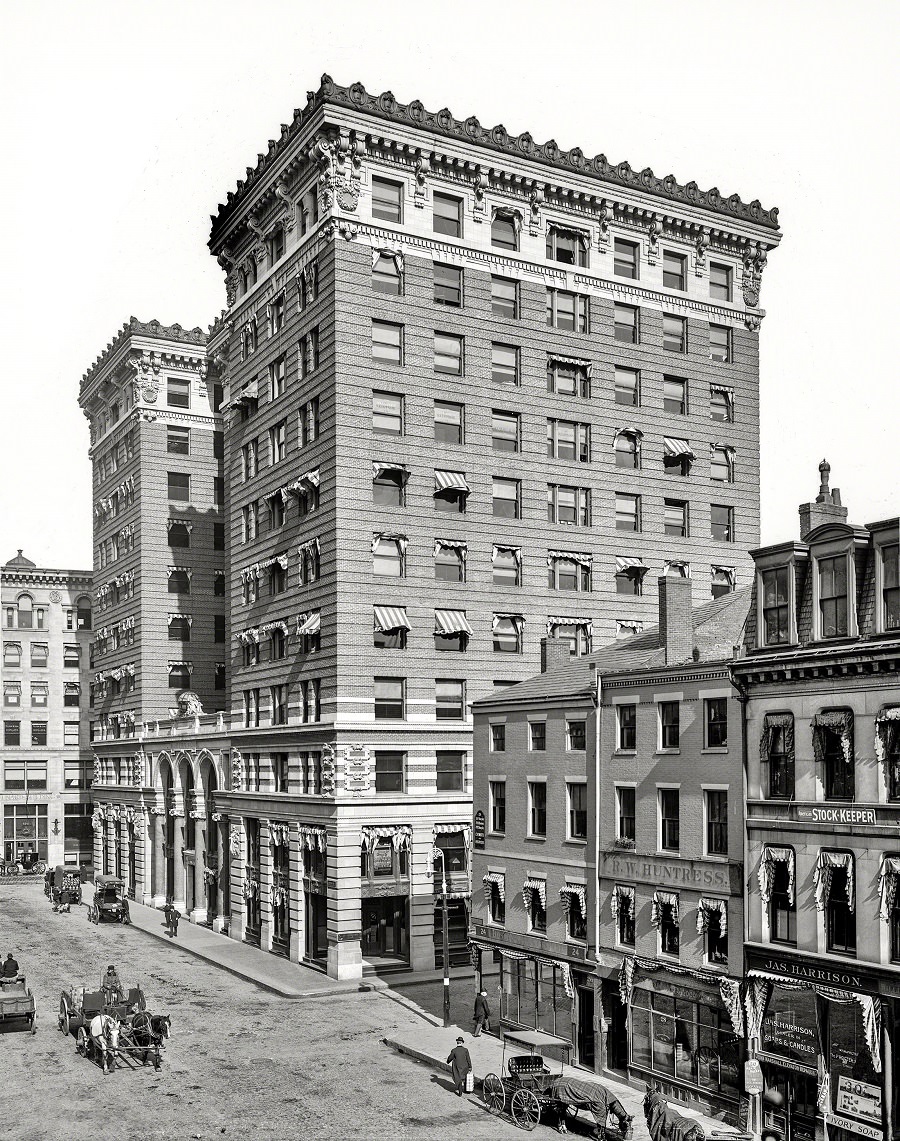
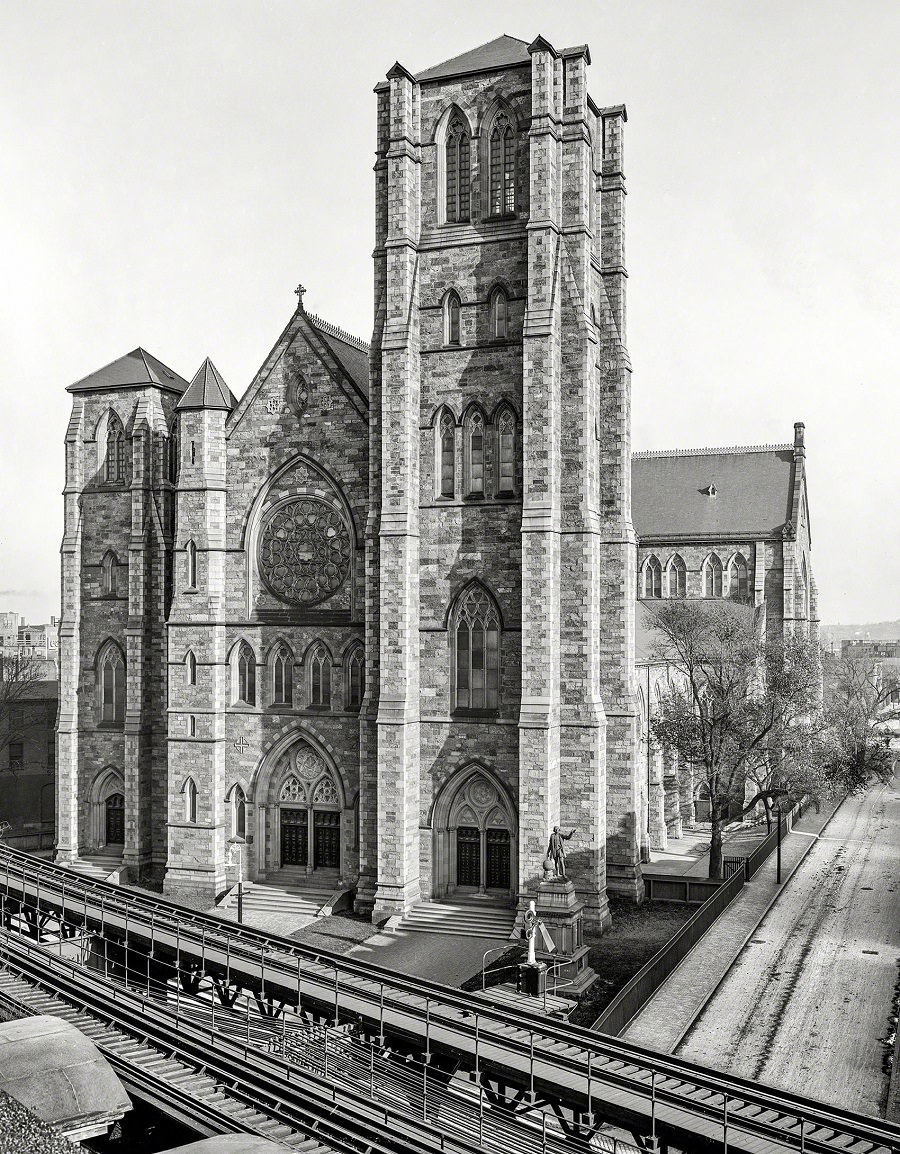
Summer Street was one of Boston’s key commercial corridors in the early 1900s. It connected the downtown core to South Station, making it a natural route for workers, shoppers, and travelers. The Cathedral of the Holy Cross on Washington Street, completed in 1875, was — and still is — the largest Catholic church in New England, reflecting the enormous influence of Irish Catholic immigrants on Boston’s religious and political identity.
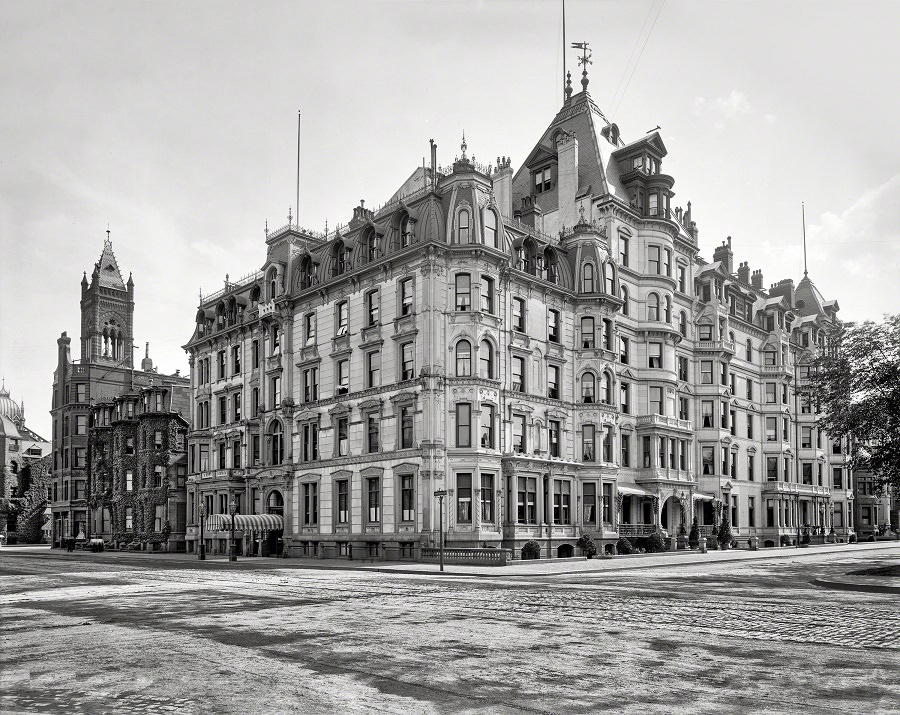
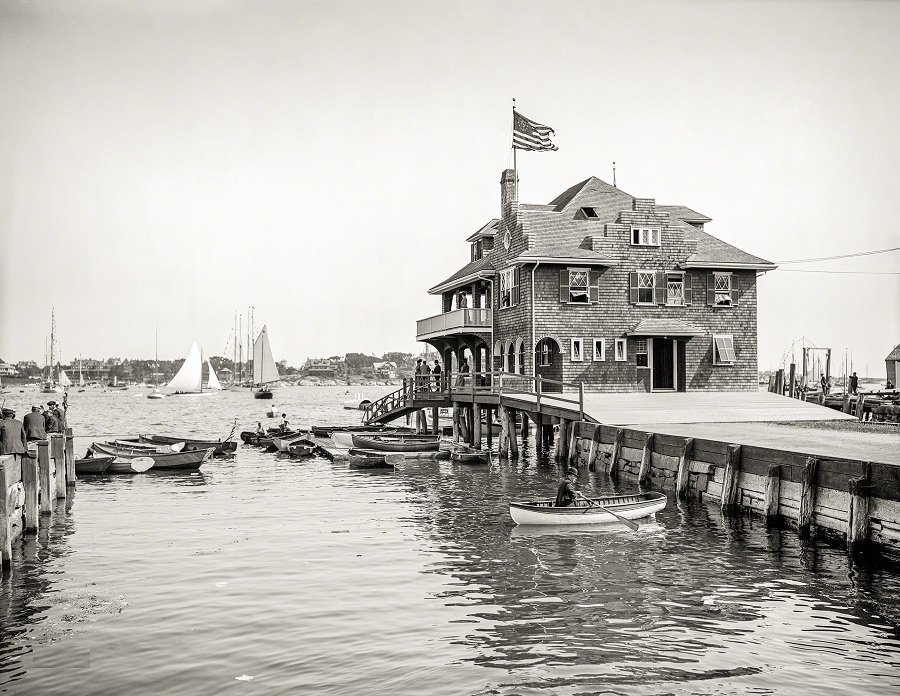
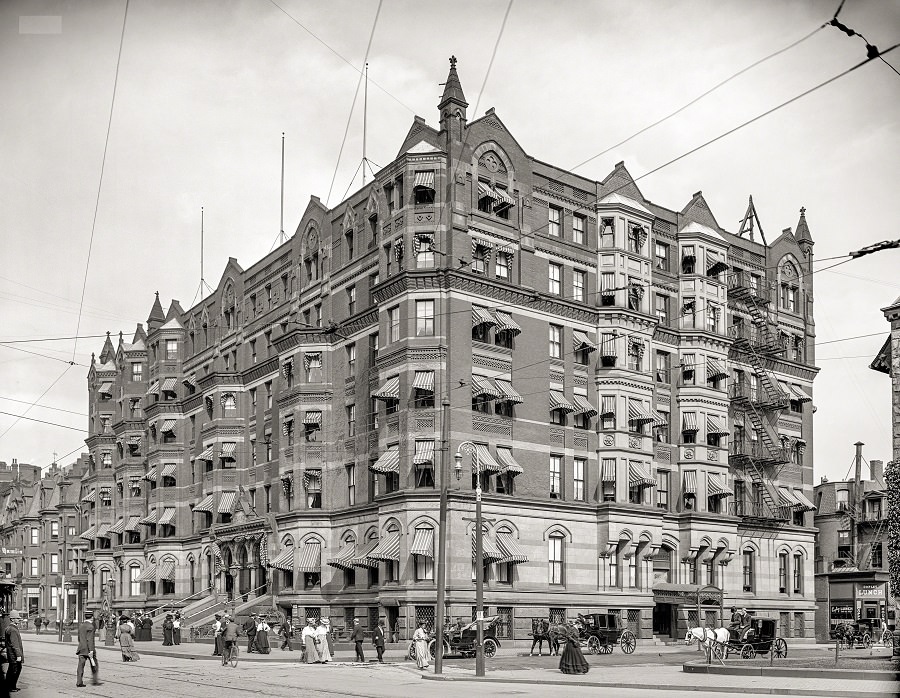
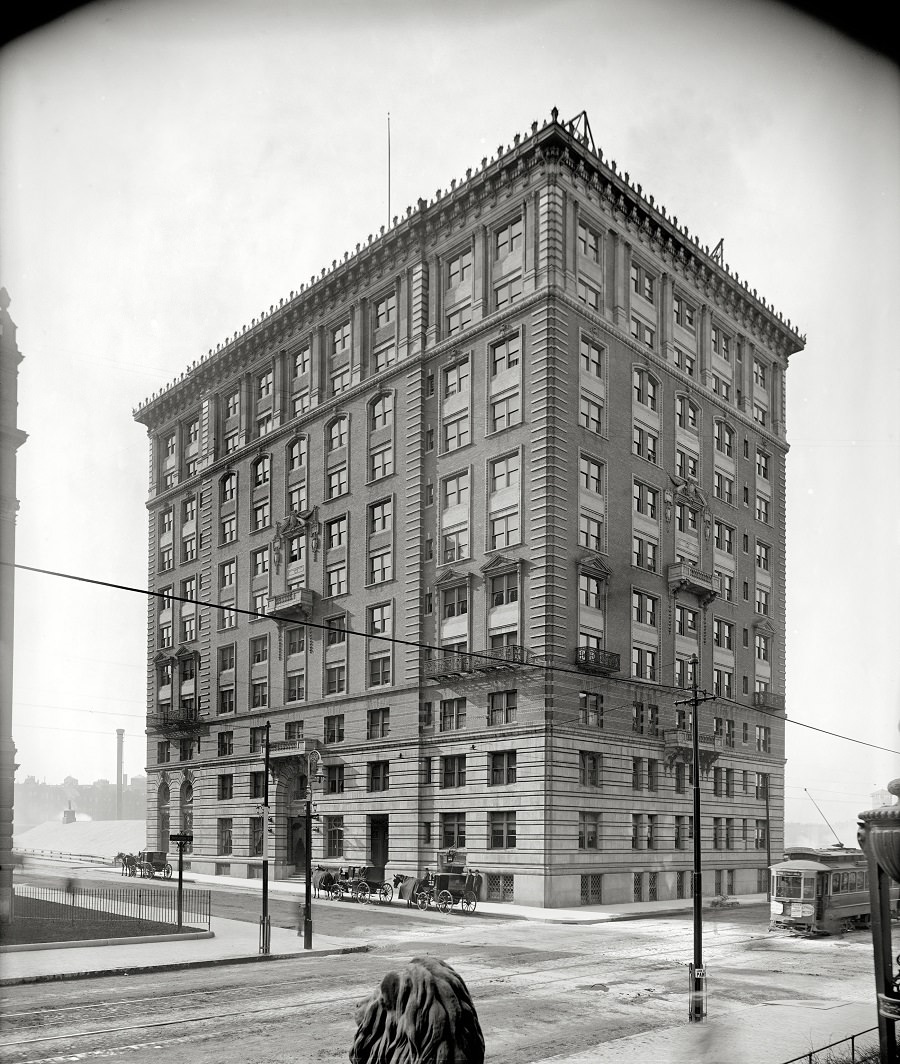
The Hotel Vendome on Commonwealth Avenue was one of Boston’s most prestigious addresses. Opened in 1871, it attracted wealthy guests and featured some of the city’s earliest electric lighting. The Boston Yacht Club at Marblehead was a short distance from the city and served the sailing community that gathered along Massachusetts’ rocky coastline.
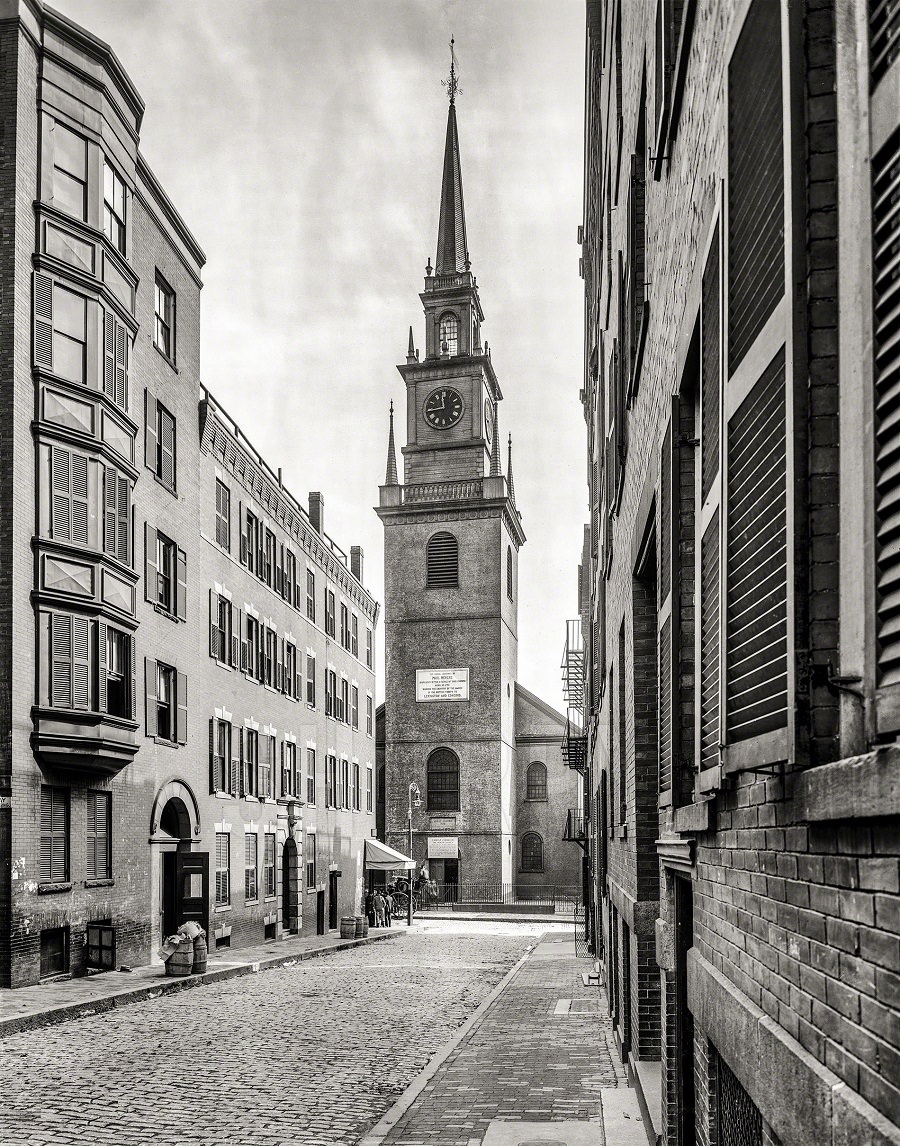
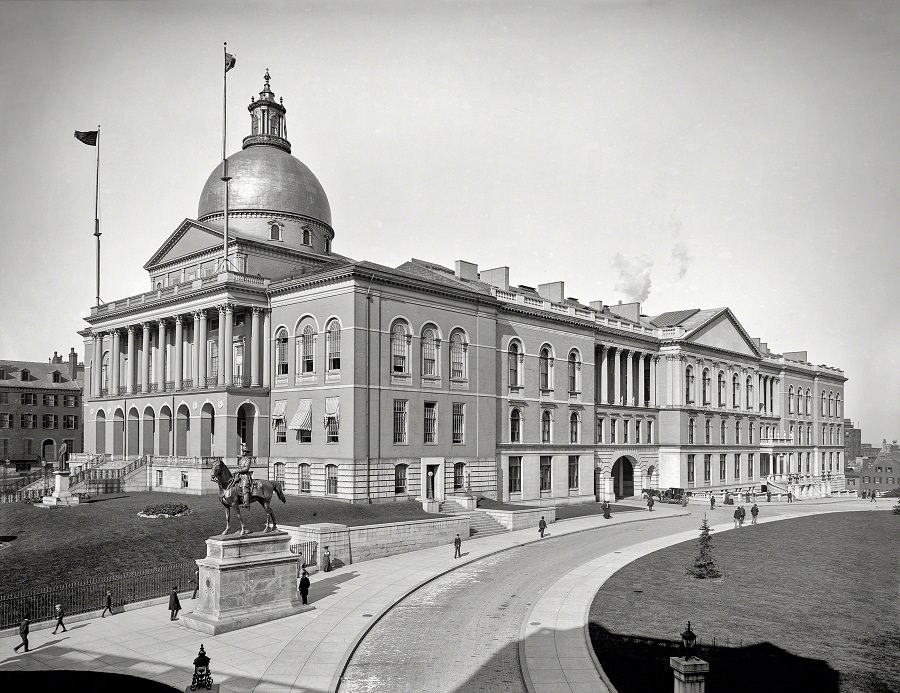
Christ Church, known as Old North Church, is the oldest surviving church building in Boston, built in 1723. It became famous on April 18, 1775, when two lanterns were hung from its steeple to signal that British troops were advancing by sea — the event that launched Paul Revere’s midnight ride. The Massachusetts State House on Beacon Hill, with its gleaming gold dome, served as the seat of state government and offered sweeping views across Back Bay.
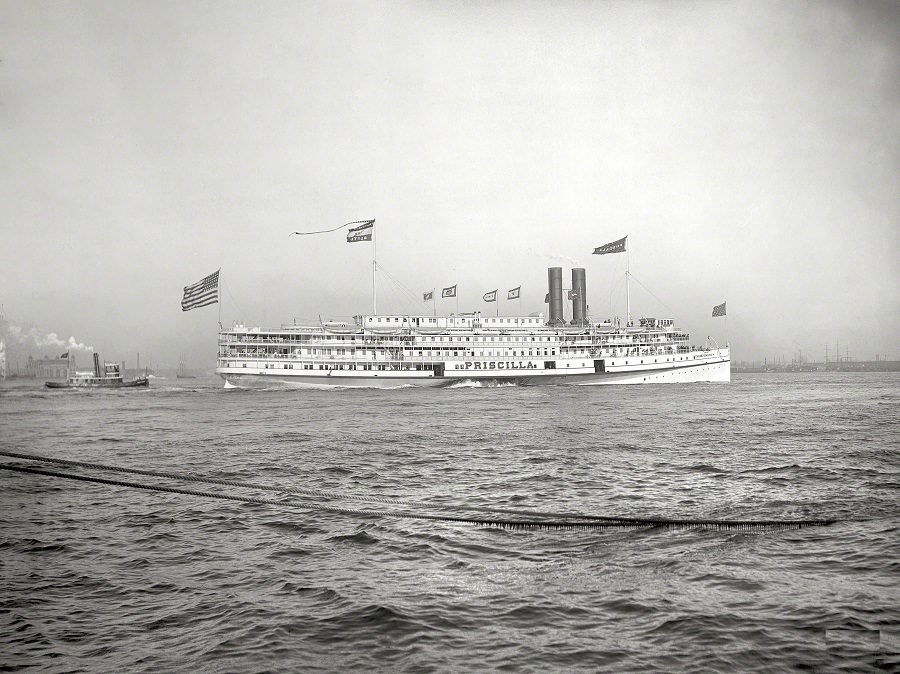
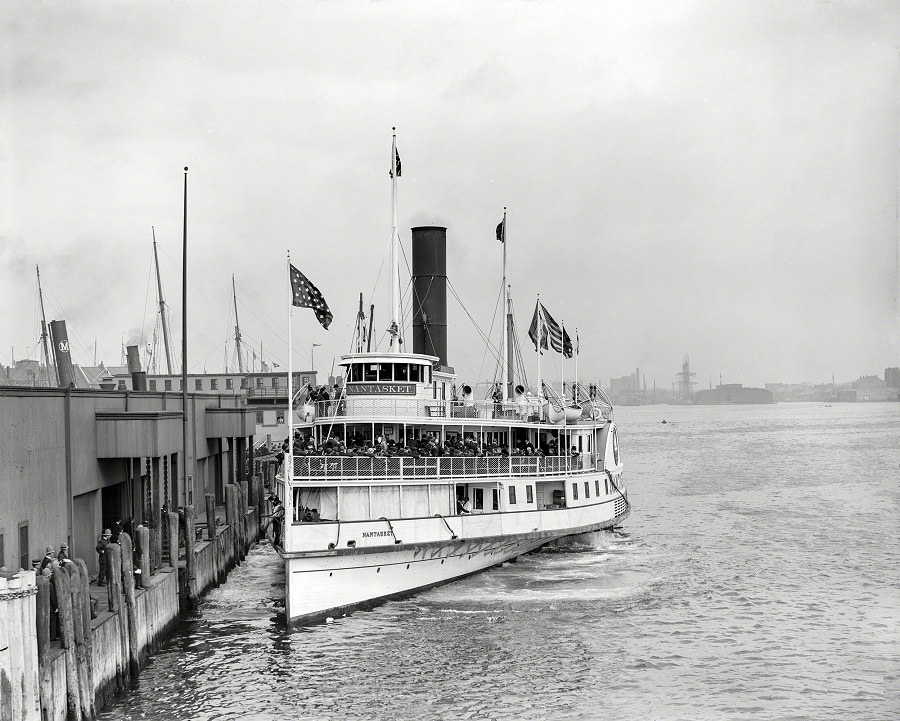
Water travel was still a practical part of Boston life in the early 1900s. The Steamer Priscilla operated on the Fall River Line, carrying passengers between Boston and New York overnight. The London Ancients and Honorables — a British cricket club — visited Boston in 1904, departing from Rowe’s Wharf on a harbor trip. Their visit was part of a tradition of friendly athletic exchanges between British and American clubs.
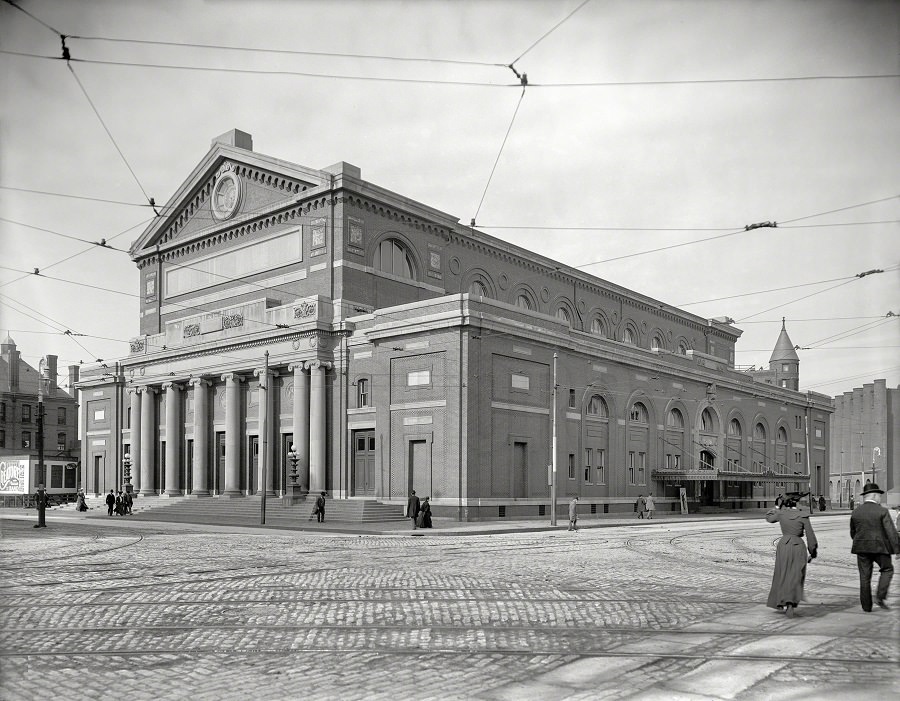
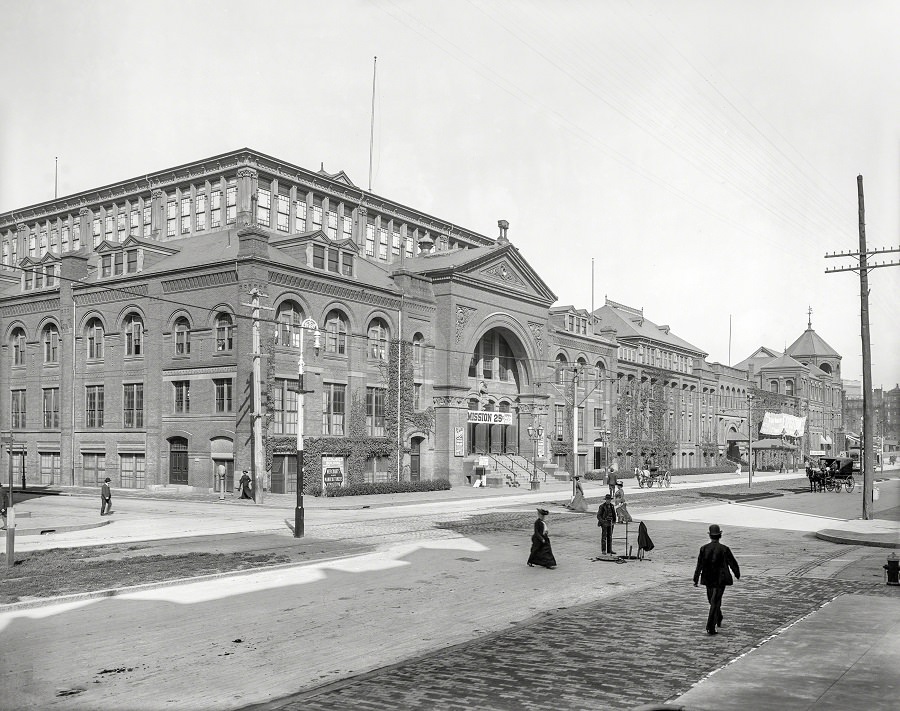
Symphony Hall on Massachusetts Avenue opened in 1900 and immediately became the home of the Boston Symphony Orchestra. Its acoustics were considered among the finest in the world from the day it opened. Just a short distance away, Mechanics’ Hall on Huntington Avenue hosted trade shows, exhibitions, and public events for decades before it was demolished in 1959 to make way for the Prudential Center.
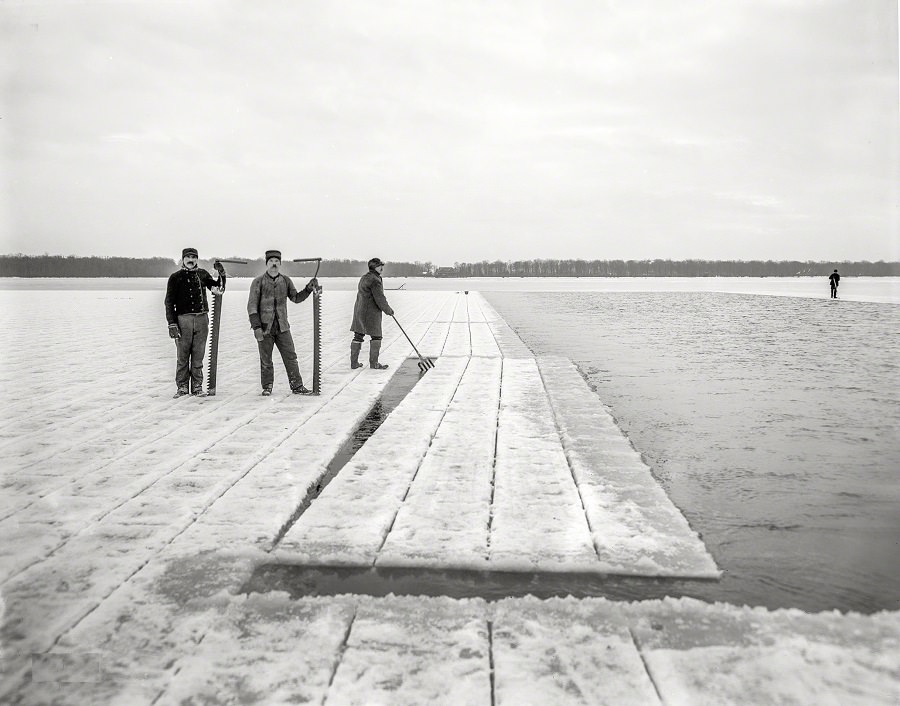
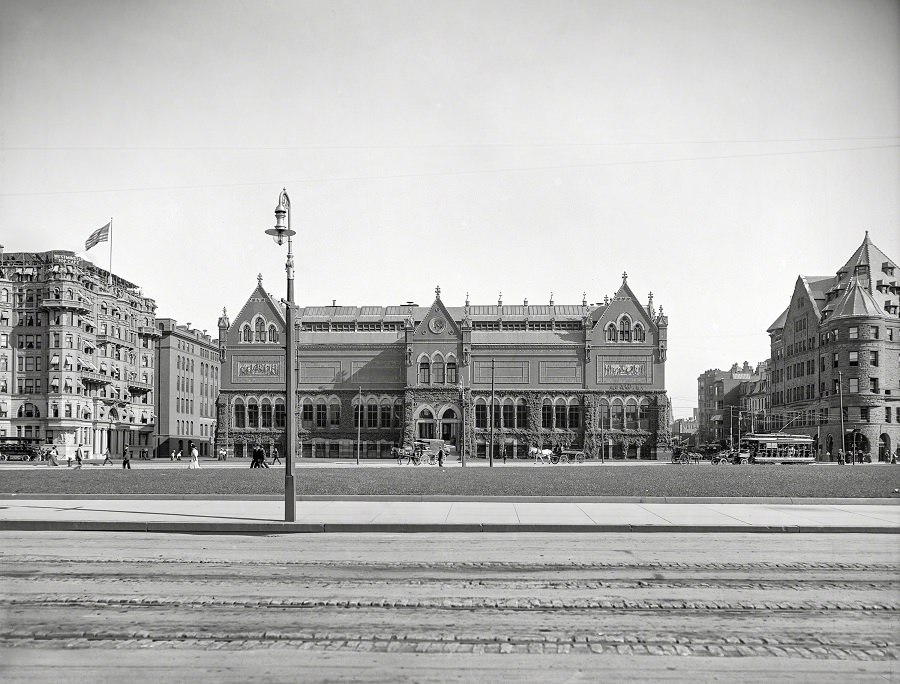
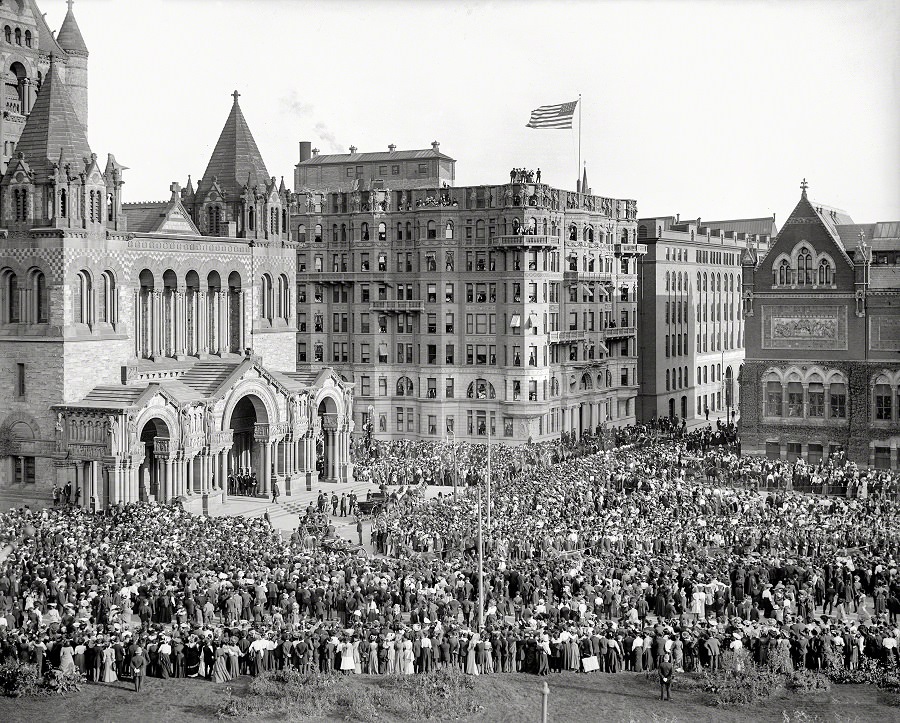
Winter brought a different kind of labor to the Boston area. Ice harvesting on Horn Pond in Woburn — just north of the city — employed teams of workers who cut thick slabs of ice from the frozen surface and stored them for use through the warmer months. Copley Square in the Back Bay neighborhood was the city’s cultural center, home to Trinity Church, the Boston Public Library, and the Museum of Fine Arts.
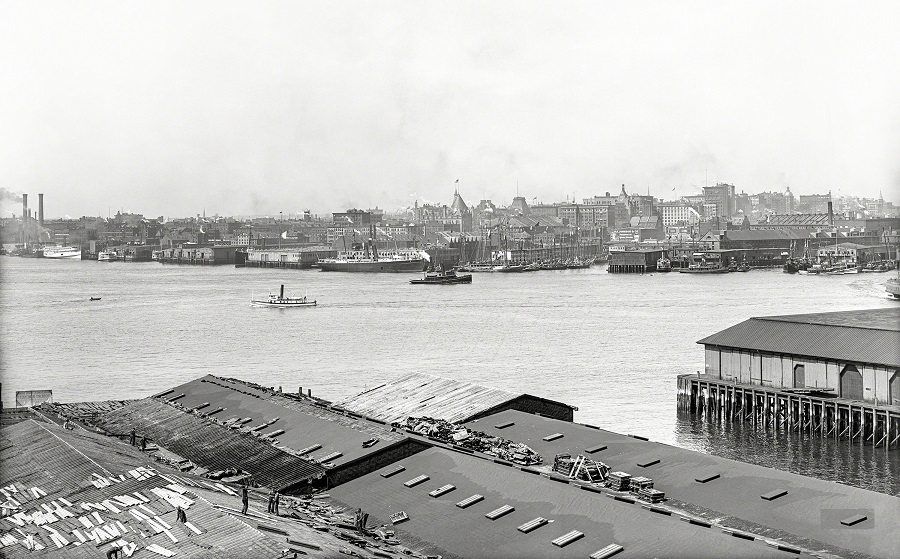
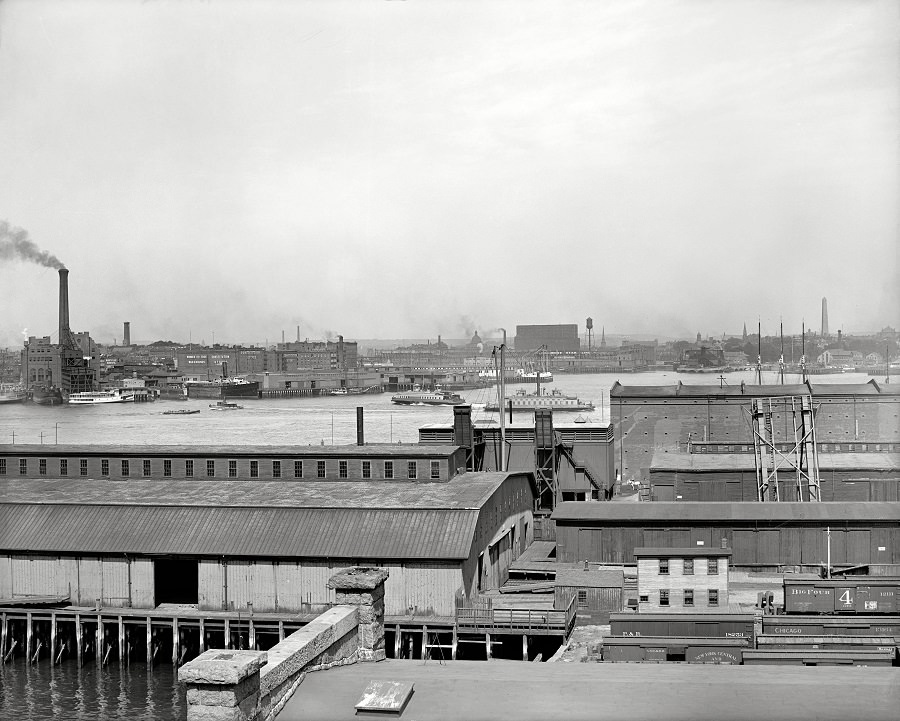
Views of Boston from across the Inner Harbor showed the city’s dense waterfront and the masts and smokestacks rising from its docks. East Boston, separated from downtown by the harbor, had its own working-class neighborhoods and port facilities. The Navy Yard at Charlestown, visible from across the Charles River, had been operating since 1800 and built and repaired warships through both World Wars.
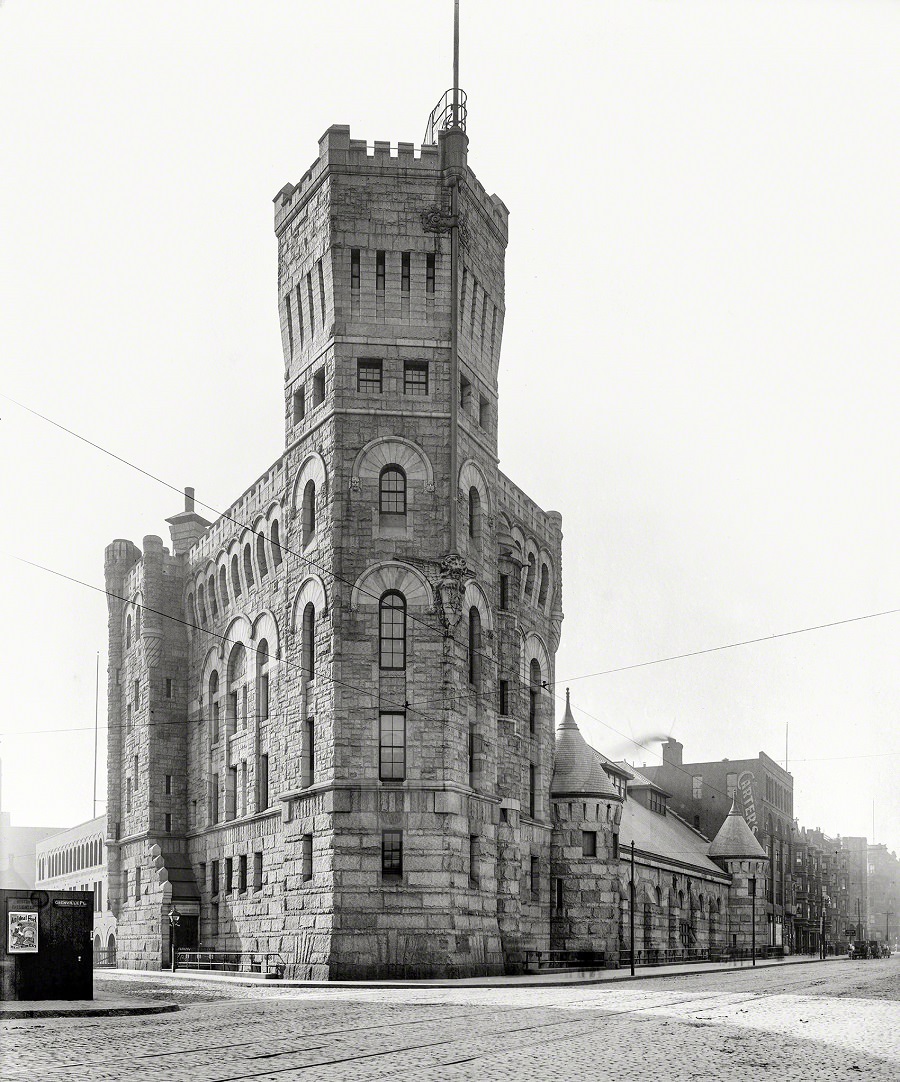
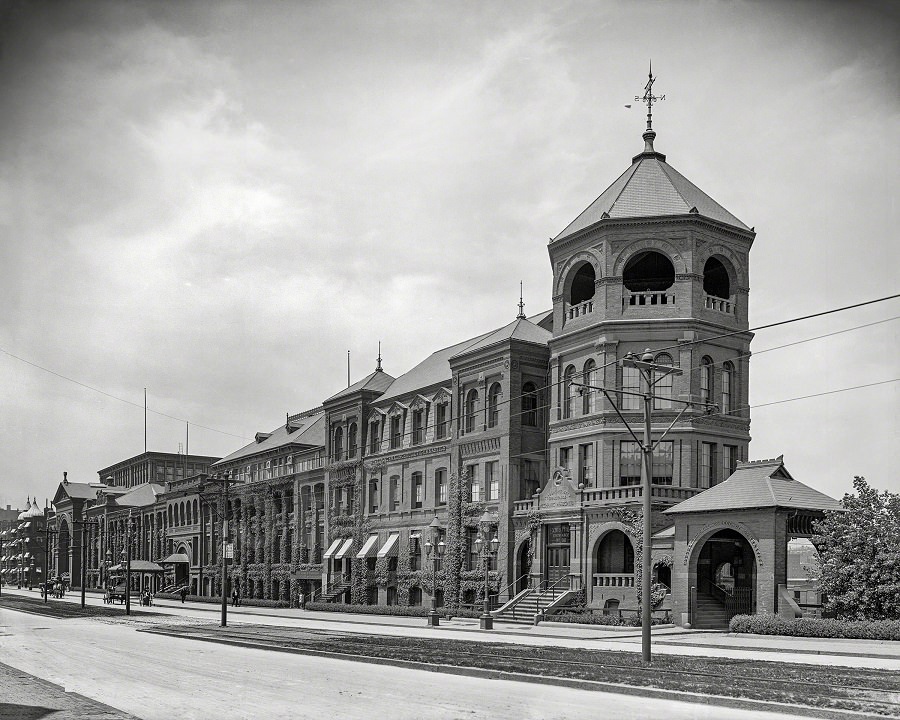
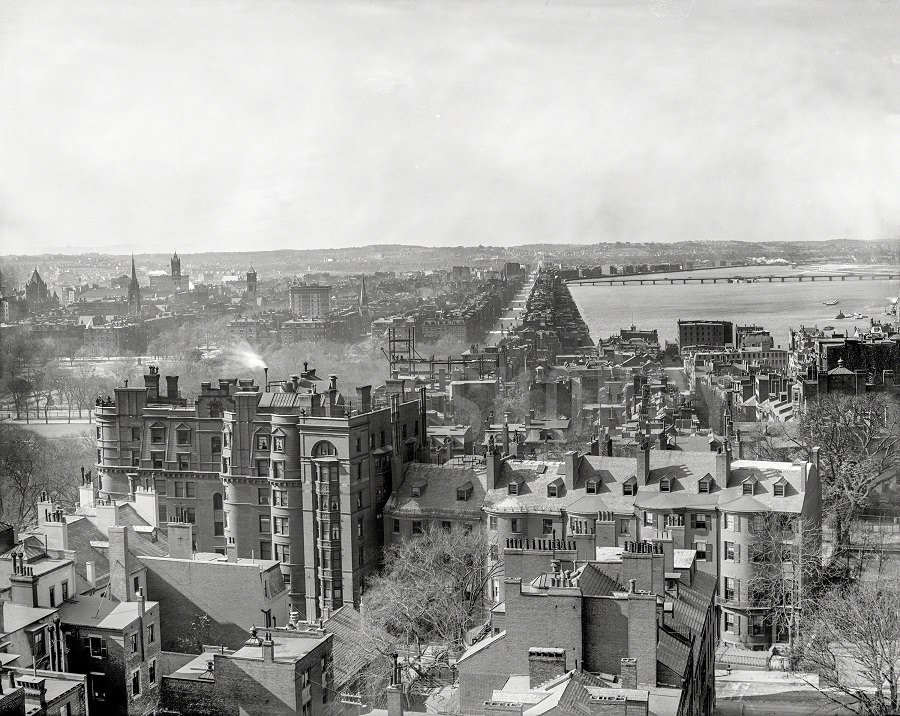
Beacon Street running through Ward 6 showed the residential face of Boston — rowhouses and brownstones packed tightly along tree-lined streets. From the dome of the State House, the Back Bay neighborhood spread out in a neat grid, a planned district built on filled-in tidal flats beginning in the 1850s. By the early 1900s it was one of the most desirable addresses in the city.
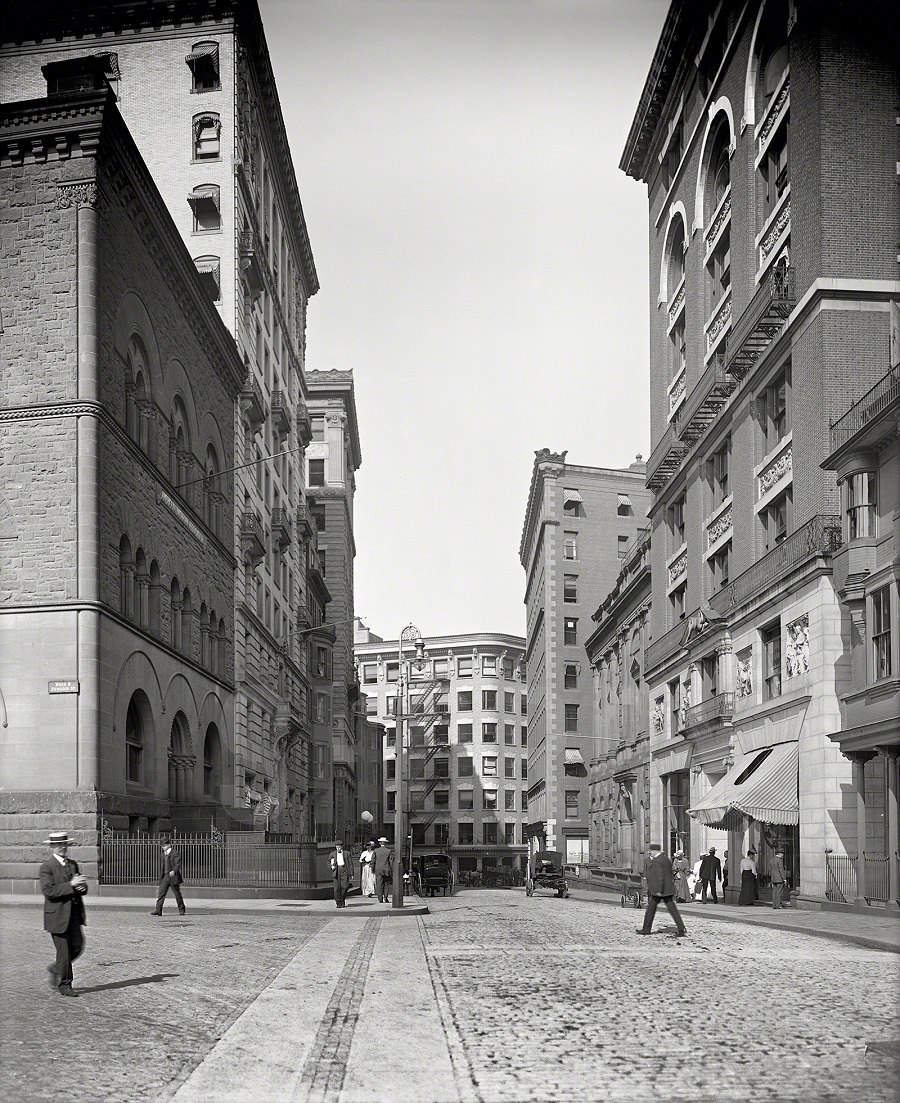
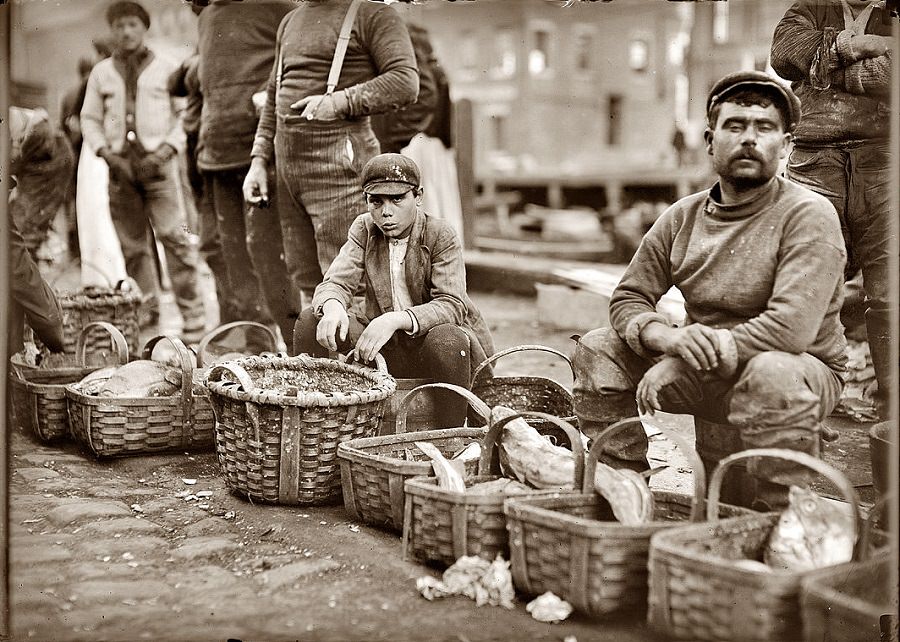
‘T’ Wharf was Boston’s fishing hub. Schooners docked there daily, and workers unloaded their hauls of cod, haddock, and mackerel caught in the waters off the New England coast. The fishing industry was one of Boston’s oldest and most reliable sources of employment. Fresh fish moved quickly from the docks to markets and restaurants across the city.
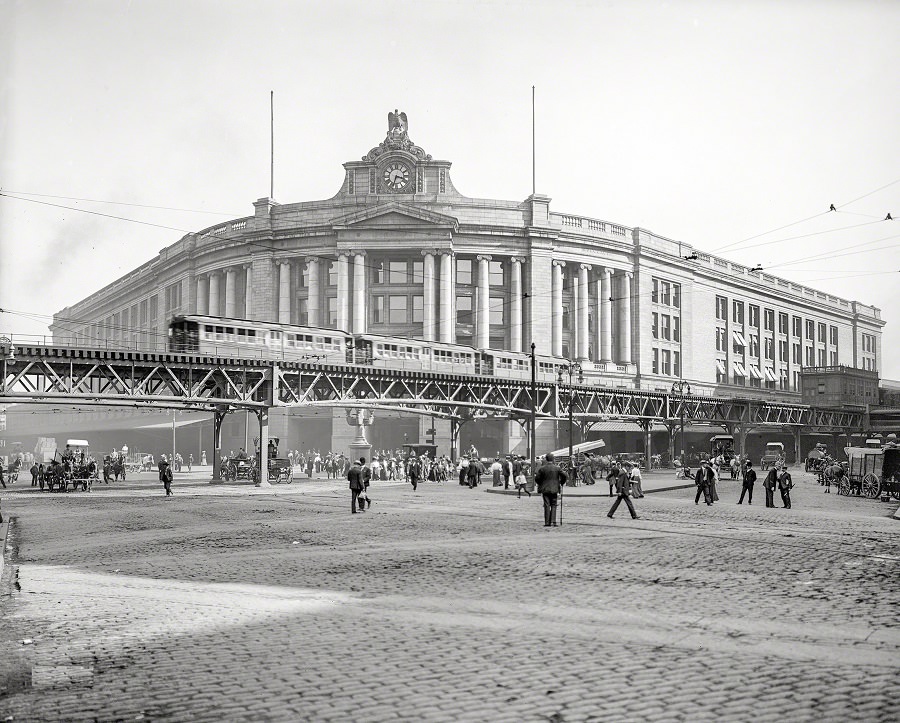
Trinity Church at Copley Square was completed in 1877 and is considered one of the finest examples of Romanesque Revival architecture in the United States. In 1903, members of the London Honorables cricket club entered its doors during their Boston visit. South Station, opened in 1899, was one of the largest railroad terminals in the country and handled millions of passengers each year.
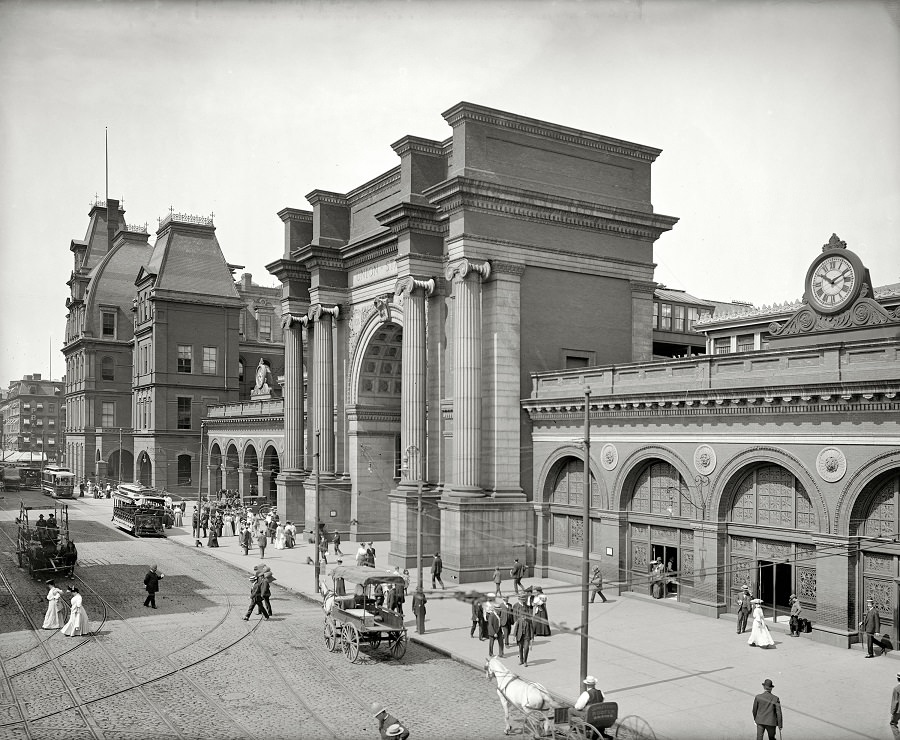
School Street was home to the Parker House hotel, opened in 1855 and still operating today as the Omni Parker House — making it the longest continuously operating hotel in the United States. Boston’s Tremont Street remained a busy corridor of shops, churches, and civic buildings throughout the early 1900s, and North Station served the rail lines heading north out of the city.
![North Station [Union Station], Boston, 1905](https://www.bygonely.com/wp-content/uploads/2020/04/Old_Boston_1900s_37.jpg)
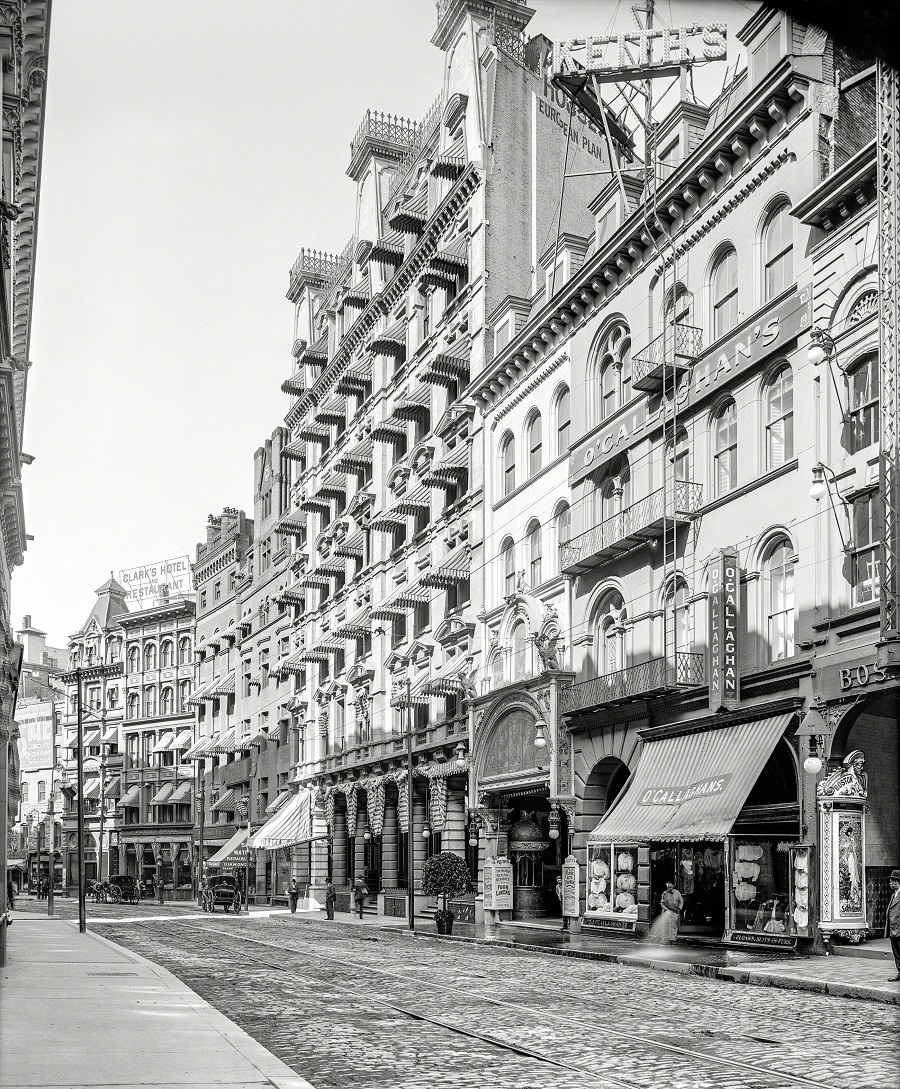
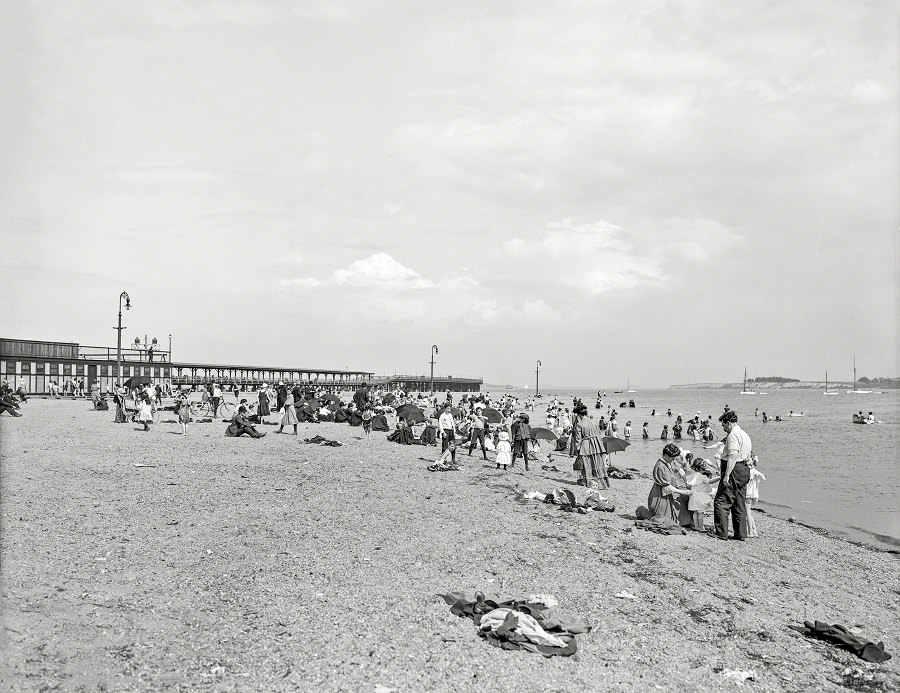
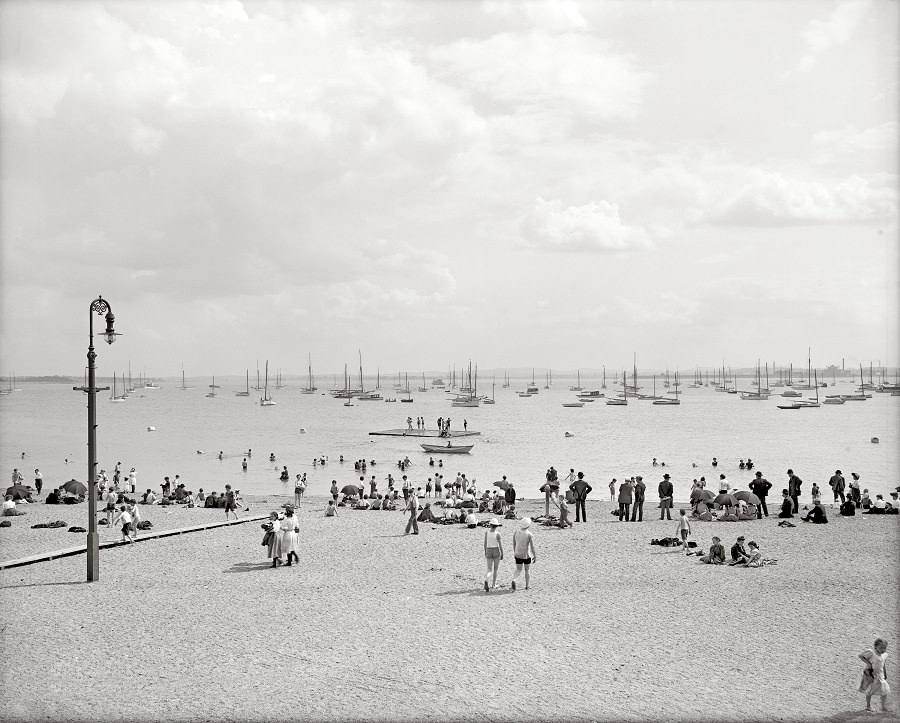
Hotels were central to Boston’s social life. The Hotel Brunswick on Boylston Street catered to well-off travelers and hosted banquets and club dinners. In summer, City Point in South Boston drew crowds of residents to the waterfront, where they swam and gathered along the shore. It was one of the few public bathing areas accessible to working-class Bostonians.
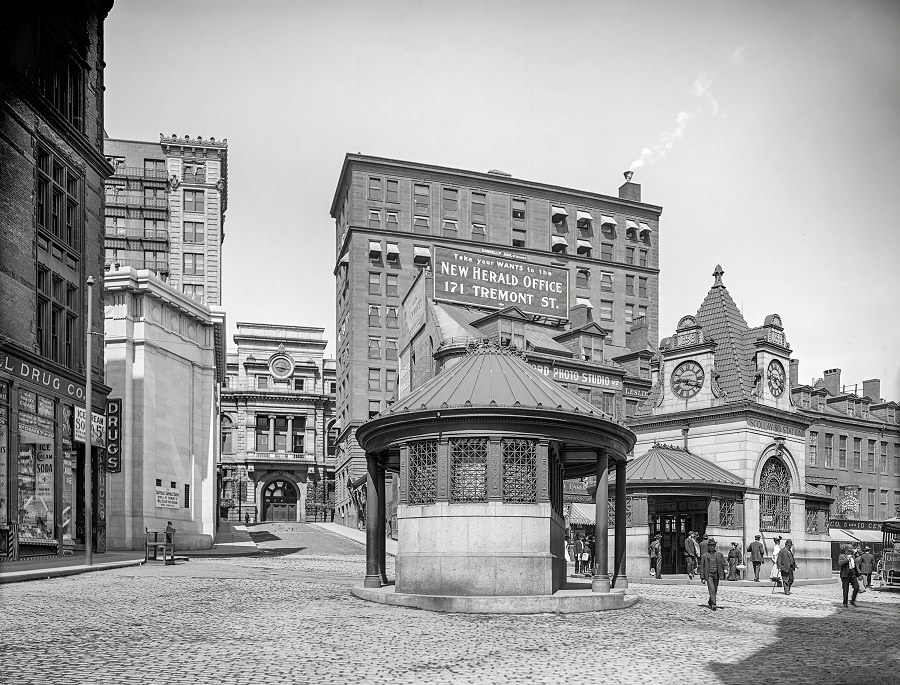
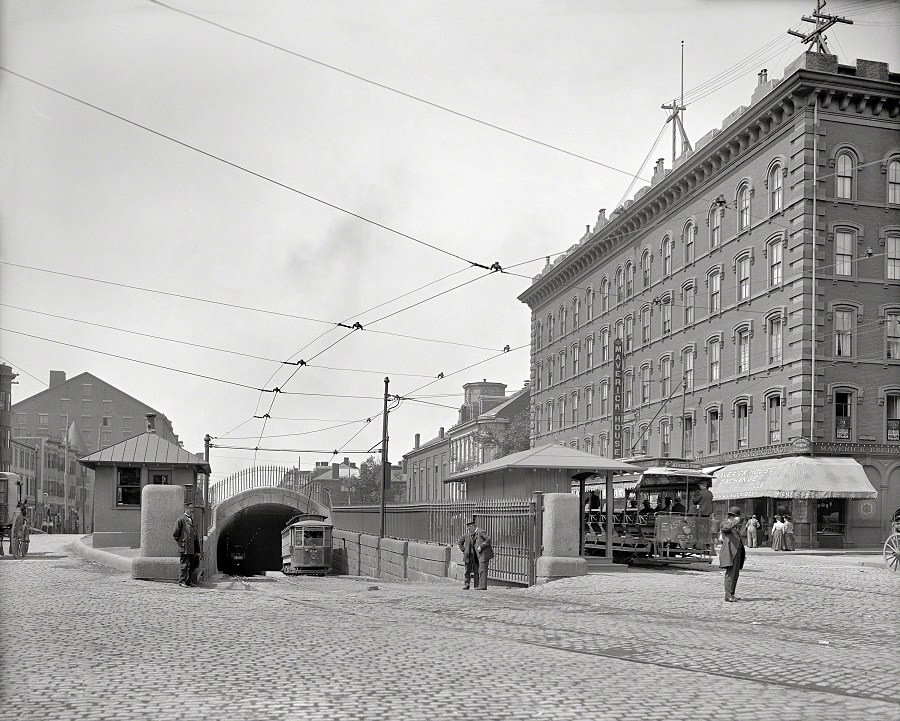
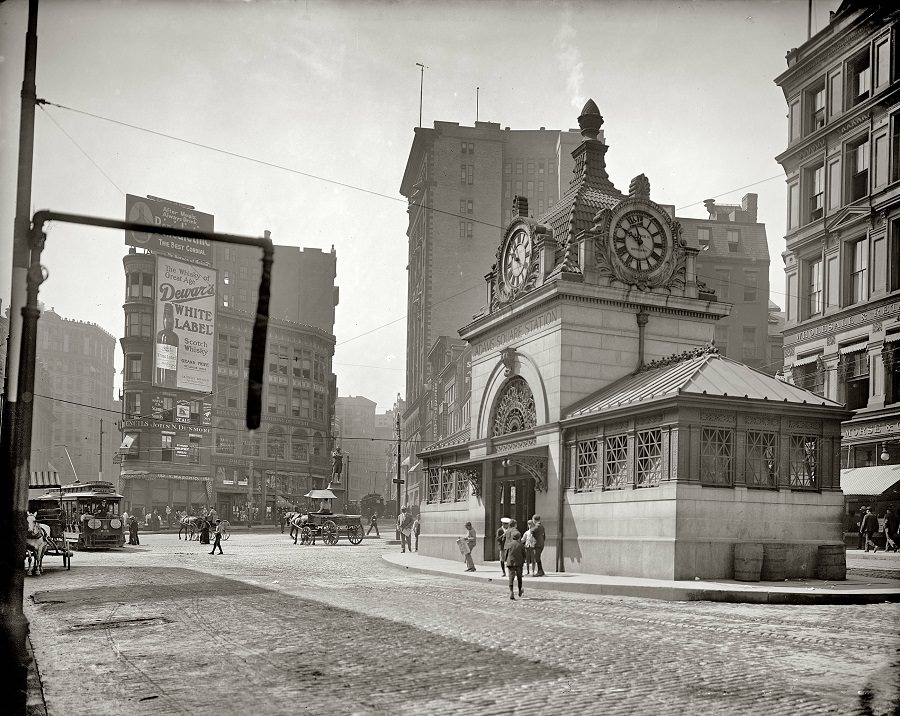
Scollay Square was one of Boston’s liveliest and most densely packed districts in the early 1900s. Its subway station, opened in 1897 as part of America’s first subway system, connected riders across the city. The square itself was ringed with theaters, taverns, and shops. Maverick Square in East Boston served a similar role for that neighborhood, and its tunnel entrance connected it to downtown via one of the era’s newer transit links.
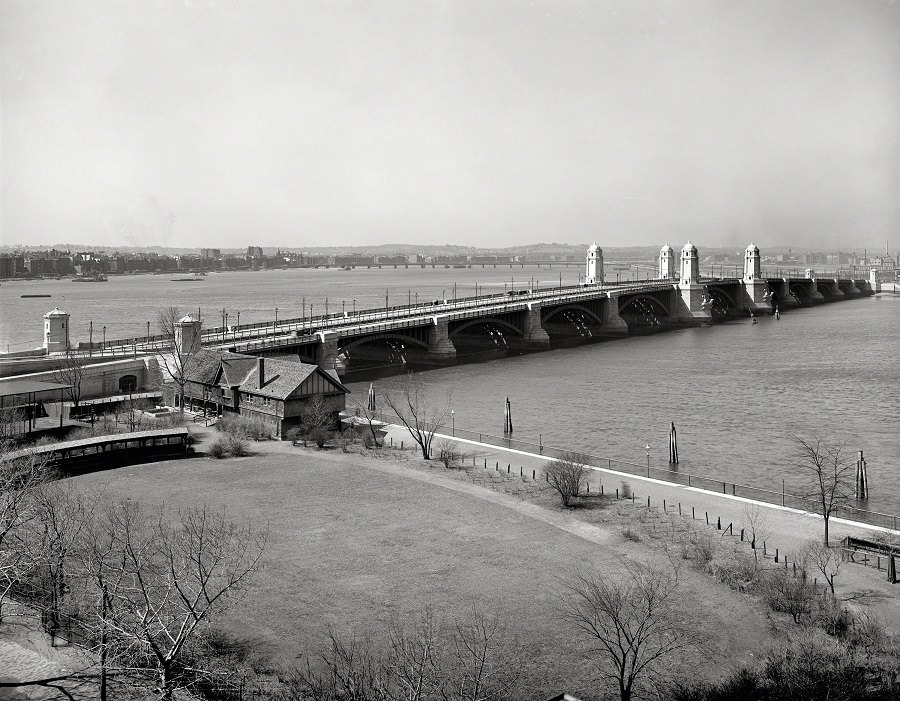
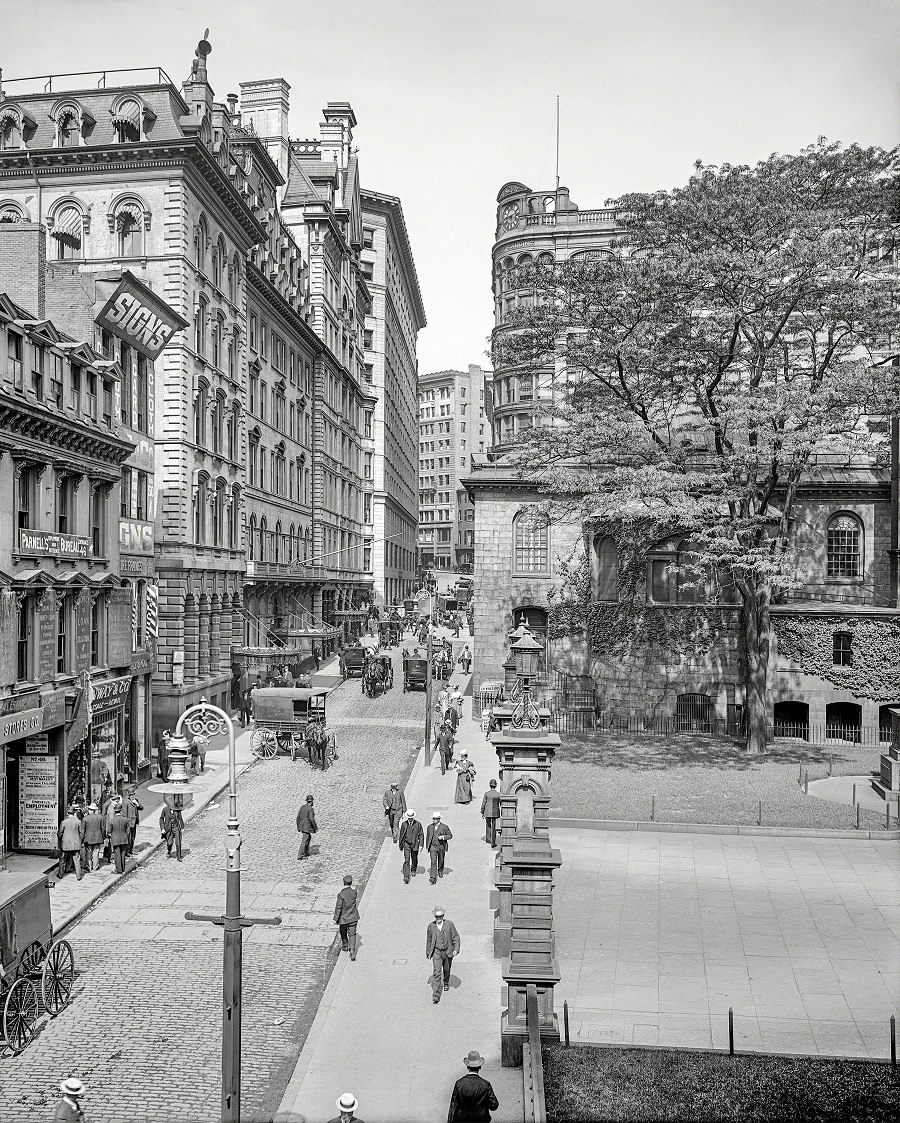
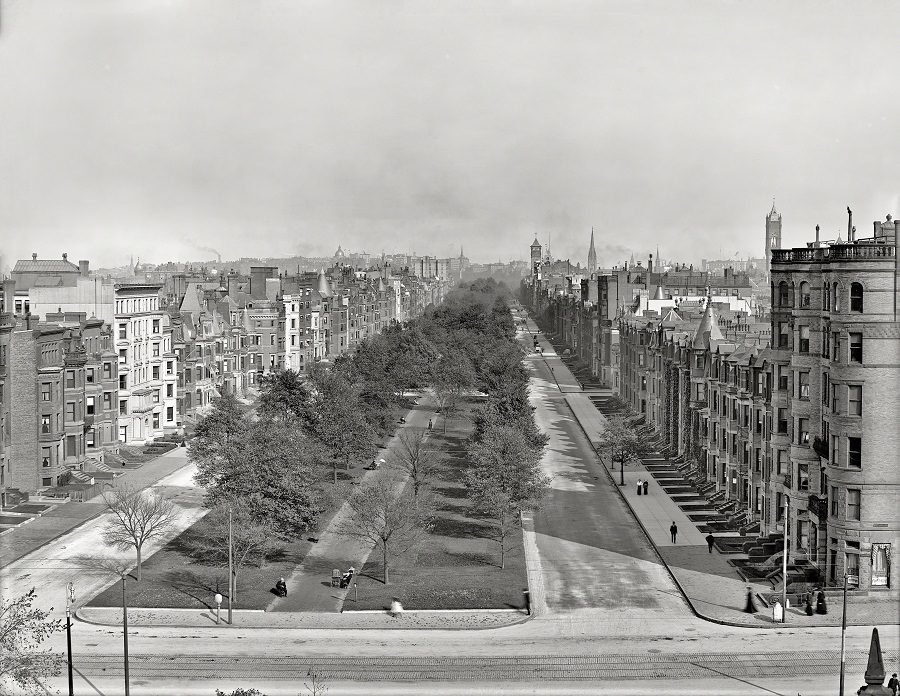
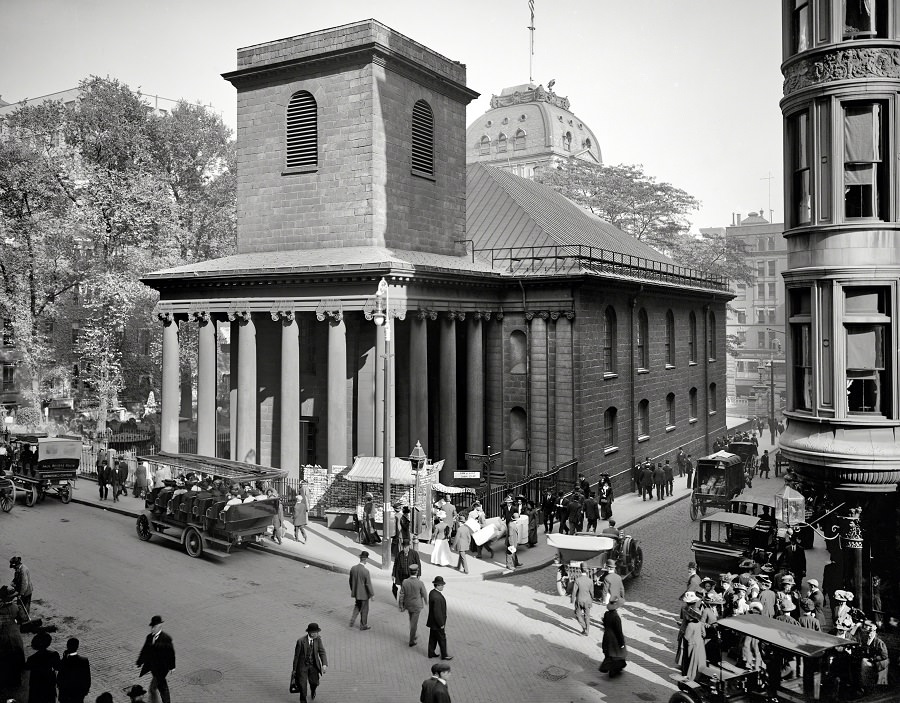
Commonwealth Avenue in the Back Bay was designed as a grand boulevard modeled on Paris’s wide tree-lined streets. By 1904, it was lined with brownstone mansions and upscale apartment buildings. King’s Chapel, built in 1754, was the first Anglican church built in Boston and later became the first Unitarian church in the country. Bromfield Street, running off Washington Street, was lined with small specialty shops and jewelers.
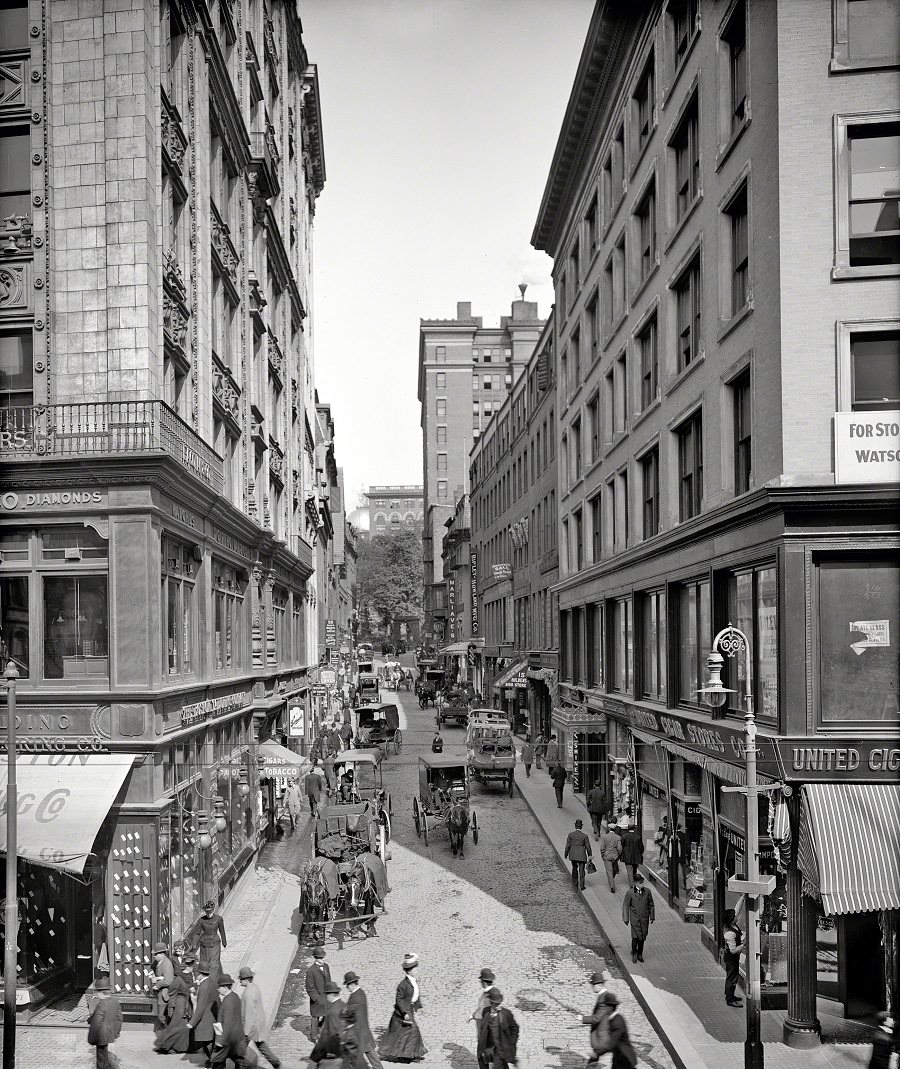
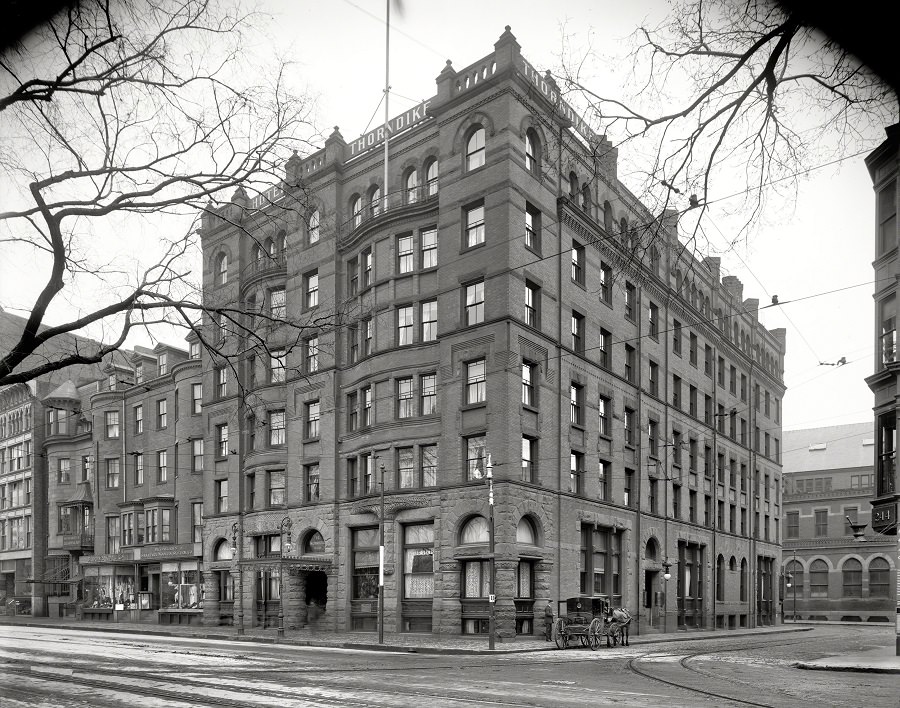
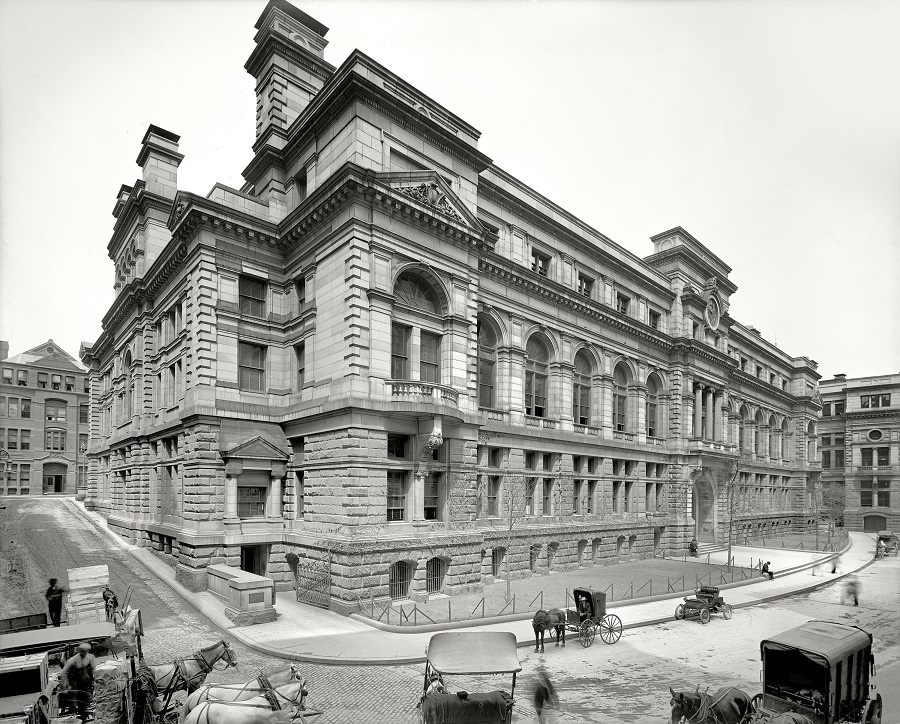
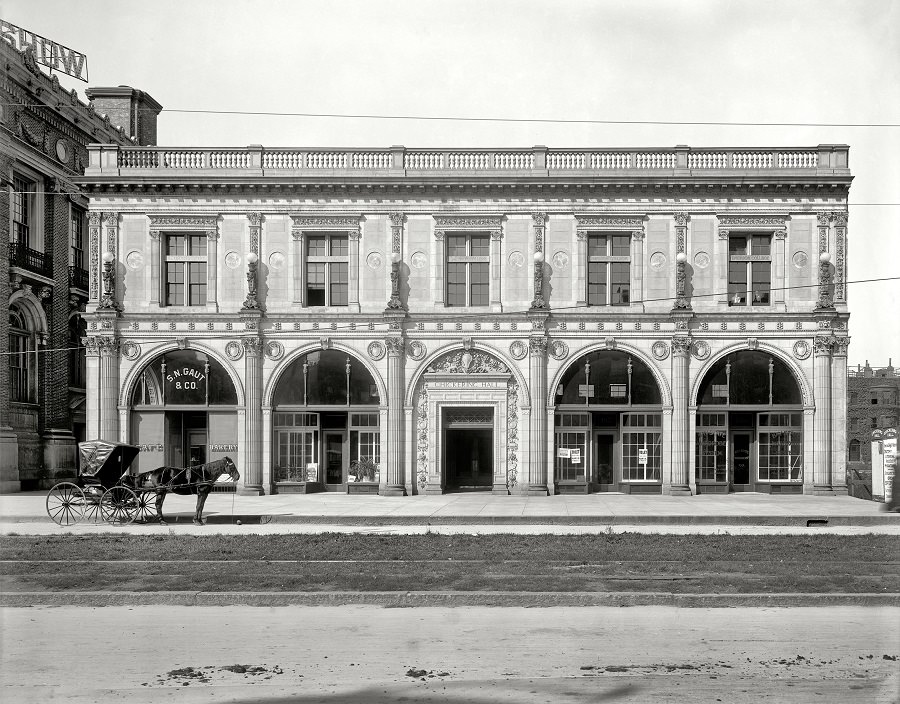
Boston’s hotel scene in the early 1900s was rich and varied. The Hotel Thorndike on Boylston, the Courthouse at Pemberton Square, and the imposing buildings along Washington Street north of Temple Place all spoke to a city confident in its architecture. Chickering Hall on Tremont Street was a well-known concert venue, hosting musical performances for Boston audiences.
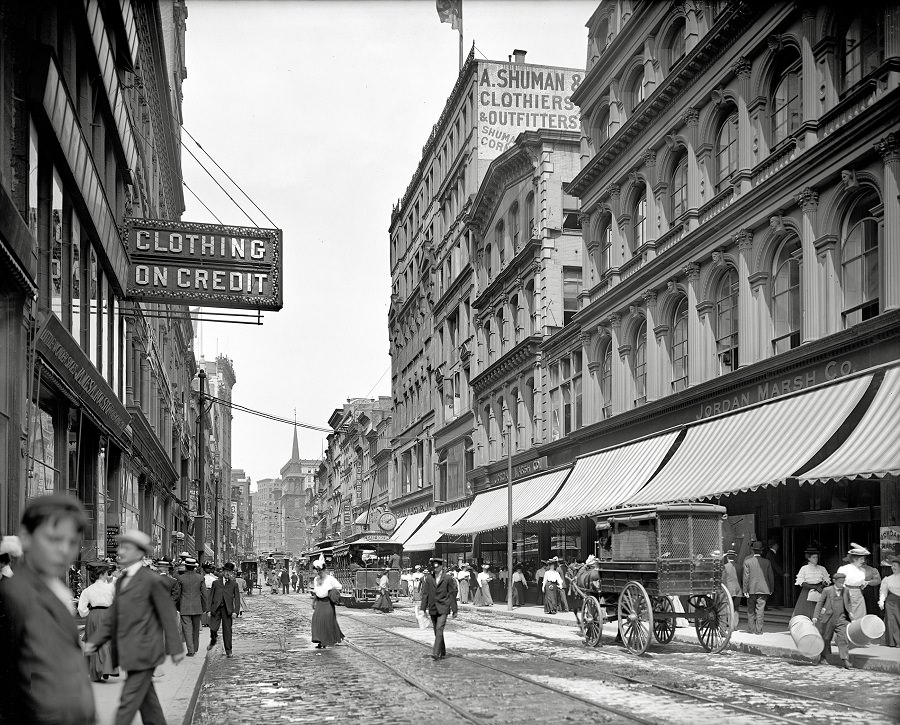
Washington Street was Boston’s main commercial artery. Its sidewalks saw thousands of people every day — workers, immigrants, shoppers, and city officials. The street was also home to Newspaper Row, a stretch where the offices of Boston’s major daily papers clustered together, including the Boston Globe, the Boston Herald, and several others. Reporters, editors, and paperboys all converged on this block.
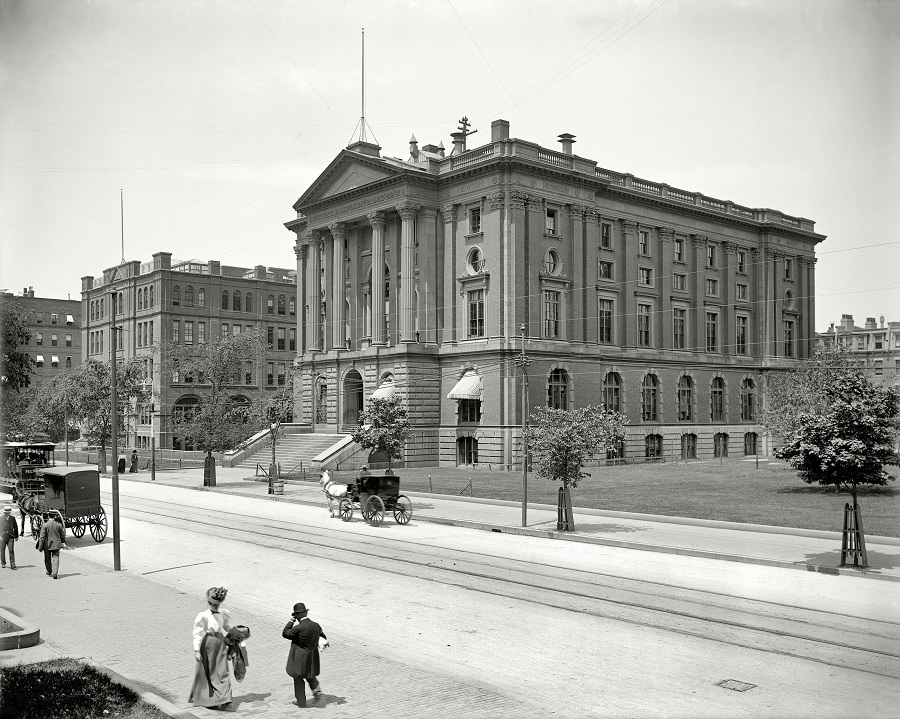
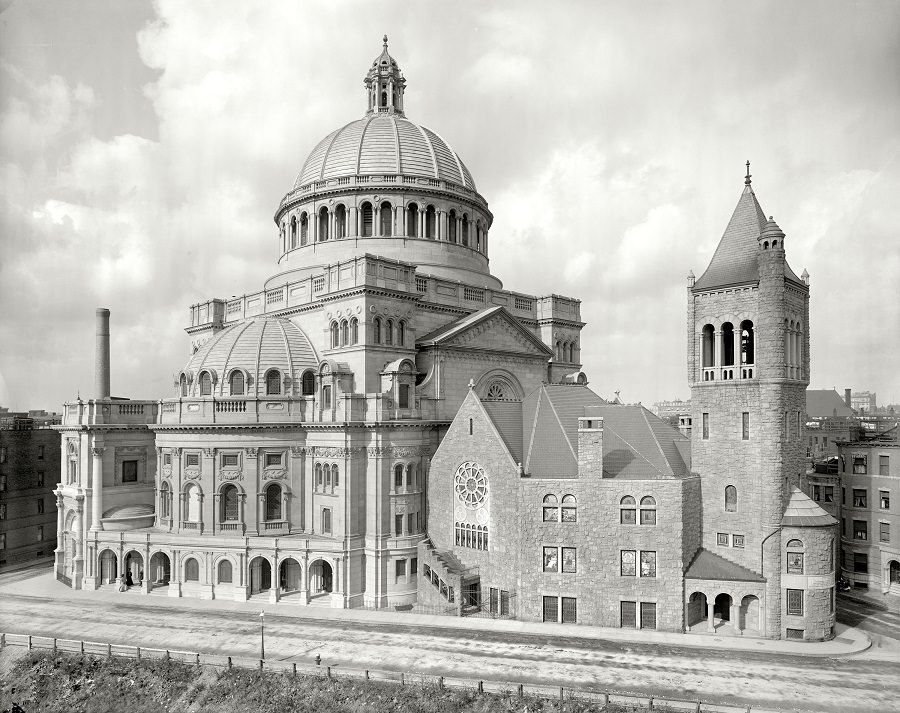
The Massachusetts Institute of Technology was still located in Boston in 1901, occupying the Rogers Building on Boylston Street. MIT would not move to its current Cambridge campus until 1916. The First Church of Christ, Scientist, on Massachusetts Avenue was completed in 1894 and expanded significantly in the early 1900s. It remains the global headquarters of the Christian Science movement.
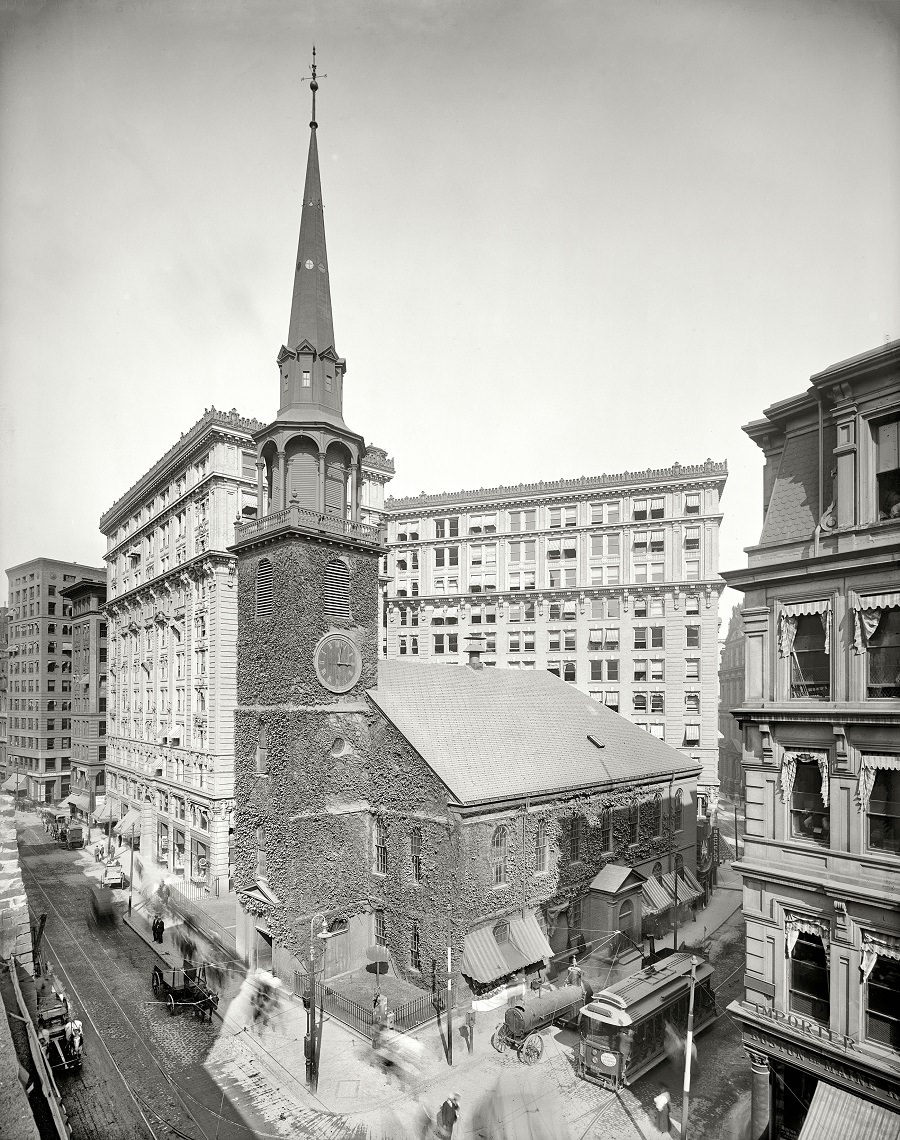
The Old South Meeting House, built in 1729, was the largest building in colonial Boston and the site where colonists gathered in 1773 before the Boston Tea Party. By 1905, it shared its block with the Old South Building, a modern skyscraper completed in 1904. The contrast between the two structures captured exactly where Boston stood — a city that preserved its past while building boldly over it.
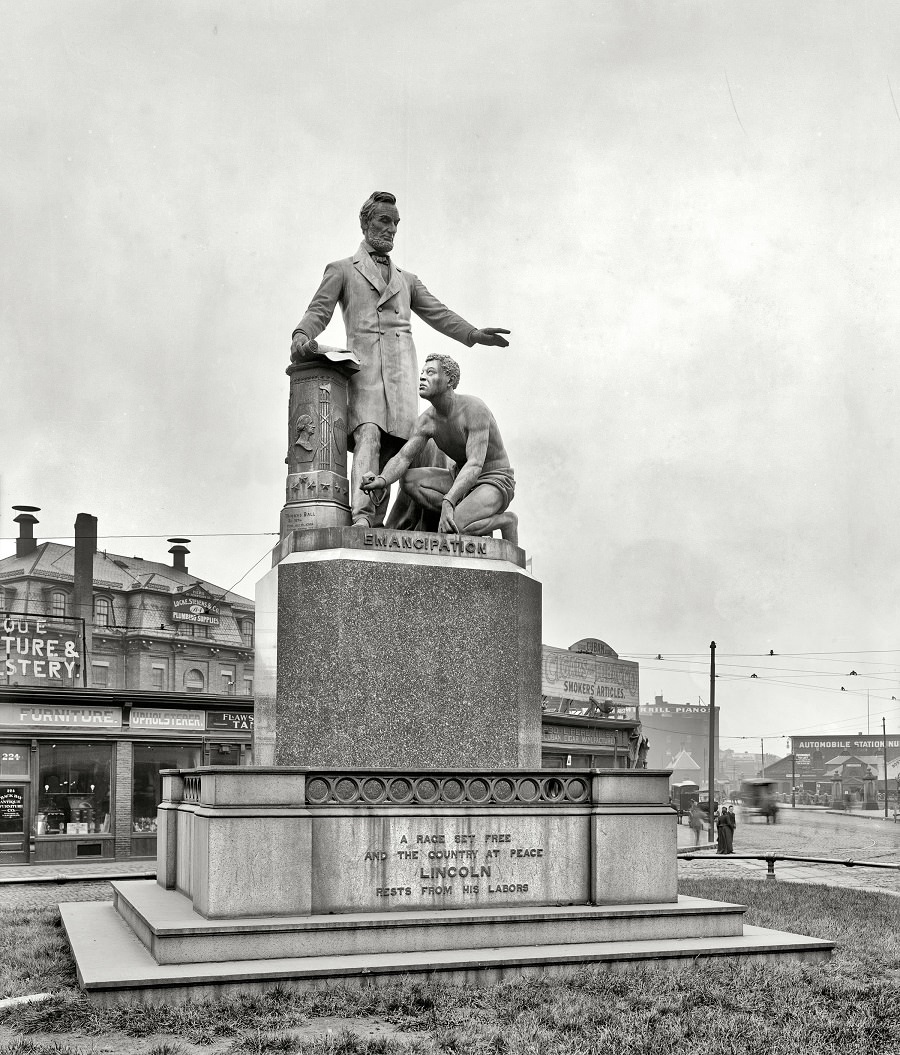
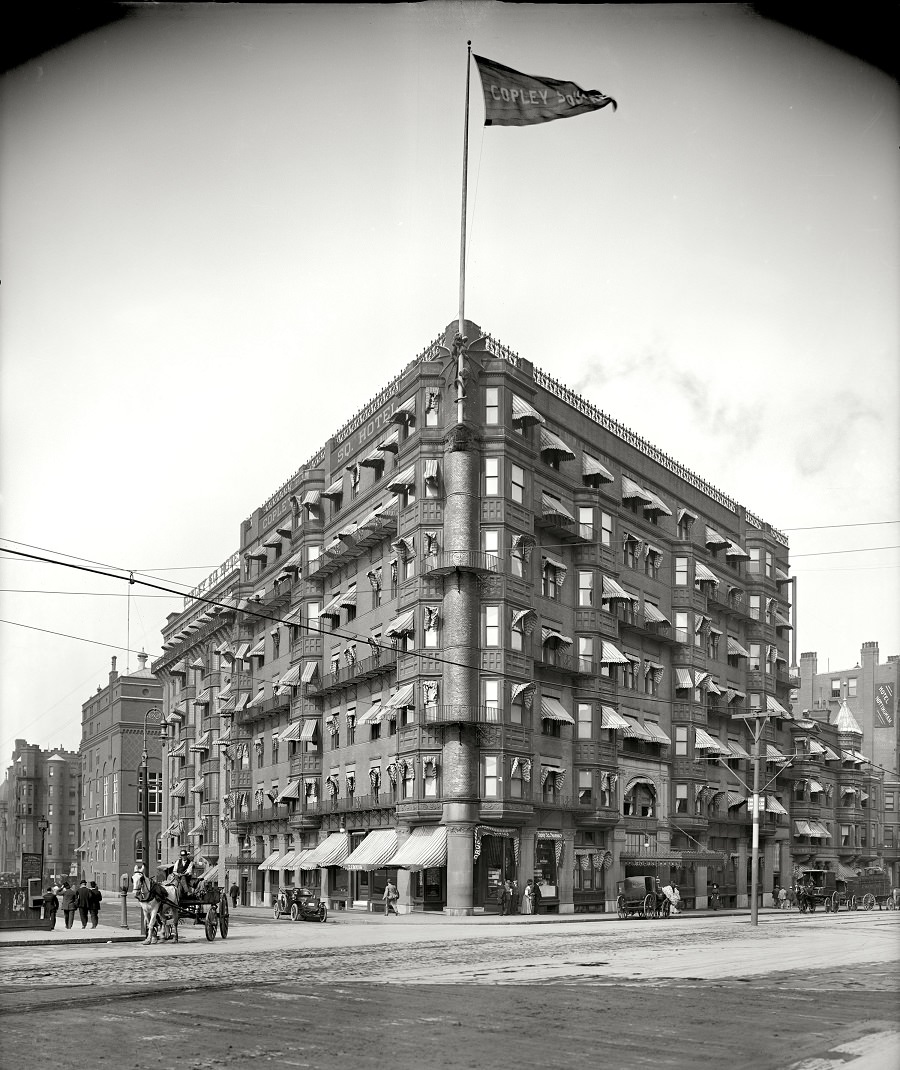
The Lincoln statue in Park Square was a bronze casting of a seated Abraham Lincoln, installed in 1879. It sat at a busy intersection connecting the theater district to the Back Bay. The Copley Square Hotel, the Hotel Westminster, and the Crawford House were among the many establishments that served travelers arriving by rail at South Station or North Station.
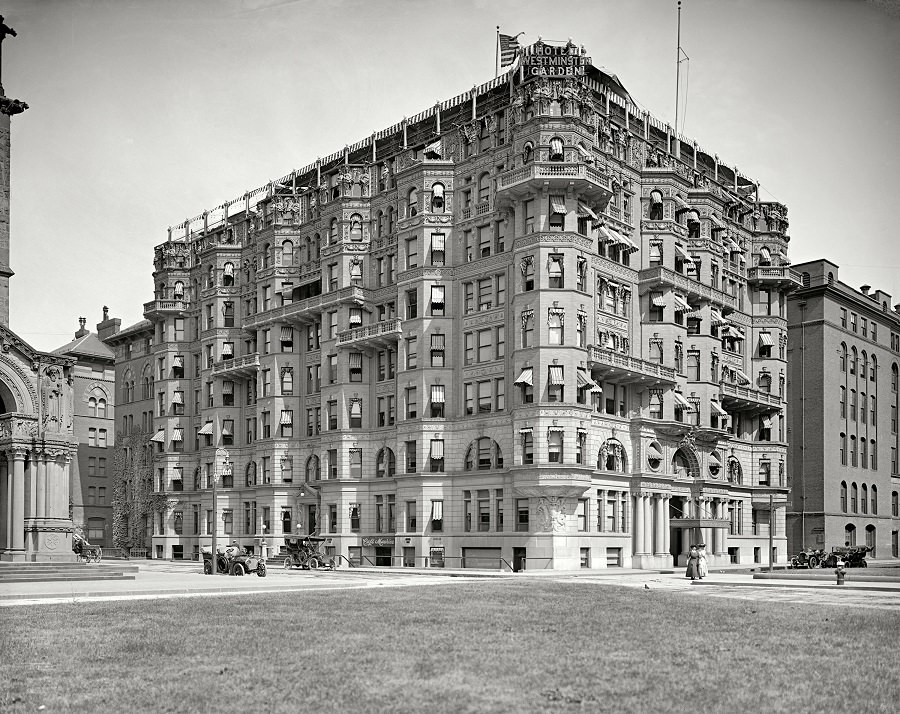
The Navy Yard at Charlestown and the Charles River waterfront gave Boston a strong military and industrial presence well into the 20th century. Court Street, home to the massive Ames Building — completed in 1893 and for a time the tallest building in Boston — showed that the city’s commercial ambitions extended skyward. The subway entrance at the Public Garden on Boylston Street was part of America’s first underground rapid transit line, opened in 1897.
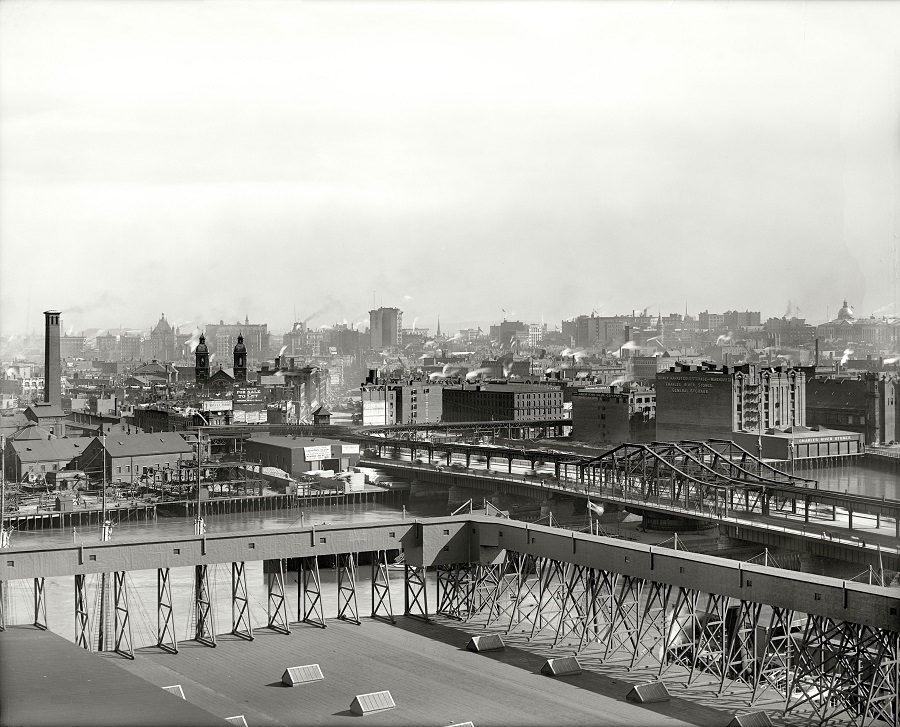
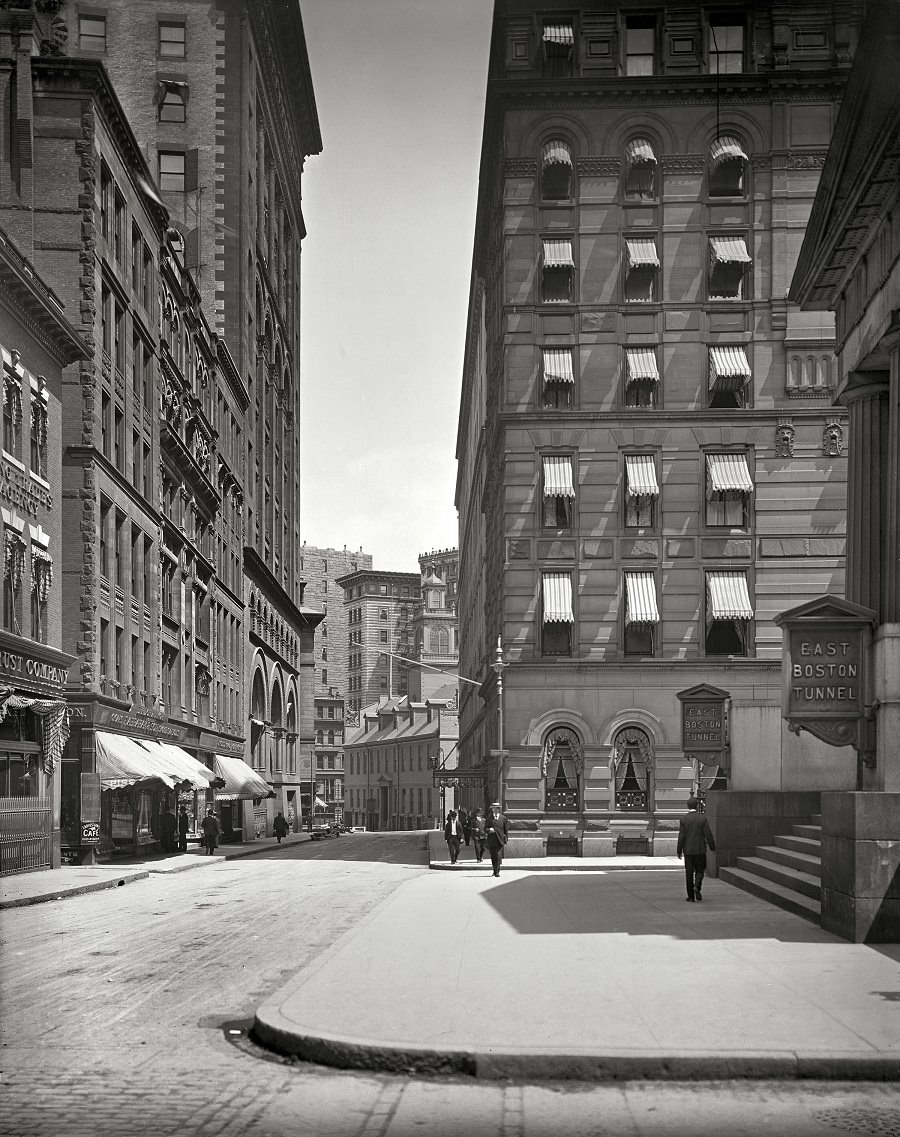
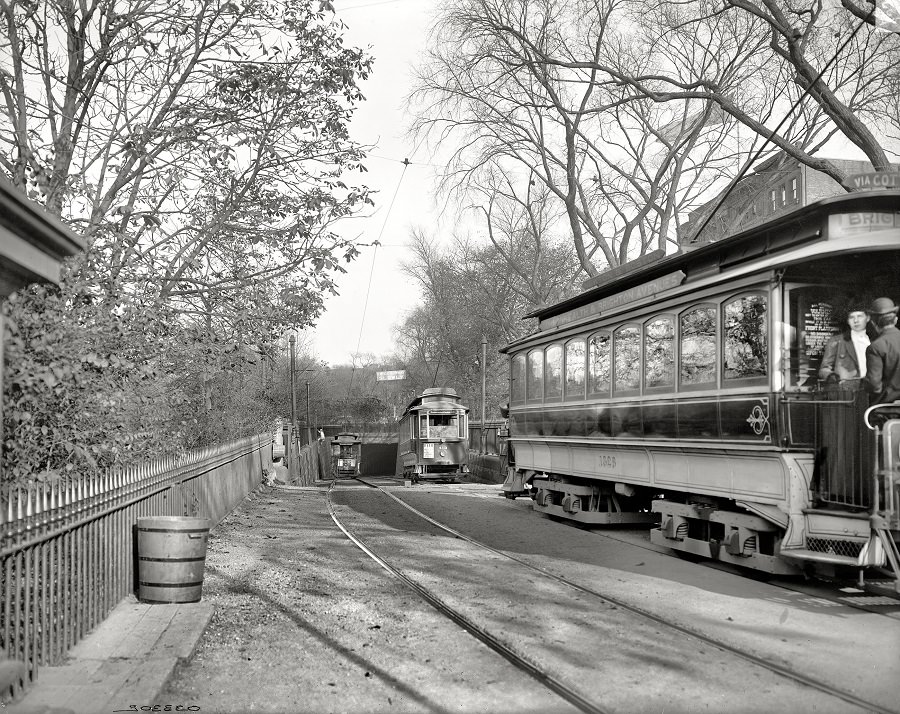
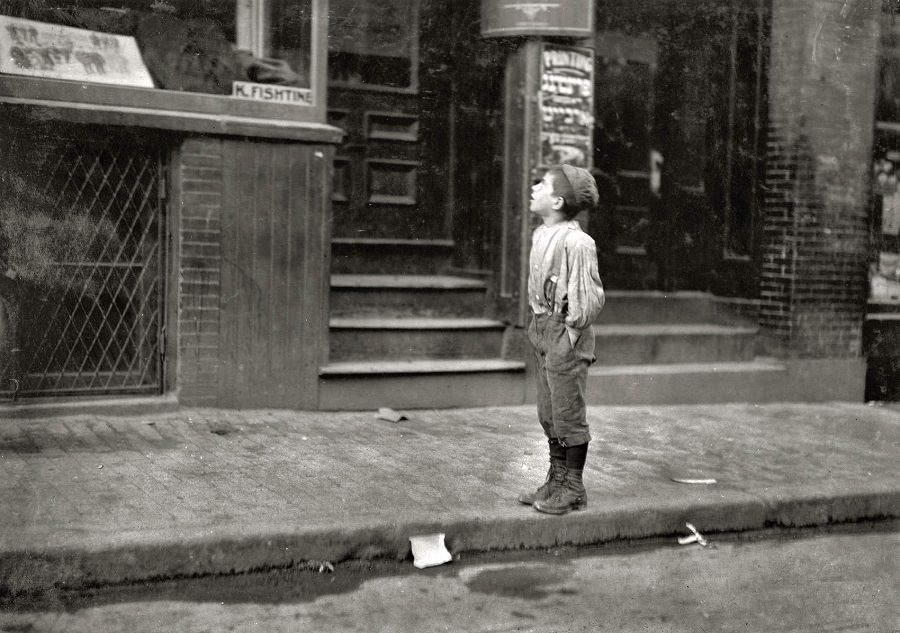
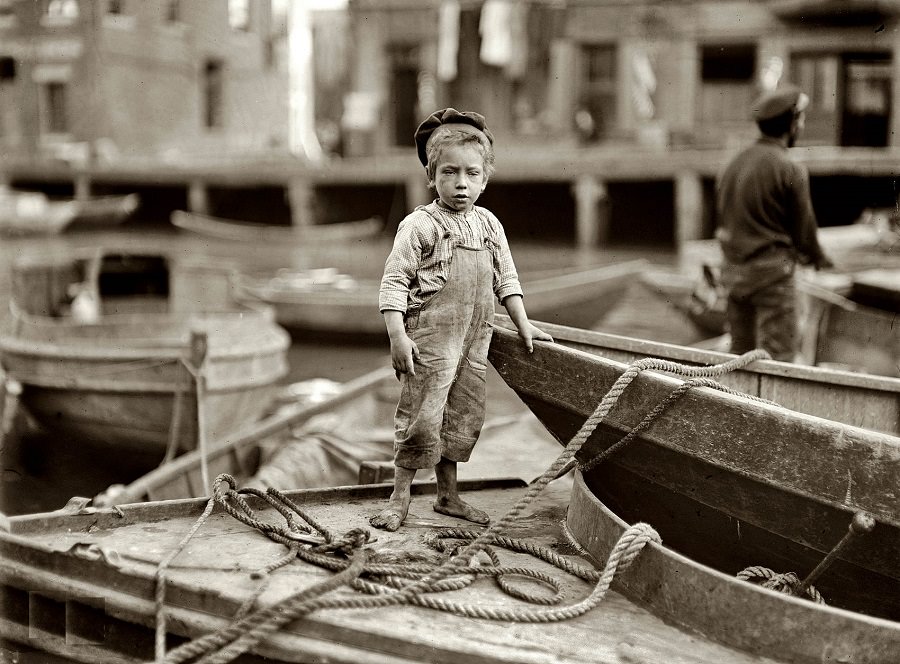
North Station served the rail lines connecting Boston to the north and west. Its platforms were busy with commuters and long-distance travelers. A 1909 photograph captured something far more ordinary — a truant boy hanging around the harbor boats during school hours, a small detail that speaks to the lives of children who slipped through the cracks of Boston’s growing public school system.
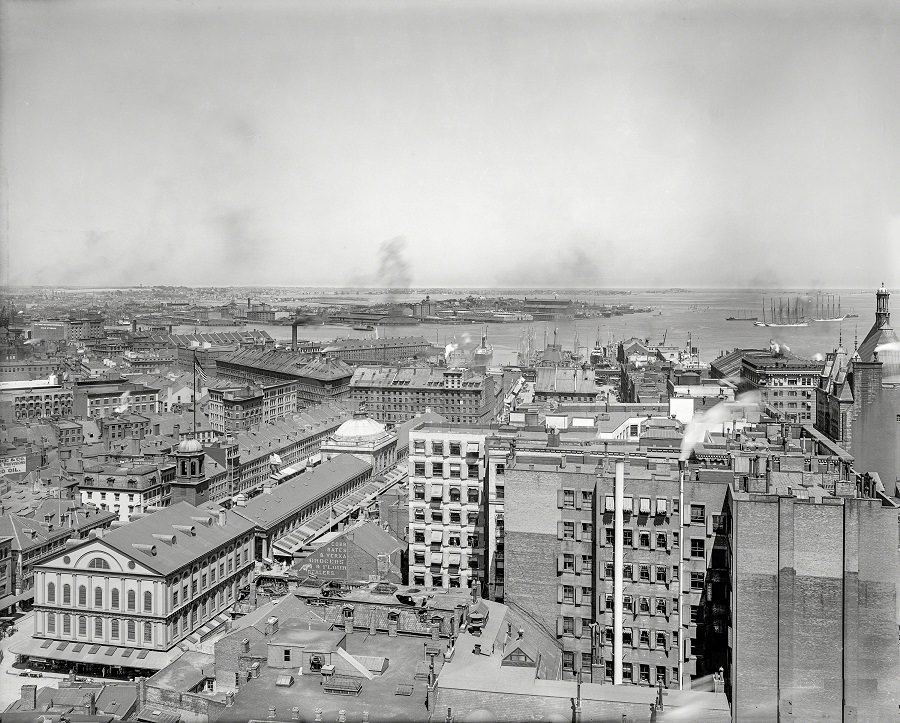
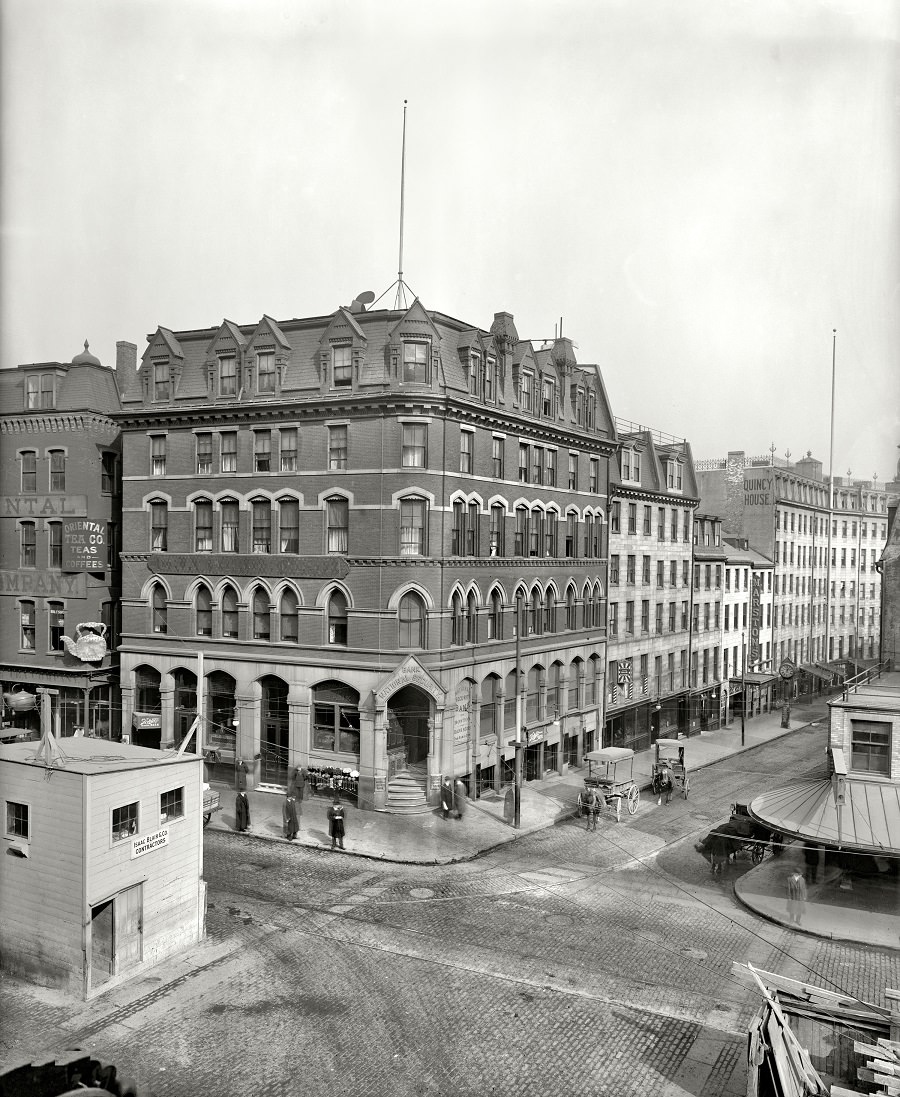
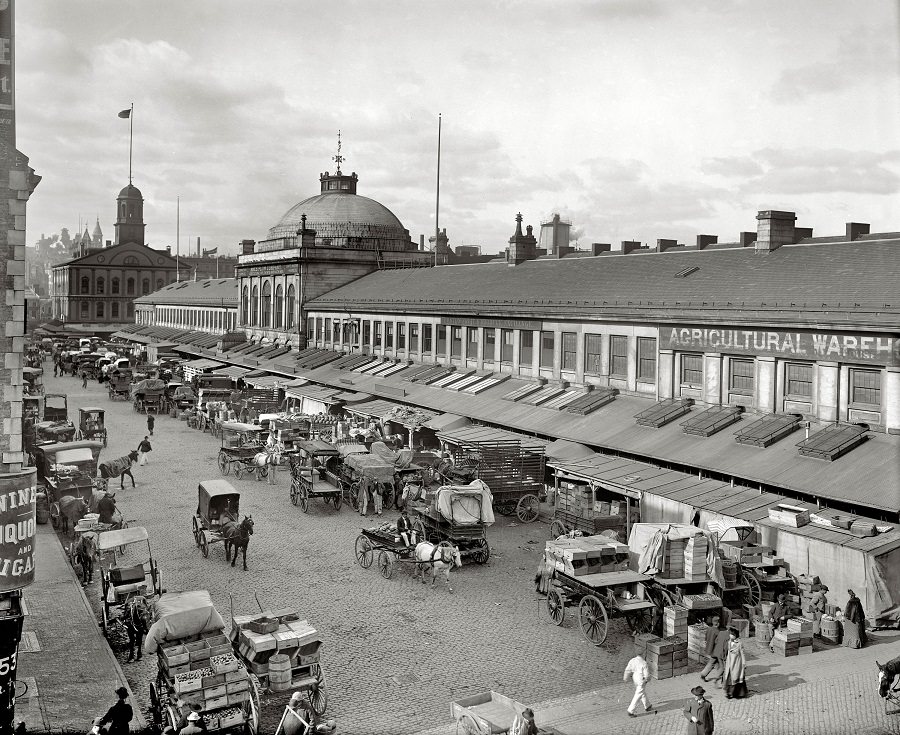
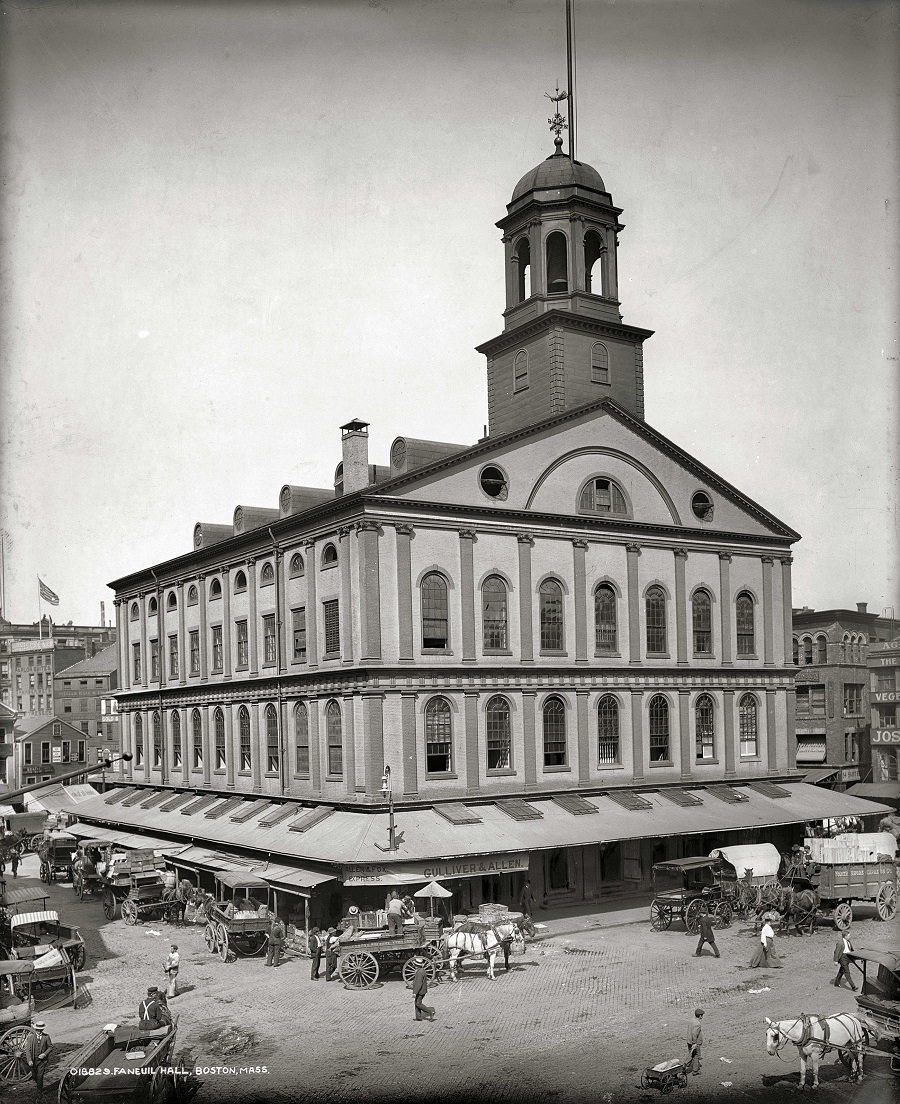
City Point in South Boston was a popular summer destination for the city’s working-class residents, especially those from the large Irish and Italian communities of South Boston. Quincy Market and Faneuil Hall, just steps apart near the waterfront, formed a commercial and civic center that had been operating since the 1740s and 1820s respectively. Both remained central to Boston’s public life in the early 1900s.
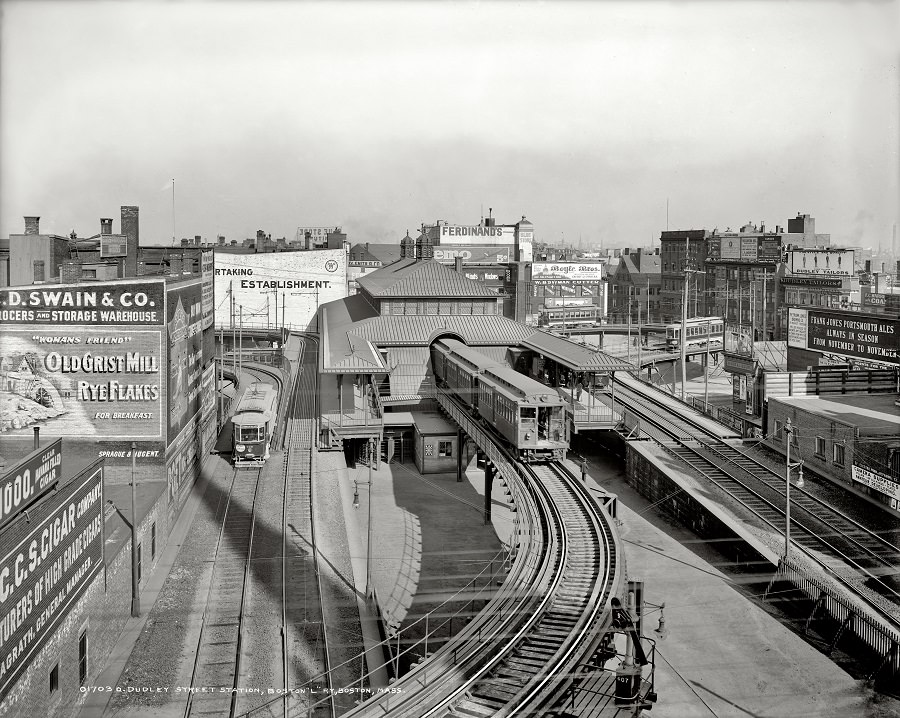
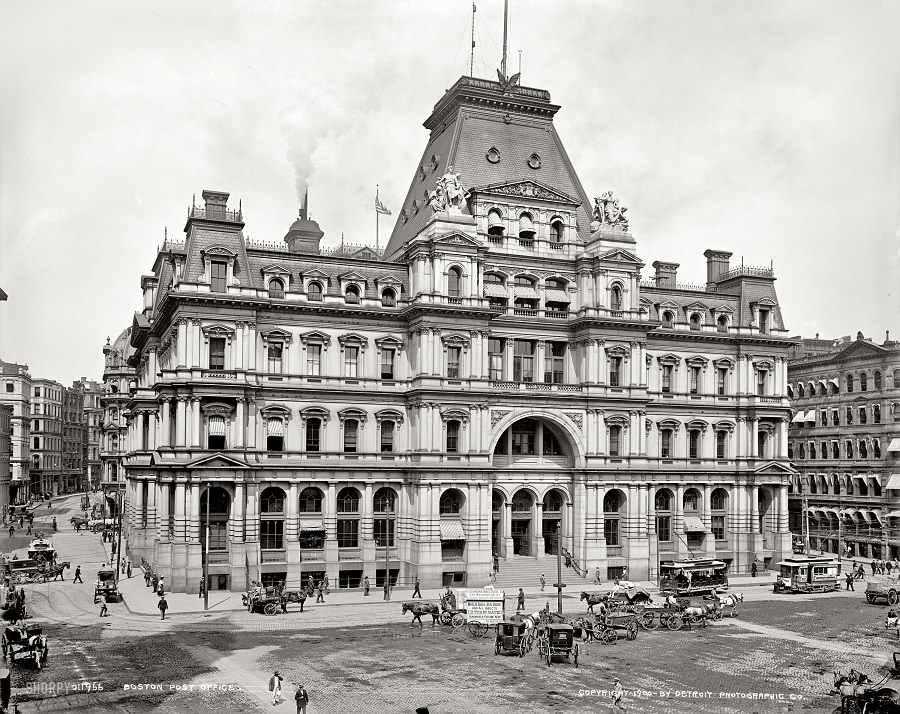
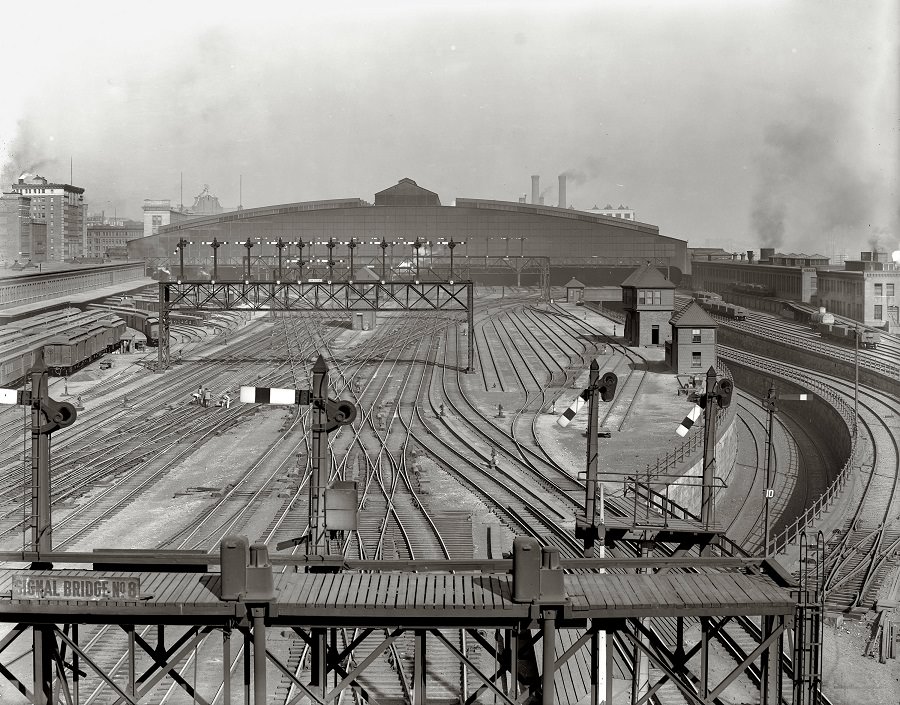
Dudley Street Station in Roxbury was a key stop on Boston’s elevated rail network, serving a dense residential area south of downtown. South Terminal Station — later known as South Station — had a vast yard of tracks that handled freight and passenger trains around the clock. The Boston Post Office, one of the federal government’s most prominent buildings in the city, processed the mail of a growing metropolis.
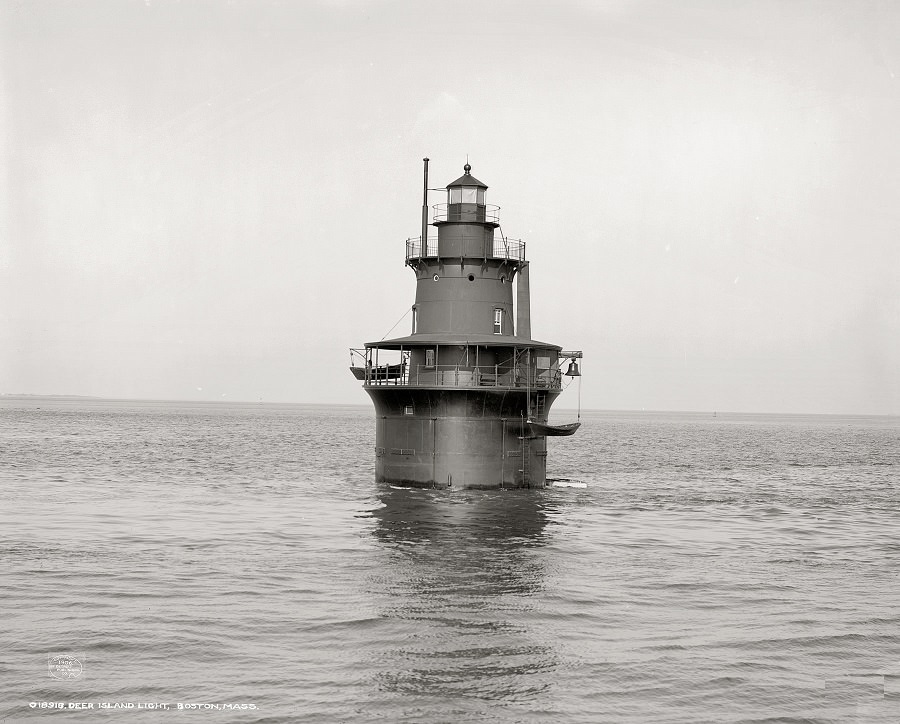
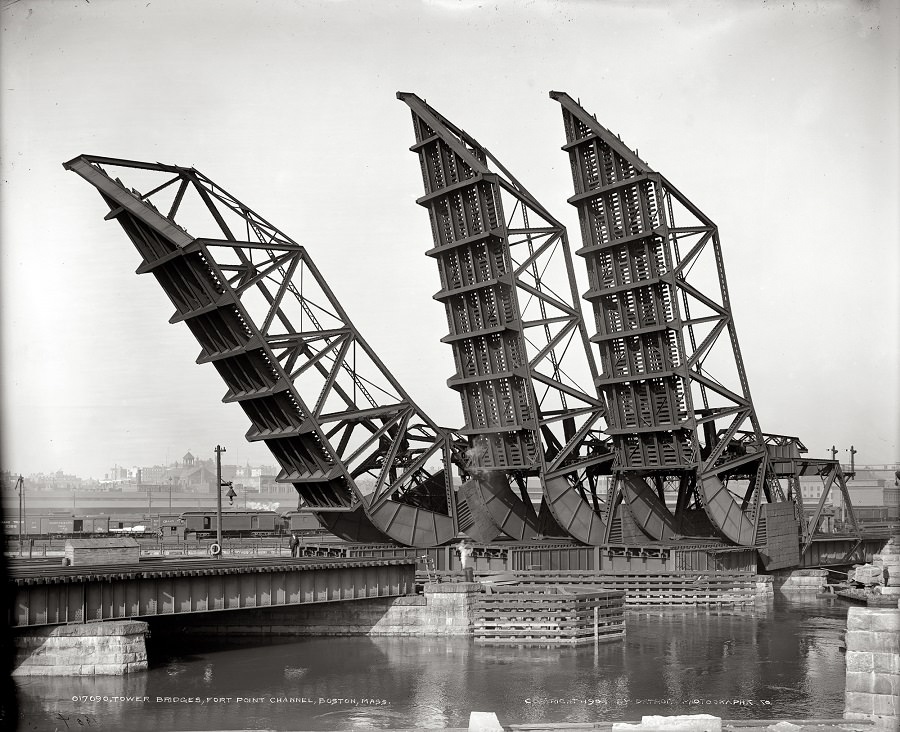
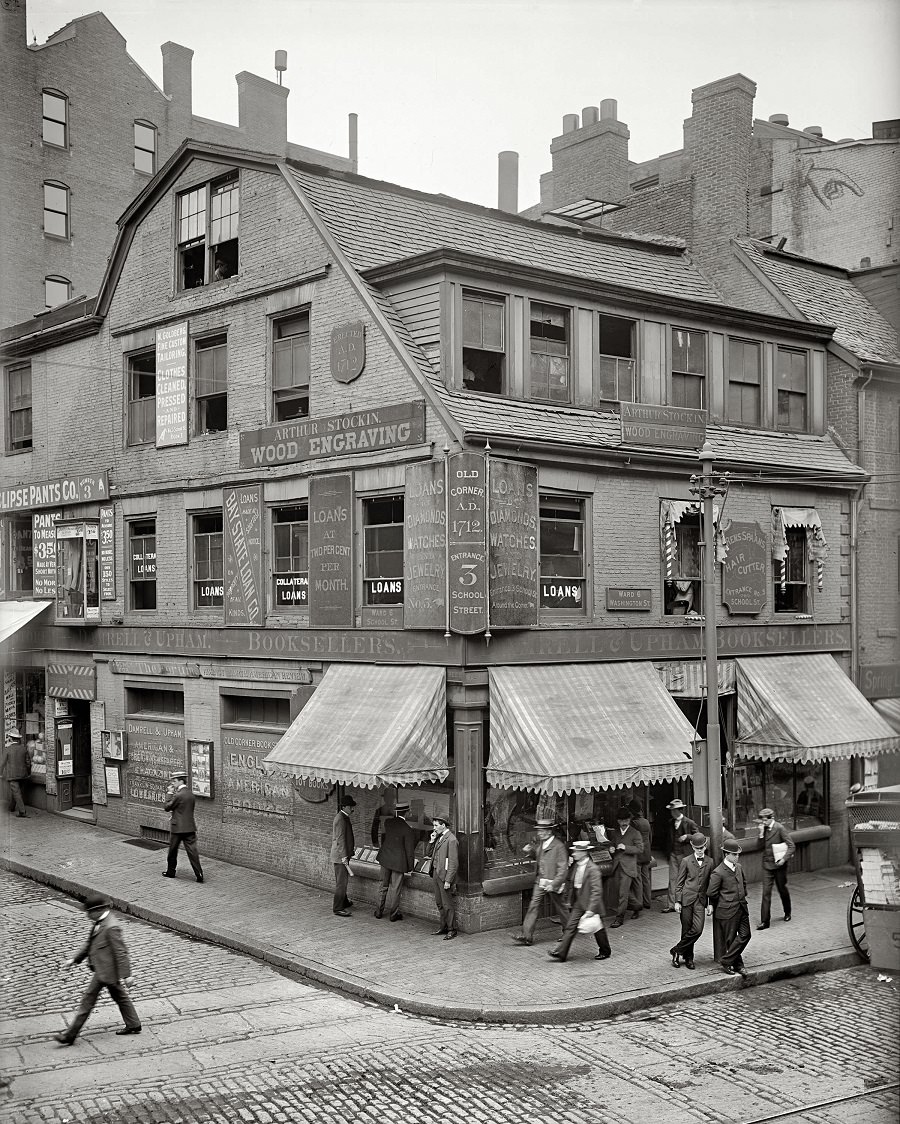
Deer Island Light guided ships through the outer edge of Boston Harbor, marking a dangerous stretch of water between Deer Island and Winthrop. Tremont Street, Faneuil Hall, and Fort Point Channel’s tower bridges rounded out the city’s physical landscape — infrastructure old and new, serving a population that had grown dramatically through immigration over the previous 60 years. The Old Corner Bookstore, built around 1718, was the oldest brick building in Boston by 1900 and had once been the publishing home of Harriet Beecher Stowe and Henry David Thoreau.
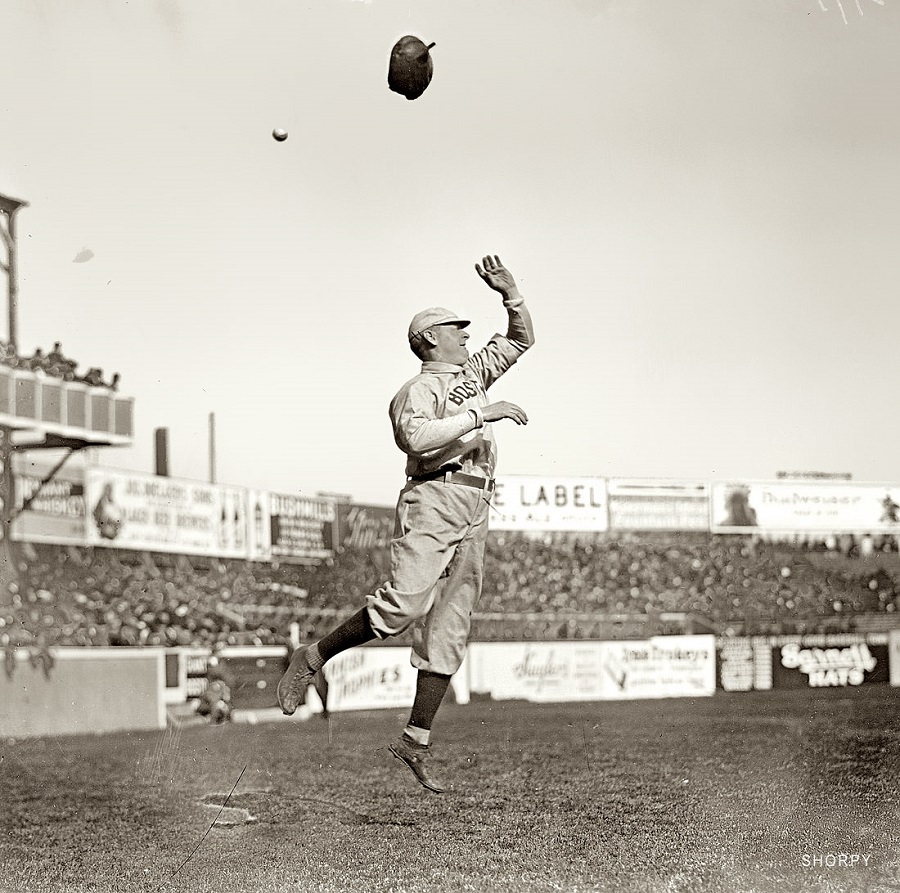
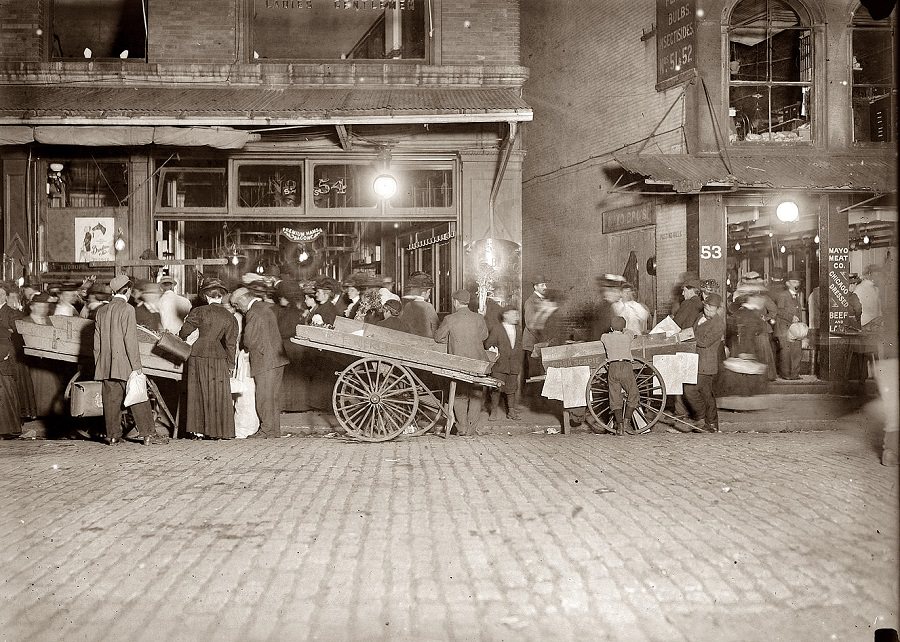
Boston’s street-level life in the early 1900s was vivid and often harsh. In April 1910, Boston Nationals (Braves) manager Fred Lake was photographed in an unusual moment — baseball was already a serious business in Boston, and the team drew passionate crowds. Street markets in October 1909 showed boys selling fish from baskets, vendors working open stalls, and the daily rhythm of commerce in immigrant neighborhoods.
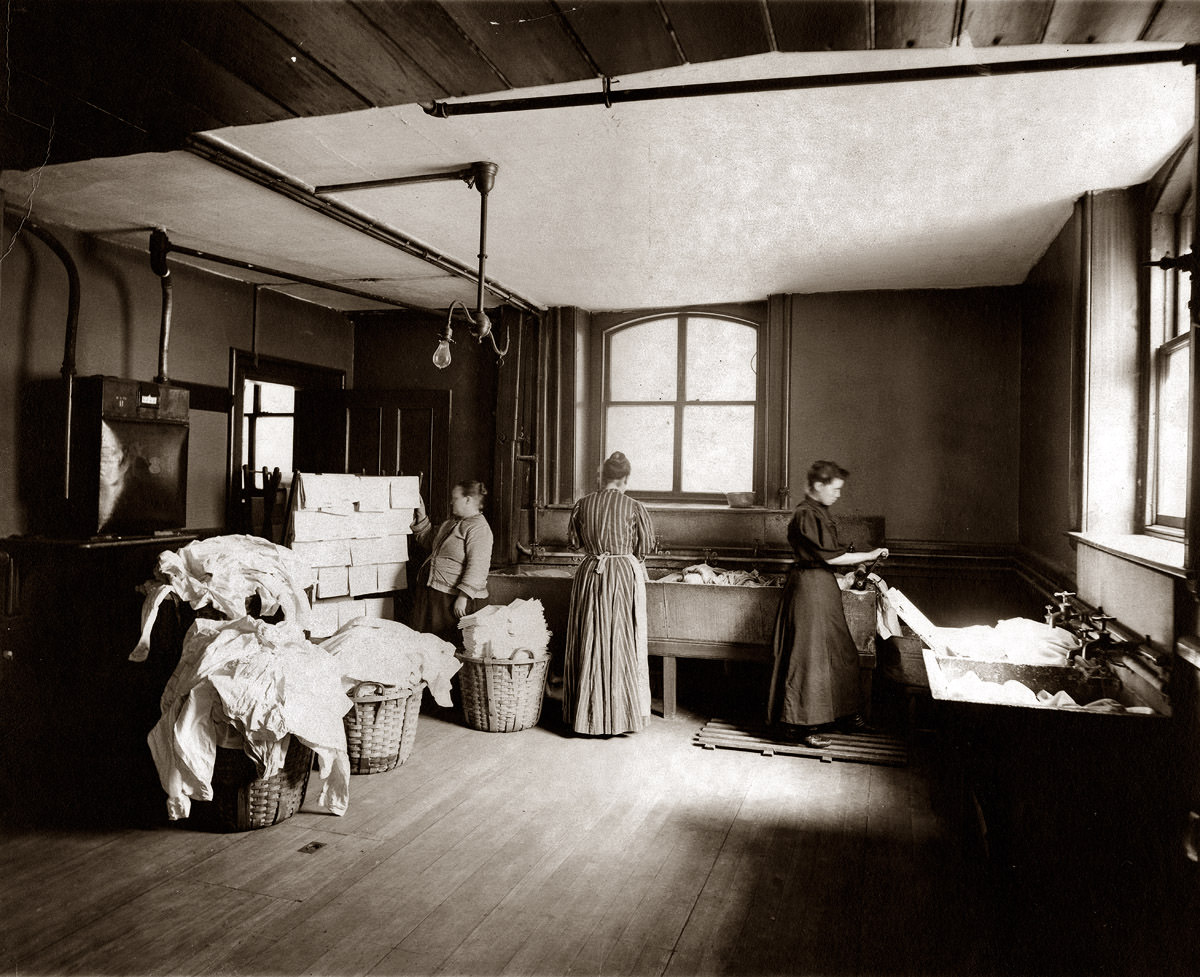
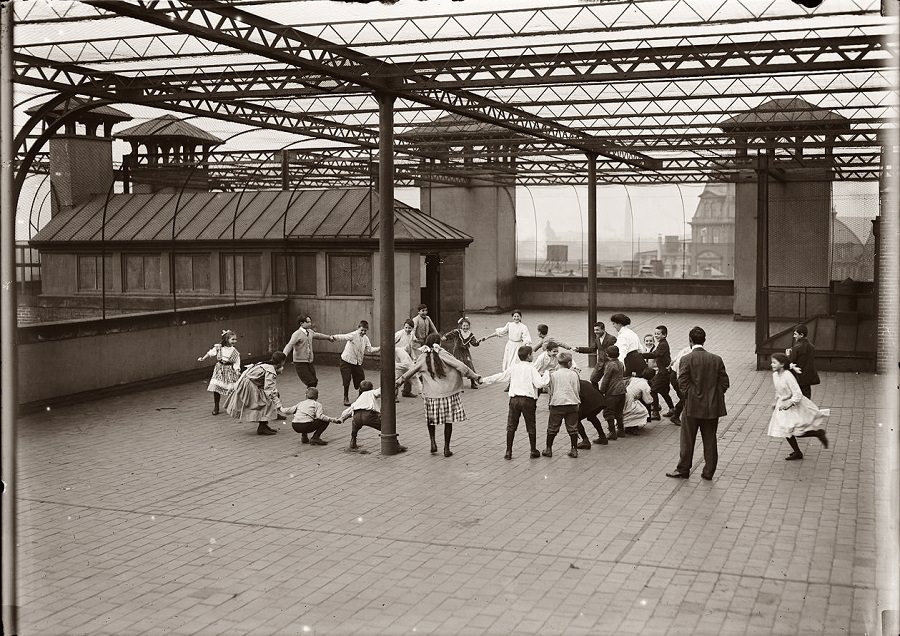
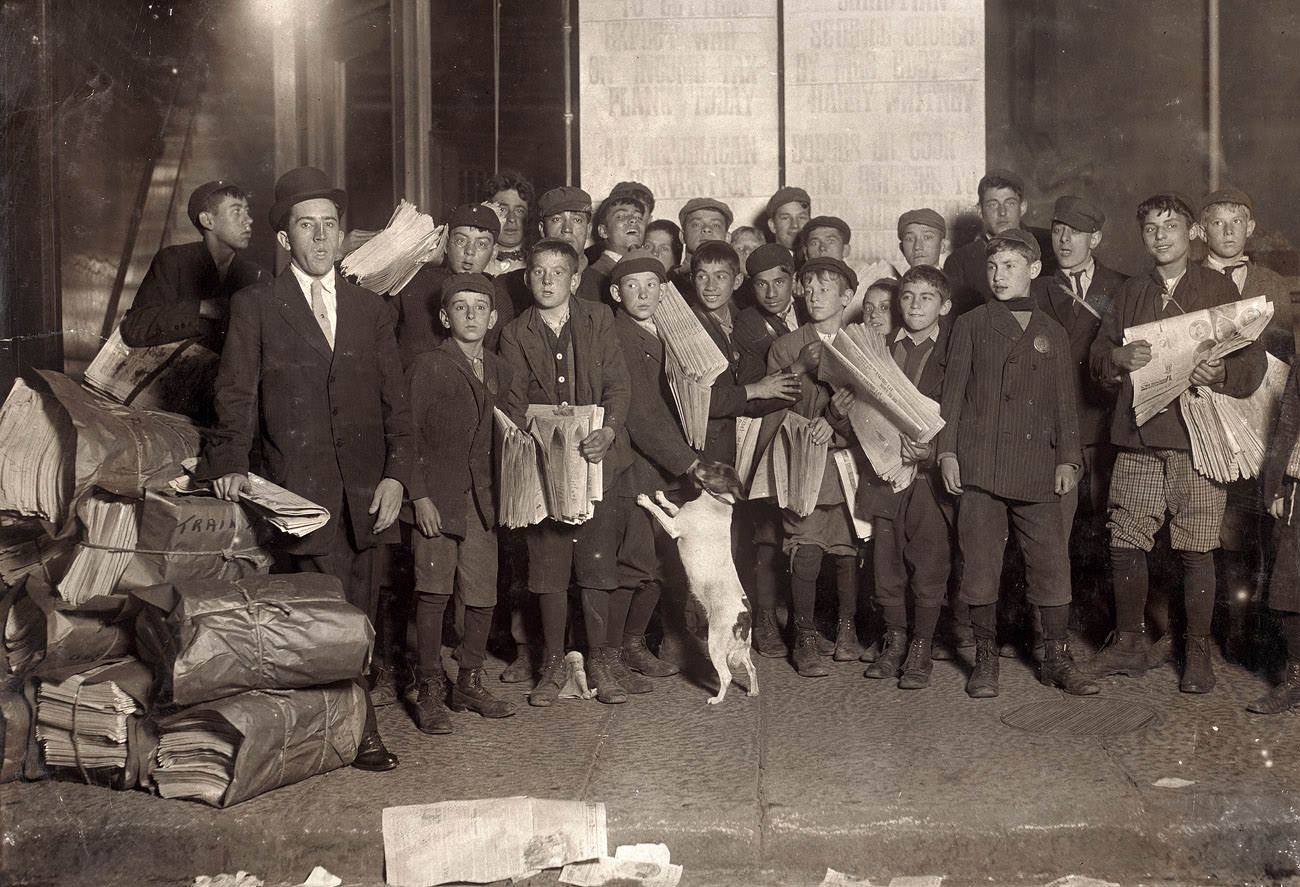
Women worked long shifts in Boston’s commercial laundries in 1905, washing and pressing linens for the city’s hotels, restaurants, and hospitals. Immigrant children on the roof garden of the Washington School in 1909 were learning to play as part of a reform-era push to give city children outdoor recreation. The Newsboy Club, photographed in October 1909, organized the young boys who sold papers on Boston’s street corners — many of them working before dawn, as a Sunday morning photograph of newsies setting out at 5 a.m. showed.





Seeing the actual Back Bay is weird
Custom House before the tower
The prevalence of hats in photos from this era always amazes me. Does anyone not wear a hat?
In those days, I think it was extremely inappropriate to go in public without a hat. Today, it’s like not wearing pants in public.
Not a cellphone in sight!
Only time travelers had cellphones.
This is insanely cool
Many people don’t realize how good cameras were back then. Due to the fact that the world was still black and white, they weren’t crippled by the need to interpolate colors.
why is everything so bland and boring now
It’s cost-effective
Seeing the actual Back Bay is weird
Custom House before the tower