Every fall, Munich’s Theresienwiese fills with the sound of brass bands, the smell of roasting pork, and the clink of enormous beer steins. Oktoberfest has been a fixture of Bavarian life since the early 19th century, but the 1960s marked a turning point for the festival. Germany was riding the wave of its postwar ‘economic miracle,’ and that newfound confidence showed up everywhere — including on the Wiesn, as locals call the festival grounds.
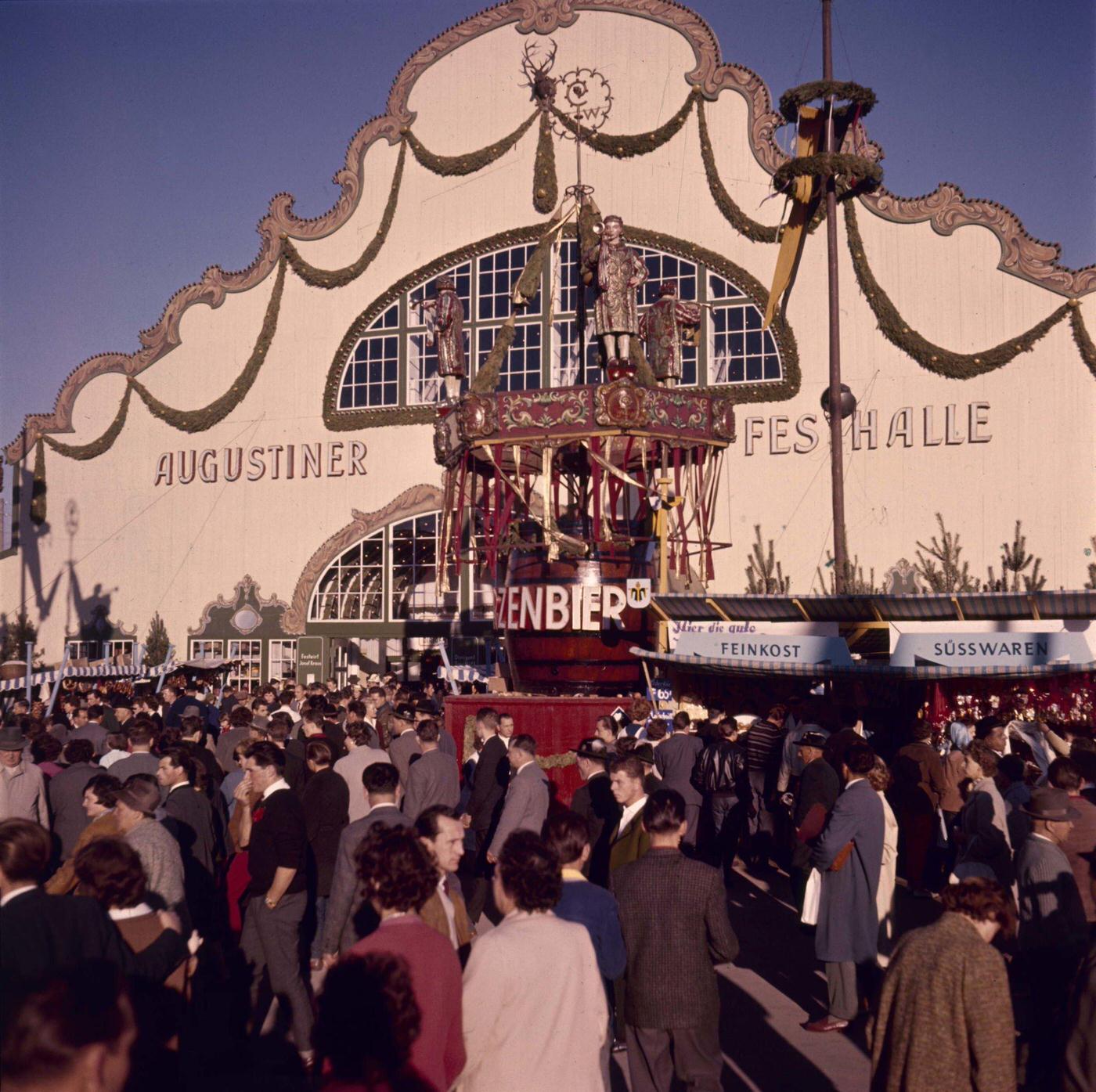
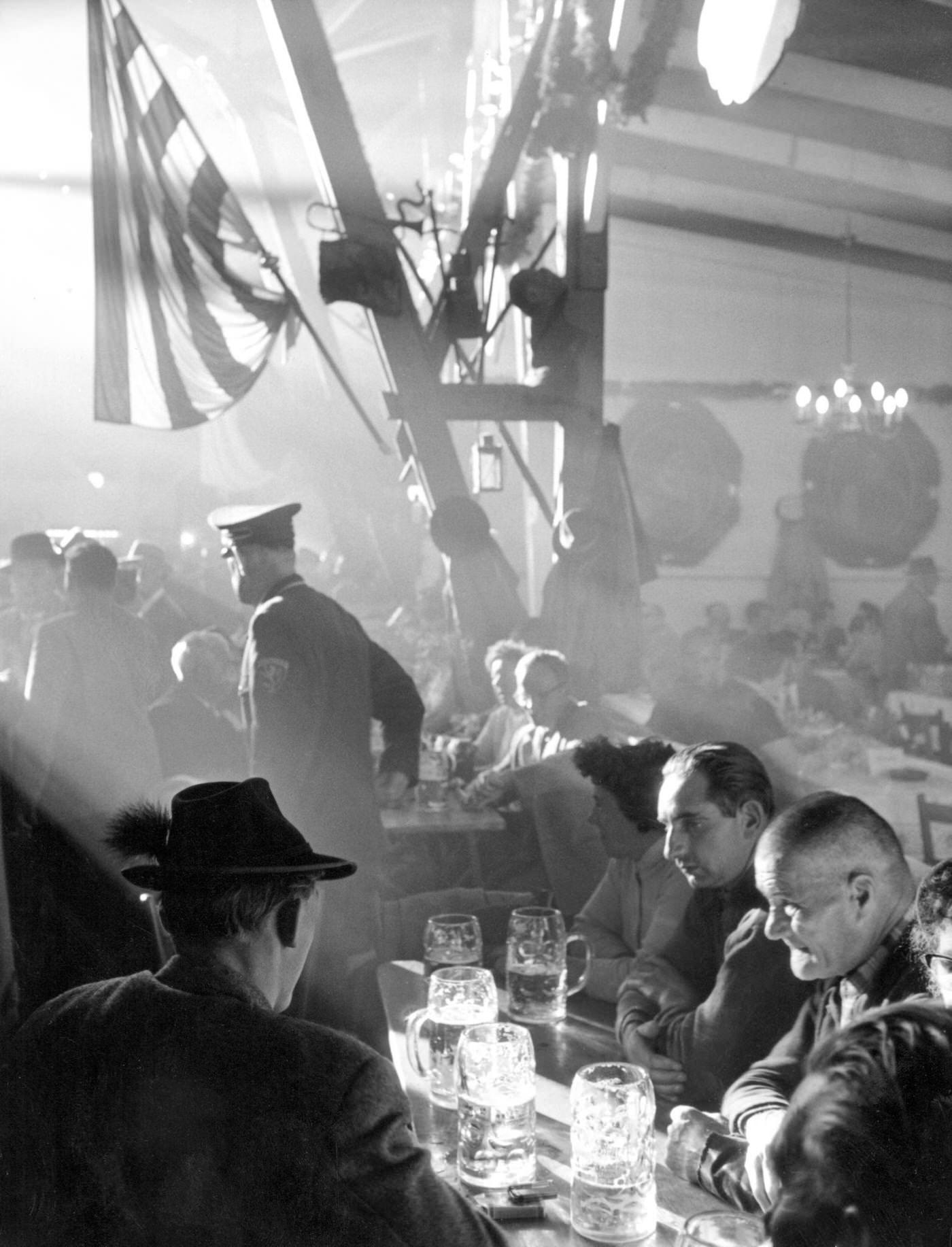
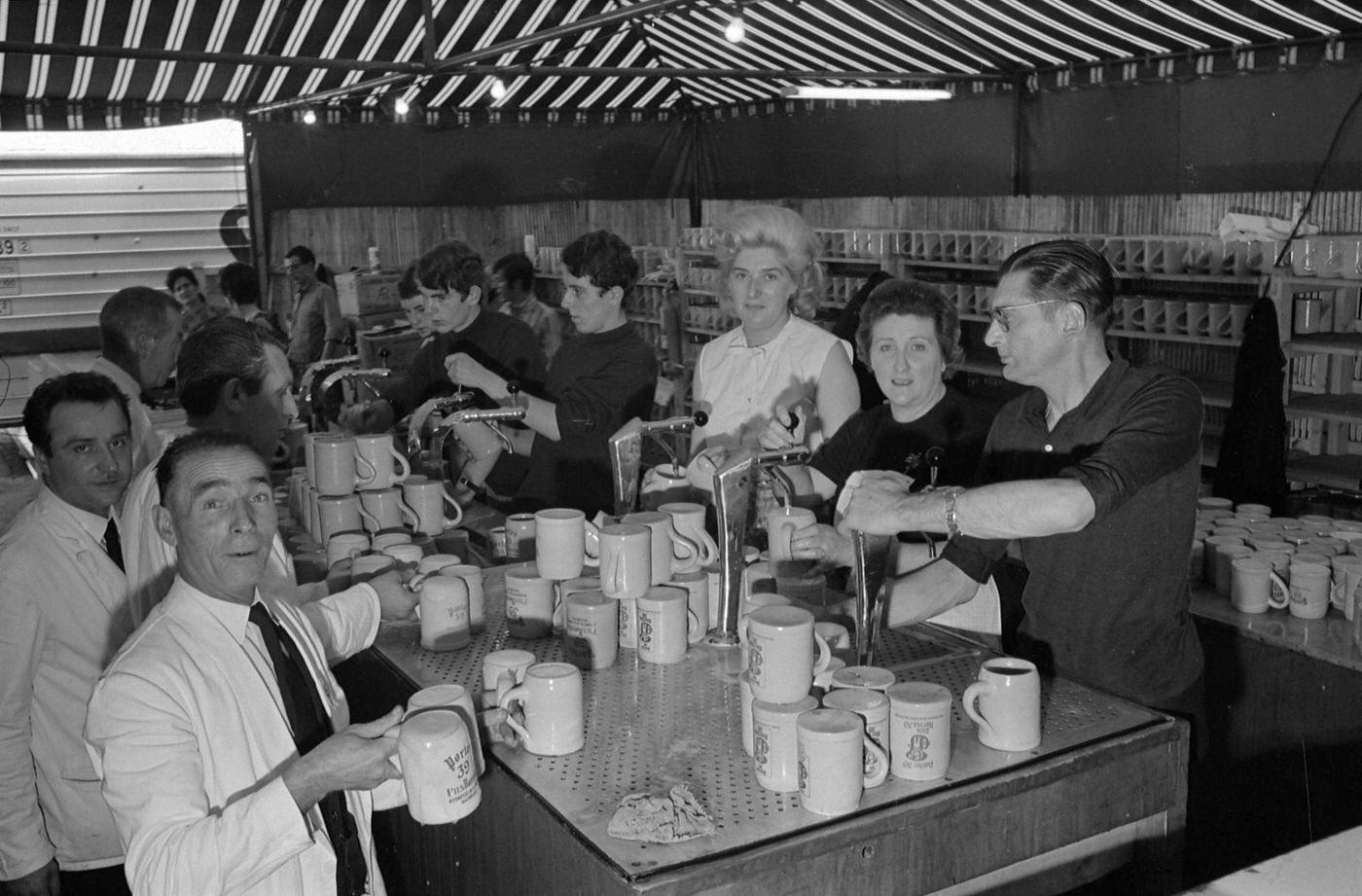
The festival’s scale grew sharply during the decade. As air travel became cheaper and West Germany’s economy recovered, visitors arrived not just from across the country but from around the world. The grounds expanded to accommodate them, with more beer tents added each year. Organizers upgraded those tents too — electric lighting became standard, and better refrigeration kept the beer at the right temperature from the first pour to the last.
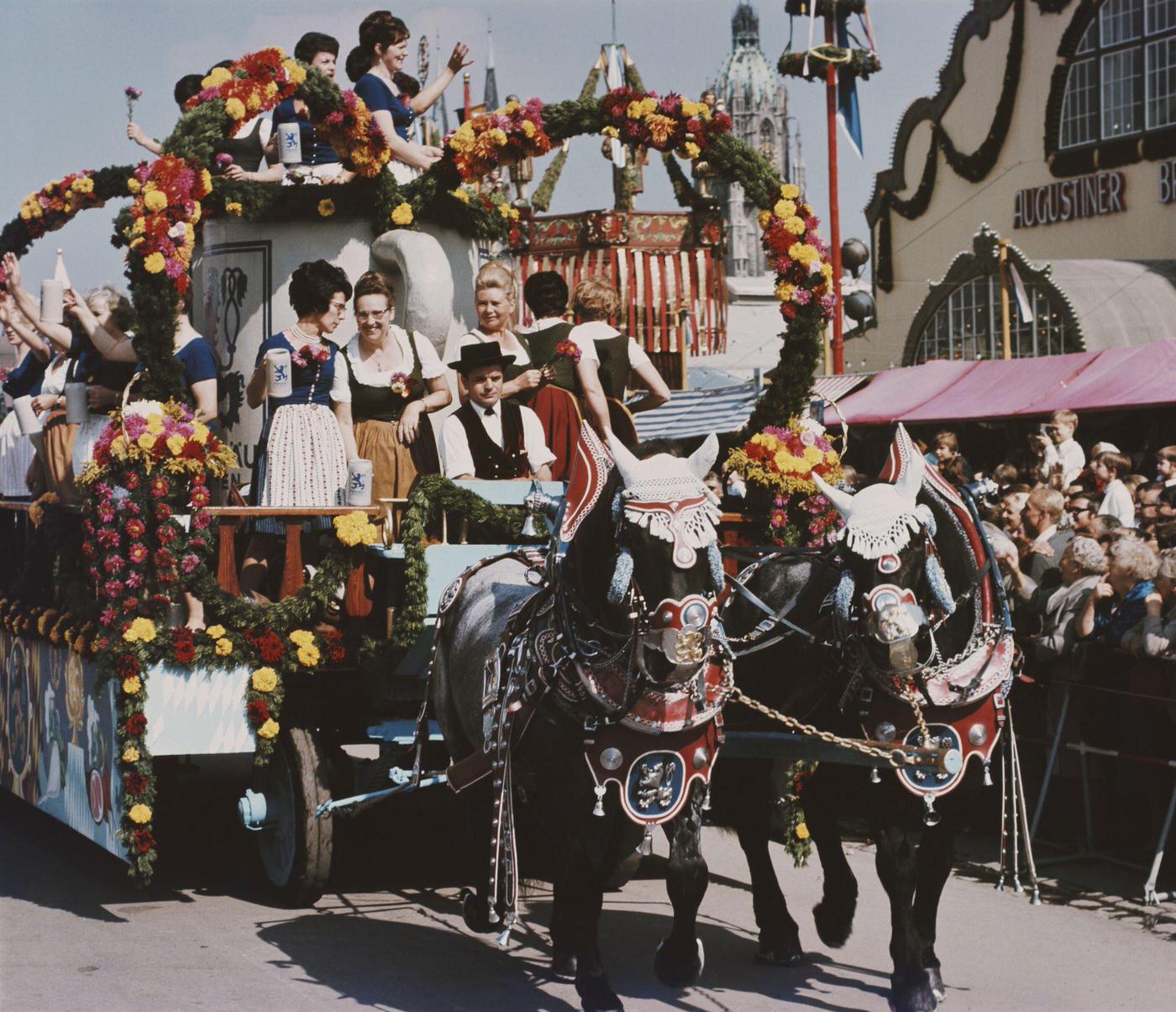
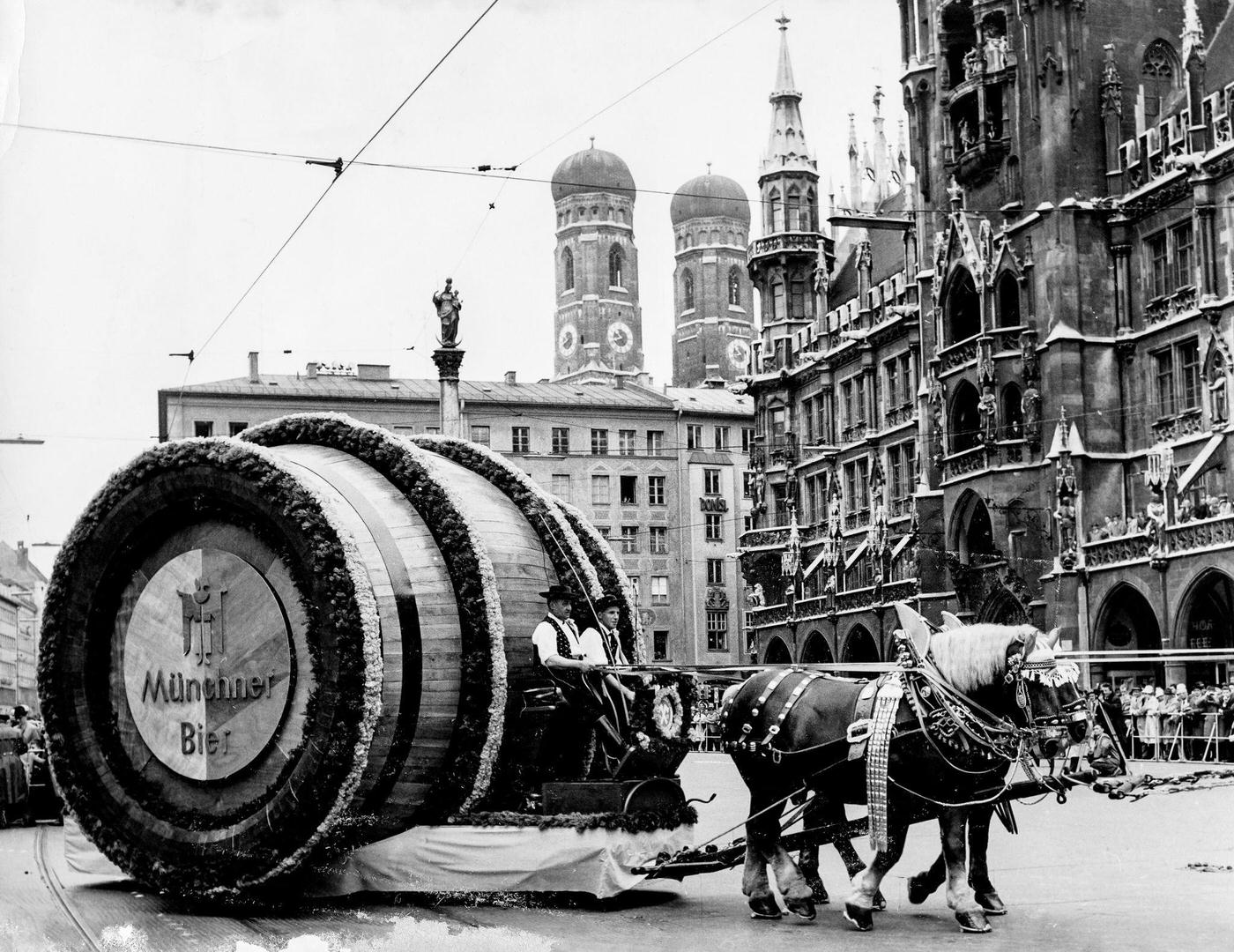
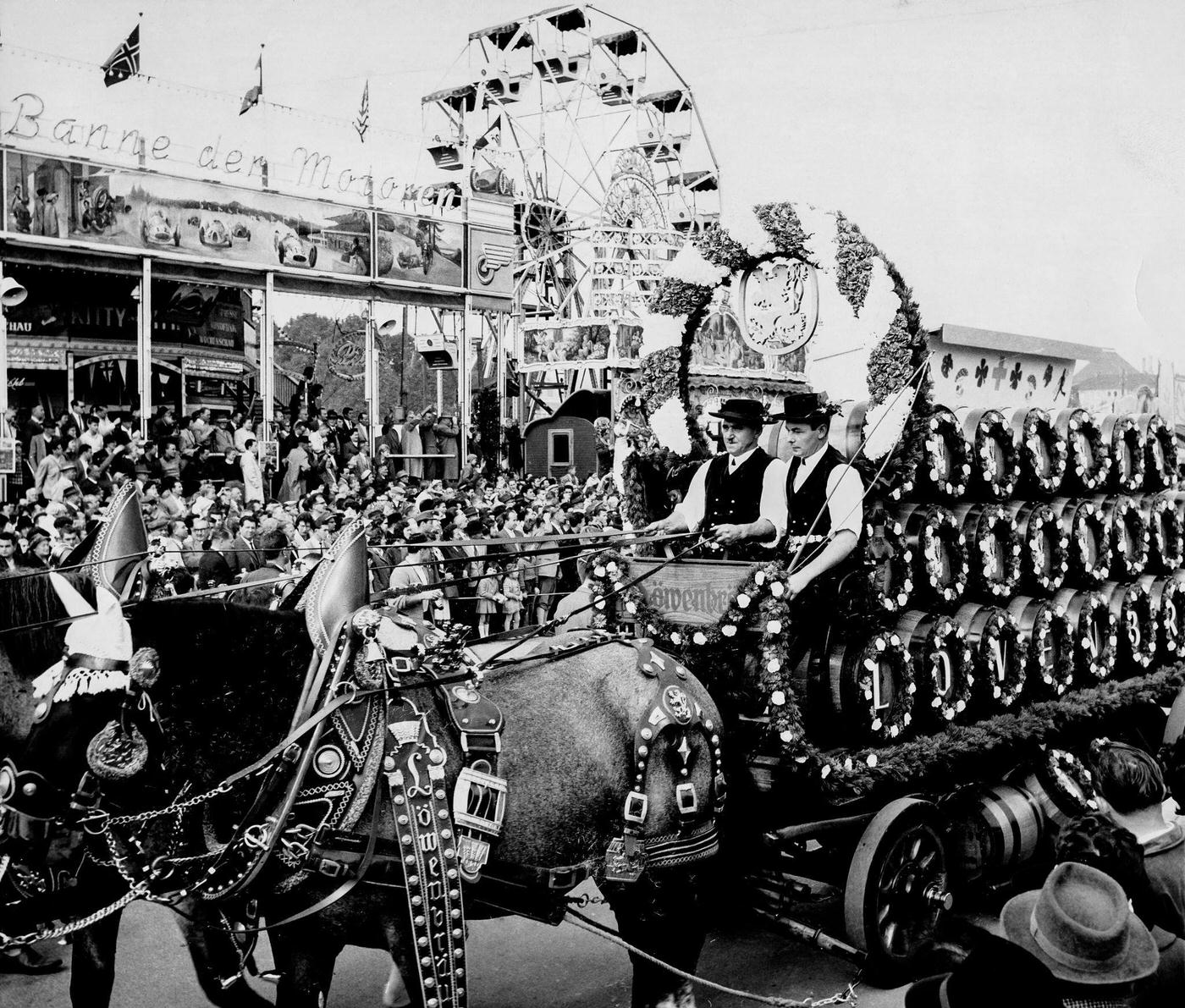
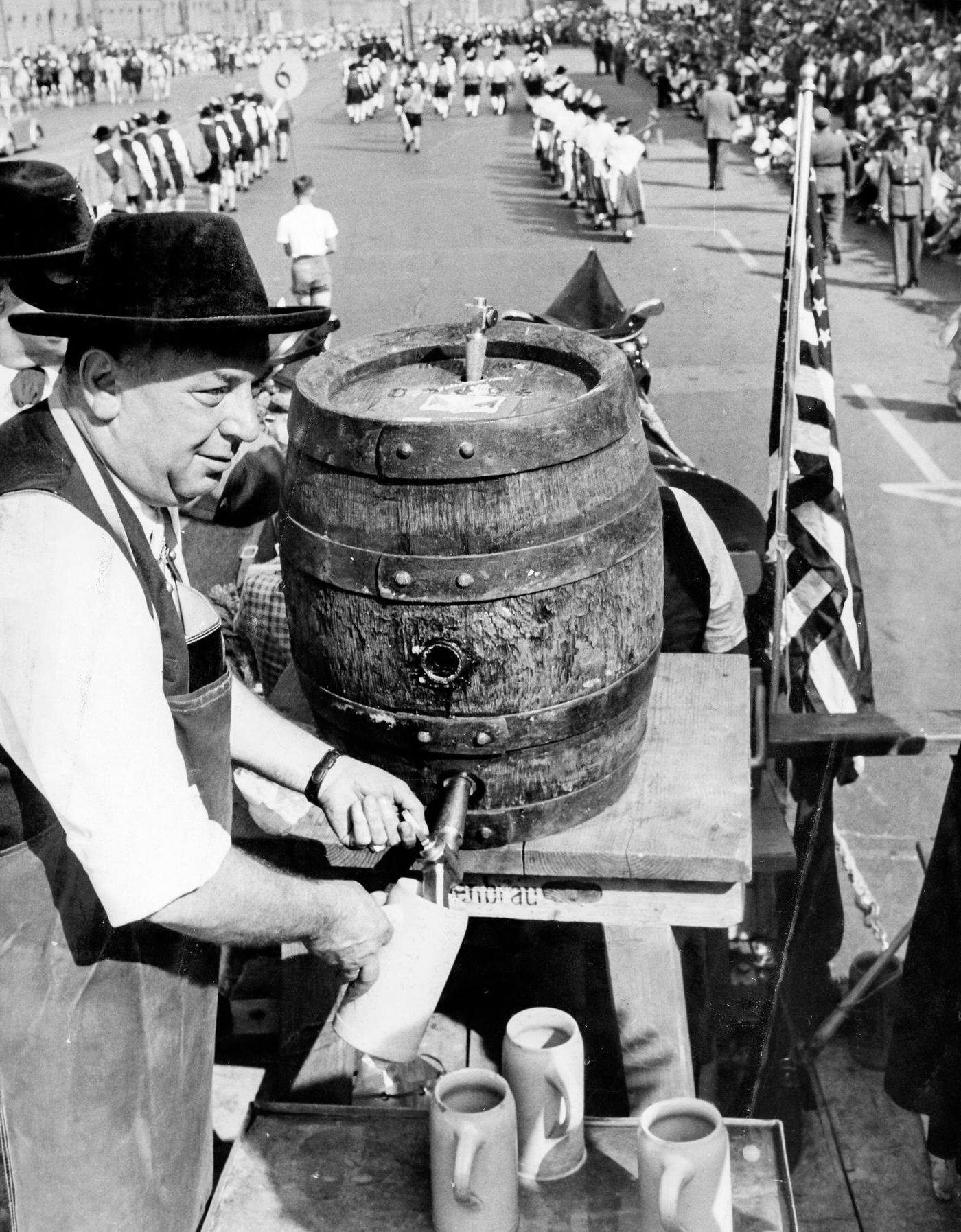
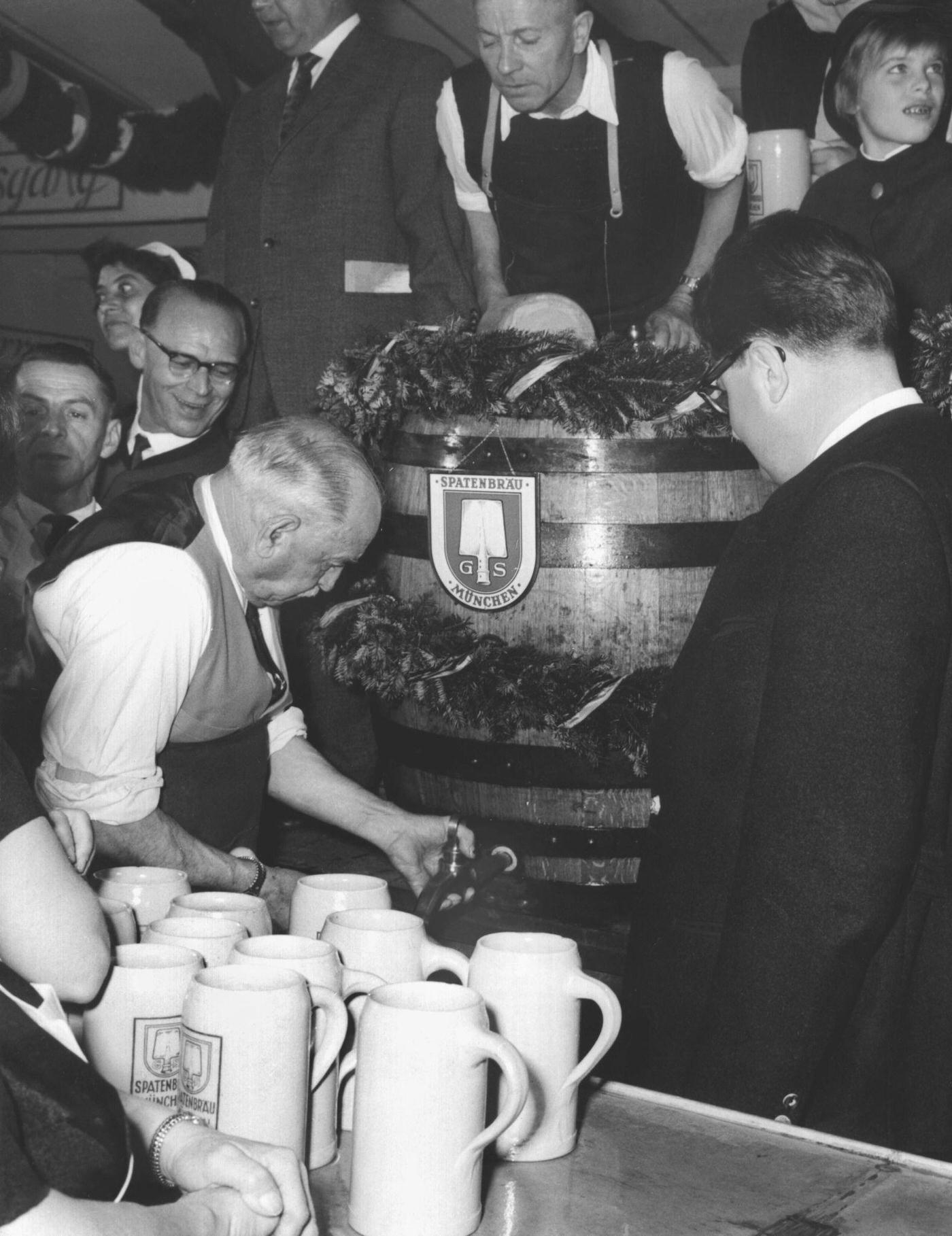
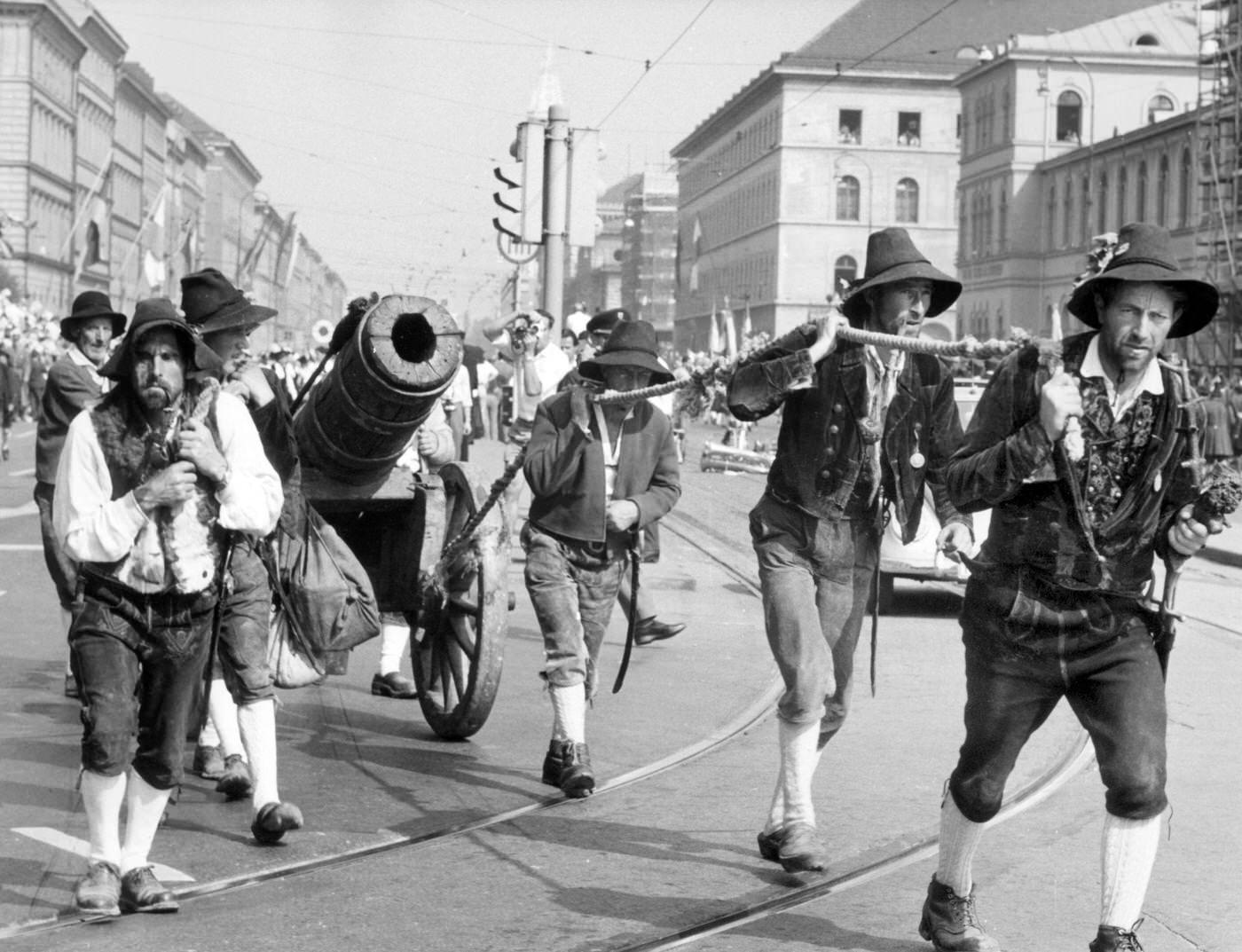
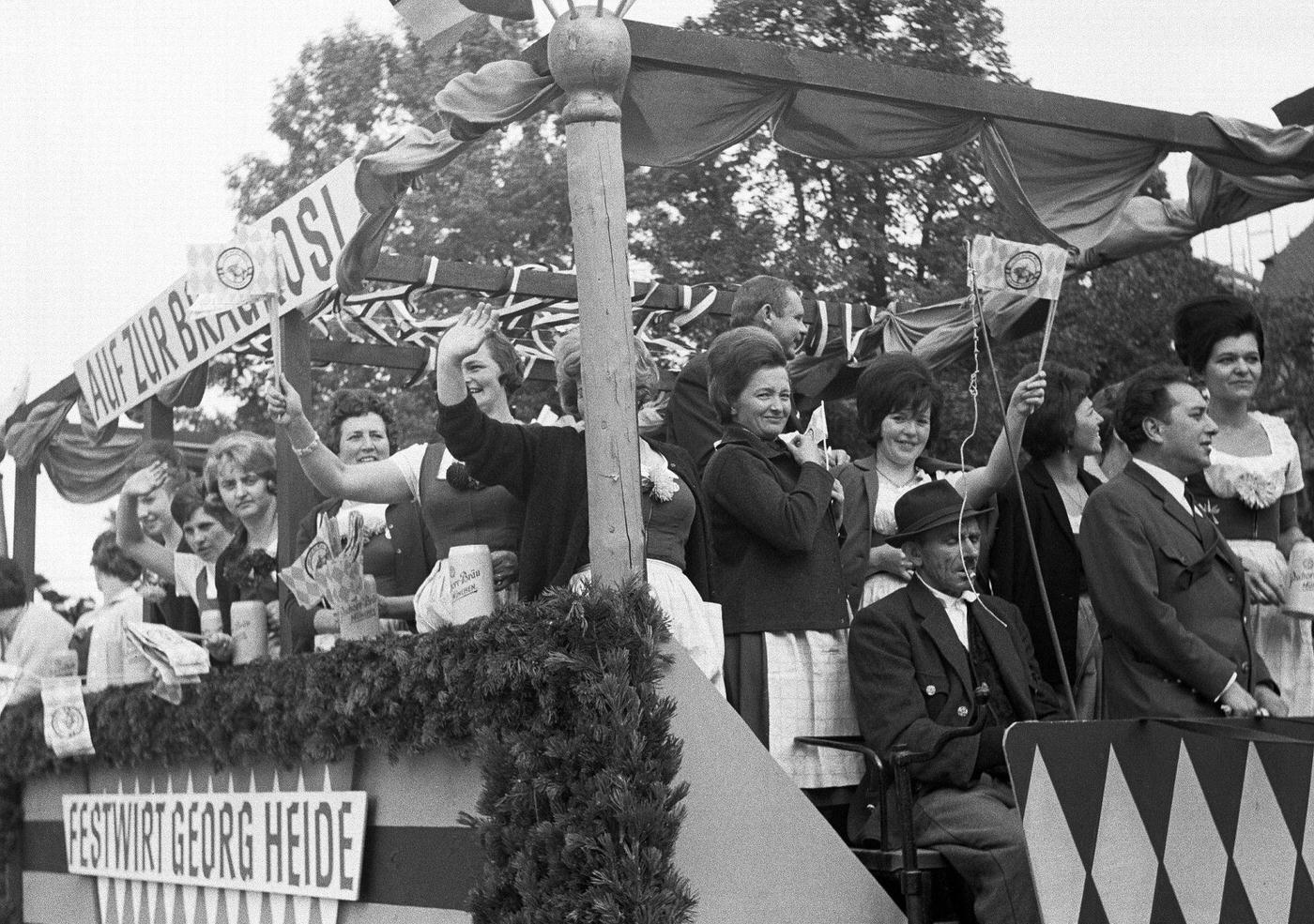
The opening parade was one of the most anticipated moments of the festival. Brewery carts pulled by massive draft horses rolled through Munich’s streets, accompanied by marching bands and groups in traditional dress. The first barrel tapping by the city’s mayor officially kicked off the drinking, and the crowd’s roar at that moment was a tradition all its own.
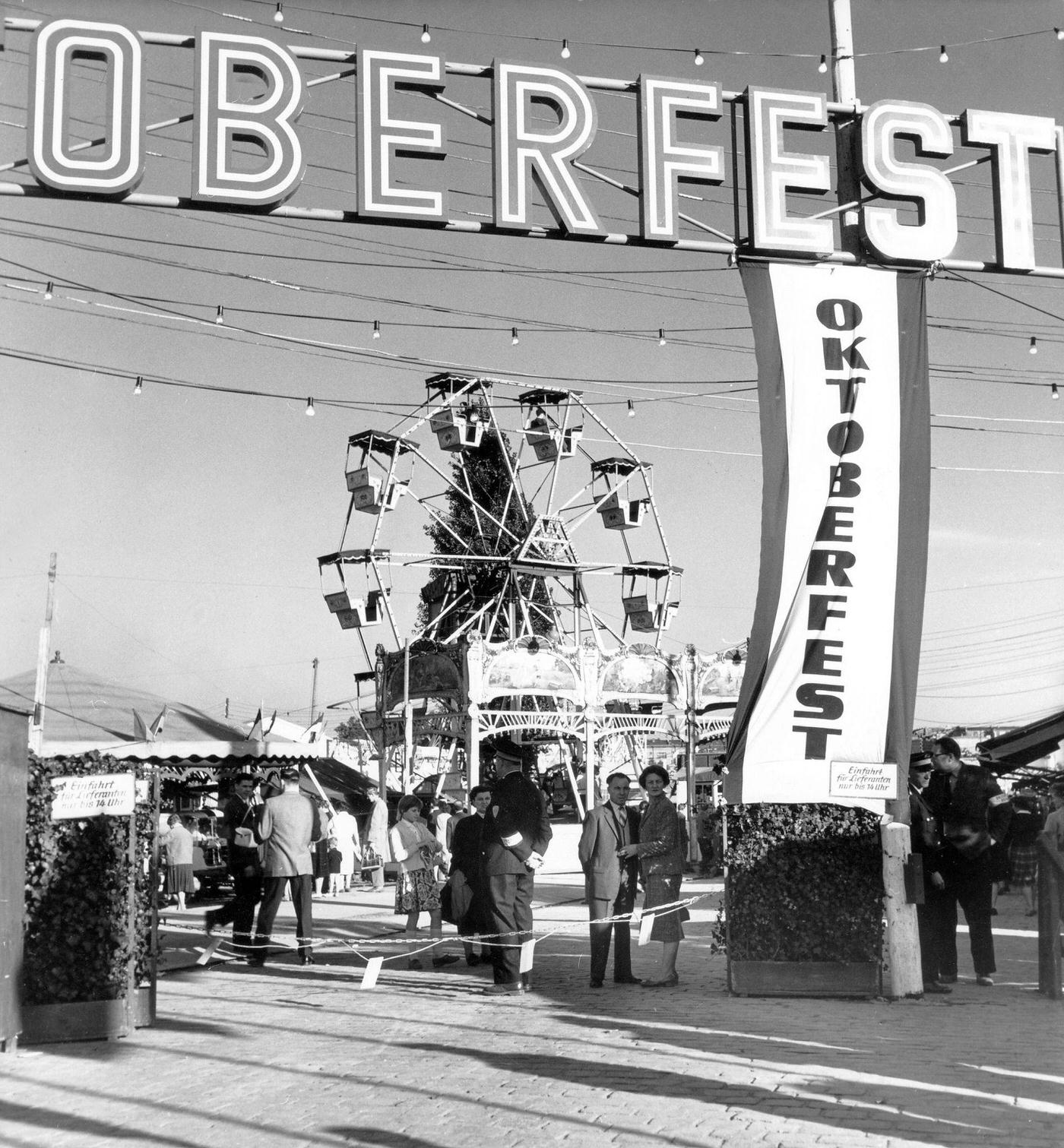
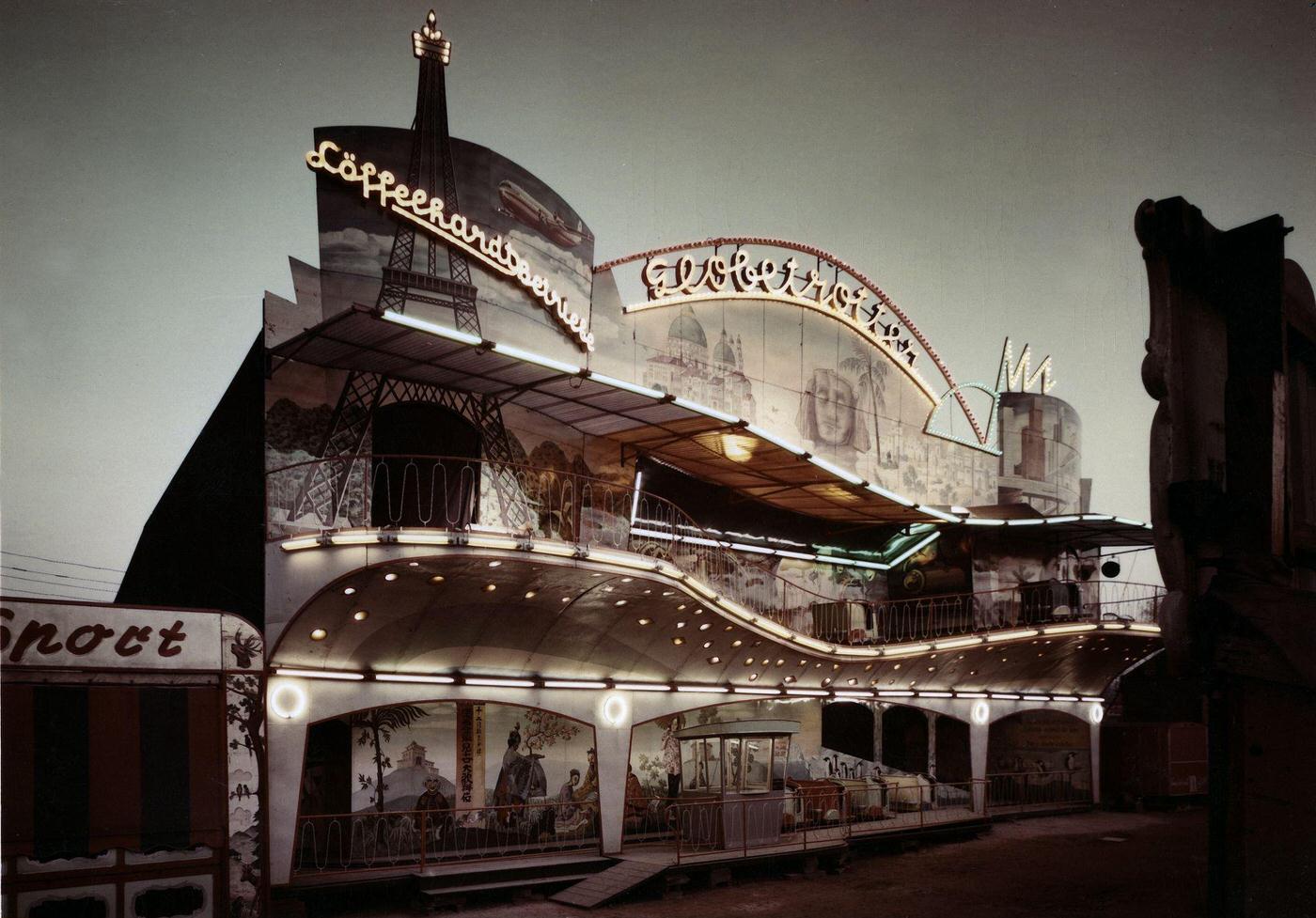
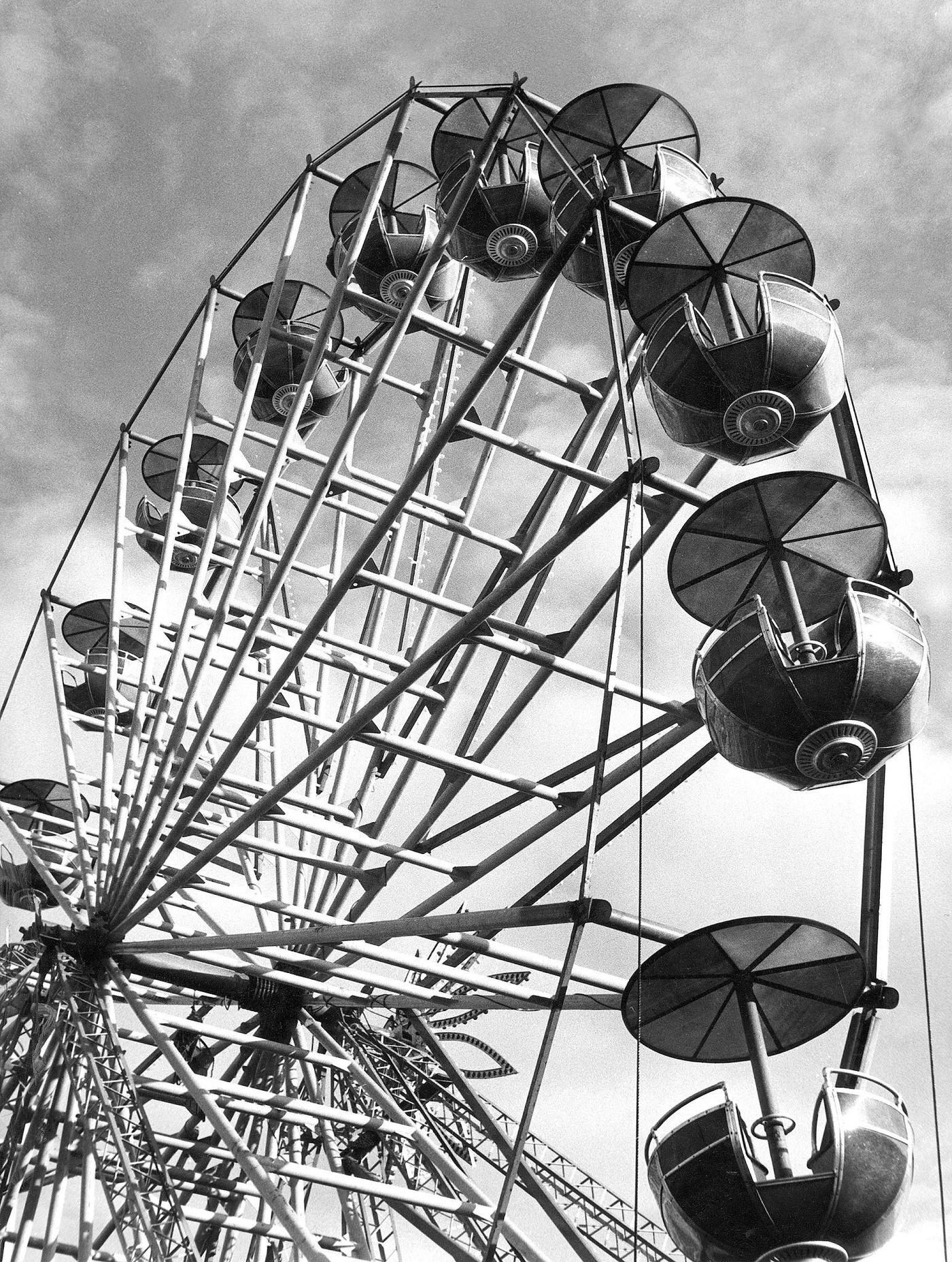
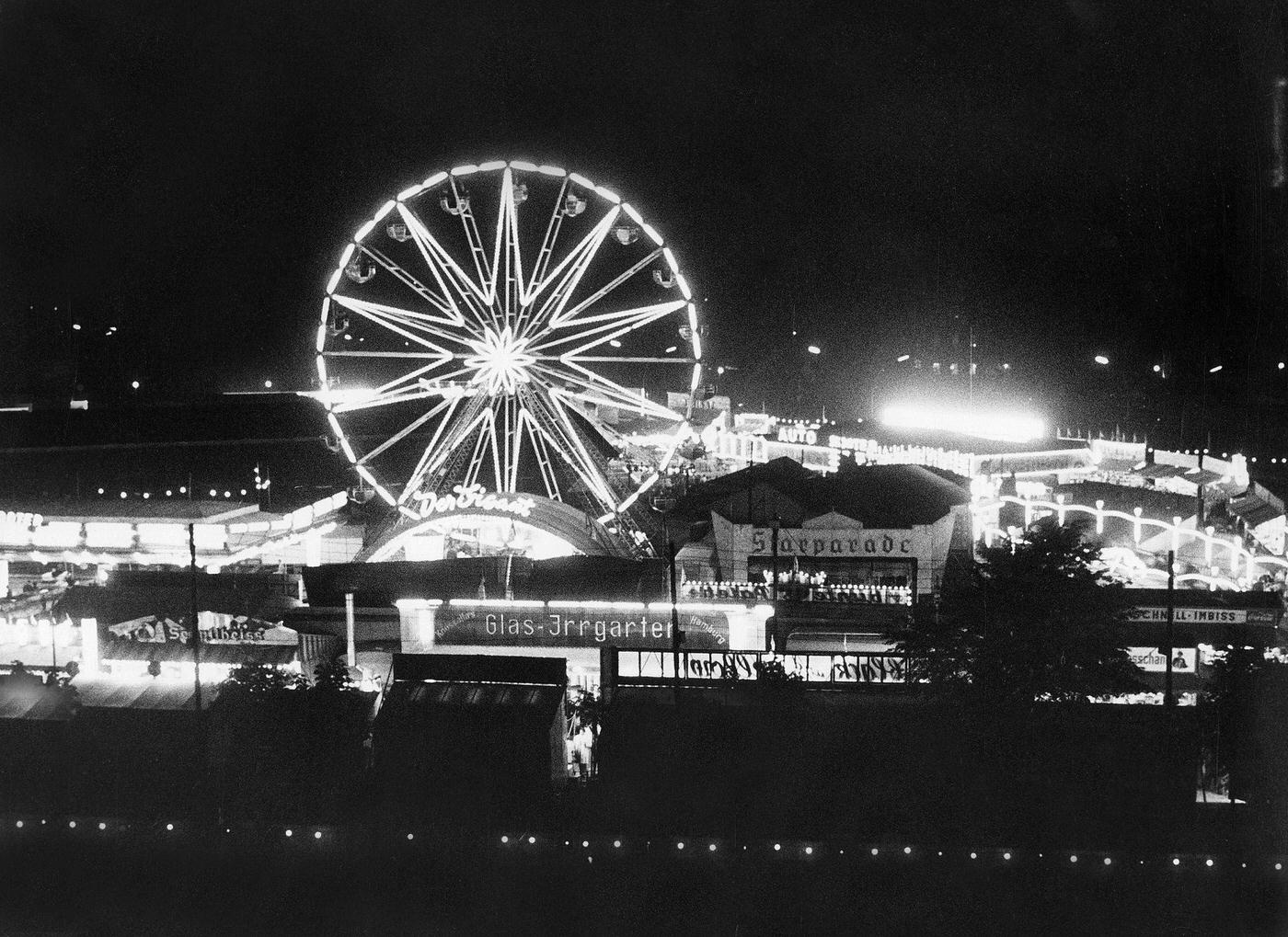
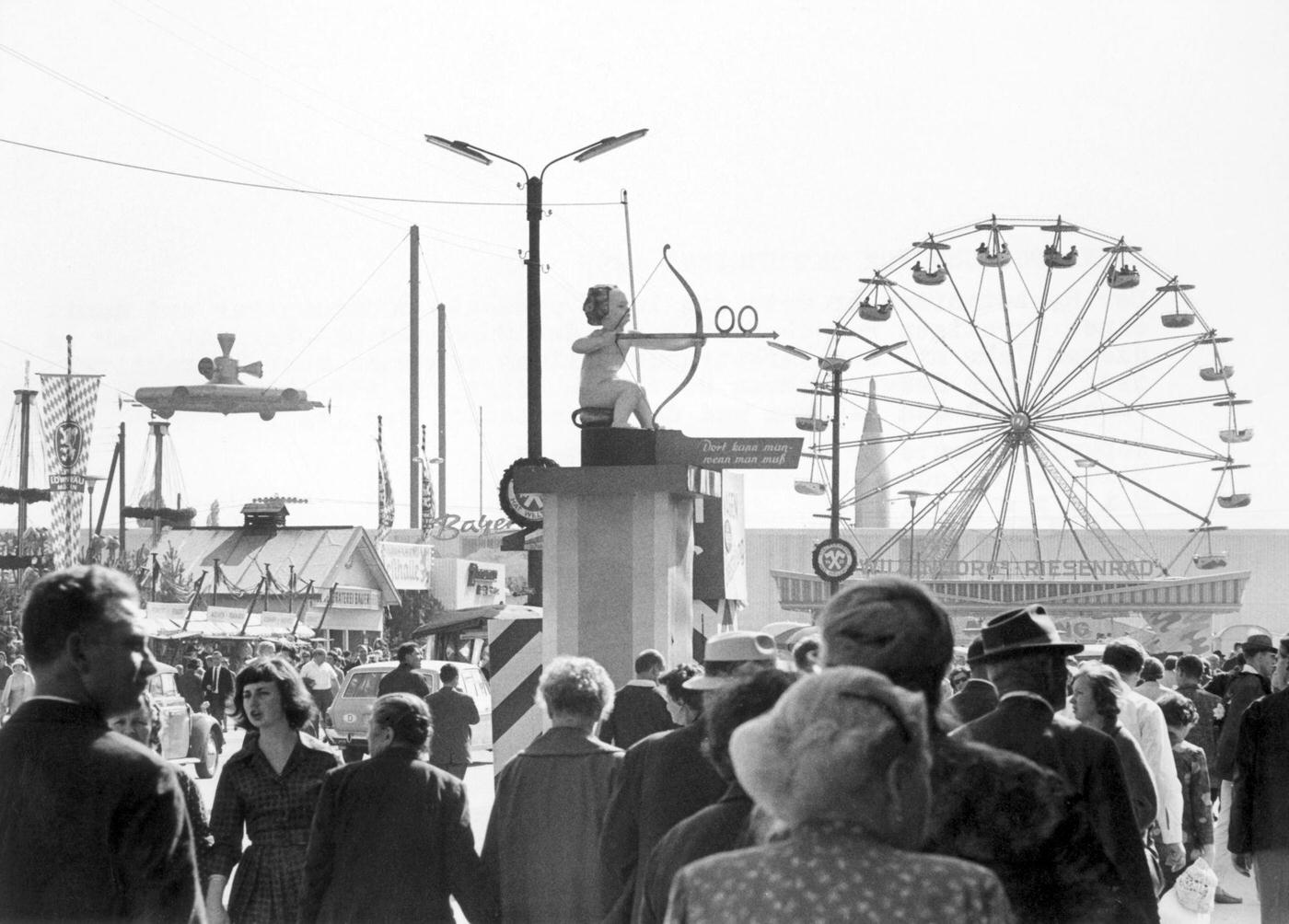
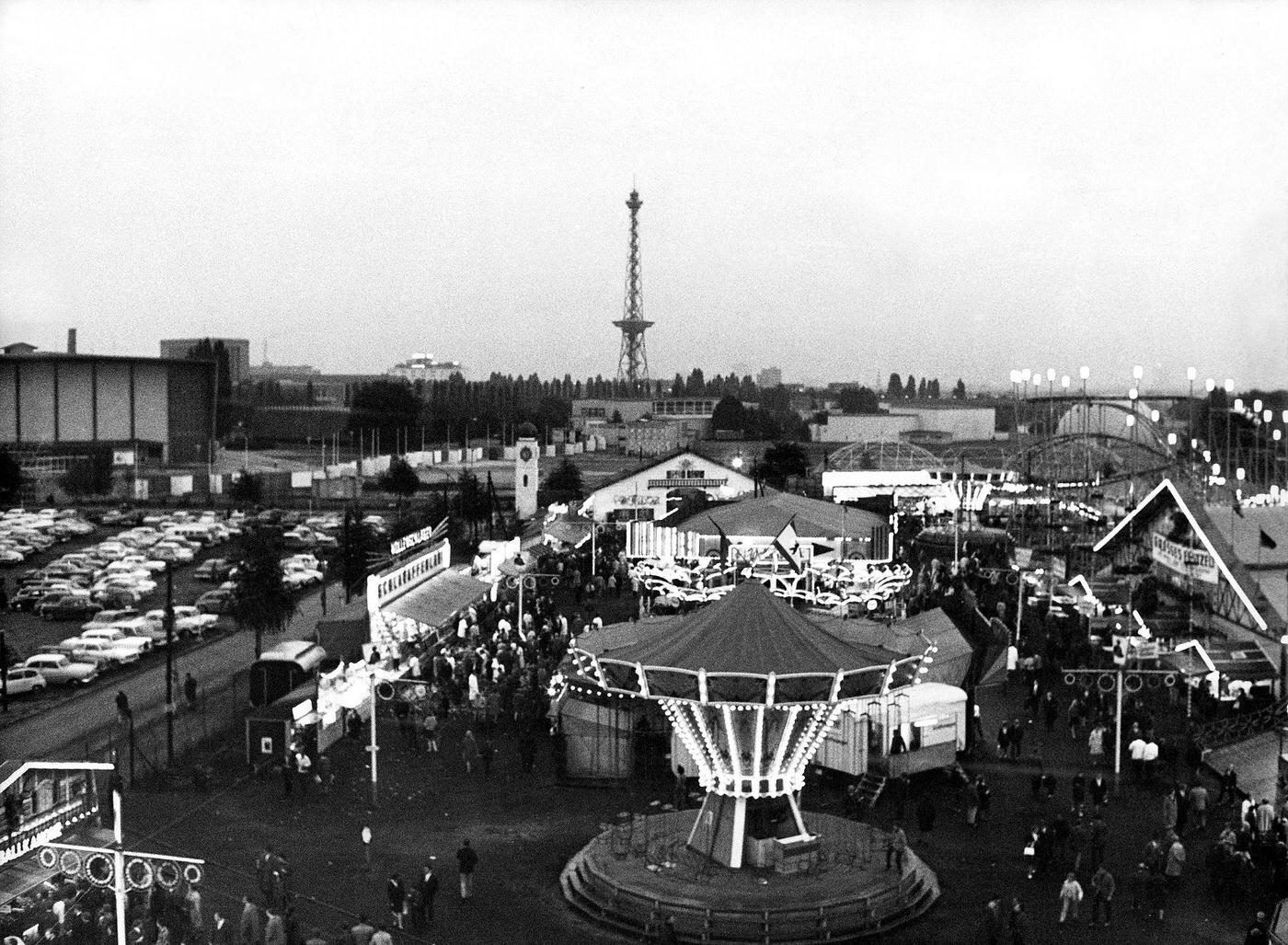
Oktoberfest wasn’t confined to Munich. Berlin held its own version of the festival, and its fairground was a major attraction. The Riesenrad — a giant Ferris wheel — towered over the grounds and became one of the most recognizable symbols of the Berlin celebration. Funhouses, carnival games, and rides filled the space around it, drawing families and young people alike.
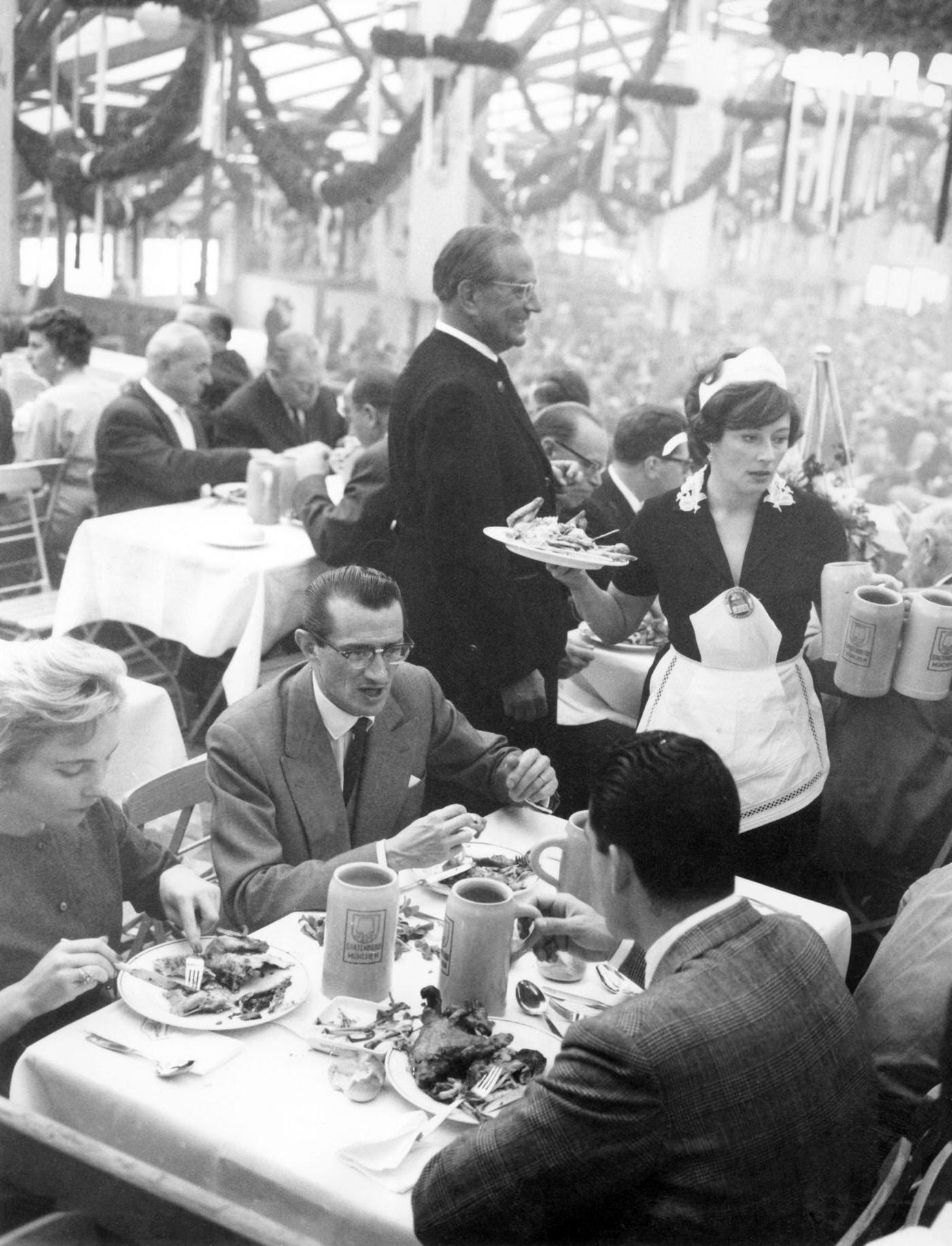
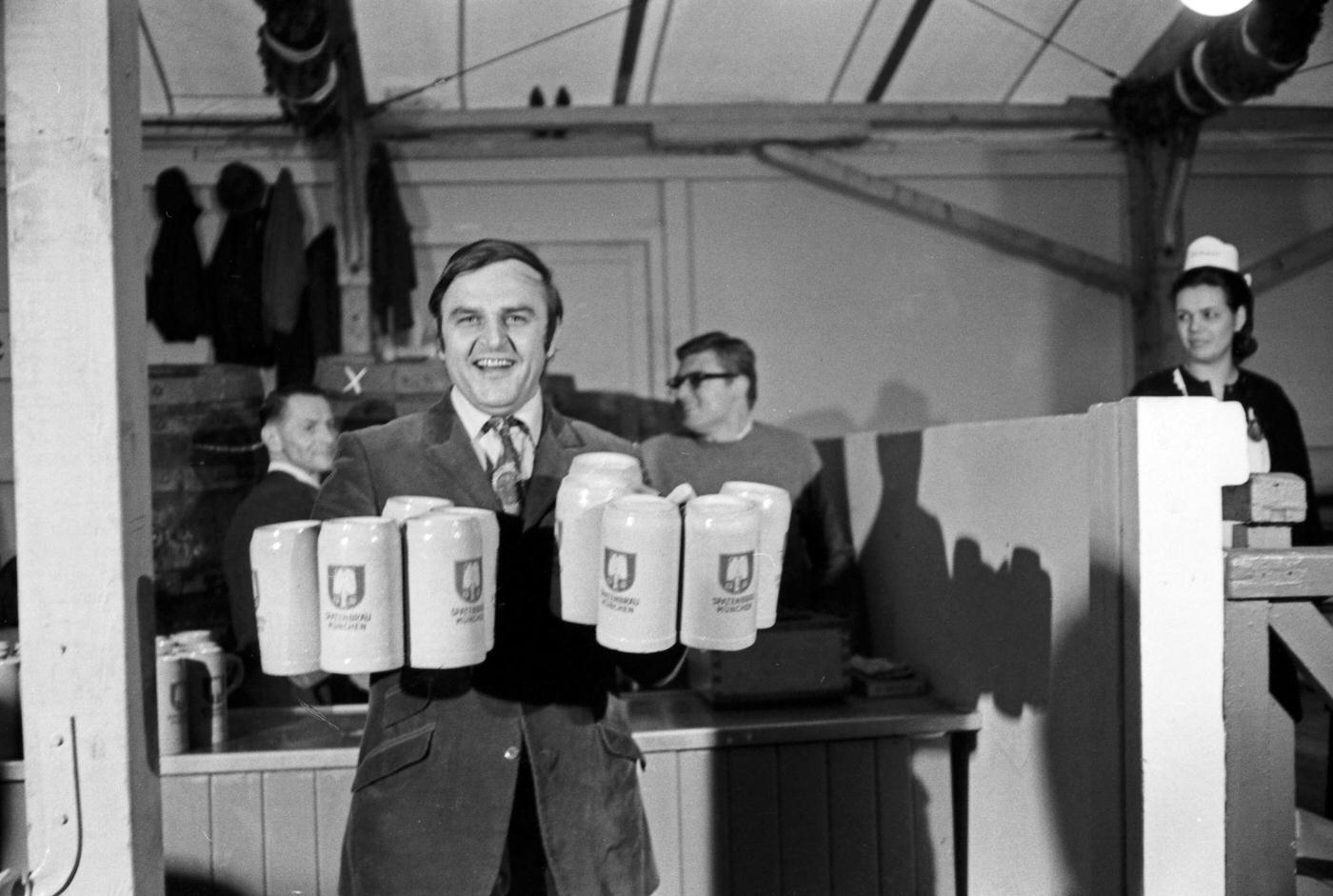
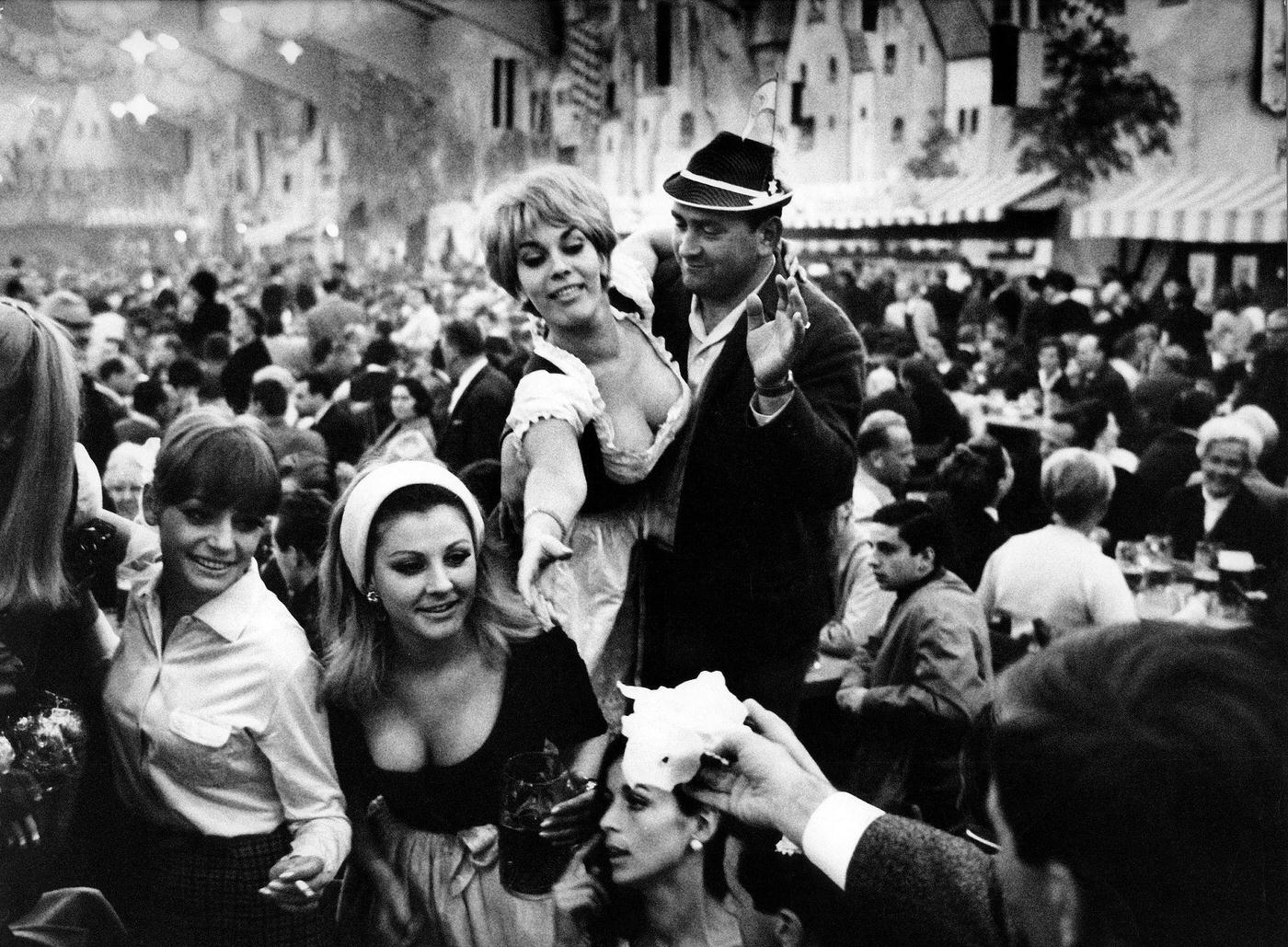
The Wiesn waitresses were central to the whole operation. Carrying multiple one-liter steins in each hand, they moved through packed tents at a relentless pace. Their Dirndl uniforms — the traditional Bavarian dress — were a constant of the festival, though the 1960s brought small changes in style. Bolder colors and updated patterns crept into the traditional design, reflecting the decade’s broader shift in fashion.
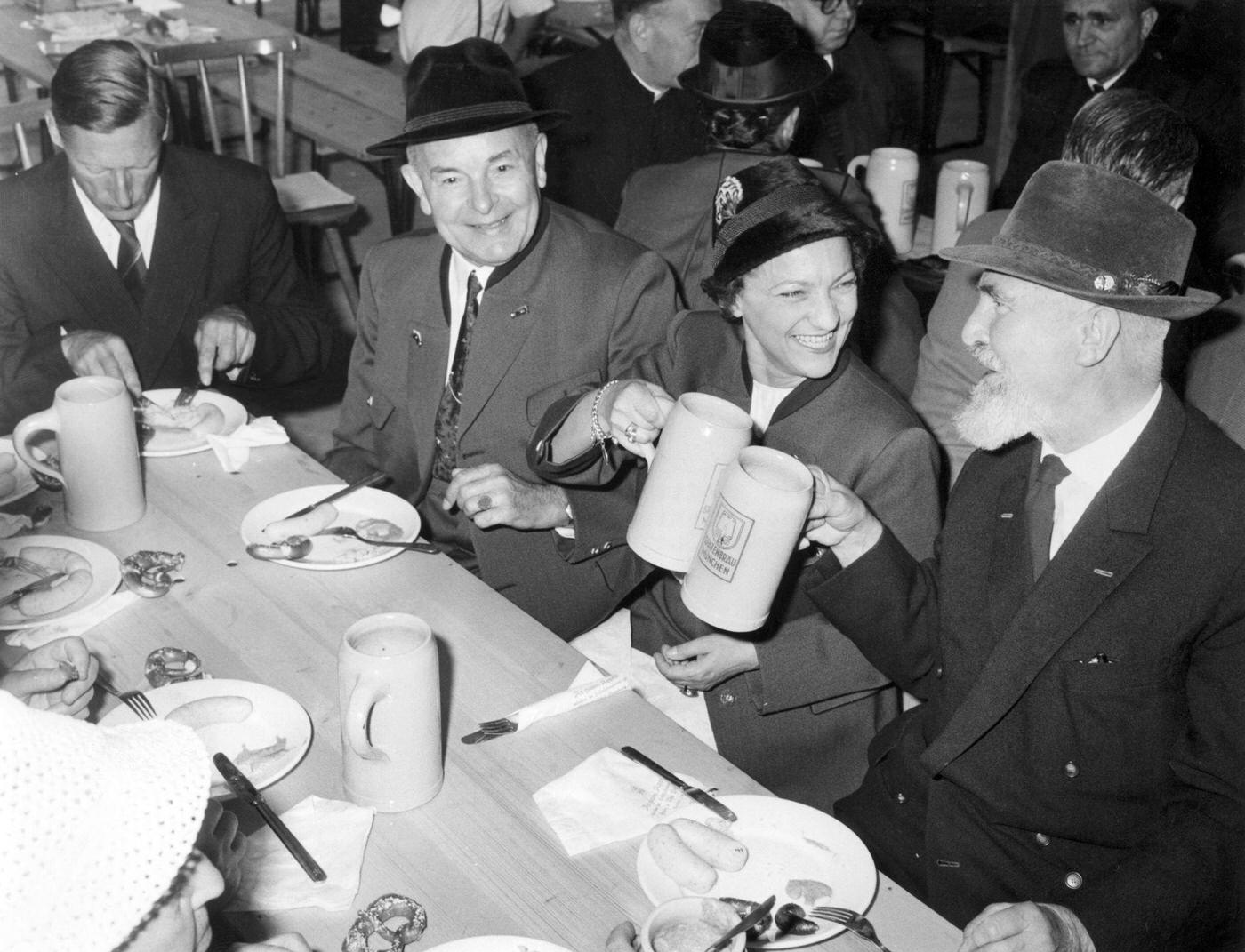
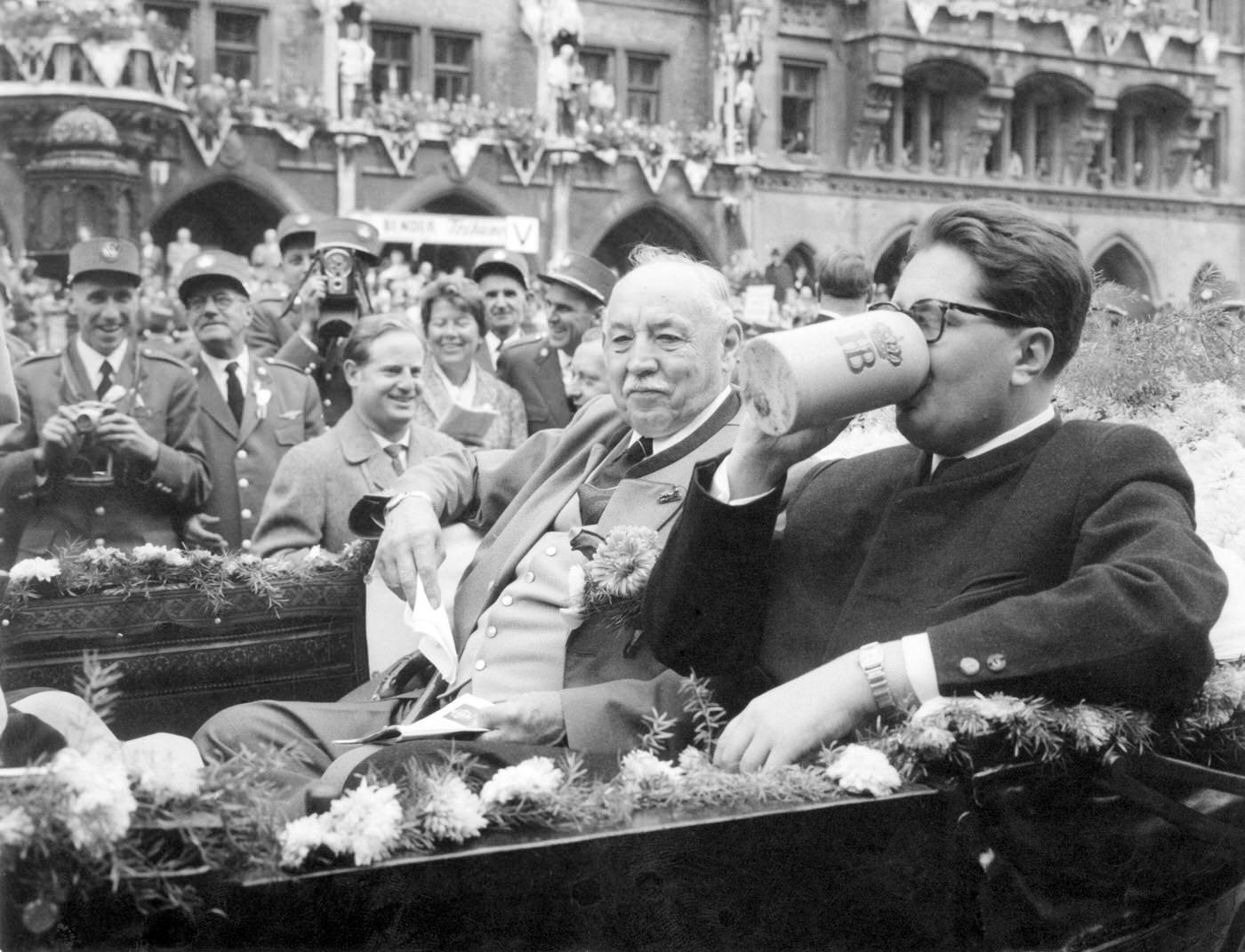
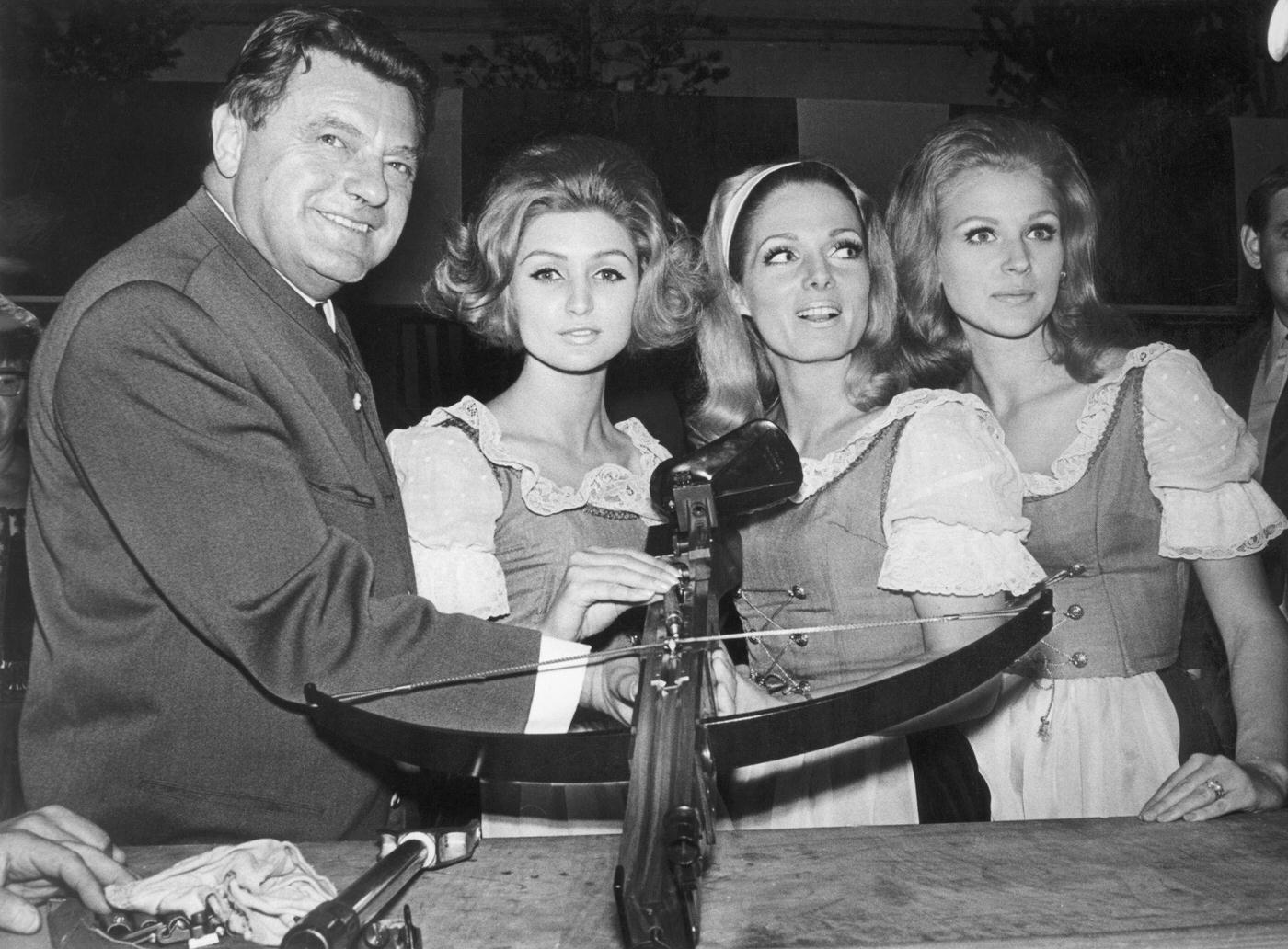
Politicians and public figures were regulars at Oktoberfest. Munich’s mayor Hans-Jochen Vogel and Bavarian Prime Minister Franz Josef Strauß both made appearances throughout the decade. Their presence at the tents and parades underscored how much the festival mattered as a civic event, not just a party.
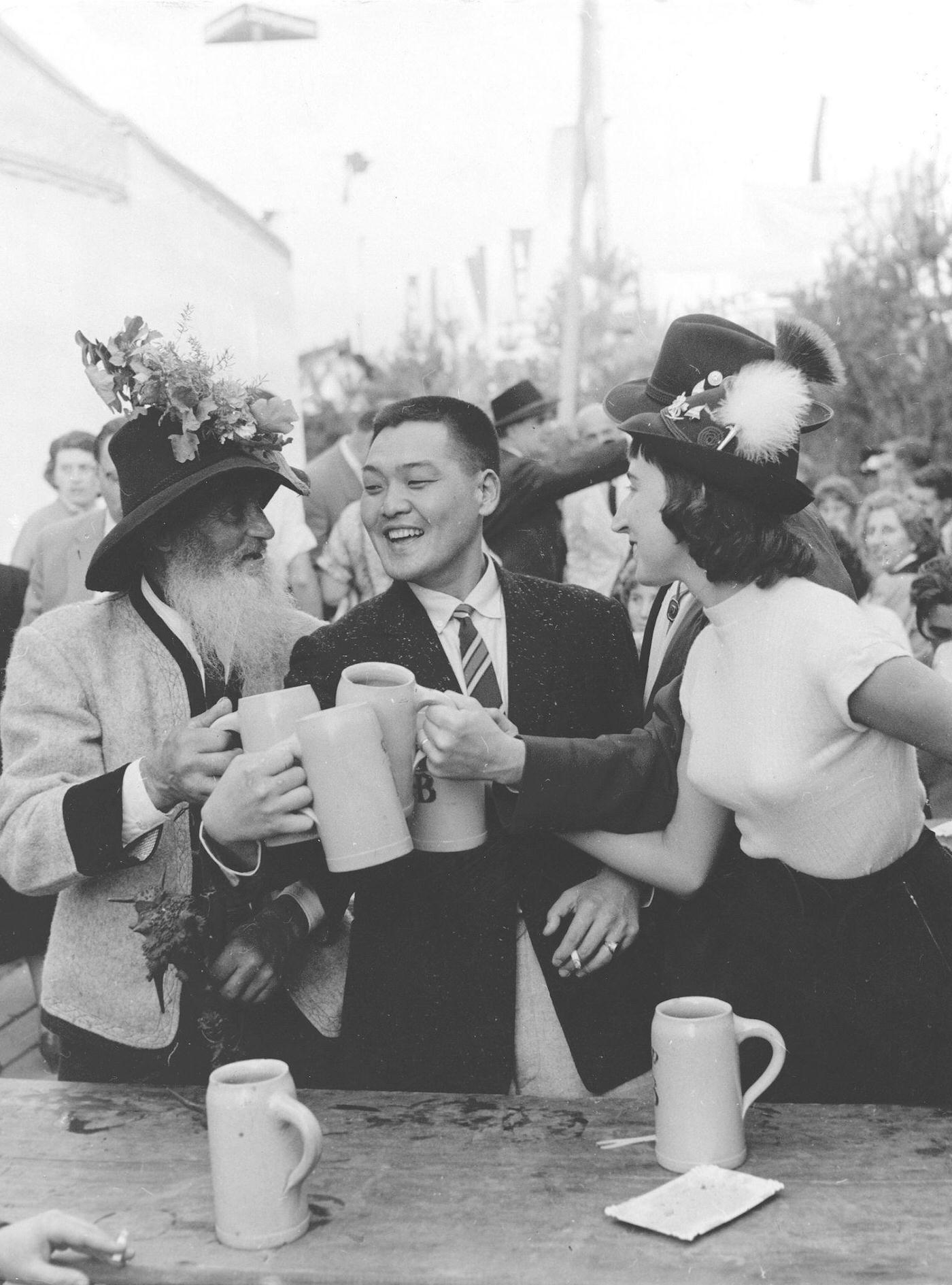
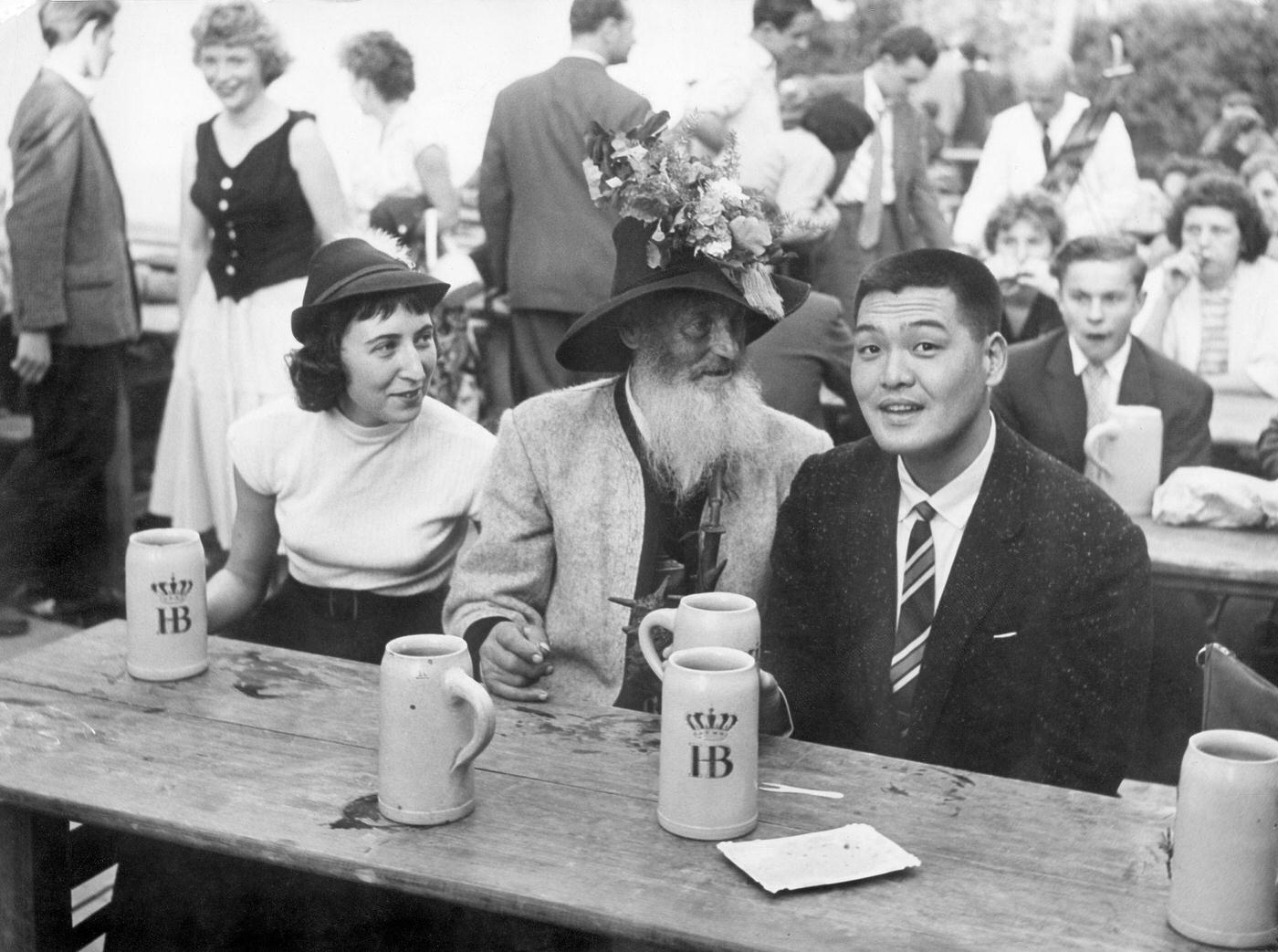
The growing international crowd was one of the most visible signs of Oktoberfest’s changing character. Japanese tourists sat elbow-to-elbow with Bavarian locals in the beer tents, sharing steins and joining in songs they likely didn’t know the words to. That kind of scene — unthinkable just fifteen years earlier during wartime — became commonplace by the early 1960s.
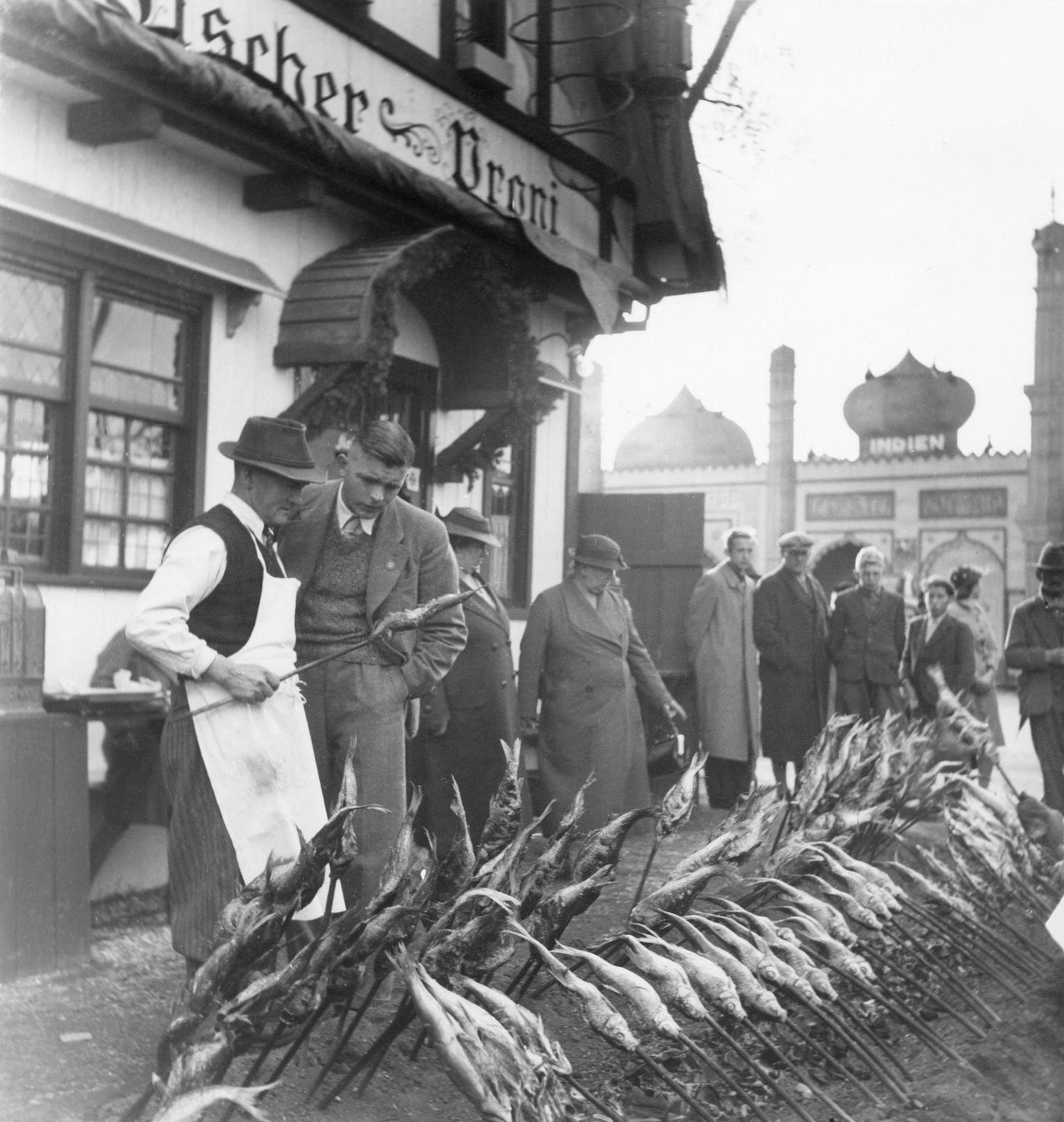
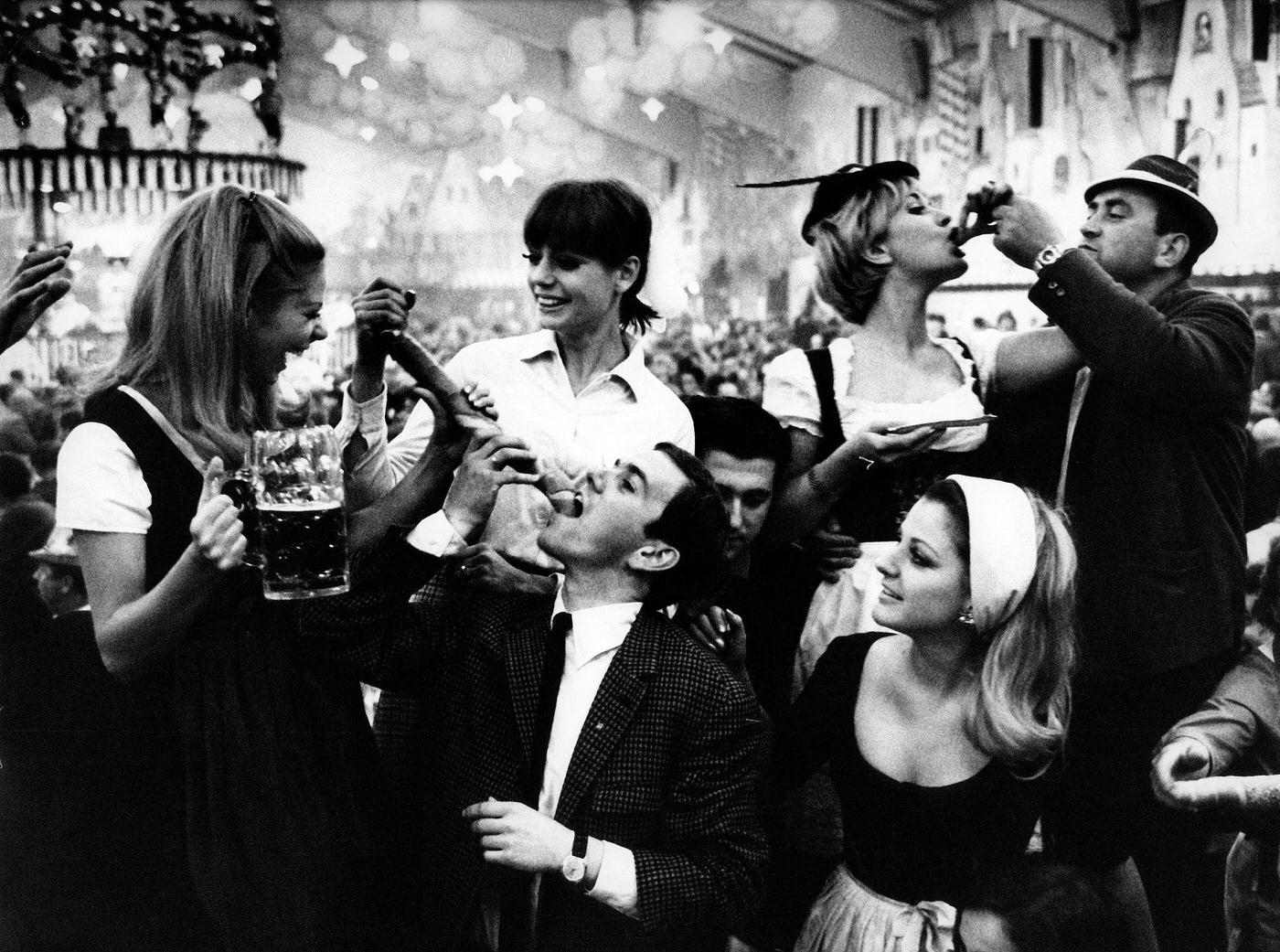
Food was as important as the beer. Traditional Bavarian dishes dominated the menus: giant pretzels, grilled sausages, sauerkraut, and slow-roasted pork knuckles. These weren’t side dishes — they were the meal. Vendors and tent kitchens turned them out by the thousands each day, feeding crowds that kept growing as the decade wore on.
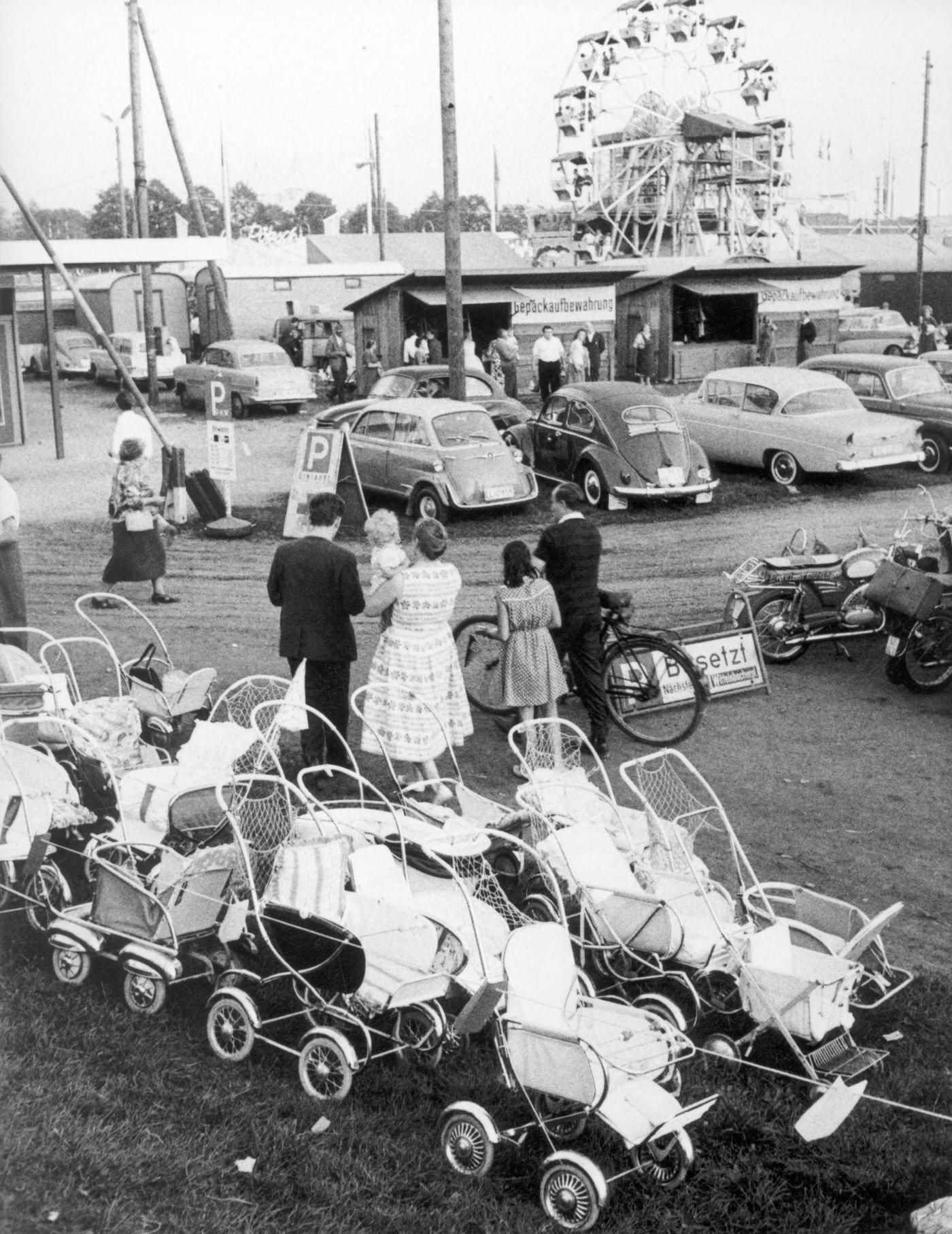
Oktoberfest in the 1960s was very much a family event. Dedicated parking areas for baby carriages appeared on the grounds, a small but telling detail about who was attending. Families with young children came for the rides, the food, and the spectacle, while the beer tents catered to the adults inside.
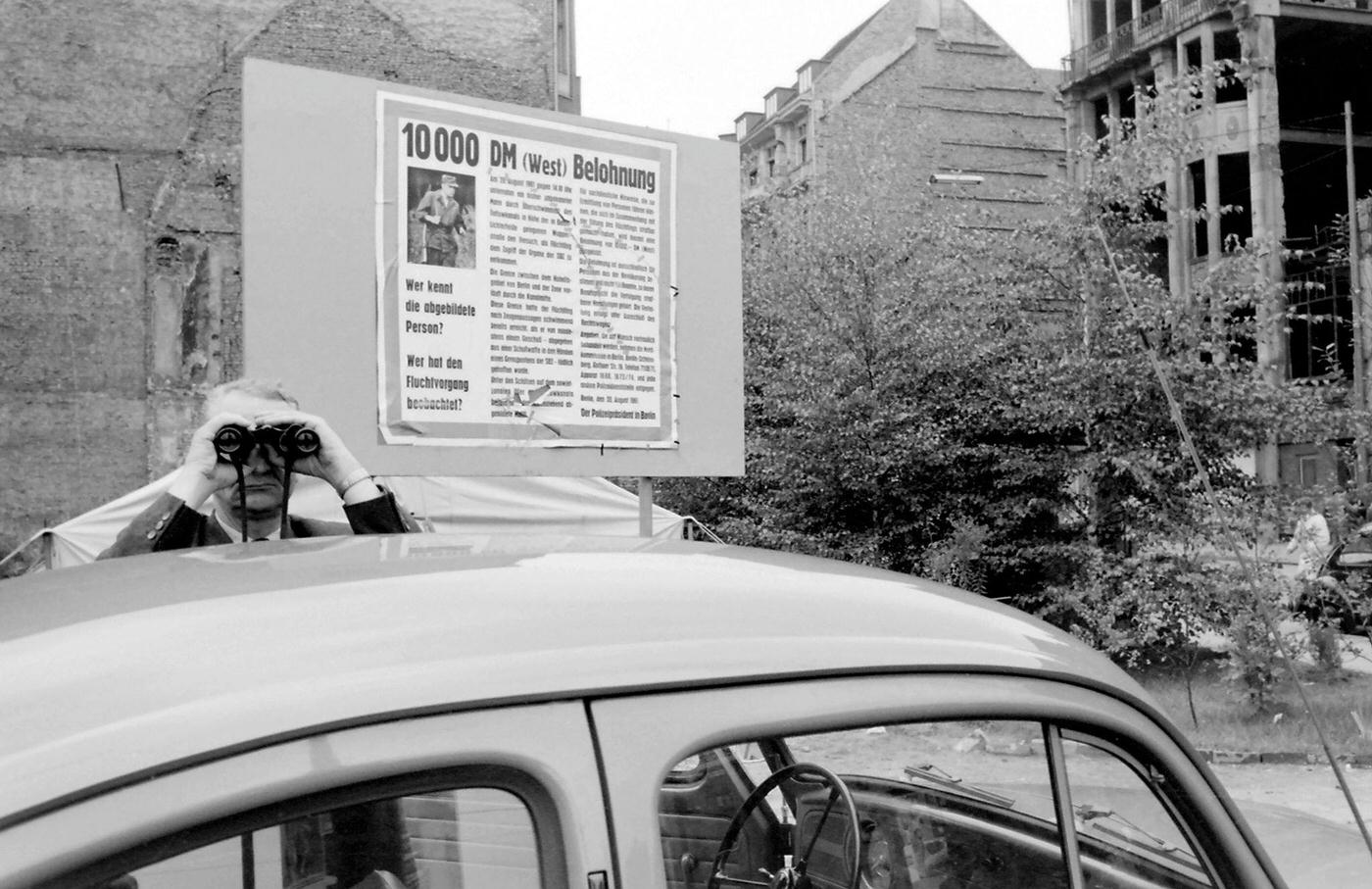
The festival didn’t exist in a political vacuum. In August 1961, the Berlin Wall went up, dividing the city overnight. By the time Oktoberfest opened that fall, the Wall was already a reality. Guards patrolled the border as West Germans gathered in Munich to celebrate — a stark contrast that captured the tension running through the entire decade.
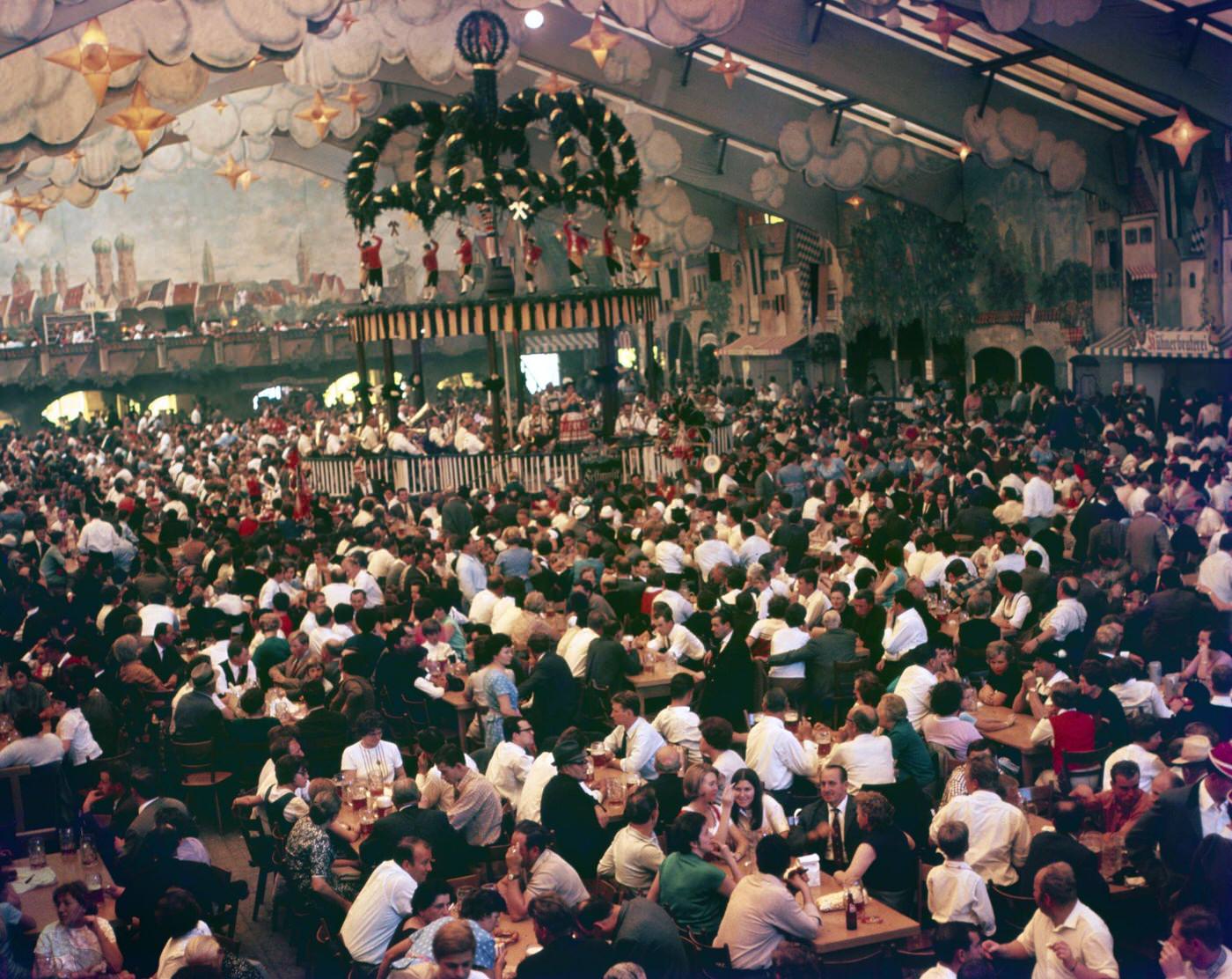
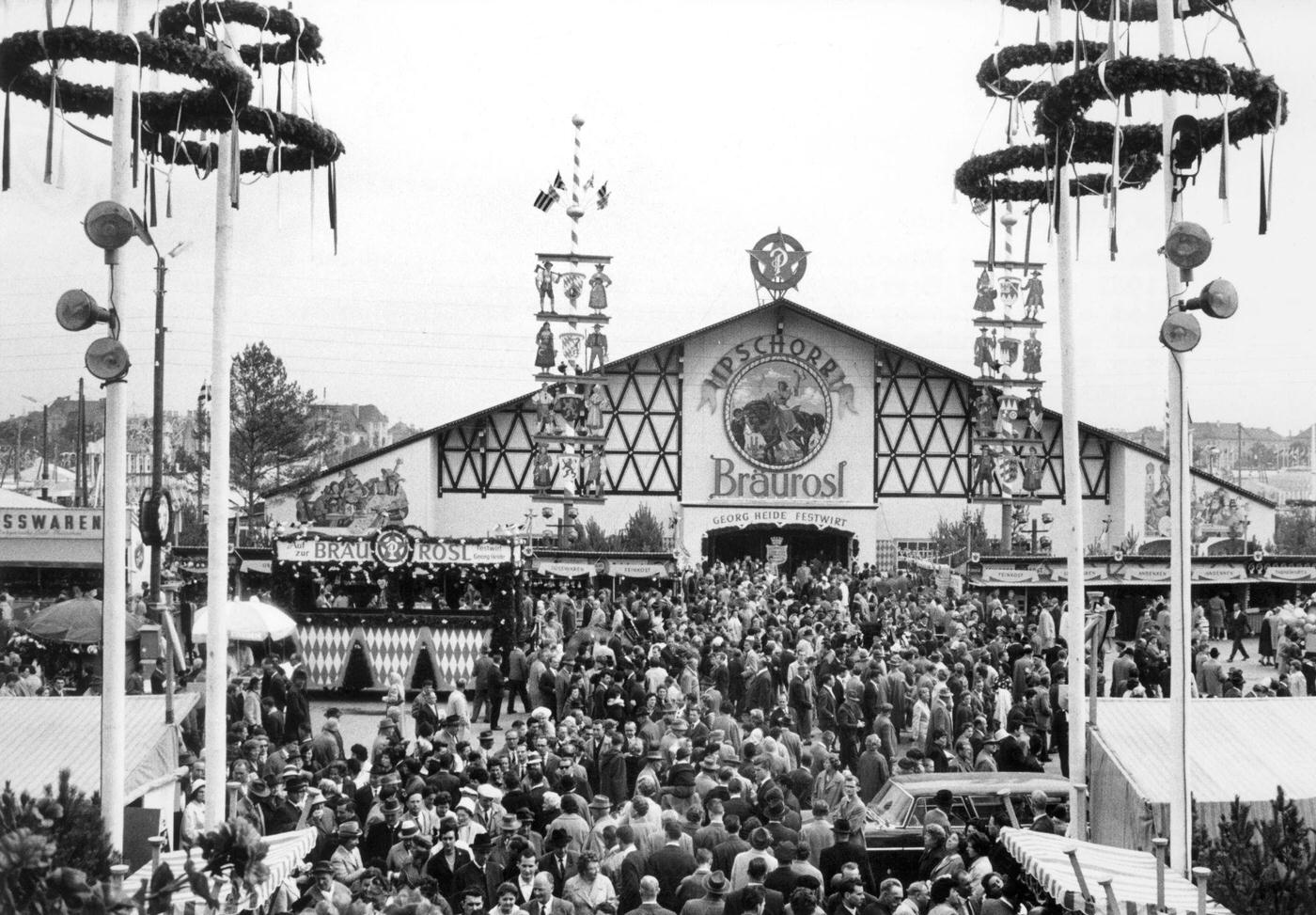
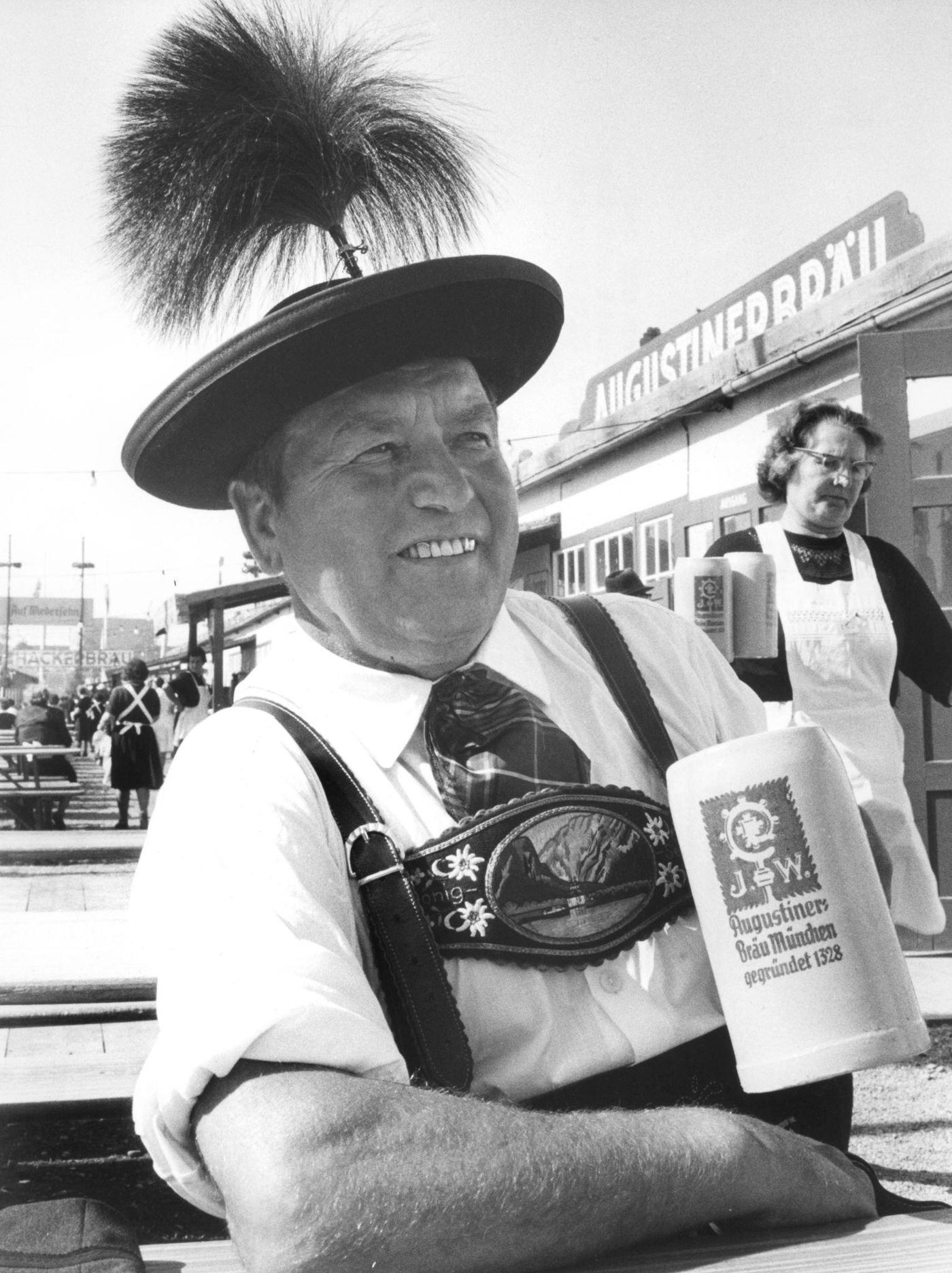
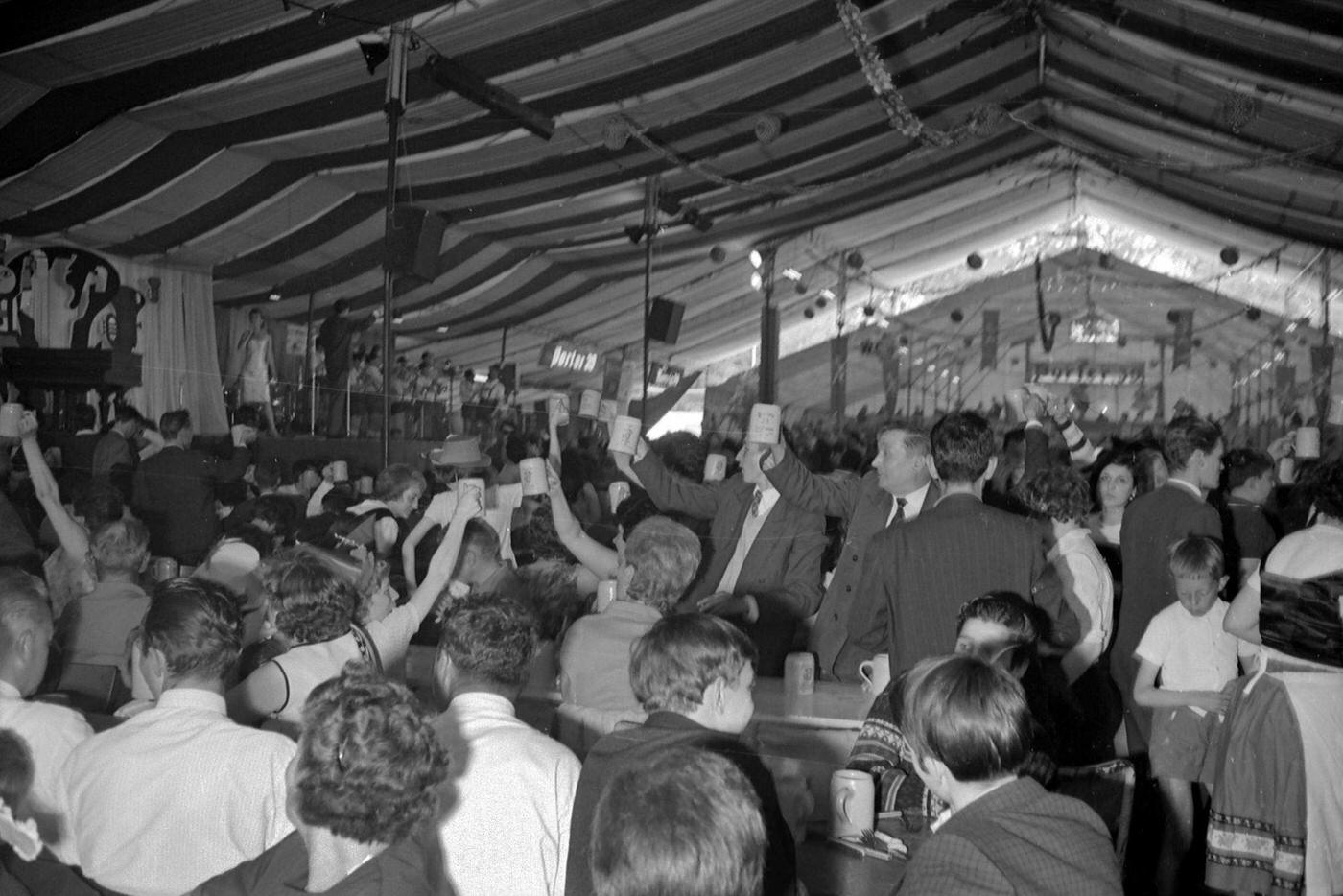
The Hackerbräu tent was one of the most recognizable structures on the Theresienwiese. Its distinctive design drew crowds year after year, and photographs from 1962 show the grounds packed with visitors shortly after the opening ceremony. The sheer density of the crowd in those early hours gives a clear picture of how popular the festival had become.
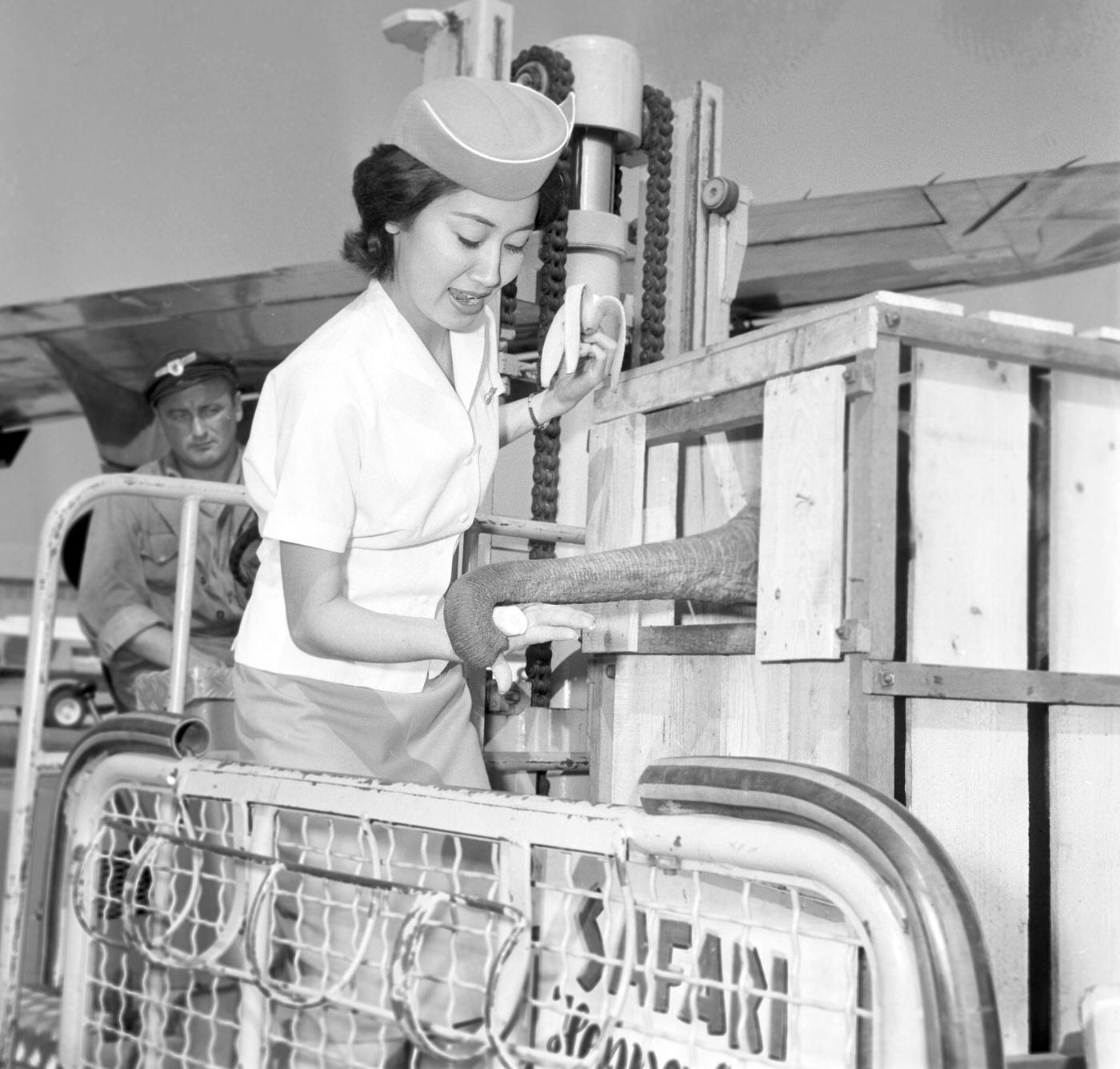
Oktoberfest always had a strong entertainment component beyond the beer tents. In 1963, a live animal show brought an elephant to the grounds, and a stewardess was photographed offering the animal some relief from the crowd and heat. Circus-style acts, acrobats, and novelty performers were regular fixtures, giving attendees plenty to see between rounds.
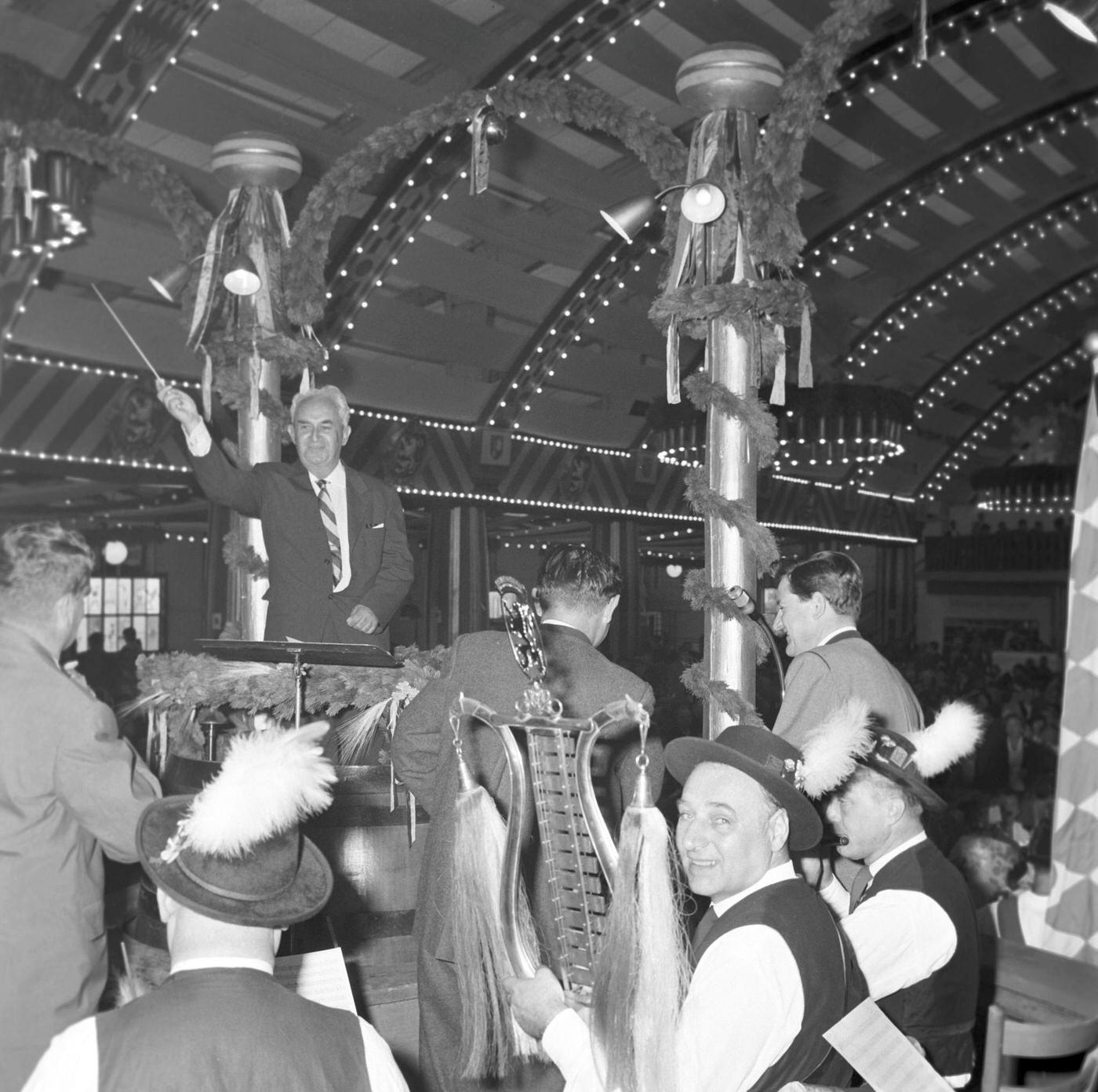
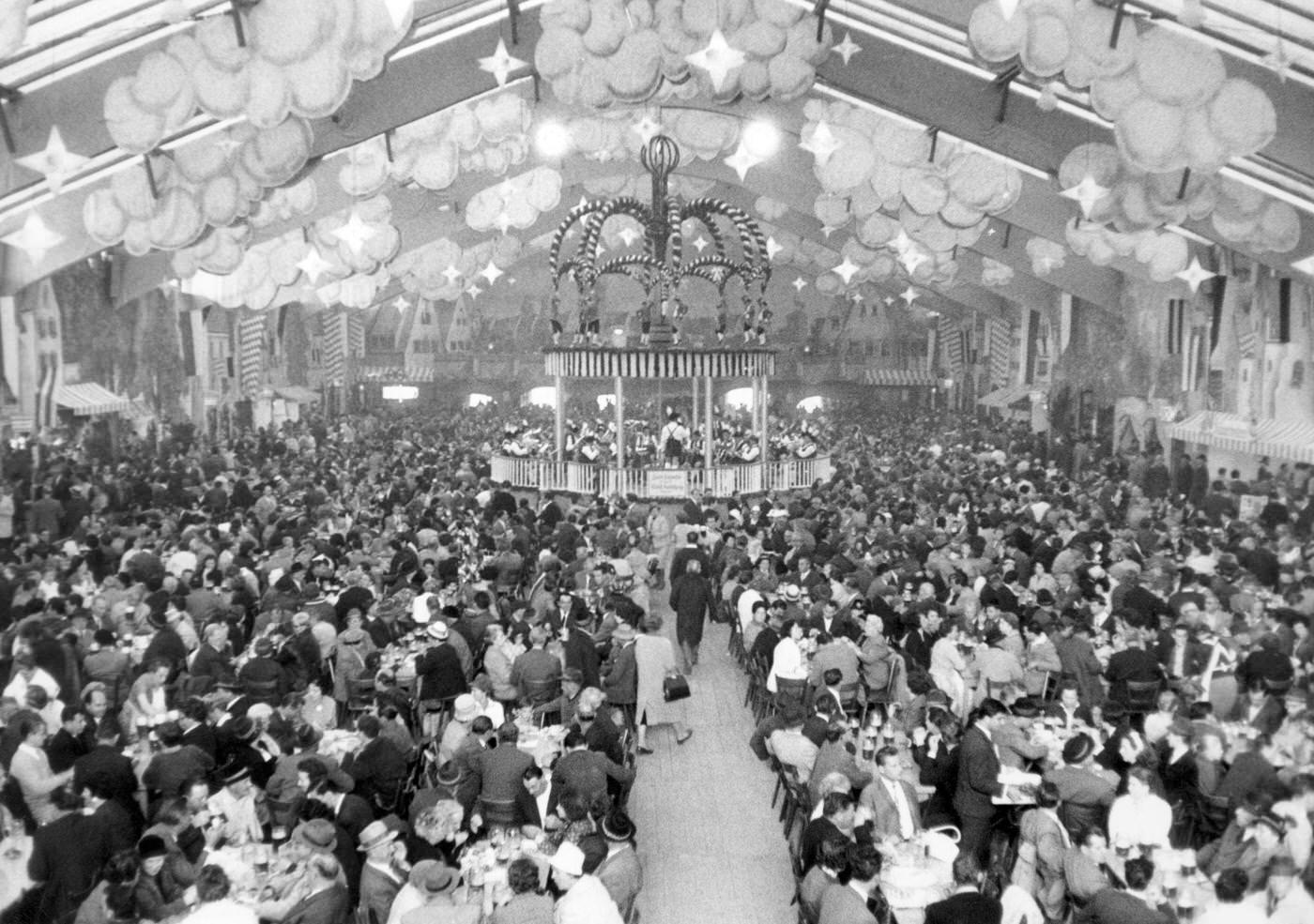
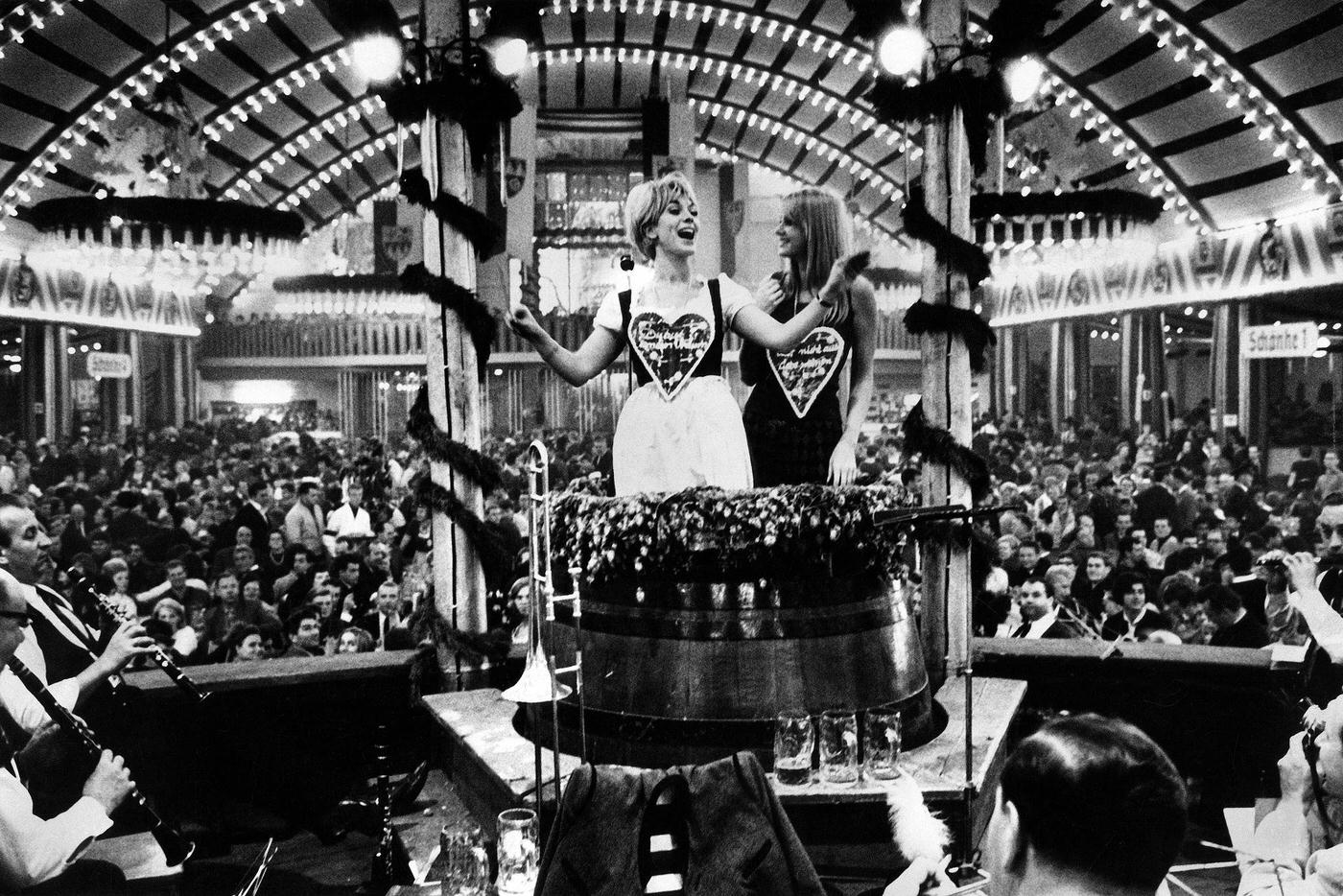
Music inside the tents followed a well-established formula. Brass bands played traditional Bavarian folk songs that encouraged audience participation, and the bandleaders were local celebrities in their own right. Composer Walt Erdale was one of the figures who shaped the musical character of the festival during this era, conducting performances that kept thousands of revelers singing along.
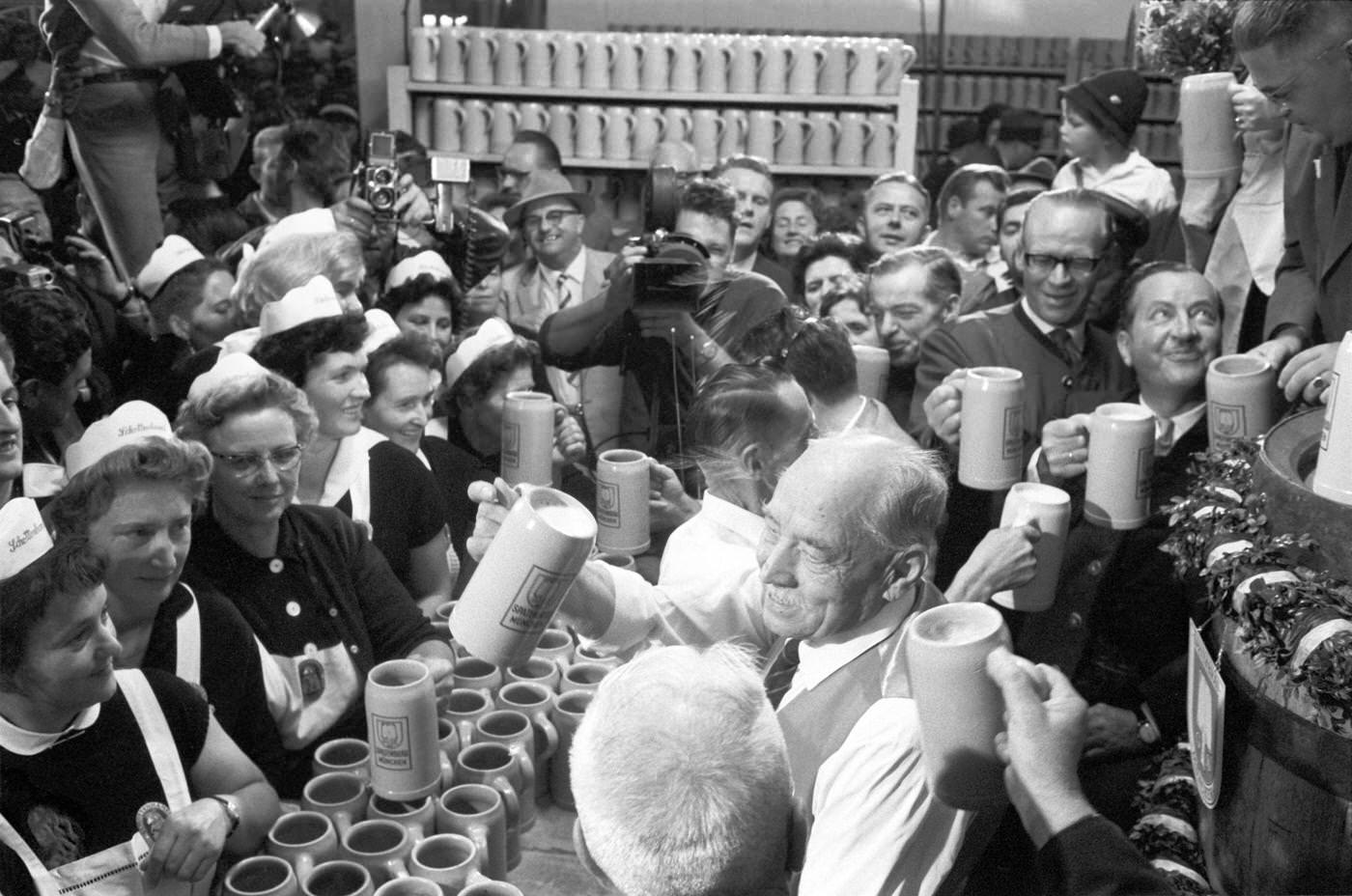
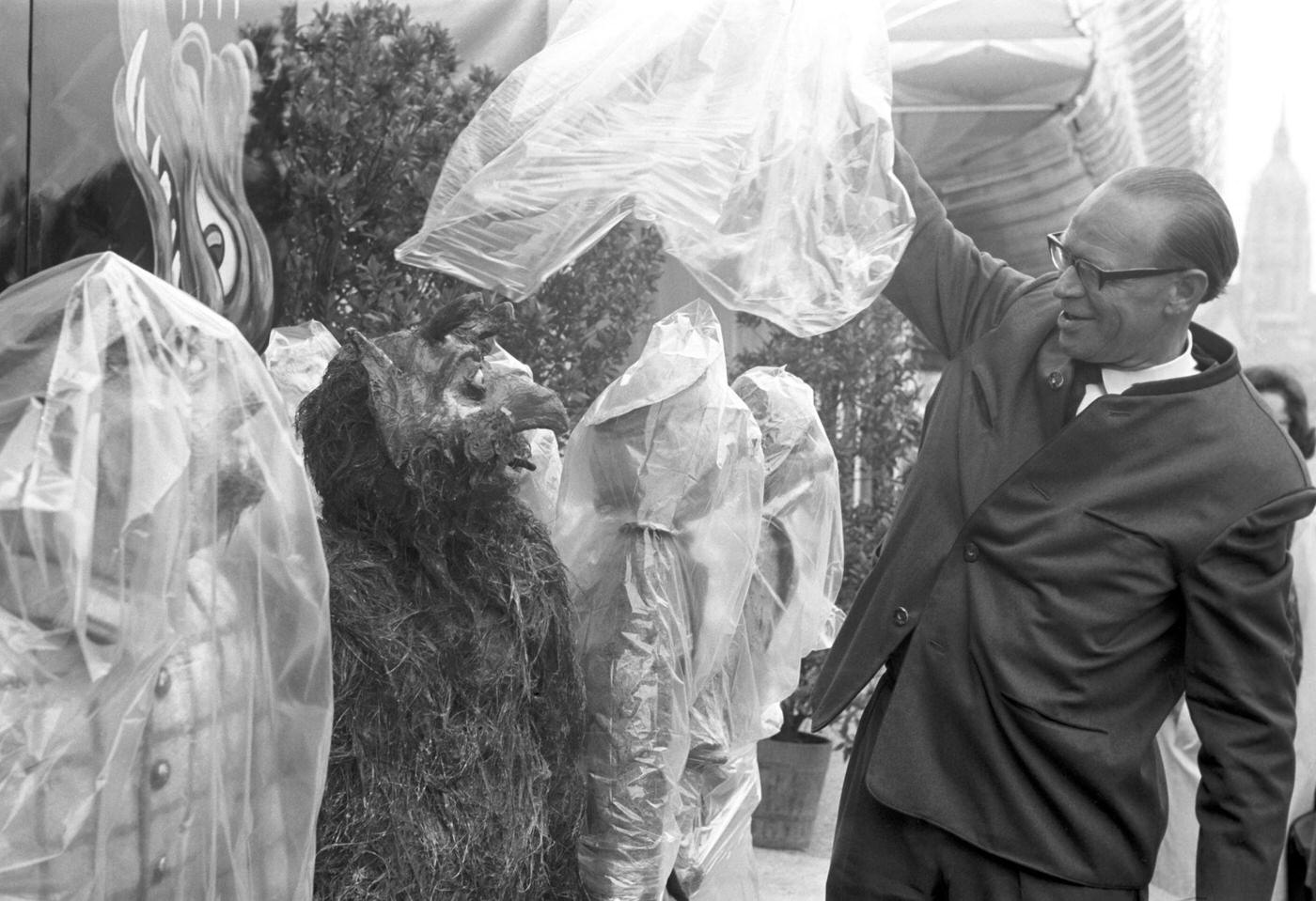
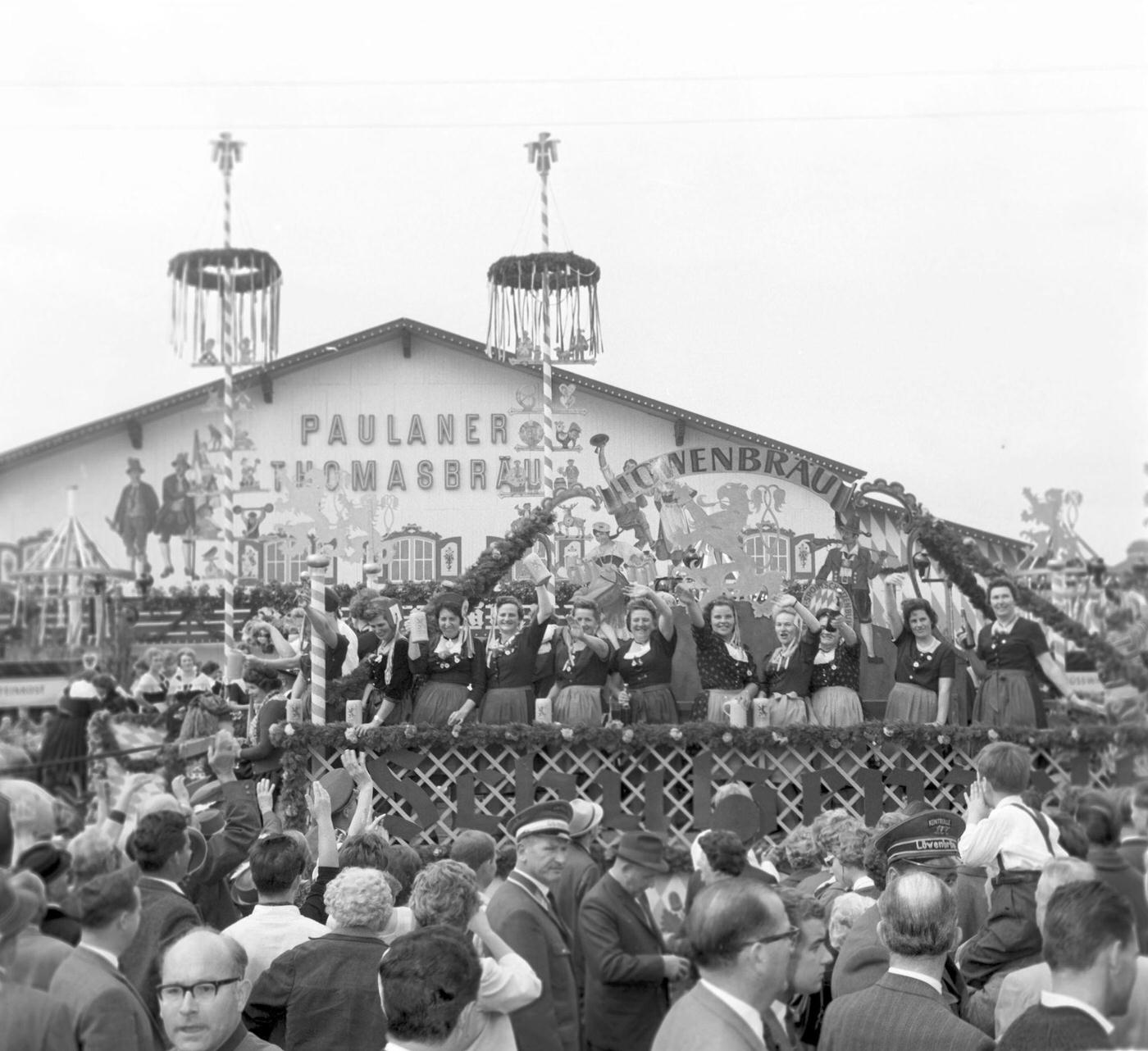
Each major brewery operated its own tent, and the Paulaner marquee was among the most popular. When the waitresses arrived at the start of the festival, it signaled that the real work was about to begin. These women carried extraordinary physical loads throughout each day of the festival, a job that required both strength and speed.
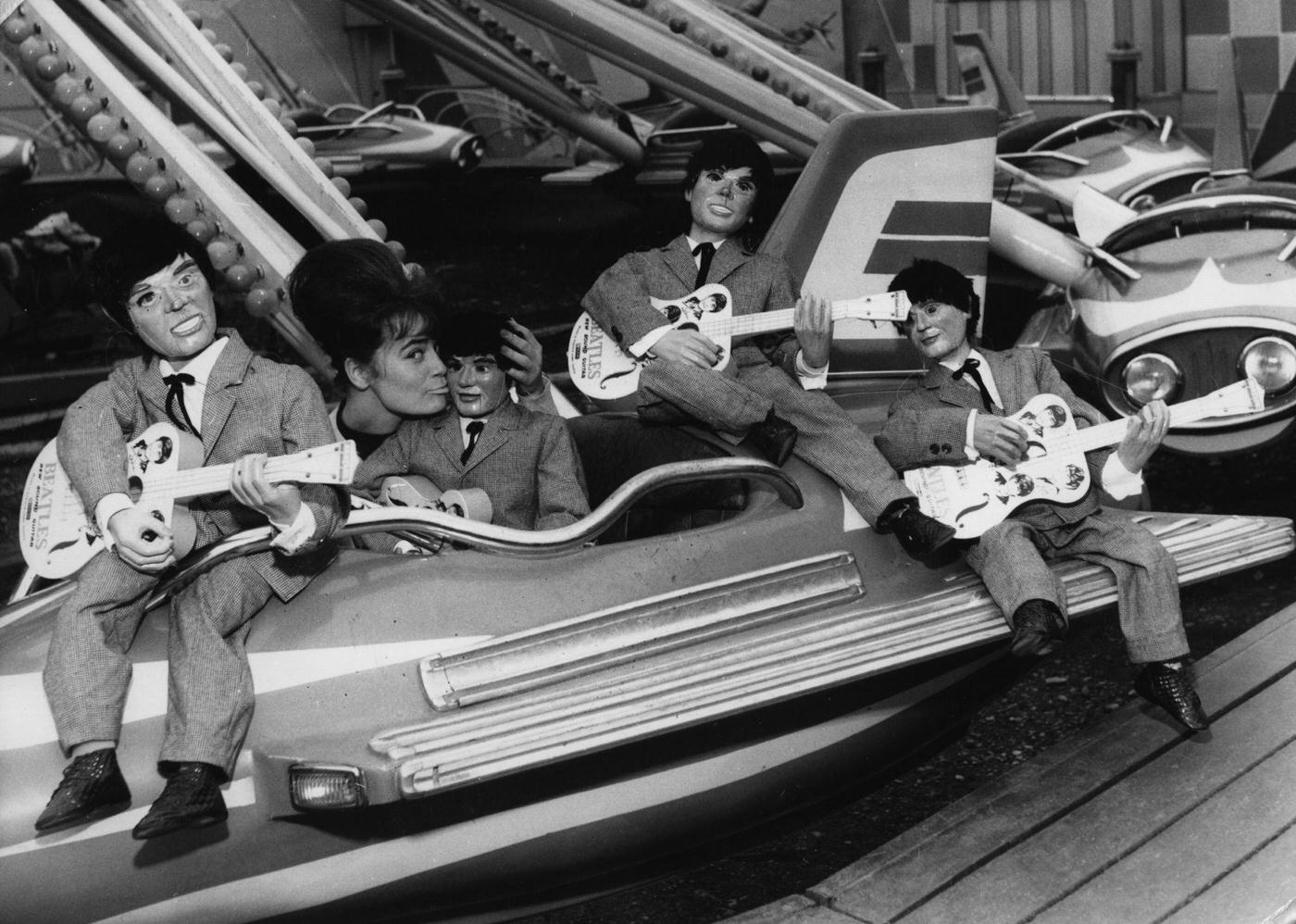
The influence of 1960s pop culture reached even the beer tents. A German Beatles fan showed up at the Wiesn in full fanboy fashion, capturing the collision of traditional Bavarian culture and the decade’s music explosion. Along with the traditional folk bands, popular music acts began to appear at Oktoberfest, and the energy inside the tents shifted to reflect it.
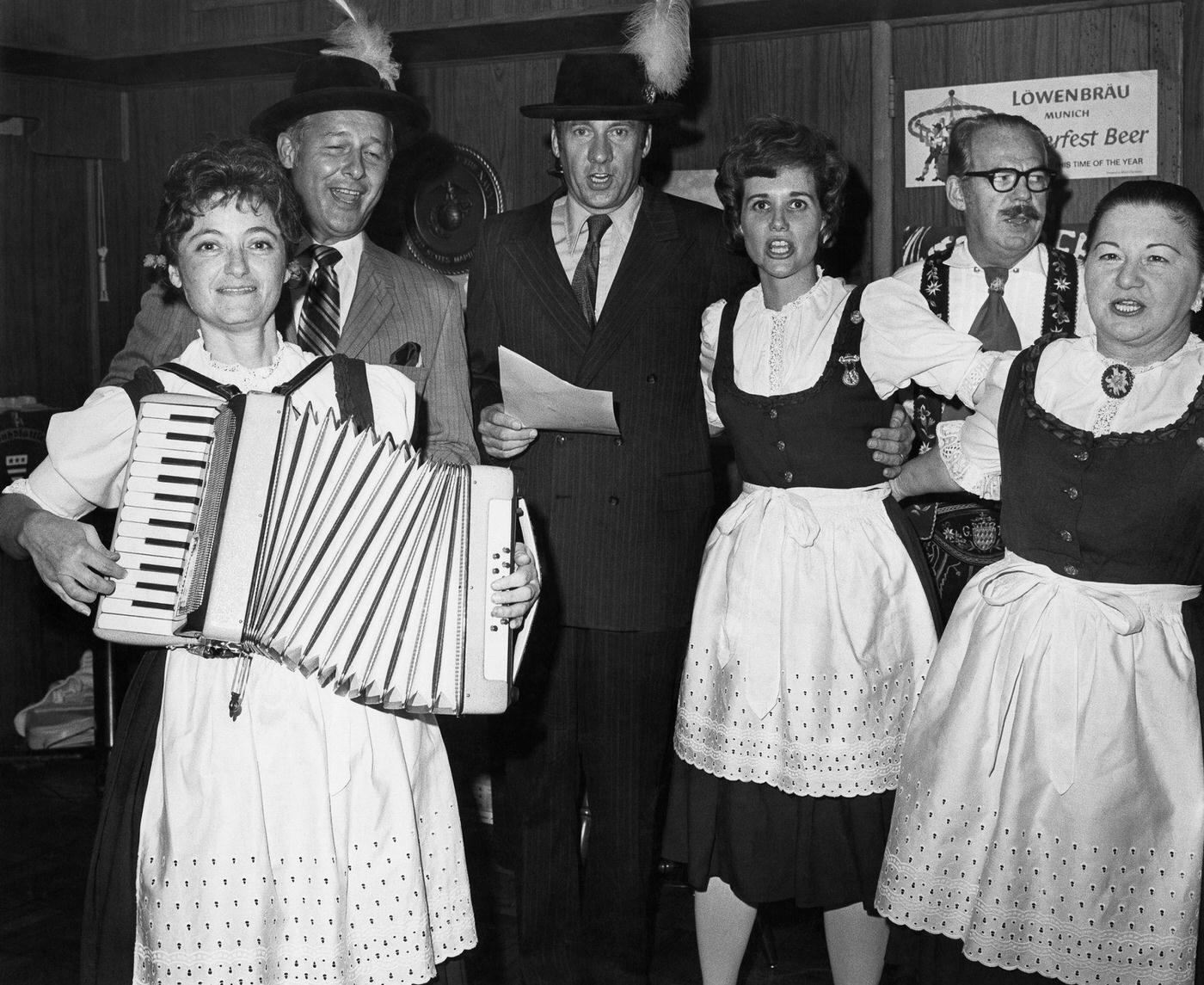
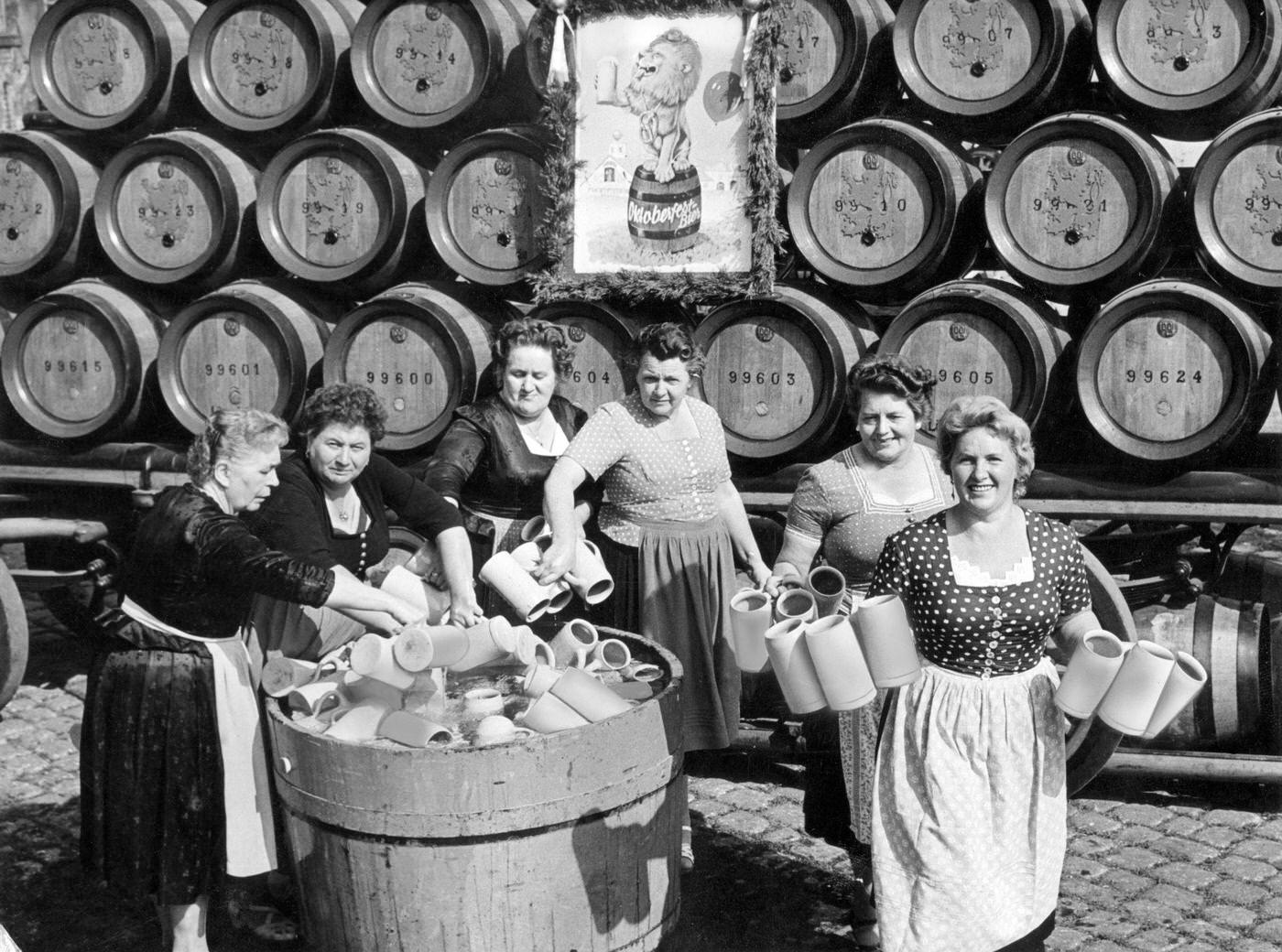
Weeks before the festival opened, Munich transformed. Tent structures went up across the Theresienwiese, workers unloaded supplies, and the city’s infrastructure geared up for hundreds of thousands of visitors. American political figures like Representative Bob Michel also made the trip, reflecting Oktoberfest’s growing international profile during the decade.
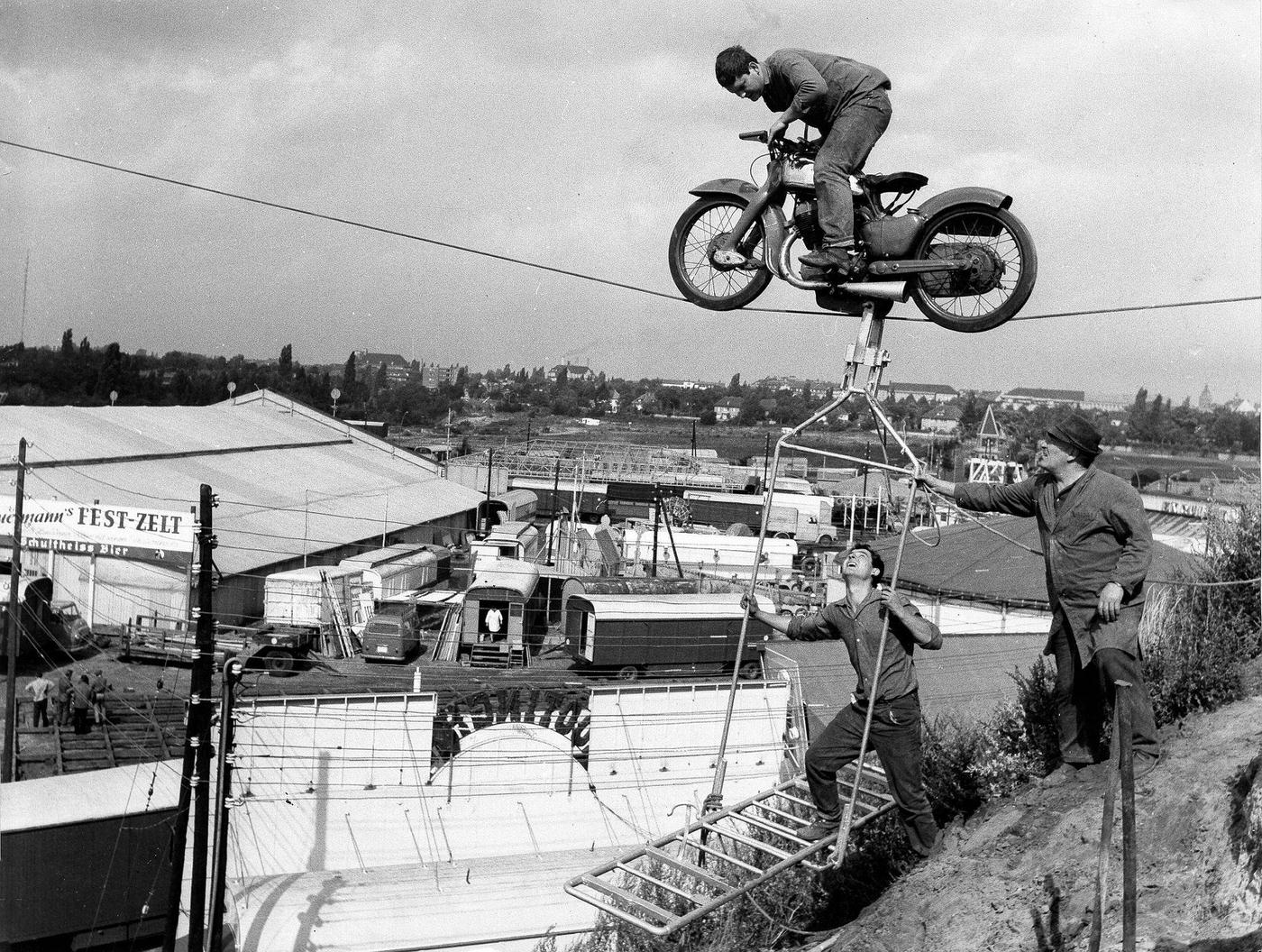
Aerial performers added a dramatic element to the entertainment lineup. The Zugspitz Traber act brought high-wire and trapeze-style performance to the festival grounds in 1965, drawing crowds who craned their necks skyward between visits to the tents. These acts were a reminder that Oktoberfest was always more than a drinking event — it was a full-scale fair.
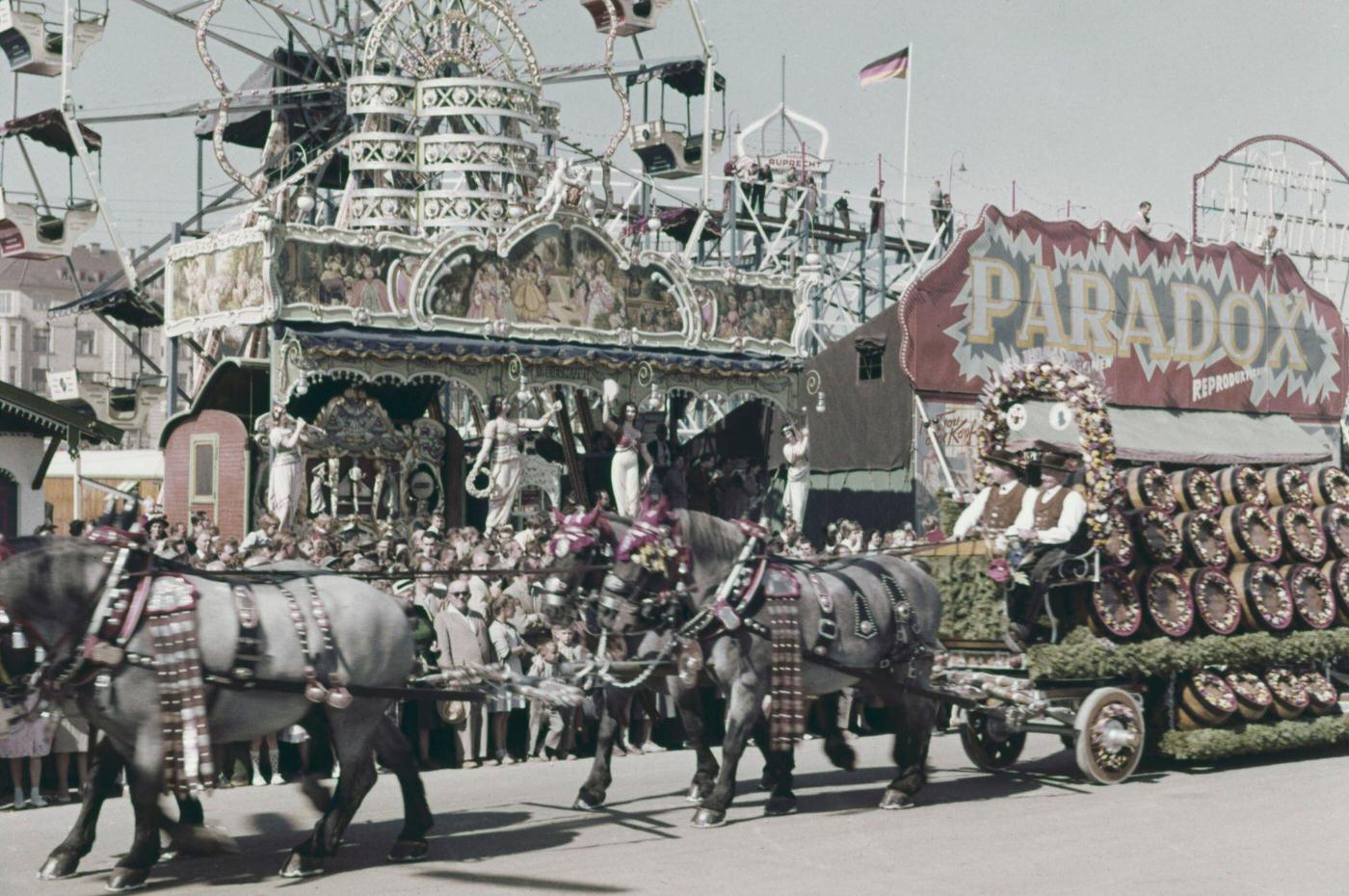
The horse-drawn brewery carts remained one of the most enduring images of the festival. Even as the 1960s brought modernization to many aspects of Oktoberfest, the sight of massive draft horses pulling decorated carts through the streets of Munich stayed firmly in place. It was tradition by design — a deliberate link to the festival’s 19th-century roots.
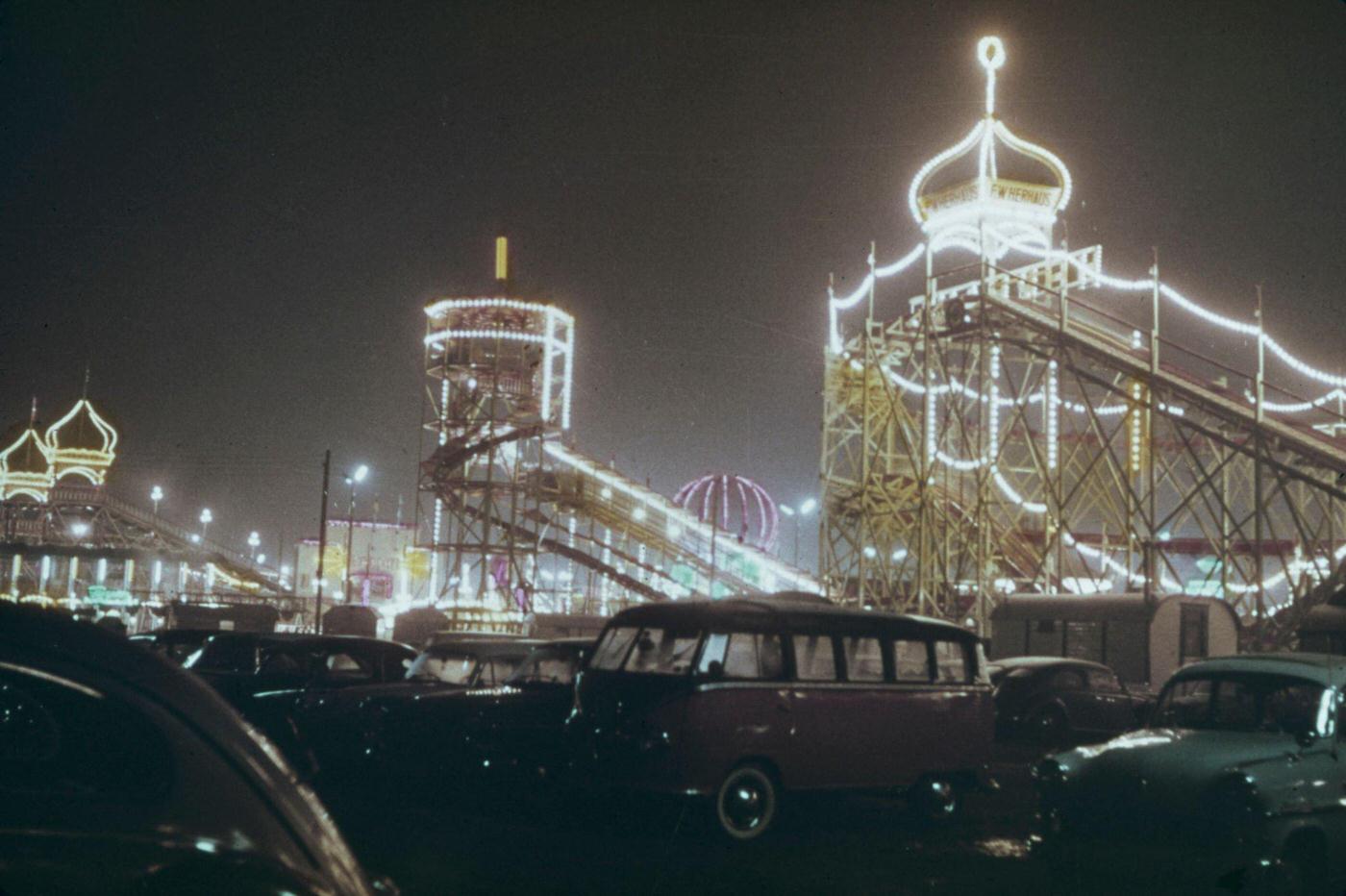
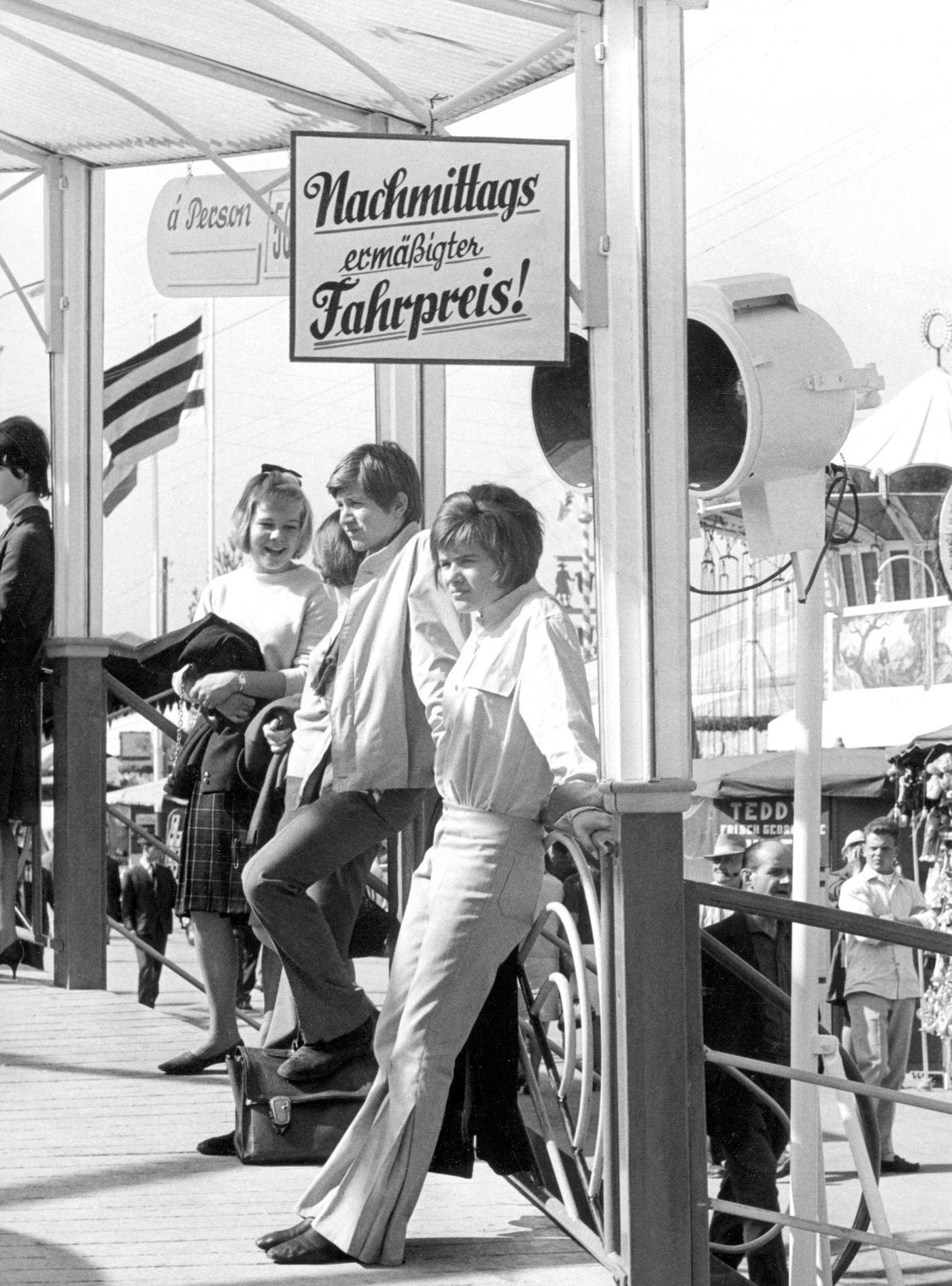
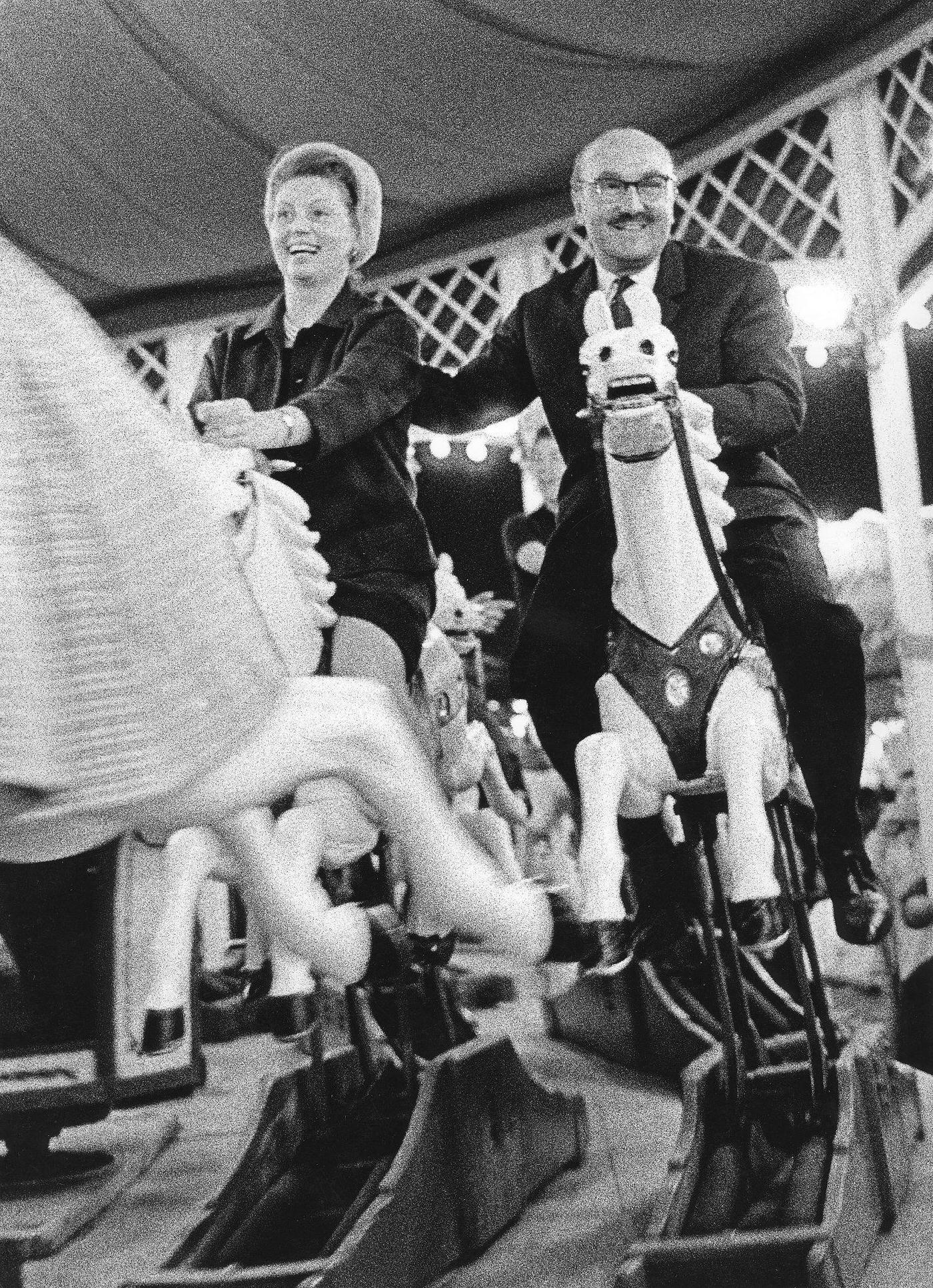
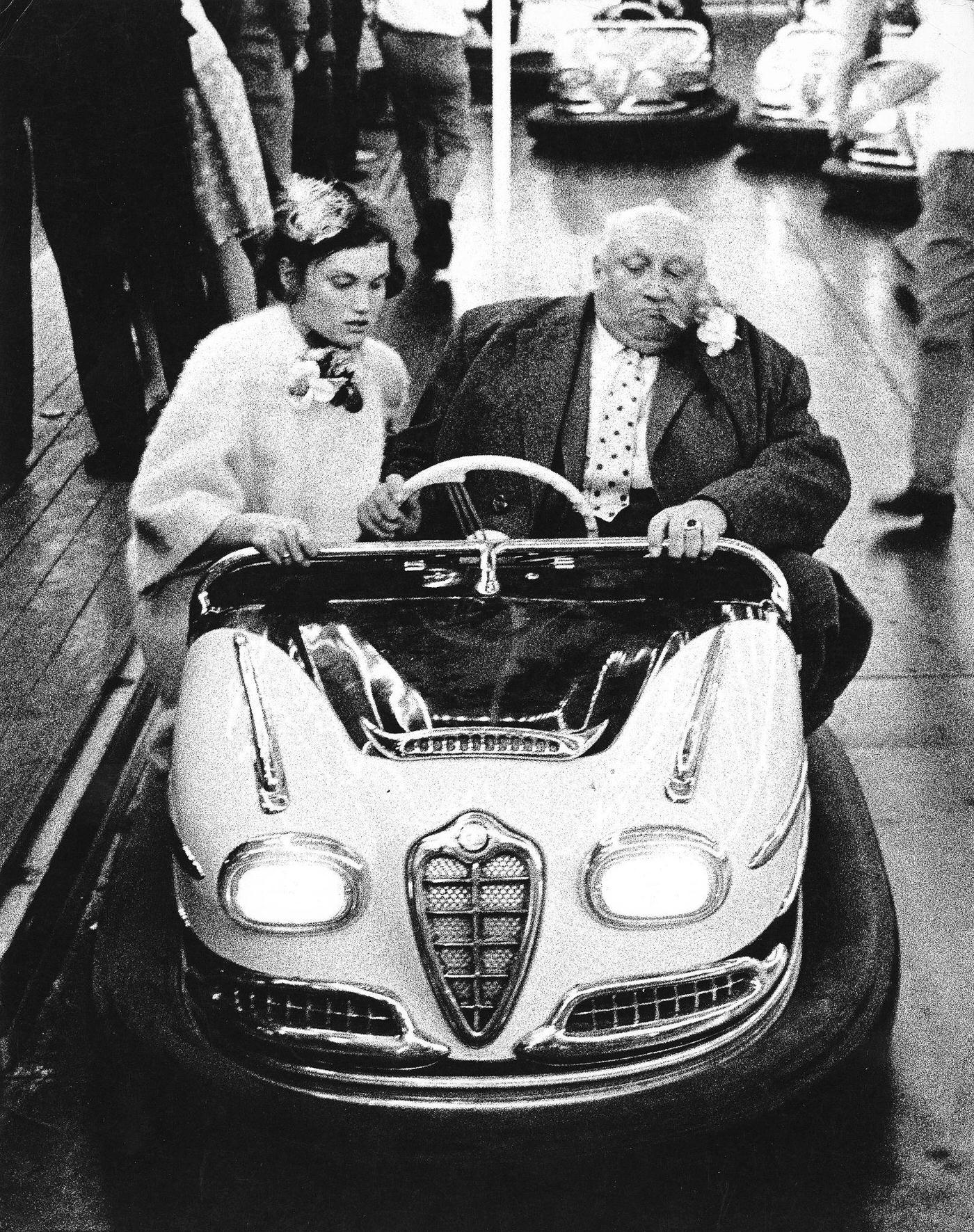
At night, the fairground lit up. Rides glowed with strings of electric lights, and the atmosphere shifted from festive afternoon to something more electric. Young people made the most of the rides and attractions, and photographs from 1965 show them clearly enjoying every moment of it.
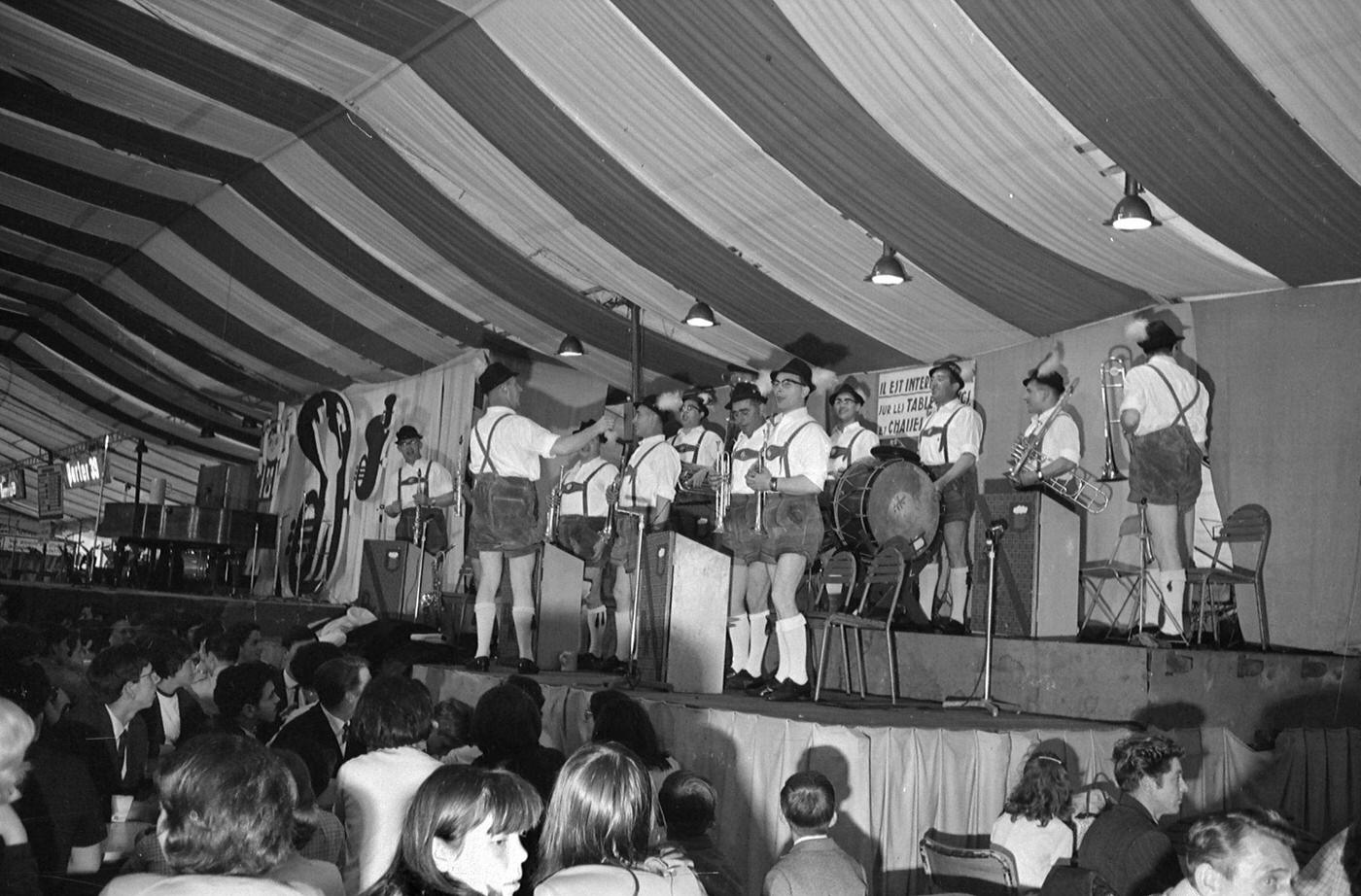
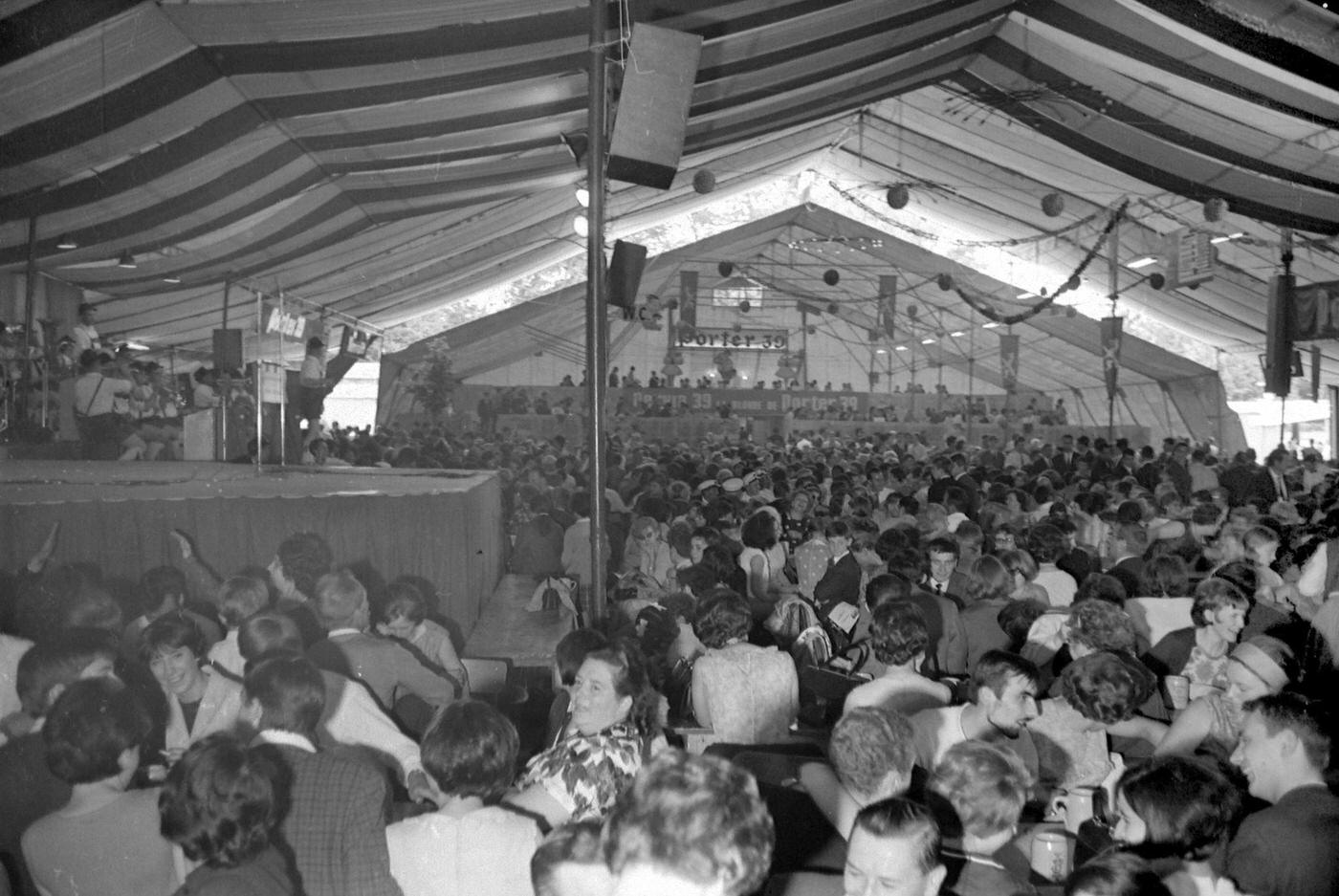
The Oktoberfest spirit spread beyond Germany’s borders. Paris held its own beer celebrations in 1966, with events that clearly drew inspiration from the Munich festival. These gatherings reflected how deeply the tradition had embedded itself in European culture by the mid-1960s.
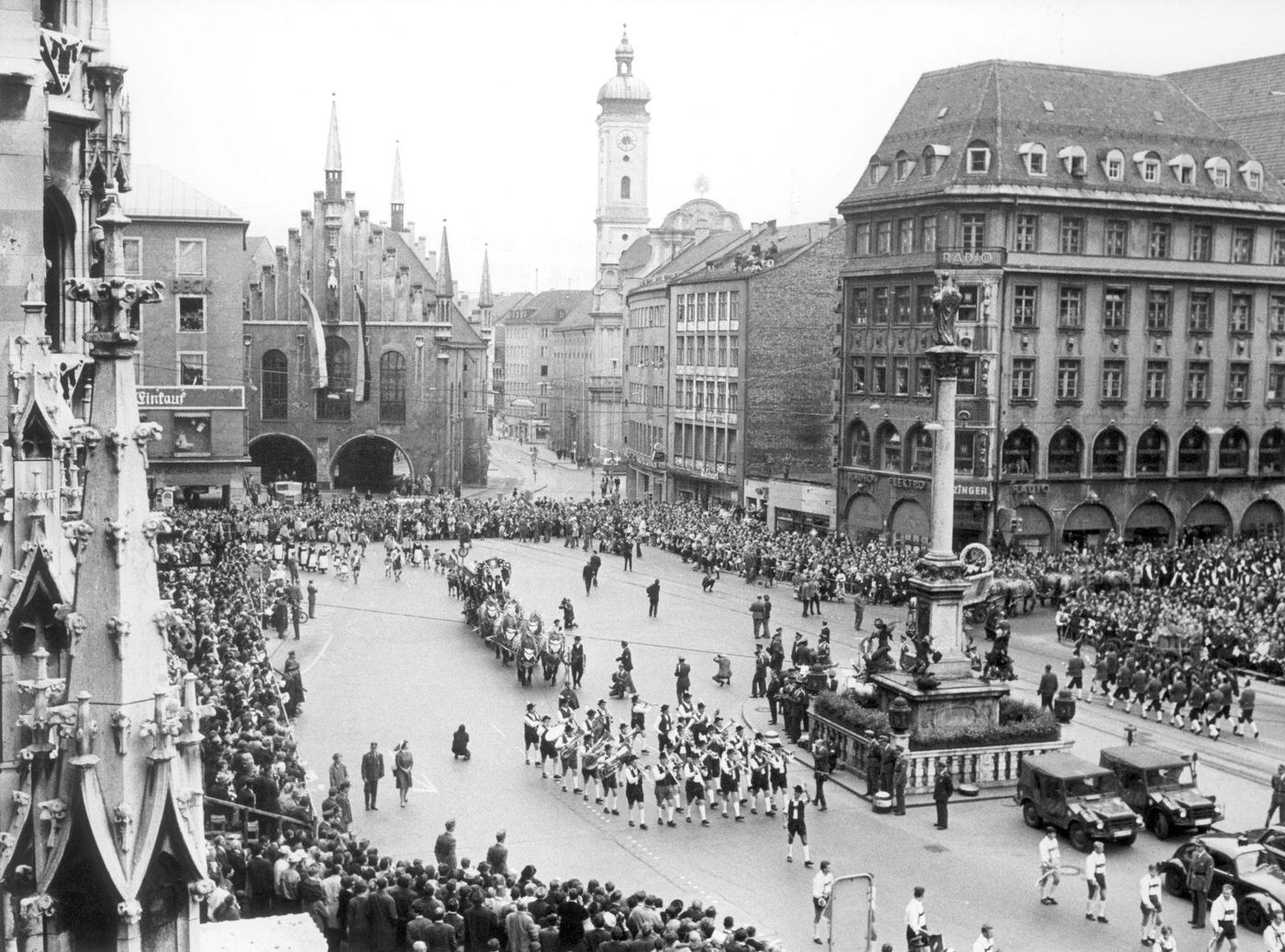
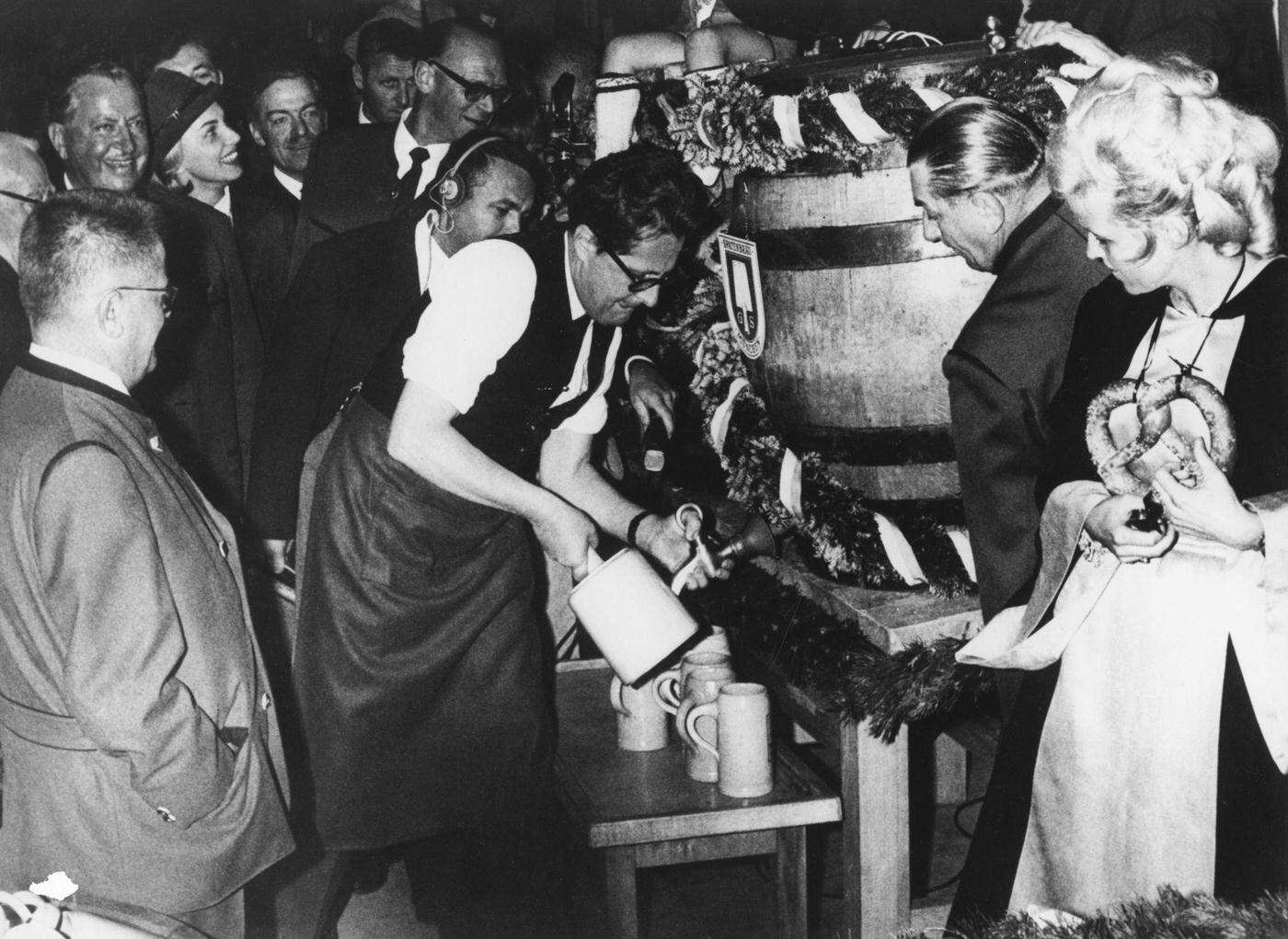
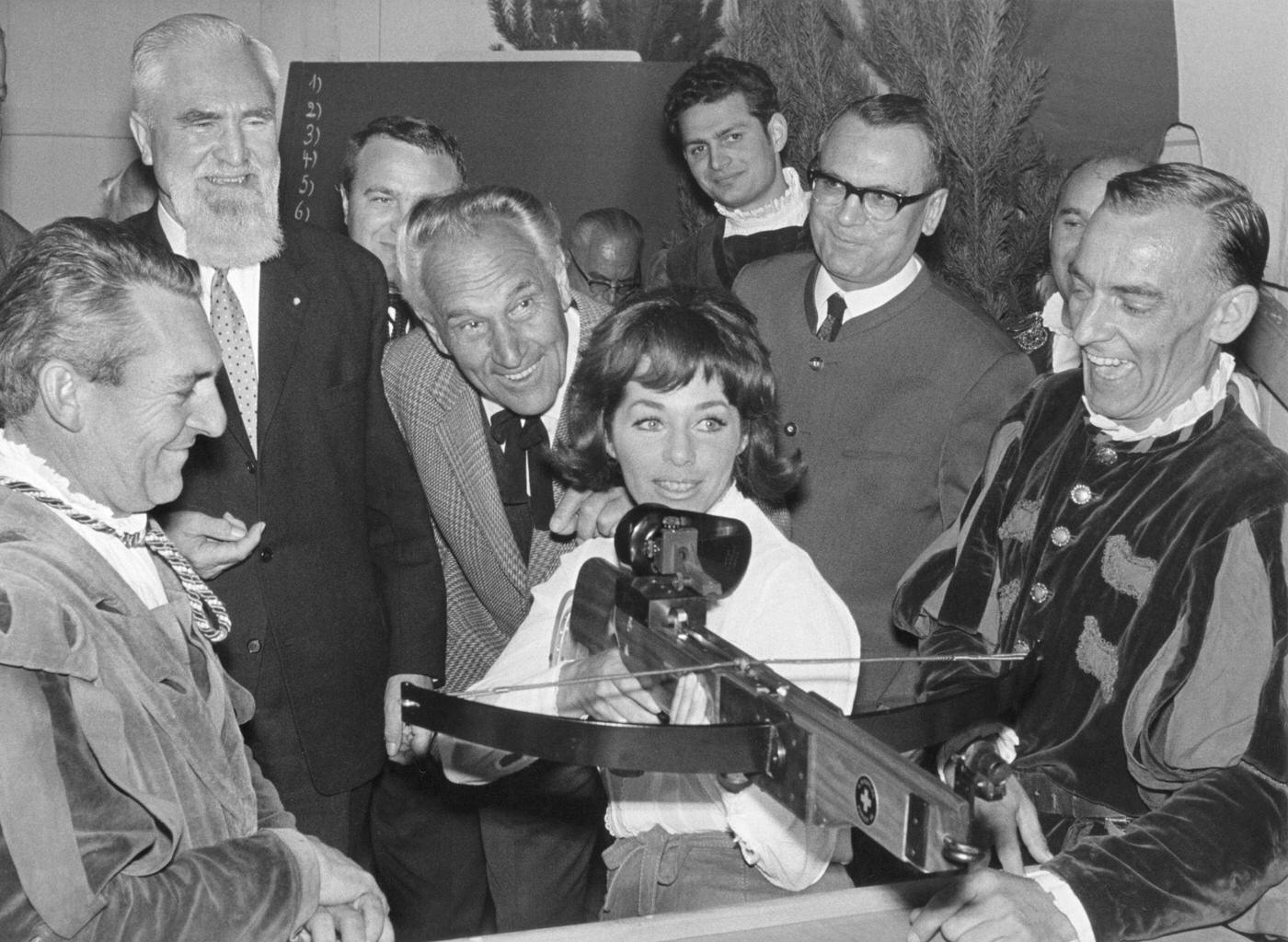
The 1966 opening parade wound through Marienplatz with the usual ceremony and fanfare. Prominent guests filled the VIP areas, and the official opening drew a large crowd even before the first barrel was tapped. By this point in the decade, Oktoberfest had developed a well-oiled structure that repeated itself year after year with only slight variations.
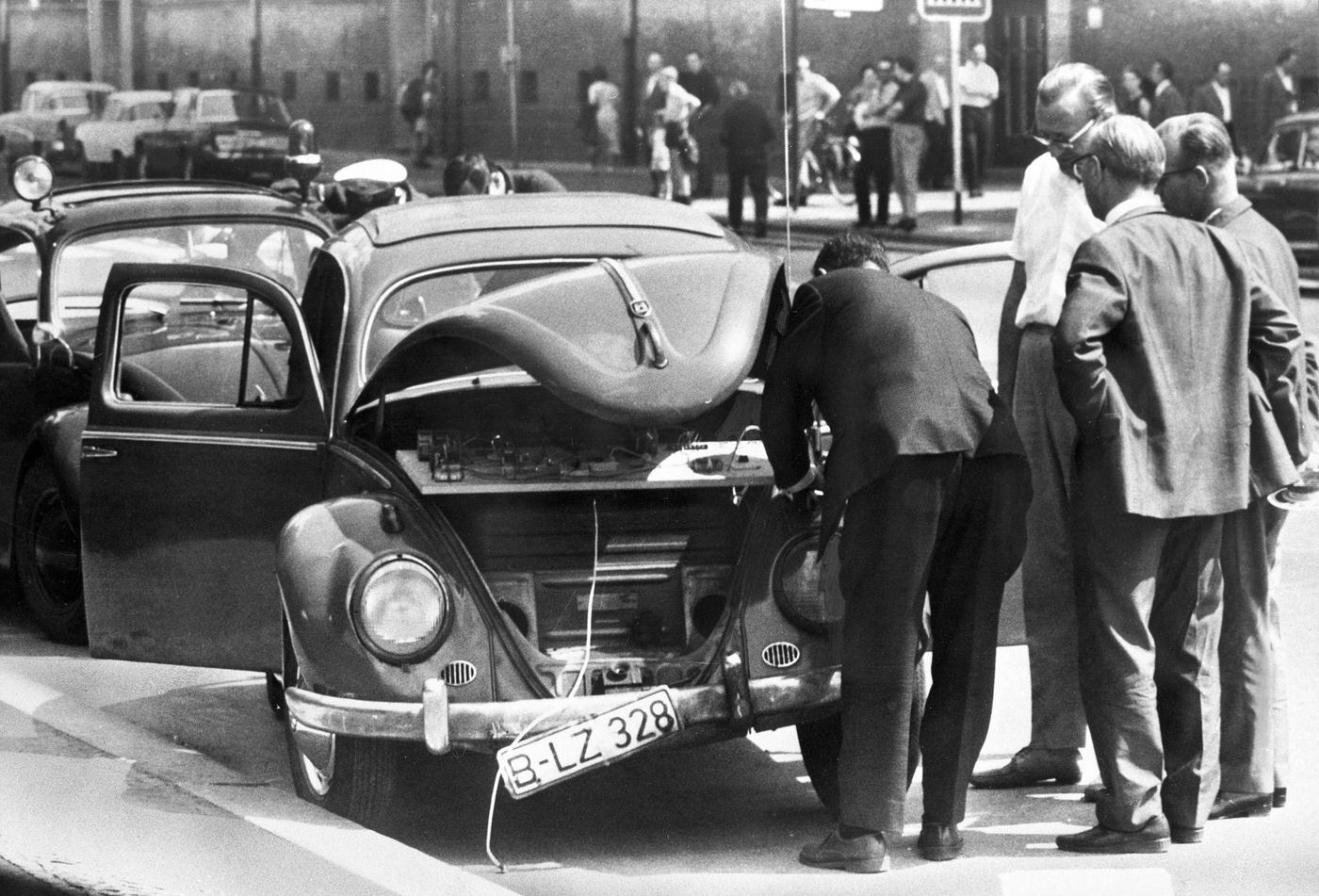
The late 1960s brought rising political tension across West Germany. In 1967, the Shah of Iran’s visit to the country sparked massive protests that turned violent in some cities. A bizarre incident — an attempted provocation involving a remote-controlled toy car directed at the Shah — illustrated the increasingly charged atmosphere that surrounded public events during that period.
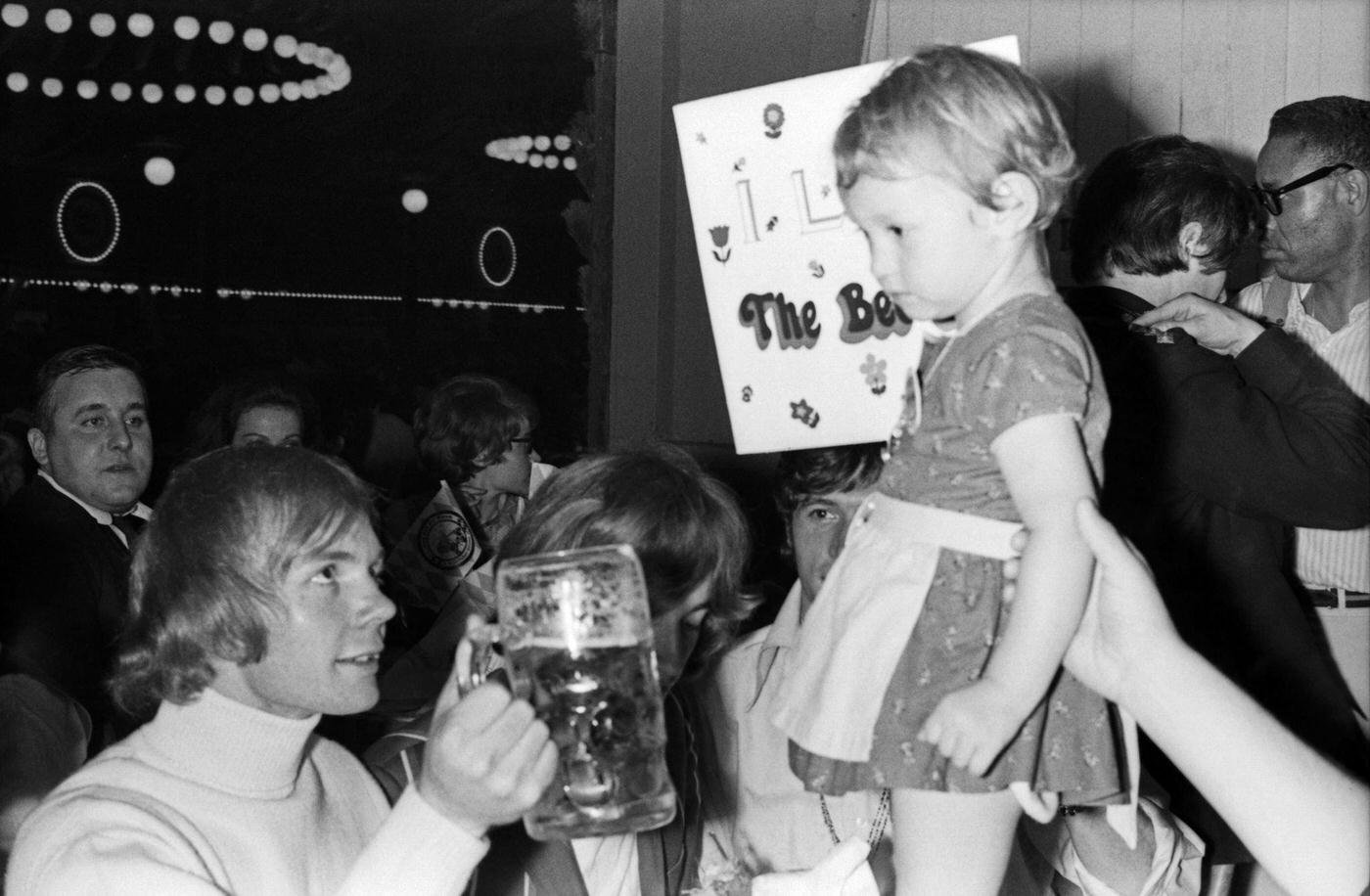
By the mid-to-late 1960s, pop celebrities were turning up at Oktoberfest as regularly as the beer barrels. The Bee Gees were photographed at the Munich festival, surrounded by fans. British singer Neil Christian also made appearances, and the tents attracted a celebrity scene that added a new layer to the festival’s identity.
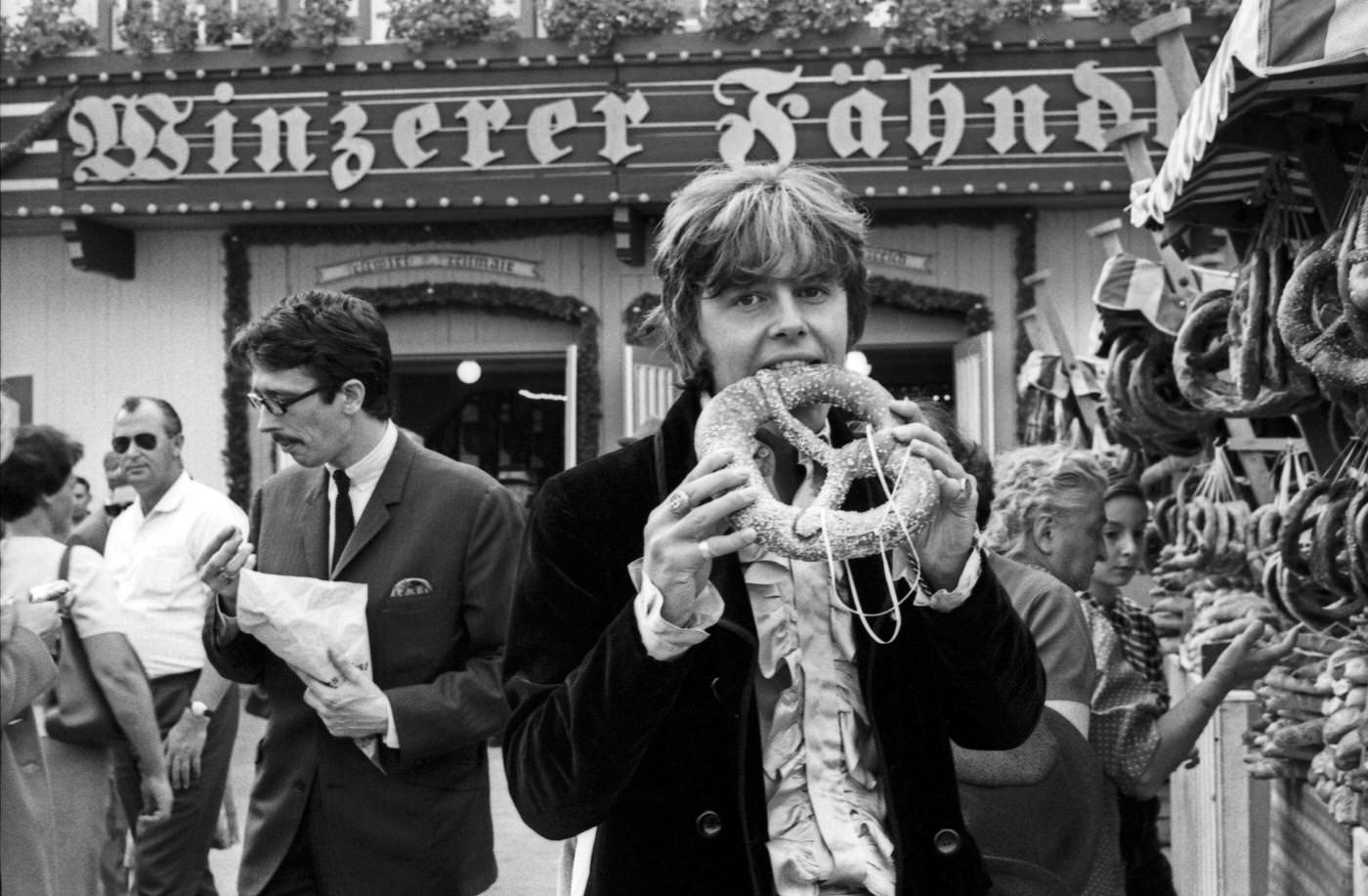
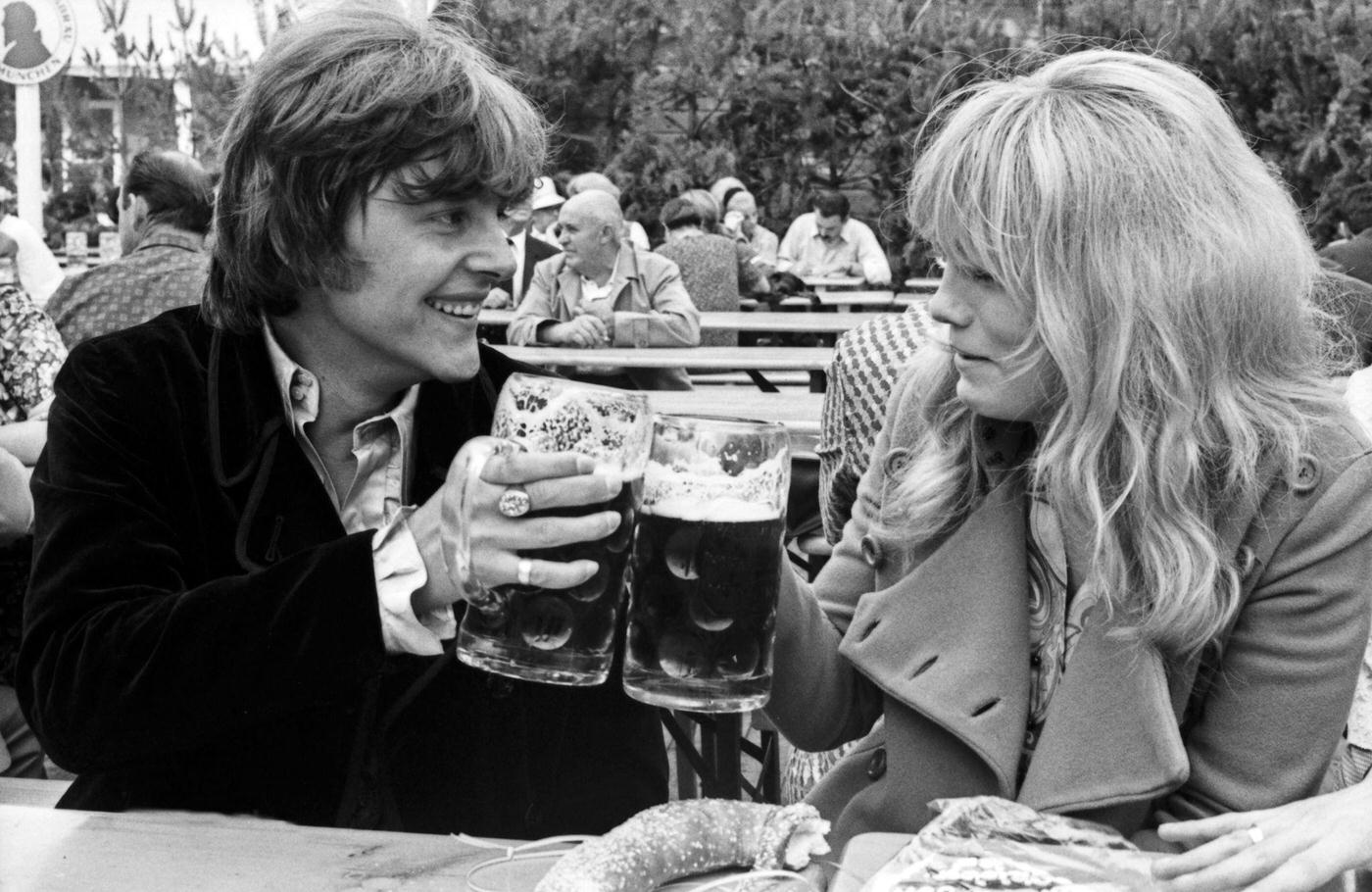
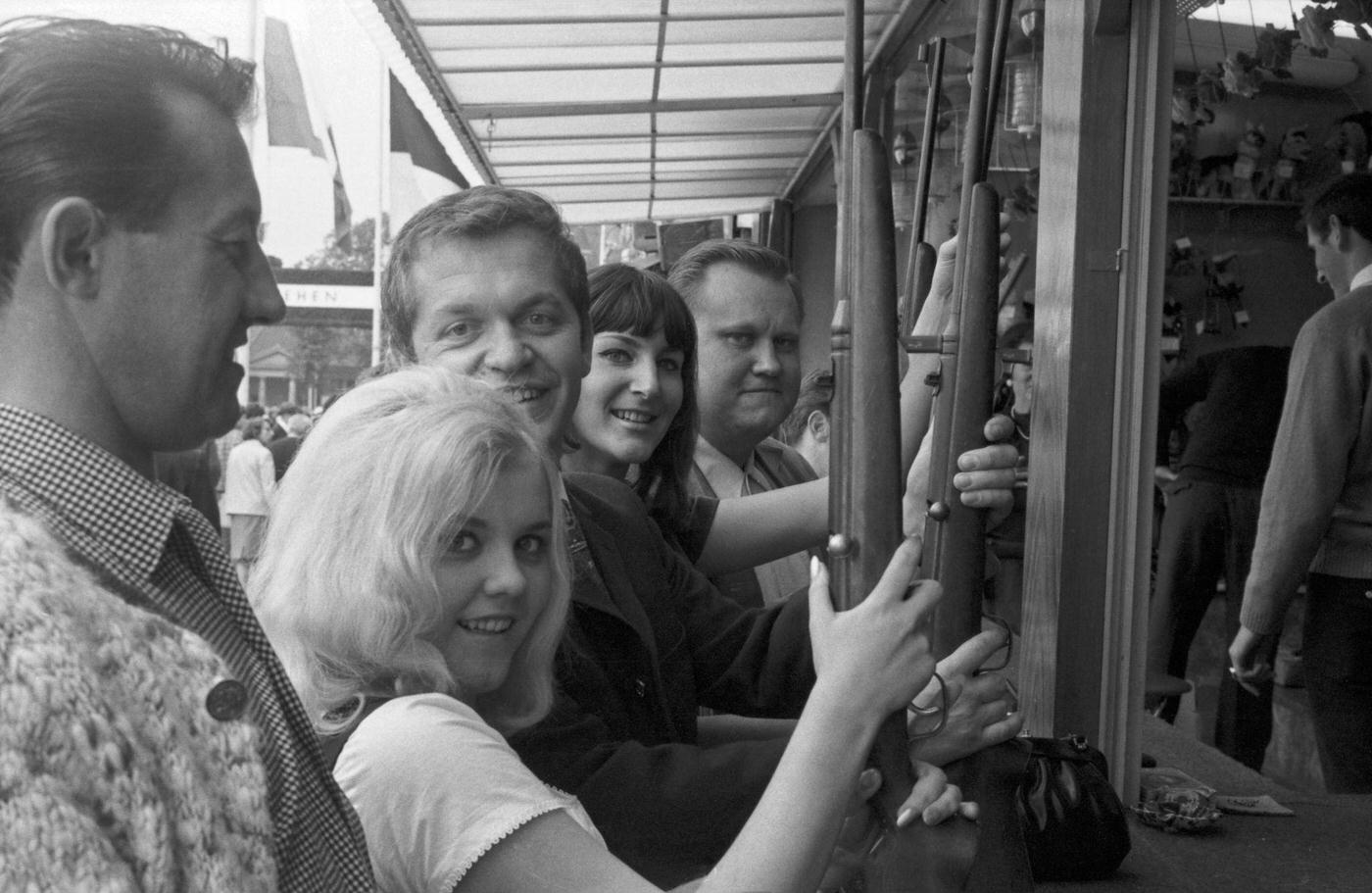
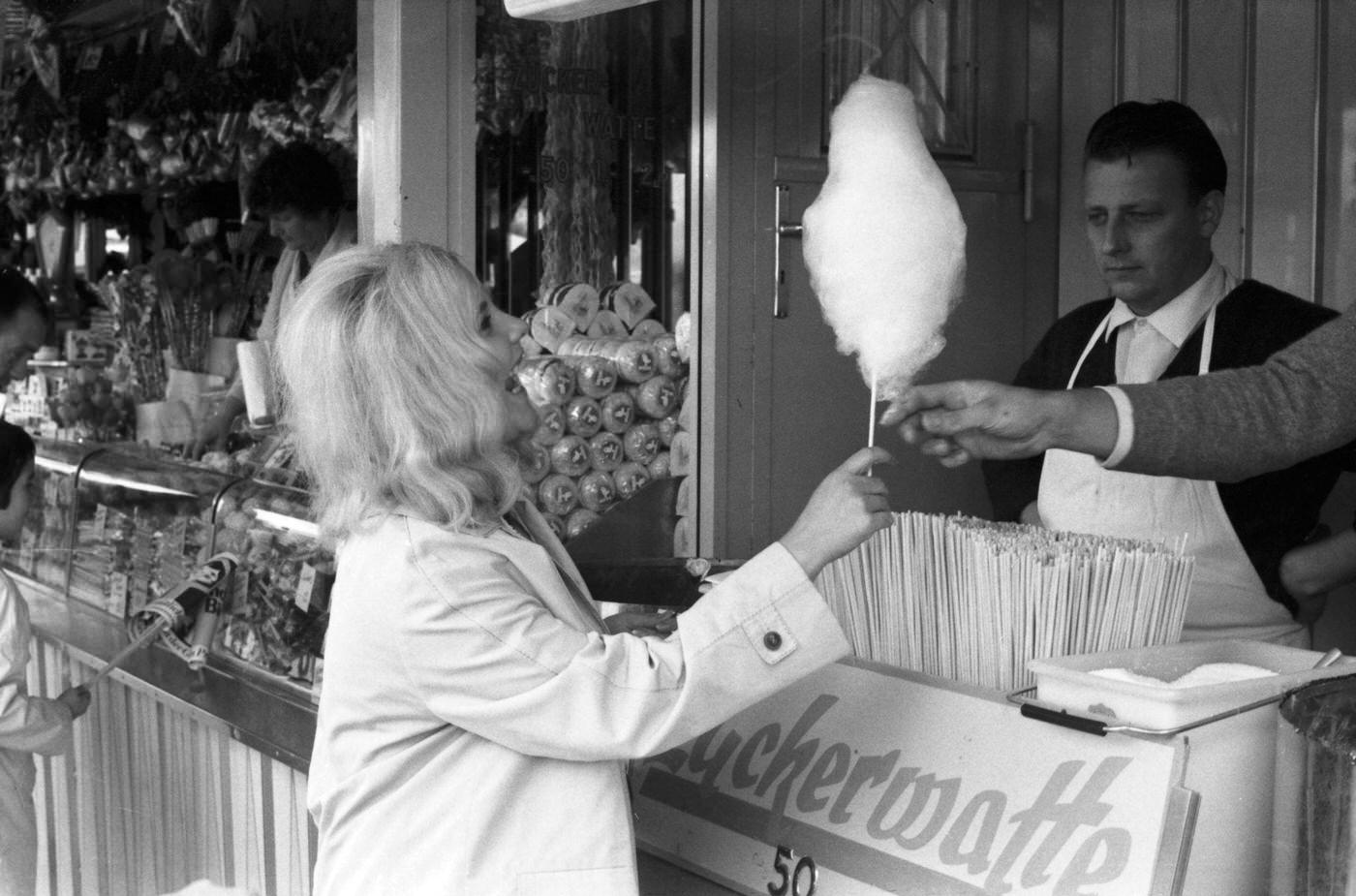
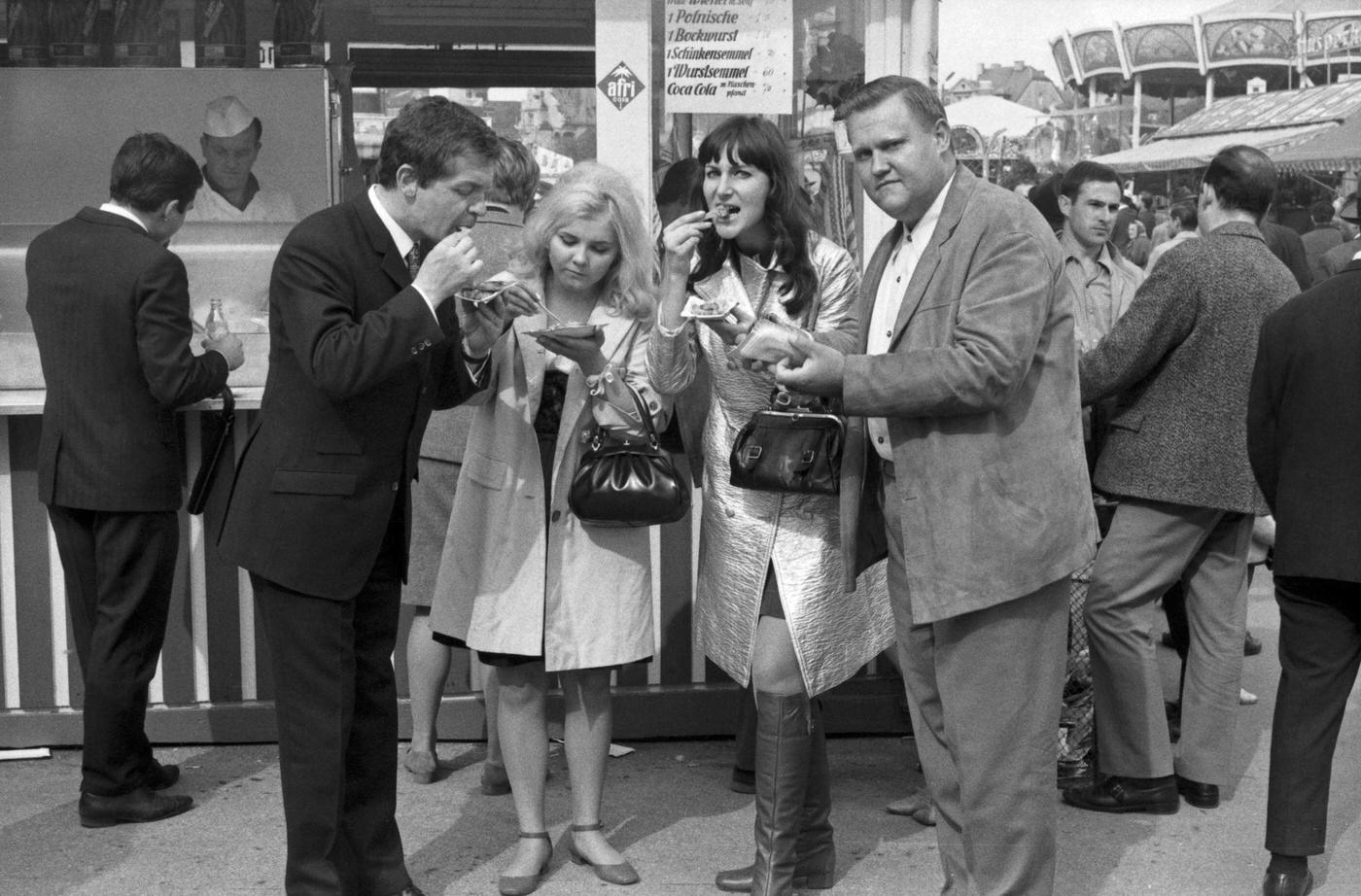
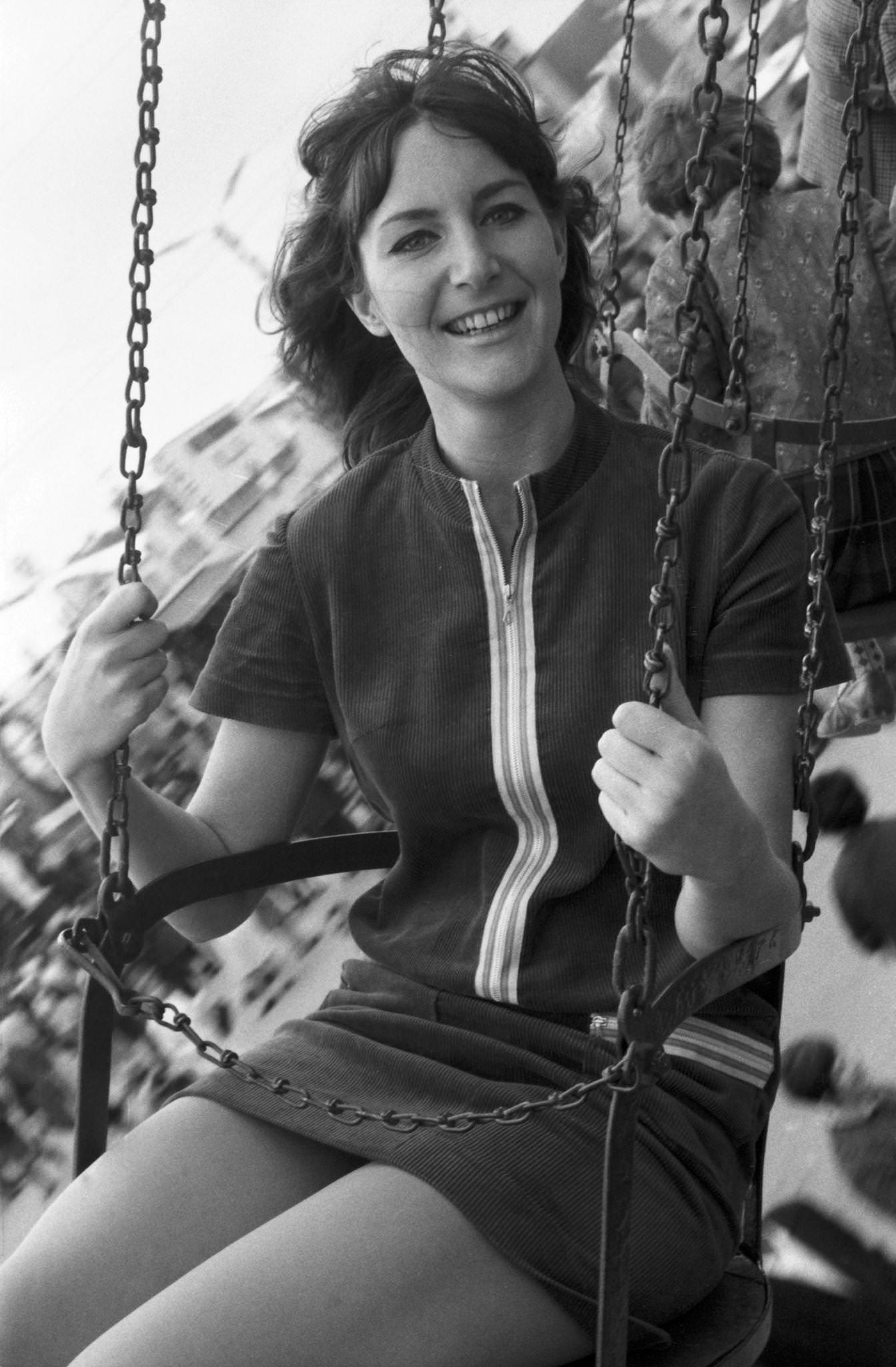
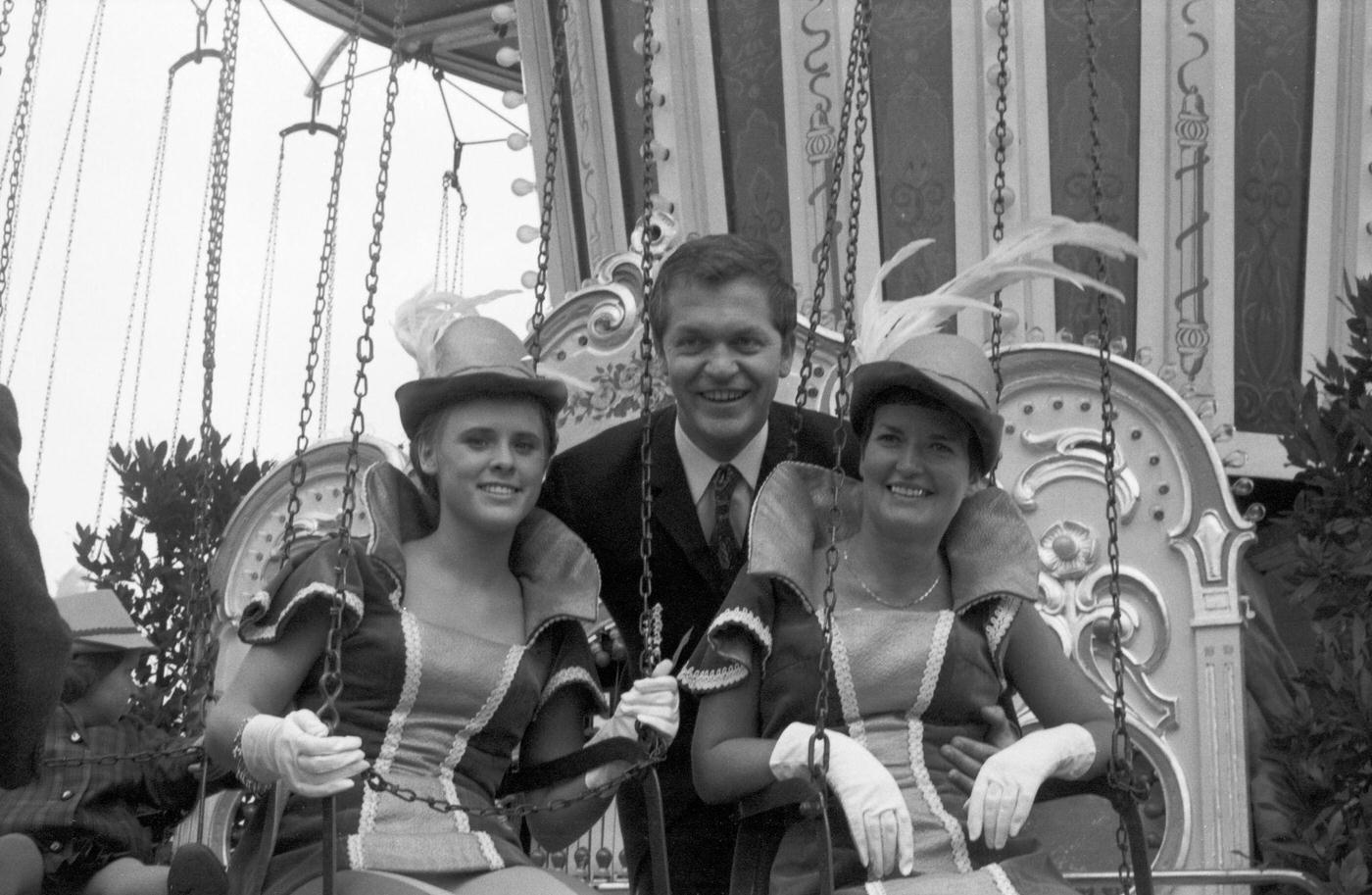
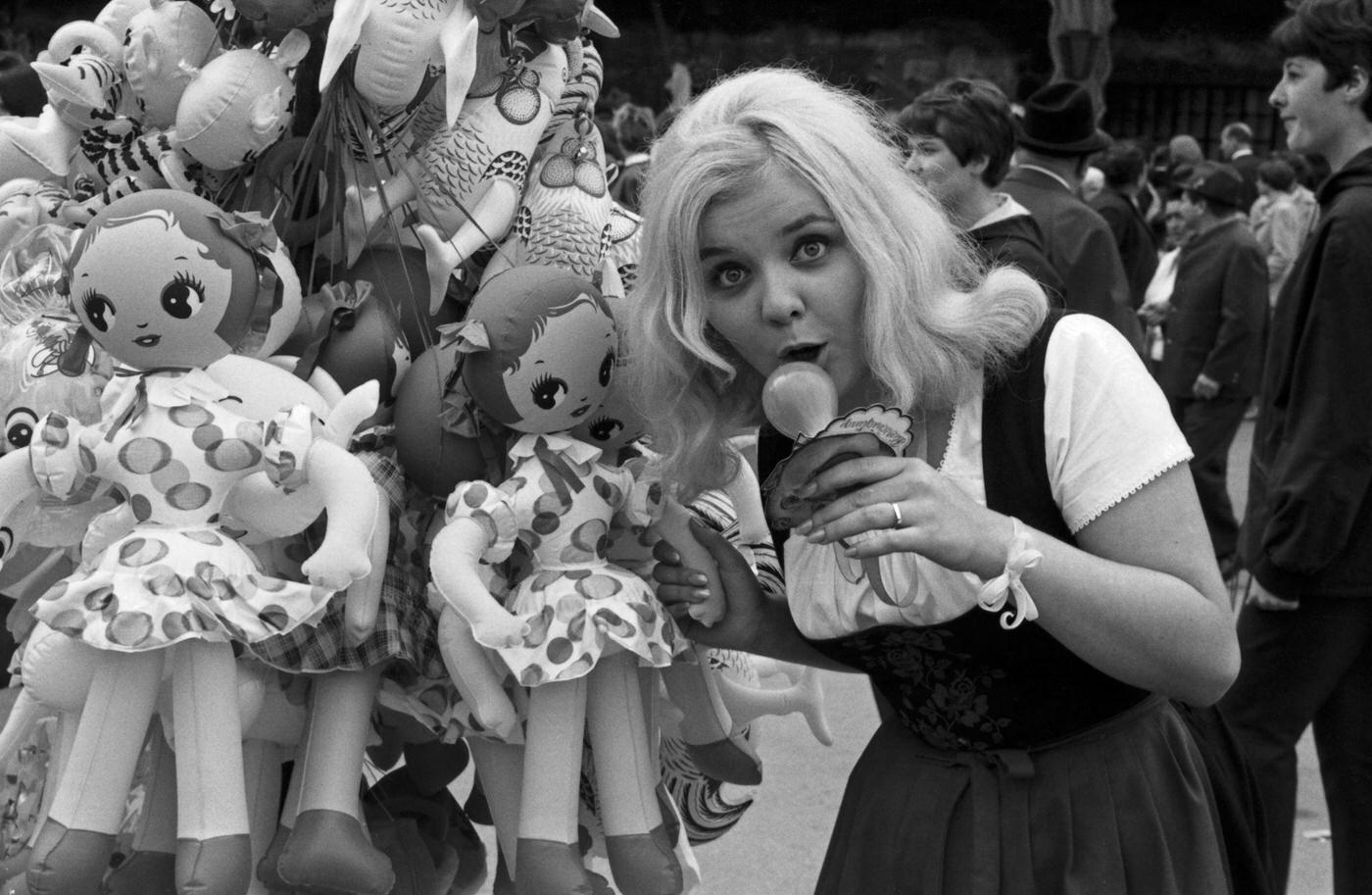
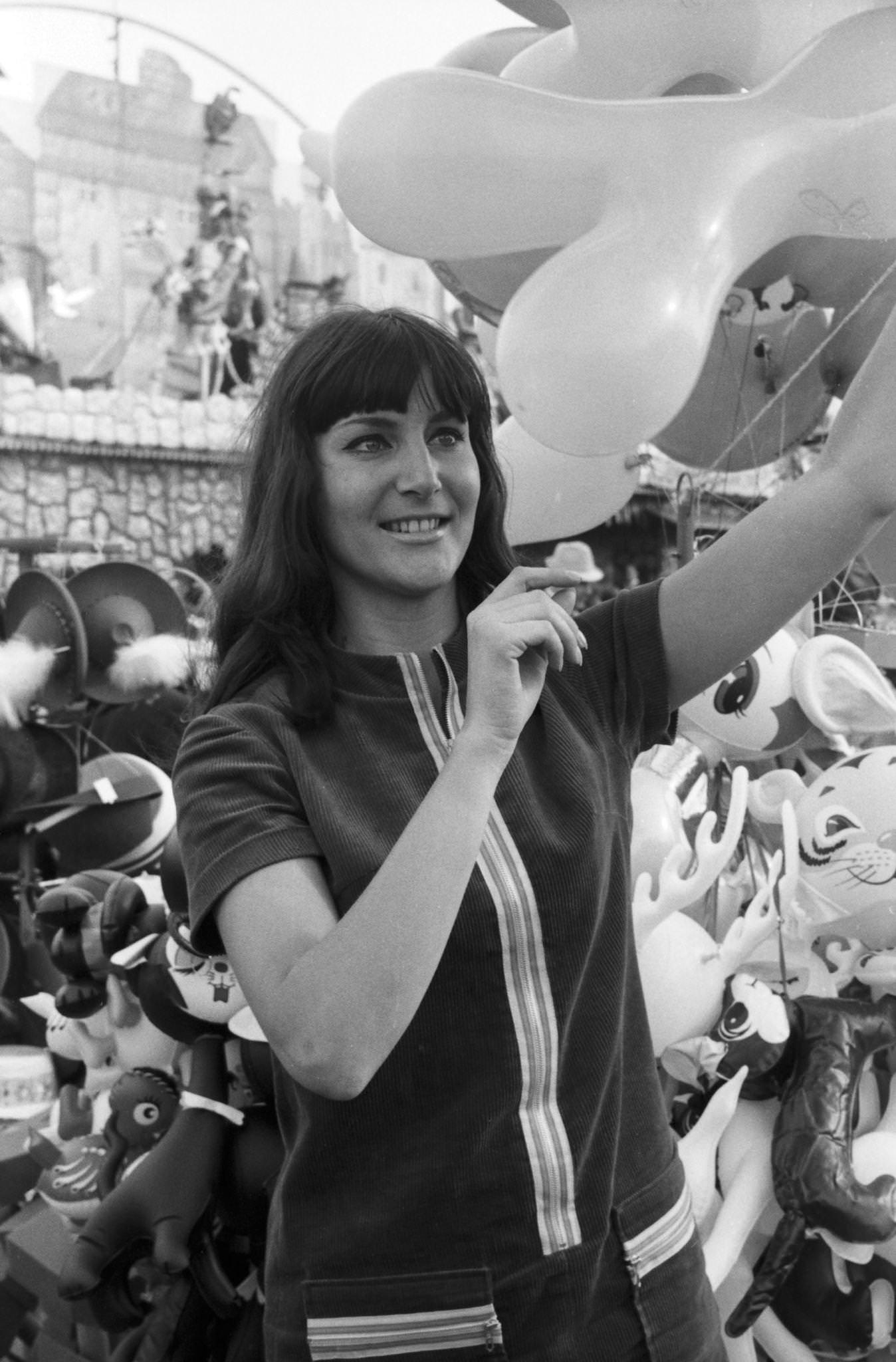
Entertainers Jessy, Maria Duval, Joe Raphael, and Heinz Jürgens were among the celebrities photographed at Munich’s Oktoberfest during the decade. Their visits were well-documented, and the resulting photos showed a festival where the worlds of traditional Bavarian culture and mainstream European entertainment had thoroughly merged.
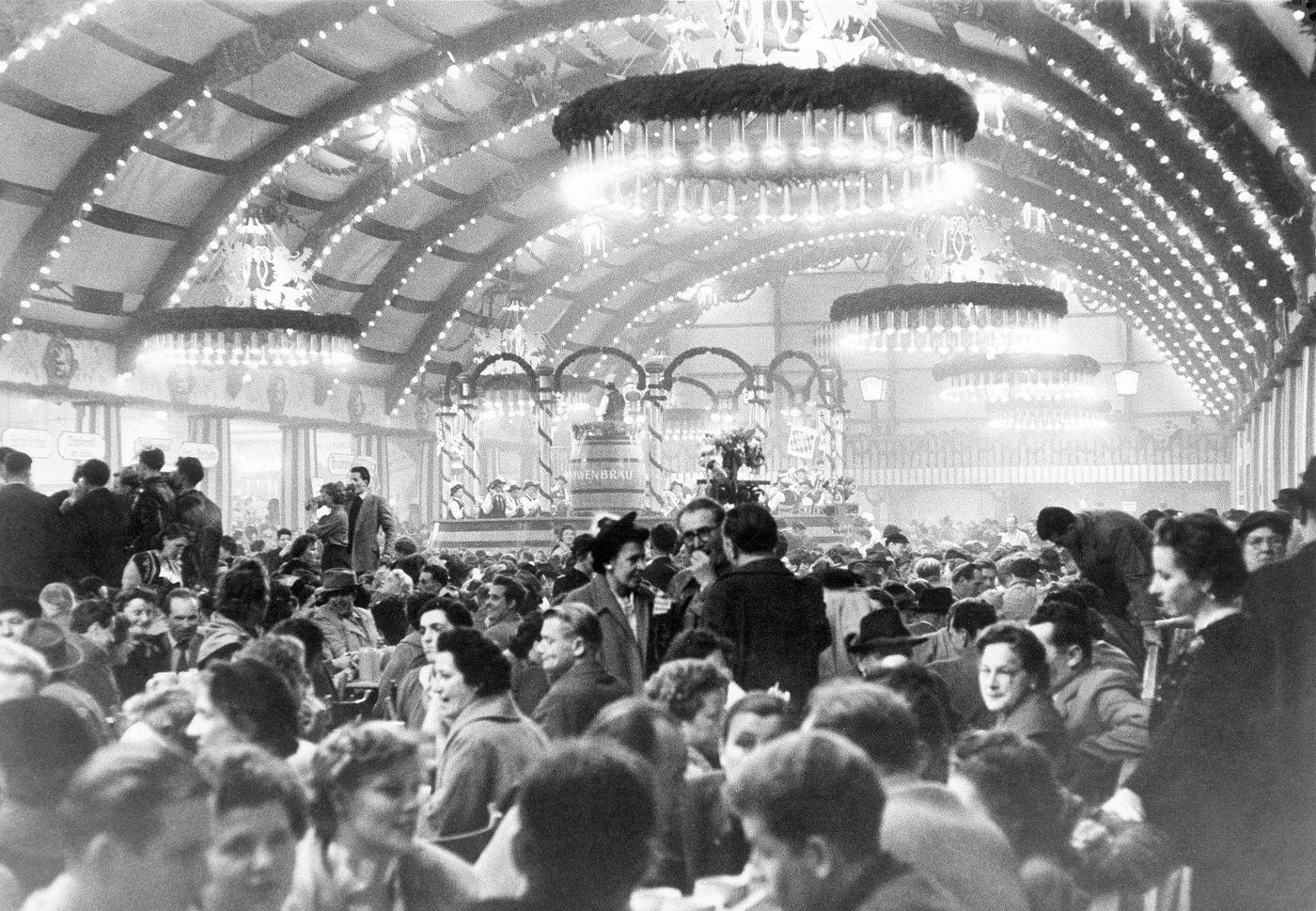
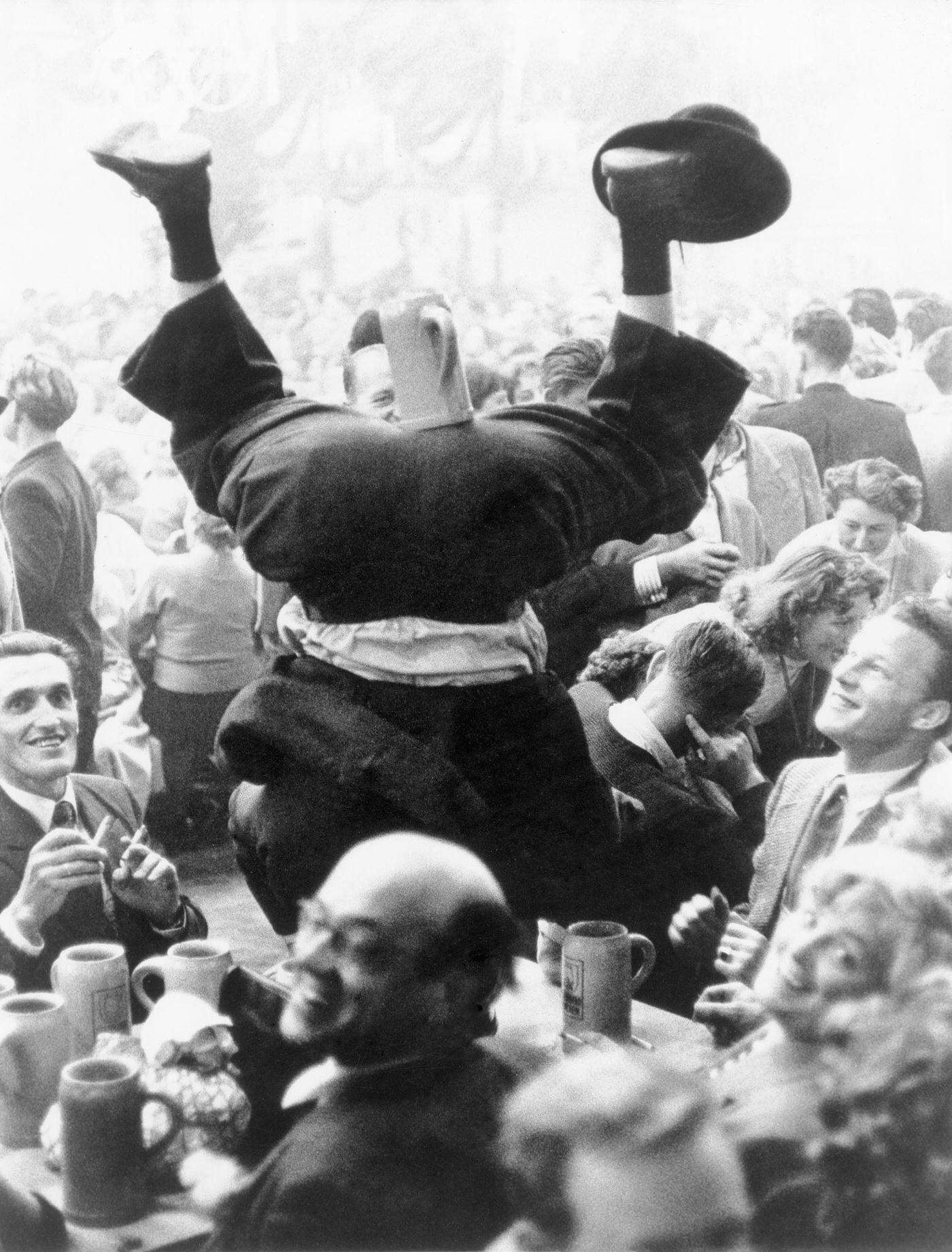
Inside the tents, the atmosphere in 1968 was as rowdy as ever. One photograph shows a reveler doing a headstand on the beer tent tables — a good snapshot of how uninhibited the celebrations could get. The tents were loud, crowded, and by late evening, completely chaotic in the best possible way.
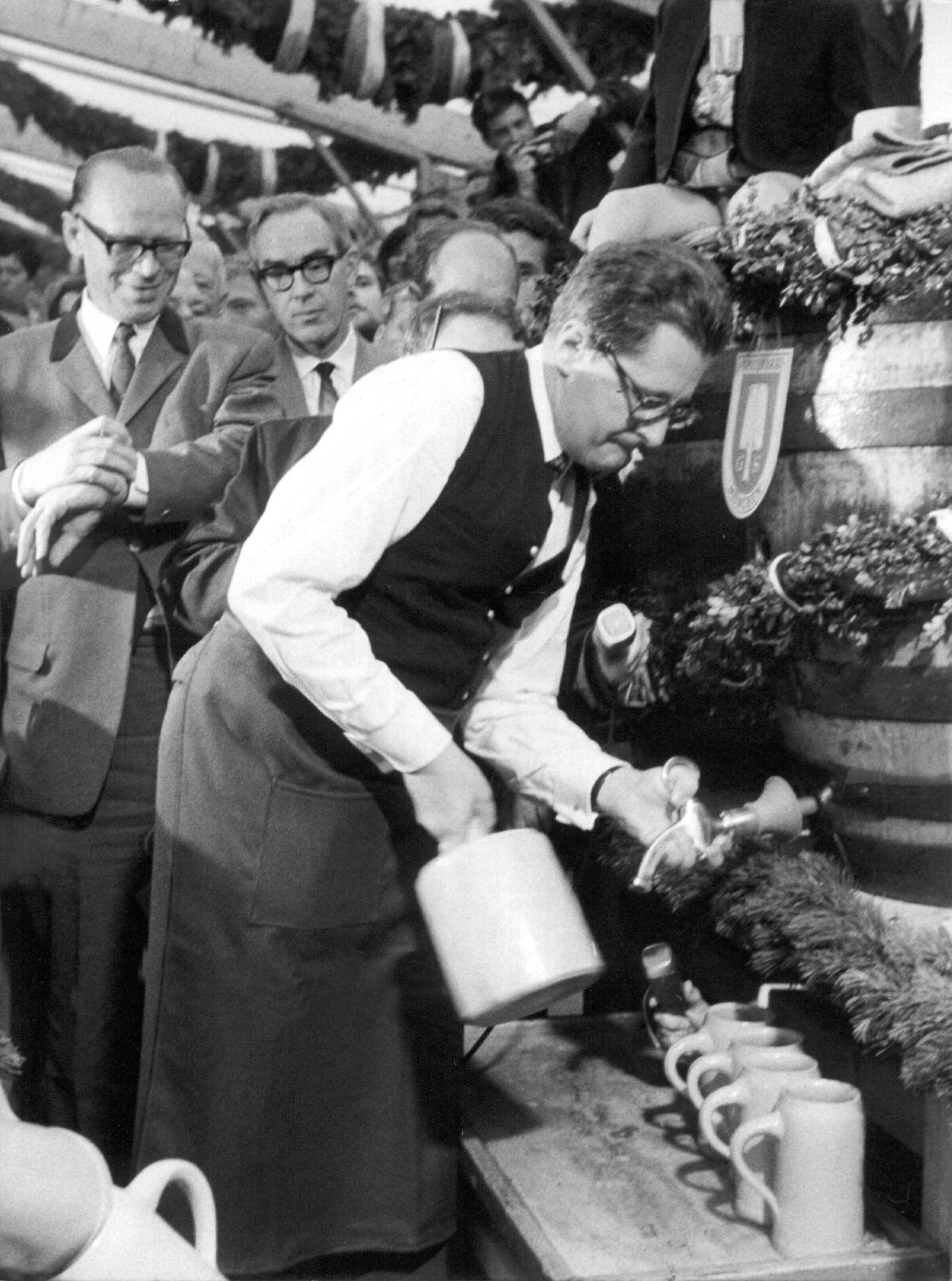
Mayor Hans-Jochen Vogel tapped the first barrel at the 1968 festival, continuing the long-standing ceremonial tradition. Band leader Jochen Brauer was a fixture of the musical program, keeping the tents energized throughout the event. These were the kinds of reliable anchors that gave Oktoberfest its year-to-year consistency.
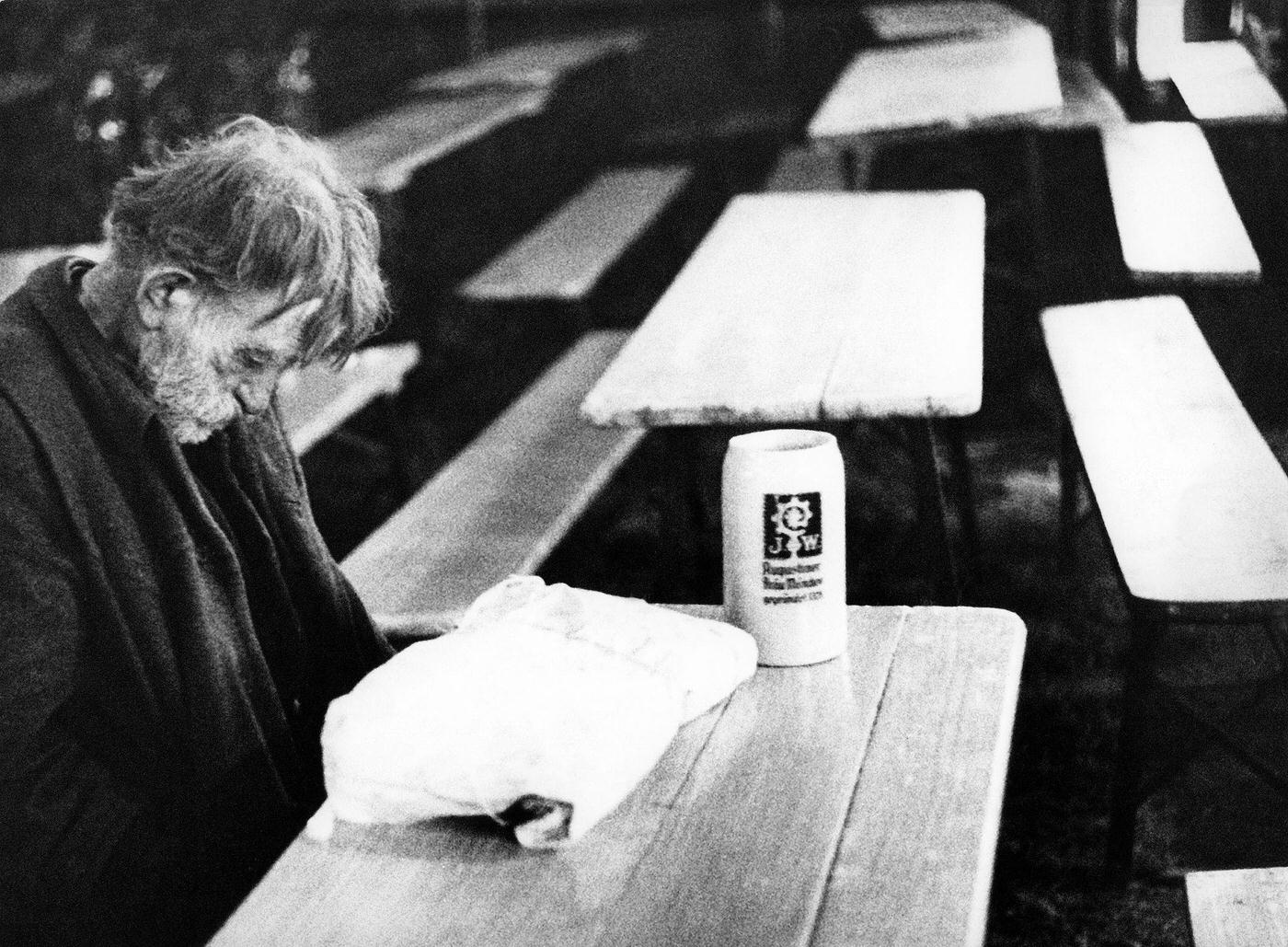
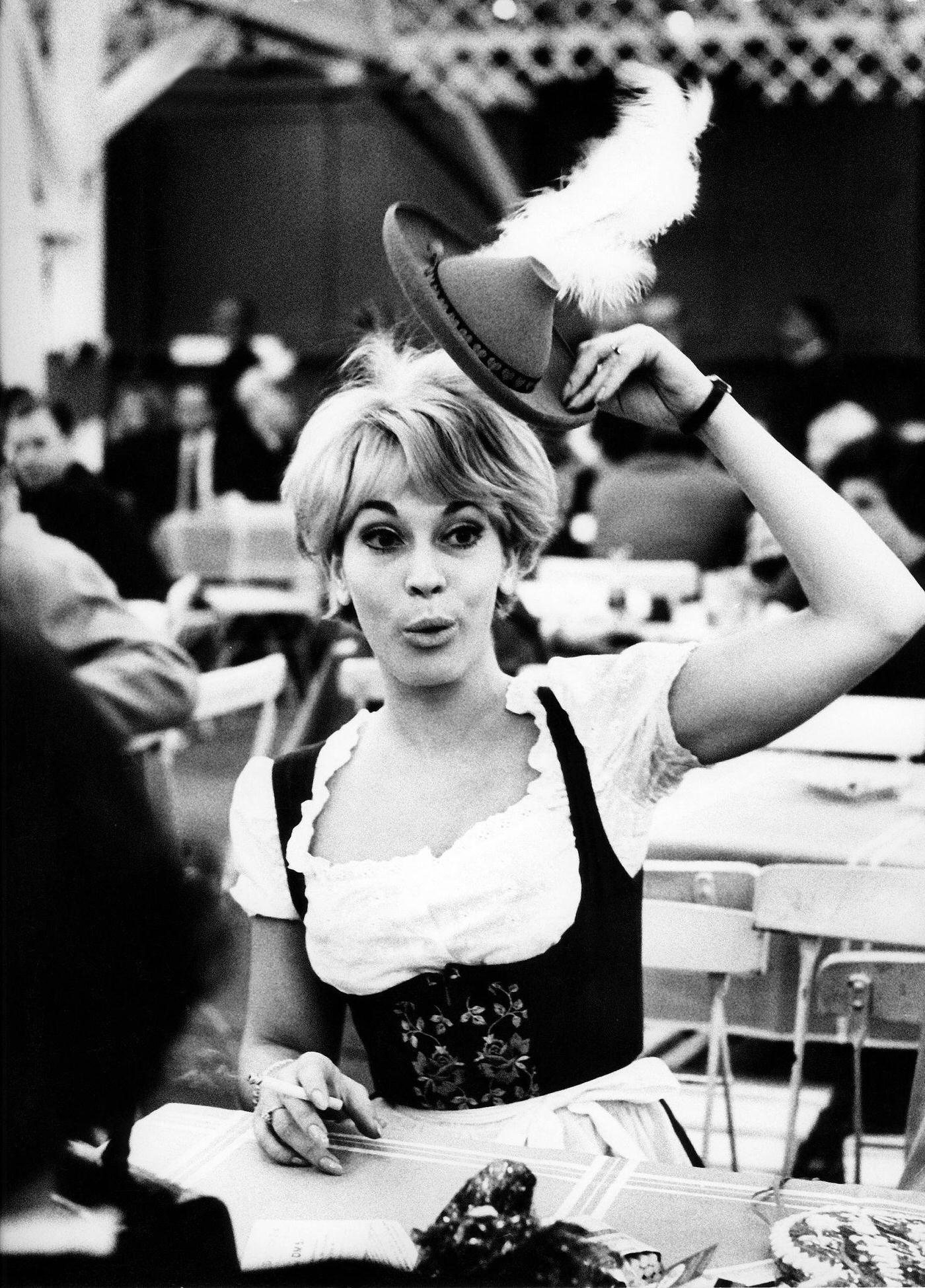
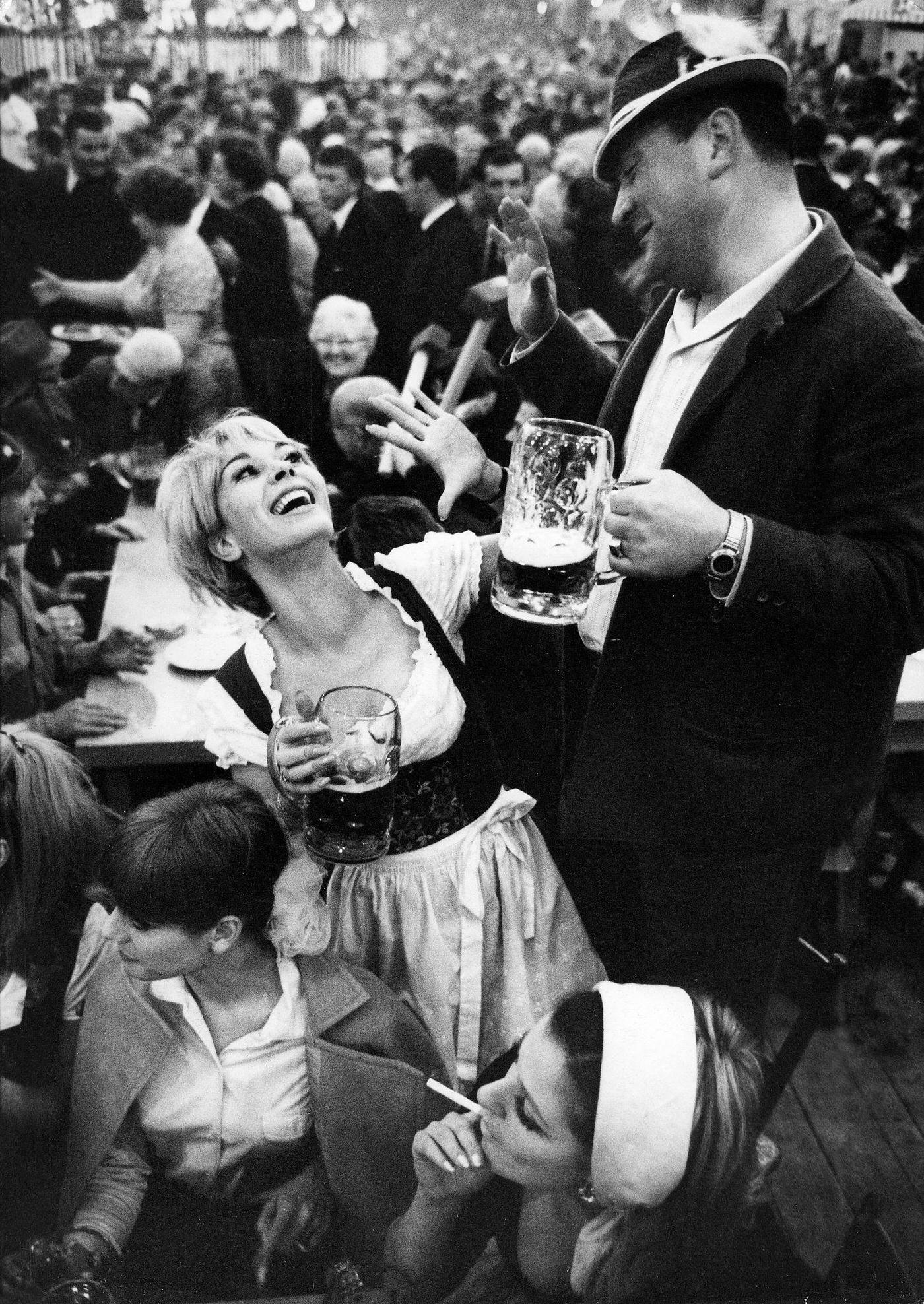
The scenes inside the 1968 tents ranged from joyful to exhausted. One photograph shows a man slumped asleep in front of his stein, while others capture women laughing and groups of visitors raising their glasses. These candid shots offer an unfiltered look at what the festival actually felt like from inside the crowd.
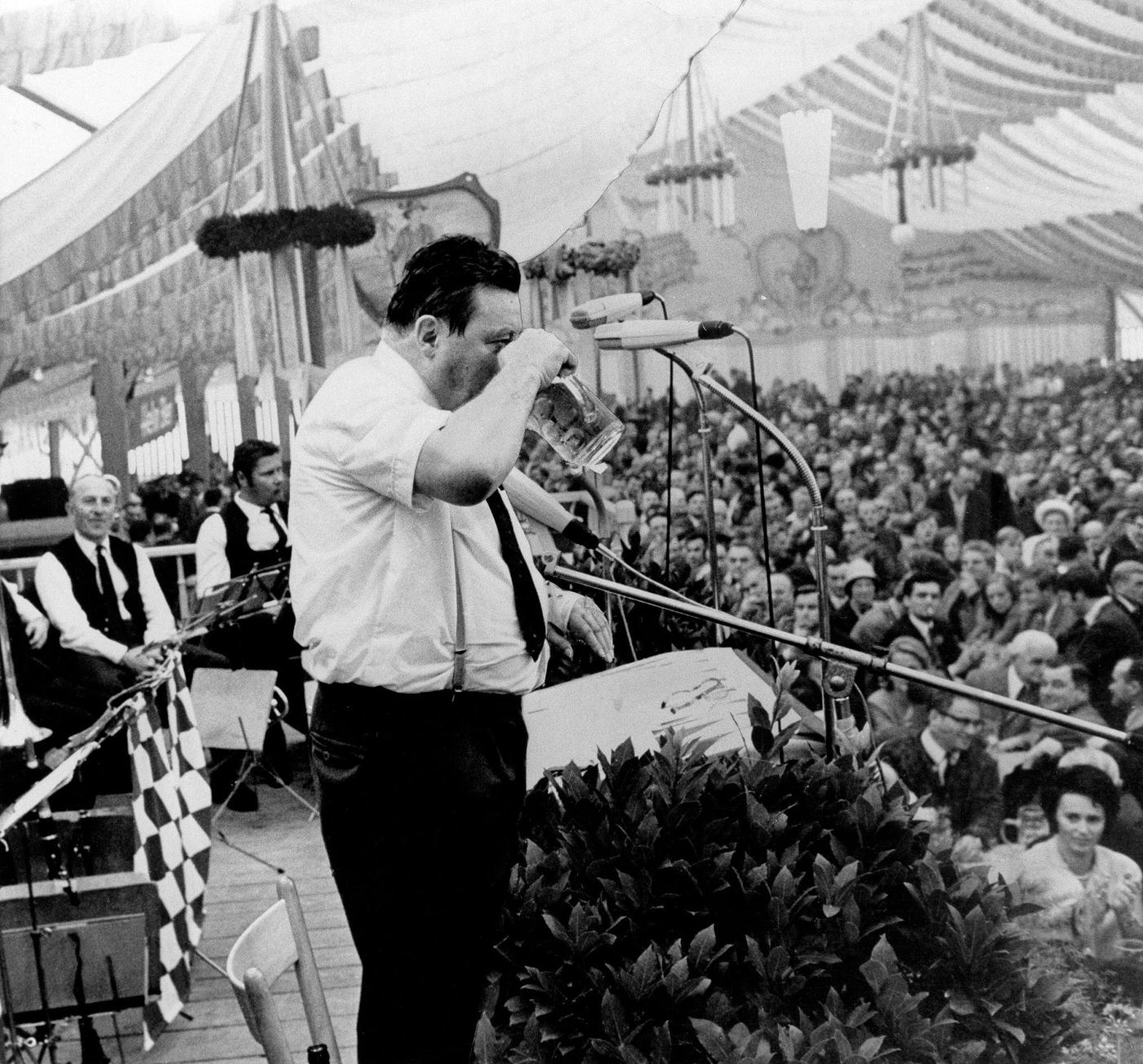
As the decade closed, the political dimension of Oktoberfest remained visible. Franz Josef Strauss, one of West Germany’s most powerful politicians, gave a speech at the 1969 festival. Oktoberfest had always been a place where Bavarian identity and German politics intersected, and Strauss — a dominant figure in both — used the platform accordingly.
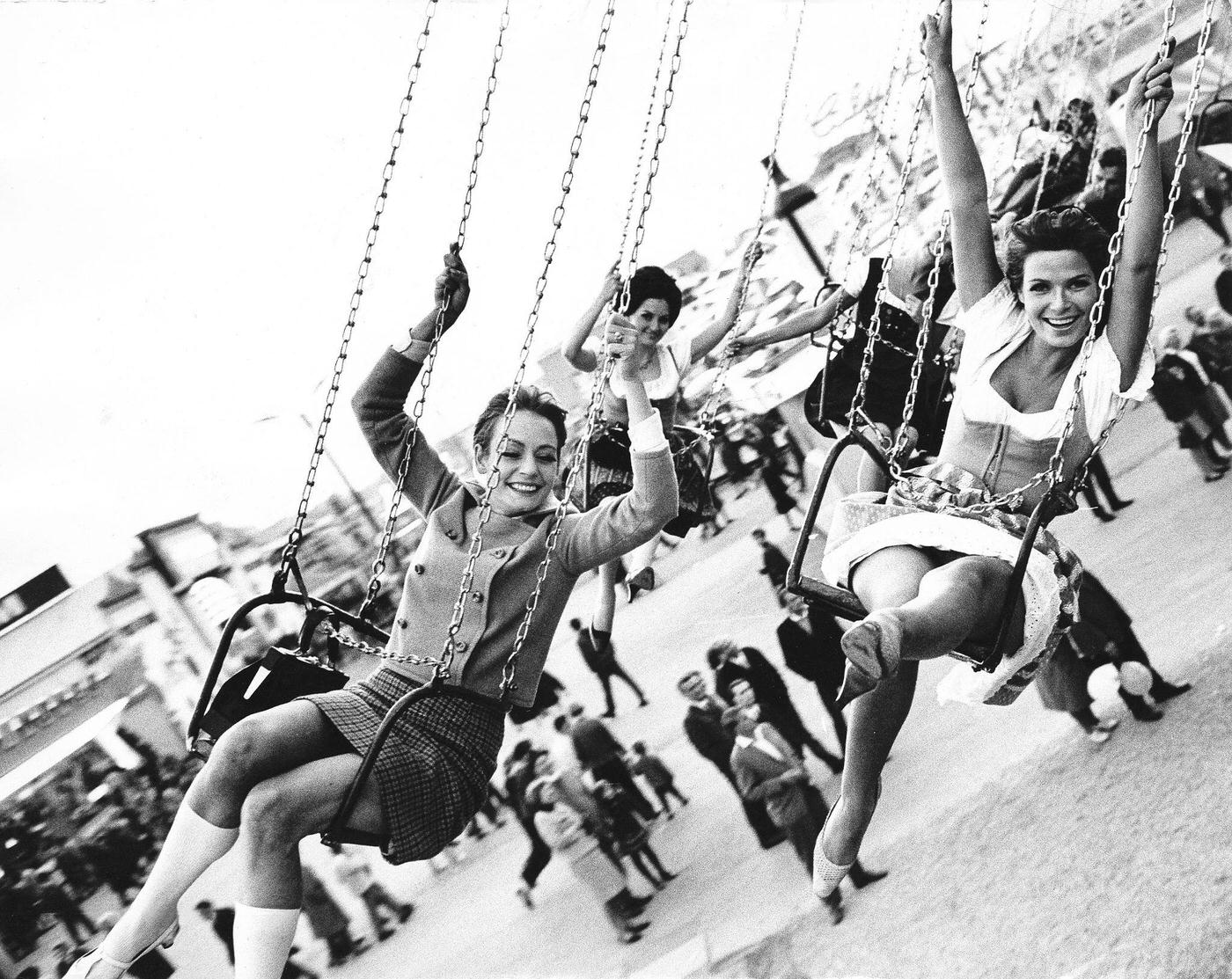
The chairplane ride — seats suspended from a spinning frame by chains — was a staple of the fairground and a favorite for the younger crowd. As 1969 drew to a close, Oktoberfest wrapped up the decade much as it had started: loud, crowded, and packed with people who had traveled from across Europe and beyond to be part of it.