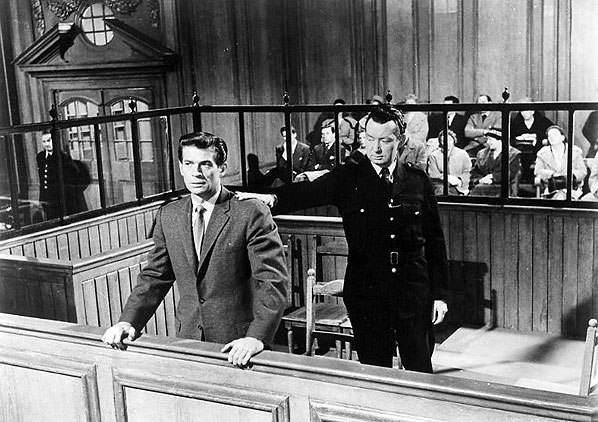
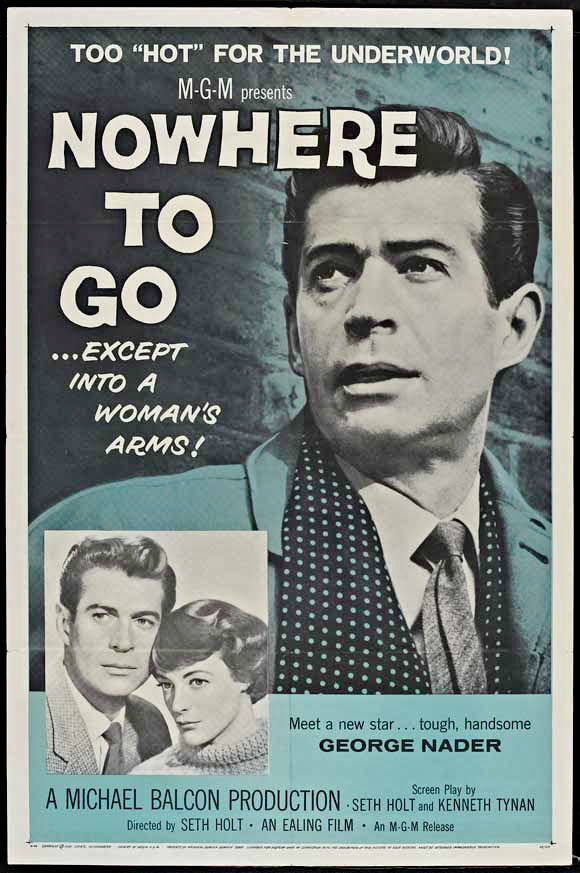
Released in 1958, Nowhere to Go is a British crime drama that holds a firm place in the history of the genre. Directed by Seth Holt, the film stars George Nader, Maggie Smith, and Bernard Lee. It tells the story of a small-time crook who steals money from a wealthy businessman and quickly finds himself trapped in a dangerous web with no easy way out. The film’s dark, brooding atmosphere sets it apart from lighter fare of the era, presenting crime and criminal life in the 1950s with a raw, unglamorous edge.

George Nader plays the lead role, bringing a restrained intensity to his character. He portrays a man who is neither a romantic hero nor a cartoonish villain — just someone in over his head, making bad choices under pressure. The film doesn’t soften his predicament. Every decision he makes tightens the situation around him, and Seth Holt’s direction keeps the tension coiled throughout.
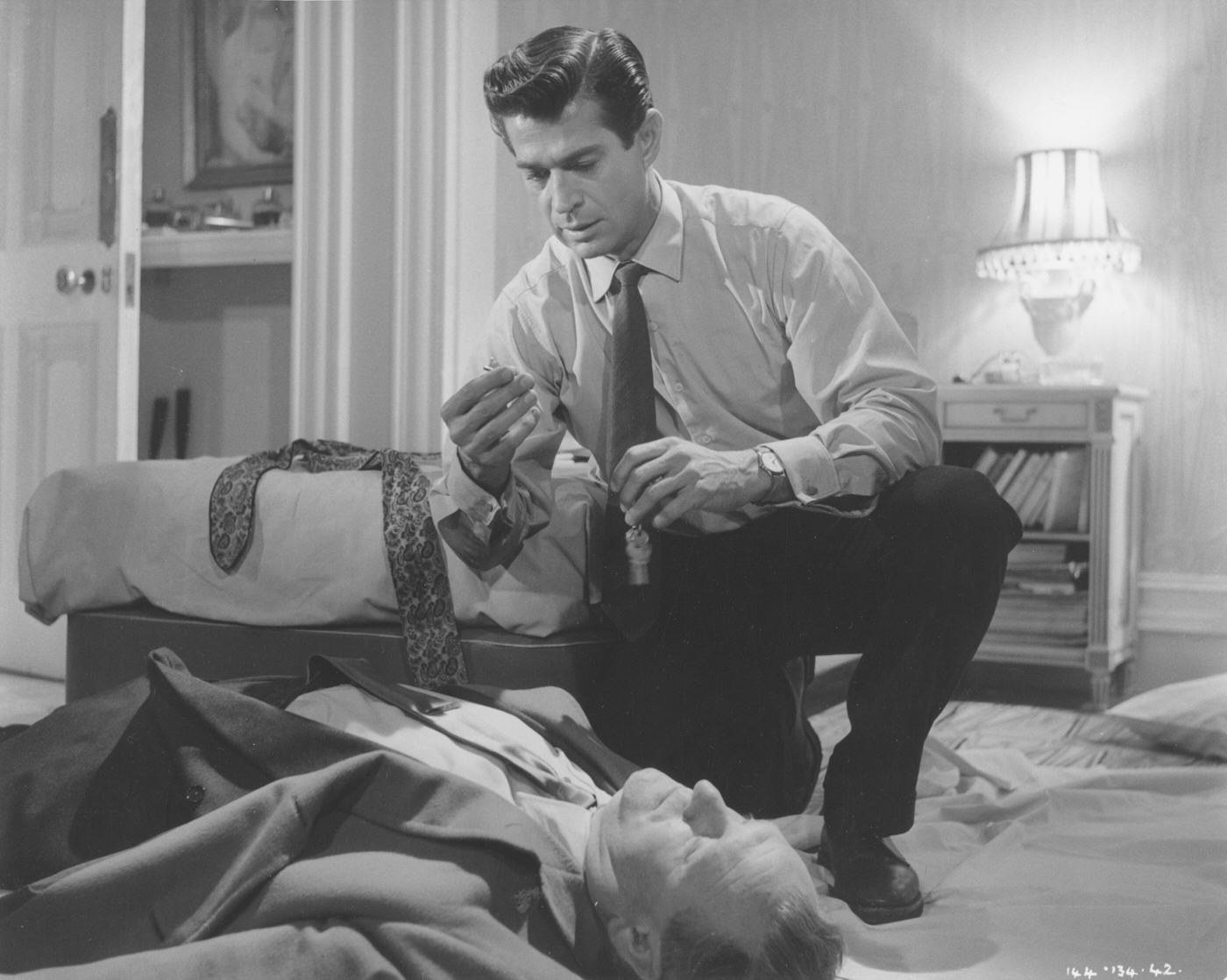
Bernard Lee, best known to many as M in the early James Bond films, delivers a strong supporting performance. His presence on screen adds a layer of authority that pushes the story forward. The interplay between Lee and Nader gives the film some of its sharpest dramatic moments.


Maggie Smith, then still early in her career, earned a BAFTA nomination for her role in the film. Her performance was widely praised by critics upon release, and it stands as an early signal of the talent she would go on to demonstrate across decades of work. Her scenes with Nader carry a tense, watchful quality that fits the film’s mood perfectly.

Seth Holt crafted a storyline that critics described as suspenseful and well-constructed. The plot doesn’t rely on elaborate twists for effect — instead, it builds pressure steadily, scene by scene. The pacing reflects a confidence in the material, letting the story breathe without losing grip on the audience.


Despite earning strong reviews, the film failed to find a large audience at the box office in 1958. Commercial disappointment was not uncommon for serious crime dramas of this kind, which often found their audiences later rather than at the point of release. Nowhere to Go followed that pattern exactly.


Over time, the film built a devoted cult following. Viewers drawn to classic British crime cinema discovered it and recognized the quality of its craft. Today it is regarded as a genuine example of the genre at its best — tight, atmospheric, and grounded in the grim realities of criminal life in postwar Britain.