in

Life in the Newport News Shipyard during the 1940s

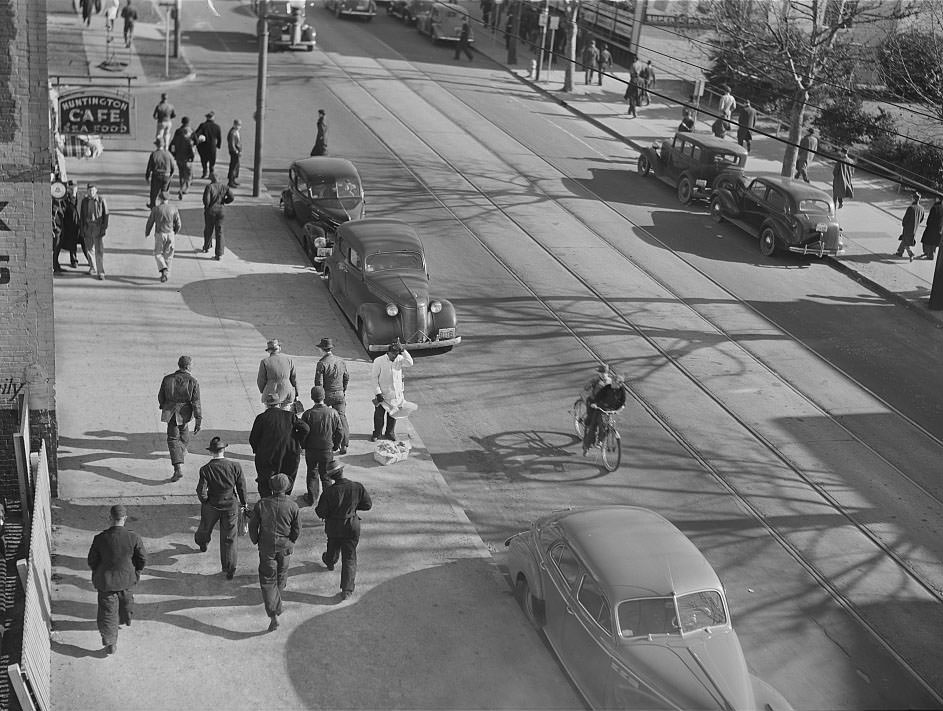
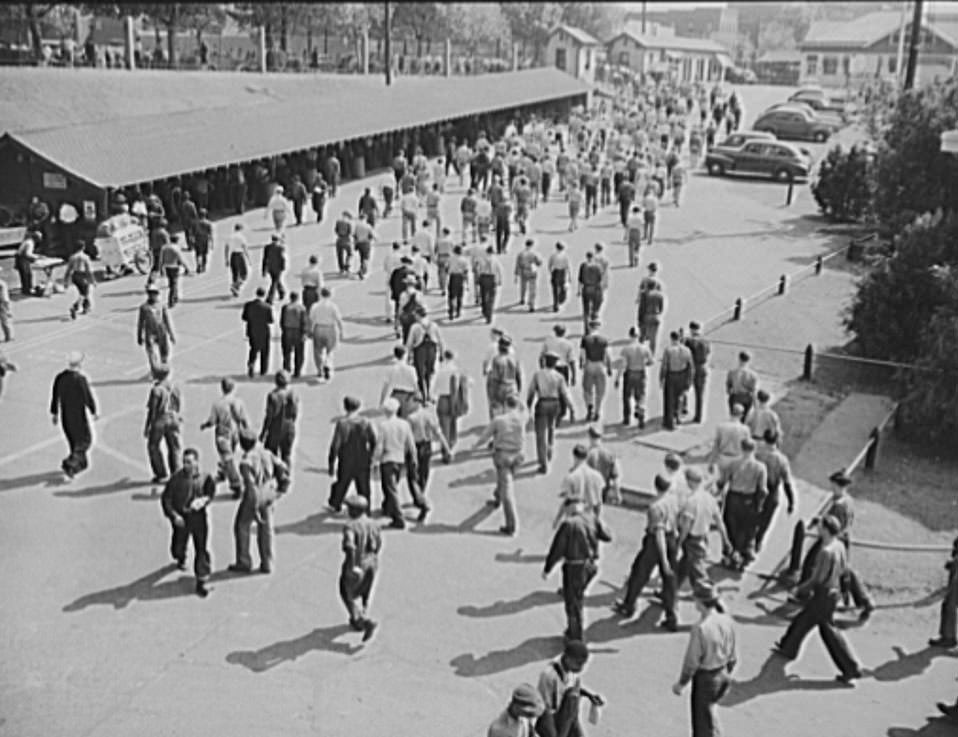
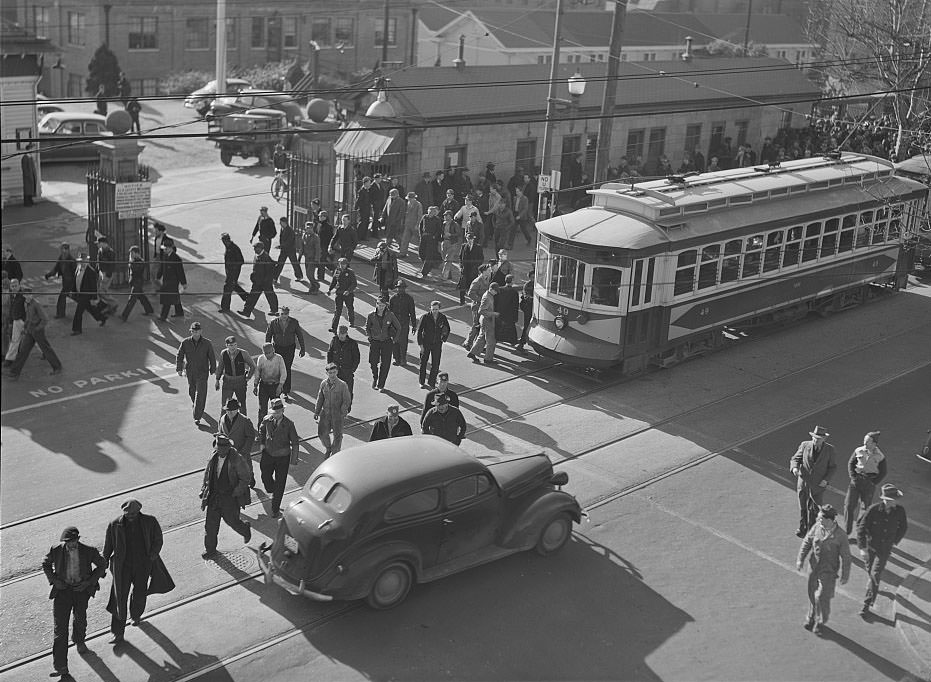
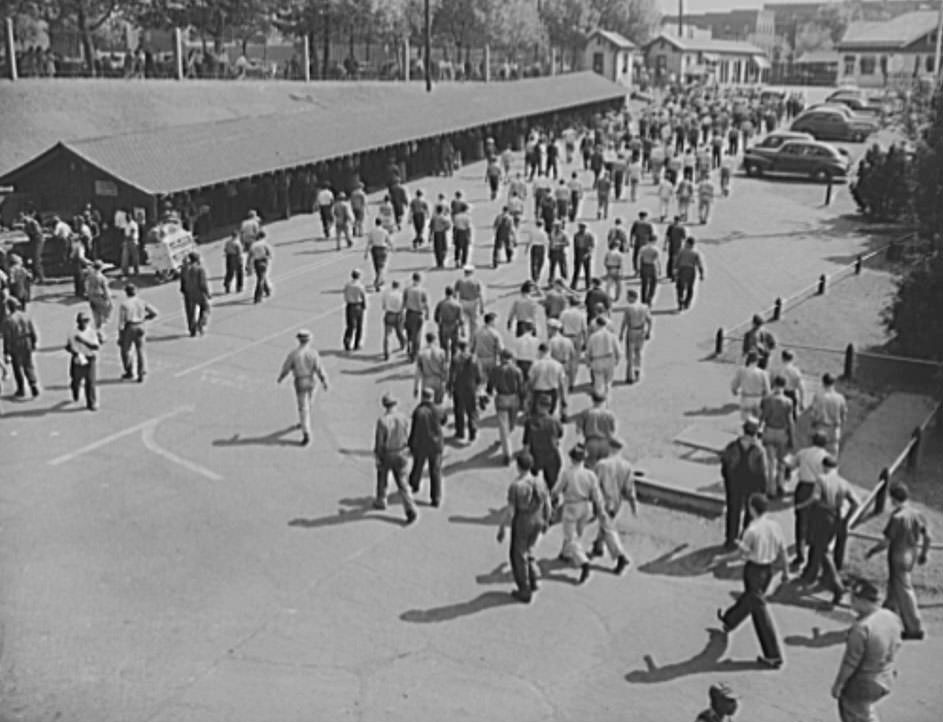
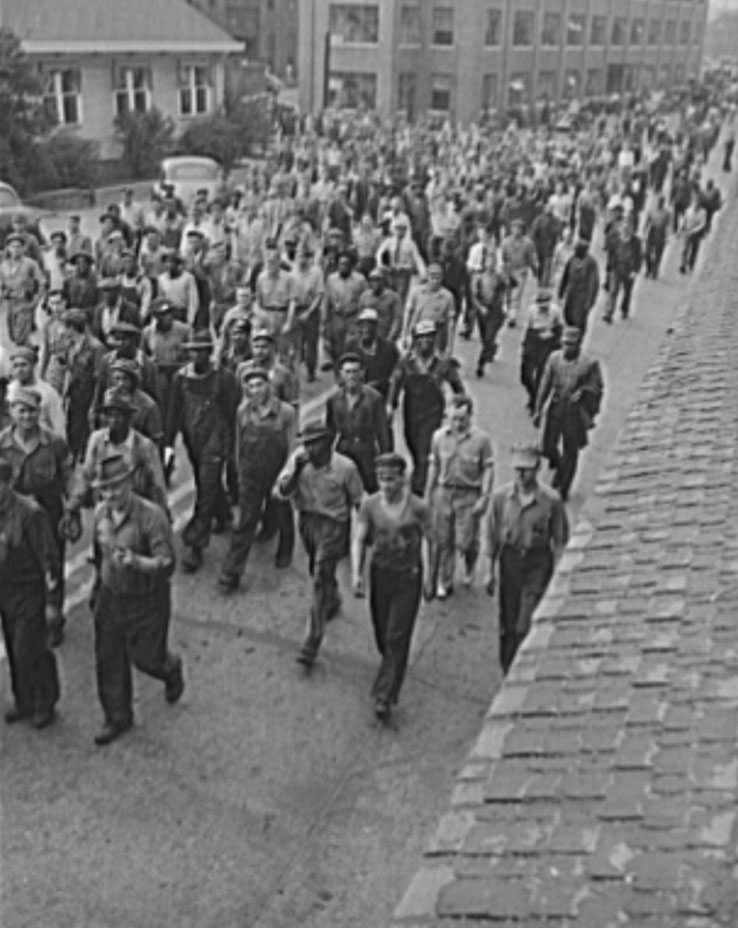
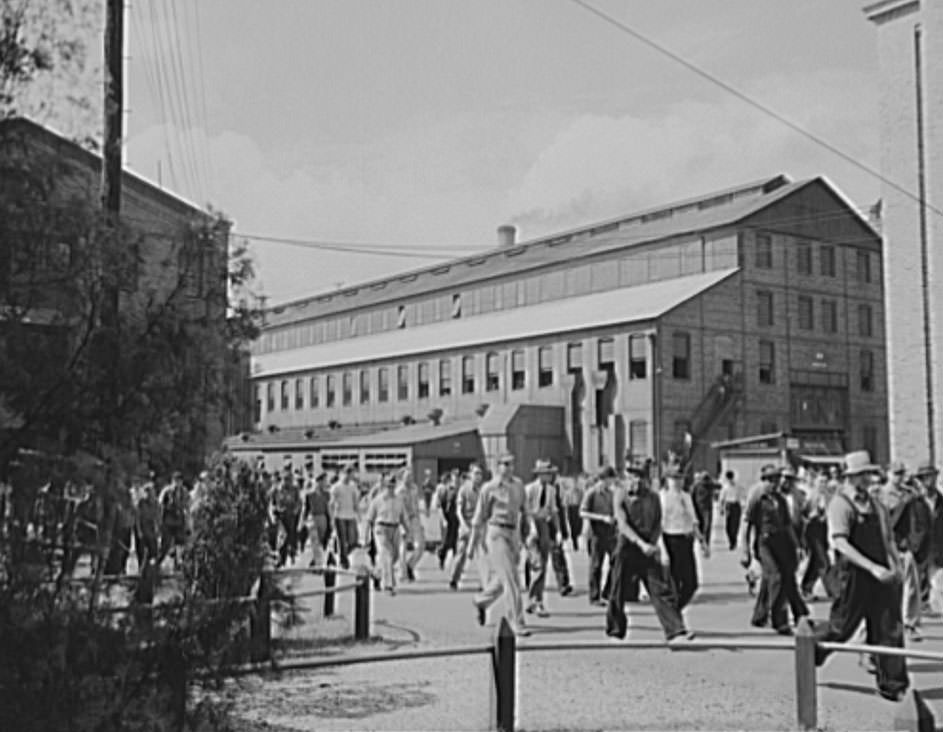
At 4:00 p.m. every day, thousands of workers streamed out of the gates of Newport News Shipbuilding in Virginia. They were machinists, welders, riveters, mold loft workers, and crane operators — a workforce of more than 36,000 people who kept one of America’s most important shipyards running around the clock. By 1941, with war looming on the horizon, that yard had become one of the busiest industrial sites in the country.
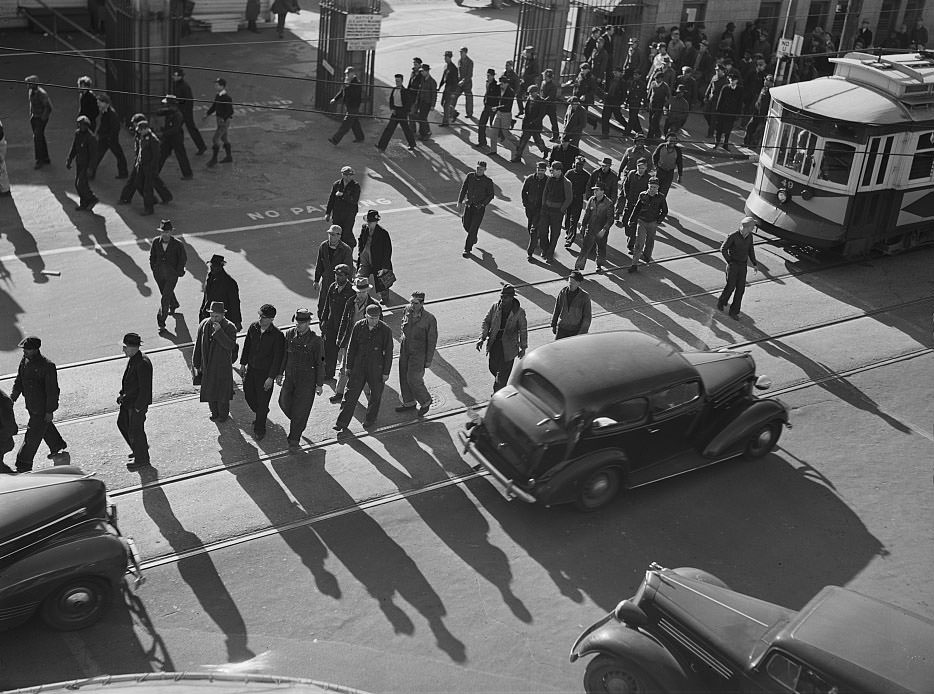
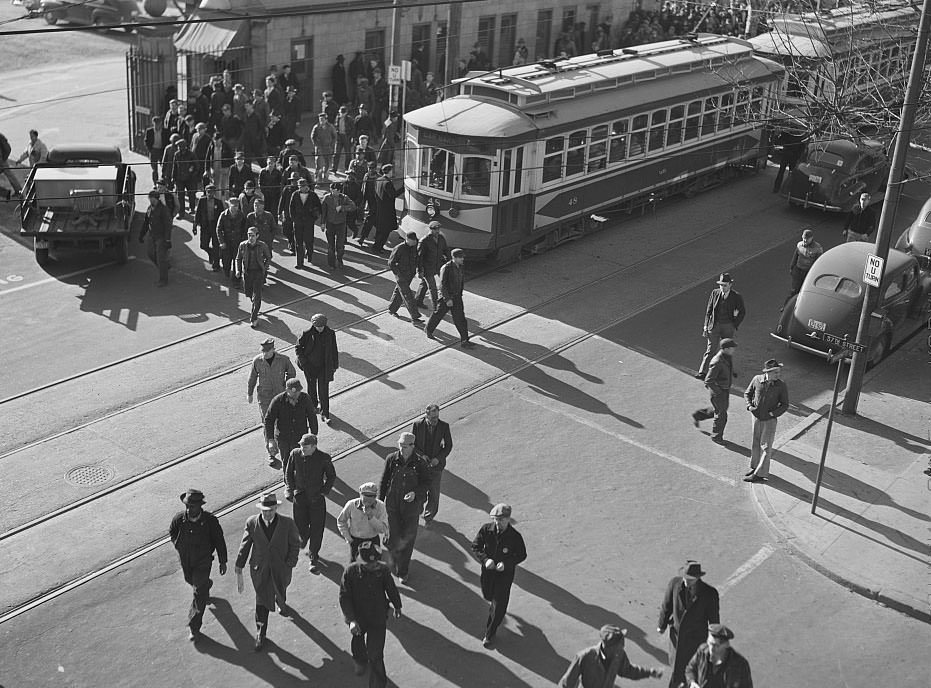
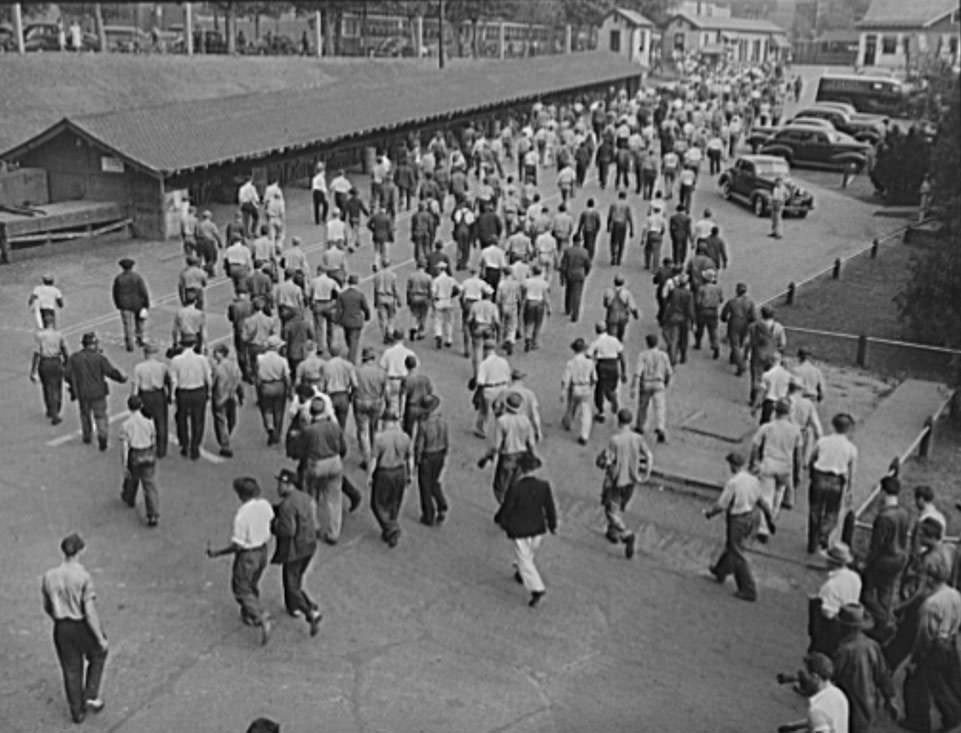
Shipyard employees getting out at 4:00 p.m. Newport News, Virginia, 1941

Newport News Shipbuilding had been operating since 1886, and by the start of the 1940s it had already built hundreds of naval and commercial vessels. When the U.S. Navy placed a major order in 1940 — including a battleship, seven aircraft carriers, and four cruisers — the yard shifted into a higher gear. The Norfolk–Newport News region of Virginia was about to contribute an enormous share of America’s rapidly expanding two-ocean Navy.
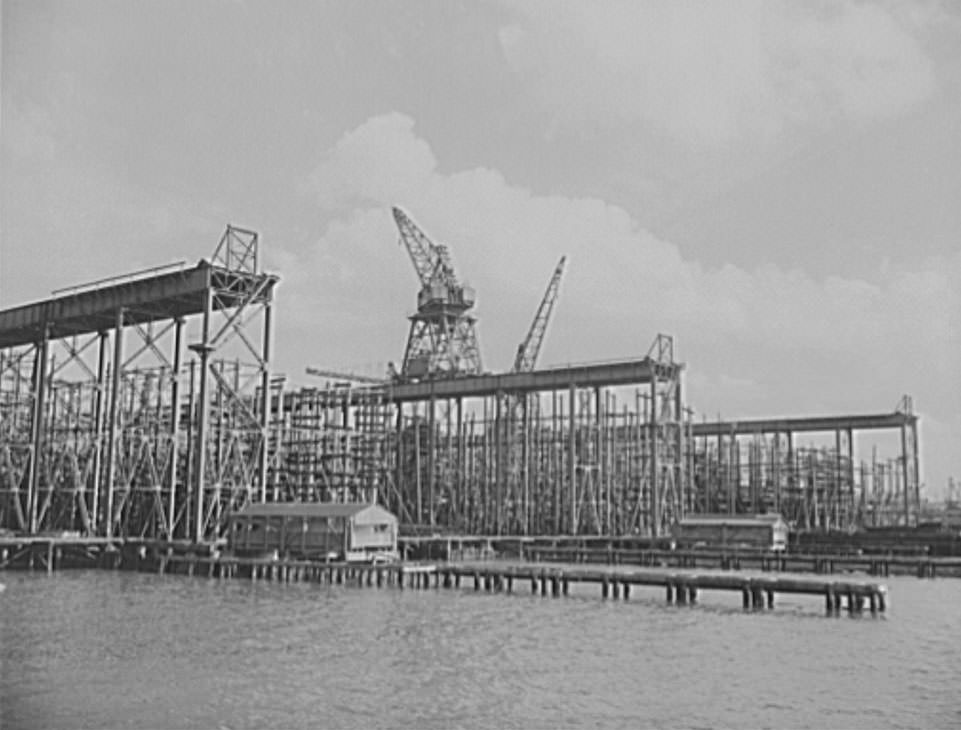
Shipyards of Newport News, Virginia, 1941
These are the men whose skill is devoted to the building of the finest, most powerful fleet of naval vessels the world has ever seen, 1941

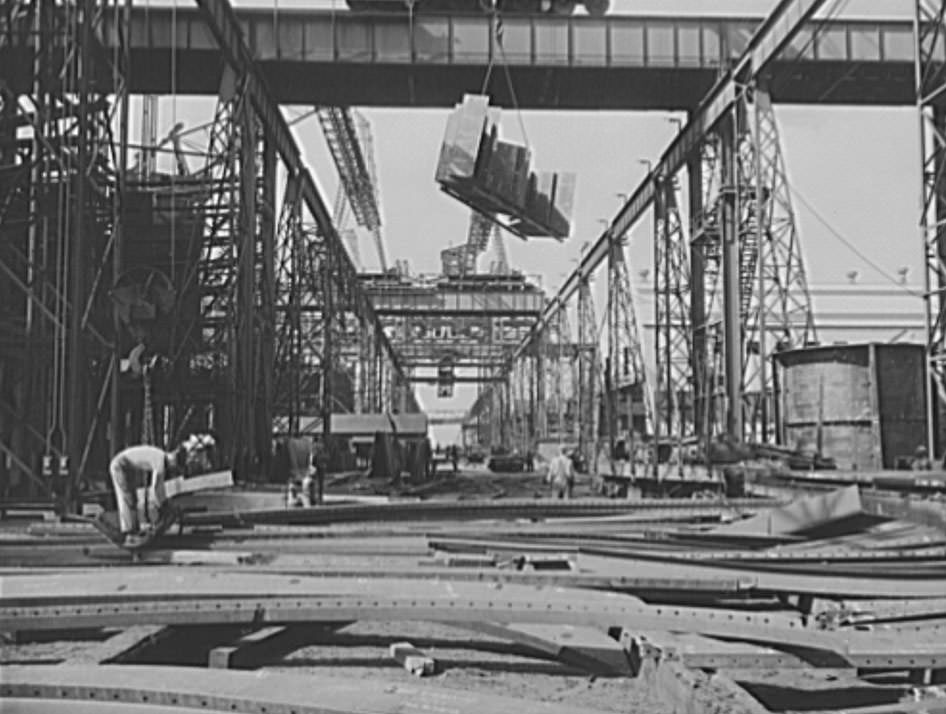
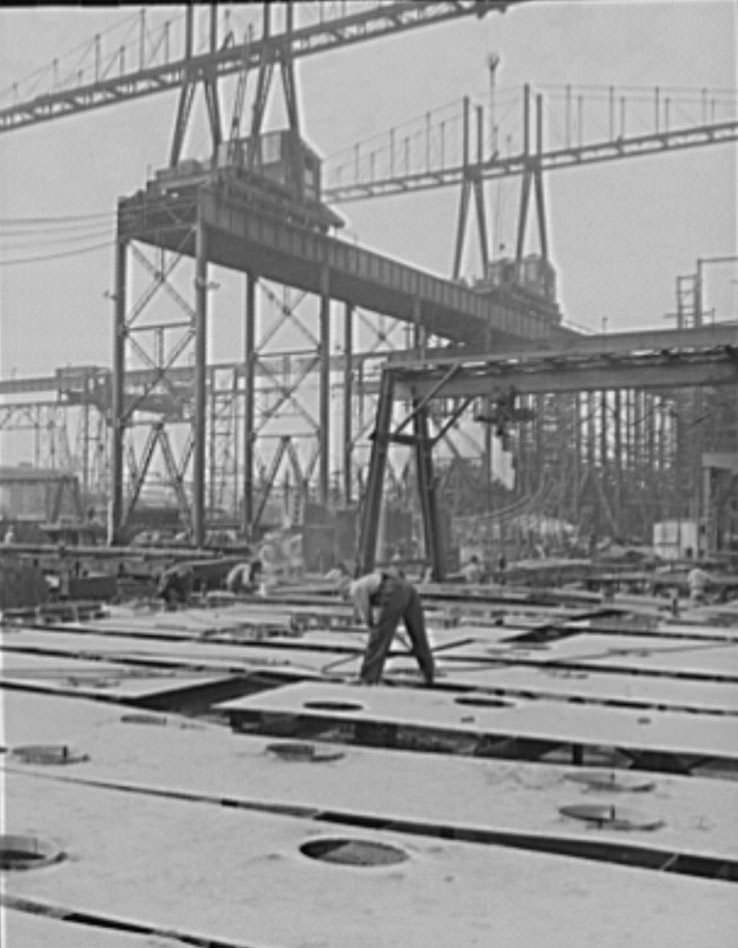
The building ways — the massive sloped structures where ships took shape before being launched — required thousands of tons of both lumber and steel just to construct. These frameworks were large enough to accommodate the biggest battleships afloat. Overhead carriers and cranes moved heavy components from one end of the yard to the other, feeding a process that never really stopped.
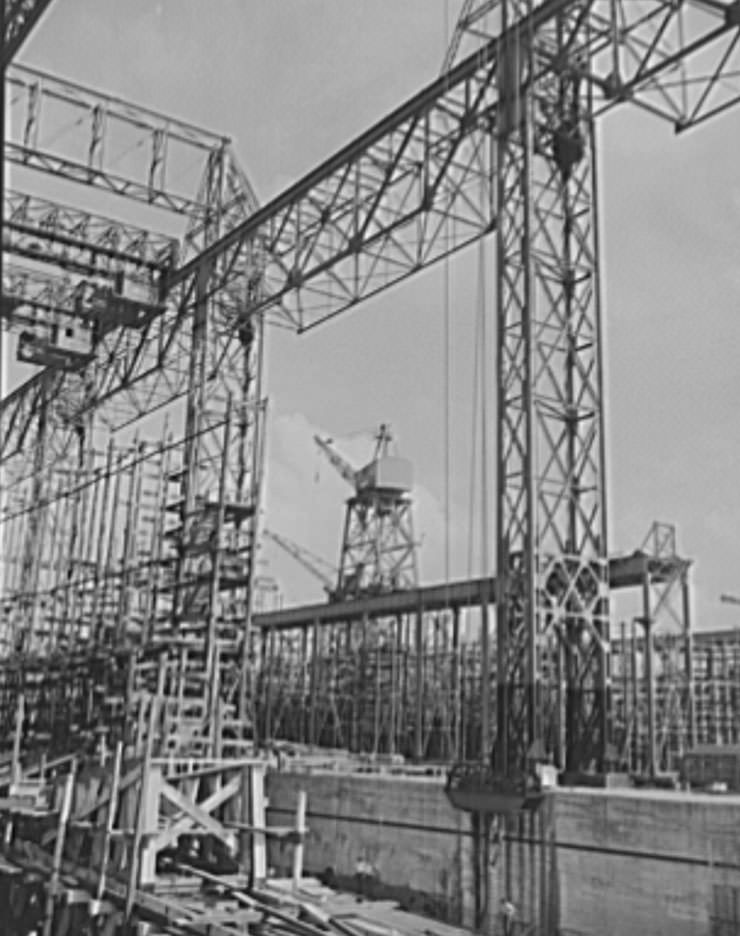
Thousands of tons of lumber and steel are used in the construction of these ways, where American mechanical genius is employed in the production of ships for our new two-ocean navy, 1941

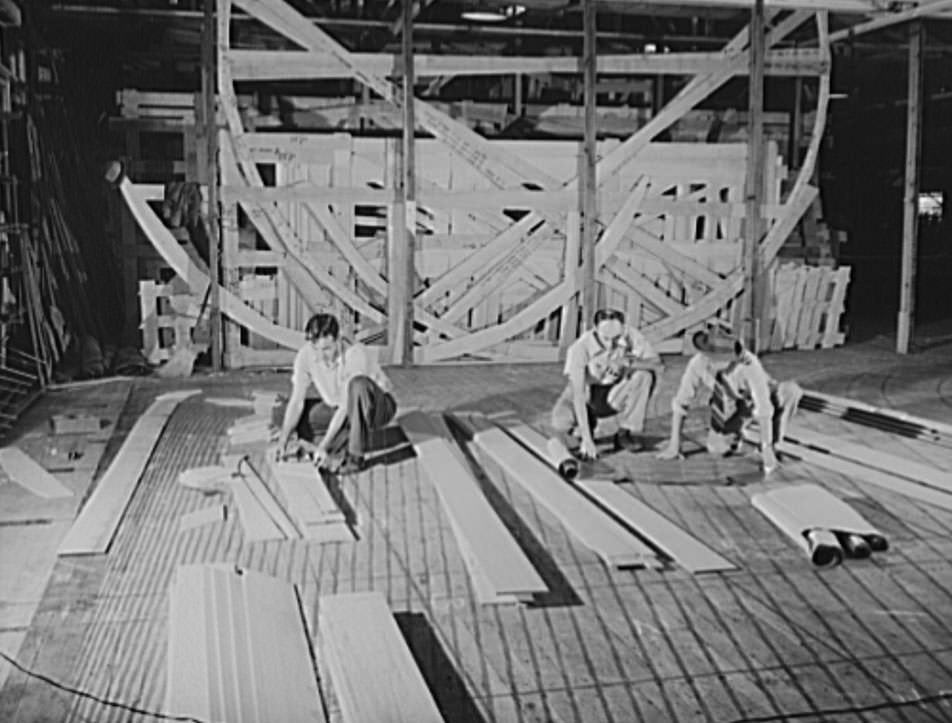
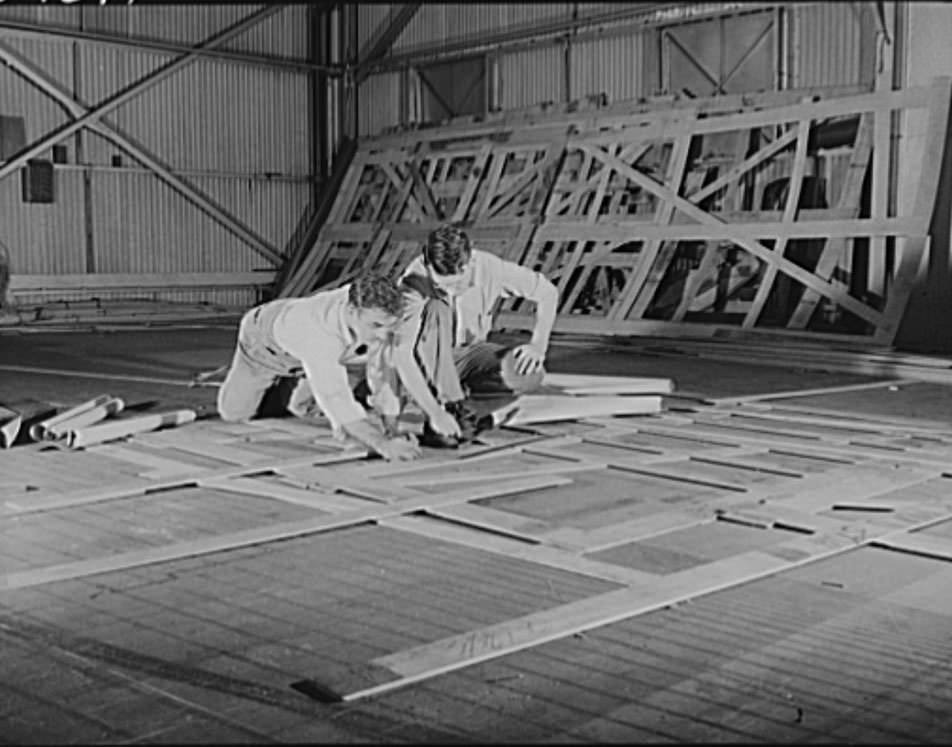
Before any steel was cut or welded, the mold loft was where ship-building began in earnest. Workers laid out full-scale patterns for every part of a vessel — frames, hull sections, deck plates — using wood templates stored in a dedicated space within the loft. Once those wooden patterns were approved, they were transferred directly to steel. The precision required was exact; a miscut template meant a miscut part.
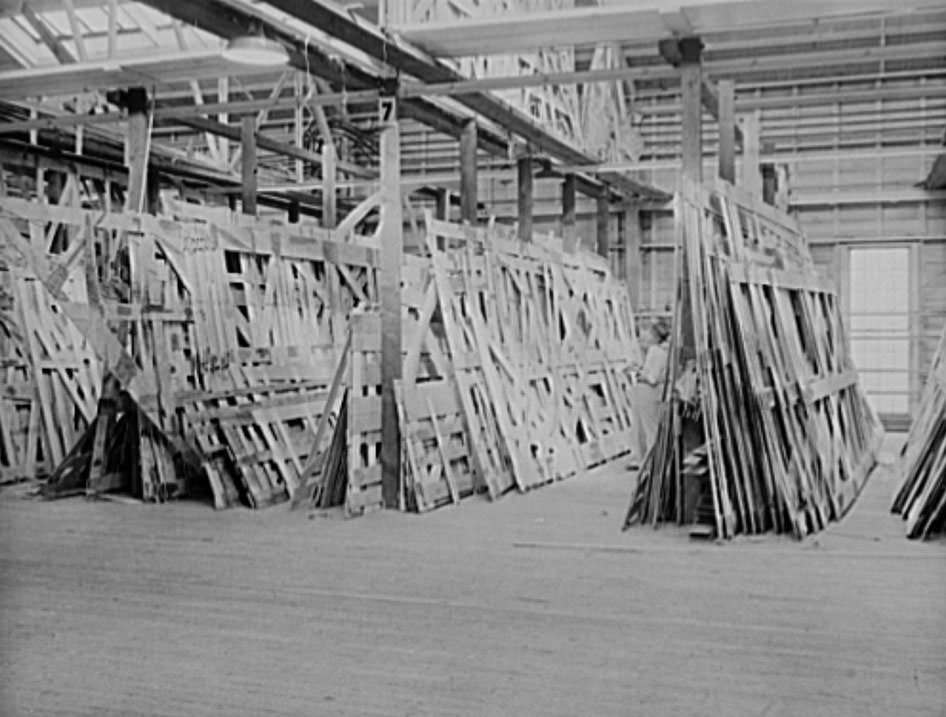
This is the storage space in the moulding loft where the many templates for ships' parts are fashioned in wood. These patterns are then transferred to steel, 1941
This is the storage space in the moulding loft where the many templates for ships’ parts are fashioned in wood. These patterns are then transferred to steel, 1941
These are mold loft workers laying out patterns for various parts of naval vessels under construction, 1941

Riveting had long been the standard method for joining a ship’s steel plates and frames. On large naval warships, nearly a million rivets were used per vessel. By 1941, however, the yard was moving toward welded joints wherever possible to save both steel and weight. Workers with punch presses drove rivet holes through heavy steel frames, while welders — hundreds of them — were brought on to meet the Navy’s new construction standards.
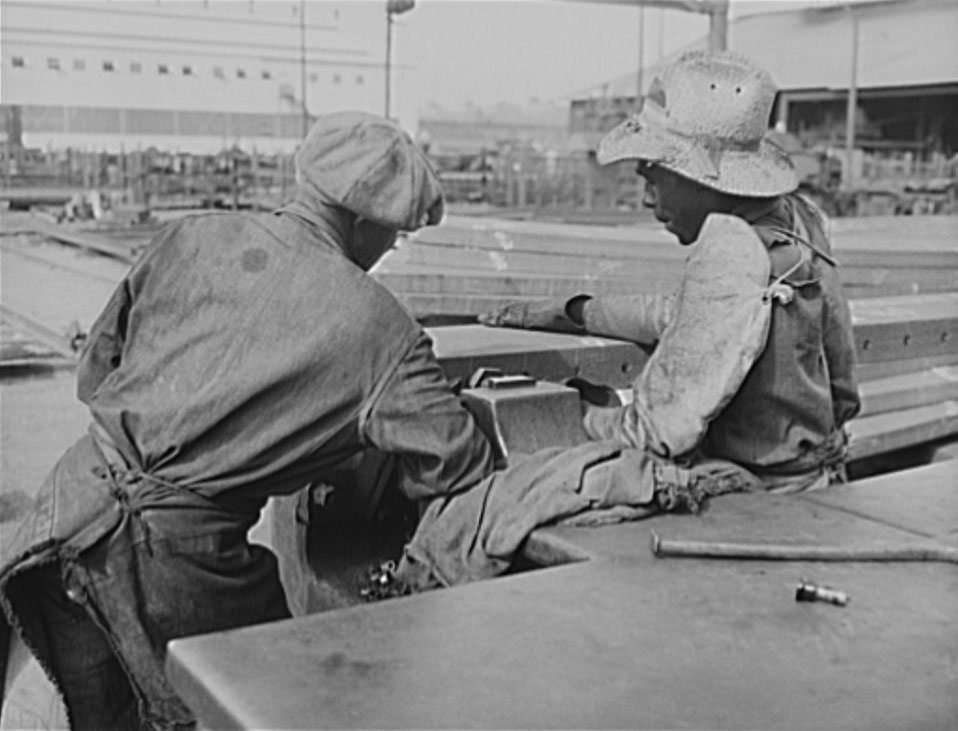
These two skillful workers are punching rivet holes in the frame of a ship on the ways, 1941
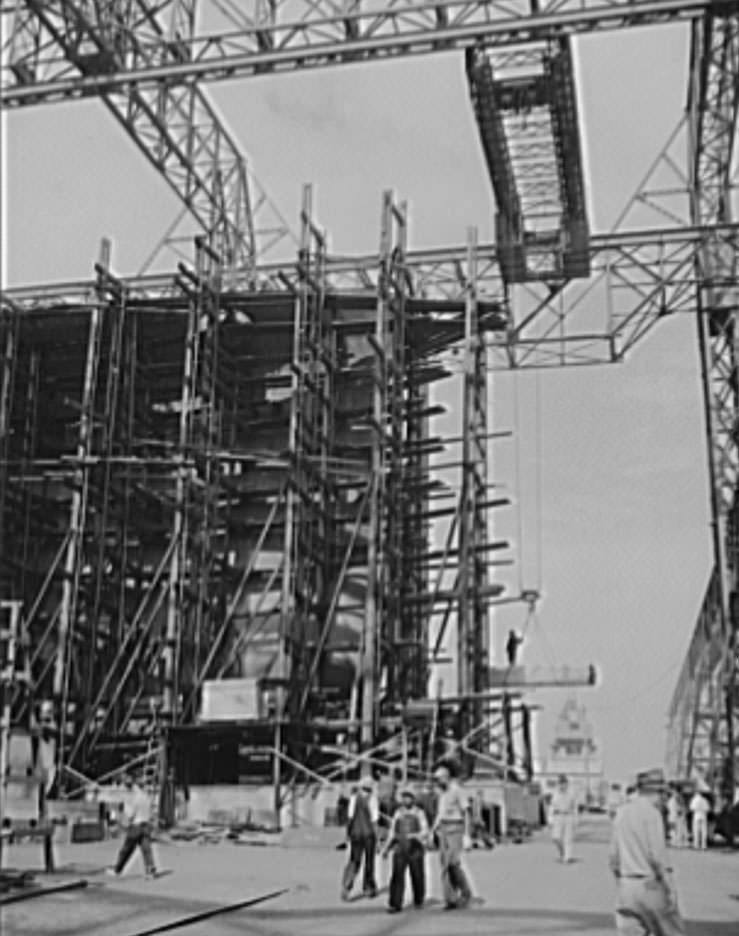
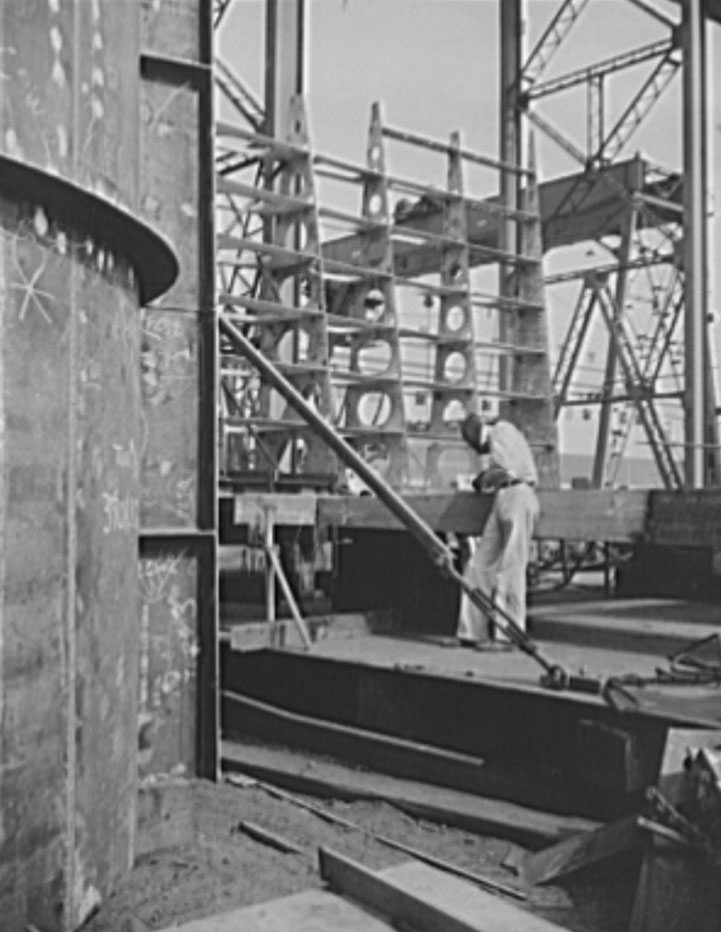
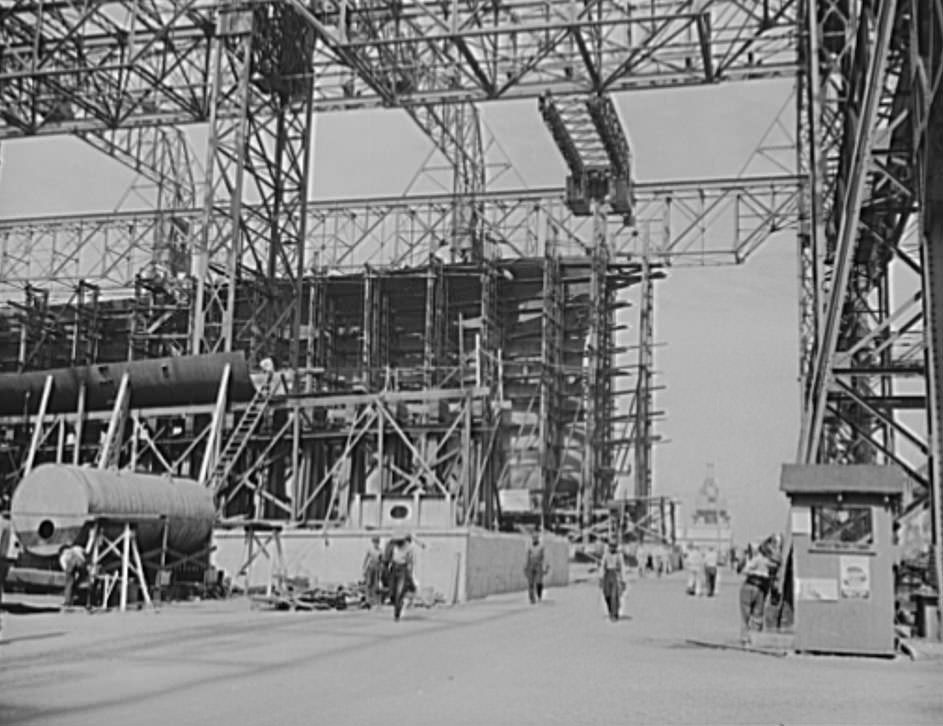
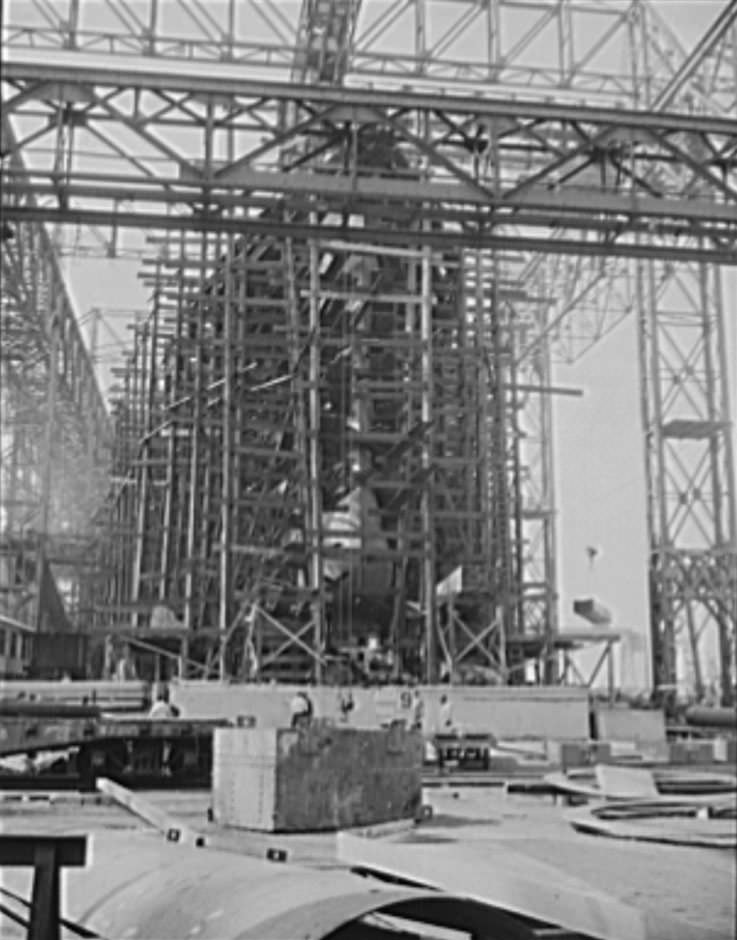
Through the scaffolding may be seen the prow of a battleship under construction, 1941

The scale of the ways themselves was hard to comprehend from ground level. Scaffolding climbed dozens of feet into the air around hulls that stretched hundreds of feet in length. The prow of a battleship rising through the ironwork gave some sense of the sheer size of the ships being assembled. Below it, workers moved through a maze of steel beams, ladders, and temporary platforms.
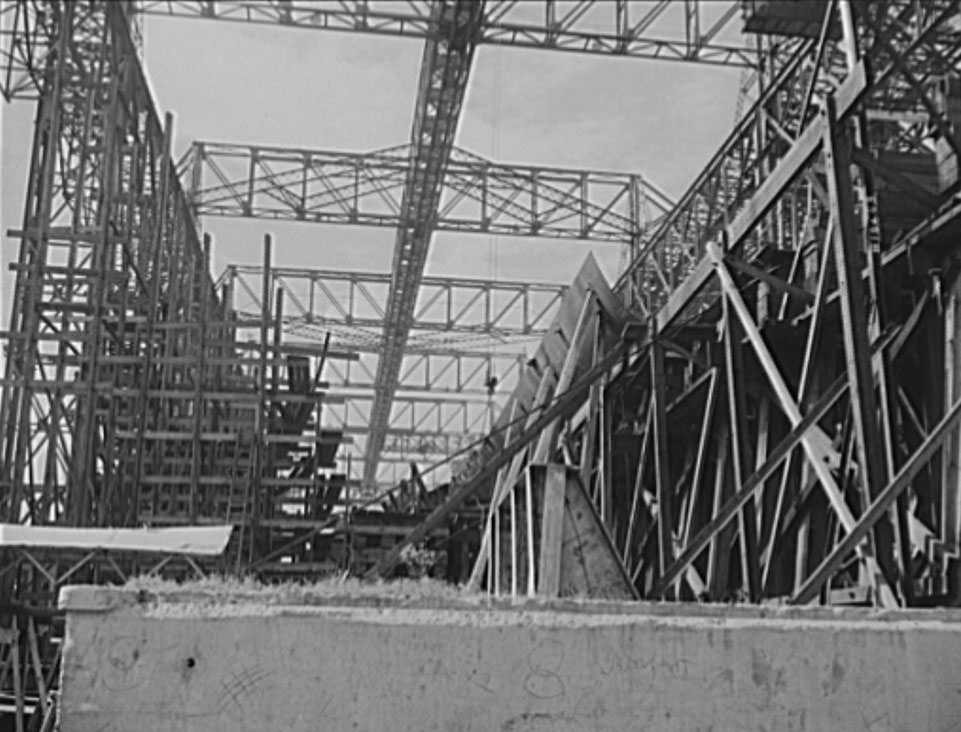
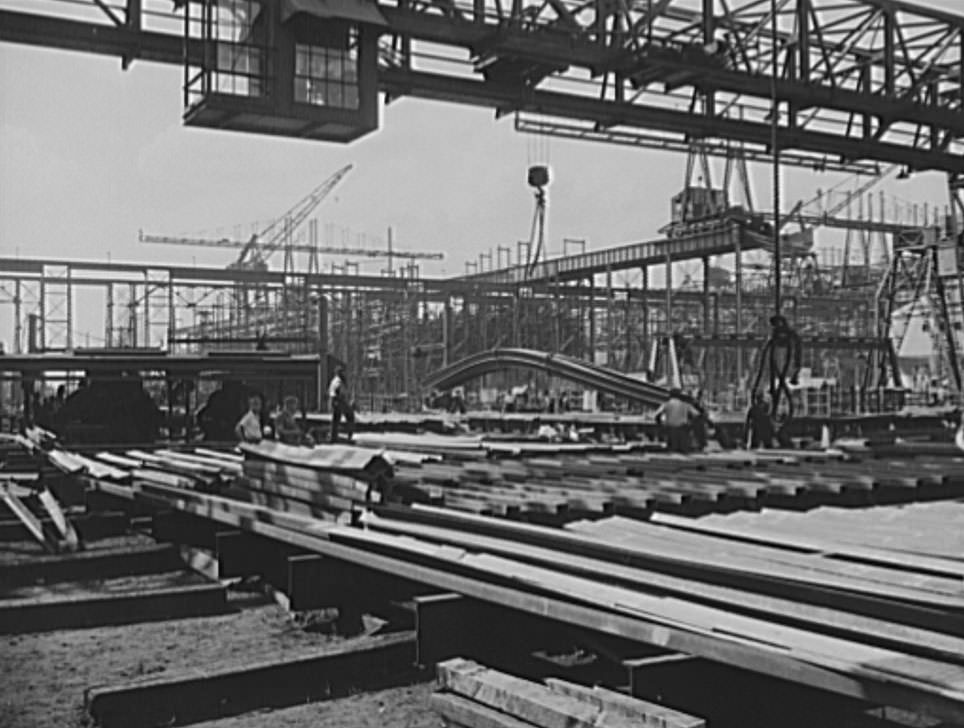
Thousands of tons of lumber and steel are used in the construction of these ways, where American mechanical genius is employed in the production of ships for our new two-ocean Navy, 1941
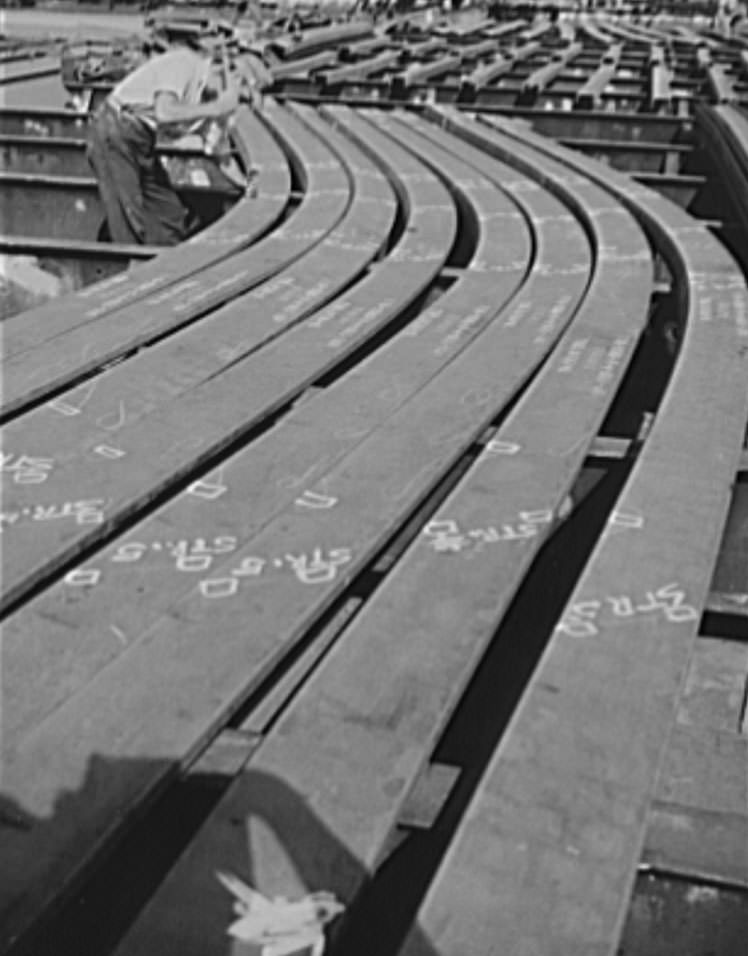
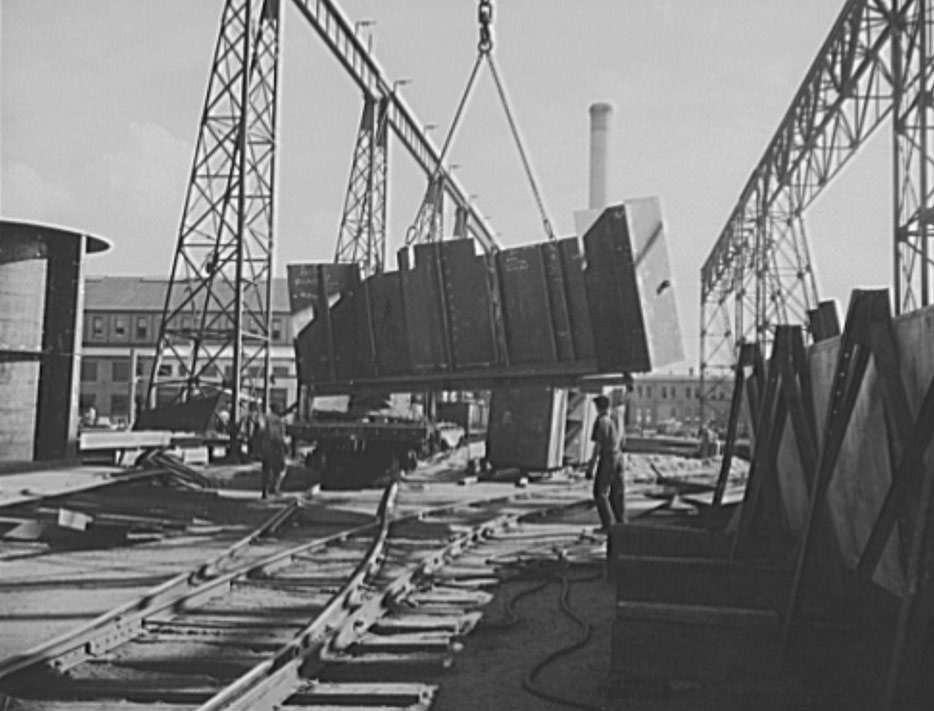
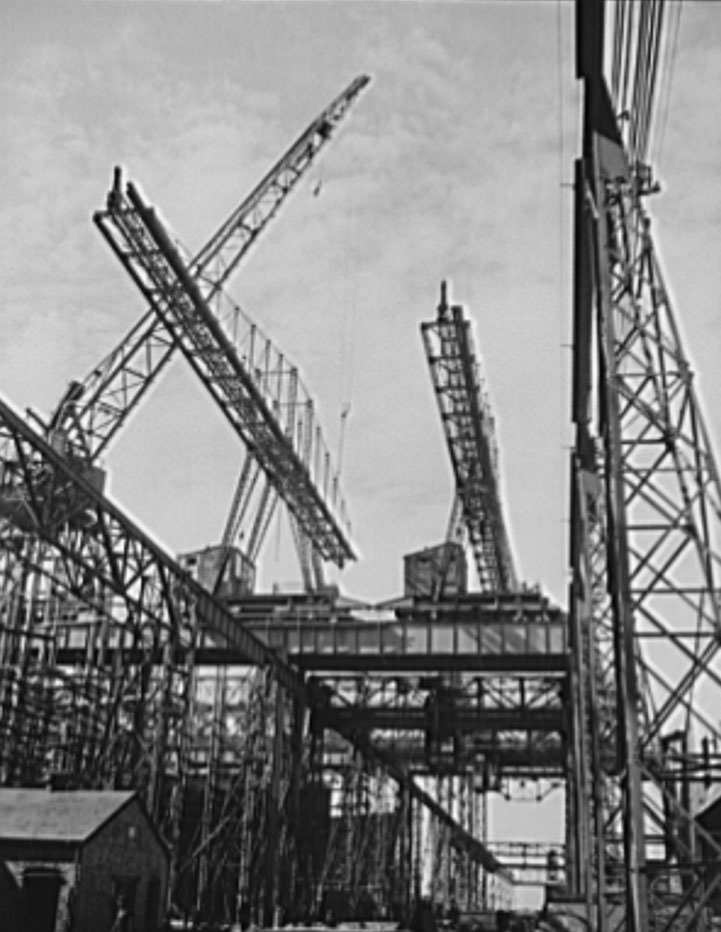
In the foreground is the frame section for a new naval vessel under construction. The ways and overhead carriers and cranes are seen in the background, 1941
Thousands of workers contribute thousands of skills in the building of ships for Uncle Sam's growing Navy. This worker is topping punching holes on a ship's frame, 1941
Thousands of workers contribute thousands of skills in the building of ships for Uncle Sam’s growing Navy. This worker is topping punching holes on a ship’s frame, 1941

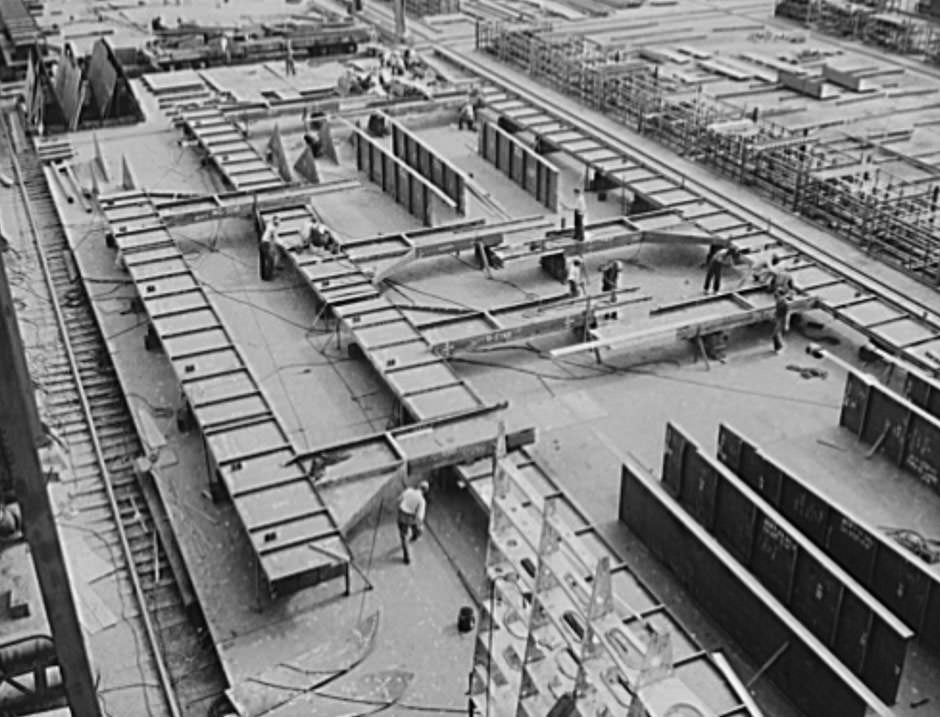
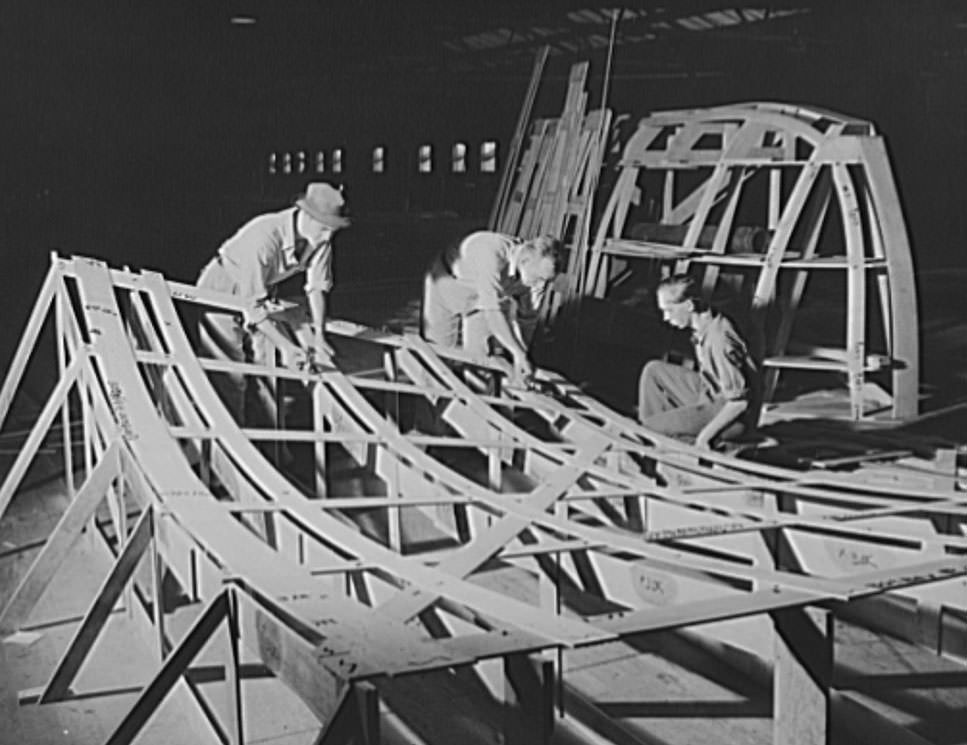
Structural sections were assembled in dedicated areas away from the main ways before being moved into position. In these preliminary work areas, workers fitted frame segments together and prepared them for transport. Overhead carriers then lifted completed sections and moved them down to the ways, where they were welded or bolted into the growing hull. This staged approach let multiple parts of a ship advance at the same time.
This is a structural section, where preliminary work is done before the sections for new vessels are brought by overhead carriers to the ways, 1941
The Norfolk-Newport News section of Virginia is contributing a large portion of the new tonnage of our rapidly expanding two-ocean Navy, 1941
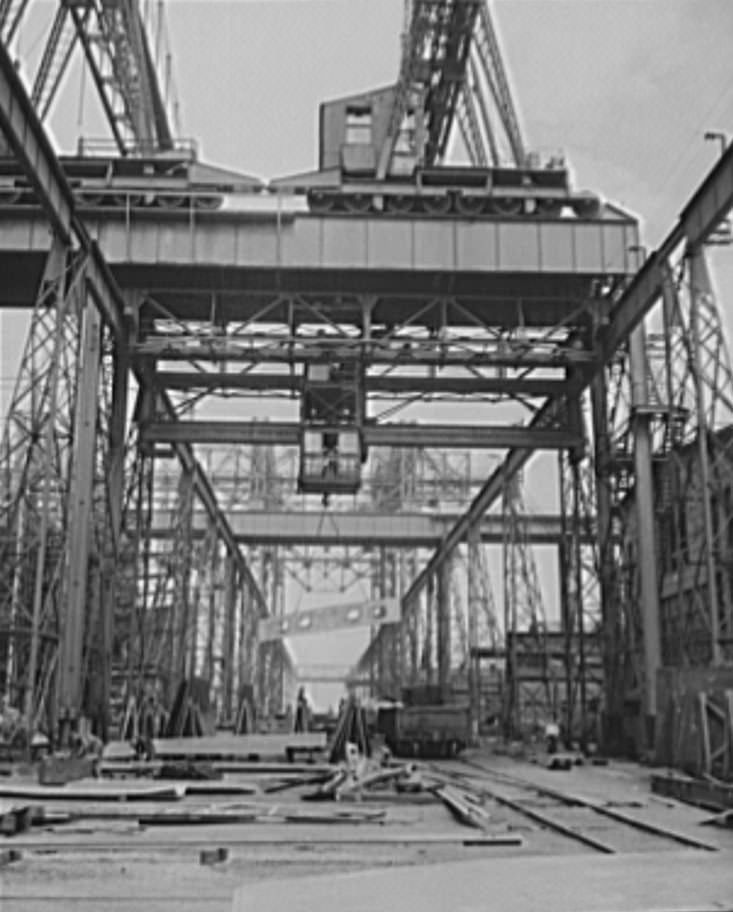
Here is a section of the huge building ways, large enough to permit construction of the largest of super-battleships, 1941

Steel plate work was one of the most physically demanding jobs on the floor. Workers guided heavy plates through punch presses, marked designs using wooden templates, and then sent the finished plates to be picked up by overhead cranes. Four workers were often needed just to steer a single plate through a press. Once punched and shaped, the plate traveled by crane directly to the building ways.
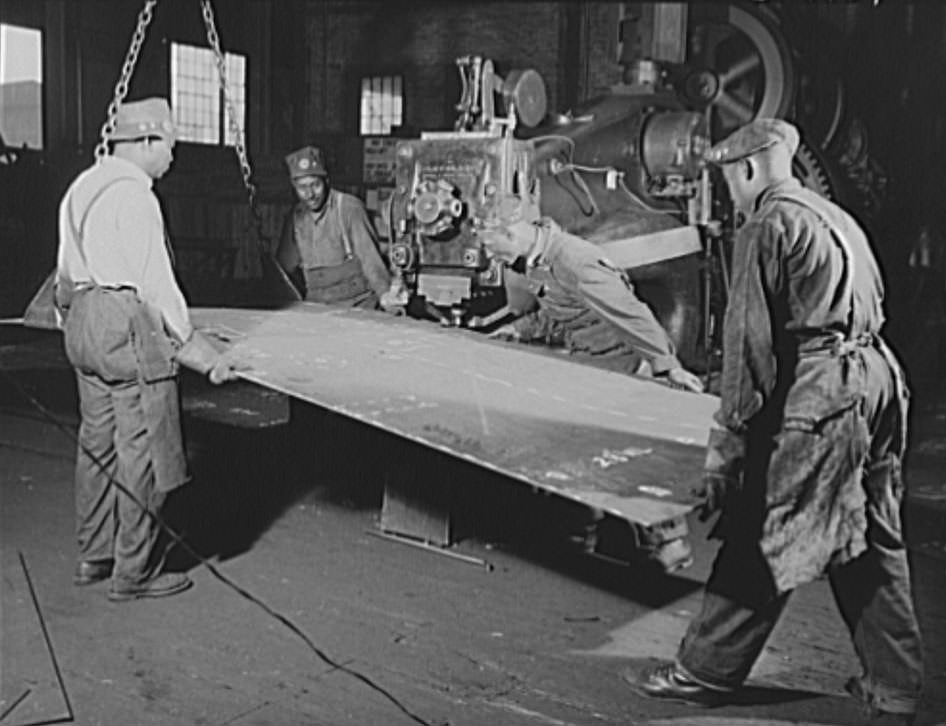
These four workers are guiding a steel plate through a punch press, 1941
Transportation is a vital operation in the huge Newport News Yard, where more than 36,000 workers are employed, 1941
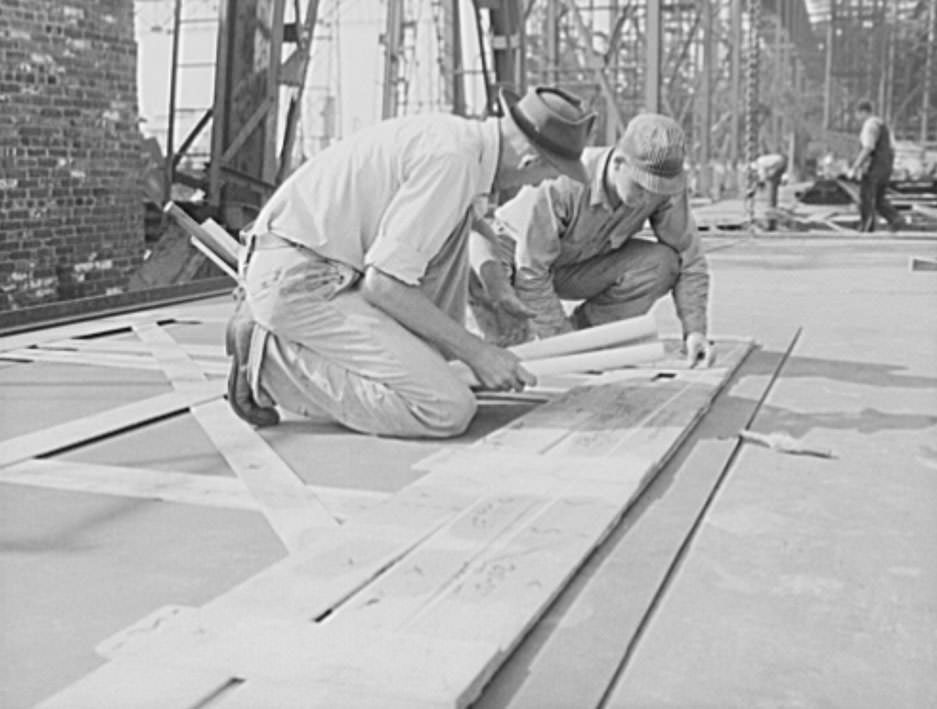
These workers are marking off the design for a ship's plate, using a template as a guide, 1941
These workers are marking off the design for a ship’s plate, using a template as a guide, 1941

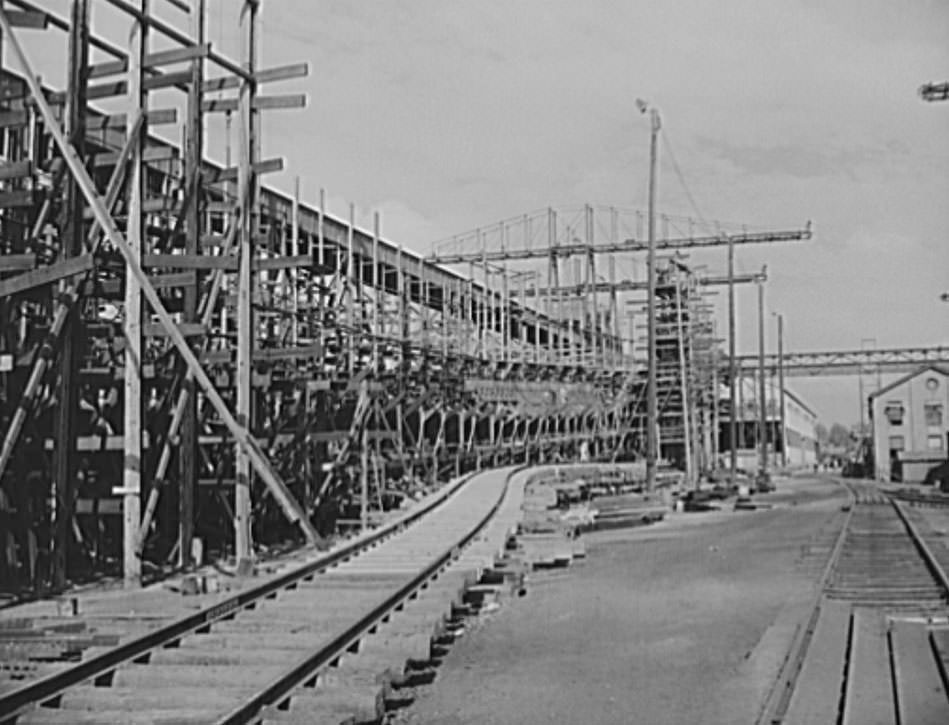
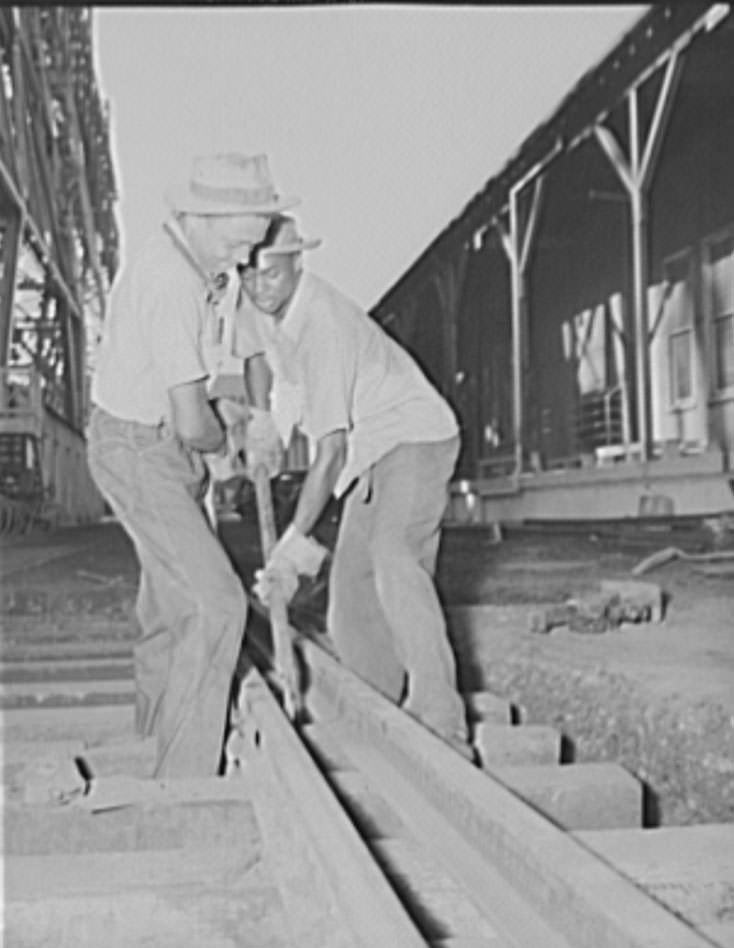
Transportation inside the yard was as critical as any trade skill. Railroad spurs were laid directly onto the ways so that raw materials could be delivered right to the construction site. Workers built new spur lines as needed, extending the yard’s internal rail network to keep pace with the expanding workload. Simultaneously, overhead cranes handled the heaviest lifts, swinging steel sections into place with precision.
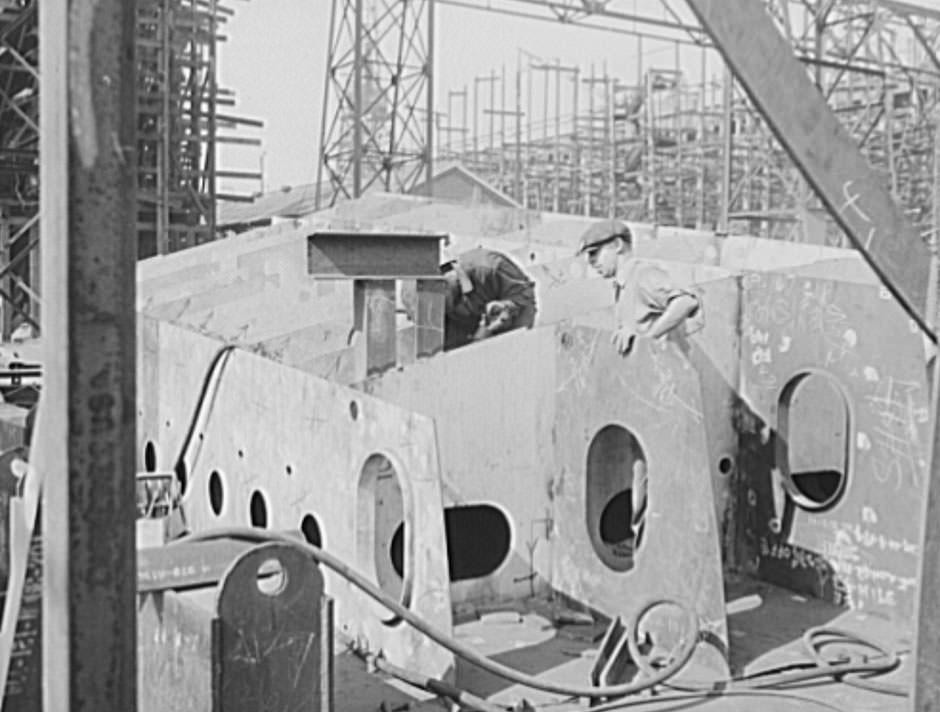
These two workers are assembling the hull section of a new cruiser. Four new navy cruisers are on the ways here, and a huge battleship, 1941
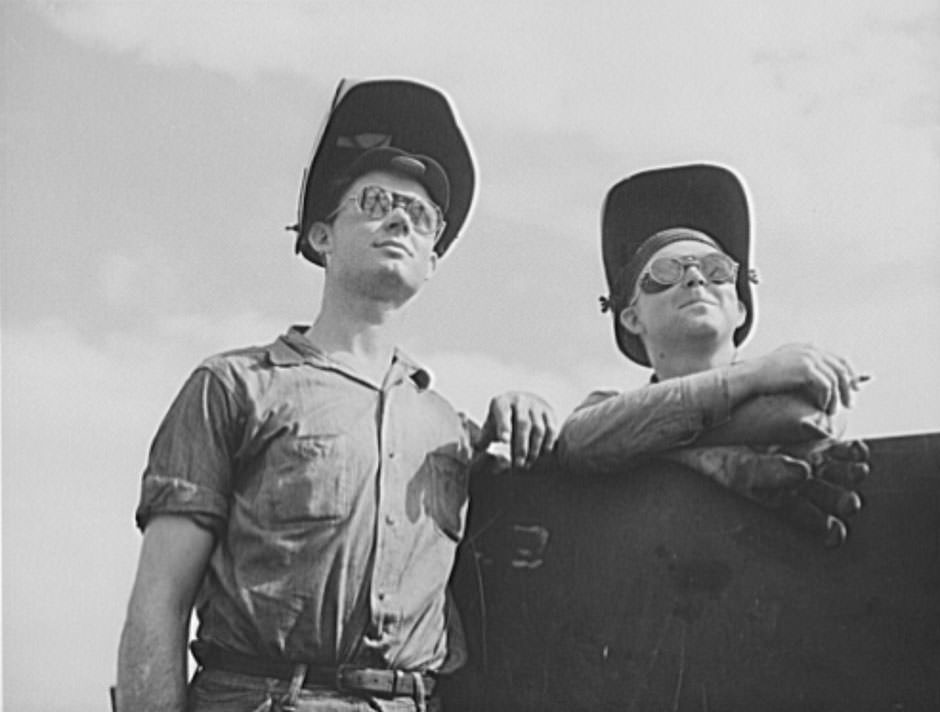
Their helmets hoisted on their heads, these two welders take time out for a smoke and breath of fresh air. Hundreds of welders are employed in the building of Uncle Sam's new Navy craft, 1941
Their helmets hoisted on their heads, these two welders take time out for a smoke and breath of fresh air. Hundreds of welders are employed in the building of Uncle Sam’s new Navy craft, 1941

Welding was hot, physically exhausting work. Welders wore heavy helmets and worked in tight spaces inside the hull, often for hours at a stretch. A brief break for fresh air and a cigarette outside the hull was a common sight. The shift from riveting to welding was not just a cost-saving measure — it produced stronger, lighter hull joints that made warships faster and more durable.
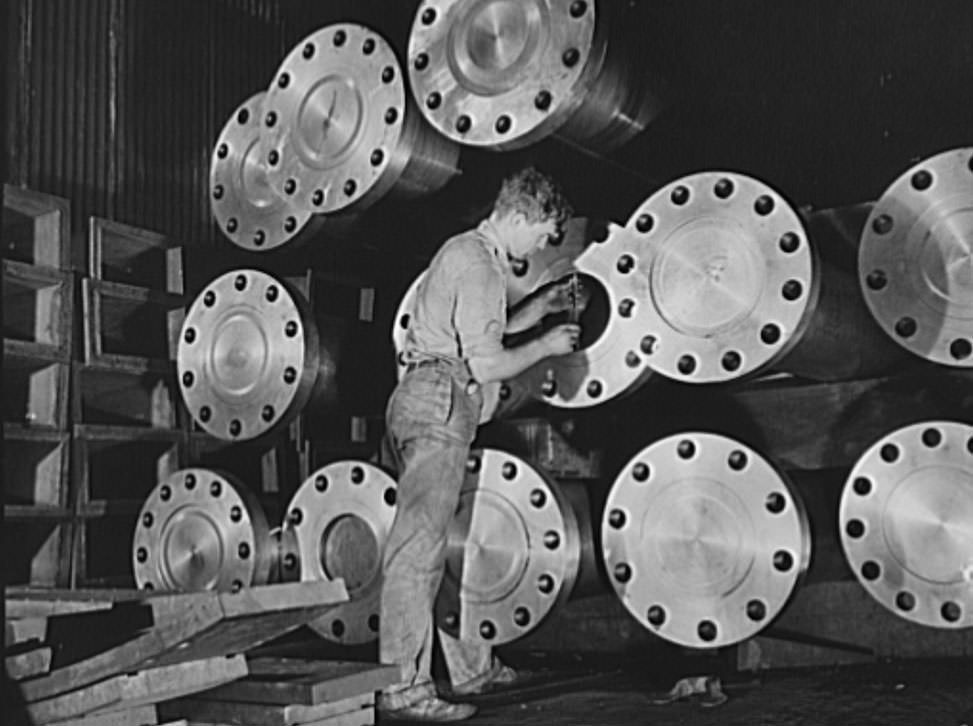
Here is driving power for the Navy, a group propeller shafts waiting for installation in new destroyers for our two-ocean Navy, 1941
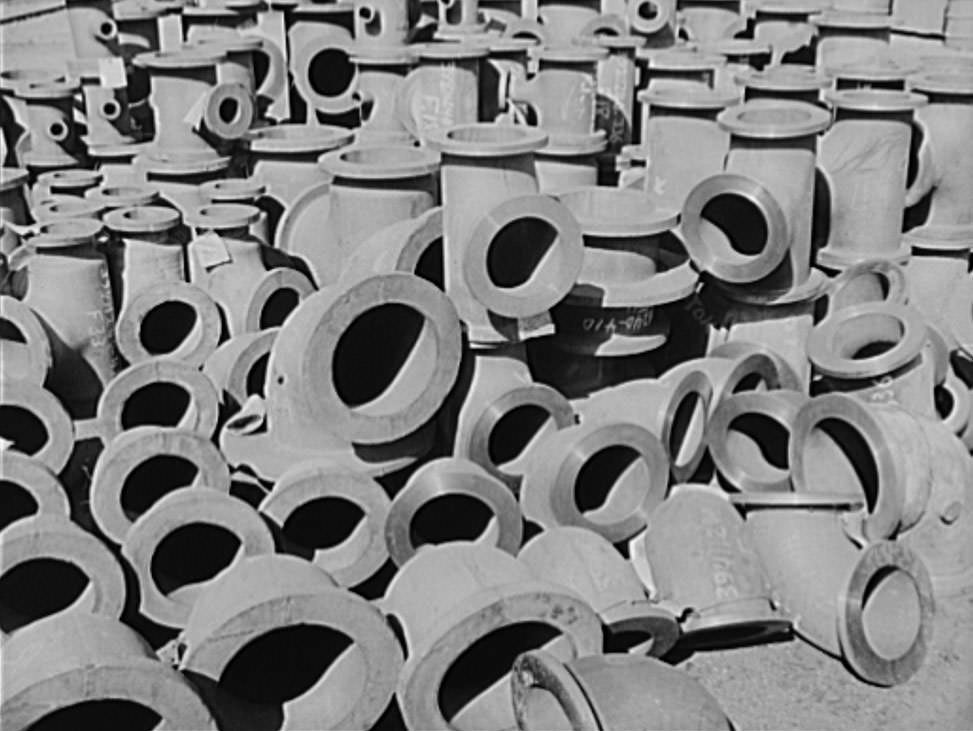
Fittings of various types, all for use in a single U.S. Navy vessels under construction, 1941

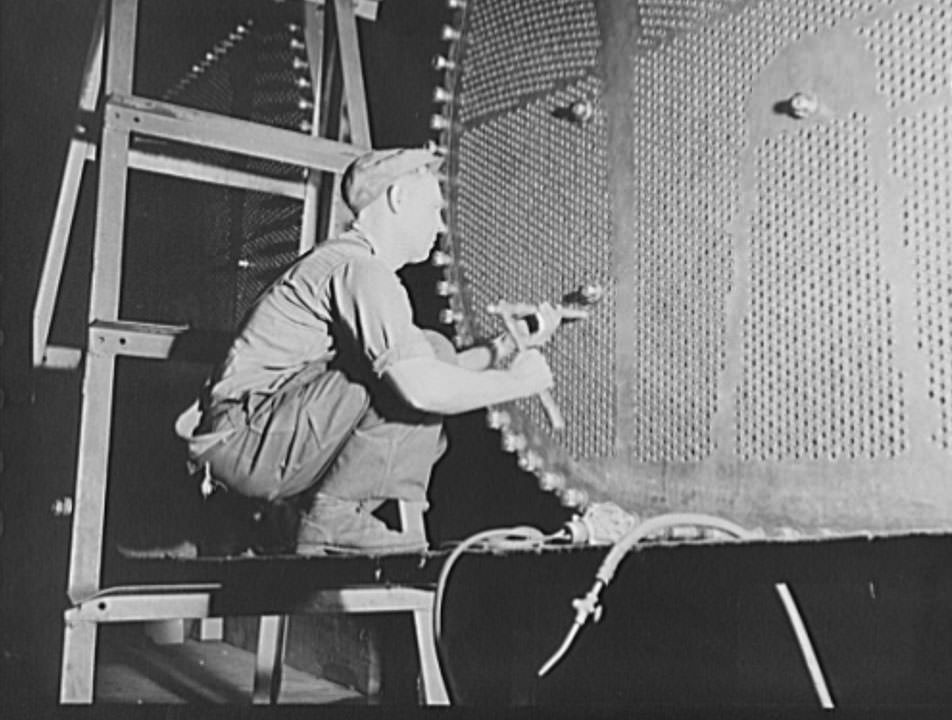
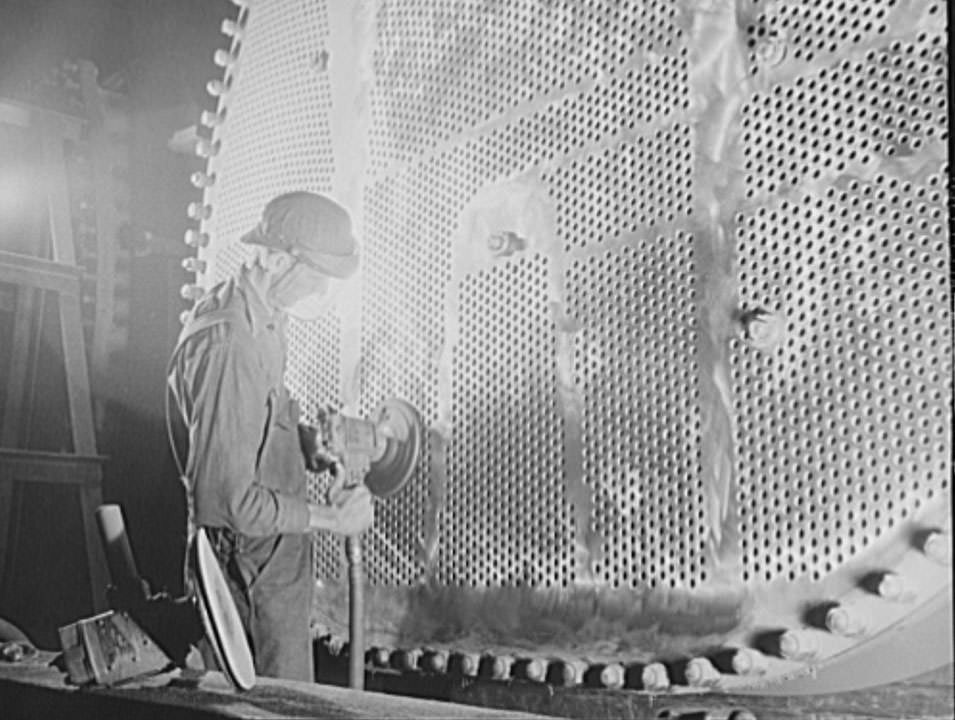
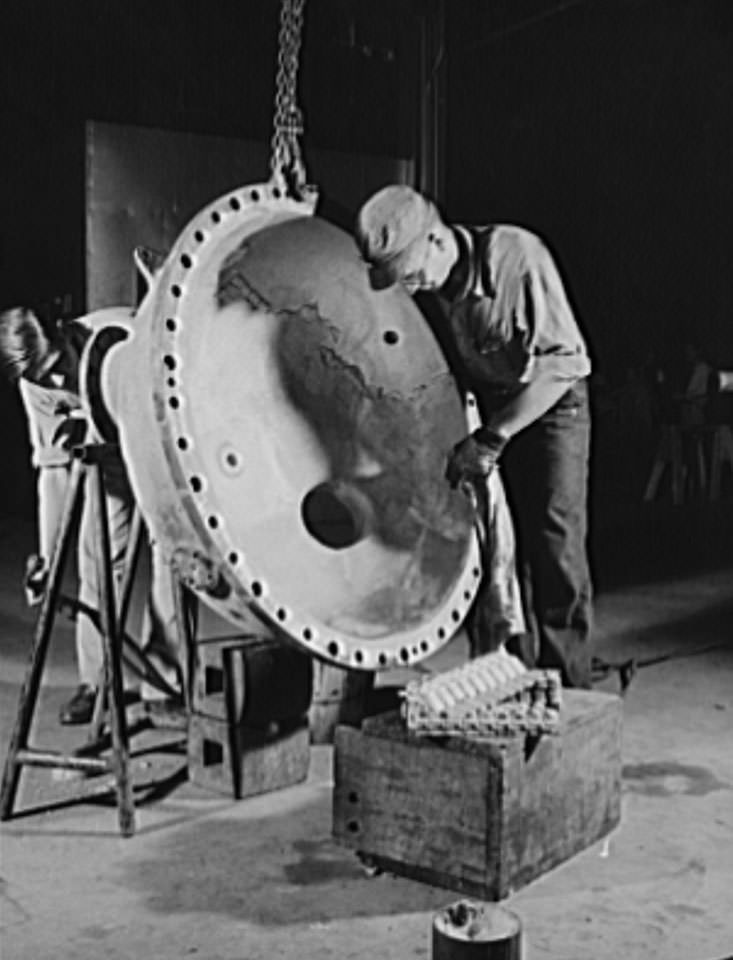
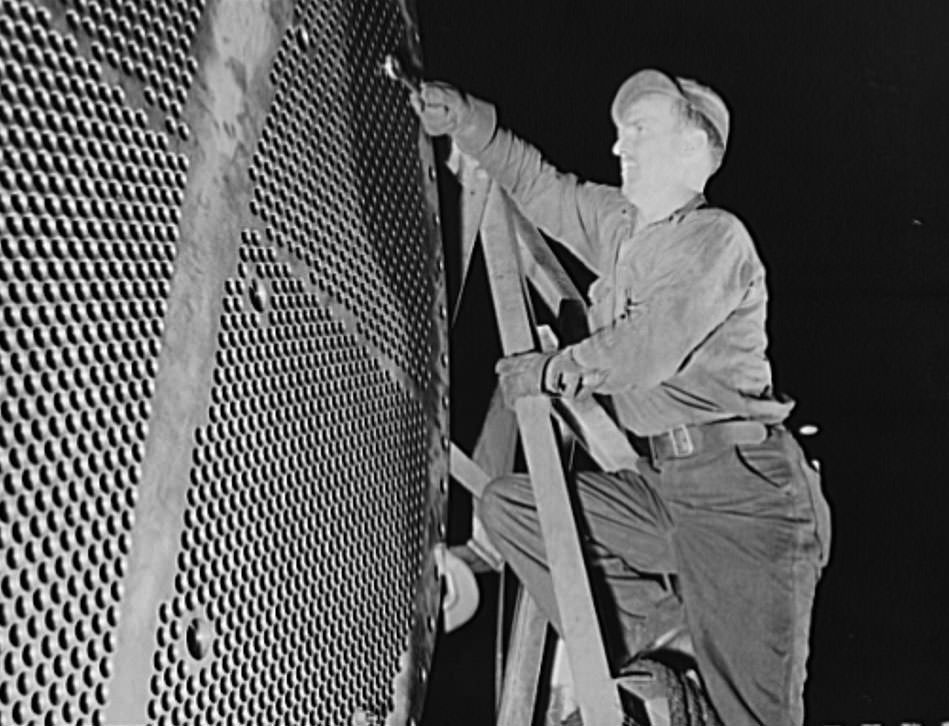
Beyond the hull, ships required hundreds of individual components — propeller shafts, condensers, fittings, bearings, turbine parts, and pipe systems. Each one had to meet exact specifications. Workers drove pins into propeller shafts by hand, checked tail shaft bearings with measuring instruments, and finished condensers for destroyers with careful touchup work. Every part had to pass inspection before installation.
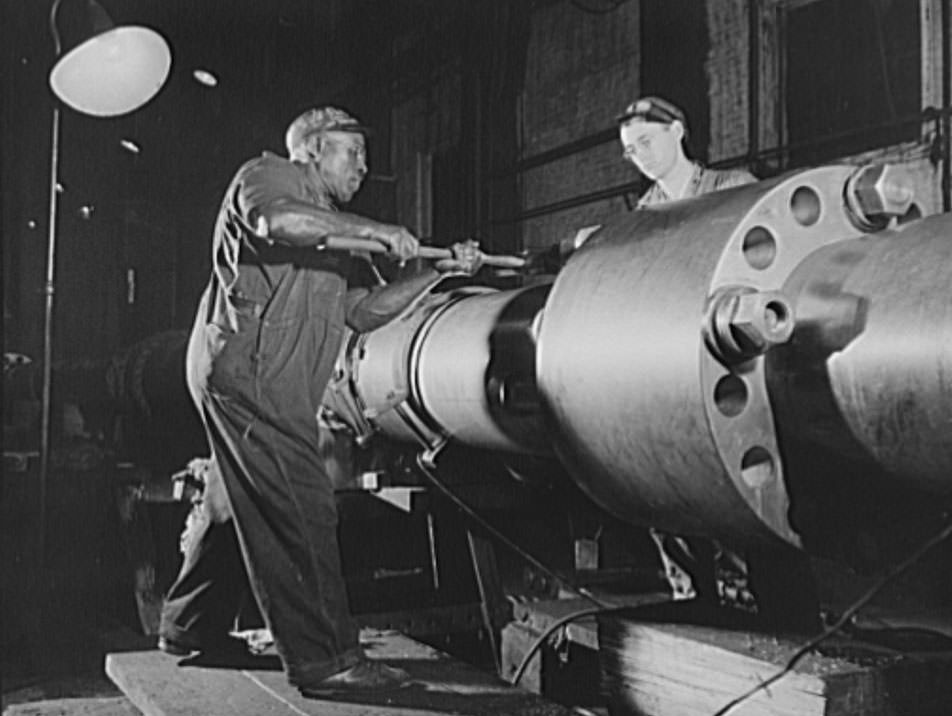
Skilled work requires brawn as well as brains. This husky navy yard worker is driving home a pin in the propeller shaft of a naval vessel under construction, 1941
This worker is touching up one of the huge condensers for a U.S. Navy destroyer under construction, 1941
This is a structural section, where preliminary work is done before the sections for new naval vessels are brought by overhead carriers to the ways, 1941
This worker is touching up one of the huge condensers for a U.S. Navy destroyer under construction, 1941
A worker is touching up one of the huge condensers for a U.S. Navy destroyer under construction, 1941
This is a structural section, where preliminary work is done before the sections for new naval vessels are brought by overhead carriers to the ways, where they will become a part of the assembled ship, 1941

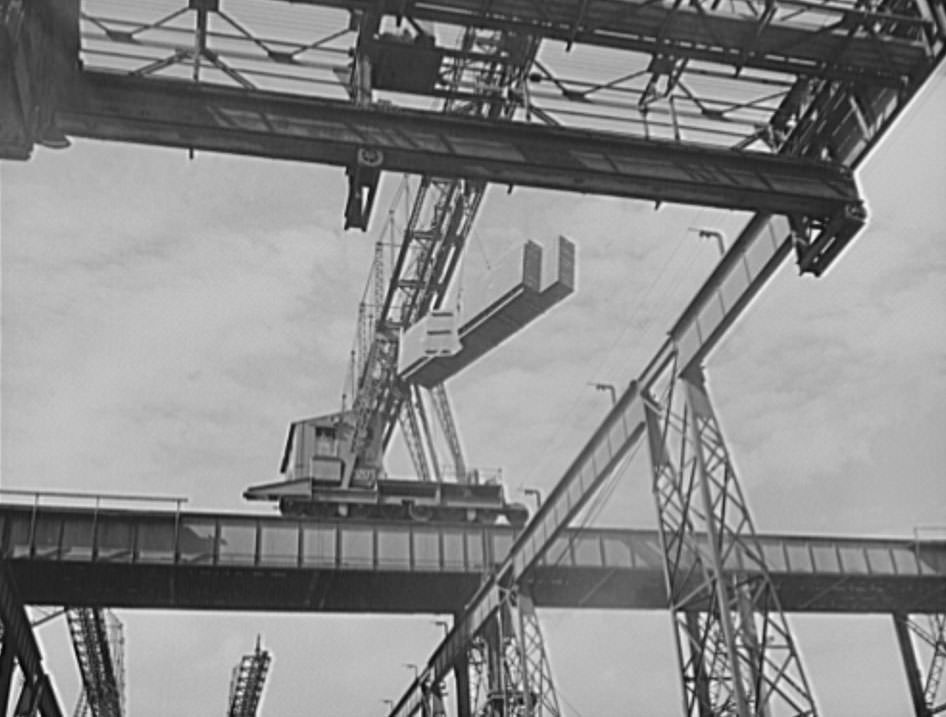
The overhead cranes were among the most visible tools in the entire yard. They moved sections of cruiser hulls weighing many tons, swinging them into alignment above the ways so workers below could secure them in place. A crew would attach rigging and guide the load while the crane operator above inched the section into position. Attaching the rigging correctly — and safely — was its own skilled trade.
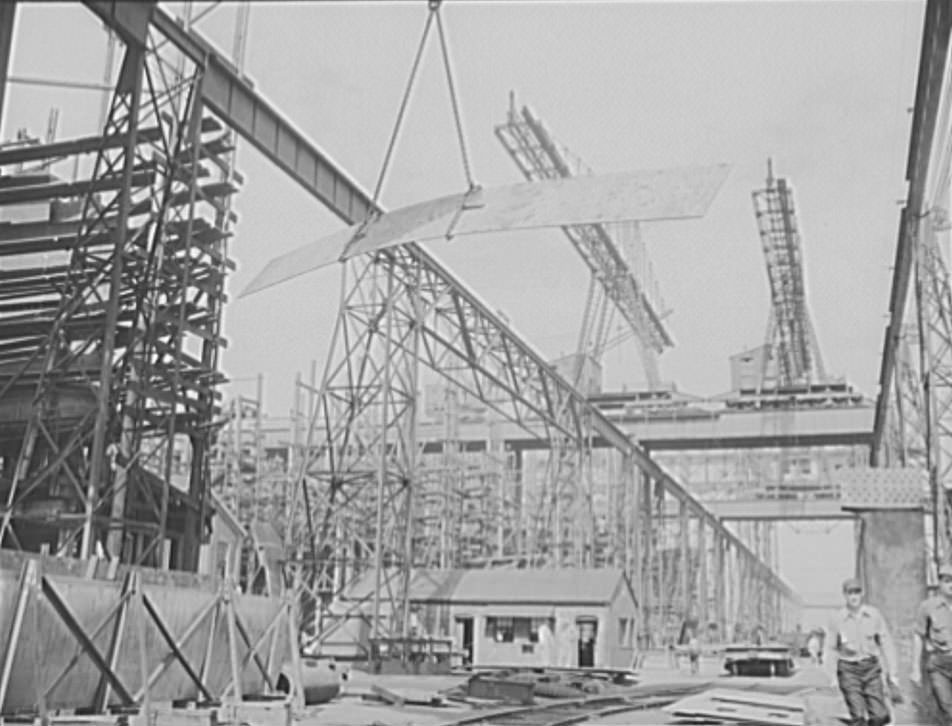
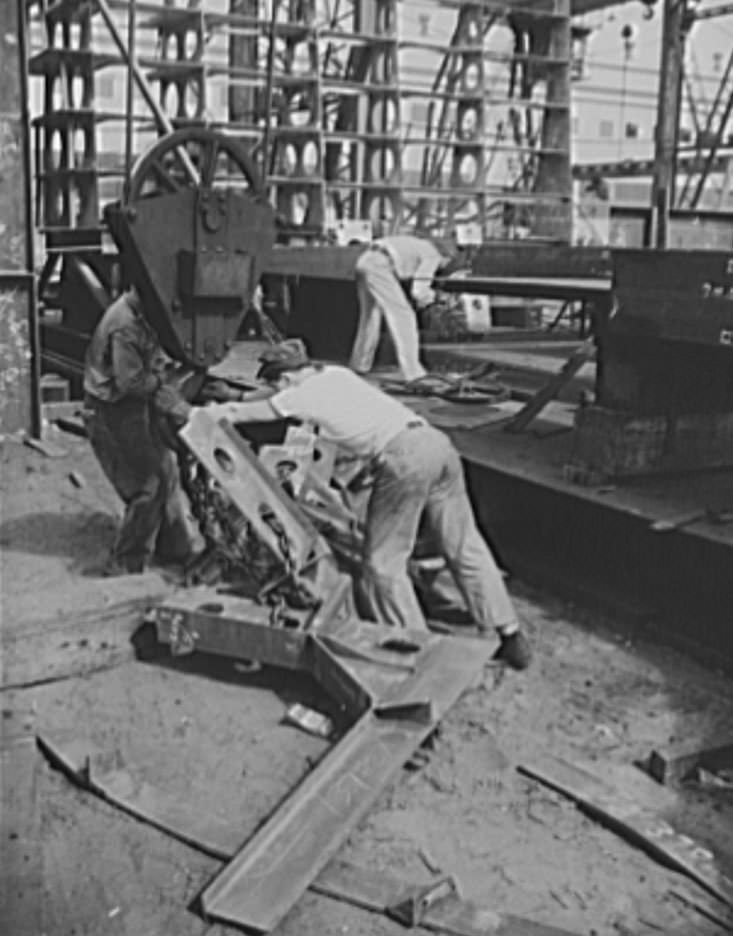
A huge overhead crane swings this metal plate into position to be welded to a new cruiser under construction for the U.S. Navy, 1941
These workers are attaching parts for a new cruiser under construction to the overhead crane which will deliver the metal to the building ways, 1941
A section for a new U.S. Navy cruiser is being delivered by overhead crane to the building ways. Four cruisers and a battleship are under construction here, 1941
A section for a new U.S. Navy cruiser is being delivered by overhead crane to the building ways, 1941

Problems came up constantly on the ways. A section wouldn’t align. A tolerance was off. A part didn’t fit the template it was supposed to match. Supervisors and tradesmen worked through these issues on the spot, because falling behind schedule on a Navy contract was not an option. The yard ranked 23rd among all U.S. corporations in the total value of wartime production contracts — an output that required daily problem-solving at every level.
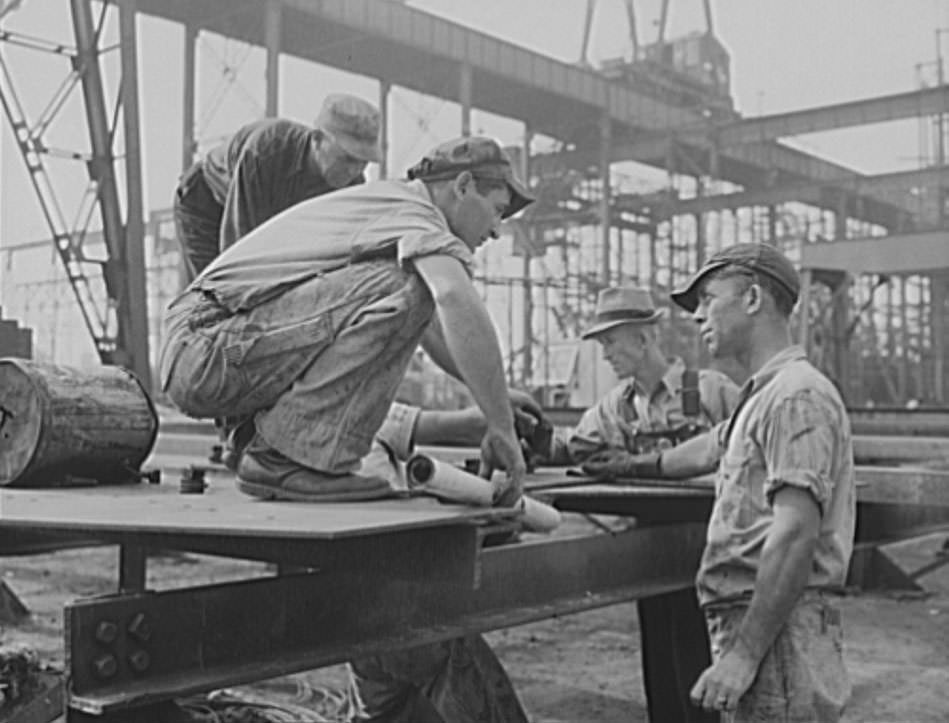
Problems, major and minor, arise at every turn in the building of huge whips for Uncle Sam's growing Navy, 1941
Problems, major and minor, arise at every turn in the building of huge whips for Uncle Sam’s growing Navy, 1941
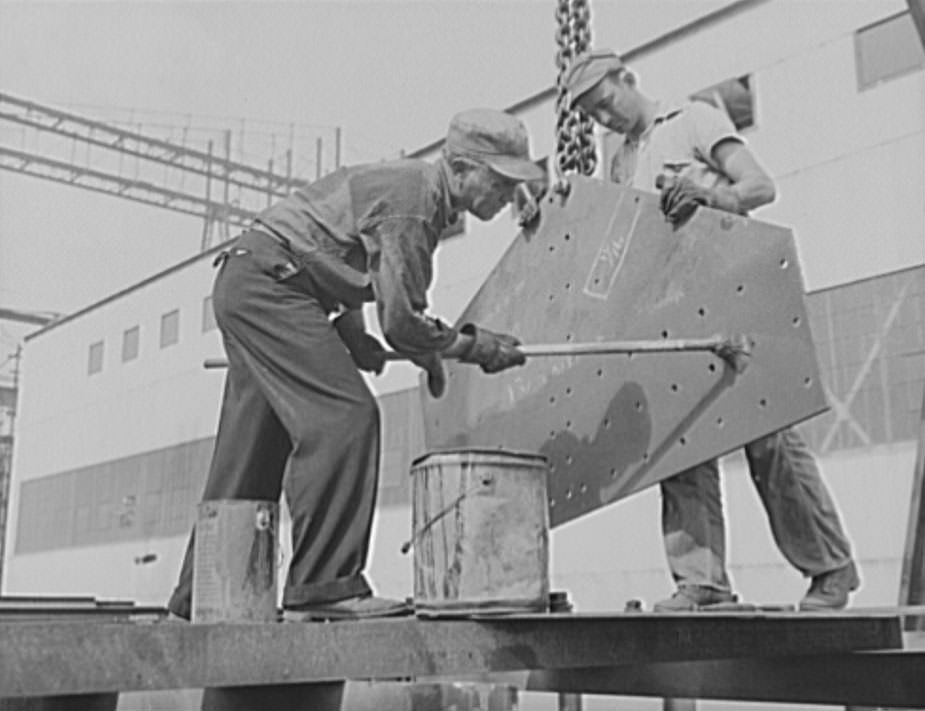
These workers are red-leading a plate, to prevent corrosion. Only the highest quality materials will serve for the new warcraft under construction for Uncle Sam's two-ocean fleet, 1941
These workers are red-leading a plate, to prevent corrosion. Only the highest quality materials will serve for the new warcraft under construction for Uncle Sam’s two-ocean fleet, 1941

Corrosion prevention was a constant concern on steel vessels. Workers applied red lead paint — a rust-inhibiting primer — to steel plates and pipes before they were assembled into the ship. The process was straightforward but essential: a warship operating at sea could not afford to have its hull or piping systems fail from rust. Red-leading was one of dozens of preparatory steps that had to be completed before any section was declared ready.
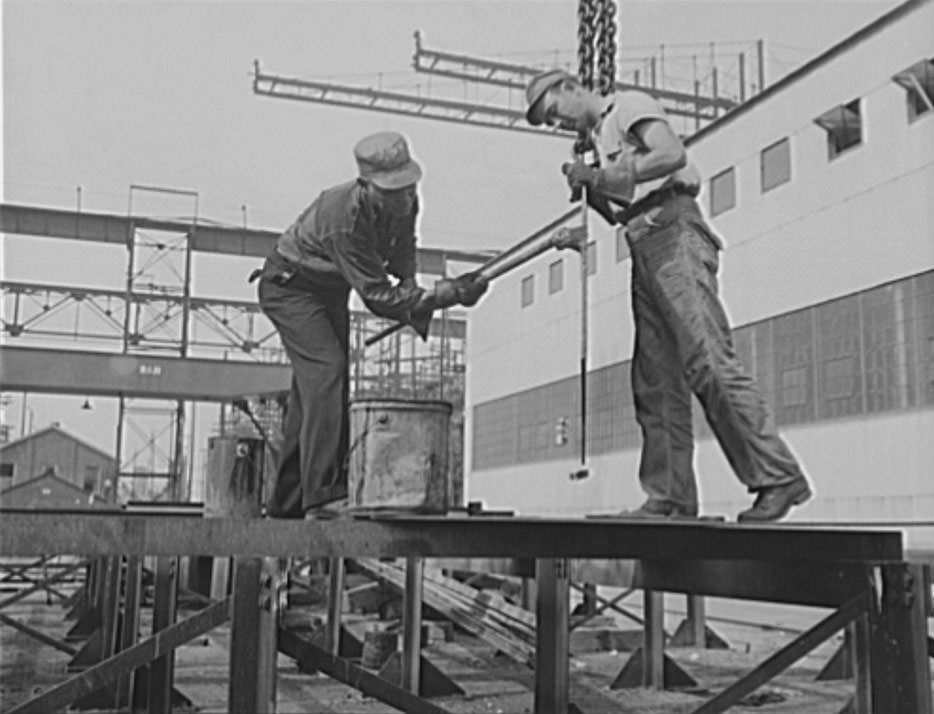
These workers are red-leading a pipe, to prevent corrosion, 1941
These are the men whose skill is devoted to the building of the finest, most powerful fleet of naval vessels the world has ever seen, 1941
These are mold loft workers laying out patterns for various parts of naval vessels under constructions. These patterns are subsequently transferred to steel, 1941

Precision measurement ran through every department. In the machine shops, workers checked dimensions on shaft bearings and turbine components using gauges and calipers. A tail shaft bearing that didn’t meet spec could cause catastrophic failure in a ship’s drive system at sea. Workers who did this checking were among the most experienced in the yard — their sign-off meant a part was ready to be installed.
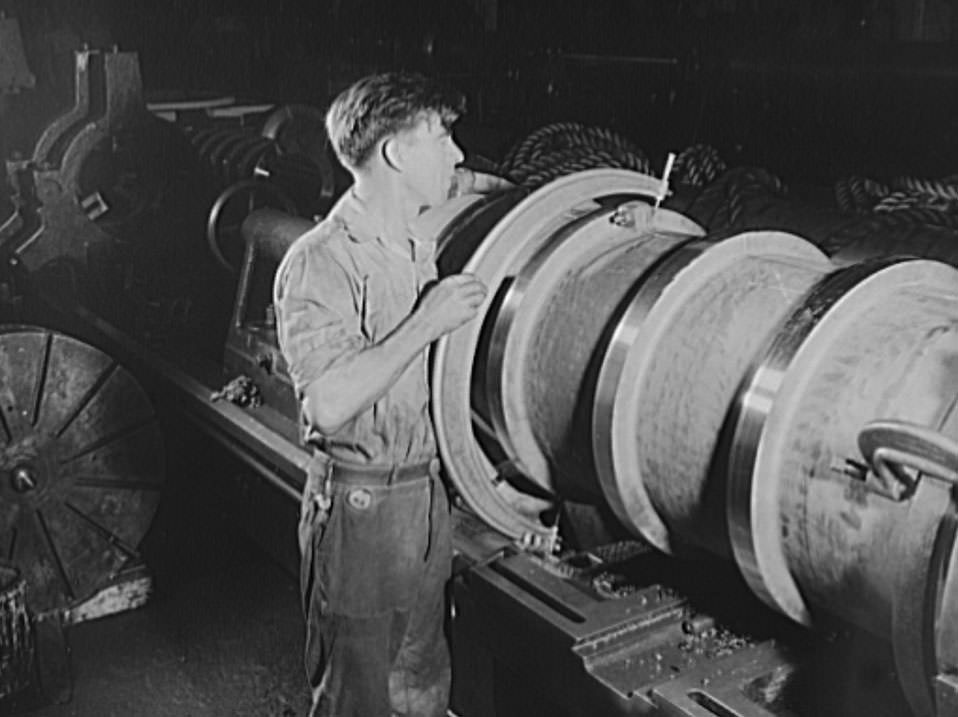
It's got to measure up, or else. This skilled worker is checking the dimensions of a tail shaft bearing for a navy vessels under construction, 1941
It’s got to measure up, or else. This skilled worker is checking the dimensions of a tail shaft bearing for a navy vessels under construction, 1941
These are the men whose skill is devoted to the building of the finest, most powerful fleet of naval vessels the world has ever seen, 1941
These skilled workers are tinpleting an evaporator top, part of a stream turbine which will help to drive a news naval vessel under construction at the Newport News, 1941

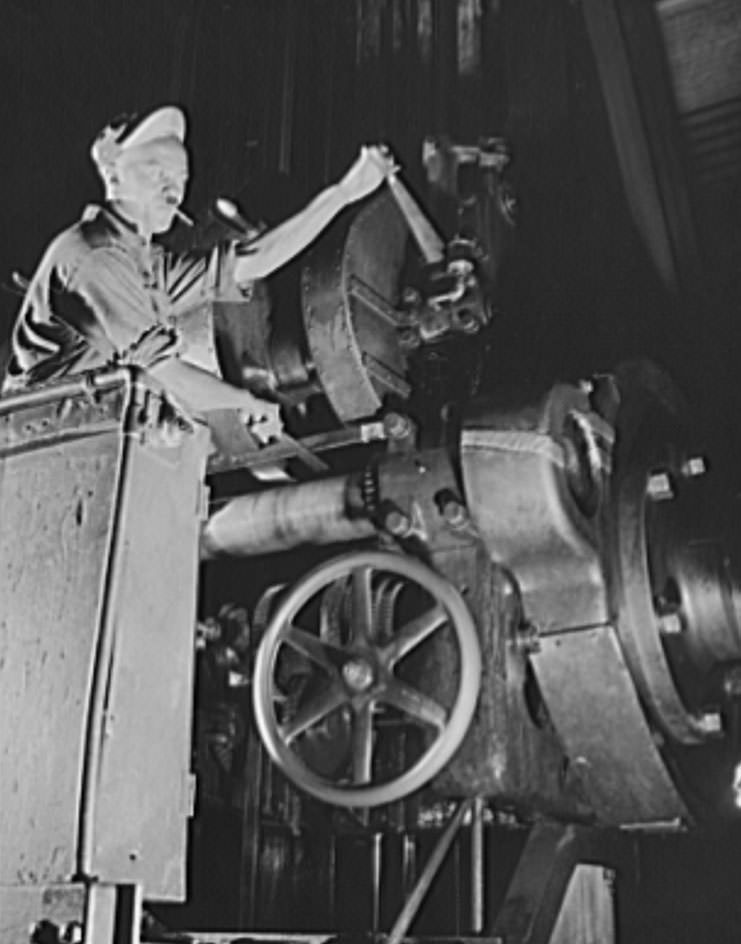
As 1941 progressed, the ways held four cruisers and a large battleship in various stages of completion. Behind the scaffolding, hulls were beginning to take recognizable shape — bow sections rising above the deck line, hull plates closing in the frames, machinery being lowered into the interior spaces. The yard’s machinists handled complicated operations that required both technical knowledge and physical strength.
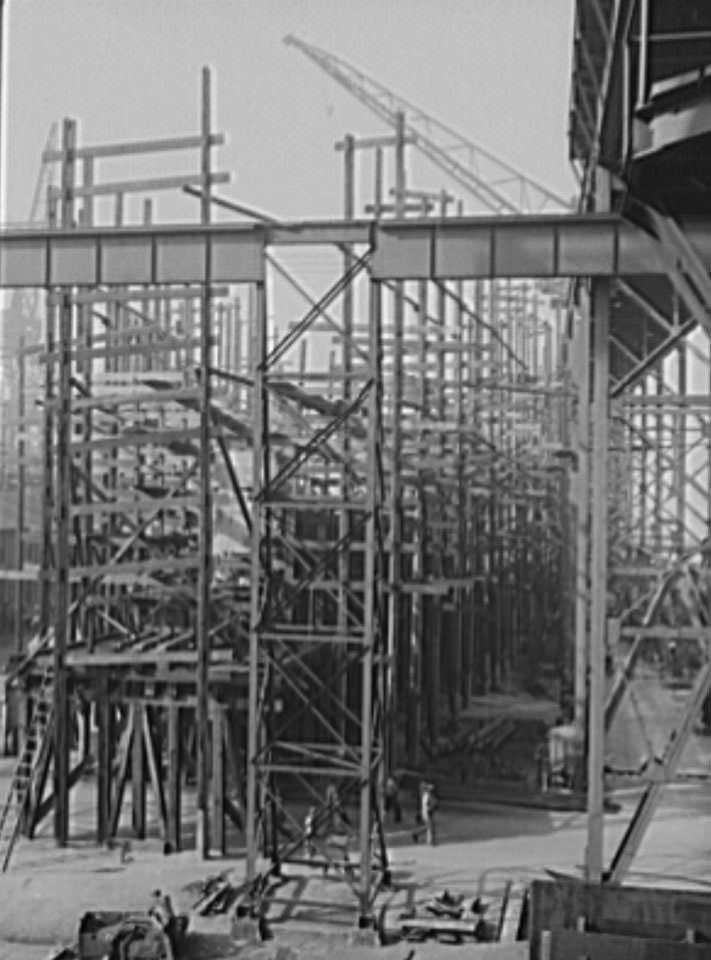
Behind all the scaffolding a new cruiser is beginning to take shape, one of four under construction on the Newport News ways, 1941
These are mold loft workers laying out patterns for various parts of naval vessels under construction, 1941
There are many complicated machining operations involved in the production of ships for our two-ocean Navy. This skilled worker is one of thousands at the Newport News ways, 1941
(Newport News). These are mold loft workers laying out patterns for various parts of naval vessels under construction, 1941
These are the men whose skill is devoted to the building of the finest, most powerful fleet of naval vessels the world has ever seen, 1941

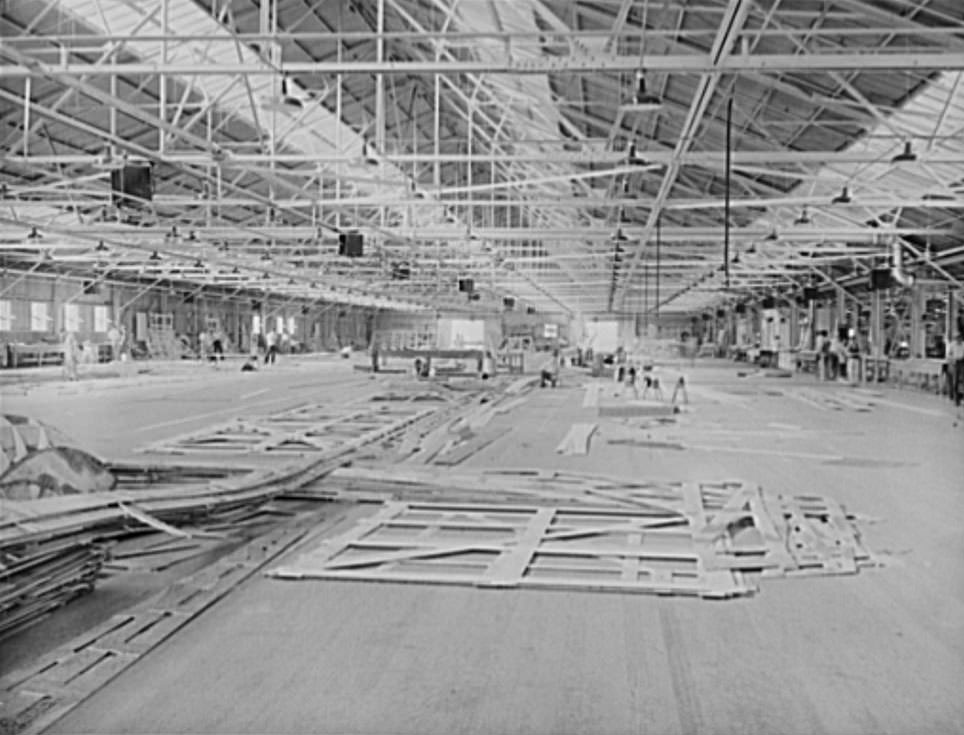
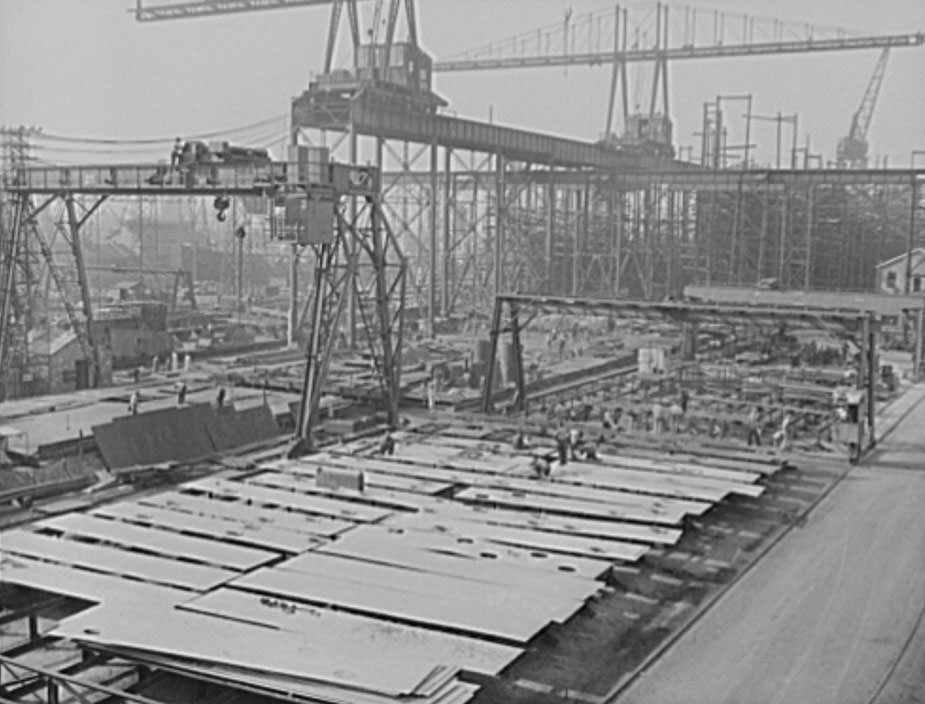
The ship plate section sat in the shadow of the building ways, a constant hub of cutting, shaping, and marking activity. Steel arrived in flat sheets and left as curved, punched, and measured components ready for crane delivery. Railroad spurs carried the heaviest material directly to where it was needed. The yard’s internal logistics — rail, crane, and foot traffic — had to be coordinated precisely to prevent bottlenecks.
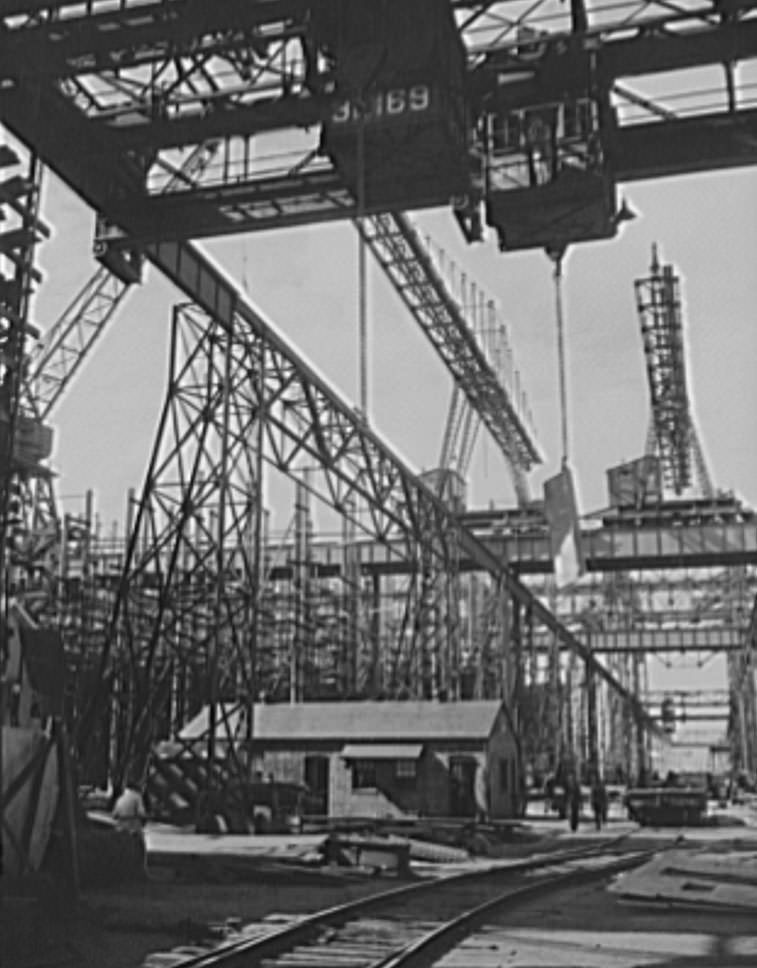
Thousands of tons of lumber and steel are used in the construction of these ways, where American mechanical genius is employed in the production of ships for our new two-ocean Navy, 1941
These are the men whose skill is devoted to the building of the finest, most powerful fleet of naval vessels the world has ever seen, 1941
This railroad spur is used for hauling materials onto the ways, where naval vessels are under construction. Huge overhead cranes are used to put heavy parts in place, 1941
Thousands of tons of lumber and steel are used in the construction of these ways, where American mechanical genius is employed in the production of ships for our two-ocean Navy, 1941
Huge overhead cranes are used for the placing of heavy parts in the naval ships under construction at these ways, 1941
In the shadow of the huge building ways. where four cruisers and a battleship for Uncle Sam's growing navy are under construction, lies the ship's plate section, 1941
In the shadow of the huge building ways. where four cruisers and a battleship for Uncle Sam’s growing navy are under construction, lies the ship’s plate section, 1941

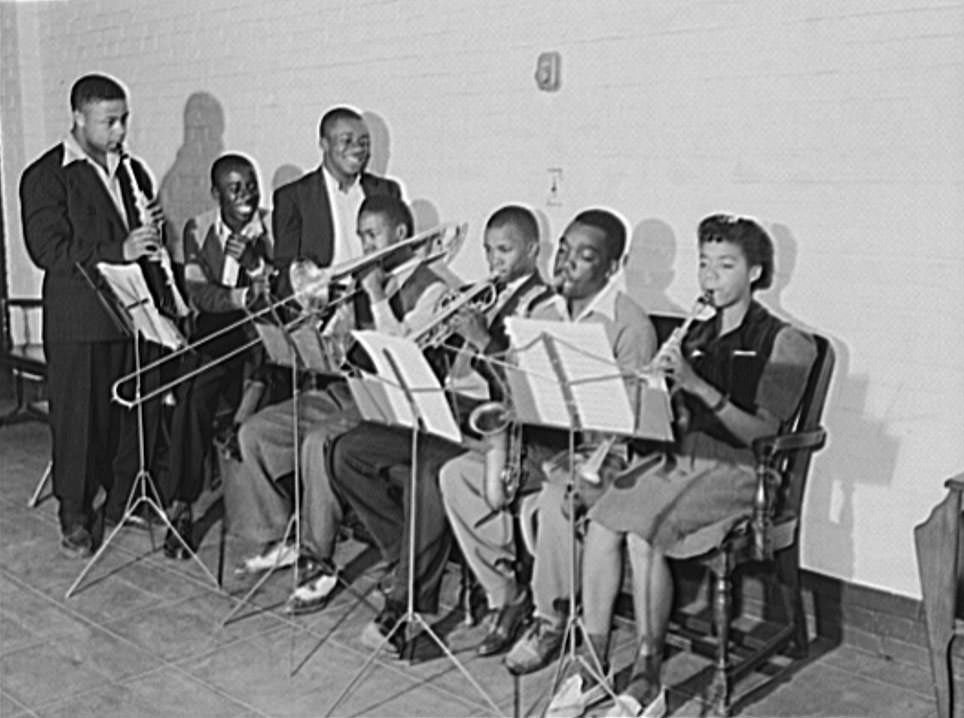
Life at the yard extended beyond the work itself. Workers formed musical organizations and found other ways to build community among the thousands of men employed there. The sheer size of the workforce meant that the shipyard functioned almost like a small city — with its own rhythms, routines, and social fabric. When the whistle blew at 4:00 p.m., the gates opened and that city emptied into the streets of Newport News.
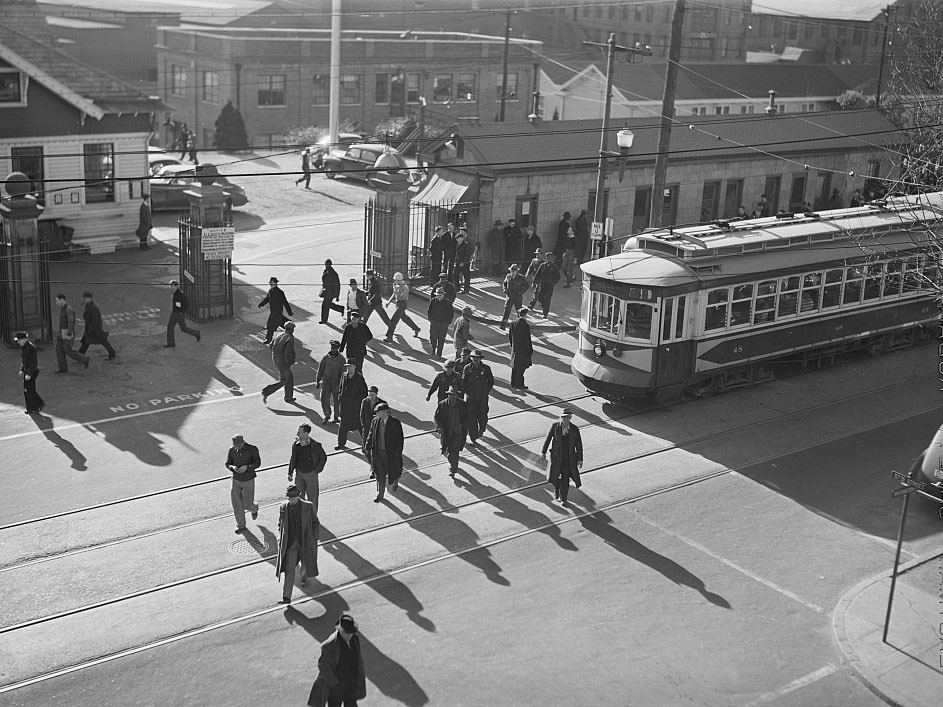
Shipyards of Newport News, 1941
Shipyard worker (second from right) participates in a musical organization, 1940 May.

The finished vessels — destroyers, cruisers, battleships, carriers — represented the combined effort of every department in the yard. From the mold loft worker laying out a wooden template to the machinist checking a shaft bearing, each job fed directly into the next. The C-3 cargo ships built at Newport News were among the most versatile vessels produced during the war, serving as freighters and later as the basis for escort carriers.
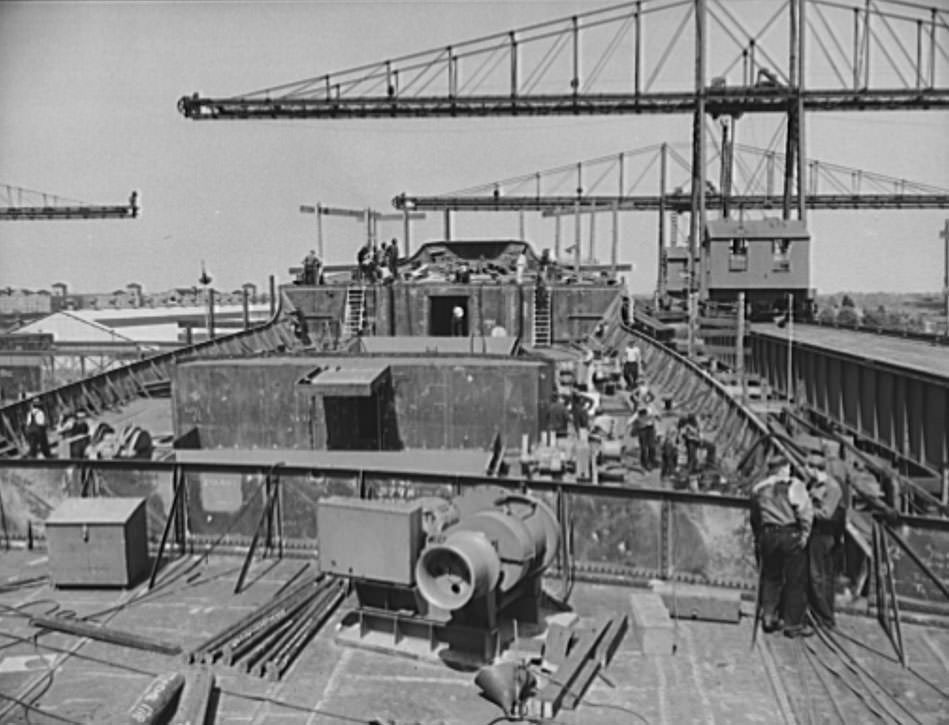

The forward deck on a C-3, photographed from the bridge. Winch in foreground; winch platform in center of picture, 1940
Enjoyed this post? Get new ones in your inbox.
Avatar of Aung Budhh

Written by Aung Budhh

Husband + Father + librarian + Poet + Traveler + Proud Buddhist. I love you with the breath, the smiles and the tears of all my life.

Leave a Reply

Your email address will not be published. Required fields are marked *