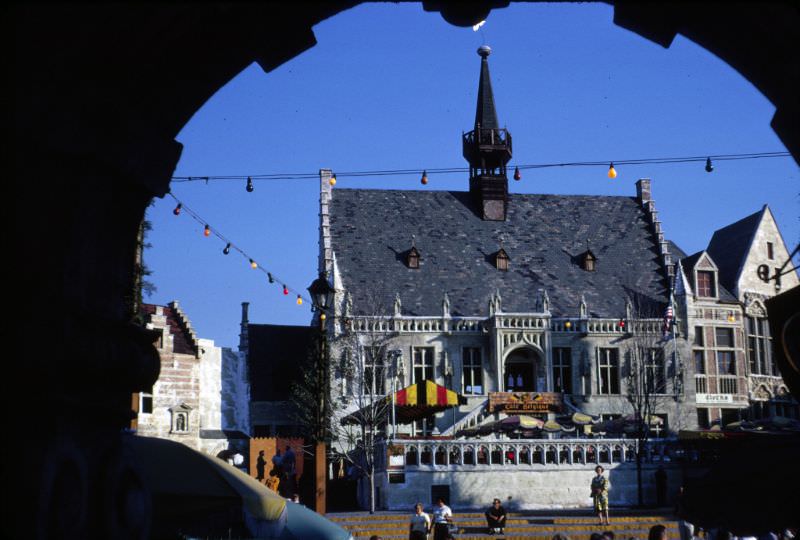
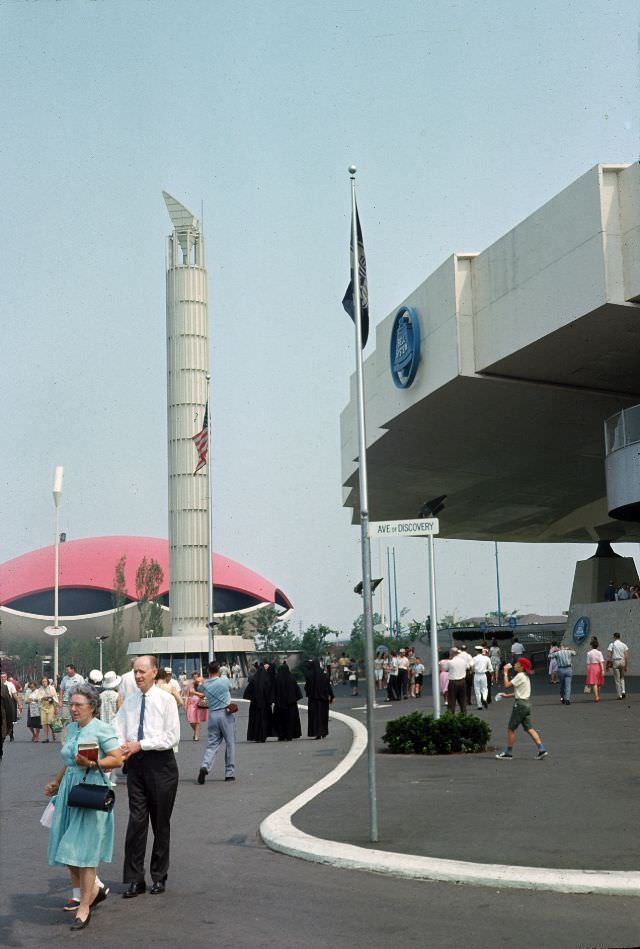
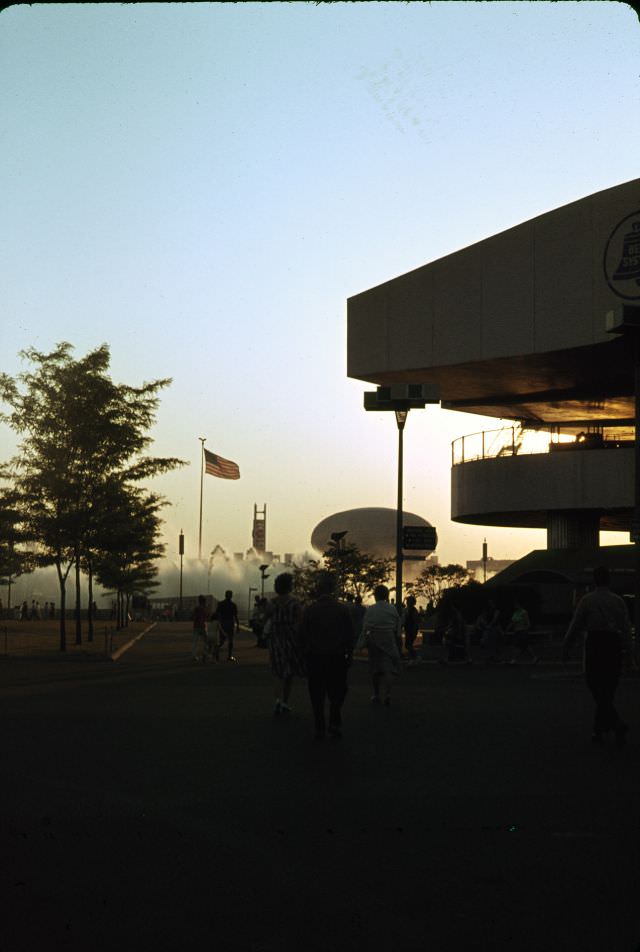
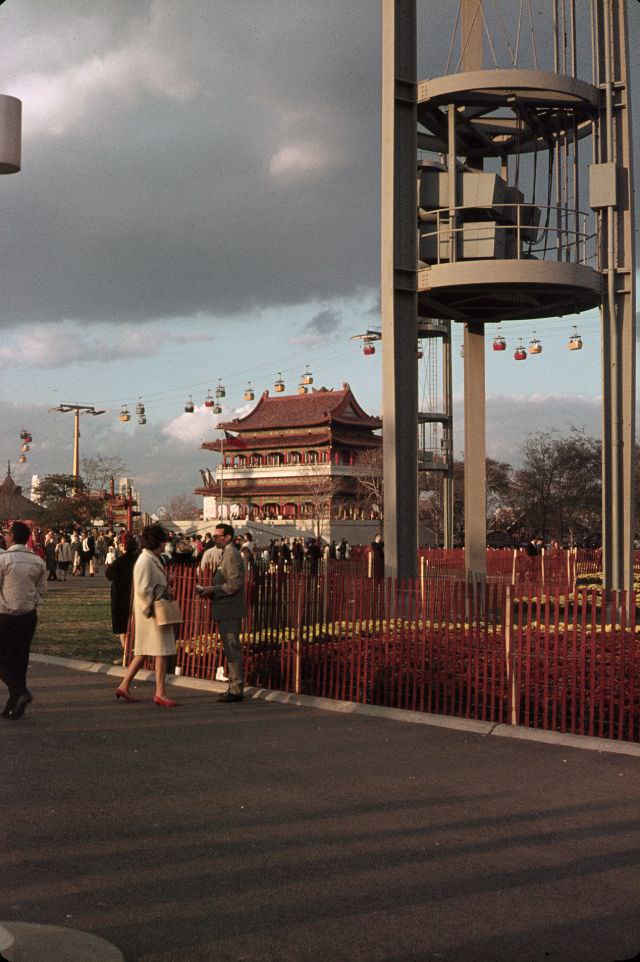
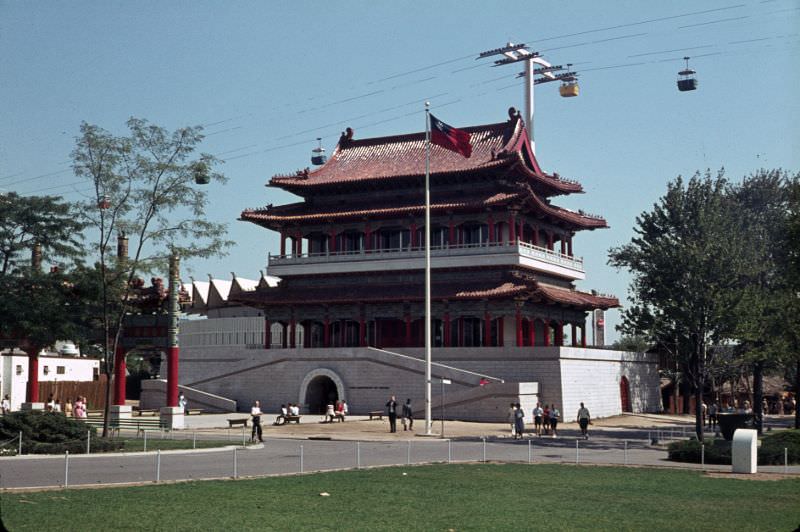
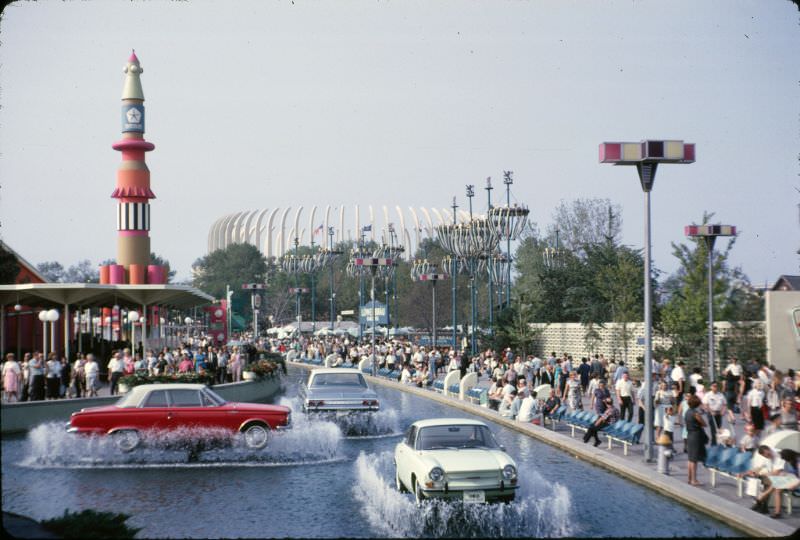
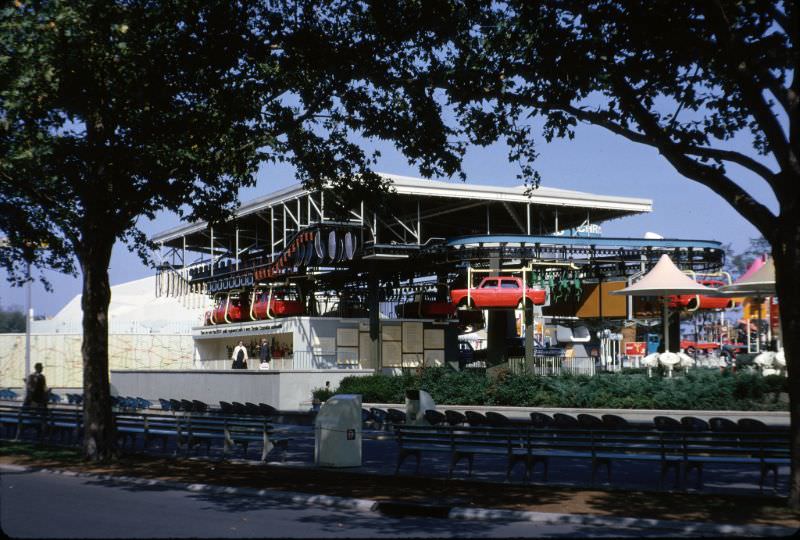
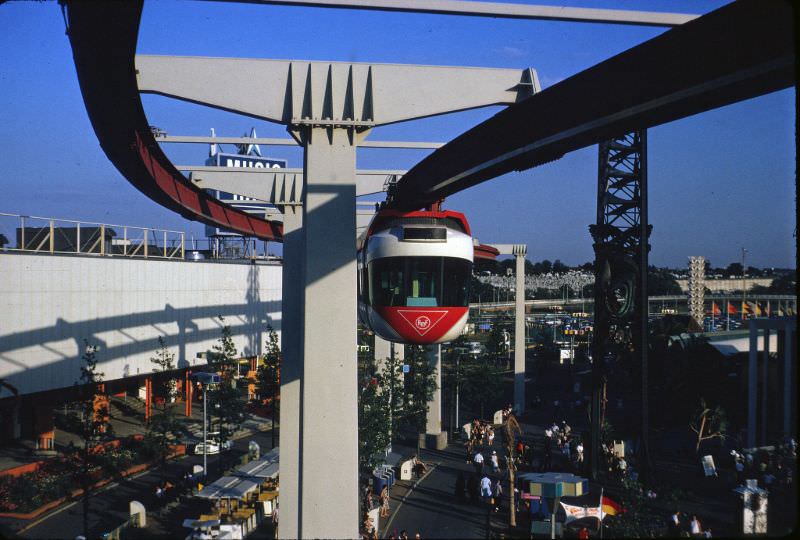
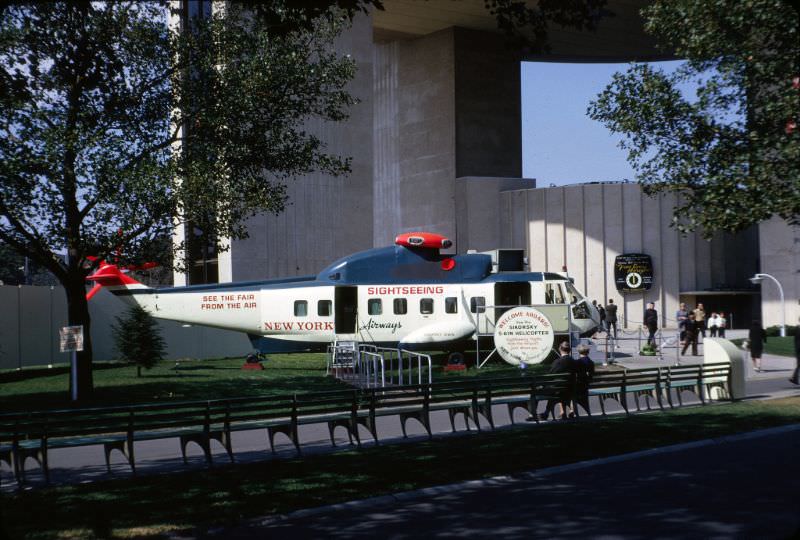
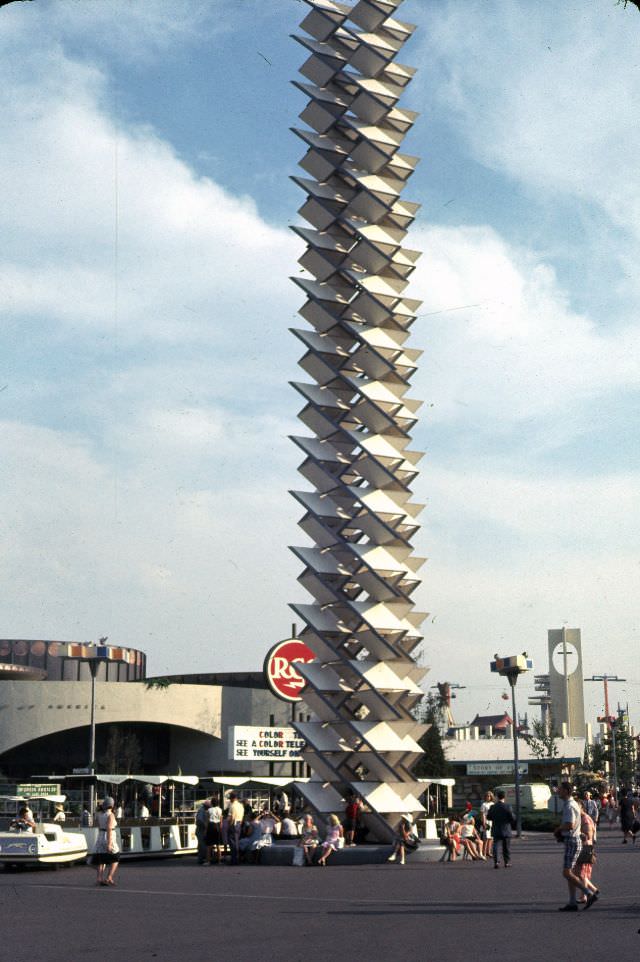
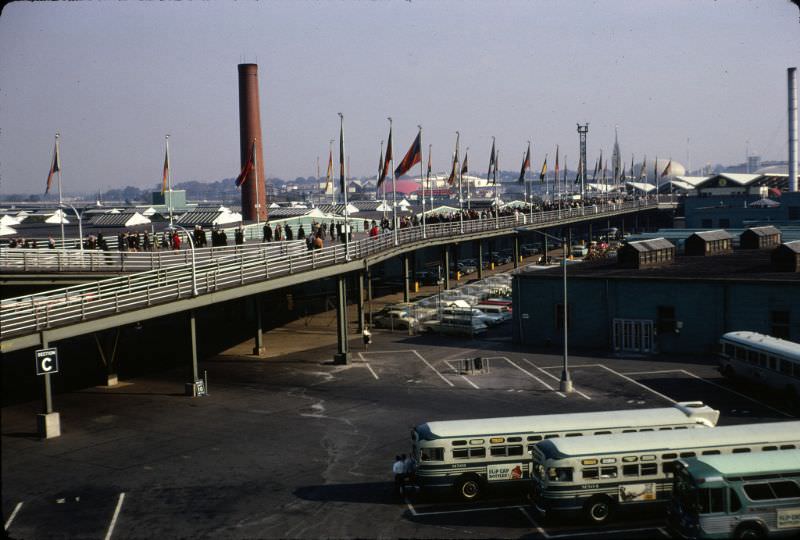
In the summer of 1964, Flushing Meadows-Corona Park in Queens, New York became the center of the world. The 1964 New York World’s Fair opened its gates to a planet full of possibility, showcasing 140 pavilions, 110 restaurants, 80 nations, 24 states, and 45 corporations — all packed into one sprawling park. More than 51 million people walked through its gates over the course of the fair, even though organizers had hoped for 70 million. What they found was a dazzling mix of culture, technology, and pure spectacle unlike anything most of them had ever seen.
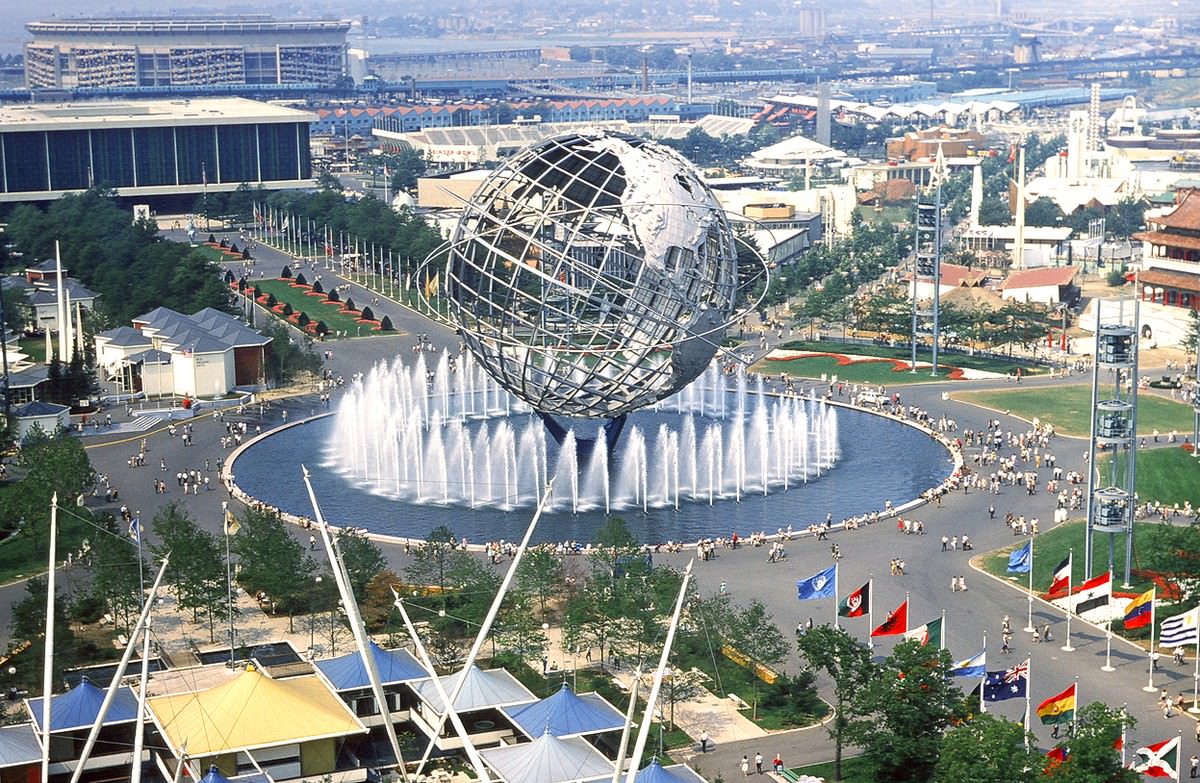
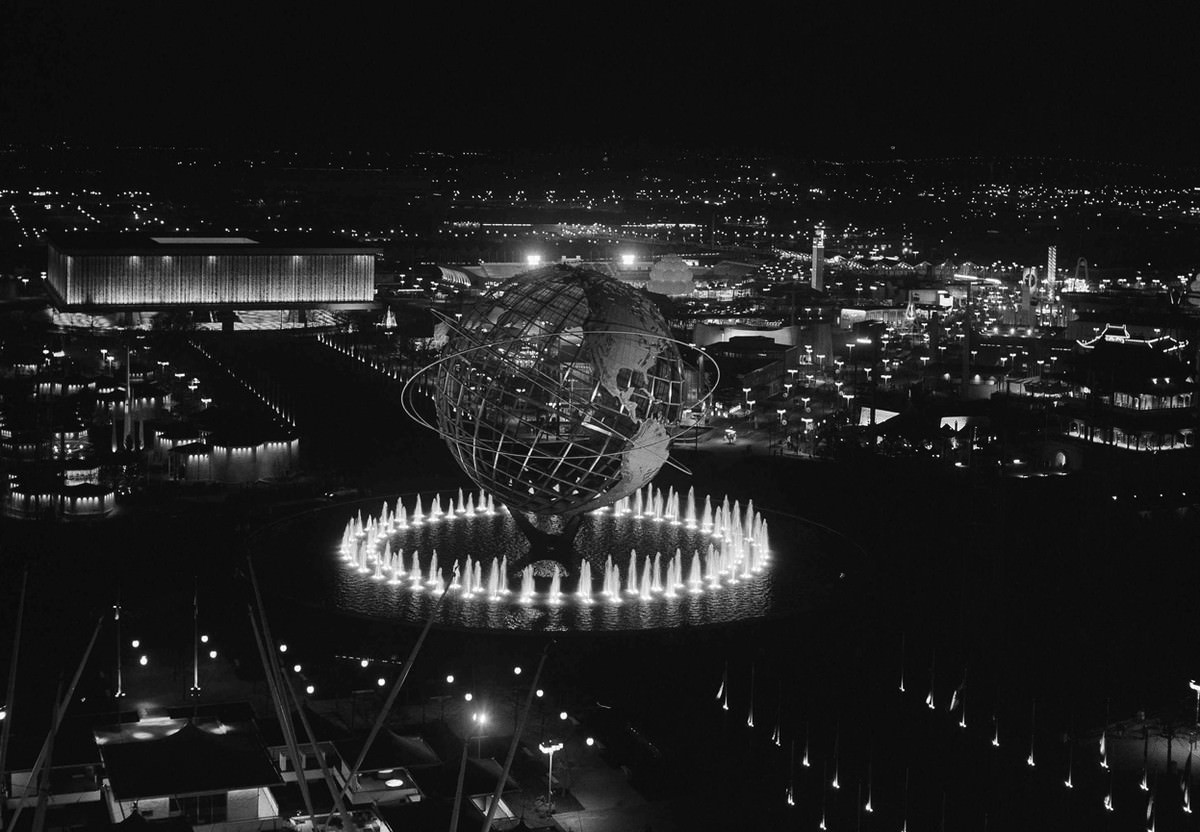
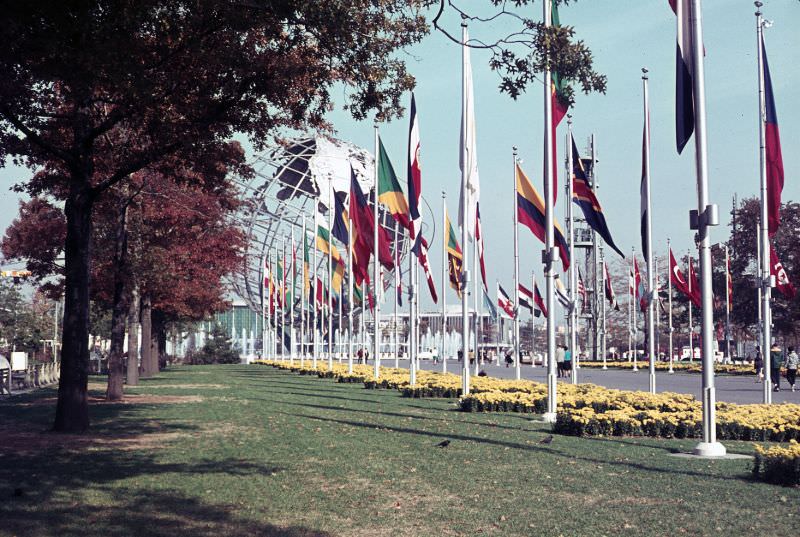
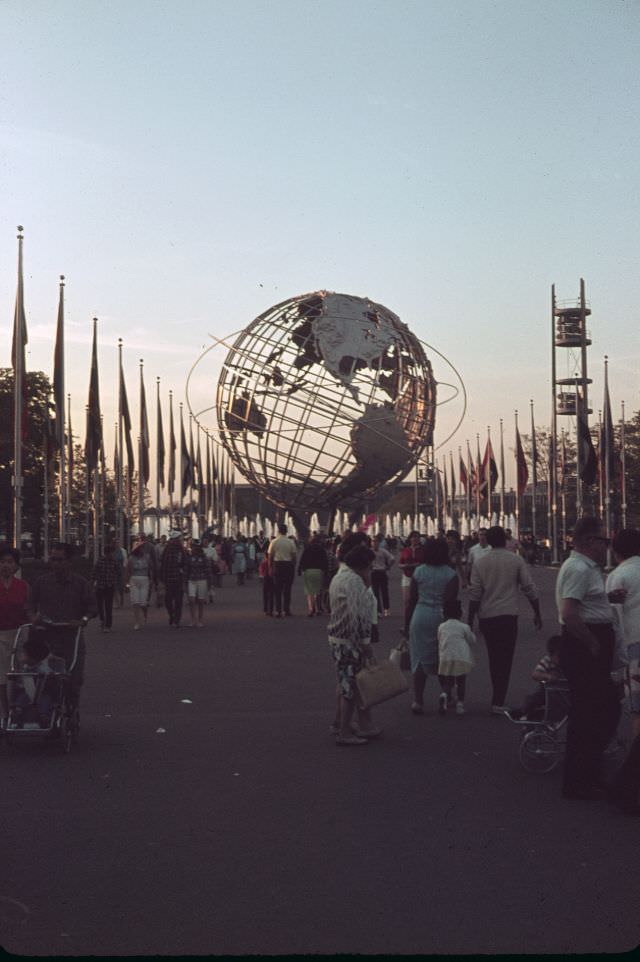
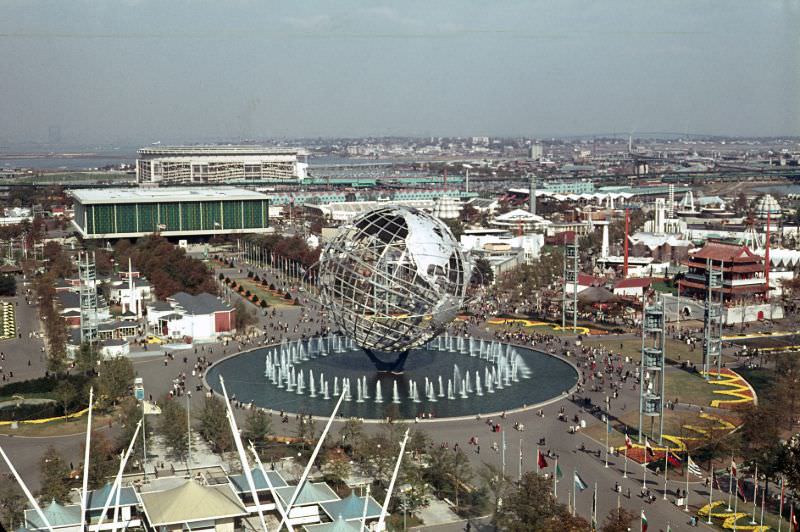
Standing at the heart of it all was the Unisphere — a 12-story stainless-steel globe that became the fair’s defining symbol. It was impossible to miss. No matter where visitors walked on the fairgrounds, the Unisphere rose above the skyline, a reminder of what the fair was really about: the world coming together at a moment when science, industry, and imagination all pointed toward a bright future. In early 1964, the site was still under construction, a vast work in progress covered in steel skeletons and mud.
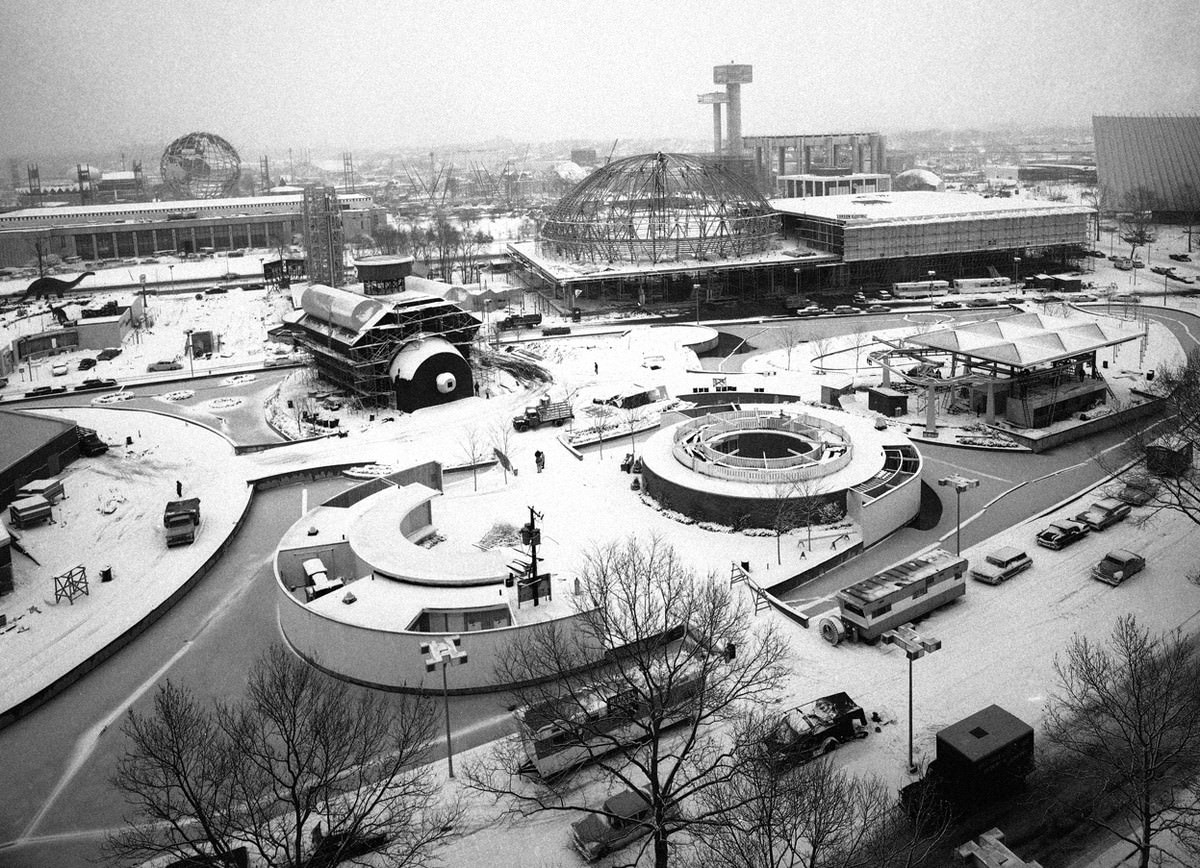
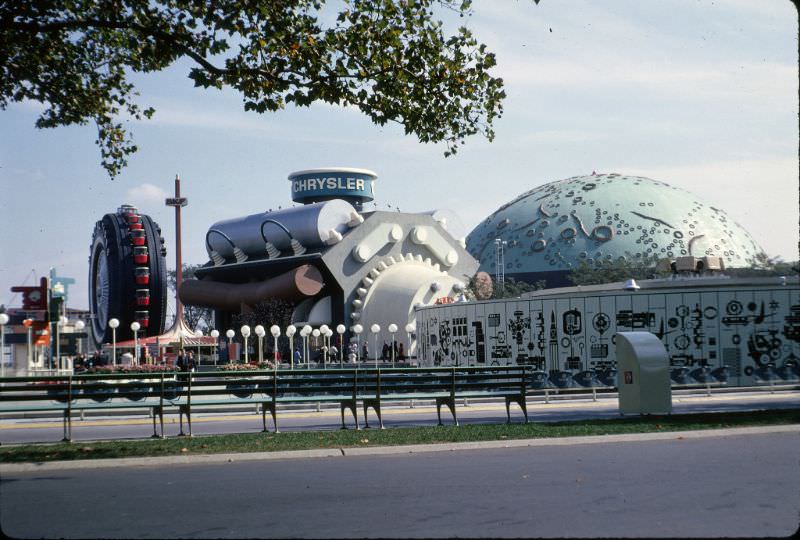
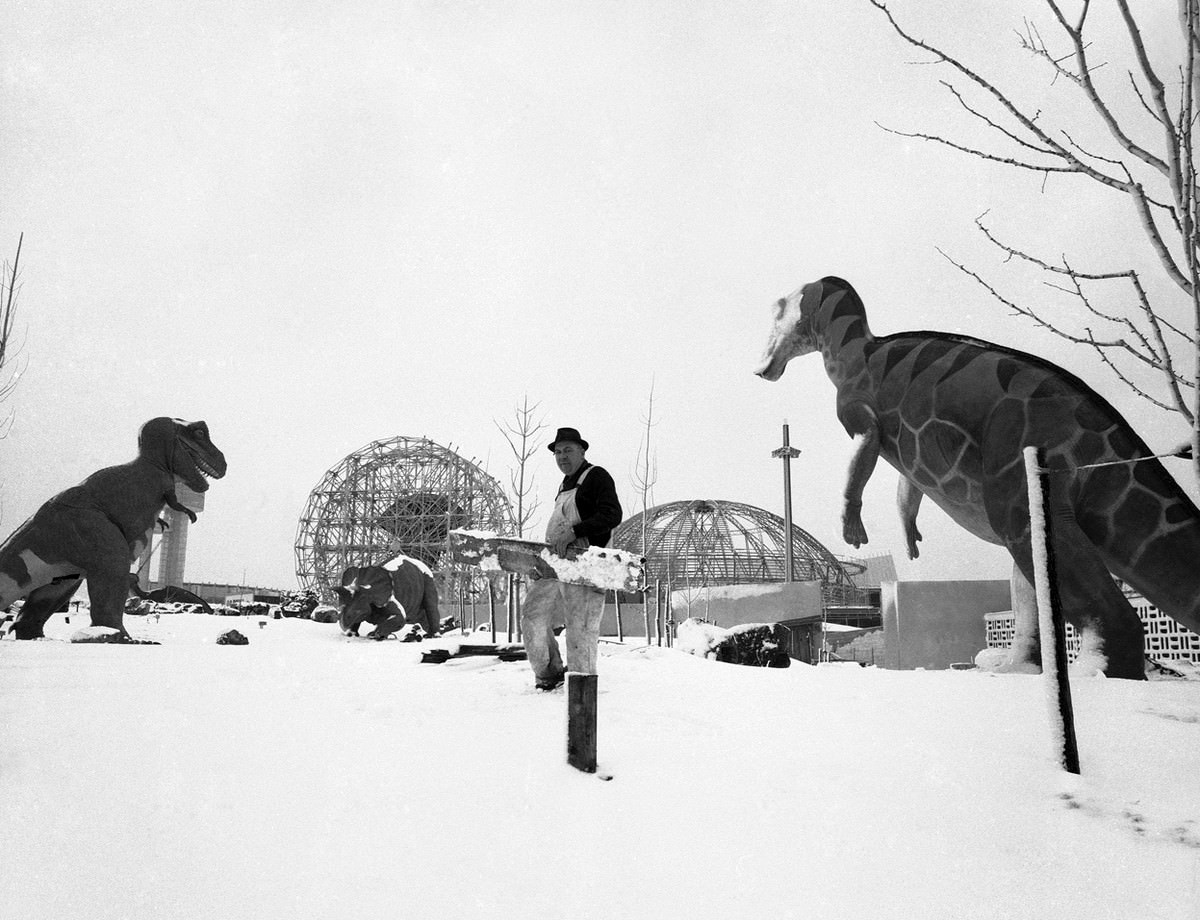
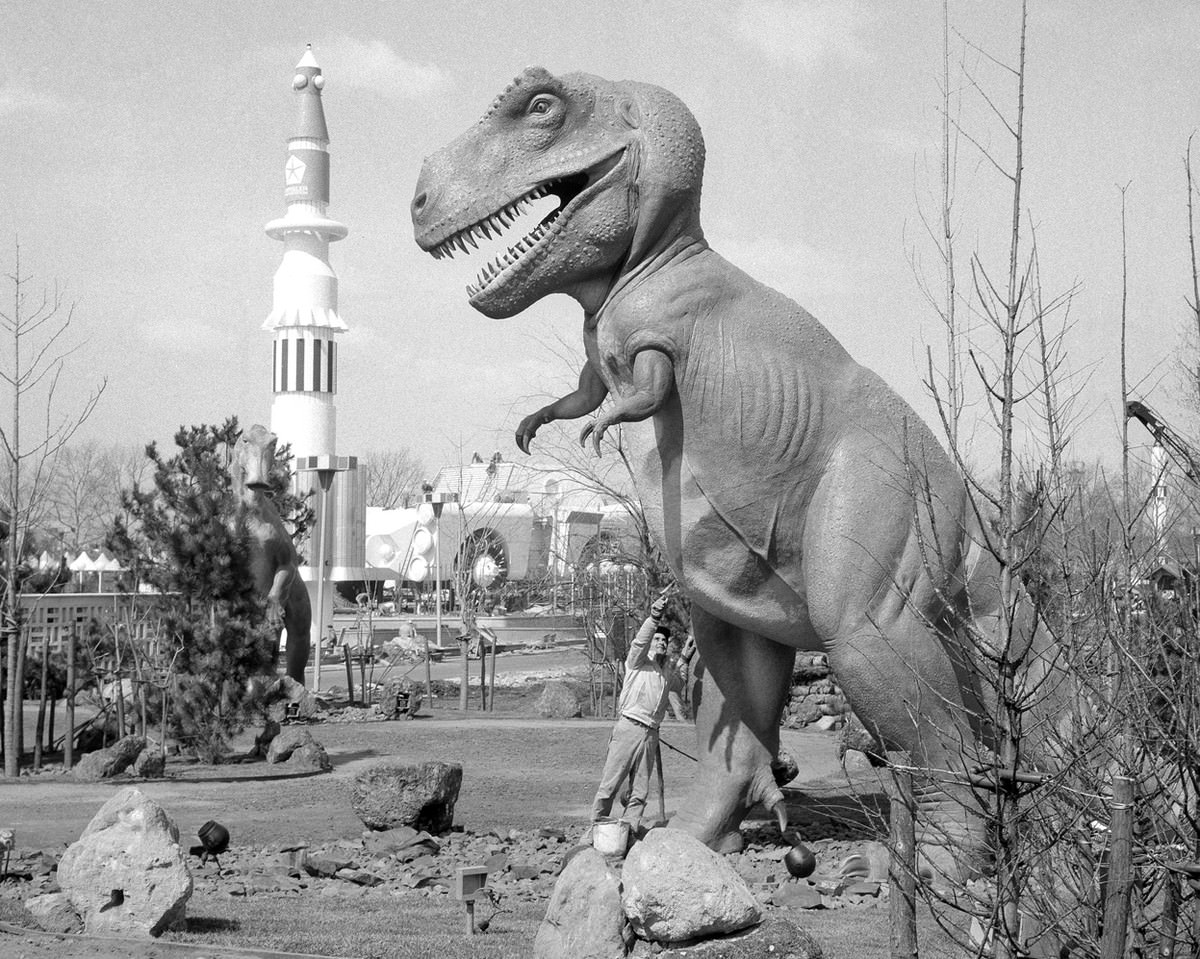
Even months before the fair opened, the scale of what was being built was clear. The Chrysler Motors Exhibit took shape in the foreground while the dome of the Travel and Transportation Pavilion climbed toward the sky. The New York City building stood to the far left, with the Unisphere rising behind it. Workmen moved across the site in all weather, including carpenter Henry Johnson, who showed up for work at the Sinclair Oil Exhibit one February morning alongside a crew of full-sized prehistoric dinosaur models.
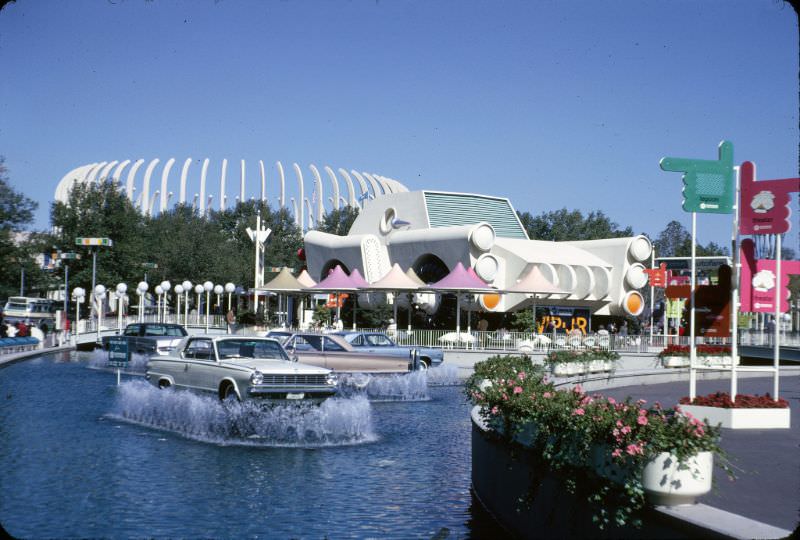
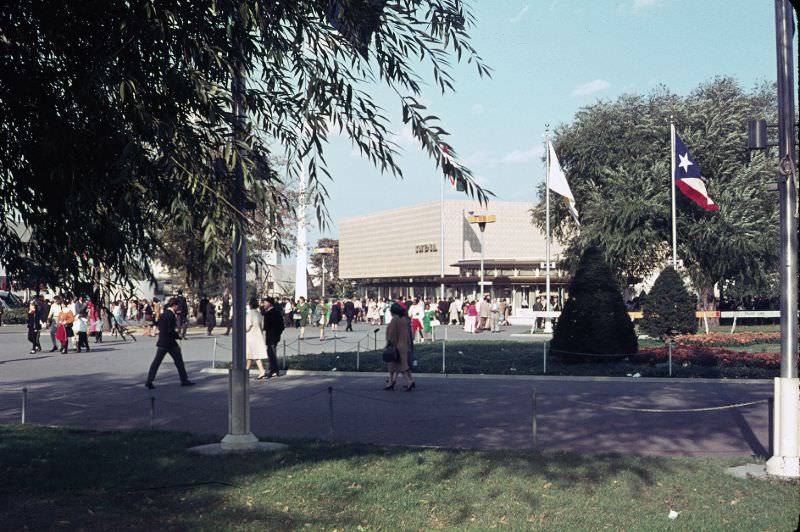
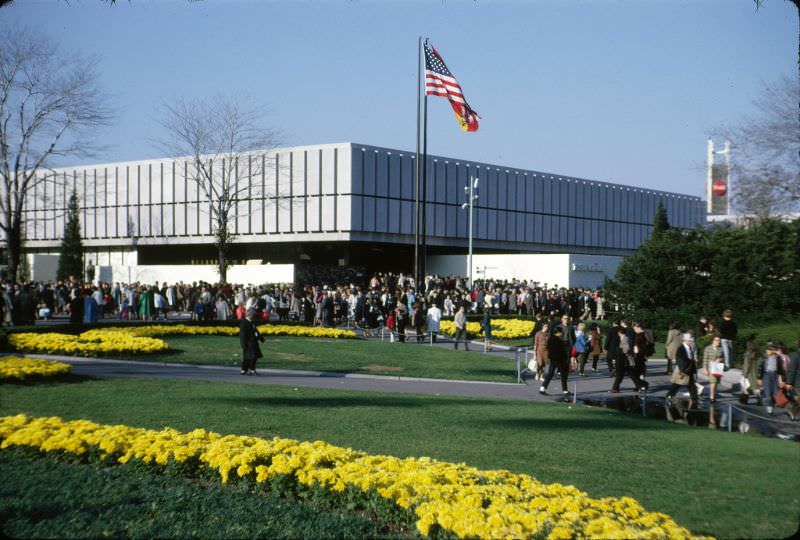
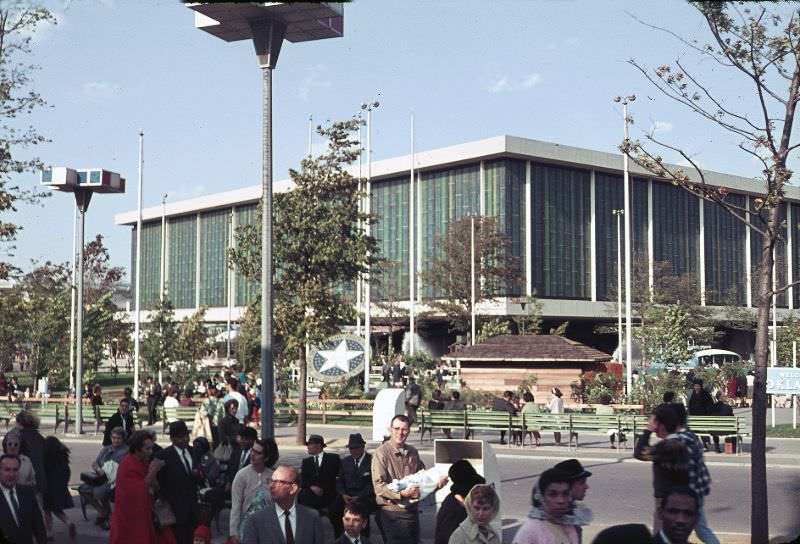
The fair officially opened on April 22, 1964, and the crowds poured in. On the first Sunday the fair was open to the public, visitors flooded the grounds at Flushing, Queens, craning their necks at pavilions that looked like nothing they had seen before. The architecture alone was worth the trip. Buildings were constructed from reinforced concrete, fiberglass, plastic, tempered glass, and stainless steel — materials that gave architects the freedom to build almost any shape they could dream up. Pavilion facades functioned as giant billboards, competing hard for the attention of the crowds.
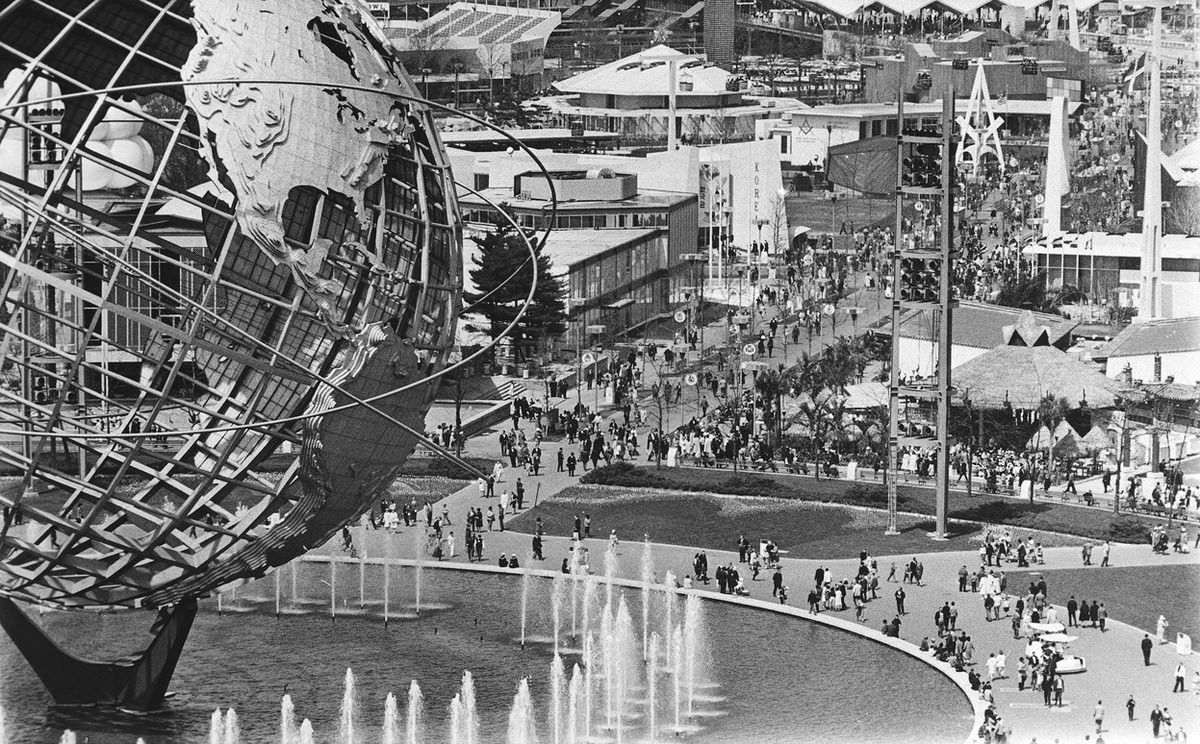
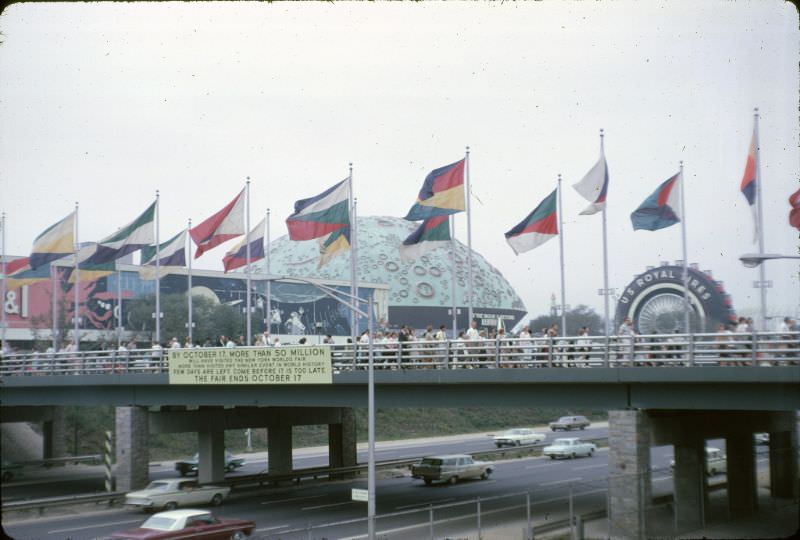
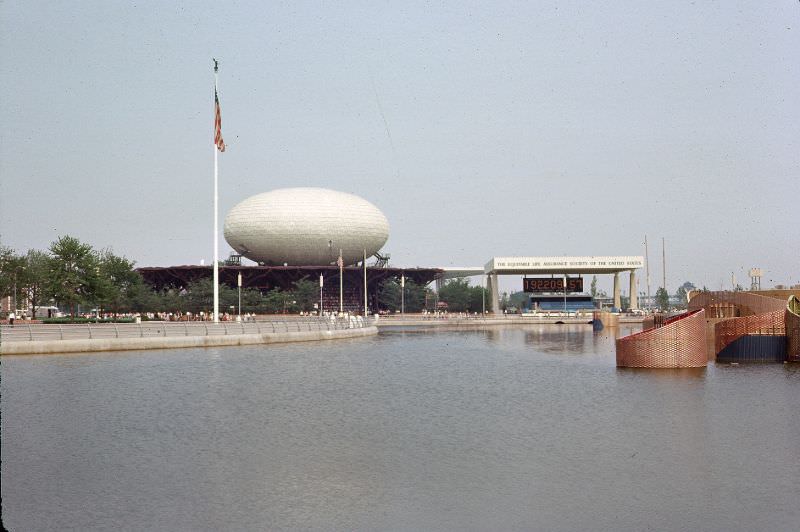
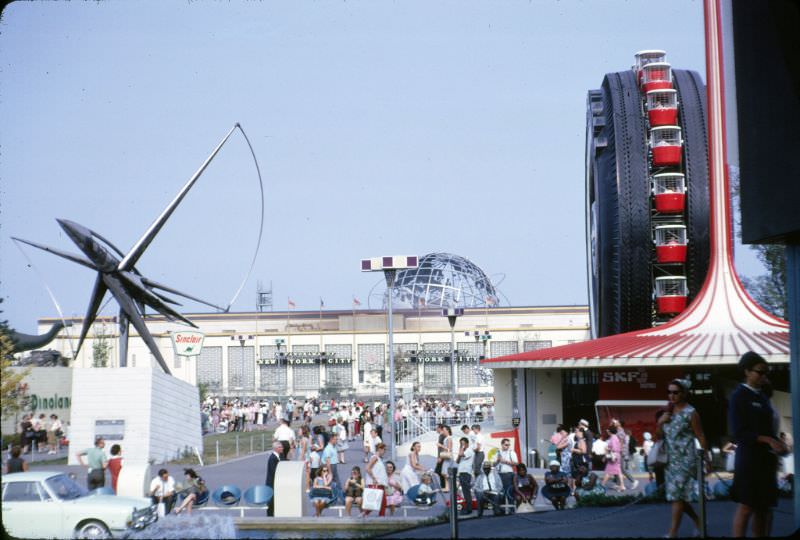
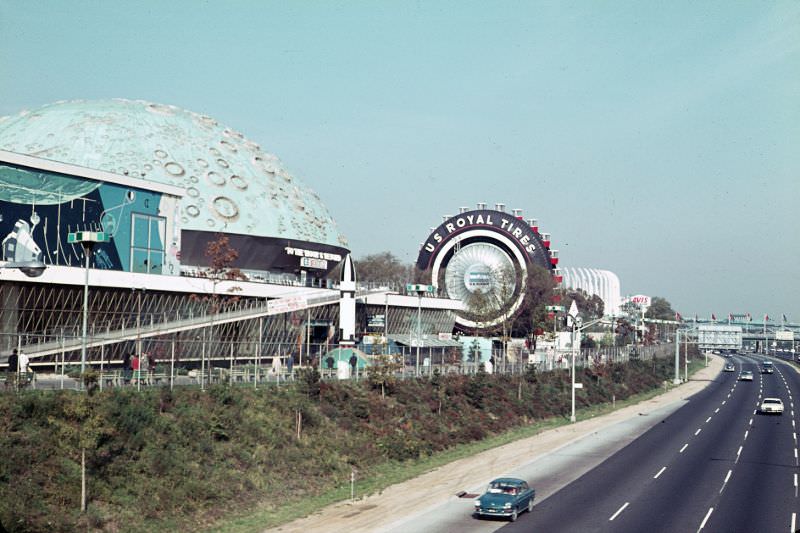
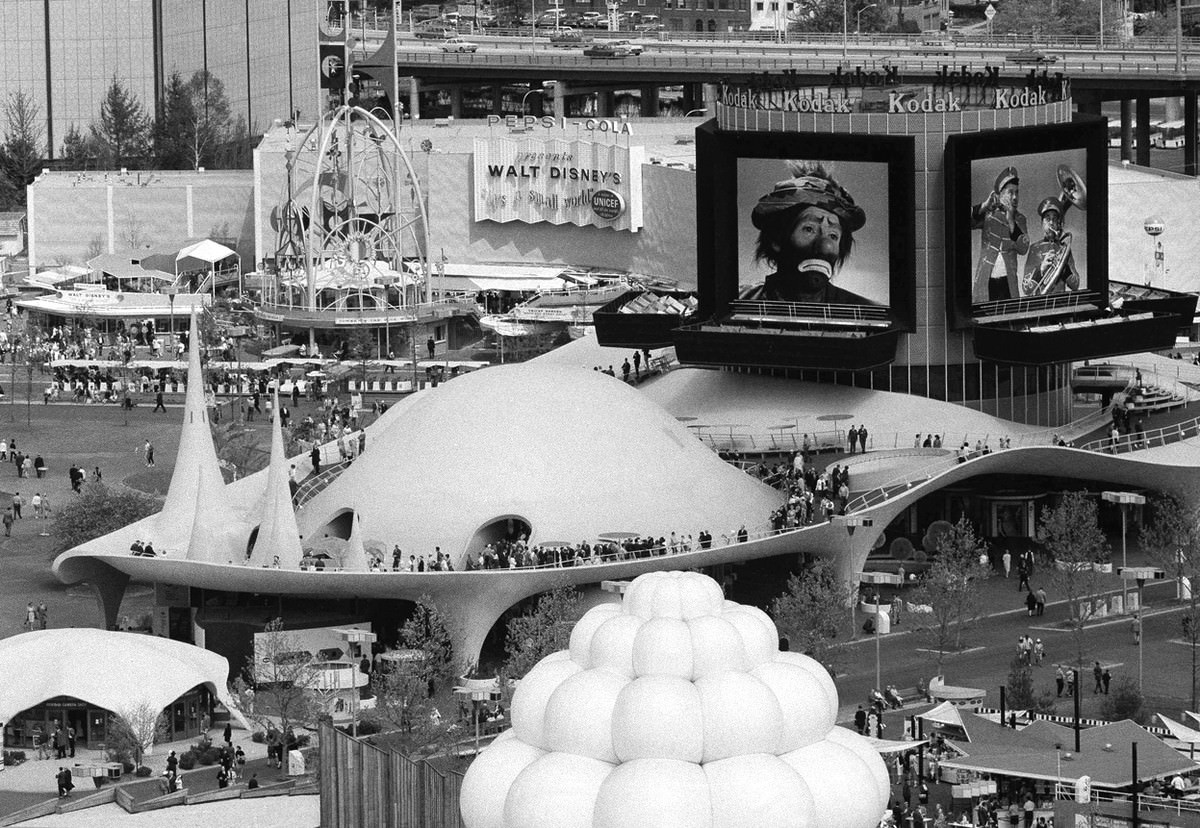
The architectural style was a branch of Mid-century modernism known as Googie architecture — bold, futuristic, and shaped by the cultural forces of the era. Car culture, jet travel, the Space Age, and the Atomic Age all left their mark on the fairgrounds. The U.S. Royal tire-shaped Ferris wheel was, quite literally, a giant tire. The Johnson Wax pavilion mimicked the look of its own products. The IBM pavilion took the form of an oblate spheroid — a flattened sphere — while General Electric built a circular dome for its “Carousel of Progress” exhibit. Every structure was a statement.
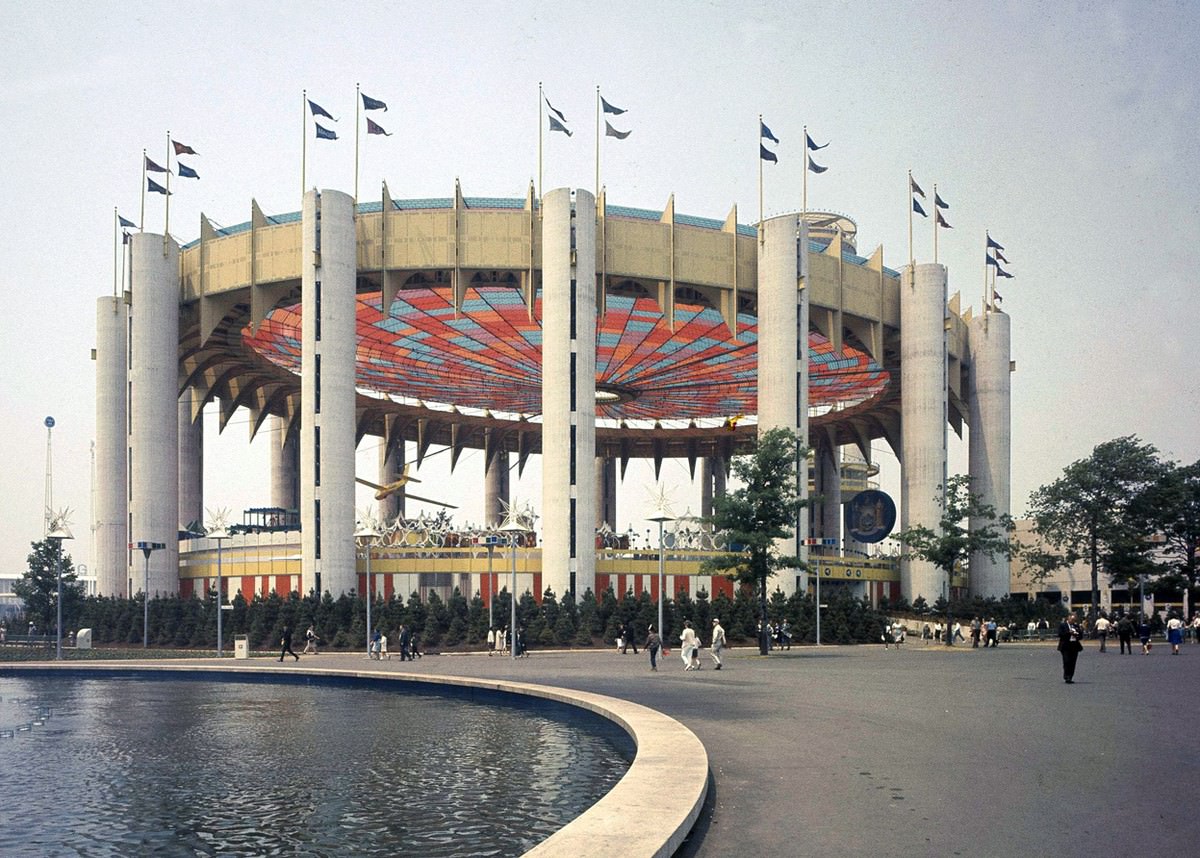
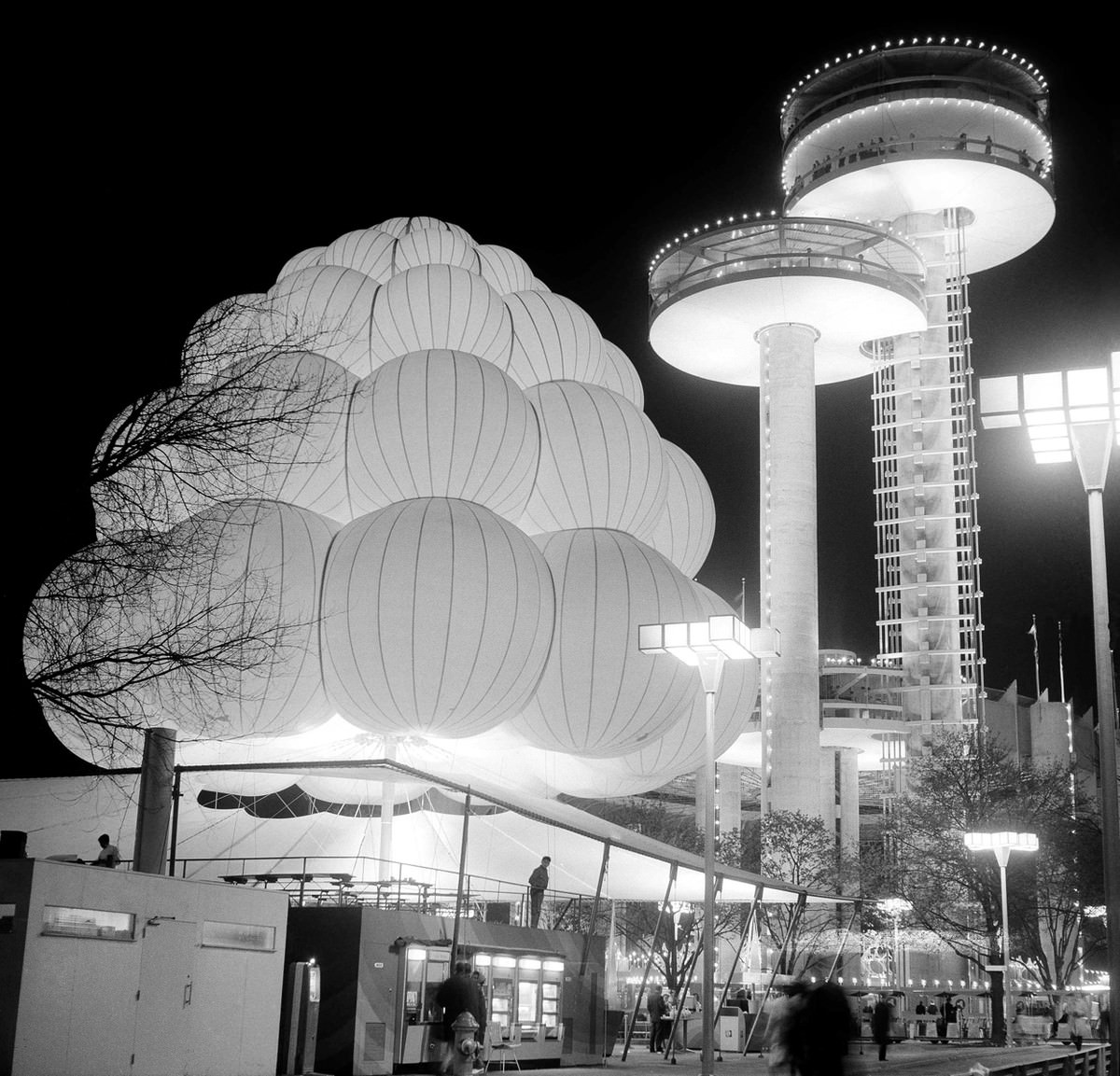
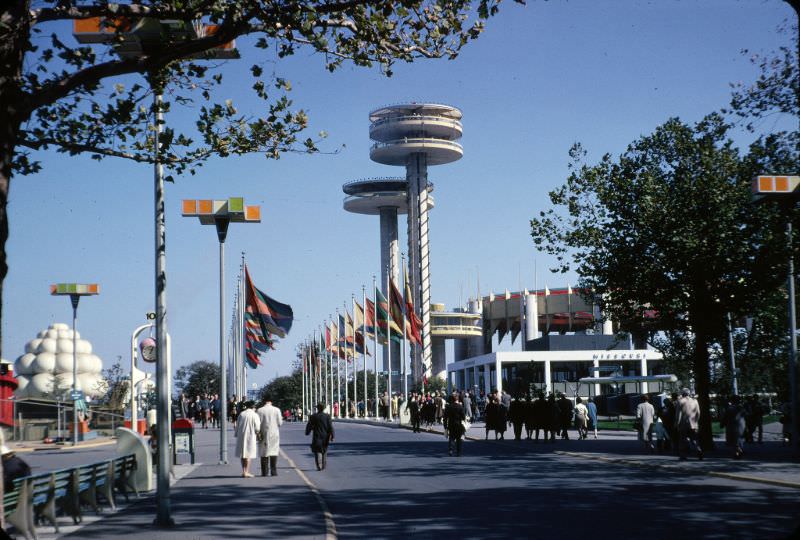
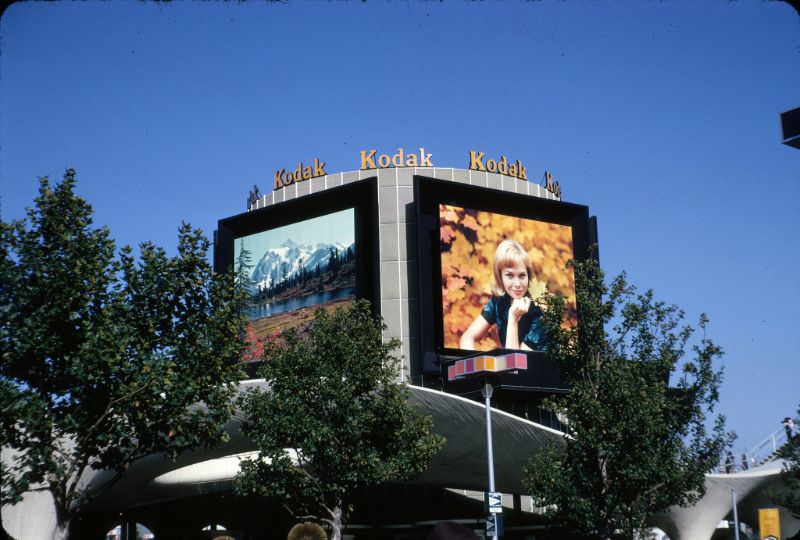
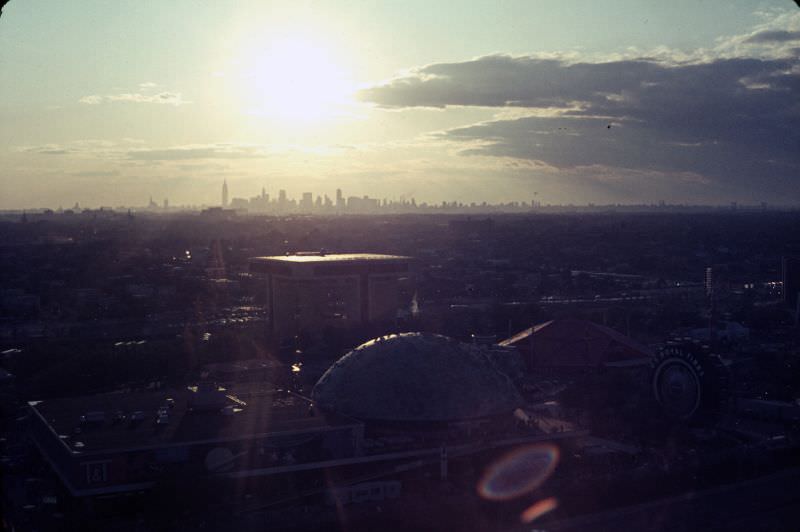
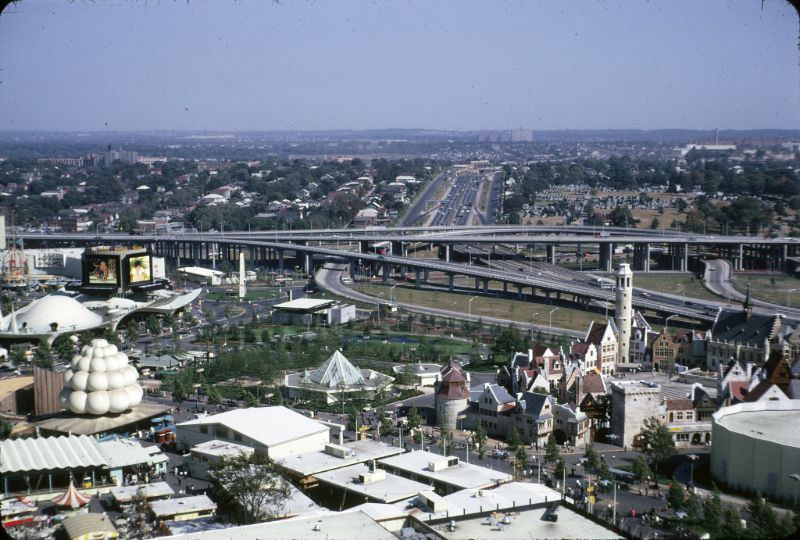
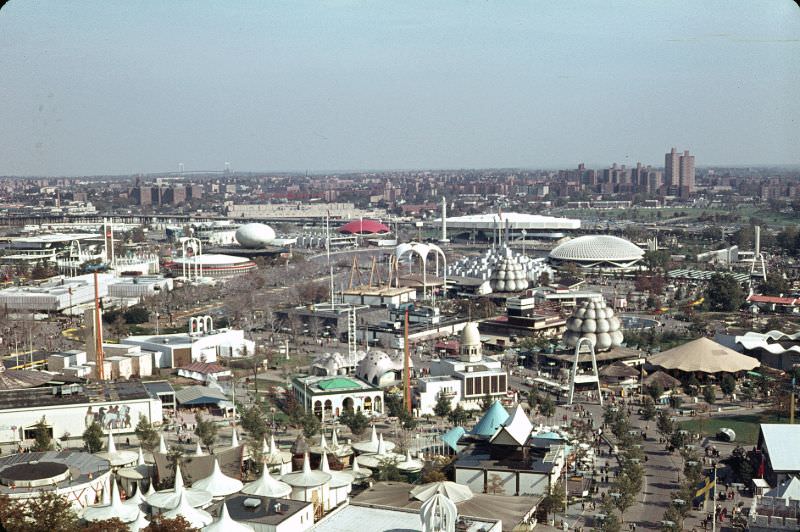
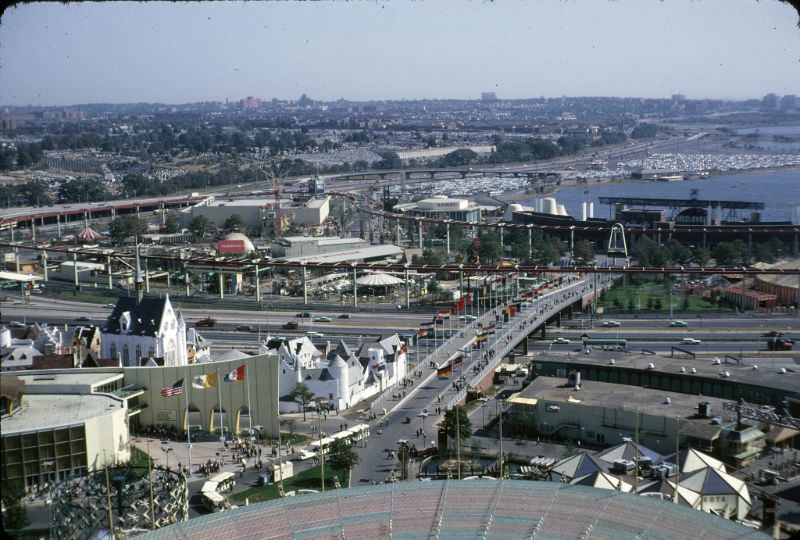
High above the fairgrounds, visitors who wanted the best views headed for the observation towers. The New York State Pavilion offered some of the highest vantage points on the grounds, giving fairgoers sweeping panoramas of the entire park. From up there, the sheer size of the fair became real. Rooftops of other pavilions served as viewing platforms too — the Eastern Kodak Pavilion roof offered clear sightlines in every direction and became a popular stop on the unofficial sightseeing circuit.
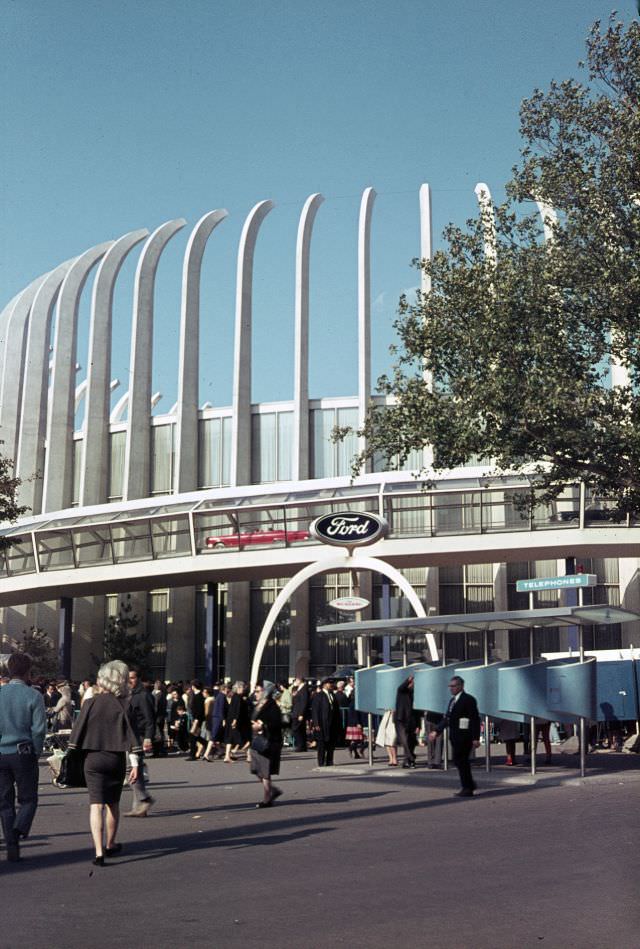
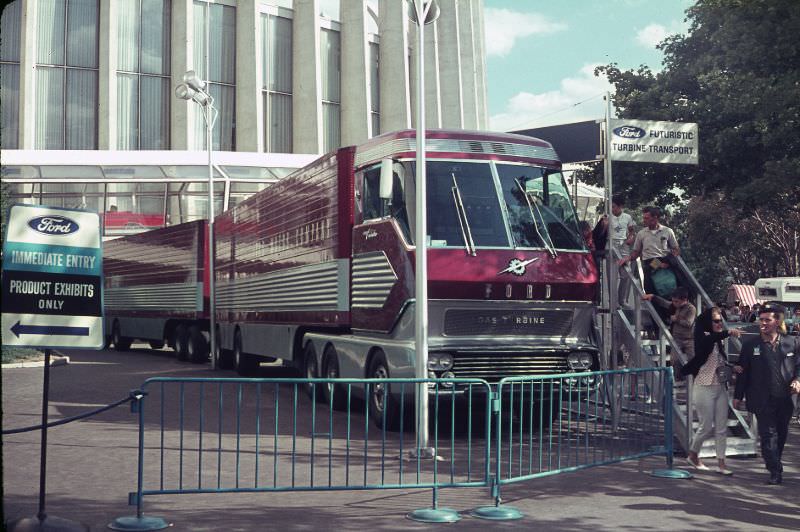
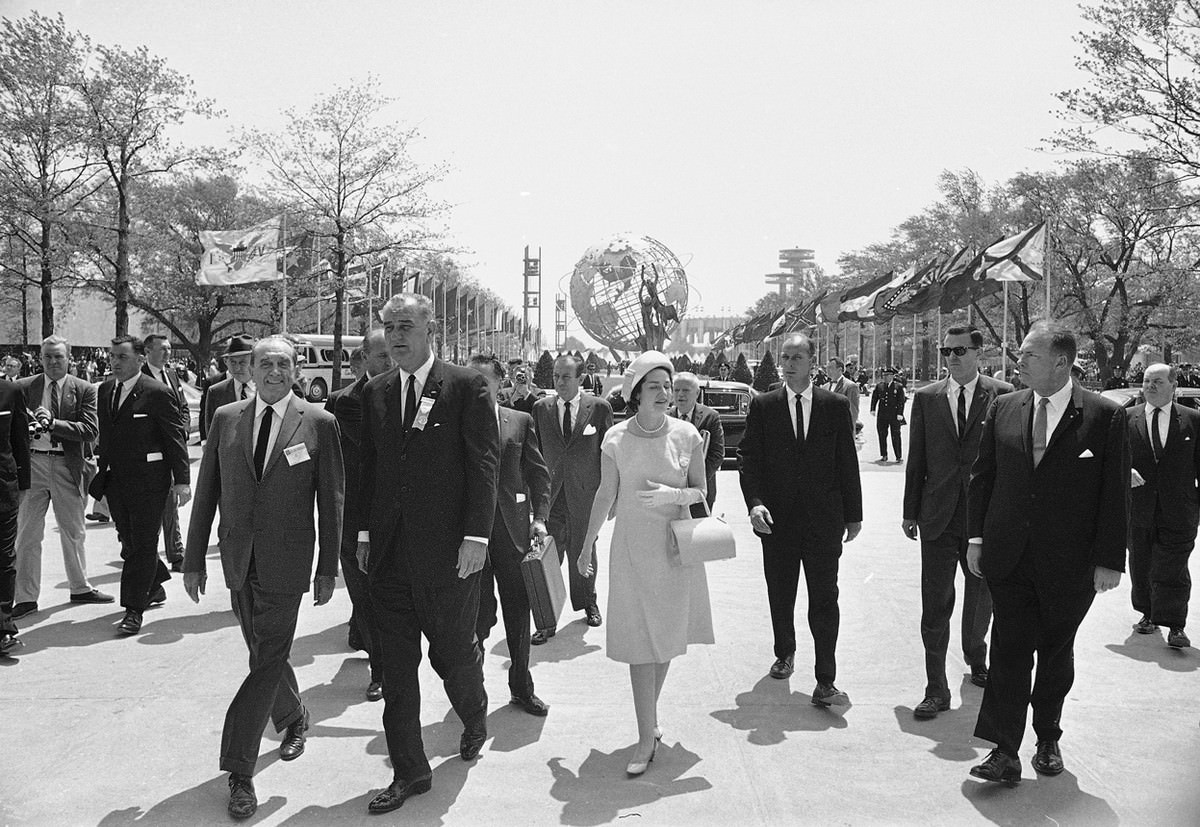
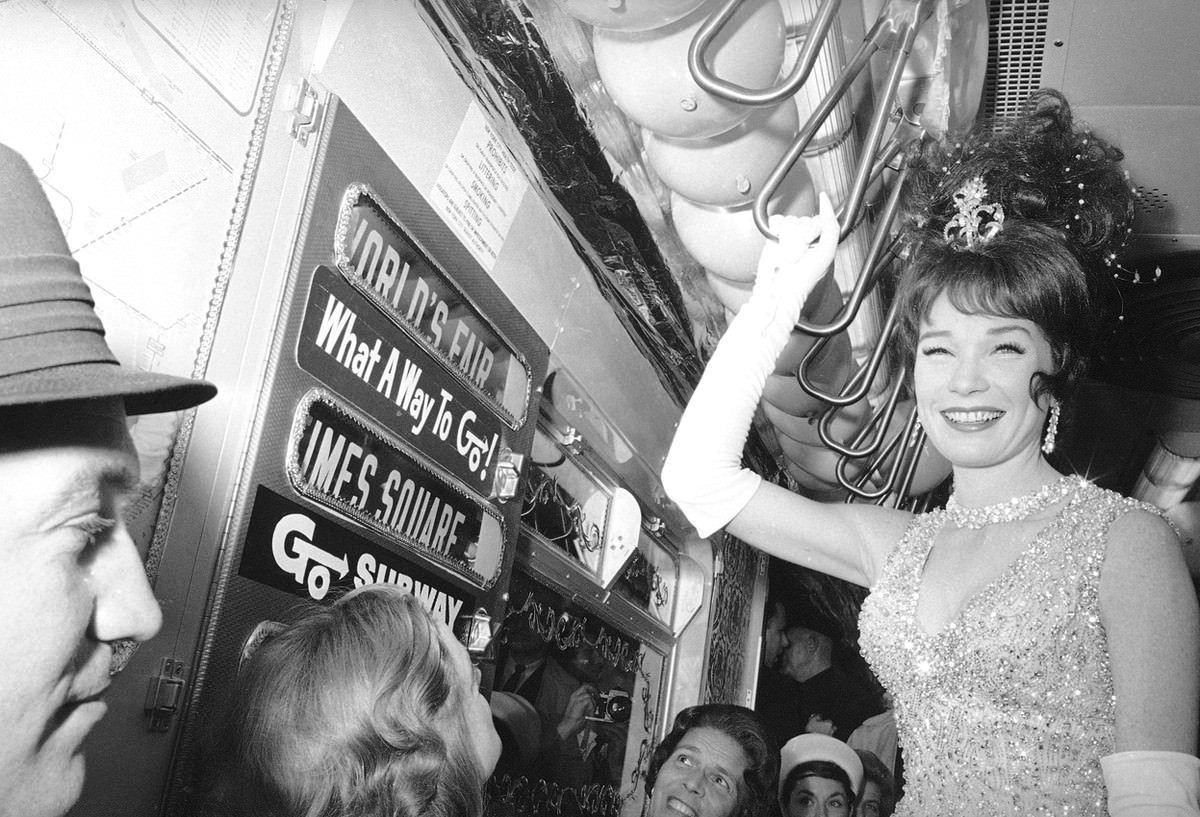
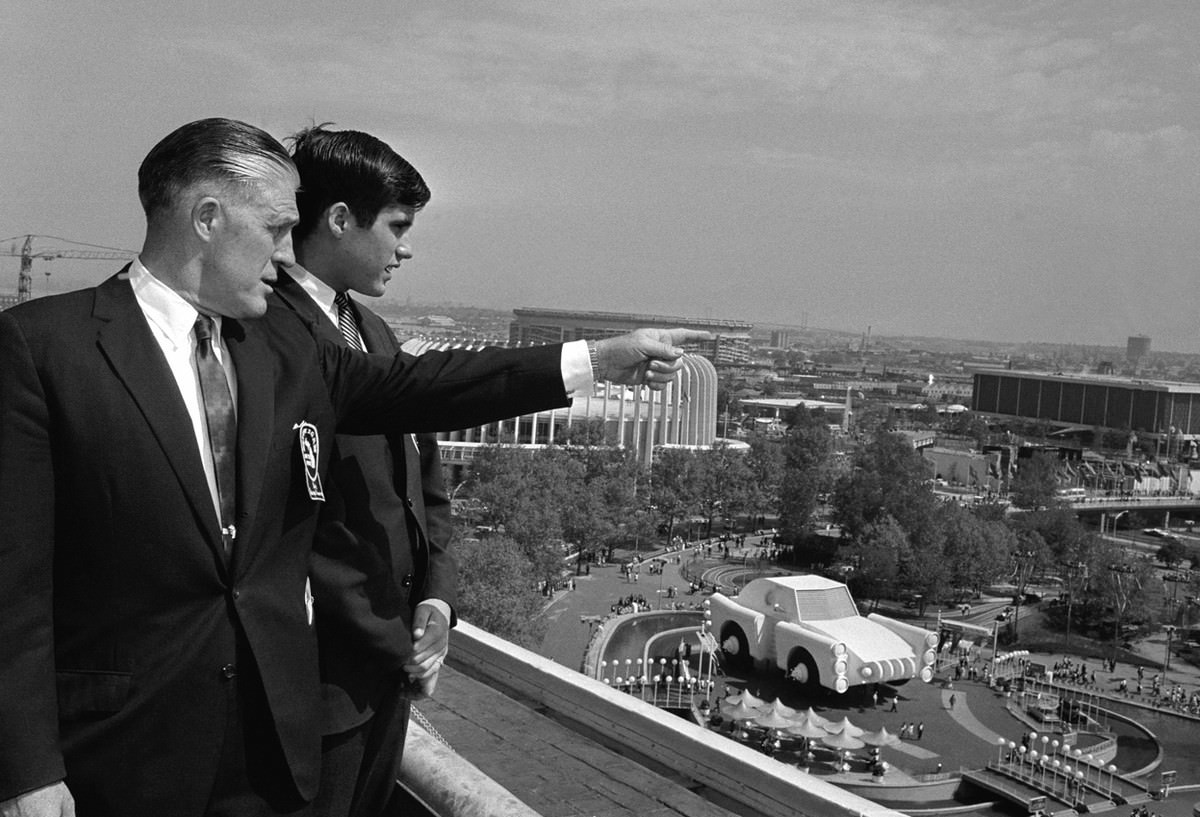
Not everyone reached the fairgrounds by foot. Actress Shirley MacLaine rode the New York subway to attend the premiere of her film “What A Way to Go” on May 13, 1964. President Lyndon B. Johnson visited on May 9, walking the grounds flanked by Lady Bird Johnson and Norman K. Winston. Michigan Governor George Romney brought along his son Mitt, with the Chrysler and Ford exhibits visible behind them as they surveyed the fairgrounds. For many high-profile visitors, the fair was both a spectacle and a stage.
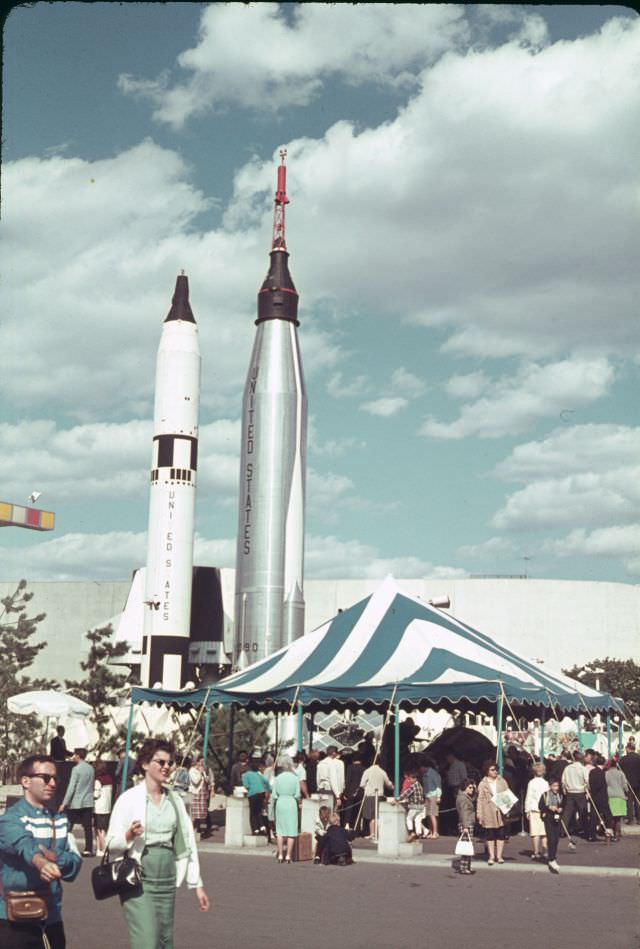
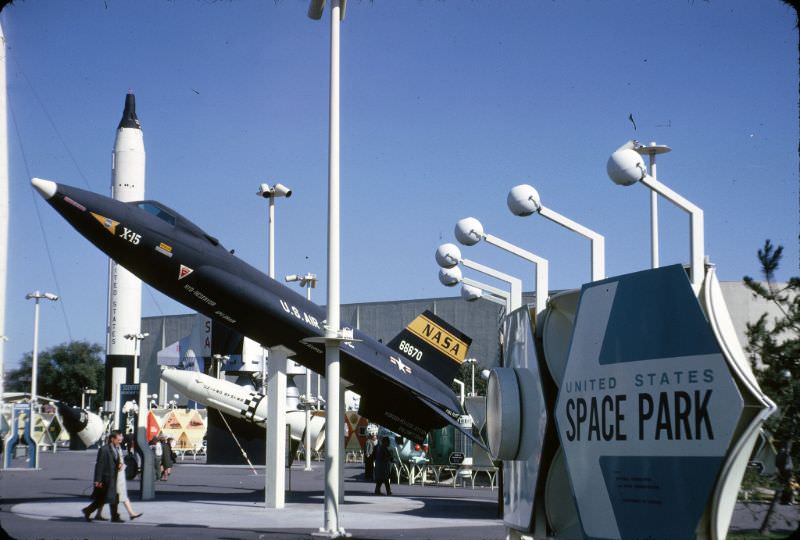
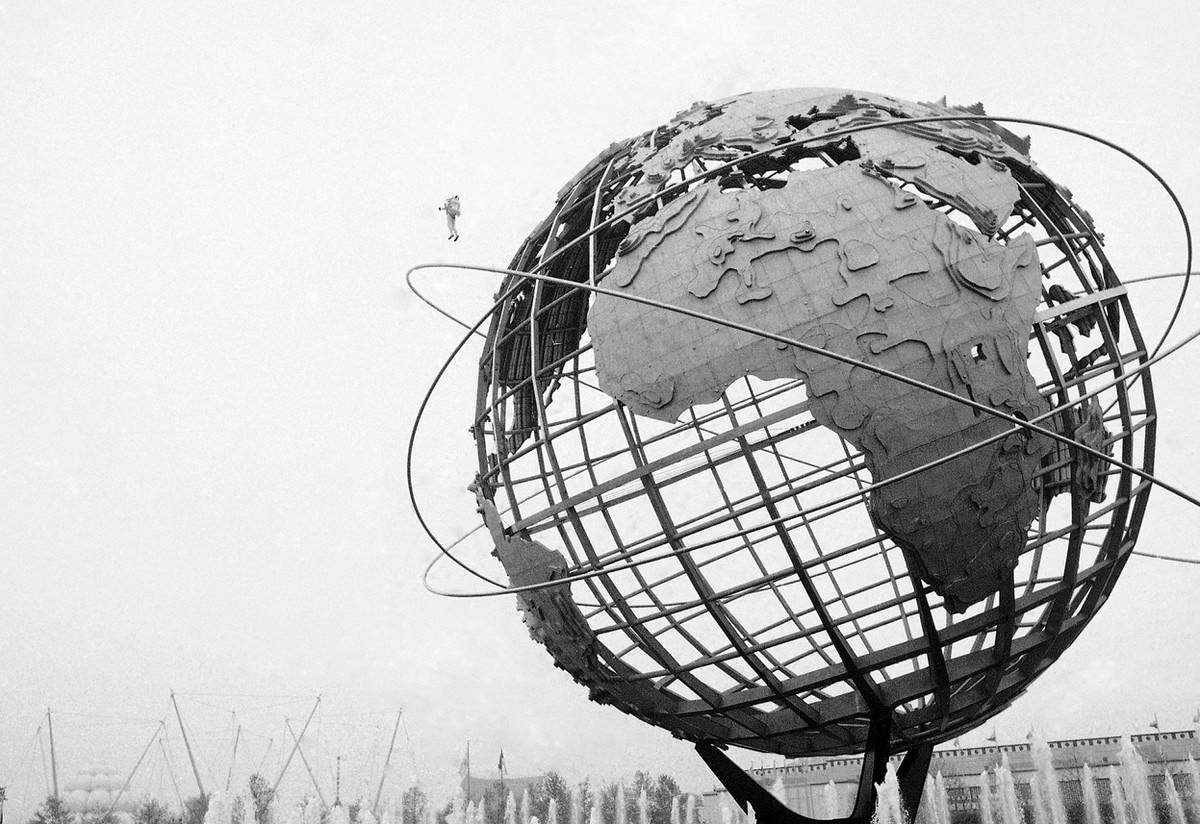
The Space Age dominated the atmosphere of the fair. On May 13, 1964, performer Robert Courter strapped on a rocket outfit originally developed for the U.S. Army and flew past the Unisphere. The device could travel 815 feet at speeds of 60 miles per hour. Courter performed regularly in the “Wonder World” musical at the fair. Meanwhile, across the grounds, the contrast between ancient history and the modern world was everywhere — a prehistoric monster stood in full view of a 20th-century rocket, a juxtaposition that perfectly captured what the fair was trying to say about human progress.
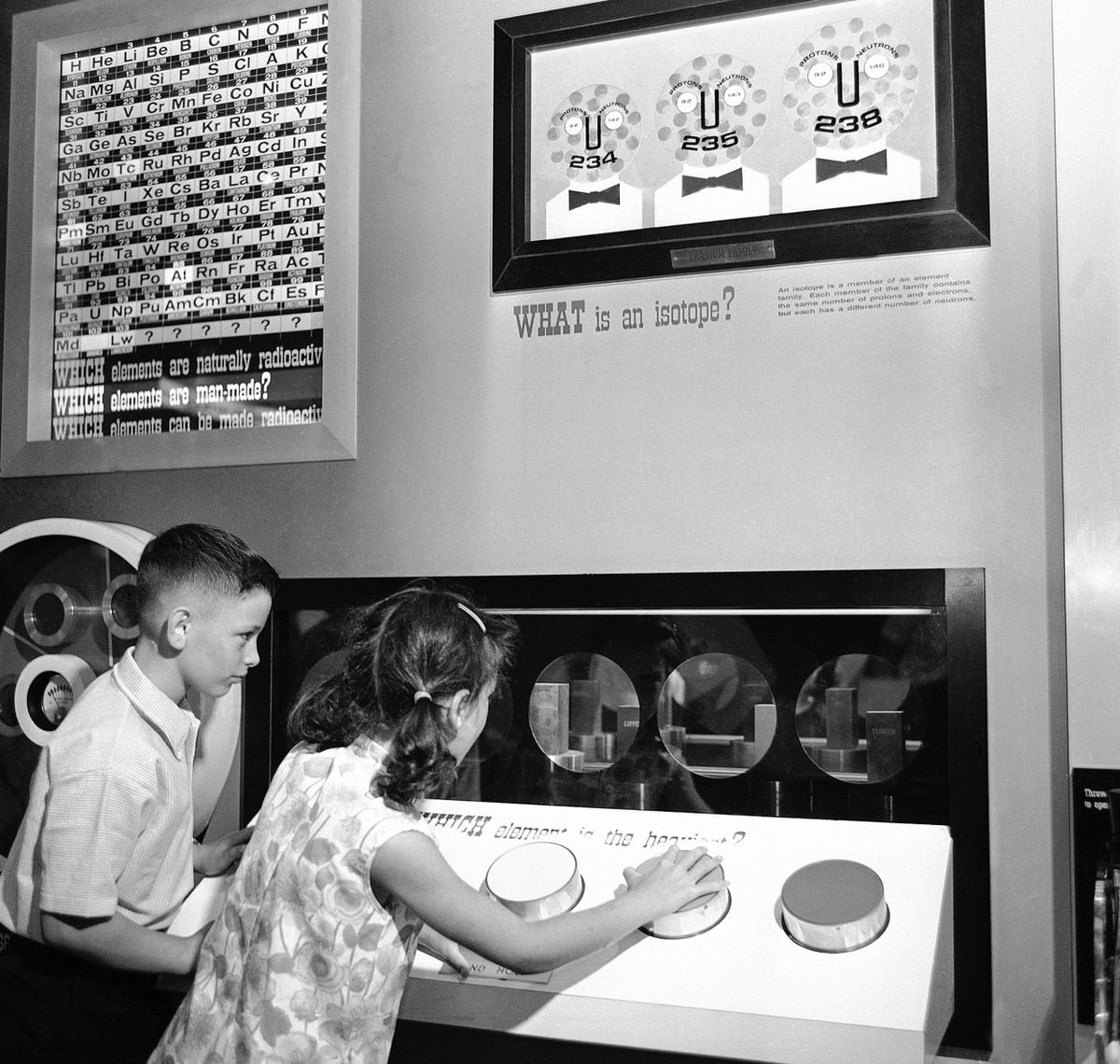
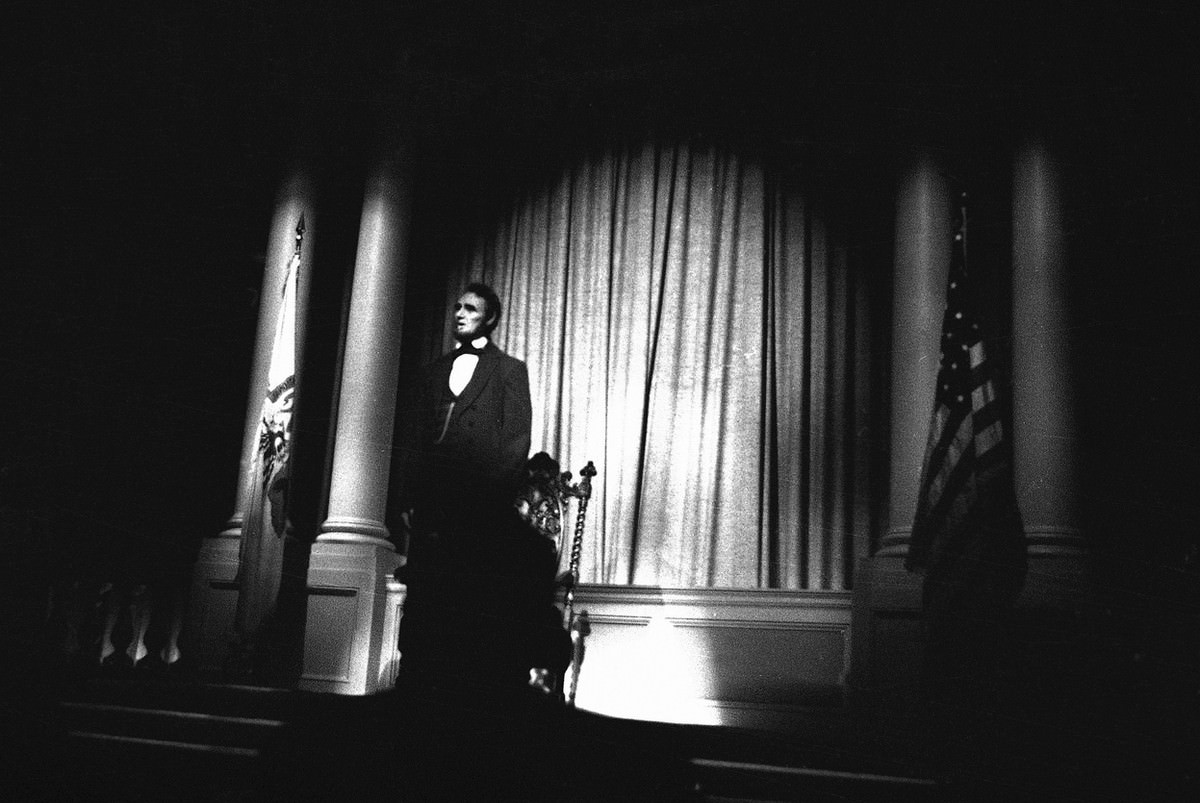
Children had their own dedicated corner of the future at the Atomic Energy Commission’s “Atomsville, U.S.A.” exhibit, housed inside the Hall of Science pavilion. The displays were built to teach young visitors the basics of atomic energy through hands-on interaction. One exhibit let kids push oversized buttons connected to equal-sized cubes of different elements — copper, iron, lead, and uranium — to learn that a block of uranium weighs ten times more than the same-sized block of aluminum. At the Illinois Pavilion, Walt Disney’s team unveiled something even more astonishing: an audio-animatronic Abraham Lincoln that rose from a seated position, walked toward the audience, and delivered a nine-minute performance. The six-foot-four figure was built using an actual mask of Lincoln’s face.
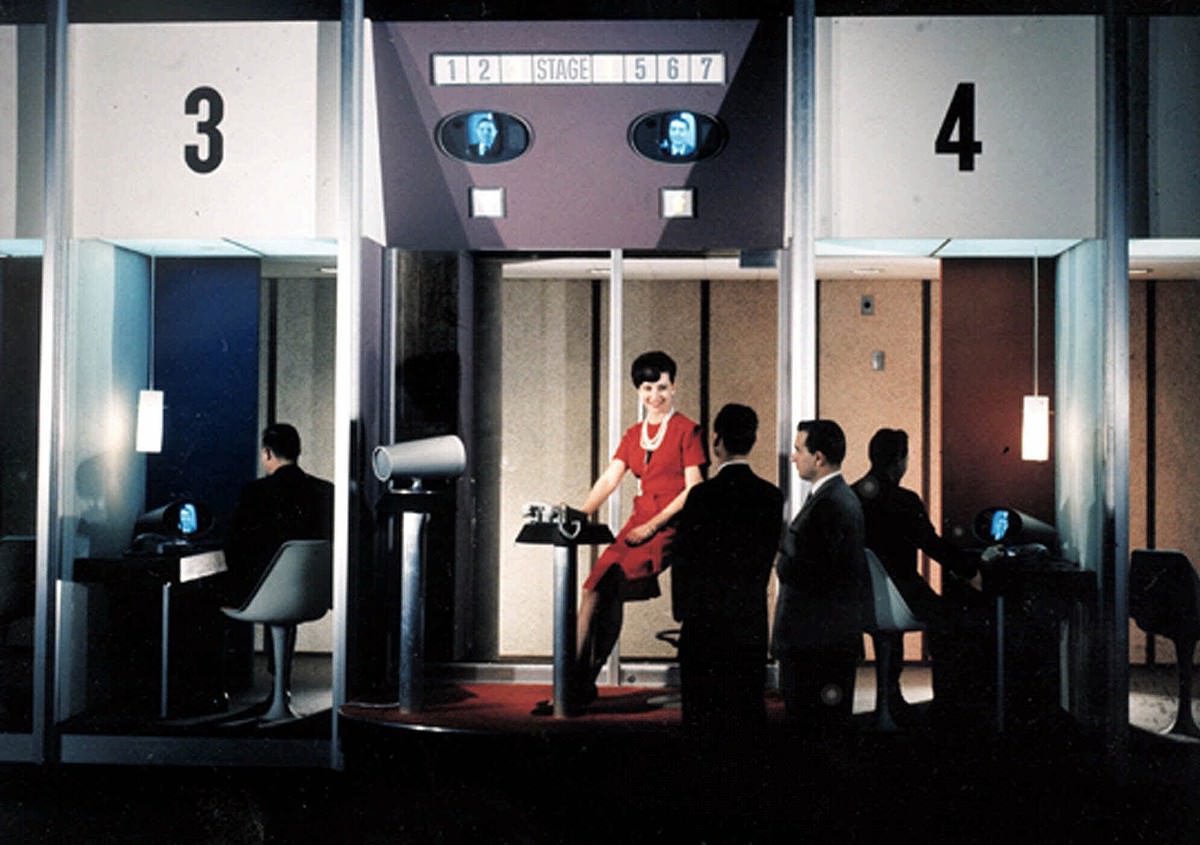
AT&T used its pavilion to demonstrate the Picturephone — a working video telephone that let visitors at the fair speak face-to-face with people in other cities. The technology was real, functional, and pointed directly at what communication would eventually become. The fair introduced this and dozens of other genuine technological innovations to more than 50 million people who, for many, had never imagined anything like it.
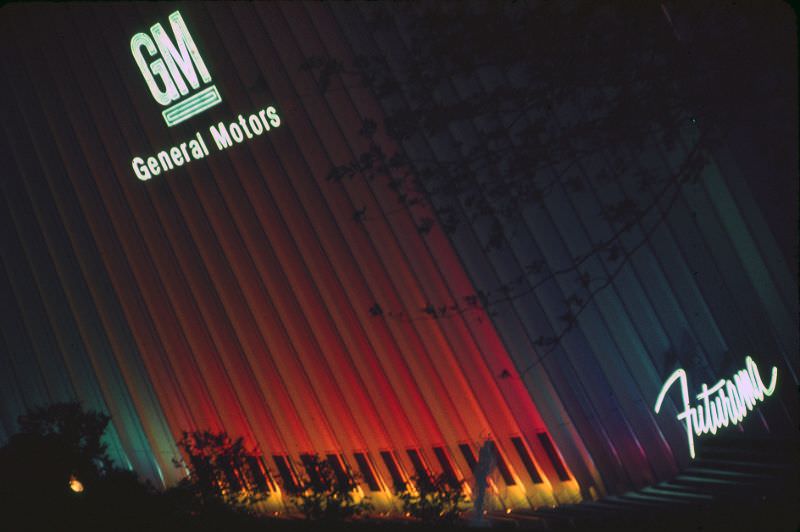
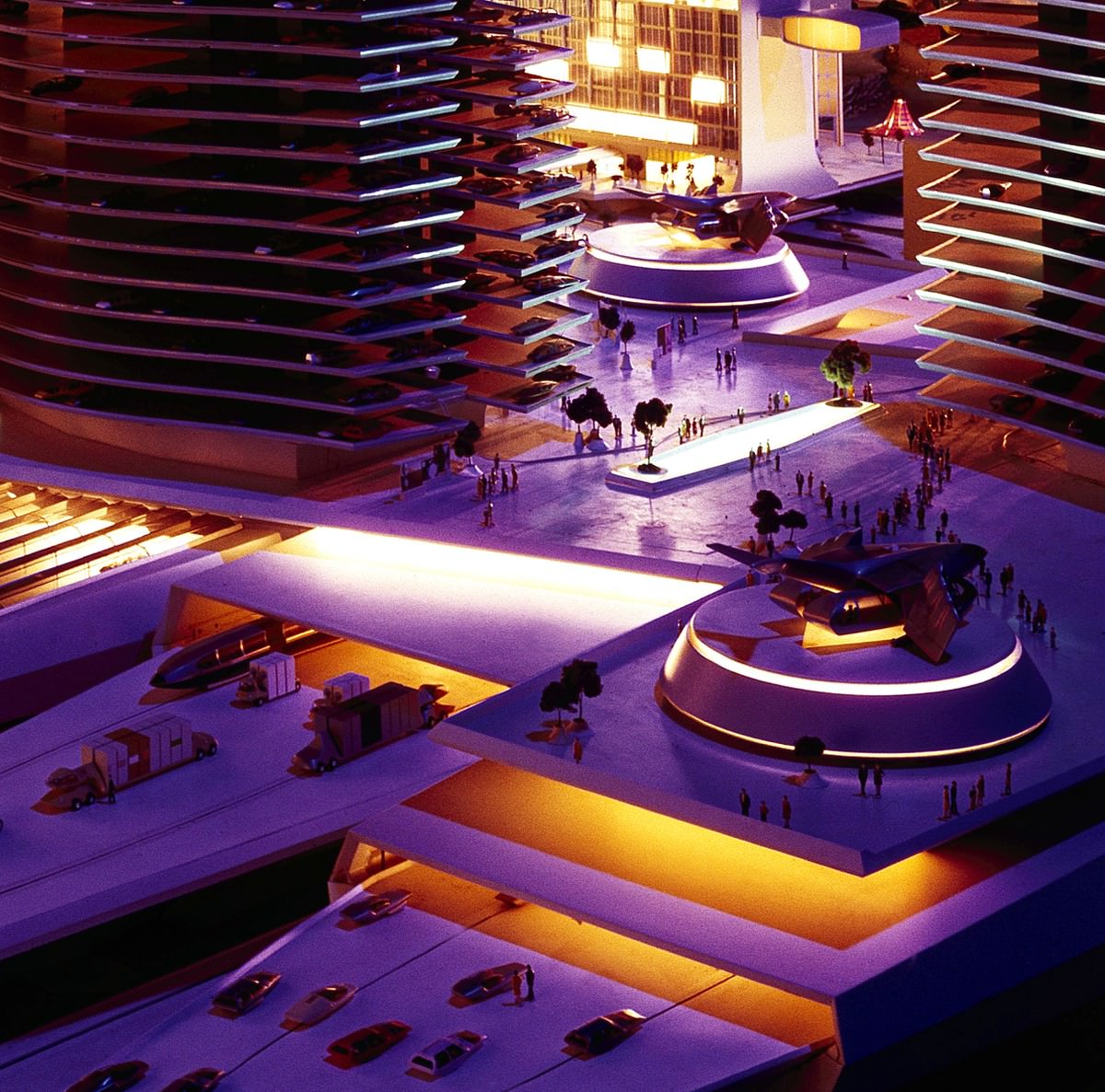
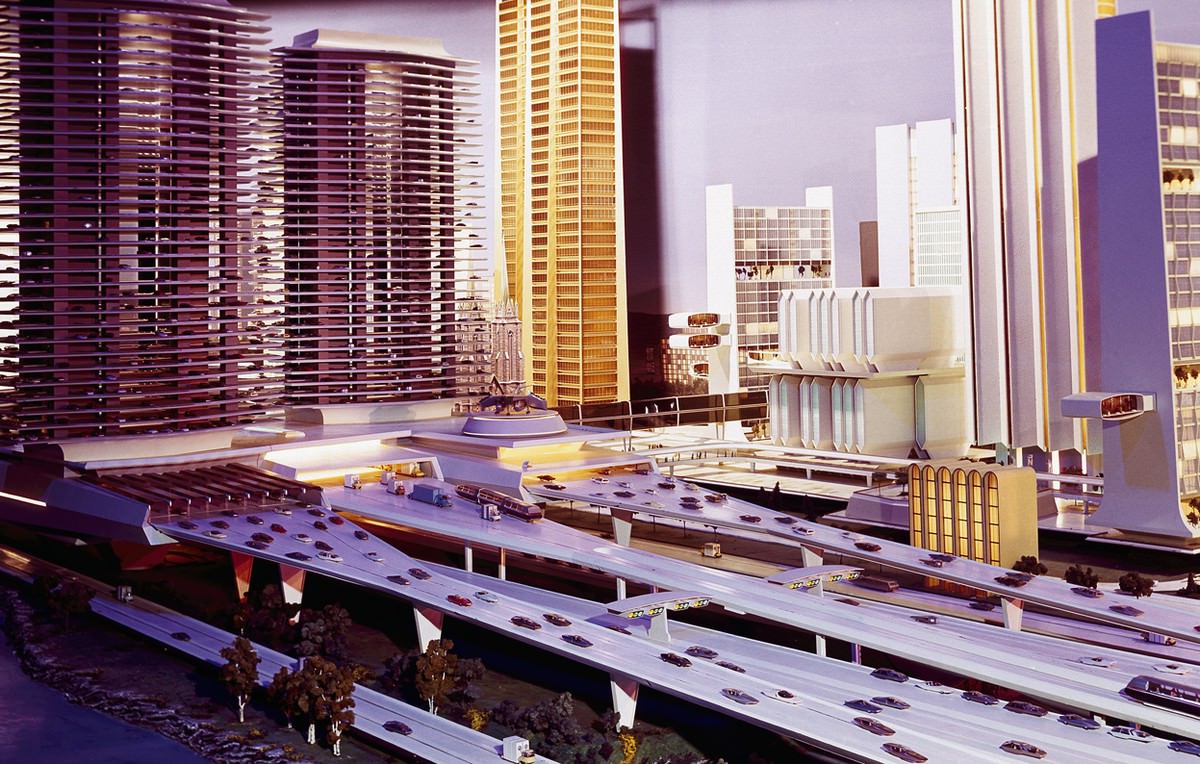
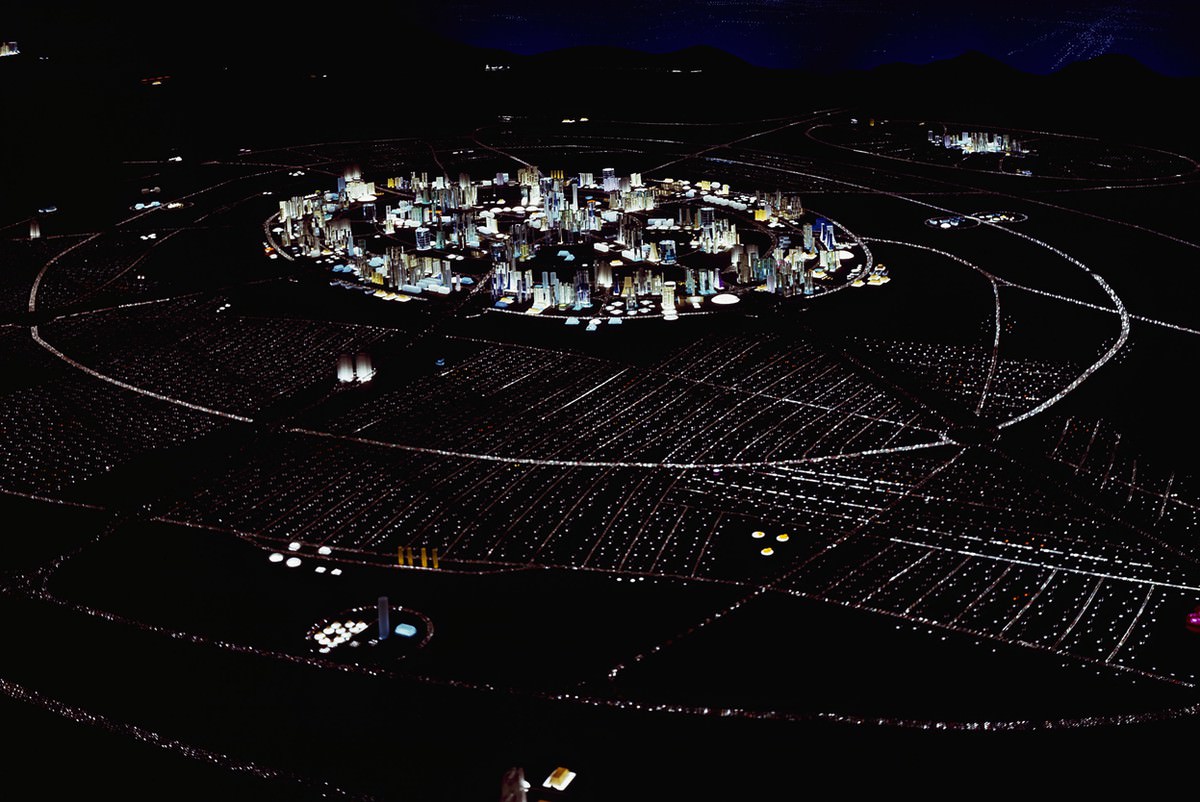
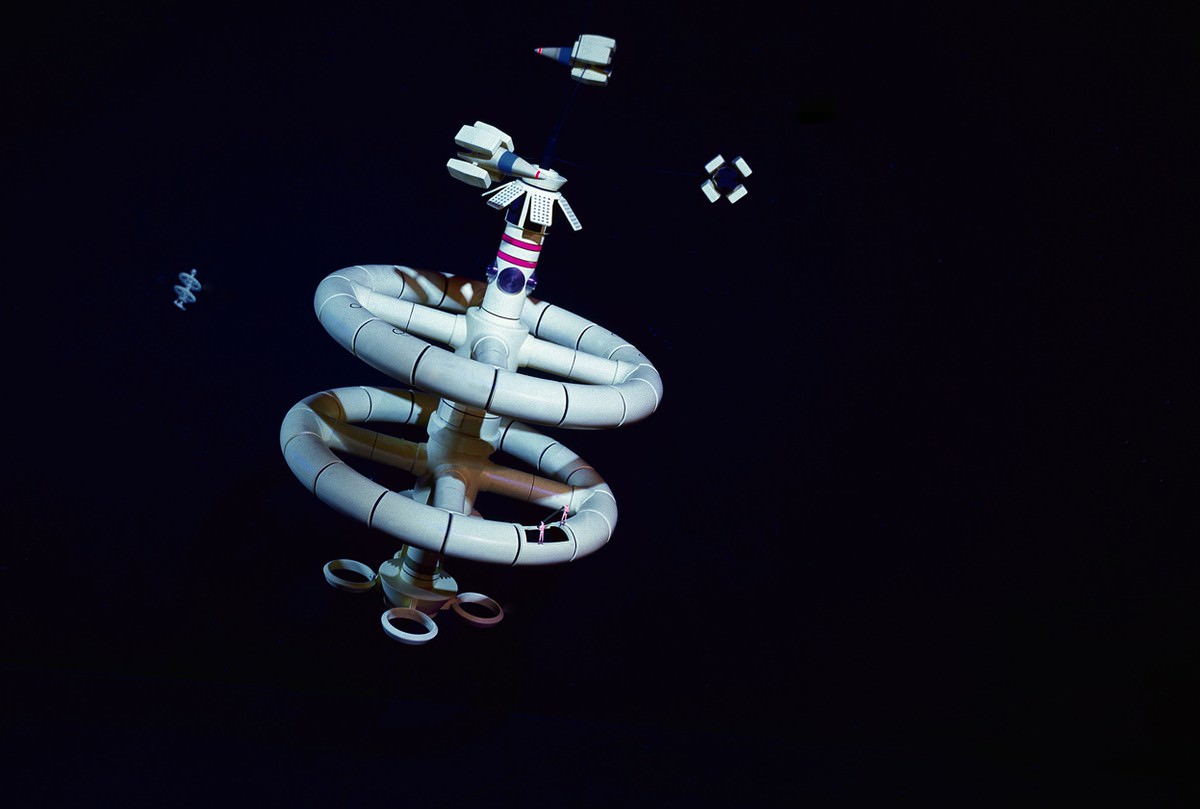
No exhibit at the 1964 World’s Fair captured the public imagination quite like General Motors’ Futurama. Visitors rode through a vast, detailed model of the world as GM imagined it would look in the near future. The American Southwest bloomed with crops irrigated by desalted seawater, tended by remote-controlled machines. Antarctica was carved open with all-weather ports cut deep into the ice shelf and underground weather stations buried far below the surface. The ocean floor was tapped for oil while underwater resorts offered vacationers a life beneath the sea.
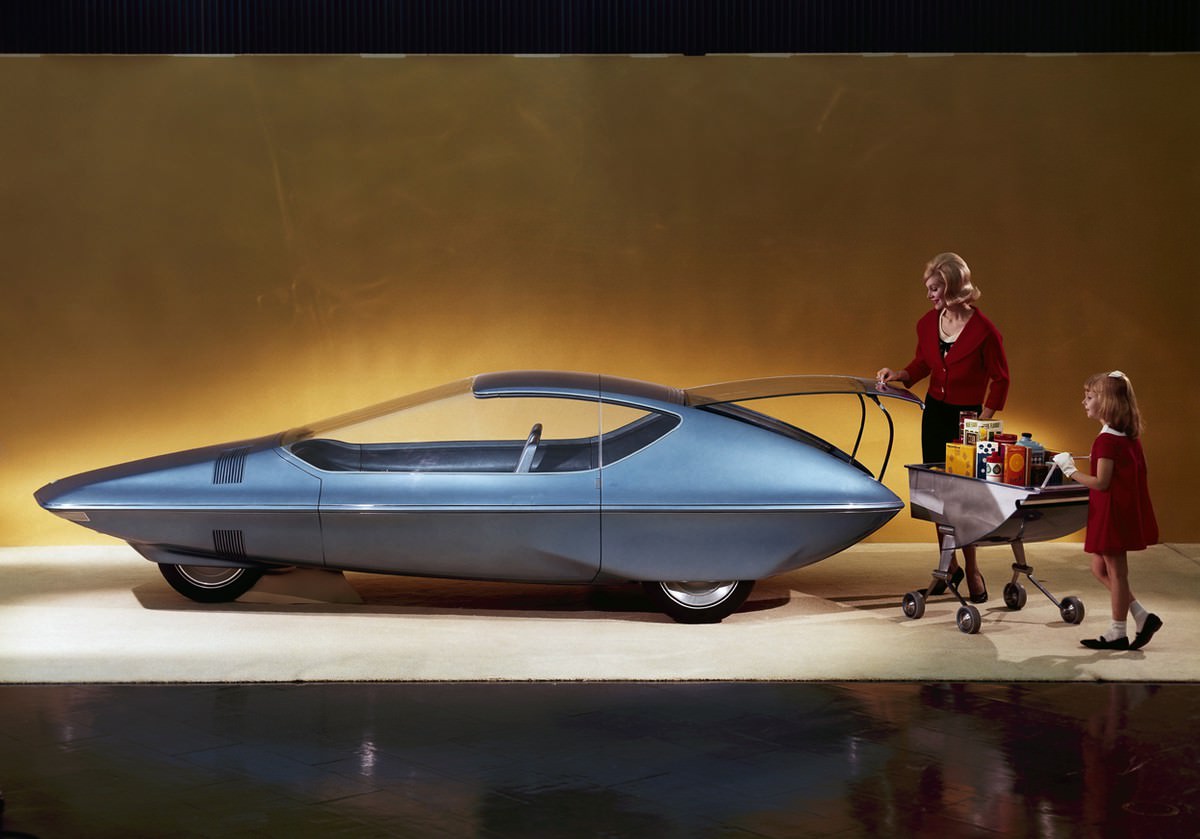
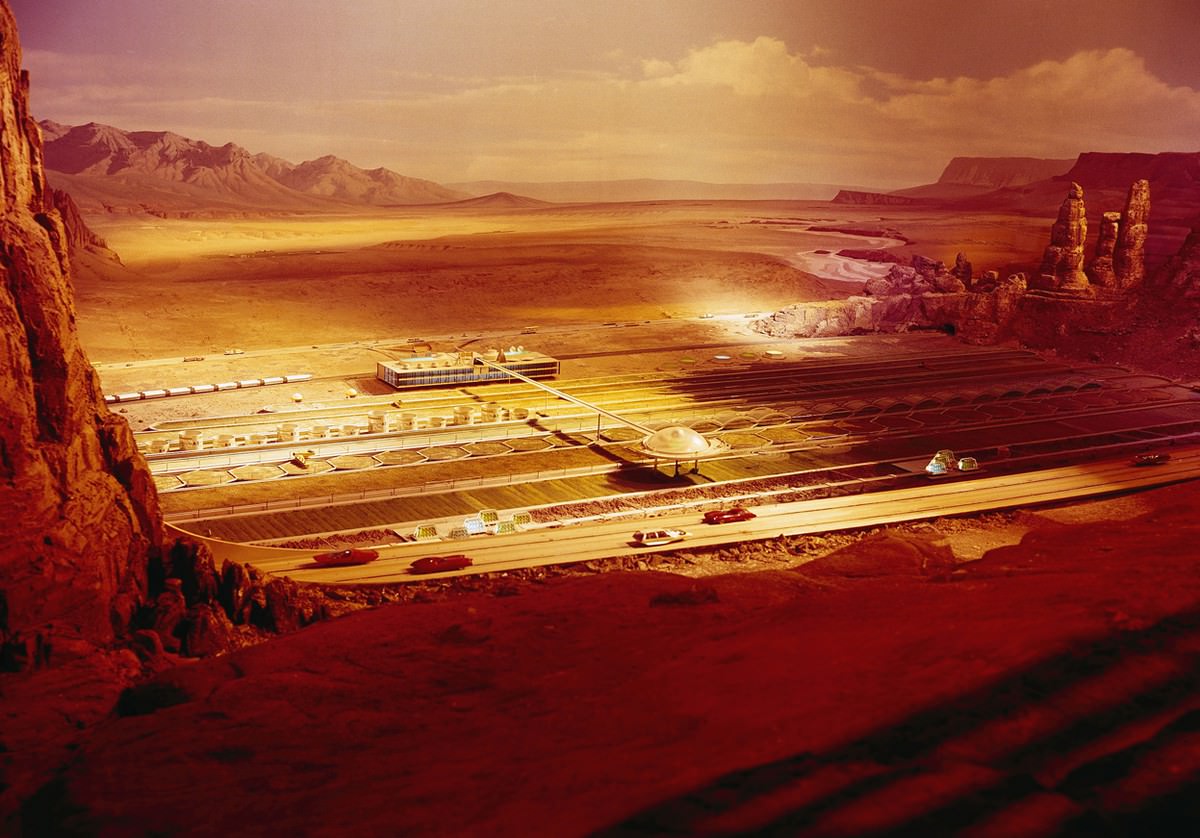
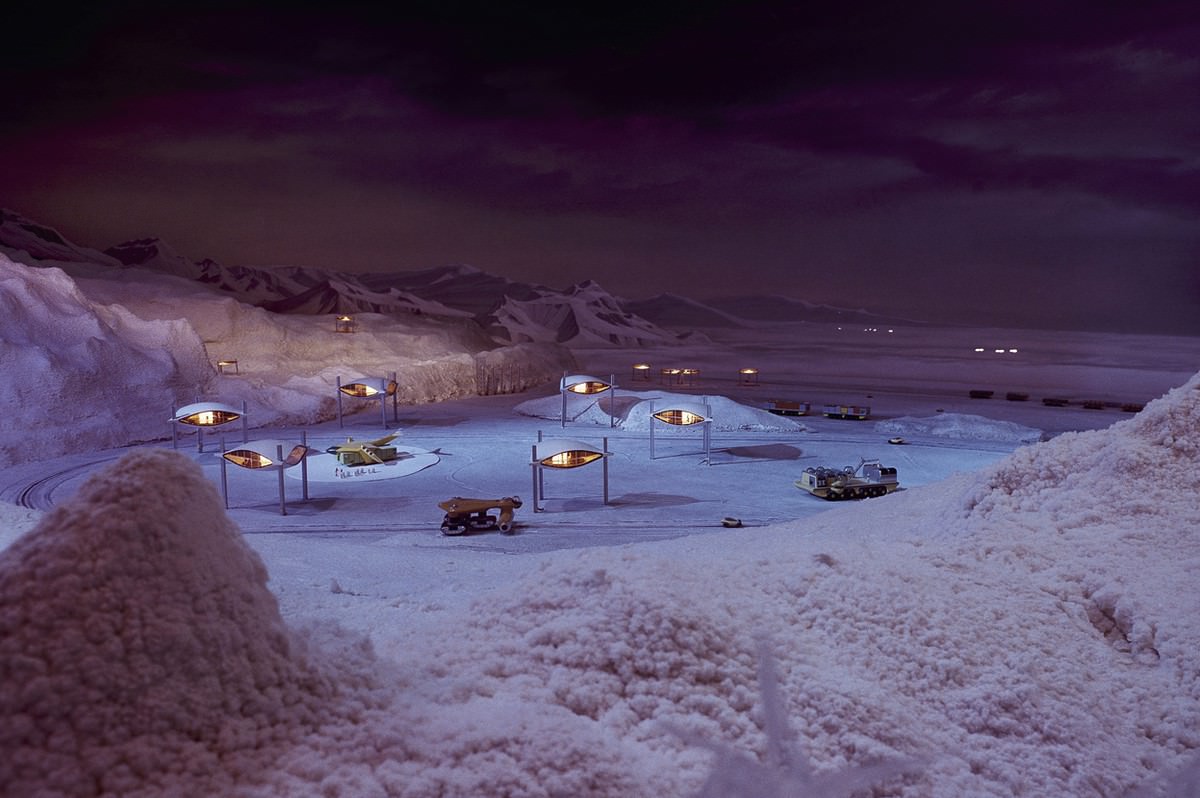
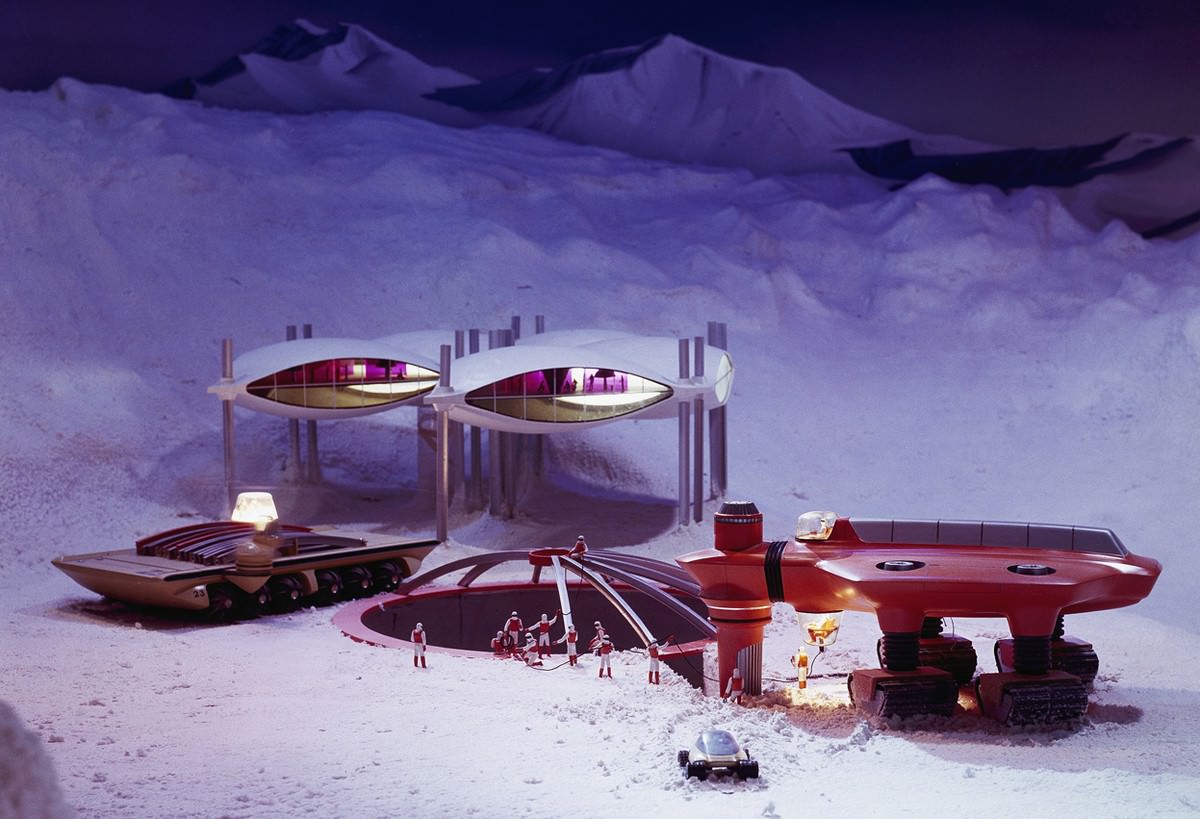
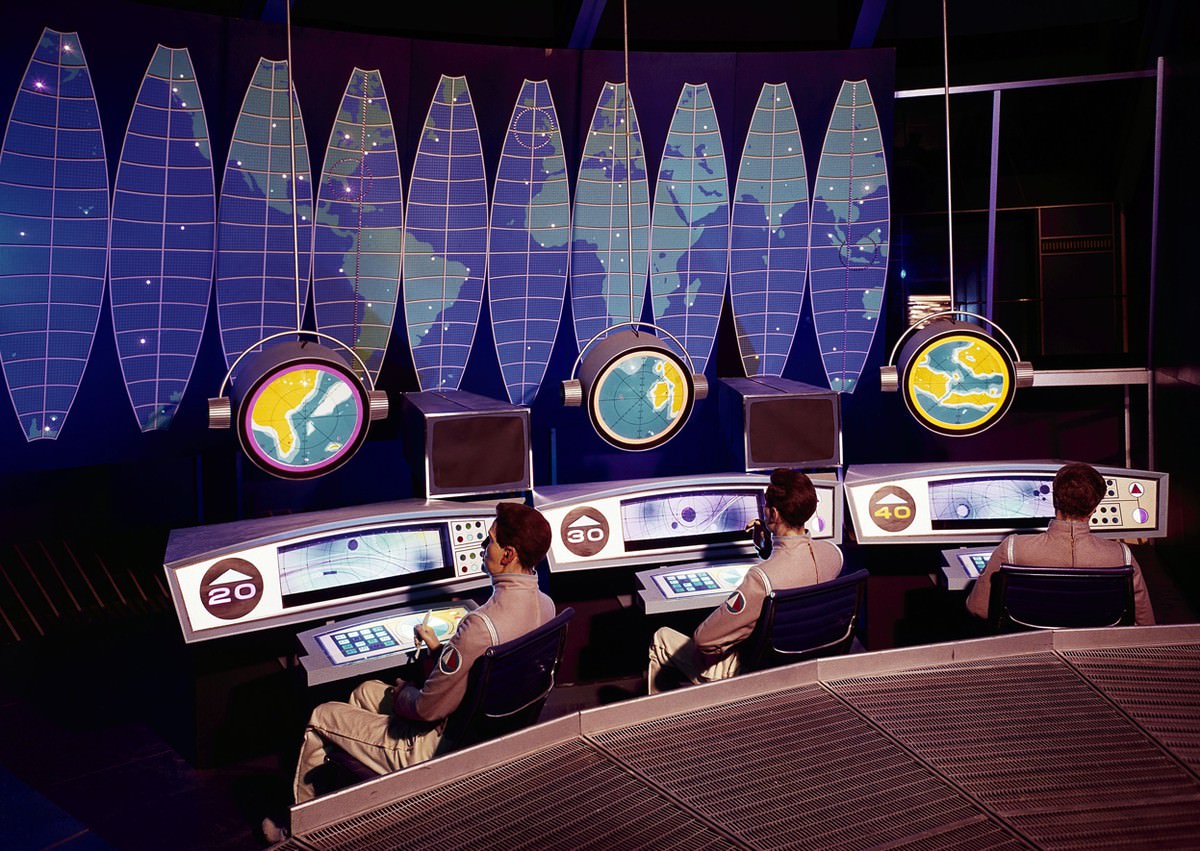
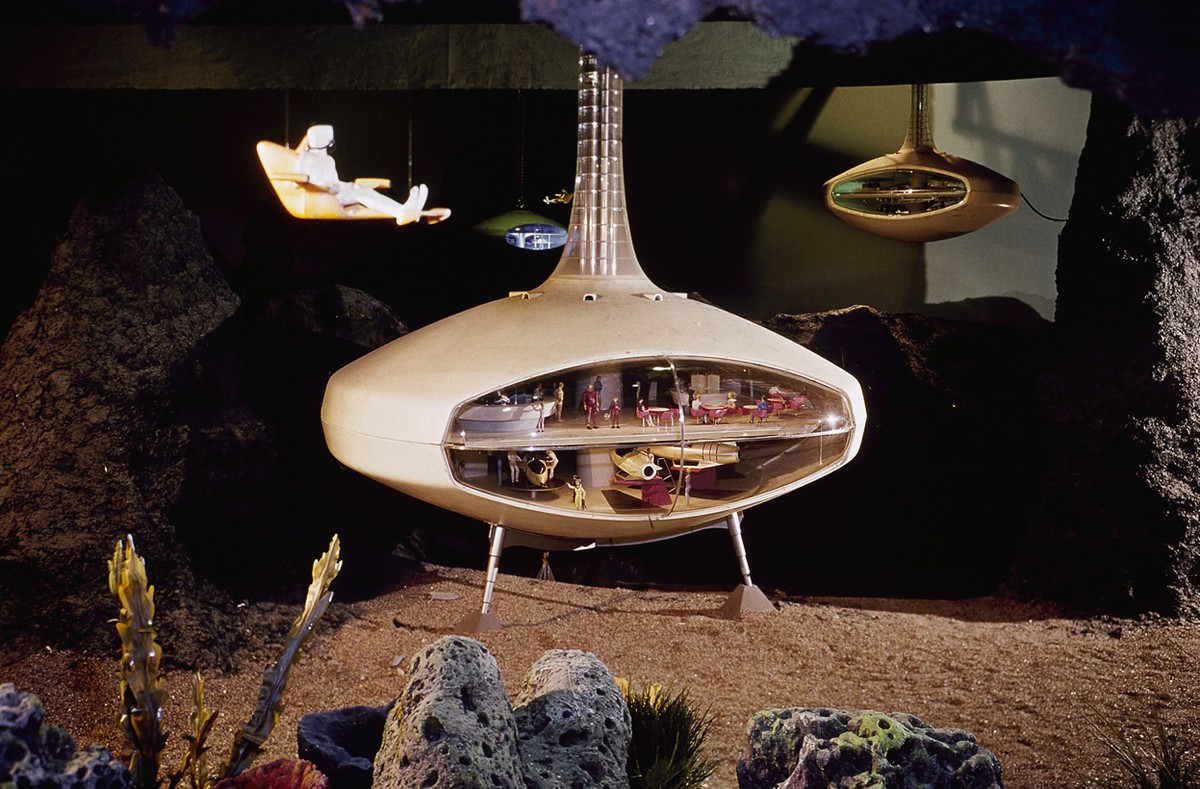
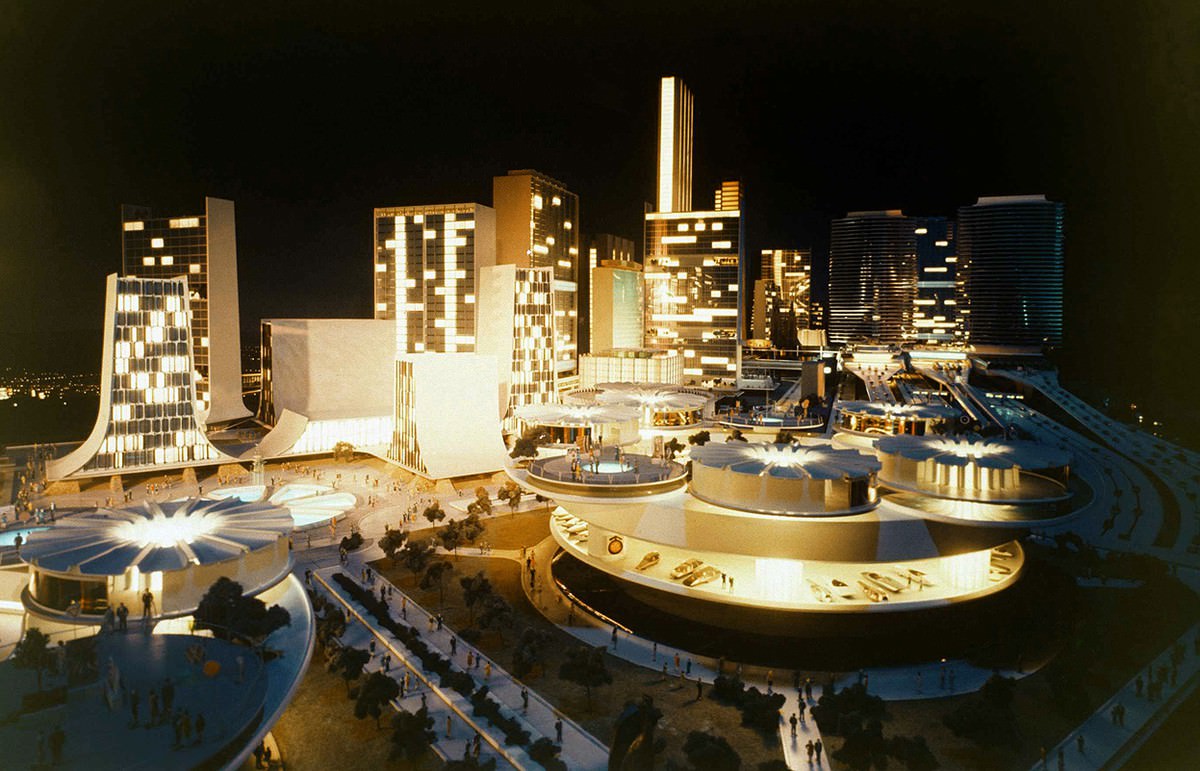
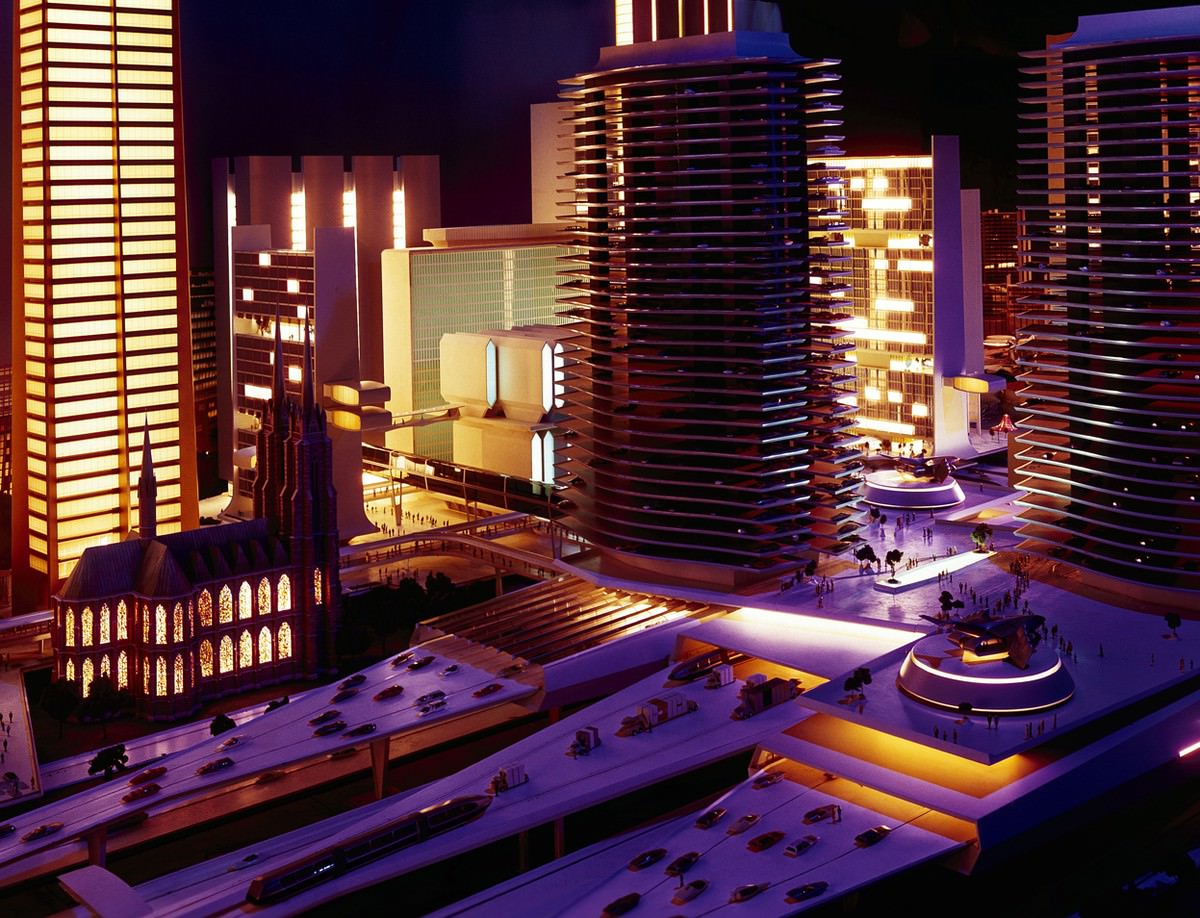
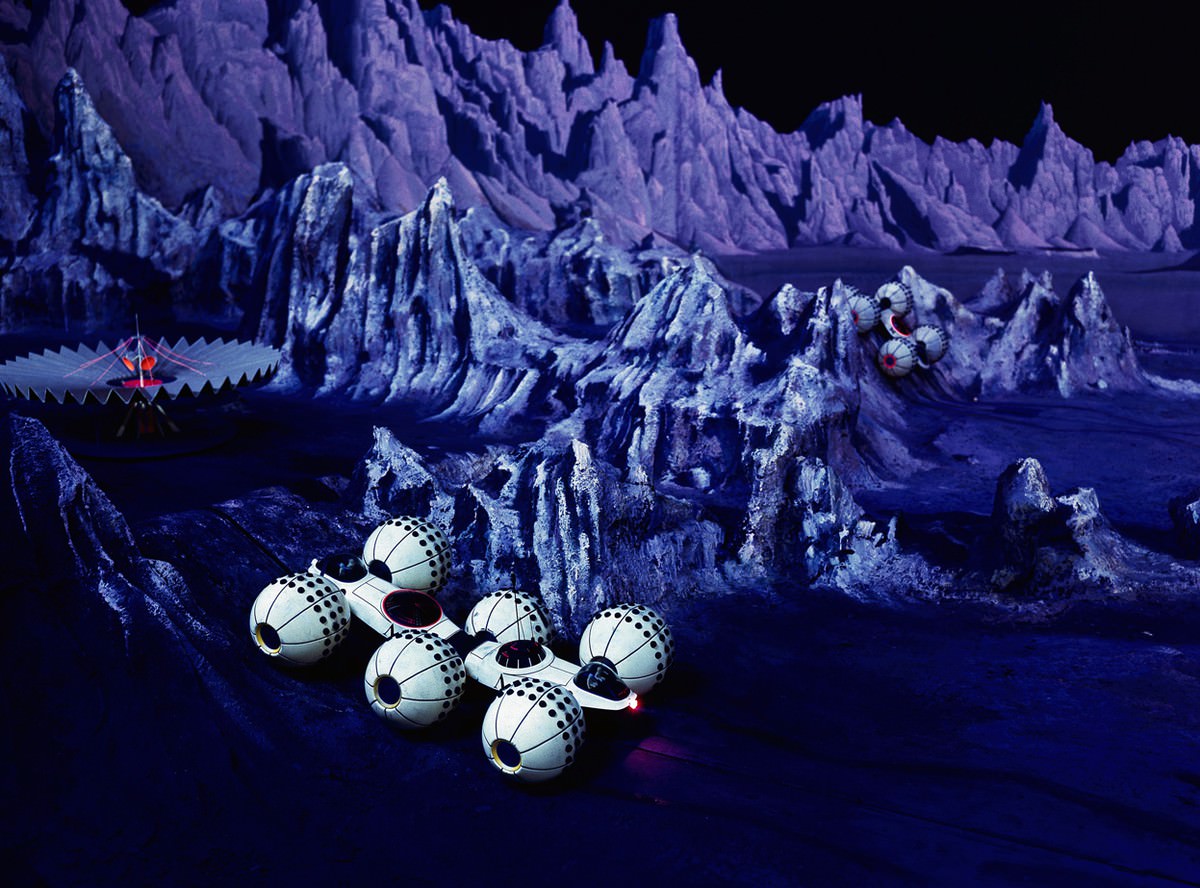
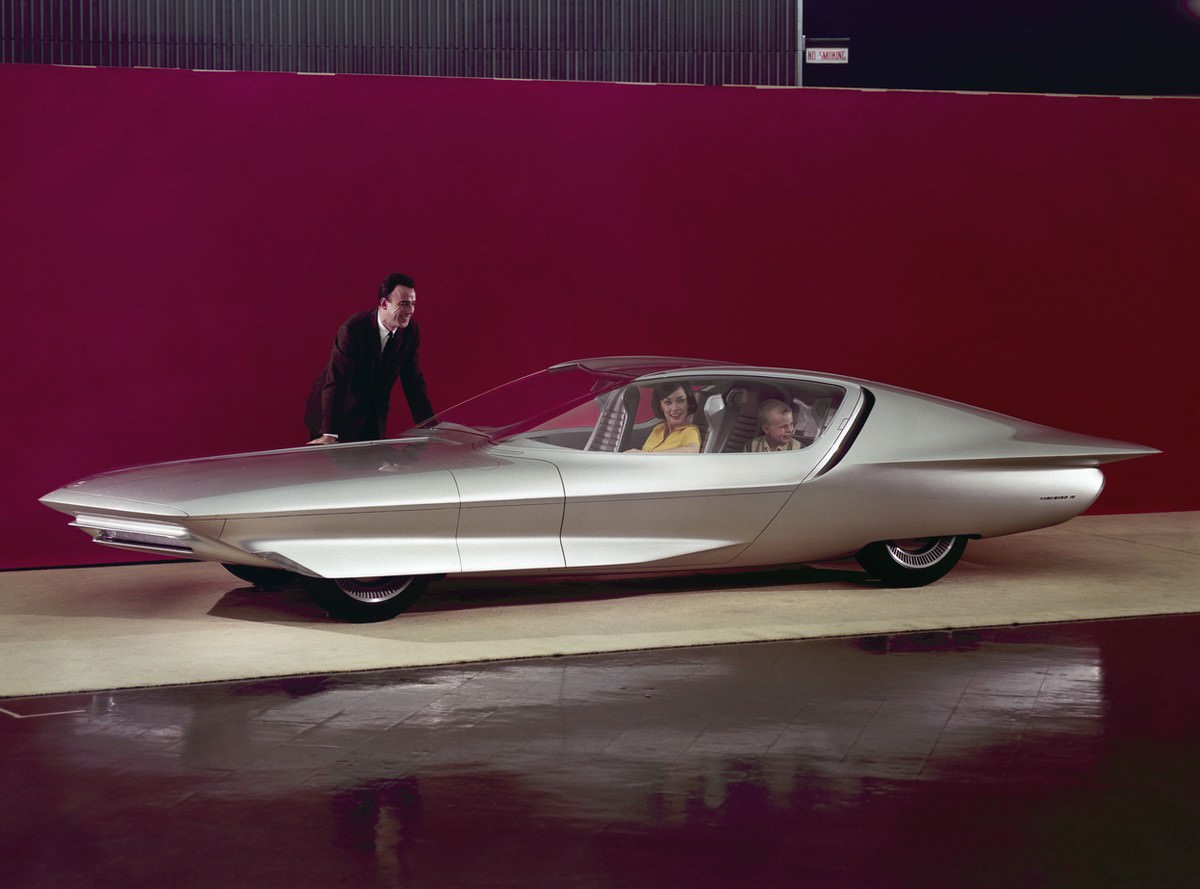
The ride through Futurama ended with a vision of the city of the future — a dazzling model filled with automated roadways, vertical takeoff and landing aircraft, and 35-story parking garages. New and old architecture stood side by side. Space stations and spacecraft filled the night sky in one section of the exhibit. The official guidebook described a trip to the moon as part of the ride, with scale models of lunar craters dotted with manned crawlers and commuter spacecraft. GM also had a car of the future on the floor of its pavilion, a sleek physical prototype that visitors could see up close.
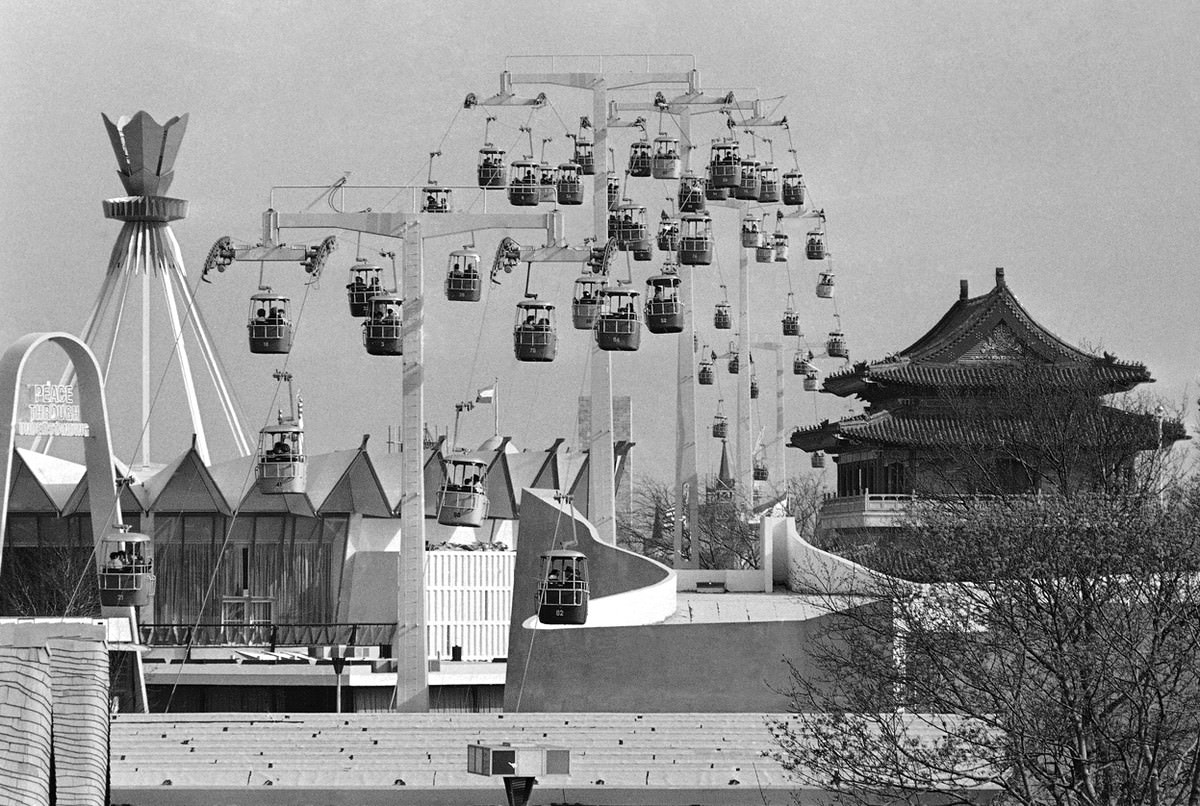
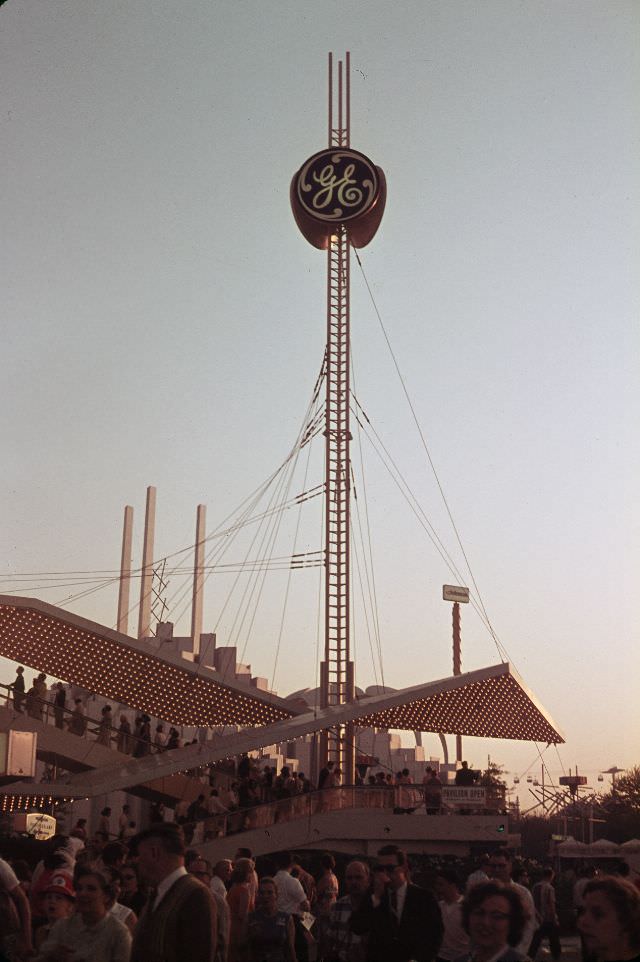
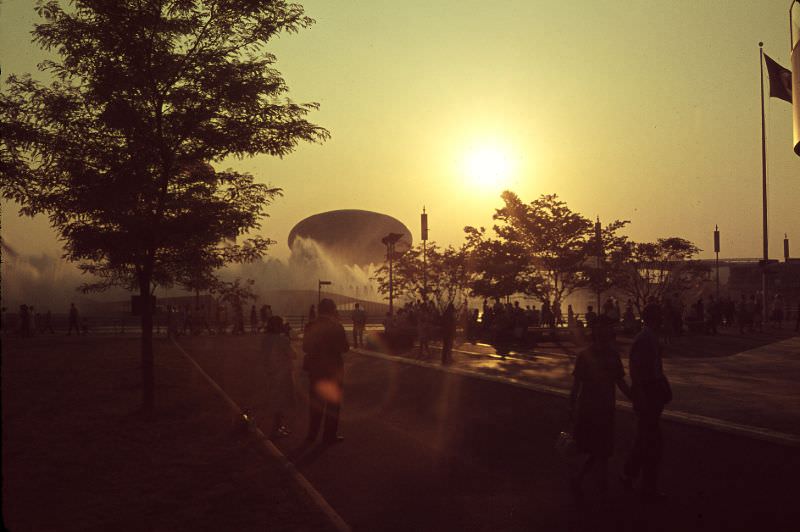
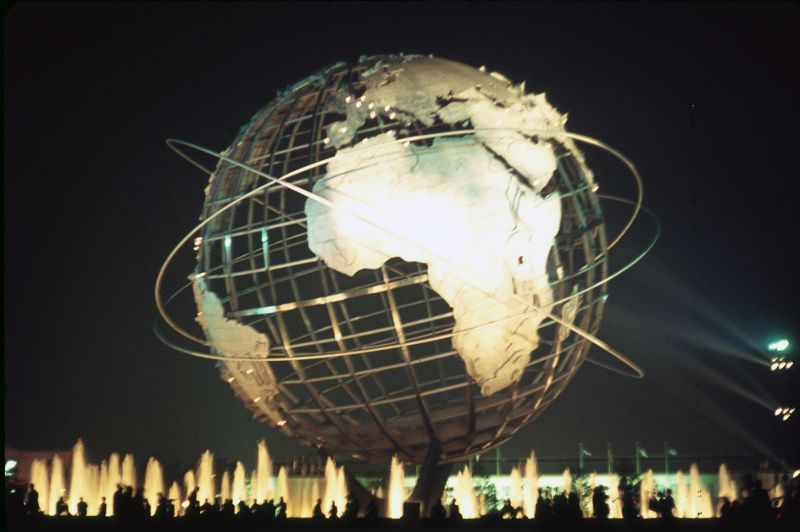
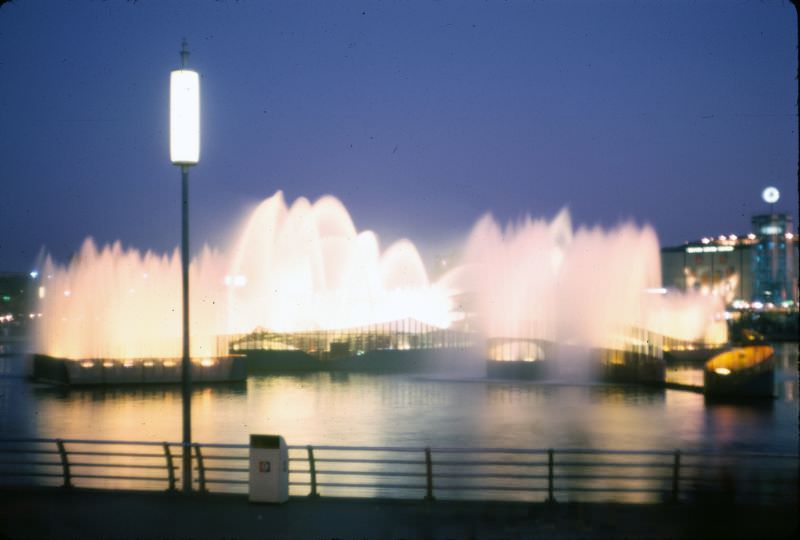
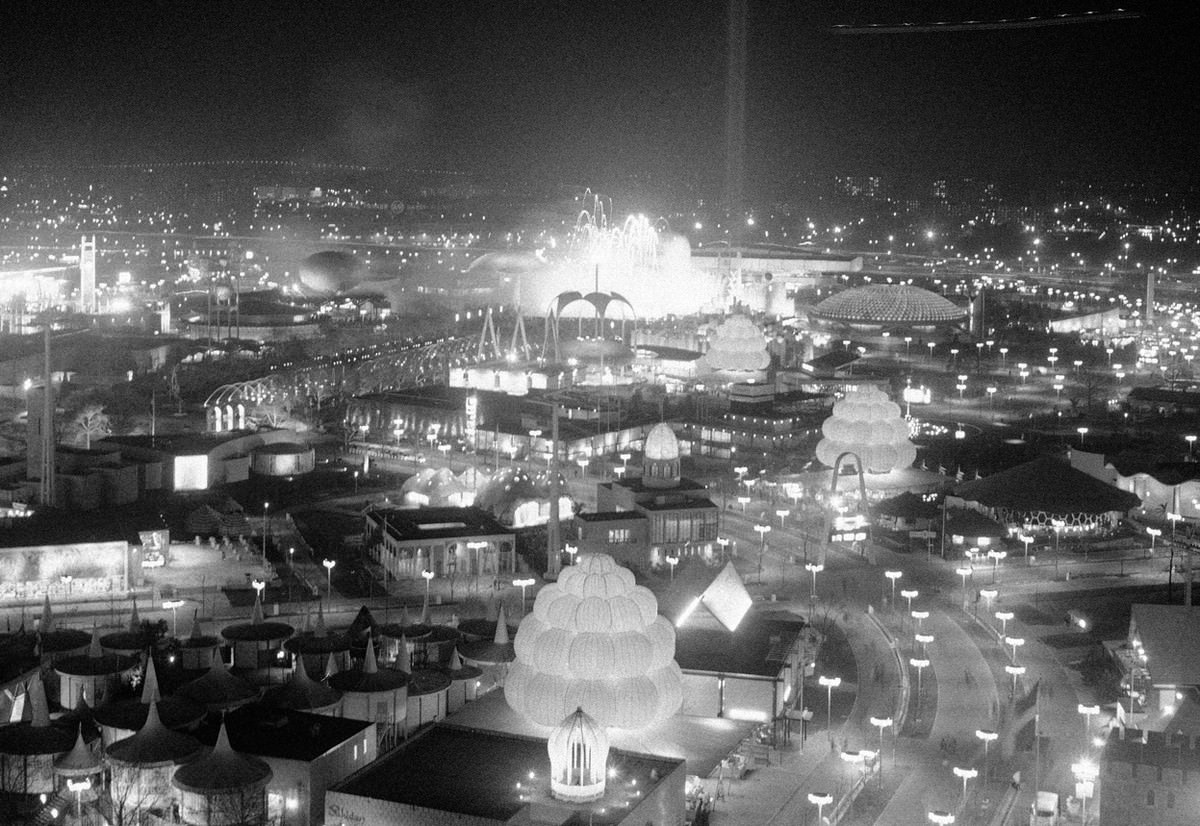
After dark, the fair transformed entirely. Lights reflected off the lagoons, towers glowed against the Queens sky, and the Unisphere shone in brilliant white. The Swiss Sky Ride carried passengers high above the grounds in cable cars, offering night views that stretched across the entire park. The fair’s water shows ran fountain displays that lit up the evening hours. From the New York State tower, visitors could watch the whole spectacle laid out below them — 646 acres of the 20th century’s most ambitious exhibition, still buzzing with energy long after sundown.