in

What New Orleans looked like in the 1950s Through Fascinating Historical Photos

New Orleans in the 1950s was a city caught between two worlds. Its iron-lace balconies and centuries-old cathedrals stood alongside new overpasses and a rising skyline. Under Mayor DeLesseps S. Morrison, the city pushed hard to modernize. Streets were widened. Railroad crossings were lifted onto overpasses. The scattered railroad industry was consolidated into a single new rail terminal. And at the center of it all, an 11-story City Hall rose as part of a brand-new civic center. These were not small changes. They reshaped how residents moved through, worked in, and thought about their city.
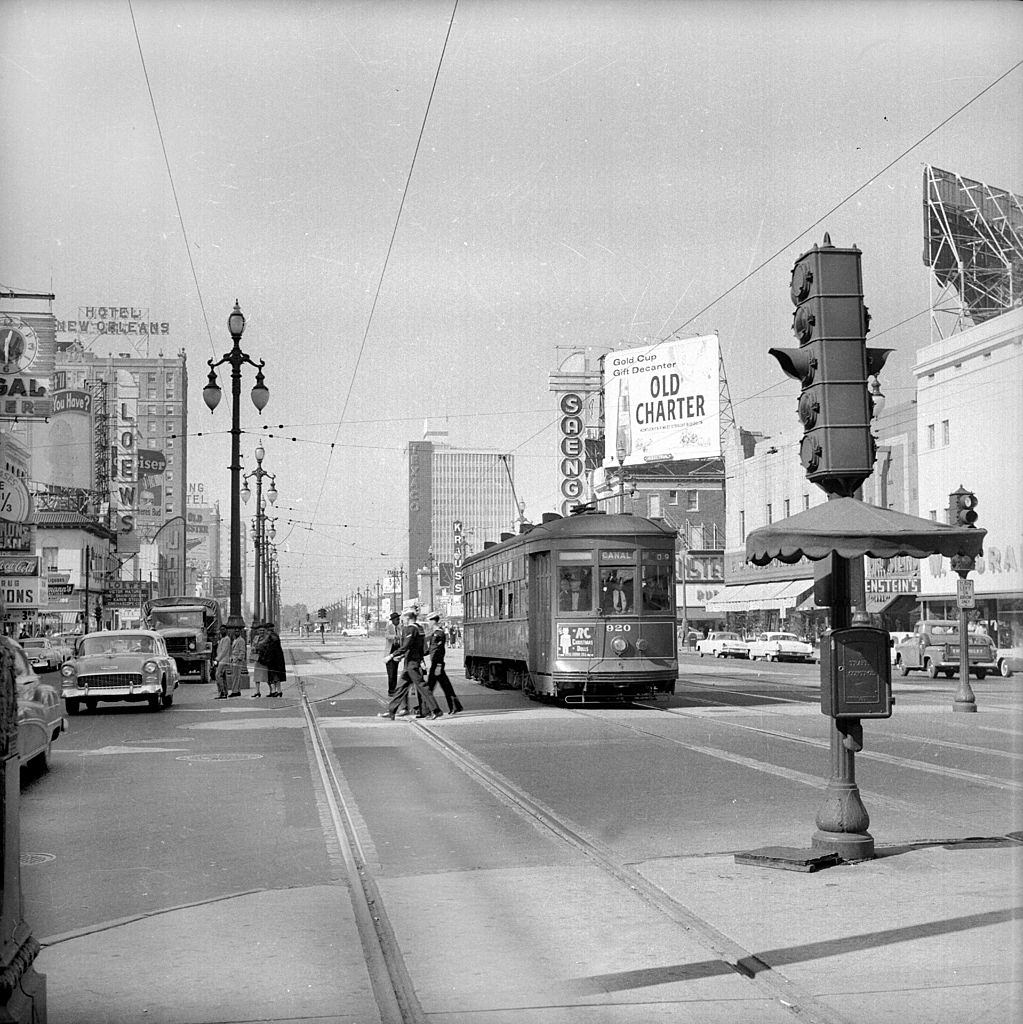
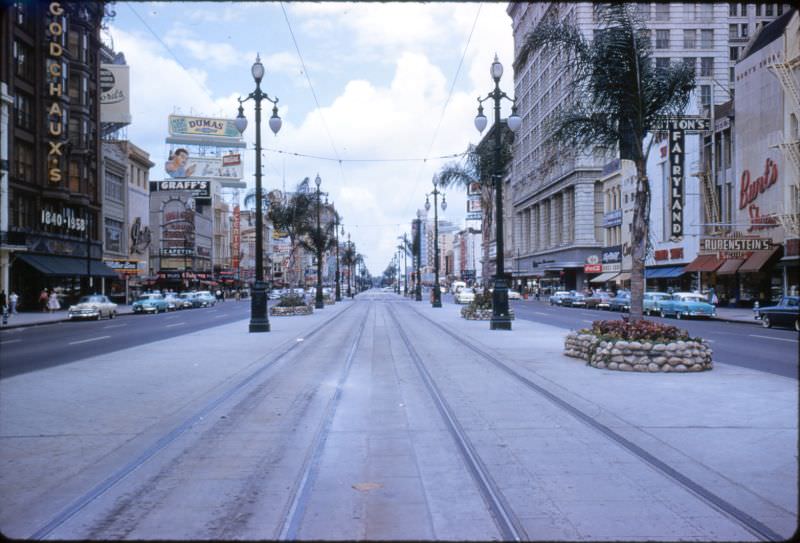
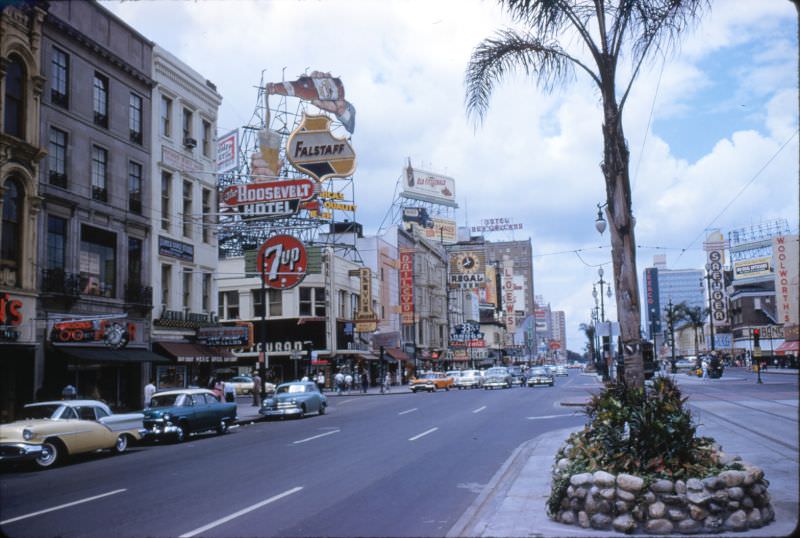
Canal street, New Orleans, 1955

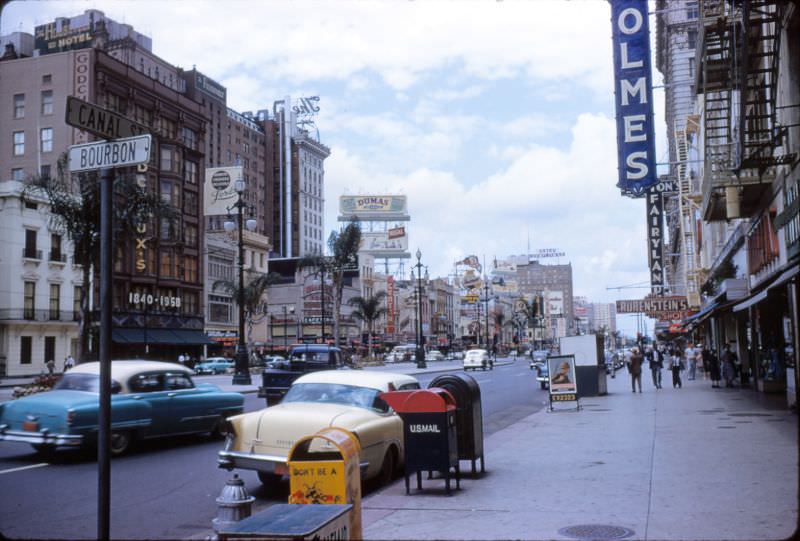
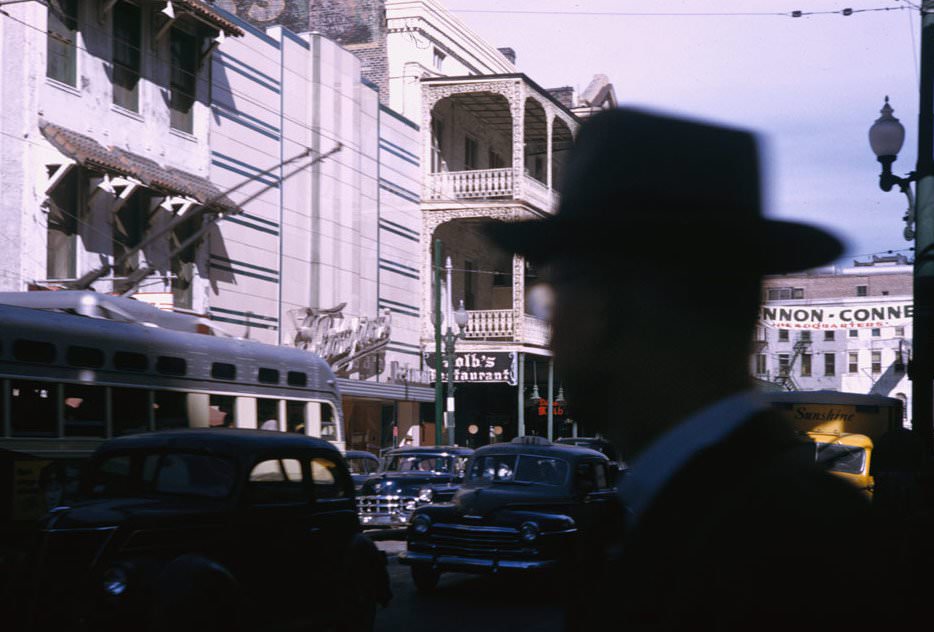
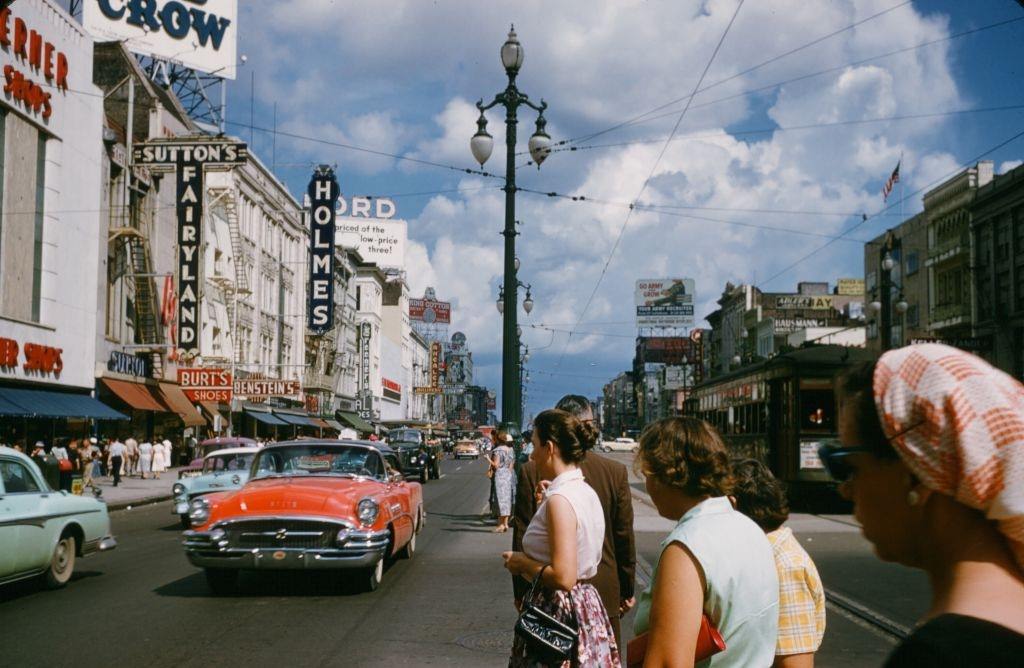
Canal Street was the commercial spine of 1950s New Orleans. Streetcars rolled down its wide median, and department stores like D.H. Holmes and Godchaux’s drew shoppers from across the region. The street buzzed with foot traffic, neon signs, and the kind of activity that marked it as the city’s main artery. On any given afternoon, it looked less like a Southern city street and more like a scaled-down version of a major American boulevard.
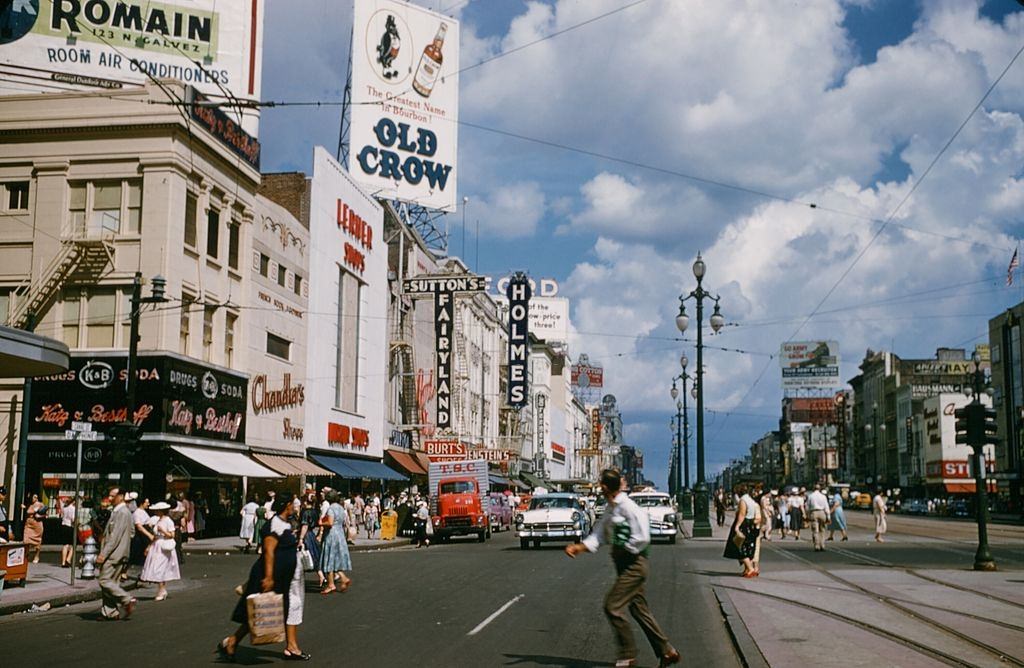
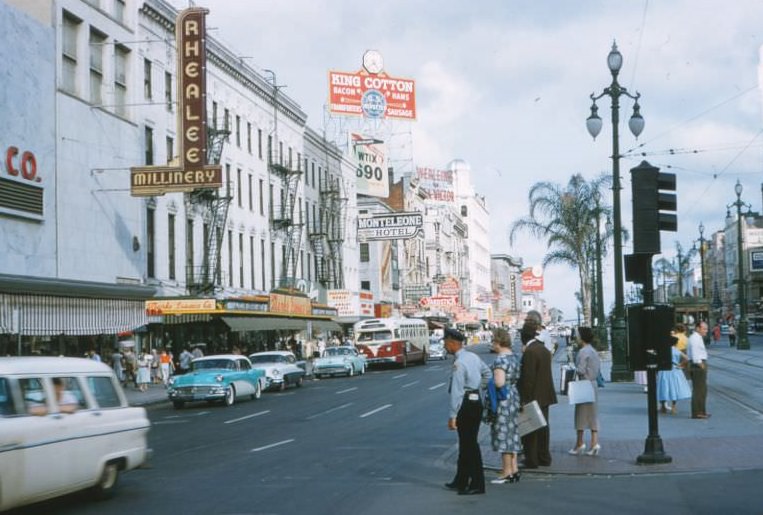
A street view of Canal street in New Orleans, 1957
Canal Street King Cotton, New Orleans, 1956.
Canal Street looking north, New Orleans, 1956.

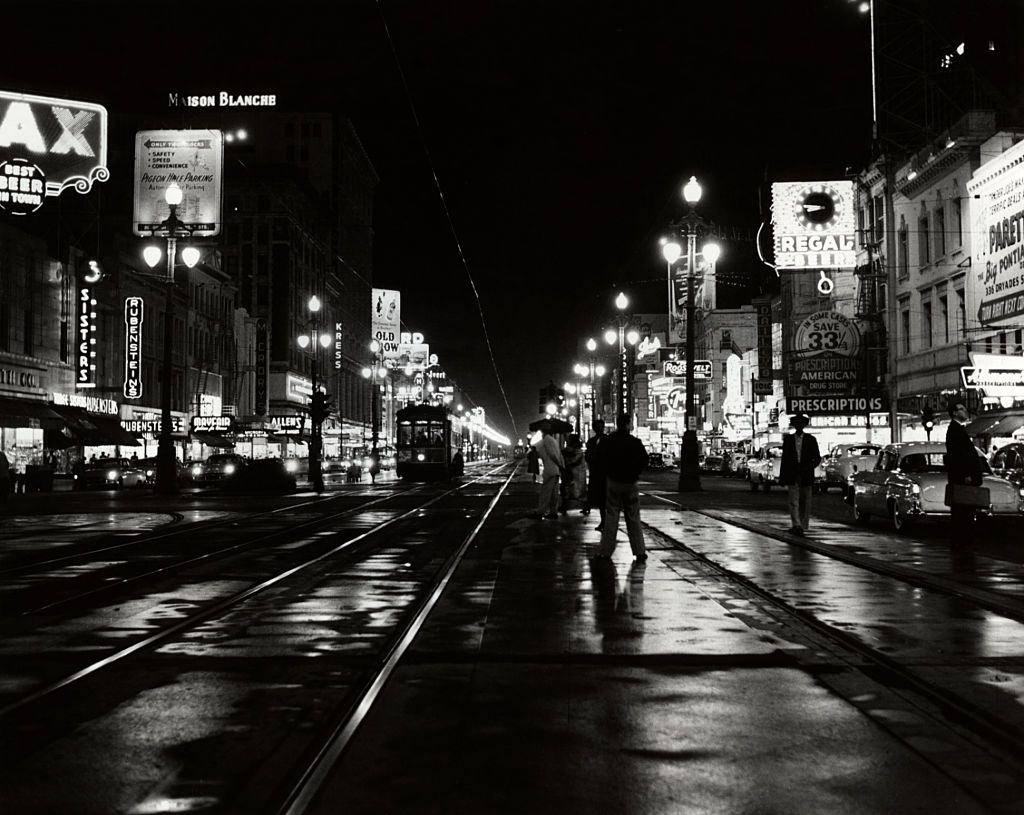
At night, Canal Street transformed. Neon signs blazed above storefronts, and the street took on a different energy entirely. The crowds shifted from shoppers to theatergoers, diners, and people simply out for the evening. These night scenes capture the particular glow of a mid-century American city before malls and suburbs pulled commercial life away from downtown cores.
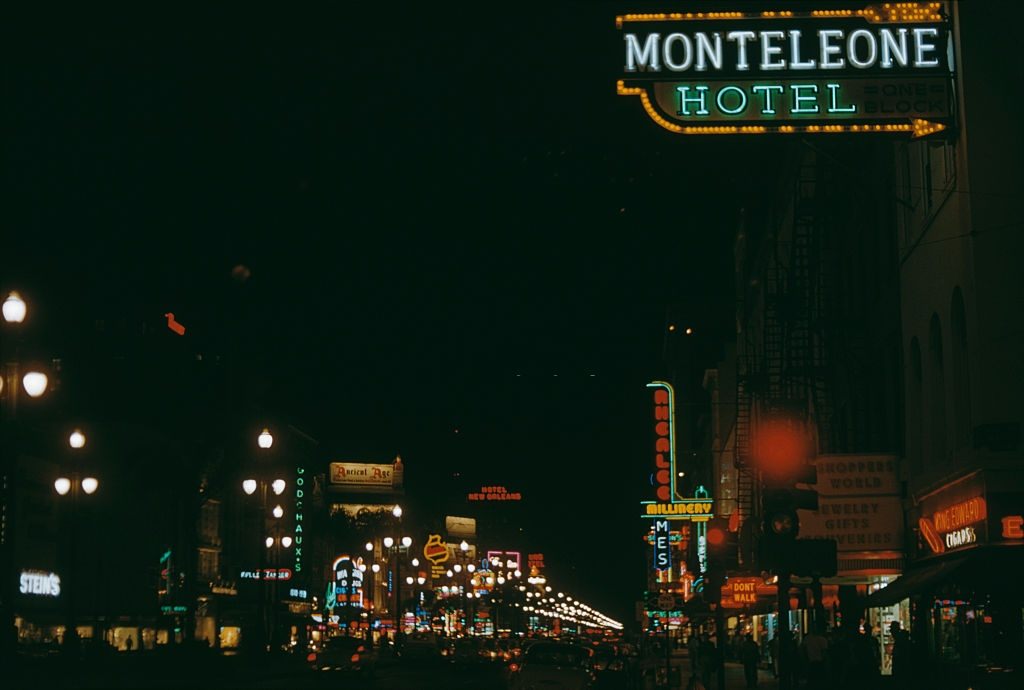
A view of Canal Street at night, New Orleans, 1959.
Night Canal Street scene, New Orleans, 1950s
Canal Street with DH Holmes and Godchaux's, New Orleans, 1956.
Canal Street with DH Holmes and Godchaux’s, New Orleans, 1956.

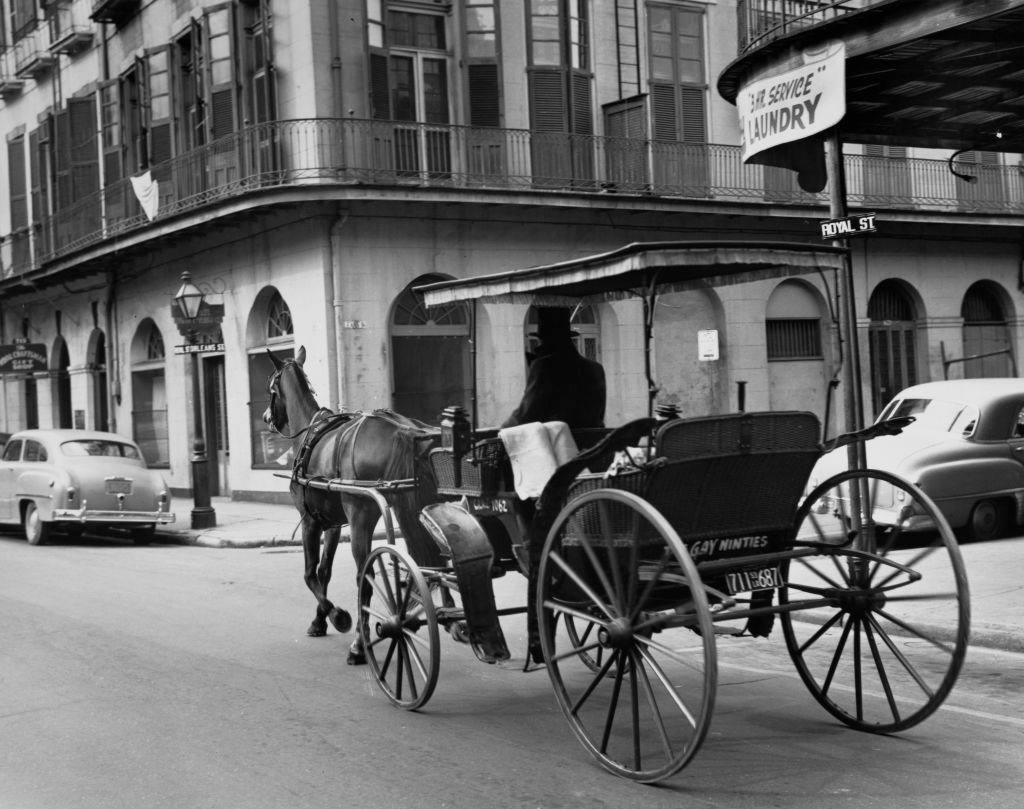
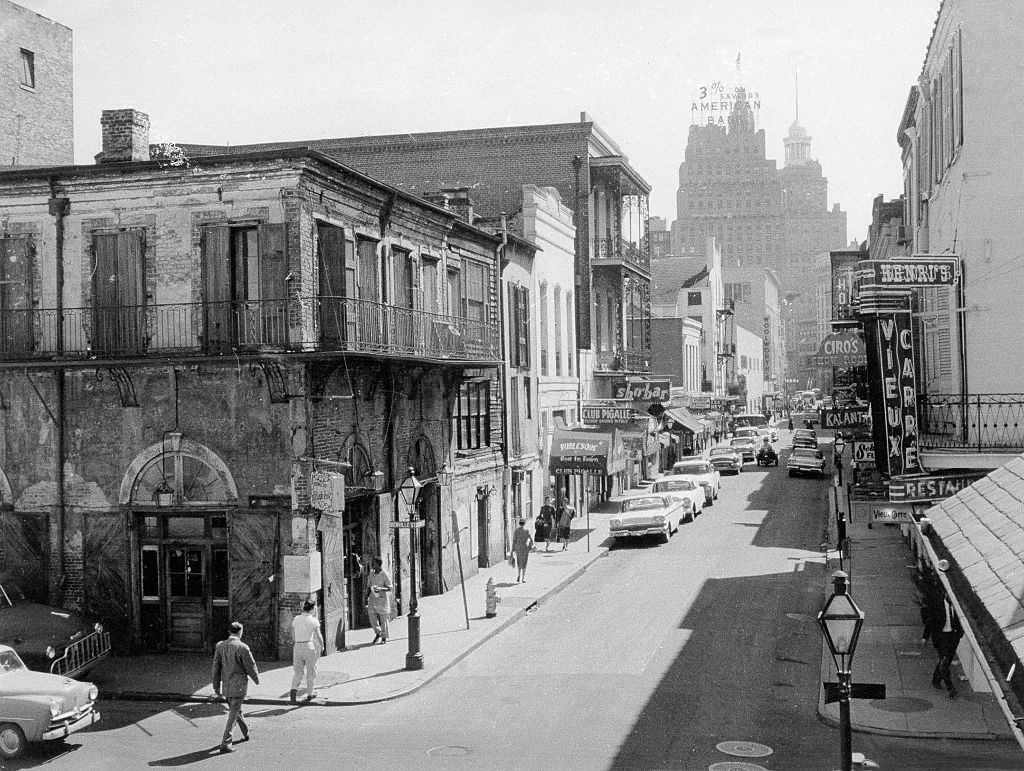
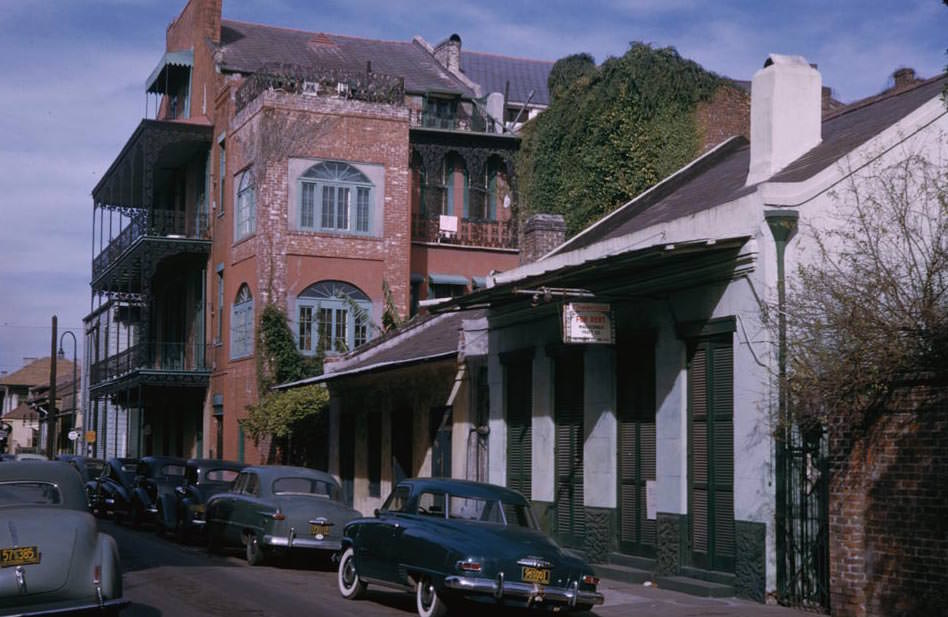
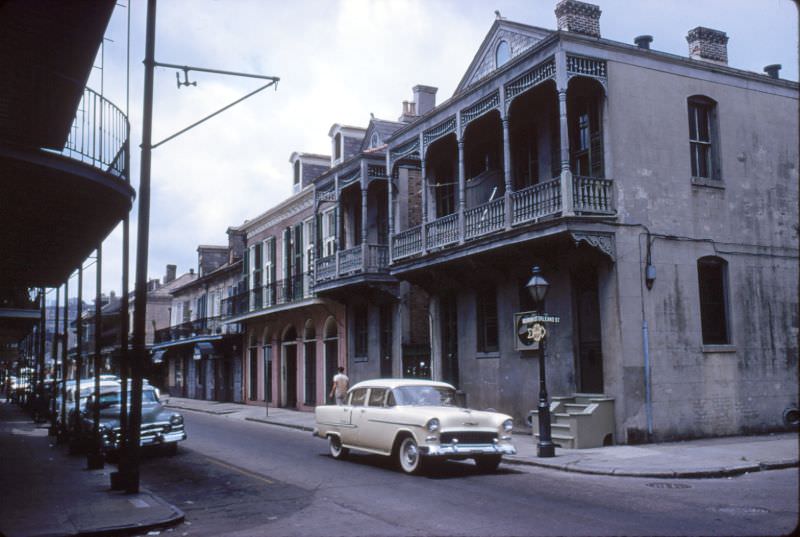
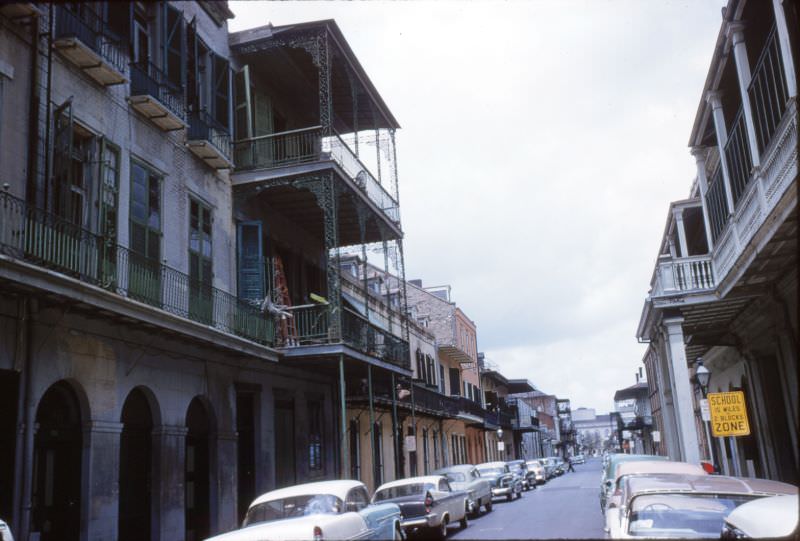
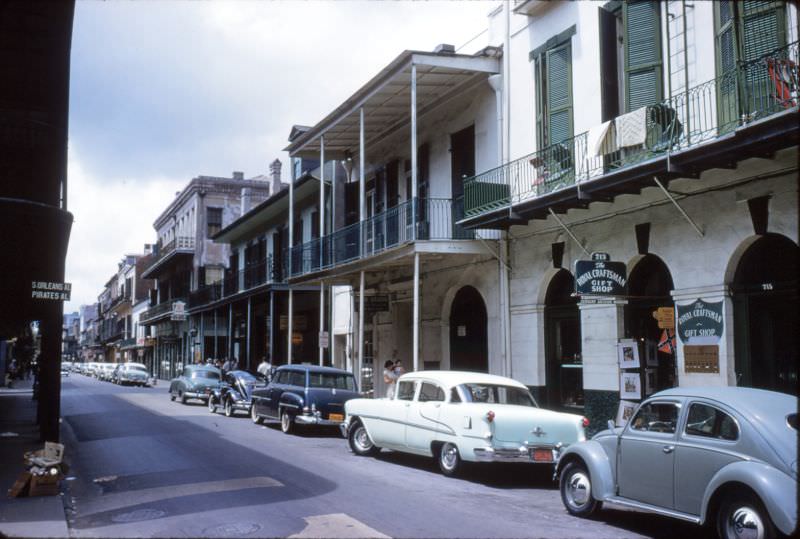
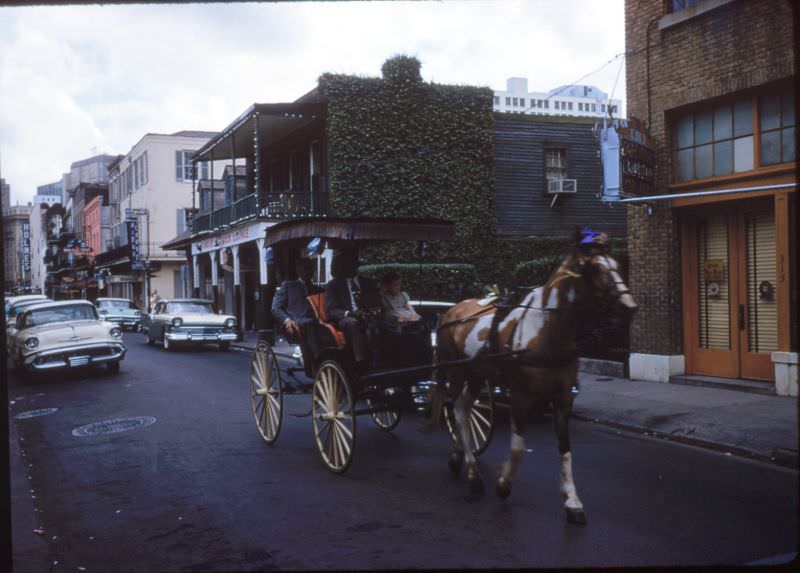
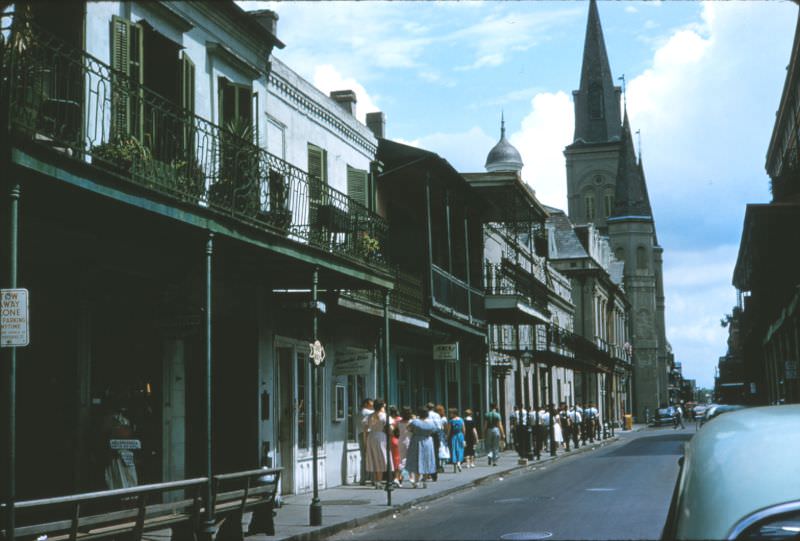
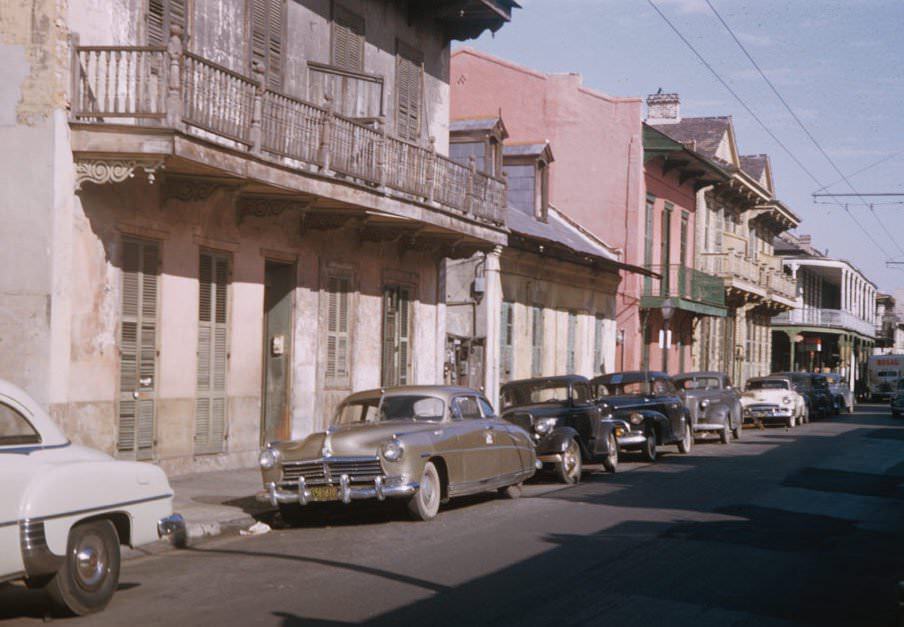
The French Quarter, known locally as the Vieux Carré, remained the soul of the city. Its streets had barely changed in outward appearance since the 19th century. Wrought iron balconies draped the upper floors of narrow buildings. Horse-drawn carriages still made their way down Royal Street. The old architecture was not merely decorative — it was lived in, worked in, and drunk in. Residents and tourists alike crowded into its alleys, courtyards, and corner bars.
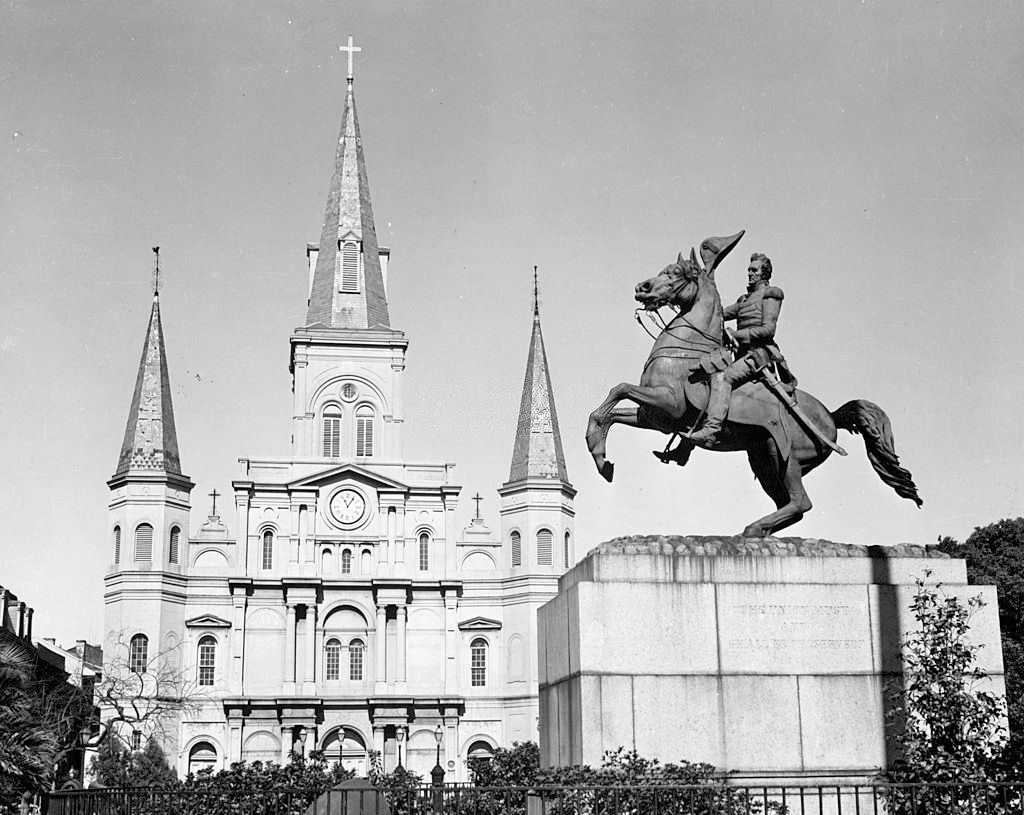
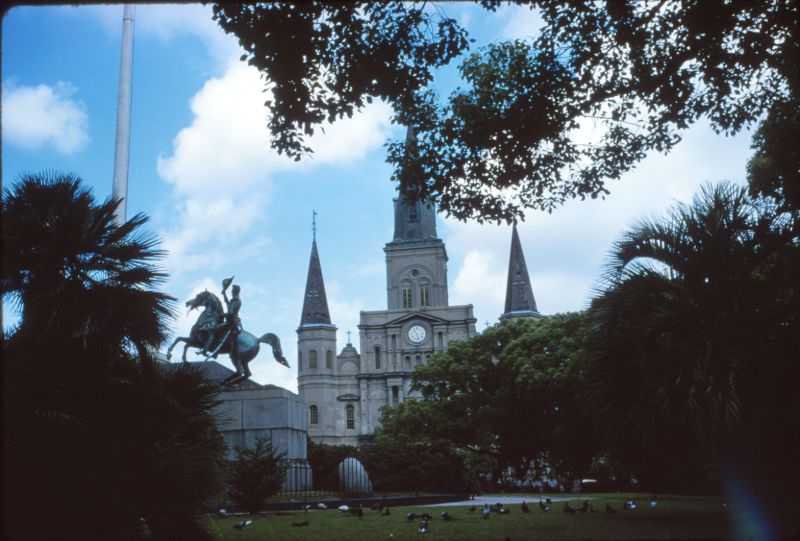
St. Louis Cathedral and Andrew Jackson Statue in Jackson Square in New Orleans, 1950
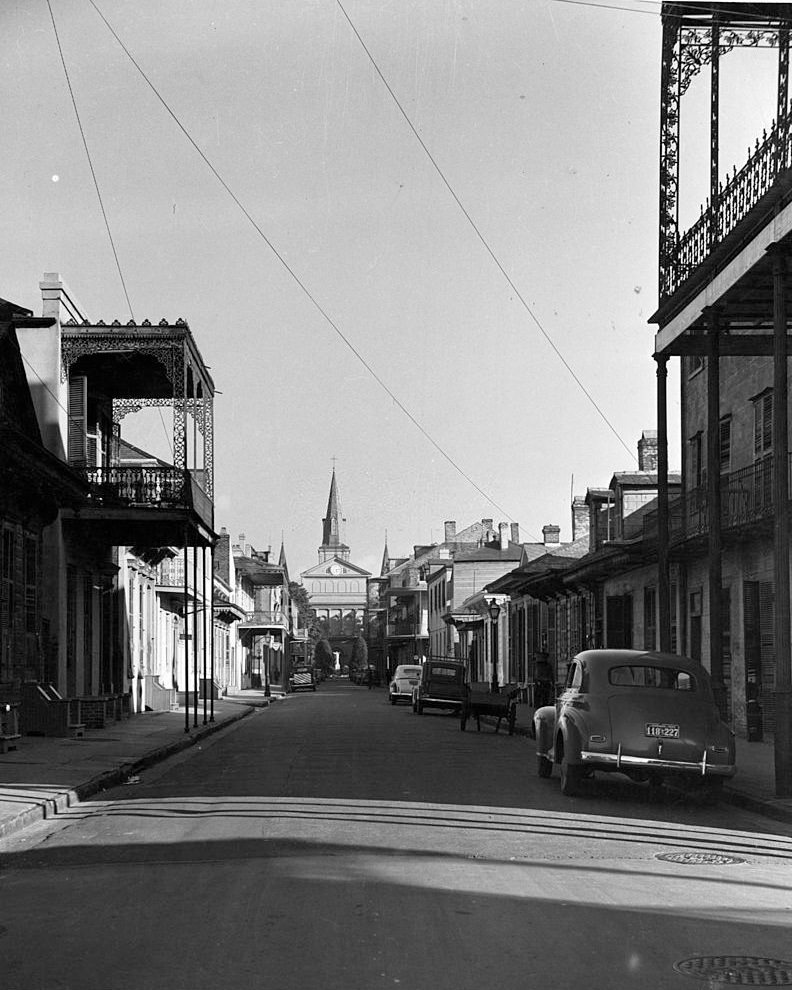
Corner of Dauphine and Orleans looking down Orleans at the back of the St. Louis Cathedral, 1950
Old horse-drawn carriage on Royal Street, New Orleans, 1955.
Pirates Alley, 1950s

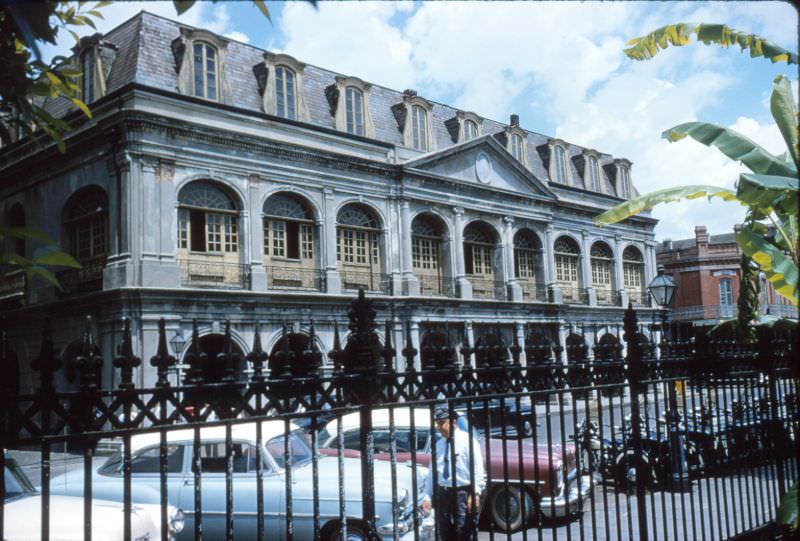
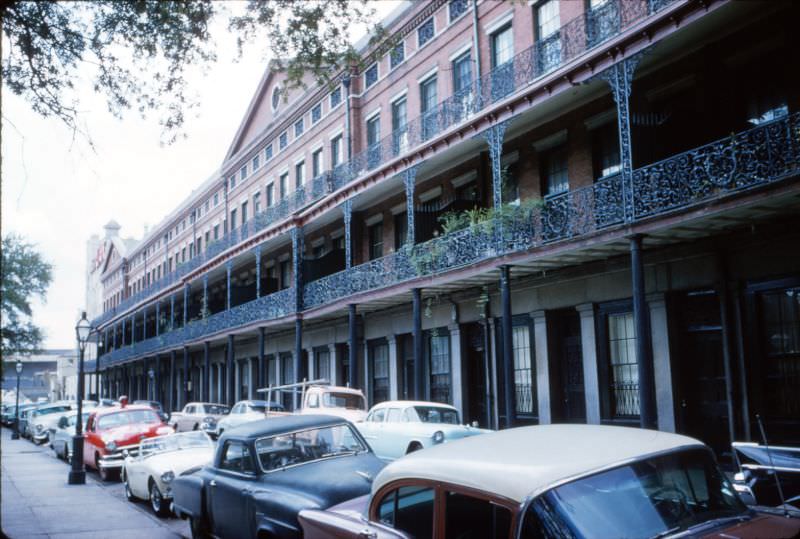
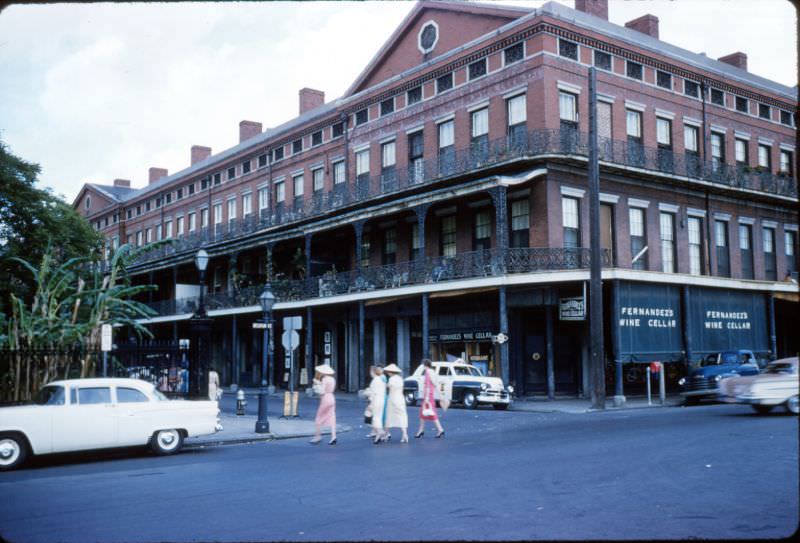
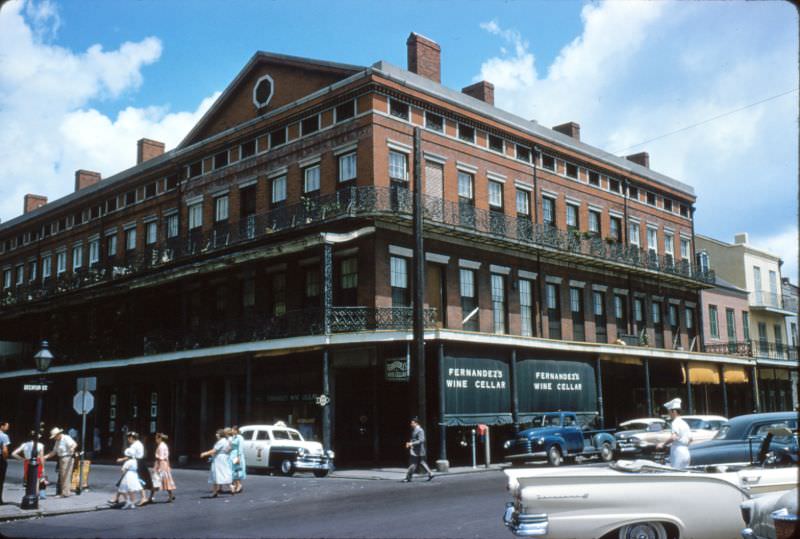
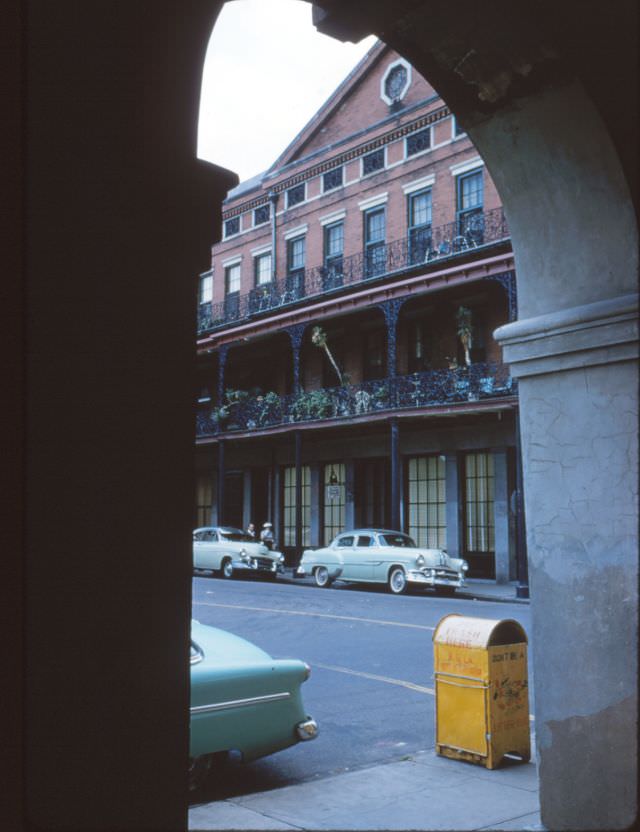
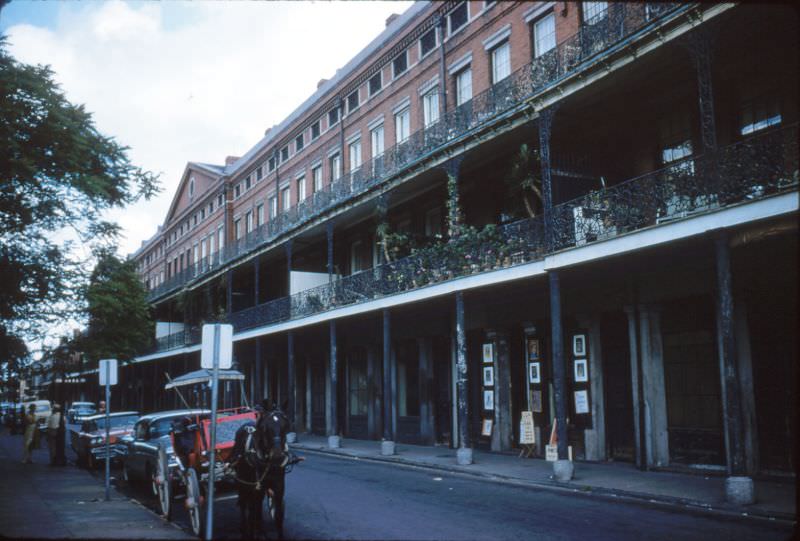
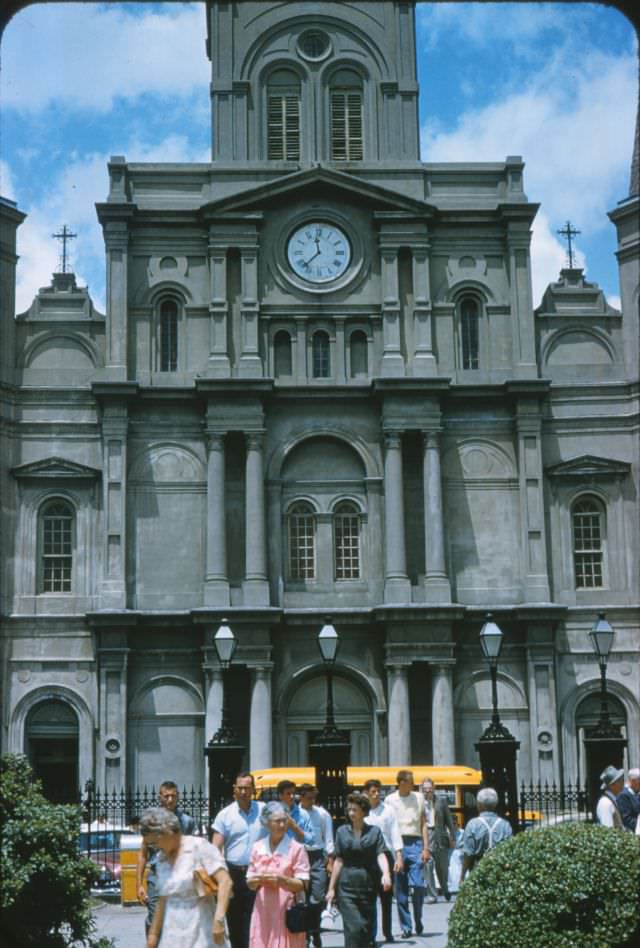
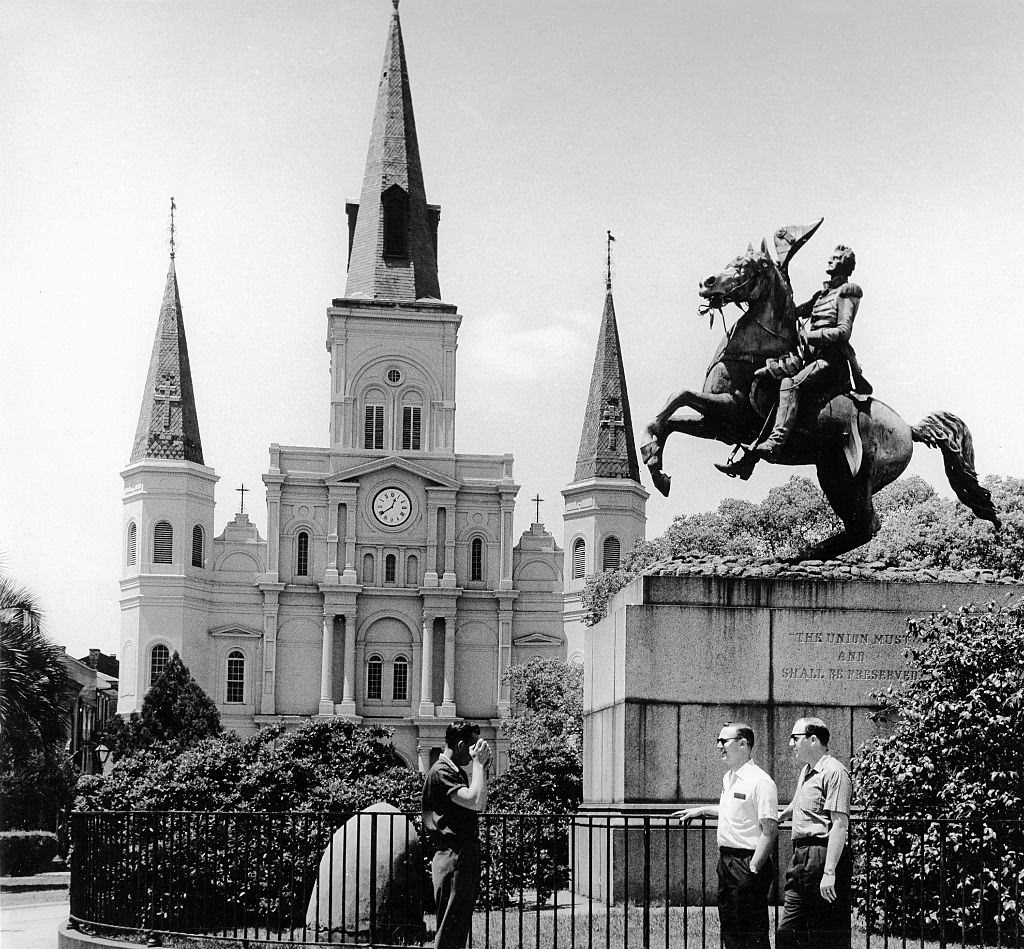
Jackson Square anchored the French Quarter both physically and spiritually. The St. Louis Cathedral loomed over the square from one end, its white facade and triple steeples visible from across the Mississippi. Flanking the square were the Pontalba Apartments, among the oldest apartment buildings in the United States, their cast-iron galleries still intact. Vendors, artists, and street performers filled the open plaza. The Presbytere and the Cabildo framed the cathedral on either side, giving the square a formal symmetry unusual for a city that otherwise prized the organic and the improvised.
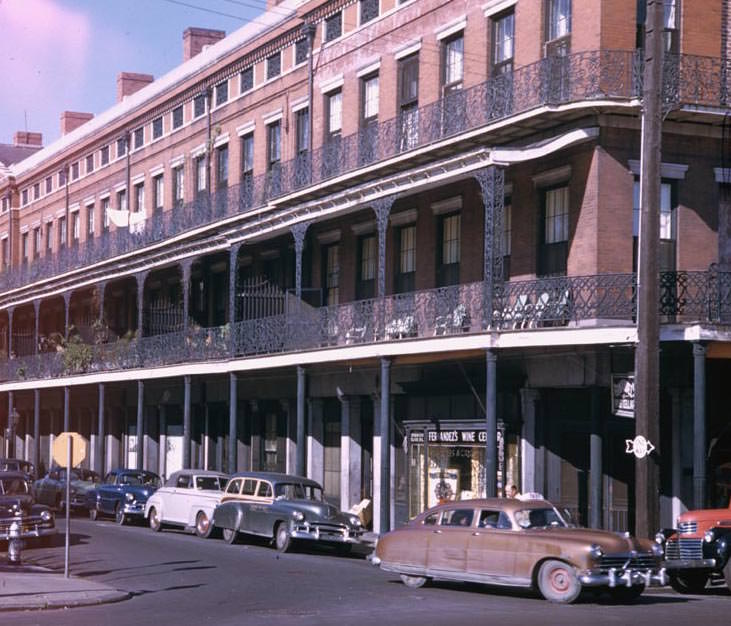
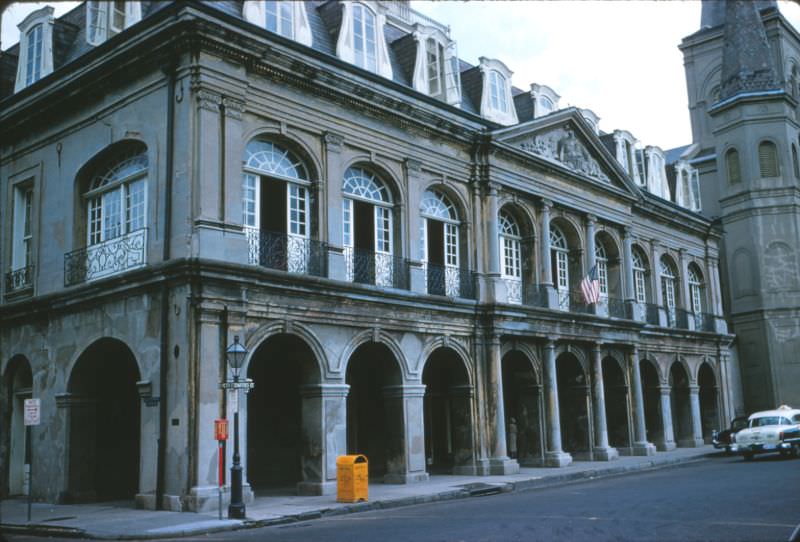
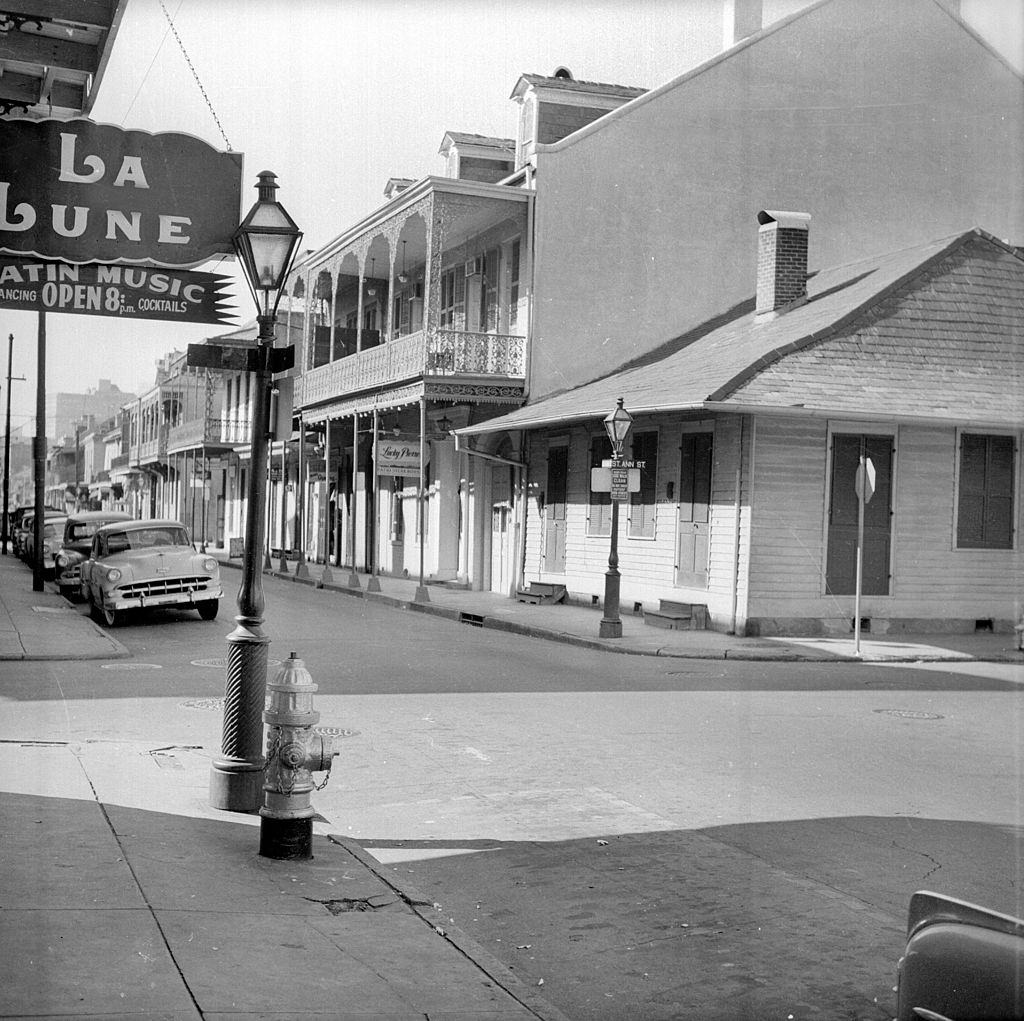
Pontalba building along north east side Jackson Square. St. Ann Street from Decatur, 1951
Cabildo next to St Louis Cathedral, New Orleans, 1956.
Presbytere facing Jackson Square, New Orleans, 1956.
St Louis Cathedral and Andrew Jackson sculpture
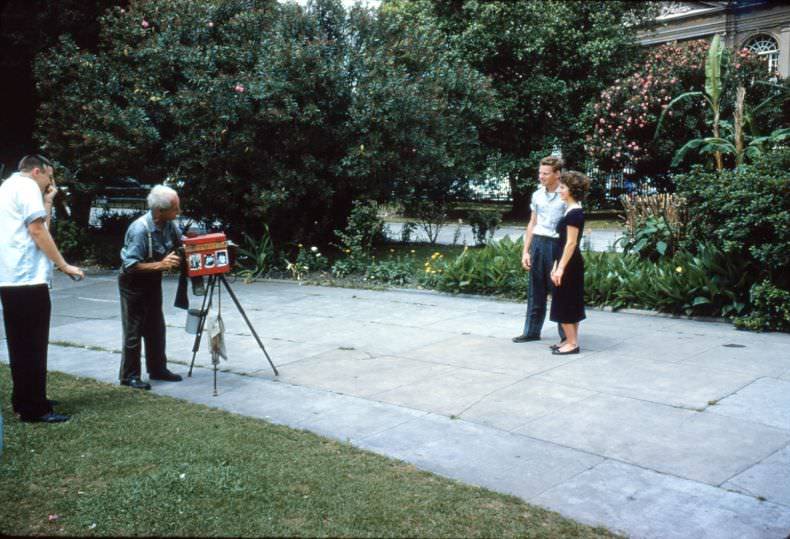
Young couple being photographed in Jackson Square, New Orleans, 1956.

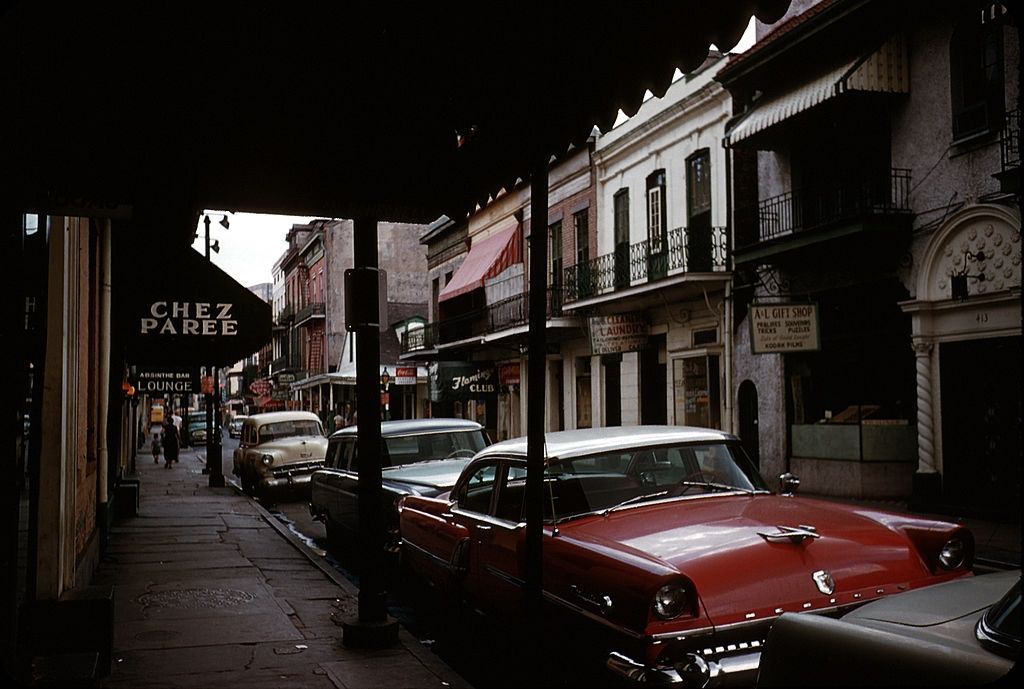
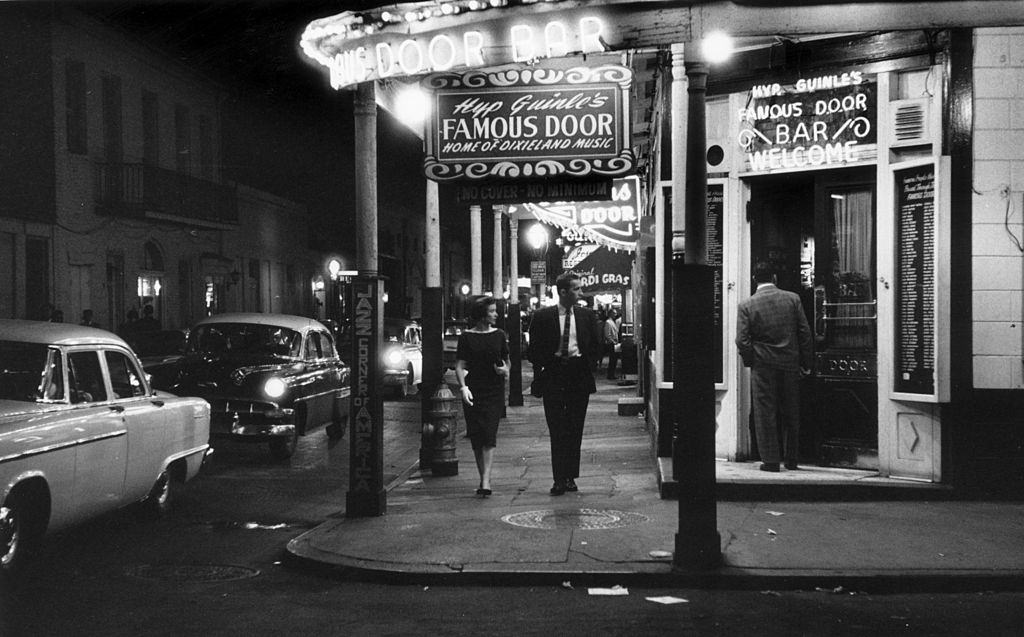
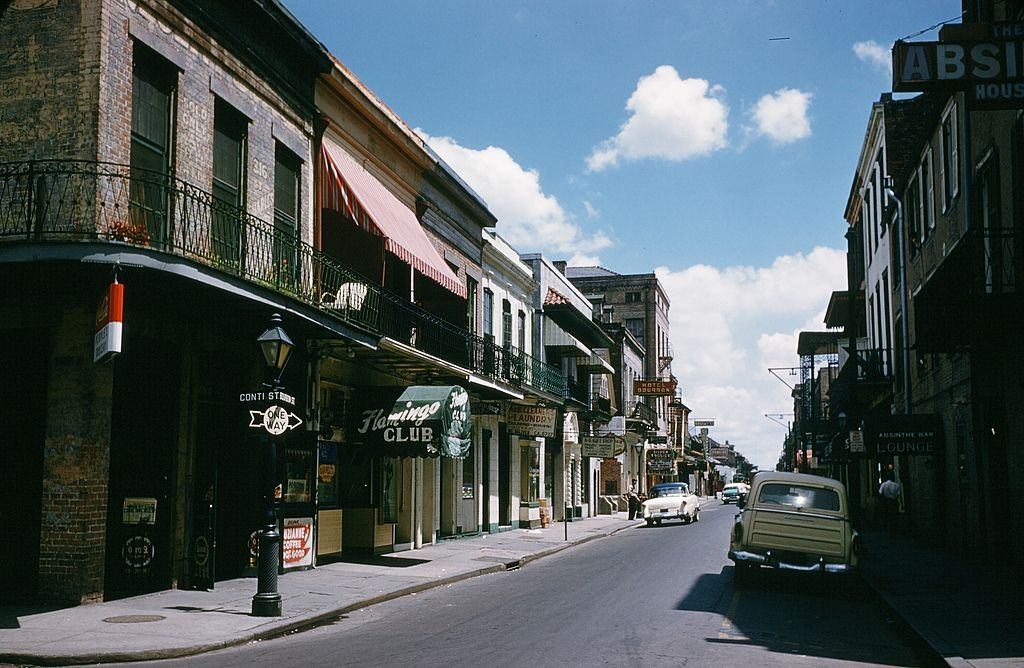
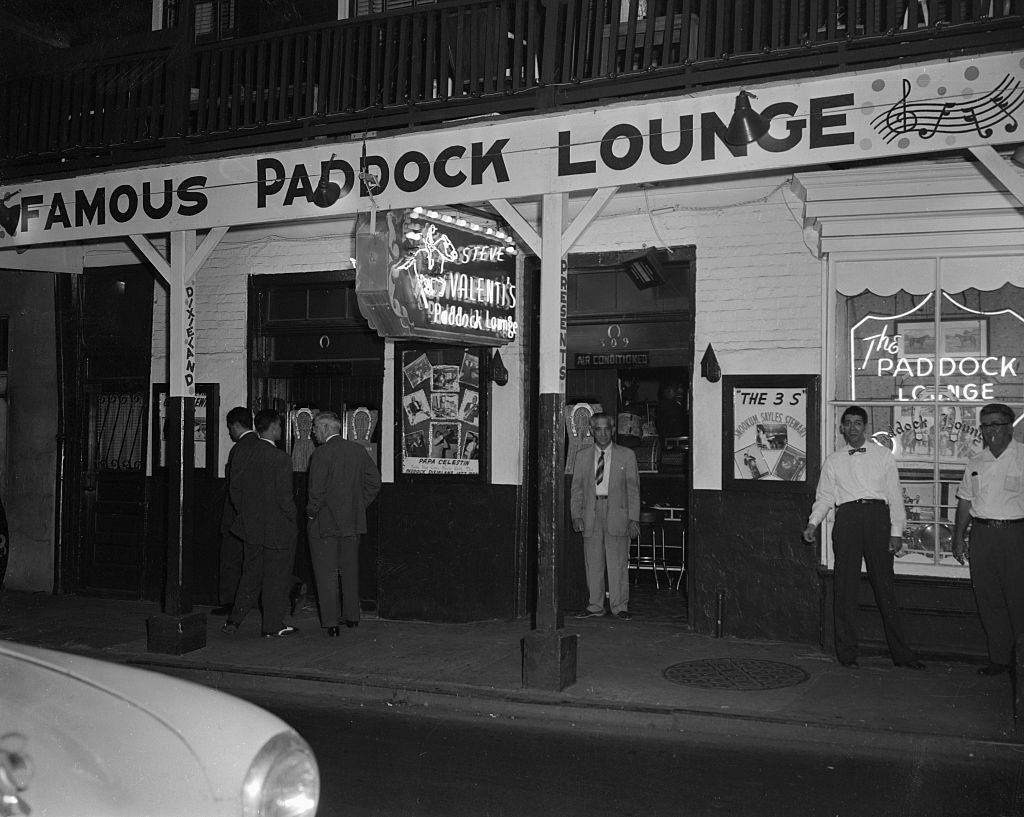
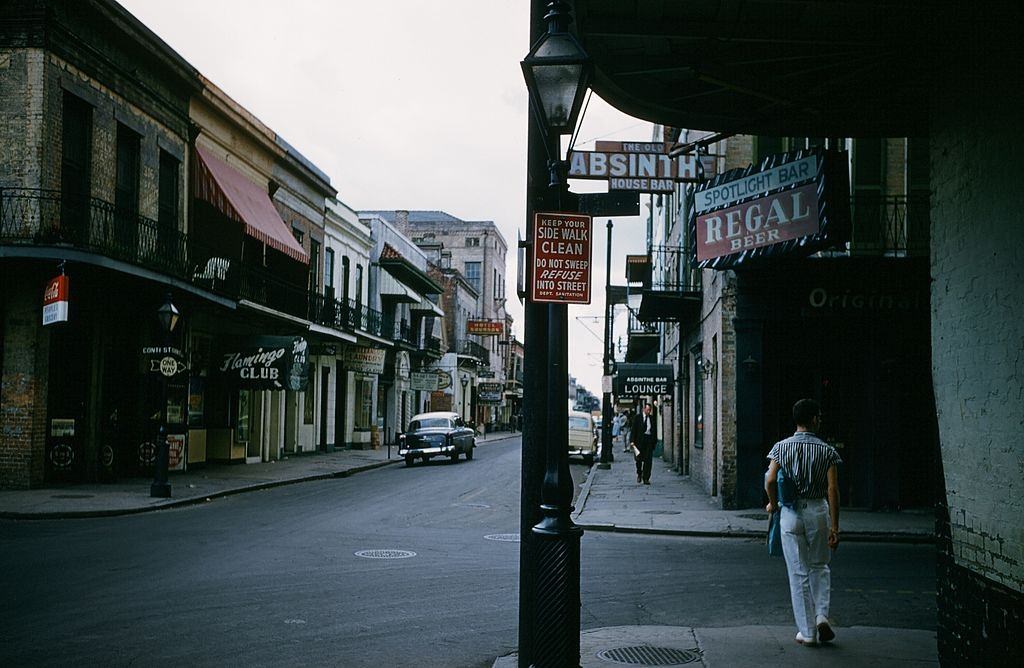
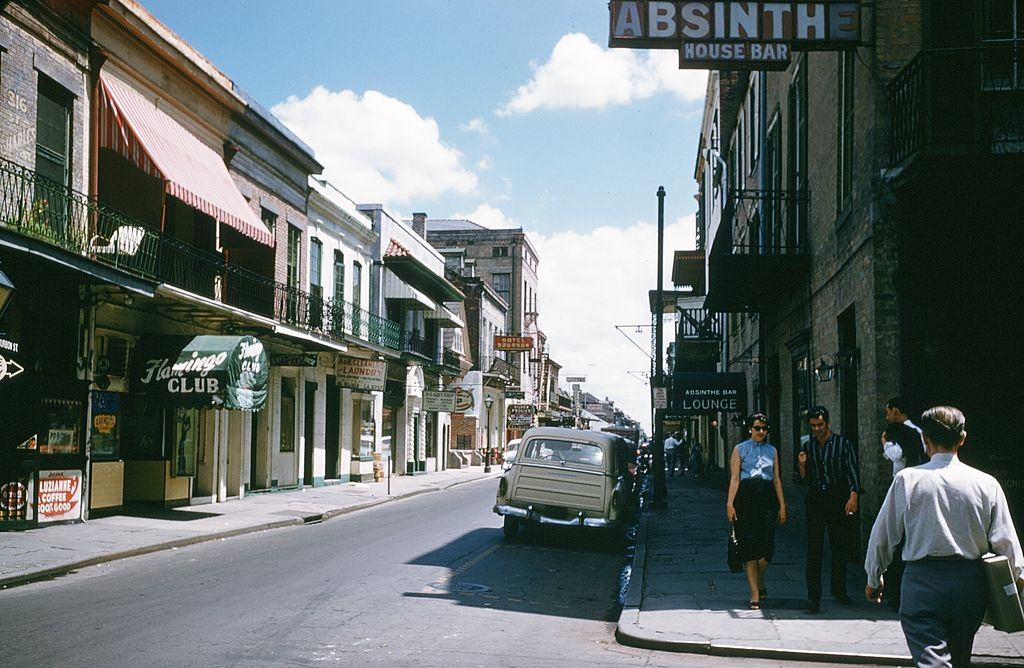
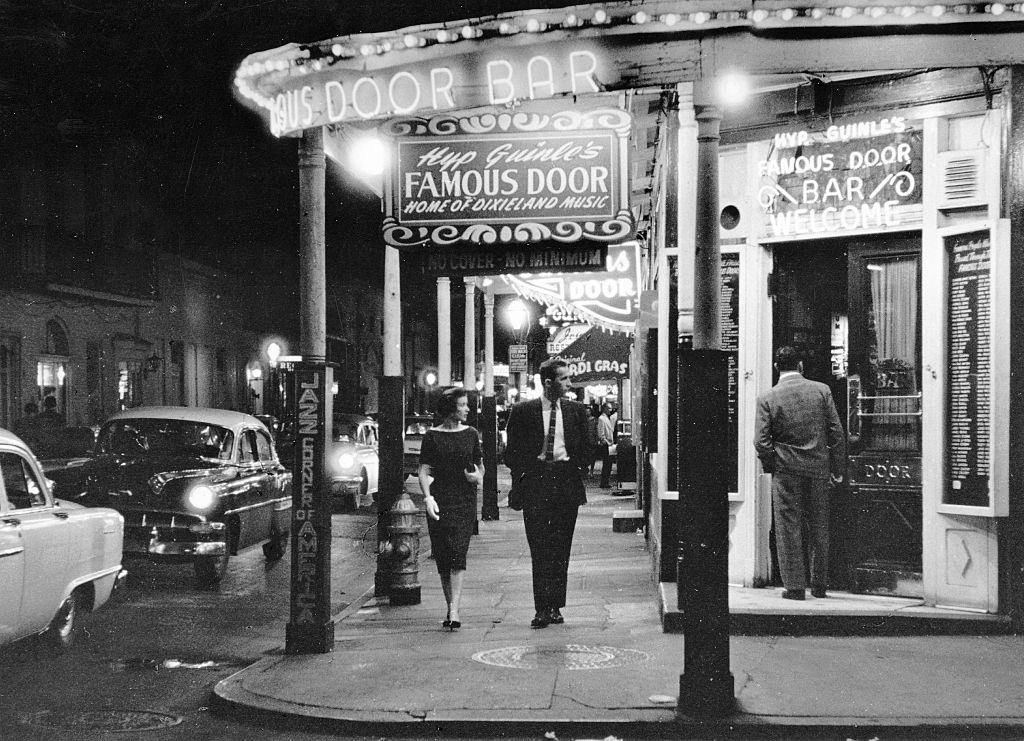
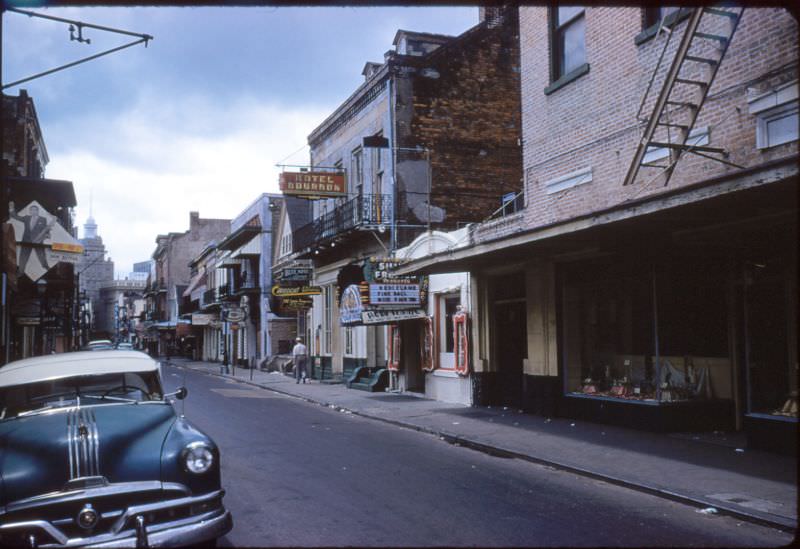
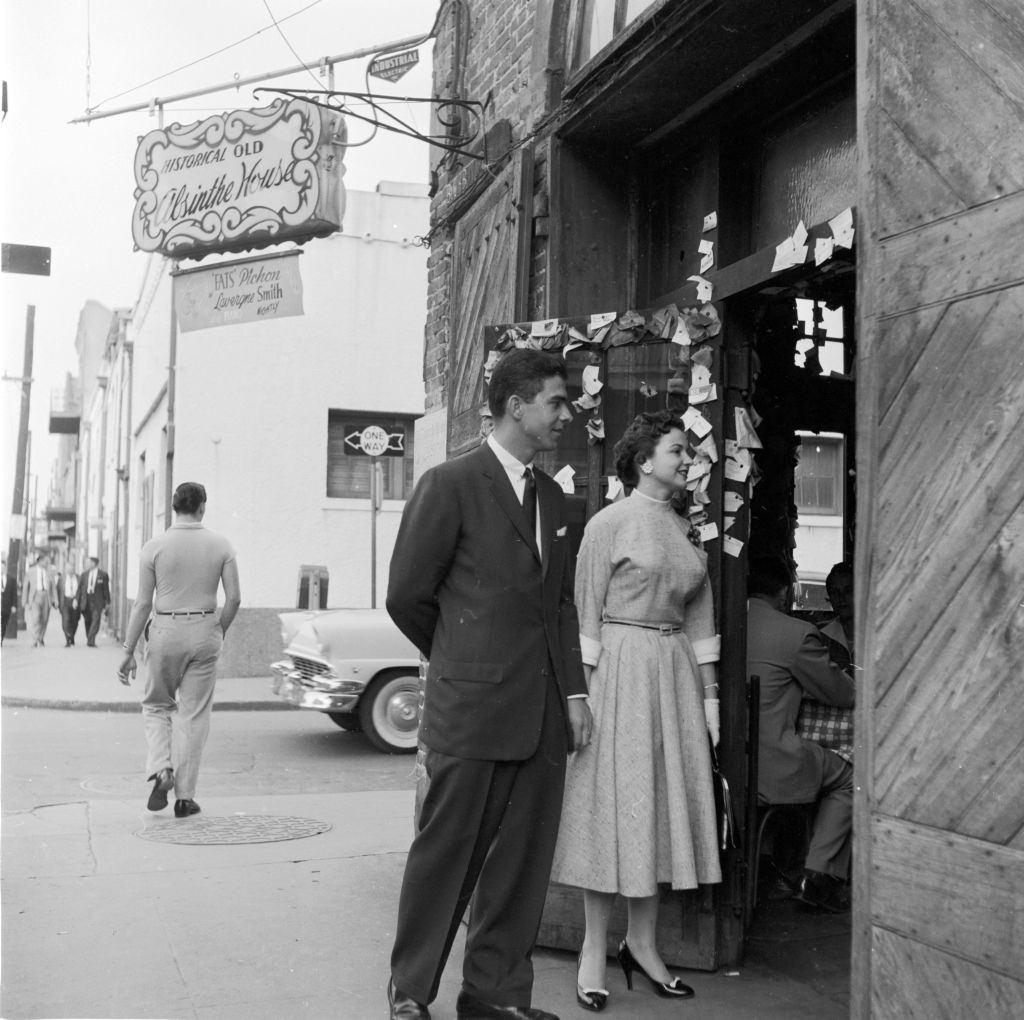
Bourbon Street in the 1950s was already the city’s most famous strip, and the photographs from that decade show why. The street was packed with bars, jazz clubs, strip joints, and lounges operating side by side. Signs competed for attention at every turn. Establishments like the Paddock Lounge, the Famous Door, and the Old Absinthe House had built reputations that drew visitors from across the country. Live music spilled out of open doorways at all hours. The street did not sleep.
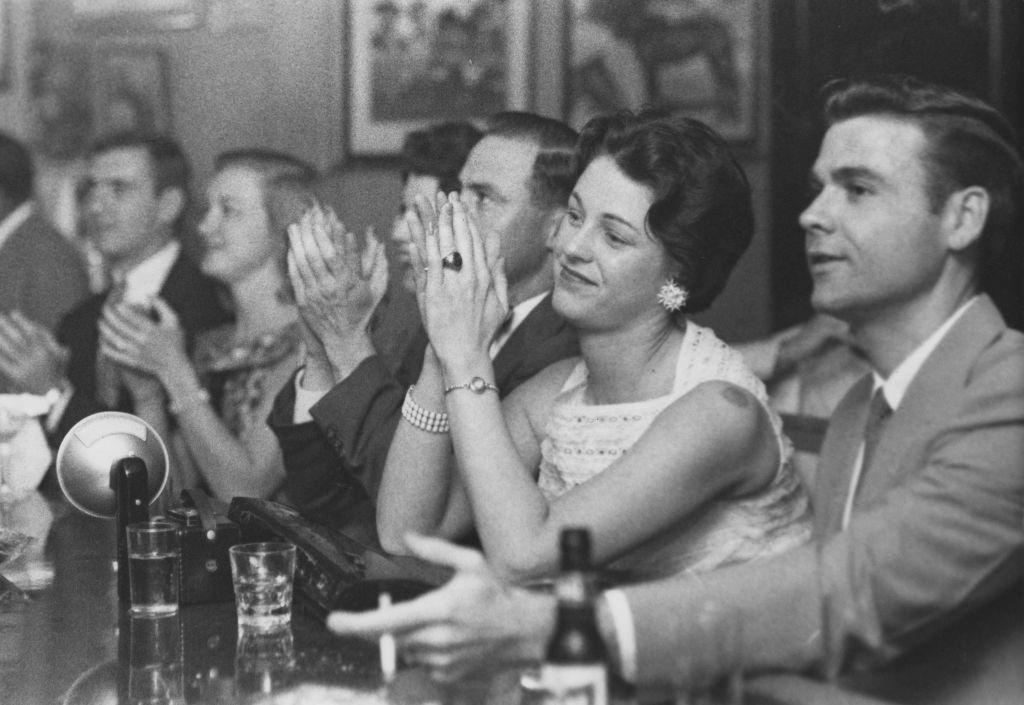
Patrons listening to music at the Paddock Lounge jazz cafe on Bourbon Street, New Orleans, Louisiana, 1950
The entrance to the world famous Absinthe Bar in New Orleans, 1956.
Exterior of Bourbon Street on May 16, 1957 in New Orleans, Louisiana.
The entrance to the 'Famous Door Bar' Dixieland jazz club in the French quarter (Vieux Carre) of New Orleans, 1955.
The entrance to the ‘Famous Door Bar’ Dixieland jazz club in the French quarter (Vieux Carre) of New Orleans, 1955.
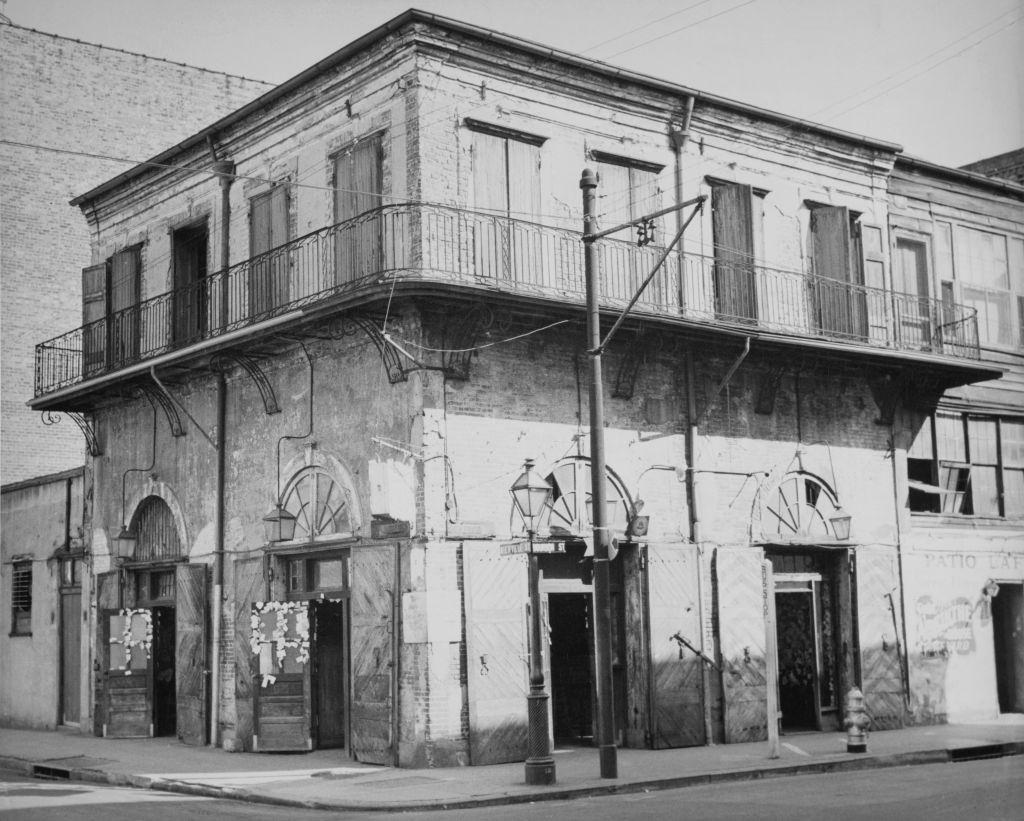
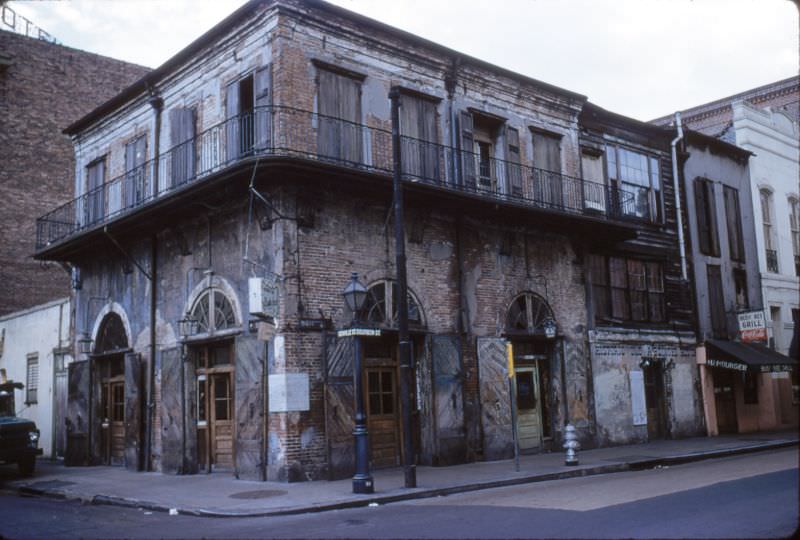
Absinthe House built 1806 on Bourbon Street, 1955.

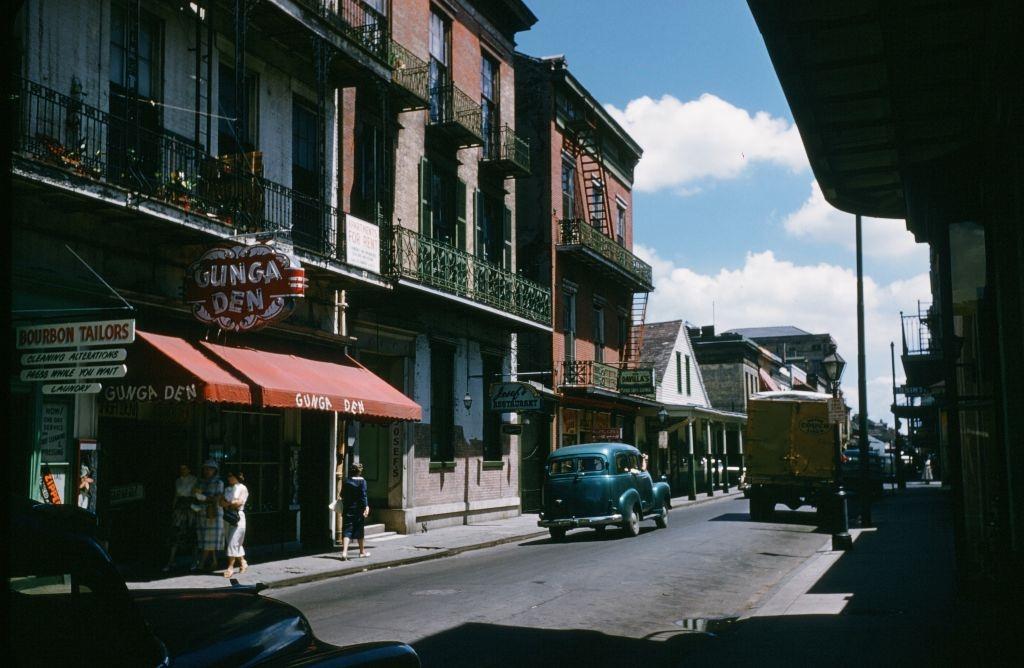
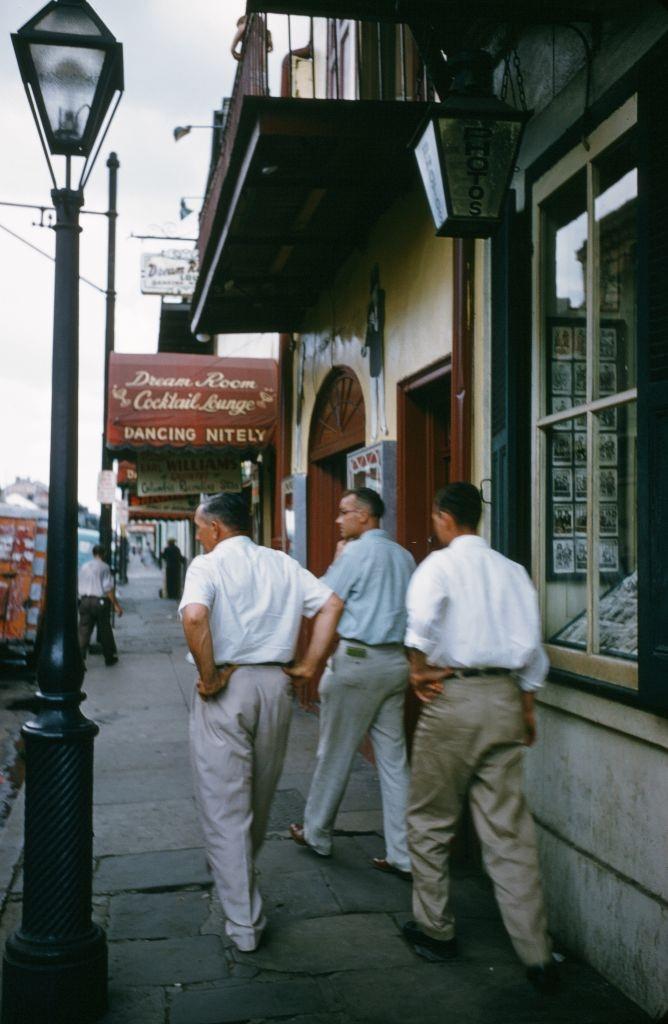
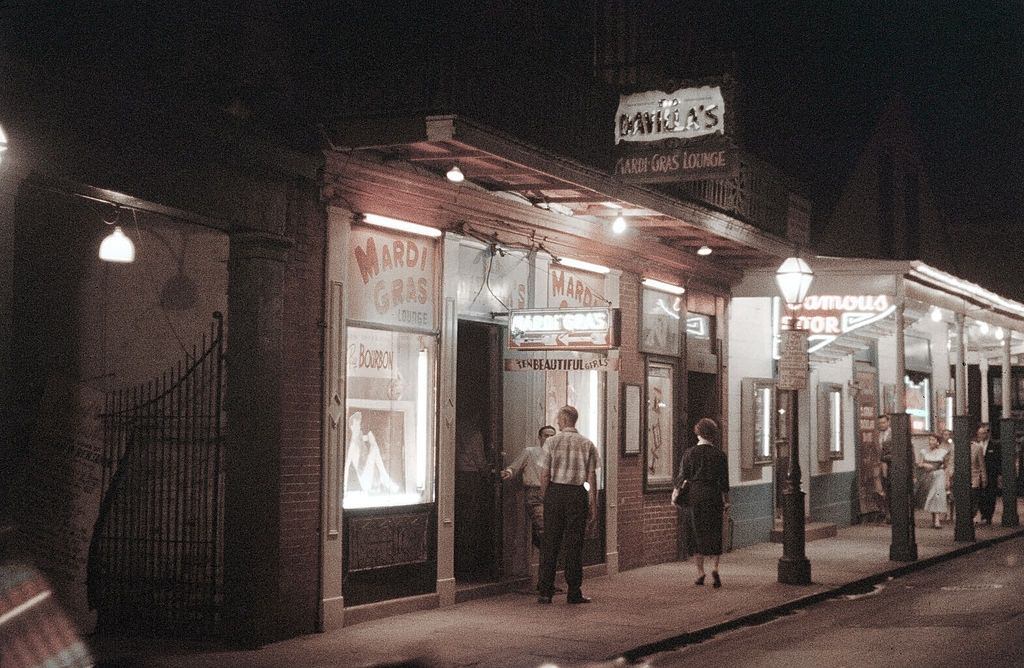
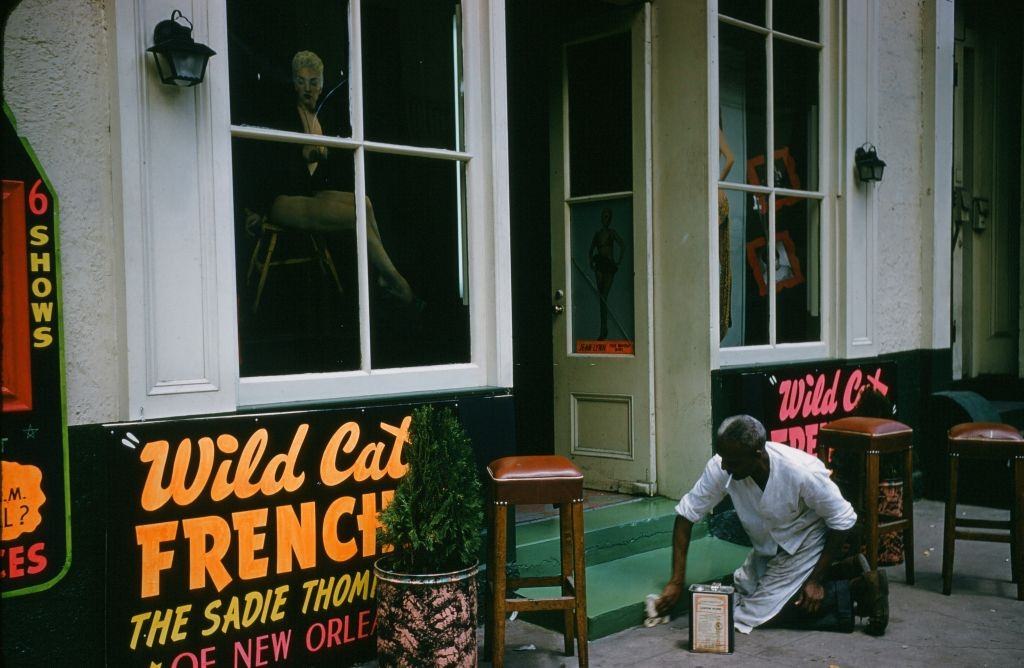
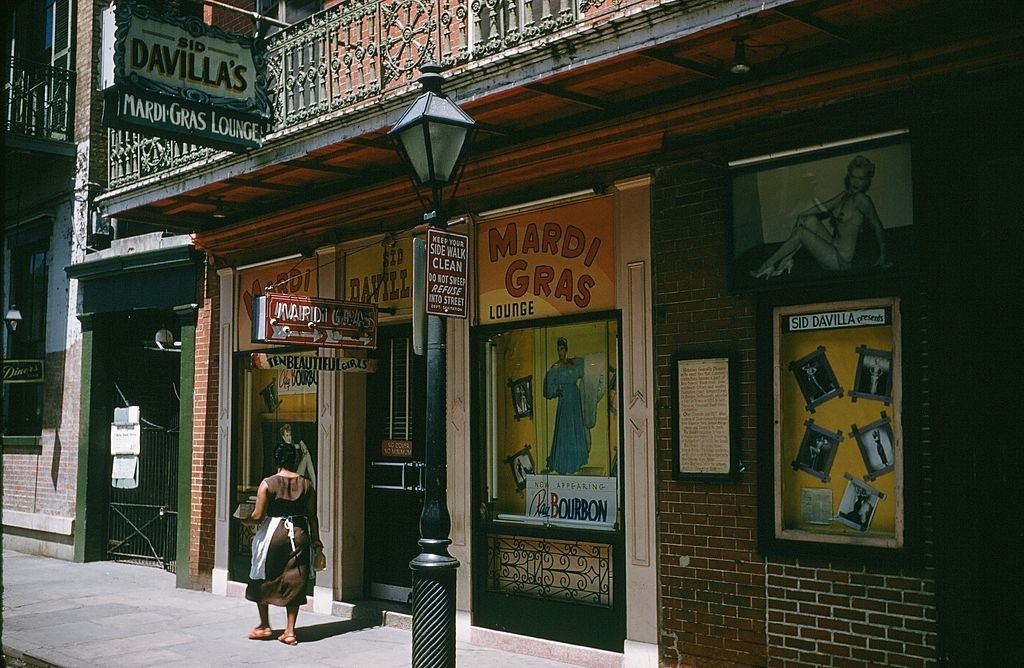
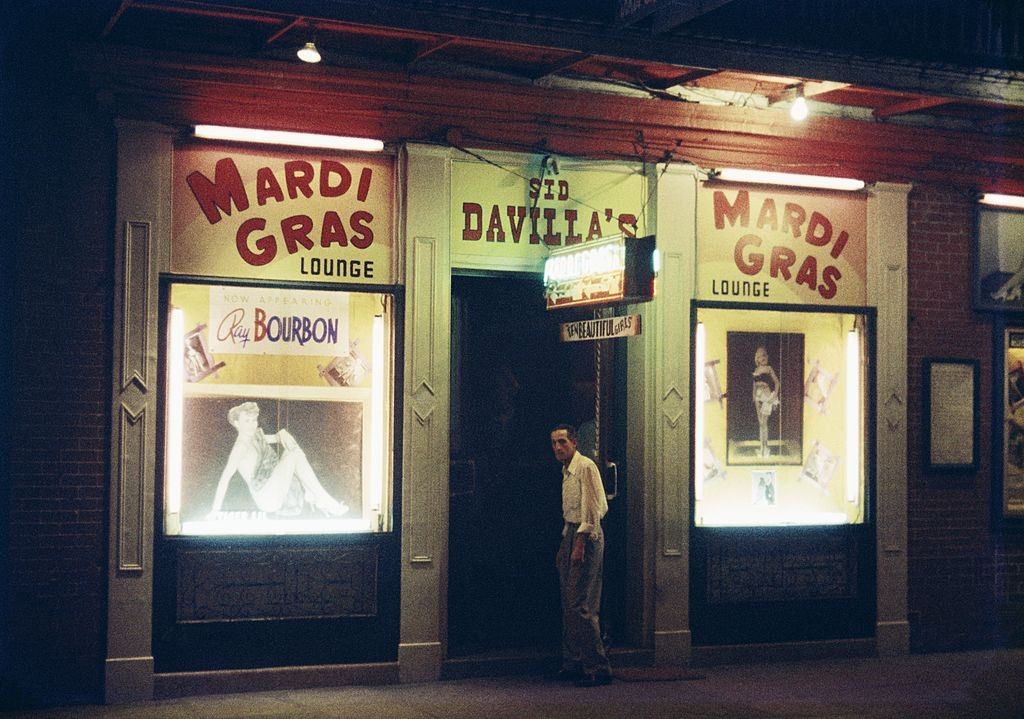
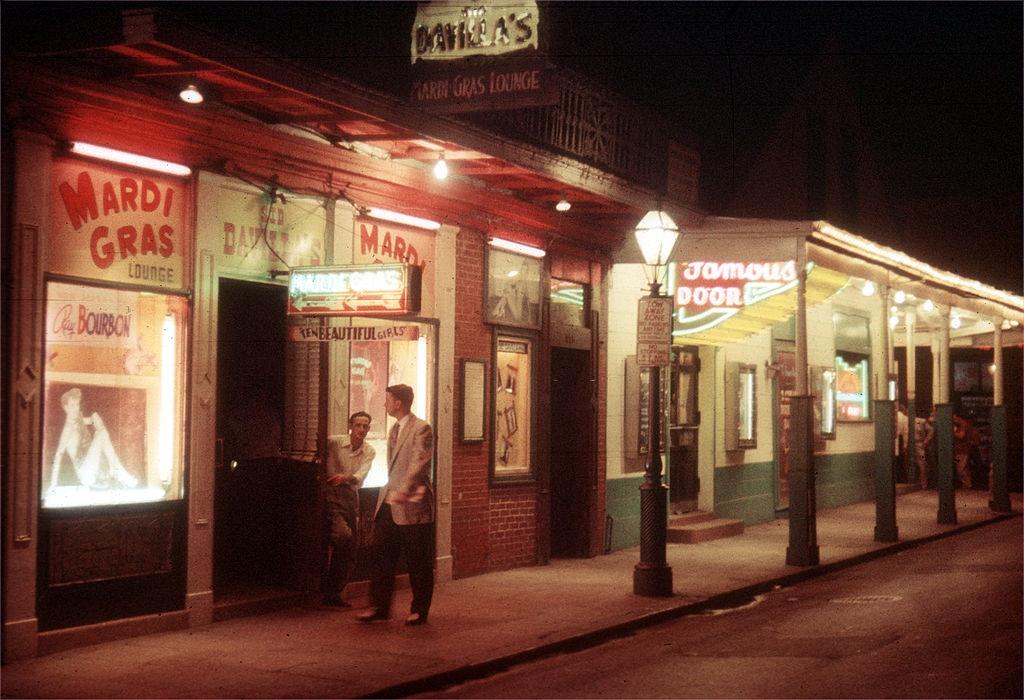
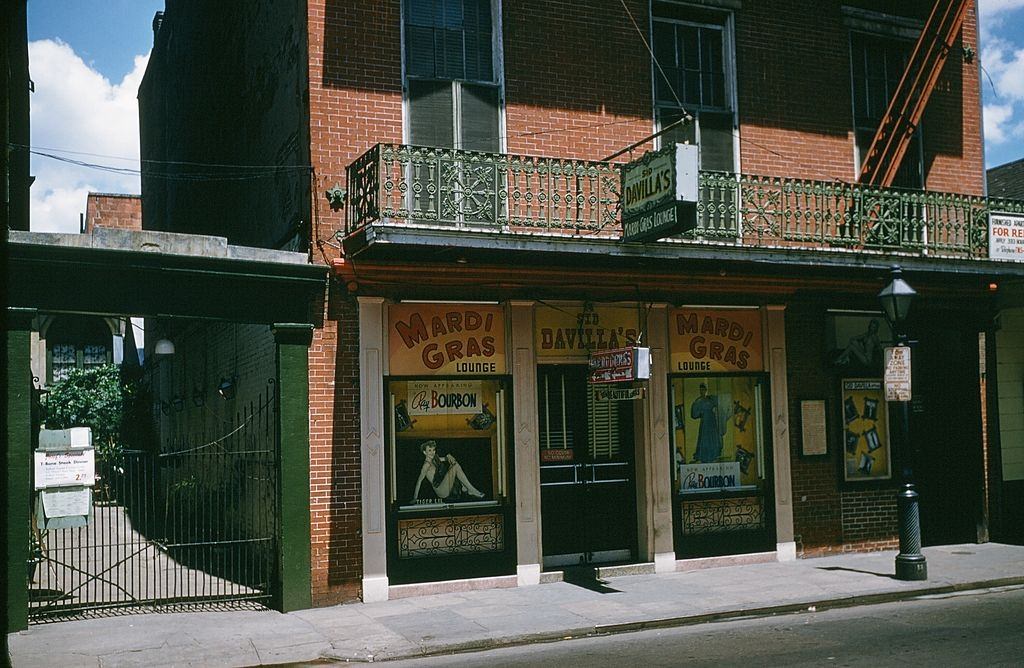
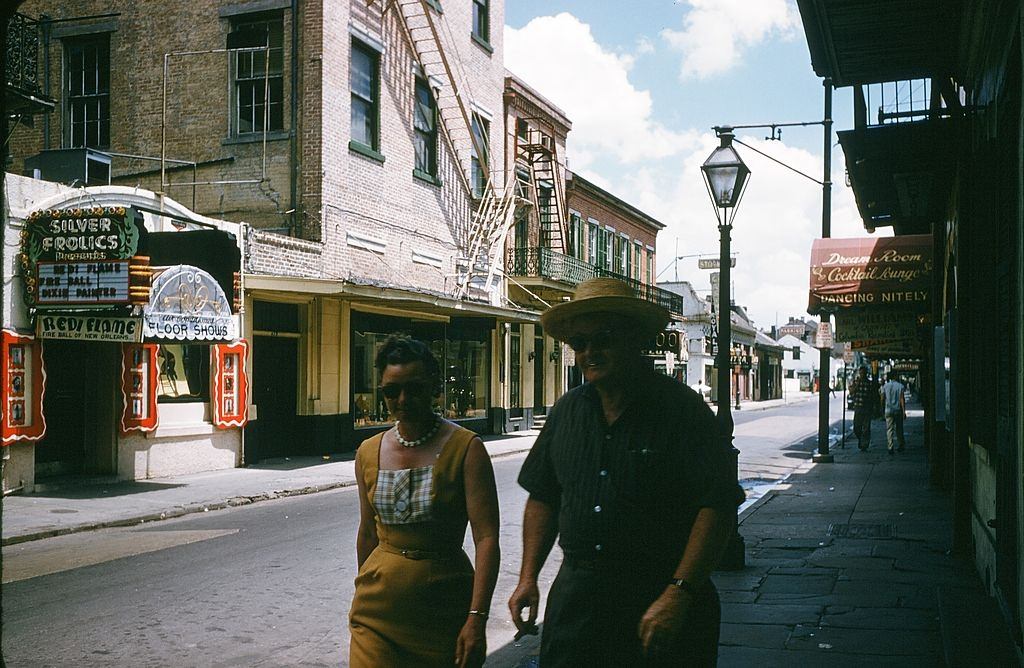
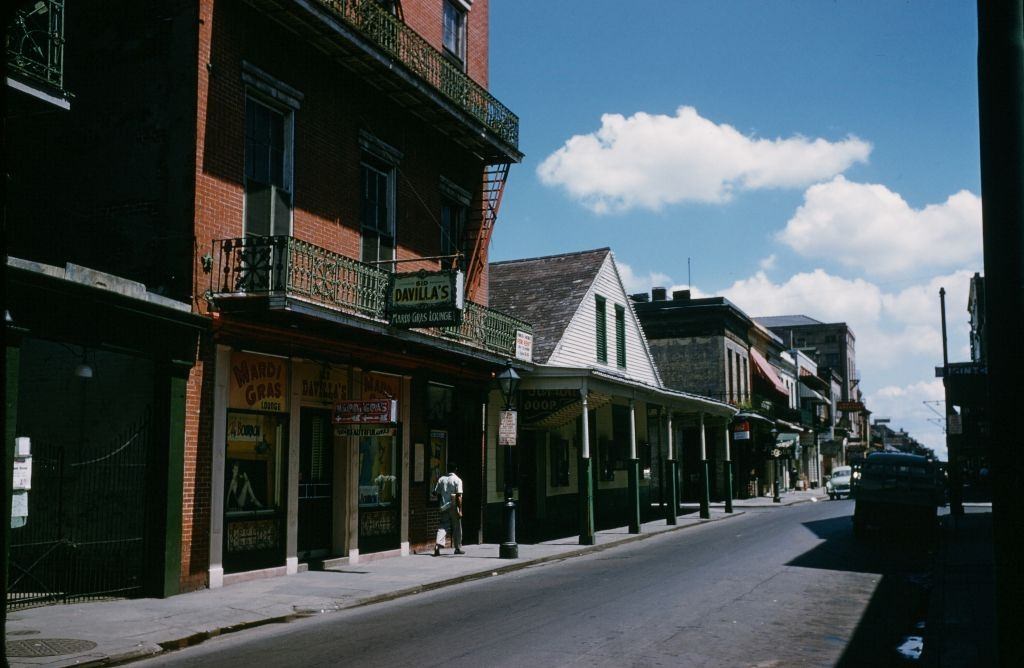
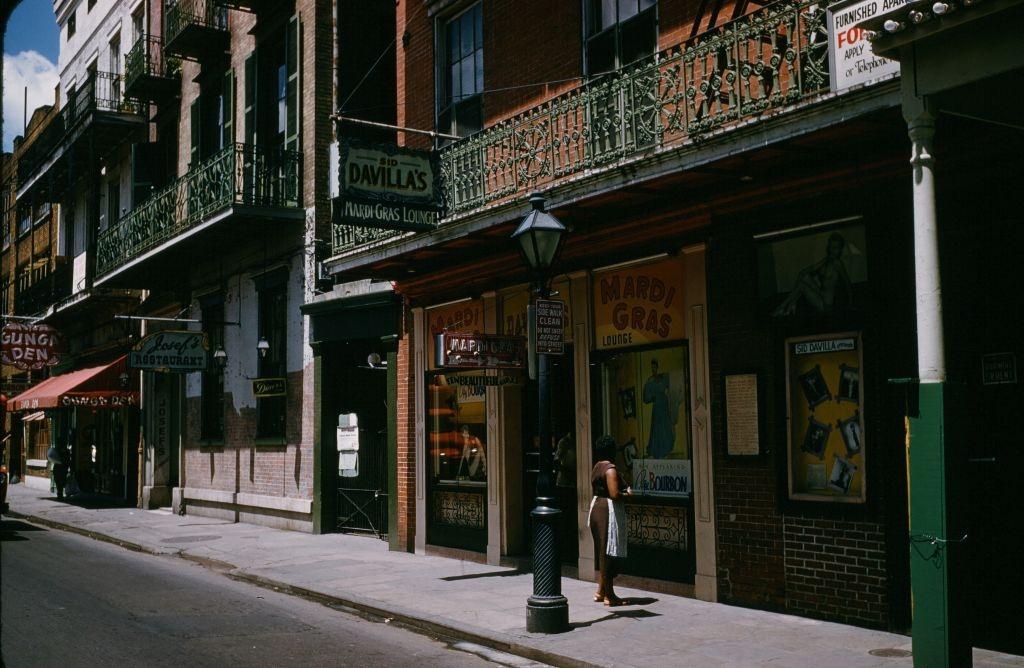
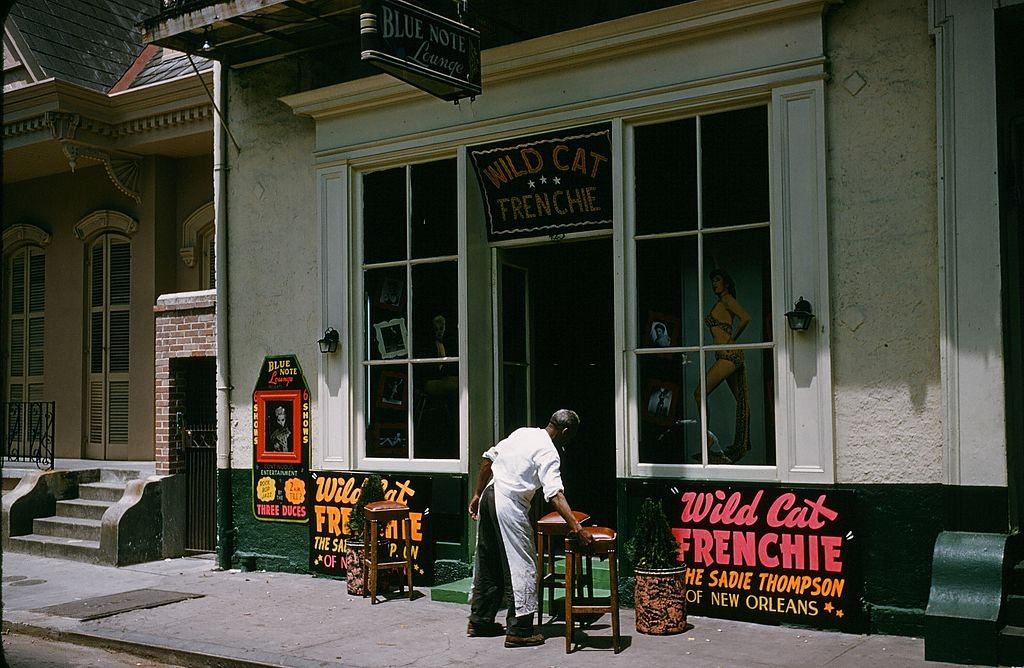
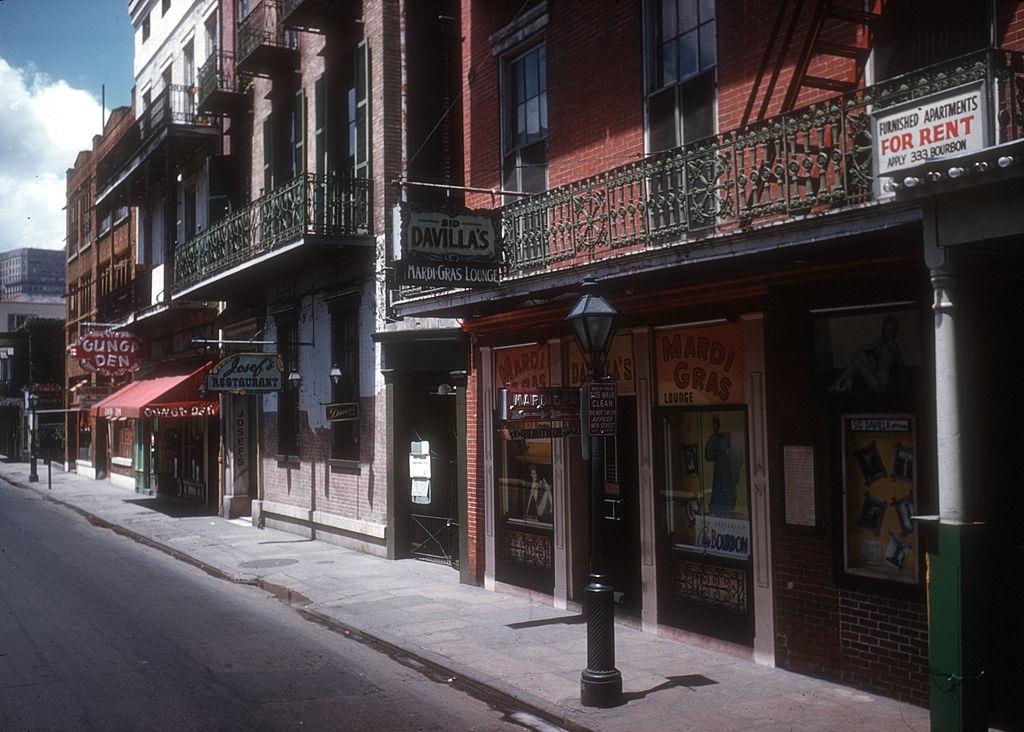
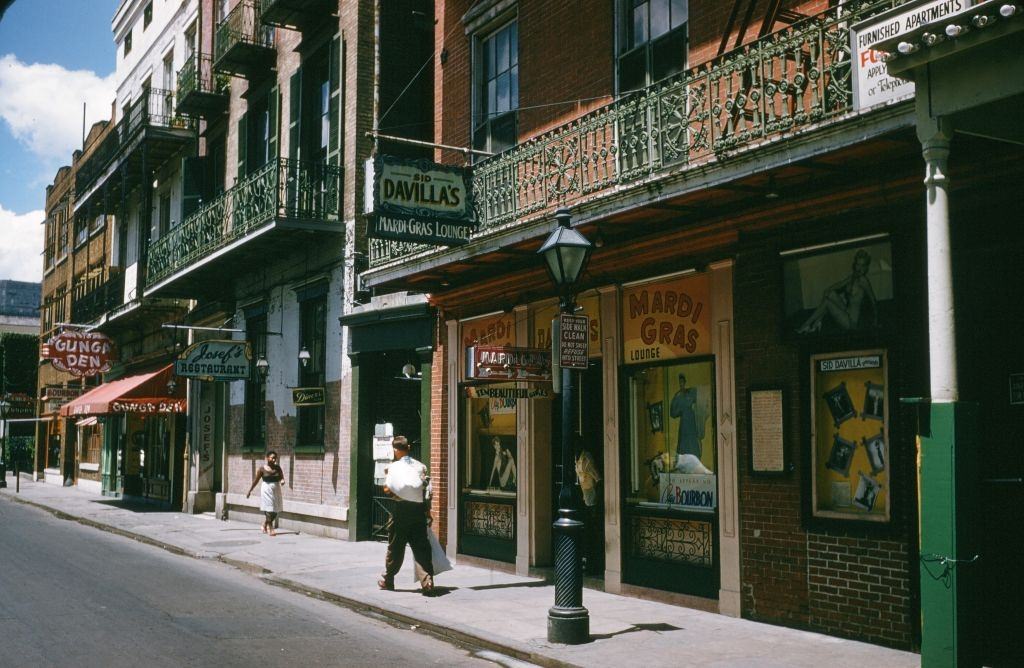
The clubs along Bourbon Street had names that ranged from playful to brazen. The Torch Club advertised performers like “Von Ray — The Texas Tornado.” Sid Davilla’s Mardi Gras Lounge, the Flamingo Club, the Wild Cat Frenchie Bar, the Gunga Den, and the Dream Room Cocktail Bar all competed for the same foot traffic. Signs hung over the sidewalks, stacked on top of each other, each one louder than the last. The block-by-block variety of entertainment was unlike anything else in the American South.
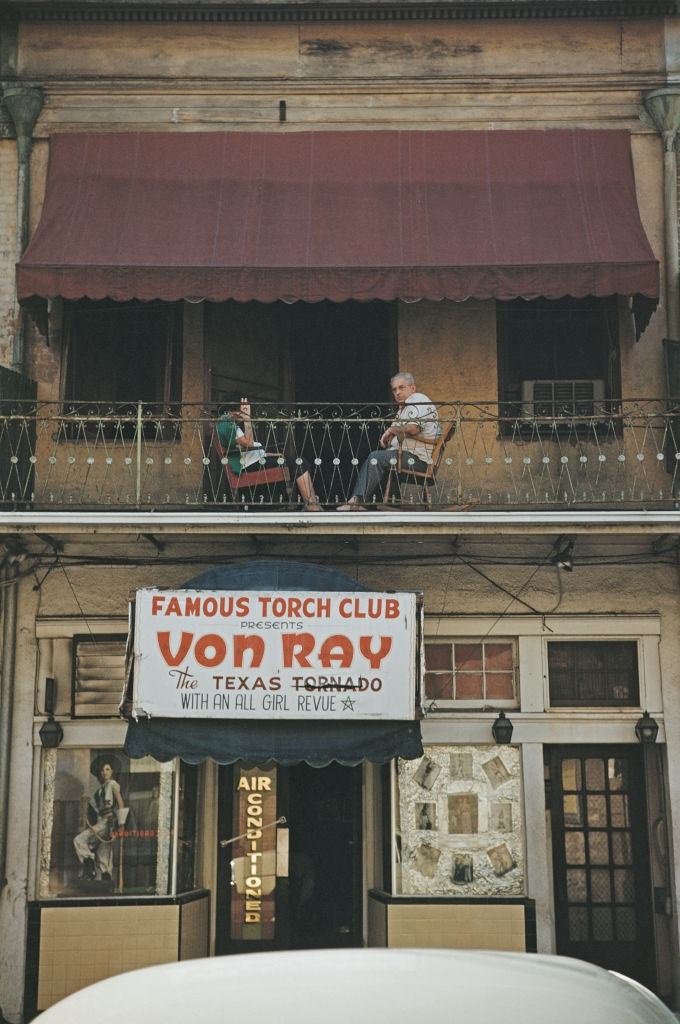
A sign advertising 'Von Ray - The Texas Tornado' outside New Orleans nightclub 'The Torch Club' on Bourbon Street, New Orleans, 1953.
A sign advertising ‘Von Ray – The Texas Tornado’ outside New Orleans nightclub ‘The Torch Club’ on Bourbon Street, New Orleans, 1953.
A view down Bourbon street outside Sid Davillas Mardi Gras Lounge in New Orleans, 1957.
A view down Bourbon street and the Gunga Den in New Orleans, 1957.
A view as men walk down bourbon street toward the Dream Room Cocktail Bar n New Orleans, 1957.
A view down Bourbon street and the Flamingo club in New Orleans, 1957.
Bourbon street, New Orleans, 1955

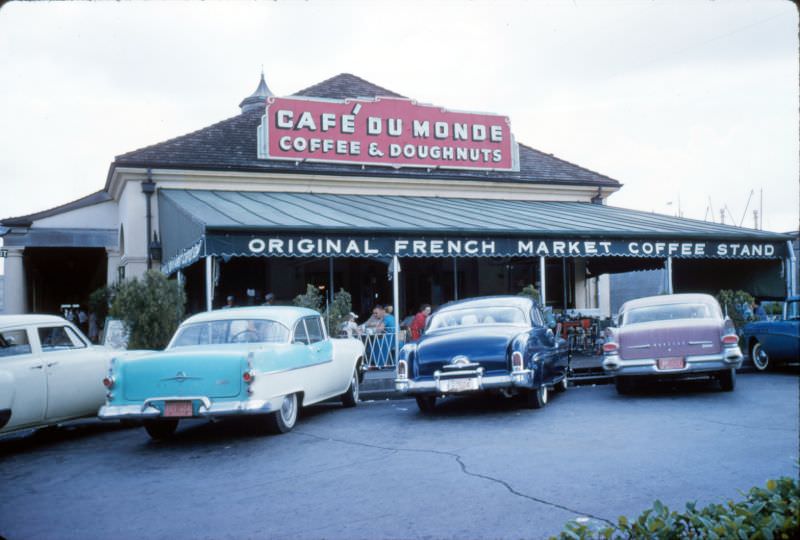
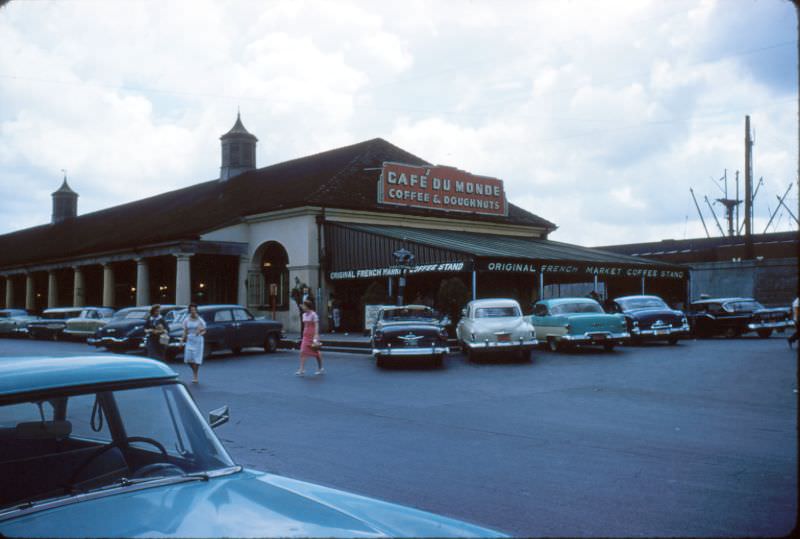
Café du Monde sat at the edge of the French Quarter on Decatur Street, open to the air and open all night. Customers took their coffee and beignets at small tables while the city moved around them. The café had been a fixture of New Orleans life for decades, and in the 1950s it was no different — a place where dock workers, late-night revelers, and tourists all ended up at one point or another.
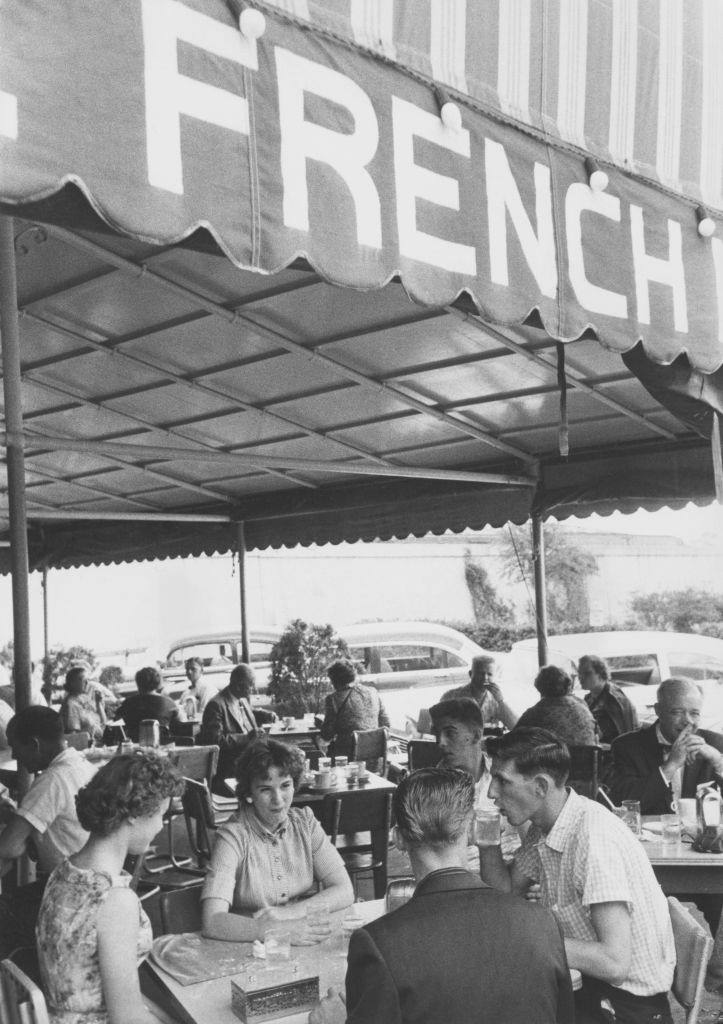
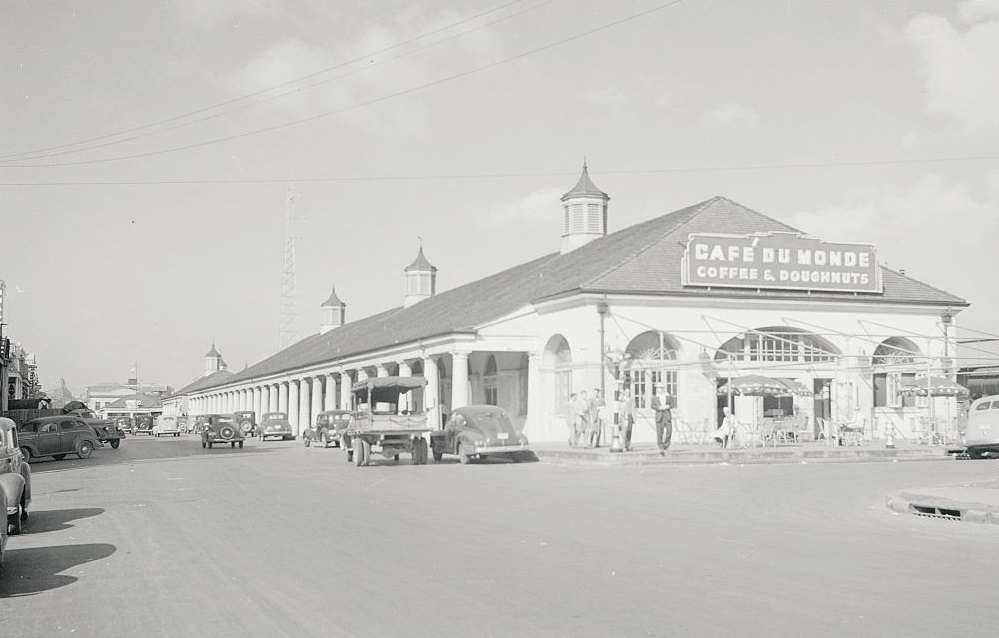
Patrons at the Cafe du Monde, an open-air coffee shop in the French Market, Decatur Street, New Orleans, 1950
Cafe Du Monde Restaurant in French Area of New Orleans, 1950s
Cafe du Monde and parked cars, New Orleans, 1956.

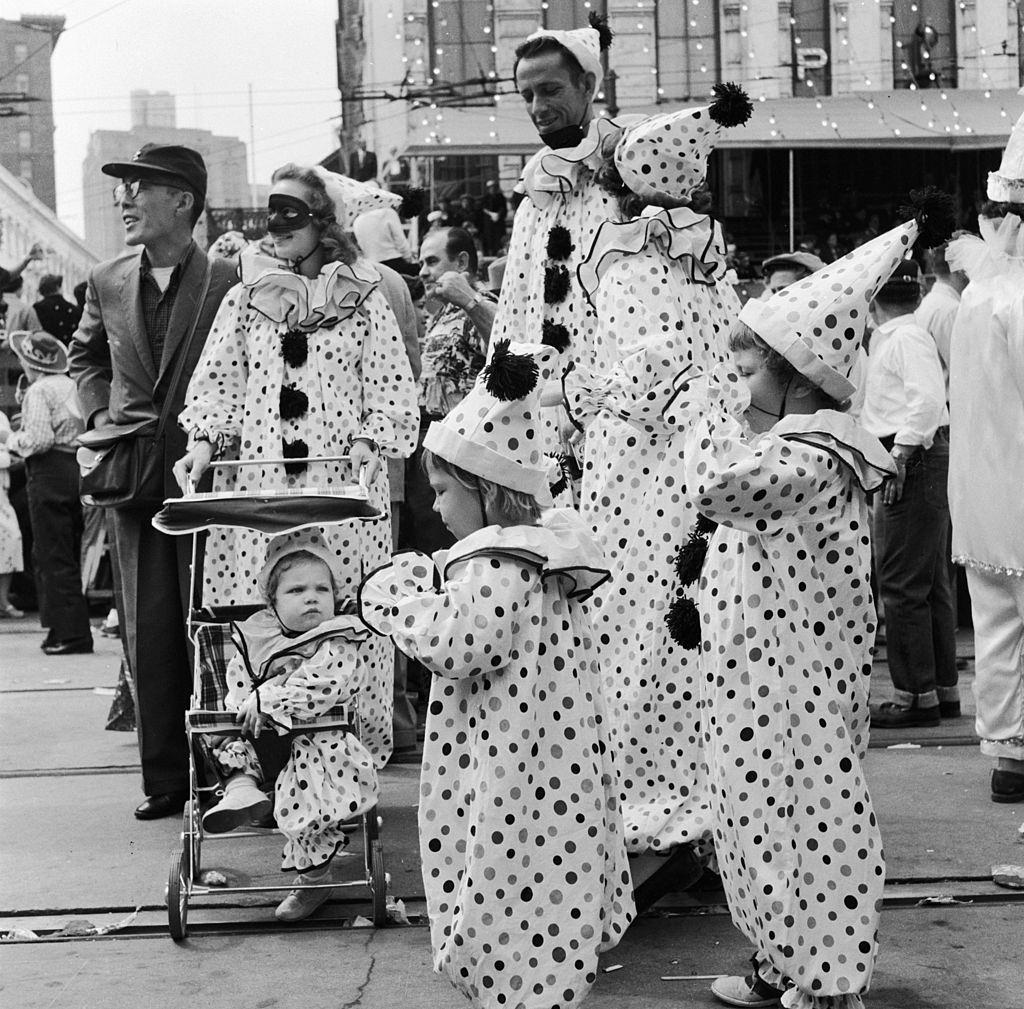
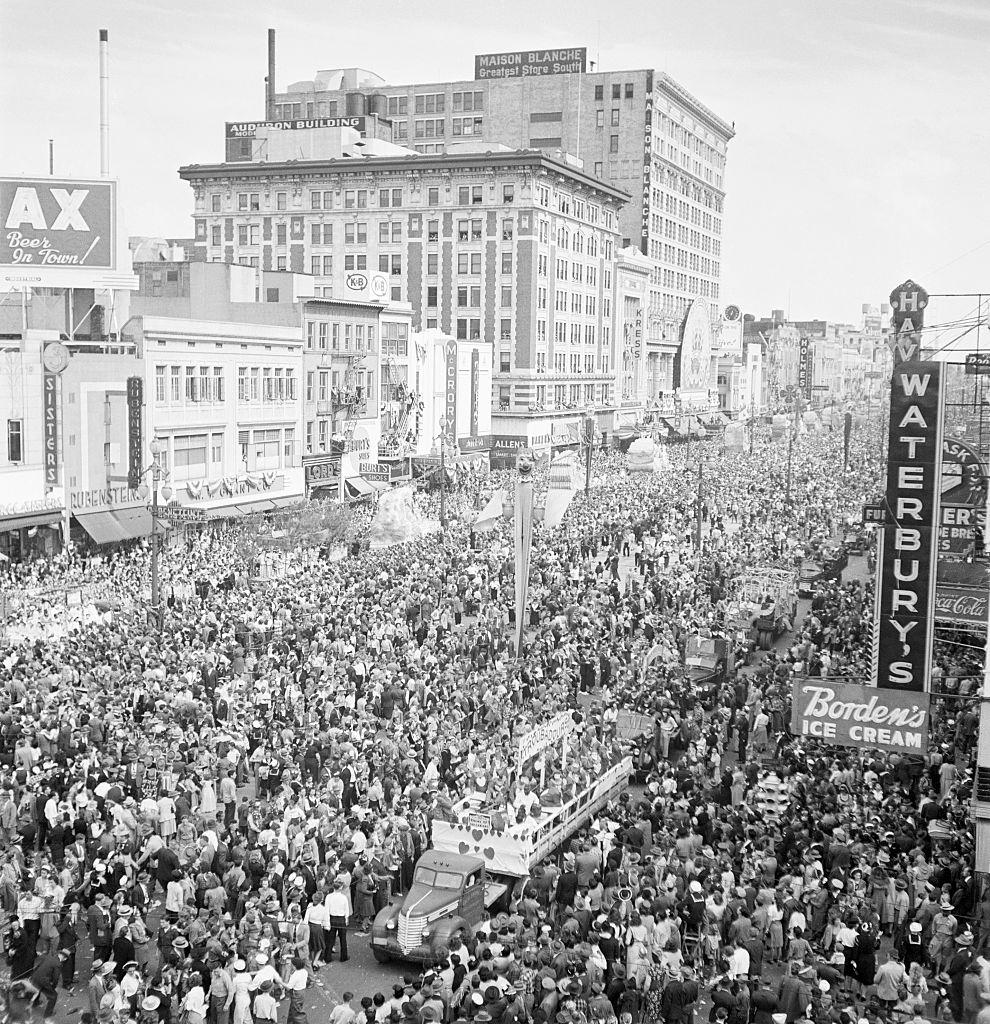
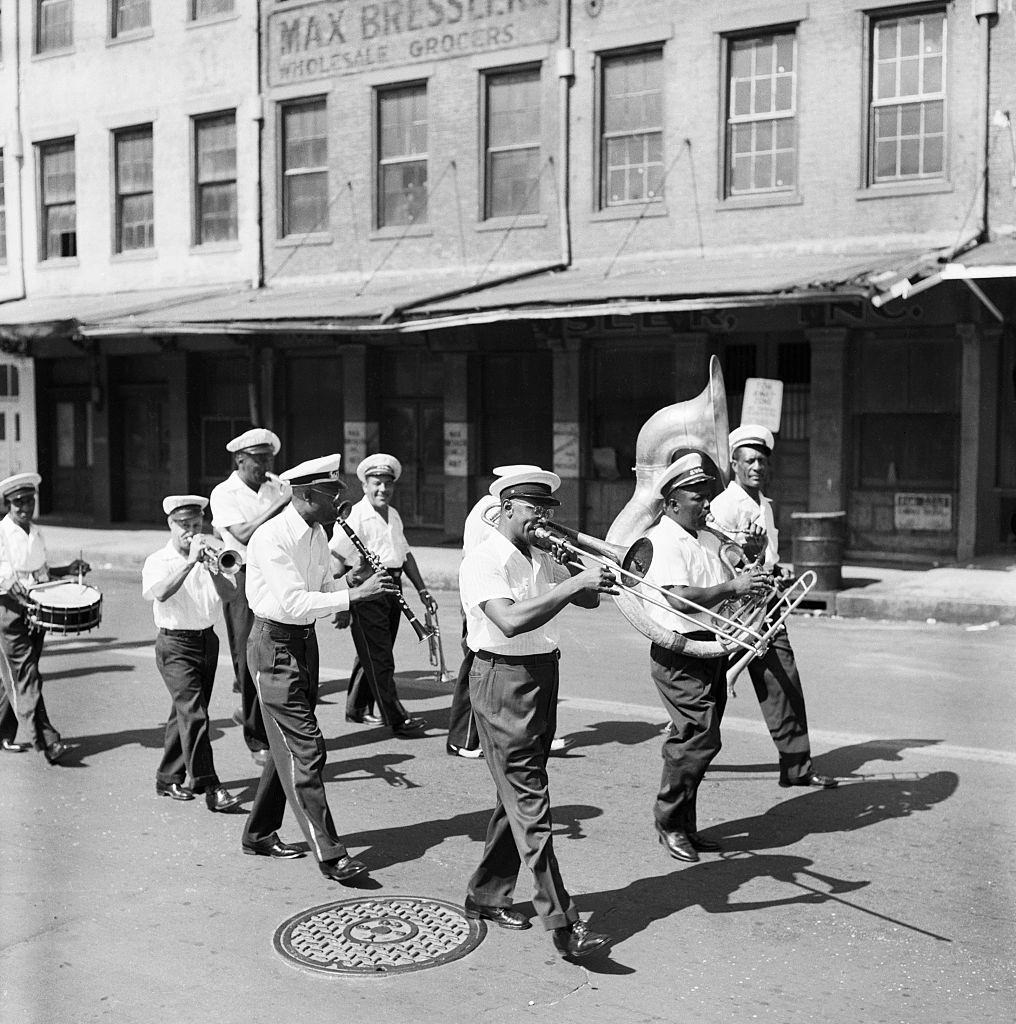
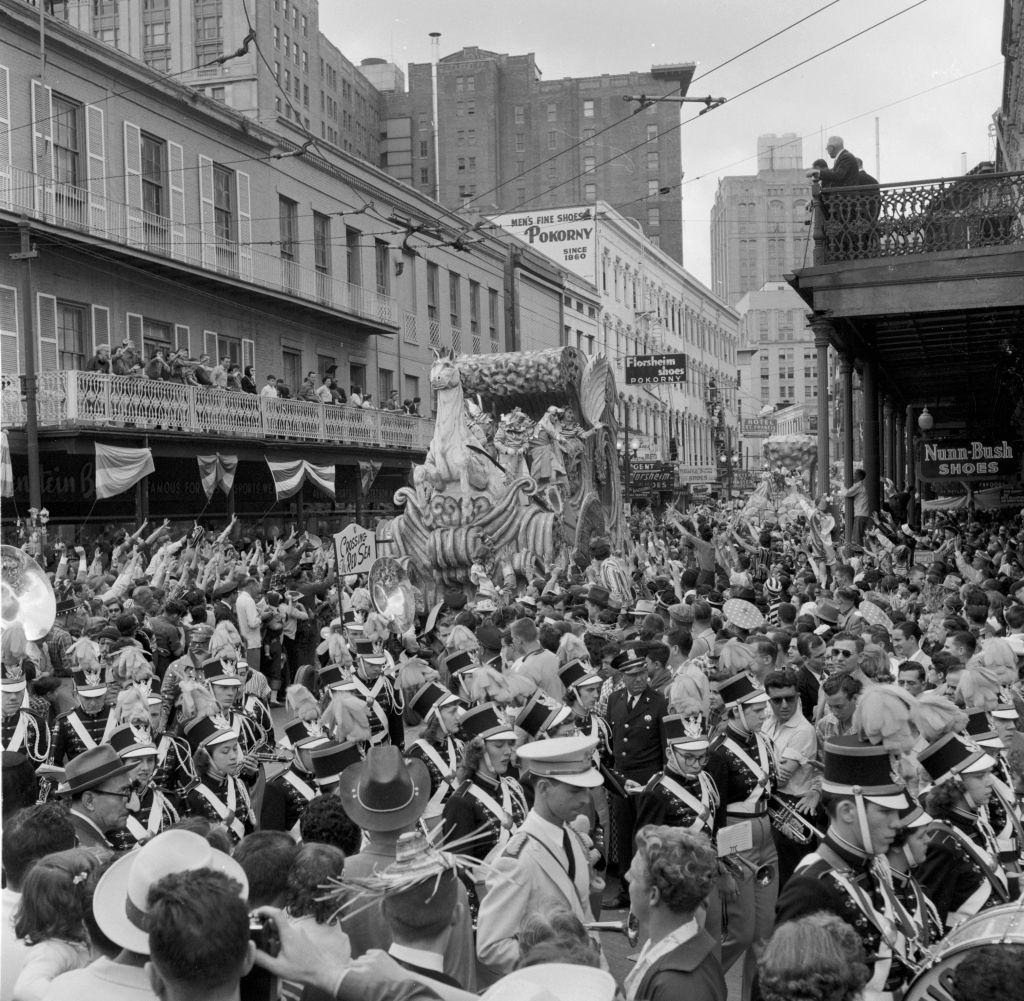
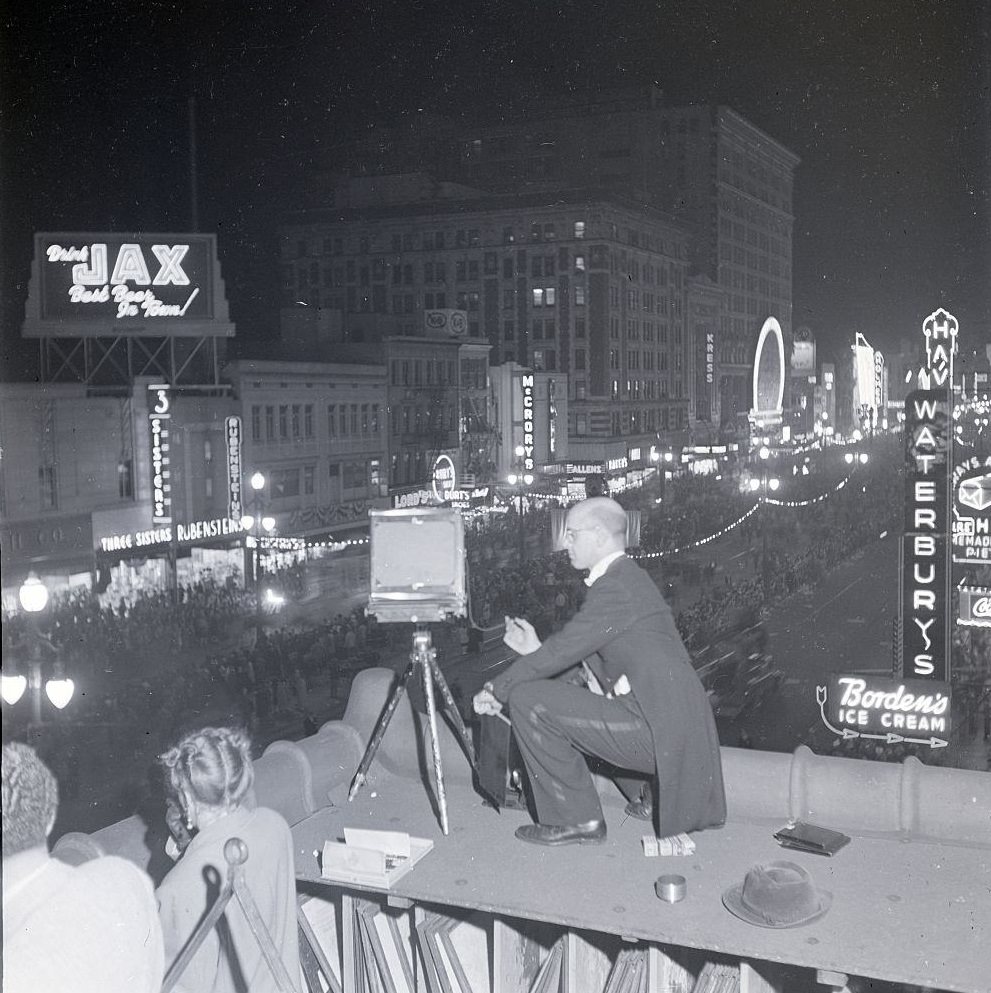
Mardi Gras drew enormous crowds every year. The parades featured elaborate floats, brass bands, and costumed riders throwing beads and trinkets to people packed along the route. One float from the decade depicted Moses parting the Red Sea in full biblical scale. Families dressed in matching costumes — a group of clowns here, Chinese mandarins there — and posed for photographs in the streets. Bourbon Street during Mardi Gras was a spectacle even by that street’s own standards.
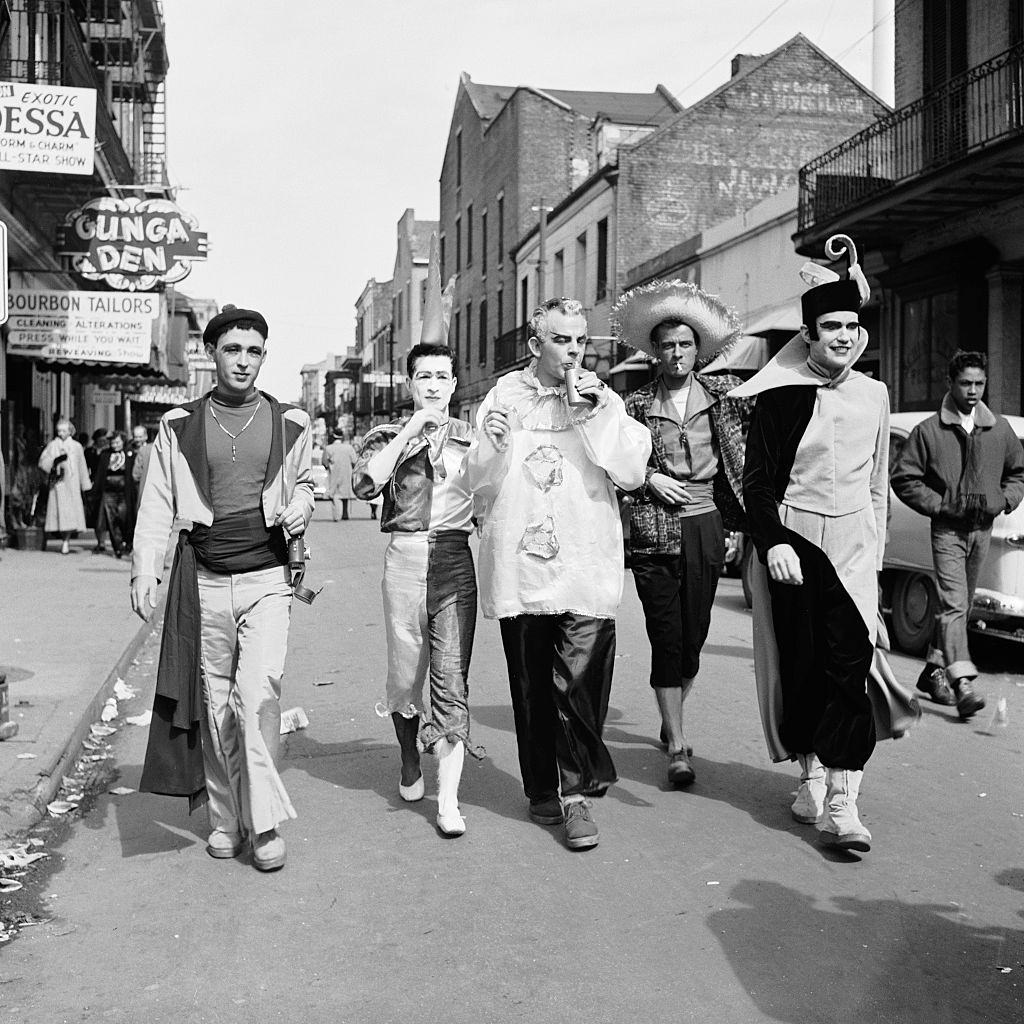
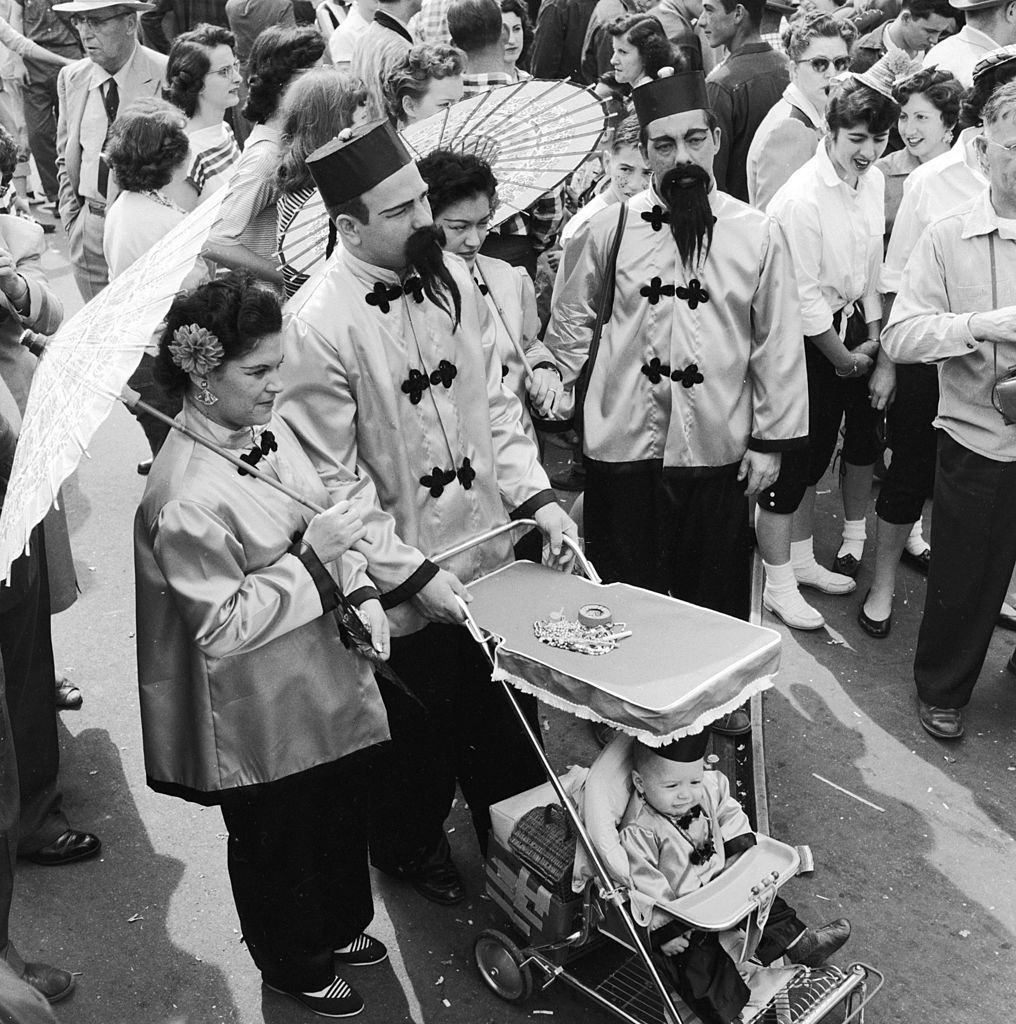
Costumed figures walk down Bourbon Street during Mardi Gras, New Orleans, 1950s.
A family in fancy dress dressed identically as Chinese mandarins at the Mardi Gras, in New Orleans, 1956.
A family in fancy dress dressed identically as clowns at the Mardi Gras, in New Orleans, 1956
Crowds throng a major street in New Orleans for a Mardi Gras parade, New Orleans, 1950
A marching brass band in a New Orleans parade, 1950s
A float at the New Orleans Mardi Gras represents the biblical theme of Moses parting the Red Sea, while a marching band leads the procession.
A photographer snaps a shot of a crowded street during a Mardi Gras celebration, New Orleans, Louisiana, 1950.

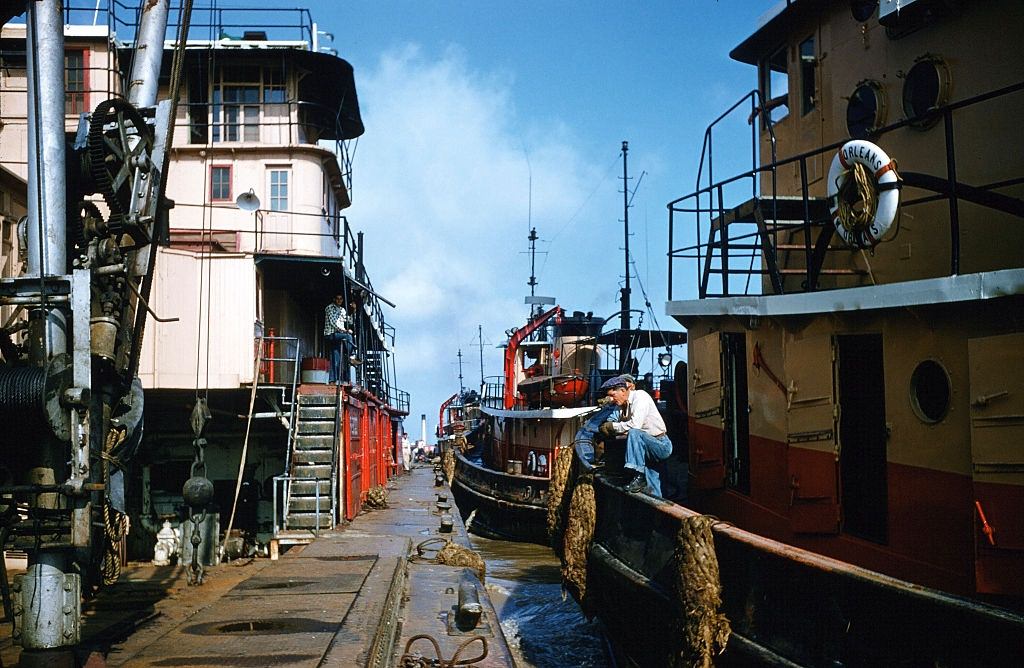
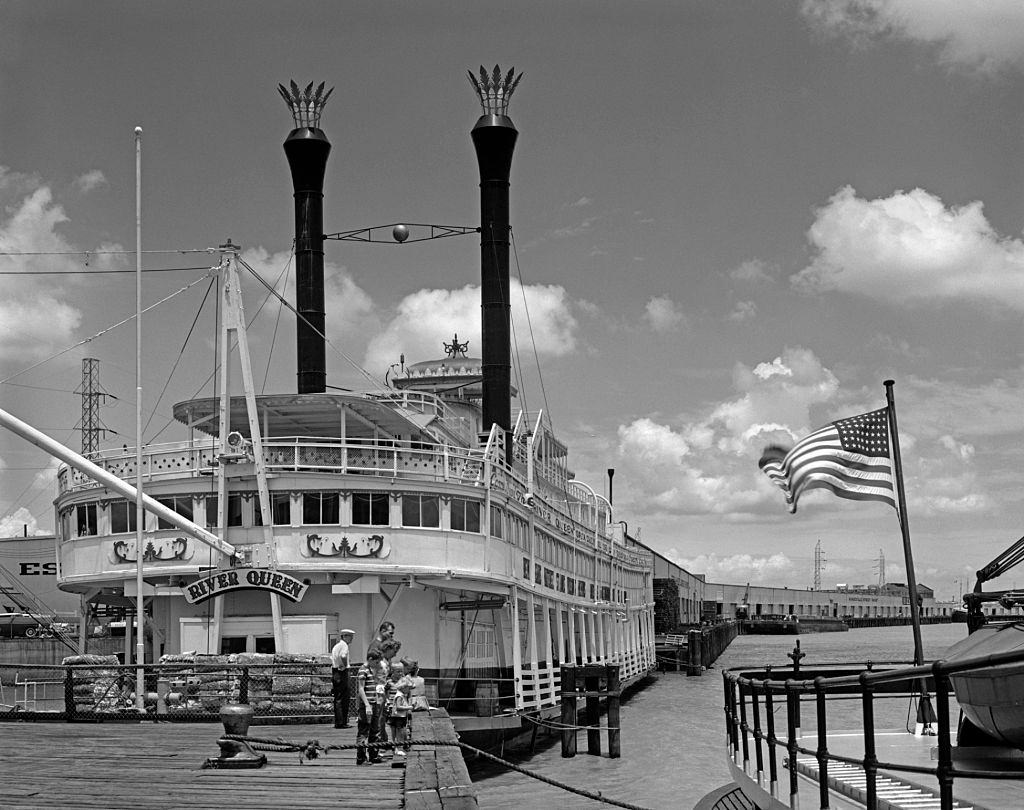
The port of New Orleans was one of the busiest in the country. Freighters and cargo ships loaded and unloaded goods from around the world at its docks. Tugboats like the “Orleans” maneuvered massive vessels through tight waterway turns. The petrochemical industry began moving operations to the region in the 1950s, and the river served as a highway for all of it. The docks connected New Orleans to global trade in ways that few other American cities could match.
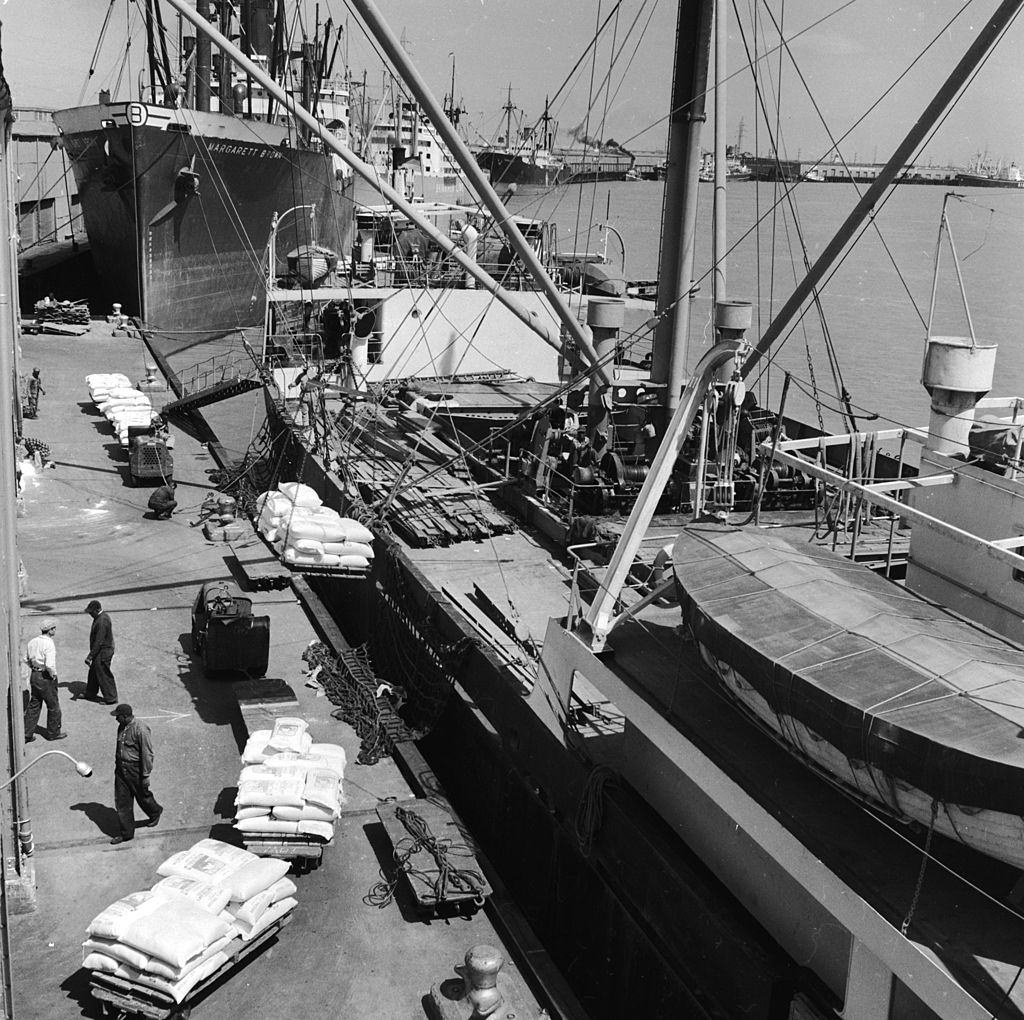
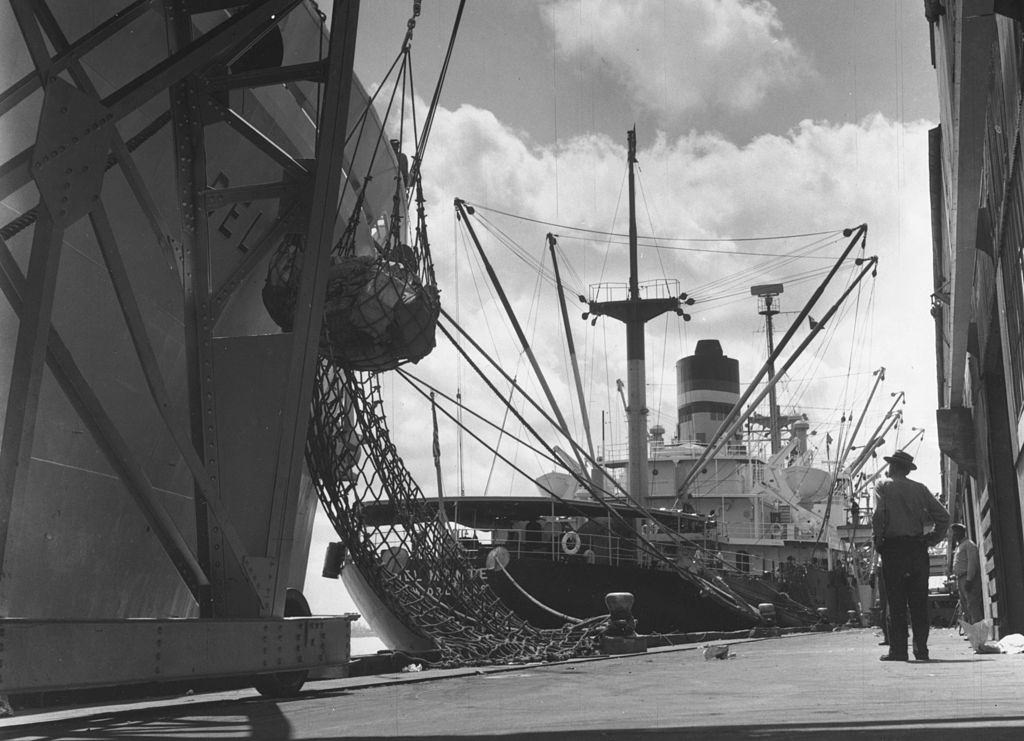
Cargo being loaded onto freight ships in New Orleans dock, 1950.
A freighter ship in the port of New Orleans, 1950.
The tugboat "Orleans" moves into port in New Orleans, 1957.
The tugboat “Orleans” moves into port in New Orleans, 1957.

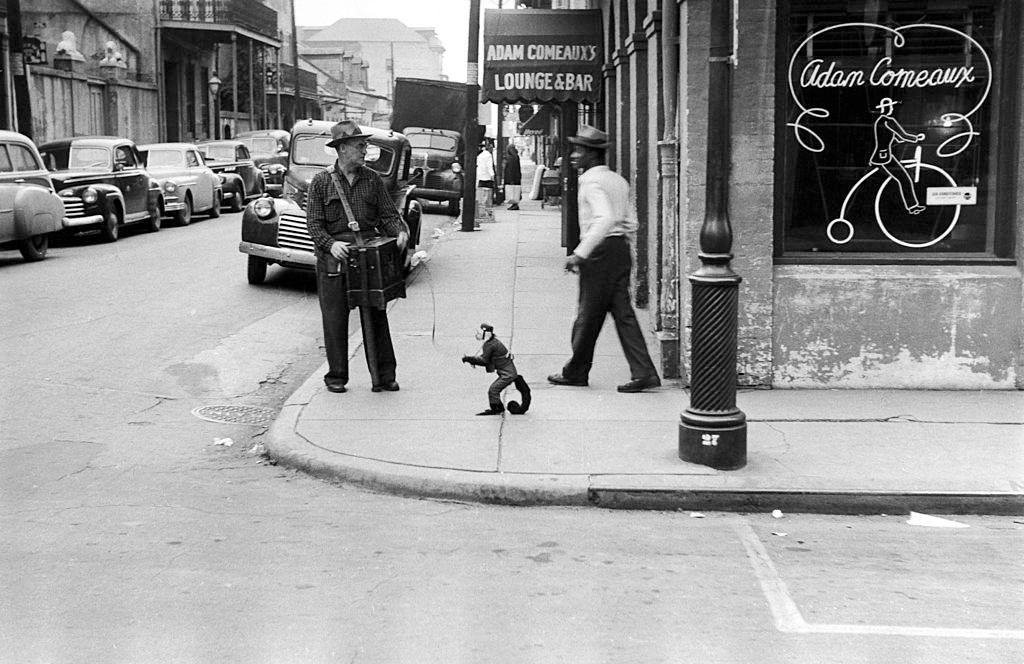
Music was not confined to Bourbon Street clubs. On street corners, in parade routes, and in neighborhood bars across the city, musicians played constantly. Louis Prima performed with his band during this era, representing the broader New Orleans tradition of mixing jazz, swing, and pop into something entirely its own. Street musicians with monkeys drew tips from passersby. Brass bands marched through funerals and celebrations alike. The city treated music less as entertainment and more as a basic part of daily life.
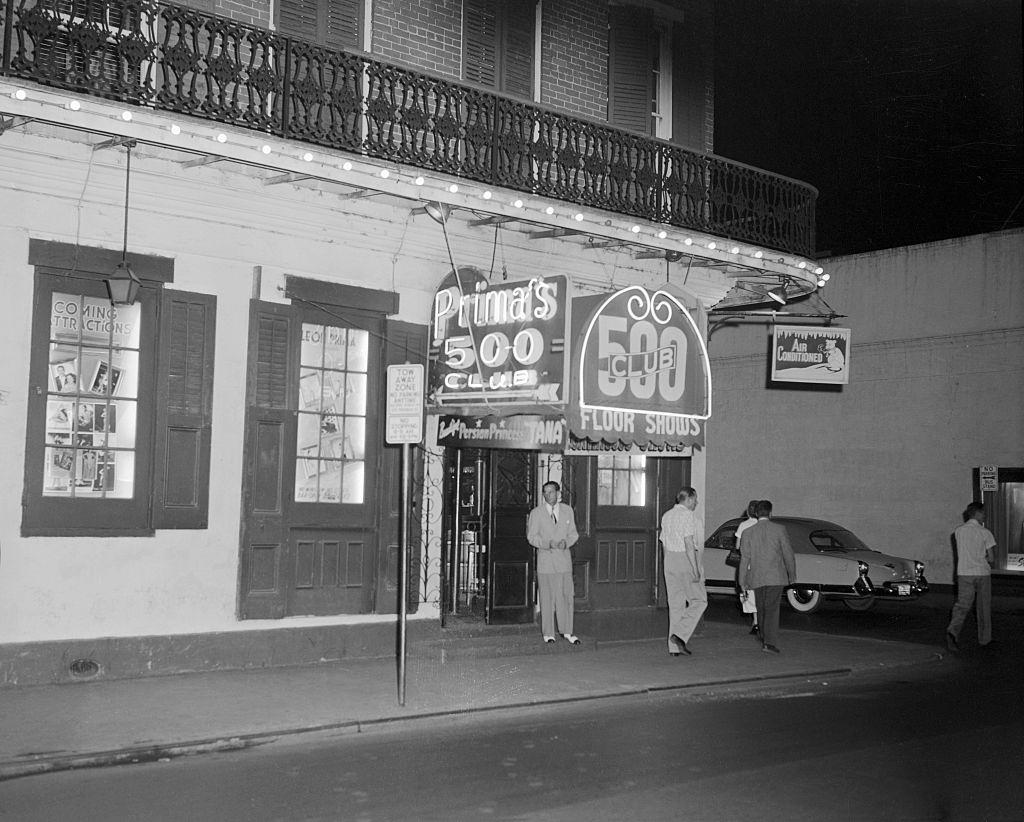
Louis Prima Playing with Band, 1950s
Street Musician With His Monkey, New Orleans, 1953
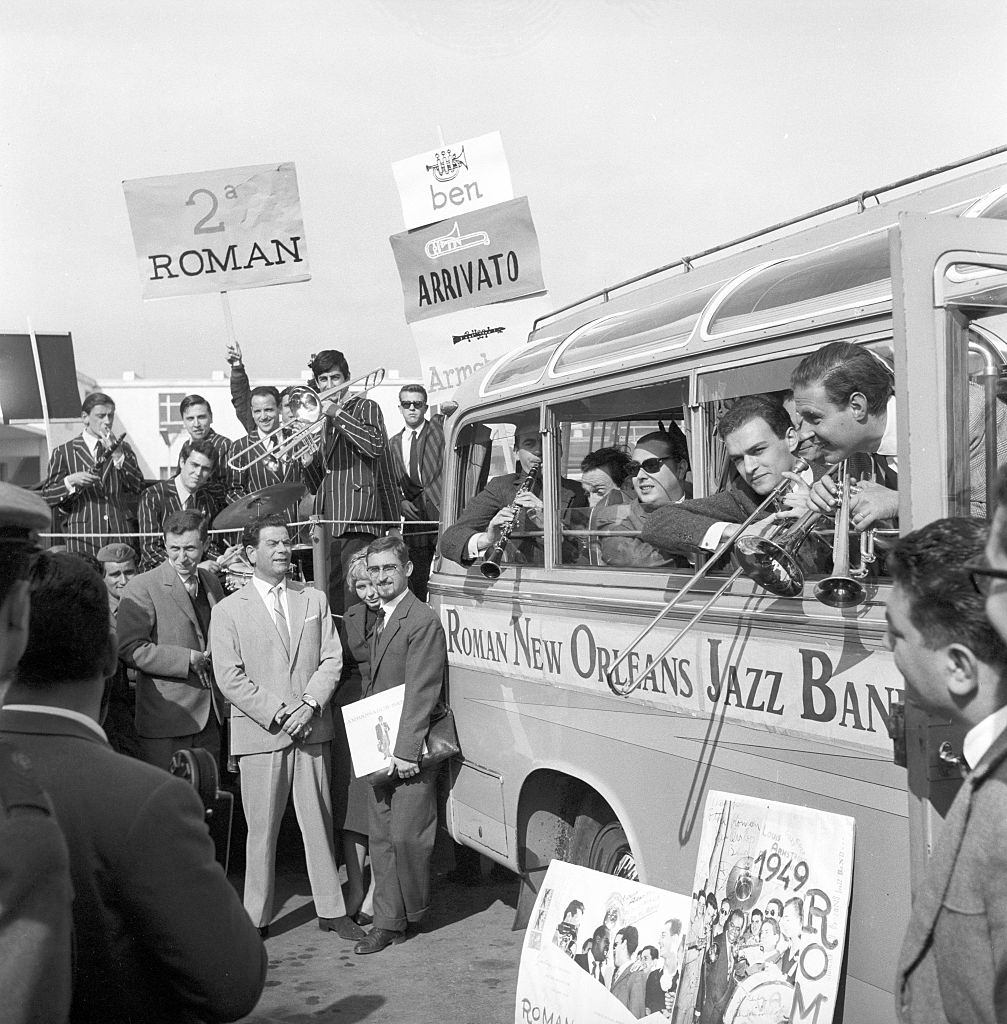
The Roman New Orleans Jazz Band on a truck adorned with welcoming signs receiving the American musician Louis Armstrong arrived at the Ciampino Airport.

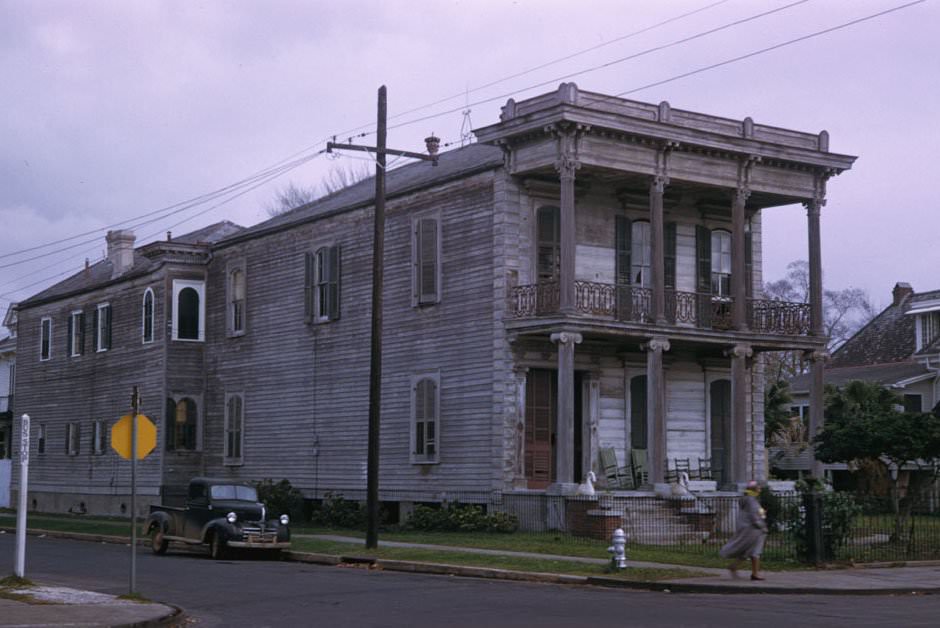
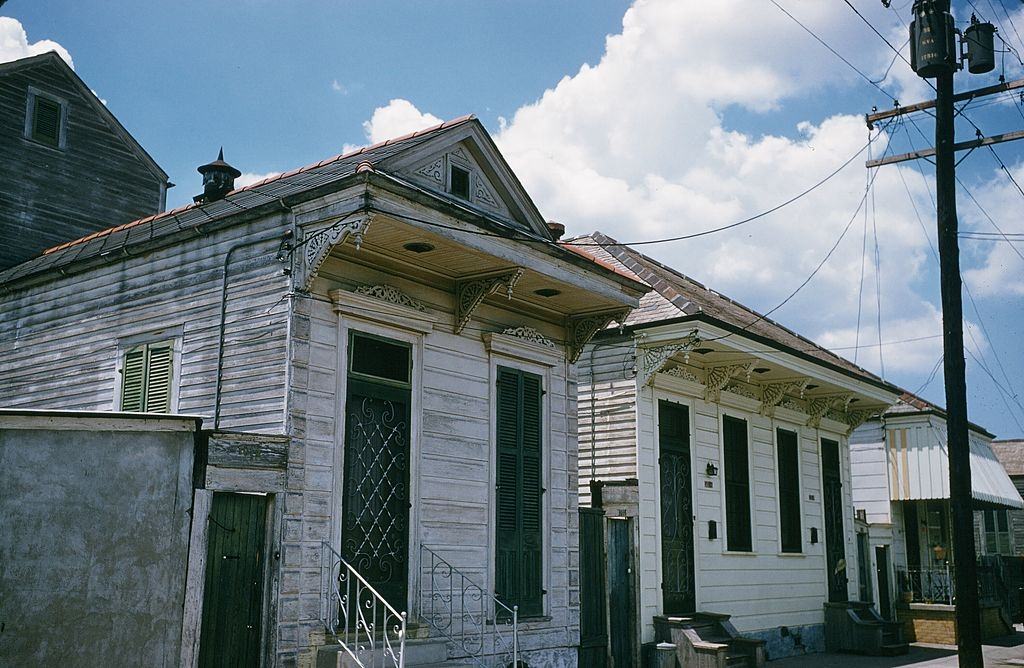
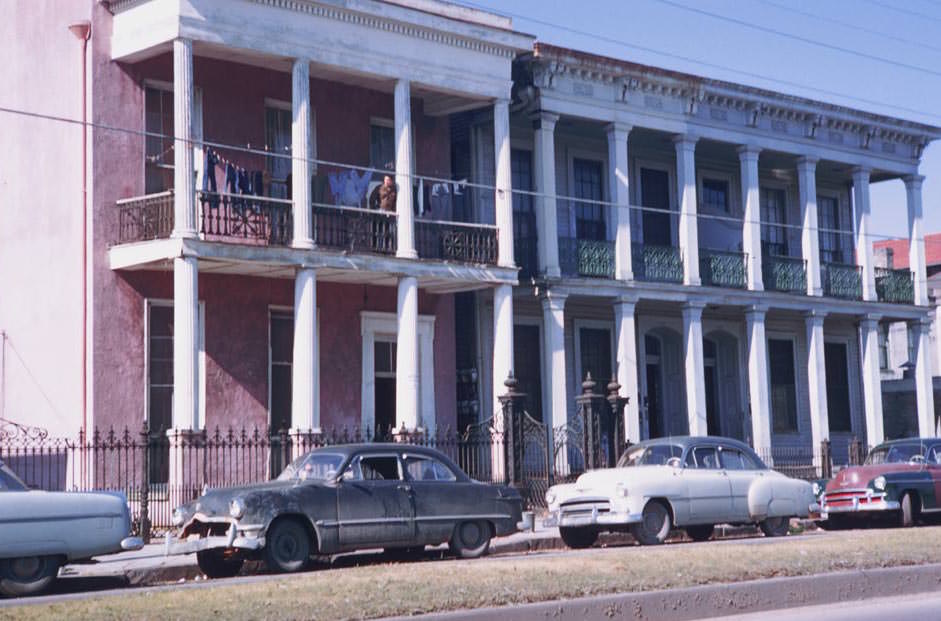
Residential New Orleans in the 1950s showed sharp contrasts. Tree-lined streets in uptown neighborhoods featured large, well-kept homes with high columns and deep porches. The Bayou district had its own character — modest wooden houses raised on piers, their yards touching the edges of slow-moving water. Esplanade Avenue retained its antebellum grandeur in places, with two-story frame houses set back behind tall pillars.
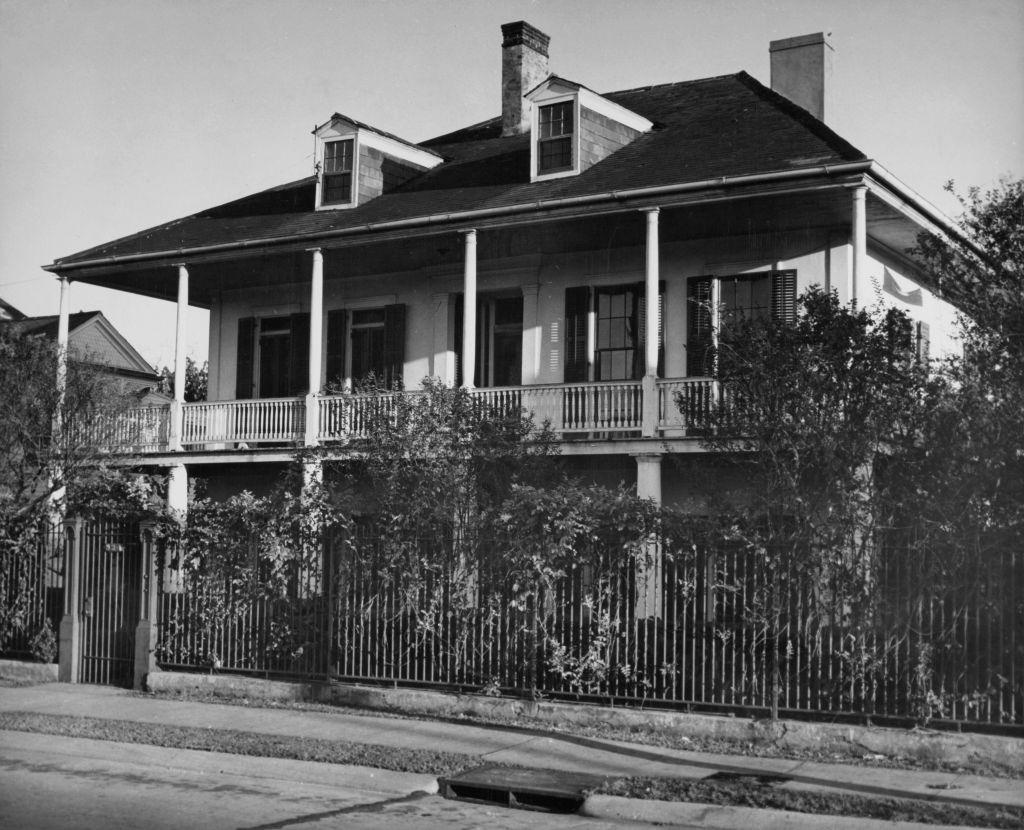
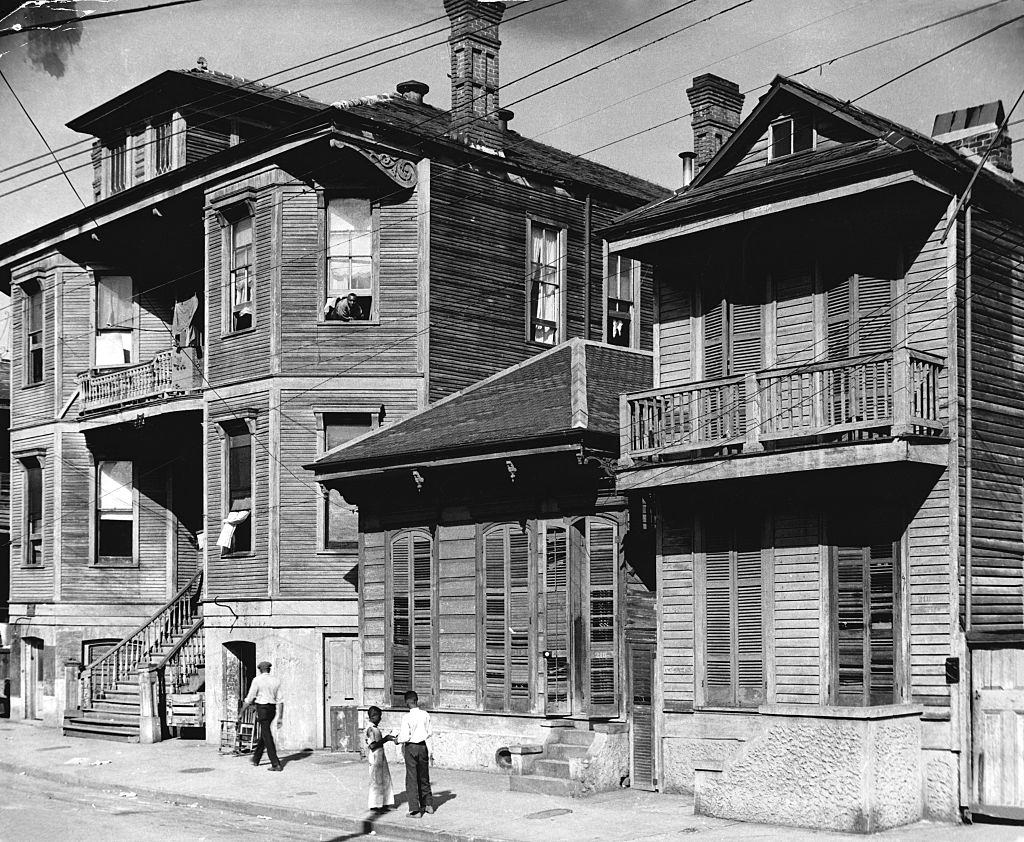
Typical house of the Bayou district Bayou Street, New Orleans , 1955.
A street in New Orleans lined with timber houses, New Orleans, 1950s
Deep, 2-story frame house unpainted, with high pillars on Esplanade Avenue at Miro Street, New Orleans, 1951.

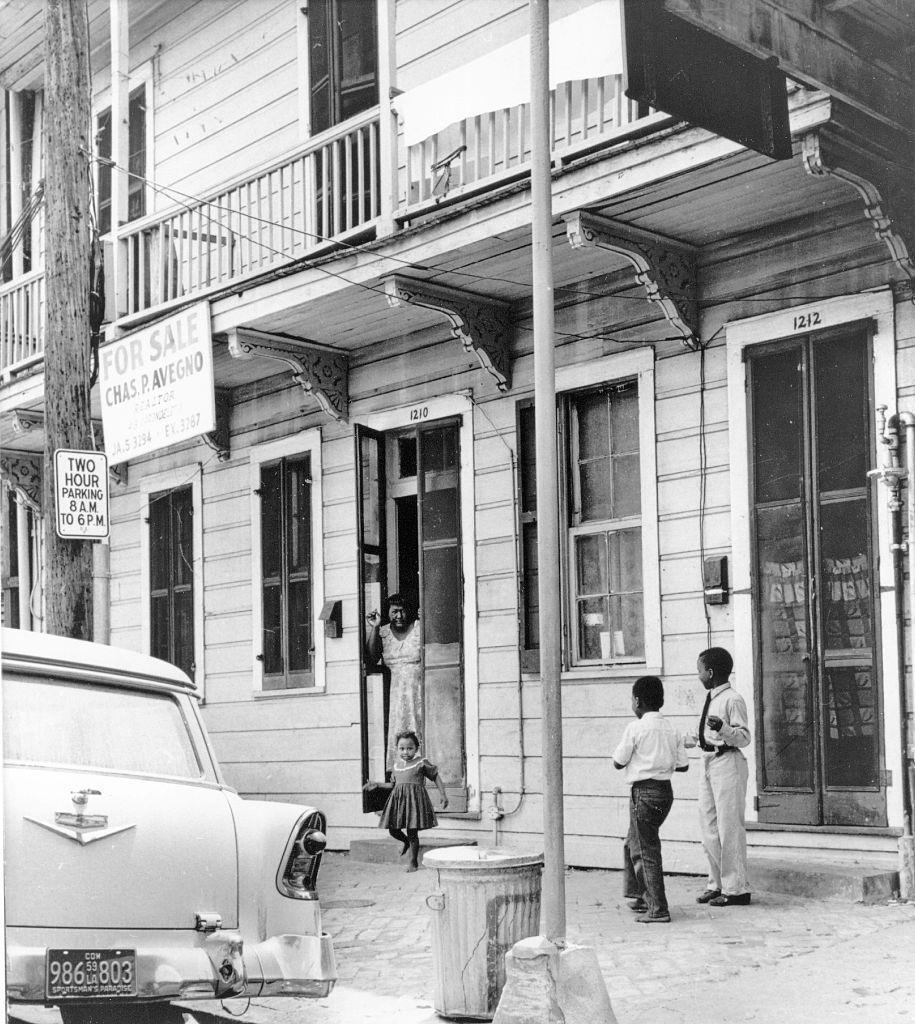
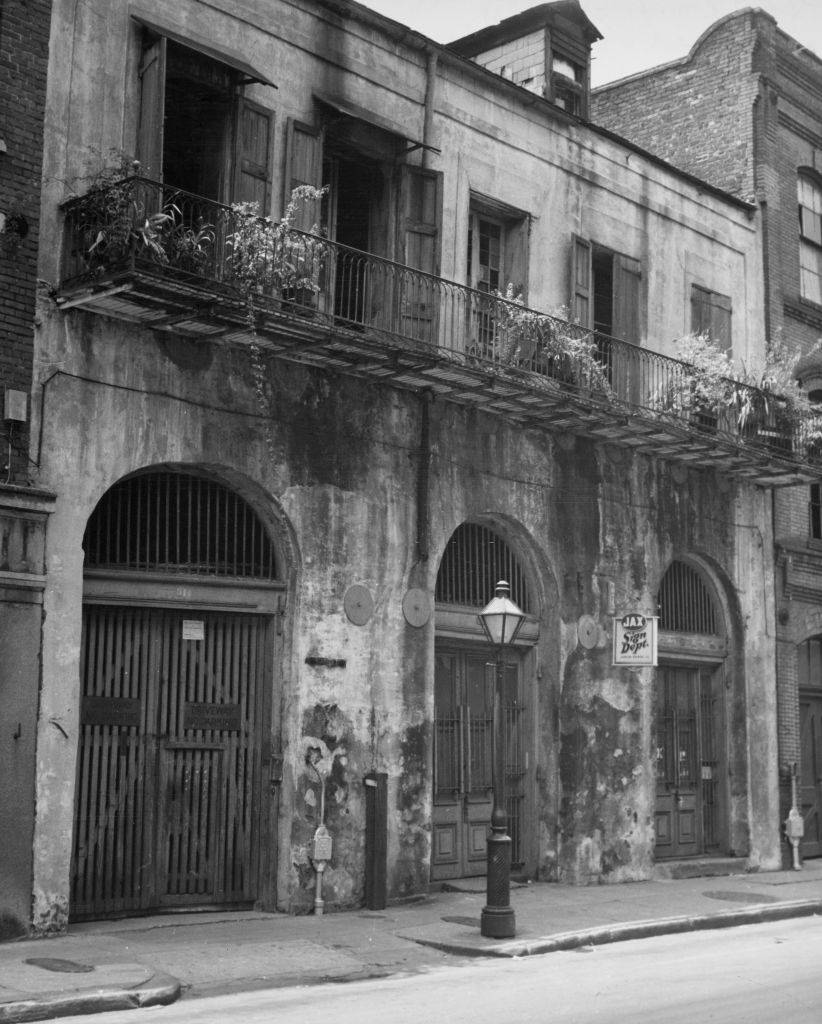
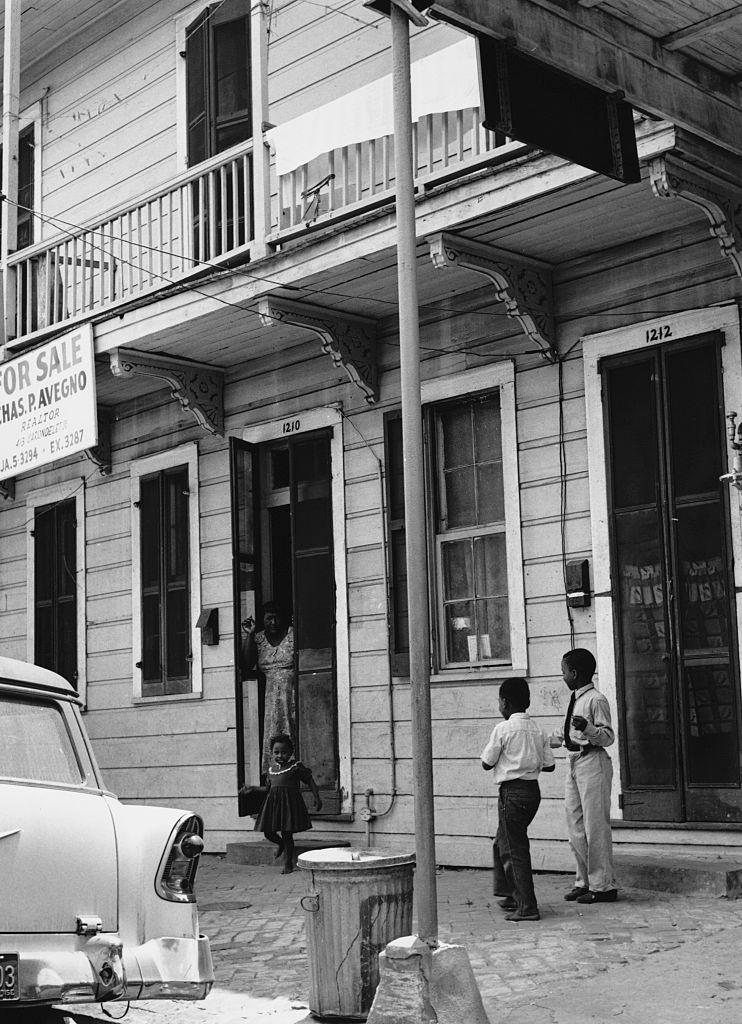
Other parts of the city told a different story. Bienville Street, which sat adjacent to the Iberville public housing project and across Basin Street from the French Quarter, showed the older fabric of the former Storyville district — rows of houses that had fallen into varying states of use and disrepair. Some blocks on Bienville Street and elsewhere had homes that were boarded up entirely by 1957, their facades intact but their interiors long emptied.
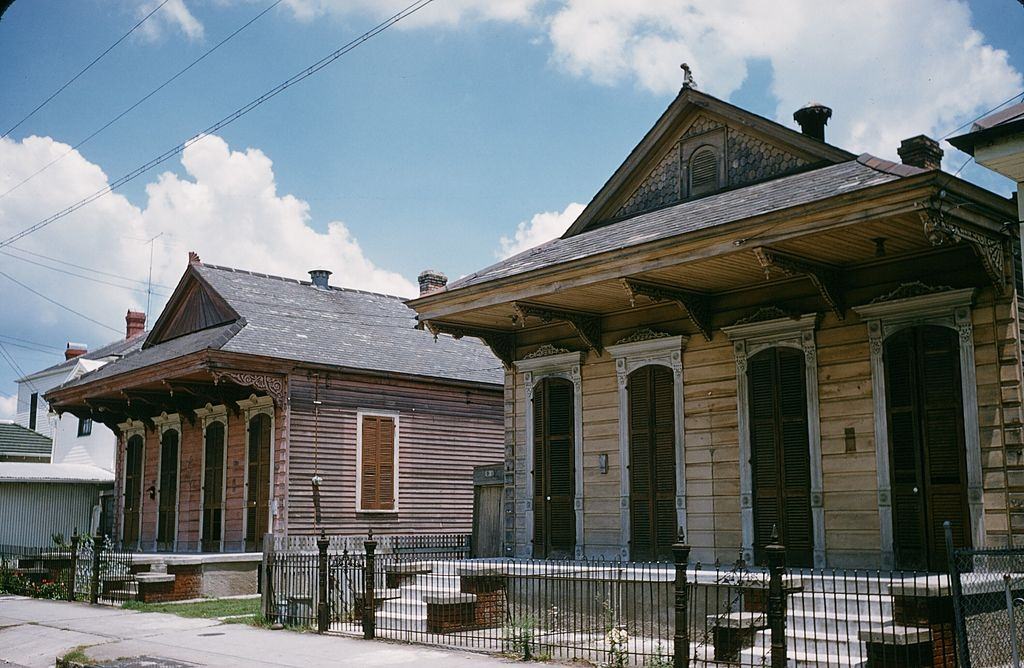
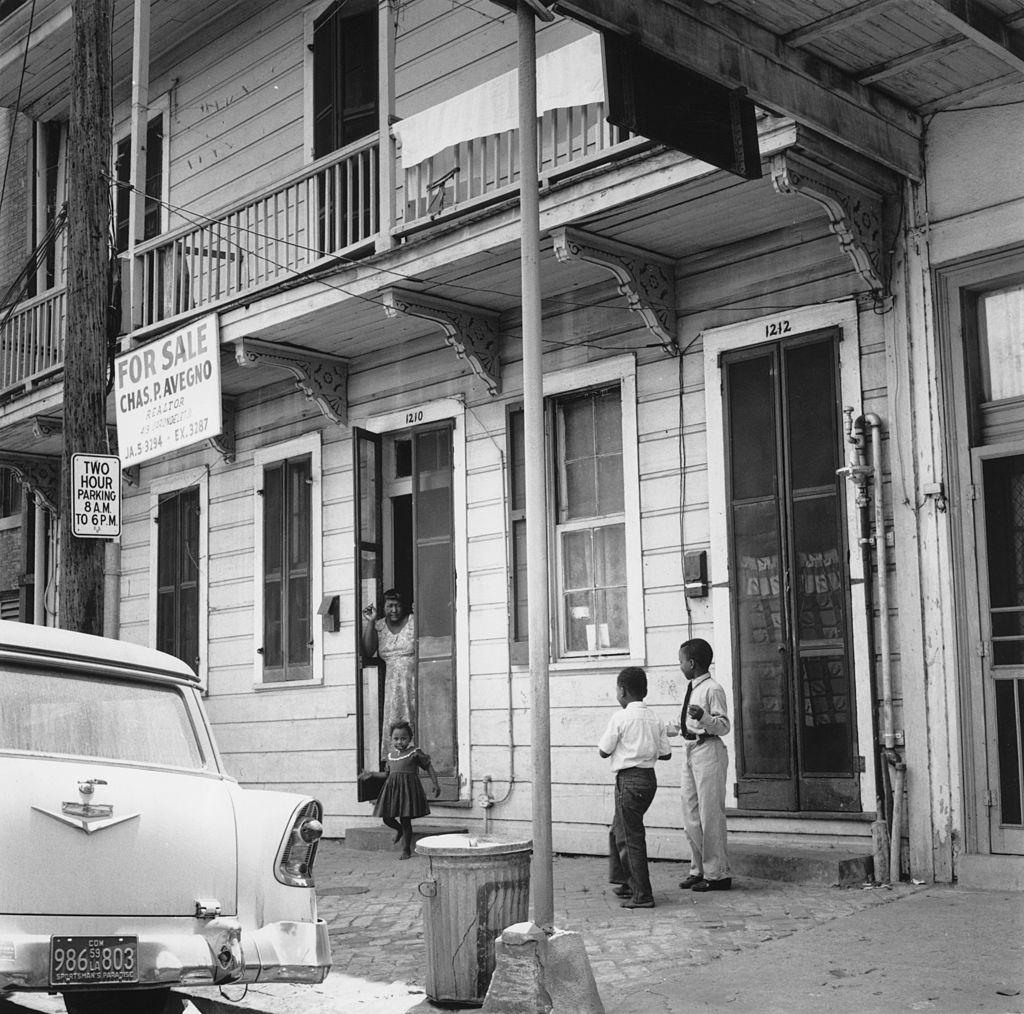
A street view of boarded up homes in New Orleans, 1957.
A row of houses on Bienville Street in the old red light district of Storyville, New Orleans, 1955.
A street view of boarded up homes in New Orleans, 1957.
Bienville Street across Basin Street from the French Quarter, adjacent to the Iberville public housing project, 1950s

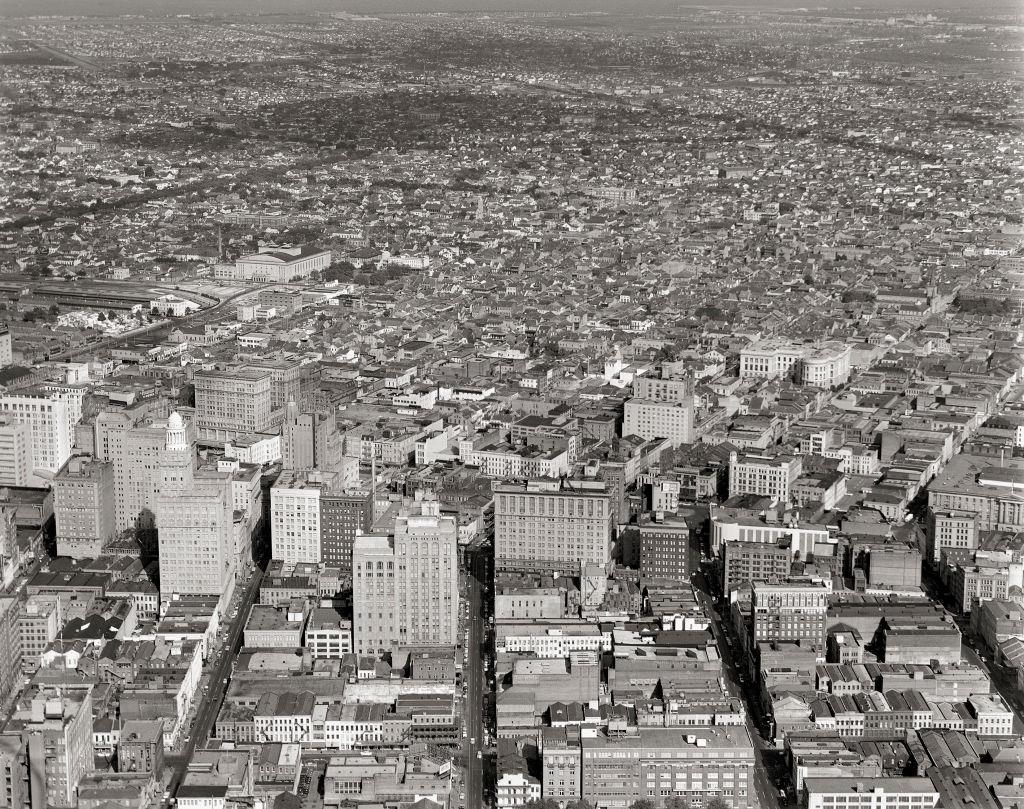
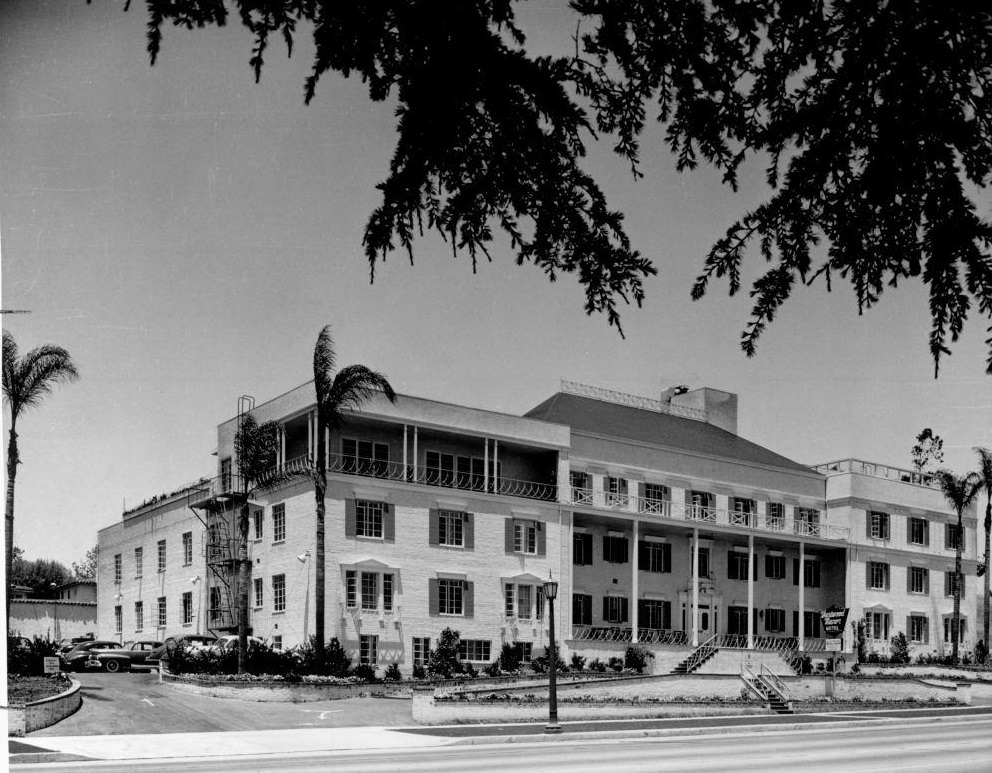
Suburban growth accelerated throughout the decade. In the post-World War II period, New Orleans developed into a true metropolitan area for the first time, with the surrounding suburbs filling in rapidly alongside the urban core. New hotels and apartment complexes like the Westwood Manor catered to a growing middle class that wanted modern conveniences close to the city’s historic center. A new motel opened in the French Quarter in 1954, one of the first of its kind in that neighborhood, a sign of shifting expectations around travel and accommodation.
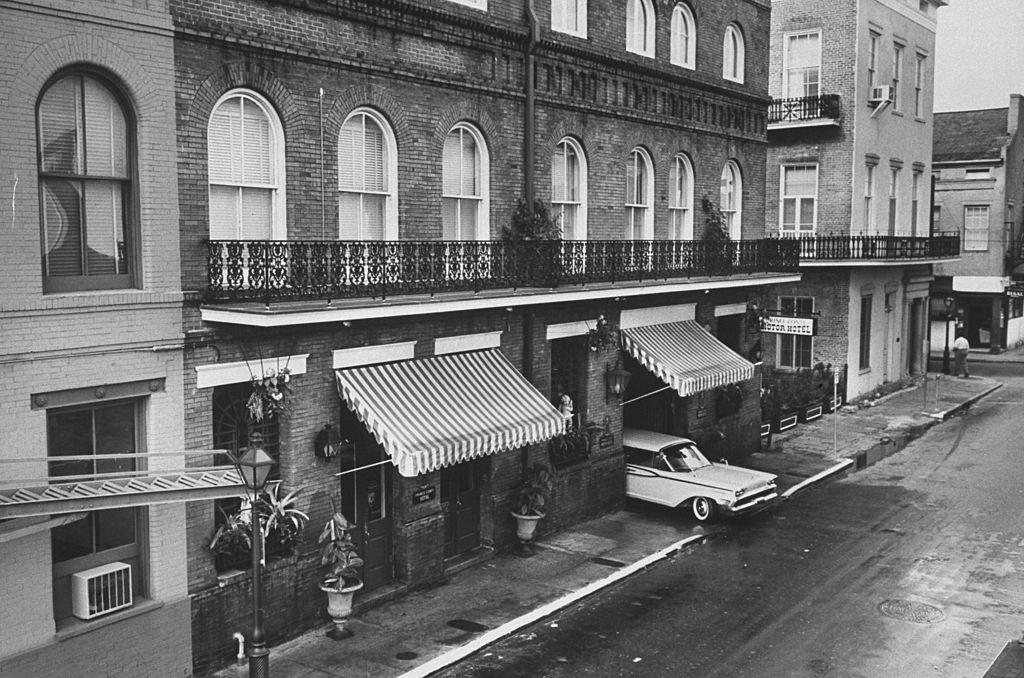
This Motel opened 90 days ago in the French Quarter of New Orleans, 1954
Westwood Manor, a luxury apartment hotel, 1950s.
Aerial view of new orleans, circa January 8, 1957, New Orleans, Louisiana.
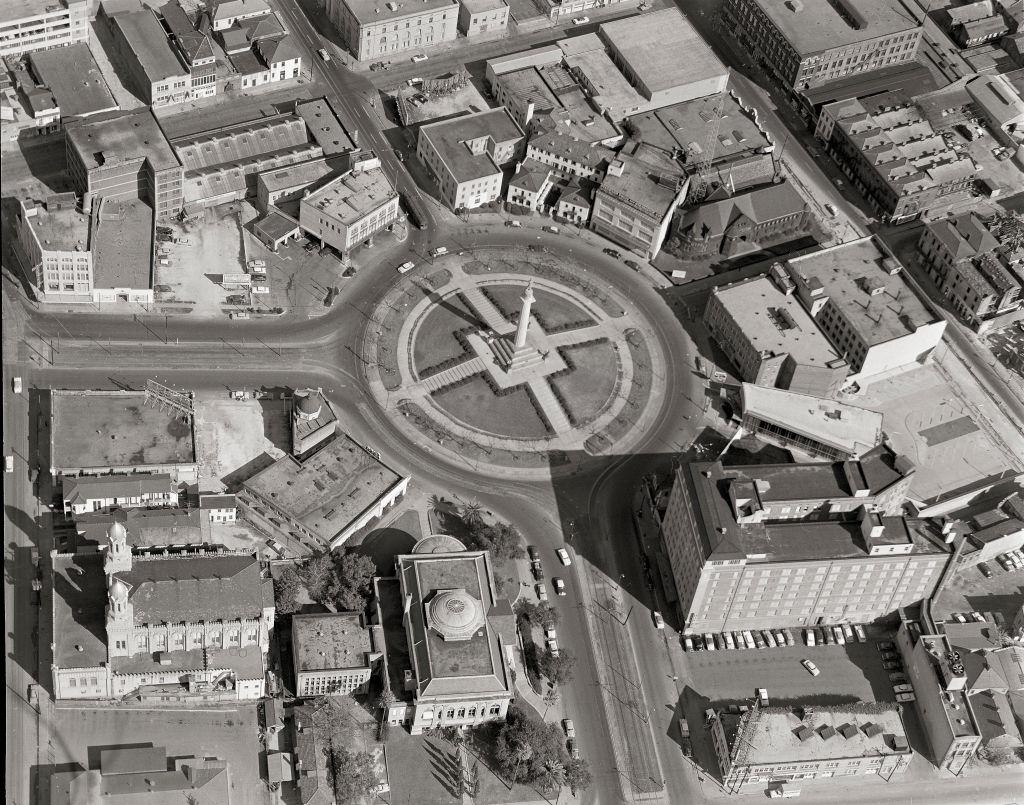
Aerial View of Circular Plaza, New Orleans, 1957

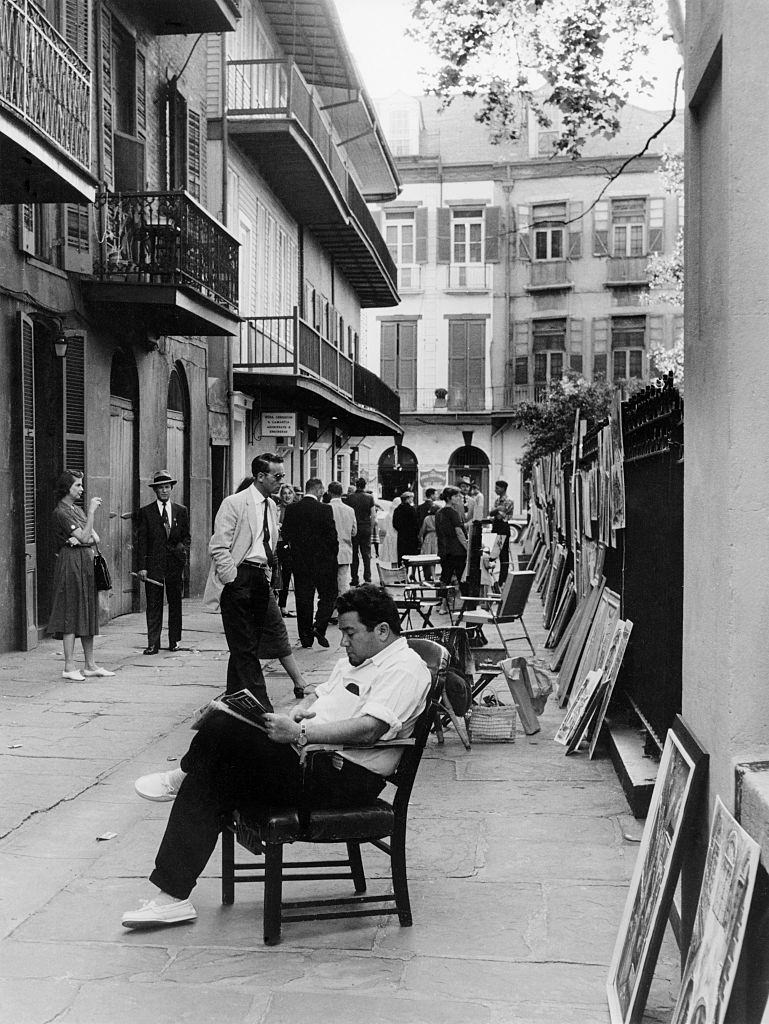
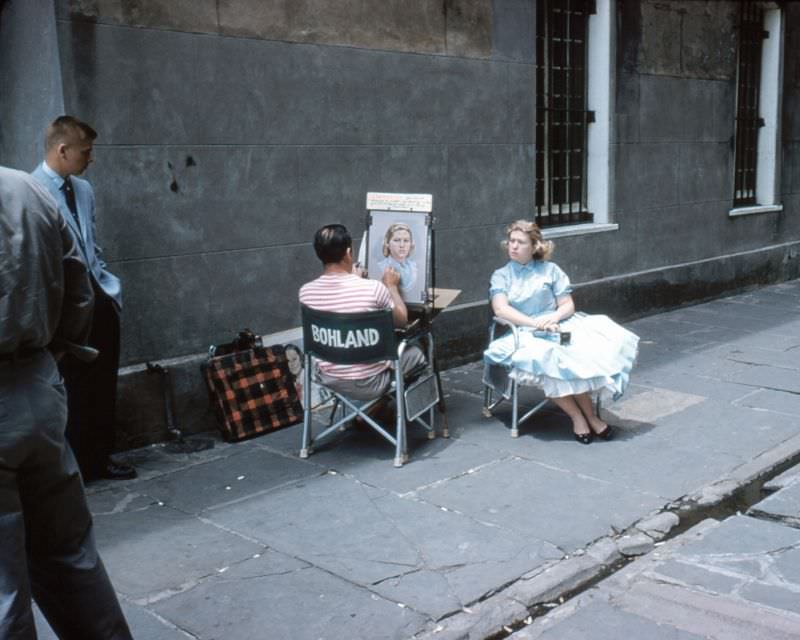
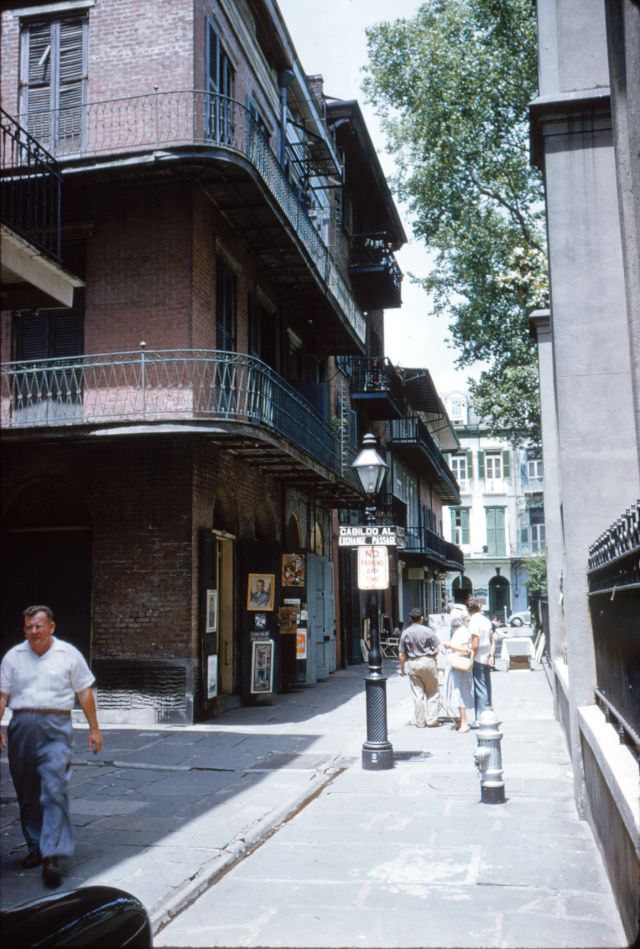
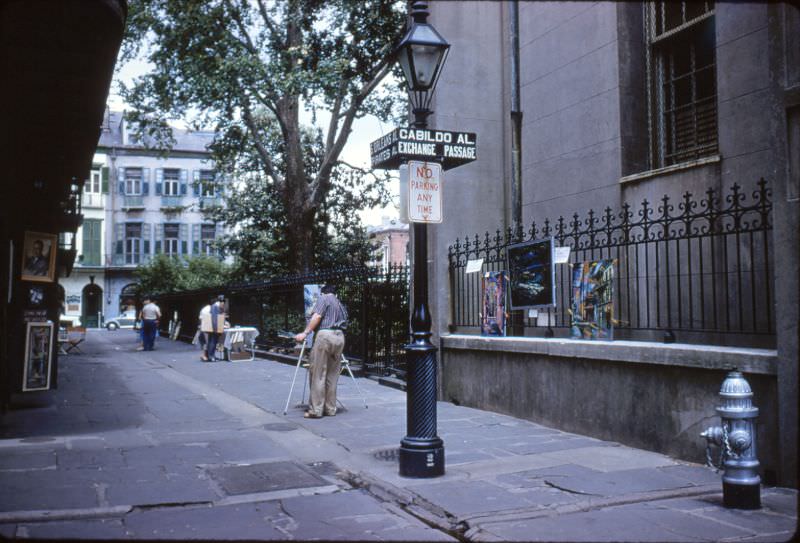
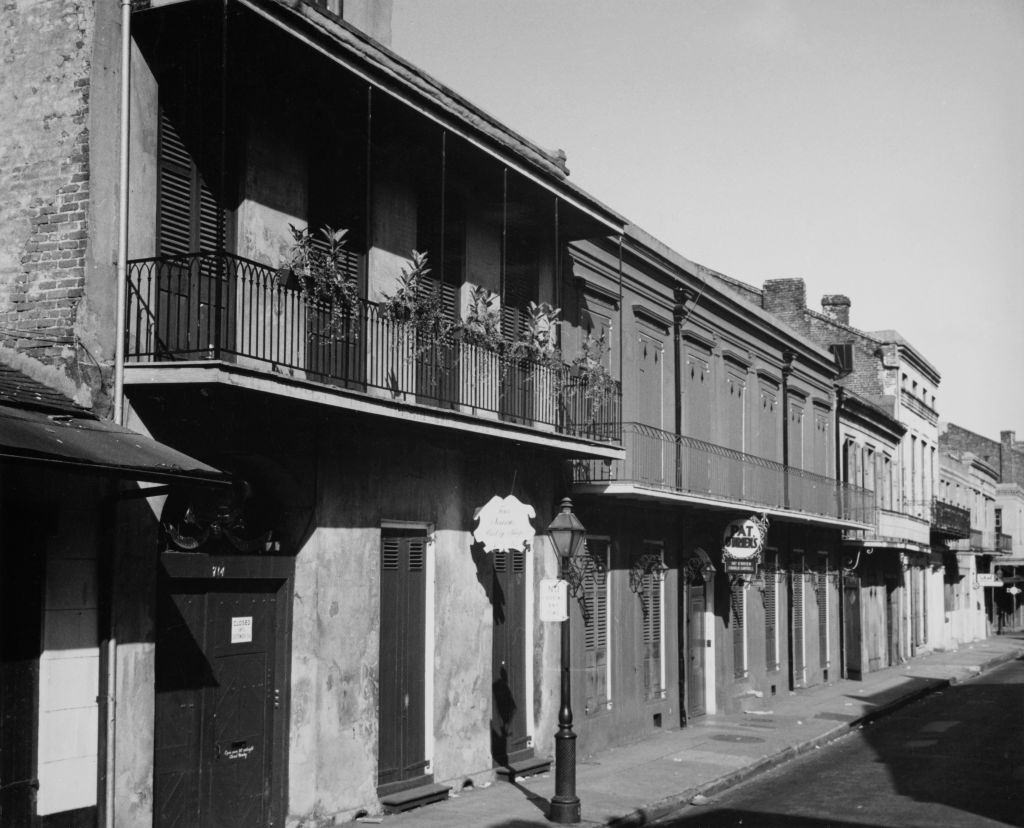
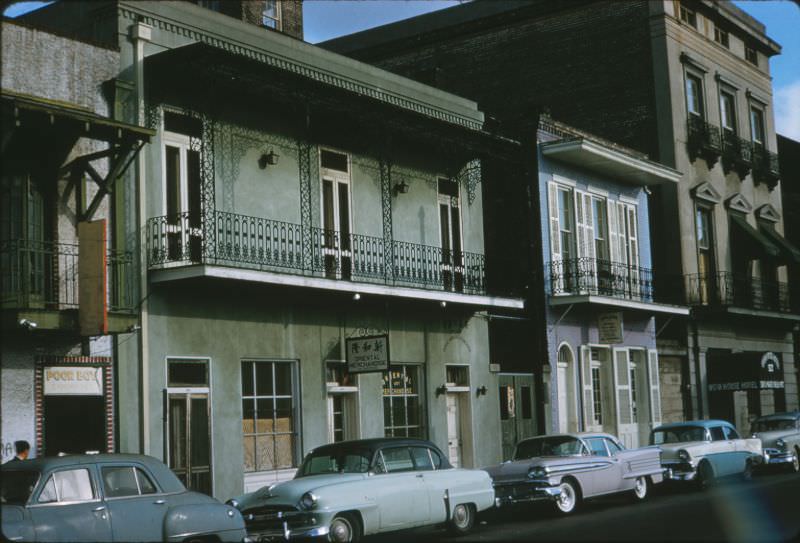
The French Quarter’s smaller corners and side streets were as telling as its main thoroughfares. Chartres Street, heading toward the cathedral, was lined with low buildings whose upper balconies cast afternoon shadows over the narrow sidewalk below. Pirate’s Alley, barely wide enough for two people to pass comfortably, attracted painters and artists who set up easels and sketched visitors on the spot. Royal Street was dense with antique shops, their displays visible through wide glass windows. These streets functioned as a living museum, even as the rest of the city modernized around them.
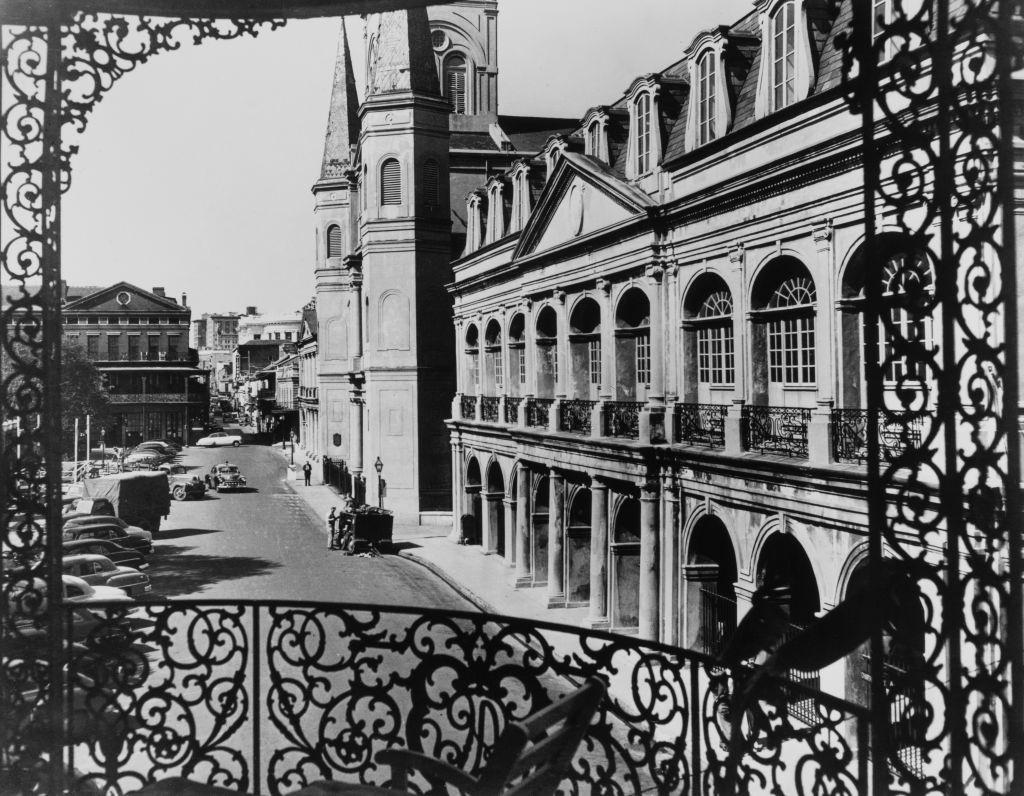
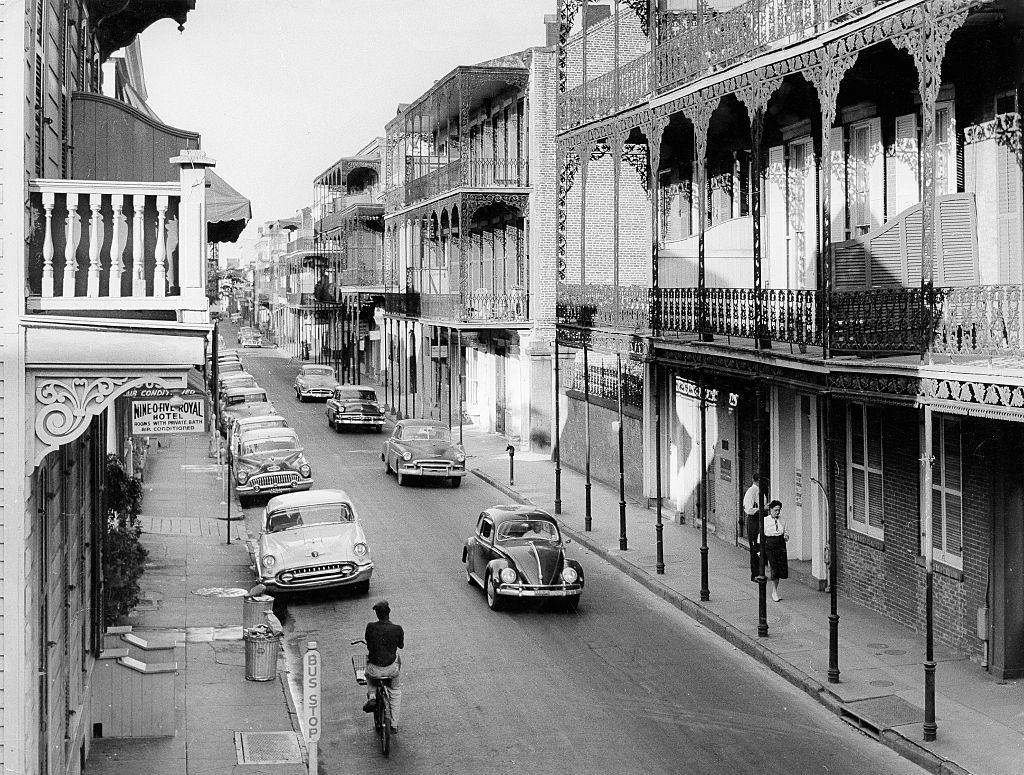
Looking down a block of Charters St. (in front of the St. Louis Cathedral) that is now a pedestrian plaza.
Royal Street, taken from the corner of Dumaine, 1950s
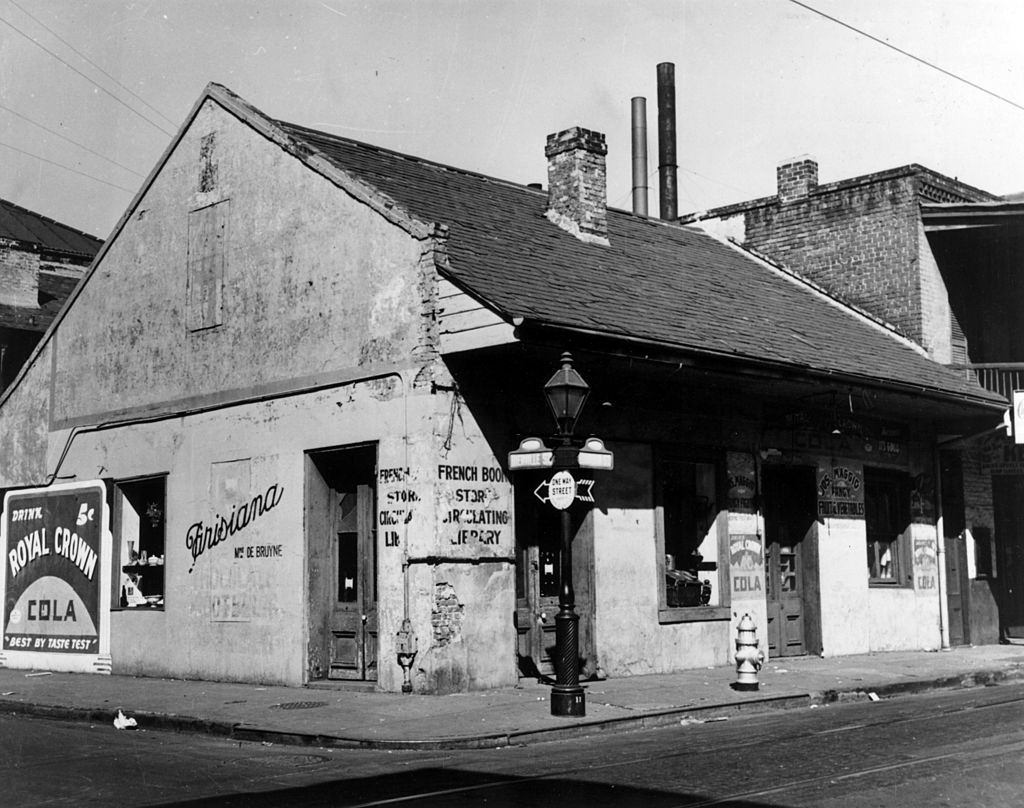
An old French bookshop and lending library in the French quarter of New Orleans, 1952.
Bohland Pirate's Alley artist sketching girl, New Orleans, 1956.
Bohland Pirate’s Alley artist sketching girl, New Orleans, 1956.
Pirate's Alley buildings, New Orleans, 1956.
Pirate’s Alley buildings, New Orleans, 1956.
Pirate's Alley with painter, New Orleans, 1956.
Pirate’s Alley with painter, New Orleans, 1956.

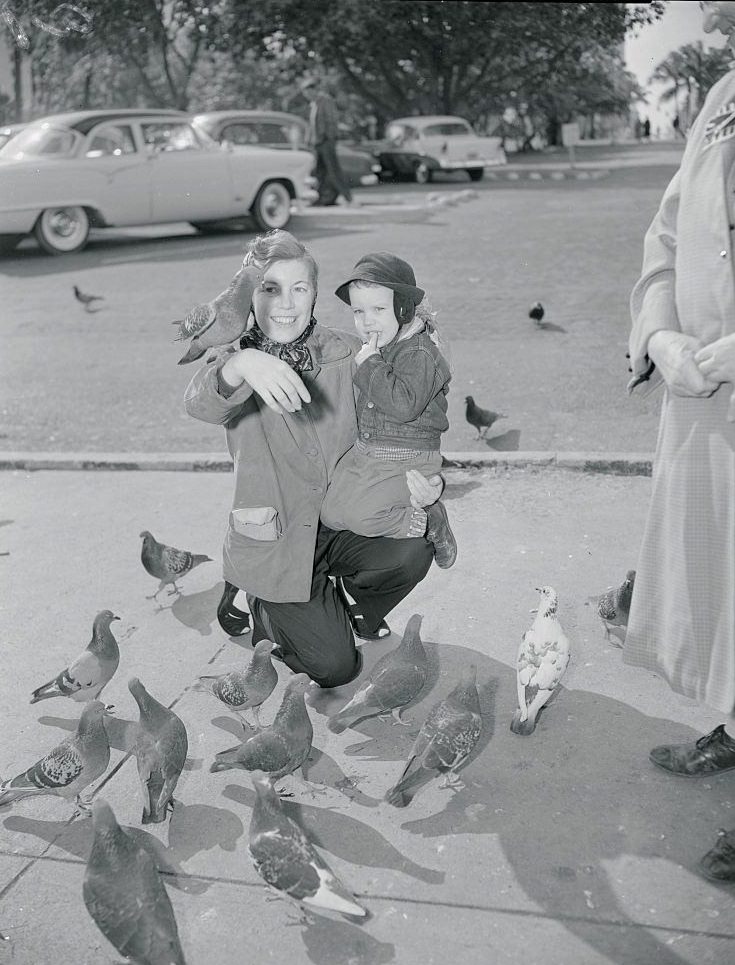
City Park offered a different kind of New Orleans experience — quieter, more domestic. Its pavilions, lagoons, and oak-canopied paths gave families a place away from the noise of the French Quarter and the port. A mother and son feeding pigeons, a young couple posing for a photograph in Jackson Square — these small, ordinary moments filled the decade alongside its larger civic ambitions. The city was not just a place of parades and jazz clubs. It was also a place where people went about their daily lives.
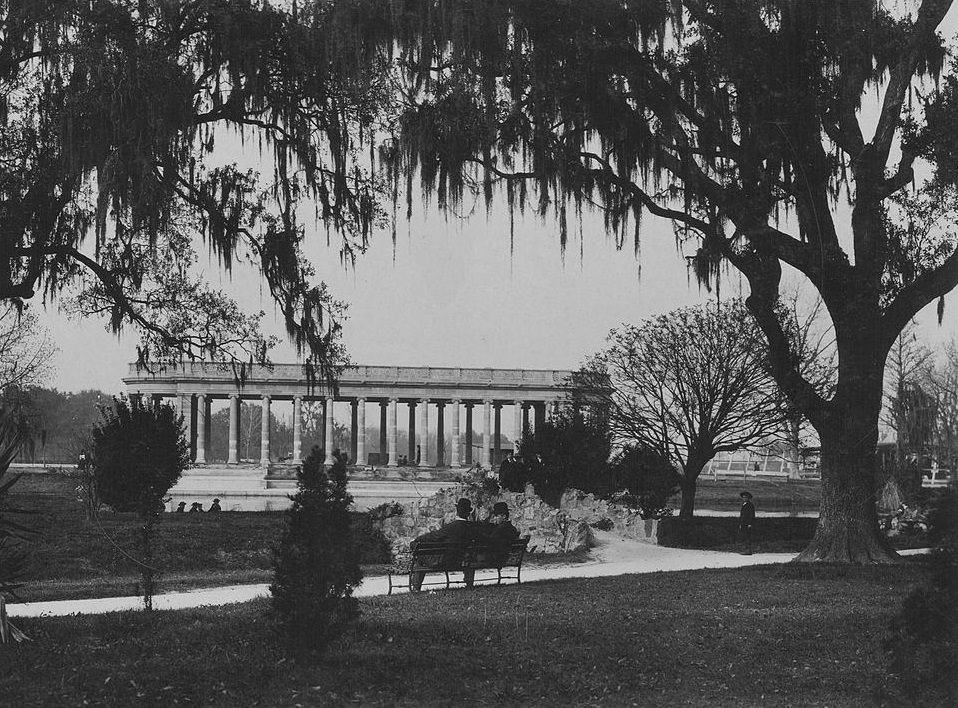
A view of a pavilion in City Park, City Park, an urban public park in New Orleans, 1950s
Mother and Son Feeding Pigeons, New Orleans, 1950s

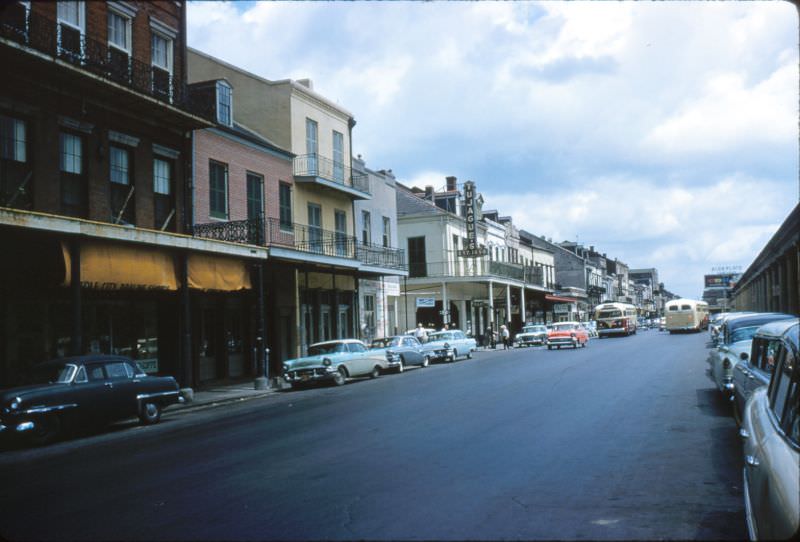
Restaurants in 1950s New Orleans ranged from elegant hotel dining rooms to no-frills neighborhood spots. Maylie Restaurant on Poydras Street was one of the old-guard establishments, serving traditional Louisiana food in a setting that had not changed much in decades. Tujague’s on Decatur Street was another. These were not tourist traps — they were places where locals ate, and they served dishes that had been on the menu long before the decade began. The city’s food culture in the 1950s was already deeply rooted, long before it became a national talking point.
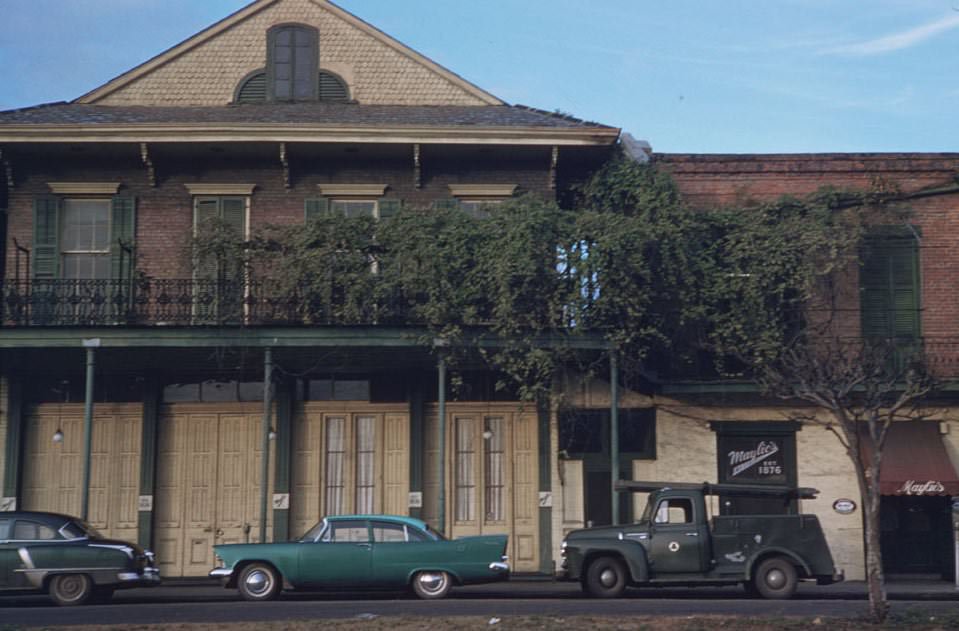
Maylie Restaurant. Poydras street, New Orleans, 1951.
Decatur Street with Tujague's, New Orleans, 1956.
Decatur Street with Tujague’s, New Orleans, 1956.

The trolley named “Desire” — made famous by Tennessee Williams’s play — still ran its route through the city in the early 1950s. By 1948, the Desire streetcar line had already been replaced by buses on that specific route, so what visitors saw on Bourbon Street was a bus bearing that name, a nod to the line that had already passed into literary history. It was a fitting image for a city that lived in close quarters with its own mythology.
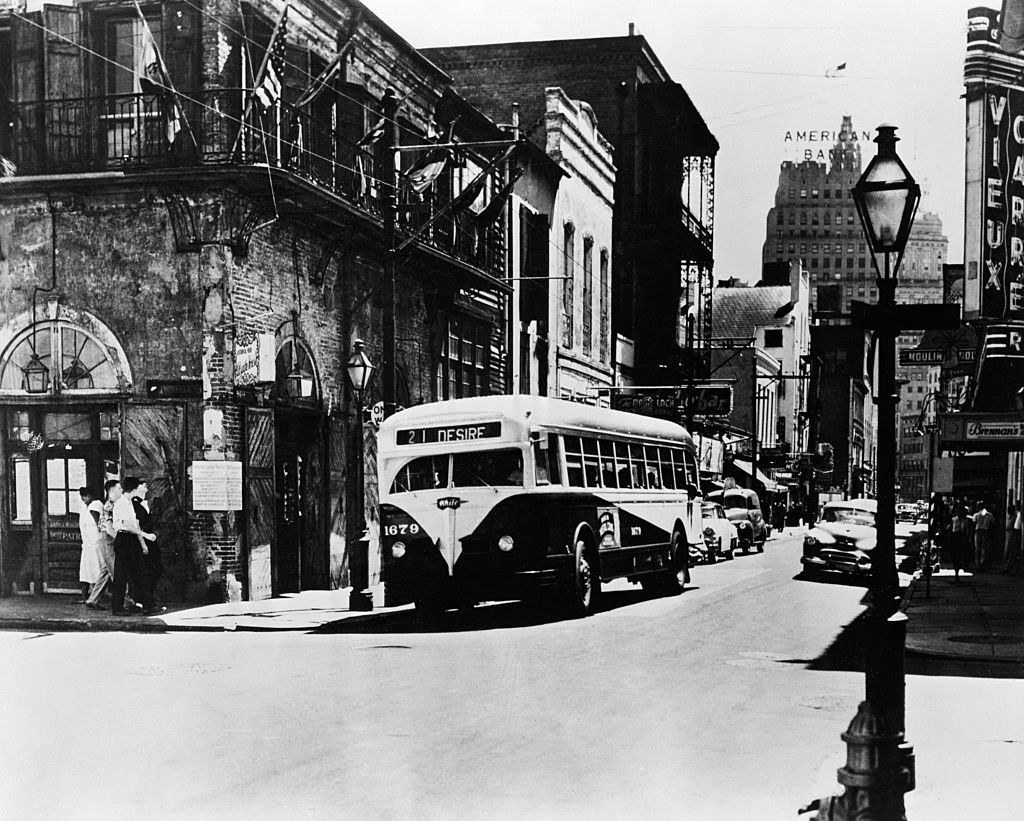
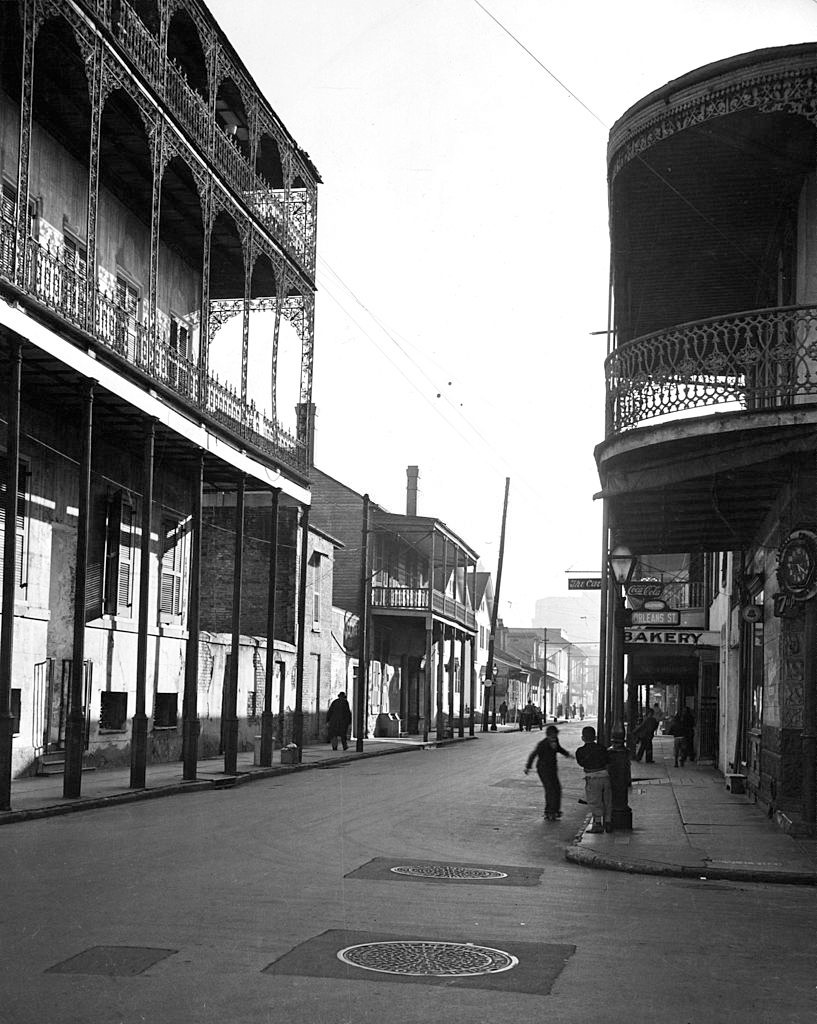
Bourbon Street, Bus Named "Desire" in New Orleans, 1953
Bourbon Street, Bus Named “Desire” in New Orleans, 1953
A street scene of New Orleans, 1950
Pedestrian crossing St. Charles Street, New Orleans, 1951.

The Custom House on Canal Street was one of the city’s oldest federal buildings, its construction having started in 1848 and taken decades to complete. In the 1950s, it still dominated its block, its massive stone exterior unchanged while the rest of the street filled in with mid-century commercial architecture and neon signage. Buildings like this one anchored the city’s streetscape to the 19th century even as the present crowded in around them.
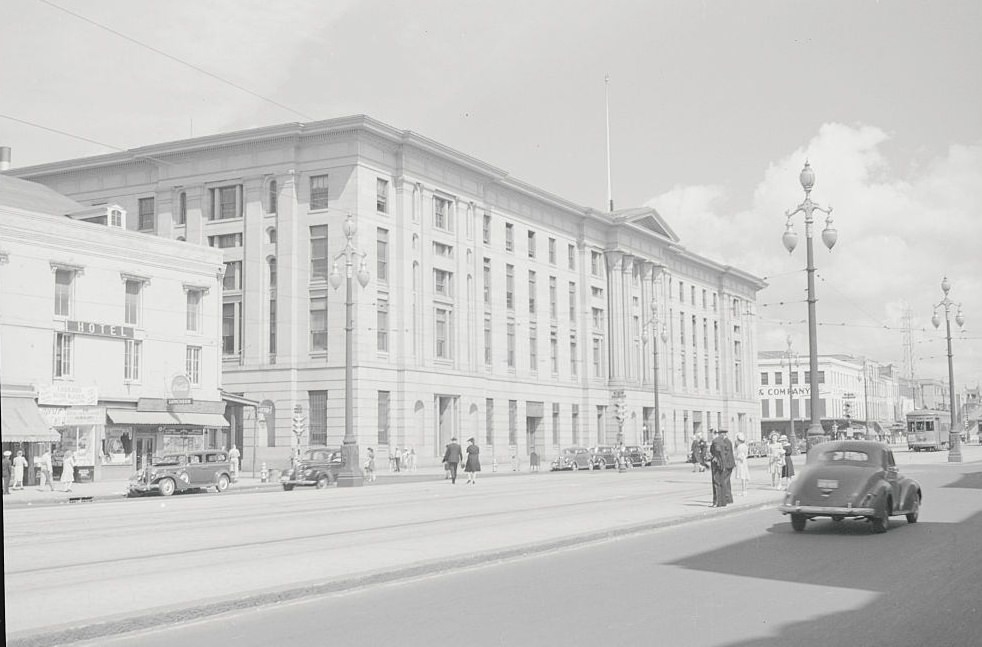
Exterior of the Custom House, New Orleans, 1950s
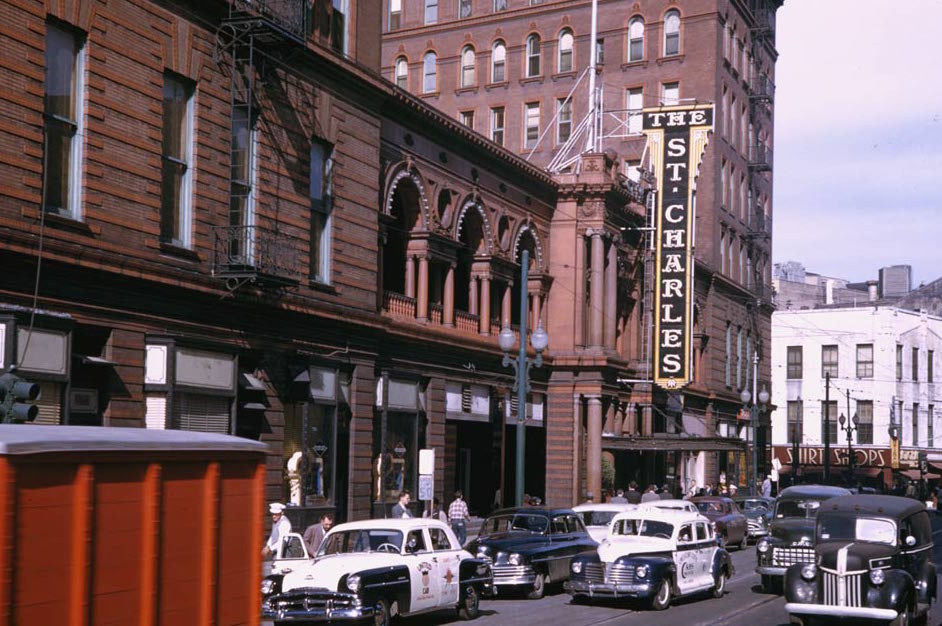
St. Charles hotel on St. Charles at Gravier, New Orleans, 1951.
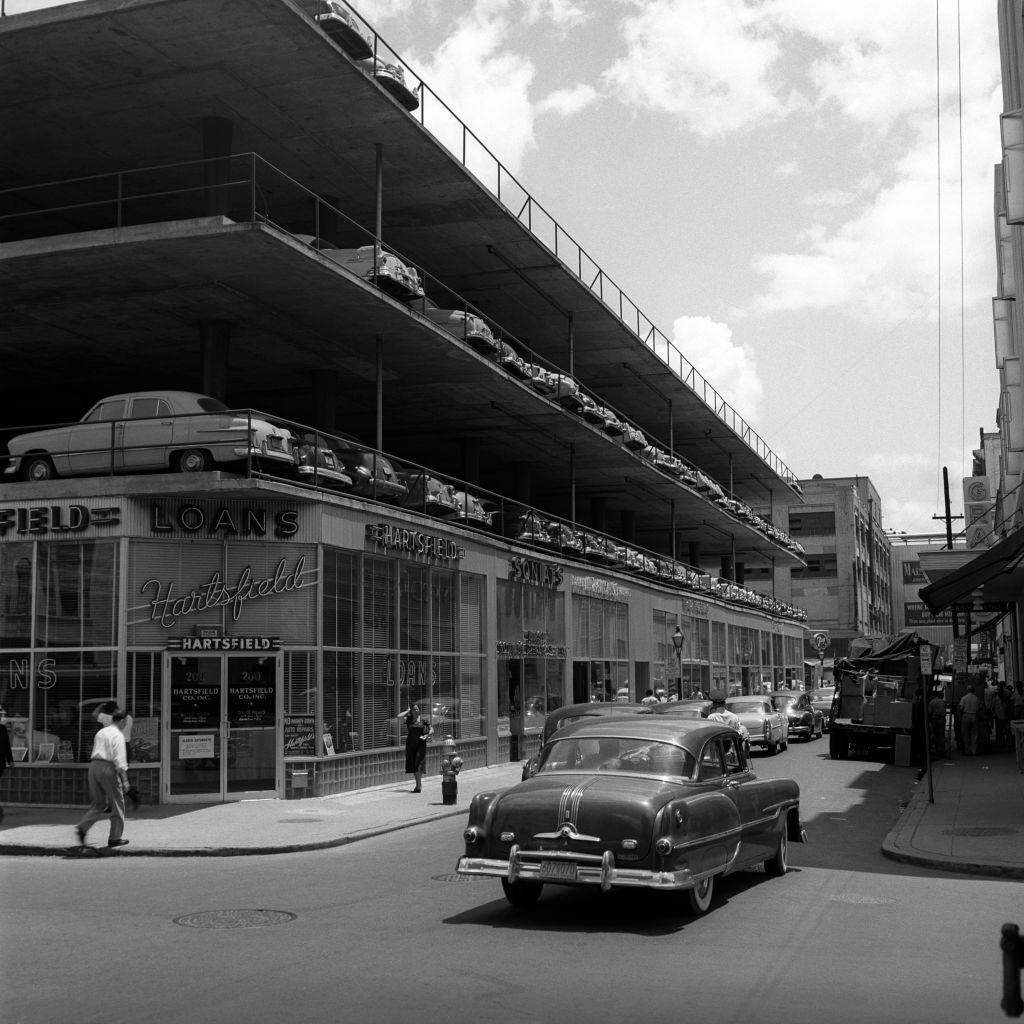
Parking lot three story building architecture car on street pedestrian, New Orleans, 1950s

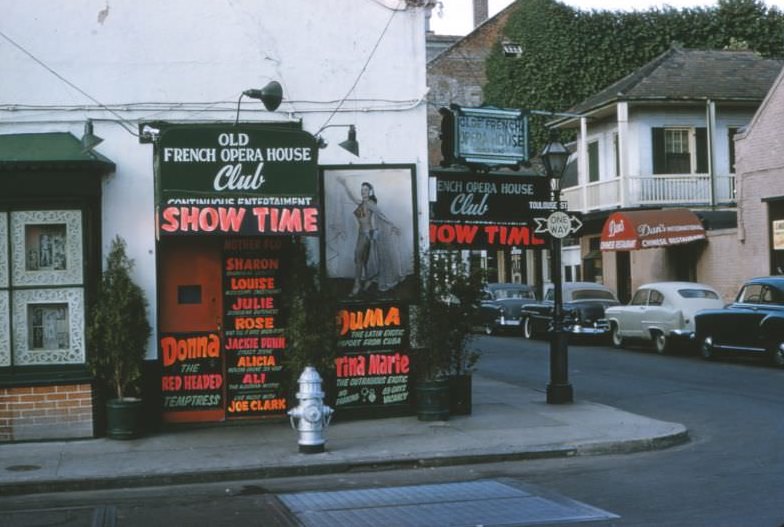
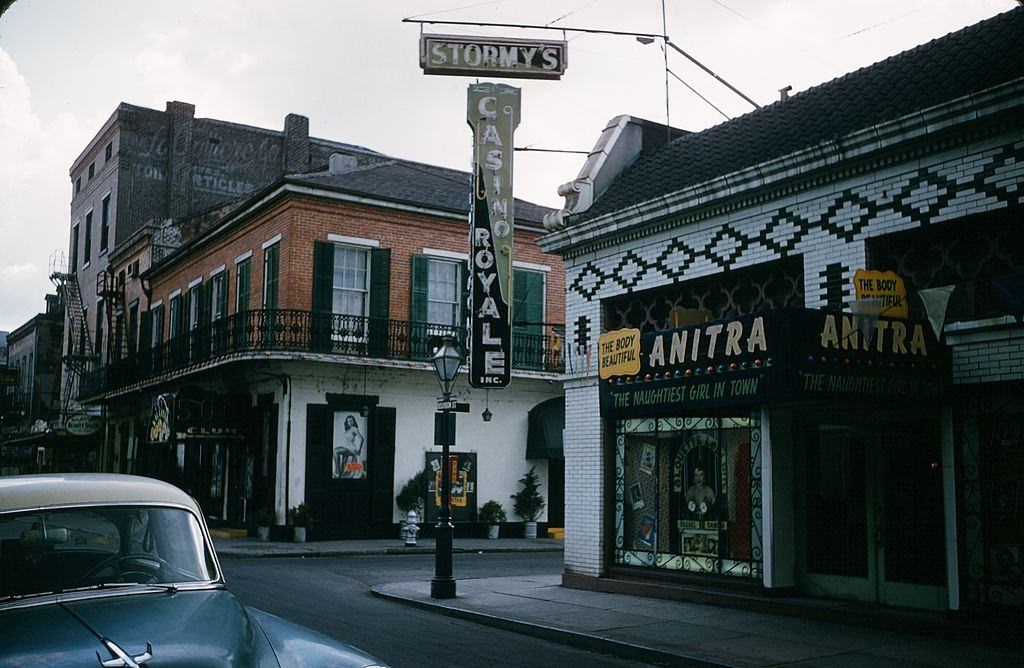
The nightlife on Bourbon Street was not only about jazz and dancing. Burlesque and adult entertainment were openly advertised. The Sho’Bar featured Sally Rand, the famous fan dancer whose career stretched back to the 1933 World’s Fair. Signs outside clubs promoted performers by name, describing them in terms that left little to the imagination. This was a legal and visible part of Bourbon Street’s economy throughout the 1950s, and the photographs document it plainly.
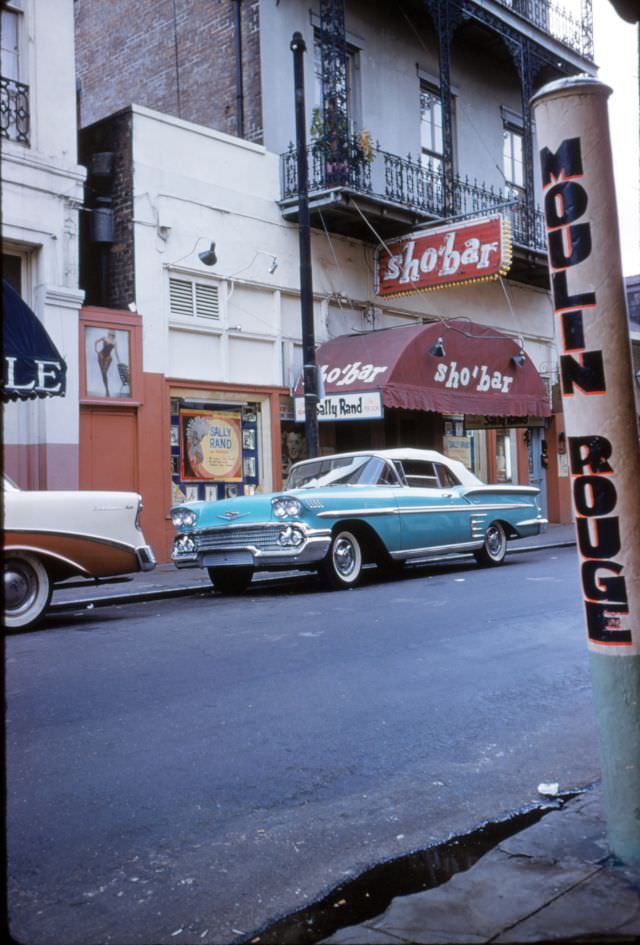
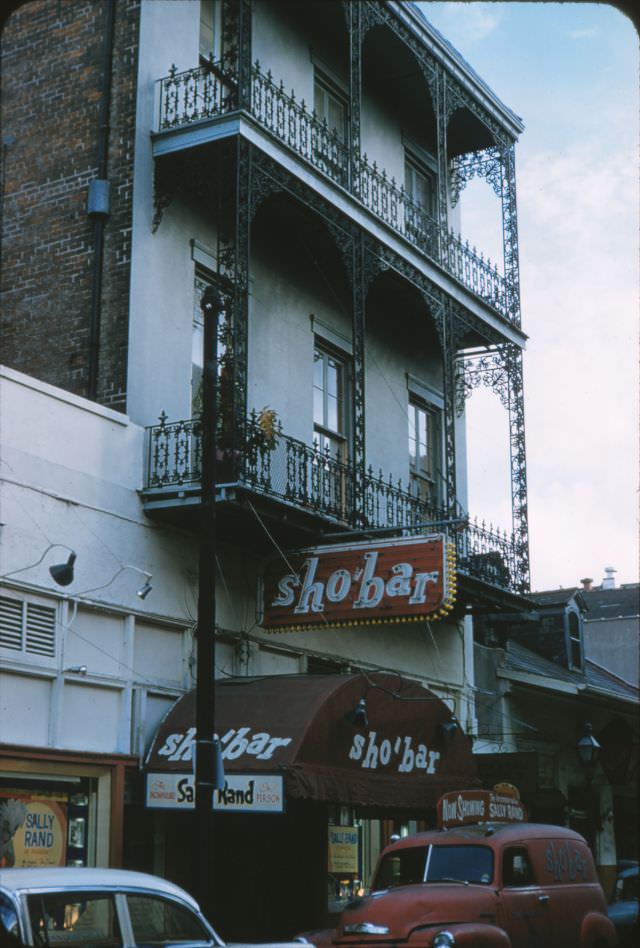
Sho'Bar with Sally Rand in the French Quarter, New Orleans, 1956.
Sho’Bar with Sally Rand in the French Quarter, New Orleans, 1956.
Shobar showing Sally Rand, New Orleans, 1956.
Show Time. "Donna the Red Headed Temptress", New Orleans, 1956.
Show Time. “Donna the Red Headed Temptress”, New Orleans, 1956.
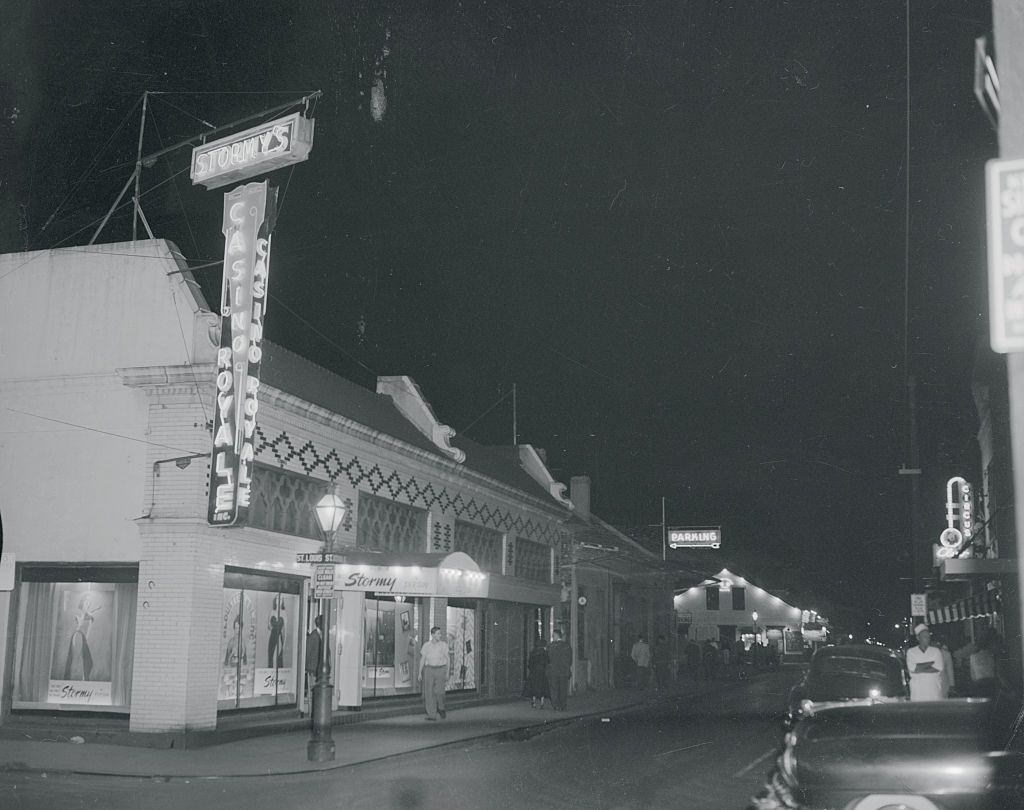
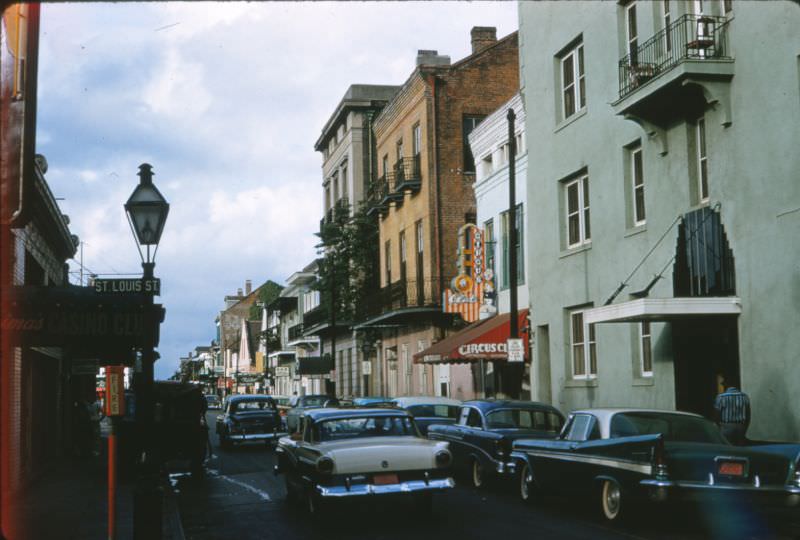
A view down Bourbon street and the Naughtiest girls in Town Club and Casino Royale in New Orleans, Louisiana in May 16, 1957.

By the late 1950s, New Orleans was a city in the middle of a long transformation. Its port still ranked among the nation’s busiest. Its neighborhoods ranged from grand to decayed, sometimes on the same block. Its streets carried the weight of centuries while accommodating the demands of a mid-century American city. The photographs from this decade capture a place that was simultaneously ancient and modern, prosperous and struggling, celebrated and overlooked — a city that could not be reduced to any single image, though it generated thousands of them.
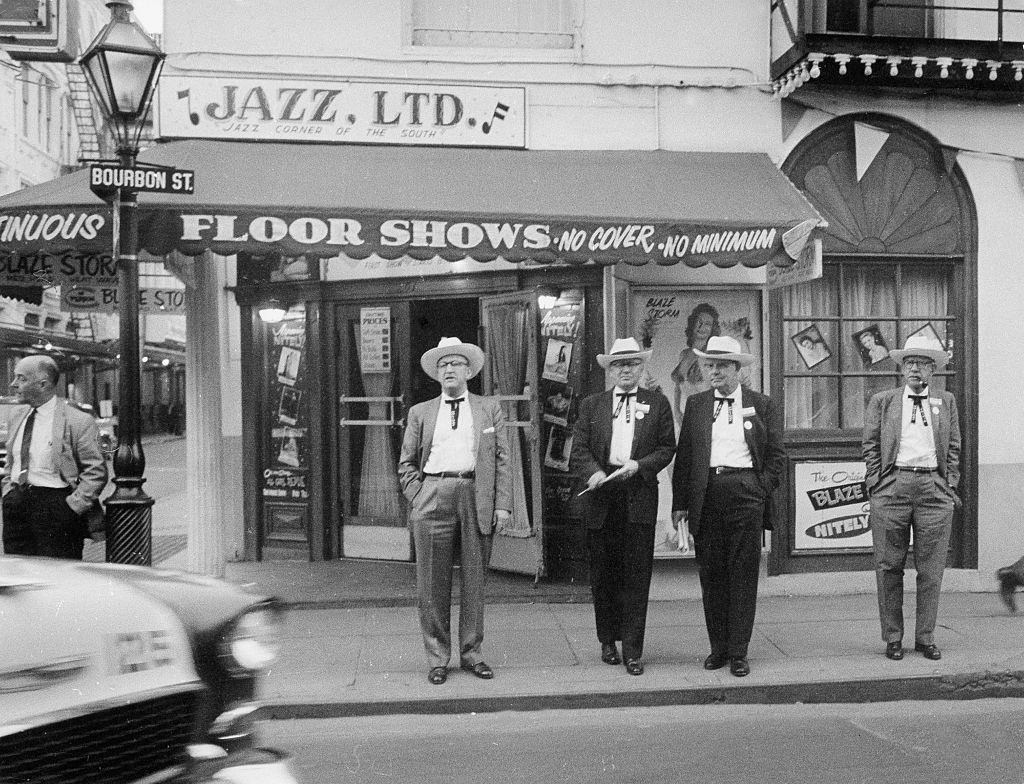
Bourbon Street- 1959, New Orleans
View of Saint Louis Cathedral at Jackson Square, in front the statue of Major General Andrew Jackson, New Orleans, 1959.
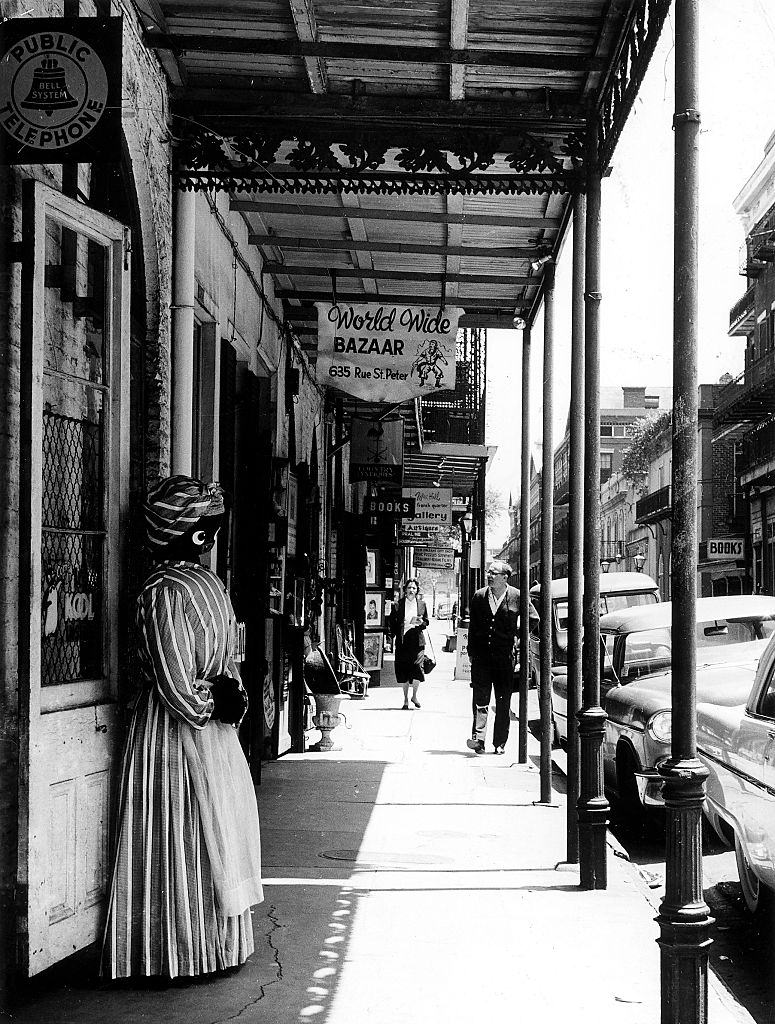
View of St. Peter's street,1959.
View of St. Peter’s street,1959.
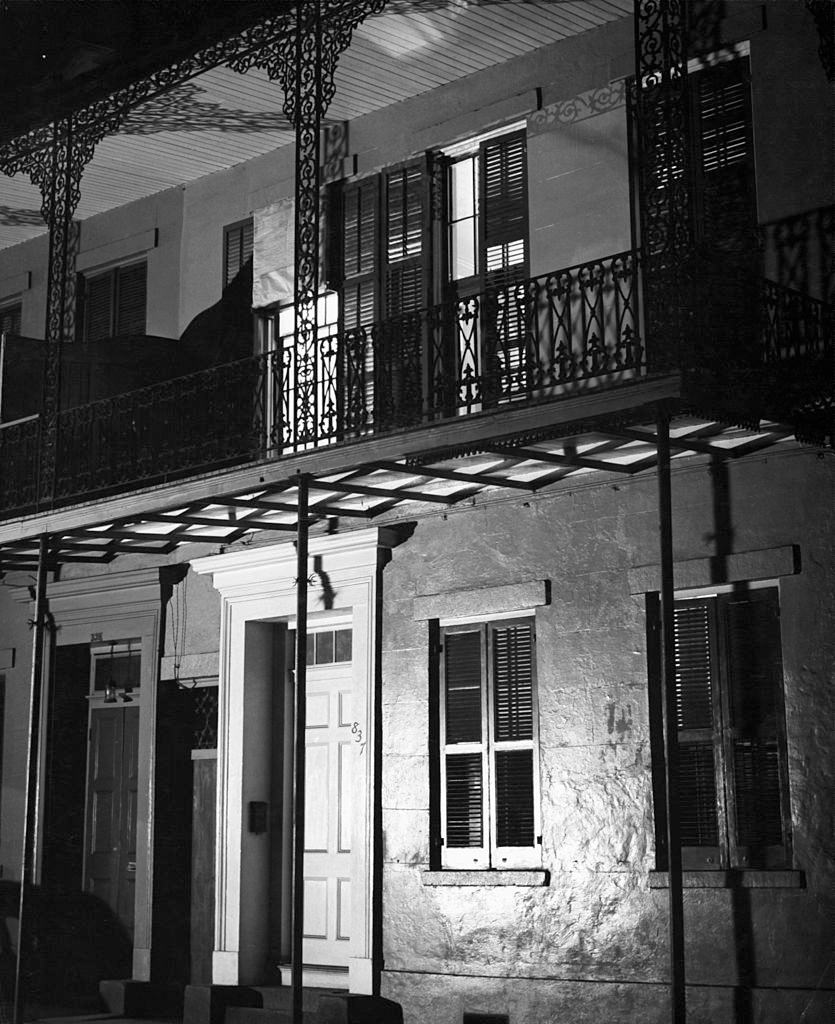
A view of a facade at night in New Orleans, 1950.
A view down Bourbon street and the Mardi Gras Club in New Orleans, 1957.
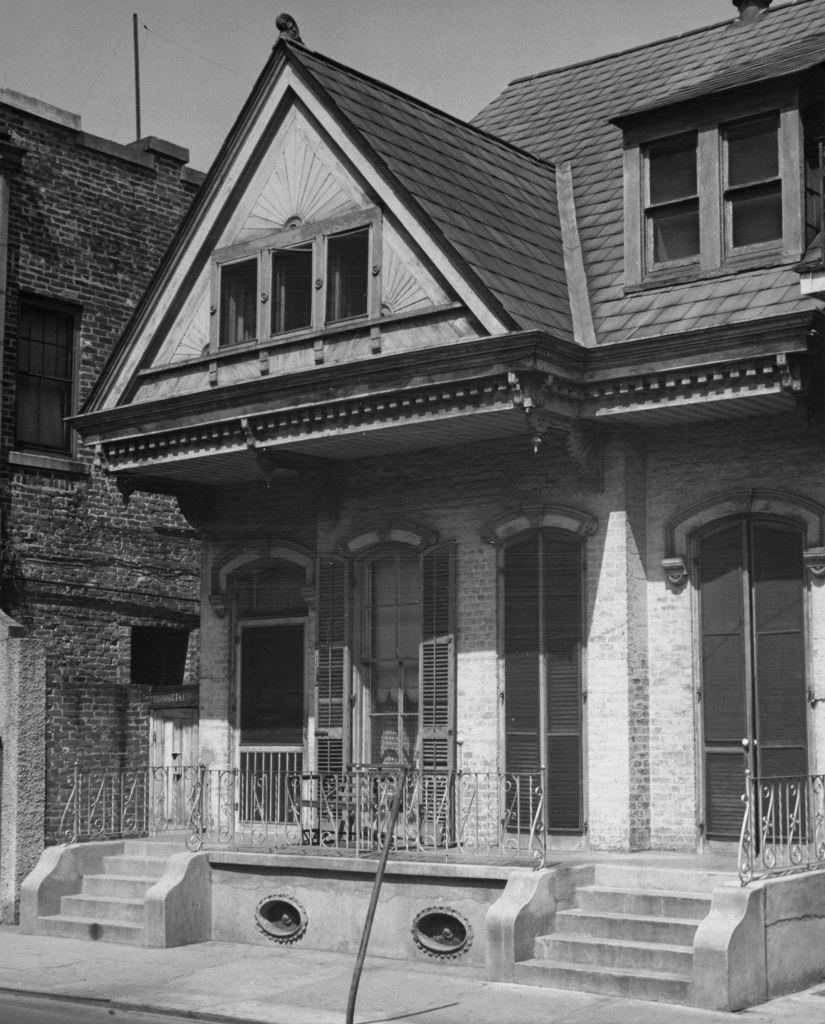
The little house with its high peaked roof meekly rests amidst Bourbon Street night clubs, 1955.
St Peter Street, New Orleans, 1955.
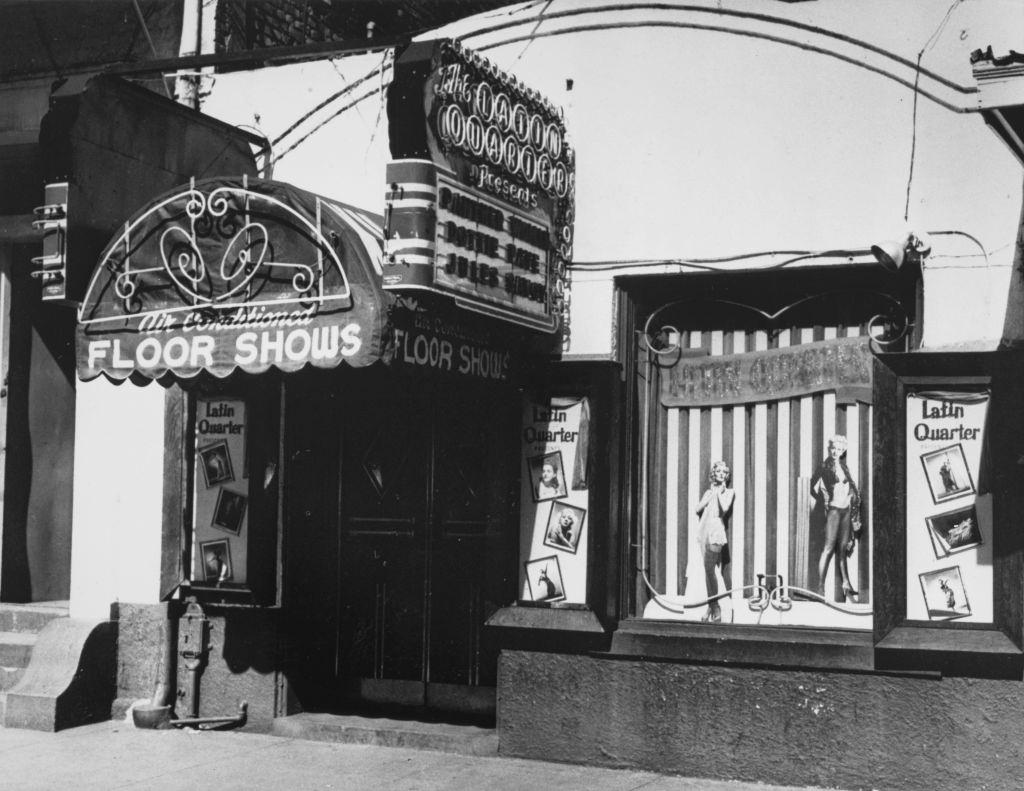
Latin Quarter night club, New Orleans, 1950
A commercial building in New Orleans, 1955.
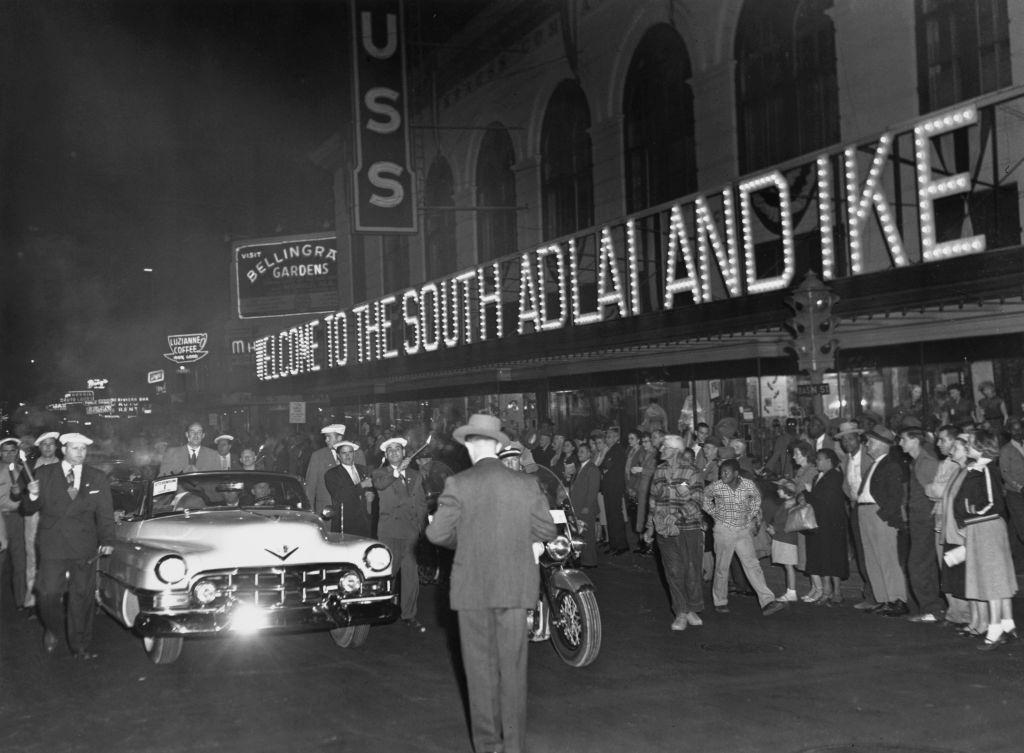
The car in which Governor Adlai Stevenson drove into New Orleans from the airport after his arrival is sown passing a huge electric sign which blazes, 1952.
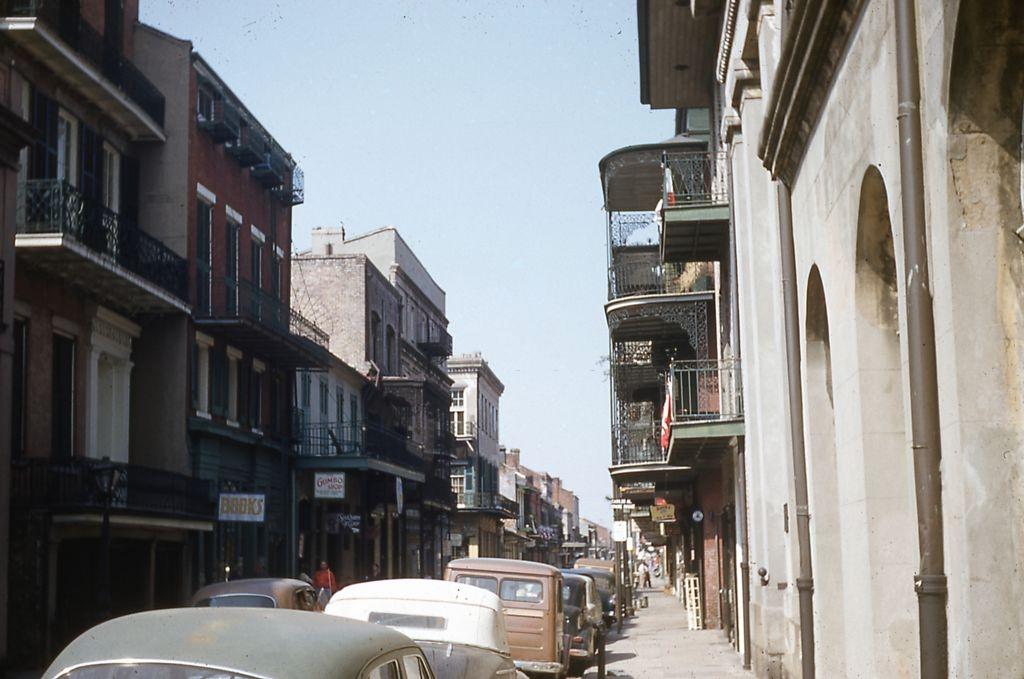
View facing northwest of Saint Peter Street, in the French Quarter of New Orleans, June, 1953.
A street view of Canal street in New Orleans, 1957.
A view down Bourbon street outside the Wild Cat Frenchie bar in New Orleans, 1957.
Two women walking along a pavement on Bourbon Street, New Orleans, 1955
A view down Bourbon street outside Sid Davillas Mardi Gras bar and lounge in New Orleans, 1957.
House on Bienville Street
Exterior of 'The Mardi Gras Lounge' On Bourbon Street in New Orleans, 1957.
Exterior of ‘The Mardi Gras Lounge’ On Bourbon Street in New Orleans, 1957.
Sidewalk and Signs over Casino, New Orleans, 1950s
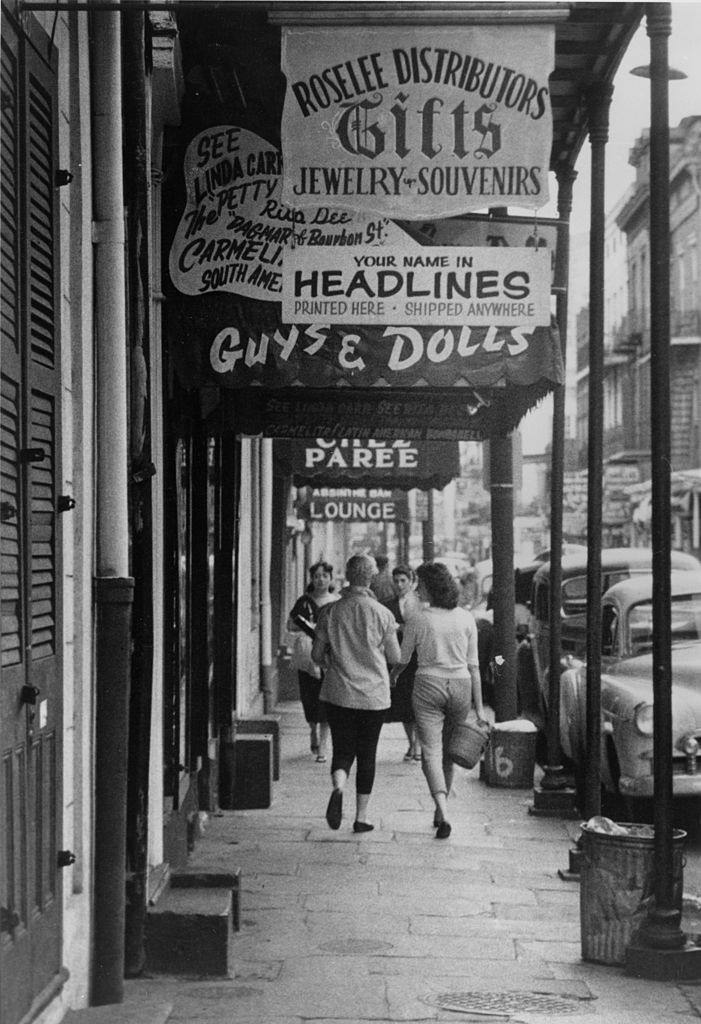
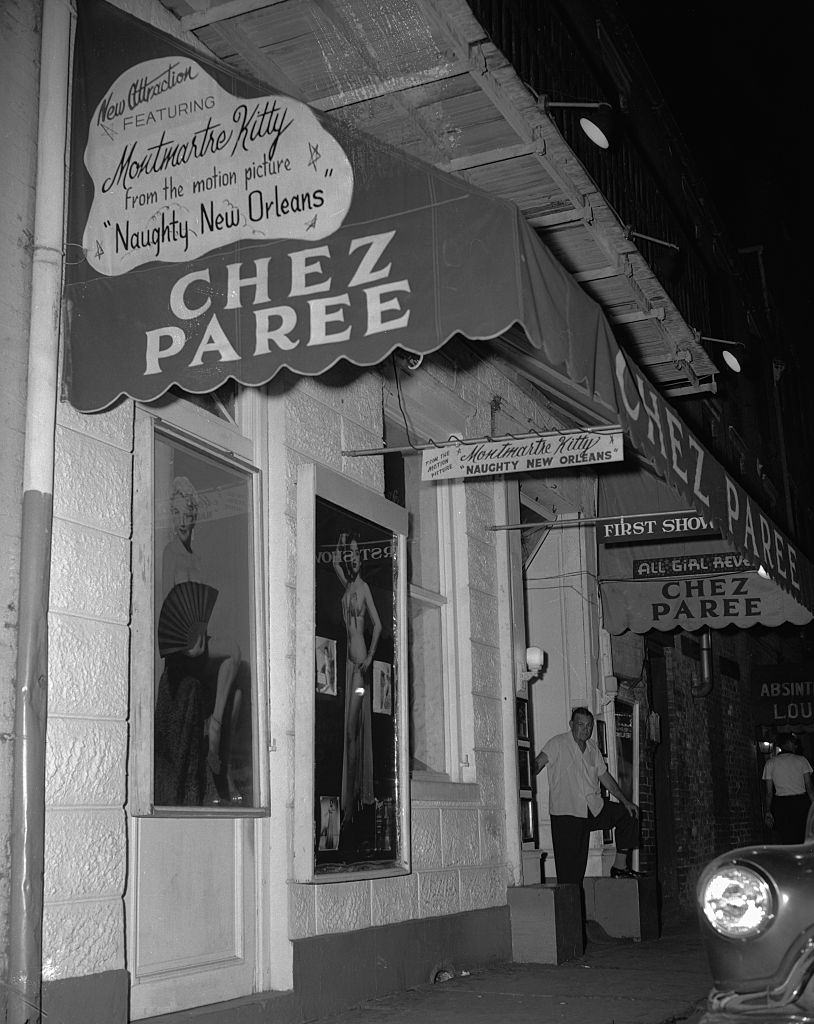
This is an exterior view of the Chez Paree night club in the French Quarter in New Orleans, 1950s.
Exterior view of the Paddock Lounge in the Latin quarter, New Orleans, 1950s.
Exterior of 'The Mardi Gras Lounge' On Bourbon Street on May 16, 1957 in New Orleans, Louisiana.
Exterior of ‘The Mardi Gras Lounge’ On Bourbon Street on May 16, 1957 in New Orleans, Louisiana.
A view down Bourbon street and the Flamingo club in New Orleans, 1957.
A view down Bourbon street outside Sid Davillas Mardi Gras Longe in New Orleans, 1957.
A view down Bourbon street outside Silver Frolics in New Orleans, 1957
A view down Bourbon street outside Mardi Gras lounge in New Orleans, 1957.
A view down Bourbon street outside Mardi Gras bar and lounge in New Orleans, 1957.
A view down Bourbon street outside Wild Cat Frenchie Bar in New Orleans, 1957.
A view down Bourbon street and the Flamingo club in New Orleans, Louisiana in May 16, 1957.
Bourbon Street, New Orleans, 1950s
Old Absinthe House, 1950s
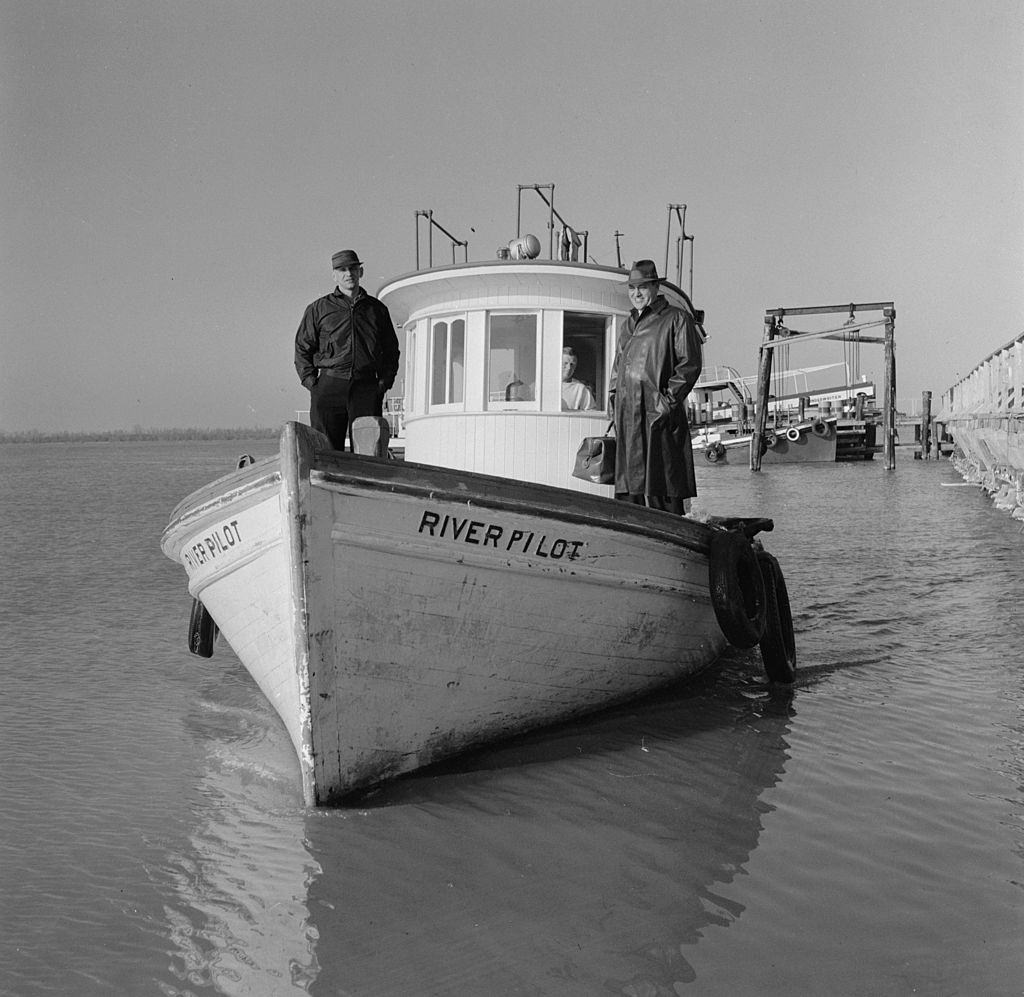
A small river boat taking a river pilot from Pilottown, 1955
Exterior of 'The Mardi Gras Lounge' and 'Gunga Den' On Bourbon Street on May 16, 1957 in New Orleans, Louisiana.
Exterior of ‘The Mardi Gras Lounge’ and ‘Gunga Den’ On Bourbon Street on May 16, 1957 in New Orleans, Louisiana.
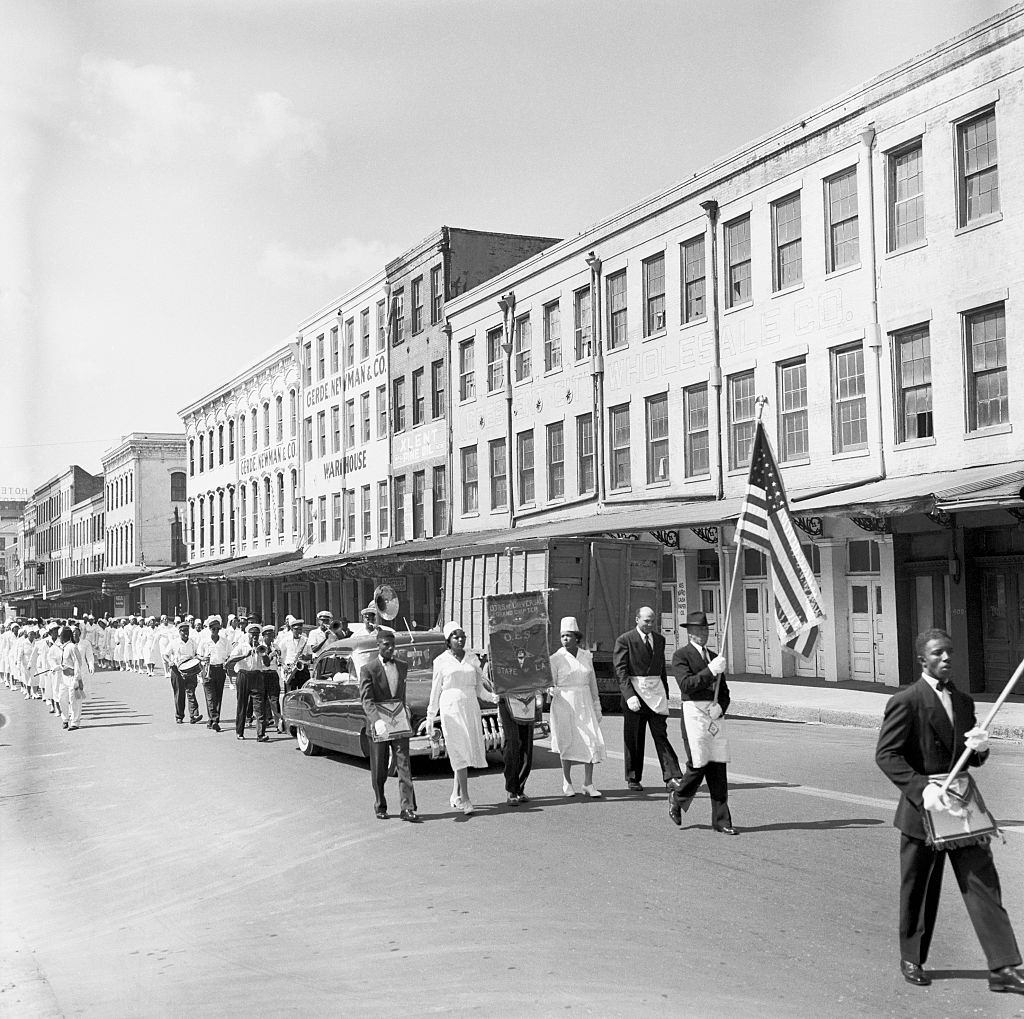
A parade of the Daughters of the Universal Chapter of the Order of the Eastern Star, a charitable organization, in New Orleans, 1955.
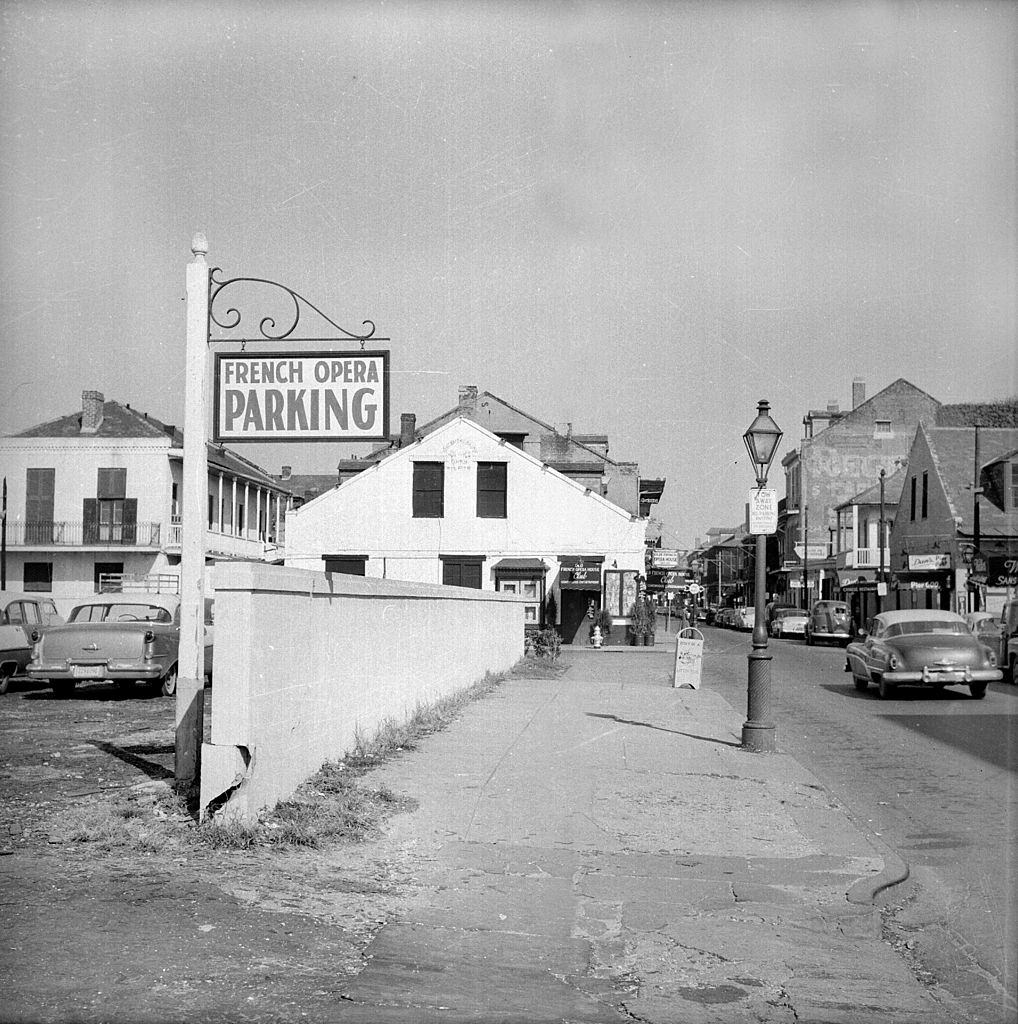
French Opera parking, New Orleans, 1955
New Orleans, 1950s
New Orleans, 1950s
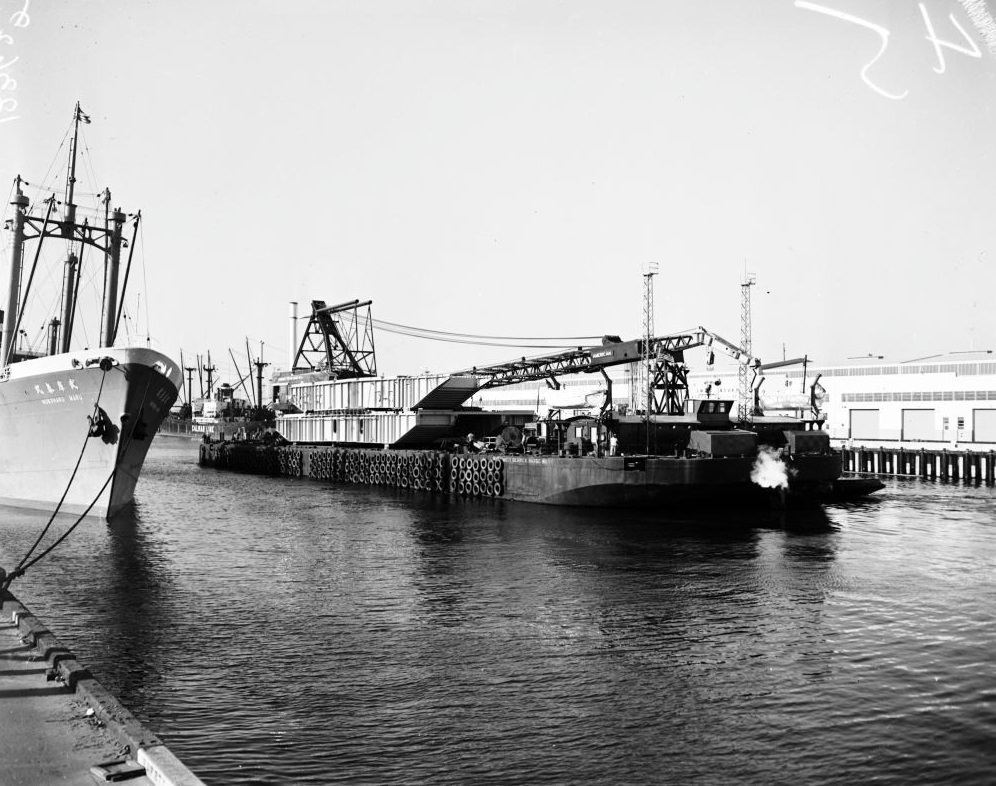
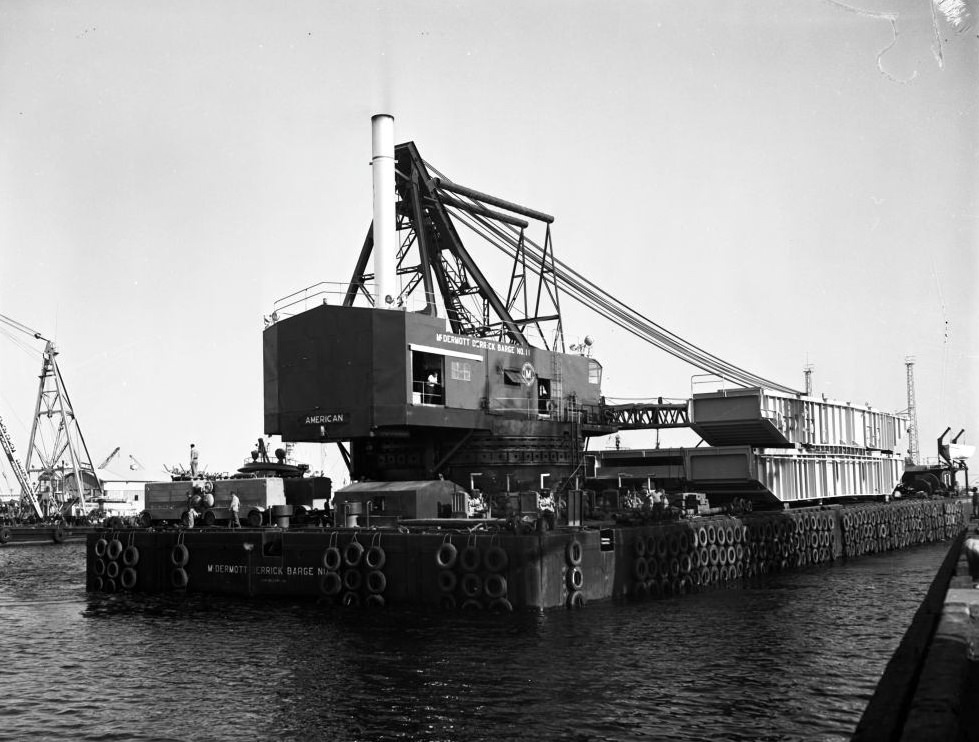
Barge entering Long Beach Harbor to pick up eighty-five feet, 1958
600 block of Dumaine street, New Orleans, 1951.
600 block of Dauphine from St. Louis Street in the morning, New Orleans, 1951.
Tenements on Annunciation near Melpomene, New Orleans, 1951.
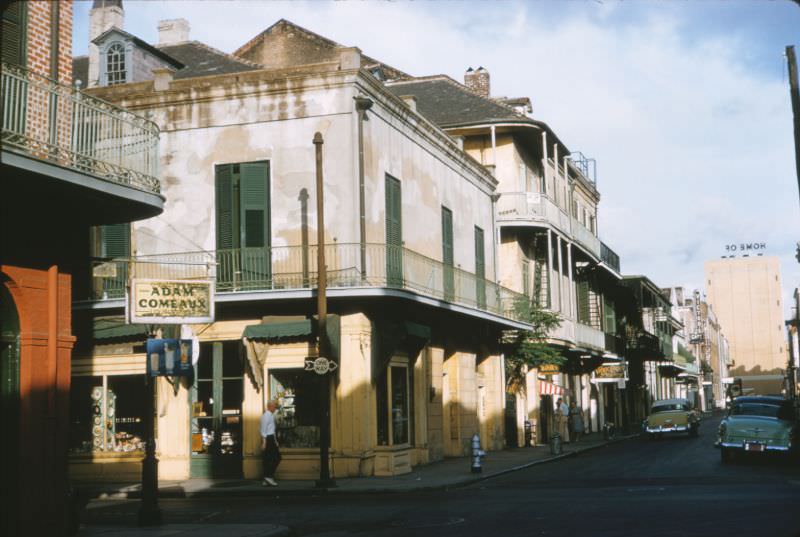
Adam Comeaux French Quarter, New Orleans, 1956.
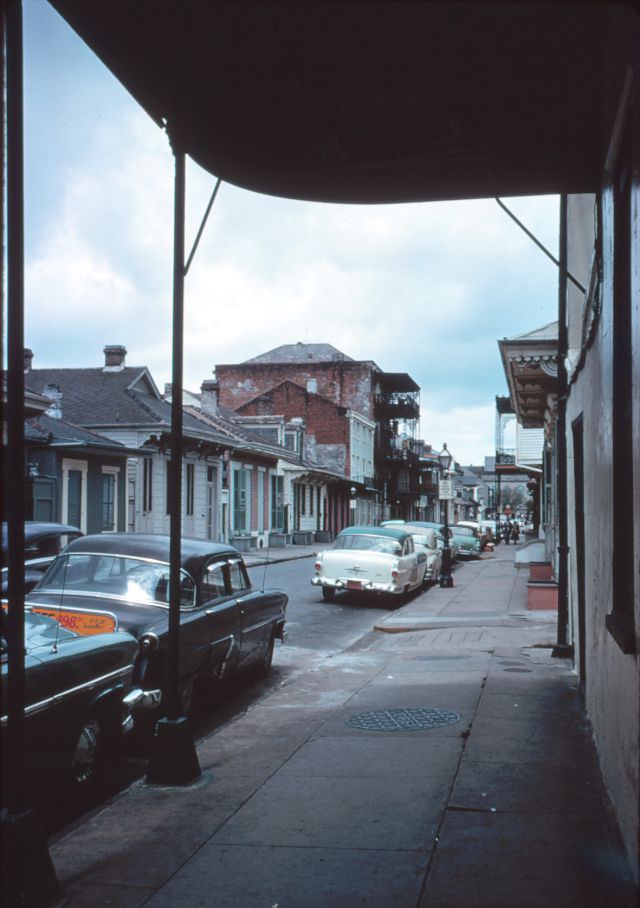
Bourbon Street houses, New Orleans, 1956.
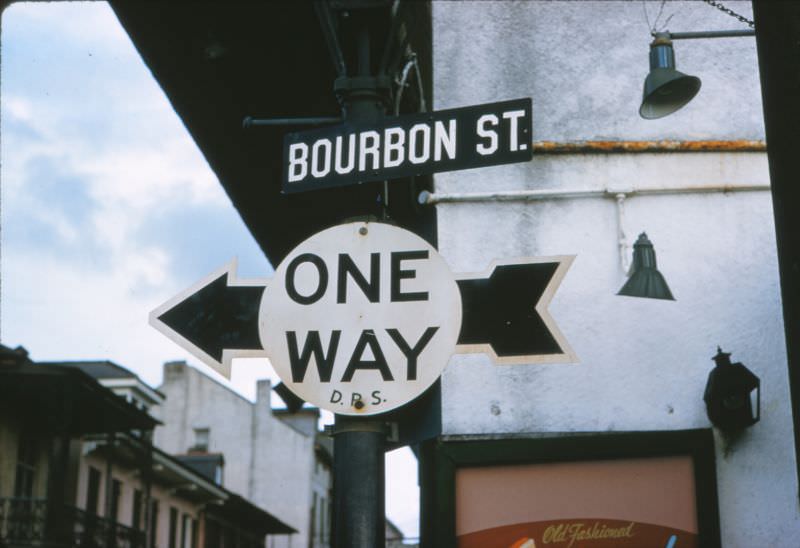
Bourbon Street one way, New Orleans, 1956.
Cafe du Monde, New Orleans, 1956.
Canal Street stores and buildings, New Orleans, 1956.
Cars along Pontalba Apt street, New Orleans, 1956.
Corner of Bourbon and Orleans Streets, New Orleans, 1956.
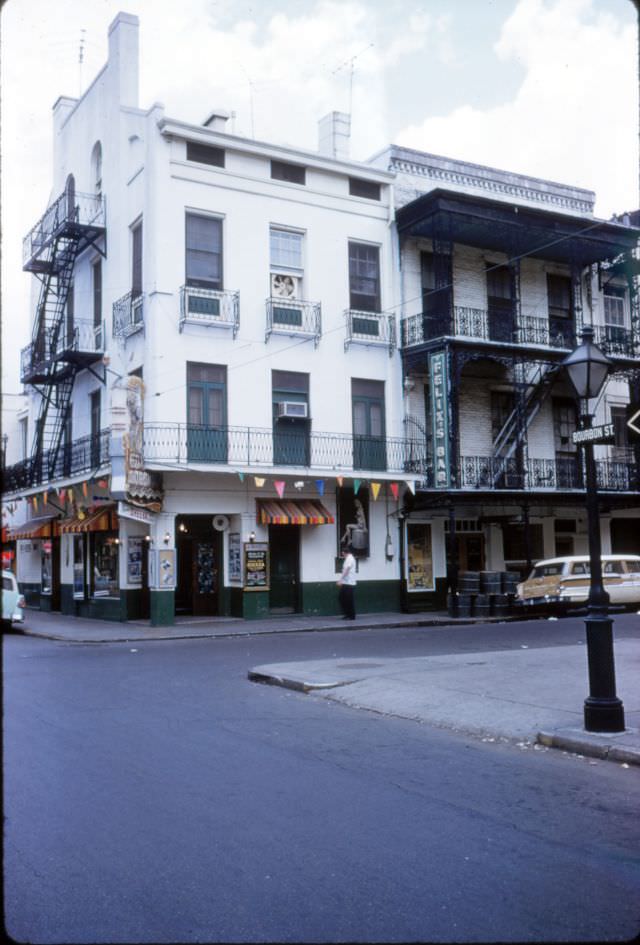
Felix's Bar off Bourbon Street, New Orleans, 1956.
Felix’s Bar off Bourbon Street, New Orleans, 1956.
Orleans St. between Royal and Bourbon, 1956.
Royal Street between Orleans and St. Peter, looking towards the CBD, 1956.
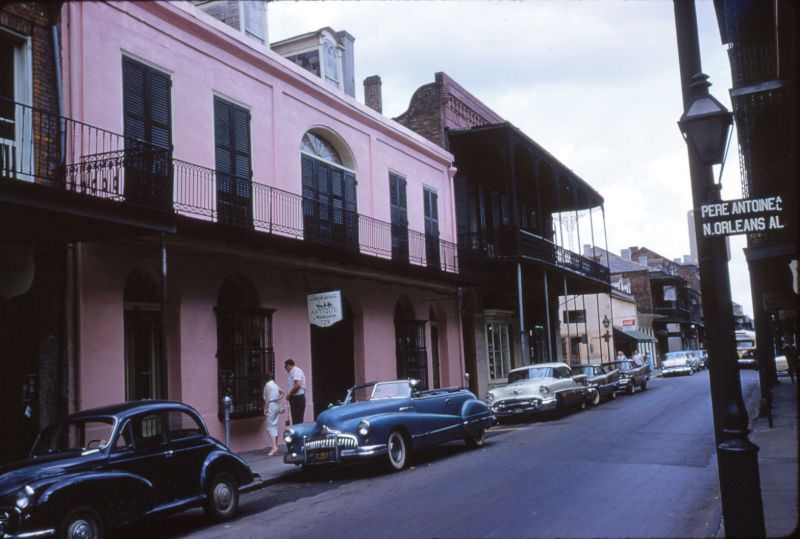
French Quarter Street with pink Antiques store, New Orleans, 1956.
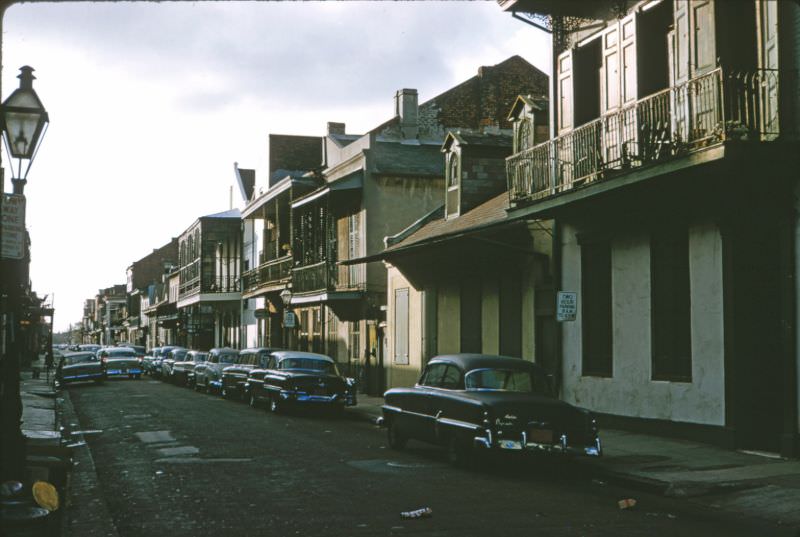
French Quarter Street, New Orleans, 1956.
Horse drawn carriage in French Quarter, New Orleans, 1956.
Hotel Bourbon and Blue Note Lounge on Bourbon Street, New Orleans, 1956.
Old Absinthe House on Bourbon Street, New Orleans, 1956.
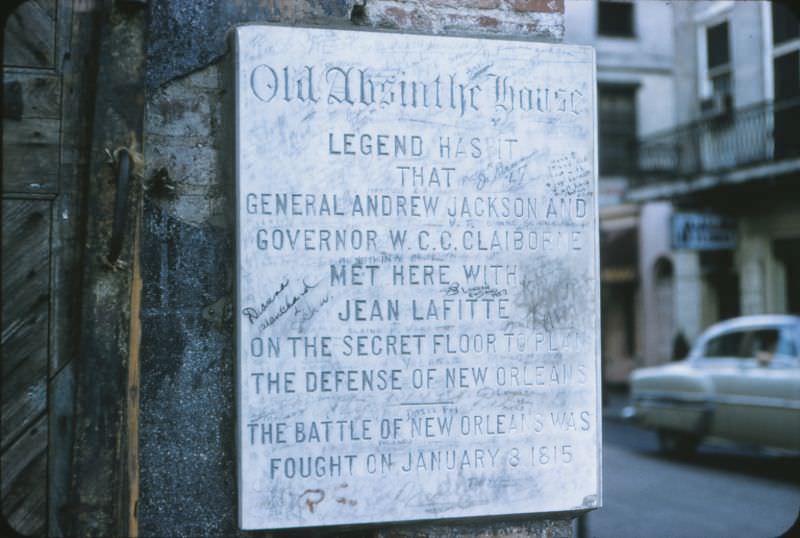
Old Absinthe House plaque, New Orleans, 1956.
On Chartres going toward St Louis Cathedral, New Orleans, 1956.
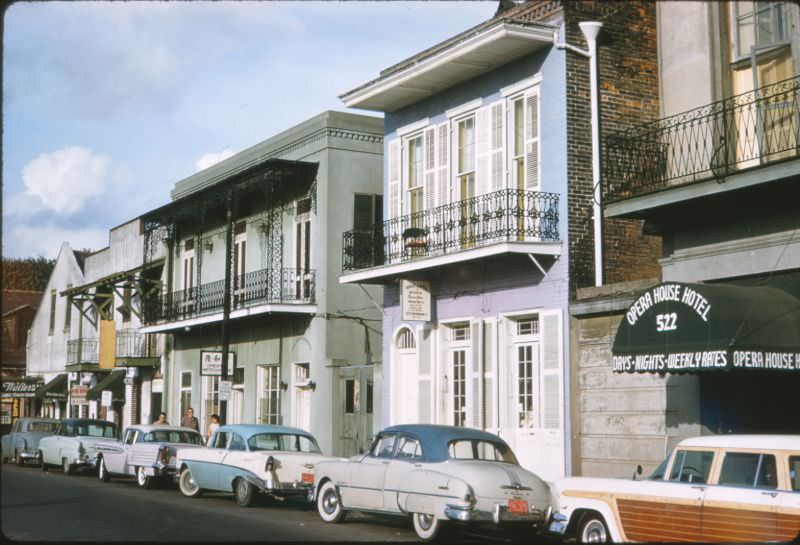
Opera House Hotel 522, New Orleans, 1956.
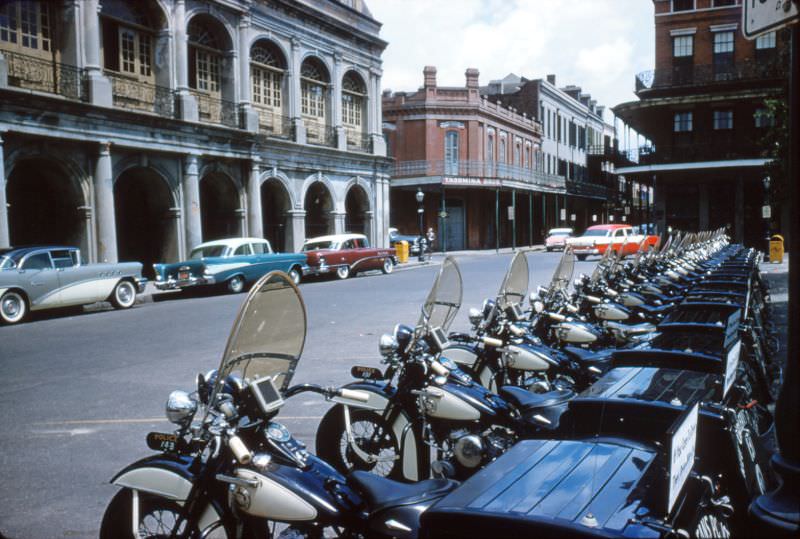
Police motorcycles across from the Presbytere, New Orleans, 1956.
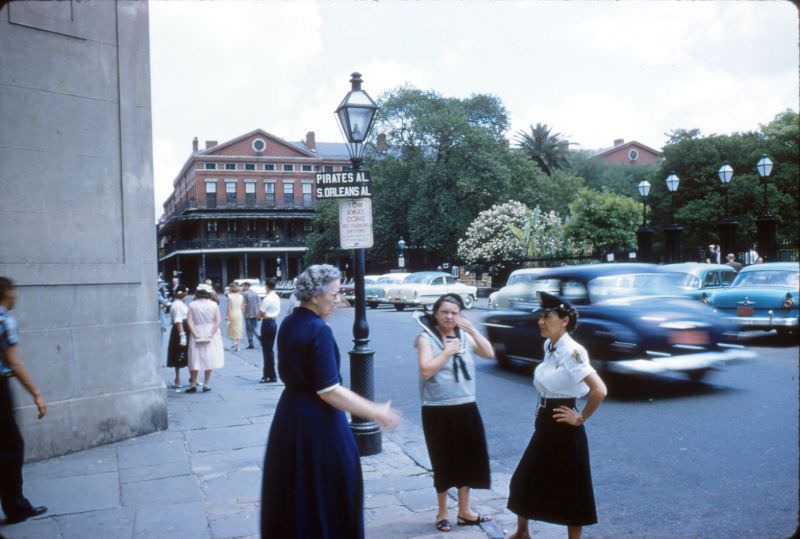
Policewoman and other women at St Louis Cathedral, New Orleans, 1956.
Pontalba Apts across Decatur Street, New Orleans, 1956.
Pontalba Apts near Cafe du Monde with chef, New Orleans, 1956.
Pontalba Apts, cabildo arch, yellow trash can, New Orleans, 1956.
Pontalba Apts, New Orleans, 1956.
St. Louis Cathedral, New Orleans, 1956.
St. Louis Street, New Orleans, 1956.
Wrought iron balconies and cars, New Orleans, 1956.
Enjoyed this post? Get new ones in your inbox.
Avatar of Aung Budhh

Written by Aung Budhh

Husband + Father + librarian + Poet + Traveler + Proud Buddhist. I love you with the breath, the smiles and the tears of all my life.

Leave a Reply

Your email address will not be published. Required fields are marked *

16 Comments

    • New Orleans isn’t the only place that has undergone significant changes. During 1950s, Canal St was heavily populated by department stores. Some were local; some were national. The reason people dressed up part because they went to hella friendly stores to shop or work.

Load more comments