
The Netherlands in the 1970s was a country in motion. Cities were expanding at speed, social movements were shaking old structures, and the economy was lurching through one of its most difficult decades. From the polders of Flevoland to the glowing neon streets of Amsterdam at night, the decade left a sharp and distinctive mark on Dutch life. These photographs capture it in remarkable detail.
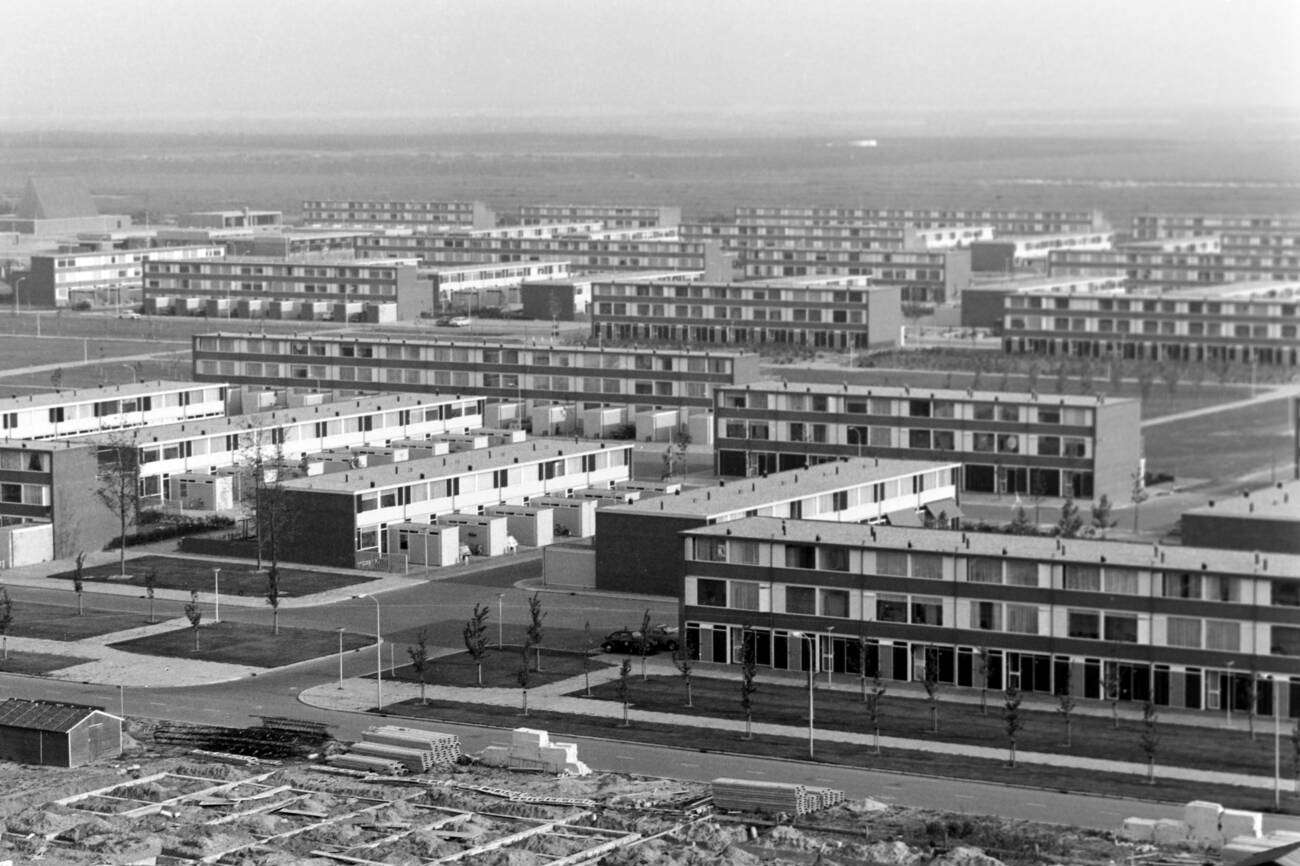
The decade opened with the Netherlands still carrying the optimism of postwar reconstruction. New towns were rising on land that had not existed a generation earlier. The province of Flevoland, reclaimed from the IJsselmeer, was being settled and built out at a rapid pace. Roads were being laid, schools were opening, and families were moving into fresh housing estates far from the old city centers.
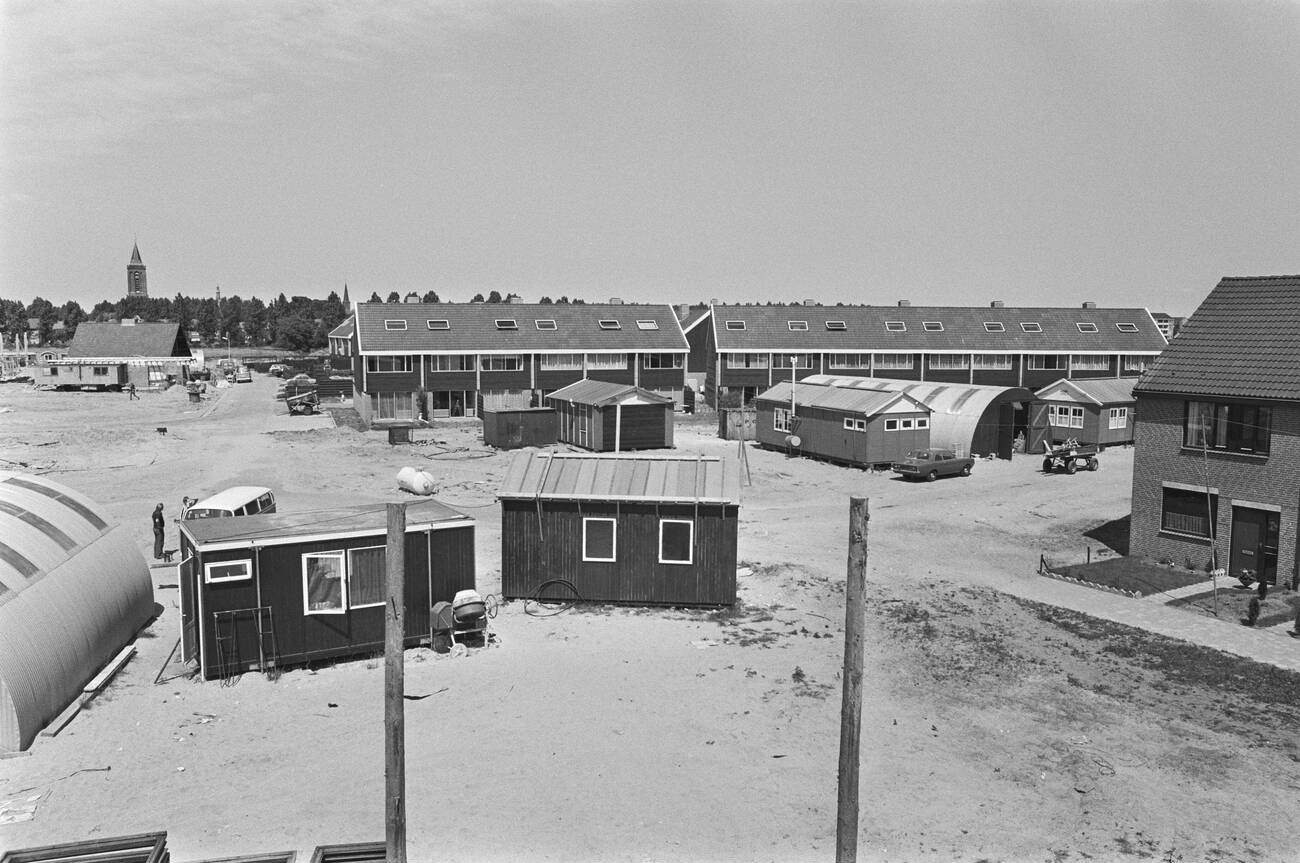
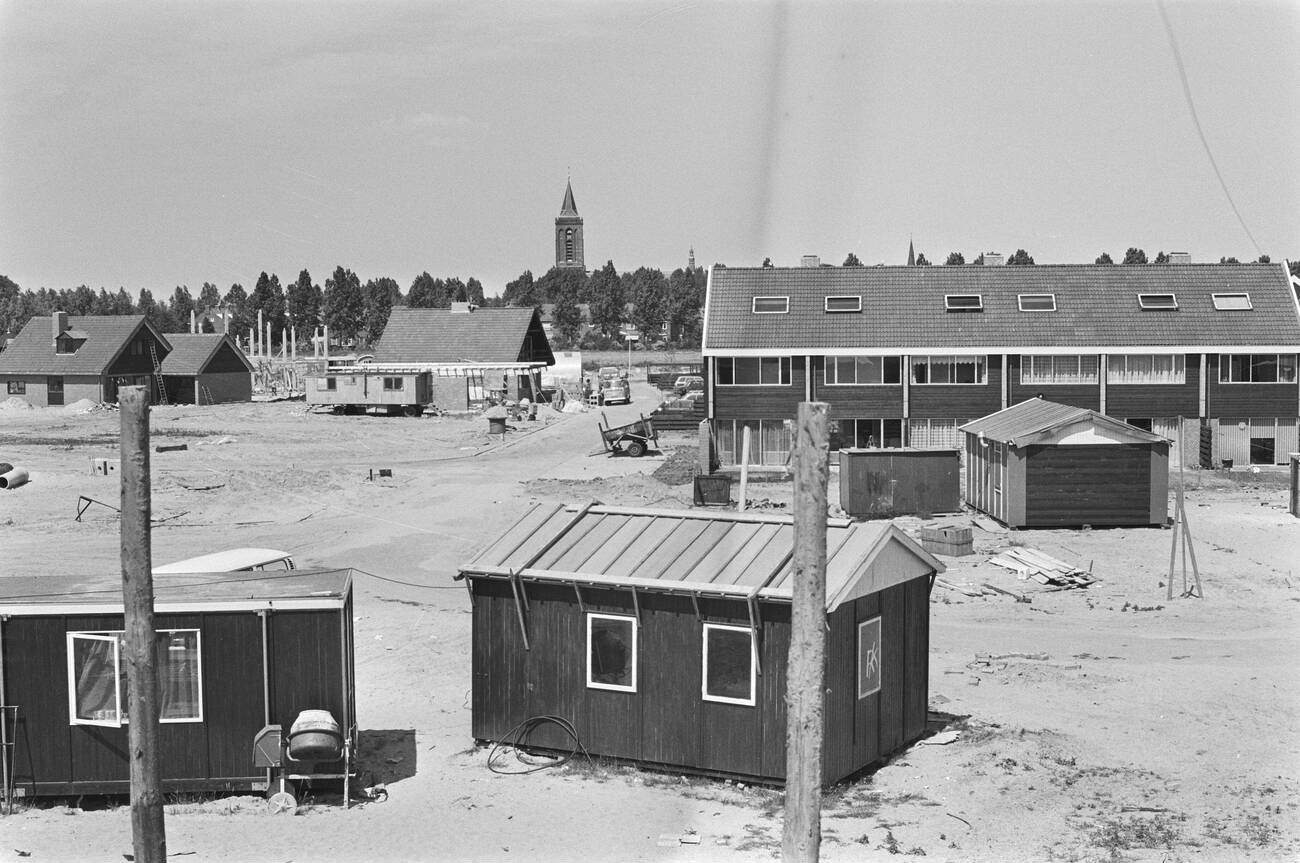
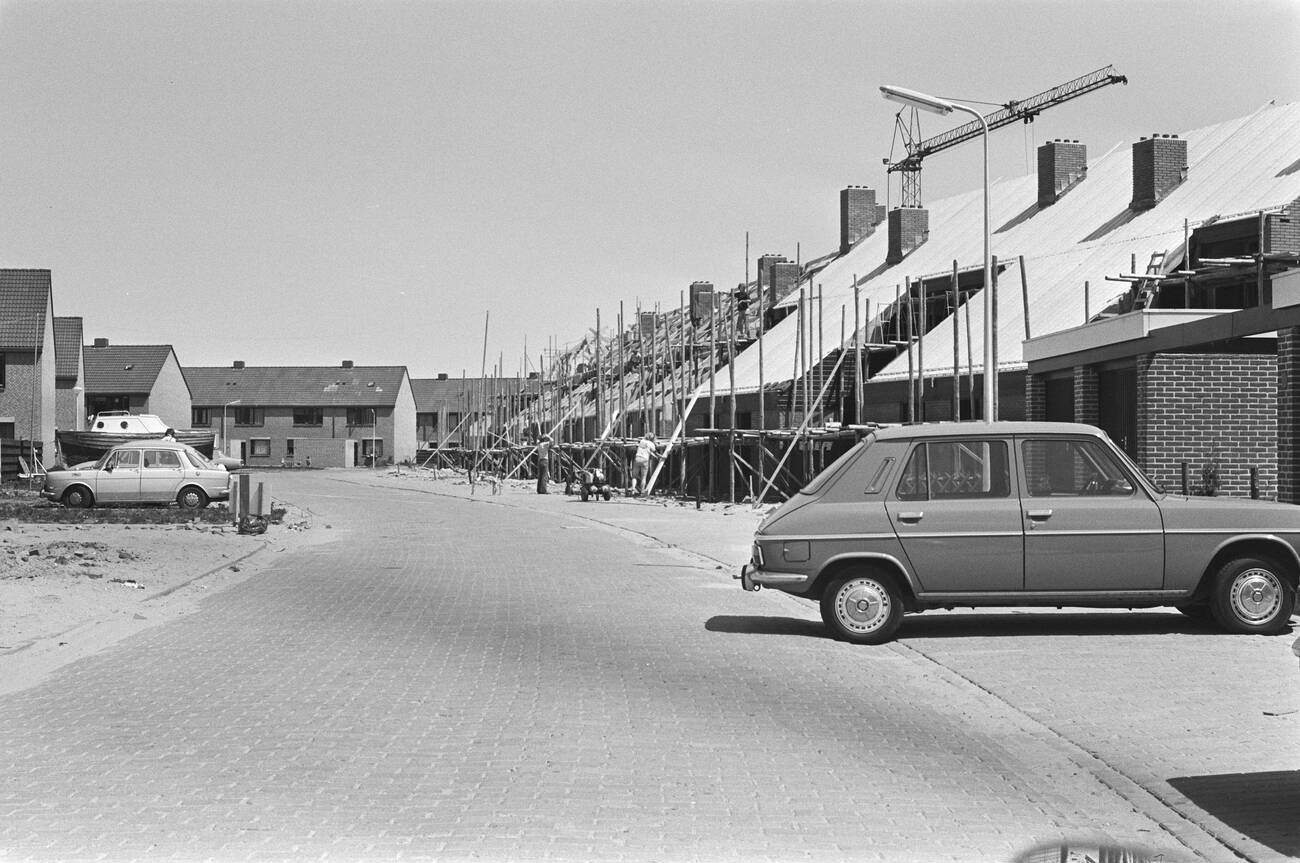
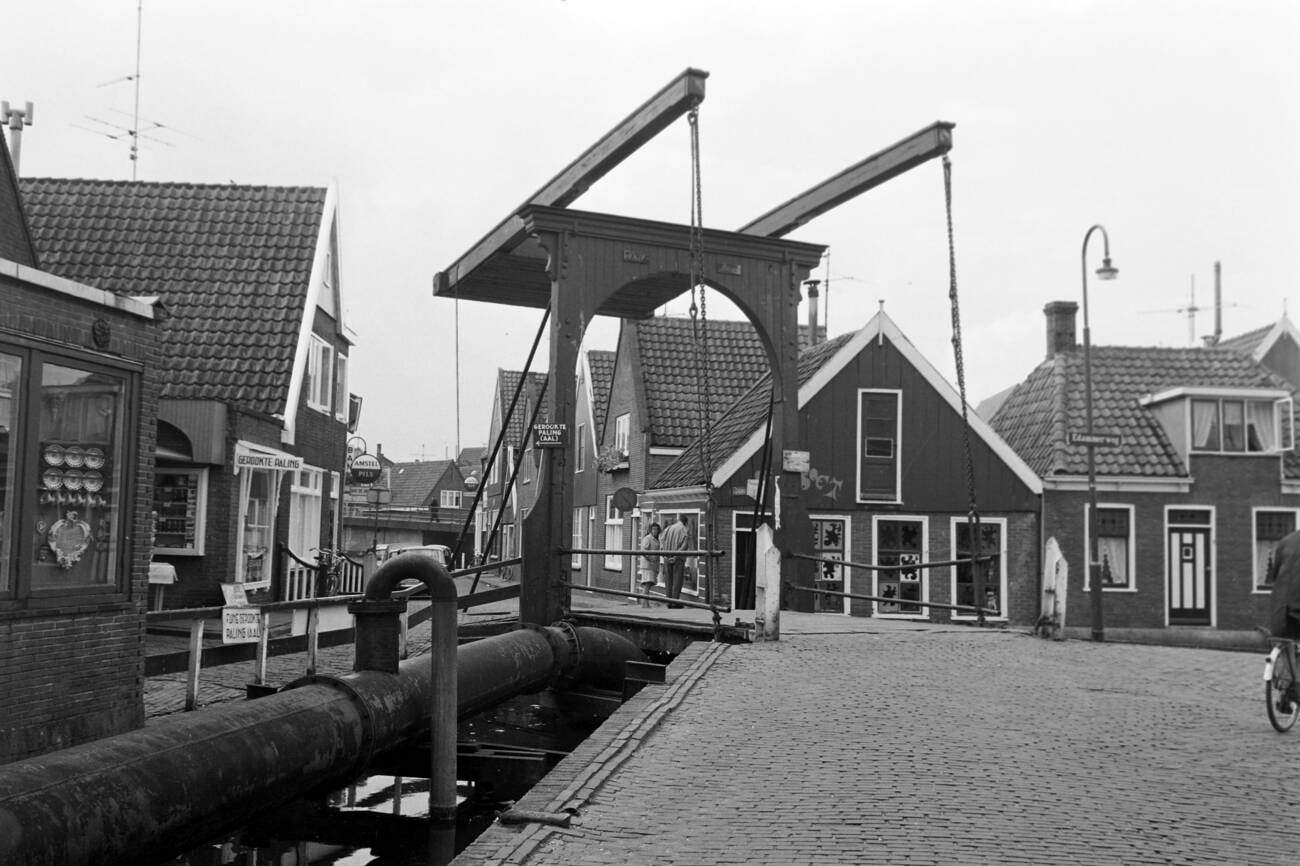
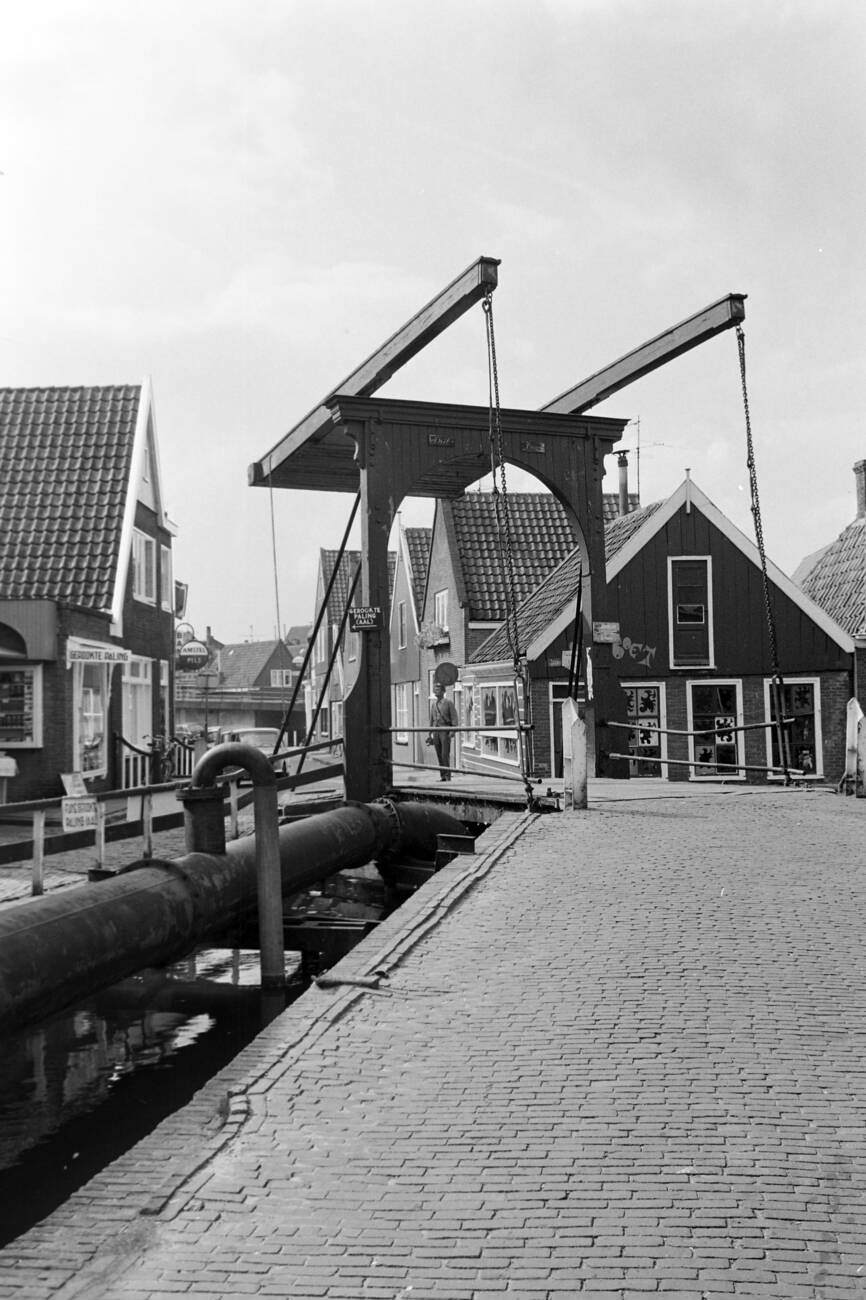
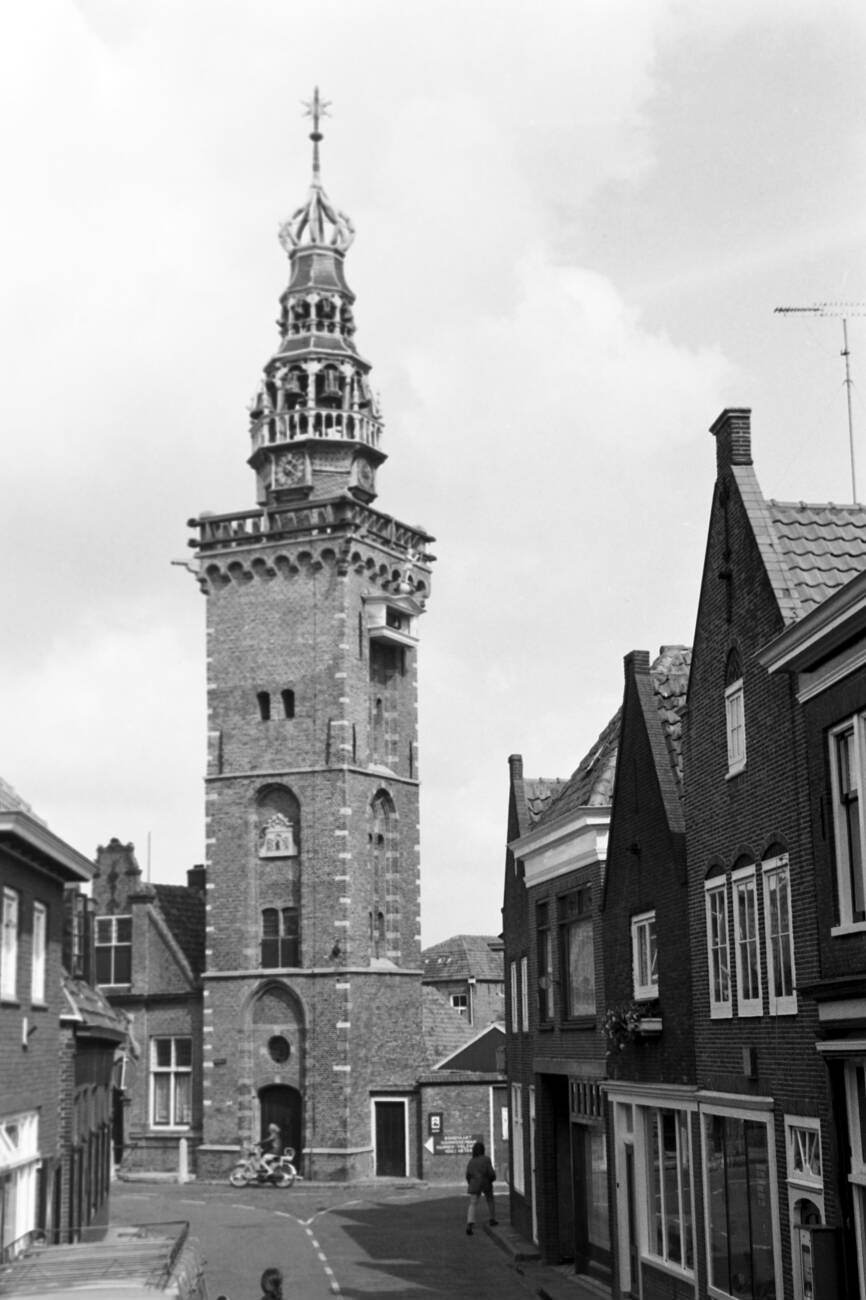
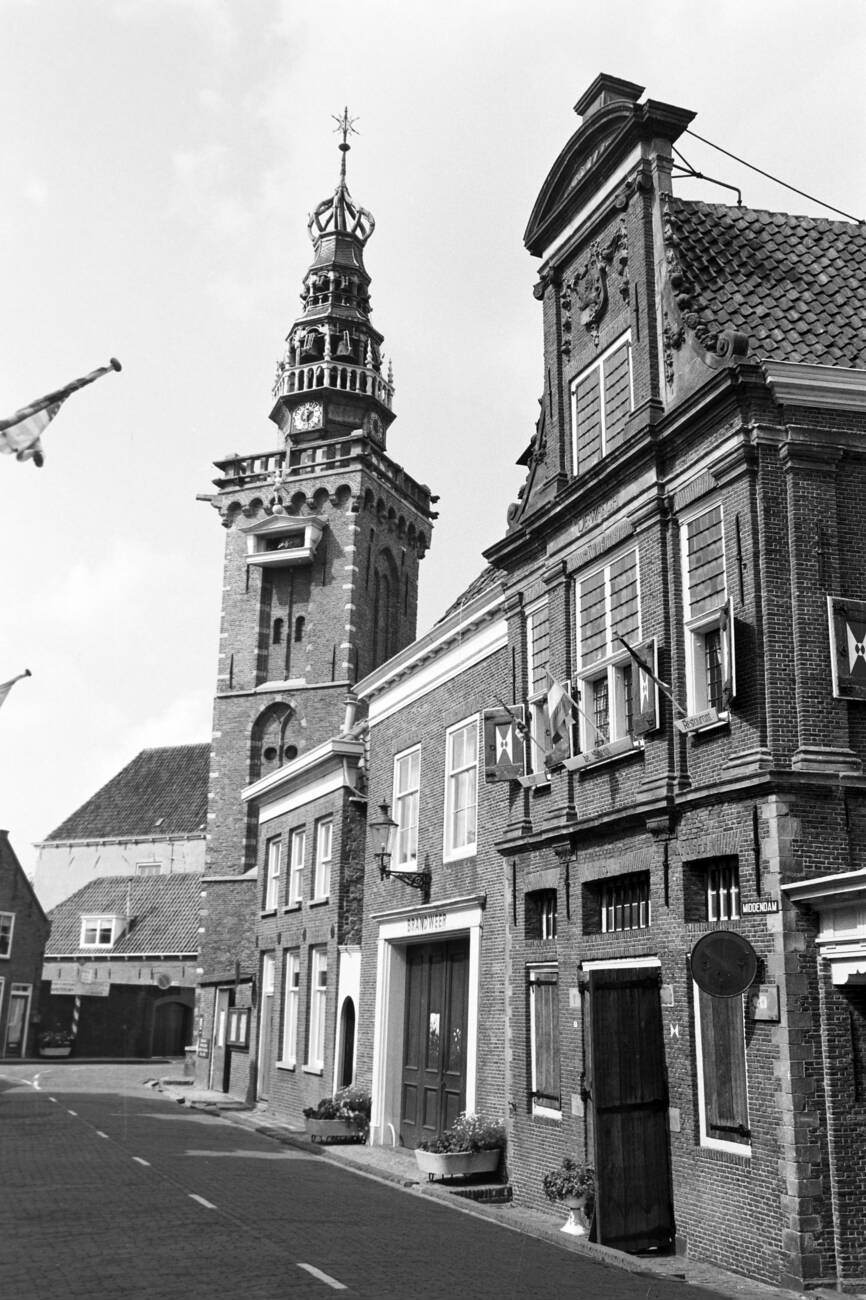
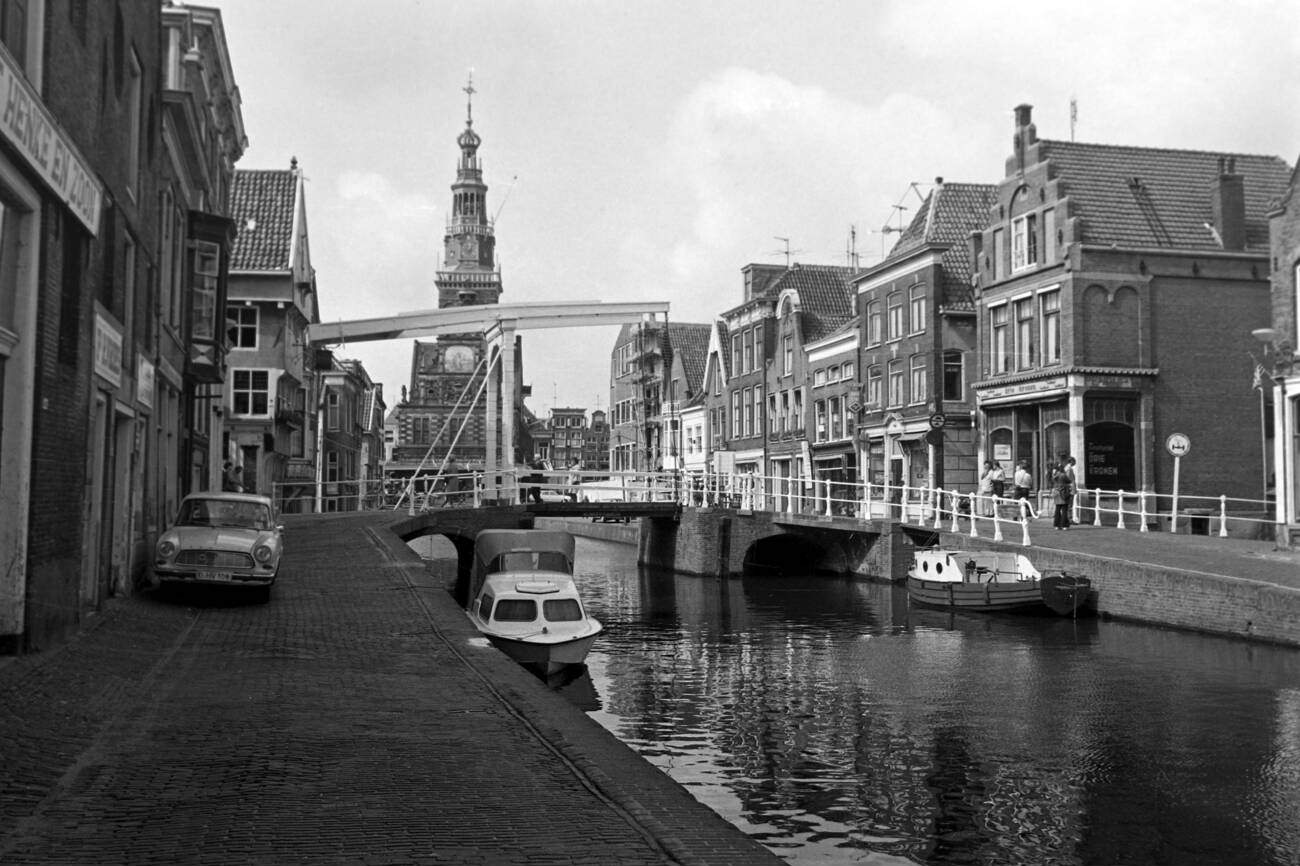
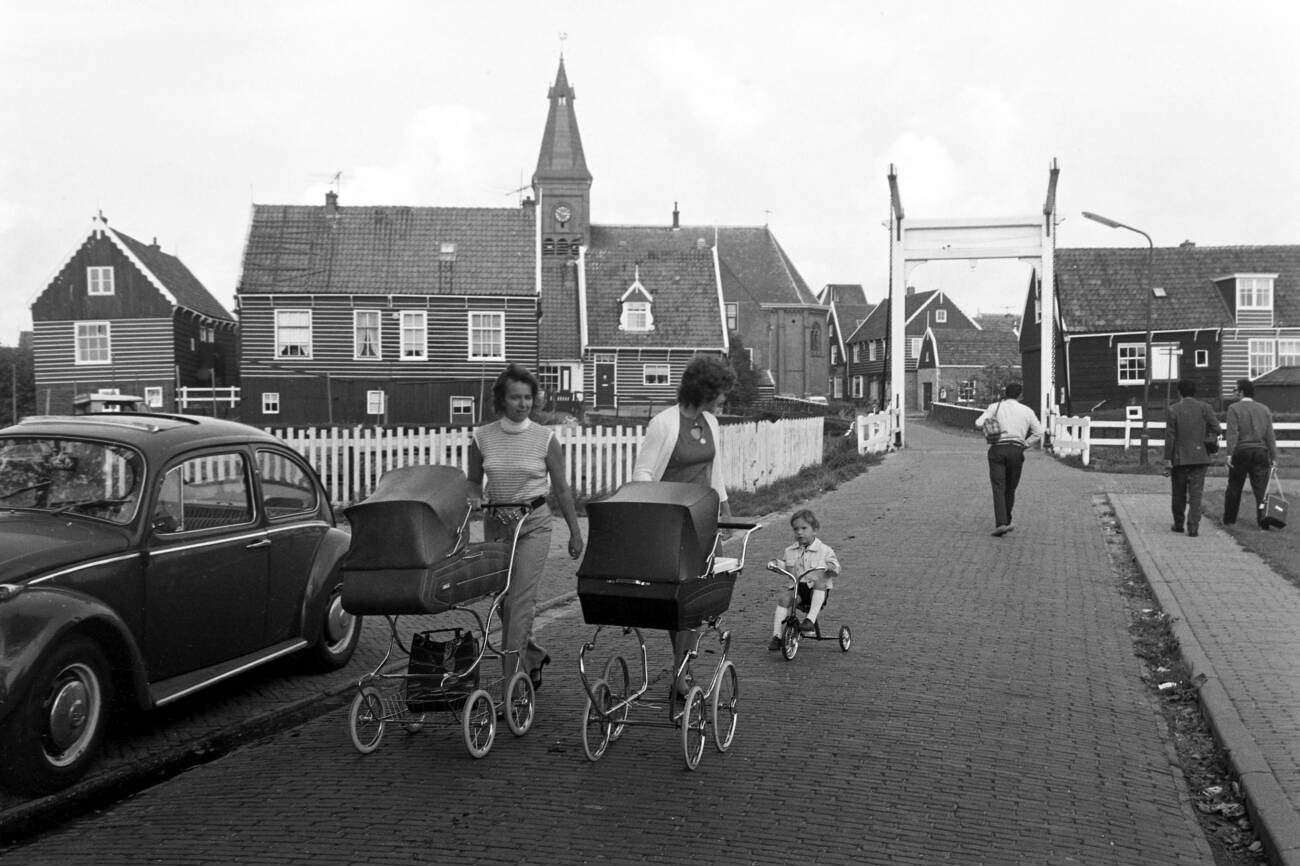
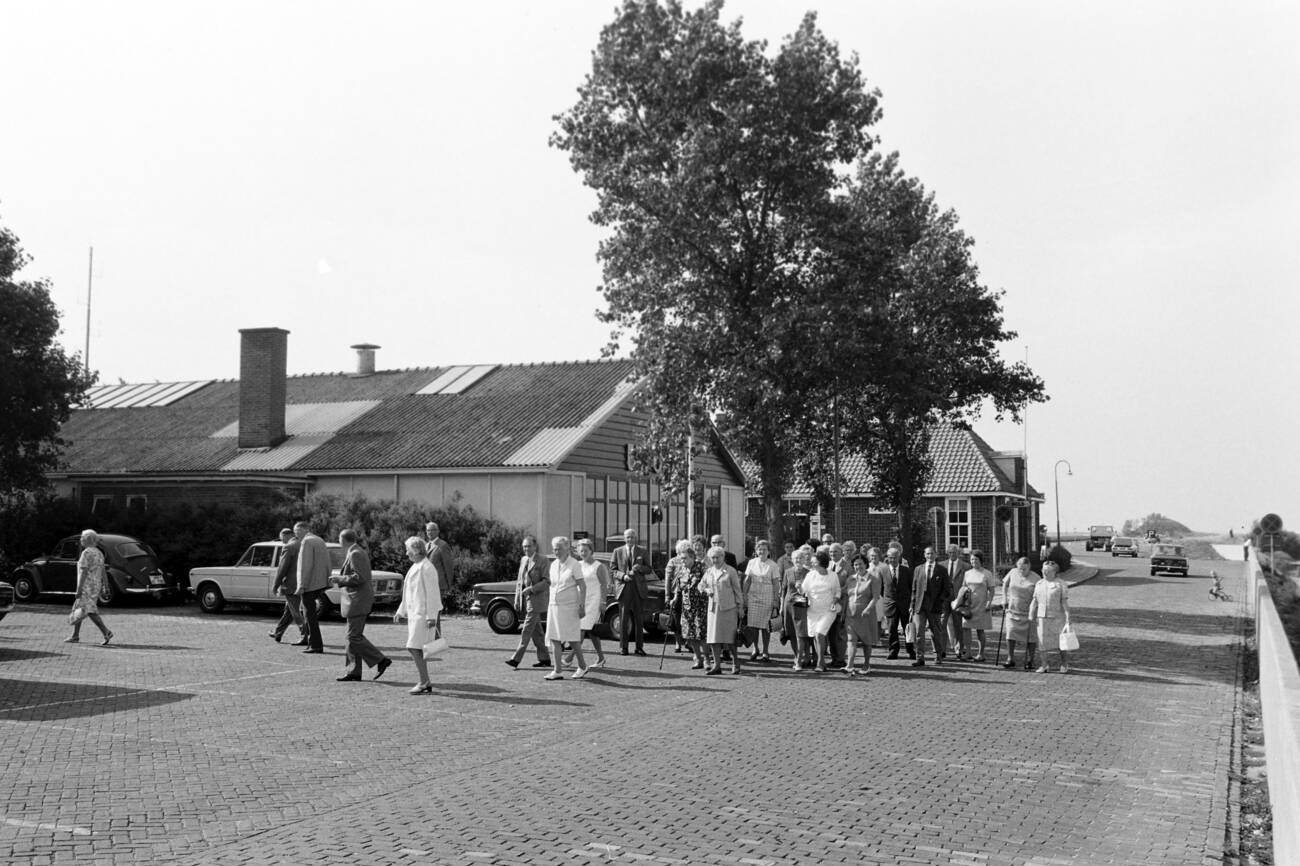
Monnickendam, a small historic town north of Amsterdam, illustrated the tension of the era perfectly. Its medieval core — the Speeltoren bell tower, the old drawbridges, the narrow streets — sat right alongside raw new construction. Cranes worked on the town’s edges while tourists still wandered its cobblestones. The 1976 images of this expansion show fresh foundations and unfinished streets stretching into what had recently been open fields.
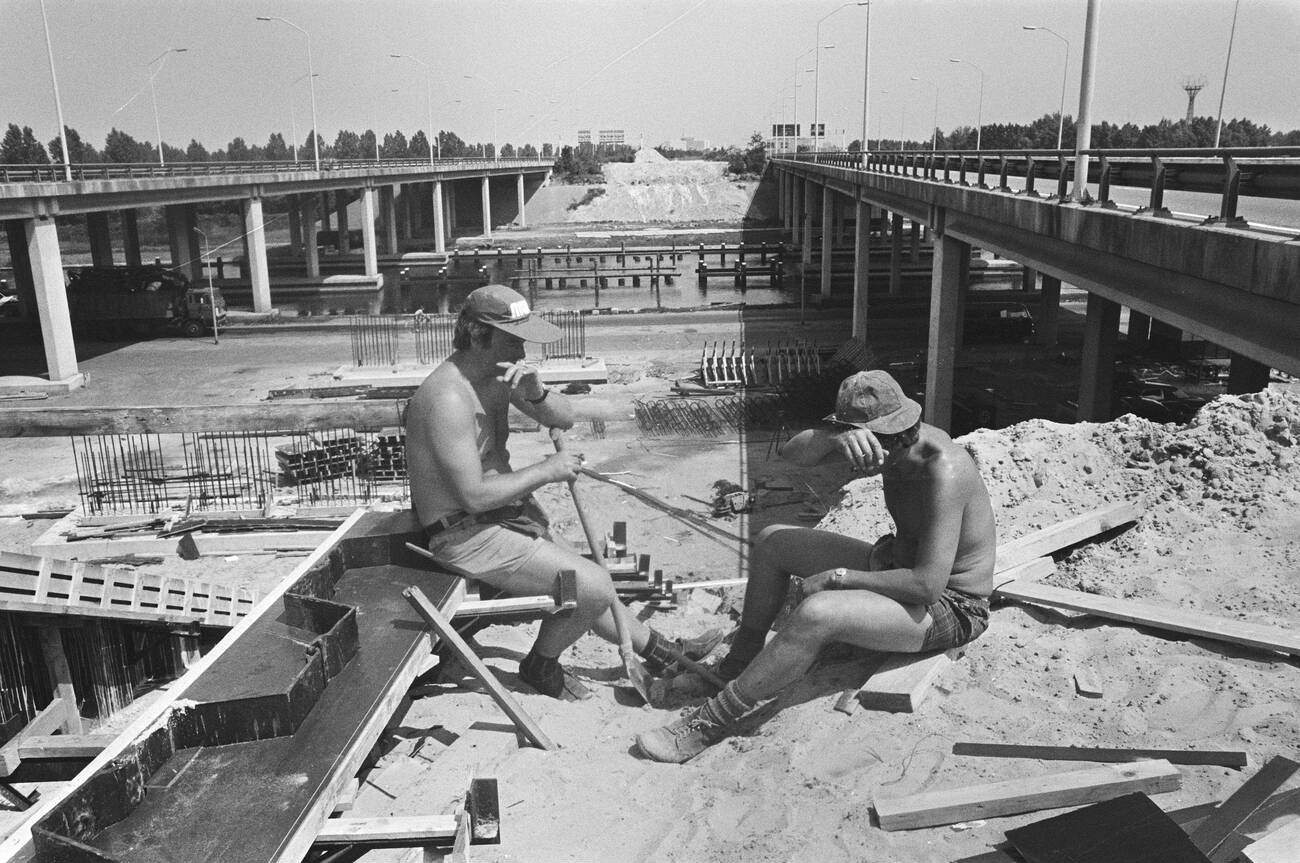
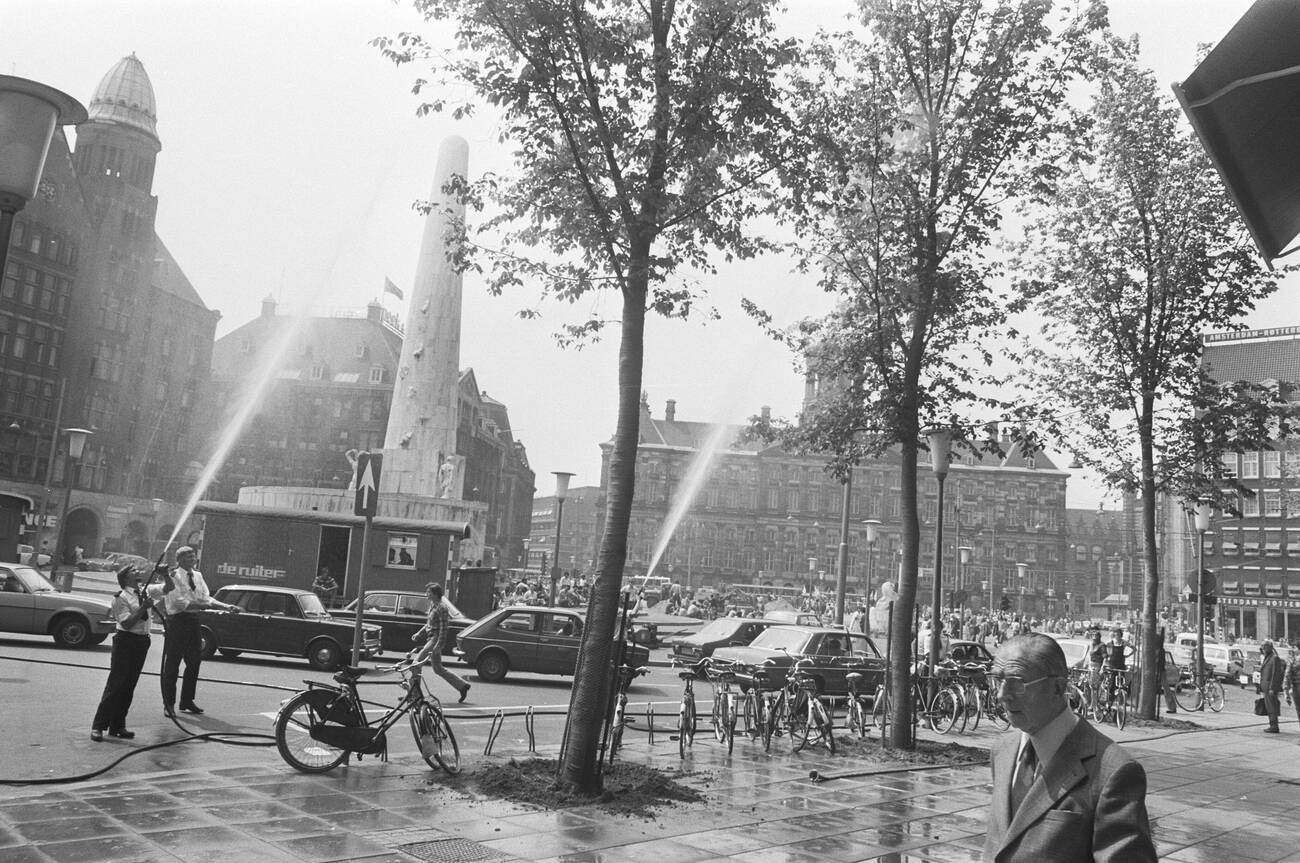
Infrastructure projects were a constant backdrop to 1970s life. The extension of rail lines, the laying of new roads, and the expansion of Schiphol airport all demanded enormous amounts of labor. Workers on the Schiphol rail line construction endured a brutal summer heat wave in 1976 — a heat wave that also sent enormous crowds to the beaches at Scheveningen and Zandvoort, and prompted Amsterdam’s fire brigade to spray trees with water on Dam Square just to keep them alive.
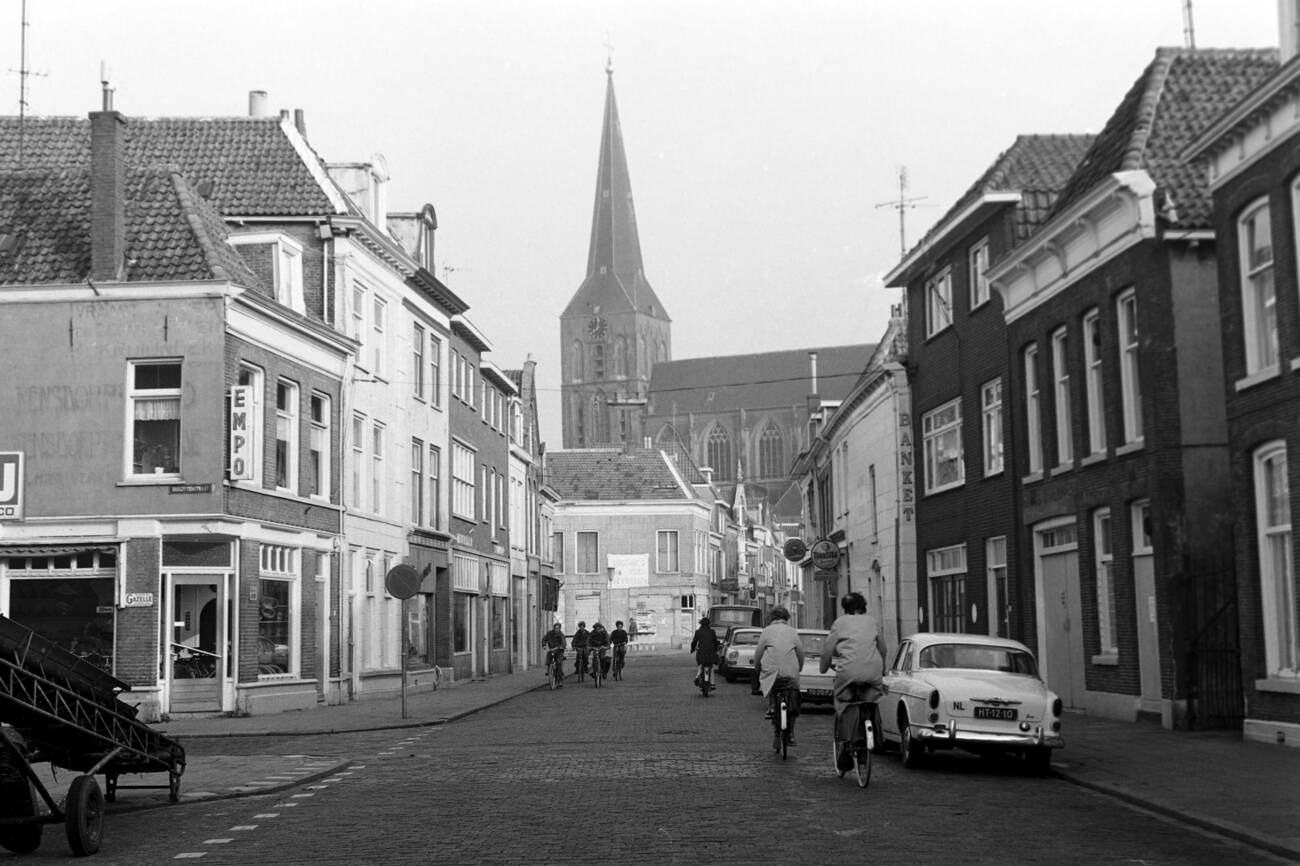
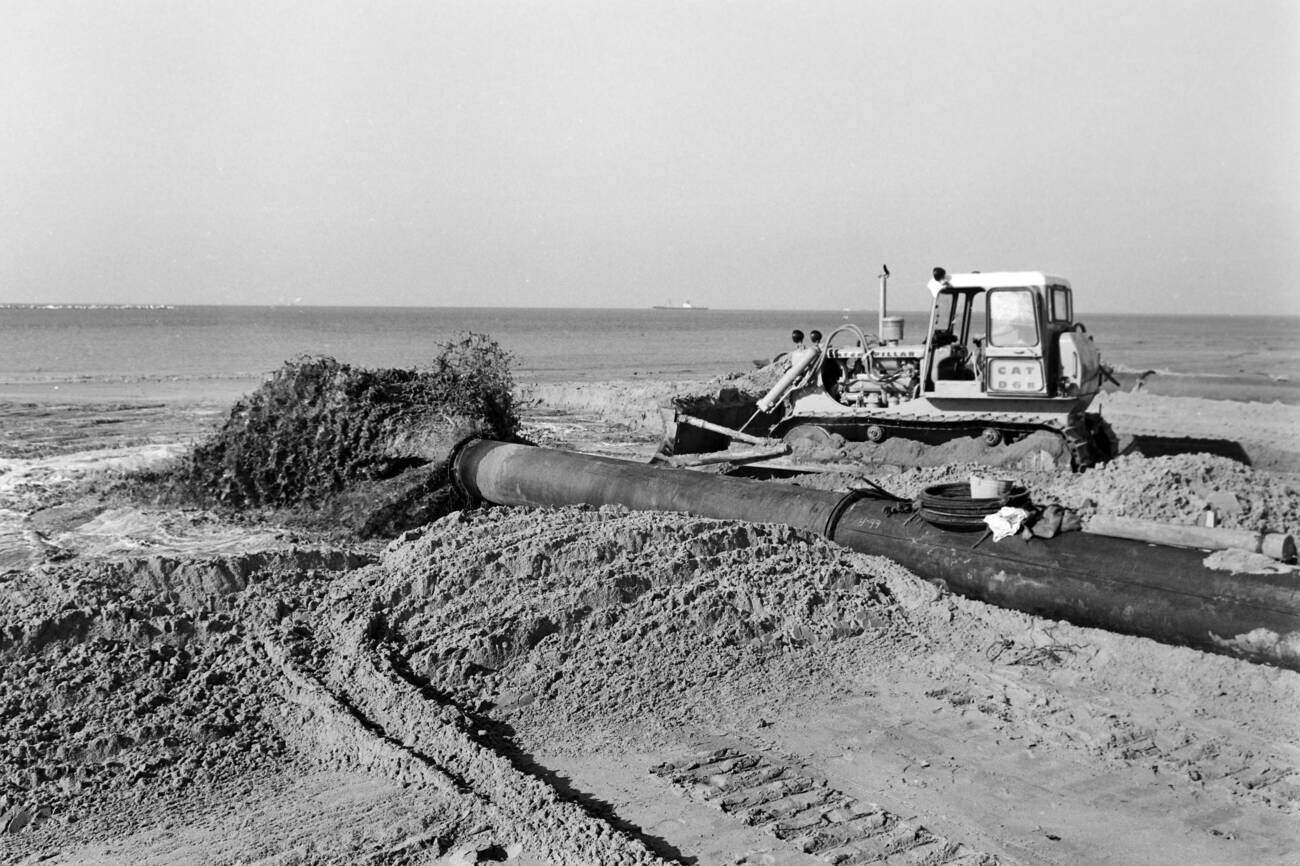
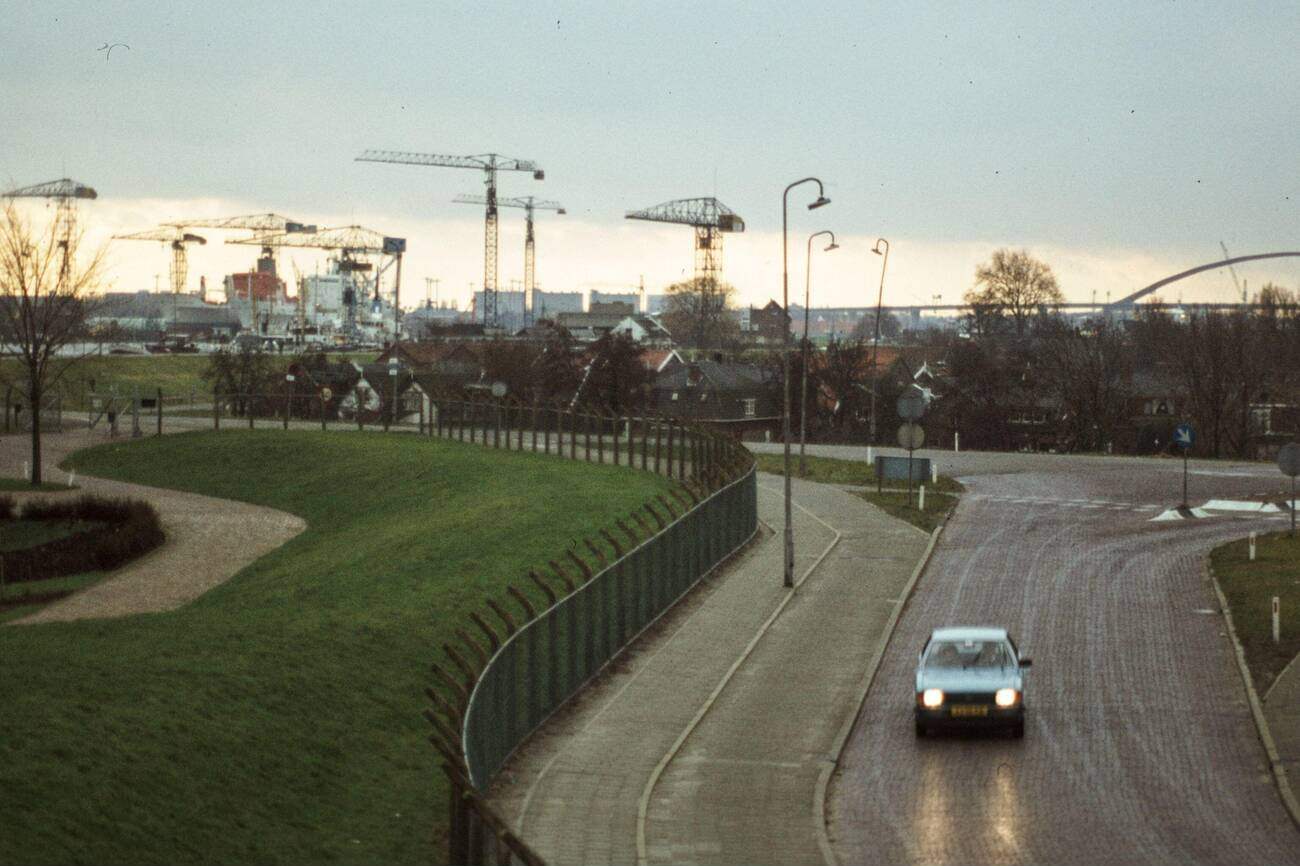
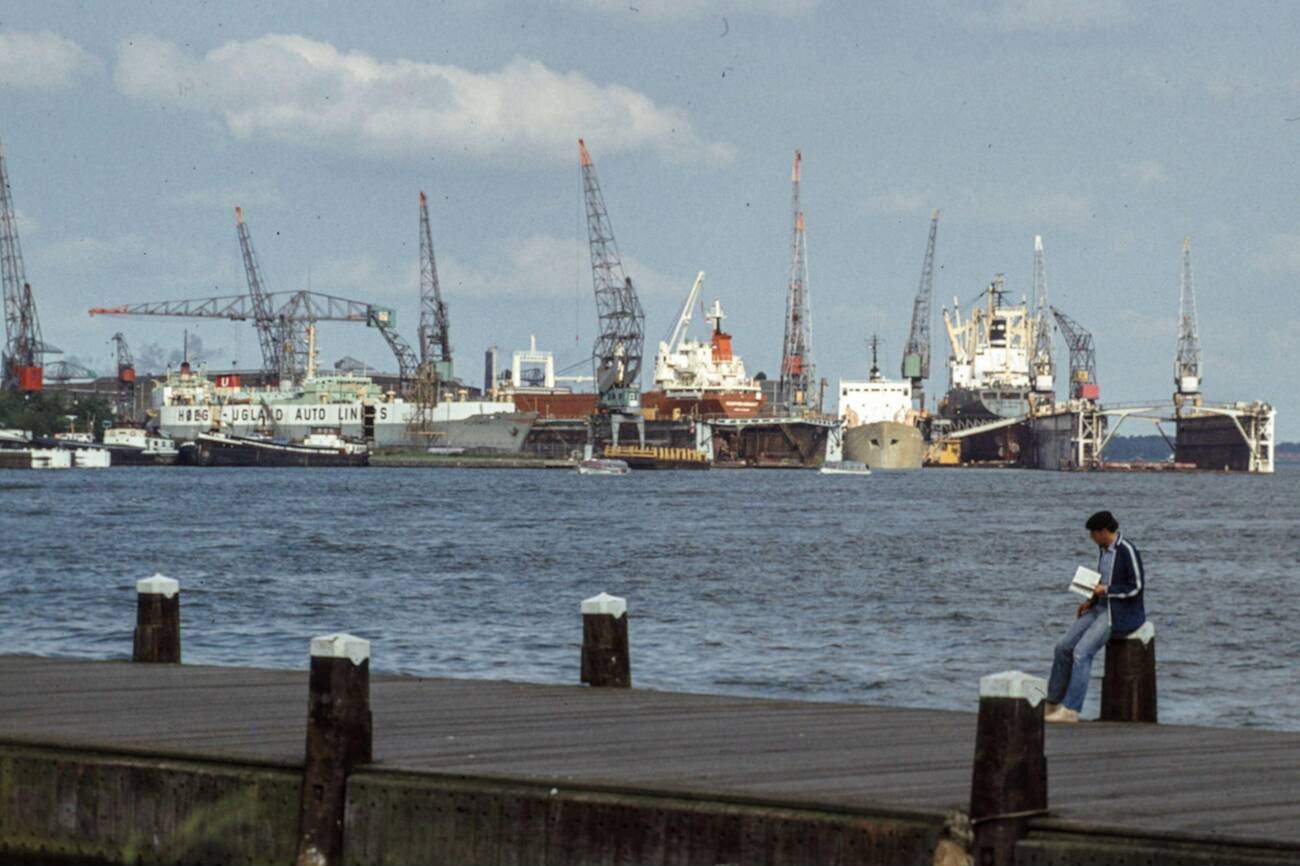
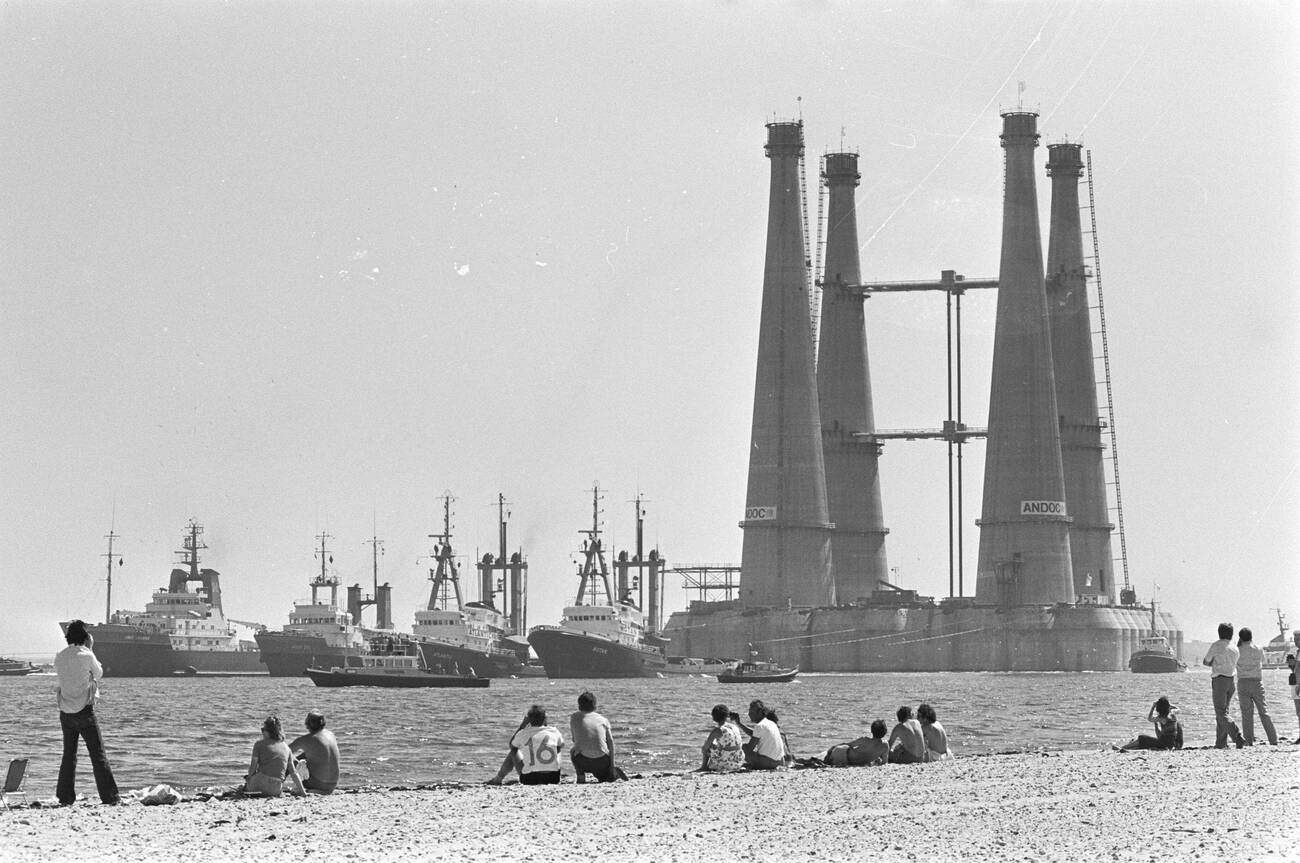
Rotterdam, already one of the world’s busiest ports, was still actively reshaping its coastline in the early part of the decade. Dredgers deposited earth along the waterfront to create new industrial land. The port handled thousands of cargo containers, and massive drilling platforms were towed out through its waters — including a colossal rig sent off to Norway in July 1976. Rotterdam’s skyline was changing too, with modernist architecture like the Euromast tower giving residents and visitors sweeping views over the city’s expanding harbor.
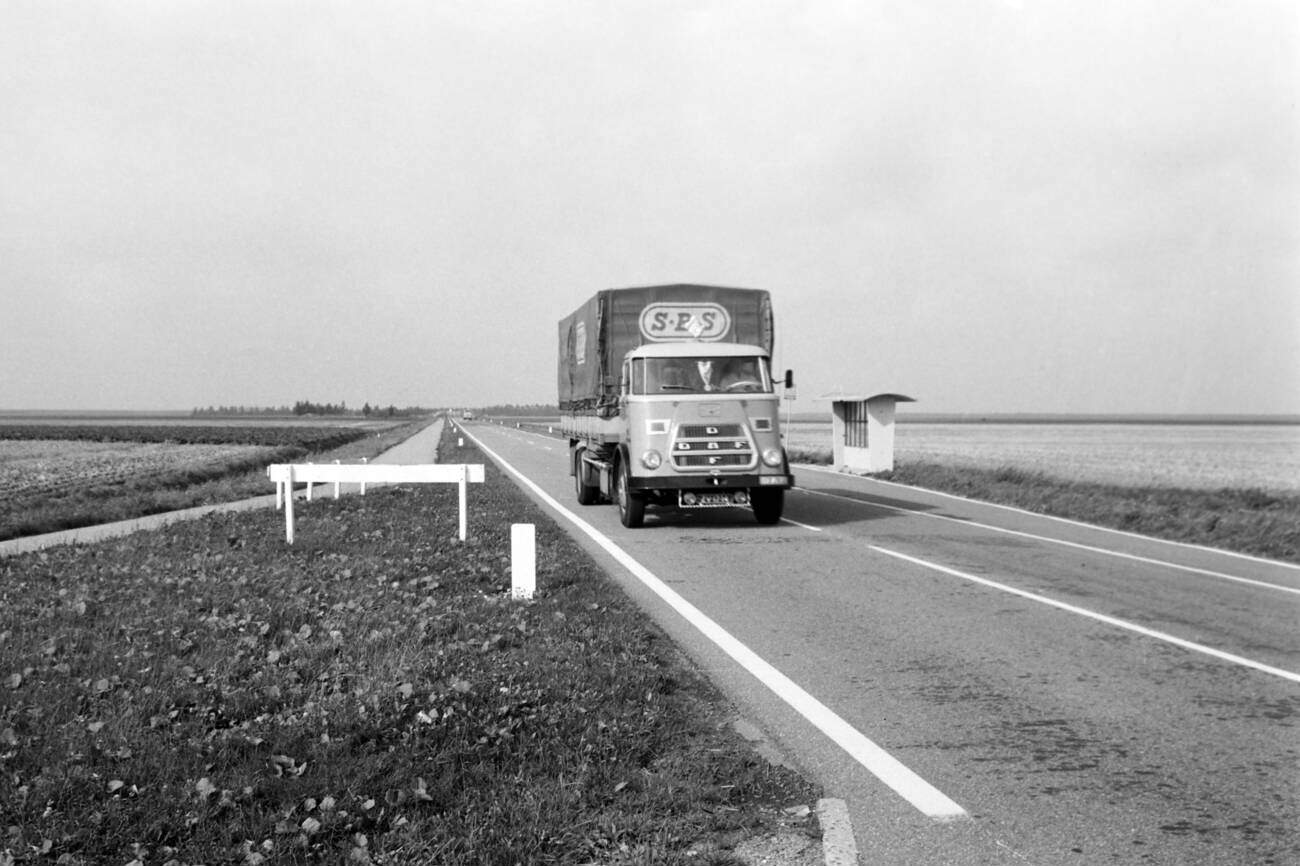
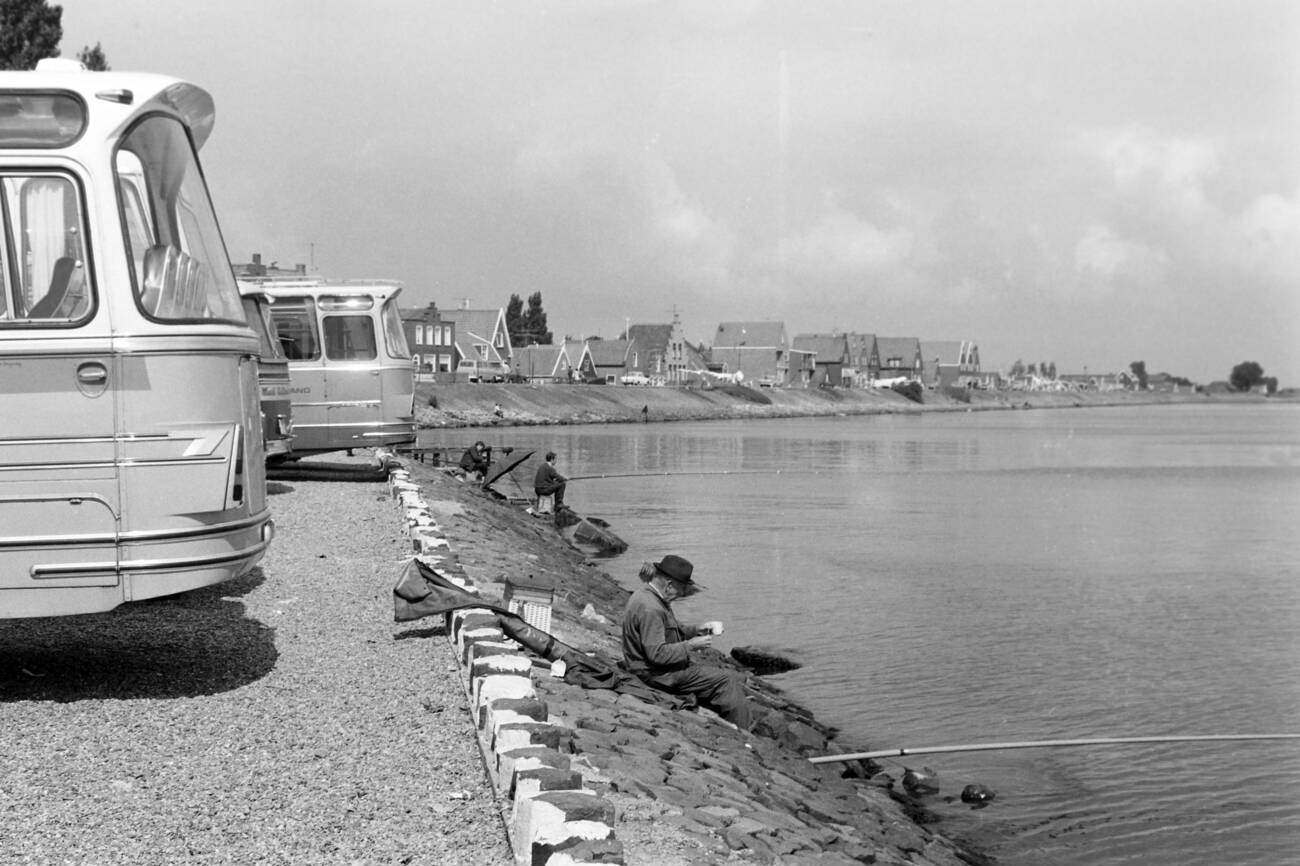
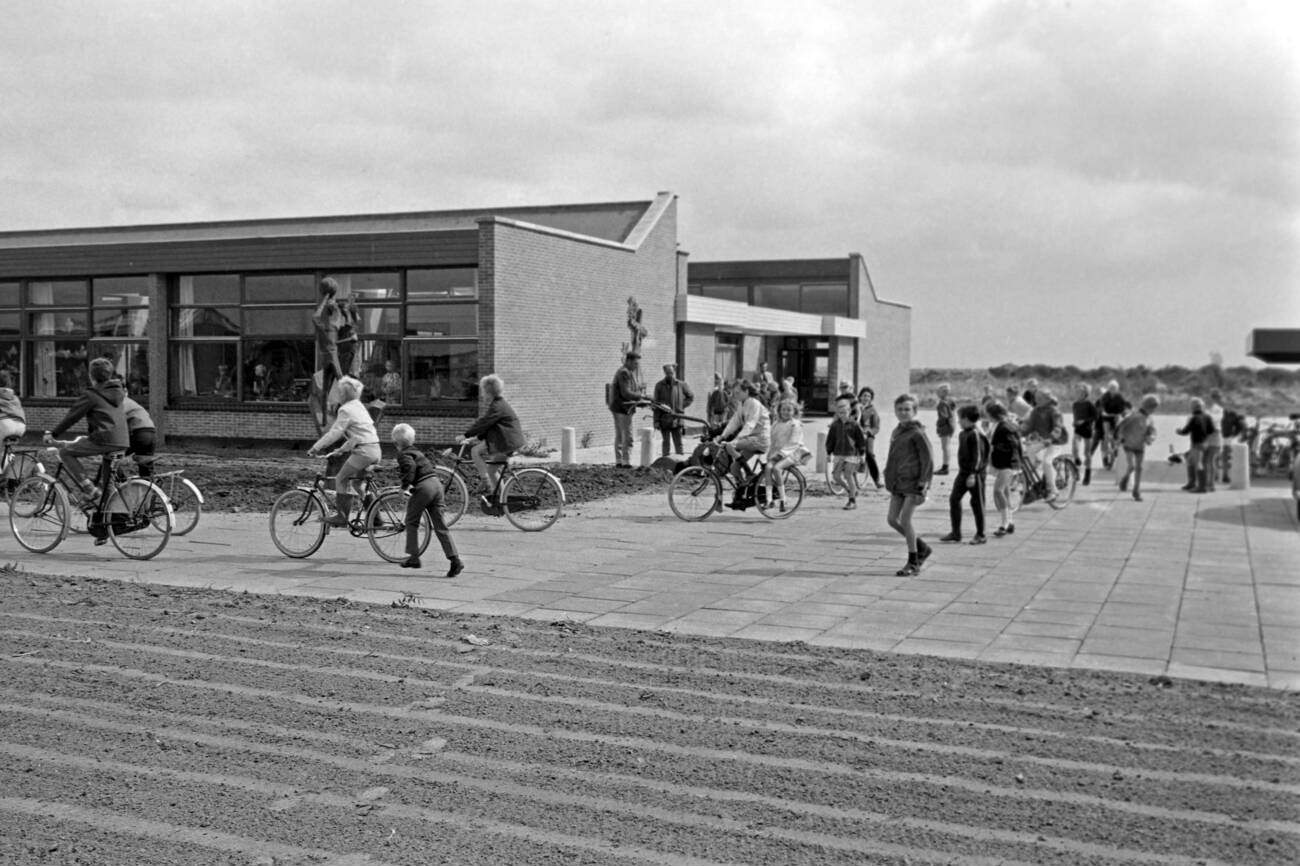
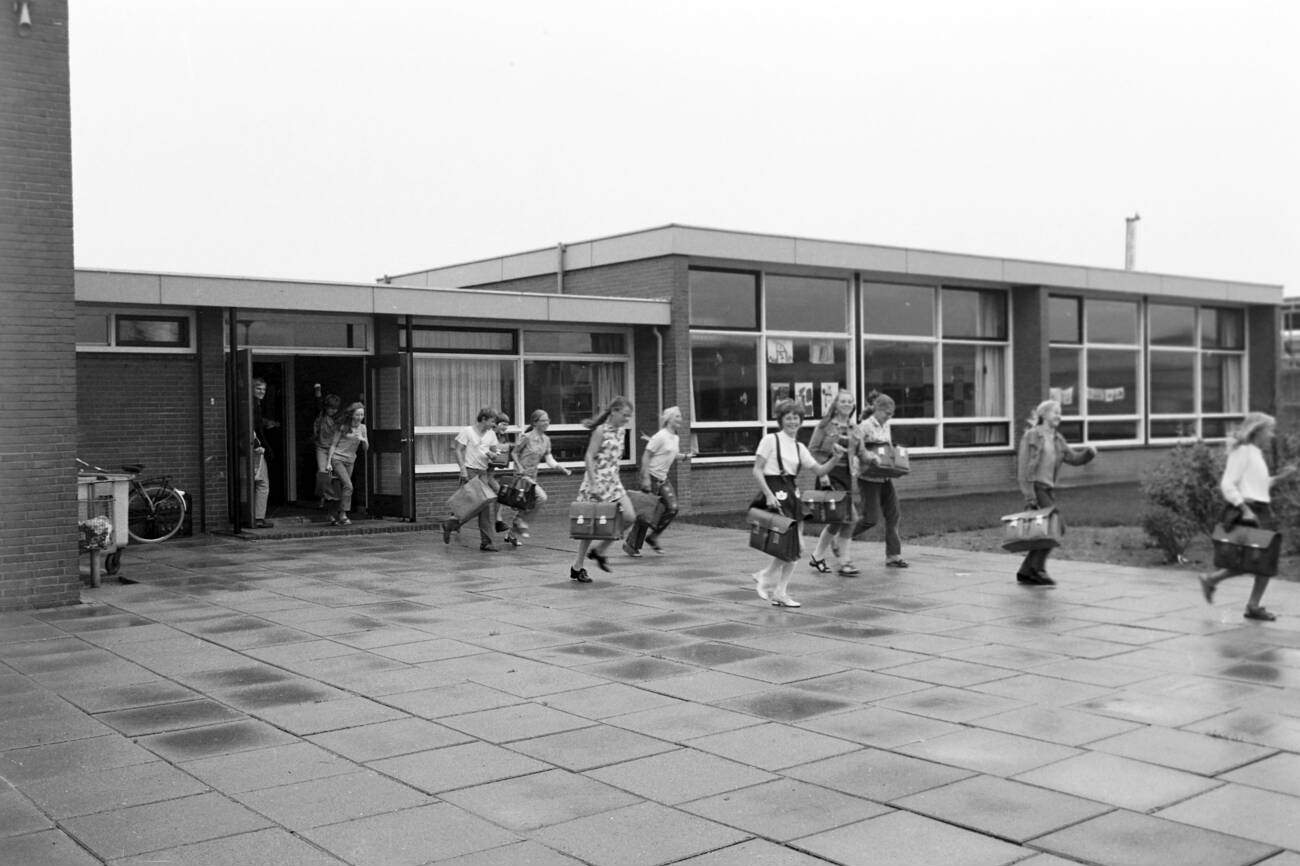
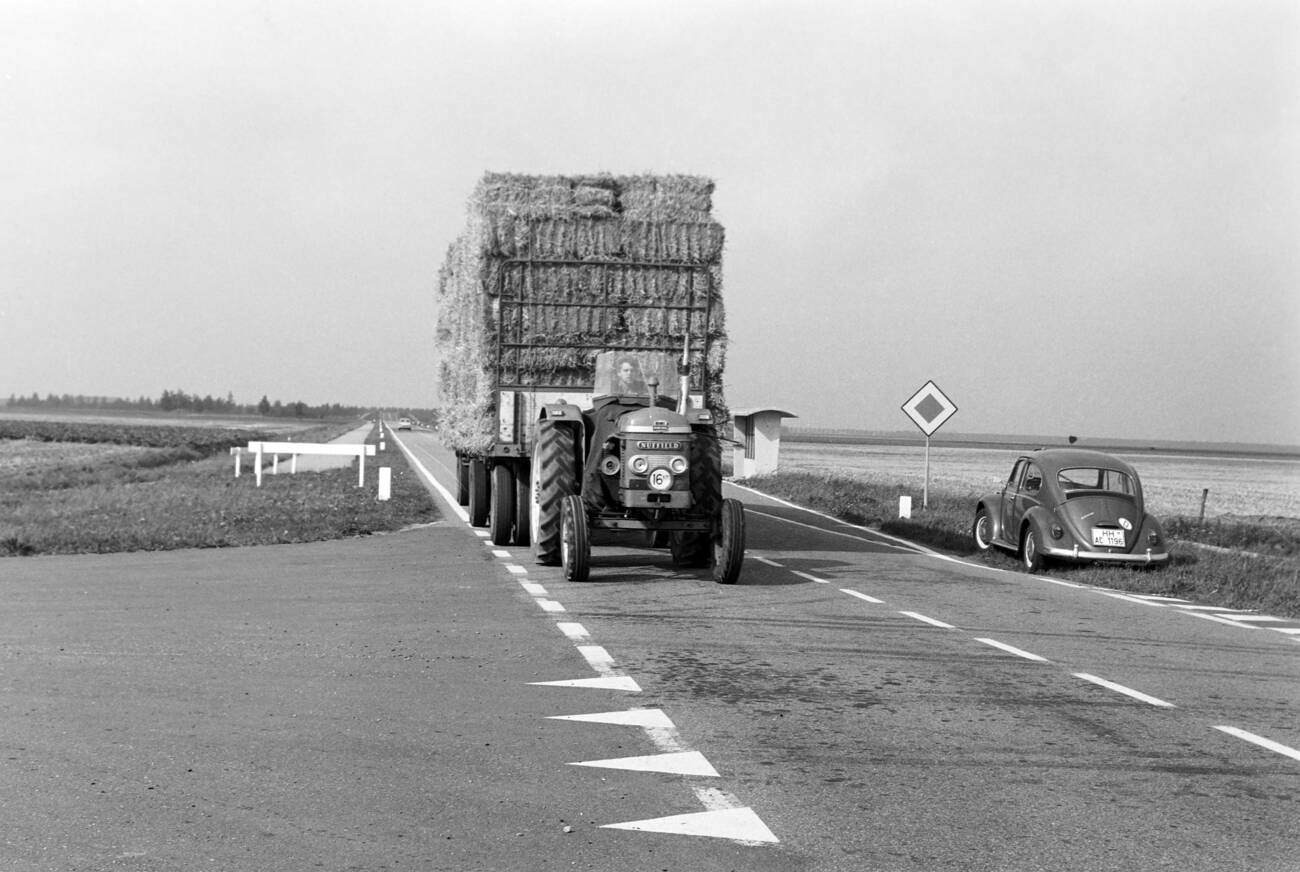
The roads across Flevoland in 1971 were still relatively bare — trucks and tractors moving through a landscape that felt newly minted, because it was. Tractor-hauled hay wagons shared the roads with delivery lorries. Tourists arrived in Lelystad by bus and on foot, curious about the new settlement built on reclaimed land. Children left preschools in freshly built neighborhoods. The entire province had a provisional quality, like a stage set that was still being constructed.
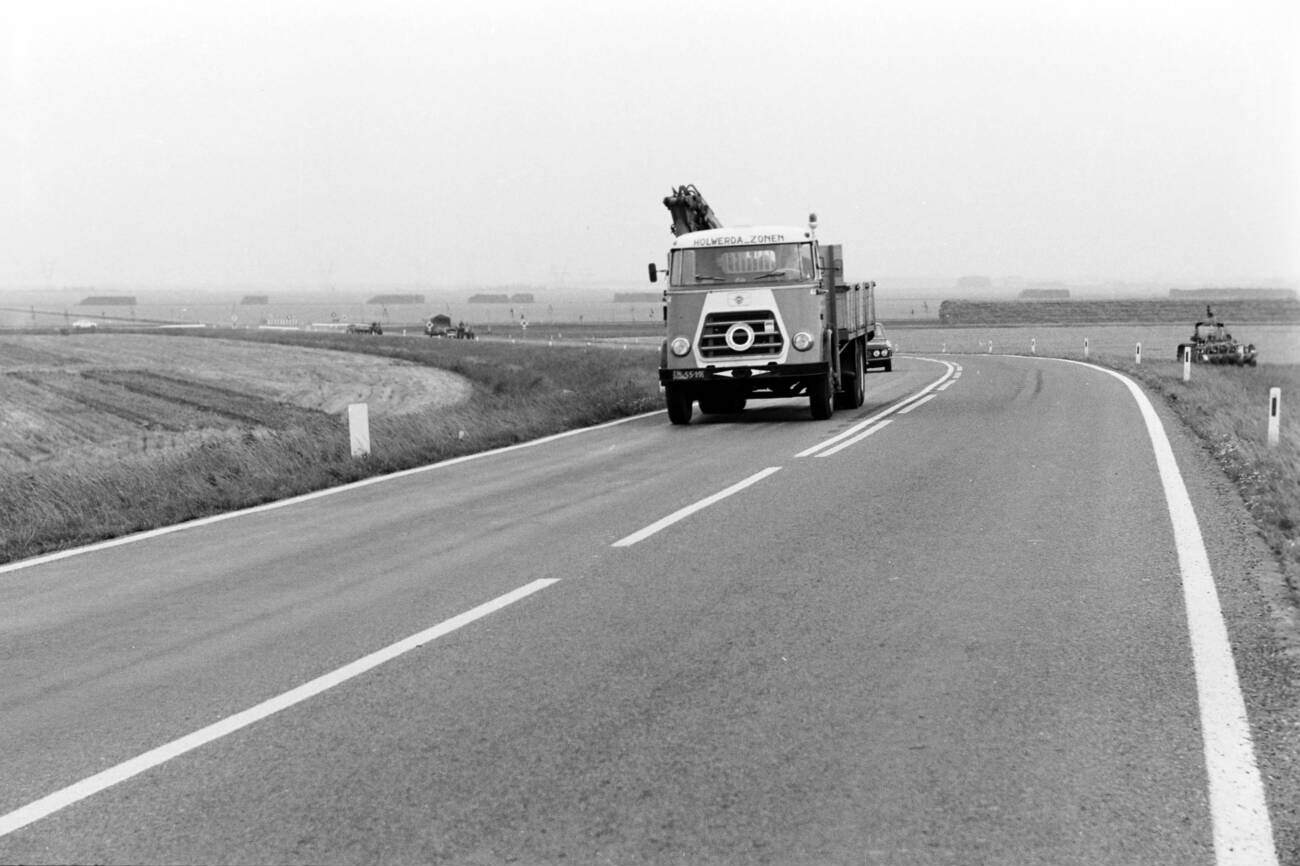
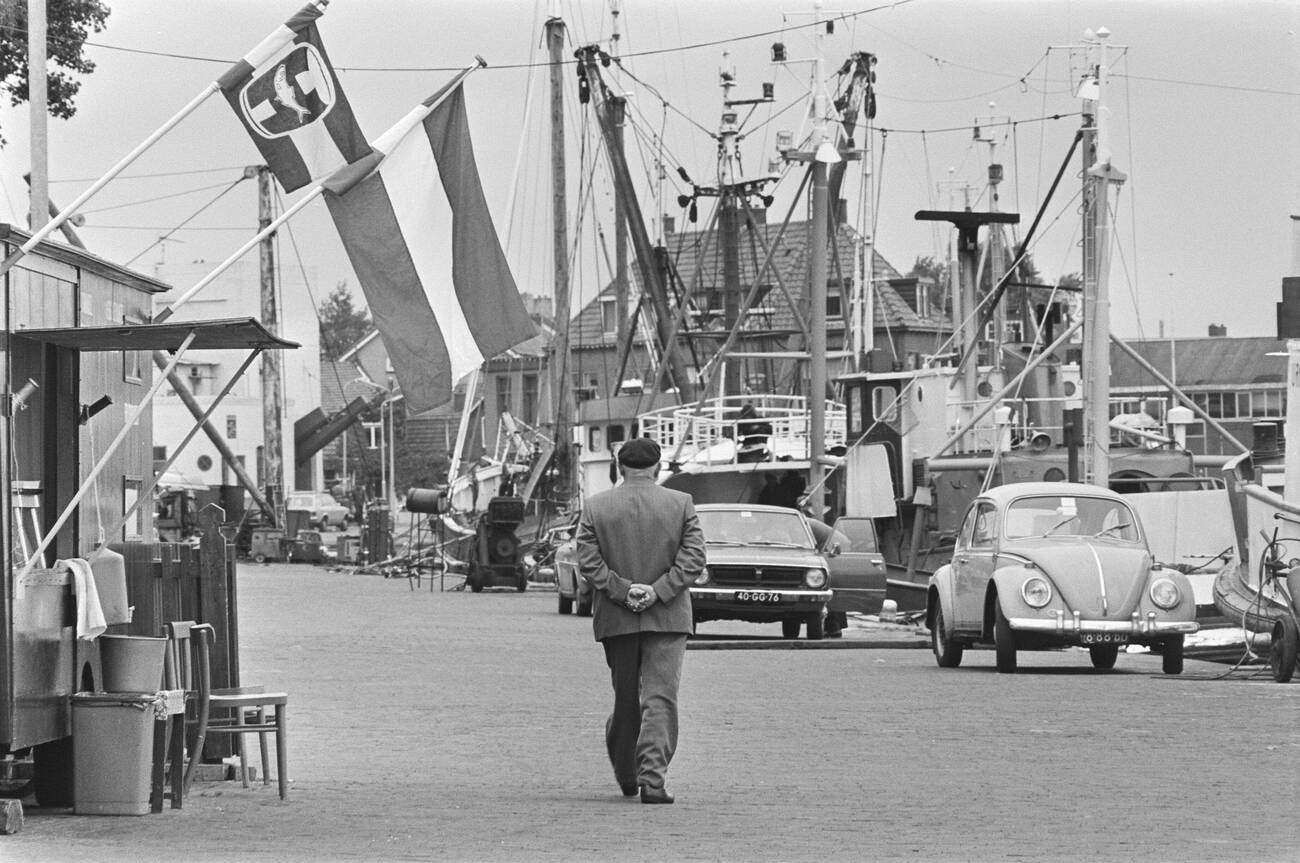
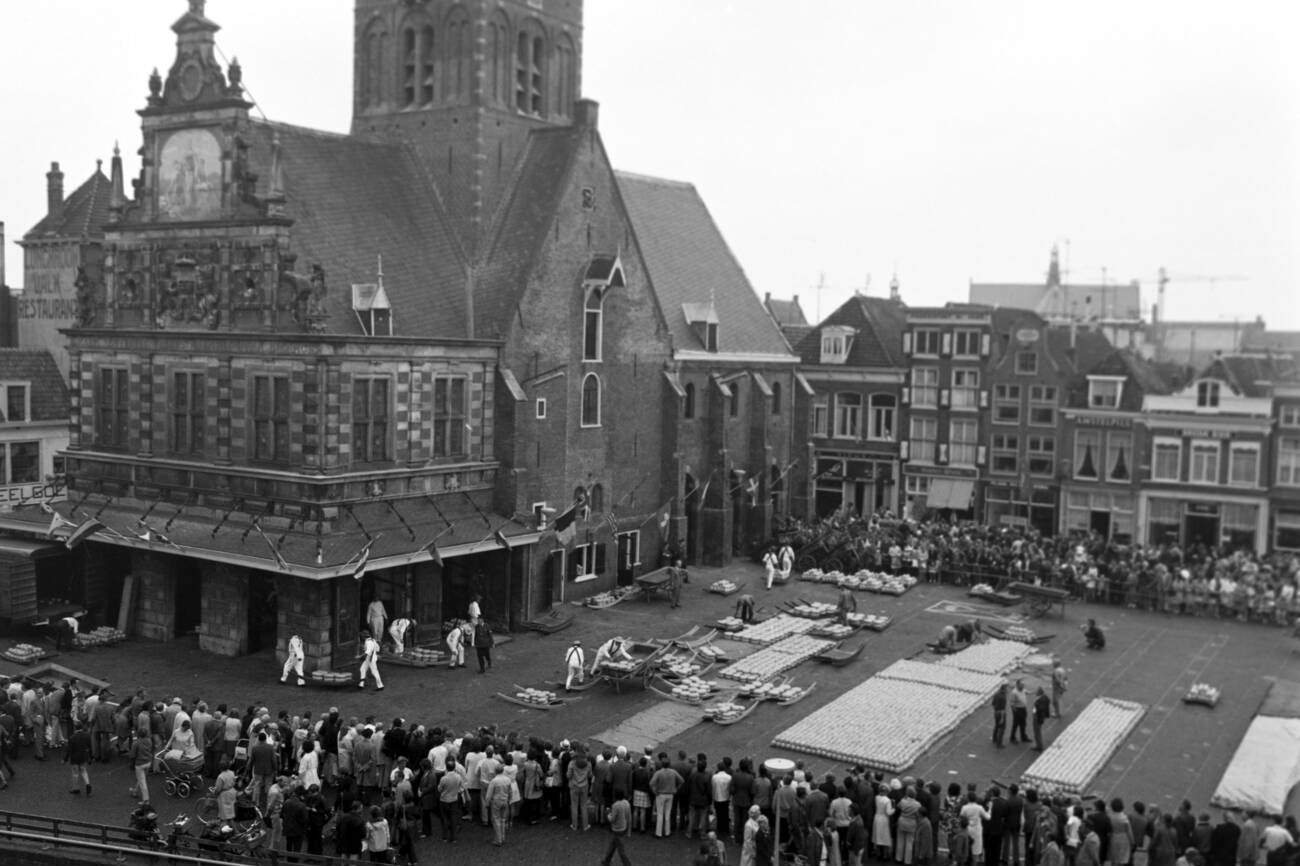
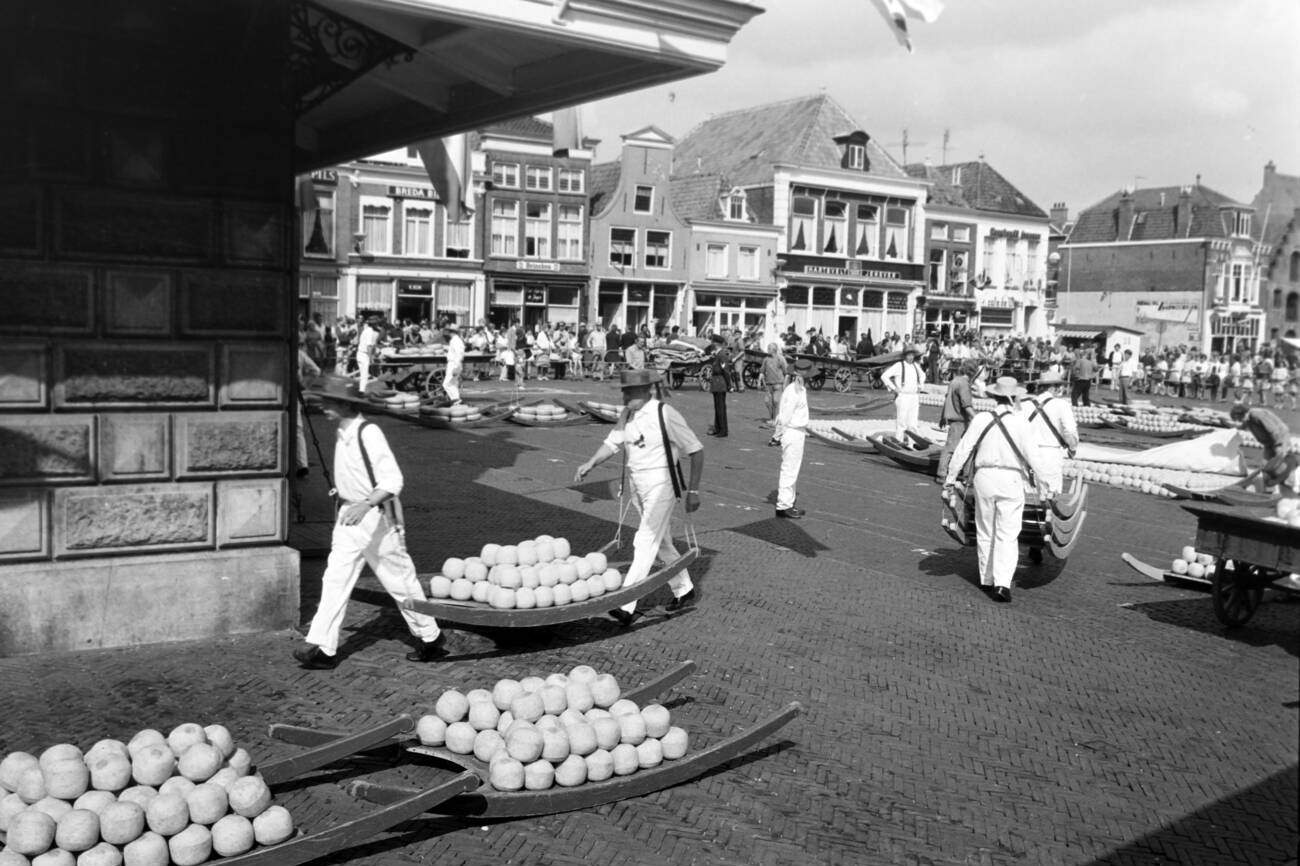
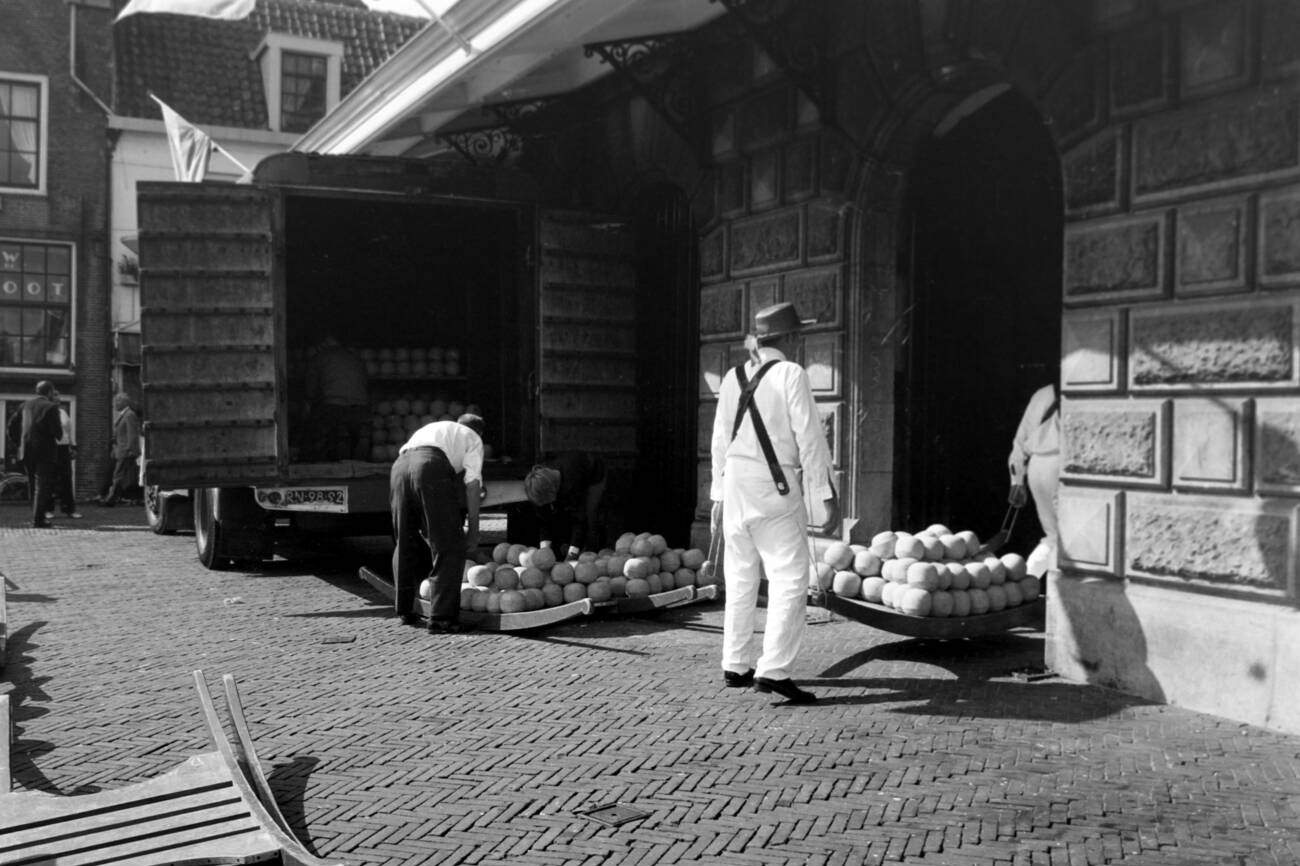
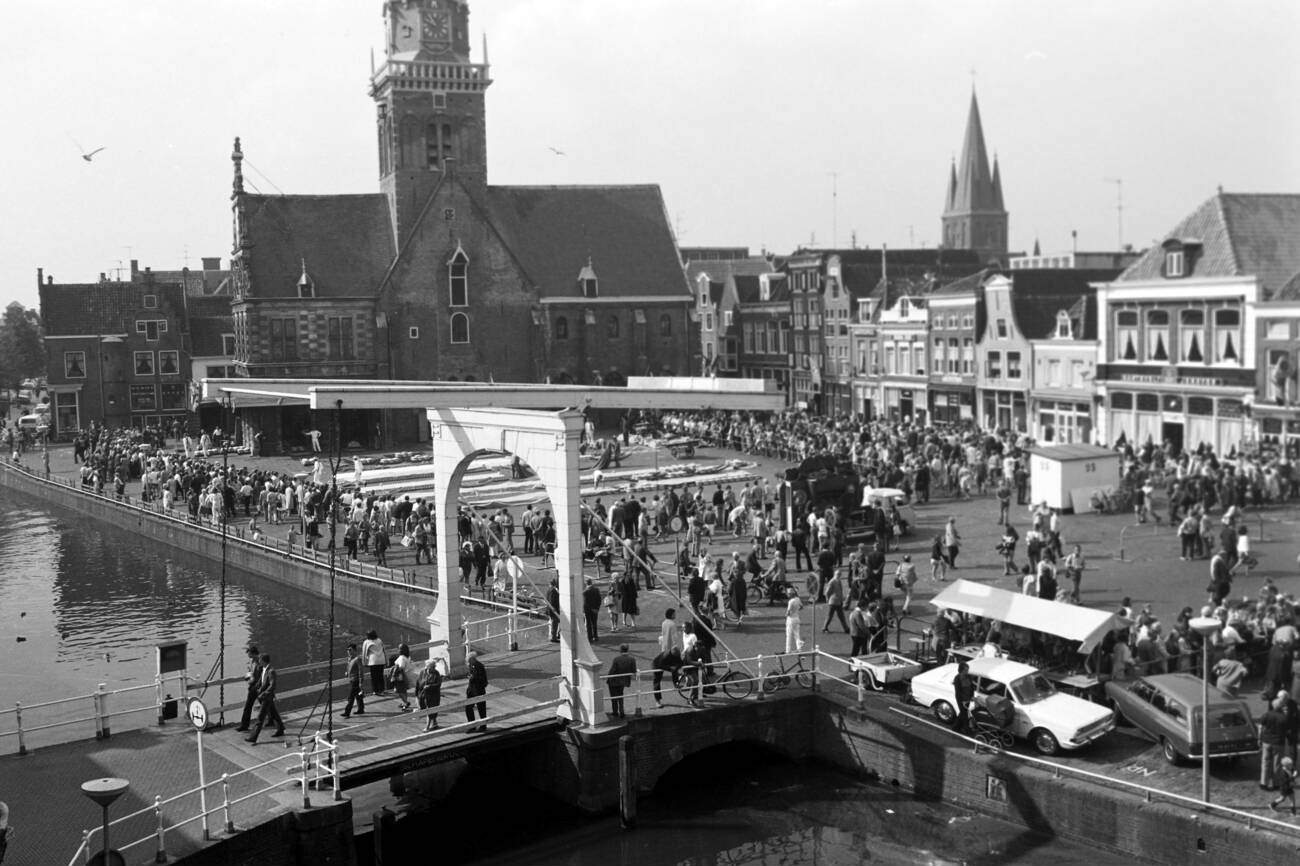
Away from the construction sites, older Dutch traditions held firm. In Urk, a deeply religious fishing community on the edge of the new polder, fishermen still wore traditional clothing and their boats still filled the harbor as they had for generations. In Alkmaar, the famous cheese market ran exactly as it had for centuries. Guild members in white uniforms carried rounds of Gouda on wooden sledges to the De Waag weighing house, while crowds of tourists and locals watched from the sides of the square.
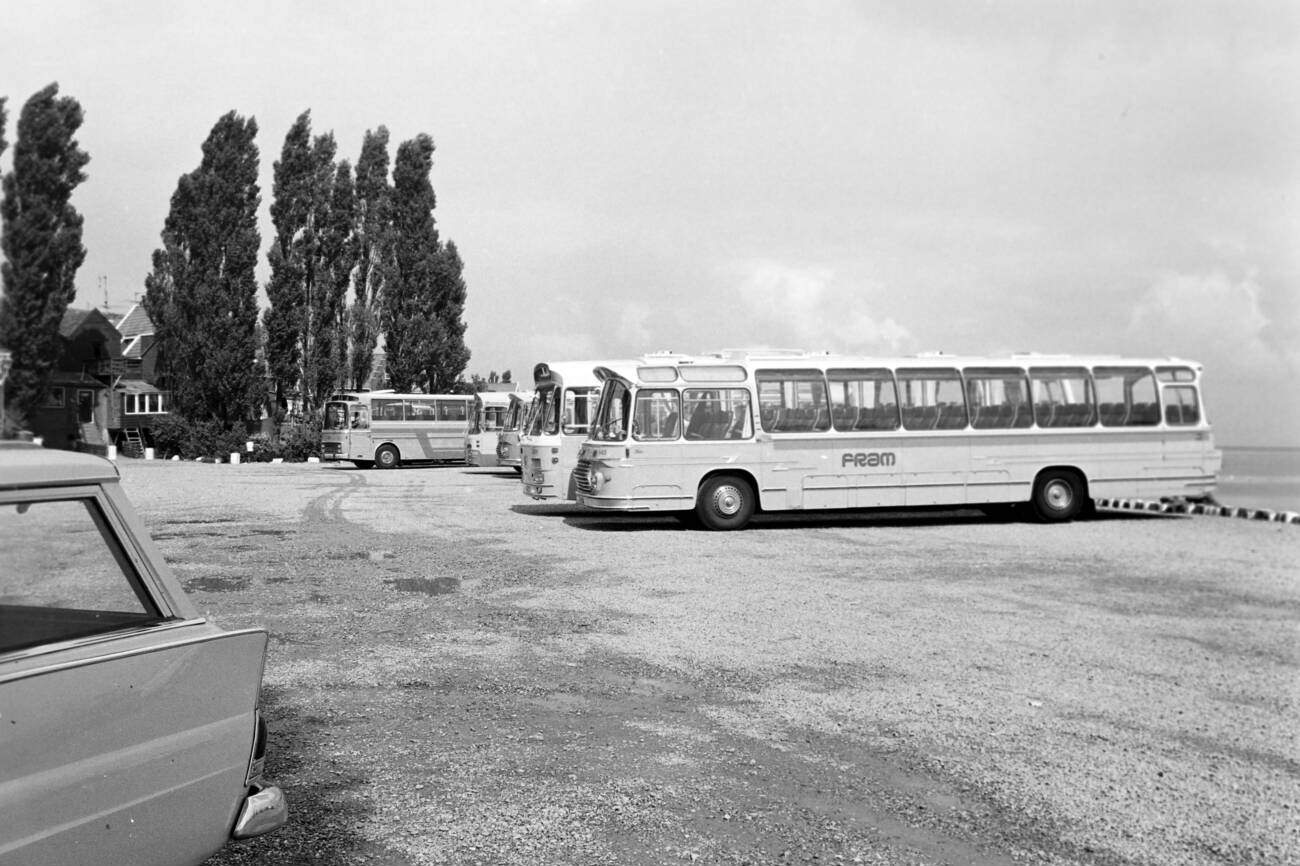
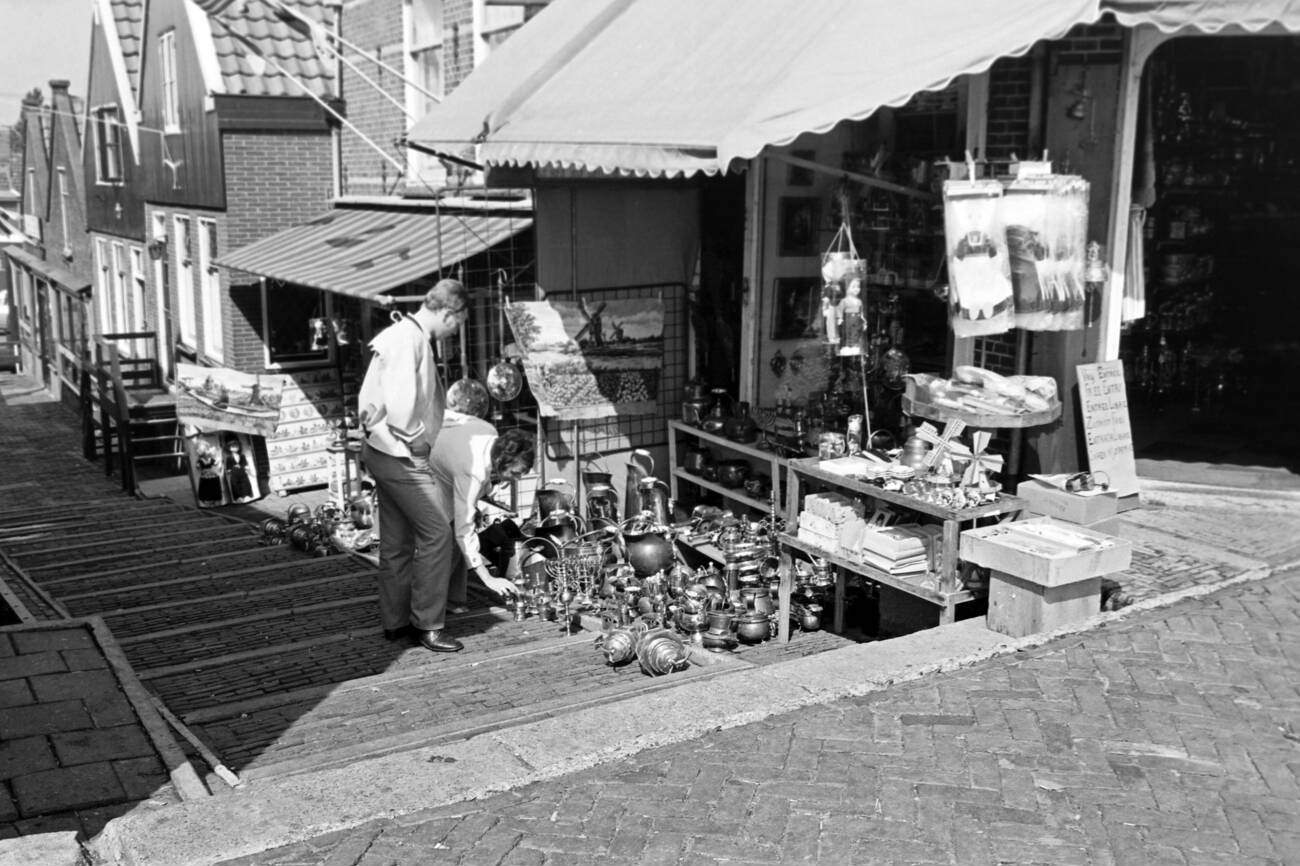
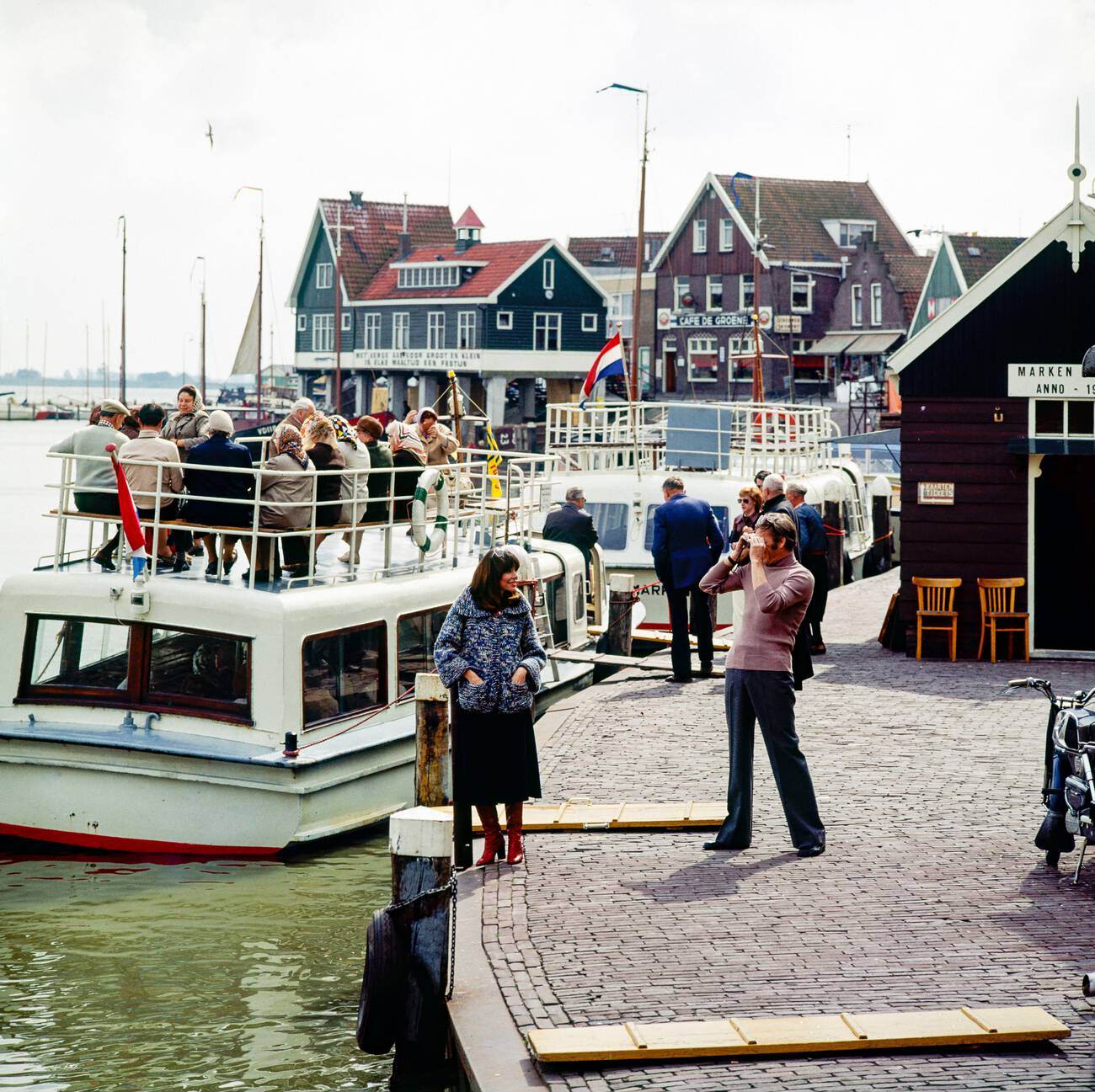
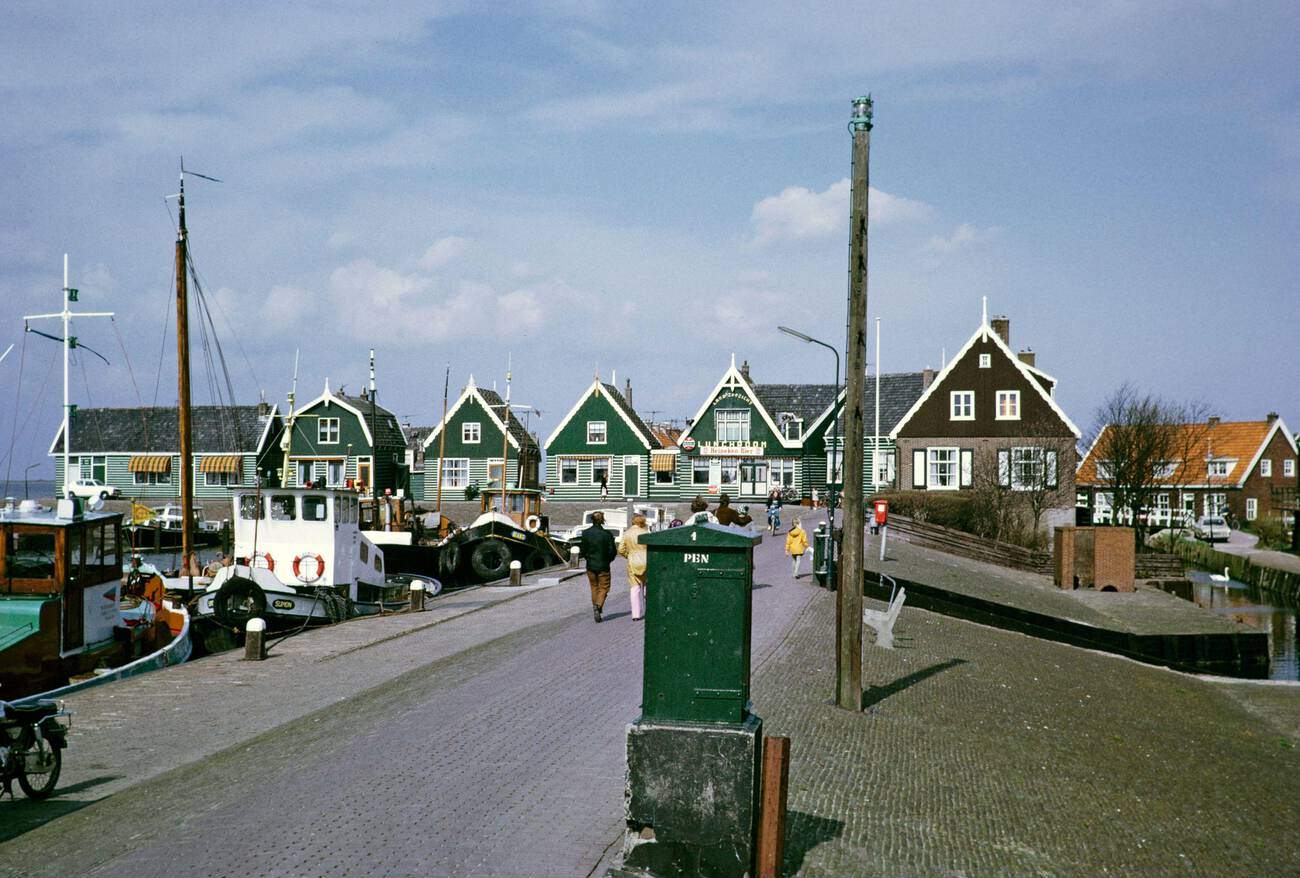
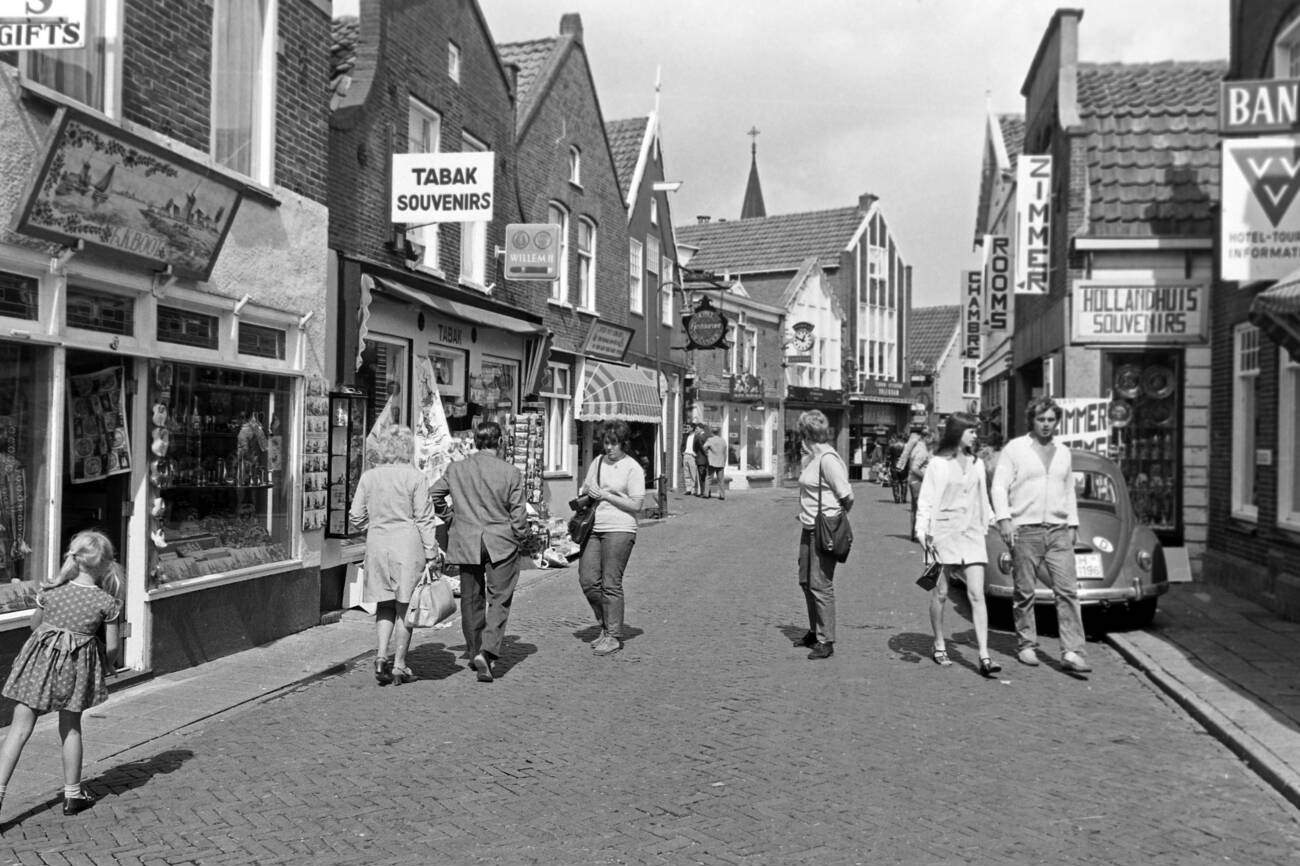
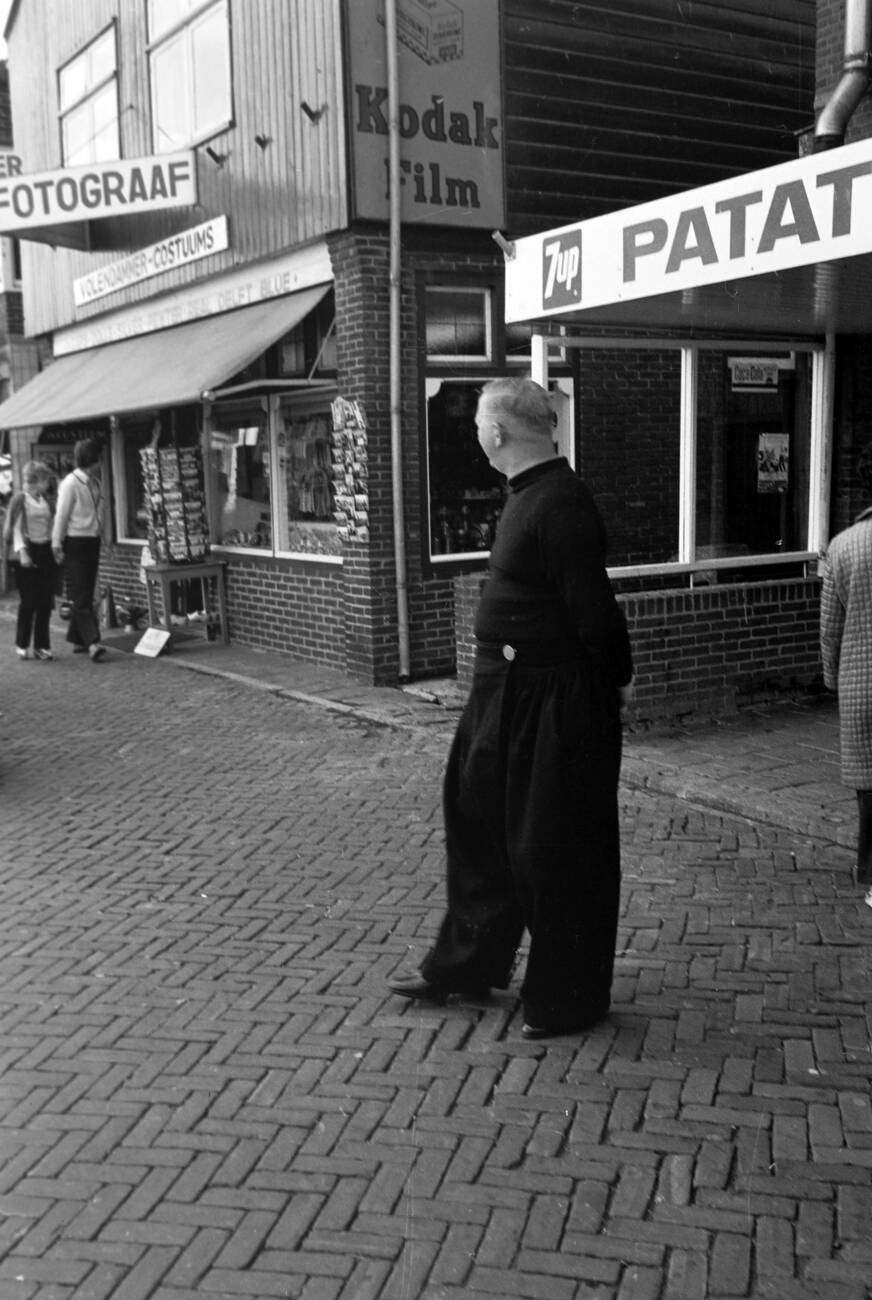
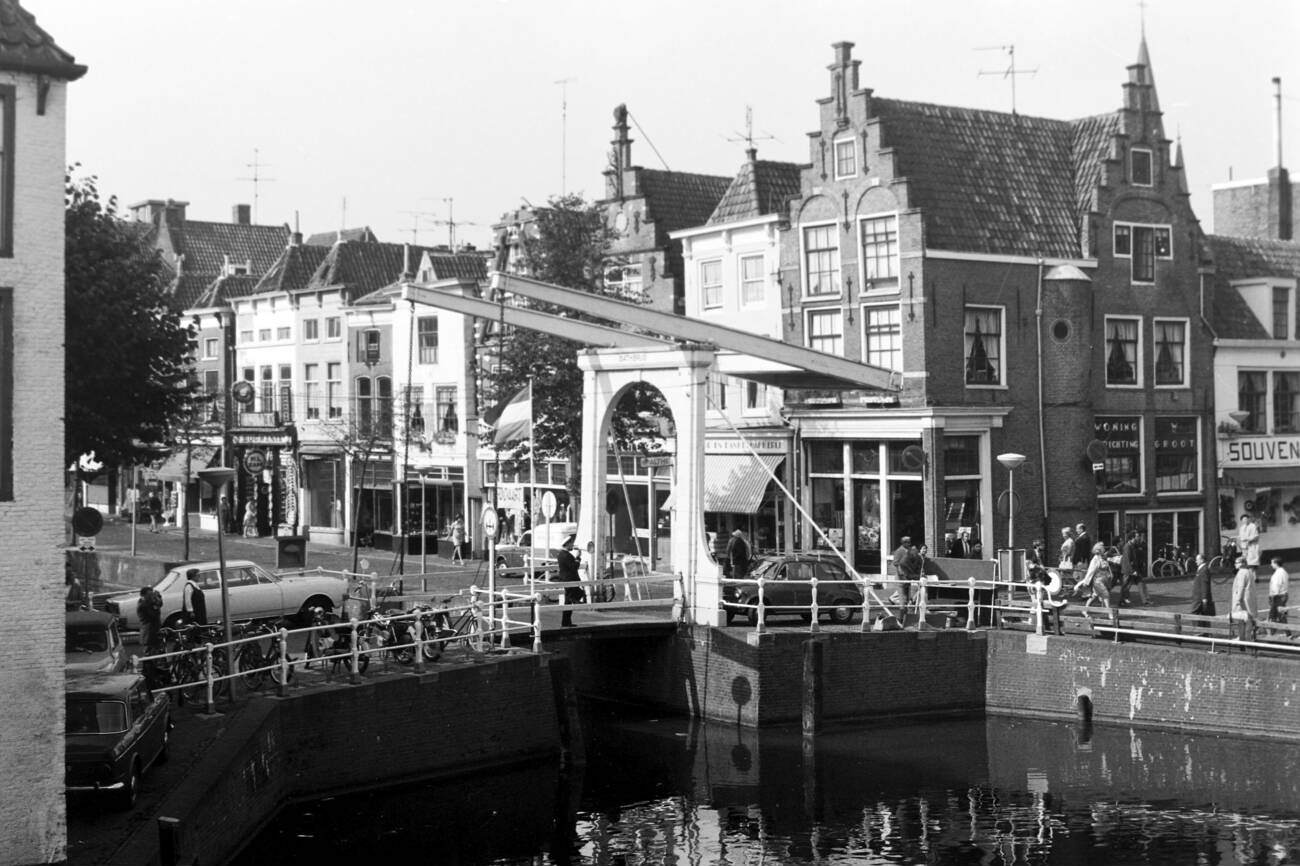
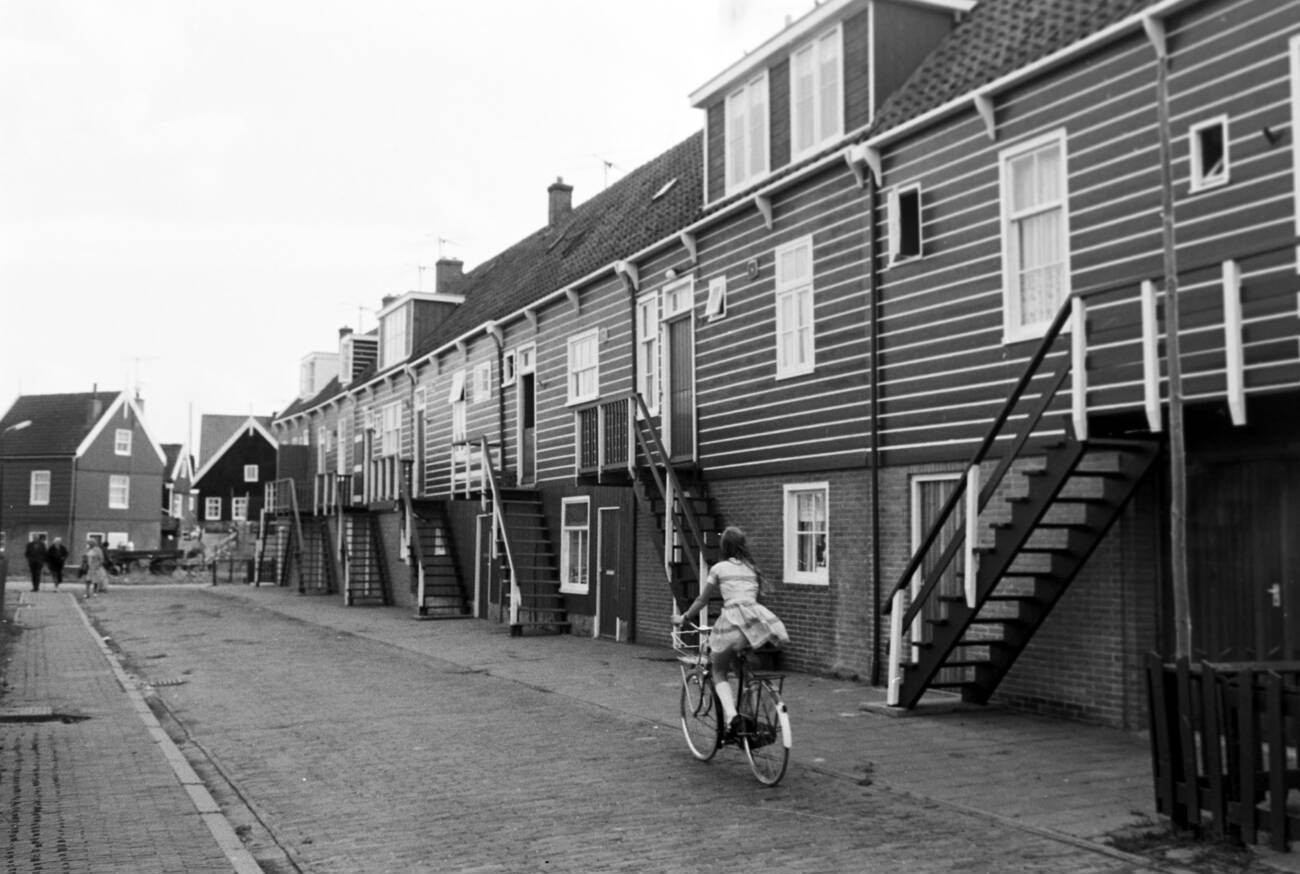
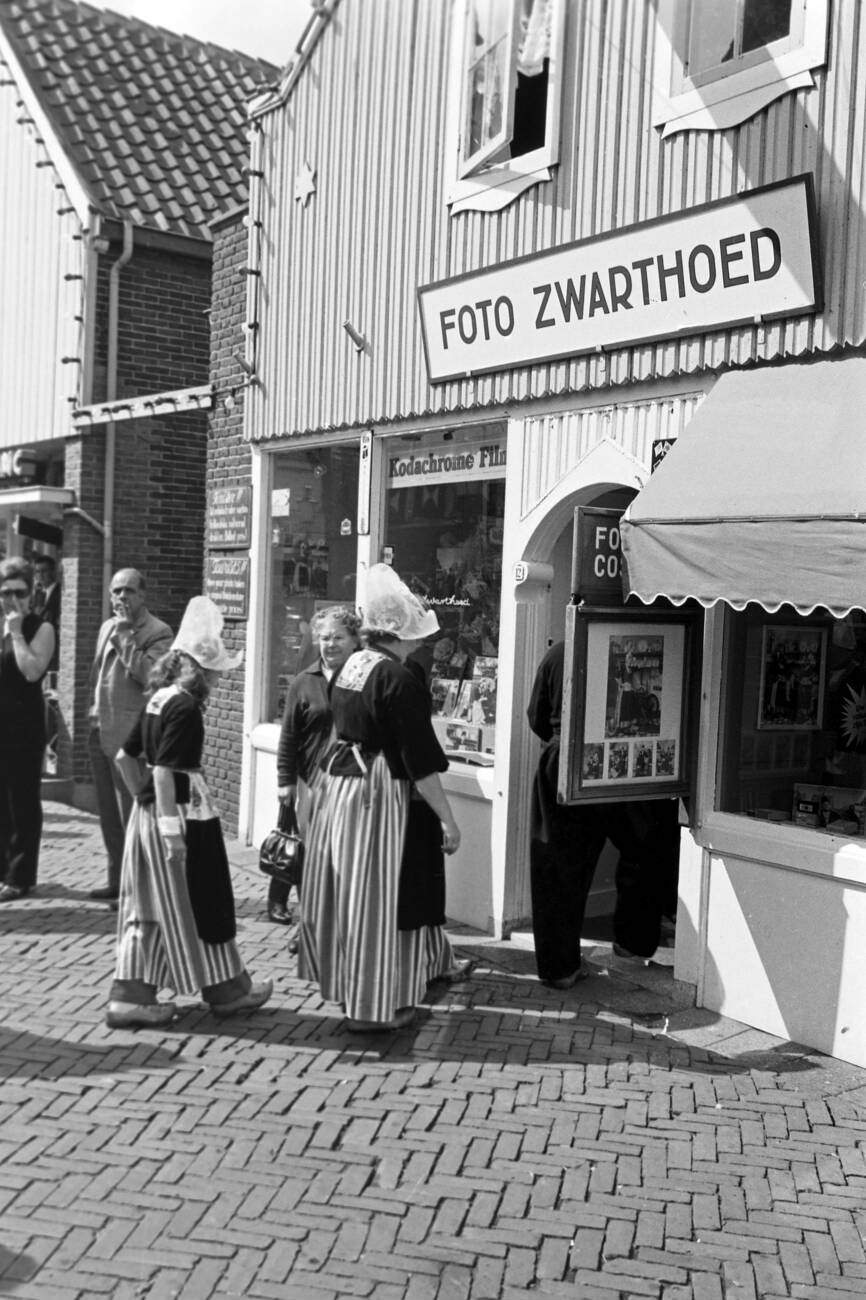
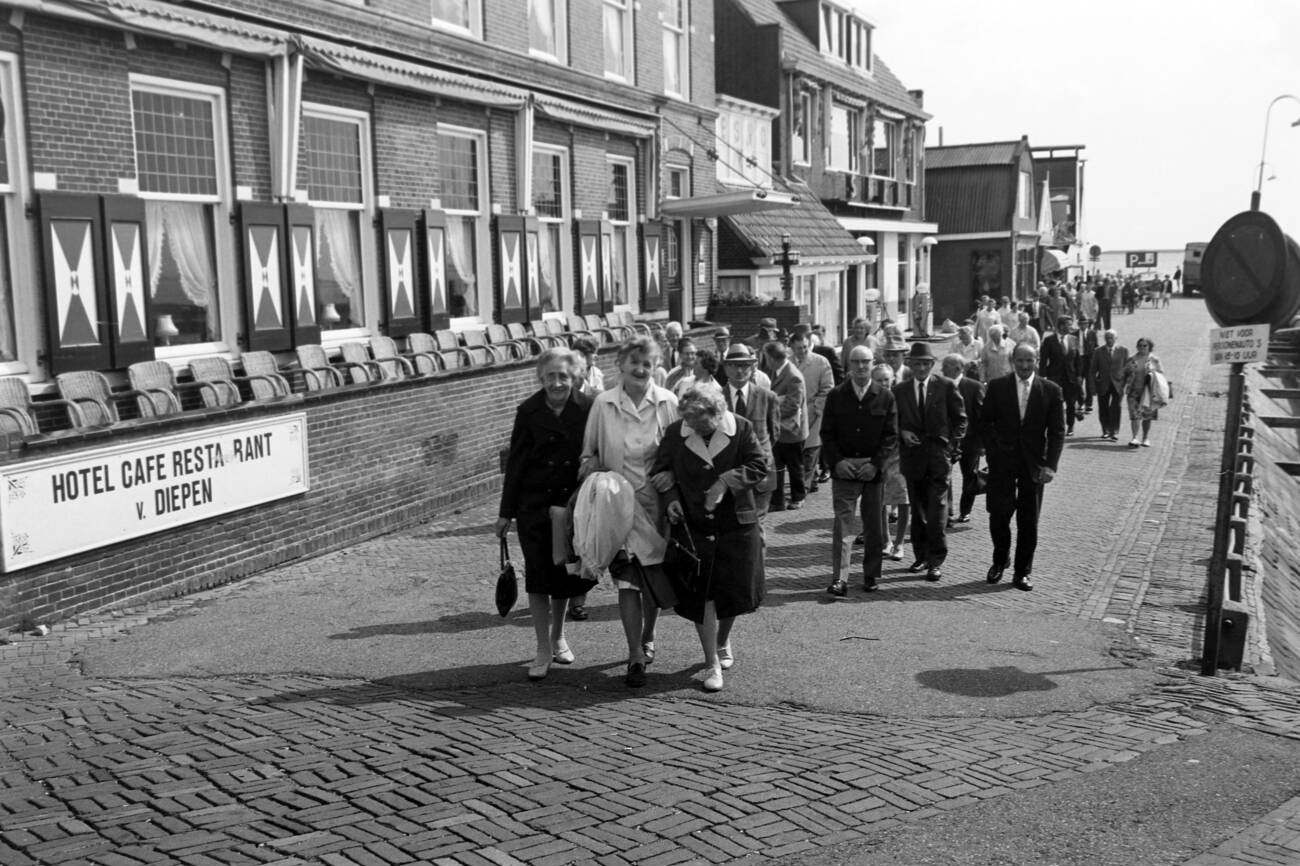
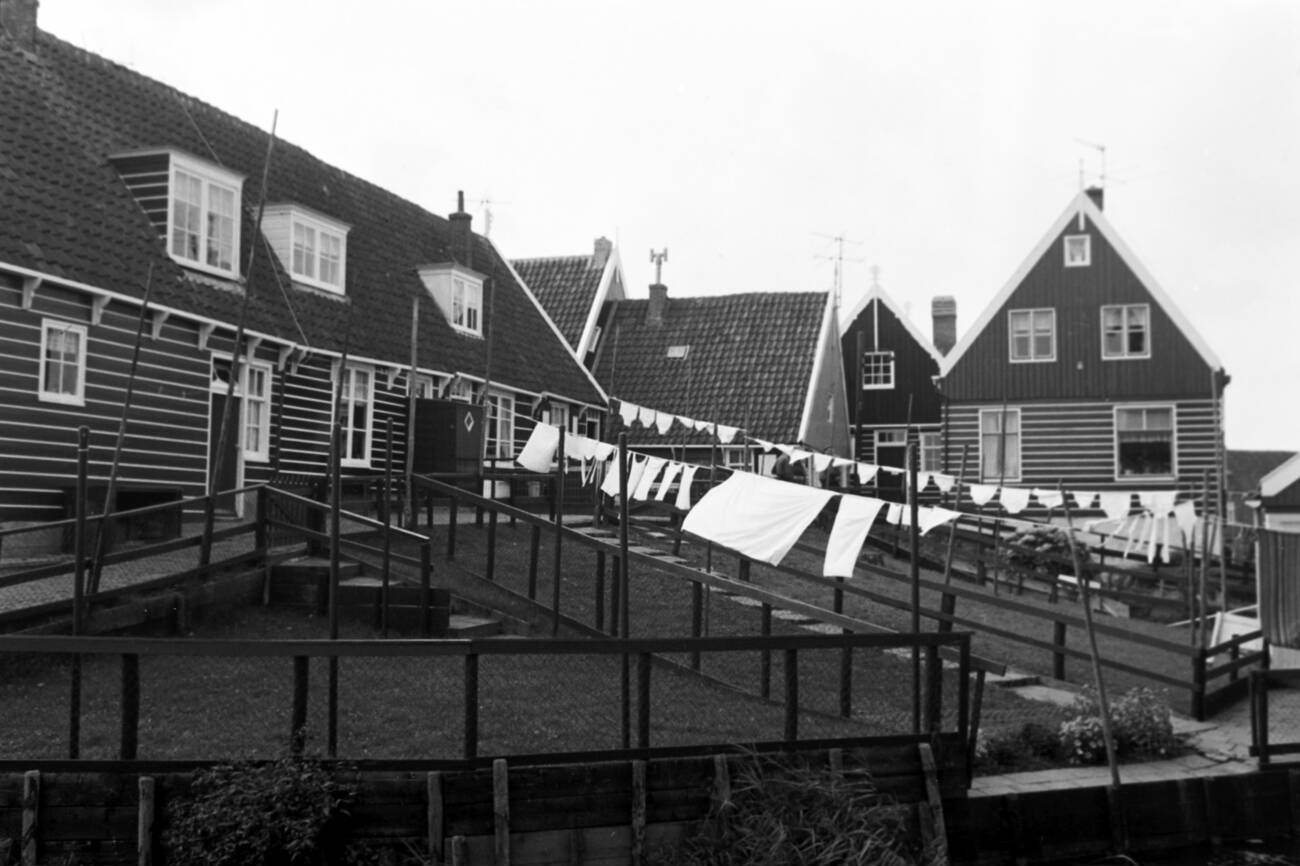
Volendam was already a well-worn stop on the tourist circuit. Its harbor, drawbridges, and residents in traditional dress drew visitors who browsed antique shops and snapped photos. Day-trippers took the overland bus between Volendam and Monnickendam, and ferries carried them across to Marken island, where narrow lanes wound between wooden houses with laundry drying in the gardens. A man in traditional Volendam clothing — wooden shoes, baggy trousers, striped shirt — was as much a fixture of the harborfront as the boats themselves.
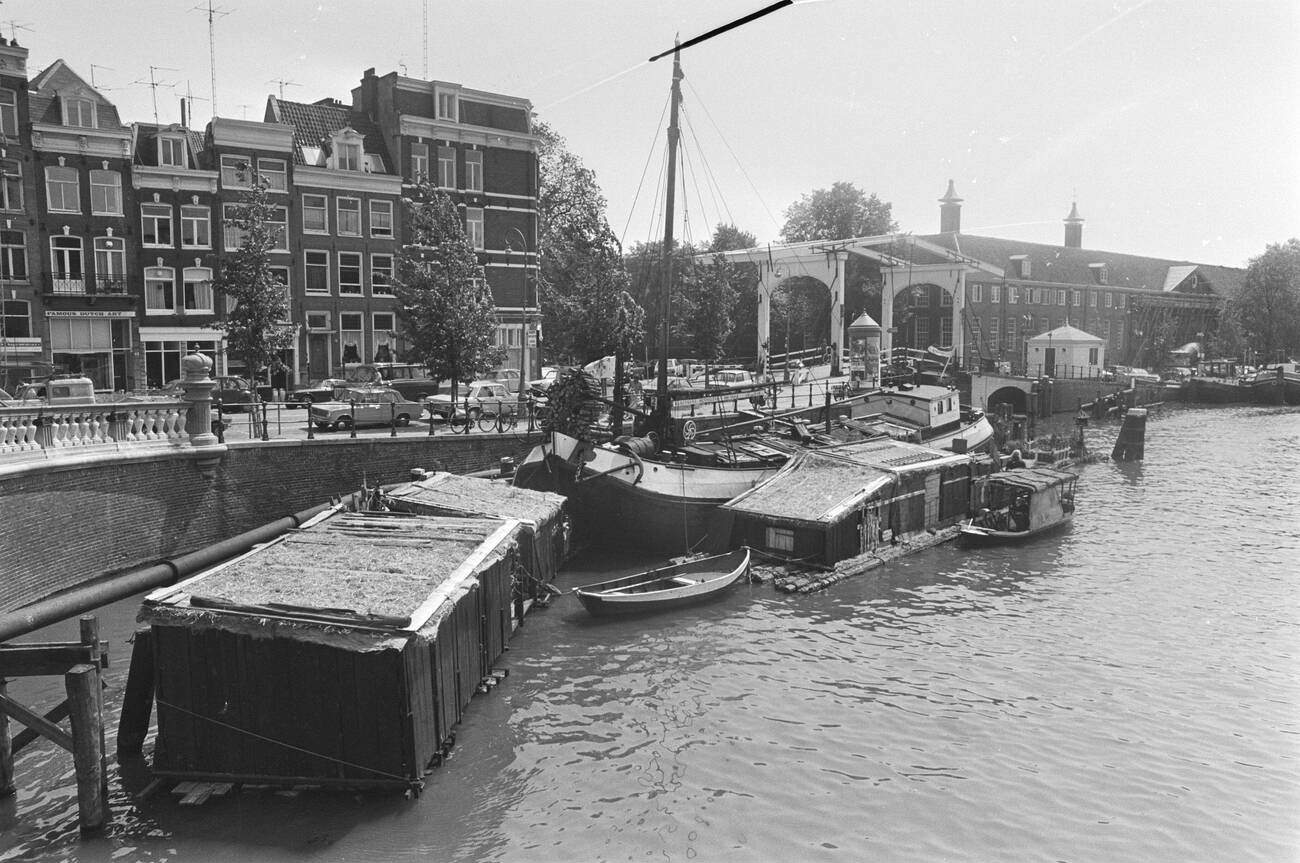
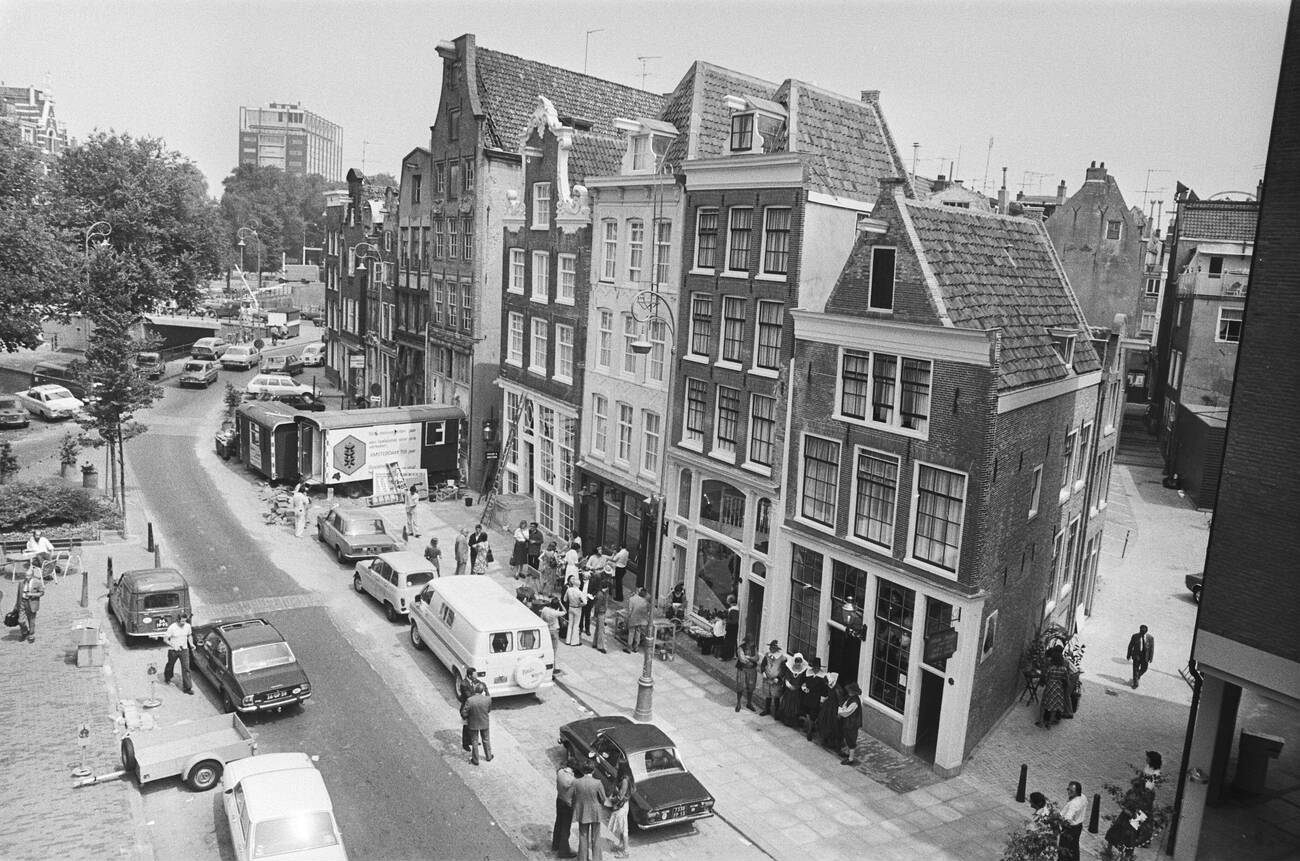
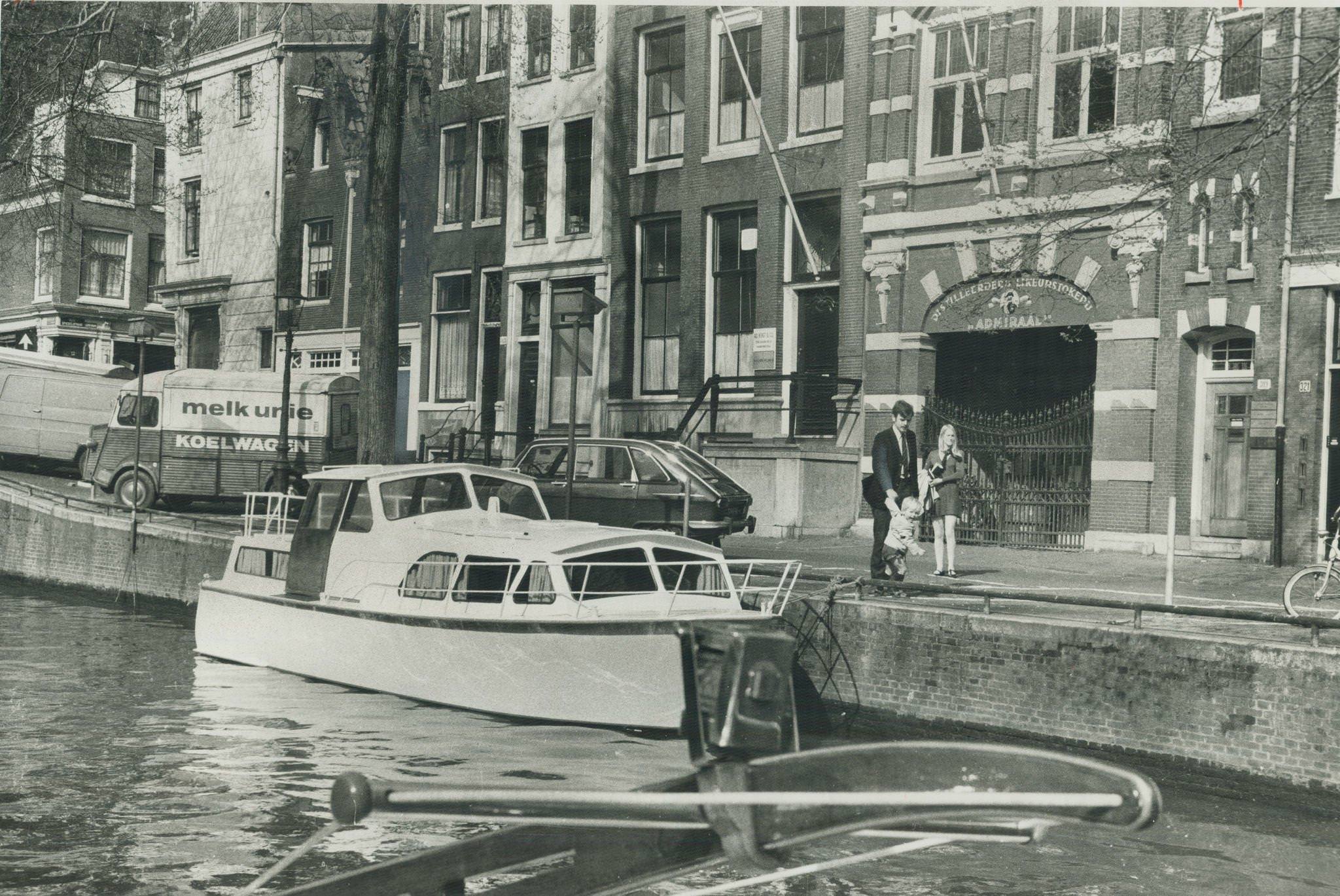
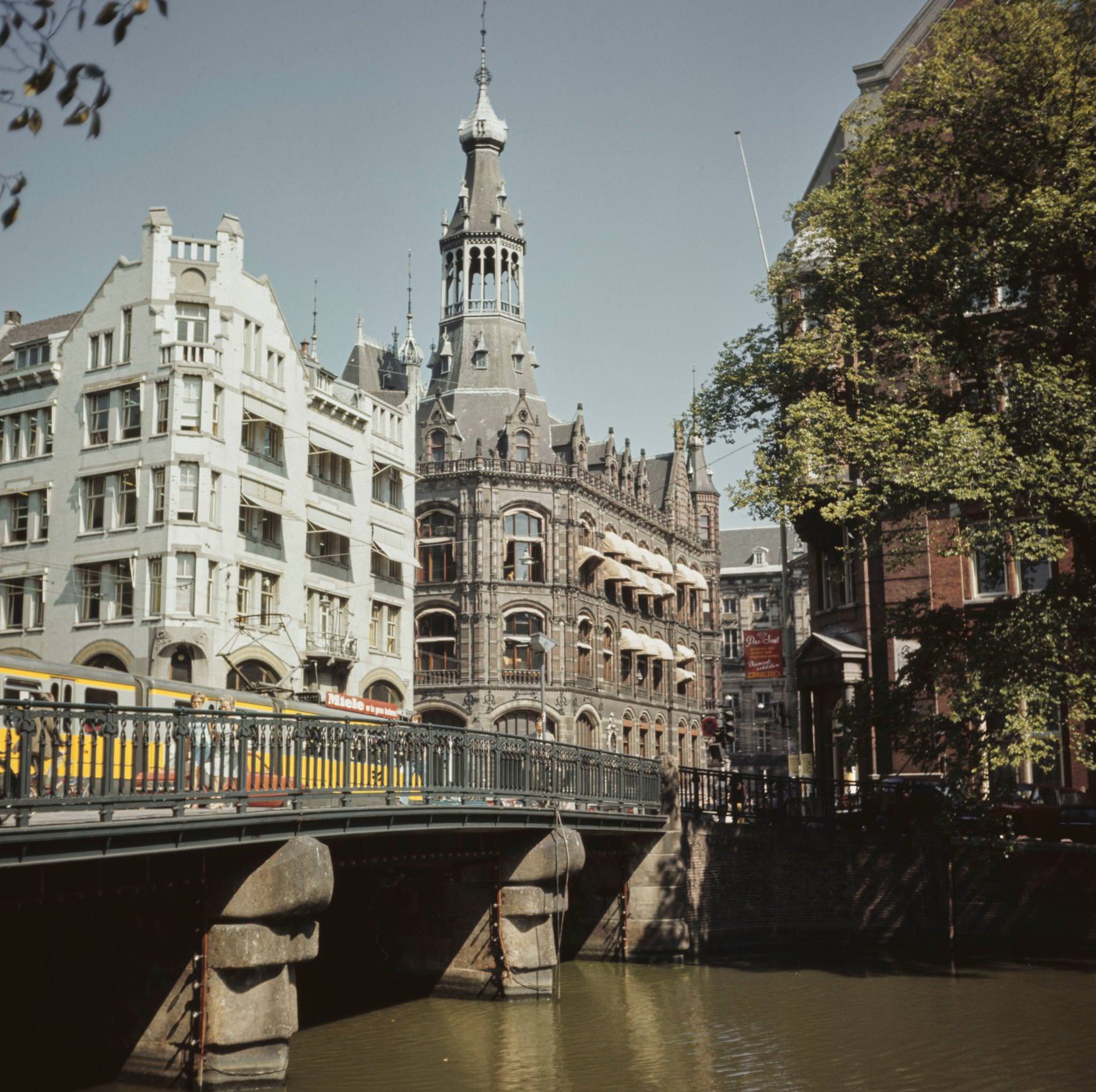
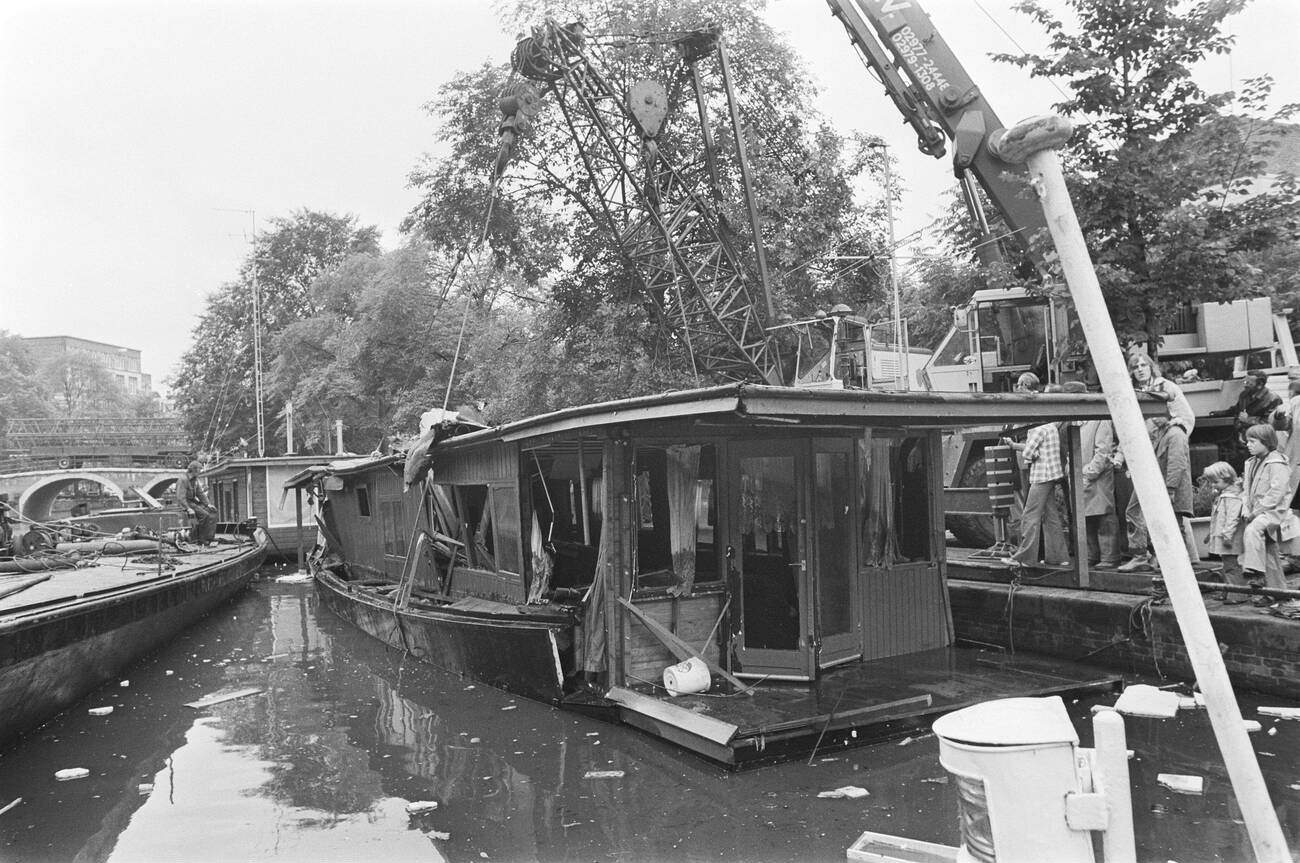
Amsterdam’s canals hosted an unusual kind of neighborhood by the mid-1970s. Near the Blauwbrug on the Amstel, houseboat residents had assembled a genuine floating village — a cluster of inhabited vessels that made up a distinct community on the water. Elsewhere in the city, historic canal-side buildings were being restored rather than demolished, part of a growing effort to preserve Amsterdam’s architectural heritage. The Stadsherstel foundation and hotel developers like Sonesta were active in this work, bringing derelict structures back into use.
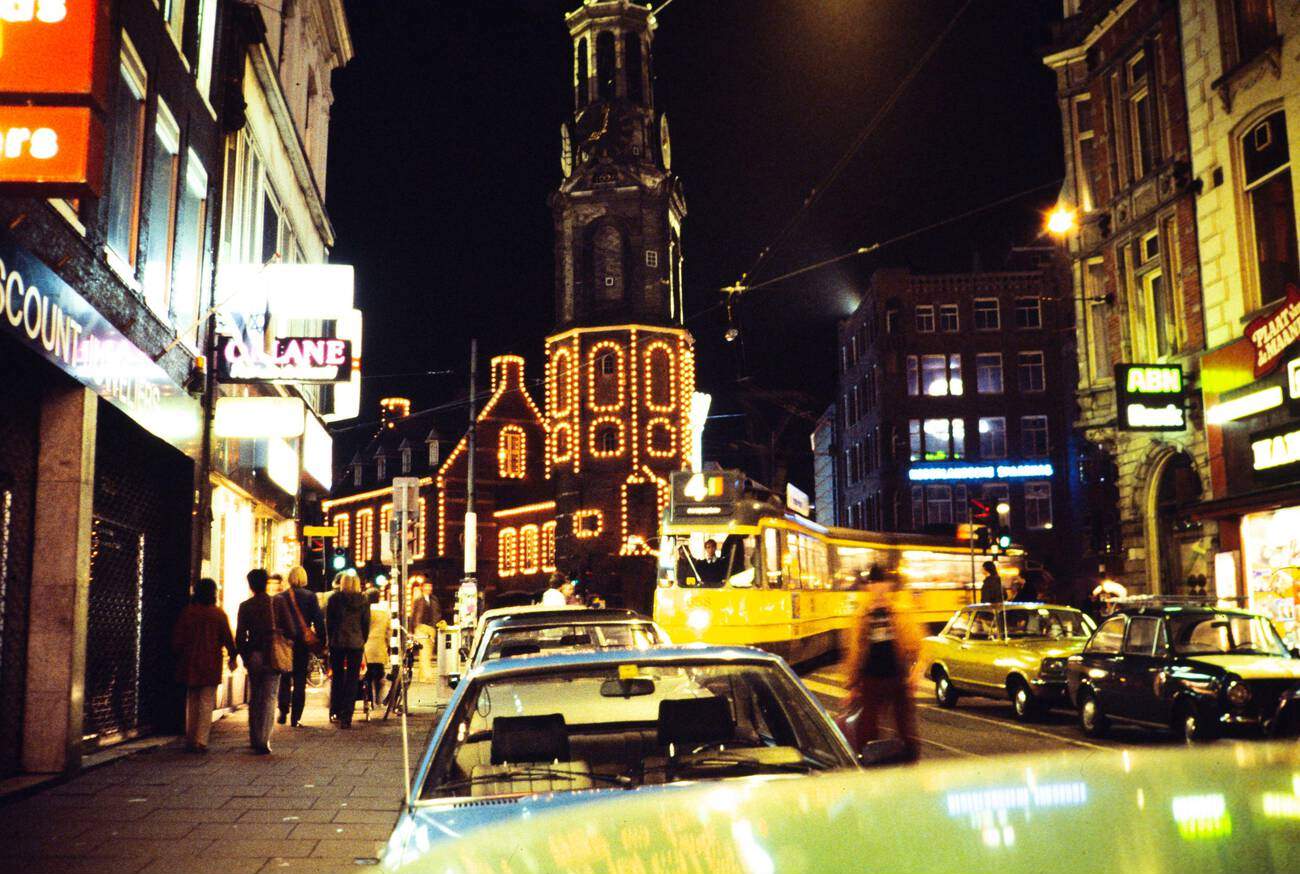
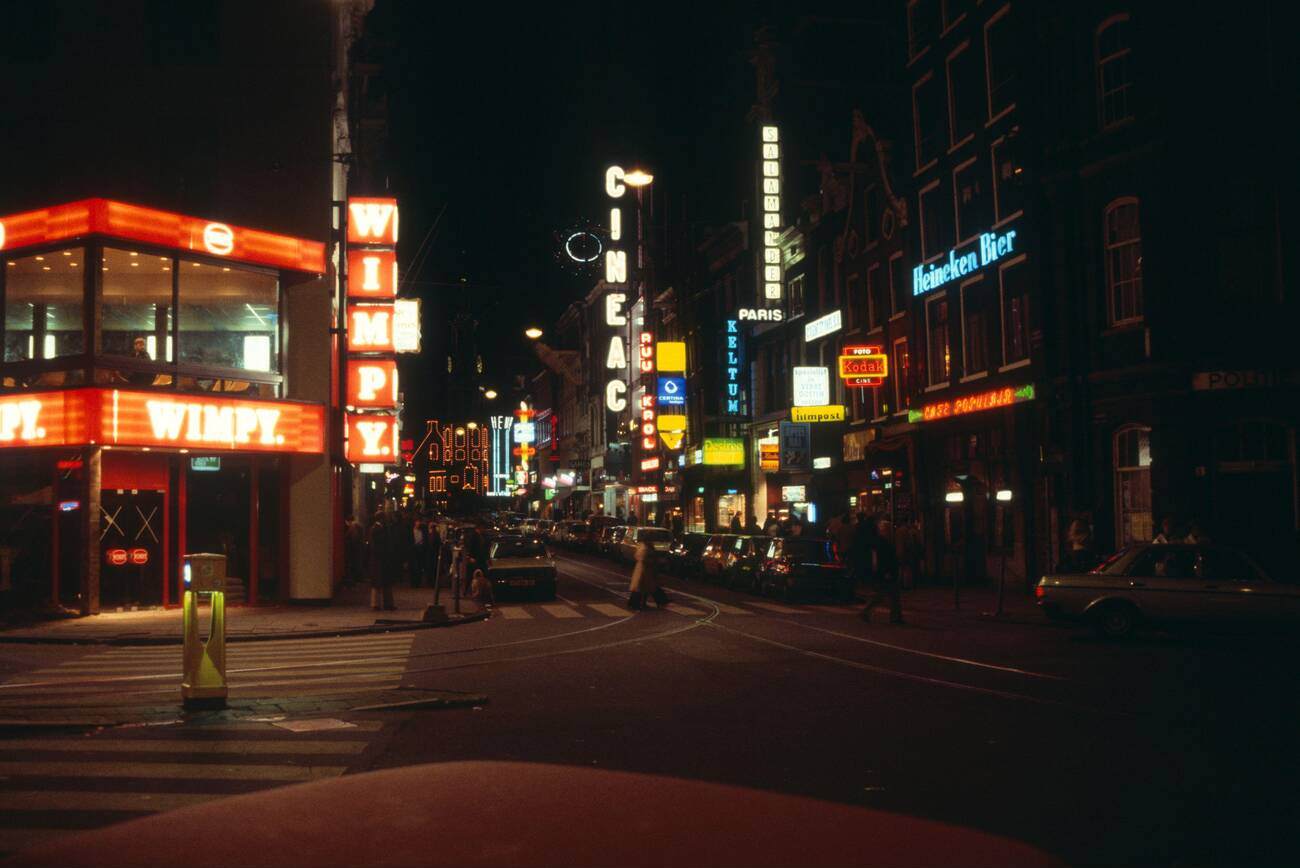
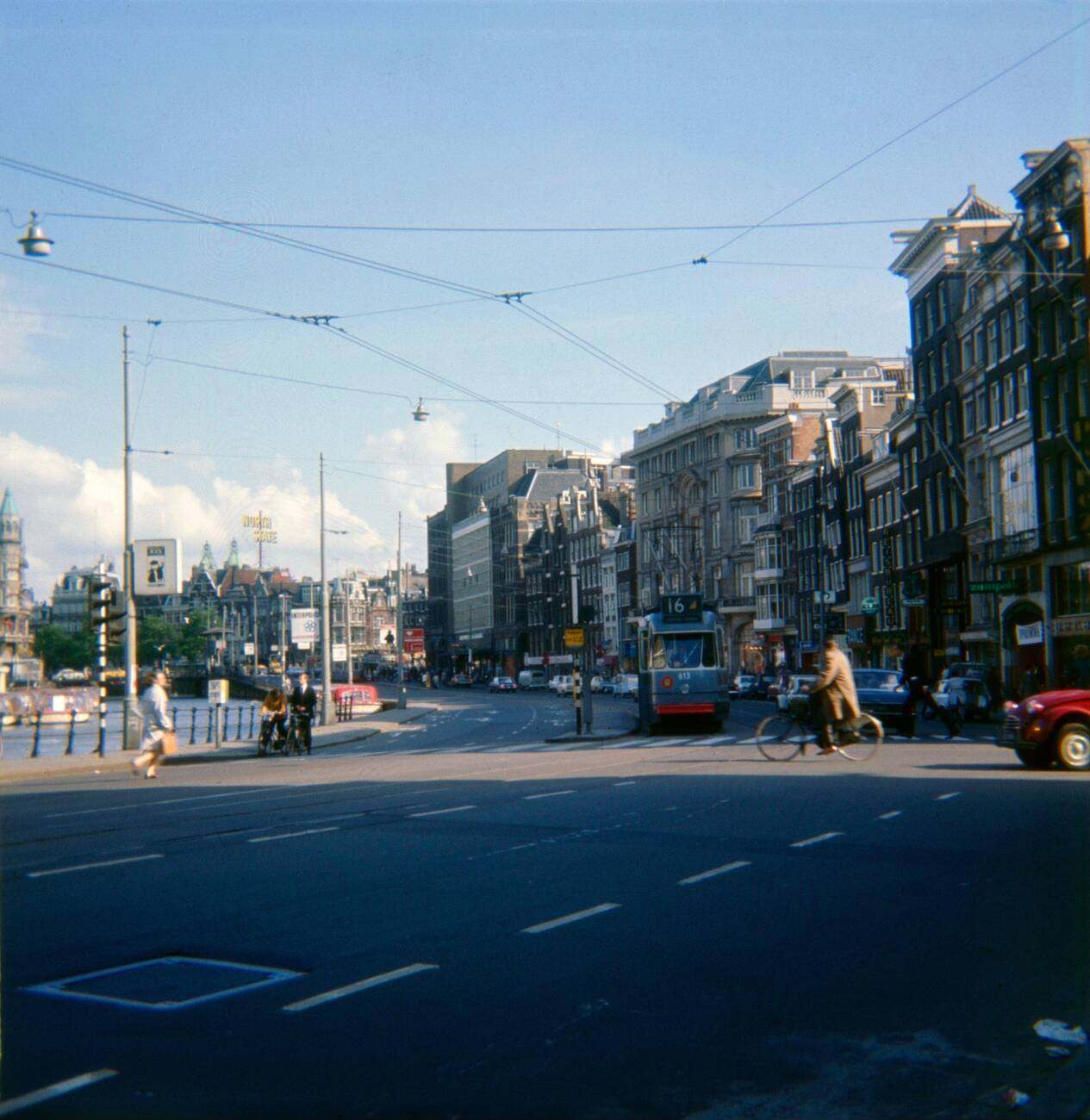
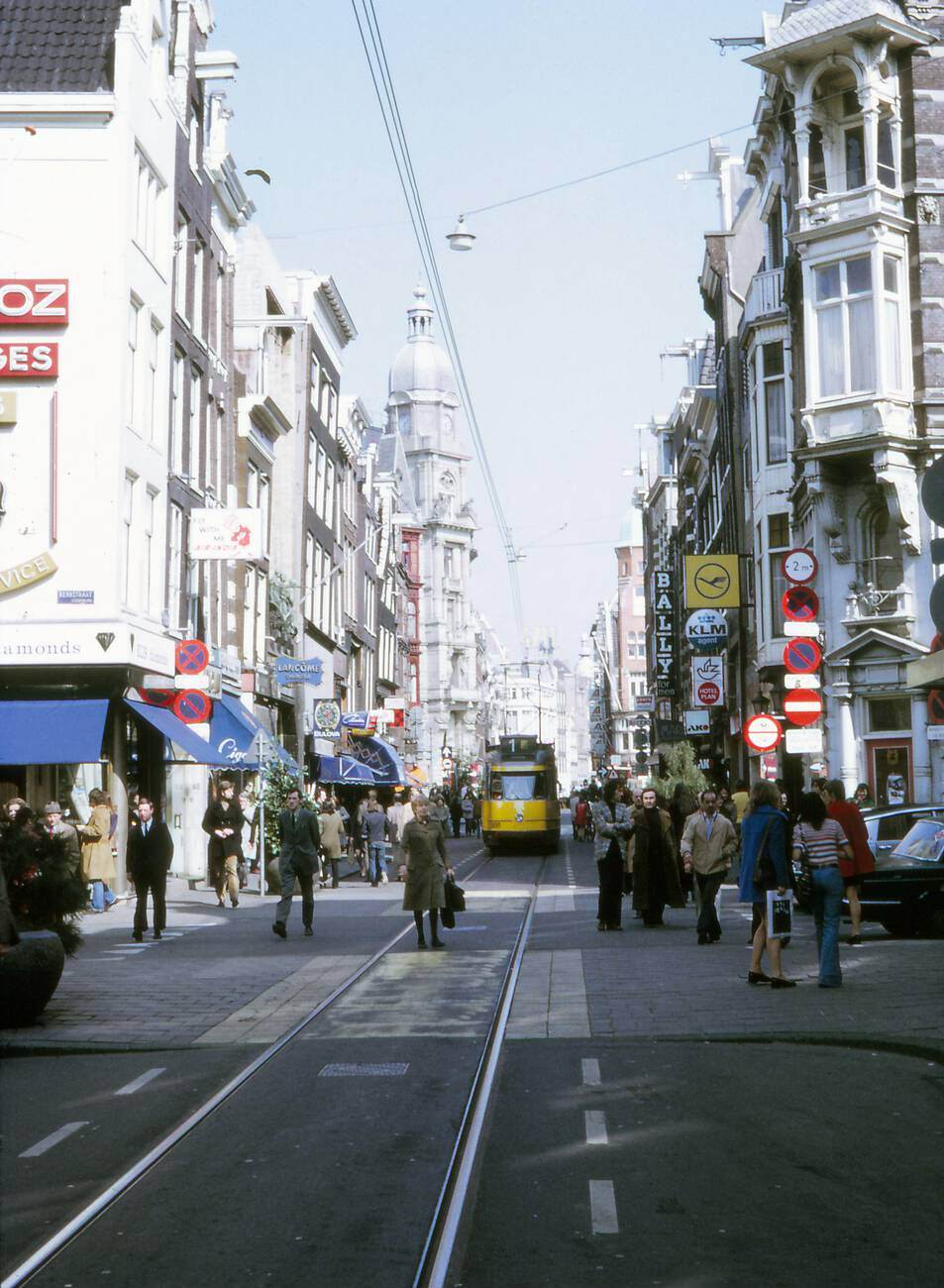
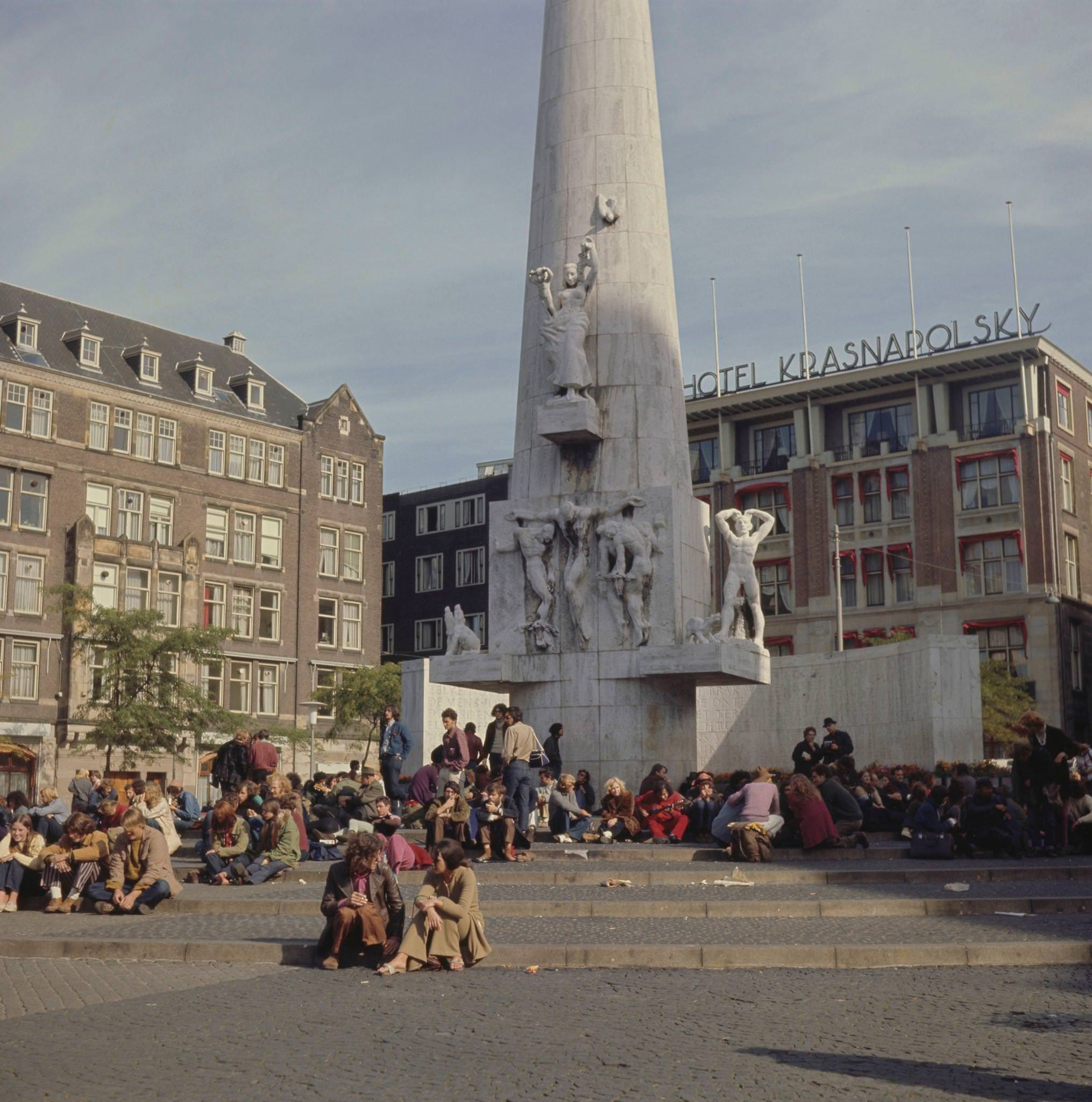
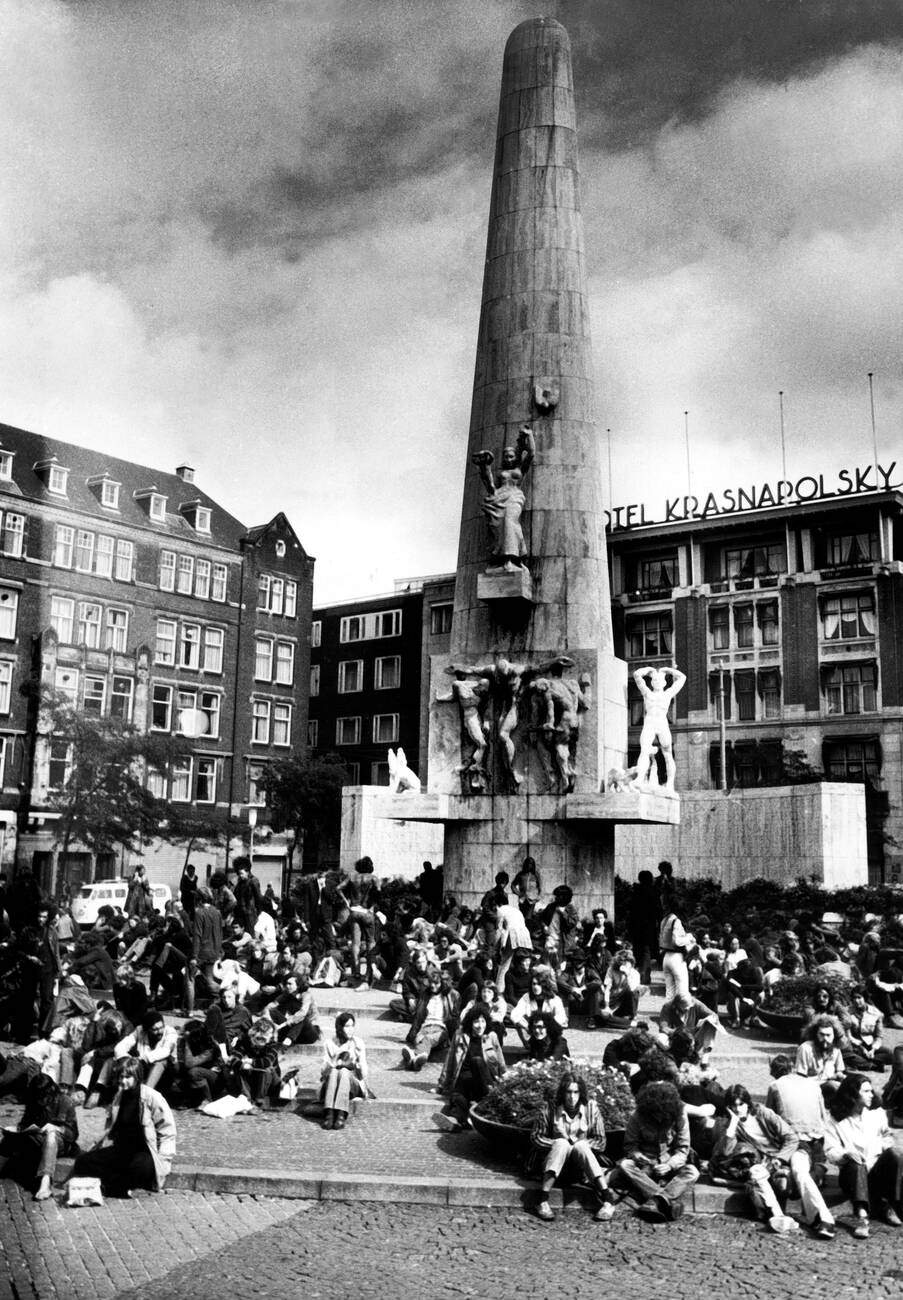
At night, Amsterdam’s city center glowed with neon. The yellow trams ran past the Munttoren tower, and fast food chains like Wimpy were already planted among the older shops and cafes. The streets drew a mix of residents, tourists, and the large hippie community that gathered around Dam Square in the early part of the decade. Dam Square itself was a well-known meeting point for young people, travelers, and petty gamblers throughout the early 1970s.
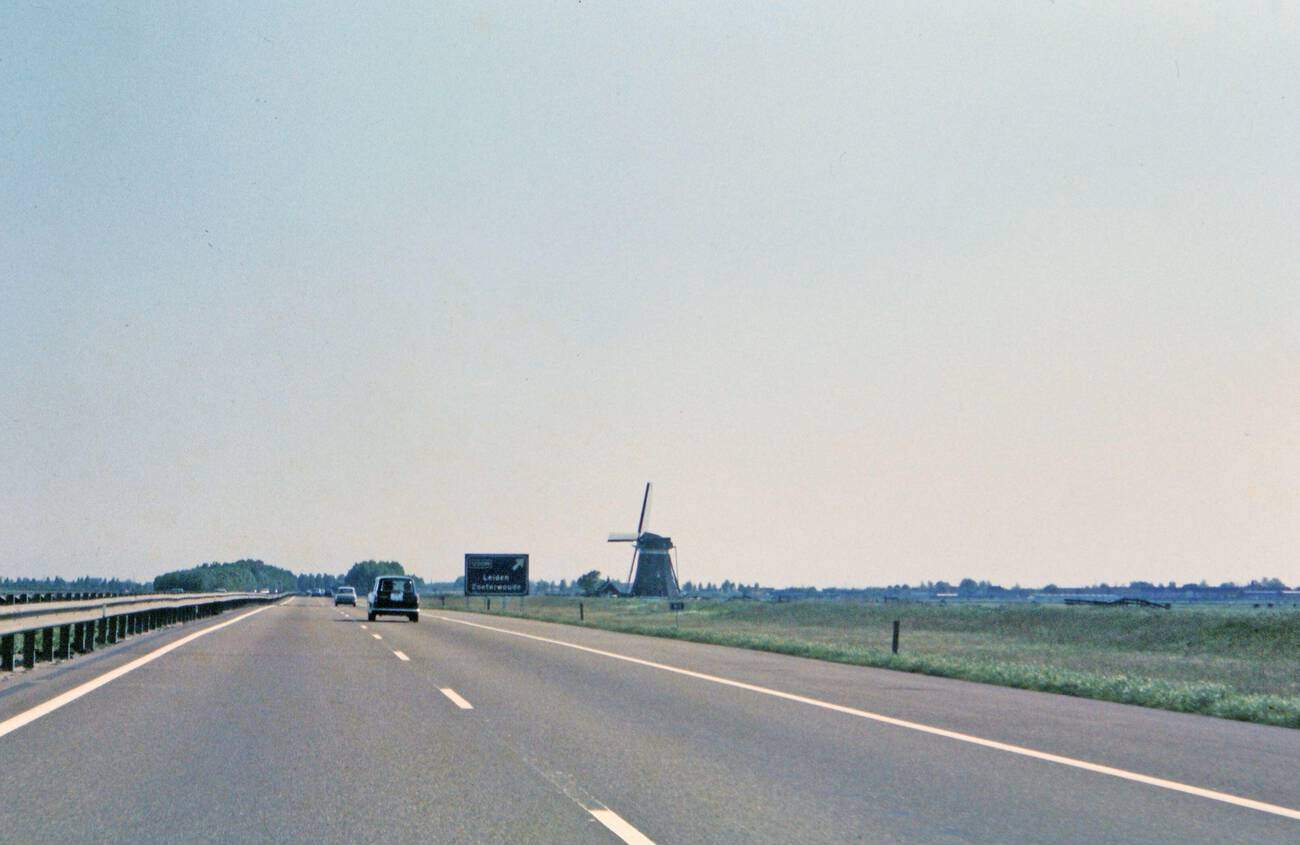
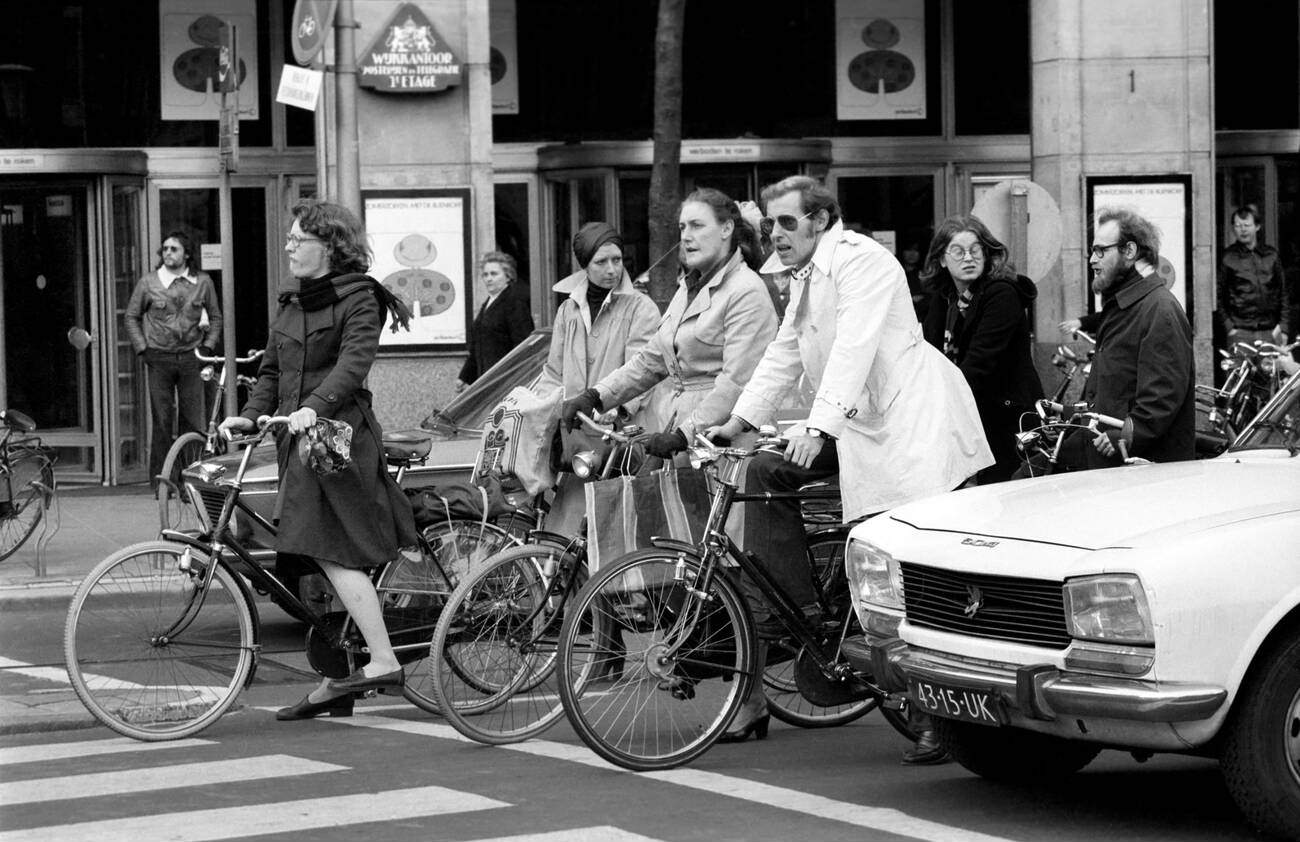
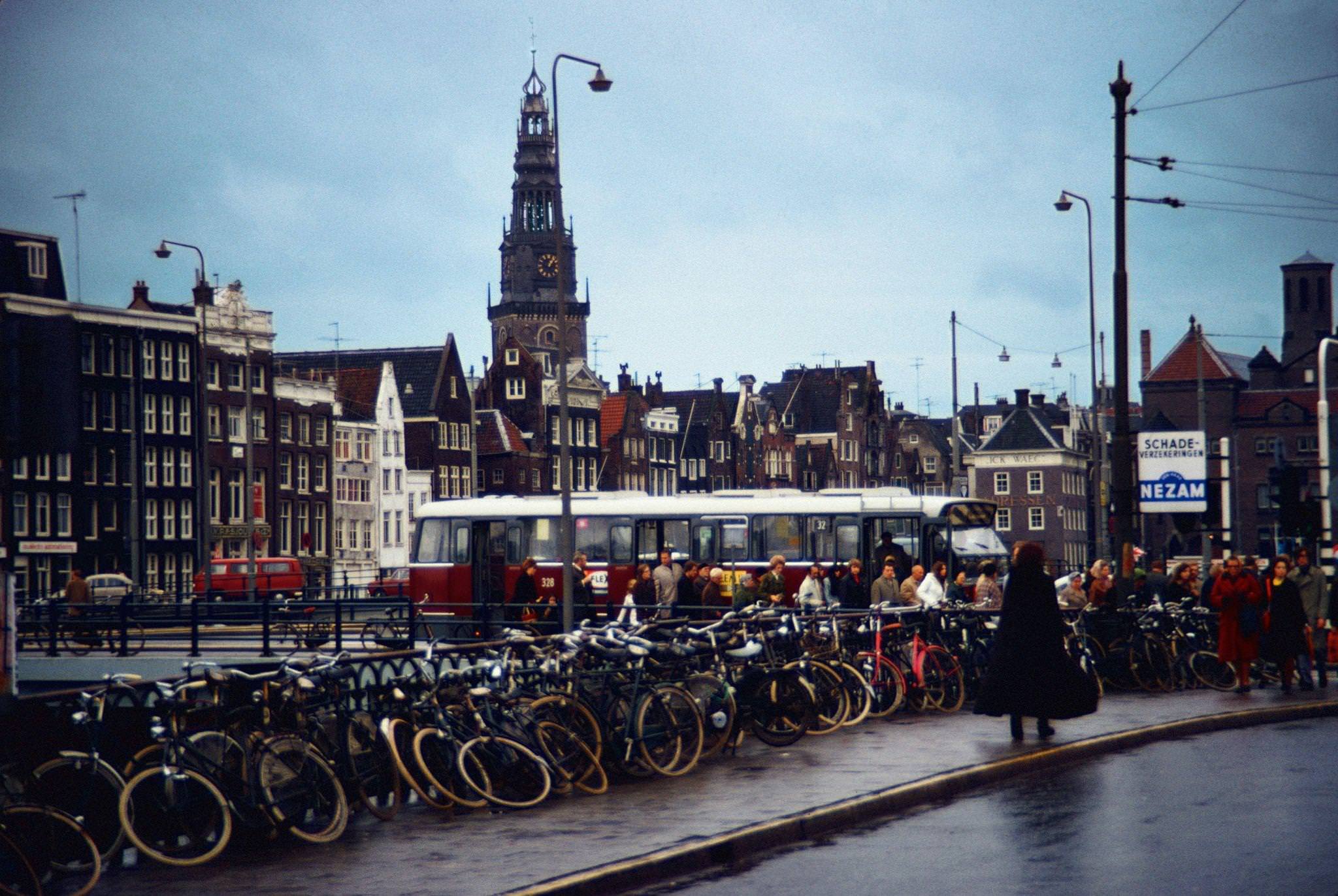
The 1973 oil crisis hit the Netherlands hard. As a country heavily dependent on car travel and petrochemicals, the sudden spike in fuel prices caused real disruption. The government introduced car-free Sundays, and images from that period show eerily empty highways that normally hummed with traffic. The crisis accelerated interest in public transport and cycling — and the bicycle, already central to Dutch life, became even more prominent. By May 1975, the streets of Amsterdam were thick with bikes, a scene that felt both timeless and newly urgent.
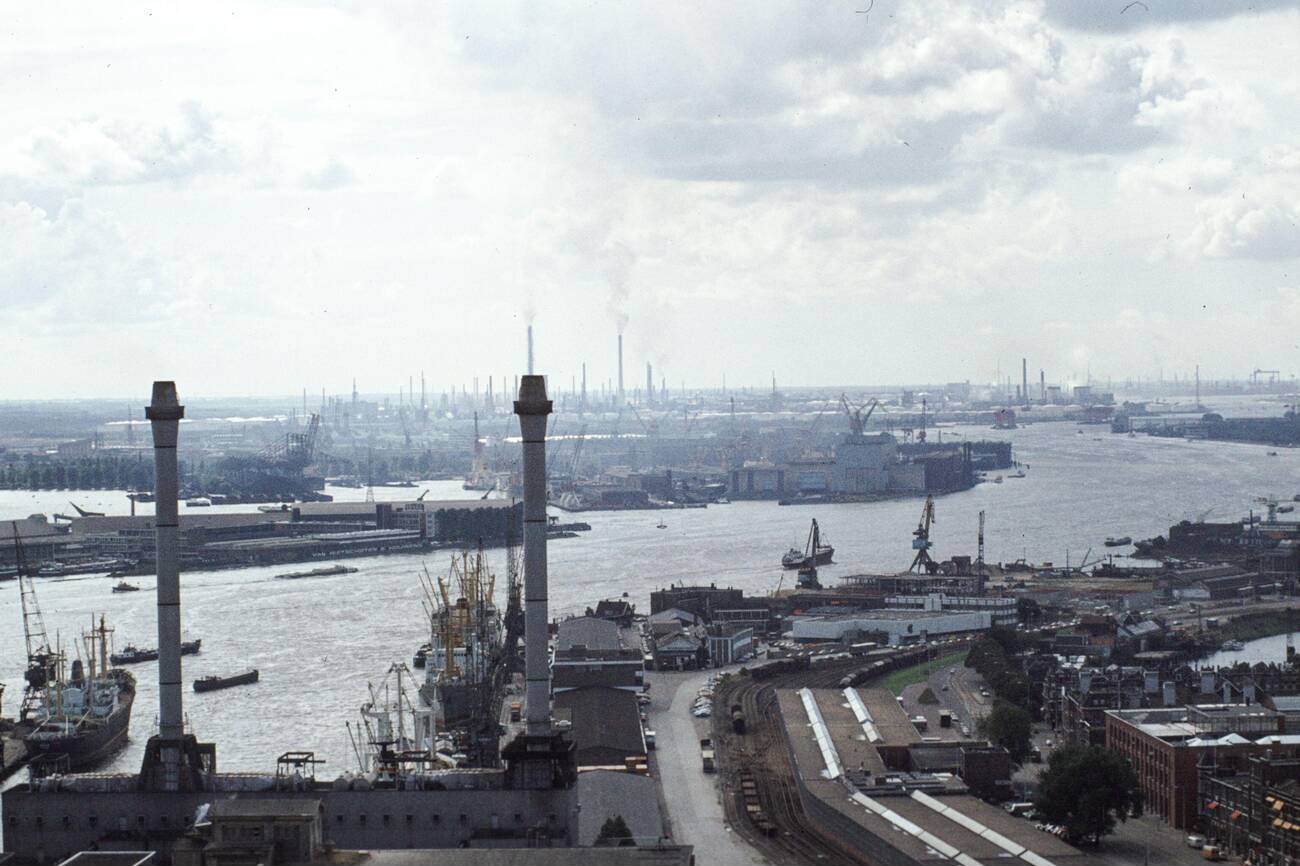
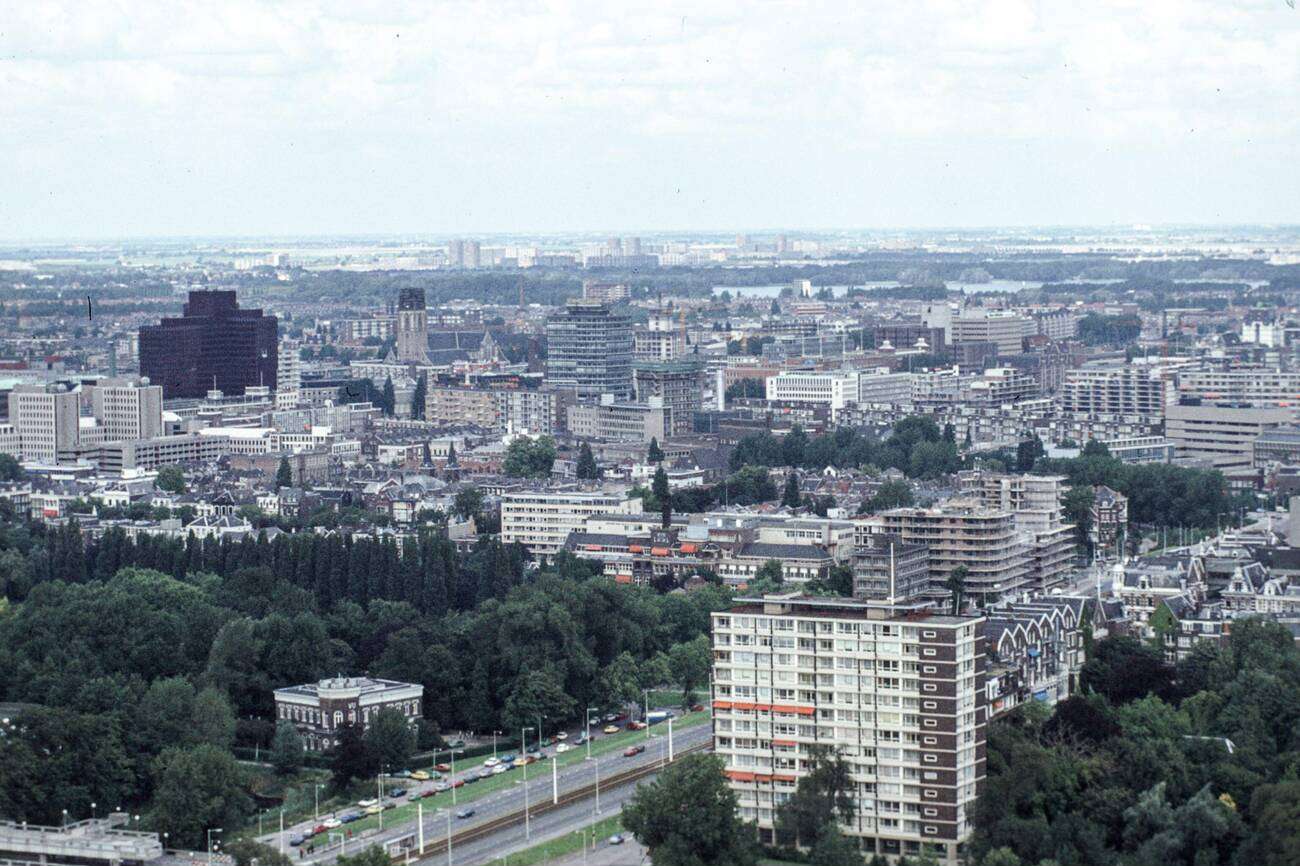
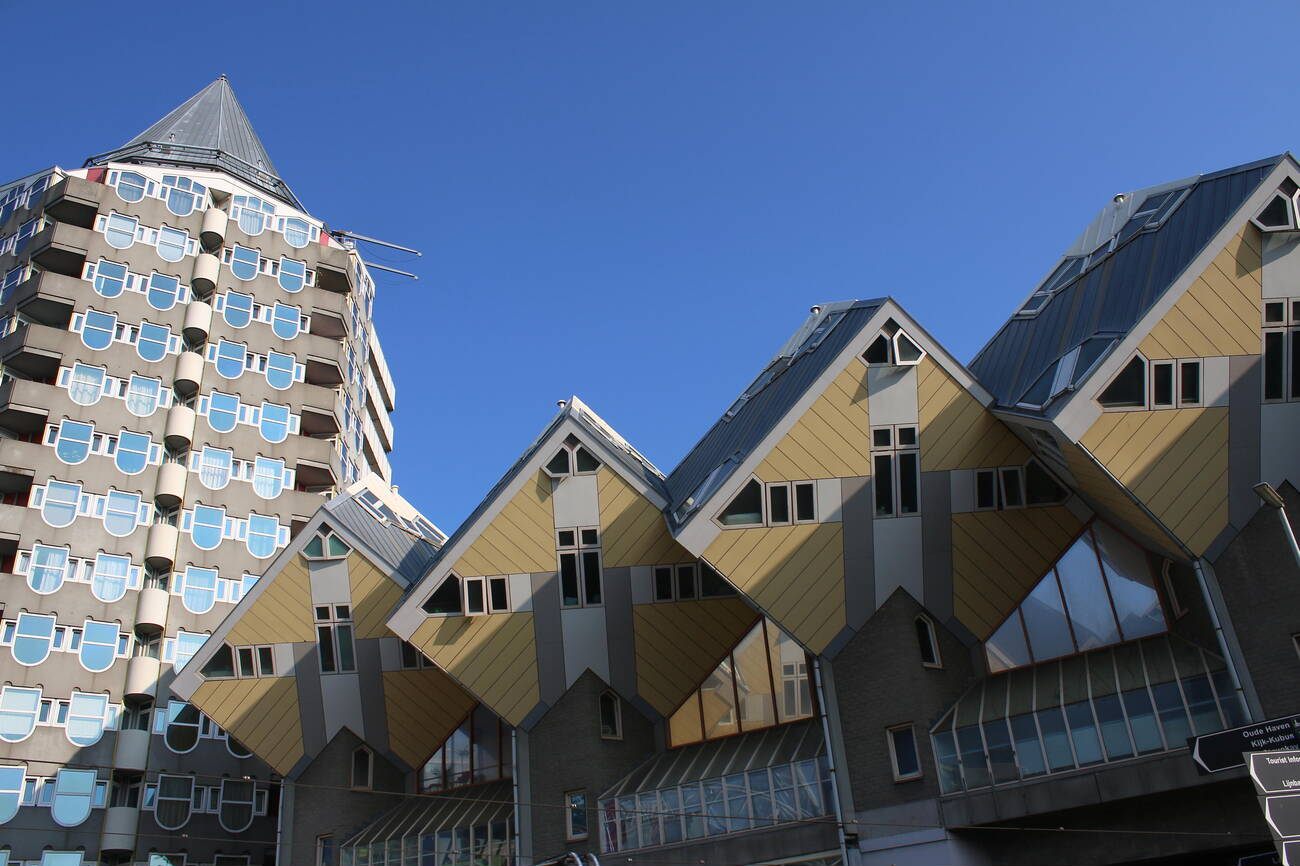
Rotterdam’s Euromast offered one of the best vantage points in the country. From its upper platform, the port spread out in every direction — container yards, tankers, industrial facilities, and the old neighborhood of Delfshaven still intact along the water’s edge. The city was rebuilding its identity after the wartime destruction of its center, and architects were given considerable freedom. The Kubuswoningen — cube houses designed by Piet Blom and built in Rotterdam — became one of the decade’s most striking examples of experimental Dutch architecture.
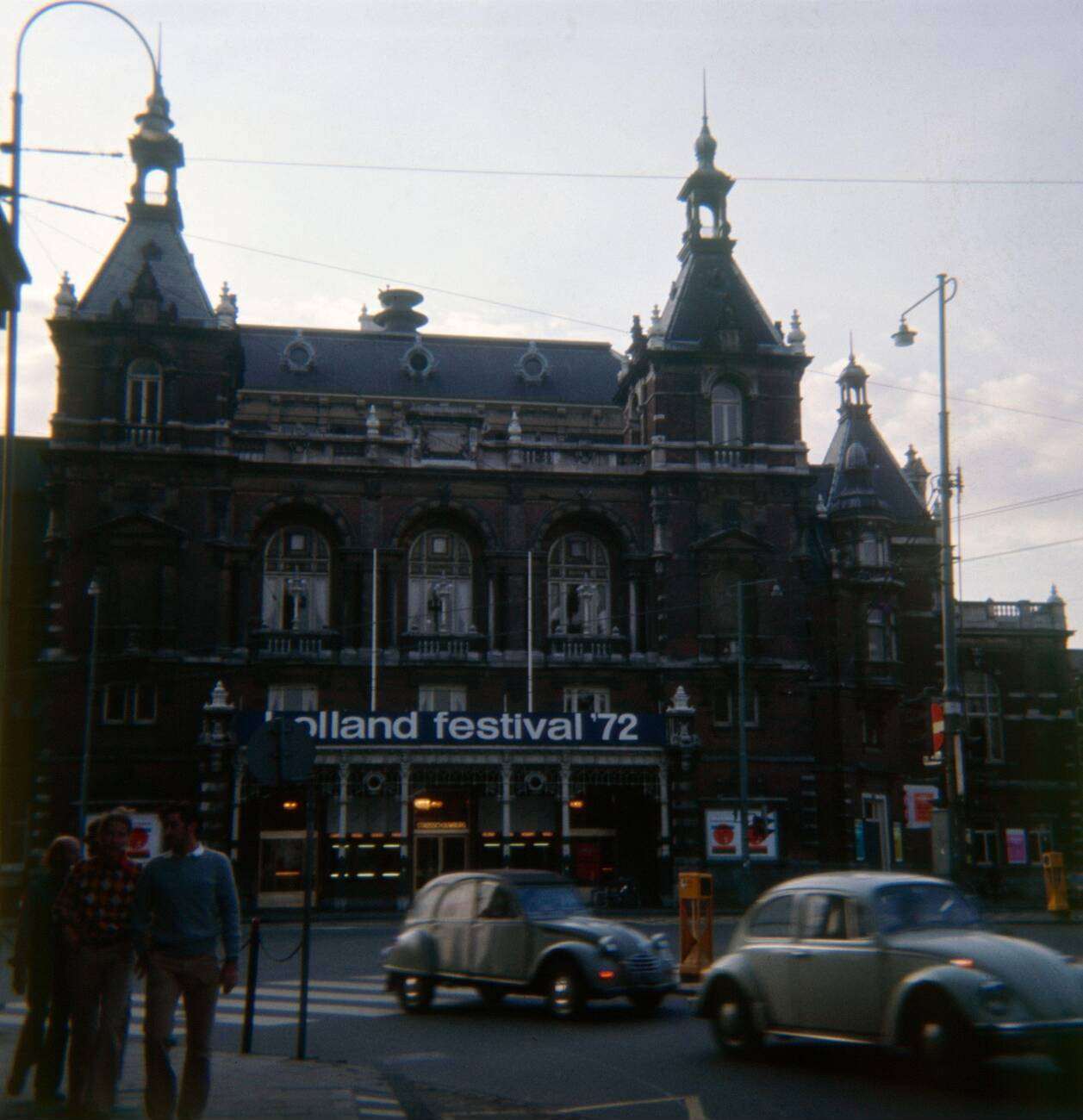
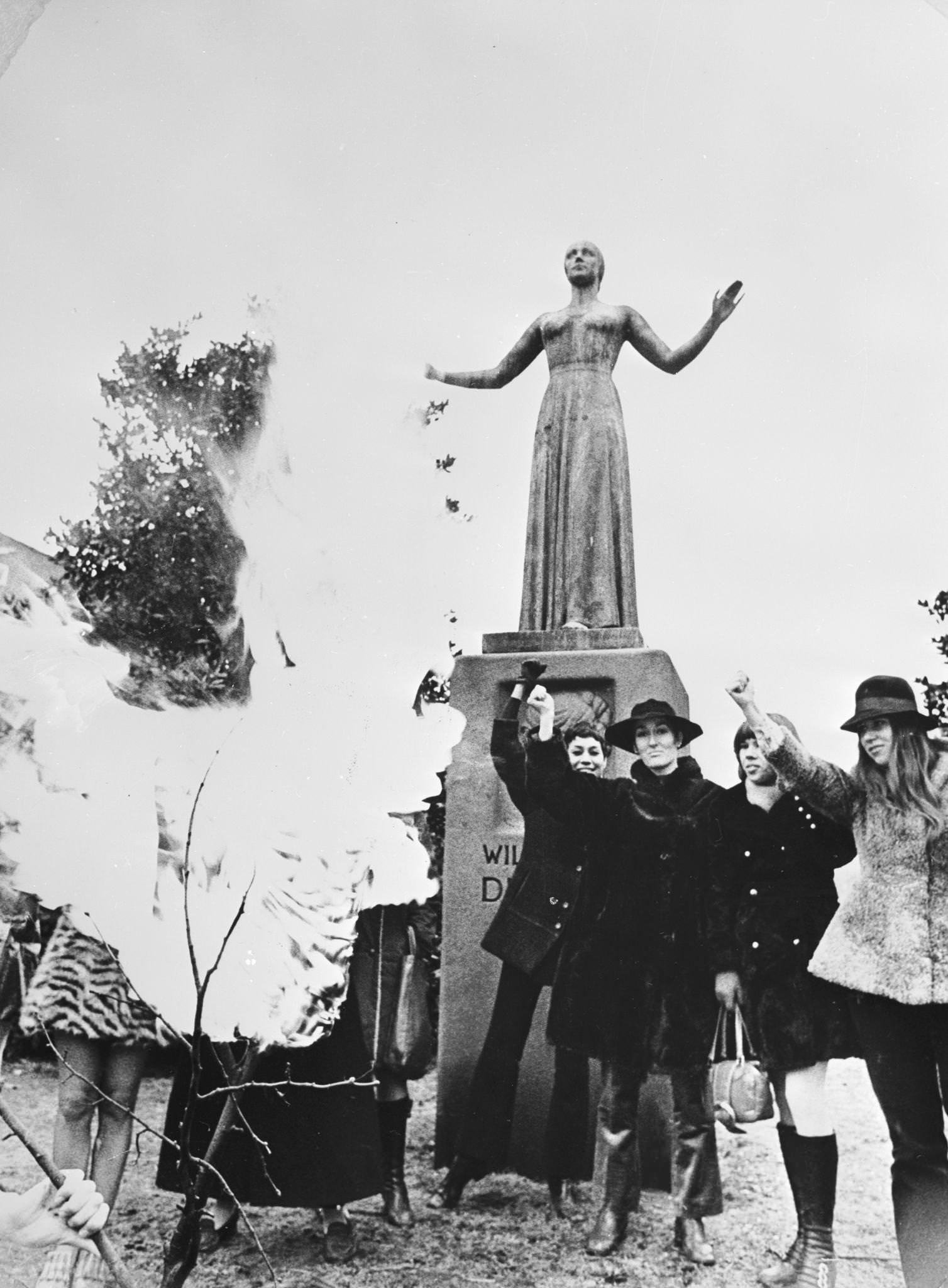
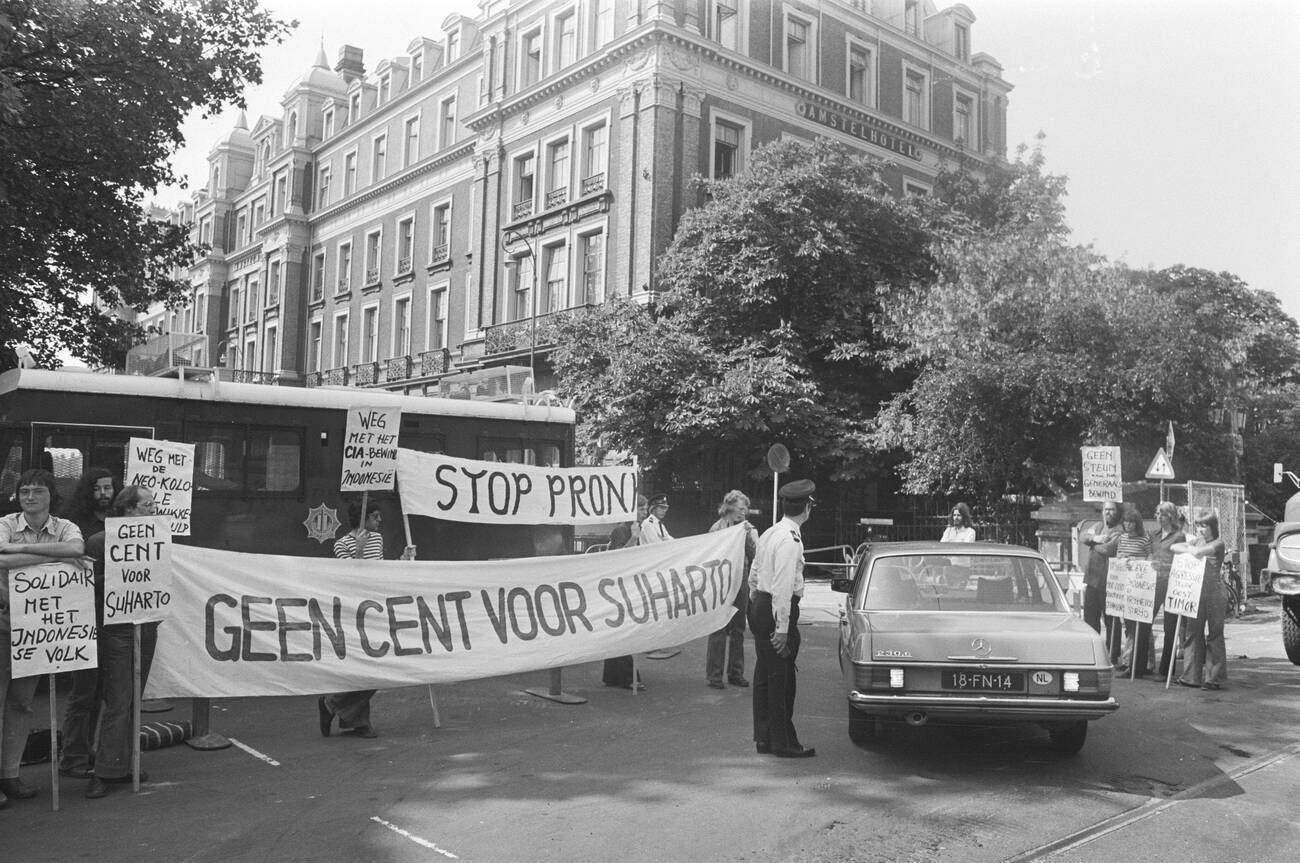
Cultural life was vivid and sometimes confrontational. The Holland Festival drew international artists and audiences each summer. On the streets, the Dolle Mina — the Dutch branch of the Women’s Liberation Movement — held public demonstrations, including burning corsets beneath the statue of feminist pioneer Wilhelmina Drucker in Amsterdam. Students and environmental groups organized protests against government policies. A demonstration during the IGGI conference in Amsterdam in June 1976 drew crowds to the city center.
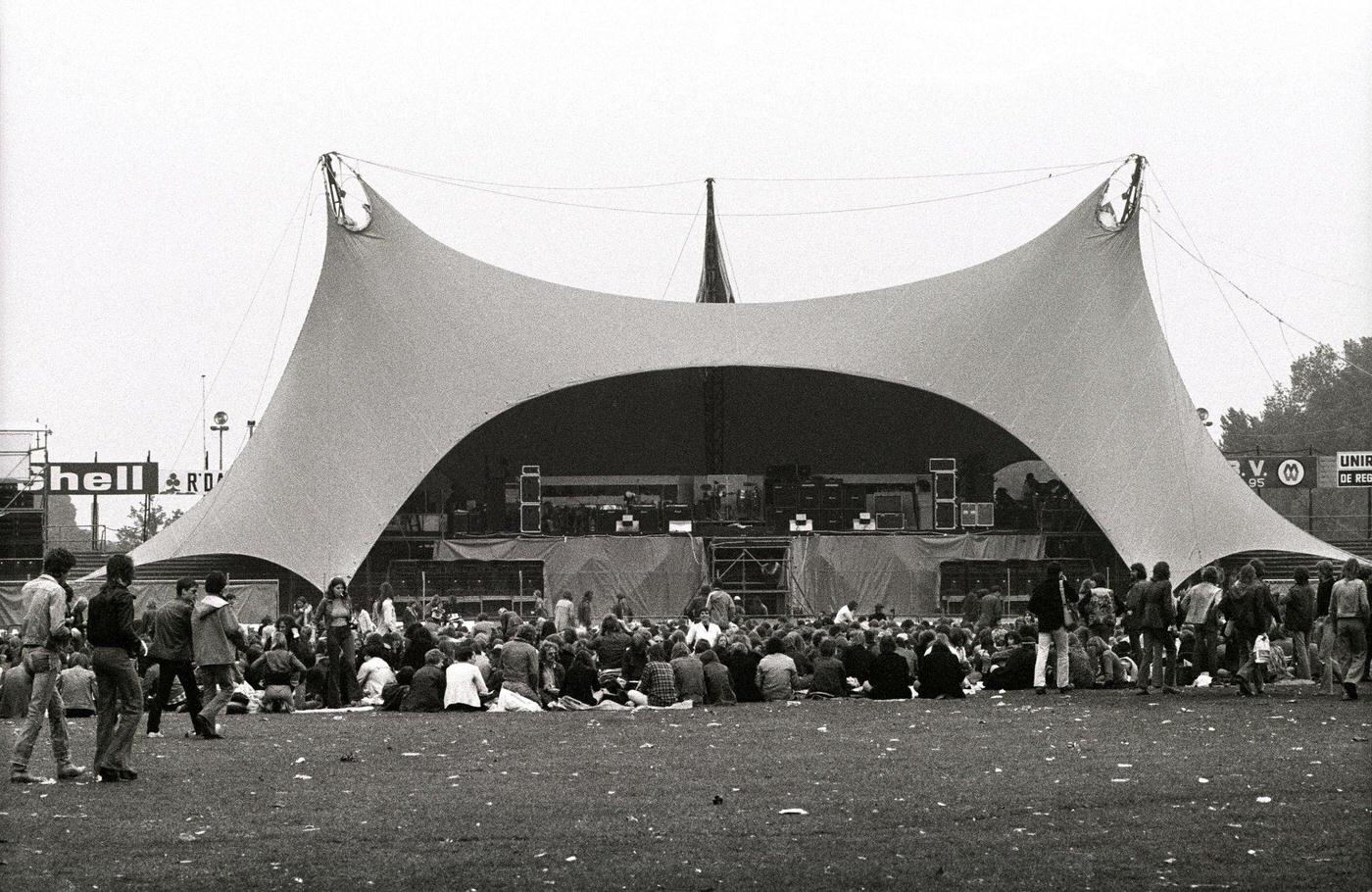
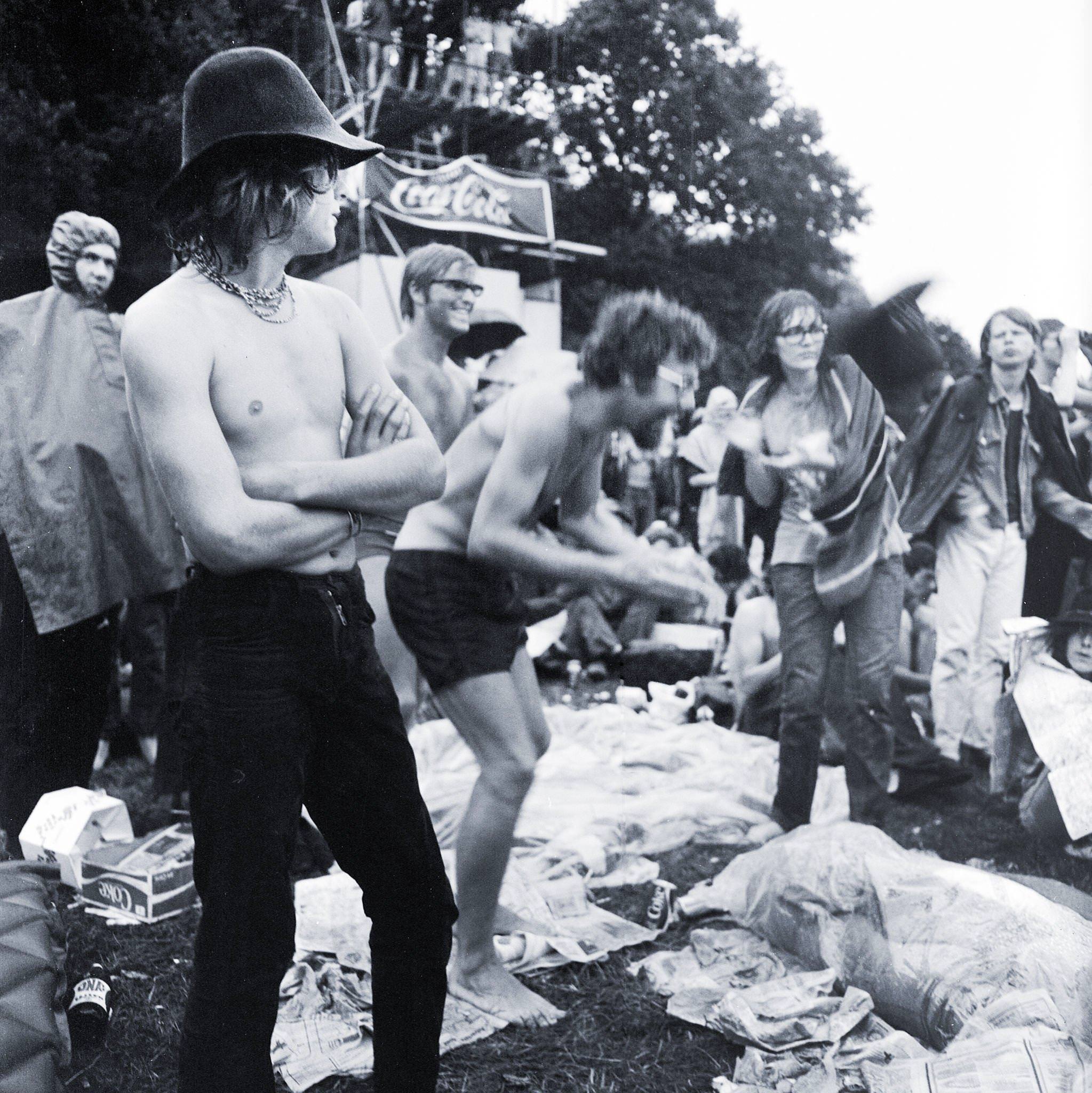
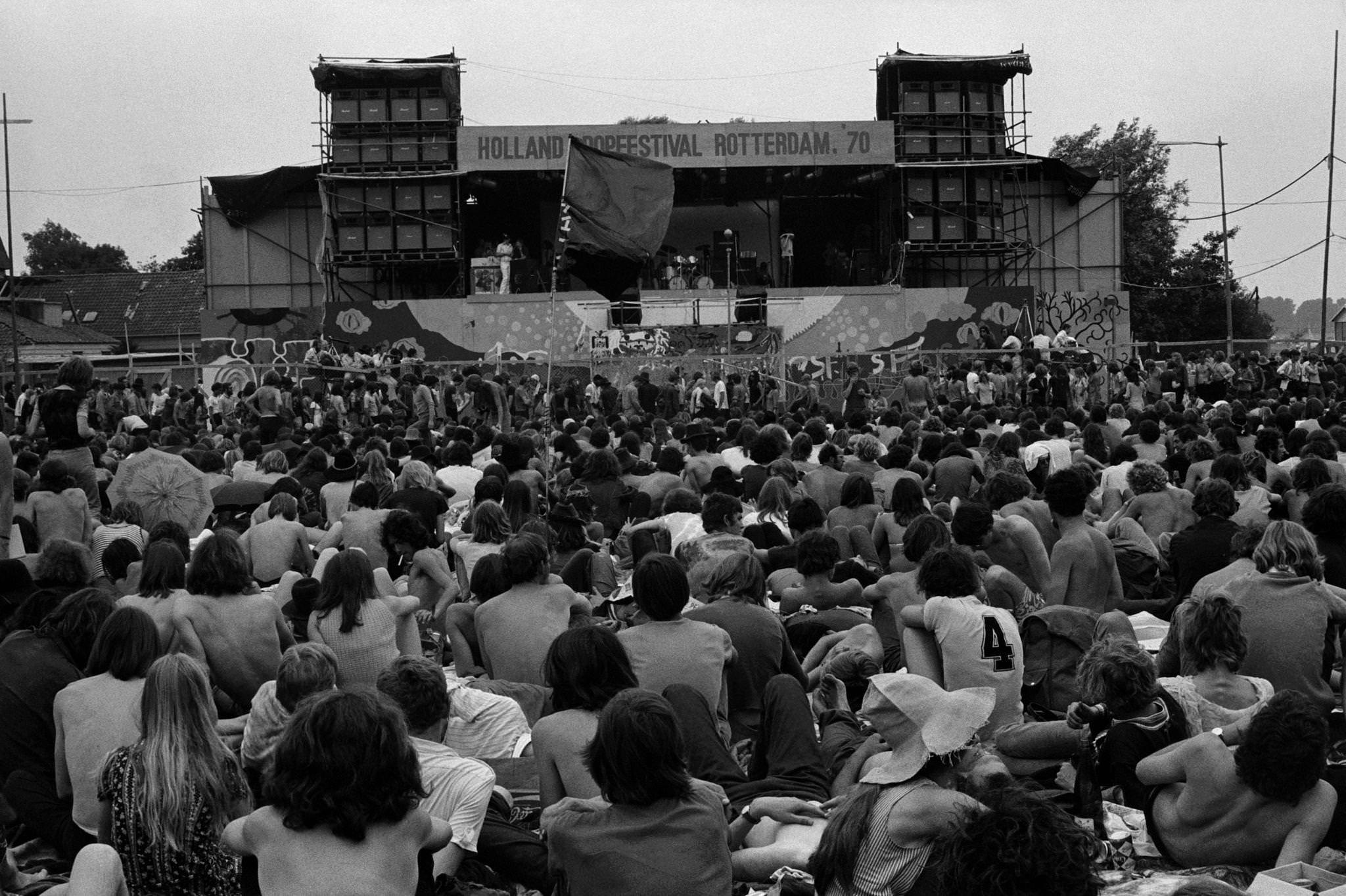
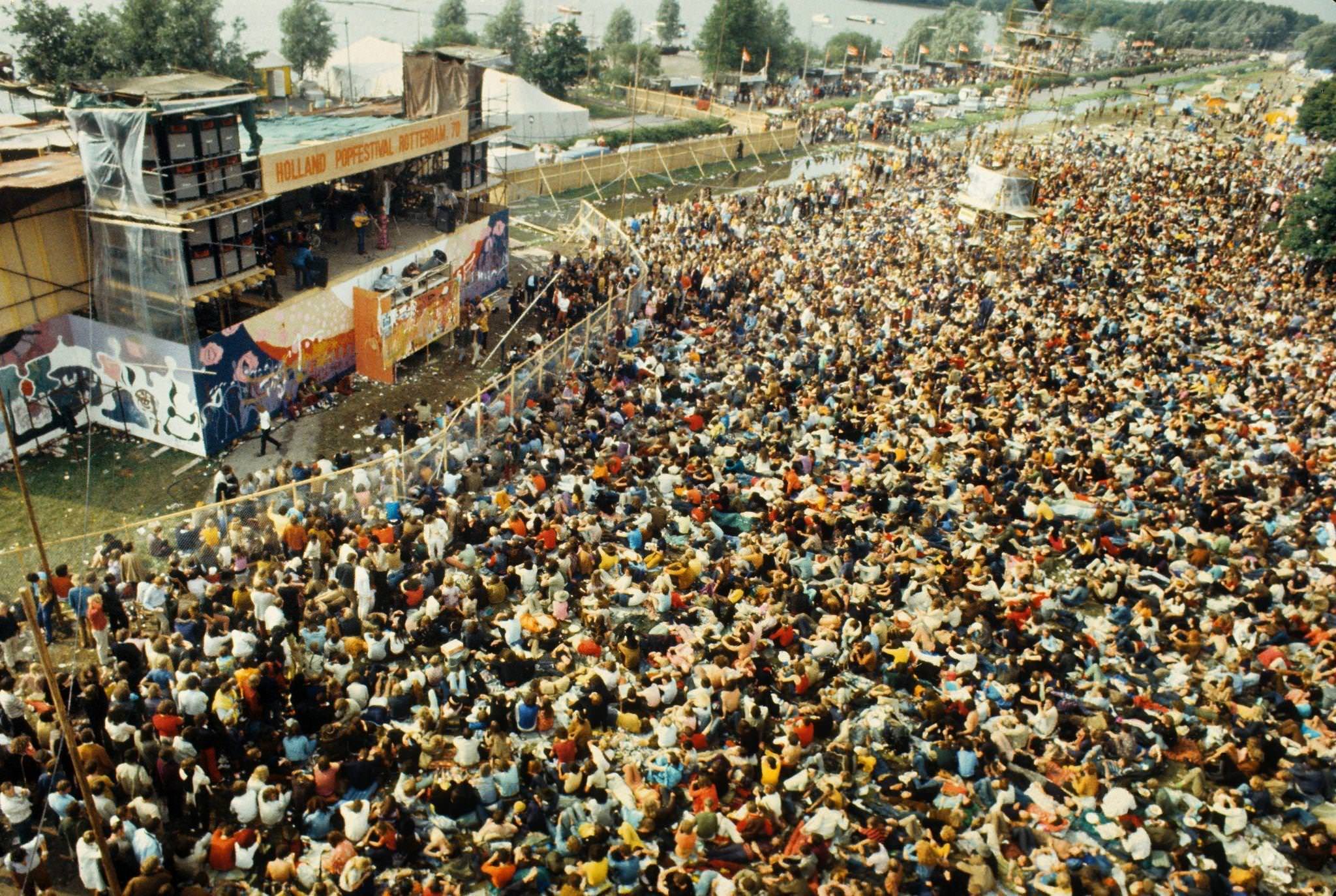
Music was a major force in Dutch cultural life. In June 1970, the Kralingen Pop Festival was held in Rotterdam’s Kralingse Bos park. Billed as the Dutch Woodstock, it drew hundreds of thousands of people over several days and featured international acts alongside Dutch performers. The crowd filled the parkland around the stage, and the event became one of the most celebrated moments of Dutch counterculture. Six years later, The Rolling Stones played at Zuiderpark in The Hague on May 30, 1976, drawing a massive crowd to FC Den Haag’s stadium.
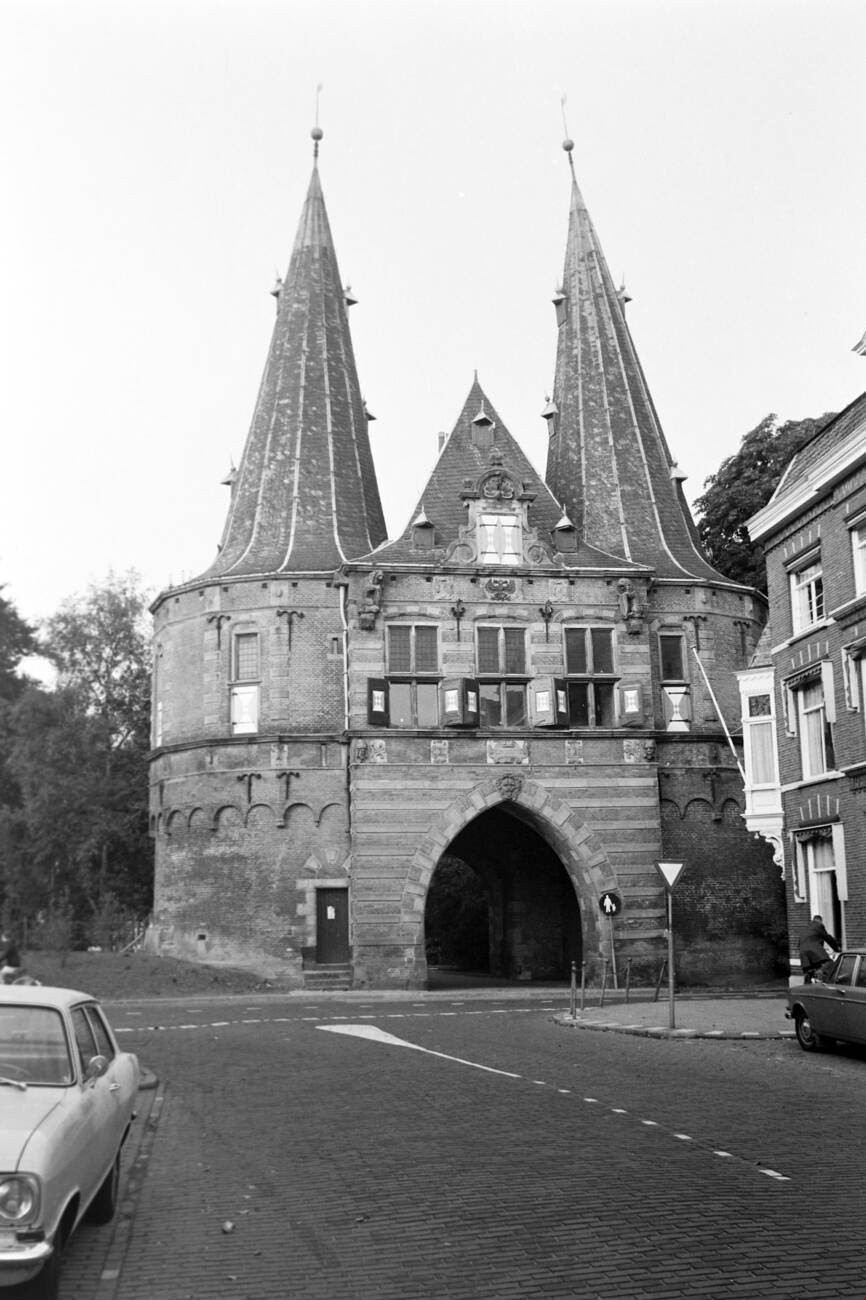
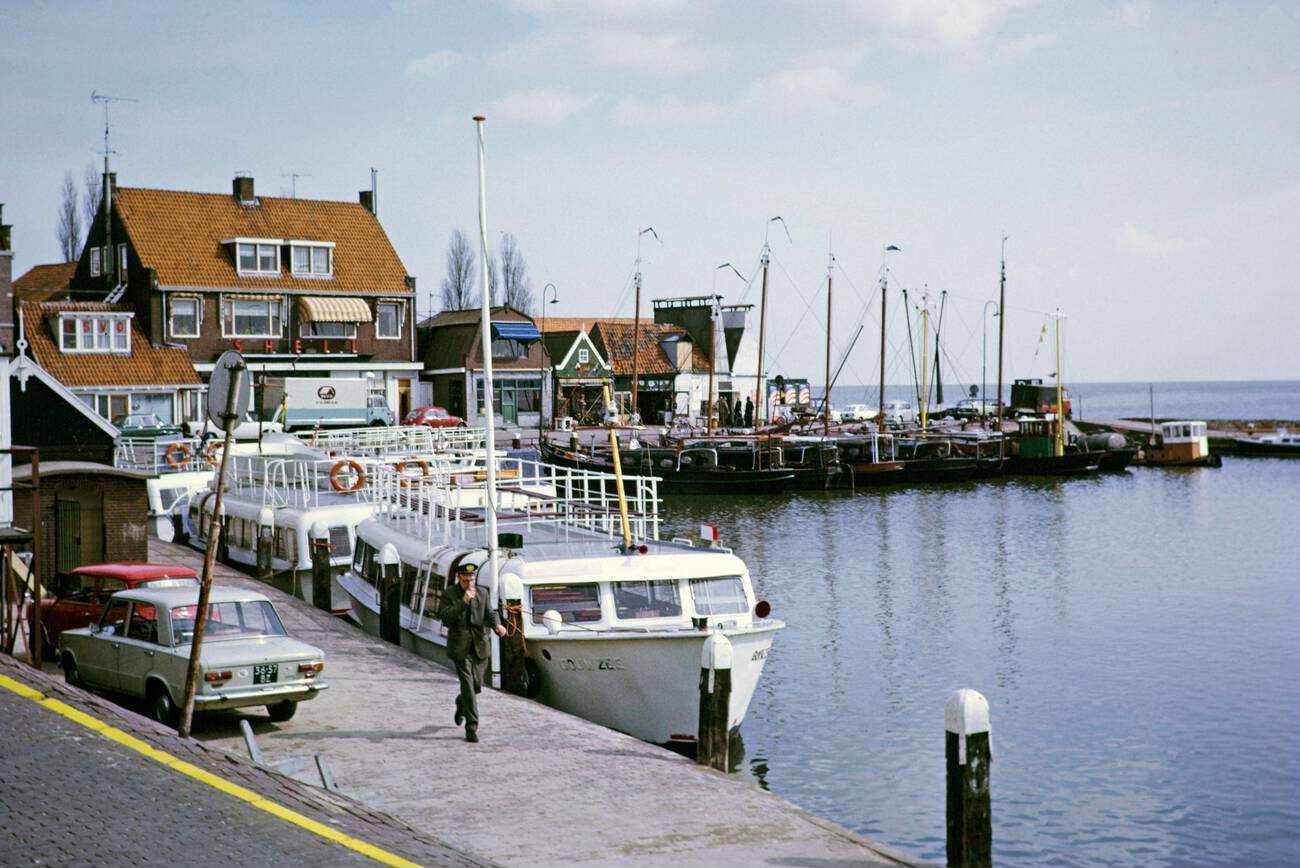
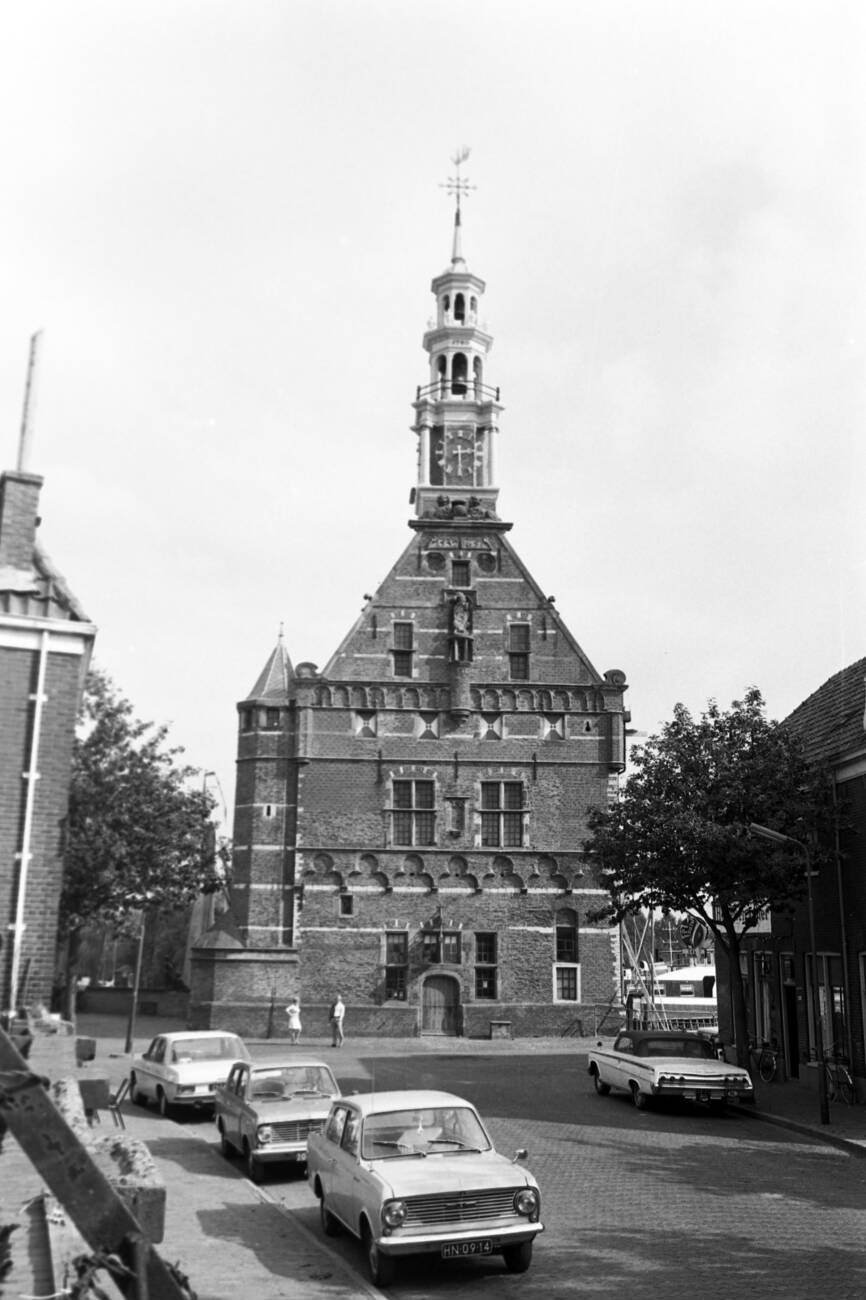
The harbor towns along the IJsselmeer — Hoorn, Volendam, Marken, Monnickendam — drew a steady stream of visitors throughout the decade. Hoorn’s Hoofdtoren tower stood at the water’s edge as it had for centuries, watching over a harbor still filled with working boats. Visitors took canal boat tours through Amsterdam, browsed souvenir shops, and photographed fishermen in traditional gear. Tourism was a growing industry, and these towns benefited from the rising interest in Dutch heritage.
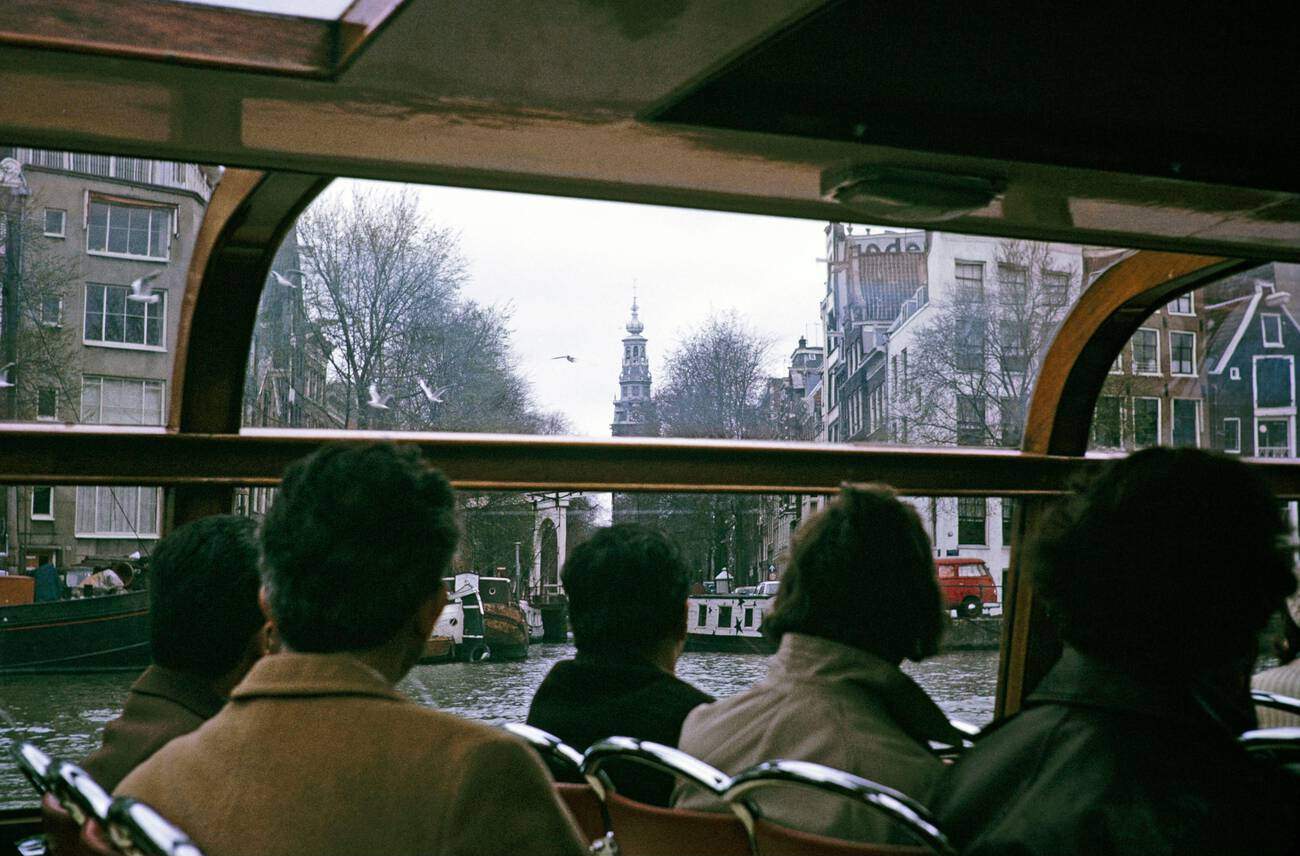
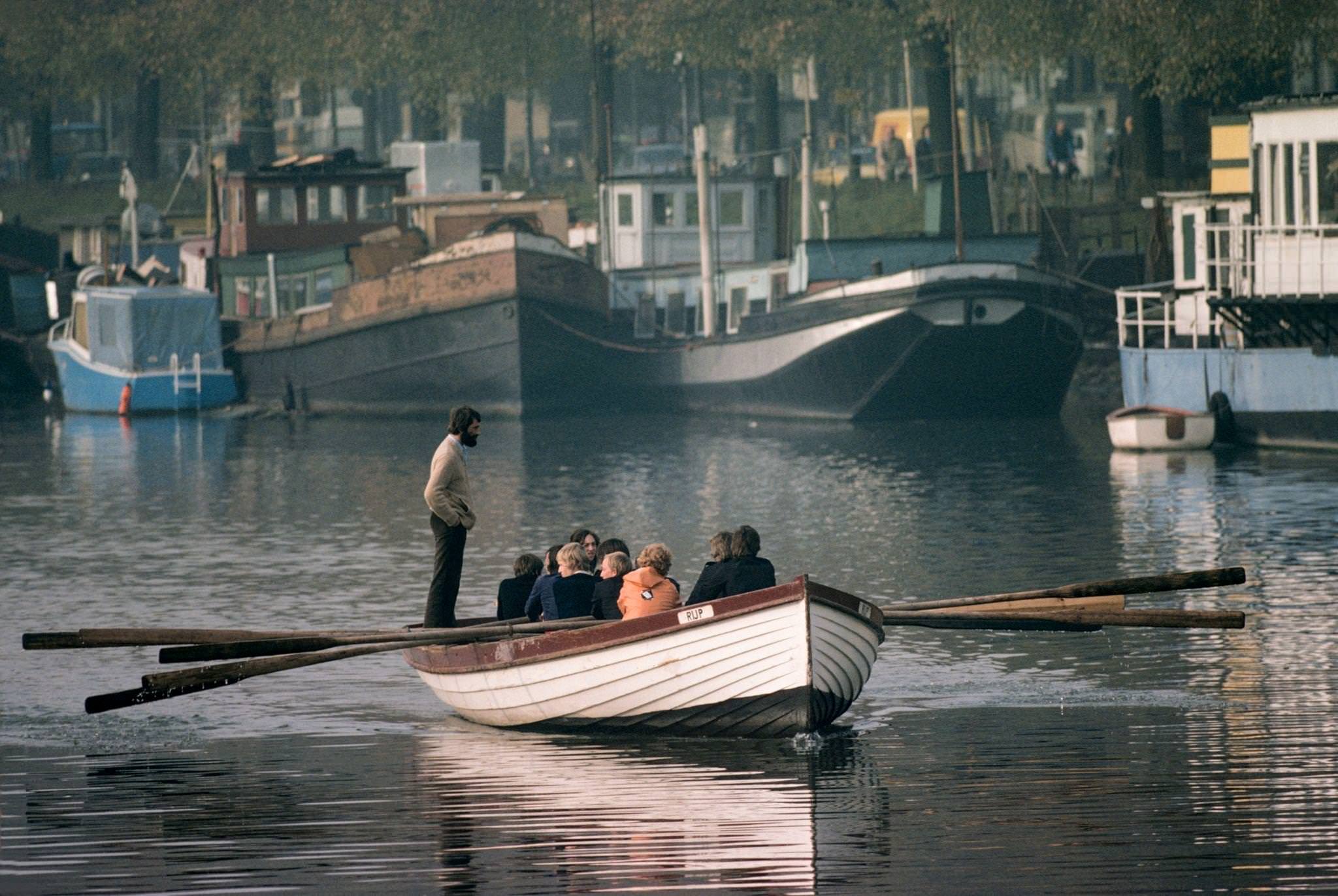
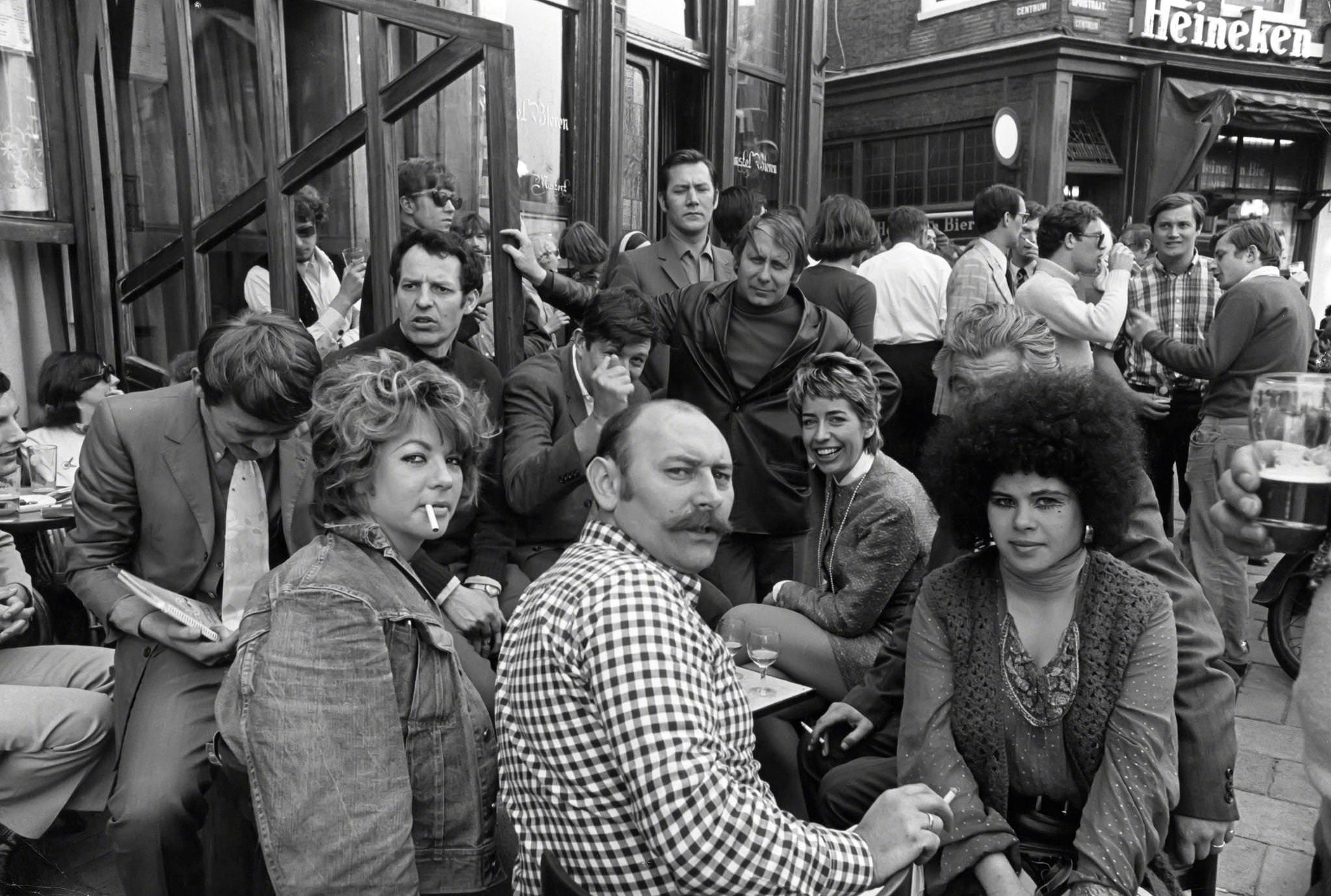
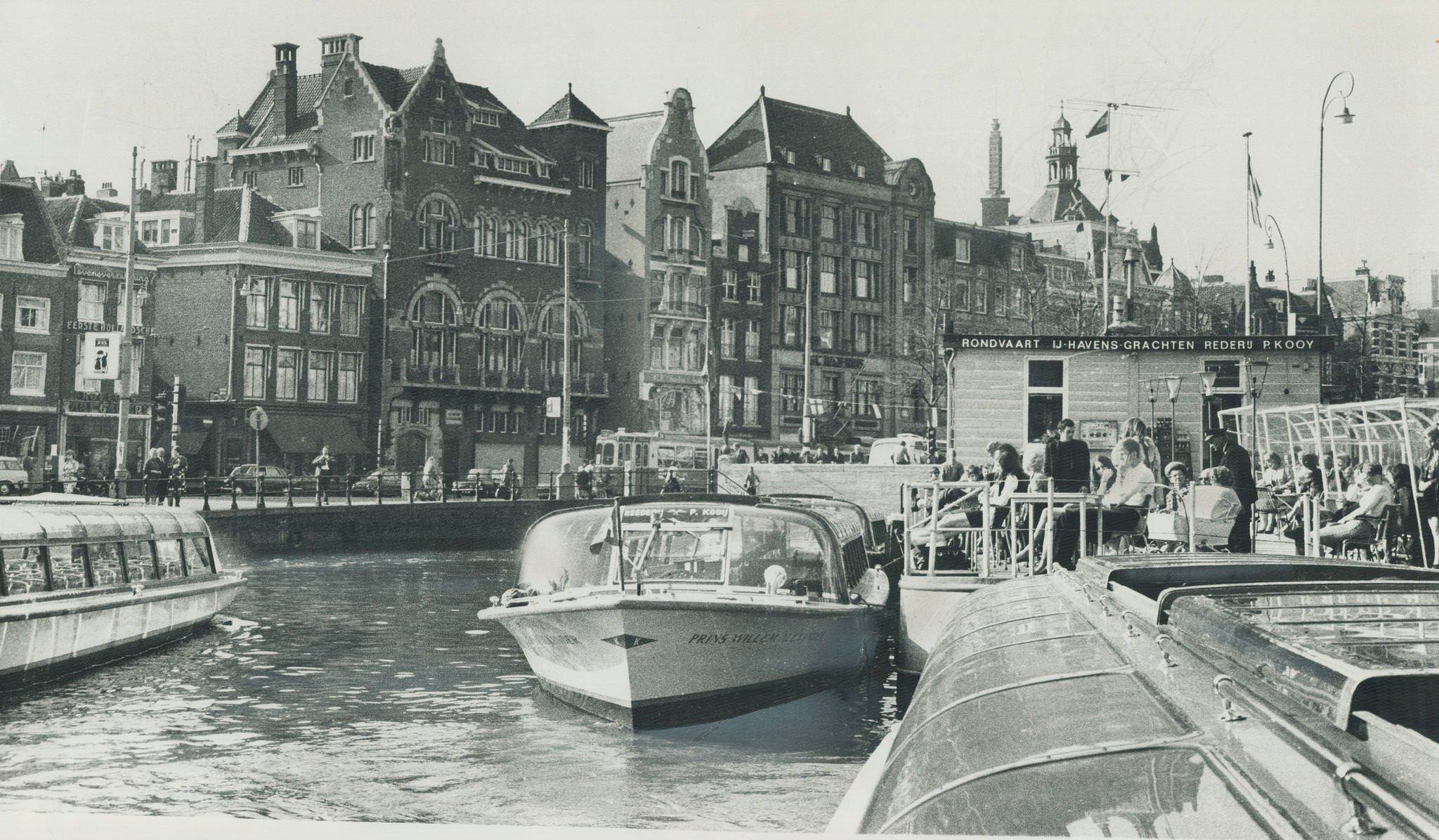
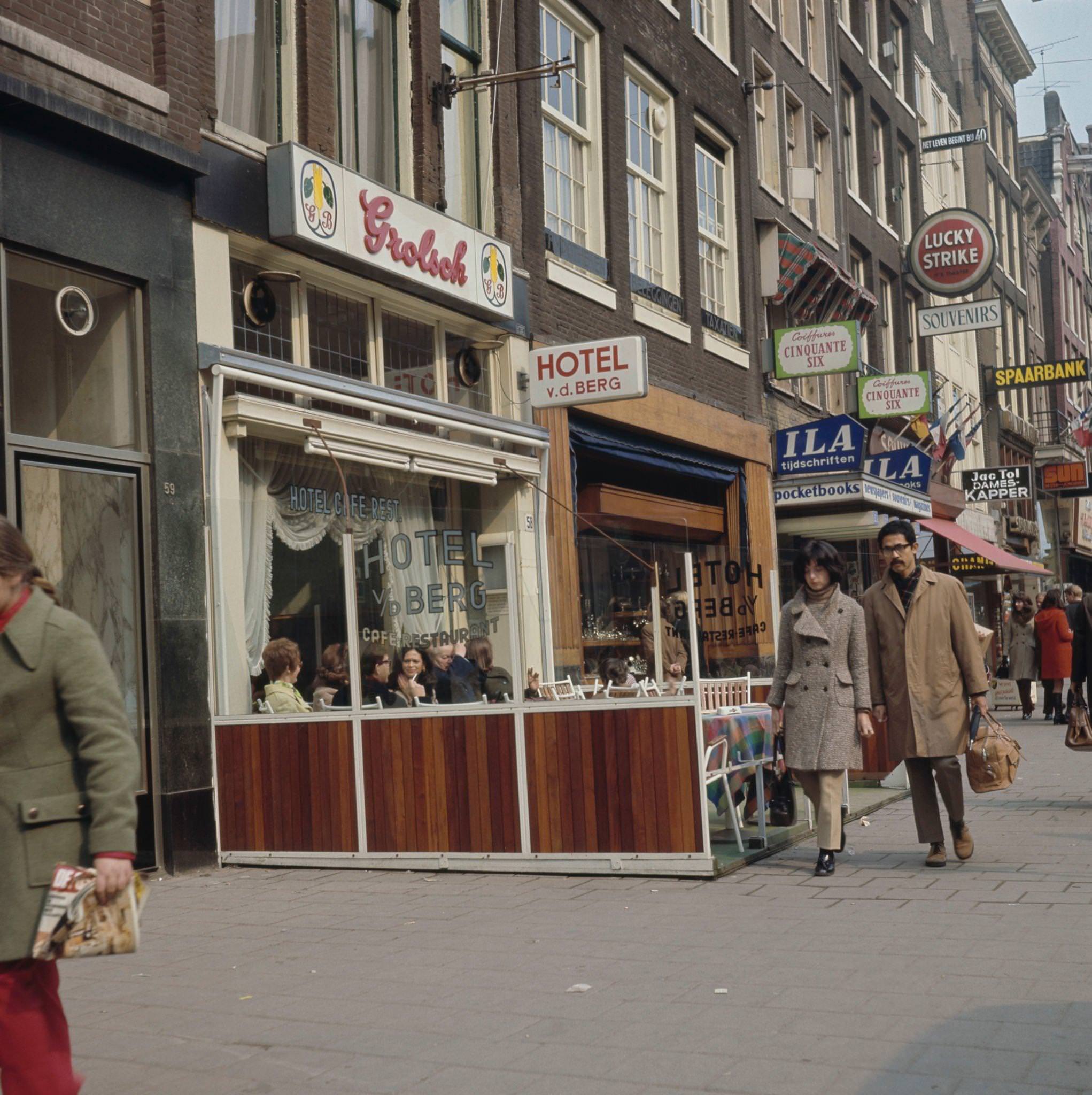
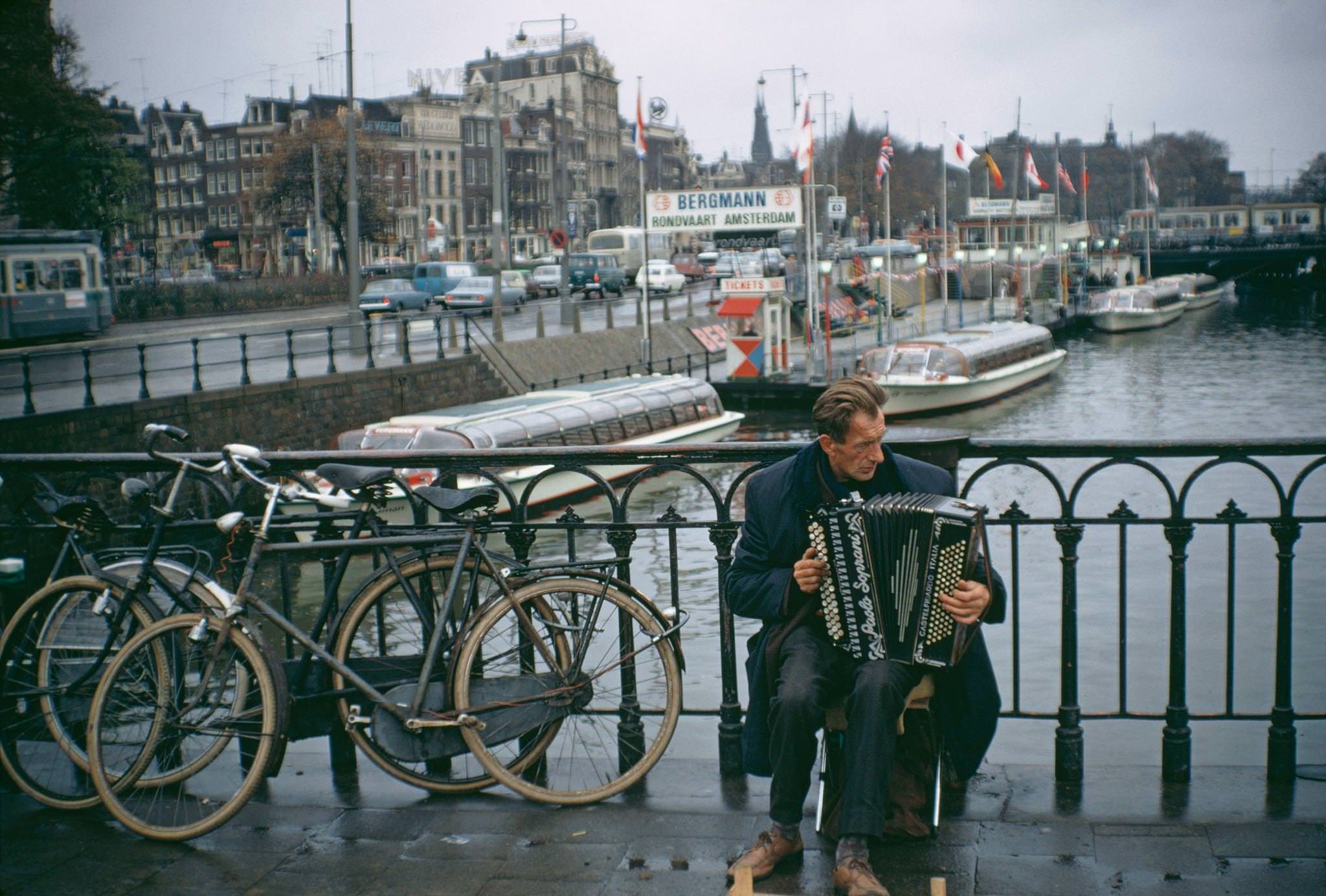
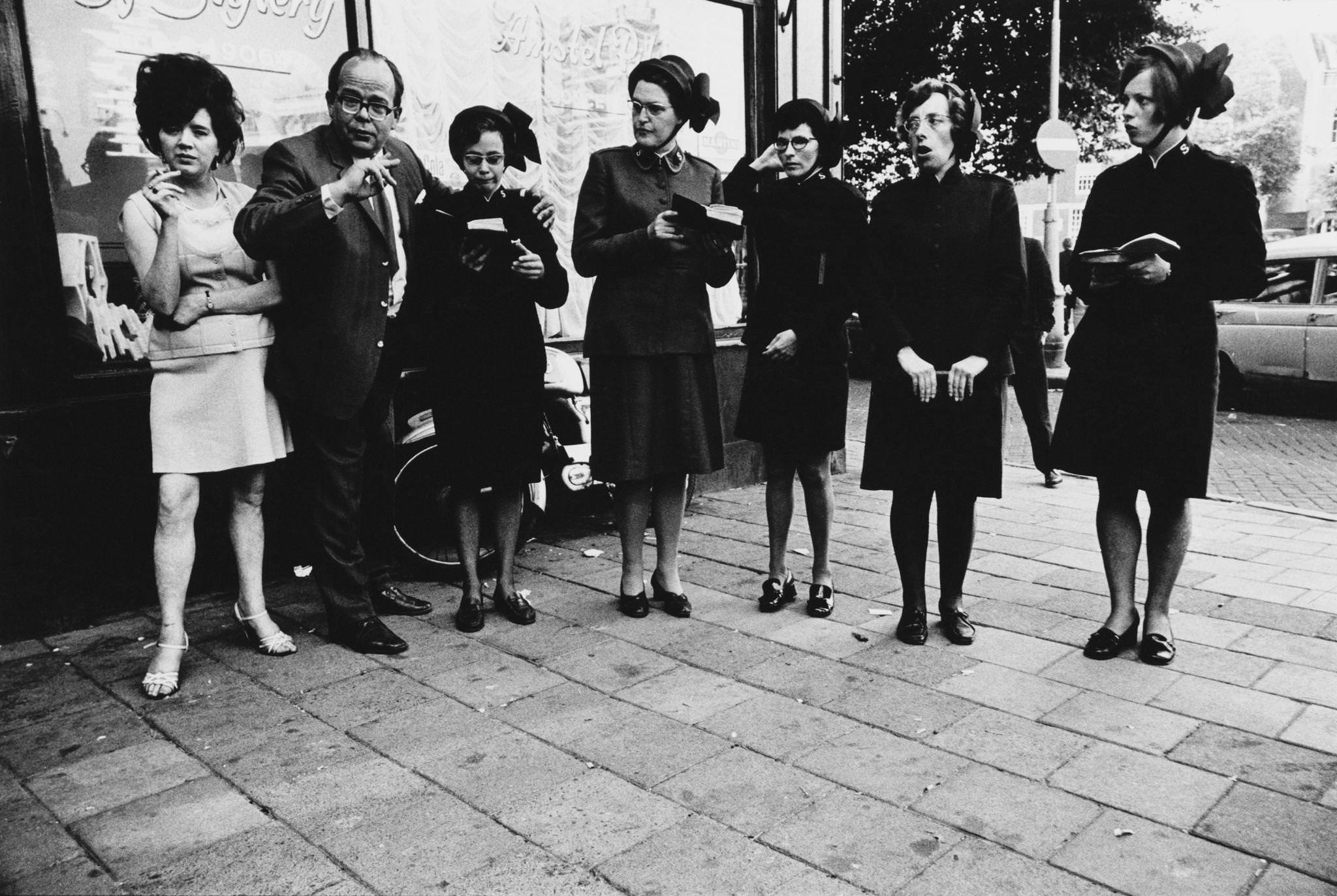
Amsterdam’s street life was extraordinarily varied. A busker played near Centraal Station while trams rattled past on Raadhuisstraat. The Salvation Army sang outside a bar. Pedestrians passed outdoor cafe tables. Cadets rowed on the canals past moored barges. On Leidsestraat, the busy shopping street, trams threaded through cyclists and pedestrians. Boat tour operators ran visitors through the canal ring, where the 17th-century merchant houses reflected in the dark water.
The construction of Amsterdam’s metro system was underway by 1976, and the entrance to Weesperplein station was already taking shape. It was a controversial project — the construction had required demolishing parts of the Nieuwmarkt neighborhood, triggering serious riots in 1975 when residents resisted forced evictions. The metro was eventually completed, but the conflict over Nieuwmarkt became a defining episode in Dutch urban politics and strengthened the city’s commitment to preservation over demolition.
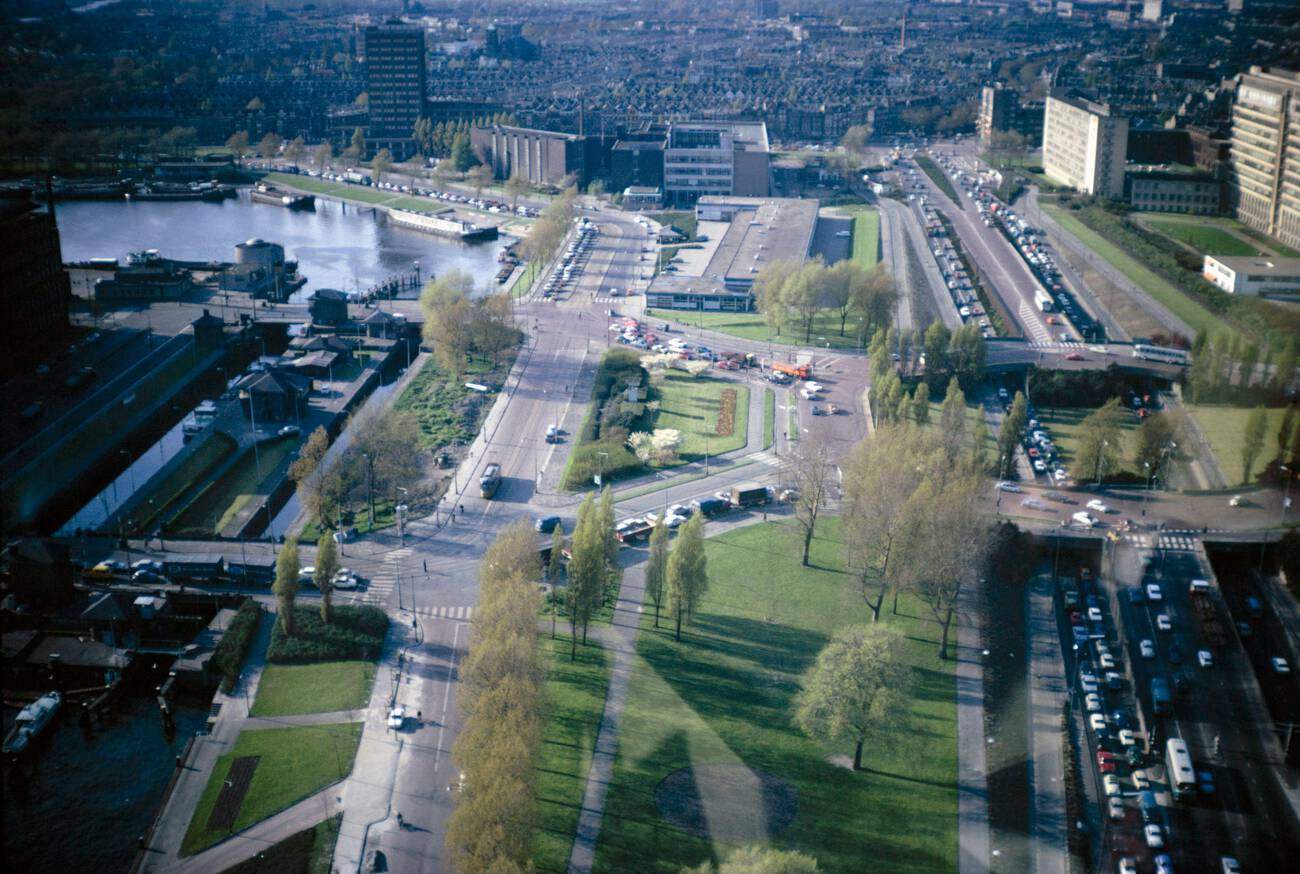
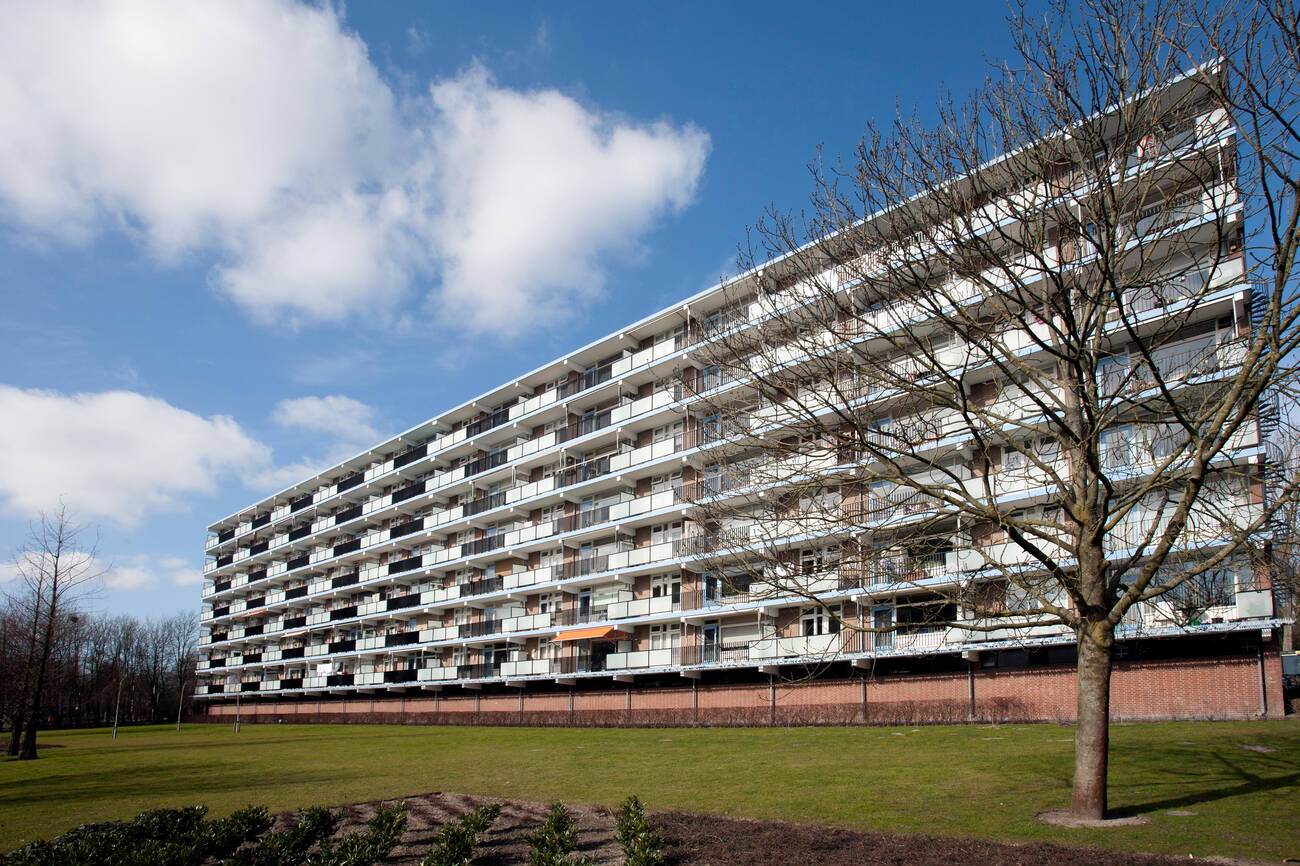
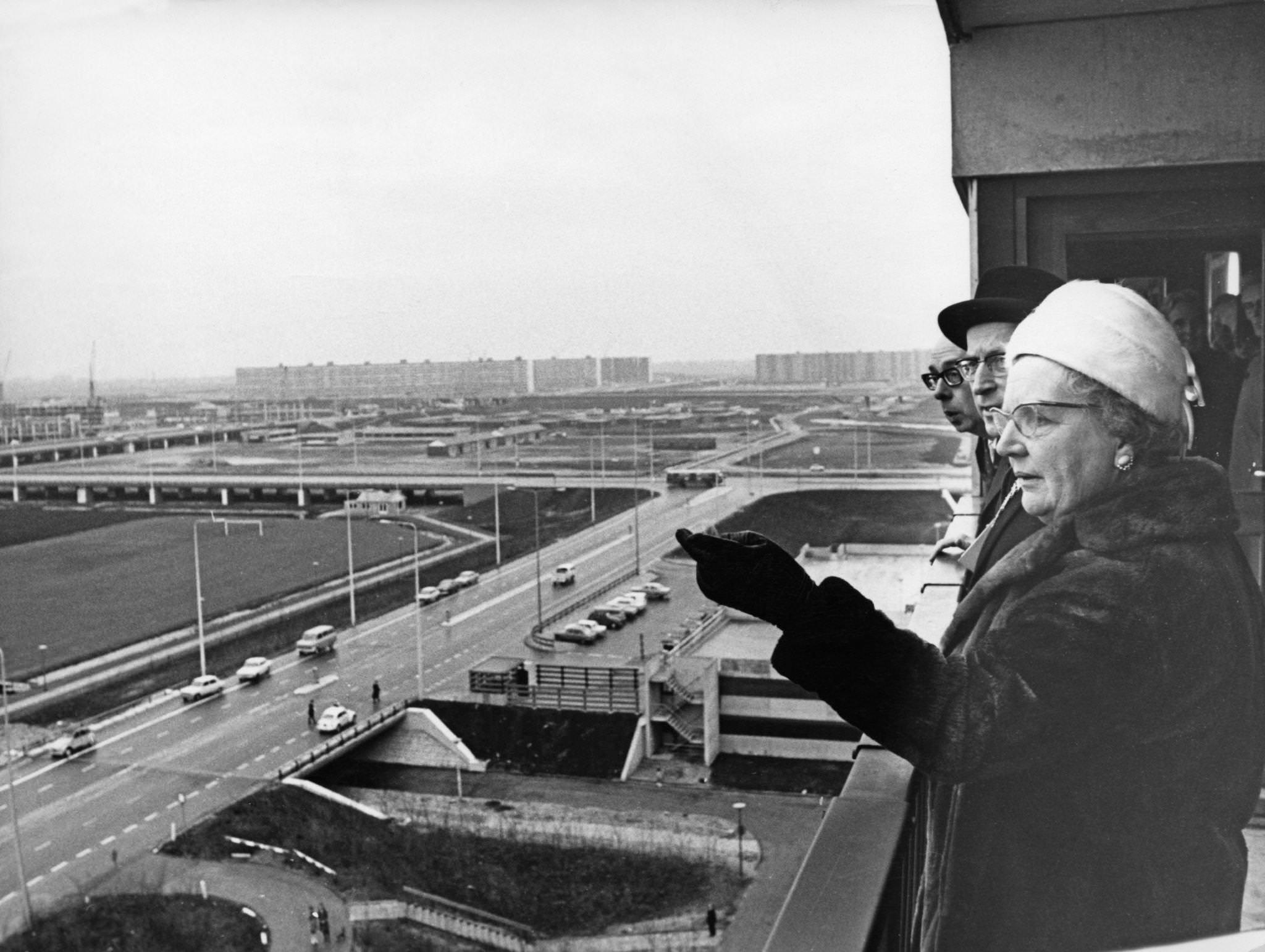
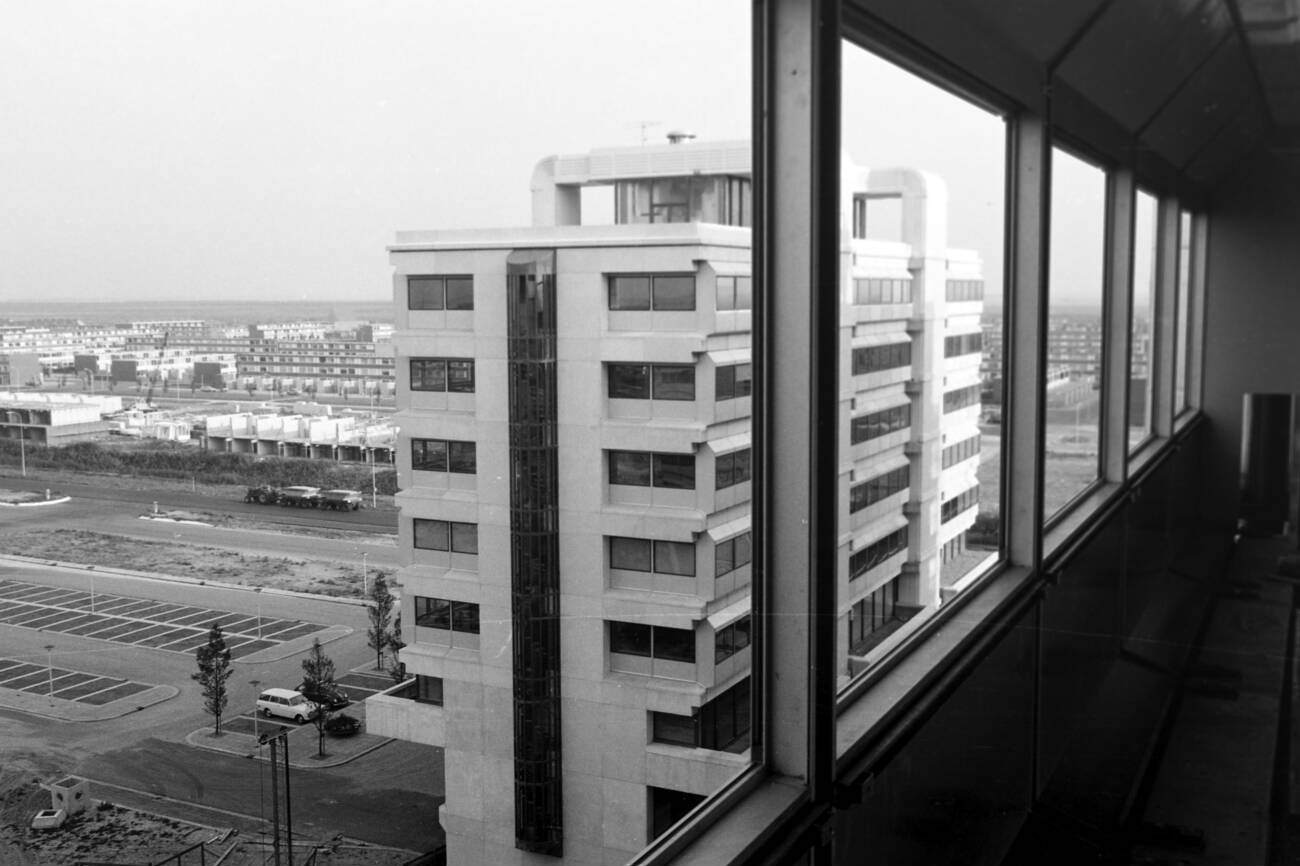
Social housing was a major government priority throughout the decade. Large apartment blocks rose on the outskirts of cities, designed to house workers and elderly residents in modern, affordable accommodation. The Bijlmermeer complex in Amsterdam’s southeast was the most ambitious of these projects. Queen Juliana visited the newly built Bijlmermeer with Amsterdam mayor Ivo Samkalden in January 1971, inspecting a development that was meant to represent the future of urban living.
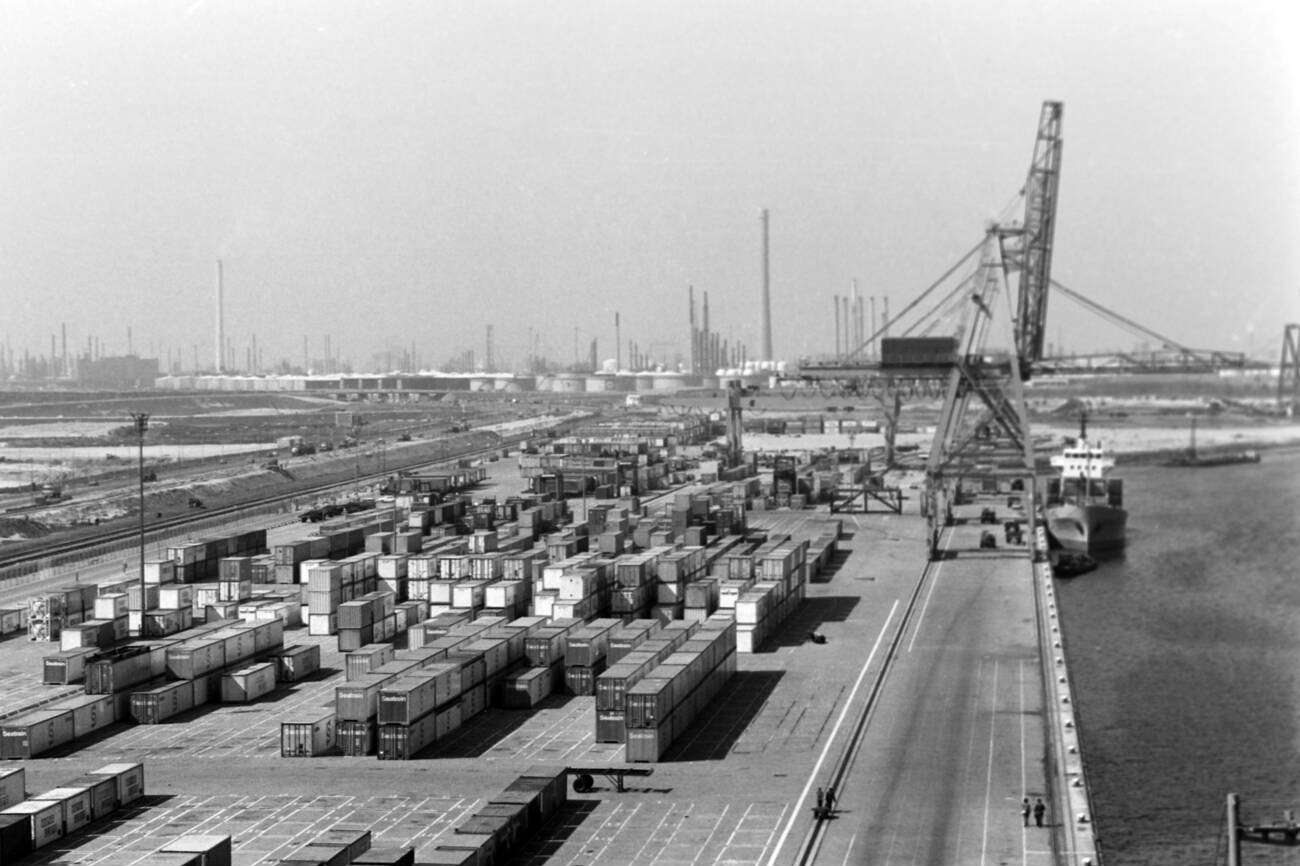
Rotterdam’s port remained the largest in the world throughout the 1970s. Container ships from every part of the globe docked at its quays, and the volume of cargo moving through the facility was staggering. The port’s activity filtered through the entire Dutch economy — supporting manufacturing, shipping, and logistics industries across the country. Even as inflation and unemployment rose following the 1973 oil shock, Rotterdam kept working.
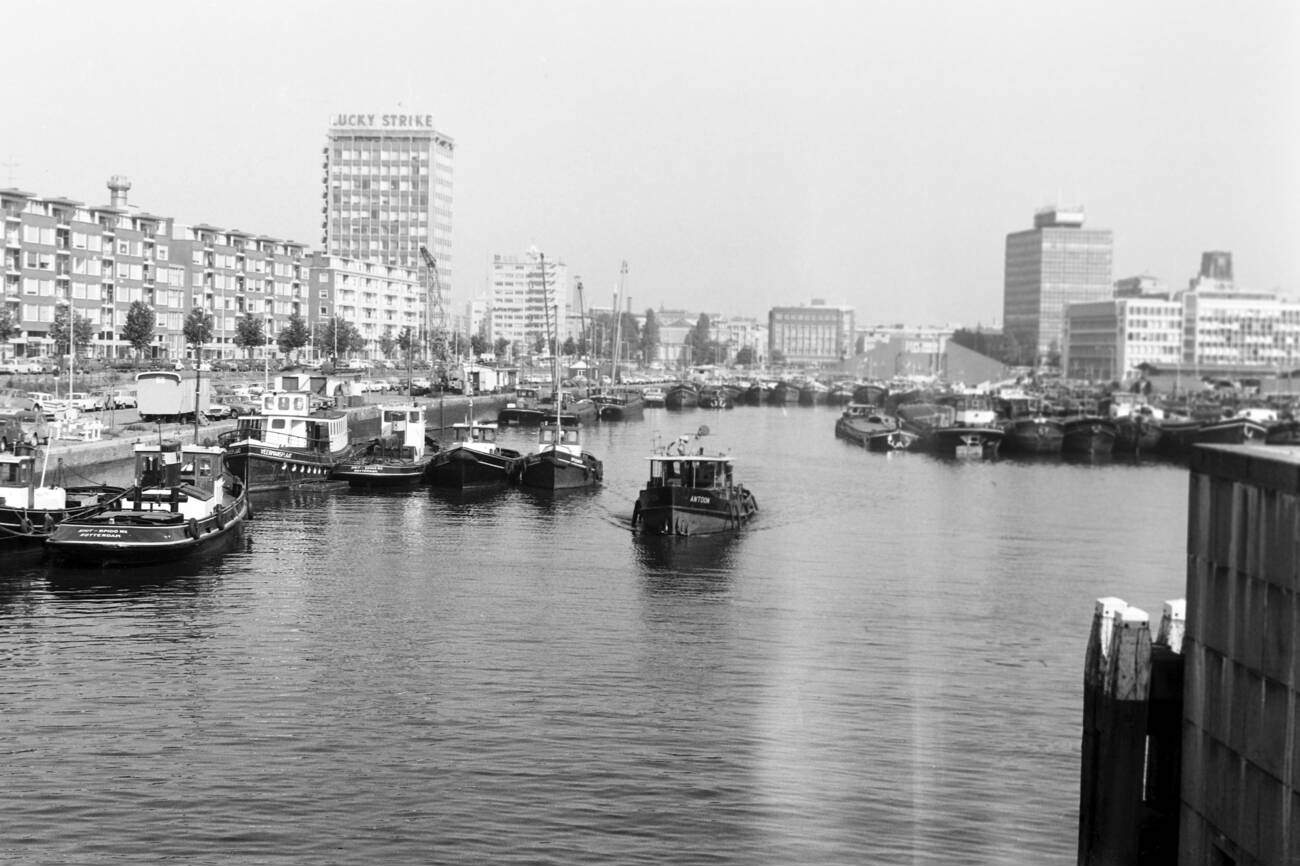
The North Sea oil and gas industry was growing fast, and the Netherlands was directly involved. Dutch natural gas discoveries in the Groningen field had already changed the country’s energy picture in the 1960s, and by the 1970s Rotterdam was serving as a staging point for offshore oil infrastructure headed to Norwegian and British waters. A colossal drilling platform was towed out of Rotterdam toward Norway in July 1976 — a single image that captured the scale of the industry taking shape just beyond the Dutch coastline.
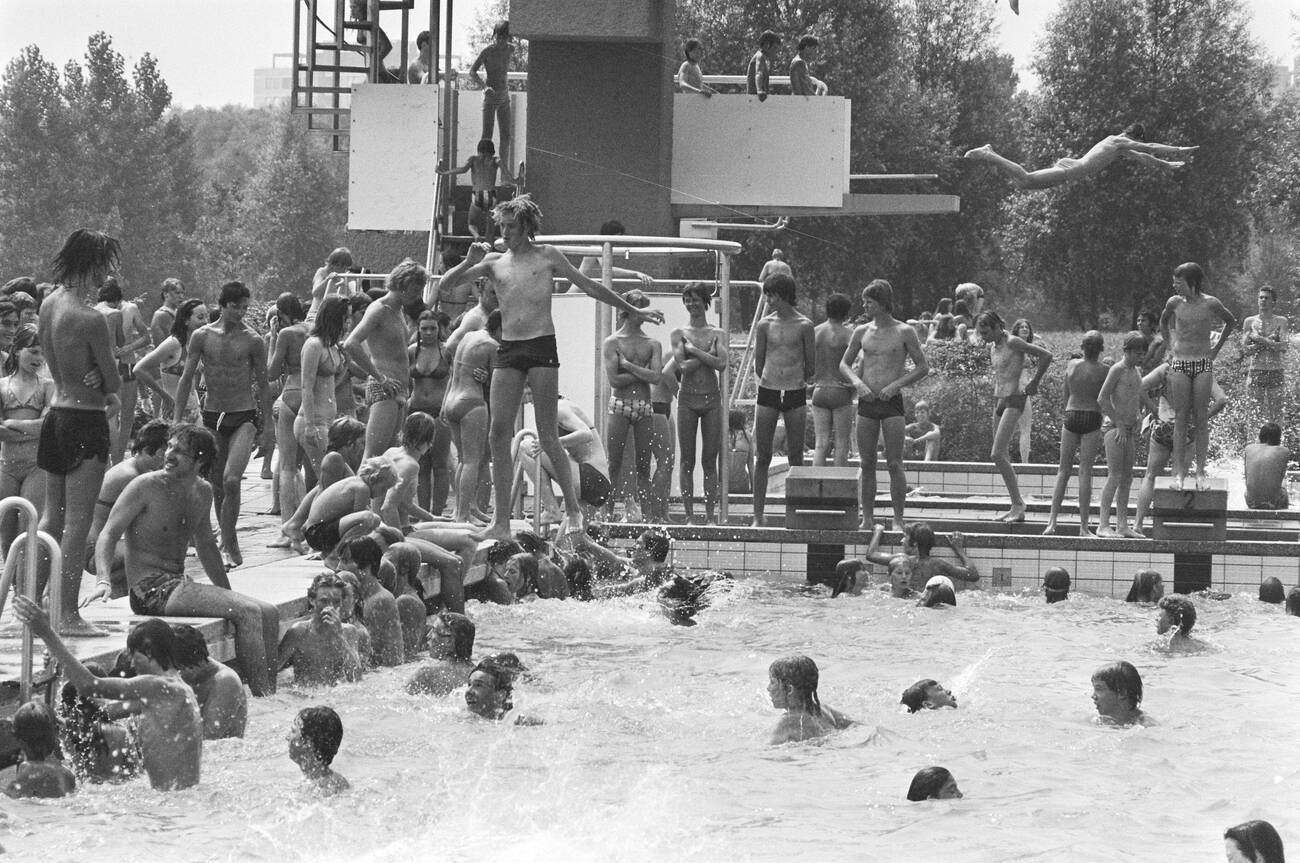
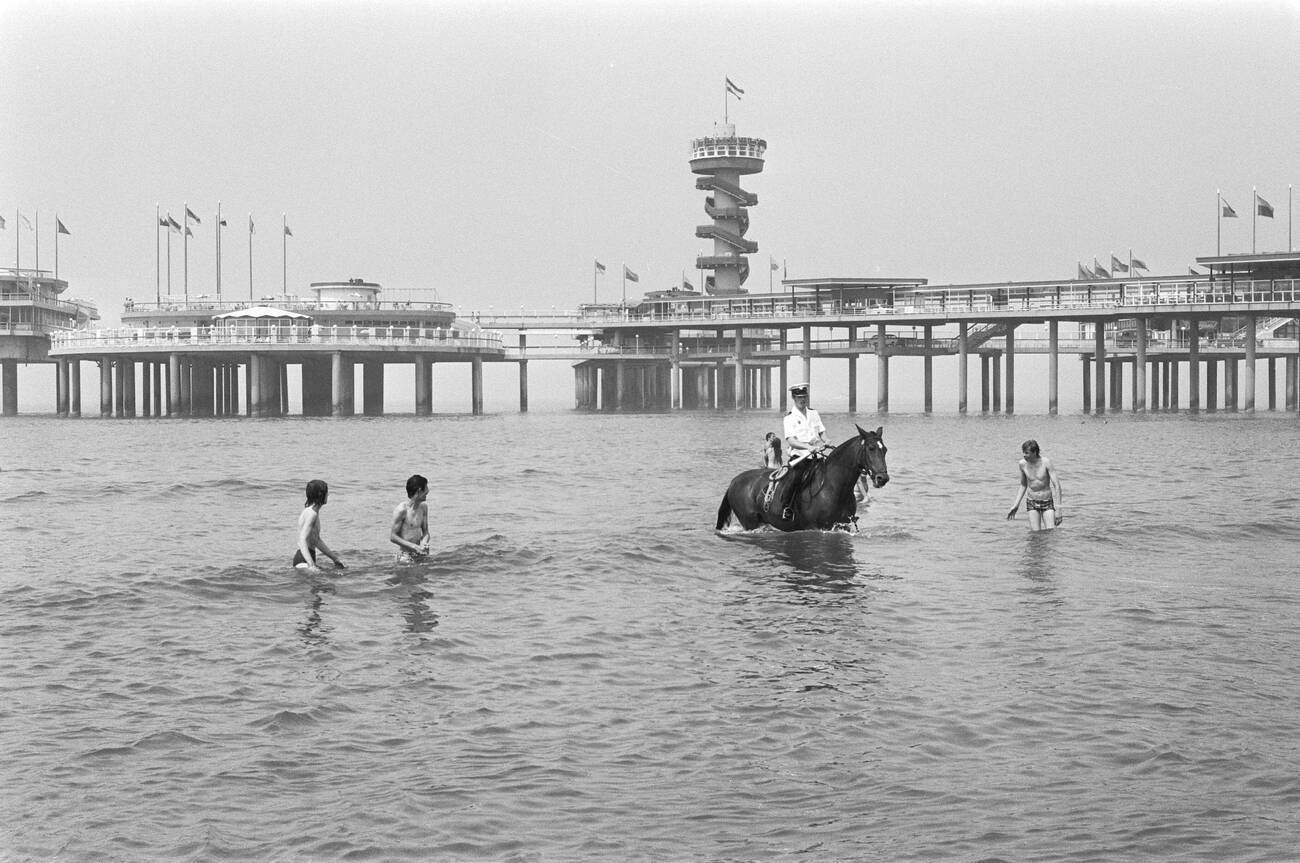
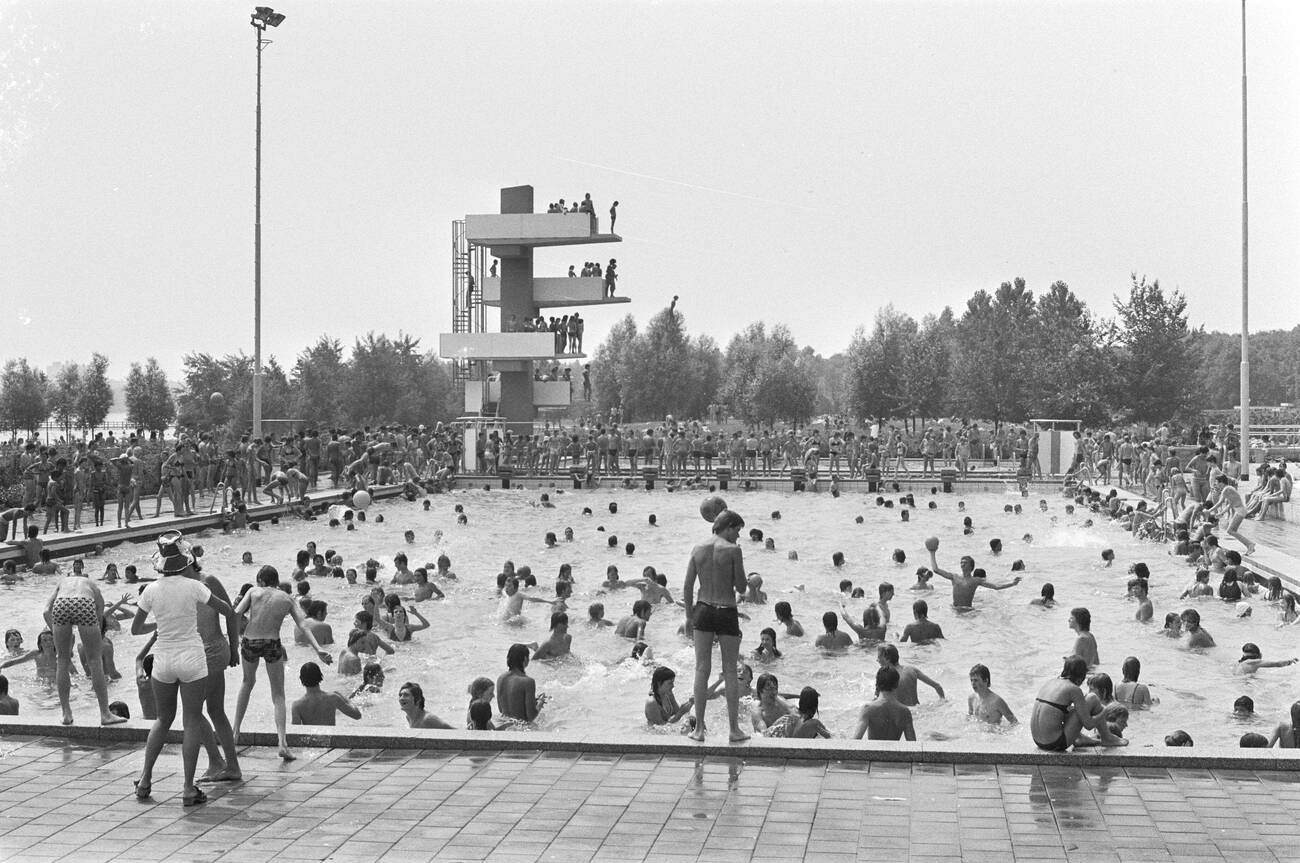
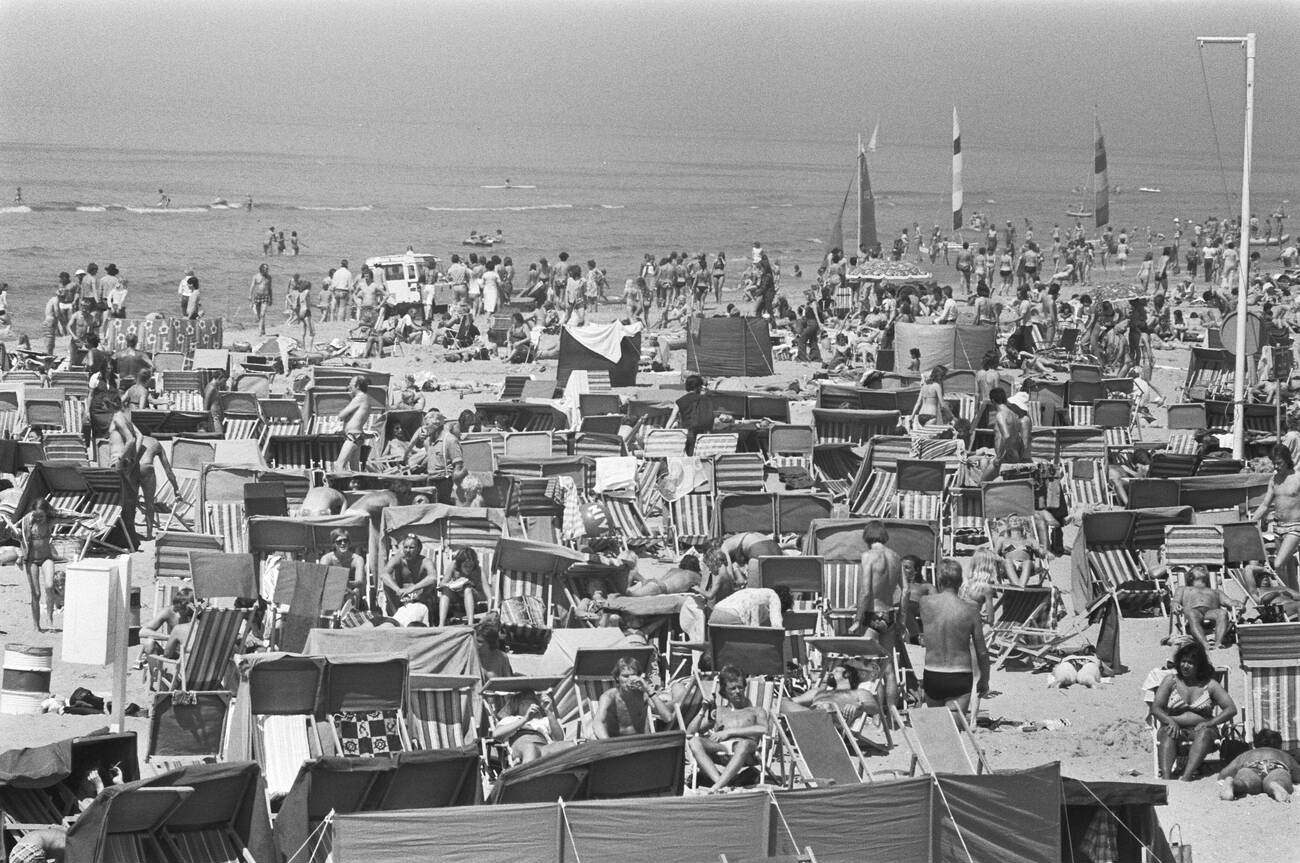
The summer of 1976 was exceptionally hot across northwestern Europe, and the Netherlands was no exception. Pools like Sloterparkbad in Amsterdam were packed. Scheveningen and Zandvoort beaches were overwhelmed with sunbathers. Police on horseback waded into the sea at Scheveningen to retrieve swimmers who had gone too far out. The fire brigade sprayed water on trees in Dam Square. It was a summer that stuck in public memory long after the temperatures dropped.
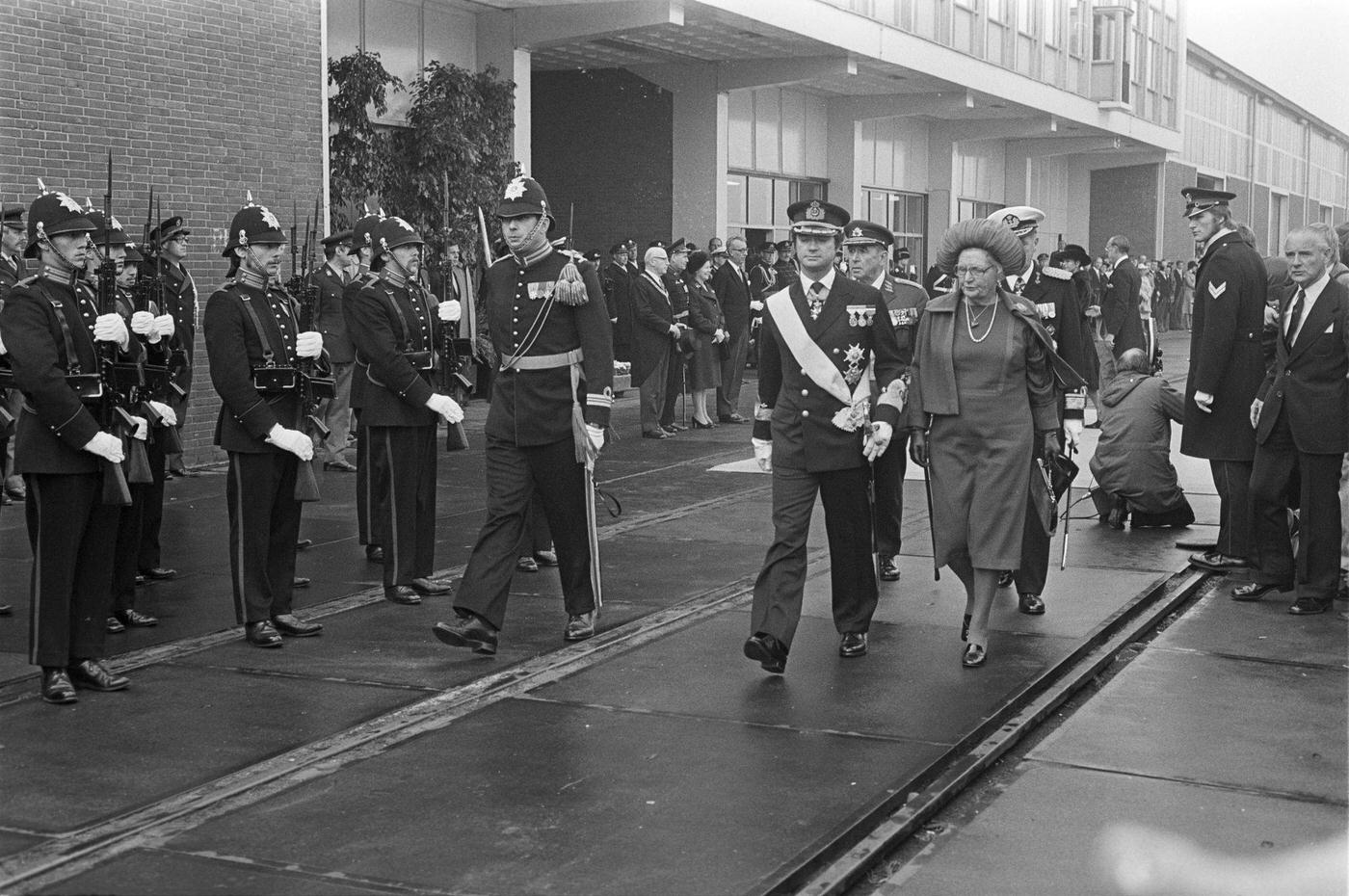
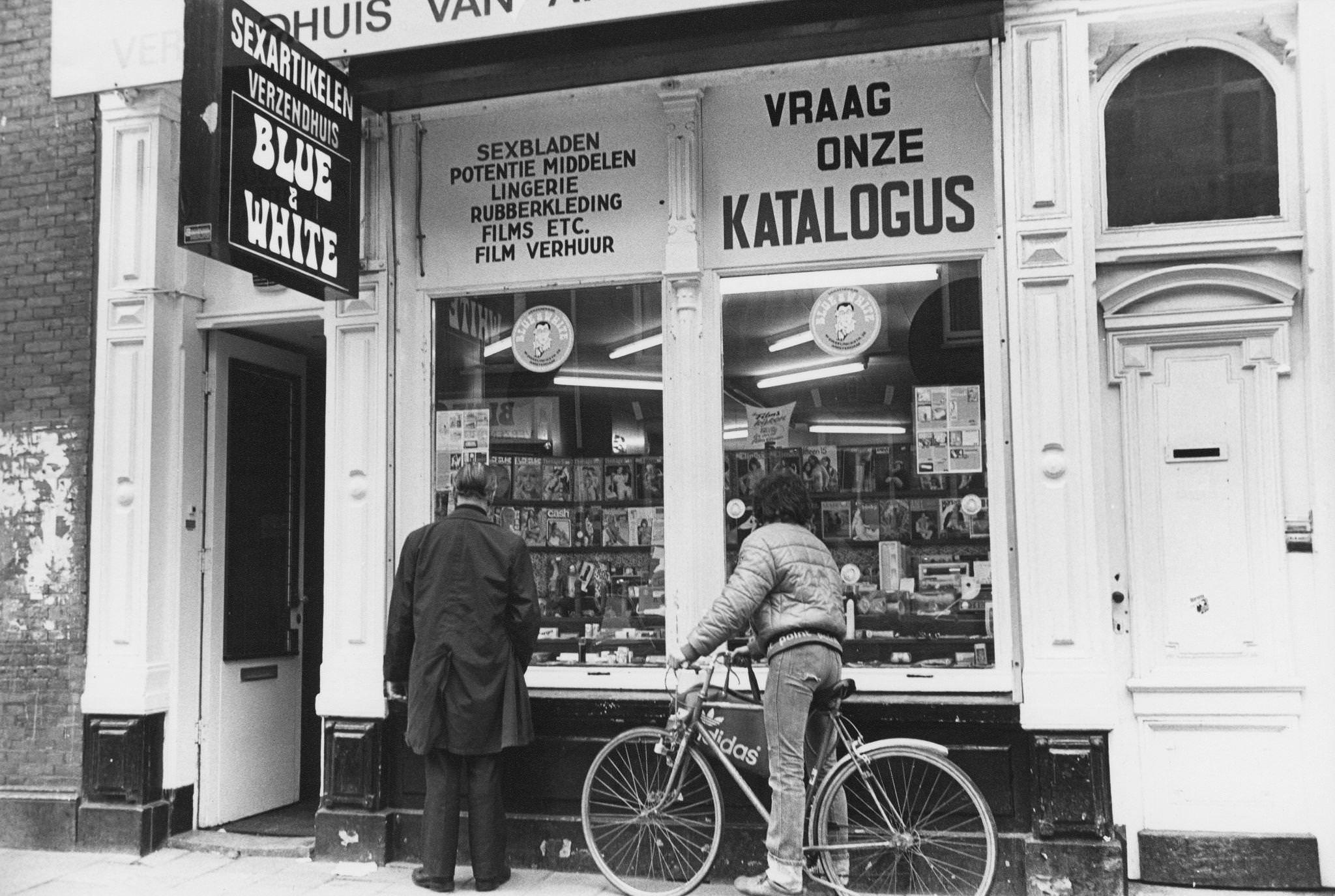
Public life in the Netherlands in the 1970s had an openness that set it apart from many other Western countries. Amsterdam’s red-light district was well established, and sex shops like Blue & White on the city’s streets operated openly. The Netherlands had become known internationally for its liberal policies on drugs, sex work, and social freedoms. At the same time, traditional institutions — the church, the monarchy, the military — remained part of the national fabric. Swedish King Carl Gustaf and his wife Silvia made an official visit to the Netherlands during the decade, reflecting the country’s active role in European affairs.
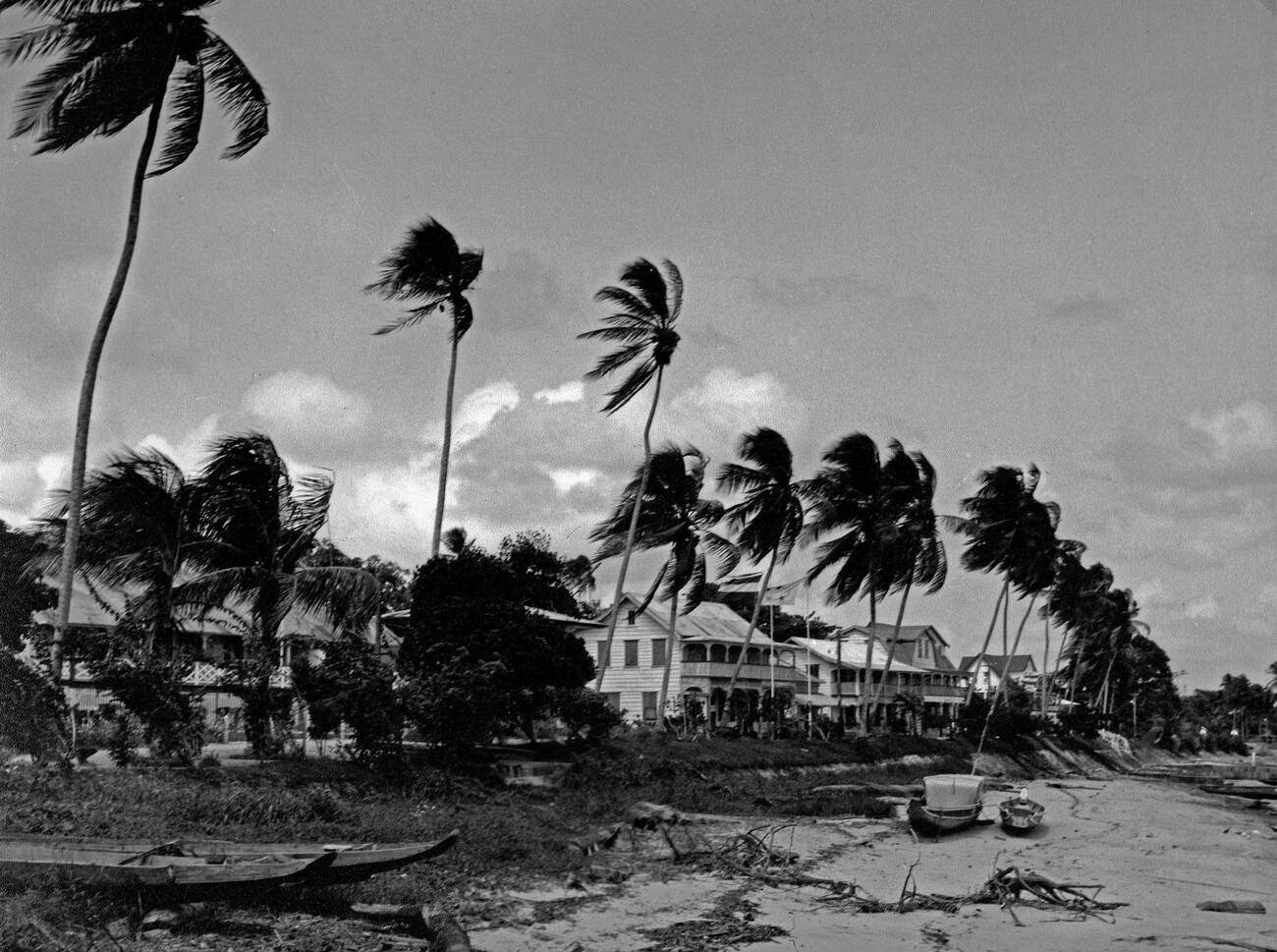
Suriname, which had been a Dutch colony, gained full independence in November 1975. The transition brought a large wave of Surinamese migrants to the Netherlands, many of whom settled in Amsterdam and other cities. The city of Albina on the Maroni River, captured in a photograph from the 1970s, represents the world that many of these new arrivals had left behind. The migration changed Dutch cities in lasting ways, adding new communities, cuisines, and cultural influences to neighborhoods that had previously been almost entirely white and Dutch.
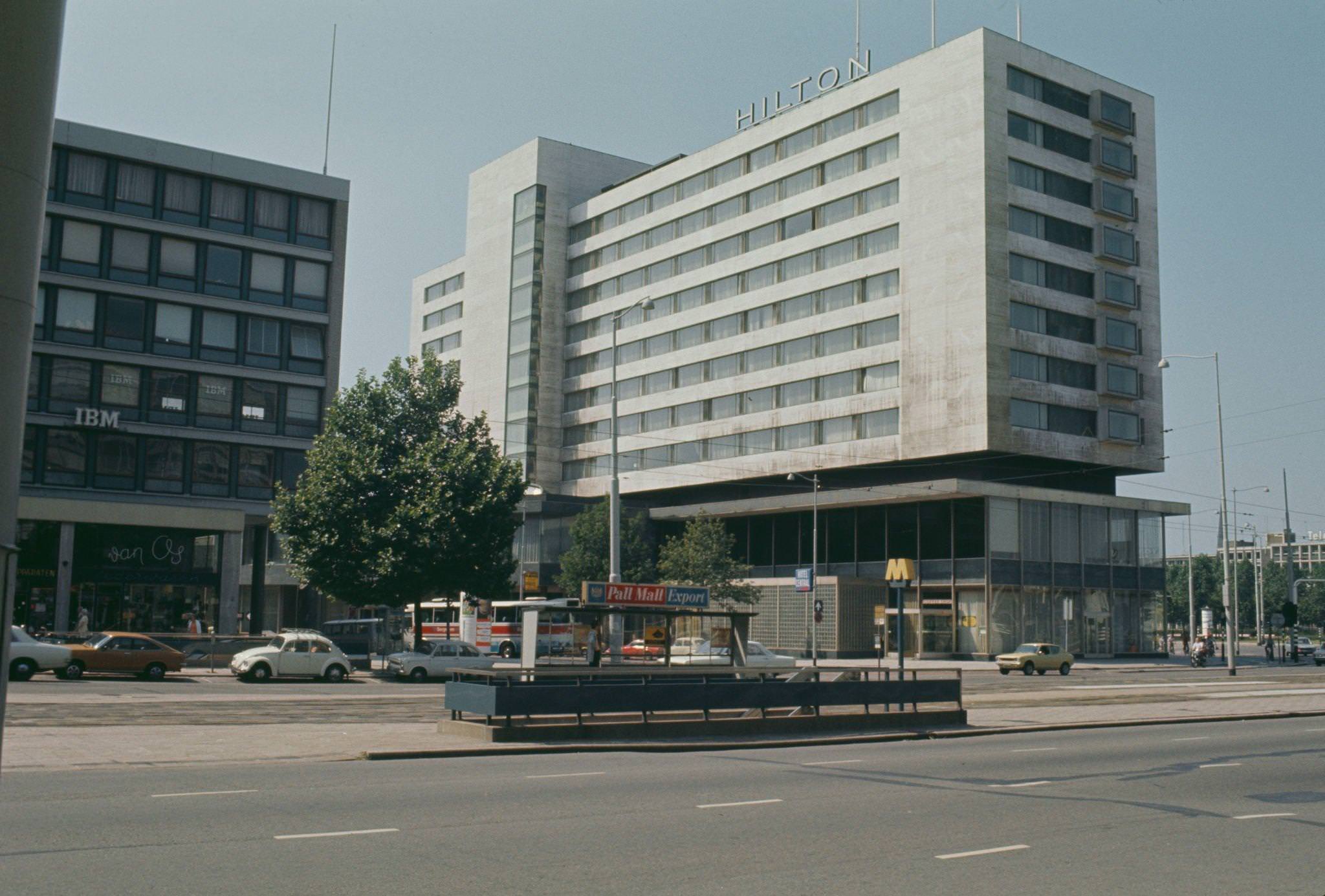
Rotterdam’s rebuilt city center reflected the ambitions of postwar Dutch planners. The Hilton Hotel on Hofplein, opened by Conrad Hilton himself in 1963, was still a landmark of the modern city a decade later. Broad streets and modernist office blocks defined the center, a stark contrast to the narrow canal-side streets of Amsterdam or the ancient town cores of Kampen and Alkmaar. Rotterdam had been forced to reinvent itself after wartime bombing, and by the 1970s that reinvention was fully visible.
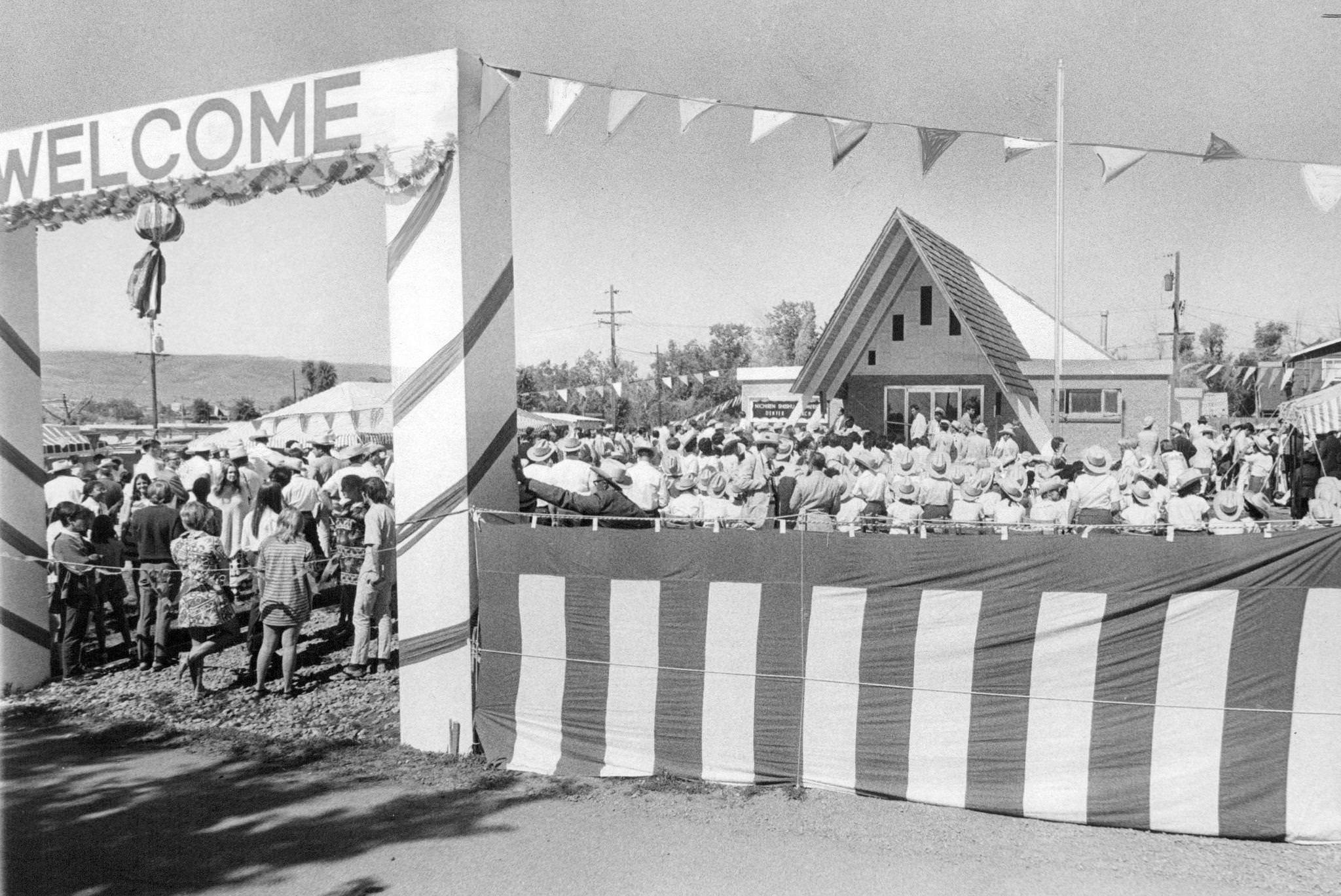
Religion still shaped public life in parts of the Netherlands, even as secularization accelerated during the decade. A new church opening drew hundreds of celebrants in cowboy hats, boots, and sheriff’s badges in a carnival atmosphere — a scene that showed how informal religious culture was becoming. Meanwhile, traditional Calvinist communities in Urk, Marken, and the Bible Belt continued their practices largely unchanged. The Dutch term for this religious-geographic divide, the ‘Bible Belt,’ described a strip of conservative Protestant communities running across the center of the country.
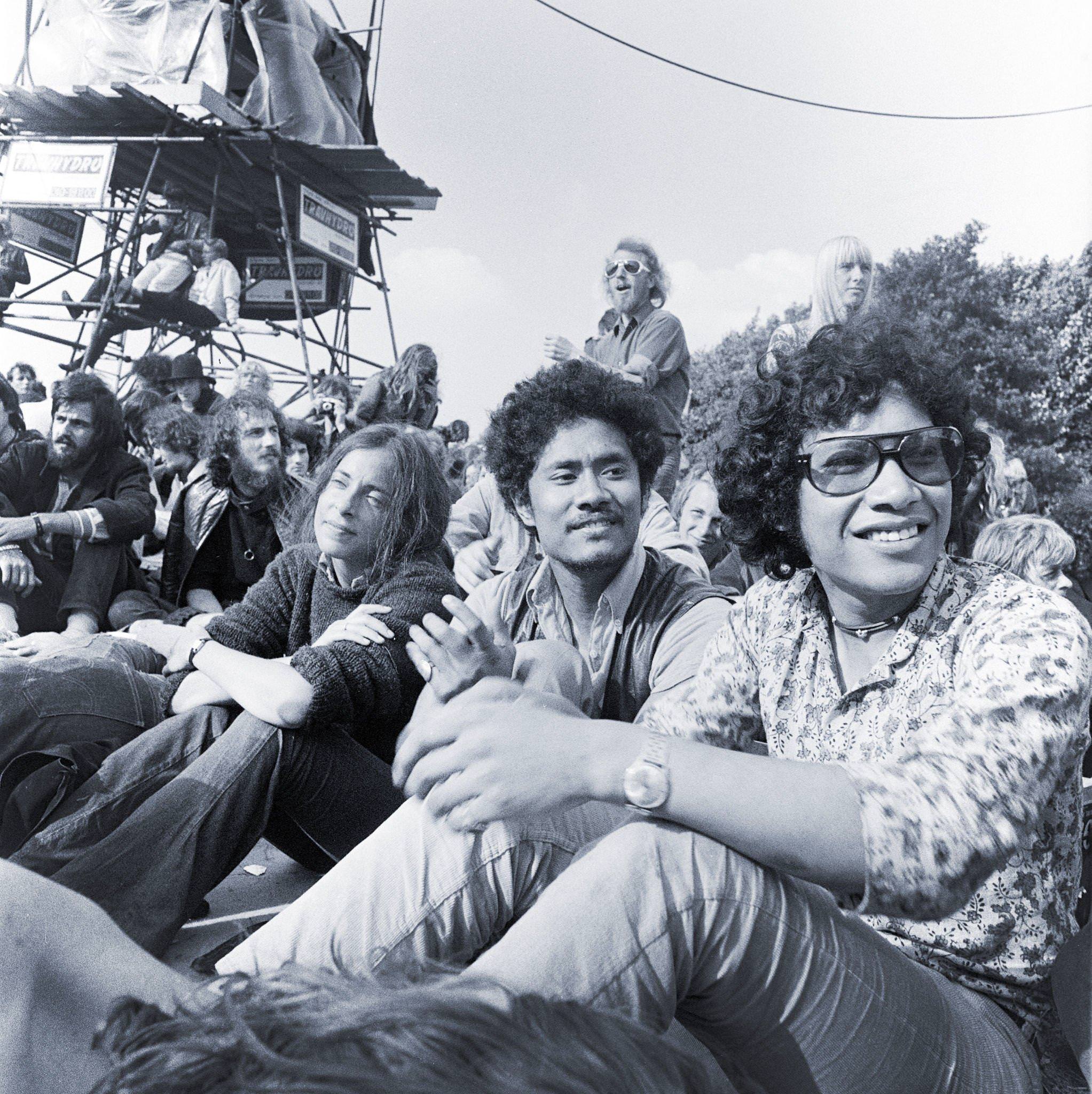
The early 1970s brought a remarkable openness to political dissent in Amsterdam. Russian dissident writer Andrei Amalrik and his wife Gjoezel walked freely through Amsterdam’s Amstelveld in July 1976, having fled the Soviet Union. The Netherlands was one of the Western countries most willing to receive political refugees and exiles. Protests outside international conferences were common — a demonstration during the IGGI conference in Amsterdam in June 1976 drew attention to development policy and North-South economic relations.
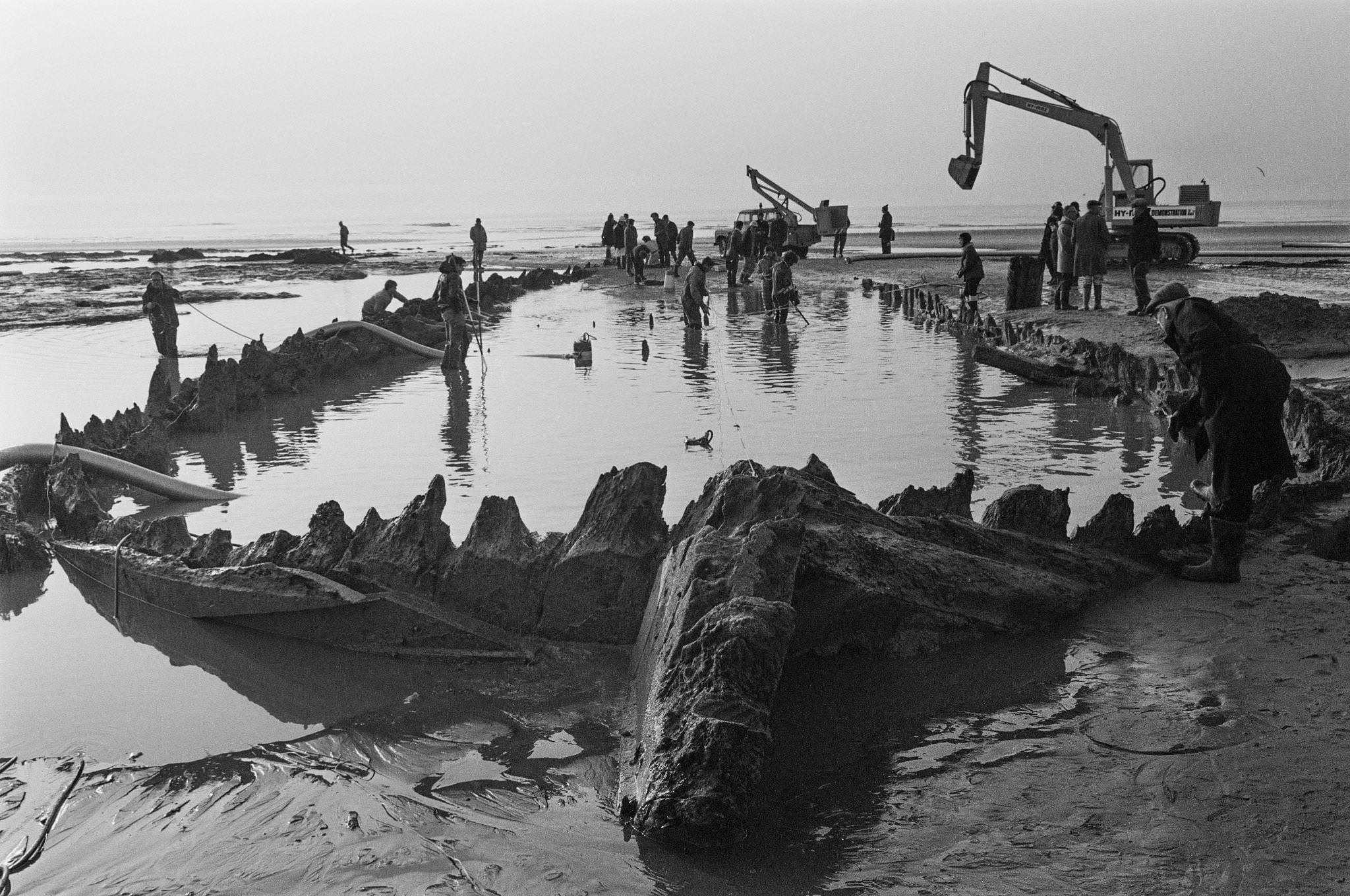
In March 1970, an 18th-century ship named Amsterdam — a cargo vessel of the Dutch East India Company — was uncovered from the muddy shore at Bulverhythe near Hastings in England. The ship had sunk on her maiden voyage in 1749 and was remarkably well preserved in the seabed mud. The discovery became a major archaeological event and renewed international interest in the Dutch golden age of maritime trade. The vessel was eventually brought back to the Netherlands and put on display at the Scheepvaartmuseum in Amsterdam.
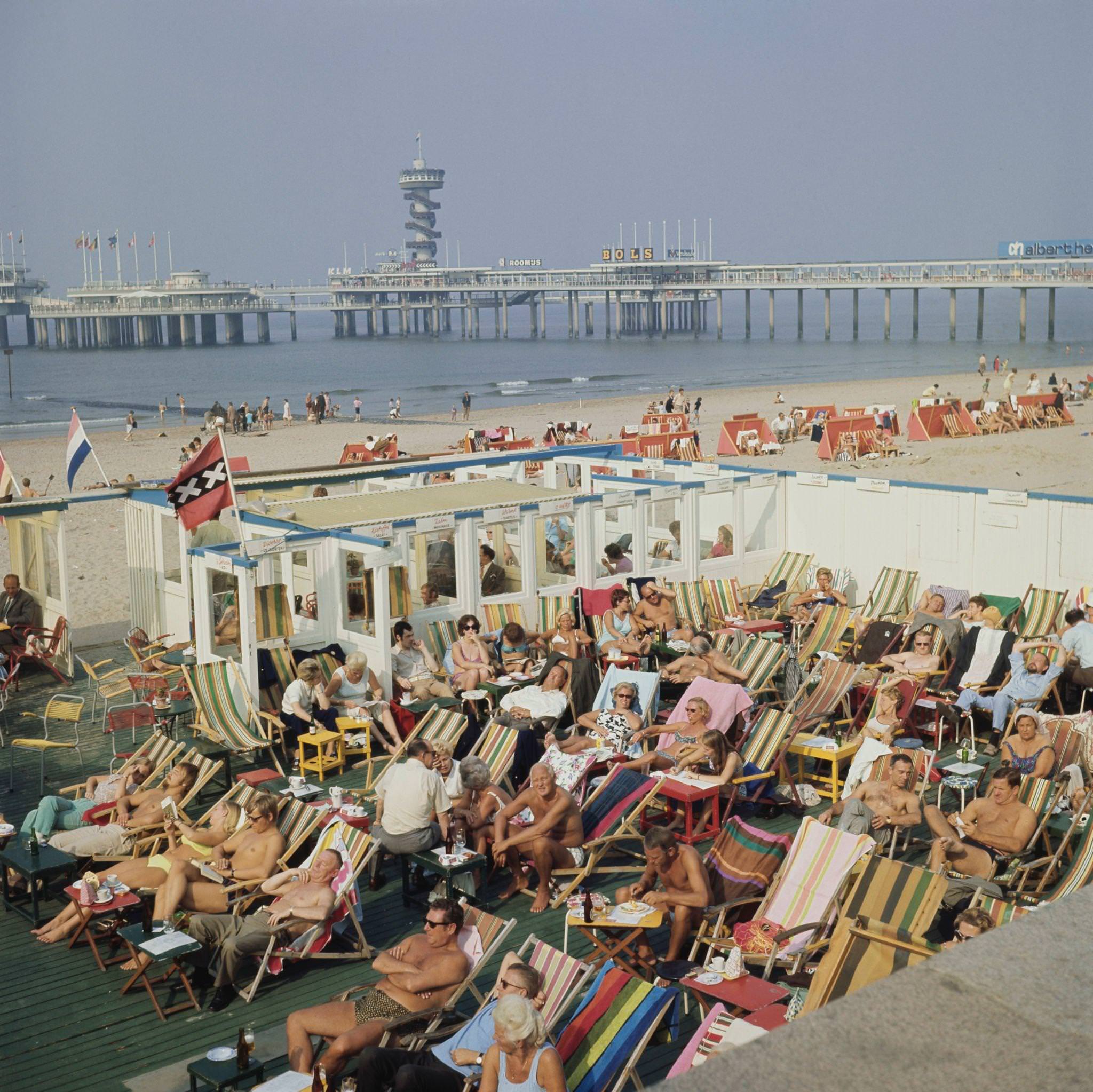
Scheveningen, the beach resort attached to The Hague, was a reliable summer destination. Deckchairs lined the terrace, and visitors from across the country and from Germany came to sit by the North Sea. The resort had a pier, a casino, and a long promenade, and its beach filled quickly whenever the weather allowed. During the 1976 heat wave, the crowds were so dense that police on horseback were deployed in the water to manage swimmers going too far out.
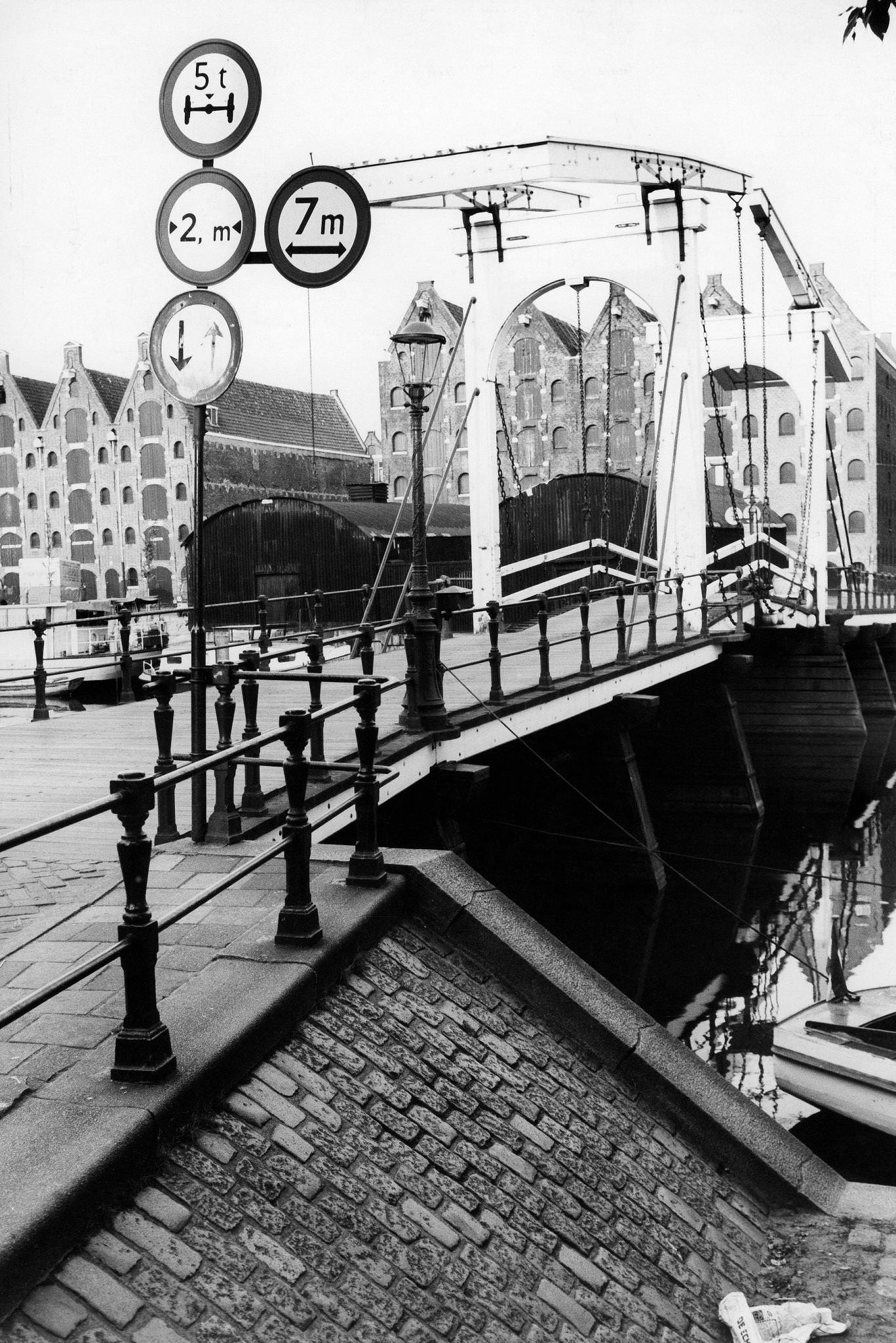
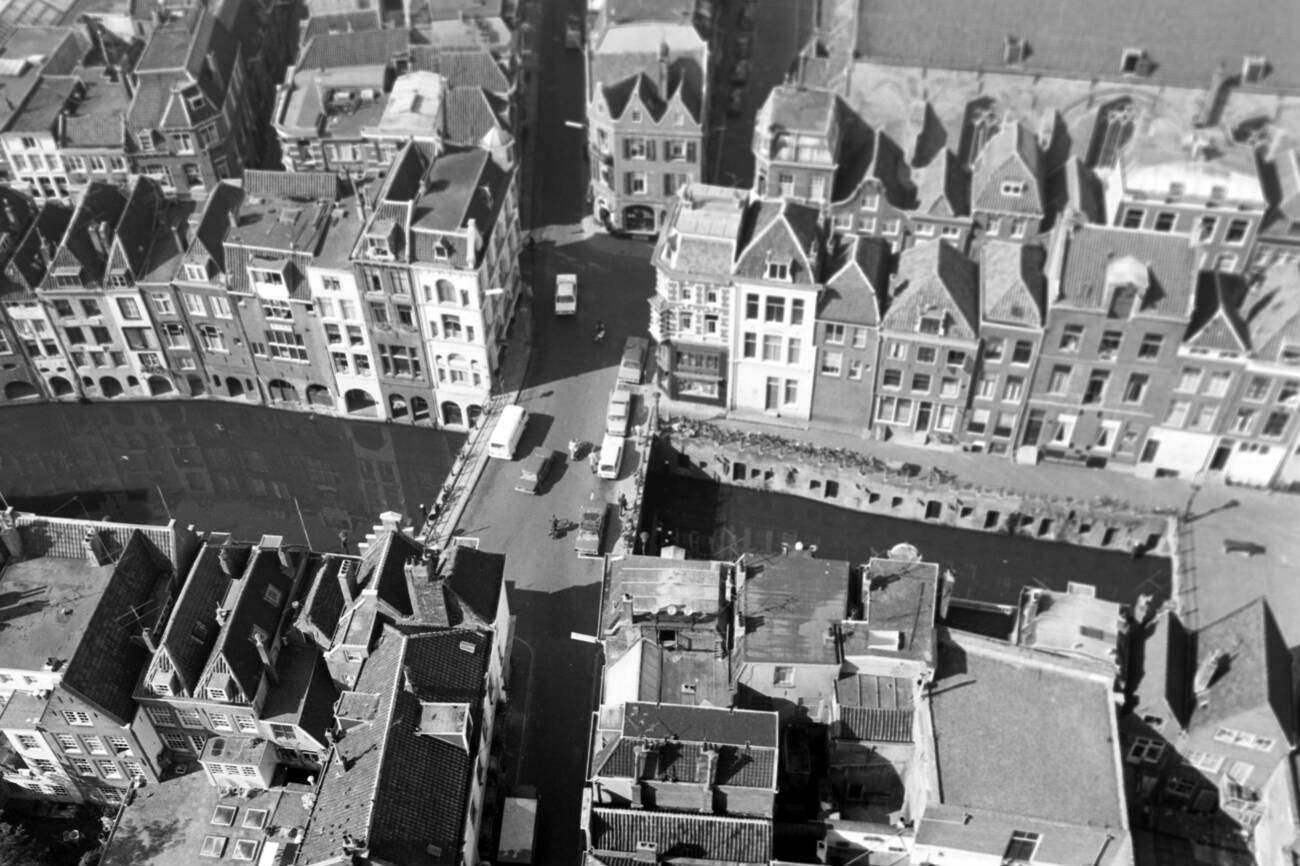
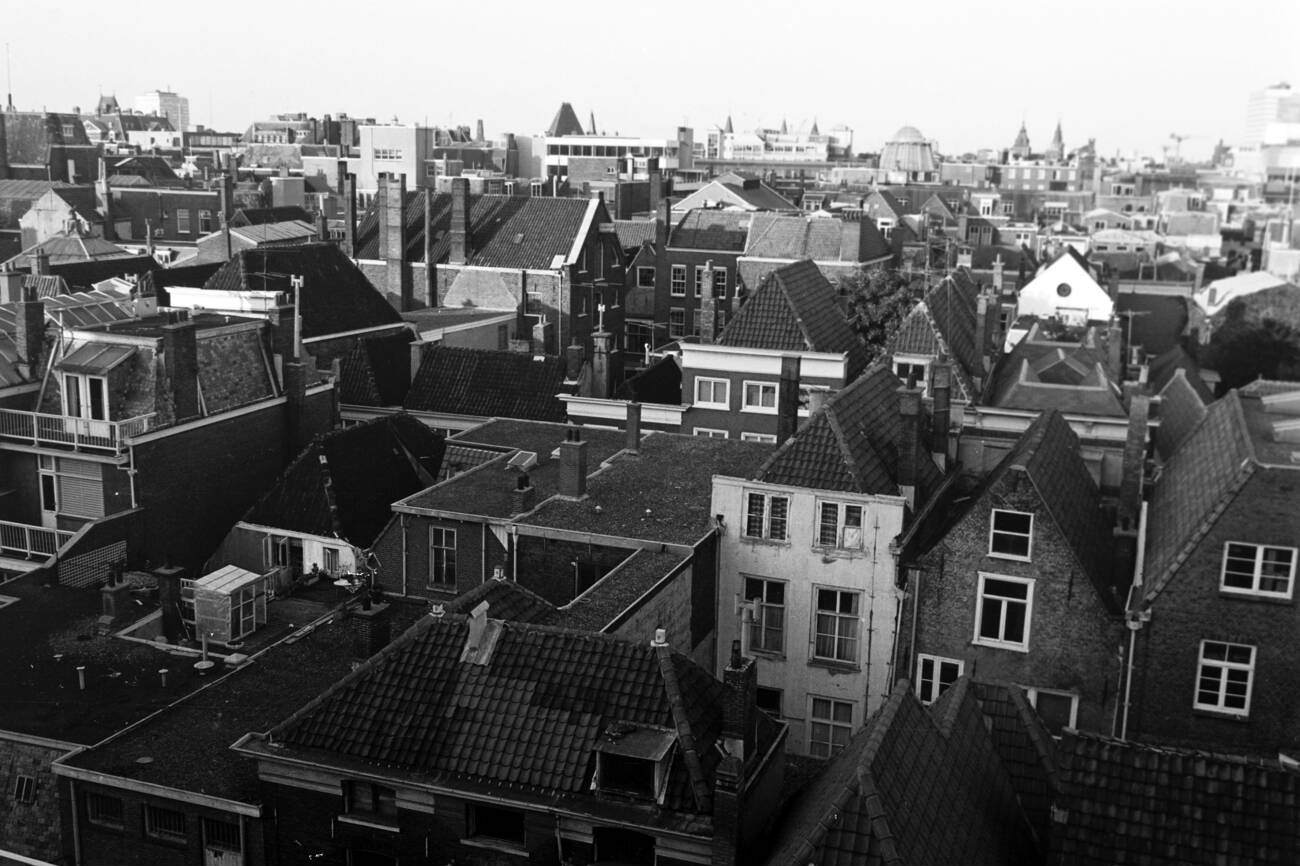
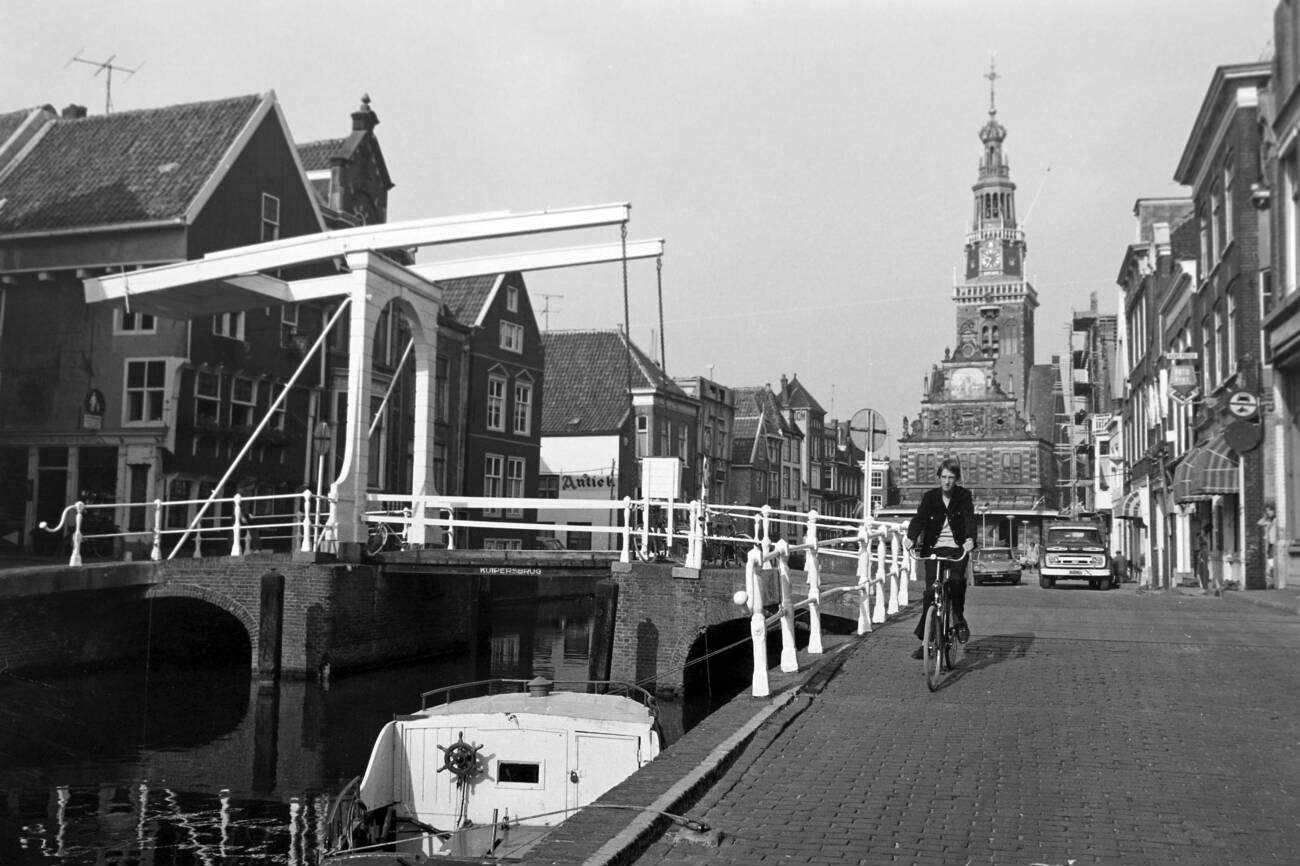
Utrecht, the country’s fourth-largest city, offered its own distinct character. From the belfry of Saint Martinus cathedral, the city spread out in a dense medieval pattern of canals, churches, and close-packed streets. The cathedral’s Dom Tower was already a national landmark. In Alkmaar, the De Waag weighing house anchored the city’s cheese market square, and drawbridges crossed the canals that threaded through the old center. These cities had survived the war largely intact and bore their histories openly in their street plans and buildings.
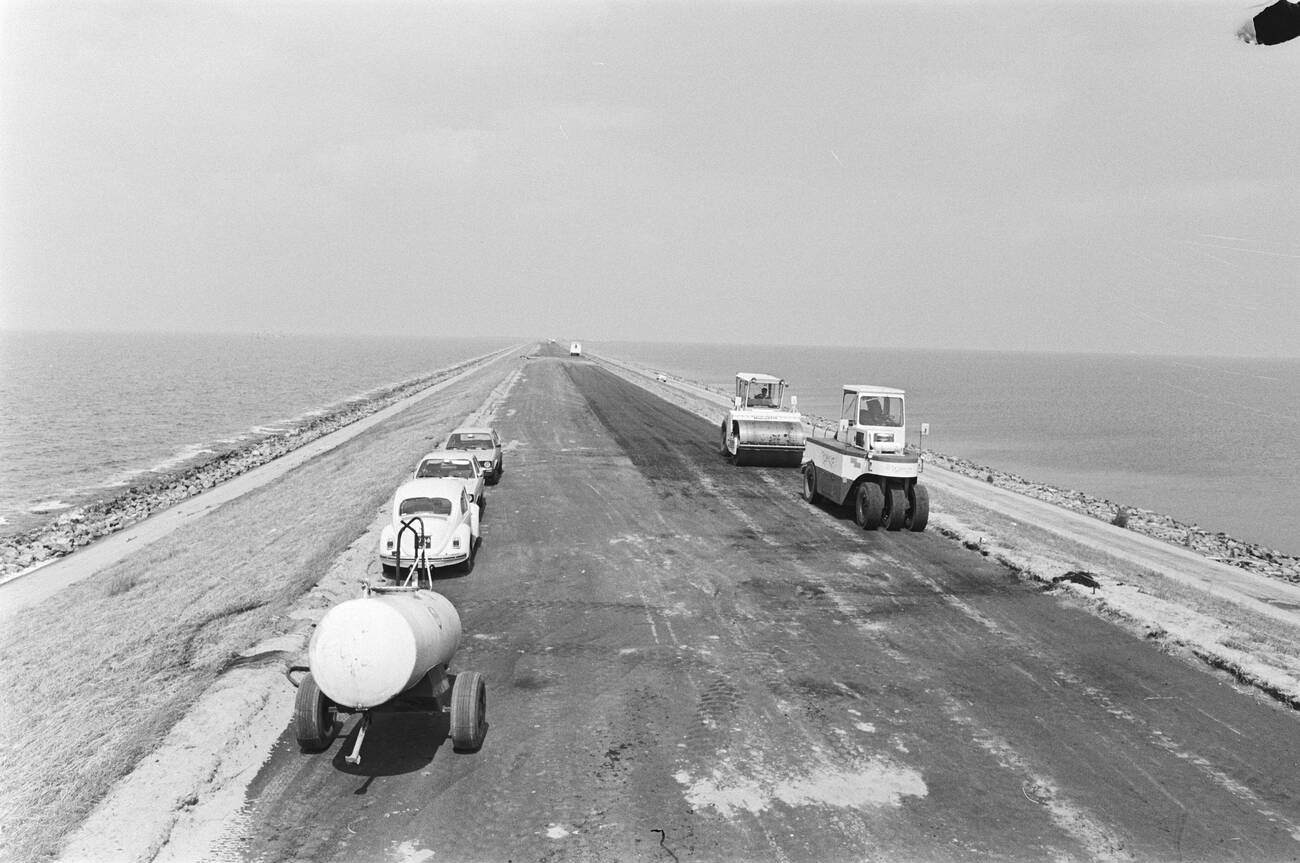
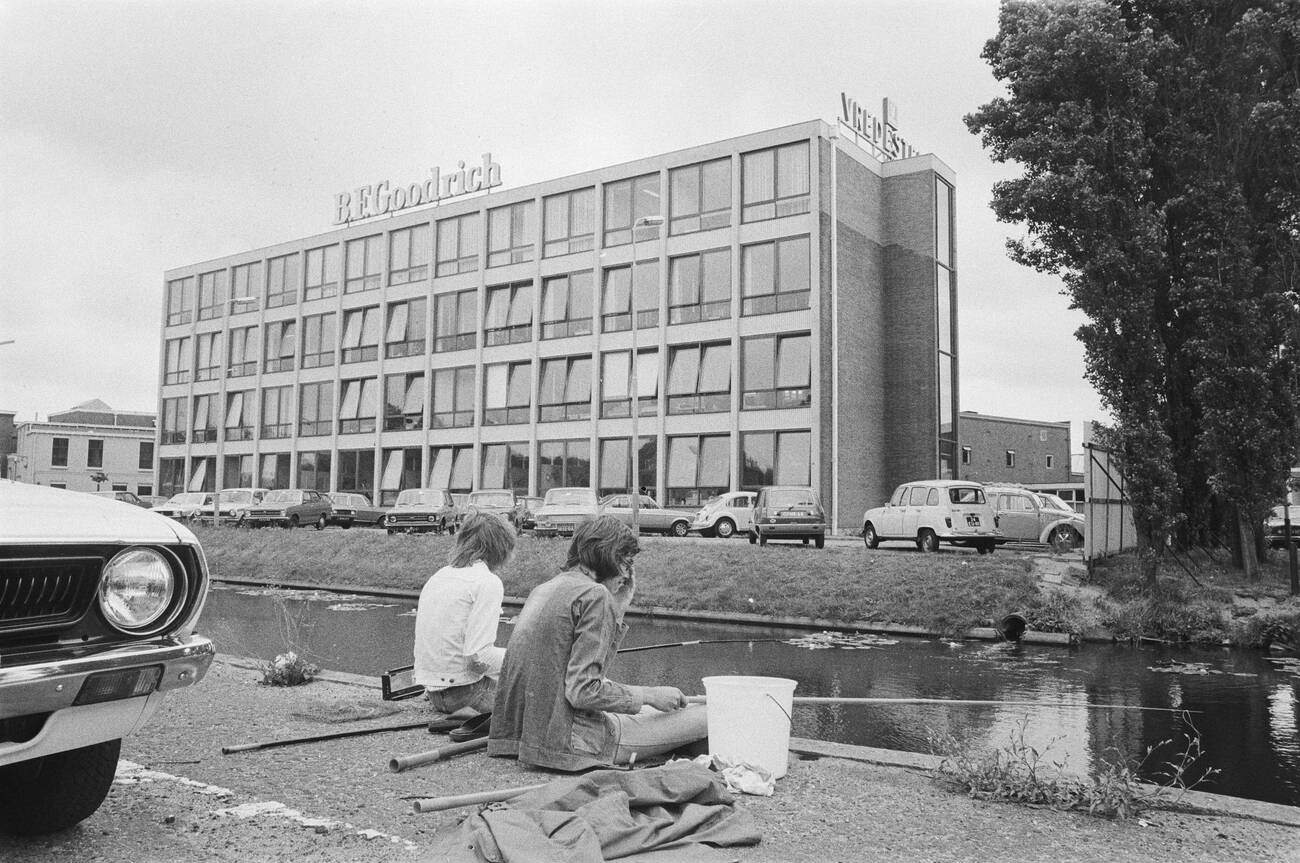
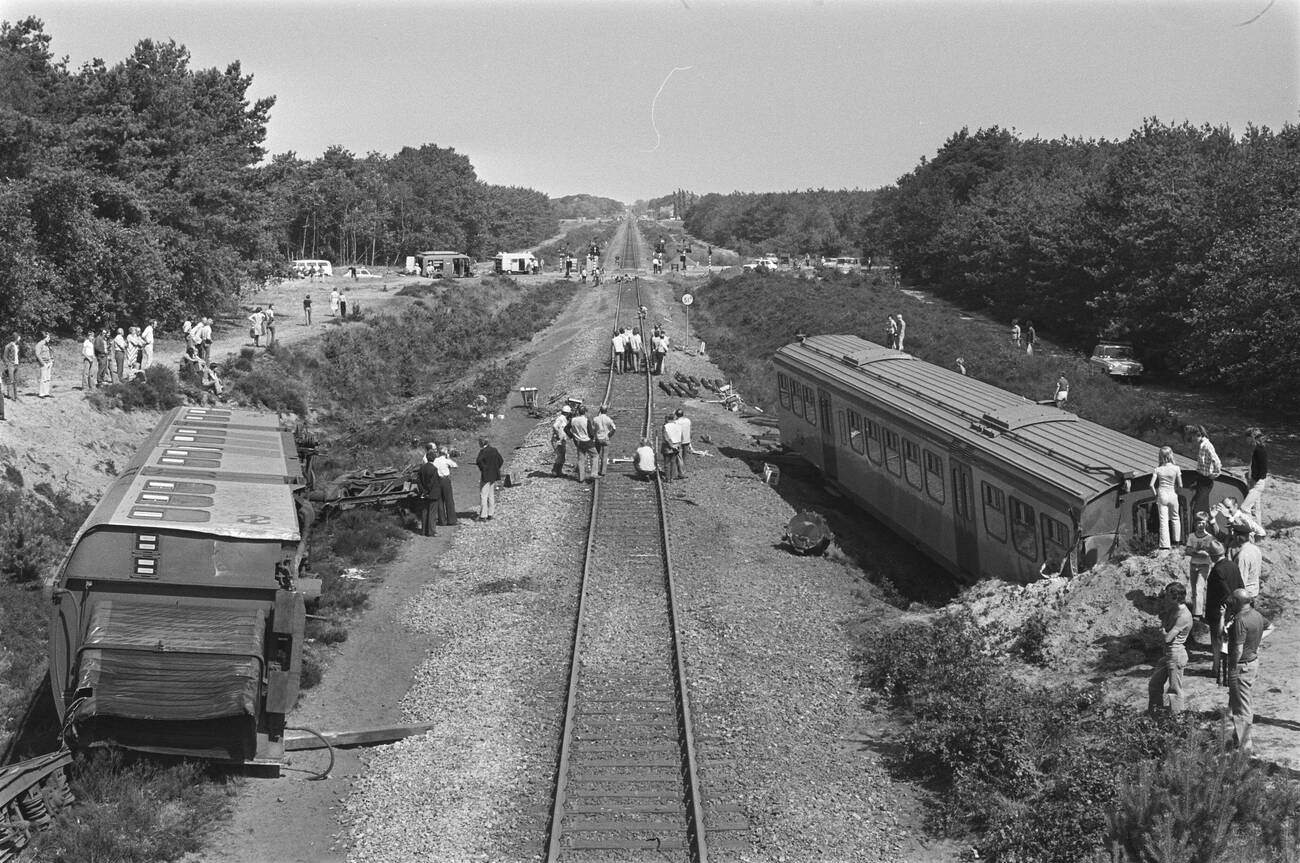
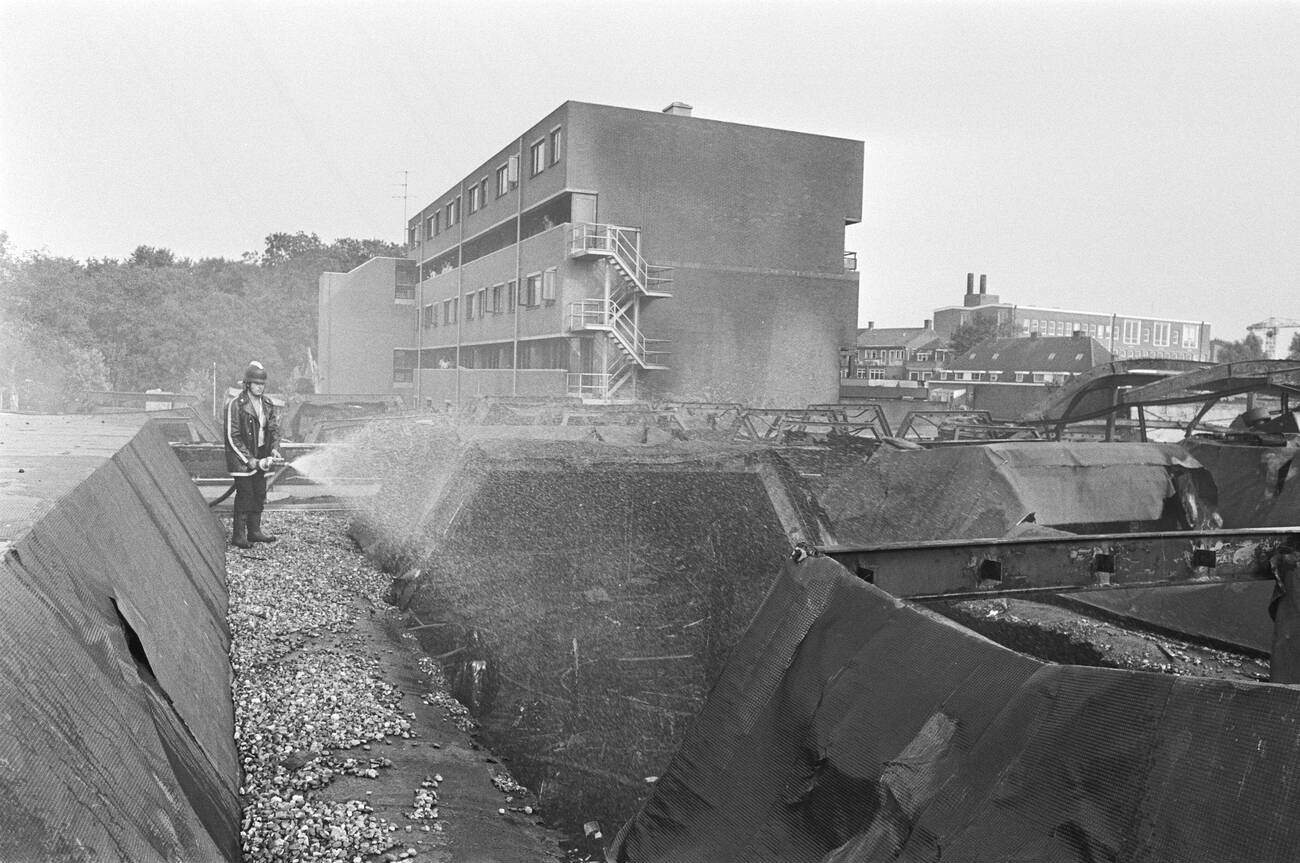
Accidents and industrial incidents were part of the decade’s record too. A train collision near Venray in August 1976 left a locomotive overturned amid considerable wreckage. A shopping center in Alblasserdam burned out completely in July 1976, leaving only a shell. The Vredestein tire factory in Loosduinen was threatened with closure that same summer, raising fears about job losses in an economy already struggling with unemployment. The road construction project between Enkhuizen and Lelystad pressed on regardless, with excavators working through the summer to close the gap across the IJsselmeer polder.
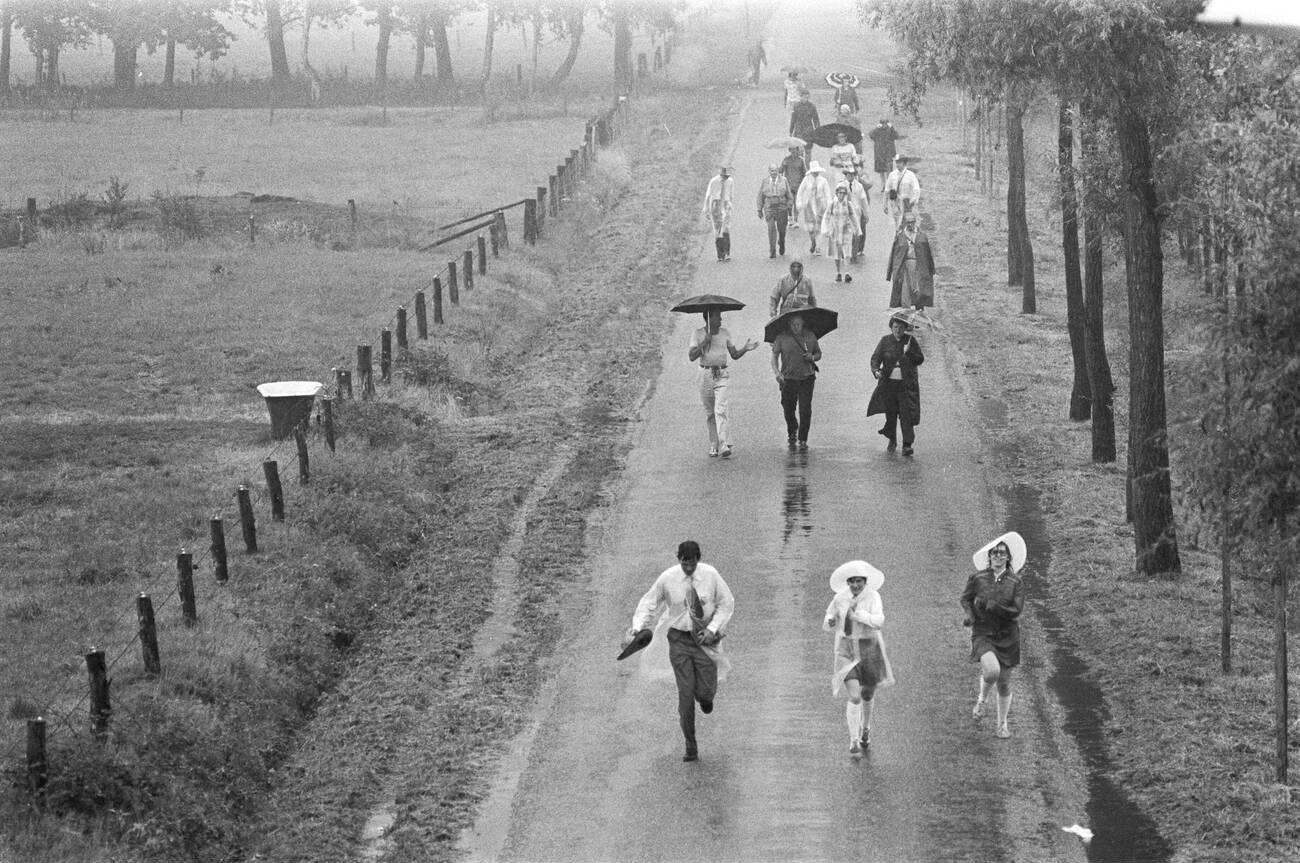
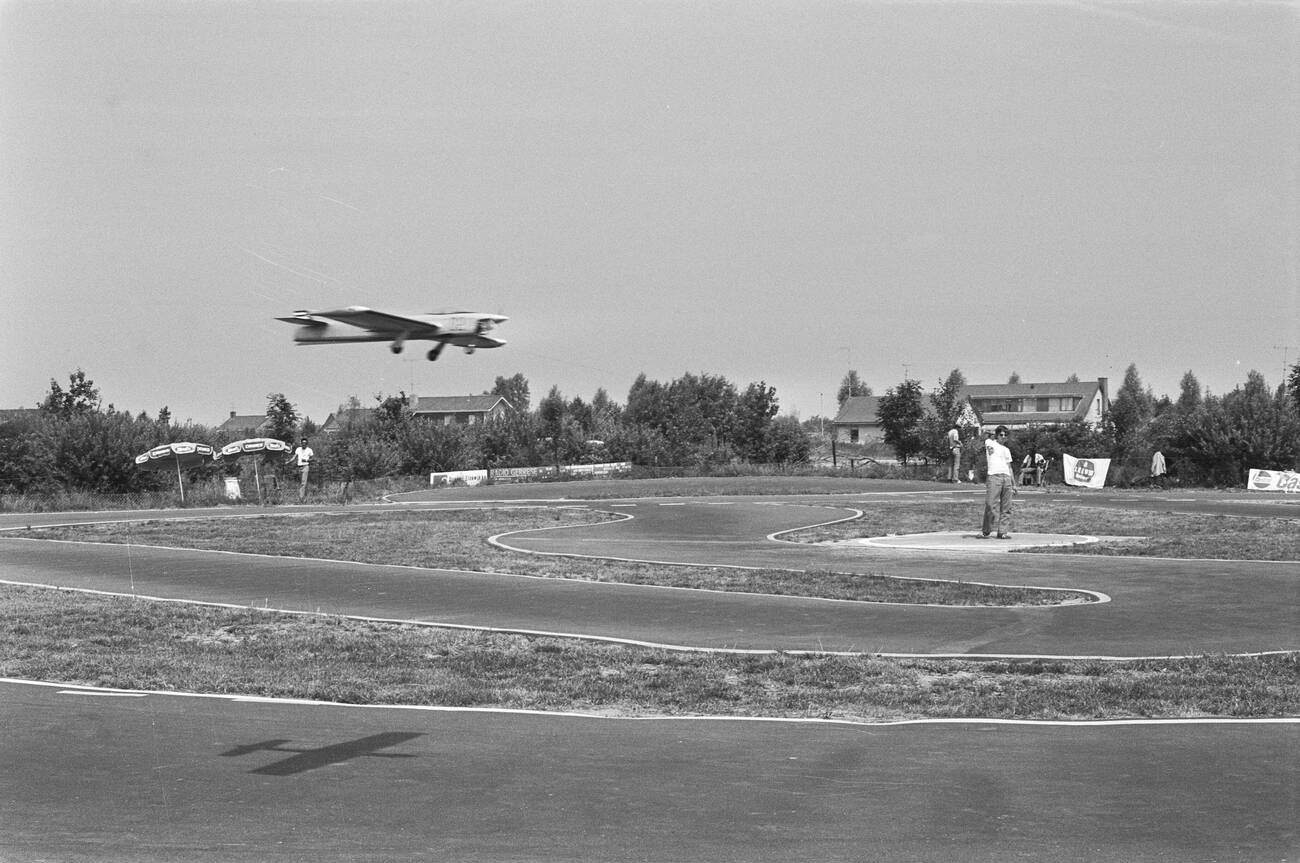
The World Championships Model Flying with Line Control were held in Utrecht in July 1976, bringing competitors from around the world. A Cuban participant was photographed at work during the event — an unusual glimpse of Cold War-era international sport in the Dutch heartland. The Apeldoorn Four Days Marches, a long-distance walking event with deep roots in Dutch military tradition, attracted participants even in the rain in July 1976, setting off in large groups from the Gelderland city.
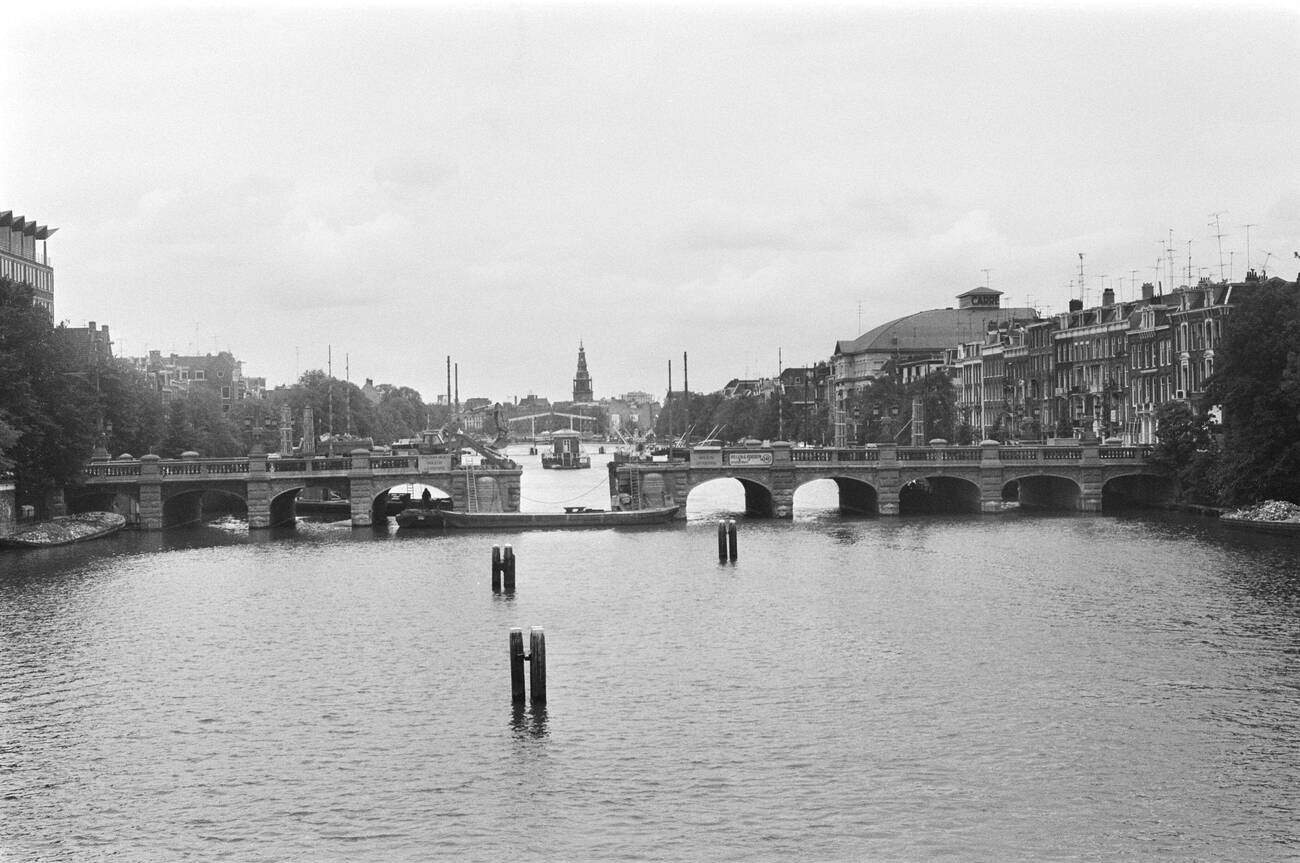
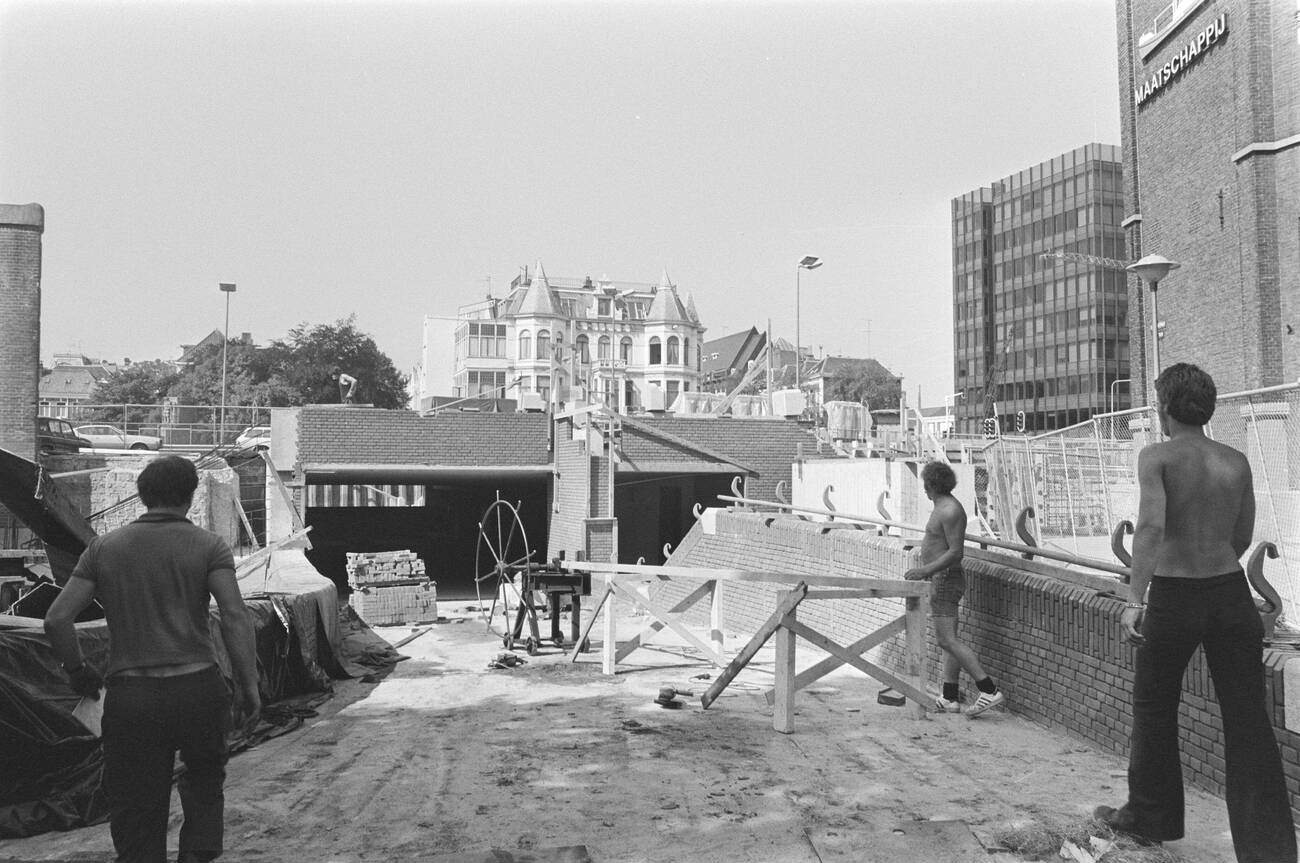
By the second half of the decade, Amsterdam was undergoing visible physical change. The metro construction at Weesperplein was reshaping the ground beneath the city. Bridges like the Hoge Sluis over the Amstel were being restored. New housing estates pushed outward from the historic core. And the canal ring itself — a UNESCO-recognized urban landscape in the making — continued to host the extraordinary mix of boats, bridges, cyclists, and pedestrians that had defined the city for three centuries.
The Alkmaar cheese market was one of the most photographed events in the Netherlands. Guild members dressed in white uniforms and colored hats — each color indicating which guild they belonged to — carried heavy wooden sledges loaded with Gouda wheels across the cobblestones to the De Waag weighing house. The market had been running since the 16th century and continued every Friday morning through the summer season. For tourists arriving in 1971, it was one of the most direct encounters available with a living Dutch tradition.
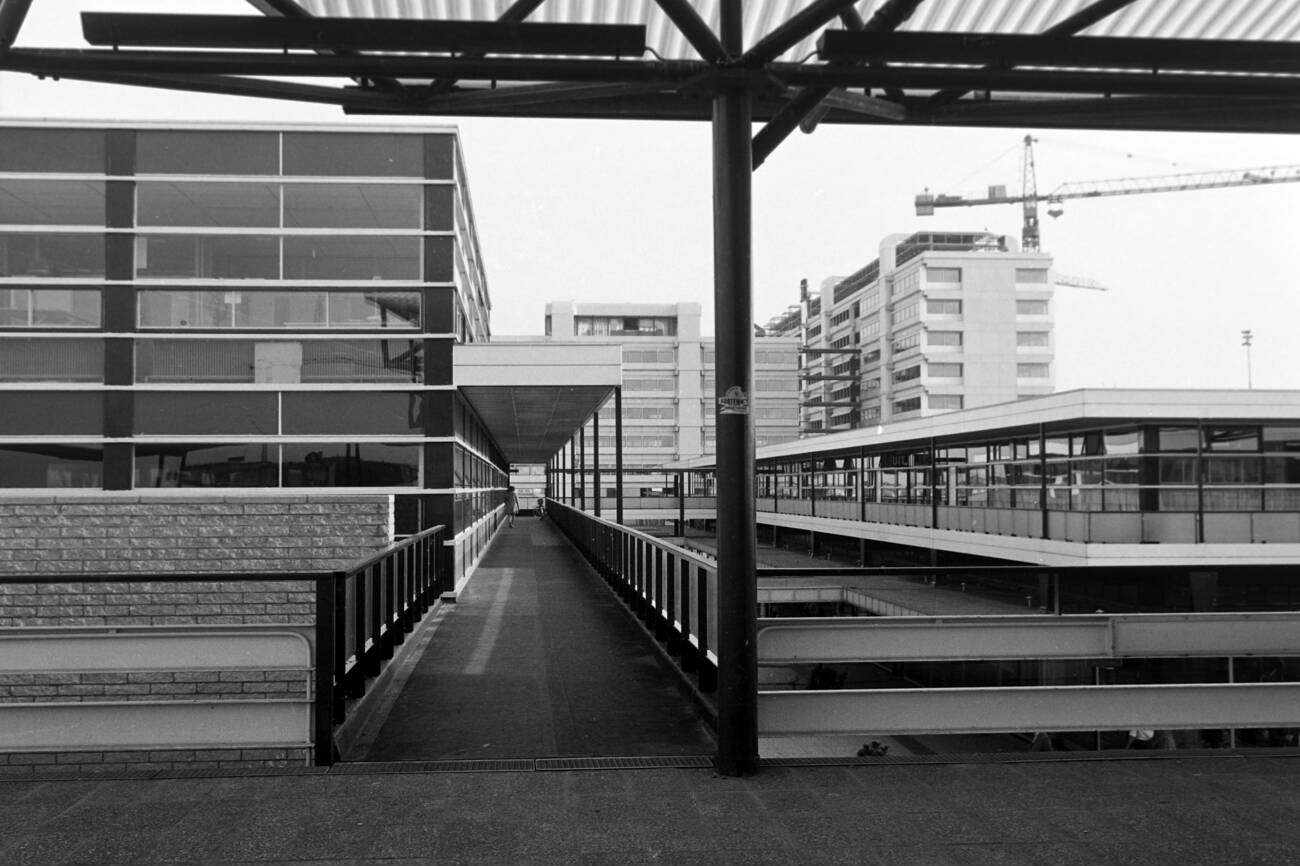
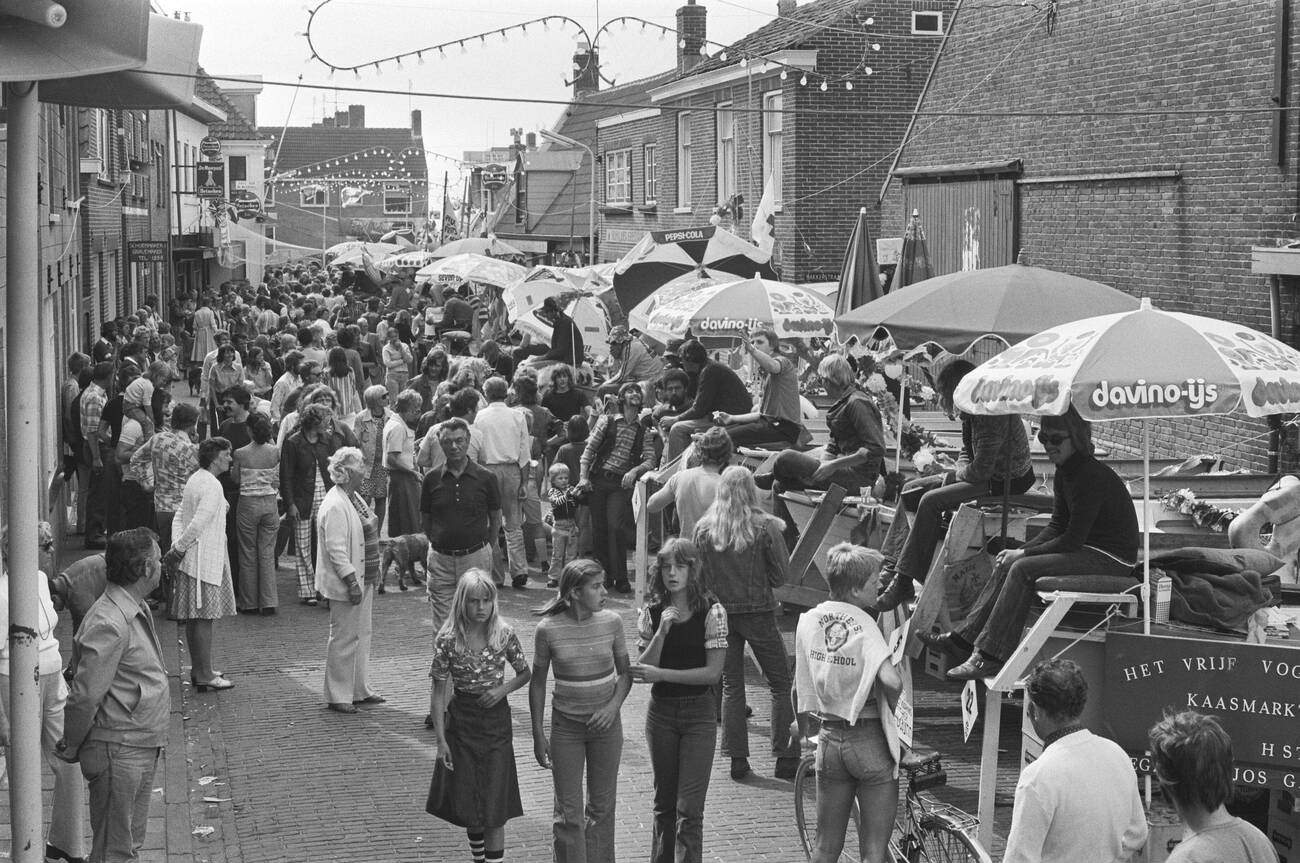
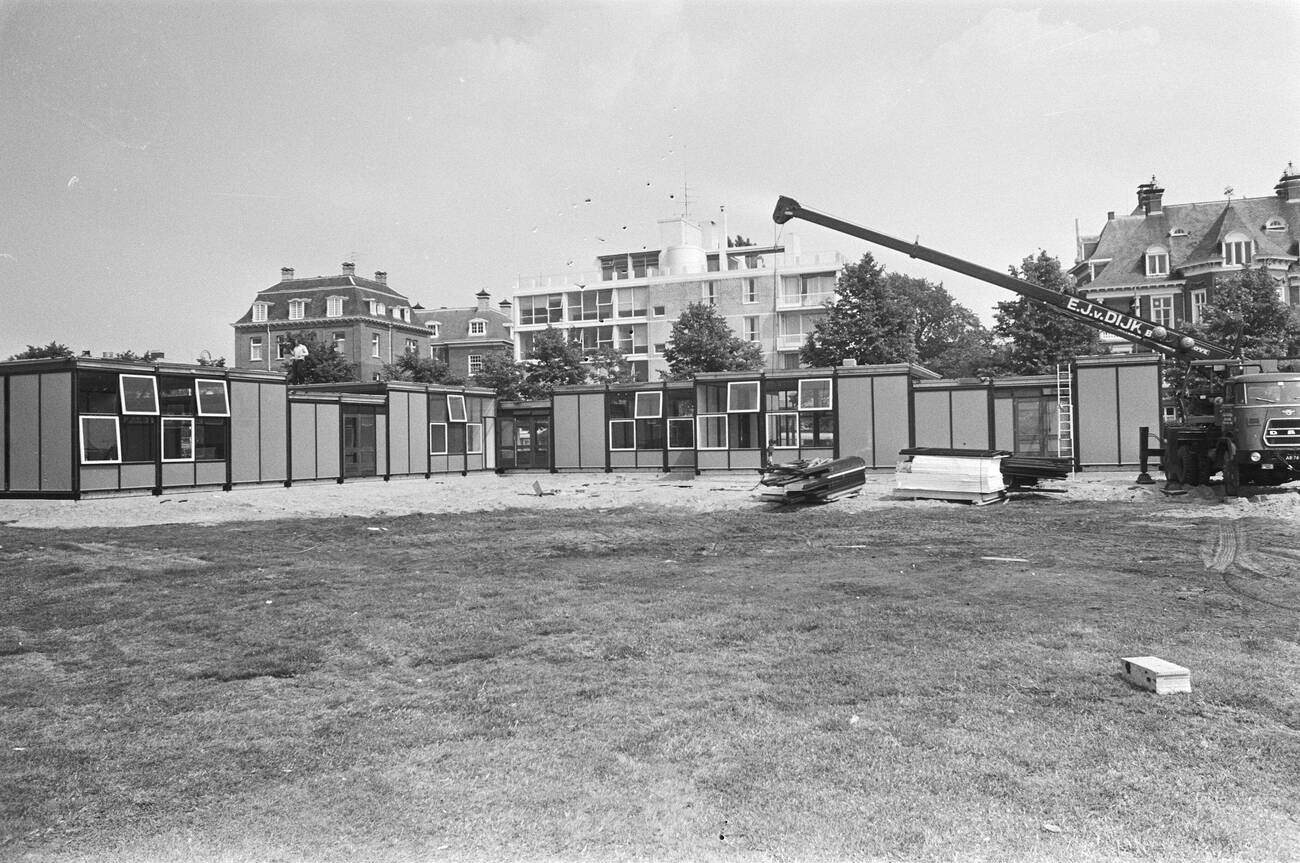
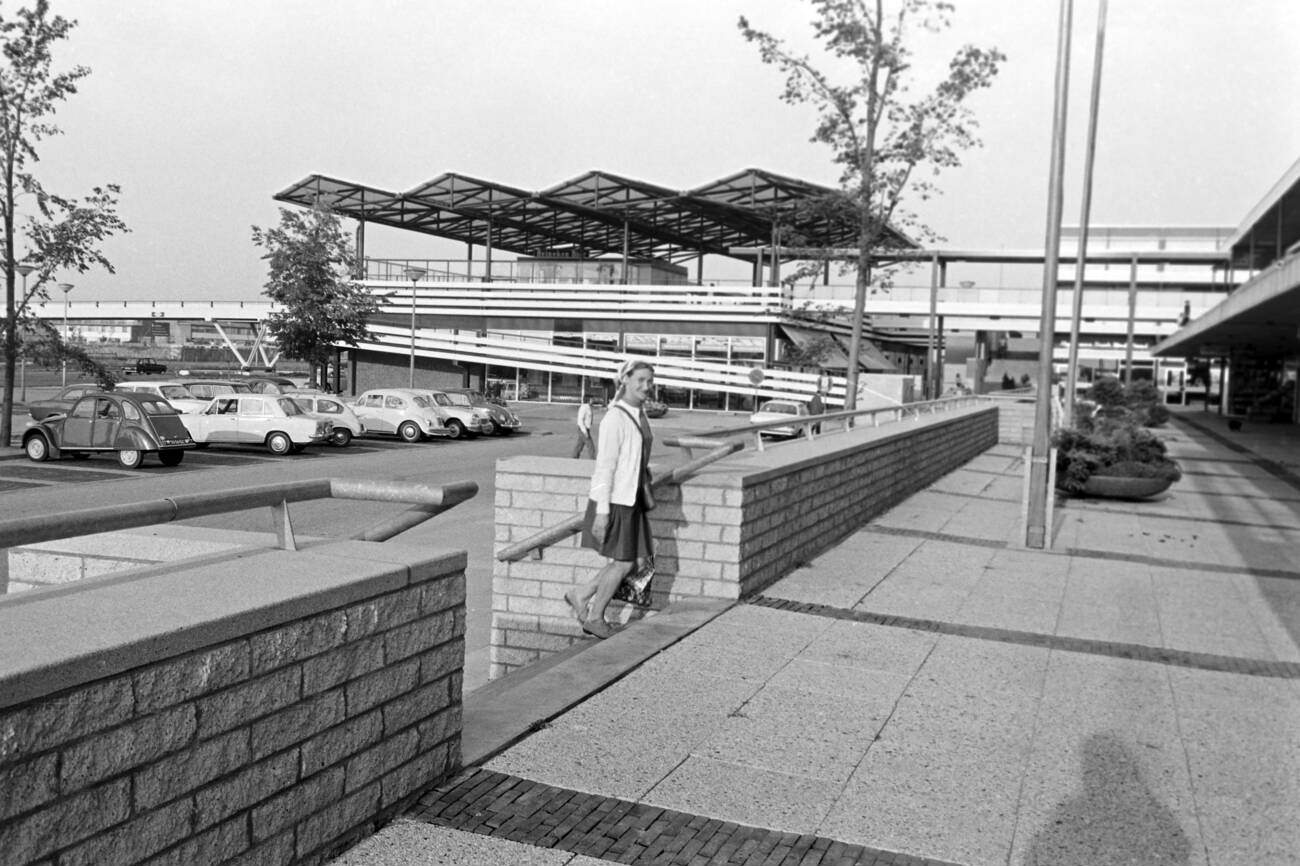
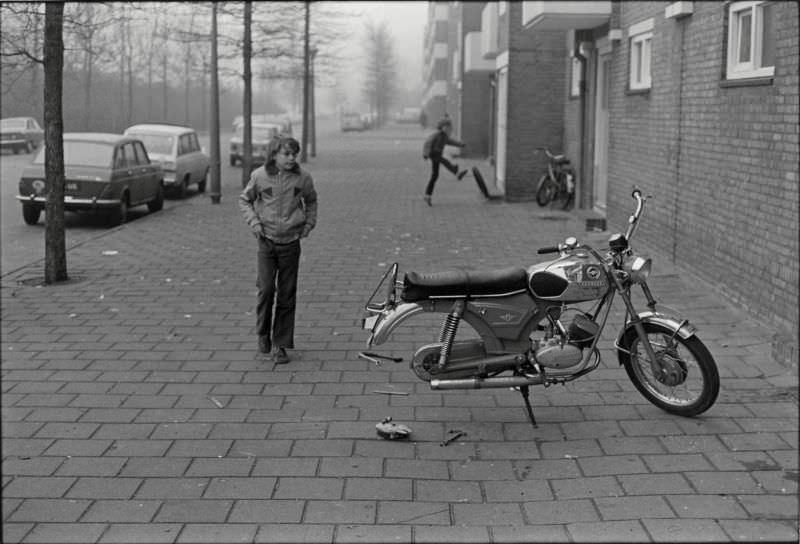
New housing estates spread across the Dutch landscape throughout the early 1970s. Some were built on recently reclaimed polder land, others on the outskirts of established cities. The streets in these new developments were wide and clean, the buildings uniform and practical. Residents — many of them young families — were moving in from city centers that were being cleared or from rural areas that could no longer support their livelihoods. The estates provided modern plumbing, central heating, and space, but they also represented a sharp break from the dense, mixed neighborhoods of older Dutch towns.
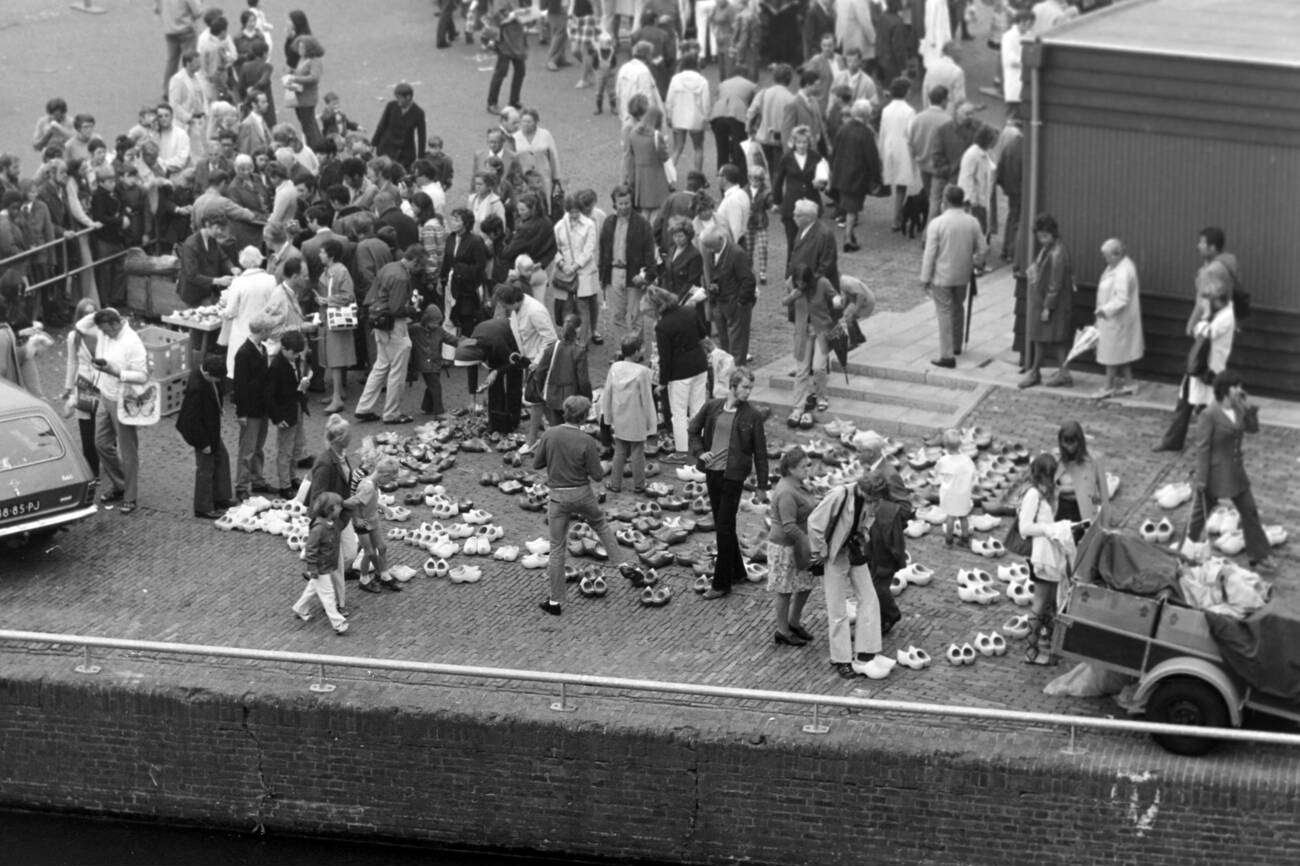
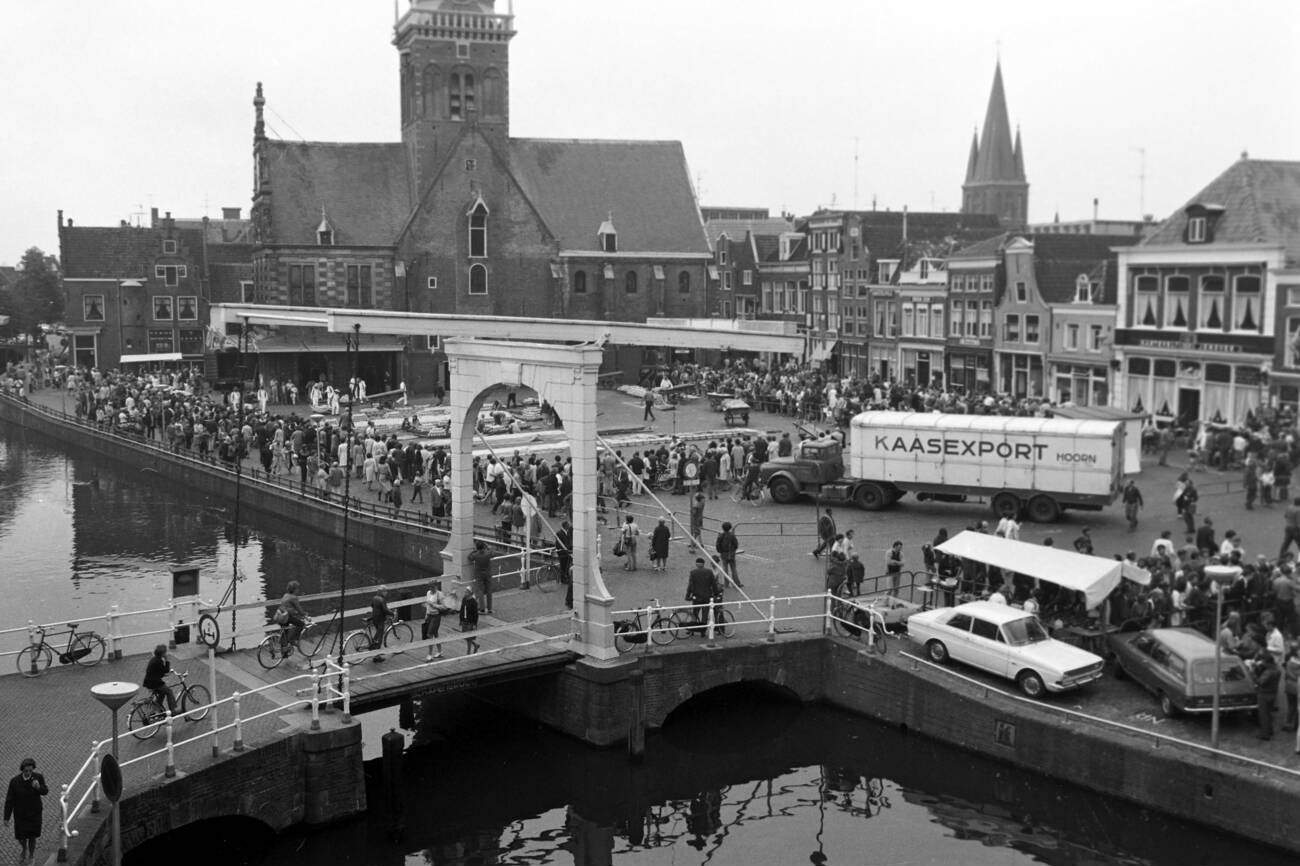
Traditional crafts and trades remained visible in Dutch public life. Klompen — wooden clogs — were sold at markets in Alkmaar alongside the cheese. Fishermen in Urk wore the same style of clothing their grandfathers had worn. In Volendam and Marken, families still dressed in regional costume on certain days, and the sight of a family walking through Monnickendam in full traditional dress in 1971 was not purely a performance for tourists — it was also a statement of local identity.
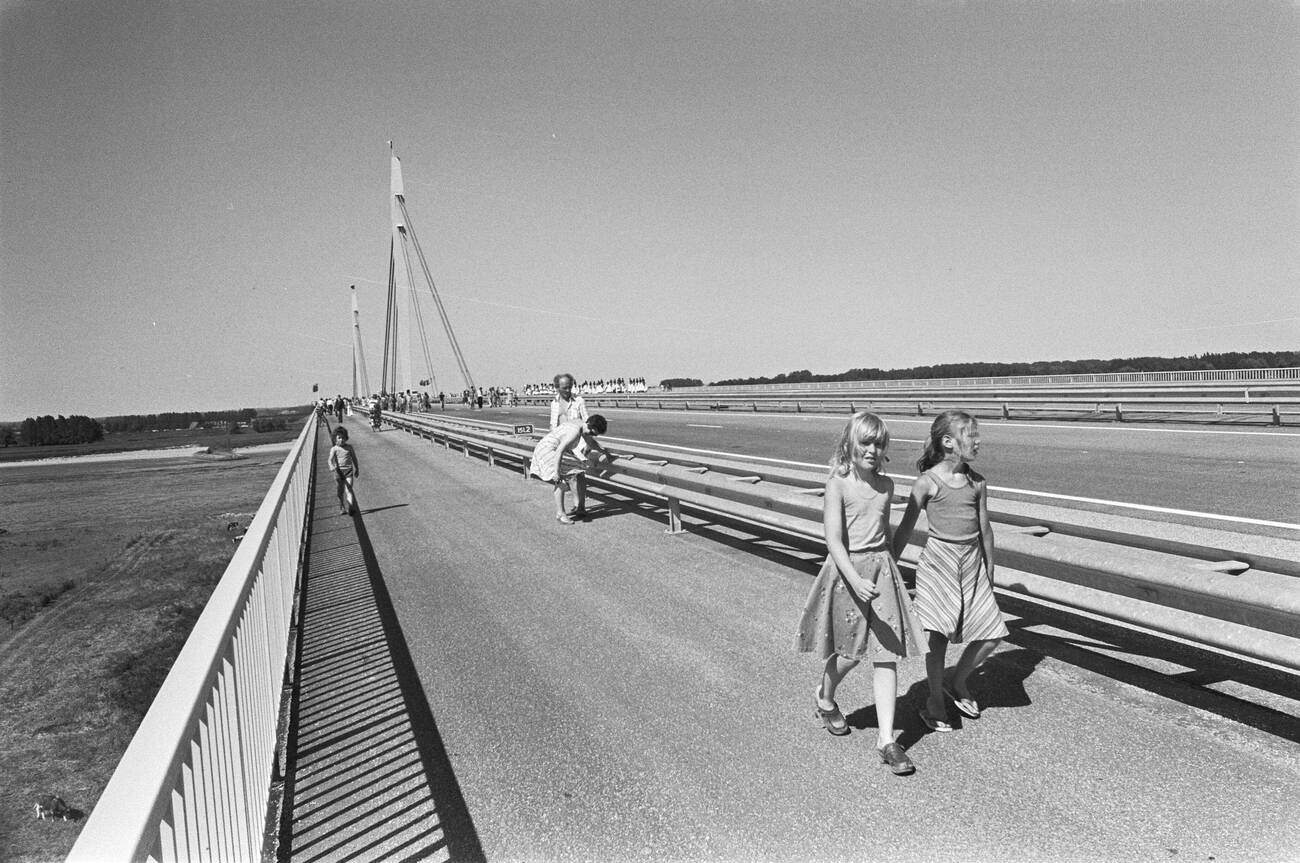
The highways of the Netherlands connected all of this together. Near Leiden, a car drove past a windmill standing at the roadside — the old and the new in a single frame. Trucks moved grain to mills near Lelystad. Buses carried commuters and tourists between small towns. The national road network was expanding rapidly, funded partly by the revenues flowing from natural gas exports. The bridge at Ewijk, opened by Transport Minister Westerterp in June 1976, was one of several new crossings added to the system during the decade.
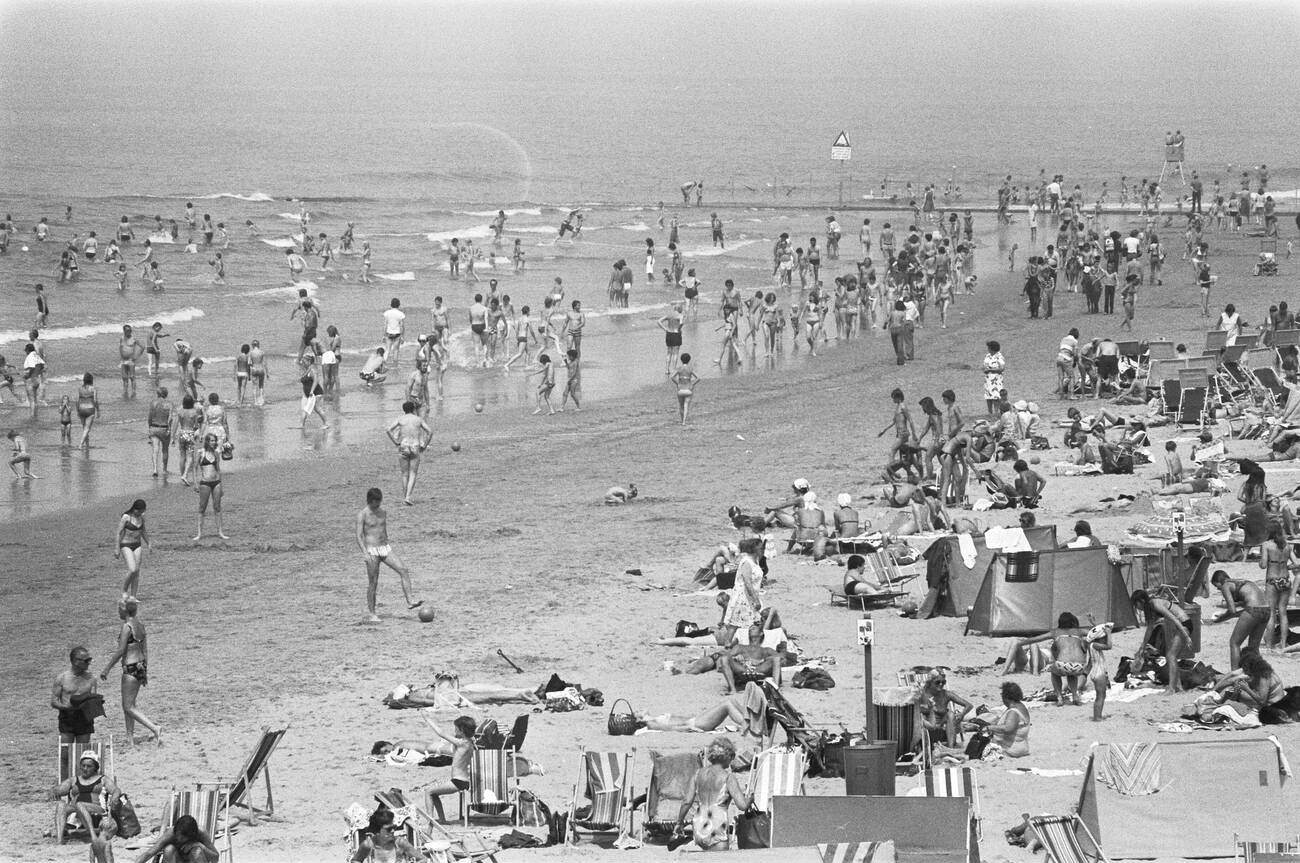
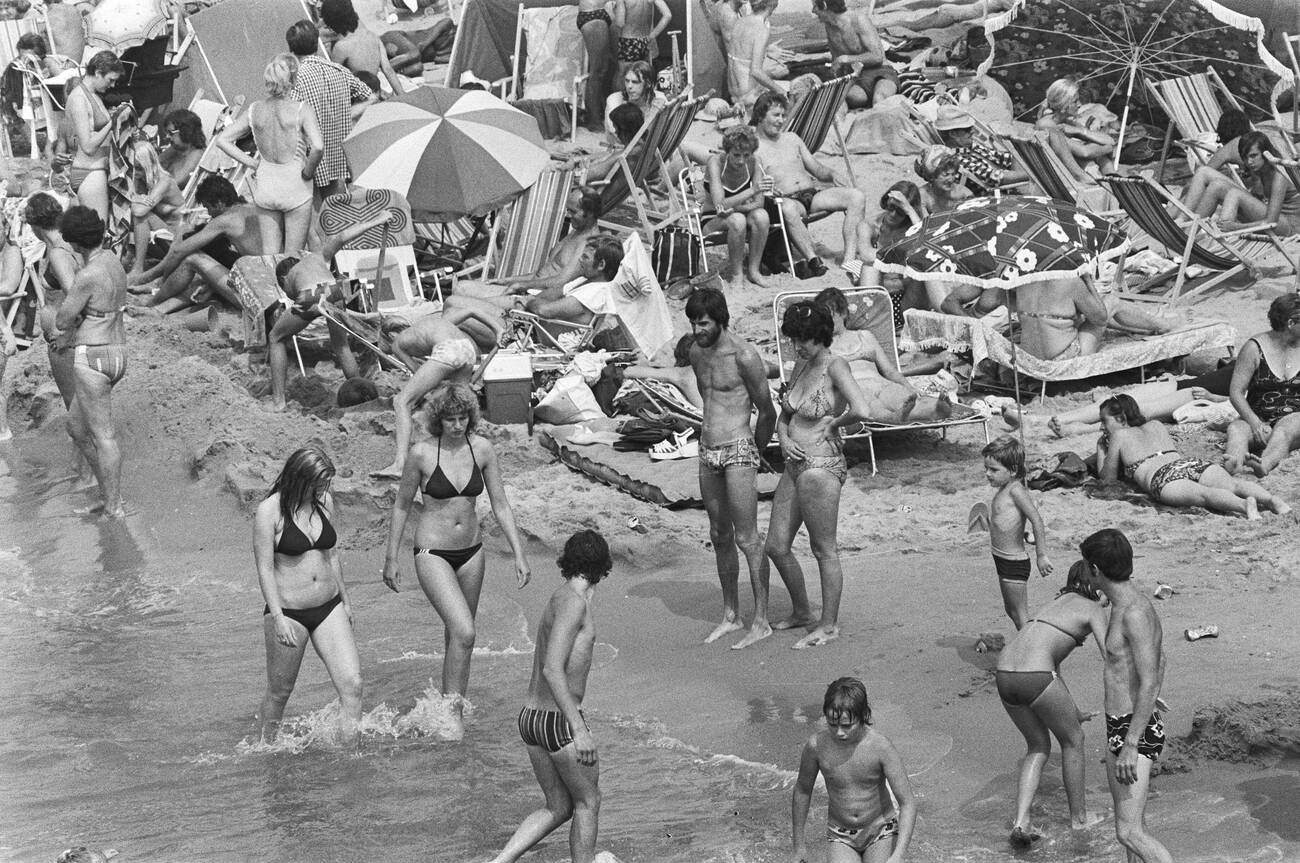
The beaches at Scheveningen and Zandvoort reflected the Dutch appetite for outdoor recreation when the weather permitted. In the summer of 1976, both were packed to an extraordinary degree. The heat wave that drove crowds to the water was severe enough to damage trees and strain the water supply. At Zandvoort, a beach town on the North Sea coast west of Amsterdam, photographs taken on June 7, 1976 show the sand almost completely covered with people. It was one of the most intense summers the Netherlands had seen in decades.
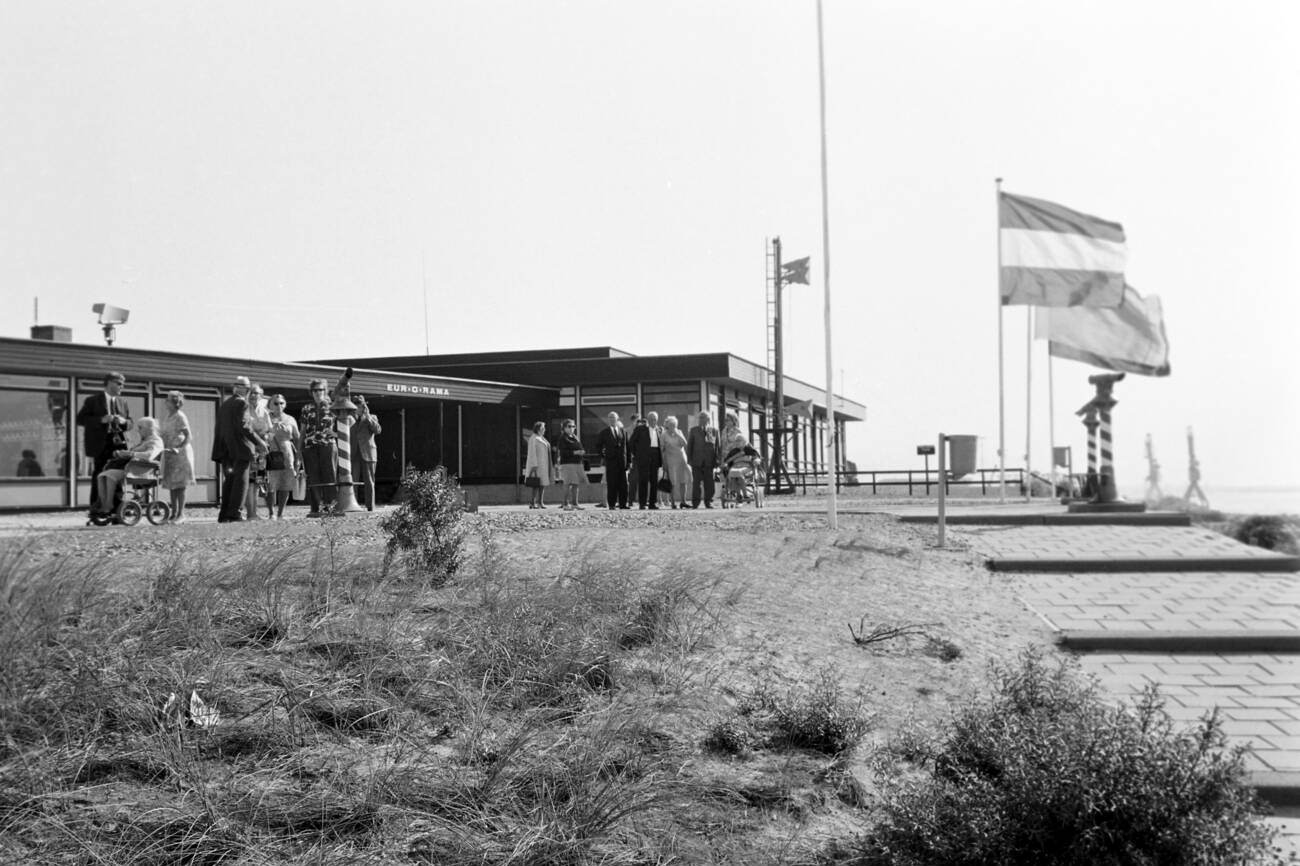
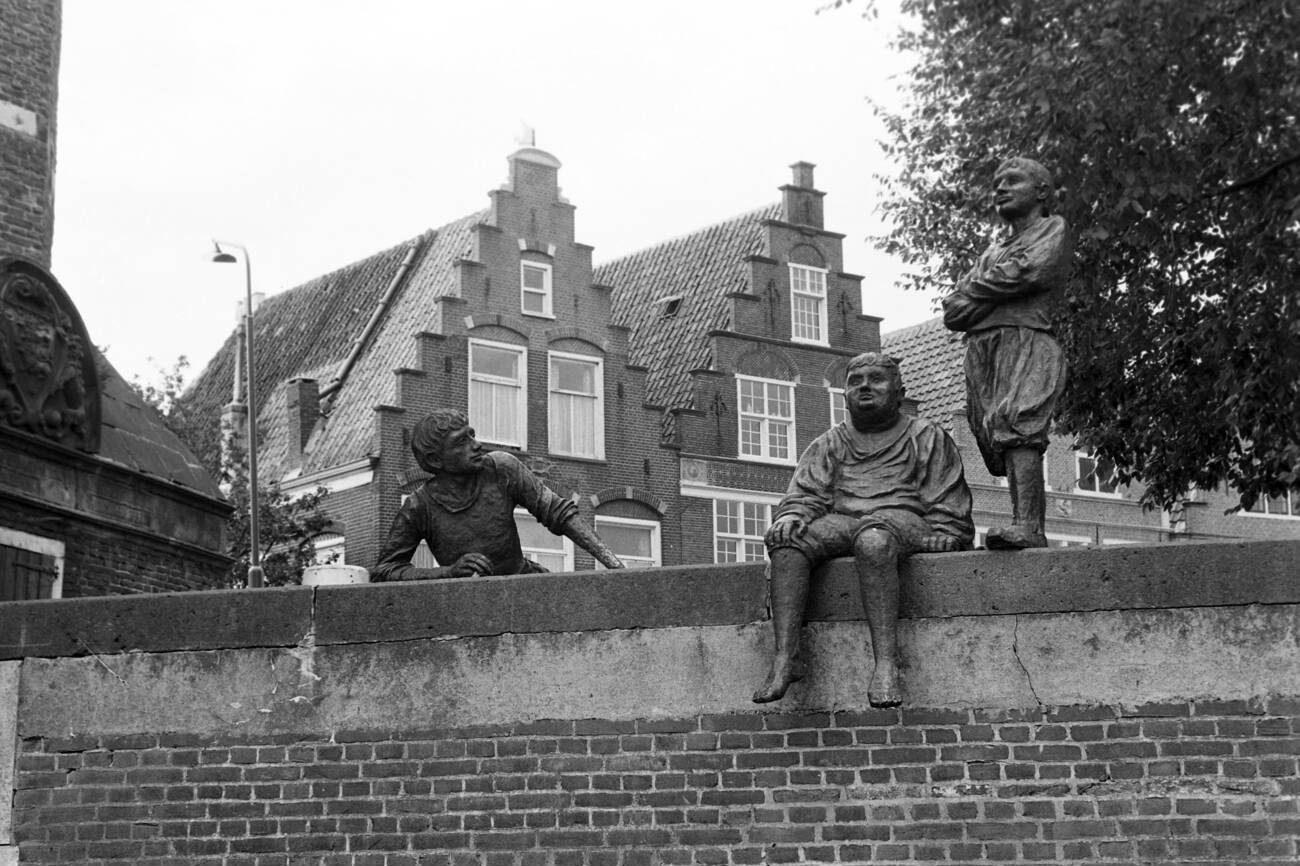
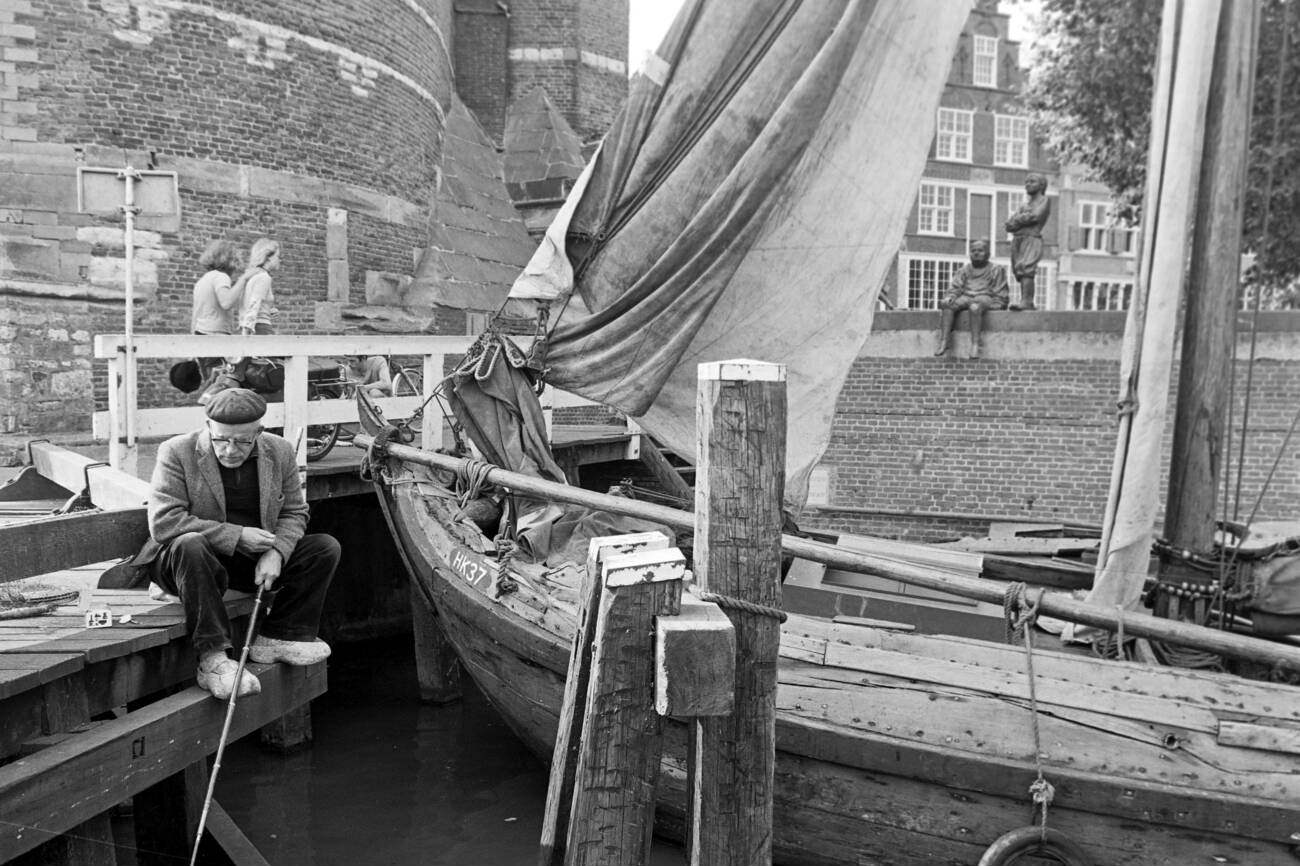
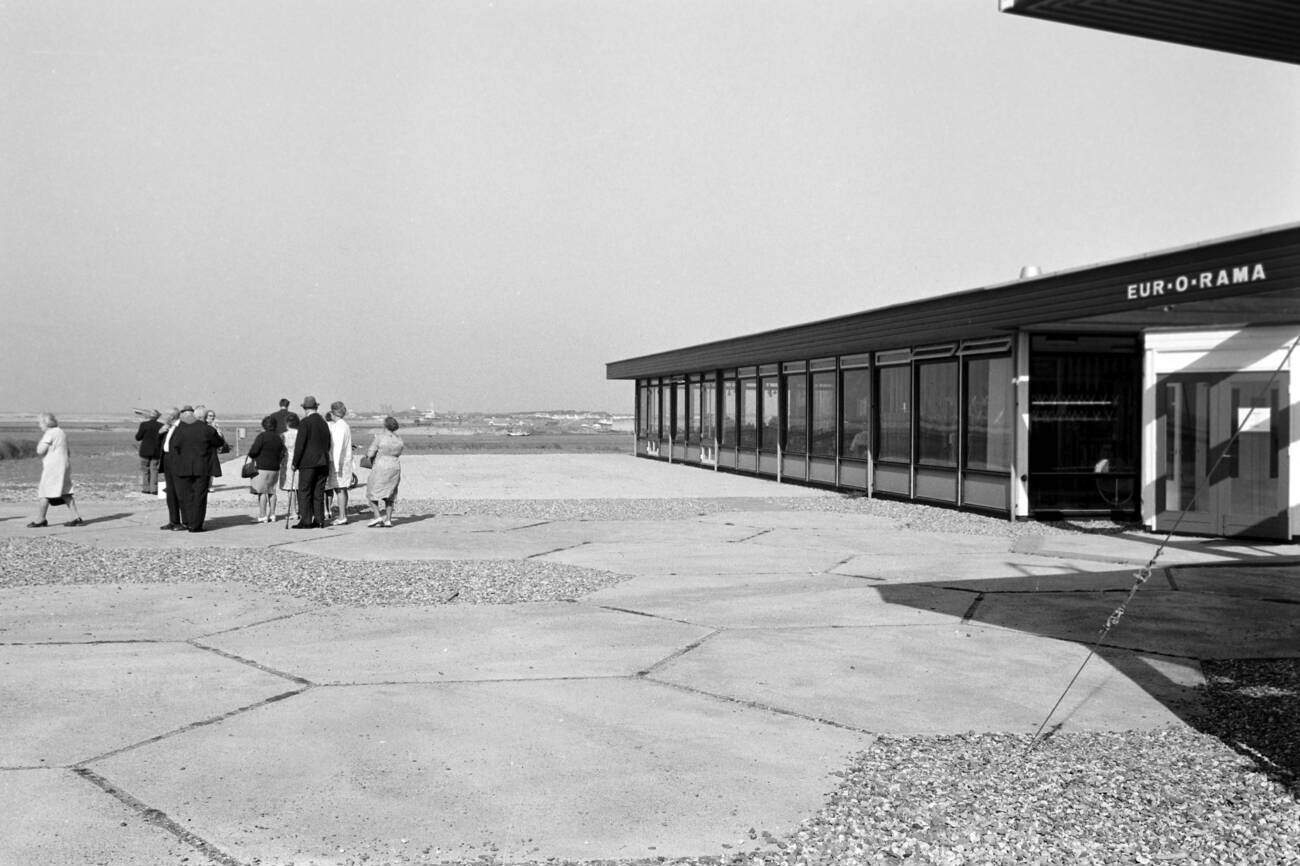
Hoek van Holland, at the mouth of the New Waterway leading into Rotterdam, was both a working ferry terminal and a place where travelers paused before crossing to England. The Eur-o-Rama cafe served passengers and port workers alike. Nearby, in Hoorn, a bronze sculpture of three cabin boys — inspired by a novel by Dutch author Johan Fabricius — stood near the harbor as a reminder of the town’s seafaring past. Hoorn had once been one of the great ports of the Dutch Republic, and its historic buildings and Hoofdtoren tower still told that story clearly.
Lelystad was the administrative capital of Flevoland, a city built entirely on reclaimed land and officially founded in 1967. By 1971, it was still a young settlement, and the tourists and visitors who arrived there found a town in the process of becoming. Schools were new, roads were new, the trees lining the streets were young. Everything about the place signaled a planned, deliberate future — in sharp contrast to the organic, centuries-old towns just across the water on the old mainland.
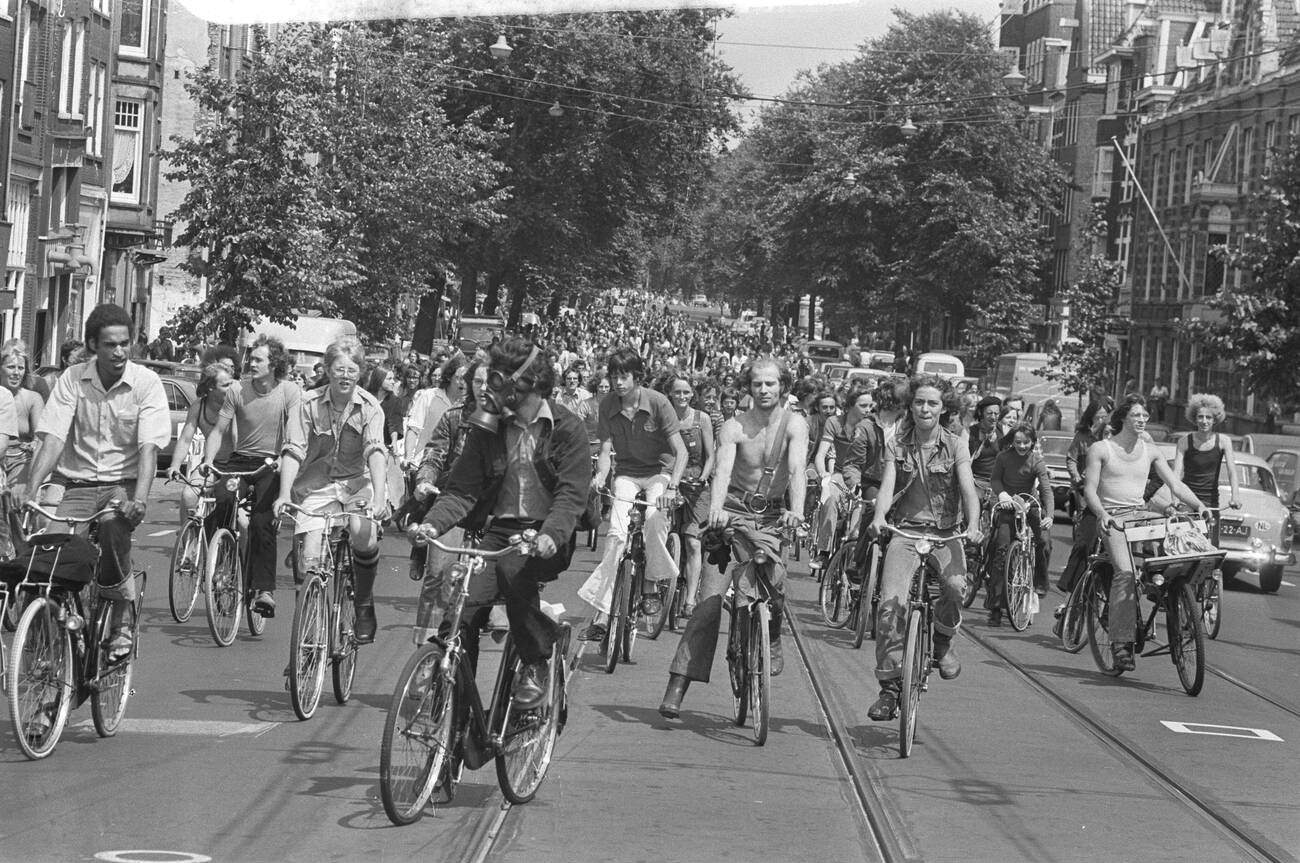
Amsterdam’s bicycle culture was already the envy of urban planners elsewhere, but during the 1970s it deepened further. The oil crisis had accelerated investment in cycling infrastructure, and the city’s network of bike lanes expanded. Organized bike tours drew participants through the canal ring and outer neighborhoods. By 1975, the scene on the Damrak — bicycles stacked five deep along the railings, with the Oude Kerk rising in the background — had become one of the defining images of the Dutch capital.
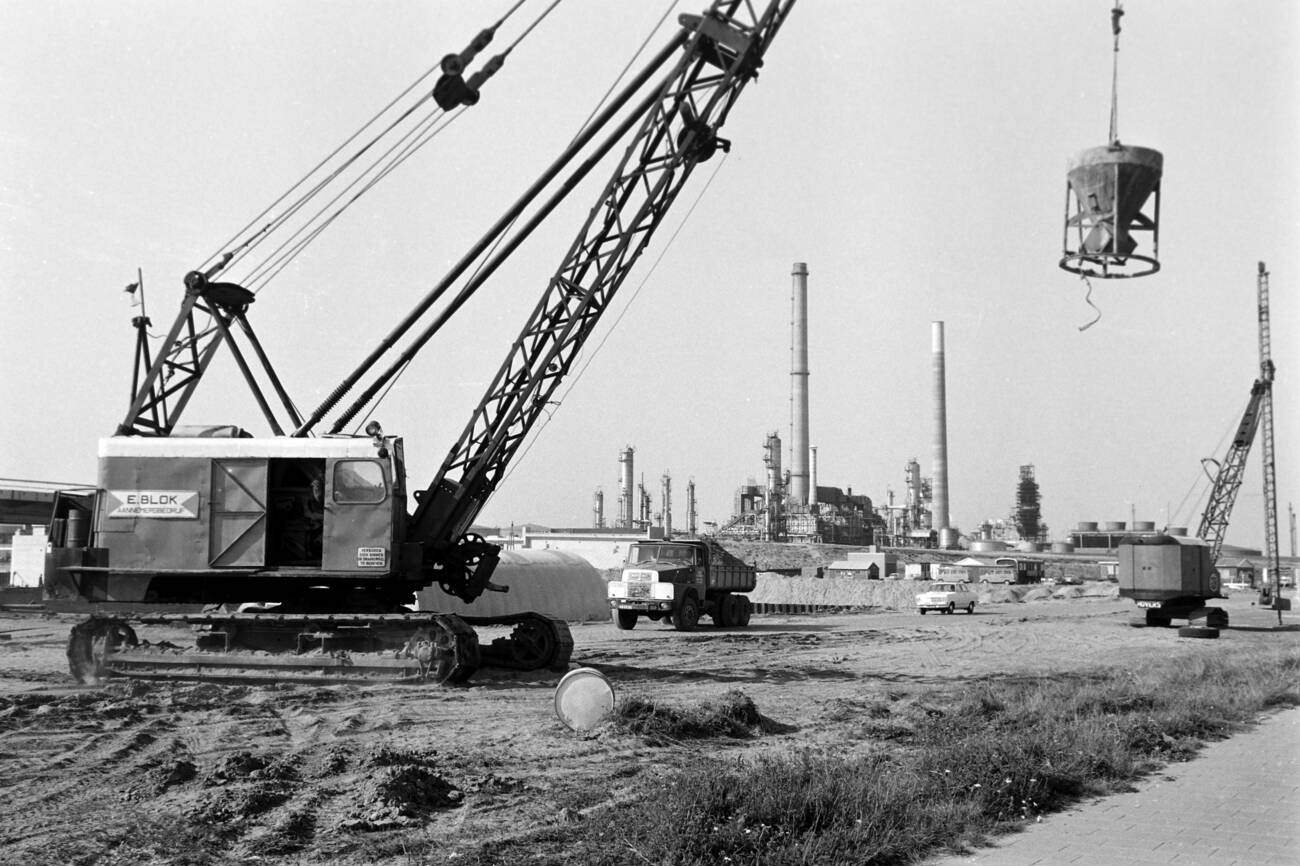
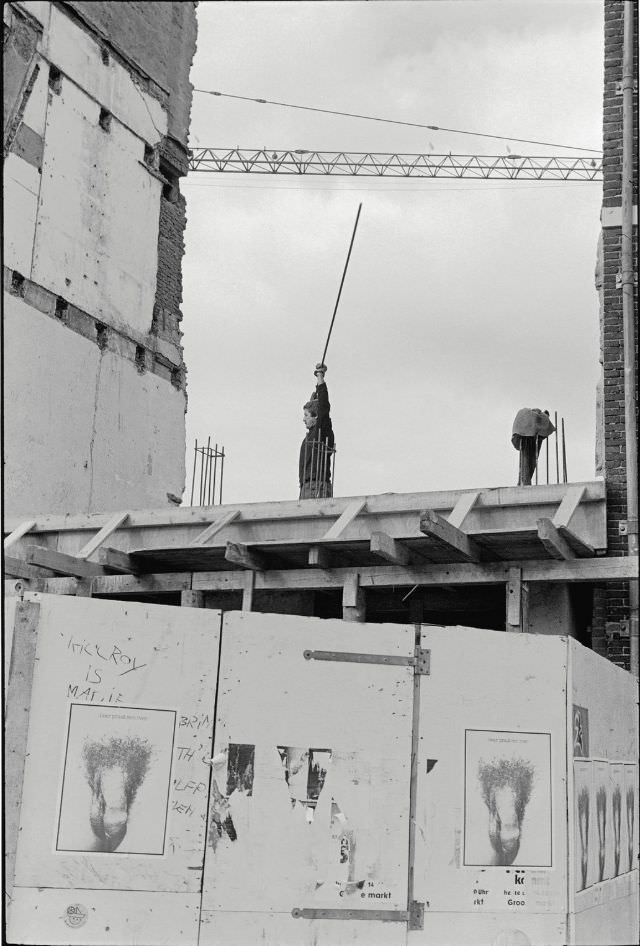
Grain delivery to mills near Lelystad, dredgers working along the Rotterdam waterfront, an excavator cutting a new road between Enkhuizen and Lelystad — these images of physical labor defined the Dutch 1970s as much as the protests and pop festivals. The country was still engaged in the massive postwar project of building and rebuilding, and the work was visible everywhere. Roads, bridges, buildings, and whole new towns were the decade’s physical legacy, written across the Dutch landscape in concrete and steel.
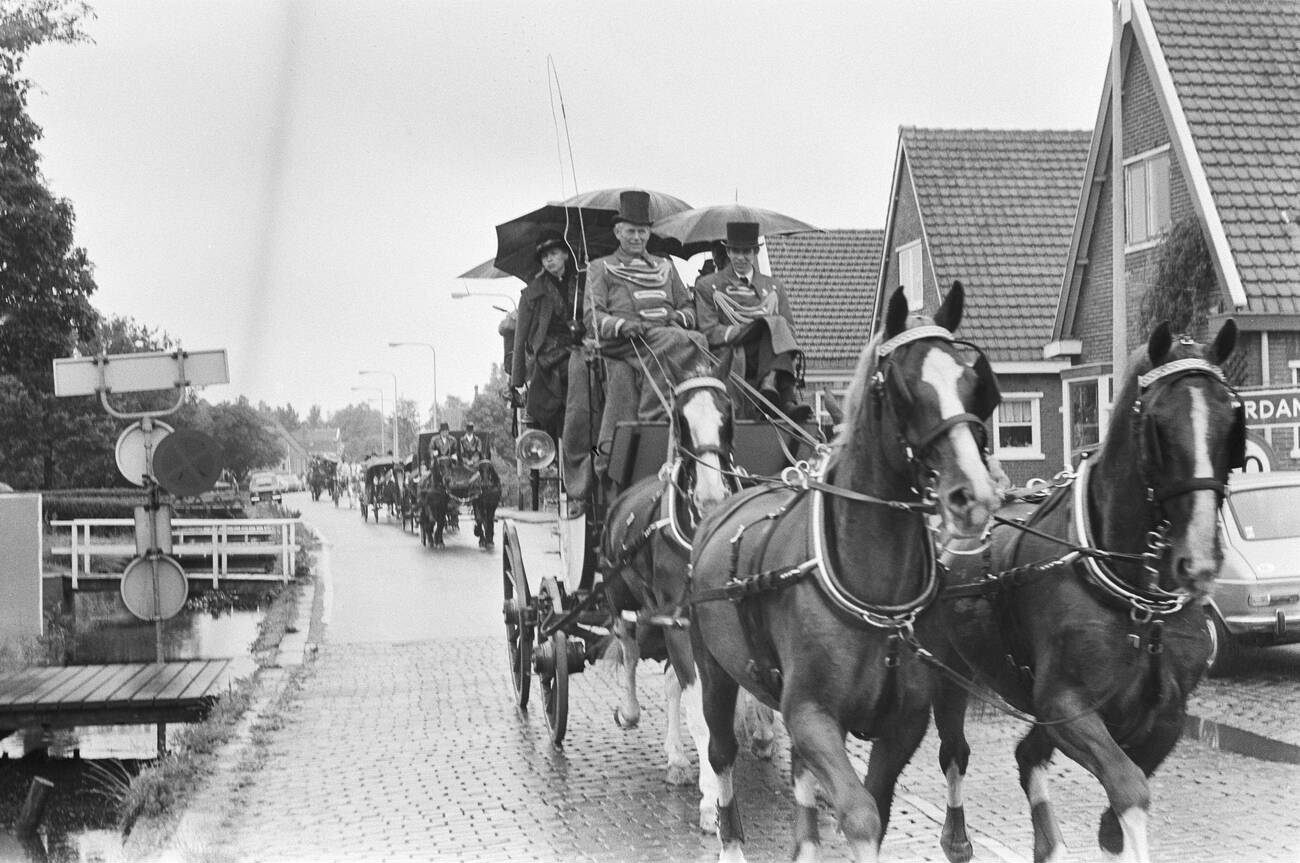
National Carriage Day in Landsmeer on June 20, 1976 drew crowds to watch horse-drawn carriages parade through the small North Holland town. Events like this one — alongside the cheese market in Alkmaar, the fishing fleets of Urk, and the traditional dress of Volendam — showed how deeply Dutch society valued its regional traditions even as it modernized at speed. The two impulses existed side by side without apparent contradiction: a country tearing up its fields to build motorways, while also dressing up in 19th-century guild uniforms to carry cheese across a medieval square.
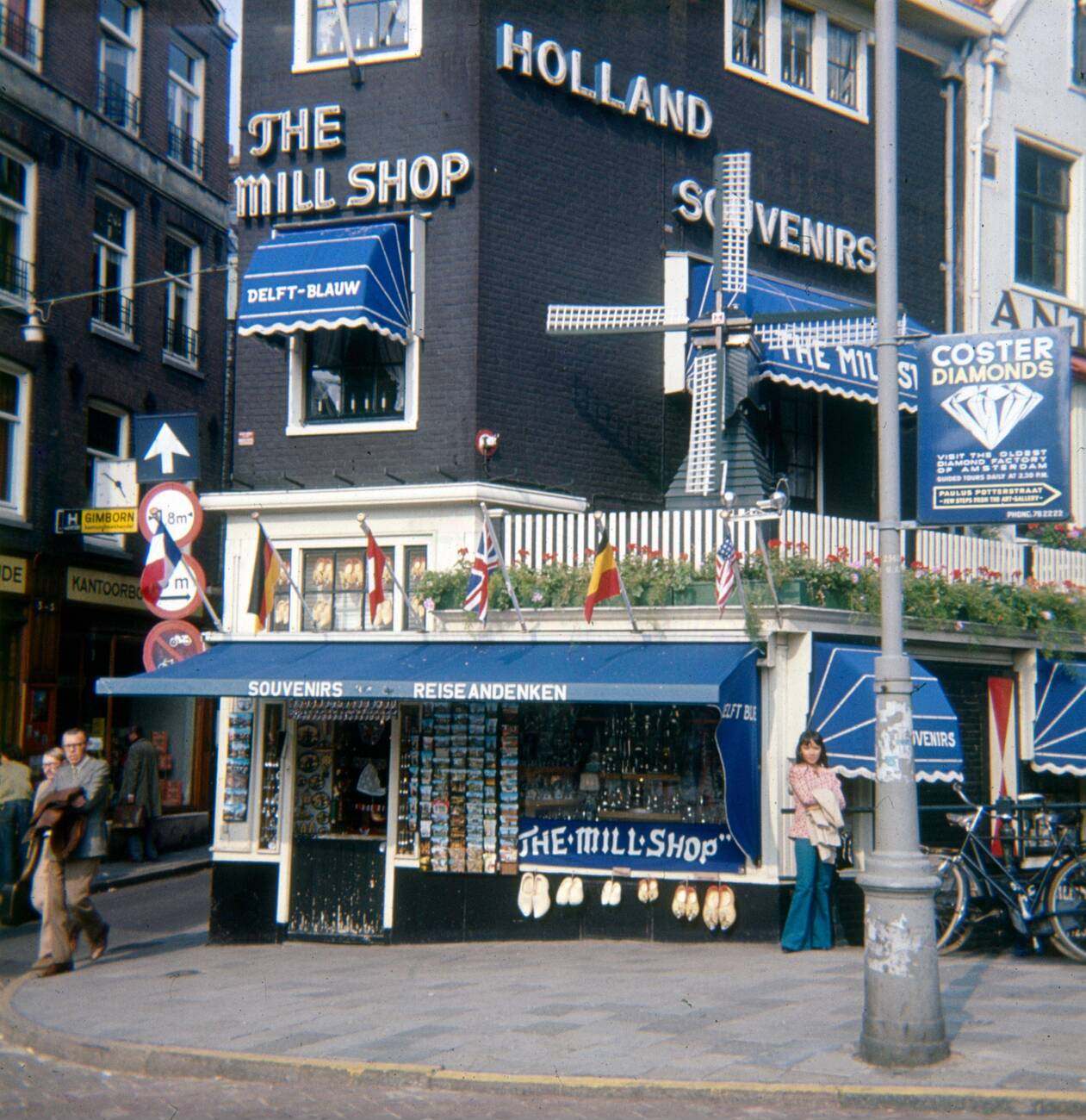
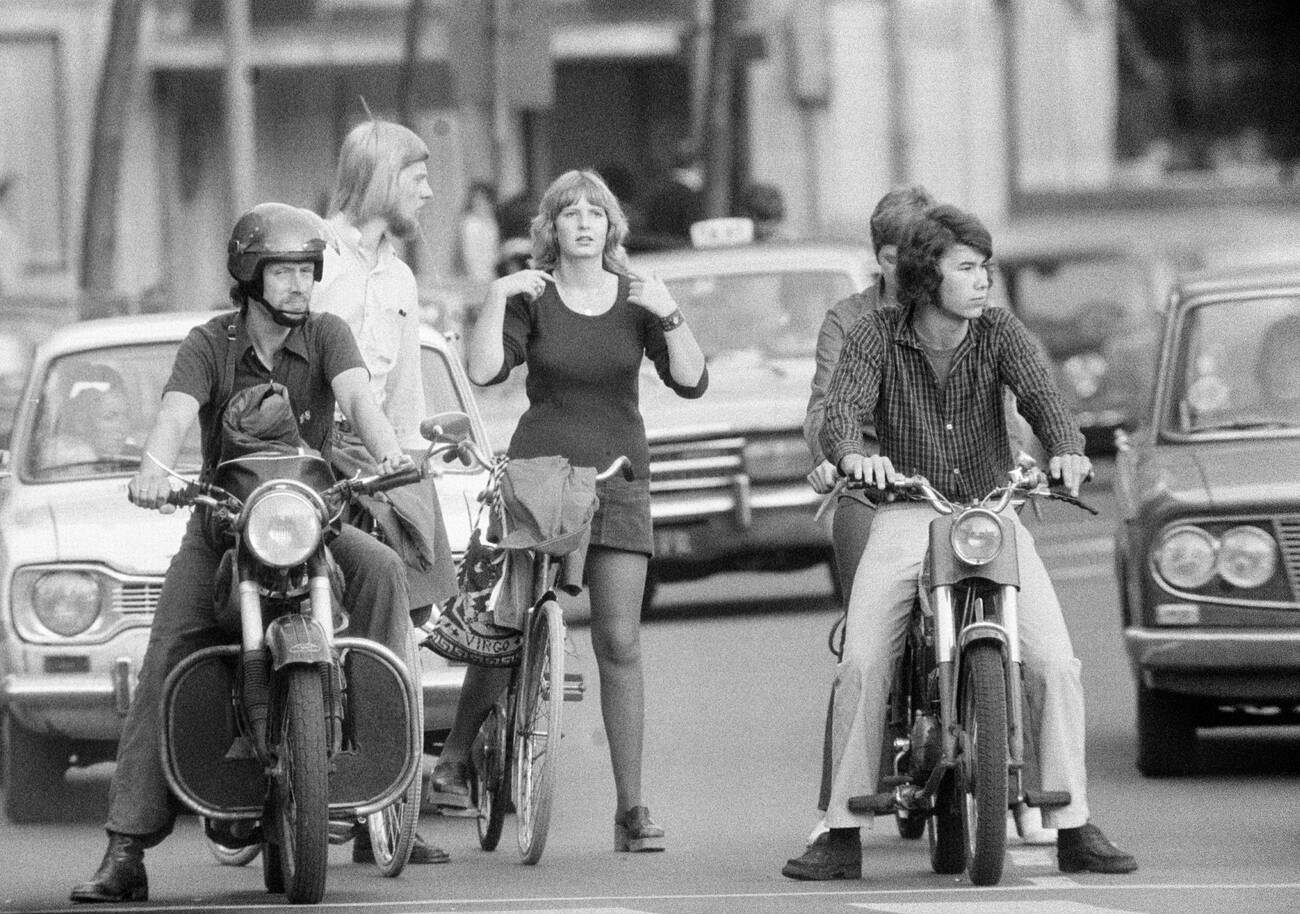
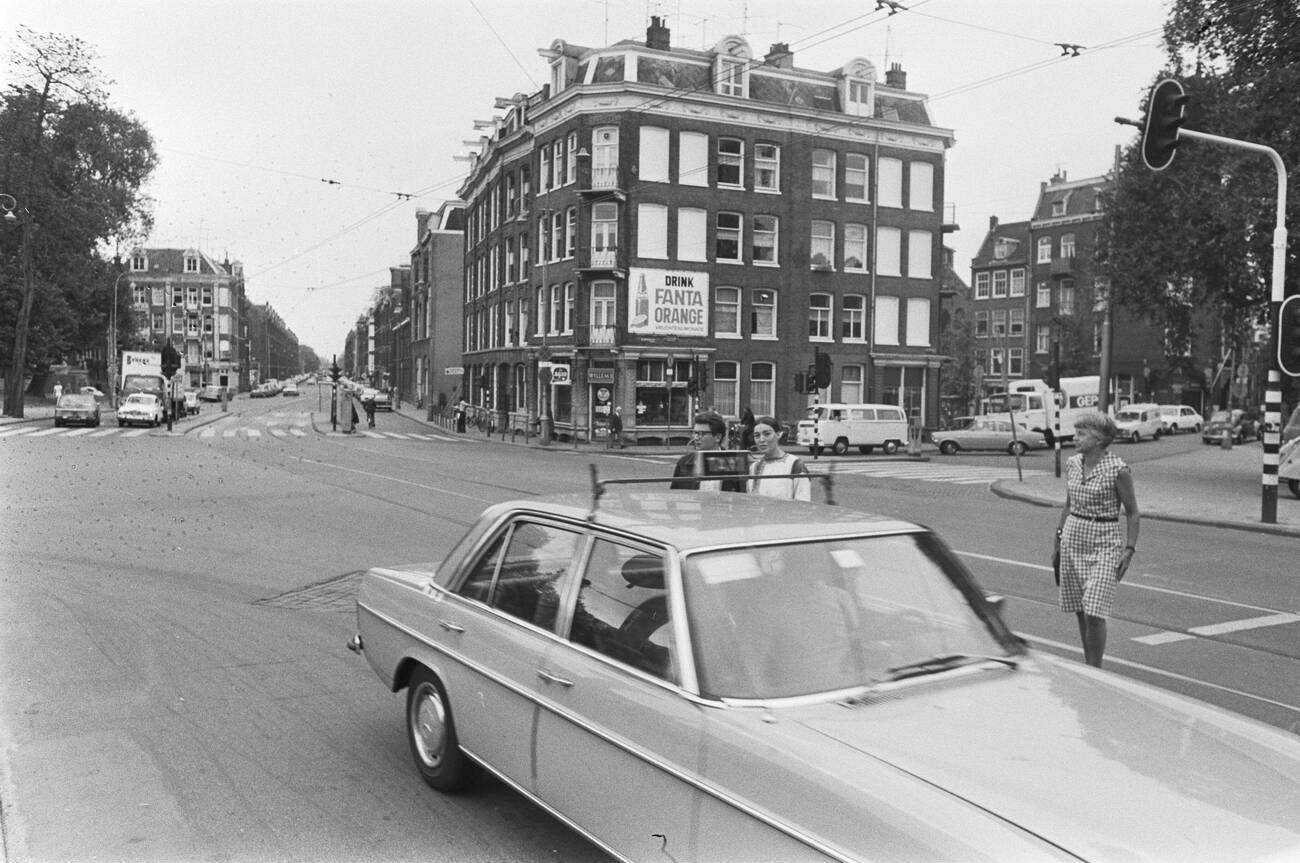
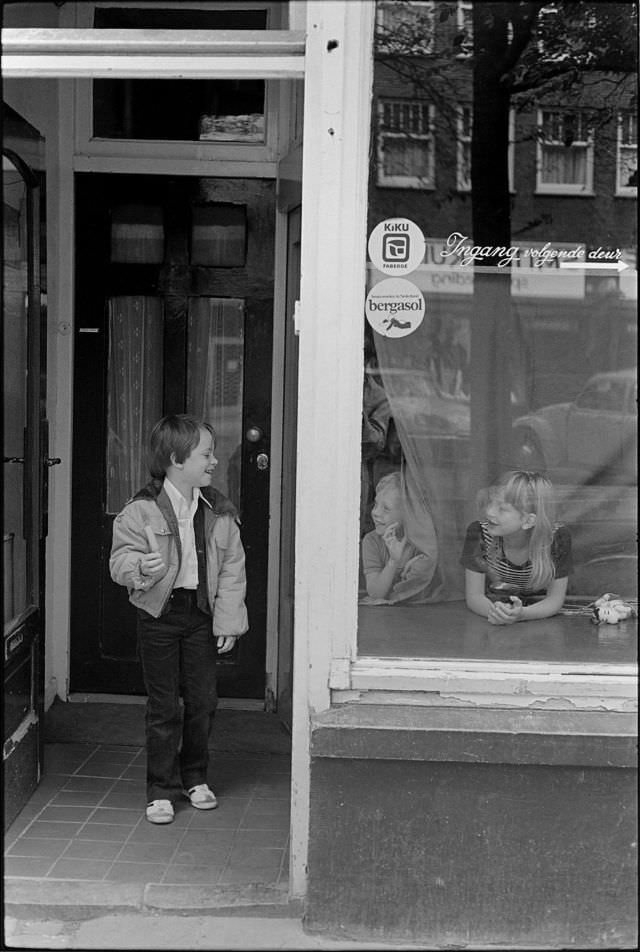
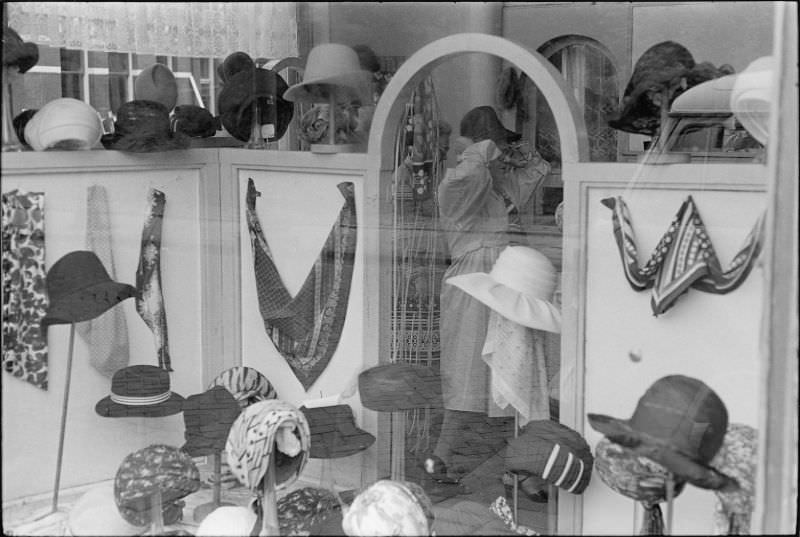
By the late 1970s, Amsterdam had settled into a new identity. The canal ring remained the city’s heart, but the neighborhoods around it had changed. Coffee shops, squatter communities, and an internationally recognized nightlife sat alongside the Rijksmuseum, the Anne Frank House, and the diamond traders. The 1979 photographs of the city show streets that look both familiar and distinctly of their time — parked cars, period storefronts, fashions that place them precisely in the last years of the decade.
Across the decade, the Netherlands also played an active role in shaping international institutions. It was a founding participant in the European Economic Community and pushed for a common European market. Dutch diplomats were involved in establishing the United Nations Environment Programme, reflecting the growing environmental consciousness that was visible domestically too — in protests against nuclear power, in the work of early Green groups, and in the public debate over what kind of country the Netherlands wanted to be by the end of the century.
The photographs from Utrecht in 1971 and 1973 show a city that wore its age comfortably. The Dom Tower, the canals, the old university buildings — all of it intact and in daily use. Haarlem in 1979 looked similarly settled, its historic center largely undisturbed by the upheavals happening elsewhere in the country. These cities served as anchors, reminders that the Netherlands was not just building something new but also maintaining something very old — a carefully tended landscape of water, stone, and history that had been shaped and reshaped over seven centuries.





The Netherlands consists of a bit more than Rotterdam, Amsterdam, Monnickendam (?), Flevoland and Urk, but still, nice to see.
Yes I was born black and white, got my first touches of color during the 80’s /s
Most of which look exactly the same now as in the photos….