
When the United States entered World War II, the federal government needed money — fast. Fighting a war on two fronts across Europe and the Pacific required massive amounts of weapons, ships, planes, and supplies. To help pay for it all, the government turned to the American public and asked them to buy war bonds. The response across the country was enormous, and Nashville, Tennessee, was no exception.
War bonds were first introduced as “Defense Bonds” before the U.S. formally entered the war. After Japan attacked Pearl Harbor on December 7, 1941, they were renamed War Bonds. These were debt securities — essentially loans that citizens gave to the government — to fund military operations. Each bond paid a 2.9 percent return after a 10-year maturity period. The rate was lower than what the stock market typically offered, but that wasn’t really the point. Buying a bond was a way for ordinary Americans to directly support the war effort.
Treasury Secretary Henry Morgenthau sold the very first Series ‘E’ U.S. Savings Bond to President Franklin D. Roosevelt, officially launching the program. From that point forward, bonds were sold in a wide range of denominations, from $25 to $10,000, making them accessible to both working-class families and wealthier buyers alike, though some purchase restrictions did apply. By the time the war ended, war bonds had been sold to 134 million Americans — nearly the entire U.S. population at the time.
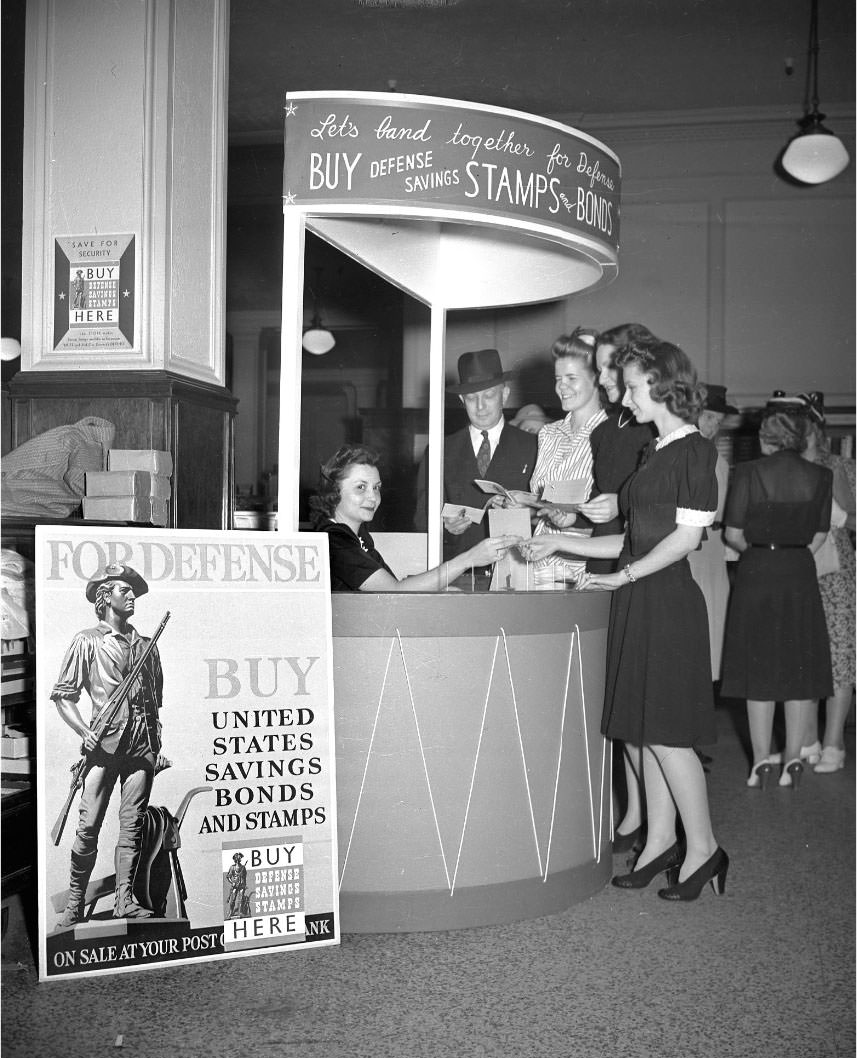
Inside buildings across Nashville, dedicated kiosks were set up to make bond purchasing as easy as possible. A large Minute Man poster — one of the most recognized symbols of the bond campaign — encouraged passersby to buy in. Signage on the kiosks carried direct messages like “Let’s band together for defense… Buy Defense Savings Stamps and Bonds.” Lines of residents formed at these stations, ready to contribute what they could.
Two organizations managed the national bond effort. The War Finance Committee oversaw all bond sales across the country. The War Advertising Council, meanwhile, pushed voluntary purchases through an advertising campaign that became the largest in U.S. history — larger than any campaign run before or since by either the government or the private sector. What made it especially unusual was that both government agencies and private companies created and paid for bond advertisements side by side. Ads ran on radio, in newspapers, and in magazines, each one designed to make an emotional connection with the reader or listener.
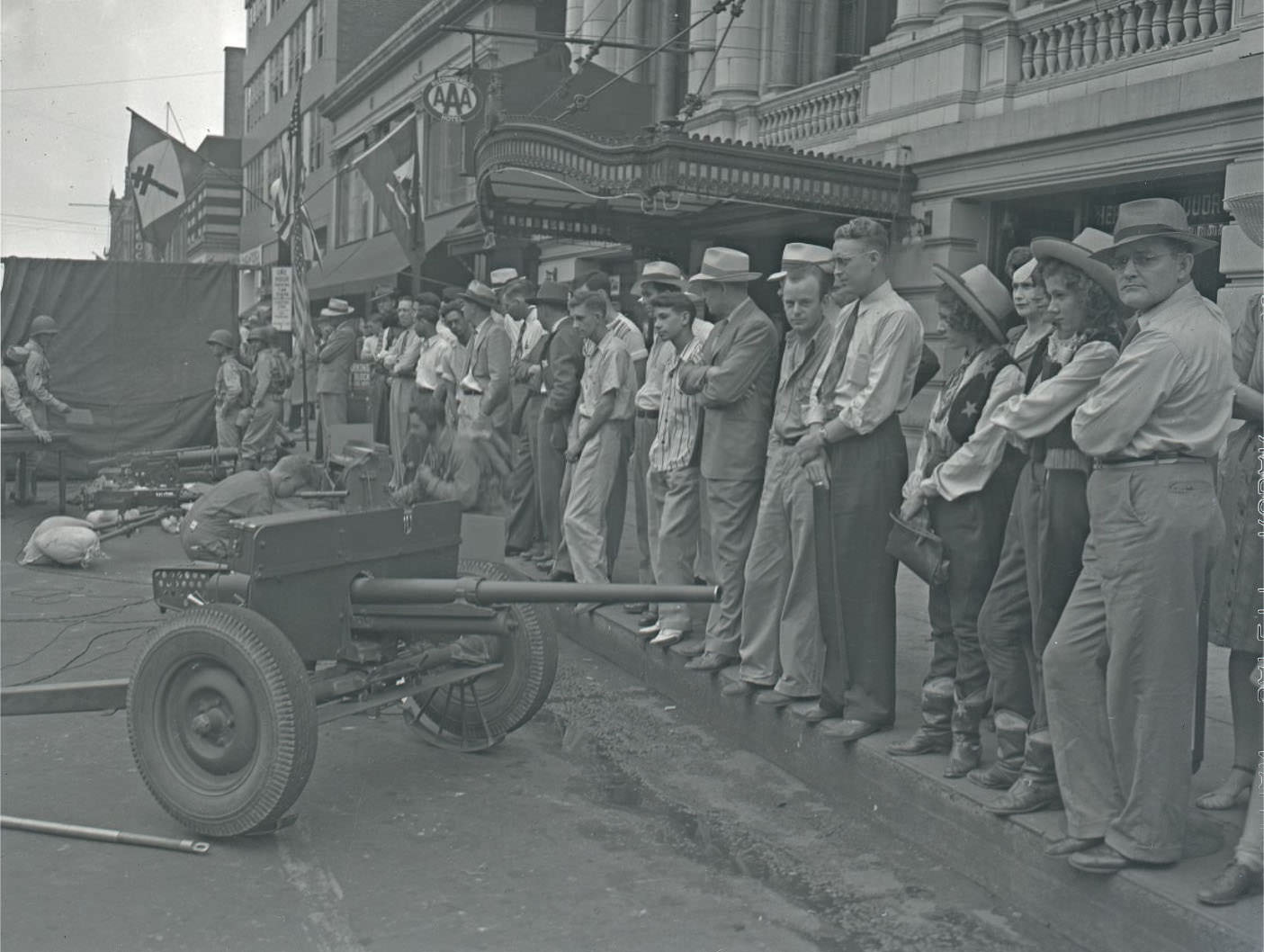
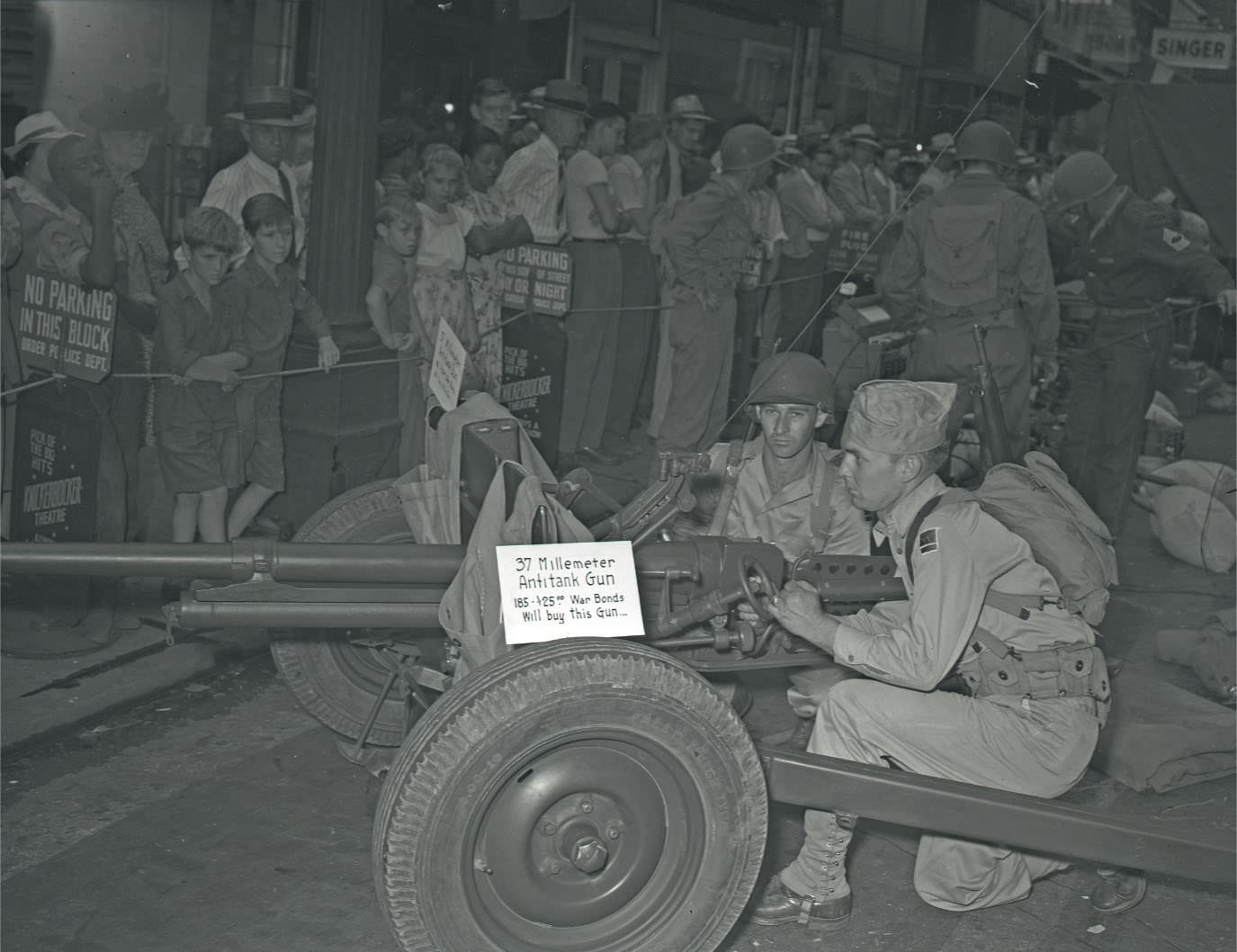
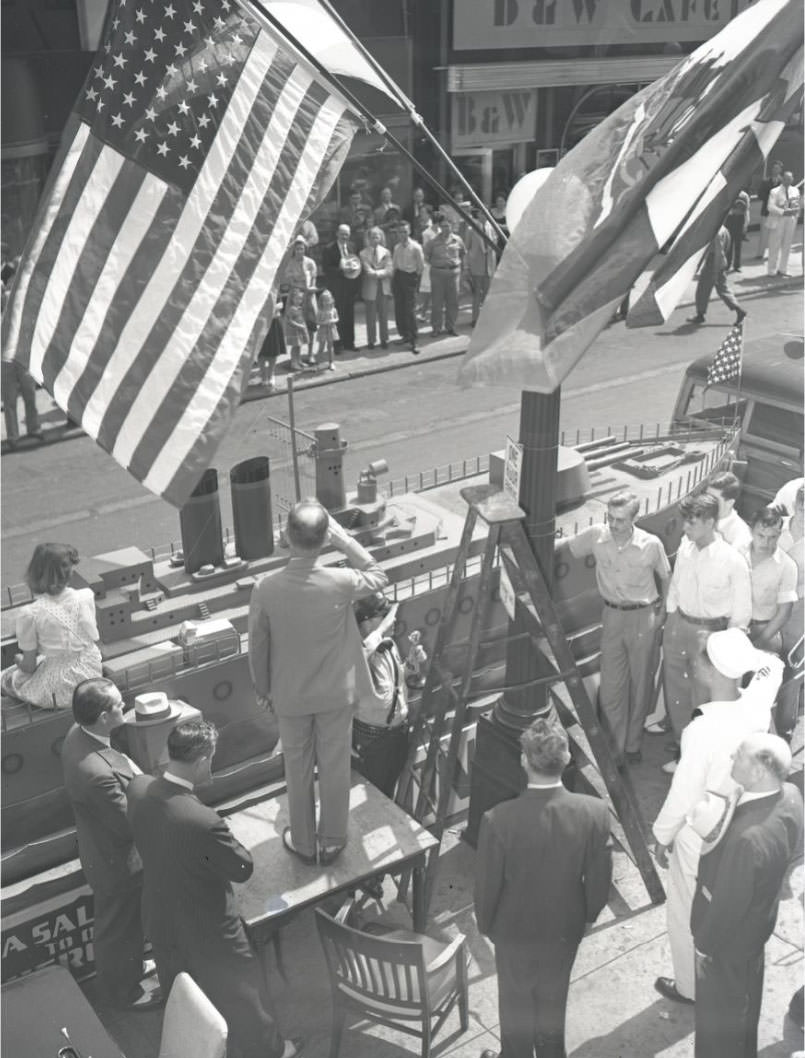
In downtown Nashville, the Army, Navy, and Civic Clubs organized a major Bond Sales Drive that brought the campaign directly to the streets. These drives were public events designed to generate excitement and urgency. Crowds gathered, military personnel were present, and the atmosphere mixed patriotism with community spirit. Nashville residents showed up in significant numbers to participate.
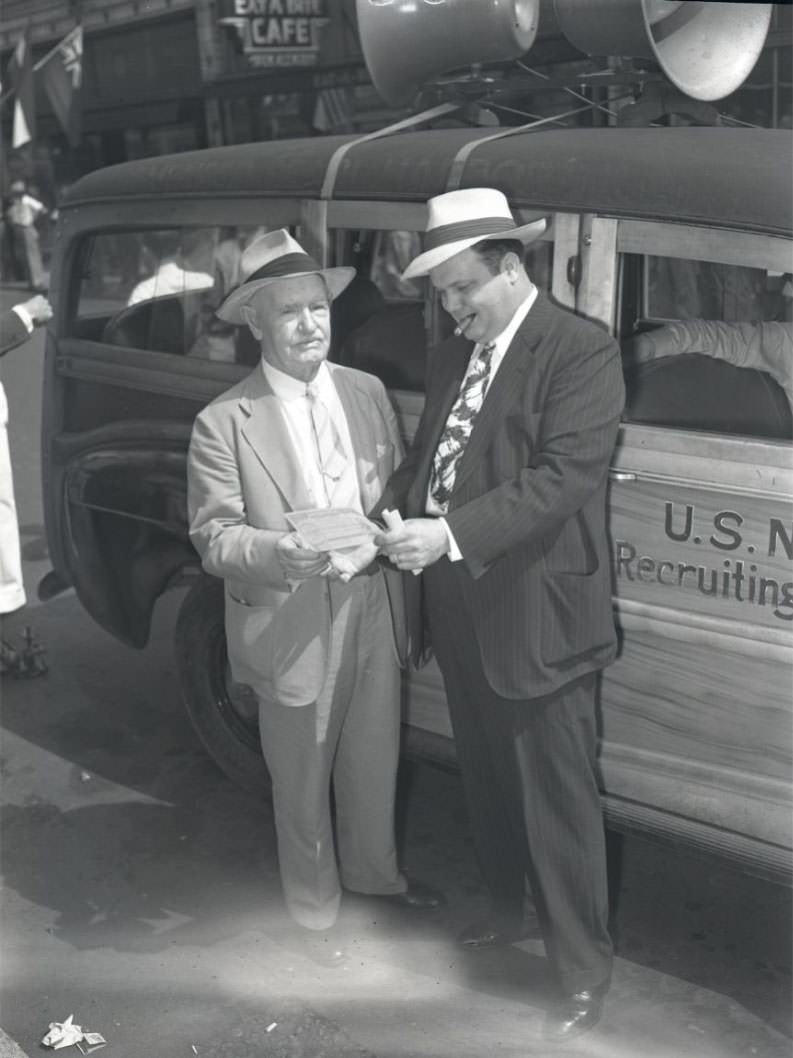
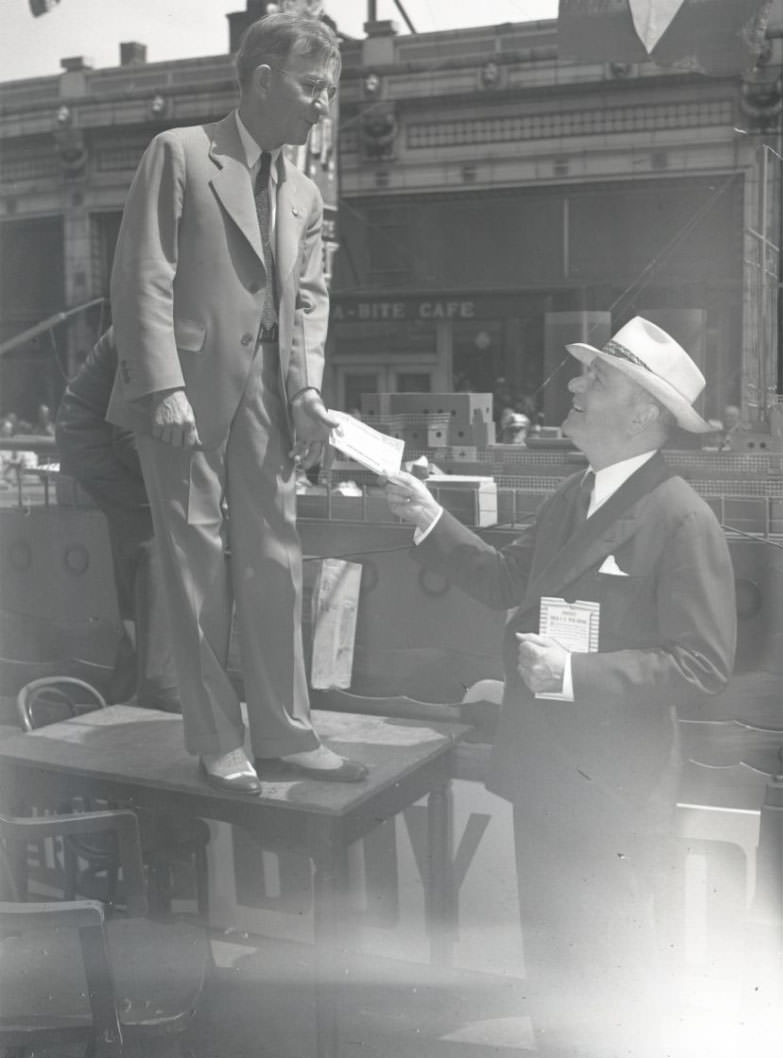
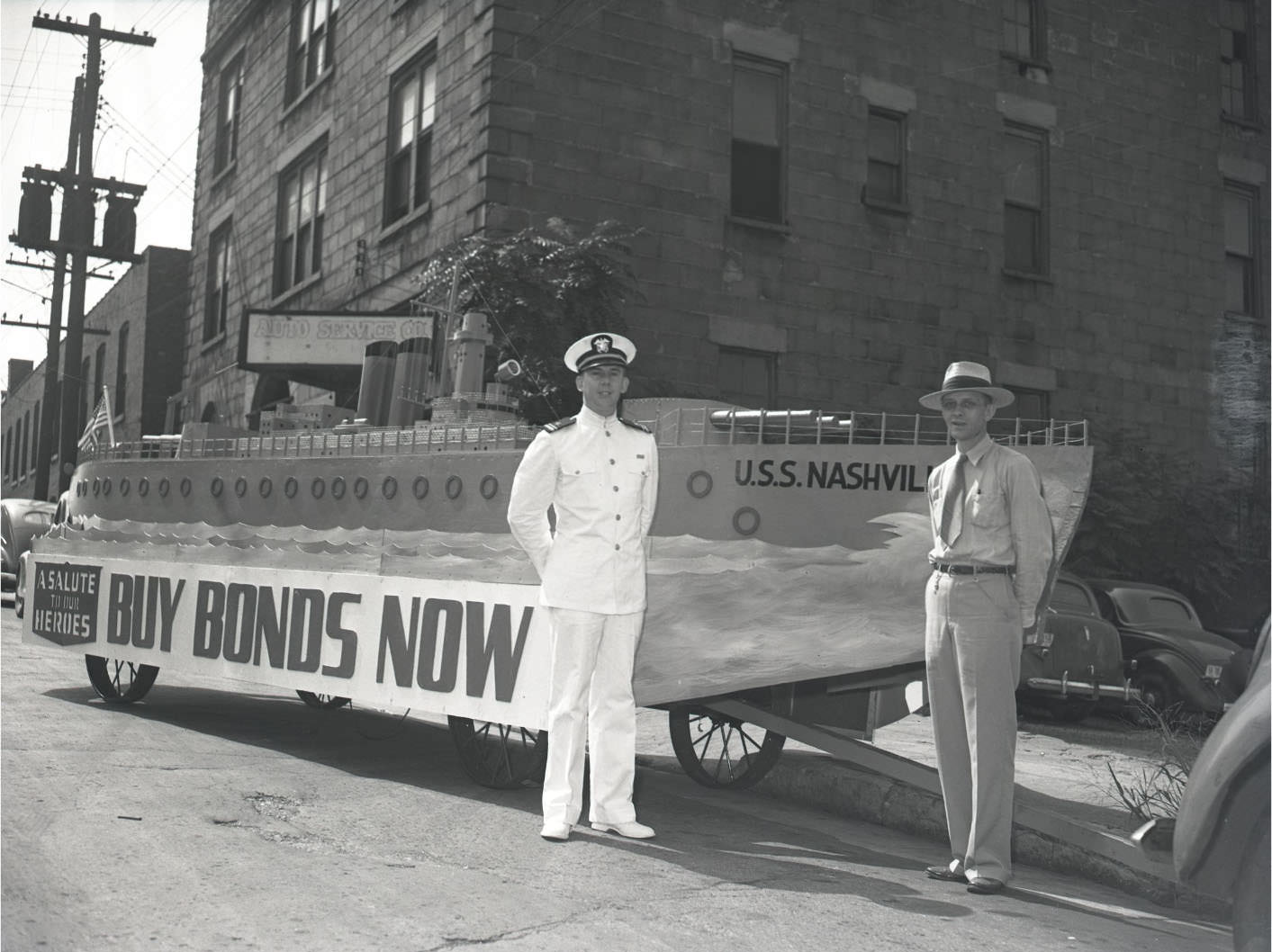
The messaging behind the bond campaign was built on two ideas: defending American freedom and democracy, and providing a safe place to put your savings during uncertain times. With so many men overseas and the economy still shaped by the memory of the Great Depression, the government knew it had to appeal to people’s emotions as much as their financial sense. The ads worked. People felt that buying a bond was their personal contribution to the soldiers fighting abroad.
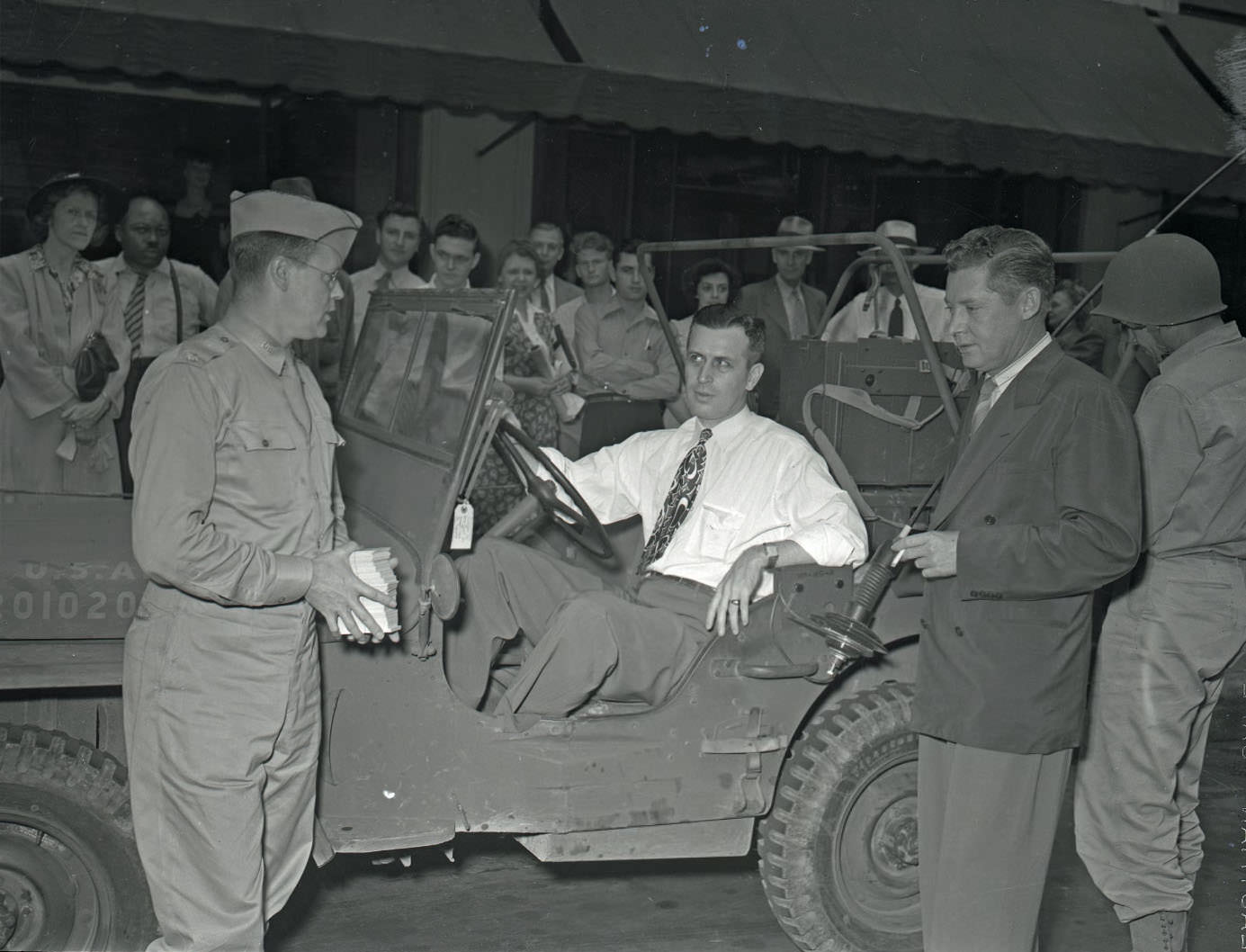
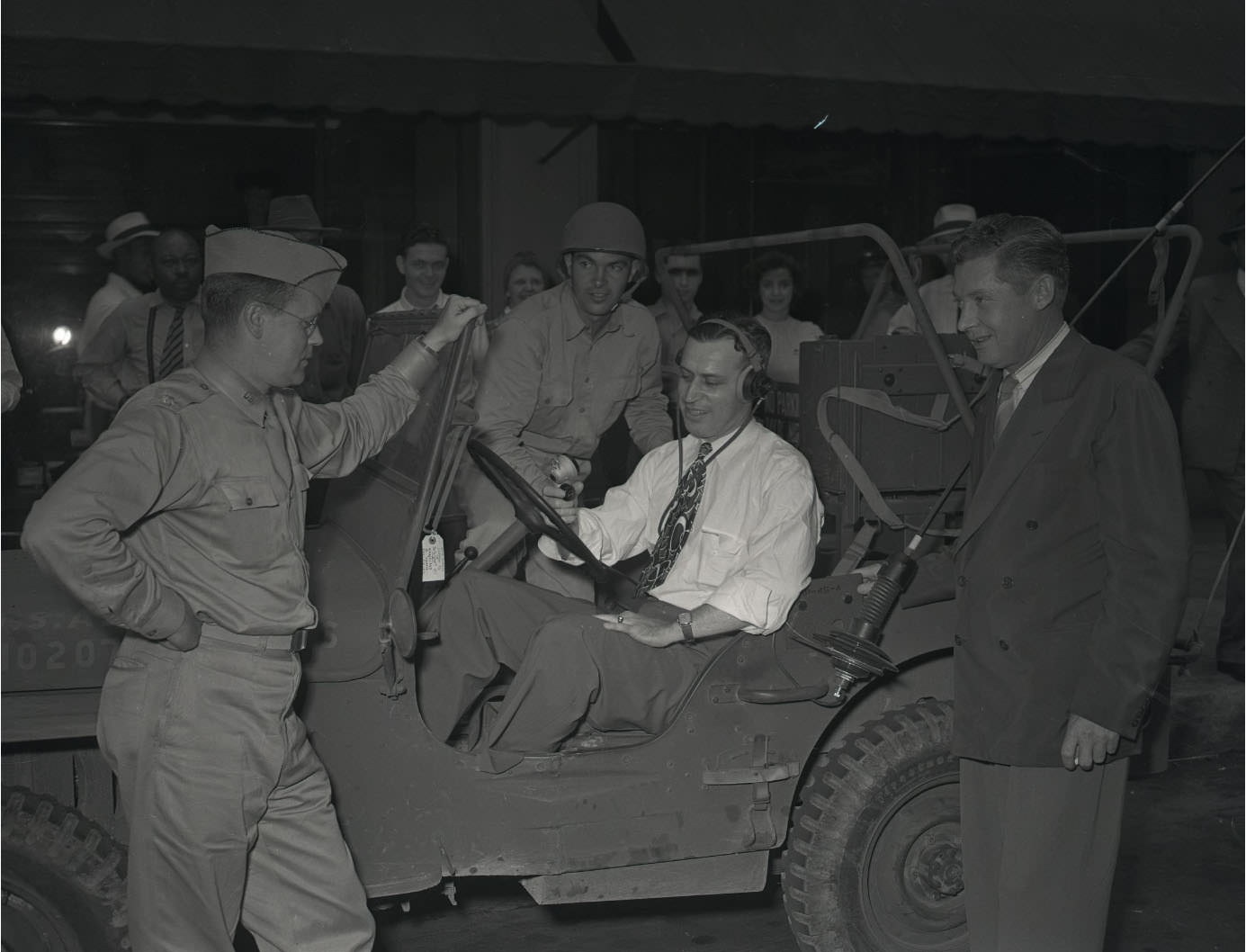
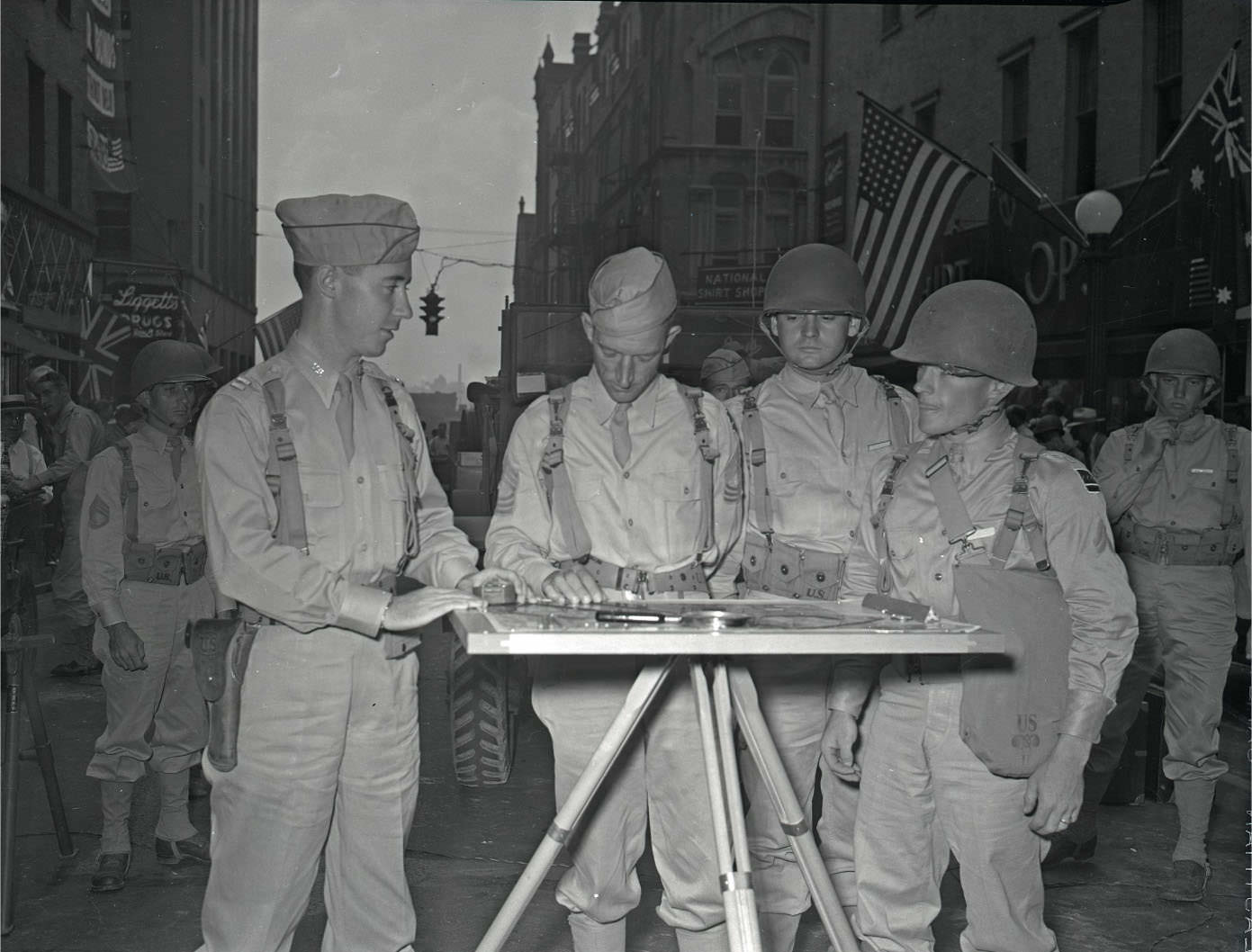
The downtown drives in Nashville drew residents from all walks of life. Men and women, young and old, came out to purchase bonds and show their support. The presence of military clubs added credibility and gravitas to the events. These weren’t just sales transactions — they were public demonstrations of loyalty to the country and to the troops.
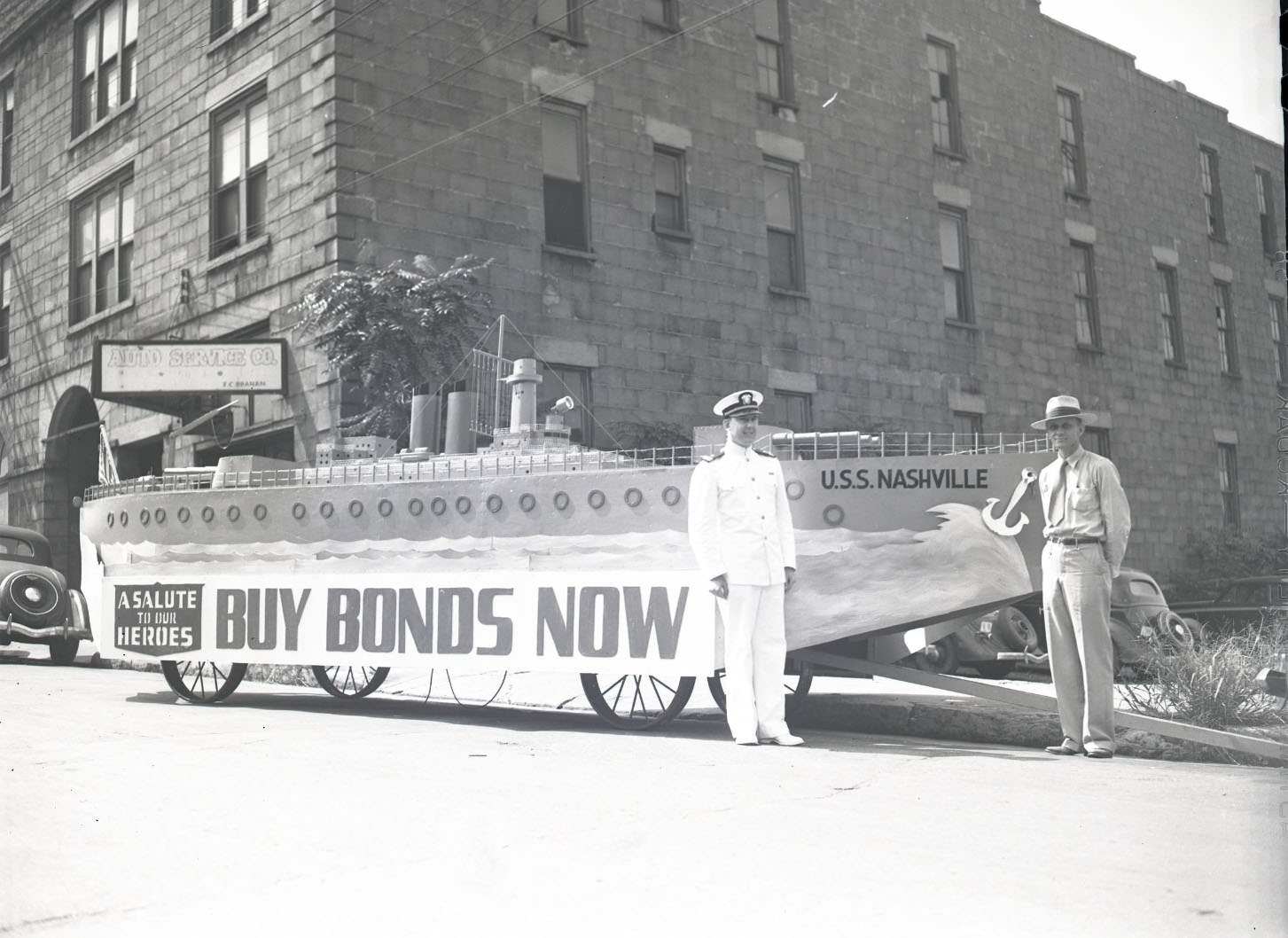
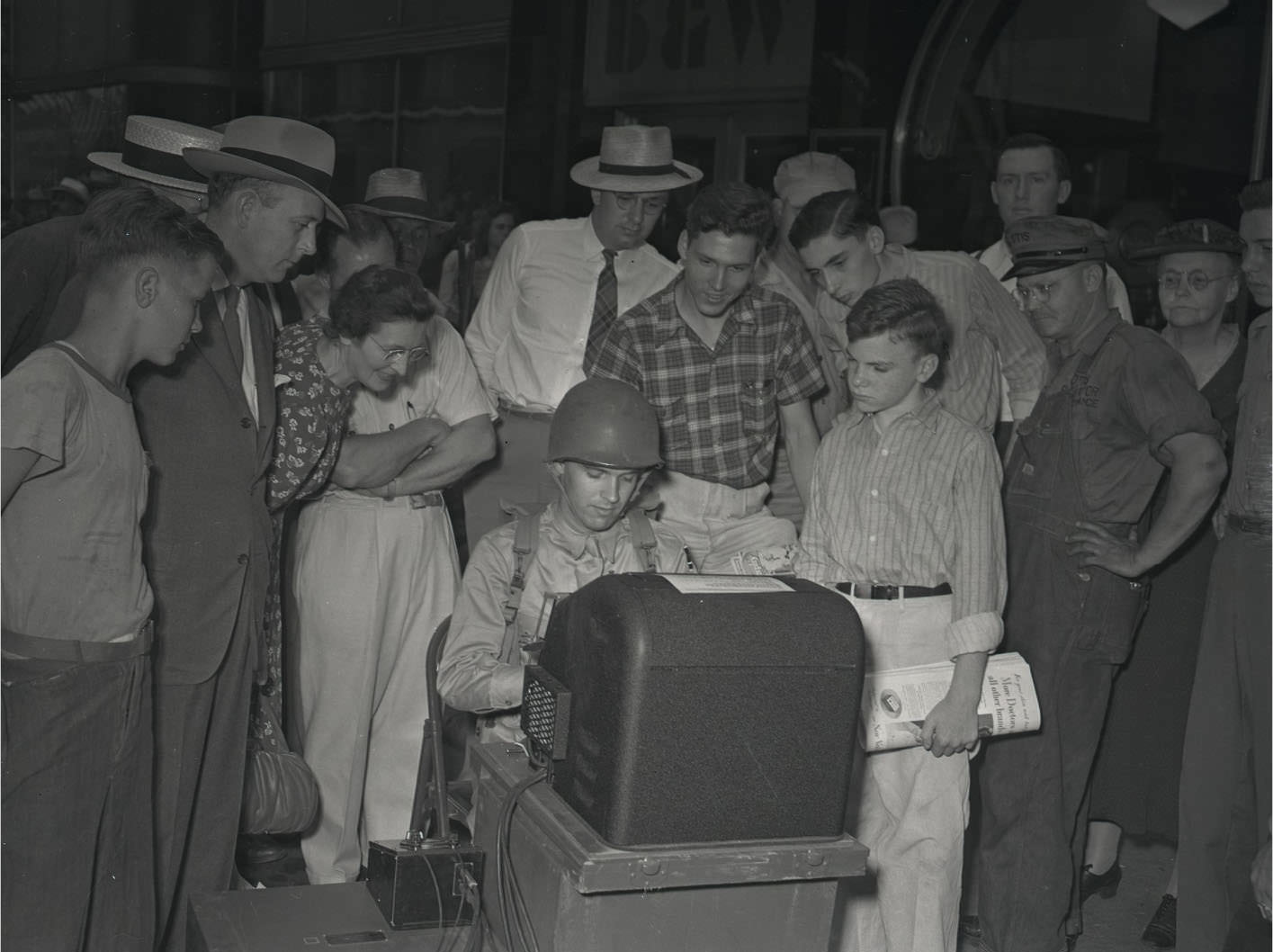
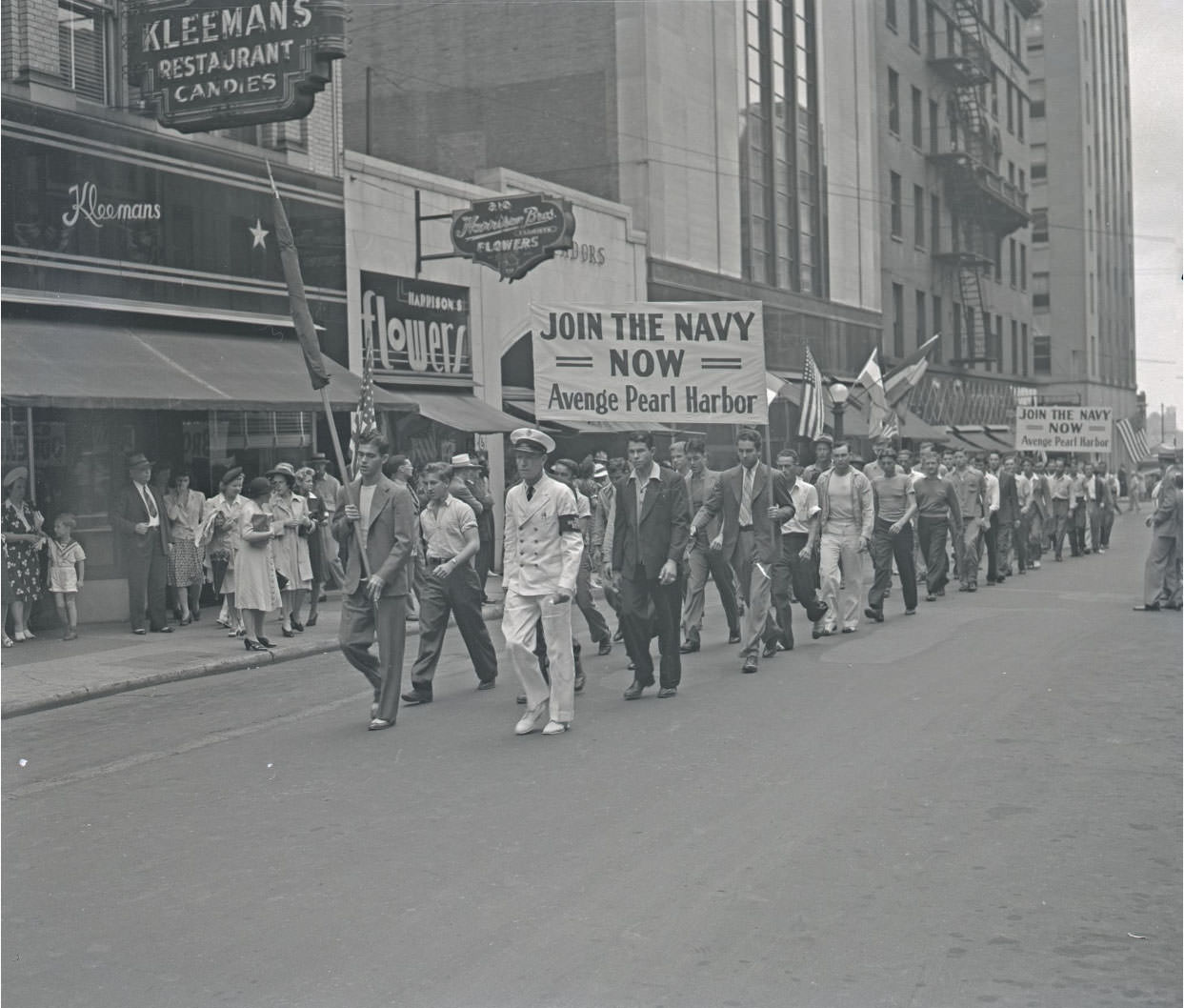
Bond drives became social events as much as financial ones. Organizers understood that people were more likely to buy when surrounded by their neighbors doing the same. The public setting created a kind of peer encouragement — seeing someone else step up to the kiosk made the next person more likely to follow. Nashville’s civic clubs played a key role in making sure these events ran smoothly and reached as many people as possible.
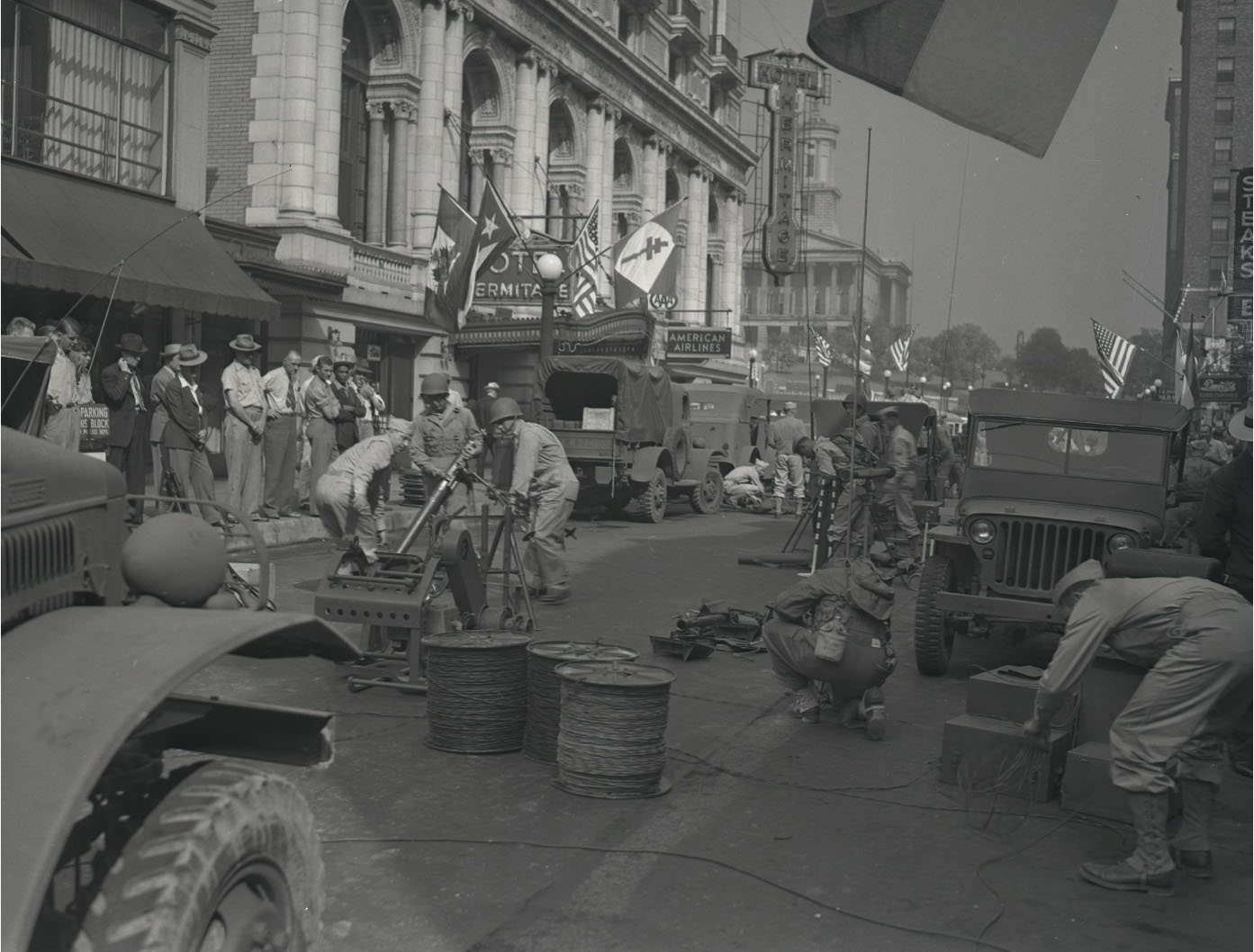
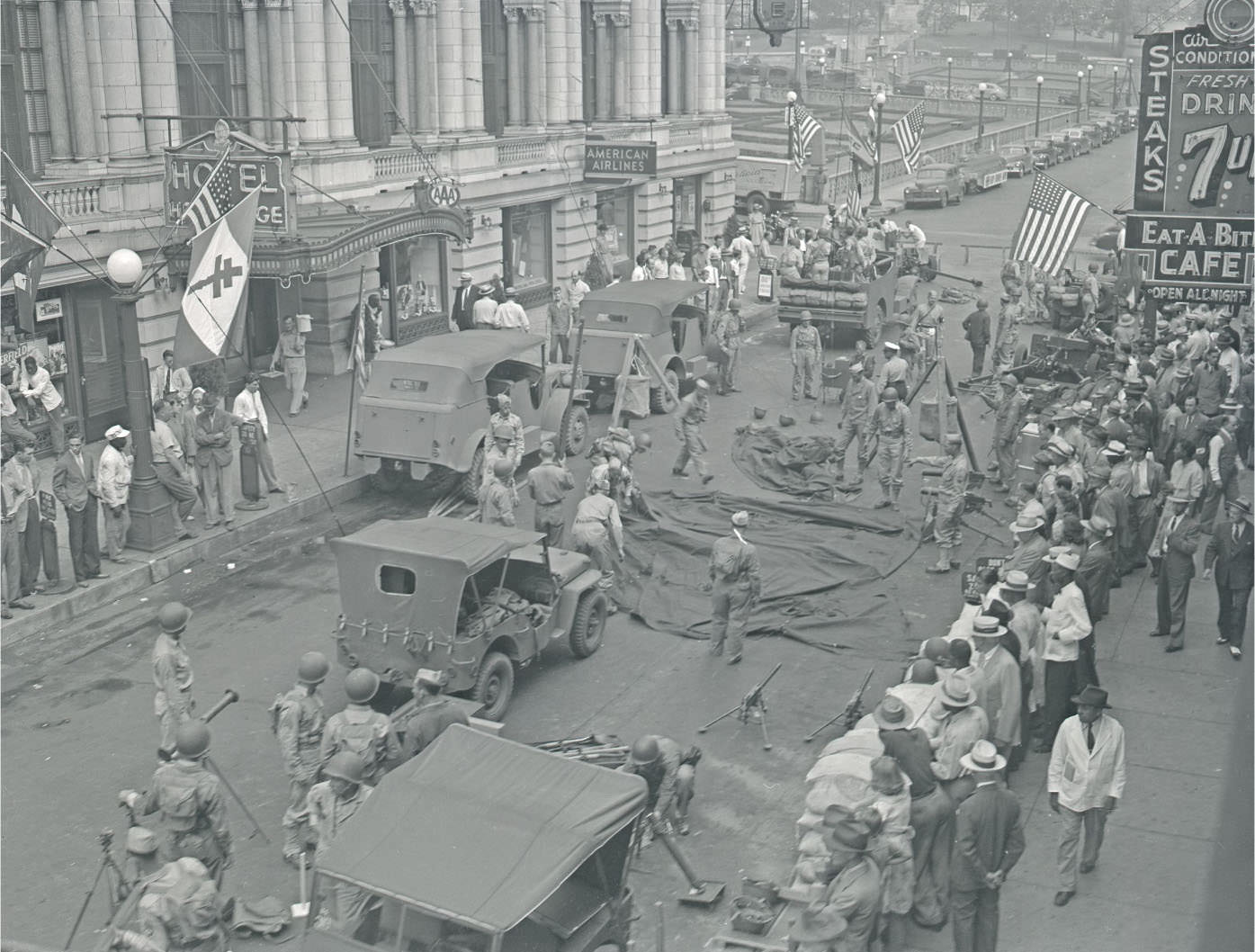
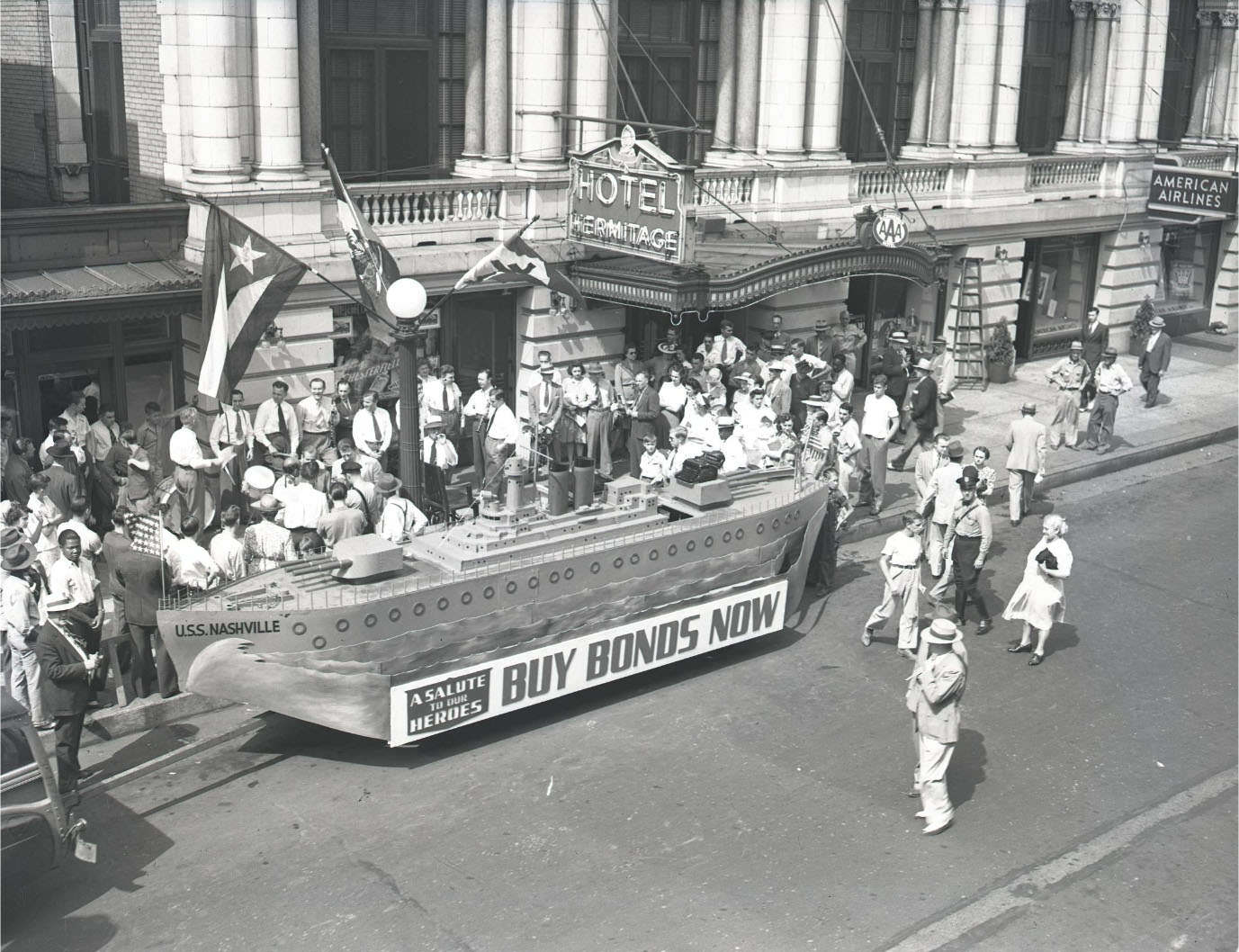
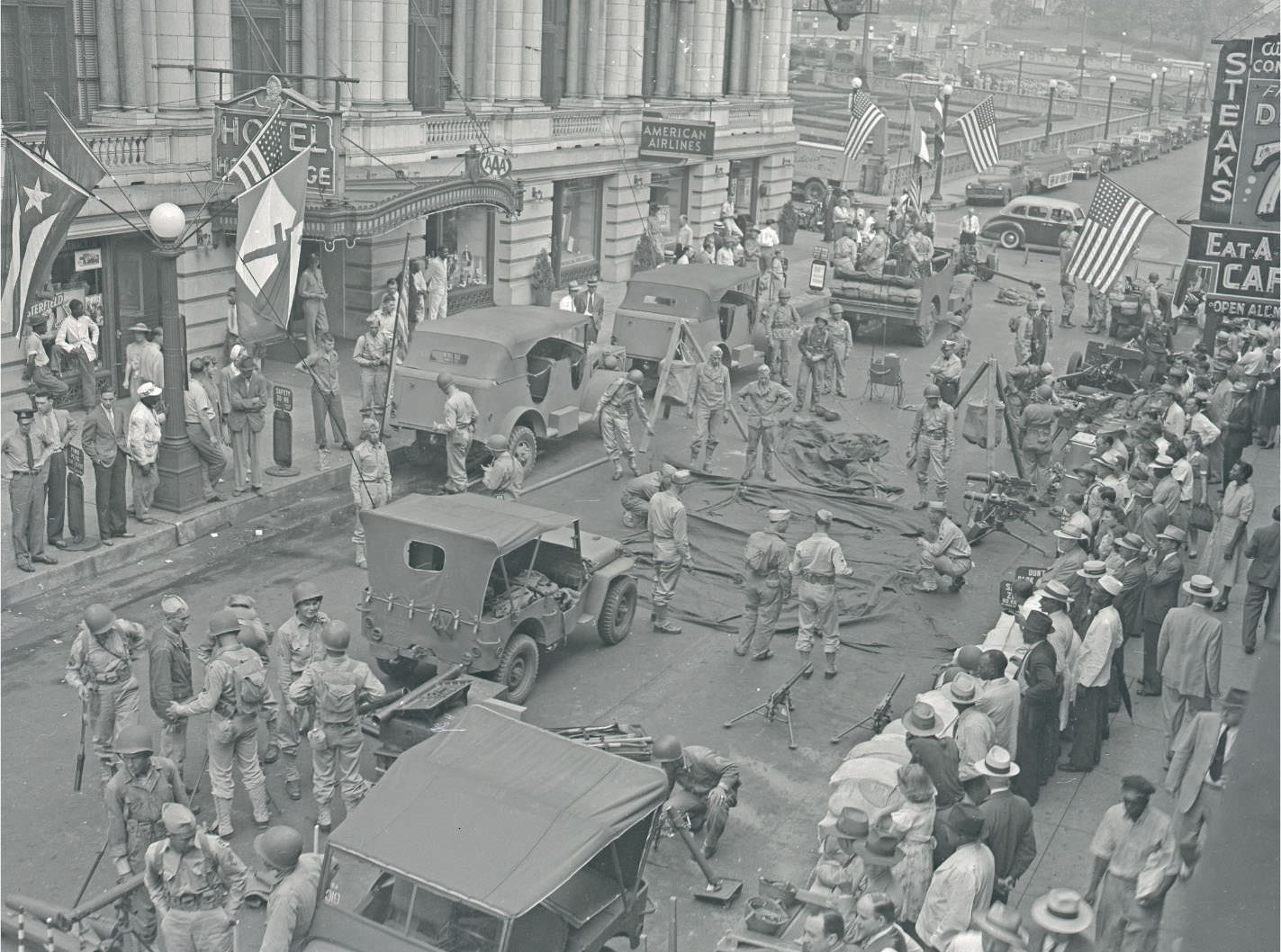
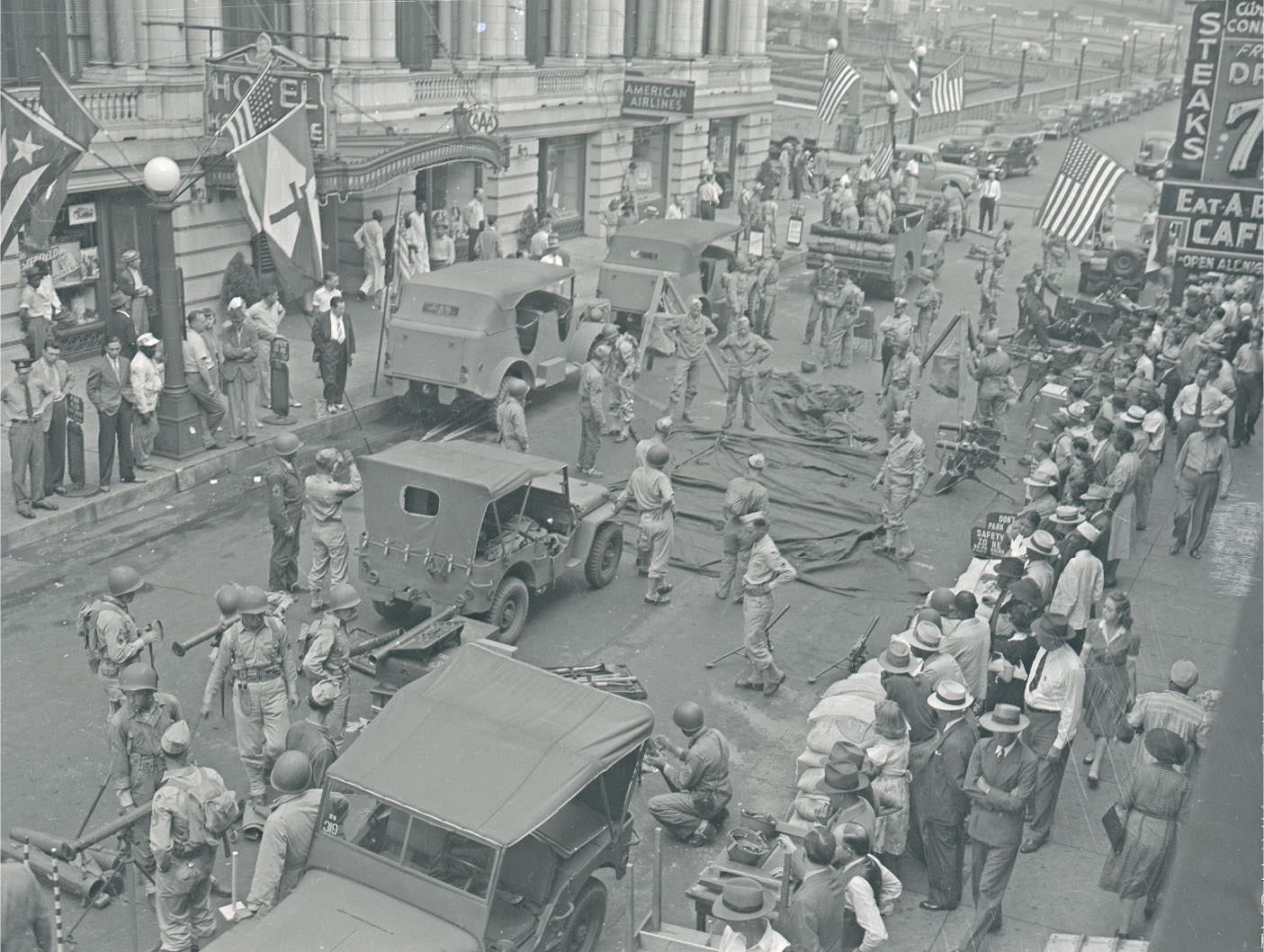
Along 6th Avenue N in downtown Nashville, the bond drives took on a particularly visible presence. This was a busy commercial corridor, and setting up bond sales there meant reaching the maximum number of people going about their daily routines. Shoppers, workers, and pedestrians were all potential buyers, and organizers took full advantage of the foot traffic.
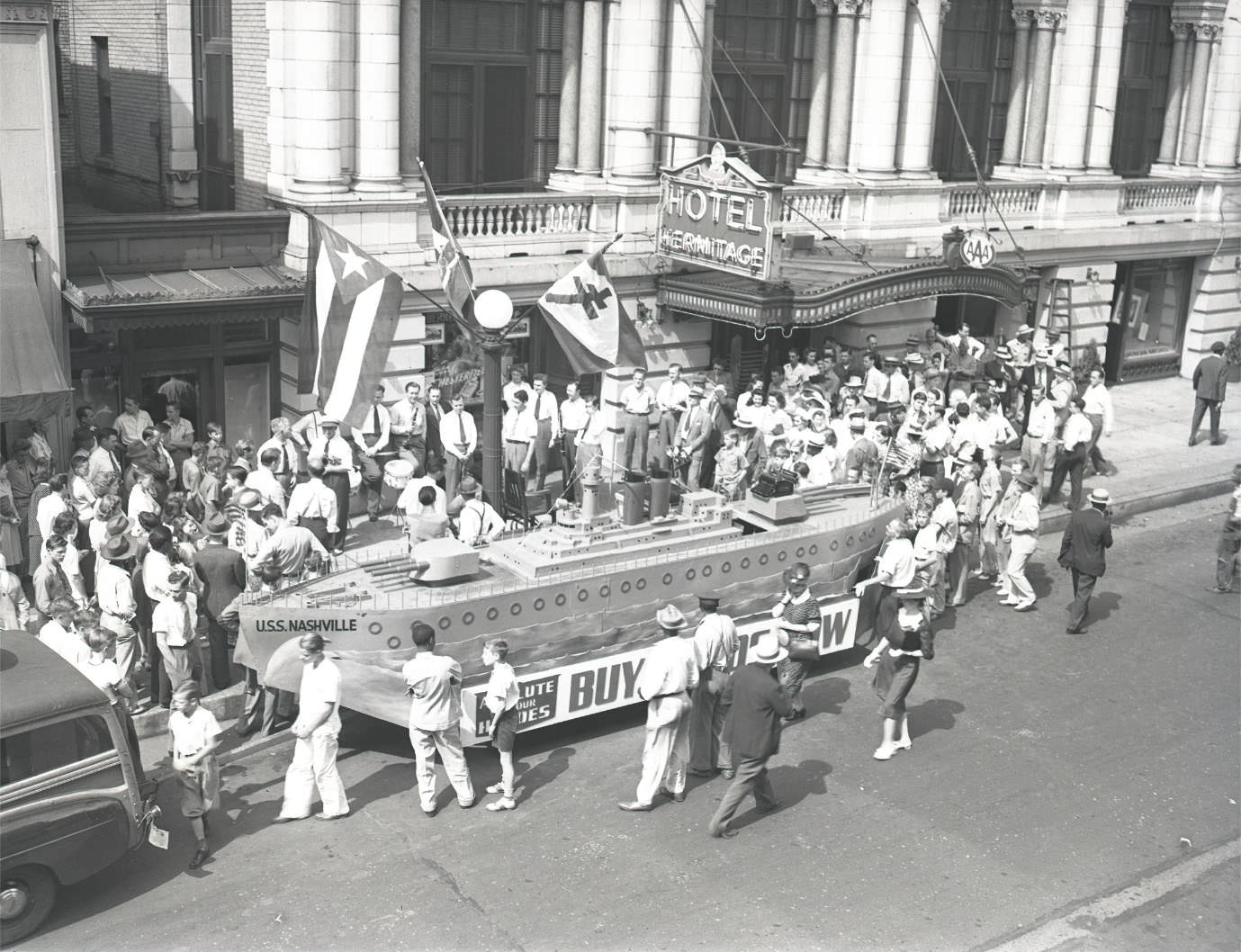
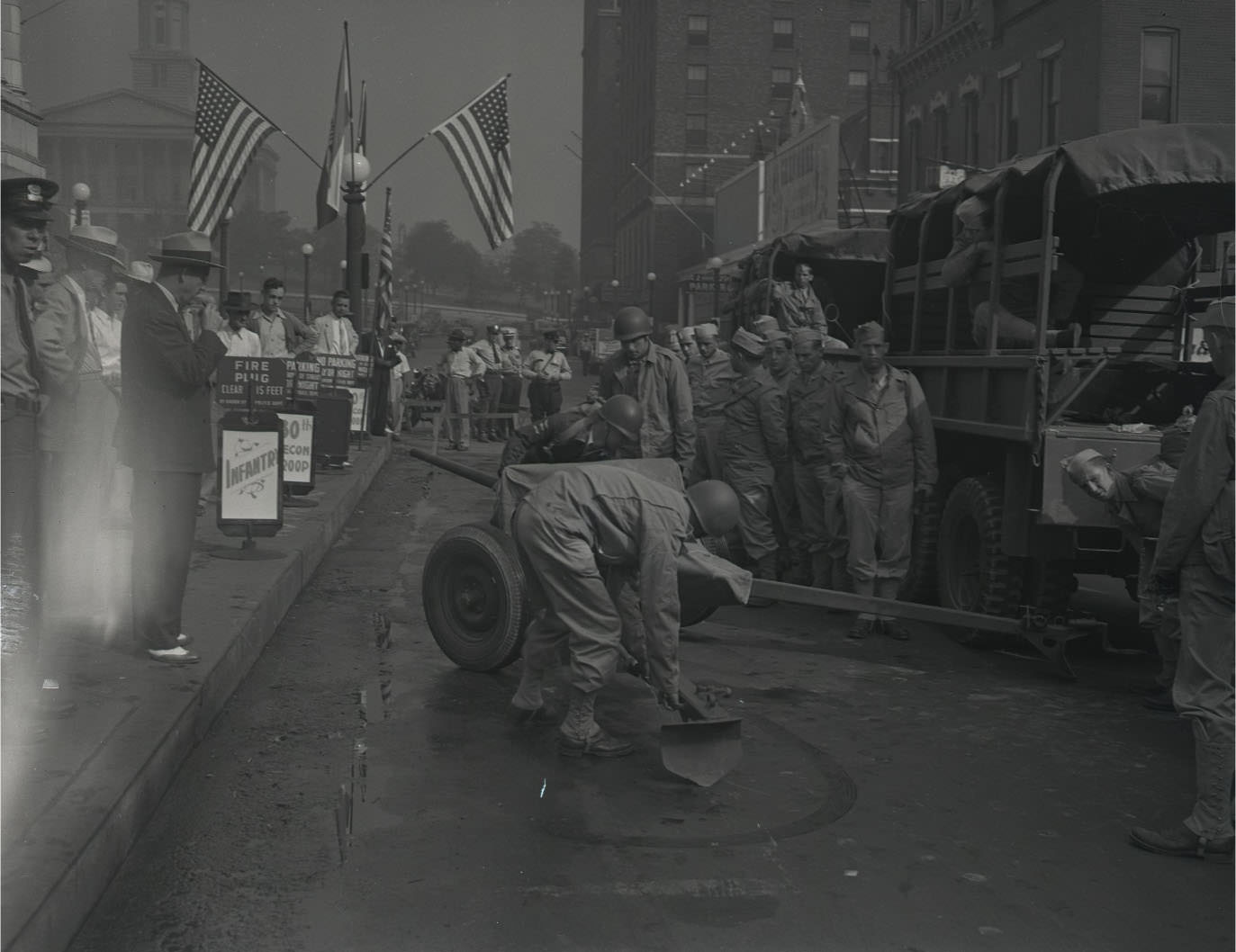
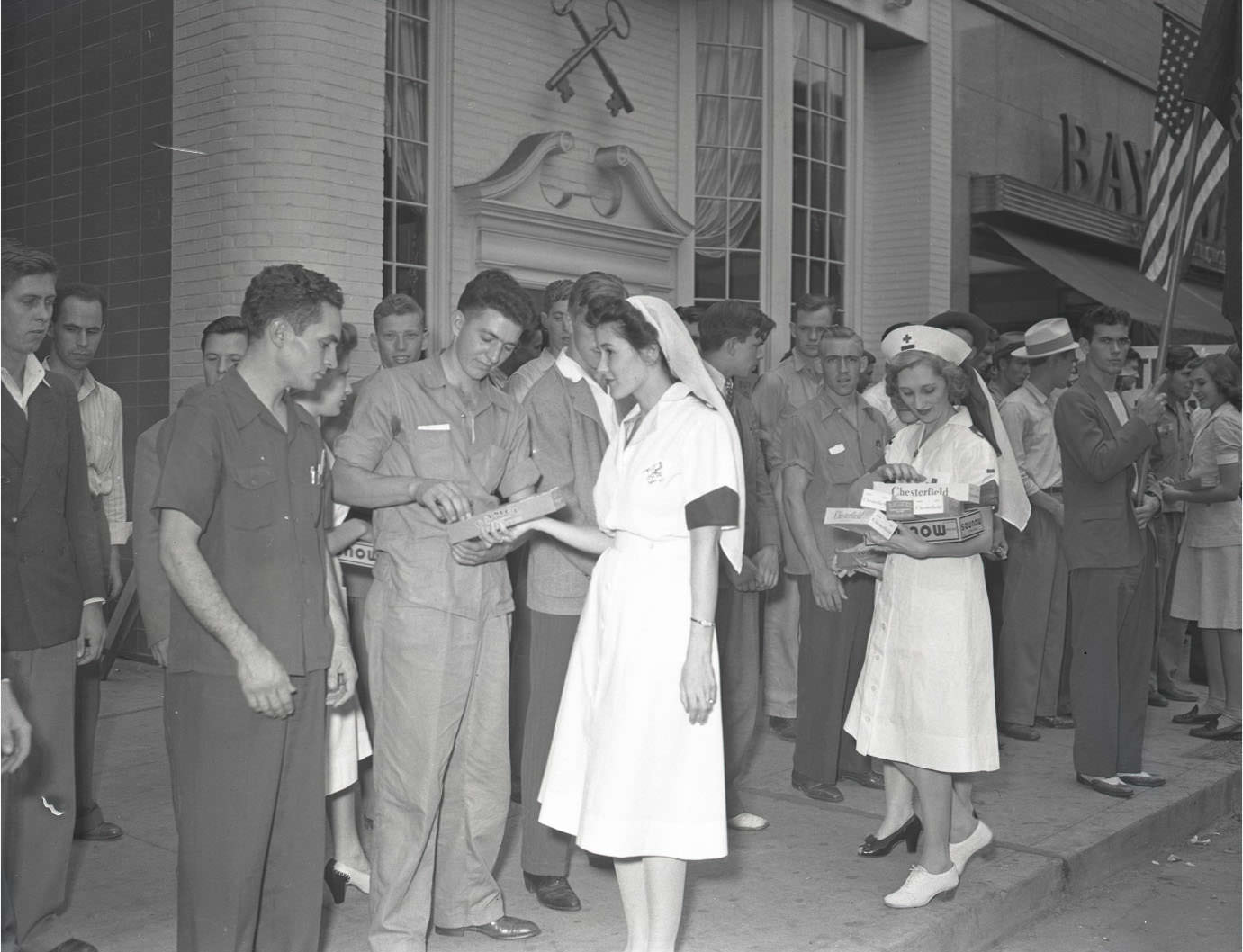
The scenes along 6th Avenue N captured something genuine about wartime Nashville. These photographs show ordinary people making a financial commitment to an extraordinary cause. The line between civilian life and the war effort blurred at moments like these. Buying a bond on a downtown street corner was one of the most direct ways a non-soldier could say they were part of the fight.
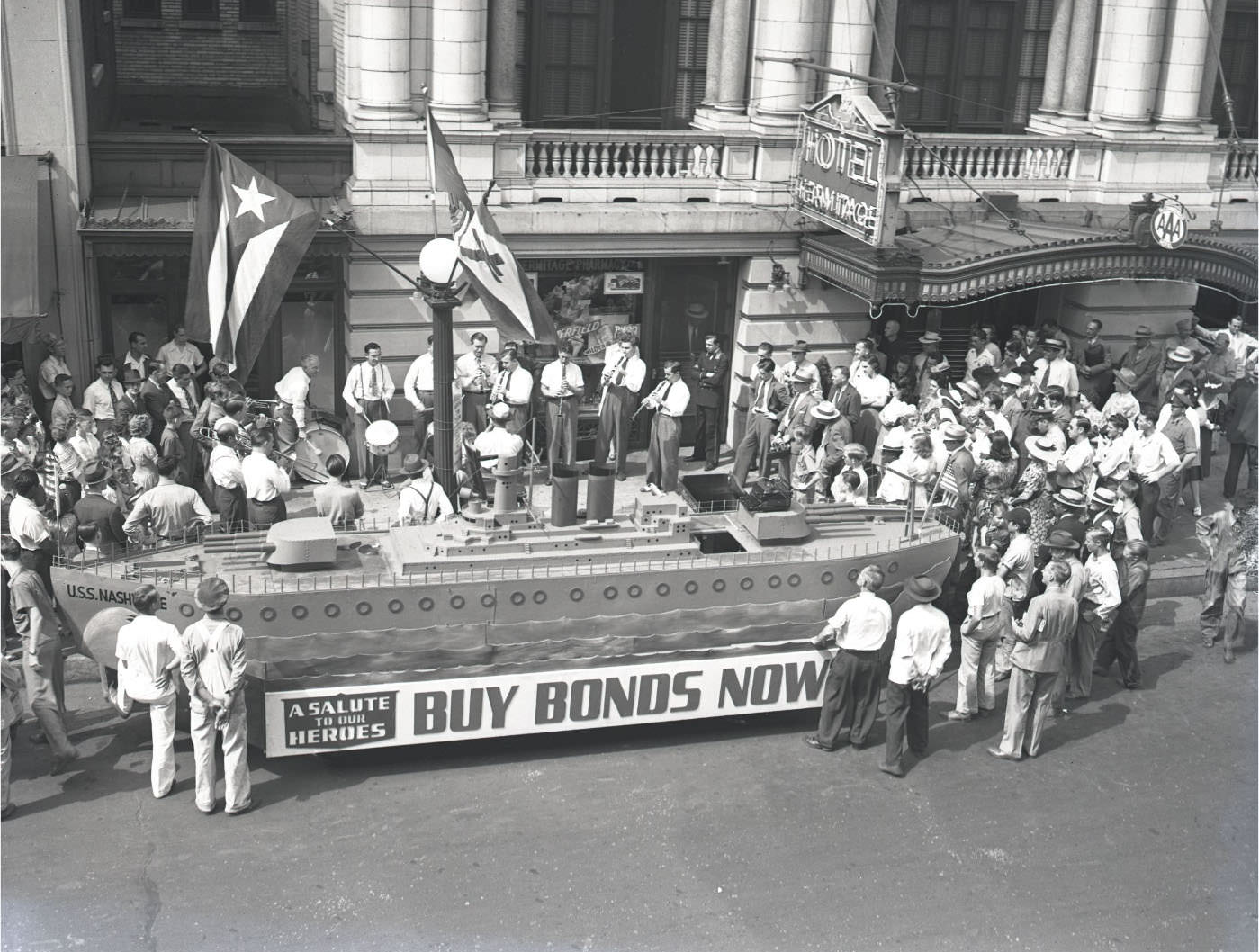
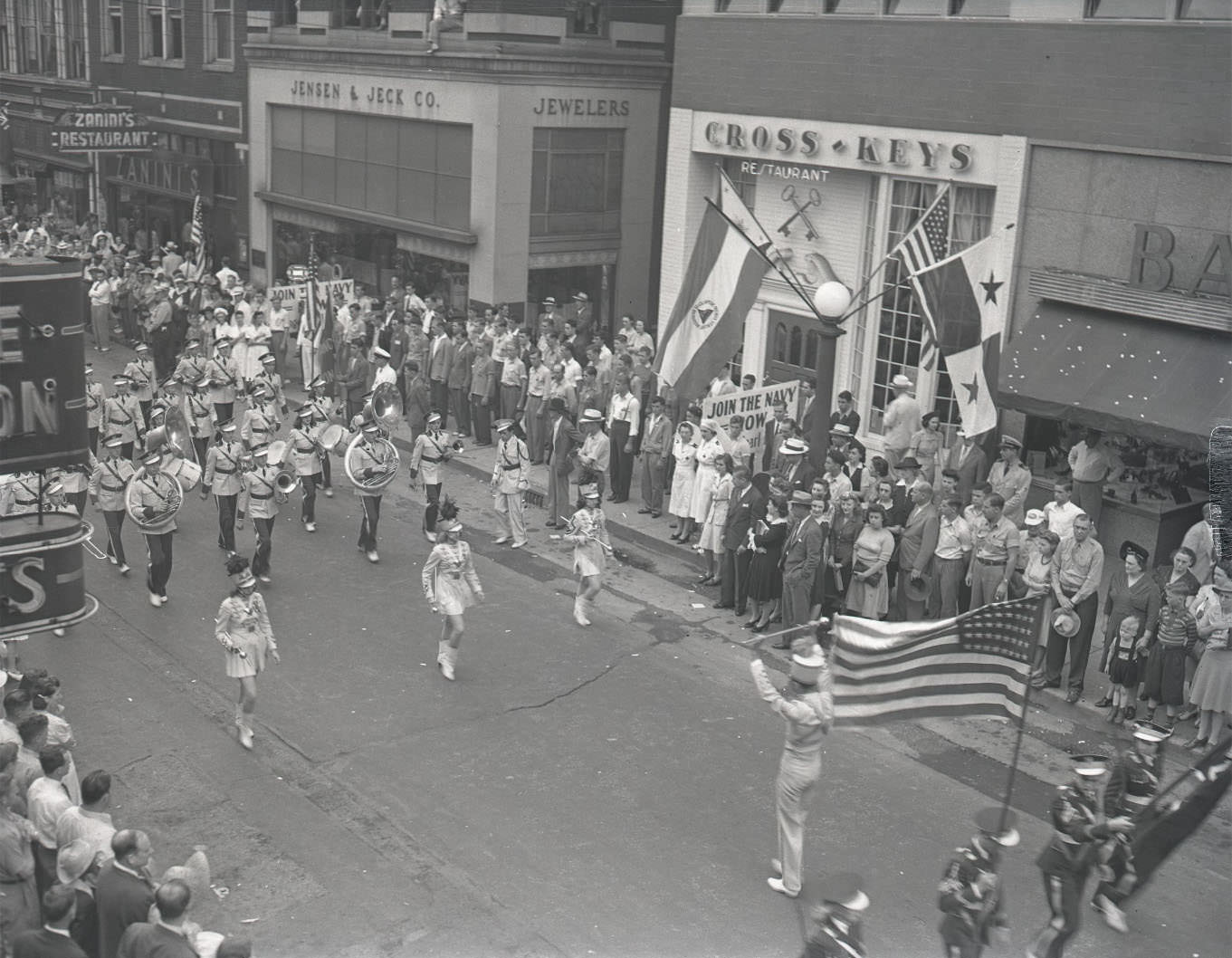
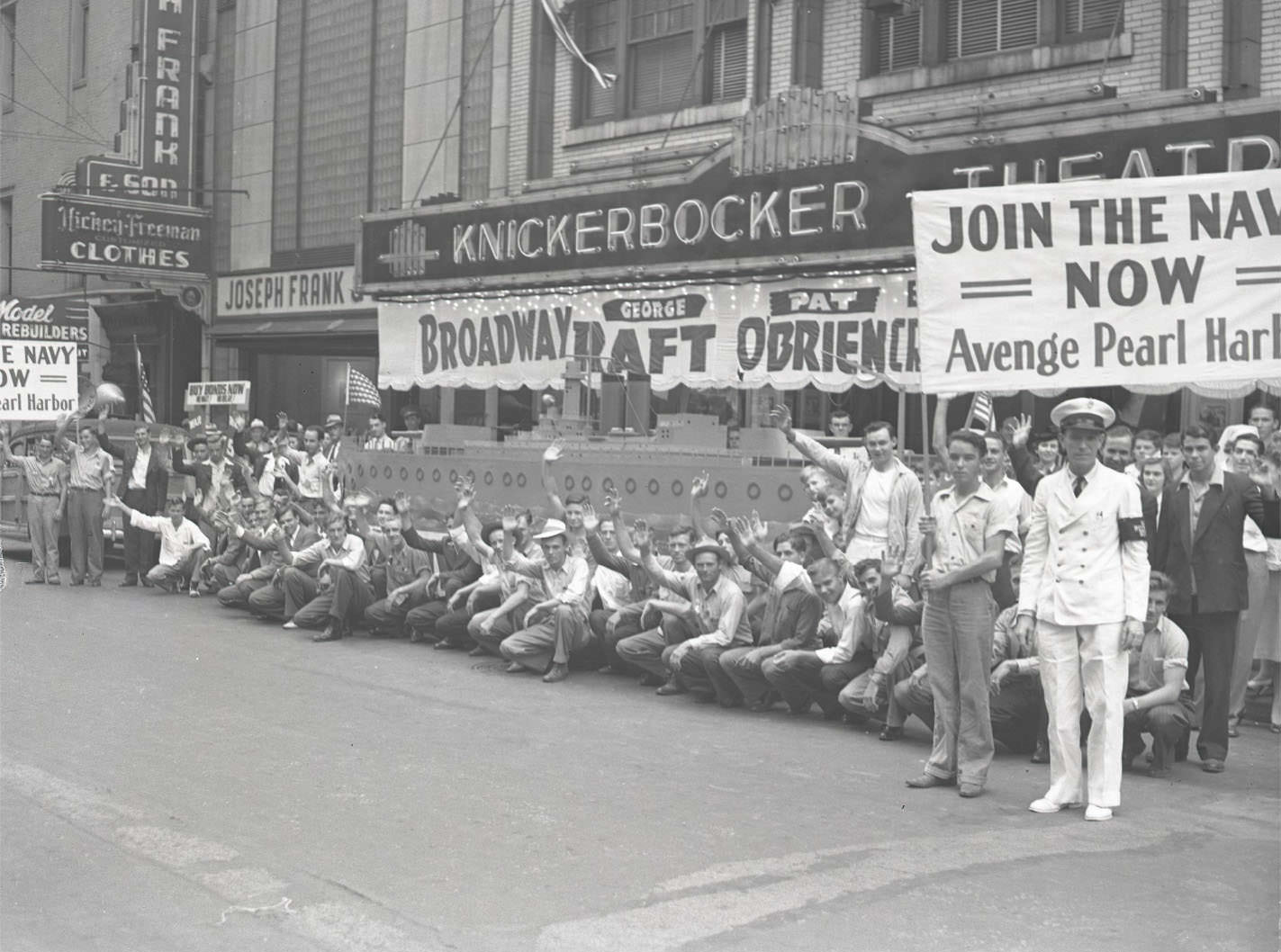
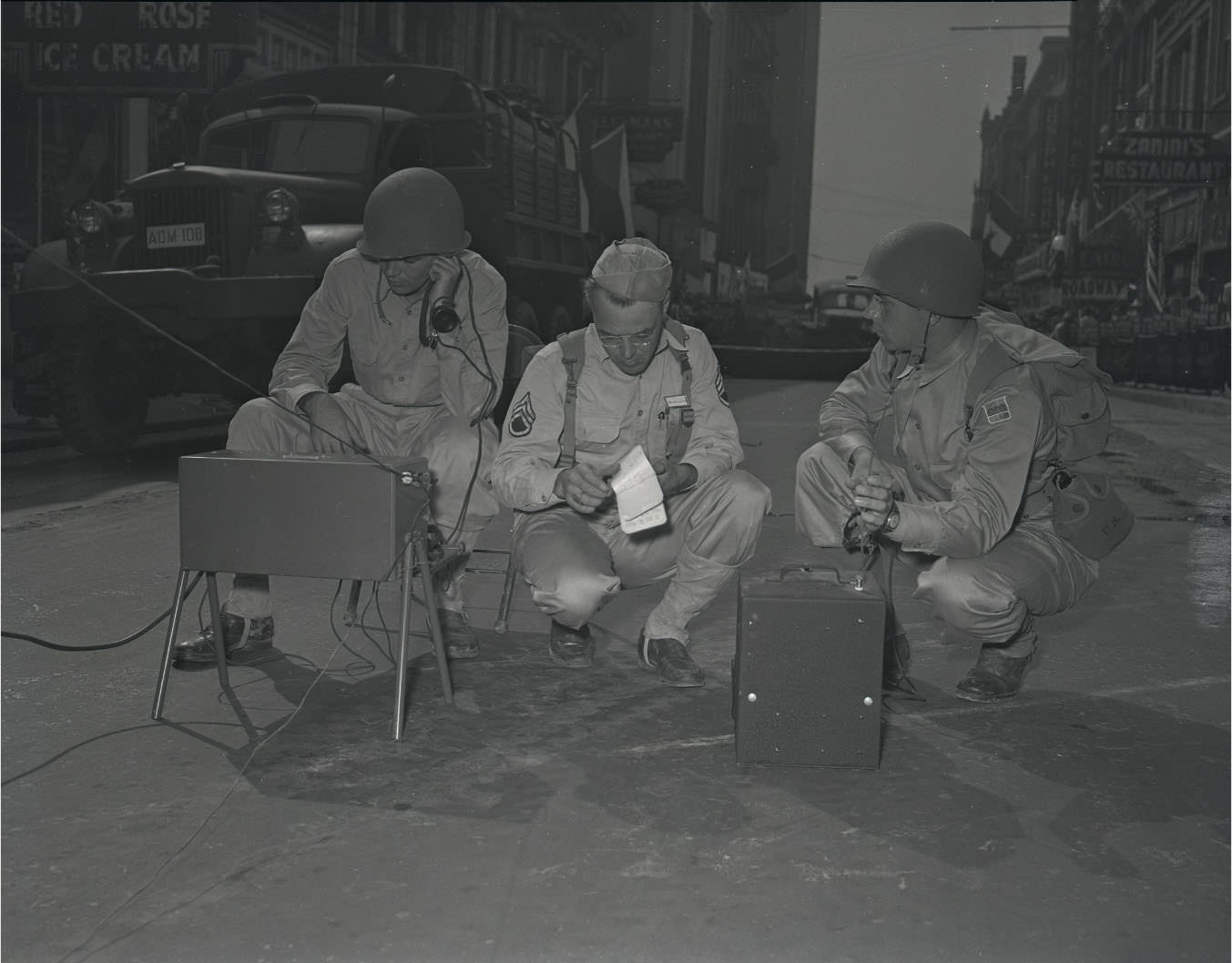
The Army and Navy clubs brought a military dimension to these civilian events. Their involvement reinforced the seriousness of the campaign and gave buyers a direct connection to the armed forces. For many Nashville families with sons, brothers, or husbands serving overseas, that connection was deeply personal. Purchasing a bond felt like doing something concrete for someone they loved.
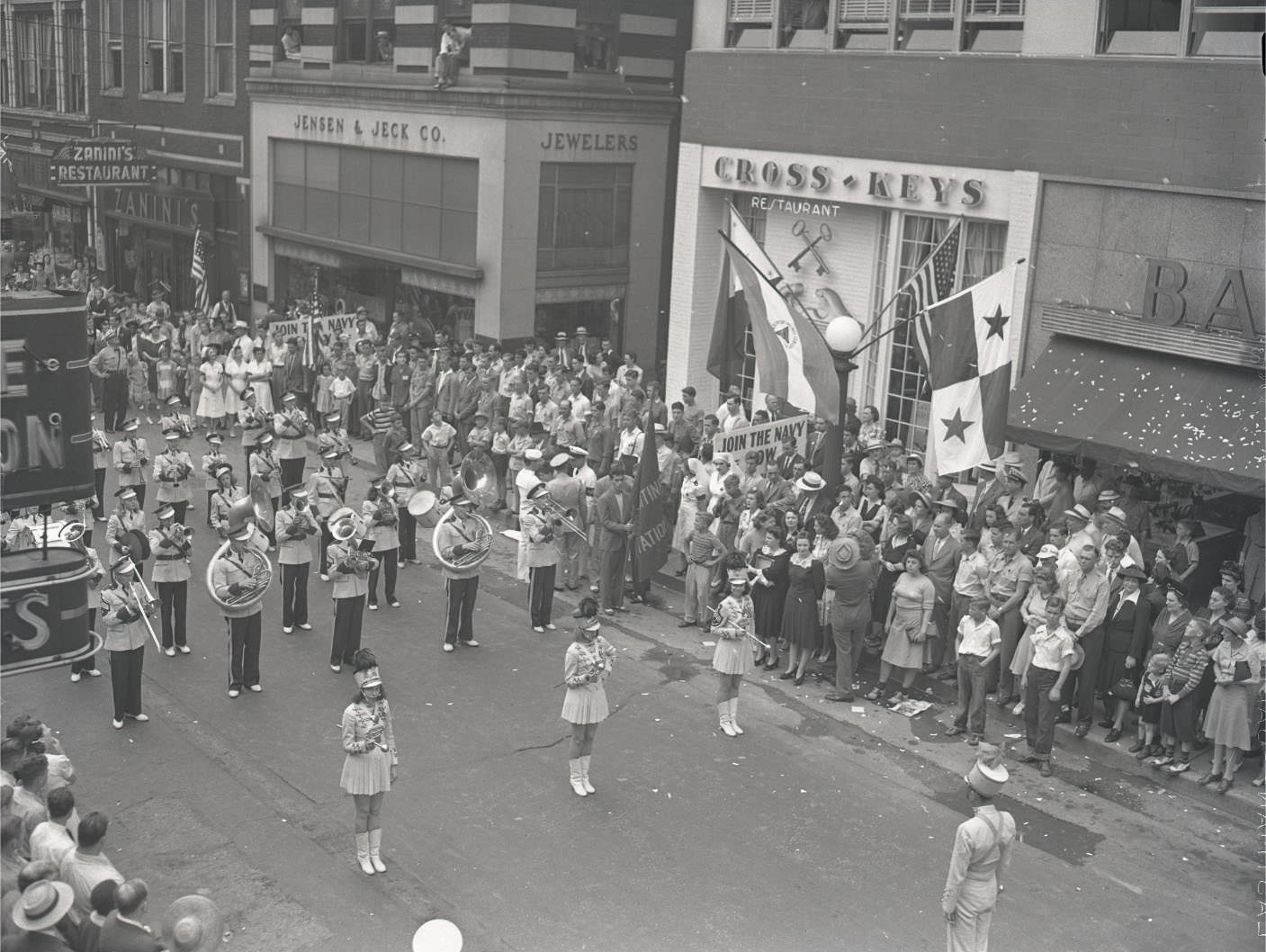
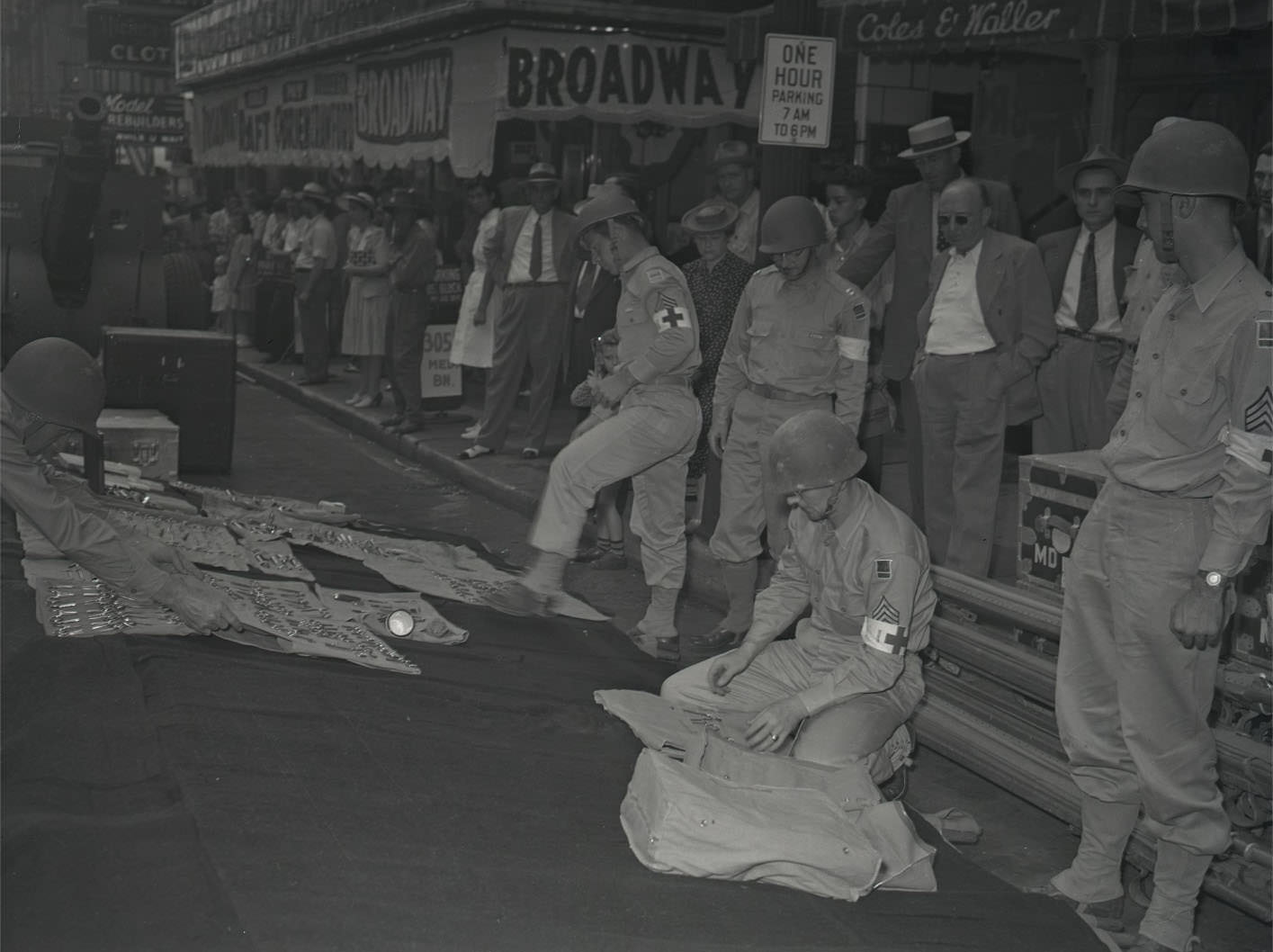
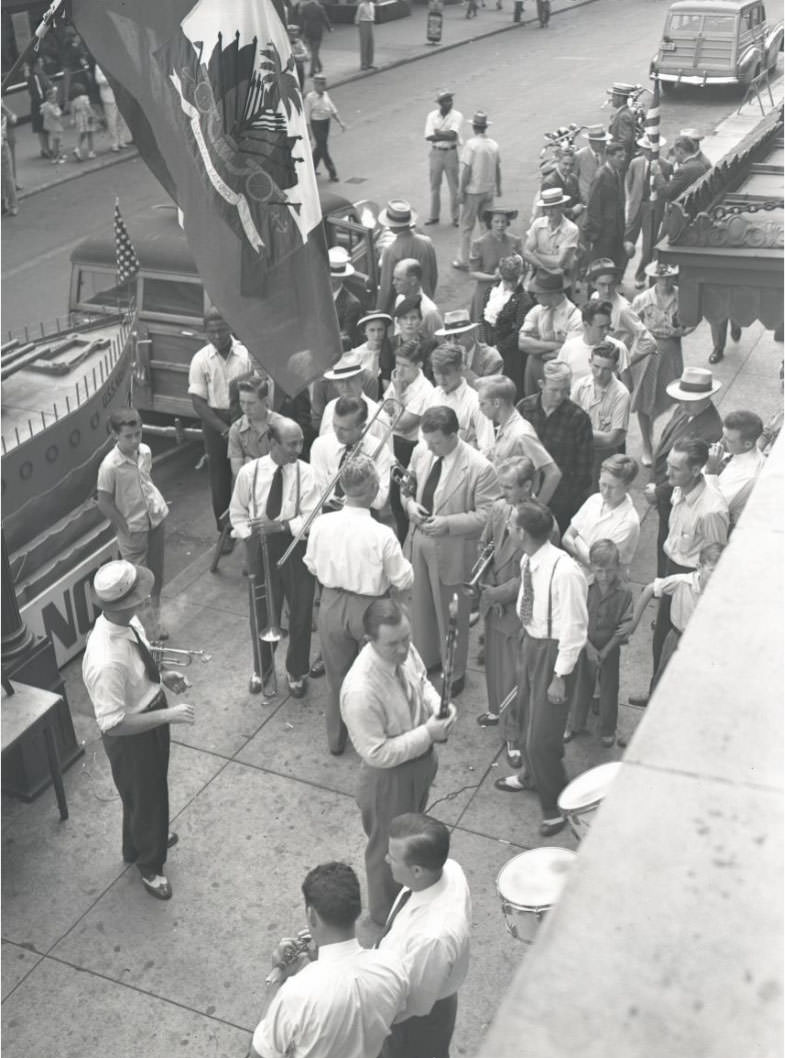
These photographs document what mass public participation looked like during World War II. Nashville’s residents didn’t wait to be told twice. The combination of patriotic advertising, organized local drives, and genuine public concern for the war’s outcome drove people to bond kiosks across the city. The events on 6th Avenue N and throughout downtown were part of a nationwide effort that ultimately reached tens of millions of Americans.



At the Vultee plant, my granny riveted seats into bombers as Rosie the Riveter. The work she did there made her regret her fam’s Quaker legacy.
What if the government asked people today to loan them money? The outrage would be unimaginable.
In her old age, my grandmother talked about her older brothers fighting in World War II. There was probably a theater downtown that played either clips of the war or news about it, and her father would go downtown (from east nash) to take in the action.
To be honest, her “memories” had been slipping lately, so I’m not sure. When I googled it, it said the first theater opened in Nash in the early 50’s, if anyone else has similar stories, I’d love to hear them.
Even if your grandmother was a bit off, she may have been right about the Belcourt or Church Street movie palace opening in 1925.
I appreciate your input, thanks for sharing that information 🧡