Hey There! Before You Go. 😧
Get the best vintage content straight into your inbox!

Don't worry, we don't spam

Fascinating Vintage Photos Show Life in Morocco in the 1970s

Morocco in the 1970s was a country caught between tradition and political upheaval. King Hassan II sat on the throne, but his grip on power was not always secure. Two military coup attempts threatened the monarchy during this decade, yet both failed, and Hassan emerged from each crisis with his authority intact. Far from weakening him, the turmoil seemed to sharpen his political standing among the Moroccan public.

Daily life, meanwhile, carried on across the country’s deserts, mountain villages, and ancient medinas. Berber communities in the south lived much as they had for generations — gathering around open fires, tending camels, and trading at weekly markets.
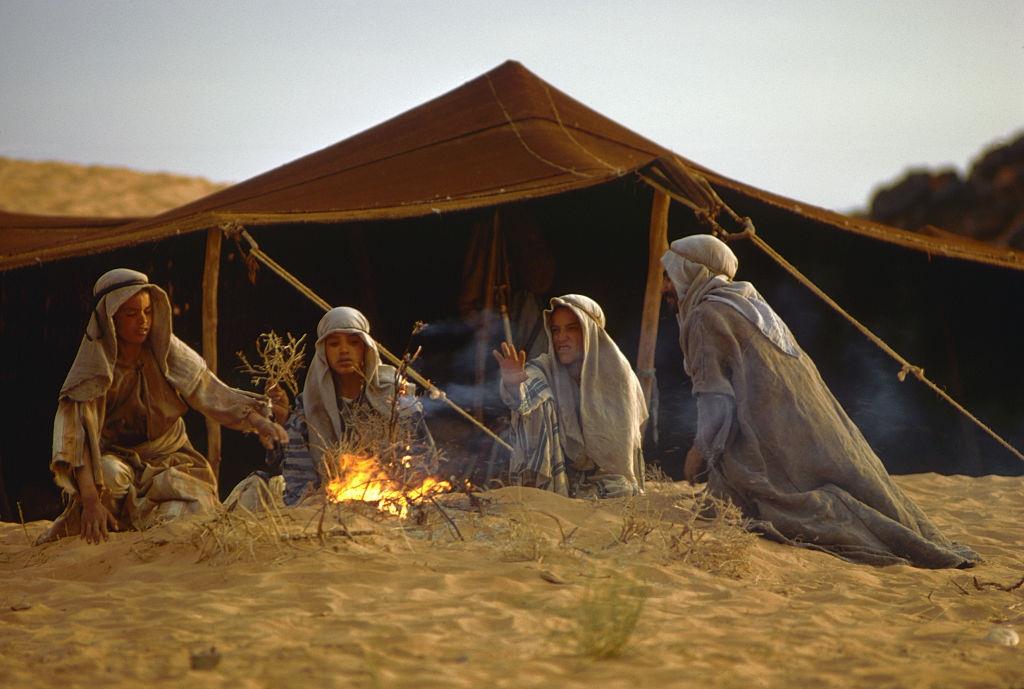
Berber boys sit around a fire by a tent in Morocco, 1971.
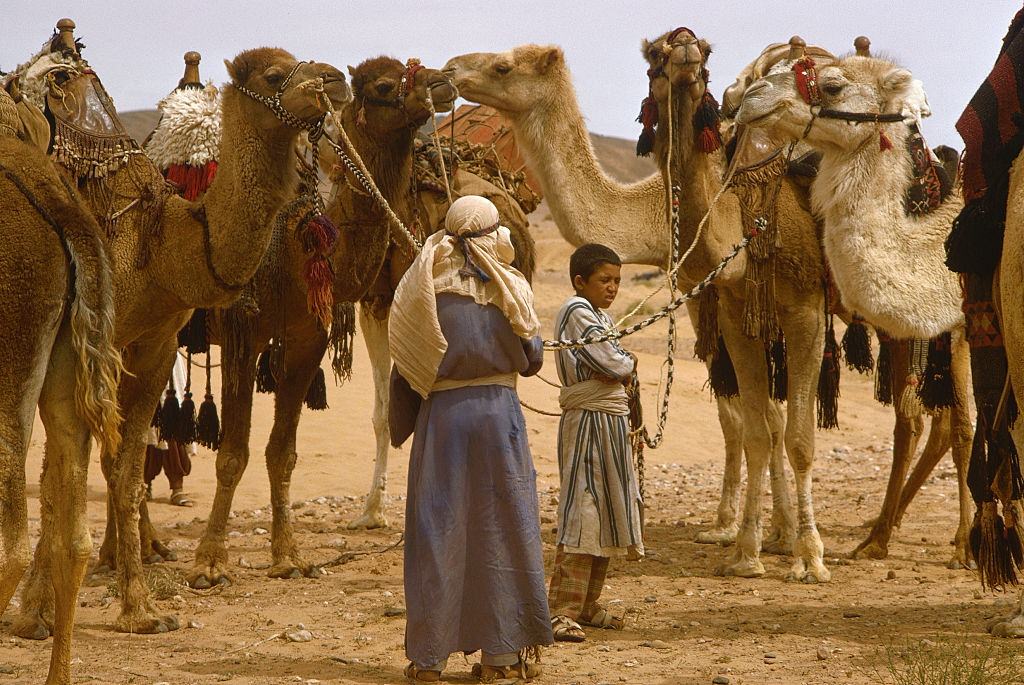
Bedouins ties up camels in the Sahara Desert in Morocco, 1971.

On the political front, 1973 brought a sweeping economic shift. Hassan II enacted a policy known as Moroccanization. Under this plan, state-held assets, agricultural lands, and any business that was more than 50 percent foreign-owned were transferred to new Moroccan hands — specifically, political loyalists and high-ranking military officers. It was a deliberate move to consolidate power while reducing foreign economic control over the country.

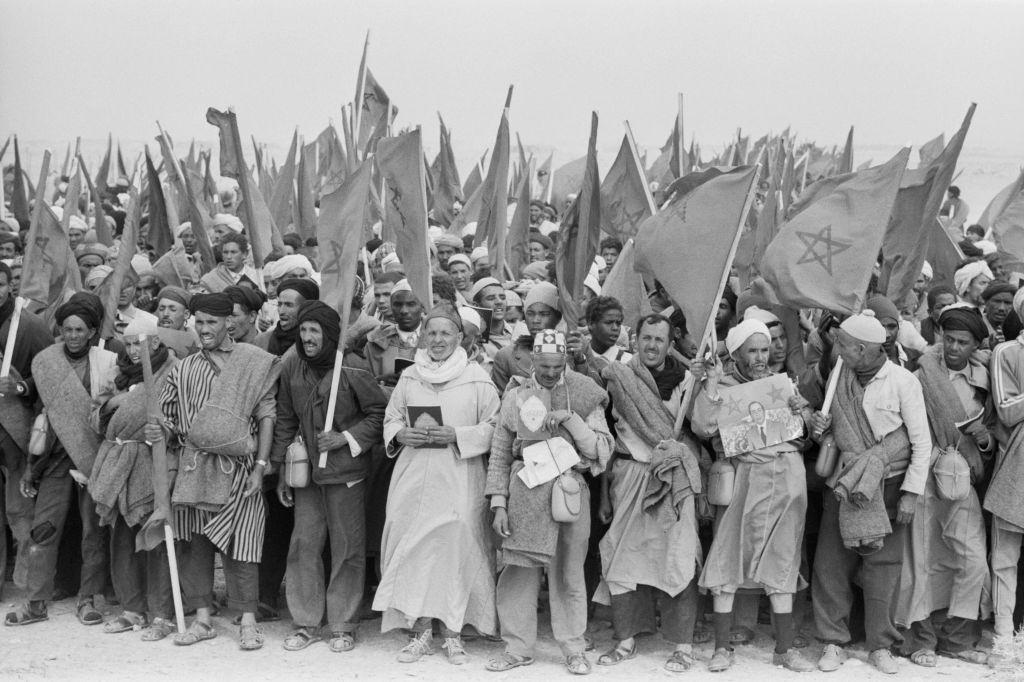
Two years later, in 1975, came one of the decade’s most defining moments: the Green March. Hassan II organized a mass civilian movement to press Morocco’s claim over Spanish Sahara, a territory Spain was preparing to abandon. Around 350,000 unarmed Moroccan civilians marched south toward the Spanish border. It was a carefully staged show of national will, and it worked. Moroccan soldiers and logistics teams prepared well in advance, staging supplies at air bases in Marrakech before the march began.
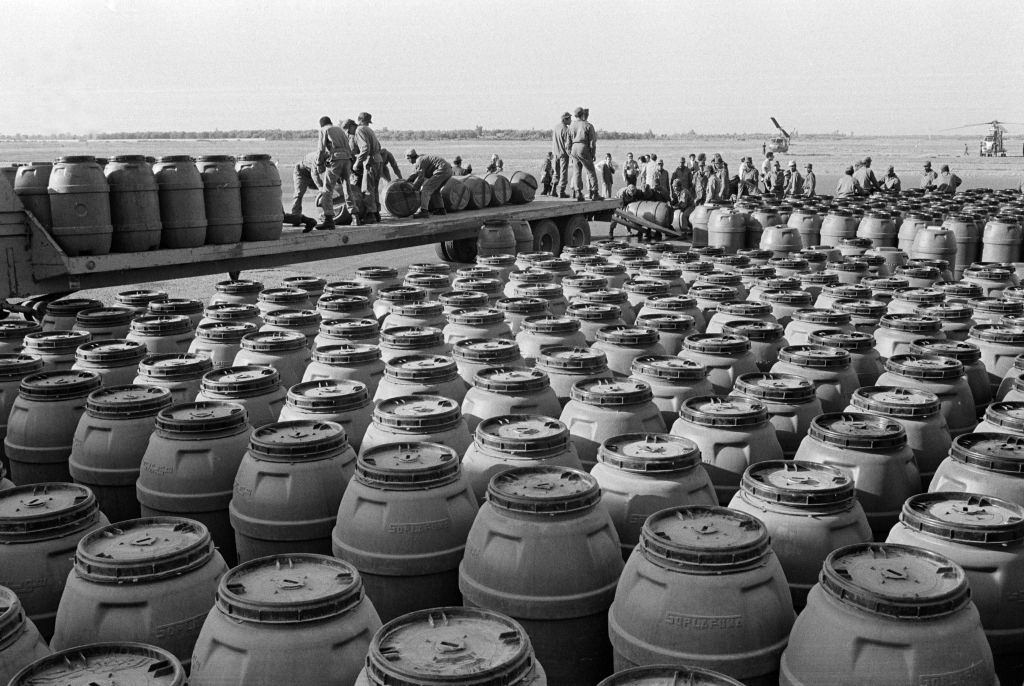
Moroccan soldiers prepare water containers 5 on an air base in Marrakech for the Green March event towards the Spanish border of Western Sahara. 23, October 1975
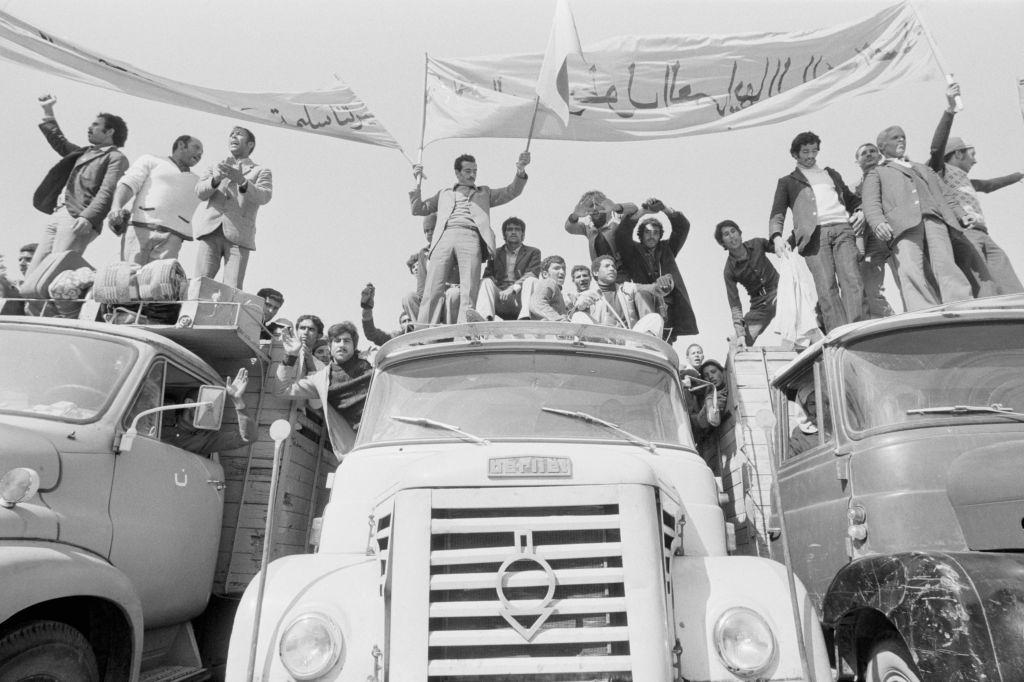
Demonstrators in the Green March step forward to West Sahara. Around 350,000 unarmed Moroccans peacefully occupied the Spanish Sahara, 1975.
Demonstrators in the Green March step forward to West Sahara, 1975.

By August 1979, Morocco had signed a peace agreement with the Polisario Front and formally annexed the entire Western Sahara territory. The conflict had shaped much of the country’s foreign policy throughout the decade, and its resolution marked a significant moment for the kingdom.

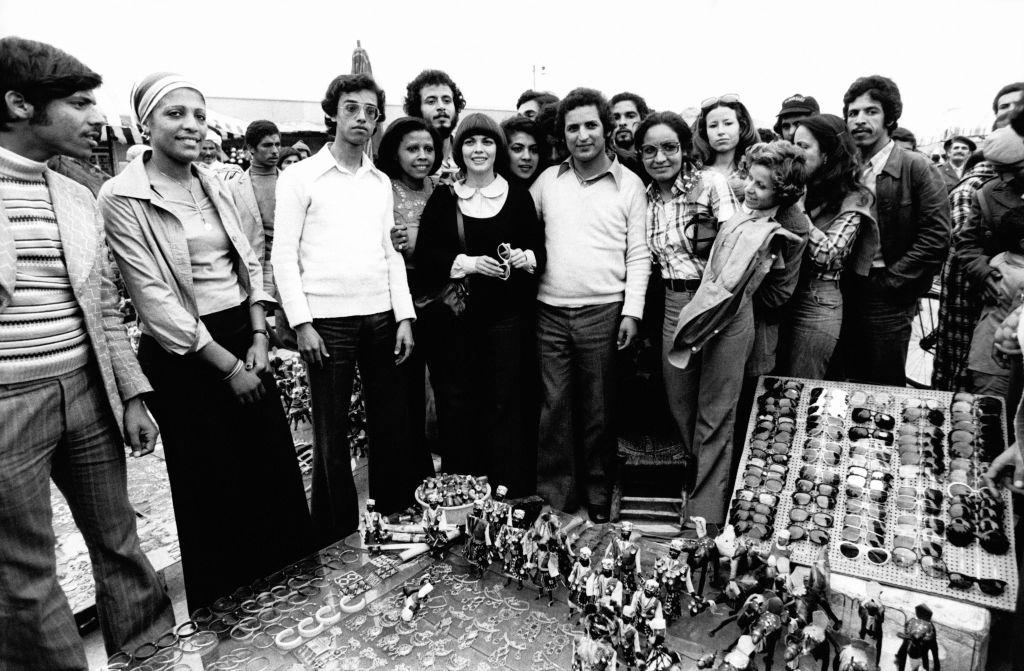
Away from politics, Morocco’s cities pulsed with energy. Marrakech drew visitors from across the world. In May 1976, French pop star Mireille Mathieu visited Morocco, drawing enormous crowds at the iconic Jemaa el-Fna square.
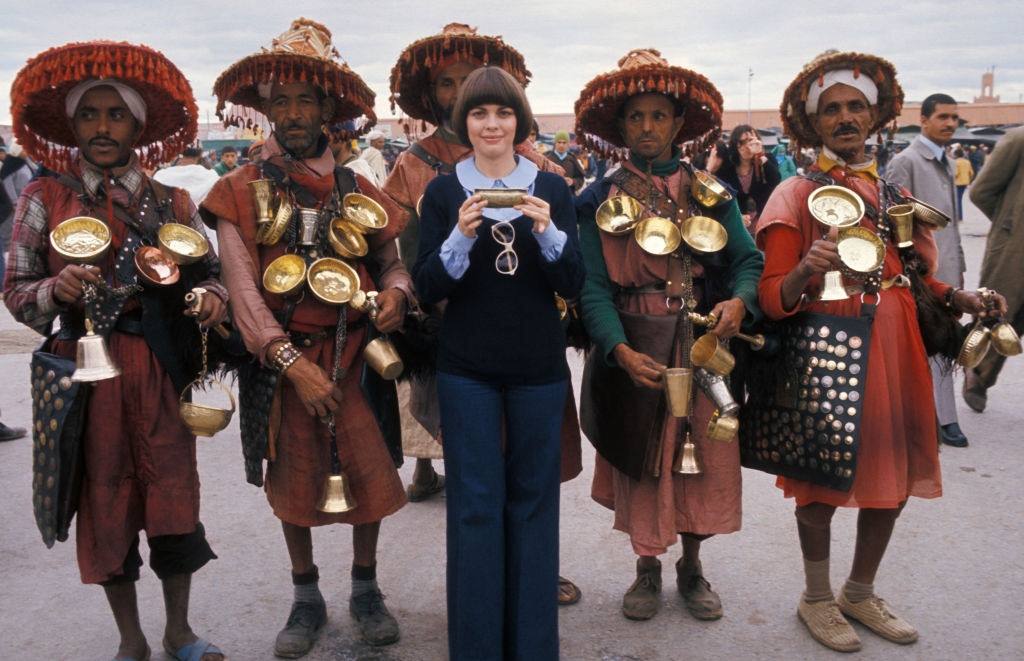
Mireille Mathieu surrounded by men in traditional dress in May 1976 in Morocco.
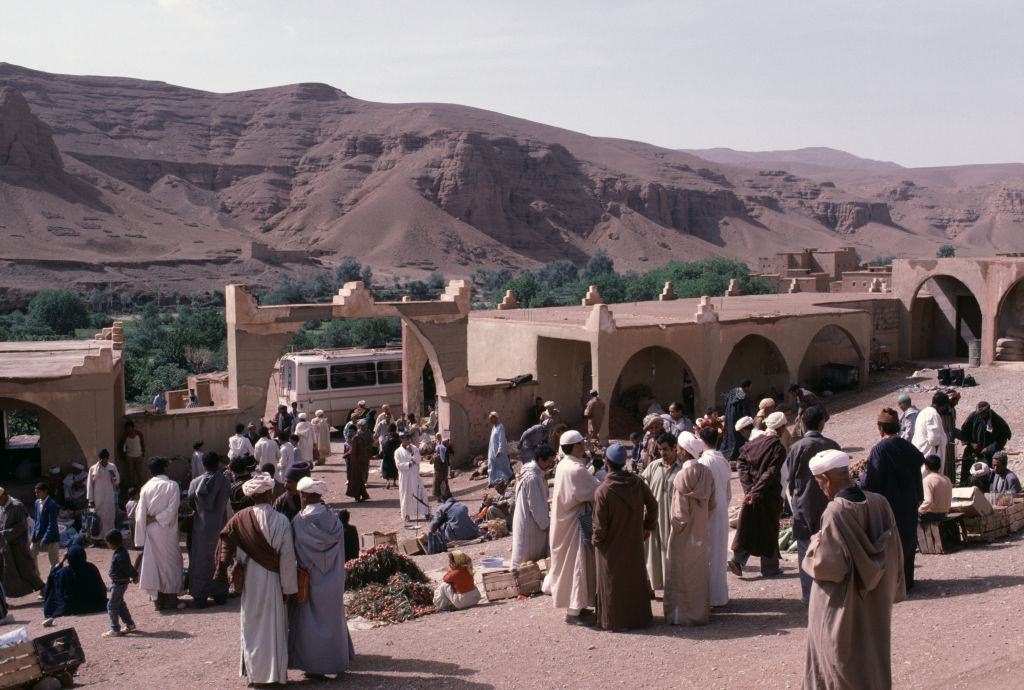
The market in Ait Oudinar, in July 1967, Morocco.
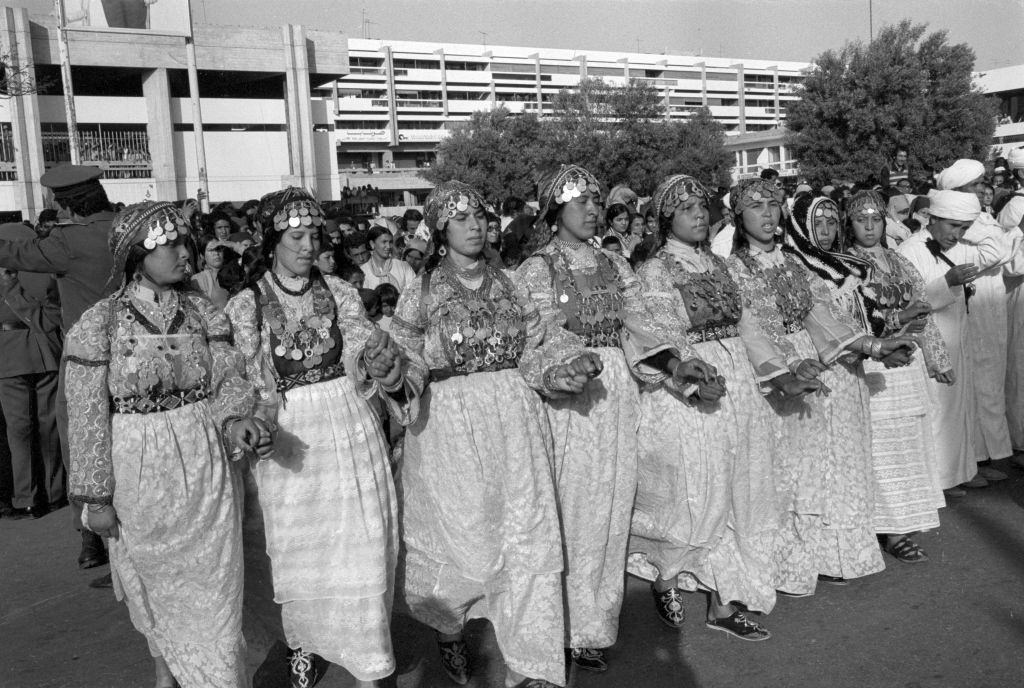
Dancers in traditional clothes in Marrakech in March 1976, Morocco.
Mireille Mathieu surrounded by her fans at Jemaa el-Fna square on May 2, 1976 in Marrakech, Morocco.

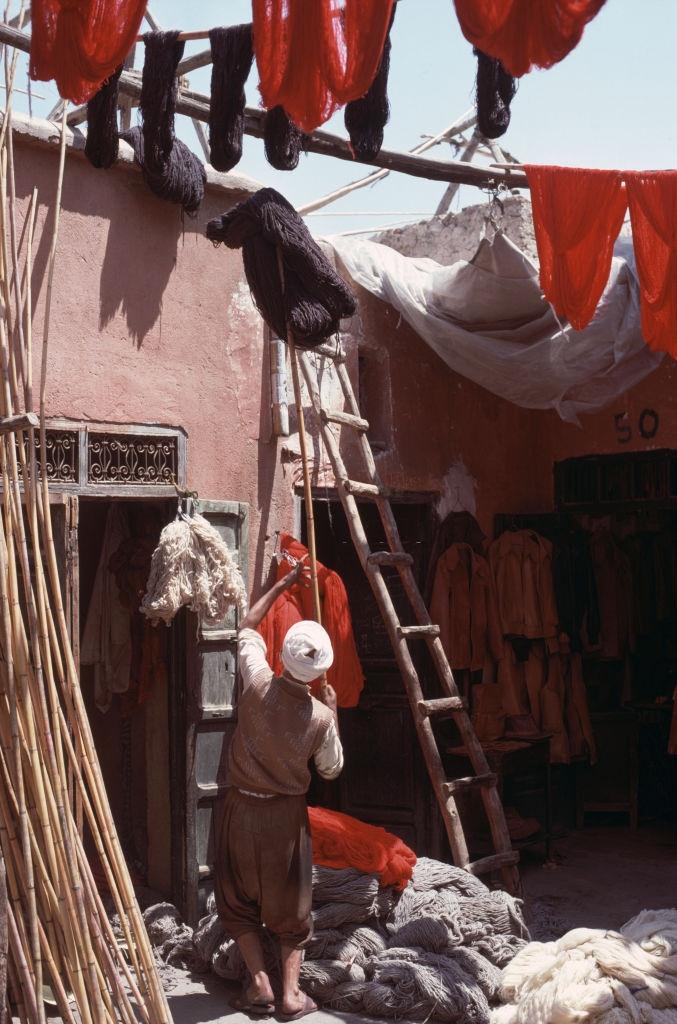
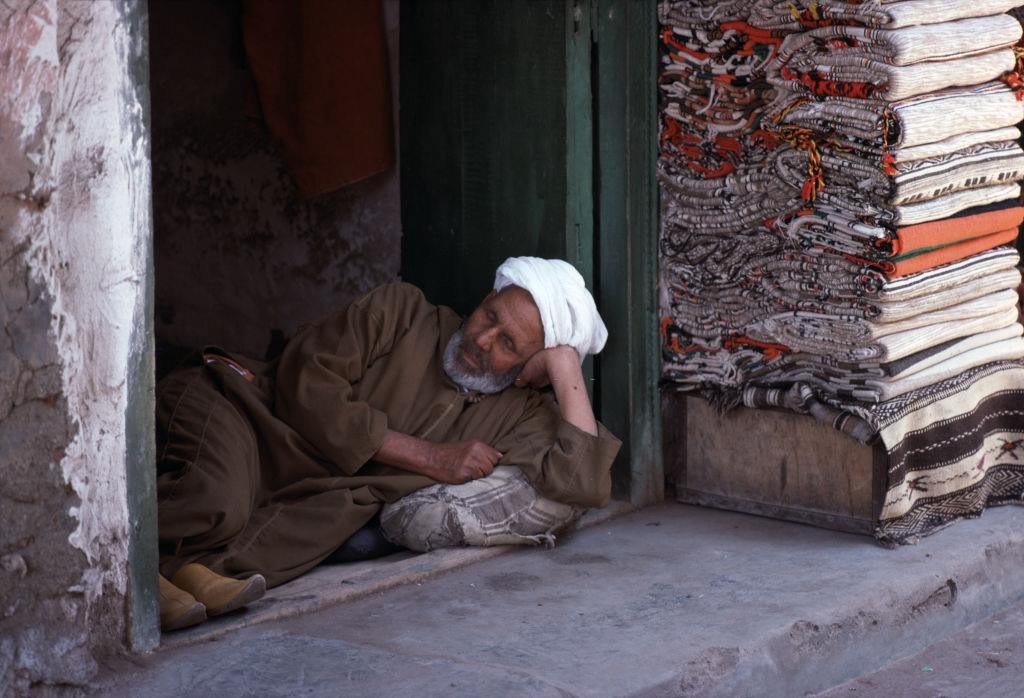
Moroccan women played a central role in the country’s economy. In the Meknes region, women worked side by side in weaving cooperatives, producing textiles that supplied both local markets and export trade. The souks of Marrakech were equally lively, with fabric sellers, dyers, and craftsmen filling narrow lanes with color and noise.
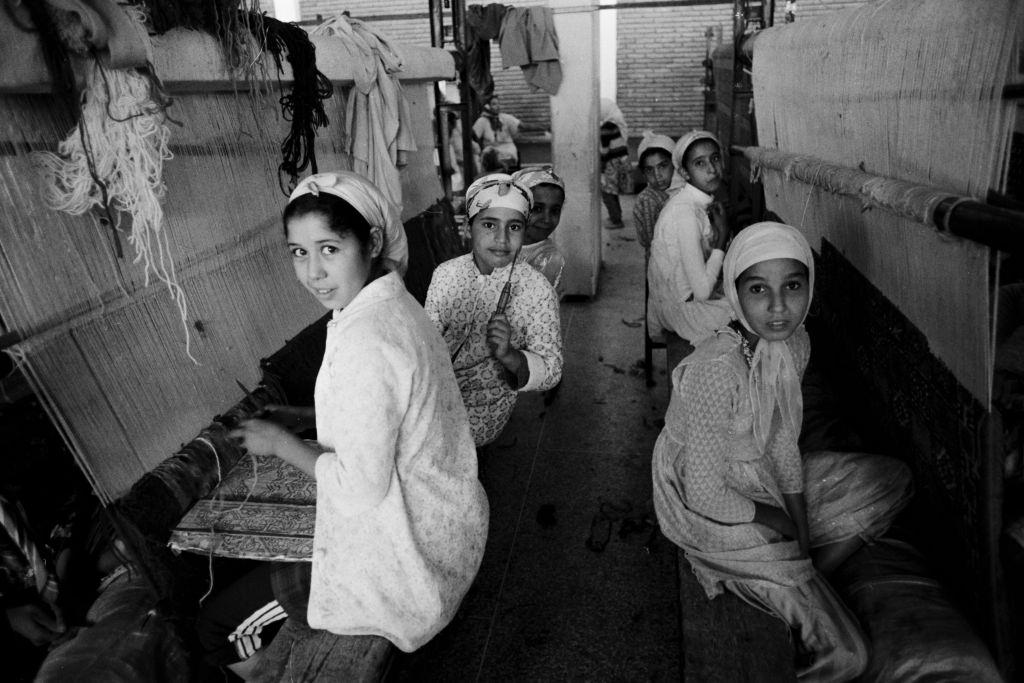
Women at work in a weaving cooperative in the region of Meknes on October 10, 1976, Morocco.
Fabric seller in the souk of Marrakech, in June 1977, Morocco.
Souk des dyers in Marrakech, in June 1977, Morocco.

Morocco’s architectural heritage was impossible to miss. In Meknes, the massive gateway of Bab Mansour stood as a reminder of the city’s imperial past. Small towns throughout the country had their own distinct character — narrow streets, clay walls, and the constant movement of everyday commerce.
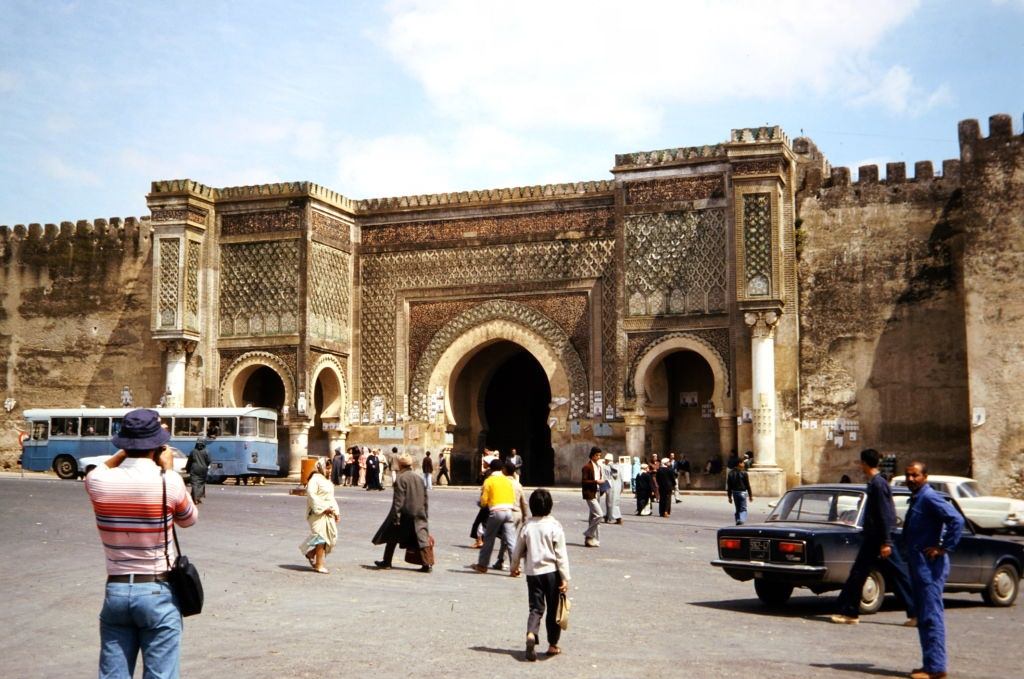
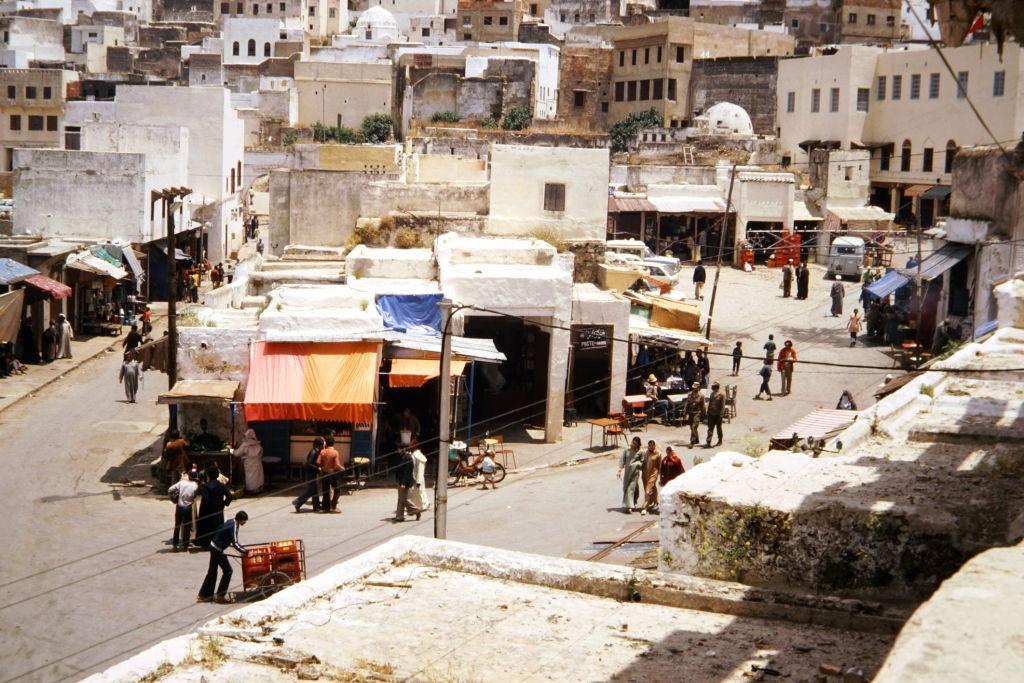
The front of Bab Mansour, in Meknes, Morocco. July 1977.
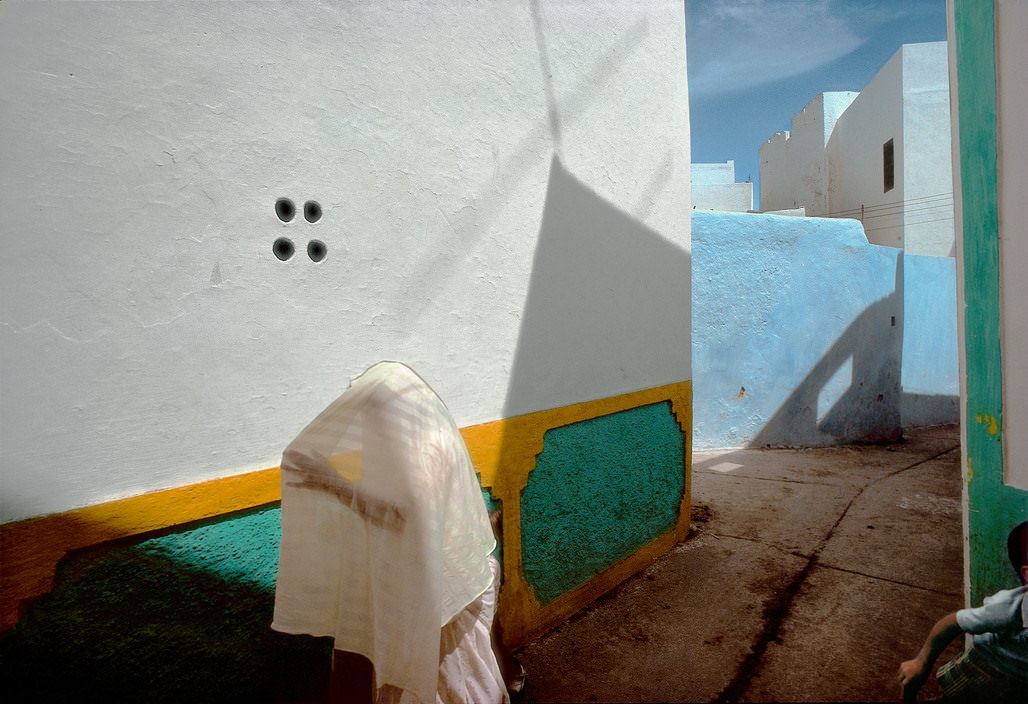
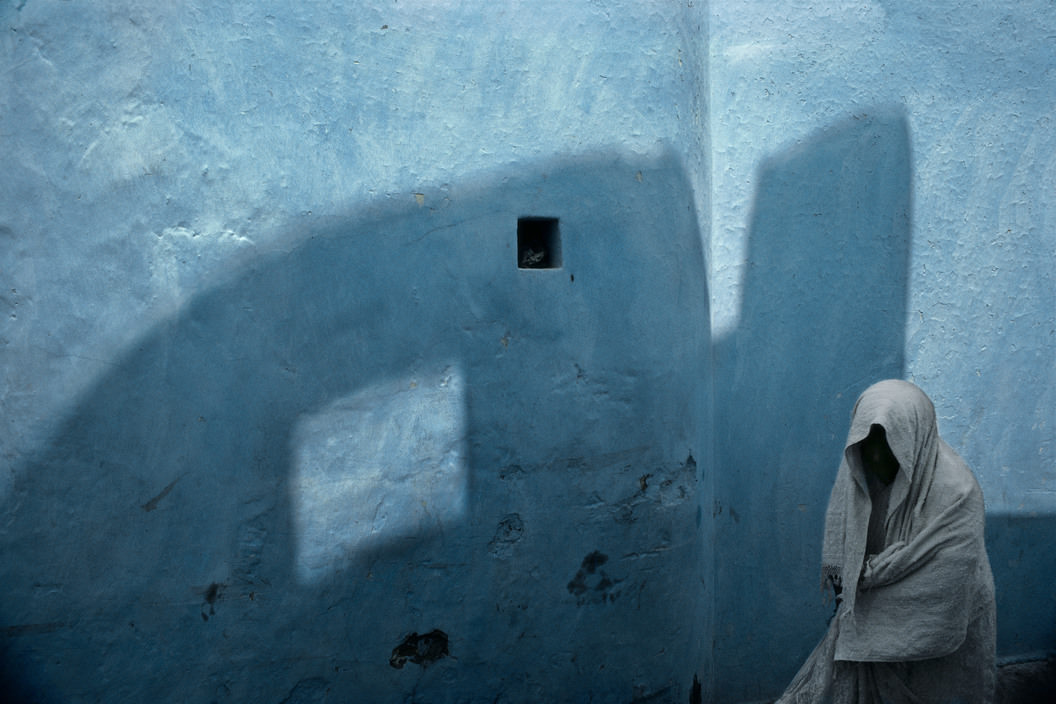
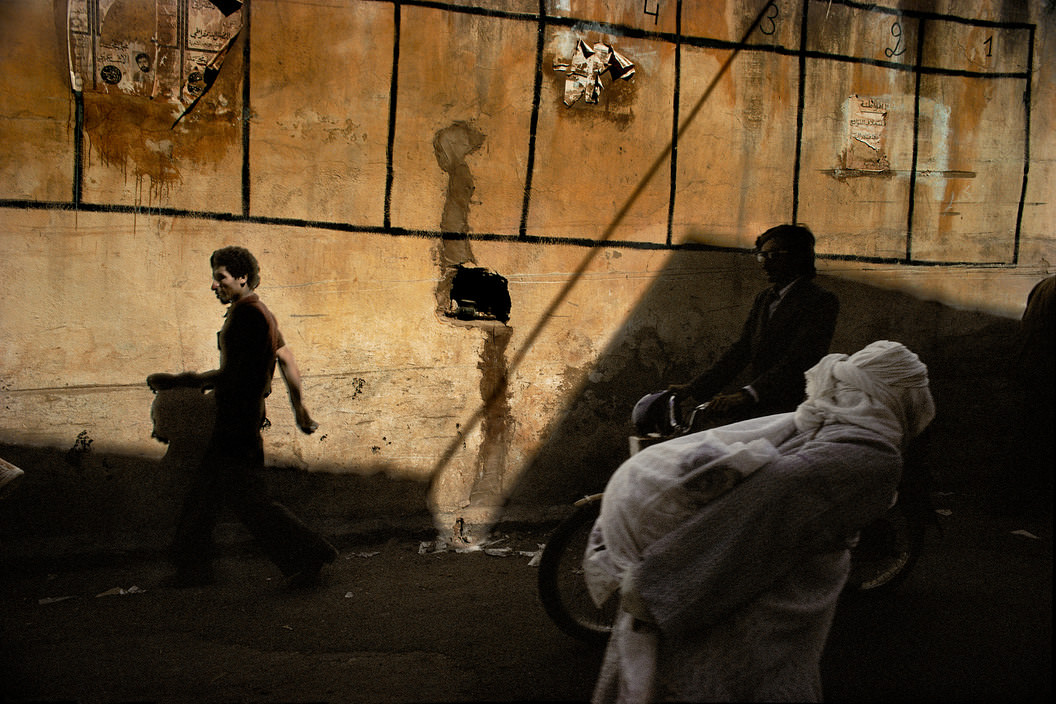
A typical street scene in a small Moroccan town, July 1977.
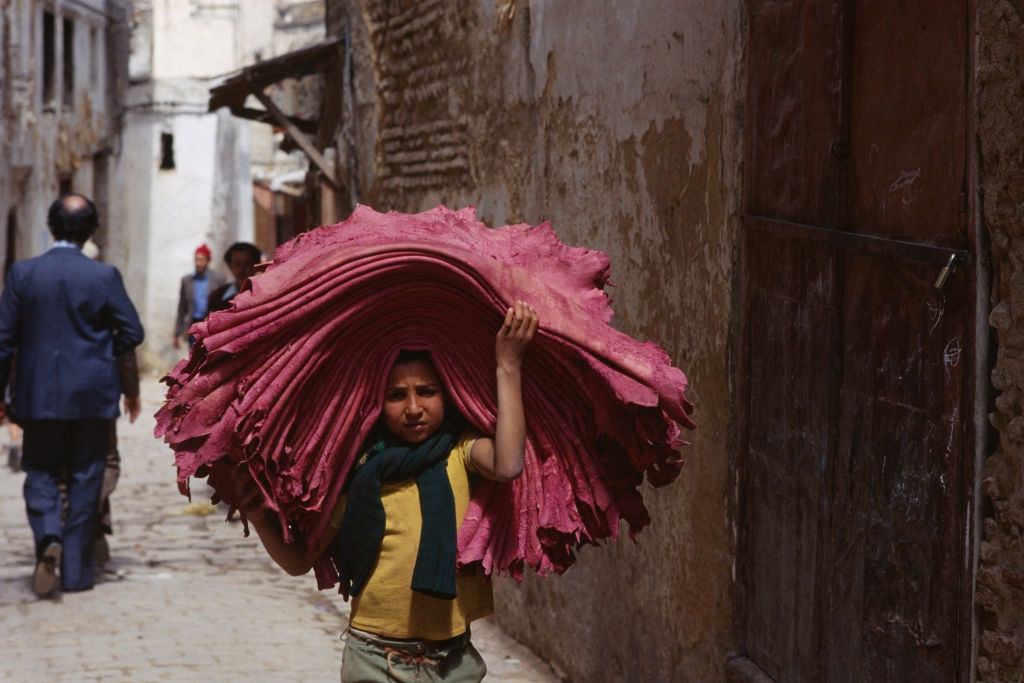
Young boy carrying animal skins, 1978.

Jemaa el-Fna in Marrakech remained the beating heart of public life. By 1979, the square was as crowded and chaotic as ever — vendors, storytellers, snake charmers, and shoppers all sharing the same open ground.
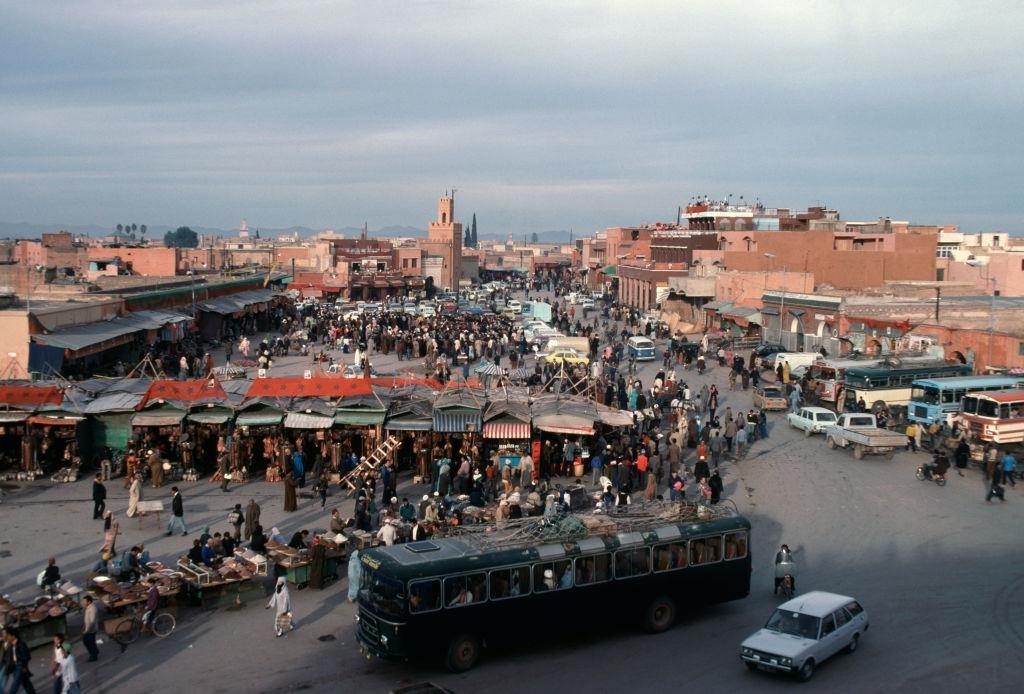
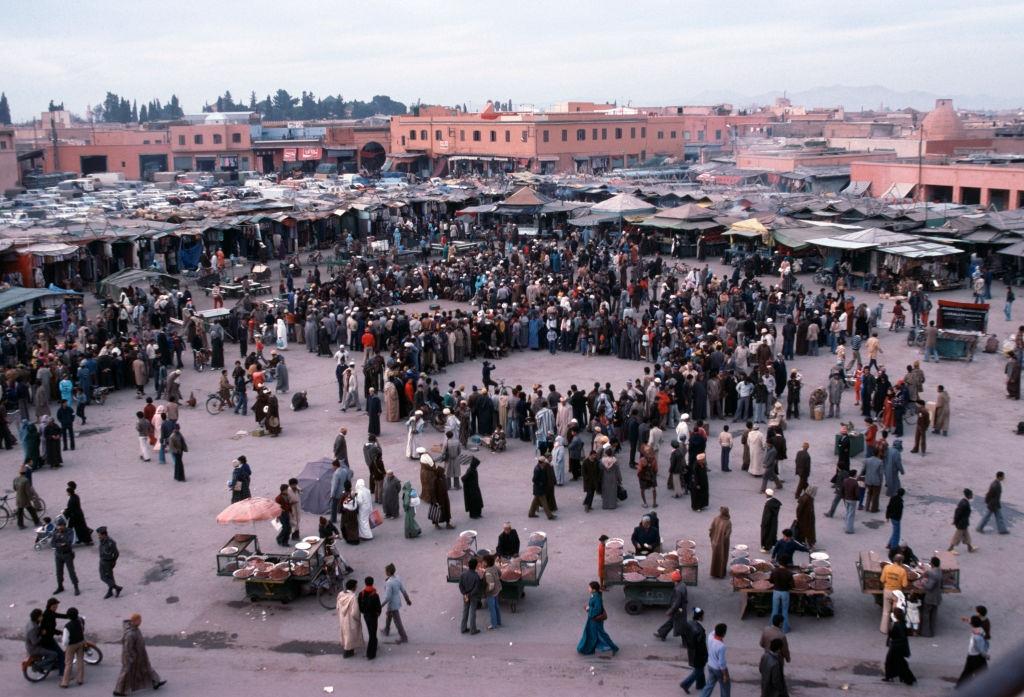
The market on Jemaa el-Fna square in Marrakech, in February 1979, Morocco.

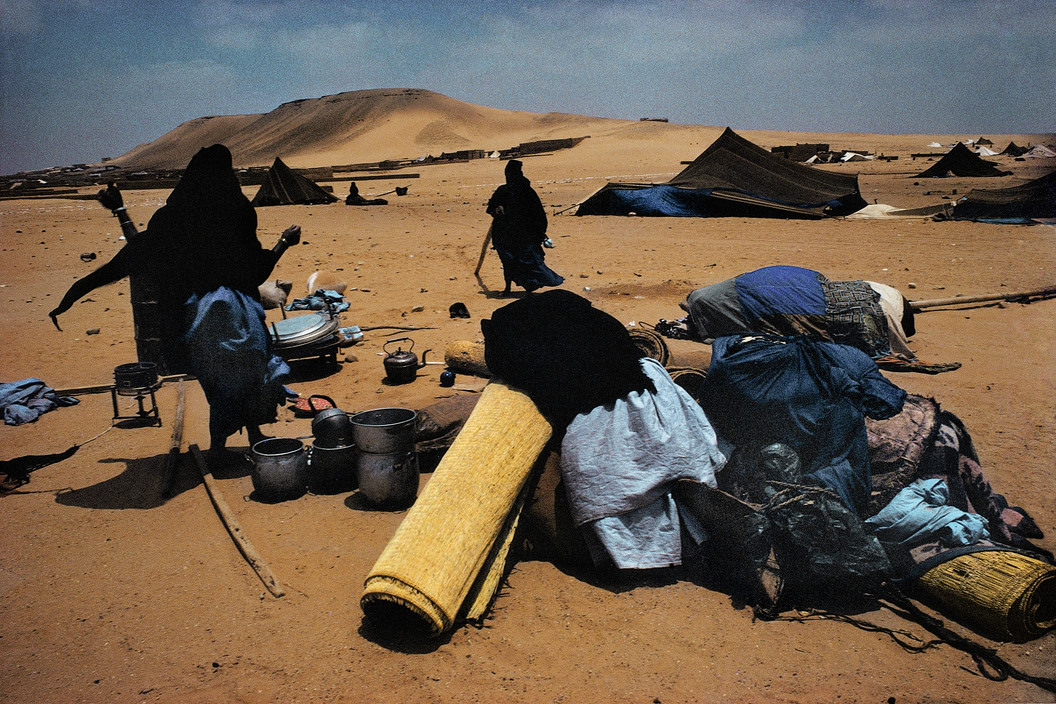
In the south, the town of Tan Tan sat close to the edge of the Sahara. Nomadic camps dotted the surrounding landscape, where families still lived in tents and moved with their herds across the open desert. The region of Erfoud, with its palm-lined walls and ancient medina, offered a completely different atmosphere — quiet, sun-baked, and deeply rooted in the past.
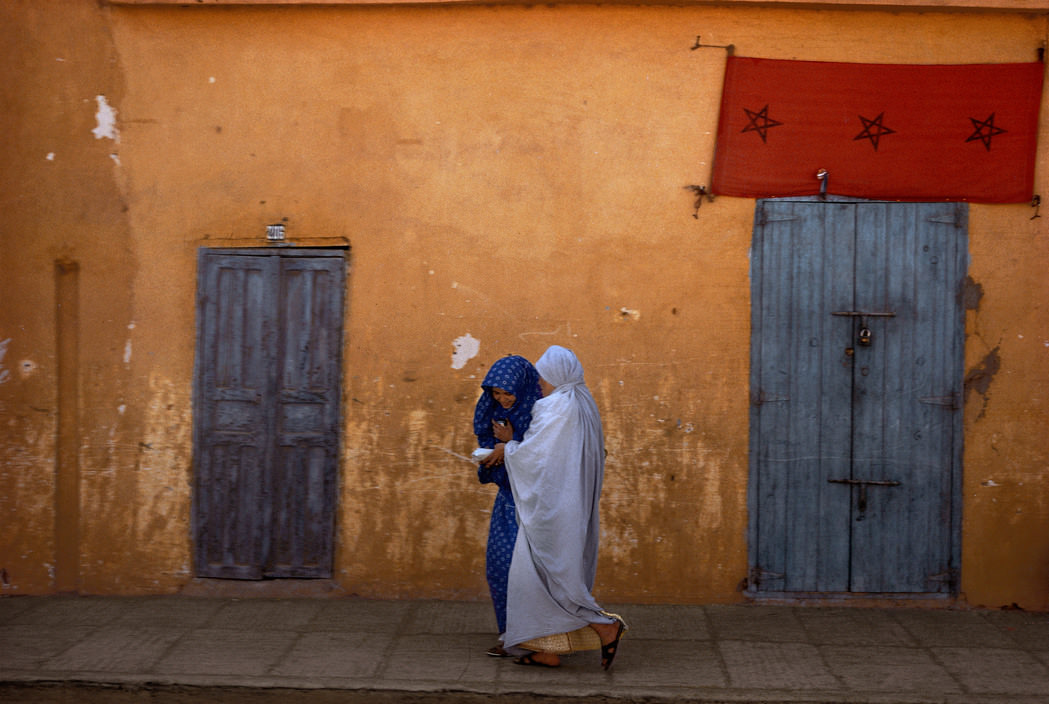
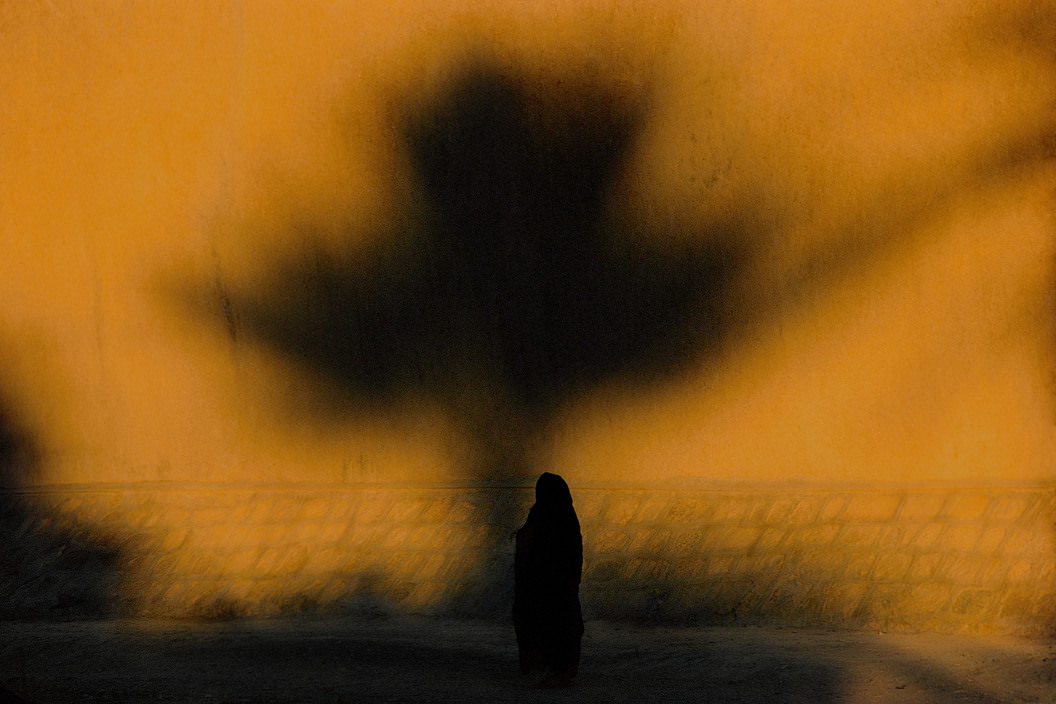
Town of Tan Tan, 1976.
Shadows of palmtrees on the ramparts of a village near the town of Erfou, 1976.
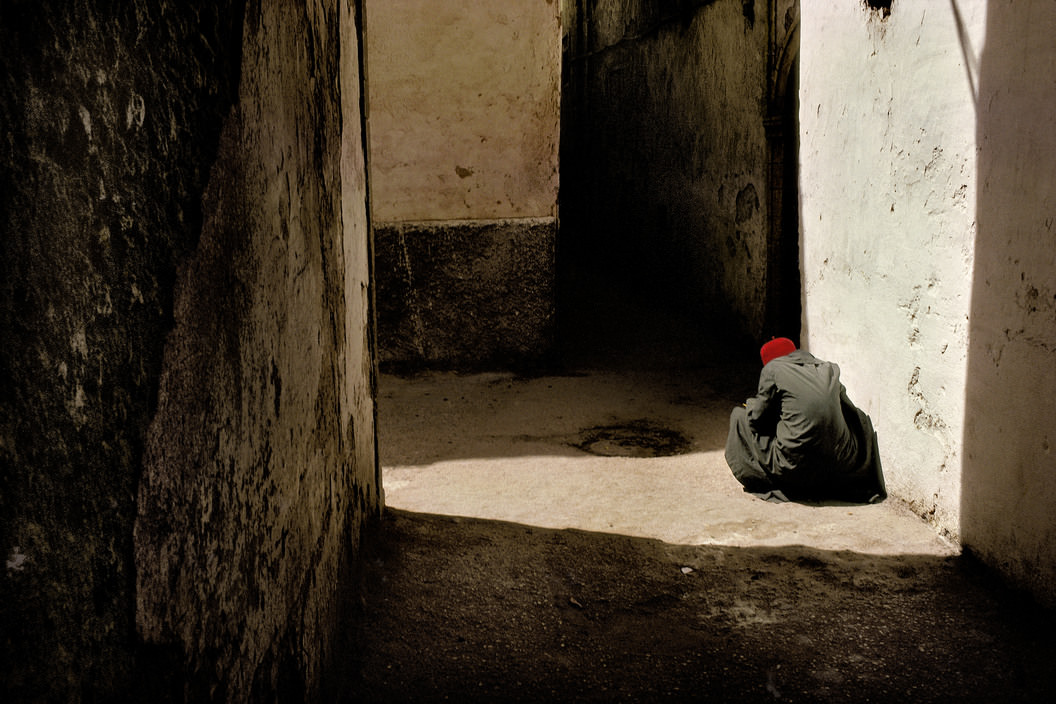
In the medina (old district of the city) Erfout, 1976.

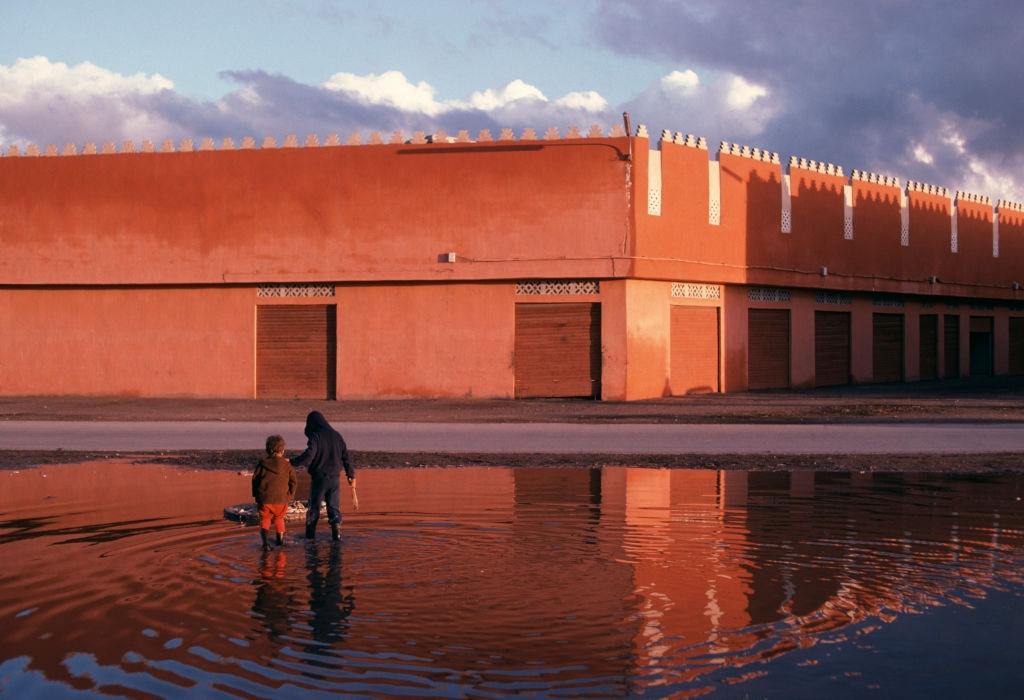
Children were a constant presence in Morocco’s public spaces. In Marrakech in 1975, young Berber girls peeked out from doorways, laughing. By 1979, children were splashing through puddles in the city’s February rains — ordinary moments frozen in time by the camera’s lens.
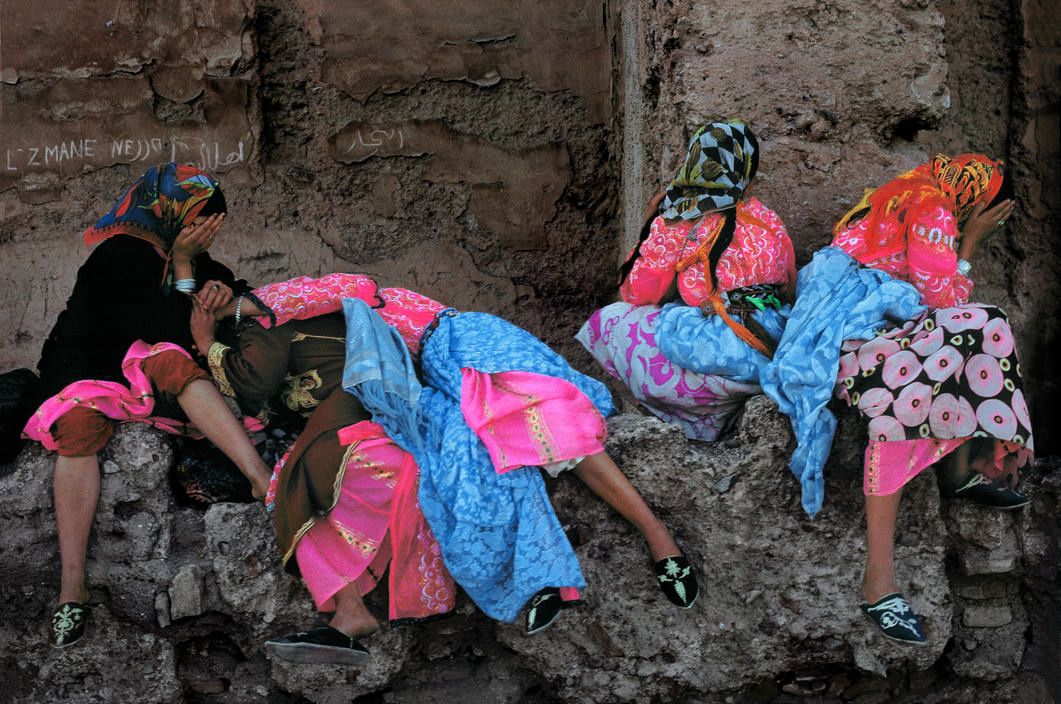
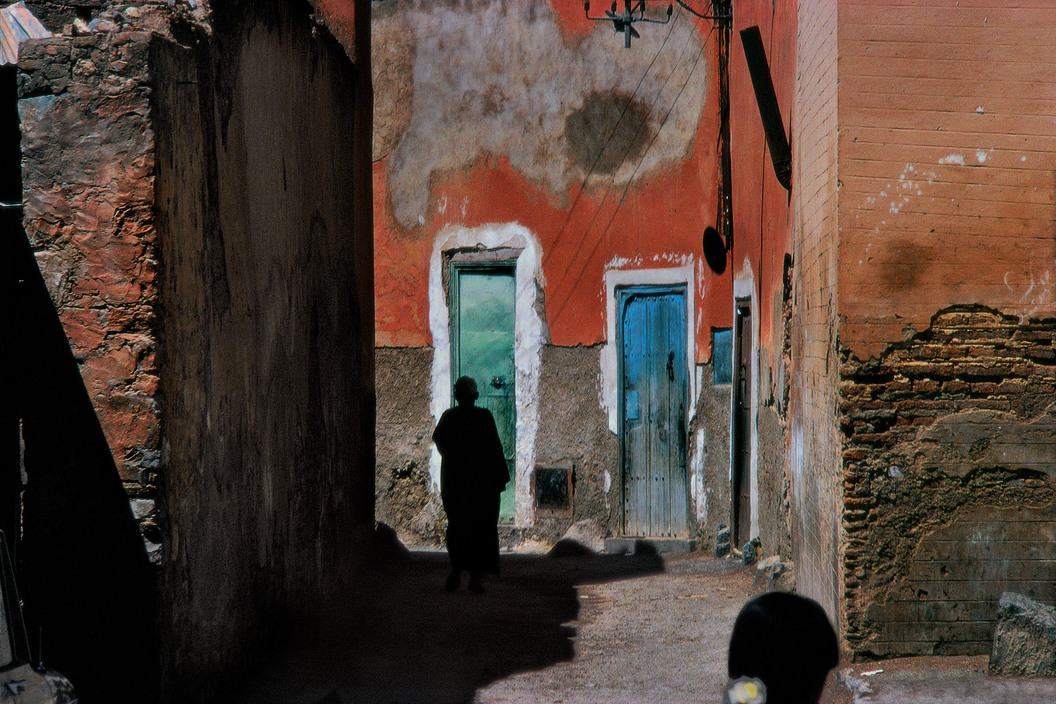
Young Berber girls hiding and giggling Marrakech, 1975.
In the medina (old district) Marrakech, 1977.

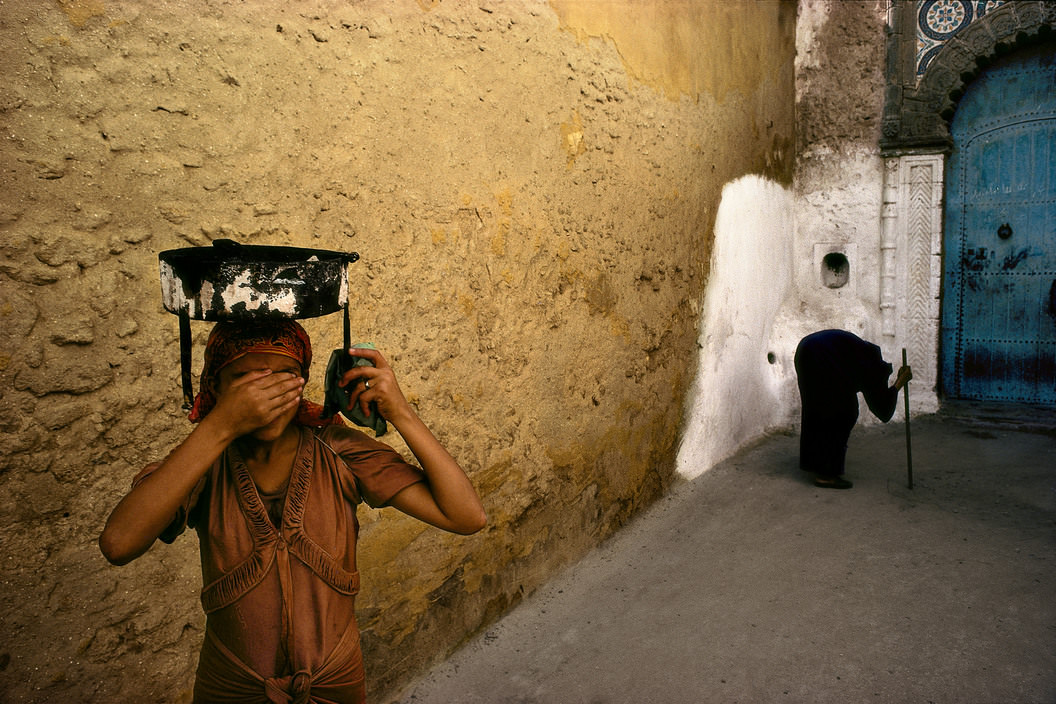
Morocco’s tribal communities preserved their own distinct identities throughout the decade. The Ait Addidou people of the High Atlas dressed in striking traditional garments and continued practicing their customs largely unchanged. In the blue-walled town of Chefchaouen, nestled in the Rif Mountains, street life had a rhythm all its own.
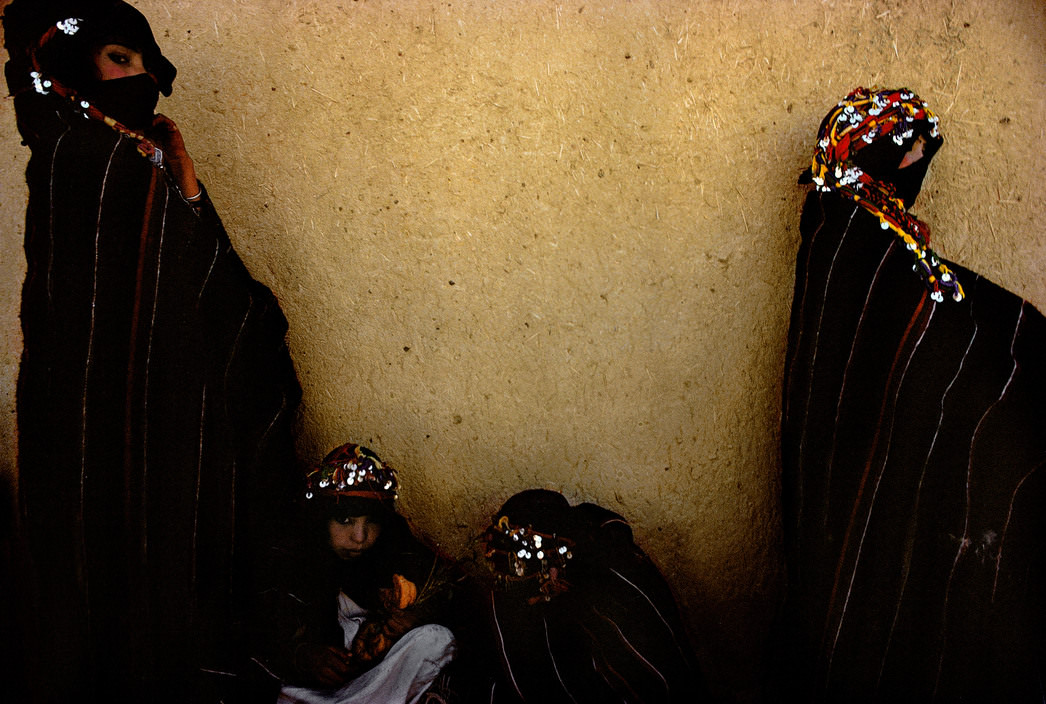
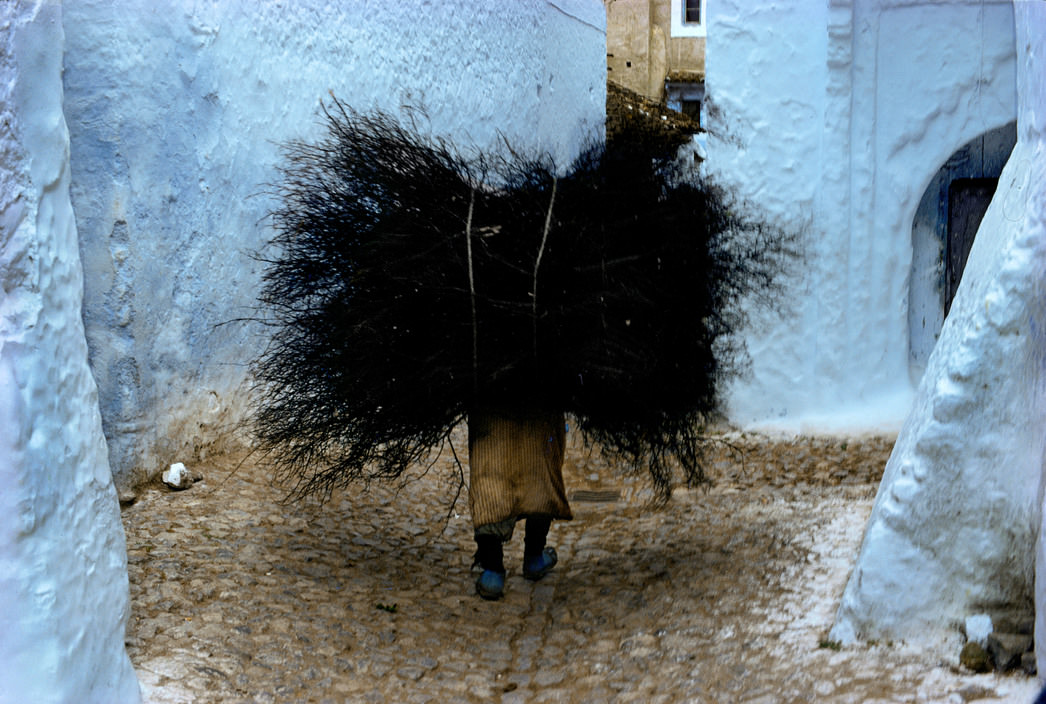
Women and men of the Ait Addidou tribe High-Atlas, 1976.
Street life in Rif Mountains of Chefchaouen, 1975.
In the Casbah (old district of the city), 1976
Rif Mountains in Asilah, 1975.

Religious life shaped Morocco’s calendar as much as its politics. Each September, pilgrims gathered in the holy city of Moulay Idriss for the Moussem, a traditional religious festival. Families camped on the hillsides surrounding the city, and large processions carrying banners made their way toward the mosque. The Essaouira region hosted its own Moussem gatherings, drawing crowds from across the surrounding countryside.
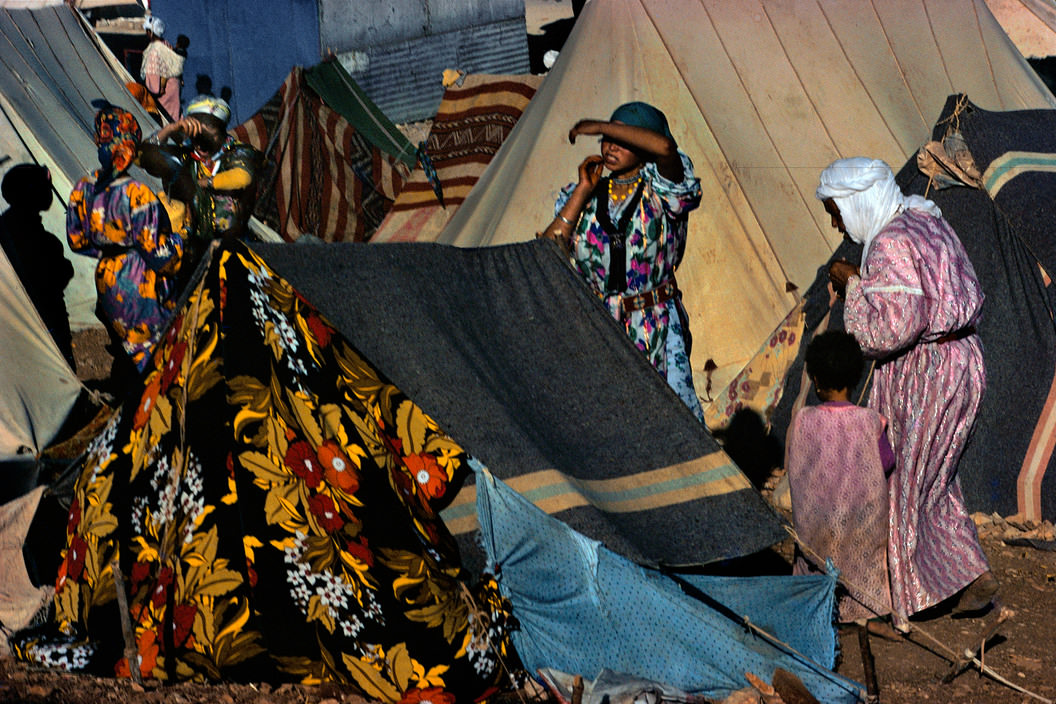
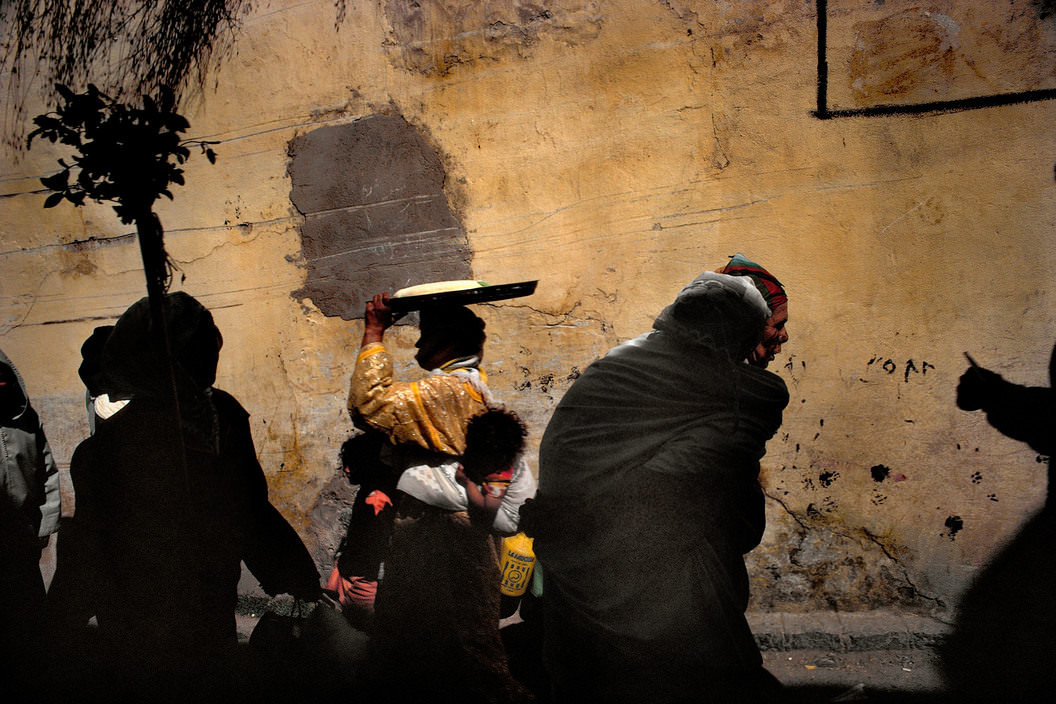
Moulay Odriss. Pilgrims camping in sites around the city during the Moussem, traditional feast of the month of September
Moulay Idriss. Moussem, Essaouira region, 1977.
Pilgrims with banners making their way to the Mosque during the Moussem, traditional feast of the month of September. Essaouira region, 1977.

In the streets, vendors of all kinds kept Morocco’s urban economy moving. A bread seller in Marrakech balanced his wares through the city’s crowds in 1975. The coastal city of Essaouira, with its Portuguese-built ramparts and Atlantic winds, offered yet another face of the country — open, weathered, and ancient.
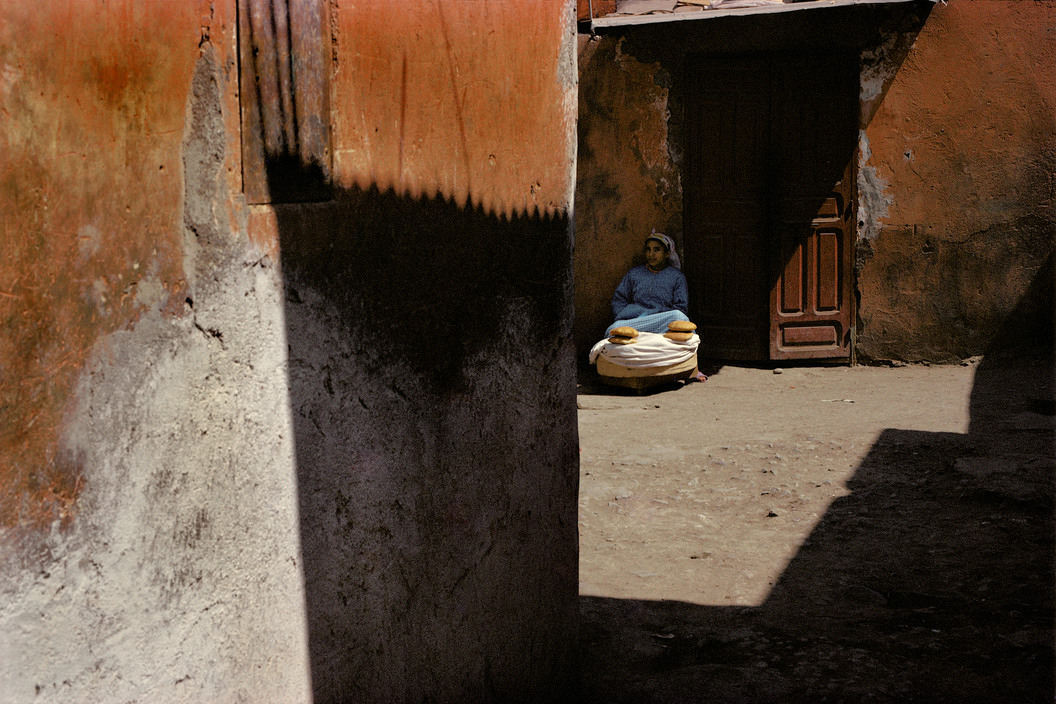
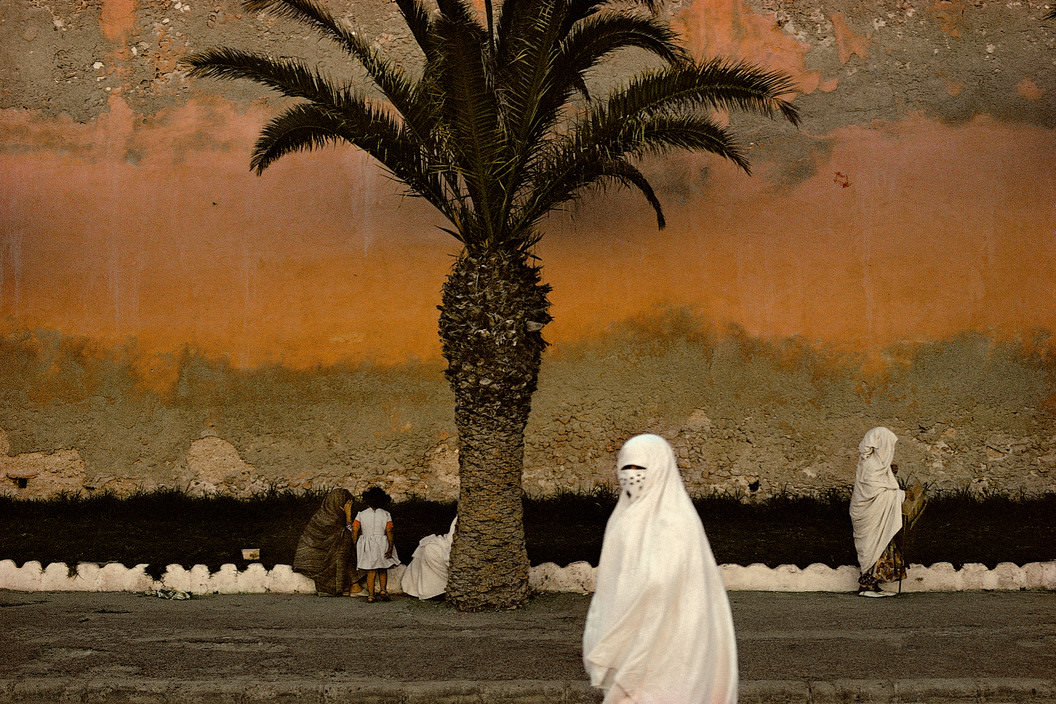
A bread vendor in Marrakech, 1975.
Ramparts and fortified walls of the city, Essaouira, 1975.
Near the town of Tan Tan, Nomads camp, 1976.
Erfout, 1975.
Erfout, 1975.
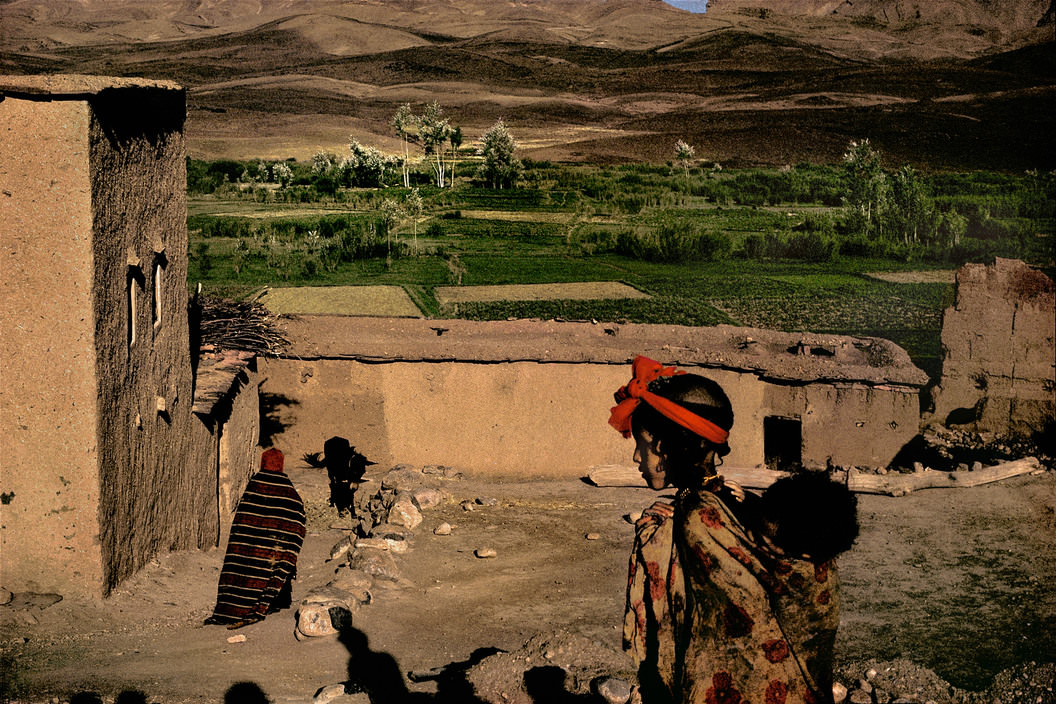
Region of the High Atlas, Msemir region, 1976.
Ramparts and fortified walls of the city, Essaouira, 1976.
Ramparts and fortified walls of the city, 1976.

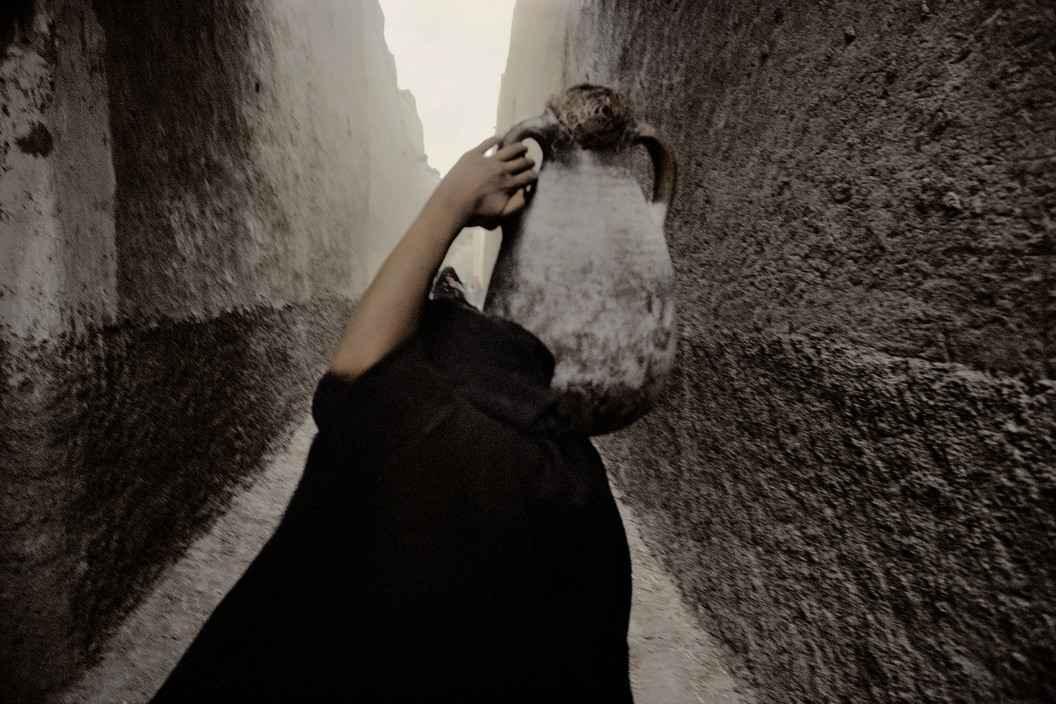
The Ait Addidou tribe gathered at Imilchil in the High Atlas, their traditional clothing setting them apart from the urban Moroccans of Fes or Marrakech. Fes itself, one of the world’s oldest continuously inhabited cities, carried its medieval layout into the late 1970s unchanged — its alleyways too narrow for cars, its tanneries operating by hand just as they had for centuries.
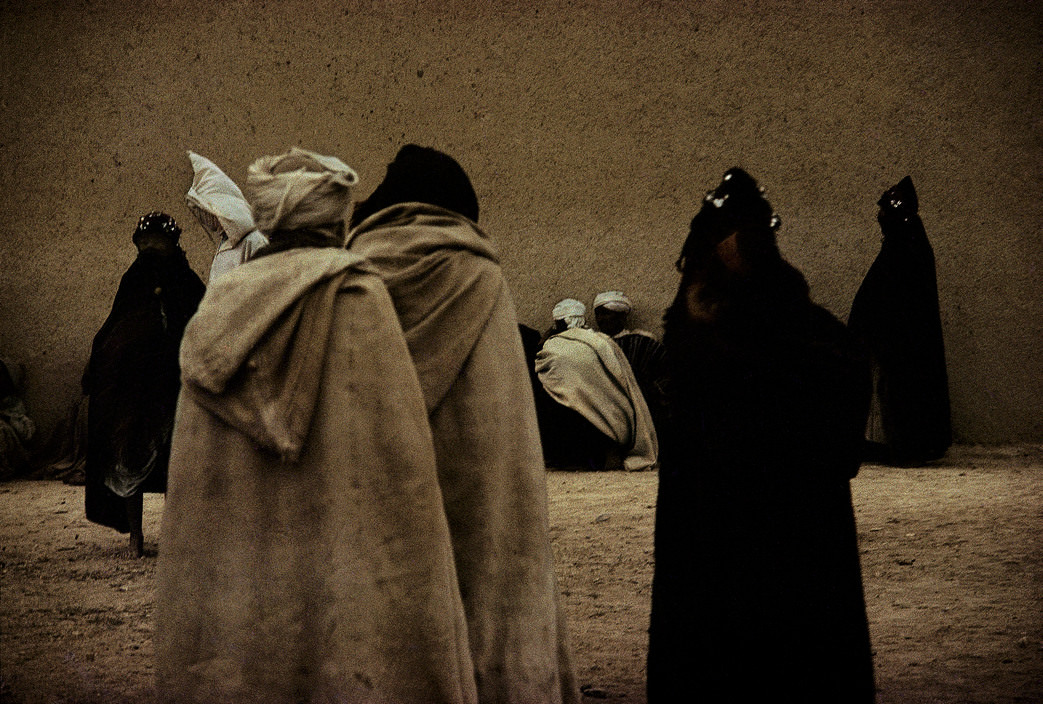
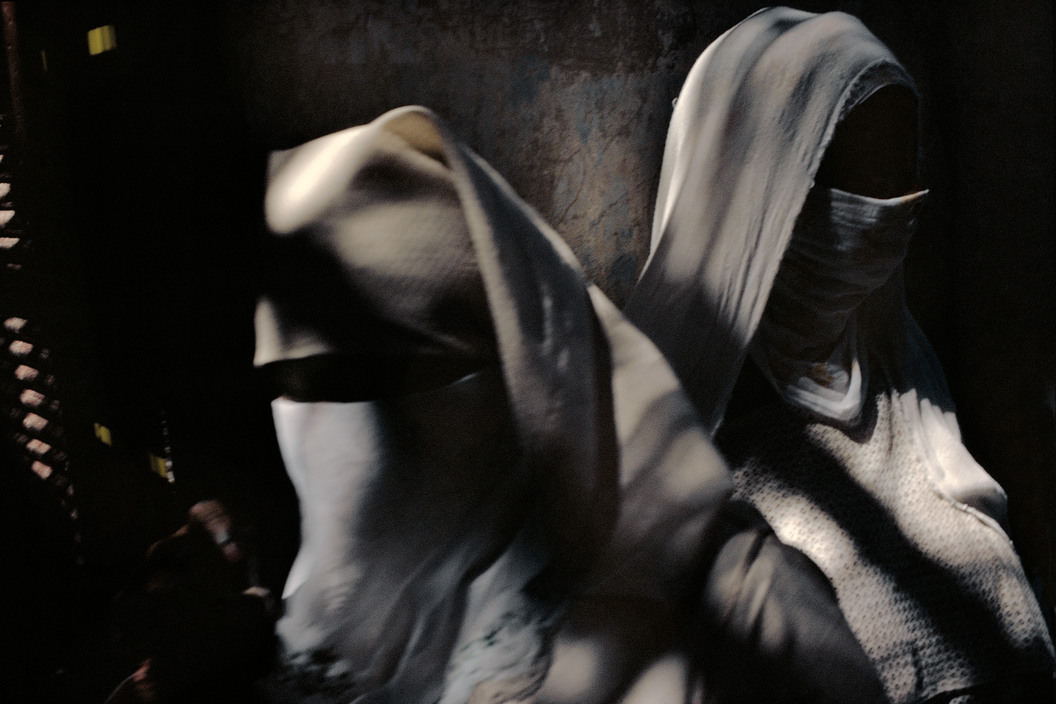
Women and men of the Ait Addidou tribe. High Atlas, Imilchil, 1976.
Fes, 1979.
Fes, 1979.
Children wading through a puddle in a street in Marrakech, February 1979, Morocco.
Enjoyed this post? Get new ones in your inbox.

Leave a Comment

Your email address will not be published. Required fields are marked *

Share this Post 🥺

Please take a moment to share this content. Your support is greatly appreciated! 🙌🙏

Share this Post 🥺

Please take a moment to share this content. Your support is greatly appreciated! 🙌🙏
Scroll to Top
 
Hey Friend, Before You Go.. Please like & follow for more interesting content