
Minneapolis in the 1980s was a city in motion. Construction cranes dotted the skyline, neighborhoods shifted in character, and the streets buzzed with a energy that was uniquely its own. Photographer Todd Jacobson spent the decade walking those streets with a camera, capturing moments that most people never thought to preserve. His photos offer a ground-level view of a city that was building itself into something new while still holding on to its past.
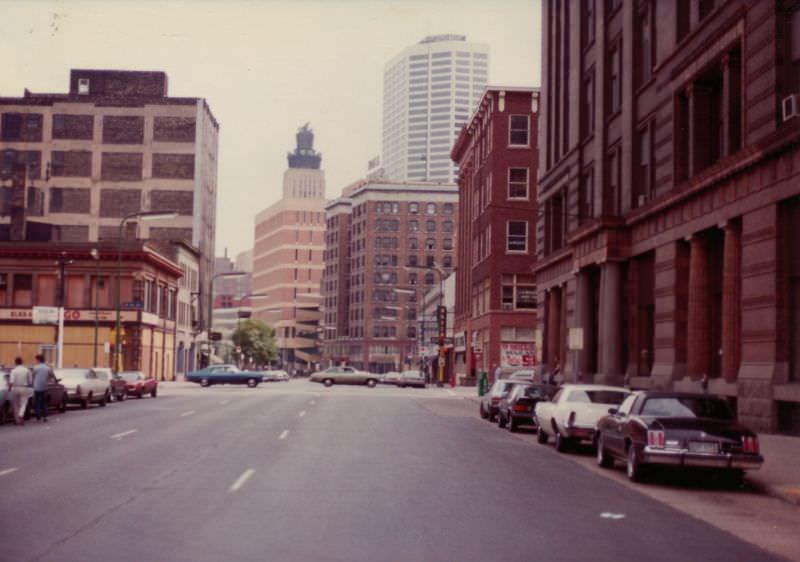
Downtown Minneapolis in the early 1980s was a mix of old brick buildings, wide streets, and the early signs of modern development pushing in from all directions. The infrastructure was changing fast. In 1982, the final stretch of Interstate 94, running from U.S. Highway 12 to the city’s northern boundary, was completed. That same year, the Hubert H. Humphrey Metrodome opened its doors. The domed stadium became home to both the Minnesota Twins and the Minnesota Golden Gophers football team and stood as one of the decade’s defining landmarks before its demolition in 2014.
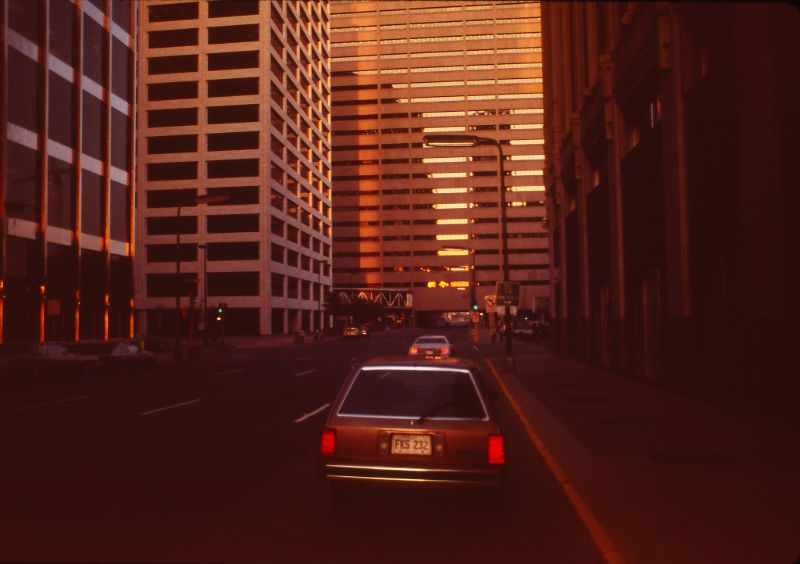
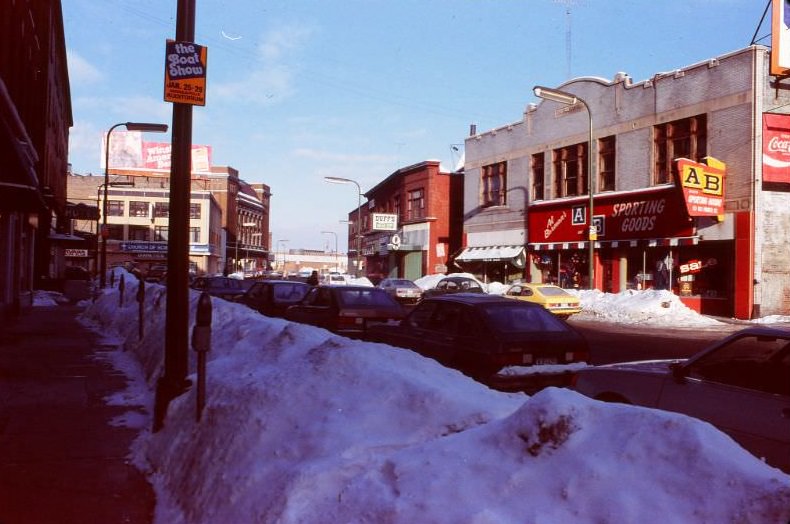
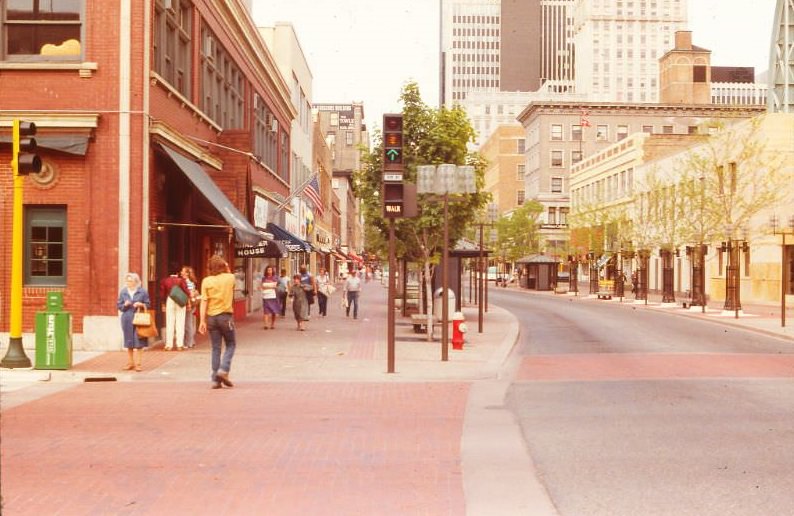
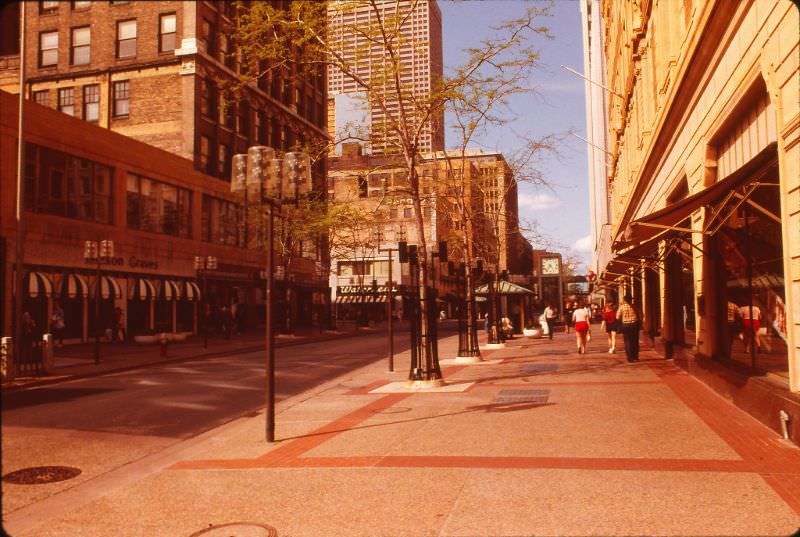
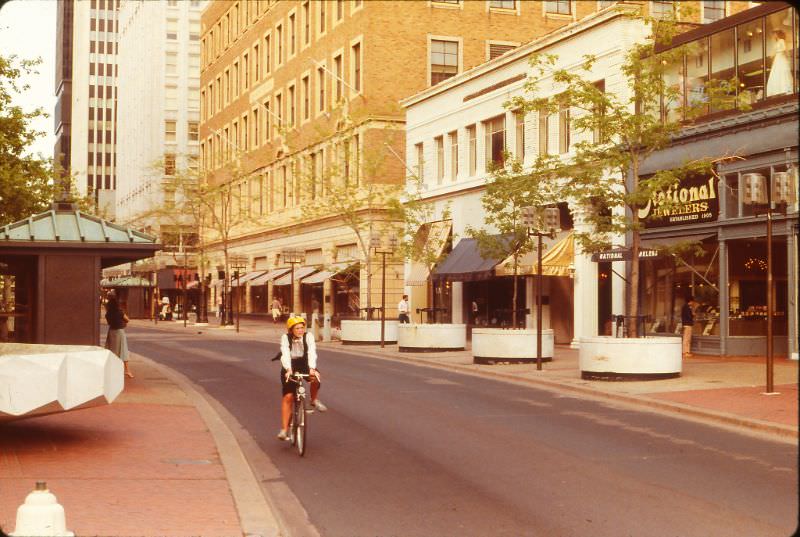
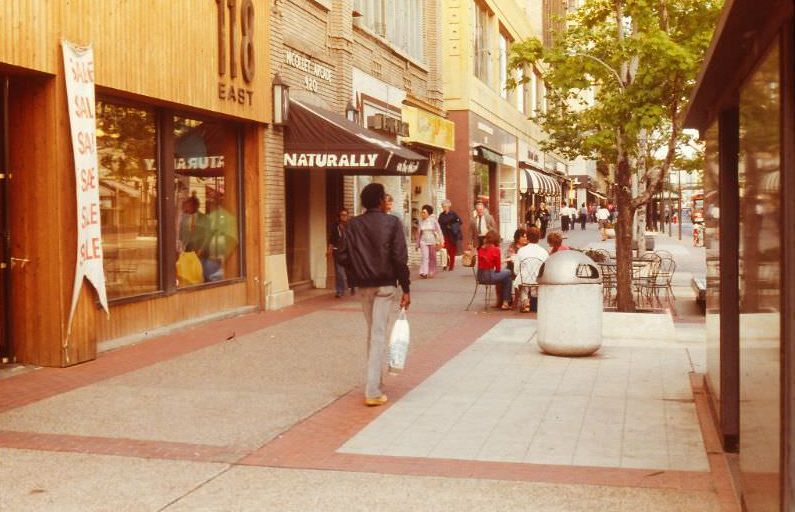
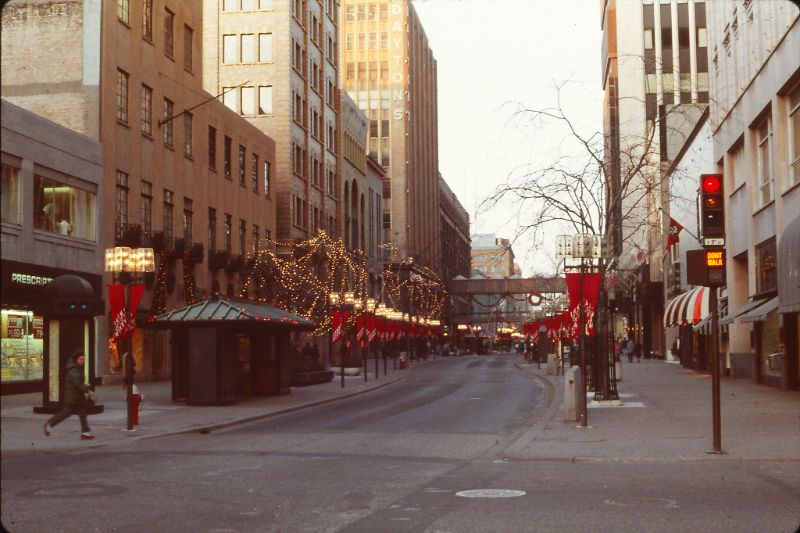
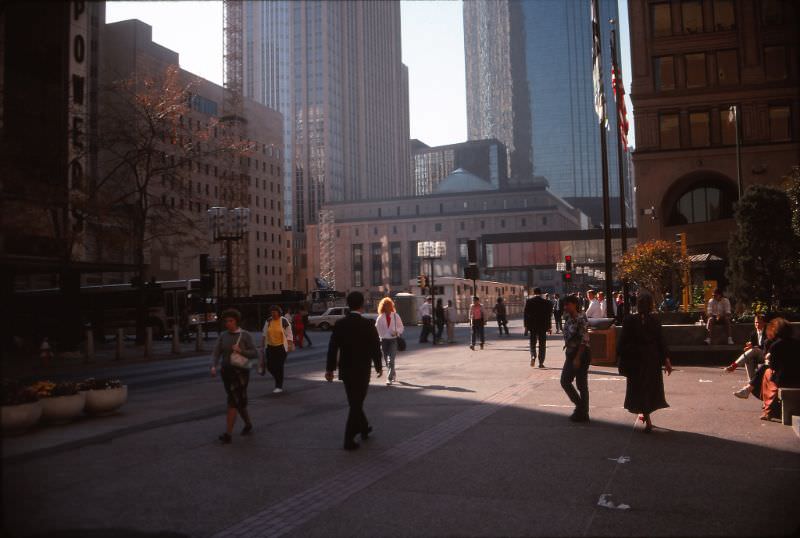
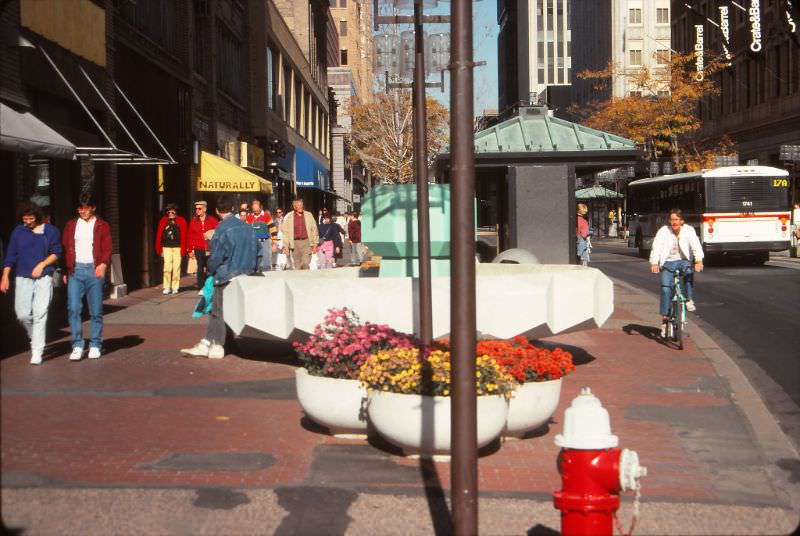
By 1983, downtown streets were filled with a mix of shoppers, workers, and street life that reflected the city’s growing energy. Nicollet Mall served as the heart of it all — a pedestrian-friendly corridor lined with shops, restaurants, and foot traffic at nearly every hour of the day.
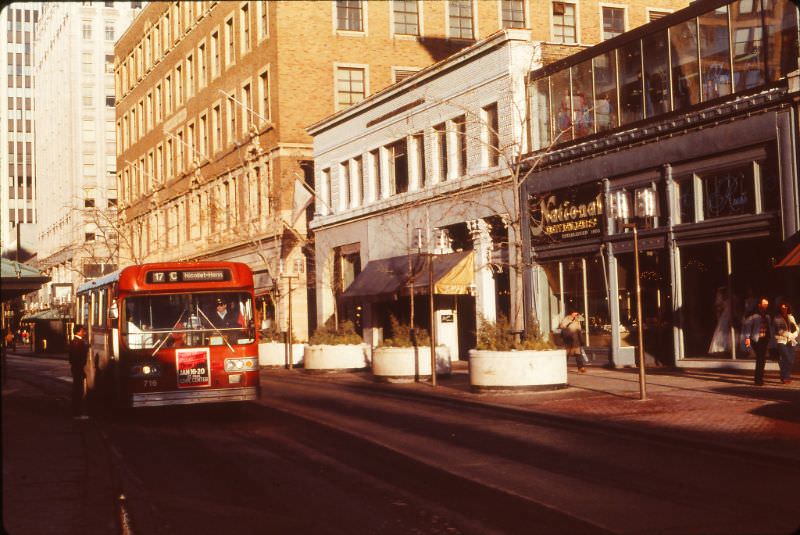
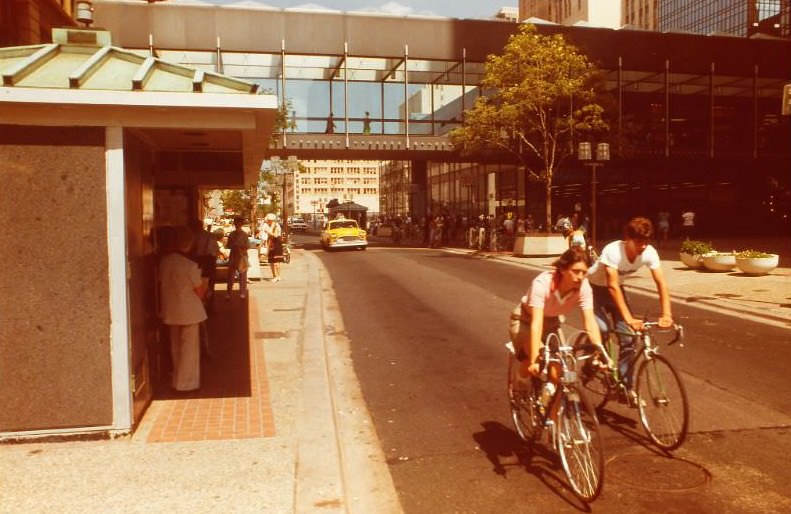
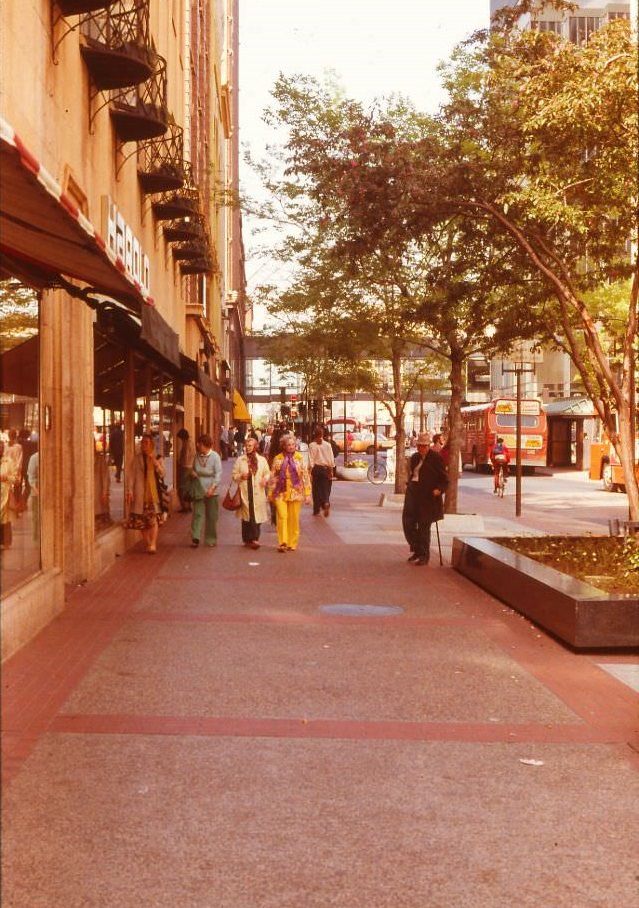
Spring on Nicollet Mall brought out cyclists, pedestrians, and vendors alike. The mall ran through the core of downtown, and no matter the season, it remained one of the most photographed stretches in the city. These early 1983 images show a Minneapolis that was busy but still approachable — a city where ordinary life played out in plain view.
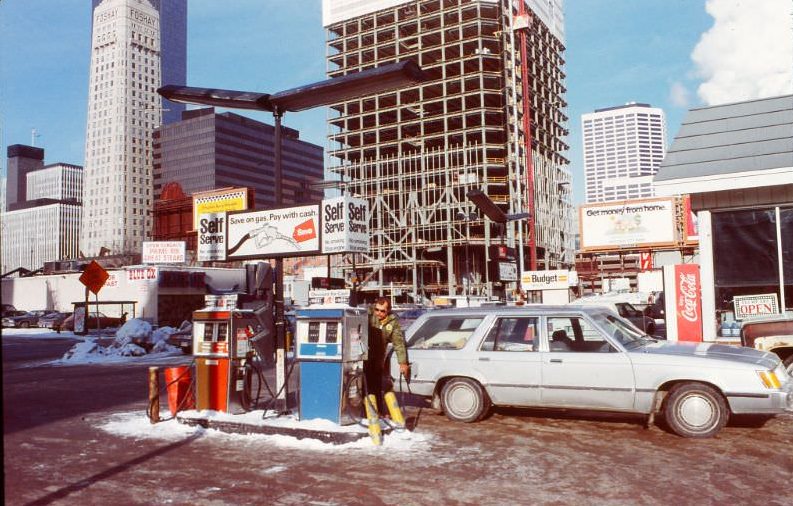
Not far from Nicollet Mall, older parts of downtown told a different story. At 3rd Avenue and 10th Street, an old gas station still occupied a corner lot while the Piper Jaffray Tower rose into the sky behind it. The contrast between the worn and the brand new was a defining visual of 1980s Minneapolis.
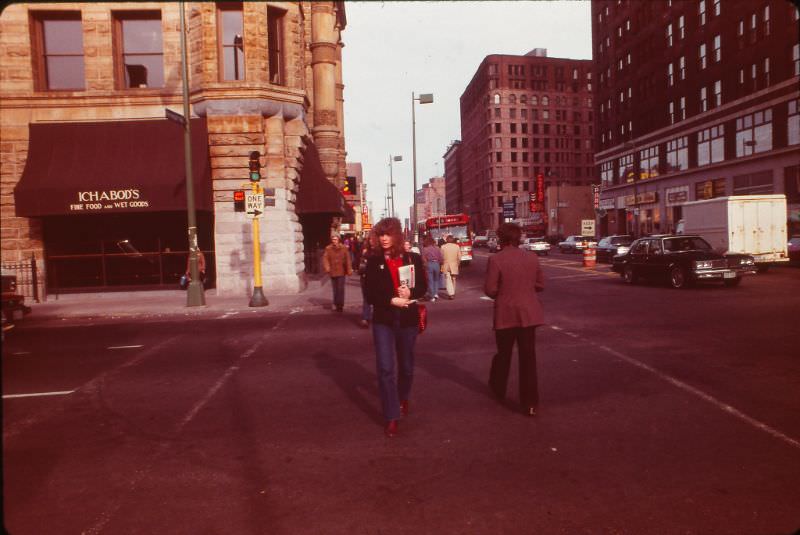
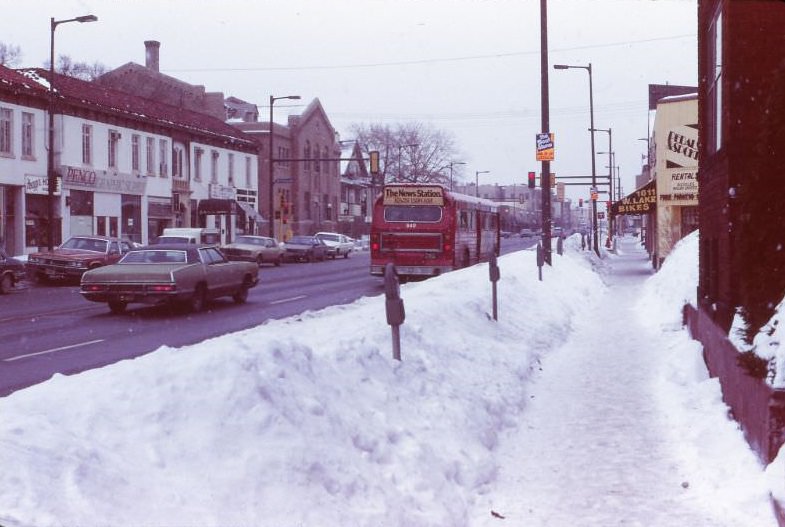
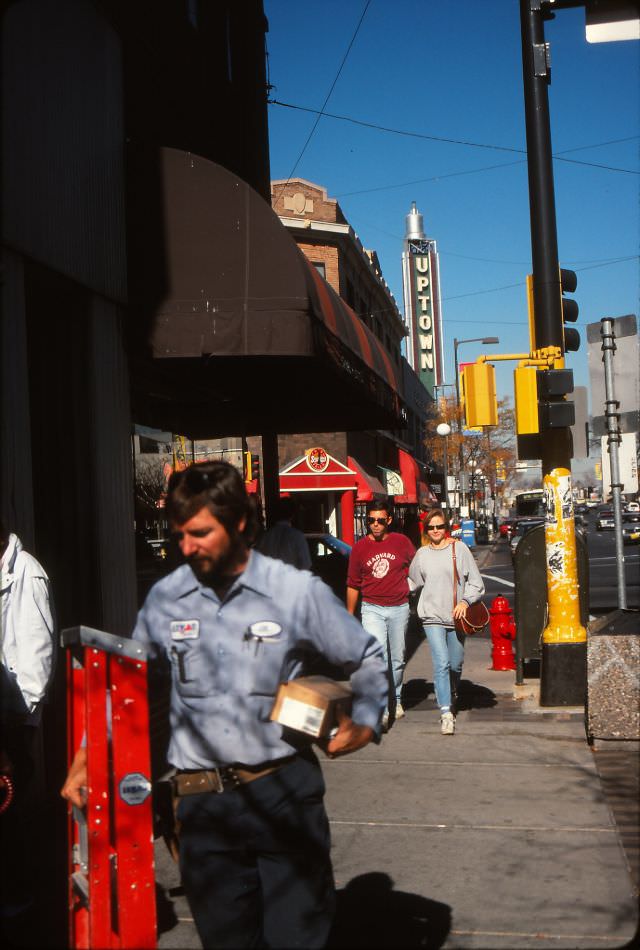
The Uptown neighborhood, a few miles southwest of downtown, had its own identity entirely. It attracted artists, musicians, and young residents who gave the area a distinct character. Even in winter, the streets of Uptown stayed alive with activity.
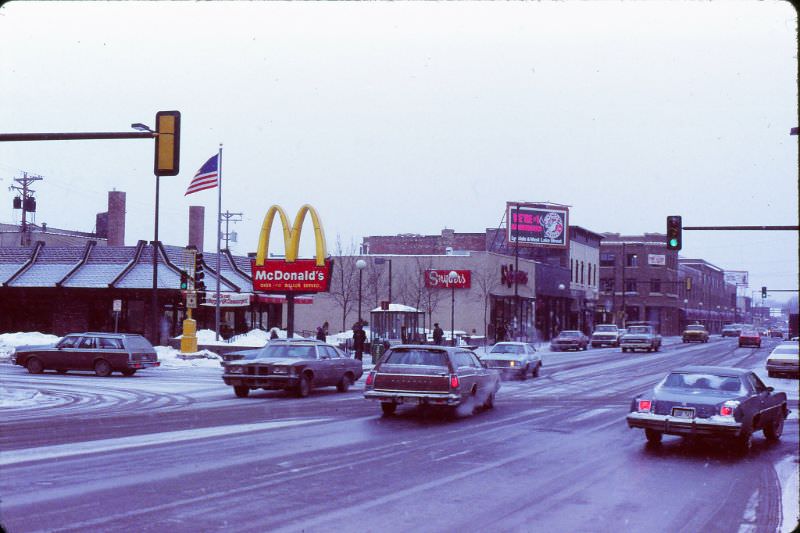
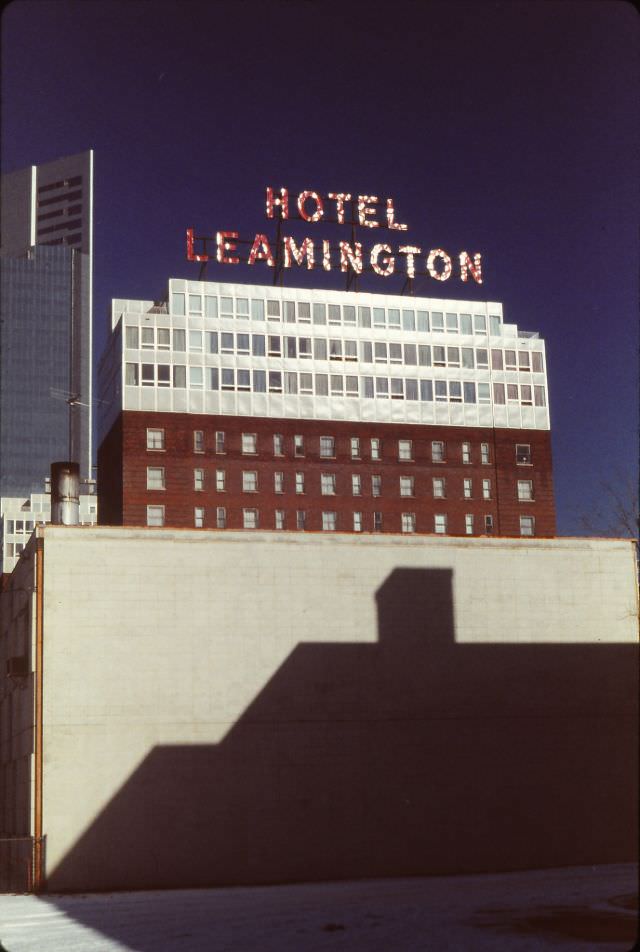
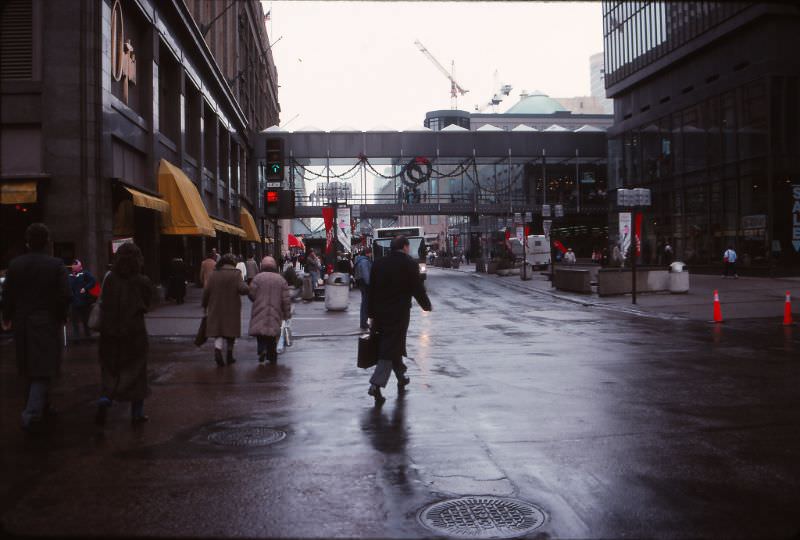
By December 1984, downtown Minneapolis had grown considerably. The City Center complex had reshaped the 7th Street corridor, and the Amfac Hotel stood as one of the more prominent addresses in the area. On nearby streets, holiday shoppers filled the sidewalks as the city settled into the rhythms of a cold Minnesota winter.
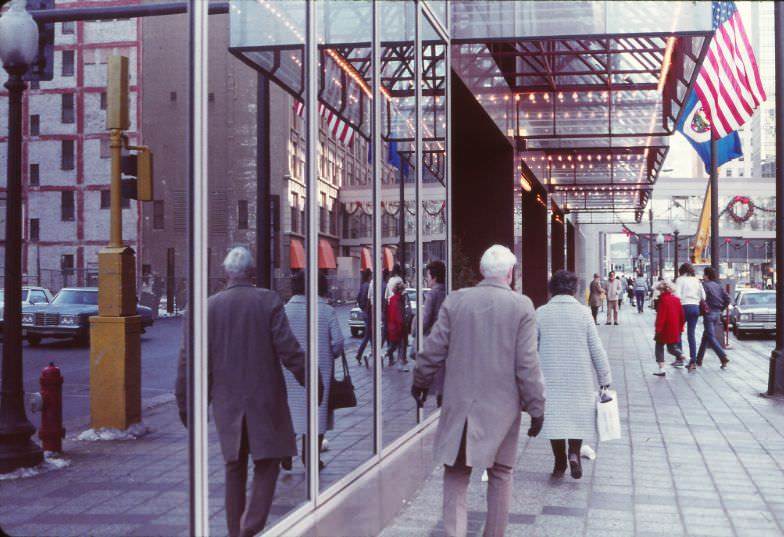
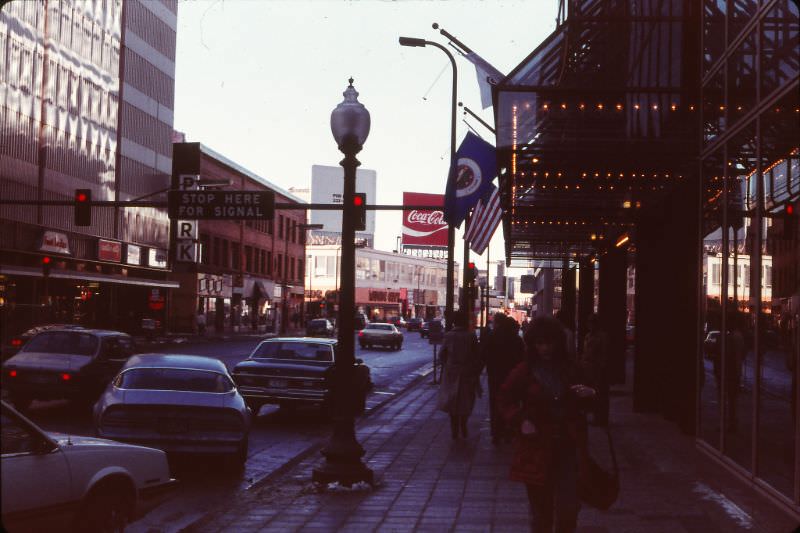
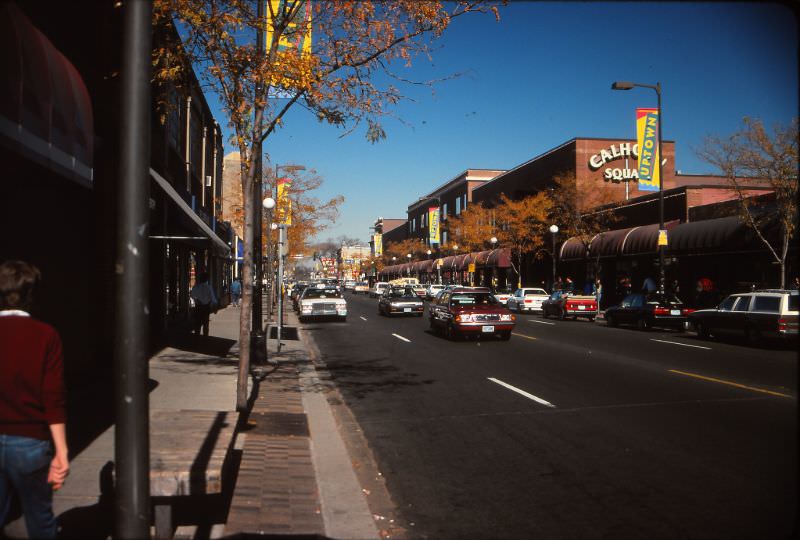
Calhoun Square in Uptown became a commercial anchor for the neighborhood during this period. The shopping center drew a different crowd than the downtown malls — younger, hipper, and deeply tied to the local music and arts scene that was putting Minneapolis on the national map.
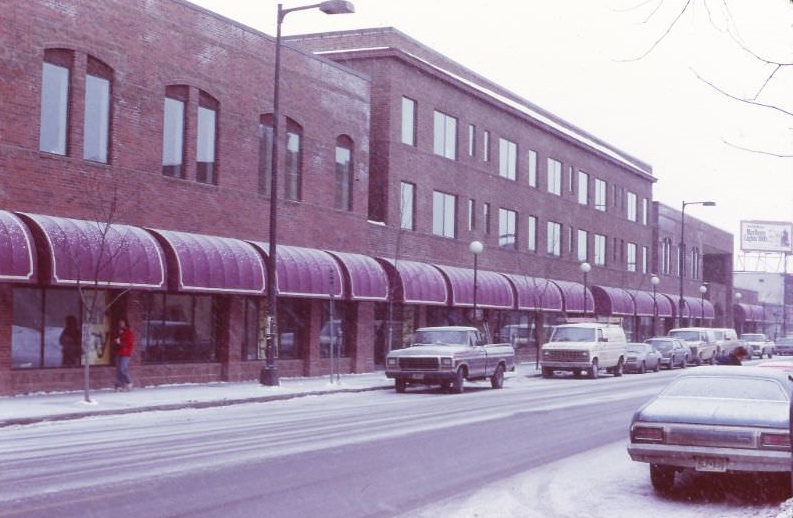
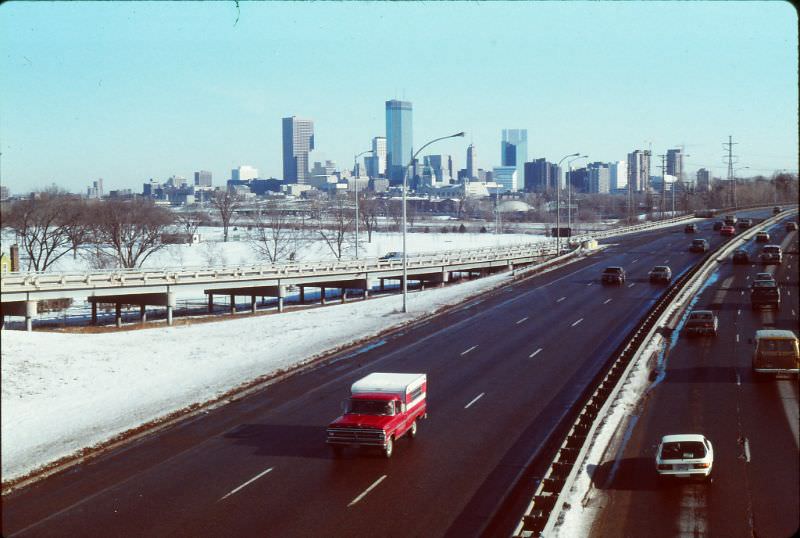
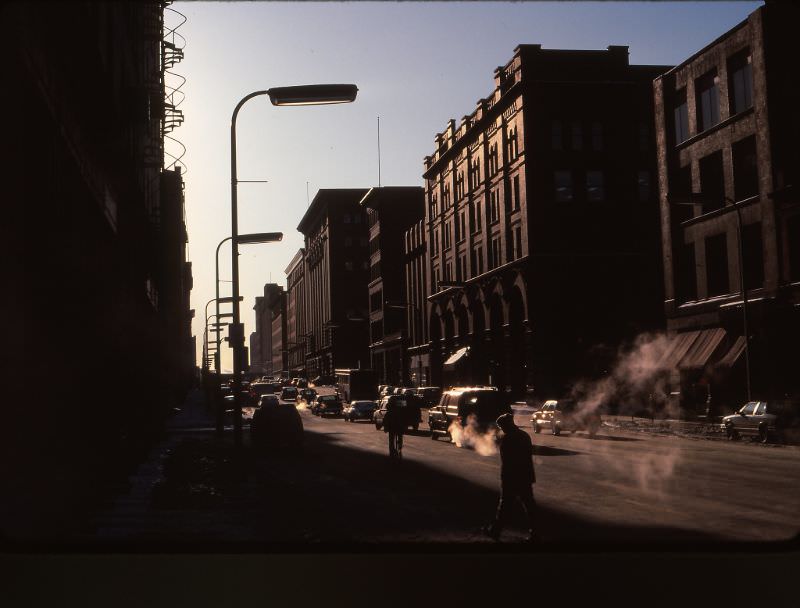
In early 1984, the Minneapolis skyline was already shifting. Viewed from Highway 12 — the road that would later become I-394 — the city projected a new confidence. Towers that hadn’t existed a decade earlier now anchored the horizon, and more were on the way.
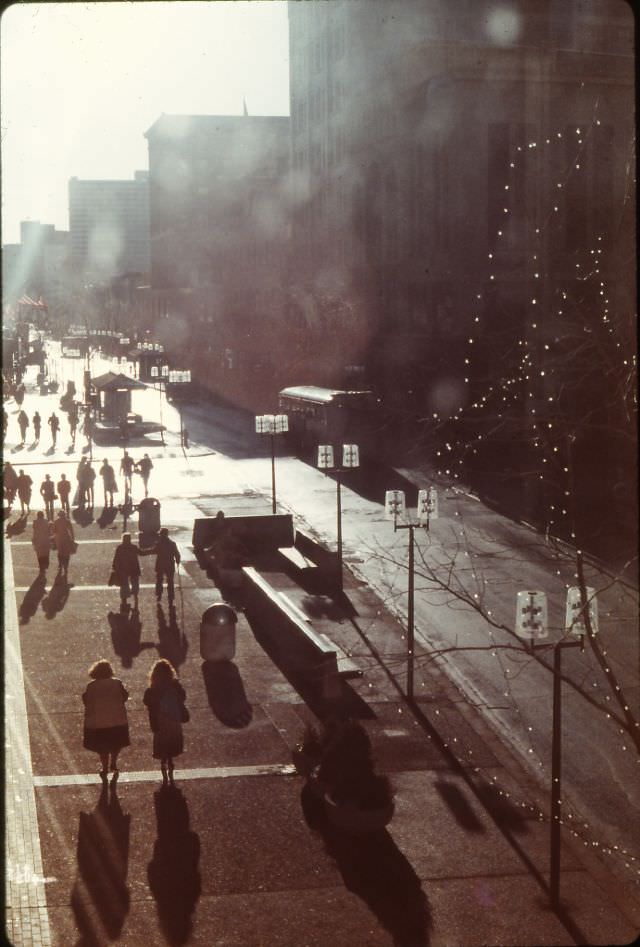
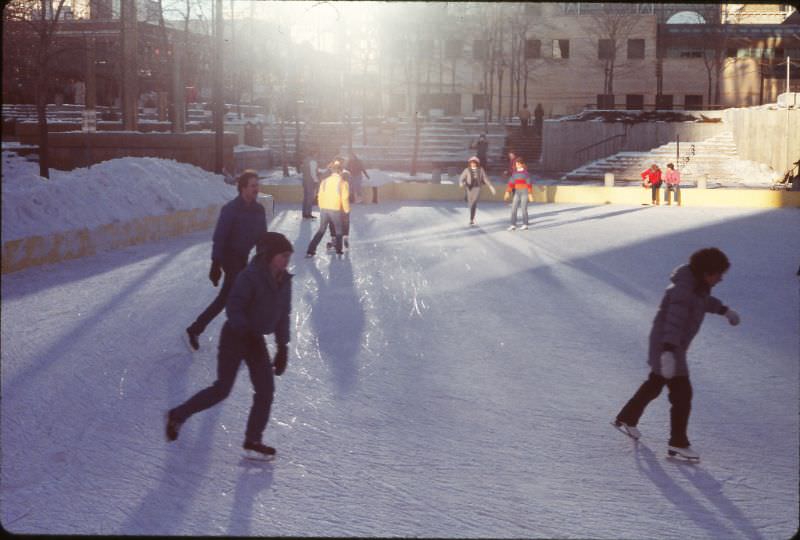
Winter in Minneapolis never slowed the city down. At Peavey Plaza, just off Nicollet Mall, residents laced up their skates and took to the outdoor rink through the coldest months of the year. It was a tradition that said something real about the people who called this city home.
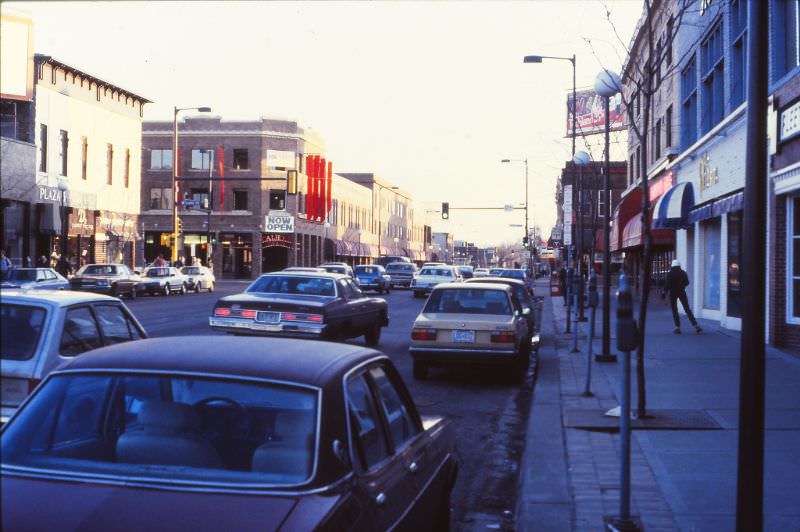
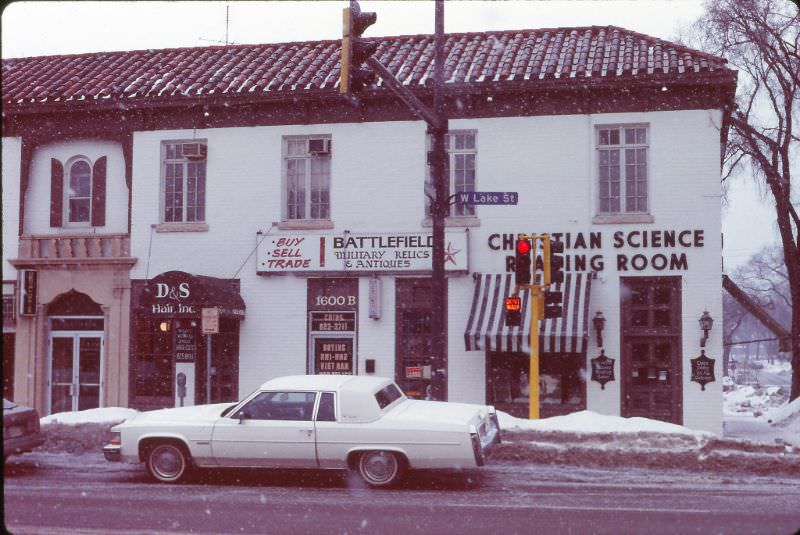
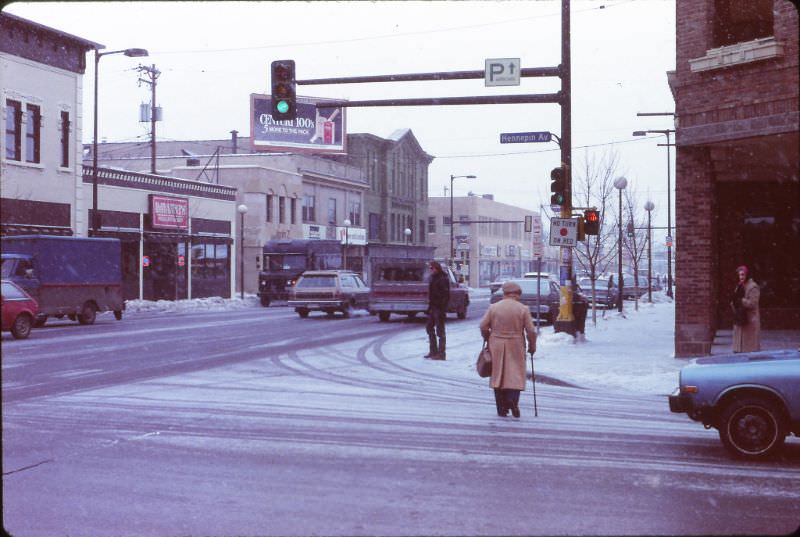
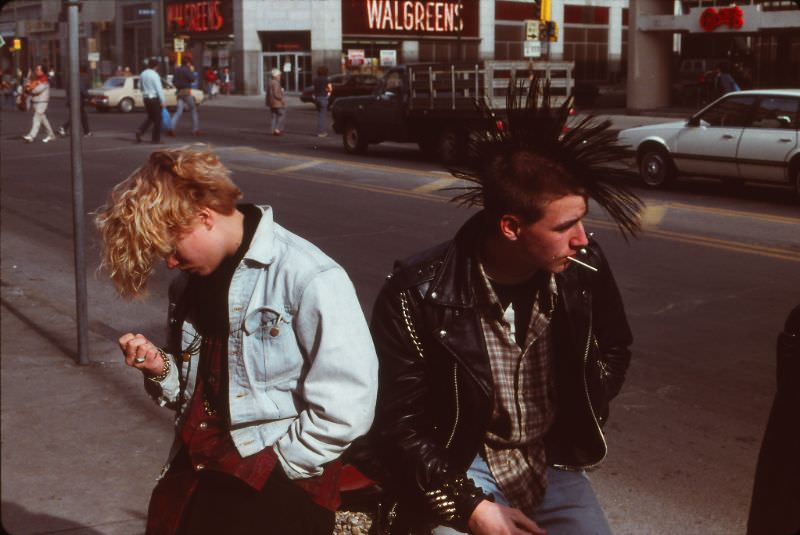
By 1985, Minneapolis was making noise far beyond the Midwest. The city had already produced “Funkytown” in 1980, a disco-era hit by Lipps Inc. on Casablanca Records that reached number one in 28 countries. That song marked the beginning of a musical identity that would define the city through the decade. On Hennepin Avenue, the culture was visible on the street — especially in front of record shops like Hot Licks and the Wax Museum, where punk kids gathered on an ordinary March afternoon.
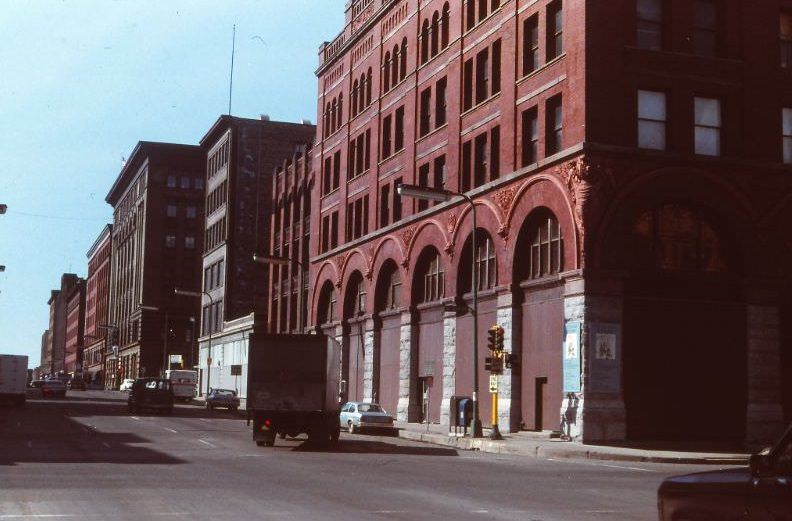
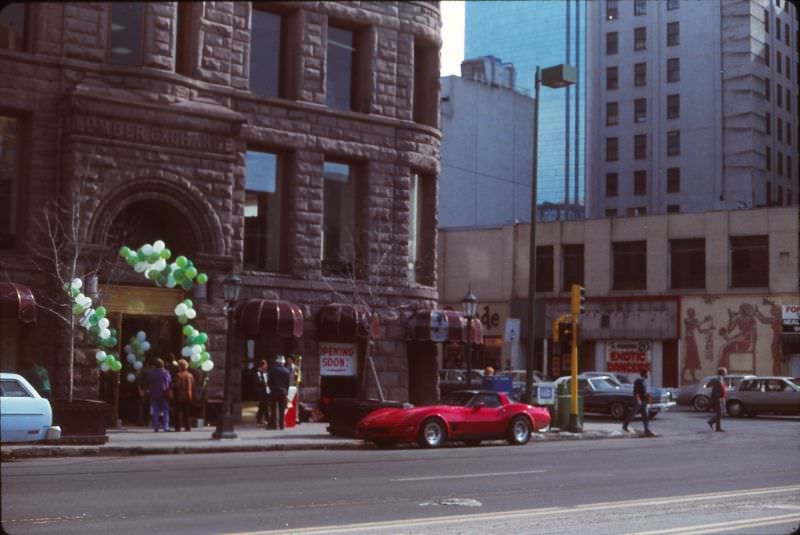
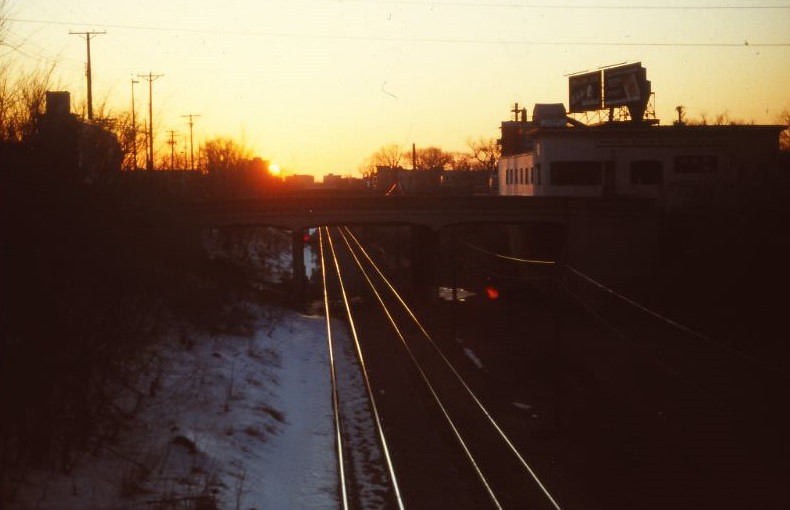
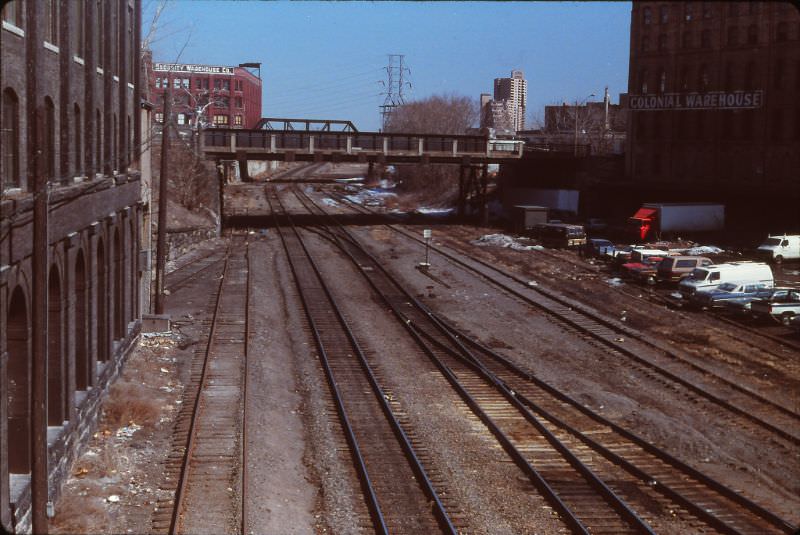
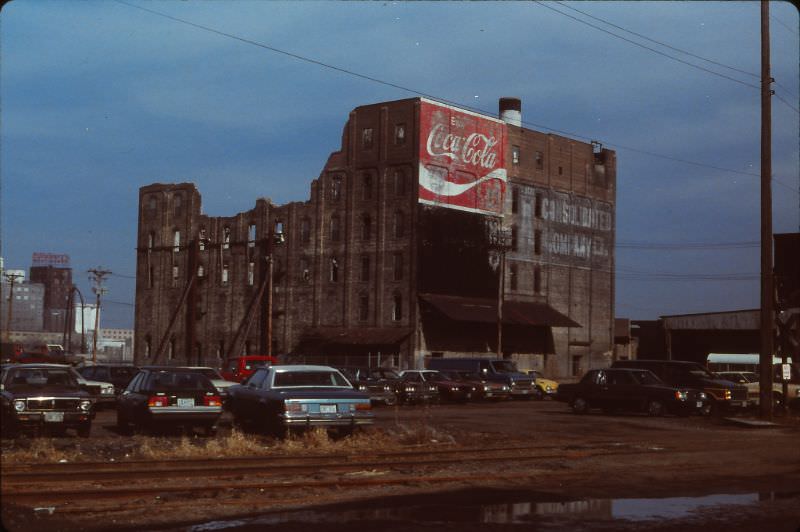
The Warehouse District and its surrounding areas showed a rougher side of the city. Railroad tracks cut through industrial zones near the Washington Avenue Bridge, and the ruins of an old mill stood as a reminder of Minneapolis’s 19th-century flour milling past. These were places most tourists never saw, but they were just as much a part of the city’s fabric.
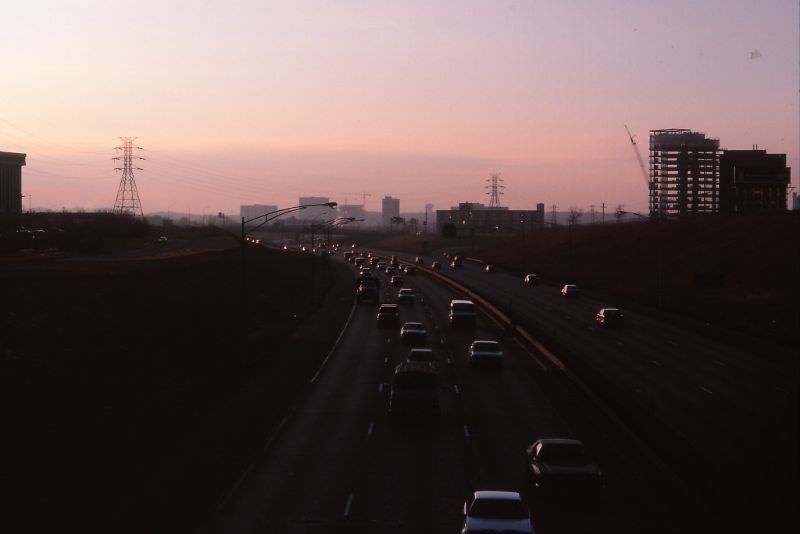
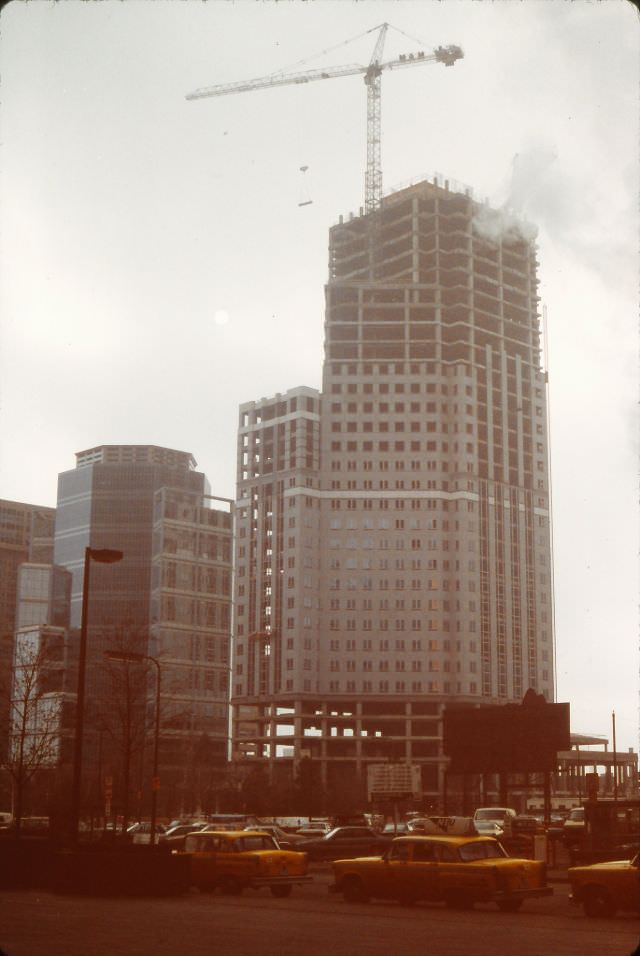
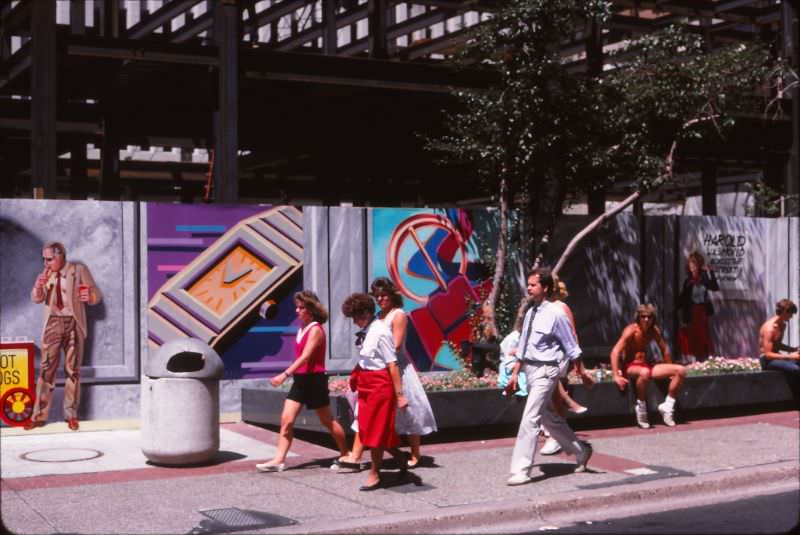
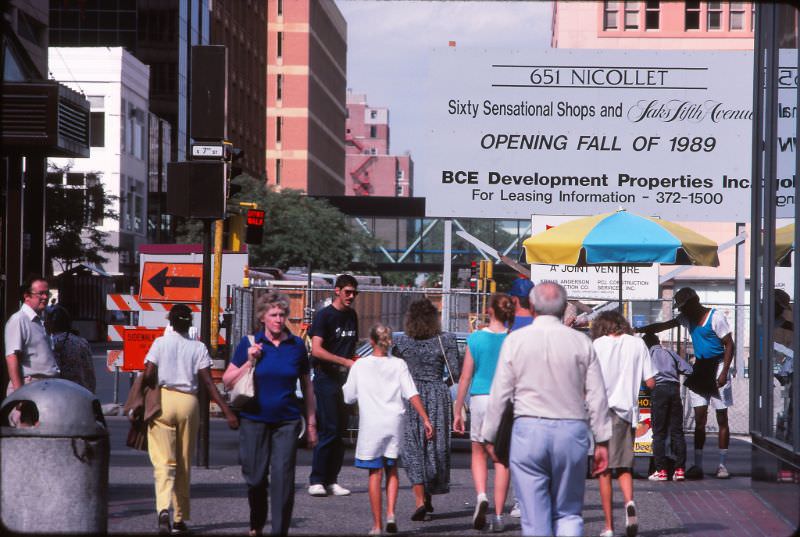
The mid-decade boom extended well beyond the city limits. Out on the Bloomington Strip along I-494, construction was constant through the fall of 1986. Back downtown, the Lincoln Center was going up, and along Nicollet Mall, work on The Conservatory — an upscale retail mall — temporarily disrupted the city’s busiest pedestrian corridor.
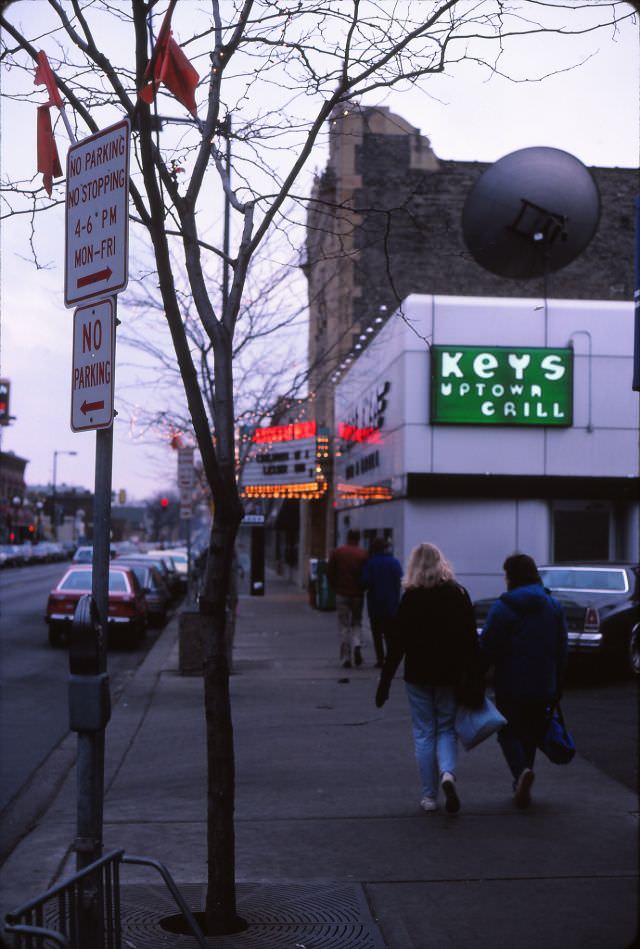
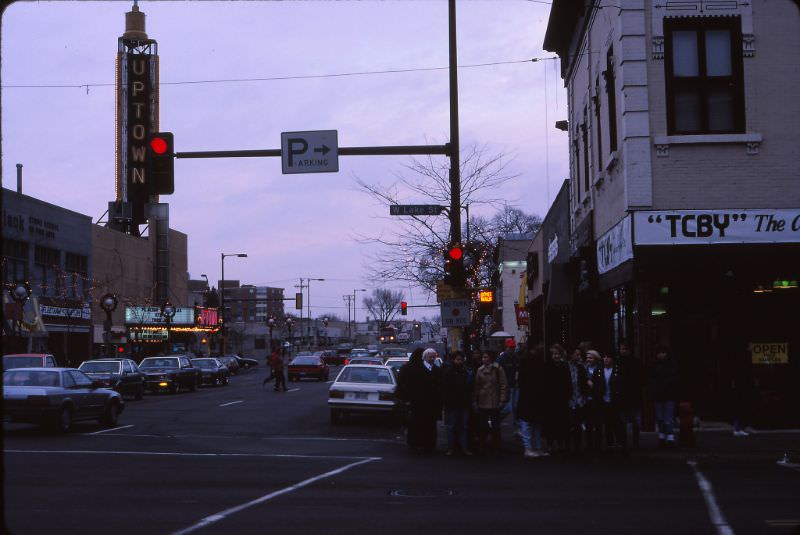
Uptown in the fall of 1986 had a lived-in feel. The Uptown Grill on Hennepin Avenue was the kind of place that drew regulars, and the neighborhood’s side streets mixed old apartment buildings with new storefronts. The Lake Harriet Band Shell had just been rebuilt the previous year in 1985, and the parks and outdoor spaces of this part of the city remained a draw through every season.
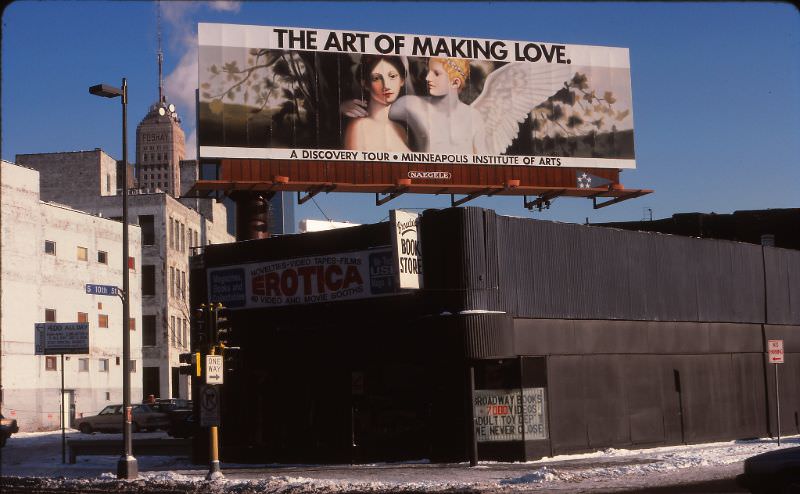
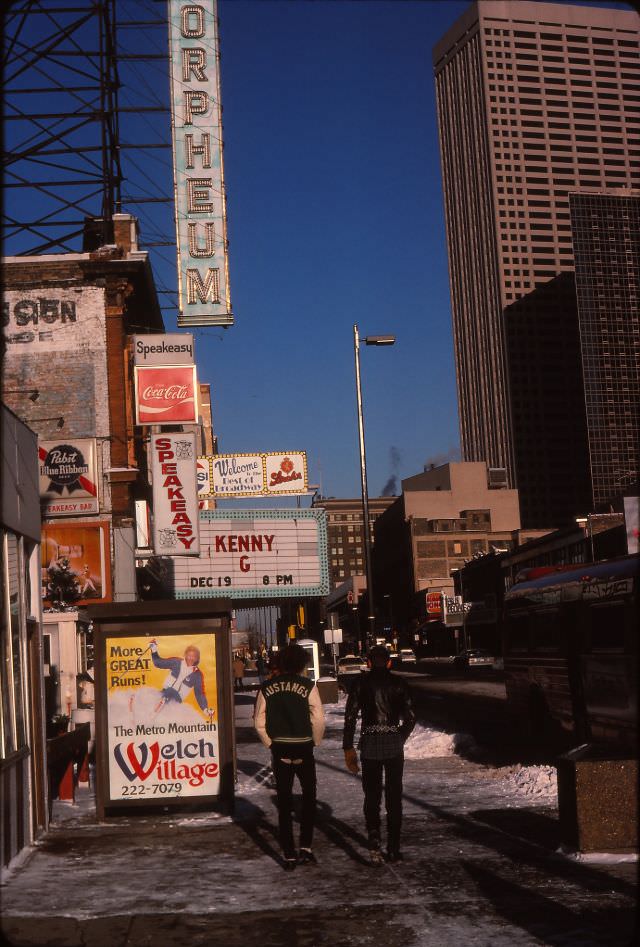
One area of Minneapolis that carried a darker reputation during this era was Block E, a stretch near Hennepin Avenue that was known for its bars, street-level chaos, and rough crowd. The block was notorious enough that it became a symbol of the grittier side of downtown. December 1987 images from Hennepin Avenue capture that atmosphere — neon signs, late-night foot traffic, and storefronts that catered to a very different clientele than the Nicollet Mall shops a few blocks away.
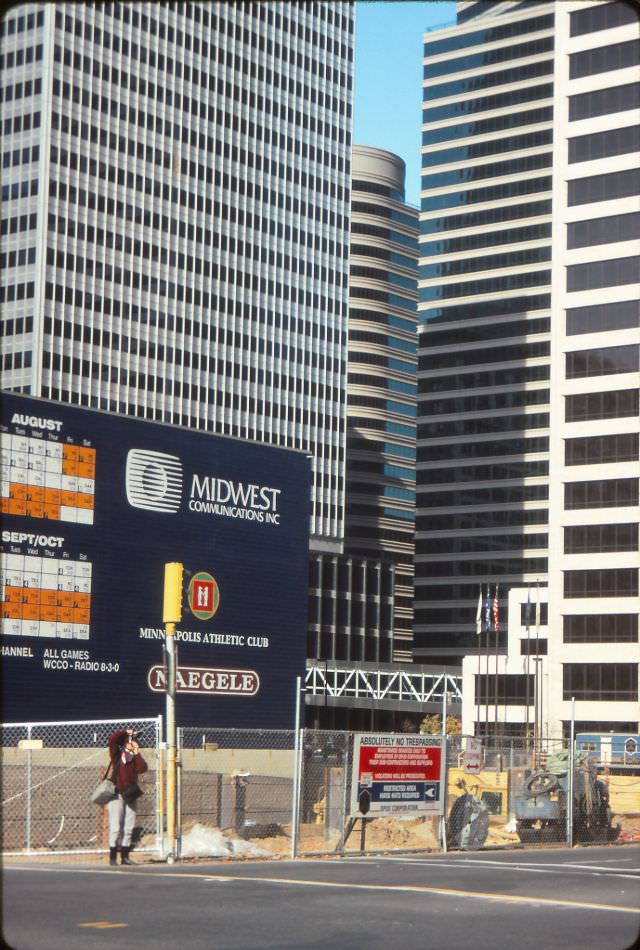
As the decade moved into its final years, Minneapolis continued to build and expand. The Multifoods Tower was completed in 1988, adding another landmark to the downtown skyline. On the streets below, the city’s neighborhoods carried on — Uptown still buzzing, the Warehouse District still industrial, and Nicollet Mall still the centerpiece of downtown commerce.
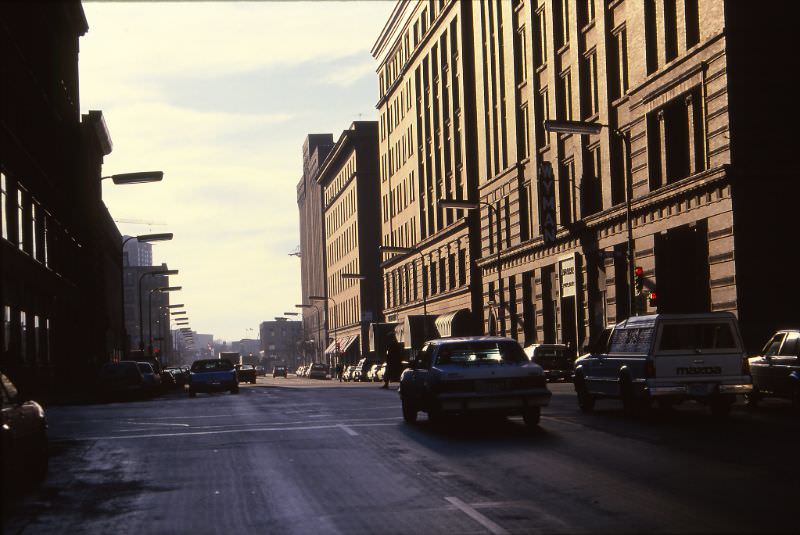
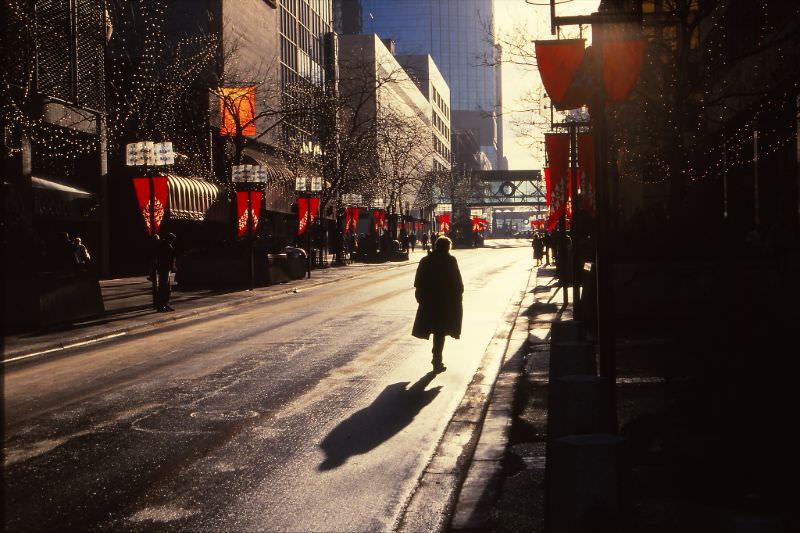
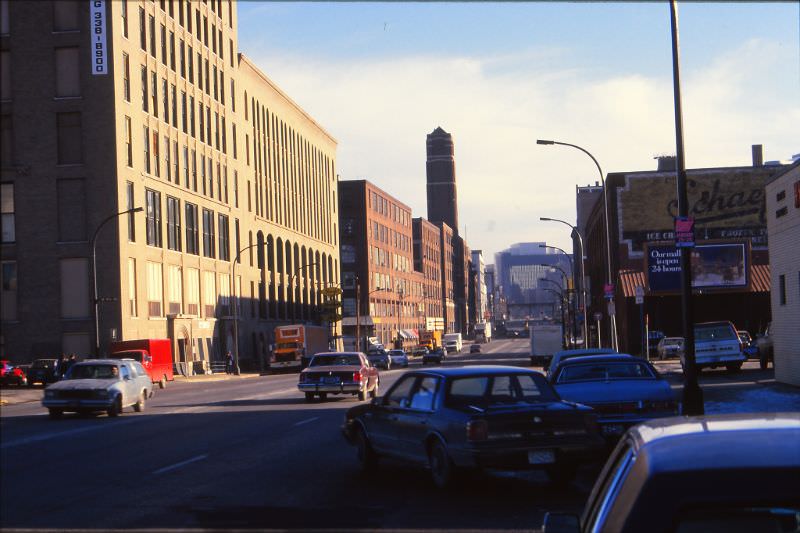
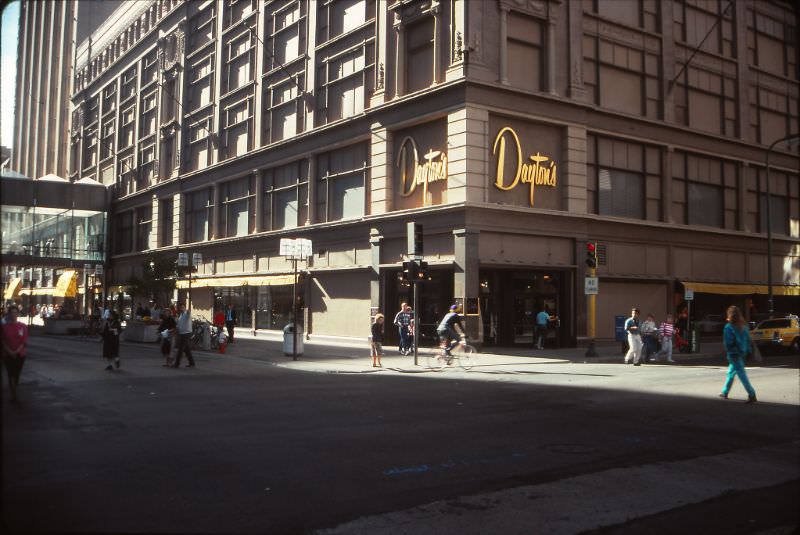
Into 1989, the pace of change in Minneapolis showed no signs of slowing. On 7th Street, construction was underway on what would become US Bank Place — later known as the Capella Tower at 225 South 6th Street. Dayton’s Department Store at 7th and Nicollet remained one of the city’s most iconic retail addresses, a fixture that anchored downtown shopping for generations of Minneapolis residents.
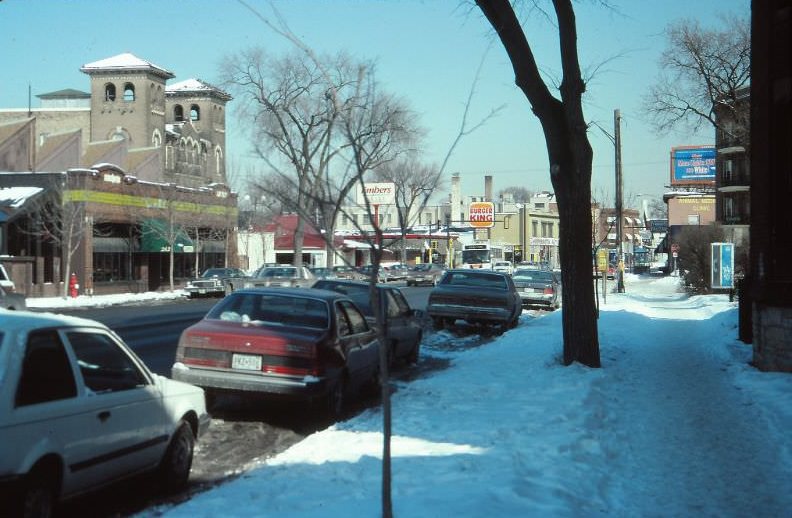
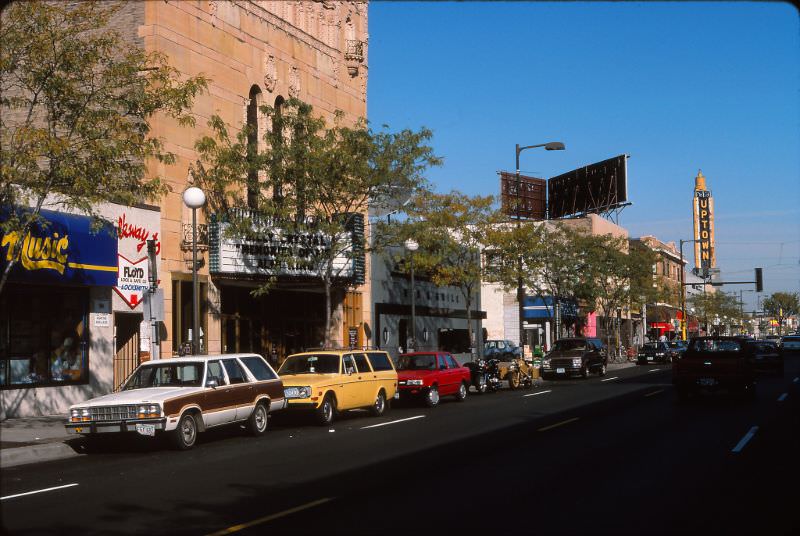
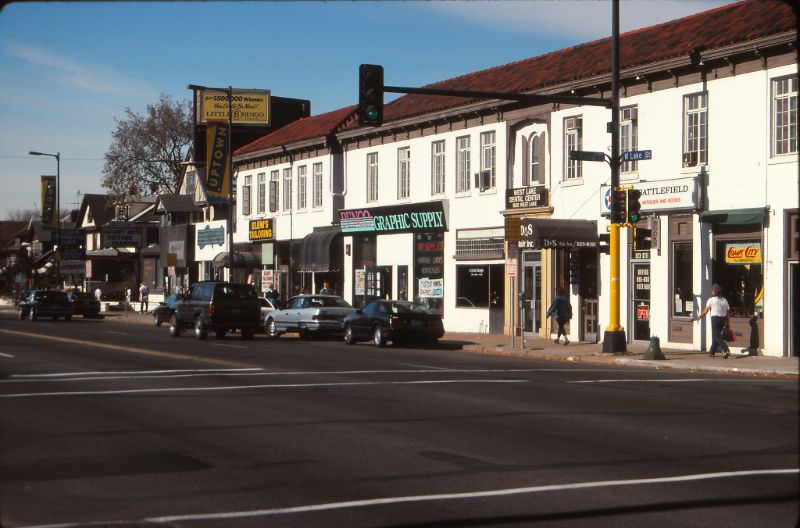
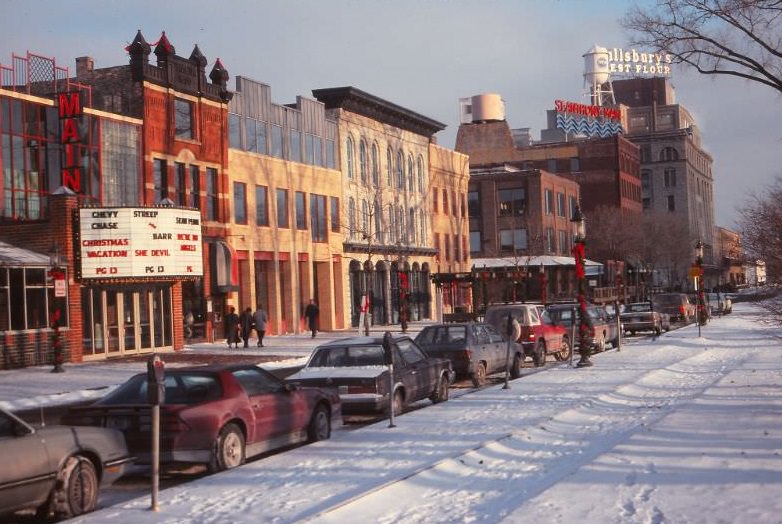
Uptown in the fall of 1989 still carried the energy it had built through the decade. Hennepin Avenue near Lake Street was as active as ever, with foot traffic, storefronts, and street scenes that reflected a neighborhood fully in its stride. Historic Main Street, along the riverfront, offered a quieter contrast — old stone buildings and a sense of the city’s deeper roots.
These photographs by Todd Jacobson freeze a version of Minneapolis that no longer exists in the same form. Streets have been repaved, buildings torn down, and whole blocks reimagined. Block E, once a notorious stretch of bars and street activity, eventually gave way to the Mayo Clinic Square sports medicine center. What Jacobson captured across nearly a decade of shooting is the raw material of a city in the middle of becoming — not yet what it would be, but fully alive in what it was.





These are cool photos; I love looking at old pictures. In reality, things stayed pretty much the same, despite how much people make it seem like they were different
The photos could have been improved by removing the orange in the pictures.
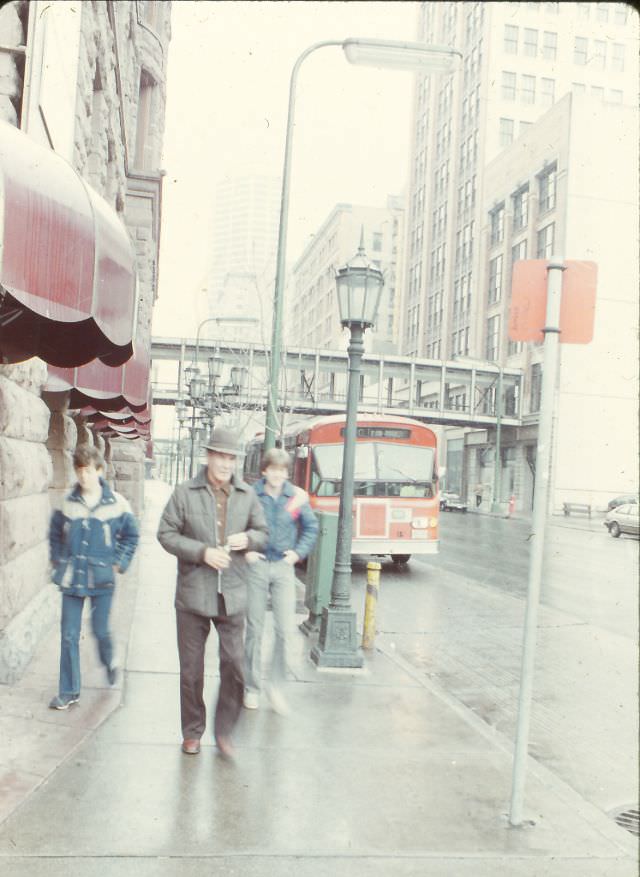
I completely forgot that the buses used to be red. They stood out from other Minneapolis bands because of that. As white buses, they now resemble any other city’s buses.
The orange buses are such a nostalgia hit. It would have been better if they hadn’t changed to white.
Correction: the Multifoods Tower was finished in 1982.
Can anyone remember the name of music store/guitar shop on Hennepin Avenue? It was between Lagoon and 26th (I think it was on the corner of 28th and Hennepin.)
I love this.
The absolute best part: the red buses. I forgot about those.
Wow 80s Minneapolis and you don’t even mention PRINCE
As someone who moved to Minneapolis in 1986 when I was just 5 years old, many of the places depicted in these photos, particularly those from the late 80s, bring back fond memories. Even though I’m only 41, looking at these photos makes me feel surprisingly old.
I enjoyed seeing all of the various vehicles in the pictures
They should bring back those red buses. Maybe for a commemorative thing or somethin’
The paint job maybe, the actual buses were a nightmare to drive.
Love Metro Transit. Hate hate hate the basic livery on local buses. Red would be so much better
Back when Minneapolis was the least expensive place to live in MN, other than St. Paul.
Ohhhh memories … this was the city I lived and worked in, and loved, in my 30s, before I got older and more tired of the winters and finally moved away in the mid-2010’s. I still have dreams in which I’m running around this city, as it is in these pictures, although I know that so much of the reality has changed forever now.
that was fun
I bet that Kenny G show was wild.
Couple of thoughts.
a) Bring back the red buses.
b) I miss the old school uptown library with the underground floors. They build that in the early 80s…..didn’t seem like it had to be replaced so soon with a much smaller place.
B) With the book dropoff that was a slide.
There’s a fantasy novel set in Minneapolis near this era, War for the Oaks (1987). If you’re into that.