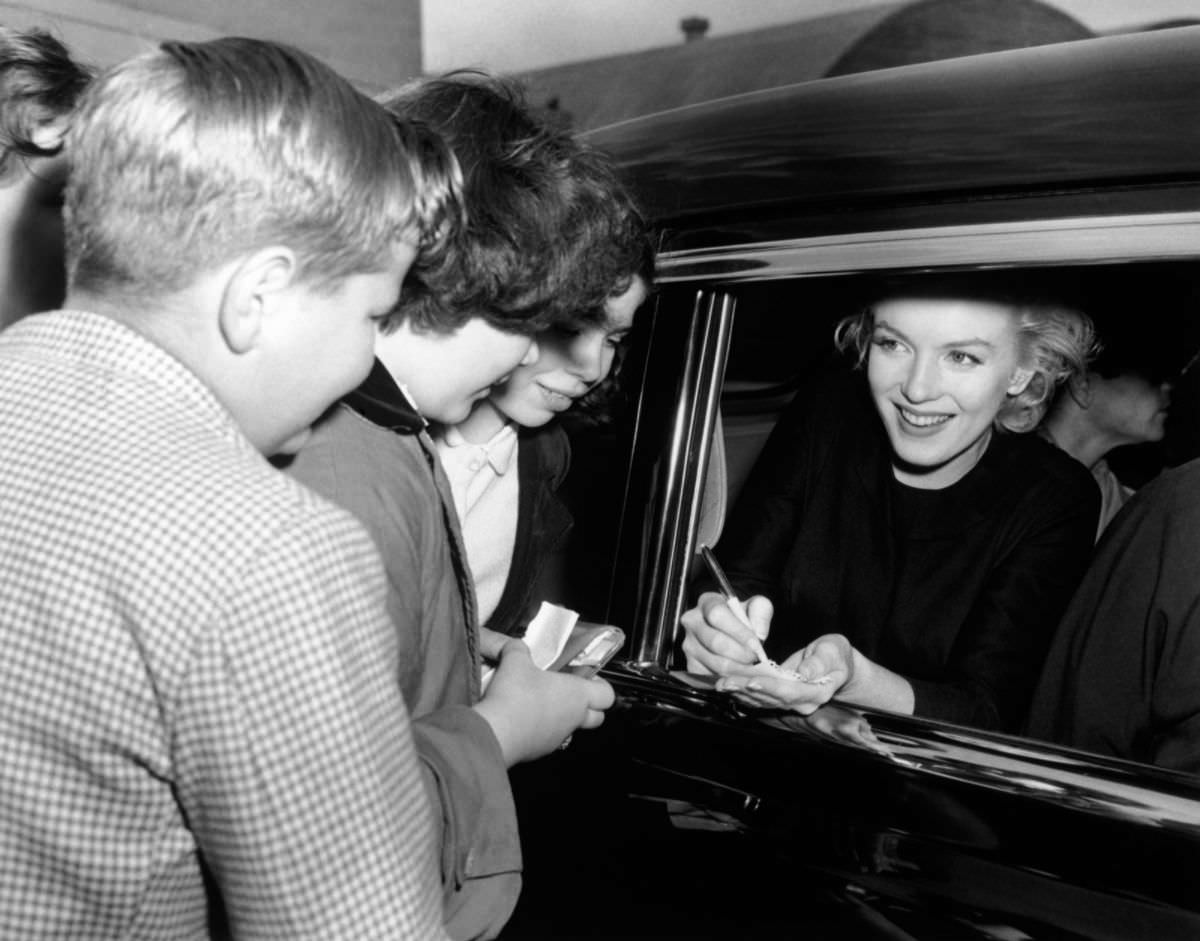
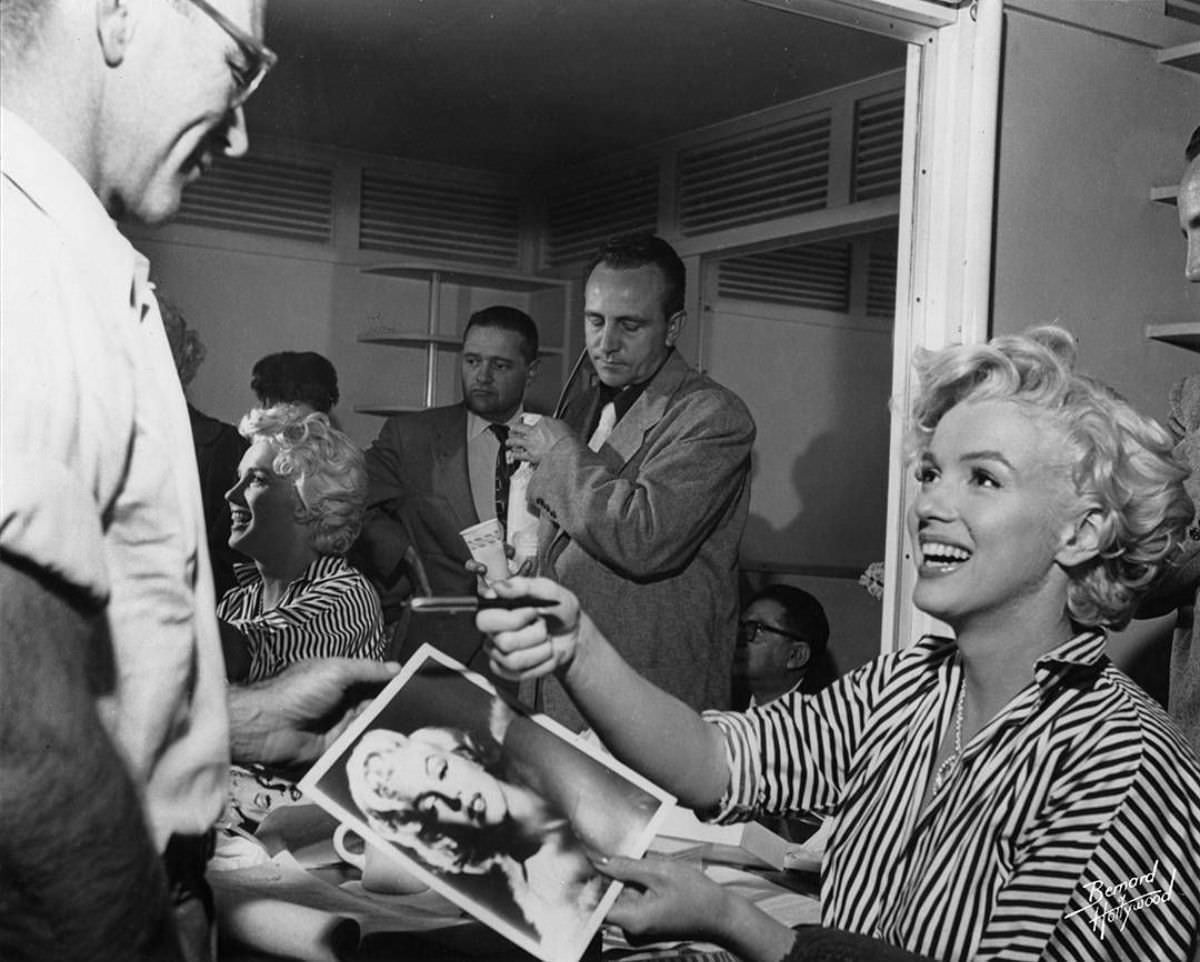
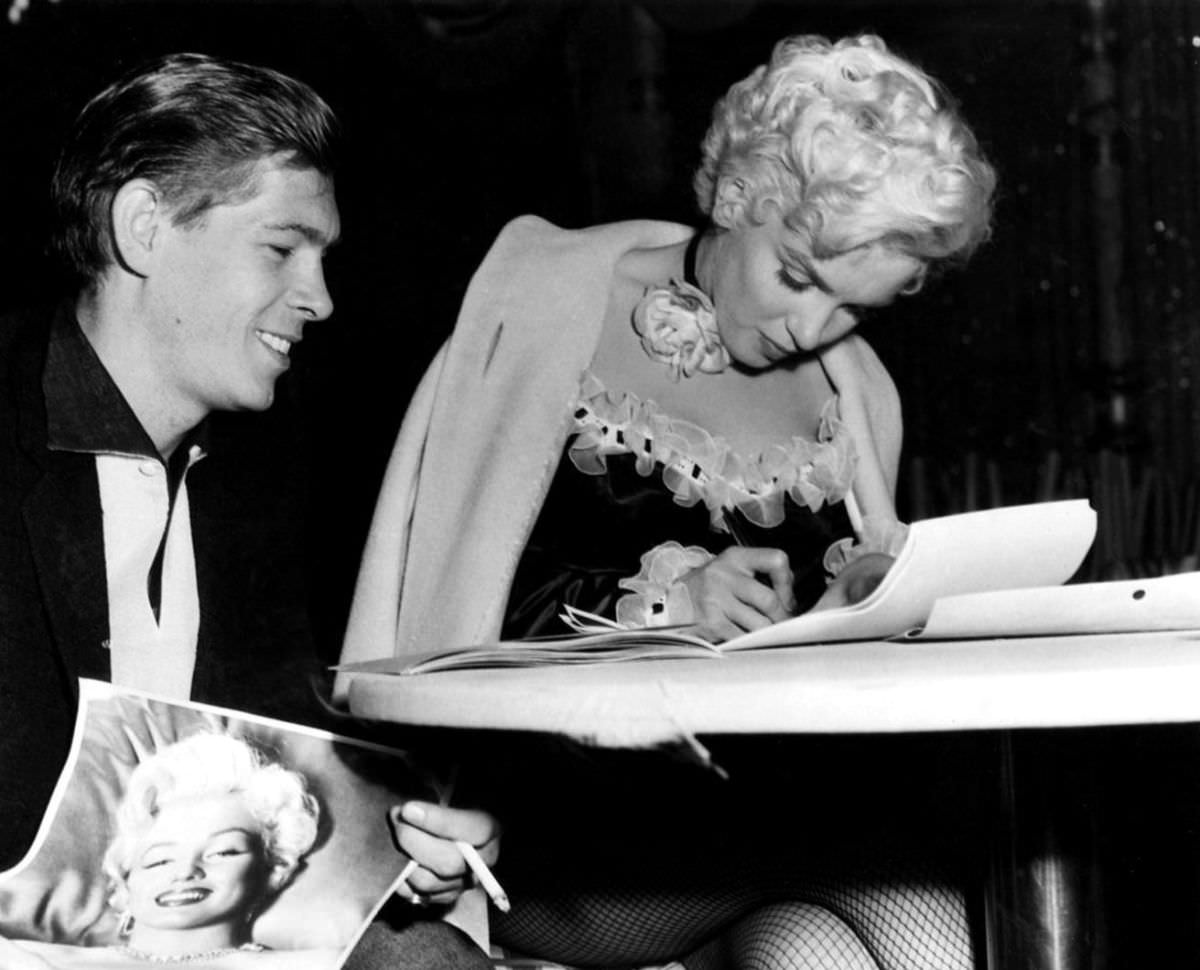
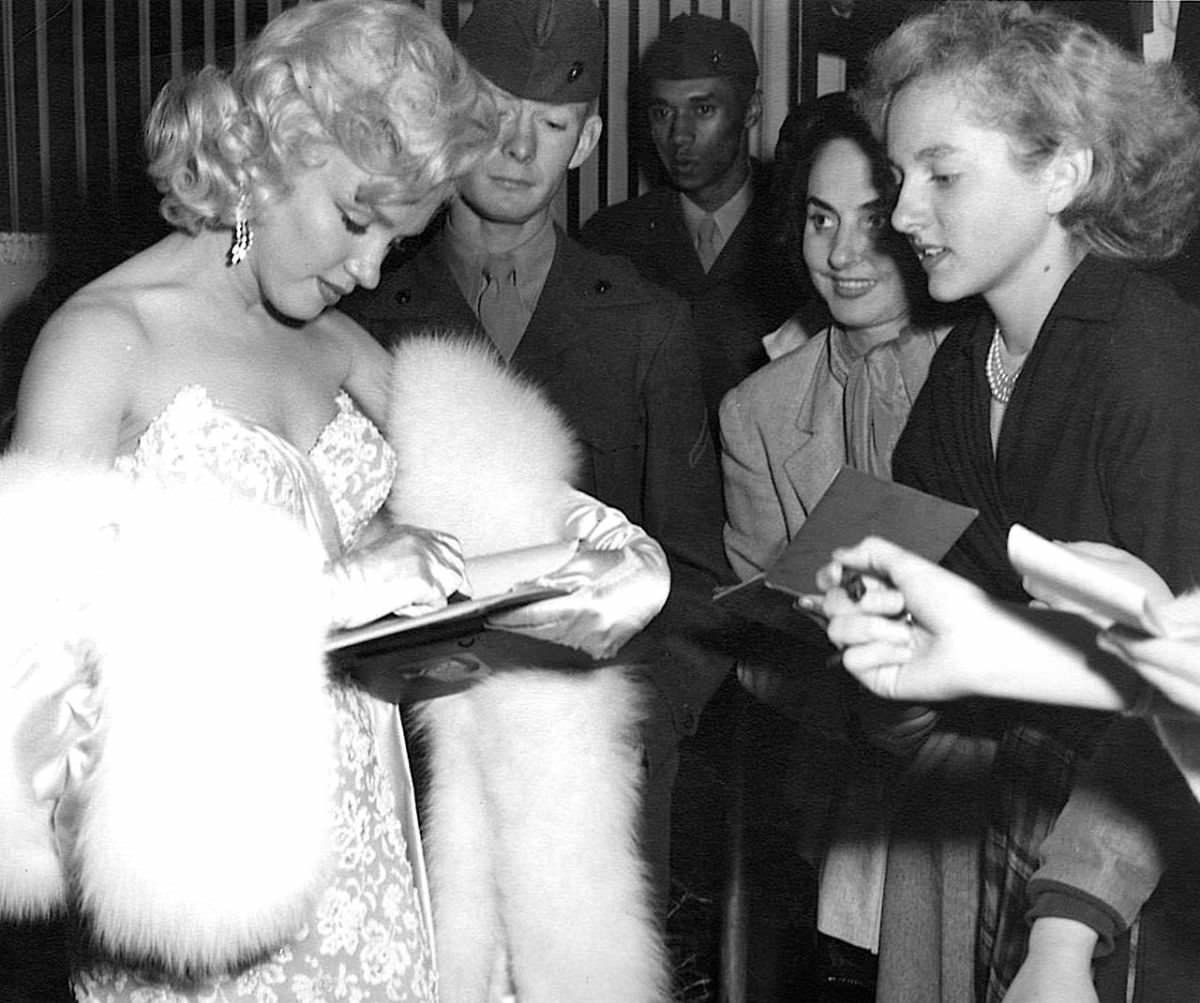
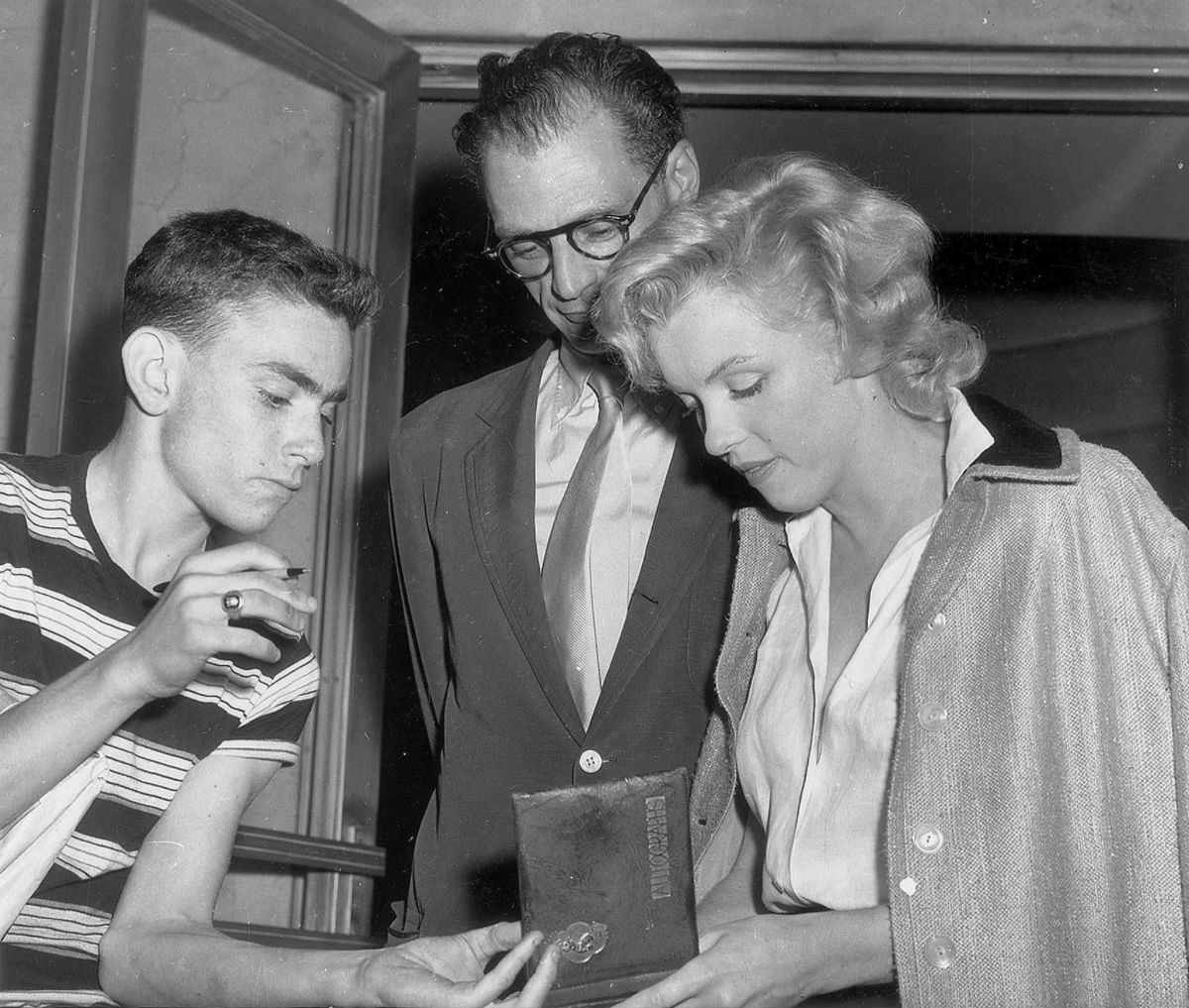
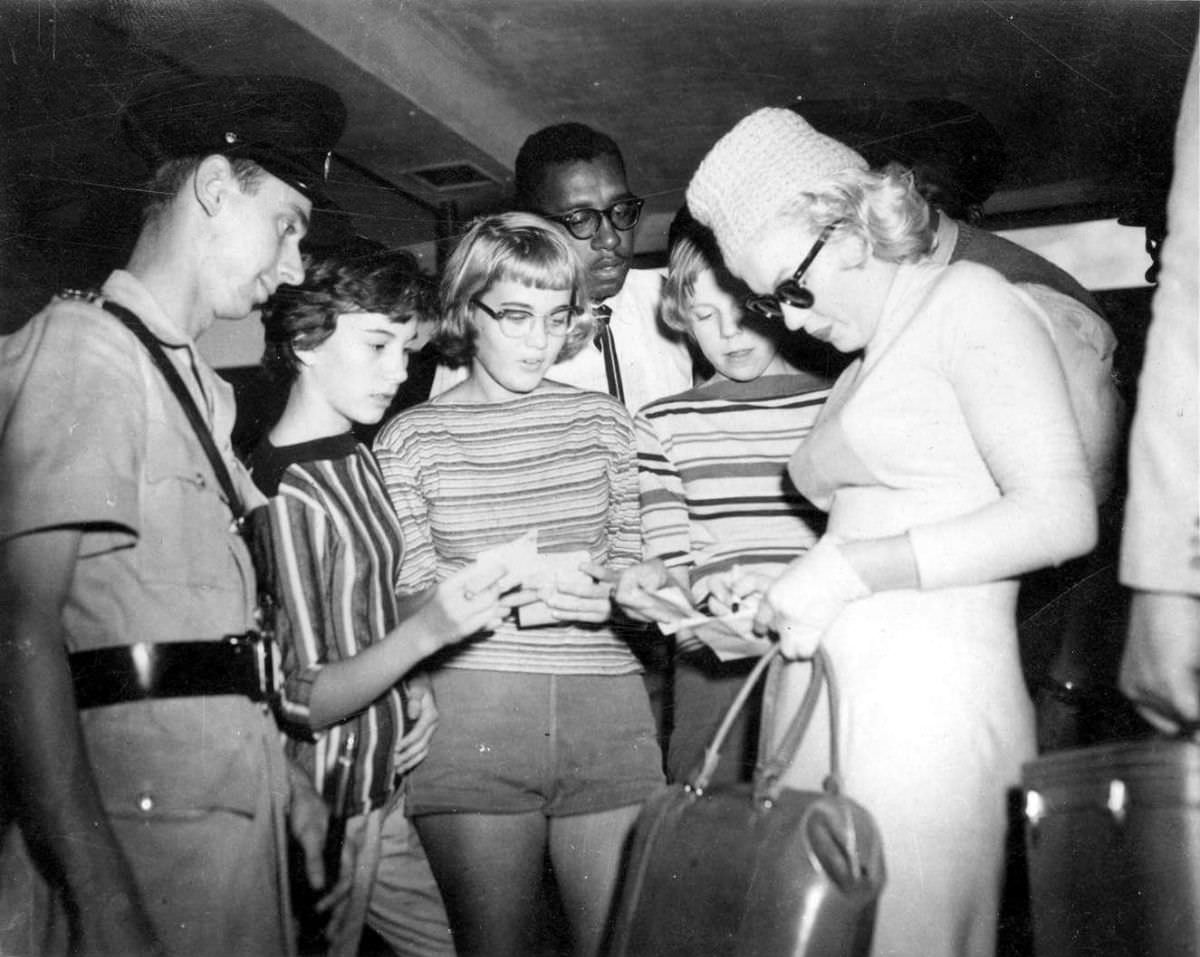
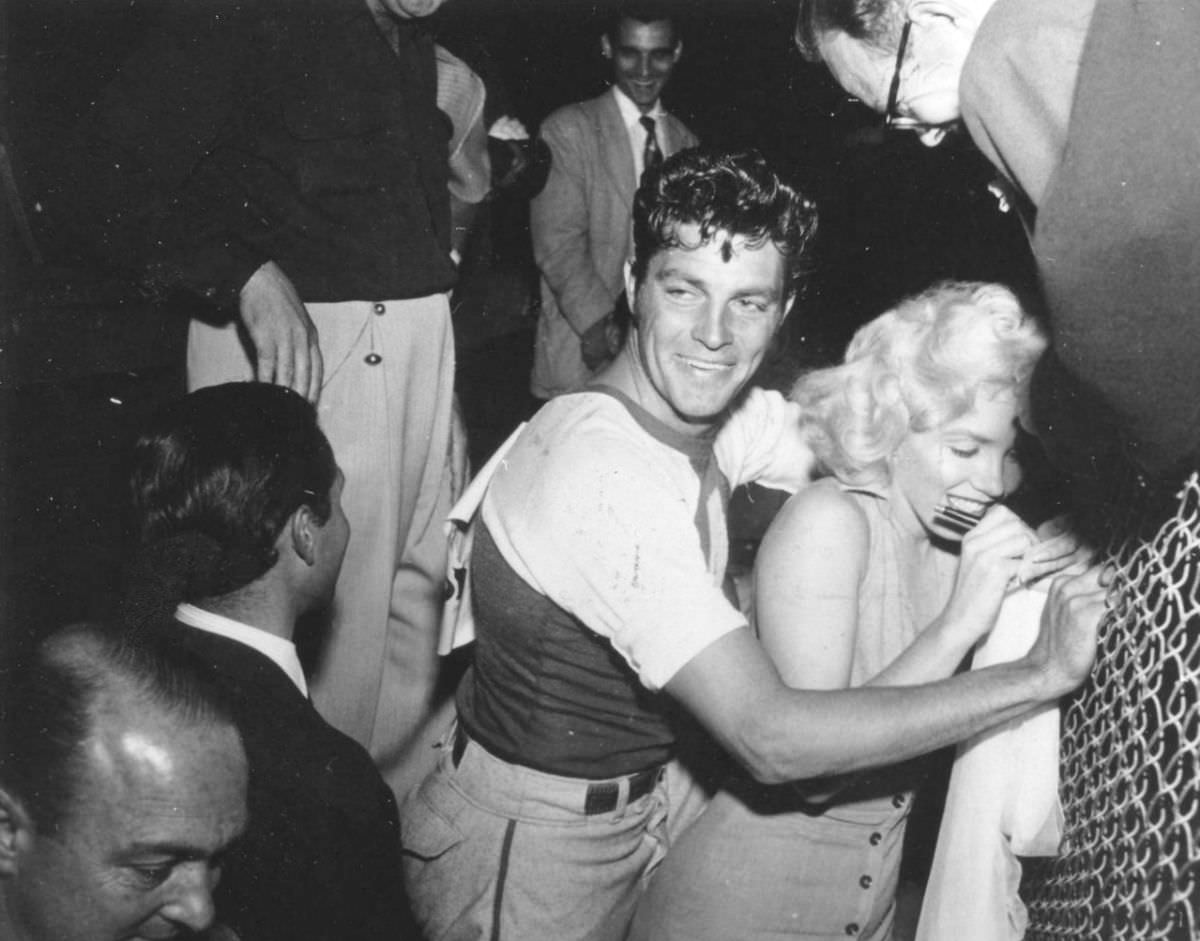
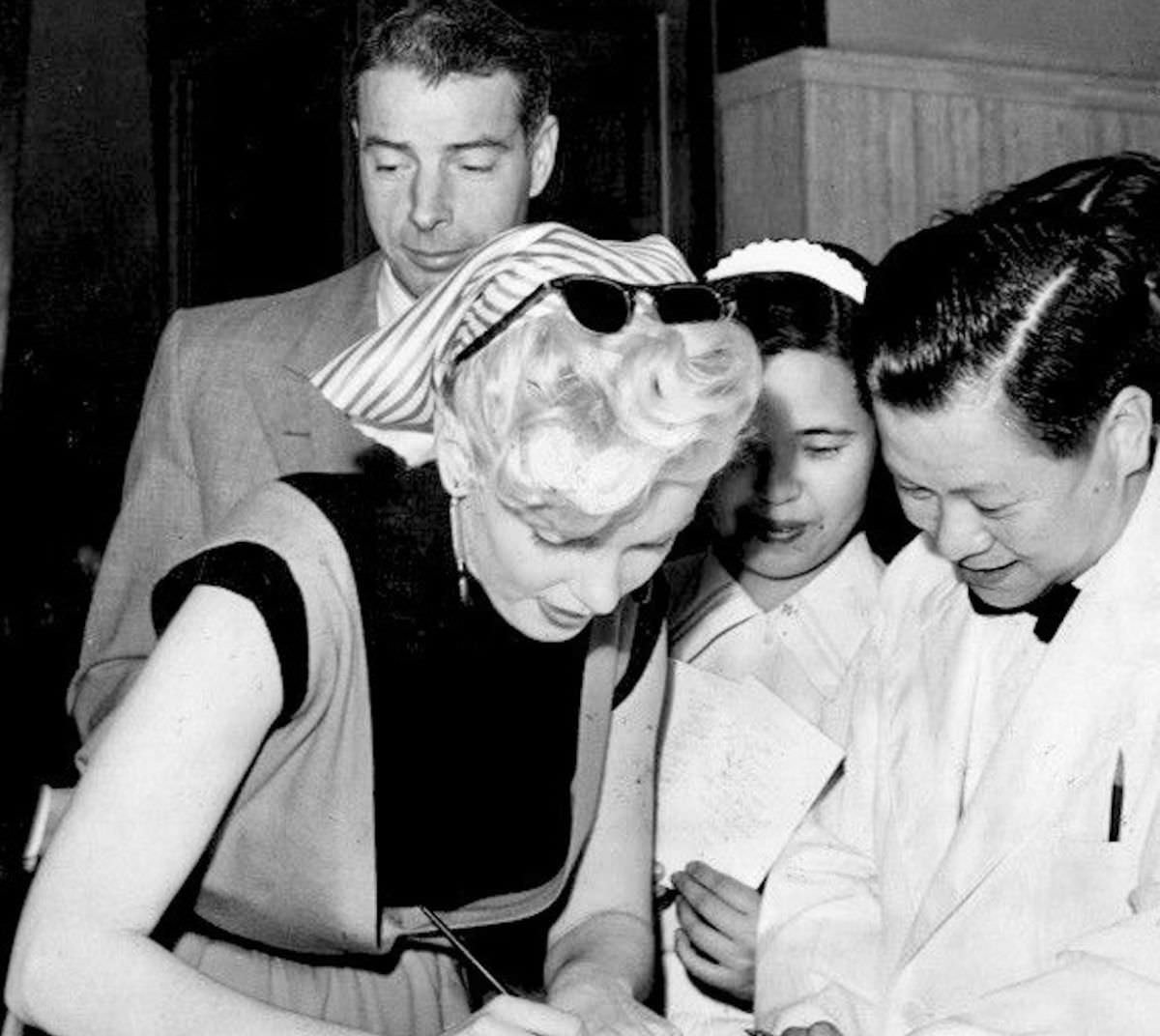
Marilyn Monroe never seemed to mind the crowds. Signing autographs, posing for photos, stopping to speak with strangers — none of it felt like a burden to her. Where most celebrities kept a careful distance from their public, Marilyn moved toward it. Fans followed her everywhere she went, and she let them.

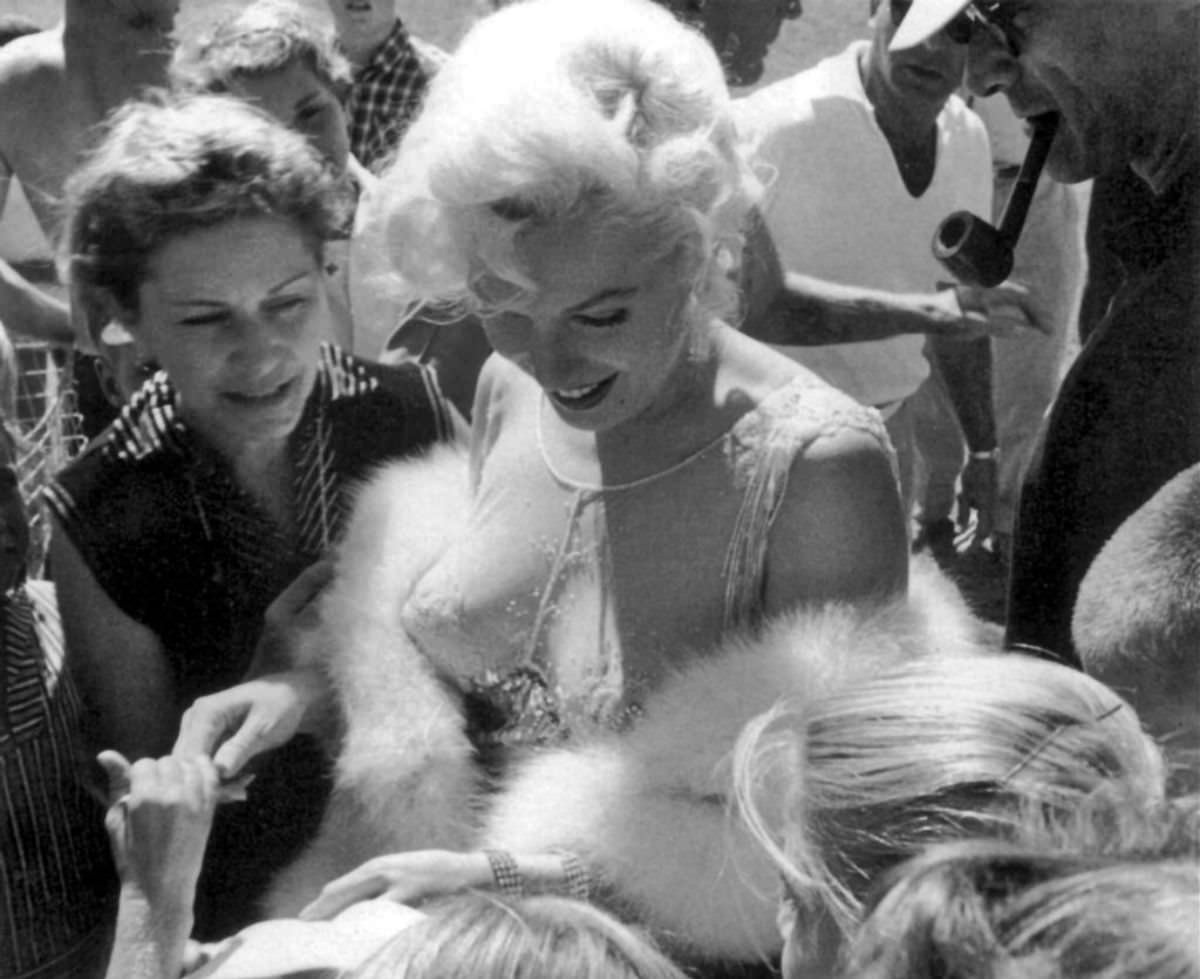
The scenes outside her hotel rooms were a regular spectacle. Within hours of her arrival in a new city, hundreds of fans would gather, waiting for her to appear. They wanted a glimpse, a photo, or the chance to get her signature on something — anything. Marilyn would often come out to meet them rather than slip away through a back exit.


The devotion of her fans went far beyond hotel lobbies. She was chased into public restrooms on more than one occasion, with fans sliding autograph books under the cubicle door to get her signature. It sounds extreme, but for Marilyn, it was simply part of daily life.

In New York, a dedicated group known as the “Marilyn Six” kept a near-constant vigil whenever she was in the city. They tracked her schedule and stationed themselves outside her known locations, waiting for any opportunity to see her. They were not considered a nuisance by Marilyn — they were her people.


Her husband Arthur Miller captured her relationship with crowds in his autobiography, Timebends. He wrote that Marilyn could handle a crowd “as easily and joyfully as a minister moving among his congregation.” Miller noted that at times it seemed as though the crowd had given her birth. He never saw her unhappy in one — even crowds that tore pieces of her clothing off as souvenirs.


That connection was not performance. Marilyn was genuinely aware of the affection her fans gave her, and she relied on it. Throughout her life she struggled with deep feelings of low self-worth. The adulation of ordinary people served as a real counterweight to that. It was not the approval of critics or studio executives she craved — it was the warmth of everyday people who simply liked her.


Marilyn identified specifically with working-class audiences. She thought about the guys in bars, the housewives stretched thin by unpaid bills, the high school kids who felt confused and left behind. She saw them as the people the world overlooked or took advantage of — and she saw herself as one of them.


She wanted those people, above anyone else, to feel that watching one of her films was worth every cent they paid. That sense of responsibility to her audience was real and personal. It shaped how she approached her work and how she showed up in public.


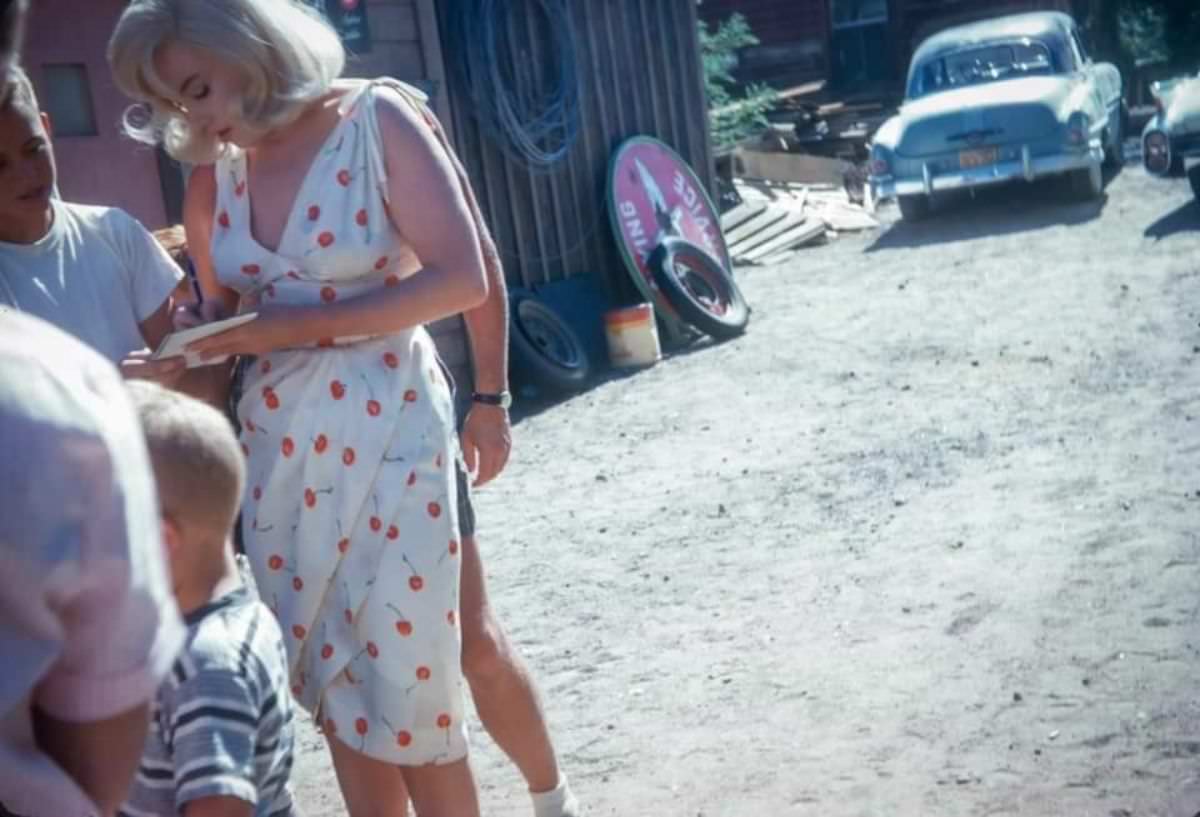
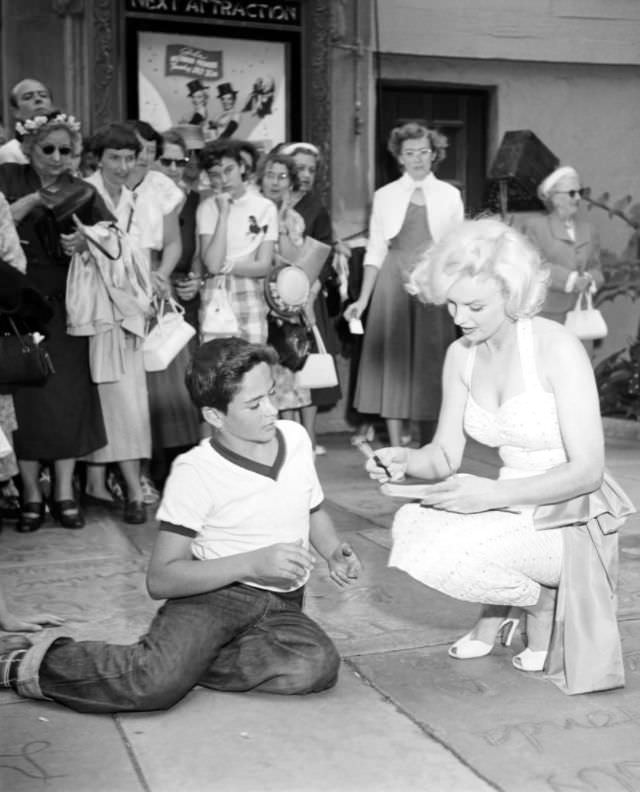
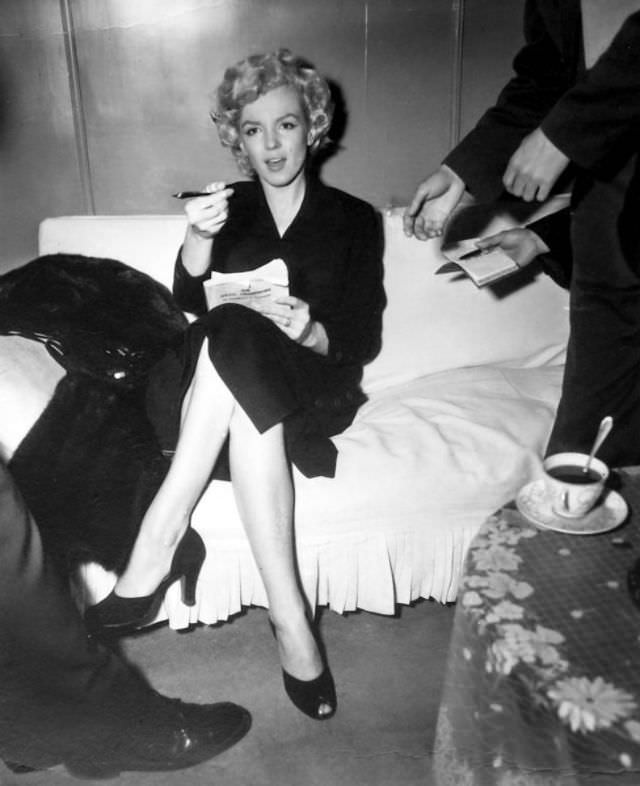
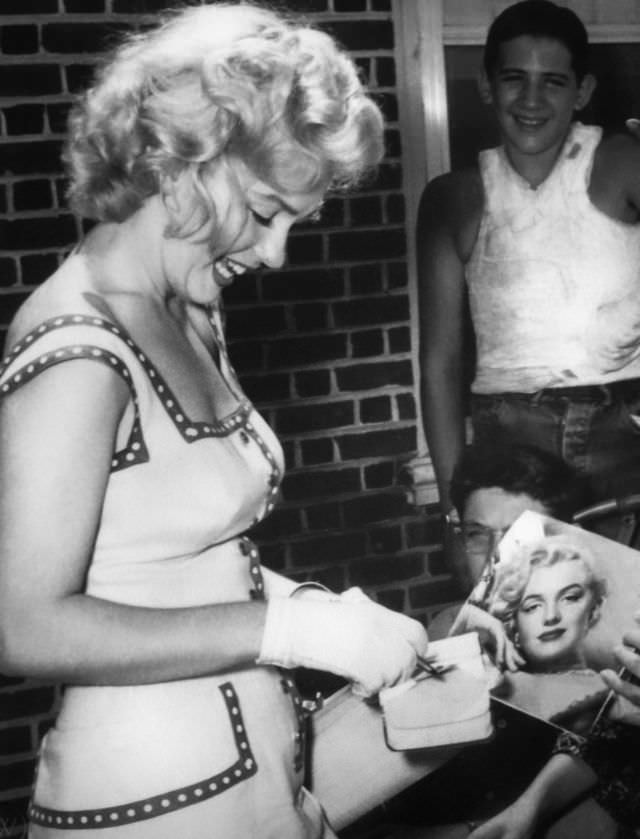
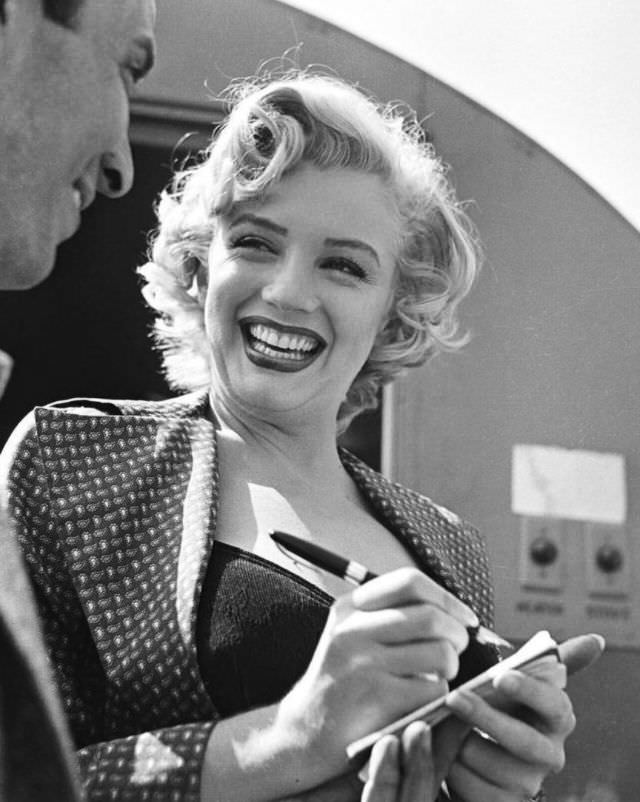
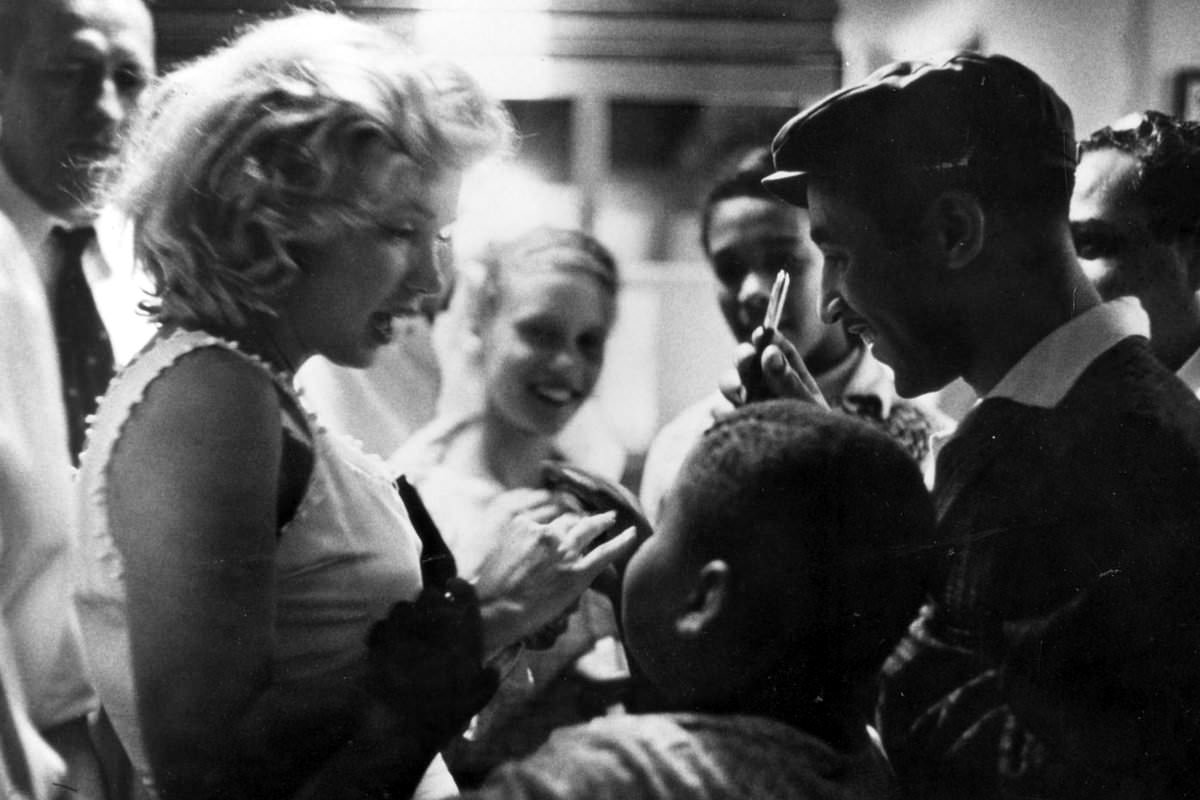
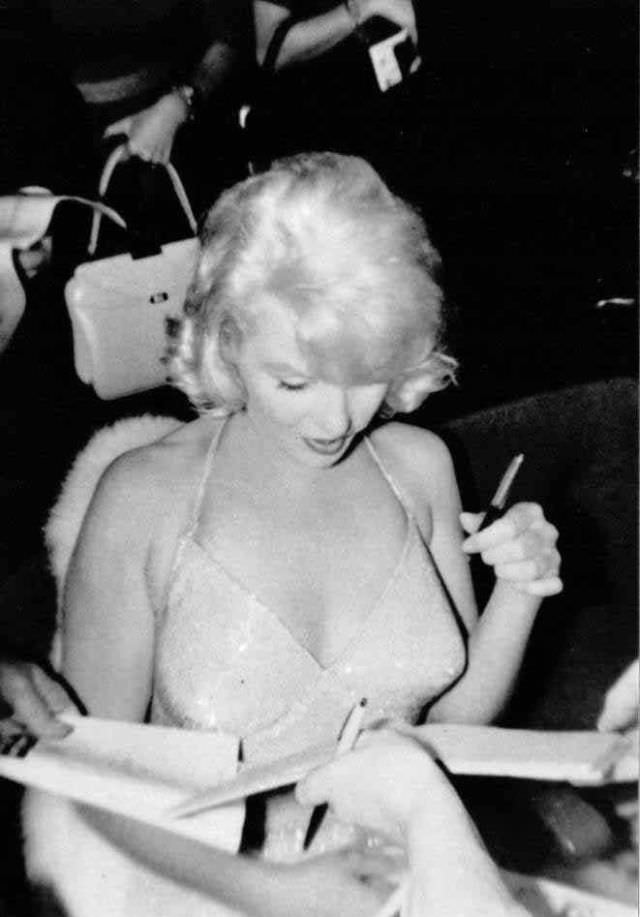
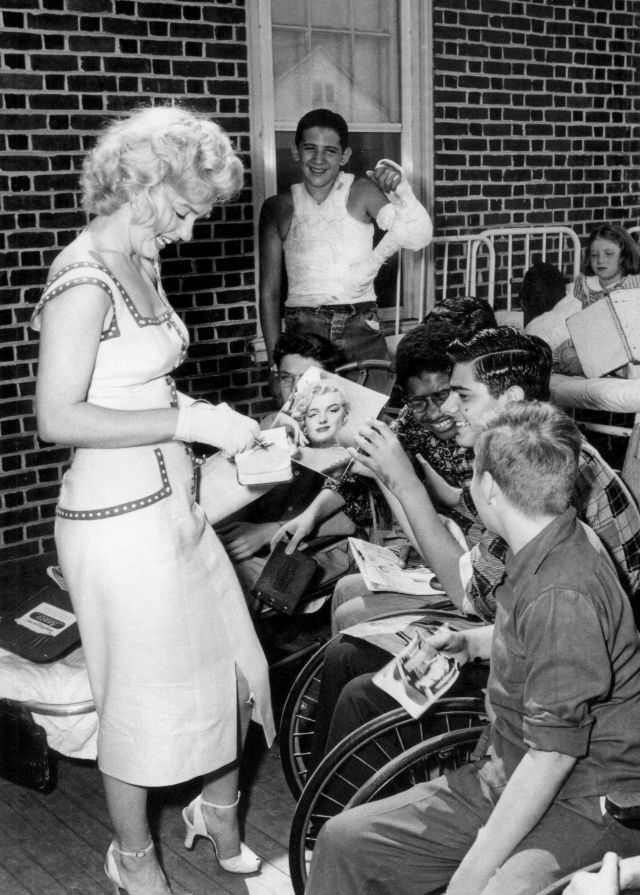
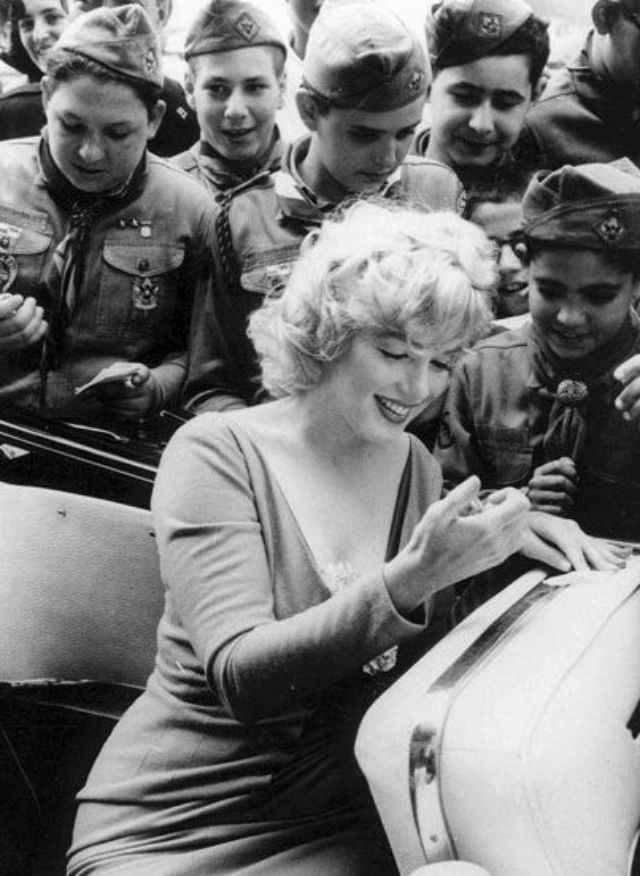
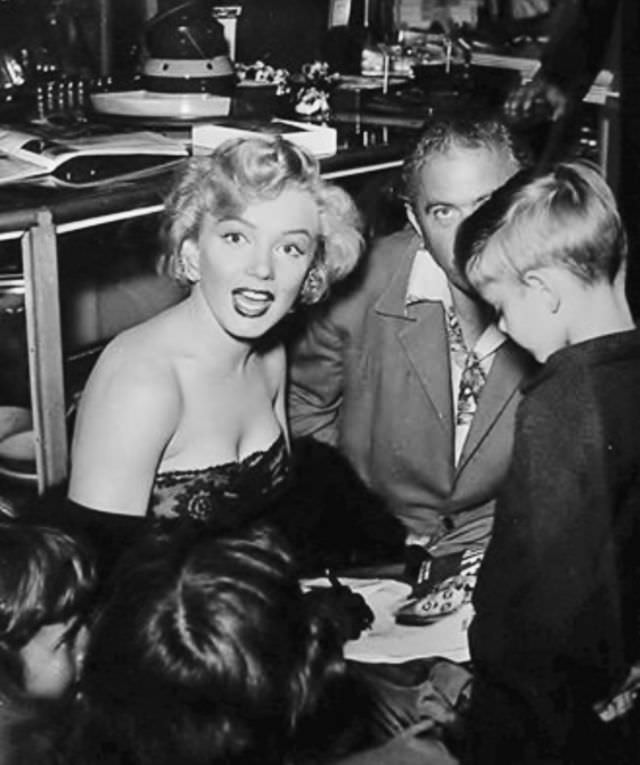
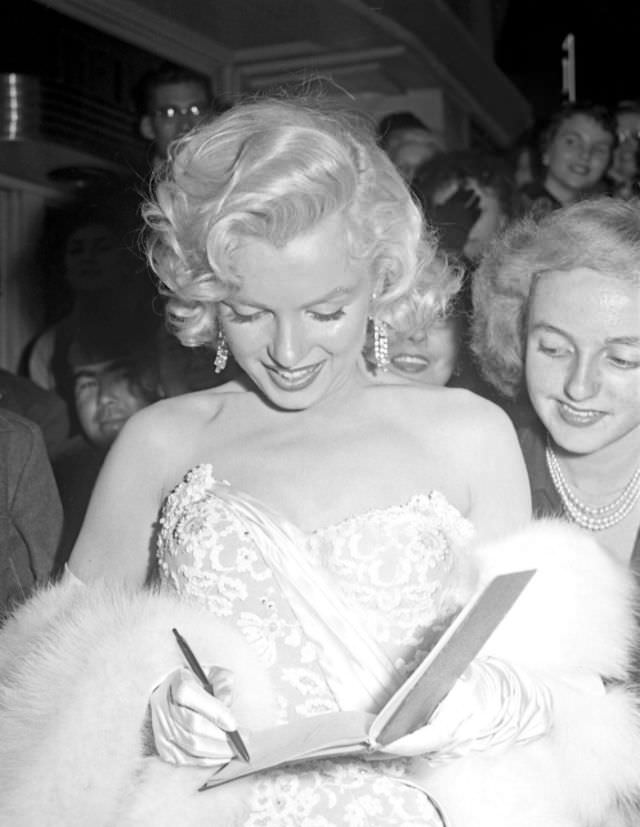
The candid photographs captured in this series show Marilyn in exactly these moments — pen in hand, leaning toward fans, her attention fully on the person in front of her. There is no stiffness in these images, no polished celebrity pose. She looks at ease, even happy.


Each signature she gave was a small transaction she took seriously. For the fan receiving it, it was a moment they would remember for decades. For Marilyn, it was confirmation that the connection was real — that the people who watched her on screen genuinely cared about her as a person, not just as a movie star.


These photographs stand as a direct record of that bond. They show a woman who did not hide behind handlers or barriers when the crowds came. She stepped forward, took the pen, and signed her name — again and again, for anyone who asked.