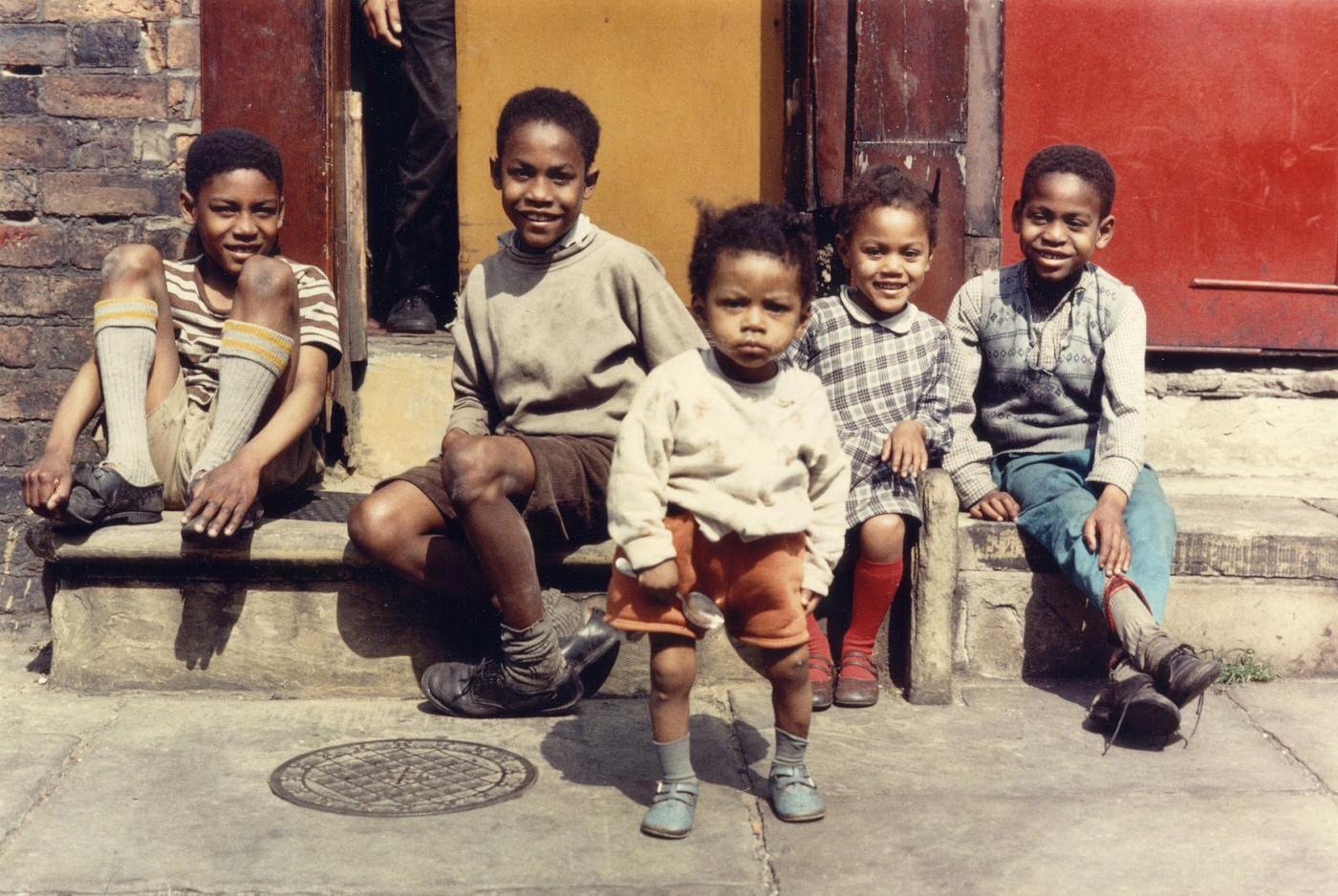
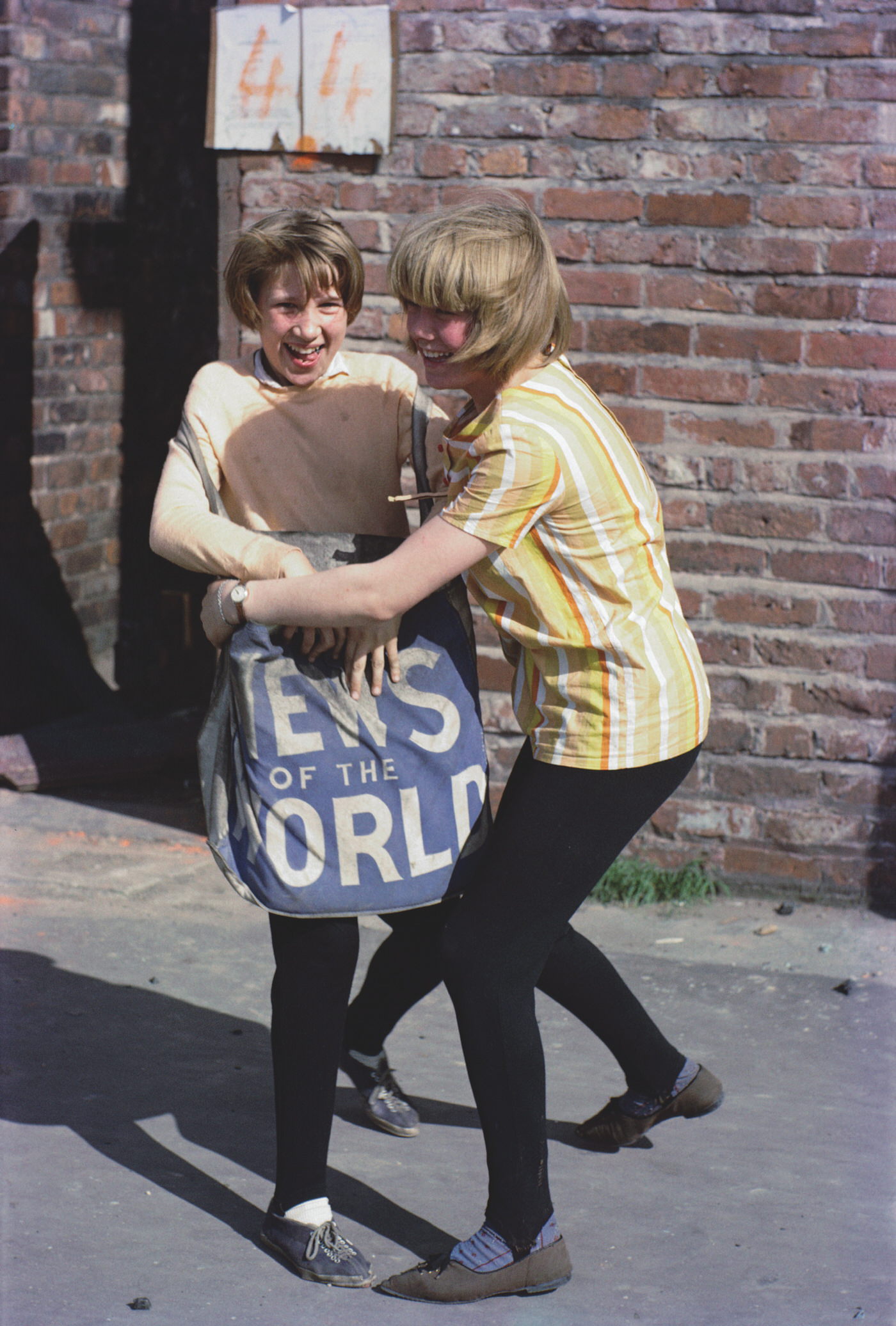
When most people think of photographs from the past, they picture black and white images. Shirley Baker rejected that entirely. Working in the 1960s, she pointed her camera at the working-class streets of Manchester, England, and brought them back in full colour. The result was a body of work that showed these neighbourhoods not as grim relics, but as places full of noise, warmth, and people getting on with their lives.
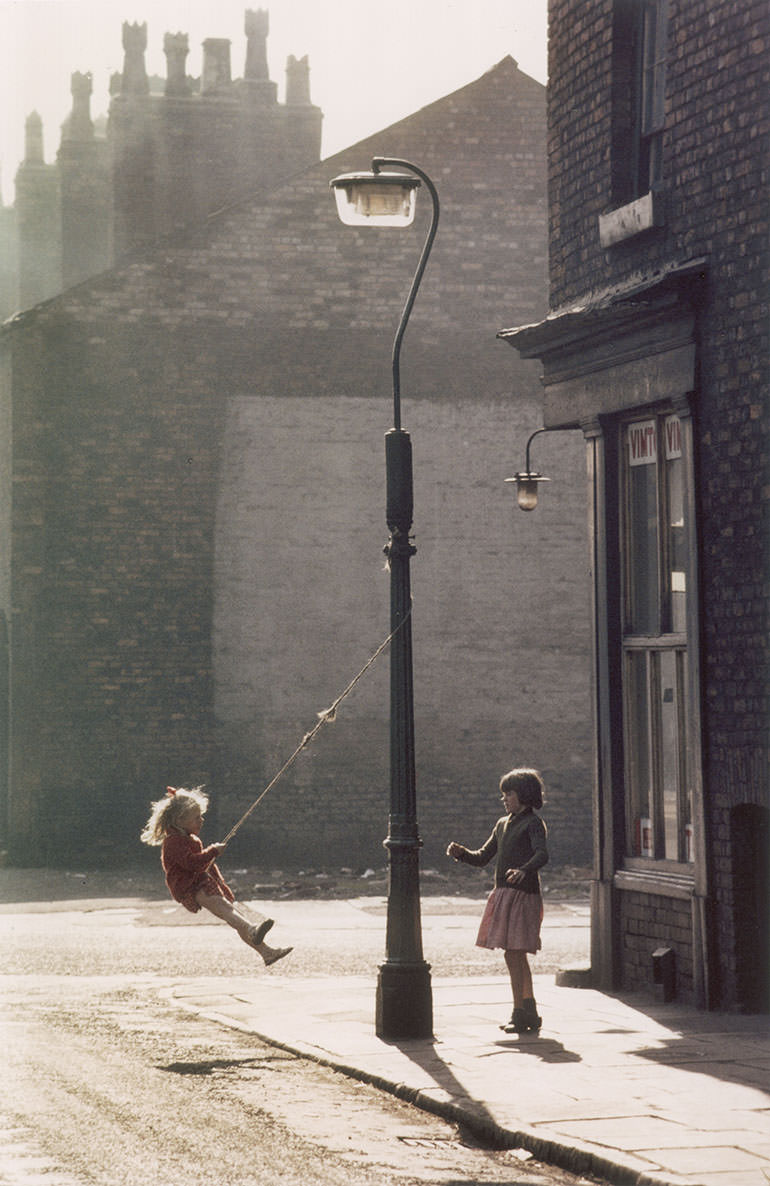
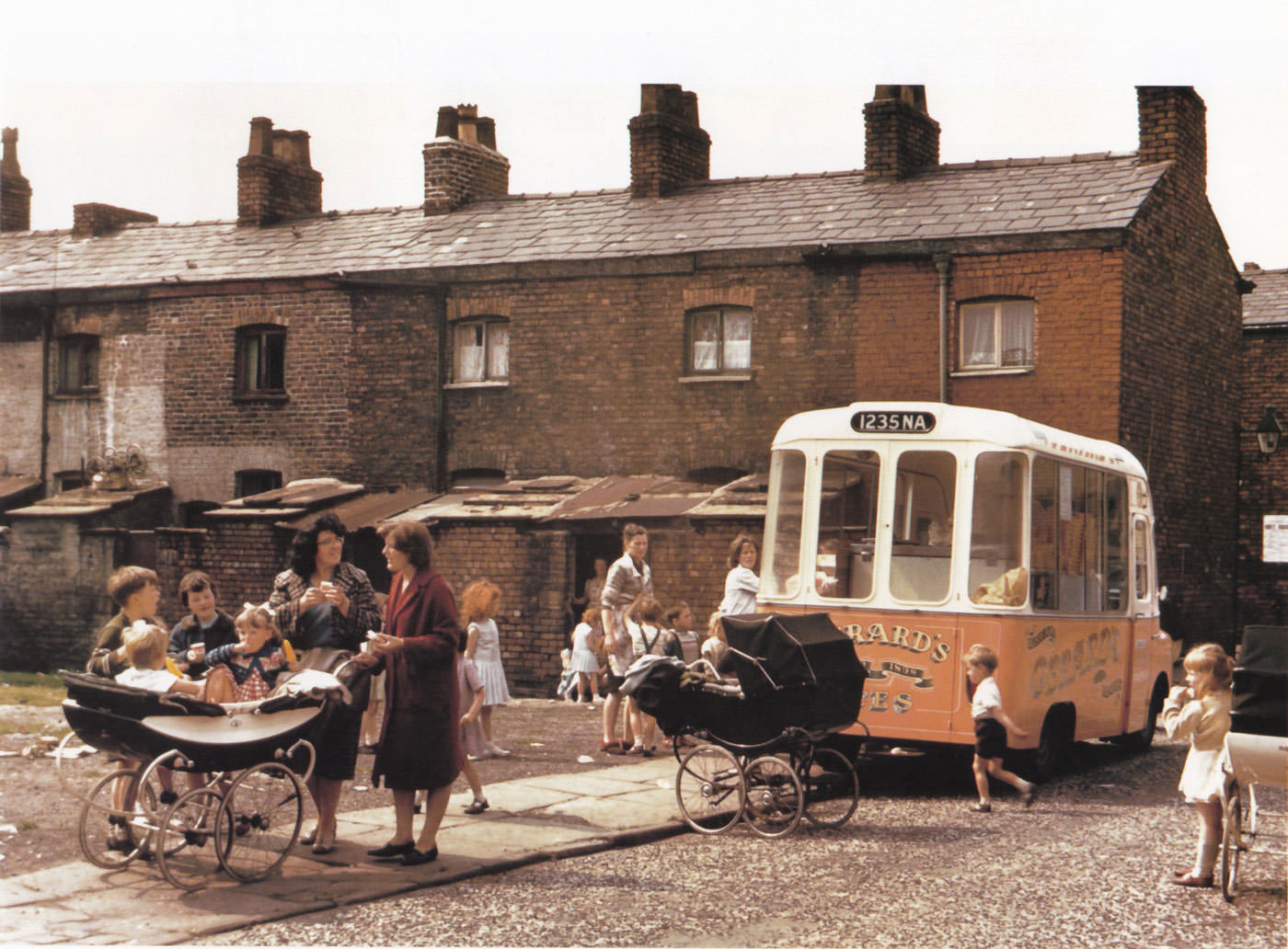
Baker concentrated on areas like Hulme and Salford, districts being torn apart by large-scale redevelopment programmes. City planners were bulldozing rows of Victorian terraced houses to build tower blocks and modern estates. For the families living there, the disruption was enormous. Streets they had known for generations disappeared almost overnight. Baker was present throughout, and she documented both the demolition and the people living alongside it.
Children were a constant subject in her work. They played in the rubble of knocked-down houses, treating broken bricks and cleared lots as adventure grounds. Their games carried on regardless of the construction chaos surrounding them. Baker caught these moments without staging them — the concentration on a child’s face during a game of marbles, or the laughter between friends on a half-demolished street, were all entirely unposed.
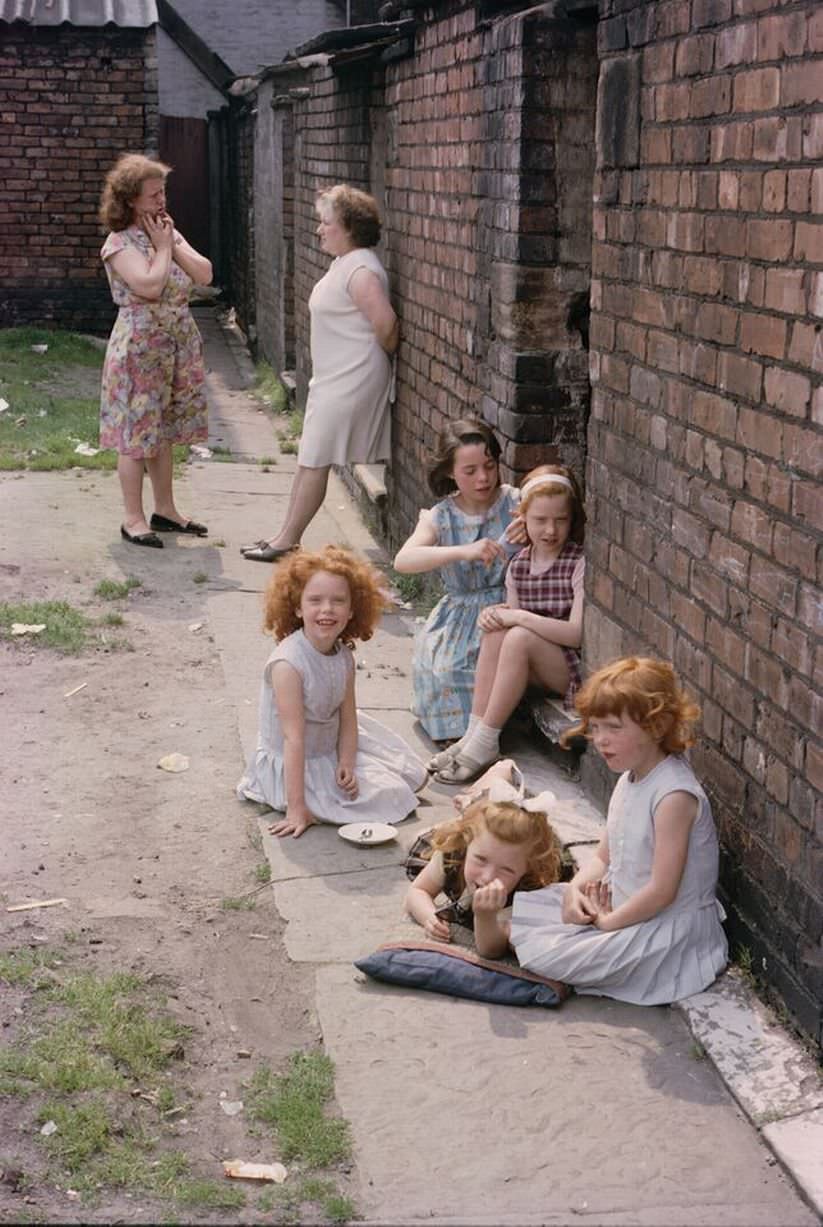
Families like the Cunniffes in Hulme were exactly the kind of subject Baker sought out. She photographed people in their own spaces, on their own terms. Women talked on doorsteps while keeping an eye on their children. Men shared cigarettes in the dust of construction sites. A boy held up a pigeon with obvious pride — a small, living thing kept and cared for in the middle of so much being torn down.
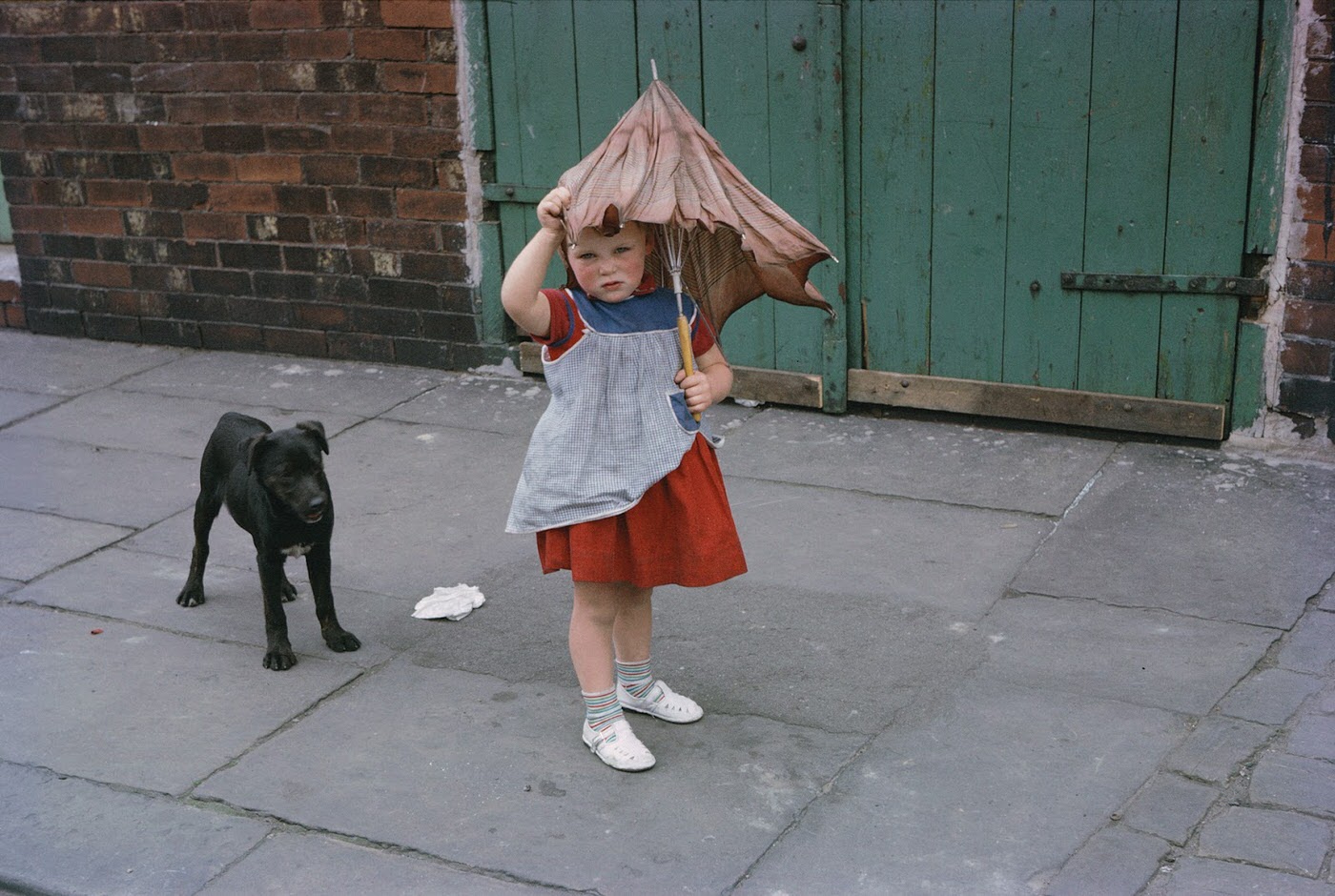
Baker had a sharp eye for the small, ordinary acts that reveal how people actually live. A woman hanging laundry. A group of neighbours sharing a doorstep. These weren’t grand gestures — they were the daily routines that held communities together even as the physical streets around them were being erased.
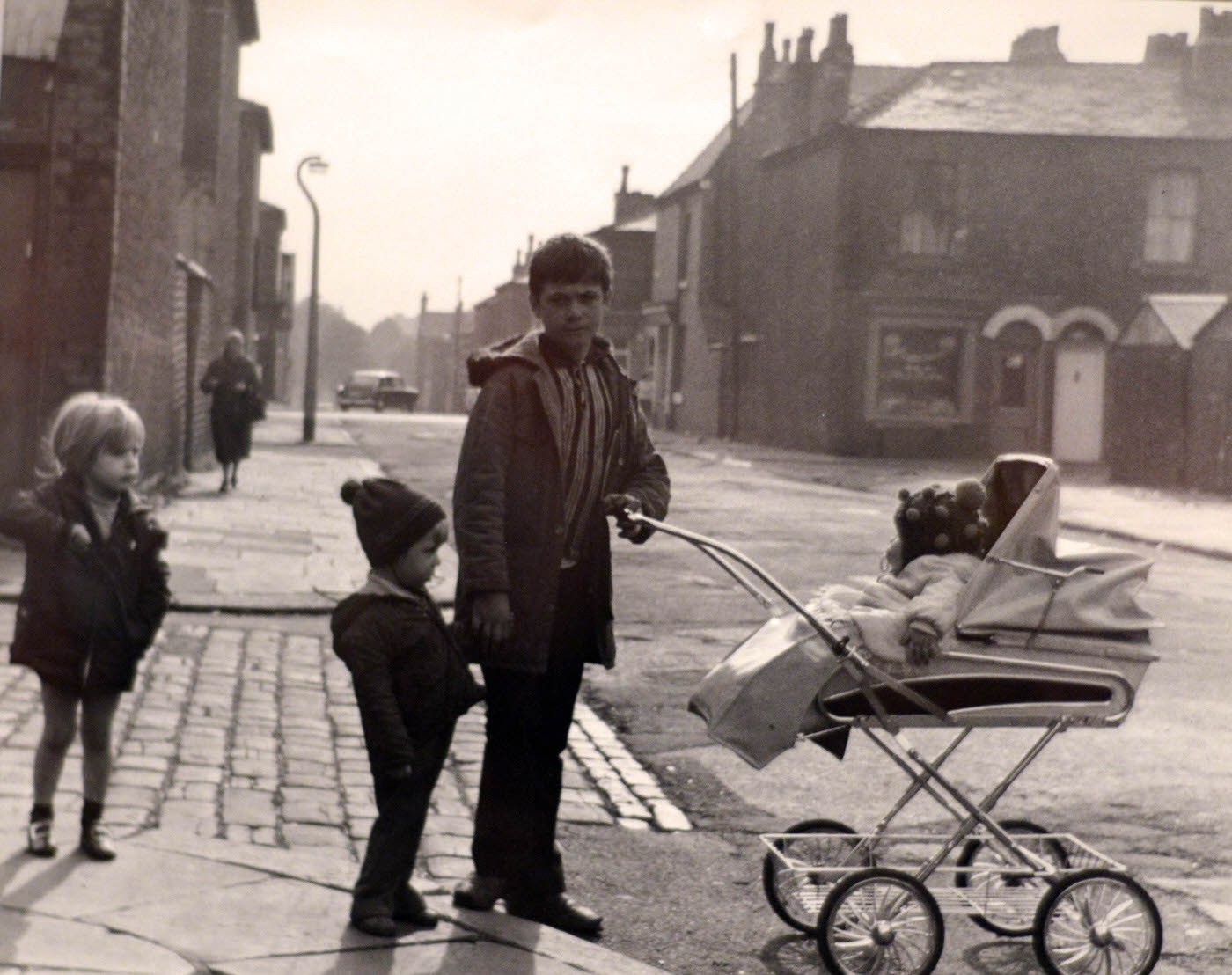
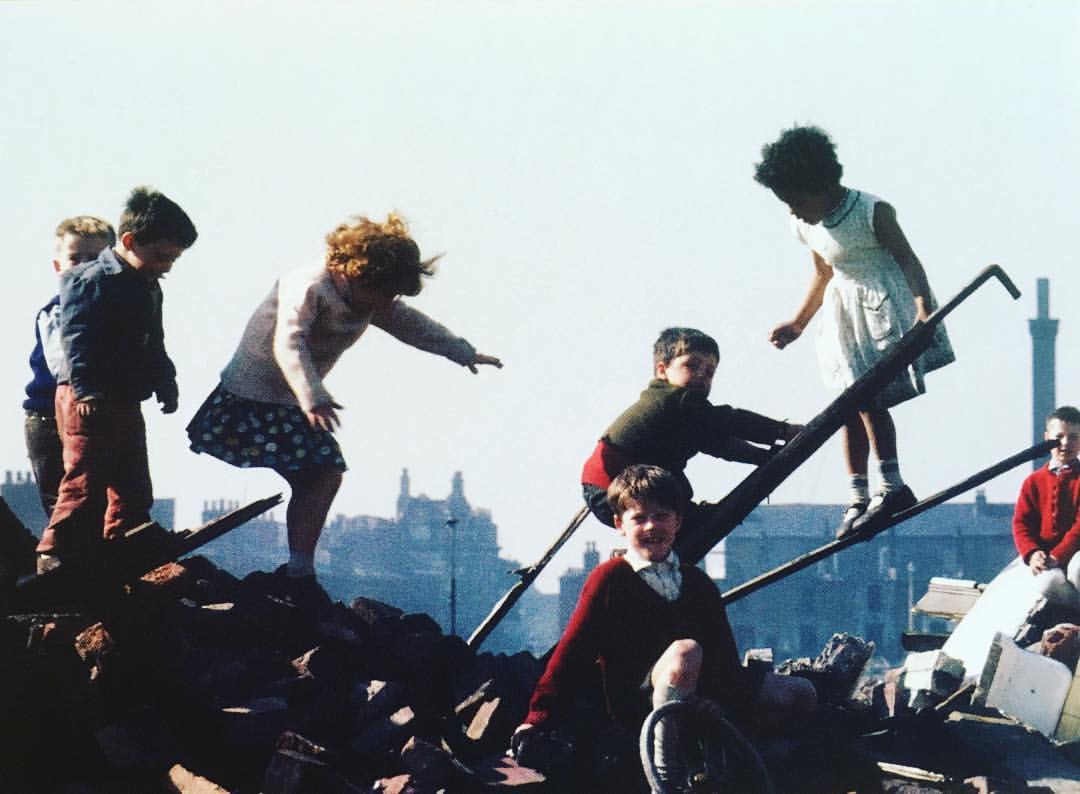
Her photographs push back against the idea that slum life was defined only by poverty and hardship. The colour in her images carries real weight. A bright red coat on a child standing in grey rubble, vivid curtains in the window of a house scheduled for demolition — these details make clear that the people living there were not simply waiting to be relocated. They were living full lives in the time and place they had.
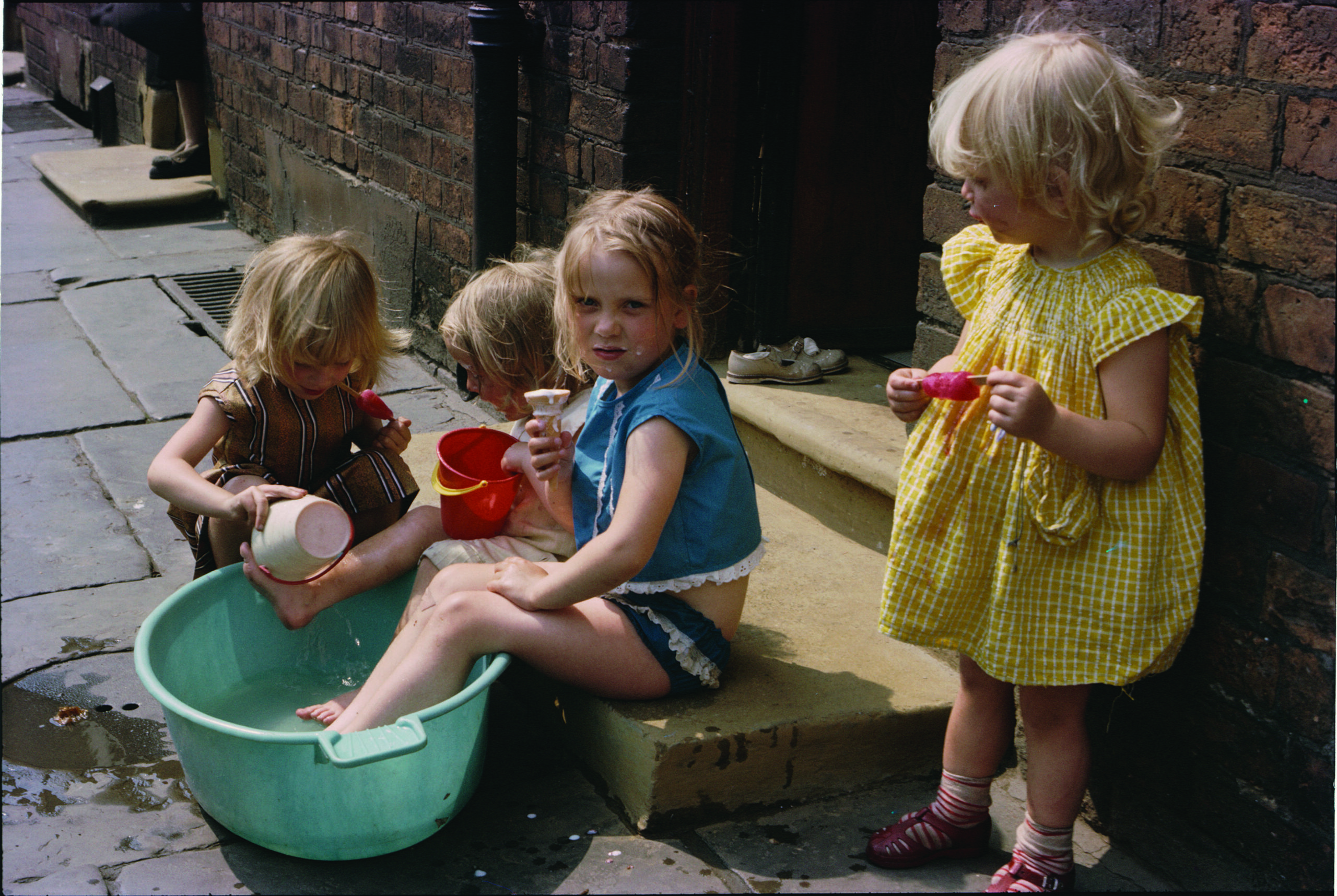
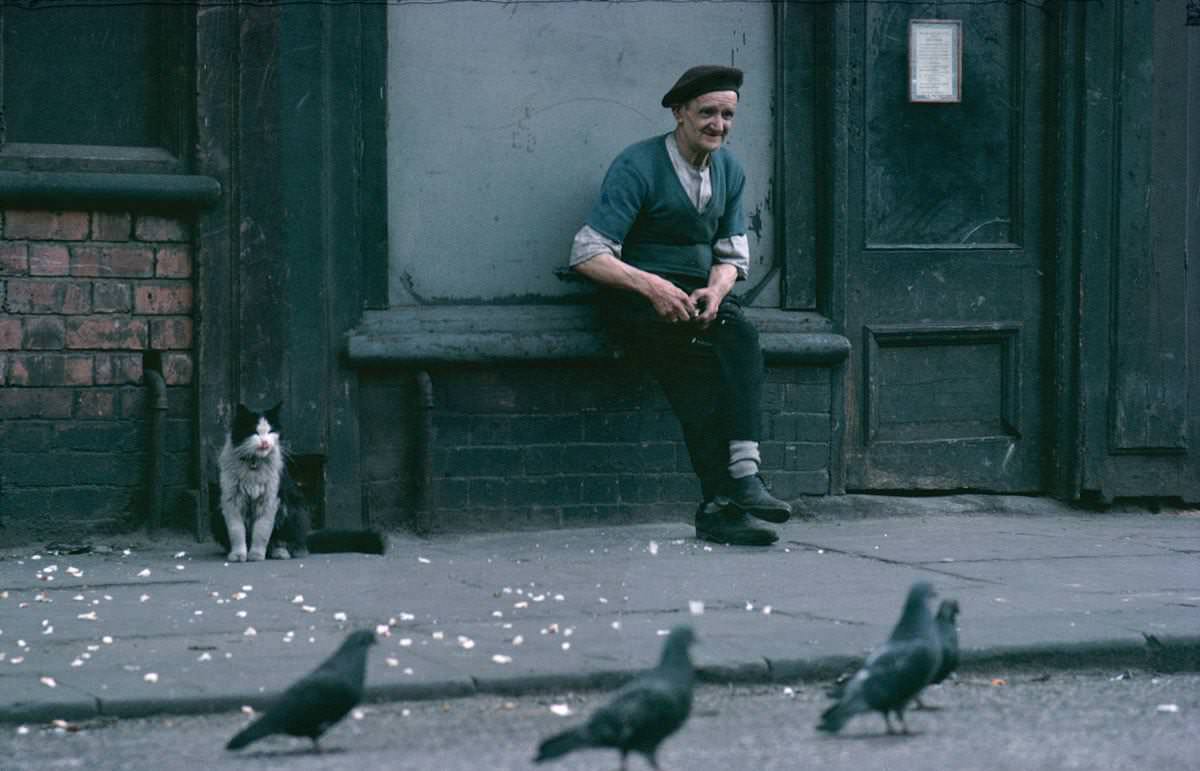
Baker moved through these streets as a regular presence, which is why her subjects look so at ease in front of her lens. She wasn’t a distant observer. She was a familiar face, and that trust shows in every frame. The candid nature of the images — no stiff poses, no artificial setups — gives them a documentary honesty that formal portraits rarely achieve.
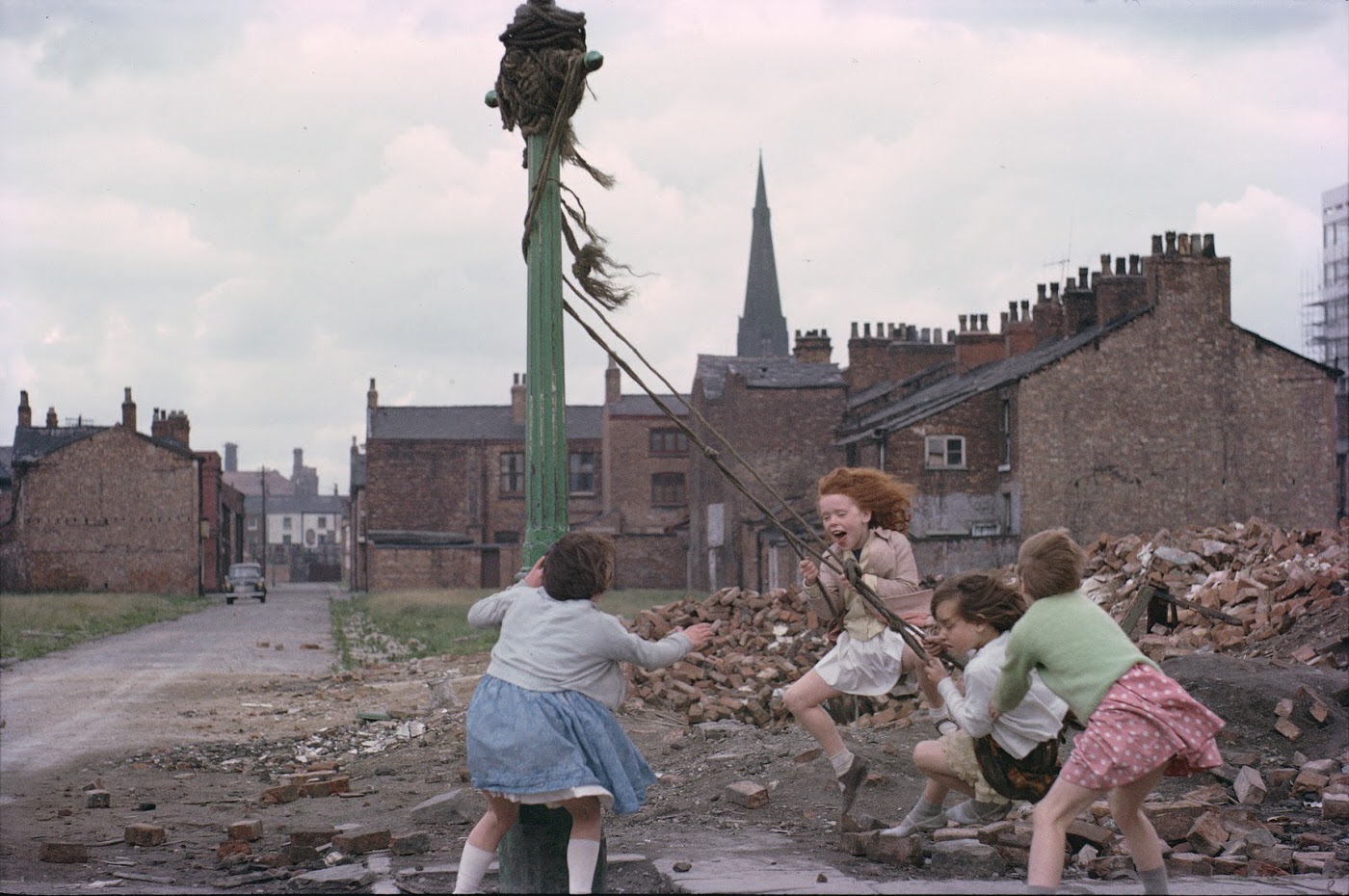
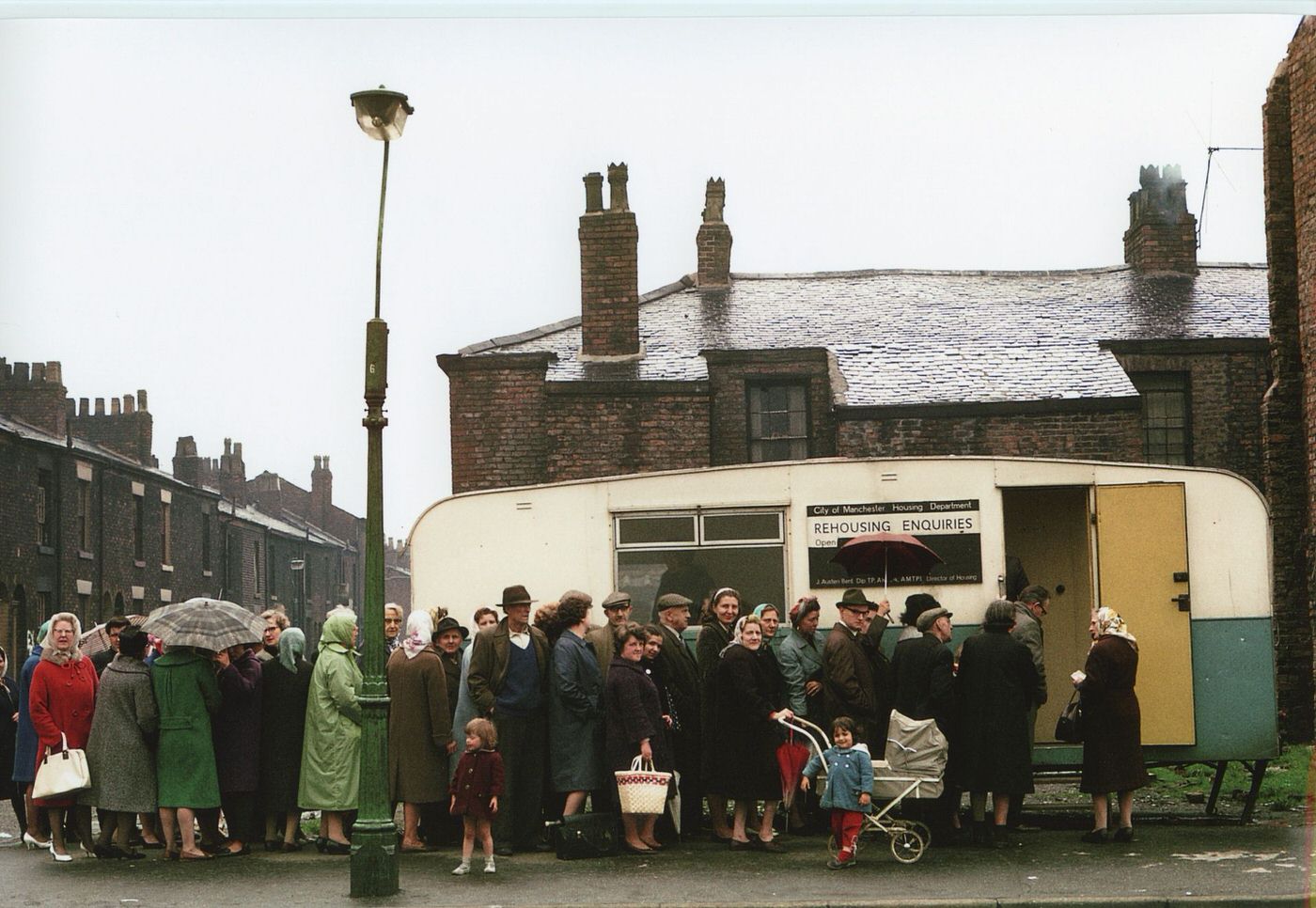
The Manchester that Baker photographed no longer exists in its 1960s form. The redevelopment that surrounded her subjects eventually replaced nearly all of it. Her archive stands as a precise, detailed record of a world that was actively disappearing while she was shooting it — street by street, family by family, frame by frame.