
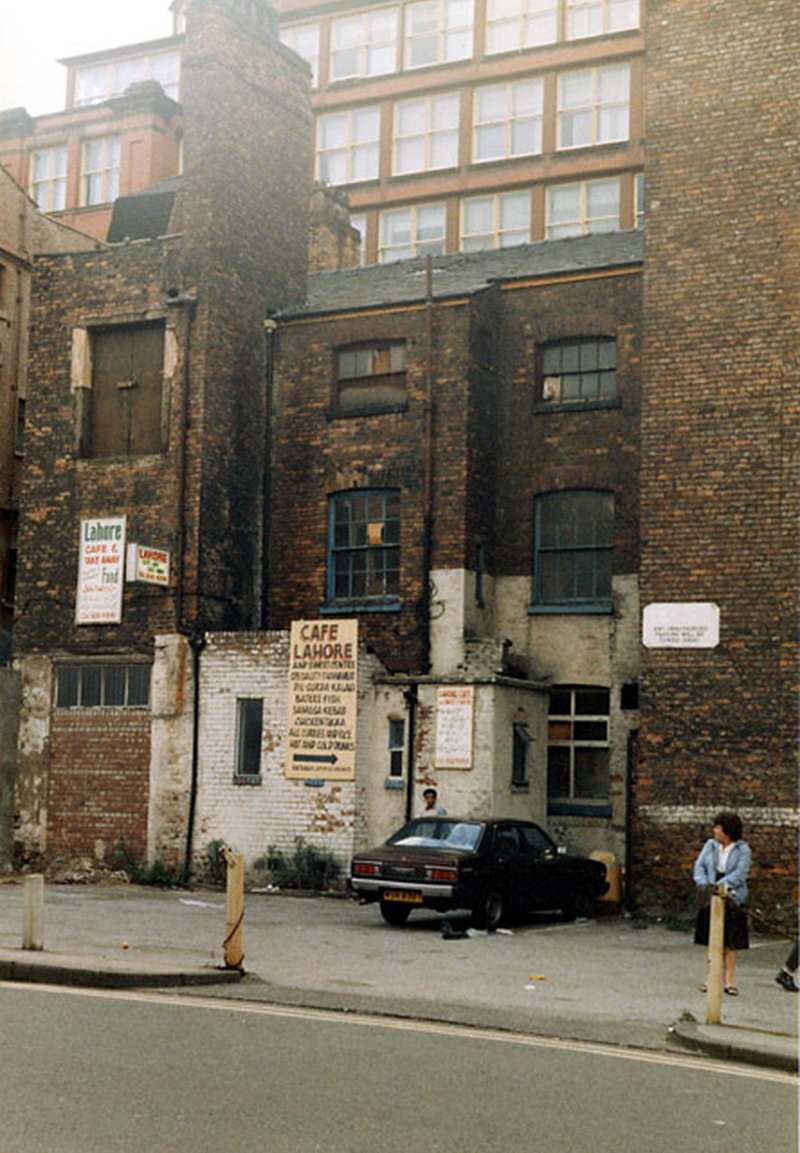
Manchester in the 1980s was a city caught between two worlds. Old industries that had defined it for generations were shutting down, while new cultural and civic projects were beginning to take shape. The result was a decade of stark contrasts — empty warehouses alongside new museums, demolition crews working next to freshly opened galleries. These photographs capture that tension in vivid detail, offering a street-level view of a city in the middle of a profound shift.
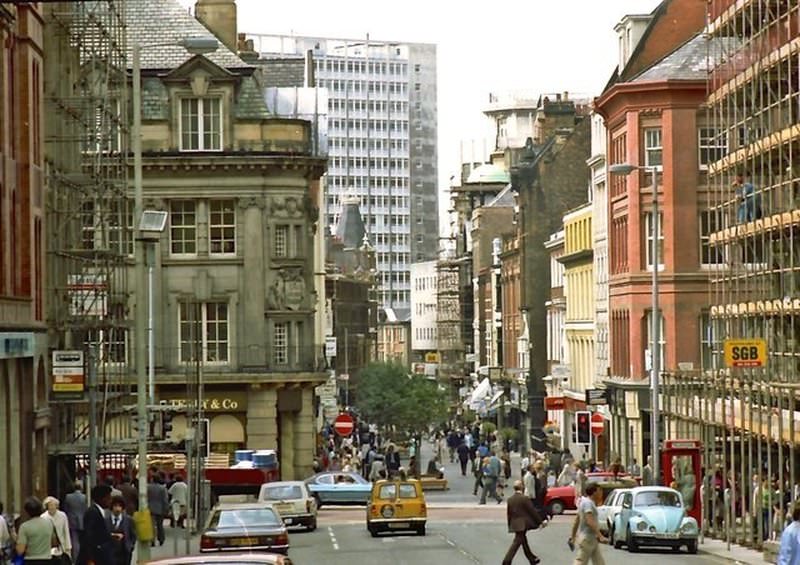
The economic policies of the Thatcher government hit Manchester hard in the early part of the decade. Traditional industries that had sustained the city’s working-class communities for over a century were wound down or closed entirely. The Port of Manchester, once a vital hub for freight moving through the Ship Canal, saw its traffic drop sharply before closing for good in 1982. The effects rippled through the city — jobs disappeared, neighborhoods contracted, and the city center shrank to a shadow of what it had been in the nineteenth century.
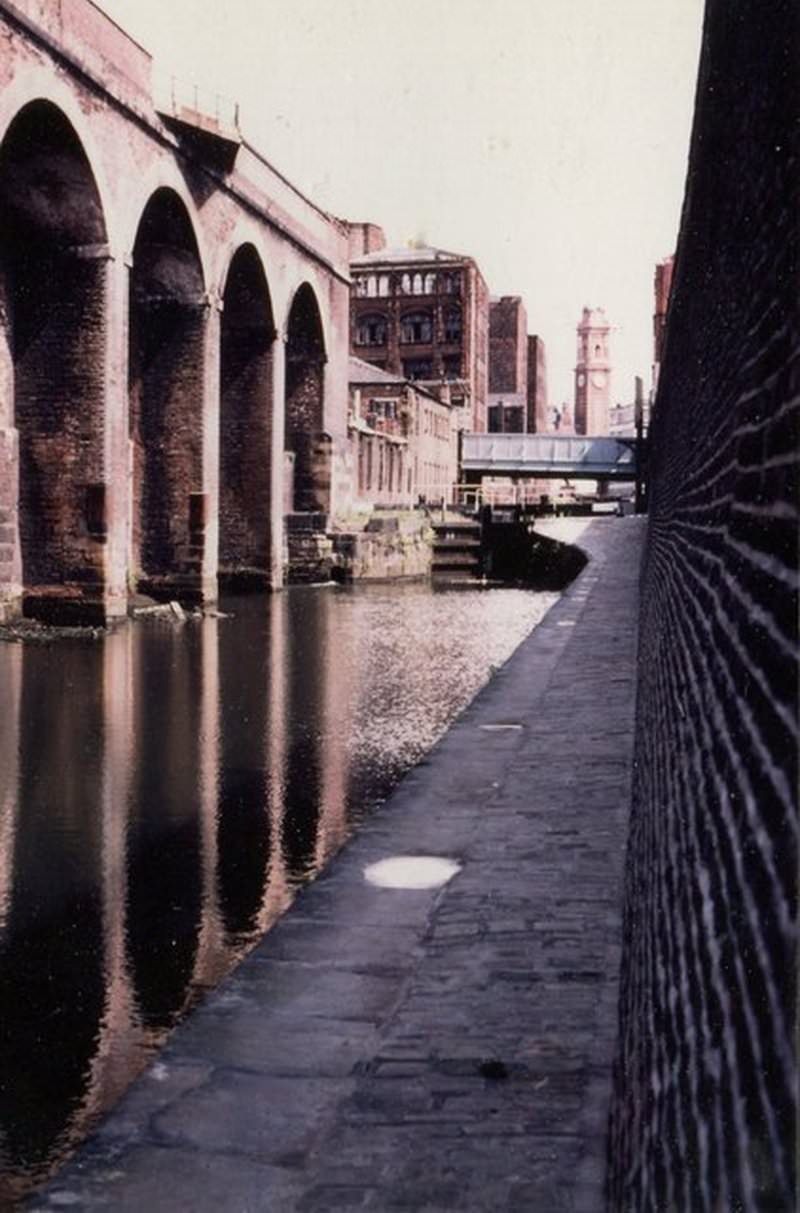
Even as industries collapsed, Manchester was marking its identity in other ways. On November 5, 1980, the city declared itself a nuclear-free zone — a decision that was largely symbolic but reflected the political mood of the time. Meanwhile, one of the decade’s most visible transformations involved the old Central Station, which had been sitting vacant and deteriorating for years.
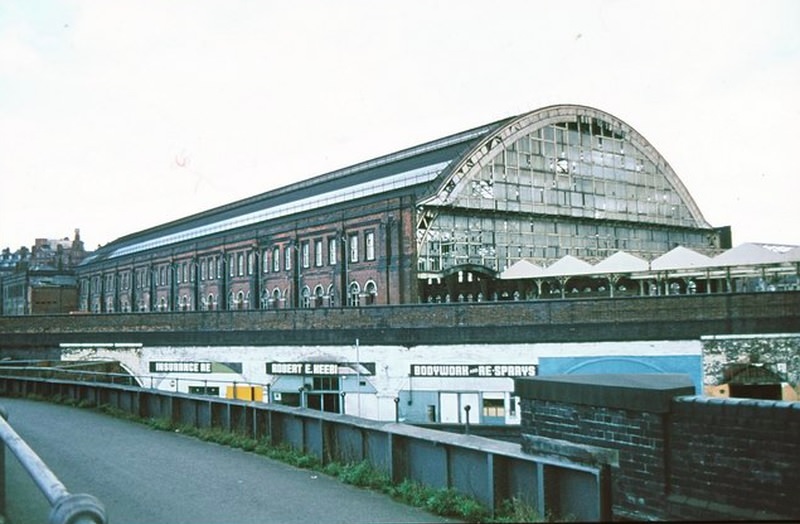
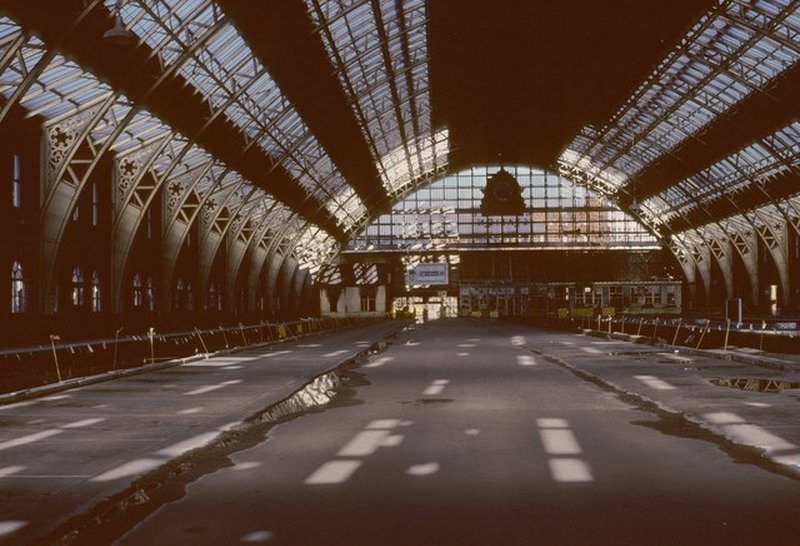
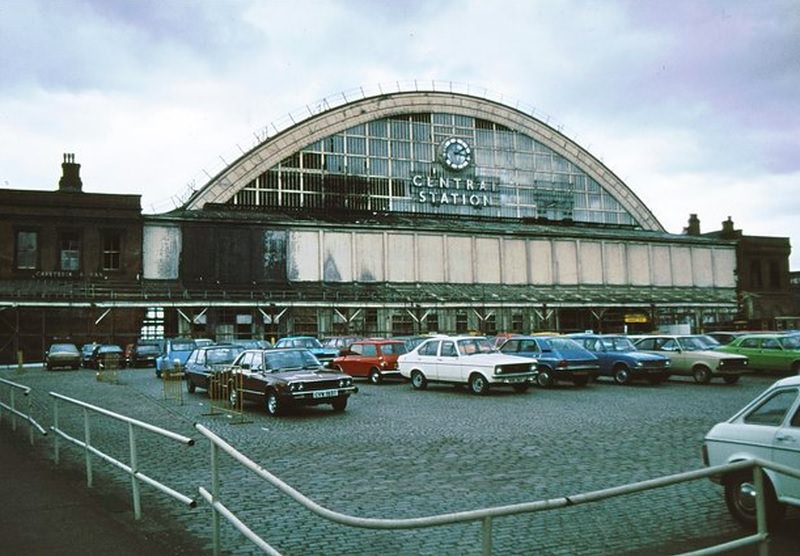
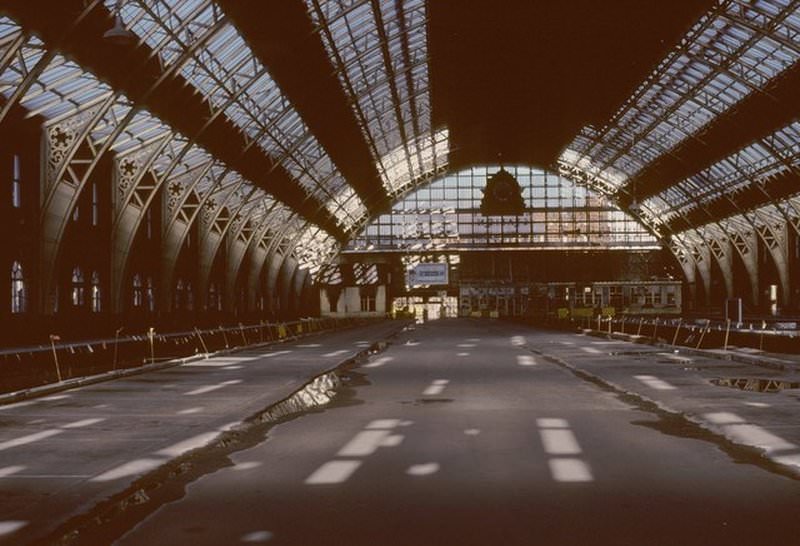
The abandoned Central Station was converted into the Greater Manchester Exhibition Centre in 1982, breathing new life into the Victorian iron-and-glass structure. The building — now known as Manchester Central — gave the city a major events venue and became one of the most recognizable examples of industrial architecture being repurposed rather than demolished.
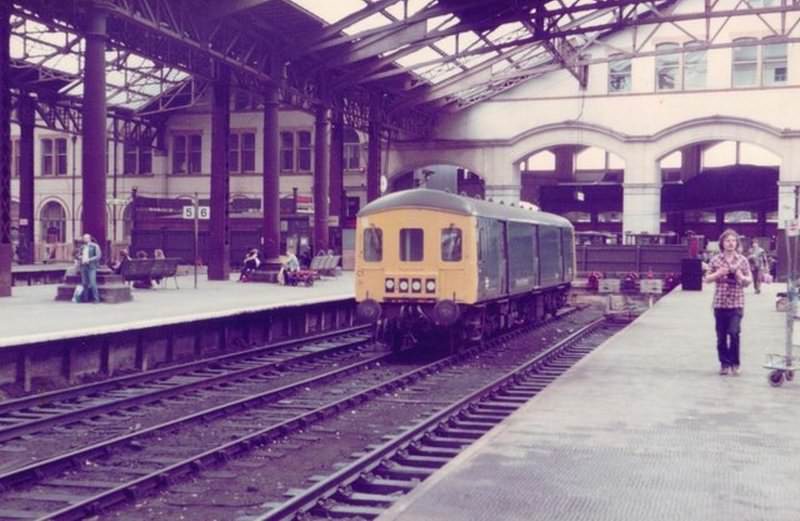
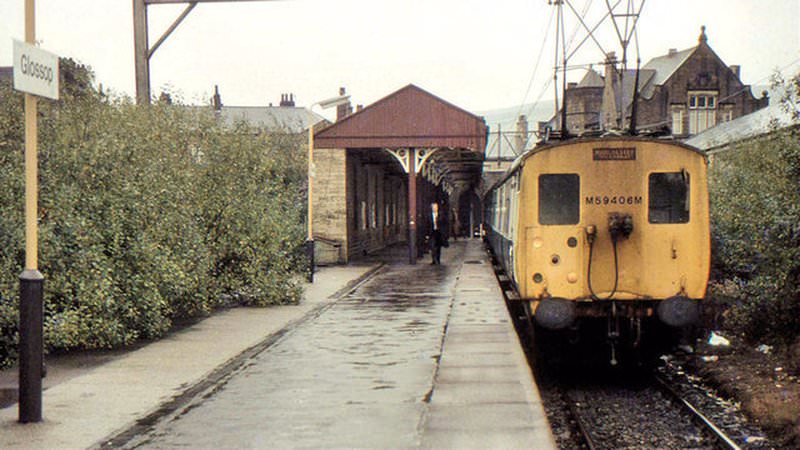
Victoria Station, another major rail landmark, remained in active use throughout the decade. The railway network more broadly was undergoing changes of its own. The Woodhead Line, which had connected Manchester to Sheffield through the Pennines, closed in 1981. At the same time, several new low-cost stations opened across Greater Manchester, including Flowery Field, Hag Fold, and Ryder Brow, expanding access to rail travel at the local level.
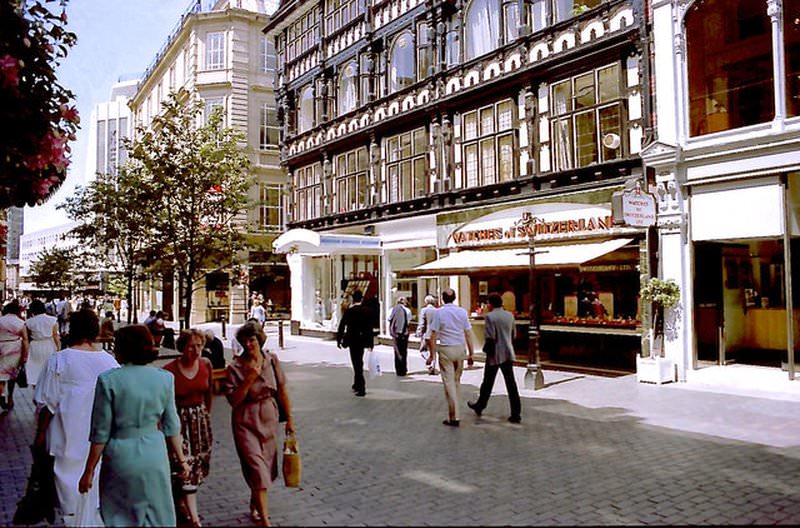
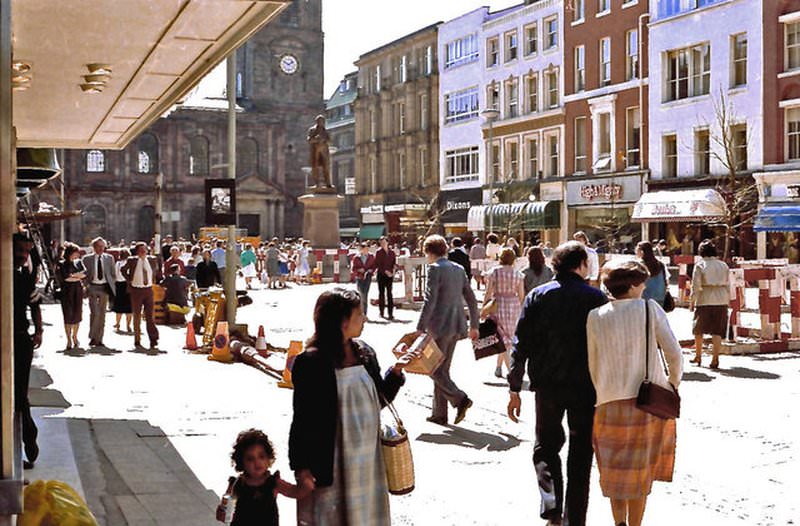
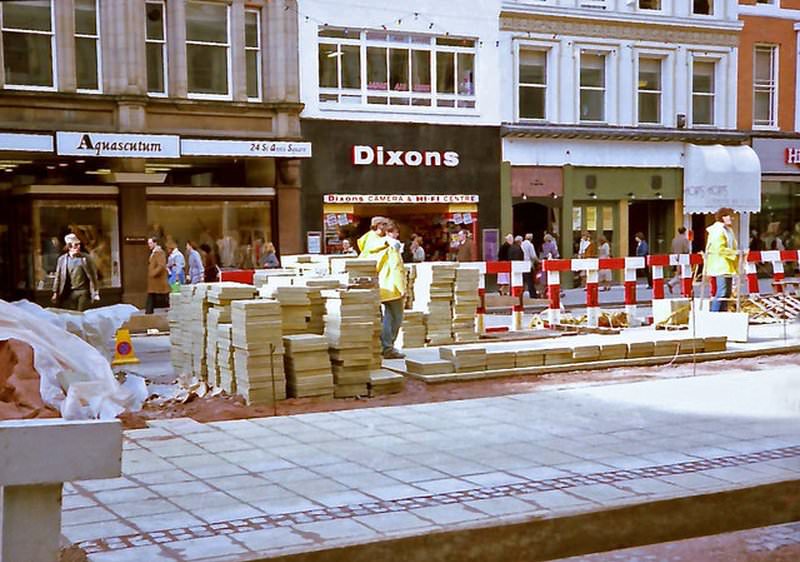
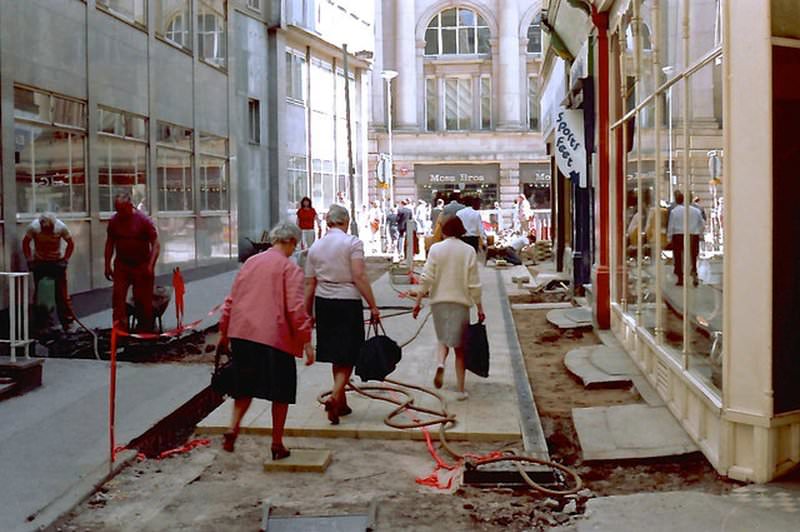
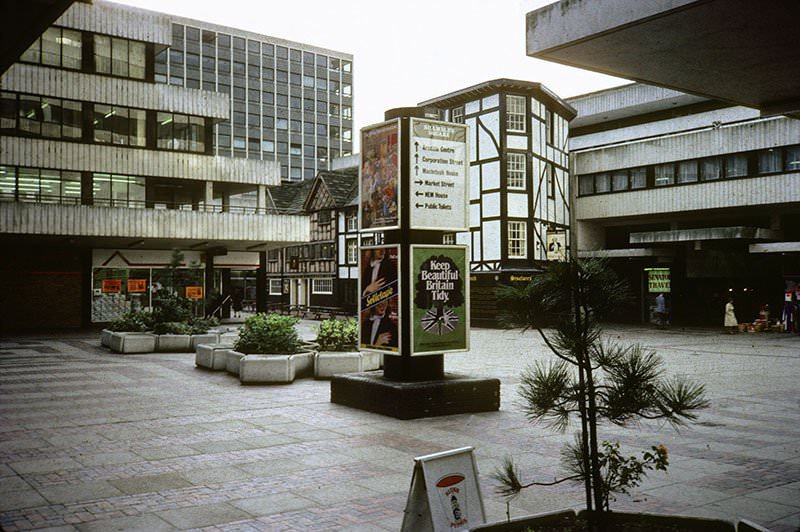
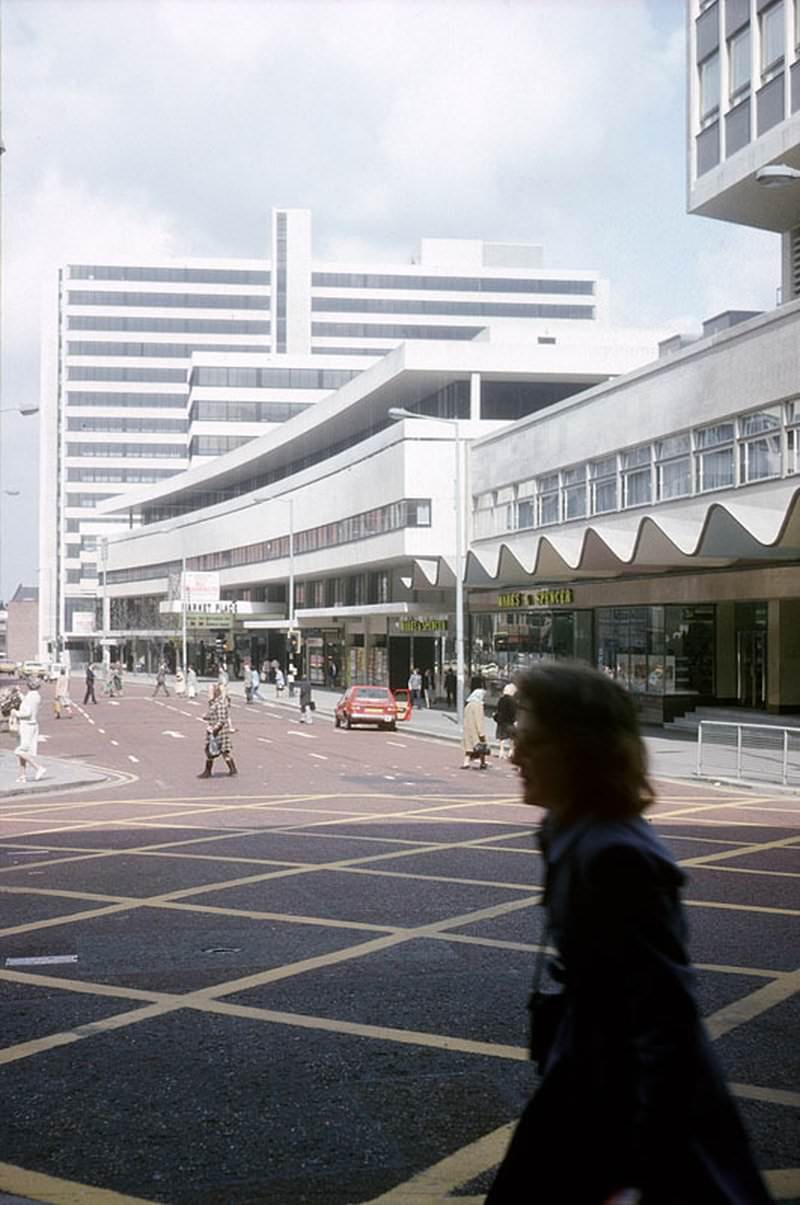
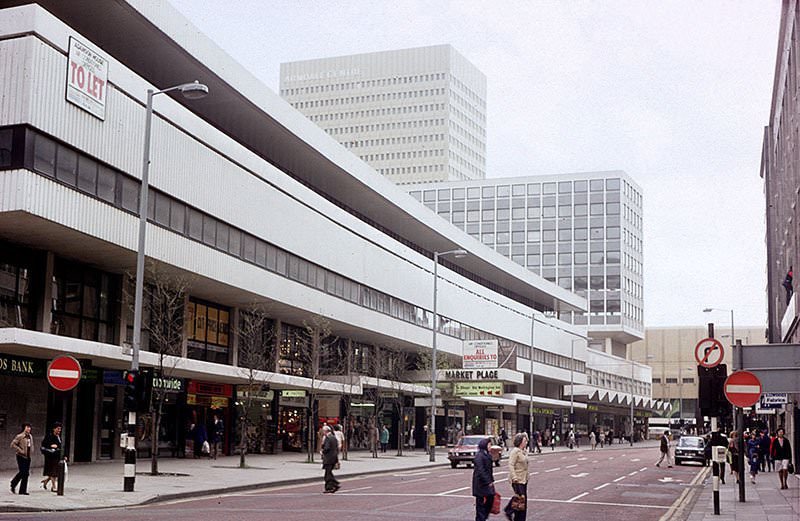
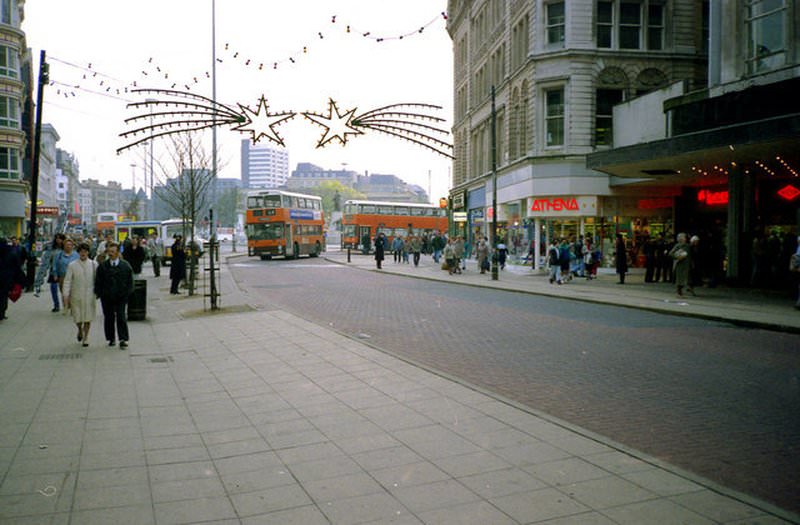
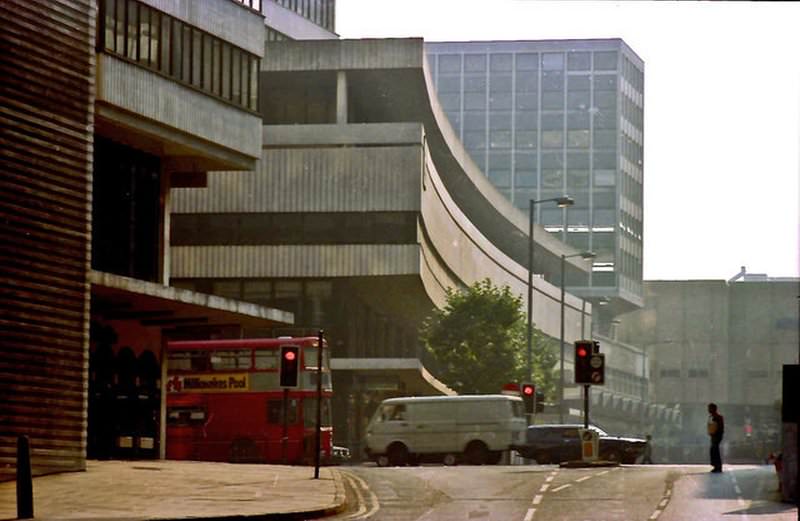
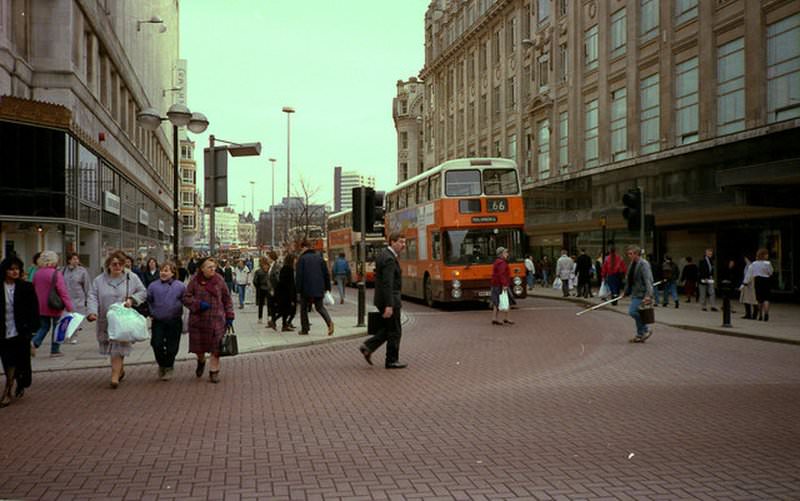
Street life across the city center carried on with its own rhythms. King Street remained one of Manchester’s most prominent shopping and commercial corridors throughout the decade, while Market Street and the Arndale Centre drew steady crowds. The Arndale, which had opened in the mid-1970s, was already a fixture of daily life for Mancunians by the 1980s. Unusually, it featured maisonettes — small residential flats — built directly on its roof, an architectural oddity that reflected the ambitious, if sometimes misguided, planning ideas of the era.
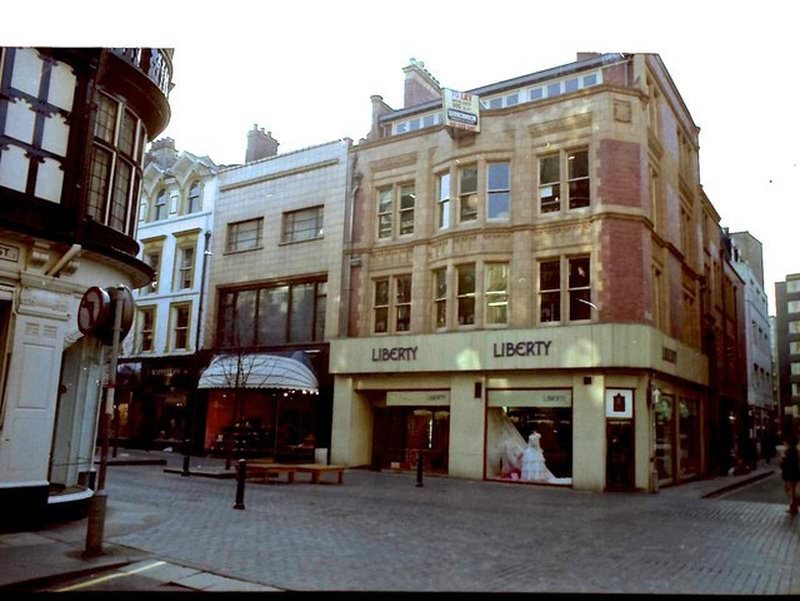
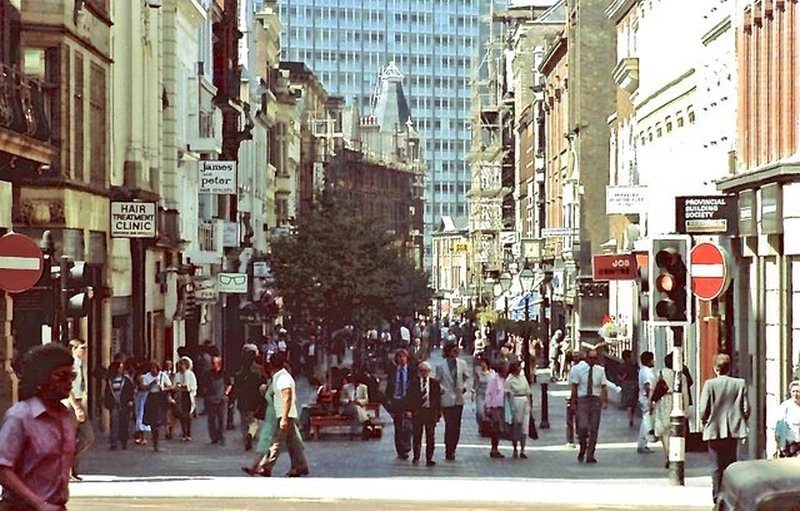
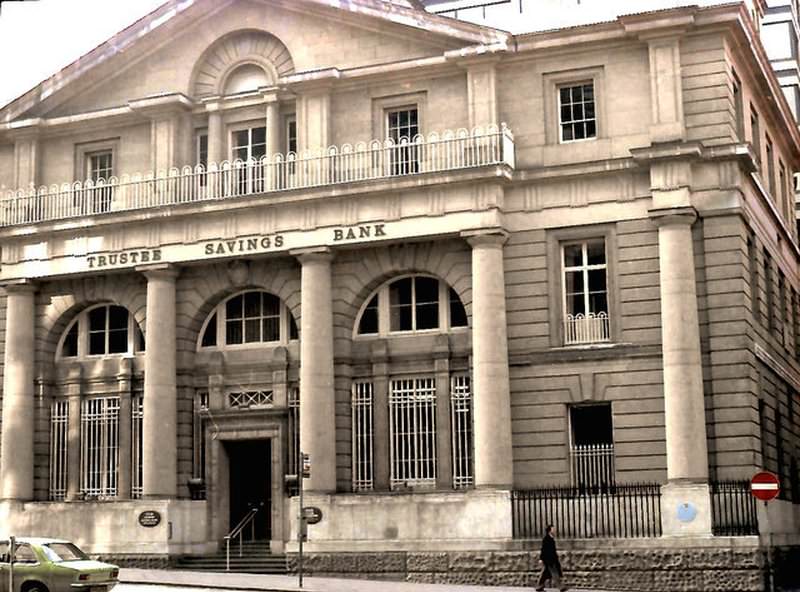
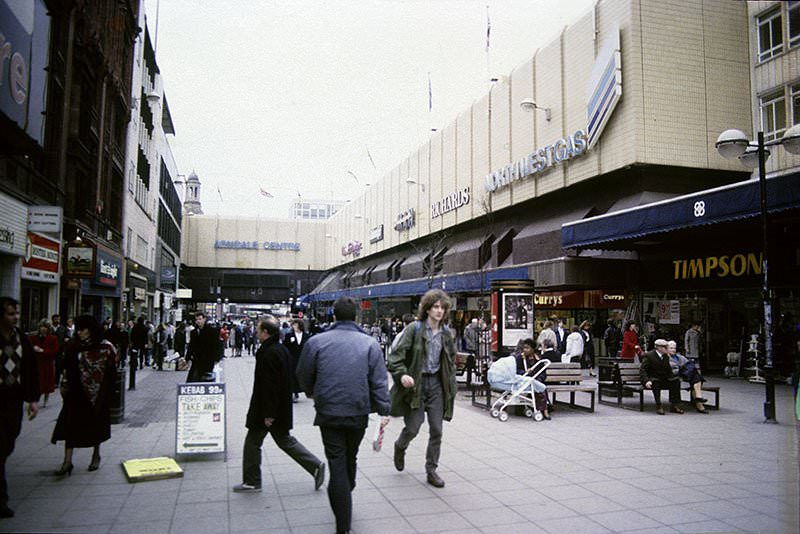
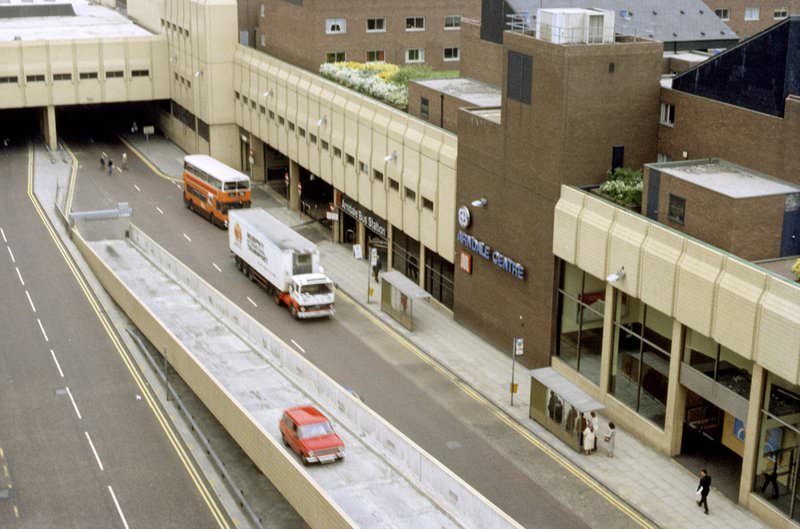
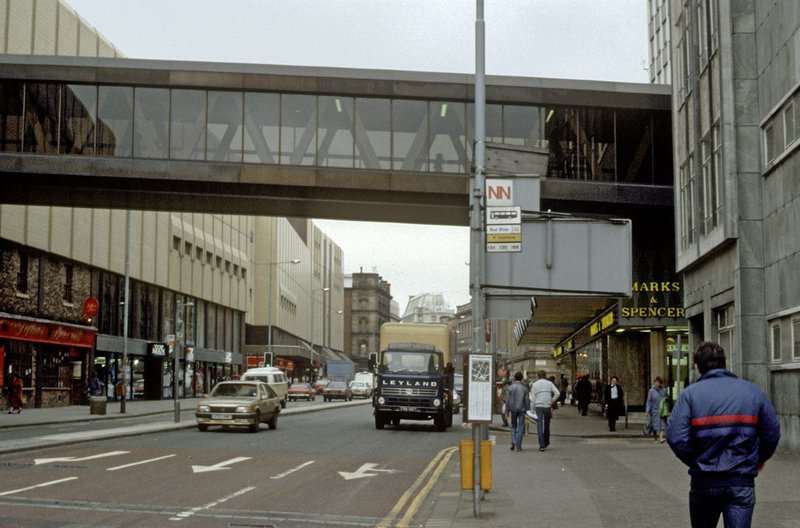
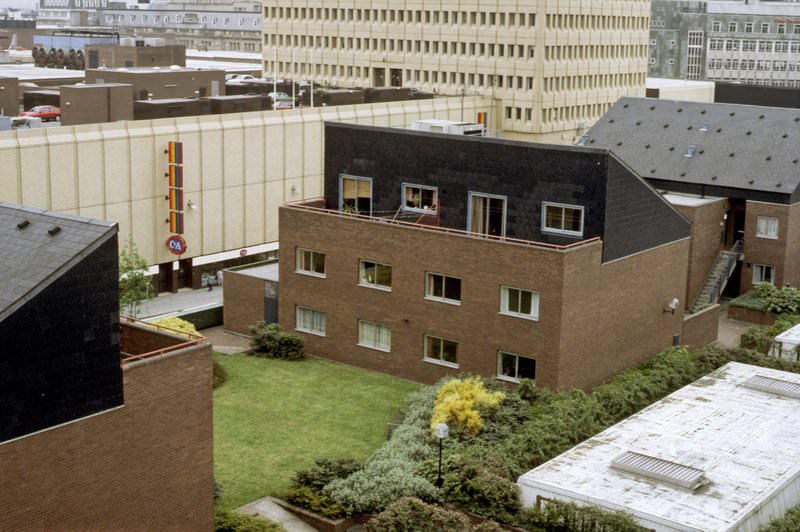
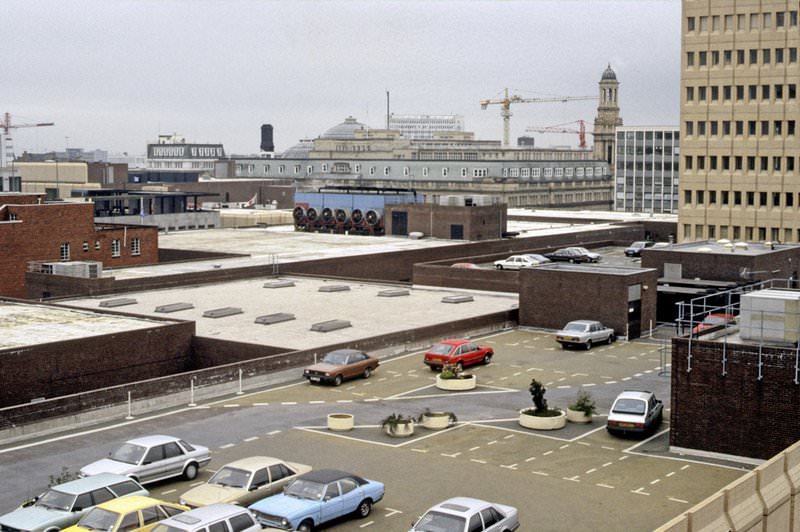
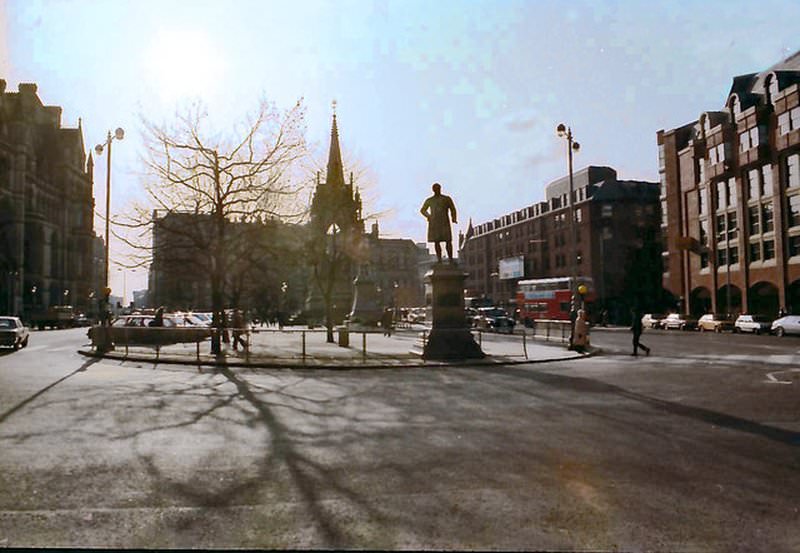
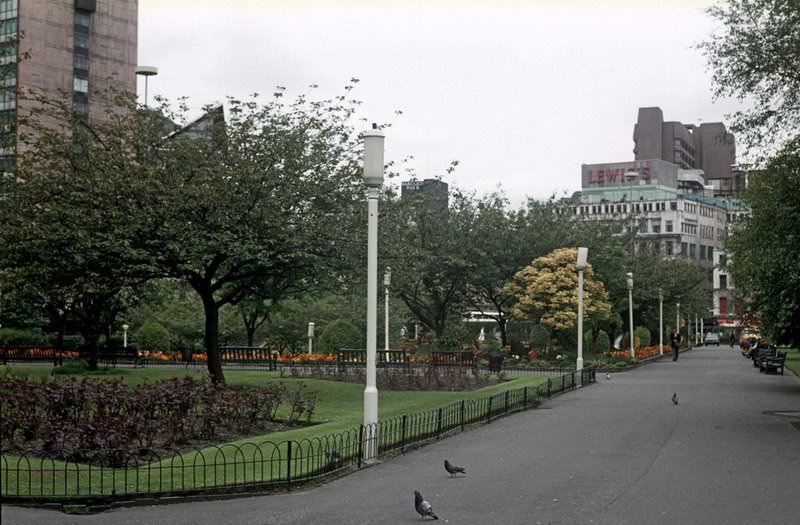
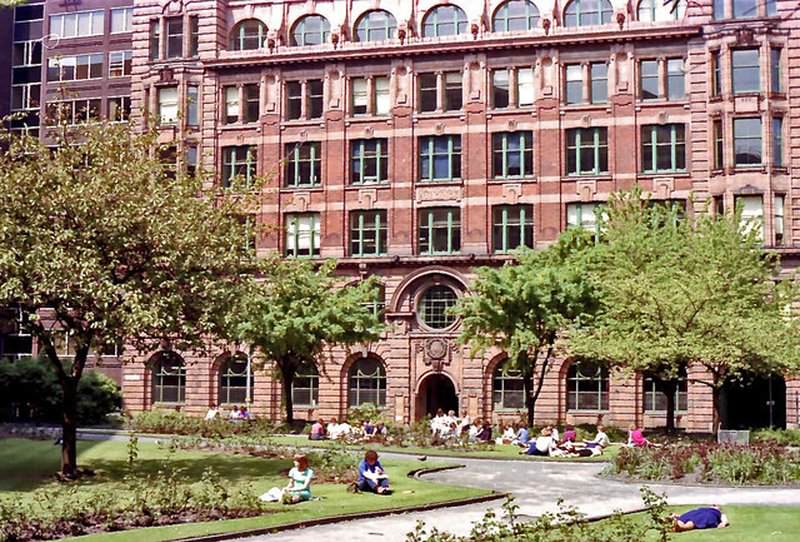
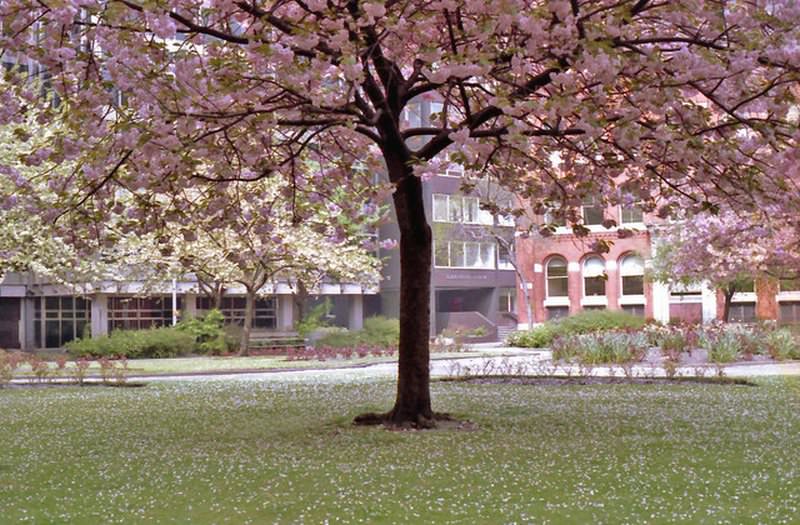
Public squares like Albert Square, Piccadilly Gardens, and St Ann’s Square continued to serve as gathering places for Manchunians going about their daily lives. St Mary’s Parsonage offered quieter green spaces in the heart of the city, its cherry blossoms marking the arrival of warmer months each year. These spots appear in multiple photographs from the decade, showing both their everyday function and their role as backdrops to the changing city around them.
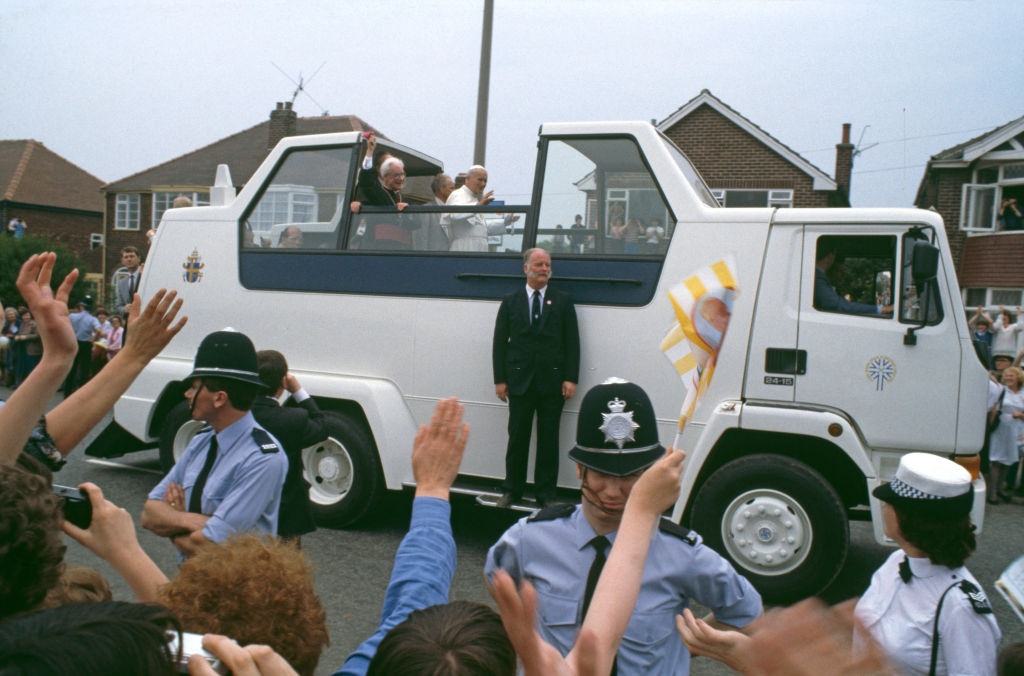
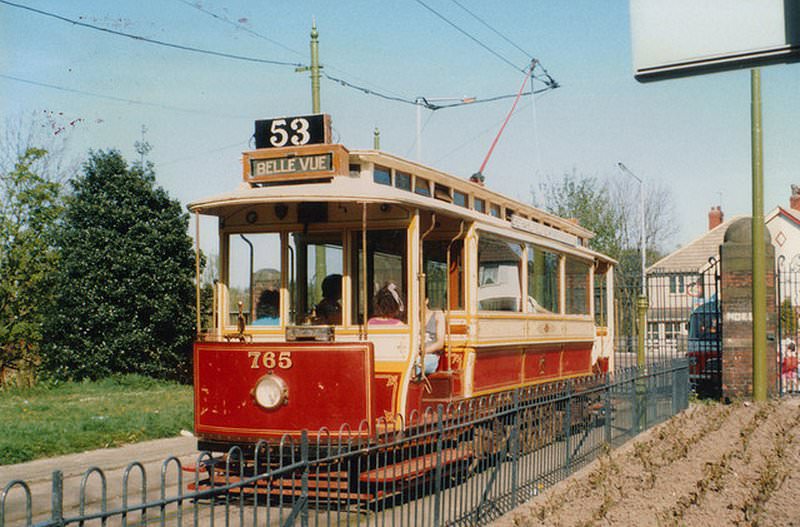
In 1982, Pope John Paul II visited Heaton Park during his pastoral trip to Britain. The park hosted a vast outdoor Mass attended by hundreds of thousands of people, making it one of the largest gatherings ever held in Manchester. Heaton Park was also home to a tram collection, which by the end of the decade remained a point of interest for visitors and transport enthusiasts alike.
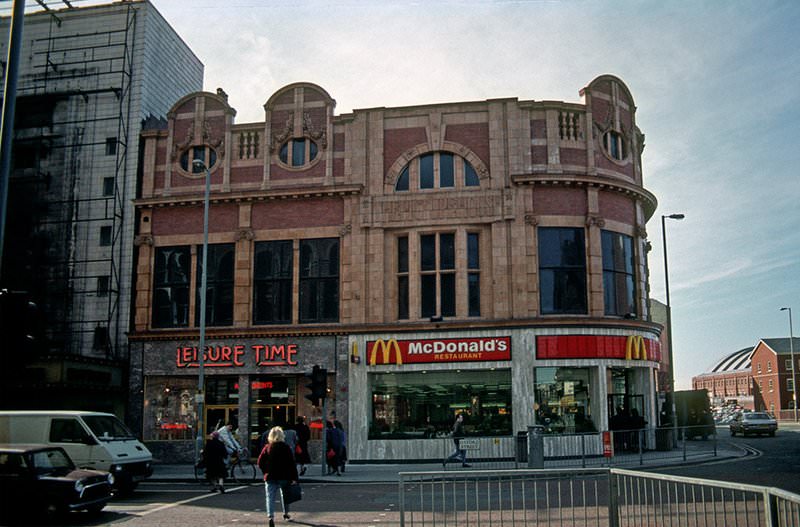
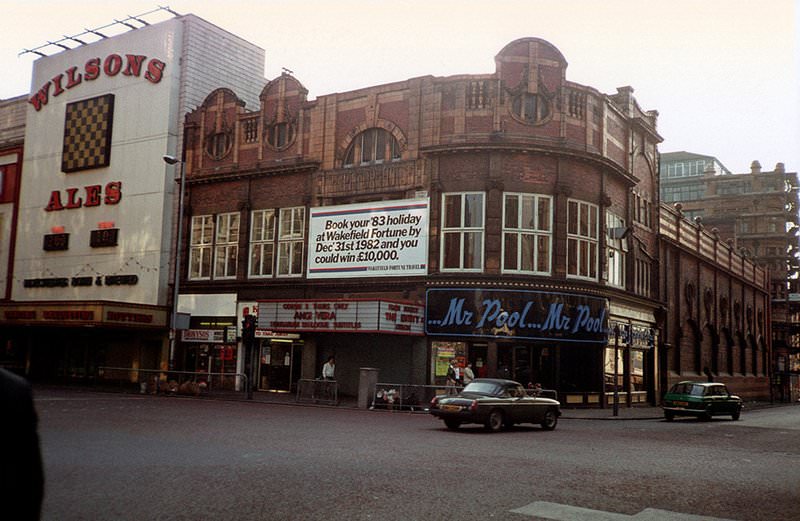
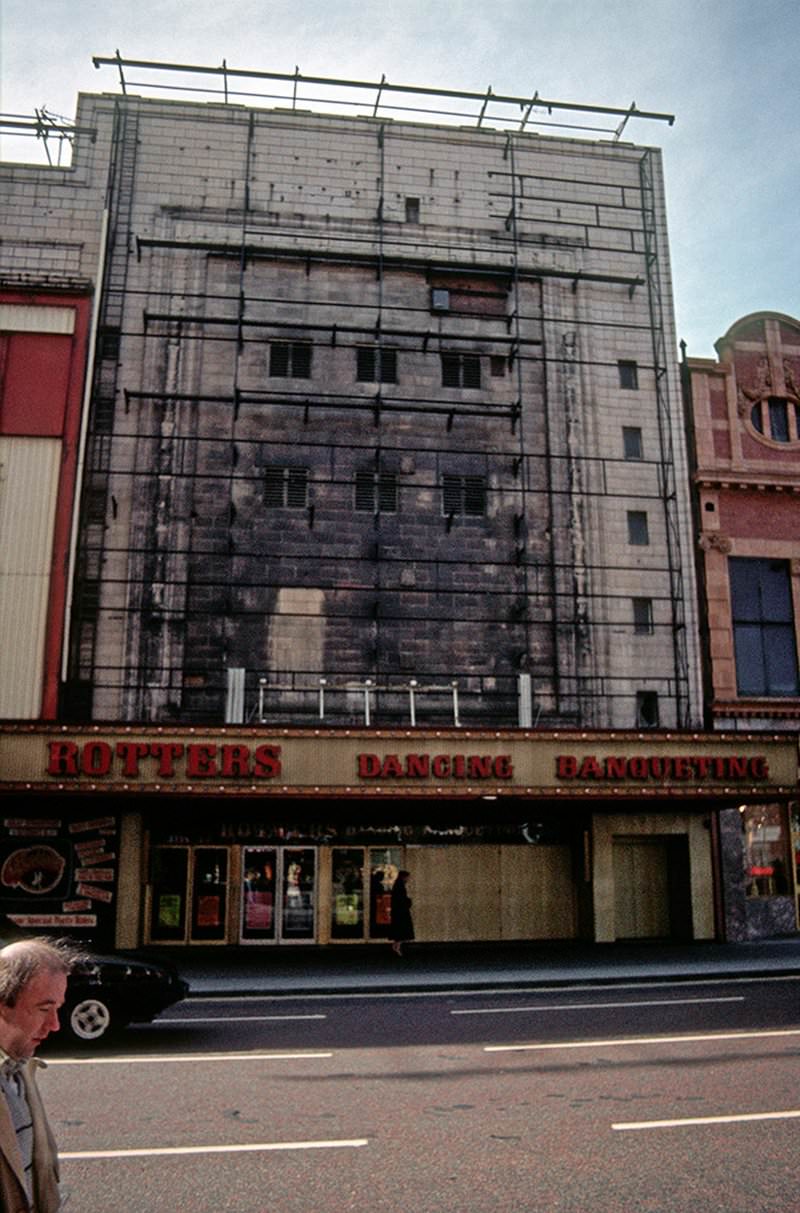
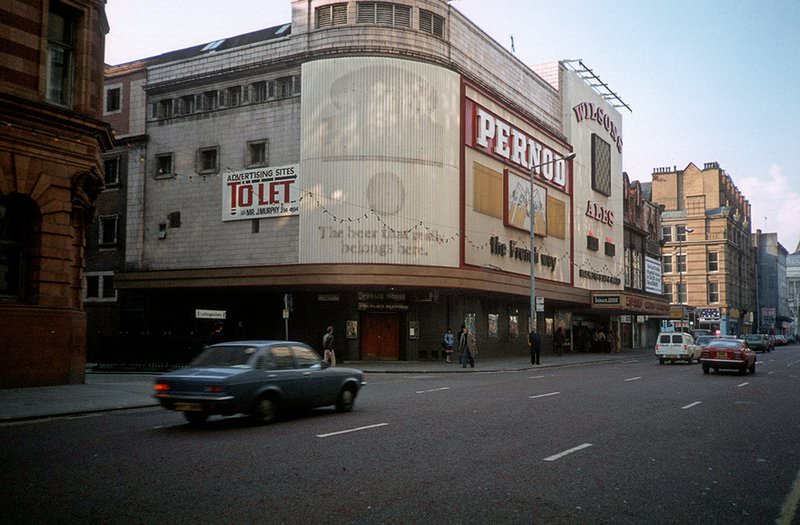
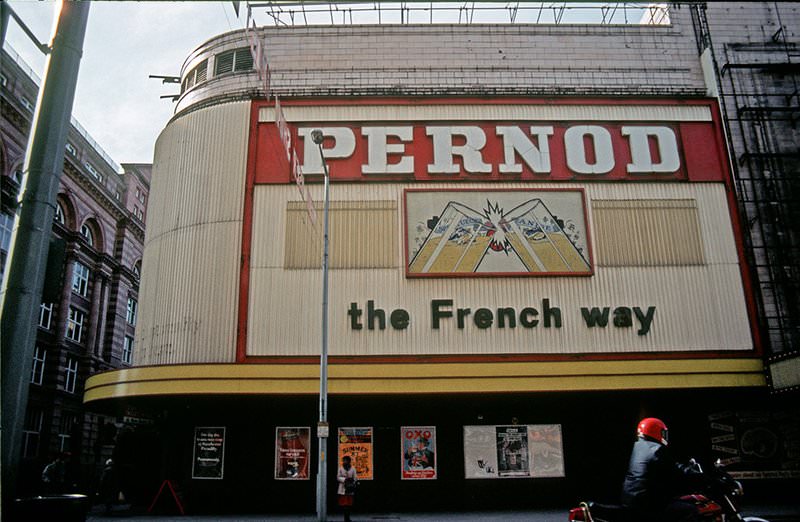
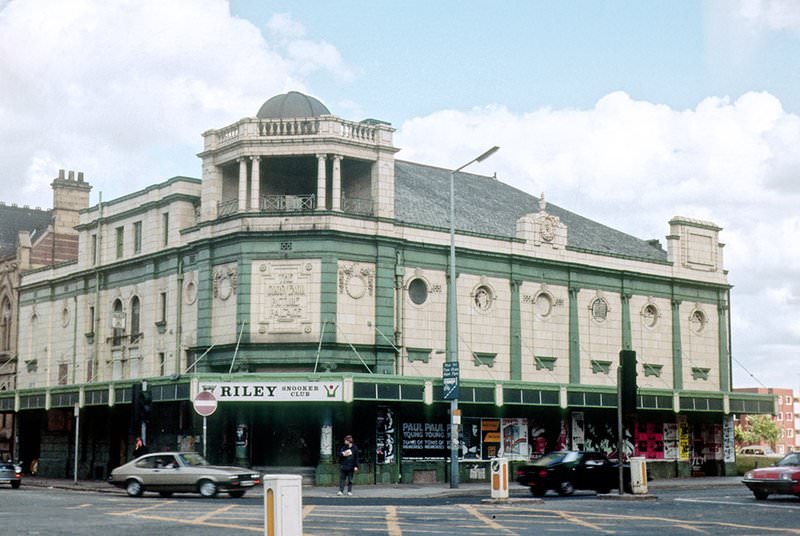
Oxford Street told its own story of changing entertainment culture. The Picture House cinema and the former Gaumont cinema — operating in the 1980s as Rotters nightclub — stood as reminders of how venues shifted with the times. The Grosvenor Picture Palace similarly represented an older era of local entertainment that was fading as the decade wore on.
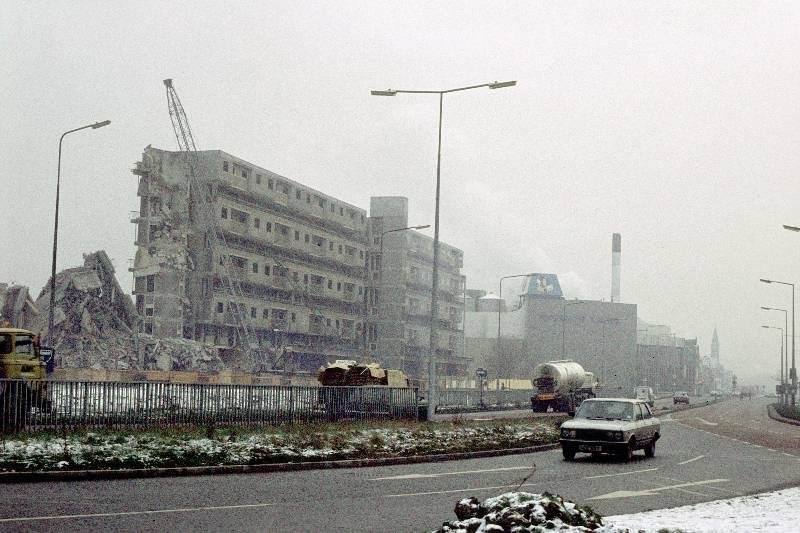
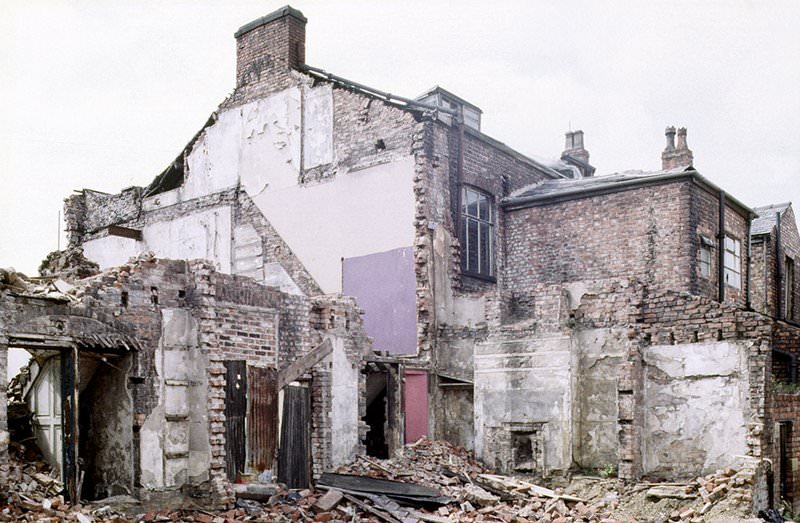
Demolition was a constant feature of 1980s Manchester. Flats on the Hulme and Moss Side border came down in 1985, part of wider efforts to clear postwar housing estates that had deteriorated badly. Georgian houses on Grosvenor Place were demolished in 1988. The Manchester Ear Hospital met the same fate in 1984. Each demolition site marked the end of a building and, in many cases, the end of a community tied to it.
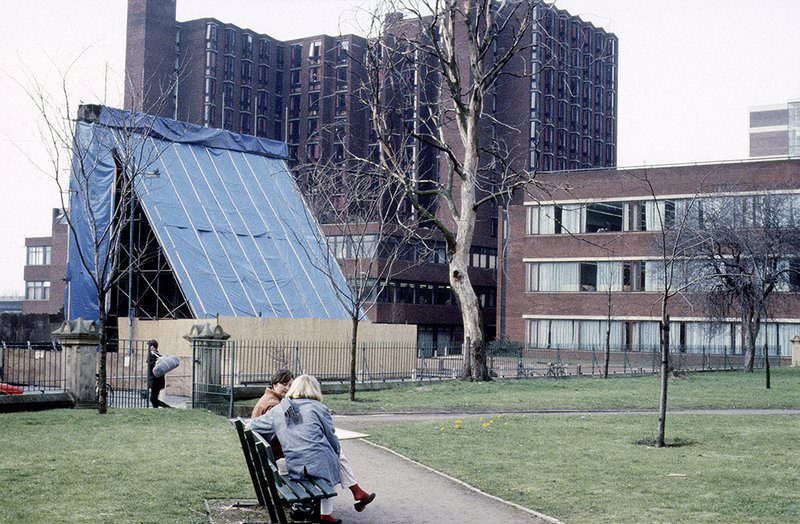
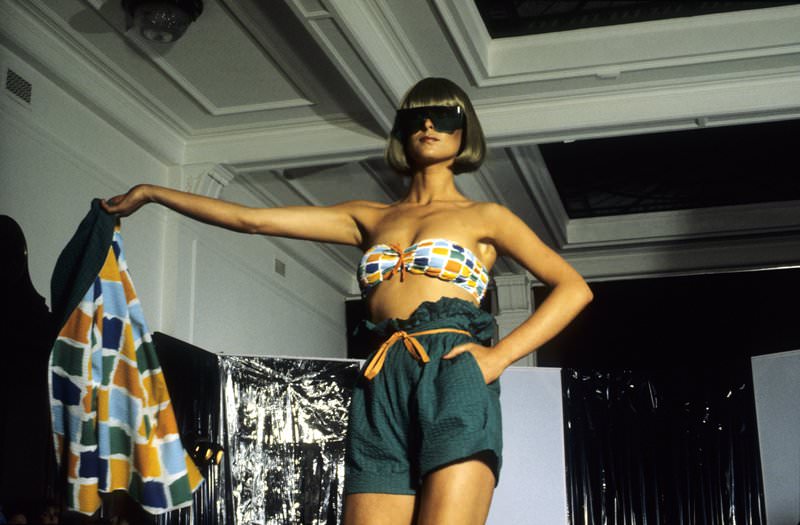
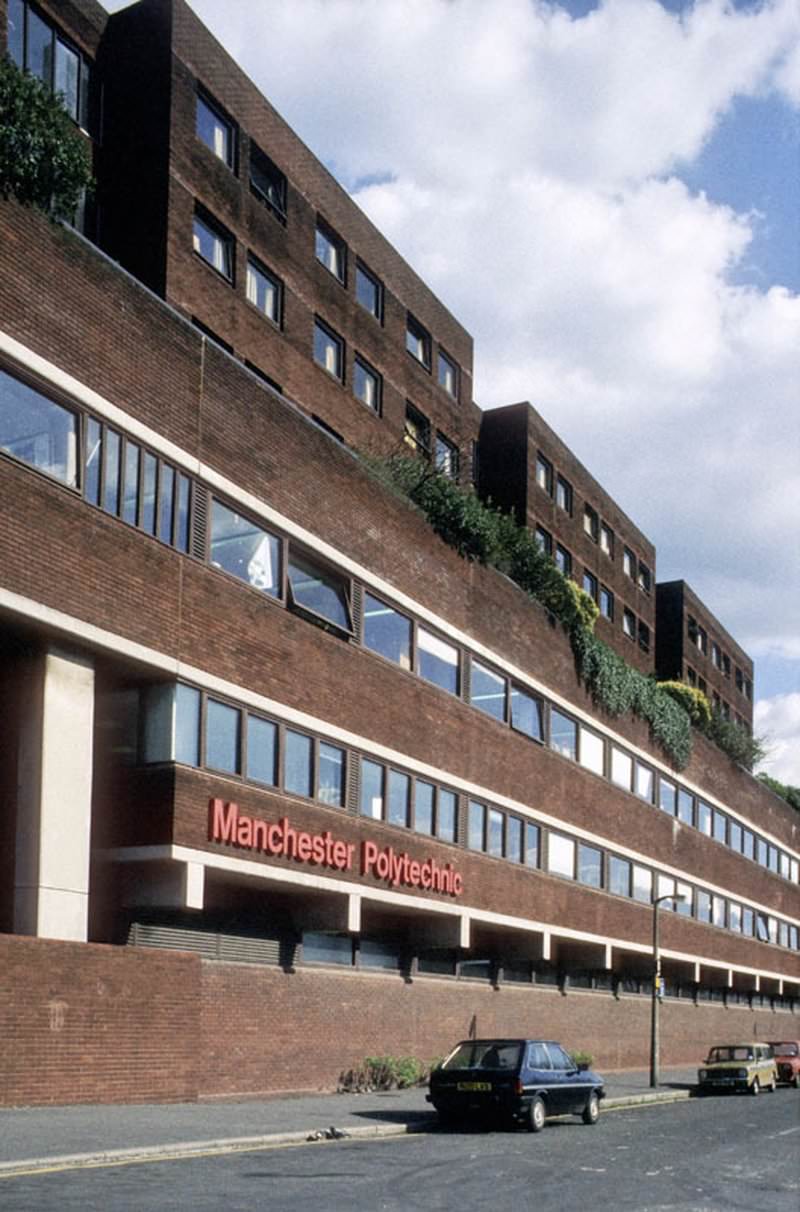
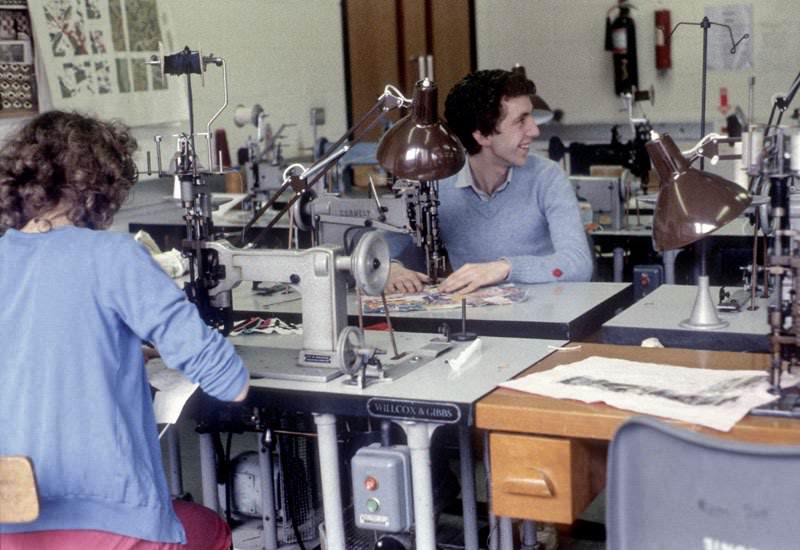
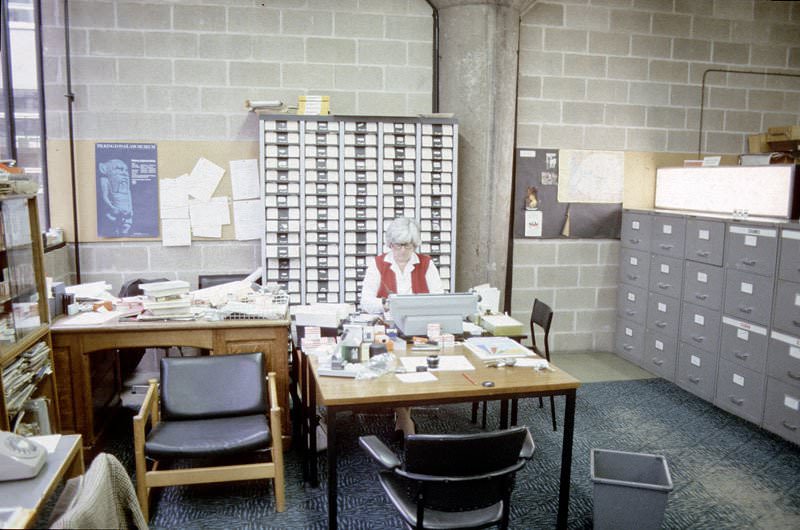
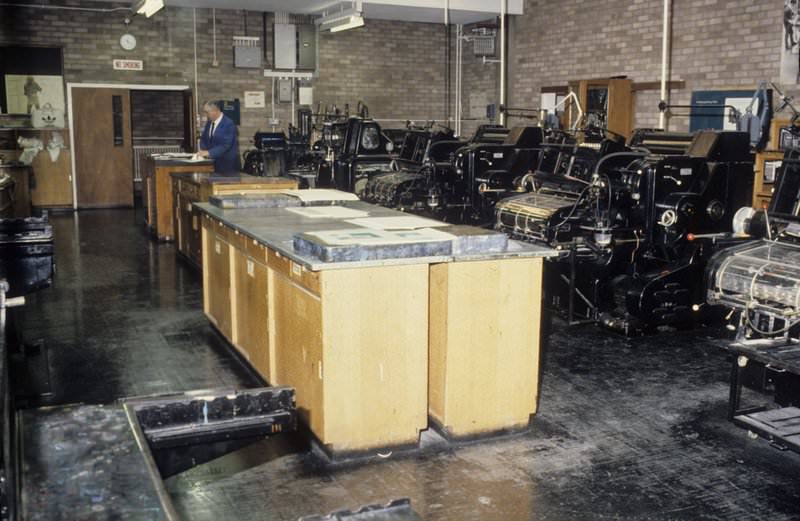
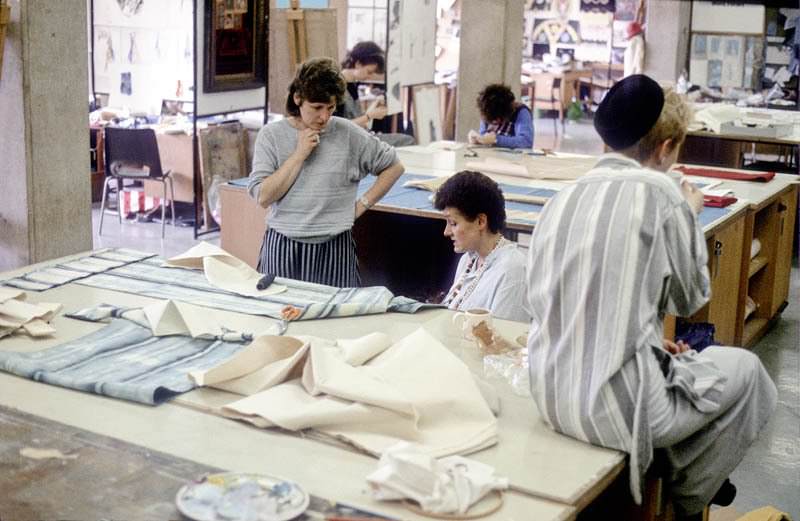
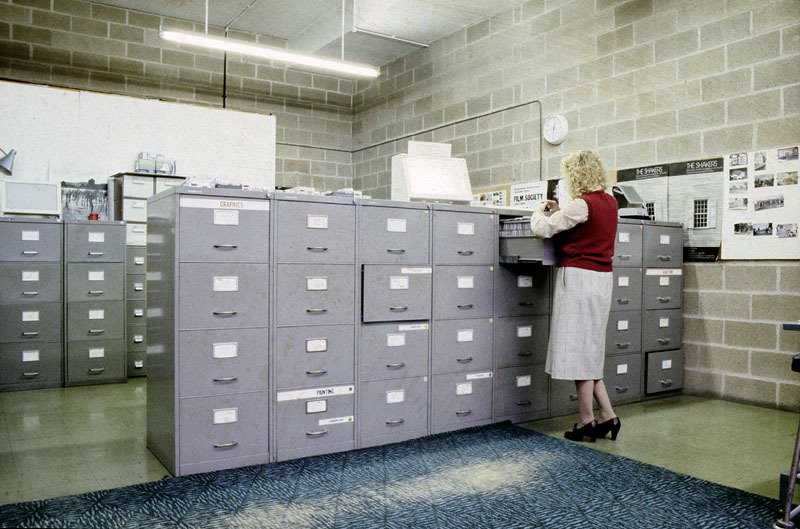
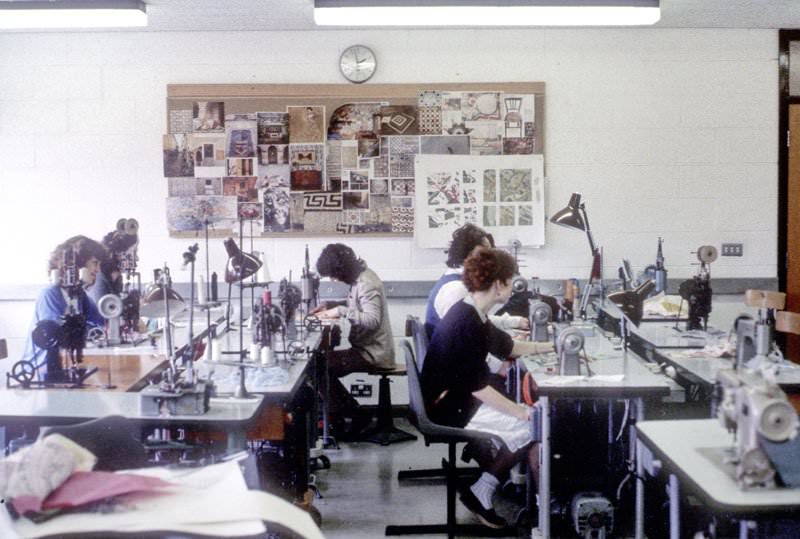
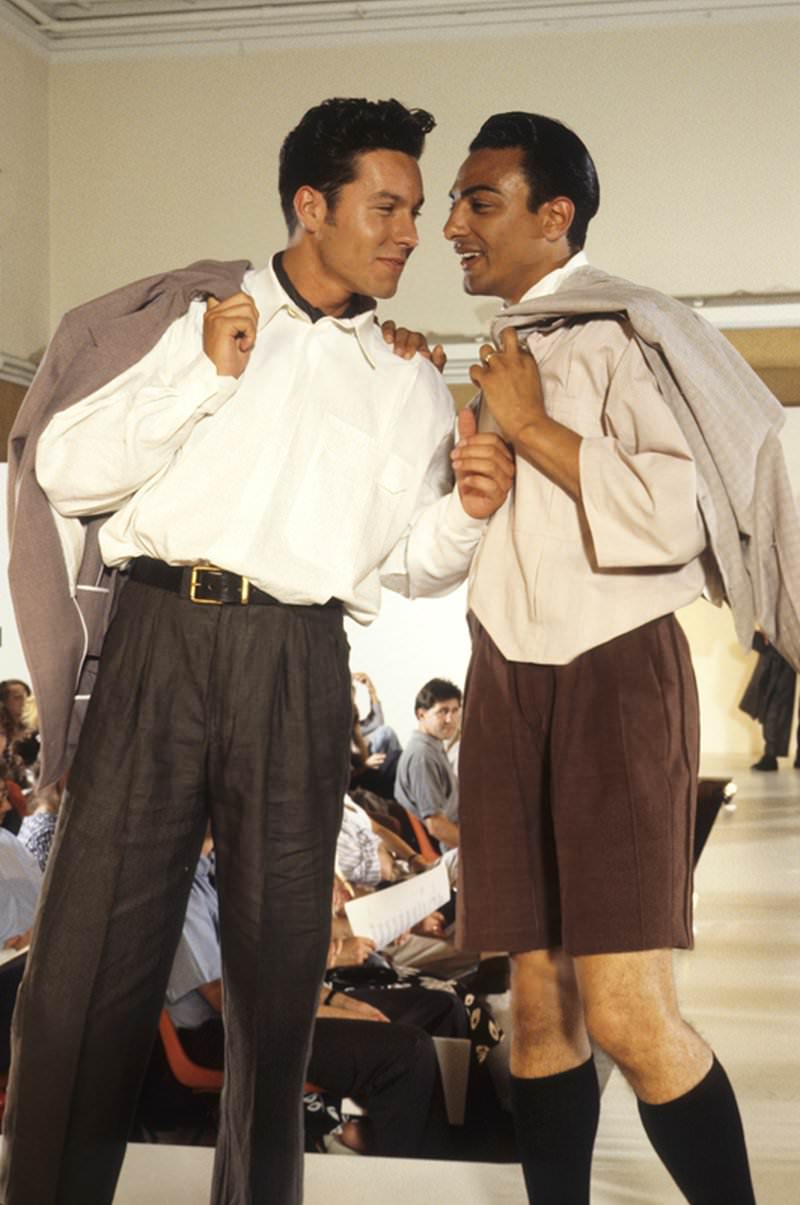
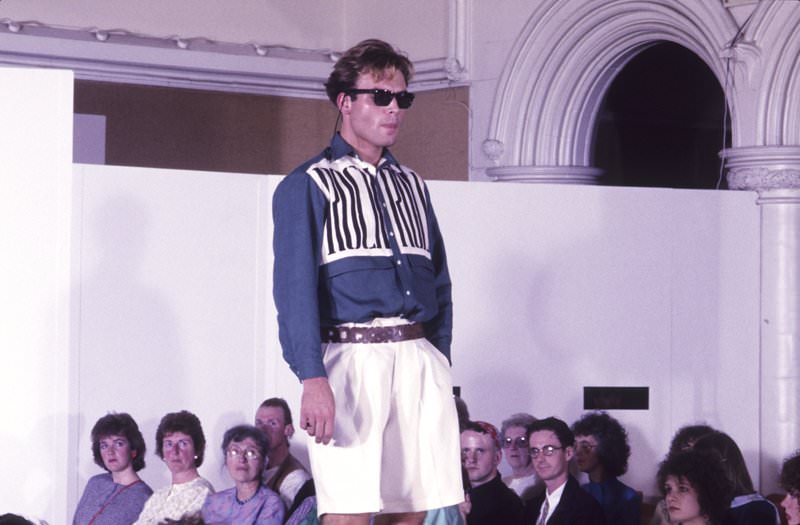
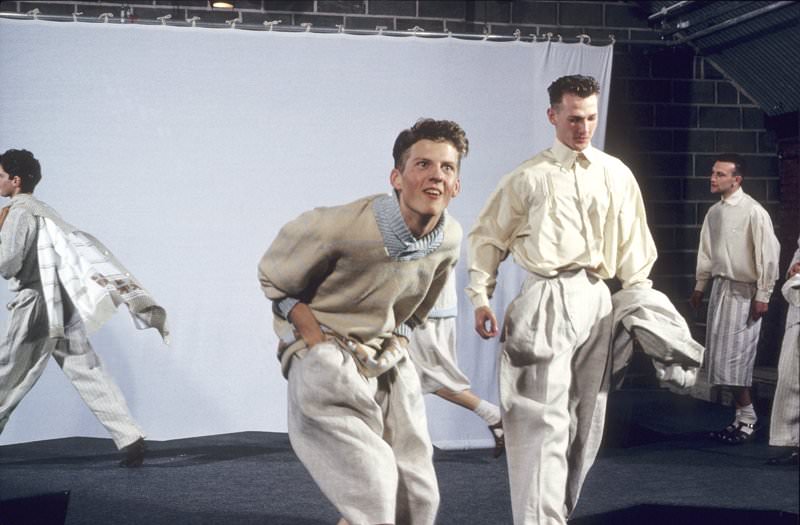
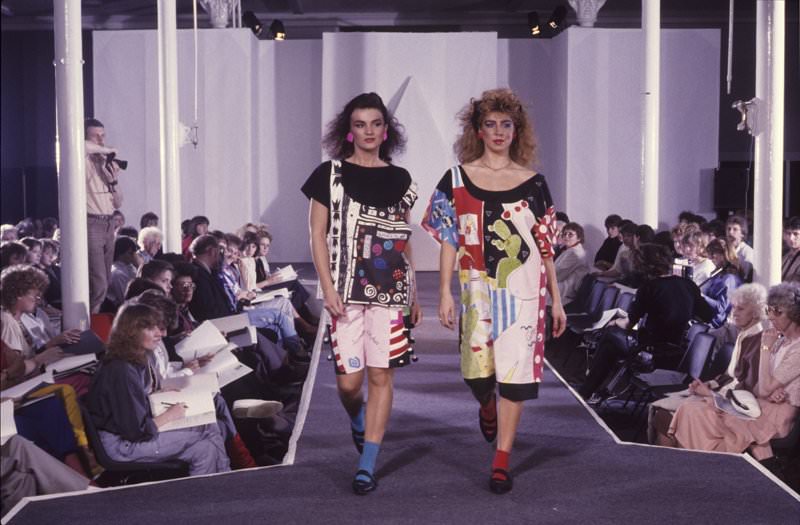
Manchester Polytechnic was a hub of creative energy throughout the decade. Fashion shows, embroidery studios, workshops, and slide libraries all formed part of daily student life there. The images from the Polytechnic show a working institution — students at machines, faculty organizing shows, and creative work being produced across disciplines. In 1988, the Central Manchester Development Corporation was established specifically to tackle the city’s neglected warehouse districts and canal basins, pushing forward a regeneration agenda that would accelerate in the years ahead.
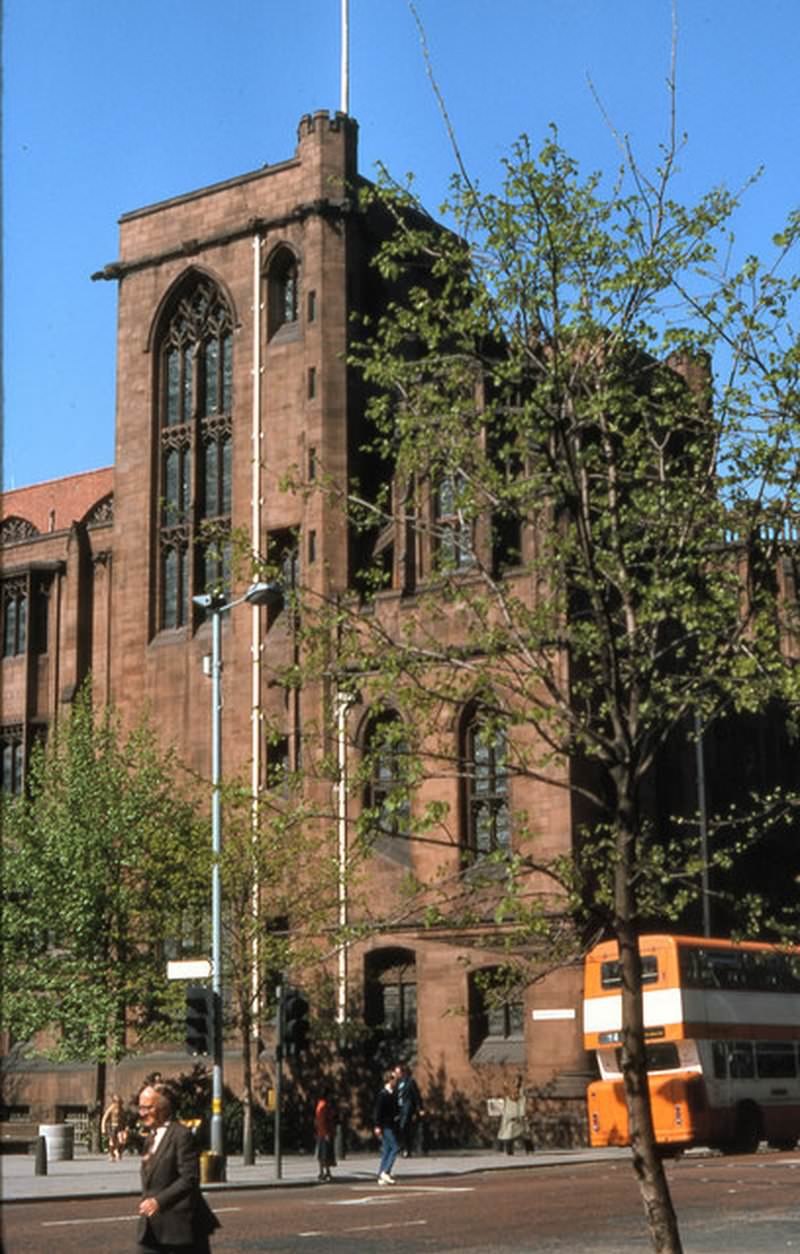
Cultural institutions were opening their doors even as older buildings came down. The Museum of Science and Industry opened in 1983, anchoring the Castlefield area as a heritage destination. The Jewish Museum followed in 1984, and the Chinese Arts Centre was founded in 1986. These openings reflected a city actively building a cultural identity beyond its industrial past. The John Rylands Library on Deansgate, one of Manchester’s great Victorian landmarks, stood as a reminder of a different era of civic ambition — and continued to draw visitors throughout the decade.
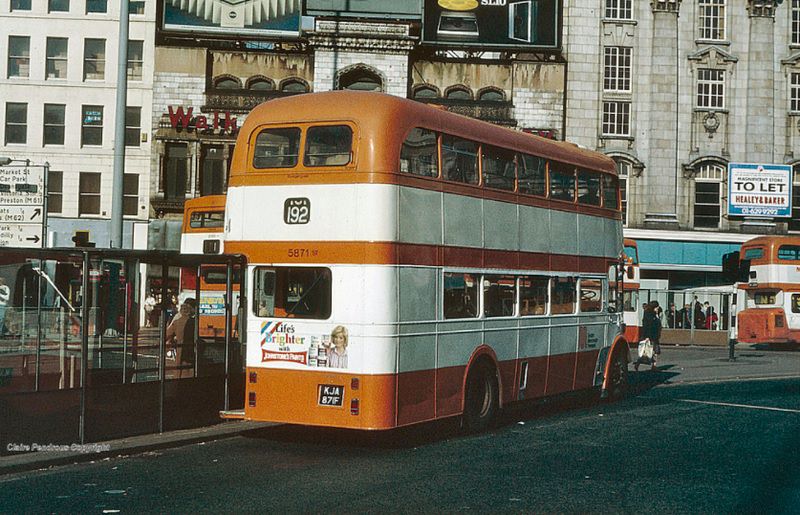
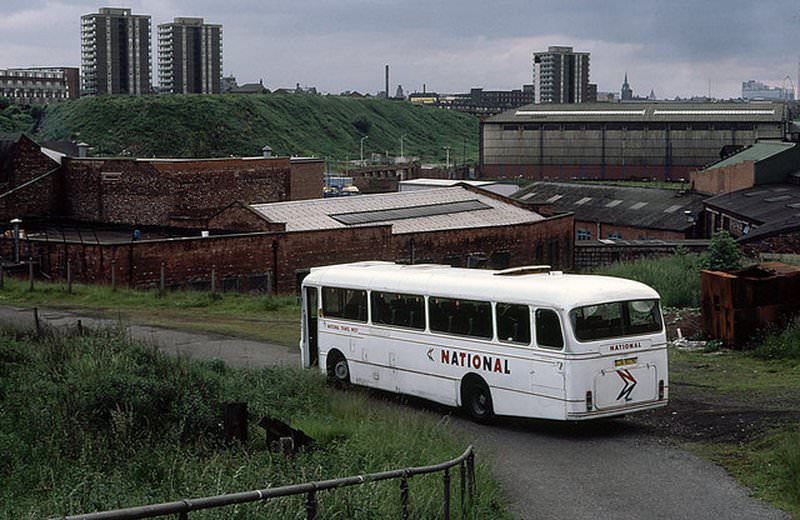
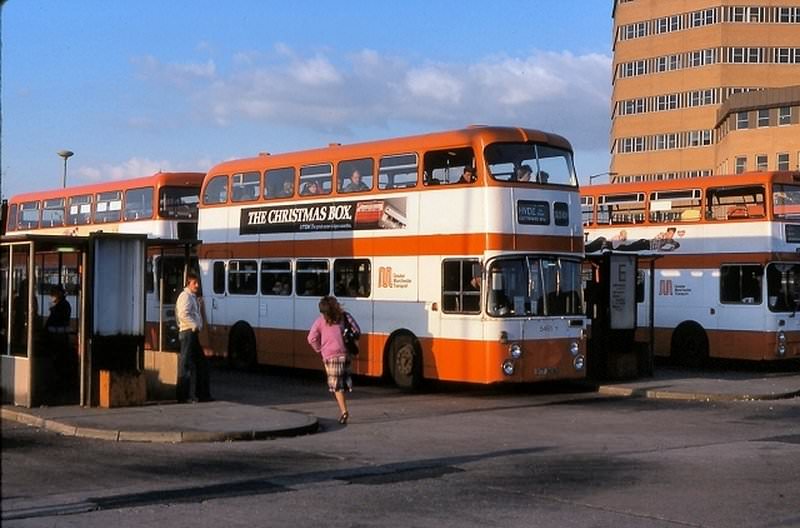
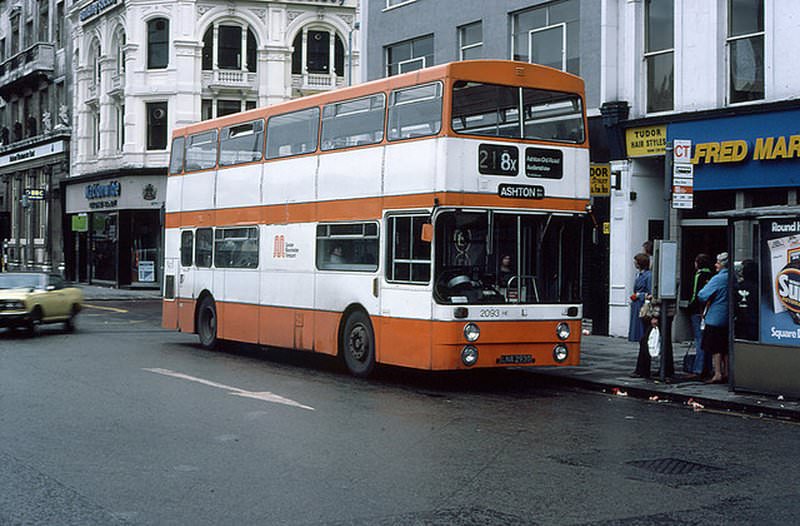
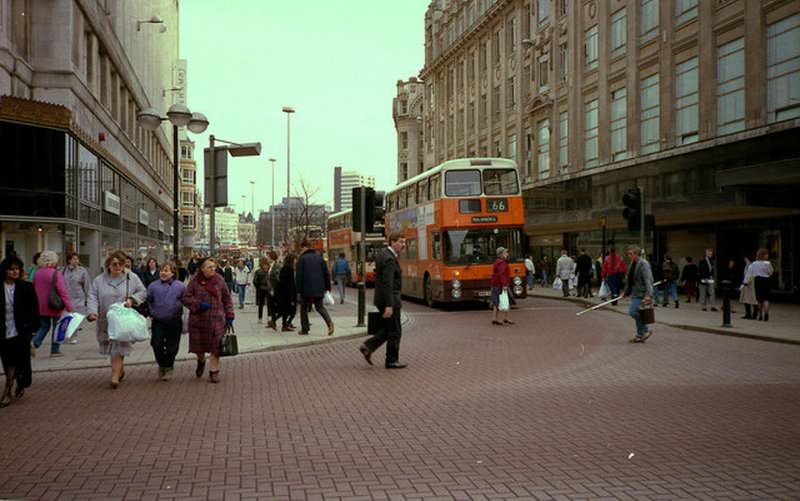
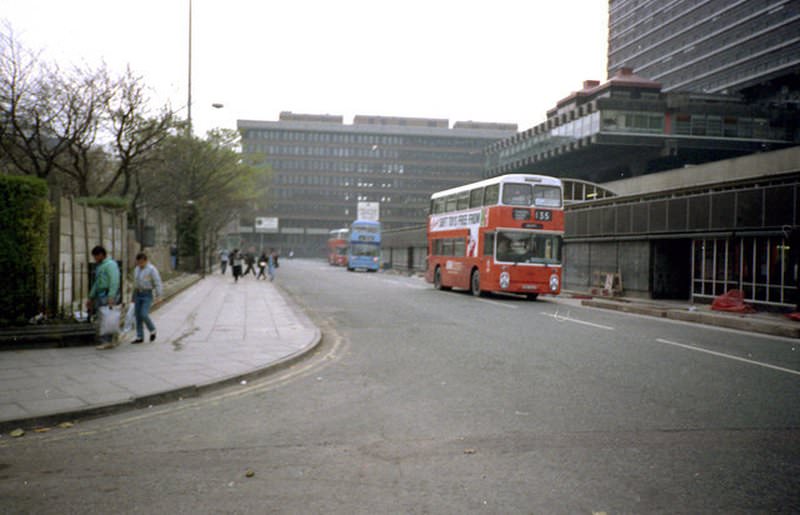
Transport on the streets told its own story. Buses ran along the River Irk and out to suburbs like Ashton-under-Lyne, where the bus station served commuters and shoppers connecting across Greater Manchester. The 218x service to Ashton ran from Piccadilly, one of many routes keeping the city moving during years when car ownership was still growing but public transport remained essential for most residents.
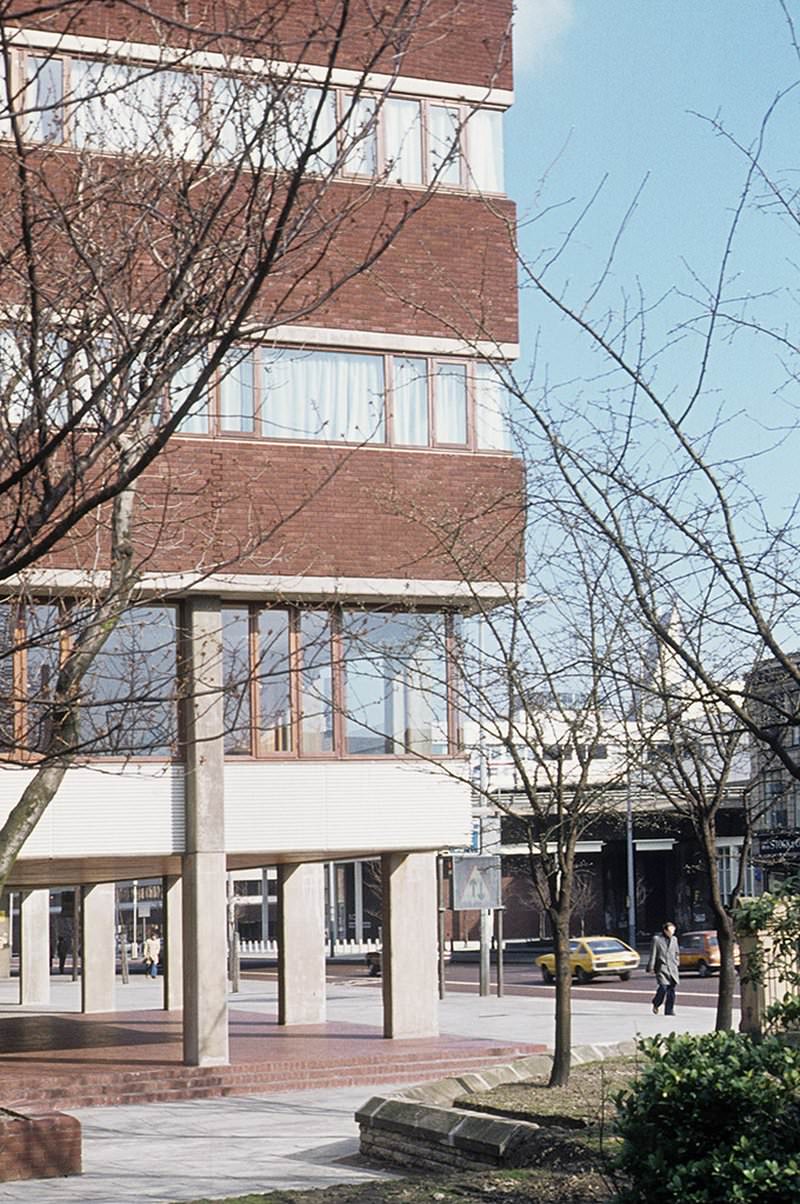
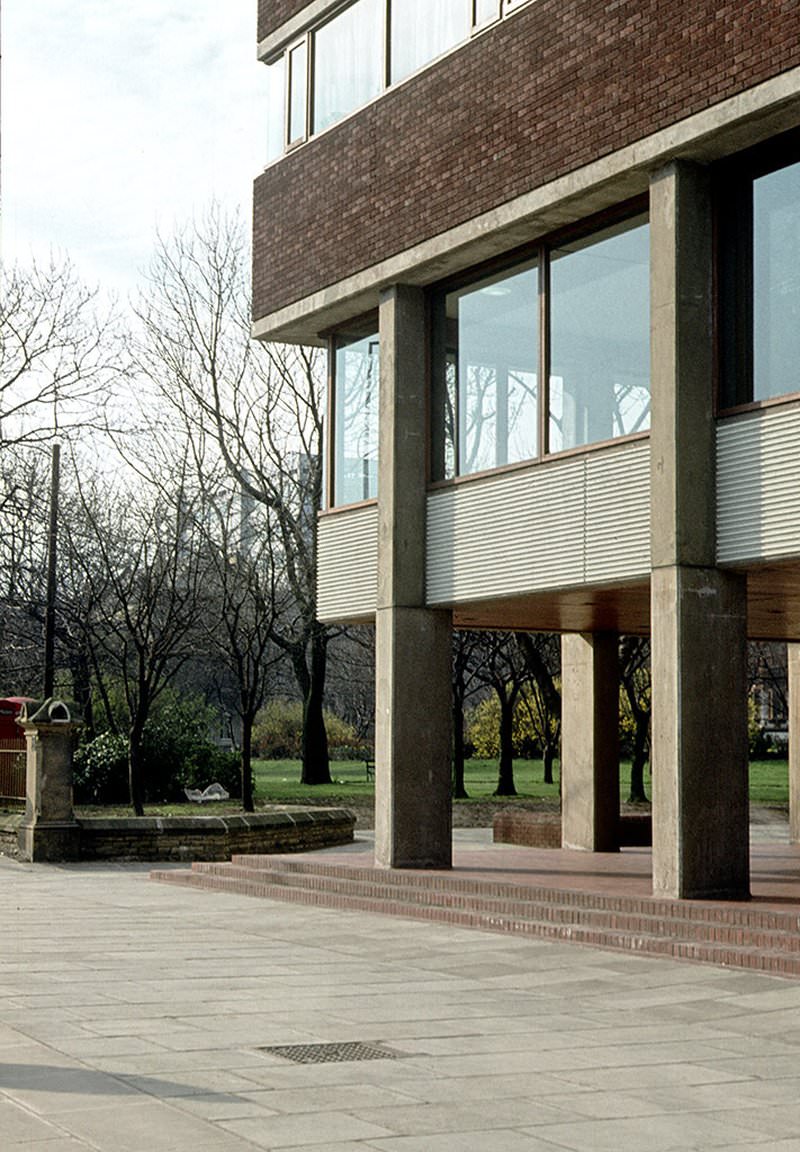
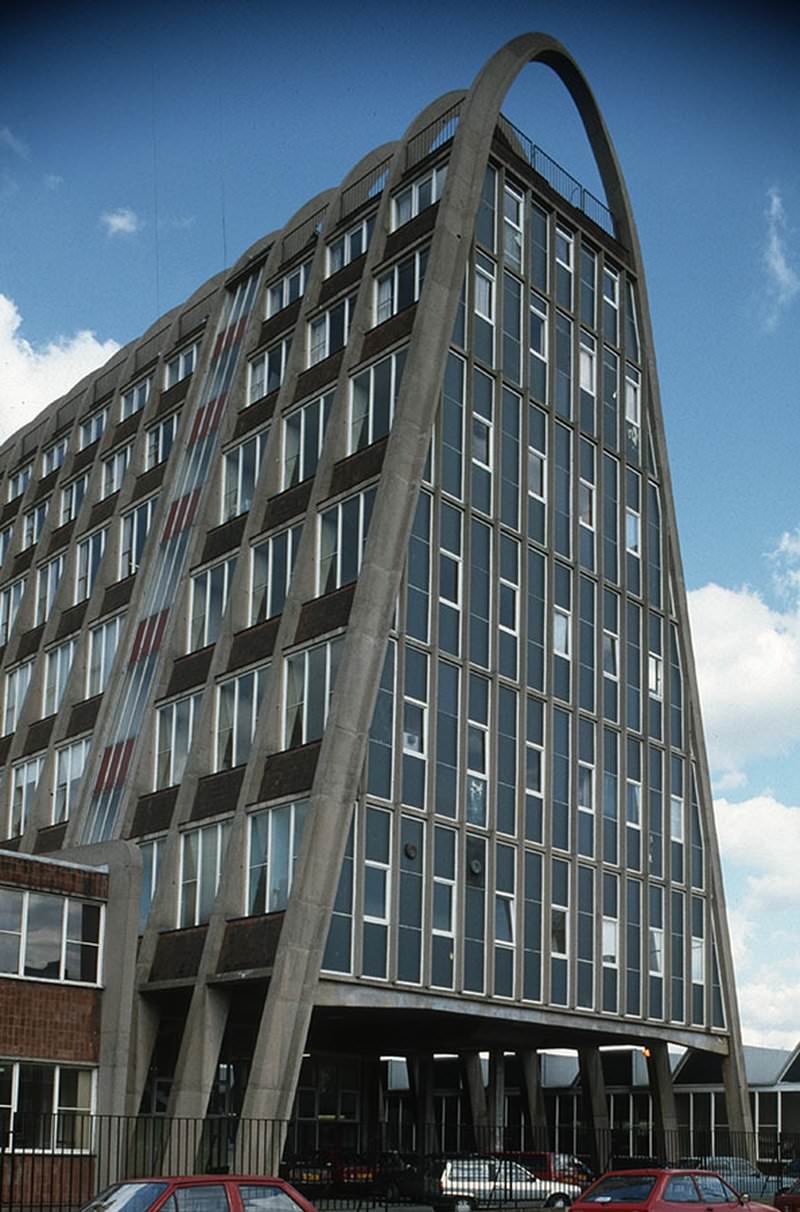
The buildings of Manchester Polytechnic’s All Saints campus, including the distinctive Hollings Building with its mushroom-shaped design, became recognizable parts of the city’s skyline. Across town, older streets like St Mary’s Gate and Red Lion Street retained their Victorian character even as development pressed in from all sides. Market Street showed the decade’s commercial pace — busy, changing, and photographed repeatedly from 1988 to 1989 as the city entered its next chapter.





Does anyone else remember the Dutch pancake House?
The roof of the Arndale was on the top of my mum’s house when I awaited the 59 bus outside the Arndale center. Initially, I thought she was joking, but it turns out she wasn’t.
Manchester has changed beyond comprehension. This isn’t a bad thing, but it’s hard to get your bearings from the past to the present!
Why do none of these people have face masks on
There are so many pictures that make it look almost derelict in areas not in a major city center. Did the section of market street meet traffic?
Awesome photos… funny as someone who was around in the 1980s it does not look so different to me!
Piccadilly Gardens looked so much prettier than today’s ugly, zombie infested concrete hell-hole
That’s right. I first remembered it in the late 1960’s when mum used to take me to town for shopping; now the garden has gone, it’s more like a meeting place for drunks. Last saw it with my wife in 2017 – Ugh! We couldn’t wait to get back to Ringway for our flight home!
Crazy how much of the city centre used to just be “fuck all”
it’s really mad how empty and hollow most UK cities became after WW2 and stayed until quiet recently.
There were still a lot of areas like that when I first moved here for university 16 years ago. Just waste ground where now stands huge glass buildings. The city did feel a lot more ‘open’ then, a lot less claustrophobic.
All up to interpretation, I get what you’re saying.
I’m glad the factory foundations and open air car parks are gone.
it’s really mad how empty and hollow most UK cities became after WW2 and stayed until quiet recently.
Say what you want about the IRA and the Luftwaffe, their service to civic space…
I was more thinking the rise of the car but yep they didn’t help either.
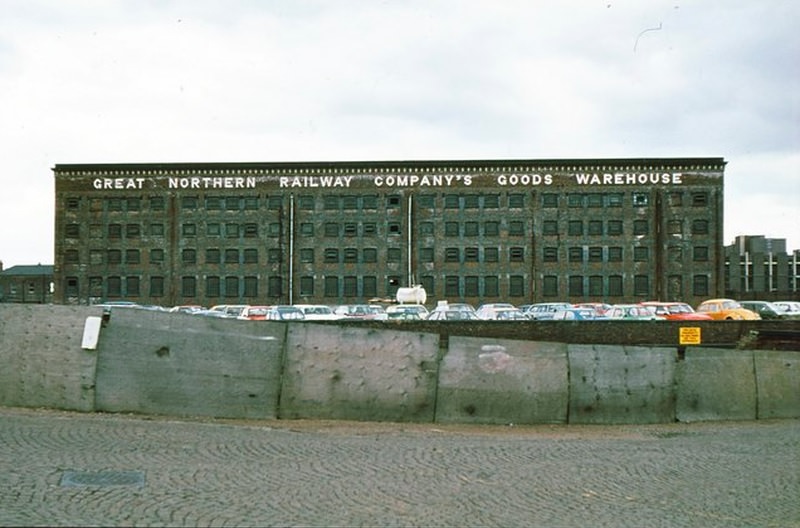
The photo of the great northern warehouse is fascinating, looks like its in the middle of nowhere.
Gosh, the John Rylands Library looks just the same.
Yeah needs modernising.
I don’t know how it lasted this long really withut someone getting it up to date. The cathedral could use a bit of new cladding too.
It’s a nice example of neo-Gothic design. I like it. I don’t want it changed.
It was sarcasm mate